EP2501195A1 - Wireless base station and mobile communication method - Google Patents
Wireless base station and mobile communication method Download PDFInfo
- Publication number
- EP2501195A1 EP2501195A1 EP10830019A EP10830019A EP2501195A1 EP 2501195 A1 EP2501195 A1 EP 2501195A1 EP 10830019 A EP10830019 A EP 10830019A EP 10830019 A EP10830019 A EP 10830019A EP 2501195 A1 EP2501195 A1 EP 2501195A1
- Authority
- EP
- European Patent Office
- Prior art keywords
- resource
- mobile stations
- base station
- radio base
- mobile
- Prior art date
- Legal status (The legal status is an assumption and is not a legal conclusion. Google has not performed a legal analysis and makes no representation as to the accuracy of the status listed.)
- Withdrawn
Links
Images


Classifications
-
- H—ELECTRICITY
- H04—ELECTRIC COMMUNICATION TECHNIQUE
- H04W—WIRELESS COMMUNICATION NETWORKS
- H04W72/00—Local resource management
- H04W72/12—Wireless traffic scheduling
- H04W72/1263—Mapping of traffic onto schedule, e.g. scheduled allocation or multiplexing of flows
- H04W72/1268—Mapping of traffic onto schedule, e.g. scheduled allocation or multiplexing of flows of uplink data flows
-
- H—ELECTRICITY
- H04—ELECTRIC COMMUNICATION TECHNIQUE
- H04L—TRANSMISSION OF DIGITAL INFORMATION, e.g. TELEGRAPHIC COMMUNICATION
- H04L5/00—Arrangements affording multiple use of the transmission path
- H04L5/003—Arrangements for allocating sub-channels of the transmission path
- H04L5/0053—Allocation of signalling, i.e. of overhead other than pilot signals
-
- H—ELECTRICITY
- H04—ELECTRIC COMMUNICATION TECHNIQUE
- H04L—TRANSMISSION OF DIGITAL INFORMATION, e.g. TELEGRAPHIC COMMUNICATION
- H04L5/00—Arrangements affording multiple use of the transmission path
- H04L5/003—Arrangements for allocating sub-channels of the transmission path
- H04L5/0078—Timing of allocation
- H04L5/0087—Timing of allocation when data requirements change
- H04L5/0089—Timing of allocation when data requirements change due to addition or removal of users or terminals
-
- H—ELECTRICITY
- H04—ELECTRIC COMMUNICATION TECHNIQUE
- H04L—TRANSMISSION OF DIGITAL INFORMATION, e.g. TELEGRAPHIC COMMUNICATION
- H04L5/00—Arrangements affording multiple use of the transmission path
- H04L5/003—Arrangements for allocating sub-channels of the transmission path
- H04L5/0044—Allocation of payload; Allocation of data channels, e.g. PDSCH or PUSCH
-
- H—ELECTRICITY
- H04—ELECTRIC COMMUNICATION TECHNIQUE
- H04W—WIRELESS COMMUNICATION NETWORKS
- H04W72/00—Local resource management
- H04W72/50—Allocation or scheduling criteria for wireless resources
- H04W72/52—Allocation or scheduling criteria for wireless resources based on load
Definitions
- the present invention relates to a radio base station and a mobile communication method.
- a logic peak rate in an LTE (Long Term Evolution) mobile communication system is decided by a "TBS (Transport Block Size) table".
- the present invention has been achieved in view of the above-described problems, and an object thereof is to provide a radio base station and a mobile communication method, by which it is possible to avoid a reduction in a peak rate in an uplink as much as possible.
- a first characteristic of the present invention is summarized as a radio base station comprising: a scheduling unit configured to assign a resource for a physical uplink control channel for transmitting an uplink control signal, a resource for a physical uplink shared channel for transmitting an uplink data signal, and a resource for a physical random access channel to a mobile station in a cell subordinate to the radio base station, in which, when the number of mobile stations in the cell is 1, the scheduling unit is configured to use at least one of the resource for the physical uplink control channel and the resource for the physical random access channel as the resource for the physical uplink shared channel.
- a second characteristic of the present invention is summarized as a mobile communication method comprising: a step of assigning, by a radio base station, a resource for a physical uplink control channel for transmitting an uplink control signal, a resource for a physical uplink shared channel for transmitting an uplink data signal, and a resource for a physical random access channel to a mobile station in a cell subordinate to the radio base station, in which , in the step, when the number of mobile stations in the cell is 1, the radio base station uses at least one of the resource for the physical uplink control channel and the resource for the physical random access channel as the resource for the physical uplink shared channel.
- the mobile communication system is an LTE mobile communication system, and includes a radio base station eNB and a mobile station UE as illustrated in Fig. 1 .
- the radio base station eNB in a downlink, is configured to transmit a downlink control signal including a scheduling signal and the like through PDCCH (Physical Downlink Control Channel).
- PDCCH Physical Downlink Control Channel
- the mobile station UE is configured to transmit an uplink control signal through PUCCH, to transmit an uplink data signal through PUSCH (Physical Uplink Shared Channel), to transmit a random access procedure signal (for example, a RACH preamble) through PRACH, to transmit DMRS (DeModuration Reference Signal), and to transmit SRS (Sounding Reference Signal) used for measuring channel quality.
- PUCCH Physical Uplink Shared Channel
- PUSCH Physical Uplink Shared Channel
- a random access procedure signal for example, a RACH preamble
- DMRS DeModuration Reference Signal
- SRS Sounding Reference Signal
- a PUCCH resource is configured to be ensured at both ends of a system bandwidth through frequency hopping in a subframe.
- an SRS resource is configured to be ensured at a final symbol of a subframe.
- a time length of a radio frame is 10 ms
- a time length of a subframe is 1 ms
- a time length of a slot is 0.5 ms.
- a frequency bandwidth of one RB is 180 kHz.
- the radio base station eNB includes an RRC connection management unit 11, a scheduling unit 12, and a PDCCH transmission unit 13.
- the RRC connection management unit 11 is configured to manage the number of mobile stations UEs having established an RRC connection in each cell.
- the scheduling unit 12 is configured to perform a scheduling process with respect to a mobile station UE in the cell subordinate to the radio base station eNB.
- the scheduling unit 12 may be configured to use at least one of the PUCCH resource and the PRACH resource as a PUSCH resource.
- the process for using at least one of the PUCCH resource and the PRACH resource as the PUSCH resource may be performed in each subframe (a unit period of a scheduling process, that is, the scheduling process is performed in each subframe) or may be performed in each predetermined time frame.
- Each predetermined time frame for example, may indicate each 100 ms or each second.
- the number of the mobile stations UEs may include the number of mobile stations UEs having established an RRC connection (the number of RRC connected UEs), the number of mobile stations UEs in a Non-DRX state, the number of mobile stations UEs having data in a buffer, the number of mobile stations UEs subject to scheduling calculation, or the number of mobile stations UEs to which a shared channel is decided to be actually assigned.
- two or more number of mobile stations UEs is, it may be considered whether the number of the mobile stations UEs is 1.
- the mobile stations UEs subject to the scheduling calculation may indicate mobile stations UEs to which a shared channel is to be probably assigned at the subframe, and may include both the mobile stations UEs to which the shared channel is actually assigned, and the mobile stations UEs to which the shared channel is not actually assigned.
- the scheduling unit 12 may also be configured not to use both the PUCCH resource and the PRACH resource as the PUSCH resource.
- the scheduling unit 12 may also be configured to use a fixedly ensured PUCCH resource (that is, RB) as the PUSCH resource.
- a fixedly ensured PUCCH resource that is, RB
- the scheduling unit 12 may also be configured not to use a fixedly ensured PRACH resource (that is, RB) as the PUSCH resource.
- the mobile station UE when the timing, at which the PUCCH resource is used as the PUSCH resource, is the timing at which the mobile station UE transmits a transmission acknowledgement signal (ACK/NACK) through the PUCCH in response to a downlink data signal, the mobile station UE is configured to transmit the transmission acknowledgement signal (ACK/NACK) through the PUSCH.
- ACK/NACK transmission acknowledgement signal
- the scheduling unit 12 may also be configured to use the fixedly ensured PRACH resource (that is, the RB) as the PUSCH resource, in addition to the fixedly ensured PUCCH resource (that is, the RB).
- the mobile station UE is configured to increase transmission power of the random access procedure signal by a step width called PowerRampingStep, and transmit the random access procedure signal through the PRACH at the next PRACH transmission timing.
- the transmission power of the random access procedure signal is increased by the step width called PowerRampingStep, even when the random access procedure signal has collided with the uplink data signal transmitted through the PUSCH, it is highly probable that the random access procedure signal is detected in the radio base station eNB.
- the probability that the uplink data signal transmitted through the PUSCH is correctly decoded is reduced, resulting in a problem that a rate in an uplink is reduced.
- the scheduling unit 12 may also be configured not to use a predetermined number Y of PRACH resources continuing in the time direction as the PUSCH resource in each predetermined cycle X.
- the scheduling unit 12 may also be configured not to use the PRACH resource as the PUSCH resource in each predetermined cycle X at the PRACH transmission timings which continues Y times.
- the scheduling unit 12 may also be configured not to use the PRACH resource as the PUSCH resource once in each 10 ms at the PRACH transmission timings which continues once or twice.
- the scheduling unit 12 may also be configured to decide the amount of the PUCCH resource (for example, the number of RBs) based on the amount of the PUCCH resource actually used in the cell, or the number of the mobile stations UEs having established the RRC connection in the cell.
- the amount of the PUCCH resource for example, the number of RBs
- the radio base station eNB is configured to notify the mobile station UE existing in the cell of the decided amount of the PUCCH resource (for example, the number of the RBs) by using broadcast information.
- the scheduling unit 12 may also be configured to reassign the PUCCH resource individually assigned to each mobile station UE.
- the radio base station eNB determines whether "the number of RRC connected UEs" in a cell is 2 or more at a target subframe, that is, determines whether the number of the mobile stations UEs having established an RRC connection in the cell is 1.
- step S12 In the case of "YES”, the present operation proceeds to step S12. In the case of "NO”, the present operation proceeds to step S13.
- the radio base station eNB determines that it is not possible to assign the PUCCH resource and the PRACH resource as the PUSCH resource in step S12, and assigns the PUSCH resource (that is, the RB) in step S 14.
- the radio base station eNB determines that it is possible to assign the PUCCH resource as the PUSCH resource in step S13, and assigns the PUSCH resource (that is, the RB) in step S14.
- step S103 In the case of "YES”, the present operation proceeds to step S103. In the case of "NO”, the present operation proceeds to step S104.
- the radio base station eNB determines that it is not possible to assign the PUCCH resource and the PRACH resource as the PUSCH resource in step S103, and assigns the PUSCH resource (that is, the RB) in step S113.
- step S104 the radio base station eNB determines whether the target subframe corresponds to the PRACH transmission timing.
- step S106 In the case of "YES”, the present operation proceeds to step S106. In the case of "NO”, the present operation proceeds to step S105.
- the radio base station eNB determines that it is possible to assign the PUCCH resource as the PUSCH resource in step S105, and assigns the PUSCH resource (that is, the RB) in step S113.
- the radio base station eNB increases the "k” by "1” in step S106, and determines whether "k > X" is satisfied in step S107.
- the "X" denotes the above-mentioned predetermined cycle.
- step S108 In the case of "YES", the present operation proceeds to step S108. In the case of "NO”, the present operation proceeds to step S112.
- the radio base station eNB increases the "n” by “1” in step S108, and determines whether "n > Y" is satisfied in step S109.
- the "Y” denotes the above-mentioned predetermined number.
- step S111 In the case of "YES”, the present operation proceeds to step S111. In the case of "NO”, the present operation proceeds to step S110.
- the radio base station eNB determines that it is possible to assign the PUCCH resource as the PUSCH resource but it is not possible to assign the PRACH resource as the PUSCH resource in step S110, and assigns the PUSCH resource (that is, the RB) in step S113.
- the PUCCH resource and the PRACH resource are assigned as the PUSCH resource, so that it is possible to minimize a reduction in the above-mentioned peak rate.
- a radio base station eNB includes: a scheduling unit 12 configured to assign a PUCCH (physical uplink control channel for transmitting an uplink control signal) resource, a PUSCH (physical uplink shared channel for transmitting an uplink data signal) resource, and a PRACH (physical random access channel) resource to a mobile station UE in a cell subordinate to the radio base station eNB, wherein, when the number of mobile stations UEs in the cell is 1, the scheduling unit 12 is configured to use at least one of the PUCCH resource and the PRACH resource as the PUSCH resource.
- PUCCH physical uplink control channel for transmitting an uplink control signal
- PUSCH physical uplink shared channel for transmitting an uplink data signal
- PRACH physical random access channel
- the number of the above-mentioned mobile stations UEs may include the number of mobile stations UEs having established an RRC connection in the cell (the number of RRC connected UEs), the number of mobile stations UEs in a Non-DRX state, the number of mobile stations UEs having data in a buffer, the number of mobile stations UEs subject to scheduling calculation, or the number of mobile stations UEs to which a shared channel is decided to be actually assigned.
- the mobile stations UEs subject to the scheduling calculation may indicate mobile stations UEs to which a shared channel is to be probably assigned at the subframe, and may include both the mobile stations UEs to which the shared channel is actually assigned, and the mobile stations UEs to which the shared channel is not actually assigned.
- the scheduling unit 12 may also be configured not to use the PRACH resource as the PUSCH resource.
- the scheduling unit 12 may also be configured not to use a predetermined number of the PRACH resources continuing in the time direction as the PUSCH resource in each predetermined cycle.
- a mobile communication method includes: a step of assigning, by a radio base station eNB, a PUCCH resource, a PUSCH resource, and a PRACH resource to a mobile station UE in a cell subordinate to the radio base station eNB, wherein, in the step, when the number of mobile stations UEs in the cell is 1, the radio base station eNB uses at least one of the PUCCH resource and the PRACH resource as the PUSCH resource.
- the number of the above-mentioned mobile stations UEs may include the number of mobile stations UEs having established an RRC connection in the cell (the number of RRC connected UEs), the number of mobile stations UEs in a Non-DRX state, the number of mobile stations UEs having data in a buffer, the number of mobile stations UEs subject to scheduling calculation, or the number of mobile stations UEs to which a shared channel is decided to be actually assigned.
- the mobile stations UEs subject to the scheduling calculation may indicate mobile stations UEs to which a shared channel is to be probably assigned at the subframe, and may include both the mobile stations UEs to which the shared channel is actually assigned, and the mobile stations UEs to which the shared channel is not actually assigned.
- one mobile state UE having established an RRC connection may transmit a transmission acknowledgement signal using the PUSCH resource in response to a downlink data signal.
- the radio base station eNB may not use the PRACH resource as the PUSCH resource.
- the radio base station eNB may not use a predetermined number of the PRACH resources continuing in the time direction as the PUSCH resource in each predetermined cycle.
- a third characteristic of the present embodiment is summarized as a mobile station UE, in which a PUCCH resource is used as a PUSCH resource, if only one mobile state UE has established an RRC connection, the mobile state UE may be configured to transmit a transmission acknowledgement signal using a resource of the PUSCH resource in response to a downlink data signal.
- the operation of the above-described the radio base station eNB or the mobile station UE may be implemented by a hardware, may also be implemented by a software module executed by a processor, and may further be implemented by the combination of the both.
- the software module may be arranged in a storage medium of an arbitrary format such as RAM(Random Access Memory), a flash memory, ROM (Read Only Memory), EPROM (Erasable Programmable ROM), EEPROM (Electronically Erasable and Programmable ROM), a register, a hard disk, a removable disk, and CD-ROM.
- RAM Random Access Memory
- flash memory ROM (Read Only Memory)
- EPROM Erasable Programmable ROM
- EEPROM Electrical Erasable and Programmable ROM
- register a hard disk, a removable disk, and CD-ROM.
- the storage medium is connected to the processor so that the processor can write and read information into and from the storage medium.
- a storage medium may also be accumulated in the processor.
- the storage medium and processor may be arranged in ASIC.
- Such the ASIC may be arranged in the radio base station eNB or the mobile station UE. Further, such a storage medium or a processor may be arranged, as a discrete component, in the radio base station eNB or the mobile station UE.
Landscapes
- Engineering & Computer Science (AREA)
- Signal Processing (AREA)
- Computer Networks & Wireless Communication (AREA)
- Mobile Radio Communication Systems (AREA)
Abstract
To avoid a reduction in a peak rate in an uplink as much as possible. A radio base station eNB according to the present invention includes a scheduling unit 12 configured to assign a PUCCH resource, a PUSCH resource, and a PRACH resource to a mobile station UE in a cell subordinate to the radio base station eNB, wherein, when the number of mobile stations UEs in the cell is 1, the scheduling unit 12 is configured to use at least one of the PUCCH resource and the PRACH resource as the PUSCH resource.
Description
- The present invention relates to a radio base station and a mobile communication method.
- A logic peak rate in an LTE (Long Term Evolution) mobile communication system is decided by a "TBS (Transport Block Size) table".
- However, in the above-mentioned mobile communication system, in an uplink, since RB (Resource Block) for PUCCH (Physical Uplink Control Channel) is ensured at both ends of a system bandwidth and six arbitrary RBs have been ensured as a PRACH (Physical Random Access Channel) resource, there is a problem that a peak rate may be reduced.
- Therefore, the present invention has been achieved in view of the above-described problems, and an object thereof is to provide a radio base station and a mobile communication method, by which it is possible to avoid a reduction in a peak rate in an uplink as much as possible.
- A first characteristic of the present invention is summarized as a radio base station comprising: a scheduling unit configured to assign a resource for a physical uplink control channel for transmitting an uplink control signal, a resource for a physical uplink shared channel for transmitting an uplink data signal, and a resource for a physical random access channel to a mobile station in a cell subordinate to the radio base station, in which, when the number of mobile stations in the cell is 1, the scheduling unit is configured to use at least one of the resource for the physical uplink control channel and the resource for the physical random access channel as the resource for the physical uplink shared channel.
- A second characteristic of the present invention is summarized as a mobile communication method comprising: a step of assigning, by a radio base station, a resource for a physical uplink control channel for transmitting an uplink control signal, a resource for a physical uplink shared channel for transmitting an uplink data signal, and a resource for a physical random access channel to a mobile station in a cell subordinate to the radio base station, in which , in the step, when the number of mobile stations in the cell is 1, the radio base station uses at least one of the resource for the physical uplink control channel and the resource for the physical random access channel as the resource for the physical uplink shared channel.
-
- [
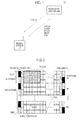
Fig. 1] Fig. 1 is a diagram showing the entire configuration of a mobile communication system according to a first embodiment of the present invention. - [
Fig. 2] Fig. 2 is a diagram illustrating the channel configuration in an uplink of the mobile communication system according to the first embodiment of the present invention. - [
Fig. 3] Fig. 3 is a functional block diagram of a radio base station according to the first embodiment of the present invention. - [
Fig. 4] Fig. 4 is a flowchart illustrating an operation of the radio base station according to the first embodiment of the present invention. - [
Fig. 5] Fig. 5 is a flowchart illustrating an operation of the radio base station according to the first embodiment of the present invention. - With reference to
Fig. 1 to Fig. 3 , the configuration of a mobile communication system according to a first embodiment of the present invention will be described. - The mobile communication system according to the present embodiment is an LTE mobile communication system, and includes a radio base station eNB and a mobile station UE as illustrated in
Fig. 1 . - In the mobile communication system according to the present embodiment, in a downlink, the radio base station eNB is configured to transmit a downlink control signal including a scheduling signal and the like through PDCCH (Physical Downlink Control Channel).
- Furthermore, the mobile station UE is configured to transmit an uplink control signal through PUCCH, to transmit an uplink data signal through PUSCH (Physical Uplink Shared Channel), to transmit a random access procedure signal (for example, a RACH preamble) through PRACH, to transmit DMRS (DeModuration Reference Signal), and to transmit SRS (Sounding Reference Signal) used for measuring channel quality.
- As illustrated in
Fig. 2 , six arbitrary RBs (1.08 MHz) are configured to be ensured as a PRACH resource in each cell. - Furthermore, a PUCCH resource is configured to be ensured at both ends of a system bandwidth through frequency hopping in a subframe.
- Furthermore, an SRS resource is configured to be ensured at a final symbol of a subframe.
- In addition, in the LTE mobile communication system, a time length of a radio frame is 10 ms, a time length of a subframe is 1 ms, and a time length of a slot is 0.5 ms. Furthermore, a frequency bandwidth of one RB is 180 kHz.
- As illustrated in
Fig. 3 , the radio base station eNB includes an RRCconnection management unit 11, ascheduling unit 12, and aPDCCH transmission unit 13. - The RRC
connection management unit 11 is configured to manage the number of mobile stations UEs having established an RRC connection in each cell. - The
scheduling unit 12 is configured to perform a scheduling process with respect to a mobile station UE in the cell subordinate to the radio base station eNB. - Here, when the number of mobile stations UEs in the cell is 1, the
scheduling unit 12 may be configured to use at least one of the PUCCH resource and the PRACH resource as a PUSCH resource. - In addition, when the number of the mobile stations UEs in the cell is 1, the process for using at least one of the PUCCH resource and the PRACH resource as the PUSCH resource may be performed in each subframe (a unit period of a scheduling process, that is, the scheduling process is performed in each subframe) or may be performed in each predetermined time frame. "Each predetermined time frame", for example, may indicate each 100 ms or each second.
- Furthermore, the number of the mobile stations UEs, for example, may include the number of mobile stations UEs having established an RRC connection (the number of RRC connected UEs), the number of mobile stations UEs in a Non-DRX state, the number of mobile stations UEs having data in a buffer, the number of mobile stations UEs subject to scheduling calculation, or the number of mobile stations UEs to which a shared channel is decided to be actually assigned.
- Alternatively, in relation to the above-mentioned two or more number of mobile stations UEs is, it may be considered whether the number of the mobile stations UEs is 1.
- In addition, the mobile stations UEs subject to the scheduling calculation may indicate mobile stations UEs to which a shared channel is to be probably assigned at the subframe, and may include both the mobile stations UEs to which the shared channel is actually assigned, and the mobile stations UEs to which the shared channel is not actually assigned.
- Hereinafter, the following description will be given on the assumption that the number of the mobile stations UEs indicates the number of the mobile stations UEs having established the RRC connection.
- That is, when a plurality of mobile stations UEs have established the RRC connection in the cell, the
scheduling unit 12 may also be configured not to use both the PUCCH resource and the PRACH resource as the PUSCH resource. - For example, when the number of the mobile stations UEs having established the RRC connection in the cell is 1, the
scheduling unit 12 may also be configured to use a fixedly ensured PUCCH resource (that is, RB) as the PUSCH resource. - In such a case, even when the number of the mobile stations UEs having established the RRC connection in the cell is 1, the
scheduling unit 12 may also be configured not to use a fixedly ensured PRACH resource (that is, RB) as the PUSCH resource. - Here, in the cell, since only one mobile station UE having established the RRC connection transmits an uplink control signal through the PUCCH, even when the fixedly ensured PUCCH resource is used as the PUSCH resource as described above, an uplink control signal transmitted by another mobile station UE does not collide with an uplink data signal transmitted by the mobile station UE.
- In such a case, when the timing, at which the PUCCH resource is used as the PUSCH resource, is the timing at which the mobile station UE transmits a transmission acknowledgement signal (ACK/NACK) through the PUCCH in response to a downlink data signal, the mobile station UE is configured to transmit the transmission acknowledgement signal (ACK/NACK) through the PUSCH.
- Alternatively, when the number of the mobile stations UEs having established the RRC connection in the cell is 1, the
scheduling unit 12 may also be configured to use the fixedly ensured PRACH resource (that is, the RB) as the PUSCH resource, in addition to the fixedly ensured PUCCH resource (that is, the RB). - When a mobile station UE in an idle state performs outgoing call, since the mobile station UE is configured to transmit the random access procedure signal through the PRACH, it is probable that the random access procedure signal transmitted through the PRACH collides with the uplink data signal transmitted through the PUSCH.
- However, since power density of the random access procedure signal transmitted through the PRACH is considerably lower than power density of the uplink control signal transmitted through the PUSCH, even when the random access procedure signal has collided with the uplink control signal, it is assumed that the influence of deterioration of the uplink data signal transmitted through the PUSCH is small.
- Meanwhile, when the random access procedure signal transmitted through the PRACH has not been detected in the radio base station eNB, the mobile station UE is configured to increase transmission power of the random access procedure signal by a step width called PowerRampingStep, and transmit the random access procedure signal through the PRACH at the next PRACH transmission timing.
- As described above, if the transmission power of the random access procedure signal is increased by the step width called PowerRampingStep, even when the random access procedure signal has collided with the uplink data signal transmitted through the PUSCH, it is highly probable that the random access procedure signal is detected in the radio base station eNB. However, the probability that the uplink data signal transmitted through the PUSCH is correctly decoded is reduced, resulting in a problem that a rate in an uplink is reduced.
- In order to avoid such a problem, the
scheduling unit 12 may also be configured not to use a predetermined number Y of PRACH resources continuing in the time direction as the PUSCH resource in each predetermined cycle X. - That is, the
scheduling unit 12 may also be configured not to use the PRACH resource as the PUSCH resource in each predetermined cycle X at the PRACH transmission timings which continues Y times. - For example, the
scheduling unit 12 may also be configured not to use the PRACH resource as the PUSCH resource once in each 10 ms at the PRACH transmission timings which continues once or twice. - In addition, the
scheduling unit 12 may also be configured to decide the amount of the PUCCH resource (for example, the number of RBs) based on the amount of the PUCCH resource actually used in the cell, or the number of the mobile stations UEs having established the RRC connection in the cell. - In such a case, the radio base station eNB is configured to notify the mobile station UE existing in the cell of the decided amount of the PUCCH resource (for example, the number of the RBs) by using broadcast information.
- Furthermore, in such a case, in order to efficiently use the PUCCH resource, the
scheduling unit 12 may also be configured to reassign the PUCCH resource individually assigned to each mobile station UE. - With reference to
Fig. 4 andFig. 5 , the operation of the mobile communication system according to the first embodiment of the present invention, specifically, the operation of the radio base station eNB according to the first embodiment of the present invention will be described. - As illustrated in
Fig. 4 , in step S11, the radio base station eNB determines whether "the number of RRC connected UEs" in a cell is 2 or more at a target subframe, that is, determines whether the number of the mobile stations UEs having established an RRC connection in the cell is 1. - In the case of "YES", the present operation proceeds to step S12. In the case of "NO", the present operation proceeds to step S13.
- The radio base station eNB determines that it is not possible to assign the PUCCH resource and the PRACH resource as the PUSCH resource in step S12, and assigns the PUSCH resource (that is, the RB) in
step S 14. - The radio base station eNB determines that it is possible to assign the PUCCH resource as the PUSCH resource in step S13, and assigns the PUSCH resource (that is, the RB) in step S14.
- As illustrated in
Fig. 5 , the radio base station eNB sets "k = 0" and "n = 0" in step S101, and determines whether "the number of RRC connected UEs" in the cell is 2 or more at a target subframe, that is, determines whether the number of the mobile stations UEs having established an RRC connection in the cell is 1 in step S102. - In the case of "YES", the present operation proceeds to step S103. In the case of "NO", the present operation proceeds to step S104.
- The radio base station eNB determines that it is not possible to assign the PUCCH resource and the PRACH resource as the PUSCH resource in step S103, and assigns the PUSCH resource (that is, the RB) in step S113.
- In step S104, the radio base station eNB determines whether the target subframe corresponds to the PRACH transmission timing.
- In the case of "YES", the present operation proceeds to step S106. In the case of "NO", the present operation proceeds to step S105.
- The radio base station eNB determines that it is possible to assign the PUCCH resource as the PUSCH resource in step S105, and assigns the PUSCH resource (that is, the RB) in step S113.
- The radio base station eNB increases the "k" by "1" in step S106, and determines whether "k > X" is satisfied in step S107. Here, the "X" denotes the above-mentioned predetermined cycle.
- In the case of "YES", the present operation proceeds to step S108. In the case of "NO", the present operation proceeds to step S112.
- The radio base station eNB increases the "n" by "1" in step S108, and determines whether "n > Y" is satisfied in step S109. Here, the "Y" denotes the above-mentioned predetermined number.
- In the case of "YES", the present operation proceeds to step S111. In the case of "NO", the present operation proceeds to step S110.
- The radio base station eNB determines that it is possible to assign the PUCCH resource as the PUSCH resource but it is not possible to assign the PRACH resource as the PUSCH resource in step S110, and assigns the PUSCH resource (that is, the RB) in step S113.
- The radio base station eNB sets "k = 1" and "n = 0" in step S111, determines that it is possible to assign the PUCCH resource and the PRACH resource as the PUSCH resource in step S112, and assigns the PUSCH resource (that is, the RB) in step S113.
- In accordance with the mobile communication system according to the first embodiment of the present invention, when the number of mobile stations UEs having established an RRC connection in a cell is 1, that is, in a congestion-free state, the PUCCH resource and the PRACH resource are assigned as the PUSCH resource, so that it is possible to minimize a reduction in the above-mentioned peak rate.
- The characteristics of the present embodiment as described above may be expressed as follows.
- A first characteristic of the present embodiment is summarized in that a radio base station eNB includes: a
scheduling unit 12 configured to assign a PUCCH (physical uplink control channel for transmitting an uplink control signal) resource, a PUSCH (physical uplink shared channel for transmitting an uplink data signal) resource, and a PRACH (physical random access channel) resource to a mobile station UE in a cell subordinate to the radio base station eNB, wherein, when the number of mobile stations UEs in the cell is 1, thescheduling unit 12 is configured to use at least one of the PUCCH resource and the PRACH resource as the PUSCH resource. - In the first characteristic of the present embodiment, the number of the above-mentioned mobile stations UEs, for example, may include the number of mobile stations UEs having established an RRC connection in the cell (the number of RRC connected UEs), the number of mobile stations UEs in a Non-DRX state, the number of mobile stations UEs having data in a buffer, the number of mobile stations UEs subject to scheduling calculation, or the number of mobile stations UEs to which a shared channel is decided to be actually assigned.
- In addition, the mobile stations UEs subject to the scheduling calculation may indicate mobile stations UEs to which a shared channel is to be probably assigned at the subframe, and may include both the mobile stations UEs to which the shared channel is actually assigned, and the mobile stations UEs to which the shared channel is not actually assigned.
- In the first characteristic of the present embodiment, the
scheduling unit 12 may also be configured not to use the PRACH resource as the PUSCH resource. - For example, the
scheduling unit 12 may also be configured not to use a predetermined number of the PRACH resources continuing in the time direction as the PUSCH resource in each predetermined cycle. - A second characteristic of the present embodiment is summarized in that a mobile communication method includes: a step of assigning, by a radio base station eNB, a PUCCH resource, a PUSCH resource, and a PRACH resource to a mobile station UE in a cell subordinate to the radio base station eNB, wherein, in the step, when the number of mobile stations UEs in the cell is 1, the radio base station eNB uses at least one of the PUCCH resource and the PRACH resource as the PUSCH resource.
- In the second characteristic of the present embodiment, the number of the above-mentioned mobile stations UEs, for example, may include the number of mobile stations UEs having established an RRC connection in the cell (the number of RRC connected UEs), the number of mobile stations UEs in a Non-DRX state, the number of mobile stations UEs having data in a buffer, the number of mobile stations UEs subject to scheduling calculation, or the number of mobile stations UEs to which a shared channel is decided to be actually assigned.
- In addition, the mobile stations UEs subject to the scheduling calculation may indicate mobile stations UEs to which a shared channel is to be probably assigned at the subframe, and may include both the mobile stations UEs to which the shared channel is actually assigned, and the mobile stations UEs to which the shared channel is not actually assigned.
- In the second characteristic of the present embodiment, when the PUCCH resource is used as the PUSCH resource, one mobile state UE having established an RRC connection may transmit a transmission acknowledgement signal using the PUSCH resource in response to a downlink data signal.
- In the second characteristic of the present embodiment, in the above-mentioned step, the radio base station eNB may not use the PRACH resource as the PUSCH resource.
- For example, in the above-mentioned step, the radio base station eNB may not use a predetermined number of the PRACH resources continuing in the time direction as the PUSCH resource in each predetermined cycle.
- A third characteristic of the present embodiment is summarized as a mobile station UE, in which a PUCCH resource is used as a PUSCH resource, if only one mobile state UE has established an RRC connection, the mobile state UE may be configured to transmit a transmission acknowledgement signal using a resource of the PUSCH resource in response to a downlink data signal.
- It is noted that the operation of the above-described the radio base station eNB or the mobile station UE may be implemented by a hardware, may also be implemented by a software module executed by a processor, and may further be implemented by the combination of the both.
- The software module may be arranged in a storage medium of an arbitrary format such as RAM(Random Access Memory), a flash memory, ROM (Read Only Memory), EPROM (Erasable Programmable ROM), EEPROM (Electronically Erasable and Programmable ROM), a register, a hard disk, a removable disk, and CD-ROM.
- The storage medium is connected to the processor so that the processor can write and read information into and from the storage medium. Such a storage medium may also be accumulated in the processor. The storage medium and processor may be arranged in ASIC. Such the ASIC may be arranged in the radio base station eNB or the mobile station UE. Further, such a storage medium or a processor may be arranged, as a discrete component, in the radio base station eNB or the mobile station UE.
- Thus, the present invention has been explained in detail by using the above-described embodiments; however, it is obvious that for persons skilled in the art, the present invention is not limited to the embodiments explained herein. The present invention can be implemented as a corrected and modified mode without departing from the gist and the scope of the present invention defined by the claims. Therefore, the description of the specification is intended for explaining the example only and does not impose any limited meaning to the present invention.
- As described above, in accordance with the present invention, it is possible to provide a radio base station and a mobile communication method, by which it is possible to avoid a reduction in a peak rate in an uplink as much as possible.
Claims (6)
- A radio base station comprising: a scheduling unit configured to assign a resource for a physical uplink control channel for transmitting an uplink control signal, a resource for a physical uplink shared channel for transmitting an uplink data signal, and a resource for a physical random access channel to a mobile station in a cell subordinate to the radio base station, wherein,
when the number of mobile stations in the cell is 1, the scheduling unit is configured to use at least one of the resource for the physical uplink control channel and the resource for the physical random access channel as the resource for the physical uplink shared channel. - The radio base station according to claim 1, wherein
the number of mobile stations is at least one of: the number of mobile stations UEs having established an RRC connection, the number of mobile stations in a Non-DRX state, the number of mobile stations having data in a buffer, the number of mobile stations subject to scheduling calculation, or the number of mobile stations to which a shared channel is decided to be actually assigned. - The radio base station according to claim 1, wherein
the scheduling unit is configured not to use the resource for the physical random access channel as the resource for the physical uplink shared channel. - A mobile communication method comprising: a step of assigning, by a radio base station, a resource for a physical uplink control channel for transmitting an uplink control signal, a resource for a physical uplink shared channel for transmitting an uplink data signal, and a resource for a physical random access channel to a mobile station in a cell subordinate to the radio base station,
wherein, in the step, when the number of mobile stations in the cell is 1, the radio base station uses at least one of the resource for the physical uplink control channel and the resource for the physical random access channel as the resource for the physical uplink shared channel. - The mobile communication method according to claim 4, wherein
the number of mobile stations UEs is at least one of: the number of mobile stations UEs having established an RRC connection, the number of mobile stations in a Non-DRX state, the number of mobile stations having data in a buffer, the number of mobile stations subject to scheduling calculation, or the number of mobile stations to which a shared channel is decided to be actually assigned. - The mobile communication method according to claim 4, wherein
in the step, the radio base station does not use the resource for the physical random access channel as the resource for the physical uplink shared channel.
Applications Claiming Priority (2)
| Application Number | Priority Date | Filing Date | Title |
|---|---|---|---|
| JP2009260376A JP5106516B2 (en) | 2009-11-13 | 2009-11-13 | Radio base station and mobile communication method |
| PCT/JP2010/070199 WO2011059060A1 (en) | 2009-11-13 | 2010-11-12 | Wireless base station and mobile communication method |
Publications (1)
| Publication Number | Publication Date |
|---|---|
| EP2501195A1 true EP2501195A1 (en) | 2012-09-19 |
Family
ID=43991716
Family Applications (1)
| Application Number | Title | Priority Date | Filing Date |
|---|---|---|---|
| EP10830019A Withdrawn EP2501195A1 (en) | 2009-11-13 | 2010-11-12 | Wireless base station and mobile communication method |
Country Status (5)
| Country | Link |
|---|---|
| US (1) | US20120269149A1 (en) |
| EP (1) | EP2501195A1 (en) |
| JP (1) | JP5106516B2 (en) |
| CN (1) | CN102598832A (en) |
| WO (1) | WO2011059060A1 (en) |
Families Citing this family (7)
| Publication number | Priority date | Publication date | Assignee | Title |
|---|---|---|---|---|
| JP2013005148A (en) | 2011-06-15 | 2013-01-07 | Ntt Docomo Inc | Radio communication system, base station, mobile station and radio communication method |
| CN110445591B (en) | 2012-09-26 | 2021-12-28 | 华为技术有限公司 | System and method for random access in heterogeneous communication system |
| US10129893B2 (en) * | 2013-10-23 | 2018-11-13 | Telefonaktiebolaget Lm Ericsson (Publ) | Network node and method for handling cellular and D2D communications in a wireless communications network |
| US20150181566A1 (en) * | 2013-12-20 | 2015-06-25 | Broadcom Corporation | Apparatus and method for reducing upstream control channel resources in a communications system |
| EP3216300B1 (en) * | 2014-11-04 | 2018-08-29 | Telefonaktiebolaget LM Ericsson (publ) | A wireless communication device, a network node and methods therein for improved random access transmissions |
| CN110876162B (en) * | 2018-08-29 | 2023-05-19 | 中兴通讯股份有限公司 | Random access method and device for MTC (machine type communication) equipment |
| CN115988547B (en) * | 2022-12-12 | 2026-02-03 | 中国电信股份有限公司 | Parallel detection method and device for terminal of Internet of things |
Family Cites Families (13)
| Publication number | Priority date | Publication date | Assignee | Title |
|---|---|---|---|---|
| KR100283073B1 (en) * | 1997-10-13 | 2001-03-02 | 정선종 | A trnsmit and receive method of control plane information using the structure of medium access control frame |
| SE514328C2 (en) * | 1998-12-18 | 2001-02-12 | Ericsson Telefon Ab L M | Method and arrangement of a radio communication system for carrying out message transmission |
| DE19901622A1 (en) * | 1999-01-18 | 2000-07-20 | Philips Corp Intellectual Pty | Wireless network |
| US7742781B2 (en) * | 2001-03-28 | 2010-06-22 | Qualcomm Incorporated | Power control for point-to-multipoint services provided in communication systems |
| US6693996B2 (en) * | 2001-08-14 | 2004-02-17 | Sharp Laboratories Of America, Inc. | System and method for data backup in a home network telephone |
| CN100499424C (en) * | 2003-05-22 | 2009-06-10 | 华为技术有限公司 | Method for supporting cluster service multi-channel by CDMA system |
| WO2007091420A1 (en) * | 2006-02-06 | 2007-08-16 | Matsushita Electric Industrial Co., Ltd. | Base station and communication system |
| JP4855962B2 (en) * | 2007-02-06 | 2012-01-18 | 富士通株式会社 | Wireless communication system and wireless communication method |
| US8031688B2 (en) * | 2007-06-11 | 2011-10-04 | Samsung Electronics Co., Ltd | Partitioning of frequency resources for transmission of control signals and data signals in SC-FDMA communication systems |
| US8412209B2 (en) * | 2007-06-18 | 2013-04-02 | Motorola Mobility Llc | Use of the physical uplink control channel in a 3rd generation partnership project communication system |
| US20090046645A1 (en) * | 2007-08-13 | 2009-02-19 | Pierre Bertrand | Uplink Reference Signal Sequence Assignments in Wireless Networks |
| CN101335713B (en) * | 2008-07-25 | 2012-05-09 | 中兴通讯股份有限公司 | Transmission method of physical random access channel and method for determining frequency domain initial position |
| CN101340725B (en) * | 2008-08-07 | 2012-07-18 | 中兴通讯股份有限公司 | Resource distribution method of physical random access channel |
-
2009
- 2009-11-13 JP JP2009260376A patent/JP5106516B2/en not_active Expired - Fee Related
-
2010
- 2010-11-12 CN CN2010800513500A patent/CN102598832A/en active Pending
- 2010-11-12 US US13/509,295 patent/US20120269149A1/en not_active Abandoned
- 2010-11-12 WO PCT/JP2010/070199 patent/WO2011059060A1/en not_active Ceased
- 2010-11-12 EP EP10830019A patent/EP2501195A1/en not_active Withdrawn
Non-Patent Citations (1)
| Title |
|---|
| See references of WO2011059060A1 * |
Also Published As
| Publication number | Publication date |
|---|---|
| WO2011059060A1 (en) | 2011-05-19 |
| US20120269149A1 (en) | 2012-10-25 |
| JP5106516B2 (en) | 2012-12-26 |
| JP2011109277A (en) | 2011-06-02 |
| CN102598832A (en) | 2012-07-18 |
Similar Documents
| Publication | Publication Date | Title |
|---|---|---|
| US11277864B2 (en) | Method and apparatus for determining LBT mode and method for LBT mode switching | |
| US11540319B2 (en) | Method and device for performing random access process in unlicensed band | |
| CN114845415B (en) | A method for transmitting uplink signals, and user equipment. | |
| KR102766020B1 (en) | Competition-based coexistence on shared communication media | |
| EP2523520B1 (en) | Method and device for scheduling request | |
| EP3745805B1 (en) | Listen-before-talk operation in laa | |
| CN108353398B (en) | Uplink Control Signaling on Shared Communication Medium | |
| US10425942B2 (en) | Method and device for transmitting uplink in unlicensed band | |
| US20120195273A1 (en) | Mobile communication method and mobile station | |
| CN107926060B (en) | Transmitting node and method therein for performing data transfer to a receiving node | |
| US20180310332A1 (en) | Method for transmitting uplink in unlicensed band and device using same | |
| WO2017136759A1 (en) | Systems and methods for contention access | |
| JP2018531534A (en) | Adaptation of contention window in multi-carrier LBT protocol | |
| EP2501195A1 (en) | Wireless base station and mobile communication method | |
| EP3533281B1 (en) | Methods and devices for random access | |
| US20180279340A1 (en) | Scheduling and Accessing of Uplink Resources | |
| US20110255407A1 (en) | Radio base station and mobile communication method | |
| US9320056B2 (en) | Mobile station and radio base station for “always-on” method | |
| CN108243497B (en) | Method for autonomous uplink signal transmission, and corresponding terminal device and network device | |
| EP2493258A1 (en) | Radio base station | |
| EP3643131A1 (en) | Method, base station and user equipment for uplink transmission and control thereof | |
| EP2892263B1 (en) | Radio base station and mobile station | |
| CN120239104A (en) | Method and apparatus for providing auxiliary information of environmental Internet of Things in a wireless communication system | |
| EP3739802B1 (en) | Base station and search space allocation method thereof | |
| EP3673698B1 (en) | Methods and nodes for communication on multiple channels |
Legal Events
| Date | Code | Title | Description |
|---|---|---|---|
| PUAI | Public reference made under article 153(3) epc to a published international application that has entered the european phase |
Free format text: ORIGINAL CODE: 0009012 |
|
| 17P | Request for examination filed |
Effective date: 20120612 |
|
| AK | Designated contracting states |
Kind code of ref document: A1 Designated state(s): AL AT BE BG CH CY CZ DE DK EE ES FI FR GB GR HR HU IE IS IT LI LT LU LV MC MK MT NL NO PL PT RO RS SE SI SK SM TR |
|
| DAX | Request for extension of the european patent (deleted) | ||
| STAA | Information on the status of an ep patent application or granted ep patent |
Free format text: STATUS: THE APPLICATION HAS BEEN WITHDRAWN |
|
| 18W | Application withdrawn |
Effective date: 20140522 |