EP2490418A2 - Vorrichtung und zugehöriges Verfahren zur Auswahl der Informationsbereitstellungsart mithilfe der Gesichtserkennung - Google Patents
Vorrichtung und zugehöriges Verfahren zur Auswahl der Informationsbereitstellungsart mithilfe der Gesichtserkennung Download PDFInfo
- Publication number
- EP2490418A2 EP2490418A2 EP11169085A EP11169085A EP2490418A2 EP 2490418 A2 EP2490418 A2 EP 2490418A2 EP 11169085 A EP11169085 A EP 11169085A EP 11169085 A EP11169085 A EP 11169085A EP 2490418 A2 EP2490418 A2 EP 2490418A2
- Authority
- EP
- European Patent Office
- Prior art keywords
- information
- delivery
- manner
- facial recognition
- selection
- Prior art date
- Legal status (The legal status is an assumption and is not a legal conclusion. Google has not performed a legal analysis and makes no representation as to the accuracy of the status listed.)
- Ceased
Links
Images

Classifications
-
- G—PHYSICS
- G06—COMPUTING OR CALCULATING; COUNTING
- G06V—IMAGE OR VIDEO RECOGNITION OR UNDERSTANDING
- G06V40/00—Recognition of biometric, human-related or animal-related patterns in image or video data
- G06V40/10—Human or animal bodies, e.g. vehicle occupants or pedestrians; Body parts, e.g. hands
- G06V40/16—Human faces, e.g. facial parts, sketches or expressions
- G06V40/174—Facial expression recognition
-
- H—ELECTRICITY
- H04—ELECTRIC COMMUNICATION TECHNIQUE
- H04M—TELEPHONIC COMMUNICATION
- H04M1/00—Substation equipment, e.g. for use by subscribers
- H04M1/60—Substation equipment, e.g. for use by subscribers including speech amplifiers
- H04M1/6033—Substation equipment, e.g. for use by subscribers including speech amplifiers for providing handsfree use or a loudspeaker mode in telephone sets
- H04M1/6041—Portable telephones adapted for handsfree use
- H04M1/6075—Portable telephones adapted for handsfree use adapted for handsfree use in a vehicle
-
- G—PHYSICS
- G10—MUSICAL INSTRUMENTS; ACOUSTICS
- G10L—SPEECH ANALYSIS TECHNIQUES OR SPEECH SYNTHESIS; SPEECH RECOGNITION; SPEECH OR VOICE PROCESSING TECHNIQUES; SPEECH OR AUDIO CODING OR DECODING
- G10L13/00—Speech synthesis; Text to speech systems
-
- H—ELECTRICITY
- H04—ELECTRIC COMMUNICATION TECHNIQUE
- H04M—TELEPHONIC COMMUNICATION
- H04M1/00—Substation equipment, e.g. for use by subscribers
- H04M1/72—Mobile telephones; Cordless telephones, i.e. devices for establishing wireless links to base stations without route selection
- H04M1/724—User interfaces specially adapted for cordless or mobile telephones
- H04M1/72403—User interfaces specially adapted for cordless or mobile telephones with means for local support of applications that increase the functionality
-
- H—ELECTRICITY
- H04—ELECTRIC COMMUNICATION TECHNIQUE
- H04M—TELEPHONIC COMMUNICATION
- H04M1/00—Substation equipment, e.g. for use by subscribers
- H04M1/72—Mobile telephones; Cordless telephones, i.e. devices for establishing wireless links to base stations without route selection
- H04M1/724—User interfaces specially adapted for cordless or mobile telephones
- H04M1/72448—User interfaces specially adapted for cordless or mobile telephones with means for adapting the functionality of the device according to specific conditions
-
- H—ELECTRICITY
- H04—ELECTRIC COMMUNICATION TECHNIQUE
- H04M—TELEPHONIC COMMUNICATION
- H04M1/00—Substation equipment, e.g. for use by subscribers
- H04M1/72—Mobile telephones; Cordless telephones, i.e. devices for establishing wireless links to base stations without route selection
- H04M1/724—User interfaces specially adapted for cordless or mobile telephones
- H04M1/72403—User interfaces specially adapted for cordless or mobile telephones with means for local support of applications that increase the functionality
- H04M1/7243—User interfaces specially adapted for cordless or mobile telephones with means for local support of applications that increase the functionality with interactive means for internal management of messages
- H04M1/72436—User interfaces specially adapted for cordless or mobile telephones with means for local support of applications that increase the functionality with interactive means for internal management of messages for text messaging, e.g. short messaging services [SMS] or e-mails
-
- H—ELECTRICITY
- H04—ELECTRIC COMMUNICATION TECHNIQUE
- H04M—TELEPHONIC COMMUNICATION
- H04M2250/00—Details of telephonic subscriber devices
- H04M2250/12—Details of telephonic subscriber devices including a sensor for measuring a physical value, e.g. temperature or motion
-
- H—ELECTRICITY
- H04—ELECTRIC COMMUNICATION TECHNIQUE
- H04M—TELEPHONIC COMMUNICATION
- H04M2250/00—Details of telephonic subscriber devices
- H04M2250/52—Details of telephonic subscriber devices including functional features of a camera
Definitions
- the present disclosure relates generally to a manner by which to deliver information to a user of a wireless, or other electronic, device. More particularly, the present disclosure relates to an apparatus, and an associated method, by which to select delivery of the information based upon a facial recognition indication.
- the information is delivered in an aural manner if the facial recognition indication of the user indicates the information best to be delivered in aural, rather than textual, or other, form.
- facial recognition permits selection of the manner by which to deliver the information that is most appropriate at the time at which the information is to be delivered.
- a facial recognition indication of the user is obtained. And, based upon the indication, the selection of the delivery manner is made.
- Cellular, and other wireless, communication systems are used by many.
- Network infrastructures of wireless communication systems have been installed to encompass significant portions of the populated areas of the world.
- a wireless device when positioned in the coverage area defined by the network infrastructure that encompasses a geographical area, and permitted access to the network, is able to communicate with a communication endpoint by way of the network infrastructure. And as communications are performed between the wireless device and the network infrastructure by way of radio channels defined upon a radio air interface formed between the infrastructure and the device, no physical connection is required to be made to the wireless device to provide for the communications by and with the wireless device.
- a wireless device used in a cellular, or cellular-like, communication system is often times of small dimensions thereby to permit the wireless device to be hand-carried by, or otherwise carried on the person of, the user. Due to this portability provided to a wireless device, a user of the device is able easily to maintain the device in close proximity, to have the device readily available when needed.
- Message services such as email and instant message services are amongst the data services that are available and utilized by users of the wireless devices.
- Such messages typically utilize alphanumeric textual data that is communicated between the wireless device and a communication endpoint.
- alphanumeric, e.g., textual, messages permits the messages to be viewed at the convenience of a viewer, such as the user of the wireless device.
- the communication service comprises an email communication service
- a communicated message is reviewed by a recipient on an as-desired basis, that is, at the convenience of the recipient, such as the user of the device.
- the user interface provides a mechanism by which a user receives information communicated to the device and also provides a mechanism for the formation of information that is communicated by the device.
- the user interface often times comprises a display screen and an input keyboard.
- the user interface is implemented as a touch-screen display in which inputs are generated by touching the display screen.
- an alert is generated to alert a user of the device of the delivery of the message.
- the user of the device once alerted, is able immediately, if desired, to view the received message.
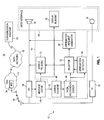
- Figure 1 illustrates a functional block diagram of a wireless device that includes an implementation of the present disclosure.
- Figure 2 illustrates an exemplary, sensed facial image from which a facial recognition indication is generated pursuant to exemplary operation of an implementation of the present disclosure.
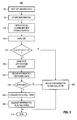
- Figure 3 illustrates a message sequence diagram representative of exemplary operation of an implementation of the present disclosure.
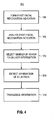
- Figure 4 illustrates a method flow diagram representative of a method of operation of an implementation of the present disclosure.
- the present disclosure accordingly, advantageously provides an apparatus, and an associated method, for delivering information to a wireless, or other electronic, device.
- a manner is provided by which to select delivery of the information based upon a facial recognition indication.
- the information is delivered in an aural manner responsive to a facial recognition indication of the user that indicates the information best to be delivered in aural, rather than textual, or other, form.
- facial recognition is used to select the manner of delivery that is most appropriate at the time of delivery.
- a facial recognition indication of the user is obtained. And, based upon the indication, the selection of the delivery manner is made.
- an image detector such as a camera lens assembly
- the camera lens assembly provides for recordation, or other viewing, of an image.
- a camera lens of the camera lens assembly is positionable to detect an image of the facial area of the user of the device.
- the facial image once recorded or otherwise obtained, is analyzed.
- the analysis is carried out to detect a demeanor of the subject, i.e., the facial image of the user.
- the demeanor is ascertained by determining a facial configuration of portions of the facial image. And, by such determination, an indication of the demeanor of the subject is obtained.
- the facial recognition indication is obtained responsive to delivery at the wireless, or other electronic, device of a data message.
- the facial recognition indication is obtained at selected intervals.
- the facial recognition indication is, obtained at a time proximate to delivery of the received information in human perceptible form to the user of the device. That is to say, the determination is made, based upon a facial image obtained in time proximity to the time at which the received information is to be delivered to the user of the device.
- the facial recognition indication is used to select in what manner to deliver the received information to the user of the device.
- the selection is made to deliver the information in a first manner if the facial recognition indicates the facial characteristics of the subject to be of first characteristics.
- the selection is made to deliver the information in a second manner if the facial recognition indication indicates the facial characteristic of the subject to be of second characteristics.
- the information is delivered in aural form if the facial recognition indication indicates the facial characteristic of the subject to be of the first characteristic. And, the selection is made to deliver the information in textual form if the facial recognition indication indicates the facial characteristic of the subject to be of the second characteristic.
- the selection is made to deliver the information in a first manner if the facial recognition indicates the subject to exhibit a selected facial characteristic, e.g., a serious demeanor. And, the selection is made to deliver the information in a second manner if the facial recognition indication indicates the subject not to exhibit the selected facial characteristic.
- a selected facial characteristic e.g., a serious demeanor.
- a validation or affirmation of the selection is made.
- the affirmation or validation of the selection is made prior to delivering the information in the selected manner.
- the user of the device is provided with an indication of the selection. And, in response to being provided with the selection indication, the user is able to affirm or reject the selection.
- a sensor selects the affirmation or rejection made by the user.
- the affirmation detector detects a facial characteristic of the user by sensing a facial image of the user when the user affirms or rejects the selection.
- the facial recognition indication is formed through analysis of the sensed, facial image.
- the affirmation detector affirms or rejects the selection, as a result of the analysis of the facial characteristic of the subject, affirms, or rejects, the selection.
- the information is delivered in the selected manner.
- the selected manner comprises aural delivery of the information
- the received information is converted into aural form for delivery.
- the conversion is performed, for instance, by a text-to-audio transducer.
- information is delivered to the user of the device in a manner most-appropriate for the user based upon the facial characteristics of the user at a time proximate to the delivery of the information.
- an apparatus, and an associated method for facilitating delivery of information at an electronic device.
- a delivery-type selector is configured to select in which of a first manner and a second manner to deliver the information. Selection is dependent upon a first facial recognition indication.
- An aural transducer is configured to transduce the information into aural form if the delivery-type selector selects the user delivery of the information in the first manner.
- a communication system shown generally at 10 provides for communications with wireless devices, of which the wireless device 12 is representative.
- the communication system comprises a cellular communication system.
- the following description of exemplary operation shall be described with respect to the exemplary implementation. It should be understood, however, that in other implementations, the communication system is implemented in other manners. And, the teachings of the present disclosure are analogously applicable in such other types of communication systems, both wireless and wire line.
- the communication system includes a network part, here including a radio access network (RAN) 16 and a data network 18, such as the internet.
- RAN radio access network
- a communication endpoint 22 is placeable in communication connectivity with the data network.
- Radio communications are made between radio transceiver circuitry, embodied at a base transceiver station (BTS) 24 of the radio access network and transceiver circuitry, represented by a receive (Rx) part 28 and a transmit (Tx) part 32 of the wireless device 12.
- Information in the form of communication signals, is sent by way of radio channels, represented by the arrow 34, defined upon a radio air interface formed between the network and the wireless device.
- the wireless device 12 is capable both of conventional, telephonic communication services and also to perform message communication services, such as e-mail messaging.
- message communication services such as e-mail messaging.
- an email message originated at the communication endpoint 22 is routable, by way of the data network 18, the radio access network 16, and radio channels 34 defined upon a radio air interface for delivery to the receive part 28 of the wireless device 12.
- Messages originated at the wireless device are analogously sent by the transmit part 32 by way of a reverse route for delivery to the communication endpoint 22.
- voice signals are transduced by the microphone 36 during telephonic operation of the device 10.
- the wireless device 12 includes an apparatus 42 of an implementation of the present disclosure that provides for an alternate manner by which to deliver the informational content of the received message to a user of the wireless device.
- the apparatus is functionally represented, implementable in any desired manner, including hardware elements, firmware elements, algorithm executable by processing circuitry, and combinations thereof.
- the apparatus 42 is here shown to include a camera element 46, a facial recognition sensor 48, a selector 52, an affirmation request generator 56, an affirmation detector 58, a speech-to-audio transducer 62, and a user interface 66.
- the message is stored at a message cache 68. And, responsive to the message, an indication is provided, here represented by the arrow 72.
- the camera element functions to sense or record an image.
- the camera element includes, for instance, a lens assembly, sensor element, and other circuitry need to sense or record an image.
- the image comprises a facial image of a subject, i.e., the facial image of a user of the wireless device or intended recipient of the received message or messages.
- the sensed or recorded image, once obtained by the camera element 46, is analyzed by the facial recognition sensor 48.
- the sensor 48 operates to sense facial characteristics of the facial image of the subject sensed or analyzed by the camera element.
- the sensor operates to sense a selected characteristic of the subject.
- the demeanor of the subject is sensed based upon the image obtained by the camera element.
- the determination is made, for instance, by analyzing a plurality of locations of the facial image. And, based upon the plurality of locations, the determination is made of the demeanor, or other selected characteristic, of the subject. If, for instance, the subject is operating a motor vehicle, the demeanor of the subject is likely to be serious. And, the subject would likely be distracted if required to read or otherwise view the received message.
- the subject is more likely to be readily available to read or otherwise view the received message in conventional manner.
- an appropriate selection of the delivery manner is made to deliver the message to the motor-vehicle operator.
- the selector 52 is provided with indications formed by the facial recognition sensor 48. And, the selector selects in what manner to deliver the received message to the user. If the subject is determined to exhibit the selected characteristic, the selector selects delivery of the receive message, i.e., information, in a first manner, here an aural form. And, if the determination is that the subject does not exhibit the selected characteristic, the selector selects delivery of the received information in a second manner, here a textual form.
- an affirmation from the user is obtained, particularly if the selection made by the selector is to deliver the information in aural form.
- the selector causes the affirmation request generator 56 to cause generation of an affirmation request, such as an audible sound generated by a speaker 76 of the user interface.
- the audible sound is at a level great enough to permit the user of the wireless device to detect the sound.
- the user of the wireless device in response, makes a facial contortion to affirm or to reject the selection made by the selector.
- the camera element 46 senses the facial configuration of the user, and a facial recognition sensor operates to sense the facial configuration of the user responsive to the affirmation request. A determination is made as to whether the selection is affirmed or rejected. And, the affirmation detector 58 detects the determination. The detector detects whether the user has affirmed or rejected the selection. And, detection made by the detector is provided to the selector 52.
- the selector based upon the selection and the affirmation of the selection causes the received message, stored at the message cache 68, to be converted into aural form by the speech to audio transducer 62 and then played out by the speaker 76 if the selection has been made and affirmed to deliver the information in aural form. If, conversely, selection is made to deliver the information in textual form, the information stored at the message cache 68 is provided to a display element 82 of the user interface and displayed in conventional manner.
- the manner by which the received message is delivered is dependent upon the facial recognition indication formed by the facial recognition sensor. If the sensed facial configuration is of a first configuration type, then selection is made to deliver the received message in a first manner, e.g., aurally. If conversely, the sense configuration is of second characteristics, the received message is caused to be delivered in another manner, e.g., textually. The selection is made without requiring specific user input. Rather, the camera element senses a facial indication, e.g., demeanor of the user, and selection is based upon the sensed facial configuration or indication. If, e.g., the sensed indication indicates the user to exhibit a serious demeanor, then selection is made to deliver the content of the received information in audio form. If, conversely, e.g., the user exhibits a less-serious demeanor, the message is delivered in visual form, necessitating viewing of the message displayed at a display element.
- a facial indication e.g.,
- FIG 2 illustrates a representation 92 of an exemplary sensed image formed pursuant to operation of an implementation of the apparatus 42 shown in Figure 1 .
- the sensed image here comprises a portion of the body of a subject including portions of the face of the head 94 of the subject.
- the face of the subject is divided into multiple portions 96 and points of interest 98 in different ones of the portions 96.
- the points of interest are analyzed to obtain the facial recognition indication that indicates the characteristic of the subject, such as the demeanor of the subject.
- Figure 3 illustrates a process diagram 106 representative of the process of operation of an implementation of the present disclosure.
- the process provides for delivery of received information at a wireless, or other electronic, device.
- the delivery of the informational content of the message to a user is made in the manner determined to be most appropriate based upon quantitatively-obtained characteristics of a facial characteristic of a user of the device.
- a facial configuration characteristic is obtained.
- the facial configuration characteristic is obtained by positioning a camera element to sense the facial portion of a subject, the user of the device.
- the characteristics are analyzed, indicated by the block 116. Then, and as indicated by the decision block 122, a determination is made as to whether the facial configuration of the subject exhibits a selected characteristic. If not, the no branch is taken to the block 126, and the received information is displayed at a display element, i.e., displayed in textual form or viewing by a user.
- the decision block 122 determines whether the subject exhibits the selected characteristic. If, conversely, a determination is made at the decision block 122 that the subject exhibits the selected characteristic, the yes branch is taken, and an affirmation request is generated, indicated by the block 128. And, as indicated by the block 132, a facial configuration characteristic of the subject, subsequent to generation of the affirmation request, is obtained.
- Figure 4 illustrates a method flow diagram 162 representative of a method of operation of an implementation of the present disclosure.
- the method facilitates delivery of information at a wireless device.
- a first facial recognition indication is formed.
- the first facial recognition indication is analyzed.
- a selection is made of in which of a first manner and a second manner to deliver the information.
- the selection is dependent upon the first facial recognition indication.
- affirmation of the selection is detected.
- the information is transduced into selected form if selection has been made, and affirmed, that the information is to be delivered in the selected form.
- a manner is provided by which to deliver information in a manner that is most appropriate based upon a facial characteristic of the recipient.
- a wireless device or other communication device such as communication device 10 in FIG. 1
- alerts and notices of the message are managed in a manner that is appropriate to the facial characteristics, which for instance, when the user is operating a motor vehicle, will provide less distraction to the user from operating the motorized vehicle.
Landscapes
- Engineering & Computer Science (AREA)
- Human Computer Interaction (AREA)
- Signal Processing (AREA)
- Computer Networks & Wireless Communication (AREA)
- Multimedia (AREA)
- Health & Medical Sciences (AREA)
- Physics & Mathematics (AREA)
- Audiology, Speech & Language Pathology (AREA)
- Computational Linguistics (AREA)
- Acoustics & Sound (AREA)
- General Physics & Mathematics (AREA)
- Theoretical Computer Science (AREA)
- Oral & Maxillofacial Surgery (AREA)
- General Health & Medical Sciences (AREA)
- Telephonic Communication Services (AREA)
- Telephone Function (AREA)
- Mobile Radio Communication Systems (AREA)
- Collating Specific Patterns (AREA)
Applications Claiming Priority (1)
| Application Number | Priority Date | Filing Date | Title |
|---|---|---|---|
| US13/030,001 US8531536B2 (en) | 2011-02-17 | 2011-02-17 | Apparatus, and associated method, for selecting information delivery manner using facial recognition |
Publications (2)
| Publication Number | Publication Date |
|---|---|
| EP2490418A2 true EP2490418A2 (de) | 2012-08-22 |
| EP2490418A3 EP2490418A3 (de) | 2013-05-22 |
Family
ID=45746979
Family Applications (1)
| Application Number | Title | Priority Date | Filing Date |
|---|---|---|---|
| EP11169085.5A Ceased EP2490418A3 (de) | 2011-02-17 | 2011-06-08 | Vorrichtung und zugehöriges Verfahren zur Auswahl der Informationsbereitstellungsart mithilfe der Gesichtserkennung |
Country Status (4)
| Country | Link |
|---|---|
| US (2) | US8531536B2 (de) |
| EP (1) | EP2490418A3 (de) |
| CN (1) | CN102647367A (de) |
| CA (1) | CA2763917C (de) |
Families Citing this family (4)
| Publication number | Priority date | Publication date | Assignee | Title |
|---|---|---|---|---|
| US20170279957A1 (en) * | 2013-08-23 | 2017-09-28 | Cellepathy Inc. | Transportation-related mobile device context inferences |
| US10366279B2 (en) | 2017-08-29 | 2019-07-30 | Bank Of America Corporation | System for execution of multiple events based on image data extraction and evaluation |
| EP4139873A4 (de) * | 2020-04-23 | 2024-01-17 | ESD Technologies, Inc. | System und verfahren zur identifizierung von publikumsdemographien und bereitstellung von relativen inhalten an das publikum |
| US11244169B2 (en) | 2020-06-15 | 2022-02-08 | Bank Of America Corporation | System for executing multiple events based on video data extraction and evaluation |
Citations (2)
| Publication number | Priority date | Publication date | Assignee | Title |
|---|---|---|---|---|
| WO2010078972A2 (en) * | 2009-01-09 | 2010-07-15 | Sony Ericsson Mobile Communications Ab | Method and arrangement for handling non-textual information |
| WO2010147823A1 (en) * | 2009-06-16 | 2010-12-23 | Intel Corporation | Controlled access to functionality of a wireless device |
Family Cites Families (29)
| Publication number | Priority date | Publication date | Assignee | Title |
|---|---|---|---|---|
| US20020125993A1 (en) * | 2001-03-09 | 2002-09-12 | Koninklijke Philips Electronics N.V. | Apparatus and method for delivering an audio and/or video message to an individual |
| US6496117B2 (en) * | 2001-03-30 | 2002-12-17 | Koninklijke Philips Electronics N.V. | System for monitoring a driver's attention to driving |
| GB0113570D0 (en) * | 2001-06-04 | 2001-07-25 | Hewlett Packard Co | Audio-form presentation of text messages |
| GB0113571D0 (en) * | 2001-06-04 | 2001-07-25 | Hewlett Packard Co | Audio-form presentation of text messages |
| JP2003143256A (ja) * | 2001-10-30 | 2003-05-16 | Nec Corp | 端末装置と通信制御方法 |
| JP3938033B2 (ja) * | 2002-12-13 | 2007-06-27 | 株式会社日立製作所 | 通信端末およびそれを用いたシステム |
| US20040214596A1 (en) | 2003-04-22 | 2004-10-28 | Chulhee Lee | Systems and methods for mobile communications |
| WO2005112374A1 (en) * | 2004-05-14 | 2005-11-24 | Philips Intellectual Property & Standards Gmbh | Method for transmitting messages from a sender to a recipient, a messaging system and message converting means |
| US7986941B2 (en) * | 2005-06-07 | 2011-07-26 | Broadcom Corporation | Mobile communication device with silent conversation capability |
| US20070009139A1 (en) * | 2005-07-11 | 2007-01-11 | Agere Systems Inc. | Facial recognition device for a handheld electronic device and a method of using the same |
| KR100703355B1 (ko) * | 2005-09-22 | 2007-04-03 | 삼성전자주식회사 | 휴대단말기에서 호 수신 방법 |
| US20070117553A1 (en) * | 2005-10-06 | 2007-05-24 | Arnos Reed W | Wireless handset and methods for use therewith |
| US20080057925A1 (en) * | 2006-08-30 | 2008-03-06 | Sony Ericsson Mobile Communications Ab | Speech-to-text (stt) and text-to-speech (tts) in ims applications |
| EP2095250B1 (de) * | 2006-12-05 | 2014-11-12 | Nuance Communications, Inc. | Text-zu-sprache-e-mail auf der basis eines drahtlosen servers |
| US8159551B2 (en) * | 2007-09-26 | 2012-04-17 | Sony Ericsson Mobile Communications Ab | Portable electronic equipment with automatic control to keep display turned on and method |
| US7876205B2 (en) * | 2007-10-02 | 2011-01-25 | Inthinc Technology Solutions, Inc. | System and method for detecting use of a wireless device in a moving vehicle |
| US20100079508A1 (en) * | 2008-09-30 | 2010-04-01 | Andrew Hodge | Electronic devices with gaze detection capabilities |
| US8788977B2 (en) * | 2008-11-20 | 2014-07-22 | Amazon Technologies, Inc. | Movement recognition as input mechanism |
| US20100124363A1 (en) * | 2008-11-20 | 2010-05-20 | Sony Ericsson Mobile Communications Ab | Display privacy system |
| WO2010101697A2 (en) * | 2009-02-06 | 2010-09-10 | Oculis Labs, Inc. | Video-based privacy supporting system |
| CN101669824B (zh) * | 2009-09-22 | 2012-01-25 | 浙江工业大学 | 基于生物特征识别的人与身份证同一性检验装置 |
| US8145199B2 (en) * | 2009-10-31 | 2012-03-27 | BT Patent LLC | Controlling mobile device functions |
| US8315617B2 (en) * | 2009-10-31 | 2012-11-20 | Btpatent Llc | Controlling mobile device functions |
| US8451109B1 (en) * | 2010-01-07 | 2013-05-28 | F3M3 Companies, Inc. | System and method for improving vehicle operator awareness |
| US8355703B2 (en) * | 2010-06-08 | 2013-01-15 | At&T Intellectual Property I, L.P. | Intelligent text message-to-speech system and method for visual voice mail |
| US8787949B2 (en) * | 2011-01-04 | 2014-07-22 | General Motors Llc | Method for controlling a mobile communications device while located in a mobile vehicle |
| US20120176232A1 (en) * | 2011-01-11 | 2012-07-12 | International Business Machines Corporation | Prevention of texting while operating a motor vehicle |
| US9420431B2 (en) * | 2011-03-08 | 2016-08-16 | General Motors Llc | Vehicle telematics communication for providing hands-free wireless communication |
| DE102011054848B4 (de) * | 2011-10-27 | 2014-06-26 | Deutsches Zentrum für Luft- und Raumfahrt e.V. | Steuer- und Überwachungseinrichtung für Fahrzeuge |
-
2011
- 2011-02-17 US US13/030,001 patent/US8531536B2/en active Active
- 2011-06-08 EP EP11169085.5A patent/EP2490418A3/de not_active Ceased
-
2012
- 2012-01-16 CA CA2763917A patent/CA2763917C/en active Active
- 2012-01-17 CN CN2012100233267A patent/CN102647367A/zh active Pending
-
2013
- 2013-08-07 US US13/961,477 patent/US8749651B2/en active Active
Patent Citations (2)
| Publication number | Priority date | Publication date | Assignee | Title |
|---|---|---|---|---|
| WO2010078972A2 (en) * | 2009-01-09 | 2010-07-15 | Sony Ericsson Mobile Communications Ab | Method and arrangement for handling non-textual information |
| WO2010147823A1 (en) * | 2009-06-16 | 2010-12-23 | Intel Corporation | Controlled access to functionality of a wireless device |
Also Published As
| Publication number | Publication date |
|---|---|
| CN102647367A (zh) | 2012-08-22 |
| US8749651B2 (en) | 2014-06-10 |
| US8531536B2 (en) | 2013-09-10 |
| US20120212629A1 (en) | 2012-08-23 |
| CA2763917A1 (en) | 2012-08-17 |
| CA2763917C (en) | 2016-04-12 |
| EP2490418A3 (de) | 2013-05-22 |
| US20130321266A1 (en) | 2013-12-05 |
Similar Documents
| Publication | Publication Date | Title |
|---|---|---|
| US10075578B2 (en) | System and method of providing voice-message call service | |
| US10044873B2 (en) | Mute alert | |
| US8680989B2 (en) | Sensor to detect an emergency event | |
| CN108243282A (zh) | 消息显示方法、装置、移动终端及存储介质 | |
| US20160050307A1 (en) | Method and device for adding application badge | |
| US8749651B2 (en) | Apparatus, and associated method, for selecting information delivery manner using facial recognition | |
| CN108763892A (zh) | 权限管理方法、装置、移动终端以及存储介质 | |
| CN108228025A (zh) | 消息显示方法、装置、移动终端以及存储介质 | |
| KR20170022967A (ko) | 아이콘 배지 표시 방법, 장치, 프로그램 및 저장매체 | |
| US20110145444A1 (en) | Electronic device and method of obtaining connection relationship between interfaces and peripheral devices | |
| CN108632460A (zh) | 权限管理方法、装置、移动终端以及存储介质 | |
| US20140026044A1 (en) | Method and apparatus for obtaining entity-related decision support information based on user-supplied preferences | |
| US20160381424A1 (en) | Enabling communication connections related to received content | |
| CN112669883A (zh) | 用于音频播放设备的异常检查方法、装置和存储介质 | |
| CN107181855B (zh) | 信息处理装置、信息处理方法和计算机可读存储介质 | |
| KR20170048554A (ko) | 이벤트 프롬프팅 방법 및 디바이스 | |
| CN105357386A (zh) | 短信排序方法及装置 | |
| CN110362699B (zh) | 图片查找方法、装置、移动终端及计算机可读介质 | |
| CN109194998B (zh) | 数据传输方法、装置、电子设备及计算机可读介质 | |
| KR20150135065A (ko) | 웨어러블 디바이스 및 웨어러블 장치의 메시지 수신 설정 방법 | |
| HK1174759A (en) | Apparatus, and associated method, for selecting information delivery manner using facial recognition | |
| CN101291480B (zh) | 一种消息提示方法及其消息提示装置 | |
| CN110119231A (zh) | 消息显示方法、装置、移动终端及存储介质 | |
| CN107797650B (zh) | 事件通知方法、系统及电子装置 | |
| CN112866470A (zh) | 来电处理方法、装置、电子设备及介质 |
Legal Events
| Date | Code | Title | Description |
|---|---|---|---|
| PUAI | Public reference made under article 153(3) epc to a published international application that has entered the european phase |
Free format text: ORIGINAL CODE: 0009012 |
|
| 17P | Request for examination filed |
Effective date: 20110608 |
|
| AK | Designated contracting states |
Kind code of ref document: A2 Designated state(s): AL AT BE BG CH CY CZ DE DK EE ES FI FR GB GR HR HU IE IS IT LI LT LU LV MC MK MT NL NO PL PT RO RS SE SI SK SM TR |
|
| AX | Request for extension of the european patent |
Extension state: BA ME |
|
| PUAL | Search report despatched |
Free format text: ORIGINAL CODE: 0009013 |
|
| AK | Designated contracting states |
Kind code of ref document: A3 Designated state(s): AL AT BE BG CH CY CZ DE DK EE ES FI FR GB GR HR HU IE IS IT LI LT LU LV MC MK MT NL NO PL PT RO RS SE SI SK SM TR |
|
| AX | Request for extension of the european patent |
Extension state: BA ME |
|
| RIC1 | Information provided on ipc code assigned before grant |
Ipc: H04M 1/725 20060101ALN20130416BHEP Ipc: H04M 1/60 20060101AFI20130416BHEP |
|
| REG | Reference to a national code |
Ref country code: HK Ref legal event code: DE Ref document number: 1174759 Country of ref document: HK |
|
| RAP1 | Party data changed (applicant data changed or rights of an application transferred) |
Owner name: BLACKBERRY LIMITED |
|
| RAP1 | Party data changed (applicant data changed or rights of an application transferred) |
Owner name: BLACKBERRY LIMITED |
|
| 17Q | First examination report despatched |
Effective date: 20141024 |
|
| STAA | Information on the status of an ep patent application or granted ep patent |
Free format text: STATUS: THE APPLICATION HAS BEEN REFUSED |
|
| 18R | Application refused |
Effective date: 20160316 |
|
| REG | Reference to a national code |
Ref country code: HK Ref legal event code: WD Ref document number: 1174759 Country of ref document: HK |