EP2483294B1 - T-cell receptor - Google Patents
T-cell receptor Download PDFInfo
- Publication number
- EP2483294B1 EP2483294B1 EP10777061.2A EP10777061A EP2483294B1 EP 2483294 B1 EP2483294 B1 EP 2483294B1 EP 10777061 A EP10777061 A EP 10777061A EP 2483294 B1 EP2483294 B1 EP 2483294B1
- Authority
- EP
- European Patent Office
- Prior art keywords
- tcr
- seq
- cell
- chain
- amino acid
- Prior art date
- Legal status (The legal status is an assumption and is not a legal conclusion. Google has not performed a legal analysis and makes no representation as to the accuracy of the status listed.)
- Not-in-force
Links
Images

Classifications
-
- C—CHEMISTRY; METALLURGY
- C07—ORGANIC CHEMISTRY
- C07K—PEPTIDES
- C07K14/00—Peptides having more than 20 amino acids; Gastrins; Somatostatins; Melanotropins; Derivatives thereof
- C07K14/435—Peptides having more than 20 amino acids; Gastrins; Somatostatins; Melanotropins; Derivatives thereof from animals; from humans
- C07K14/705—Receptors; Cell surface antigens; Cell surface determinants
- C07K14/70503—Immunoglobulin superfamily
- C07K14/7051—T-cell receptor (TcR)-CD3 complex
-
- A—HUMAN NECESSITIES
- A61—MEDICAL OR VETERINARY SCIENCE; HYGIENE
- A61P—SPECIFIC THERAPEUTIC ACTIVITY OF CHEMICAL COMPOUNDS OR MEDICINAL PREPARATIONS
- A61P11/00—Drugs for disorders of the respiratory system
- A61P11/02—Nasal agents, e.g. decongestants
-
- A—HUMAN NECESSITIES
- A61—MEDICAL OR VETERINARY SCIENCE; HYGIENE
- A61P—SPECIFIC THERAPEUTIC ACTIVITY OF CHEMICAL COMPOUNDS OR MEDICINAL PREPARATIONS
- A61P31/00—Antiinfectives, i.e. antibiotics, antiseptics, chemotherapeutics
- A61P31/12—Antivirals
-
- A—HUMAN NECESSITIES
- A61—MEDICAL OR VETERINARY SCIENCE; HYGIENE
- A61P—SPECIFIC THERAPEUTIC ACTIVITY OF CHEMICAL COMPOUNDS OR MEDICINAL PREPARATIONS
- A61P35/00—Antineoplastic agents
-
- C—CHEMISTRY; METALLURGY
- C07—ORGANIC CHEMISTRY
- C07K—PEPTIDES
- C07K14/00—Peptides having more than 20 amino acids; Gastrins; Somatostatins; Melanotropins; Derivatives thereof
- C07K14/005—Peptides having more than 20 amino acids; Gastrins; Somatostatins; Melanotropins; Derivatives thereof from viruses
- C07K14/01—DNA viruses
- C07K14/03—Herpetoviridae, e.g. pseudorabies virus
- C07K14/05—Epstein-Barr virus
-
- C—CHEMISTRY; METALLURGY
- C07—ORGANIC CHEMISTRY
- C07K—PEPTIDES
- C07K16/00—Immunoglobulins [IG], e.g. monoclonal or polyclonal antibodies
- C07K16/18—Immunoglobulins [IG], e.g. monoclonal or polyclonal antibodies against material from animals or humans
- C07K16/28—Immunoglobulins [IG], e.g. monoclonal or polyclonal antibodies against material from animals or humans against receptors, cell surface antigens or cell surface determinants
Definitions
- the present invention relates to a T-cell receptor (TCR) capable of recognising an antigen from Epstein Barr Virus (EBV).
- TCR T-cell receptor
- EBV Epstein Barr Virus
- the present invention also relates to the use of TCR gene transfer to produce EBV-specific T cells and their use to treat and/or prevent an EBV-associated disease.
- Epstein-Barr virus a member of the herpesvirus family, is found throughout the world. Studies show that up to 95% of all adults have antibodies against this common virus, meaning that they have been infected at some point in their lives. EBV generally persists throughout life in most people who are infected and rarely causes any problems. In some cases, however, EBV has been linked to the development of cancers and serious conditions, including Burkitt's lymphoma, Hodgkin lymphoma, nasopharyngeal carcinoma, and post transplant lymphoproliferative disorder, a type of B-cell lymphoma which can occur in patients following solid organ or hematopoietic stem cell transplantation (HSCT).
- HSCT solid organ or hematopoietic stem cell transplantation
- the present inventors have developed a cellular therapy to treat and/or prevent EBV-associated diseases which involves using TCR gene therapy to produce EBV-specific T cells.
- the present inventors have assembled a T-cell receptor that is specific for the LMP-2 protein of EBV. They have also constructed a retroviral vector comprising the TCR ⁇ and ⁇ genes and used this to transduce human T cells. The cells were shown to express LMP2-specific TCR and show functional antigen specific activity.
- the present invention provides a T-cell receptor (TCR) which binds to a peptide from latent membrane protein 2 (LMP-2) from the Epstein Barr Virus (EBV) having the amino acid sequence CLBBLLTMV (SEQ ID No. 1) when presented by a major histocamptability complex (MHC) molecule, wherein the ⁇ chain and the ⁇ chain each comprises three complementarity determining regions (CDRs) and the sequence of each CDR3 is as follows:
- the CDRs of the a chain may having the following amino acid sequences:
- the CDRs of the ⁇ chain may having the following amino acid sequences:
- the TCR of the first aspect of the invention may comprise the amino acid sequence shown as SEQ ID No. 8 or a variant thereof having at least 80% amino acid sequence identity.
- the TCR of the first aspect of the invention may comprise one or more mutations at the TCR ⁇ chain/ ⁇ chain interface, such that when the TCR ⁇ chain and ⁇ chain as defined in any preceding claim are expressed in a T-cell, the frequency of mis-pairing between these chains and the endogenous TCR ⁇ chain and ⁇ chain is reduced.
- the constant region domains of the ⁇ chain and ⁇ chain may each comprise an additional cysteine residue, enabling the formation of an extra disulphide bond between the ⁇ chain and the ⁇ chain.
- the second aspect provides nucleotide sequences encoding all or a part of the TCR according to the first aspect of the invention.
- a first embodiment of the second aspect of the invention relates to a nucleotide sequence encoding the ⁇ chain of a TCR according to the first aspect of the invention.
- the nucleotide sequence of this first embodiment may comprise bases 1-810 of the nucleotide sequence shown as SEQ ID No. 9 or a variant thereof having at least 80% sequence identity.
- a second embodiment of the second aspect of the invention relates to a nucleotide sequence encoding the ⁇ chain of a TCR according to the first aspect of the invention.
- the nucleotide sequence of this second embodiment may comprise bases 886-1812 of SEQ ID No. 9 or a variant thereof having at least 80% sequence identity.
- a third embodiment of the second aspect of the invention relates to a nucleotide sequence encoding a TCR ⁇ chain linked to a TCR ⁇ chain.
- the nucleotide sequence may comprise the TCR ⁇ and ⁇ genes linked by an internal self-cleaving sequence.
- the nucleotide sequence of this third embodiment may comprise the sequence shown as SEQ ID No. 9 or a variant thereof having at least 80% sequence identity.
- the present invention provides a vector comprising a nucleotide sequence according to the second aspect of the invention.
- the vector may, for example, be a retroviral vector.
- the invention provides a cell which comprises a nucleotide sequence according to the second aspect of the invention.
- the cell may, for example be a T-cell or a stem cell.
- the cell may be derived from a T-cell isolated from a subject.
- the present invention provides a method for producing a cell according to the fourth aspect of the invention which comprises the step of transducing or transfecting a cell in vitro or ex vivo with a vector according to the third aspect of the invention.
- a method for treating and/or preventing a disease associated with EBV in a subject which comprises the step of adoptive transfer of a EBV-specific T-cell to the subject, wherein the EBV-specific T-cell is made by TCR gene transfer.
- the T-cell comprises one or more heterologous nucleotide sequence(s) capable of encoding a EBV-specific TCR.
- the TCR may be in accordance with the first aspect of the invention.
- the method may be used to treat or prevent an EBV-associated disease such as EBV positive Hodgkin Lymphoma, EBV positive Nasopharyngeal Carcinoma or EBV positive post transplant lymphoproliferative disorder (PTLD).
- EBV-associated disease such as EBV positive Hodgkin Lymphoma, EBV positive Nasopharyngeal Carcinoma or EBV positive post transplant lymphoproliferative disorder (PTLD).
- PTLD EBV positive post transplant lymphoproliferative disorder
- the present invention also provides a pharmaceutical composition comprising a vector according to the third aspect of the invention or a cell according to the fourth aspect of the invention.
- TCR TCR
- nucleotide sequence according to the second aspect of the invention
- vector according to the third aspect of the invention or a cell according to the fourth aspect of the invention in the manufacture of a medicament for use in treating and/or preventing a disease associated with EBV in a subject.
- MHC major histocompatability complex
- the T cell receptor or TCR is the molecule found on the surface of T cells that is responsible for recognizing antigens bound to MHC molecules.
- the TCR heterodimer consists of an alpha and beta chain in 95% of T cells, whereas 5% of T cells have TCRs consisting of gamma and delta chains.
- TCR TCR-associated antigen and MHC results in activation of its T lymphocyte through a series of biochemical events mediated by associated enzymes, co-receptors, and specialized accessory molecules.
- Each chain of the TCR is a member of the immunoglobulin superfamily and possesses one N-terminal immunoglobulin (Ig)-variable (V) domain, one Ig-constant (C) domain, a transmembrane/cell membrane-spanning region, and a short cytoplasmic tail at the C-terminal end.
- Ig immunoglobulin
- V immunoglobulin
- C Ig-constant
- variable domain of both the TCR ⁇ -chain and ⁇ -chain have three hypervariable or complementarity determining regions (CDRs).
- CDR3 is the main CDR responsible for recognizing processed antigen, although CDR1 of the alpha chain has also been shown to interact with the N-terminal part of the antigenic peptide, whereas CDR1 of the beta chain interacts with the C-terminal part of the peptide.
- CDR2 is thought to recognize the MHC molecule.
- the constant domain of the TCR domain consists of short connecting sequences in which a cysteine residue forms a disulfide bond, making a link between the two chains.
- the TCR of the present invention may have an additional cysteine residue in each of the ⁇ and ⁇ chains such that the TCR comprises two disulphide bonds in the constant domains (see below).
- the structure allows the TCR to associate with other molecules like CD3 which possess three distinct chains ( ⁇ , ⁇ , and ⁇ ) in mammals and the ⁇ -chain. These accessory molecules have negatively charged transmembrane regions and are vital to propagating the signal from the TCR into the cell.
- the signal from the T cell complex is enhanced by simultaneous binding of the MHC molecules by a specific co-receptor.
- this co-receptor is CD4 (specific for class II MHC); whereas on cytotoxic T cells, this co-receptor is CD8 (specific for class I MHC).
- the co-receptor not only ensures the specificity of the TCR for an antigen, but also allows prolonged engagement between the antigen presenting cell and the T cell and recruits essential molecules (e.g., LCK) inside the cell involved in the signaling of the activated T lymphocyte.
- T-cell receptor is thus used in the conventional sense to mean a molecule capable of recognising a peptide when presented by an MHC molecule.
- the molecule may be a heterodimer of two chains ⁇ and ⁇ (or optionally ⁇ and ⁇ ) or it may be a single chain TCR constuct.
- the present invention also provides the ⁇ chain or ⁇ chain from such a T cell receptor.
- the TCR of the present invention may be a hybrid TCR comprising suences derived from more than one species.
- murine TCRs have been found to be more efficiently expressed in human T cells than human TCRs.
- the TCR may therefore comprise human variable regions and murine constant regions.
- a disadvantage of this approach is that the murine constant sequences may trigger an immune response, leading to rejection of the transferred T cells.
- the conditioning regimens used to prepare patients for adoptive T-cell therapy may result in sufficient immunosuppression to allow the engraftment of T cells expressing murine sequences.
- the TCR of the first aspect of the invention comprises two chains ( ⁇ and ⁇ ) each of which comprise three complementarity determining regions.
- T-cell receptor diversity is focused on CDR3 and this region is primarily responsible for antigen recognition.
- the sequences of the CDR3 regions from the TCR of the present invention are:
- the ⁇ chain may comprise CDRs having the following amino acid sequences:
- the ⁇ chain may comprise CDRs having the following amino acid sequences:
- the CDRs may comprise one or more "changes", such as substitutions, additions or deletions from the given sequence, provided that the TCR retains the capacity to bind the pp65 epitope:MHC complex.
- the change may involve substitution of an amino acid for a similar amino acid (a conservative substitution).
- a similar amino acid is one which has a side chain moiety with related properties as grouped together , for example as shown below:
- any amino acid changes should maintain or improve the capacity to bind MHC molecules.
- the amino acids at position 2 of the peptide i.e. the second amino acid from the N-terminus
- the amino acids at position 2 of the peptide are leucine or methionine, although isoleucine, valine, alanine and threonine are also tolerated.
- the amino acid at position 9 or 10 is valine, leucine or isoleucine, although alanine, methionine and threonine are also tolerated.
- the preferred MHC binding motifs or other HLA alleles are disclosed in Celis et al, Molecular Immunology, Vol. 31, 8, December 1994, pages 1423 to 1430 .
- the TCR of the first aspect of the invention may comprise the following amino acid sequence (SEQ ID No. 8) or a variant thereof having at least 80%, 90%, or 95% amino acid sequence identity:
- Variant sequences may comprise amino acid additions, deletions and/or insertions.
- the variation may be concentrated in one or more regions, such as the constant regions, the linker, or the framework regions of the ⁇ or ⁇ clains, or they may be spread throughout the molecule.
- Identity comparisons can be conducted by eye, or more usually, with the aid of readily available sequence comparison programs. These commercially available computer programs can calculate % identity between two or more sequences.
- % identity may be calculated over contiguous sequences, i.e. one sequence is aligned with the other sequence and each amino acid in one sequence is directly compared with the corresponding amino acid in the other sequence, one residue at a time. This is called an "ungapped" alignment. Typically, such ungapped alignments are performed only over a relatively short number of residues.
- Calculation of maximum % identity therefore firstly requires the production of an optimal alignment, taking into consideration gap penalties.
- a suitable computer program for carrying out such an alignment is the GCG Wisconsin Bestfit package (University of Wisconsin, U.S.A.; Devereux et al., 1984, Nucleic Acids Research 12:387 ).
- Examples of other software than can perform sequence comparisons include, but are not limited to, the BLAST package (see Ausubel et al., 1999 ibid - Chapter 18), FASTA ( Atschul et al., 1990, J. Mol. Biol., 403-410 ) and the GENEWORKS suite of comparison tools.
- BLAST and FASTA are available for offline and online searching (see Ausubel et al., 1999 ibid, pages 7-58 to 7-60). However, for some applications, it is preferred to use the GCG Bestfit program.
- BLAST 2 Sequences is also available for comparing protein and nucleotide sequences (see FEMS Microbiol Lett 1999 174(2): 247-50 ; FEMS Microbiol Lett 1999 177(1): 187-8 and tatiana@ncbi.nlm.nih.gov ).
- sequences may also have deletions, insertions or substitutions of amino acid residues which produce a silent change and result in a functionally equivalent substance.
- Deliberate amino acid substitutions may be made on the basis of similarity in polarity, charge, solubility, hydrophobicity, hydrophilicity, and/or the amphipathic nature of the residues as long as the secondary binding activity of the substance is retained.
- negatively charged amino acids include aspartic acid and glutamic acid; positively charged amino acids include lysine and arginine; and amino acids with uncharged polar head groups having similar hydrophilicity values include leucine, isoleucine, valine, glycine, alanine, asparagine, glutamine, serine, threonine, phenylalanine, and tyrosine.
- the present invention also encompasses homologous substitution (substitution and replacement are both used herein to mean the interchange of an existing amino acid residue, with an alternative residue) may occur i.e. like-for-like substitution such as basic for basic, acidic for acidic, polar for polar etc. Non-homologous substitution may also occur i.e.
- Z ornithine
- B diaminobutyric acid ornithine
- O norleucine ornithine
- pyriylalanine thienylalanine
- naphthylalanine phenylglycine
- the first aspect of the invention relates to a TCR which binds specifically to EBV latent membrane protein 2 (LMP-2).
- LMP-2 refers to two viral proteins associated with Epstein-Barr virus, LMP-2A and LMP-2B.
- LMP-2A/LMP-2B are transmembrane proteins that act to block tyrosine kinase signaling. It is believed that they act to inhibit activation of the viral lytic cycle.
- LMP-2A has the sequence given below:
- LMP-2B has the sequence given below:
- the peptide CLGGLLTMV recognised by the T-cell receptor of the first aspect of the invention is shown in red in each sequence.
- the TCR may recognise all or part of this sequence.
- the TCR may recognise a part of this sequence together with one or more (for example up to 5) upstream or downstream amino acids.
- the TCR may recognise all or part of the following sequence GPVFMCLGGLTMVAGAVW.
- the TCR binds to the peptide as a peptide:MHC complex.
- the MHC molecule may be an MHC class I or II molecule.
- the complex may be on the surface of an antigen presenting cell, such as a dendritic cell or a B cell, or it may be immobilised by, for example, coating on to a bead or plate.
- HLA human leukocyte antigen system
- MHC major histocompatibility complex
- the TCR of the first aspect of the invention may be expressed in a T cell to alter its antigen specificity.
- TCR-transduced T cells express at least two TCR alpha and two TCR beta chains. While the endogenous TCR alpha/beta chains form a receptor that is self-tolerant, the introduced TCR alpha/beta chains form a receptor with defined specificity for the given target antigen.
- an additional cysteine in the constant domains of the alpha and beta chain allows the formation of an additional disulfide bond and enhances the pairing of the introduced chains while reducing mis-pairing with wild type chains.
- the TCR of the present disclosure may therefore comprise an additional cysteine in the ⁇ chain and the ⁇ chain, which form an additional disulphide bond between the two chains, making two disulphide bonds in total.
- the second aspect of the invention relates to a nucleotide sequence encoding a TCR receptor of the first aspect of the invention such as one or more CDR; the variable sequence of the ⁇ chain or the ⁇ chain; the ⁇ chain and/or the ⁇ chain.
- the nucleotide sequence may be double or single stranded, and may be RNA or DNA.
- the nucleotide sequence may be codon optimised. Different cells differ in their usage of particular codons. This codon bias corresponds to a bias in the relative abundance of particular tRNAs in the cell type. By altering the codons in the sequence so that they are tailored to match with the relative abundance of corresponding tRNAs, it is possible to increase expression.
- viruses including HIV and other lentiviruses
- Codon usage tables are known in the art for mammalian cells, as well as for a variety of other organisms.
- Codon optimisation may also involve the removal of mRNA instability motifs and cryptic splice sites.
- nucleotide sequence of the second aspect of the invention may comprise all or part of the following sequence (SEQ ID No. 9) or a variant thereof having at least 80%, 90%, or 95% amino acid sequence identity:
- the nucleotide sequence may comprise the part(s) of the above sequence which encode one or more CDRs or a variant thereof having at least 80%, 90%, or 95% amino acid sequence identity, these parts are the following sections of SEQ ID No. 9:
- the nucleotide sequence may comprise the part(s) of the above sequence which encode one or more variable regions or a variant thereof having at least 80%, 90%, or 95% amino acid sequence identity, these parts are:
- the nucleotide sequence may comprise the part(s) of the above sequence which encode the ⁇ chain and/or the ⁇ chain or a variant thereof having at least 80%, 90%, or 95% amino acid sequence identity, these parts are:
- the variant sequences may have additions, deletions or substitutions or one or more bases. If the variation involves addition(s) or deletion(s) they may either occur in threes or be balanced (i.e. an addition for each deletion) so that the variation does not cause a frame-shift for translation of the remainder of the sequence.
- the variation may produce conservative amino acid substitutions as explained above.
- the variation may be concentrated in one or more regions, such as the regions encoding the constant regions, the linker, or the framework regions of the ⁇ or ⁇ clains, or they may be spread throughout the molecule.
- the variant sequence should retain the capacity to encode all or part of a sequence which binds an CLGGLLTMV:MHC complex.
- the present invention also provides a vector comprising a nucleotide sequence according to the second aspect of the invention.
- vector includes an expression vector i.e. a construct capable of in vivo or in vitro / ex vivo expression.
- Viral delivery systems include but are not limited to adenovirus vector, an adeno-associated viral (AAV) vector, a herpes viral vector, retroviral vector, lentiviral vector, baculoviral vector.
- AAV adeno-associated viral
- Retroviruses are RNA viruses with a life cycle different to that of lytic viruses.
- a retrovirus is an infectious entity that replicates through a DNA intermediate.
- a retrovirus infects a cell, its genome is converted to a DNA form by a reverse transcriptase enzyme.
- the DNA copy serves as a template for the production of new RNA genomes and virally encoded proteins necessary for the assembly of infectious viral particles.
- retroviruses for example murine leukemia virus (MLV), human immunodeficiency virus (HIV), equine infectious anaemia virus (EIAV), mouse mammary tumour virus (MMTV), Rous sarcoma virus (RSV), Fujinami sarcoma virus (FuSV), Moloney murine leukemia virus (Mo-MLV), FBR murine osteosarcoma virus (FBR MSV), Moloney murine sarcoma virus (Mo-MSV), Abelson murine leukemia virus (A-MLV), Avian myelocytomatosis virus-29 (MC29), and Avian erythroblastosis virus (AEV) and all other retroviridiae including lentiviruses.
- retroviruses 1997 Cold Spring Harbour Laboratory Press Eds: JM Coffin, SM Hughes, HE Varmus pp 758-763 ).
- Lentiviruses also belong to the retrovirus family, but they can infect both dividing and non-dividing cells ( Lewis et al (1992) EMBO J. 3053-3058 ).
- the vector may be capable of transferring a nucleotide according to the second aspect of the invention to a cell, such as a T-cell, such that the cell expresses a EBV-specific TCR.
- the vector should ideally be capable of sustained high-level expression in T cells, so that the introduced TCR may compete successfully with the endogenous TCR for a limited pool of CD3 molecules.
- the vector may be a retroviral vector.
- the vector may be based on or derivable from the MP71 vector backbone.
- the vector may lack a full-length or truncated version of the Woodchuck Hepatitis Response Element (WPRE).
- WPRE Woodchuck Hepatitis Response Element
- viral particles may be packaged with amphotropic envelopes or gibbon ape leukemia virus envelopes.
- the vector may therefore also comprise the genes for CD3-gamma, CD3-delta, CD3-epsilon and/or CD3-zeta.
- the vector may just comprise the gene for CD3-zeta.
- the genes may be linked by self-cleaving sequences, such as the 2A self-cleaving sequence.
- one or more separate vectors may be provided encoding CD3 gene for co-transfer with the TCR-encoding vector(s).
- the fourth aspect of the present invention relates to a cell which comprises a nucleotide sequence according to the second aspect of the invention.
- the cell may express a T-cell receptor of the first aspect of the invention.
- the cell may be a T-cell.
- the cell may be derived from a T-cell isolated from a subject.
- the T-cell may be part of a mixed cell population isolated from the subject, such as a population of peripheral blood lymphocytes (PBL).
- PBL peripheral blood lymphocytes
- T cells within the PBL population may be activated by methods known in the art, such as using anti-CD3 and CD28 antibodies.
- the T-cell may be a CD4+ helper T cell or a CD8+ cytotoxic T cell.
- the cell may be in a mixed population of CD4+ helper T cell/CD8+ cytotoxic T cells.
- Polyclonal activation, for example using anti-CD3 antibodies optionally in combination with anti-CD28 antibodies will trigger the proliferation of CD4+ and CD8+ T cells, but may also trigger the proliferation of CD4+25+ regulatory T-cells.
- TCR gene transfer into regulatory T cells is undesirable as they may suppress the anti-viral activity of the gene-modified cytotoxic and helper T cells.
- the CD4+CD25+ population may therefore be depleted before TCR gene transfer.
- the present invention also provides a method of producing a cell according to the fourth aspect of invention which comprises the step of transfecting or transducing a cell in vitro or ex vivo with a vector according to the third aspect of the invention.
- the cell may be isolated from the subject to which the genetically modified cell is to be adoptively transferred.
- the cell may be made by isolating a T-cell from a subject, optionally activating the T-cell, TCR gene transfer ex vivo and subsequent immunotherapy of the subject by adoptive transfer of the TCR-transduced cells.
- the cell may be isolated from a different subject, such that it is allogeneic.
- the cell may be isolated from a donor subject.
- the cell may be derived from the donor, from which the HSCs are derived.
- the cell may be derived from the subject from whom the solid organ was derived.
- the cell may be, or be derived from, a stem cell, such as a haemopoietic stem cell (HSC).
- HSC haemopoietic stem cell
- An advantage of this approach is that the mature T cells, once produced, express only the introduced TCR and little or no endogenous TCR chains, because the expression of the introduced TCR chains suppresses rearrangement of endogenous TCR gene segments to form functional TCR alpha and beta genes.
- the gene-modified stem cells are a continuous source of mature T-cells with the desired antigen specificity.
- the cell may therefore be a gene-modified stem cell, which, upon differentiation, produces a T-cell expressing a TCR of the first aspect of the invention.
- the present invention also provides a method of producing a T-cell expressing a TCR of the first aspect of the invention by inducing the differentiation of a stem cell which comprises a nucleotide sequence according to the second aspect of the invention.
- TCRs with the desired specificity may get deleted during T-cell development in the thymus or may induce tolerance when expressed in peripheral T-cells.
- Another possible issue is the risk of insertional mutagenesis in stem cells.
- the present disclosure also relates to a method for treating and/or preventing a disease associated with EBV in a subject which comprises the step of adoptive transfer of a EBV-specific T-cell to the subject.
- the EBV-specific T-cell may recognise the LMP-2 protein.
- the EBV-specific T cell may recognise the epitope CLGGLLTMV.
- the term 'preventing' is intended to refer to averting, delaying, impeding or hindering the contraction of the disease.
- the treatment may, for example, prevent or reduce the likelihood of EBV infection.
- 'Treating' refers to caring for a diseased subject, in order to ameliorate, cure or reduce the symptoms of the disease, or reduce or halt the progression of the disease. It also refers to treatment which renders the virally-infected subject non-infectious to other subjects. The treatment may reduce the EBV viral load.
- EBV-specific T cells could be used to treat any EBV-associated condition, in which the LMP-2 antigen in expressed.
- EBV-specific T cells could be used in the management of EBV positive Hodgkin Lymphoma, EBV positive Nasopharyngeal Carcinoma or EBV positive post transplant lymphoproliferative disorder (PTLD).
- PTLD occurs post solid organ transplants (kidney, heart, lung, liver) and post allogeneic HSCT.
- Burkitt's lymphoma is the most common childhood malignancy in equatorial Africa. Tumors are characteristically located in the jaw. Genetic studies have shown that in equatorial Africa (where over 95% of children have been infected with EBV by age 3), the vast majority of Burkitt lymphomas originate from an EBV-infected lymphocyte.
- Hodgkin's lymphoma is characterized by the orderly spread of disease from one lymph node group to another, and by the development of systemic symptoms with advanced disease. EBV genetic material is found in up to 50% of cases of Hodgkin lymphoma in certain geographic areas and patient populations.
- Nasopharyngeal carcinoma is one of the most common cancers in southern China. It originates in the nasopharynx, the uppermost region of the pharynx or "throat", where the nasal passages and auditory tubes join the remainder of the upper respiratory tract.
- Post-transplant lymphoproliferative disease refers to a category of conditions that may develop in people following an organ transplant.
- the EBV virus has been implicated in the majority of cases of PTLD.
- Manifestations can vary, ranging from an increased number of lymphocytes in the bloodstream to blood-cell malignancies such as B-cell lymphoma.
- PTLD is an uncontrolled proliferation of B cell lymphocytes following infection with Epstein-Barr virus.
- T cells by use of anti-T cell antibodies in the prevention or treatment of transplant rejection further increases the risk of developing post-transplant lymphoproliferative disorder.
- Polyclonal PTLD may form tumor masses and present with symptoms due to a mass effect, e.g. symptoms of bowel obstruction.
- Monoclonal forms of PTLD tend to form a disseminated malignant lymphoma.
- PTLD may spontaneously regress on reduction or cessation of immunosuppressant medication, and can also be treated with addition of anti-viral therapy.
- Hematopoietic stem cell transplantation is the transplantation of blood stem cells derived from the bone marrow or blood. Stem cell transplantation is most often performed for people with diseases of the blood, bone marrow, or certain types of cancer.
- stem cell growth factors GM-CSF and G-CSF are now performed using stem cells collected from the peripheral blood, rather than from the bone marrow. Collecting peripheral blood stem cells provides a bigger graft, does not require that the donor be subjected to general anesthesia to collect the graft, results in a shorter time to engraftment, and may provide for a lower long-term relapse rate.
- Hematopoietic stem cell transplantation remains a risky procedure with many possible complications; it has traditionally been reserved for patients with life-threatening diseases. While occasionally used experimentally in nonmalignant and nonhematologic indications such as severe disabling auto-immune disease and cardiovascular disease, the risk of fatal complications appears too high to gain wider acceptance.
- HSCTs Many recipients of HSCTs are multiple myeloma or leukemia patients who would not benefit from prolonged treatment with, or are already resistant to, chemotherapy.
- Candidates for HSCTs include pediatric cases where the patient has an inborn defect such as severe combined immunodeficiency or congenital neutropenia with defective stem cells, and also children or adults with aplastic anemia who have lost their stem cells after birth.
- Other conditions treated with stem cell transplants include sickle-cell disease, myelodysplastic syndrome, neuroblastoma, lymphoma, Ewing's Sarcoma, Desmoplastic small round cell tumor and Hodgkin's disease.
- More recently non-myeloablative, or so-called "mini transplant,” procedures have been developed that require smaller doses of preparative chemo and radiation. This has allowed HSCT to be conducted in the elderly and other patients who would otherwise be considered too weak to withstand a conventional treatment regimen.
- Allo-HSCTs have been developed. These approaches reduce the toxicity of transplantation in older patients with more co-morbidities.
- Allogeneic HSCT involves two people: the (healthy) donor and the (patient) recipient. Allogeneic HSC donors must have a tissue (HLA) type that matches the recipient. Matching is performed on the basis of variability at three or more loci of the (HLA) gene, and a perfect match at these loci is preferred. Even if there is a good match at these critical alleles, the recipient will require immunosuppressive medications to mitigate graft-versus-host disease.
- HLA tissue
- Allogeneic transplant donors may be related (usually a closely HLA matched sibling), syngeneic (a monozygotic or 'identical' twin of the patient - necessarily extremely rare since few patients have an identical twin, but offering a source of perfectly HLA matched stem cells) or unrelated (donor who is not related and found to have very close degree of HLA matching). About 25 to 30% of allogeneic HSCT recipients have an HLA-identical sibling. Allogeneic transplants are also performed using umbilical cord blood as the source of stem cells. In general, by transplanting healthy stem cells to the recipient's immune system, allogeneic HCSTs appear to improve chances for cure or long-term remission once the immediate transplant-related complications are resolved.
- the subject may be a human subject.
- the subject may be a transplant recipient.
- Example 1 Construction of a retroviral vector to deliver EBV-specific TCR genes
- TCR gene therapy An important issue for TCR gene therapy is the selection of vectors capable of sustained high-level expression in T lymphocytes. High expression levels are required to allow the introduced TCR to compete with the endogenous TCR for a limited pool of CD3 molecules. Further requirements for TCR gene therapy are (i) a transduction efficiency of up to 30% with minimal ex vivo manipulation, (ii) the absence of replication competent vectors, and (iii) stable TCR expression over time to allow for memory development.
- the MP71 vector backbone was used with a codon-optimised TCR sequence and an additional cysteine in each alpha and beta chain constant region to enhance gene expression and minimize mis-pairing with endogenous TCR chains.
- the MP71 vector backbone has been described previously ( Hildigner et al (1999) J. Virol. 73:4083-4089 ).
- the LTR of the MP71 vector is derived from the Myeloproliferative Sacrcoma Virus (MPSV) and the leader sequence (LS) is derived from the Mouse Embryonic Stem Cell Virus (MESV).
- MPSV Myeloproliferative Sacrcoma Virus
- LS mouse Embryonic Stem Cell Virus
- the leader sequence was designed to increase vector safety in clinical applications.
- All ATG codons have been removed to decrease the risk of possible protein/peptide production and reduce the likelihood of homologous recombination with endogenous retroviral sequences.
- the expression of genes inserted into MP71 is enhanced by a minimal splice acceptor site at the 3' end of the leader sequence.
- the original MP71 vector contained a full length Woodchuck Hepatitis Response Element (WPRE) to enhance gene expression at the post-transcriptional level.
- WPRE Woodchuck Hepatitis Response Element
- the present inventors have further modified the MP71 vector and tested variants without any WPRE sequences.
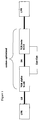
- the vector comprises the EBV TCR alpha and beta genes, linked via an internal self-cleaving porcine teschovirus 2A sequence, as shown in Figure 1 .
- the alpha and beta TCR genes were synthesised based on dominant TCR usage by EBV LMP-2-specific CTL clones.
- the amino acid sequence for the TCR alpha-2A-TCR beta product is given as SEQ ID No. 8 and its coding sequence given as SEQ ID No. 9.
- TCR Human T cell receptor
- retroviral vectors carrying the desired TCR genes were transduced into human T cells by using retroviral vectors carrying the desired TCR genes. Briefly, amphotropic packaging cells expressing the retroviral gag-pol genes were transfected with the specified TCR-retroviral vectors by using calcium phosphate precipitation method. After the retroviral transfection, the transfection medium was changed into human T cell medium for the harvesting of retroviral supernatant. The collected retroviral supernatant containing the viral particles expressing the desired TCR genes were then used to infect/transduce activated human T cells. 24 hours later, the introduced TCR genes are expressed on the surface of transduced T cells, and can be detected by FACS staining.
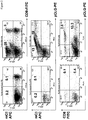
- Retroviral transfer of the LMP-2-specific TCR results in TCR expression on the surface of recipient T cells as determined by peptide/MHC tetramer staining and anti-V ⁇ 13 antibody staining ( Figure 2 ).
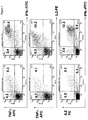
- the present inventors performed antigen specific stimulation and intracellular cytokine staining assays.
- TCR-transduced T cells (2x10 5 ) were incubated with 2x10 5 T2 stimulator cells coated with 100 mM relevant (pCLG: CLGGLLTMV) or irrelevant (pNLV: NLVPMVATV) peptide in 200 ml of culture medium containing brefeldin A (Sigma-Aldrich) at 1 mg/ml. After an incubation period of 18 h at 37°C with 5% CO 2 , the cells were first stained for surface CD8 or CD4 and then fixed, permeabilized, and stained for intracellular IFNg, IL2 and TNFa using the Fix & Perm kit (Caltag) according to the manufacturer 1 s instructions. Samples were acquired on a LSR II flow cytometer and the data was analyzed using FACSDiva software (BD Biosciences). The results are shown in Figures 3 and 4.
Landscapes
- Health & Medical Sciences (AREA)
- Life Sciences & Earth Sciences (AREA)
- Chemical & Material Sciences (AREA)
- Organic Chemistry (AREA)
- Immunology (AREA)
- Medicinal Chemistry (AREA)
- General Health & Medical Sciences (AREA)
- Genetics & Genomics (AREA)
- Biophysics (AREA)
- Molecular Biology (AREA)
- Biochemistry (AREA)
- Proteomics, Peptides & Aminoacids (AREA)
- Virology (AREA)
- Gastroenterology & Hepatology (AREA)
- Cell Biology (AREA)
- Zoology (AREA)
- Toxicology (AREA)
- Animal Behavior & Ethology (AREA)
- General Chemical & Material Sciences (AREA)
- Chemical Kinetics & Catalysis (AREA)
- Veterinary Medicine (AREA)
- Public Health (AREA)
- Pharmacology & Pharmacy (AREA)
- Nuclear Medicine, Radiotherapy & Molecular Imaging (AREA)
- Tropical Medicine & Parasitology (AREA)
- Communicable Diseases (AREA)
- Oncology (AREA)
- Otolaryngology (AREA)
- Engineering & Computer Science (AREA)
- Bioinformatics & Cheminformatics (AREA)
- Pulmonology (AREA)
- Micro-Organisms Or Cultivation Processes Thereof (AREA)
- Medicines Containing Material From Animals Or Micro-Organisms (AREA)
- Peptides Or Proteins (AREA)
- Medicines That Contain Protein Lipid Enzymes And Other Medicines (AREA)
- Preparation Of Compounds By Using Micro-Organisms (AREA)
Applications Claiming Priority (2)
| Application Number | Priority Date | Filing Date | Title |
|---|---|---|---|
| GBGB0917090.3A GB0917090D0 (en) | 2009-09-29 | 2009-09-29 | T-cell receptor |
| PCT/GB2010/001821 WO2011039508A2 (en) | 2009-09-29 | 2010-09-28 | T-cell receptor |
Publications (2)
| Publication Number | Publication Date |
|---|---|
| EP2483294A2 EP2483294A2 (en) | 2012-08-08 |
| EP2483294B1 true EP2483294B1 (en) | 2016-07-13 |
Family
ID=41350560
Family Applications (1)
| Application Number | Title | Priority Date | Filing Date |
|---|---|---|---|
| EP10777061.2A Not-in-force EP2483294B1 (en) | 2009-09-29 | 2010-09-28 | T-cell receptor |
Country Status (10)
| Country | Link |
|---|---|
| US (1) | US8889141B2 (enExample) |
| EP (1) | EP2483294B1 (enExample) |
| JP (2) | JP6180114B2 (enExample) |
| KR (1) | KR101760277B1 (enExample) |
| CN (1) | CN102695717B (enExample) |
| AU (1) | AU2010302477B2 (enExample) |
| ES (1) | ES2584541T3 (enExample) |
| GB (1) | GB0917090D0 (enExample) |
| IN (1) | IN2012DN02993A (enExample) |
| WO (1) | WO2011039508A2 (enExample) |
Families Citing this family (35)
| Publication number | Priority date | Publication date | Assignee | Title |
|---|---|---|---|---|
| CA2772076A1 (en) | 2009-08-24 | 2011-03-10 | Baylor College Of Medicine | Generation of ctl lines with specificity against multiple tumor antigens or multiple viruses |
| EP2694640B1 (en) | 2011-04-08 | 2017-10-18 | Baylor College Of Medicine | Reversing the effects of the tumor microenvironment using chimeric cytokine receptors |
| RS61455B1 (sr) | 2011-10-28 | 2021-03-31 | Regeneron Pharma | Genetski modifikovani miševi t ćelijskog receptora |
| BR112014014591A8 (pt) | 2011-12-12 | 2017-07-04 | Baylor College Medicine | processo para a expansão in vitro de células t específicas de antígeno, produto de células t autólogas ou alogênicas expandidas, composição farmacêutica, e, método de tratamento de um paciente, e, usos de uma linhagem de células engenheirada, de células dendríticas pulsadas com misturas de antígeno-peptídeo, de t-apcs pulsadas com misturas de antígeno-peptídeo/peptídeo, e de misturas de antígeno-peptídeo com pbmcs |
| GB201121308D0 (en) | 2011-12-12 | 2012-01-25 | Cell Medica Ltd | Process |
| EP2812431B1 (en) | 2012-02-09 | 2019-07-17 | Baylor College Of Medicine | Pepmixes to generate multiviral ctls with broad specificity |
| EP3495483A1 (en) | 2012-09-12 | 2019-06-12 | International Institute of Cancer Immunology, Inc. | Antigen-specific helper t-cell receptor genes |
| CN110511960B (zh) * | 2013-07-15 | 2023-05-23 | 美国卫生和人力服务部 | 抗人乳头瘤病毒16 e6 t细胞受体 |
| GB201314404D0 (en) * | 2013-08-12 | 2013-09-25 | Immunocore Ltd | T Cell Receptors |
| PT3149031T (pt) * | 2014-05-29 | 2020-03-25 | Us Health | Receptores de células t anti-e7 do papilomavírus humano 16 |
| WO2015199618A1 (en) * | 2014-06-24 | 2015-12-30 | National University Of Singapore | Epstein-barr virus lmp2 specific antibody and uses thereof |
| PL3212225T3 (pl) | 2014-10-31 | 2026-03-30 | The Trustees Of The University Of Pennsylvania | Sposoby i kompozycje zmodyfikowanych limfocytów t |
| WO2016095783A1 (zh) * | 2014-12-17 | 2016-06-23 | 中国科学院广州生物医药与健康研究院 | 识别eb病毒短肽的t细胞受体 |
| CA2971677A1 (en) | 2014-12-23 | 2016-06-30 | Margaret Anne Brimble | Amino acid and peptide conjugates and uses thereof |
| MX2017012829A (es) | 2015-04-06 | 2018-02-23 | Regeneron Pharma | Respuestas inmunitarias mediadas por células t humanizadas en animales no humanos. |
| CN104830793A (zh) * | 2015-05-05 | 2015-08-12 | 杨光华 | 基于lmp-1抗原的dc细胞、靶向性免疫细胞群及其制备方法和用途 |
| IL281396B (en) * | 2015-06-09 | 2022-07-01 | Memorial Sloan Kettering Cancer Center | T cell receptor-like antibody agents specific for ebv latent membrane protein 2a peptide presented by human hla |
| KR101794304B1 (ko) | 2015-09-01 | 2017-11-06 | 가톨릭대학교 산학협력단 | Ebv 항원 특이 t―세포 수용체 및 이의 용도 |
| US11167024B2 (en) | 2015-09-18 | 2021-11-09 | Baylor College Of Medicine | Immunogenic antigen identification from a pathogen and correlation to clinical efficacy |
| GB201520191D0 (en) * | 2015-11-16 | 2015-12-30 | Cancer Rec Tech Ltd | T-cell receptor and uses thereof |
| TW201735952A (zh) | 2016-02-26 | 2017-10-16 | 瑪格蕾特 安 布萊博 | 胺基酸及肽共軛物以及共軛過程 |
| CN109963860A (zh) * | 2016-09-19 | 2019-07-02 | 拜耳作物科学股份公司 | 吡唑并[1,5-a]吡啶衍生物及其作为农药的用途 |
| CN108218976B (zh) * | 2016-12-09 | 2021-11-05 | 香雪生命科学技术(广东)有限公司 | 衍生自lmp1的肿瘤抗原短肽 |
| WO2019031938A2 (ko) | 2017-08-10 | 2019-02-14 | 주식회사 굳티셀 | 암 치료를 위한 t 세포의 활성화 방법 |
| EP3773633A4 (en) | 2018-04-06 | 2022-01-26 | The Regents of The University of California | METHODS OF TREATMENT OF GLIOBLASTOMA |
| CA3096202A1 (en) | 2018-04-06 | 2019-10-10 | The Regents Of The University Of California | Methods of treating egfrviii expressing glioblastomas |
| SG11202101671PA (en) | 2018-11-27 | 2021-03-30 | Univ Duke | Anti-lmp2 tcr-t cell therapy for the treatment of ebv-associated cancers |
| WO2020133050A1 (zh) * | 2018-12-27 | 2020-07-02 | 深圳华大生命科学研究院 | Ebv表位高亲和力t细胞受体 |
| EP3786178A1 (en) * | 2019-08-30 | 2021-03-03 | Max-Delbrück-Centrum für Molekulare Medizin in der Helmholtz-Gemeinschaft | Tcr constructs specific for ebv-derived antigens |
| WO2021211455A1 (en) * | 2020-04-13 | 2021-10-21 | The United States Of America, As Represented By The Secretary, Department Of Health And Human Services | Hla class i-restricted t cell receptors against lmp2 |
| WO2021243695A1 (en) * | 2020-06-05 | 2021-12-09 | Guangdong Tcrcure Biopharma Technology Co., Ltd. | Tcr-t cell therapy targeting epstein-barr virus |
| EP3940075A1 (en) * | 2020-07-17 | 2022-01-19 | Istituto Nazionale Di Genetica Molecolare-INGM | Inhibitors of line1 and uses thereof |
| CN116981357A (zh) | 2021-03-31 | 2023-10-31 | 瑞泽恩制药公司 | 包含具有改善的tcrb组库多样性的人源化细胞免疫系统组分的基因修饰的小鼠 |
| EP4091627A1 (en) | 2021-05-21 | 2022-11-23 | Max-Delbrück-Centrum für Molekulare Medizin in der Helmholtz-Gemeinschaft | Tcr constructs specific for magea4-derived epitopes |
| CN113773378B (zh) * | 2021-10-14 | 2023-11-03 | 深圳大学总医院 | T细胞受体及其应用 |
Family Cites Families (1)
| Publication number | Priority date | Publication date | Assignee | Title |
|---|---|---|---|---|
| CN101182531B (zh) * | 2007-11-09 | 2010-06-02 | 暨南大学 | Eb病毒特异性tcr基因相关的重组质粒及构建抗ebv特异性ctl的方法 |
-
2009
- 2009-09-29 GB GBGB0917090.3A patent/GB0917090D0/en not_active Ceased
-
2010
- 2010-09-28 AU AU2010302477A patent/AU2010302477B2/en not_active Ceased
- 2010-09-28 EP EP10777061.2A patent/EP2483294B1/en not_active Not-in-force
- 2010-09-28 IN IN2993DEN2012 patent/IN2012DN02993A/en unknown
- 2010-09-28 CN CN201080053971.2A patent/CN102695717B/zh not_active Expired - Fee Related
- 2010-09-28 JP JP2012531494A patent/JP6180114B2/ja not_active Expired - Fee Related
- 2010-09-28 KR KR1020127009216A patent/KR101760277B1/ko not_active Expired - Fee Related
- 2010-09-28 ES ES10777061.2T patent/ES2584541T3/es active Active
- 2010-09-28 US US13/498,561 patent/US8889141B2/en not_active Expired - Fee Related
- 2010-09-28 WO PCT/GB2010/001821 patent/WO2011039508A2/en not_active Ceased
-
2015
- 2015-11-09 JP JP2015219230A patent/JP2016047064A/ja active Pending
Non-Patent Citations (1)
| Title |
|---|
| LEE S P ET AL: "HLA A2.1-RESTRICTED CYTOTOXIC T CELLS RECOGNIZING A RANGE OF EPSTEIN-BARR VIRUS ISOLATES THROUGH A DEFINED EPITOPE IN LATENT MEMBRANE PROTEIN LMP2", JOURNAL OF VIROLOGY, THE AMERICAN SOCIETY FOR MICROBIOLOGY, US, vol. 67, no. 12, 1 December 1993 (1993-12-01), pages 7428 - 7435, XP001000714, ISSN: 0022-538X * |
Also Published As
| Publication number | Publication date |
|---|---|
| US20120244132A1 (en) | 2012-09-27 |
| CN102695717B (zh) | 2016-08-10 |
| GB0917090D0 (en) | 2009-11-11 |
| JP2016047064A (ja) | 2016-04-07 |
| IN2012DN02993A (enExample) | 2015-07-31 |
| AU2010302477B2 (en) | 2017-01-19 |
| US8889141B2 (en) | 2014-11-18 |
| KR101760277B1 (ko) | 2017-07-21 |
| WO2011039508A3 (en) | 2011-06-30 |
| EP2483294A2 (en) | 2012-08-08 |
| WO2011039508A2 (en) | 2011-04-07 |
| JP2013505734A (ja) | 2013-02-21 |
| AU2010302477A1 (en) | 2012-04-19 |
| CN102695717A (zh) | 2012-09-26 |
| JP6180114B2 (ja) | 2017-08-16 |
| ES2584541T3 (es) | 2016-09-28 |
| KR20120074291A (ko) | 2012-07-05 |
Similar Documents
| Publication | Publication Date | Title |
|---|---|---|
| AU2010302477B2 (en) | T-cell receptor | |
| EP2483303B1 (en) | T-cell receptor capable of recognising an antigen from cytomegalovirus | |
| US20250188145A1 (en) | Tcr and peptides | |
| DK2288700T3 (en) | HBV EPITOP-REACTIVE EXOGEN T-CELL RECEPTOR (TCR) AND APPLICATIONS THEREOF | |
| CN107074929B (zh) | 嵌合自身抗体受体t细胞的组合物和方法 | |
| US20220119477A1 (en) | Tcr and peptides | |
| WO2016095783A1 (zh) | 识别eb病毒短肽的t细胞受体 | |
| EP4010362A2 (en) | Method | |
| CN110272482B (zh) | 识别prame抗原短肽的t细胞受体 | |
| WO2019134950A1 (en) | Chimeric antigen receptor specific for bdca2 antigen | |
| WO2016177195A1 (zh) | 识别rhamm抗原短肽的t细胞受体 | |
| WO2018077242A1 (zh) | 识别sage1抗原短肽的t细胞受体 | |
| CN111171137A (zh) | 一种识别afp抗原短肽的t细胞受体及其编码序列 | |
| JP2023518446A (ja) | ループスを処置するための組成物及び方法 |
Legal Events
| Date | Code | Title | Description |
|---|---|---|---|
| PUAI | Public reference made under article 153(3) epc to a published international application that has entered the european phase |
Free format text: ORIGINAL CODE: 0009012 |
|
| 17P | Request for examination filed |
Effective date: 20120426 |
|
| AK | Designated contracting states |
Kind code of ref document: A2 Designated state(s): AL AT BE BG CH CY CZ DE DK EE ES FI FR GB GR HR HU IE IS IT LI LT LU LV MC MK MT NL NO PL PT RO SE SI SK SM TR |
|
| DAX | Request for extension of the european patent (deleted) | ||
| TPAC | Observations filed by third parties |
Free format text: ORIGINAL CODE: EPIDOSNTIPA |
|
| 17Q | First examination report despatched |
Effective date: 20141027 |
|
| REG | Reference to a national code |
Ref country code: DE Ref legal event code: R079 Ref document number: 602010034695 Country of ref document: DE Free format text: PREVIOUS MAIN CLASS: C07K0014050000 Ipc: C07K0014725000 |
|
| GRAP | Despatch of communication of intention to grant a patent |
Free format text: ORIGINAL CODE: EPIDOSNIGR1 |
|
| RIC1 | Information provided on ipc code assigned before grant |
Ipc: C07K 14/725 20060101AFI20160108BHEP |
|
| INTG | Intention to grant announced |
Effective date: 20160201 |
|
| GRAS | Grant fee paid |
Free format text: ORIGINAL CODE: EPIDOSNIGR3 |
|
| GRAA | (expected) grant |
Free format text: ORIGINAL CODE: 0009210 |
|
| AK | Designated contracting states |
Kind code of ref document: B1 Designated state(s): AL AT BE BG CH CY CZ DE DK EE ES FI FR GB GR HR HU IE IS IT LI LT LU LV MC MK MT NL NO PL PT RO SE SI SK SM TR |
|
| REG | Reference to a national code |
Ref country code: GB Ref legal event code: FG4D |
|
| REG | Reference to a national code |
Ref country code: AT Ref legal event code: REF Ref document number: 812255 Country of ref document: AT Kind code of ref document: T Effective date: 20160715 Ref country code: CH Ref legal event code: EP |
|
| REG | Reference to a national code |
Ref country code: CH Ref legal event code: NV Representative=s name: NOVAGRAAF INTERNATIONAL SA, CH |
|
| REG | Reference to a national code |
Ref country code: IE Ref legal event code: FG4D |
|
| REG | Reference to a national code |
Ref country code: DE Ref legal event code: R096 Ref document number: 602010034695 Country of ref document: DE Ref country code: FR Ref legal event code: PLFP Year of fee payment: 7 |
|
| REG | Reference to a national code |
Ref country code: ES Ref legal event code: FG2A Ref document number: 2584541 Country of ref document: ES Kind code of ref document: T3 Effective date: 20160928 |
|
| REG | Reference to a national code |
Ref country code: LT Ref legal event code: MG4D |
|
| REG | Reference to a national code |
Ref country code: NL Ref legal event code: MP Effective date: 20160713 |
|
| REG | Reference to a national code |
Ref country code: AT Ref legal event code: MK05 Ref document number: 812255 Country of ref document: AT Kind code of ref document: T Effective date: 20160713 |
|
| PG25 | Lapsed in a contracting state [announced via postgrant information from national office to epo] |
Ref country code: HR Free format text: LAPSE BECAUSE OF FAILURE TO SUBMIT A TRANSLATION OF THE DESCRIPTION OR TO PAY THE FEE WITHIN THE PRESCRIBED TIME-LIMIT Effective date: 20160713 Ref country code: LT Free format text: LAPSE BECAUSE OF FAILURE TO SUBMIT A TRANSLATION OF THE DESCRIPTION OR TO PAY THE FEE WITHIN THE PRESCRIBED TIME-LIMIT Effective date: 20160713 Ref country code: IS Free format text: LAPSE BECAUSE OF FAILURE TO SUBMIT A TRANSLATION OF THE DESCRIPTION OR TO PAY THE FEE WITHIN THE PRESCRIBED TIME-LIMIT Effective date: 20161113 Ref country code: NO Free format text: LAPSE BECAUSE OF FAILURE TO SUBMIT A TRANSLATION OF THE DESCRIPTION OR TO PAY THE FEE WITHIN THE PRESCRIBED TIME-LIMIT Effective date: 20161013 Ref country code: FI Free format text: LAPSE BECAUSE OF FAILURE TO SUBMIT A TRANSLATION OF THE DESCRIPTION OR TO PAY THE FEE WITHIN THE PRESCRIBED TIME-LIMIT Effective date: 20160713 Ref country code: NL Free format text: LAPSE BECAUSE OF FAILURE TO SUBMIT A TRANSLATION OF THE DESCRIPTION OR TO PAY THE FEE WITHIN THE PRESCRIBED TIME-LIMIT Effective date: 20160713 |
|
| PG25 | Lapsed in a contracting state [announced via postgrant information from national office to epo] |
Ref country code: PL Free format text: LAPSE BECAUSE OF FAILURE TO SUBMIT A TRANSLATION OF THE DESCRIPTION OR TO PAY THE FEE WITHIN THE PRESCRIBED TIME-LIMIT Effective date: 20160713 Ref country code: SE Free format text: LAPSE BECAUSE OF FAILURE TO SUBMIT A TRANSLATION OF THE DESCRIPTION OR TO PAY THE FEE WITHIN THE PRESCRIBED TIME-LIMIT Effective date: 20160713 Ref country code: PT Free format text: LAPSE BECAUSE OF FAILURE TO SUBMIT A TRANSLATION OF THE DESCRIPTION OR TO PAY THE FEE WITHIN THE PRESCRIBED TIME-LIMIT Effective date: 20161114 Ref country code: LV Free format text: LAPSE BECAUSE OF FAILURE TO SUBMIT A TRANSLATION OF THE DESCRIPTION OR TO PAY THE FEE WITHIN THE PRESCRIBED TIME-LIMIT Effective date: 20160713 Ref country code: BE Free format text: LAPSE BECAUSE OF NON-PAYMENT OF DUE FEES Effective date: 20160713 Ref country code: AT Free format text: LAPSE BECAUSE OF FAILURE TO SUBMIT A TRANSLATION OF THE DESCRIPTION OR TO PAY THE FEE WITHIN THE PRESCRIBED TIME-LIMIT Effective date: 20160713 Ref country code: GR Free format text: LAPSE BECAUSE OF FAILURE TO SUBMIT A TRANSLATION OF THE DESCRIPTION OR TO PAY THE FEE WITHIN THE PRESCRIBED TIME-LIMIT Effective date: 20161014 |
|
| REG | Reference to a national code |
Ref country code: DE Ref legal event code: R097 Ref document number: 602010034695 Country of ref document: DE |
|
| PG25 | Lapsed in a contracting state [announced via postgrant information from national office to epo] |
Ref country code: RO Free format text: LAPSE BECAUSE OF FAILURE TO SUBMIT A TRANSLATION OF THE DESCRIPTION OR TO PAY THE FEE WITHIN THE PRESCRIBED TIME-LIMIT Effective date: 20160713 Ref country code: EE Free format text: LAPSE BECAUSE OF FAILURE TO SUBMIT A TRANSLATION OF THE DESCRIPTION OR TO PAY THE FEE WITHIN THE PRESCRIBED TIME-LIMIT Effective date: 20160713 Ref country code: MC Free format text: LAPSE BECAUSE OF FAILURE TO SUBMIT A TRANSLATION OF THE DESCRIPTION OR TO PAY THE FEE WITHIN THE PRESCRIBED TIME-LIMIT Effective date: 20160713 |
|
| PLBE | No opposition filed within time limit |
Free format text: ORIGINAL CODE: 0009261 |
|
| STAA | Information on the status of an ep patent application or granted ep patent |
Free format text: STATUS: NO OPPOSITION FILED WITHIN TIME LIMIT |
|
| PG25 | Lapsed in a contracting state [announced via postgrant information from national office to epo] |
Ref country code: SK Free format text: LAPSE BECAUSE OF FAILURE TO SUBMIT A TRANSLATION OF THE DESCRIPTION OR TO PAY THE FEE WITHIN THE PRESCRIBED TIME-LIMIT Effective date: 20160713 Ref country code: SM Free format text: LAPSE BECAUSE OF FAILURE TO SUBMIT A TRANSLATION OF THE DESCRIPTION OR TO PAY THE FEE WITHIN THE PRESCRIBED TIME-LIMIT Effective date: 20160713 Ref country code: CZ Free format text: LAPSE BECAUSE OF FAILURE TO SUBMIT A TRANSLATION OF THE DESCRIPTION OR TO PAY THE FEE WITHIN THE PRESCRIBED TIME-LIMIT Effective date: 20160713 Ref country code: DK Free format text: LAPSE BECAUSE OF FAILURE TO SUBMIT A TRANSLATION OF THE DESCRIPTION OR TO PAY THE FEE WITHIN THE PRESCRIBED TIME-LIMIT Effective date: 20160713 Ref country code: BG Free format text: LAPSE BECAUSE OF FAILURE TO SUBMIT A TRANSLATION OF THE DESCRIPTION OR TO PAY THE FEE WITHIN THE PRESCRIBED TIME-LIMIT Effective date: 20161013 |
|
| 26N | No opposition filed |
Effective date: 20170418 |
|
| PG25 | Lapsed in a contracting state [announced via postgrant information from national office to epo] |
Ref country code: LU Free format text: LAPSE BECAUSE OF NON-PAYMENT OF DUE FEES Effective date: 20160928 Ref country code: SI Free format text: LAPSE BECAUSE OF FAILURE TO SUBMIT A TRANSLATION OF THE DESCRIPTION OR TO PAY THE FEE WITHIN THE PRESCRIBED TIME-LIMIT Effective date: 20160713 |
|
| REG | Reference to a national code |
Ref country code: FR Ref legal event code: PLFP Year of fee payment: 8 |
|
| PG25 | Lapsed in a contracting state [announced via postgrant information from national office to epo] |
Ref country code: HU Free format text: LAPSE BECAUSE OF FAILURE TO SUBMIT A TRANSLATION OF THE DESCRIPTION OR TO PAY THE FEE WITHIN THE PRESCRIBED TIME-LIMIT; INVALID AB INITIO Effective date: 20100928 Ref country code: CY Free format text: LAPSE BECAUSE OF FAILURE TO SUBMIT A TRANSLATION OF THE DESCRIPTION OR TO PAY THE FEE WITHIN THE PRESCRIBED TIME-LIMIT Effective date: 20160713 |
|
| PG25 | Lapsed in a contracting state [announced via postgrant information from national office to epo] |
Ref country code: TR Free format text: LAPSE BECAUSE OF FAILURE TO SUBMIT A TRANSLATION OF THE DESCRIPTION OR TO PAY THE FEE WITHIN THE PRESCRIBED TIME-LIMIT Effective date: 20160713 Ref country code: MT Free format text: LAPSE BECAUSE OF NON-PAYMENT OF DUE FEES Effective date: 20160930 Ref country code: MK Free format text: LAPSE BECAUSE OF FAILURE TO SUBMIT A TRANSLATION OF THE DESCRIPTION OR TO PAY THE FEE WITHIN THE PRESCRIBED TIME-LIMIT Effective date: 20160713 |
|
| REG | Reference to a national code |
Ref country code: FR Ref legal event code: PLFP Year of fee payment: 9 |
|
| PG25 | Lapsed in a contracting state [announced via postgrant information from national office to epo] |
Ref country code: AL Free format text: LAPSE BECAUSE OF FAILURE TO SUBMIT A TRANSLATION OF THE DESCRIPTION OR TO PAY THE FEE WITHIN THE PRESCRIBED TIME-LIMIT Effective date: 20160713 |
|
| PGFP | Annual fee paid to national office [announced via postgrant information from national office to epo] |
Ref country code: FR Payment date: 20180921 Year of fee payment: 9 Ref country code: IE Payment date: 20180919 Year of fee payment: 9 Ref country code: IT Payment date: 20180921 Year of fee payment: 9 |
|
| PGFP | Annual fee paid to national office [announced via postgrant information from national office to epo] |
Ref country code: CH Payment date: 20180927 Year of fee payment: 9 Ref country code: GB Payment date: 20180927 Year of fee payment: 9 |
|
| PGFP | Annual fee paid to national office [announced via postgrant information from national office to epo] |
Ref country code: DE Payment date: 20180926 Year of fee payment: 9 |
|
| PGFP | Annual fee paid to national office [announced via postgrant information from national office to epo] |
Ref country code: ES Payment date: 20181024 Year of fee payment: 9 |
|
| REG | Reference to a national code |
Ref country code: DE Ref legal event code: R119 Ref document number: 602010034695 Country of ref document: DE |
|
| REG | Reference to a national code |
Ref country code: CH Ref legal event code: PL |
|
| PG25 | Lapsed in a contracting state [announced via postgrant information from national office to epo] |
Ref country code: CH Free format text: LAPSE BECAUSE OF NON-PAYMENT OF DUE FEES Effective date: 20190930 Ref country code: DE Free format text: LAPSE BECAUSE OF NON-PAYMENT OF DUE FEES Effective date: 20200401 Ref country code: LI Free format text: LAPSE BECAUSE OF NON-PAYMENT OF DUE FEES Effective date: 20190930 Ref country code: IE Free format text: LAPSE BECAUSE OF NON-PAYMENT OF DUE FEES Effective date: 20190928 |
|
| PG25 | Lapsed in a contracting state [announced via postgrant information from national office to epo] |
Ref country code: IT Free format text: LAPSE BECAUSE OF NON-PAYMENT OF DUE FEES Effective date: 20190928 |
|
| GBPC | Gb: european patent ceased through non-payment of renewal fee |
Effective date: 20190928 |
|
| PG25 | Lapsed in a contracting state [announced via postgrant information from national office to epo] |
Ref country code: FR Free format text: LAPSE BECAUSE OF NON-PAYMENT OF DUE FEES Effective date: 20190930 Ref country code: GB Free format text: LAPSE BECAUSE OF NON-PAYMENT OF DUE FEES Effective date: 20190928 |
|
| REG | Reference to a national code |
Ref country code: ES Ref legal event code: FD2A Effective date: 20210202 |
|
| PG25 | Lapsed in a contracting state [announced via postgrant information from national office to epo] |
Ref country code: ES Free format text: LAPSE BECAUSE OF NON-PAYMENT OF DUE FEES Effective date: 20190929 |