EP2482841B2 - Compositions et procédés pour renforcer la fonction du facteur de coagulation viii - Google Patents
Compositions et procédés pour renforcer la fonction du facteur de coagulation viii Download PDFInfo
- Publication number
- EP2482841B2 EP2482841B2 EP10821393.5A EP10821393A EP2482841B2 EP 2482841 B2 EP2482841 B2 EP 2482841B2 EP 10821393 A EP10821393 A EP 10821393A EP 2482841 B2 EP2482841 B2 EP 2482841B2
- Authority
- EP
- European Patent Office
- Prior art keywords
- fviii
- variant
- cfviii
- bdd
- vector
- Prior art date
- Legal status (The legal status is an assumption and is not a legal conclusion. Google has not performed a legal analysis and makes no representation as to the accuracy of the status listed.)
- Active
Links
Images







Classifications
-
- C—CHEMISTRY; METALLURGY
- C07—ORGANIC CHEMISTRY
- C07K—PEPTIDES
- C07K14/00—Peptides having more than 20 amino acids; Gastrins; Somatostatins; Melanotropins; Derivatives thereof
- C07K14/435—Peptides having more than 20 amino acids; Gastrins; Somatostatins; Melanotropins; Derivatives thereof from animals; from humans
- C07K14/745—Blood coagulation or fibrinolysis factors
- C07K14/755—Factors VIII, e.g. factor VIII C (AHF), factor VIII Ag (VWF)
-
- A—HUMAN NECESSITIES
- A61—MEDICAL OR VETERINARY SCIENCE; HYGIENE
- A61P—SPECIFIC THERAPEUTIC ACTIVITY OF CHEMICAL COMPOUNDS OR MEDICINAL PREPARATIONS
- A61P7/00—Drugs for disorders of the blood or the extracellular fluid
- A61P7/04—Antihaemorrhagics; Procoagulants; Haemostatic agents; Antifibrinolytic agents
-
- A—HUMAN NECESSITIES
- A61—MEDICAL OR VETERINARY SCIENCE; HYGIENE
- A61K—PREPARATIONS FOR MEDICAL, DENTAL OR TOILETRY PURPOSES
- A61K38/00—Medicinal preparations containing peptides
Definitions
- the present invention relates to the fields of medicine and hematology. More specifically, the invention provides novel coagulation Factor VIII variants as defined by the claims.
- Hemophilia A is an X-linked bleeding disease resulting from a functional FVIII deficiency, affecting 1:5000 males worldwide.
- the HA dog model has been the most extensively used for preclinical studies (1).
- the underlying mutation consists of an inversion in intron 22 of the FVIII gene that is analogous to the most common human mutation (2).
- This model faithfully replicates the human disease at both genotypic and phenotypic levels (3,4).
- there is no characterization of the cFVIII protein due to difficulties in purifying large amounts from canine plasma and to the relative poor performance in recombinant FVIII expression systems in general.
- cFVIII cDNA sequence has a high sequence identity to human FVIII (hFVIII) (5), adult HA dogs develop immune responses upon exposure to hFVIII that preclude the assessment of the efficacy and safety of potential novel therapies for HA. Notably, among humans even small nucleotide changes in the hFVIII gene may predispose to inhibitor formation (6).
- Identifying hFVIII variants that exhibit superior coagulation properties are highly desirable. It is an object of the invention to provide such proteins for use as therapeutics.
- a Factor VIII (FVIII) variant which exhibits improved capacity to modulate hemostasis as defined by the claims.
- the variant FVIII is a human variant, lacking most of the B domain, comprising a R1645H amino acid substitution which exhibits increased specific activity and stability relative to human FVIII-BDD lacking said substitution.
- nucleic acids encoding the variants described herein Such nucleic acids are optionally cloned into an expression vector. Host cells comprising such expression vectors are also encompassed by the present invention.
- composition comprising the Factor VIII variant described above in a biologically compatible carrier is provided.
- Also described herein is a method for treatment of a hemostasis related disorder in a patient in need thereof, comprising administration of a therapeutically effective amount of the pro-coagulant variant FVIII described herein in a biologically acceptable carrier.
- disorders include, without limitation hemophilia A, hemophilia A with inhibitor, von Willebrand diseases, non-hemophilia subjects with inhibitors to FVIII, disorders of platelets, ADAMTS13-related diseases, bleeding associated with trauma, injury coagulopathy, and disseminated intravascular coagulation (DIC).
- cFVIII-BDD Production of recombinant B-domain deleted canine factor VIII (cFVIII-BDD) unexpectedly revealed superior protein yields with 3-fold increased specific activity and stability relative to human FVIII-BDD (hFVIII-BDD).
- the cFVIII-BDD is efficient at inducing hemostasis in human plasma containing FVIII inhibitors.
- Infusion of cFVIII-BDD in hemophilia A dogs resulted in correction of the disease phenotype with a pharmacokinetic profile similar to clinical experience with hFVIII-BDD.
- immune tolerance challenges with cFVIII-BDD in young and adult hemophilia A dogs did not induce the formation of neutralizing or non-neutralizing antibodies to cFVIII.
- variant Factor VIII refers to a modified FVIII which has been genetically altered such that the encoded protein exhibits a 3-fold increase in specific activity and enhanced stability when compared to unmodified FVIII.
- the nucleotide sequences described herein are readily obtainable from GenBank. For human FVIII, see Accession No. NG-011403.1. For canine FVIII, see Accession No. NM-001003212-1.
- cFVIII-BDD refers to a FVIII variant which lacks the B domain.
- hemophilia A hemophilia A patients with inhibitory antibodies, deficiencies in coagulation Factors, VII, VIII, IX and X, XI, V, XII, II, von Willebrand factor, combined FV/FVIII deficiency, vitamin K epoxide reductase C1 deficiency, gamma-carboxylase deficiency; bleeding associated with trauma, injury, thrombocytopenia, coagulopathy, disseminated intravascular coagulation (DIC); over-anticoagulation associated with heparin, low molecular weight heparin, pentasaccharide, warfarin, small molecule antithrombotics (i.e. FXa inhibitors); and platelet disorders such as, Bernard Soulier syndrome, Glanzman thromblastemia, and storage pool deficiency.
- isolated nucleic acid refers to a DNA molecule that is separated from sequences with which it is immediately contiguous (in the 5' and 3' directions) in the naturally occurring genome of the organism from which it originates.
- isolated nucleic acid may comprise a DNA or cDNA molecule inserted into a vector, such as a plasmid or virus vector, or integrated into the DNA of a prokaryote or eukaryote.
- isolated nucleic acid primarily refers to an RNA molecule encoded by an isolated DNA molecule as defined above.
- the term may refer to an RNA molecule that has been sufficiently separated from RNA molecules with which it would be associated in its natural state (i.e., in cells or tissues), such that it exists in a “substantially pure” form (the term “substantially pure” is defined below).
- isolated protein or “isolated and purified protein” is sometimes used herein. This term refers primarily to a protein produced by expression of an isolated nucleic acid molecule of the invention. Alternatively, this term may refer to a protein which has been sufficiently separated from other proteins with which it would naturally be associated, so as to exist in "substantially pure” form.
- promoter region refers to the transcriptional regulatory regions of a gene, which may be found at the 5' or 3' side of the coding region, or within the coding region, or within introns.
- vector refers to a small carrier DNA molecule into which a DNA sequence can be inserted for introduction into a host cell where it will be replicated.
- expression vector is a specialized vector that contains a gene or nucleic acid sequence with the necessary regulatory regions needed for expression in a host cell.
- operably linked means that the regulatory sequences necessary for expression of a coding sequence are placed in the DNA molecule in the appropriate positions relative to the coding sequence so as to effect expression of the coding sequence.
- This same definition is sometimes applied to the arrangement of coding sequences and transcription control elements (e.g. promoters, enhancers, and termination elements) in an expression vector.
- This definition is also sometimes applied to the arrangement of nucleic acid sequences of a first and a second nucleic acid molecule wherein a hybrid nucleic acid molecule is generated.
- substantially pure refers to a preparation comprising at least 50-60% by weight the compound of interest (e.g., nucleic acid, oligonucleotide, protein, etc.). More preferably, the preparation comprises at least 75% by weight, and most preferably 90-99% by weight, of the compound of interest. Purity is measured by methods appropriate for the compound of interest (e.g. chromatographic methods, agarose or polyacrylamide gel electrophoresis, HPLC analysis, and the like).
- phrases "consisting essentially of" when referring to a particular nucleotide sequence or amino acid sequence means a sequence having the properties of a given SEQ ID NO:.
- the phrase when used in reference to an amino acid sequence, the phrase includes the sequence per se and molecular modifications that would not affect the basic and novel characteristics of the sequence.
- oligonucleotide refers to primers and probes , and is defined as a nucleic acid molecule comprised of two or more ribo- or deoxyribonucleotides, preferably more than three. The exact size of the oligonucleotide will depend on various factors and on the particular application for which the oligonucleotide is used.
- probe refers to an oligonucleotide, polynucleotide or nucleic acid, either RNA or DNA, whether occurring naturally as in a purified restriction enzyme digest or produced synthetically, which is capable of annealing with or specifically hybridizing to a nucleic acid with sequences complementary to the probe.
- a probe may be either single-stranded or double-stranded.
- the exact length of the probe will depend upon many factors, including temperature, source of probe and method of use.
- the oligonucleotide probe typically contains 15-25 or more nucleotides, although it may contain fewer nucleotides.
- the probes herein are selected to be “substantially” complementary to different strands of a particular target nucleic acid sequence. This means that the probes must be sufficiently complementary so as to be able to "specifically hybridize” or anneal with their respective target strands under a set of pre-determined conditions. Therefore, the probe sequence need not reflect the exact complementary sequence of the target. For example, a non-complementary nucleotide fragment may be attached to the 5' or 3' end of the probe, with the remainder of the probe sequence being complementary to the target strand. Alternatively, non-complementary bases or longer sequences can be interspersed into the probe, provided that the probe sequence has sufficient complementarity with the sequence of the target nucleic acid to anneal therewith specifically.
- the term “specifically hybridize” refers to the association between two single-stranded nucleic acid molecules of sufficiently complementary sequence to permit such hybridization under pre-determined conditions generally used in the art (sometimes termed “substantially complementary”).
- the term refers to hybridization of an oligonucleotide with a substantially complementary sequence contained within a single-stranded DNA or RNA molecule of the invention, to the substantial exclusion of hybridization of the oligonucleotide with single-stranded nucleic acids of non-complementary sequence.
- primer refers to an oligonucleotide, either RNA or DNA, either single-stranded or double-stranded, either derived from a biological system, generated by restriction enzyme digestion, or produced synthetically which, when placed in the proper environment, is able to act functionally as an initiator of template-dependent nucleic acid synthesis.
- suitable nucleoside triphosphate precursors of nucleic acids, a polymerase enzyme, suitable cofactors and conditions such as a suitable temperature and pH
- the primer may be extended at its 3' terminus by the addition of nucleotides by the action of a polymerase or similar activity to yield a primer extension product.
- the primer may vary in length depending on the particular conditions and requirements of the application.
- the oligonucleotide primer is typically 15-25 or more nucleotides in length.
- the primer must be of sufficient complementarity to the desired template to prime the synthesis of the desired extension product, that is, to be able to anneal with the desired template strand in a manner sufficient to provide the 3' hydroxyl moiety of the primer in appropriate juxtaposition for use in the initiation of synthesis by a polymerase or similar enzyme. It is not required that the primer sequence represent an exact complement of the desired template.
- a non-complementary nucleotide sequence may be attached to the 5' end of an otherwise complementary primer.
- non-complementary bases may be interspersed within the oligonucleotide primer sequence, provided that the primer sequence has sufficient complementarity with the sequence of the desired template strand to functionally provide a template-primer complex for the synthesis of the extension product.
- the Blastn 2.0 program provided by the National Center for Biotechnology Information(found on the world wide web at ncbi.nlm.nih.gov/blast/; Altschul et al., 1990, J Mol Biol 215:403-410 ) using a gapped alignment with default parameters, may be used to determine the level of identity and similarity between nucleic acid sequences and amino acid sequences.
- Nucleic acid molecules encoding the variant FVIII molecules of the invention may be prepared by using recombinant DNA technology methods. The availability of nucleotide sequence information enables preparation of isolated nucleic acid molecules of the invention by a variety of means. For example, nucleic acid sequences encoding a variant FVIII polypeptide may be isolated from appropriate biological sources using standard protocols well known in the art.
- Nucleic acids of the present invention may be maintained as DNA in any convenient cloning vector.
- Clones may be maintained in a plasmid cloning/expression vector, such as pBluescript (Stratagene, La Jolla, CA), which is propagated in a suitable E. coli host cell.
- the nucleic acids may be maintained in vector suitable for expression in mammalian cells. In cases where posttranslational modification affects coagulation function, it is preferable to express the molecule in mammalian cells.
- Variant FVIII-encoding nucleic acid molecules of the invention include cDNA, genomic DNA, RNA, and also described herein are fragments thereof which may be single- or double-stranded.
- oligonucleotides sense or antisense strands of DNA or RNA having sequences capable of hybridizing with at least one sequence of a nucleic acid molecule of the present invention. Such oligonucleotides are useful as probes for detecting FVIII expression.
- a B-domain deleted FVIII polypeptide of the present invention may be prepared in a variety of ways, according to known methods.
- the protein may be purified from appropriate sources, e.g., transformed bacterial or animal cultured cells or tissues which express engineered FVIII by immunoaffinity purification.
- nucleic acid molecules encoding a variant FVIII polypeptide enables production of FVIII using in vitro expression methods known in the art.
- a cDNA or gene may be cloned into an appropriate in vitro transcription vector, such as pSP64 or pSP65 for in vitro transcription, followed by cell-free translation in a suitable cell-free translation system, such as wheat germ or rabbit reticulocyte lysates.
- in vitro transcription and translation systems are commercially available, e.g., from Promega Biotech, Madison, Wisconsin or BRL, Rockville, Maryland.
- larger quantities of FVIII may be produced by expression in a suitable prokaryotic or eukaryotic expression system.
- a DNA molecule encoding variant Factor VIII for example, may be inserted into a plasmid vector adapted for expression in a bacterial cell, such as E. coli or a mammalian cell such as CHO or Hela cells.
- tagged fusion proteins comprising FVIII can be generated.
- Such FVIII-tagged fusion proteins are encoded by part or all of a DNA molecule, ligated in the correct codon reading frame to a nucleotide sequence encoding a portion or all of a desired polypeptide tag which is inserted into a plasmid vector adapted for expression in a bacterial cell, such as E. coli or a eukaryotic cell, such as, but not limited to, yeast and mammalian cells.
- Vectors such as those described above comprise the regulatory elements necessary for expression of the DNA in the host cell positioned in such a manner as to permit expression of the DNA in the host cell.
- regulatory elements required for expression include, but are not limited to, promoter sequences, transcription initiation sequences, and enhancer sequences.
- Variant FVIII proteins produced by gene expression in a recombinant prokaryotic or eukaryotic system may be purified according to methods known in the art.
- a commercially available expression/secretion system can be used, whereby the recombinant protein is expressed and thereafter secreted from the host cell, to be easily purified from the surrounding medium.
- an alternative approach involves purifying the recombinant protein by affinity separation, such as by immunological interaction with antibodies that bind specifically to the recombinant protein or nickel columns for isolation of recombinant proteins tagged with 6-8 histidine residues at their N-terminus or C-terminus.
- Alternative tags may comprise the FLAG epitope, GST or the hemagglutinin epitope. Such methods are commonly used by skilled practitioners.
- FVIII proteins prepared by the aforementioned methods, may be analyzed according to standard procedures. For example, such proteins may be assessed for altered coagulation properties according to known methods.
- a convenient way of producing a polypeptide according to the present invention is to express nucleic acid encoding it, by use of the nucleic acid in an expression system.
- a variety of expression systems of utility for the methods of the present invention are well known to those of skill in the art.
- the present invention also encompasses a method of making a polypeptide (as disclosed), the method including expression from nucleic acid encoding the polypeptide (generally nucleic acid). This may conveniently be achieved by culturing a host cell, containing such a vector, under appropriate conditions which cause or allow production of the polypeptide. Polypeptides may also be produced in in vitro systems.
- Variant FVIII nucleic acids encoding polypeptides having altered coagulation activities may be used according to this invention, for example, as therapeutic and/or prophylactic agents (protein or nucleic acid) which modulate the blood coagulation cascade or as a transgene in gene-, and or cell-based strategies for continuous expression of FVIII and its variants in hemophilia A patients.
- the present inventors have discovered modifications of FVIII molecules which result in increased coagulation activity and greater stability thereby effectively improving hemostasis.
- Variant FVIII polypeptides may be administered to a patient via infusion in a biologically compatible carrier, preferably via intravenous injection.
- the variant FVIIIs of the invention may optionally be encapsulated into liposomes or mixed with other phospholipids or micelles to increase stability of the molecule.
- FVIII may be administered alone or in combination with other agents known to modulate hemostasis (e.g., Factor V, Factor Va or derivatives thereof).
- An appropriate composition in which to deliver FVIII polypeptides may be determined by a medical practitioner upon consideration of a variety of physiological variables, including, but not limited to, the patient's condition and hemodynamic state. A variety of compositions well suited for different applications and routes of administration are well known in the art and are described hereinbelow.
- the preparation containing the purified FVIII analog contains a physiologically acceptable matrix and is preferably formulated as a pharmaceutical preparation.
- the preparation can be formulated using substantially known prior art methods, it can be mixed with a buffer containing salts, such as NaCl, CaCl 2 , and amino acids, such as glycine and/or lysine, and in a pH range from 6 to 8.
- the purified preparation containing the FVIII analog can be stored in the form of a finished solution or in lyophilized or deep-frozen form.
- the preparation is stored in lyophilized form and is dissolved into a visually clear solution using an appropriate reconstitution solution.
- the preparation according to the present invention can also be made available as a liquid preparation or as a liquid that is deep-frozen.
- the preparation according to the present invention is especially stable, i.e., it can be allowed to stand in dissolved form for a prolonged time prior to application.
- the preparation according to the present invention can be made available as a pharmaceutical preparation with FVIII activity in the form of a one-component preparation or in combination with other factors in the form of a multi-component preparation.
- the purified protein Prior to processing the purified protein into a pharmaceutical preparation, the purified protein is subjected to the conventional quality controls and fashioned into a therapeutic form of presentation.
- the purified preparation is tested for the absence of cellular nucleic acids as well as nucleic acids that are derived from the expression vector, preferably using a method, such as is described in EP 0 714 987 .
- the pharmaceutical protein preparation may be used at dosages of between 30-100 IU/kg (One I.U is 100 ng/ml) at as single daily injection or up to 3 times/day for several days. Patients may be treated immediately upon presentation at the clinic with a bleed. Alternatively, patients may receive a bolus infusion every eight to twelve hours, or if sufficient improvement is observed, a once daily infusion of the variant FVIII described herein.
- FVIII-encoding nucleic acids may be used for a variety of purposes in accordance with the present invention.
- a nucleic acid delivery vehicle i.e., an expression vector
- the expression vector comprises a nucleic acid sequence coding for a variant FVIII polypeptide, or a functional fragment thereof as described herein.
- Administration of FVIII-encoding expression vectors to a patient results in the expression of FVIII polypeptide which serves to alter the coagulation cascade.
- an FVIII encoding nucleic acid sequence may encode an FVIII polypeptide as described herein whose expression increases hemostasis.
- a FVIII nucleic acid sequence may encode a human FVIII polypeptide variant.
- Expression vectors comprising variant FVIII nucleic acid sequences may be administered alone, or in combination with other molecules useful for modulating hemostasis.
- the expression vectors or combination of therapeutic agents may be administered to the patient alone or in a pharmaceutically acceptable or biologically compatible compositions.
- the expression vector comprising nucleic acid sequences encoding the variant FVIII variants may be a viral vector.
- Viral vectors which may be used in the present invention include, but are not limited to, adenoviral vectors (with or without tissue specific promoters/enhancers), adeno-associated virus (AAV) vectors of multiple serotypes (e.g., AAV-1 to AAV-12, and others) and hybrid AAV vectors, lentivirus vectors and pseudo-typed lentivirus vectors [e.g., Ebola virus, vesicular stomatitis virus (VSV), and feline immunodeficiency virus (FIV)], herpes simplex virus vectors, vaccinia virus vectors, retroviral vectors, lentiviral vectors, non-viral vectors and others.
- adenoviral vectors with or without tissue specific promoters/enhancers
- AAV adeno-associated virus
- VSV vesicular
- AAV vectors and lentiviral vectors have broad utility in the methods described herein and preferably do not include any viral genes associated with pathogenesis. Most preferably, only the essential parts of vector e.g., the ITR and LTR elements, respectively are included. Direct delivery of vectors or ex-vivo transduction of human cells and followed by infusion into the body will result in expression of variant FVIIIs thereby exerting a beneficial therapeutic effect on hemostasis. In the context of the variant Factor VIII described herein, such administration enhances pro-coagulation activity.
- Recombinant AAV and lentiviral vectors have found broad utility for a variety of gene therapy applications. Their utility for such applications is due largely to the high efficiency of in vivo gene transfer achieved in a variety of organ contexts.
- AAV and lentiviral particles may be used to advantage as vehicles for effective gene delivery.
- Such virions possess a number of desirable features for such applications, including tropism for dividing and non-dividing cells. Early clinical experience with these vectors also demonstrated no sustained toxicity and immune responses were minimal or undetectable.
- AAV are known to infect a wide variety of cell types in vivo and in vitro by receptor-mediated endocytosis or by transcytosis. These vector systems have been tested in humans targeting retinal epithelium, liver, skeletal muscle, airways, brain, joints and hematopoietic stem cells. It is likely that non-viral vectors based on plasmid DNA or minicircles will be also suitable gene transfer vectors for a large gene as that encoding FVIII.
- an expression construct may further comprise regulatory elements which serve to drive expression in a particular cell or tissue type.
- tissue specific regulatory elements are known to those of skill in the art and discussed in depth in Sambrook et al. (1989) and Ausubel et al. (1992).
- the incorporation of tissue specific regulatory elements in the expression constructs of the present invention provides for at least partial tissue tropism for the expression of the variant FVIIIs or functional fragments thereof.
- nucleic acid sequences encoding variant FVIII under the control of a cytomegalovirus (CMV) promoter can be employed for skeletal muscle expression or the hAAT-ApoE and others for liver specific expression.
- CMV cytomegalovirus
- Hematopoietic specific promoters in lentiviral vectors may also be used.
- AAV for recombinant gene expression have been produced in the human embryonic kidney cell line 293 and extensively recently reviewed by the Director of Clinical Vector Core at CHOP, Dr. J.F. Wright(Hum Gene Ther 20:698-706,2009 ). Briefly, AAV vectors are engineered from wild-type AAV, a single-stranded DNA virus that is non-pathogenic. The parent virus is non-pathogenic, the vectors have a broad host range, and they can infect both dividing and non-dividing cells . The vector is engineered from the virus by deleting the rep and cap genes and replacing these with the transgene of interest under the control of a specific promoter.
- the upper size limit of the sequence that can be inserted between the two ITRs is ⁇ 5.0 kb.
- the plasmids expressing canine or human FIX under the control of the CMV promoter/enhancer and a second plasmid supplying adenovirus helper functions along with a third plasmid containing the AAV-2 rep and cap genes were used to produce AAV-2 vectors, while a plasmid containing either AAV-1, AAV-6, or AAV-8 cap genes and AAV-2 rep gene and ITR's are used to produce the respective alternate serotype vectors ( Gao et al., (2002) Proc. Natl Acad. Sci.
- AAV vectors are purified by repeated CsCl density gradient centrifugation and the titer of purified vectors determined by quantitative dot-blot hybridization. Vectors used for experiments in dogs and mice presented herein were prepared by the Vector Core at The Children's Hospital of Philadelphia.
- Also described herein is a method for modulating hemostasis comprising providing cells of an individual with a nucleic acid delivery vehicle encoding a variant FVIII polypeptide and allowing the cells to grow under conditions wherein the FVIII polypeptide is expressed.
- FVIII polypeptides and FVIII polypeptide expressing nucleic acid vectors may be used in the treatment of disorders associated with aberrant blood coagulation.
- the expression vectors of the present invention may be incorporated into pharmaceutical compositions that may be delivered to a subject, so as to allow production of a biologically active protein (e.g., a variant FVIII polypeptide or functional fragment or derivative thereof) or by inducing continuous expression of the FVIII transgene in vivo by gene- and or cell-based therapies or by ex-vivo modification of the patient's or donor's cells.
- a biologically active protein e.g., a variant FVIII polypeptide or functional fragment or derivative thereof
- pharmaceutical compositions comprising sufficient genetic material to enable a recipient to produce a therapeutically effective amount of a variant FVIII polypeptide can influence hemostasis in the subject.
- an effective amount of the variant Factor VIII polypeptide may be directly infused into a patient in need thereof.
- compositions may be administered alone or in combination with at least one other agent, such as a stabilizing compound, which may be administered in any sterile, biocompatible pharmaceutical carrier, including, but not limited to, saline, buffered saline, dextrose, and water.
- a stabilizing compound which may be administered in any sterile, biocompatible pharmaceutical carrier, including, but not limited to, saline, buffered saline, dextrose, and water.
- the compositions may be administered to a patient alone, or in combination with other agents (e.g., co-factors) which influence hemostasis.
- the pharmaceutical compositions may also contain a pharmaceutically acceptable excipient.
- excipients include any pharmaceutical agent that does not itself induce an immune response harmful to the individual receiving the composition, and which may be administered without undue toxicity.
- Pharmaceutically acceptable excipients include, but are not limited to, liquids such as water, saline, glycerol, sugars and ethanol.
- Pharmaceutically acceptable salts can also be included therein, for example, mineral acid salts such as hydrochlorides, hydrobromides, phosphates, sulfates, and the like; and the salts of organic acids such as acetates, propionates, malonates, benzoates, and the like.
- auxiliary substances such as wetting or emulsifying agents, pH buffering substances, and the like, may be present in such vehicles.
- auxiliary substances such as wetting or emulsifying agents, pH buffering substances, and the like.
- compositions suitable for parenteral administration may be formulated in aqueous solutions, preferably in physiologically compatible buffers such as Hanks' solution, Ringer's solution, or physiologically buffered saline.
- Aqueous injection suspensions may contain substances which increase the viscosity of the suspension, such as sodium carboxymethyl cellulose, sorbitol, or dextran.
- suspensions of the active compounds may be prepared as appropriate oily injection suspensions.
- Suitable lipophilic solvents or vehicles include fatty oils such as sesame oil, or synthetic fatty acid esters, such as ethyl oleate or triglycerides, or liposomes.
- the suspension may also contain suitable stabilizers or agents which increase the solubility of the compounds to allow for the preparation of highly concentrated solutions.
- the pharmaceutical composition may be provided as a salt and can be formed with many acids, including but not limited to, hydrochloric, sulfuric, acetic, lactic, tartaric, malic, succinic, etc. Salts tend to be more soluble in aqueous or other protonic solvents than are the corresponding, free base forms.
- the preferred preparation may be a lyophilized powder which may contain any or all of the following: 1-50 mM histidine, 0.1%-2% sucrose, and 2-7% mannitol, at a pH range of 4.5 to 5.5, that is combined with buffer prior to use.
- compositions After pharmaceutical compositions have been prepared, they may be placed in an appropriate container and labeled for treatment.
- labeling For administration of FVIII-containing vectors or polypeptides, such labeling would include amount, frequency, and method of administration.
- compositions suitable for use in the invention include compositions wherein the active ingredients are contained in an effective amount to achieve the intended therapeutic purpose. Determining a therapeutically effective dose is well within the capability of a skilled medical practitioner using the techniques and guidance provided in the present invention. Therapeutic doses will depend on, among other factors, the age and general condition of the subject, the severity of the aberrant blood coagulation phenotype, and the strength of the control sequences regulating the expression levels of the variant FVIII polypeptide. Thus, a therapeutically effective amount in humans will fall in a relatively broad range that may be determined by a medical practitioner based on the response of an individual patient to vector-based FVIII treatment.
- variant Factor VIII polypeptides alone or in combination with other agents may be directly infused into a patient in an appropriate biological carrier as described hereinabove.
- Expression vectors of the present invention comprising nucleic acid sequences encoding variant FVIII, or functional fragments thereof, may be administered to a patient by a variety of means (see below) to achieve and maintain a prophylactically and/or therapeutically effective level of the FVIII polypeptide.
- One of skill in the art could readily determine specific protocols for using the FVIII encoding expression vectors of the present invention for the therapeutic treatment of a particular patient. Protocols for the generation of adenoviral vectors and administration to patients have been described in U.S. Patent Nos. 5,998,205 ; 6,228,646 ; 6,093,699 ; 6,100,242 ; and International Patent Application Nos. WO 94/17810 and WO 94/23744 .
- Variant FVIII encoding adenoviral vectors of the present invention may be administered to a patient by any means known.
- Direct delivery of the pharmaceutical compositions in vivo may generally be accomplished via injection using a conventional syringe, although other delivery methods such as convection-enhanced delivery are envisioned (See e.g., U.S. Pat. No. 5,720,720 ).
- the compositions may be delivered subcutaneously, epidermally, intradermally, intrathecally, intraorbitally, intramucosally, intraperitoneally, intravenously, intraarterially, orally, intrahepatically or intramuscularly.
- Other modes of administration include oral and pulmonary administration, suppositories, and transdermal applications.
- a clinician specializing in the treatment of patients with blood coagulation disorders may determine the optimal route for administration of the adenoviral vectors comprising FVIII nucleic acid sequences based on a number of criteria, including, but not limited to: the condition of the patient and the purpose of the treatment (e.g., enhanced or reduced blood coagulation).
- the present invention also encompasses AAV vectors comprising a nucleic acid sequence encoding a variant FVIII polypeptide.
- lentivirus or pseudo-typed lentivirus vectors comprising a nucleic acid sequence encoding a variant FVIII polypeptide.
- naked plasmid or expression vectors comprising a nucleic acid sequence encoding a variant FVIII polypeptide.
- Plasmids encoding hFVIII-BDD or cFVIII-BDD were introduced into baby hamster kidney (BHK) cells and high producing stable clones were established as described using standard techniques ( Toso et al. (2004) J. Biol. Chem. 279:21643-21650 ). Cells were expanded into triple flasks and cultured in DMEM/F12 media (no phenol red) supplemented with ITS, 2.5 mM CaCl 2 and 1.0 mg/mL Albumax (Invitrogen, Carlsbad, CA). Variants of FVIII containing amino acid substitutions were generated using site directed mutagenesis .
- Conditioned media was collected daily for 4-6 days, centrifuged, and inhibitors added (10 ⁇ M APMSF and 1 mM benzamidine).
- media was processed daily and loaded onto a ⁇ 70 mL SPSepharose FF column (Amersham Biosciences, Piscataway, NJ) equilibrated in 20 mM MES, 0.15 M NaCl, 5 mM CaCl 2 , 0.01% Tween-80, pH 6.8.
- the column was washed with the same buffer and eluted with 20 mM MES, 0.65 M NaCl, 5 mM CaCl 2 , 0.01% Tween-80, pH 6.8.
- Fractions containing cFVIII-BDD (monitored by clotting assay) were stored at - 80°C. Following successive daily runs of the SP-Sepharose column, all fractions containing activity were pooled and diluted with 20 mM MES/5 mM CaCl2/0.01%Tween-80, pH 6.8 and then loaded on a Poros HS/20 column (10 x 100 mm; Applied Biosystems, Foster City, CA) equilibrated with the same buffer. The column was washed with 20 mM MES, 2 mM CaCl 2 , pH 6.0 and then eluted with a 0-1.0 M NaCl gradient.
- cFVIII-BDD containing fractions were pooled, and then and diluted with 20 mM HEPES/5 mM CaCl2, pH 7.4 and then loaded on a Poros HQ/20 column (4.6 x 100 mm; Applied Biosystems, Foster City, CA) equilibrated with the same buffer. The column was washed with 20 mM HEPES/5 mM CaCl2, pH 7.4 and then eluted with a 0-65 M NaCl gradient. Fractions containing activity were dialyzed versus 20 mM Hepes, 2 mM CaCl2, pH 7.4 for 2 hr and the protein was stored at -80 °C in small aliquots.
- Protein specific activity was determined by activated partial thromboplastin time (aPTT) with minor modifications (12). Decay of activated FVIII activity was monitored by purified component assay using both reconstituted human factor Xase complex and plasma models as previously described (11). N-terminal sequencing was determined in the laboratory of Dr. Alexander Kurosky and Dr. Steven Smith at UTMB (Galveston, TX). Enzymatic cleavage of N-linked glycans was carried out using recombinant N-glycosidase F (Boehringer Mannheim, Indianapolis, IN) as reported before (13).
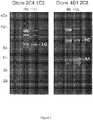
- cFVIII-BDD protein was used for the generation of a series of rabbit anti-cFVIII-BDD polyclonal and murine monoclonal anticFVIII-BDD antibodies (Green Mountain Antibodies, Burlington, VT) (See Figure 1 ).
- Anti-cFVIII antibodies were detected by Bethesda assay (14) or by cFVIII-specific IgG antibodies by ELISA.
- the cFVIII-BDD was detected with a goat anti-rabbit antibody conjugated to horseradish peroxidase at a dilution of 1:15,000 (Jackson ImmunoResearch Laboratories, Inc., West Grove, PA). The standard curve was generated using serial dilution of recombinant cFVIII-BDD. Half-life and recovery were calculated as previously described (15, 16).
- ELISA was used to detect cFVIII-specific IgG antibodies by using purified cFVIII-BDD protein (1 ⁇ g/mL) to capture IgG1 or IgG2 antibodies in dog serum.
- Canine reference serum Bethyl Laboratories Inc., Montgomery, TX
- Canine serum samples were diluted in LowCross-Buffer (Candor Bioscience GmbH, Germany).
- the IgG was detected with goat anti-canine IgG1 conjugated to horseradish peroxidase or sheep anti-canine IgG2 conjugated to horseradish peroxidase (Bethyl Laboratories Inc., Montgomery, TX) diluted 1:1000 in LowCross-Buffer (Candor, Bioscience GmbH, Weissensberg, Germany).
- Recombinant canine B-domain deleted FVIII exhibits high specific activity and is safe in the canine hemophilia A model
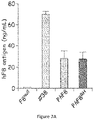
- cFVIII-BDD typically yields 0.5 mg/L which is 3-fold higher than hFVIII-BDD (0.16 mg/L).
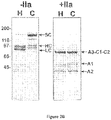
- purified cFVIII-BDD existed predominantly as a single-chain protein (>75% of total) whereas, as expected, hFVIII-BDD was primarily a heterodimer ( Figure 2A , B ).
- the amino acid recognition sequence for the PACE/furin in cFVIII (HHQR)(17) differs from human and porcine FVIII (RHQR) and may explain the predominant single-chain form of cFVIII (17).
- FVIIIa rapidly loses activity due to A2-domain dissociation from the A1/A2/A3-C1-C2 heterotrimer.
- Purified cFVIII-BDD or hFVIII-BDD were rapidly activated ( ⁇ 30s) with thrombin and residual cofactor activity was monitored over time.
- a purified component assay Figure 2 , panel D
- clotting assay data not shown
- HA dogs received cFVIII-BDD at doses of 2.5 ⁇ g/kg every 30 days for 2-4 months and serial plasma samples were collected through four weeks after each protein injection.
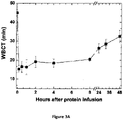
- cFVIIIBDD was functional as evidenced by the shortening of the whole blood clotting time (WBCT) and increased cFVIII clotting activity ( Figure 3 ).
- WBCT whole blood clotting time
- There was a good correlation between cFVIII activity and antigen levels ( Figure 3B ).
- the levels of cFVIII slowly declined after the infusion and returned to baseline within 48-56 hours with a calculated half-life of 12-14 hours.
- inhibitor titers of 4 B.U. corresponds to 3000-4000 ng/mL of IgG2.
- cFVIII-BDD The recombinant expression of cFVIII-BDD allowed us to generate large amounts of protein (>20mg), develop valuable antibodies and begin to unravel intrinsic properties of the protein that may impact the development of treatment of hemophilia.
- the enhanced biological activity of cFVIII could partially result from the secretion of cFVIII as a single-chain protein and hFVIII variants with canine PACE/furin cleavage sites may help define whether these modifications would improve production and stability of the recombinant protein.
- hFVIII variants with canine PACE/furin cleavage sites may help define whether these modifications would improve production and stability of the recombinant protein.
- Xase complex assembly in kinetic characterization with canine FVIIIa will shed light on its apparent increased specific activity compared to hFVIII.
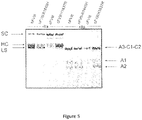
- the activated hFVIII R1645H had a 3-fold increase in half-life compared to WT hBFVIII. See Figure 6 .
- the A2-domain dissociation of mutant human FVIII R1645H is similar to that of the wild-type cFVIII and porcine FVIII.
- canine FVIII has greater activity, in part due to its increased stability as it is expressed as predominantly as a single chain, likely involving a single R1650H (RH) substitution at the PACE/Furin site in cFVIII.
- RH R1650H
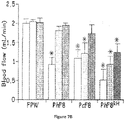
- Lenti/BMT pFVIII studies expressing phBFVIIIRH showed that the FVIII variant containing this amino acid substitution and B domain deletion was expressed at levels in mice comparable to those observed in transgenic hemophilia A mice expressing wild-type human FVIII.
- the FVIII variant was more efficacious in several bleeding models, including near-normal hemostais in the cremaster laser injury model (microcirculation) or carotid artery model (macrocirculation) in hemophilia A recipient mice.
- the hFVIII 1645H variant exhibits higher stability due to the slow dissociation of the A2-domain. Accordingly, this variant may be used to advantage upon tissue injury in order to enhance the generation and duration of clot formation thereby providing a more efficient hemostasis. Additional alterations of the PACE-furin cleavage site should yield similar resistant FVIII variants. Such alterations include, without limitation, deletion of one or more amino acids within the cleavage site, and substitution of the R in the human sequence with an amino acid such as, serine, lysine, methionine, cysteine, proline and tyrosine.
- any of these variants will useful for combining with other forms of FVIII, including, without limitation, IR8 that is resistant to the inactivation by activated protein C.
- This combination of the hFVIII 1645 (or other PACE-furin resistance forms) with the IR8 variant may further enhance the efficacy of the FVIII in inducing hemostasis.
- the protein product described herein could also used for site specific pegylation aimed at increasing the protein half-life or encapsulated with various compounds to enhance efficacy while maintaining appropriate safety parameters.
- the best performing FVIII variant(s) will be used for (a) protein production for the treatment of bleeding, either prophylatically or in response to a bleed, (b) in transgenes for direct gene delivery by viral or non-viral vectors to the liver, skeletal muscle, or skin.
- these vectors and lentiviral, retroviral vectors can be employed to target hematopoietic stem cell for expression in cells from the bone marrow. They can also be utilized to drive expression of variant FVIII in induced Progenitor cells (iPS) or human or non-human embryonic stem cells.
- iPS induced Progenitor cells
- Such cells can be transduced ex vivo and then returned to the patient via IV or local injection as long as the germ line genetic identity of the human being is not modified.
- the cells are derived from the patient.
- the cells may be obtained from an immunologically compatible donor.
Landscapes
- Health & Medical Sciences (AREA)
- Chemical & Material Sciences (AREA)
- Life Sciences & Earth Sciences (AREA)
- Organic Chemistry (AREA)
- Medicinal Chemistry (AREA)
- General Health & Medical Sciences (AREA)
- Hematology (AREA)
- Biophysics (AREA)
- Molecular Biology (AREA)
- Proteomics, Peptides & Aminoacids (AREA)
- Genetics & Genomics (AREA)
- Biochemistry (AREA)
- Gastroenterology & Hepatology (AREA)
- Zoology (AREA)
- Toxicology (AREA)
- Engineering & Computer Science (AREA)
- Veterinary Medicine (AREA)
- Bioinformatics & Cheminformatics (AREA)
- Animal Behavior & Ethology (AREA)
- Diabetes (AREA)
- Pharmacology & Pharmacy (AREA)
- Public Health (AREA)
- Chemical Kinetics & Catalysis (AREA)
- General Chemical & Material Sciences (AREA)
- Nuclear Medicine, Radiotherapy & Molecular Imaging (AREA)
- Medicines That Contain Protein Lipid Enzymes And Other Medicines (AREA)
- Peptides Or Proteins (AREA)
- Medicines Containing Material From Animals Or Micro-Organisms (AREA)
Claims (9)
- Variant du facteur VIII (FVIII) humain qui module l'hémostase, dans lequel ledit variant est dépourvu de la majeure partie du domaine B, comprend une substitution d'acide aminé R1645H au niveau du site de clivage PACE/FURINE et manifeste une activité spécifique et une stabilité accrues par rapport au FVIII humain-à domaine B délété (BDD) dépourvu de ladite substitution.
- Acide nucléique codant pour le variant de FVIII selon la revendication 1.
- Vecteur d'expression comprenant l'acide nucléique selon la revendication 2.
- Cellule-hôte comprenant le vecteur d'expression selon la revendication 3.
- Composition pharmaceutique comprenant le variant du facteur VIII selon la revendication 1 dans un véhicule biologiquement compatible.
- Vecteur selon la revendication 3, choisi dans le groupe constitué par un vecteur adénoviral, un vecteur adéno-associé, un vecteur rétroviral, un plasmide, et un vecteur lentiviral.
- Variant du facteur VIII humain selon la revendication 1 pour une utilisation dans le traitement d'un trouble lié à l'hémostase, dans un véhicule biologiquement acceptable dans laquelle ledit variant manifeste une activité spécifique et une stabilité accrues par rapport au FVIII humain-BDD dépourvu desdites substitution et délétions.
- Variant du facteur VIII humain pour son utilisation selon la revendication 7, dans laquelle ledit variant est un pro-coagulant et ledit trouble est choisi dans le groupe constitué par l'hémophilie A, les maladies de von Willebrand et l'hémorragie liée à un traumatisme, une lésion, la thrombocytopénie, la coagulopathie, la coagulation intravasculaire disséminée (CIVD) et les troubles consécutifs à un traitement de sur-anticoagulation.
- Variant du facteur VIII humain pour son utilisation selon la revendication 7 ou la revendication 8, dans laquelle ledit variant est encapsulé dans un liposome ou mélangé à des phospholipides ou des micelles.
Applications Claiming Priority (2)
| Application Number | Priority Date | Filing Date | Title |
|---|---|---|---|
| US24817909P | 2009-10-02 | 2009-10-02 | |
| PCT/US2010/051285 WO2011041770A1 (fr) | 2009-10-02 | 2010-10-04 | Compositions et procédés pour renforcer la fonction du facteur de coagulation viii |
Publications (4)
| Publication Number | Publication Date |
|---|---|
| EP2482841A1 EP2482841A1 (fr) | 2012-08-08 |
| EP2482841A4 EP2482841A4 (fr) | 2013-07-03 |
| EP2482841B1 EP2482841B1 (fr) | 2018-11-21 |
| EP2482841B2 true EP2482841B2 (fr) | 2022-09-28 |
Family
ID=43826687
Family Applications (1)
| Application Number | Title | Priority Date | Filing Date |
|---|---|---|---|
| EP10821393.5A Active EP2482841B2 (fr) | 2009-10-02 | 2010-10-04 | Compositions et procédés pour renforcer la fonction du facteur de coagulation viii |
Country Status (8)
| Country | Link |
|---|---|
| US (3) | US8816054B2 (fr) |
| EP (1) | EP2482841B2 (fr) |
| AU (1) | AU2010300292B2 (fr) |
| CA (1) | CA2776503C (fr) |
| DK (1) | DK2482841T4 (fr) |
| ES (1) | ES2717902T5 (fr) |
| PT (1) | PT2482841T (fr) |
| WO (1) | WO2011041770A1 (fr) |
Families Citing this family (15)
| Publication number | Priority date | Publication date | Assignee | Title |
|---|---|---|---|---|
| WO2013086125A2 (fr) * | 2011-12-08 | 2013-06-13 | Bloodcenter Research Foundation | Procédé d'induction d'une immuno-tolérance par l'intermédiaire d'une expression génique ciblée |
| WO2014008480A2 (fr) * | 2012-07-06 | 2014-01-09 | Biogen Idec Ma Inc. | Lignée cellulaire exprimant des polypeptides de facteur viii à une seule chaîne et ses utilisations |
| AU2015301598B2 (en) * | 2014-08-13 | 2020-07-16 | Liron Elkouby | An improved expression cassette for packaging and expression of variant Factor VIII for the treatment of hemostasis disorders |
| US20190144524A1 (en) * | 2016-01-14 | 2019-05-16 | The Children's Hospital Of Philadelphia | Factor viii variants, nucleic acid sequences, and methods and uses for treatment of hemostasis disorders |
| WO2018102743A1 (fr) | 2016-12-02 | 2018-06-07 | Bioverativ Therapeutics Inc. | Méthodes de traitement de l'arthropathie hémophilique à l'aide de facteurs de coagulation chimériques |
| AU2018338608B2 (en) | 2017-09-27 | 2025-09-11 | Sigilon Therapeutics, Inc. | Methods, compositions, and implantable elements comprising active cells |
| MX2020010369A (es) | 2018-04-04 | 2020-10-22 | Sigilon Therapeutics Inc | Particulas implantables y metodos relacionados. |
| WO2019195056A1 (fr) | 2018-04-04 | 2019-10-10 | Sigilon Therapeutics, Inc. | Procédés, compositions et éléments implantables comprenant des cellules souches |
| JP7763589B2 (ja) | 2018-05-18 | 2025-11-04 | バイオベラティブ セラピューティクス インコーポレイテッド | 血友病aを処置する方法 |
| UY38389A (es) | 2018-09-27 | 2020-04-30 | Sigilon Therapeutics Inc | Dispositivos implantables para terapia celular y métodos relacionados |
| CA3115535A1 (fr) | 2018-10-23 | 2020-04-30 | The Children's Hospital Of Philadelphia | Compositions et procedes de modulation de la fonction du facteur viii |
| WO2020168362A1 (fr) | 2019-02-15 | 2020-08-20 | Crispr Therapeutics Ag | Édition de gène pour l'hémophilie a avec une expression de facteur viii améliorée |
| EP3736286A1 (fr) | 2019-05-09 | 2020-11-11 | Biotest AG | Molécule de facteur viii à chaîne unique |
| CN120659872A (zh) | 2022-10-11 | 2025-09-16 | 西吉隆医疗股份有限公司 | 用于治疗疾病的经工程化的细胞和可植入元件 |
| WO2024081309A1 (fr) | 2022-10-11 | 2024-04-18 | Sigilon Therapeutics, Inc. | Cellules modifiées et éléments implantables pour le traitement d'une maladie |
Citations (9)
| Publication number | Priority date | Publication date | Assignee | Title |
|---|---|---|---|---|
| WO1988000831A1 (fr) † | 1986-08-01 | 1988-02-11 | Biogen N.V. | Sequences adn pour facteur viii:c modifie et polypeptides semblables au facteur viii:c modifie et procedes de production en grandes quantites de ces polypeptides |
| WO1988005825A1 (fr) † | 1987-01-30 | 1988-08-11 | Biogen N.V. | Procede de production du facteur viii en grande quantite |
| EP0294910A1 (fr) † | 1987-06-12 | 1988-12-14 | Immuno Ag | Protéines à activité de facteur VIII, procédé pour leur production utilisant des cellules modifiées par génie génétique et compositions pharmaceutiques les contenant |
| EP0295597A2 (fr) † | 1987-06-19 | 1988-12-21 | BEHRINGWERKE Aktiengesellschaft | Molécule similaire au facteur VIII:C, à l'activité coagulante |
| US5422260A (en) † | 1986-05-29 | 1995-06-06 | Genetics Institute, Inc. -Legal Affairs | Human factor VIII:c muteins |
| US5451521A (en) † | 1986-05-29 | 1995-09-19 | Genetics Institute, Inc. | Procoagulant proteins |
| WO2001070968A2 (fr) † | 2000-03-22 | 2001-09-27 | Octagene Gmbh | Production de facteurs de coagulation sanguine recombines dans des lignees de cellules humaines |
| WO2003100053A1 (fr) † | 2002-05-22 | 2003-12-04 | The Children's Hospital Of Philadelphia | Compositions et methodes de traitement de l'hemophilie a |
| WO2004067566A1 (fr) † | 2003-01-28 | 2004-08-12 | In2Gen Co., Ltd. | Polypeptide de facteur viii |
Family Cites Families (1)
| Publication number | Priority date | Publication date | Assignee | Title |
|---|---|---|---|---|
| CA2264431A1 (fr) * | 1998-03-05 | 1999-09-05 | Queen's University At Kingston | Proteine et gene canins du facteur viii et methodes d'utilisation |
-
2010
- 2010-10-04 DK DK10821393.5T patent/DK2482841T4/da active
- 2010-10-04 EP EP10821393.5A patent/EP2482841B2/fr active Active
- 2010-10-04 PT PT10821393T patent/PT2482841T/pt unknown
- 2010-10-04 AU AU2010300292A patent/AU2010300292B2/en active Active
- 2010-10-04 WO PCT/US2010/051285 patent/WO2011041770A1/fr not_active Ceased
- 2010-10-04 CA CA2776503A patent/CA2776503C/fr active Active
- 2010-10-04 ES ES10821393T patent/ES2717902T5/es active Active
-
2012
- 2012-04-02 US US13/437,486 patent/US8816054B2/en active Active
-
2014
- 2014-08-25 US US14/468,108 patent/US9670267B2/en active Active
-
2017
- 2017-06-05 US US15/614,532 patent/US10442850B2/en active Active
Patent Citations (10)
| Publication number | Priority date | Publication date | Assignee | Title |
|---|---|---|---|---|
| US5422260A (en) † | 1986-05-29 | 1995-06-06 | Genetics Institute, Inc. -Legal Affairs | Human factor VIII:c muteins |
| US5451521A (en) † | 1986-05-29 | 1995-09-19 | Genetics Institute, Inc. | Procoagulant proteins |
| WO1988000831A1 (fr) † | 1986-08-01 | 1988-02-11 | Biogen N.V. | Sequences adn pour facteur viii:c modifie et polypeptides semblables au facteur viii:c modifie et procedes de production en grandes quantites de ces polypeptides |
| WO1988005825A1 (fr) † | 1987-01-30 | 1988-08-11 | Biogen N.V. | Procede de production du facteur viii en grande quantite |
| EP0294910A1 (fr) † | 1987-06-12 | 1988-12-14 | Immuno Ag | Protéines à activité de facteur VIII, procédé pour leur production utilisant des cellules modifiées par génie génétique et compositions pharmaceutiques les contenant |
| EP0295597A2 (fr) † | 1987-06-19 | 1988-12-21 | BEHRINGWERKE Aktiengesellschaft | Molécule similaire au facteur VIII:C, à l'activité coagulante |
| WO2001070968A2 (fr) † | 2000-03-22 | 2001-09-27 | Octagene Gmbh | Production de facteurs de coagulation sanguine recombines dans des lignees de cellules humaines |
| WO2003100053A1 (fr) † | 2002-05-22 | 2003-12-04 | The Children's Hospital Of Philadelphia | Compositions et methodes de traitement de l'hemophilie a |
| WO2004067566A1 (fr) † | 2003-01-28 | 2004-08-12 | In2Gen Co., Ltd. | Polypeptide de facteur viii |
| US7041635B2 (en) † | 2003-01-28 | 2006-05-09 | In2Gen Co., Ltd. | Factor VIII polypeptide |
Non-Patent Citations (16)
| Title |
|---|
| ANONYMOUS: "Thrombosis, Wikipedia the free encyclopedia", 23 July 2019 (2019-07-23), pages 1 - 13, Retrieved from the Internet <URL:https://en.wikipedia.org/w/index.php?title=Thrombosis&oldid=907537401> † |
| BIHOREAU ET AL., BIOCHEM. J., vol. 277, 1991, pages 23 - 31 † |
| CAO ET AL., PNAS, vol. 105, no. 21, 2008, pages 7416 - 7421 † |
| Communication under Article 94(3) EPC dated 2 February 2017 † |
| Doering et al. (2004), THE JOURNAL OF BIOLOGICAL CHEMISTRY, 279(8): 6546-6552 † |
| DONATH ET AL., BIOCHEM J, vol. 312, 1995, pages 49 - 55 † |
| Experimental report "Exhibit A" (i.e. Table 1 and Figure 7 of D23) † |
| GOUSE ET AL.: "New Thrombotic Events in Ischemic Stroke Patients with Elevated Factor VIII /Abstract/", THROMBOSIS, vol. 2014, 17 December 2014 (2014-12-17) † |
| KRISHNAN ET AL., EUR. J. BIOCHEM., vol. 195, 1991, pages 637 - 644 † |
| LEYTE ET AL., JOURNAL OF BIOLOGICAL CHEMISTRY, vol. 266, no. 2, 1991, pages 740 - 746 † |
| MEULIEN ET AL., PROTEIN ENGINEERING, vol. 2, no. 4, 1988, pages 301 - 306 † |
| Patentee’s response of 11 August 2017 to Communication under Article 94(3)EPC dated 02.02.2017 † |
| SABATINO ET AL., BLOOD, vol. 114, no. 20, 2009, pages 4562 - 4565 † |
| Sequence alignment between human FVIII and canine (dog) FVIII † |
| Siner et al. (2016), JCI Insight, l(16):e89371, doi: 10.1172/Jci.insight.89371 † |
| Spencer et al. (2011), Molecular Therapy, 19(2):302-309, doi:101038/mit. 2010.239 † |
Also Published As
| Publication number | Publication date |
|---|---|
| EP2482841A4 (fr) | 2013-07-03 |
| EP2482841A1 (fr) | 2012-08-08 |
| CA2776503C (fr) | 2020-07-28 |
| DK2482841T3 (en) | 2019-03-18 |
| ES2717902T3 (es) | 2019-06-26 |
| PT2482841T (pt) | 2019-03-01 |
| US20150056271A1 (en) | 2015-02-26 |
| WO2011041770A1 (fr) | 2011-04-07 |
| CA2776503A1 (fr) | 2011-04-07 |
| US8816054B2 (en) | 2014-08-26 |
| US10442850B2 (en) | 2019-10-15 |
| US20170369554A1 (en) | 2017-12-28 |
| AU2010300292A1 (en) | 2012-05-03 |
| US9670267B2 (en) | 2017-06-06 |
| EP2482841B1 (fr) | 2018-11-21 |
| ES2717902T5 (es) | 2022-11-29 |
| AU2010300292B2 (en) | 2016-11-10 |
| US20120308641A1 (en) | 2012-12-06 |
| DK2482841T4 (da) | 2022-10-24 |
Similar Documents
| Publication | Publication Date | Title |
|---|---|---|
| EP2482841B2 (fr) | Compositions et procédés pour renforcer la fonction du facteur de coagulation viii | |
| JP2025037984A (ja) | 第viii因子機能を調節するための組成物および方法 | |
| US8470557B2 (en) | Isolated nucleic acids encoding activated factor V and methods for production thereof | |
| US9914918B2 (en) | FVII polypeptide variants exhibiting altered interaction with endothelial protein C receptor (EPCR) and methods of use thereof for modulating hemostasis | |
| US20220403005A1 (en) | Compositions and methods for modulating factor viii function | |
| US20250250322A1 (en) | Compositions and methods for modulating factor viii function | |
| JP2025541131A (ja) | 第viii因子機能を調節するための組成物及び方法 | |
| HK40077058A (en) | Compositions and methods for modulating factor viii function |
Legal Events
| Date | Code | Title | Description |
|---|---|---|---|
| PUAI | Public reference made under article 153(3) epc to a published international application that has entered the european phase |
Free format text: ORIGINAL CODE: 0009012 |
|
| 17P | Request for examination filed |
Effective date: 20120501 |
|
| AK | Designated contracting states |
Kind code of ref document: A1 Designated state(s): AL AT BE BG CH CY CZ DE DK EE ES FI FR GB GR HR HU IE IS IT LI LT LU LV MC MK MT NL NO PL PT RO RS SE SI SK SM TR |
|
| DAX | Request for extension of the european patent (deleted) | ||
| RIC1 | Information provided on ipc code assigned before grant |
Ipc: A61K 38/37 20060101AFI20130513BHEP |
|
| A4 | Supplementary search report drawn up and despatched |
Effective date: 20130603 |
|
| RIC1 | Information provided on ipc code assigned before grant |
Ipc: A61K 38/37 20060101AFI20130524BHEP |
|
| 17Q | First examination report despatched |
Effective date: 20140210 |
|
| STAA | Information on the status of an ep patent application or granted ep patent |
Free format text: STATUS: EXAMINATION IS IN PROGRESS |
|
| GRAP | Despatch of communication of intention to grant a patent |
Free format text: ORIGINAL CODE: EPIDOSNIGR1 |
|
| STAA | Information on the status of an ep patent application or granted ep patent |
Free format text: STATUS: GRANT OF PATENT IS INTENDED |
|
| INTG | Intention to grant announced |
Effective date: 20180517 |
|
| GRAJ | Information related to disapproval of communication of intention to grant by the applicant or resumption of examination proceedings by the epo deleted |
Free format text: ORIGINAL CODE: EPIDOSDIGR1 |
|
| STAA | Information on the status of an ep patent application or granted ep patent |
Free format text: STATUS: EXAMINATION IS IN PROGRESS |
|
| GRAR | Information related to intention to grant a patent recorded |
Free format text: ORIGINAL CODE: EPIDOSNIGR71 |
|
| GRAS | Grant fee paid |
Free format text: ORIGINAL CODE: EPIDOSNIGR3 |
|
| STAA | Information on the status of an ep patent application or granted ep patent |
Free format text: STATUS: GRANT OF PATENT IS INTENDED |
|
| GRAA | (expected) grant |
Free format text: ORIGINAL CODE: 0009210 |
|
| STAA | Information on the status of an ep patent application or granted ep patent |
Free format text: STATUS: THE PATENT HAS BEEN GRANTED |
|
| INTC | Intention to grant announced (deleted) | ||
| INTG | Intention to grant announced |
Effective date: 20180927 |
|
| AK | Designated contracting states |
Kind code of ref document: B1 Designated state(s): AL AT BE BG CH CY CZ DE DK EE ES FI FR GB GR HR HU IE IS IT LI LT LU LV MC MK MT NL NO PL PT RO RS SE SI SK SM TR |
|
| REG | Reference to a national code |
Ref country code: CH Ref legal event code: EP |
|
| REG | Reference to a national code |
Ref country code: IE Ref legal event code: FG4D |
|
| REG | Reference to a national code |
Ref country code: DE Ref legal event code: R096 Ref document number: 602010055351 Country of ref document: DE |
|
| REG | Reference to a national code |
Ref country code: AT Ref legal event code: REF Ref document number: 1066773 Country of ref document: AT Kind code of ref document: T Effective date: 20181215 |
|
| RAP2 | Party data changed (patent owner data changed or rights of a patent transferred) |
Owner name: THE CHILDREN'S HOSPITAL OF PHILADELPHIA |
|
| REG | Reference to a national code |
Ref country code: PT Ref legal event code: SC4A Ref document number: 2482841 Country of ref document: PT Date of ref document: 20190301 Kind code of ref document: T Free format text: AVAILABILITY OF NATIONAL TRANSLATION Effective date: 20190222 |
|
| REG | Reference to a national code |
Ref country code: CH Ref legal event code: NV Representative=s name: BOVARD AG PATENT- UND MARKENANWAELTE, CH |
|
| REG | Reference to a national code |
Ref country code: DK Ref legal event code: T3 Effective date: 20190311 |
|
| REG | Reference to a national code |
Ref country code: SE Ref legal event code: TRGR |
|
| REG | Reference to a national code |
Ref country code: NL Ref legal event code: FP |
|
| PG25 | Lapsed in a contracting state [announced via postgrant information from national office to epo] |
Ref country code: LT Free format text: LAPSE BECAUSE OF FAILURE TO SUBMIT A TRANSLATION OF THE DESCRIPTION OR TO PAY THE FEE WITHIN THE PRESCRIBED TIME-LIMIT Effective date: 20181121 Ref country code: HR Free format text: LAPSE BECAUSE OF FAILURE TO SUBMIT A TRANSLATION OF THE DESCRIPTION OR TO PAY THE FEE WITHIN THE PRESCRIBED TIME-LIMIT Effective date: 20181121 Ref country code: BG Free format text: LAPSE BECAUSE OF FAILURE TO SUBMIT A TRANSLATION OF THE DESCRIPTION OR TO PAY THE FEE WITHIN THE PRESCRIBED TIME-LIMIT Effective date: 20190221 Ref country code: IS Free format text: LAPSE BECAUSE OF FAILURE TO SUBMIT A TRANSLATION OF THE DESCRIPTION OR TO PAY THE FEE WITHIN THE PRESCRIBED TIME-LIMIT Effective date: 20190321 Ref country code: LV Free format text: LAPSE BECAUSE OF FAILURE TO SUBMIT A TRANSLATION OF THE DESCRIPTION OR TO PAY THE FEE WITHIN THE PRESCRIBED TIME-LIMIT Effective date: 20181121 |
|
| REG | Reference to a national code |
Ref country code: NO Ref legal event code: T2 Effective date: 20181121 |
|
| PG25 | Lapsed in a contracting state [announced via postgrant information from national office to epo] |
Ref country code: AL Free format text: LAPSE BECAUSE OF FAILURE TO SUBMIT A TRANSLATION OF THE DESCRIPTION OR TO PAY THE FEE WITHIN THE PRESCRIBED TIME-LIMIT Effective date: 20181121 Ref country code: RS Free format text: LAPSE BECAUSE OF FAILURE TO SUBMIT A TRANSLATION OF THE DESCRIPTION OR TO PAY THE FEE WITHIN THE PRESCRIBED TIME-LIMIT Effective date: 20181121 Ref country code: GR Free format text: LAPSE BECAUSE OF FAILURE TO SUBMIT A TRANSLATION OF THE DESCRIPTION OR TO PAY THE FEE WITHIN THE PRESCRIBED TIME-LIMIT Effective date: 20190222 |
|
| REG | Reference to a national code |
Ref country code: ES Ref legal event code: FG2A Ref document number: 2717902 Country of ref document: ES Kind code of ref document: T3 Effective date: 20190626 |
|
| PG25 | Lapsed in a contracting state [announced via postgrant information from national office to epo] |
Ref country code: PL Free format text: LAPSE BECAUSE OF FAILURE TO SUBMIT A TRANSLATION OF THE DESCRIPTION OR TO PAY THE FEE WITHIN THE PRESCRIBED TIME-LIMIT Effective date: 20181121 |
|
| REG | Reference to a national code |
Ref country code: DE Ref legal event code: R026 Ref document number: 602010055351 Country of ref document: DE |
|
| PLBI | Opposition filed |
Free format text: ORIGINAL CODE: 0009260 |
|
| PG25 | Lapsed in a contracting state [announced via postgrant information from national office to epo] |
Ref country code: RO Free format text: LAPSE BECAUSE OF FAILURE TO SUBMIT A TRANSLATION OF THE DESCRIPTION OR TO PAY THE FEE WITHIN THE PRESCRIBED TIME-LIMIT Effective date: 20181121 Ref country code: EE Free format text: LAPSE BECAUSE OF FAILURE TO SUBMIT A TRANSLATION OF THE DESCRIPTION OR TO PAY THE FEE WITHIN THE PRESCRIBED TIME-LIMIT Effective date: 20181121 Ref country code: SM Free format text: LAPSE BECAUSE OF FAILURE TO SUBMIT A TRANSLATION OF THE DESCRIPTION OR TO PAY THE FEE WITHIN THE PRESCRIBED TIME-LIMIT Effective date: 20181121 Ref country code: SK Free format text: LAPSE BECAUSE OF FAILURE TO SUBMIT A TRANSLATION OF THE DESCRIPTION OR TO PAY THE FEE WITHIN THE PRESCRIBED TIME-LIMIT Effective date: 20181121 |
|
| PLAX | Notice of opposition and request to file observation + time limit sent |
Free format text: ORIGINAL CODE: EPIDOSNOBS2 |
|
| 26 | Opposition filed |
Opponent name: FH SERVICES LIMITED Effective date: 20190821 Opponent name: BIOVERATIV THERAPEUTICS INC. Effective date: 20190821 Opponent name: STRAWMAN LIMITED Effective date: 20190816 |
|
| PG25 | Lapsed in a contracting state [announced via postgrant information from national office to epo] |
Ref country code: SI Free format text: LAPSE BECAUSE OF FAILURE TO SUBMIT A TRANSLATION OF THE DESCRIPTION OR TO PAY THE FEE WITHIN THE PRESCRIBED TIME-LIMIT Effective date: 20181121 |
|
| PLBB | Reply of patent proprietor to notice(s) of opposition received |
Free format text: ORIGINAL CODE: EPIDOSNOBS3 |
|
| PG25 | Lapsed in a contracting state [announced via postgrant information from national office to epo] |
Ref country code: TR Free format text: LAPSE BECAUSE OF FAILURE TO SUBMIT A TRANSLATION OF THE DESCRIPTION OR TO PAY THE FEE WITHIN THE PRESCRIBED TIME-LIMIT Effective date: 20181121 |
|
| PLAY | Examination report in opposition despatched + time limit |
Free format text: ORIGINAL CODE: EPIDOSNORE2 |
|
| PG25 | Lapsed in a contracting state [announced via postgrant information from national office to epo] |
Ref country code: MC Free format text: LAPSE BECAUSE OF FAILURE TO SUBMIT A TRANSLATION OF THE DESCRIPTION OR TO PAY THE FEE WITHIN THE PRESCRIBED TIME-LIMIT Effective date: 20181121 |
|
| PLBC | Reply to examination report in opposition received |
Free format text: ORIGINAL CODE: EPIDOSNORE3 |
|
| PG25 | Lapsed in a contracting state [announced via postgrant information from national office to epo] |
Ref country code: CY Free format text: LAPSE BECAUSE OF FAILURE TO SUBMIT A TRANSLATION OF THE DESCRIPTION OR TO PAY THE FEE WITHIN THE PRESCRIBED TIME-LIMIT Effective date: 20181121 |
|
| PG25 | Lapsed in a contracting state [announced via postgrant information from national office to epo] |
Ref country code: MT Free format text: LAPSE BECAUSE OF FAILURE TO SUBMIT A TRANSLATION OF THE DESCRIPTION OR TO PAY THE FEE WITHIN THE PRESCRIBED TIME-LIMIT Effective date: 20181121 Ref country code: HU Free format text: LAPSE BECAUSE OF FAILURE TO SUBMIT A TRANSLATION OF THE DESCRIPTION OR TO PAY THE FEE WITHIN THE PRESCRIBED TIME-LIMIT; INVALID AB INITIO Effective date: 20101004 |
|
| PLAB | Opposition data, opponent's data or that of the opponent's representative modified |
Free format text: ORIGINAL CODE: 0009299OPPO |
|
| R26 | Opposition filed (corrected) |
Opponent name: FH SERVICES LIMITED Effective date: 20190821 |
|
| APAH | Appeal reference modified |
Free format text: ORIGINAL CODE: EPIDOSCREFNO |
|
| APBM | Appeal reference recorded |
Free format text: ORIGINAL CODE: EPIDOSNREFNO |
|
| APBP | Date of receipt of notice of appeal recorded |
Free format text: ORIGINAL CODE: EPIDOSNNOA2O |
|
| APBU | Appeal procedure closed |
Free format text: ORIGINAL CODE: EPIDOSNNOA9O |
|
| PG25 | Lapsed in a contracting state [announced via postgrant information from national office to epo] |
Ref country code: MK Free format text: LAPSE BECAUSE OF FAILURE TO SUBMIT A TRANSLATION OF THE DESCRIPTION OR TO PAY THE FEE WITHIN THE PRESCRIBED TIME-LIMIT Effective date: 20181121 |
|
| PUAH | Patent maintained in amended form |
Free format text: ORIGINAL CODE: 0009272 |
|
| STAA | Information on the status of an ep patent application or granted ep patent |
Free format text: STATUS: PATENT MAINTAINED AS AMENDED |
|
| 27A | Patent maintained in amended form |
Effective date: 20220928 |
|
| AK | Designated contracting states |
Kind code of ref document: B2 Designated state(s): AL AT BE BG CH CY CZ DE DK EE ES FI FR GB GR HR HU IE IS IT LI LT LU LV MC MK MT NL NO PL PT RO RS SE SI SK SM TR |
|
| REG | Reference to a national code |
Ref country code: DE Ref legal event code: R102 Ref document number: 602010055351 Country of ref document: DE |
|
| REG | Reference to a national code |
Ref country code: DK Ref legal event code: T4 Effective date: 20221018 |
|
| REG | Reference to a national code |
Ref country code: NL Ref legal event code: FP |
|
| REG | Reference to a national code |
Ref country code: SE Ref legal event code: RPEO |
|
| REG | Reference to a national code |
Ref country code: ES Ref legal event code: DC2A Ref document number: 2717902 Country of ref document: ES Kind code of ref document: T5 Effective date: 20221129 |
|
| REG | Reference to a national code |
Ref country code: NO Ref legal event code: TB2 |
|
| P01 | Opt-out of the competence of the unified patent court (upc) registered |
Effective date: 20230515 |
|
| REG | Reference to a national code |
Ref country code: AT Ref legal event code: UEP Ref document number: 1066773 Country of ref document: AT Kind code of ref document: T Effective date: 20220928 Ref country code: AT Ref legal event code: UEP Ref document number: 1066773 Country of ref document: AT Kind code of ref document: T Effective date: 20181121 |
|
| PGFP | Annual fee paid to national office [announced via postgrant information from national office to epo] |
Ref country code: LU Payment date: 20250929 Year of fee payment: 16 Ref country code: IT Payment date: 20250922 Year of fee payment: 16 Ref country code: NL Payment date: 20250912 Year of fee payment: 16 |
|
| PGFP | Annual fee paid to national office [announced via postgrant information from national office to epo] |
Ref country code: BE Payment date: 20250917 Year of fee payment: 16 Ref country code: GB Payment date: 20250904 Year of fee payment: 16 |
|
| PGFP | Annual fee paid to national office [announced via postgrant information from national office to epo] |
Ref country code: FR Payment date: 20250908 Year of fee payment: 16 |
|
| PGFP | Annual fee paid to national office [announced via postgrant information from national office to epo] |
Ref country code: SE Payment date: 20250910 Year of fee payment: 16 |
|
| PGFP | Annual fee paid to national office [announced via postgrant information from national office to epo] |
Ref country code: CZ Payment date: 20250923 Year of fee payment: 16 Ref country code: IE Payment date: 20250909 Year of fee payment: 16 |
|
| REG | Reference to a national code |
Ref country code: CH Ref legal event code: U11 Free format text: ST27 STATUS EVENT CODE: U-0-0-U10-U11 (AS PROVIDED BY THE NATIONAL OFFICE) Effective date: 20251101 |
|
| PGFP | Annual fee paid to national office [announced via postgrant information from national office to epo] |
Ref country code: PT Payment date: 20251003 Year of fee payment: 16 |
|
| PGFP | Annual fee paid to national office [announced via postgrant information from national office to epo] |
Ref country code: DE Payment date: 20250902 Year of fee payment: 16 |
|
| PGFP | Annual fee paid to national office [announced via postgrant information from national office to epo] |
Ref country code: NO Payment date: 20251009 Year of fee payment: 16 |
|
| PGFP | Annual fee paid to national office [announced via postgrant information from national office to epo] |
Ref country code: AT Payment date: 20250925 Year of fee payment: 16 |
|
| PGFP | Annual fee paid to national office [announced via postgrant information from national office to epo] |
Ref country code: FI Payment date: 20251014 Year of fee payment: 16 Ref country code: DK Payment date: 20251014 Year of fee payment: 16 |
|
| PGFP | Annual fee paid to national office [announced via postgrant information from national office to epo] |
Ref country code: CH Payment date: 20251101 Year of fee payment: 16 |
|
| PGFP | Annual fee paid to national office [announced via postgrant information from national office to epo] |
Ref country code: ES Payment date: 20251104 Year of fee payment: 16 |