EP2480096B1 - Rice whitening - Google Patents
Rice whitening Download PDFInfo
- Publication number
- EP2480096B1 EP2480096B1 EP10779834.0A EP10779834A EP2480096B1 EP 2480096 B1 EP2480096 B1 EP 2480096B1 EP 10779834 A EP10779834 A EP 10779834A EP 2480096 B1 EP2480096 B1 EP 2480096B1
- Authority
- EP
- European Patent Office
- Prior art keywords
- moistening
- brown rice
- rice
- moistening agent
- less
- Prior art date
- Legal status (The legal status is an assumption and is not a legal conclusion. Google has not performed a legal analysis and makes no representation as to the accuracy of the status listed.)
- Not-in-force
Links
- 235000007164 Oryza sativa Nutrition 0.000 title claims description 61
- 235000009566 rice Nutrition 0.000 title claims description 61
- 230000002087 whitening effect Effects 0.000 title claims description 26
- 240000007594 Oryza sativa Species 0.000 title description 2
- 238000003801 milling Methods 0.000 claims description 72
- 241000209094 Oryza Species 0.000 claims description 60
- 239000003795 chemical substances by application Substances 0.000 claims description 59
- 235000021329 brown rice Nutrition 0.000 claims description 45
- 238000000034 method Methods 0.000 claims description 40
- FAPWRFPIFSIZLT-UHFFFAOYSA-M Sodium chloride Chemical compound [Na+].[Cl-] FAPWRFPIFSIZLT-UHFFFAOYSA-M 0.000 claims description 26
- 239000000654 additive Substances 0.000 claims description 25
- 230000000996 additive effect Effects 0.000 claims description 24
- XLYOFNOQVPJJNP-UHFFFAOYSA-N water Substances O XLYOFNOQVPJJNP-UHFFFAOYSA-N 0.000 claims description 23
- 239000011780 sodium chloride Substances 0.000 claims description 13
- 235000000346 sugar Nutrition 0.000 claims description 12
- 108090000790 Enzymes Proteins 0.000 claims description 11
- 102000004190 Enzymes Human genes 0.000 claims description 11
- 229920006395 saturated elastomer Polymers 0.000 claims description 11
- FBPFZTCFMRRESA-FSIIMWSLSA-N D-Glucitol Natural products OC[C@H](O)[C@H](O)[C@@H](O)[C@H](O)CO FBPFZTCFMRRESA-FSIIMWSLSA-N 0.000 claims description 10
- 239000000600 sorbitol Substances 0.000 claims description 10
- 238000002156 mixing Methods 0.000 claims description 8
- FBPFZTCFMRRESA-JGWLITMVSA-N D-glucitol Chemical compound OC[C@H](O)[C@@H](O)[C@H](O)[C@H](O)CO FBPFZTCFMRRESA-JGWLITMVSA-N 0.000 claims description 5
- 150000005846 sugar alcohols Chemical class 0.000 claims description 5
- 239000003595 mist Substances 0.000 claims description 3
- 239000007921 spray Substances 0.000 claims description 3
- 238000010923 batch production Methods 0.000 claims description 2
- 238000010924 continuous production Methods 0.000 claims description 2
- 235000013339 cereals Nutrition 0.000 description 26
- 229940088598 enzyme Drugs 0.000 description 10
- 238000007373 indentation Methods 0.000 description 7
- 238000001035 drying Methods 0.000 description 6
- 230000002255 enzymatic effect Effects 0.000 description 5
- 239000010410 layer Substances 0.000 description 5
- 238000012545 processing Methods 0.000 description 5
- 238000006243 chemical reaction Methods 0.000 description 4
- 238000005498 polishing Methods 0.000 description 4
- PEDCQBHIVMGVHV-UHFFFAOYSA-N Glycerine Chemical compound OCC(O)CO PEDCQBHIVMGVHV-UHFFFAOYSA-N 0.000 description 3
- 238000010586 diagram Methods 0.000 description 3
- 235000013305 food Nutrition 0.000 description 3
- 238000004519 manufacturing process Methods 0.000 description 3
- HEBKCHPVOIAQTA-UHFFFAOYSA-N meso ribitol Natural products OCC(O)C(O)C(O)CO HEBKCHPVOIAQTA-UHFFFAOYSA-N 0.000 description 3
- 108010059892 Cellulase Proteins 0.000 description 2
- UNXHWFMMPAWVPI-UHFFFAOYSA-N Erythritol Natural products OCC(O)C(O)CO UNXHWFMMPAWVPI-UHFFFAOYSA-N 0.000 description 2
- LYCAIKOWRPUZTN-UHFFFAOYSA-N Ethylene glycol Chemical compound OCCO LYCAIKOWRPUZTN-UHFFFAOYSA-N 0.000 description 2
- 229940106157 cellulase Drugs 0.000 description 2
- 239000008187 granular material Substances 0.000 description 2
- 238000005259 measurement Methods 0.000 description 2
- 238000002203 pretreatment Methods 0.000 description 2
- 230000003252 repetitive effect Effects 0.000 description 2
- OWEGMIWEEQEYGQ-UHFFFAOYSA-N 100676-05-9 Natural products OC1C(O)C(O)C(CO)OC1OCC1C(O)C(O)C(O)C(OC2C(OC(O)C(O)C2O)CO)O1 OWEGMIWEEQEYGQ-UHFFFAOYSA-N 0.000 description 1
- FBPFZTCFMRRESA-KVTDHHQDSA-N D-Mannitol Chemical compound OC[C@@H](O)[C@@H](O)[C@H](O)[C@H](O)CO FBPFZTCFMRRESA-KVTDHHQDSA-N 0.000 description 1
- HEBKCHPVOIAQTA-QWWZWVQMSA-N D-arabinitol Chemical compound OC[C@@H](O)C(O)[C@H](O)CO HEBKCHPVOIAQTA-QWWZWVQMSA-N 0.000 description 1
- FBPFZTCFMRRESA-ZXXMMSQZSA-N D-iditol Chemical compound OC[C@@H](O)[C@H](O)[C@@H](O)[C@H](O)CO FBPFZTCFMRRESA-ZXXMMSQZSA-N 0.000 description 1
- UNXHWFMMPAWVPI-QWWZWVQMSA-N D-threitol Chemical compound OC[C@@H](O)[C@H](O)CO UNXHWFMMPAWVPI-QWWZWVQMSA-N 0.000 description 1
- 101710121765 Endo-1,4-beta-xylanase Proteins 0.000 description 1
- 239000004386 Erythritol Substances 0.000 description 1
- 229930091371 Fructose Natural products 0.000 description 1
- RFSUNEUAIZKAJO-ARQDHWQXSA-N Fructose Chemical compound OC[C@H]1O[C@](O)(CO)[C@@H](O)[C@@H]1O RFSUNEUAIZKAJO-ARQDHWQXSA-N 0.000 description 1
- 239000005715 Fructose Substances 0.000 description 1
- WQZGKKKJIJFFOK-GASJEMHNSA-N Glucose Natural products OC[C@H]1OC(O)[C@H](O)[C@@H](O)[C@@H]1O WQZGKKKJIJFFOK-GASJEMHNSA-N 0.000 description 1
- GUBGYTABKSRVRQ-PICCSMPSSA-N Maltose Natural products O[C@@H]1[C@@H](O)[C@H](O)[C@@H](CO)O[C@@H]1O[C@@H]1[C@@H](CO)OC(O)[C@H](O)[C@H]1O GUBGYTABKSRVRQ-PICCSMPSSA-N 0.000 description 1
- 229930195725 Mannitol Natural products 0.000 description 1
- 108010029182 Pectin lyase Proteins 0.000 description 1
- JVWLUVNSQYXYBE-UHFFFAOYSA-N Ribitol Natural products OCC(C)C(O)C(O)CO JVWLUVNSQYXYBE-UHFFFAOYSA-N 0.000 description 1
- 229920002472 Starch Polymers 0.000 description 1
- 229930006000 Sucrose Natural products 0.000 description 1
- CZMRCDWAGMRECN-UGDNZRGBSA-N Sucrose Chemical compound O[C@H]1[C@H](O)[C@@H](CO)O[C@@]1(CO)O[C@@H]1[C@H](O)[C@@H](O)[C@H](O)[C@@H](CO)O1 CZMRCDWAGMRECN-UGDNZRGBSA-N 0.000 description 1
- TVXBFESIOXBWNM-UHFFFAOYSA-N Xylitol Natural products OCCC(O)C(O)C(O)CCO TVXBFESIOXBWNM-UHFFFAOYSA-N 0.000 description 1
- 150000001298 alcohols Chemical class 0.000 description 1
- 108010050181 aleurone Proteins 0.000 description 1
- WQZGKKKJIJFFOK-PHYPRBDBSA-N alpha-D-galactose Chemical compound OC[C@H]1O[C@H](O)[C@H](O)[C@@H](O)[C@H]1O WQZGKKKJIJFFOK-PHYPRBDBSA-N 0.000 description 1
- WQZGKKKJIJFFOK-VFUOTHLCSA-N beta-D-glucose Chemical compound OC[C@H]1O[C@@H](O)[C@H](O)[C@@H](O)[C@@H]1O WQZGKKKJIJFFOK-VFUOTHLCSA-N 0.000 description 1
- GUBGYTABKSRVRQ-QUYVBRFLSA-N beta-maltose Chemical compound OC[C@H]1O[C@H](O[C@H]2[C@H](O)[C@@H](O)[C@H](O)O[C@@H]2CO)[C@H](O)[C@@H](O)[C@@H]1O GUBGYTABKSRVRQ-QUYVBRFLSA-N 0.000 description 1
- 238000010411 cooking Methods 0.000 description 1
- 238000001816 cooling Methods 0.000 description 1
- 230000007423 decrease Effects 0.000 description 1
- 150000002016 disaccharides Chemical class 0.000 description 1
- 230000000694 effects Effects 0.000 description 1
- UNXHWFMMPAWVPI-ZXZARUISSA-N erythritol Chemical compound OC[C@H](O)[C@H](O)CO UNXHWFMMPAWVPI-ZXZARUISSA-N 0.000 description 1
- 235000019414 erythritol Nutrition 0.000 description 1
- 229940009714 erythritol Drugs 0.000 description 1
- 238000011156 evaluation Methods 0.000 description 1
- 230000007717 exclusion Effects 0.000 description 1
- 235000013312 flour Nutrition 0.000 description 1
- FBPFZTCFMRRESA-GUCUJZIJSA-N galactitol Chemical compound OC[C@H](O)[C@@H](O)[C@@H](O)[C@H](O)CO FBPFZTCFMRRESA-GUCUJZIJSA-N 0.000 description 1
- 229930182830 galactose Natural products 0.000 description 1
- 239000008103 glucose Substances 0.000 description 1
- 238000000227 grinding Methods 0.000 description 1
- 230000000887 hydrating effect Effects 0.000 description 1
- WGCNASOHLSPBMP-UHFFFAOYSA-N hydroxyacetaldehyde Natural products OCC=O WGCNASOHLSPBMP-UHFFFAOYSA-N 0.000 description 1
- 239000000832 lactitol Substances 0.000 description 1
- 235000010448 lactitol Nutrition 0.000 description 1
- VQHSOMBJVWLPSR-JVCRWLNRSA-N lactitol Chemical compound OC[C@H](O)[C@@H](O)[C@@H]([C@H](O)CO)O[C@@H]1O[C@H](CO)[C@H](O)[C@H](O)[C@H]1O VQHSOMBJVWLPSR-JVCRWLNRSA-N 0.000 description 1
- 229960003451 lactitol Drugs 0.000 description 1
- 238000002803 maceration Methods 0.000 description 1
- 239000000594 mannitol Substances 0.000 description 1
- 235000010355 mannitol Nutrition 0.000 description 1
- 150000002772 monosaccharides Chemical class 0.000 description 1
- 238000005457 optimization Methods 0.000 description 1
- 238000002310 reflectometry Methods 0.000 description 1
- 238000011160 research Methods 0.000 description 1
- HEBKCHPVOIAQTA-ZXFHETKHSA-N ribitol Chemical compound OC[C@H](O)[C@H](O)[C@H](O)CO HEBKCHPVOIAQTA-ZXFHETKHSA-N 0.000 description 1
- 230000005070 ripening Effects 0.000 description 1
- 238000000926 separation method Methods 0.000 description 1
- 239000008107 starch Substances 0.000 description 1
- 235000019698 starch Nutrition 0.000 description 1
- 238000010025 steaming Methods 0.000 description 1
- 238000003756 stirring Methods 0.000 description 1
- 239000005720 sucrose Substances 0.000 description 1
- 150000008163 sugars Chemical class 0.000 description 1
- 239000002344 surface layer Substances 0.000 description 1
- 239000000811 xylitol Substances 0.000 description 1
- 235000010447 xylitol Nutrition 0.000 description 1
- HEBKCHPVOIAQTA-SCDXWVJYSA-N xylitol Chemical compound OC[C@H](O)[C@@H](O)[C@H](O)CO HEBKCHPVOIAQTA-SCDXWVJYSA-N 0.000 description 1
- 229960002675 xylitol Drugs 0.000 description 1
Images



Classifications
-
- B—PERFORMING OPERATIONS; TRANSPORTING
- B02—CRUSHING, PULVERISING, OR DISINTEGRATING; PREPARATORY TREATMENT OF GRAIN FOR MILLING
- B02B—PREPARING GRAIN FOR MILLING; REFINING GRANULAR FRUIT TO COMMERCIAL PRODUCTS BY WORKING THE SURFACE
- B02B1/00—Preparing grain for milling or like processes
- B02B1/04—Wet treatment, e.g. washing, wetting, softening
-
- A—HUMAN NECESSITIES
- A23—FOODS OR FOODSTUFFS; TREATMENT THEREOF, NOT COVERED BY OTHER CLASSES
- A23L—FOODS, FOODSTUFFS OR NON-ALCOHOLIC BEVERAGES, NOT OTHERWISE PROVIDED FOR; PREPARATION OR TREATMENT THEREOF
- A23L7/00—Cereal-derived products; Malt products; Preparation or treatment thereof
- A23L7/10—Cereal-derived products
- A23L7/196—Products in which the original granular shape is maintained, e.g. parboiled rice
-
- A—HUMAN NECESSITIES
- A23—FOODS OR FOODSTUFFS; TREATMENT THEREOF, NOT COVERED BY OTHER CLASSES
- A23L—FOODS, FOODSTUFFS OR NON-ALCOHOLIC BEVERAGES, NOT OTHERWISE PROVIDED FOR; PREPARATION OR TREATMENT THEREOF
- A23L5/00—Preparation or treatment of foods or foodstuffs, in general; Food or foodstuffs obtained thereby; Materials therefor
- A23L5/40—Colouring or decolouring of foods
-
- A—HUMAN NECESSITIES
- A23—FOODS OR FOODSTUFFS; TREATMENT THEREOF, NOT COVERED BY OTHER CLASSES
- A23L—FOODS, FOODSTUFFS OR NON-ALCOHOLIC BEVERAGES, NOT OTHERWISE PROVIDED FOR; PREPARATION OR TREATMENT THEREOF
- A23L5/00—Preparation or treatment of foods or foodstuffs, in general; Food or foodstuffs obtained thereby; Materials therefor
- A23L5/40—Colouring or decolouring of foods
- A23L5/41—Retaining or modifying natural colour by use of additives, e.g. optical brighteners
Definitions
- the present invention relates to rice whitening, in particular in the production of white rice.
- Document US527836 discloses a process of preparing a rice product from brown rice grains which comprises the following sequential steps (a) milling brown rice grains to remove a controlled proportion of the bran layer therefrom whereby from 2% to 10% of the total weight of the rice grains is removed; (b) hydrating the grains to increase their moisture content to between 20-40%; (c) cooking the grains to gelatinize the starch therein; (d) removing moisture from at least the outer layers of the grains; (e) milling the grains to remove the residual bran layer and germ therefrom.
- Document US2001033885 discloses a process of manufacturing no-bran cereal comprising the steps of: (a) adding moisture to polished cereal; (b) mixing and stirring granular material with the moistened polished cereal so as to remove bran stuck on a surface each grain of the polished cereal; and (c) separating the polished cereal from the granular material.
- Document US2004/126476 discloses a process for preparing instant rice comprising: a milling step for milling brown rice to remove a controlled proportion of bran layer; a primary immersing step for causing rice grains obtained in the said milling step to absorb water; a primary alpha-type conversion step for converting at least surface layers of the rice grains obtained in the said immersing step to the alpha-structure type; a preliminary drying step for drying the rice grains obtained in the said primary alpha-type conversion step up to a moisture content higher than a moisture content after final drying; a final polishing step for consummatively polishing the rice grains obtained in the said preliminary drying step; a secondary immersing step for causing the rice grains obtained in the said final polishing step to absorb water once again; a secondary alpha-type conversion step for completely converting the rice grains obtained in the said secondary immersing step to the alpha-type; a separation-into-single-grains step for separating the rice grains obtained in the said secondary alpha-type conversion step into single grains;
- FIG. 1 is a Sankey diagram illustrating the average attainable yields in conventional milling of American long grain rice [1].
- Arora et al [3] disclose the use of an enzymatic pre-treatment in the milling of brown rice (Basmati), where cellulase is sprayed onto the brown rice and subsequently polished, which provides a reduction in the percentage of brokens.
- Das et al [4, 5] disclose the use of an enzymatic pre-treatment of brown rice (Basmati) using xylanase and cellulase to degrade the bran layers, followed by steaming to complete the gelatinisation process and deactivate the residual enzymes.
- Hay et al [6] disclose the enzymatic maceration of aleurone and subaleurone cells using pectolyase Y-23.
- Enzymes are, however, expensive, and their use with different kinds of rice is complicated by the fact that the activity of enzymes depends on many factors, including, for example, the kind of rice, the enzyme concentration, the pH, the ionic buffer strength, the temperature, the contact time and the moisture content.
- the present invention provides a process for whitening rice, comprising the steps of: moistening brown rice with a moistening agent, preferably comprising water and an additive selected from at least one of a sugar or a derivative thereof, including a sugar alcohol, and sodium chloride; and whitening the moistened brown rice, preferably immediately after the moistening step.
- a moistening agent preferably comprising water and an additive selected from at least one of a sugar or a derivative thereof, including a sugar alcohol, and sodium chloride
- the moistening agent comprises water.
- the moistening agent contains no enzyme.
- the moistening agent further comprises an additive.
- the moistening agent is 100 % saturated with the additive at room temperature.
- the moistening agent is at least 25 % saturated with the additive at room temperature, preferably at least 50 % saturated with the additive at room temperature, preferably at least 75 % saturated with the additive at room temperature.
- the additive comprises less than 10 wt% of the moistening agent, preferably less than 5 wt% of the moistening agent.
- the additive is a hygroscopic additive.
- the additive comprises at least one of a sugar or a derivative thereof, including a sugar alcohol, and sodium chloride.
- Sugars include monosaccharides, including glucose, fructose and galactose, and disaccharides, including sucrose and maltose.
- Other sugar, alcohols include glycol, glycerol, erythritol, threitol, arabitol, xylitol, ribitol, mannitol, dulcitol, iditol, iosmalt, malitol, lactitol and polyglycitol.
- the additive comprises a sugar.
- the additive comprises a sugar alcohol, preferably sorbitol.
- the additive comprises sodium chloride.
- the moistening step comprises applying the moistening agent to the brown rice, such as by mixing together the brown rice and the moistening agent.
- the moistening agent is applied to the brown rice in a batch process, such as by mixing in a container.
- the moistening agent is applied to the brown rice in a continuous process, such as by mixing continuous feeds of the brown rice and the moistening agent.
- the moistening agent is applied as a spray or mist.
- the moistening agent is applied to the brown rice for less than 2 minutes, preferably less than 1.5 minutes, preferably less than 1 minute or for about 1 minute.
- the moistening step includes a rest period following application of the moistening agent to the brown rice.
- the rest period is less than 30 minutes, preferably less than 10 minutes, preferably less than 2 minutes, preferably less than 1 minute or about 1 minute.
- the moistening agent is added to the brown rice in an amount of less than 2 wt%, preferably less than 1 wt%, preferably less than 0.5 wt%.
- the whitening step is performed to achieve a whiteness of 40 Kett.
- no whitening step is performed prior to the moistening step.
- the step of whitening the moistened brown rice comprises mechanically whitening the moistened brown rice, preferably milling the moistened brown rice.
- the process further comprises the step of: separating the headrice from the abraded bran and the brokens.
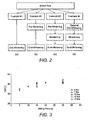
- This Example comprises a single whitening step, as illustrated in Figure 2(a) .
- the pressure cap, pressure lever, weight holder and a predetermined weight were put on the cover, and the miller was then operated for a predetermined period of time. This procedure was repeated for batches at weights of 5, 7, 10, 12 and 15 lbs and for milling times of 5, 10, 15, 20 and 30 s.
- the resulting rice and abraded bran were then transferred into a sample bag, and allowed to cool.
- the resulting rice and bran were then separated using a sifter (an AS 400 sifter as manufactured by Retsch GmbH, Germany) with a sieve having a 1.12 mesh size, operated at 350 rpm for 1 minute.
- the separated rice comprises headrice and brokens.
- the headrice was then separated from the brokens using a trieur (a Mini-Petkus trieur as manufactured by Röber GmbH, Germany) having a variable speed drive (Type VLT-3003 as manufactured by Danfoss, Switzerland).
- a single passage was employed, with the first classification comprising a 2 mm round hole and a vibrating screen, and the second classification comprising a trieur sleeve with 5.5 mm indentations and a horizontal trough.
- the feeding rate was minimal and no aspiration was employed.
- the moisture content and whiteness of the headrice were then determined.
- the moisture content was determined using a single kernel moisture detector (Type PQ-5101-1 as manufactured by Kett, USA).
- the whiteness was measured using a whiteness meter (Type C-300 as manufactured by Kett, USA).
- Figure 3 illustrates a plot of whiteness as a function of milling time for given milling weights. As will be observed, the whiteness increases with increasing milling time and increasing milling weight.
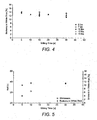
- Figure 4 illustrates a plot of the percentage of brokens as a function of milling time for given milling weights. As will be observed, the percentage of brokens increases as a function of milling weight. As will also be observed, contrarily, the percentage of brokens decreases with increasing milling time. This is attributed to the grinding of small brokens to flour.
- This Example comprises pre-whitening and end-whitening steps, as illustrated in Figure 2(b) .
- the pressure cap, pressure lever, weight holder and a predetermined weight were put on the cover, and the miller was then operated for a predetermined period of time.
- the procedure was performed at a weight of 1 lb and for milling times of 5, 10 and 30 s.
- the resulting rice and abraded bran were then transferred into a sample bag, and allowed to cool.
- the resulting rice and bran were then separated using a sifter (an AS 400 sifter) with a sieve having a 1.12 mesh size, operated at 350 rpm for 1 minute.
- the separated rice comprises headrice and brokens.
- the headrice was then separated from the brokens using a trieur (a Mini-Petkus trieur) having a variable speed drive (Type VLT-3003).
- a trieur a Mini-Petkus trieur
- Type VLT-3003 variable speed drive
- a single passage was employed, with the first classification comprising a 2 mm round hole and a vibrating screen, and the second classification comprising a trieur sleeve with 5.5 mm indentations and a horizontal trough.
- the feeding rate was minimal and no aspiration was employed.
- the moisture content and whiteness of the headrice were then determined.
- the moisture content was determined using a single kernel moisture detector (Type PQ-5101-1).
- the whiteness was measured using a whiteness meter (Type C-300).
- Figure 5 illustrates a plot of whiteness and the percentage of brokens as a function of milling time.
- the percentage of bran removed in pre-milling is determined from a measurement of whiteness (Kett value), there being a correlation between whiteness and the percentage of bran removed in pre-milling, which enables the percentage of bran removed in pre-milling to be determined from a measurement of whiteness.
- the optimal milling time is determined as 5 s, which provides a whiteness of 26.7 +/- 0.3 Kett, a percentage of brokens of 10.0 +/- 0.1 % and a percentage of removed bran of 4.5+/-0.1%.
- sample batches were subjected to a horizontal shaking in a container.
- a batch of 500 g of the pre-whitened brown rice was then loaded into the cover of a miller (a McGill No 3 miller).
- the milling chamber was rotated until the cover was on top, the cover fitted and the milling chamber fixed.
- the pressure cap, pressure lever, weight holder and a predetermined weight were put on the cover, and the miller was then operated for a predetermined period of time.
- the procedure was performed for batches at weights of 5 and 10 lbs and for milling times of 10, 15, 20 and 30 s.
- the resulting rice and abraded bran were then transferred into a sample bag, and allowed to cool.
- the resulting rice and bran were then separated using a sifter (an AS 400 sifter) with a sieve having a 1.12 mesh size, operated at 350 rpm for 1 minute.
- the separated rice comprises headrice and brokens.
- the headrice was then separated from the brokens using a trieur (a Mini-Petkus trieur) having a variable speed drive (Type VLT-3003).
- a trieur a Mini-Petkus trieur
- Type VLT-3003 variable speed drive
- a single passage was employed, with the first classification comprising a 2 mm round hole and a vibrating screen, and the second classification comprising a trieur sleeve with 5.5 mm indentations and a horizontal trough.
- the feeding rate was minimal and no aspiration was employed.
- the moisture content and whiteness of the headrice were then determined.
- the moisture content was determined using a single kernel moisture detector (Type PQ-5101-1).
- the whiteness was measured using a whiteness meter (Type C-300).
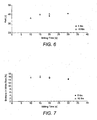
- Figures 6 and 7 illustrate, respectively, plots of whiteness and the percentage of brokens following the end-whitening of the pre-whitened rice as a function of milling time for given milling weights.
- the whiteness increases as a function of milling time, which is consistent with the results for Example #1.
- the optimal milling parameters are determined as a milling weight of 10 lbs and a milling time of 15 s, which results in a whiteness of 39.6 +/- 0.1 Kett, a percentage of brokens of 16 +/-0.6 % and a percentage of removed bran of 8.2 +/1 0.1 %.
- This Example comprises pre-whitening, intermediate moistening and end-whitening steps, as illustrated in Figure 2(c) .
- the pressure cap, pressure lever, weight holder and a predetermined weight were put on the cover, and the miller was then operated for a predetermined period of time.
- pre-milling was performed at a weight of 1 lb and for a milling time of 5 s.
- the resulting rice and abraded bran were then transferred into a sample bag, and allowed to cool.
- the resulting rice and bran were then separated using a sifter (an AS 400 sifter) with a sieve having a 1.12 mesh size, operated at 350 rpm for 1 minute.
- the separated rice comprises headrice and brokens.
- the headrice was then separated from the brokens using a trieur (a Mini-Petkus trieur) having a variable speed drive (Type VLT-3003).
- a trieur a Mini-Petkus trieur
- Type VLT-3003 variable speed drive
- a single passage was employed, with the first classification comprising a 2 mm round hole and a vibrating screen, and the second classification comprising a trieur sleeve with 5.5 mm indentations and a horizontal trough.
- the feeding rate was minimal and no aspiration was employed.
- a batch of 500 g of the separated headrice was loaded into a 1 L container, a predetermined amount of a moistening agent added using an electronic repetitive pipette, and the container was then closed and shaken, here horizontally, for a predetermined period of contact time. Some of the sample batches were also subjected to a rest time prior to further processing.
- the moistened batch of pre-whitened brown rice was loaded into the cover of a miller (a McGill No 3 miller).
- the milling chamber was rotated until the cover was on top, the cover fitted and the milling chamber fixed.
- the pressure cap, pressure lever, weight holder and a predetermined wight were put on the cover, and the miller was then operated for a predetermined period of time.
- the procedure was performed at a weight of 10 lbs and for a milling time of 15 s.
- the resulting rice and abraded bran were then transferred into a sample bag, and allowed to cool.
- the resulting rice and bran were then separated using a sifter (an AS 400 sifter) with a sieve having a 1.12 mesh size, operated at 350 rpm for 1 minute.
- the separated rice comprises headrice and brokens.
- the headrice was then separated from the brokens using a trieur (a Mini-Petkus trieur) having a variable speed drive (Type VLT-3003).
- a trieur a Mini-Petkus trieur
- Type VLT-3003 variable speed drive
- a single passage was employed, with the first classification comprising a 2 mm round hole and a vibrating screen, and the second classification comprising a trieur sleeve with 5.5 mm indentations and a horizontal trough.
- the feeding rate was minimal and no aspiration was employed.
- the moisture content and whiteness of the headrice were then determined.
- the moisture content was determined using a single kernel moisture detector (Type PQ-5101-1).
- the whiteness was measured using a whiteness meter (Type C-300).
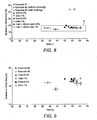
- Figure 8 illustrates a plot of the percentage of brokens as a function of whiteness of the separated headrice.
- the moistening step provides for a higher whiteness, which may be explained by increased friction between kernels or higher reflectivity at the polished rice surface.
- shaking does not appear to cause additional brokens, in that the percentage of brokens for Example #2 with shaking is within the standard deviation for the percentage of brokens for Example #2 without shaking.
- the provision of a rest time leads to an increased number of brokens and reduced whiteness.
- Figure 9 illustrates, in enlarged scale, section A of the plot in Figure 8 .
- the longer contact time of 2 minutes results in a higher percentage of brokens, irrespective of the amount of the moistening agent.
- the higher, 1 wt% amount of moistening agent resulted in higher caking in the miller.
- This Example comprises moistening and end-whitening steps, with and without pre-whitening steps, as illustrated in Figure 2(d) .
- the pressure cap, pressure lever, weight holder and a predetermined weight were put on the cover, and the miller was then operated for a predetermined period of time.
- the procedure was performed at a weight of 1 lb and for a milling time of 5 s.
- the resulting rice and abraded bran were then transferred into a sample bag, and allowed to cool.
- the resulting rice and bran were then separated using a sifter (an AS 400 sifter) with a sieve having a 1.12 mesh size, operated at 350 rpm for 1 minute.
- the separated rice comprises headrice and brokens.
- the headrice was then separated from the brokens using a trieur (a Mini-Petkus trieur) having a variable speed drive (Type VLT-3003).
- a trieur a Mini-Petkus trieur
- Type VLT-3003 variable speed drive
- a single passage was employed, with the first classification comprising a 2 mm round hole and a vibrating screen, and the second classification comprising a trieur sleeve with 5.5 mm indentations and a horizontal trough.
- the feeding rate was minimal and no aspiration was employed.
- the moistened batch of brown rice was then loaded into the cover of a miller (a McGill No 3 miller).
- the milling chamber was rotated until the cover was on top, the cover fitted and the milling chamber fixed.
- the pressure cap, pressure lever, weight holder and a predetermined weight were put on the cover, and the miller was then operated for a predetermined period of time.
- the procedure was performed both at a weight of 10 lbs and for a milling time of 15 s, and a weight of 1 lb and for a milling time of 15 s.
- the resulting rice and abraded bran were then transferred into a sample bag, and allowed to cool.
- the resulting rice and bran were then separated using a sifter (an AS 400 sifter) with a sieve having a 1.12 mesh size, operated at 350 rpm for 1 minute.
- the separated rice comprises headrice and brokens.
- the headrice was then separated from the brokens using a trieur (a Mini-Petkus trieur) having a variable speed drive (Type VLT-3003).
- a trieur a Mini-Petkus trieur
- Type VLT-3003 variable speed drive
- a single passage was employed, with the first classification comprising a 2 mm round hole and a vibrating screen, and the second classification comprising a trieur sleeve with 5.5 mm indentations and a horizontal trough.
- the feeding rate was minimal and no aspiration was employed.
- the moisture content and whiteness of the separated headrice were then determined.
- the moisture content was determined using a single kernel moisture detector (Type PQ-5101-1).
- the whiteness was measured using a whiteness meter (Type C-300).
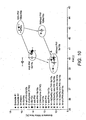
- Figure 10 illustrates a plot of the percentage of brokens as a function of whiteness of the separated headrice.
- the moistening agents containing only sodium chloride and sorbitol exhibit an increased whiteness as compared to the use of water alone of about 1 Kett, and the use of enzymes does not provide for increased whiteness or a reduced percentage of brokens as compared to the moistening agents containing only sodium chloride and sorbitol.
- This Example comprises pre-whitening, intermediate moistening and end-whitening steps, as illustrated in Figure 11 .
- the resulting rice and abraded bran were then transferred into a sample bag, and allowed to cool, and then separated using a sifter.
- the separated rice comprises headrice and brokens, and the headrice was then separated from the brokens.
- a batch of the separated headrice was loaded into a container, a predetermined amount of a moistening agent was applied thereto as a mist or spray, and the container was then closed and the headrice and the moistening agent thoroughly mixed.
- sample batches were then subjected to a rest time of 1 minute prior to further processing.
- the moistened batches of pre-whitened brown rice were milled in a friction polisher mill for milling times of 10 s, 20 s, 30 s and 1 minute.
- the resulting rice and abraded bran were then transferred into a sample bag, and allowed to cool, and then separated using a sifter.
- the separated rice comprises headrice and brokens, and the headrice was then separated from the brokens.
- the whiteness of the headrice was then determined for each of the resulting samples.
- Figures 12(a) to (d) illustrate plots of whiteness as a function of percentage of saturation of the additive in the moistening agent. As will be observed, there is a significant increase in whiteness with an increased saturation of sugar in the water moistening agent.
Landscapes
- Health & Medical Sciences (AREA)
- Nutrition Science (AREA)
- Life Sciences & Earth Sciences (AREA)
- Chemical & Material Sciences (AREA)
- Engineering & Computer Science (AREA)
- Food Science & Technology (AREA)
- Polymers & Plastics (AREA)
- Adjustment And Processing Of Grains (AREA)
- Cereal-Derived Products (AREA)
- Cosmetics (AREA)
Description
- The present invention relates to rice whitening, in particular in the production of white rice.
- Document
US527836 discloses a process of preparing a rice product from brown rice grains which comprises the following sequential steps (a) milling brown rice grains to remove a controlled proportion of the bran layer therefrom whereby from 2% to 10% of the total weight of the rice grains is removed; (b) hydrating the grains to increase their moisture content to between 20-40%; (c) cooking the grains to gelatinize the starch therein; (d) removing moisture from at least the outer layers of the grains; (e) milling the grains to remove the residual bran layer and germ therefrom. - Document
US2001033885 discloses a process of manufacturing no-bran cereal comprising the steps of: (a) adding moisture to polished cereal; (b) mixing and stirring granular material with the moistened polished cereal so as to remove bran stuck on a surface each grain of the polished cereal; and (c) separating the polished cereal from the granular material. - Document
US2004/126476 discloses a process for preparing instant rice comprising: a milling step for milling brown rice to remove a controlled proportion of bran layer; a primary immersing step for causing rice grains obtained in the said milling step to absorb water; a primary alpha-type conversion step for converting at least surface layers of the rice grains obtained in the said immersing step to the alpha-structure type; a preliminary drying step for drying the rice grains obtained in the said primary alpha-type conversion step up to a moisture content higher than a moisture content after final drying; a final polishing step for consummatively polishing the rice grains obtained in the said preliminary drying step; a secondary immersing step for causing the rice grains obtained in the said final polishing step to absorb water once again; a secondary alpha-type conversion step for completely converting the rice grains obtained in the said secondary immersing step to the alpha-type; a separation-into-single-grains step for separating the rice grains obtained in the said secondary alpha-type conversion step into single grains; and a final drying step for consummatively drying the rice grains obtained in the said separation-into-single-grains step. - With conventional rice milling, the maximum attainable headrice yield is about 67 %, of which about 15% is broken rice kernels, referred to as brokens, leaving a non-broken headrice yield of about 52 %.
Figure 1 is a Sankey diagram illustrating the average attainable yields in conventional milling of American long grain rice [1]. - It is an aim of the present invention to provide a rice whitening process which provides for a reduced percentage of brokens for a given whiteness. As will be appreciated, given the amount of rice that is processed globally, any reduction in the percentage of brokens is particularly significant.
- It is known in the art to use a water addition to achieve highly-polished rice [2].
- The use of enzymes in rice milling is also being developed. Arora et al [3] disclose the use of an enzymatic pre-treatment in the milling of brown rice (Basmati), where cellulase is sprayed onto the brown rice and subsequently polished, which provides a reduction in the percentage of brokens. Das et al [4, 5] disclose the use of an enzymatic pre-treatment of brown rice (Basmati) using xylanase and cellulase to degrade the bran layers, followed by steaming to complete the gelatinisation process and deactivate the residual enzymes. Hay et al [6] disclose the enzymatic maceration of aleurone and subaleurone cells using pectolyase Y-23.
- Enzymes are, however, expensive, and their use with different kinds of rice is complicated by the fact that the activity of enzymes depends on many factors, including, for example, the kind of rice, the enzyme concentration, the pH, the ionic buffer strength, the temperature, the contact time and the moisture content.
- It is a particular aim of the present invention to provide an improved whitening process, and especially a process which does not require a moistening agent based on an enzyme.
- In one aspect the present invention provides a process for whitening rice, comprising the steps of: moistening brown rice with a moistening agent, preferably comprising water and an additive selected from at least one of a sugar or a derivative thereof, including a sugar alcohol, and sodium chloride; and whitening the moistened brown rice, preferably immediately after the moistening step.
- In one embodiment the moistening agent comprises water.
- In one embodiment the moistening agent contains no enzyme.
- In one embodiment the moistening agent further comprises an additive.
- In one embodiment the moistening agent is 100 % saturated with the additive at room temperature.
- In one embodiment the moistening agent is at least 25 % saturated with the additive at room temperature, preferably at least 50 % saturated with the additive at room temperature, preferably at least 75 % saturated with the additive at room temperature.
- In one embodiment the additive comprises less than 10 wt% of the moistening agent, preferably less than 5 wt% of the moistening agent.
- In one embodiment the additive is a hygroscopic additive.
- In one embodiment the additive comprises at least one of a sugar or a derivative thereof, including a sugar alcohol, and sodium chloride. Sugars include monosaccharides, including glucose, fructose and galactose, and disaccharides, including sucrose and maltose. Other sugar, alcohols include glycol, glycerol, erythritol, threitol, arabitol, xylitol, ribitol, mannitol, dulcitol, iditol, iosmalt, malitol, lactitol and polyglycitol.
- In one embodiment the additive comprises a sugar.
- In another embodiment the additive comprises a sugar alcohol, preferably sorbitol.
- In another embodiment the additive comprises sodium chloride.
- In one embodiment the moistening step comprises applying the moistening agent to the brown rice, such as by mixing together the brown rice and the moistening agent.
- In one embodiment the moistening agent is applied to the brown rice in a batch process, such as by mixing in a container.
- In another embodiment the moistening agent is applied to the brown rice in a continuous process, such as by mixing continuous feeds of the brown rice and the moistening agent.
- In one embodiment the moistening agent is applied as a spray or mist.
- In one embodiment the moistening agent is applied to the brown rice for less than 2 minutes, preferably less than 1.5 minutes, preferably less than 1 minute or for about 1 minute.
- In one embodiment the moistening step includes a rest period following application of the moistening agent to the brown rice.
- In one embodiment the rest period is less than 30 minutes, preferably less than 10 minutes, preferably less than 2 minutes, preferably less than 1 minute or about 1 minute.
- In one embodiment the moistening agent is added to the brown rice in an amount of less than 2 wt%, preferably less than 1 wt%, preferably less than 0.5 wt%.
- In one embodiment the whitening step is performed to achieve a whiteness of 40 Kett.
- In one embodiment no whitening step is performed prior to the moistening step.
- In one embodiment the step of whitening the moistened brown rice comprises mechanically whitening the moistened brown rice, preferably milling the moistened brown rice.
- In one embodiment the process further comprises the step of: separating the headrice from the abraded bran and the brokens.
- Preferred embodiments of the present invention will now be described hereinbelow by way of example only with reference to the accompanying drawings, in which:
-
Figure 1 is a Sankey diagram illustrating the average attainable yields in the conventional milling of American long grain rice (for brokens - 2 % are ¼, 5 % are ½, and 8 % are ¾ of the length of the headrice); -
Figure 2 illustrates the processing steps in the methods ofExamples # 1 to #4;Figure 3 illustrates a plot of whiteness as a function of milling time for given milling weights for the method ofExample # 1; -
Figure 4 illustrates a plot of the percentage of brokens as a function of milling time for given milling weights for the method ofExample # 1; -
Figure 5 illustrates a plot of whiteness and the percentage of brokens as a function of milling time for the pre-whitening step of the method ofExample # 2; -
Figure 6 illustrates a plot of whiteness as a function of milling time for given milling weights following the end-whitening step of the method ofExample # 2; -
Figure 7 illustrates a plot of the percentage of brokens as a function of milling time for given milling weights following the end-whitening step of the method ofExample # 2; -
Figure 8 illustrates a plot of the percentage of brokens as a function of whiteness for various samples following the end-whitening step of the method ofExample # 3; -
Figure 9 illustrates, in enlarged scale, section A in the plot ofFigure 8 ; -
Figure 10 illustrates a plot of the percentage of brokens as a function of whiteness for various samples following the end-whitening step of the method ofExample # 4; -
Figure 11 illustrates the processing steps in the method ofExample # 5; andFigures 12(a) to (d) illustrate plots of whiteness as a function of percentage of saturation of the additive in the moistening agent for milling times of 10 s, 20 s, 30s and 1 minute following the method ofExample # 5. - The present invention will now be described with reference to the following nonlimiting Examples.
- This Example comprises a single whitening step, as illustrated in
Figure 2(a) . - In this Example, the following steps were performed:
- A batch of 500 g of brown rice (Gladio) was loaded into the cover of a miller (a McGill
No 3 miller as manufactured by Rapsco, USA). The milling chamber was rotated until the cover was on top, the cover fitted and the milling chamber fixed. - The pressure cap, pressure lever, weight holder and a predetermined weight were put on the cover, and the miller was then operated for a predetermined period of time. This procedure was repeated for batches at weights of 5, 7, 10, 12 and 15 lbs and for milling times of 5, 10, 15, 20 and 30 s.
- The resulting rice and abraded bran were then transferred into a sample bag, and allowed to cool.
- The resulting rice and bran were then separated using a sifter (an AS 400 sifter as manufactured by Retsch GmbH, Germany) with a sieve having a 1.12 mesh size, operated at 350 rpm for 1 minute. The separated rice comprises headrice and brokens.
- The headrice was then separated from the brokens using a trieur (a Mini-Petkus trieur as manufactured by Röber GmbH, Germany) having a variable speed drive (Type VLT-3003 as manufactured by Danfoss, Switzerland). A single passage was employed, with the first classification comprising a 2 mm round hole and a vibrating screen, and the second classification comprising a trieur sleeve with 5.5 mm indentations and a horizontal trough. The feeding rate was minimal and no aspiration was employed.
- The moisture content and whiteness of the headrice were then determined. The moisture content was determined using a single kernel moisture detector (Type PQ-5101-1 as manufactured by Kett, USA). The whiteness was measured using a whiteness meter (Type C-300 as manufactured by Kett, USA).
-
Figure 3 illustrates a plot of whiteness as a function of milling time for given milling weights. As will be observed, the whiteness increases with increasing milling time and increasing milling weight. -
Figure 4 illustrates a plot of the percentage of brokens as a function of milling time for given milling weights. As will be observed, the percentage of brokens increases as a function of milling weight. As will also be observed, contrarily, the percentage of brokens decreases with increasing milling time. This is attributed to the grinding of small brokens to flour. - For a whiteness of about 40 Kett, optimal settings were determined as a milling weight of 10 lbs and a milling time of 15 s, giving a whiteness of 40.5 +/- 0.3 Kett, a percentage of brokens of 12.9 +/- 0.5 % and a percentage of removed bran of 8.5 +/- 0.3%.
- This Example comprises pre-whitening and end-whitening steps, as illustrated in
Figure 2(b) . - In this Example, the following steps were performed:
- A batch of 700 g of brown rice (Gladio) was loaded into the cover of a miller (a
McGill No 3 miller). The milling chamber was rotated until the cover was on top, the cover fitted and the milling chamber fixed. - The pressure cap, pressure lever, weight holder and a predetermined weight were put on the cover, and the miller was then operated for a predetermined period of time. In this Example, the procedure was performed at a weight of 1 lb and for milling times of 5, 10 and 30 s.
- The resulting rice and abraded bran were then transferred into a sample bag, and allowed to cool.
- The resulting rice and bran were then separated using a sifter (an AS 400 sifter) with a sieve having a 1.12 mesh size, operated at 350 rpm for 1 minute. The separated rice comprises headrice and brokens.
- The headrice was then separated from the brokens using a trieur (a Mini-Petkus trieur) having a variable speed drive (Type VLT-3003). A single passage was employed, with the first classification comprising a 2 mm round hole and a vibrating screen, and the second classification comprising a trieur sleeve with 5.5 mm indentations and a horizontal trough. The feeding rate was minimal and no aspiration was employed.
- The moisture content and whiteness of the headrice were then determined. The moisture content was determined using a single kernel moisture detector (Type PQ-5101-1). The whiteness was measured using a whiteness meter (Type C-300).
-
Figure 5 illustrates a plot of whiteness and the percentage of brokens as a function of milling time. In this Example, the percentage of bran removed in pre-milling is determined from a measurement of whiteness (Kett value), there being a correlation between whiteness and the percentage of bran removed in pre-milling, which enables the percentage of bran removed in pre-milling to be determined from a measurement of whiteness. The optimal milling time is determined as 5 s, which provides a whiteness of 26.7 +/- 0.3 Kett, a percentage of brokens of 10.0 +/- 0.1 % and a percentage of removed bran of 4.5+/-0.1%. - Some of the sample batches were subjected to a horizontal shaking in a container.
- A batch of 500 g of the pre-whitened brown rice was then loaded into the cover of a miller (a
McGill No 3 miller). The milling chamber was rotated until the cover was on top, the cover fitted and the milling chamber fixed. - The pressure cap, pressure lever, weight holder and a predetermined weight were put on the cover, and the miller was then operated for a predetermined period of time. In this Example, the procedure was performed for batches at weights of 5 and 10 lbs and for milling times of 10, 15, 20 and 30 s.
- The resulting rice and abraded bran were then transferred into a sample bag, and allowed to cool.
- The resulting rice and bran were then separated using a sifter (an AS 400 sifter) with a sieve having a 1.12 mesh size, operated at 350 rpm for 1 minute. The separated rice comprises headrice and brokens.
- The headrice was then separated from the brokens using a trieur (a Mini-Petkus trieur) having a variable speed drive (Type VLT-3003). A single passage was employed, with the first classification comprising a 2 mm round hole and a vibrating screen, and the second classification comprising a trieur sleeve with 5.5 mm indentations and a horizontal trough. The feeding rate was minimal and no aspiration was employed.
- The moisture content and whiteness of the headrice were then determined. The moisture content was determined using a single kernel moisture detector (Type PQ-5101-1). The whiteness was measured using a whiteness meter (Type C-300).
-
Figures 6 and 7 illustrate, respectively, plots of whiteness and the percentage of brokens following the end-whitening of the pre-whitened rice as a function of milling time for given milling weights. As will be observed, the whiteness increases as a function of milling time, which is consistent with the results forExample # 1. For a whiteness of 40 Kett, the optimal milling parameters are determined as a milling weight of 10 lbs and a milling time of 15 s, which results in a whiteness of 39.6 +/- 0.1 Kett, a percentage of brokens of 16 +/-0.6 % and a percentage of removed bran of 8.2 +/1 0.1 %. - This Example comprises pre-whitening, intermediate moistening and end-whitening steps, as illustrated in
Figure 2(c) . - In this Example, the following steps were performed:
- A batch of 700 g of brown rice (Gladio) was loaded into the cover of a miller (a
McGill No 3 miller). The milling chamber was rotated until the cover was on top, the cover fitted and the milling chamber fixed. - The pressure cap, pressure lever, weight holder and a predetermined weight were put on the cover, and the miller was then operated for a predetermined period of time. In this Example, pre-milling was performed at a weight of 1 lb and for a milling time of 5 s.
- The resulting rice and abraded bran were then transferred into a sample bag, and allowed to cool.
- The resulting rice and bran were then separated using a sifter (an AS 400 sifter) with a sieve having a 1.12 mesh size, operated at 350 rpm for 1 minute. The separated rice comprises headrice and brokens.
- The headrice was then separated from the brokens using a trieur (a Mini-Petkus trieur) having a variable speed drive (Type VLT-3003). A single passage was employed, with the first classification comprising a 2 mm round hole and a vibrating screen, and the second classification comprising a trieur sleeve with 5.5 mm indentations and a horizontal trough. The feeding rate was minimal and no aspiration was employed.
- Following this pre-whitening, a batch of 500 g of the separated headrice was loaded into a 1 L container, a predetermined amount of a moistening agent added using an electronic repetitive pipette, and the container was then closed and shaken, here horizontally, for a predetermined period of contact time. Some of the sample batches were also subjected to a rest time prior to further processing.
- Various sample batches were prepared:
- (i) 0.5 wt% water as the moistening agent, 1 minute contact time, no rest time
- (ii) 1.0 wt% water as the moistening agent, 1 minute contact time, no rest time
- (iii) 0.5 wt% water as the moistening agent, 2 minutes contact time, no rest time
- (iv) 1.0 wt% water as the moistening agent, 2 minutes contact time, no rest time
- (v) 0.5 wt% water as the moistening agent, 1 minute contact time, 29 minutes rest time
- (vi) 1.0 wt% water as the moistening agent, 1 minute contact time, 29 minutes rest time
- Following the contact time and any rest time, the moistened batch of pre-whitened brown rice was then immediately end-whitened.
- The moistened batch of pre-whitened brown rice was loaded into the cover of a miller (a
McGill No 3 miller). The milling chamber was rotated until the cover was on top, the cover fitted and the milling chamber fixed. - The pressure cap, pressure lever, weight holder and a predetermined wight were put on the cover, and the miller was then operated for a predetermined period of time. In this Example, the procedure was performed at a weight of 10 lbs and for a milling time of 15 s.
- The resulting rice and abraded bran were then transferred into a sample bag, and allowed to cool.
- The resulting rice and bran were then separated using a sifter (an AS 400 sifter) with a sieve having a 1.12 mesh size, operated at 350 rpm for 1 minute. The separated rice comprises headrice and brokens.
- The headrice was then separated from the brokens using a trieur (a Mini-Petkus trieur) having a variable speed drive (Type VLT-3003). A single passage was employed, with the first classification comprising a 2 mm round hole and a vibrating screen, and the second classification comprising a trieur sleeve with 5.5 mm indentations and a horizontal trough. The feeding rate was minimal and no aspiration was employed.
- The moisture content and whiteness of the headrice were then determined. The moisture content was determined using a single kernel moisture detector (Type PQ-5101-1). The whiteness was measured using a whiteness meter (Type C-300).
-
Figure 8 illustrates a plot of the percentage of brokens as a function of whiteness of the separated headrice. As will be observed, the moistening step provides for a higher whiteness, which may be explained by increased friction between kernels or higher reflectivity at the polished rice surface. As will also be observed, shaking does not appear to cause additional brokens, in that the percentage of brokens forExample # 2 with shaking is within the standard deviation for the percentage of brokens forExample # 2 without shaking. As will further be observed, the provision of a rest time leads to an increased number of brokens and reduced whiteness. -
Figure 9 illustrates, in enlarged scale, section A of the plot inFigure 8 . As will be observed, the longer contact time of 2 minutes results in a higher percentage of brokens, irrespective of the amount of the moistening agent. Further, for those samples having the 1 minute contact time, the higher, 1 wt% amount of moistening agent resulted in higher caking in the miller. - This Example comprises moistening and end-whitening steps, with and without pre-whitening steps, as illustrated in
Figure 2(d) . - In this Example, the following steps were performed:
- For those samples which were pre-whitened, a batch of 700 g of brown rice (Gladio) was loaded into the cover of a miller (a
McGill No 3 miller). The milling chamber was rotated until the cover was on top, the cover fitted and the milling chamber fixed. - The pressure cap, pressure lever, weight holder and a predetermined weight were put on the cover, and the miller was then operated for a predetermined period of time. In this Example, the procedure was performed at a weight of 1 lb and for a milling time of 5 s.
- The resulting rice and abraded bran were then transferred into a sample bag, and allowed to cool.
- The resulting rice and bran were then separated using a sifter (an AS 400 sifter) with a sieve having a 1.12 mesh size, operated at 350 rpm for 1 minute. The separated rice comprises headrice and brokens.
- The headrice was then separated from the brokens using a trieur (a Mini-Petkus trieur) having a variable speed drive (Type VLT-3003). A single passage was employed, with the first classification comprising a 2 mm round hole and a vibrating screen, and the second classification comprising a trieur sleeve with 5.5 mm indentations and a horizontal trough. The feeding rate was minimal and no aspiration was employed.
- Batches of either the pre-whitened headrice or the brown rice (Gladio), where no pre-whitening step was performed, were then loaded into a 1L container, a predetermined amount of a moistening agent added using an electronic repetitive pipette, and the container was then closed and shaken, here horizontally, for a predetermined period of contact time.
- Various sample batches were prepared:
- (i) 0.5 wt% water as the moistening agent, 1 minute contact time
- (ii) 0.5 wt% Celluclast (RTM) solution (0.3 wt% Celluclast (RTM) and 0.2 wt% water) as the moistening agent, 1 minute contact time
- (iii) 0.5 wt% Viscozyme (RTM) solution (0.3 wt% Viscozyme (RTM) and 0.2 wt% water) as the moistening agent, 1 minute contact time
- (iv) 0.5 wt% NaCl solution (5 wt% NaCl in water) as the moistening agent, 1 minute contact time
- (v) 0.5 wt% NaCl solution (10 wt% NaCl in water) as the moistening agent, 1 minute contact time
- (vi) 0.5 wt% sorbitol solution (5 wt% sorbitol in water) as the moistening agent, 1 minute contact time
- (vii) 0.5 wt% sorbitol solution (10 wt% sorbitol in water) as the moistening agent, 1 minute contact time
- The moistened batch of brown rice was then loaded into the cover of a miller (a
McGill No 3 miller). The milling chamber was rotated until the cover was on top, the cover fitted and the milling chamber fixed. - The pressure cap, pressure lever, weight holder and a predetermined weight were put on the cover, and the miller was then operated for a predetermined period of time. In this Example, the procedure was performed both at a weight of 10 lbs and for a milling time of 15 s, and a weight of 1 lb and for a milling time of 15 s.
- The resulting rice and abraded bran were then transferred into a sample bag, and allowed to cool.
- The resulting rice and bran were then separated using a sifter (an AS 400 sifter) with a sieve having a 1.12 mesh size, operated at 350 rpm for 1 minute. The separated rice comprises headrice and brokens.
- The headrice was then separated from the brokens using a trieur (a Mini-Petkus trieur) having a variable speed drive (Type VLT-3003). A single passage was employed, with the first classification comprising a 2 mm round hole and a vibrating screen, and the second classification comprising a trieur sleeve with 5.5 mm indentations and a horizontal trough. The feeding rate was minimal and no aspiration was employed.
- The moisture content and whiteness of the separated headrice were then determined. The moisture content was determined using a single kernel moisture detector (Type PQ-5101-1). The whiteness was measured using a whiteness meter (Type C-300).
-
Figure 10 illustrates a plot of the percentage of brokens as a function of whiteness of the separated headrice. - As will be observed, a reduction in milling weight in the end-whitening step leads to a reduction in the whiteness and the percentage of brokens (cloud top-right to cloud top-left and cloud bottom-right to cloud bottom-left).
- As will also be observed, the exclusion of the pre-whitening step for a given milling weight reduces the percentage of brokens significantly and the whiteness only marginally (cloud top-right to cloud bottom-right and cloud top-left to cloud bottom-left).
- As will be further observed, the moistening agents containing only sodium chloride and sorbitol exhibit an increased whiteness as compared to the use of water alone of about 1 Kett, and the use of enzymes does not provide for increased whiteness or a reduced percentage of brokens as compared to the moistening agents containing only sodium chloride and sorbitol.
- For achieving a whiteness of 40 Kett, the use of a moistening agent containing sodium chloride or sorbitol achieves an increase in the headrice yield of about 3.8%. As will be understood, by reference to the Sankey diagram in
Figure 1 , this increase in headrice yield is very significant, particularly given the volume of rice that is processed. - This result is particularly surprising given the absence of an enzyme. It is postulated that the benefit of the sorbitol and sodium chloride additives in the moistening agent is in reducing the water availability at the grain surface after end-whitening and during the later cooling phase.
- This Example comprises pre-whitening, intermediate moistening and end-whitening steps, as illustrated in
Figure 11 . - In this Example, the following steps were performed:
- Samples of 100 g of brown rice (parboiled paddy, Andhra Poni), which was precleaned and de-husked, were milled in an abrasive polisher mill for a milling time of 20 s.
- The resulting rice and abraded bran were then transferred into a sample bag, and allowed to cool, and then separated using a sifter.
- The separated rice comprises headrice and brokens, and the headrice was then separated from the brokens.
- Following this pre-whitening, a batch of the separated headrice was loaded into a container, a predetermined amount of a moistening agent was applied thereto as a mist or spray, and the container was then closed and the headrice and the moistening agent thoroughly mixed.
- Following mixing, the sample batches were then subjected to a rest time of 1 minute prior to further processing.
- Various sample batches were prepared with moistening agents comprising water only (0 %), 25 % saturated sugar solution at room temperature, 50 % saturated sugar solution at room temperature, and 100 % saturated sugar solution at room temperature.
- Following the rest time, the moistened batch of pre-whitened brown rice was then immediately end-whitened.
- The moistened batches of pre-whitened brown rice were milled in a friction polisher mill for milling times of 10 s, 20 s, 30 s and 1 minute.
- The resulting rice and abraded bran were then transferred into a sample bag, and allowed to cool, and then separated using a sifter.
- The separated rice comprises headrice and brokens, and the headrice was then separated from the brokens.
- The whiteness of the headrice was then determined for each of the resulting samples.
- The measured results for this Example are given below.
Saturation (%) Abrasive Milled Rice Weight (g) Moistened Rice Weight (g) Friction Milling Time (s) Friction Milled Rice Weight (g) Kett Value 100 100 101.5 10 95.6 24 50 100 101.5 10 96 23.8 25 100 101.5 10 96.2 23 0 100 101.5 10 96.2 22.2 100 95.6 97.1 20 94.5 24 50 96 97.5 20 94.8 23.8 25 96.2 97.7 20 94.6 22.6 0 96.2 97.7 20 94.3 22 100 94.5 96 30 93.3 24 50 94.8 96.3 30 93.8 23.8 25 94.6 96.1 30 93.9 22.9 0 94.3 95.8 30 93.1 22.5 100 93.3 94.8 60 90.6 26 50 93.8 95.3 60 91.6 24.7 25 93.9 95.4 60 91.3 24 0 93.1 94.6 60 91.5 23.5 -
Figures 12(a) to (d) illustrate plots of whiteness as a function of percentage of saturation of the additive in the moistening agent. As will be observed, there is a significant increase in whiteness with an increased saturation of sugar in the water moistening agent. - Finally, it will be understood that the present invention has been described in its preferred embodiments and can be modified in many different ways without departing from the scope of the invention as defined by the appended claims.
-
- [1] Kunde, Karl-Heinz, Reis - seine Bedeutung und Bearbeitung, Die Mühle + Mischfuttertechnik, Heft 32/33, 124, Jahrgang, 1987
- [2] Champagne, Elaine T, Rice: Chemistry and Technology (Third Edition), American Association of Cereal Chemists, Inc., St Paul, Minnesota, USA, 2004
- [3] Arora, Gopika et al, Optimization of Process Parameters for Milling of Enzymatically Pretreated Basmati Rice, Journal of Food Engineering, 82, 2007
- [4] Das, Mithu et al, Enzymatic Polishing of Rice - A New Processing Technology, LWT - Food Science and Technology, 41, 2008
- [5] Das, Mithu et al, Evaluation of Physiochemical Properties of Enzyme Treated Brown Rice (Part B), LWT - Food Science and Technology, 41, 2007
- [6] Hay, Jordan O et al, Mechanical and Enzymatic Separation of Ripening Rice Caryopsis Tissues, Seed Science Research, 16, 2006
Claims (15)
- A process for whitening rice, comprising the steps of:moistening brown rice with a moistening agent comprising water and an additive comprising at least one of a sugar or a derivative thereof, including a sugar alcohol, and sodium chloride; andmechanically whitening the moistened brown rice after the moistening step.
- The process of claim 1, wherein the moistening agent contains no enzyme.
- The process of claim 1 or 2, wherein the moistening agent is 100 % saturated with the additive at room temperature, or at least 75 % saturated with the additive at room temperature, or at least 50 % saturated with the additive at room temperature, or at least 25 % saturated with the additive at room temperature.
- The process of any of claims 1 to 3, wherein the additive comprises less than 10 wt% of the moistening agents, or less than 5 wt% of the moistening agent.
- The process of any of claims 1 to 4, wherein the additive comprises a sugar.
- The process of any of claims 1 to 4, wherein the additive comprises a sugar derivative, or a sugar alcohol, or sorbitol.
- The process of any of claims 1 to 4, wherein the additive comprises sodium chloride.
- The process of any of claims 1 to 7, wherein the moistening step comprises applying the moistening agent to the brown rice, such as by mixing together the brown rice and the moistening agent, or applying the moistening agent to the brown rice in a batch process, such as by mixing in a container, or applying the moistening agent to the brown rice in a continuous process, such as by mixing continuous feeds of the brown rice and the moistening agent, or applying the moistening agent as a spray or mist.
- The process of claim 8, wherein the moistening agent is applied to the brown rice for less than 2 minutes, or less than 1.5 minutes, or less than 1 minute, or about 1 minute.
- The process of any of claims 1 to 9, wherein the step of whitening the moistened brown rice is performed immediately after the moistening step.
- The process of any of claims 1 to 10, wherein, following application of the moistening agent to the brown rice, the moistening step includes a rest period, or a rest period of less than 30 minutes, or less than 10 minutes, or less than 2 minutes, or less than 1 minute, or about 1 minute.
- The process of any of claims 1 to 11, wherein the moistening agent is added to the brown rice in an amount of less than 2 wt%, or less than 1 wt%, or less than 0.5 wt%.
- The process of any of claims 1 to 12, wherein no mechanical whitening step is performed prior to the moistening step.
- The process of any of claims 1 to 13, wherein the step of whitening the moistened brown rice comprises milling the moistened brown rice.
- The process of any of claims 1 to 14, wherein the whitening step is performed to achieve a whiteness of 40 Kett.
Applications Claiming Priority (2)
| Application Number | Priority Date | Filing Date | Title |
|---|---|---|---|
| GB0916898A GB2473857A (en) | 2009-09-25 | 2009-09-25 | Rice whitening |
| PCT/GB2010/001809 WO2011036464A1 (en) | 2009-09-25 | 2010-09-27 | Rice whitening |
Publications (2)
| Publication Number | Publication Date |
|---|---|
| EP2480096A1 EP2480096A1 (en) | 2012-08-01 |
| EP2480096B1 true EP2480096B1 (en) | 2015-02-25 |
Family
ID=41350409
Family Applications (1)
| Application Number | Title | Priority Date | Filing Date |
|---|---|---|---|
| EP10779834.0A Not-in-force EP2480096B1 (en) | 2009-09-25 | 2010-09-27 | Rice whitening |
Country Status (9)
| Country | Link |
|---|---|
| US (1) | US20130108759A1 (en) |
| EP (1) | EP2480096B1 (en) |
| JP (3) | JP2013505715A (en) |
| KR (2) | KR20120079106A (en) |
| CN (1) | CN102770032B (en) |
| ES (1) | ES2536484T3 (en) |
| GB (1) | GB2473857A (en) |
| PH (1) | PH12012500601A1 (en) |
| WO (1) | WO2011036464A1 (en) |
Families Citing this family (3)
| Publication number | Priority date | Publication date | Assignee | Title |
|---|---|---|---|---|
| CN104772173A (en) * | 2015-05-04 | 2015-07-15 | 东北农业大学 | Non-soaking composite enzyme method pre-treatment technology improving brown rice milling performance |
| CN107913754A (en) * | 2017-11-22 | 2018-04-17 | 安徽省东博米业有限公司 | A kind of brown rice atomizing-dampening system method for reducing broken rice rate |
| CN107774358A (en) * | 2017-11-22 | 2018-03-09 | 安徽省东博米业有限公司 | A kind of paddy processing glossing |
Family Cites Families (27)
| Publication number | Priority date | Publication date | Assignee | Title |
|---|---|---|---|---|
| JPS5038584B1 (en) * | 1969-07-25 | 1975-12-10 | ||
| US3667523A (en) * | 1969-12-29 | 1972-06-06 | Food Eng Intern Inc | Apparatus and process for the removal of the germ and bran coat from cereal grains |
| JPS4834222B1 (en) * | 1970-08-10 | 1973-10-19 | ||
| JPS4820308B1 (en) * | 1970-11-11 | 1973-06-20 | ||
| JPS5212104B2 (en) * | 1973-05-08 | 1977-04-05 | ||
| US3960068A (en) * | 1975-01-29 | 1976-06-01 | Felipe Salete | Machine for whitening, polishing or pearling grains and cereals and more particularly rice |
| US4155295A (en) * | 1975-10-29 | 1979-05-22 | Toshihiko Satake | Rice pearling apparatus |
| GB2029193B (en) * | 1978-08-11 | 1983-03-09 | Tainsh J | Polishing brown rice |
| JPS5913895B2 (en) * | 1979-06-16 | 1984-04-02 | 「あき」夫 杉 | Rice polishing method that uses friction in a wet state |
| JPS56169554A (en) * | 1980-05-31 | 1981-12-26 | Satake Eng Co Ltd | Processing method of polished rice |
| JPS58175456A (en) * | 1982-04-07 | 1983-10-14 | Akio Sugi | Rice storage |
| US4483244A (en) * | 1982-12-13 | 1984-11-20 | Satake Engineering Co., Ltd. | Rice whitening apparatus |
| JPH0661229B2 (en) * | 1985-12-06 | 1994-08-17 | ハウス食品株式会社 | Dry rice manufacturing method |
| JPH0675685B2 (en) * | 1987-06-20 | 1994-09-28 | 株式会社東洋精米機製作所 | Finishing rice polishing method |
| US5275836A (en) * | 1992-04-10 | 1994-01-04 | Byron Agricultural Company Pty. Ltd. | Process for treating brown rice and product thereof |
| CN1098964A (en) * | 1993-08-20 | 1995-02-22 | 湖北省粮机厂研究设计所 | A kind of processing technology that brown rice is processed as clean rice |
| CN2189975Y (en) * | 1994-04-23 | 1995-02-22 | 肖庭贵 | Rice mill with a sprayer |
| JP3944336B2 (en) * | 1999-09-16 | 2007-07-11 | 株式会社 コダマ | Germ ripening rice process |
| CN1167510C (en) * | 2000-03-15 | 2004-09-22 | 株式会社佐竹 | A method and equipment for processing bran-free grains |
| JP4411647B2 (en) * | 2000-10-17 | 2010-02-10 | 株式会社サタケ | Milled rice processing method and apparatus |
| US6586036B1 (en) * | 2001-01-11 | 2003-07-01 | The United States Of America As Represented By The Secretary Of Agriculture | Process for increasing the rate of hydration of food crop seeds |
| JP3838425B2 (en) * | 2002-03-14 | 2006-10-25 | 株式会社サタケ | Germinated germ rice production equipment |
| JP4099036B2 (en) * | 2002-11-13 | 2008-06-11 | 株式会社サタケ | Instant rice manufacturing method and instant rice |
| CN1319469C (en) * | 2002-11-25 | 2007-06-06 | 株式会社林原生物化学研究所 | Method of producing rice flour and use thereof |
| DE102004051729A1 (en) * | 2004-10-22 | 2006-05-04 | Helmut Gollisch | Cereals e.g. wheat, cleaning device, has supply unit supplying cereals into container filled with brine of sodium-chloride, and discharging unit discharging cereals from container, where cereals are cleaned in bath with brine |
| JP4875553B2 (en) * | 2007-06-28 | 2012-02-15 | 株式会社クボタ | Rice milling equipment |
| KR100903488B1 (en) * | 2007-11-30 | 2009-06-18 | 씨제이제일제당 (주) | Manufacturing method of aseptic packaged rice using rice eye rice |
-
2009
- 2009-09-25 GB GB0916898A patent/GB2473857A/en not_active Withdrawn
-
2010
- 2010-09-27 KR KR1020127009767A patent/KR20120079106A/en not_active Ceased
- 2010-09-27 PH PH1/2012/500601A patent/PH12012500601A1/en unknown
- 2010-09-27 JP JP2012530334A patent/JP2013505715A/en active Pending
- 2010-09-27 CN CN201080053609.5A patent/CN102770032B/en not_active Expired - Fee Related
- 2010-09-27 WO PCT/GB2010/001809 patent/WO2011036464A1/en not_active Ceased
- 2010-09-27 KR KR1020187022390A patent/KR20180089578A/en not_active Withdrawn
- 2010-09-27 ES ES10779834.0T patent/ES2536484T3/en active Active
- 2010-09-27 EP EP10779834.0A patent/EP2480096B1/en not_active Not-in-force
- 2010-09-27 US US13/498,311 patent/US20130108759A1/en not_active Abandoned
-
2015
- 2015-07-03 JP JP2015134604A patent/JP2015211971A/en active Pending
-
2017
- 2017-08-25 JP JP2017162834A patent/JP2018012104A/en active Pending
Also Published As
| Publication number | Publication date |
|---|---|
| US20130108759A1 (en) | 2013-05-02 |
| CN102770032B (en) | 2017-10-17 |
| JP2013505715A (en) | 2013-02-21 |
| EP2480096A1 (en) | 2012-08-01 |
| ES2536484T3 (en) | 2015-05-25 |
| PH12012500601A1 (en) | 2019-03-25 |
| KR20180089578A (en) | 2018-08-08 |
| KR20120079106A (en) | 2012-07-11 |
| GB0916898D0 (en) | 2009-11-11 |
| JP2018012104A (en) | 2018-01-25 |
| CN102770032A (en) | 2012-11-07 |
| GB2473857A (en) | 2011-03-30 |
| WO2011036464A1 (en) | 2011-03-31 |
| JP2015211971A (en) | 2015-11-26 |
Similar Documents
| Publication | Publication Date | Title |
|---|---|---|
| Bullerman et al. | Stability of mycotoxins during food processing | |
| EP1568284B1 (en) | Method of producing rice flour | |
| CN106179561B (en) | A kind of processing method of rice with remained germ | |
| CN118925862A (en) | Whole grain flour production process | |
| US20130108759A1 (en) | Rice whitening | |
| JP4035308B2 (en) | Process for producing processed grain germs | |
| US4886675A (en) | Fast-cooked granular rice product and method of production thereof | |
| CN116832895B (en) | A method for high-purity separation of quinoa germ and wheat core | |
| JP7774785B2 (en) | Cereal flakes | |
| RU2460315C1 (en) | Extrudates production method | |
| JP4963180B2 (en) | Method for producing composition, noodle quality improver, and method for producing noodle quality improver | |
| JP2004000047A (en) | Method for producing brown rice powder having high-concentration nutritive component, and its processed food | |
| CN105817282A (en) | Fine brown rice and processing method thereof | |
| US20260137108A1 (en) | Cereal flakes | |
| CN114287557B (en) | Edible plant micro powder with high ethoxy rutinose content and preparation method thereof | |
| Behera et al. | Emerging Milling Techniques for Pseudocereals | |
| JP2009530094A (en) | Peeling wheat grains using ozone | |
| Hormdok et al. | Effects of drying and tempering of rough rice on physicochemical property of flour and starch. | |
| Conde-Petit et al. | Manuscript Type: Original Article Date Submitted by the | |
| Li et al. | Enzymatic Pretreatment for Improved Milling Performance and Cooking Characteristics of Moderately Milled Rice | |
| WO2012102630A2 (en) | Flour with reduced calorific value |
Legal Events
| Date | Code | Title | Description |
|---|---|---|---|
| PUAI | Public reference made under article 153(3) epc to a published international application that has entered the european phase |
Free format text: ORIGINAL CODE: 0009012 |
|
| 17P | Request for examination filed |
Effective date: 20120330 |
|
| AK | Designated contracting states |
Kind code of ref document: A1 Designated state(s): AL AT BE BG CH CY CZ DE DK EE ES FI FR GB GR HR HU IE IS IT LI LT LU LV MC MK MT NL NO PL PT RO SE SI SK SM TR |
|
| DAX | Request for extension of the european patent (deleted) | ||
| GRAP | Despatch of communication of intention to grant a patent |
Free format text: ORIGINAL CODE: EPIDOSNIGR1 |
|
| INTG | Intention to grant announced |
Effective date: 20140725 |
|
| RIC1 | Information provided on ipc code assigned before grant |
Ipc: A23L 1/182 20060101AFI20140711BHEP Ipc: A23L 1/27 20060101ALI20140711BHEP |
|
| GRAS | Grant fee paid |
Free format text: ORIGINAL CODE: EPIDOSNIGR3 |
|
| GRAP | Despatch of communication of intention to grant a patent |
Free format text: ORIGINAL CODE: EPIDOSNIGR1 |
|
| INTG | Intention to grant announced |
Effective date: 20150107 |
|
| GRAA | (expected) grant |
Free format text: ORIGINAL CODE: 0009210 |
|
| AK | Designated contracting states |
Kind code of ref document: B1 Designated state(s): AL AT BE BG CH CY CZ DE DK EE ES FI FR GB GR HR HU IE IS IT LI LT LU LV MC MK MT NL NO PL PT RO SE SI SK SM TR |
|
| REG | Reference to a national code |
Ref country code: GB Ref legal event code: FG4D |
|
| REG | Reference to a national code |
Ref country code: CH Ref legal event code: EP |
|
| REG | Reference to a national code |
Ref country code: IE Ref legal event code: FG4D |
|
| REG | Reference to a national code |
Ref country code: DE Ref legal event code: R096 Ref document number: 602010022625 Country of ref document: DE Effective date: 20150409 |
|
| REG | Reference to a national code |
Ref country code: AT Ref legal event code: REF Ref document number: 711143 Country of ref document: AT Kind code of ref document: T Effective date: 20150415 |
|
| REG | Reference to a national code |
Ref country code: ES Ref legal event code: FG2A Ref document number: 2536484 Country of ref document: ES Kind code of ref document: T3 Effective date: 20150525 |
|
| REG | Reference to a national code |
Ref country code: NL Ref legal event code: VDEP Effective date: 20150225 |
|
| REG | Reference to a national code |
Ref country code: AT Ref legal event code: MK05 Ref document number: 711143 Country of ref document: AT Kind code of ref document: T Effective date: 20150225 |
|
| REG | Reference to a national code |
Ref country code: LT Ref legal event code: MG4D |
|
| PG25 | Lapsed in a contracting state [announced via postgrant information from national office to epo] |
Ref country code: SE Free format text: LAPSE BECAUSE OF FAILURE TO SUBMIT A TRANSLATION OF THE DESCRIPTION OR TO PAY THE FEE WITHIN THE PRESCRIBED TIME-LIMIT Effective date: 20150225 Ref country code: NO Free format text: LAPSE BECAUSE OF FAILURE TO SUBMIT A TRANSLATION OF THE DESCRIPTION OR TO PAY THE FEE WITHIN THE PRESCRIBED TIME-LIMIT Effective date: 20150525 Ref country code: LT Free format text: LAPSE BECAUSE OF FAILURE TO SUBMIT A TRANSLATION OF THE DESCRIPTION OR TO PAY THE FEE WITHIN THE PRESCRIBED TIME-LIMIT Effective date: 20150225 Ref country code: FI Free format text: LAPSE BECAUSE OF FAILURE TO SUBMIT A TRANSLATION OF THE DESCRIPTION OR TO PAY THE FEE WITHIN THE PRESCRIBED TIME-LIMIT Effective date: 20150225 Ref country code: HR Free format text: LAPSE BECAUSE OF FAILURE TO SUBMIT A TRANSLATION OF THE DESCRIPTION OR TO PAY THE FEE WITHIN THE PRESCRIBED TIME-LIMIT Effective date: 20150225 |
|
| PG25 | Lapsed in a contracting state [announced via postgrant information from national office to epo] |
Ref country code: IS Free format text: LAPSE BECAUSE OF FAILURE TO SUBMIT A TRANSLATION OF THE DESCRIPTION OR TO PAY THE FEE WITHIN THE PRESCRIBED TIME-LIMIT Effective date: 20150625 Ref country code: AT Free format text: LAPSE BECAUSE OF FAILURE TO SUBMIT A TRANSLATION OF THE DESCRIPTION OR TO PAY THE FEE WITHIN THE PRESCRIBED TIME-LIMIT Effective date: 20150225 Ref country code: GR Free format text: LAPSE BECAUSE OF FAILURE TO SUBMIT A TRANSLATION OF THE DESCRIPTION OR TO PAY THE FEE WITHIN THE PRESCRIBED TIME-LIMIT Effective date: 20150526 Ref country code: LV Free format text: LAPSE BECAUSE OF FAILURE TO SUBMIT A TRANSLATION OF THE DESCRIPTION OR TO PAY THE FEE WITHIN THE PRESCRIBED TIME-LIMIT Effective date: 20150225 |
|
| PG25 | Lapsed in a contracting state [announced via postgrant information from national office to epo] |
Ref country code: NL Free format text: LAPSE BECAUSE OF FAILURE TO SUBMIT A TRANSLATION OF THE DESCRIPTION OR TO PAY THE FEE WITHIN THE PRESCRIBED TIME-LIMIT Effective date: 20150225 |
|
| PG25 | Lapsed in a contracting state [announced via postgrant information from national office to epo] |
Ref country code: EE Free format text: LAPSE BECAUSE OF FAILURE TO SUBMIT A TRANSLATION OF THE DESCRIPTION OR TO PAY THE FEE WITHIN THE PRESCRIBED TIME-LIMIT Effective date: 20150225 Ref country code: RO Free format text: LAPSE BECAUSE OF FAILURE TO SUBMIT A TRANSLATION OF THE DESCRIPTION OR TO PAY THE FEE WITHIN THE PRESCRIBED TIME-LIMIT Effective date: 20150225 Ref country code: DK Free format text: LAPSE BECAUSE OF FAILURE TO SUBMIT A TRANSLATION OF THE DESCRIPTION OR TO PAY THE FEE WITHIN THE PRESCRIBED TIME-LIMIT Effective date: 20150225 Ref country code: CZ Free format text: LAPSE BECAUSE OF FAILURE TO SUBMIT A TRANSLATION OF THE DESCRIPTION OR TO PAY THE FEE WITHIN THE PRESCRIBED TIME-LIMIT Effective date: 20150225 Ref country code: SK Free format text: LAPSE BECAUSE OF FAILURE TO SUBMIT A TRANSLATION OF THE DESCRIPTION OR TO PAY THE FEE WITHIN THE PRESCRIBED TIME-LIMIT Effective date: 20150225 |
|
| REG | Reference to a national code |
Ref country code: DE Ref legal event code: R097 Ref document number: 602010022625 Country of ref document: DE |
|
| PG25 | Lapsed in a contracting state [announced via postgrant information from national office to epo] |
Ref country code: PL Free format text: LAPSE BECAUSE OF FAILURE TO SUBMIT A TRANSLATION OF THE DESCRIPTION OR TO PAY THE FEE WITHIN THE PRESCRIBED TIME-LIMIT Effective date: 20150225 |
|
| REG | Reference to a national code |
Ref country code: DE Ref legal event code: R079 Ref document number: 602010022625 Country of ref document: DE Free format text: PREVIOUS MAIN CLASS: A23L0001182000 Ipc: A23L0007196000 |
|
| PLBE | No opposition filed within time limit |
Free format text: ORIGINAL CODE: 0009261 |
|
| STAA | Information on the status of an ep patent application or granted ep patent |
Free format text: STATUS: NO OPPOSITION FILED WITHIN TIME LIMIT |
|
| 26N | No opposition filed |
Effective date: 20151126 |
|
| PG25 | Lapsed in a contracting state [announced via postgrant information from national office to epo] |
Ref country code: SI Free format text: LAPSE BECAUSE OF FAILURE TO SUBMIT A TRANSLATION OF THE DESCRIPTION OR TO PAY THE FEE WITHIN THE PRESCRIBED TIME-LIMIT Effective date: 20150225 |
|
| REG | Reference to a national code |
Ref country code: DE Ref legal event code: R119 Ref document number: 602010022625 Country of ref document: DE |
|
| PG25 | Lapsed in a contracting state [announced via postgrant information from national office to epo] |
Ref country code: MC Free format text: LAPSE BECAUSE OF FAILURE TO SUBMIT A TRANSLATION OF THE DESCRIPTION OR TO PAY THE FEE WITHIN THE PRESCRIBED TIME-LIMIT Effective date: 20150225 Ref country code: LU Free format text: LAPSE BECAUSE OF FAILURE TO SUBMIT A TRANSLATION OF THE DESCRIPTION OR TO PAY THE FEE WITHIN THE PRESCRIBED TIME-LIMIT Effective date: 20150927 |
|
| REG | Reference to a national code |
Ref country code: CH Ref legal event code: PL |
|
| PG25 | Lapsed in a contracting state [announced via postgrant information from national office to epo] |
Ref country code: BE Free format text: LAPSE BECAUSE OF FAILURE TO SUBMIT A TRANSLATION OF THE DESCRIPTION OR TO PAY THE FEE WITHIN THE PRESCRIBED TIME-LIMIT Effective date: 20150225 |
|
| REG | Reference to a national code |
Ref country code: IE Ref legal event code: MM4A |
|
| REG | Reference to a national code |
Ref country code: FR Ref legal event code: ST Effective date: 20160531 |
|
| PG25 | Lapsed in a contracting state [announced via postgrant information from national office to epo] |
Ref country code: IE Free format text: LAPSE BECAUSE OF NON-PAYMENT OF DUE FEES Effective date: 20150927 Ref country code: LI Free format text: LAPSE BECAUSE OF NON-PAYMENT OF DUE FEES Effective date: 20150930 Ref country code: DE Free format text: LAPSE BECAUSE OF NON-PAYMENT OF DUE FEES Effective date: 20160401 Ref country code: CH Free format text: LAPSE BECAUSE OF NON-PAYMENT OF DUE FEES Effective date: 20150930 |
|
| PG25 | Lapsed in a contracting state [announced via postgrant information from national office to epo] |
Ref country code: FR Free format text: LAPSE BECAUSE OF NON-PAYMENT OF DUE FEES Effective date: 20150930 |
|
| PG25 | Lapsed in a contracting state [announced via postgrant information from national office to epo] |
Ref country code: MT Free format text: LAPSE BECAUSE OF FAILURE TO SUBMIT A TRANSLATION OF THE DESCRIPTION OR TO PAY THE FEE WITHIN THE PRESCRIBED TIME-LIMIT Effective date: 20150225 |
|
| PG25 | Lapsed in a contracting state [announced via postgrant information from national office to epo] |
Ref country code: SM Free format text: LAPSE BECAUSE OF FAILURE TO SUBMIT A TRANSLATION OF THE DESCRIPTION OR TO PAY THE FEE WITHIN THE PRESCRIBED TIME-LIMIT Effective date: 20150225 Ref country code: HU Free format text: LAPSE BECAUSE OF FAILURE TO SUBMIT A TRANSLATION OF THE DESCRIPTION OR TO PAY THE FEE WITHIN THE PRESCRIBED TIME-LIMIT; INVALID AB INITIO Effective date: 20100927 Ref country code: BG Free format text: LAPSE BECAUSE OF FAILURE TO SUBMIT A TRANSLATION OF THE DESCRIPTION OR TO PAY THE FEE WITHIN THE PRESCRIBED TIME-LIMIT Effective date: 20150225 |
|
| PG25 | Lapsed in a contracting state [announced via postgrant information from national office to epo] |
Ref country code: CY Free format text: LAPSE BECAUSE OF FAILURE TO SUBMIT A TRANSLATION OF THE DESCRIPTION OR TO PAY THE FEE WITHIN THE PRESCRIBED TIME-LIMIT Effective date: 20150225 |
|
| PG25 | Lapsed in a contracting state [announced via postgrant information from national office to epo] |
Ref country code: TR Free format text: LAPSE BECAUSE OF FAILURE TO SUBMIT A TRANSLATION OF THE DESCRIPTION OR TO PAY THE FEE WITHIN THE PRESCRIBED TIME-LIMIT Effective date: 20150225 |
|
| PG25 | Lapsed in a contracting state [announced via postgrant information from national office to epo] |
Ref country code: MK Free format text: LAPSE BECAUSE OF FAILURE TO SUBMIT A TRANSLATION OF THE DESCRIPTION OR TO PAY THE FEE WITHIN THE PRESCRIBED TIME-LIMIT Effective date: 20150225 Ref country code: PT Free format text: LAPSE BECAUSE OF FAILURE TO SUBMIT A TRANSLATION OF THE DESCRIPTION OR TO PAY THE FEE WITHIN THE PRESCRIBED TIME-LIMIT Effective date: 20150225 |
|
| PG25 | Lapsed in a contracting state [announced via postgrant information from national office to epo] |
Ref country code: AL Free format text: LAPSE BECAUSE OF FAILURE TO SUBMIT A TRANSLATION OF THE DESCRIPTION OR TO PAY THE FEE WITHIN THE PRESCRIBED TIME-LIMIT Effective date: 20150225 |
|
| PGFP | Annual fee paid to national office [announced via postgrant information from national office to epo] |
Ref country code: IT Payment date: 20180921 Year of fee payment: 9 |
|
| PGFP | Annual fee paid to national office [announced via postgrant information from national office to epo] |
Ref country code: GB Payment date: 20180924 Year of fee payment: 9 |
|
| PGFP | Annual fee paid to national office [announced via postgrant information from national office to epo] |
Ref country code: ES Payment date: 20181024 Year of fee payment: 9 |
|
| PG25 | Lapsed in a contracting state [announced via postgrant information from national office to epo] |
Ref country code: IT Free format text: LAPSE BECAUSE OF NON-PAYMENT OF DUE FEES Effective date: 20190927 |
|
| GBPC | Gb: european patent ceased through non-payment of renewal fee |
Effective date: 20190927 |
|
| PG25 | Lapsed in a contracting state [announced via postgrant information from national office to epo] |
Ref country code: GB Free format text: LAPSE BECAUSE OF NON-PAYMENT OF DUE FEES Effective date: 20190927 |
|
| REG | Reference to a national code |
Ref country code: ES Ref legal event code: FD2A Effective date: 20210202 |
|
| PG25 | Lapsed in a contracting state [announced via postgrant information from national office to epo] |
Ref country code: ES Free format text: LAPSE BECAUSE OF NON-PAYMENT OF DUE FEES Effective date: 20190928 |