EP2477652B1 - Immunization strategy to prevent h1n1 infection - Google Patents
Immunization strategy to prevent h1n1 infection Download PDFInfo
- Publication number
- EP2477652B1 EP2477652B1 EP10817780.9A EP10817780A EP2477652B1 EP 2477652 B1 EP2477652 B1 EP 2477652B1 EP 10817780 A EP10817780 A EP 10817780A EP 2477652 B1 EP2477652 B1 EP 2477652B1
- Authority
- EP
- European Patent Office
- Prior art keywords
- expression vector
- promoter
- sequence
- nucleic acid
- oral
- Prior art date
- Legal status (The legal status is an assumption and is not a legal conclusion. Google has not performed a legal analysis and makes no representation as to the accuracy of the status listed.)
- Active
Links
Images


Classifications
-
- C—CHEMISTRY; METALLURGY
- C12—BIOCHEMISTRY; BEER; SPIRITS; WINE; VINEGAR; MICROBIOLOGY; ENZYMOLOGY; MUTATION OR GENETIC ENGINEERING
- C12N—MICROORGANISMS OR ENZYMES; COMPOSITIONS THEREOF; PROPAGATING, PRESERVING, OR MAINTAINING MICROORGANISMS; MUTATION OR GENETIC ENGINEERING; CULTURE MEDIA
- C12N15/00—Mutation or genetic engineering; DNA or RNA concerning genetic engineering, vectors, e.g. plasmids, or their isolation, preparation or purification; Use of hosts therefor
- C12N15/09—Recombinant DNA-technology
- C12N15/11—DNA or RNA fragments; Modified forms thereof; Non-coding nucleic acids having a biological activity
- C12N15/111—General methods applicable to biologically active non-coding nucleic acids
-
- A—HUMAN NECESSITIES
- A61—MEDICAL OR VETERINARY SCIENCE; HYGIENE
- A61K—PREPARATIONS FOR MEDICAL, DENTAL OR TOILETRY PURPOSES
- A61K39/00—Medicinal preparations containing antigens or antibodies
- A61K39/12—Viral antigens
-
- A—HUMAN NECESSITIES
- A61—MEDICAL OR VETERINARY SCIENCE; HYGIENE
- A61P—SPECIFIC THERAPEUTIC ACTIVITY OF CHEMICAL COMPOUNDS OR MEDICINAL PREPARATIONS
- A61P31/00—Antiinfectives, i.e. antibiotics, antiseptics, chemotherapeutics
- A61P31/12—Antivirals
- A61P31/14—Antivirals for RNA viruses
- A61P31/16—Antivirals for RNA viruses for influenza or rhinoviruses
-
- A—HUMAN NECESSITIES
- A61—MEDICAL OR VETERINARY SCIENCE; HYGIENE
- A61P—SPECIFIC THERAPEUTIC ACTIVITY OF CHEMICAL COMPOUNDS OR MEDICINAL PREPARATIONS
- A61P37/00—Drugs for immunological or allergic disorders
- A61P37/02—Immunomodulators
- A61P37/04—Immunostimulants
-
- C—CHEMISTRY; METALLURGY
- C12—BIOCHEMISTRY; BEER; SPIRITS; WINE; VINEGAR; MICROBIOLOGY; ENZYMOLOGY; MUTATION OR GENETIC ENGINEERING
- C12N—MICROORGANISMS OR ENZYMES; COMPOSITIONS THEREOF; PROPAGATING, PRESERVING, OR MAINTAINING MICROORGANISMS; MUTATION OR GENETIC ENGINEERING; CULTURE MEDIA
- C12N15/00—Mutation or genetic engineering; DNA or RNA concerning genetic engineering, vectors, e.g. plasmids, or their isolation, preparation or purification; Use of hosts therefor
- C12N15/09—Recombinant DNA-technology
- C12N15/11—DNA or RNA fragments; Modified forms thereof; Non-coding nucleic acids having a biological activity
- C12N15/117—Nucleic acids having immunomodulatory properties, e.g. containing CpG-motifs
-
- A—HUMAN NECESSITIES
- A61—MEDICAL OR VETERINARY SCIENCE; HYGIENE
- A61K—PREPARATIONS FOR MEDICAL, DENTAL OR TOILETRY PURPOSES
- A61K39/00—Medicinal preparations containing antigens or antibodies
- A61K2039/51—Medicinal preparations containing antigens or antibodies comprising whole cells, viruses or DNA/RNA
- A61K2039/525—Virus
- A61K2039/5256—Virus expressing foreign proteins
-
- A—HUMAN NECESSITIES
- A61—MEDICAL OR VETERINARY SCIENCE; HYGIENE
- A61K—PREPARATIONS FOR MEDICAL, DENTAL OR TOILETRY PURPOSES
- A61K39/00—Medicinal preparations containing antigens or antibodies
- A61K2039/54—Medicinal preparations containing antigens or antibodies characterised by the route of administration
- A61K2039/541—Mucosal route
-
- A—HUMAN NECESSITIES
- A61—MEDICAL OR VETERINARY SCIENCE; HYGIENE
- A61K—PREPARATIONS FOR MEDICAL, DENTAL OR TOILETRY PURPOSES
- A61K39/00—Medicinal preparations containing antigens or antibodies
- A61K2039/54—Medicinal preparations containing antigens or antibodies characterised by the route of administration
- A61K2039/541—Mucosal route
- A61K2039/542—Mucosal route oral/gastrointestinal
-
- A—HUMAN NECESSITIES
- A61—MEDICAL OR VETERINARY SCIENCE; HYGIENE
- A61K—PREPARATIONS FOR MEDICAL, DENTAL OR TOILETRY PURPOSES
- A61K39/00—Medicinal preparations containing antigens or antibodies
- A61K2039/54—Medicinal preparations containing antigens or antibodies characterised by the route of administration
- A61K2039/541—Mucosal route
- A61K2039/543—Mucosal route intranasal
-
- A—HUMAN NECESSITIES
- A61—MEDICAL OR VETERINARY SCIENCE; HYGIENE
- A61K—PREPARATIONS FOR MEDICAL, DENTAL OR TOILETRY PURPOSES
- A61K39/00—Medicinal preparations containing antigens or antibodies
- A61K2039/555—Medicinal preparations containing antigens or antibodies characterised by a specific combination antigen/adjuvant
- A61K2039/55511—Organic adjuvants
- A61K2039/55561—CpG containing adjuvants; Oligonucleotide containing adjuvants
-
- C—CHEMISTRY; METALLURGY
- C12—BIOCHEMISTRY; BEER; SPIRITS; WINE; VINEGAR; MICROBIOLOGY; ENZYMOLOGY; MUTATION OR GENETIC ENGINEERING
- C12N—MICROORGANISMS OR ENZYMES; COMPOSITIONS THEREOF; PROPAGATING, PRESERVING, OR MAINTAINING MICROORGANISMS; MUTATION OR GENETIC ENGINEERING; CULTURE MEDIA
- C12N2310/00—Structure or type of the nucleic acid
- C12N2310/10—Type of nucleic acid
- C12N2310/17—Immunomodulatory nucleic acids
-
- C—CHEMISTRY; METALLURGY
- C12—BIOCHEMISTRY; BEER; SPIRITS; WINE; VINEGAR; MICROBIOLOGY; ENZYMOLOGY; MUTATION OR GENETIC ENGINEERING
- C12N—MICROORGANISMS OR ENZYMES; COMPOSITIONS THEREOF; PROPAGATING, PRESERVING, OR MAINTAINING MICROORGANISMS; MUTATION OR GENETIC ENGINEERING; CULTURE MEDIA
- C12N2310/00—Structure or type of the nucleic acid
- C12N2310/50—Physical structure
- C12N2310/53—Physical structure partially self-complementary or closed
- C12N2310/531—Stem-loop; Hairpin
-
- C—CHEMISTRY; METALLURGY
- C12—BIOCHEMISTRY; BEER; SPIRITS; WINE; VINEGAR; MICROBIOLOGY; ENZYMOLOGY; MUTATION OR GENETIC ENGINEERING
- C12N—MICROORGANISMS OR ENZYMES; COMPOSITIONS THEREOF; PROPAGATING, PRESERVING, OR MAINTAINING MICROORGANISMS; MUTATION OR GENETIC ENGINEERING; CULTURE MEDIA
- C12N2330/00—Production
- C12N2330/50—Biochemical production, i.e. in a transformed host cell
- C12N2330/51—Specially adapted vectors
-
- C—CHEMISTRY; METALLURGY
- C12—BIOCHEMISTRY; BEER; SPIRITS; WINE; VINEGAR; MICROBIOLOGY; ENZYMOLOGY; MUTATION OR GENETIC ENGINEERING
- C12N—MICROORGANISMS OR ENZYMES; COMPOSITIONS THEREOF; PROPAGATING, PRESERVING, OR MAINTAINING MICROORGANISMS; MUTATION OR GENETIC ENGINEERING; CULTURE MEDIA
- C12N2710/00—MICROORGANISMS OR ENZYMES; COMPOSITIONS THEREOF; PROPAGATING, PRESERVING, OR MAINTAINING MICROORGANISMS; MUTATION OR GENETIC ENGINEERING; CULTURE MEDIA dsDNA viruses
- C12N2710/00011—Details
- C12N2710/10011—Adenoviridae
- C12N2710/10041—Use of virus, viral particle or viral elements as a vector
- C12N2710/10043—Use of virus, viral particle or viral elements as a vector viral genome or elements thereof as genetic vector
-
- C—CHEMISTRY; METALLURGY
- C12—BIOCHEMISTRY; BEER; SPIRITS; WINE; VINEGAR; MICROBIOLOGY; ENZYMOLOGY; MUTATION OR GENETIC ENGINEERING
- C12N—MICROORGANISMS OR ENZYMES; COMPOSITIONS THEREOF; PROPAGATING, PRESERVING, OR MAINTAINING MICROORGANISMS; MUTATION OR GENETIC ENGINEERING; CULTURE MEDIA
- C12N2760/00—MICROORGANISMS OR ENZYMES; COMPOSITIONS THEREOF; PROPAGATING, PRESERVING, OR MAINTAINING MICROORGANISMS; MUTATION OR GENETIC ENGINEERING; CULTURE MEDIA ssRNA viruses negative-sense
- C12N2760/00011—Details
- C12N2760/16011—Orthomyxoviridae
- C12N2760/16111—Influenzavirus A, i.e. influenza A virus
- C12N2760/16134—Use of virus or viral component as vaccine, e.g. live-attenuated or inactivated virus, VLP, viral protein
Definitions
- the H1N1 pandemic viruses of 2009 target different cell populations than normal influenza. These viruses infect intestinal epithelial cells, as well as lung epithelial cells. Patients infected with H1N1 reported diarrhea and stomach illness along with the usual influenza symptoms.
- the present invention provides an oral immunization with substantial benefits in protecting against H1N1 infection.
- a strong mucosal immune response is generated, including in the intestine, as evidenced by the strong IgA antibody responses against HA in fecal pellets.
- the oral H1N1 vaccine is also shown to be protective against H1N1 in a direct challenge in vivo.
- Example 4 thereof discloses delivery of an adenoviral vector encoding an influenza A/PR/8/34 HA protein in combination with a poly I:C TLR-3 antagonist.
- Example 11 thereof discloses an adenoviral vector with a promoter controlling expression of HA of the influenza strain A/Indo/5/2005 with a downstream sequence encoding a double stranded RNA TLR-3 agonist.
- This example also discloses an adenoviral vector with a first promoter controlling expression of a double stranded RNA TLR-3 agonist, and a second promoter controlling expression of HA of the influenza strain A/Indo/5/2005.
- the invention provides rapid-response and easily scalable compositions for vaccination against pandemic strains of H1N1 influenza. Upon isolation of the strain, a gene-based viral vaccine according to the invention can be prepared and tested for safety and efficacy within weeks.
- the invention provides chimeric adenoviral expression vectors for protection against H1N1 influenza, said vector comprising an expression cassette comprising (a) a first promoter operably linked to a nucleic acid encoding a toll-like receptor-3 (TLR-3) agonist, wherein the TLR-3 agonist is a double stranded RNA (dsRNA); and (b) a second promoter operably linked to a nucleic acid encoding haemagglutinin polypeptide from A/CA/04/2009 H1N1 influenza.
- the dsRNA is selected from short hairpin RNA (shRNA), viral dsRNA, and siRNA.
- the sequence encoding the dsRNA comprises a sequence having substantial identity to a sequence selected from the group consisting of SEQ ID NO:1, SEQ ID NO:2, SEQ ID NO:3, SEQ ID NO:4, SEQ ID NO:5, and SEQ ID NO:6 (SEQ ID NOs:1-6). In some embodiments, the sequence encoding the dsRNA comprises a sequence selected from the group consisting of SEQ ID NOs:1-6.
- the polypeptide from H1N1 is a surface antigen of H1N1 or an antigenic fragment thereof.
- the H1N1 polypeptide is selected from the group consisting of HA, NA, MP, and NP, and antigenic fragments thereof.
- the H1N1 influenza is from the strain A/CA/04/2009.
- the first promoter and the second promoter are the same. In some embodiments, the first promoter and second promoter are different.
- the promoter can be constitutive or inducible, and can be a viral or mammalian gene promoter, e.g., CMV or SV40.
- the viral expression vector is substantially identical to SEQ ID NO:7, e.g., with at least 90,92, 95, 96, 98, or 99% identity to SEQ ID NO:7, or to the expression cassette of SEQ ID NO:7 (nucleotide positions 603 to 4194).
- the viral expression vector comprises SEQ ID NO:7 or the expression cassette of SEQ ID NO:7.
- the viral expression vector is substantially identical to SEQ ID NO:7, but encodes a different H1N1 antigenic polypeptide.
- the invention provides pharmaceutical compositions for protection against H1N1 influenza, said compositions comprising the chimeric viral vector of the invention and a pharmaceutically acceptable carrier.
- the pharmaceutical composition is formulated for non-parenteral delivery (administration), e.g., oral, mucosal, or intranasal delivery.
- the pharmaceutical composition is formulated for oral delivery.
- the invention provides an oral delivery pharmaceutical composition comprising the chimeric viral vector of the invention and a pharmaceutically acceptable carrier.
- the invention also provides an immunogenically effective amount of a chimeric adenoviral expression vector of the invention, or a composition of the invention, for use in a method for eliciting an immune response to pandemic H1N1 influenza in a mammal, wherein the immune response is directed against haemagglutinin polypeptide, and wherein the route of administration is selected from the group consisting of: oral, intranasal, and mucosal.
- the administration is oral.
- the mammal is a human.
- the immune response is selected from the group consisting of a mucosal immune response, a systemic immune response, a humoral immune response, and a cellular immune response.
- the immune response is a mucosal immune response.
- the immune response can be detected in intestinal mucosa.
- the present invention provides novel and effective chimeric adeno viral vector vaccines that can be rapidly developed in response to an H1N1 viral pandemic.
- an antigen can be isolated and used to design a vaccine according to the present invention.
- Animal testing, to determine safety and tolerable dose ranges, as well as efficacy of the vaccine against the particular pandemic strain, can be accomplished on the order of weeks.
- the chimeric adeno viral vector vaccines of the invention comprise a sequence encoding antigen (haemagglutinin) as well as a sequence encoding a dsRNA adjuvant.
- the vaccine can be administered non-parenterally and at a low dose to elicit an immune response against the H1N1 antigen.
- the chimeric viral vectors elicit strong and effective immune responses specific for the H1N1 polypeptide antigen, particularly when administered via a non-parenteral route ( e.g., orally, intranasally, or mucosally).
- dsRNA TLR-3 agonist as an adjuvant is also surprising.
- Use of dsRNA as an adjuvant for viral vectors is counterintuitive considering that the major proposed utility of the dsRNA mimetic poly I:C is as an antiviral agent [ Nemes, et al., Proc Soc Exp Biol Med. (1969) 132:776 ; Schafer, et al, Nature. (1970) 226:449 ; Fenje, et al, Nature (1970) 226:171 .].
- chimeric or “recombinant” as used herein with reference indicates that the nucleic acid, protein or vector, has been modified by the introduction of a heterologous nucleic acid or protein or the alteration of a native nucleic acid or protein.
- chimeric and recombinant vectors include nucleic acid sequences that are not found within the native (non-chimeric or non-recombinant) form of the vector.
- a chimeric viral vector refers to a viral vector comprising a nucleic acid sequence encoding a heterologous polypeptide.
- an "expression vector” or “expression cassette” is a nucleic acid construct, generated recombinantly or synthetically, with a series of specified nucleic acid elements that permit transcription of a particular nucleic acid in a host cell.
- the expression vector can be part of a plasmid, virus, or nucleic acid fragment.
- the expression vector includes a nucleic acid to be transcribed operably linked to a promoter.
- An expression vector can include more than one expression units or coding sequences, which can be contiguous ( e.g., under control of the same promoter) or non-contiguous ( e.g ., under control of different promoter).
- promoter and "expression control sequence” refer to nucleic acid control sequences that direct transcription of a nucleic acid.
- a promoter includes necessary nucleic acid sequences near the start site of transcription, such as, in the case of a polymerase II type promoter, a TATA element.
- a promoter also optionally includes distal enhancer or repressor elements, which can be located as much as several thousand base pairs from the start site of transcription. Promoters include constitutive and inducible promoters.
- a “constitutive” promoter is a promoter that is active under most environmental and developmental conditions.
- An “inducible” promoter is a promoter that is active under environmental or developmental regulation.
- operably linked refers to a functional linkage between a nucleic acid expression control sequence (such as a promoter, or array of transcription factor binding sites) and a second nucleic acid sequence, wherein the expression control sequence directs transcription of the nucleic acid corresponding to the second sequence.
- a nucleic acid expression control sequence such as a promoter, or array of transcription factor binding sites
- TLR-3 agonist or “Toll-like receptor 3 agonist” as used herein refers to a compound that binds and stimulates the TLR-3.
- TLR-3 agonists have been identified including double-stranded RNA, virally derived dsRNA, several chemically synthesized analogs to double-stranded RNA including polyinosine-polycytidylic acid (poly I:C) -polyadenylic-polyuridylic acid (poly A:U) and poly I:poly C, and antibodies (or cross-linking of antibodies) to TLR-3 that lead to IFN-beta production [ Matsumoto, M, et al, Biochem Biophys Res Commun 24:1364 (2002 ), de Bouteiller, et al, J Biol Chem 18:38133-45 (2005 )].
- TLR-3 agonists also include dsRNA encoded by and expressed from a vector, e.g., as described herein.
- Double-stranded RNA is RNA that includes two complementary strands, typically with a complementary stretch of at least 4, 5, 10, 12, 15, 20 or more ribonucleotides.
- the complementary stretch of a dsRNA can be between 5-10, 5-20, 5-30, 10-20, 10-100, 20-100, and higher.
- the complementary stretch need not be 100% complementary for the dsRNA to act as an effective TLR-3 agonist or adjuvant.
- a dsRNA molecule can comprise an intramolecular double-stranded RNA species (e.g., short hairpin RNA or siRNA) and dsRNA species that comprise at least two separate single-stranded RNA molecules.
- Polynucleotides can comprise a designated sequence (i.e ., an H1N1 viral sequence that encodes a particular polypeptide or dsRNA or a portion thereof) or a variant of such a sequence that results in an immune response to the desired H1N1 virus or TLR-3 agonism, respectively.
- Polynucleotide variants may contain one or more substitutions, additions, deletions and/or insertions such that the biological activity of the encoded polypeptide is not diminished, relative to a polypeptide comprising the original sequence.
- Polynucleotide variants of a given dsRNA can contain one or more substitutions, additions, deletions and/or insertions such that the TLR-3 agonist activity of the encoded dsRNA is not diminished, relative to a dsRNA that does not contain the substitutions, additions, deletions and/or insertions.
- Variants preferably exhibit at least about 50%, 55%, 60%, 65%, 70%, 75%, 80%, 85%, 90%, 91%, 92%, 93%, 94%, 95%, 96%, 97%, 98%, 99%, to a polynucleotide sequence that encodes a native polypeptide or a portion thereof or to a polynucleotide sequence that encodes a dsRNA with TLR-3 agonist activity.
- subject refers to a mammal that can be infected with H1N1 virus.
- Mammals include humans, as well as non-human mammals such as rodents (e.g., mice and rats), rabbits, livestock animals (e.g., bovine, porcine, and ovine animals) and pets ( e.g., dogs and cats), and non-human primates.
- heterologous when used with reference to portions of a nucleic acid indicates that the nucleic acid comprises two or more subsequences that are not found in the same relationship to each other in nature.
- the nucleic acid is typically recombinantly produced, having two or more sequences from unrelated genes arranged to make a new functional nucleic acid, e.g., a promoter from one source and a coding region from another source.
- a heterologous protein indicates that the protein comprises two or more subsequences that are not found in the same relationship to each other in nature (e.g., a fusion protein).
- nucleic acid refers to polymers of deoxyribonucleotides or ribonucleotides in either single- or double-stranded form.
- the term encompasses nucleic acids containing known nucleotide analogs or modified backbone residues or linkages, which are synthetic, naturally occurring, and non-naturally occurring, which have similar binding properties as the reference nucleic acid, and which are metabolized in a manner similar to the reference nucleotides.
- Examples of such analogs include, without limitation, phosphorothioates, phosphoramidates, methyl phosphonates, chiral-methyl phosphonates, 2-O-methyl ribonucleotides, peptide-nucleic acids (PNAs).
- nucleic acid sequence also encompasses conservatively modified variants thereof (e.g., degenerate codon substitutions) and complementary sequences, as well as the sequence explicitly indicated.
- degenerate codon substitutions may be achieved by generating sequences in which the third position of one or more selected (or all) codons is substituted with mixed-base and/or deoxyinosine residues ( Batzer et al., Nucleic Acid Res. 19:5081 (1991 ); Ohtsuka et al., J. Biol. Chem. 260:2605-2608 (1985 ); Rossolini et al., Mol. Cell. Probes 8:91-98 (1994 )).
- Antigen- refers to a protein or part of a polypeptide chain that can be recognized by T cell receptors and/or antibodies. Typically, antigens are derived from bacterial, viral, or fungal proteins, or from abnormal proteins expressed by cancer cells.
- An "immunogenically effective dose or amount" of a composition of the present invention is an amount that elicits or modulates an immune response specific for the desired antigenic polypeptide.
- Immune responses include humoral immune responses and cell-mediated immune responses.
- An immunogenic composition can be used therapeutically or prophylactically to treat or prevent H1N1 infection.
- a dose refers to the amount of active ingredient given to an individual at each administration.
- the dose for the purposes of the present invention can be expressed in a number of ways, e.g. , mg/mL or IU of the viral vector, mg or IU per kg or lb body weight of the subject, or in terms of the amount of antigenic polypeptide produced by the viral vector.
- the dose will vary depending on a number of factors, including frequency of administration; size and tolerance of the individual; severity of the H1N1 outbreak; risk of infection; and the route of administration.
- One of skill can determine how to modify a minimal dose depending on the above factors.
- the initial dose can be used as a baseline, and modified based on the reaction of the individual.
- a “dosage form” refers to the particular format of the pharmaceutical, and depends on the route of administration.
- a dosage form can be in a tablet or liquid, e.g., for oral delivery, a suppository, e.g., for rectal or vaginal administration, or a liquid for injection.
- a “single dosage form” refers both to the format of the pharmaceutical composition and the amount of active ingredient as discussed above.
- Protection or “prevention” of infection refers to reducing the potential that an individual will develop H1N1 infection, e.g., detected by observing symptoms, or by detecting viral or antibody titer.
- the term includes protection from further infection or worsening infection, e.g., in the case of an individual that is already suffering from an infection, e.g., from a different strain of H1N1 or a different virus.
- the potential for an infection can be reduced to such an extent that the individual does not display symptoms upon exposure to the infectious agent.
- protecting an individual infection can refer to the ability of a chimeric viral vector of the present invention to prevent or reduce infection from occurring or recurring.
- Treating" or “reducing” H1N1 infection refers to reducing the amount of the infective agent (e.g., number of cells or viral particles) in the individual, reducing the severity of symptoms, and/ or reducing the frequency of symptoms.
- the number of infective agents is reduced by at least 10%, as compared, e.g., to the individual before administration or to a control individual not undergoing treatment.
- the number of infective agents is reduced by at least 25%, 50%, 75%, 80%, or 90%.
- the infection is no longer detectable, e.g. , by symptoms or general diagnostic techniques.
- compositions of the invention are considered protective if a treated individual or population is less likely to develop H1N1 infection than an individual or population that is not treated according to the invention, but exposed to similar conditions.
- infection refers to the presence of a potentially pathogenic H1N1 influenza strain in an individual. Infection does not necessarily imply that an infected individual will experience symptoms from the infective agent. H1N1 infection typically occurs via mucosal tissues, e.g., epithelial linings of the reproductive tract, gastrointestinal tract, oral and esophageal surfaces, nasal cavity, and bronchial lining.
- mucosal tissues e.g., epithelial linings of the reproductive tract, gastrointestinal tract, oral and esophageal surfaces, nasal cavity, and bronchial lining.
- An agent "interferes with” or “protects from” infection when it reduces the ability of a targeted H1N1 strain to colonize the mucosal surface or penetrate the mucosal barrier, e.g., to infect cells of the individual.
- an agent interferes with infection if fewer cells are exposed to or infected by the virus. Reduction can be determined by comparison, e.g., to the individual before treatment or to a control individual exposed to similar conditions but not undergoing treatment.
- isolated is not an absolute term, but refers to a material that is substantially free of contaminants or components that accompany the material in its native state.
- Human immune responses are mediated by cell free components of the blood, i.e. , plasma or serum, e . g ., antibodies. Transfer of the serum or plasma from one individual to another transfers humoral immunity.
- Cell mediated immune responses are mediated by antigen specific lymphocytes, e.g., cytotoxic T cells (CTLs). Transfer of the antigen specific lymphocytes from one individual to another transfers immunity.
- CTLs cytotoxic T cells
- a “therapeutic dose” or “therapeutically effective amount” or “effective amount” of a chimeric viral vector or a composition comprising a chimeric viral vector is an amount of the vector or composition comprising the vector which prevents, alleviates, abates, or reduces the severity of symptoms of the targeted H1N1 virus.
- Antibody refers to a polypeptide encoded by an immunoglobulin gene or fragments thereof that specifically binds and recognizes an antigen.
- the recognized immunoglobulin genes include the kappa, lambda, alpha, gamma, delta, epsilon, and mu constant region genes, as well as the myriad immunoglobulin variable region genes.
- Light chains are classified as either kappa or lambda.
- Heavy chains are classified as gamma, mu, alpha, delta, or epsilon, which in turn define the immunoglobulin classes, IgG, IgM, IgA, IgD and IgE, respectively.
- T cells refer to a particular class of lymphocytes that express a specific receptor (T cell receptor) encoded by a family of genes.
- T cell receptor a specific receptor
- the recognized T cell receptor genes include alpha, beta, delta, and gamma loci, and the T cell receptors typically (but not universally) recognize a combination of MHC plus a short peptide.
- An adaptive immune response refers to specific recognition of an antigen by T cells (through the T cell receptor (TCR)) or B cells (through the BCR or antibody/ immunoglobulin).
- TCR T cell receptor
- B cells through the BCR or antibody/ immunoglobulin.
- Antigen presenting cells present immunogenic peptides or fragments thereof to T cells to activate or enhance an immune response.
- APCs include dendritic cells, macrophages, B cells, monocytes and other cells that may be engineered to be efficient APCs.
- Such cells may, but need not, be genetically modified to increase the capacity for presenting the antigen, to improve activation and/or maintenance of the T cell response, to have anti-tumor effects per se and/or to be immunologically compatible with the receiver (i.e., matched HLA haplotype).
- APCs may be isolated from any of a variety of biological fluids and organs including bone marrow, peripheral blood, tumor and peritumoral tissues, and may be autologous, allogeneic, syngeneic or xenogeneic cells. APCs typically utilize a receptor from the major histocompatability (MHC) locus to present short polypeptides to T cells.
- MHC major histocompatability
- Adjuvants are known in the art, and refer to non-specific immune response enhancers. Suitable adjuvants include, e.g., dsRNA and dsRNA mimetics, cholera toxin, monophosphoryl lipid A (MPL), Freund's Complete Adjuvant, Freund's Incomplete Adjuvant, Quil A, and Al(OH). Adjuvants can also be those substances that cause APC activation and enhanced presentation of T cells through secondary signaling molecules like Toll-like receptors.
- Toll-like receptors include the receptors that recognize double-stranded RNA, bacterial flagella, LPS, CpG DNA, and bacterial lipopeptide (reviewed in Abreu et al., J Immunol, 174(8), 4453-4460 (2005 )).
- polypeptide refers to a polymer of amino acid residues.
- the terms apply to amino acid polymers in which one or more amino acid residue is an artificial chemical mimetic of a corresponding naturally occurring amino acid, as well as to naturally occurring amino acid polymers and non-naturally occurring amino acid polymer.
- amino acid refers to naturally occurring and synthetic amino acids, as well as amino acid analogs and amino acid mimetics that function in a manner similar to the naturally occurring amino acids.
- Naturally occurring amino acids are those encoded by the genetic code, as well as those amino acids that are later modified, e.g., hydroxyproline, ⁇ -carboxyglutamate, and O-phosphoserine.
- Amino acid analogs refers to compounds that have the same basic chemical structure as a naturally occurring amino acid, i.e., a carbon that is bound to a hydrogen, a carboxyl group, an amino group, and an R group, e.g., homoserine, norleucine, methionine sulfoxide, methionine methyl sulfonium. Such analogs have modified R groups ( e.g., norleucine) or modified peptide backbones, but retain the same basic chemical structure as a naturally occurring amino acid.
- Amino acid mimetics refers to chemical compounds that have a structure that is different from the general chemical structure of an amino acid, but that functions in a manner similar to a naturally occurring amino acid.
- Constantly modified variants applies to both amino acid and nucleic acid sequences. With respect to particular nucleic acid sequences, conservatively modified variants refers to those nucleic acids which encode identical or essentially identical amino acid sequences, or where the nucleic acid does not encode an amino acid sequence, to essentially identical sequences. Because of the degeneracy of the genetic code, a large number of functionally identical nucleic acids encode any given protein. For instance, the codons GCA, GCC, GCG and GCU all encode the amino acid alanine. Thus, at every position where an alanine is specified by a codon, the codon can be altered to any of the corresponding codons described without altering the encoded polypeptide.
- nucleic acid variations are "silent variations," which are one species of conservatively modified variations. Every nucleic acid sequence herein which encodes a polypeptide also describes every possible silent variation of the nucleic acid.
- each codon in a nucleic acid except AUG, which is ordinarily the only codon for methionine, and TGG, which is ordinarily the only codon for tryptophan
- TGG which is ordinarily the only codon for tryptophan
- amino acid sequences one of skill will recognize that individual substitutions, deletions or additions to a nucleic acid, peptide, polypeptide, or protein sequence which alters, adds or deletes a single amino acid or a small percentage of amino acids in the encoded sequence is a "conservatively modified variant" where the alteration results in the substitution of an amino acid with a chemically similar amino acid. Conservative substitution tables providing functionally similar amino acids are well known in the art. Such conservatively modified variants are in addition to and do not exclude polymorphic variants, interspecies homologs, and alleles of the invention.
- the phrase “selectively (or specifically) hybridizes to” refers to the binding, duplexing, or hybridizing of a polynucleotide only to a particular nucleotide sequence, i.e., according to Watson-Crick complementarity.
- Nucleic acids that do not hybridize to each other under given conditions are still considered substantially identical if the polypeptides which they encode are substantially identical. This occurs, for example, when a copy of a nucleic acid is created using the maximum codon degeneracy permitted by the genetic code. In such cases, the nucleic acids typically hybridize under moderately stringent hybridization conditions.
- Exemplary “moderately stringent hybridization conditions” include a hybridization in a buffer of 40% formamide, 1 M NaCl, 1% SDS at 37°C, and a wash in 1X SSC at 45°C. A positive hybridization is at least twice background. Those of ordinary skill will readily recognize that alternative hybridization and wash conditions can be utilized to provide conditions of similar stringency.
- the specified antibodies bind to a particular protein at least two times the background and do not substantially bind in a significant amount to other proteins present in the sample.
- Specific binding to an antibody under such conditions may require an antibody that is selected for its specificity for a particular protein.
- polyclonal antibodies raised to fusion proteins can be selected to obtain only those polyclonal antibodies that are specifically immunoreactive with fusion protein and not with individual components of the fusion proteins. This selection may be achieved by subtracting out antibodies that cross-react with the individual antigens.
- immunoassay formats may be used to select antibodies specifically immunoreactive with a particular protein.
- solid-phase ELISA immunoassays are routinely used to select antibodies specifically immunoreactive with a protein (see , e.g. , Harlow & Lane, Antibodies, A Laboratory Manual (1988 ), for a description of immunoassay formats and conditions that can be used to determine specific immunoreactivity).
- a specific or selective reaction will be at least twice background signal or noise and more typically more than 10 to 100 times background.
- nucleic acids e.g., a dsRNA or antigen encoding sequence
- polypeptide sequences refer to two or more sequences or subsequences that are the same or have a specified percentage of amino acid residues or nucleotides that are the same (i.e., 50%, 55%, 60%, 65%, 70%, 75%, 80%, 85%, 90%, 91%, 92%, 93%, 94%, 95%, 96%, 97%, 98%, 99%, or more identity over a specified region), when compared and aligned for maximum correspondence over a comparison window, or designated region as measured using one of the following sequence comparison algorithms or by manual alignment and visual inspection.
- sequences are then said to be “substantially identical.” This definition also refers to the compliment of a test sequence. Optionally, the identity exists over a region that is at least about 10 to about 100, about 20 to about 75, about 30 to about 50 amino acids or nucleotides in length.
- sequence comparison typically one sequence acts as a reference sequence, to which test sequences are compared.
- test and reference sequences are entered into a computer, subsequence coordinates are designated, if necessary, and sequence algorithm program parameters are designated. Default program parameters can be used, or alternative parameters can be designated.
- sequence comparison algorithm then calculates the percent sequence identities for the test sequences relative to the reference sequence, based on the program parameters.
- a “comparison window”, as used herein, includes reference to a segment of any one of the number of contiguous positions from about 10 to about 500, about 25 to about 200, 50 to about 150, in which a sequence may be compared to a reference sequence of the same number of contiguous positions after the two sequences are optimally aligned.
- Methods of alignment of sequences for comparison are well-known in the art. Optimal alignment of sequences for comparison can be conducted, e.g., by the local homology algorithm of Smith & Waterman, Adv. Appl. Math. 2:482 (1981 ), by the homology alignment algorithm of Needleman & Wunsch, J. Mol. Biol.
- T is referred to as the neighborhood word score threshold (Altschul et al., supra ).
- These initial neighborhood word hits act as seeds for initiating searches to find longer HSPs containing them.
- the word hits are extended in both directions along each sequence for as far as the cumulative alignment score can be increased.
- Cumulative scores are calculated using, for nucleotide sequences, the parameters M (reward score for a pair of matching residues; always > 0) and N (penalty score for mismatching residues; always ⁇ 0).
- M forward score for a pair of matching residues
- N penalty score for mismatching residues; always ⁇ 0
- a scoring matrix is used to calculate the cumulative score.
- Extension of the word hits in each direction are halted when: the cumulative alignment score falls off by the quantity X from its maximum achieved value; the cumulative score goes to zero or below, due to the accumulation of one or more negative-scoring residue alignments; or the end of either sequence is reached.
- the BLAST algorithm parameters W, T, and X determine the sensitivity and speed of the alignment.
- compositions comprising chimeric viral vectors.
- the chimeric viral vectors comprise a first promoter operably linked to a nucleic acid encoding an antigenic H1N1 polypeptide and a second promoter operably linked to a nucleic acid encoding a TLR3 agonist.
- the first and second promoters may be the same or different, inducible, constitutive, or tissue-specific.
- the first and second promoters are independently selected from: the beta actin promoter and the CMV promoter.
- the chimeric viral vector comprises an adenoviral genome (minus the E1 and E3 genes) and a nucleic acid encoding a dsRNA.
- the chimeric vector can be administered to a cell that expresses the Ad E1 gene such that recombinant adenovirus (rAd) is produced by the cell.
- rAd recombinant adenovirus
- This rAd can be harvested and is capable of a single round of infection that will deliver the transgenic composition to another cell within a mammal in order to elicit immune responses to the antigenic polypeptide.
- viral expression vectors can be used for the present disclosure.
- Viral vaccines are typically attenuated (e.g., replication incompetent).
- Suitable viral expression vectors described herein can be derived from adenoviruses, modified vaccinia ankara (MVA; see, e.g., Kumar and Seth (2004) Gene Ther. Mol. Biol. 8:193-200 ), vaccinia viruses, herpes viruses, baculoviruses, adeno-associated viruses (AAV), and rubella virus ( e.g., as described in Pugachev et al. (2000) J. Virology 74:10811-15 ).
- MVA modified vaccinia ankara
- AAV adeno-associated viruses
- rubella virus e.g., as described in Pugachev et al. (2000) J. Virology 74:10811-15 .
- the vector is an adenoviral vector, e.g., derived from adenovirus 5, for example, Ad5 with deletions of the E1/E3 regions and Ad5 with a deletion of the E4 region.
- adenoviral vectors include strains 2, orally tested strains 4 and 7, enteric adenoviruses 40 and 41, and other strains (e.g.
- Ad34 that are sufficient for delivering an antigen and eliciting an adaptive immune response to the transgene antigen [ Lubeck et al., Proc Natl Acad Sci U S A, 86(17), 6763-6767 (1989 ); Shen et al., J Virol, 75(9), 4297-4307 (2001 ); Bailey et al., Virology, 202(2), 695-706 (1994 )].
- the adenoviral vector is a live, replication incompetent adenoviral vector (such as E1 and E3 deleted rAd5), live and attenuated adenoviral vector (such as the E1B55K deletion viruses), or a live adenoviral vector with wild-type replication.
- the transcriptional and translational control sequences in expression vectors to be used in transforming vertebrate cells in vivo may be provided by viral sources.
- promoters and enhancers are derived, e.g., from beta actin, adenovirus, simian virus (SV40), and human cytomegalovirus (CMV).
- CMV cytomegalovirus
- vectors allowing expression of proteins under the direction of the CMV promoter, SV40 early promoter, SV40 later promoter, metallothionein promoter, murine mammary tumor virus promoter, Rous sarcoma virus promoter, transducer promoter, or other promoters shown effective for expression in mammalian cells are suitable.
- viral genomic promoters, control and/or signal sequences can be used, provided such control sequences are compatible with the host cell chosen.
- Nucleic acids encoding suitable heterologous polypeptides described herein may be derived from H1N1 influenza antigens. H1N1 infects mucosal tissues, such as intestine, thus antigens that give rise to a robust mucosal response are of particular interest.
- Antigenic polypeptides described herein include H1N1 viral surface antigens and fragments thereof.
- Antigenic polypeptides described herein include, e.g., HA, NA, MP, and NP from H1N1 influenza.
- a recombinant expression vector described herein can include nucleotide sequences encoding an immunogenic polypeptide operably linked to suitable transcriptional or translational regulatory elements derived from mammalian or viral genes.
- suitable transcriptional or translational regulatory elements include promoters, a sequence encoding suitable mRNA ribosomal binding sites, and sequences which control the termination of transcription and translation.
- An origin of replication, a selectable marker to facilitate recognition of transformants, and/or an operator sequence to control transcription may additionally be incorporated.
- the components of the recombinant expression vector can be divided between more than one virus such that the gene products are on two different vectors, and the vectors are used for co-transduction to provide all the gene products in trans. There may be reasons to divide up the gene products such as size limitations for insertions, or toxicity of the combined gene products to the virus produce cell-lines.
- TLR-3 agonists are used to enhance the immune response to the H1N1 polypeptide.
- the TLR-3 agonist can be delivered simultaneously on the same expression vector encoding an antigen of interest.
- the TLR-3 agonist can be delivered separately (i.e., temporally or spatially) from the expression vector encoding an antigen of interest.
- the expression vector may be administered via a non-parenteral route (e.g., orally, intranasally, or mucosally), while the TLR-agonist is delivered by a parenteral route (e.g., intramuscularly, intraperitoneally, or subcutaneously).
- TLR-3 agonists include, for example, short hairpin RNA, virally derived RNA, short segments of RNA that can form double-strands, and short interfering RNA (siRNA).
- the TLR-3 agonist is virally derived dsRNA, such as for example, a dsRNA derived from a Sindbis virus or dsRNA viral intermediates [ Alexopoulou et al, Nature 413:732-8 (2001 )].
- the TLR-3 agonist is a short hairpin RNA.
- Short hairpin RNA sequences typically comprise two complementary sequences joined by a linker sequence.
- the particular linker sequence is not a critical aspect of the invention. Any appropriate linker sequence can be used so long as it does not interfere with the hybridization of the two complementary sequences to form a dsRNA.
- the sequence of the complementary stretches is not necessarily critical, as long as the strands form a double-stranded molecule. The strands need not be 100% complementary as long as the double-stranded structure is maintained.
- the complementary stretch is typically in the range of 10-30 nucleotides, e.g., 4-10, 5-15, 5-20, 10-25, 20-30, or 10-30 nucleotides, but can be longer, e.g., 20-100 nucleotides in length.
- the sequence encoding the short hairpin RNA comprises a sequence set forth in any one of SEQ ID NOs:1-6, a sequence with substantial identity to a sequence set forth in SEQ ID NOs:1-6, or a variant of a sequence set forth in SEQ ID NOs:1-6.
- the dsRNA that is a TLR-3 agonist does not encode a particular polypeptide, but results in production of a pro-inflammatory cytokine ( e.g.
- IL-6, IL-8, TNF-alpha, IFN-alpha, IFN-beta when contacted with a responder cell (e.g., a dendritic cell, a peripheral blood mononuclear cell, or a macrophage) in vitro or in-vivo .
- a responder cell e.g., a dendritic cell, a peripheral blood mononuclear cell, or a macrophage
- the nucleic acid encoding the TLR-3 agonist e.g., an expressed dsRNA
- the chimeric viral vector comprising the nucleic acid encoding an H1N1 antigen are administered in the same formulation.
- the nucleic acid encoding the TLR-3 agonist and the chimeric viral vector comprising the nucleic acid encoding the H1N1 antigen are administered in different formulations, either simultaneously or sequentially.
- the nucleic acid encoding the TLR-3 agonist and the nucleic acid encoding the H1N1 antigen are under the control of the same promoter. In other embodiments, the nucleic acid encoding the TLR-3 agonist and the nucleic acid encoding the H1N1 antigen are under the control of different promoters.
- RNA molecules include polyinosine-polycytidylic acid (poly I:C), polyadenylic:polyuridylic acid (poly A:U), and poly I:poly C.
- Antibodies (or cross-linking of antibodies) to TLR-3 can also lead to IFN- beta or pro-inflammatory cytokine production [ Matsumoto et al, Biochem. Biophys. Res. Commun. 24:1364 (2002 ), de Bouteiller et al, J Biol. Chem. 18:38133-45 (2005 )].
- siRNA segments of any sequence can also be obtained through sources such as Invitrogen.
- compositions comprising the vectors described herein can include pharmaceutically acceptable carriers, which may be biologically active or inactive.
- Pharmaceutical compositions can generally be used for prophylactic and therapeutic purposes.
- the pharmaceutical composition can be designed to protect against stomach degradation.
- several such compositions are available including the Eudragit and the TimeClock release systems as well as other methods specifically designed for adenovirus [ Lubeck et al., Proc Natl Acad Sci USA, 86(17), 6763-6767 (1989 ); Chourasia and Jain, J Pharm Pharm Sci, 6(1), 33-66 (2003 )].
- the Eudragit system can be used to deliver the chimeric viral vector to the lower small intestine. However, delivery to other locations of the small intestine is also advantageous for protection against H1N1.
- the chimeric viral vectors of the invention can be delivered using any delivery systems known in the art. Numerous gene delivery techniques are well known, such as those described by Rolland (1998) Crit. Rev. Therap. Drug Carrier Systems 15:143-198 , and references cited therein.
- an immunogenic composition can contain pharmaceutically acceptable salts of the polynucleotides encoding the H1N1 immunogenic polypeptides.
- Such salts may be prepared from pharmaceutically acceptable non-toxic bases, including organic bases (e.g., salts of primary, secondary and tertiary amines and basic amino acids) and inorganic bases (e.g., sodium, potassium, lithium, ammonium, calcium and magnesium salts).
- organic bases e.g., salts of primary, secondary and tertiary amines and basic amino acids
- inorganic bases e.g., sodium, potassium, lithium, ammonium, calcium and magnesium salts.
- salts include phosphate buffered saline and saline for injection.
- Suitable carriers include, for example, water, saline, alcohol, a fat, a wax, a buffer, a solid carrier, such as mannitol, lactose, starch, magnesium stearate, sodium saccharine, talcum, cellulose, glucose, sucrose, and magnesium carbonate, or biodegradable microspheres (e.g., polylactate polyglycolate).
- biodegradable microspheres e.g., polylactate polyglycolate.
- Suitable biodegradable microspheres are disclosed, for example, in US Patent Nos. 4,897,268 ; 5,075,109 ; 5,928,647 ; 5,811,128 ; 5,820,883 .
- the chimeric viral vector can be encapsulated within the biodegradable microsphere or associated with the surface of the microsphere.
- compositions can comprise buffers (e.g., neutral buffered saline or phosphate buffered saline), carbohydrates (e.g., glucose, mannose, sucrose or dextrans), mannitol, proteins, polypeptides or amino acids such as glycine, antioxidants, bacteriostats, chelating agents such as EDTA or glutathione, adjuvants (e.g. , aluminum hydroxide), solutes that render the formulation isotonic, hypotonic or weakly hypertonic with the blood of a recipient, suspending agents, thickening agents and/or preservatives.
- buffers e.g., neutral buffered saline or phosphate buffered saline
- carbohydrates e.g., glucose, mannose, sucrose or dextrans
- mannitol proteins
- proteins polypeptides or amino acids
- proteins e.glycine
- antioxidants e.g., bacteriostats
- compositions can comprise an additional adjuvant.
- Suitable adjuvants include, for example, the lipids and non-lipid compounds, cholera toxin (CT), CT subunit B, CT derivative CTK63, E. coli heat labile enterotoxin (LT), LT derivative LTK63, Al(OH) 3 , and polyionic organic acids as described in e.g., WO 04/020592 , Anderson and Crowle, Infect. Immun. 31(1):413-418 (1981 ), Roterman et al., J. Physiol. Pharmacol., 44(3):213-32 (1993 ), Arora and Crowle, J. Reticuloendothel.
- Suitable polyionic organic acids include for example, 6,6'-[3,3'-demithyl[1,1'-biphenyl]-4,4'-diyl]bis(azo)bis[4-amino-5-hydroxy-1,3-naphthalene-disulfonic acid] (Evans Blue) and 3,3'-[1,1'biphenyl]-4,4'-diylbis(azo)bis[4-amino-1-naphthalenesulfonic acid] (Congo Red). It will be appreciated by those of skill in the art that the polyionic organic acids can be used for gene-based vaccination methods in conjunction with any route of administration.
- Suitable adjuvants include topical immunomodulators such as members of the imidazoquinoline family, e.g., imiquimod and resiquimod (see, e.g., Hengge et al., Lancet Infect. Dis. 1(3):189-98 (2001 ).
- Additional suitable adjuvants are commercially available as, for example, additional alum-based adjuvants (e.g., Alhydrogel, Rehydragel, aluminum phosphate, Algammulin); oil based adjuvants (Freund's Incomplete Adjuvant and Complete Adjuvant (Difco Laboratories, Detroit, Mich.), Specol, RIBI, TiterMax, Montanide ISA50 or Seppic MONTANIDE ISA 720); nonionic block copolymer-based adjuvants, cytokines (e.g., GM-CSF or Flat3-ligand); Merck Adjuvant 65 (Merck and Company, Inc., Rahway, N.J.); AS-2 (SmithKline Beecham, Philadelphia, Pa.); salts of calcium, iron or zinc; an insoluble suspension of acylated tyrosine; acylated sugars; cationically or anionically derivatized polysaccharides; polyphosphazenes; biodegradable microsphere
- Cytokines such as GM-CSF or interleukin-2, -7, or -12, are also suitable adjuvants.
- Hemocyanins e.g., keyhole limpet hemocyanin
- Polysaccharide adjuvants such as, for example, chitin, chitosan, and deacetylated chitin are also suitable as adjuvants.
- Other suitable adjuvants include muramyl dipeptide (MDP, N acetylmuramyl L alanyl D isoglutamine) bacterial peptidoglycans and their derivatives ( e.g., threonyl-MDP, and MTPPE).
- BCG and BCG cell wall skeleton can also be used as adjuvants, with or without trehalose dimycolate.
- Trehalose dimycolate can also be used (see, e.g., U.S. Pat. No. 4,579,945 ).
- Detoxified endotoxins are also useful as adjuvants alone or in combination with other adjuvants (see, e.g., U.S. Pat. Nos. 4,866,034 ; 4,435,386 ; 4,505,899 ; 4,436,727 ; 4,436,728 ; 4,505,900 ; and 4,520,019 .
- the saponins QS21, QS17, QS7 are also useful as adjuvants (see, e.g., U.S. Pat. No. 5,057,540 ; EP 0362 279 ; WO 96/33739 ; and WO 96/11711 ).
- Suitable adjuvants include Montanide ISA 720 (Seppic, France), SAF (Chiron, Calif., United States), ISCOMS (CSL), MF-59 (Chiron), the SBAS series of adjuvants ( e.g., SBAS-2, SBAS-4 or SBAS-6 or variants thereof, available from SmithKline Beecham, Rixensart, Belgium), Detox (Corixa, Hamilton, Mont.), and RC-529 (Corixa, Hamilton, Mont.).
- SBAS series of adjuvants e.g., SBAS-2, SBAS-4 or SBAS-6 or variants thereof, available from SmithKline Beecham, Rixensart, Belgium
- Detox Corixa, Hamilton, Mont.
- RC-529 Corixa, Hamilton, Mont.
- Superantigens are also contemplated for use as adjuvants.
- Superantigens include Staphylococcus exoproteins, such as the ⁇ , ⁇ , ⁇ and ⁇ enterotoxins from S. aureus and S . epidermidis, and the ⁇ , ⁇ , ⁇ and ⁇ E. coli exotoxins.
- Staphylococcus enterotoxins are known as staphylococcal enterotoxin A (SEA) and staphylococcal enterotoxin B (SEB), with enterotoxins through E (SEE) being described (Rott et al., 1992).
- Streptococcus pyogenes B SEB
- Clostridium perfringens enterotoxin Bowness et al., 1992
- CAP cytoplasmic membrane-associated protein
- TSST 1 toxic shock syndrome toxin 1
- the adjuvant composition can be designed to induce, e.g., an immune response predominantly of the Th1 or Th2 type.
- High levels of Th1-type cytokines e.g., IFN-gamma, TNF-alpha, IL-2 and IL-12
- Th2-type cytokines e.g., IL-4, IL-5, IL-6 and IL-10
- Oral delivery of a composition comprising an immunogenic H1N1 polypeptide can induce an immune response that includes Thl- and Th2-type responses.
- compositions described herein may be administered as part of a sustained release formulation (i.e., a formulation such as a capsule or sponge that effects a slow release of compound following administration).
- sustained release formulations i.e., a formulation such as a capsule or sponge that effects a slow release of compound following administration.
- Such formulations may generally be prepared using well known technology (see, e.g., Coombes et al. (1996) Vaccine 14:1429-1438 ).
- Sustained-release formulations may contain a polypeptide, polynucleotide or antibody dispersed in a carrier matrix and/or contained within a reservoir surrounded by a rate controlling membrane.
- Carriers for use within such formulations are biocompatible, and may also be biodegradable; preferably the formulation provides a relatively constant level of active component release.
- Such carriers include microparticles of poly(lactide-co-glycolide), as well as polyacrylate, latex, starch, cellulose and dextran.
- Other delayed-release carriers include supramolecular biovectors, which comprise a non-liquid hydrophilic core (e.g., a cross-linked polysaccharide or oligosaccharide) and, optionally, an external layer comprising an amphiphilic compound (see, e.g., WO 94/20078 ; WO 94/23701 ; and WO 96/06638 ).
- the amount of active compound contained within a sustained release formulation depends upon the site of implantation, the rate and expected duration of release and the nature of the condition to be treated or prevented.
- the pharmaceutical composition can be presented in unit-dose or multi-dose containers, such as sealed ampoules or vials. Such containers are preferably hermetically sealed to preserve sterility of the formulation until use.
- formulations can be stored as suspensions, solutions or emulsions in oily or aqueous vehicles.
- a pharmaceutical composition may be stored in a freeze-dried condition requiring only the addition of a sterile liquid carrier immediately prior to use.
- a "subject” or a “patient” refers to any warm-blooded animal, such as, for example, a rodent, a feline, a canine, or a primate, e.g., human.
- the immunogenic compositions may be used to treat at any stage, e.g., to prevent infection with a different strain of H1N1 in an individual that has already experienced infection with an H1N1 strain.
- pharmaceutical compositions are typically administered to a patient.
- the patient may or may not yet be infected or exposed.
- the above pharmaceutical compositions may be used to prevent the development of infection or symptoms. Infection or exposure can be diagnosed according to methods known in the art, e.g., by measuring viral titer or viral-specific antibody in a sample from the patient.
- Immunotherapy is typically active immunotherapy, in which treatment relies on the in vivo stimulation of the endogenous host immune system to react against virus or virally infected cells.
- Frequency of administration of the prophylactic or therapeutic compositions described herein, as well as dosage, will vary from individual to individual, and may be readily established using standard techniques. For example, between 1 and 10 doses can be administered over a set period of time ( e.g., 1 or 2 weeks, or 1, 2, or 3 months) or over the course of a pandemic outbreak. In some embodiments, 3 doses are administered, at intervals of 1 month. In some embodiments, 2-3 doses are administered every 2-3 months. Booster vaccinations can be given periodically thereafter, e.g., for the duration of the pandemic, or if there is a risk of reemergence of the targeted strain or a similar strain.
- a suitable dose is an amount of the composition that, when administered as described above, is capable of promoting an anti-viral immune response that is at least 10-50% above the basal ( i.e ., untreated) level.
- Such response can be monitored by measuring the specific antibodies in a patient or by vaccine-dependent generation of cytolytic T cells capable of killing virally infected cells in vitro.
- Such vaccines should also be capable of causing an immune response that leads to an improved clinical outcome in vaccinated patients as compared to non-vaccinated patients.
- an appropriate dosage and treatment regimen provides the active compound(s) in an amount sufficient to provide therapeutic and/or prophylactic benefit.
- a response can be monitored by establishing an improved clinical outcome (e.g., reduced severity of symptoms such as weight loss, no or low detectable viral titer, greater chance of survival) in treated patients as compared to non-treated patients.
- Such immune responses can generally be evaluated using standard proliferation, cytotoxicity or cytokine assays described above. Immune responses can be determined using samples obtained from a patient before and after treatment, or compared to an averaged response of a population, e.g., of similar individuals.
- Detection of immunocomplexes formed between immunogenic polypeptides and antibodies in body fluid can be used to monitor the effectiveness of therapy.
- Samples of body fluid taken from an individual prior to and subsequent to vaccination can be analyzed for the immunocomplexes by the methodologies described above.
- a substantial change in the number of immunocomplexes in the second sample (post-vaccination) relative to the first sample (pre-vaccination) can reflect successful vaccination.
- a composition comprising the chimeric viral vector described herein can be administered by any non-parenteral route (e.g., orally, intranasally, or mucosally via, for example, the vagina, lungs, salivary glands, nasal cavities, small intestine, colon, rectum, tonsils, or Peyer's patches).
- the composition can be administered alone or with an additional adjuvant as described above.
- An immune response to the H1N1 antigenic polypeptide can be detected using any means know in the art including, for example detecting specific activation of CD4 + or CD8 + T cells or by detecting the presence of antibodies that specifically bind to the polypeptide.
- Specific activation of CD4 + or CD8 + T cells associated with a mucosal, humoral, or cell-mediated immune response may be detected in a variety of ways.
- Methods for detecting specific T cell activation include, but are not limited to, detecting the proliferation of T cells, the production of cytokines (e.g., lymphokines), or the generation of cytolytic activity (i.e. , generation of cytotoxic T cells specific for the immunogenic polypeptide).
- cytokines e.g., lymphokines
- cytolytic activity i.e. , generation of cytotoxic T cells specific for the immunogenic polypeptide.
- activation can be determined by detecting proliferation.
- activation can be detected by the generation of cytolytic activity using 51 Cr release assays (see, e.g., Brossart and Bevan, Blood 90(4): 1594-1599 (1997 ) and Lenz et al., J. Exp. Med. 192(8):1135-1142 (2000 )).
- T cell proliferation can be detected by measuring the rate of DNA synthesis.
- T cells which have been stimulated to proliferate exhibit an increased rate of DNA synthesis.
- a typical way to measure the rate of DNA synthesis is, for example, by pulse-labeling cultures of T cells with tritiated thymidine, a nucleoside precursor which is incorporated into newly synthesized DNA. The amount of tritiated thymidine incorporated can be determined using a liquid scintillation spectrophotometer.
- T cell proliferation examples include measuring increases in interleukin-2 (IL-2) production, Ca2+ flux, or dye uptake, such as 3-(4,5-dimethylthiazol-2-yl)-2,5-diphenyltetrazolium.
- IL-2 interleukin-2
- dye uptake such as 3-(4,5-dimethylthiazol-2-yl)-2,5-diphenyltetrazolium.
- synthesis of lymphokines e.g., interferon-gamma
- T cells that can respond to the immunogenic polypeptide may be quantified.
- Antibody immune responses can be detected using immunoassays known in the art [ Tucker et al., Mol Therapy, 8, 392-399 (2003 ); Tucker et al., Vaccine, 22, 2500-2504 (2004 )].
- Suitable immunoassays include the double monoclonal antibody sandwich immunoassay technique of David et al. ( U.S. Pat. No. 4,376,110 ); monoclonal-polyclonal antibody sandwich assays ( Wide et al., in Kirkham and Hunter, eds., Radioimmunoassay Methods, E. and S.
- Example 1 Construction of a chimeric adenoviral vector (DX1) encoding a dsRNA adjuvant and an H1N1 HA polypeptide
- the coding sequence for HA from influenza strain A/CA/04/09 was cloned into a KpnI restriction site of a shuttle vector (pShuttleCMV, Qbiogene).
- the start codon for the HA sequence is immediately downstream of a CMV promoter with a small intron.
- a bGH poly A sequence immediately follows the HA gene.
- the pShuttle vector also includes a sequence encoding a dsRNA hairpin adjuvant (luc1, SEQ ID NO:1), so that both antigen and adjuvant are both encoded on the same vector but with separate CMV promoters.
- This shuttle vector is called pCMV-HA-CMV-1uc1.
- pCMV-HA-CMV-1uc1 Homologous recombination of pCMV-HA-CMV-1uc1 with the adenoviral backbone, pAd (Qbiogene), was performed in order to generate a plasmid construct capable of producing a recombinant Adenoviral vector (E1/E3 deleted) that expressed the HA transgene and the sequence coding for the dsRNA hairpin luc1.
- This vector is called pAd-DX1, and shown in SEQ ID NO:7.
- Recombinant Ad was generated by transfecting a linerized pAd-DX1 expression construct into HEK293 cells. This viral vector is called DX1.
- Viral titers infectious units (IU/ ml) were measured by a hexon immunostaining assay which is similar to the QuickTiterTM Immunoassay described by Cell Biolabs Inc. (San Diego, CA)
- Example 2 Oral DX1 is superior to injected rAd5 for inducing an antigen specific immune responses in mucosal tissues
- DX1 expresses HA under control of the CMV promoter in an E1/E3 deleted adenovirus type 5 vector.
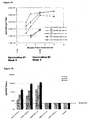
- Control groups were vaccinated with a similar Ad vector expressing an H1N1 HA antigen from influenza lab strain A/PR/8/34 (labeled Ad-PR8/34-Adj in Figure 1 ).
- A/PR/8/34 is not considered highly similar to the A/CA/04/09 H1N1 strain.
- the percent amino acide identity of the HA protein is on the order of 75-85%.
- the control Ad vector was also administered either orally (labeled p.o.) or by i.m. injection. Untreated mice provided an additional control.
- HAI antibody titers were also measured in plasma at 3, 5, and 8 weeks post-vaccinataion ( Figure 1B ). Significant HAI titers were elicitated in both oral (p.o.) groups. By 8 weeks, the high oral dose showed essentially equivalent HAI titer as that elicited by muscle injection.
- the PR/8/34 HA vector did not induce HAI titers above the background of the assay, as the ELISA relied on antibody binding to the HA antigen from A/CA/4/09.
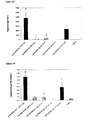
- Mucosal IgA antibody titers to HA were measured in fecal samples at week 8 post-administration ( Figure 1C ), vaginal lavages at week 10 post-administration ( Figure 1D ), and lung lavages at week 12 post-administration ( Figure 1E ). These results demonstrate that oral delivery of DX1 vector performed significantly better than i.m. delivery in eliciting antibody responses to the protein HA in both local (intestine) and distal (vagina & lungs) mucosal tissues. In particular, the average antibody titer to HA was 17-fold better in intestinal tissues (fecal IgA) after oral immunizations than after i.m. vaccination ( Figure 1C ).
- Example 3 Demonstration that oral delivery of DX1 can protect animals against influenza challenge
- mice were immunized with the groups listed in Table 1 on weeks 0 and 4. Oral immunization was performed by oral gavage with either 1x10 8 or 1x10 7 IU of DX1 (Groups A and C). In order to control for delivery, an i.m. immunization with DX1 was also performed (Group B). To control for possible downstream effects of the adjuvant, we used an adjuvant control vector that expresses the dsRNA adjuvant, but not the antigen. Untreated mice were used as a negative control. The number of animals in each challenge group was 6.
- the animals were challenged with a pandemic H1N1 virus (A/CA/07/2009) on week 9 (day 64), using a dose of 8.6x10 5 TCID 50 .
- the A/CA/07/2009 is considered very similar to A/CA/04/09, and the HA proteins share greater than 95% amino acid identity.
- Animals were measured for weight loss over 14 days post challenge as weight loss is an indicator of the health of the animals.
- Example 4 Demonstration that oral delivery of DX1 is superior to rAd5 for eliciting antibody responses to H1N1 influenza
- a second rAd vector was constructed that expresses the HA from A/CA/04/09, this time without the expressed dsRNA adjuvant.
- This vector was called DX2.
- Balb/c mice were dosed by oral gavage on weeks 0 and 4 with 1.0x10 7 IU DX1 or DX2 (called rAd5 (no adjuvant) in Figure 3 ).
- N 6 for this experiment.
- Antibody titers to A/CA/4/09 HA were measured in the plasma 3 and 7 weeks after administration by anti-HA IgG ELISA ( Figure 3 ). Results show that DX1 induced a superior antibody titer to DX2 demonstrating that the adjuvant improves immune responses to HA following oral delivery.
Landscapes
- Health & Medical Sciences (AREA)
- Life Sciences & Earth Sciences (AREA)
- Engineering & Computer Science (AREA)
- Genetics & Genomics (AREA)
- Biomedical Technology (AREA)
- Chemical & Material Sciences (AREA)
- Organic Chemistry (AREA)
- Molecular Biology (AREA)
- Bioinformatics & Cheminformatics (AREA)
- General Engineering & Computer Science (AREA)
- General Health & Medical Sciences (AREA)
- Biotechnology (AREA)
- Wood Science & Technology (AREA)
- Zoology (AREA)
- Immunology (AREA)
- Microbiology (AREA)
- Virology (AREA)
- Physics & Mathematics (AREA)
- Public Health (AREA)
- Biochemistry (AREA)
- Biophysics (AREA)
- Medicinal Chemistry (AREA)
- Plant Pathology (AREA)
- Pharmacology & Pharmacy (AREA)
- Veterinary Medicine (AREA)
- Animal Behavior & Ethology (AREA)
- Mycology (AREA)
- Epidemiology (AREA)
- Chemical Kinetics & Catalysis (AREA)
- General Chemical & Material Sciences (AREA)
- Nuclear Medicine, Radiotherapy & Molecular Imaging (AREA)
- Pulmonology (AREA)
- Communicable Diseases (AREA)
- Oncology (AREA)
- Medicines Containing Antibodies Or Antigens For Use As Internal Diagnostic Agents (AREA)
- Medicines Containing Material From Animals Or Micro-Organisms (AREA)
- Medicines That Contain Protein Lipid Enzymes And Other Medicines (AREA)
Applications Claiming Priority (2)
| Application Number | Priority Date | Filing Date | Title |
|---|---|---|---|
| US24307009P | 2009-09-16 | 2009-09-16 | |
| PCT/US2010/048967 WO2011034950A1 (en) | 2009-09-16 | 2010-09-15 | Immunization strategy to prevent h1n1 infection |
Publications (3)
| Publication Number | Publication Date |
|---|---|
| EP2477652A1 EP2477652A1 (en) | 2012-07-25 |
| EP2477652A4 EP2477652A4 (en) | 2013-01-02 |
| EP2477652B1 true EP2477652B1 (en) | 2015-04-15 |
Family
ID=43758995
Family Applications (1)
| Application Number | Title | Priority Date | Filing Date |
|---|---|---|---|
| EP10817780.9A Active EP2477652B1 (en) | 2009-09-16 | 2010-09-15 | Immunization strategy to prevent h1n1 infection |
Country Status (7)
| Country | Link |
|---|---|
| US (1) | US20120244185A1 (da) |
| EP (1) | EP2477652B1 (da) |
| JP (1) | JP2013505022A (da) |
| DK (1) | DK2477652T3 (da) |
| ES (1) | ES2538007T3 (da) |
| WO (1) | WO2011034950A1 (da) |
| ZA (1) | ZA201201948B (da) |
Families Citing this family (6)
| Publication number | Priority date | Publication date | Assignee | Title |
|---|---|---|---|---|
| WO2013064584A1 (en) * | 2011-10-31 | 2013-05-10 | Riboxx Gmbh | Double-stranded RNA for immunostimulation |
| DK3107568T3 (da) | 2014-02-20 | 2024-06-03 | Vaxart Inc | Formuleringer til indgivelse til tyndtarmen |
| EA201792512A1 (ru) | 2015-06-12 | 2018-06-29 | Вэксарт, Инк. | Составы для доставки антигенов респираторного синтициального вируса и норовируса в тонкий кишечник |
| GB201603577D0 (en) * | 2016-03-01 | 2016-04-13 | Oxford Genetics Ltd | Promoter |
| CA3048313A1 (en) * | 2017-01-06 | 2018-07-12 | Stabilitech Biopharma Ltd | Virus |
| CN114761558B (zh) | 2019-07-02 | 2025-08-01 | 株式会社Na疫苗研究所 | 新型核糖核酸和基于其的药物组合物 |
Family Cites Families (33)
| Publication number | Priority date | Publication date | Assignee | Title |
|---|---|---|---|---|
| NL154598B (nl) | 1970-11-10 | 1977-09-15 | Organon Nv | Werkwijze voor het aantonen en bepalen van laagmoleculire verbindingen en van eiwitten die deze verbindingen specifiek kunnen binden, alsmede testverpakking. |
| US3901654A (en) | 1971-06-21 | 1975-08-26 | Biological Developments | Receptor assays of biologically active compounds employing biologically specific receptors |
| US3817827A (en) | 1972-03-30 | 1974-06-18 | Scott Paper Co | Soft absorbent fibrous webs containing elastomeric bonding material and formed by creping and embossing |
| US3935074A (en) | 1973-12-17 | 1976-01-27 | Syva Company | Antibody steric hindrance immunoassay with two antibodies |
| US3996345A (en) | 1974-08-12 | 1976-12-07 | Syva Company | Fluorescence quenching with immunological pairs in immunoassays |
| US4034074A (en) | 1974-09-19 | 1977-07-05 | The Board Of Trustees Of Leland Stanford Junior University | Universal reagent 2-site immunoradiometric assay using labelled anti (IgG) |
| US3984533A (en) | 1975-11-13 | 1976-10-05 | General Electric Company | Electrophoretic method of detecting antigen-antibody reaction |
| US4098876A (en) | 1976-10-26 | 1978-07-04 | Corning Glass Works | Reverse sandwich immunoassay |
| US4452901A (en) | 1980-03-20 | 1984-06-05 | Ciba-Geigy Corporation | Electrophoretically transferring electropherograms to nitrocellulose sheets for immuno-assays |
| US4376110A (en) | 1980-08-04 | 1983-03-08 | Hybritech, Incorporated | Immunometric assays using monoclonal antibodies |
| US4520019A (en) | 1982-04-29 | 1985-05-28 | Ribi Immunochem Research, Inc. | Stable composition and preparation thereof |
| US4579945A (en) | 1982-04-29 | 1986-04-01 | Ribi Immunochem Research, Inc. | Purification of trehalose dimycolates |
| US4436728A (en) | 1982-05-26 | 1984-03-13 | Ribi Immunochem Research, Inc. | Refined detoxified endotoxin product |
| US4866034A (en) | 1982-05-26 | 1989-09-12 | Ribi Immunochem Research Inc. | Refined detoxified endotoxin |
| US4436727A (en) | 1982-05-26 | 1984-03-13 | Ribi Immunochem Research, Inc. | Refined detoxified endotoxin product |
| US4505899A (en) | 1982-05-26 | 1985-03-19 | Ribi Immunochem Research, Inc. | Refined detoxified endotoxin product |
| US4435386A (en) | 1982-05-26 | 1984-03-06 | Ribi Immunochem Research, Inc. | Refined detoxified endotoxin product |
| US4505900A (en) | 1982-05-26 | 1985-03-19 | Ribi Immunochem Research, Inc. | Refined detoxified endotoxin product |
| US6024983A (en) | 1986-10-24 | 2000-02-15 | Southern Research Institute | Composition for delivering bioactive agents for immune response and its preparation |
| US5075109A (en) | 1986-10-24 | 1991-12-24 | Southern Research Institute | Method of potentiating an immune response |
| CA1331443C (en) | 1987-05-29 | 1994-08-16 | Charlotte A. Kensil | Saponin adjuvant |
| US5057540A (en) | 1987-05-29 | 1991-10-15 | Cambridge Biotech Corporation | Saponin adjuvant |
| US4897268A (en) | 1987-08-03 | 1990-01-30 | Southern Research Institute | Drug delivery system and method of making the same |
| DK0678034T3 (da) | 1993-01-11 | 1999-11-08 | Dana Farber Cancer Inst Inc | Induktion af cytotoksiske T-lymfocytreaktioner |
| FR2702160B1 (fr) | 1993-03-02 | 1995-06-02 | Biovecteurs As | Vecteurs particulaires synthétiques et procédé de préparation. |
| FR2704145B1 (fr) | 1993-04-21 | 1995-07-21 | Pasteur Institut | Vecteur particulaire et composition pharmaceutique le contenant. |
| FR2723849B1 (fr) | 1994-08-31 | 1997-04-11 | Biovector Therapeutics Sa | Procede pour augmenter l'immunogenicite, produit obtenu et composition pharmaceutique |
| AUPM873294A0 (en) | 1994-10-12 | 1994-11-03 | Csl Limited | Saponin preparations and use thereof in iscoms |
| UA56132C2 (uk) | 1995-04-25 | 2003-05-15 | Смітклайн Бічем Байолоджікалс С.А. | Композиція вакцини (варіанти), спосіб стабілізації qs21 відносно гідролізу (варіанти), спосіб приготування композиції вакцини |
| AU2003240978A1 (en) | 2002-05-31 | 2003-12-19 | Genteric, Inc. | Multi-functional polyamines for delivery of biologically-active polynucleotides |
| AU2003262922A1 (en) | 2002-08-30 | 2004-03-19 | Genteric, Inc. | Retroductal salivary gland genetic vaccination |
| WO2004101616A1 (ja) * | 2003-05-14 | 2004-11-25 | Sumitomo Chemical Company, Limited | 肝臓X受容体αスプライシング変異体タンパク質、その遺伝子及びそれらの利用 |
| CN103122360A (zh) * | 2006-02-28 | 2013-05-29 | 瓦克萨特公司 | 嵌合腺病毒载体 |
-
2010
- 2010-09-15 JP JP2012529880A patent/JP2013505022A/ja active Pending
- 2010-09-15 DK DK10817780.9T patent/DK2477652T3/da active
- 2010-09-15 US US13/496,482 patent/US20120244185A1/en not_active Abandoned
- 2010-09-15 EP EP10817780.9A patent/EP2477652B1/en active Active
- 2010-09-15 ES ES10817780.9T patent/ES2538007T3/es active Active
- 2010-09-15 WO PCT/US2010/048967 patent/WO2011034950A1/en not_active Ceased
-
2012
- 2012-03-15 ZA ZA2012/01948A patent/ZA201201948B/en unknown
Also Published As
| Publication number | Publication date |
|---|---|
| US20120244185A1 (en) | 2012-09-27 |
| WO2011034950A1 (en) | 2011-03-24 |
| EP2477652A4 (en) | 2013-01-02 |
| ZA201201948B (en) | 2013-05-29 |
| EP2477652A1 (en) | 2012-07-25 |
| DK2477652T3 (da) | 2015-07-20 |
| JP2013505022A (ja) | 2013-02-14 |
| ES2538007T3 (es) | 2015-06-16 |
Similar Documents
| Publication | Publication Date | Title |
|---|---|---|
| Jung et al. | Heterologous prime–boost vaccination with adenoviral vector and protein nanoparticles induces both Th1 and Th2 responses against Middle East respiratory syndrome coronavirus | |
| JP6535133B2 (ja) | 新規のバキュロウイルスベクター及び使用の方法 | |
| EP2477652B1 (en) | Immunization strategy to prevent h1n1 infection | |
| JP7269285B2 (ja) | Rsvおよびノロウイルス抗原の小腸送達のための製剤 | |
| US20160304582A1 (en) | Molecular adjuvant | |
| JP2013523096A (ja) | インフルエンザマトリックス2タンパク質の外部ドメイン、発現システムおよびそれらの使用 | |
| US20250032602A1 (en) | Formulations for small intestinal delivery | |
| WO2022090679A1 (en) | Coronavirus polypeptide | |
| WO2023023940A1 (zh) | 一种诱导广谱抗冠状病毒的t细胞疫苗免疫原及其应用 | |
| US20230210980A1 (en) | Chimeric adenoviral vectors | |
| Wang et al. | Homologous sequential immunization using salmonella oral administration followed by an intranasal boost with ferritin-based nanoparticles enhanced the humoral immune response against H1N1 influenza virus | |
| WO2016057912A1 (en) | Hsv vaccines | |
| US20220275346A1 (en) | Hantavirus antigenic composition | |
| RU2485973C1 (ru) | Рекомбинантная трехвалентная вакцина от гриппа человека | |
| US20240093234A1 (en) | Chimeric adenoviral vectors | |
| JP2024534178A (ja) | 結核ワクチン | |
| KR20240023600A (ko) | 바이러스 질환을 위한 온도-제어가능한, 자기-복제 rna 백신 | |
| WO2025240699A1 (en) | Improved covid antigen coding sequences | |
| US12605443B2 (en) | SAR-CoV-2 DNA vaccine and method of administering thereof | |
| RU2618918C2 (ru) | Универсальная противогриппозная вакцина | |
| RU2571944C1 (ru) | Противогриппозная вакцина широкого спектра действия против птичьего гриппа а на основе эктодомена белка м2 | |
| WO2025021681A1 (en) | Immunogenic polypeptides |
Legal Events
| Date | Code | Title | Description |
|---|---|---|---|
| PUAI | Public reference made under article 153(3) epc to a published international application that has entered the european phase |
Free format text: ORIGINAL CODE: 0009012 |
|
| 17P | Request for examination filed |
Effective date: 20120327 |
|
| AK | Designated contracting states |
Kind code of ref document: A1 Designated state(s): AL AT BE BG CH CY CZ DE DK EE ES FI FR GB GR HR HU IE IS IT LI LT LU LV MC MK MT NL NO PL PT RO SE SI SK SM TR |
|
| DAX | Request for extension of the european patent (deleted) | ||
| RIC1 | Information provided on ipc code assigned before grant |
Ipc: C12N 15/00 20060101ALI20121120BHEP Ipc: A61K 39/235 20060101AFI20121120BHEP |
|
| A4 | Supplementary search report drawn up and despatched |
Effective date: 20121130 |
|
| REG | Reference to a national code |
Ref country code: HK Ref legal event code: DE Ref document number: 1173964 Country of ref document: HK |
|
| 17Q | First examination report despatched |
Effective date: 20140409 |
|
| GRAP | Despatch of communication of intention to grant a patent |
Free format text: ORIGINAL CODE: EPIDOSNIGR1 |
|
| GRAJ | Information related to disapproval of communication of intention to grant by the applicant or resumption of examination proceedings by the epo deleted |
Free format text: ORIGINAL CODE: EPIDOSDIGR1 |
|
| RIC1 | Information provided on ipc code assigned before grant |
Ipc: C12N 15/00 20060101ALI20140905BHEP Ipc: A61K 39/235 20060101AFI20140905BHEP Ipc: A61K 39/145 20060101ALI20140905BHEP |
|
| GRAP | Despatch of communication of intention to grant a patent |
Free format text: ORIGINAL CODE: EPIDOSNIGR1 |
|
| INTG | Intention to grant announced |
Effective date: 20141002 |
|
| INTG | Intention to grant announced |
Effective date: 20141016 |
|
| GRAJ | Information related to disapproval of communication of intention to grant by the applicant or resumption of examination proceedings by the epo deleted |
Free format text: ORIGINAL CODE: EPIDOSDIGR1 |
|
| GRAP | Despatch of communication of intention to grant a patent |
Free format text: ORIGINAL CODE: EPIDOSNIGR1 |
|
| INTG | Intention to grant announced |
Effective date: 20141126 |
|
| GRAS | Grant fee paid |
Free format text: ORIGINAL CODE: EPIDOSNIGR3 |
|
| GRAA | (expected) grant |
Free format text: ORIGINAL CODE: 0009210 |
|
| AK | Designated contracting states |
Kind code of ref document: B1 Designated state(s): AL AT BE BG CH CY CZ DE DK EE ES FI FR GB GR HR HU IE IS IT LI LT LU LV MC MK MT NL NO PL PT RO SE SI SK SM TR |
|
| RAP1 | Party data changed (applicant data changed or rights of an application transferred) |
Owner name: VAXART, INC. |
|
| REG | Reference to a national code |
Ref country code: GB Ref legal event code: FG4D Ref country code: CH Ref legal event code: EP |
|
| REG | Reference to a national code |
Ref country code: IE Ref legal event code: FG4D |
|
| REG | Reference to a national code |
Ref country code: AT Ref legal event code: REF Ref document number: 721584 Country of ref document: AT Kind code of ref document: T Effective date: 20150515 Ref country code: CH Ref legal event code: NV Representative=s name: MEYER AND KOLLEGEN, CH |
|
| REG | Reference to a national code |
Ref country code: NL Ref legal event code: T3 |
|
| REG | Reference to a national code |
Ref country code: DE Ref legal event code: R096 Ref document number: 602010024033 Country of ref document: DE Effective date: 20150528 |
|
| REG | Reference to a national code |
Ref country code: SE Ref legal event code: TRGR |
|
| REG | Reference to a national code |
Ref country code: ES Ref legal event code: FG2A Ref document number: 2538007 Country of ref document: ES Kind code of ref document: T3 Effective date: 20150616 |
|
| REG | Reference to a national code |
Ref country code: DK Ref legal event code: T3 Effective date: 20150717 |
|
| REG | Reference to a national code |
Ref country code: LT Ref legal event code: MG4D |
|
| PG25 | Lapsed in a contracting state [announced via postgrant information from national office to epo] |
Ref country code: NO Free format text: LAPSE BECAUSE OF FAILURE TO SUBMIT A TRANSLATION OF THE DESCRIPTION OR TO PAY THE FEE WITHIN THE PRESCRIBED TIME-LIMIT Effective date: 20150715 Ref country code: PT Free format text: LAPSE BECAUSE OF FAILURE TO SUBMIT A TRANSLATION OF THE DESCRIPTION OR TO PAY THE FEE WITHIN THE PRESCRIBED TIME-LIMIT Effective date: 20150817 Ref country code: FI Free format text: LAPSE BECAUSE OF FAILURE TO SUBMIT A TRANSLATION OF THE DESCRIPTION OR TO PAY THE FEE WITHIN THE PRESCRIBED TIME-LIMIT Effective date: 20150415 Ref country code: HR Free format text: LAPSE BECAUSE OF FAILURE TO SUBMIT A TRANSLATION OF THE DESCRIPTION OR TO PAY THE FEE WITHIN THE PRESCRIBED TIME-LIMIT Effective date: 20150415 Ref country code: LT Free format text: LAPSE BECAUSE OF FAILURE TO SUBMIT A TRANSLATION OF THE DESCRIPTION OR TO PAY THE FEE WITHIN THE PRESCRIBED TIME-LIMIT Effective date: 20150415 |
|
| PG25 | Lapsed in a contracting state [announced via postgrant information from national office to epo] |
Ref country code: LV Free format text: LAPSE BECAUSE OF FAILURE TO SUBMIT A TRANSLATION OF THE DESCRIPTION OR TO PAY THE FEE WITHIN THE PRESCRIBED TIME-LIMIT Effective date: 20150415 Ref country code: IS Free format text: LAPSE BECAUSE OF FAILURE TO SUBMIT A TRANSLATION OF THE DESCRIPTION OR TO PAY THE FEE WITHIN THE PRESCRIBED TIME-LIMIT Effective date: 20150815 Ref country code: GR Free format text: LAPSE BECAUSE OF FAILURE TO SUBMIT A TRANSLATION OF THE DESCRIPTION OR TO PAY THE FEE WITHIN THE PRESCRIBED TIME-LIMIT Effective date: 20150716 |
|
| REG | Reference to a national code |
Ref country code: DE Ref legal event code: R097 Ref document number: 602010024033 Country of ref document: DE |
|
| PG25 | Lapsed in a contracting state [announced via postgrant information from national office to epo] |
Ref country code: EE Free format text: LAPSE BECAUSE OF FAILURE TO SUBMIT A TRANSLATION OF THE DESCRIPTION OR TO PAY THE FEE WITHIN THE PRESCRIBED TIME-LIMIT Effective date: 20150415 |
|
| PLBE | No opposition filed within time limit |
Free format text: ORIGINAL CODE: 0009261 |
|
| STAA | Information on the status of an ep patent application or granted ep patent |
Free format text: STATUS: NO OPPOSITION FILED WITHIN TIME LIMIT |
|
| PG25 | Lapsed in a contracting state [announced via postgrant information from national office to epo] |
Ref country code: RO Free format text: LAPSE BECAUSE OF NON-PAYMENT OF DUE FEES Effective date: 20150415 Ref country code: PL Free format text: LAPSE BECAUSE OF FAILURE TO SUBMIT A TRANSLATION OF THE DESCRIPTION OR TO PAY THE FEE WITHIN THE PRESCRIBED TIME-LIMIT Effective date: 20150415 Ref country code: SK Free format text: LAPSE BECAUSE OF FAILURE TO SUBMIT A TRANSLATION OF THE DESCRIPTION OR TO PAY THE FEE WITHIN THE PRESCRIBED TIME-LIMIT Effective date: 20150415 Ref country code: CZ Free format text: LAPSE BECAUSE OF FAILURE TO SUBMIT A TRANSLATION OF THE DESCRIPTION OR TO PAY THE FEE WITHIN THE PRESCRIBED TIME-LIMIT Effective date: 20150415 |
|
| 26N | No opposition filed |
Effective date: 20160118 |
|
| REG | Reference to a national code |
Ref country code: AT Ref legal event code: UEP Ref document number: 721584 Country of ref document: AT Kind code of ref document: T Effective date: 20150415 |
|
| PG25 | Lapsed in a contracting state [announced via postgrant information from national office to epo] |
Ref country code: MC Free format text: LAPSE BECAUSE OF FAILURE TO SUBMIT A TRANSLATION OF THE DESCRIPTION OR TO PAY THE FEE WITHIN THE PRESCRIBED TIME-LIMIT Effective date: 20150415 Ref country code: LU Free format text: LAPSE BECAUSE OF FAILURE TO SUBMIT A TRANSLATION OF THE DESCRIPTION OR TO PAY THE FEE WITHIN THE PRESCRIBED TIME-LIMIT Effective date: 20150915 |
|
| PG25 | Lapsed in a contracting state [announced via postgrant information from national office to epo] |
Ref country code: SI Free format text: LAPSE BECAUSE OF FAILURE TO SUBMIT A TRANSLATION OF THE DESCRIPTION OR TO PAY THE FEE WITHIN THE PRESCRIBED TIME-LIMIT Effective date: 20150415 |
|
| REG | Reference to a national code |
Ref country code: IE Ref legal event code: MM4A |
|
| PG25 | Lapsed in a contracting state [announced via postgrant information from national office to epo] |
Ref country code: IE Free format text: LAPSE BECAUSE OF NON-PAYMENT OF DUE FEES Effective date: 20150915 |
|
| REG | Reference to a national code |
Ref country code: FR Ref legal event code: PLFP Year of fee payment: 7 |
|
| PG25 | Lapsed in a contracting state [announced via postgrant information from national office to epo] |
Ref country code: MT Free format text: LAPSE BECAUSE OF FAILURE TO SUBMIT A TRANSLATION OF THE DESCRIPTION OR TO PAY THE FEE WITHIN THE PRESCRIBED TIME-LIMIT Effective date: 20150415 |
|
| PG25 | Lapsed in a contracting state [announced via postgrant information from national office to epo] |
Ref country code: HU Free format text: LAPSE BECAUSE OF FAILURE TO SUBMIT A TRANSLATION OF THE DESCRIPTION OR TO PAY THE FEE WITHIN THE PRESCRIBED TIME-LIMIT; INVALID AB INITIO Effective date: 20100915 Ref country code: SM Free format text: LAPSE BECAUSE OF FAILURE TO SUBMIT A TRANSLATION OF THE DESCRIPTION OR TO PAY THE FEE WITHIN THE PRESCRIBED TIME-LIMIT Effective date: 20150415 Ref country code: BG Free format text: LAPSE BECAUSE OF FAILURE TO SUBMIT A TRANSLATION OF THE DESCRIPTION OR TO PAY THE FEE WITHIN THE PRESCRIBED TIME-LIMIT Effective date: 20150415 |
|
| PG25 | Lapsed in a contracting state [announced via postgrant information from national office to epo] |
Ref country code: CY Free format text: LAPSE BECAUSE OF FAILURE TO SUBMIT A TRANSLATION OF THE DESCRIPTION OR TO PAY THE FEE WITHIN THE PRESCRIBED TIME-LIMIT Effective date: 20150415 |
|
| REG | Reference to a national code |
Ref country code: FR Ref legal event code: PLFP Year of fee payment: 8 |
|
| PG25 | Lapsed in a contracting state [announced via postgrant information from national office to epo] |
Ref country code: MK Free format text: LAPSE BECAUSE OF FAILURE TO SUBMIT A TRANSLATION OF THE DESCRIPTION OR TO PAY THE FEE WITHIN THE PRESCRIBED TIME-LIMIT Effective date: 20150415 |
|
| REG | Reference to a national code |
Ref country code: FR Ref legal event code: PLFP Year of fee payment: 9 |
|
| PG25 | Lapsed in a contracting state [announced via postgrant information from national office to epo] |
Ref country code: AL Free format text: LAPSE BECAUSE OF FAILURE TO SUBMIT A TRANSLATION OF THE DESCRIPTION OR TO PAY THE FEE WITHIN THE PRESCRIBED TIME-LIMIT Effective date: 20150415 |
|
| P01 | Opt-out of the competence of the unified patent court (upc) registered |
Effective date: 20230404 |
|
| PGFP | Annual fee paid to national office [announced via postgrant information from national office to epo] |
Ref country code: NL Payment date: 20250724 Year of fee payment: 16 |
|
| REG | Reference to a national code |
Ref country code: CH Ref legal event code: U11 Free format text: ST27 STATUS EVENT CODE: U-0-0-U10-U11 (AS PROVIDED BY THE NATIONAL OFFICE) Effective date: 20251001 |
|
| PGFP | Annual fee paid to national office [announced via postgrant information from national office to epo] |
Ref country code: DK Payment date: 20250911 Year of fee payment: 16 Ref country code: DE Payment date: 20250722 Year of fee payment: 16 |
|
| PGFP | Annual fee paid to national office [announced via postgrant information from national office to epo] |
Ref country code: TR Payment date: 20250910 Year of fee payment: 16 Ref country code: IT Payment date: 20250825 Year of fee payment: 16 |
|
| PGFP | Annual fee paid to national office [announced via postgrant information from national office to epo] |
Ref country code: BE Payment date: 20250818 Year of fee payment: 16 Ref country code: GB Payment date: 20250724 Year of fee payment: 16 |
|
| PGFP | Annual fee paid to national office [announced via postgrant information from national office to epo] |
Ref country code: FR Payment date: 20250721 Year of fee payment: 16 Ref country code: AT Payment date: 20250827 Year of fee payment: 16 |
|
| PGFP | Annual fee paid to national office [announced via postgrant information from national office to epo] |
Ref country code: SE Payment date: 20250728 Year of fee payment: 16 |
|
| PGFP | Annual fee paid to national office [announced via postgrant information from national office to epo] |
Ref country code: CH Payment date: 20251001 Year of fee payment: 16 |
|
| PGFP | Annual fee paid to national office [announced via postgrant information from national office to epo] |
Ref country code: ES Payment date: 20251016 Year of fee payment: 16 |