EP2474943A1 - Mobile device-based automatic parking location recorder and reminder using on-board diagnostics - Google Patents
Mobile device-based automatic parking location recorder and reminder using on-board diagnostics Download PDFInfo
- Publication number
- EP2474943A1 EP2474943A1 EP12000059A EP12000059A EP2474943A1 EP 2474943 A1 EP2474943 A1 EP 2474943A1 EP 12000059 A EP12000059 A EP 12000059A EP 12000059 A EP12000059 A EP 12000059A EP 2474943 A1 EP2474943 A1 EP 2474943A1
- Authority
- EP
- European Patent Office
- Prior art keywords
- vehicle
- parked
- user
- mobile device
- location
- Prior art date
- Legal status (The legal status is an assumption and is not a legal conclusion. Google has not performed a legal analysis and makes no representation as to the accuracy of the status listed.)
- Ceased
Links
Images



Classifications
-
- G—PHYSICS
- G06—COMPUTING OR CALCULATING; COUNTING
- G06Q—INFORMATION AND COMMUNICATION TECHNOLOGY [ICT] SPECIALLY ADAPTED FOR ADMINISTRATIVE, COMMERCIAL, FINANCIAL, MANAGERIAL OR SUPERVISORY PURPOSES; SYSTEMS OR METHODS SPECIALLY ADAPTED FOR ADMINISTRATIVE, COMMERCIAL, FINANCIAL, MANAGERIAL OR SUPERVISORY PURPOSES, NOT OTHERWISE PROVIDED FOR
- G06Q10/00—Administration; Management
-
- G—PHYSICS
- G01—MEASURING; TESTING
- G01C—MEASURING DISTANCES, LEVELS OR BEARINGS; SURVEYING; NAVIGATION; GYROSCOPIC INSTRUMENTS; PHOTOGRAMMETRY OR VIDEOGRAMMETRY
- G01C21/00—Navigation; Navigational instruments not provided for in groups G01C1/00 - G01C19/00
- G01C21/20—Instruments for performing navigational calculations
-
- G—PHYSICS
- G01—MEASURING; TESTING
- G01C—MEASURING DISTANCES, LEVELS OR BEARINGS; SURVEYING; NAVIGATION; GYROSCOPIC INSTRUMENTS; PHOTOGRAMMETRY OR VIDEOGRAMMETRY
- G01C21/00—Navigation; Navigational instruments not provided for in groups G01C1/00 - G01C19/00
- G01C21/26—Navigation; Navigational instruments not provided for in groups G01C1/00 - G01C19/00 specially adapted for navigation in a road network
- G01C21/34—Route searching; Route guidance
- G01C21/36—Input/output arrangements for on-board computers
- G01C21/3605—Destination input or retrieval
-
- G—PHYSICS
- G08—SIGNALLING
- G08G—TRAFFIC CONTROL SYSTEMS
- G08G1/00—Traffic control systems for road vehicles
- G08G1/005—Traffic control systems for road vehicles including pedestrian guidance indicator
-
- G—PHYSICS
- G08—SIGNALLING
- G08G—TRAFFIC CONTROL SYSTEMS
- G08G1/00—Traffic control systems for road vehicles
- G08G1/09—Arrangements for giving variable traffic instructions
- G08G1/0962—Arrangements for giving variable traffic instructions having an indicator mounted inside the vehicle, e.g. giving voice messages
- G08G1/0968—Systems involving transmission of navigation instructions to the vehicle
- G08G1/0969—Systems involving transmission of navigation instructions to the vehicle having a display in the form of a map
Definitions
- This invention relates to a vehicle tracking and, more particularly, to a system and method for automatically recording a location of a parked vehicle and providing an external reminder of the vehicle location.
- the invention includes a method for assisting a vehicle user in locating a vehicle when parked includes detecting via a mobile device that the vehicle has been placed in a parked state and, in response to detecting that the vehicle has been placed in a parked state, automatically retrieving the vehicle location to the mobile device and recording the vehicle location on the mobile device.
- the method further entails providing, in response to a request from the user to locate the parked vehicle, instructions to the user to guide the user to the parked vehicle.
- the invention includes an apparatus for assisting a vehicle user in locating a parked vehicle.
- the apparatus includes a wireless mobile device for detecting that the vehicle has parked, for automatically recording the vehicle location and for providing instructions to the user to guide the user to the parked vehicle.
- a vehicle interface module is included for communicating vehicle location and operating parameters to the mobile device.
- the invention includes a computer-readable medium having thereon computer-readable instructions for locating a parked vehicle.
- the instructions include instructions for receiving a user request at a mobile device to locate a parked vehicle, instructions for reading a computer-readable memory of the mobile device to identify a current location of the parked vehicle, instructions for interfacing with a computer-readable electronic location sensor on the mobile device to determine a current location of the mobile device, and instructions for displaying via a graphical user interface of the mobile device instructions to travel to the current vehicle location from the current location of the mobile device.
- FIG. 1 depicts a system architecture according to an embodiment of the invention
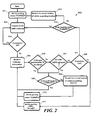
- FIG. 2 is a flow chart illustrating a process flow for executing vehicle location identification in an embodiment of the invention
- FIG. 3 is a schematic drawing depicting an example of a parking location reminder display in accordance with an embodiment of the invention.
- FIG. 4 is a schematic drawing depicting an example of an alternative parking location reminder display in accordance with an embodiment of the invention.
- OBD On-Board Diagnostics
- MIL malfunction indicator light
- Modern OBD implementations use a standardized fast digital communications port to provide real-time data in addition to a standardized series of diagnostic trouble codes, or DTCs, which allow one to identify and remedy malfunctions within the vehicle.
- Various sensor values including but not limited to speed, RPM (Revolution per Minute), 02 sensor, MAF (Mass Air Flow) rate, and so on, can be acquired through the OBD port. Based on these sensor values, the operation status of the vehicle may be interpreted.
- the invention utilizes information from the OBD port in addition to other information and calculations to detect vehicle parking and record a location for the vehicle, and remind a user of the location.
- a device according to an embodiment of the invention automatically detects whether the host vehicle is parked based on vehicle operational information retrieved from the OBD port.
- the device can communicate with the OBD port via wired or wireless media using various converters. Examples of the communication medium include but are not limited to WiFi, BLUETOOTH, USB, SerialCable, and so on.
- Geolocation information can be acquired by various methods such as GPS (Global Positioning System), mobile network-based (e.g. CDMA, GSM, etc.) triangulation, magnetic markers, and so on.
- GPS Global Positioning System
- mobile network-based e.g. CDMA, GSM, etc.
- the device shows the direction to the parked vehicle using the current location and orientation information of the driver acquired from the geo-localization device, in conjunction with the recorded parking location information.
- the direction information may be conveyed to the user via textual, graphical, audio, and/or video formats.
- the device may display a route from the user's current location to the parked vehicle on a graphical map.
- the device may provide turn-by-turn navigation directions to reach the location of the vehicle on foot or by other means.
- the primary functionalities including monitoring the operational status of the vehicle to determine whether the vehicle is parked, as well as then recording the parking location of the vehicle, are not installed in the vehicle but reside on a mobile device. As such, no special technique is required for installation of the system in an embodiment of the invention.
- the system can be easily applied to any modern vehicles (manufactured since 1996). Moreover, the recognition of the parking status of the vehicle is fully automatic so that the driver need not take special precautions to initiate recording of the parking location of the vehicle.
- no communication is required between the mobile device and the vehicle to enable the driver to return to their vehicle using the device. As such, there is no need in this embodiment for a specific counter-part module in the vehicle consuming the battery power of the vehicle.
- FIG. 1 A system architecture according to an embodiment of the invention is shown in FIG. 1 .
- the illustrated system consists of two primary components in this embodiment, namely a mobile device (100) and an OBD connector (200).
- the mobile device (100) consists of a Parking Location Manager (101), an OBD connection manager (102), a Localization Manager (103), and a User I/O Unit (104).
- the mobile device (100) may be a cell phone, personal digital assistant, communication enabled entertainment device, net book computer, lap top computer, or any other mobile computing device capable of making the connections and computations discussed herein.
- the OBD connector (200) is a hardware device that is integral with or connected permanently or temporarily into the OBD port to interface with and pass communications to or from the port.
- the modules discussed are software modules in an embodiment of the invention.
- the modules are implemented via the computer execution of computer-executable instructions (e.g., code, program, routines, etc.) stored on a non-transient computer-readable media such as a magnetic or optical storage medium, a flash drive, PROM, etc.
- an OBD Port (300) receives an information request from the external device 100 and responds with the requested information.
- the requested information may be vehicle speed, engine RPM (Revolution per Minute), and MAF rate, retrieved from the networked electronic subsystem (400).
- the electronic subsystems (400) are networked in an embodiment via one or more vehicular bus protocol such as CAN (Controller Area Network), J1850, FlexRay, and so on.
- the OBD Connector (300) translates from an internal bus signal of the vehicle into an external network signal to send data to the device 100, and may also translate an external network signal received from the device 1200 into an internal bus signal to allow communication from the device 100 to the OBD system or a networked subsystem.
- the external network connected to the OBD Connector is implemented in an embodiment to operate according to one or both of a wired protocol (USB, SerialCable, etc.) and a wireless protocol (WiFi, Bluetooth, etc.).
- the OBD connection manager (102) creates a wired and/or wireless network connection to the OBD connector (300), sends a vehicular information request to the OBD connector (300), and receives the corresponding information from it. Also, OBD connection manager (102) provides the OBD connection status and vehicular information to parking location manager (101)
- the localization manager (103) provides parking location manager with the orientation (e.g. angle to North) and current location information of the mobile device. To acquire the orientation and location information, the localization manager (103) may utilize various geolocation methods including GPS (Global Positioning System), mobile network triangulation (e.g. CDMA, GSM, etc.), magnetic markers, and so on.
- GPS Global Positioning System
- mobile network triangulation e.g. CDMA, GSM, etc.
- the user I/O unit (104) receives various user inputs for operating the mobile devices, e.g., screen touch, button click, voice command, and so on, and provides users with various forms of output, e.g., maps, graphics, texts, voice, and so on in order to inform users of the location of their vehicle and/or the direction to their vehicle.
- various user inputs for operating the mobile devices e.g., screen touch, button click, voice command, and so on
- various forms of output e.g., maps, graphics, texts, voice, and so on in order to inform users of the location of their vehicle and/or the direction to their vehicle.
- the parking location manager (101) determines the parking status of vehicle based on the vehicular operational information gathered from OBD connection manager (102), records the geolocation of the parked vehicle acquired from localization manager (103), and informs users of the location of their vehicle and/or the direction to their vehicle based on the location and orientation information of the mobile device acquired from localization manager (103) through user I/O unit (104).
- the parking location manager (101) determines the parking status of vehicle. This may be accomplished in a number of ways. In an embodiment of the invention, the parking manager (101) determines that the vehicle is parked or no longer in use if no valid network connection exists between the mobile device and the vehicle's OBD port, meaning that the user and accompanying device are out of range of the OBD port. Alternatively or additionally, the vehicle is determined to be parked if both the engine RPM and vehicle speed are 0 for engine-based vehicles. In an embodiment, the vehicle is determined to be parked if the vehicle's bus system is not supplied with power for engine-based and/or electric/hybrid vehicles.
- the vehicle is also deemed to be parked if the vehicle's gear position is "P" (Parking) mode.
- Gear information is not part of the standard OBD protocol, but can be made available on top of the OBD standard protocol if desired, as it is already in some OEM-specific protocols implemented on top of the OBD standard protocol.
- the parking location manager (101) initiates recording of the current location of the vehicle as a parking location at the time that the parking status changes from "in use" into “parked.”
- FIG. 2 depicts a logical flow of a process 500 for automatic parking recognition and location recordation according to an embodiment of the invention.
- the process 500 may be triggered by an event that indicates a possible parking status or may be periodically run.
- the parking status is set to "Parked" and the process 500 flows to stage 502, wherein mobile device connects to the OBD connector. If the connection fails at stage 503, then the process retires stage 502. Otherwise, the process 500 flows to stage 504, wherein the device retrieves vehicular information via the connection, e.g., speed, RPM, parking selector position, etc.
- the process 500 flows to stage 505, wherein the device determines whether the gear selector is in "Park.” If so, the process 500 flows to stage 506, wherein it determines whether the parking status is "Parked.” Similarly, if at stage 505 is it determined that the gear selector is in "Park” then the process 500 flows to stage 507, wherein it is determined whether both speed and RPM are zero. If so, the process 500 flows to stage 506.
- the process 500 Having determined whether the parking status is "Parked” at stage 506, the process 500 returns to stage 504 if the status is already “Parked.” Otherwise, the process500 flows to stage 509, wherein the device records the current location of the vehicle as the parking location and moves to stage 510 to set the status of the vehicle as "Parked' before returning to stage 304.
- stage 508 the process 500 flows to stage 508, wherein the device determines whether the connection to the OBD connector is lost. If not, the process flows to stage 511 and marks the vehicle status as "in use.” Otherwise, the process 500 flows to stage 512 to determine whether the parking status is already “Parked.” If so, the process 500 returns to stage 502. However, if the parking status is not already “Parked,” the process 500 flows to stage 513, records the current vehicle location as its parking location, and returns to stage 501.
- this information can be provided in any one or more of a variety of formats.
- a textual, graphical, audio, or video format may be used.
- the device may display a directional arrow to the vehicle as well as other optional information, e.g., distance to the parked vehicle.
- the illustrated user interface 600 includes an arrow 601 showing the direction to the parked vehicle.
- the display 600 also includes, in this embodiment, a distance indicator 602 expressing the distance from the user's current location to the vehicle location.
- the device may display a route from the user's (device's) current location to the parked vehicle.
- a display 700 of this type is shown schematically in FIG. 4 .
- the display 700 includes a vehicle location marker 701, as well as an arrow 702 marking the route to be taken by the user to reach the vehicle location 701.
- the device may provide the user with audible or visual turn-by-turn navigational direction to reach the location of the vehicle on foot.
Landscapes
- Engineering & Computer Science (AREA)
- Physics & Mathematics (AREA)
- General Physics & Mathematics (AREA)
- Remote Sensing (AREA)
- Radar, Positioning & Navigation (AREA)
- Business, Economics & Management (AREA)
- Operations Research (AREA)
- Marketing (AREA)
- Human Resources & Organizations (AREA)
- Quality & Reliability (AREA)
- Strategic Management (AREA)
- Tourism & Hospitality (AREA)
- General Business, Economics & Management (AREA)
- Theoretical Computer Science (AREA)
- Entrepreneurship & Innovation (AREA)
- Economics (AREA)
- Automation & Control Theory (AREA)
- Traffic Control Systems (AREA)
Abstract
A method for assisting a vehicle user in locating a vehicle when parked includes detecting via a mobile device that the vehicle has been placed in a parked state and, in response to detecting that the vehicle has been placed in a parked state, automatically retrieving the vehicle location to the mobile device and recording the vehicle location on the mobile device. The method further entails providing, in response to a request from the user to locate the parked vehicle, instructions to the user to guide the user to the parked vehicle.
Description
- This invention relates to a vehicle tracking and, more particularly, to a system and method for automatically recording a location of a parked vehicle and providing an external reminder of the vehicle location.
- While motorized vehicles changed the course of the last century and provide many benefits to humans, they do have certain longstanding yet unsolved disadvantages. As a primary example of such disadvantages, drivers often forget where they have parked their vehicle, and must then spend a certain amount of time and effort in attempting to locate the vehicle. This is especially true in large and/or complex parking areas such as large garages. Of course, if the user has the presence of mind, they may proactively force themselves to remember or write down the location where they have parked their vehicle. However, users often forget to take such step. Moreover, even if the user does remember to commit the location to memory or write it down, the passage of time may undo the best intentions, since the user may again simply forget the location or lose the note recording the location.
- In one aspect the invention includes a method for assisting a vehicle user in locating a vehicle when parked includes detecting via a mobile device that the vehicle has been placed in a parked state and, in response to detecting that the vehicle has been placed in a parked state, automatically retrieving the vehicle location to the mobile device and recording the vehicle location on the mobile device. The method further entails providing, in response to a request from the user to locate the parked vehicle, instructions to the user to guide the user to the parked vehicle.
- In another aspect the invention includes an apparatus for assisting a vehicle user in locating a parked vehicle. According to this aspect, the apparatus includes a wireless mobile device for detecting that the vehicle has parked, for automatically recording the vehicle location and for providing instructions to the user to guide the user to the parked vehicle. A vehicle interface module is included for communicating vehicle location and operating parameters to the mobile device.
- In yet another aspect the invention includes a computer-readable medium having thereon computer-readable instructions for locating a parked vehicle. Within this aspect, the instructions include instructions for receiving a user request at a mobile device to locate a parked vehicle, instructions for reading a computer-readable memory of the mobile device to identify a current location of the parked vehicle, instructions for interfacing with a computer-readable electronic location sensor on the mobile device to determine a current location of the mobile device, and instructions for displaying via a graphical user interface of the mobile device instructions to travel to the current vehicle location from the current location of the mobile device.
- Other features and advantages will be appreciated from this description and accompanying figures of which:
-
FIG. 1 depicts a system architecture according to an embodiment of the invention; -
FIG. 2 is a flow chart illustrating a process flow for executing vehicle location identification in an embodiment of the invention; -
FIG. 3 is a schematic drawing depicting an example of a parking location reminder display in accordance with an embodiment of the invention; and -
FIG. 4 is a schematic drawing depicting an example of an alternative parking location reminder display in accordance with an embodiment of the invention. - As used herein, the term "On-Board Diagnostics" (OBD) is a generic term referring to a vehicle's self-diagnostic and reporting capability. OBD systems provide the vehicle owner or a repair technician with access to state information for various vehicle sub-systems. The amount of diagnostic information available via OBD has varied widely since the introduction in the early 1980s of on-board vehicle computers. Early instances of OBD would simply illuminate a malfunction indicator light, or MIL, if a problem was detected, but would not provide any information as to the nature of the problem.
- Modern OBD implementations use a standardized fast digital communications port to provide real-time data in addition to a standardized series of diagnostic trouble codes, or DTCs, which allow one to identify and remedy malfunctions within the vehicle. Various sensor values including but not limited to speed, RPM (Revolution per Minute), 02 sensor, MAF (Mass Air Flow) rate, and so on, can be acquired through the OBD port. Based on these sensor values, the operation status of the vehicle may be interpreted.
- In embodiments, the invention utilizes information from the OBD port in addition to other information and calculations to detect vehicle parking and record a location for the vehicle, and remind a user of the location. In greater detail, a device according to an embodiment of the invention automatically detects whether the host vehicle is parked based on vehicle operational information retrieved from the OBD port. The device can communicate with the OBD port via wired or wireless media using various converters. Examples of the communication medium include but are not limited to WiFi, BLUETOOTH, USB, SerialCable, and so on.
- Once the device detects that the vehicle is parked and no longer in use, it automatically records the current location as a parking location using its own geo-localization system. Geolocation information can be acquired by various methods such as GPS (Global Positioning System), mobile network-based (e.g. CDMA, GSM, etc.) triangulation, magnetic markers, and so on.
- Subsequently, if driver desires to return to their vehicle but is not aware of the location of the vehicle, the device shows the direction to the parked vehicle using the current location and orientation information of the driver acquired from the geo-localization device, in conjunction with the recorded parking location information. The direction information may be conveyed to the user via textual, graphical, audio, and/or video formats. For example, the device may display a route from the user's current location to the parked vehicle on a graphical map. Alternatively, the device may provide turn-by-turn navigation directions to reach the location of the vehicle on foot or by other means.
- In an embodiment of the invention, the primary functionalities, including monitoring the operational status of the vehicle to determine whether the vehicle is parked, as well as then recording the parking location of the vehicle, are not installed in the vehicle but reside on a mobile device. As such, no special technique is required for installation of the system in an embodiment of the invention.
- Since communications between the mobile device and the OBD port on the vehicle are executed via the OBD protocol standard in an embodiment of the invention, the system can be easily applied to any modern vehicles (manufactured since 1996). Moreover, the recognition of the parking status of the vehicle is fully automatic so that the driver need not take special precautions to initiate recording of the parking location of the vehicle.
- In an embodiment of the invention, no communication is required between the mobile device and the vehicle to enable the driver to return to their vehicle using the device. As such, there is no need in this embodiment for a specific counter-part module in the vehicle consuming the battery power of the vehicle.
- A system architecture according to an embodiment of the invention is shown in
FIG. 1 . The illustrated system consists of two primary components in this embodiment, namely a mobile device (100) and an OBD connector (200). The mobile device (100) consists of a Parking Location Manager (101), an OBD connection manager (102), a Localization Manager (103), and a User I/O Unit (104). - The mobile device (100) may be a cell phone, personal digital assistant, communication enabled entertainment device, net book computer, lap top computer, or any other mobile computing device capable of making the connections and computations discussed herein. The OBD connector (200) is a hardware device that is integral with or connected permanently or temporarily into the OBD port to interface with and pass communications to or from the port.
- The modules discussed, e.g., the Parking Location Manager (101), OBD connection manager (102), Localization Manager (103), and User I/O Unit (104) are software modules in an embodiment of the invention. In this embodiment, the modules are implemented via the computer execution of computer-executable instructions (e.g., code, program, routines, etc.) stored on a non-transient computer-readable media such as a magnetic or optical storage medium, a flash drive, PROM, etc.
- In operation according to an embodiment, an OBD Port (300) receives an information request from the
external device 100 and responds with the requested information. In various embodiments of the invention, the requested information may be vehicle speed, engine RPM (Revolution per Minute), and MAF rate, retrieved from the networked electronic subsystem (400). The electronic subsystems (400) are networked in an embodiment via one or more vehicular bus protocol such as CAN (Controller Area Network), J1850, FlexRay, and so on. - In an embodiment, the OBD Connector (300) translates from an internal bus signal of the vehicle into an external network signal to send data to the
device 100, and may also translate an external network signal received from the device 1200 into an internal bus signal to allow communication from thedevice 100 to the OBD system or a networked subsystem. The external network connected to the OBD Connector is implemented in an embodiment to operate according to one or both of a wired protocol (USB, SerialCable, etc.) and a wireless protocol (WiFi, Bluetooth, etc.). - In operation, the OBD connection manager (102) creates a wired and/or wireless network connection to the OBD connector (300), sends a vehicular information request to the OBD connector (300), and receives the corresponding information from it. Also, OBD connection manager (102) provides the OBD connection status and vehicular information to parking location manager (101)
- The localization manager (103) provides parking location manager with the orientation (e.g. angle to North) and current location information of the mobile device. To acquire the orientation and location information, the localization manager (103) may utilize various geolocation methods including GPS (Global Positioning System), mobile network triangulation (e.g. CDMA, GSM, etc.), magnetic markers, and so on.
- The user I/O unit (104) receives various user inputs for operating the mobile devices, e.g., screen touch, button click, voice command, and so on, and provides users with various forms of output, e.g., maps, graphics, texts, voice, and so on in order to inform users of the location of their vehicle and/or the direction to their vehicle.
- The parking location manager (101) determines the parking status of vehicle based on the vehicular operational information gathered from OBD connection manager (102), records the geolocation of the parked vehicle acquired from localization manager (103), and informs users of the location of their vehicle and/or the direction to their vehicle based on the location and orientation information of the mobile device acquired from localization manager (103) through user I/O unit (104).
- As noted above, the parking location manager (101) determines the parking status of vehicle. This may be accomplished in a number of ways. In an embodiment of the invention, the parking manager (101) determines that the vehicle is parked or no longer in use if no valid network connection exists between the mobile device and the vehicle's OBD port, meaning that the user and accompanying device are out of range of the OBD port. Alternatively or additionally, the vehicle is determined to be parked if both the engine RPM and vehicle speed are 0 for engine-based vehicles. In an embodiment, the vehicle is determined to be parked if the vehicle's bus system is not supplied with power for engine-based and/or electric/hybrid vehicles.
- For vehicles having user selectable gearing, the vehicle is also deemed to be parked if the vehicle's gear position is "P" (Parking) mode. Gear information is not part of the standard OBD protocol, but can be made available on top of the OBD standard protocol if desired, as it is already in some OEM-specific protocols implemented on top of the OBD standard protocol.
- If the vehicle is not deemed to be parked via one of the foregoing mechanisms or otherwise, then the vehicle is deemed to be in use. The parking location manager (101) initiates recording of the current location of the vehicle as a parking location at the time that the parking status changes from "in use" into "parked."
-
FIG. 2 depicts a logical flow of aprocess 500 for automatic parking recognition and location recordation according to an embodiment of the invention. Theprocess 500 may be triggered by an event that indicates a possible parking status or may be periodically run. Atstage 501 of theprocess 500, the parking status is set to "Parked" and theprocess 500 flows to stage 502, wherein mobile device connects to the OBD connector. If the connection fails atstage 503, then the process retiresstage 502. Otherwise, theprocess 500 flows to stage 504, wherein the device retrieves vehicular information via the connection, e.g., speed, RPM, parking selector position, etc. - Given the retrieved vehicular information, the
process 500 flows to stage 505, wherein the device determines whether the gear selector is in "Park." If so, theprocess 500 flows to stage 506, wherein it determines whether the parking status is "Parked." Similarly, if atstage 505 is it determined that the gear selector is in "Park" then theprocess 500 flows to stage 507, wherein it is determined whether both speed and RPM are zero. If so, theprocess 500 flows to stage 506. - Having determined whether the parking status is "Parked" at
stage 506, theprocess 500 returns to stage 504 if the status is already "Parked." Otherwise, the process500 flows to stage 509, wherein the device records the current location of the vehicle as the parking location and moves to stage 510 to set the status of the vehicle as "Parked' before returning to stage 304. - If both of
stages process 500 flows to stage 508, wherein the device determines whether the connection to the OBD connector is lost. If not, the process flows to stage 511 and marks the vehicle status as "in use." Otherwise, theprocess 500 flows to stage 512 to determine whether the parking status is already "Parked." If so, theprocess 500 returns to stage 502. However, if the parking status is not already "Parked," theprocess 500 flows to stage 513, records the current vehicle location as its parking location, and returns to stage 501. - With respect to conveying the parking location information to the device user, this information can be provided in any one or more of a variety of formats. For example, a textual, graphical, audio, or video format may be used. As an example, of a graphical format, the device may display a directional arrow to the vehicle as well as other optional information, e.g., distance to the parked vehicle.
- One example format is shown in the
schematic user interface 600 as shown inFIG. 3 . The illustrateduser interface 600 includes anarrow 601 showing the direction to the parked vehicle. Thedisplay 600 also includes, in this embodiment, adistance indicator 602 expressing the distance from the user's current location to the vehicle location. - Alternatively, the device may display a route from the user's (device's) current location to the parked vehicle. A
display 700 of this type is shown schematically inFIG. 4 . Thedisplay 700 includes avehicle location marker 701, as well as anarrow 702 marking the route to be taken by the user to reach thevehicle location 701. As noted above, other forms and formats of information may be given additionally or alternatively to aid the user in locating the vehicle. As one further example, the device may provide the user with audible or visual turn-by-turn navigational direction to reach the location of the vehicle on foot. - The use of the terms "a" and "an" and "the" and similar referents in the context of describing the invention (especially in the context of the following claims) are to be construed to cover both the singular and the plural, unless otherwise indicated herein or clearly contradicted by context. The terms "comprising," "having," "including," and "containing" are to be construed as openended terms (i.e., meaning "including, but not limited to,") unless otherwise noted. Recitation of ranges of values herein are merely intended to serve as a shorthand method of referring individually to each separate value falling within the range, unless otherwise indicated herein, and each separate value is incorporated into the specification as if it were individually recited herein. All methods described herein can be performed in any suitable order unless otherwise indicated herein or otherwise clearly contradicted by context. The use of any and all examples, or exemplary language (e.g., "such as") provided herein, is intended merely to better illuminate the invention and does not pose a limitation on the scope of the invention unless otherwise claimed. No language in the specification should be construed as indicating any non-claimed element as essential to the practice of the invention.
- Preferred embodiments of this invention are described herein, including the best mode known to the inventors for carrying out the invention. Variations of those preferred embodiments may become apparent to those of ordinary skill in the art upon reading the foregoing description. The inventors expect skilled artisans to employ such variations as appropriate, and the inventors intend for the invention to be practiced otherwise than as specifically described herein. Accordingly, this invention includes all modifications and equivalents of the subject matter recited in the claims appended hereto as permitted by applicable law. Moreover, any combination of the above-described elements in all possible variations thereof is encompassed by the invention unless otherwise indicated herein or otherwise clearly contradicted by context.
Claims (13)
- A method for assisting a vehicle user in locating the vehicle when parked, the method comprising:detecting via a mobile device (100) that the vehicle has been placed in a parked state;in response to the step of detecting, automatically retrieving the vehicle location to the mobile device (100) and recording the vehicle location on the mobile device (100); andproviding, in response to a request from the user to locate the parked vehicle, instructions to the user to guide the user to the parked vehicle.
- The method for assisting a vehicle user according to claim 1, wherein detecting via the mobile device (100) that the vehicle has been placed in the parked state comprises determining that the vehicle speed and engine RPM are zero.
- The method for assisting a vehicle user according to claim 2, wherein detecting via the mobile device (100) that the vehicle has been placed in the parked state further comprises determining that a gear selector associated with the vehicle speed has been placed in a "park" position.
- The method for assisting a vehicle user according to anyone of the claims 1 to 3, wherein detecting via the mobile device (100) that the vehicle has been placed in a parked state includes communicating between the mobile device and the vehicle via an on-board diagnostics port (300) associated with the vehicle, and/or wherein retrieving the vehicle location to the mobile device (100) includes communicating between the mobile device (100) and the vehicle via an on-board diagnostics port associated with the vehicle, and/or
wherein the step of providing instructions to the user to guide the user to the parked vehicle includes providing instructions to the user via a graphical user interface of the mobile device (100), and/or
wherein the instructions comprise turn by turn directions from the user's current location to the vehicle's parked location. - The method for assisting a vehicle user according to claim 4, wherein the instructions comprise a direction indicator and a distance indicator for moving from the user's current location to the vehicle's parked location, and/or
wherein the instructions comprise a map display of the user's current location, the vehicle's parked location, and a route between the user's current location and the vehicle's parked location. - An apparatus for assisting a vehicle user in locating a parked vehicle, the apparatus comprising:a wireless mobile device (100) for detecting that the vehicle has parked, automatically recording the vehicle location and providing instructions to the user to guide the user to the parked vehicle; anda vehicle interface module for communicating vehicle location and operating parameters to the mobile device (100).
- The apparatus for assisting a vehicle user in locating a parked vehicle of claim 6, wherein the vehicle interface module is an on-board diagnostics interface module for interfacing with an on-board diagnostics port of the vehicle.
- The apparatus for assisting a vehicle user in locating a parked vehicle of claim 6 or 7, wherein the wireless mobile device (100) further includes:a parking location manager (101);an on-board diagnostics connection manager (102);a localization manager (103); anda user interface (104).
- The apparatus for assisting a vehicle user in locating a parked vehicle of claim 8, wherein the on-board diagnostics connection manager (102) is configured to create at least one of a wired and wireless network connection to the vehicle and send an on-board diagnostics information request to the vehicle and receive corresponding information from the vehicle.
- The apparatus for assisting a vehicle user in locating a parked vehicle of claim 9, wherein the received information includes one or more of vehicle speed, engine RPM, and MAF rate.
- The apparatus for assisting a vehicle user in locating a parked vehicle of claim 9 or 10, wherein the parking location manager (101) is configured to receive on-board diagnostics connection status and vehicle information from the on-board diagnostics connection manager (102), and/or wherein the localization manager (103) is configured to provide the orientation and current location of the mobile device to the parking location manager, and/or
wherein the parking location manager (101) is configured to determine the parking status of the vehicle based on the vehicle information received from on-board diagnostics connection manager (102) and to acquire the location of the parked vehicle from the localization manager (103), and/or
wherein the parking location manager (101) is configured to determine that the vehicle is parked when no valid network connection exists between the mobile device (100) and the vehicle. - The apparatus for assisting a vehicle user in locating a parked vehicle of anyone of the claims 8 to 11, wherein the vehicle includes a vehicle bus system, and wherein the parking location manager (101) is configured to determine that the vehicle is parked when the vehicle bus system is not supplied with power.
- A computer-readable medium having thereon computer-readable instructions for locating a parked vehicle, the instructions comprising:instructions for receiving a user request at a mobile device (100) to locate a parked vehicle;instructions for reading a computer-readable memory of the mobile device to identify a current location of the parked vehicle;instructions for interfacing with a computer-readable electronic location sensor on the mobile device to determine a current location of the mobile device; andinstructions for displaying via a graphical user interface of the mobile device instructions to travel to the current vehicle location from the current location of the mobile device.
Applications Claiming Priority (1)
| Application Number | Priority Date | Filing Date | Title |
|---|---|---|---|
| US12/987,183 US20120176255A1 (en) | 2011-01-10 | 2011-01-10 | Mobile device-based automatic parking location recorder and reminder using on-board diagnostics |
Publications (1)
| Publication Number | Publication Date |
|---|---|
| EP2474943A1 true EP2474943A1 (en) | 2012-07-11 |
Family
ID=45540764
Family Applications (1)
| Application Number | Title | Priority Date | Filing Date |
|---|---|---|---|
| EP12000059A Ceased EP2474943A1 (en) | 2011-01-10 | 2012-01-05 | Mobile device-based automatic parking location recorder and reminder using on-board diagnostics |
Country Status (2)
| Country | Link |
|---|---|
| US (1) | US20120176255A1 (en) |
| EP (1) | EP2474943A1 (en) |
Cited By (7)
| Publication number | Priority date | Publication date | Assignee | Title |
|---|---|---|---|---|
| WO2014130194A1 (en) * | 2013-02-21 | 2014-08-28 | Apple Inc. | Automatic identification of vehicle location |
| US9019129B2 (en) | 2013-02-21 | 2015-04-28 | Apple Inc. | Vehicle location in weak location signal scenarios |
| WO2016083027A1 (en) * | 2014-11-26 | 2016-06-02 | Robert Bosch Gmbh | Method for monitoring a car park |
| ITUA20164745A1 (en) * | 2016-06-29 | 2017-12-29 | Pierpaolo Concina | VEHICLE SAFETY MANAGEMENT SYSTEM, IN PARTICULAR IN PARKING AREAS. |
| US10121374B2 (en) | 2016-06-10 | 2018-11-06 | Apple Inc. | Parking event detection and location estimation |
| US10182316B1 (en) | 2013-08-15 | 2019-01-15 | Apple Inc. | Determining location of parked vehicle |
| WO2024067078A1 (en) * | 2022-09-30 | 2024-04-04 | 华为技术有限公司 | Vehicle positioning method and electronic device |
Families Citing this family (78)
| Publication number | Priority date | Publication date | Assignee | Title |
|---|---|---|---|---|
| US9318108B2 (en) | 2010-01-18 | 2016-04-19 | Apple Inc. | Intelligent automated assistant |
| US8977255B2 (en) | 2007-04-03 | 2015-03-10 | Apple Inc. | Method and system for operating a multi-function portable electronic device using voice-activation |
| US8676904B2 (en) | 2008-10-02 | 2014-03-18 | Apple Inc. | Electronic devices with voice command and contextual data processing capabilities |
| US10255566B2 (en) | 2011-06-03 | 2019-04-09 | Apple Inc. | Generating and processing task items that represent tasks to perform |
| US10276170B2 (en) | 2010-01-18 | 2019-04-30 | Apple Inc. | Intelligent automated assistant |
| US10057736B2 (en) | 2011-06-03 | 2018-08-21 | Apple Inc. | Active transport based notifications |
| US20140350855A1 (en) * | 2012-02-28 | 2014-11-27 | Google Inc. | Systems and Methods for Providing Navigational Assistance to Reserved Parking Locations |
| US9275010B2 (en) * | 2012-04-12 | 2016-03-01 | Automatic Labs, Inc. | Method for improving fuel economy of an operated vehicle |
| US8868289B2 (en) * | 2012-04-13 | 2014-10-21 | Automatic Labs, Inc. | Vehicle location navigation system |
| US9286266B1 (en) | 2012-05-04 | 2016-03-15 | Left Lane Network, Inc. | Cloud computed data service for automated reporting of vehicle trip data and analysis |
| US10417037B2 (en) | 2012-05-15 | 2019-09-17 | Apple Inc. | Systems and methods for integrating third party services with a digital assistant |
| US20140028477A1 (en) * | 2012-07-24 | 2014-01-30 | Apple Inc. | Vehicle location system |
| DE112014000709B4 (en) | 2013-02-07 | 2021-12-30 | Apple Inc. | METHOD AND DEVICE FOR OPERATING A VOICE TRIGGER FOR A DIGITAL ASSISTANT |
| US10652394B2 (en) | 2013-03-14 | 2020-05-12 | Apple Inc. | System and method for processing voicemail |
| US10748529B1 (en) | 2013-03-15 | 2020-08-18 | Apple Inc. | Voice activated device for use with a voice-based digital assistant |
| US8935089B2 (en) * | 2013-05-10 | 2015-01-13 | Blackberry Limited | Mobile mapping in underground or shielded environments |
| US10176167B2 (en) | 2013-06-09 | 2019-01-08 | Apple Inc. | System and method for inferring user intent from speech inputs |
| KR101959188B1 (en) | 2013-06-09 | 2019-07-02 | 애플 인크. | Device, method, and graphical user interface for enabling conversation persistence across two or more instances of a digital assistant |
| KR101749009B1 (en) | 2013-08-06 | 2017-06-19 | 애플 인크. | Auto-activating smart responses based on activities from remote devices |
| US9715875B2 (en) | 2014-05-30 | 2017-07-25 | Apple Inc. | Reducing the need for manual start/end-pointing and trigger phrases |
| US10170123B2 (en) | 2014-05-30 | 2019-01-01 | Apple Inc. | Intelligent assistant for home automation |
| WO2015184186A1 (en) | 2014-05-30 | 2015-12-03 | Apple Inc. | Multi-command single utterance input method |
| US9338493B2 (en) | 2014-06-30 | 2016-05-10 | Apple Inc. | Intelligent automated assistant for TV user interactions |
| US9886953B2 (en) | 2015-03-08 | 2018-02-06 | Apple Inc. | Virtual assistant activation |
| US10460227B2 (en) | 2015-05-15 | 2019-10-29 | Apple Inc. | Virtual assistant in a communication session |
| US10097973B2 (en) | 2015-05-27 | 2018-10-09 | Apple Inc. | Systems and methods for proactively identifying and surfacing relevant content on a touch-sensitive device |
| US10200824B2 (en) | 2015-05-27 | 2019-02-05 | Apple Inc. | Systems and methods for proactively identifying and surfacing relevant content on a touch-sensitive device |
| US20160378747A1 (en) | 2015-06-29 | 2016-12-29 | Apple Inc. | Virtual assistant for media playback |
| US10331312B2 (en) | 2015-09-08 | 2019-06-25 | Apple Inc. | Intelligent automated assistant in a media environment |
| US10747498B2 (en) | 2015-09-08 | 2020-08-18 | Apple Inc. | Zero latency digital assistant |
| US10740384B2 (en) | 2015-09-08 | 2020-08-11 | Apple Inc. | Intelligent automated assistant for media search and playback |
| US10671428B2 (en) | 2015-09-08 | 2020-06-02 | Apple Inc. | Distributed personal assistant |
| US11587559B2 (en) | 2015-09-30 | 2023-02-21 | Apple Inc. | Intelligent device identification |
| US10691473B2 (en) | 2015-11-06 | 2020-06-23 | Apple Inc. | Intelligent automated assistant in a messaging environment |
| US10956666B2 (en) | 2015-11-09 | 2021-03-23 | Apple Inc. | Unconventional virtual assistant interactions |
| US10223066B2 (en) | 2015-12-23 | 2019-03-05 | Apple Inc. | Proactive assistance based on dialog communication between devices |
| DE102016002530A1 (en) * | 2016-02-27 | 2017-08-31 | Audi Ag | Method for finding a parked vehicle in a parking structure and parking structure |
| US12223282B2 (en) | 2016-06-09 | 2025-02-11 | Apple Inc. | Intelligent automated assistant in a home environment |
| US10586535B2 (en) | 2016-06-10 | 2020-03-10 | Apple Inc. | Intelligent digital assistant in a multi-tasking environment |
| DK201670540A1 (en) | 2016-06-11 | 2018-01-08 | Apple Inc | Application integration with a digital assistant |
| DK179415B1 (en) | 2016-06-11 | 2018-06-14 | Apple Inc | Intelligent device arbitration and control |
| BE1024525B1 (en) | 2016-08-29 | 2018-03-28 | Pickmeup Nv | Method for the payment of a service and / or a product by means of an OBD dongle active in a vehicle, for example for parking purposes |
| CN109964185B (en) * | 2016-11-22 | 2022-10-04 | 福特汽车公司 | Vehicle assistance |
| DK180048B1 (en) | 2017-05-11 | 2020-02-04 | Apple Inc. | MAINTAINING THE DATA PROTECTION OF PERSONAL INFORMATION |
| US10726832B2 (en) | 2017-05-11 | 2020-07-28 | Apple Inc. | Maintaining privacy of personal information |
| DK179745B1 (en) | 2017-05-12 | 2019-05-01 | Apple Inc. | SYNCHRONIZATION AND TASK DELEGATION OF A DIGITAL ASSISTANT |
| DK201770428A1 (en) | 2017-05-12 | 2019-02-18 | Apple Inc. | Low-latency intelligent automated assistant |
| DK179496B1 (en) | 2017-05-12 | 2019-01-15 | Apple Inc. | USER-SPECIFIC Acoustic Models |
| DK201770411A1 (en) | 2017-05-15 | 2018-12-20 | Apple Inc. | MULTI-MODAL INTERFACES |
| US10303715B2 (en) | 2017-05-16 | 2019-05-28 | Apple Inc. | Intelligent automated assistant for media exploration |
| US20180336892A1 (en) | 2017-05-16 | 2018-11-22 | Apple Inc. | Detecting a trigger of a digital assistant |
| DK179560B1 (en) | 2017-05-16 | 2019-02-18 | Apple Inc. | Far-field extension for digital assistant services |
| US9965960B1 (en) * | 2017-08-07 | 2018-05-08 | Lyft, Inc. | Facilitating transportation services by generating a directional indicator between a requester and a transportation vehicle |
| KR20190028926A (en) * | 2017-09-11 | 2019-03-20 | 현대자동차주식회사 | Vehicle Advertising System and Advertising Method Using It |
| US10818288B2 (en) | 2018-03-26 | 2020-10-27 | Apple Inc. | Natural assistant interaction |
| US10928918B2 (en) | 2018-05-07 | 2021-02-23 | Apple Inc. | Raise to speak |
| US11145294B2 (en) | 2018-05-07 | 2021-10-12 | Apple Inc. | Intelligent automated assistant for delivering content from user experiences |
| US10892996B2 (en) | 2018-06-01 | 2021-01-12 | Apple Inc. | Variable latency device coordination |
| DK180639B1 (en) | 2018-06-01 | 2021-11-04 | Apple Inc | DISABILITY OF ATTENTION-ATTENTIVE VIRTUAL ASSISTANT |
| DK201870355A1 (en) | 2018-06-01 | 2019-12-16 | Apple Inc. | Virtual assistant operation in multi-device environments |
| DK179822B1 (en) | 2018-06-01 | 2019-07-12 | Apple Inc. | Voice interaction at a primary device to access call functionality of a companion device |
| US10928215B2 (en) * | 2018-08-21 | 2021-02-23 | Honda Motor Co., Ltd. | Methods and systems for last mile navigation cache point of interest |
| US11168998B2 (en) * | 2018-08-21 | 2021-11-09 | Honda Motor Co., Ltd. | Methods and systems for last mile navigation cache point of interest |
| US11462215B2 (en) | 2018-09-28 | 2022-10-04 | Apple Inc. | Multi-modal inputs for voice commands |
| US11348573B2 (en) | 2019-03-18 | 2022-05-31 | Apple Inc. | Multimodality in digital assistant systems |
| DK201970509A1 (en) | 2019-05-06 | 2021-01-15 | Apple Inc | Spoken notifications |
| US11307752B2 (en) | 2019-05-06 | 2022-04-19 | Apple Inc. | User configurable task triggers |
| US11140099B2 (en) | 2019-05-21 | 2021-10-05 | Apple Inc. | Providing message response suggestions |
| DK201970510A1 (en) | 2019-05-31 | 2021-02-11 | Apple Inc | Voice identification in digital assistant systems |
| DK180129B1 (en) | 2019-05-31 | 2020-06-02 | Apple Inc. | USER ACTIVITY SHORTCUT SUGGESTIONS |
| US11227599B2 (en) | 2019-06-01 | 2022-01-18 | Apple Inc. | Methods and user interfaces for voice-based control of electronic devices |
| US11183193B1 (en) | 2020-05-11 | 2021-11-23 | Apple Inc. | Digital assistant hardware abstraction |
| US11061543B1 (en) | 2020-05-11 | 2021-07-13 | Apple Inc. | Providing relevant data items based on context |
| US11755276B2 (en) | 2020-05-12 | 2023-09-12 | Apple Inc. | Reducing description length based on confidence |
| US11490204B2 (en) | 2020-07-20 | 2022-11-01 | Apple Inc. | Multi-device audio adjustment coordination |
| US11438683B2 (en) | 2020-07-21 | 2022-09-06 | Apple Inc. | User identification using headphones |
| DE102022204409A1 (en) * | 2022-05-04 | 2023-11-09 | Robert Bosch Gesellschaft mit beschränkter Haftung | Method and device for determining a parking position of a bicycle |
| US20250027784A1 (en) * | 2023-07-20 | 2025-01-23 | Gogoro Inc. | Method and system for recommending vehicle location |
Citations (6)
| Publication number | Priority date | Publication date | Assignee | Title |
|---|---|---|---|---|
| US6650999B1 (en) * | 1998-05-22 | 2003-11-18 | Hans-Detlef Brust | Method and device for finding a parked vehicle |
| US20080015748A1 (en) * | 2006-07-14 | 2008-01-17 | David Nagy | System for monitoring, controlling, and reporting vehicle operation through onboard diagnostic port |
| WO2008154727A1 (en) * | 2007-06-21 | 2008-12-24 | Harris Korn | System and method for locating a vehicle |
| US20090309759A1 (en) * | 2008-06-13 | 2009-12-17 | Darin Scot Williams | Car-finder method and aparatus |
| US20100073201A1 (en) * | 2008-09-24 | 2010-03-25 | Denso International America, Inc. | Car finder by cell phone |
| US20100161171A1 (en) * | 2008-12-23 | 2010-06-24 | Eric Lee Valentine | Interworking among automobile buses, portable user equipment and mobile networks |
Family Cites Families (12)
| Publication number | Priority date | Publication date | Assignee | Title |
|---|---|---|---|---|
| US6253980B1 (en) * | 1999-07-07 | 2001-07-03 | Honda Giken Kogyo Kabushiki Kaisha | Shared vehicle system and method with system for carrying a first vehicle with a second vehicle |
| KR100361274B1 (en) * | 1999-11-03 | 2002-11-18 | 현대자동차주식회사 | Apparatus and method for warning illegal stopping and parking car |
| US6489921B1 (en) * | 2001-07-12 | 2002-12-03 | Jeffrey Fergus Wilkinson | Vehicle locating apparatus |
| US20030171111A1 (en) * | 2002-01-29 | 2003-09-11 | Tim Clark | Cellular telephone interface apparatus and methods |
| US20060111835A1 (en) * | 2004-11-23 | 2006-05-25 | Texas Instruments Incorporated | Location system for locating a parked vehicle, a method for providing a location of a parked vehicle and a personal wireless device incorporating the system or method |
| US9493054B2 (en) * | 2006-11-29 | 2016-11-15 | Mahle International Gmbh | Vehicle HVAC control system |
| US7847709B2 (en) * | 2007-08-28 | 2010-12-07 | Gm Global Technology Operations, Inc. | Multimode vehicle location device and method |
| US20090098907A1 (en) * | 2007-10-15 | 2009-04-16 | Gm Global Technology Operations, Inc. | Parked Vehicle Location Information Access via a Portable Cellular Communication Device |
| US7804425B2 (en) * | 2008-05-20 | 2010-09-28 | Ford Global Technologies, Llc | Parking assist system |
| US8035503B2 (en) * | 2008-12-09 | 2011-10-11 | Delphi Technologies, Inc. | Vehicle location reminder system and method |
| US20100210254A1 (en) * | 2009-02-13 | 2010-08-19 | Charles Kelly | System and Method for Regulating Mobile Communications Use by Drivers |
| KR20120020164A (en) * | 2009-05-08 | 2012-03-07 | 오브에지, 엘엘씨 | Systems, methods, and devices for policy-based control and monitoring of use of mobile devices by vehicle operators |
-
2011
- 2011-01-10 US US12/987,183 patent/US20120176255A1/en not_active Abandoned
-
2012
- 2012-01-05 EP EP12000059A patent/EP2474943A1/en not_active Ceased
Patent Citations (6)
| Publication number | Priority date | Publication date | Assignee | Title |
|---|---|---|---|---|
| US6650999B1 (en) * | 1998-05-22 | 2003-11-18 | Hans-Detlef Brust | Method and device for finding a parked vehicle |
| US20080015748A1 (en) * | 2006-07-14 | 2008-01-17 | David Nagy | System for monitoring, controlling, and reporting vehicle operation through onboard diagnostic port |
| WO2008154727A1 (en) * | 2007-06-21 | 2008-12-24 | Harris Korn | System and method for locating a vehicle |
| US20090309759A1 (en) * | 2008-06-13 | 2009-12-17 | Darin Scot Williams | Car-finder method and aparatus |
| US20100073201A1 (en) * | 2008-09-24 | 2010-03-25 | Denso International America, Inc. | Car finder by cell phone |
| US20100161171A1 (en) * | 2008-12-23 | 2010-06-24 | Eric Lee Valentine | Interworking among automobile buses, portable user equipment and mobile networks |
Non-Patent Citations (1)
| Title |
|---|
| ANONYMOUS: "On-board diagnostics - Wikipedia, the free encyclopedia", 3 January 2011 (2011-01-03), XP055254039, Retrieved from the Internet <URL:https://en.wikipedia.org/w/index.php?title=On-board_diagnostics&oldid=405623268> [retrieved on 20160301] * |
Cited By (10)
| Publication number | Priority date | Publication date | Assignee | Title |
|---|---|---|---|---|
| WO2014130194A1 (en) * | 2013-02-21 | 2014-08-28 | Apple Inc. | Automatic identification of vehicle location |
| US9019129B2 (en) | 2013-02-21 | 2015-04-28 | Apple Inc. | Vehicle location in weak location signal scenarios |
| US9080878B2 (en) | 2013-02-21 | 2015-07-14 | Apple Inc. | Automatic identification of vehicle location |
| US10182316B1 (en) | 2013-08-15 | 2019-01-15 | Apple Inc. | Determining location of parked vehicle |
| WO2016083027A1 (en) * | 2014-11-26 | 2016-06-02 | Robert Bosch Gmbh | Method for monitoring a car park |
| CN107004359A (en) * | 2014-11-26 | 2017-08-01 | 罗伯特·博世有限公司 | method for monitoring parking lot |
| US10140793B2 (en) | 2014-11-26 | 2018-11-27 | Robert Bosch Gmbh | Method for monitoring a parking facility |
| US10121374B2 (en) | 2016-06-10 | 2018-11-06 | Apple Inc. | Parking event detection and location estimation |
| ITUA20164745A1 (en) * | 2016-06-29 | 2017-12-29 | Pierpaolo Concina | VEHICLE SAFETY MANAGEMENT SYSTEM, IN PARTICULAR IN PARKING AREAS. |
| WO2024067078A1 (en) * | 2022-09-30 | 2024-04-04 | 华为技术有限公司 | Vehicle positioning method and electronic device |
Also Published As
| Publication number | Publication date |
|---|---|
| US20120176255A1 (en) | 2012-07-12 |
Similar Documents
| Publication | Publication Date | Title |
|---|---|---|
| EP2474943A1 (en) | Mobile device-based automatic parking location recorder and reminder using on-board diagnostics | |
| CN105118321B (en) | A kind of intelligent extract method of the vehicles, system and the vehicles | |
| RU154876U1 (en) | AUTONOMOUS VEHICLE MANAGEMENT SYSTEM (OPTIONS) | |
| CN104570791B (en) | System and method for communicating objects attached to a vehicle | |
| CN102197280B (en) | Location registration device and location registration method | |
| US10275043B2 (en) | Detection of lane conditions in adaptive cruise control systems | |
| CN109313849B (en) | Method, device and system for wrong-way driver identification | |
| CN208479957U (en) | A kind of car-mounted terminal T-BOX and the car networking massaging device towards V2X net connection automobile | |
| CN115290348B (en) | A test method, device and equipment for intelligent driving assistance system | |
| CN111559386A (en) | Short-range communication-based vehicle presentation generation for vehicle displays | |
| US20220028186A1 (en) | Vehicle identification number (vin)-based telematics device location tracking | |
| EP3867120A1 (en) | Localization initialization for autonomous vehicles | |
| JP2016224477A (en) | On-vehicle device, driving mode control system, and driving mode control method | |
| CN111818160A (en) | Vehicle-mounted machine equipment | |
| US20180190043A1 (en) | Mileage Tracking Provisioning | |
| EP3868577A1 (en) | Computer system with tire wear measurement mechanism and method of operation thereof | |
| CN110660261B (en) | A method and device system for automatically recording parking location and finding a vehicle | |
| CN107146439A (en) | Restricted driving reminding method, restricted driving prompt system and car-mounted terminal | |
| CN104908694B (en) | For the system and its data acquisition device of driving trace identification | |
| CN110928277B (en) | Obstacle prompting method, device and equipment for intelligent roadside unit | |
| CN113954834A (en) | Lane changing planning method and vehicle-mounted device | |
| CN110313011A (en) | Entered via mobile device by the vehicle of inlet point | |
| KR101377646B1 (en) | System and method for providing fueling information | |
| CN105702067B (en) | Traffic control device detection | |
| CN201342989Y (en) | On-vehicle attention device for improving accuracy of vehicle traveling alarm |
Legal Events
| Date | Code | Title | Description |
|---|---|---|---|
| PUAI | Public reference made under article 153(3) epc to a published international application that has entered the european phase |
Free format text: ORIGINAL CODE: 0009012 |
|
| 17P | Request for examination filed |
Effective date: 20120127 |
|
| AK | Designated contracting states |
Kind code of ref document: A1 Designated state(s): AL AT BE BG CH CY CZ DE DK EE ES FI FR GB GR HR HU IE IS IT LI LT LU LV MC MK MT NL NO PL PT RO RS SE SI SK SM TR |
|
| AX | Request for extension of the european patent |
Extension state: BA ME |
|
| 17Q | First examination report despatched |
Effective date: 20140502 |
|
| STAA | Information on the status of an ep patent application or granted ep patent |
Free format text: STATUS: THE APPLICATION HAS BEEN REFUSED |
|
| 18R | Application refused |
Effective date: 20160728 |