EP2469822A1 - Computer-Telephonie-Integration mit Anbindung der Computer über einen Presence-Server - Google Patents
Computer-Telephonie-Integration mit Anbindung der Computer über einen Presence-Server Download PDFInfo
- Publication number
- EP2469822A1 EP2469822A1 EP11007818A EP11007818A EP2469822A1 EP 2469822 A1 EP2469822 A1 EP 2469822A1 EP 11007818 A EP11007818 A EP 11007818A EP 11007818 A EP11007818 A EP 11007818A EP 2469822 A1 EP2469822 A1 EP 2469822A1
- Authority
- EP
- European Patent Office
- Prior art keywords
- ccgw
- server
- text
- xmpp
- csta
- Prior art date
- Legal status (The legal status is an assumption and is not a legal conclusion. Google has not performed a legal analysis and makes no representation as to the accuracy of the status listed.)
- Granted
Links
- 238000000034 method Methods 0.000 claims abstract description 38
- 230000010354 integration Effects 0.000 claims abstract description 14
- 238000004891 communication Methods 0.000 claims description 40
- 102100031237 Cystatin-A Human genes 0.000 claims description 24
- 101000921786 Homo sapiens Cystatin-A Proteins 0.000 claims description 24
- 238000012544 monitoring process Methods 0.000 claims description 8
- 238000012360 testing method Methods 0.000 description 62
- 101150084890 cstA gene Proteins 0.000 description 59
- 101100256357 Schizosaccharomyces pombe (strain 972 / ATCC 24843) seb1 gene Proteins 0.000 description 4
- 230000005540 biological transmission Effects 0.000 description 2
- 238000012545 processing Methods 0.000 description 2
- 238000006243 chemical reaction Methods 0.000 description 1
- 230000001419 dependent effect Effects 0.000 description 1
- 238000011161 development Methods 0.000 description 1
- 230000018109 developmental process Effects 0.000 description 1
- 238000013024 troubleshooting Methods 0.000 description 1
- 238000012800 visualization Methods 0.000 description 1
Images




Classifications
-
- H—ELECTRICITY
- H04—ELECTRIC COMMUNICATION TECHNIQUE
- H04L—TRANSMISSION OF DIGITAL INFORMATION, e.g. TELEGRAPHIC COMMUNICATION
- H04L51/00—User-to-user messaging in packet-switching networks, transmitted according to store-and-forward or real-time protocols, e.g. e-mail
- H04L51/04—Real-time or near real-time messaging, e.g. instant messaging [IM]
-
- H—ELECTRICITY
- H04—ELECTRIC COMMUNICATION TECHNIQUE
- H04L—TRANSMISSION OF DIGITAL INFORMATION, e.g. TELEGRAPHIC COMMUNICATION
- H04L41/00—Arrangements for maintenance, administration or management of data switching networks, e.g. of packet switching networks
- H04L41/06—Management of faults, events, alarms or notifications
- H04L41/0631—Management of faults, events, alarms or notifications using root cause analysis; using analysis of correlation between notifications, alarms or events based on decision criteria, e.g. hierarchy, tree or time analysis
-
- H—ELECTRICITY
- H04—ELECTRIC COMMUNICATION TECHNIQUE
- H04L—TRANSMISSION OF DIGITAL INFORMATION, e.g. TELEGRAPHIC COMMUNICATION
- H04L49/00—Packet switching elements
- H04L49/15—Interconnection of switching modules
-
- H—ELECTRICITY
- H04—ELECTRIC COMMUNICATION TECHNIQUE
- H04L—TRANSMISSION OF DIGITAL INFORMATION, e.g. TELEGRAPHIC COMMUNICATION
- H04L51/00—User-to-user messaging in packet-switching networks, transmitted according to store-and-forward or real-time protocols, e.g. e-mail
- H04L51/04—Real-time or near real-time messaging, e.g. instant messaging [IM]
- H04L51/043—Real-time or near real-time messaging, e.g. instant messaging [IM] using or handling presence information
-
- H—ELECTRICITY
- H04—ELECTRIC COMMUNICATION TECHNIQUE
- H04L—TRANSMISSION OF DIGITAL INFORMATION, e.g. TELEGRAPHIC COMMUNICATION
- H04L51/00—User-to-user messaging in packet-switching networks, transmitted according to store-and-forward or real-time protocols, e.g. e-mail
- H04L51/56—Unified messaging, e.g. interactions between e-mail, instant messaging or converged IP messaging [CPM]
-
- H—ELECTRICITY
- H04—ELECTRIC COMMUNICATION TECHNIQUE
- H04M—TELEPHONIC COMMUNICATION
- H04M3/00—Automatic or semi-automatic exchanges
- H04M3/42—Systems providing special services or facilities to subscribers
- H04M3/42382—Text-based messaging services in telephone networks such as PSTN/ISDN, e.g. User-to-User Signalling or Short Message Service for fixed networks
-
- H—ELECTRICITY
- H04—ELECTRIC COMMUNICATION TECHNIQUE
- H04M—TELEPHONIC COMMUNICATION
- H04M7/00—Arrangements for interconnection between switching centres
- H04M7/0012—Details of application programming interfaces [API] for telephone networks; Arrangements which combine a telephonic communication equipment and a computer, i.e. computer telephony integration [CPI] arrangements
-
- H—ELECTRICITY
- H04—ELECTRIC COMMUNICATION TECHNIQUE
- H04M—TELEPHONIC COMMUNICATION
- H04M2242/00—Special services or facilities
- H04M2242/16—Special services or facilities with computer telephone integration
-
- H—ELECTRICITY
- H04—ELECTRIC COMMUNICATION TECHNIQUE
- H04M—TELEPHONIC COMMUNICATION
- H04M3/00—Automatic or semi-automatic exchanges
- H04M3/42—Systems providing special services or facilities to subscribers
- H04M3/42314—Systems providing special services or facilities to subscribers in private branch exchanges
- H04M3/42323—PBX's with CTI arrangements
Definitions
- the invention relates to a method for automatically monitoring a connection (CTI-L) of a switching system (PBX) in a telecommunications network (TN) with a data network (DN), in which a switching system (PBX) of the telecommunications network with an IM server (XS) the data network is connected via a device (CCGW), with the help of which the IM server is enabled to provide computer telephony integration services of the switching system (PBX) a communication subscriber of the data network.
- CTI-L connection of PBX
- TN telecommunications network
- DN data network
- PBX switching system
- XS IM server
- CCGW device
- Data networks are mainly used to connect computers, such as PCs with so-called servers.
- Methods and arrangements in which applications installed on computers control and monitor communications equipment and communications links are commonly known as CTI (Computer Telephony Integration) (CTI) solutions.
- CTI Computer Telephony Integration
- connections of communication systems and, on the other hand, connections between the connections can be controlled and monitored.
- the connections are each temporary communication channels between two or more subscribers of a communication system or multiple communication systems.
- CTI application program When operating a CTI solution, data with control and status information is transferred between a communication system and a CTI application (CTI application program).
- the communication systems have special interfaces for exchanging data, the CTI interfaces.
- the applications or the PCs have a corresponding CTI interface for this data exchange.
- the CTI interfaces of the communication system and the application of the application via a data line or via a data network are interconnected. Since the maximum number of CTI interfaces is limited to one communication system, a telephony server is often switched between the communication system and the applications.
- Computer telephony integration gateway shows a public communication network with multiple communication systems and a private communication network with multiple domains, each having computers with applications for controlling and / or monitoring resources of the public communication network.
- the arrangement shown has as a conversion device a "CTI gateway” which modifies the data sent to control and / or monitor the resources from the public communications network to the private communications network such that these data represent the data of a single public communications system, and vice versa the data sent from the private communications network with the applications to the public communications network is modified as if it had been sent from a private communications network with only one application.
- CTI gateway modifies the data sent to control and / or monitor the resources from the public communications network to the private communications network such that these data represent the data of a single public communications system, and vice versa the data sent from the private communications network with the applications to the public communications network is modified as if it had been sent from a private communications network with only one application.
- the DE 000010159636 B4 describes a method for controlling and / or monitoring resources and connections by exchanging data between communication systems and at least one application, the data each having a distinguishing the resources and connections indicator, the characteristics of the resources are respectively revalued in the exchange that they represent, for one or each application, a characteristic of a single communication system with subscriber lines, characterized in that the identifiers of the connection between resources of different communication systems each have a local connection number (Call-ID) of the communication systems involved in the connection and a global connection number ( Call ID) and that the revaluation of the global connection number (Call-ID) is transmitted to the application so that it is not distinguishable from the application of a local connection number (Call-ID).
- Call-ID local connection number
- Call ID global connection number
- An object of the present invention can be seen to provide other solutions for monitoring a connection of a switching system in a telecommunications network (TN) with a data network (DN). This object is achieved by a method according to claim 1.
- Advantageous developments of the invention are the subject of dependent claims.
- a method for automatically monitoring a connection (CTI-L) of a switching system (PBX) in a telecommunications network (TN) with a data network (DN), in which a switching system (PBX) of the telecommunications network is equipped with an IM server (XS).
- the data network is connected via a device (CCGW), with the help of which the IM server is enabled to provide computer-telephony integration services of the switching system (PBX) to a communication subscriber of the data network.
- Computer telephony integration services and messages are transmitted using a request / response mechanism which, in the event of an error, provides an error message to the sender.
- IQ stanzas are used for the request / response mechanism.
- a method is provided in which the IM server is enabled, computer-telephony integration services of the switching system (PBX) a communication subscriber of the data network by enabling an IM client (XC) to subscribe to such computer telephony integration services of the switching system (PBX).
- PBX switching system
- XC IM client
- a method is provided in which the device (CCGW) determines an association between a CSTA-specific InvokeID (CSTA-IID) on the one hand and a Jabber Identifier (JID) of the IM client and / or an XMPP sessionID (XSID) causes.
- CSTA-IID CSTA-specific InvokeID
- JID Jabber Identifier
- XSID XMPP sessionID
- a method is provided in which the communication between the device (CCGW) and the IM server is performed as a server-server connection.
- a method is provided in which the communication between the device (CCGW) and the IM server is performed as a server-client connection.
- a method is provided in which the communication between the device (CCGW) and the IM server via a server component according to XEP 0114 or another XEP 0114 comparable Jabber Component Protocol is running.
- IQ stanzas are used for transporting CSTA via XMPP, which have a request-response mechanism corresponding to the CSTA is similar to the request-response mechanism used.
- an IM client generates an XMPP session ID which is different from other XMPP session IDs of the same IM. Clients is different.
- FIGS. 1 and 2 show schematically the embedding of the CCGW in the overall system.
- FIG. 2 shows in particular an embedding of the CCGW in the overall system.
- the integration of functions of a telecommunications network TN constructed from telecommunication terminals T1, T2, T3, T4 and a switching system PBX and optionally further components takes place in a data network DN, by a switching system PBX of the telecommunication network having an IM server XS of the data network, in FIG which the clients C1, C2, C3 and C4 communicate via the IM server XS, is connected via a device CCGW, with the aid of which the IM server is enabled, computer-telephony integration services of the switching system PBX a communication subscriber of the data network.
- CSTA CSTA Service Provider
- CSTA is transmitted via XMPP to the XMPP Server XS.
- an XMPP client can subscribe to S1, S2 CTI services.
- the communication between the CCGW and the XMPP server can be executed as a server-server or server-client connection as well as via a server component according to XEP 0114 or another comparable to XEP 0114 Jabber Component Protocol.
- the IM server XS provides in the in the FIG. 2 also shown a connection of the clients S1, S2 to the Internet IN her.
- V1 denotes a visualization of the communication on the terminal T1.
- the XMPP protocol can serve as a typical example of an instant messaging (IM) protocol.
- IM instant messaging
- XMPP-based client / server architectures are asynchronous to the phone in the prior art. Automatic monitoring of a CTI link within an XMPP environment is not provided for in the prior art.
- the XMPP client subscribes to CTI services via the XMPP server at a switch PBX.
- the switching system "the PBX” provides this functionality via a Call Control Gateway (CCGW).
- the CCGW represents a gateway from the PBX to the XMPP network and is the connection between the CTI of a PBX and the XMPP server.
- the CTI services themselves - depending on the embodiment of the invention, for example CSTA Events and CSTA Requests- are then exchanged via the XMPP network as XMPP IQ messages (so-called IQ stanzas), preferably in accordance with RFC 3920bis.
- the PBX and the XMPP server (XS) are connected by means of a Call Control Gateway (CCGW).
- An XMPP client can subscribe and provide CTI services via this Call Control Gateway. This is in one embodiment to the CSTA call control services and events described in ECMA-269.
- FIG. 2 shows schematically the embedding of the CCGW in the overall system executed in the form of the OpenScape Office MX and the associated affected components.
- the connection to the feature processing via CSTA XML takes place.
- CSTA will be sent via XMPP to the XMPP server (in the FIG. 2 shown embodiment: Openfire) transmitted.
- an XMPP client can subscribe to S1, S2 (eg Spark) CTI services.
- S1, S2 eg Spark
- IQ stanza are extended by a ⁇ csta /> tag. IQ stanzas are preferred for transporting CSTA because they have the advantage over message stanza that they are acknowledged by the other party.
- FIG. 3 shows an embodiment of the invention using a CSTA MakeCall with associated MakeCallResponse and an event including an acknowledgment.
- the client C sends the message 11 with the text 11 to the server S.
- the server S responds by sending the message 12 with the text 12 to the client C.
- the server S sends the message 13 with the text 13 to the client C, whereupon the client C sends the message 14 with the text 14 to the server S.
- FIG. 4 shows an embodiment of the invention using an IQ Stanza Error.
- the device CCGW sends a message 21 with the text 21 to the server XS, whereupon the server XS sends the message 22 with the text 22 to the device CCGW.
- the texts of the messages are summarized at the end of the description in an overview.
- the incoming messages will not be stored in the CCGW and will be transmitted by the CCGW the next time the user logs in. Namely, if this user a monitor point on a device has been set, the unidirectional CSTA events are sent to him. These events are only relevant for a limited period of time. If the user logs on to the XMPP server only hours or even days after the last disconnection, it is completely irrelevant which events occurred during his absence. On the contrary, the sender of the CSTA events (ie the CCGW) can cancel the monitor point by receiving the error type IQ stanza and thus prevent the sending of further, unnecessary XMPP messages.
- Another possibility to start and / or stop the transmission of CTI services and messages by means of IQ-stanzas between CCGW and XMPP client (via XMPP server) is the use of direct presence messages (so-called Directed Presence, RFC 3921bis
- the XMPP client sends its presence status (for example, in the form: unavailable) directly to the CCGW.
- the CCGW then knows the online status of the XMPP client and can react accordingly.
- the use of the directed presence mechanism has the further advantage that the CCGW does not in the roster (contact list) of the user must be to get presence messages, and so the user always sees only his contact list with "real" users.
- RFC 3921bis the behavior of an XMPP server is defined in terms of receiving different message types for different cases. For example, one of the cases described is that the jabber ID does not exist, or that the JID exists, but the addressed resource is not available.
- the remarks of this RFC lead XMPP servers to receive an IQ message that is either not directly addressed to a resource or, if the addressed resource is not available, that the server responds with an error of type ⁇ serviceunavailable />. In this case, an error on IQ stanza request of type CSTA event could automatically stop or stop the CSTA monitor point.
- XMPP Direct Presencenews RRC 3921bis
- the client would have to address a Presencenachricht directly to the CCGW. If the XMPP client-server connection is terminated in a controlled manner (ie the user closes the XMPP client application), the client application sends a presence stanza of the type "unavailable" to its XMPP server.
- this presence stanza must also be sent by the XMPP server to the XMPP endpoints that were previously supplied with direct presence messages by the client application (ie also to the CCGW).
- the CCGW can then stop the CSTA monitor point in the CCGW. Since the XMPP server monitors the XMPP connection to its XMPP clients, the XMPP server also notices whether the connection to an XMPP client was lost uncontrolled (eg due to failure of the corresponding LAN segment). Since this XMPP client is no longer reachable, it is given the status "unavailable".
- the CSTA monitor point in the CCGW can thus be automatically stopped or stopped using the functionality "Directed Presence" according to RFC 3921bis.
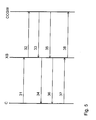
- FIGS. 5 to 9 show further embodiments of the invention, in which the connection between CCGW and XMPP server is realized as a client-server connection.
- the device CCGW is preferably also administered as an XMPP client on the XMPP server in these cases.
- FIG. 5 shows the transmission of CSTA services and events.
- the client C is preferably an XMPP client, the server S an XMPP server, which assumes a pure passive role as a router.
- the client C sends a message 31 with the text 31 to the server XS, whereupon the server XS sends a message 32 with the text 32 to the device CCGW.
- the device CCGW now sends a message 33 with the text 33 to the server XS, whereupon the server sends a message 34 with the text 34 to the client. Subsequently, the device CCGW sends a message 35 with the text 35 to the server, whereupon the server sends a message 36 with the text 36 to the client C. Finally, the client C sends a message 37 with the text 37 to the server, whereupon the server sends a message 38 with the text 38 to the device CC GW.
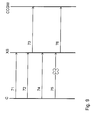
- FIG. 6 shows the behavior when the client does not exist.
- the device CCGW sends a message 41 with the text 41 to the server XS, whereupon the server XS sends a message 43 with the text 43 to the device CCGW.
- the sending of a message 42 from the server to the client C is omitted here.
- the XMPP server takes over an active role, because there is no more "end-to-end" connection.
- FIG. 7 shows a further embodiment of the invention based on the use of direct Presencenachzin.
- the XMPP client has the address test@example.com/test
- the server S is an XMPP server
- the CCGW device is set up as an XMPP client with the address ccgw@example.com/ccgw.
- the client C sends a message 51 with the text 51 and then a message 52 with the text 52 to the server.
- the server then sends a message 53 with the text 53 to the device CCGW.
- the client C then sends a message 54 with the text 54 and then a message 55 with the text 55 to the server.
- the server then sends a message 56 with the text 56 to the device CCGW.
- the client C sends a message 57 with the text 57 to the server.
- the XMPP client sends the direct presence status to the CCGW device for logon and logoff.
- the XMPP client C has the address test@example.com/test
- the server S is an XMPP server
- the device CCGW is set up as an XMPP client with the address ccgw@example.com/ccgw.
- the server does this task from the client.
- the client C sends a message 61 with the text 61 and a message 62 with the text 62 to the server, whereupon the server sends a message 63 with the text 63 to the device CCGW.
- the client C then sends a message 64 with the text 64 and a message 65 with the text 65 to the server, whereupon the server sends a message 63 with the text 66 to the device CCGW.
- the XMPP client C has the address test@example.com/test
- the server S is an XMPP server
- the device CCGW is set up as an XMPP client with the address ccgw@example.com/ccgw.
- the server must send the direct presence status.
- the client C sends a message 71 with the text 71 and a message 72 with the text 72 to the server, whereupon the server sends a message 73 with the text 73 to the device CCGW.
- the client C then sends a message 74 with the text 74 server, whereupon the server sends a message 76 with the text 76 to the device CCGW.
- the sending of the message 75 from the client C to the server S is omitted in this case.
Landscapes
- Engineering & Computer Science (AREA)
- Signal Processing (AREA)
- Computer Networks & Wireless Communication (AREA)
- Computer Hardware Design (AREA)
- General Engineering & Computer Science (AREA)
- Data Exchanges In Wide-Area Networks (AREA)
- Computer And Data Communications (AREA)
Abstract
Description
- Die Erfindung betrifft ein Verfahren zur automatischen Überwachung einer Verbindung (CTI-L) eines Vermittlungssystems (PBX) in einem Telekommunikationsnetz (TN) mit einem Datennetz (DN), bei dem ein Vermittlungssystem (PBX) des Telekommunikationsnetzes mit einem IM-Server (XS) des Datennetzes über eine Einrichtung (CCGW) verbunden wird, mit deren Hilfe der IM-Server in die Lage versetzt wird, Computer-Telefonie-Integrations-Dienste des Vermittlungssystems (PBX) einem Kommunikationsteilnehmer des Datennetzes zur Verfügung zu stellen.
- Datennetze dienen hauptsächlich der Vernetzung von Computern, beispielsweise von PCs mit sogenannten Servern. Verfahren und Anordnungen, bei denen auf Computern installierte Anwendungen Kommunikationsanlagen und Kommunikationsverbindungen steuern und überwachen, sind allgemein als CTI-Lösungen (CTI = Computer Telephony Integration) bekannt. Dabei können einerseits Anschlüsse von Kommunikationsanlagen und andererseits Verbindungen zwischen den Anschlüssen gesteuert und überwacht werden. Bei den Verbindungen handelt es sich jeweils um temporäre Kommunikationskanäle zwischen zwei oder mehreren Teilnehmern einer Kommunikationsanlage oder mehrerer Kommunikationsanlagen.
- Beim Betrieb einer CTI-Lösung werden jeweils Daten mit Steuer- und Zustandsinformationen zwischen einer Kommunikationsanlage und einer CTI-Anwendung (CTI-Anwendungsprogramm) übertragen. Dazu verfügen die Kommunikationsanlagen über spezielle Schnittstellen zum Austausch der Daten, die CTI-Schnittstellen. Ebenso verfügen die Anwendungen bzw. die PCs über eine entsprechende CTI-Schnittstelle für diesen Datenaustausch. Hierzu sind die CTI-Schnittstellen der Kommunikationsanlage und die der Anwendung über eine Datenleitung oder über ein Datennetz miteinander verbunden. Da die maximale Anzahl von CTI-Schnittstellen an einer Kommunikationsanlage beschränkt ist, wird zwischen der Kommunikationsanlage und den Anwendungen ein häufig ein Telefonie-Server geschaltet.
- Die Druckschrift
WO 98/51092 A1 - Die
DE 000010159636 B4 beschreibt ein Verfahren zur Steuerung und/oder Überwachung von Ressourcen und Verbindungen mittels Austausch von Daten zwischen Kommunikationsanlagen und mindestens einer Anwendung, wobei die Daten jeweils ein die Ressourcen und Verbindungen unterscheidendes Kennzeichen aufweisen, wobei die Kennzeichen der Ressourcen beim Austausch jeweils derart umgewertet werden, dass sie sich für die eine oder jede Anwendung als Kennzeichen einer einzigen Kommunikationsanlage mit Teilnehmeranschlüssen darstellen, dadurch gekennzeichnet, dass die Kennzeichen der Verbindung zwischen Ressourcen von verschiedenen Kommunikationsanlagen jeweils eine lokale Verbindungsnummer (Call-ID) der an der Verbindung beteiligten Kommunikationsanlagen und eine globale Verbindungsnummer (Call-ID) umfassen und dass durch die Umwertung die globale Verbindungsnummer (Call-ID) so zur Anwendung übertragen wird, dass diese von der Anwendung nicht von einer lokalen Verbindungsnummer (Call-ID) unterscheidbar ist. - Eine Aufgabe der vorliegenden Erfindung kann darin gesehen werden, andere Lösungen für die Überwachung einer Verbindung eines Vermittlungssystems in einem Telekommunikationsnetz (TN) mit einem Datennetz (DN) anzugeben. Diese Aufgabe wird durch ein Verfahren nach Anspruch 1 gelöst. Vorteilhafte Weiterbildungen der Erfindung sind Gegenstand von Unteransprüchen.
- Erfindungsgemäß ist ein Verfahren zur automatischen Überwachung einer Verbindung (CTI-L) eines Vermittlungssystems (PBX) in einem Telekommunikationsnetz (TN) mit einem Datennetz (DN) vorgesehen, bei dem ein Vermittlungssystem (PBX) des Telekommunikationsnetzes mit einem IM-Server (XS) des Datennetzes über eine Einrichtung (CCGW) verbunden wird, mit deren Hilfe der IM-Server in die Lage versetzt wird, Computer-Telefonie-Integrations-Dienste des Vermittlungssystems (PBX) einem Kommunikationsteilnehmer des Datennetzes zur Verfügung zu stellen. Computer-Telefonie-Integrations-Dienste und Nachrichten werden mit Hilfe eines Request/Response-Mechanismus übertragen, der im Fehlerfall eine Fehlermeldung an den Absender vorsieht.
- Gemäß einer bevorzugten Ausführungsform der vorliegenden Erfindung, deren Merkmale auch mit Merkmalen anderer Ausführungsformen kombiniert werden können, ist ein Verfahren vorgesehen, bei dem IQ-Stanzas für den Request/Response-Mechanismus verwendet werden.
- Gemäß einer bevorzugten Ausführungsform der vorliegenden Erfindung, deren Merkmale auch mit Merkmalen anderer Ausführungsformen kombiniert werden können, ist ein Verfahren vorgesehen, bei dem direkte Präsenznachrichten ("direct presence") für den Request/Response-Mechanismus verwendet werden.
- Gemäß einer bevorzugten Ausführungsform der vorliegenden Erfindung, deren Merkmale auch mit Merkmalen anderer Ausführungsformen kombiniert werden können, ist ein Verfahren vorgesehen, bei dem der IM-Server in die Lage versetzt wird, Computer-Telefonie-Integrations-Dienste des Vermittlungssystems (PBX) einem Kommunikationsteilnehmer des Datennetzes zur Verfügung zu stellen, indem er einen IM-Client (XC) in die Lage zu versetzt, solche Computer-Telefonie-Integrations-Dienste des Vermittlungssystems (PBX) zu abonnieren.
- Gemäß einer weiteren bevorzugten Ausführungsform der vorliegenden Erfindung, deren Merkmale auch mit Merkmalen anderer Ausführungsformen kombiniert werden können, ist ein Verfahren vorgesehen, bei dem die Einrichtung (CCGW) eine Zuordnung zwischen einer CSTA-spezifischen InvokeID (CSTA-IID) einerseits und einem Jabber-Identifier (JID) des IM-Clients und/oder einer XMPP-SessionID (XSID) bewirkt.
- Gemäß einer weiteren bevorzugten Ausführungsform der vorliegenden Erfindung, deren Merkmale auch mit Merkmalen anderer Ausführungsformen kombiniert werden können, ist ein Verfahren vorgesehen, bei dem die Kommunikation zwischen der Einrichtung (CCGW) und dem IM-Server als eine Server-Server-Anbindung ausgeführt wird.
- Gemäß einer weiteren bevorzugten Ausführungsform der vorliegenden Erfindung, deren Merkmale auch mit Merkmalen anderer Ausführungsformen kombiniert werden können, ist ein Verfahren vorgesehen, bei dem die Kommunikation zwischen der Einrichtung (CCGW) und dem IM-Server als eine Server-Client-Anbindung ausgeführt wird.
- Gemäß einer weiteren bevorzugten Ausführungsform der vorliegenden Erfindung, deren Merkmale auch mit Merkmalen anderer Ausführungsformen kombiniert werden können, ist ein Verfahren vorgesehen, bei dem die Kommunikation zwischen der Einrichtung (CCGW) und dem IM-Server über eine Serverkomponente gemäß XEP 0114 oder einem anderen zu XEP 0114 vergleichbaren Jabber-Component-Protocol ausgeführt wird.
- Gemäß einer weiteren bevorzugten Ausführungsform der vorliegenden Erfindung, deren Merkmale auch mit Merkmalen anderer Ausführungsformen kombiniert werden können, ist ein Verfahren vorgesehen, bei dem zur Zuordnung eines Requests zur zugehörigen Response die sogenannte Invoke-ID verwendet wird.
- Gemäß einer weiteren bevorzugten Ausführungsform der vorliegenden Erfindung, deren Merkmale auch mit Merkmalen anderer Ausführungsformen kombiniert werden können, ist ein Verfahren vorgesehen, bei dem die zur Zuordnung eines Requests zur zugehörigen Response verwendete Invoke-ID über alle Requests eindeutig ist.
- Gemäß einer weiteren bevorzugten Ausführungsform der vorliegenden Erfindung, deren Merkmale auch mit Merkmalen anderer Ausführungsformen kombiniert werden können, ist ein Verfahren vorgesehen, bei dem zum Transport von CSTA über XMPP IQ-Stanzas verwendet werden, die einen Request-Response-Mechanismus aufweisen, der dem von CSTA verwendeten Request-Response-Mechanismus vergleichbar ist.
- Gemäß einer weiteren bevorzugten Ausführungsform der vorliegenden Erfindung, deren Merkmale auch mit Merkmalen anderer Ausführungsformen kombiniert werden können, ist ein Verfahren vorgesehen, bei dem ein IM-Client eine XMPP-Session-ID generiert, die von anderen XMPP-Session-IDs desselben IM-Clients verschieden ist.
- Im folgenden wird die Erfindung anhand bevorzugter Ausführungsbeispiele und mit Hilfe von Figuren näher beschrieben.
- Dabei zeigt
-
Fig. 1 in schematischer Weise eine erste Anordnung von Systemkomponenten zur Durchführung eines Ausführungsbeispiels eines erfindungsgemäßen Verfahrens; -
Fig. 2 in schematischer Weise eine zweite Anordnung von Systemkomponenten zur Durchführung eines Ausführungsbeispiels eines erfindungsgemäßen Verfahrens; -
Fig. 3 in schematischer Weise ein Ablaufdiagramm eines Bestandteils eines Ablaufs eines erfindungsgemäßen Verfahrens anhand eines bevorzugten Ausführungsbeipiels der Erfindung; -
Fig. 4 in schematischer Weise ein Ablaufdiagramm eines Bestandteils eines Ablaufs eines erfindungsgemäßen Verfahrens anhand eines bevorzugten Ausführungsbeispiels der Erfindung; -
Fig. 5 in schematischer Weise ein Ablaufdiagramm eines Bestandteils eines Ablaufs eines erfindungsgemäßen Verfahrens anhand eines bevorzugten Ausführungsbeispiels der Erfindung; -
Fig. 6 in schematischer Weise ein Ablaufdiagramm eines Bestandteils eines Ablaufs eines erfindungsgemäßen Verfahrens anhand eines bevorzugten Ausführungsbeispiels der Erfindung; -
Fig. 7 in schematischer Weise ein Ablaufdiagramm eines Bestandteils eines Ablaufs eines erfindungsgemäßen Verfahrens anhand eines bevorzugten Ausführungsbeispiels der Erfindung; -
Fig. 8 in schematischer Weise ein Ablaufdiagramm eines Bestandteils eines Ablaufs eines erfindungsgemäßen Verfahrens anhand eines bevorzugten Ausführungsbeispiels der Erfindung; -
Fig. 9 in schematischer Weise ein Ablaufdiagramm eines Bestandteils eines Ablaufs eines erfindungsgemäßen Verfahrens anhand eines bevorzugten Ausführungsbeispiels der Erfindung. - Die
Figuren 1 und2 zeigen schematisch die Einbettung des CCGW in das Gesamtsystem.Figur 2 zeigt insbesondere eine Einbettung des CCGW in das Gesamtsystem. - Wie in
Figur 1 gezeigt, erfolgt die Integration von Funktionen eines aus Telekommunikationsendgeräten T1, T2, T3, T4 und einem Vermittlungssystem PBX und ggf. weiteren Komponenten aufgebauten Telekommunikationsnetzes TN in ein Datennetz DN, indem ein Vermittlungssystem PBX des Telekommunikationsnetzes mit einem IM-Server XS des Datennetzes, in dem die Clients C1, C2, C3 und C4 über den IM-Server XS kommunizieren, über eine Einrichtung CCGW verbunden wird, mit deren Hilfe der IM-Server in die Lage versetzt wird, Computer-Telefonie-Integrations-Dienste des Vermittlungssystems PBX einem Kommunikationsteilnehmer des Datennetzes zur Verfügung zu stellen. - Auf der einen Seite erfolgt die Anbindung an das Feature Processing FP via CSTA XML hier mittels eines sogenannten CSTA Service Providers (CSP). Auf der anderen Seite wird CSTA über XMPP an den XMPP Server XS übertragen. Mittels des CCGW kann ein XMPP Client S1, S2 CTI Dienste abonnieren. Die Kommunikation zwischen dem CCGW und dem XMPP Server kann als eine Server-Server oder Server-Client Anbindung als auch über eine Serverkomponente gemäß XEP 0114 oder einem anderen zu XEP 0114 vergleichbaren Jabber Component Protocol ausgeführt werden.
- Der IM-Server XS stellt in dem in der
Figur 2 gezeigten Beispiel auch eine Verbindung der Clients S1, S2 zu dem Internet IN her. V1 bezeichnet eine Visualisierung der Kommunikation auf dem Endgerät T1. - Das XMPP-Protokoll kann als typisches Beispiel eines Instant Messaging (IM) Protokolls dienen. XMPP basierende Client/Server Architekturen laufen gemäß dem Stand der Technik asynchron zum Telefon. Eine automatische Überwachung eines CTI-Links innerhalb einer XMPP Umgebung ist gemäß dem Stand der Technik nicht vorgesehen.
- Gemäß dem betrachteten Ausführungsbeispiel der Erfindung abonniert der XMPP Client über den XMPP Server CTI Dienste bei einer Vermittlungseinrichtung PBX. Das Vermittlungssystem, "die PBX", stellt diese Funktionalität über ein Call Control Gateway (CCGW) zur Verfügung. Das CCGW stellt ein Gateway von der PBX zum XMPP Netzwerk dar und ist die Verbindung zwischen der CTI einer PBX und dem XMPP Server. Die CTI Dienste selbst - je nach Ausführungsform der Erfindung beispielsweise CSTA Events und CSTA Requests- werden dann über das XMPP Netzwerk als XMPP IQ Nachrichten (sogenannte IQ stanzas) vorzugsweise gemäß RFC 3920bis, ausgetauscht.
- Die PBX und der XMPP Server (XS) werden mittels eines Call Control Gateways (CCGW) verbunden. Über dieses Call Control Gateway kann ein XMPP Client CTI Dienste abonnieren und zur Verfügung stellen. Hierbei handelt es sich in einer Ausführungsform um die in ECMA-269 beschriebenen CSTA Call Control Services und Events.
- Die
Figur 2 zeigt schematisch die Einbettung des CCGW in das Gesamtsystem ausgeführt in Form der OpenScape Office MX und der zugehörigen betroffenen Komponenten. Auf der einen Seite erfolgt die Anbindung an das Feature Processing via CSTA XML. Auf der anderen Seite wird CSTA über XMPP an den XMPP Server (in dem in derFigur 2 gezeigten Ausführungsbeispiel: Openfire) übertragen. Mittels des CCGW kann ein XMPP Client S1, S2 (beispielsweise Spark) CTI Dienste abonnieren. Um den Transport von XML codiertem CSTA über XMPP zu ermöglichen, werden IQ-Stanza um einen <csta/>-Tag erweitert. IQ-Stanza werden zum Transport von CSTA bevorzugt, da sie gegenüber Message-Stanza den Vorteil bieten, dass sie von der Gegenseite quittiert werden. - Die Kommunikation zwischen dem CCGW und dem XMPP Server kann je nach Ausführungsform der Erfindung auf unterschiedliche Weise realisiert werden:
- a) durch eine XMPP Server-Server Verbindung, d.h. das CCGW agiert als eigenständiger XMPP Server.
- b) durch eine XMPP Client-Server Verbindung oder einem anderen zu XEP 0114 vergleichbaren Jabber Component Protocol, d.h. das CCGW ist als Client im XMPP Server (z.B. Openfire) administriert.
- c) als eine Serverkomponente gemäß XEP 0114 oder einem anderen zu XEP 0114 vergleichbaren Jabber Component Protocol, d.h. das CCGW ist eine Serverkomponente des XMPP Servers.
- Die
Figur 3 zeigt ein Ausführungsbeispiel der Erfindung mit Hilfe eines CSTA MakeCall mit dazugehörigem MakeCallResponse und eines Events inklusive einer Quittierung. Der Client C sendet die Nachricht 11 mit dem Text 11 an den Server S. Der Server S antwortet darauf, indem er die Nachricht 12 mit dem Text 12 an den Client C sendet. Darauf folgend sendet der Server S die Nachricht 13 mit dem Text 13 an den Client C, woraufhin der Client C die Nachricht 14 mit dem Text 14 an den Server S sendet. - Die Texte der Nachrichten sind am Ende der Beschreibung in einer Übersicht zusammengestellt. Durch die Übertragung von CTI Diensten und Nachrichten als IQ-stanzas zwischen dem CCGW und dem XMPP Client (via XMPP Server) wird zudem eine automatische Überwachung des CTI Links vom XMPP Client zu seinem XMPP Server gewährleistet. Ist nämlich diese Verbindung nicht mehr vorhanden (z.B. durch fehlerhaftes LAN Segment), muss der XMPP Server anstelle des adressierten XMPP Clients auf einen IQ stanza request mit einem IQ stanza vom Typ "errorʺ mit dem Wert "service-unavailable" antworten (RFC 3920bis). Dadurch können auf CTI Ebene im Fehlerfall entsprechende Maßnahmen zur Fehlerbehebung am CCGW eingeleitet werden.
- Die
Figur 4 zeigt ein Ausführungsbeispiel der Erfindung mit Hilfe eines IQ-Stanza Error. Die Einrichtung CCGW sendet eine Nachricht 21 mit dem Text 21 an den Server XS, worauf der Server XS die Nachricht 22 mit dem Text 22 an die Einrichtung CCGW sendet. Die Texte der Nachrichten sind am Ende der Beschreibung in einer Übersicht zusammengestellt. - Im Fall einer unerwarteten Trennung werden die eintreffenden Nachrichten im CCGW nicht gespeichert und beim nächsten Anmelden des entsprechenden Nutzers vom CCGW übertragen. Falls nämlich dieser Nutzer einen Monitorpunkt auf ein Device gesetzt hat, so werden ihm die unidirektionalen CSTA-Events zugestellt. Diese Events sind allerdings nur für einen begrenzten Zeitraum von Relevanz. Meldet sich der Nutzer erst Stunden oder gar Tage nach der letzten Trennung wieder beim XMPP-Server an, so ist es vollkommen unerheblich, welche Events während seiner Abwesenheit aufgetreten sind. Vielmehr kann der Versender der CSTA-Events (d.h. das CCGW) durch Erhalt der IQ-Stanza des Typs Error den Monitorpunkt aufheben und somit das Versenden von weiteren, unnötigen XMPP-Nachrichten unterbinden. Als weitere Möglichkeit die Übertragung von CTI Diensten und Nachrichten mittels IQ-stanzas zwischen CCGW und XMPP Client (via XMPP Server) zu starten und/oder zu stoppen, ist die Verwendung von direkten Presence-Nachrichten (sogenannte Directed Presence, RFC 3921bis. Hier sendet der XMPP Client seinen Presence Status (beispielsweise in der Form: unavailable) direkt zum CCGW. Das CCGW kennt dann den Onlinestatus des XMPP Clients und kann entsprechend reagieren. Die Verwendung des Directed Presence Mechanismus hat darüber hinaus den weiteren Vorteil, dass sich das CCGW nicht im Roster (Kontaktliste) des Nutzers befinden muss, um Presence Nachrichten zu bekommen, und so der Nutzer stets nur seine Kontaktliste mit "realen" Usern sieht.
- Innerhalb des RFC 3921bis wird das Verhalten eines XMPP-Servers auf den Erhalt verschiedener Nachrichtentypen für unterschiedliche Fälle definiert. Zu den beschriebenen Fällen gehört beispielsweise, dass die Jabber-Id nicht besteht, oder dass die JID besteht, aber die adressierte Resource nicht verfügbar ist. Die Ausführungen dieses RFCs führen XMPP-Servern beim Erhalt einer IQ-Nachricht, die entweder nicht direkt an eine Resource adressiert wird oder wenn die adressierte Resource nicht verfügbar ist, daran, dass der Server mit einem Error vom Typ <serviceunavailable/> antwortet. In diesem Fall könnte ein Error auf IQ stanza request vom Typ CSTA-Event automatisch den CSTA Monitorpunkt stoppen bzw. anhalten.
- Es können auch sogenannte XMPP Direkte Presencenachrichten (RFC 3921bis) genutzt werden um die Einrichtung CCGW über den Onlinestatus seiner Clients zu informieren, und zwar auch wenn sich das CCGW nicht im Roster des Nutzers befindet. Um dies zu erreichen müsste der Client eine Presencenachricht direkt an das CCGW adressieren. Wird die XMPP Client-Server Verbindung kontrolliert abgebaut (d.h. der User schließt die XMPP Client Applikation), sendet die Client Application ein Presence stanza des Types "unavailable" zu seinem XMPP Server. Dieses Presence stanza muss laut RFC 3921bis vom XMPP Server auch zu den XMPP Endpunkten geschickt werden, die vorher von der Client Applikation mit direkten Presence Nachrichten versorgt wurden (d.h. also auch zum CCGW). Das CCGW kann dann den CSTA Monitorpunkt im CCGW stoppen. Da der XMPP Server die XMPP Verbindung zu seinen XMPP Clients überwacht, bemerkt der XMPP Server auch, ob die Verbindung zu einem XMPP Client unkontrolliert verloren wurde (z.B. durch Ausfall des entsprechenden LAN Segmentes). Da nun dieser XMPP Client nicht mehr erreichbar ist, erhält er den Status "unavailable". Dies muss der XMPP Server mit einem Presence stanza des Typs "unavailable" aber auch selbstständig jenen XMPP Entities mitteilen, die vorher nur "Directed Presence" stanzas von diesem Client bekommen haben (also somit auch dem CCGW) (siehe RFC 3921bis).
- In beiden Fällen (d.h. bei kontrollierter bzw. unkontrollierter Abbruch der XMPP Client-Server-Verbindung) kann also mit Hilfe der Funktionalität "Directed Presence" gemäß RFC 3921bis automatisch der CSTA Monitorpunkt im CCGW gestoppt bzw. angehalten werden.
- Die zitierten Dokumente können im Internet wie folgt aufgefunden werden:
- RFC 3920bis19 http://tools.ietf.org/wg/xmpp/draft-ietf-xmpp-3920bis/
- RFC 3921bis17 http://tools.ietf.org/wg/xmpp/draft-ietf-xmpp-3921bis/
- Hierbei wird angenommen, dass 3920bis19 und 3921bis17 die bestehenden RFC 3920 und RFC 3921 ersetzen.
- Die
Figuren 5 bis 9 zeigen weitere Ausführungsbeispiele der Erfindung, bei denen die Verbindung zwischen CCGW und XMPP Server als Client-Server Verbindung realisiert ist. Die Einrichtung CCGW ist in diesen Fällen vorzugsweise ebenfalls als XMPP Client am XMPP Server administriert.Figur 5 zeigt die Übertragung von CSTA Services und Events. Der Client C ist vorzugsweise ein XMPP-Client, der Server S ein XMPP Server, der eine reine passive Rolle als Router übernimmt. Der Client C sendet eine Nachricht 31 mit dem Text 31 an den Server XS, woraufhin der Server XS eine Nachricht 32 mit dem Text 32 an die Einrichtung CCGW sendet. Die Einrichtung CCGW sendet nun eine Nachricht 33 mit dem Text 33 an den Server XS, woraufhin der Server eine Nachricht 34 mit dem Text 34 an den Client sendet. Anschließend sendet die Einrichtung CCGW eine Nachricht 35 mit dem Text 35 an den Server, woraufhin der Server eine Nachricht 36 mit den Text 36 an den Client C sendet. Schließlich sendet der Client C eine Nachricht 37 mit den Text 37 an den Server, woraufhin der Server eine Nachricht 38 mit dem Text 38 an die Einrichtung CC GW sendet. -
Figur 6 zeigt das Verhalten bei nicht vorhandenem Client. Die Einrichtung CCGW sendet eine Nachricht 41 mit dem Text 41 an den Server XS, woraufhin der Server XS eine Nachricht 43 mit dem Text 43 an die Einrichtung CCGW sendet. Das Versenden einer Nachricht 42 von dem Server an den Client C unterbleibt hier. Hier übernimmt der XMPP Server eine aktive Rolle, da keine "end-to-end"-Verbindung (mehr) besteht. -
Figur 7 zeigt ein weiteres Ausführungsbeispiel der Erfindung anhand der Nutzung direkter Presencenachrichten. Hierbei hat der XMPP-Client die Adresse test@example.com/test, der Server S ist ein XMPP Server, und die Einrichtung CCGW ist als XMPP Client mit der Adresse ccgw@example.com/ccgw eingerichtet. Der Client C sendet eine Nachricht 51 mit dem Text 51 und anschließend eine Nachricht 52 mit dem Text 52 an den Server. Daraufhin sendet der Server eine Nachricht 53 mit dem Text 53 an die Einrichtung CCGW. Der Client C sendet dann eine Nachricht 54 mit dem Text 54 und anschließend eine Nachricht 55 mit dem Text 55 an den Server. Daraufhin sendet der Server eine Nachricht 56 mit dem Text 56 an die Einrichtung CCGW. Schließlich sendet der Client C eine Nachricht 57 mit dem Text 57 an den Server. In diesem Beispiel sendet der XMPP Client zur An- und Abmeldung den direkten Präsenz-Status an die Einrichtung CCGW. - In dem in
Figur 8 gezeigten Ausführungsbeispiel hat der XMPP-Client C die Adresse test@example.com/test, der Server S ist ein XMPP Server, und die Einrichtung CCGW ist als XMPP Client mit der Adresse ccgw@example.com/ccgw eingerichtet. Bei einer Abmeldung ohne direkten Präsenz-Status vom Client übernimmt der Server diese Aufgabe. Der Client C sendet eine Nachricht 61 mit dem Text 61 und eine Nachricht 62 mit dem Text 62 an den Server, woraufhin der Server eine Nachricht 63 mit dem Text 63 an die Einrichtung CCGW sendet. Der Client C sendet dann eine Nachricht 64 mit dem Text 64 und eine Nachricht 65 mit dem Text 65 an den Server, woraufhin der Server eine Nachricht 63 mit dem Text 66 an die Einrichtung CCGW sendet. - In dem in
Figur 9 gezeigten Ausführungsbeispiel hat der XMPP-Client C die Adresse test@example.com/test, der Server S ist ein XMPP Server, und die Einrichtung CCGW ist als XMPP Client mit der Adresse ccgw@example.com/ccgw eingerichtet. Bei Verbindungsunterbrechung zwischen Client und Server muss der Server den direkten Präsenz-Status senden. Der Client C sendet eine Nachricht 71 mit dem Text 71 und eine Nachricht 72 mit dem Text 72 an den Server, woraufhin der Server eine Nachricht 73 mit dem Text 73 an die Einrichtung CCGW sendet. Der Client C sendet dann eine Nachricht 74 mit dem Text 74 Server, woraufhin der Server eine Nachricht 76 mit dem Text 76 an die Einrichtung CCGW sendet. Das Senden der Nachricht 75 von dem Client C an den Server S unterbleibt in diesem Fall. - Nachstehend ist eine Liste der in der Beschreibung verwendeten Nachrichtentexte beigefügt, die ausdrücklicher Bestandteil der vorliegenden Beschreibung ist.
- Text 11:
- <iq from="test@example.com/test" to="ccgw@example.com/ccgw" xml:lang="en"
- id="123456" type="set">
- <csta xmlns="csta" version="1.0" encoding="UTF-8">
- <MakeCall xmlns="http://www.ecma-...
- Text 12:
- <iq from="ccgw@example.com/ccgw" to="test@example.com/test" xml:lang="en"
- id="123456" type="result">
- <csta xmlns="csta" version="1.0" encoding="UTF-8">
- <MakeCallResponse xmlns="http://www.ecma-...
- Text 13:
- <iq from="ccgw@example.com/ccgw" to="test@example.com/test" xml:lang="en"
- id="234567" type="set">
- <csta xmlns="csta" version="1.0" encoding="UTF-8">
- <ServiceInitiatedEvent xmlns="http://www.ecma-
- Text 14:
- <iq from="test@example.com/test" to="ccgw@example.com/ccgw" xml:lang="en"
- id="234567" type="result" />
- Text 21:
- <iq to="seb@wit0234c/seb1" type="set"
- from="ccgw@wit0234c/ccgw"
- xmlns="jabber:client" id="as234sfd">
- <csta xmlns="csta" version="1.0" encoding="UTF-8">
- <EstablishedEvent xmlns:csta="http://www.ecma-...
- ...
- </EstablishedEvent>
- </csta>
- </iq>
- Text 22:
- <iq from="seb@wit0234c/seb1" to="ccgw@wit0234c/ccgw" type="error"
- id="as234sfd">
- <csta xmlns="csta" version="1.0" encoding="UTF-8">
- <EstablishedEvent xmlns:csta="http://www.ecma-...
- ...
- </csta>
- <error code="503" type="cancel">
- <service-unavailable
- xmlns="urn:ietf:params:xml:ns:xmppstanzas"/>
- </error>
- </iq>
- Text 31:
- <iq from="test@example . com/test" to="ccgw@example .
- com/ccgw"
- id="123456" type-"set" >
- <csta xmlns="csta" version="1.O" encoding="UTF- 8" >
- <MakeCall xmlns="http://www . ecma- ...
- Text 32:
- <iq from="test@example.com/test" to="ccgw@example.com/ccgw" id="123456" type="set" >
- <csta xmlns-"csta" version-"I.O" encoding-"UTF- 8" >
- <MakeCall xmlns-"http://www.ecma- ...
- Text 33:
- <iq from="ccgw@example.com/ccgw" to="test@example.com/test" id="123456" type="result" >
- <csta xmlns="csta" version="1.O" encoding="UTF- 8" >
- <MakeCallResponse xmlns-"http://www.ecma- ...
- Text 34:
- <iq from="ccgw@example.com/ccgw" to="test@example.com/test" id="123456" type="result" >
- <csta xmlns="csta" version="l.O" encoding="UTF- 8" >
- <MakeCallResponse xmlns-"http://www.ecma- ...
- Text 35:
- <iq from="ccgw@example . com/ccgw" to="test@example .
- com/test"
- id-"234567" type-"set" >
- <csta xmlns="csta" version="l.O" encoding="UTF- 8" >
- <ServiceInitiatedEvent xmlns="http://www.ecma- ...
- Text 36:
- <iq from="ccgw@example.com/ccgw" to="test@example.com/test" id="234567" type="set" >
- <csta xmlns="csta" version="1.O" encoding= "UTF- 8" >
- <ServiceInitiatedEvent xmlns=" http : //www . ecma- ...
- Text 37:
- <iq from-"test@example.com/test" to-"ccgw@example .
- com/ccgw"
- id="234567" type="result" / >
- Text 38:
- <iq from-"test@example.com/test" to-"ccgw@example.com/ccgw" id="234567" type="result" / >
- Text 41 = Text 35
- Text 43:
- <iq from= "test@example . com/test" to= "ccgw@example . com/ccgw"
- id= "234567" type= "error" >
- <csta xmlns= "csta" version="1.O" encoding="UTF- 8" >
- <ServiceInitiatedEvent xmlns= "http://www.ecma- ..
- </csta>
- <error code= "503" type= "cancel" >
- <service- unavailable xmlns= "urn : ietf : params : xml : . .. " />
- </error>
- </iq>
- Text 51:
- <presence/>
- Text 52:
- <presence to= "ccgw@example . com/ccgw" />
- Text 53:
- <presence from= "test@example . com/test"
- to= "ccgw@example . com/ccgw" />
- Text 54:
- <presence>
- <show>away</show>
- <status>gone fishing</status>
- </presence>
- Text 55:
- <presence to= "ccgw@example . com/ccgw" type= "unavailable" / >
- Text 56:
- <presence from= "test@example.com/test"
- to= "ccgw@example.com/ccgw" type= "unavailable" / >
- Text 57:
- <presence type= "unavailable" / >
- Text 61 = Text 51 = Text 71
- Text 62 = Text 52 = Text 72
- Text 63 = text 53 = Text 73
- Text 64 = Text 54 = Text 74
- Text 65 = Text 57
- Text 66 = Text 56 = Text 76
- Die Erfindung ist nicht auf die geschilderten Ausführungsbeispiele beschränkt; der Fachmann kann anhand der hier gegebenen Beschreibung weitere Ausführungsbeispiele der Erfindung auffinden.
Claims (12)
- Verfahren zur automatischen Überwachung einer Verbindung (CTI-L) eines Vermittlungssystems (PBX) in einem Telekommunikationsnetz (TN) mit einem Datennetz (DN), bei dem ein Vermittlungssystem (PBX) des Telekommunikationsnetzes mit einem IM-Server (XS) des Datennetzes über eine Einrichtung (CCGW) verbunden wird, mit deren Hilfe der IM-Server in die Lage versetzt wird, Computer-Telefonie-Integrations-Dienste des Vermittlungssystems (PBX) einem Kommunikationsteilnehmer des Datennetzes zur Verfügung zu stellen,
dadurch gekennzeichnet,
dass Computer-Telefonie-Integrations-Dienste und Nachrichten mit Hilfe eines Request/Response-Mechanismus übertragen werden, der im Fehlerfall eine Fehlermeldung an den Absender vorsieht. - Verfahren nach Anspruch 1, bei dem IQ-Stanzas für den Request/Response-Mechanismus verwendet werden.
- Verfahren nach Anspruch 1, bei dem direkte Präsenznachrichten ("direct presence") für den Request/Response-Mechanismus verwendet werden.
- Verfahren nach einem der vorhergehenden Ansprüche, bei dem der IM-Server in die Lage versetzt wird, Computer-Telefonie-Integrations-Dienste des Vermittlungssystems (PBX) einem Kommunikationsteilnehmer des Datennetzes zur Verfügung zu stellen, indem er einen IM-Client (XC) in die Lage versetzt, solche Computer-Telefonie-Integrations-Dienste des Vermittlungssystems (PBX) zu abonnieren.
- Verfahren nach einem der vorhergehenden Ansprüche, bei dem der IM-Client ein XMPP-Client ist, und bei dem die Einrichtung (CCGW) eine Zuordnung zwischen einer CSTA-spezifischen InvokeID (CSTA-IID) einerseits und einem Jabber-Identifier (JID) des IM-Clients und/oder einer XMPP-SessionID (XSID) bewirkt.
- Verfahren nach einem der vorhergehenden Ansprüche, bei dem die Kommunikation zwischen der Einrichtung (CCGW) und dem IM-Server als eine Server-Server-Anbindung ausgeführt wird.
- Verfahren nach einem der vorhergehenden Ansprüche, bei dem die Kommunikation zwischen der Einrichtung (CCGW) und dem IM-Server als eine Server-Client-Anbindung ausgeführt wird.
- Verfahren nach einem der vorhergehenden Ansprüche, bei dem die Kommunikation zwischen der Einrichtung (CCGW) und dem IM-Server über eine Serverkomponente gemäß XEP 0114 oder einem anderen zu XEP 0114 vergleichbaren Jabber-Component-Protocol ausgeführt wird.
- Verfahren nach einem der vorhergehenden Ansprüche, bei dem zur Zuordnung eines Requests zur zugehörigen Response die sogenannte Invoke-ID verwendet wird.
- Verfahren nach Anspruch 7, bei dem die zur Zuordnung eines Requests zur zugehörigen Response verwendete Invoke-ID über alle Requests eindeutig ist.
- Verfahren nach einem der vorhergehenden Ansprüche, bei dem zum Transport von CSTA über XMPP IQ-Stanzas verwendet werden, die einen Request-Response-Mechanismus aufweisen, der dem von CSTA verwendeten Request-Response-Mechanismus vergleichbar ist.
- Verfahren nach einem der vorhergehenden Ansprüche, bei dem ein IM-Client eine XMPP-Session-ID generiert, die von anderen XMPP-Session-IDs desselben IM-Clients verschieden ist.
Priority Applications (5)
| Application Number | Priority Date | Filing Date | Title |
|---|---|---|---|
| EP11007818.5A EP2469822B1 (de) | 2010-12-23 | 2011-09-26 | Computer-Telephonie-Integration mit Anbindung der Computer über einen Presence-Server |
| PCT/EP2011/006531 WO2012084257A1 (de) | 2010-12-23 | 2011-12-22 | Computer - telephonie - integration mit anbindung der computer über einen presence - server |
| US13/883,900 US8995629B2 (en) | 2010-12-23 | 2011-12-22 | Computer telephony integration with connection of the computer via a presence-server |
| CN201180062345.4A CN103262516B (zh) | 2010-12-23 | 2011-12-22 | 自动监控电信网中的交换系统与数据网的连接的方法 |
| US14/629,809 US9521096B2 (en) | 2010-12-23 | 2015-02-24 | Computer telephony integration with connection of the computer via a presence-server |
Applications Claiming Priority (2)
| Application Number | Priority Date | Filing Date | Title |
|---|---|---|---|
| EP10016049 | 2010-12-23 | ||
| EP11007818.5A EP2469822B1 (de) | 2010-12-23 | 2011-09-26 | Computer-Telephonie-Integration mit Anbindung der Computer über einen Presence-Server |
Publications (2)
| Publication Number | Publication Date |
|---|---|
| EP2469822A1 true EP2469822A1 (de) | 2012-06-27 |
| EP2469822B1 EP2469822B1 (de) | 2019-07-31 |
Family
ID=44720507
Family Applications (1)
| Application Number | Title | Priority Date | Filing Date |
|---|---|---|---|
| EP11007818.5A Not-in-force EP2469822B1 (de) | 2010-12-23 | 2011-09-26 | Computer-Telephonie-Integration mit Anbindung der Computer über einen Presence-Server |
Country Status (4)
| Country | Link |
|---|---|
| US (2) | US8995629B2 (de) |
| EP (1) | EP2469822B1 (de) |
| CN (1) | CN103262516B (de) |
| WO (1) | WO2012084257A1 (de) |
Families Citing this family (1)
| Publication number | Priority date | Publication date | Assignee | Title |
|---|---|---|---|---|
| US11824848B2 (en) * | 2021-03-31 | 2023-11-21 | Oracle International Corporation | On demand operations access to cloud customer resources |
Citations (5)
| Publication number | Priority date | Publication date | Assignee | Title |
|---|---|---|---|---|
| WO1998051092A1 (en) | 1997-05-06 | 1998-11-12 | Telefonaktiebolaget Lm Ericsson (Publ) | Computer telephony integration gateway |
| WO2005074233A1 (en) * | 2004-01-20 | 2005-08-11 | Siemens Communications, Inc. | Instant messaging using telephone sets |
| DE10159636B4 (de) | 2001-12-05 | 2005-10-20 | Siemens Ag | Verfahren zur Steuerung und/oder Überwachung von Ressourcen und Verbindungen |
| US20070064672A1 (en) * | 2005-08-31 | 2007-03-22 | Microsoft Corporation | Controlling or monitoring PBX phone from multiple PC endpoints |
| WO2008103934A2 (en) * | 2007-02-23 | 2008-08-28 | Avaya Technology Corp. | Apparatus and method for stateful web services enablement |
Family Cites Families (11)
| Publication number | Priority date | Publication date | Assignee | Title |
|---|---|---|---|---|
| US6256512B1 (en) * | 1998-12-28 | 2001-07-03 | Nortel Networks Limited | Mobile access to a PBX via a TLDN |
| WO2001093601A2 (de) * | 2000-05-29 | 2001-12-06 | Siemens Aktiengesellschaft | Übermittlung von dienstesteuerinformationen über wenigstens eine zwischenstation |
| US20020071539A1 (en) * | 2000-07-25 | 2002-06-13 | Marc Diament | Method and apparatus for telephony-enabled instant messaging |
| US7206388B2 (en) * | 2002-03-18 | 2007-04-17 | Openwave Systems Inc. | System and method for providing voice-activated presence information |
| US7308082B2 (en) * | 2003-07-24 | 2007-12-11 | International Business Machines Corporation | Method to enable instant collaboration via use of pervasive messaging |
| US7120455B1 (en) * | 2004-05-20 | 2006-10-10 | Cellco Partnership | Method and system for mobile instant messaging using multiple interfaces |
| WO2005115035A1 (en) * | 2004-05-20 | 2005-12-01 | Research In Motion Limited | Handling an audio conference related to a text-based message |
| US7567553B2 (en) * | 2005-06-10 | 2009-07-28 | Swift Creek Systems, Llc | Method, system, and data structure for providing a general request/response messaging protocol using a presence protocol |
| US20070266077A1 (en) * | 2006-03-31 | 2007-11-15 | Alcatel | Presence and preference-enabled push to talk telephony system |
| US20110182281A1 (en) * | 2010-01-25 | 2011-07-28 | Gibran Siddique | Facilitating verification of call leg setup in third party call control systems |
| US8230031B2 (en) * | 2010-03-01 | 2012-07-24 | Infosys Technologies Limited | System and method for providing enhanced instant messaging |
-
2011
- 2011-09-26 EP EP11007818.5A patent/EP2469822B1/de not_active Not-in-force
- 2011-12-22 WO PCT/EP2011/006531 patent/WO2012084257A1/de not_active Ceased
- 2011-12-22 CN CN201180062345.4A patent/CN103262516B/zh not_active Expired - Fee Related
- 2011-12-22 US US13/883,900 patent/US8995629B2/en active Active
-
2015
- 2015-02-24 US US14/629,809 patent/US9521096B2/en not_active Expired - Fee Related
Patent Citations (5)
| Publication number | Priority date | Publication date | Assignee | Title |
|---|---|---|---|---|
| WO1998051092A1 (en) | 1997-05-06 | 1998-11-12 | Telefonaktiebolaget Lm Ericsson (Publ) | Computer telephony integration gateway |
| DE10159636B4 (de) | 2001-12-05 | 2005-10-20 | Siemens Ag | Verfahren zur Steuerung und/oder Überwachung von Ressourcen und Verbindungen |
| WO2005074233A1 (en) * | 2004-01-20 | 2005-08-11 | Siemens Communications, Inc. | Instant messaging using telephone sets |
| US20070064672A1 (en) * | 2005-08-31 | 2007-03-22 | Microsoft Corporation | Controlling or monitoring PBX phone from multiple PC endpoints |
| WO2008103934A2 (en) * | 2007-02-23 | 2008-08-28 | Avaya Technology Corp. | Apparatus and method for stateful web services enablement |
Non-Patent Citations (2)
| Title |
|---|
| ANONYMOUS: "XML Protocol for Computer Supported Telecommunications Applications (CSTA) Phase III", STANDARD ECMA,, vol. 5th Edition, no. ECMA-323, 1 June 2009 (2009-06-01), pages 1 - 636, XP007920249 * |
| WU CHOU ET AL: "Web Services for Service-Oriented Communication", COLLABORATIVE COMPUTING: NETWORKING, APPLICATIONS AND WORKSHARING, 200 6. COLLABORATECOM 2006. INTERNATIONAL CONFERENCE ON, IEEE, PI, 1 November 2006 (2006-11-01), pages 1 - 8, XP031089531, ISBN: 978-1-4244-0428-5 * |
Also Published As
| Publication number | Publication date |
|---|---|
| US20150172230A1 (en) | 2015-06-18 |
| US8995629B2 (en) | 2015-03-31 |
| US20130294592A1 (en) | 2013-11-07 |
| EP2469822B1 (de) | 2019-07-31 |
| US9521096B2 (en) | 2016-12-13 |
| CN103262516A (zh) | 2013-08-21 |
| WO2012084257A1 (de) | 2012-06-28 |
| CN103262516B (zh) | 2016-04-27 |
Similar Documents
| Publication | Publication Date | Title |
|---|---|---|
| DE60014234T2 (de) | System und Verfahren zum Ermöglichen von Fehlertolerante Systeme | |
| EP1211878A2 (de) | Verfahren und Vorrichtung zur Anrufumleitung mittels eines Stellvertreter in einem Kommunikationssystem | |
| DE10329084A1 (de) | Verfahren und Anordnung zum Zugriff auf ein erstes Endgerät eines ersten Kommunikationsnetzwerkes durch einen Kommunikationsknoten in einem zweiten Kommunikationsnetzwerk | |
| EP2469885B1 (de) | Verfahren zur Integration von Funktionen eines Telekommunikationsnetzes in ein Datennetz | |
| EP1487186A1 (de) | Redundanten Betrieb eines Endgerätes an zumindest zwei Kommunikationsknoten | |
| DE102008062982A1 (de) | Abrechnungsstelle zum Publizieren/Abonnieren der von verteilten Telekommunikationssystemen ausgehenden Zustandsdaten | |
| DE102016000870B4 (de) | Verfahren zum Ausführen einer Anrufsteuerung eines Clients auf einem einer Benutzer repräsentierenden Telefonie-Endpunkt sowie einen hierfür ausgebildeten Porthandler | |
| WO2004014087A1 (de) | Media gateway zur bereitstellung der pstn/isdn dienste in netzwerken der nächsten generation | |
| EP1424845B1 (de) | Verfahren zur Integration eines paketorientierten Netzwerks in ein Kommunikationssystem | |
| EP2469822B1 (de) | Computer-Telephonie-Integration mit Anbindung der Computer über einen Presence-Server | |
| EP2424205B1 (de) | Verfahren und Anordnung zur automatischen Übertragung einer Zustandsinformation | |
| EP2875626A1 (de) | Verfahren und anordnung zum aufbau einer telekommunikationsverbindung | |
| EP2782313B1 (de) | Verfahren zur automatischen übertragung einer information zur inbetriebnahme eines für die sprachkommunikation eingerichteten kommunikationsendgerätes an ein für die textkommunikation eingerichtetes kommunikationsendgerät | |
| EP1521486B1 (de) | Anordnung und verfahren zur steuerung von kommunikationsverbindungen | |
| EP2875627B1 (de) | Verfahren und anordnung zum aufbau von telekommunikationsverbindungen | |
| DE10254904B3 (de) | Betriebsmodus für ein Kommunikationssystem | |
| EP2649751B1 (de) | Verfahren und system zur überwachung eines kommunikationssystems | |
| EP1001589B1 (de) | Kommunikationsanlage | |
| DE10241197A1 (de) | Verfahren zum Weiterleiten von Signalisierungsnachrichten und zugehörige Komponenten | |
| DE102016100576A1 (de) | Sitzungsverbesserung für sip-netz-randelement | |
| DE102006060037B4 (de) | Verfahren zur paketorientierten Kommunikation asynchroner Ereignismeldungen | |
| WO2006013135A1 (de) | Signalisierungs-netzübergangseinheit zwischen einem peer-to-peer netzwerk und einem von einer ip-pbx gesteuerten netzwerk | |
| EP3959850A1 (de) | Verfahren zum bereitstellen von verbindungsherstellungsdaten sowie anordnung mit einer mehrzahl von kommunikationsservern und einem vermittler | |
| WO2007025863A1 (de) | Verfahren zur einrichtung einer faxverbindung über ein dezentrales netzwerk | |
| DE10327288A1 (de) | Verfahren zur Integration eines paketorientierten Netzwerks in ein Kommunikationssystem |
Legal Events
| Date | Code | Title | Description |
|---|---|---|---|
| AK | Designated contracting states |
Kind code of ref document: A1 Designated state(s): AL AT BE BG CH CY CZ DE DK EE ES FI FR GB GR HR HU IE IS IT LI LT LU LV MC MK MT NL NO PL PT RO RS SE SI SK SM TR |
|
| AX | Request for extension of the european patent |
Extension state: BA ME |
|
| PUAI | Public reference made under article 153(3) epc to a published international application that has entered the european phase |
Free format text: ORIGINAL CODE: 0009012 |
|
| 17P | Request for examination filed |
Effective date: 20121221 |
|
| RAP1 | Party data changed (applicant data changed or rights of an application transferred) |
Owner name: UNIFY GMBH & CO. KG |
|
| RIN1 | Information on inventor provided before grant (corrected) |
Inventor name: RIST, CLAUS Inventor name: CORDES, SEBASTIAN Inventor name: RANSMAYR, VIKTOR Inventor name: WINTER, JOHANNES |
|
| RAP1 | Party data changed (applicant data changed or rights of an application transferred) |
Owner name: UNIFY GMBH & CO. KG |
|
| STAA | Information on the status of an ep patent application or granted ep patent |
Free format text: STATUS: EXAMINATION IS IN PROGRESS |
|
| 17Q | First examination report despatched |
Effective date: 20170323 |
|
| GRAP | Despatch of communication of intention to grant a patent |
Free format text: ORIGINAL CODE: EPIDOSNIGR1 |
|
| STAA | Information on the status of an ep patent application or granted ep patent |
Free format text: STATUS: GRANT OF PATENT IS INTENDED |
|
| INTG | Intention to grant announced |
Effective date: 20180123 |
|
| GRAJ | Information related to disapproval of communication of intention to grant by the applicant or resumption of examination proceedings by the epo deleted |
Free format text: ORIGINAL CODE: EPIDOSDIGR1 |
|
| STAA | Information on the status of an ep patent application or granted ep patent |
Free format text: STATUS: EXAMINATION IS IN PROGRESS |
|
| INTC | Intention to grant announced (deleted) | ||
| GRAP | Despatch of communication of intention to grant a patent |
Free format text: ORIGINAL CODE: EPIDOSNIGR1 |
|
| STAA | Information on the status of an ep patent application or granted ep patent |
Free format text: STATUS: GRANT OF PATENT IS INTENDED |
|
| INTG | Intention to grant announced |
Effective date: 20190218 |
|
| GRAS | Grant fee paid |
Free format text: ORIGINAL CODE: EPIDOSNIGR3 |
|
| GRAA | (expected) grant |
Free format text: ORIGINAL CODE: 0009210 |
|
| STAA | Information on the status of an ep patent application or granted ep patent |
Free format text: STATUS: THE PATENT HAS BEEN GRANTED |
|
| AK | Designated contracting states |
Kind code of ref document: B1 Designated state(s): AL AT BE BG CH CY CZ DE DK EE ES FI FR GB GR HR HU IE IS IT LI LT LU LV MC MK MT NL NO PL PT RO RS SE SI SK SM TR |
|
| REG | Reference to a national code |
Ref country code: CH Ref legal event code: EP Ref country code: GB Ref legal event code: FG4D Free format text: NOT ENGLISH |
|
| REG | Reference to a national code |
Ref country code: AT Ref legal event code: REF Ref document number: 1162241 Country of ref document: AT Kind code of ref document: T Effective date: 20190815 |
|
| REG | Reference to a national code |
Ref country code: IE Ref legal event code: FG4D Free format text: LANGUAGE OF EP DOCUMENT: GERMAN |
|
| REG | Reference to a national code |
Ref country code: DE Ref legal event code: R096 Ref document number: 502011015949 Country of ref document: DE |
|
| REG | Reference to a national code |
Ref country code: NL Ref legal event code: MP Effective date: 20190731 |
|
| REG | Reference to a national code |
Ref country code: LT Ref legal event code: MG4D |
|
| PG25 | Lapsed in a contracting state [announced via postgrant information from national office to epo] |
Ref country code: NO Free format text: LAPSE BECAUSE OF FAILURE TO SUBMIT A TRANSLATION OF THE DESCRIPTION OR TO PAY THE FEE WITHIN THE PRESCRIBED TIME-LIMIT Effective date: 20191031 Ref country code: NL Free format text: LAPSE BECAUSE OF FAILURE TO SUBMIT A TRANSLATION OF THE DESCRIPTION OR TO PAY THE FEE WITHIN THE PRESCRIBED TIME-LIMIT Effective date: 20190731 Ref country code: LT Free format text: LAPSE BECAUSE OF FAILURE TO SUBMIT A TRANSLATION OF THE DESCRIPTION OR TO PAY THE FEE WITHIN THE PRESCRIBED TIME-LIMIT Effective date: 20190731 Ref country code: PT Free format text: LAPSE BECAUSE OF FAILURE TO SUBMIT A TRANSLATION OF THE DESCRIPTION OR TO PAY THE FEE WITHIN THE PRESCRIBED TIME-LIMIT Effective date: 20191202 Ref country code: BG Free format text: LAPSE BECAUSE OF FAILURE TO SUBMIT A TRANSLATION OF THE DESCRIPTION OR TO PAY THE FEE WITHIN THE PRESCRIBED TIME-LIMIT Effective date: 20191031 Ref country code: FI Free format text: LAPSE BECAUSE OF FAILURE TO SUBMIT A TRANSLATION OF THE DESCRIPTION OR TO PAY THE FEE WITHIN THE PRESCRIBED TIME-LIMIT Effective date: 20190731 Ref country code: HR Free format text: LAPSE BECAUSE OF FAILURE TO SUBMIT A TRANSLATION OF THE DESCRIPTION OR TO PAY THE FEE WITHIN THE PRESCRIBED TIME-LIMIT Effective date: 20190731 Ref country code: SE Free format text: LAPSE BECAUSE OF FAILURE TO SUBMIT A TRANSLATION OF THE DESCRIPTION OR TO PAY THE FEE WITHIN THE PRESCRIBED TIME-LIMIT Effective date: 20190731 |
|
| PG25 | Lapsed in a contracting state [announced via postgrant information from national office to epo] |
Ref country code: GR Free format text: LAPSE BECAUSE OF FAILURE TO SUBMIT A TRANSLATION OF THE DESCRIPTION OR TO PAY THE FEE WITHIN THE PRESCRIBED TIME-LIMIT Effective date: 20191101 Ref country code: AL Free format text: LAPSE BECAUSE OF FAILURE TO SUBMIT A TRANSLATION OF THE DESCRIPTION OR TO PAY THE FEE WITHIN THE PRESCRIBED TIME-LIMIT Effective date: 20190731 Ref country code: ES Free format text: LAPSE BECAUSE OF FAILURE TO SUBMIT A TRANSLATION OF THE DESCRIPTION OR TO PAY THE FEE WITHIN THE PRESCRIBED TIME-LIMIT Effective date: 20190731 Ref country code: RS Free format text: LAPSE BECAUSE OF FAILURE TO SUBMIT A TRANSLATION OF THE DESCRIPTION OR TO PAY THE FEE WITHIN THE PRESCRIBED TIME-LIMIT Effective date: 20190731 Ref country code: IS Free format text: LAPSE BECAUSE OF FAILURE TO SUBMIT A TRANSLATION OF THE DESCRIPTION OR TO PAY THE FEE WITHIN THE PRESCRIBED TIME-LIMIT Effective date: 20191130 Ref country code: LV Free format text: LAPSE BECAUSE OF FAILURE TO SUBMIT A TRANSLATION OF THE DESCRIPTION OR TO PAY THE FEE WITHIN THE PRESCRIBED TIME-LIMIT Effective date: 20190731 |
|
| PG25 | Lapsed in a contracting state [announced via postgrant information from national office to epo] |
Ref country code: TR Free format text: LAPSE BECAUSE OF FAILURE TO SUBMIT A TRANSLATION OF THE DESCRIPTION OR TO PAY THE FEE WITHIN THE PRESCRIBED TIME-LIMIT Effective date: 20190731 |
|
| RAP2 | Party data changed (patent owner data changed or rights of a patent transferred) |
Owner name: UNIFY GMBH & CO. KG |
|
| PG25 | Lapsed in a contracting state [announced via postgrant information from national office to epo] |
Ref country code: RO Free format text: LAPSE BECAUSE OF FAILURE TO SUBMIT A TRANSLATION OF THE DESCRIPTION OR TO PAY THE FEE WITHIN THE PRESCRIBED TIME-LIMIT Effective date: 20190731 Ref country code: IT Free format text: LAPSE BECAUSE OF FAILURE TO SUBMIT A TRANSLATION OF THE DESCRIPTION OR TO PAY THE FEE WITHIN THE PRESCRIBED TIME-LIMIT Effective date: 20190731 Ref country code: DK Free format text: LAPSE BECAUSE OF FAILURE TO SUBMIT A TRANSLATION OF THE DESCRIPTION OR TO PAY THE FEE WITHIN THE PRESCRIBED TIME-LIMIT Effective date: 20190731 Ref country code: PL Free format text: LAPSE BECAUSE OF FAILURE TO SUBMIT A TRANSLATION OF THE DESCRIPTION OR TO PAY THE FEE WITHIN THE PRESCRIBED TIME-LIMIT Effective date: 20190731 Ref country code: EE Free format text: LAPSE BECAUSE OF FAILURE TO SUBMIT A TRANSLATION OF THE DESCRIPTION OR TO PAY THE FEE WITHIN THE PRESCRIBED TIME-LIMIT Effective date: 20190731 |
|
| PG25 | Lapsed in a contracting state [announced via postgrant information from national office to epo] |
Ref country code: MC Free format text: LAPSE BECAUSE OF FAILURE TO SUBMIT A TRANSLATION OF THE DESCRIPTION OR TO PAY THE FEE WITHIN THE PRESCRIBED TIME-LIMIT Effective date: 20190731 Ref country code: CZ Free format text: LAPSE BECAUSE OF FAILURE TO SUBMIT A TRANSLATION OF THE DESCRIPTION OR TO PAY THE FEE WITHIN THE PRESCRIBED TIME-LIMIT Effective date: 20190731 Ref country code: IS Free format text: LAPSE BECAUSE OF FAILURE TO SUBMIT A TRANSLATION OF THE DESCRIPTION OR TO PAY THE FEE WITHIN THE PRESCRIBED TIME-LIMIT Effective date: 20200224 Ref country code: SK Free format text: LAPSE BECAUSE OF FAILURE TO SUBMIT A TRANSLATION OF THE DESCRIPTION OR TO PAY THE FEE WITHIN THE PRESCRIBED TIME-LIMIT Effective date: 20190731 Ref country code: SM Free format text: LAPSE BECAUSE OF FAILURE TO SUBMIT A TRANSLATION OF THE DESCRIPTION OR TO PAY THE FEE WITHIN THE PRESCRIBED TIME-LIMIT Effective date: 20190731 |
|
| REG | Reference to a national code |
Ref country code: CH Ref legal event code: PL |
|
| REG | Reference to a national code |
Ref country code: DE Ref legal event code: R097 Ref document number: 502011015949 Country of ref document: DE |
|
| PLBE | No opposition filed within time limit |
Free format text: ORIGINAL CODE: 0009261 |
|
| STAA | Information on the status of an ep patent application or granted ep patent |
Free format text: STATUS: NO OPPOSITION FILED WITHIN TIME LIMIT |
|
| PG2D | Information on lapse in contracting state deleted |
Ref country code: IS |
|
| PG25 | Lapsed in a contracting state [announced via postgrant information from national office to epo] |
Ref country code: CH Free format text: LAPSE BECAUSE OF NON-PAYMENT OF DUE FEES Effective date: 20190930 Ref country code: IE Free format text: LAPSE BECAUSE OF NON-PAYMENT OF DUE FEES Effective date: 20190926 Ref country code: LI Free format text: LAPSE BECAUSE OF NON-PAYMENT OF DUE FEES Effective date: 20190930 Ref country code: LU Free format text: LAPSE BECAUSE OF NON-PAYMENT OF DUE FEES Effective date: 20190926 Ref country code: IS Free format text: LAPSE BECAUSE OF FAILURE TO SUBMIT A TRANSLATION OF THE DESCRIPTION OR TO PAY THE FEE WITHIN THE PRESCRIBED TIME-LIMIT Effective date: 20191030 |
|
| REG | Reference to a national code |
Ref country code: BE Ref legal event code: MM Effective date: 20190930 |
|
| 26N | No opposition filed |
Effective date: 20200603 |
|
| PG25 | Lapsed in a contracting state [announced via postgrant information from national office to epo] |
Ref country code: SI Free format text: LAPSE BECAUSE OF FAILURE TO SUBMIT A TRANSLATION OF THE DESCRIPTION OR TO PAY THE FEE WITHIN THE PRESCRIBED TIME-LIMIT Effective date: 20190731 Ref country code: BE Free format text: LAPSE BECAUSE OF NON-PAYMENT OF DUE FEES Effective date: 20190930 |
|
| PGFP | Annual fee paid to national office [announced via postgrant information from national office to epo] |
Ref country code: GB Payment date: 20200928 Year of fee payment: 10 Ref country code: DE Payment date: 20200929 Year of fee payment: 10 Ref country code: FR Payment date: 20200925 Year of fee payment: 10 |
|
| REG | Reference to a national code |
Ref country code: AT Ref legal event code: MM01 Ref document number: 1162241 Country of ref document: AT Kind code of ref document: T Effective date: 20190926 |
|
| PG25 | Lapsed in a contracting state [announced via postgrant information from national office to epo] |
Ref country code: AT Free format text: LAPSE BECAUSE OF NON-PAYMENT OF DUE FEES Effective date: 20190926 |
|
| REG | Reference to a national code |
Ref country code: DE Ref legal event code: R082 Ref document number: 502011015949 Country of ref document: DE Representative=s name: FRITZSCHE PATENT, DE Ref country code: DE Ref legal event code: R081 Ref document number: 502011015949 Country of ref document: DE Owner name: UNIFY PATENTE GMBH & CO. KG, DE Free format text: FORMER OWNER: UNIFY GMBH & CO. KG, 80807 MUENCHEN, DE |
|
| PG25 | Lapsed in a contracting state [announced via postgrant information from national office to epo] |
Ref country code: CY Free format text: LAPSE BECAUSE OF FAILURE TO SUBMIT A TRANSLATION OF THE DESCRIPTION OR TO PAY THE FEE WITHIN THE PRESCRIBED TIME-LIMIT Effective date: 20190731 |
|
| PG25 | Lapsed in a contracting state [announced via postgrant information from national office to epo] |
Ref country code: HU Free format text: LAPSE BECAUSE OF FAILURE TO SUBMIT A TRANSLATION OF THE DESCRIPTION OR TO PAY THE FEE WITHIN THE PRESCRIBED TIME-LIMIT; INVALID AB INITIO Effective date: 20110926 Ref country code: MT Free format text: LAPSE BECAUSE OF FAILURE TO SUBMIT A TRANSLATION OF THE DESCRIPTION OR TO PAY THE FEE WITHIN THE PRESCRIBED TIME-LIMIT Effective date: 20190731 |
|
| REG | Reference to a national code |
Ref country code: DE Ref legal event code: R119 Ref document number: 502011015949 Country of ref document: DE |
|
| GBPC | Gb: european patent ceased through non-payment of renewal fee |
Effective date: 20210926 |
|
| PG25 | Lapsed in a contracting state [announced via postgrant information from national office to epo] |
Ref country code: MK Free format text: LAPSE BECAUSE OF FAILURE TO SUBMIT A TRANSLATION OF THE DESCRIPTION OR TO PAY THE FEE WITHIN THE PRESCRIBED TIME-LIMIT Effective date: 20190731 |
|
| PG25 | Lapsed in a contracting state [announced via postgrant information from national office to epo] |
Ref country code: GB Free format text: LAPSE BECAUSE OF NON-PAYMENT OF DUE FEES Effective date: 20210926 Ref country code: FR Free format text: LAPSE BECAUSE OF NON-PAYMENT OF DUE FEES Effective date: 20210930 Ref country code: DE Free format text: LAPSE BECAUSE OF NON-PAYMENT OF DUE FEES Effective date: 20220401 |