EP2469751A1 - Verfahren zur harq-fehleranzeige, datenrahmen zur harq-fehleranzeige und dienst-node-b dafür - Google Patents
Verfahren zur harq-fehleranzeige, datenrahmen zur harq-fehleranzeige und dienst-node-b dafür Download PDFInfo
- Publication number
- EP2469751A1 EP2469751A1 EP10809441A EP10809441A EP2469751A1 EP 2469751 A1 EP2469751 A1 EP 2469751A1 EP 10809441 A EP10809441 A EP 10809441A EP 10809441 A EP10809441 A EP 10809441A EP 2469751 A1 EP2469751 A1 EP 2469751A1
- Authority
- EP
- European Patent Office
- Prior art keywords
- data frame
- harq
- failure indication
- harq failure
- carrier
- Prior art date
- Legal status (The legal status is an assumption and is not a legal conclusion. Google has not performed a legal analysis and makes no representation as to the accuracy of the status listed.)
- Granted
Links
Images




Classifications
-
- H—ELECTRICITY
- H04—ELECTRIC COMMUNICATION TECHNIQUE
- H04L—TRANSMISSION OF DIGITAL INFORMATION, e.g. TELEGRAPHIC COMMUNICATION
- H04L1/00—Arrangements for detecting or preventing errors in the information received
- H04L1/12—Arrangements for detecting or preventing errors in the information received by using return channel
- H04L1/16—Arrangements for detecting or preventing errors in the information received by using return channel in which the return channel carries supervisory signals, e.g. repetition request signals
- H04L1/18—Automatic repetition systems, e.g. Van Duuren systems
-
- H—ELECTRICITY
- H04—ELECTRIC COMMUNICATION TECHNIQUE
- H04L—TRANSMISSION OF DIGITAL INFORMATION, e.g. TELEGRAPHIC COMMUNICATION
- H04L1/00—Arrangements for detecting or preventing errors in the information received
- H04L1/12—Arrangements for detecting or preventing errors in the information received by using return channel
- H04L1/16—Arrangements for detecting or preventing errors in the information received by using return channel in which the return channel carries supervisory signals, e.g. repetition request signals
- H04L1/1607—Details of the supervisory signal
-
- H—ELECTRICITY
- H04—ELECTRIC COMMUNICATION TECHNIQUE
- H04L—TRANSMISSION OF DIGITAL INFORMATION, e.g. TELEGRAPHIC COMMUNICATION
- H04L1/00—Arrangements for detecting or preventing errors in the information received
- H04L1/12—Arrangements for detecting or preventing errors in the information received by using return channel
- H04L1/16—Arrangements for detecting or preventing errors in the information received by using return channel in which the return channel carries supervisory signals, e.g. repetition request signals
- H04L1/1607—Details of the supervisory signal
- H04L1/1671—Details of the supervisory signal the supervisory signal being transmitted together with control information
-
- H—ELECTRICITY
- H04—ELECTRIC COMMUNICATION TECHNIQUE
- H04L—TRANSMISSION OF DIGITAL INFORMATION, e.g. TELEGRAPHIC COMMUNICATION
- H04L1/00—Arrangements for detecting or preventing errors in the information received
- H04L1/12—Arrangements for detecting or preventing errors in the information received by using return channel
- H04L1/16—Arrangements for detecting or preventing errors in the information received by using return channel in which the return channel carries supervisory signals, e.g. repetition request signals
- H04L1/18—Automatic repetition systems, e.g. Van Duuren systems
- H04L1/1822—Automatic repetition systems, e.g. Van Duuren systems involving configuration of automatic repeat request [ARQ] with parallel processes
-
- H—ELECTRICITY
- H04—ELECTRIC COMMUNICATION TECHNIQUE
- H04L—TRANSMISSION OF DIGITAL INFORMATION, e.g. TELEGRAPHIC COMMUNICATION
- H04L1/00—Arrangements for detecting or preventing errors in the information received
- H04L1/12—Arrangements for detecting or preventing errors in the information received by using return channel
- H04L1/16—Arrangements for detecting or preventing errors in the information received by using return channel in which the return channel carries supervisory signals, e.g. repetition request signals
- H04L1/18—Automatic repetition systems, e.g. Van Duuren systems
- H04L1/1829—Arrangements specially adapted for the receiver end
- H04L1/1848—Time-out mechanisms
-
- H—ELECTRICITY
- H04—ELECTRIC COMMUNICATION TECHNIQUE
- H04L—TRANSMISSION OF DIGITAL INFORMATION, e.g. TELEGRAPHIC COMMUNICATION
- H04L1/00—Arrangements for detecting or preventing errors in the information received
- H04L1/12—Arrangements for detecting or preventing errors in the information received by using return channel
- H04L1/16—Arrangements for detecting or preventing errors in the information received by using return channel in which the return channel carries supervisory signals, e.g. repetition request signals
- H04L1/18—Automatic repetition systems, e.g. Van Duuren systems
- H04L1/1829—Arrangements specially adapted for the receiver end
- H04L1/1854—Scheduling and prioritising arrangements
-
- H—ELECTRICITY
- H04—ELECTRIC COMMUNICATION TECHNIQUE
- H04W—WIRELESS COMMUNICATION NETWORKS
- H04W52/00—Power management, e.g. Transmission Power Control [TPC] or power classes
- H04W52/04—Transmission power control [TPC]
- H04W52/06—TPC algorithms
- H04W52/12—Outer and inner loops
-
- H—ELECTRICITY
- H04—ELECTRIC COMMUNICATION TECHNIQUE
- H04L—TRANSMISSION OF DIGITAL INFORMATION, e.g. TELEGRAPHIC COMMUNICATION
- H04L1/00—Arrangements for detecting or preventing errors in the information received
- H04L1/12—Arrangements for detecting or preventing errors in the information received by using return channel
- H04L1/16—Arrangements for detecting or preventing errors in the information received by using return channel in which the return channel carries supervisory signals, e.g. repetition request signals
- H04L1/18—Automatic repetition systems, e.g. Van Duuren systems
- H04L1/1812—Hybrid protocols; Hybrid automatic repeat request [HARQ]
Definitions
- the present invention relates to the field of mobile communication, and in particular to a Hybrid Automatic Repeat Request (hereinafter referred to as HARQ) failure indication method, an HARQ failure indication data frame and a Serving Node B thereof.
- HARQ Hybrid Automatic Repeat Request
- E-DCH Enhanced Dedicated Transport Channel
- MAC-es PDU Medium Access Control-enhanced sublayer Protocol Data Unit
- Type 2 structure is used.
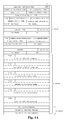
- Fig. 1A and Fig. 1B show the structures of the E-DCH data frame Type 1 and Type 2 respectively. As shown in Fig. 1A and Fig. 1B , both Type 1 and Type 2 comprise two parts: header and payload. The difference is the data unit type comprised. Each E-DCH comprises the following several fields.
- the "CRC check code” field is the result of the CRC applied to the remaining part of the header (i.e. from bit 0 of the first byte to bit 0 (comprised) of the last byte of the header (not comprising the Header CRC Cont four bits)) with the corresponding generator polynomials.
- the length of the "header CRC check code” field adapted to an E-DCH uplink data frame is 7 bits or 11 bits. The 7 bits are bit 7 to bit 1 of the first byte of the frame header of the E-DCH data frame, and the 11 bits further contain bits from bit 7 to bit 4 of the second byte besides of the bits from bit 7 to bit 1 of the first byte.
- the "frame type indicator” field is used to indicate whether a frame is a data frame or a control frame.
- the length of the "frame type indicator” field is one bit and it is located in bit 0 of the first byte of the frame header in the E-DCH data frame.
- the E-DCH data frame is an uplink data frame, and therefore, as described above, its "frame type indicator” field is "0".
- FSN Frame Sequence Number
- the range of the FSN value is 0-15.
- the length of the "frame sequence number" field is 4 bits and it is located from bit 3 to bit 0 of the second byte of the frame header of the E-DCH data frame.
- the "number of subframes” field indicates how many subframes are in a frame. Please note that a subframe comprises a header portion and a payload portion.
- the value range of the "number of subframes” field is 1-16, in which, the binary code of value 1 is "0000", and the binary code of value 16 is "1111".
- the length of the "number of subframes" field is 4 bits, and it is located from bit 3 to bit 0 of the third byte of the frame header of the E-DCH data frame.
- connection frame number field indicates a radio frame that the HARQ decodes data accurately.
- this field is adapted to the purpose of re-ordering, and CFN (and subframe number) can be adapted to dynamic delay measurements.
- the value range is 0-255.
- the length of the "connection frame number” field is 8 bits and it is located from bit 7 to bit 0 of the fourth byte of the frame header of the E-DCH data frame.
- the "number of HARQ retransmissions" field indicates the number of HARQ retransmissions for successfully decoding the payload, or as to the HARQ decoding failure situation, this field indicates the number of HARQ retransmissions that were used at the time when the HARQ decoding failure is detected. And the value of this field being 13 indicates that the actual retransmitted data is inappropriate to be used as the input of the outer loop power control. The value of this field being 15 indicates that the node B is incapable of calculating the number of HARQ retransmissions. The value range is 0-15.
- the length of the "number of HARQ retransmissions" field is 4 bits and it is located from bit 3 to bit 0 of the fifth byte of the frame header of the E-DCH data frame; the "number of HARQ retransmissions" field of the first subframe number is located from bit 6 to bit 3 of the fifth byte of the frame header of the E-DCH data frame; the "number of HARQ retransmissions" field of the second subframe number is located from bit 6 to bit 3 of the first byte of the frame header of the E-DCH data frame after the first MAC-e header.
- the "subframe number” field indicates the subframe number in which the payload is received. Except for the purpose of re-ordering, the subframe number (and control frame number) may be used as dynamic delay measurement.
- the value range of the "subframe number” field is 0-4 and the length is 3 bits; the first subframe number is located from the bit 2 to the bit 0 of the fifth byte of the frame header of the E-DCH data frame; the second subframe number is located from the bit 2 to the bit 0 of the first byte after the first MAC-e or MAC-i header of the frame header of the E-DCH data frame; and other subframe numbers are located from the bit 2 to the bit 0 of the first byte after the previous MAC-e or MAC-i header of the frame header of the E-DCH data frame, till all the subframe numbers are comprised.
- the "spare extension" field indicates the location where new Information Elements (IEs) can in the future be added in a backward compatible way.
- the length of this field is 0-32 bytes.
- the "payload CRC" field is the CRC check of the payload. It is the result of the CRC applied to the remaining portion of the payload, that is, from the bit 7 of the first byte of the payload to the bit 0 of the payload before the payload CRC.
- the length is 16 bits.
- the E-DCH data frame is written in the above mentioned format, and sent by Serving Node B to SRNC.
- Serving Node B will send a HARQ failure indication to SRNC (Non-serving Node B will not send a HARQ failure indication).
- Condition 1 a MAC-e or MAC-i protocol data unit for a HARQ process has not yet been successfully decoded and the Retransmission Sequence Number (hereinafter referred to as RSN) indicates a new MAC-e or MAC-i protocol data unit transmitted for the same HARQ process, and the HARQ retransmission number that had already occurred was equal or higher than the lowest of the maximum HARQ retransmissions values for the terminal's configured MAC-d flows.
- RSN Retransmission Sequence Number
- Condition 2 a MAC-e or MAC-i for a HARQ process has not yet been successfully decoded, and the maximum retransmissions for the MAC-d flow with the highest maximum HARQ retransmissions value valid for the terminal connection have occurred, or should have occurred in case the HARQ related outband signaling (for example RSN) on the E-DPCCH could not be decoded.
- RSN HARQ related outband signaling
- Condition 3 an MAC-e or MAC-i for an HARQ process has not yet been successfully decoded when MAC-e or MAC-i Reset is performed in the terminal.
- the Node B knows the timing of the MAC-e or MAC-i Reset in the terminal via higher layer.
- the HARQ failure indication is only sent at one transmission bearer.
- Serving Node B may select any transmission bearer associated with the terminal related to this HARQ failure indication.
- HARQ failure indication data frame If the HARQ failure is indicated in the user data frame, it is called HARQ failure indication data frame. As shown in Fig. 2A and Fig. 2B , the detailed configuration of it is as follows.
- SRNC decodes the Number of HARQ retransmissions from the received correctly-decoded E-DCH data fame header as the input of Outer Loop Power Control, or decodes the Number of HARQ retransmissions from the E-DCH data fame header of HARQ failure indication as the input of Outer Loop Power Control. If the Signal Interference Ratio (hereinafter referred to as SIR) of Outer Loop Power Control is modified, SRNC comprises new SIR target in the Outer Loop Power Control frame and sends it to Serving Node B. The Inner Loop Power Control function located at Serving Node B will use the new SIR target to perform power emission of the control terminal, and therefore minimize interference and maintain quality of connection.
- SIR Signal Interference Ratio
- Dual-carrier technology is gradually introduced into the existing system.
- the system which adopts Dual-carrier technology if the above mentioned HARQ failure indication is used, the following problems may occur:
- Serving Node B may receive MAC-es PDUs or MAC-is PDUs sent from two carriers from the air interface, and the decoding of data on both carriers may fail at the same time, or one succeeds and the other fails; while the HARQ failure indication in the existing system only regards the decoding failure of MAC-es PDUs or MAC-is PDUs on one carrier, without indicating the carrier property of HARQ failure indication. If one of the MAC-e PDU or MAC-i PDU received by Serving Node B from two carriers from the air interface fails, or both fail, then enter one HARQ failure indication data frame, that is, the decoding failure of MAC-es PDUs or MAC-is PDUs on two carriers share one HARQ failure indication data frame.
- Outer Loop Power Control (hereinafter referred to as OLPC) is calculated based on the HARQ retransmission data of E-DCH protocol data frame header or the HARQ retransmission data of HARQ failure indication frame header.
- OLPC Outer Loop Power Control
- the present invention provides an improved HARQ failure indication solution which is used to solve the problem that SRNC can not perform OLPC for it cannot learn the retransmission times of the data flow on each carrier in a Dual-carrier system.
- an HARQ failure indication method is provided, which is used to indicate HARQ failure in a Dual-carrier system.
- the HARQ failure indication method comprises: when the decoding of the received E-DCH data frame is unsuccessful and the condition of sending HARQ failure indication is satisfied currently, a Serving Node B sending an HARQ failure indication data frame to SRNC, wherein a carrier identifier which indicates the carrier on which the HARQ failure happens is carried in the HARQ failure indication data frame.
- an HARQ failure indication data frame is provided.
- the HARQ failure indication data frame according to the present invention is Type 1 or Type 2 of E-DCH data frame, and the HARQ failure indication data frame comprises a carrier indicator field which indicates the carrier on which the HARQ failure happens.
- the above mentioned carrier indicator field is located at any spare field of the HARQ failure indication data frame or at a spare extension field of the HARQ failure indication data frame.
- a receiving method of the HARQ failure indication is provided.
- the receiving method of the HARQ failure indication comprises: SRNC receiving the HARQ failure indication data frame sent from Serving Node B, wherein a carrier identifier which indicates the carrier on which the HARQ failure happens is carried in the HARQ failure indication data frame; SRNC acquires the above mentioned carrier identifier, and determines the carrier on which the HARQ failure happens according to the carrier identifier.
- a Serving Node B is provided.
- the Serving Node B comprises: a Receiving Module, a Decoding Module, a Determination module, and a Sending Module, wherein the Receiving Module is adapted to receive E-DCH data frame; the Decoding Module is adapted to decode the E-DCH data frame received by the Receiving Module, and trigger the Determination module when the decoding is unsuccessful; the Determination module is adapted to determine weather the predetermined condition of sending an HARQ failure indication is satisfied currently; and the Sending Module is adapted to send the HARQ failure indication data frame to SRNC when the Determination module determines that the condition of sending an HARQ failure indication is satisfied, wherein a carrier identifier which indicates the carrier on which the HARQ failure happens is carried in the HARQ failure indication data frame.
- SRNC can learn the carrier on which the HARQ failure happens when receiving the HARQ failure indication data frame, and therefore can perform OLPC.
- the embodiments of the present invention provide an improved HARQ failure indication solution.
- Serving Node B determines whether the condition of sending an HARQ failure indication is currently satisfied, and if Yes, Serving Node B sends an HARQ failure indication data frame to SRNC.
- the HARQ failure indication data frame carries a carrier identifier which indicates the carrier on which the HARQ failure happens.
- SRNC can determine the carrier on which the HARQ failure happens according to the carrier identifier.
- an HARQ failure indication data frame is first provided.
- the structure type of the HARQ failure indication data frame can be either E-DCH data frame Type 1, or E-DCH data frame Type 2.
- HARQ failure indication data frame differs from the HARQ failure indication data frame in the existing single carrier technology is that: a carrier indicator field which indicates the HARQ failure is added to the HARQ failure indication data frame according to the embodiments of the present invention.
- the carrier indicator field which indicates the carrier on which the HARQ failure happens can be located at any spare field of the HARQ failure indication data frame. That is, one or more bits in one spare field of the existing HARQ failure indication data frame (as shown in Fig. 2A or Fig. 2B ) can be changed into the carrier indicator field. Or, it can be also located at the spare extension field of the HARQ failure indication data frame. That is, one or more bits in one spare extension field of the existing HARQ failure indication data frame (as shown in Fig. 2A or Fig. 2B ) can be changed into the carrier indicator field, and assign the other bits of the spare extension field to a new spare field.
- Fig. 3 to Fig. 6 are several specific embodiments of the HARQ failure indication data frame according the embodiments of the present invention. The several embodiments will be described respectively hereinafter.
- the embodiment provides a structure of the HARQ failure indication data frame of MAC-es decoding failure.
- Fig. 3 is the structure diagram of the HARQ failure indication data frame in the present embodiment;
- one bit in one spare field of the existing HARQ failure indication data frame of MAC-es decoding failure is changed into a carrier indicator field.
- the correspondence between the mapped field value and the primary/secondary carriers of the carrier indicator field can be as shown in Table 1.
- the HARQ failure indication data frame of the Embodiment also comprises other fields, specifically, as shown in Fig. 3 , mainly comprising: connection frame number field, subframe number field, the field of number of MAC-es protocol data units or the field of number of MAC-is protocol data units, and Number of HARQ retransmissions field.
- These fields respectively represent the connection frame number, the subframe number, the number of MAC-es protocol data units or the number of MAC-is protocol data units, and the Number of HARQ retransmissions of the carrier indicated by the carrier indicator field.
- the present embodiment provides an HARQ failure indication data frame of MAC-es decoding failure.
- Fig. 4 is the structure diagram of the HARQ failure indication data frame in the present embodiment.
- one bit in one spare extension field of the existing HARQ failure indication data frame of MAC-es decoding failure is changed into a carrier indicator field, and other bits of the spare extension field are assigned to a new spare field.
- the correspondence between the mapped field value and the primary/secondary carriers of the carrier indicator field can also be as shown in Table 1.
- the Number of HARQ retransmissions field of the HARQ retransmission failure data frame indicates the Number of HARQ retransmissions corresponding to the carrier indicated by the carrier indicator field at the time of HARQ failure indication.
- other fields of the HARQ failure indication data frame (such as connection frame number field, subframe number field, and the field of number of MAC-es protocol data units or the field of number of MAC-is protocol data units) are similar to that of each corresponding field in the existing technology, which will not be repeated herein.
- the present embodiment provides the structure for an HARQ failure indication data frame of MAC-is decoding failure.
- Fig. 5 is the structure diagram of the HARQ failure indication data frame in the present embodiment.
- one bit in one spare field of the existing HARQ failure indication data frame of MAC-is decoding failure is changed into a carrier indicator field, and the field is used for indicating the carrier on which the HARQ failure happens.
- the correspondence between the mapped field value and the primary/secondary carriers of the carrier indicator field can also be as shown in Table 1.
- the HARQ failure indication data frame of the Embodiment can still comprise other fields, such as: connection frame number field, subframe number field, the field of number of MAC-es protocol data units or the field of number of MAC-is protocol data units, and Number of HARQ retransmissions field, which respectively represent the connection frame number, the subframe number, the number of MAC-es protocol data units or the number of MAC-is protocol data units, the Number of HARQ retransmissions of the carrier indicated by the carrier indicator field.
- other fields such as: connection frame number field, subframe number field, the field of number of MAC-es protocol data units or the field of number of MAC-is protocol data units, and Number of HARQ retransmissions field, which respectively represent the connection frame number, the subframe number, the number of MAC-es protocol data units or the number of MAC-is protocol data units, the Number of HARQ retransmissions of the carrier indicated by the carrier indicator field.
- the present embodiment provides the structure for an HARQ failure indication data frame of MAC-is decoding failure.
- Fig. 6 is the structure diagram of the HARQ failure indication data frame according to the present embodiment.
- one bit in one spare extension field of the existing HARQ failure indication data frame of MAC-is decoding failure is changed into a carrier indicator field, and other bits in the spare extension field is assigned to a new spare field.
- the correspondence between the mapped field value and the primary/secondary carriers of the carrier indicator field can be as shown in Table 1.
- the HARQ failure indication data frame of the Embodiment can also comprise other fields, such as the connection frame number field, the subframe number field, the field of number of MAC-es protocol data units or the field of number of MAC-is protocol data units, and the Number of HARQ retransmissions field, which are respectively used to represent the connection frame number, the subframe number, the number of MAC-es protocol data units or the number of MAC-is protocol data units, and the Number of HARQ retransmissions on the carrier indicated by the carrier indicator field.
- other fields such as the connection frame number field, the subframe number field, the field of number of MAC-es protocol data units or the field of number of MAC-is protocol data units, and the Number of HARQ retransmissions on the carrier indicated by the carrier indicator field.
- an HARQ failure indication method is also provided, which is used to indicate HARQ failure in the Dual-carrier system.
- Fig. 7 is a flow chart of the HARQ failure indication method according to the embodiments of the present invention. As shown in Fig. 7 , the HARQ failure indication method according to the embodiments of the present invention mainly comprises the following Steps.
- Step 5701 Serving Node B receives an E-DCH data frame from a certain carrier on the air interface, and the decoding of the received E-DCH data frame has not yet been successful.
- Step 5703 Serving Node B determines whether the condition of sending an HARQ failure indication is satisfied currently, and if Yes, execute Step 5705; or else, continue determining.
- condition of sending an HARQ failure indication can comprise one of the three following conditions.
- Condition 1 an MAC-e or MAC-i protocol data unit for an HARQ process of a certain carrier has not yet been successfully decoded and the Retransmission Sequence Number (hereinafter referred to as RSN) indicates a new MAC-e or MAC-i protocol data unit transmitted for the same HARQ process, and the HARQ retransmission number that had already occurred was equal or higher than the lowest of the maximum HARQ retransmissions values for the terminal's configured MAC-d flows.
- RSN Retransmission Sequence Number
- Condition 2 an MAC-e or MAC-i for an HARQ process on a certain carrier has not yet been successfully decoded, and the maximum retransmissions for the MAC-d flow with the highest maximum HARQ retransmissions value valid for the terminal connection have occurred, or should have occurred in case the HARQ related outband signaling (for example RSN) on the E-DPCCH of a certain carrier could not be decoded.
- RSN HARQ related outband signaling
- Condition 3 an MAC-e or MAC-i for an HARQ process on a certain carrier has not yet been successfully decoded when MAC-e or MAC-i Reset is performed in the terminal.
- the Node B knows the timing of the MAC-e or MAC-i Reset in the terminal via higher layer.
- Step S705 Serving Node B sends an HARQ failure indication data frame to SRN, wherein, the HARQ failure indication data frame carries a carrier identifier which indicates the carrier on which the HARQ failure happens (that is, the carrier which receives the E-DCH data frame in Step S701).
- Serving Node B can carry the above mentioned carrier identifier in the carrier indicator field of the HARQ failure indication data frame.
- the carrier indicator field can be located at any spare field of the HARQ failure indication data frame or at the spare extension of the HARQ failure indication data frame.
- the structure type of the HARQ failure indication data frame can be either E-DCH data frame Type 1, or E-DCH data frame Type 2, and the above mentioned structure of the HARQ failure indication data frame according to the embodiments of the present invention can be adopted. The details are described above, and will not be repeated herein.
- SRNC After receiving the above mentioned HARQ failure indication data frame sent from Serving Node B, SRNC analyzes the carrier identifier from the carrier indicator field of this frame, and then analyzes the connection frame number from the connection frame field of number of this frame, acquiring it as the connection frame number of the carrier indicated by the carrier identifier. And, SRNC analyzes the subframe number from the subframe field of number of this frame, acquiring it as the subframe number of the carrier indicated by the carrier identifier.
- SRNC can also analyze the Number of HARQ retransmissions from the Number of HARQ retransmissions field of this frame, acquiring it as the Number of HARQ retransmissions of the carrier indicated by the carrier identifier at the moment of HARQ failure represented by the connection frame number and the subframe number.
- Fig. 8 and Fig. 9 are two embodiments of the above mentioned HARQ failure indication method according to the embodiments of the present invention. The two embodiments will be described respectively hereinafter.
- Serving Node B adopts the structure of the HARQ failure indication data frame described in Embodiment One or in Embodiment Three above to carry the carrier identifier.
- Fig. 8 is the flow chart of the present embodiment.
- the Serving Node B in the present embodiment sending the HARQ failure indication mainly comprises the following Steps.
- Step 810 Serving Node B receives an MAC-e or MAC-i from a certain carrier on the air interface, and the decoding of it has not yet been successful.
- Step 820 Serving Node B determines whether the condition of sending an HARQ failure indication is satisfied currently; and if Yes, execute Step 830.
- an MAC-e or MAC-i protocol data unit for an HARQ process of the carrier can not be decoded successfully, and the RSN indicates a new MAC-e or MAC-i protocol data unit transmitted for the same HARQ process on this carrier, and the HARQ retransmission number that had already occurred was equal or higher than the lowest of the maximum HARQ retransmissions values for the terminal's configured MAC-d flows; then execute Step 830.
- Step 830 an MAC-e or MAC-i for an HARQ process on the carrier has not yet been successfully decoded, and the maximum retransmissions for the MAC-d flow with the highest maximum HARQ retransmissions value valid for the terminal connection have occurred, then execute Step 830; or, the maximum retransmissions for the MAC-d flow with the highest maximum HARQ retransmissions value valid for the terminal connection should have occurred in case the HARQ related outband signaling (for example RSN) on the E-DPCCH of the carrier could not be decoded, then execute Step 830.
- the HARQ related outband signaling for example RSN
- the Node B knows the timing of the MAC-e or MAC-i Reset in the terminal via higher layer, and determines MAC-e or MAC-i Reset is performed in the terminal, and so that it knows an MAC-e or MAC-i for an HARQ process on the carrier has not yet been successfully decoded; then execute Step 830.
- Step 830 Serving Node B sets the HARQ failure indication data frame by using the structure of the HARQ failure indication data frame described in Embodiment One or the structure of the HARQ failure indication data frame described in Embodiment Three. Its coding method is the same as the coding method of correctly decoding the payload, and is described in detail hereinafter.
- Node B uses the structure of the HARQ failure indication data frame of Embodiment One above to fill in:
- Node B uses the structure of the HARQ failure indication data frame of Embodiment Three to fill in:
- Step 840 Serving Node B sends an HARQ failure indication data frame to SRNC.
- the present embodiment adopts the structure of the HARQ failure indication data frame of Embodiment Two above or the structure of the HARQ failure indication data frame of Embodiment Four above to carry the carrier identifier.
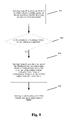
- Fig. 9 is the flow chart of the present embodiment.
- the Serving Node B in the present embodiment sending the HARQ failure indication mainly comprises the following Steps.
- Step 910 Serving Node B receives an MAC-e or MAC-i of a certain carrier on the air interface, and the decoding of it has not yet been successful.
- Step 920 Serving Node B determines whether the condition of sending an HARQ failure indication is satisfied currently.
- an MAC-e or MAC-i protocol data unit for an HARQ process of the carrier can not be decoded successfully, and the RSN indicates a new MAC-e or MAC-i protocol data unit transmitted for the same HARQ process on this carrier, and the HARQ retransmission number that had already occurred was equal or higher than the lowest of the maximum HARQ retransmissions values for the terminal's configured MAC-d flows; then execute Step 830.
- Step 830 an MAC-e or MAC-i for an HARQ process on the carrier has not yet been successfully decoded, and the maximum retransmissions for the MAC-d flow with the highest maximum HARQ retransmissions value valid for the terminal connection have occurred, then execute Step 830; or, the maximum retransmissions for the MAC-d flow with the highest maximum HARQ retransmissions value valid for the terminal connection should have occurred in case the HARQ related outband signaling (for example RSN) on the E-DPCCH of the carrier could not be decoded, then execute Step 830.
- the HARQ related outband signaling for example RSN
- the Node B knows the timing of the MAC-e or MAC-i Reset in the terminal via higher layer, and determines MAC-e or MAC-i Reset is performed in the terminal, and so that it knows an MAC-e or MAC-i for an HARQ process on the carrier has not yet been successfully decoded; then execute Step 930.
- Step 930 Serving Node B sets the HARQ failure indication data frame by using the structure of the HARQ failure indication data frame described in Embodiment Two above or the structure of the HARQ failure indication data frame described in Embodiment Four above.
- the coding method is the same as the coding method of correctly decoding the payload, and is described in detail hereinafter.
- Node B uses the structure of the HARQ failure indication data frame of Embodiment Two in the present invention to fill in:
- Node B uses the structure of the HARQ failure indication data frame of Embodiment Four above to fill in:
- Step 940 Serving Node B will send an HARQ failure indication data frame to SRNC.
- a receiving method of the HARQ failure indication is also provided.
- Fig. 10 is a flow chart of the HARQ failure indication receiving method according to the embodiments of the present invention. As shown in Fig. 10 , the receiving method of the HARQ failure indication according to the embodiments of the present invention mainly comprises the following steps.
- Step S101 SRNC receives the HARQ failure indication data frame sent from Serving Node B, wherein, the HARQ failure indication data frame carries a carrier identifier which indicates the carrier on which the HARQ failure happens.
- Step S103 SRNC acquires the above mentioned carrier identifier, and determines the carrier on which the HARQ failure happens according to the carrier identifier.
- Fig. 11 is a flow chart of realizing receiving method of the HARQ failure indication according to the embodiments of the present invention. As shown in Fig. 11 , the receiving method of the HARQ failure indication according to the embodiments of the present invention can be realized by the following Steps.
- Step 110 SRNC receives the HARQ failure indication data frame from Serving Node B.
- Step 120 SRNC analyzes the carrier identifier from the carrier indicator field of the frame.
- Step 130 SRNC analyzes the connection frame number from the connection frame field of number of the frame, acquiring it as the connection frame number of the carrier indicated by the carrier identifier.
- Step 140 SRNC analyzes the subframe number from the subframe field of number of the frame, acquiring it as the subframe number of the carrier indicated by the carrier identifier.
- Step 150 SRNC analyzes the Number of HARQ retransmissions from the Number of HARQ retransmissions field of the frame, acquiring it as the Number of HARQ retransmissions of the carrier indicated by the carrier identifier at the moment of HARQ failure represented by the connection frame number and the subframe number.
- a Serving Node B is also provided.
- Fig. 12 is the structure diagram of the Serving Node B according to the embodiments of the present invention.
- the Serving Node B mainly comprises: a Receiving Module 1, a Decoding Module 3, a Determination module 5, and a Sending Module 7, wherein, the Receiving Module 1 is adapted to receive E-DCH data frame; the Decoding Module 3 is connected with the Receiving Module 1 and adapted to decode the E-DCH data frame received by the Receiving Module 1, and trigger the Determination module 5 when the decoding is unsuccessful; the Determination module 5 is connected with the Decoding Module 3 and adapted to determine whether the predetermined condition of sending an HARQ failure indication is satisfied; the Sending Module 7 is connected with the Determination module 5 and adapted to send the HARQ failure indication data frame to SRNC when the Determination module 5 determines that the condition of sending an HARQ failure indication is satisfied, wherein, a carrier identifier which indicates the carrier on which the HARQ failure happens
- the embodiments of the present invention take the Dual-carrier system as the example, the technical solution provided by the embodiments of the present invention can also be applied to other multi-carrier systems.
- Serving Node B can carry the HARQ error indication corresponding to each carrier, and sends the HARQ failure indication data frame to SRNC by the Iub interface/Iur interface.
- SRNC can acquire the Number of HARQ retransmissions at the moment of HARQ failure on each carrier, control the SIR target value better through the carrier-based OLPC function, and further avoid HARQ failure caused by the SIR Target being in low value for a long time.
- the embodiments of the present invention have few alterations over the existing protocols, and have backward compatibility.
Landscapes
- Engineering & Computer Science (AREA)
- Computer Networks & Wireless Communication (AREA)
- Signal Processing (AREA)
- Mobile Radio Communication Systems (AREA)
- Detection And Prevention Of Errors In Transmission (AREA)
Applications Claiming Priority (2)
| Application Number | Priority Date | Filing Date | Title |
|---|---|---|---|
| CN2009101662959A CN101998501A (zh) | 2009-08-18 | 2009-08-18 | Harq失败指示方法、harq失败指示数据帧及服务节点b |
| PCT/CN2010/070030 WO2011020307A1 (zh) | 2009-08-18 | 2010-01-06 | Harq失败指示方法、harq失败指示数据帧及服务节点b |
Publications (3)
| Publication Number | Publication Date |
|---|---|
| EP2469751A1 true EP2469751A1 (de) | 2012-06-27 |
| EP2469751A4 EP2469751A4 (de) | 2014-02-19 |
| EP2469751B1 EP2469751B1 (de) | 2018-05-30 |
Family
ID=43606585
Family Applications (1)
| Application Number | Title | Priority Date | Filing Date |
|---|---|---|---|
| EP10809441.8A Active EP2469751B1 (de) | 2009-08-18 | 2010-01-06 | Verfahren zur harq-fehleranzeige, datenrahmen zur harq-fehleranzeige und dienst-node-b dafür |
Country Status (8)
| Country | Link |
|---|---|
| US (1) | US9300439B2 (de) |
| EP (1) | EP2469751B1 (de) |
| JP (1) | JP5642178B2 (de) |
| KR (1) | KR101374403B1 (de) |
| CN (1) | CN101998501A (de) |
| BR (1) | BR112012003714B1 (de) |
| MX (1) | MX2012002058A (de) |
| WO (1) | WO2011020307A1 (de) |
Families Citing this family (4)
| Publication number | Priority date | Publication date | Assignee | Title |
|---|---|---|---|---|
| US10288017B1 (en) * | 2017-10-25 | 2019-05-14 | GM Global Technology Operations LLC | Model based control to manage eDOC temperature |
| CN112534943B (zh) * | 2018-08-09 | 2023-12-15 | Lg 电子株式会社 | 用于在无线通信系统中发送和接收无线信号的方法和装置 |
| CN115767754B (zh) | 2020-02-07 | 2025-01-03 | Oppo广东移动通信有限公司 | 数据传输方法、装置及设备 |
| CN113676736B (zh) * | 2020-05-13 | 2024-05-07 | 华为技术有限公司 | 数据帧的传输方法和通信装置 |
Family Cites Families (6)
| Publication number | Priority date | Publication date | Assignee | Title |
|---|---|---|---|---|
| US7821992B2 (en) * | 2005-01-06 | 2010-10-26 | Lg Electronics Inc. | High speed uplink packet access scheme |
| KR20070110326A (ko) * | 2005-02-08 | 2007-11-16 | 노키아 코포레이션 | Iub 인터페이스를 통한 HARQ 장애 표시 |
| EP1938538B1 (de) * | 2005-08-19 | 2019-10-23 | Samsung Electronics Co., Ltd. | Verfahren zur variablen subträger-abbildung und einrichtung damit |
| CN101374040A (zh) * | 2007-08-24 | 2009-02-25 | 大唐移动通信设备有限公司 | 一种实现多载波小区高速数据业务传输的方法和装置 |
| JP5460851B2 (ja) * | 2009-03-17 | 2014-04-02 | テレフオンアクチーボラゲット エル エム エリクソン(パブル) | デュアルキャリアhsupaにおけるアウタループ電力制御に関する無線基地局、ネットワーク制御ノード、及び、その方法 |
| US9130698B2 (en) * | 2009-05-21 | 2015-09-08 | Qualcomm Incorporated | Failure indication for one or more carriers in a multi-carrier communication environment |
-
2009
- 2009-08-18 CN CN2009101662959A patent/CN101998501A/zh active Pending
-
2010
- 2010-01-06 MX MX2012002058A patent/MX2012002058A/es active IP Right Grant
- 2010-01-06 WO PCT/CN2010/070030 patent/WO2011020307A1/zh not_active Ceased
- 2010-01-06 US US13/259,708 patent/US9300439B2/en active Active
- 2010-01-06 JP JP2012525023A patent/JP5642178B2/ja active Active
- 2010-01-06 EP EP10809441.8A patent/EP2469751B1/de active Active
- 2010-01-06 BR BR112012003714-5A patent/BR112012003714B1/pt active IP Right Grant
- 2010-01-06 KR KR1020117029183A patent/KR101374403B1/ko active Active
Non-Patent Citations (5)
| Title |
|---|
| "Universal Mobile Telecommunications System (UMTS); UTRAN Iur/Iub interface user plane protocol for DCH data streams (3GPP TS 25.427 version 8.0.0 Release 8); ETSI TS 125 427", ETSI STANDARD, EUROPEAN TELECOMMUNICATIONS STANDARDS INSTITUTE (ETSI), SOPHIA ANTIPOLIS CEDEX, FRANCE, vol. 3-R3, no. V8.0.0, 1 October 2008 (2008-10-01), XP014042540, * |
| ERICSSON: "Proposed principles for Dual-Cell HSUPA operation", 3GPP DRAFT; R3-090838, 3RD GENERATION PARTNERSHIP PROJECT (3GPP), MOBILE COMPETENCE CENTRE ; 650, ROUTE DES LUCIOLES ; F-06921 SOPHIA-ANTIPOLIS CEDEX ; FRANCE, no. Seoul, Korea; 20090319, 19 March 2009 (2009-03-19), XP050341214, [retrieved on 2009-03-19] * |
| NADAS S ET AL: "HSUPA Transport Network Congestion Control", 2008 IEEE GLOBECOM WORKSHOPS; 30 NOV.-4 DEC. 2008; NEW ORLEANS, LA, USA, IEEE, PISCATAWAY, NJ, USA, 30 November 2008 (2008-11-30), pages 1-6, XP031405631, ISBN: 978-1-4244-3061-1 * |
| NOKIA SIEMENS NETWORKS ET AL: "Proposal on FP Impact for DC-HSUPA", 3GPP DRAFT; R3-091341, 3RD GENERATION PARTNERSHIP PROJECT (3GPP), MOBILE COMPETENCE CENTRE ; 650, ROUTE DES LUCIOLES ; F-06921 SOPHIA-ANTIPOLIS CEDEX ; FRANCE, no. San Francisco, USA; 20090429, 29 April 2009 (2009-04-29), XP050341677, [retrieved on 2009-04-29] * |
| See also references of WO2011020307A1 * |
Also Published As
| Publication number | Publication date |
|---|---|
| BR112012003714A2 (pt) | 2016-04-05 |
| EP2469751A4 (de) | 2014-02-19 |
| CN101998501A (zh) | 2011-03-30 |
| US9300439B2 (en) | 2016-03-29 |
| JP2013502765A (ja) | 2013-01-24 |
| US20120134276A1 (en) | 2012-05-31 |
| EP2469751B1 (de) | 2018-05-30 |
| JP5642178B2 (ja) | 2014-12-17 |
| BR112012003714B1 (pt) | 2021-12-28 |
| KR20120088553A (ko) | 2012-08-08 |
| MX2012002058A (es) | 2012-06-27 |
| KR101374403B1 (ko) | 2014-03-17 |
| WO2011020307A1 (zh) | 2011-02-24 |
Similar Documents
| Publication | Publication Date | Title |
|---|---|---|
| KR101004069B1 (ko) | 복합 자동 반복 요청 장애를 처리하기 위한 방법, 장치 및 컴퓨터 프로그램 | |
| TWI733667B (zh) | 在存取點與行動終端機之間使用下行鏈路及上行鏈路傳輸之無線通訊測試之方法 | |
| US8169892B2 (en) | HARQ failure indication over IUB-interface | |
| WO2003096581A1 (en) | Method and apparatus for reducing transmission-link errors | |
| US12003331B2 (en) | Wireless data transmission apparatus, wireless data reception apparatus and methods | |
| EP2469751B1 (de) | Verfahren zur harq-fehleranzeige, datenrahmen zur harq-fehleranzeige und dienst-node-b dafür | |
| JP2009534917A (ja) | 無線通信システムにおける肯定確認応答と否定確認応答とを送信する方法、通信エンティティ、及びシステム | |
| CN101998500B (zh) | 混合自动重传请求错误指示的发送/接收方法及装置 | |
| US8718095B2 (en) | Method for transmitting frame sequence number, node B and service radio network controller | |
| CN101997662B (zh) | 混合重传请求失败指示的发送、传输方法和装置、系统 | |
| HK1077429B (en) | Method and apparatus for reducing transmission-link errors |
Legal Events
| Date | Code | Title | Description |
|---|---|---|---|
| PUAI | Public reference made under article 153(3) epc to a published international application that has entered the european phase |
Free format text: ORIGINAL CODE: 0009012 |
|
| 17P | Request for examination filed |
Effective date: 20120302 |
|
| AK | Designated contracting states |
Kind code of ref document: A1 Designated state(s): AT BE BG CH CY CZ DE DK EE ES FI FR GB GR HR HU IE IS IT LI LT LU LV MC MK MT NL NO PL PT RO SE SI SK SM TR |
|
| DAX | Request for extension of the european patent (deleted) | ||
| A4 | Supplementary search report drawn up and despatched |
Effective date: 20140116 |
|
| RIC1 | Information provided on ipc code assigned before grant |
Ipc: H04W 52/12 20090101ALI20140110BHEP Ipc: H04L 1/16 20060101ALI20140110BHEP Ipc: H04L 1/18 20060101AFI20140110BHEP |
|
| 17Q | First examination report despatched |
Effective date: 20151028 |
|
| STAA | Information on the status of an ep patent application or granted ep patent |
Free format text: STATUS: EXAMINATION IS IN PROGRESS |
|
| GRAP | Despatch of communication of intention to grant a patent |
Free format text: ORIGINAL CODE: EPIDOSNIGR1 |
|
| STAA | Information on the status of an ep patent application or granted ep patent |
Free format text: STATUS: GRANT OF PATENT IS INTENDED |
|
| INTG | Intention to grant announced |
Effective date: 20180219 |
|
| GRAS | Grant fee paid |
Free format text: ORIGINAL CODE: EPIDOSNIGR3 |
|
| GRAA | (expected) grant |
Free format text: ORIGINAL CODE: 0009210 |
|
| STAA | Information on the status of an ep patent application or granted ep patent |
Free format text: STATUS: THE PATENT HAS BEEN GRANTED |
|
| AK | Designated contracting states |
Kind code of ref document: B1 Designated state(s): AT BE BG CH CY CZ DE DK EE ES FI FR GB GR HR HU IE IS IT LI LT LU LV MC MK MT NL NO PL PT RO SE SI SK SM TR |
|
| REG | Reference to a national code |
Ref country code: GB Ref legal event code: FG4D |
|
| REG | Reference to a national code |
Ref country code: CH Ref legal event code: EP |
|
| REG | Reference to a national code |
Ref country code: AT Ref legal event code: REF Ref document number: 1004709 Country of ref document: AT Kind code of ref document: T Effective date: 20180615 |
|
| REG | Reference to a national code |
Ref country code: IE Ref legal event code: FG4D |
|
| REG | Reference to a national code |
Ref country code: DE Ref legal event code: R096 Ref document number: 602010051006 Country of ref document: DE |
|
| REG | Reference to a national code |
Ref country code: NL Ref legal event code: MP Effective date: 20180530 |
|
| REG | Reference to a national code |
Ref country code: LT Ref legal event code: MG4D |
|
| PG25 | Lapsed in a contracting state [announced via postgrant information from national office to epo] |
Ref country code: ES Free format text: LAPSE BECAUSE OF FAILURE TO SUBMIT A TRANSLATION OF THE DESCRIPTION OR TO PAY THE FEE WITHIN THE PRESCRIBED TIME-LIMIT Effective date: 20180530 Ref country code: SE Free format text: LAPSE BECAUSE OF FAILURE TO SUBMIT A TRANSLATION OF THE DESCRIPTION OR TO PAY THE FEE WITHIN THE PRESCRIBED TIME-LIMIT Effective date: 20180530 Ref country code: LT Free format text: LAPSE BECAUSE OF FAILURE TO SUBMIT A TRANSLATION OF THE DESCRIPTION OR TO PAY THE FEE WITHIN THE PRESCRIBED TIME-LIMIT Effective date: 20180530 Ref country code: BG Free format text: LAPSE BECAUSE OF FAILURE TO SUBMIT A TRANSLATION OF THE DESCRIPTION OR TO PAY THE FEE WITHIN THE PRESCRIBED TIME-LIMIT Effective date: 20180830 Ref country code: FI Free format text: LAPSE BECAUSE OF FAILURE TO SUBMIT A TRANSLATION OF THE DESCRIPTION OR TO PAY THE FEE WITHIN THE PRESCRIBED TIME-LIMIT Effective date: 20180530 Ref country code: NO Free format text: LAPSE BECAUSE OF FAILURE TO SUBMIT A TRANSLATION OF THE DESCRIPTION OR TO PAY THE FEE WITHIN THE PRESCRIBED TIME-LIMIT Effective date: 20180830 Ref country code: CY Free format text: LAPSE BECAUSE OF FAILURE TO SUBMIT A TRANSLATION OF THE DESCRIPTION OR TO PAY THE FEE WITHIN THE PRESCRIBED TIME-LIMIT Effective date: 20180530 |
|
| PG25 | Lapsed in a contracting state [announced via postgrant information from national office to epo] |
Ref country code: GR Free format text: LAPSE BECAUSE OF FAILURE TO SUBMIT A TRANSLATION OF THE DESCRIPTION OR TO PAY THE FEE WITHIN THE PRESCRIBED TIME-LIMIT Effective date: 20180831 Ref country code: LV Free format text: LAPSE BECAUSE OF FAILURE TO SUBMIT A TRANSLATION OF THE DESCRIPTION OR TO PAY THE FEE WITHIN THE PRESCRIBED TIME-LIMIT Effective date: 20180530 Ref country code: HR Free format text: LAPSE BECAUSE OF FAILURE TO SUBMIT A TRANSLATION OF THE DESCRIPTION OR TO PAY THE FEE WITHIN THE PRESCRIBED TIME-LIMIT Effective date: 20180530 |
|
| REG | Reference to a national code |
Ref country code: AT Ref legal event code: MK05 Ref document number: 1004709 Country of ref document: AT Kind code of ref document: T Effective date: 20180530 |
|
| PG25 | Lapsed in a contracting state [announced via postgrant information from national office to epo] |
Ref country code: NL Free format text: LAPSE BECAUSE OF FAILURE TO SUBMIT A TRANSLATION OF THE DESCRIPTION OR TO PAY THE FEE WITHIN THE PRESCRIBED TIME-LIMIT Effective date: 20180530 |
|
| PG25 | Lapsed in a contracting state [announced via postgrant information from national office to epo] |
Ref country code: SK Free format text: LAPSE BECAUSE OF FAILURE TO SUBMIT A TRANSLATION OF THE DESCRIPTION OR TO PAY THE FEE WITHIN THE PRESCRIBED TIME-LIMIT Effective date: 20180530 Ref country code: PL Free format text: LAPSE BECAUSE OF FAILURE TO SUBMIT A TRANSLATION OF THE DESCRIPTION OR TO PAY THE FEE WITHIN THE PRESCRIBED TIME-LIMIT Effective date: 20180530 Ref country code: EE Free format text: LAPSE BECAUSE OF FAILURE TO SUBMIT A TRANSLATION OF THE DESCRIPTION OR TO PAY THE FEE WITHIN THE PRESCRIBED TIME-LIMIT Effective date: 20180530 Ref country code: AT Free format text: LAPSE BECAUSE OF FAILURE TO SUBMIT A TRANSLATION OF THE DESCRIPTION OR TO PAY THE FEE WITHIN THE PRESCRIBED TIME-LIMIT Effective date: 20180530 Ref country code: DK Free format text: LAPSE BECAUSE OF FAILURE TO SUBMIT A TRANSLATION OF THE DESCRIPTION OR TO PAY THE FEE WITHIN THE PRESCRIBED TIME-LIMIT Effective date: 20180530 Ref country code: CZ Free format text: LAPSE BECAUSE OF FAILURE TO SUBMIT A TRANSLATION OF THE DESCRIPTION OR TO PAY THE FEE WITHIN THE PRESCRIBED TIME-LIMIT Effective date: 20180530 Ref country code: RO Free format text: LAPSE BECAUSE OF FAILURE TO SUBMIT A TRANSLATION OF THE DESCRIPTION OR TO PAY THE FEE WITHIN THE PRESCRIBED TIME-LIMIT Effective date: 20180530 |
|
| PG25 | Lapsed in a contracting state [announced via postgrant information from national office to epo] |
Ref country code: SM Free format text: LAPSE BECAUSE OF FAILURE TO SUBMIT A TRANSLATION OF THE DESCRIPTION OR TO PAY THE FEE WITHIN THE PRESCRIBED TIME-LIMIT Effective date: 20180530 Ref country code: IT Free format text: LAPSE BECAUSE OF FAILURE TO SUBMIT A TRANSLATION OF THE DESCRIPTION OR TO PAY THE FEE WITHIN THE PRESCRIBED TIME-LIMIT Effective date: 20180530 |
|
| REG | Reference to a national code |
Ref country code: DE Ref legal event code: R097 Ref document number: 602010051006 Country of ref document: DE |
|
| PLBE | No opposition filed within time limit |
Free format text: ORIGINAL CODE: 0009261 |
|
| STAA | Information on the status of an ep patent application or granted ep patent |
Free format text: STATUS: NO OPPOSITION FILED WITHIN TIME LIMIT |
|
| 26N | No opposition filed |
Effective date: 20190301 |
|
| PG25 | Lapsed in a contracting state [announced via postgrant information from national office to epo] |
Ref country code: SI Free format text: LAPSE BECAUSE OF FAILURE TO SUBMIT A TRANSLATION OF THE DESCRIPTION OR TO PAY THE FEE WITHIN THE PRESCRIBED TIME-LIMIT Effective date: 20180530 |
|
| PG25 | Lapsed in a contracting state [announced via postgrant information from national office to epo] |
Ref country code: MC Free format text: LAPSE BECAUSE OF FAILURE TO SUBMIT A TRANSLATION OF THE DESCRIPTION OR TO PAY THE FEE WITHIN THE PRESCRIBED TIME-LIMIT Effective date: 20180530 |
|
| REG | Reference to a national code |
Ref country code: CH Ref legal event code: PL |
|
| PG25 | Lapsed in a contracting state [announced via postgrant information from national office to epo] |
Ref country code: LU Free format text: LAPSE BECAUSE OF NON-PAYMENT OF DUE FEES Effective date: 20190106 |
|
| REG | Reference to a national code |
Ref country code: BE Ref legal event code: MM Effective date: 20190131 |
|
| REG | Reference to a national code |
Ref country code: IE Ref legal event code: MM4A |
|
| PG25 | Lapsed in a contracting state [announced via postgrant information from national office to epo] |
Ref country code: BE Free format text: LAPSE BECAUSE OF NON-PAYMENT OF DUE FEES Effective date: 20190131 |
|
| PG25 | Lapsed in a contracting state [announced via postgrant information from national office to epo] |
Ref country code: CH Free format text: LAPSE BECAUSE OF NON-PAYMENT OF DUE FEES Effective date: 20190131 Ref country code: LI Free format text: LAPSE BECAUSE OF NON-PAYMENT OF DUE FEES Effective date: 20190131 |
|
| PG25 | Lapsed in a contracting state [announced via postgrant information from national office to epo] |
Ref country code: IE Free format text: LAPSE BECAUSE OF NON-PAYMENT OF DUE FEES Effective date: 20190106 |
|
| PG25 | Lapsed in a contracting state [announced via postgrant information from national office to epo] |
Ref country code: TR Free format text: LAPSE BECAUSE OF FAILURE TO SUBMIT A TRANSLATION OF THE DESCRIPTION OR TO PAY THE FEE WITHIN THE PRESCRIBED TIME-LIMIT Effective date: 20180530 |
|
| PG25 | Lapsed in a contracting state [announced via postgrant information from national office to epo] |
Ref country code: MT Free format text: LAPSE BECAUSE OF NON-PAYMENT OF DUE FEES Effective date: 20190106 Ref country code: PT Free format text: LAPSE BECAUSE OF FAILURE TO SUBMIT A TRANSLATION OF THE DESCRIPTION OR TO PAY THE FEE WITHIN THE PRESCRIBED TIME-LIMIT Effective date: 20181001 |
|
| PG25 | Lapsed in a contracting state [announced via postgrant information from national office to epo] |
Ref country code: IS Free format text: LAPSE BECAUSE OF FAILURE TO SUBMIT A TRANSLATION OF THE DESCRIPTION OR TO PAY THE FEE WITHIN THE PRESCRIBED TIME-LIMIT Effective date: 20180930 |
|
| PG25 | Lapsed in a contracting state [announced via postgrant information from national office to epo] |
Ref country code: HU Free format text: LAPSE BECAUSE OF FAILURE TO SUBMIT A TRANSLATION OF THE DESCRIPTION OR TO PAY THE FEE WITHIN THE PRESCRIBED TIME-LIMIT; INVALID AB INITIO Effective date: 20100106 |
|
| PG25 | Lapsed in a contracting state [announced via postgrant information from national office to epo] |
Ref country code: MK Free format text: LAPSE BECAUSE OF FAILURE TO SUBMIT A TRANSLATION OF THE DESCRIPTION OR TO PAY THE FEE WITHIN THE PRESCRIBED TIME-LIMIT Effective date: 20180530 |
|
| P01 | Opt-out of the competence of the unified patent court (upc) registered |
Effective date: 20230530 |
|
| PGFP | Annual fee paid to national office [announced via postgrant information from national office to epo] |
Ref country code: DE Payment date: 20241203 Year of fee payment: 16 |
|
| PGFP | Annual fee paid to national office [announced via postgrant information from national office to epo] |
Ref country code: GB Payment date: 20251204 Year of fee payment: 17 |
|
| PGFP | Annual fee paid to national office [announced via postgrant information from national office to epo] |
Ref country code: FR Payment date: 20251208 Year of fee payment: 17 |