EP2467994B1 - Anmeldesystem für präsenzinformationen in einem gruppenkommunikationssystem - Google Patents
Anmeldesystem für präsenzinformationen in einem gruppenkommunikationssystem Download PDFInfo
- Publication number
- EP2467994B1 EP2467994B1 EP10751739.3A EP10751739A EP2467994B1 EP 2467994 B1 EP2467994 B1 EP 2467994B1 EP 10751739 A EP10751739 A EP 10751739A EP 2467994 B1 EP2467994 B1 EP 2467994B1
- Authority
- EP
- European Patent Office
- Prior art keywords
- group
- members
- subscriptions
- presence information
- presentities
- Prior art date
- Legal status (The legal status is an assumption and is not a legal conclusion. Google has not performed a legal analysis and makes no representation as to the accuracy of the status listed.)
- Active
Links
Images
Classifications
-
- H—ELECTRICITY
- H04—ELECTRIC COMMUNICATION TECHNIQUE
- H04L—TRANSMISSION OF DIGITAL INFORMATION, e.g. TELEGRAPHIC COMMUNICATION
- H04L51/00—User-to-user messaging in packet-switching networks, transmitted according to store-and-forward or real-time protocols, e.g. e-mail
- H04L51/04—Real-time or near real-time messaging, e.g. instant messaging [IM]
- H04L51/043—Real-time or near real-time messaging, e.g. instant messaging [IM] using or handling presence information
-
- H—ELECTRICITY
- H04—ELECTRIC COMMUNICATION TECHNIQUE
- H04L—TRANSMISSION OF DIGITAL INFORMATION, e.g. TELEGRAPHIC COMMUNICATION
- H04L65/00—Network arrangements, protocols or services for supporting real-time applications in data packet communication
- H04L65/1066—Session management
- H04L65/1101—Session protocols
- H04L65/1104—Session initiation protocol [SIP]
-
- H—ELECTRICITY
- H04—ELECTRIC COMMUNICATION TECHNIQUE
- H04L—TRANSMISSION OF DIGITAL INFORMATION, e.g. TELEGRAPHIC COMMUNICATION
- H04L65/00—Network arrangements, protocols or services for supporting real-time applications in data packet communication
- H04L65/40—Support for services or applications
- H04L65/403—Arrangements for multi-party communication, e.g. for conferences
-
- H—ELECTRICITY
- H04—ELECTRIC COMMUNICATION TECHNIQUE
- H04L—TRANSMISSION OF DIGITAL INFORMATION, e.g. TELEGRAPHIC COMMUNICATION
- H04L65/00—Network arrangements, protocols or services for supporting real-time applications in data packet communication
- H04L65/40—Support for services or applications
- H04L65/4061—Push-to services, e.g. push-to-talk or push-to-video
-
- H—ELECTRICITY
- H04—ELECTRIC COMMUNICATION TECHNIQUE
- H04L—TRANSMISSION OF DIGITAL INFORMATION, e.g. TELEGRAPHIC COMMUNICATION
- H04L67/00—Network arrangements or protocols for supporting network services or applications
- H04L67/2866—Architectures; Arrangements
- H04L67/30—Profiles
- H04L67/306—User profiles
-
- H—ELECTRICITY
- H04—ELECTRIC COMMUNICATION TECHNIQUE
- H04L—TRANSMISSION OF DIGITAL INFORMATION, e.g. TELEGRAPHIC COMMUNICATION
- H04L67/00—Network arrangements or protocols for supporting network services or applications
- H04L67/50—Network services
- H04L67/54—Presence management, e.g. monitoring or registration for receipt of user log-on information, or the connection status of the users
-
- H—ELECTRICITY
- H04—ELECTRIC COMMUNICATION TECHNIQUE
- H04W—WIRELESS COMMUNICATION NETWORKS
- H04W4/00—Services specially adapted for wireless communication networks; Facilities therefor
- H04W4/06—Selective distribution of broadcast services, e.g. multimedia broadcast multicast service [MBMS]; Services to user groups; One-way selective calling services
- H04W4/08—User group management
Definitions
- the present disclosure relates generally to group communications and more particularly to a method for presence information subscription in a group communications system.
- a communication device in the group communications system may report (referred to in the art as “publishing” and also referred to herein as “updating") to a central network entity (referred to in the art as a "presence server") status or presence information of the user (referred to in the art as a "presentity") of the communication device.
- the central network entity “notifies” other users (referred to in the art as “watchers”) in the system who have subscribed to the central network entity to receive this presence information.
- the presence information can include information such as location of the communication device, current operation being performed by the device, availability of a user of the device, and the like. Presence information may also include information about methods of communication a user supports. For example, a common wireless phone may be only available for voice calls, whereas an office communications system may be available for voice, text messages or even video capability.
- SIP/SIMPLE protocol provides a means to communicate presence information.
- a user subscribes to a presentity to receive presence information associated with the presentity.
- a user can use a presence resource list to subscribe to multiple presentities via a single subscription.
- a set of users wish to subscribe to the same presentity or a set of presentities, then each of the users has to individually subscribe to the presentity or presence resource list.
- Such an approach is inefficient for dynamically changing groups because each request occupies system bandwidth. For instance, the approach of explicit subscription by each member of a group results in a flood of subscription requests when a user changes groups or when a new user joins the group.
- a method having the steps of appended claim 1 is provided.
- an apparatus having the features of appended claim 9 is provided.
- a system having the features of appended claim 12 is provided.
- a group watcher module in a group communications system, subscribes to a set of presentities of interest for a particular group by communicating, to at least one presence server module, a set of subscriptions to the plurality of presentities, wherein each subscription contains a set of event notification criteria for a presentity.
- the group watcher module detects a change in presence information for the set of subscriptions, it determines current members of the group and distributes the change in presence information to the current members.
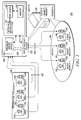
- FIG. 1 a block diagram illustrating a group communications system is shown and indicated at 100.
- the group communications system 100 uses methods for presence information subscription for a group in accordance with embodiments of the present disclosure.
- the group communications system 100 uses methods for presence information subscription for a group in accordance with embodiments of the present disclosure.
- the presence server and the other entities in the group communication system 100 operate in accordance with SIP/SIMPLE and Open Mobile Alliance Push-to-Talk over Cellular (OMA PoC).
- OMA PoC Push-to-Talk over Cellular
- the teachings described herein are in no way limited to this system implementation.
- the system may include more groups, more presentities, more presence servers, and other entities than what is shown in FIG. 1 .
- the group communications system 100 comprises: a presence server 130 that includes a presence server module 131; a group watcher module 132; a group server 120, which in this case is a Push-to-Talk (PTT) server; and a plurality of users 112, 114, 116, 142, 146, and 148, that are all communicatively coupled over a network (not shown) for group presence subscriptions and corresponding presence information distribution, in accordance with the teachings herein.
- PTT Push-to-Talk
- the network can be a wired network, a wireless network, or a network enabling both wired and wireless communications and usually includes a number of network infrastructure devices including, but not limited to, bridges, switches, zone controllers, base station controllers, repeaters, base radios, base stations, base transceiver stations, access points, routers or any other type of infrastructure equipment interfacing any entity in a wireless or wired environment.
- network infrastructure devices including, but not limited to, bridges, switches, zone controllers, base station controllers, repeaters, base radios, base stations, base transceiver stations, access points, routers or any other type of infrastructure equipment interfacing any entity in a wireless or wired environment.
- Each of the users carries a communication device (also referred in here as "client entity") 113, 115, 117, 143, 147, and 149 to communicate with each other and with other network entities such as the presence server 130 and PTT server 120.
- the communication devices are also referred to in the art as access devices, access terminals, user equipment, mobile stations, mobile subscriber units, mobile devices, and the like, and can be any standard communication device such as radios, mobile phones, Personal Digital Assistants (PDAs), laptops, two-way radios, cell phones, and any other device capable of operating in a wired or wireless environment.
- PDAs Personal Digital Assistants
- the communication devices include a memory, one or more network interfaces, and a processing device that are operatively coupled.
- the network interfaces can be used for, one or more of: communicating with the PTT server 120; sending presence information for a presentity to the presence server module 131; receiving presence information, from the group watcher module 132, for a set of subscriptions to a plurality of presentities, in accordance with the teachings herein; and other communications with the presence server 130 and group watcher module 132 to enable the implementation of methods in accordance with the teachings herein.
- the implementation of the network interfaces depends on the particular type of network, i.e., wired and/or wireless, to which the communication devices are connected.
- the interfaces may comprise a serial port interface (e.g., compliant to the RS-232 standard), a parallel port interface, an Ethernet interface, a USB interface, and/or a FireWire interface, and the like.
- the network interfaces comprise elements including processing, modulating, and transceiver elements that are operable in accordance with any one or more standard or proprietary wireless interfaces, wherein some of the functionality of the processing, modulating, and transceiver elements may be performed in the processing device of the communication device through programmed logic such as software applications or firmware stored on the memory device of the communication device.
- the processing device of each communication device is further programmed with logic or code for implementing methods such as method 300 described below by reference to FIG. 3 .
- the memory in the communication devices can include short-term and/or long-term storage of various data, e.g., presence information, configuration information, etc., needed for the functioning of the communication device.
- the memory may further store software or firmware for programming the processing device with the logic or code needed to perform its functionality.
- Group A 110 While connected to the system 100, some of the users may become members of a group, such as a Group A 110 comprising users 112, 114, and 116, to facilitate group communications.
- Group A can be, for example, a pre-arranged group or may be a nested group, a PoC ad-hoc group, etc.
- Group A 110 may comprise more or less group members than shown in FIG. 1 .
- users 112, 114, and 116 upon becoming members of Group A 110, receive presence information updates, for a set of subscriptions to a plurality of presentities, without having to explicitly subscribe to each presentity identified in the set of subscriptions.
- a presentity means a logical entity (that represents a device or person) described by presence information.
- each member of Group A 110 upon becoming a member of the group, receives presence information for a set 140 of presentities that includes users 142, 146, and 148 and/or their devices 143, 147, and 149.
- the presentities in the set 140 may include fewer or more presentities than is shown in FIG.
- PDL Presence Resource List
- Presence information is defined as a dynamic set of information pertaining to a presentity that indicates status, reachability, willingness, and/or capabilities of a presentity to communicate.
- Presence information includes, but is not limited to, such status information as, for instance, user availability, location, network availability, user mood, moving direction, speed, destination, estimated time to reach a destination, distance from a destination, incident phase, completed percentage, stage, or phase of an assigned task during an incident, etc.
- the presence feature that is implemented in the group communication system 100 is performed using proprietary protocols (such as protocols that implement the embodiments of the disclosure described by reference to figures 2 and 3 ) or standard protocols, such as the Presence SIMPLE Specification (current draft dated February 3, 2009) published by OMA that defines an application level specification for a SIP/SIMPLE-based presence service that makes use of the SIP (Session Initiation Protocol) protocol.
- proprietary protocols such as protocols that implement the embodiments of the disclosure described by reference to figures 2 and 3
- standard protocols such as the Presence SIMPLE Specification (current draft dated February 3, 2009) published by OMA that defines an application level specification for a SIP/SIMPLE-based presence service that makes use of the SIP (Session Initiation Protocol) protocol.
- SIP/SIMPLE Session Initiation Protocol
- PTT server 120 includes at least one network interface, processing device, and memory operatively coupled for performing the functionality of the PTT server 120. More particularly, the network interface can be wired, wireless, or a combination of both (examples of which are given above) depending on the particular network to which the PTT server 120 is connected.
- the processing device (examples of which are given below) may be programmed with logic or code to perform its functions, wherein the logic is stored as software and or firmware in a suitable memory device; and/or the processing device may be implemented as a state machine or ASIC.
- PTT server 120 stores group membership information for one or more groups in communication system 100, such as Group A 110.
- the group membership information identifies the one or more groups and the members that constitute the groups.
- the group membership information includes, but is not limited to, group identifiers, and identifiers for the members of each group, wherein the identifiers may include one or more of: a group name or ID, a user name or ID, a device ID, an Internet Protocol address, a phone number, or any other information such as a SIP Uniform Resource Identifier (URI) that may be used to identify a particular group and its members.
- URI Uniform Resource Identifier
- the PTT server 120 stores membership information about Group A 110 and the group members (1-N) that constitute Group A 110; and the PTT server 120 sends at least some of this group membership information to the group watcher module 132 to facilitate implementation of embodiments of the disclosure.
- the PTT server 120 may also manage group memberships for the groups in system 100.
- one or more of the users explicitly joins and becomes a member of the group via message signaling between their communication devices and the PTT server 120 using proprietary or standard protocols such OMA PoC, which is described, for instance, in a group of documents referred to as OMA PoC v 2.0 dated August 6, 2008, and a group of documents referred to as OMA PoC v 2.1 dated December 23, 2008.
- the communication devices 113, 115, and 117 each exchange SIP signaling (e.g., a sequence of SIP INVITE, OK, ACK transactions) with the PTT server 120 to establish a session for the communication group 110 (e.g., a talkgroup when the media being exchanged is voice).
- SIP signaling e.g., a sequence of SIP INVITE, OK, ACK transactions
- the user can use any method, including any existing method, to become a group member via the PTT server 120.
- a user can become a group member implicitly, without sending any messages to the PTT server 120, such as for instance being preconfigured as a member of a pre-arranged group, being added to an existing group by an operator, an application server, or another authorized user in the system 100, etc.
- the presence server 130 includes a memory 138, one or more network interfaces 134, and a processing device 136 operatively coupled for performing the functionality of the presence server 130.
- the network interfaces 134 can be wired, wireless, or a combination of both (examples of which are given above) depending on the particular network to which the presence server 130 is connected.
- the processing device 136 (examples of which are given below) may be programmed with logic or code to perform its functions (such as the functions performed by the presence server module 131 and the group watcher module 132), wherein the logic is stored as software and or firmware in the memory 138 (examples of which are given above); and/or the processing device 136 may be implemented as a state machine or ASIC.
- the presence server performs functionality in accordance with SIP/SIMPLE and further performs functionality to facilitate embodiments of the disclosure.
- Presence server module 131 represents a logical entity or, more particularly, functions that are carried out in the presence server 130 with support from the different hardware units such as the network interface 134, the processing device 136, and the memory 138 of the presence server 130.
- the functions of the presence server module 131 include, but are not limited to, receiving and storing the presence information pertaining to presentities in the system 100, communicating change in presence information to the group watcher module 132, and the like. For example, as shown in FIG. 1 , the presence server module 131 receives presence information 145 pertaining to the set of presentities 140 for Group A 110.
- Group watcher module 132 also represents a logical entity or, more particularly, functions that are carried out with support from different hardware units such as a network interface, a processing device, and memory of an infrastructure device in system 100.
- the group watcher module is implemented on the presence server 130 and communicates with the presence server module 131 using internal "signaling", such as known communication techniques between various processing modules housed within a single physical device.
- the group watcher module is implemented on a separate device, such as the PTT server or a stand-only server, from the presence server and communicates with the presence server module 131 using, for example, SIP signaling.
- the functions of the group watcher module 132 include, but are not limited to, communicating to a presence server module a set of subscriptions, detecting a change in presence information, determining current group members, distributing the presence information to current group members, and the like. Specifically, the group watcher module 132 collects presence information 133 from the presence server module 131 and distributes the collected information to the group members. The group watcher module 132 collects the group membership information from the PTT server 120. In one example implementation, group watcher module 132 in FIG.
- the presence server module 131 collects from the presence server module 131 the presence information 133 of the presentities for which the group watcher module has subscribed for; retrieves information about current members of Group A 110 from the PTT server 120; and distributes the presence information 135 to all the members of Group A 110.
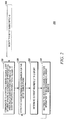
- FIG. 2 a flow diagram illustrating a method for subscription to presence information for a group in a group communications system in accordance with some embodiments is shown and indicated at 200.
- Any logical entity such as the group watcher module 132 (also referred herein as a "group watcher") shown in FIG. 1 , performs at least some of the steps of the method 200, although one or more steps of the method illustrated at 200 can be performed at one or more supporting hardware units external to the group watcher.
- functionality illustrated and described by reference to the flow diagrams of figures 2 and 3 can be performed by means of, for example, a processing device (examples of which are given below) programmed with logic or code to perform its functions, wherein the logic is stored as software and or firmware in a suitable memory device; and/or a processing device implemented as a state machine or ASIC.
- a processing device (examples of which are given below) programmed with logic or code to perform its functions, wherein the logic is stored as software and or firmware in a suitable memory device; and/or a processing device implemented as a state machine or ASIC.
- the group watcher communicates to a presence server module a set (one or more) of subscriptions to a plurality of presentities, wherein each subscription contains a set of event notification criteria for a presentity.
- a subscription is a request for certain presence information about a presentity.
- Event notification criteria for a presentity means one or more criteria defined by a watcher and evaluated by the presence server module to determine under what circumstances the group watcher is to receive the presence information and/or updates to the presence information for that presentity.
- the size of the set of event notification criteria can be zero.
- each subscription in the set of subscriptions contains a set of event notification criteria and identifies a particular presentity to which those criteria are applied. Therefore the set of subscriptions define the presence information about the presentities which are relevant to the group members; and the set of event notification criteria determines the type of presence information and the notification updates for a particular presentity.
- Different subscriptions from the set of subscriptions may contain: the same set of event notification criteria but for different presentities; a different set of event notification criteria for the same presentity; or different event notification criteria for different presentities (for example, a subscription for one presentity includes a set of event notification criteria, and a subscription for a different presentity includes a different set of event notification criteria).
- the group watcher (and not each individual member of the group) that subscribes to the presentities for the group by communicating to the presence server module, the set of subscriptions for the plurality of presentities.
- the group watcher represents the entire group by performing the subscription methods for the group.
- the group watcher communicates the set of subscriptions to the presence server module depends on the particular system implementation. For example, where the group watcher and the presence server module are present in a single (the same) infrastructure entity, such as the presence server 130, the group watcher internally (for instance as described above) communicates the set of subscriptions to the presence server module. However, where the group watcher is not co-located with the presence server module on the same device or where the group watcher communicates the set of subscriptions to a plurality of presence server modules within different physical presence server devices, the subscription process can be based on a SIP SUBSCRIBE method similar to the method described in the SIP/SIMPLE standard, and related SIP reply and/or acknowledgement messages. Where the group watcher communicates the set of subscriptions to multiple presence servers, the group watcher sends different subsets of the subscriptions to each of the different presence servers.
- the group watcher detects a change in presence information for the set of subscriptions.
- the change can be an initial notification by the presence server module of presence information pertaining to a presentity identified in the set of subscriptions, wherein the initial notification of the presence information meets an event notification criteria for that presentity; or the change in presence information can be an update to a particular type of presence information previously reported to the group watcher. Communications of the change in presence information from the presence server module to the group watcher can be via internal signaling where these two modules are co-located.
- the signaling can be based on a SIP NOTIFY method similar to the method described in the SIP/SIMPLE standard, which uses a SIP NOTIFY message and related SIP reply and/or acknowledgement messages.
- the group watcher determines current members of the group to which the change in the presence information is to be distributed. For example, in an illustrative implementation, the group watcher retrieves the current group membership information (e.g., in the form of identifiers for the current group members) from a group server, such as the PTT server 120. As described earlier, the PTT server manages and stores group membership information for one or more groups in the group communications system. The group watcher dynamically retrieves the current group membership information when there is a need for it. In accordance with an alternate embodiment, the group watcher manages and caches (stores) the group membership information and modifies the membership list as updates to it are received in order to maintain the current group members.
- the group watcher retrieves the current group membership information (e.g., in the form of identifiers for the current group members) from a group server, such as the PTT server 120.
- the PTT server manages and stores group membership information for one or more groups in the group communications system.
- the group watcher dynamically
- the group watcher module 132 stores identifiers for the members 1 to N of Group A 110, and updates those identifiers upon detecting (e.g., from the PTT server 120) that a new member is added or an existing member is removed from the group.
- the group watcher distributes the detected change in the presence information to the determined current members.
- the group watcher distributes the changes to the presence information for presentities in the set of subscriptions using a SIP NOTIFY method similar to the method described in the SIP/SIMPLE standard, which uses a modified SIP NOTIFY message (e.g., with extensions) and related SIP reply and/or acknowledgement messages.
- a dialog must be established using the SIP SUBSCRIBE method to enable the SIP NOTIFY method to be used to send presence information to an entity such as the client entity.
- the client entities are not aware of the particular subscriptions for any group that they join; the group watcher manages those subscriptions.
- a new "open subscription" method allows the client entities to establish such a SIP dialog to receive the presence information from the group watcher using SIP signaling.
- the detected change in the presence information can be distributed by using messages such as via Short Message Service (SMS) messaging. After distributing the presence information, the group watcher continues to detect (220) if there are further changes in the presence information for the set of subscriptions.
- SMS Short Message Service
- the group watcher modifies the set of subscriptions and sends the new set of subscriptions to the one or more presence server modules, which allows different presence information than before to be sent to and received by the group members.
- the modification to the subscription can occur at any time and is therefore independent of the other steps of method 200.
- the group watcher can modify the set of subscriptions in one or more of the following ways.
- the group watcher can change the set of event notification criteria for at least one subscription in the set.
- the notification criteria for a subscription can be basic information such as "in the office" or "out of the office” but a change in the notification criteria can be requested for more detail such as to indicate every meting which a user is attending.
- the group watcher can add or remove a presentity from the plurality of presentities, which correspondingly adds or removes a subscription from the set of subscriptions.
- the group watcher can otherwise add or delete a subscription to the set of subscriptions.
- a group may be interested in getting presence information about all the security guards. When a new security guard is hired, an administrator updates the group watcher for this group to include the new employee and the watcher will initiate a new subscription.
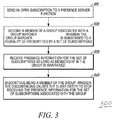
- FIG. 3 a flow diagram illustrating a method of presence information subscription for a group for the users/client entities in a group communications system in accordance with some embodiments is shown and indicated at 300.
- Any client entity such as the communication device 113 associated with the user 112 as shown in FIG. 1 , performs at least some of the steps of the method 300, although one or more steps of the method illustrated at 300 can be performed at one or more supporting hardware units external to the group watcher.
- a group member can send an "open subscription" to the presence server module to open a SIP dialog to enable the group watcher to notify the group member of presence information using the SIP NOTIFY method.
- the open subscription comprises a SIP SUBSCRIBE method similar to the method described in the SIP/SIMPLE standard, which uses a modified SIP SUBSCRIBE message (e.g., with extensions) and related SIP reply and/or acknowledgement messages.
- the open subscription does not identify any presentities or event notification criteria for presentities, but associates (or binds if you will) the resulting SIP dialog to any group that the client entity joins to enable the client entity to receive presence information for any set of subscriptions associated with any group to which the client entity is a member.
- the presence server module communicates to the group watcher any information it needs to use the established SIP dialog to send a SIP NOTIFY message containing current presence information to the group member.
- the client entity becomes a member of a group which is associated with a group watcher.
- a user can become a group member by any number of ways. However, regardless of the means by which the user becomes a group member, as a result of becoming a member the user starts receiving (330) presence information according to the set of subscriptions associated with this group, wherein the set of subscriptions are for a plurality of presentities and were subscribed to by the group watcher for the group. Also, as described above, the presence information the group member receives may change as a result of the group watcher modifying the set of subscriptions associated with the group.
- the group member continues to receive the presence information for the group until the group member discontinues being a member the group, at 340, which can be done using explicit signaling by the client entity (e.g., via a SIP BYE method) or being removed from the membership of the group, for example by being reconfigured, being removed by an operator or other authorized user, etc.
- the group watcher module will no longer provide presence updates relevant to the group. No further action is needed by the client entity.
- a "contains ... a” does not, without more constraints, preclude the existence of additional identical elements in the process, method, article, or apparatus that comprises, has, includes, contains the element.
- the terms “a” and “an” are defined as one or more unless explicitly stated otherwise herein.
- the terms “substantially”, “essentially”, “approximately”, “about” or any other version thereof, are defined as being close to as understood by one of ordinary skill in the art, and in one non-limiting embodiment the term is defined to be within 10%, in another embodiment within 5%, in another embodiment within 1% and in another embodiment within 0.5%.
- the term “coupled” as used herein is defined as connected, although not necessarily directly and not necessarily mechanically.
- a device or structure that is “configured” in a certain way is configured in at least that way, but may also be configured in ways that are not listed.
- processors such as microprocessors, digital signal processors, customized processors and field programmable gate arrays (FPGAs) and unique stored program instructions (including both software and firmware) that control the one or more processors to implement, in conjunction with certain non-processor circuits, some, most, or all of the functions of the method and/or apparatus described herein.
- processors or “processing devices”
- FPGAs field programmable gate arrays
- unique stored program instructions including both software and firmware
- an embodiment can be implemented as a computer-readable storage medium having computer readable code stored thereon for programming a computer (e.g., comprising a processor) to perform a method as described and claimed herein.
- Examples of such computer-readable storage mediums include, but are not limited to, a hard disk, a CD-ROM, an optical storage device, a magnetic storage device, a ROM (Read Only Memory), a PROM (Programmable Read Only Memory), an EPROM (Erasable Programmable Read Only Memory), an EEPROM (Electrically Erasable Programmable Read Only Memory) and a Flash memory.
Landscapes
- Engineering & Computer Science (AREA)
- Computer Networks & Wireless Communication (AREA)
- Signal Processing (AREA)
- Multimedia (AREA)
- Business, Economics & Management (AREA)
- General Business, Economics & Management (AREA)
- Telephonic Communication Services (AREA)
- Mobile Radio Communication Systems (AREA)
Claims (12)
- Verfahren (200) zur Präsenzinformationsanmeldung für eine PTT-Gruppe (PTT = Push-to-Talk), die eine Mehrzahl von Mitgliedern umfasst, wobei das Verfahren (200), bei einem Gruppenbeobachtermodul (132), umfasst:Kommunizieren (210), an mindestens ein Präsenzservermodul (131), eines Satzes von Anmeldungen an eine Mehrzahl von Präsenzentitäten, wobei das Gruppenbeobachtermodul (132) bei der Mehrzahl von Präsenzentitäten durch den Satz von Anmeldungen angemeldet ist und wobei jede Anmeldung einen Satz von Ereignisbenachrichtigungskriterien für eine Präsenzentität enthält;Erfassen (220) einer Änderung der Präsenzinformationen für den Satz von Anmeldungen;in Reaktion auf das Erfassen (220) der Änderung der Präsenzinformationen, Abrufen von Gruppen (110)-Zugehörigkeitsinformationen von einem Gruppenserver;
undBestimmen (230) aktueller Mitglieder der Gruppe (110), basierend auf den Gruppen (110)-Zugehörigkeitsinformationen;wobei das Verfahren (200) gekennzeichnet ist durch:Verbreiten (240) der Änderung der Präsenzinformationen an jedes der aktuellen Mitglieder, basierend auf der Bestimmung der aktuellen Mitglieder (112 - 116) der Gruppe (110), als ein Ergebnis davon, Mitglieder (112-116) der Gruppe (110) zu werden und ohne dass die Mitglieder (112 - 116) der Gruppe (110) explizit eine Anmeldung, die eine oder mehrere der Mehrzahl von Präsenzentitäten identifiziert, oder eine Anmeldung, die ein Ereignisbenachrichtigungskriterium für die eine oder die mehreren der Mehrzahl von Präsenzentitäten identifiziert, senden. - Verfahren (200) gemäß Anspruch 1, das weiterhin umfasst, dass das Gruppenbeobachtermodul (132) den Satz von Anmeldungen dadurch modifiziert (250), dass es einen oder mehrere der folgenden Schritte durchführt:Ändern des Satzes von Ereignisbenachrichtigungskriterien für mindestens eine Anmeldung, wodurch verursacht wird, dass verschiedene Präsenzinformationen an die Mitglieder (112 - 116) der Gruppe (110) gesendet werden;Hinzufügen oder Entfernen einer Präsenzentität zu oder von der Mehrzahl von Präsenzentitäten, wodurch verursacht wird, dass verschiedene Präsenzinformationen an die Mitglieder (112 - 116) der Gruppe (110) gesendet werden; oderHinzufügen einer Anmeldung zu dem Satz von Anmeldungen oder Entfernen einer Anmeldung aus dem Satz von Anmeldungen, wodurch verursacht wird, dass verschiedene Präsenzinformationen an die Mitglieder (112 - 116) der Gruppe (110) gesendet werden.
- Verfahren (200) gemäß einem der vorangehenden Ansprüche, wobei ein Teilsatz der Mehrzahl von Präsenzentitäten durch eine Präsenzressourcenliste identifiziert wird.
- Verfahren (200) gemäß einem der vorangehenden Ansprüche, wobei die Kommunikation (210) ein SIP-SUBSCRIBE-Verfahren (SIP = Sitzungsinitiationsprotokoll) verwendet.
- Verfahren (200) gemäß einem der vorangehenden Ansprüche, wobei die Verbreitung ein SIP-NOTIFY-Verfahren verwendet.
- Verfahren (200) gemäß einem der vorangehenden Ansprüche, wobei die Kommunikation (210) an mindestens ein Präsenzservermodul (130, 131) ein Senden des Satzes von Anmeldungen an eine Mehrzahl von Präsenzservern umfasst, wobei jeder Präsenzserver einen Teilsatz der Anmeldungen empfängt.
- Verfahren (200) gemäß einem der vorangehenden Ansprüche, wobei der Satz von Abonnements ein erstes Ereignisbenachrichtigungskriterium für eine erste Präsenzentität und ein zweites Ereignisbenachrichtigungskriterium umfasst, das von dem ersten Ereignisbenachrichtigungskriterium für eine zweite Präsenzentität, die von der ersten Präsenzentität verschieden ist, verschieden ist.
- Verfahren (200) gemäß einem der vorangehenden Ansprüche, wobei die Bestimmung (230) der aktuellen Mitglieder (112 - 116) der Gruppe (110) umfasst:Abrufen von Identifizierern für die aktuellen Mitglieder (112 - 116) von einem Gruppenserver; und/oderSpeichern von Identifizierern für Mitglieder (112 - 116) der Gruppe (110) und Aktualisierung der Identifizierer der Mitglieder (112 - 116) der Gruppe (110) nach einer Detektion, dass ein neues Mitglied zu der Gruppe (110) hinzugefügt oder ein existierendes Mitglied von der Gruppe (110) entfernt wird.
- Präsenzserver (130) oder Vorrichtung, wobei der Präsenzserver (130) oder die Vorrichtung eine Verarbeitungsvorrichtung (136) umfassen, die geeignet ist das Verfahren gemäß den Ansprüchen 1 - 8 auszuführen.
- Vorrichtung gemäß Anspruch 9, wobei die Vorrichtung ein eigenständiger Server ist.
- Vorrichtung gemäß Anspruch 9, wobei die Vorrichtung ein Push-to-Talk-Server (120) ist.
- System zur Präsenzinformationsanmeldung für eine PTT-Gruppe (PTT = Push-to-Talk), die eine Mehrzahl von Mitgliedern umfasst, wobei das System umfasst:ein Gruppenbeobachtermodul (132), das geeignet ist:an mindestens ein Präsenzservermodul (130, 131) einen Satz von Anmeldungen einer Mehrzahl von Präsenzentitäten zu kommunizieren (210), wobei das Gruppenbeobachtermodul (132) bei der Mehrzahl von Präsenzentitäten durch den Satz von Anmeldungen angemeldet ist und wobei jede Anmeldung einen Satz von Ereignisbenachrichtigungskriterien für eine Präsenzentität enthält;eine Änderung der Präsenzentitäten für den Satz von Anmeldungen zu detektieren (220);in Reaktion auf das Erfassen (220) der Änderung der Präsenzinformationen von einem Gruppenserver Gruppen (110)-Zugehörigkeitsinformationen abzurufen;aktuelle Mitglieder der Gruppe (110) basierend auf den Gruppen (110)-Zugehörigkeitsinformationen zu bestimmen (230); unddie Änderung der Präsenzinformationen an jedes der aktuellen Mitglieder, basierend auf der Bestimmung der aktuellen Mitglieder (112 - 116) der Gruppe (110), zu verbreiten (240), als ein Ergebnis davon, Mitglieder (112 - 116) der Gruppe (110) zu werden, und ohne dass die Mitglieder (112 - 116) der Gruppe (110) explizit eine Anmeldung, die eine oder mehrere der Mehrzahl von Präsenzentitäten identifiziert, oder eine Anmeldung, die ein Ereignisbenachrichtigungskriterium für das eine oder die mehreren der Mehrzahl von Präsenzentitäten identifiziert, senden;eine Anwenderkommunikationsvorrichtung (112, 114, 116, 142, 146, 148), die geeignet ist:einer besonderen PTT-Gruppe (110) beizutreten (320), die mit dem Gruppenbeobachtermodul (132) verknüpft ist; undinfolge eines Beitritts zu der besonderen PTT-Gruppe (110) und ohne eine explizite Anmeldung zum Empfang von Präsenzinformationen bezüglich der Mehrzahl von Präsenzentitäten, Präsenzinformationen für den Satz von Anmeldungen solange zu empfangen (330), wie eine Mitgliedschaft in der besonderen PTT-Gruppe (110) aufrechterhalten wird.
Applications Claiming Priority (2)
| Application Number | Priority Date | Filing Date | Title |
|---|---|---|---|
| US12/544,508 US9516123B2 (en) | 2009-08-20 | 2009-08-20 | Method for presence information subscription in a group communications system |
| PCT/US2010/045603 WO2011022326A1 (en) | 2009-08-20 | 2010-08-16 | Method for presence information subscription in a group communications system |
Publications (2)
| Publication Number | Publication Date |
|---|---|
| EP2467994A1 EP2467994A1 (de) | 2012-06-27 |
| EP2467994B1 true EP2467994B1 (de) | 2016-11-09 |
Family
ID=43005663
Family Applications (1)
| Application Number | Title | Priority Date | Filing Date |
|---|---|---|---|
| EP10751739.3A Active EP2467994B1 (de) | 2009-08-20 | 2010-08-16 | Anmeldesystem für präsenzinformationen in einem gruppenkommunikationssystem |
Country Status (5)
| Country | Link |
|---|---|
| US (2) | US9516123B2 (de) |
| EP (1) | EP2467994B1 (de) |
| AU (1) | AU2010284420B2 (de) |
| CA (1) | CA2770501C (de) |
| WO (1) | WO2011022326A1 (de) |
Families Citing this family (12)
| Publication number | Priority date | Publication date | Assignee | Title |
|---|---|---|---|---|
| US8166121B2 (en) * | 2009-12-31 | 2012-04-24 | International Business Machines Corporation | Situation based presence notification leveraging |
| US8995965B1 (en) * | 2010-03-25 | 2015-03-31 | Whatsapp Inc. | Synthetic communication network method and system |
| US9628831B2 (en) | 2010-03-25 | 2017-04-18 | Whatsapp, Inc. | Multimedia transcoding method and system for mobile devices |
| CN102594718A (zh) * | 2011-01-12 | 2012-07-18 | 阿尔卡特朗讯 | 一种处理呈现信息的方法和装置 |
| US8626192B1 (en) * | 2012-07-24 | 2014-01-07 | Google Inc. | System and method for controlling mobile device operation |
| KR101515043B1 (ko) * | 2012-08-30 | 2015-04-24 | 한국전자통신연구원 | 협업 서비스 제공 서버 및 그 방법, 소셜리티 관리 서버 |
| US10637943B2 (en) * | 2012-09-28 | 2020-04-28 | Avaya Inc. | System and method for composite presence subscriptions |
| US9231776B2 (en) * | 2012-11-07 | 2016-01-05 | Motorola Solutions, Inc. | System and method for MBMS support |
| CN104427111B (zh) * | 2013-08-30 | 2017-08-25 | 联想(北京)有限公司 | 一种控制方法及移动终端 |
| US10862986B2 (en) | 2017-08-11 | 2020-12-08 | Motorola Solutions, Inc. | Device and method for adjusting data communications in presence systems |
| CN111901228B (zh) * | 2020-07-31 | 2022-08-12 | 广东佳米科技有限公司 | 一种基于通讯录的用户组通讯方法及电子设备 |
| US12368689B2 (en) * | 2021-09-30 | 2025-07-22 | Ringcentral, Inc. | Systems and methods for providing aggregate group presence state identifier |
Family Cites Families (14)
| Publication number | Priority date | Publication date | Assignee | Title |
|---|---|---|---|---|
| US20030041101A1 (en) * | 2001-08-24 | 2003-02-27 | Hansche Brian A. | Presence watcher proxy |
| JP3862639B2 (ja) * | 2002-08-30 | 2006-12-27 | キヤノン株式会社 | 露光装置 |
| US8443092B2 (en) * | 2003-12-23 | 2013-05-14 | Alcatel Lucent | Presentity filtering for user preferences |
| US7853696B2 (en) * | 2004-11-19 | 2010-12-14 | Cisco Technology, Inc. | System and method for providing an eCamp feature in a session initiation protocol (SIP) environment |
| US20060211450A1 (en) * | 2005-03-18 | 2006-09-21 | Niekerk Sabine V | Method and apparatus for controlling push-to-talk functions of a mobile communication unit from a unit circuit card |
| US20060248184A1 (en) * | 2005-04-29 | 2006-11-02 | Alcatel | System and method for managing user groups in presence systems |
| US20070010083A1 (en) * | 2005-07-07 | 2007-01-11 | Jong-Ning Aoh | Method of realizing direct bonding between metal wires and copper pads by means of thermosonic wire bonding using shielding gas spraying device |
| WO2007037018A1 (ja) * | 2005-09-29 | 2007-04-05 | Fujitsu Limited | プレゼンス通信システム |
| US8701017B2 (en) * | 2005-11-18 | 2014-04-15 | Alcatel Lucent | System and method for representation of presentity presence states for contacts in a contact list |
| JP4616758B2 (ja) * | 2005-11-30 | 2011-01-19 | 富士通株式会社 | プレゼンス管理方法及びプレゼンス管理装置 |
| CN100464537C (zh) * | 2005-12-30 | 2009-02-25 | 华为技术有限公司 | 共享呈现信息的方法及系统、群组服务器及呈现服务器 |
| US20070266075A1 (en) * | 2006-03-31 | 2007-11-15 | Alcatel | Session presence |
| US20090150403A1 (en) * | 2007-12-11 | 2009-06-11 | William Francis Jerome | Methods and Apparatus for Dynamic Generation and Notification of Virtual Presentities for Presence-Based Awareness |
| US7814051B2 (en) * | 2008-01-09 | 2010-10-12 | International Business Machines Corporation | Managing watcher information in a distributed server environment |
-
2009
- 2009-08-20 US US12/544,508 patent/US9516123B2/en active Active
-
2010
- 2010-08-16 CA CA2770501A patent/CA2770501C/en active Active
- 2010-08-16 WO PCT/US2010/045603 patent/WO2011022326A1/en not_active Ceased
- 2010-08-16 EP EP10751739.3A patent/EP2467994B1/de active Active
- 2010-08-16 AU AU2010284420A patent/AU2010284420B2/en active Active
-
2016
- 2016-08-23 US US15/244,325 patent/US20160366076A1/en not_active Abandoned
Also Published As
| Publication number | Publication date |
|---|---|
| CA2770501C (en) | 2018-05-01 |
| CA2770501A1 (en) | 2011-02-24 |
| US20110047558A1 (en) | 2011-02-24 |
| AU2010284420B2 (en) | 2013-08-22 |
| AU2010284420A1 (en) | 2012-03-01 |
| US20160366076A1 (en) | 2016-12-15 |
| US9516123B2 (en) | 2016-12-06 |
| EP2467994A1 (de) | 2012-06-27 |
| WO2011022326A1 (en) | 2011-02-24 |
Similar Documents
| Publication | Publication Date | Title |
|---|---|---|
| EP2467994B1 (de) | Anmeldesystem für präsenzinformationen in einem gruppenkommunikationssystem | |
| EP2686824B1 (de) | Nachrichtenübermittlung für clients auf benachrichtigungsbasis | |
| KR101292506B1 (ko) | 통신중인 사용자와 관련된 역할을 식별하고 전달하는 방법 | |
| US8155672B2 (en) | Scalable geo-location event processing | |
| US20120096114A1 (en) | Method and system for the transport of asynchronous aspects using a context aware mechanism | |
| WO2014033586A1 (en) | Co-activation for authenticating a user's registration | |
| KR20130018414A (ko) | 업데이트가능 전자 명함들을 가능하게 하는 통합 주소록 | |
| CA2773987C (en) | Method for using recording rules and previous value selection rules for presence information in a communications system | |
| US8903789B2 (en) | Derived presence-aware service from associated entities | |
| US8407352B2 (en) | Method and application server for using a SIP service from a non-SIP device | |
| EP3391618A1 (de) | Konfigurierbare verwendung der autorisierungsrichtlinie für lokale präsenz | |
| US20130060938A1 (en) | Method and system for monitoring of aspects for use by a trigger | |
| US8719906B2 (en) | Reactive authorization for publications | |
| HK1191431B (en) | Messaging for notification-based clients | |
| HK1191431A (en) | Messaging for notification-based clients | |
| Yoo et al. | A Study of Presence Services in SIP-Based Group Communication Systems |
Legal Events
| Date | Code | Title | Description |
|---|---|---|---|
| PUAI | Public reference made under article 153(3) epc to a published international application that has entered the european phase |
Free format text: ORIGINAL CODE: 0009012 |
|
| 17P | Request for examination filed |
Effective date: 20120320 |
|
| AK | Designated contracting states |
Kind code of ref document: A1 Designated state(s): AL AT BE BG CH CY CZ DE DK EE ES FI FR GB GR HR HU IE IS IT LI LT LU LV MC MK MT NL NO PL PT RO SE SI SK SM TR |
|
| DAX | Request for extension of the european patent (deleted) | ||
| 17Q | First examination report despatched |
Effective date: 20140213 |
|
| GRAP | Despatch of communication of intention to grant a patent |
Free format text: ORIGINAL CODE: EPIDOSNIGR1 |
|
| INTG | Intention to grant announced |
Effective date: 20160616 |
|
| GRAS | Grant fee paid |
Free format text: ORIGINAL CODE: EPIDOSNIGR3 |
|
| GRAA | (expected) grant |
Free format text: ORIGINAL CODE: 0009210 |
|
| AK | Designated contracting states |
Kind code of ref document: B1 Designated state(s): AL AT BE BG CH CY CZ DE DK EE ES FI FR GB GR HR HU IE IS IT LI LT LU LV MC MK MT NL NO PL PT RO SE SI SK SM TR |
|
| REG | Reference to a national code |
Ref country code: GB Ref legal event code: FG4D |
|
| REG | Reference to a national code |
Ref country code: AT Ref legal event code: REF Ref document number: 844832 Country of ref document: AT Kind code of ref document: T Effective date: 20161115 Ref country code: CH Ref legal event code: EP |
|
| REG | Reference to a national code |
Ref country code: DE Ref legal event code: R082 Ref document number: 602010037853 Country of ref document: DE Representative=s name: SCHUMACHER & WILLSAU PATENTANWALTSGESELLSCHAFT, DE Ref country code: DE Ref legal event code: R081 Ref document number: 602010037853 Country of ref document: DE Owner name: MOTOROLA SOLUTIONS, INC., CHICAGO, US Free format text: FORMER OWNER: MOTOROLA SOLUTIONS, INC., SCHAUMBURG, ILL., US |
|
| REG | Reference to a national code |
Ref country code: IE Ref legal event code: FG4D |
|
| RAP2 | Party data changed (patent owner data changed or rights of a patent transferred) |
Owner name: MOTOROLA SOLUTIONS, INC. |
|
| REG | Reference to a national code |
Ref country code: DE Ref legal event code: R096 Ref document number: 602010037853 Country of ref document: DE |
|
| PG25 | Lapsed in a contracting state [announced via postgrant information from national office to epo] |
Ref country code: LV Free format text: LAPSE BECAUSE OF FAILURE TO SUBMIT A TRANSLATION OF THE DESCRIPTION OR TO PAY THE FEE WITHIN THE PRESCRIBED TIME-LIMIT Effective date: 20161109 |
|
| REG | Reference to a national code |
Ref country code: LT Ref legal event code: MG4D |
|
| REG | Reference to a national code |
Ref country code: NL Ref legal event code: MP Effective date: 20161109 |
|
| REG | Reference to a national code |
Ref country code: AT Ref legal event code: MK05 Ref document number: 844832 Country of ref document: AT Kind code of ref document: T Effective date: 20161109 |
|
| PG25 | Lapsed in a contracting state [announced via postgrant information from national office to epo] |
Ref country code: NO Free format text: LAPSE BECAUSE OF FAILURE TO SUBMIT A TRANSLATION OF THE DESCRIPTION OR TO PAY THE FEE WITHIN THE PRESCRIBED TIME-LIMIT Effective date: 20170209 Ref country code: GR Free format text: LAPSE BECAUSE OF FAILURE TO SUBMIT A TRANSLATION OF THE DESCRIPTION OR TO PAY THE FEE WITHIN THE PRESCRIBED TIME-LIMIT Effective date: 20170210 Ref country code: LT Free format text: LAPSE BECAUSE OF FAILURE TO SUBMIT A TRANSLATION OF THE DESCRIPTION OR TO PAY THE FEE WITHIN THE PRESCRIBED TIME-LIMIT Effective date: 20161109 Ref country code: NL Free format text: LAPSE BECAUSE OF FAILURE TO SUBMIT A TRANSLATION OF THE DESCRIPTION OR TO PAY THE FEE WITHIN THE PRESCRIBED TIME-LIMIT Effective date: 20161109 Ref country code: SE Free format text: LAPSE BECAUSE OF FAILURE TO SUBMIT A TRANSLATION OF THE DESCRIPTION OR TO PAY THE FEE WITHIN THE PRESCRIBED TIME-LIMIT Effective date: 20161109 |
|
| PG25 | Lapsed in a contracting state [announced via postgrant information from national office to epo] |
Ref country code: AT Free format text: LAPSE BECAUSE OF FAILURE TO SUBMIT A TRANSLATION OF THE DESCRIPTION OR TO PAY THE FEE WITHIN THE PRESCRIBED TIME-LIMIT Effective date: 20161109 Ref country code: ES Free format text: LAPSE BECAUSE OF FAILURE TO SUBMIT A TRANSLATION OF THE DESCRIPTION OR TO PAY THE FEE WITHIN THE PRESCRIBED TIME-LIMIT Effective date: 20161109 Ref country code: HR Free format text: LAPSE BECAUSE OF FAILURE TO SUBMIT A TRANSLATION OF THE DESCRIPTION OR TO PAY THE FEE WITHIN THE PRESCRIBED TIME-LIMIT Effective date: 20161109 Ref country code: PT Free format text: LAPSE BECAUSE OF FAILURE TO SUBMIT A TRANSLATION OF THE DESCRIPTION OR TO PAY THE FEE WITHIN THE PRESCRIBED TIME-LIMIT Effective date: 20170309 Ref country code: IS Free format text: LAPSE BECAUSE OF FAILURE TO SUBMIT A TRANSLATION OF THE DESCRIPTION OR TO PAY THE FEE WITHIN THE PRESCRIBED TIME-LIMIT Effective date: 20170309 Ref country code: FI Free format text: LAPSE BECAUSE OF FAILURE TO SUBMIT A TRANSLATION OF THE DESCRIPTION OR TO PAY THE FEE WITHIN THE PRESCRIBED TIME-LIMIT Effective date: 20161109 Ref country code: PL Free format text: LAPSE BECAUSE OF FAILURE TO SUBMIT A TRANSLATION OF THE DESCRIPTION OR TO PAY THE FEE WITHIN THE PRESCRIBED TIME-LIMIT Effective date: 20161109 |
|
| PG25 | Lapsed in a contracting state [announced via postgrant information from national office to epo] |
Ref country code: EE Free format text: LAPSE BECAUSE OF FAILURE TO SUBMIT A TRANSLATION OF THE DESCRIPTION OR TO PAY THE FEE WITHIN THE PRESCRIBED TIME-LIMIT Effective date: 20161109 Ref country code: CZ Free format text: LAPSE BECAUSE OF FAILURE TO SUBMIT A TRANSLATION OF THE DESCRIPTION OR TO PAY THE FEE WITHIN THE PRESCRIBED TIME-LIMIT Effective date: 20161109 Ref country code: RO Free format text: LAPSE BECAUSE OF FAILURE TO SUBMIT A TRANSLATION OF THE DESCRIPTION OR TO PAY THE FEE WITHIN THE PRESCRIBED TIME-LIMIT Effective date: 20161109 Ref country code: DK Free format text: LAPSE BECAUSE OF FAILURE TO SUBMIT A TRANSLATION OF THE DESCRIPTION OR TO PAY THE FEE WITHIN THE PRESCRIBED TIME-LIMIT Effective date: 20161109 Ref country code: SK Free format text: LAPSE BECAUSE OF FAILURE TO SUBMIT A TRANSLATION OF THE DESCRIPTION OR TO PAY THE FEE WITHIN THE PRESCRIBED TIME-LIMIT Effective date: 20161109 |
|
| REG | Reference to a national code |
Ref country code: DE Ref legal event code: R097 Ref document number: 602010037853 Country of ref document: DE |
|
| PG25 | Lapsed in a contracting state [announced via postgrant information from national office to epo] |
Ref country code: SM Free format text: LAPSE BECAUSE OF FAILURE TO SUBMIT A TRANSLATION OF THE DESCRIPTION OR TO PAY THE FEE WITHIN THE PRESCRIBED TIME-LIMIT Effective date: 20161109 Ref country code: BG Free format text: LAPSE BECAUSE OF FAILURE TO SUBMIT A TRANSLATION OF THE DESCRIPTION OR TO PAY THE FEE WITHIN THE PRESCRIBED TIME-LIMIT Effective date: 20170209 Ref country code: BE Free format text: LAPSE BECAUSE OF FAILURE TO SUBMIT A TRANSLATION OF THE DESCRIPTION OR TO PAY THE FEE WITHIN THE PRESCRIBED TIME-LIMIT Effective date: 20161109 Ref country code: IT Free format text: LAPSE BECAUSE OF FAILURE TO SUBMIT A TRANSLATION OF THE DESCRIPTION OR TO PAY THE FEE WITHIN THE PRESCRIBED TIME-LIMIT Effective date: 20161109 |
|
| PLBE | No opposition filed within time limit |
Free format text: ORIGINAL CODE: 0009261 |
|
| STAA | Information on the status of an ep patent application or granted ep patent |
Free format text: STATUS: NO OPPOSITION FILED WITHIN TIME LIMIT |
|
| 26N | No opposition filed |
Effective date: 20170810 |
|
| PG25 | Lapsed in a contracting state [announced via postgrant information from national office to epo] |
Ref country code: SI Free format text: LAPSE BECAUSE OF FAILURE TO SUBMIT A TRANSLATION OF THE DESCRIPTION OR TO PAY THE FEE WITHIN THE PRESCRIBED TIME-LIMIT Effective date: 20161109 |
|
| REG | Reference to a national code |
Ref country code: CH Ref legal event code: PL |
|
| PG25 | Lapsed in a contracting state [announced via postgrant information from national office to epo] |
Ref country code: MC Free format text: LAPSE BECAUSE OF FAILURE TO SUBMIT A TRANSLATION OF THE DESCRIPTION OR TO PAY THE FEE WITHIN THE PRESCRIBED TIME-LIMIT Effective date: 20161109 |
|
| PG25 | Lapsed in a contracting state [announced via postgrant information from national office to epo] |
Ref country code: LI Free format text: LAPSE BECAUSE OF NON-PAYMENT OF DUE FEES Effective date: 20170831 Ref country code: CH Free format text: LAPSE BECAUSE OF NON-PAYMENT OF DUE FEES Effective date: 20170831 |
|
| REG | Reference to a national code |
Ref country code: FR Ref legal event code: ST Effective date: 20180430 |
|
| REG | Reference to a national code |
Ref country code: IE Ref legal event code: MM4A |
|
| PG25 | Lapsed in a contracting state [announced via postgrant information from national office to epo] |
Ref country code: LU Free format text: LAPSE BECAUSE OF NON-PAYMENT OF DUE FEES Effective date: 20170816 |
|
| PG25 | Lapsed in a contracting state [announced via postgrant information from national office to epo] |
Ref country code: IE Free format text: LAPSE BECAUSE OF NON-PAYMENT OF DUE FEES Effective date: 20170816 |
|
| PG25 | Lapsed in a contracting state [announced via postgrant information from national office to epo] |
Ref country code: FR Free format text: LAPSE BECAUSE OF NON-PAYMENT OF DUE FEES Effective date: 20170831 |
|
| PG25 | Lapsed in a contracting state [announced via postgrant information from national office to epo] |
Ref country code: MT Free format text: LAPSE BECAUSE OF NON-PAYMENT OF DUE FEES Effective date: 20170816 |
|
| PG25 | Lapsed in a contracting state [announced via postgrant information from national office to epo] |
Ref country code: HU Free format text: LAPSE BECAUSE OF FAILURE TO SUBMIT A TRANSLATION OF THE DESCRIPTION OR TO PAY THE FEE WITHIN THE PRESCRIBED TIME-LIMIT; INVALID AB INITIO Effective date: 20100816 |
|
| PG25 | Lapsed in a contracting state [announced via postgrant information from national office to epo] |
Ref country code: CY Free format text: LAPSE BECAUSE OF NON-PAYMENT OF DUE FEES Effective date: 20161109 |
|
| PG25 | Lapsed in a contracting state [announced via postgrant information from national office to epo] |
Ref country code: MK Free format text: LAPSE BECAUSE OF FAILURE TO SUBMIT A TRANSLATION OF THE DESCRIPTION OR TO PAY THE FEE WITHIN THE PRESCRIBED TIME-LIMIT Effective date: 20161109 |
|
| PG25 | Lapsed in a contracting state [announced via postgrant information from national office to epo] |
Ref country code: TR Free format text: LAPSE BECAUSE OF FAILURE TO SUBMIT A TRANSLATION OF THE DESCRIPTION OR TO PAY THE FEE WITHIN THE PRESCRIBED TIME-LIMIT Effective date: 20161109 |
|
| PG25 | Lapsed in a contracting state [announced via postgrant information from national office to epo] |
Ref country code: AL Free format text: LAPSE BECAUSE OF FAILURE TO SUBMIT A TRANSLATION OF THE DESCRIPTION OR TO PAY THE FEE WITHIN THE PRESCRIBED TIME-LIMIT Effective date: 20161109 |
|
| REG | Reference to a national code |
Ref country code: DE Ref legal event code: R079 Ref document number: 602010037853 Country of ref document: DE Free format text: PREVIOUS MAIN CLASS: H04L0029080000 Ipc: H04L0065000000 |
|
| P01 | Opt-out of the competence of the unified patent court (upc) registered |
Effective date: 20230523 |
|
| PGFP | Annual fee paid to national office [announced via postgrant information from national office to epo] |
Ref country code: DE Payment date: 20250724 Year of fee payment: 16 |
|
| PGFP | Annual fee paid to national office [announced via postgrant information from national office to epo] |
Ref country code: GB Payment date: 20250724 Year of fee payment: 16 |
|
| REG | Reference to a national code |
Ref country code: DE Ref legal event code: R082 Ref document number: 602010037853 Country of ref document: DE Representative=s name: PUSCHMANN BORCHERT KAISER KLETTNER PATENTANWAE, DE Ref country code: DE Ref legal event code: R082 Ref document number: 602010037853 Country of ref document: DE Representative=s name: PATCARE PATENTANWAELTE PARTNERSCHAFT MBB, DE |