EP2467685B1 - Lärmexpositionsanalyse für eine flugzeugkabine - Google Patents
Lärmexpositionsanalyse für eine flugzeugkabine Download PDFInfo
- Publication number
- EP2467685B1 EP2467685B1 EP10747985.9A EP10747985A EP2467685B1 EP 2467685 B1 EP2467685 B1 EP 2467685B1 EP 10747985 A EP10747985 A EP 10747985A EP 2467685 B1 EP2467685 B1 EP 2467685B1
- Authority
- EP
- European Patent Office
- Prior art keywords
- flight
- mission
- noise exposure
- parameters
- noise
- Prior art date
- Legal status (The legal status is an assumption and is not a legal conclusion. Google has not performed a legal analysis and makes no representation as to the accuracy of the status listed.)
- Active
Links
Images




Classifications
-
- G—PHYSICS
- G01—MEASURING; TESTING
- G01H—MEASUREMENT OF MECHANICAL VIBRATIONS OR ULTRASONIC, SONIC OR INFRASONIC WAVES
- G01H3/00—Measuring characteristics of vibrations by using a detector in a fluid
- G01H3/10—Amplitude; Power
- G01H3/14—Measuring mean amplitude; Measuring mean power; Measuring time integral of power
Definitions
- US 2006/0191326 discloses multilateration techniques that are used to provide accurate aircraft tracking data for aircraft on the ground and in the vicinity of an airport. From this data, aircraft noise and operations management may be enhanced. Aircraft noise may be calculated virtually using track data in real-time and provided to a user to determine noise violations. Tracking data may be used to control noise monitoring stations to get out ambient noise. Aircraft emissions, both on the ground and in the air may be determined using tracking data. This another data may be displayed in real-time or generated in reports, and/or may be displayed on a website for viewing by airport operators and/or members of the public.
- WO 95/22488 discloses an "adaptive synchrophaser" for modifying the phase angle relationship between aircraft propellers to reduce cabin noise and/or vibration. Rather than use a constant pre-selected angle foe a specific passenger cabin configuration during a particular flight mode (e.g. during liftoff or cruise), the synchrophaser periodically monitors actual operating conditions and modifies the phase angle accordingly.
- Embodiments of systems and methods in accordance with the present disclosure may provide improved aircraft cabin noise exposure analysis. More specifically, the systems and methods described herein may utilize at least one of simulation data and historical data to develop noise exposure profiles for various locations within an aircraft and under various operating conditions. Such noise exposure profiles may be stored in a computer readable memory, e.g., a database. Users may then access the database through a suitable user interface to assess noise exposure profiles for pilots and various categories of aircraft crew. For example, flight crew schedulers and regulatory compliance personnel may access the system to assess noise exposure levels for pilots and flight crew. Flight schedules and/or flight profiles may be changed to manage noise exposure.
- the invention provides a computer-implemented method according to claim 1 and a computer based system according to claim 5. Preferred embodiments are covered by the dependent claims. Further areas of applicability will become apparent from the description provided herein. It should be understood that the description and specific examples are intended for purposes of illustration only and are not intended to limit the scope of the present disclosure
- the system described herein may be used to assess noise exposure for pilots and various flight crew members. For example, in some embodiments scheduling personnel may use the system to assist in creating flight schedules and/or by compliance personnel in determining compliance with noise exposure regulations.
- Flight mission data and personnel data may be entered by a user interface. Noise exposure data for the personnel and flight mission are generated and presented on a display. In addition, a warning may be presented if noise exposure limits for the personnel exceed a threshold. Flight mission parameters may be revised and/or personnel changes may be implemented in order to bring noise exposure parameters within acceptable limits. Reports may be generated on a suitable user interface.
- flight mission refers to a defined flight schedule
- flight leg or “leg” refers to a component of the flight schedule bound by one takeoff and one landing.
- a flight mission may include one or more legs.
- a flight leg may comprise a plurality of flight segments.
- Fig. 1 is a schematic illustration of a system 100 for aircraft noise exposure analysis according to embodiments.
- the system 100 comprises multiple data stores for test data 110, dosimeter data 112, location data 114, and mission profile data 116.
- the system 100 further comprises a noise exposure analysis module 120, a display module 122, a mission profile selection module 124, a mission revision module 126, a reporting module 130 and a user interface 140.
- Test data 110 may comprise noise exposure data for various locations and in various operation conditions on an aircraft.
- Test data 110 may be collected during one or more test flights of an aircraft.
- Dosimeter data 112 may comprise noise dosage data for various locations and operating conditions on a specific aircraft.
- Location data 114 may comprise data which correlates crew position indicators with locations on an aircraft. For example, a pilot indicator is correlated with the pilot location on the aircraft, a copilot indicator is correlated with the copilot location on the aircraft. Flight attendant indicators may be correlated with different locations at different stages of the flight.
- a forward flight attendant position may be correlated with the forward flight attendant chair during the take-off segment of a flight, then with the forward aisle during service segment of the flight, etc.
- an aft flight attendant position may be correlated with the aft flight attendant chair during the take-off segment of a flight, then with the aft aisle during a service segment of the flight, etc.
- Mission profile data 116 may comprise flight data for various segments of a flight mission. The various modules and the data stores 110, 112, 114, 116 will be discussed in greater detail below.
- Fig. 2 is a flowchart illustrating high-level operations of a system for aircraft noise exposure analysis according to embodiments.
- the system 100 receives a request for an analysis of noise exposure during a flight.
- the request may be received via a user interface 140.
- Figs. 6-8 are screen shots of an exemplary user interfaces for accessing the system 100.
- the user interface enables a user to input flight mission attributes into the flight mission profile data store 116.
- the flight mission attributes may include an airline code, an airplane model number, an engine type, an engine power unit, etc.
- a second user interface ( Fig. 8 ) enables a user to input various data regarding various segments of a flight leg, e.g., an operational parameter for each segment of the flight leg, a date and time for each segment of the flight leg, a duration for each segment of the flight leg, and an altitude and airspeed indicator for each segment of the flight leg.
- an operational parameter for each segment of the flight leg e.g., a date and time for each segment of the flight leg, a duration for each segment of the flight leg, and an altitude and airspeed indicator for each segment of the flight leg.
- a third user interface ( Fig. 7 ) permits a user to see a visual depiction of the mission profile.
- noise parameters corresponding to the data input for the various segments of the legs on the flight mission are retrieved.
- the noise parameters may be retrieved from the test data 110.
- the noise exposure (LpA) for each segment of the flight leg may be retrieved from the test data 110 and presented on the user interface 140.
- a time weighted noise exposure parameter (Leq) may be associated with each segment of the leg.
- a user interface Fig. 10 ) permits a user to see a visual depiction of noise exposure for a selected crew position on the selected flight mission.
- a total noise exposure parameter is determined for the flight leg and/or the entire flight mission.
- the total noise exposure may be computed as a time-weighted average noise exposure summed over the various flight segments for each leg of the flight mission.
- the total noise exposure is presented on the user interface.
- noise exposure parameters for the mission (Leq and Lex) are presented on the user interface.
- Leq refers to the total noise exposure for a crew member regardless how many hours the crew worked. For example, the crew may work a ten hour mission or a five hour mission.
- Leq refers to the total noise exposure for the mission.
- Lex refers to an eight hour normalized noise exposure to standardize the exposure measure.
- finalizing the flight schedule may comprise saving the flight schedule in a computer readable memory.
- another flight schedule may be retrieved and processed.
- control passes to operation 240 and a warning may be presented on the user interface. In response to the warning, the user may decide to restart a scheduling process, or to change one or more assignments on one or more segments or legs of the flight mission.
- a crew member may be relocated from a forward to an aft position, or vise-versa, to change the level of noise to which the crew member is exposed.
- the various noise exposure parameters may then be recalculated and tested against the threshold again. This process may continue until a suitable schedule is determined for the flight crew.
- Fig. 3 is a flowchart illustrating operations for creating a mission in a system for aircraft noise exposure analysis according to embodiments.
- a user of the system 100 may generate one or more mission profiles which are stored in mission profile data 116.
- a flight mission may either be created from raw data or an existing flight mission may be retrieved from memory and cloned or revised.
- a mission may be selected (operation 315) from the mission profile data 116 using the user interface 140.
- control passes to operation 318 and a user of the system enters the mission information from raw data (see, e.g., Fig. 8 ).
- the mission legs are to be cloned then one or more legs are selected (operation 322) from the mission profile data 116 using the user interface 140.
- control passes to operation 325 and the user may enter the flight parameters for each segment in the user interface (see, e.g., Fig. 8 ).
- Fig. 3 is a flowchart illustrating operations for evaluating noise exposure during a mission in a system for aircraft noise exposure analysis according to embodiments. Referring to Fig. 4 , at operation 410 a mission and a specific leg is selected and at operation 415 a crew position on the mission leg is selected. If desired, one or more of the attributes of the various segments of the leg may be revised in the user interface (see, e.g., Fig. 8 ).
- the noise exposure (LpA) for each segment of the flight leg may be retrieved from the test data 110 or Dosimeter data 112. If, at operation 425, the flight crew position in question is a pilot position, then control passes to operation 430 and the noise exposure parameters may be adjusted for an active headset worn by the pilot.
- the time-weighted noise exposure parameters are calculated.
- n i is the number of observations during the period of T i for the ith segment.
- a user would like to predict noise exposure for a flight crew position that moves around the cabin.
- a threshold e.g. 15,000 feet
- the user may select data (either fixed or roving) from locations/legs/missions of in-service flight tests.
- noise exposure parameters for pilots may need to be adjusted to compensate for the pilot's headset.
- ⁇ are estimated parameters
- x is the ATC dosimeter readings.
- the normal values of ⁇ are between 1 and 1.03, and the normal values of ⁇ are between -30 and -40.
- the pilot may wear an active headset to reduce noise exposure, and the active headset has a factor - ⁇ , where ⁇ >0.
- the mission has m segments and each segment has start time Tss i and end time Tse i , where i is 1 to m.
- Equation (16) may then be applied to equations (2) to (3) to get the noise exposure of the segment and the mission.
- T j represents the time for dBA ATC , which is the Dosimeter reading for the ATC.
- Equation (18) may then be applied to equations (2) to (3) to get the noise exposure of the segment and the mission.
- the time-weighted noise exposure data generated in operation 435 is stored in a computer readable medium, e.g., in the dosimeter data 112.
- the system 100 may be used in scheduling operations for pilots and other flight crew members. During scheduling operations, the system 100 may be used to determine whether a particular employee's work schedule subjects the employee to noise levels which exceed a threshold.
- Fig. 5 is a flowchart illustrating operations for evaluating noise exposure for specific personnel during one or more missions in a system for aircraft noise exposure analysis according to embodiments. Referring to Fig. 5 , at operation 510 a personnel identifier associated with a particular employee (e.g., pilot or flight crew) is selected from a computer readable memory. At operation 515 one or more flight missions and crew positions for the flight missions are selected for the personnel identifier. At operation 520, the total noise exposure for the personnel identifier is calculated as described with reference to operation 435.
- the error routine may comprise presenting a noise exposure and reschedule notice on a suitable user interface such that a human interacting with the system can reschedule the personnel identifier on one or more different flights and/or a different crew position in order to reduce the noise exposure for the personnel identifier.
- the system 100 may be invoked by a computer based personnel scheduling system.
- the error routine may comprise transmitting a reschedule notice to the computer based personnel scheduling system.
- the computer based personnel scheduling system may reschedule the personnel identifier on one or more different flights and/or a different crew position in order to reduce the noise exposure for the personnel identifier.
- control passes to operation 530 and one or more noise exposure reports for the personnel identifier.
- the flight missions/crew positions may be approved.
- FIG. 12 is a schematic illustration of a computing device which may be adapted to implement a system for aircraft noise exposure analysis in accordance with some embodiments.
- system 1200 includes a computing device 1208 and one or more accompanying input/output devices including a display 1202 having a screen 1204, one or more speakers 1206, a keyboard 1210, one or more other I/O device(s) 1212, and a mouse 1214.
- the other I/O device(s) 1212 may include a touch screen, a voice-activated input device, a track ball, and any other device that allows the system 1200 to receive input from a user.
- the computing device 1208 includes system hardware 1220 and memory 1230, which may be implemented as random access memory and/or read-only memory.
- a file store 1280 may be communicatively coupled to computing device 1208.
- File store 1280 may be internal to computing device 108 such as, e.g., one or more hard drives, CD-ROM drives, DVD-ROM drives, or other types of storage devices.
- File store 180 may also be external to computer 1208 such as, e.g., one or more external hard drives, network attached storage, or a separate storage network.
- System hardware 1220 may include one or more processors 1222, a two graphics processor(s) 1224, network interfaces 1226, and bus structures 1228As used herein, the term "processor” means any type of computational element, such as but not limited to, a microprocessor, a microcontroller, a complex instruction set computing (CISC) microprocessor, a reduced instruction set (RISC) microprocessor, a very long instruction word (VLIW) microprocessor, or any other type of processor or processing circuit.
- CISC complex instruction set computing
- RISC reduced instruction set
- VLIW very long instruction word
- Graphics processor(s) 1224 may function as adjunct processors that manages graphics and/or video operations. Graphics processor(s) 1224 may be integrated onto the motherboard of computing system 1200 or may be coupled via an expansion slot on the motherboard.
- network interface 1226 could be a wired interface such as an Ethernet interface (see, e.g., Institute of Electrical and Electronics Engineers/IEEE 802.3-2002) or a wireless interface such as an IEEE 802.11a, b or g-compliant interface (see, e.g., IEEE Standard for IT-Telecommunications and information exchange between systems LAN/MAN--Part II: Wireless LAN Medium Access Control (MAC) and Physical Layer (PHY) specifications Amendment 4: Further Higher Data Rate Extension in the 2.4 GHz Band, 802.11G-2003).
- GPRS general packet radio service
- Bus structures 1228 connect various components of system hardware 1228.
- bus structures 1228 may be one or more of several types of bus structure(s) including a memory bus, a peripheral bus or external bus, and/or a local bus using any variety of available bus architectures including, but not limited to, 11-bit bus, Industrial Standard Architecture (ISA), MicroChannel Architecture (MSA), Extended ISA (EISA), Intelligent Drive Electronics (IDE), VESA Local Bus (VLB), Peripheral Component Interconnect (PCI), Universal Serial Bus (USB), Advanced Graphics Port (AGP), Personal Computer Memory Card International Association bus (PCMCIA), and Small Computer Systems Interface (SCSI).
- ISA Industrial Standard Architecture
- MSA MicroChannel Architecture
- EISA Extended ISA
- IDE Intelligent Drive Electronics
- VLB VESA Local Bus
- PCI Peripheral Component Interconnect
- USB Universal Serial Bus
- AGP Advanced Graphics Port
- PCMCIA Personal Computer Memory Card International Association bus
- SCSI Small Computer Systems Interface
- Memory 1230 may include an operating system 1240 for managing operations of computing device 1208.
- operating system 1240 includes a hardware interface module 1254 that provides an interface to system hardware 1220.
- operating system 1240 may include a file system 1250 that manages files used in the operation of computing device 1208 and a process control subsystem 1252 that manages processes executing on computing device 1208.
- Operating system 1240 may include (or manage) one or more communication interfaces that may operate in conjunction with system hardware 1220 to transceive data packets and/or data streams from a remote source. Operating system 1240 may further include a system call interface module 142 that provides an interface between the operating system 1240 and one or more application modules resident in memory 130. Operating system 1240 may be embodied as a Windows® brand operating system or as a UNIX operating system or any derivative thereof (e.g., Linux, Solaris, etc.), or other operating systems.
- the computing device 1208 may be embodied as a personal computer, a laptop computer, or another computing device.
- memory 1230 includes a graphics processor selection module 162 to switching between graphics processors in computing system 100.
- the memory 1230 incorporates a noise exposure analysis module 1260, a mission profile selection module 1262, a mission revision module 1264, and a reporting module 1266. These modules may correspond to the analogous modules depicted in Fig. 1 .
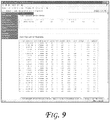
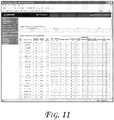
- the respective modules 1260, 1262, 1264, 1266 may include logic instructions encoded in a computer-readable medium which, when executed by processor 1222, cause the processor 1222 to evaluate aircraft cabin nose by performing the operations depicted in Figs. 2-5 and using one or more of the user interfaces depicted in Figs. 6-11 .
- the system comprises one or more data stores which may be loaded with noise measurements taken in different locations and under different operating conditions in the aircraft. Users can interact with the system via one or more user interfaces to develop parameters for different segments of legs of a flight mission.
- the data input via the user interface is received by the analysis module, which uses the data to determine noise exposure levels.
- the noise exposure levels may be compared to one or more thresholds, and a warning may be presented if the noise levels exceed the threshold(s).
- the parameters for different segments of legs of a flight mission may be adjusted, and noise exposure may be recalculated with the adjusted parameters. The recalculated noise exposure levels may be compared to thresholds again.
- the noise exposure analysis parameters may be stored in a computer readable medium and/or printed to a report. The system may present a warning if the noise exposure analysis indicates that a pilot or member of a flight crew may be exposed to excessive noise.
- the acts described may be implemented by a computer, controller, processor, programmable device, firmware, or any other suitable device, and may be based on instructions stored on one or more computer-readable media or otherwise stored or programmed into such devices ( e.g . including transmitting computer-readable instructions in real time to such devices).
- the acts described above may represent computer instructions that, when executed by one or more processors, perform the recited operations.
- the computer-readable media can be any available media that can be accessed by a device to implement the instructions stored thereon.
Landscapes
- Physics & Mathematics (AREA)
- General Physics & Mathematics (AREA)
- Traffic Control Systems (AREA)
- Measurement Of Mechanical Vibrations Or Ultrasonic Waves (AREA)
- Management, Administration, Business Operations System, And Electronic Commerce (AREA)
Claims (8)
- Computerimplementiertes Verfahren zum Bewerten des Lärms in einer Flugzeugkabine, wobei das Verfahren Folgendes aufweist:Empfangen (210) einer ersten Anfrage nach einer Lärmanalyse für eine Flugzeugkabine, wobei die Anfrage mehrere Flugparameter, die einer ersten Flugmission zugeordnet sind, aufweist;Abrufen (215) von mehreren Lärmparametern, die den mehreren Flugparametern für die erste Flugmission zugeordnet sind, von einem computerlesbaren Speicher;Feststellen (220) eines gesamten Lärmexpositionsparameters, welcher der ersten Flugmission zugeordnet ist, gemäß den mehreren Lärmparametern;Erzeugen (225) einer Ausgabe, welche die gesamte Lärmexposition aufweist, an einer Benutzerschnittstelle (140);Erzeugen (240) einer Warnung an einer Benutzerschnittstelle, wenn die gesamte Lärmexposition einen Schwellenwert überschreitet;Zuordnen der Flugmissionsparameter und des gesamten Lärmexpositionsparameters zu einer eindeutigen Personenkennung; undSpeichern der Flugmissionsparameter, des gesamten Lärmexpositionsparameters und der eindeutigen Personenkennung in einem computerlesbaren Speicher.
- Verfahren nach Anspruch 1, wobei das Empfangen der ersten Anfrage nach einer Lärmanalyse für eine Flugzeugkabine das Empfangen einer Anfrage nach mindestens einem von den Folgenden aufweist:einem Besatzungsmitgliedindikator;mehreren Flugsegmenten;einem Flugparameter, welcher jedem der mehreren Flugsegmente zugeordnet ist;einem Zeitparameter, welcher jedem der mehreren Flugsegmente zugeordnet ist;einem Geschwindigkeitsparameter, welcher jedem der mehreren Flugsegmente zugeordnet ist; undwobei das Abrufen von mehreren Lärmparametern, die den mehreren Flugparametern für die Flugmission zugeordnet sind, von einem computerlesbaren Speicher das Abrufen von Lärmexpositionsniveaus, die den Flugparametern entsprechen, aufweist.
- Verfahren nach Anspruch 1, wobei das Feststellen eines gesamten Lärmexpositionsparameters, welcher der Flugmission zugeordnet ist, das Feststellen eines zeitgewichteten durchschnittlichen Lärmexpositionsparameters für die Flugmission aufweist; und
wobei das Feststellen eines gesamten Lärmexpositionsparameters, welcher der Flugmission zugeordnet ist, das Anwenden eines Einstellungsfaktors auf mindestens einen der mehreren Lärmparameter aufweist. - Verfahren nach Anspruch 1, welches ferner Folgendes aufweist:Empfangen einer zweiten Anfrage nach einer Lärmanalyse für eine Flugzeugkabine, wobei die zweite Anfrage mehrere Flugparameter, die einer zweiten Flugmission zugeordnet sind, aufweist und der eindeutigen Personenkennung zugeordnet ist;Abrufen von mehreren Lärmparametern, die den mehreren Flugparametern für die zweite Flugmission zugeordnet sind, von einem computerlesbaren Speicher;Feststellen eines gesamten Lärmexpositionsparameters, welcher der zweiten Flugmission zugeordnet ist; undErzeugen einer Ausgabe, welche die gesamte Lärmexposition aufweist, aus der ersten Flugmission und der zweiten Flugmission an einer Benutzerschnittstelle; undErzeugen einer Warnung an einer Benutzerschnittstelle, wenn die gesamte Lärmexposition aus der ersten Flugmission und der zweiten Flugmission einen Schwellenwert überschreitet.
- Computerbasiertes System zum Bewerten des Lärms in einer Flugzeugkabine, wobei das Verfahren Folgendes aufweist:
einen Prozessor (1222), welcher an ein computerlesbares Speichermodul (1230) gekoppelt ist, das logische Anweisungen aufweist, die, wenn sie von dem Prozessor (1222) ausgeführt werden, den Prozessor und den Speicher zum Kommunizieren mit einem Lärmexpositions-Analysemodul (1260), einem Missionsprofil-Auswahlmodul (1262), einem Missionsüberprüfungsmodul (1264) und einem Berichtsmodul (1266) konfigurieren, welcher während des Betriebs zu Folgendem konfiguriert ist:Empfangen (210) einer ersten Anfrage nach einer Lärmanalyse für eine Flugzeugkabine, wobei die Anfrage mehrere Flugparameter, die einer ersten Flugmission zugeordnet sind, aufweist;Abrufen (215) von mehreren Lärmparametern, die den mehreren Flugparametern für die erste Flugmission zugeordnet sind, von einem computerlesbaren Speicher;Feststellen (220) eines gesamten Lärmexpositionsparameters, welcher der ersten Flugmission zugeordnet ist, gemäß den mehreren Lärmparametern;Erzeugen (225) einer Ausgabe, welche die gesamte Lärmexposition aufweist, an einer Benutzerschnittstelle (140); undErzeugen (240) einer Warnung an einer Benutzerschnittstelle, wenn die gesamte Lärmbelästigung einen Schwellenwert überschreitet, wobei das computerbasierte System ferner logische Anweisungen aufweist, die, wenn sie ausgeführt werden, den Prozessor zu Folgendem konfigurieren:Zuordnen der Flugmissionsparameter und des gesamten Lärmexpositionsparameters zu einer eindeutigen Personenkennung; undSpeichern der Flugmissionsparameter, des gesamten Lärmexpositionsparameters und der eindeutigen Personenkennung in einem computerlesbaren Speicher. - Computerbasiertes System nach Anspruch 5, wobei die erste Anfrage nach einer Lärmanalyse für eine Flugzeugkabine mindestens eines von den Folgenden aufweist:einen Besatzungsmitgliedindikator;mehrere Flugsegmente;einen Flugparameter, welcher jedem der mehreren Flugsegmente zugeordnet ist;einen Zeitparameter, welcher jedem der mehreren Flugsegmente zugeordnet ist; undeinen Geschwindigkeitsparameter, welcher jedem der mehreren Flugsegmente zugeordnet ist.
- Computerbasiertes System nach Anspruch 6, welches ferner logische Anweisungen aufweist, die, wenn sie ausgeführt werden, den Prozessor zum Empfangen von Lärmexpositionsniveaus, die den Flugparametern entsprechen, Feststellen eines zeitgewichteten durchschnittlichen Lärmexpositionsparameters für die Flugmission und Anwenden eines Einstellungsfaktors auf mindestens einen von den mehreren Lärmparametern konfigurieren.
- Computerbasiertes System nach Anspruch 5, welches ferner logische Anweisungen aufweist, die, wenn sie ausgeführt werden, den Prozessor zu Folgendem konfigurieren:Empfangen einer zweiten Anfrage nach einer Lärmanalyse für eine Flugzeugkabine, wobei die zweite Anfrage mehrere Flugparameter, die einer zweiten Flugmission zugeordnet sind, aufweist und der eindeutigen Personenkennung zugeordnet ist;Abrufen von mehreren Lärmparametern, die den mehreren Flugparametern für die zweite Flugmission zugeordnet sind, von einem computerlesbaren Speicher;Feststellen eines gesamten Lärmexpositionsparameters, welcher der zweiten Flugmission zugeordnet ist; undErzeugen einer Ausgabe, welche die gesamte Lärmexposition aufweist, aus der ersten Flugmission und der zweiten Flugmission an einer Benutzerschnittstelle; undErzeugen einer Warnung an einer Benutzerschnittstelle, wenn die gesamte Lärmexposition aus der ersten Flugmission und der zweiten Flugmission einen Schwellenwert überschreitet.
Applications Claiming Priority (2)
| Application Number | Priority Date | Filing Date | Title |
|---|---|---|---|
| US12/543,402 US8344910B2 (en) | 2009-08-18 | 2009-08-18 | Aircraft cabin noise exposure analysis |
| PCT/US2010/044899 WO2011022236A1 (en) | 2009-08-18 | 2010-08-09 | Aircraft cabin noise exposure analysis |
Publications (2)
| Publication Number | Publication Date |
|---|---|
| EP2467685A1 EP2467685A1 (de) | 2012-06-27 |
| EP2467685B1 true EP2467685B1 (de) | 2018-08-01 |
Family
ID=43041519
Family Applications (1)
| Application Number | Title | Priority Date | Filing Date |
|---|---|---|---|
| EP10747985.9A Active EP2467685B1 (de) | 2009-08-18 | 2010-08-09 | Lärmexpositionsanalyse für eine flugzeugkabine |
Country Status (7)
| Country | Link |
|---|---|
| US (1) | US8344910B2 (de) |
| EP (1) | EP2467685B1 (de) |
| JP (1) | JP5474194B2 (de) |
| CN (1) | CN102498373B (de) |
| AU (1) | AU2010284504B2 (de) |
| CA (1) | CA2770203C (de) |
| WO (1) | WO2011022236A1 (de) |
Families Citing this family (10)
| Publication number | Priority date | Publication date | Assignee | Title |
|---|---|---|---|---|
| DE202009009804U1 (de) * | 2009-07-17 | 2009-10-29 | Sennheiser Electronic Gmbh & Co. Kg | Headset und Hörer |
| GB201204925D0 (en) | 2012-01-24 | 2012-05-02 | Airbus Operations Ltd | System and method for providing an aircraft noise advisory during departure and arrival of an aircraft |
| CH708893A1 (de) * | 2013-11-26 | 2015-05-29 | Flughafen Zürich Ag | Verfahren zum Betrieb einer Lärm emittierenden Anlage sowie eine Anlage zur Durchführung des Verfahrens. |
| KR102210786B1 (ko) * | 2014-01-08 | 2021-02-02 | 대우조선해양 주식회사 | 음향 카메라와 승선자 위치정보 시스템을 이용한 작업환경의 소음 모니터링시스템 및 그 방법 |
| RU2598928C1 (ru) * | 2015-07-16 | 2016-10-10 | Владимир Юрьевич Бер | Многоканальная виброакустическая система имитации и воспроизведения авиационных шумов для авиатренажеров (варианты) и способ имитации и воспроизведения авиационного шума (варианты) |
| CN105427379A (zh) * | 2015-12-02 | 2016-03-23 | 上海航空电器有限公司 | 一种用于测试近地告警系统的飞行视景仿真系统 |
| US10796585B2 (en) * | 2017-06-12 | 2020-10-06 | United States Of America As Represented By The Administrator Of Nasa | Device for providing real-time rotorcraft noise abatement information |
| FR3085944A1 (fr) * | 2018-09-18 | 2020-03-20 | Airbus Operations | Systeme de collecte et d'analyse de donnees relatives a des criteres de securite et de confort d'un aeronef |
| CN109781248B (zh) * | 2019-01-28 | 2020-06-05 | 中国民航大学 | 飞机发动机噪声模拟合成可听化方法、系统及装置 |
| CN111076808B (zh) * | 2019-12-20 | 2022-03-22 | 中国北方发动机研究所(天津) | 一种柴油机台架试验实时振动监测及预警系统 |
Citations (1)
| Publication number | Priority date | Publication date | Assignee | Title |
|---|---|---|---|---|
| WO1995022488A1 (en) * | 1994-02-18 | 1995-08-24 | United Technologies Corporation | Adaptive synchrophaser for reducing aircraft cabin noise and vibration |
Family Cites Families (10)
| Publication number | Priority date | Publication date | Assignee | Title |
|---|---|---|---|---|
| JP2968511B2 (ja) * | 1998-03-25 | 1999-10-25 | 株式会社コミュータヘリコプタ先進技術研究所 | ヘリコプタの低騒音着陸装置および低騒音着陸システム |
| US7889133B2 (en) * | 1999-03-05 | 2011-02-15 | Itt Manufacturing Enterprises, Inc. | Multilateration enhancements for noise and operations management |
| US7576695B2 (en) * | 1999-03-05 | 2009-08-18 | Era Systems Corporation | Multilateration enhancements for noise and operations management |
| JP4491586B2 (ja) * | 2004-08-06 | 2010-06-30 | 独立行政法人 宇宙航空研究開発機構 | 低騒音飛行支援システム |
| DE602004023770D1 (de) * | 2004-12-03 | 2009-12-03 | Ericsson Telefon Ab L M | Zwerkknoten |
| US7836771B2 (en) | 2006-03-13 | 2010-11-23 | Etymotic Research, Inc. | Method and system for an ultra low power dosimeter |
| US7343793B2 (en) * | 2006-05-03 | 2008-03-18 | The Boeing Company | Acoustic profiler for wind, temperature, and turbulence |
| WO2008095167A2 (en) * | 2007-02-01 | 2008-08-07 | Personics Holdings Inc. | Method and device for audio recording |
| US20090265049A1 (en) * | 2008-04-22 | 2009-10-22 | Honeywell International, Inc. | Aircraft system emissions and noise estimation mechanism |
| US8311686B2 (en) * | 2009-08-20 | 2012-11-13 | The Boeing Company | Onboard airplane community noise and emissions monitor |
-
2009
- 2009-08-18 US US12/543,402 patent/US8344910B2/en active Active
-
2010
- 2010-08-09 CN CN201080036914.3A patent/CN102498373B/zh active Active
- 2010-08-09 JP JP2012525609A patent/JP5474194B2/ja active Active
- 2010-08-09 CA CA2770203A patent/CA2770203C/en active Active
- 2010-08-09 WO PCT/US2010/044899 patent/WO2011022236A1/en not_active Ceased
- 2010-08-09 EP EP10747985.9A patent/EP2467685B1/de active Active
- 2010-08-09 AU AU2010284504A patent/AU2010284504B2/en active Active
Patent Citations (1)
| Publication number | Priority date | Publication date | Assignee | Title |
|---|---|---|---|---|
| WO1995022488A1 (en) * | 1994-02-18 | 1995-08-24 | United Technologies Corporation | Adaptive synchrophaser for reducing aircraft cabin noise and vibration |
Also Published As
| Publication number | Publication date |
|---|---|
| CN102498373B (zh) | 2014-05-07 |
| CN102498373A (zh) | 2012-06-13 |
| WO2011022236A1 (en) | 2011-02-24 |
| JP5474194B2 (ja) | 2014-04-16 |
| EP2467685A1 (de) | 2012-06-27 |
| US20110043382A1 (en) | 2011-02-24 |
| US8344910B2 (en) | 2013-01-01 |
| CA2770203C (en) | 2015-12-29 |
| JP2013502652A (ja) | 2013-01-24 |
| CA2770203A1 (en) | 2011-02-24 |
| AU2010284504A1 (en) | 2012-03-08 |
| AU2010284504B2 (en) | 2014-08-28 |
Similar Documents
| Publication | Publication Date | Title |
|---|---|---|
| US8344910B2 (en) | Aircraft cabin noise exposure analysis | |
| CN107273561B (zh) | 飞行事件期间飞行器的机载结构负载评估 | |
| US8311686B2 (en) | Onboard airplane community noise and emissions monitor | |
| Clarke et al. | Development, design, and flight test evaluation of a continuous descent approach procedure for nighttime operation at Louisville International Airport | |
| US20160098930A1 (en) | Graphical user interface for transportation management | |
| WO2012015383A1 (en) | Method and apparatus for mitigating aviation risk by analyzing and modeling air crew fatigue | |
| EP3736762A1 (de) | Nutzungsbasiertes wartungsdienstsystem | |
| Wong et al. | The development of a more risk-sensitive and flexible airport safety area strategy: Part I. The development of an improved accident frequency model | |
| US20200356958A1 (en) | Usage-based maintenance system for vehicles and method of operating the same | |
| Behere | A reduced order modeling methodology for the parametric estimation and optimization of aviation noise | |
| EP3736779A1 (de) | System und verfahren zur erfassung der fahrzeugumweltbelastung und zur bestimmung des wartungsdienstes gemäss der erfassten belastung | |
| Kozuba | Impact of human factor on likelihood of aircraft accident | |
| Žvinys et al. | Investigation of the application of CPDLC to aerodrome air traffic control procedures | |
| Rueb et al. | Use of workload redlines: A KC-135 crew-reduction application | |
| Smith et al. | Feasibility demonstration of an aircraft performance risk assessment model | |
| Payan et al. | Review of proactive safety metrics for rotorcraft operations and improvements using model-based parameter synthesis and data fusion | |
| Ohme | Use of tablet computers as electronic flight bags in general aviation | |
| Jopson et al. | Aircraft noise model validation—how accurate do we need to be | |
| Wilson | Assessing Australian aerodrome weather forecasts | |
| Steiner et al. | Integration of fatigue risk management in aviation safety management system | |
| Berlik | Pilot workload questionnaire as a self-improvement tool for general aviation organizations in the context of sustainable development | |
| Page et al. | Validation of aircraft noise prediction models at low levels of exposure | |
| Will | A Novel Approach for Modelling Future Airport Noise Exposure | |
| Adams et al. | Analysis of helicopter accident risk exposure near heliports, airports, and unimproved sites | |
| Keller-Goralczyk et al. | Air Pollution Accountability and Compliance Tracking System |
Legal Events
| Date | Code | Title | Description |
|---|---|---|---|
| PUAI | Public reference made under article 153(3) epc to a published international application that has entered the european phase |
Free format text: ORIGINAL CODE: 0009012 |
|
| 17P | Request for examination filed |
Effective date: 20120319 |
|
| AK | Designated contracting states |
Kind code of ref document: A1 Designated state(s): AL AT BE BG CH CY CZ DE DK EE ES FI FR GB GR HR HU IE IS IT LI LT LU LV MC MK MT NL NO PL PT RO SE SI SK SM TR |
|
| DAX | Request for extension of the european patent (deleted) | ||
| 17Q | First examination report despatched |
Effective date: 20131002 |
|
| GRAP | Despatch of communication of intention to grant a patent |
Free format text: ORIGINAL CODE: EPIDOSNIGR1 |
|
| INTG | Intention to grant announced |
Effective date: 20180223 |
|
| GRAS | Grant fee paid |
Free format text: ORIGINAL CODE: EPIDOSNIGR3 |
|
| GRAA | (expected) grant |
Free format text: ORIGINAL CODE: 0009210 |
|
| AK | Designated contracting states |
Kind code of ref document: B1 Designated state(s): AL AT BE BG CH CY CZ DE DK EE ES FI FR GB GR HR HU IE IS IT LI LT LU LV MC MK MT NL NO PL PT RO SE SI SK SM TR |
|
| REG | Reference to a national code |
Ref country code: GB Ref legal event code: FG4D |
|
| REG | Reference to a national code |
Ref country code: CH Ref legal event code: EP Ref country code: AT Ref legal event code: REF Ref document number: 1024847 Country of ref document: AT Kind code of ref document: T Effective date: 20180815 |
|
| REG | Reference to a national code |
Ref country code: IE Ref legal event code: FG4D |
|
| REG | Reference to a national code |
Ref country code: FR Ref legal event code: PLFP Year of fee payment: 9 |
|
| REG | Reference to a national code |
Ref country code: DE Ref legal event code: R096 Ref document number: 602010052345 Country of ref document: DE |
|
| REG | Reference to a national code |
Ref country code: NL Ref legal event code: MP Effective date: 20180801 |
|
| REG | Reference to a national code |
Ref country code: LT Ref legal event code: MG4D |
|
| REG | Reference to a national code |
Ref country code: AT Ref legal event code: MK05 Ref document number: 1024847 Country of ref document: AT Kind code of ref document: T Effective date: 20180801 |
|
| PG25 | Lapsed in a contracting state [announced via postgrant information from national office to epo] |
Ref country code: GR Free format text: LAPSE BECAUSE OF FAILURE TO SUBMIT A TRANSLATION OF THE DESCRIPTION OR TO PAY THE FEE WITHIN THE PRESCRIBED TIME-LIMIT Effective date: 20181102 Ref country code: FI Free format text: LAPSE BECAUSE OF FAILURE TO SUBMIT A TRANSLATION OF THE DESCRIPTION OR TO PAY THE FEE WITHIN THE PRESCRIBED TIME-LIMIT Effective date: 20180801 Ref country code: NL Free format text: LAPSE BECAUSE OF FAILURE TO SUBMIT A TRANSLATION OF THE DESCRIPTION OR TO PAY THE FEE WITHIN THE PRESCRIBED TIME-LIMIT Effective date: 20180801 Ref country code: SE Free format text: LAPSE BECAUSE OF FAILURE TO SUBMIT A TRANSLATION OF THE DESCRIPTION OR TO PAY THE FEE WITHIN THE PRESCRIBED TIME-LIMIT Effective date: 20180801 Ref country code: PL Free format text: LAPSE BECAUSE OF FAILURE TO SUBMIT A TRANSLATION OF THE DESCRIPTION OR TO PAY THE FEE WITHIN THE PRESCRIBED TIME-LIMIT Effective date: 20180801 Ref country code: NO Free format text: LAPSE BECAUSE OF FAILURE TO SUBMIT A TRANSLATION OF THE DESCRIPTION OR TO PAY THE FEE WITHIN THE PRESCRIBED TIME-LIMIT Effective date: 20181101 Ref country code: IS Free format text: LAPSE BECAUSE OF FAILURE TO SUBMIT A TRANSLATION OF THE DESCRIPTION OR TO PAY THE FEE WITHIN THE PRESCRIBED TIME-LIMIT Effective date: 20181201 Ref country code: AT Free format text: LAPSE BECAUSE OF FAILURE TO SUBMIT A TRANSLATION OF THE DESCRIPTION OR TO PAY THE FEE WITHIN THE PRESCRIBED TIME-LIMIT Effective date: 20180801 Ref country code: LT Free format text: LAPSE BECAUSE OF FAILURE TO SUBMIT A TRANSLATION OF THE DESCRIPTION OR TO PAY THE FEE WITHIN THE PRESCRIBED TIME-LIMIT Effective date: 20180801 Ref country code: BG Free format text: LAPSE BECAUSE OF FAILURE TO SUBMIT A TRANSLATION OF THE DESCRIPTION OR TO PAY THE FEE WITHIN THE PRESCRIBED TIME-LIMIT Effective date: 20181101 |
|
| PG25 | Lapsed in a contracting state [announced via postgrant information from national office to epo] |
Ref country code: AL Free format text: LAPSE BECAUSE OF FAILURE TO SUBMIT A TRANSLATION OF THE DESCRIPTION OR TO PAY THE FEE WITHIN THE PRESCRIBED TIME-LIMIT Effective date: 20180801 Ref country code: HR Free format text: LAPSE BECAUSE OF FAILURE TO SUBMIT A TRANSLATION OF THE DESCRIPTION OR TO PAY THE FEE WITHIN THE PRESCRIBED TIME-LIMIT Effective date: 20180801 Ref country code: LV Free format text: LAPSE BECAUSE OF FAILURE TO SUBMIT A TRANSLATION OF THE DESCRIPTION OR TO PAY THE FEE WITHIN THE PRESCRIBED TIME-LIMIT Effective date: 20180801 Ref country code: ES Free format text: LAPSE BECAUSE OF FAILURE TO SUBMIT A TRANSLATION OF THE DESCRIPTION OR TO PAY THE FEE WITHIN THE PRESCRIBED TIME-LIMIT Effective date: 20180801 |
|
| REG | Reference to a national code |
Ref country code: CH Ref legal event code: PL |
|
| PG25 | Lapsed in a contracting state [announced via postgrant information from national office to epo] |
Ref country code: MC Free format text: LAPSE BECAUSE OF FAILURE TO SUBMIT A TRANSLATION OF THE DESCRIPTION OR TO PAY THE FEE WITHIN THE PRESCRIBED TIME-LIMIT Effective date: 20180801 Ref country code: LI Free format text: LAPSE BECAUSE OF NON-PAYMENT OF DUE FEES Effective date: 20180831 Ref country code: CZ Free format text: LAPSE BECAUSE OF FAILURE TO SUBMIT A TRANSLATION OF THE DESCRIPTION OR TO PAY THE FEE WITHIN THE PRESCRIBED TIME-LIMIT Effective date: 20180801 Ref country code: CH Free format text: LAPSE BECAUSE OF NON-PAYMENT OF DUE FEES Effective date: 20180831 Ref country code: RO Free format text: LAPSE BECAUSE OF FAILURE TO SUBMIT A TRANSLATION OF THE DESCRIPTION OR TO PAY THE FEE WITHIN THE PRESCRIBED TIME-LIMIT Effective date: 20180801 Ref country code: IT Free format text: LAPSE BECAUSE OF FAILURE TO SUBMIT A TRANSLATION OF THE DESCRIPTION OR TO PAY THE FEE WITHIN THE PRESCRIBED TIME-LIMIT Effective date: 20180801 Ref country code: LU Free format text: LAPSE BECAUSE OF NON-PAYMENT OF DUE FEES Effective date: 20180809 Ref country code: EE Free format text: LAPSE BECAUSE OF FAILURE TO SUBMIT A TRANSLATION OF THE DESCRIPTION OR TO PAY THE FEE WITHIN THE PRESCRIBED TIME-LIMIT Effective date: 20180801 |
|
| REG | Reference to a national code |
Ref country code: DE Ref legal event code: R097 Ref document number: 602010052345 Country of ref document: DE |
|
| REG | Reference to a national code |
Ref country code: BE Ref legal event code: MM Effective date: 20180831 |
|
| REG | Reference to a national code |
Ref country code: IE Ref legal event code: MM4A |
|
| PG25 | Lapsed in a contracting state [announced via postgrant information from national office to epo] |
Ref country code: SM Free format text: LAPSE BECAUSE OF FAILURE TO SUBMIT A TRANSLATION OF THE DESCRIPTION OR TO PAY THE FEE WITHIN THE PRESCRIBED TIME-LIMIT Effective date: 20180801 Ref country code: SK Free format text: LAPSE BECAUSE OF FAILURE TO SUBMIT A TRANSLATION OF THE DESCRIPTION OR TO PAY THE FEE WITHIN THE PRESCRIBED TIME-LIMIT Effective date: 20180801 Ref country code: DK Free format text: LAPSE BECAUSE OF FAILURE TO SUBMIT A TRANSLATION OF THE DESCRIPTION OR TO PAY THE FEE WITHIN THE PRESCRIBED TIME-LIMIT Effective date: 20180801 |
|
| PLBE | No opposition filed within time limit |
Free format text: ORIGINAL CODE: 0009261 |
|
| STAA | Information on the status of an ep patent application or granted ep patent |
Free format text: STATUS: NO OPPOSITION FILED WITHIN TIME LIMIT |
|
| 26N | No opposition filed |
Effective date: 20190503 |
|
| PG25 | Lapsed in a contracting state [announced via postgrant information from national office to epo] |
Ref country code: IE Free format text: LAPSE BECAUSE OF NON-PAYMENT OF DUE FEES Effective date: 20180809 |
|
| PG25 | Lapsed in a contracting state [announced via postgrant information from national office to epo] |
Ref country code: SI Free format text: LAPSE BECAUSE OF FAILURE TO SUBMIT A TRANSLATION OF THE DESCRIPTION OR TO PAY THE FEE WITHIN THE PRESCRIBED TIME-LIMIT Effective date: 20180801 Ref country code: BE Free format text: LAPSE BECAUSE OF NON-PAYMENT OF DUE FEES Effective date: 20180831 |
|
| PG25 | Lapsed in a contracting state [announced via postgrant information from national office to epo] |
Ref country code: MT Free format text: LAPSE BECAUSE OF NON-PAYMENT OF DUE FEES Effective date: 20180809 |
|
| PG25 | Lapsed in a contracting state [announced via postgrant information from national office to epo] |
Ref country code: TR Free format text: LAPSE BECAUSE OF FAILURE TO SUBMIT A TRANSLATION OF THE DESCRIPTION OR TO PAY THE FEE WITHIN THE PRESCRIBED TIME-LIMIT Effective date: 20180801 |
|
| PG25 | Lapsed in a contracting state [announced via postgrant information from national office to epo] |
Ref country code: HU Free format text: LAPSE BECAUSE OF FAILURE TO SUBMIT A TRANSLATION OF THE DESCRIPTION OR TO PAY THE FEE WITHIN THE PRESCRIBED TIME-LIMIT; INVALID AB INITIO Effective date: 20100809 Ref country code: PT Free format text: LAPSE BECAUSE OF FAILURE TO SUBMIT A TRANSLATION OF THE DESCRIPTION OR TO PAY THE FEE WITHIN THE PRESCRIBED TIME-LIMIT Effective date: 20180801 |
|
| PG25 | Lapsed in a contracting state [announced via postgrant information from national office to epo] |
Ref country code: CY Free format text: LAPSE BECAUSE OF FAILURE TO SUBMIT A TRANSLATION OF THE DESCRIPTION OR TO PAY THE FEE WITHIN THE PRESCRIBED TIME-LIMIT Effective date: 20180801 Ref country code: MK Free format text: LAPSE BECAUSE OF NON-PAYMENT OF DUE FEES Effective date: 20180801 |
|
| P01 | Opt-out of the competence of the unified patent court (upc) registered |
Effective date: 20230516 |
|
| PGFP | Annual fee paid to national office [announced via postgrant information from national office to epo] |
Ref country code: DE Payment date: 20250827 Year of fee payment: 16 |
|
| PGFP | Annual fee paid to national office [announced via postgrant information from national office to epo] |
Ref country code: GB Payment date: 20250827 Year of fee payment: 16 |
|
| PGFP | Annual fee paid to national office [announced via postgrant information from national office to epo] |
Ref country code: FR Payment date: 20250825 Year of fee payment: 16 |