EP2466296A2 - Reference electrode - Google Patents
Reference electrode Download PDFInfo
- Publication number
- EP2466296A2 EP2466296A2 EP11193385A EP11193385A EP2466296A2 EP 2466296 A2 EP2466296 A2 EP 2466296A2 EP 11193385 A EP11193385 A EP 11193385A EP 11193385 A EP11193385 A EP 11193385A EP 2466296 A2 EP2466296 A2 EP 2466296A2
- Authority
- EP
- European Patent Office
- Prior art keywords
- electrode
- silver
- containing body
- internal
- electrolyte solution
- Prior art date
- Legal status (The legal status is an assumption and is not a legal conclusion. Google has not performed a legal analysis and makes no representation as to the accuracy of the status listed.)
- Withdrawn
Links
- 229910052709 silver Inorganic materials 0.000 claims abstract description 46
- 239000004332 silver Substances 0.000 claims abstract description 46
- 239000008151 electrolyte solution Substances 0.000 claims abstract description 40
- 125000000129 anionic group Chemical group 0.000 claims abstract description 27
- 239000000463 material Substances 0.000 claims abstract description 24
- 125000002091 cationic group Chemical group 0.000 claims abstract description 21
- 230000035699 permeability Effects 0.000 claims abstract description 20
- HKZLPVFGJNLROG-UHFFFAOYSA-M silver monochloride Chemical compound [Cl-].[Ag+] HKZLPVFGJNLROG-UHFFFAOYSA-M 0.000 claims description 59
- 229910021607 Silver chloride Inorganic materials 0.000 claims description 58
- 150000003839 salts Chemical class 0.000 claims description 15
- 230000005496 eutectics Effects 0.000 claims description 11
- 239000003792 electrolyte Substances 0.000 claims description 4
- 239000000374 eutectic mixture Substances 0.000 claims description 4
- BQCADISMDOOEFD-UHFFFAOYSA-N Silver Chemical compound [Ag] BQCADISMDOOEFD-UHFFFAOYSA-N 0.000 abstract description 35
- -1 silver ions Chemical class 0.000 abstract description 19
- 239000007788 liquid Substances 0.000 abstract description 18
- 238000004891 communication Methods 0.000 abstract description 10
- 238000004519 manufacturing process Methods 0.000 abstract description 7
- 229940100890 silver compound Drugs 0.000 abstract description 3
- 150000003379 silver compounds Chemical class 0.000 abstract description 3
- WCUXLLCKKVVCTQ-UHFFFAOYSA-M Potassium chloride Chemical compound [Cl-].[K+] WCUXLLCKKVVCTQ-UHFFFAOYSA-M 0.000 description 56
- 239000001103 potassium chloride Substances 0.000 description 27
- 235000011164 potassium chloride Nutrition 0.000 description 27
- 239000000243 solution Substances 0.000 description 23
- 229920003935 Flemion® Polymers 0.000 description 12
- 150000001450 anions Chemical class 0.000 description 11
- 238000006243 chemical reaction Methods 0.000 description 11
- 238000010586 diagram Methods 0.000 description 8
- 230000000694 effects Effects 0.000 description 8
- 238000011084 recovery Methods 0.000 description 8
- VEXZGXHMUGYJMC-UHFFFAOYSA-M Chloride anion Chemical compound [Cl-] VEXZGXHMUGYJMC-UHFFFAOYSA-M 0.000 description 7
- FOIXSVOLVBLSDH-UHFFFAOYSA-N Silver ion Chemical compound [Ag+] FOIXSVOLVBLSDH-UHFFFAOYSA-N 0.000 description 7
- 238000001035 drying Methods 0.000 description 7
- 229920006395 saturated elastomer Polymers 0.000 description 7
- 150000001768 cations Chemical class 0.000 description 6
- 238000010668 complexation reaction Methods 0.000 description 6
- 239000002131 composite material Substances 0.000 description 6
- FGIUAXJPYTZDNR-UHFFFAOYSA-N potassium nitrate Chemical compound [K+].[O-][N+]([O-])=O FGIUAXJPYTZDNR-UHFFFAOYSA-N 0.000 description 6
- 239000004642 Polyimide Substances 0.000 description 5
- 229910052946 acanthite Inorganic materials 0.000 description 5
- 150000002500 ions Chemical class 0.000 description 5
- 229920001721 polyimide Polymers 0.000 description 5
- XUARKZBEFFVFRG-UHFFFAOYSA-N silver sulfide Chemical compound [S-2].[Ag+].[Ag+] XUARKZBEFFVFRG-UHFFFAOYSA-N 0.000 description 5
- 229940056910 silver sulfide Drugs 0.000 description 5
- 238000005040 ion trap Methods 0.000 description 4
- 238000005259 measurement Methods 0.000 description 4
- 229910001414 potassium ion Inorganic materials 0.000 description 4
- 239000000047 product Substances 0.000 description 4
- XLYOFNOQVPJJNP-UHFFFAOYSA-N water Substances O XLYOFNOQVPJJNP-UHFFFAOYSA-N 0.000 description 4
- 230000003247 decreasing effect Effects 0.000 description 3
- NLKNQRATVPKPDG-UHFFFAOYSA-M potassium iodide Chemical compound [K+].[I-] NLKNQRATVPKPDG-UHFFFAOYSA-M 0.000 description 3
- 238000010521 absorption reaction Methods 0.000 description 2
- 238000004140 cleaning Methods 0.000 description 2
- 239000011521 glass Substances 0.000 description 2
- 238000000034 method Methods 0.000 description 2
- 235000010333 potassium nitrate Nutrition 0.000 description 2
- 239000004323 potassium nitrate Substances 0.000 description 2
- 238000001556 precipitation Methods 0.000 description 2
- CPELXLSAUQHCOX-UHFFFAOYSA-M Bromide Chemical compound [Br-] CPELXLSAUQHCOX-UHFFFAOYSA-M 0.000 description 1
- 229920000557 Nafion® Polymers 0.000 description 1
- UCKMPCXJQFINFW-UHFFFAOYSA-N Sulphide Chemical compound [S-2] UCKMPCXJQFINFW-UHFFFAOYSA-N 0.000 description 1
- 239000000853 adhesive Substances 0.000 description 1
- 230000001070 adhesive effect Effects 0.000 description 1
- 239000000919 ceramic Substances 0.000 description 1
- 239000003153 chemical reaction reagent Substances 0.000 description 1
- 230000009918 complex formation Effects 0.000 description 1
- 239000013078 crystal Substances 0.000 description 1
- 238000009792 diffusion process Methods 0.000 description 1
- 238000003618 dip coating Methods 0.000 description 1
- 238000004090 dissolution Methods 0.000 description 1
- 238000005868 electrolysis reaction Methods 0.000 description 1
- 238000001704 evaporation Methods 0.000 description 1
- 230000008020 evaporation Effects 0.000 description 1
- 238000002474 experimental method Methods 0.000 description 1
- 229910052731 fluorine Inorganic materials 0.000 description 1
- 239000011737 fluorine Substances 0.000 description 1
- 125000001153 fluoro group Chemical group F* 0.000 description 1
- 125000000524 functional group Chemical group 0.000 description 1
- 229910052736 halogen Inorganic materials 0.000 description 1
- 239000012510 hollow fiber Substances 0.000 description 1
- XMBWDFGMSWQBCA-UHFFFAOYSA-N hydrogen iodide Chemical compound I XMBWDFGMSWQBCA-UHFFFAOYSA-N 0.000 description 1
- 238000007654 immersion Methods 0.000 description 1
- 239000012528 membrane Substances 0.000 description 1
- 239000000203 mixture Substances 0.000 description 1
- 239000012466 permeate Substances 0.000 description 1
- 229920001296 polysiloxane Polymers 0.000 description 1
- 239000011347 resin Substances 0.000 description 1
- 229920005989 resin Polymers 0.000 description 1
- 239000000523 sample Substances 0.000 description 1
- 239000012488 sample solution Substances 0.000 description 1
Images






Classifications
-
- G—PHYSICS
- G01—MEASURING; TESTING
- G01N—INVESTIGATING OR ANALYSING MATERIALS BY DETERMINING THEIR CHEMICAL OR PHYSICAL PROPERTIES
- G01N27/00—Investigating or analysing materials by the use of electric, electrochemical, or magnetic means
- G01N27/26—Investigating or analysing materials by the use of electric, electrochemical, or magnetic means by investigating electrochemical variables; by using electrolysis or electrophoresis
- G01N27/28—Electrolytic cell components
- G01N27/30—Electrodes, e.g. test electrodes; Half-cells
- G01N27/301—Reference electrodes
-
- G—PHYSICS
- G01—MEASURING; TESTING
- G01N—INVESTIGATING OR ANALYSING MATERIALS BY DETERMINING THEIR CHEMICAL OR PHYSICAL PROPERTIES
- G01N27/00—Investigating or analysing materials by the use of electric, electrochemical, or magnetic means
- G01N27/26—Investigating or analysing materials by the use of electric, electrochemical, or magnetic means by investigating electrochemical variables; by using electrolysis or electrophoresis
- G01N27/28—Electrolytic cell components
- G01N27/401—Salt-bridge leaks; Liquid junctions
Definitions
- the present invention relates to a reference electrode in which an internal electrode made of silver/silver chloride electrolyte is provided in internal liquid.
- an internal electrode formed of a silver/silver chloride electrode; a highly concentrated (1 mol/L or more, including saturation) internal electrolyte solution such as KCl that is in contact with the internal electrode; and a containing body that contains the internal electrolyte solution and has a liquid communication part for bringing the internal electrolyte solution into contact with a sample solution.
- the conventional reference electrode has a problem that silver ions are eluted from the silver/silver chloride electrode, and by reaction with highly concentrated Cl- ions in the internal liquid, anionic silver complex ions such as silver chloride complexation anions (such as AgCl 2 -) are produced, and when in the liquid communication part, the silver chloride complexation anions come into contact with the solution having a low chloride ion concentration, at an interface in contact with liquid, silver chloride (AgCl) is reprecipitated to block the liquid communication part, which causes electrode performance to be reduced.
- anionic silver complex ions such as silver chloride complexation anions (such as AgCl 2 -) are produced, and when in the liquid communication part, the silver chloride complexation anions come into contact with the solution having a low chloride ion concentration, at an interface in contact with liquid, silver chloride (AgCl) is reprecipitated to block the liquid communication part, which causes electrode performance to be reduced.
- an electrode that is, in an internal electrolyte solution, provided with a silver ion adsorbing material that adsorbs silver ions is considered.
- the electrode is configured such that by adsorbing the silver ions that are eluted on the silver ion adsorbing material, a liquid communication part is not clogged by silver chloride.
- the structure not only complicates a configuration of the reference electrode but becomes a factor for causing the reference electrode to be enlarged or preventing the reference electrode from being downsized.
- the reference electrode having the silver ion trap structure as described has a problem because the reference electrode is invented from the perspective of preventing the silver ions eluted from a silver/silver chloride electrode from flowing outside, and when efficacy of the silver ion trap structure is reduced, the liquid communication part is clogged by silver chloride after all unless the internal electrolyte solution is regularly replaced, which necessitates the replacement of the reference electrode itself.
- the present invention is made to solve the above problems at once, and has a main desired object to provide a reference electrode that prevents silver ions from being eluted from a silver/silver chloride electrode as well as preventing silver chloride from being precipitated on a surface of the reference electrode to thereby stabilize a reference electrode potential for a long time, and even if an internal solution of the reference electrode is decreased in volume due to drying, shortens a recovery time of the potential.
- a reference electrode according to the present invention is provided with: an internal electrode formed of a silver/ silver chloride electrode: an internal electrolyte solution that is in contact with the internal electrode; and a containing body that contains the internal electrolyte solution, wherein the containing body is formed of a material that does not have anionic conductivity but has cationic conductivity and moisture permeability.
- the containing body is formed of a material that does not have anionic conductivity but has cationic conductivity and moisture permeability
- a concept including: (a) a part of the containing body is made of the material and the other part is made of a material that does not have anionic conductivity, cationic conductivity, or moisture permeability; (b) a whole of the containing body is formed of the material that does not have anionic conductivity but has cationic conductivity and moisture permeability; and (c) the containing body has moisture permeability as a whole, a part of the containing body does not have anionic conductivity but has cationic conductivity, and the other part is made of a material that has anionic conductivity and cationic conductivity and does not have any hole.
- the containing body does not have anionic conductivity, and therefore chloride ions and anionic silver complex ions such as silver chloride complexation anions produced by reaction with the chloride ions and silver ions eluted from the silver/silver chloride electrode can be suppressed from being eluted.
- chloride ions and anionic silver complex ions such as silver chloride complexation anions produced by reaction with the chloride ions and silver ions eluted from the silver/silver chloride electrode can be suppressed from being eluted.
- the anionic silver complex ions such as the silver chloride complexation anions do not flow out of the containing body, but are saturated in the internal electrolyte solution. Accordingly, a dissolution reaction of the silver chloride complexation anions (anionic silver complex ions) into the internal electrolyte solution is equilibrated. For this reason, it is considered that silver ions eluted from silver chloride are kept at a low concentration and do not diffuse into the internal electrolyte solution. This enables a silver/silver chloride electrode having a relatively thin silver chloride layer to be employed, or a life of the silver/silver chloride electrode to be extended.
- the containing body does not have anionic conductivity but has cationic conductivity, so that the containing body prevents sulfide, iodide, or bromide ions influencing an electrode potential from passing therethrough, and therefore does not receive the coexistence influence of these anions.
- a potential difference generated between the inside and outside of the containing body depends on a cation concentration of the internal electrolyte solution. On the basis of this, a measurement error due to blockage of a liquid communication part caused by a precipitation reaction with chloride such as potassium chloride in the internal electrolyte solution can be eliminated.
- the reference electrode is typically immersed in a highly concentrated (e.g., 3.3 mol/L) KCl solution, so that a K + ion concentration (activity) is the same between the inside and outside of the containing body, and therefore a potential generated in the containing body is zero.
- a sample that gives rise to the above precipitation reaction with chloride or other reaction can be measured.
- the containing body is formed of a material having moisture permeability, and therefore even if the internal electrolyte solution of the containing body is decreased in volume due to evaporation, only by immersing the reference electrode in a desired electrolyte solution, water can be made to permeate the containing body by vapor pressure balance. Based on this, only by immersing the reference electrode in a desired electrolyte solution, the internal electrolyte solution can be recovered to an original state, and also a reference potential can be recovered in a short time. Further, the containing body is only required to be immersed in a desired electrolyte solution, and therefore recovery work can be easily performed in a short time.
- the containing body is only required to be formed of the material that does not have anionic conductivity but has cationic conductivity and moisture permeability, and therefore production cost can be reduced on the basis of saving of an assembling man-hour.
- a whole of the containing body is preferably formed of a material that does not have anionic conductivity but has cationic conductivity and moisture permeability.
- the containing body is preferably a bottom-equipped tubular body formed of a material that does not have anionic conductivity but has cationic conductivity and moisture permeability.
- a reference electrode has: an electrode main body comprising silver; an eutectic salt layer covering the electrode main body-, comprising an eutectic mixture of silver chloride and a salt, the eutectic salt layer acting as an electrolyte; and an outside covering layer comprising a material having cationic conductivity and moisture permeability, and covering the eutectic salt layer.
- an electrode potential of the silver/silver chloride electrode is largely influenced by ultraviolet light (maximum absorption wavelength 220 nm), and in order to reduce the influence of ultraviolet light on the silver/silver chloride electrode, silver sulfide is preferably contained in the silver chloride eutectic salt. If so, silver sulfide absorbs ultraviolet light, and therefore the influence of ultraviolet light on the silver/silver chloride electrode can be reduced.
- a reference electrode that can prevent silver ions from being eluted from a silver/silver chloride electrode as well as preventing silver chloride from being precipitated on a surface of the reference electrode to thereby stabilize a reference electrode potential for a long time, and even if an internal solution of the reference electrode is decreased in volume due to drying, shorten a recovery time of the potential.
- a comparison electrode 2 constitutes a composite electrode 100 integrally with a pH electrode 3 as illustrated in FIG. 1 .
- the composite electrode 100 is configured such that at least a cylindrical pH electrode supporting tube 101 and a comparison electrode supporting tube 102 surrounding an outer circumference of the pH electrode supporting tube 101 are integrally provided.
- the pH electrode supporting tube 101 and the comparison electrode supporting tube 102 are both formed of glass having the same composition.
- An outer circumferential wall of the comparison electrode supporting tube 102 is provided with a liquid communication part 103, and at a fore end portion of the pH electrode supporting tube 101 of which the fore end portion is projected slightly further than the comparison electrode supporting tube 102, a responsive glass membrane 104 is joined.
- the comparison electrode 2 and the pH electrode 3 are respectively contained, and as internal liquid, for example, a highly concentrated (3.33 mol/L) KCl solution with a pH of 7 is filled.
- the internal liquid for the comparison electrode supporting tube 102 for example, potassium nitrate having a concentration of 1.0 mol/L may be used.
- the comparison electrode 2 and the pH electrode 3 are respectively connected with unillustrated leads, and the leads extends outside from a base part of the pH electrode supporting tube 101 as a cable bundle 105 and is connected to an unillustrated pH meter main body.
- the comparison electrode 2 is, as illustrated in FIGS. 2 and 3 , provided with: an internal electrode 21 formed of a silver/silver chloride electrode; an internal electrolyte solution 22 that is in contact with the internal electrode 21; and a containing body that contains the internal electrolyte solution 22.
- the internal electrode 21 is held by a holding tube 24 such that a fore end portion thereof is exposed outside. Also, a rear end portion of the internal electrode 21 is connected with the lead (not illustrated).
- the internal electrolyte solution 22 is the highly concentrated (3.33 mol/L) KCl solution. Note that the internal electrolyte solution 22 is not limited to the KCl solution if it contains highly concentrated cations.
- the containing body 23 is formed of a material that does not have anionic conductivity but has cationic conductivity and moisture permeability, specifically, formed of Flemion (Asahi Glass Co. Ltd., registered trademark) that is fluorine based resin.
- the containing body 23 of the present embodiment is formed of Flemion as a whole, and specifically, a bottom-equipped tubular body formed of Flemion.
- the containing body 23 is adapted to be connected to a fore end portion of the holding tube 24 that holds the internal electrode 21, cover the fore end portion of the internal electrode 21 that is exposed outside from the holding tube 24, and bring the internal electrolyte solution 22 contained inside the containing body 23 into contact with the fore end portion of the internal electrode 21.
- Flemion hollow fiber tube having a diameter of 1 mm is cut into a piece having a length of 10 mm, and one of end faces of the piece is blocked by a heat seal or the like to form a containing body formed product.
- the containing body formed product fabricated as described above is immersed in a 3.33 mol/L KCL (AgCl room temperature saturated) solution for approximately 2 hours. At this time, a pH of the 3.33 mol/L KCL (AgCl room temperature saturated) solution is changed from approximately pH6 to approximately pH 2.7 because a Flemion functional group SO 3 -H is ion exchanged to SO 3 -K.
- the containing body formed product is picked up from the 3.33 mol/L KCl (AgCl room temperature saturated) solution, and after cleaning with pure water, dried by 60 °C a dryer or the like. This causes the containing body 23 to be formed.
- a silver wire 201 having a diameter of 0.6 mm is attached with an O-ring 202, then inserted into a polyimide tube serving as the holding tube 24, and fixed to the polyimide tube 24. At this time, a fore end portion of the silver wire 201 is in a state of being exposed from the polyimide tube 24 by a predetermined length.
- the fore end portion of the silver wire 201 is immersed in a 3.33 mol/L KCl (AgCl room temperature saturated or 1 mol/L) solution up to approximately 4 mm in length and anodized for approximately 10 minutes with an applied voltage of approximately 1.3 to 1.5 V, and thereby the silver wire part is formed thereon with silver chloride on the basis of electrolysis, and after cleaning with pure water, kept in a dark room. This causes the silver/silver chloride electrode 21 to be formed.
- KCl Al room temperature saturated or 1 mol/L
- a 3.33 mol/L KCl (AgCl room temperature saturated) solution is injected into the containing body 23 from the lower seal face up to approximately 3 mm in height.
- the silver wire 201, the O-ring 202, and the polyimide tube 24 are fixed; for example, a single component silicone RTV adhesive 203 is filled below the O-ring 202; and the containing body 23 is inserted into the polyimide tube 24 and fixed, and then dried and cured for 2 to 3 hours.
- the comparison electrode 2 fabricated as described above is kept with being immersed in a 3.33 mol/L KCl solution.
- Results of measuring an electrode potential of the comparison electrode 2 (Vs, 3.33 mol/L KCl/AgCl/Ag (reference electrode), Ag/AgCl/3.33mol/L KCl/3.33 mol/L KCl), and a resistance of the comparison electrode 2 (in 3.33 mol/L KCl) in the present embodiment at 25 °C, and an electrode potential and a resistance after the comparison electrode 2 was left at room temperature for 1 month are illustrated in FIG. 4 .
- the comparison electrode 2 of the present embodiment exhibits a good result that a reference potential thereof is 2 mV or less with respect to a reference electrode, and a variation in reference potential is small. Further, an electrical resistance value of the containing body 23 is also 1 k ⁇ or less, and even when being added with a ceramic resistance value of the liquid communication part 103, can clear a predetermined standard value (e.g., less than 10 k ⁇ ). Also, regarding behavior of the electrode potential over time, little variation is observed even after the comparison electrode 2 was left for one month with being immersed in a 3.33 mol/L KCl solution, and a good result is obtained. Note that the resistance tends to be slightly reduced as a whole, and a variation in resistance is also reduced, and therefore no performance problem occurs.
- the containing body 23 made of Flemion has cation conductivity, and it is considered that if a cation concentration is different between the inside and outside of the containing body 23, a potential difference is generated between the inside and outside of the containing body 23 by a mechanism based on a diffusion potential.
- the immersion in the 3.33 mol/L KCl solution causes a K + ion concentration (activity) to be the same between the inside and the outside, and therefore a potential difference is not generated between the inside and outside of the containing body 23.
- the potential difference is varied due to a variation in K + ion concentration of the internal liquid.
- the silver/silver chloride electrode 21 inside the containing body 23 is immersed in the 3.33 mol/L KCl (AgCl room temperature saturated) solution, and therefore exhibits a constant potential.
- the comparison electrode 2 of the present embodiment the containing body 23 made of Flemion responds to cations, and therefore it is predicted that a potential is changed in a direction opposite to potential response behavior of a typical silver/silver chloride electrode, which is demonstrated by the present experiment (see FIG. 5 ).
- a potassium iodide reagent was added to the internal liquid to measure the electrode potential of the comparison electrode 2 for the case of approximately 0.1 mol/L coexistence.
- a result of the measurement is illustrated in FIG. 6 .
- the influence of iodide ions in a conventional comparison electrode is significant; however, in the comparison electrode 2 using the containing body 23 made of Flemion, the electrode potential is little influenced. This demonstrates that Flemion prevents anions from passing.
- the electrode potential is slightly varied toward a plus side, and this is highly likely to be due to an increase in K + ion concentration.
- sulfide ions react with the silver/silver chloride electrode to form silver sulfide on a surface of the electrode, which is known as a coexisting material that largely influences the potential to prevent the measurement from being made.
- the electrode potential of the silver/silver chloride electrode is largely influenced by ultraviolet light (maximum absorption wavelength 220 nm). To eliminate this, an effort to absorb ultraviolet light is made, typically, on the basis of a structure of the reference electrode, or by adding silver sulfide to silver chloride or other means. Regarding a degree of the influence on potential, a potential variation of a few 100 mV may occur under direct sunlight in a plus direction due to a silvering reaction of silver chloride. (An ultraviolet light amount under direct sunlight is 2 to 3.5 mW/cm 2 , and that in a room is 0.1 mW/cm 2 .)
- the comparison electrode 2 of the present embodiment was left for three days in the 60 °C dryer to completely evaporate the internal electrolyte solution 22.
- the containing body 23 made of Flemion itself has no hole; however, if a vapor pressure is different between the inside and outside of the containing body 23, the containing body 23 fulfills a function of equilibrating the water vapor pressures with each other. Accordingly, in the case where humidity outside the containing body 23 is low, the internal electrolyte solution 22 is scattered toward the outside of the containing body 23 as moisture.
- the internal electrolyte solution 22 is dried, if being immersed in a 3.33 mol/L KCl solution, the containing body 23 is moistened, and internal crystallized and solidified KCl is dissolved and recovered into the 3.33 mol/L KCl solution.
- the containing body 23 does not have anionic conductivity, and therefore chloride ions and silver chloride complexation anions produced by reaction with the chloride ions and silver ions eluted from the silver/silver chloride electrode 21 can be suppressed from being eluted. This enables a potential variation occurring due to production of a poorly-soluble silver compound on the surface of the comparison electrode to be suppressed. Besides, a potential variation occurring due to anions existing outside the containing body 23 can also be suppressed.
- silver ions eluted from silver chloride are kept at a low concentration and do not diffuse into the internal electrolyte solution 22. This enables a silver/silver chloride electrode 21 having a relatively thin silver chloride layer to be employed, or a life of the silver/silver chloride electrode 21 to be extended.
- the containing body 23 does not have anionic conductivity but has cationic conductivity, and therefore a potential generated in the containing body 23 depends on a cation concentration of the internal electrolyte solution 22.
- the containing body 23 is formed of the material having moisture permeability, so that only by immersing the reference electrode 2 in a desired electrolyte solution, the internal electrolyte solution 22 can be recovered to an original state, and also a reference potential can be recovered. Note that the containing body 23 is only required to be immersed in a desired electrolyte solution, and therefore recovery work can be easily performed in a short time.
- the containing body is made of Flemion; however, for the containing body, Nafion (registered trademark) may be used.
- the containing body in the above-described embodiment is formed of Flemion as a whole, and configured not to have anionic conductivity but have cationic conductivity and moisture permeability as a whole; however, the containing body may be configured such that a part of the containing body does not have anionic conductivity but has cationic conductivity and moisture permeability, and the other part does not have at least anionic conductivity.
- the composite electrode in which the reference electrode and the working electrode are integrated is described; however, the present invention may be configured to be the reference electrode as a single body.
- the above-described embodiment is configured to contain the internal electrolyte solution in the containing body; however, as illustrated in FIG. 10 , even if a reference electrode 2x is one having: an electrode main body 2x1 comprising of silver; an eutectic salt layer 2x2 covering the electrode main body 2x1, comprising an eutectic mixture of silver chloride and a salt, and acting as an electrolyte; and an outside covering layer 2x3 comprising a material that does not have anionic conductivity but has cationic conductivity and moisture permeability, and covering the eutectic salt layer 2x2, the same effects as those of the reference electrode 2 of the above-described embodiment are produced.
- an eutectic mixture of silver chloride and a salt can be obtained, for example, by adding a few % of KCl to silver chloride.
- a method for covering the electrode main body 2x1 with the eutectic salt layer 2x2 for example, dip coating is possible.
- a material that absorbs ultraviolet light for example, silver sulfide, the influence of ultraviolet light can be further reduced.
Landscapes
- Chemical & Material Sciences (AREA)
- Life Sciences & Earth Sciences (AREA)
- Health & Medical Sciences (AREA)
- Biochemistry (AREA)
- General Physics & Mathematics (AREA)
- Electrochemistry (AREA)
- Physics & Mathematics (AREA)
- Analytical Chemistry (AREA)
- Molecular Biology (AREA)
- General Health & Medical Sciences (AREA)
- Chemical Kinetics & Catalysis (AREA)
- Immunology (AREA)
- Pathology (AREA)
- Electrodes For Compound Or Non-Metal Manufacture (AREA)
- Water Treatment By Electricity Or Magnetism (AREA)
- Investigating Or Analyzing Materials By The Use Of Electric Means (AREA)
- Battery Electrode And Active Subsutance (AREA)
Abstract
Description
- The present invention relates to a reference electrode in which an internal electrode made of silver/silver chloride electrolyte is provided in internal liquid.
- As a conventional reference electrode, as disclosed in
Patent literature 1, there is one that is provided with: an internal electrode formed of a silver/silver chloride electrode; a highly concentrated (1 mol/L or more, including saturation) internal electrolyte solution such as KCl that is in contact with the internal electrode; and a containing body that contains the internal electrolyte solution and has a liquid communication part for bringing the internal electrolyte solution into contact with a sample solution. - However, the conventional reference electrode has a problem that silver ions are eluted from the silver/silver chloride electrode, and by reaction with highly concentrated Cl- ions in the internal liquid, anionic silver complex ions such as silver chloride complexation anions (such as AgCl2-) are produced, and when in the liquid communication part, the silver chloride complexation anions come into contact with the solution having a low chloride ion concentration, at an interface in contact with liquid, silver chloride (AgCl) is reprecipitated to block the liquid communication part, which causes electrode performance to be reduced.
- In recent years, in order to solve the above problem, as disclosed in
Patent literature 2, an electrode that is, in an internal electrolyte solution, provided with a silver ion adsorbing material that adsorbs silver ions is considered. The electrode is configured such that by adsorbing the silver ions that are eluted on the silver ion adsorbing material, a liquid communication part is not clogged by silver chloride. - However, in a reference electrode having a silver ion trap structure such as the silver ion adsorbing material provided in the internal electrolyte solution as described above, the structure not only complicates a configuration of the reference electrode but becomes a factor for causing the reference electrode to be enlarged or preventing the reference electrode from being downsized. Also, the reference electrode having the silver ion trap structure as described has a problem because the reference electrode is invented from the perspective of preventing the silver ions eluted from a silver/silver chloride electrode from flowing outside, and when efficacy of the silver ion trap structure is reduced, the liquid communication part is clogged by silver chloride after all unless the internal electrolyte solution is regularly replaced, which necessitates the replacement of the reference electrode itself.
-
- Patent literature 1: JPA Heisei 05-340914
- Patent literature 2: Japanese patent No.
4054246 - Therefore, the present invention is made to solve the above problems at once, and has a main desired object to provide a reference electrode that prevents silver ions from being eluted from a silver/silver chloride electrode as well as preventing silver chloride from being precipitated on a surface of the reference electrode to thereby stabilize a reference electrode potential for a long time, and even if an internal solution of the reference electrode is decreased in volume due to drying, shortens a recovery time of the potential. Solution to Problem
- That is, a reference electrode according to the present invention is provided with: an internal electrode formed of a silver/ silver chloride electrode: an internal electrolyte solution that is in contact with the internal electrode; and a containing body that contains the internal electrolyte solution, wherein the containing body is formed of a material that does not have anionic conductivity but has cationic conductivity and moisture permeability.
- Note that "the containing body is formed of a material that does not have anionic conductivity but has cationic conductivity and moisture permeability" refers to a concept including: (a) a part of the containing body is made of the material and the other part is made of a material that does not have anionic conductivity, cationic conductivity, or moisture permeability; (b) a whole of the containing body is formed of the material that does not have anionic conductivity but has cationic conductivity and moisture permeability; and (c) the containing body has moisture permeability as a whole, a part of the containing body does not have anionic conductivity but has cationic conductivity, and the other part is made of a material that has anionic conductivity and cationic conductivity and does not have any hole.
- If so, the containing body does not have anionic conductivity, and therefore chloride ions and anionic silver complex ions such as silver chloride complexation anions produced by reaction with the chloride ions and silver ions eluted from the silver/silver chloride electrode can be suppressed from being eluted. This enables silver ions in the internal electrolyte solution of the reference electrode to be suppressed from being eluted, and also a potential variation occurring due to production of a poorly-soluble silver compound on surfaces of a liquid communication part and the like to be suppressed.
- Note that the anionic silver complex ions such as the silver chloride complexation anions do not flow out of the containing body, but are saturated in the internal electrolyte solution. Accordingly, a dissolution reaction of the silver chloride complexation anions (anionic silver complex ions) into the internal electrolyte solution is equilibrated. For this reason, it is considered that silver ions eluted from silver chloride are kept at a low concentration and do not diffuse into the internal electrolyte solution. This enables a silver/silver chloride electrode having a relatively thin silver chloride layer to be employed, or a life of the silver/silver chloride electrode to be extended.
- More specifically, a chemical reaction inside the containing body AgCl + Cl- → AgCl2-proceeds in the right direction because of anionic complex formation. However, the containing body prevents anions from passing therethrough, and therefore the above reaction is equilibrated soon. That is, the reaction AgCl + Cl- ↔ AgCl2- is equilibrated, and silver ions eluted from silver chloride will have a concentration depending on a solubility product (Ag+ ion concentration around 10-5 mol/L is kept).
- Also, according to the present invention, the containing body does not have anionic conductivity but has cationic conductivity, so that the containing body prevents sulfide, iodide, or bromide ions influencing an electrode potential from passing therethrough, and therefore does not receive the coexistence influence of these anions. A potential difference generated between the inside and outside of the containing body depends on a cation concentration of the internal electrolyte solution. On the basis of this, a measurement error due to blockage of a liquid communication part caused by a precipitation reaction with chloride such as potassium chloride in the internal electrolyte solution can be eliminated. In the case where the internal electrolyte solution is, for example, a highly concentrated (e.g., 3.3 mol/L) KCl or KNO3 solution, the reference electrode is typically immersed in a highly concentrated (e.g., 3.3 mol/L) KCl solution, so that a K+ ion concentration (activity) is the same between the inside and outside of the containing body, and therefore a potential generated in the containing body is zero. In the case of using potassium nitrate as the internal liquid, a sample that gives rise to the above precipitation reaction with chloride or other reaction can be measured.
- Further, according to the present invention, the containing body is formed of a material having moisture permeability, and therefore even if the internal electrolyte solution of the containing body is decreased in volume due to evaporation, only by immersing the reference electrode in a desired electrolyte solution, water can be made to permeate the containing body by vapor pressure balance. Based on this, only by immersing the reference electrode in a desired electrolyte solution, the internal electrolyte solution can be recovered to an original state, and also a reference potential can be recovered in a short time. Further, the containing body is only required to be immersed in a desired electrolyte solution, and therefore recovery work can be easily performed in a short time.
- In addition, the containing body is only required to be formed of the material that does not have anionic conductivity but has cationic conductivity and moisture permeability, and therefore production cost can be reduced on the basis of saving of an assembling man-hour.
- In order to make the effects of the present invention further remarkable, a whole of the containing body is preferably formed of a material that does not have anionic conductivity but has cationic conductivity and moisture permeability.
- As a specific embodiment for making it possible to save an assembling man-hour and reduce production cost, the containing body is preferably a bottom-equipped tubular body formed of a material that does not have anionic conductivity but has cationic conductivity and moisture permeability.
- Also, a reference electrode according to the present invention has: an electrode main body comprising silver; an eutectic salt layer covering the electrode main body-, comprising an eutectic mixture of silver chloride and a salt, the eutectic salt layer acting as an electrolyte; and an outside covering layer comprising a material having cationic conductivity and moisture permeability, and covering the eutectic salt layer.
- It is known that an electrode potential of the silver/silver chloride electrode is largely influenced by ultraviolet light (
maximum absorption wavelength 220 nm), and in order to reduce the influence of ultraviolet light on the silver/silver chloride electrode, silver sulfide is preferably contained in the silver chloride eutectic salt. If so, silver sulfide absorbs ultraviolet light, and therefore the influence of ultraviolet light on the silver/silver chloride electrode can be reduced. - According to the present invention configured as described, there can be provided a reference electrode that can prevent silver ions from being eluted from a silver/silver chloride electrode as well as preventing silver chloride from being precipitated on a surface of the reference electrode to thereby stabilize a reference electrode potential for a long time, and even if an internal solution of the reference electrode is decreased in volume due to drying, shorten a recovery time of the potential.
-
-
FIG. 1 is an overall schematic diagram schematically illustrating a configuration of a composite electrode of the present embodiment; -
FIG. 2 is an overall schematic diagram schematically illustrating a configuration of a reference electrode of the same embodiment; -
FIG. 3 is a partially enlarged cross-sectional view illustrating a fore end portion of the reference electrode of the same embodiment; -
FIG. 4 is a diagram illustrating results of measuring an electrode potential of the reference electrode and a resistivity of the reference electrode in the same embodiment; -
FIG. 5 is a diagram illustrating potential behavior of the reference electrode of the same embodiment and a conventional reference electrode with respect to a KCl concentration; -
FIG. 6 is a diagram illustrating coexistence influence of halogen ions that form silver halogenide that is more poorly-soluble than silver chloride of the same embodiment; -
FIG. 7 is a diagram illustrating the influence on the reference electrode under direct sunlight; -
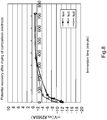
FIG. 8 is a diagram illustrating potential recovery after drying of the reference electrode; -
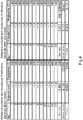
FIG. 9 is a diagram illustrating variations in an electrode potential and an internal resistance between before and after drying of the reference electrode; and -
FIG. 10 is a cross-sectional view schematically illustrating a reference electrode according to a variation. - In the following, one embodiment of a composite electrode having a reference electrode (hereinafter also referred to as a comparison electrode) according to the present invention is described referring to the drawings.
- A
comparison electrode 2 according to the present embodiment constitutes acomposite electrode 100 integrally with apH electrode 3 as illustrated inFIG. 1 . Also, thecomposite electrode 100 is configured such that at least a cylindrical pHelectrode supporting tube 101 and a comparisonelectrode supporting tube 102 surrounding an outer circumference of the pHelectrode supporting tube 101 are integrally provided. Note that the pHelectrode supporting tube 101 and the comparisonelectrode supporting tube 102 are both formed of glass having the same composition. - An outer circumferential wall of the comparison
electrode supporting tube 102 is provided with aliquid communication part 103, and at a fore end portion of the pHelectrode supporting tube 101 of which the fore end portion is projected slightly further than the comparisonelectrode supporting tube 102, aresponsive glass membrane 104 is joined. - In the comparison
electrode supporting tube 102 and the pHelectrode supporting tube 101, thecomparison electrode 2 and thepH electrode 3 are respectively contained, and as internal liquid, for example, a highly concentrated (3.33 mol/L) KCl solution with a pH of 7 is filled. Note that as the internal liquid for the comparisonelectrode supporting tube 102, for example, potassium nitrate having a concentration of 1.0 mol/L may be used. Thecomparison electrode 2 and thepH electrode 3 are respectively connected with unillustrated leads, and the leads extends outside from a base part of the pHelectrode supporting tube 101 as acable bundle 105 and is connected to an unillustrated pH meter main body. - Also, the
comparison electrode 2 is, as illustrated inFIGS. 2 and3 , provided with: aninternal electrode 21 formed of a silver/silver chloride electrode; aninternal electrolyte solution 22 that is in contact with theinternal electrode 21; and a containing body that contains theinternal electrolyte solution 22. - The
internal electrode 21 is held by aholding tube 24 such that a fore end portion thereof is exposed outside. Also, a rear end portion of theinternal electrode 21 is connected with the lead (not illustrated). - The
internal electrolyte solution 22 is the highly concentrated (3.33 mol/L) KCl solution. Note that theinternal electrolyte solution 22 is not limited to the KCl solution if it contains highly concentrated cations. - The containing
body 23 is formed of a material that does not have anionic conductivity but has cationic conductivity and moisture permeability, specifically, formed of Flemion (Asahi Glass Co. Ltd., registered trademark) that is fluorine based resin. The containingbody 23 of the present embodiment is formed of Flemion as a whole, and specifically, a bottom-equipped tubular body formed of Flemion. - The containing
body 23 is adapted to be connected to a fore end portion of the holdingtube 24 that holds theinternal electrode 21, cover the fore end portion of theinternal electrode 21 that is exposed outside from the holdingtube 24, and bring theinternal electrolyte solution 22 contained inside the containingbody 23 into contact with the fore end portion of theinternal electrode 21. - Next, a method for manufacturing the
comparison electrode 2 configured as described is briefly described referring toFIG. 3 . - For example, Flemion hollow fiber tube having a diameter of 1 mm is cut into a piece having a length of 10 mm, and one of end faces of the piece is blocked by a heat seal or the like to form a containing body formed product.
- The containing body formed product fabricated as described above is immersed in a 3.33 mol/L KCL (AgCl room temperature saturated) solution for approximately 2 hours. At this time, a pH of the 3.33 mol/L KCL (AgCl room temperature saturated) solution is changed from approximately pH6 to approximately pH 2.7 because a Flemion functional group SO3-H is ion exchanged to SO3-K.
- The containing body formed product is picked up from the 3.33 mol/L KCl (AgCl room temperature saturated) solution, and after cleaning with pure water, dried by 60 °C a dryer or the like. This causes the containing
body 23 to be formed. - On the other hand, for example, a
silver wire 201 having a diameter of 0.6 mm is attached with an O-ring 202, then inserted into a polyimide tube serving as the holdingtube 24, and fixed to thepolyimide tube 24. At this time, a fore end portion of thesilver wire 201 is in a state of being exposed from thepolyimide tube 24 by a predetermined length. - The fore end portion of the
silver wire 201 is immersed in a 3.33 mol/L KCl (AgCl room temperature saturated or 1 mol/L) solution up to approximately 4 mm in length and anodized for approximately 10 minutes with an applied voltage of approximately 1.3 to 1.5 V, and thereby the silver wire part is formed thereon with silver chloride on the basis of electrolysis, and after cleaning with pure water, kept in a dark room. This causes the silver/silver chloride electrode 21 to be formed. - A 3.33 mol/L KCl (AgCl room temperature saturated) solution is injected into the containing
body 23 from the lower seal face up to approximately 3 mm in height. - Then, the
silver wire 201, the O-ring 202, and thepolyimide tube 24 are fixed; for example, a single componentsilicone RTV adhesive 203 is filled below the O-ring 202; and the containingbody 23 is inserted into thepolyimide tube 24 and fixed, and then dried and cured for 2 to 3 hours. Thecomparison electrode 2 fabricated as described above is kept with being immersed in a 3.33 mol/L KCl solution. - Next, an experimental example of the
comparison electrode 2 configured as above is described in terms of respective performance parameters. - Results of measuring an electrode potential of the comparison electrode 2 (Vs, 3.33 mol/L KCl/AgCl/Ag (reference electrode), Ag/AgCl/3.33mol/L KCl/3.33 mol/L KCl), and a resistance of the comparison electrode 2 (in 3.33 mol/L KCl) in the present embodiment at 25 °C, and an electrode potential and a resistance after the
comparison electrode 2 was left at room temperature for 1 month are illustrated inFIG. 4 . - The
comparison electrode 2 of the present embodiment exhibits a good result that a reference potential thereof is 2 mV or less with respect to a reference electrode, and a variation in reference potential is small. Further, an electrical resistance value of the containingbody 23 is also 1 kΩ or less, and even when being added with a ceramic resistance value of theliquid communication part 103, can clear a predetermined standard value (e.g., less than 10 kΩ). Also, regarding behavior of the electrode potential over time, little variation is observed even after thecomparison electrode 2 was left for one month with being immersed in a 3.33 mol/L KCl solution, and a good result is obtained. Note that the resistance tends to be slightly reduced as a whole, and a variation in resistance is also reduced, and therefore no performance problem occurs. - The containing
body 23 made of Flemion has cation conductivity, and it is considered that if a cation concentration is different between the inside and outside of the containingbody 23, a potential difference is generated between the inside and outside of the containingbody 23 by a mechanism based on a diffusion potential. In the case of thecomparison electrode 2 of the present embodiment, the immersion in the 3.33 mol/L KCl solution causes a K+ ion concentration (activity) to be the same between the inside and the outside, and therefore a potential difference is not generated between the inside and outside of the containingbody 23. However, it is determined that the potential difference is varied due to a variation in K+ ion concentration of the internal liquid. In this case, the silver/silver chloride electrode 21 inside the containingbody 23 is immersed in the 3.33 mol/L KCl (AgCl room temperature saturated) solution, and therefore exhibits a constant potential. Regarding thecomparison electrode 2 of the present embodiment, the containingbody 23 made of Flemion responds to cations, and therefore it is predicted that a potential is changed in a direction opposite to potential response behavior of a typical silver/silver chloride electrode, which is demonstrated by the present experiment (seeFIG. 5 ). - A potassium iodide reagent was added to the internal liquid to measure the electrode potential of the
comparison electrode 2 for the case of approximately 0.1 mol/L coexistence. A result of the measurement is illustrated inFIG. 6 . The influence of iodide ions in a conventional comparison electrode is significant; however, in thecomparison electrode 2 using the containingbody 23 made of Flemion, the electrode potential is little influenced. This demonstrates that Flemion prevents anions from passing. The electrode potential is slightly varied toward a plus side, and this is highly likely to be due to an increase in K+ ion concentration. Also, sulfide ions react with the silver/silver chloride electrode to form silver sulfide on a surface of the electrode, which is known as a coexisting material that largely influences the potential to prevent the measurement from being made. - It is known that the electrode potential of the silver/silver chloride electrode is largely influenced by ultraviolet light (
maximum absorption wavelength 220 nm). To eliminate this, an effort to absorb ultraviolet light is made, typically, on the basis of a structure of the reference electrode, or by adding silver sulfide to silver chloride or other means. Regarding a degree of the influence on potential, a potential variation of a few 100 mV may occur under direct sunlight in a plus direction due to a silvering reaction of silver chloride. (An ultraviolet light amount under direct sunlight is 2 to 3.5 mW/cm2, and that in a room is 0.1 mW/cm2.) - On the basis of this, the influence on the comparison electrode under direct sunlight was examined. Measurement results for the case where the
reference electrode 2 of the present embodiment was immersed in a 3.33 mol/L KCl solution and kept in a dark box and the case where thereference electrode 2 was placed on a rooftop under direct sunlight are illustrated inFIG. 7 . As a result, the potential variation under direct sunlight is 0.5 mV or less, and the influence of ultraviolet light is not observed. - The
comparison electrode 2 of the present embodiment was left for three days in the 60 °C dryer to completely evaporate theinternal electrolyte solution 22. The containingbody 23 made of Flemion itself has no hole; however, if a vapor pressure is different between the inside and outside of the containingbody 23, the containingbody 23 fulfills a function of equilibrating the water vapor pressures with each other. Accordingly, in the case where humidity outside the containingbody 23 is low, theinternal electrolyte solution 22 is scattered toward the outside of the containingbody 23 as moisture. On the other hand, in the case where theinternal electrolyte solution 22 is dried, if being immersed in a 3.33 mol/L KCl solution, the containingbody 23 is moistened, and internal crystallized and solidified KCl is dissolved and recovered into the 3.33 mol/L KCl solution. - When the inside of the containing
body 23 is dried, KCl crystals exist in a solidified state. A recovery time for the case where this was immersed in a 3.33 mol/L KCl solution was measured. It turns out fromFIGS. 8 and9 that regarding recovery times of the potential and internal resistance after drying, for all of three types, after 30 minutes, the potential and internal resistance respectively fall within 10 mV and 1 kΩ. It also turns out from this that as compared with the conventional reference electrode having the silver ion trap structure, the recovery from drying is fast and therefore an improvement effect is significant. Furthermore, #2565A in the vertical axis ofFig. 8 is the comparison electrode made by HORIBA, Ltd. - According to the
comparison electrode 2 according to the present embodiment configured as described, the containingbody 23 does not have anionic conductivity, and therefore chloride ions and silver chloride complexation anions produced by reaction with the chloride ions and silver ions eluted from the silver/silver chloride electrode 21 can be suppressed from being eluted. This enables a potential variation occurring due to production of a poorly-soluble silver compound on the surface of the comparison electrode to be suppressed. Besides, a potential variation occurring due to anions existing outside the containingbody 23 can also be suppressed. - Also, it is considered that silver ions eluted from silver chloride are kept at a low concentration and do not diffuse into the
internal electrolyte solution 22. This enables a silver/silver chloride electrode 21 having a relatively thin silver chloride layer to be employed, or a life of the silver/silver chloride electrode 21 to be extended. - Further, the containing
body 23 does not have anionic conductivity but has cationic conductivity, and therefore a potential generated in the containingbody 23 depends on a cation concentration of theinternal electrolyte solution 22. In addition, the containingbody 23 is formed of the material having moisture permeability, so that only by immersing thereference electrode 2 in a desired electrolyte solution, theinternal electrolyte solution 22 can be recovered to an original state, and also a reference potential can be recovered. Note that the containingbody 23 is only required to be immersed in a desired electrolyte solution, and therefore recovery work can be easily performed in a short time. - In addition, only by forming the containing
body 23 with use of the material that does not have anionic conductivity but has cationic conductivity and moisture permeability, together with the above respective effects, production cost can be reduced on the basis of saving of an assembling man-hour. - Note that the present invention is not limited to the above-described embodiment.
- For example, in the above-described embodiment, the containing body is made of Flemion; however, for the containing body, Nafion (registered trademark) may be used.
- Also, the containing body in the above-described embodiment is formed of Flemion as a whole, and configured not to have anionic conductivity but have cationic conductivity and moisture permeability as a whole; however, the containing body may be configured such that a part of the containing body does not have anionic conductivity but has cationic conductivity and moisture permeability, and the other part does not have at least anionic conductivity.
- Further, in the above-described embodiment, the composite electrode in which the reference electrode and the working electrode are integrated is described; however, the present invention may be configured to be the reference electrode as a single body.
- In addition, the above-described embodiment is configured to contain the internal electrolyte solution in the containing body; however, as illustrated in
FIG. 10 , even if areference electrode 2x is one having: an electrode main body 2x1 comprising of silver; an eutectic salt layer 2x2 covering the electrode main body 2x1, comprising an eutectic mixture of silver chloride and a salt, and acting as an electrolyte; and an outside covering layer 2x3 comprising a material that does not have anionic conductivity but has cationic conductivity and moisture permeability, and covering the eutectic salt layer 2x2, the same effects as those of thereference electrode 2 of the above-described embodiment are produced. Note that an eutectic mixture of silver chloride and a salt can be obtained, for example, by adding a few % of KCl to silver chloride. As a method for covering the electrode main body 2x1 with the eutectic salt layer 2x2, for example, dip coating is possible. Also, by adding to the eutectic salt layer a material that absorbs ultraviolet light, for example, silver sulfide, the influence of ultraviolet light can be further reduced. - Besides, it should be appreciated that the present invention is not limited to any of the above-described embodiments, but can be variously modified without departing from the scope thereof.
-
- 100: Composite electrode
- 2: Reference electrode (comparison electrode)
- 3: Working electrode (pH electrode)
- 21: Internal electrode
- 22: Internal electrolyte solution
- 23: Containing body
Claims (3)
- A reference electrode comprising:an internal electrode formed of a silver/ silver chloride electrode:an internal electrolyte solution that is in contact with the internal electrode; anda containing body that contains the internal electrolyte solution, whereinthe containing body is formed of a material that does not have anionic conductivity but has cationic conductivity and moisture permeability.
- The reference electrode according to claim 1, wherein
a whole of the containing body is formed of a material that does not have anionic conductivity but has cationic conductivity and moisture permeability. - A reference electrode having:an electrode main body comprising silver;an eutectic salt layer covering the electrode main body-, comprising an eutectic mixture of silver chloride and a salt, the eutectic salt layer acting as an electrolyte; andan outside covering layer comprising a material having cationic conductivity and moisture permeability, and covering the eutectic salt layer.
Applications Claiming Priority (1)
| Application Number | Priority Date | Filing Date | Title |
|---|---|---|---|
| JP2010282281 | 2010-12-17 |
Publications (2)
| Publication Number | Publication Date |
|---|---|
| EP2466296A2 true EP2466296A2 (en) | 2012-06-20 |
| EP2466296A3 EP2466296A3 (en) | 2012-08-29 |
Family
ID=45524251
Family Applications (1)
| Application Number | Title | Priority Date | Filing Date |
|---|---|---|---|
| EP11193385A Withdrawn EP2466296A3 (en) | 2010-12-17 | 2011-12-14 | Reference electrode |
Country Status (4)
| Country | Link |
|---|---|
| US (1) | US8758586B2 (en) |
| EP (1) | EP2466296A3 (en) |
| JP (1) | JP5873701B2 (en) |
| CN (1) | CN102539498A (en) |
Families Citing this family (7)
| Publication number | Priority date | Publication date | Assignee | Title |
|---|---|---|---|---|
| US10473611B2 (en) * | 2014-10-22 | 2019-11-12 | Arkray, Inc. | Electrochemical sensor and method for producing electrochemical sensor |
| JP6580971B2 (en) * | 2015-12-14 | 2019-09-25 | 株式会社堀場製作所 | Reference electrode |
| CN106841342B (en) * | 2017-03-31 | 2018-12-25 | 国家电网公司 | A kind of mercury-nitric acid amino mercury reference electrode and its preparation method and application |
| CN107084919A (en) * | 2017-04-10 | 2017-08-22 | 武汉理工大学 | A kind of preparation method of metallic bipolar plate materials decay resistance test reference electrode |
| CN110274939B (en) * | 2018-03-16 | 2023-08-11 | 株式会社堀场先进技术 | Electrode device |
| CN109298252B (en) * | 2018-09-12 | 2020-09-08 | 杭州电子科技大学 | A kind of anti-corrosion all-solid-state electrode for detection of ocean electric field and preparation method |
| CN119147602A (en) * | 2024-07-24 | 2024-12-17 | 中国科学院高能物理研究所 | Single-hole Ag/Ag for chloride molten salt2S reference electrode |
Citations (2)
| Publication number | Priority date | Publication date | Assignee | Title |
|---|---|---|---|---|
| JPH05340914A (en) | 1992-06-08 | 1993-12-24 | Fuji Electric Co Ltd | Reference electrode |
| JP4054246B2 (en) | 2002-11-06 | 2008-02-27 | 株式会社堀場製作所 | Electrode body |
Family Cites Families (11)
| Publication number | Priority date | Publication date | Assignee | Title |
|---|---|---|---|---|
| US3681136A (en) * | 1970-03-02 | 1972-08-01 | Intern Biophysics Corp | Metal-metal salt electrodes and process |
| DE3203407A1 (en) * | 1981-02-12 | 1982-09-09 | Corning Glass Works, 14830 Corning, N.Y. | REFERENCE ELECTRODE WITH ION SELECTIVE LOCK |
| JPS61209351A (en) * | 1985-03-14 | 1986-09-17 | Denki Kagaku Keiki Co Ltd | Electrode body for measuring ph and the like |
| ES2034985T3 (en) * | 1986-05-23 | 1993-04-16 | Amagruss Limited | REFERENCE ELECTRODE TO MEASURE THE ACTIVITY OF THE IONS, ESPECIALLY FOR THE MEASUREMENT OF THE PH VALUES. |
| JPH03162662A (en) * | 1989-11-20 | 1991-07-12 | Seiko Instr Inc | Electrochemical flow cell |
| US5110441A (en) * | 1989-12-14 | 1992-05-05 | Monsanto Company | Solid state ph sensor |
| JP3684244B2 (en) * | 1993-12-08 | 2005-08-17 | 日機装株式会社 | Reference electrode |
| JP2004045373A (en) * | 2002-05-21 | 2004-02-12 | Tanita Corp | Electrochemical sensor |
| JP4832921B2 (en) * | 2006-03-01 | 2011-12-07 | 東亜ディーケーケー株式会社 | Electrode body |
| GB2469650B (en) * | 2009-04-21 | 2013-11-20 | Timothy Howard Russell | Reference electrode and combined electrode |
| JP2011145144A (en) * | 2010-01-14 | 2011-07-28 | Institute Of National Colleges Of Technology Japan | Electrode for measuring oxidation-reduction potential |
-
2011
- 2011-12-07 JP JP2011268123A patent/JP5873701B2/en active Active
- 2011-12-14 EP EP11193385A patent/EP2466296A3/en not_active Withdrawn
- 2011-12-14 CN CN2011104159583A patent/CN102539498A/en active Pending
- 2011-12-14 US US13/325,193 patent/US8758586B2/en not_active Expired - Fee Related
Patent Citations (2)
| Publication number | Priority date | Publication date | Assignee | Title |
|---|---|---|---|---|
| JPH05340914A (en) | 1992-06-08 | 1993-12-24 | Fuji Electric Co Ltd | Reference electrode |
| JP4054246B2 (en) | 2002-11-06 | 2008-02-27 | 株式会社堀場製作所 | Electrode body |
Also Published As
| Publication number | Publication date |
|---|---|
| CN102539498A (en) | 2012-07-04 |
| JP5873701B2 (en) | 2016-03-01 |
| JP2012141295A (en) | 2012-07-26 |
| EP2466296A3 (en) | 2012-08-29 |
| US8758586B2 (en) | 2014-06-24 |
| US20120152741A1 (en) | 2012-06-21 |
Similar Documents
| Publication | Publication Date | Title |
|---|---|---|
| US8758586B2 (en) | Reference electrode | |
| CN101523201B (en) | Ionic liquid covers reference electrode and uses its electrochemical determining device | |
| US3498899A (en) | Electrochemical electrode assembly | |
| US3598713A (en) | Potassium ion sensitive electrode | |
| GB2093193A (en) | Reference Electrode with Internal Ion-selective Barrier | |
| EP0772041B1 (en) | Reference electrode assembly | |
| US5011588A (en) | Ion selective dip electrode assembly | |
| JP4903684B2 (en) | Reference electrode | |
| Harsányi et al. | The adsorption of copper ions on the surface of copper (II) sulphide precipitate-based ion-selective electrodes | |
| US9863908B2 (en) | Low drift ion selective electrode sensors | |
| US5334305A (en) | Reference electrode | |
| US3671413A (en) | Nitrate ion sensitive electrode | |
| US20070215464A1 (en) | Potentiometric measuring chain | |
| JP4205725B2 (en) | Gas sensor | |
| Saber et al. | Highly selective determination of pioglitazone in urine and pharmaceutical formulations by novel PVC-membrane sensors | |
| CN205229095U (en) | Portable compound ion selective electrode | |
| Al-Qahtani | Potentiometric determination of Duloxetine Hydrochloride using coated Wire Electrode in pure and Pharmaceutical preparations | |
| JPH06281616A (en) | Ion-selective electrode | |
| JPH07159367A (en) | Reference electrode | |
| Kudoh et al. | Construction of a liquid-membrane type periodate ion-selective electrode and its application to the potentiometric titration of α-diols and α-amino-alcohols | |
| US5013421A (en) | Ion-selective electrodes | |
| JP4203291B2 (en) | Electrochemical measurement method, comparative electrode and composite electrode | |
| Sekerka et al. | Preparation and evaluation of halide ion-selective electrodes based on HGS matrices | |
| Bo et al. | Poly (vinyl chloride) membrane electrode for the determination of verapamil | |
| AU605505B2 (en) | Ion selective electrodes |
Legal Events
| Date | Code | Title | Description |
|---|---|---|---|
| PUAI | Public reference made under article 153(3) epc to a published international application that has entered the european phase |
Free format text: ORIGINAL CODE: 0009012 |
|
| AK | Designated contracting states |
Kind code of ref document: A2 Designated state(s): AL AT BE BG CH CY CZ DE DK EE ES FI FR GB GR HR HU IE IS IT LI LT LU LV MC MK MT NL NO PL PT RO RS SE SI SK SM TR |
|
| AX | Request for extension of the european patent |
Extension state: BA ME |
|
| PUAL | Search report despatched |
Free format text: ORIGINAL CODE: 0009013 |
|
| AK | Designated contracting states |
Kind code of ref document: A3 Designated state(s): AL AT BE BG CH CY CZ DE DK EE ES FI FR GB GR HR HU IE IS IT LI LT LU LV MC MK MT NL NO PL PT RO RS SE SI SK SM TR |
|
| AX | Request for extension of the european patent |
Extension state: BA ME |
|
| RIC1 | Information provided on ipc code assigned before grant |
Ipc: G01N 27/401 20060101ALI20120724BHEP Ipc: G01N 27/30 20060101AFI20120724BHEP |
|
| 17P | Request for examination filed |
Effective date: 20130227 |
|
| STAA | Information on the status of an ep patent application or granted ep patent |
Free format text: STATUS: THE APPLICATION HAS BEEN WITHDRAWN |
|
| 18W | Application withdrawn |
Effective date: 20150302 |