EP2459153B1 - Pharmaceutical or cosmetic or dietetic composition for promoting a hair pigmentation effect - Google Patents
Pharmaceutical or cosmetic or dietetic composition for promoting a hair pigmentation effect Download PDFInfo
- Publication number
- EP2459153B1 EP2459153B1 EP10752402.7A EP10752402A EP2459153B1 EP 2459153 B1 EP2459153 B1 EP 2459153B1 EP 10752402 A EP10752402 A EP 10752402A EP 2459153 B1 EP2459153 B1 EP 2459153B1
- Authority
- EP
- European Patent Office
- Prior art keywords
- spermidine
- use according
- formulated
- hair
- composition
- Prior art date
- Legal status (The legal status is an assumption and is not a legal conclusion. Google has not performed a legal analysis and makes no representation as to the accuracy of the status listed.)
- Active
Links
Images

Classifications
-
- A—HUMAN NECESSITIES
- A61—MEDICAL OR VETERINARY SCIENCE; HYGIENE
- A61K—PREPARATIONS FOR MEDICAL, DENTAL OR TOILETRY PURPOSES
- A61K8/00—Cosmetics or similar toiletry preparations
- A61K8/18—Cosmetics or similar toiletry preparations characterised by the composition
- A61K8/30—Cosmetics or similar toiletry preparations characterised by the composition containing organic compounds
- A61K8/40—Cosmetics or similar toiletry preparations characterised by the composition containing organic compounds containing nitrogen
- A61K8/41—Amines
-
- A—HUMAN NECESSITIES
- A61—MEDICAL OR VETERINARY SCIENCE; HYGIENE
- A61K—PREPARATIONS FOR MEDICAL, DENTAL OR TOILETRY PURPOSES
- A61K8/00—Cosmetics or similar toiletry preparations
- A61K8/02—Cosmetics or similar toiletry preparations characterised by special physical form
- A61K8/0212—Face masks
-
- A—HUMAN NECESSITIES
- A61—MEDICAL OR VETERINARY SCIENCE; HYGIENE
- A61K—PREPARATIONS FOR MEDICAL, DENTAL OR TOILETRY PURPOSES
- A61K8/00—Cosmetics or similar toiletry preparations
- A61K8/02—Cosmetics or similar toiletry preparations characterised by special physical form
- A61K8/0216—Solid or semisolid forms
- A61K8/022—Powders; Compacted Powders
- A61K8/0225—Granulated powders
-
- A—HUMAN NECESSITIES
- A61—MEDICAL OR VETERINARY SCIENCE; HYGIENE
- A61K—PREPARATIONS FOR MEDICAL, DENTAL OR TOILETRY PURPOSES
- A61K8/00—Cosmetics or similar toiletry preparations
- A61K8/02—Cosmetics or similar toiletry preparations characterised by special physical form
- A61K8/11—Encapsulated compositions
-
- A—HUMAN NECESSITIES
- A61—MEDICAL OR VETERINARY SCIENCE; HYGIENE
- A61P—SPECIFIC THERAPEUTIC ACTIVITY OF CHEMICAL COMPOUNDS OR MEDICINAL PREPARATIONS
- A61P17/00—Drugs for dermatological disorders
-
- A—HUMAN NECESSITIES
- A61—MEDICAL OR VETERINARY SCIENCE; HYGIENE
- A61Q—SPECIFIC USE OF COSMETICS OR SIMILAR TOILETRY PREPARATIONS
- A61Q5/00—Preparations for care of the hair
-
- A—HUMAN NECESSITIES
- A61—MEDICAL OR VETERINARY SCIENCE; HYGIENE
- A61Q—SPECIFIC USE OF COSMETICS OR SIMILAR TOILETRY PREPARATIONS
- A61Q5/00—Preparations for care of the hair
- A61Q5/002—Preparations for repairing the hair, e.g. hair cure
-
- A—HUMAN NECESSITIES
- A61—MEDICAL OR VETERINARY SCIENCE; HYGIENE
- A61Q—SPECIFIC USE OF COSMETICS OR SIMILAR TOILETRY PREPARATIONS
- A61Q5/00—Preparations for care of the hair
- A61Q5/02—Preparations for cleaning the hair
-
- A—HUMAN NECESSITIES
- A61—MEDICAL OR VETERINARY SCIENCE; HYGIENE
- A61Q—SPECIFIC USE OF COSMETICS OR SIMILAR TOILETRY PREPARATIONS
- A61Q5/00—Preparations for care of the hair
- A61Q5/12—Preparations containing hair conditioners
-
- A—HUMAN NECESSITIES
- A61—MEDICAL OR VETERINARY SCIENCE; HYGIENE
- A61K—PREPARATIONS FOR MEDICAL, DENTAL OR TOILETRY PURPOSES
- A61K2800/00—Properties of cosmetic compositions or active ingredients thereof or formulation aids used therein and process related aspects
- A61K2800/20—Chemical, physico-chemical or functional or structural properties of the composition as a whole
- A61K2800/22—Gas releasing
- A61K2800/222—Effervescent
-
- A—HUMAN NECESSITIES
- A61—MEDICAL OR VETERINARY SCIENCE; HYGIENE
- A61K—PREPARATIONS FOR MEDICAL, DENTAL OR TOILETRY PURPOSES
- A61K2800/00—Properties of cosmetic compositions or active ingredients thereof or formulation aids used therein and process related aspects
- A61K2800/74—Biological properties of particular ingredients
-
- A—HUMAN NECESSITIES
- A61—MEDICAL OR VETERINARY SCIENCE; HYGIENE
- A61K—PREPARATIONS FOR MEDICAL, DENTAL OR TOILETRY PURPOSES
- A61K2800/00—Properties of cosmetic compositions or active ingredients thereof or formulation aids used therein and process related aspects
- A61K2800/80—Process related aspects concerning the preparation of the cosmetic composition or the storage or application thereof
- A61K2800/92—Oral administration
Definitions
- the present invention relates to hair pigmentation in man.
- the human hair follicle is a complex organ wherein there are interactions of epithelial (for example, different lines of keratinocytes, endothelium), mesenchymal (for example dermal papilla fibroblasts, connective tissue sheath fibroblasts), neuroectodermal (nerves, melanocytes) cellular populations and transitory migrating cells (immune cells, mastocytes).
- epithelial for example, different lines of keratinocytes, endothelium
- mesenchymal for example dermal papilla fibroblasts, connective tissue sheath fibroblasts
- neuroectodermal nerves, melanocytes
- the growth and pigmentation of hair fibers are affected by several intrinsic factors comprising changes depending on hair cycle, body distribution, age and genre differences, variable hormone sensitivity, genetic defects and age-related changes.
- the study of hair growth is also complicated by the effects of extrinsic variables that comprise climate and seasons, polluting substances, toxins and exposure to chemicals.
- the differences found between the pigmentation regulation in the epidermis and in hair follicles reflect the division into compartments of the mammal skin pigmentation system.
- the melanocytes of epidermis, of the hair follicle bulb and of the sheath of the hair follicle outer root are very different from each other, despite the fact that the skin pigmentation in mammals must be understood as an open system.
- the major differences are those of the nature of their respective melanocyte-keratinocyte functional units.
- the melamine unit of the hair bulb is found in the proximal anagen bulb, which is an immunologically distinct region of skin and overall, is formed by one melanocyte every 5 keratinocytes in the hair bulb and of one melanocyte for each keratinocyte in the basal layer of the hair bulb matrix.
- each epidermal melanocyte is associated to 36 vital keratinocytes in the immunocompetent epidermal melamine unit.
- the spermidine compound that is N-(3-aminopropyl)butan-1,4-diamine, as such or in the form of a pharmaceutically acceptable derivative such as a salt, is provided with a melanogenesis activity towards hair and can therefore be effectively used for promoting their pigmentation, in particular the shaft pigmentation.
- Such activity allows configuring the use of the active compound in man as a natural pigmentation agent free from negative side effects, for example typical of hair dies.
- the object of the invention is also a pharmaceutical or cosmetic or dietetic composition suitable to promote such pigmentation effect and therefore containing spermidine as active principle, as such or in the form of a pharmaceutically acceptable derivative such as a salt, for either topical or oral administration.
- a preferred salt according to the invention is spermidine trichlorohydrate, namely N-(3-aminopropyl)butan-1,4-diamine ⁇ 3HCl.
- a composition of the invention preferably comprises spermidine trichlorohydrate in a solution formulated for topical use.
- Suitable forms for topical use are, for example, a lotion, a conditioner, a shampoo, a mask.
- a different composition of the invention preferably comprises spermidine trichlorohydrate in administration unit formulated for oral use.
- Suitable forms for oral use for example are a tablet or a capsule, either coated or not, or a granulate to disperse in water or other liquid.
- Spermidine as such or in the form of a pharmaceutically acceptable derivative, as a salt, is contained in a composition of the invention according to an amount preferably comprised within the following ranges:
- composition for 100 ml solution Component (INCI nomenclature) Magnesium laureth sulfate 2 - 10 g Sodium lauroyl sarcosinate 2 - 10 g Disodium laureth sulfosuccinate 0.5 - 5 g PEG-200 hydrogenated glyceryl palmate 0.5 - 5 g Cocamide MIPA 0.5 - 5 g Glycol distearate 0.5 - 5 g Glycerin 0.5 - 5 g Laureth-7 0.1 - 3 g PEG-7 glyceryl cocoate 0.1 - 3 g Lauryl methyl gluceth-10 hydroxypropyldimonium chloride 0.1 - 3 g Polyquatemium-10 0.1 - 3 g Potassium undecilenoyl wheat protein 0.1 - 3 g Panthenol 0.1 - 3 g Tetrasodium EDTA 0.1 - 3 g Spermidine trihydrochloride 10 -7
- composition for 100 ml solution Component (INCI) Glycerin 1 - 10 g Ammonium acrylolyl-dimethyltaurate / vp copolymer 1 - 10 g Cyclopentasiloxane 1 - 10 g Silicone quaternium-15 0.1 - 3 g Tocopheryl acetate 0.1 - 3 g Dimethicone 0.1 - 3 g Sericin 0.1 - 3 g Methylparaben 0.05 - 0.1 g C11-15 pareth-5 0.05 - 0.1 g C11-15 pareth-9 0.05 - 0.1 g Trideceth-12 0.05 - 0.1 g Decyl glucoside 0.01 - 0.5 g Panthenyl ethyl ether 0.01 - 0.5 g Disodium EDTA 0.01 - 0.5 g Ethyl hexyl methoxycinnamate 0.01 - 0.5 g Lactic acid q.s
- composition for 100 ml solution Component (INCI) Cetearyl alcohol 1 - 10 g Glyceryl stearate 1 - 10 g Dimethicone 1 - 10 g C12-13 alkyl lactate 0.5 - 5 g Cetrimonium chloride 0.5 - 5 g PEG-100 stearate 0.5 - 5 g Cyclopentasiloxane 0.5 - 5 g Hydroxyethylcellulose 0.1 - 3 g Dimethiconol 0.1 - 3 g Panthenol 0.1 - 3 g Bis-isobutyl Peg/Ppg-20/35/amodimethicone copolymer 0.05 - 2 g Phytantriol 0.05 - 2 g Cetyl ethylhexanoate 0.05 - 2 g Butylene glycol 0.05 - 2 g Disodium edta 0.05 - 2 g Polysorbate 80 0.05 - 2 g Sericin
- composition for 100 ml solution Component (INCI) Alcohol 10 - 20 g PEG-40 Hydrogenated Castor Oil 0.2 - 2 g Disodium EDTA 0.01 - 0.5 g perfume q.s.spermidine trihydrochloride 10 -7 - 1 g Aqua q.s. to 100 ml
- composition for a single capsule Component Lactose Monohydrate 85 mg Corn starch 25 mg Talc 5 mgspermidine trihydrochloride 1.25 mg Magnesium stearate 1.5 mg Hard gelatine capsule shell N. 4 1 n.
- composition for a single capsule Component Soy oil 263.07 mg Gelatine 129.7 mg Glycerine 36.5 mg Sorbitol 70% 24.2 mg Water 23.274 mg Yellow wax 22 mg Fatty acids mono-diglycerides 20 mg Soy lecithin 10 mg Titanium Dioxide 0.686 mg Spermidine trihydrochloride 0.25 mg
- composition for a single tablet Component Microcrystalline cellulose 168.97 mg Lactose 150 mg Methylcellulose 45 mg Mono- and diglycerides of fatty acids 9 mg Colloidal silicon dioxide 8 mg Magnesium stearate 2 mg Spermidine trihydrochloride 1.0 mg
- composition for a single tablet Component Microcrystalline cellulose 105 mg Calcium Phosphate bibasic dihydrate 85 mg Hydroxypropylmethylcellulose K100 45 mg Sepifilm TM LP 770 white 15 mg Magnesium stearate 8 mg Hydroxypropylmethylcellulose 6 mg Colloidal silicon dioxide 3.5 mg Spermidine trihydrochloride 0.55 mg
- composition for a single sachet Component Mannitol 960 mg Tartaric acid 530 mg Anhydrous sodium bicarbonate 280 mg Flavor 130 mg Polyvinyl pyrrolidone 45 mg Trometamol 32 mg Aspartame 20 mgspermidine trihydrochloride 1.25 mg Anhydrous colloidal silicon 2 mg
- the skin of normal human scalp was taken from a woman who had undergone a routine face lifting surgery after receiving the informed consent. All the experiments were carried out according to the Helsinki principles, with the ethical committee's approval.
- the tissues subject to biopsy with 3-4 mm cylindrical scalpel were cultured at 37°C for 6 days in Williams E medium (Biochrom, Cambridge, U.K.), integrated with 100 IU ml -1 penicillin, 10 ⁇ g ml -1 streptomycin (Gibco, Düsseldorf, Germany), 10 ⁇ g ml -1 insulin (Sigma, Taukfirchen, Germany), 10 ng ml -1 hydrocortisone (Sigma) and 2mmol L -1 (L-glutamine (Invitrogen, Paisley, U.K.).
- the hair follicles (HF) in anagen VI phase with normal pigmentation were micro-dissected from normal human scalp skin and subject to organ culture based on the Philpott model. Spermidine or the vehicle were administered once at each medium change (i.e., every 48 hours).
- the LDH activity in the supernatant served as a cytotoxicity indicator and was measured every day according to the manufacturer's instructions (Cytotoxicity Detection Kit; Roche, Mannheim, Germany). The sample absorbance was measured at 490 nm using an ELISA plate reader.
- the measurements of the hair follicle shaft length were taken every second day on the single hair follicles using a Zeiss inverted binocular microscope with an ocular measurement reticle.
- the determination of the hair follicle cycle stage was carried out based on the morphological criteria defined before, and the percentage of hair follicles in anagen phase and in early, intermediate or late catagen phase was determined.
- the Masson-Fontana staining was carried out for the histochemical display of melanin on frozen sections. Melanin was stained in the form of brown granules and the pigmentation level was determined through the quantitative Masson-Fontana technique ( Ito N., Ito T., Kromminga A., Bettermann A., Takigawa M., Kees F., Straub R. H., and Paus R. (2005): Human hair follicles display a functional equivalent of the hypothalamic-pituitary-adrenal axis and synthesize cortisol. FASEB J 19, 1332-4 ).
- This method is a particularly sensitive and reliable indicator of melanin synthesis variations, as proven by enzymatic activity assays and standard tyrosinase expression ( Kauser S., Slominski A., Wei E. T., and Tobin D. J. (2006): Modulation of the human hair follicle pigmentary unit by corticotropin-releasing hormone and urocortin peptides. FASEB J 20, 882-95 ).
- the staining intensity was analyzed in a defined reference region of the hair follicle pigmentation unit using the ImageJ software (National Institute of Health).
- the TUNEL (terminal dUTP nick-end labeling) dual staining method with Ki-67 was used.
- the cryostat sections were fixed in paraformaldehyde and ethanolacetic acid (2:1) and marked with a digoxigenin-deoxy-UTP (kit for the identification of apoptosis in situ with ApopTag fluorescein; Intergen, Purchase, NY) in the presence of terminal deoxynucleotidyl transferase, followed by incubation with a murine anti-Ki-67 antiserum (1:20 in PBS overnight at 4°C; Dako, Glostrup, Denmark).
- TUNEL-positive cells were displayed by a conjugate isothiocyanate fluorescein anti digoxigenin antibody (kit ApopTag), whereas Ki-67 was detected by a goat anti-mouse antibody marked with rhodamine (Jackson ImmunoResearch, West Grove, PA). Negative controls were carried out omitting the terminal deoxynucleotidyl transferase and the Ki-67 antibody. The counter-staining was carried out with 4',6-diamidino-2-phenylindole (DAPI) (Roche Molecular Biochemicals GmbH, Mannheim, Germany). The quantitative histomorphometric assessment was carried out; Ki-67, TUNEL or DAPI-positive cells were counted in a reference region defined beforehand of the hair follicle and skin matrix and the percentage of positive Ki-67/TUNEL cells was determined.
- DAPI 4',6-diamidino-2-phenylindole
- tyramide signal amplification method was used for examining the expression of keratin K15 (Kloepper et al., 2008).
- cryosections fixed with acetone were washed three times for 5 minutes using the TNT (tris-HCL NaCl Tween) buffer (0.1 mol/l Tris-HCl, pH 7.5; containing 0.15 mol/l NaCl and 0.05% Tween 20). Radish peroxidase was then blocked through wash with 3% H 2 O 2 in an isotonic phosphate buffer (PBS) for 15 minutes.
- TNT tris-HCL NaCl Tween
- Preincubation was carried out with the incubation of avidin and biotin for 15 minutes and with 5% normal goat serum in TNT for 30 minutes with intermediate washing steps.
- Murine anti-human K15 (clone LHK15, Chemicon, Billerica, USA) were diluted in TNT and incubated overnight at 4°C, followed by a secondary goat anti-mouse biotinylate antibody (1:200 in TNT) for 45 minutes at room temperature. Radish streptavidin-peroxidase was then administered (kit TSA; Perkin-Elmer, Boston, MA, USA) (1:100 in TNT) for 30 minutes at room temperature.
- the reaction was amplified with a FITC-tyramide amplification agent at room temperature for 5 minutes (1:50 in an amplification diluent supplied with the kit).
- the intensity of this immuno-staining was quantified by the ImageJ (National Institutes of Healt) software.
- the staining intensity of reference regions defined in hair follicles was measured and compared between the control groups treated with vehicle only and the groups treated with spermidine.
- the statistical analysis was carried out using a bilateral Student t-test for unpaired samples.
Landscapes
- Health & Medical Sciences (AREA)
- Life Sciences & Earth Sciences (AREA)
- Veterinary Medicine (AREA)
- Public Health (AREA)
- General Health & Medical Sciences (AREA)
- Animal Behavior & Ethology (AREA)
- Epidemiology (AREA)
- Birds (AREA)
- Dermatology (AREA)
- Chemical Kinetics & Catalysis (AREA)
- Pharmacology & Pharmacy (AREA)
- Organic Chemistry (AREA)
- Nuclear Medicine, Radiotherapy & Molecular Imaging (AREA)
- Medicinal Chemistry (AREA)
- General Chemical & Material Sciences (AREA)
- Chemical & Material Sciences (AREA)
- Bioinformatics & Cheminformatics (AREA)
- Engineering & Computer Science (AREA)
- Cosmetics (AREA)
- Acyclic And Carbocyclic Compounds In Medicinal Compositions (AREA)
- Medicinal Preparation (AREA)
- Coloring Foods And Improving Nutritive Qualities (AREA)
Description
- The present invention relates to hair pigmentation in man.
- The human hair follicle is a complex organ wherein there are interactions of epithelial (for example, different lines of keratinocytes, endothelium), mesenchymal (for example dermal papilla fibroblasts, connective tissue sheath fibroblasts), neuroectodermal (nerves, melanocytes) cellular populations and transitory migrating cells (immune cells, mastocytes).
- The growth and pigmentation of hair fibers are affected by several intrinsic factors comprising changes depending on hair cycle, body distribution, age and genre differences, variable hormone sensitivity, genetic defects and age-related changes. The study of hair growth is also complicated by the effects of extrinsic variables that comprise climate and seasons, polluting substances, toxins and exposure to chemicals. The differences found between the pigmentation regulation in the epidermis and in hair follicles reflect the division into compartments of the mammal skin pigmentation system.
- The melanocytes of epidermis, of the hair follicle bulb and of the sheath of the hair follicle outer root are very different from each other, despite the fact that the skin pigmentation in mammals must be understood as an open system. The major differences are those of the nature of their respective melanocyte-keratinocyte functional units. The melamine unit of the hair bulb is found in the proximal anagen bulb, which is an immunologically distinct region of skin and overall, is formed by one melanocyte every 5 keratinocytes in the hair bulb and of one melanocyte for each keratinocyte in the basal layer of the hair bulb matrix. On the contrary, each epidermal melanocyte is associated to 36 vital keratinocytes in the immunocompetent epidermal melamine unit.
- However, the most obvious difference between these two melanocyte skin populations and with considerable implications for the regulation of the hair pigmentation, is the observation that the hair bulb melanocyte activity is subject to a cyclic control and that melanogenesis is strictly associated to the hair growth cycle. On the other hand, the skin melanogenesis appears to be continuous.
- It has now surprisingly been found, and this is the object of the present invention, that the spermidine compound, that is N-(3-aminopropyl)butan-1,4-diamine, as such or in the form of a pharmaceutically acceptable derivative such as a salt, is provided with a melanogenesis activity towards hair and can therefore be effectively used for promoting their pigmentation, in particular the shaft pigmentation.
- Such activity allows configuring the use of the active compound in man as a natural pigmentation agent free from negative side effects, for example typical of hair dies.
- The object of the invention is also a pharmaceutical or cosmetic or dietetic composition suitable to promote such pigmentation effect and therefore containing spermidine as active principle, as such or in the form of a pharmaceutically acceptable derivative such as a salt, for either topical or oral administration.
- A preferred salt according to the invention is spermidine trichlorohydrate, namely N-(3-aminopropyl)butan-1,4-diamine ■ 3HCl.
- A composition of the invention preferably comprises spermidine trichlorohydrate in a solution formulated for topical use. Suitable forms for topical use are, for example, a lotion, a conditioner, a shampoo, a mask.
- A different composition of the invention preferably comprises spermidine trichlorohydrate in administration unit formulated for oral use. Suitable forms for oral use for example are a tablet or a capsule, either coated or not, or a granulate to disperse in water or other liquid.
- Spermidine, as such or in the form of a pharmaceutically acceptable derivative, as a salt, is contained in a composition of the invention according to an amount preferably comprised within the following ranges:
- 10-7 to 1 g/100ml, corresponding to 0.004 to 4·104 µM
- 10-5 to 1 g/100 ml, corresponding to 0.4 to 4·104 µM
- 10-4 to 2.4·10-2 g/100 ml, corresponding to 4 to 9·102 µM.
- Further preferred concentration ranges are as follows:
- 10-6 to 10-1 g/100 ml
- 10-5 to 10-2 g/100 ml
- 10-4 to 10-3 g/100 ml
- 10-7 to 10-6 g/100 ml
- 10-6 to 10-5 g/100 ml
- 10-5 to 10-4 g/100 ml
- 10-4 to 10-3 g/100 ml
- 10-3 to 10-2 g/100 ml
- 10-2 to 10-1 g/100 ml
- 10-1 to 1 g/100 ml
- The following formulation examples illustrate the invention, but are not intended to be limiting in any manner. The component amounts are expressed in grams or milligrams and in the case of examples 1 to 4, by concentration ranges.
-
Composition for 100 ml solution Component (INCI nomenclature) Magnesium laureth sulfate 2 - 10 g Sodium lauroyl sarcosinate 2 - 10 g Disodium laureth sulfosuccinate 0.5 - 5 g PEG-200 hydrogenated glyceryl palmate 0.5 - 5 g Cocamide MIPA 0.5 - 5 g Glycol distearate 0.5 - 5 g Glycerin 0.5 - 5 g Laureth-7 0.1 - 3 g PEG-7 glyceryl cocoate 0.1 - 3 g Lauryl methyl gluceth-10 hydroxypropyldimonium chloride 0.1 - 3 g Polyquatemium-10 0.1 - 3 g Potassium undecilenoyl wheat protein 0.1 - 3 g Panthenol 0.1 - 3 g Tetrasodium EDTA 0.1 - 3 g Spermidine trihydrochloride 10-7 - 1 g Preservative q.s. pH corrector (to a final pH of 5.0-5.5) q.s. Parfum q.s. Aqua q.s. to 100 ml -
Composition for 100 ml solution Component (INCI) Glycerin 1 - 10 g Ammonium acrylolyl-dimethyltaurate / vp copolymer 1 - 10 g Cyclopentasiloxane 1 - 10 g Silicone quaternium-15 0.1 - 3 g Tocopheryl acetate 0.1 - 3 g Dimethicone 0.1 - 3 g Sericin 0.1 - 3 g Methylparaben 0.05 - 0.1 g C11-15 pareth-5 0.05 - 0.1 g C11-15 pareth-9 0.05 - 0.1 g Trideceth-12 0.05 - 0.1 g Decyl glucoside 0.01 - 0.5 g Panthenyl ethyl ether 0.01 - 0.5 g Disodium EDTA 0.01 - 0.5 g Ethyl hexyl methoxycinnamate 0.01 - 0.5 g Lactic acid q.s. Preservative q.s. Spermidine trihydrochloride 10-7 - 1 g Parfum q.s. g Aqua q.s. to 100 ml -
Composition for 100 ml solution Component (INCI) Cetearyl alcohol 1 - 10 g Glyceryl stearate 1 - 10 g Dimethicone 1 - 10 g C12-13 alkyl lactate 0.5 - 5 g Cetrimonium chloride 0.5 - 5 g PEG-100 stearate 0.5 - 5 g Cyclopentasiloxane 0.5 - 5 g Hydroxyethylcellulose 0.1 - 3 g Dimethiconol 0.1 - 3 g Panthenol 0.1 - 3 g Bis-isobutyl Peg/Ppg-20/35/amodimethicone copolymer 0.05 - 2 g Phytantriol 0.05 - 2 g Cetyl ethylhexanoate 0.05 - 2 g Butylene glycol 0.05 - 2 g Disodium edta 0.05 - 2 g Polysorbate 80 0.05 - 2 g Sericin 0.05 - 2 g Spermidine trihydrochloride 10-7 - 1 g Preservative q.s. g Parfum q.s. g Aqua q.s. to 100 ml -
Composition for 100 ml solution Component (INCI) Alcohol 10 - 20 g PEG-40 Hydrogenated Castor Oil 0.2 - 2 g Disodium EDTA 0.01 - 0.5 g Parfum q.s. Spermidine trihydrochloride 10-7 - 1 g Aqua q.s. to 100 ml -
Composition for a single capsule Component Lactose Monohydrate 85 mg Corn starch 25 mg Talc 5 mg Spermidine trihydrochloride 1.25 mg Magnesium stearate 1.5 mg Hard gelatine capsule shell N. 4 1 n. -
Composition for a single capsule Component Soy oil 263.07 mg Gelatine 129.7 mg Glycerine 36.5 mg Sorbitol 70% 24.2 mg Water 23.274 mg Yellow wax 22 mg Fatty acids mono-diglycerides 20 mg Soy lecithin 10 mg Titanium Dioxide 0.686 mg Spermidine trihydrochloride 0.25 mg -
Composition for a single tablet Component Microcrystalline cellulose 168.97 mg Lactose 150 mg Methylcellulose 45 mg Mono- and diglycerides of fatty acids 9 mg Colloidal silicon dioxide 8 mg Magnesium stearate 2 mg Spermidine trihydrochloride 1.0 mg -
Composition for a single tablet Component Microcrystalline cellulose 105 mg Calcium Phosphate bibasic dihydrate 85 mg Hydroxypropylmethylcellulose K100 45 mg Sepifilm TM LP 770 white 15 mg Magnesium stearate 8 mg Hydroxypropylmethylcellulose 6 mg Colloidal silicon dioxide 3.5 mg Spermidine trihydrochloride 0.55 mg -
Composition for a single sachet Component Mannitol 960 mg Tartaric acid 530 mg Anhydrous sodium bicarbonate 280 mg Flavor 130 mg Polyvinyl pyrrolidone 45 mg Trometamol 32 mg Aspartame 20 mg Spermidine trihydrochloride 1.25 mg Anhydrous colloidal silicon 2 mg - Below is the description of an experimental study relating to the activity in the use of spermidine according to the present invention.
- The skin of normal human scalp was taken from a woman who had undergone a routine face lifting surgery after receiving the informed consent. All the experiments were carried out according to the Helsinki principles, with the ethical committee's approval.
- The tissues subject to biopsy with 3-4 mm cylindrical scalpel were cultured at 37°C for 6 days in Williams E medium (Biochrom, Cambridge, U.K.), integrated with 100 IU ml-1 penicillin, 10 µg ml-1 streptomycin (Gibco, Karlsruhe, Germany), 10 µg ml-1 insulin (Sigma, Taukfirchen, Germany), 10 ng ml-1 hydrocortisone (Sigma) and 2mmol L-1 (L-glutamine (Invitrogen, Paisley, U.K.).
- Spermidine trichlorohydrate, or the vehicle as a reference substance, was then administered at a concentration of 0.1 µM, once at each medium change (i.e., every 48 hours).
- The hair follicles (HF) in anagen VI phase with normal pigmentation (gray/white hair follicles were excluded from the study) were micro-dissected from normal human scalp skin and subject to organ culture based on the Philpott model. Spermidine or the vehicle were administered once at each medium change (i.e., every 48 hours).
- The LDH activity in the supernatant served as a cytotoxicity indicator and was measured every day according to the manufacturer's instructions (Cytotoxicity Detection Kit; Roche, Mannheim, Germany). The sample absorbance was measured at 490 nm using an ELISA plate reader.
- The measurements of the hair follicle shaft length were taken every second day on the single hair follicles using a Zeiss inverted binocular microscope with an ocular measurement reticle.
- The determination of the hair follicle cycle stage was carried out based on the morphological criteria defined before, and the percentage of hair follicles in anagen phase and in early, intermediate or late catagen phase was determined.
- The Masson-Fontana staining was carried out for the histochemical display of melanin on frozen sections. Melanin was stained in the form of brown granules and the pigmentation level was determined through the quantitative Masson-Fontana technique (Ito N., Ito T., Kromminga A., Bettermann A., Takigawa M., Kees F., Straub R. H., and Paus R. (2005): Human hair follicles display a functional equivalent of the hypothalamic-pituitary-adrenal axis and synthesize cortisol. FASEB J 19, 1332-4).
- This method is a particularly sensitive and reliable indicator of melanin synthesis variations, as proven by enzymatic activity assays and standard tyrosinase expression (Kauser S., Slominski A., Wei E. T., and Tobin D. J. (2006): Modulation of the human hair follicle pigmentary unit by corticotropin-releasing hormone and urocortin peptides. FASEB J 20, 882-95).
- The staining intensity was analyzed in a defined reference region of the hair follicle pigmentation unit using the ImageJ software (National Institute of Health).
- In order to evaluate the apoptotic cells in co-location with a proliferation marker Ki-67, the TUNEL (terminal dUTP nick-end labeling) dual staining method with Ki-67 was used. The cryostat sections were fixed in paraformaldehyde and ethanolacetic acid (2:1) and marked with a digoxigenin-deoxy-UTP (kit for the identification of apoptosis in situ with ApopTag fluorescein; Intergen, Purchase, NY) in the presence of terminal deoxynucleotidyl transferase, followed by incubation with a murine anti-Ki-67 antiserum (1:20 in PBS overnight at 4°C; Dako, Glostrup, Denmark). TUNEL-positive cells were displayed by a conjugate isothiocyanate fluorescein anti digoxigenin antibody (kit ApopTag), whereas Ki-67 was detected by a goat anti-mouse antibody marked with rhodamine (Jackson ImmunoResearch, West Grove, PA). Negative controls were carried out omitting the terminal deoxynucleotidyl transferase and the Ki-67 antibody. The counter-staining was carried out with 4',6-diamidino-2-phenylindole (DAPI) (Roche Molecular Biochemicals GmbH, Mannheim, Germany). The quantitative histomorphometric assessment was carried out; Ki-67, TUNEL or DAPI-positive cells were counted in a reference region defined beforehand of the hair follicle and skin matrix and the percentage of positive Ki-67/TUNEL cells was determined.
- The tyramide signal amplification method described before was used for examining the expression of keratin K15 (Kloepper et al., 2008). In brief, cryosections fixed with acetone were washed three times for 5 minutes using the TNT (tris-HCL NaCl Tween) buffer (0.1 mol/l Tris-HCl, pH 7.5; containing 0.15 mol/l NaCl and 0.05% Tween 20). Radish peroxidase was then blocked through wash with 3% H2O2 in an isotonic phosphate buffer (PBS) for 15 minutes. Preincubation was carried out with the incubation of avidin and biotin for 15 minutes and with 5% normal goat serum in TNT for 30 minutes with intermediate washing steps. Murine anti-human K15 (clone LHK15, Chemicon, Billerica, USA) were diluted in TNT and incubated overnight at 4°C, followed by a secondary goat anti-mouse biotinylate antibody (1:200 in TNT) for 45 minutes at room temperature. Radish streptavidin-peroxidase was then administered (kit TSA; Perkin-Elmer, Boston, MA, USA) (1:100 in TNT) for 30 minutes at room temperature. The reaction was amplified with a FITC-tyramide amplification agent at room temperature for 5 minutes (1:50 in an amplification diluent supplied with the kit). The intensity of this immuno-staining was quantified by the ImageJ (National Institutes of Healt) software. The staining intensity of reference regions defined in hair follicles was measured and compared between the control groups treated with vehicle only and the groups treated with spermidine.
- The statistical analysis was carried out using a bilateral Student t-test for unpaired samples.
- The figures of the annexed drawings show the results of the experimental study described.
-
-
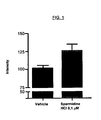
Fig. 1 shows a diagram relating to the pigmentation intensity in hair follicles as measured and compared between the control group treated with vehicle only and the group treated with spermidine 3HCl in a concentration of 0.1 µM. -
Fig. 2 shows the corresponding images taken from the hystochemical display of melanin through Masson-Fontana staining. - The increase of melanin is clear from both figures in the case of treatment with spermidine, therefore a significant melanogenesis activity towards hair treated with such compound compared to the reference vehicle.
Claims (11)
- Use of spermidine, as such or in the form of a pharmaceutically acceptable derivative, as an active principle to promote hair pigmentation, in particular the pigmentation of the hair shaft.
- Use according to claim 1, wherein spermidine is in the form of spermidine trichlorohydrate, namely N-(3-aminopropyl)butan-1,4-diamine - 3HCl.
- Use according to claim 1, wherein spermidine is formulated in a composition with any suitable excipient for topical administration on the scalp.
- Use according to claim 3, wherein spermidine is formulated as a lotion or a balsam or a shampoo or a hair mask.
- Use according to claim 1, wherein spermidine is formulated in a composition with any suitable excipient for oral administration.
- Use according to claim 5, wherein spermidine is formulated as a coated or uncoated tablet, or a hard or soft capsule, or a granulate.
- Use according to claims 1, 2 and 3, wherein spermidine is formulated in a composition in an amount in the range between 0.004 to 4-104 µM, corresponding to an amount of spermidine trichlorohydrate in the range from 10-7 to 1g/100 ml.
- Use according to claim 7, wherein spermidine is formulated in an amount in the range between 0.4 to 4-104 µM, corresponding to an amount of spermidine trichlorohydrate in the range from 10-5 to 1g/100 ml.
- Use according to claim 8, wherein spermidine is formulated in an amount in the range between 3.9 to 9.4-102 µM, corresponding to an amount of spermidine trichlorohydrate in the range from 10-4 to 2.4-10-2 g/100 ml.
- Use according to claim 5, wherein spermidine is formulated in a composition for oral administration in an amount in the range between 0.14 and 0.71 mg per administration unit.
- Use according to claims 2 and 5, wherein spermidine trichlorohydrate is formulated in a composition for oral administration in an amount in the range between 0.25 to 1.25 mg per administration unit.
Priority Applications (1)
| Application Number | Priority Date | Filing Date | Title |
|---|---|---|---|
| PL10752402T PL2459153T3 (en) | 2009-07-29 | 2010-07-29 | Pharmaceutical or cosmetic or dietetic composition for promoting a hair pigmentation effect |
Applications Claiming Priority (2)
| Application Number | Priority Date | Filing Date | Title |
|---|---|---|---|
| ITMI2009A001361A IT1395122B1 (en) | 2009-07-29 | 2009-07-29 | COMPOSITION FOR PHARMACEUTICAL OR COSMETIC OR DIETETIC USE PERFORMING A HAIR PIGMENTATION EFFECT |
| PCT/IB2010/053450 WO2011013087A1 (en) | 2009-07-29 | 2010-07-29 | Pharmaceutical or cosmetic or dietetic composition suitable for promoting a hair pigmentation effect |
Publications (2)
| Publication Number | Publication Date |
|---|---|
| EP2459153A1 EP2459153A1 (en) | 2012-06-06 |
| EP2459153B1 true EP2459153B1 (en) | 2013-09-11 |
Family
ID=42313482
Family Applications (1)
| Application Number | Title | Priority Date | Filing Date |
|---|---|---|---|
| EP10752402.7A Active EP2459153B1 (en) | 2009-07-29 | 2010-07-29 | Pharmaceutical or cosmetic or dietetic composition for promoting a hair pigmentation effect |
Country Status (9)
| Country | Link |
|---|---|
| US (1) | US20120121705A1 (en) |
| EP (1) | EP2459153B1 (en) |
| JP (1) | JP5947211B2 (en) |
| CA (1) | CA2769174C (en) |
| ES (1) | ES2438505T3 (en) |
| IT (1) | IT1395122B1 (en) |
| PL (1) | PL2459153T3 (en) |
| PT (1) | PT2459153E (en) |
| WO (1) | WO2011013087A1 (en) |
Families Citing this family (10)
| Publication number | Priority date | Publication date | Assignee | Title |
|---|---|---|---|---|
| ITMI20130218A1 (en) * | 2013-02-18 | 2014-08-19 | Giuliani Spa | COMPOSITION FOR COSMETIC USE TO PRODUCE A HAIR PIGMENTATION EFFECT |
| KR20210082277A (en) | 2015-05-01 | 2021-07-02 | 로레알 | Use of active agents during chemical treatments |
| BR112018010381B1 (en) | 2015-11-24 | 2021-08-17 | L'oreal | HAIR TREATMENT COMPOSITION, HAIR TREATMENT SYSTEM, HAIR TREATMENT AND HAIR COLOR CHANGE METHODS, AND MULTI-COMPARTMENT KIT FOR HAIR COLOR OR SHAPE CHANGE |
| CN108495687B (en) | 2015-11-24 | 2021-11-09 | 欧莱雅 | Composition for treating hair |
| US11135150B2 (en) | 2016-11-21 | 2021-10-05 | L'oreal | Compositions and methods for improving the quality of chemically treated hair |
| US11433011B2 (en) | 2017-05-24 | 2022-09-06 | L'oreal | Methods for treating chemically relaxed hair |
| US11596588B2 (en) | 2017-12-29 | 2023-03-07 | L'oreal | Compositions for altering the color of hair |
| US11090249B2 (en) | 2018-10-31 | 2021-08-17 | L'oreal | Hair treatment compositions, methods, and kits for treating hair |
| US11419809B2 (en) | 2019-06-27 | 2022-08-23 | L'oreal | Hair treatment compositions and methods for treating hair |
| IT202100031451A1 (en) * | 2021-12-15 | 2023-06-15 | Giuliani Spa | COSMETIC COMPOSITION TO RESTRUCTURE HAIR AND IMPROVE THEIR APPEARANCE |
Family Cites Families (7)
| Publication number | Priority date | Publication date | Assignee | Title |
|---|---|---|---|---|
| ITMI20020189A1 (en) * | 2002-02-01 | 2003-08-01 | Giuliani Spa | COMPOSITION FOR PHARMACEUTICAL OR DIETARY USE TO COUNTER HAIR LOSS |
| CA2487945A1 (en) * | 2002-06-11 | 2003-12-18 | L'oreal | Use of an agent mimicking dopachrome tautomerase (trp-2) activity as protective agent for hair follicle melanocytes and uses thereof |
| ITMI20031570A1 (en) * | 2003-07-31 | 2005-02-01 | Giuliani Spa | COMPOSITION FOR DIETARY, PHARMACEUTICAL OR COSMETIC USE |
| NO20044818D0 (en) * | 2004-11-05 | 2004-11-05 | Bioforsk As | Spermine in cosmetic preparations |
| JP2008156330A (en) * | 2006-04-26 | 2008-07-10 | Toyobo Co Ltd | Activating agent and anti-aging agent |
| ITMI20070555A1 (en) * | 2007-03-21 | 2007-06-20 | Giuliani Spa | COMPOSITION OF THE ACTIVITY OF INHIBITION ON THE 5 ALPHA-REDUCTASE |
| US7699897B2 (en) * | 2007-09-14 | 2010-04-20 | L'oreal | Method of coloring hair |
-
2009
- 2009-07-29 IT ITMI2009A001361A patent/IT1395122B1/en active
-
2010
- 2010-07-29 CA CA2769174A patent/CA2769174C/en active Active
- 2010-07-29 ES ES10752402.7T patent/ES2438505T3/en active Active
- 2010-07-29 US US13/387,352 patent/US20120121705A1/en not_active Abandoned
- 2010-07-29 WO PCT/IB2010/053450 patent/WO2011013087A1/en not_active Ceased
- 2010-07-29 PL PL10752402T patent/PL2459153T3/en unknown
- 2010-07-29 PT PT107524027T patent/PT2459153E/en unknown
- 2010-07-29 JP JP2012522327A patent/JP5947211B2/en active Active
- 2010-07-29 EP EP10752402.7A patent/EP2459153B1/en active Active
Also Published As
| Publication number | Publication date |
|---|---|
| CA2769174C (en) | 2017-01-24 |
| EP2459153A1 (en) | 2012-06-06 |
| CA2769174A1 (en) | 2011-02-03 |
| JP2013500328A (en) | 2013-01-07 |
| IT1395122B1 (en) | 2012-09-05 |
| WO2011013087A1 (en) | 2011-02-03 |
| US20120121705A1 (en) | 2012-05-17 |
| ITMI20091361A1 (en) | 2011-01-30 |
| PL2459153T3 (en) | 2014-02-28 |
| JP5947211B2 (en) | 2016-07-06 |
| PT2459153E (en) | 2013-12-10 |
| ES2438505T3 (en) | 2014-01-17 |
Similar Documents
| Publication | Publication Date | Title |
|---|---|---|
| CA2769174C (en) | Pharmaceutical or cosmetic or dietetic composition for promoting a hair pigmentation effect | |
| US9539191B2 (en) | Composition for cosmetic use suitable to produce a pigmentation effect on hair | |
| US7470438B1 (en) | Ericacea extracts for combating skin aging | |
| RU2407513C2 (en) | Agent containing l-carnitine or l-carnitine derivatives and at least one other certain substance | |
| US11684559B2 (en) | Topical cosmetic treatment of skin and scalp and corresponding active ingredient based on an extract of Apium graveolens | |
| US6623769B1 (en) | Administration of lycopene for combating skin/mucous membrane damage | |
| CN118845521A (en) | Composition and application of recombinant humanized bicollagen with anti-aging and repairing effects | |
| CN110403202A (en) | Skin moisturizing functional composition and preparation method thereof | |
| KR102376630B1 (en) | Cosmetic composition for improving hair loss or stimulating hair growth comprising cell growth stimulants as effective component | |
| KR101945981B1 (en) | Skin external composition comprising germinated Camellia sinensis seed extract | |
| JP2004168732A (en) | Active oxygen-scavenging agent, inhibitor for synthesis promotion/decomposition of hyaluronic acid, and aquaporin synthesis promotor | |
| KR101934564B1 (en) | Skin external composition comprising germinated Camellia sinensis seed extract | |
| JP2010059196A (en) | Synthesis of loxl (lysyl oxidase-like) isoform for stimulating formation of elastic fiber, and stimulation of activity | |
| CN121057574A (en) | Compositions and methods for the prevention and/or treatment of skin pigmentation | |
| KR101884434B1 (en) | Skin external composition containing Pedicularis verticillata Linne var.hallaisanensis extract | |
| EP2459158A2 (en) | Pharmaceutical, cosmetic or dietetic composition for skin bleaching | |
| JP2021155406A (en) | Hair growth promoting composition | |
| HK40130047A (en) | Compositions and methods for preventing and/or treating skin pigmentation | |
| WO2015160187A1 (en) | COMPOSITION FOR PREVENTING HAIR LOSS, GROWING HAIR, STRENGTHENING HAIR ROOTS, PROMOTING HAIR GROWTH OR INHIBITING GSK-3β PATHWAY COMPRISING HUMAN PLACENTA EXTRACT | |
| CN117752777A (en) | Application of recombinant plasmin in preparation of composition for treating freckle removing and freckle fading | |
| KR20240163220A (en) | A cosmetic composition comprising cell culture medium and albumin and use thereof | |
| AU2007294011A1 (en) | Bioquinones for stimulating keratin synthesis | |
| JP2015147798A (en) | Stimulation of synthesis and of activity of isoform of loxl (lysyl oxidase-like) for stimulating formation of elastic fiber | |
| HK1215410B (en) | A topical lightening composition and methods of use thereof |
Legal Events
| Date | Code | Title | Description |
|---|---|---|---|
| PUAI | Public reference made under article 153(3) epc to a published international application that has entered the european phase |
Free format text: ORIGINAL CODE: 0009012 |
|
| 17P | Request for examination filed |
Effective date: 20120228 |
|
| AK | Designated contracting states |
Kind code of ref document: A1 Designated state(s): AL AT BE BG CH CY CZ DE DK EE ES FI FR GB GR HR HU IE IS IT LI LT LU LV MC MK MT NL NO PL PT RO SE SI SK SM TR |
|
| DAX | Request for extension of the european patent (deleted) | ||
| REG | Reference to a national code |
Ref country code: DE Ref legal event code: R079 Ref document number: 602010010238 Country of ref document: DE Free format text: PREVIOUS MAIN CLASS: A61K0008020000 Ipc: A61Q0005020000 |
|
| GRAP | Despatch of communication of intention to grant a patent |
Free format text: ORIGINAL CODE: EPIDOSNIGR1 |
|
| INTG | Intention to grant announced |
Effective date: 20130418 |
|
| RIC1 | Information provided on ipc code assigned before grant |
Ipc: A61Q 5/02 20060101AFI20130405BHEP Ipc: A61K 8/41 20060101ALI20130405BHEP Ipc: A61Q 5/00 20060101ALI20130405BHEP Ipc: A61K 8/02 20060101ALI20130405BHEP Ipc: A61K 8/11 20060101ALI20130405BHEP Ipc: A61Q 5/12 20060101ALI20130405BHEP |
|
| GRAS | Grant fee paid |
Free format text: ORIGINAL CODE: EPIDOSNIGR3 |
|
| GRAA | (expected) grant |
Free format text: ORIGINAL CODE: 0009210 |
|
| AK | Designated contracting states |
Kind code of ref document: B1 Designated state(s): AL AT BE BG CH CY CZ DE DK EE ES FI FR GB GR HR HU IE IS IT LI LT LU LV MC MK MT NL NO PL PT RO SE SI SK SM TR |
|
| REG | Reference to a national code |
Ref country code: GB Ref legal event code: FG4D |
|
| REG | Reference to a national code |
Ref country code: CH Ref legal event code: EP |
|
| REG | Reference to a national code |
Ref country code: AT Ref legal event code: REF Ref document number: 631289 Country of ref document: AT Kind code of ref document: T Effective date: 20130915 |
|
| REG | Reference to a national code |
Ref country code: IE Ref legal event code: FG4D |
|
| REG | Reference to a national code |
Ref country code: DE Ref legal event code: R096 Ref document number: 602010010238 Country of ref document: DE Effective date: 20131107 |
|
| REG | Reference to a national code |
Ref country code: PT Ref legal event code: SC4A Free format text: AVAILABILITY OF NATIONAL TRANSLATION Effective date: 20131129 |
|
| REG | Reference to a national code |
Ref country code: CH Ref legal event code: NV Representative=s name: N&G PATENT SERVICES SA, CH |
|
| REG | Reference to a national code |
Ref country code: ES Ref legal event code: FG2A Ref document number: 2438505 Country of ref document: ES Kind code of ref document: T3 Effective date: 20140117 |
|
| PG25 | Lapsed in a contracting state [announced via postgrant information from national office to epo] |
Ref country code: CY Free format text: LAPSE BECAUSE OF FAILURE TO SUBMIT A TRANSLATION OF THE DESCRIPTION OR TO PAY THE FEE WITHIN THE PRESCRIBED TIME-LIMIT Effective date: 20130828 Ref country code: LT Free format text: LAPSE BECAUSE OF FAILURE TO SUBMIT A TRANSLATION OF THE DESCRIPTION OR TO PAY THE FEE WITHIN THE PRESCRIBED TIME-LIMIT Effective date: 20130911 Ref country code: NO Free format text: LAPSE BECAUSE OF FAILURE TO SUBMIT A TRANSLATION OF THE DESCRIPTION OR TO PAY THE FEE WITHIN THE PRESCRIBED TIME-LIMIT Effective date: 20131211 Ref country code: HR Free format text: LAPSE BECAUSE OF FAILURE TO SUBMIT A TRANSLATION OF THE DESCRIPTION OR TO PAY THE FEE WITHIN THE PRESCRIBED TIME-LIMIT Effective date: 20130911 Ref country code: SE Free format text: LAPSE BECAUSE OF FAILURE TO SUBMIT A TRANSLATION OF THE DESCRIPTION OR TO PAY THE FEE WITHIN THE PRESCRIBED TIME-LIMIT Effective date: 20130911 |
|
| REG | Reference to a national code |
Ref country code: NL Ref legal event code: VDEP Effective date: 20130911 |
|
| REG | Reference to a national code |
Ref country code: LT Ref legal event code: MG4D |
|
| PG25 | Lapsed in a contracting state [announced via postgrant information from national office to epo] |
Ref country code: LV Free format text: LAPSE BECAUSE OF FAILURE TO SUBMIT A TRANSLATION OF THE DESCRIPTION OR TO PAY THE FEE WITHIN THE PRESCRIBED TIME-LIMIT Effective date: 20130911 Ref country code: SI Free format text: LAPSE BECAUSE OF FAILURE TO SUBMIT A TRANSLATION OF THE DESCRIPTION OR TO PAY THE FEE WITHIN THE PRESCRIBED TIME-LIMIT Effective date: 20130911 Ref country code: FI Free format text: LAPSE BECAUSE OF FAILURE TO SUBMIT A TRANSLATION OF THE DESCRIPTION OR TO PAY THE FEE WITHIN THE PRESCRIBED TIME-LIMIT Effective date: 20130911 Ref country code: GR Free format text: LAPSE BECAUSE OF FAILURE TO SUBMIT A TRANSLATION OF THE DESCRIPTION OR TO PAY THE FEE WITHIN THE PRESCRIBED TIME-LIMIT Effective date: 20131212 |
|
| REG | Reference to a national code |
Ref country code: PL Ref legal event code: T3 |
|
| PG25 | Lapsed in a contracting state [announced via postgrant information from national office to epo] |
Ref country code: BE Free format text: LAPSE BECAUSE OF FAILURE TO SUBMIT A TRANSLATION OF THE DESCRIPTION OR TO PAY THE FEE WITHIN THE PRESCRIBED TIME-LIMIT Effective date: 20130911 Ref country code: CY Free format text: LAPSE BECAUSE OF FAILURE TO SUBMIT A TRANSLATION OF THE DESCRIPTION OR TO PAY THE FEE WITHIN THE PRESCRIBED TIME-LIMIT Effective date: 20130911 |
|
| PG25 | Lapsed in a contracting state [announced via postgrant information from national office to epo] |
Ref country code: IS Free format text: LAPSE BECAUSE OF FAILURE TO SUBMIT A TRANSLATION OF THE DESCRIPTION OR TO PAY THE FEE WITHIN THE PRESCRIBED TIME-LIMIT Effective date: 20140111 Ref country code: CZ Free format text: LAPSE BECAUSE OF FAILURE TO SUBMIT A TRANSLATION OF THE DESCRIPTION OR TO PAY THE FEE WITHIN THE PRESCRIBED TIME-LIMIT Effective date: 20130911 Ref country code: NL Free format text: LAPSE BECAUSE OF FAILURE TO SUBMIT A TRANSLATION OF THE DESCRIPTION OR TO PAY THE FEE WITHIN THE PRESCRIBED TIME-LIMIT Effective date: 20130911 Ref country code: SK Free format text: LAPSE BECAUSE OF FAILURE TO SUBMIT A TRANSLATION OF THE DESCRIPTION OR TO PAY THE FEE WITHIN THE PRESCRIBED TIME-LIMIT Effective date: 20130911 Ref country code: RO Free format text: LAPSE BECAUSE OF FAILURE TO SUBMIT A TRANSLATION OF THE DESCRIPTION OR TO PAY THE FEE WITHIN THE PRESCRIBED TIME-LIMIT Effective date: 20130911 Ref country code: EE Free format text: LAPSE BECAUSE OF FAILURE TO SUBMIT A TRANSLATION OF THE DESCRIPTION OR TO PAY THE FEE WITHIN THE PRESCRIBED TIME-LIMIT Effective date: 20130911 |
|
| REG | Reference to a national code |
Ref country code: DE Ref legal event code: R097 Ref document number: 602010010238 Country of ref document: DE |
|
| PLBE | No opposition filed within time limit |
Free format text: ORIGINAL CODE: 0009261 |
|
| STAA | Information on the status of an ep patent application or granted ep patent |
Free format text: STATUS: NO OPPOSITION FILED WITHIN TIME LIMIT |
|
| 26N | No opposition filed |
Effective date: 20140612 |
|
| REG | Reference to a national code |
Ref country code: DE Ref legal event code: R097 Ref document number: 602010010238 Country of ref document: DE Effective date: 20140612 |
|
| PG25 | Lapsed in a contracting state [announced via postgrant information from national office to epo] |
Ref country code: DK Free format text: LAPSE BECAUSE OF FAILURE TO SUBMIT A TRANSLATION OF THE DESCRIPTION OR TO PAY THE FEE WITHIN THE PRESCRIBED TIME-LIMIT Effective date: 20130911 |
|
| PG25 | Lapsed in a contracting state [announced via postgrant information from national office to epo] |
Ref country code: LU Free format text: LAPSE BECAUSE OF FAILURE TO SUBMIT A TRANSLATION OF THE DESCRIPTION OR TO PAY THE FEE WITHIN THE PRESCRIBED TIME-LIMIT Effective date: 20140729 |
|
| REG | Reference to a national code |
Ref country code: IE Ref legal event code: MM4A |
|
| PG25 | Lapsed in a contracting state [announced via postgrant information from national office to epo] |
Ref country code: IE Free format text: LAPSE BECAUSE OF NON-PAYMENT OF DUE FEES Effective date: 20140729 |
|
| PG25 | Lapsed in a contracting state [announced via postgrant information from national office to epo] |
Ref country code: MC Free format text: LAPSE BECAUSE OF FAILURE TO SUBMIT A TRANSLATION OF THE DESCRIPTION OR TO PAY THE FEE WITHIN THE PRESCRIBED TIME-LIMIT Effective date: 20130911 Ref country code: SM Free format text: LAPSE BECAUSE OF FAILURE TO SUBMIT A TRANSLATION OF THE DESCRIPTION OR TO PAY THE FEE WITHIN THE PRESCRIBED TIME-LIMIT Effective date: 20130911 |
|
| REG | Reference to a national code |
Ref country code: FR Ref legal event code: PLFP Year of fee payment: 7 |
|
| PG25 | Lapsed in a contracting state [announced via postgrant information from national office to epo] |
Ref country code: MT Free format text: LAPSE BECAUSE OF FAILURE TO SUBMIT A TRANSLATION OF THE DESCRIPTION OR TO PAY THE FEE WITHIN THE PRESCRIBED TIME-LIMIT Effective date: 20130911 Ref country code: BG Free format text: LAPSE BECAUSE OF FAILURE TO SUBMIT A TRANSLATION OF THE DESCRIPTION OR TO PAY THE FEE WITHIN THE PRESCRIBED TIME-LIMIT Effective date: 20130911 |
|
| PG25 | Lapsed in a contracting state [announced via postgrant information from national office to epo] |
Ref country code: TR Free format text: LAPSE BECAUSE OF FAILURE TO SUBMIT A TRANSLATION OF THE DESCRIPTION OR TO PAY THE FEE WITHIN THE PRESCRIBED TIME-LIMIT Effective date: 20130911 Ref country code: HU Free format text: LAPSE BECAUSE OF FAILURE TO SUBMIT A TRANSLATION OF THE DESCRIPTION OR TO PAY THE FEE WITHIN THE PRESCRIBED TIME-LIMIT; INVALID AB INITIO Effective date: 20100729 |
|
| REG | Reference to a national code |
Ref country code: FR Ref legal event code: PLFP Year of fee payment: 8 |
|
| PGFP | Annual fee paid to national office [announced via postgrant information from national office to epo] |
Ref country code: FR Payment date: 20170613 Year of fee payment: 8 |
|
| PGFP | Annual fee paid to national office [announced via postgrant information from national office to epo] |
Ref country code: PL Payment date: 20170509 Year of fee payment: 8 |
|
| PGFP | Annual fee paid to national office [announced via postgrant information from national office to epo] |
Ref country code: ES Payment date: 20170801 Year of fee payment: 8 Ref country code: DE Payment date: 20170725 Year of fee payment: 8 Ref country code: GB Payment date: 20170726 Year of fee payment: 8 Ref country code: CH Payment date: 20170712 Year of fee payment: 8 |
|
| PGFP | Annual fee paid to national office [announced via postgrant information from national office to epo] |
Ref country code: AT Payment date: 20170626 Year of fee payment: 8 Ref country code: PT Payment date: 20170721 Year of fee payment: 8 |
|
| PG25 | Lapsed in a contracting state [announced via postgrant information from national office to epo] |
Ref country code: MK Free format text: LAPSE BECAUSE OF FAILURE TO SUBMIT A TRANSLATION OF THE DESCRIPTION OR TO PAY THE FEE WITHIN THE PRESCRIBED TIME-LIMIT Effective date: 20130911 |
|
| PG25 | Lapsed in a contracting state [announced via postgrant information from national office to epo] |
Ref country code: AL Free format text: LAPSE BECAUSE OF FAILURE TO SUBMIT A TRANSLATION OF THE DESCRIPTION OR TO PAY THE FEE WITHIN THE PRESCRIBED TIME-LIMIT Effective date: 20130911 |
|
| REG | Reference to a national code |
Ref country code: DE Ref legal event code: R119 Ref document number: 602010010238 Country of ref document: DE |
|
| REG | Reference to a national code |
Ref country code: CH Ref legal event code: PL |
|
| REG | Reference to a national code |
Ref country code: AT Ref legal event code: MM01 Ref document number: 631289 Country of ref document: AT Kind code of ref document: T Effective date: 20180729 |
|
| GBPC | Gb: european patent ceased through non-payment of renewal fee |
Effective date: 20180729 |
|
| PG25 | Lapsed in a contracting state [announced via postgrant information from national office to epo] |
Ref country code: FR Free format text: LAPSE BECAUSE OF NON-PAYMENT OF DUE FEES Effective date: 20180731 Ref country code: DE Free format text: LAPSE BECAUSE OF NON-PAYMENT OF DUE FEES Effective date: 20190201 Ref country code: AT Free format text: LAPSE BECAUSE OF NON-PAYMENT OF DUE FEES Effective date: 20180729 Ref country code: LI Free format text: LAPSE BECAUSE OF NON-PAYMENT OF DUE FEES Effective date: 20180731 Ref country code: GB Free format text: LAPSE BECAUSE OF NON-PAYMENT OF DUE FEES Effective date: 20180729 Ref country code: CH Free format text: LAPSE BECAUSE OF NON-PAYMENT OF DUE FEES Effective date: 20180731 |
|
| PG25 | Lapsed in a contracting state [announced via postgrant information from national office to epo] |
Ref country code: PT Free format text: LAPSE BECAUSE OF NON-PAYMENT OF DUE FEES Effective date: 20190129 |
|
| REG | Reference to a national code |
Ref country code: ES Ref legal event code: FD2A Effective date: 20190918 |
|
| PG25 | Lapsed in a contracting state [announced via postgrant information from national office to epo] |
Ref country code: ES Free format text: LAPSE BECAUSE OF NON-PAYMENT OF DUE FEES Effective date: 20180730 |
|
| PG25 | Lapsed in a contracting state [announced via postgrant information from national office to epo] |
Ref country code: PL Free format text: LAPSE BECAUSE OF NON-PAYMENT OF DUE FEES Effective date: 20180729 |
|
| P01 | Opt-out of the competence of the unified patent court (upc) registered |
Effective date: 20230525 |
|
| PGFP | Annual fee paid to national office [announced via postgrant information from national office to epo] |
Ref country code: IT Payment date: 20250730 Year of fee payment: 16 |