EP2457214B1 - A method for detecting and adapting video processing for far-view scenes in sports video - Google Patents
A method for detecting and adapting video processing for far-view scenes in sports video Download PDFInfo
- Publication number
- EP2457214B1 EP2457214B1 EP20100743256 EP10743256A EP2457214B1 EP 2457214 B1 EP2457214 B1 EP 2457214B1 EP 20100743256 EP20100743256 EP 20100743256 EP 10743256 A EP10743256 A EP 10743256A EP 2457214 B1 EP2457214 B1 EP 2457214B1
- Authority
- EP
- European Patent Office
- Prior art keywords
- view
- field
- images
- classifying
- image
- Prior art date
- Legal status (The legal status is an assumption and is not a legal conclusion. Google has not performed a legal analysis and makes no representation as to the accuracy of the status listed.)
- Not-in-force
Links
Images


Classifications
-
- G—PHYSICS
- G06—COMPUTING OR CALCULATING; COUNTING
- G06V—IMAGE OR VIDEO RECOGNITION OR UNDERSTANDING
- G06V20/00—Scenes; Scene-specific elements
- G06V20/40—Scenes; Scene-specific elements in video content
-
- G—PHYSICS
- G06—COMPUTING OR CALCULATING; COUNTING
- G06V—IMAGE OR VIDEO RECOGNITION OR UNDERSTANDING
- G06V20/00—Scenes; Scene-specific elements
- G06V20/40—Scenes; Scene-specific elements in video content
- G06V20/41—Higher-level, semantic clustering, classification or understanding of video scenes, e.g. detection, labelling or Markovian modelling of sport events or news items
- G06V20/42—Higher-level, semantic clustering, classification or understanding of video scenes, e.g. detection, labelling or Markovian modelling of sport events or news items of sport video content
-
- G—PHYSICS
- G06—COMPUTING OR CALCULATING; COUNTING
- G06T—IMAGE DATA PROCESSING OR GENERATION, IN GENERAL
- G06T5/00—Image enhancement or restoration
-
- G—PHYSICS
- G06—COMPUTING OR CALCULATING; COUNTING
- G06T—IMAGE DATA PROCESSING OR GENERATION, IN GENERAL
- G06T5/00—Image enhancement or restoration
- G06T5/40—Image enhancement or restoration using histogram techniques
-
- G—PHYSICS
- G06—COMPUTING OR CALCULATING; COUNTING
- G06T—IMAGE DATA PROCESSING OR GENERATION, IN GENERAL
- G06T7/00—Image analysis
- G06T7/60—Analysis of geometric attributes
-
- G—PHYSICS
- G06—COMPUTING OR CALCULATING; COUNTING
- G06V—IMAGE OR VIDEO RECOGNITION OR UNDERSTANDING
- G06V20/00—Scenes; Scene-specific elements
- G06V20/35—Categorising the entire scene, e.g. birthday party or wedding scene
-
- G—PHYSICS
- G06—COMPUTING OR CALCULATING; COUNTING
- G06V—IMAGE OR VIDEO RECOGNITION OR UNDERSTANDING
- G06V20/00—Scenes; Scene-specific elements
- G06V20/40—Scenes; Scene-specific elements in video content
- G06V20/41—Higher-level, semantic clustering, classification or understanding of video scenes, e.g. detection, labelling or Markovian modelling of sport events or news items
-
- G—PHYSICS
- G06—COMPUTING OR CALCULATING; COUNTING
- G06T—IMAGE DATA PROCESSING OR GENERATION, IN GENERAL
- G06T2207/00—Indexing scheme for image analysis or image enhancement
- G06T2207/10—Image acquisition modality
- G06T2207/10016—Video; Image sequence
-
- G—PHYSICS
- G06—COMPUTING OR CALCULATING; COUNTING
- G06T—IMAGE DATA PROCESSING OR GENERATION, IN GENERAL
- G06T2207/00—Indexing scheme for image analysis or image enhancement
- G06T2207/20—Special algorithmic details
- G06T2207/20004—Adaptive image processing
-
- G—PHYSICS
- G06—COMPUTING OR CALCULATING; COUNTING
- G06T—IMAGE DATA PROCESSING OR GENERATION, IN GENERAL
- G06T2207/00—Indexing scheme for image analysis or image enhancement
- G06T2207/30—Subject of image; Context of image processing
- G06T2207/30221—Sports video; Sports image
- G06T2207/30228—Playing field
Definitions
- the present invention generally relates to a method and associated apparatus for analyzing video to detect far-view scenes in sports video to determine when certain image processing algorithms should be applied.
- the method comprises analyzing and classifying the fields of view of images from a video signal, creating and classifying the fields of view of sets of sequential images, and selectively applying image processing algorithms to sets of sequential images representing a particular type of field of view.
- the present invention as defined in appended claims 1, 11 and 15 concerns analyzing video to detect far-view scenes in sports video to determine when certain image processing algorithms should be applied.
- the method comprises analyzing and classifying the fields of view of images from a video signal, creating and classifying the fields of view of sets of sequential images, and selectively applying image processing algorithms to sets of sequential images representing a particular type of field of view.
- the present invention provides a method and associated apparatus for analyzing video to detect far-view scenes in sports video to determine when certain image processing algorithms should be applied.
- the method comprises analyzing and classifying the fields of view of images from a video signal, creating and classifying the fields of view of sets of sequential images, and selectively applying image processing algorithms to sets of sequential images representing a particular type of field of view.
- the present invention may be implemented in signal processing hardware within a television production or transmission environment.
- the method is used to detect far-view scenes in sports video, with an exemplary application in soccer video.
- Far-view scenes are those corresponding to wide-angle camera views of the play field, wherein the objects of interest, for instance, the players and ball, are small enough to be easily degraded by video compression or not be clearly visible.
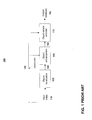
- Figure 1 illustrates a conventional image processing system 100 with object localization and enhancement applied to all portions of a video, regardless of the field of view of a particular scene.
- Input video 110 is first processed through object localization algorithms 120 to produce information 130 about detected objects, such as balls or pucks.
- object localization algorithms 120 to produce information 130 about detected objects, such as balls or pucks.
- Various techniques are known in the art for detecting such objects, such as the use of filters corresponding to characteristics of the object of interest.
- Information 130 about the identified objects is passed to the object enhancement stage 150 and to an object aware encoder 170.
- This information may include, for instance, location, size, trajectory, or a mask of a ball.
- Video frames 140 are processed at object enhancement stage 150 using the information 130 about the identified objects. For instance, a highlight color may be placed over the location of a ball or puck to allow the viewer to more easily identify its location.
- the resulting video frames 160 with enhancement applied to the detected objects are then encoded by the object-aware encoder 170, resulting in an output bitstream 180.
- the use of object information 130 by the object-aware encoder 170 may allow the encoding to be adjusted to preserve the visibility and appearance of identified objects in the far-view scenes, such as players or the ball. For instance, a lower compression ratio may be used for scenes in which the ball appears as a small object, or for particular areas of frames where the ball appears.
- object localization and enhancement are performed without regard to the type of view represented in the frames being processed.
- unnecessary processing is performed on some types of scenes, potentially resulting in wasted time, wasted processing resources, or image quality degradation.
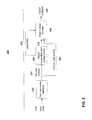
- Figure 2 illustrates the data flow in a video processing system in accordance with the present invention.
- the input video 210 is first processed by a far-view scene detection algorithm 220, which will be described in detail below.
- far-view scene detection 220 the scenes 230 classified as far-view may then be processed separately from those scenes 240 classified as not being far-view. This may provide savings in time, savings of processing resources, or improvements in image quality.
- Far-view scenes 230 are sent to object localization and enhancement processing 250. This processing may include highlighting of a detected ball, illustration of a ball trajectory, or other enhancements.
- Non-far-view scenes 240 bypass the object localization and enhancement stage and are sent directly to the object-aware encoder 280.
- Object information 260 produced by the object localization and enhancement stage 250 and the enhanced far-view scenes 270 are also sent to the object-aware encoder 280, which produces an encoded output bitstream 290.
- object information 260 by the object-aware encoder 280 allows the encoding to be adjusted, for instance, to preserve the visibility and appearance of identified objects, such as soccer balls, in the far-view scenes. For instance, a lower compression ratio may be used for scenes in which the ball appears, or for particular areas of frames where the ball appears.
- the detection of far-view scenes of step 220 comprises the following stages:
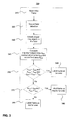
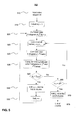
- FIG. 3 is a flowchart of a method 300 of far-view frame classification, described with respect to an exemplary application of soccer video.
- An input frame 310 from a soccer video is processed into a binary field mask at a soccer field detection step 320.
- the soccer field pixels are identified using the knowledge that the field is generally covered in grass or grass-colored material.
- the result is a binary mask classifying all field pixels with a value of 1 and all non-field pixels, including objects in the field, with a value of 0.
- Various image processing techniques may then be used to then identify the boundaries of the playing field, ignore foreground objects, and create a solid field mask.
- all pixels within a simple bounding box encompassing all of the contiguous regions of field pixels above a certain area threshold may be included in the field mask.
- Other techniques, including the use of filters, may be used to identify the field and eliminate foreground objects from the field mask.
- "player-like" objects are identified through analysis of the foreground objects, which are connected sets of non-field pixels within the field boundary identified in step 320.
- the maximum area A max and median area A med of all player-like objects are computed.
- the area of a particular object may be computed simply as the number of pixels comprising the object.
- the area of the field A field may be computed as the number of pixels comprising the field mask.
- the area of the field, the median area of player objects, and the maximum area of player objects are compared to thresholds related to the expected areas in a far-view scene. If ( A field > T field ), ( A med ⁇ T med ), and ( t max ⁇ A max ⁇ T max ), the frame is labeled as FV at step 360. That is, if the field area in the frame is large, the median player area is small, and the maximum player area is within an expected range, the field-of-view of the scene is wide, or far.
- the frame is classified as FV at step 380 if the criteria ( A field > t field ) and ( A max ⁇ t max ) are met at step 370. Stated otherwise, if the field area is above a lower threshold, but the maximum area of a player-like object is not above a minimum threshold, a reliable determination cannot be made based upon the single frame. If the frame is not labeled as FV or MFV, it is classified as NFV at step 390.
- method 300 is repeated for each frame in the sequence. Thus, a sequence of classifications of field of view, one per frame, is obtained.
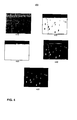
- Figure 4 illustrates the field detection and player-like object detection processes of steps 320 and 330.
- the soccer field detection first results in a binary mask 420, classifying all field-colored pixels with a value of 1 and all non-field pixels, including objects in the field, with a value of 0.
- Objects on the field such as players, lines, and the ball, appear as holes in the mask since they are not the expected color of the field.
- the result of the determination of the boundaries of the soccer field is shown in 430.
- the holes in the mask from players, lines, and the ball are removed, creating a large contiguous field mask.
- Image 440 shows the detected foreground objects, the connected sets of non-field pixels within the field boundaries shown in 430. These include, for instance, binary masks of players, field lines, and the ball.
- Image 450 represents the result of the detection of player-like objects. Objects not meeting the thresholds for area, compactness, or aspect ratio, such as the field lines, have been eliminated.
- the frame-level classification of method 300 will generally produce some erroneous frame classifications.
- the video is segmented into sets of contiguous "similar-looking" frames called "chunks.”
- the process of identifying chunks is described below with respect to Figure 5 .
- the field of view of each chunk is then classified as a whole based on the statistics of the classifications of its constituent frames, as described below with respect to Figure 6 .
- Fig. 5 outlines a method 500 used for segmenting a video sequence 510 into a number of chunks based upon similarity of color histograms of contiguous sequences of frames.
- a color histogram consists of counts of the number of pixels in the frame within various ranges of color values. Frames from the same scene are likely to have similar histograms, as the camera will be pointed at the same objects, which generally have constant color. A change of scene will place different objects of different colors within the field of view, thereby generally changing the color histogram.
- the list of chunks C is empty.
- the starting frame number j the first frame in the chunk under construction, is initialized to a value of 1, the first frame in the video sequence.
- the color histogram of the j th frame is computed.
- H j is a 256-bin histogram of grayscale values of pixels in frame j. A smaller number of larger histogram bins may be utilized to reduce the computational intensity of histogram comparison.
- the color histogram of the j th frame serves as a basis for assembly of the chunk.
- the frames following frame j will be analyzed one at a time for similarity to frame j to determine if they should be included in the chunk that begins with frame j.
- the color histogram H i of the i ih frame is computed using the same technique used at step 520. Then at step 535, the histogram difference between the i th frame and the j th frame, d ij is computed.
- the frames are considered similar enough if the distance d ij between their color histograms H i and H j is below a threshold T chunk .
- T chunk 0.4.
- the interval [ j , i- 1] is added to the list of chunks at step 545.
- the current chunk is terminated at the previous frame, frame i -1, the last frame meeting the similarity threshold.
- the starting frame number j for the new chunk is set to the current value of i at step 565, and the process returns to step 520 for building of the next chunk.
- d ij is less than or equal to T chunk , the frame i is considered similar enough to the initial frame of the chunk, j, to be added to the current chunk.
- Each chunk is represented by a pair [b e], where b is the beginning frame of the chunk and e is the ending frame.
- Fig. 6 shows the method 600 used to classify the field of view of each chunk as FV, MFV, or NFV.
- chunk classification is based on a strict form of majority voting among the labels of the frames in the chunk, mitigating labeling errors that occurred in the frame-level classification.
- each frame of the input video chunk 610 is classified as FV, MFV, or NFV.
- This frame-level classification may be performed using method 300 described above.
- the percentage of FV frames is computed for the chunk. If more than 50% of the frames in the chunk are determined to be FV at step 640, the whole chunk is classified as FV at step 650. That is, if the majority of constituent frames are far view, the chunk is considered far view.
- the percentage of FV frames in the chunk is computed at step 660. If more than 50% of frames are determined to be MFV at step 670, the chunk is classified as MFV at step 680. If neither criterion is satisfied, the chunk is classified as NFV at step 690. In an alternative embodiment, chunks may be classified as NFV if the frame count is below a certain threshold.
- Fig. 7 is a flowchart of a method 700 used in the overall far-view scene detection process.
- An input video sequence 710 is segmented into chunks at step 720, as described above with respect to Figure 5 .
- each chunk is classified as FV, MFV, or NFV, as described with respect to Figure 6 .
- an MFV chunk lies adjacent to an FV chunk, it is reclassified as FV. That is, if a determination regarding the field of view could not be made at step 730, the chunk will be considered far-view if it is adjacent to a far-view chunk.
- only MFV chunks adjacent to original FV chunks are reclassified and reclassification based on adjacency to other reclassified FV chunks is not allowed.
- step 750 all remaining MFV chunks as reclassified as NFV. That is, if a determination regarding the field of view of the chunk could not be made at step 620 and the chunk is not adjacent to a chunk identified as far-view, the chunk will be assumed to not be far-view.
- the process merges all FV chunks that lie adjacent to each other into larger chunks.
- C is modified by removing these two chunks and adding [ b 1 e 2 ] in their place.
- the new chunk inherits the FV label of its constituent parts. This merging process is repetitive and is performed until there are no adjacent FV chunks left.
- N min is chosen to be 30 frames. Thus, processing of short scenes may be avoided.
- step 780 all of the remaining FV chunks in C are classified as far-view scenes.
- the beginning and ending frames of each FV chunk indicate the boundaries 790 of the corresponding far-view scene.
- all remaining NFV chunks are classified as non-far-view scenes (after merging adjacent ones as described earlier).
- a list of far-view scenes S FV and a list of non-far-view scenes S NFV are obtained.
- Each scene is represented by a pair [ b e ], where b is the beginning frame of the scene and e is its end frame.
- These scene boundaries may then be used by the object highlighting system shown in Fig. 2 to control the application of image processing techniques applicable only to certain views.
- the far-view scenes are sent to the object localization and enhancement modules that enhance objects of interest and generate object metadata for the object-aware encoder.
- the non-far-view scenes may be sent directly to the encoder to be encoded without object highlighting.
- a classifier e.g., support vector machine
- FV field-to-vehicle
- MFV MFV
- NFV NFV
- the proposed method may be applied to other sports or events with moving objects of interest.
- the method may be used to detect other types of scenes than far view for specialized processing.
Landscapes
- Engineering & Computer Science (AREA)
- Physics & Mathematics (AREA)
- General Physics & Mathematics (AREA)
- Theoretical Computer Science (AREA)
- Multimedia (AREA)
- Computational Linguistics (AREA)
- Software Systems (AREA)
- Geometry (AREA)
- Computer Vision & Pattern Recognition (AREA)
- Image Analysis (AREA)
- Two-Way Televisions, Distribution Of Moving Picture Or The Like (AREA)
- Television Signal Processing For Recording (AREA)
Applications Claiming Priority (2)
| Application Number | Priority Date | Filing Date | Title |
|---|---|---|---|
| US27138109P | 2009-07-20 | 2009-07-20 | |
| PCT/US2010/002028 WO2011011052A1 (en) | 2009-07-20 | 2010-07-19 | A method for detecting and adapting video processing for far-view scenes in sports video |
Publications (2)
| Publication Number | Publication Date |
|---|---|
| EP2457214A1 EP2457214A1 (en) | 2012-05-30 |
| EP2457214B1 true EP2457214B1 (en) | 2015-04-29 |
Family
ID=42813424
Family Applications (1)
| Application Number | Title | Priority Date | Filing Date |
|---|---|---|---|
| EP20100743256 Not-in-force EP2457214B1 (en) | 2009-07-20 | 2010-07-19 | A method for detecting and adapting video processing for far-view scenes in sports video |
Country Status (6)
| Country | Link |
|---|---|
| US (1) | US9020259B2 (enExample) |
| EP (1) | EP2457214B1 (enExample) |
| JP (1) | JP5686800B2 (enExample) |
| KR (1) | KR20120042849A (enExample) |
| CN (1) | CN102473291B (enExample) |
| WO (1) | WO2011011052A1 (enExample) |
Families Citing this family (16)
| Publication number | Priority date | Publication date | Assignee | Title |
|---|---|---|---|---|
| US20100184564A1 (en) | 2008-12-05 | 2010-07-22 | Nike, Inc. | Athletic Performance Monitoring Systems and Methods in a Team Sports Environment |
| JP5624053B2 (ja) * | 2008-12-19 | 2014-11-12 | コーニンクレッカ フィリップス エヌ ヴェ | 画像からの深度マップの作成 |
| CN102576412B (zh) | 2009-01-13 | 2014-11-05 | 华为技术有限公司 | 图像处理以为图像中的对象进行分类的方法和系统 |
| KR101494121B1 (ko) | 2011-03-18 | 2015-02-16 | 엠파이어 테크놀로지 디벨롭먼트 엘엘씨 | 장면 기반 가변 압축 |
| WO2013086137A1 (en) | 2011-12-06 | 2013-06-13 | 1-800 Contacts, Inc. | Systems and methods for obtaining a pupillary distance measurement using a mobile computing device |
| US9286715B2 (en) | 2012-05-23 | 2016-03-15 | Glasses.Com Inc. | Systems and methods for adjusting a virtual try-on |
| US9311746B2 (en) | 2012-05-23 | 2016-04-12 | Glasses.Com Inc. | Systems and methods for generating a 3-D model of a virtual try-on product |
| US9483853B2 (en) | 2012-05-23 | 2016-11-01 | Glasses.Com Inc. | Systems and methods to display rendered images |
| CN115957488A (zh) * | 2012-10-25 | 2023-04-14 | 耐克创新有限合伙公司 | 团队体育环境中的运动表现监测系统和方法 |
| JP2016046642A (ja) * | 2014-08-21 | 2016-04-04 | キヤノン株式会社 | 情報処理システム、情報処理方法及びプログラム |
| CN104299196A (zh) * | 2014-10-11 | 2015-01-21 | 京东方科技集团股份有限公司 | 一种图像处理装置及方法、显示设备 |
| JP2016181808A (ja) * | 2015-03-24 | 2016-10-13 | 富士フイルム株式会社 | 画像処理装置、画像処理方法、プログラムおよび記録媒体 |
| CN105005772B (zh) * | 2015-07-20 | 2018-06-12 | 北京大学 | 一种视频场景检测方法 |
| EP3677042B1 (en) * | 2017-08-30 | 2025-10-01 | InterDigital VC Holdings, Inc. | Tracked video zooming |
| US10789725B2 (en) * | 2018-04-22 | 2020-09-29 | Cnoga Medical Ltd. | BMI, body and other object measurements from camera view display |
| CN114596193A (zh) * | 2020-12-04 | 2022-06-07 | 英特尔公司 | 用于确定比赛状态的方法和装置 |
Family Cites Families (40)
| Publication number | Priority date | Publication date | Assignee | Title |
|---|---|---|---|---|
| JP3558886B2 (ja) * | 1998-08-26 | 2004-08-25 | シャープ株式会社 | 映像処理装置 |
| TW452748B (en) | 1999-01-26 | 2001-09-01 | Ibm | Description of video contents based on objects by using spatio-temporal features and sequential of outlines |
| US20110026606A1 (en) | 1999-03-11 | 2011-02-03 | Thomson Licensing | System and method for enhancing the visibility of an object in a digital picture |
| US6751354B2 (en) * | 1999-03-11 | 2004-06-15 | Fuji Xerox Co., Ltd | Methods and apparatuses for video segmentation, classification, and retrieval using image class statistical models |
| US6331859B1 (en) * | 1999-04-06 | 2001-12-18 | Sharp Laboratories Of America, Inc. | Video skimming system utilizing the vector rank filter |
| WO2001003429A2 (en) * | 1999-07-06 | 2001-01-11 | Koninklijke Philips Electronics N.V. | Automatic extraction method of the structure of a video sequence |
| JP2001245303A (ja) * | 2000-02-29 | 2001-09-07 | Toshiba Corp | 動画像符号化装置および動画像符号化方法 |
| JP4366023B2 (ja) | 2001-03-16 | 2009-11-18 | インターナショナル・ビジネス・マシーンズ・コーポレーション | ビデオ・イメージの部分イメージ領域抽出方法、部分イメージ領域抽出システム、部分イメージ領域抽出のためのプログラム、抽出されたビデオ・イメージの配信方法およびコンテンツ作成方法 |
| JP4036321B2 (ja) | 2002-03-11 | 2008-01-23 | Kddi株式会社 | 映像の検索装置および検索プログラム |
| US6950123B2 (en) | 2002-03-22 | 2005-09-27 | Intel Corporation | Method for simultaneous visual tracking of multiple bodies in a closed structured environment |
| JP3807342B2 (ja) | 2002-04-25 | 2006-08-09 | 三菱電機株式会社 | デジタル信号符号化装置、デジタル信号復号装置、デジタル信号算術符号化方法、およびデジタル信号算術復号方法 |
| JP2003319391A (ja) | 2002-04-26 | 2003-11-07 | Sony Corp | 符号化装置および方法、復号装置および方法、記録媒体、並びにプログラム |
| WO2004014061A2 (en) | 2002-08-02 | 2004-02-12 | University Of Rochester | Automatic soccer video analysis and summarization |
| US7177470B2 (en) * | 2002-11-13 | 2007-02-13 | Koninklijke Philips Electronics N. V. | Method of and system for detecting uniform color segments |
| US7006945B2 (en) * | 2003-01-10 | 2006-02-28 | Sharp Laboratories Of America, Inc. | Processing of video content |
| US7406328B2 (en) | 2003-09-15 | 2008-07-29 | Harris Corporation | System and method for configuring a software radio |
| JP2005182402A (ja) | 2003-12-18 | 2005-07-07 | Hokkaido Univ | フィールド領域検出方法、そのシステム、及びプログラム |
| JP4517685B2 (ja) * | 2004-03-10 | 2010-08-04 | 沖電気工業株式会社 | 動画像符号化装置、動画像復号装置及び動画像強調変換システム |
| SG119229A1 (en) * | 2004-07-30 | 2006-02-28 | Agency Science Tech & Res | Method and apparatus for insertion of additional content into video |
| FR2875662A1 (fr) | 2004-09-17 | 2006-03-24 | Thomson Licensing Sa | Procede de visualisation de document audiovisuels au niveau d'un recepteur, et recepteur apte a les visualiser |
| JP4703347B2 (ja) * | 2005-10-04 | 2011-06-15 | シャープ株式会社 | 携帯端末 |
| AT508595B1 (de) | 2005-10-21 | 2011-02-15 | A1 Telekom Austria Ag | Vorbearbeitung von spiel-videosequenzen zur übertragung über mobilnetze |
| JP4664838B2 (ja) | 2006-03-02 | 2011-04-06 | 日本放送協会 | 映像オブジェクト追跡装置および映像オブジェクト追跡プログラム |
| KR100785952B1 (ko) * | 2006-03-30 | 2007-12-14 | 한국정보통신대학교 산학협력단 | 멀티미디어 이동형 단말을 위한 운동경기 비디오의 지능적디스플레이 방법 |
| KR100781239B1 (ko) | 2006-06-06 | 2007-11-30 | 재단법인서울대학교산학협력재단 | 박테리아 유영경로 추적방법 |
| US7965868B2 (en) | 2006-07-20 | 2011-06-21 | Lawrence Livermore National Security, Llc | System and method for bullet tracking and shooter localization |
| CN101529467B (zh) | 2006-10-20 | 2013-05-22 | 汤姆逊许可证公司 | 用于生成视频内容中感兴趣区域的方法、装置和系统 |
| US8010658B2 (en) | 2007-02-09 | 2011-08-30 | Raytheon Company | Information processing system for classifying and/or tracking an object |
| KR100871012B1 (ko) * | 2007-02-14 | 2008-11-27 | 한국정보통신대학교 산학협력단 | 운동경기 비디오에서의 그라운드 그림자 감소방법 |
| KR101463085B1 (ko) | 2007-03-26 | 2014-11-20 | 톰슨 라이센싱 | 색 구분 및 모양 분석에 의해 축구 비디오에서 관심 객체를 검출하는 방법 및 장치 |
| US8326042B2 (en) * | 2007-06-18 | 2012-12-04 | Sony (China) Limited | Video shot change detection based on color features, object features, and reliable motion information |
| US20090083790A1 (en) * | 2007-09-26 | 2009-03-26 | Tao Wang | Video scene segmentation and categorization |
| JP4683031B2 (ja) * | 2007-10-17 | 2011-05-11 | ソニー株式会社 | 電子機器、コンテンツ分類方法及びそのプログラム |
| WO2009067170A1 (en) | 2007-11-16 | 2009-05-28 | Thomson Licensing | Estimating an object location in video |
| US8184855B2 (en) | 2007-12-10 | 2012-05-22 | Intel Corporation | Three-level scheme for efficient ball tracking |
| CN101465003B (zh) * | 2007-12-19 | 2011-05-11 | 中国科学院自动化研究所 | 基于特征线的体育视频镜头分类方法 |
| KR101420681B1 (ko) * | 2008-02-01 | 2014-07-17 | 한국과학기술원 | 비디오 영상의 깊이 지도 생성 방법 및 장치 |
| US8718340B2 (en) | 2008-09-03 | 2014-05-06 | Trustees Of The University Of Pennsylvania | System and method for accurate and rapid identification of diseased regions on biological images with applications to disease diagnosis and prognosis |
| WO2010083018A1 (en) | 2009-01-16 | 2010-07-22 | Thomson Licensing | Segmenting grass regions and playfield in sports videos |
| WO2011011059A1 (en) | 2009-07-21 | 2011-01-27 | Thomson Licensing | A trajectory-based method to detect and enhance a moving object in a video sequence |
-
2010
- 2010-07-19 CN CN201080032582.1A patent/CN102473291B/zh not_active Expired - Fee Related
- 2010-07-19 EP EP20100743256 patent/EP2457214B1/en not_active Not-in-force
- 2010-07-19 KR KR1020127001591A patent/KR20120042849A/ko not_active Withdrawn
- 2010-07-19 WO PCT/US2010/002028 patent/WO2011011052A1/en not_active Ceased
- 2010-07-19 US US13/383,626 patent/US9020259B2/en not_active Expired - Fee Related
- 2010-07-19 JP JP2012521612A patent/JP5686800B2/ja not_active Expired - Fee Related
Also Published As
| Publication number | Publication date |
|---|---|
| US9020259B2 (en) | 2015-04-28 |
| EP2457214A1 (en) | 2012-05-30 |
| KR20120042849A (ko) | 2012-05-03 |
| US20120121174A1 (en) | 2012-05-17 |
| WO2011011052A1 (en) | 2011-01-27 |
| CN102473291B (zh) | 2014-08-20 |
| JP2012533962A (ja) | 2012-12-27 |
| CN102473291A (zh) | 2012-05-23 |
| JP5686800B2 (ja) | 2015-03-18 |
Similar Documents
| Publication | Publication Date | Title |
|---|---|---|
| EP2457214B1 (en) | A method for detecting and adapting video processing for far-view scenes in sports video | |
| EP2337345B1 (en) | Video identifier extracting device | |
| US7916171B2 (en) | Classification apparatus for sport videos and method thereof | |
| US8264616B2 (en) | Scene classification apparatus of video | |
| US20120114184A1 (en) | Trajectory-based method to detect and enhance a moving object in a video sequence | |
| WO2007118709A1 (en) | A method for detecting a commercial in a video data stream by evaluating descriptor information | |
| AU2010241260A1 (en) | Foreground background separation in a scene with unstable textures | |
| Ma et al. | Detecting Motion Object By Spatio-Temporal Entropy. | |
| Mustamo | Object detection in sports: TensorFlow Object Detection API case study | |
| US8311269B2 (en) | Blocker image identification apparatus and method | |
| EP2383665B1 (en) | Matching weighting information extracting device | |
| Jayanth et al. | Automated classification of cricket pitch frames in cricket video | |
| Ekin et al. | Spatial detection of TV channel logos as outliers from the content | |
| WO2007045001A1 (en) | Preprocessing of game video sequences for transmission over mobile networks | |
| KR102014443B1 (ko) | 비디오 컨텐츠의 컨텐츠 타입을 결정하는 방법 및 장치 | |
| Seeling | Scene change detection for uncompressed video | |
| Arbués-Sangüesa et al. | Multi-Person tracking by multi-scale detection in Basketball scenarios | |
| Chacón-Quesada et al. | Evaluation of different histogram distances for temporal segmentation in digital videos of football matches from TV broadcast | |
| CN110248182B (zh) | 一种场景片段镜头检测方法 | |
| Pardo | Probabilistic shot boundary detection using interframe histogram differences | |
| Seeber et al. | Real-time detection of semi-transparent watermarks in decompressed video | |
| Kumar | A Review on Shot Boundary Detection | |
| Spagnolo et al. | Unsupervised algorithms for segmentation and clustering applied to soccer players classification | |
| Sowjanya et al. | Video shot boundary detection | |
| Sowjanya et al. | Video Shot Boundary Detection Comparision of Color Histogram and Gist Method |
Legal Events
| Date | Code | Title | Description |
|---|---|---|---|
| PUAI | Public reference made under article 153(3) epc to a published international application that has entered the european phase |
Free format text: ORIGINAL CODE: 0009012 |
|
| 17P | Request for examination filed |
Effective date: 20120120 |
|
| AK | Designated contracting states |
Kind code of ref document: A1 Designated state(s): AL AT BE BG CH CY CZ DE DK EE ES FI FR GB GR HR HU IE IS IT LI LT LU LV MC MK MT NL NO PL PT RO SE SI SK SM TR |
|
| DAX | Request for extension of the european patent (deleted) | ||
| REG | Reference to a national code |
Ref country code: DE Ref legal event code: R079 Ref document number: 602010024307 Country of ref document: DE Free format text: PREVIOUS MAIN CLASS: G06T0005000000 Ipc: H04N0021234000 |
|
| RIC1 | Information provided on ipc code assigned before grant |
Ipc: G06K 9/00 20060101ALI20141016BHEP Ipc: H04N 21/234 20110101AFI20141016BHEP Ipc: G06T 5/00 20060101ALI20141016BHEP |
|
| GRAP | Despatch of communication of intention to grant a patent |
Free format text: ORIGINAL CODE: EPIDOSNIGR1 |
|
| INTG | Intention to grant announced |
Effective date: 20141120 |
|
| GRAS | Grant fee paid |
Free format text: ORIGINAL CODE: EPIDOSNIGR3 |
|
| GRAA | (expected) grant |
Free format text: ORIGINAL CODE: 0009210 |
|
| AK | Designated contracting states |
Kind code of ref document: B1 Designated state(s): AL AT BE BG CH CY CZ DE DK EE ES FI FR GB GR HR HU IE IS IT LI LT LU LV MC MK MT NL NO PL PT RO SE SI SK SM TR |
|
| REG | Reference to a national code |
Ref country code: GB Ref legal event code: FG4D |
|
| REG | Reference to a national code |
Ref country code: CH Ref legal event code: EP |
|
| REG | Reference to a national code |
Ref country code: AT Ref legal event code: REF Ref document number: 724992 Country of ref document: AT Kind code of ref document: T Effective date: 20150515 |
|
| REG | Reference to a national code |
Ref country code: IE Ref legal event code: FG4D |
|
| REG | Reference to a national code |
Ref country code: DE Ref legal event code: R096 Ref document number: 602010024307 Country of ref document: DE Effective date: 20150611 |
|
| REG | Reference to a national code |
Ref country code: FR Ref legal event code: PLFP Year of fee payment: 6 |
|
| REG | Reference to a national code |
Ref country code: NL Ref legal event code: VDEP Effective date: 20150429 |
|
| REG | Reference to a national code |
Ref country code: AT Ref legal event code: MK05 Ref document number: 724992 Country of ref document: AT Kind code of ref document: T Effective date: 20150429 |
|
| REG | Reference to a national code |
Ref country code: LT Ref legal event code: MG4D |
|
| PG25 | Lapsed in a contracting state [announced via postgrant information from national office to epo] |
Ref country code: NL Free format text: LAPSE BECAUSE OF FAILURE TO SUBMIT A TRANSLATION OF THE DESCRIPTION OR TO PAY THE FEE WITHIN THE PRESCRIBED TIME-LIMIT Effective date: 20150429 |
|
| PG25 | Lapsed in a contracting state [announced via postgrant information from national office to epo] |
Ref country code: PT Free format text: LAPSE BECAUSE OF FAILURE TO SUBMIT A TRANSLATION OF THE DESCRIPTION OR TO PAY THE FEE WITHIN THE PRESCRIBED TIME-LIMIT Effective date: 20150831 Ref country code: NO Free format text: LAPSE BECAUSE OF FAILURE TO SUBMIT A TRANSLATION OF THE DESCRIPTION OR TO PAY THE FEE WITHIN THE PRESCRIBED TIME-LIMIT Effective date: 20150729 Ref country code: LT Free format text: LAPSE BECAUSE OF FAILURE TO SUBMIT A TRANSLATION OF THE DESCRIPTION OR TO PAY THE FEE WITHIN THE PRESCRIBED TIME-LIMIT Effective date: 20150429 Ref country code: HR Free format text: LAPSE BECAUSE OF FAILURE TO SUBMIT A TRANSLATION OF THE DESCRIPTION OR TO PAY THE FEE WITHIN THE PRESCRIBED TIME-LIMIT Effective date: 20150429 Ref country code: FI Free format text: LAPSE BECAUSE OF FAILURE TO SUBMIT A TRANSLATION OF THE DESCRIPTION OR TO PAY THE FEE WITHIN THE PRESCRIBED TIME-LIMIT Effective date: 20150429 Ref country code: ES Free format text: LAPSE BECAUSE OF FAILURE TO SUBMIT A TRANSLATION OF THE DESCRIPTION OR TO PAY THE FEE WITHIN THE PRESCRIBED TIME-LIMIT Effective date: 20150429 |
|
| PGFP | Annual fee paid to national office [announced via postgrant information from national office to epo] |
Ref country code: DE Payment date: 20150723 Year of fee payment: 6 |
|
| PG25 | Lapsed in a contracting state [announced via postgrant information from national office to epo] |
Ref country code: GR Free format text: LAPSE BECAUSE OF FAILURE TO SUBMIT A TRANSLATION OF THE DESCRIPTION OR TO PAY THE FEE WITHIN THE PRESCRIBED TIME-LIMIT Effective date: 20150730 Ref country code: LV Free format text: LAPSE BECAUSE OF FAILURE TO SUBMIT A TRANSLATION OF THE DESCRIPTION OR TO PAY THE FEE WITHIN THE PRESCRIBED TIME-LIMIT Effective date: 20150429 Ref country code: IS Free format text: LAPSE BECAUSE OF FAILURE TO SUBMIT A TRANSLATION OF THE DESCRIPTION OR TO PAY THE FEE WITHIN THE PRESCRIBED TIME-LIMIT Effective date: 20150829 Ref country code: AT Free format text: LAPSE BECAUSE OF FAILURE TO SUBMIT A TRANSLATION OF THE DESCRIPTION OR TO PAY THE FEE WITHIN THE PRESCRIBED TIME-LIMIT Effective date: 20150429 |
|
| PGFP | Annual fee paid to national office [announced via postgrant information from national office to epo] |
Ref country code: FR Payment date: 20150720 Year of fee payment: 6 |
|
| PG25 | Lapsed in a contracting state [announced via postgrant information from national office to epo] |
Ref country code: DK Free format text: LAPSE BECAUSE OF FAILURE TO SUBMIT A TRANSLATION OF THE DESCRIPTION OR TO PAY THE FEE WITHIN THE PRESCRIBED TIME-LIMIT Effective date: 20150429 Ref country code: EE Free format text: LAPSE BECAUSE OF FAILURE TO SUBMIT A TRANSLATION OF THE DESCRIPTION OR TO PAY THE FEE WITHIN THE PRESCRIBED TIME-LIMIT Effective date: 20150429 |
|
| REG | Reference to a national code |
Ref country code: DE Ref legal event code: R097 Ref document number: 602010024307 Country of ref document: DE |
|
| PG25 | Lapsed in a contracting state [announced via postgrant information from national office to epo] |
Ref country code: SK Free format text: LAPSE BECAUSE OF FAILURE TO SUBMIT A TRANSLATION OF THE DESCRIPTION OR TO PAY THE FEE WITHIN THE PRESCRIBED TIME-LIMIT Effective date: 20150429 Ref country code: MC Free format text: LAPSE BECAUSE OF FAILURE TO SUBMIT A TRANSLATION OF THE DESCRIPTION OR TO PAY THE FEE WITHIN THE PRESCRIBED TIME-LIMIT Effective date: 20150429 Ref country code: CZ Free format text: LAPSE BECAUSE OF FAILURE TO SUBMIT A TRANSLATION OF THE DESCRIPTION OR TO PAY THE FEE WITHIN THE PRESCRIBED TIME-LIMIT Effective date: 20150429 Ref country code: RO Free format text: LAPSE BECAUSE OF NON-PAYMENT OF DUE FEES Effective date: 20150429 Ref country code: PL Free format text: LAPSE BECAUSE OF FAILURE TO SUBMIT A TRANSLATION OF THE DESCRIPTION OR TO PAY THE FEE WITHIN THE PRESCRIBED TIME-LIMIT Effective date: 20150429 |
|
| REG | Reference to a national code |
Ref country code: CH Ref legal event code: PL |
|
| PLBE | No opposition filed within time limit |
Free format text: ORIGINAL CODE: 0009261 |
|
| STAA | Information on the status of an ep patent application or granted ep patent |
Free format text: STATUS: NO OPPOSITION FILED WITHIN TIME LIMIT |
|
| GBPC | Gb: european patent ceased through non-payment of renewal fee |
Effective date: 20150729 |
|
| PG25 | Lapsed in a contracting state [announced via postgrant information from national office to epo] |
Ref country code: LU Free format text: LAPSE BECAUSE OF FAILURE TO SUBMIT A TRANSLATION OF THE DESCRIPTION OR TO PAY THE FEE WITHIN THE PRESCRIBED TIME-LIMIT Effective date: 20150719 |
|
| 26N | No opposition filed |
Effective date: 20160201 |
|
| REG | Reference to a national code |
Ref country code: IE Ref legal event code: MM4A |
|
| PG25 | Lapsed in a contracting state [announced via postgrant information from national office to epo] |
Ref country code: CH Free format text: LAPSE BECAUSE OF NON-PAYMENT OF DUE FEES Effective date: 20150731 Ref country code: IT Free format text: LAPSE BECAUSE OF FAILURE TO SUBMIT A TRANSLATION OF THE DESCRIPTION OR TO PAY THE FEE WITHIN THE PRESCRIBED TIME-LIMIT Effective date: 20150429 Ref country code: LI Free format text: LAPSE BECAUSE OF NON-PAYMENT OF DUE FEES Effective date: 20150731 Ref country code: GB Free format text: LAPSE BECAUSE OF NON-PAYMENT OF DUE FEES Effective date: 20150729 |
|
| PG25 | Lapsed in a contracting state [announced via postgrant information from national office to epo] |
Ref country code: SI Free format text: LAPSE BECAUSE OF FAILURE TO SUBMIT A TRANSLATION OF THE DESCRIPTION OR TO PAY THE FEE WITHIN THE PRESCRIBED TIME-LIMIT Effective date: 20150429 |
|
| PG25 | Lapsed in a contracting state [announced via postgrant information from national office to epo] |
Ref country code: IE Free format text: LAPSE BECAUSE OF NON-PAYMENT OF DUE FEES Effective date: 20150719 |
|
| PG25 | Lapsed in a contracting state [announced via postgrant information from national office to epo] |
Ref country code: BE Free format text: LAPSE BECAUSE OF FAILURE TO SUBMIT A TRANSLATION OF THE DESCRIPTION OR TO PAY THE FEE WITHIN THE PRESCRIBED TIME-LIMIT Effective date: 20150429 |
|
| REG | Reference to a national code |
Ref country code: DE Ref legal event code: R119 Ref document number: 602010024307 Country of ref document: DE |
|
| PG25 | Lapsed in a contracting state [announced via postgrant information from national office to epo] |
Ref country code: MT Free format text: LAPSE BECAUSE OF FAILURE TO SUBMIT A TRANSLATION OF THE DESCRIPTION OR TO PAY THE FEE WITHIN THE PRESCRIBED TIME-LIMIT Effective date: 20150429 |
|
| PG25 | Lapsed in a contracting state [announced via postgrant information from national office to epo] |
Ref country code: FR Free format text: LAPSE BECAUSE OF NON-PAYMENT OF DUE FEES Effective date: 20160801 Ref country code: DE Free format text: LAPSE BECAUSE OF NON-PAYMENT OF DUE FEES Effective date: 20170201 |
|
| REG | Reference to a national code |
Ref country code: FR Ref legal event code: ST Effective date: 20170331 |
|
| PG25 | Lapsed in a contracting state [announced via postgrant information from national office to epo] |
Ref country code: HU Free format text: LAPSE BECAUSE OF FAILURE TO SUBMIT A TRANSLATION OF THE DESCRIPTION OR TO PAY THE FEE WITHIN THE PRESCRIBED TIME-LIMIT; INVALID AB INITIO Effective date: 20100719 Ref country code: BG Free format text: LAPSE BECAUSE OF FAILURE TO SUBMIT A TRANSLATION OF THE DESCRIPTION OR TO PAY THE FEE WITHIN THE PRESCRIBED TIME-LIMIT Effective date: 20150429 Ref country code: SM Free format text: LAPSE BECAUSE OF FAILURE TO SUBMIT A TRANSLATION OF THE DESCRIPTION OR TO PAY THE FEE WITHIN THE PRESCRIBED TIME-LIMIT Effective date: 20150429 |
|
| PG25 | Lapsed in a contracting state [announced via postgrant information from national office to epo] |
Ref country code: CY Free format text: LAPSE BECAUSE OF FAILURE TO SUBMIT A TRANSLATION OF THE DESCRIPTION OR TO PAY THE FEE WITHIN THE PRESCRIBED TIME-LIMIT Effective date: 20150429 Ref country code: SE Free format text: LAPSE BECAUSE OF FAILURE TO SUBMIT A TRANSLATION OF THE DESCRIPTION OR TO PAY THE FEE WITHIN THE PRESCRIBED TIME-LIMIT Effective date: 20150429 |
|
| PG25 | Lapsed in a contracting state [announced via postgrant information from national office to epo] |
Ref country code: TR Free format text: LAPSE BECAUSE OF FAILURE TO SUBMIT A TRANSLATION OF THE DESCRIPTION OR TO PAY THE FEE WITHIN THE PRESCRIBED TIME-LIMIT Effective date: 20150429 |
|
| PG25 | Lapsed in a contracting state [announced via postgrant information from national office to epo] |
Ref country code: MK Free format text: LAPSE BECAUSE OF FAILURE TO SUBMIT A TRANSLATION OF THE DESCRIPTION OR TO PAY THE FEE WITHIN THE PRESCRIBED TIME-LIMIT Effective date: 20150429 |
|
| PG25 | Lapsed in a contracting state [announced via postgrant information from national office to epo] |
Ref country code: AL Free format text: LAPSE BECAUSE OF FAILURE TO SUBMIT A TRANSLATION OF THE DESCRIPTION OR TO PAY THE FEE WITHIN THE PRESCRIBED TIME-LIMIT Effective date: 20150429 |