EP2455253A2 - Elektrisches Leistungsübertragungssystem und Antenne - Google Patents
Elektrisches Leistungsübertragungssystem und Antenne Download PDFInfo
- Publication number
- EP2455253A2 EP2455253A2 EP11186743A EP11186743A EP2455253A2 EP 2455253 A2 EP2455253 A2 EP 2455253A2 EP 11186743 A EP11186743 A EP 11186743A EP 11186743 A EP11186743 A EP 11186743A EP 2455253 A2 EP2455253 A2 EP 2455253A2
- Authority
- EP
- European Patent Office
- Prior art keywords
- magnetic resonance
- antenna unit
- side magnetic
- transmitting
- resonance antenna
- Prior art date
- Legal status (The legal status is an assumption and is not a legal conclusion. Google has not performed a legal analysis and makes no representation as to the accuracy of the status listed.)
- Withdrawn
Links
Images






Classifications
-
- B—PERFORMING OPERATIONS; TRANSPORTING
- B60—VEHICLES IN GENERAL
- B60L—PROPULSION OF ELECTRICALLY-PROPELLED VEHICLES; SUPPLYING ELECTRIC POWER FOR AUXILIARY EQUIPMENT OF ELECTRICALLY-PROPELLED VEHICLES; ELECTRODYNAMIC BRAKE SYSTEMS FOR VEHICLES IN GENERAL; MAGNETIC SUSPENSION OR LEVITATION FOR VEHICLES; MONITORING OPERATING VARIABLES OF ELECTRICALLY-PROPELLED VEHICLES; ELECTRIC SAFETY DEVICES FOR ELECTRICALLY-PROPELLED VEHICLES
- B60L53/00—Methods of charging batteries, specially adapted for electric vehicles; Charging stations or on-board charging equipment therefor; Exchange of energy storage elements in electric vehicles
- B60L53/30—Constructional details of charging stations
- B60L53/35—Means for automatic or assisted adjustment of the relative position of charging devices and vehicles
- B60L53/36—Means for automatic or assisted adjustment of the relative position of charging devices and vehicles by positioning the vehicle
-
- B—PERFORMING OPERATIONS; TRANSPORTING
- B60—VEHICLES IN GENERAL
- B60L—PROPULSION OF ELECTRICALLY-PROPELLED VEHICLES; SUPPLYING ELECTRIC POWER FOR AUXILIARY EQUIPMENT OF ELECTRICALLY-PROPELLED VEHICLES; ELECTRODYNAMIC BRAKE SYSTEMS FOR VEHICLES IN GENERAL; MAGNETIC SUSPENSION OR LEVITATION FOR VEHICLES; MONITORING OPERATING VARIABLES OF ELECTRICALLY-PROPELLED VEHICLES; ELECTRIC SAFETY DEVICES FOR ELECTRICALLY-PROPELLED VEHICLES
- B60L53/00—Methods of charging batteries, specially adapted for electric vehicles; Charging stations or on-board charging equipment therefor; Exchange of energy storage elements in electric vehicles
- B60L53/10—Methods of charging batteries, specially adapted for electric vehicles; Charging stations or on-board charging equipment therefor; Exchange of energy storage elements in electric vehicles characterised by the energy transfer between the charging station and the vehicle
- B60L53/12—Inductive energy transfer
- B60L53/124—Detection or removal of foreign bodies
-
- B—PERFORMING OPERATIONS; TRANSPORTING
- B60—VEHICLES IN GENERAL
- B60L—PROPULSION OF ELECTRICALLY-PROPELLED VEHICLES; SUPPLYING ELECTRIC POWER FOR AUXILIARY EQUIPMENT OF ELECTRICALLY-PROPELLED VEHICLES; ELECTRODYNAMIC BRAKE SYSTEMS FOR VEHICLES IN GENERAL; MAGNETIC SUSPENSION OR LEVITATION FOR VEHICLES; MONITORING OPERATING VARIABLES OF ELECTRICALLY-PROPELLED VEHICLES; ELECTRIC SAFETY DEVICES FOR ELECTRICALLY-PROPELLED VEHICLES
- B60L53/00—Methods of charging batteries, specially adapted for electric vehicles; Charging stations or on-board charging equipment therefor; Exchange of energy storage elements in electric vehicles
- B60L53/10—Methods of charging batteries, specially adapted for electric vehicles; Charging stations or on-board charging equipment therefor; Exchange of energy storage elements in electric vehicles characterised by the energy transfer between the charging station and the vehicle
- B60L53/12—Inductive energy transfer
- B60L53/126—Methods for pairing a vehicle and a charging station, e.g. establishing a one-to-one relation between a wireless power transmitter and a wireless power receiver
-
- B—PERFORMING OPERATIONS; TRANSPORTING
- B60—VEHICLES IN GENERAL
- B60L—PROPULSION OF ELECTRICALLY-PROPELLED VEHICLES; SUPPLYING ELECTRIC POWER FOR AUXILIARY EQUIPMENT OF ELECTRICALLY-PROPELLED VEHICLES; ELECTRODYNAMIC BRAKE SYSTEMS FOR VEHICLES IN GENERAL; MAGNETIC SUSPENSION OR LEVITATION FOR VEHICLES; MONITORING OPERATING VARIABLES OF ELECTRICALLY-PROPELLED VEHICLES; ELECTRIC SAFETY DEVICES FOR ELECTRICALLY-PROPELLED VEHICLES
- B60L58/00—Methods or circuit arrangements for monitoring or controlling batteries or fuel cells, specially adapted for electric vehicles
- B60L58/10—Methods or circuit arrangements for monitoring or controlling batteries or fuel cells, specially adapted for electric vehicles for monitoring or controlling batteries
- B60L58/12—Methods or circuit arrangements for monitoring or controlling batteries or fuel cells, specially adapted for electric vehicles for monitoring or controlling batteries responding to state of charge [SoC]
-
- H—ELECTRICITY
- H02—GENERATION; CONVERSION OR DISTRIBUTION OF ELECTRIC POWER
- H02J—CIRCUIT ARRANGEMENTS OR SYSTEMS FOR SUPPLYING OR DISTRIBUTING ELECTRIC POWER; SYSTEMS FOR STORING ELECTRIC ENERGY
- H02J50/00—Circuit arrangements or systems for wireless supply or distribution of electric power
- H02J50/10—Circuit arrangements or systems for wireless supply or distribution of electric power using inductive coupling
- H02J50/12—Circuit arrangements or systems for wireless supply or distribution of electric power using inductive coupling of the resonant type
-
- H—ELECTRICITY
- H02—GENERATION; CONVERSION OR DISTRIBUTION OF ELECTRIC POWER
- H02J—CIRCUIT ARRANGEMENTS OR SYSTEMS FOR SUPPLYING OR DISTRIBUTING ELECTRIC POWER; SYSTEMS FOR STORING ELECTRIC ENERGY
- H02J50/00—Circuit arrangements or systems for wireless supply or distribution of electric power
- H02J50/70—Circuit arrangements or systems for wireless supply or distribution of electric power involving the reduction of electric, magnetic or electromagnetic leakage fields
-
- H—ELECTRICITY
- H02—GENERATION; CONVERSION OR DISTRIBUTION OF ELECTRIC POWER
- H02J—CIRCUIT ARRANGEMENTS OR SYSTEMS FOR SUPPLYING OR DISTRIBUTING ELECTRIC POWER; SYSTEMS FOR STORING ELECTRIC ENERGY
- H02J50/00—Circuit arrangements or systems for wireless supply or distribution of electric power
- H02J50/80—Circuit arrangements or systems for wireless supply or distribution of electric power involving the exchange of data, concerning supply or distribution of electric power, between transmitting devices and receiving devices
-
- B—PERFORMING OPERATIONS; TRANSPORTING
- B60—VEHICLES IN GENERAL
- B60L—PROPULSION OF ELECTRICALLY-PROPELLED VEHICLES; SUPPLYING ELECTRIC POWER FOR AUXILIARY EQUIPMENT OF ELECTRICALLY-PROPELLED VEHICLES; ELECTRODYNAMIC BRAKE SYSTEMS FOR VEHICLES IN GENERAL; MAGNETIC SUSPENSION OR LEVITATION FOR VEHICLES; MONITORING OPERATING VARIABLES OF ELECTRICALLY-PROPELLED VEHICLES; ELECTRIC SAFETY DEVICES FOR ELECTRICALLY-PROPELLED VEHICLES
- B60L2210/00—Converter types
- B60L2210/30—AC to DC converters
-
- B—PERFORMING OPERATIONS; TRANSPORTING
- B60—VEHICLES IN GENERAL
- B60L—PROPULSION OF ELECTRICALLY-PROPELLED VEHICLES; SUPPLYING ELECTRIC POWER FOR AUXILIARY EQUIPMENT OF ELECTRICALLY-PROPELLED VEHICLES; ELECTRODYNAMIC BRAKE SYSTEMS FOR VEHICLES IN GENERAL; MAGNETIC SUSPENSION OR LEVITATION FOR VEHICLES; MONITORING OPERATING VARIABLES OF ELECTRICALLY-PROPELLED VEHICLES; ELECTRIC SAFETY DEVICES FOR ELECTRICALLY-PROPELLED VEHICLES
- B60L2210/00—Converter types
- B60L2210/40—DC to AC converters
-
- B—PERFORMING OPERATIONS; TRANSPORTING
- B60—VEHICLES IN GENERAL
- B60L—PROPULSION OF ELECTRICALLY-PROPELLED VEHICLES; SUPPLYING ELECTRIC POWER FOR AUXILIARY EQUIPMENT OF ELECTRICALLY-PROPELLED VEHICLES; ELECTRODYNAMIC BRAKE SYSTEMS FOR VEHICLES IN GENERAL; MAGNETIC SUSPENSION OR LEVITATION FOR VEHICLES; MONITORING OPERATING VARIABLES OF ELECTRICALLY-PROPELLED VEHICLES; ELECTRIC SAFETY DEVICES FOR ELECTRICALLY-PROPELLED VEHICLES
- B60L2240/00—Control parameters of input or output; Target parameters
- B60L2240/40—Drive Train control parameters
- B60L2240/54—Drive Train control parameters related to batteries
- B60L2240/545—Temperature
-
- B—PERFORMING OPERATIONS; TRANSPORTING
- B60—VEHICLES IN GENERAL
- B60L—PROPULSION OF ELECTRICALLY-PROPELLED VEHICLES; SUPPLYING ELECTRIC POWER FOR AUXILIARY EQUIPMENT OF ELECTRICALLY-PROPELLED VEHICLES; ELECTRODYNAMIC BRAKE SYSTEMS FOR VEHICLES IN GENERAL; MAGNETIC SUSPENSION OR LEVITATION FOR VEHICLES; MONITORING OPERATING VARIABLES OF ELECTRICALLY-PROPELLED VEHICLES; ELECTRIC SAFETY DEVICES FOR ELECTRICALLY-PROPELLED VEHICLES
- B60L2240/00—Control parameters of input or output; Target parameters
- B60L2240/40—Drive Train control parameters
- B60L2240/54—Drive Train control parameters related to batteries
- B60L2240/547—Voltage
-
- B—PERFORMING OPERATIONS; TRANSPORTING
- B60—VEHICLES IN GENERAL
- B60L—PROPULSION OF ELECTRICALLY-PROPELLED VEHICLES; SUPPLYING ELECTRIC POWER FOR AUXILIARY EQUIPMENT OF ELECTRICALLY-PROPELLED VEHICLES; ELECTRODYNAMIC BRAKE SYSTEMS FOR VEHICLES IN GENERAL; MAGNETIC SUSPENSION OR LEVITATION FOR VEHICLES; MONITORING OPERATING VARIABLES OF ELECTRICALLY-PROPELLED VEHICLES; ELECTRIC SAFETY DEVICES FOR ELECTRICALLY-PROPELLED VEHICLES
- B60L2240/00—Control parameters of input or output; Target parameters
- B60L2240/40—Drive Train control parameters
- B60L2240/54—Drive Train control parameters related to batteries
- B60L2240/549—Current
-
- B—PERFORMING OPERATIONS; TRANSPORTING
- B60—VEHICLES IN GENERAL
- B60L—PROPULSION OF ELECTRICALLY-PROPELLED VEHICLES; SUPPLYING ELECTRIC POWER FOR AUXILIARY EQUIPMENT OF ELECTRICALLY-PROPELLED VEHICLES; ELECTRODYNAMIC BRAKE SYSTEMS FOR VEHICLES IN GENERAL; MAGNETIC SUSPENSION OR LEVITATION FOR VEHICLES; MONITORING OPERATING VARIABLES OF ELECTRICALLY-PROPELLED VEHICLES; ELECTRIC SAFETY DEVICES FOR ELECTRICALLY-PROPELLED VEHICLES
- B60L2250/00—Driver interactions
- B60L2250/16—Driver interactions by display
-
- H02J7/42—
-
- Y—GENERAL TAGGING OF NEW TECHNOLOGICAL DEVELOPMENTS; GENERAL TAGGING OF CROSS-SECTIONAL TECHNOLOGIES SPANNING OVER SEVERAL SECTIONS OF THE IPC; TECHNICAL SUBJECTS COVERED BY FORMER USPC CROSS-REFERENCE ART COLLECTIONS [XRACs] AND DIGESTS
- Y02—TECHNOLOGIES OR APPLICATIONS FOR MITIGATION OR ADAPTATION AGAINST CLIMATE CHANGE
- Y02T—CLIMATE CHANGE MITIGATION TECHNOLOGIES RELATED TO TRANSPORTATION
- Y02T10/00—Road transport of goods or passengers
- Y02T10/60—Other road transportation technologies with climate change mitigation effect
- Y02T10/70—Energy storage systems for electromobility, e.g. batteries
-
- Y—GENERAL TAGGING OF NEW TECHNOLOGICAL DEVELOPMENTS; GENERAL TAGGING OF CROSS-SECTIONAL TECHNOLOGIES SPANNING OVER SEVERAL SECTIONS OF THE IPC; TECHNICAL SUBJECTS COVERED BY FORMER USPC CROSS-REFERENCE ART COLLECTIONS [XRACs] AND DIGESTS
- Y02—TECHNOLOGIES OR APPLICATIONS FOR MITIGATION OR ADAPTATION AGAINST CLIMATE CHANGE
- Y02T—CLIMATE CHANGE MITIGATION TECHNOLOGIES RELATED TO TRANSPORTATION
- Y02T10/00—Road transport of goods or passengers
- Y02T10/60—Other road transportation technologies with climate change mitigation effect
- Y02T10/7072—Electromobility specific charging systems or methods for batteries, ultracapacitors, supercapacitors or double-layer capacitors
-
- Y—GENERAL TAGGING OF NEW TECHNOLOGICAL DEVELOPMENTS; GENERAL TAGGING OF CROSS-SECTIONAL TECHNOLOGIES SPANNING OVER SEVERAL SECTIONS OF THE IPC; TECHNICAL SUBJECTS COVERED BY FORMER USPC CROSS-REFERENCE ART COLLECTIONS [XRACs] AND DIGESTS
- Y02—TECHNOLOGIES OR APPLICATIONS FOR MITIGATION OR ADAPTATION AGAINST CLIMATE CHANGE
- Y02T—CLIMATE CHANGE MITIGATION TECHNOLOGIES RELATED TO TRANSPORTATION
- Y02T10/00—Road transport of goods or passengers
- Y02T10/60—Other road transportation technologies with climate change mitigation effect
- Y02T10/72—Electric energy management in electromobility
-
- Y—GENERAL TAGGING OF NEW TECHNOLOGICAL DEVELOPMENTS; GENERAL TAGGING OF CROSS-SECTIONAL TECHNOLOGIES SPANNING OVER SEVERAL SECTIONS OF THE IPC; TECHNICAL SUBJECTS COVERED BY FORMER USPC CROSS-REFERENCE ART COLLECTIONS [XRACs] AND DIGESTS
- Y02—TECHNOLOGIES OR APPLICATIONS FOR MITIGATION OR ADAPTATION AGAINST CLIMATE CHANGE
- Y02T—CLIMATE CHANGE MITIGATION TECHNOLOGIES RELATED TO TRANSPORTATION
- Y02T90/00—Enabling technologies or technologies with a potential or indirect contribution to GHG emissions mitigation
- Y02T90/10—Technologies relating to charging of electric vehicles
- Y02T90/12—Electric charging stations
-
- Y—GENERAL TAGGING OF NEW TECHNOLOGICAL DEVELOPMENTS; GENERAL TAGGING OF CROSS-SECTIONAL TECHNOLOGIES SPANNING OVER SEVERAL SECTIONS OF THE IPC; TECHNICAL SUBJECTS COVERED BY FORMER USPC CROSS-REFERENCE ART COLLECTIONS [XRACs] AND DIGESTS
- Y02—TECHNOLOGIES OR APPLICATIONS FOR MITIGATION OR ADAPTATION AGAINST CLIMATE CHANGE
- Y02T—CLIMATE CHANGE MITIGATION TECHNOLOGIES RELATED TO TRANSPORTATION
- Y02T90/00—Enabling technologies or technologies with a potential or indirect contribution to GHG emissions mitigation
- Y02T90/10—Technologies relating to charging of electric vehicles
- Y02T90/14—Plug-in electric vehicles
Definitions
- the invention relates to a wireless power transmission system that uses a magnetic resonance antenna according to a magnetic resonance method and an antenna.
- the resonance frequency of a transmitting-side magnetic resonance antenna and the resonance frequency of a receiving-side magnetic resonance antenna are set equal to each other, whereby energy is efficiently transmitted from the transmitting-side magnetic resonance antenna to the receiving-side magnetic resonance antenna.
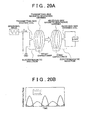
- FIG. 20A and FIG. 20B are diagrams for illustrating the existing wireless power transmission system.
- FIG. 20A is a diagram that shows the schematic system configuration of the existing wireless power transmission system.
- a transmitting-side magnetic resonance antenna is excited by electromagnetic induction.
- the transmitting-side magnetic resonance antenna resonates with a receiving-side magnetic resonance antenna, and, as a result, the receiving-side magnetic resonance antenna receives electric energy from the transmitting-side magnetic resonance antenna.
- the electric energy received by the receiving-side magnetic resonance antenna excites a receiving-side exciting coil coupled to the receiving-side magnetic resonance antenna by electromagnetic induction, and electric power extracted from the receiving-side exciting coil is supplied to a load, or the like.
- the frequency of the sinusoidal wave voltage in such an existing system is on the order of several MHz to several tens of MHz.
- JP-A-2010-74937 describes a noncontact power receiving device that receives electric power from a power transmitting coil that receives electric power from a power supply to transmit electric power.
- the noncontact power receiving device includes a power receiving coil that receives electric power, transmitted from the power transmitting coil, by electromagnetic resonance, a coil case that accommodates the power receiving coil inside and a capacitor that is arranged outside the coil case and that is electrically connected to the power receiving coil in order to adjust the resonance frequency of the power receiving coil.
- FIG. 20B is a graph that illustrates a switching loss in the existing wireless power transmission system.
- the solid line indicates the current I of a transmitting-side circuit
- the dotted line indicates the voltage V of the transmitting-side circuit.
- the shaded area corresponds to a switching loss.
- the existing wireless power transmission system uses a high-frequency amplifier in order to supply the sinusoidal wave, so, as shown in the example of FIG. 20B , periods during which the voltage wave and the current wave overlap result in a switching loss.
- a power loss occurs in the high-frequency amplifier at the stage at which the coil at the power transmitting side is excited and, in addition, there occurs a transmission loss due to electromagnetic induction coupling, so the total electric power transmission efficiency from the power transmitting side to the power receiving side deteriorates.
- the system includes multi-stages, that is, the transmitting-side exciting coil, the transmitting-side magnetic resonance antenna, the receiving-side magnetic resonance antenna, and the receiving-side exciting coil, so the system becomes ' complex, and it is difficult to make a design that improves the total electric power transmission efficiency in consideration of the mutual transmission characteristics between the coils (or antennas).
- the adjusting capacitor electrically connected to the power receiving coil is arranged outside the coil case that accommodates the power receiving coil.
- the electrical node between the capacitor and the power receiving coil has an inductance component.
- an assumed characteristic of the antenna cannot be obtained because of variations in inductance component of the electrical node having an indefinite shape and, as a result, efficient electric power transmission cannot be performed.
- the electrical node has a resistance component, and the characteristic of the antenna overall can decrease because of the resistance component, which also prevents efficient electric power transmission.
- a first aspect of the invention provides an electric power transmission system.
- the electric power transmission system includes: a transmitting-side system that includes switching elements that convert a direct-current voltage to an alternating-current voltage and that output the alternating-current voltage and a transmitting-side magnetic resonance antenna unit that includes a first inductor and a first capacitor directly coupled to each other and to which the output alternating-current voltage is input; and a receiving-side system that includes a receiving-side magnetic resonance antenna unit that has a second inductor and a second capacitor directly coupled to each other and that resonates with the transmitting-side magnetic resonance antenna unit via electromagnetic field to thereby receive electric energy output from the transmitting-side magnetic resonance antenna unit.
- the switching elements may constitute an inverter circuit, and the transmitting-side magnetic resonance antenna unit may be directly coupled to the inverter circuit.
- the receiving-side system may further include a rectifier that rectifies an output from the receiving-side magnetic resonance antenna unit, and the receiving-side, magnetic resonance antenna unit may be directly coupled to the rectifier.
- the transmitting-side magnetic resonance antenna unit may oscillate by resonance between the first inductor and the first capacitor, and the receiving-side magnetic resonance antenna unit may receive electric energy from the transmitting-side magnetic resonance antenna unit by resonance between the second inductor and the second capacitor.
- the first inductor of the transmitting-side magnetic resonance antenna unit and the second inductor of the receiving-side magnetic resonance antenna unit may have the same inductive component
- the first capacitor of the transmitting-side magnetic resonance antenna unit and the second capacitor of the receiving-side magnetic resonance antenna unit may have the same capacitive component
- the switching elements may convert a direct-current voltage to a rectangular wave alternating-current voltage and output the rectangular wave alternating-current voltage.
- the switching elements may constitute a half-bridge inverter.
- the switching elements may constitute a full-bridge inverter.
- the inverter may operate in a voltage mode.
- the transmitting-side magnetic resonance antenna unit and the receiving-side magnetic resonance antenna unit may resonate with each other at a frequency of several hundreds of kHz to several thousands of kHz to thereby cause the receiving-side magnetic resonance antenna unit to receive electric energy output from the transmitting-side magnetic resonance antenna unit.
- a second aspect of the invention provides an electric power transmission system.
- the electric power transmission system includes: a transmitting-side system that includes switching elements that convert a direct-current voltage to an alternating-current voltage and that output the alternating-current voltage and a transmitting-side magnetic resonance antenna unit to which the output alternating-current voltage is input; and a receiving-side system that includes a receiving-side magnetic resonance antenna unit that resonates with the transmitting-side magnetic resonance antenna unit via electromagnetic field to thereby receive electric energy output from the transmitting-side magnetic resonance antenna unit, wherein the transmitting-side magnetic resonance antenna unit includes a first inductor having a predetermined inductive component and a first capacitor having a predetermined capacitive component, the inductive component of the transmitting-side magnetic resonance antenna unit is larger than or equal to 50 ⁇ H and smaller than or equal to 500 ⁇ H, and the capacitive component of the transmitting-side magnetic resonance antenna unit is larger than or equal to 200 pF and smaller than or equal to 3000 pF.
- a coupling coefficient between the transmitting-side magnetic resonance antenna unit and the receiving-side magnetic resonance antenna unit may be smaller than or equal to 0.3.
- a third aspect of the invention provides an antenna.
- the antenna includes: a base having a first surface and a second surface that is a back in relation to the first surface; a first surface electrically conductive portion that is formed on the first surface of the base and that forms a coil; and a capacitor that is connected to the coil and that is placed on the first surface.
- the first surface electrically conductive portion may have a first surface innermost end portion and a first surface outermost end portion, and the capacitor may be connected to the first surface outermost end portion of the first surface electrically conductive portion that forms the coil.
- the antenna according to the above aspect may further include: a second surface electrically conductive portion that is formed on the second surface of the base, that has a second surface innermost end portion and a second surface outermost end portion, that forms a coil and that overlaps with the first surface electrically conductive portion when viewed transparently from the first surface to the second surface; a first through-hole conducting portion that penetrates between the first surface and the second surface to conductively connect the first surface innermost end portion to the second surface innermost end portion; and a second through-hole conducting portion that penetrates between the first surface and the second surface to conductively connect the first surface outermost end portion to the second surface outermost end portion.
- a fourth aspect of the invention provides an antenna.
- the antenna includes: at least two laminated bases; a plurality of electrically conductive portions, each of which has an innermost end portion and an outermost end portion and forms a coil, wherein adjacent two of the plurality of electrically conductive portions are laminated via a corresponding one of the at least two bases; a capacitor that is connected to the outermost end portion of an exposed one of the at least two bases and that is placed on the exposed base; a first through-hole conducting portion that penetrates the at least two bases to conductively connect the innermost end portions of the respective electrically conductive portions to one another; and a second through-hole conducting portion that penetrates the at least two bases to conductively connect the outermost end portions of the respective electrically conductive portions to one another, wherein the plurality of electrically conductive portions all overlap one another when viewed transparently in a direction in which the plurality of electrically conductive portions are laminated.
- a dielectric material of the capacitor may contain at least one selected from the group consisting of a titanium oxide, magnesium titanate, barium titanate and a steatite material.
- the base and the capacitor may be accommodated in a common case.
- a fifth aspect of the invention provides an antenna.
- the antenna includes: an electrically conductive portion that has an innermost end portion and an outermost end portion and that forms a spiral coil; and a capacitor that is fixed to the outermost end portion.
- a sixth aspect of the invention provides an antenna.
- the antenna includes: a base; an electrically conductive portion that is formed on one surface of the base, that has an innermost end portion and an outermost end portion and that forms a coil; and a capacitor that is fixed to the outermost end portion.
- a dielectric material of the capacitor may contain at least one selected from the group consisting of a titanium oxide, magnesium titanate, barium titanate and a steatite material.
- the base and the capacitor may be accommodated in a common case.
- the capacitor is fixed to the first surface outermost end portion of the first surface electrically conductive portion that forms the coil. Therefore, with the thus configured antenna according to the above aspects of the invention, there is no variation in reactance component at an electrical node between the coil and the capacitor, and there is no substantial resistance component at an electrical node between the coil and the capacitor, so the characteristic of the antenna is stable, and it is possible to efficiently transmit electric power.
- the capacitor is fixed to the outermost end portion of the electrically conductive portion that forms the coil. Therefore, with the thus configured antenna according to the above aspects of the invention, there is no variation in reactance component at an electrical node between the coil and the capacitor, and there is no substantial resistance component at an electrical node between the coil and the capacitor, so the characteristic of the antenna is stable, and it is possible to efficiently transmit electric power.
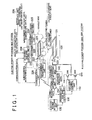
- FIG 1 is a diagram that shows an example in which an electric power transmission system according to the embodiment of the invention is applied to a vehicle charging facility.
- the electric power transmission system according to the embodiment of the invention is, for example, suitable for use in a system for charging a vehicle, such as an electric vehicle (EV) and a hybrid electric vehicle (HEV). Then, the following description will be made using the example of application to the vehicle charging facility shown in FIG. 1 . Note that the electric power transmission system according to the embodiment of the invention may also be used in electric power transmission of a system other than the vehicle charging facility.
- EV electric vehicle
- HEV hybrid electric vehicle
- the configuration shown below the alternate long and short dashed line is a transmitting-side system, and is the vehicle charging facility in this example.
- the configuration shown above the alternate long and short dashed line is a receiving-side system, and is a vehicle, such as an electric vehicle, in this example.
- the above transmitting-side system is, for example, buried in the ground.
- a vehicle is moved to position a receiving-side magnetic resonance antenna unit 220 mounted on the vehicle with respect to a transmitting-side magnetic resonance antenna unit 120 of the underground transmitting-side system, and then electric power is transmitted and received.
- the receiving-side magnetic resonance antenna unit 220 of the vehicle is arranged at the bottom of the vehicle.
- a transmitting-side main control unit 100 is a general information processing unit that includes a central processing unit (CPU), a read only memory (ROM), a random access memory (RAM), and the like.
- the ROM holds programs that is executed by the CPU.
- the RAM provides a work area of the CPU.
- the transmitting-side main control unit 100 operates in cooperation with various units (shown in the drawing) connected to the transmitting-side main control unit 100.
- a switching element control unit 110 executes on-off control over two switching elements SW1 and SW2 connected in series according to control commands received from the transmitting-side main control unit 100.
- field-effect transistors are used as the switching element SW1 and the switching element SW2; instead, another arc-suppressing semiconductor element may also be used.
- a constant-voltage source is connected to the drain of the switching element SW2, and a constant voltage Vdd is applied to the drain of the switching element SW2.
- a rectangular wave having a predetermined frequency is output from a node T between these switching element SW1 and switching element SW2 as an alternating-current voltage.
- the switching element control unit 110 is able to output a rectangular wave having a different frequency by changing control. That is, owing to control of the switching element control unit 110, a rectangular wave output from the node T between the switching element SW1 and the switching element SW2 may be swept in a predetermined frequency range.
- the frequency of the rectangular wave generated by switching of the switching element SW1 and switching element SW2 ranges from about several hundreds of kHz to about several thousands of kHz.
- a direct-current voltage from the constant-voltage source is controlled so as to output a rectangular wave alternating-current voltage as an alternating-current voltage; instead, not a voltage but a current may be controlled.
- a rectangular wave output from the node T is input to the transmitting-side magnetic resonance antenna unit 120 via an electric power transmission line CA.
- the transmitting-side magnetic resonance antenna unit 120 includes a coil 121 (first inductor) having an inductive reactance and a capacitor 122 (capacitance: C0) (first capacitor) having a capacitive reactance.
- the transmitting-side magnetic resonance antenna unit 120 resonates with the opposed in-vehicle receiving-side magnetic resonance antenna unit 220 to make it possible to transmit electric energy, output from the transmitting-side magnetic resonance antenna unit 120, to the receiving-side magnetic resonance antenna unit 220.
- a resonance frequency detecting unit 140 is able to detect a frequency, at which the efficiency of transmitted electric power is the highest, and transmit the detected resonance frequency data to the transmitting-side main control unit 100.
- the electric power transmission efficiency may be, for example, determined in such a manner that a voltage standing wave ratio (VSWR) meter, or the like, is used to make a search for a frequency at which a reflected electric power is minimized.
- VSWR voltage standing wave ratio
- an electric power detecting unit 130 multiplies a detected value from a voltage detecting unit (not shown) by a detected value from a current detecting unit (not shown) to make it possible to detect an electric power value applied to the transmitting-side magnetic resonance antenna unit 120.
- a communication unit 150 is able to wirelessly communicate with a vehicle-side communication unit 228 to exchange data with the vehicle.
- the receiving-side magnetic resonance antenna unit 220 resonates with the transmitting-side magnetic resonance antenna unit 120 to receive electric energy output from the transmitting-side magnetic resonance antenna unit 120.
- the receiving-side magnetic resonance antenna unit 220, as well as the transmitting-side magnetic resonance antenna unit 120, is also formed of a coil 221 (second inductor) having an inductive reactance component and a capacitor 222 (capacitance: C0) (second capacitor) having a capacitive reactance component.
- a rectangular wave alternating-current electric power received by the receiving-side magnetic resonance antenna unit 220 is rectified by a rectifier 223, and the rectified electric power is stored in a storage battery 225 via a charging control unit 224.
- the charging control unit 224 executes control over an electric power to be stored in the storage battery 225 according to commands received from the transmitting-side main control unit 100.
- the first inductor (coil 121) of the transmitting-side magnetic resonance antenna unit 120 and the second inductor (coil 221) of the receiving-side magnetic resonance antenna unit 220 have the same inductive component
- the first capacitor (capacitor 122) of the transmitting-side magnetic resonance antenna unit 120 and the second capacitor (capacitor 222) of the receiving-side magnetic resonance antenna unit 220 have the same capacitive component.
- the transmitting-side magnetic resonance antenna unit 120 oscillates by the resonance between the first inductor (coil 121) and the first capacitor (capacitor 122), and the receiving-side magnetic resonance antenna unit 220 receives electric energy from the transmitting-side magnetic resonance antenna unit 120 by the resonance between the second inductor (coil 221) and the second capacitor (capacitor 222).
- a receiving-side main control unit 200 is a general information processing unit that includes a CPU, a ROM, a RAM, and the like.
- the ROM holds programs that run on the CPU.
- the RAM provides a work area of the CPU.
- the receiving-side main control unit 200 operates in cooperation with various units (shown in the drawing) connected to the receiving-side main control unit 200.
- data about the state of charge of the storage battery 225, data about the temperature of the storage battery 225, and the like are input from the storage battery 225 to the receiving-side main control unit 200, and the receiving-side main control unit 200 is able to manage the storage battery 225 so as to safely and efficiently operate the storage battery 225.
- the receiving-side main control unit 200 outputs a command to stop charging or discharging the storage battery 225 to the storage battery 225 under abnormal conditions, or the like.
- An interface unit 226 is provided near a driver's seat of the vehicle.
- the interface unit 226 provides predetermined information, or the like, to a user (driver) or accepts an operation or input from the user.
- the interface unit 226 includes a display device, buttons, a touch panel, a speaker, and the like.
- operation data corresponding to the predetermined operation is transmitted from the interface unit 226 to the receiving-side main control unit 200 and is processed.
- display instruction data is transmitted from the receiving-side main control unit 200 to the interface unit 226.
- a surrounding monitoring unit 227 is used to monitor a space G between the transmitting-side main control unit 100 and the receiving-side main control unit 200.
- the space G is used by the electric power transmission system according to the embodiment of the invention to transmit electric power, so it is necessary to verify the absence of a small animal, such as a cat, in the space G.
- the surrounding monitoring unit 227 is used for such a purpose, so an image capturing device, an infrared ray sensor, or the like, may be used as the surrounding monitoring unit 227.
- Data monitored by the surrounding monitoring unit 227 is input to the receiving-side main control unit 200 and is processed. When any object is found in the space G by the surrounding monitoring unit 227, it is possible to stop electric power transmission or not to start electric power transmission.
- the communication unit 228 is able to wirelessly communicate with a charging facility-side communication unit 150 to exchange data with the charging facility.
- FIG. 2 is a diagram that shows an example of a typical control sequence in the vehicle that is the power receiving side and in the charging facility that is the power transmitting side.
- step S11 as the user operates the vehicle interface unit 226 to charge the storage battery 225, the operation data is transmitted to the receiving-side main control unit 200.
- the receiving-side main control unit 200 computes the amount of electric power required of the charging facility from management data of the storage battery 225 in step S21.
- An existing known appropriate method may be used in such computation where appropriate.
- step S22 monitoring the space G using the surrounding monitoring unit 227 is started.
- step S23 data for requesting the start of charging is transmitted through the communication unit 228 to the charging facility. At this time, data, such as the amount of electric power required, may be transmitted.
- step S31 As the charging start request is received through the communication unit 150, charging start instructions are issued to a charging routine in step S32.
- the charging routine will be described in detail later.
- a charging end notification is transmitted to the vehicle through the communication unit 150 in step S33.
- step S24 as the communication unit 228 receives the charging end notification, monitoring using the surrounding monitoring unit 227 is ended in step S25, and display instruction data for displaying the end of charging is transmitted to the interface unit 226.
- the interface unit 226 receives the display instruction data, the interface unit 226 displays the completion of charging on the display device, or the like, to notify the user.
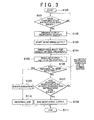
- FIG. 3 is a diagram that shows the flowchart of charging routine in the charging facility that is the transmitting-side system. As the charging start instructions are issued, the charging routine exits the loop in step S101 and proceeds to step S102.
- step S102 the constant-voltage source and the switching element control unit 110 are controlled so that the output from the transmitting-side magnetic resonance antenna unit 120 becomes minimal.
- step S102 temporary output is performed.
- step S103 the electric power detecting unit 130 is used to start monitoring the output from the transmitting-side magnetic resonance antenna unit 120.
- the switching element control unit 110 is controlled to sweep the frequency of the output rectangular wave by the transition width of a predetermined frequency, and the resonance frequency detecting unit 140 is used to select a frequency optimal for transmitting and receiving electric power.
- step S105 electric power is transmitted using a rated output from the transmitting-side magnetic resonance antenna unit 120.
- feedback control that refers to a value from the electric power detecting unit 130 is executed to output electric power of about 1.5 kw.
- step S106 it is determined whether an abnormality has been detected.
- detection of an abnormality may be, for example, the detection of a steep impedance variation due to the entrance of foreign matter based on information from the electric power detecting unit 130.
- step S106 when no abnormality has been detected, negative determination is made, and the process proceeds to step S107, and then it is determined whether charging has been completed or whether instructions for ending charging have been issued from the vehicle, or the like.
- step S107 the process returns to step S105 and then loops.
- step S106 when an abnormality has been detected in step S106, the process proceeds to step S109 and displays an error indication on the interface unit 226, or the like. Then, abnormal end process is executed in step S110. In step S111, the whole process ends.
- step S107 when it is determined in step S107 that charging has been completed or instructions for ending charging have been issued from the vehicle, or the like, the process proceeds to step S108 and ends output monitoring of the electric power detecting unit 130. Then, in step S111, the whole process ends.
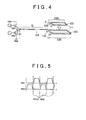
- FIG. 4 is a diagram that illustrates an electric power transmission unit in the electric power transmission system according to the embodiment of the invention, focusing on the relevant portion of the electric power transmission unit.
- FIG. 5 is a timing chart of on-off control over the switching elements in the electric power transmission system according to the embodiment of the invention.
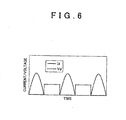
- FIG. 6 is a graph that shows the correlation between a voltage and a current in the electric power transmission system according to the embodiment of the invention.
- a current. Id that flows through the switching element SW2 is also shown in FIG. 6 .
- the transmitting-side magnetic resonance antenna unit 120 When the thus generated rectangular wave voltage is input to the transmitting-side magnetic resonance antenna unit 120 via the electric power transmission line CA, the transmitting-side magnetic resonance antenna unit 120 resonates with the opposed receiving-side magnetic resonance antenna unit 220. Owing to such resonance, electric energy output from the transmitting-side magnetic resonance antenna unit 120 may be effectively transmitted to the receiving-side magnetic resonance antenna unit 220.
- elements are selected so as to set the resonance frequency at about several hundreds of kHz to about several thousands of kHz, and the Q factor of the transmitting-side magnetic resonance antenna unit 120 is set so as to be equal to or larger than 300.
- a certain dead time is provided as shown in FIG. 5 . Note that the dead time is selected depending on the characteristics of the switching elements.
- the frequency of the rectangular wave generated by the switching element SW1 and the switching element SW2 that are driven according to signals shown in FIG. 5 ranges from about several hundreds of kHz to about several thousands of kHz.
- a capacitor C o is included in the transmitting-side magnetic resonance antenna unit 120 together with the coil 121 to thereby make it possible to effectively input electric power to the transmitting-side magnetic resonance antenna unit 120 without providing a unit, such as an impedance matching box, at the T side even when the distance D of the electric power transmission line CA is elongated to a certain degree.
- a half-bridge inverter circuit that uses two switching elements is used to generate a rectangular wave; whereas, in the first alternative embodiment, a full-bridge inverter circuit that uses four switching elements is used to generate a rectangular wave.
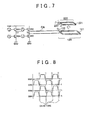
- FIG. 7 is a diagram that illustrates an electric power transmission unit in an electric power transmission system according to the first alternative embodiment of the invention.
- FIG. 8 is a timing chart of on-off control over switching elements in the electric power transmission system according to the first alternative embodiment of the invention.
- a node T1 between a switching element SW1 and switching element SW4 connected in series and a node T2 between a switching element SW2 and switching element SW3 connected in series are connected to a transmitting-side magnetic resonance antenna unit 120 via an electric power transmission line CA.
- the switching element SW1 and the switching element SW4 are on, the switching element SW2 and the switching element SW3 are off; whereas, when the switching element SW1 and the switching element SW4 are off, the switching element SW2 and the switching element SW3 are on.
- a rectangular wave alternating-current voltage is generated between the node T1 and the node T2.
- the capacitor C o is included in the transmitting-side magnetic resonance antenna unit 120 together with the coil 121; however, the aspect of the invention is not limited to this configuration. Instead, the transmitting-side magnetic resonance antenna unit 120 may be formed of only the coil 121. In this case, the impedance is somewhat adjusted at the node T side, and a rectangular wave voltage output from the inverter circuit is input to the transmitting-side magnetic resonance antenna unit 120 via the electric power transmission line CA.
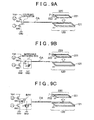
- FIG. 9A to FIG. 9C focus on a relevant portion of an electric power transmission unit in an electric power transmission system according to the second alternative embodiment of the invention, and are diagrams that illustrate the circuit configurations when no capacitor is provided for the transmitting-side magnetic resonance antenna unit 120.
- FIG. 9A shows an example in which the impedance of the input to the transmitting-side magnetic resonance antenna unit 120 is adjusted by providing a coupling capacitor having a capacitance C1 at the node T side.
- FIG. 9B shows an example in which an impedance matching box that uses a variable capacitor C2 and a variable inductor L2 is provided at the node T side to adjust the impedance of the input to the transmitting-side magnetic resonance antenna unit 120.
- FIG. 9C shows an example in which an impedance matching box that uses a band-pass filter formed of a coil L3 and capacitor C3 connected in series and a coil L4 and capacitor C4 connected in parallel is provided at the node T side to adjust the impedance of the input to the transmitting-side magnetic resonance antenna unit 120.
- the Q factor of the transmitting-side magnetic resonance antenna unit 120 is set so as to be larger than or equal to 100.
- the frequency of the rectangular wave voltage used is assumed to range from about several hundreds of kHz to about several thousands of kHz.
- the inductance of each of the transmitting-side magnetic resonance antenna unit 120 and the receiving-side magnetic resonance antenna unit 220 is larger than or equal to 50 ⁇ H and smaller than or equal to 500 ⁇ H, and the capacitance of the capacitor C o is larger than or equal to 200 pF and smaller than or equal to 3000 pF, so an appropriate electric power transmission system for a vehicle charging facility may be constructed.
- FIG. 10 shows the measured results of a variation in transmission efficiency when the positional relationship between the transmitting-side magnetic resonance antenna unit 120 and the receiving-side magnetic resonance antenna unit 220 is shifted to vary the coupling coefficient k.
- FIG. 10 in the electric power transmission system according to the embodiment of the invention, it appears that a sufficient transmission efficiency is obtained even within the range in which the coupling coefficient k between the transmitting-side magnetic resonance antenna unit 120 and the receiving-side magnetic resonance antenna unit 220 is smaller than or equal to 0.3.
- the electric power transmission system according to the embodiment of the invention assumes that the Q factor is larger than or equal to 100, so, even when the coupling coefficient k is smaller than or equal to 0.3, it is possible to sufficiently clear the condition of the product of kQ, required in the wireless power transmission system according to the magnetic resonance method.
- FIG. 11 is an exploded perspective view of a receiving-side magnetic resonance antenna unit 220 according to a first embodiment of the invention.
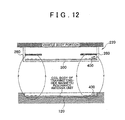
- FIG. 12 is a schematic cross-sectional view that shows how electric power is transferred via the receiving-side magnetic resonance antenna unit 220 according to the first embodiment of the invention.
- a coil unit 300 has a rectangular plate-like shape; however, the antenna according to the aspect of the invention is not limited to a coil having such a shape.
- the coil unit 300 may have a circular plate-like shape, or the like.
- the coil unit 300 functions as a magnetic resonance antenna unit in the receiving-side magnetic resonance antenna unit 220.
- the magnetic resonance antenna unit includes not only the inductance component of the coil unit 300 but also the capacitance component of a capacitor 400.
- a resin case 260 is used to accommodate the coil unit 300 having the inductance component of the receiving-side magnetic resonance antenna unit 220.
- the resin case 260 is formed of a resin, such as polycarbonate, and has a box shape having an opening.
- a side plate portion 262 extends from each side of a rectangular bottom plate portion 261 of the resin case 260 perpendicularly to the bottom plate portion 261. Then, an upper opening portion 263 surrounded by the side plate portions 262 is formed at the upper side of the resin case 260.
- a selected existing known method may be used. Note that a flange member, or the like, may be provided around the upper opening portion 263 so as to increase the ease of installation onto the vehicle body.
- the coil unit 300 includes a rectangular plate-like glass epoxy base 310 and an electrically conductive portion.
- the electrically conductive portion is formed on the upper side and lower side of the base 310. More specifically, the base 310 has a first surface 311 as a major surface and a second surface 312 that is the back in relation to the first surface 311.
- a spiral first surface electrically conductive portion 330 is formed on the first surface 311 as a coil to thereby impart the inductance component to the receiving-side magnetic resonance antenna unit 220.
- a first surface innermost end portion 331 and a first surface outermost end portion 332 are respectively provided at the radially inner side and outer side of the first surface electrically conductive portion 330 that forms the spiral coil.
- An innermost end portion through-hole 333 that penetrates between the first surface 311 and the second surface 312 is provided at the first surface innermost end portion 331.
- An outermost end portion through-hole 334 that penetrates between the first surface 311 and the second surface 312 is provided at the first surface outermost end portion 332.
- a conductive wire 241 and a conductive wire 242 electrically connect the receiving-side magnetic resonance antenna unit 220 to a rectifier unit 202.
- the conductive wire 241 is electrically connected to the first surface innermost end portion 331 of the first surface electrically conductive portion 330. Therefore, as shown in the drawing, the terminal 243 of the conductive wire 241 is arranged on the first surface innermost end portion 331, and a screw 251 is inserted from the side of the first surface 311 of the base 310 through the hole of the terminal 243 of the conductive wire 241 and the innermost end portion through-hole 333, and is then screwed into a nut 252 on the second surface 312 side of the base 310. By so doing, the conductive wire 241 is electrically conductively connected to the first surface innermost end portion 331, and is mechanically fixed.
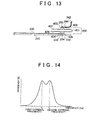
- FIG. 13 is a diagram that illustrates the structure of mounting the capacitor 400 in the receiving-side magnetic resonance antenna unit 220 according to the first embodiment of the invention.
- FIG. 13 schematically shows the cross-sectional view of the capacitor 400 mounted at the first surface outermost end portion 332.
- a metal first connection terminal portion 403 and a first thin-film electrode 407 made of a conductive material are arranged on one side of a dielectric 401 included in the capacitor 400, and a metal second connection terminal portion 404 and a second thin-film electrode 408 made of a conductive material are arranged on the other side of the dielectric 401.
- the metal first connection terminal portion 403 and first thin-film electrode 407 and the metal second connection terminal portion 404 and second thin-film electrode 408 sandwich the dielectric 401 to obtain a capacitance.
- a dielectric material used for the dielectric 401 desirably contains a titanium oxide as a major component or contains barium titanate as a major component. These materials have a high dielectric constant, so the capacitor 400 that uses these materials has a high capacitance despite its compactness, and it is possible to reduce the volume of the receiving-side magnetic resonance antenna unit 220.
- a dielectric material used for the dielectric 401 desirably contains magnesium titanate as a major component or contains a steatite material as a major component.
- Such dielectric materials have a high dielectric constant, so the capacitor 400 that uses such dielectric materials has a high capacitance despite its compactness, and it is possible to reduce the volume of the receiving-side magnetic resonance antenna unit 220.
- the metal first connection terminal portion 403 provided on one side of the capacitor 400 has a first threaded hole 405.
- the terminal 244 of the conductive wire 242 is arranged on the first threaded hole 405, and a screw 253 is threadably inserted through the hole of the terminal 244 of the conductive wire 242 and the first threaded hole 405.
- the conductive wire 242 is electrically conductively connected and mechanically fixed to the first connection terminal portion 403 on the one side of the capacitor 400.
- the metal second connection terminal portion 404 provided on the other side of the capacitor 400 has a second threaded hole 406.
- the second connection terminal portion 404 of the capacitor 400 is arranged on the first surface outermost end portion 332, and a screw 254 is inserted from the second surface 312 side through the outermost end portion through-hole 334 and the second threaded hole 406 to threadably mount the screw 254 in the second threaded hole 406.
- the second connection terminal portion 404 of the capacitor 400 is electrically conductively connected to the first surface outermost end portion 332 of the first surface electrically conductive portion 330, and the capacitor 400 is mechanically fixed to the base 310.
- the conductive wire 241 and the conductive wire 242 are respectively electrically connected to the first surface innermost end portion 331 at the radially inner side of the spiral first surface electrically conductive portion 330 and the first surface outermost end portion 332 at the radially outer side of the spiral first surface electrically conductive portion 330.
- electric power received by the receiving-side magnetic resonance antenna unit 220 is conducted to the rectifier unit 202.
- the thus configured coil unit 300 is placed on the rectangular bottom plate portion 261 of the resin case 260, and is fixed to the bottom plate portion 261 by an appropriate fixing device.
- the capacitor 400 is fixed to the first surface outermost end portion 332 of the first surface electrically conductive portion 330 that forms the coil. Therefore, with the thus configured antenna according to the first embodiment of the invention, there is no variation in reactance component at an electrical node between the coil and the capacitor 400, and there is no substantial resistance component at an electrical node between the coil and the capacitor 400, so the characteristic of the antenna is stable, and it is possible to efficiently transmit electric power.
- a magnetic shield 280 is a plate-like magnetic material having a hole portion 285.
- a magnetic material such as ferrite, may be used to form the magnetic shield 280.
- the magnetic shield 280 is fixed to the resin case 260 by an appropriate device so as to be arranged with a certain space above the coil unit 300. Owing to the above layout, magnetic lines of force generated by the transmitting-side magnetic resonance antenna unit 120 pass through the magnetic shield 280 at a high rate, and, in electric power transmission from the transmitting-side magnetic resonance antenna unit 120 to the receiving-side magnetic resonance antenna unit 220, the influence of the metallic components of the vehicle body on the magnetic lines of force is reduced.
- the plate-like magnetic shield 280 arranged above the coil unit 300 desirably have the hole portion 285.
- the hole portion 285 By providing the magnetic shield 280 with the hole portion 285, loss in the magnetic shield 280 itself is reduced and it is made possible to maximize the shielding effect of the magnetic shield 280.
- the area of the member is small and it is made possible to reduce costs of the antenna. It is preferable that the area of the hole portion 285 be such that the overlap between magnetic shield 280 and the electrically conducive portion 272 of the coil unit 300 when viewed in the laminated direction is not reduced.
- FIG. 14 is a graph that shows an example of the frequency dependence of electric power transmission efficiency when the transmitting-side magnetic resonance antenna unit 120 is brought close to the receiving-side magnetic resonance antenna unit 220.
- a first extremal frequency fm and a second extremal frequency fe there are two frequencies, that is, a first extremal frequency fm and a second extremal frequency fe, and, when electric power is transmitted, any one of these frequencies is desirably used.
- FIG. 15 is a diagram that schematically shows the states of current and electric field at the first extremal frequency.
- the current that flows through the coil of the transmitting-side magnetic resonance antenna unit 120 is substantially equal in phase to the current that flows through the coil of the receiving-side magnetic resonance antenna unit 220, the position at which magnetic field vectors are aligned is around the center of the coil of the transmitting-side magnetic resonance antenna unit 120 and the center of the coil of the receiving-side magnetic resonance antenna unit 220.
- This state is assumed as a situation that a magnetic wall that makes the direction of magnetic field perpendicular to the symmetry plane between the transmitting-side magnetic resonance antenna unit 120 and the receiving-side magnetic resonance antenna unit 220 is formed.
- FIG. 16 is a diagram that schematically shows the states of current and electric field at the second extremal frequency.
- the current that flows through the transmitting-side magnetic resonance antenna unit 120 is substantially opposite in phase to the current that flows through the receiving-side magnetic resonance antenna unit 220, and the position at which magnetic vectors are aligned is around the symmetry plane of the coil of the transmitting-side magnetic resonance antenna unit 120 and the coil of the receiving-side magnetic resonance antenna unit 220.
- This state is assumed as a situation that an electric wall that makes the direction of magnetic field parallel to the symmetry plane between the transmitting-side magnetic resonance antenna unit 120 and the receiving-side magnetic resonance antenna unit 220 is formed.
- the capacitor 400 is fixed to not the first surface innermost end portion 331 of the first surface electrically conductive portion 330 that forms the coil but the first surface outermost end portion 332 of the first surface electrically conductive portion 330.
- FIG. 17A and FIG. 17B are exploded perspective views of a receiving-side magnetic resonance antenna unit 220 according to a second embodiment of the invention.
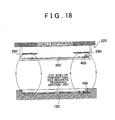
- FIG. 18 is a schematic cross-sectional view that shows how electric power is transferred via the receiving-side magnetic resonance antenna unit 220 according to the second embodiment of the invention.
- the second embodiment differs from the first embodiment only in the structure of the coil unit 300, and a method of fixing the coil unit 300 to the capacitor 400 is the same as that of the first embodiment, so, hereinafter, the structure of the coil unit 300 unique to the second embodiment will be described.
- FIG. 17A and FIG. 17B are exploded perspective views of the receiving-side magnetic resonance antenna unit 220 according to the second embodiment of the invention.
- a base 310 that forms the coil unit 300 is enlarged in the thickness direction.
- FIG. 18 is a schematic cross-sectional view that shows how electric power is transferred via the receiving-side magnetic resonance antenna unit 220 according to the second embodiment of the invention.
- the coil unit 300 having a rectangular plate-like shape will be described as an example; however, the antenna according to the second embodiment of the invention is not limited to the coil having such a shape.
- the coil unit 300 may have a circular plate-like shape, or the like.
- the coil unit 300 includes a rectangular plate-like glass epoxy base 310 and electrically conductive portions.
- the electrically conductive portions are respectively formed on the upper side and lower side of the base 310. More specifically, the base 310 has a first surface 311 as a major surface and a second surface 312 that is the back in relation to the first surface 311. A spiral electrically conductive portion is formed on each of these first surface 311 and second surface 312 to thereby impart the inductance component to the receiving-side magnetic resonance antenna unit 220.
- a spiral first surface electrically conductive portion 330 is formed on the first surface 311 of the base 310, and a first surface innermost end portion 331 and a first surface outermost end portion 332 are respectively provided at the radially inner side and radially outer side of the first surface electrically conductive portion 330.
- a spiral second surface electrically conductive portion 350 is formed on the second surface 312 of the base 310, and a second surface innermost end portion 351 and a second surface outermost end portion 352 are respectively provided at the radially inner side and radially outer side of the second surface electrically conductive portion 350.
- the first surface electrically conductive portion 330 and the second surface electrically conductive portion 350 just overlap each other when viewed transparently from the first surface 311 to the second surface 312.
- the mutual inductance between the inductance component of the first surface electrically conductive portion 330 at the first surface 311 and the inductance component of the second surface electrically conductive portion 350 at the second surface 312 is easily adjusted or designed.
- a first through-hole conducting portion 341 that penetrates between the first surface 311 and the second surface 312 conductively connects the first surface innermost end portion 331 to the second surface innermost end portion 351.
- a second through-hole conducting portion 342 that penetrates between the first surface 311 and the second surface 312 conductively connects the first surface outermost end portion 332 to the second surface outermost end portion 352.
- a conductive wire 241 is electrically connected to the first surface innermost end portion 331 at the radially inner side of the above described spiral first surface electrically conductive portion 330, and a conductive wire 242 is electrically connected to the first surface outermost end portion 332 at the radially outer side of the first surface electrically conductive portion 330 via the capacitor 400.
- electric power received by the receiving-side magnetic resonance antenna unit 220 is conducted to a rectifier unit 202.
- the thus configured coil unit 300 is placed on the rectangular bottom plate portion 261 of the resin case 260, and is fixed to the bottom plate portion 261 by an appropriate fixing device.
- the thus configured antenna according to the second embodiment of the invention has the inductance component of the first surface electrically conductive portion 330 at the first surface 311, the inductance component of the second surface electrically conductive portion 350 at the second surface 312 and the inductance component of the mutual inductance between the first surface electrically conductive portion 330 and the second surface electrically conductive portion 350 overlapping the first surface electrically conductive portion 330. Therefore, the inductance is not reduced significantly, and, in addition, the first surface electrically conductive portion 330 and the second surface electrically conductive portion 350 are connected in parallel with each other, so the resistance of the electric circuit of the antenna is reduced.
- Q Quality Factor
- the third embodiment differs from the first embodiment and the second embodiment only in the structure of the coil unit 300, and a method of fixing the coil unit 300 to the capacitor 400 is the same as those of the first embodiment and second embodiment, so, hereinafter, the structure of the coil unit 300 unique to the third embodiment will be described.
- the electrically conductive portions of the coil unit 300 are provided on both upper and lower sides of the base 310; whereas the third embodiment differs from the second embodiment in that an electrically conductive portion of the coil unit 300 is further provided in an intermediate layer of the base 310.
- the different structure of the coil unit 300 will be described.
- FIG. 19A and FIG. 19B are exploded perspective views of the receiving-side magnetic resonance antenna unit 220 according to the third embodiment of the invention.
- a base 310 that forms the coil unit 300 is enlarged in the thickness direction.
- the coil unit 300 includes a rectangular plate-like glass epoxy base 310 and electrically conductive portions.
- the electrically conductive portions are respectively formed on the upper side, on the lower side, and in the intermediate layer of the base 310. More specifically, the base 310 has a first surface 311 as a major surface, a second surface 312 that is the back in relation to the first surface 311, and an intermediate layer 313 between these first surface 311 and second surface 312. Spiral electrically conductive portions are respectively formed on the first surface 311, on the second surface 312, and in the intermediate layer 313 to thereby impart the inductance component to the receiving-side magnetic resonance antenna unit 220.
- a spiral first surface electrically conductive portion 330 is formed on the first surface 311 of the base 310, and a first surface innermost end portion 331 and a first surface outermost end portion 332 are respectively provided at the radially inner side and radially outer side of the first surface electrically conductive portion 330.
- a spiral intermediate layer electrically conductive portion 360 is formed in the intermediate layer 313 of the base 310, and an intermediate layer innermost end portion 361 and an intermediate layer outermost end portion 362 are respectively provided at the radially inner side and radially outer side of the intermediate layer electrically conductive portion 360.
- a spiral second surface electrically conductive portion 350 is formed on the second surface 312 of the base 310, and a second surface innermost end portion 351 and a second surface outermost end portion 352 are respectively provided at the radially inner side and radially outer side of the second surface electrically conductive portion 350.
- the first surface electrically conductive portion 330, the intermediate layer electrically conductive portion 360, and the second surface electrically conductive portion 350 coincide with each other when viewed transparently from the first surface 311 to the second surface 312.
- the mutual inductance of the inductance component of the first surface electrically conductive portion 330 at the first surface 311, the inductance component of the intermediate layer electrically conductive portion 360 in the intermediate layer 313, and the inductance component of the second surface electrically conductive portion 350 at the second surface 312 is easily adjusted or designed.
- a first through-hole conducting portion 341 that penetrates between the first surface 311 and the intermediate layer 313 conductively connects the first surface innermost end portion 331 to the intermediate layer innermost end portion 361.
- a second through-hole conducting portion 342 that penetrates between the first surface 311 and the intermediate layer 313 conductively connects the first surface outermost end portion 332 to the intermediate layer outermost end portion 362.
- a third through-hole conducting portion 343 that penetrates between the intermediate layer 313 and the second surface 312 conductively connects the intermediate layer innermost end portion 361 to the second surface innermost end portion 351.
- a fourth through-hole conducting portion 344 that penetrates between the intermediate layer 313 and the second surface 312 conductively connects the intermediate layer outermost end portion 362 to the second surface outermost end portion 352.
- the electrically conductive portions are respectively formed at the three layers, that is, the first surface 311, the intermediate layer 313 and the second surface 312, and the respective end portions of the electrically conductive portions are conductively connected to one another by the through-hole conducting portions that penetrate the base; instead, two or more intermediate layers may be provided so as to provide four or more layers in which the electrically conductive portion is provided.
- a base having an exposed surface, such as the first surface 311 and the second surface 312, on which the electrically conductive portion is provided may be regarded as an "exposed base".
- the base 310 is formed of glass epoxy resin; instead, a ceramic base having a higher heat radiation effect may be used, and, furthermore, a base, in which an insulation film is formed on a metallic base, such as an aluminum base, may be used. Needless to say, one using a flexible printed board or the like may be used as the base.
- An electric power transmission system includes: a transmitting-side system that includes switching elements (SW1 and SW2) that convert a direct-current voltage to an alternating-current voltage and that output the alternating-current voltage and a transmitting-side magnetic resonance antenna unit (120) that has a first inductor (121) and a first capacitor (122) directly coupled to each other and to which the output alternating-current voltage is input; and a receiving-side system that includes a second inductor (221) and a second capacitor (222) directly coupled to each other and that resonates with the transmitting-side magnetic resonance antenna unit (120) via electromagnetic field to thereby receive electric energy output from the transmitting-side magnetic resonance antenna unit (120).
- a transmitting-side system that includes switching elements (SW1 and SW2) that convert a direct-current voltage to an alternating-current voltage and that output the alternating-current voltage and a transmitting-side magnetic resonance antenna unit (120) that has a first inductor (121) and a first capacitor (122) directly coupled to each other and to which the output alternating
Landscapes
- Engineering & Computer Science (AREA)
- Power Engineering (AREA)
- Mechanical Engineering (AREA)
- Transportation (AREA)
- Computer Networks & Wireless Communication (AREA)
- Life Sciences & Earth Sciences (AREA)
- Sustainable Development (AREA)
- Sustainable Energy (AREA)
- Physics & Mathematics (AREA)
- Electromagnetism (AREA)
- Charge And Discharge Circuits For Batteries Or The Like (AREA)
- Electric Propulsion And Braking For Vehicles (AREA)
- Near-Field Transmission Systems (AREA)
Applications Claiming Priority (6)
| Application Number | Priority Date | Filing Date | Title |
|---|---|---|---|
| JP2010240263 | 2010-10-27 | ||
| JP2010240264 | 2010-10-27 | ||
| JP2011015877A JP2012110199A (ja) | 2010-10-27 | 2011-01-28 | 電力伝送システム |
| JP2011146495A JP2013016550A (ja) | 2011-06-30 | 2011-06-30 | アンテナ |
| JP2011146496A JP5804254B2 (ja) | 2011-06-30 | 2011-06-30 | アンテナ |
| JP2011188236A JP2012110211A (ja) | 2010-10-27 | 2011-08-31 | 電力伝送システム |
Publications (2)
| Publication Number | Publication Date |
|---|---|
| EP2455253A2 true EP2455253A2 (de) | 2012-05-23 |
| EP2455253A3 EP2455253A3 (de) | 2012-09-12 |
Family
ID=44883127
Family Applications (1)
| Application Number | Title | Priority Date | Filing Date |
|---|---|---|---|
| EP11186743A Withdrawn EP2455253A3 (de) | 2010-10-27 | 2011-10-26 | Elektrisches Leistungsübertragungssystem und Antenne |
Country Status (2)
| Country | Link |
|---|---|
| EP (1) | EP2455253A3 (de) |
| CN (1) | CN102457108A (de) |
Cited By (4)
| Publication number | Priority date | Publication date | Assignee | Title |
|---|---|---|---|---|
| WO2012169197A1 (ja) * | 2011-06-08 | 2012-12-13 | パナソニック株式会社 | 非接触給電装置 |
| WO2013179394A1 (ja) * | 2012-05-29 | 2013-12-05 | パイオニア株式会社 | 非接触電力送信システム及び方法 |
| CN105406609A (zh) * | 2015-12-09 | 2016-03-16 | 宁波微鹅电子科技有限公司 | 一种电能接收结构及无线电能接收模块 |
| US12311703B2 (en) | 2019-07-25 | 2025-05-27 | Bridgestone Corporation | Wireless power reception system, tire/wheel assembly, and tire |
Families Citing this family (10)
| Publication number | Priority date | Publication date | Assignee | Title |
|---|---|---|---|---|
| US9178361B2 (en) | 2012-09-27 | 2015-11-03 | ConvenientPower, Ltd. | Methods and systems for detecting foreign objects in a wireless charging system |
| CN102963262B (zh) * | 2012-11-30 | 2015-07-08 | 唐山轨道客车有限责任公司 | 城市交通车辆供电系统 |
| CN203135541U (zh) * | 2013-02-01 | 2013-08-14 | 深圳市京泉华科技股份有限公司 | 一种具有无线移动充电功能的装置 |
| JP6156726B2 (ja) * | 2013-03-27 | 2017-07-05 | パナソニックIpマネジメント株式会社 | 給電装置および充電システム |
| CN104113098B (zh) * | 2013-08-04 | 2017-09-08 | 深圳市兴龙辉科技有限公司 | 无线充电拓扑结构及扫频算法 |
| CN104283262B (zh) * | 2014-09-30 | 2016-08-17 | 西安交通大学 | 一种基于电场耦合的大功率无线充电方法与装置 |
| JP6607007B2 (ja) | 2015-12-01 | 2019-11-20 | 株式会社Ihi | コイル装置 |
| US10483804B2 (en) * | 2016-06-07 | 2019-11-19 | Mediatek Inc. | Monotonic wireless power transfer |
| CN106374629B (zh) * | 2016-09-28 | 2019-03-05 | 中车唐山机车车辆有限公司 | 电磁感应电能传输系统 |
| US10622846B2 (en) * | 2017-02-17 | 2020-04-14 | Hyundai Motor Company | Method and apparatus for position alignment using low-frequency antennas in wireless power transfer system |
Citations (2)
| Publication number | Priority date | Publication date | Assignee | Title |
|---|---|---|---|---|
| JP2009501510A (ja) | 2005-07-12 | 2009-01-15 | マサチューセッツ インスティテュート オブ テクノロジー | 無線非放射型エネルギー転送 |
| JP2010074937A (ja) | 2008-09-18 | 2010-04-02 | Toyota Motor Corp | 非接触受電装置およびそれを備える車両 |
Family Cites Families (5)
| Publication number | Priority date | Publication date | Assignee | Title |
|---|---|---|---|---|
| US6160374A (en) * | 1999-08-02 | 2000-12-12 | General Motors Corporation | Power-factor-corrected single-stage inductive charger |
| US6301128B1 (en) * | 2000-02-09 | 2001-10-09 | Delta Electronics, Inc. | Contactless electrical energy transmission system |
| WO2006022365A1 (ja) * | 2004-08-27 | 2006-03-02 | Hokushin Denki Co., Ltd. | 非接触電力伝送装置 |
| AU2009298384A1 (en) * | 2008-10-03 | 2010-04-08 | Access Business Group International Llc | Power system |
| WO2010062201A1 (en) * | 2008-11-26 | 2010-06-03 | Auckland Uniservices Limited | Primary-side power control for inductive power transfer |
-
2011
- 2011-10-26 EP EP11186743A patent/EP2455253A3/de not_active Withdrawn
- 2011-10-27 CN CN2011103427062A patent/CN102457108A/zh active Pending
Patent Citations (2)
| Publication number | Priority date | Publication date | Assignee | Title |
|---|---|---|---|---|
| JP2009501510A (ja) | 2005-07-12 | 2009-01-15 | マサチューセッツ インスティテュート オブ テクノロジー | 無線非放射型エネルギー転送 |
| JP2010074937A (ja) | 2008-09-18 | 2010-04-02 | Toyota Motor Corp | 非接触受電装置およびそれを備える車両 |
Non-Patent Citations (2)
| Title |
|---|
| TAKEHIRO IMURA, HIROYUKI OKABE, TOSHIYUKI UCHIDA, YOICHI HORI: "Study of Magnetic and Electric Coupling for Contactless Power Transfer Using Equivalent Circuits", IEEJ TRANS. IA, vol. 130, no. 1, 2010, XP008172698 |
| TAKEHIRO IMURA, YOICHI HORI: "Wireless Power Transfer Using Electromagnetic Resonant Coupling", IEEJ JOURNAL, vol. 129, no. 7, 2009, XP008180044, DOI: doi:10.1541/ieejjournal.129.414 |
Cited By (6)
| Publication number | Priority date | Publication date | Assignee | Title |
|---|---|---|---|---|
| WO2012169197A1 (ja) * | 2011-06-08 | 2012-12-13 | パナソニック株式会社 | 非接触給電装置 |
| WO2013179394A1 (ja) * | 2012-05-29 | 2013-12-05 | パイオニア株式会社 | 非接触電力送信システム及び方法 |
| US10084350B2 (en) | 2012-05-29 | 2018-09-25 | Pioneer Corporation | Wireless power transmission system and method |
| CN105406609A (zh) * | 2015-12-09 | 2016-03-16 | 宁波微鹅电子科技有限公司 | 一种电能接收结构及无线电能接收模块 |
| CN105406609B (zh) * | 2015-12-09 | 2019-05-17 | 宁波微鹅电子科技有限公司 | 一种电能接收结构及无线电能接收模块 |
| US12311703B2 (en) | 2019-07-25 | 2025-05-27 | Bridgestone Corporation | Wireless power reception system, tire/wheel assembly, and tire |
Also Published As
| Publication number | Publication date |
|---|---|
| EP2455253A3 (de) | 2012-09-12 |
| CN102457108A (zh) | 2012-05-16 |
Similar Documents
| Publication | Publication Date | Title |
|---|---|---|
| US20120217819A1 (en) | Electric power transmission system and antenna | |
| EP2455253A2 (de) | Elektrisches Leistungsübertragungssystem und Antenne | |
| US10355533B2 (en) | Wireless power transmission system, and method for controlling wireless power transmission and wireless power reception | |
| US9425629B2 (en) | Wireless power receiver | |
| JP6518316B2 (ja) | 無線電力伝送システムにおける共振器の均衡化 | |
| KR102655303B1 (ko) | 비접촉 전력전송 시스템 | |
| CN102971939B (zh) | 电压检测器、异常检测装置、非接触输电装置、非接触受电装置以及车辆 | |
| US10749378B2 (en) | Resonance power transmission system based on power transmission efficiency | |
| US10153664B2 (en) | Wireless power transmission system and power transmitter | |
| US20160013661A1 (en) | Resonators for wireless power transfer systems | |
| US20120049642A1 (en) | Apparatus and method for resonance power transmission and resonance power reception | |
| EP2493016A2 (de) | Antenne | |
| US9178388B2 (en) | Wireless power transmission apparatus | |
| JP2010538596A (ja) | 誘導電力供給装置 | |
| Etemadrezaei | Wireless power transfer | |
| CN104253491A (zh) | 电力发送设备、非接触供电系统及控制方法 | |
| JP2016039773A (ja) | 送電装置および無線電力伝送システム | |
| JP2013017254A (ja) | 電力伝送システム | |
| JP2012217228A (ja) | 電力伝送システム | |
| JP2012110199A (ja) | 電力伝送システム | |
| US20180375376A1 (en) | Wireless power transmission system, power transmitting device, and power receiving device | |
| JP2012110211A (ja) | 電力伝送システム | |
| KR101952604B1 (ko) | 무선 전력 전송 시스템, 무선 전력 전송 및 수신 제어 방법 | |
| WO2023094974A1 (en) | Free positioning charging station for electronic devices and method | |
| bin Abdul Aziz | Auto Impedance Matching Network for Inductively Coupled Power Transfer System in Electric Vehicle Charging Application |
Legal Events
| Date | Code | Title | Description |
|---|---|---|---|
| PUAI | Public reference made under article 153(3) epc to a published international application that has entered the european phase |
Free format text: ORIGINAL CODE: 0009012 |
|
| AK | Designated contracting states |
Kind code of ref document: A2 Designated state(s): AL AT BE BG CH CY CZ DE DK EE ES FI FR GB GR HR HU IE IS IT LI LT LU LV MC MK MT NL NO PL PT RO RS SE SI SK SM TR |
|
| AX | Request for extension of the european patent |
Extension state: BA ME |
|
| PUAL | Search report despatched |
Free format text: ORIGINAL CODE: 0009013 |
|
| AK | Designated contracting states |
Kind code of ref document: A3 Designated state(s): AL AT BE BG CH CY CZ DE DK EE ES FI FR GB GR HR HU IE IS IT LI LT LU LV MC MK MT NL NO PL PT RO RS SE SI SK SM TR |
|
| AX | Request for extension of the european patent |
Extension state: BA ME |
|
| RIC1 | Information provided on ipc code assigned before grant |
Ipc: H01F 38/14 20060101ALI20120803BHEP Ipc: B60L 11/18 20060101AFI20120803BHEP Ipc: H02J 5/00 20060101ALI20120803BHEP |
|
| 17P | Request for examination filed |
Effective date: 20130311 |
|
| STAA | Information on the status of an ep patent application or granted ep patent |
Free format text: STATUS: THE APPLICATION HAS BEEN WITHDRAWN |
|
| 18W | Application withdrawn |
Effective date: 20150210 |