EP2455095A1 - Prophylactic, ameliorating or therapeutic agent for oral diseases - Google Patents
Prophylactic, ameliorating or therapeutic agent for oral diseases Download PDFInfo
- Publication number
- EP2455095A1 EP2455095A1 EP10799648A EP10799648A EP2455095A1 EP 2455095 A1 EP2455095 A1 EP 2455095A1 EP 10799648 A EP10799648 A EP 10799648A EP 10799648 A EP10799648 A EP 10799648A EP 2455095 A1 EP2455095 A1 EP 2455095A1
- Authority
- EP
- European Patent Office
- Prior art keywords
- strain
- nite
- lactobacillus
- bacterium
- lactic acid
- Prior art date
- Legal status (The legal status is an assumption and is not a legal conclusion. Google has not performed a legal analysis and makes no representation as to the accuracy of the status listed.)
- Granted
Links
Images




Classifications
-
- A—HUMAN NECESSITIES
- A61—MEDICAL OR VETERINARY SCIENCE; HYGIENE
- A61K—PREPARATIONS FOR MEDICAL, DENTAL OR TOILETRY PURPOSES
- A61K35/00—Medicinal preparations containing materials or reaction products thereof with undetermined constitution
- A61K35/66—Microorganisms or materials therefrom
- A61K35/74—Bacteria
- A61K35/741—Probiotics
- A61K35/744—Lactic acid bacteria, e.g. enterococci, pediococci, lactococci, streptococci or leuconostocs
- A61K35/747—Lactobacilli, e.g. L. acidophilus or L. brevis
-
- A—HUMAN NECESSITIES
- A23—FOODS OR FOODSTUFFS; TREATMENT THEREOF, NOT COVERED BY OTHER CLASSES
- A23C—DAIRY PRODUCTS, e.g. MILK, BUTTER OR CHEESE; MILK OR CHEESE SUBSTITUTES; PREPARATION THEREOF
- A23C9/00—Milk preparations; Milk powder or milk powder preparations
- A23C9/12—Fermented milk preparations; Treatment using microorganisms or enzymes
- A23C9/123—Fermented milk preparations; Treatment using microorganisms or enzymes using only microorganisms of the genus lactobacteriaceae; Yoghurt
-
- A—HUMAN NECESSITIES
- A61—MEDICAL OR VETERINARY SCIENCE; HYGIENE
- A61P—SPECIFIC THERAPEUTIC ACTIVITY OF CHEMICAL COMPOUNDS OR MEDICINAL PREPARATIONS
- A61P1/00—Drugs for disorders of the alimentary tract or the digestive system
- A61P1/02—Stomatological preparations, e.g. drugs for caries, aphtae, periodontitis
-
- A—HUMAN NECESSITIES
- A23—FOODS OR FOODSTUFFS; TREATMENT THEREOF, NOT COVERED BY OTHER CLASSES
- A23V—INDEXING SCHEME RELATING TO FOODS, FOODSTUFFS OR NON-ALCOHOLIC BEVERAGES AND LACTIC OR PROPIONIC ACID BACTERIA USED IN FOODSTUFFS OR FOOD PREPARATION
- A23V2400/00—Lactic or propionic acid bacteria
- A23V2400/11—Lactobacillus
- A23V2400/175—Rhamnosus
-
- C—CHEMISTRY; METALLURGY
- C12—BIOCHEMISTRY; BEER; SPIRITS; WINE; VINEGAR; MICROBIOLOGY; ENZYMOLOGY; MUTATION OR GENETIC ENGINEERING
- C12R—INDEXING SCHEME ASSOCIATED WITH SUBCLASSES C12C - C12Q, RELATING TO MICROORGANISMS
- C12R2001/00—Microorganisms ; Processes using microorganisms
- C12R2001/01—Bacteria or Actinomycetales ; using bacteria or Actinomycetales
- C12R2001/225—Lactobacillus
-
- C—CHEMISTRY; METALLURGY
- C12—BIOCHEMISTRY; BEER; SPIRITS; WINE; VINEGAR; MICROBIOLOGY; ENZYMOLOGY; MUTATION OR GENETIC ENGINEERING
- C12R—INDEXING SCHEME ASSOCIATED WITH SUBCLASSES C12C - C12Q, RELATING TO MICROORGANISMS
- C12R2001/00—Microorganisms ; Processes using microorganisms
- C12R2001/01—Bacteria or Actinomycetales ; using bacteria or Actinomycetales
- C12R2001/225—Lactobacillus
- C12R2001/245—Lactobacillus casei
Definitions
- the present invention relates to a prophylactic, ameliorating or therapeutic agent for oral diseases such as dental caries or periodontal diseases.
- a bacterial flora in the oral cavity is constituted by 400 to 500 kinds of microorganisms. Therefore, various pathogenic microorganisms such as cariogenic bacteria, periodontal disease bacteria and candida bacteria are present in the oral cavity, which causes various diseases such as dental caries, periodontal diseases, glossitis, thrush and oral candidiasis. Furthermore, it is reported in recent studies that candida bacteria also relate to periodontal diseases. Therefore, many suggestions have been heretofore made with respect to oral compositions containing an antibacterial substance. However, even an antibacterial agent was administered to the oral cavity, the antibacterial agent was washed out by saliva or a food or beverage within a short time, and thus the effect thereof had to be said to be a transient effect.
- lactic acid bacteria such as Lactobacillus salivarius (Patent Document 1 and Patent Document 2), Lactobacillus reuteri (Patent Document 3 and Patent Document 4), Lactobacillus paracasei (Patent Document 5), Lactobacillus delbrueckii (Patent Document 6) and Lactobacillus fermentum (Non-patent Document 1) are effective for the prophylaxis of dental caries and periodontal diseases.
- Non-patent Document 1 Sumiyo MIMURA, Hiroki NIKAWA, Seicho MAKIHIRA, Aya HIYAMA and Yuko TAKAMOTO, the Journal of Nippon Academy of Dental Technology, Vol. 29, special issue, 298 (2008 )
- the present invention relates to provision of a novel lactic acid bacterium strain, having a broad antibacterial spectrum against bacteria that cause oral diseases, from which a fermented product having good flavor and being excellent in palatability can be produced, and to provision of a food and a prophylactic, ameliorating or therapeutic agent for oral diseases containing the same.
- the present inventors have done intensive studies on oral microorganisms, and found that specific lactic acid bacterium strains belonging to Lactobacillus rhamnosus, Lactobacillus casei and Lactobacillus paracasei that are present in saliva have an excellent antibacterial effect against any of cariogenic bacteria, periodontal disease bacteria and candida bacteria, and that a fermented product being excellent in palatability can be produced by using these.
- the present invention relates to the following 1) to 8).
- a food with high palatability, a medicament, an oral composition and the like which exert a prophylactic, ameliorating or therapeutic effect for various oral diseases such as dental caries, periodontal diseases, glossitis, thrush and oral candidiasis.
- the lactic acid bacteria used for the fermented milk of the present invention are lactic acid bacteria belonging to Lactobacillus rhamnosus, Lactobacillus casei and Lactobacillus paracasei; specifically, they are Lactobacillus rhamnosus strain KO3 that was deposited as NITE BP-771 on June 10, 2009, Lactobacillus casei strain YU3 that has been deposited as NITE BP-772 on June 10, 2009, and Lactobacillus paracasei strain YU4 that has been deposited as NITE BP-775 on June 24, 2009, at the Patent Microorganisms Depositary of the National Institute of Technology and Evaluation (Address: 2-5-8 Kazusakamatari, Kisarazu-shi, Chiba 292-0818, Japan).
- the KO3 strain was first separated from human saliva by the present inventors, and was identified as Lactobacillus rhamnosus since the base sequence of 16S rRNA shows a homology of 100% with the base sequence of Lactobacillus rhamnosus strain IDCC3201 between 1485/1485, and bears the aspect of a cram-positive bacillus under a microscope after gram staining.
- the major mycological properties of the KO3 strain are shown below. 1) Gram-positive lactobacillus, 2) homo-type lactic fermentation, 3) catalase negative, 4) no endospore formability, 5) culturable under aerobic conditions, and 6) producing exopolysaccharide.
- the YU3 strain was first separated from human saliva by the present inventors, and was identified as Lactobacillus casei since the base sequence of 16S rRNA shows a homology of 100% with the base sequence of Lactobacillus casei ATCC 334 between 1485/1485, and bears the aspect of a cram-positive bacillus under a microscope after gram staining.
- the major mycological properties of the YU3 strain are shown below. 1) Gram-positive lactococcus, 2) homo-type lactic fermentation, 3) catalase negative, 4) no endospore formability, 5) culturable under aerobic conditions, and 6) producing exopolysaccharide.
- the YU4 strain was first separated from human saliva by the present inventors, and was identified as Lactobacillus paracasei since the base sequence of 16S rRNA shows a homology of 1477/1477 (100%) with the Partial Sequence of Lactobacillus paracasei strain DJ1 16S ribosomal RNA gene, and bears the aspect of a gram-positive bacillus under a microscope after gram staining.
- the major mycological properties of the YU4 strain are shown below. 1) Gram-positive lactococcus, 2) homo-type lactic fermentation, 3) catalase negative, 4) no endospore formability, 5) culturable under aerobic conditions, and 6) producing exopolysaccharide.
- the above-mentioned lactic acid bacterial cell that has been recovered by culturing the bacterium according to a general method for culturing a lactic acid bacterium and has been separated from the culture by cell-collecting means such as centrifugation may be used directly.
- the cultured and fermented liquid (culture supernatant), a concentrated liquid thereof, or a cytoplasma or cell wall fraction obtained by treating the bacterial cell through an enzyme or a physical means may also be used.
- not only a viable cell but also a killed cell may be used.
- the medium for culturing the lactic acid bacterium used in the present invention includes various media such as a fruit juice medium, a vegetable juice medium, a milk medium, a skimmed milk medium or a medium containing a milk component, and a semi-synthetic medium free of a milk component.
- Examples of such the medium may include a reduced skimmed milk medium produced through heat-sterilized skimmed milk, a skimmed milk medium to which yeast extract has been added, an MRS medium, and a GAM medium.
- Examples of the method include stationary culture, neutralization culture (as a constant pH), batch culture and continuous culture.
- the extract of lactic acid bacterial cell or the culture of the cell of the present invention means various solvent extract liquids obtained by extracting the cell or the culture of the cell with a solvent, a diluted liquid thereof, a concentrated liquid thereof or a dried powder thereof.
- either a polar solvent or nonpolar solvent can be used, or these can be used after mixing.
- examples may include water; alcohols such as methanol, ethanol, propanol and butanol; polyols such as propylene glycol and butylene glycol; ketones such as acetone and methyl ethyl ketone; esters such as methyl acetate and ethyl acetate; chain and cyclic ethers such as tetrahydrofuran and diethyl ether; polyethers such as polyethylene glycol; hydrocarbons such as hexane, cyclohexane and petroleum ethers; aromatic hydrocarbons such as benzene and toluene; pyridines, and the like, and among these, esters such as ethyl acetate and alcohols such as ethanol are preferable.
- the conditions for extraction differ depending on the solvent to be used, it is preferable to conduct extraction, for example, by using from 1 to 10 parts by mass of a solvent with respect to 1 part by mass of a culture liquid at a temperature of from 0 to 50°C, preferably of from 25 to 37°C, for from 0.5 hour to 3 hours.
- the above-mentioned extract may be used as is, or may be used after diluting, concentrating or lyophilizing the extract and thereafter forming the product into a powder or paste if necessary.
- the extract may also be used after appropriate purification by a purification technique such as liquid-liquid distribution.
- oral disease in the prophylactic, ameliorating or therapeutic agent for an oral disease of the present invention refers to oral diseases that are caused by cariogenic bacteria, periodontal disease bacteria and candida bacteria, and examples may include dental caries; periodontal diseases such as gingivitis and periodontitis, oral candidiasis such as glossitis, thrush and angular stomatitis, and the like.
- Examples of the cariogenic bacteria may include Streptococcus mutans and Streptococcus sobrinus; examples of the periodontal disease bacteria may include Porphyromonas gingivalis, Prevotella intermedia, Treponema denticola, Tannerella forsythensis, Actinobacillus actinomycetemcomitans, Fusobacterium nucleatum and the like; and examples of the candida bacteria may include Candida albicans, Candida glabrata, Candida tropicalis and the like.
- the lactic acid bacterium of the present invention has a growth suppressing effect against any of Streptococcus mutans and Streptococcus sobrinus that are cariogenic bacteria, Porphyromonas gingivalis that is a periodontal disease bacterium, and Candida albicans that is a candida bacterium. Furthermore, it has an effect of suppressing the proliferation of Fusobacterium bacteria such as Fusobacterium. nucleatum that is known as a subgingival plaque former in the oral cavity.
- a fermented milk prepared by using the lactic acid bacterium has good flavor and texture, and even it is present together with other lactic acid bacterium in an existing fermented milk such as Lactobacillus. bulgaricus, the taste thereof is not impaired or can further be improved. Therefore, the lactic acid bacterial cell or the culture of the cell, or the extract thereof can be a prophylactic, ameliorating or therapeutic agent for oral diseases, or an agent for suppressing the proliferation of cariogenic bacteria, periodontal disease bacteria and candida bacteria.
- Such prophylactic, ameliorating or therapeutic agent for oral diseases and agent for suppressing the proliferation of cariogenic bacteria, periodontal disease bacteria and candida bacteria can be used as they are, as foods, medicaments, oral compositions and the like, for the prophylaxis, amelioration or treatment of oral diseases such as dental caries, periodontal diseases and oral candidiasis that are caused by pathogenic microorganisms in the oral cavity, or for the suppression of the proliferation of cariogenic bacteria, periodontal disease bacteria and candida bacteria, and can also be used as materials for incorporating in foods, medicaments or oral compositions.
- the foods can also be health foods, supplements or functional foods such as foods for specified health use, and have a product concept of the prophylaxis, amelioration or the like of tooth decay, periodontal diseases and other oral infectious diseases and include a label indicating such effects as necessary.
- the form in the case when used as a medicament is preferably a form of oral administration, and the dosage form thereof may include various forms such as liquid agents; solid agents such as pills, granules, fine granules, powders and tablets; or capsules in which the liquid agent or solid agent is encapsulated, oral sprays, troches, and the like.
- excipients In order to prepare pharmaceutical formulations and supplements having such various dosage forms, other excipients, binders, bulking agents, disintegrating agents, surfactants, lubricants, dispersing agents, buffer agents, preservatives, flavoring agents, fragrances, coating agents, carriers, diluents and the like that are pharmaceutically acceptable can be used in suitable combination to the extent that the actions of the cell and culture of the present invention are not obstructed.
- the content of the lactic acid bacterial cell or the culture of the cell, or the extract thereof of the present invention in the oral pharmaceutical formulation when it is used as such formulation is from 1% by mass to 50% by mass, preferably from 10% by mass to 20% by mass in the whole composition.
- Examples of the form in the case of use as a food may include beverages such as fruit juice or vegetable juice beverages, carbonated beverages, tea-based beverages, milk beverages, fermented milks, fermented fruit juices, fermented vegetable juices, alcoholic beverages and soft drinks; various foods such as jelly-like foods, various snacks, baked confectioneries, cakes, chocolates, jams, breads, gums, candies, soups, pickles and foods boiled in soy; supplements having the same forms as those for the above-mentioned oral pharmaceutical formulation (pills, capsules, syrups and the like); and the like.
- beverages such as fruit juice or vegetable juice beverages, carbonated beverages, tea-based beverages, milk beverages, fermented milks, fermented fruit juices, fermented vegetable juices, alcoholic beverages and soft drinks
- various foods such as jelly-like foods, various snacks, baked confectioneries, cakes, chocolates, jams, breads, gums, candies, soups, pickles and foods boiled in soy
- supplements having the same forms as those
- the culture of the lactic acid bacterium of the present invention becomes a fermented food such as yogurts, cheeses, miso, soybean sauces and pickles, and such fermented milks or cheeses can be used as a material to form breads, snacks, cakes and the like for the prophylaxis or amelioration of tooth decay and periodontal diseases.
- the fermentation by utilizing the lactic acid bacterium of the present invention is preferably a method including preparing a starter in advance, and fermenting by inoculating the starter to a raw material substance for fermentation.
- Typical examples of the starter may include those obtained by inoculating a lactic acid bacterium into a raw material substance for fermentation that has been subjected to a general sterilization treatment in advance, such as a 10% powdered skimmed milk to which a yeast extract has been added, and conducting culturing.
- a substance for promoting fermentation such as carbon sources such as glucose, starch, sucrose, lactose, dextrin, sorbitol and fractose; nitrogen sources such as yeast extract and peptone; vitamins; minerals; and the like can be added to the raw material substance for fermentation. It is adequate that the amount of inoculation of a lactic acid bacterium is generally selected from an amount by which cell is included in amount of about 1 ⁇ 10 6 cells or more, preferably around 1 ⁇ 10 7 cells, in 1 mL of a liquid containing the raw material substance for fermentation.
- the culturing conditions are generally selected from a fermentation temperature of from about 20 to 42°C, preferably from about 25 to 37°C, and a fermentation time of from about 5 to 72 hours.
- the thus-obtained lactic acid fermented product has a card-like form (yogurt-like form), and the product can directly become a solid food.
- the lactic acid fermented product having a card-like form can be formed into a desired beverage form by further homogenizing it.
- Examples of the specific form in the case when the prophylactic, ameliorating, therapeutic agent for oral diseases, or the like of the present invention is used as an oral composition may include mouth rinses, mouthwashes, toothpastes, tooth powders, tooth liquids, oral ointments, gel agents, pills, granules, fine granules, gummy jellies, troches, tablets, capsules, candies, chewing gums and the like, and preferable examples may include toothpastes, mouth rinses, gummy jellies and troches.
- the content of the lactic acid bacterium of the present invention in the above-mentioned medicament or food is not specifically limited and may be suitably adjusted depending on a daily dose and the like; for example, when the dosage form is a liquid, the concentration of the lactic acid bacterial cell is preferably from 1 ⁇ 10 6 cells/ml to 1 ⁇ 10 8 cells/ml, and when the dosage form is a solid, the concentration is preferably from 1 ⁇ 10 7 cells/g to 1 ⁇ 10 10 cells/g.
- the lactic acid bacterium of the present invention When the lactic acid bacterium of the present invention is administered as a viable cell, it is preferably administered by from 1 ⁇ 10 8 to 5 ⁇ 10 10 cfu/day per an adult human.
- the present invention will be explained in more detail with referring to the Examples and Test Examples.
- MRS medium (Difco) is sterilized at 121°C for 20 minutes, and Lactobacillus rhamnosus strain KO3 (this was deposited as NITE BP-771 with the Patent Microorganisms Depositary of the National Institute of Technology and Evaluation (Address: 2-5-8 Kazusakamatari, Kisarazu-shi, Chiba 292-0818, Japan) (June 10, 2009)) is inoculated, cultured at 37°C for 48 hours in the air and washed with distilled water, ultrapure water, a buffer liquid or the like, thereby a cell can be obtained.
- an MRS medium (Difco) is sterilized at 121°C for 20 minutes, and Lactobacillus casei strain YU3 (this was deposited as NITE BP-772 with the Patent Microorganisms Depositary of the National Institute of Technology and Evaluation (Address: 2-5-8 Kazusakamatari, Kisarazu-shi, Chiba 292-0818, Japan) (June 10, 2009)) is inoculated, cultured at 37°C for 48 hours in the air and washed with distilled water, ultrapure water, a buffer liquid or the like, thereby a cell can be obtained.
- an MRS medium (Difco) is sterilized at 121°C for 20 minutes, and Lactobacillus paracasei strain YU4 (this was deposited as NITE BP-775 with the Patent Microorganisms Depositary of the National Institute of Technology and Evaluation (Address: 2-5-8 Kazusakamatari, Kisarazu-shi, Chiba 292-0818, Japan) (June 24, 2009)) is inoculated, cultured at 37°C for 48 hours in the air and washed with distilled water, ultrapure water, a buffer liquid or the like, thereby a cell can be obtained.
- Lactobacillus Fermentum used for comparison was cultured in a similar manner to that mentioned above by using Lactobacillus Fermentum strain SU3 collected from the human oral cavity described in the above-mentioned Non-patent Document 1, and subjected to the tests.
- Test Example 1 Antibacterial actions against cariogenic bacteria, periodontal disease bacteria and candida bacteria Test method
- Each cell that had been stored at -80°C was thawed at an ordinary temperature, collected by centrifugation (3000 rpm for 5 min), and washed twice by sterilized distilled water (MQ water) to adjust to 0.3 at OD600 (about 1.0 ⁇ 10 9 cfu/ml) .
- 500 ⁇ l of each suspension liquid was inoculated into 15 ml of MRS Broth or Brain Heart Infusion Broth (hereinafter referred to as BHI Broth: Difco), and stationary culture was conducted at 37°C for 48 hours. Thereafter centrifugation was conducted at 3000 rpm for 5 minutes (room temperature), and the supernatant was collected and used for an antibacterial assay.
- Streptococcus mutans Ingbritt and Streptococcus sobrinus B13 were used as cariogenic bacteria (mutans streptococci).
- TSBY Tryptic Soy Broth
- Yeast Extract 5% of Yeast Extract
- Porphyromonas gingivalis strain 381 was used as a periodontal disease bacterium; this was precultured by using a GAM medium to which 1% hemin and 0.2% vitamin K had been added, at 37°C for 7 days in an anaerobic jar containing AneroPack (MCG)(BBL, Cookeysville, USA) (10%CO 2 ).
- MCG AneroPack
- Candida albicans MYA274 was used as candida; this was precultured at 37°C for 24 hours by using Sabouraud Dextrose Broth (Difco), washed twice with MQ water, adjusted to 0.3 at OD600 (Candida albicans MYA274; 1.0 ⁇ 10 7 cells/ml) and the thus-prepared strain was used.
- TSBY for the cariogenic bacterium
- a GAM medium or BHI medium to which 1% of hemin and 0.2As of vitamin K had been added for the periodontal disease bacterium or Sabouraud Broth for the candida, 1 ml of each supernatant, and 50 ⁇ l of the bacterial suspension of the lactic acid bacterium that had been adjusted to 0.3 at OD600 were inoculated into a 24-well plate, and a turbidness was measured at 37°C in 24 hours.
- a control to which 50 ⁇ l of a bacterial suspension had been inoculated wherein the bacterial suspension was obtained by adding 1 ml of a similar medium to that used in the preculture of the lactic acid bacterium, i.e., MRS Broth or BHI Broth, to 1 ml of TSBY or Sabouraud Broth and adjusting the medium to 0.3 at OD600, was used. Furthermore, four similar samples were made for each supernatant, and for the control, and an average value ⁇ SD was calculated.
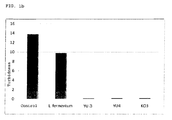
- FIGS. 1a and 1b The results are shown in FIGS. 1a and 1b , FIG. 2 , FIGS. 3a and 3b , and FIGS. 4a and 4b .
- the strains YU3, YU4 and K03 showed a high proliferation-suppressing effect against all of Streptococcus mutans, Streptococcus sobrinus, Porphyromonas gingivalis and Candida albicans. Furthermore, the antibacterial effects thereof were superior to that of known Lactobacillus Fermentum strain SU3.
- a biofilm assay by Candida albicans was conducted according to the method of Nikawa et al., 1996 ( Nikawa, H., Nishimura, H. Yamamoto, T., Hamada, T. & Samaranayake, L. P.: The role of saliva and serum in Candida albicans biofilm formation on denture acrylic surfaces. Microbial Ecol Health & Dis 9, 35-48, 1996 ).
- a resin for a denture base Bio Resin, Shofu, Kyoto
- 50 ⁇ 50 ⁇ 0.2 mm of the resin sample was polymerized according to a general procedure at a liquid mixing ratio as instructed by the manufacturer. This was cut into 10 ⁇ 10 ⁇ 0.2 mm by using a resin cutter and used for a biofilm assay.
- the resin plate was put on the bottom surface of a 24-well plate, and 500 ⁇ l of human blood serum (Type, Sigma co.human male AB plasma) was added thereto, and incubation was conducted at 37°C for 1 hour. Thereafter the human blood serum was removed. 50 ⁇ l of a suspension liquid of Candida albicans strain MYA274, which had been adjusted to 0.3 at OD600, was inoculated onto the surface of the sample, and the sample was stood still at 37°C for 2 hours to promote the fixing. Thereafter 1 ml of the MRS culture supernatant and 1 ml of Sabouraud Broth were added, and culturing was conducted at 37°C for 72 hours.
- human blood serum Type, Sigma co.human male AB plasma
- the resin sample was removed gently so that the biofilm formed on the surface of the sample was, not broken, and washed with 400 ml of MQ water for 5 seconds to remove excess bacteria.
- the amount of the biofilm formed on the resin sample was examined by extracting ATP and quantifying the ATP by using a luminometer (AB2200 Luminescencer PSN, ATTO, Tokyo).
- a control to which the same amount of MRS Broth had been added instead of the culture supernatant of the lactic acid bacterium was used.
- four similar samples were made for each supernatant, and for the control, and an average value ⁇ SD was calculated.
- the results are shown in FIG. 5 .
- the strains YU3, YU4 and KO3 strongly suppressed the biofilm formation of Candida albicans.
- Lactobacillus rhamnosus strain KO3 (NITE BP-771) was cultured in an MRS medium at 37°C for 18 hours to give a preculture liquid. The' liquid was washed twice with MQ water and centrifuged to collect the bacteria. The above-mentioned bacteria of the strain K03 that had been washed, and lactose in an amount to be 0.1 to 10% against 100 mL of a milk were added to a commercially available milk to which "Danone Yogurt" (Danone Japan Co., Ltd.; bifidobacteria are used) had been added, and cultured at 37°C for 24 hours to give a fermented milk.
- "Danone Yogurt" Disanone Japan Co., Ltd.; bifidobacteria are used
- a questionnaire about taste was conducted on 127 subjects by a Visual Analogue Scale (VAS) method. Each subject ate a yogurt and thereafter filled in a scale bar which comprised a line of 10 cm on which "very delicious” was described on the left end, “very distasteful” was described on the right end, and “normal” was described on the center, and the results were quantified by measuring the distances from the left end and obtaining the average value thereof. The results are shown in FIG. 6 . Furthermore, in the summary of the free opinions that were written at the same time, the subjects who wrote “tasty” or “mild” accounted for 72% in total, and thus it was confirmed that all of the fermented milks of the present invention had good taste.
- VAS Visual Analogue Scale
- Raw materials containing a milk are mixed homogeneously, heated and sterilized. This was cooled, and fermented by using S. thermophilus as a starter and using L. bulgaricus and L. rhamnosus strain KO3 at from 37 to 40°C to produce a yogurt (L8020). Furthermore, a placebo yogurt was produced by only L. bulgaricus using S. thermophilus as a starter.
- the measurement was conducted by using the amount of the bacteria after 24 hours as the amount of ATP. Four same samples were made for each, and an average value ⁇ SD was obtained. The results are shown in FIG. 7 .
- the amount of ATP pmol/well
- a tendency of slight increase was recognized in placebo against both the Ingbritt strain and strain B-13, whereas a significant suppression effect was also recognized in the state of the L8020 yogurt to which KO3 had been added.
- the collection of saliva was conducted at 3 days before initiation of tasting by collecting saliva on ice after stimulation for 5 minutes by a gum chewing method, and the number of carriage in the oral cavity for each of the above-mentioned bacteria was calculated and used as the pre-value of the above-mentioned tests.
- After the tasting for 2-weeks about 5 mL of stimulated saliva was collected on ice in a similar manner by a gum chewing method, and the number of carriage in the oral cavity for each of the above-mentioned bacteria was calculated and the effect in the above-mentioned test was evaluated. The results are shown in FIG. 8 .
- the L8020 yogurt significantly decreases Pi bacterium, Tf bacterium, and Fusobacterium bacterium that is known as a subgingival plaque former, among cariogenic bacteria and periodontal disease bacteria, and thus has a very high effect against bacteria relating to dental caries and periodontal diseases as compared to a general yogurt.
Landscapes
- Life Sciences & Earth Sciences (AREA)
- Health & Medical Sciences (AREA)
- Microbiology (AREA)
- Chemical & Material Sciences (AREA)
- Mycology (AREA)
- Veterinary Medicine (AREA)
- Medicinal Chemistry (AREA)
- Pharmacology & Pharmacy (AREA)
- Animal Behavior & Ethology (AREA)
- General Health & Medical Sciences (AREA)
- Public Health (AREA)
- Epidemiology (AREA)
- Molecular Biology (AREA)
- Engineering & Computer Science (AREA)
- Food Science & Technology (AREA)
- Polymers & Plastics (AREA)
- Bioinformatics & Cheminformatics (AREA)
- Chemical Kinetics & Catalysis (AREA)
- General Chemical & Material Sciences (AREA)
- Nuclear Medicine, Radiotherapy & Molecular Imaging (AREA)
- Organic Chemistry (AREA)
- Medicines Containing Material From Animals Or Micro-Organisms (AREA)
- Micro-Organisms Or Cultivation Processes Thereof (AREA)
- Coloring Foods And Improving Nutritive Qualities (AREA)
- Cosmetics (AREA)
Abstract
Description
- The present invention relates to a prophylactic, ameliorating or therapeutic agent for oral diseases such as dental caries or periodontal diseases.
- A bacterial flora in the oral cavity is constituted by 400 to 500 kinds of microorganisms. Therefore, various pathogenic microorganisms such as cariogenic bacteria, periodontal disease bacteria and candida bacteria are present in the oral cavity, which causes various diseases such as dental caries, periodontal diseases, glossitis, thrush and oral candidiasis. Furthermore, it is reported in recent studies that candida bacteria also relate to periodontal diseases.
Therefore, many suggestions have been heretofore made with respect to oral compositions containing an antibacterial substance. However, even an antibacterial agent was administered to the oral cavity, the antibacterial agent was washed out by saliva or a food or beverage within a short time, and thus the effect thereof had to be said to be a transient effect. - Furthermore, in view of that a lactic acid bacterium suppresses bacteria causing various diseases in the large intestine, studies for applying the technique thereof to dental diseases have been done. For example, it was reported that lactic acid bacteria such as Lactobacillus salivarius (
Patent Document 1 and Patent Document 2), Lactobacillus reuteri (Patent Document 3 and Patent Document 4), Lactobacillus paracasei (Patent Document 5), Lactobacillus delbrueckii (Patent Document 6) and Lactobacillus fermentum (Non-patent Document 1) are effective for the prophylaxis of dental caries and periodontal diseases. - However, there was also a problem that even a lactic acid bacterium having an antibacterial effect against cariogenic bacteria and periodontal disease bacteria has a narrow antibacterial spectrum, has insufficient fermentability and thus cannot provide a good fermented product, and cannot provide a fermented product having good flavor and being excellent in palatability.
-
- Patent Document 1:
WO 2002/016554 - Patent Document 2:
WO 2003/082027 - Patent Document 3: Japanese Patent Application Laid-Open (JP-A) No.
2003-299480 - Patent Document 4: Japanese Patent Application National Publication (Laid-Open) No.
2008-502360 - Patent Document 5:
JP-A-2008-37859 - Patent Document 6:
JP-A-2008-237198 - Non-patent Document 1: Sumiyo MIMURA, Hiroki NIKAWA, Seicho MAKIHIRA, Aya HIYAMA and Yuko TAKAMOTO, the Journal of Nippon Academy of Dental Technology, Vol. 29, special issue, 298 (2008)
- The present invention relates to provision of a novel lactic acid bacterium strain, having a broad antibacterial spectrum against bacteria that cause oral diseases, from which a fermented product having good flavor and being excellent in palatability can be produced, and to provision of a food and a prophylactic, ameliorating or therapeutic agent for oral diseases containing the same.
- The present inventors have done intensive studies on oral microorganisms, and found that specific lactic acid bacterium strains belonging to Lactobacillus rhamnosus, Lactobacillus casei and Lactobacillus paracasei that are present in saliva have an excellent antibacterial effect against any of cariogenic bacteria, periodontal disease bacteria and candida bacteria, and that a fermented product being excellent in palatability can be produced by using these.
- Therefore, the present invention relates to the following 1) to 8).
- 1) A prophylactic, ameliorating or therapeutic agent for an oral disease, which contains a lactic acid bacterial cell of one or more kinds selected from the group consisting of Lactobacillus rhamnosus strain KO3 (NITE BP-771), Lactobacillus casei strain YU3 (NITE BP-772) and Lactobacillus paracasei strain YU4 (NITE BP-775) or a culture of the cells, or an extract thereof, as an active ingredient.
- 2) A food containing a lactic acid bacterial cell of one or more kinds selected from the group consisting of Lactobacillus rhamnosus strain KO3 (NITE BP-771), Lactobacillus casei strain YU3 (NITE BP-772) and Lactobacillus paracasei strain YU4 (NITE BP-775) or a culture of the cell, or an extract thereof.
- 3) The food according to the above-mentioned 2), which is a fermented milk or a fermented beverage.
- 4) An agent for the suppression of the proliferation of a cariogenic bacterium, a periodontal disease bacterium and a candida bacterium, which contains a lactic acid bacterial cell of one or more kinds selected from the group consisting of Lactobacillus rhamnosus strain KO3 (NITE BP-771), Lactobacillus casei strain YU3 (NITE BP-772) and Lactobacillus paracasei strain YU4 (NITE BP-775) or a culture of the cell, or an extract thereof, as an active ingredient.
- 5) The agent for the suppression of the proliferation of a cariogenic bacterium, a periodontal disease bacterium and a candida bacterium according to 4), wherein the cariogenic bacterium, periodontal disease bacterium and candida bacterium are at least Streptococcus mutans, Streptococcus sobrinus, Porphyromonas gingivalis and Candida albicans.
- 6) Lactobacillus rhamnosus strain K03 that has been deposited as NITE BP-771, Lactobacillus casei strain YU3 that has been deposited as NITE BP-772 and Lactobacillus paracasei strain YU4 that was deposited as NITE BP-775, at the Patent Microorganisms Depositary of the National Institute of Technology and Evaluation.
- 7) A lactic acid bacterial cell of one or more kinds selected from the group consisting of Lactobacillus rhamnosus strain KO3 (NITE BP-771), Lactobacillus casei strain YU3 (NITE BP-772) and Lactobacillus paracasei strain YU4 (NITE BP-775) or a culture of the cell, or an extract thereof, which is used as a prophylactic, ameliorating or therapeutic agent for an oral disease.
- 8) A method for the prophylaxis, amelioration or treatment of an oral disease, which includes administering or ingesting a lactic acid bacterial cell of one or more kinds selected from the group consisting of Lactobacillus rhamnosus strain K03 (NITE BP-771), Lactobacillus casei strain YU3 (NITE BP-772) and Lactobacillus paracasei strain YU4 (NITE BP-775) or a culture of the cell, or an extract thereof.
- According to the present invention, a food with high palatability, a medicament, an oral composition and the like, which exert a prophylactic, ameliorating or therapeutic effect for various oral diseases such as dental caries, periodontal diseases, glossitis, thrush and oral candidiasis.
-
-
FIG. 1a is a graph showing the growth-inhibiting effect against Streptococcus mutans. -
FIG. 1b is a graph showing the growth-inhibiting effect against Streptococcus mutans. -
FIG. 2 is a graph showing the growth-inhibiting effect against Streptococcus sobrinus. -
FIG. 3a is a graph showing the growth-inhibiting effect against Porphyromonas gingivalis. -
FIG. 3b is a graph showing the growth-inhibiting effect against Porphyromonas gingivalis. -
FIG. 4a is a graph showing the growth-inhibiting effect against Candida albicans. -
FIG. 4b is a graph showing the growth-inhibiting effect against Candida albicans. -
FIG. 5 is a graph showing the biofilm formation-inhibiting effect against Candida albicans. -
FIG. 6 is a graph showing the result of the evaluation on taste (Visual Analogue Scale (VAS) method). -
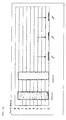
FIG. 7 is a graph showing the antibacterial action of yogurt. (A): S. mutans ingbritt strain, (B): S. sobirinus strain B13 -
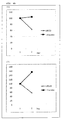
FIG. 8a is a graph showing the effect of decreasing the numbers of cariogenic bacteria and periodontal disease bacteria in the human oral cavity. (A): cariogenic bacteria, (B): P. intermedia (Pi) -
FIG. 8b is a graph showing the effect of decreasing the numbers of cariogenic bacteria and periodontal disease bacteria in the human oral cavity. (C) : T. forsythensis (Tf), (D): F. nucleatum (Fuso) - The lactic acid bacteria used for the fermented milk of the present invention are lactic acid bacteria belonging to Lactobacillus rhamnosus, Lactobacillus casei and Lactobacillus paracasei; specifically, they are Lactobacillus rhamnosus strain KO3 that was deposited as NITE BP-771 on June 10, 2009, Lactobacillus casei strain YU3 that has been deposited as NITE BP-772 on June 10, 2009, and Lactobacillus paracasei strain YU4 that has been deposited as NITE BP-775 on June 24, 2009, at the Patent Microorganisms Depositary of the National Institute of Technology and Evaluation (Address: 2-5-8 Kazusakamatari, Kisarazu-shi, Chiba 292-0818, Japan).
- The KO3 strain was first separated from human saliva by the present inventors, and was identified as Lactobacillus rhamnosus since the base sequence of 16S rRNA shows a homology of 100% with the base sequence of Lactobacillus rhamnosus strain IDCC3201 between 1485/1485, and bears the aspect of a cram-positive bacillus under a microscope after gram staining. The major mycological properties of the KO3 strain are shown below.
1) Gram-positive lactobacillus, 2) homo-type lactic fermentation, 3) catalase negative, 4) no endospore formability, 5) culturable under aerobic conditions, and 6) producing exopolysaccharide. - The YU3 strain was first separated from human saliva by the present inventors, and was identified as Lactobacillus casei since the base sequence of 16S rRNA shows a homology of 100% with the base sequence of Lactobacillus casei ATCC 334 between 1485/1485, and bears the aspect of a cram-positive bacillus under a microscope after gram staining. The major mycological properties of the YU3 strain are shown below.
1) Gram-positive lactococcus, 2) homo-type lactic fermentation, 3) catalase negative, 4) no endospore formability, 5) culturable under aerobic conditions, and 6) producing exopolysaccharide. - The YU4 strain was first separated from human saliva by the present inventors, and was identified as Lactobacillus paracasei since the base sequence of 16S rRNA shows a homology of 1477/1477 (100%) with the Partial Sequence of Lactobacillus paracasei strain DJ1 16S ribosomal RNA gene, and bears the aspect of a gram-positive bacillus under a microscope after gram staining. The major mycological properties of the YU4 strain are shown below.
1) Gram-positive lactococcus, 2) homo-type lactic fermentation, 3) catalase negative, 4) no endospore formability, 5) culturable under aerobic conditions, and 6) producing exopolysaccharide. - In the present invention, the above-mentioned lactic acid bacterial cell that has been recovered by culturing the bacterium according to a general method for culturing a lactic acid bacterium and has been separated from the culture by cell-collecting means such as centrifugation may be used directly. Alternatively, the cultured and fermented liquid (culture supernatant), a concentrated liquid thereof, or a cytoplasma or cell wall fraction obtained by treating the bacterial cell through an enzyme or a physical means may also be used. Furthermore, not only a viable cell but also a killed cell may be used.
- The medium for culturing the lactic acid bacterium used in the present invention includes various media such as a fruit juice medium, a vegetable juice medium, a milk medium, a skimmed milk medium or a medium containing a milk component, and a semi-synthetic medium free of a milk component. Examples of such the medium may include a reduced skimmed milk medium produced through heat-sterilized skimmed milk, a skimmed milk medium to which yeast extract has been added, an MRS medium, and a GAM medium.
No particular limitation imposed on the culturing method, so long as the method allows favorable growth of the target cells. Examples of the method include stationary culture, neutralization culture (as a constant pH), batch culture and continuous culture. - The extract of lactic acid bacterial cell or the culture of the cell of the present invention means various solvent extract liquids obtained by extracting the cell or the culture of the cell with a solvent, a diluted liquid thereof, a concentrated liquid thereof or a dried powder thereof.
- As the extraction solvent used for obtaining the extract of the present invention, either a polar solvent or nonpolar solvent can be used, or these can be used after mixing. Examples may include water; alcohols such as methanol, ethanol, propanol and butanol; polyols such as propylene glycol and butylene glycol; ketones such as acetone and methyl ethyl ketone; esters such as methyl acetate and ethyl acetate; chain and cyclic ethers such as tetrahydrofuran and diethyl ether; polyethers such as polyethylene glycol; hydrocarbons such as hexane, cyclohexane and petroleum ethers; aromatic hydrocarbons such as benzene and toluene; pyridines, and the like, and among these, esters such as ethyl acetate and alcohols such as ethanol are preferable.
- Although the conditions for extraction differ depending on the solvent to be used, it is preferable to conduct extraction, for example, by using from 1 to 10 parts by mass of a solvent with respect to 1 part by mass of a culture liquid at a temperature of from 0 to 50°C, preferably of from 25 to 37°C, for from 0.5 hour to 3 hours.
- The above-mentioned extract may be used as is, or may be used after diluting, concentrating or lyophilizing the extract and thereafter forming the product into a powder or paste if necessary. Alternatively, the extract may also be used after appropriate purification by a purification technique such as liquid-liquid distribution.
- The "oral disease" in the prophylactic, ameliorating or therapeutic agent for an oral disease of the present invention refers to oral diseases that are caused by cariogenic bacteria, periodontal disease bacteria and candida bacteria, and examples may include dental caries; periodontal diseases such as gingivitis and periodontitis, oral candidiasis such as glossitis, thrush and angular stomatitis, and the like.
Examples of the cariogenic bacteria may include Streptococcus mutans and Streptococcus sobrinus; examples of the periodontal disease bacteria may include Porphyromonas gingivalis, Prevotella intermedia, Treponema denticola, Tannerella forsythensis, Actinobacillus actinomycetemcomitans, Fusobacterium nucleatum and the like; and examples of the candida bacteria may include Candida albicans, Candida glabrata, Candida tropicalis and the like. - As shown in the following Examples, the lactic acid bacterium of the present invention has a growth suppressing effect against any of Streptococcus mutans and Streptococcus sobrinus that are cariogenic bacteria, Porphyromonas gingivalis that is a periodontal disease bacterium, and Candida albicans that is a candida bacterium. Furthermore, it has an effect of suppressing the proliferation of Fusobacterium bacteria such as Fusobacterium. nucleatum that is known as a subgingival plaque former in the oral cavity. Furthermore, a fermented milk prepared by using the lactic acid bacterium has good flavor and texture, and even it is present together with other lactic acid bacterium in an existing fermented milk such as Lactobacillus. bulgaricus, the taste thereof is not impaired or can further be improved.
Therefore, the lactic acid bacterial cell or the culture of the cell, or the extract thereof can be a prophylactic, ameliorating or therapeutic agent for oral diseases, or an agent for suppressing the proliferation of cariogenic bacteria, periodontal disease bacteria and candida bacteria. Such prophylactic, ameliorating or therapeutic agent for oral diseases and agent for suppressing the proliferation of cariogenic bacteria, periodontal disease bacteria and candida bacteria can be used as they are, as foods, medicaments, oral compositions and the like, for the prophylaxis, amelioration or treatment of oral diseases such as dental caries, periodontal diseases and oral candidiasis that are caused by pathogenic microorganisms in the oral cavity, or for the suppression of the proliferation of cariogenic bacteria, periodontal disease bacteria and candida bacteria, and can also be used as materials for incorporating in foods, medicaments or oral compositions. Furthermore, the foods can also be health foods, supplements or functional foods such as foods for specified health use, and have a product concept of the prophylaxis, amelioration or the like of tooth decay, periodontal diseases and other oral infectious diseases and include a label indicating such effects as necessary. - The form in the case when used as a medicament is preferably a form of oral administration, and the dosage form thereof may include various forms such as liquid agents; solid agents such as pills, granules, fine granules, powders and tablets; or capsules in which the liquid agent or solid agent is encapsulated, oral sprays, troches, and the like. In order to prepare pharmaceutical formulations and supplements having such various dosage forms, other excipients, binders, bulking agents, disintegrating agents, surfactants, lubricants, dispersing agents, buffer agents, preservatives, flavoring agents, fragrances, coating agents, carriers, diluents and the like that are pharmaceutically acceptable can be used in suitable combination to the extent that the actions of the cell and culture of the present invention are not obstructed.
The content of the lactic acid bacterial cell or the culture of the cell, or the extract thereof of the present invention in the oral pharmaceutical formulation when it is used as such formulation is from 1% by mass to 50% by mass, preferably from 10% by mass to 20% by mass in the whole composition. - Examples of the form in the case of use as a food may include beverages such as fruit juice or vegetable juice beverages, carbonated beverages, tea-based beverages, milk beverages, fermented milks, fermented fruit juices, fermented vegetable juices, alcoholic beverages and soft drinks; various foods such as jelly-like foods, various snacks, baked confectioneries, cakes, chocolates, jams, breads, gums, candies, soups, pickles and foods boiled in soy; supplements having the same forms as those for the above-mentioned oral pharmaceutical formulation (pills, capsules, syrups and the like); and the like.
- The culture of the lactic acid bacterium of the present invention becomes a fermented food such as yogurts, cheeses, miso, soybean sauces and pickles, and such fermented milks or cheeses can be used as a material to form breads, snacks, cakes and the like for the prophylaxis or amelioration of tooth decay and periodontal diseases.
- The fermentation by utilizing the lactic acid bacterium of the present invention is preferably a method including preparing a starter in advance, and fermenting by inoculating the starter to a raw material substance for fermentation. Typical examples of the starter may include those obtained by inoculating a lactic acid bacterium into a raw material substance for fermentation that has been subjected to a general sterilization treatment in advance, such as a 10% powdered skimmed milk to which a yeast extract has been added, and conducting culturing. In addition, if necessary, a substance for promoting fermentation such as carbon sources such as glucose, starch, sucrose, lactose, dextrin, sorbitol and fractose; nitrogen sources such as yeast extract and peptone; vitamins; minerals; and the like can be added to the raw material substance for fermentation.
It is adequate that the amount of inoculation of a lactic acid bacterium is generally selected from an amount by which cell is included in amount of about 1 × 10⁶ cells or more, preferably around 1 × 10⁷ cells, in 1 mL of a liquid containing the raw material substance for fermentation. The culturing conditions are generally selected from a fermentation temperature of from about 20 to 42°C, preferably from about 25 to 37°C, and a fermentation time of from about 5 to 72 hours. The thus-obtained lactic acid fermented product has a card-like form (yogurt-like form), and the product can directly become a solid food. The lactic acid fermented product having a card-like form can be formed into a desired beverage form by further homogenizing it. - Examples of the specific form in the case when the prophylactic, ameliorating, therapeutic agent for oral diseases, or the like of the present invention is used as an oral composition may include mouth rinses, mouthwashes, toothpastes, tooth powders, tooth liquids, oral ointments, gel agents, pills, granules, fine granules, gummy jellies, troches, tablets, capsules, candies, chewing gums and the like, and preferable examples may include toothpastes, mouth rinses, gummy jellies and troches.
- The content of the lactic acid bacterium of the present invention in the above-mentioned medicament or food is not specifically limited and may be suitably adjusted depending on a daily dose and the like; for example, when the dosage form is a liquid, the concentration of the lactic acid bacterial cell is preferably from 1 × 10⁶ cells/ml to 1 × 10⁸ cells/ml, and when the dosage form is a solid, the concentration is preferably from 1 × 10⁷ cells/g to 1 × 10¹⁰ cells/g.
- When the lactic acid bacterium of the present invention is administered as a viable cell, it is preferably administered by from 1 × 10⁸ to 5 × 10¹⁰ cfu/day per an adult human.
Hereinafter the present invention will be explained in more detail with referring to the Examples and Test Examples. - An MRS medium (Difco) is sterilized at 121°C for 20 minutes, and Lactobacillus rhamnosus strain KO3 (this was deposited as NITE BP-771 with the Patent Microorganisms Depositary of the National Institute of Technology and Evaluation (Address: 2-5-8 Kazusakamatari, Kisarazu-shi, Chiba 292-0818, Japan) (June 10, 2009)) is inoculated, cultured at 37°C for 48 hours in the air and washed with distilled water, ultrapure water, a buffer liquid or the like, thereby a cell can be obtained.
- Similarly, an MRS medium (Difco) is sterilized at 121°C for 20 minutes, and Lactobacillus casei strain YU3 (this was deposited as NITE BP-772 with the Patent Microorganisms Depositary of the National Institute of Technology and Evaluation (Address: 2-5-8 Kazusakamatari, Kisarazu-shi, Chiba 292-0818, Japan) (June 10, 2009)) is inoculated, cultured at 37°C for 48 hours in the air and washed with distilled water, ultrapure water, a buffer liquid or the like, thereby a cell can be obtained.
- Furthermore, an MRS medium (Difco) is sterilized at 121°C for 20 minutes, and Lactobacillus paracasei strain YU4 (this was deposited as NITE BP-775 with the Patent Microorganisms Depositary of the National Institute of Technology and Evaluation (Address: 2-5-8 Kazusakamatari, Kisarazu-shi, Chiba 292-0818, Japan) (June 24, 2009)) is inoculated, cultured at 37°C for 48 hours in the air and washed with distilled water, ultrapure water, a buffer liquid or the like, thereby a cell can be obtained.
In addition, Lactobacillus Fermentum used for comparison was cultured in a similar manner to that mentioned above by using Lactobacillus Fermentum strain SU3 collected from the human oral cavity described in the above-mentionedNon-patent Document 1, and subjected to the tests. - Each cell that had been stored at -80°C was thawed at an ordinary temperature, collected by centrifugation (3000 rpm for 5 min), and washed twice by sterilized distilled water (MQ water) to adjust to 0.3 at OD600 (about 1.0 × 10⁹ cfu/ml) . 500 µl of each suspension liquid was inoculated into 15 ml of MRS Broth or Brain Heart Infusion Broth (hereinafter referred to as BHI Broth: Difco), and stationary culture was conducted at 37°C for 48 hours. Thereafter centrifugation was conducted at 3000 rpm for 5 minutes (room temperature), and the supernatant was collected and used for an antibacterial assay.
- Streptococcus mutans Ingbritt and Streptococcus sobrinus B13 were used as cariogenic bacteria (mutans streptococci). For the preculturing of these bacteria, Tryptic Soy Broth (hereinafter referred to as TSBY: Difco) to which 5% of Yeast Extract (Difco) had been added was used, and the culturing was conducted at 37°C for 24 hours. Thereafter the bacteria were washed twice with MQ water, adjusted to 0.3 at OD600 (Streptococcus mutans Ingbritt; 1.0 × 10⁸ cfu/ml, Streptococcus sobrinus B13; 1.0 × 10⁸ cfu/ml) and the thus-prepared strain was used.
Porphyromonas gingivalis strain 381 was used as a periodontal disease bacterium; this was precultured by using a GAM medium to which 1% hemin and 0.2% vitamin K had been added, at 37°C for 7 days in an anaerobic jar containing AneroPack (MCG)(BBL, Cookeysville, USA) (10%CO2). Thereafter the bacterium was washed twice with phosphate buffer (pH 7.4; PBS), adjusted to 0.3 at OD600 (about 0.5 × 10⁷ cfu/ml) and the thus-prepared strain was used.
Furthermore, Candida albicans MYA274 was used as candida; this was precultured at 37°C for 24 hours by using Sabouraud Dextrose Broth (Difco), washed twice with MQ water, adjusted to 0.3 at OD600 (Candida albicans MYA274; 1.0 × 10⁷ cells/ml) and the thus-prepared strain was used. - One ml of TSBY for the cariogenic bacterium, a GAM medium or BHI medium to which 1% of hemin and 0.2As of vitamin K had been added for the periodontal disease bacterium or Sabouraud Broth for the candida, 1 ml of each supernatant, and 50 µl of the bacterial suspension of the lactic acid bacterium that had been adjusted to 0.3 at OD600 were inoculated into a 24-well plate, and a turbidness was measured at 37°C in 24 hours. As a control, a control to which 50 µl of a bacterial suspension had been inoculated, wherein the bacterial suspension was obtained by adding 1 ml of a similar medium to that used in the preculture of the lactic acid bacterium, i.e., MRS Broth or BHI Broth, to 1 ml of TSBY or Sabouraud Broth and adjusting the medium to 0.3 at OD600, was used. Furthermore, four similar samples were made for each supernatant, and for the control, and an average value±SD was calculated.
- The results are shown in
FIGS. 1a and1b ,FIG. 2 ,FIGS. 3a and3b , andFIGS. 4a and 4b .
The strains YU3, YU4 and K03 showed a high proliferation-suppressing effect against all of Streptococcus mutans, Streptococcus sobrinus, Porphyromonas gingivalis and Candida albicans. Furthermore, the antibacterial effects thereof were superior to that of known Lactobacillus Fermentum strain SU3. - A biofilm assay by Candida albicans was conducted according to the method of Nikawa et al., 1996 (Nikawa, H., Nishimura, H. Yamamoto, T., Hamada, T. & Samaranayake, L. P.: The role of saliva and serum in Candida albicans biofilm formation on denture acrylic surfaces. Microbial Ecol Health & ). Using a resin for a denture base (Bio Resin, Shofu, Kyoto), 50 × 50 × 0.2 mm of the resin sample was polymerized according to a general procedure at a liquid mixing ratio as instructed by the manufacturer. This was cut into 10 × 10 × 0.2 mm by using a resin cutter and used for a biofilm assay.
- The resin plate was put on the bottom surface of a 24-well plate, and 500 µl of human blood serum (Type, Sigma co.human male AB plasma) was added thereto, and incubation was conducted at 37°C for 1 hour. Thereafter the human blood serum was removed. 50 µl of a suspension liquid of Candida albicans strain MYA274, which had been adjusted to 0.3 at OD600, was inoculated onto the surface of the sample, and the sample was stood still at 37°C for 2 hours to promote the fixing. Thereafter 1 ml of the MRS culture supernatant and 1 ml of Sabouraud Broth were added, and culturing was conducted at 37°C for 72 hours. The resin sample was removed gently so that the biofilm formed on the surface of the sample was, not broken, and washed with 400 ml of MQ water for 5 seconds to remove excess bacteria. The amount of the biofilm formed on the resin sample was examined by extracting ATP and quantifying the ATP by using a luminometer (AB2200 Luminescencer PSN, ATTO, Tokyo). In addition, a control to which the same amount of MRS Broth had been added instead of the culture supernatant of the lactic acid bacterium was used. Furthermore, four similar samples were made for each supernatant, and for the control, and an average value ± SD was calculated.
- The results are shown in
FIG. 5 .
The strains YU3, YU4 and KO3 strongly suppressed the biofilm formation of Candida albicans. - Lactobacillus rhamnosus strain KO3 (NITE BP-771) was cultured in an MRS medium at 37°C for 18 hours to give a preculture liquid. The' liquid was washed twice with MQ water and centrifuged to collect the bacteria. The above-mentioned bacteria of the strain K03 that had been washed, and lactose in an amount to be 0.1 to 10% against 100 mL of a milk were added to a commercially available milk to which "Danone Yogurt" (Danone Japan Co., Ltd.; bifidobacteria are used) had been added, and cultured at 37°C for 24 hours to give a fermented milk.
Meanwhile, it is considered that, in the case when a small amount of "Danone Yogurt" (bifidobacteria are used) is added and general culturing is conducted, only a starter used in the yogurt proliferates since bifidobacteria are obligatory anaerobes. - A questionnaire about taste was conducted on 127 subjects by a Visual Analogue Scale (VAS) method. Each subject ate a yogurt and thereafter filled in a scale bar which comprised a line of 10 cm on which "very delicious" was described on the left end, "very distasteful" was described on the right end, and "normal" was described on the center, and the results were quantified by measuring the distances from the left end and obtaining the average value thereof. The results are shown in
FIG. 6 .
Furthermore, in the summary of the free opinions that were written at the same time, the subjects who wrote "tasty" or "mild" accounted for 72% in total, and thus it was confirmed that all of the fermented milks of the present invention had good taste. - Raw materials containing a milk are mixed homogeneously, heated and sterilized. This was cooled, and fermented by using S. thermophilus as a starter and using L. bulgaricus and L. rhamnosus strain KO3 at from 37 to 40°C to produce a yogurt (L8020). Furthermore, a placebo yogurt was produced by only L. bulgaricus using S. thermophilus as a starter.
- Using the L8020 yogurt prepared in Example 2, antibacterial tests against cariogenic bacteria were conducted.
S. mutans ingbritt strain and S. sobirinus strain B13 as mentioned above were used as the cariogenic bacteria. Each strain was precultured in TSBY, and thereafter washed three times with sterilized distilled water to adjust to 1 × 10⁸ cfu/ml. 1.5 mL of TSBY was dispensed into a 24-well plate, and 100 µL of the bacterial liquid was inoculated into each well.
The inside of the intercell containing each yogurt was put into a 24-well plate, and the amounts of the bacteria after 24 hours of culturing were compared.
The measurement was conducted by using the amount of the bacteria after 24 hours as the amount of ATP. Four same samples were made for each, and an average value ± SD was obtained. The results are shown inFIG. 7 .
InFIG. 7 (A) and (B) , the amount of ATP (pmol/well) is shown in the longitudinal axis of the graph; a tendency of slight increase was recognized in placebo against both the Ingbritt strain and strain B-13, whereas a significant suppression effect was also recognized in the state of the L8020 yogurt to which KO3 had been added. - Human tests were conducted by using the L8020 yogurt prepared in Example 2.
Forty subjects from 19 to 25 years of age were divided into two groups according to a random number table. The subjects inGroup 1 continued to eat the placebo yogurt and the subjects inGroup 2 continued to eat the L8020 yogurt, once a day at lunchtime for 2 weeks.
The carriage numbers of the cariogenic bacteria and periodontal disease bacteria in the oral cavity were calculated by collecting saliva by using a kit of BML and quantifying the cariogenic bacteria by a culture method or the periodontal disease bacteria by using a PCR-invader method or invader method for 4 kinds of bacteria: P. intermedia (Pi), T. forsythensis (Tf) and F.nucleatum (Fuso).
The collection of saliva was conducted at 3 days before initiation of tasting by collecting saliva on ice after stimulation for 5 minutes by a gum chewing method, and the number of carriage in the oral cavity for each of the above-mentioned bacteria was calculated and used as the pre-value of the above-mentioned tests.
After the tasting for 2-weeks, about 5 mL of stimulated saliva was collected on ice in a similar manner by a gum chewing method, and the number of carriage in the oral cavity for each of the above-mentioned bacteria was calculated and the effect in the above-mentioned test was evaluated. The results are shown inFIG. 8 . - As is apparent from
FIG. 8 (A) , when the pre-value of the number of carriage in the oral cavity of the cariogenic bacterium was defined as 100, the value was decreased to about 60% by the placebo yogurt. On the other hand, significant decrease to about 15% was observed in the L8020 yogurt. It was clarified from this result that the carriage of the cariogenic bacterium in the oral cavity is decreased significantly and effectively by ingesting the L8020 yogurt for 2 weeks.
As is apparent fromFIG. (B) , when the pre-value of the number of carriage in the oral cavity of the Pi bacterium was defined as 100, the value was increased to about 180% by the placebo yogurt. On the other hand, significant decrease to about 50% was observed in the L8020 yogurt. It was clarified from this result that the carriage of the Pi bacterium in the oral cavity is decreased significantly and effectively by ingesting the L8020 yogurt for 2 weeks.
As is apparent from FIG. (C), when the pre-value of the number of carriage in the oral cavity of the Tf bacterium was defined as 100, the value was increased to about 105% by the placebo yogurt. On the other hand, significant decrease to about 60% was observed in the L8020 yogurt. It was clarified from this result that the carriage of the Tf bacterium in the oral cavity is decreased significantly and effectively by ingesting the L8020 yogurt for 2 weeks.
As is apparent fromFIG. 8 (D) , when the pre-value of the number of carriage in the oral cavity of the Fuso bacterium was defined as 100, the value was increased to about 160% by the placebo yogurt. On the other hand, significant decrease to about 60% was observed in the L8020 yogurt. It was clarified from this result that the carriage of the Tf bacterium in the oral cavity is decreased significantly and effectively by ingesting the L8020 yogurt for 2 weeks.
For the Pg bacterium, since the number of the carrier was small, a significant change was not observed. - It was clarified by the above-mentioned results that the L8020 yogurt significantly decreases Pi bacterium, Tf bacterium, and Fusobacterium bacterium that is known as a subgingival plaque former, among cariogenic bacteria and periodontal disease bacteria, and thus has a very high effect against bacteria relating to dental caries and periodontal diseases as compared to a general yogurt.
Claims (8)
- A prophylactic, ameliorating or therapeutic agent for an oral disease, comprising:a lactic acid bacterial cell of one or more kinds selected from the group consisting of Lactobacillus rhamnosus strain K03 (NITE BP-771), Lactobacillus casei strain YU3 (NITE BP-772) and Lactobacillus paracasei strain YU4 (NITE BP-775) or a culture of the cell, or an extract thereof, as an active ingredient.
- A food, comprising:a lactic acid bacterial cell of one or more kinds selected from the group consisting of Lactobacillus rhamnosus strain KO3 (NITE BP-771), Lactobacillus casei strain YU3 (NITE BP-772) and Lactobacillus paracasei strain YU4 (NITE BP-775) or a culture of the cell, or an extract thereof.
- The food according to claim 2, which is a fermented milk or a fermented beverage.
- An agent for suppression of proliferation of a cariogenic bacterium, a periodontal disease bacterium and a candida bacterium, comprising:a lactic acid bacterial cell of one or more kinds selected from the group consisting of Lactobacillus rhamnosus strain K03 (NITE BP-771), Lactobacillus casei strain YU3 (NITE BP-772) and Lactobacillus paracasei strain YU4 (NITE BP-775) or a culture of the cell, or an extract thereof, as an active ingredient.
- The agent for suppression of proliferation of a cariogenic bacterium, a periodontal disease bacterium and a candida bacterium according to claim 4,
wherein the cariogenic bacterium, periodontal disease bacterium and candida bacterium are at least Streptococcus mutans, Streptococcus sobrinus, Porphyromonas gingivalis and Candida albicans. - Lactobacillus rhamnosus strain KO3 that has been deposited as NITE BP-771, Lactobacillus casei strain YU3 that has been deposited as NITE BP-772 and Lactobacillus paracasei strain YU4 that has been deposited as NITE BP-775, at the Patent Microorganisms Depositary of the National Institute of Technology and Evaluation.
- A lactic acid bacterial cell of one or more kinds selected from the group consisting of Lactobacillus rhamnosus strain KO3 (NITE BP-771), Lactobacillus casei strain YU3 (NITE BP-772) and Lactobacillus paracasei strain YU4 (NITE BP-775) or a culture of the cell, or an extract thereof, which is used as a prophylactic, ameliorating or therapeutic agent for an oral disease.
- A method for prophylaxis, amelioration or treatment of an oral disease, comprising:administering or ingesting a lactic acid bacterial cell of one or more kinds selected from the group consisting of Lactobacillus rhamnosus strain KO3 (NITE BP-771), Lactobacillus casei strain YU3 (NITE BP-772) and Lactobacillus paracasei strain YU4 (NITE BP-775) or a culture of the cell, or an extract thereof.
Applications Claiming Priority (2)
| Application Number | Priority Date | Filing Date | Title |
|---|---|---|---|
| JP2009168122 | 2009-07-16 | ||
| PCT/JP2010/004626 WO2011007584A1 (en) | 2009-07-16 | 2010-07-16 | Prophylactic, ameliorating or therapeutic agent for oral diseases |
Publications (3)
| Publication Number | Publication Date |
|---|---|
| EP2455095A1 true EP2455095A1 (en) | 2012-05-23 |
| EP2455095A4 EP2455095A4 (en) | 2013-03-13 |
| EP2455095B1 EP2455095B1 (en) | 2017-06-07 |
Family
ID=43449195
Family Applications (1)
| Application Number | Title | Priority Date | Filing Date |
|---|---|---|---|
| EP10799648.0A Active EP2455095B1 (en) | 2009-07-16 | 2010-07-16 | Prophylactic, ameliorating or therapeutic agent for oral diseases |
Country Status (7)
| Country | Link |
|---|---|
| US (2) | US20120128645A1 (en) |
| EP (1) | EP2455095B1 (en) |
| JP (1) | JP5645192B2 (en) |
| KR (1) | KR101690090B1 (en) |
| CN (1) | CN102470151B (en) |
| DK (1) | DK2455095T3 (en) |
| WO (1) | WO2011007584A1 (en) |
Cited By (7)
| Publication number | Priority date | Publication date | Assignee | Title |
|---|---|---|---|---|
| EP2682463A4 (en) * | 2011-02-10 | 2014-11-26 | Univ Hiroshima | BACTERIOCIN DERIVED FROM LACTOBACILLUS RHAMNOSUS |
| WO2017042275A1 (en) | 2015-09-08 | 2017-03-16 | Vesale Pharma International | Composition comprising at least one probiotic bacterium and intended to be used for the treatment of buccal mycoses |
| GB2548930A (en) * | 2016-04-01 | 2017-10-04 | Genmont Biotech Inc | Use of a heat-inactivated lactobacillus strain and composition for inhibiting bacterial adhesion of oral pathogens |
| IT201600081420A1 (en) * | 2016-08-03 | 2018-02-03 | Probiotical Spa | LACTIC BACTERIA AND THEIR USE FOR THE PREVENTIVE, INHIBITOR, REDUCING TREATMENT OF BACTERIAL BIOFILM FORMATION |
| CN111518713A (en) * | 2019-09-27 | 2020-08-11 | 江南大学 | Lactobacillus rhamnosus capable of preventing and/or treating dental caries and application thereof |
| US11446340B2 (en) | 2011-05-09 | 2022-09-20 | Probiotical S.P.A. | Probiotic bacterial strains and symbiotic composition containing the same intended for infant food |
| US12343363B2 (en) | 2016-03-24 | 2025-07-01 | Probiotical S.P.A. | Lactic acid bacterial composition for the treatment of bacterial vaginal infections by Gardnerella vaginalis and, if present, of concurrent fungal infections |
Families Citing this family (41)
| Publication number | Priority date | Publication date | Assignee | Title |
|---|---|---|---|---|
| US20130344010A1 (en) * | 2011-01-24 | 2013-12-26 | Basf Se | Oral Health Improving Compositions |
| WO2013176320A1 (en) * | 2012-05-25 | 2013-11-28 | 강원대학교 산학협력단 | Human-derived lactobacillus rhamnosus hk-9, and fermented product and cosmetic composition using same |
| JP5904028B2 (en) * | 2012-06-19 | 2016-04-13 | ライオン株式会社 | Lactic acid bacteria and cultures thereof, and compositions containing them |
| JP6110240B2 (en) * | 2013-04-10 | 2017-04-05 | 国立大学法人広島大学 | Lactic acid bacteria, etc., and oral disease prevention materials and foods containing these |
| KR101627850B1 (en) * | 2013-07-23 | 2016-06-07 | 서원대학교산학협력단 | Method of fermentation using complex strains and cosmetic composition comprising thereof |
| CN105770191B (en) * | 2015-10-21 | 2019-11-08 | 云南白药天颐茶品有限公司 | With the composition and its preparation method and application for reducing Periodontal Pathogens active function |
| JP6746091B2 (en) * | 2015-11-17 | 2020-08-26 | ヤヱガキ醗酵技研株式会社 | External skin preparation |
| CN105534875B (en) * | 2015-12-24 | 2018-03-23 | 重庆登康口腔护理用品股份有限公司 | Antibacterial antiallergic perception compositions and its toothpaste and preparation method for oral-cavity article |
| EP3196318A1 (en) * | 2016-01-19 | 2017-07-26 | Symrise AG | Probiotics for altering the composition of oral biofilms |
| EP3405205B1 (en) | 2016-01-19 | 2020-07-15 | Symrise AG | Probiotics for use as anti-inflammatory agents in the oral cavity |
| WO2018026719A1 (en) * | 2016-08-01 | 2018-02-08 | Rhode Island Hospital | Probiotic bacteria-directed prevention or treatment of fungal infection |
| JP2018100228A (en) * | 2016-12-19 | 2018-06-28 | 国立大学法人広島大学 | Antibacterial composition, food, and method for producing cells or cell cultures or extracts thereof |
| EP3351259A1 (en) | 2017-01-18 | 2018-07-25 | Symrise AG | Probiotics for aggregation with disease-associated species in the oral cavity |
| KR102095339B1 (en) | 2017-06-01 | 2020-05-27 | 한국생명공학연구원 | Novel lactobacillus reuteri and composition for preventing or treating periodontal diseases comprising the same |
| JP7445910B2 (en) * | 2017-06-29 | 2024-03-08 | ジェクス株式会社 | Oral compositions, oral care products, and foods containing oral resident bacteria regulators |
| CN108048347B (en) * | 2017-12-06 | 2020-06-02 | 河北一然生物科技有限公司 | Lactobacillus rhamnosus, lactobacillus rhamnosus preparation and application thereof |
| WO2020001747A1 (en) | 2018-06-26 | 2020-01-02 | Symrise Ag | Lactobacillus plantarum for skin care |
| CN110960559B (en) * | 2018-09-30 | 2021-02-26 | 内蒙古伊利实业集团股份有限公司 | Food, oral cleaning and pharmaceutical composition for inhibiting lactic acid bacteria strain of oral pathogenic bacteria |
| US11274275B2 (en) | 2018-09-30 | 2022-03-15 | Inner Mongolia Yili Industrial Group Co., Ltd. | Lactobacillus paracasei ET-22 and use thereof |
| CN109566825A (en) * | 2018-10-10 | 2019-04-05 | 桂林三金药业股份有限公司 | A kind of pressed candy and preparation method thereof containing oral cavity probiotics |
| CN110448578A (en) * | 2019-06-20 | 2019-11-15 | 北京工商大学 | A pharmaceutical composition and food for preventing or treating oral diseases |
| CN110339217A (en) * | 2019-06-20 | 2019-10-18 | 北京工商大学 | Lactobacillus paracasei L9 is used to preventing or treating mouth disease and adjust the purposes of oral cavity flora |
| JP7774831B2 (en) * | 2019-11-21 | 2025-11-25 | 高梨乳業株式会社 | Fermented food and drink and its manufacturing method |
| CN111363704A (en) * | 2019-12-12 | 2020-07-03 | 石家庄君乐宝乳业有限公司 | Lactobacillus rhamnosus X253 beneficial to oral health, its separation and purification method and application |
| KR102649531B1 (en) * | 2019-12-26 | 2024-03-22 | 여장욱 | Probiotics paste for animal and preparation method thereof |
| KR102217518B1 (en) * | 2020-08-18 | 2021-02-19 | 주식회사 메디오젠 | Probiotics for prevention or treatment of periodontitis and use thereof |
| KR102217525B1 (en) * | 2020-08-18 | 2021-02-19 | 주식회사 메디오젠 | Probiotics for prevention or treatment of periodontitis and use thereof |
| CN113234613A (en) * | 2021-02-05 | 2021-08-10 | 生合生物科技(扬州)有限公司 | Application of lactobacillus rhamnosus in products for preventing periodontal diseases |
| CN113005055B (en) * | 2021-02-08 | 2022-06-17 | 无限极(中国)有限公司 | Lactobacillus plantarum for preventing and/or treating periodontitis, culture thereof, and preparation and application thereof |
| JP7825943B2 (en) * | 2021-03-18 | 2026-03-09 | 雪印メグミルク株式会社 | Lactic acid bacteria drink and its manufacturing method |
| CN115671143A (en) * | 2021-07-26 | 2023-02-03 | 锦乔生物科技有限公司 | Use of cultures of lactic acid bacteria strains to inhibit the growth of oral pathogens and to prevent and/or treat diseases associated with oral pathogens |
| KR102488050B1 (en) | 2021-10-29 | 2023-01-13 | 주식회사 쎌바이오텍 | Antibacterial composition comprising lactobacillus strain culture filtrate |
| KR102491641B1 (en) * | 2022-03-16 | 2023-01-26 | (주)메디톡스 | Lacticaseibacillus paracasei strain for suppressing periodontal disease inducing bacteria and use thereof |
| CN115717113B (en) * | 2022-05-31 | 2023-08-18 | 青岛蔚蓝生物集团有限公司 | Lactobacillus paracasei and application thereof in preventing or treating oral diseases |
| CN115364124B (en) * | 2022-06-10 | 2025-05-13 | 内蒙古伊利实业集团股份有限公司 | A probiotic patch for preventing and treating oral ulcers and its preparation method and application |
| KR102886384B1 (en) * | 2022-08-25 | 2025-11-17 | (주)바이텍 | Novel lactobacillus rhamnosus strain with antimicrobial activity and use of the same |
| CN116327812A (en) * | 2022-12-01 | 2023-06-27 | 合生元(广州)健康产品有限公司 | A kind of probiotic composition and application thereof for regulating oral microbial flora |
| KR102793802B1 (en) * | 2022-12-14 | 2025-04-15 | 주식회사 메디오젠 | Lactocaseibacillus rhamnosus MG4706 strain having an improvement effect on periodontitis and oral-related diseases and a composition containing the same |
| KR102555748B1 (en) * | 2023-03-23 | 2023-07-17 | 주식회사 그린스토어 | Novel Streptococcus salivarius strain having antibacterial, antifungal, anti-inflammatory activity and inhibiting dental caries and oral composition comprising the same |
| KR102850121B1 (en) * | 2023-11-30 | 2025-08-28 | 주식회사 비피도 | Lacticaseibacillus paracasei OK and uses thereof |
| CN118345015B (en) * | 2024-06-18 | 2024-09-03 | 青岛诺和诺康生物科技有限公司 | Fermented lactobacillus mucilaginosus and application thereof in preparation of oral health improving products |
Family Cites Families (11)
| Publication number | Priority date | Publication date | Assignee | Title |
|---|---|---|---|---|
| US6479051B1 (en) * | 1998-12-11 | 2002-11-12 | Urex Biotex, Inc. | Oral administration of lactobacillus for the treatment and prevention of urogenital infection |
| ATE419331T1 (en) * | 2000-08-25 | 2009-01-15 | Wakamoto Pharma Co Ltd | PROBIOTIC PRODUCTS CONTAINING L. SALIVARIUS STRAIN |
| CN1309316C (en) | 2002-03-29 | 2007-04-11 | 富朗泰国际股份有限公司 | Vital cell preparations containing lactic acid bacterium as the ative ingredient and food containing lactic acid |
| JP2003299480A (en) | 2002-04-09 | 2003-10-21 | Hiroki Futagawa | Bacterium for preventing decayed tooth, food for preventing decayed tooth, oral cavity cleaning agent for preventing decayed tooth and method for producing yogurt |
| US20050281756A1 (en) | 2004-06-14 | 2005-12-22 | Eamonn Connolly | Use of lactic acid bacteria for decreasing gum bleeding and reducing oral inflammation |
| US7517681B2 (en) | 2003-01-29 | 2009-04-14 | Biogaia Ab | Selection and use of lactic acid bacteria for reducing dental caries and bacteria causing dental caries |
| US6872565B2 (en) | 2003-01-29 | 2005-03-29 | Biogaia Ab | Product containing Lactobacillus reuteri strain ATTC PTA-4965 or PTA-4964 for inhibiting bacteria causing dental caries |
| EP1634948A1 (en) * | 2004-09-10 | 2006-03-15 | Basf Aktiengesellschaft | Means and methods for preventing and/or treating caries |
| TW200808191A (en) | 2006-08-09 | 2008-02-16 | Genmont Biotech Inc | Product containing Lactobacillus paracasei |
| JP4846643B2 (en) * | 2007-03-29 | 2011-12-28 | 森永乳業株式会社 | New lactic acid bacteria |
| JP2009078995A (en) * | 2007-09-26 | 2009-04-16 | Genolac Bl:Kk | Periodontal immune vaccine |
-
2010
- 2010-07-16 EP EP10799648.0A patent/EP2455095B1/en active Active
- 2010-07-16 WO PCT/JP2010/004626 patent/WO2011007584A1/en not_active Ceased
- 2010-07-16 US US13/382,087 patent/US20120128645A1/en not_active Abandoned
- 2010-07-16 KR KR1020127000214A patent/KR101690090B1/en active Active
- 2010-07-16 JP JP2011522744A patent/JP5645192B2/en active Active
- 2010-07-16 DK DK10799648.0T patent/DK2455095T3/en active
- 2010-07-16 CN CN201080031871XA patent/CN102470151B/en active Active
-
2015
- 2015-06-22 US US14/745,557 patent/US10143712B2/en active Active
Non-Patent Citations (4)
| Title |
|---|
| DATABASE WPI Week 200930 Thomson Scientific, London, GB; AN 2009-H31581 XP002691122, & JP 2009 078995 A (UNIV NIPPON) 16 April 2009 (2009-04-16) * |
| KÕLL-KLAIS P ET AL: "Oral lactobacilli in chronic periodontitis and periodontal health: species composition and antimicrobial activity", ORAL MICROBIOLOGY AND IMMUNOLOGY, MUNKSGAARD, COPENHAGEN, DK, vol. 20, no. 6, 1 December 2005 (2005-12-01), pages 354-361, XP009166559, ISSN: 0902-0055, DOI: 10.1111/J.1399-302X.2005.00239.X * |
| See also references of WO2011007584A1 * |
| SMITH S I ET AL: "Lactobacilli in human dental caries and saliva", MICROBIOS, CAMBRIDGE, GB, vol. 105, no. 411, 1 January 2001 (2001-01-01), pages 77-85, XP009138831, ISSN: 0026-2633 * |
Cited By (13)
| Publication number | Priority date | Publication date | Assignee | Title |
|---|---|---|---|---|
| EP2682463A4 (en) * | 2011-02-10 | 2014-11-26 | Univ Hiroshima | BACTERIOCIN DERIVED FROM LACTOBACILLUS RHAMNOSUS |
| US9314498B2 (en) | 2011-02-10 | 2016-04-19 | Hiroshima University | Bacteriocin derived from Lactobacillus rhamnosus |
| US11446340B2 (en) | 2011-05-09 | 2022-09-20 | Probiotical S.P.A. | Probiotic bacterial strains and symbiotic composition containing the same intended for infant food |
| WO2017042275A1 (en) | 2015-09-08 | 2017-03-16 | Vesale Pharma International | Composition comprising at least one probiotic bacterium and intended to be used for the treatment of buccal mycoses |
| LU92820B1 (en) * | 2015-09-08 | 2017-03-20 | Vesale Pharma International Sa | Composition comprising at least one probiotic bacterium and intended to be used for the treatment of oral mycosis |
| US12343363B2 (en) | 2016-03-24 | 2025-07-01 | Probiotical S.P.A. | Lactic acid bacterial composition for the treatment of bacterial vaginal infections by Gardnerella vaginalis and, if present, of concurrent fungal infections |
| GB2548930B (en) * | 2016-04-01 | 2020-04-22 | Genmont Biotech Inc | Heat-inactivated Lactobacillus rhamnosis GMNL-464 for use in the prevention of halitosis |
| US10300094B2 (en) | 2016-04-01 | 2019-05-28 | Genmont Biotech Inc. | Method and composition for inhibiting bacterial adhesion of oral pathogens |
| GB2548930A (en) * | 2016-04-01 | 2017-10-04 | Genmont Biotech Inc | Use of a heat-inactivated lactobacillus strain and composition for inhibiting bacterial adhesion of oral pathogens |
| CN110191945A (en) * | 2016-08-03 | 2019-08-30 | 波比奥泰克股份公司 | Lactic acid bacteria and its application in the preventative of bacterial biof iotalm formation, inhibition and/or the processing of reduction property |
| WO2018025204A1 (en) * | 2016-08-03 | 2018-02-08 | Probiotical S.P.A. | Lactic bacteria and the use thereof for the preventive, inhibitory and/or reductive treatment of the formation of bacterial biofilms |
| IT201600081420A1 (en) * | 2016-08-03 | 2018-02-03 | Probiotical Spa | LACTIC BACTERIA AND THEIR USE FOR THE PREVENTIVE, INHIBITOR, REDUCING TREATMENT OF BACTERIAL BIOFILM FORMATION |
| CN111518713A (en) * | 2019-09-27 | 2020-08-11 | 江南大学 | Lactobacillus rhamnosus capable of preventing and/or treating dental caries and application thereof |
Also Published As
| Publication number | Publication date |
|---|---|
| KR20120035923A (en) | 2012-04-16 |
| US10143712B2 (en) | 2018-12-04 |
| WO2011007584A1 (en) | 2011-01-20 |
| EP2455095B1 (en) | 2017-06-07 |
| JPWO2011007584A1 (en) | 2012-12-20 |
| EP2455095A4 (en) | 2013-03-13 |
| US20120128645A1 (en) | 2012-05-24 |
| KR101690090B1 (en) | 2016-12-27 |
| CN102470151A (en) | 2012-05-23 |
| US20160101136A1 (en) | 2016-04-14 |
| DK2455095T3 (en) | 2017-07-24 |
| JP5645192B2 (en) | 2014-12-24 |
| CN102470151B (en) | 2013-07-24 |
Similar Documents
| Publication | Publication Date | Title |
|---|---|---|
| US10143712B2 (en) | Prophylactic, ameliorating or therapeutic agent for oral diseases | |
| EP2606155B1 (en) | Probiotic composition for oral health | |
| US9856451B2 (en) | Lactic acid bacterium having IgA production promoting activity, and use thereof | |
| US6872565B2 (en) | Product containing Lactobacillus reuteri strain ATTC PTA-4965 or PTA-4964 for inhibiting bacteria causing dental caries | |
| CN104277998A (en) | Use and methods for preventing and/or treating oral malodour | |
| EP3822338A1 (en) | Lactobacillus paracasei et-22 and use thereof | |
| WO1999007826A1 (en) | Novel lactic acid bacteria | |
| JP4846643B2 (en) | New lactic acid bacteria | |
| JP6110240B2 (en) | Lactic acid bacteria, etc., and oral disease prevention materials and foods containing these | |
| JP5544234B2 (en) | Composition for inhibiting periodontal disease growth | |
| JP2018100228A (en) | Antibacterial composition, food, and method for producing cells or cell cultures or extracts thereof | |
| JP6744542B2 (en) | Method for culturing Lactobacillus Lactobacillus | |
| CN114948843A (en) | Composition for increasing oral immunoglobulin A content and inhibiting pathogenic bacteria and application thereof | |
| TWI733207B (en) | Lactobacillus plantarum strain, composition comprising the same, method of producing the same and its use for inhibiting or reducing oral pathogens | |
| TW202428292A (en) | Composition for maintaining the health of the oral environment or gums | |
| HK1259878A1 (en) | Composition for improving oral cavity environment |
Legal Events
| Date | Code | Title | Description |
|---|---|---|---|
| PUAI | Public reference made under article 153(3) epc to a published international application that has entered the european phase |
Free format text: ORIGINAL CODE: 0009012 |
|
| 17P | Request for examination filed |
Effective date: 20111220 |
|
| AK | Designated contracting states |
Kind code of ref document: A1 Designated state(s): AL AT BE BG CH CY CZ DE DK EE ES FI FR GB GR HR HU IE IS IT LI LT LU LV MC MK MT NL NO PL PT RO SE SI SK SM TR |
|
| DAX | Request for extension of the european patent (deleted) | ||
| RIC1 | Information provided on ipc code assigned before grant |
Ipc: A61K 35/74 20060101AFI20130130BHEP Ipc: A61P 1/02 20060101ALI20130130BHEP |
|
| A4 | Supplementary search report drawn up and despatched |
Effective date: 20130207 |
|
| 17Q | First examination report despatched |
Effective date: 20140903 |
|
| GRAP | Despatch of communication of intention to grant a patent |
Free format text: ORIGINAL CODE: EPIDOSNIGR1 |
|
| STAA | Information on the status of an ep patent application or granted ep patent |
Free format text: STATUS: GRANT OF PATENT IS INTENDED |
|
| INTG | Intention to grant announced |
Effective date: 20170105 |
|
| GRAS | Grant fee paid |
Free format text: ORIGINAL CODE: EPIDOSNIGR3 |
|
| GRAA | (expected) grant |
Free format text: ORIGINAL CODE: 0009210 |
|
| STAA | Information on the status of an ep patent application or granted ep patent |
Free format text: STATUS: THE PATENT HAS BEEN GRANTED |
|
| AK | Designated contracting states |
Kind code of ref document: B1 Designated state(s): AL AT BE BG CH CY CZ DE DK EE ES FI FR GB GR HR HU IE IS IT LI LT LU LV MC MK MT NL NO PL PT RO SE SI SK SM TR |
|
| REG | Reference to a national code |
Ref country code: GB Ref legal event code: FG4D |
|
| GRAA | (expected) grant |
Free format text: ORIGINAL CODE: 0009210 |
|
| REG | Reference to a national code |
Ref country code: AT Ref legal event code: REF Ref document number: 898701 Country of ref document: AT Kind code of ref document: T Effective date: 20170615 Ref country code: CH Ref legal event code: EP |
|
| REG | Reference to a national code |
Ref country code: IE Ref legal event code: FG4D |
|
| REG | Reference to a national code |
Ref country code: NL Ref legal event code: FP |
|
| REG | Reference to a national code |
Ref country code: DE Ref legal event code: R096 Ref document number: 602010042858 Country of ref document: DE |
|
| REG | Reference to a national code |
Ref country code: DK Ref legal event code: T3 Effective date: 20170712 |
|
| REG | Reference to a national code |
Ref country code: FR Ref legal event code: PLFP Year of fee payment: 8 |
|
| REG | Reference to a national code |
Ref country code: LT Ref legal event code: MG4D |
|
| PG25 | Lapsed in a contracting state [announced via postgrant information from national office to epo] |
Ref country code: FI Free format text: LAPSE BECAUSE OF FAILURE TO SUBMIT A TRANSLATION OF THE DESCRIPTION OR TO PAY THE FEE WITHIN THE PRESCRIBED TIME-LIMIT Effective date: 20170607 Ref country code: ES Free format text: LAPSE BECAUSE OF FAILURE TO SUBMIT A TRANSLATION OF THE DESCRIPTION OR TO PAY THE FEE WITHIN THE PRESCRIBED TIME-LIMIT Effective date: 20170607 Ref country code: NO Free format text: LAPSE BECAUSE OF FAILURE TO SUBMIT A TRANSLATION OF THE DESCRIPTION OR TO PAY THE FEE WITHIN THE PRESCRIBED TIME-LIMIT Effective date: 20170907 Ref country code: LT Free format text: LAPSE BECAUSE OF FAILURE TO SUBMIT A TRANSLATION OF THE DESCRIPTION OR TO PAY THE FEE WITHIN THE PRESCRIBED TIME-LIMIT Effective date: 20170607 Ref country code: HR Free format text: LAPSE BECAUSE OF FAILURE TO SUBMIT A TRANSLATION OF THE DESCRIPTION OR TO PAY THE FEE WITHIN THE PRESCRIBED TIME-LIMIT Effective date: 20170607 Ref country code: GR Free format text: LAPSE BECAUSE OF FAILURE TO SUBMIT A TRANSLATION OF THE DESCRIPTION OR TO PAY THE FEE WITHIN THE PRESCRIBED TIME-LIMIT Effective date: 20170908 |
|
| REG | Reference to a national code |
Ref country code: AT Ref legal event code: MK05 Ref document number: 898701 Country of ref document: AT Kind code of ref document: T Effective date: 20170607 |
|
| PG25 | Lapsed in a contracting state [announced via postgrant information from national office to epo] |
Ref country code: BG Free format text: LAPSE BECAUSE OF FAILURE TO SUBMIT A TRANSLATION OF THE DESCRIPTION OR TO PAY THE FEE WITHIN THE PRESCRIBED TIME-LIMIT Effective date: 20170907 Ref country code: SE Free format text: LAPSE BECAUSE OF FAILURE TO SUBMIT A TRANSLATION OF THE DESCRIPTION OR TO PAY THE FEE WITHIN THE PRESCRIBED TIME-LIMIT Effective date: 20170607 Ref country code: LV Free format text: LAPSE BECAUSE OF FAILURE TO SUBMIT A TRANSLATION OF THE DESCRIPTION OR TO PAY THE FEE WITHIN THE PRESCRIBED TIME-LIMIT Effective date: 20170607 |
|
| PG25 | Lapsed in a contracting state [announced via postgrant information from national office to epo] |
Ref country code: RO Free format text: LAPSE BECAUSE OF FAILURE TO SUBMIT A TRANSLATION OF THE DESCRIPTION OR TO PAY THE FEE WITHIN THE PRESCRIBED TIME-LIMIT Effective date: 20170607 Ref country code: SK Free format text: LAPSE BECAUSE OF FAILURE TO SUBMIT A TRANSLATION OF THE DESCRIPTION OR TO PAY THE FEE WITHIN THE PRESCRIBED TIME-LIMIT Effective date: 20170607 Ref country code: EE Free format text: LAPSE BECAUSE OF FAILURE TO SUBMIT A TRANSLATION OF THE DESCRIPTION OR TO PAY THE FEE WITHIN THE PRESCRIBED TIME-LIMIT Effective date: 20170607 Ref country code: CZ Free format text: LAPSE BECAUSE OF FAILURE TO SUBMIT A TRANSLATION OF THE DESCRIPTION OR TO PAY THE FEE WITHIN THE PRESCRIBED TIME-LIMIT Effective date: 20170607 Ref country code: AT Free format text: LAPSE BECAUSE OF FAILURE TO SUBMIT A TRANSLATION OF THE DESCRIPTION OR TO PAY THE FEE WITHIN THE PRESCRIBED TIME-LIMIT Effective date: 20170607 |
|
| PG25 | Lapsed in a contracting state [announced via postgrant information from national office to epo] |
Ref country code: PL Free format text: LAPSE BECAUSE OF FAILURE TO SUBMIT A TRANSLATION OF THE DESCRIPTION OR TO PAY THE FEE WITHIN THE PRESCRIBED TIME-LIMIT Effective date: 20170607 Ref country code: IS Free format text: LAPSE BECAUSE OF FAILURE TO SUBMIT A TRANSLATION OF THE DESCRIPTION OR TO PAY THE FEE WITHIN THE PRESCRIBED TIME-LIMIT Effective date: 20171007 Ref country code: SM Free format text: LAPSE BECAUSE OF FAILURE TO SUBMIT A TRANSLATION OF THE DESCRIPTION OR TO PAY THE FEE WITHIN THE PRESCRIBED TIME-LIMIT Effective date: 20170607 |
|
| REG | Reference to a national code |
Ref country code: DE Ref legal event code: R097 Ref document number: 602010042858 Country of ref document: DE |
|
| PG25 | Lapsed in a contracting state [announced via postgrant information from national office to epo] |
Ref country code: MC Free format text: LAPSE BECAUSE OF FAILURE TO SUBMIT A TRANSLATION OF THE DESCRIPTION OR TO PAY THE FEE WITHIN THE PRESCRIBED TIME-LIMIT Effective date: 20170607 |
|
| PLBE | No opposition filed within time limit |
Free format text: ORIGINAL CODE: 0009261 |
|
| STAA | Information on the status of an ep patent application or granted ep patent |
Free format text: STATUS: NO OPPOSITION FILED WITHIN TIME LIMIT |
|
| REG | Reference to a national code |
Ref country code: IE Ref legal event code: MM4A |
|
| PG25 | Lapsed in a contracting state [announced via postgrant information from national office to epo] |
Ref country code: IE Free format text: LAPSE BECAUSE OF NON-PAYMENT OF DUE FEES Effective date: 20170716 |
|
| 26N | No opposition filed |
Effective date: 20180308 |
|
| PG25 | Lapsed in a contracting state [announced via postgrant information from national office to epo] |
Ref country code: SI Free format text: LAPSE BECAUSE OF FAILURE TO SUBMIT A TRANSLATION OF THE DESCRIPTION OR TO PAY THE FEE WITHIN THE PRESCRIBED TIME-LIMIT Effective date: 20170607 |
|
| REG | Reference to a national code |
Ref country code: BE Ref legal event code: MM Effective date: 20170731 |
|
| PG25 | Lapsed in a contracting state [announced via postgrant information from national office to epo] |
Ref country code: LU Free format text: LAPSE BECAUSE OF NON-PAYMENT OF DUE FEES Effective date: 20170716 |
|
| REG | Reference to a national code |
Ref country code: FR Ref legal event code: PLFP Year of fee payment: 9 |
|
| PG25 | Lapsed in a contracting state [announced via postgrant information from national office to epo] |
Ref country code: BE Free format text: LAPSE BECAUSE OF NON-PAYMENT OF DUE FEES Effective date: 20170731 |
|
| PG25 | Lapsed in a contracting state [announced via postgrant information from national office to epo] |
Ref country code: MT Free format text: LAPSE BECAUSE OF NON-PAYMENT OF DUE FEES Effective date: 20170716 |
|
| PG25 | Lapsed in a contracting state [announced via postgrant information from national office to epo] |
Ref country code: HU Free format text: LAPSE BECAUSE OF FAILURE TO SUBMIT A TRANSLATION OF THE DESCRIPTION OR TO PAY THE FEE WITHIN THE PRESCRIBED TIME-LIMIT; INVALID AB INITIO Effective date: 20100716 |
|
| PG25 | Lapsed in a contracting state [announced via postgrant information from national office to epo] |
Ref country code: CY Free format text: LAPSE BECAUSE OF NON-PAYMENT OF DUE FEES Effective date: 20170607 |
|
| PG25 | Lapsed in a contracting state [announced via postgrant information from national office to epo] |
Ref country code: MK Free format text: LAPSE BECAUSE OF FAILURE TO SUBMIT A TRANSLATION OF THE DESCRIPTION OR TO PAY THE FEE WITHIN THE PRESCRIBED TIME-LIMIT Effective date: 20170607 |
|
| PGFP | Annual fee paid to national office [announced via postgrant information from national office to epo] |
Ref country code: CH Payment date: 20190725 Year of fee payment: 10 |
|
| PG25 | Lapsed in a contracting state [announced via postgrant information from national office to epo] |
Ref country code: PT Free format text: LAPSE BECAUSE OF FAILURE TO SUBMIT A TRANSLATION OF THE DESCRIPTION OR TO PAY THE FEE WITHIN THE PRESCRIBED TIME-LIMIT Effective date: 20170607 |
|
| PG25 | Lapsed in a contracting state [announced via postgrant information from national office to epo] |
Ref country code: AL Free format text: LAPSE BECAUSE OF FAILURE TO SUBMIT A TRANSLATION OF THE DESCRIPTION OR TO PAY THE FEE WITHIN THE PRESCRIBED TIME-LIMIT Effective date: 20170607 |
|
| REG | Reference to a national code |
Ref country code: CH Ref legal event code: PL |
|
| PG25 | Lapsed in a contracting state [announced via postgrant information from national office to epo] |
Ref country code: LI Free format text: LAPSE BECAUSE OF NON-PAYMENT OF DUE FEES Effective date: 20200731 Ref country code: CH Free format text: LAPSE BECAUSE OF NON-PAYMENT OF DUE FEES Effective date: 20200731 |
|
| P01 | Opt-out of the competence of the unified patent court (upc) registered |
Effective date: 20230314 |
|
| PGFP | Annual fee paid to national office [announced via postgrant information from national office to epo] |
Ref country code: NL Payment date: 20240719 Year of fee payment: 15 |
|
| PGFP | Annual fee paid to national office [announced via postgrant information from national office to epo] |
Ref country code: DE Payment date: 20240719 Year of fee payment: 15 |
|
| PGFP | Annual fee paid to national office [announced via postgrant information from national office to epo] |
Ref country code: GB Payment date: 20240723 Year of fee payment: 15 |
|
| PGFP | Annual fee paid to national office [announced via postgrant information from national office to epo] |
Ref country code: FR Payment date: 20240730 Year of fee payment: 15 |
|
| PGFP | Annual fee paid to national office [announced via postgrant information from national office to epo] |
Ref country code: IT Payment date: 20240725 Year of fee payment: 15 |
|
| PGFP | Annual fee paid to national office [announced via postgrant information from national office to epo] |
Ref country code: TR Payment date: 20240708 Year of fee payment: 15 |
|
| PGFP | Annual fee paid to national office [announced via postgrant information from national office to epo] |
Ref country code: DK Payment date: 20250725 Year of fee payment: 16 |
|
| REG | Reference to a national code |
Ref country code: DE Ref legal event code: R119 Ref document number: 602010042858 Country of ref document: DE |
|
| REG | Reference to a national code |
Ref country code: NL Ref legal event code: MM Effective date: 20250801 |
|
| GBPC | Gb: european patent ceased through non-payment of renewal fee |
Effective date: 20250716 |
|
| PG25 | Lapsed in a contracting state [announced via postgrant information from national office to epo] |
Ref country code: GB Free format text: LAPSE BECAUSE OF NON-PAYMENT OF DUE FEES Effective date: 20250716 |
|
| PG25 | Lapsed in a contracting state [announced via postgrant information from national office to epo] |
Ref country code: DE Free format text: LAPSE BECAUSE OF NON-PAYMENT OF DUE FEES Effective date: 20260203 |
|
| PG25 | Lapsed in a contracting state [announced via postgrant information from national office to epo] |
Ref country code: NL Free format text: LAPSE BECAUSE OF NON-PAYMENT OF DUE FEES Effective date: 20250801 |
|
| PG25 | Lapsed in a contracting state [announced via postgrant information from national office to epo] |
Ref country code: FR Free format text: LAPSE BECAUSE OF NON-PAYMENT OF DUE FEES Effective date: 20250731 |