EP2454302B1 - Verfahren zur herstellung hochmolekularer oligo(alkylen)glykol-funktionalisierter polyisocyanopeptide - Google Patents
Verfahren zur herstellung hochmolekularer oligo(alkylen)glykol-funktionalisierter polyisocyanopeptide Download PDFInfo
- Publication number
- EP2454302B1 EP2454302B1 EP10737836.6A EP10737836A EP2454302B1 EP 2454302 B1 EP2454302 B1 EP 2454302B1 EP 10737836 A EP10737836 A EP 10737836A EP 2454302 B1 EP2454302 B1 EP 2454302B1
- Authority
- EP
- European Patent Office
- Prior art keywords
- poly
- alkylene glycol
- oligo
- functionalized
- isocyanopeptide
- Prior art date
- Legal status (The legal status is an assumption and is not a legal conclusion. Google has not performed a legal analysis and makes no representation as to the accuracy of the status listed.)
- Active
Links
Images




Classifications
-
- C—CHEMISTRY; METALLURGY
- C08—ORGANIC MACROMOLECULAR COMPOUNDS; THEIR PREPARATION OR CHEMICAL WORKING-UP; COMPOSITIONS BASED THEREON
- C08G—MACROMOLECULAR COMPOUNDS OBTAINED OTHERWISE THAN BY REACTIONS ONLY INVOLVING UNSATURATED CARBON-TO-CARBON BONDS
- C08G69/00—Macromolecular compounds obtained by reactions forming a carboxylic amide link in the main chain of the macromolecule
- C08G69/40—Polyamides containing oxygen in the form of ether groups
-
- C—CHEMISTRY; METALLURGY
- C08—ORGANIC MACROMOLECULAR COMPOUNDS; THEIR PREPARATION OR CHEMICAL WORKING-UP; COMPOSITIONS BASED THEREON
- C08G—MACROMOLECULAR COMPOUNDS OBTAINED OTHERWISE THAN BY REACTIONS ONLY INVOLVING UNSATURATED CARBON-TO-CARBON BONDS
- C08G65/00—Macromolecular compounds obtained by reactions forming an ether link in the main chain of the macromolecule
- C08G65/02—Macromolecular compounds obtained by reactions forming an ether link in the main chain of the macromolecule from cyclic ethers by opening of the heterocyclic ring
- C08G65/32—Polymers modified by chemical after-treatment
- C08G65/329—Polymers modified by chemical after-treatment with organic compounds
- C08G65/333—Polymers modified by chemical after-treatment with organic compounds containing nitrogen
- C08G65/33348—Polymers modified by chemical after-treatment with organic compounds containing nitrogen containing isocyanate group
-
- C—CHEMISTRY; METALLURGY
- C08—ORGANIC MACROMOLECULAR COMPOUNDS; THEIR PREPARATION OR CHEMICAL WORKING-UP; COMPOSITIONS BASED THEREON
- C08L—COMPOSITIONS OF MACROMOLECULAR COMPOUNDS
- C08L77/00—Compositions of polyamides obtained by reactions forming a carboxylic amide link in the main chain; Compositions of derivatives of such polymers
- C08L77/04—Polyamides derived from alpha-amino carboxylic acids
-
- C—CHEMISTRY; METALLURGY
- C09—DYES; PAINTS; POLISHES; NATURAL RESINS; ADHESIVES; COMPOSITIONS NOT OTHERWISE PROVIDED FOR; APPLICATIONS OF MATERIALS NOT OTHERWISE PROVIDED FOR
- C09D—COATING COMPOSITIONS, e.g. PAINTS, VARNISHES OR LACQUERS; FILLING PASTES; CHEMICAL PAINT OR INK REMOVERS; INKS; CORRECTING FLUIDS; WOODSTAINS; PASTES OR SOLIDS FOR COLOURING OR PRINTING; USE OF MATERIALS THEREFOR
- C09D177/00—Coating compositions based on polyamides obtained by reactions forming a carboxylic amide link in the main chain; Coating compositions based on derivatives of such polymers
- C09D177/04—Polyamides derived from alpha-amino carboxylic acids
-
- C—CHEMISTRY; METALLURGY
- C08—ORGANIC MACROMOLECULAR COMPOUNDS; THEIR PREPARATION OR CHEMICAL WORKING-UP; COMPOSITIONS BASED THEREON
- C08L—COMPOSITIONS OF MACROMOLECULAR COMPOUNDS
- C08L2201/00—Properties
- C08L2201/54—Aqueous solutions or dispersions
Definitions
- the present disclosure relates to a method for the preparation of oligo(alkylene glycol) functionalized polyisocyanopeptides.
- the present disclosure further relates to oligo(alkylene glycol) functionalized poly(isocyanopeptides).
- the present disclosure also relates to hydrogels or coatings comprising the oligo(alkylene glycol) functionalized poly(isocyanopeptides) as described herein.
- the invention is defined in the appending claims.
- the oligo(ethylene glycol) functionalized poly(isocyanodipeptide) according to formula 2 was prepared via a post modification or grafting of ethylene glycol chains making use of a copper(I) catalyzed [2+3] Huisgen dipolar cycloaddition between acetylenes and azides.
- Acetylene functionalized poly(isocyanodipeptide)s were first prepared and further modified by 13-azido-2,5,8,11-tetraoxatridecane, resulting in hydrophilic to fully water soluble materials, depending on the ratio of ethylene glycol chains grafted onto the backbone of the polymer.
- this method inherently leads to polymers more prone to structural defects. For instance, structural defects can be non-reacted acetylene groups within the prepared materials. These might lead to uncontrollable side reactions during further processing of the material which is undesired.
- a still further disadvantage is that the complete removal of copper salts, required for the described click strategy, is difficult due to the complexation ability of oligo(ethylene glycol)s towards cationic species.
- the removal of copper salts is a prerequisite for any biological application of the material, especially considering the stoichiometric amount of copper used to promote an efficient grafting reaction in the described procedure. This method is therefore less suited if the poly(isocyanopeptide)s are to be used in a biological application.
- triazoles are prone to ionization under physiological conditions, which can lead to unwanted ionized species such as polyelectrolytes.
- the present invention provides new methods for the preparation of polyoligo(alkylene glycol) isocyanopeptide(s), polyoligo(alkylene glycol) isocyanopeptide(s) obtainable by those methods, hydrogels comprising these polyoligo(alkylene glycol) isocyanopeptide(s), use of these hydrogels for tissue engineering or neuron regeneration and coatings comprising the oligoalkylene functionalized polyisocyanopeptide(s) as defined by the appending claims.
- oligoethyleneglycol units are depicted below.
- the term oligo refers to a number ⁇ 10. 1 OEG 2 OEG 3 OEG 4 OEG
- oligoethyleneglycol (OEG)-appended polyisocyanopeptides wherein the number of ethylene glycol units may be 1-10.
- the polymers resulting from the method as described herein exhibit a well defined structure, such as a perfect oligo(alkylene glycol) coated beta-sheet helical structure, according to figure 1 .
- This structure comprises a helical poly(imine) core in which virtually each nitrogen is substituted with a peptidic pendant.
- the method as described herein leads to minimal or no structural defects in the polymers obtained.
- minimal is to be interpreted as that more than 96% of the correct side chains are correctly attached to the polymer backbone, such as 97%, 98%, 99%, 99.5% or even 100%.
- the method as described herein concerns the controlled preparation of homogeneous, stable, water soluble helical polymers of high degree of polymerization [DP]>1500 and high persistence length.
- the oligo(alkylene glycol) functionalized poly(isocyanopeptide)s as described herein therefore have unique thermo-reversible properties.
- Major characteristics of the polymers as described herein are the combination of the characteristics of a poly(isocyanopeptide)s such as optical activity, highly defined macromolecular architecture, high persistence length and robustness, with the versatility of their thermally induced self assembly in water, the ability to prepare functional copolymers and the fully biocompatible nature of the polymers.
- the monomers are derived from adequate oligo(alkylene glycol) fragments.
- a multi-steps peptidic coupling strategy is used to introduce successively the desired amino-acids.
- the compounds are formylated and subsequently dehydrated to give the desired oligo(alkylene glycol)isocyanopeptide which is then polymerized according to the method herein described.
- the monomers are preferably composed of a di-, tri-, tetra- or more peptidic motif substituted at the C terminal with the desired oligo(alkylene glycol) chains.
- the chains may be linear, branched, dendronized oligo(alkylene oxide) based.
- Preferably the chain is linear and composed of ethylene glycol.
- the peptidic segment can be of different compositions determined by the sequence of natural or non natural and expended amino-acids or mixture thereof.
- the isocyanopeptides are functionalized with at least 3 ethylene glycol units to lead to water soluble materials after polymerization.
- the general physical properties of the resulting materials can be systematically varried.
- a millimolar solution of monomer in a nonpolar organic solvent or mixture of solvents was added to a Nickel (II) catalyst dissolved in a polar solvent in a ratio of 1:50 upto 1:100.000 catalyst to monomer.
- a sealed environment the mixture was vigorously stirred for 2 to 24 hrs. Once completed the reaction mixture was evaporated and the crude product dissolved in organic solvents and precipitated in diethylether or similar non-compatible organic solvents giving the desired product.
- Suitable catalysts may be selected from the group consisting of Nickel chloride; nickel perchlorate, nickel tetra tertarybutyl isocyanide and others.
- alkylene glycols examples are ethylene-, propylene-, butylene- or pentylene glycol.
- the alkylene glycol is ethylene glycol.
- These chains are preferably terminated with only one free hydroxy or free amine end group to permit the direct coupling to a desired amino acid with an appropriate coupling strategy.
- Example of coupling protocols for alcohols derivatives are given herein.
- amino acids that advantageously may be used in the method as described herein are N-protected Alanine, Arginine, Asparagines, Aspartic acid, Cysteine, Glutamic acid, Glutamine, Glycine, Histidine, Isoleucine, Leucine, Lysine, Methionine, Phenylalanine, Proline, Serine, Threonine, Thryptophan, Tyrosine, Valine.
- coupling reagents that may be use for the peptidic coupling are carbodiimide derivatives (such as dicyclohexyl carbodiimide, 1-Ethyl-3-(3-dimethylaminopropyl)-carbodiimide), carbonyldiimidazole, phosphonium derivatives (such as benzotriazole-1-yloxy-trisphosphonium hexafluorophosphate, bromo-tris-pyrrolidino phosphonium hexafluorophosphate), uronium derivatives (such as 2-(1H-7-Azabenzotriazol-1-yl)-1,1,3,3-tetramethyl uronium hexafluorophosphate,O-Benzotriazole-N,N,N',N'-tetramethyl-uronium-hexafluoro phosphate).
- carbodiimide derivatives such as dicyclohexyl carbodiimide, 1-Eth
- amino-acid coupling strategy also include the activation of carboxylic group by direct formation of anhydride, and acyl-halides.
- General strategies and reagents have been recently discussed by E. Valeur and M. Bradley Chem. Soc. Rev. 2009, 38. 606-631 .]
- the N- terminus of the peptidic segment is formylated with an adequate formylation method.
- This formylation may include the treatment of the product with formyl salts, formic acid, or other formylating agents. Examples of the use of sodium formate is given in the following section.
- Some examples of formylation strategies make use of formate salts (such as sodium or potassium formate), alkyl formates (such as methyl-, ethyl-,or propyl- formate), formic acid, chloral and derivatives.
- the isocyanide is then formed by treating the formamide with an appropriate dehydration agent.
- An example of dehydratation strategy making use of diphogene is given in the following section.
- dehydratation agents that may also be used are phosgene and derivatives (di-, triphosgene,), carbodiimides, tosyl chloride, phosphorous oxachloride, triphenylphosphine / tetrachlorocarbon, [ M. B. Smith and J. March "March's advanced organic chemistry” 5th edition, Wiley & Son eds., 2001, New York, USA, pp1350-1351 and ref. herein;]
- the oligo(alkylene glycol) containing isocyanopeptides are subsequently polymerized.
- the polymerization is carried out by the use of a nickel(II) salt.
- Ni(II) salts that can advantageously be used for the polymerization of oligo(alkylene glycol)isocyanopeptides are nickel(II) halides, nickel(II) perchlorate or tetrakis-(tertbutylisocyanide)nickel(II) perchlorate.
- Other complexes and nickel salts might be used provided that they are soluble in the polymerization medium or initially dissolved in an adequate solvent which is miscible in the polymerization medium.
- the polyoligo(ethylene glycol) isocyanopeptides are preferably prepared in the presence of an apolar solvent.
- Suitable apolar solvents may be selected from the group consisting of saturated hydrocarbon solvents and aromatic hydrocarbon solvents or mixtures thereof. Examples of apolar solvents are pentane, hexane, heptane, 2-methylbutane, 2-methylhexane, cyclohexane, and toluene, benzene xylenes or mixtures thereof. Preferably toluene is used in the process as described herein.
- toluene is chosen for the polymerization process of oligo(ethylene glycol) isocyanopeptides where the oligo(ethylene glycol) part contains at least three ethylene glycol units and the peptidic segment consist of a dialanine motif, indifferently of both alanines chirality.
- the monomer concentration is chosen above 30mmol/L and the catalyst/monomer ratio chosen between 1/100 and 1/10 000.
- the catalyst/monomer ratio chosen between 1/100 and 1/10 000.
- Examples of generic polymerization conditions are given in the following section.
- isocyanopeptide may be functionalized with various linear or non-linear oligo-(alkylene glycol) side chains having variable chain length.
- the alkylene glycol may be selected from the group consisting of ethylene-, propylene-, butylene- or pentylene glycol.
- the isocyanopeptides are functionalized with at least 3 ethylene glycol side chains.
- the peptides may comprise L aminoacids, D-aminoacids or D, L-aminoacids.
- the obtained oligoalkylene functionalized polyisocyanopeptides are a new class of materials with unique thermo-responsive properties.
- the polymerization method as described herein can be applied to the preparation of co-polymers with restrictive conditions regarding the compatibility of monomers, in terms of reactivity and possible inference in the process of polymerization.
- monomers of close structure are co-polymerized.
- monomers of identical peptidic sequence and chirality are co-polymerized.
- Example of co-polymerization are given in the following section.
- Co-polymerization of adequately functionalized monomers may advantageously be used to introduce specific chemical groups which can be used to further modify the polymers prepared according to the described procedure. Examples concerning the introduction of acetylene or azide function on the the polymer are given in the following section.
- Co-polymerization of monomers bearing distinct oligo(ethylene glycol) side chains may advantageousely be used to control the overall physical properties of the resulting materials and more specifically the thermoresponsive behaviour of the polymers when dissolved into water.
- Examples concerning the copolymerization of tri- and tetra-(ethylene glycol)isocyanopeptides and the effect on the thermoresponsive properties of the resulting materials are given in the following section.
- the present disclosure further provides oligo(alkylene glycol) functionalized polyisocyanopeptides obtainable by the process as disclosed herein.
- oligo-ethyleneglycol substituted polyisocyanopeptides represent a new class of materials with promising properties both in terms of biocompatibility and structural characteristics and are good candidates to be further functionalized with numerous groups and especially biologically relevant molecules such as co-factors and vitamins, saccharides, oligosaccharides, amino acids, nucleic acids, oligonucleic acids, oligopeptides, proteins (proteins, glycoproteins, antibodies%), and natural or non natural biologically actives molecules.
- These functional groups can be introduced via direct (co)polymerization of monomers that have been initially substituted with the targeted species or advantageously, using a post-modification strategy.
- specific chemical functions like acetylenes or azides may be first introduced onto the monomers which are then (co)polymerized with the desired co-monomer.
- This permits the general post modification of preformed polymers using for example dipolar cycloadditions, with adequately substituted groups that can be the (bio)molecule of interest or any group that can further react on the (bio)molecule of interest.
- groups that can be advantageously used are acetylene functionalized maleimides, acetylene functionalized NHS-esters, acetylene functionalized carboxylic acids, acetylene functionalized amines, acetylene functionalized thiols and thioesters., or azido functionalized analogs of the aforementioned groups.
- the post modification strategy allows for the use of very mild grafting conditions of the (bio)molecules to the polymers, providing the fact that the oligo(alkylene glycols) substituents that are part of the side chains are adequately chosen to permit the solubilization of the polymer in aqueous condtions.
- the density of (bio)molecules or targeted species that are grafted onto the polymers chains can be systematically varied according to the initial ratio of monomer(s) that have been (co)polymerized. Including both fully functionnalized monomers or monomers presenting a function that can be further reacted to introduce the target species.
- the present disclosure further provides hydrogels comprising oligoalkylene functionalized polyisocyanopeptides.
- the obtained oligoalkylene functionalized polyisocyanopeptides are capable to form strong thermoreversible hydrogels, at a low polymer concentration (0.1% wt/wt) with tunable gelation temperature.
- the poly[oligo(ethylene glycol) isocyanopeptides as described herein preferably have a degree of polymerization [DP] > 1500
- the hydrogels obtained from the poly[oligo(alkylene glycol) isocyanopeptides] as described herein differ from most of the previously reported polymer-based hydrogels in the highly structured nature of the network formed upon gelation.
- the network consist of twisted bundles of laterally aggregated polymer chains.
- This arrangement is similar to the structure of the fibrilar networks that are formed upon the gelation of low molecular weight hydrogelators. It is supposed that this phenomenon is related to the high persistence length of the poly(isocyanopeptide)s that favor an original mode of association. The association is triggered by the temperature induced modulation of oligo(alkylene glycol) side chains hydrophilicity which is a perfectly reversible phenomenon, resulting in a completely thermorevesible aggregation/dissolution of the oligo(alkylene glycol) coated poly(isocyanopeptides).
- hydrogels resulting from the poly[oligo(alkylene glycol)isocyanopeptide] result from the lateral association of polymers fibers of about 5nm in diameter into larger twisted bundles that form the base of the polymeric hydrogel network. This results in a highly porous structure with pore size that can go down to 100nm in diameter according to preliminary studies.
- the porosity of the hydrogels can be modulated according to the polymer concentration.
- this temperature can be modified by varying the ionic strength of the solution (salt effect) or more generally by the addition of any compounds able to or modify the overall solvataion state of the polymers.
- the LCST of the materials can be further modulated by acting on the poly(isocyanide) backbone and namely on its conformation, with the use of acids or any compounds that can lead to conformational changes of the backbone helix.
- Another way to modulate the LCST of the polymers is to co-polymerize monomers bearing different oligo(alkylene glycol) side chains.
- monomers bearing different oligo(alkylene glycol) side chains For example the polymerization of mixtures of tri- and tetra(ethylene glycol)isocyanodialanine in different ratio permitted to adjust the gellation temperature of the resulting copolymers between 22°C and 60°C in mQ water.
- poly[oligo(alkylene glycol)isocyanopeptide]s Another interest of poly[oligo(alkylene glycol)isocyanopeptide]s is the possibility to prepare functionalizable analogs (incorporating for example either acetylene or azido groups into the side chains) without modifying their ability to form well defined hydrogels under appropriate conditions. It therefore permits to functionalize the surface of the polymers fibers that form the hydrogels. This may be use for example to functionalize the hydrogels with biologically relevant molecules as discussed above for the polymers chains. Such functionalizable gels can also be further chemically crosslinked with an appropriate crosslinker to stabilize their structure and avoid redissolution of the hydrogels and reduce their erosion.
- the self assembly process that result in the gelation of the polymers can also be advantageously used to prepare thin porous films (thickness below 20nm), presenting pore size that can be below 100nm according to the concentration of the polymer solutions that have been used to coat the surface.
- These coatings presents similar properties in terms of biocompatibility and possible functionalization that described for the parent poly[oligo(alkylene glycol) isocyanopeptide]s.
- Like described above adequately functionalized films can be further stabilize via cross linking, to result in a stable porous films.
- the gel temperature may be adjusted to some extent, with the possibility to form stable structured gels at 25°C, leading therefore to a new biomimetic matrix which can be used to encapsulate enzymes or cells and preserve their activity in vitro.
- thermo reversible physical hydrogels as described herein are of tremendous interest since they permit an extremely mild and easy sample preparation (mixing enzymes solutions in buffer with concentrated polymer solutions at low temperature and warm the system up to room temperature) fully compatible with biomolecules handling.
- introduction of reactive groups onto the oligo-alkylene side chains does not diminish their ability to gel water. This might lead to theoretically functionalizable hydrogels that may find diverse applications both in enzyme immobilization and processing and more advanced systems such as injectable thermo reversible hydrogels for tissues engineering.
- the disclosure further provides coatings comprising the oligoalkylene functionalized polyisocyano-peptide as described herein.
- the methods as described herein may further be used to prepare optically active material for chiral separation in water, injectable biocompatible thermogelling agent for tissue engineering (non functionalized polymers or functionalized with peptides for cell adhesion, stimulation , biocompatible synthetic extracellular matrix mimic/matrix for neurone regeneration (biologically active aligned fibers).
- hydrogels provided herein may advantageously be used for the bioactive coating of surfaces (biocompatible nanoporous biodegradable or persistent [cross linked materials] films, membranes), for the stabilization of biomolecules and cells in organic and aqueous media for catalysis.
- These hydrogels may be prepared by covalent linking of the biomolecules or cells, by- physical trapping of biomolecules or cells.
- hydrogels as described herein may also be used as an injectable thermogelling agent for tumor ablation (tumor "choking") or a biocompatible gelling polymer for blood coagulation or as a chiral thermosensitive surface with controllable hydrophilicity / anti-fouling and antibacterial properties for biosensors applications.
- the polymers as described herein appeared to have some interesting and advantageous properties. Due to the length and the stiffness of the polymer, the gels were made up of 99.00 to 99,98% water. This means that there is only very little material required to generate a large volume. A single wire of the polymer appeared to have a diameter of 4 nanometer and a molecular weight of 2.500.000 Da.
- the polydispersity index (PDI) was 1,6 and an average chain length varied between 500 nm - 2 micrometer. The polymers appeared to be rather stiff, persistence length of 70 - 90 nm. It was also possible to obtain left and right handed helices according to the peptide fragment chirality (optically active materials).
- the polymers may therefore be used as a scaffold for biomolecules. Deposited films of the material were found to be nanoporous. We found that the porosity size is controlled by the concentration.
- the polymers contain anchor points to which any biomolecule can be attached by standard bioconjugation such as antibodies and recognition peptides.
- the films of the material as described herein also have anti-fouling properties. It may also be used as a hydrogel which is not toxic, for instance as a biotrap or biosensor. They also have a tunable gelation temperature with the possibility to form stable structures.
- the gels may be thermoreversible at low polymer concentrations.
- the gelation temperature can be tuned between 23 and 52 degrees Celsius.
- the gels and films are reverse gels and may therefore be suited for in vitro injection and drug release. They are also optically transparent and ultra light.
- They may advantageously be used in a filter film for the collection and analysis of nanoparticles.
- biocompatible biogels for delivering medications inside and outside the body. When functionalized, they may be used for the bioactive coating of surfaces. They may also be used in anti-bacterial coatings if D-amino acids are used or with nano-silver. They may function as a scaffold for tissue regeneration, nerve regeneration, or for orthopedic applications, cartilage or bone replacement. It may also be used as a biomimetic matrix to encapsulate enzymes and cells and preserve their activity in vitro. They may be used in packaging materials with ultra-thin coatings with anti-microbial function. Also as synthetic gel for wound application if fibrinogen modified fibers are used. If electro-conductive groups are introduced they could function as hydrogels for biofuel cells applications.
- Oligo(ethylene glycol)-substituted isocyanopeptides have been synthesized and polymerized with the use of Ni(II) salts.
- the thermo responsive properties of these newly prepared non-linear poly(ethylene glycol) analogs have been investigated in details in aqueous conditions.
- both the length of the side chains and the degree of polymerization (DP) of the poly(isocyanopeptide) core were found to have a great influence on the transition temperature of the materials.
- the stiff and well-defined helical poly(isocyanopeptide) backbone promotes the hierarchical assembly of the polymers into an extended fibrillar network when the oligo(ethylene glycol) corona hydrophilicity is lowered at higher temperature. It is assumed that the gelation ability of this new class of polymer can be extended to other stable, semi-flexible polymers that reach a critical stiffness/chain length (DP) ratio and that bear side chains of tunable hydrophilicity.
- DP critical stiffness/chain length
- Non-linear poly(ethylene glycol) (PEG) analogs have recently attracted a great deal of attention for the development of innovative water soluble materials. 1
- PEG analogs are classically prepared from the (co)polymerization of macro-monomers bearing oligo(ethylene glycol) substituents.
- the solution properties of the resulting comb-like polymers arise from the fine balance between the hydrophilic/hydrophobic characteristics of the grafted moieties and of the polymeric core.
- the introduction of oligo(ethylene glycol) side chains, for which the hydrophilicity is temperature dependant, offers a simple and elegant way to trigger the overall hydrophilic/hydrophobic balance of these materials and therefore provides a straightforward approach to the development of a variety of thermo responsive systems.
- thermo responsive properties of the resulting materials have, however, not been explored in detail and the direct polymerization of oligo(ethylene glycol)-functionalized isocyanides led to materials with only limited degree of polymerization. 14 In this contribution, we describe an optimized protocol for the preparation of oligo(ethylene glycol)-coated poly(isocyanopeptide)s and discuss the basic properties of this class of non-linear PEG analogs.
- Poly(isocyanides) are one of the most studied static helical polymers. They consist of poly(imine) chains in which every carbon atom of the backbone bears a substituents, resulting in an extremely dense comb-like architecture; helical folding permits the minimization of steric repulsion between the pendant side-chains. 15,16,17,18,19
- the introduction of peptide-containing side chains leads to materials with unprecedented stiffness. 20,21 This effect has been attributed to the development of an intramolecular hydrogen-bonding network between the peptides pendants, which adopt a ⁇ -sheet like arrangement along the helical poly(imine) core.
- Acid induced polymerization is the historical method for the preparation of poly(isocyanide)s.
- chains with an exceptionally high degree of polymerization (DP >10000) can be obtained but this is strongly dependent on the stereochemistry of the dipeptide fragments; 20,28 either LD or DL diastereomers are required.
- compounds 1a-c could not be polymerized in presence of acid, but were hydrolyzed over time under all the conditions tried ([1a-c] 30-300 mM in dichloromethane, chloroform, and toluene, [H + ] 1.5-12.5 mol%, 25 °C).
- the nickel catalyzed polymerization of isocyanides can be greatly influenced by the solvent used, both in terms of yields 17 and final polymer structure. 30,31
- isocyanide 1c was treated with nickel(II) salts at room temperature in toluene, dichloromethane, tetrahydrofurane, and methanol.
- toluene was found to systematically lead to the highest yields, but no clear solvent effect regarding the polymer conformation could be evidenced with circular dichroism (CD) spectroscopy).
- CD circular dichroism
- Monomers 1a-c were dissolved in toluene (0.030-0.300 mol/L) and subsequently treated with methanolic aliquots of Ni(ClO 4 ) 2 .6H 2 O under aerobic conditions at room temperature. After the required reaction time (2-12 h, according to the monomer/catalyst ratio; the reactions were followed by TLC) the polymers were precipitated against diethyl ether and further purified by precipitation in THF/diethyl ether mixtures to afford the desired materials in satisfactory yields (75-90%). The degree of polymerization (DP) of the resulting materials could be roughly controlled according to the initial monomer/catalyst ratio (Table 1).
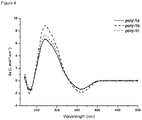
- the classical signal is negative for poly((D)-isocyanoalanyl-(L)-alanyl methyl ester) ( poly -(DL)-IAA,).
- This signal has been attributed to the n- ⁇ * transition of the imine groups, which are trapped in a pseudo 4 1 helical symmetry, and interact with the strong dipole that can develop along the polymer backbone (as a result of the ideal ⁇ -sheet like packing of the peptidic pendants).
- the IR signatures are very similar for all three polymers suggesting an identical hydrogen bounding pattern, that is, an identical core structure for poly -1a-c, in good agreement with CD spectroscopy measurements.
- the N-H stretching bands are slightly less shifted than expected for the optimal ⁇ -sheet-like packing, as observed in poly -(DL)-IAA (vN-H ⁇ 3268 vs. 3252 cm -1 , respectively) and are very similar to the values observed for the heptyne-functionalized polymers synthesized previously.
- poly- 1a-c present the classical 4 1 helical conformation of poly(isocyanopeptide)s with a slightly perturbed orientation of the side chains due to the steric constraints introduced by the oligo(ethylene glycol) substituents.
- Table 2 Selected IR data for 1a-c monomers and poly -1a-c solutions (dichloromethane, 30 mM, 25 °C).
- poly -1-a-c As expected the water solubility of poly -1-a-c is directly related to the length of the oligo(ethylene glycol) fragments. Poly -1b-c were found to be highly water soluble whereas poly -1a could not be dissolved or swollen even in cold water (1-2 °C). Poly -1b-c exhibit almost identical CD spectra in aqueous and organic media, which confirms the stability of the helical poly(isocyanopeptide) core in water ( Figure 5 ).
- sol-gel transitions were again fully reversible, that is, upon decreasing the temperature, fluid solutions were recovered from all hydrogels. Cycles could be repeated several times without noticeable changes in the gelation abilities of the polymer or without significant shifts in phase transition temperatures.
- CD spectra could be measured at an extended range of temperatures.
- the intensity of the CD signal slightly decreased above 40 °C and reached a stable value around 50 °C ( Figure 7 , ⁇ I CD360 ⁇ 6.4%, ⁇ I CD272 ⁇ 5.6%).
- Figure 7 ⁇ I CD360 ⁇ 6.4%, ⁇ I CD272 ⁇ 5.66%.
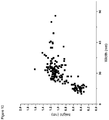
- the lateral tip broadening effect is not corrected, therefore, the widths are exaggerated.
- isolated chains of poly -1c and poly -1b present similar apparent heights of 0.4-0.5 nm.
- the second group of coordinates is more dispersed with apparent heights comprised between 0.8 and 1.4 nm and with a rather broad range of width distributions, which corresponds to both the fibrils and the fiber cross sections.
- the isolated fibrils exhibit heights comprised between 0.8 and 1.1 nm and apparent widths inferior to 30 nm.
- the apparent height of these isolated fibrils is close to twice the medium apparent height of the supposed single polymer chains (0.46 nm). This suggests that the fibrils result from the close intertwining of at least two poly -1b chains and that these fibrils further aggregate into bundles to form the fibrous gel network.
- the highest cross sections (> 1.2 nm), which are mainly observed for bundles, may be due to the overlapping of several fibrils on the substrate or to their local intertwinement in the fibers.
- a new family of non linear poly(ethylene glycol) analogs has been prepared based on a polyisocyanopeptide backbone. Using these stiff helical polymers, water-soluble materials could be obtained starting from triethylene glycol side chains. Due to the thermo sensitive behavior of ethylene glycol side chains these materials present a clear thermo-induced phase separation. An unexpected effect of the polymer chain length has been shown for these materials; the longest chains were found to be able to gelate water at low polymer concentration (0.1 wt%), the shortest chains simply precipitated in solution, unable to develop extended 3D networks at low polymer concentration.
- the polymer chains heights were measured using the Nanoscope software (v6.14r1) from Digital Instruments. TEM micrographs were recorded on a JEOL JEM-1010 instrument.
- Compound 2b was prepared using the same procedure as described for the synthesis of 2a with the following reactants and solvents: 2-(2-(2-methoxyethoxy)ethoxy)ethanol (1.32 g, 8 mmol), 4- N , N '-(dimethyl)aminopyridine (100 mg, 0.81 mmol), N -Boc-(L)-Alanine (1.51 g, 8 mmol) and DCC (1.67 g, 8.1 mmol) in dichloromethane (25 mL).
- the reaction mixture was stirred at 0°C for 1h and then allowed to slowly warm up to room temperature in 3h.
- the dicyclohexyl urea was removed by filtration and washed with ethyl acetate (2 x 20ml).
- the solvent was evaporated and the desired compound was purified via column chromatography (SiO 2 0.060-0.200 mm / CH 2 Cl 2 - 2% MeOH) to yield 3a as a colourless to pale yellow oil (2.01 g, 5.5 mmol, 82 %).
- Compound 3b was prepared using the same procedure as described for the synthesis of 3a with the following reactants and solvents: 2b (2.10 g, 6.3 mmol), HOBt (0.965 g, 6.3 mmol), DCC (1.32 g, 6.4 mmol), N -Boc-(D)-Alanine (1.19 g, 6.3 mmol) and DIPEA (1.29 mL) in dichloromethane (20 mL). Column chromatography (SiO 2 0.060-0.200 mm / CH 2 Cl 2 - 2% MeOH) yielded 3b as a pale yellow oil (2.0 g, 5.0 mmol, 79 %).
- the deprotected compound was dissolved in ethyl formate (50ml), sodium formate (1.89 g, 27.8 mmol) was added and the mixture was refluxed for 4 hours under argon. After cooling down to room temperature, the mixture was filtered off to remove the sodium formate, and the solvent was evaporated under reduced pressure. Column chromatography (SiO 2 0.060-0.200 mm / CH 2 Cl 2 - 4% MeOH) yielded 4a as a white solid (0.89 g, 3.1 mmol, 86%).
- Compound 4b was prepared using the same procedure as described for the synthesis of 4a with the following reactants: 3b (0.85 g, 2.1 mmol), sodium formate (1.14 g, 16.8 mmol), ethyl formate (30 mL). Column chromatography (SiO 2 0.060-0.200 mm / CH 2 Cl 2 -4% MeOH) yielded 4b as a pale yellow oil (0.63 g, 1.8 mmol, 89 %).
- Formamide 3a 300 mg, 1.03 mmol
- N -methylmorpholine 570 ⁇ L, 524 mg, 5.15 mmol
- a solution of diphosgene (334 ⁇ L, 205 mg, 1.03 mmol) in freshly distilled CH 2 Cl 2 (5 mL) was added dropwise to the solution over 5 min.
- the reaction was quenched by addition of solid sodium bicarbonate (3 g).
- the suspension was vigorously stirred at -30 °C for 10 min and then was warmed up to room temperature.
- Compound 1b was prepared using the same procedure as described for the synthesis of 1a with the following reactants: 4b (1.5 g, 4.49 mmol), N -methylmorpholine (1.23 mL, 1.13 g, 11.1 mmol), diphosgene (461 ⁇ L, 755 mg, 3.83 mmol) in dichlorometnae (200 mL + 10 mL). Column chromatography (SiO 2 0.060-0.200 mm / CH 2 Cl 2 - 25% acetonitrile) yielded 1b as a pale yellow gel (1.15 g, 3.65 mmol, 81%).
- Compound 1c was prepared using the same procedure as described for the synthesis of 1a with the following reactants: 4c (526 mg, 1.39 mmol), N -methylmorpholine (384 ⁇ L, 354 mg, 3.5 mmol), diphosgene (143 ⁇ L, 235 mg, 1.19 mmol) in dichloromethane (200 mL + 10 mL). Column chromatography (SiO 2 0.060-0.200 mm / CH 2 Cl 2 - 25% acetonitrile) yielded 1c as a pale yellow viscous oil (402 mg, 1.11 mmol, 80%).
- Example 12 synthesis of poly(2-methyoxywthyloxyethyloxyethloxy-(L)-alaninamido-(D)-isocyanylalanine)
- Poly -1b was prepared using the same procedure as described for poly -1a, excepted that tetrahydrofuran was used to redissolve the polymer during the purification. The following reactants were used: 1b (40 mg, 12.6 mmol), Ni(ClO 4 ) 2 .H 2 O solution (0.126 mol/L, 10 ⁇ L), in toluene (2 mL). Purification of the crude mixture yielded poly -1b (33.7 mmol, 10.7 mmol, 85%) as a deep yellow glassy solid.
- Poly -1c was prepared using the same procedure as described for poly -1b. The following reactants were used: 1c (50.1 mg, 13.8 mmol), Ni(ClO 4 ) 2 .H 2 O solution (0.138 mol/L, 10 ⁇ L), in toluene (2.5 mL). Purification of the crude mixture yielded poly -1c (45.2 mg, 12.5 mmol, 90%) as a deep yellow glassy solid.
Landscapes
- Chemical & Material Sciences (AREA)
- Organic Chemistry (AREA)
- Chemical Kinetics & Catalysis (AREA)
- Health & Medical Sciences (AREA)
- Medicinal Chemistry (AREA)
- Polymers & Plastics (AREA)
- General Chemical & Material Sciences (AREA)
- Engineering & Computer Science (AREA)
- Life Sciences & Earth Sciences (AREA)
- Materials Engineering (AREA)
- Wood Science & Technology (AREA)
- Peptides Or Proteins (AREA)
- Medicinal Preparation (AREA)
- Polyethers (AREA)
- Medicines That Contain Protein Lipid Enzymes And Other Medicines (AREA)
Claims (12)
- Verfahren zur Herstellung von Polyoligo(alkylenglykol) Isocyanopeptid(e), umfassend die Schritte des Funktionalisierens eines Isocyanopeptids mit Oligo-(Alkylenglykol)-Seitenketten mit weniger als 10 Alkylenglykol-Einheiten und des anschließenden Polymerisierens der oligoalkylenglykolfunktionalisierten Isocyanopeptide in einem organischen Lösungsmittel in Gegenwart eines Nickel(II)-Katalysators, wobei die funktionalisierten Isocyanopeptide mit Alkylenglykol substituierte Isocyanopeptide mit einem peptidischen Motiv sind, das am C-Terminal mit der Oligo(alkylenglykol)-Kette substituiert ist, die durch ein Verfahren erhalten wird, bei dem ein Aminosäurerest an eine (Alkylen)-Glykolkette gekoppelt wird, gefolgt von einer sequentiellen peptidischen Kopplung, um die gewünschte Anzahl von Aminosäuresubstituenten einzuführen, ferner gefolgt von einer Formylierung des N-Terminus des peptidischen Segments und einer anschließenden Dehydrierung, um das oligoalkylenglykolfunktionalisierte Isocyanopeptid zu erhalten.
- Verfahren nach Anspruch 1, worin das Isocyanopeptid ein Isocyanodipeptid ist.
- Verfahren nach Anspruch 1 oder 2, worin mehrere Isocyanopeptide mit verschiedenen Oligo-(Alkylenglykol)-Seitenketten mit variabler Kettenlänge funktionalisiert werden.
- Verfahren nach einem der Ansprüche 1 - 3, wobei das Alkylenglykol Ethylen-, Propylen-, Butylen- oder Pentylenglykol ist.
- Verfahren nach einem der Ansprüche 4, worin das Alkylenglykol Ethylenglykol ist.
- Verfahren nach Anspruch 5, wobei das Isocyanopeptid mit mindestens 3 Ethylenglykol-Einheiten funktionalisiert wird.
- Verfahren nach einem der Ansprüche 1 - 6, wobei das Isocyanopeptidmonomer D-, L- und/oder D,L-Aminosäuren umfasst.
- Verfahren nach einem der Ansprüche 1 - 7, worin die Funktionalisierung und/oder der Polymerisationsschritt in einem apolaren Lösungsmittel durchgeführt wird.
- Polyoligo(alkylenglykol)isocyanopeptid(e), erhältlich durch ein Verfahren nach einem der Ansprüche 1-8.
- Hydrogele, umfassend das Polyoligo(alkylenglykol)isocyanopeptid(e) nach Anspruch 9.
- Verwendung der Hydrogele nach Anspruch 10 zur Gewebezüchtung oder Neuronenregeneration.
- Beschichtungen, umfassend das oligoalkylenfunktionalisierte Polyisocyanopeptid nach Anspruch 9.
Priority Applications (1)
| Application Number | Priority Date | Filing Date | Title |
|---|---|---|---|
| EP10737836.6A EP2454302B1 (de) | 2009-07-16 | 2010-07-16 | Verfahren zur herstellung hochmolekularer oligo(alkylen)glykol-funktionalisierter polyisocyanopeptide |
Applications Claiming Priority (3)
| Application Number | Priority Date | Filing Date | Title |
|---|---|---|---|
| EP20090165705 EP2287221A1 (de) | 2009-07-16 | 2009-07-16 | Verfahren zur Herstellung hochmolekularer Oligo(alkylen)glykol-funktionalisierter Polyisocyanopeptide |
| EP10737836.6A EP2454302B1 (de) | 2009-07-16 | 2010-07-16 | Verfahren zur herstellung hochmolekularer oligo(alkylen)glykol-funktionalisierter polyisocyanopeptide |
| PCT/EP2010/060373 WO2011007012A1 (en) | 2009-07-16 | 2010-07-16 | Method for the preparation of high molecular weight oligo(alkylene glycol) functionalized polyisocyanopeptides |
Publications (2)
| Publication Number | Publication Date |
|---|---|
| EP2454302A1 EP2454302A1 (de) | 2012-05-23 |
| EP2454302B1 true EP2454302B1 (de) | 2019-10-30 |
Family
ID=41395092
Family Applications (2)
| Application Number | Title | Priority Date | Filing Date |
|---|---|---|---|
| EP20090165705 Withdrawn EP2287221A1 (de) | 2009-07-16 | 2009-07-16 | Verfahren zur Herstellung hochmolekularer Oligo(alkylen)glykol-funktionalisierter Polyisocyanopeptide |
| EP10737836.6A Active EP2454302B1 (de) | 2009-07-16 | 2010-07-16 | Verfahren zur herstellung hochmolekularer oligo(alkylen)glykol-funktionalisierter polyisocyanopeptide |
Family Applications Before (1)
| Application Number | Title | Priority Date | Filing Date |
|---|---|---|---|
| EP20090165705 Withdrawn EP2287221A1 (de) | 2009-07-16 | 2009-07-16 | Verfahren zur Herstellung hochmolekularer Oligo(alkylen)glykol-funktionalisierter Polyisocyanopeptide |
Country Status (5)
| Country | Link |
|---|---|
| US (3) | US8981001B2 (de) |
| EP (2) | EP2287221A1 (de) |
| DK (1) | DK2454302T3 (de) |
| ES (1) | ES2764252T3 (de) |
| WO (1) | WO2011007012A1 (de) |
Families Citing this family (24)
| Publication number | Priority date | Publication date | Assignee | Title |
|---|---|---|---|---|
| EP2287221A1 (de) | 2009-07-16 | 2011-02-23 | Stichting Katholieke Universiteit meer in het bijzonder Radboud Universiteit Nijmegen | Verfahren zur Herstellung hochmolekularer Oligo(alkylen)glykol-funktionalisierter Polyisocyanopeptide |
| EP2404618A1 (de) | 2010-07-07 | 2012-01-11 | Stichting Katholieke Universiteit meer in het bijzonder Radboud Universiteit Nijmegen | Immunomodulatorische Protein-Konstrukte mit einem helikalen Polymer-Rückgrat |
| EP2826493A1 (de) | 2013-07-18 | 2015-01-21 | Stichting Katholieke Universiteit, Radboud Universiteit Nijmegen | Polymer, geeignet zur Verwendung bei Zellkulturen |
| WO2015007771A1 (en) * | 2013-07-18 | 2015-01-22 | Stichting Katholieke Universiteit, More Particularly Radboud Universiteit Nijmegen | Polymer suitable for use in cell culture |
| WO2015124732A1 (en) * | 2014-02-21 | 2015-08-27 | Stichting Katholieke Universiteit | Blends of oligo(alkylene glycol) functionalized polyisocyanopeptides and fibrin for culturing cells |
| US20180042223A1 (en) * | 2014-09-15 | 2018-02-15 | Novioponics B.V. | Composition comprising a hydrogel and pesticides |
| WO2017024182A1 (en) | 2015-08-04 | 2017-02-09 | Duke University | Genetically encoded intrinsically disordered stealth polymers for delivery and methods of using same |
| CN105456233B (zh) * | 2015-11-17 | 2018-04-24 | 中国石油大学(华东) | 一种高载药量的长效缓释抗菌薄膜及其制备方法 |
| US11752213B2 (en) | 2015-12-21 | 2023-09-12 | Duke University | Surfaces having reduced non-specific binding and antigenicity |
| WO2017210476A1 (en) | 2016-06-01 | 2017-12-07 | Duke University | Nonfouling biosensors |
| WO2018053201A1 (en) | 2016-09-14 | 2018-03-22 | Duke University | Triblock polypeptide-based nanoparticles for the delivery of hydrophilic drugs |
| EP3515928B1 (de) | 2016-09-23 | 2026-01-28 | Duke University | Unstrukturierte nichtrepititive polypeptide mit lcst-verhalten |
| EP3329945A1 (de) | 2016-12-05 | 2018-06-06 | Stichting Katholieke Universiteit | Biomimetische netzwerke mit polyisocyanopeptidhydrogelen |
| US11648200B2 (en) | 2017-01-12 | 2023-05-16 | Duke University | Genetically encoded lipid-polypeptide hybrid biomaterials that exhibit temperature triggered hierarchical self-assembly |
| EP3395861A1 (de) | 2017-04-24 | 2018-10-31 | Stichting Katholieke Universiteit | Biomimetische doppelnetzwerk-hydrogele |
| WO2018213320A1 (en) | 2017-05-15 | 2018-11-22 | Duke University | Recombinant production of hybrid lipid-biopolymer materials that self-assemble and encapsulate agents |
| EP3658168A4 (de) | 2017-06-30 | 2021-07-14 | Duke University | Ordnung und unordnung als designprinzip für auf stimuli ansprechende biopolymernetzwerke |
| WO2019147954A1 (en) | 2018-01-26 | 2019-08-01 | Duke University | Albumin binding peptide-drug (aibiped) conjugates and methods of making and using same |
| EP3788343B1 (de) | 2018-04-30 | 2024-03-27 | Duke University | Auf stimuli reagierende plattform zur abgabe von auf peg-like-polymer basierendem arzneimittel |
| US11649275B2 (en) | 2018-08-02 | 2023-05-16 | Duke University | Dual agonist fusion proteins |
| WO2020051541A1 (en) | 2018-09-07 | 2020-03-12 | Duke University | Nanoparticulate drug delivery systems |
| GB201902702D0 (en) | 2019-02-28 | 2019-04-17 | Stichting Katholieke Univ | Method of producing a bioactive surface |
| US11512314B2 (en) | 2019-07-12 | 2022-11-29 | Duke University | Amphiphilic polynucleotides |
| WO2025221145A1 (en) | 2024-04-18 | 2025-10-23 | Stichting Radboud Universiteit | Poly(isocyanopeptide) cryogels |
Family Cites Families (1)
| Publication number | Priority date | Publication date | Assignee | Title |
|---|---|---|---|---|
| EP2287221A1 (de) | 2009-07-16 | 2011-02-23 | Stichting Katholieke Universiteit meer in het bijzonder Radboud Universiteit Nijmegen | Verfahren zur Herstellung hochmolekularer Oligo(alkylen)glykol-funktionalisierter Polyisocyanopeptide |
-
2009
- 2009-07-16 EP EP20090165705 patent/EP2287221A1/de not_active Withdrawn
-
2010
- 2010-07-16 EP EP10737836.6A patent/EP2454302B1/de active Active
- 2010-07-16 DK DK10737836.6T patent/DK2454302T3/da active
- 2010-07-16 WO PCT/EP2010/060373 patent/WO2011007012A1/en not_active Ceased
- 2010-07-16 US US13/384,091 patent/US8981001B2/en active Active
- 2010-07-16 ES ES10737836T patent/ES2764252T3/es active Active
-
2014
- 2014-12-19 US US14/577,038 patent/US20150105516A1/en not_active Abandoned
-
2016
- 2016-12-08 US US15/373,424 patent/US10125222B2/en active Active
Non-Patent Citations (1)
| Title |
|---|
| None * |
Also Published As
| Publication number | Publication date |
|---|---|
| WO2011007012A1 (en) | 2011-01-20 |
| US10125222B2 (en) | 2018-11-13 |
| WO2011007012A8 (en) | 2012-03-01 |
| US20150105516A1 (en) | 2015-04-16 |
| US20120149836A1 (en) | 2012-06-14 |
| WO2011007012A9 (en) | 2011-04-28 |
| EP2454302A1 (de) | 2012-05-23 |
| US8981001B2 (en) | 2015-03-17 |
| ES2764252T3 (es) | 2020-06-02 |
| EP2287221A1 (de) | 2011-02-23 |
| DK2454302T3 (da) | 2020-01-27 |
| US20170088670A1 (en) | 2017-03-30 |
Similar Documents
| Publication | Publication Date | Title |
|---|---|---|
| US10125222B2 (en) | Method for the preparation of high molecular weight oligo(alkylene glycol) functionalized polyisocyanopeptides | |
| Fetsch et al. | Polypeptoids from N-substituted glycine N-carboxyanhydrides: Hydrophilic, hydrophobic, and amphiphilic polymers with poisson distribution | |
| Cheng et al. | Synthesis of polypeptides by ring-opening polymerization of α-amino acid N-carboxyanhydrides | |
| Rothemund et al. | Preparation of polyphosphazenes: a tutorial review | |
| US8895673B2 (en) | Macromonomers for preparation of degradable polymers and model networks | |
| US20120135070A1 (en) | Copolymers | |
| CA2925758C (en) | Methods for post-fabrication functionalization of poly(ester ureas) | |
| EP1603954A2 (de) | Aktivierte formen wasserlöslicher polymere | |
| Dong et al. | Poly (l-cysteine) peptide amphiphile derivatives containing disulfide bonds: synthesis, self-assembly-induced β-sheet nanostructures, pH/reduction dual response, and drug release | |
| Nisal et al. | Tertiary-butylbenzene functionalization as a strategy for β-sheet polypeptides | |
| Carvalho et al. | Preparation and characterization of cationic pullulan-based polymers with hydrophilic or amphiphilic characteristics for drug delivery | |
| Gkikas et al. | Well-defined homopolypeptides, copolypeptides, and hybrids of poly (L-proline) | |
| US12291590B2 (en) | Branched polymers | |
| Badreldin et al. | Toward synthetic intrinsically disordered polypeptides (idps): Controlled incorporation of glycine in the ring-opening polymerization of N-carboxyanhydrides | |
| JP7144064B2 (ja) | 分岐ポリマー | |
| Kim et al. | Synthesis and characterization of novel amino acid-conjugated poly (aspartic acid) derivatives | |
| Chen et al. | Organo‐Catalyst Catalyzed Ring Opening Polymerization of N‐Carboxyanhydrides | |
| Yoon et al. | Michael Addition of Thiol Compounds on ω-Maleate Poly (ethylene oxide) s: Model Study for the “Site-Specific” Modification of Proteins | |
| KR102481062B1 (ko) | 아스파탐 기반 하이드로겔의 제조방법 및 그로부터 제조된 아스파탐 기반 하이드로겔 | |
| Xiao | Developing a Surface-initiated Polymerization System from a Redox-switchable Catalyst for Polyamide Synthesis | |
| Huang et al. | An efficient O-phthalaldehyde-amine coupling reaction for the synthesis of a bottlebrush polymer under physiological conditions | |
| Judge | Development of ring opening mini-emulsion polymerisation of n-carboxyanhydride monomers for the formation of polypeptide nanoparticles | |
| Dao | Transition Metal-Mediated N-Alkyl Amino Acid N-Carboxyanhydride Polymerization for Synthetic Polypept (o) id-Based Biomaterials | |
| Morrison | Poly (dehydroalanine) Based Polypeptides for Stimuli Responsive Biomaterials | |
| JP2008063360A (ja) | ポリフェニルアセチレン系ポリマーおよびその製造方法、並びにフェニルアセチレン誘導体 |
Legal Events
| Date | Code | Title | Description |
|---|---|---|---|
| PUAI | Public reference made under article 153(3) epc to a published international application that has entered the european phase |
Free format text: ORIGINAL CODE: 0009012 |
|
| 17P | Request for examination filed |
Effective date: 20120116 |
|
| AK | Designated contracting states |
Kind code of ref document: A1 Designated state(s): AL AT BE BG CH CY CZ DE DK EE ES FI FR GB GR HR HU IE IS IT LI LT LU LV MC MK MT NL NO PL PT RO SE SI SK SM TR |
|
| DAX | Request for extension of the european patent (deleted) | ||
| 17Q | First examination report despatched |
Effective date: 20160720 |
|
| STAA | Information on the status of an ep patent application or granted ep patent |
Free format text: STATUS: EXAMINATION IS IN PROGRESS |
|
| TPAC | Observations filed by third parties |
Free format text: ORIGINAL CODE: EPIDOSNTIPA |
|
| GRAP | Despatch of communication of intention to grant a patent |
Free format text: ORIGINAL CODE: EPIDOSNIGR1 |
|
| STAA | Information on the status of an ep patent application or granted ep patent |
Free format text: STATUS: GRANT OF PATENT IS INTENDED |
|
| INTG | Intention to grant announced |
Effective date: 20190606 |
|
| GRAS | Grant fee paid |
Free format text: ORIGINAL CODE: EPIDOSNIGR3 |
|
| GRAA | (expected) grant |
Free format text: ORIGINAL CODE: 0009210 |
|
| STAA | Information on the status of an ep patent application or granted ep patent |
Free format text: STATUS: THE PATENT HAS BEEN GRANTED |
|
| AK | Designated contracting states |
Kind code of ref document: B1 Designated state(s): AL AT BE BG CH CY CZ DE DK EE ES FI FR GB GR HR HU IE IS IT LI LT LU LV MC MK MT NL NO PL PT RO SE SI SK SM TR |
|
| REG | Reference to a national code |
Ref country code: GB Ref legal event code: FG4D |
|
| REG | Reference to a national code |
Ref country code: CH Ref legal event code: EP |
|
| REG | Reference to a national code |
Ref country code: DE Ref legal event code: R096 Ref document number: 602010061728 Country of ref document: DE |
|
| REG | Reference to a national code |
Ref country code: AT Ref legal event code: REF Ref document number: 1196055 Country of ref document: AT Kind code of ref document: T Effective date: 20191115 |
|
| REG | Reference to a national code |
Ref country code: IE Ref legal event code: FG4D |
|
| REG | Reference to a national code |
Ref country code: NL Ref legal event code: FP |
|
| REG | Reference to a national code |
Ref country code: DK Ref legal event code: T3 Effective date: 20200120 |
|
| REG | Reference to a national code |
Ref country code: CH Ref legal event code: NV Representative=s name: CABINET GERMAIN AND MAUREAU, CH |
|
| REG | Reference to a national code |
Ref country code: LT Ref legal event code: MG4D |
|
| PG25 | Lapsed in a contracting state [announced via postgrant information from national office to epo] |
Ref country code: NO Free format text: LAPSE BECAUSE OF FAILURE TO SUBMIT A TRANSLATION OF THE DESCRIPTION OR TO PAY THE FEE WITHIN THE PRESCRIBED TIME-LIMIT Effective date: 20200130 Ref country code: PL Free format text: LAPSE BECAUSE OF FAILURE TO SUBMIT A TRANSLATION OF THE DESCRIPTION OR TO PAY THE FEE WITHIN THE PRESCRIBED TIME-LIMIT Effective date: 20191030 Ref country code: GR Free format text: LAPSE BECAUSE OF FAILURE TO SUBMIT A TRANSLATION OF THE DESCRIPTION OR TO PAY THE FEE WITHIN THE PRESCRIBED TIME-LIMIT Effective date: 20200131 Ref country code: LT Free format text: LAPSE BECAUSE OF FAILURE TO SUBMIT A TRANSLATION OF THE DESCRIPTION OR TO PAY THE FEE WITHIN THE PRESCRIBED TIME-LIMIT Effective date: 20191030 Ref country code: LV Free format text: LAPSE BECAUSE OF FAILURE TO SUBMIT A TRANSLATION OF THE DESCRIPTION OR TO PAY THE FEE WITHIN THE PRESCRIBED TIME-LIMIT Effective date: 20191030 Ref country code: SE Free format text: LAPSE BECAUSE OF FAILURE TO SUBMIT A TRANSLATION OF THE DESCRIPTION OR TO PAY THE FEE WITHIN THE PRESCRIBED TIME-LIMIT Effective date: 20191030 Ref country code: PT Free format text: LAPSE BECAUSE OF FAILURE TO SUBMIT A TRANSLATION OF THE DESCRIPTION OR TO PAY THE FEE WITHIN THE PRESCRIBED TIME-LIMIT Effective date: 20200302 Ref country code: FI Free format text: LAPSE BECAUSE OF FAILURE TO SUBMIT A TRANSLATION OF THE DESCRIPTION OR TO PAY THE FEE WITHIN THE PRESCRIBED TIME-LIMIT Effective date: 20191030 Ref country code: BG Free format text: LAPSE BECAUSE OF FAILURE TO SUBMIT A TRANSLATION OF THE DESCRIPTION OR TO PAY THE FEE WITHIN THE PRESCRIBED TIME-LIMIT Effective date: 20200130 |
|
| PG25 | Lapsed in a contracting state [announced via postgrant information from national office to epo] |
Ref country code: HR Free format text: LAPSE BECAUSE OF FAILURE TO SUBMIT A TRANSLATION OF THE DESCRIPTION OR TO PAY THE FEE WITHIN THE PRESCRIBED TIME-LIMIT Effective date: 20191030 Ref country code: IS Free format text: LAPSE BECAUSE OF FAILURE TO SUBMIT A TRANSLATION OF THE DESCRIPTION OR TO PAY THE FEE WITHIN THE PRESCRIBED TIME-LIMIT Effective date: 20200229 |
|
| REG | Reference to a national code |
Ref country code: ES Ref legal event code: FG2A Ref document number: 2764252 Country of ref document: ES Kind code of ref document: T3 Effective date: 20200602 |
|
| PG25 | Lapsed in a contracting state [announced via postgrant information from national office to epo] |
Ref country code: AL Free format text: LAPSE BECAUSE OF FAILURE TO SUBMIT A TRANSLATION OF THE DESCRIPTION OR TO PAY THE FEE WITHIN THE PRESCRIBED TIME-LIMIT Effective date: 20191030 |
|
| PG25 | Lapsed in a contracting state [announced via postgrant information from national office to epo] |
Ref country code: EE Free format text: LAPSE BECAUSE OF FAILURE TO SUBMIT A TRANSLATION OF THE DESCRIPTION OR TO PAY THE FEE WITHIN THE PRESCRIBED TIME-LIMIT Effective date: 20191030 Ref country code: CZ Free format text: LAPSE BECAUSE OF FAILURE TO SUBMIT A TRANSLATION OF THE DESCRIPTION OR TO PAY THE FEE WITHIN THE PRESCRIBED TIME-LIMIT Effective date: 20191030 Ref country code: RO Free format text: LAPSE BECAUSE OF FAILURE TO SUBMIT A TRANSLATION OF THE DESCRIPTION OR TO PAY THE FEE WITHIN THE PRESCRIBED TIME-LIMIT Effective date: 20191030 |
|
| REG | Reference to a national code |
Ref country code: DE Ref legal event code: R097 Ref document number: 602010061728 Country of ref document: DE |
|
| REG | Reference to a national code |
Ref country code: AT Ref legal event code: MK05 Ref document number: 1196055 Country of ref document: AT Kind code of ref document: T Effective date: 20191030 |
|
| REG | Reference to a national code |
Ref country code: DE Ref legal event code: R081 Ref document number: 602010061728 Country of ref document: DE Owner name: STICHTING RADBOUD UNIVERSITEIT, NL Free format text: FORMER OWNER: STICHTING KATHOLIEKE UNIVERSITEIT MEER IN HET BIJZONDER RADBOUD UNIVERSITEIT NIJMEGEN, NIJMEGEN, NL Ref country code: DE Ref legal event code: R081 Ref document number: 602010061728 Country of ref document: DE Owner name: STICHTING KATHOLIEKE UNIVERSITEIT, NL Free format text: FORMER OWNER: STICHTING KATHOLIEKE UNIVERSITEIT MEER IN HET BIJZONDER RADBOUD UNIVERSITEIT NIJMEGEN, NIJMEGEN, NL |
|
| PG25 | Lapsed in a contracting state [announced via postgrant information from national office to epo] |
Ref country code: IT Free format text: LAPSE BECAUSE OF FAILURE TO SUBMIT A TRANSLATION OF THE DESCRIPTION OR TO PAY THE FEE WITHIN THE PRESCRIBED TIME-LIMIT Effective date: 20191030 Ref country code: SM Free format text: LAPSE BECAUSE OF FAILURE TO SUBMIT A TRANSLATION OF THE DESCRIPTION OR TO PAY THE FEE WITHIN THE PRESCRIBED TIME-LIMIT Effective date: 20191030 Ref country code: SK Free format text: LAPSE BECAUSE OF FAILURE TO SUBMIT A TRANSLATION OF THE DESCRIPTION OR TO PAY THE FEE WITHIN THE PRESCRIBED TIME-LIMIT Effective date: 20191030 |
|
| RAP2 | Party data changed (patent owner data changed or rights of a patent transferred) |
Owner name: STICHTING KATHOLIEKE UNIVERSITEIT |
|
| PLBE | No opposition filed within time limit |
Free format text: ORIGINAL CODE: 0009261 |
|
| STAA | Information on the status of an ep patent application or granted ep patent |
Free format text: STATUS: NO OPPOSITION FILED WITHIN TIME LIMIT |
|
| REG | Reference to a national code |
Ref country code: NL Ref legal event code: PD Owner name: STICHTING KATHOLIEKE UNIVERSITEIT; NL Free format text: DETAILS ASSIGNMENT: CHANGE OF OWNER(S), ASSIGNMENT; FORMER OWNER NAME: STICHTING KATHOLIEKE UNIVERSITEIT MEER IN HET BIJZONDER RADBOUD UNIVERSITEIT NIJMEGEN Effective date: 20200818 |
|
| 26N | No opposition filed |
Effective date: 20200731 |
|
| REG | Reference to a national code |
Ref country code: BE Ref legal event code: PD Owner name: STICHTING KATHOLIEKE UNIVERSITEIT NIJMEGEN; NL Free format text: DETAILS ASSIGNMENT: CHANGE OF OWNER(S), CESSION; FORMER OWNER NAME: STICHTING KATHOLIEKE UNIVERSITEIT MEER IN HET BIJZONDER RADBOUD UNIVERSITEIT NIJMEGEN Effective date: 20200820 |
|
| REG | Reference to a national code |
Ref country code: CH Ref legal event code: PUE Owner name: STICHTING KATHOLIEKE UNIVERSITEIT, NL Free format text: FORMER OWNER: STICHTING KATHOLIEKE UNIVERSITEIT MEER IN HET BIJZONDER RADBOUD UNIVERSITEIT NIJMEGEN, NL Ref country code: CH Ref legal event code: PK Free format text: BERICHTIGUNG INHABER |
|
| REG | Reference to a national code |
Ref country code: GB Ref legal event code: 732E Free format text: REGISTERED BETWEEN 20201008 AND 20201014 |
|
| PG25 | Lapsed in a contracting state [announced via postgrant information from national office to epo] |
Ref country code: SI Free format text: LAPSE BECAUSE OF FAILURE TO SUBMIT A TRANSLATION OF THE DESCRIPTION OR TO PAY THE FEE WITHIN THE PRESCRIBED TIME-LIMIT Effective date: 20191030 Ref country code: AT Free format text: LAPSE BECAUSE OF FAILURE TO SUBMIT A TRANSLATION OF THE DESCRIPTION OR TO PAY THE FEE WITHIN THE PRESCRIBED TIME-LIMIT Effective date: 20191030 |
|
| PG25 | Lapsed in a contracting state [announced via postgrant information from national office to epo] |
Ref country code: MC Free format text: LAPSE BECAUSE OF FAILURE TO SUBMIT A TRANSLATION OF THE DESCRIPTION OR TO PAY THE FEE WITHIN THE PRESCRIBED TIME-LIMIT Effective date: 20191030 |
|
| REG | Reference to a national code |
Ref country code: CH Ref legal event code: PCOW Free format text: NEW ADDRESS: HOUTSTRAAT 4, 6525 XZ NIJMEGEN (NL) |
|
| REG | Reference to a national code |
Ref country code: CH Ref legal event code: PK Free format text: BERICHTIGUNG INHABER |
|
| REG | Reference to a national code |
Ref country code: DE Ref legal event code: R082 Ref document number: 602010061728 Country of ref document: DE Representative=s name: COHAUSZ & FLORACK PATENT- UND RECHTSANWAELTE P, DE Ref country code: DE Ref legal event code: R082 Ref document number: 602010061728 Country of ref document: DE |
|
| PG25 | Lapsed in a contracting state [announced via postgrant information from national office to epo] |
Ref country code: LU Free format text: LAPSE BECAUSE OF NON-PAYMENT OF DUE FEES Effective date: 20200716 |
|
| REG | Reference to a national code |
Ref country code: BE Ref legal event code: PD Owner name: STICHTING KATHOLIEKE UNIVERSITEIT NIJMEGEN; NL Free format text: DETAILS ASSIGNMENT: CHANGE OF OWNER(S), ASSIGNMENT; FORMER OWNER NAME: STICHTING KATHOLIEKE UNIVERSITEIT MEER IN HET BIJZONDER RADBOUD UNIVERSITEIT NIJMEGEN Effective date: 20200820 |
|
| REG | Reference to a national code |
Ref country code: NL Ref legal event code: HC Owner name: STICHTING RADBOUD UNIVERSITEIT; NL Free format text: DETAILS ASSIGNMENT: CHANGE OF OWNER(S), CHANGE OF OWNER(S) NAME; FORMER OWNER NAME: STICHTING KATHOLIEKE UNIVERSITEIT Effective date: 20211025 |
|
| REG | Reference to a national code |
Ref country code: BE Ref legal event code: HC Owner name: STICHTING RADBOUD UNIVERSITEIT; NL Free format text: DETAILS ASSIGNMENT: CHANGE OF OWNER(S), CHANGE OF OWNER(S) NAME; FORMER OWNER NAME: STICHTING KATHOLIEKE UNIVERSITEIT Effective date: 20211025 |
|
| REG | Reference to a national code |
Ref country code: DE Ref legal event code: R081 Ref document number: 602010061728 Country of ref document: DE Owner name: STICHTING RADBOUD UNIVERSITEIT, NL Free format text: FORMER OWNER: STICHTING KATHOLIEKE UNIVERSITEIT, NIJMEGEN, NL Ref country code: DE Ref legal event code: R082 Ref document number: 602010061728 Country of ref document: DE Representative=s name: COHAUSZ & FLORACK PATENT- UND RECHTSANWAELTE P, DE |
|
| REG | Reference to a national code |
Ref country code: ES Ref legal event code: PC2A Owner name: STICHTING RADBOUD UNIVERSITEIT Effective date: 20220302 |
|
| PG25 | Lapsed in a contracting state [announced via postgrant information from national office to epo] |
Ref country code: TR Free format text: LAPSE BECAUSE OF FAILURE TO SUBMIT A TRANSLATION OF THE DESCRIPTION OR TO PAY THE FEE WITHIN THE PRESCRIBED TIME-LIMIT Effective date: 20191030 Ref country code: MT Free format text: LAPSE BECAUSE OF FAILURE TO SUBMIT A TRANSLATION OF THE DESCRIPTION OR TO PAY THE FEE WITHIN THE PRESCRIBED TIME-LIMIT Effective date: 20191030 Ref country code: CY Free format text: LAPSE BECAUSE OF FAILURE TO SUBMIT A TRANSLATION OF THE DESCRIPTION OR TO PAY THE FEE WITHIN THE PRESCRIBED TIME-LIMIT Effective date: 20191030 |
|
| PG25 | Lapsed in a contracting state [announced via postgrant information from national office to epo] |
Ref country code: MK Free format text: LAPSE BECAUSE OF FAILURE TO SUBMIT A TRANSLATION OF THE DESCRIPTION OR TO PAY THE FEE WITHIN THE PRESCRIBED TIME-LIMIT Effective date: 20191030 |
|
| P01 | Opt-out of the competence of the unified patent court (upc) registered |
Effective date: 20230525 |
|
| PGFP | Annual fee paid to national office [announced via postgrant information from national office to epo] |
Ref country code: NL Payment date: 20250721 Year of fee payment: 16 |
|
| PGFP | Annual fee paid to national office [announced via postgrant information from national office to epo] |
Ref country code: ES Payment date: 20250826 Year of fee payment: 16 |
|
| PGFP | Annual fee paid to national office [announced via postgrant information from national office to epo] |
Ref country code: DK Payment date: 20250725 Year of fee payment: 16 Ref country code: DE Payment date: 20250722 Year of fee payment: 16 |
|
| PGFP | Annual fee paid to national office [announced via postgrant information from national office to epo] |
Ref country code: GB Payment date: 20250722 Year of fee payment: 16 Ref country code: BE Payment date: 20250721 Year of fee payment: 16 |
|
| PGFP | Annual fee paid to national office [announced via postgrant information from national office to epo] |
Ref country code: FR Payment date: 20250725 Year of fee payment: 16 |
|
| PGFP | Annual fee paid to national office [announced via postgrant information from national office to epo] |
Ref country code: CH Payment date: 20250801 Year of fee payment: 16 |
|
| PGFP | Annual fee paid to national office [announced via postgrant information from national office to epo] |
Ref country code: IE Payment date: 20250723 Year of fee payment: 16 |