EP2453934B1 - Procede d'activation de surface de biomateriaux poreux - Google Patents
Procede d'activation de surface de biomateriaux poreux Download PDFInfo
- Publication number
- EP2453934B1 EP2453934B1 EP10737354.0A EP10737354A EP2453934B1 EP 2453934 B1 EP2453934 B1 EP 2453934B1 EP 10737354 A EP10737354 A EP 10737354A EP 2453934 B1 EP2453934 B1 EP 2453934B1
- Authority
- EP
- European Patent Office
- Prior art keywords
- biomaterial
- solution
- mixture
- nanocrystals
- porous
- Prior art date
- Legal status (The legal status is an assumption and is not a legal conclusion. Google has not performed a legal analysis and makes no representation as to the accuracy of the status listed.)
- Not-in-force
Links
- 238000000034 method Methods 0.000 title claims description 62
- 239000012620 biological material Substances 0.000 title claims description 23
- 230000003213 activating effect Effects 0.000 title description 3
- 239000000243 solution Substances 0.000 claims description 54
- 239000000919 ceramic Substances 0.000 claims description 34
- 210000000988 bone and bone Anatomy 0.000 claims description 23
- 150000002500 ions Chemical class 0.000 claims description 22
- XLYOFNOQVPJJNP-UHFFFAOYSA-N water Substances O XLYOFNOQVPJJNP-UHFFFAOYSA-N 0.000 claims description 22
- 239000000203 mixture Substances 0.000 claims description 21
- 239000002159 nanocrystal Substances 0.000 claims description 21
- 239000011575 calcium Substances 0.000 claims description 19
- 239000001506 calcium phosphate Substances 0.000 claims description 19
- 229910052500 inorganic mineral Inorganic materials 0.000 claims description 19
- 239000011707 mineral Substances 0.000 claims description 19
- QORWJWZARLRLPR-UHFFFAOYSA-H tricalcium bis(phosphate) Chemical compound [Ca+2].[Ca+2].[Ca+2].[O-]P([O-])([O-])=O.[O-]P([O-])([O-])=O QORWJWZARLRLPR-UHFFFAOYSA-H 0.000 claims description 19
- 238000000576 coating method Methods 0.000 claims description 15
- 239000000725 suspension Substances 0.000 claims description 15
- 235000011010 calcium phosphates Nutrition 0.000 claims description 14
- 239000011248 coating agent Substances 0.000 claims description 14
- 229910000389 calcium phosphate Inorganic materials 0.000 claims description 12
- 239000003102 growth factor Substances 0.000 claims description 11
- 238000001035 drying Methods 0.000 claims description 9
- 230000004071 biological effect Effects 0.000 claims description 8
- 238000001179 sorption measurement Methods 0.000 claims description 8
- 238000004381 surface treatment Methods 0.000 claims description 8
- 238000011282 treatment Methods 0.000 claims description 7
- 150000001875 compounds Chemical class 0.000 claims description 6
- 239000007864 aqueous solution Substances 0.000 claims description 5
- 230000004913 activation Effects 0.000 claims description 4
- 238000005342 ion exchange Methods 0.000 claims description 4
- 150000003013 phosphoric acid derivatives Chemical class 0.000 claims description 4
- 239000012266 salt solution Substances 0.000 claims description 4
- 239000003242 anti bacterial agent Substances 0.000 claims description 3
- 229940088710 antibiotic agent Drugs 0.000 claims description 3
- 239000007900 aqueous suspension Substances 0.000 claims description 3
- 159000000007 calcium salts Chemical class 0.000 claims description 3
- 239000012530 fluid Substances 0.000 claims description 3
- 229910001427 strontium ion Inorganic materials 0.000 claims description 3
- JLVVSXFLKOJNIY-UHFFFAOYSA-N Magnesium ion Chemical compound [Mg+2] JLVVSXFLKOJNIY-UHFFFAOYSA-N 0.000 claims description 2
- 238000010438 heat treatment Methods 0.000 claims description 2
- 239000012535 impurity Substances 0.000 claims description 2
- 238000002156 mixing Methods 0.000 claims description 2
- 238000005507 spraying Methods 0.000 claims description 2
- 230000001747 exhibiting effect Effects 0.000 claims 2
- 238000007654 immersion Methods 0.000 claims 1
- 229910052909 inorganic silicate Inorganic materials 0.000 claims 1
- 238000006385 ozonation reaction Methods 0.000 claims 1
- 238000009736 wetting Methods 0.000 claims 1
- 229910052586 apatite Inorganic materials 0.000 description 34
- VSIIXMUUUJUKCM-UHFFFAOYSA-D pentacalcium;fluoride;triphosphate Chemical compound [F-].[Ca+2].[Ca+2].[Ca+2].[Ca+2].[Ca+2].[O-]P([O-])([O-])=O.[O-]P([O-])([O-])=O.[O-]P([O-])([O-])=O VSIIXMUUUJUKCM-UHFFFAOYSA-D 0.000 description 33
- 239000000499 gel Substances 0.000 description 20
- 230000008569 process Effects 0.000 description 18
- 239000000463 material Substances 0.000 description 17
- 230000015572 biosynthetic process Effects 0.000 description 16
- 239000008367 deionised water Substances 0.000 description 13
- 229910021641 deionized water Inorganic materials 0.000 description 13
- 239000011148 porous material Substances 0.000 description 13
- BVKZGUZCCUSVTD-UHFFFAOYSA-L Carbonate Chemical compound [O-]C([O-])=O BVKZGUZCCUSVTD-UHFFFAOYSA-L 0.000 description 10
- 238000000151 deposition Methods 0.000 description 10
- 238000003786 synthesis reaction Methods 0.000 description 10
- 230000000975 bioactive effect Effects 0.000 description 9
- 230000008021 deposition Effects 0.000 description 9
- 229910052588 hydroxylapatite Inorganic materials 0.000 description 9
- XYJRXVWERLGGKC-UHFFFAOYSA-D pentacalcium;hydroxide;triphosphate Chemical compound [OH-].[Ca+2].[Ca+2].[Ca+2].[Ca+2].[Ca+2].[O-]P([O-])([O-])=O.[O-]P([O-])([O-])=O.[O-]P([O-])([O-])=O XYJRXVWERLGGKC-UHFFFAOYSA-D 0.000 description 9
- 230000009257 reactivity Effects 0.000 description 9
- 239000013078 crystal Substances 0.000 description 8
- 229910019142 PO4 Inorganic materials 0.000 description 7
- 230000008901 benefit Effects 0.000 description 7
- NBIIXXVUZAFLBC-UHFFFAOYSA-K phosphate Chemical compound [O-]P([O-])([O-])=O NBIIXXVUZAFLBC-UHFFFAOYSA-K 0.000 description 7
- 235000021317 phosphate Nutrition 0.000 description 7
- 239000007943 implant Substances 0.000 description 6
- 230000035800 maturation Effects 0.000 description 6
- 239000010452 phosphate Substances 0.000 description 6
- 239000002244 precipitate Substances 0.000 description 6
- 102000004169 proteins and genes Human genes 0.000 description 6
- 108090000623 proteins and genes Proteins 0.000 description 6
- 239000000126 substance Substances 0.000 description 6
- 229910000391 tricalcium phosphate Inorganic materials 0.000 description 5
- 235000019731 tricalcium phosphate Nutrition 0.000 description 5
- 229940078499 tricalcium phosphate Drugs 0.000 description 5
- OYPRJOBELJOOCE-UHFFFAOYSA-N Calcium Chemical compound [Ca] OYPRJOBELJOOCE-UHFFFAOYSA-N 0.000 description 4
- LFQSCWFLJHTTHZ-UHFFFAOYSA-N Ethanol Chemical compound CCO LFQSCWFLJHTTHZ-UHFFFAOYSA-N 0.000 description 4
- 229910052791 calcium Inorganic materials 0.000 description 4
- 238000004090 dissolution Methods 0.000 description 4
- 239000011777 magnesium Substances 0.000 description 4
- 238000001556 precipitation Methods 0.000 description 4
- 150000003839 salts Chemical class 0.000 description 4
- 238000003756 stirring Methods 0.000 description 4
- 239000000758 substrate Substances 0.000 description 4
- 102000007350 Bone Morphogenetic Proteins Human genes 0.000 description 3
- 108010007726 Bone Morphogenetic Proteins Proteins 0.000 description 3
- 229940112869 bone morphogenetic protein Drugs 0.000 description 3
- 238000010586 diagram Methods 0.000 description 3
- 238000005470 impregnation Methods 0.000 description 3
- 230000003993 interaction Effects 0.000 description 3
- 239000012890 simulated body fluid Substances 0.000 description 3
- 239000004480 active ingredient Substances 0.000 description 2
- 239000002671 adjuvant Substances 0.000 description 2
- 239000003462 bioceramic Substances 0.000 description 2
- 230000036782 biological activation Effects 0.000 description 2
- 238000001354 calcination Methods 0.000 description 2
- 150000004649 carbonic acid derivatives Chemical class 0.000 description 2
- 210000004027 cell Anatomy 0.000 description 2
- 238000005524 ceramic coating Methods 0.000 description 2
- 238000001246 colloidal dispersion Methods 0.000 description 2
- 238000000354 decomposition reaction Methods 0.000 description 2
- 230000018044 dehydration Effects 0.000 description 2
- 238000006297 dehydration reaction Methods 0.000 description 2
- XPPKVPWEQAFLFU-UHFFFAOYSA-J diphosphate(4-) Chemical compound [O-]P([O-])(=O)OP([O-])([O-])=O XPPKVPWEQAFLFU-UHFFFAOYSA-J 0.000 description 2
- 235000011180 diphosphates Nutrition 0.000 description 2
- 230000000694 effects Effects 0.000 description 2
- 238000011049 filling Methods 0.000 description 2
- 238000001914 filtration Methods 0.000 description 2
- 230000035784 germination Effects 0.000 description 2
- 230000012010 growth Effects 0.000 description 2
- 230000003902 lesion Effects 0.000 description 2
- 230000010198 maturation time Effects 0.000 description 2
- 230000004048 modification Effects 0.000 description 2
- 238000012986 modification Methods 0.000 description 2
- 230000000399 orthopedic effect Effects 0.000 description 2
- 230000011164 ossification Effects 0.000 description 2
- 239000002957 persistent organic pollutant Substances 0.000 description 2
- 230000001737 promoting effect Effects 0.000 description 2
- 230000005855 radiation Effects 0.000 description 2
- 229910052712 strontium Inorganic materials 0.000 description 2
- CIOAGBVUUVVLOB-UHFFFAOYSA-N strontium atom Chemical compound [Sr] CIOAGBVUUVVLOB-UHFFFAOYSA-N 0.000 description 2
- -1 strontium ions Chemical class 0.000 description 2
- DHEQXMRUPNDRPG-UHFFFAOYSA-N strontium nitrate Chemical compound [Sr+2].[O-][N+]([O-])=O.[O-][N+]([O-])=O DHEQXMRUPNDRPG-UHFFFAOYSA-N 0.000 description 2
- 238000006467 substitution reaction Methods 0.000 description 2
- 210000001519 tissue Anatomy 0.000 description 2
- 241000234282 Allium Species 0.000 description 1
- 235000002732 Allium cepa var. cepa Nutrition 0.000 description 1
- 208000020084 Bone disease Diseases 0.000 description 1
- 241000282693 Cercopithecidae Species 0.000 description 1
- 208000006367 Essential Osteolysis Diseases 0.000 description 1
- 102000003974 Fibroblast growth factor 2 Human genes 0.000 description 1
- 108090000379 Fibroblast growth factor 2 Proteins 0.000 description 1
- 208000013945 Gorham disease Diseases 0.000 description 1
- 102000005755 Intercellular Signaling Peptides and Proteins Human genes 0.000 description 1
- 108010070716 Intercellular Signaling Peptides and Proteins Proteins 0.000 description 1
- FYYHWMGAXLPEAU-UHFFFAOYSA-N Magnesium Chemical compound [Mg] FYYHWMGAXLPEAU-UHFFFAOYSA-N 0.000 description 1
- 208000001132 Osteoporosis Diseases 0.000 description 1
- 229920000297 Rayon Polymers 0.000 description 1
- 229910004283 SiO 4 Inorganic materials 0.000 description 1
- 102000005789 Vascular Endothelial Growth Factors Human genes 0.000 description 1
- 108010019530 Vascular Endothelial Growth Factors Proteins 0.000 description 1
- 238000002441 X-ray diffraction Methods 0.000 description 1
- 239000000654 additive Substances 0.000 description 1
- 230000001464 adherent effect Effects 0.000 description 1
- 230000032683 aging Effects 0.000 description 1
- 238000011316 allogeneic transplantation Methods 0.000 description 1
- 238000004458 analytical method Methods 0.000 description 1
- 239000003124 biologic agent Substances 0.000 description 1
- 230000004791 biological behavior Effects 0.000 description 1
- 230000002051 biphasic effect Effects 0.000 description 1
- 150000005323 carbonate salts Chemical class 0.000 description 1
- 230000015556 catabolic process Effects 0.000 description 1
- 238000005341 cation exchange Methods 0.000 description 1
- 230000001413 cellular effect Effects 0.000 description 1
- 230000036755 cellular response Effects 0.000 description 1
- 238000006243 chemical reaction Methods 0.000 description 1
- 239000003153 chemical reaction reagent Substances 0.000 description 1
- 230000000295 complement effect Effects 0.000 description 1
- 238000006731 degradation reaction Methods 0.000 description 1
- 239000006185 dispersion Substances 0.000 description 1
- 239000003814 drug Substances 0.000 description 1
- 229940079593 drug Drugs 0.000 description 1
- 230000008030 elimination Effects 0.000 description 1
- 238000003379 elimination reaction Methods 0.000 description 1
- 229940082150 encore Drugs 0.000 description 1
- 239000000122 growth hormone Substances 0.000 description 1
- 230000035876 healing Effects 0.000 description 1
- 230000007062 hydrolysis Effects 0.000 description 1
- 238000006460 hydrolysis reaction Methods 0.000 description 1
- 210000001621 ilium bone Anatomy 0.000 description 1
- 238000001727 in vivo Methods 0.000 description 1
- 208000015181 infectious disease Diseases 0.000 description 1
- 230000002458 infectious effect Effects 0.000 description 1
- 238000002329 infrared spectrum Methods 0.000 description 1
- 229910001410 inorganic ion Inorganic materials 0.000 description 1
- 229910052749 magnesium Inorganic materials 0.000 description 1
- 239000011572 manganese Substances 0.000 description 1
- WPBNNNQJVZRUHP-UHFFFAOYSA-L manganese(2+);methyl n-[[2-(methoxycarbonylcarbamothioylamino)phenyl]carbamothioyl]carbamate;n-[2-(sulfidocarbothioylamino)ethyl]carbamodithioate Chemical compound [Mn+2].[S-]C(=S)NCCNC([S-])=S.COC(=O)NC(=S)NC1=CC=CC=C1NC(=S)NC(=O)OC WPBNNNQJVZRUHP-UHFFFAOYSA-L 0.000 description 1
- 229910052751 metal Inorganic materials 0.000 description 1
- 239000002184 metal Substances 0.000 description 1
- 238000001000 micrograph Methods 0.000 description 1
- 210000000963 osteoblast Anatomy 0.000 description 1
- 230000002138 osteoinductive effect Effects 0.000 description 1
- 239000002245 particle Substances 0.000 description 1
- 230000035515 penetration Effects 0.000 description 1
- 239000004033 plastic Substances 0.000 description 1
- QVLTXCYWHPZMCA-UHFFFAOYSA-N po4-po4 Chemical class OP(O)(O)=O.OP(O)(O)=O QVLTXCYWHPZMCA-UHFFFAOYSA-N 0.000 description 1
- 230000035755 proliferation Effects 0.000 description 1
- 239000002964 rayon Substances 0.000 description 1
- 238000011084 recovery Methods 0.000 description 1
- 230000007115 recruitment Effects 0.000 description 1
- 238000005245 sintering Methods 0.000 description 1
- 239000002904 solvent Substances 0.000 description 1
- 239000003381 stabilizer Substances 0.000 description 1
- 159000000008 strontium salts Chemical class 0.000 description 1
- 238000001356 surgical procedure Methods 0.000 description 1
- 230000008719 thickening Effects 0.000 description 1
- 230000017423 tissue regeneration Effects 0.000 description 1
- LSGOVYNHVSXFFJ-UHFFFAOYSA-N vanadate(3-) Chemical compound [O-][V]([O-])([O-])=O LSGOVYNHVSXFFJ-UHFFFAOYSA-N 0.000 description 1
Images


Classifications
-
- A—HUMAN NECESSITIES
- A61—MEDICAL OR VETERINARY SCIENCE; HYGIENE
- A61L—METHODS OR APPARATUS FOR STERILISING MATERIALS OR OBJECTS IN GENERAL; DISINFECTION, STERILISATION OR DEODORISATION OF AIR; CHEMICAL ASPECTS OF BANDAGES, DRESSINGS, ABSORBENT PADS OR SURGICAL ARTICLES; MATERIALS FOR BANDAGES, DRESSINGS, ABSORBENT PADS OR SURGICAL ARTICLES
- A61L27/00—Materials for grafts or prostheses or for coating grafts or prostheses
- A61L27/02—Inorganic materials
- A61L27/12—Phosphorus-containing materials, e.g. apatite
-
- A—HUMAN NECESSITIES
- A61—MEDICAL OR VETERINARY SCIENCE; HYGIENE
- A61L—METHODS OR APPARATUS FOR STERILISING MATERIALS OR OBJECTS IN GENERAL; DISINFECTION, STERILISATION OR DEODORISATION OF AIR; CHEMICAL ASPECTS OF BANDAGES, DRESSINGS, ABSORBENT PADS OR SURGICAL ARTICLES; MATERIALS FOR BANDAGES, DRESSINGS, ABSORBENT PADS OR SURGICAL ARTICLES
- A61L27/00—Materials for grafts or prostheses or for coating grafts or prostheses
- A61L27/28—Materials for coating prostheses
- A61L27/30—Inorganic materials
- A61L27/32—Phosphorus-containing materials, e.g. apatite
-
- A—HUMAN NECESSITIES
- A61—MEDICAL OR VETERINARY SCIENCE; HYGIENE
- A61L—METHODS OR APPARATUS FOR STERILISING MATERIALS OR OBJECTS IN GENERAL; DISINFECTION, STERILISATION OR DEODORISATION OF AIR; CHEMICAL ASPECTS OF BANDAGES, DRESSINGS, ABSORBENT PADS OR SURGICAL ARTICLES; MATERIALS FOR BANDAGES, DRESSINGS, ABSORBENT PADS OR SURGICAL ARTICLES
- A61L27/00—Materials for grafts or prostheses or for coating grafts or prostheses
- A61L27/50—Materials characterised by their function or physical properties, e.g. injectable or lubricating compositions, shape-memory materials, surface modified materials
- A61L27/56—Porous materials, e.g. foams or sponges
-
- A—HUMAN NECESSITIES
- A61—MEDICAL OR VETERINARY SCIENCE; HYGIENE
- A61L—METHODS OR APPARATUS FOR STERILISING MATERIALS OR OBJECTS IN GENERAL; DISINFECTION, STERILISATION OR DEODORISATION OF AIR; CHEMICAL ASPECTS OF BANDAGES, DRESSINGS, ABSORBENT PADS OR SURGICAL ARTICLES; MATERIALS FOR BANDAGES, DRESSINGS, ABSORBENT PADS OR SURGICAL ARTICLES
- A61L2400/00—Materials characterised by their function or physical properties
- A61L2400/12—Nanosized materials, e.g. nanofibres, nanoparticles, nanowires, nanotubes; Nanostructured surfaces
-
- A—HUMAN NECESSITIES
- A61—MEDICAL OR VETERINARY SCIENCE; HYGIENE
- A61L—METHODS OR APPARATUS FOR STERILISING MATERIALS OR OBJECTS IN GENERAL; DISINFECTION, STERILISATION OR DEODORISATION OF AIR; CHEMICAL ASPECTS OF BANDAGES, DRESSINGS, ABSORBENT PADS OR SURGICAL ARTICLES; MATERIALS FOR BANDAGES, DRESSINGS, ABSORBENT PADS OR SURGICAL ARTICLES
- A61L2400/00—Materials characterised by their function or physical properties
- A61L2400/18—Modification of implant surfaces in order to improve biocompatibility, cell growth, fixation of biomolecules, e.g. plasma treatment
-
- A—HUMAN NECESSITIES
- A61—MEDICAL OR VETERINARY SCIENCE; HYGIENE
- A61L—METHODS OR APPARATUS FOR STERILISING MATERIALS OR OBJECTS IN GENERAL; DISINFECTION, STERILISATION OR DEODORISATION OF AIR; CHEMICAL ASPECTS OF BANDAGES, DRESSINGS, ABSORBENT PADS OR SURGICAL ARTICLES; MATERIALS FOR BANDAGES, DRESSINGS, ABSORBENT PADS OR SURGICAL ARTICLES
- A61L2420/00—Materials or methods for coatings medical devices
- A61L2420/02—Methods for coating medical devices
Definitions
- the present invention relates to the field of ceramic implants and orthopedic prostheses. More specifically, it relates to a method of surface activation of porous biomaterials by covering a layer of apatitic nanocrystals in order to increase their surface reactivity.
- Phosphocalcic ceramics have appeared in the field of biomaterials for about twenty years. They make it possible to overcome the disadvantages of biological grafts (autografts, allografts and xenografts) while promoting bone reconstruction. Indeed, autografts require a second surgical operation on the donor site; they generally only allow the filling of small volumes because of the little available tissue, this tissue is sometimes of poor quality, particularly in elderly patients, and they are associated with a certain morbidity. Allogeneic transplantation leads to often reduced recolonization [ Enneking WF, Journal of Bone and Joint Surgery, 73-A, 8, 1123-1141, 1991 ] and infectious risks that may be responsible for the massive osteolysis encountered in some patients.
- HA Hydroxyapatite
- TCP tricalcium phosphate
- Hydroxyapatite can be considered one of the least soluble calcium phosphates and is a non-bioabsorbable biomaterial. As a result, hydroxyapatite is commonly used for the coating of metal prostheses in order to increase the biointegration of the material. TCP, which is much more soluble, will be a resorbable material that will be progressively replaced by bone. However, its resorption speed is not adjustable (" Bioceramics and their clinical applications ", Ed T. Kokubo, CRC Press, 2008 ).
- Biphasic ceramics consisting of a variable mixture of HA and TCP make it possible to modulate the bio-resorbability according to the rate of TCP used and they are therefore experiencing a great success in the field of biomaterials (" Bioceramics and their clinical applications ", Ed T. Kokubo, CRC Press, 2008 ).
- SBF Simulated Body Fluid
- EP 0 437 975 A1 discloses a method for coating a substrate with a hydroxyapatite film.
- the method comprises a step of preparing a flocculated colloidal dispersion of hydroxyapatite, a step of covering the substrate by applying the dispersion and then a drying step in two stages: first at a temperature below 40 ° C. and then at a temperature of between 100 and 200 ° C.
- This method makes it possible to cover an implant with a difficult shape (in particular porous implants) and to obtain excellent adhesion of the coating without a calcination step in order to avoid degradation of the implant because of the temperature.
- This method is possible thanks to the flocculated colloidal dispersion of hydroxyapatite.
- the hydroxyapatite is preferably obtained by a solution process in order to obtain finer particles and is preferably not dried in order to avoid the formation of agglomerates.
- the present invention aims to solve the drawbacks of the prior art by proposing a method for depositing, at low temperature, biomaterials having an interconnected porosity a bioactive mineral phase, of varying thickness, resorbable, consisting of nanocrystals of phosphate phosphates. calcium analogous to bone mineral.
- the process according to the invention comprises an impregnation of the porous material with a suspension of bioactive calcium phosphate followed by drying under defined conditions.
- This process allows the deposit of very reactive nanocrystals which considerably increase the surface reactivity of ceramics and allow the adsorption of bioactive substances capable of directing cell activity.
- the main advantage of this process is to activate the surface of sintered materials of low surface area and low reactivity.
- the method according to the invention is based on the surface properties of nanocrystals and their ability to attach to certain surfaces, especially those of porous phosphocalcic ceramics. This process is simple and effective and does not involve any delicate or expensive handling.
- the gels can be obtained by the double decomposition method commonly used in industry. Their composition and their viscosity can be perfectly known and controlled. Thus, the characteristics of the gel (and therefore of the deposit) are perfectly adapted to the characteristics of the material to be treated.
- the method provides a nanocrystalline apatite deposition for intrinsically activating biological or by the use of bioactive mineral ions, active molecules or both.
- the invention therefore provides a method for activating the surface of these ceramics by deposition of apatite calcium phosphate similar to bone mineral.
- This deposit of very large specific surface area (up to 300 m 2 / g) makes it possible to increase the surface reactivity of the material and facilitates the adsorption of bioactive substances capable of directing the cellular activity.
- This surface treatment process makes it possible to cover the entire surface of the surface of the ceramic, including in particular the internal surfaces of the interconnected pores of the material.
- the deposited mineral phase consists of nanocrystals similar to those constituting the bone mineral. These are characterized by the presence, on the surface, of a hydrated, labile, very reactive layer consisting of easily and rapidly mobilizable ions [ Cazalbou S., "Cation exchange involving nanocrystalline apatites analogous to bone mineral", INPT thesis, Toulouse 2000 ]. These ions are capable of participating in many ion exchange reactions and some may possibly have biological activity. This hydrated layer also facilitates a better interaction with the organic molecules of the living (proteins, growth factors, ...) [ Midy V, Rey C, E Bres, Dard M, Basic Fibroblast Growth Factor Adsorption and Release of Calcium Phosphate, Journal of Biomed. and Mat.
- Another advantage of the method lies in the possibility of incorporating apatite either at the time of its formation or after its formation of bioactive mineral ions such as strontium ions, magnesium, manganese, vanadate ... which can remain mobilizable and active when incorporated into the hydrated layer.
- bioactive mineral ions such as strontium ions, magnesium, manganese, vanadate ...
- the combination of proteins or growth factors promoting osteogenesis or vascularization can be achieved during the coating process or after deposition of the nanocrystalline apatite layer.
- the combination of phosphocalcic ceramics with growth factors such as Bone Morphogenetic Proteins (BMP), for example, gives the material osteoinductive properties [ Yuan H, Zou P, Yang Z, Ahang X, De Bruijin JD, De Groot K, Bone Morphogenetic Protein and Ceramic-induced osteogenesis, J. Mater. Sci. Mater. Med .; 9, 12, 717-21; 1998 ] and thus facilitates bone healing.
- BMP Bone Morphogenetic Proteins
- the nanocrystalline apatite coating makes it possible to improve the adsorption properties of the material vis-à-vis such proteins.
- the enhanced properties of the nanocrystalline apatite coating with respect to protein adsorption and ion exchange may facilitate associations, directly at the surgical site, with biologically active circulating factors.
- the nanocrystalline phase of bone mineral-like calcium phosphate is obtained by double decomposition between a solution of a calcium salt (which may optionally contain other ions, in particular biologically active ions) and a solution of a phosphate salt and a carbonate salt (possibly containing other ions, especially biologically active ions).
- a calcium salt which may optionally contain other ions, in particular biologically active ions
- a phosphate salt and a carbonate salt possibly containing other ions, especially biologically active ions.
- the nanocrystalline apatite calcium phosphate thus obtained has a controlled surface reactivity. It indeed has a superficial hydrated layer comprising mobile ions whose extent and composition are controlled by the maturation of the nanocrystals in the precipitation solution and / or the presence of additives (Mg 2+ , CO 3 2- , P 2 O 7 4-) in the precipitation solution.
- the mixture obtained at the end of step a) undergoes a modification treatment step of the surface of the nanocrystals during which it is brought into contact. with at least one compound having a biological activity and / or modifying the surface properties of the nanocrystals, said compound being selected from inorganic ions or organic molecules or a mixture of both.
- the surface treatment can also be carried out after step d), cumulatively in step a) or exclusively.
- the nanocrystal precipitate may therefore have surface properties defined by the addition of either mineral ions or organic molecules, or a combination of both.
- the wet precipitate obtained can thus be subjected to an ion exchange by contact for a few minutes with an aqueous solution containing ions having a biological activity and / or modifying the surface properties of the nanocrystals -as for example the Mg 2+ , Sr 2 ions. + , Mn 2+ , SiO 4 4- , VO 4 3- or a mixture thereof.
- the modified precipitate obtained is washed and recovered by filtration.
- step a it is also possible, after step a), to associate the precipitate with biologically active molecules and / or to modify the surface properties of the nanocrystals, by adsorption of these nanocrystals on the highly reactive mineral surface, such as by example of growth factors, antibiotics, or a mixture of these.
- step b) the precipitate is suspended in an aqueous solution so as to obtain a fluid paste containing between 80% and 98% water.
- the density of the suspension directly determines the thickness of the deposit.
- the mixture obtained at the end of step a) has a Ca / P ratio of between 1.33 and 1.67, which improves the biointegration properties as well as the reactivity of the porous material.
- the porous biomaterial before it is brought into contact with the nanocrystalline apatite gel, can be freed from any impurity or organic pollutants which may hinder the wettability of the porous surface by the aqueous suspension by example by calcination / pre-heating for a few minutes (from 3 to 5 minutes) in the air, at a temperature close to 900 ° C, or by an ozonizing treatment under UV, or any other treatment allowing the elimination of organic pollutants from area.
- the porous material to be treated is then brought into contact with the suspension.
- This step can be carried out by immersing the biomaterial in the solution obtained in step b) or else spraying or applying the solution obtained in step b) on the biomaterial.
- the penetration of the deposit can be facilitated by partial evacuation of the assembly, typically between 10 to 30 mmHg; the air occluded in the pores is eliminated and replaced by the suspension. This procedure can be repeated.
- the material is then dried at a temperature not exceeding 100 ° C and preferably at a low temperature in a ventilated oven or under partial vacuum.
- the nanocrystals are deposited on the walls of the pores and form a coating. Cracks may however appear within this coating.
- a step allowing the thickening of the gel by dehydration can be carried out in various ways, for example by controlling the partial pressure of water vapor in the gas phase in contact with the material, or by using a solvent, for example ethanol.
- the material, after impregnation, is placed for example in a closed chamber in the presence of ethanol vapor at a temperature of 60 ° C for at least 24 hours and then recovered and dried as previously. This step influences the maturation of the nanocrystals as well as the morphology of the coating, which appears more homogeneous with less cracks.
- the surfaces thus prepared can adsorb active ingredients, in particular growth factors, antibiotics, and drugs used to fight against bone diseases (osteoporosis for example).
- active ingredients in particular growth factors, antibiotics, and drugs used to fight against bone diseases (osteoporosis for example).
- the adsorption is carried out by contact between the "activated" ceramic and the solution containing the active ingredient. This method of association can be superimposed or substituted for the surface treatment of the nanocrystals carried out at the end of step a).
- Steps b), c), and d) can be repeated if necessary.
- the characteristics of the gel and / or the number of treatments make it possible to obtain variable deposit thicknesses, typically of the order of 1 to 10 ⁇ m.
- a modulated repetition that is to say performed by modifying the surface treatment, also allows to obtain successive deposits with complementary biological properties, for example a deposit facilitating the recruitment and growth of osteoblast cells that build the bone and containing strontium ions, followed by a vascularization-promoting deposit and containing the VEGF growth factor.
- successive deposits of "onion peel” make it possible to control and promote the processes of tissue repair (vascularization of the implant, then its recolonization by the bone tissue).
- the thicknesses are nevertheless limited by the need not to significantly alter or clog the pores of the material.
- a method according to the invention therefore comprises the formation of a nanocrystalline apatite layer by impregnation of a gel.
- the main advantage of this process is to provide biological activation to calcium phosphate sintered materials in a simple and low cost manner.
- the specific surface of the treated material, and its reactivity superficial can be considerably increased by a control of the physicochemical properties of the crystals constituting the gel (in particular the maturation, or the surface modifications).
- the morphology of the deposit as well as its surface state can be modified.
- the drying mode makes it possible to improve the adhesion of the coating to the substrate.
- the figure 3 allows to observe a characteristic diagram of an apatite. No crystalline foreign phase is detected.
- the crystalline dimensions deduced from these diagrams by the Scherrer formula (length: 24.5 ⁇ 0.5 nm and width-thickness: 10.2 ⁇ 0.3 nm) confirm the nanocrystalline nature of the crystals.
- Example 3 Deposit of Nanocrystalline Carbonated Apatite with a Ca / P ratio of 1.6
- the Ca / P ratio for these deposits is 1.58; the ratio C / P: 0.14. Length of the crystals: 25 nm.
- Steps 1-5 of Example 1 are unchanged. Then the coated ceramic is dipped in a rhBMP-2 growth factor solution. The factor is then fixed to the activated ceramic in a considerably higher proportion than the non-activated ceramic (517 ⁇ g / g instead of 397 ⁇ g / g).
Landscapes
- Health & Medical Sciences (AREA)
- Chemical & Material Sciences (AREA)
- Transplantation (AREA)
- Dermatology (AREA)
- Medicinal Chemistry (AREA)
- Oral & Maxillofacial Surgery (AREA)
- Epidemiology (AREA)
- Life Sciences & Earth Sciences (AREA)
- Animal Behavior & Ethology (AREA)
- General Health & Medical Sciences (AREA)
- Public Health (AREA)
- Veterinary Medicine (AREA)
- Inorganic Chemistry (AREA)
- Dispersion Chemistry (AREA)
- Materials For Medical Uses (AREA)
Description
- La présente invention se rapporte au domaine des implants et prothèses orthopédiques en céramique. Plus précisément, elle concerne un procédé d'activation de surface de biomatériaux poreux par recouvrement d'une couche de nanocristaux apatitiques afin d'augmenter leur réactivité de surface.
- Les céramiques phosphocalciques sont apparues dans le domaine des biomatériaux depuis une vingtaine d'années. Elles permettent de pallier les inconvénients des greffes biologiques (autogreffes, allogreffes et xénogreffes) tout en favorisant la reconstruction osseuse. En effet, les autogreffes nécessitent une deuxième opération chirurgicale sur le site donneur ; elles ne permettent, généralement, le comblement que de petits volumes du fait du peu de tissu disponible, ce tissu est parfois de mauvaise qualité, chez les patients agés notamment, et elles sont associées à une certaine morbidité. L'allogreffe entraîne une recolonisation souvent réduite [Enneking W.F., Journal of bone and joint surgery, 73-A, 8, 1123-1141, 1991] et des risques infectieux qui peuvent être responsables des ostéolyses massives rencontrées chez certains patients.
- De ce fait, les céramiques de synthèse sont couramment utilisées par les chirurgiens (orthopédiques, maxillo-faciaux, plasticiens ou dentaires), dès lors qu'une perte de substance osseuse nécessite un comblement.
- L'hydroxyapatite (HA) et le phosphate tricalcique (TCP) sont les deux phosphates de calcium les plus utilisés dans le domaine des biomatériaux [Li Shihong, De Groot Klaas, Layrolle Pierre, Van Blitterswijk Clamens, De Wijn Joost ; Porous ceramic body,
US 6,479,418 (2002 )], bien que ces deux phases possèdent des propriétés physico-chilniques très différentes. - L'hydroxyapatite peut être considérée comme l'un des phosphates de calcium les moins solubles et elle constitue un biomatériau non biorésorbable. De ce fait, l'hydroxyapatite est couramment utilisée pour le recouvrement des prothèses métalliques de manière à accroître la biointégration du matériau. Le TCP, lui, beaucoup plus soluble constituera un matériau résorbable qui sera progressivement remplacé par l'os. Cependant sa vitesse de résorption n'est pas modulable ("Bioceramics and their clinical applications", Ed. T. Kokubo, CRC Press, 2008).
- Les céramiques biphasiques constituées d'un mélange variable de HA et TCP permettent de moduler la bio-résorbabilité en fonction du taux de TCP utilisé et elles connaissent pour cette raison un grand succès dans le domaine des biomatériaux ("Bioceramics and their clinical applications", Ed. T. Kokubo, CRC Press, 2008).
- Toutes ces céramiques sont obtenues par frittage à haute température et l'activité biologique de ce type de matériau est limitée en raison de la faible surface spécifique des matériaux frittés et de leur faible interaction avec les diverses protéines et facteurs de croissance responsables de l'adhérence, de la prolifération et de l'expression cellulaire. Elles sont par ailleurs assez éloignées du minéral osseux et se comportent différemment tant sur le plan chimique que biologique.
- La plupart des procédures de dépôts d'apatites nanocristallines connues font appel à des solutions sursaturées de phosphate de calcium difficiles à utiliser industriellement, avec des durées de traitement de plusieurs jours parfois. La méthode la plus utilisée consiste à utiliser le « Simulated Body Fluid » (SBF) (Kokubo T, Takadama H (2006), How useful is SBF in predicting in vivo bone bioactivity, Biomaterials 27, 2907-2915). D'autres methodes, sur le même principe, ont été développées utilisant des solutions plus concentrées (Layrolle P, Stigter M, De Groot K, Liu Y, Method for applying a bioactive coating on a médical device,
US 6,994,883 (2006 ), et Layrolle P, de Groot K, de Bruijn J, van Blitterswijk C, Huipin Y, Method for coating médical implants,US 6,733,503 (2004 ) continuation deUS 6,207,218 (2001 ) ; et également Li P, Wen H B, Hippensteel E, Biological agent-containing ceramic coating and method,US, 7,087,086 (2006 ) et Li P, Bioactive ceramic coating and method,US 6,569,589 (2003 )). Ces méthodes ont par ailleurs été assez peu utilisées pour revêtir l'intérieur des pores d'une céramique. -
EP 0 437 975 A1 décrit une méthode permettant de recouvrir un substrat avec un film d'hydroxyapatite. La méthode comprend une étape de préparation d'une dispersion colloïdale floculée d'hydroxyapatite, une étape de recouvrement du substrat par application de la dispersion puis une étape de séchage en deux temps : d'abord à une température inférieure à 40°C puis à une température comprise entre 100 et 200°C. Cette méthode rend possible le recouvrement d'un implant à la forme difficile (notamment les implants poreux) et l'obtention d'une excellente adhésion du revêtement sans étape de calcination afin d'éviter une dégradation de l'implant à cause de la température. Cette méthode est possible grâce à la dispersion colloïdale floculée d'hydroxyapatite. L'hydroxyapatite est de préférence obtenue par un procédé en solution afin d'obtenir des particules plus fines et n'est de préférence pas séchée afin d'éviter la formation d'agglomérats. - Il n'existe ainsi pas de procédés simples et rapides permettant une activation biologique de la surface de céramiques poreuses frittées. Les brevets précités n'ont pas reçu d'application industrielle à ce jour. Par ailleurs, les apatites obtenues par ces procédés sont généralement matures et ont une réactivité moindre que celles précipitées et déposées par le présent procédé, qui offre la possibilité de choisir le temps de maturation.
- La présente invention vise à résoudre les inconvénients de l'art antérieur en proposant un procédé permettant de déposer, à basse température, sur des biomatériaux présentant une porosité interconnectée une phase minérale bioactive, d'épaisseur variable, résorbable, constituée de nanocristaux de phosphates de calcium analogues au minéral osseux. Le procédé selon l'invention comporte une imprégnation du matériau poreux par une suspension de phosphate de calcium bioactif suivie d'un séchage dans des conditions définies.
- Ce procédé permet le dépôt de nanocristaux très réactifs qui augmentent considérablement la réactivité de surface des céramiques et permettent l'adsorption de substances bioactives capables d'orienter l'activité cellulaire. Le principal avantage de ce procédé est d'activer la surface de matériaux frittés de faible surface spécifique et peu réactifs.
- Le procédé selon l'invention s'appuie sur les propriétés de surface des nanocristaux et leur capacité à se fixer sur certaines surfaces, notamment celles de céramiques phosphocalciques poreuses. Ce procédé est simple et efficace et il n'implique aucune manipulation délicate ou coûteuse. Comme explicité ci-après, les gels peuvent être obtenus par la méthode de double décomposition couramment utilisée dans l'industrie. Leur composition et leur viscosité peuvent être parfaitement connues et maîtrisées. Ainsi, les caractéristiques du gel (et par conséquent du dépôt) sont parfaitement adaptées aux caractéristiques du inatériau à traiter. Le procédé fournit un dépôt d'apatites nanocristallines permettant une activation biologique de manière intrinsèque ou par l'utilisation d'ions minéraux bioactifs, de molécules actives soit des deux.
- L'invention propose donc un procédé permettant une activation de la surface de ces céramiques par un dépôt de phosphate de calcium apatitique analogue au minéral osseux. Ce dépôt de très grande surface spécifique (Jusqu'à 300 m2/g) permet d'accroître la réactivité superficielle du matériau et facilite l'adsorption de substances bioactives capables d'orienter l'activité cellulaire. Ce procédé de traitement de surface permet de recouvrir la totalité de la surface de la céramique, y compris notamment les surfaces internes des pores interconnectés du matériau.
- La phase minérale déposée est constituée de nanocristaux analogues à ceux qui constituent le minéral osseux, Ceux-ci sont caractérisés par la présence, en surface, d'une couche hydratée, labile, très réactive, constituée d'ions facilement et rapidement mobilisables [Cazalbou S., « Echanges cationiques impliquant des apatites nanocristallines analogues au minéral osseux », Thèse INPT, Toulouse 2000]. Ces ions sont capables de participer à de nombreuses réactions d'échanges ioniques et certains peuvent éventuellement avoir une activité biologique. Cette couche hydratée facilite en outre une meilleure interaction avec les molécules organiques du vivant (protéines, facteurs de croissance, ...) [Midy V, Rey C, Bres E, Dard M, Basic fibroblast growth factor adsorption and release of calcium phosphate, Journal of Biomed. and Mat. Res., 405-411, 1998]. Ces environnements labiles semblent conférer aux cristaux des os toute leur réactivité superficielle. On les retrouve en grande quantité dans le minéral osseux, en plus grande quantité dans les os jeunes que dans les os plus matures [Boivin G, Deloffre P, Perrat B, Panczer G, Boudeulle M, Mauras Y, Allain P, Tsouderos Y Meunier P J, Strontium distribution and interactions with bone mineral in monkey iliac bone after strontium salt (S 12911) administration, J. Bone and Min. Res. 11, 9, 1302-1311, 1996]. De plus, la similitude entre la phase déposée et le minéral osseux tant en ce qui concerne la composition chimique que la morphologie cristalline, est susceptible de favoriser une parfaite biointégration.
- Un autre avantage de la méthode réside dans la possibilité d'incorporer à l'apatite soit au moment de sa formation, soit après sa formation des ions minéraux bioactifs tels les ions strontium, magnésium, manganèse, vanadate... qui peuvent rester mobilisables et actifs lorsqu'ils sont incorporés à la couche hydratée.
- De même l'association de protéines ou de facteurs de croissance favorisant l'ostéogénèse ou la vascularisation peut être réalisée au cours du procédé de revêtement ou bien après dépôt de la couche apatitique nanocristalline. L'association de céramiques phosphocalciques avec des facteurs de croissance tels que les Bone Morphogenetic Proteins (BMP), par exemple, conférère au matériau des propriétés ostéoinductrices [Yuan H, Zou P, Yang Z, Ahang X, De Bruijin J D, De Groot K, Bone morphogenetic protein and ceramic-induced osteogenesis, J. Mater. Sci. Mater. Med.; 9, 12, 717-21;1998 ] et facilite ainsi la cicatrisation osseuse. Le revêtement d'apatite nanocristalline permet d'améliorer les propriétés d'adsorption du matériau vis-à-vis de telles protéines.
- L'association de substances bioactives aux céramiques devient possible après dépôt de la couche apatitique nanocristalline (ions, protéines, facteurs de croissance, hormones de croissance...). Il est alors possible d'agir sur le comportement biologique du matériau. C'est dans ce sens que le procédé peut être décrit comme une activation de la surface des céramiques.
- Il est, par ailleurs, envisagé que les propriétés accrues du revêtement d'apatite nanocristalline au regard de l'adsorption de protéines et des échanges ioniques puissent faciliter des associations, directement au niveau du site chirurgical, avec les facteurs circulants biologiquement actifs.
- Plus précisément, la présente invention concerne un procédé d'activation de surface de biomatériaux poreux caractérisé en ce qu'il comprend les étapes suivantes :
- a) préparer un phosphate de calcium apatitique nanocristallin analogue au minéral osseux par mélange d'une solution de sel de calcium avec une solution de sel de phosphate dans un rapport Ca/P compris entre 1,3 et 2, à une température comprise entre 0 et 60°C,
- b) mettre en suspension le mélange obtenu à l'étape a) dans une solution aqueuse de manière à obtenir une pâte homogène, fluide contenant 80 à 98 % d'eau,
- c) mettre en contact un biomatériau poreux avec la suspension obtenue à l'étape b),
- d) sécher le biomatériau poreux à une température inférieure à 100 °C.
- La phase nanocristalline de phosphate de calcium analogue au minéral osseux est obtenue par double décomposition entre une solution d'un sel de calcium (pouvant éventuellement contenir d'autres ions, notamment des ions biologiquement actifs) et une solution d'un sel de phosphate et d'un sel de carbonate (pouvant éventuellement contenir d'autres ions, notamment des ions biologiquement actifs). Le principal avantage de cette méthode de synthèse réside dans le fait que le pH reste constant, la solution de synthèse étant tamponnée par un excès de sel de phosphate. De plus, cette méthode évite l'apparition de phase étrangère au cours de la précipitation et limite les phénomènes de dissolution-précipitation. Elle a une excellente reproductibilité. Le précipité obtenu est lavé et récupéré par filtration.
- Le phosphate de calcium apatitique nanocristallin ainsi obtenu possède une réactivité de surface contrôlée. Il présente en effet une couche hydratée superficielle comportant des ions mobiles dont l'étendue et la composition sont contrôlés par la maturation des nanocristaux dans la solution de précipitation et/ou la présence d'additifs (Mg2+ , CO3 2-, P2O7 4-) dans cette solution de précipitation.
- Dans un mode de réalisation particulier du procédé objet de l'invention, le mélange obtenu à l'issue de l'étape a) est soumis à une étape de traitement de modification de la surface des nanocristaux au cours de laquelle il est mis en contact avec au moins un composé présentant une activité biologique et/ou modifiant les propriétés de surface des nanocristaux, ledit composé étant choisi parmi des ions minéraux ou des molécules organiques ou un mélange des deux. Le traitement de surface peut également être réalisé à l'issue de l'étape d), cumulativement à l'étape a) ou de manière exclusive.
- Au cours de cette étape de traitement de surface, le précipité de nanocristaux pourra donc présenter des propriétés de surface définies par l'ajout soit d'ions minéraux soit de molécules organiques, soit d'une combinaison des deux.
- Le précipité humide obtenu peut ainsi être soumis à un échange ionique par contact durant quelques minutes avec une solution aqueuse contenant des ions présentant une activité biologique et/ou modifiant les propriétés de surface des nanocristaux -comme par exemple les ions Mg2+, Sr2+, Mn2+, SiO4 4- , VO4 3- ou un mélange de ceux-ci. Le précipité modifié obtenu est lavé et récupéré par filtration.
- Il est également possible à l'issue de l'étape a), d'associer le précipité avec des molécules biologiquement actives et/ou modifiant les propriétés de surface des nanocristaux, par adsorption de ces dernières sur la surface minérale très réactive, comme par exemple des facteurs de croissance, antibiotiques, ou un mélange de ceux-ci.
- Au cours de l'étape b), le précipité est mis en suspension dans une solution aqueuse de manière à obtenir une pâte fluide contenant entre 80 % et 98 % d'eau. La densité de la suspension détermine directement l'épaisseur du dépôt.
- De préférence, le mélange obtenu à l'issue de l'étape a) présente un rapport Ca/P comprise entre 1,33 et 1,67 ce qui améliore les propriétés de biointégration ainsi que la réactivité du matériau poreux.
- Dans un mode particulier de réalisation de l'invention, avant sa mise en contact avec le gel d'apatite nanocristalline, le biomatériau poreux peut être débarrassé de toute impureté ou polluants organiques éventuels pouvant gêner la mouillabilité de la surface poreuse par la suspension aqueuse par exemple par calcination/chauffage préalable quelques minutes (de 3 à 5 minutes) à l'air, à une température voisine de 900°C, ou encore par un traitement ozonisant sous UV, ou tout autre traitement permettant l'élimination de polluants organiques de surface.
- Le matériau poreux à traiter est alors mis en contact avec la suspension. Cette étape peut être réalisée par immersion du biomatériau dans la solution obtenue à l'étape b) ou encore pulvérisation ou application de la solution obtenue à l'étape b) sur le biomatériau. La pénétration du dépôt peut être facilitée par la mise sous vide partiel de l'ensemble, typiquement entre 10 à 30 mm de Hg ; l'air occlus dans les pores est éliminé et remplacé par la suspension. Cette procédure peut être répétée.
- Le matériau est ensuite séché à une température n'excédant pas 100°C et préférablement à basse température dans une étuve ventilée ou sous vide partiel.
- Lors de cette phase de séchage, les nanocristaux se déposent sur les parois des pores et forment un revêtement. Des craquelures peuvent toutefois apparaître au sein de ce revêtement. Afin d'obtenir un dépôt plus régulier et plus adhérent, il est possible d'inclure au procédé une étape permettant l'épaississement du gel par déshydratation. Cette déshydratation partielle et progressive peut être effectuée de diverses manières par exemple en contrôlant la pression partielle de vapeur d'eau dans la phase gazeuse au contact du matériau, ou en utilisant un solvant par exemple de l'éthanol. Le matériau, après imprégnation, est placé par exemple dans une enceinte fermée en présence de vapeur d'éthanol à une température voisine de 60°C pendant au moins 24 heures puis récupéré et séché comme précédemment. Cette étape influe sur la maturation des nanocristaux ainsi que sur la morphologie du revêtement, qui apparaît plus homogène avec moins de craquelures.
- Les surfaces ainsi préparées peuvent adsorber des principes actifs, notamment des facteurs de croissance, des antibiotiques, des médicaments permettant de lutter contre les maladies osseuses (ostéoporose par exemple). L'adsorption est réalisée par contact entre la céramique « activée » et la solution contenant le principe actif. Cette méthode d'association peut se superposer ou se substituer au traitement de surface des nanocristaux réalisé à l'issue de l'étape a).
- Les étapes b), c), et d) peuvent être répétées si nécessaire. Les caractéristiques du gel et/ou le nombre de traitements permettent d'obtenir des épaisseurs de dépôts variables typiquement de l'ordre de 1 à 10 µm.
- Une répétition modulée, c'est-à-dire effectuée en modifiant le traitement de surface, permet également d'obtenir des dépôts successifs présentant des propriétés biologiques complémentaires, par exemple un dépôt facilitant le recrutement et la croissance des cellules ostéoblastiques qui construisent l'os et contenant des ions strontium, suivi d'un dépôt favorisant la vascularisation et contenant le facteur de croissance VEGF. Ces dépôts successifs en "pelure d'oignon" permettent de contrôler et de favoriser les processus de réparation tissulaire (vascularisation de l'implant, puis sa recolonisation par le tissu osseux). Les épaisseurs sont néanmoins limitées par la nécessité de ne pas altérer significativement ou colmater les pores du matériau.
- Un procédé selon l'invention comporte donc la formation d'une couche d'apatite nanocristalline par imprégnation d'un gel. Le principal avantage de ce procédé est d'apporter une activation biologique à des matériaux frittés à base de phosphate de calcium de manière simple et à faible coût.
- Avantageusement et selon l'invention, il est possible de faire varier l'épaisseur du dépôt par un contrôle de la viscosité du gel utilisé lors du traitement.
- Avantageusement et selon l'invention, la surface spécifique du matériau traité, et sa réactivité superficielle peuvent être considérablement accrue par un contrôle des propriétés physico-chimiques des cristaux constituants le gel (notamment la maturation, ou les modifications de surface).
- Avantageusement et selon l'invention, la morphologie du dépôt ainsi que son état de surface peuvent être modifiés.
- Avantageusement et selon l'invention, le mode de séchage permet d'améliorer l'adhérence du revêtement au substrat.
- Le procédé ainsi décrit selon la présente invention se distingue de celui décrit dans le brevet français
FR 2 842 750 - (i) Le procédé selon l'invention fait l'économie du passage par un intermédiaire, le phosphate amorphe, pour aboutir à un revêtement nanocristallin. Cette simplicité permet d'éviter les problèmes de contrôle de la germination et de la croissance cristalline de la phase amorphe évoqués dans le premier brevet.
- (ii) Le procédé selon l'invention offre en outre la possibilité de faire varier dans un large domaine le rapport Ca/P de la phase nanocristalline et en conséquence, ses propriétés biologiques, notamment sa capacité à se résorber plus ou moins vite en milieu biologique. Cette variation peut être directement obtenue en jouant sur les conditions de synthèse de l'apatite notamment, le pH, l'ordre d'addition des réactifs, la température, la présence d'ions étrangers dans la solution de synthèse (par exemple carbonate). Les apatites directement obtenues peuvent ainsi présenter une large gamme de rapports Ca/P (1,30 à 2) liée à la proportion d'ions HPO4 2- et/ou carbonate incorporés dans la phase nanocristalline au moment de sa synthèse.
- (iii) Un autre avantage du procédé de recouvrement selon l'invention tient à la possibilité de contrôler directement la couche hydratée de l'apatite synthétisée de façon à favoriser l'adhérence des cristaux sur le substrat, et à contrôler leur caractéristiques de surface, et la réponse cellulaire. Ces contrôles s'effectuent en jouant sur le temps de maturation (temps de vieillissement des cristaux en solution) et la présence de stabilisants de cette couche hydratée notamment les ions minéraux tels que les ions carbonate, pyrophosphate, Mg2+ ou encore des molécules organiques. Ces adjuvants peuvent être associés aux solutions de synthèse ou incorporés à la couche hydratée après la formation de l'apatite nanocristalline.
- (iv) Un autre avantage du procédé selon l'invention est de disposer d'une population homogène de nanocristaux, qu'il est impossible d'obtenir par le procédé d'hydrolyse selon
FR 284 2750 - Les propriétés et avantages du procédé objet de la présente invention apparaîtront plus clairement à la lueur des exemples qui suivent. Ceux-ci sont donnés à titre purement illustratif et ne doivent pas être interprétés comme une quelconque limitation à la portée du procédé qui s'étend notamment aux moyens équivalents à ceux qui sont décrits dans la présente demande.
- Les figures suivantes servent également à illustrer la présente invention :
-
Figure 1 : Micrographie d'une couche d'apatite nanocristalline déposée à l'intérieur des pores d'une céramique biphasique HA-TCP selon l'invention. -
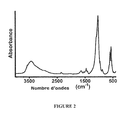
Figure 2 : Spectre infrarouge des nanocristaux déposés au cours du procédé de l'exemple 1 selon l'invention. -
Figure 3 : Diagramme des diffractions des rayons X des nanocristaux déposés au cours du procédé de l'exemple 1 selon l'invention (Radiation CoKα). -
- Etape 1 : Synthèse du gel d'apatite carbonatée
- Solution A : 48,8 g Na2HPO4. 12H2O + 18 g NaHCO3 dans 400 ml d'eau désionisée
- Solution B : 6,5 g CaCl2.2H2O dans 150 ml d'eau désionisée
Après dissolution complète des sels dans les solutions A et B, verser la solution B dans la solution A. Puis filtrer et rincer soigneusement à l'eau désionisée.
- Etape 2 : Remettre 50 g de gel dans 200 ml d'eau de manière à obtenir une suspension homogène. Cette suspension constituera la solution C.
- Etape 3 : Une céramique poreuse de phosphate de calcium (cube de 30 mm3, 70 % porosité interconnectée) est plongée dans la solution C placée dans une fiole à vide.
On établit le vide durant une dizaine de minutes tout en remuant la solution de manière à éliminer les bulles qui se forment. Puis, on rétablit rapidement la pression atmosphérique ambiante de manière à faire pénétrer le gel à l'intérieur des pores de la céramique. Cette étape est répétée à plusieurs reprises si nécessaire. - Etape 4 : Séchage de la céramique
La céramique est placée dans une enceinte fermée en présence de vapeur d'éthanol à 60°C pendant 24 heures afin d'éliminer une partie de l'eau contenue dans le gel et ainsi limiter l'apparition de craquelures lors du séchage.
La céramique ainsi traitée est séchée dans une enceinte appropriée à 4°C durant 48 heures.
Lafigure 1 représente le dépôt obtenu et les figures suivantes, ses principales caractéristiques physico-chimiques. L'analyse chimique donne un rapport atomique Ca/P de 1,50 et une teneur en carbonate de 1,50 % en masse. Ces données caractérisent une apatite non-stoechiométrique fortement lacunaire. - On remarque sur la
figure 2 les bandes phosphate caractéristiques d'une apatite phosphocalcique (v1 PO4 : 961 cm-1, v2 PO4 : 460 cm-1, v3 PO4 : 1030 et 1095 cm-1, v4 PO4 : 560 et 600 cm-1). Les bandes carbonates (v2 CO3 : 860-890 cm-1 et v3 CO3 : 1400-1550 cm-1) montrent une substitution à la fois des ions phosphate (carbonates de type B) et des ions OH-(carbonates de type A). On notera aussi la présence d'ions OH en faible proportion (épaulements vers 3570 et 630 cm-1). - La
figure 3 permet d'observer un diagramme caractéristique d'une apatite. Aucune phase étrangère cristallisée n'est détectée. Les dimensions cristallines déduites de ces diagrammes par la formule de Scherrer (longueur : 24,5 ± 0,5 nm et largeur-épaisseur : 10,2 ± 0,3 nm) confirment la nature nanocristalline des cristaux. -
- Etape 1 : Synthèse du gel d'apatite
- Solution A : 40 g (NH4)2HPO4 dans 500 ml d'eau désionisée
- Solution B : 17,4 g Ca(NO3)2,4H2O dans 250 ml d'eau désionisée
- Etape 2 : Remettre 50 g de gel dans 200 ml d'eau de manière à obtenir une suspension homogène. Cette suspension constituera la solution C.
- Etape 3 : Une céramique poreuse de phosphate de calcium (cube de 30 mm3, 70 % porosité interconnectée) est plongée dans la solution C placée dans une fiole à vide.
On établit le vide durant une dizaine de minutes tout en remuant la solution de manière à éliminer les bulles qui se forment. Puis, on rétablit rapidement la pression atmosphérique ambiante de manière à faire pénétrer le gel à l'intérieur des pores de la céramique. Cette étape est répétée à plusieurs reprises si nécessaire. - Etape 4 : Séchage de la céramique
La céramique est séchée à l'air puis sous vide à température ambiante.
Le rapport atomique Ca/P pour ce dépôt est proche de 1,35 et sa teneur en ions HPO4 2- est voisine de 29 %. La taille des cristaux est : longueur : 17 nm, largeur épaisseur : 5 nm. -
- Etape 1 : Synthèse du gel d'apatite carbonatée.
- Solution A : 48.8 g Na2HPO4.12H2O + 18 g NaHCO3 dans 400 ml d'eau désionisée
- Solution B : 6.5 g CaCl2.2H2O dans 150 ml d'eau désionisée
- Les autres étapes sont identiques à celles de l'exemple 1.
- Le rapport Ca/P pour ces dépôts (maturation 2 mois) est 1,58; le rapport C/P: 0,14. Longueur des cristaux : 25 nm.
-
- Etape 1 : Synthèse du gel d'apatite carbonatée
- Solution A : 40 g (NH4)2HPO4 + 20 g NaHCO3 dans 500 ml d'eau désionisée
- Solution B : 17.7 g CaNO3 dans 250 ml d'eau désionisée
- Etape 4 : Mettre 100 g de gel dans 200 ml de solution de nitrate de strontium (0.5 M) durant 10 minutes sous agitation puis filtrer et rincer soigneusement à l'eau désionisée.
- Etape 3 : Remettre 100 g de gel dans 400 ml d'eau de manière à obtenir une suspension homogène. Cette suspension constituera la solution C.
- Etape 4 : Une céramique poreuse de phosphate de calcium (cube de 1 cm3, 80 % porosité interconnectée) est plongée dans la solution C placée dans une fiole à vide.
On établit le vide durant une dizaine de minutes tout en remuant la solution de manière à éliminer les bulles qui se forment. Puis, on rétablit rapidement la pression atmosphérique ambiante de manière à faire pénétrer le gel à l'intérieur des pores de la céramique. Cette étape est répétée à plusieurs reprises si nécessaire. - Etape 5 : La céramique ainsi traitée est séchée à l'étuve à 50°C durant 48 heures.
Les taux de substitution du calcium par le strontium peuvent varier de 0 à 20 % selon la concentration des solutions d'échange et l'état de maturation de l'apatite. - Les étapes 1-5 de l'exemple 1 sont inchangées. Ensuite la céramique revêtue est plongée dans une solution de facteur de croissance rhBMP-2. Le facteur se fixe alors sur la céramique activée en proportion notablement plus importante que sur la céramique non-activée (517 µg/g au lieu de 397 µg/g).
Claims (12)
- Procédé d'activation de surface de biomatériaux poreux caractérisé en ce qu' il comprend les étapes suivantes :a) préparer un phosphate de calcium apatitique nanocristallin analogue au minéral osseux par mélange d'une solution de sel de calcium avec une solution de sel de phosphate dans un rapport Ca/P compris entre 1,3 et 2 à une température comprise entre 0 et 60 °C,b) mettre en suspension le mélange obtenu à l'étape a) dans une solution aqueuse de manière à obtenir une pâte homogène, fluide contenant 80 à 98 % d'eau,c) mettre en contact un biomatériau poreux avec la suspension obtenue à l'étape b),d) sécher le biomatériau poreux à une température inférieure à 100 °C.
- Procédé selon la revendication 1, caractérisé en ce que le mélange obtenu à l'issue de l'étape a) est soumis à un traitement de modification de la surface des nanocristaux par mise en contact avec au moins un composé présentant une activité biologique et/ou modifiant les propriétés de surface des nanocristaux, ledit composé étant choisi parmi des ions minéraux ou des molécules organiques ou un mélange des deux.
- Procédé selon la revendication 1 ou 2, caractérisé en ce que le biomatériau obtenu à l'issue de l'étape d) est soumis à un traitement de surface par mise en contact avec au moins un composé présentant une activité biologique et/ou modifiant les propriétés de surface des nanocristaux, ledit composé étant choisi parmi des ions minéraux ou des molécules organiques ou un mélange des deux.
- Procédé selon la revendication 2 ou 3, caractérisé en ce que le traitement de surface est réalisé par échange ionique avec une solution aqueuse contenant au moins un ion choisi parmi : Mg2+, Sr2+, Mn2+, SiO4 4-, VO4 3- ou un mélange de ceux-ci.
- Procédé selon l'une quelconque des revendications 2 à 4, caractérisé en ce que le traitement de surface est réalisé par adsorption d'au moins une molécule organique choisie parmi : des facteurs de croissance, antibiotiques, ou un mélange de ceux-ci.
- Procédé selon l'une quelconque des revendications 1 à 5, caractérisé en ce que le mélange obtenu à l'issue de l'étape a) présente un rapport Ca/P compris entre 1,33 et 1,67.
- Procédé selon l'une quelconque des revendications 1 à 6, caractérisé en ce que préalablement à l'étape c), le biomatériau est nettoyé de toute impureté organique pouvant gêner le mouillage par la suspension aqueuse par chauffage préalable à l'air à une température voisine de 900 °C pendant 3 à 5 minutes, ou par traitement d'ozonisation.
- Procédé selon l'une quelconque des revendications 1 à 7, caractérisé en ce que l'étape c) est réalisée par immersion du biomatériau dans la solution obtenue à l'étape b) ou encore pulvérisation ou application de la solution obtenue à l'étape b) sur le biomatériau.
- Procédé selon la revendication 8, caractérisé en ce que l'étape c) est effectuée sous vide partiel avec une pression comprise entre 10 à 30 mm de Hg.
- Procédé selon l'une quelconque des revendications 1 à 9, caractérisé en ce que, préalablement à l'étape d), le biomatériau obtenu à l'issue de l'étape c) est partiellement et progressivement déshydraté.
- Procédé selon l'une quelconque des revendications 1 à 10, caractérisé en ce que les étapes b), c) et d) sont répétées.
- Procédé selon l'une quelconque des revendications 1 à 11, caractérisé en ce que le biomatériau est une céramique phosphocalcique.
Applications Claiming Priority (3)
| Application Number | Priority Date | Filing Date | Title |
|---|---|---|---|
| US12/487,101 US8216630B2 (en) | 2009-06-18 | 2009-06-18 | Porous biomaterials surface activation method |
| FR0954110A FR2946887B1 (fr) | 2009-06-18 | 2009-06-18 | Procede d'activation de surface de biomateriaux poreux. |
| PCT/FR2010/051205 WO2010146312A1 (fr) | 2009-06-18 | 2010-06-16 | Procede d'activation de surface de biomateriaux poreux |
Publications (2)
| Publication Number | Publication Date |
|---|---|
| EP2453934A1 EP2453934A1 (fr) | 2012-05-23 |
| EP2453934B1 true EP2453934B1 (fr) | 2013-06-12 |
Family
ID=42561066
Family Applications (1)
| Application Number | Title | Priority Date | Filing Date |
|---|---|---|---|
| EP10737354.0A Not-in-force EP2453934B1 (fr) | 2009-06-18 | 2010-06-16 | Procede d'activation de surface de biomateriaux poreux |
Country Status (7)
| Country | Link |
|---|---|
| EP (1) | EP2453934B1 (fr) |
| CN (1) | CN102458494B (fr) |
| BR (1) | BR112012000305A2 (fr) |
| ES (1) | ES2426488T3 (fr) |
| MX (1) | MX2011013416A (fr) |
| PT (1) | PT2453934E (fr) |
| WO (1) | WO2010146312A1 (fr) |
Families Citing this family (4)
| Publication number | Priority date | Publication date | Assignee | Title |
|---|---|---|---|---|
| US9220595B2 (en) | 2004-06-23 | 2015-12-29 | Orthovita, Inc. | Shapeable bone graft substitute and instruments for delivery thereof |
| AU2007265379B9 (en) | 2006-06-29 | 2014-05-29 | Orthovita, Inc. | Bioactive bone graft substitute |
| US20110151027A1 (en) * | 2009-12-21 | 2011-06-23 | Theodore D Clineff | Strontium-doped calcium phosphate bone graft materials |
| EP2606917A1 (fr) | 2011-12-20 | 2013-06-26 | Steinmüller-Nethl, Doris | Échafaudage poreux avec nanoparticules à base de carbone |
Family Cites Families (10)
| Publication number | Priority date | Publication date | Assignee | Title |
|---|---|---|---|---|
| JP2830262B2 (ja) * | 1990-01-08 | 1998-12-02 | 住友化学工業株式会社 | ハイドロキシアパタイト皮膜の形成方法 |
| US6207218B1 (en) | 1998-09-15 | 2001-03-27 | Isotis B.V. | Method for coating medical implants |
| US6479418B2 (en) | 1999-12-16 | 2002-11-12 | Isotis N.V. | Porous ceramic body |
| DE60115161T2 (de) | 2000-07-28 | 2006-07-13 | Canon K.K. | Toner, Bildherstellungsverfahren, Prozesskartusche |
| WO2002060507A1 (fr) | 2001-01-30 | 2002-08-08 | Isotis S.A. | Procede d'application d'un revetement bioactif sur un dispositif medical |
| FR2842750B1 (fr) | 2002-07-26 | 2004-10-08 | Toulouse Inst Nat Polytech | Procede permettant de recouvrir a basse temperature des surfaces par des phosphates apatitiques nanocristallins, a partir d'une suspension aqueuse de phosphate amorphe |
| US7087086B2 (en) | 2003-01-31 | 2006-08-08 | Depuy Products, Inc. | Biological agent-containing ceramic coating and method |
| SE527610C2 (sv) * | 2004-06-15 | 2006-04-25 | Promimic Ab | Förfarande för framställning av syntetiskt, kristallint kalciumfosfat i nanostorlek |
| CN100382240C (zh) * | 2005-12-21 | 2008-04-16 | 华东师范大学 | 多孔硅/羟基磷酸钙复合衬底的制备方法 |
| US20080058921A1 (en) * | 2006-08-09 | 2008-03-06 | Lindquist Jeffrey S | Improved adhesion of a polymeric coating of a drug eluting stent |
-
2010
- 2010-06-16 MX MX2011013416A patent/MX2011013416A/es active IP Right Grant
- 2010-06-16 CN CN201080036221.4A patent/CN102458494B/zh not_active Expired - Fee Related
- 2010-06-16 WO PCT/FR2010/051205 patent/WO2010146312A1/fr not_active Ceased
- 2010-06-16 EP EP10737354.0A patent/EP2453934B1/fr not_active Not-in-force
- 2010-06-16 PT PT10737354T patent/PT2453934E/pt unknown
- 2010-06-16 ES ES10737354T patent/ES2426488T3/es active Active
- 2010-06-16 BR BR112012000305A patent/BR112012000305A2/pt not_active IP Right Cessation
Also Published As
| Publication number | Publication date |
|---|---|
| BR112012000305A2 (pt) | 2016-11-01 |
| WO2010146312A1 (fr) | 2010-12-23 |
| CN102458494A (zh) | 2012-05-16 |
| MX2011013416A (es) | 2012-07-23 |
| EP2453934A1 (fr) | 2012-05-23 |
| CN102458494B (zh) | 2015-05-20 |
| ES2426488T3 (es) | 2013-10-23 |
| PT2453934E (pt) | 2013-09-09 |
Similar Documents
| Publication | Publication Date | Title |
|---|---|---|
| Vasilev et al. | Tailoring the surface functionalities of titania nanotube arrays | |
| Góes et al. | Apatite coating on anionic and native collagen films by an alternate soaking process | |
| US20040033249A1 (en) | Process for the coating for metallic implant materials | |
| JP2010246926A (ja) | 骨に付着させる方法及び装置 | |
| EP0904421A1 (fr) | Procede de preparation de revetements d'hydroxyapatite | |
| US10583222B2 (en) | Composite biomaterials with improved bioactivity and their use for bone substitute | |
| WO2013068591A1 (fr) | Matériaux métalliques présentant une couche superficielle de phosphate de calcium, et procédés pour le préparer | |
| WO2010146312A1 (fr) | Procede d'activation de surface de biomateriaux poreux | |
| US8216630B2 (en) | Porous biomaterials surface activation method | |
| EP3568166B1 (fr) | Materiau de regeneration osseuse | |
| CN119113218A (zh) | 一种兼具成骨诱导与抗菌的多功能仿生涂层及其制备方法 | |
| FR2842750A1 (fr) | Procede permettant de recouvrir a basse temperature des surfaces par des phosphates apatitiques nanocristallins, a partir d'une suspension aqueuse de phosphate amorphe | |
| US10195306B2 (en) | Modified ceramics with improved bioactivity and their use for bone substitute | |
| EP2331151B1 (fr) | Substitut osseux à base de bioverre poreux et de sulfate de calcium | |
| CA2728937C (fr) | Biomateriaux a base de phosphate de calcium | |
| ITTO20070719A1 (it) | Superfici di titanio multifunzionali per osteointegrazione. | |
| FR2946887A1 (fr) | Procede d'activation de surface de biomateriaux poreux. | |
| US20100233269A1 (en) | Mineralized polymer particles and the method for their production | |
| US12539353B2 (en) | Efficient biphasic calcium phosphate coating method | |
| BE1030086B1 (fr) | Matériau de régénération osseuse | |
| EP4041329B1 (fr) | Procede de mineralisation d'une membrane de biopolymere et membranes ainsi obtenues | |
| Javadpour et al. | Preparation and Optimization of a Chitosan-Based Bioactive Scaffold for Alveolar Bone Preservation After Tooth Extraction | |
| WO2016207543A1 (fr) | Procédé de préparation de matériaux macroporeux monolithiques biocompatibles utilisables a titre de substitut osseux | |
| Yokogawa et al. | Protein release behavior from carbonate apatite hydrogel | |
| AU2013292728A1 (en) | Bioactivated bone substitute material |
Legal Events
| Date | Code | Title | Description |
|---|---|---|---|
| PUAI | Public reference made under article 153(3) epc to a published international application that has entered the european phase |
Free format text: ORIGINAL CODE: 0009012 |
|
| 17P | Request for examination filed |
Effective date: 20111227 |
|
| AK | Designated contracting states |
Kind code of ref document: A1 Designated state(s): AL AT BE BG CH CY CZ DE DK EE ES FI FR GB GR HR HU IE IS IT LI LT LU LV MC MK MT NL NO PL PT RO SE SI SK SM TR |
|
| DAX | Request for extension of the european patent (deleted) | ||
| GRAP | Despatch of communication of intention to grant a patent |
Free format text: ORIGINAL CODE: EPIDOSNIGR1 |
|
| RIC1 | Information provided on ipc code assigned before grant |
Ipc: A61L 27/50 20060101ALI20121211BHEP Ipc: A61L 27/32 20060101AFI20121211BHEP Ipc: A61L 27/56 20060101ALI20121211BHEP Ipc: A61L 27/12 20060101ALI20121211BHEP |
|
| RBV | Designated contracting states (corrected) |
Designated state(s): AL AT BE BG CH CY CZ DE DK EE ES FI GB GR HR HU IE IS IT LI LT LU LV MC MK MT NL NO PL PT RO SE SI SK SM TR |
|
| GRAS | Grant fee paid |
Free format text: ORIGINAL CODE: EPIDOSNIGR3 |
|
| GRAA | (expected) grant |
Free format text: ORIGINAL CODE: 0009210 |
|
| AK | Designated contracting states |
Kind code of ref document: B1 Designated state(s): AL AT BE BG CH CY CZ DE DK EE ES FI GB GR HR HU IE IS IT LI LT LU LV MC MK MT NL NO PL PT RO SE SI SK SM TR |
|
| REG | Reference to a national code |
Ref country code: GB Ref legal event code: FG4D Free format text: NOT ENGLISH |
|
| REG | Reference to a national code |
Ref country code: CH Ref legal event code: EP |
|
| REG | Reference to a national code |
Ref country code: AT Ref legal event code: REF Ref document number: 616421 Country of ref document: AT Kind code of ref document: T Effective date: 20130615 |
|
| REG | Reference to a national code |
Ref country code: IE Ref legal event code: FG4D Free format text: LANGUAGE OF EP DOCUMENT: FRENCH |
|
| REG | Reference to a national code |
Ref country code: DE Ref legal event code: R096 Ref document number: 602010007812 Country of ref document: DE Effective date: 20130808 |
|
| REG | Reference to a national code |
Ref country code: PT Ref legal event code: SC4A Free format text: AVAILABILITY OF NATIONAL TRANSLATION Effective date: 20130902 |
|
| REG | Reference to a national code |
Ref country code: NL Ref legal event code: T3 |
|
| REG | Reference to a national code |
Ref country code: ES Ref legal event code: FG2A Ref document number: 2426488 Country of ref document: ES Kind code of ref document: T3 Effective date: 20131023 |
|
| PG25 | Lapsed in a contracting state [announced via postgrant information from national office to epo] |
Ref country code: GR Free format text: LAPSE BECAUSE OF FAILURE TO SUBMIT A TRANSLATION OF THE DESCRIPTION OR TO PAY THE FEE WITHIN THE PRESCRIBED TIME-LIMIT Effective date: 20130913 Ref country code: NO Free format text: LAPSE BECAUSE OF FAILURE TO SUBMIT A TRANSLATION OF THE DESCRIPTION OR TO PAY THE FEE WITHIN THE PRESCRIBED TIME-LIMIT Effective date: 20130912 Ref country code: SE Free format text: LAPSE BECAUSE OF FAILURE TO SUBMIT A TRANSLATION OF THE DESCRIPTION OR TO PAY THE FEE WITHIN THE PRESCRIBED TIME-LIMIT Effective date: 20130612 Ref country code: LT Free format text: LAPSE BECAUSE OF FAILURE TO SUBMIT A TRANSLATION OF THE DESCRIPTION OR TO PAY THE FEE WITHIN THE PRESCRIBED TIME-LIMIT Effective date: 20130612 Ref country code: SI Free format text: LAPSE BECAUSE OF FAILURE TO SUBMIT A TRANSLATION OF THE DESCRIPTION OR TO PAY THE FEE WITHIN THE PRESCRIBED TIME-LIMIT Effective date: 20130612 Ref country code: FI Free format text: LAPSE BECAUSE OF FAILURE TO SUBMIT A TRANSLATION OF THE DESCRIPTION OR TO PAY THE FEE WITHIN THE PRESCRIBED TIME-LIMIT Effective date: 20130612 |
|
| REG | Reference to a national code |
Ref country code: AT Ref legal event code: MK05 Ref document number: 616421 Country of ref document: AT Kind code of ref document: T Effective date: 20130612 |
|
| REG | Reference to a national code |
Ref country code: LT Ref legal event code: MG4D |
|
| PG25 | Lapsed in a contracting state [announced via postgrant information from national office to epo] |
Ref country code: HR Free format text: LAPSE BECAUSE OF FAILURE TO SUBMIT A TRANSLATION OF THE DESCRIPTION OR TO PAY THE FEE WITHIN THE PRESCRIBED TIME-LIMIT Effective date: 20130612 Ref country code: BG Free format text: LAPSE BECAUSE OF FAILURE TO SUBMIT A TRANSLATION OF THE DESCRIPTION OR TO PAY THE FEE WITHIN THE PRESCRIBED TIME-LIMIT Effective date: 20130912 |
|
| BERE | Be: lapsed |
Owner name: TEKNIMED Effective date: 20130630 Owner name: UNIVERSITE PAUL SABATIER Effective date: 20130630 Owner name: INSTITUT NATIONAL POLYTECHNIQUE DE TOULOUSE Effective date: 20130630 |
|
| PG25 | Lapsed in a contracting state [announced via postgrant information from national office to epo] |
Ref country code: LV Free format text: LAPSE BECAUSE OF FAILURE TO SUBMIT A TRANSLATION OF THE DESCRIPTION OR TO PAY THE FEE WITHIN THE PRESCRIBED TIME-LIMIT Effective date: 20130612 |
|
| PG25 | Lapsed in a contracting state [announced via postgrant information from national office to epo] |
Ref country code: IS Free format text: LAPSE BECAUSE OF FAILURE TO SUBMIT A TRANSLATION OF THE DESCRIPTION OR TO PAY THE FEE WITHIN THE PRESCRIBED TIME-LIMIT Effective date: 20131012 Ref country code: AT Free format text: LAPSE BECAUSE OF FAILURE TO SUBMIT A TRANSLATION OF THE DESCRIPTION OR TO PAY THE FEE WITHIN THE PRESCRIBED TIME-LIMIT Effective date: 20130612 Ref country code: EE Free format text: LAPSE BECAUSE OF FAILURE TO SUBMIT A TRANSLATION OF THE DESCRIPTION OR TO PAY THE FEE WITHIN THE PRESCRIBED TIME-LIMIT Effective date: 20130612 Ref country code: CZ Free format text: LAPSE BECAUSE OF FAILURE TO SUBMIT A TRANSLATION OF THE DESCRIPTION OR TO PAY THE FEE WITHIN THE PRESCRIBED TIME-LIMIT Effective date: 20130612 Ref country code: SK Free format text: LAPSE BECAUSE OF FAILURE TO SUBMIT A TRANSLATION OF THE DESCRIPTION OR TO PAY THE FEE WITHIN THE PRESCRIBED TIME-LIMIT Effective date: 20130612 |
|
| PG25 | Lapsed in a contracting state [announced via postgrant information from national office to epo] |
Ref country code: PL Free format text: LAPSE BECAUSE OF FAILURE TO SUBMIT A TRANSLATION OF THE DESCRIPTION OR TO PAY THE FEE WITHIN THE PRESCRIBED TIME-LIMIT Effective date: 20130612 Ref country code: RO Free format text: LAPSE BECAUSE OF FAILURE TO SUBMIT A TRANSLATION OF THE DESCRIPTION OR TO PAY THE FEE WITHIN THE PRESCRIBED TIME-LIMIT Effective date: 20130612 |
|
| REG | Reference to a national code |
Ref country code: IE Ref legal event code: MM4A |
|
| PG25 | Lapsed in a contracting state [announced via postgrant information from national office to epo] |
Ref country code: BE Free format text: LAPSE BECAUSE OF NON-PAYMENT OF DUE FEES Effective date: 20130630 Ref country code: MC Free format text: LAPSE BECAUSE OF FAILURE TO SUBMIT A TRANSLATION OF THE DESCRIPTION OR TO PAY THE FEE WITHIN THE PRESCRIBED TIME-LIMIT Effective date: 20130612 |
|
| PLBE | No opposition filed within time limit |
Free format text: ORIGINAL CODE: 0009261 |
|
| STAA | Information on the status of an ep patent application or granted ep patent |
Free format text: STATUS: NO OPPOSITION FILED WITHIN TIME LIMIT |
|
| PG25 | Lapsed in a contracting state [announced via postgrant information from national office to epo] |
Ref country code: IE Free format text: LAPSE BECAUSE OF NON-PAYMENT OF DUE FEES Effective date: 20130616 Ref country code: DK Free format text: LAPSE BECAUSE OF FAILURE TO SUBMIT A TRANSLATION OF THE DESCRIPTION OR TO PAY THE FEE WITHIN THE PRESCRIBED TIME-LIMIT Effective date: 20130612 |
|
| 26N | No opposition filed |
Effective date: 20140313 |
|
| REG | Reference to a national code |
Ref country code: DE Ref legal event code: R097 Ref document number: 602010007812 Country of ref document: DE Effective date: 20140313 |
|
| PGFP | Annual fee paid to national office [announced via postgrant information from national office to epo] |
Ref country code: TR Payment date: 20140612 Year of fee payment: 5 |
|
| PG25 | Lapsed in a contracting state [announced via postgrant information from national office to epo] |
Ref country code: MT Free format text: LAPSE BECAUSE OF FAILURE TO SUBMIT A TRANSLATION OF THE DESCRIPTION OR TO PAY THE FEE WITHIN THE PRESCRIBED TIME-LIMIT Effective date: 20130612 |
|
| PG25 | Lapsed in a contracting state [announced via postgrant information from national office to epo] |
Ref country code: SM Free format text: LAPSE BECAUSE OF FAILURE TO SUBMIT A TRANSLATION OF THE DESCRIPTION OR TO PAY THE FEE WITHIN THE PRESCRIBED TIME-LIMIT Effective date: 20130612 |
|
| PG25 | Lapsed in a contracting state [announced via postgrant information from national office to epo] |
Ref country code: CY Free format text: LAPSE BECAUSE OF FAILURE TO SUBMIT A TRANSLATION OF THE DESCRIPTION OR TO PAY THE FEE WITHIN THE PRESCRIBED TIME-LIMIT Effective date: 20130612 |
|
| PG25 | Lapsed in a contracting state [announced via postgrant information from national office to epo] |
Ref country code: HU Free format text: LAPSE BECAUSE OF FAILURE TO SUBMIT A TRANSLATION OF THE DESCRIPTION OR TO PAY THE FEE WITHIN THE PRESCRIBED TIME-LIMIT; INVALID AB INITIO Effective date: 20100616 Ref country code: LU Free format text: LAPSE BECAUSE OF NON-PAYMENT OF DUE FEES Effective date: 20130616 Ref country code: MK Free format text: LAPSE BECAUSE OF FAILURE TO SUBMIT A TRANSLATION OF THE DESCRIPTION OR TO PAY THE FEE WITHIN THE PRESCRIBED TIME-LIMIT Effective date: 20130612 |
|
| PGFP | Annual fee paid to national office [announced via postgrant information from national office to epo] |
Ref country code: NL Payment date: 20150828 Year of fee payment: 6 |
|
| PGFP | Annual fee paid to national office [announced via postgrant information from national office to epo] |
Ref country code: ES Payment date: 20150827 Year of fee payment: 6 Ref country code: DE Payment date: 20150828 Year of fee payment: 6 Ref country code: CH Payment date: 20150918 Year of fee payment: 6 Ref country code: PT Payment date: 20150911 Year of fee payment: 6 Ref country code: GB Payment date: 20150828 Year of fee payment: 6 |
|
| PGFP | Annual fee paid to national office [announced via postgrant information from national office to epo] |
Ref country code: IT Payment date: 20150831 Year of fee payment: 6 |
|
| REG | Reference to a national code |
Ref country code: DE Ref legal event code: R119 Ref document number: 602010007812 Country of ref document: DE |
|
| REG | Reference to a national code |
Ref country code: CH Ref legal event code: PL |
|
| REG | Reference to a national code |
Ref country code: NL Ref legal event code: MM Effective date: 20160701 |
|
| PG25 | Lapsed in a contracting state [announced via postgrant information from national office to epo] |
Ref country code: PT Free format text: LAPSE BECAUSE OF NON-PAYMENT OF DUE FEES Effective date: 20161216 |
|
| GBPC | Gb: european patent ceased through non-payment of renewal fee |
Effective date: 20160616 |
|
| PG25 | Lapsed in a contracting state [announced via postgrant information from national office to epo] |
Ref country code: DE Free format text: LAPSE BECAUSE OF NON-PAYMENT OF DUE FEES Effective date: 20170103 Ref country code: CH Free format text: LAPSE BECAUSE OF NON-PAYMENT OF DUE FEES Effective date: 20160630 Ref country code: LI Free format text: LAPSE BECAUSE OF NON-PAYMENT OF DUE FEES Effective date: 20160630 |
|
| PG25 | Lapsed in a contracting state [announced via postgrant information from national office to epo] |
Ref country code: GB Free format text: LAPSE BECAUSE OF NON-PAYMENT OF DUE FEES Effective date: 20160616 Ref country code: NL Free format text: LAPSE BECAUSE OF NON-PAYMENT OF DUE FEES Effective date: 20160701 |
|
| PG25 | Lapsed in a contracting state [announced via postgrant information from national office to epo] |
Ref country code: IT Free format text: LAPSE BECAUSE OF NON-PAYMENT OF DUE FEES Effective date: 20160616 |
|
| PG25 | Lapsed in a contracting state [announced via postgrant information from national office to epo] |
Ref country code: ES Free format text: LAPSE BECAUSE OF NON-PAYMENT OF DUE FEES Effective date: 20160617 |
|
| PG25 | Lapsed in a contracting state [announced via postgrant information from national office to epo] |
Ref country code: AL Free format text: LAPSE BECAUSE OF FAILURE TO SUBMIT A TRANSLATION OF THE DESCRIPTION OR TO PAY THE FEE WITHIN THE PRESCRIBED TIME-LIMIT Effective date: 20130612 |
|
| REG | Reference to a national code |
Ref country code: ES Ref legal event code: FD2A Effective date: 20181120 |
|
| PG25 | Lapsed in a contracting state [announced via postgrant information from national office to epo] |
Ref country code: TR Free format text: LAPSE BECAUSE OF NON-PAYMENT OF DUE FEES Effective date: 20160616 |