EP2451046A2 - Telecommunication system - Google Patents
Telecommunication system Download PDFInfo
- Publication number
- EP2451046A2 EP2451046A2 EP11188171A EP11188171A EP2451046A2 EP 2451046 A2 EP2451046 A2 EP 2451046A2 EP 11188171 A EP11188171 A EP 11188171A EP 11188171 A EP11188171 A EP 11188171A EP 2451046 A2 EP2451046 A2 EP 2451046A2
- Authority
- EP
- European Patent Office
- Prior art keywords
- cell voltage
- period
- sensor unit
- transmission
- cell
- Prior art date
- Legal status (The legal status is an assumption and is not a legal conclusion. Google has not performed a legal analysis and makes no representation as to the accuracy of the status listed.)
- Granted
Links
Images


Classifications
-
- H—ELECTRICITY
- H04—ELECTRIC COMMUNICATION TECHNIQUE
- H04Q—SELECTING
- H04Q9/00—Arrangements in telecontrol or telemetry systems for selectively calling a substation from a main station, in which substation desired apparatus is selected for applying a control signal thereto or for obtaining measured values therefrom
-
- H—ELECTRICITY
- H02—GENERATION; CONVERSION OR DISTRIBUTION OF ELECTRIC POWER
- H02J—ELECTRIC POWER NETWORKS; CIRCUIT ARRANGEMENTS OR SYSTEMS FOR SUPPLYING OR DISTRIBUTING ELECTRIC POWER; SYSTEMS FOR STORING ELECTRIC ENERGY
- H02J7/00—Circuit arrangements for charging or discharging batteries or for supplying loads from batteries
- H02J7/50—Circuit arrangements for charging or discharging batteries or for supplying loads from batteries acting upon multiple batteries simultaneously or sequentially
-
- H—ELECTRICITY
- H02—GENERATION; CONVERSION OR DISTRIBUTION OF ELECTRIC POWER
- H02J—ELECTRIC POWER NETWORKS; CIRCUIT ARRANGEMENTS OR SYSTEMS FOR SUPPLYING OR DISTRIBUTING ELECTRIC POWER; SYSTEMS FOR STORING ELECTRIC ENERGY
- H02J7/00—Circuit arrangements for charging or discharging batteries or for supplying loads from batteries
- H02J7/80—Circuit arrangements for charging or discharging batteries or for supplying loads from batteries including monitoring or indicating arrangements
- H02J7/82—Control of state of charge [SOC]
-
- H—ELECTRICITY
- H04—ELECTRIC COMMUNICATION TECHNIQUE
- H04Q—SELECTING
- H04Q2209/00—Arrangements in telecontrol or telemetry systems
- H04Q2209/10—Arrangements in telecontrol or telemetry systems using a centralized architecture
-
- H—ELECTRICITY
- H04—ELECTRIC COMMUNICATION TECHNIQUE
- H04Q—SELECTING
- H04Q2209/00—Arrangements in telecontrol or telemetry systems
- H04Q2209/30—Arrangements in telecontrol or telemetry systems using a wired architecture
-
- H—ELECTRICITY
- H04—ELECTRIC COMMUNICATION TECHNIQUE
- H04Q—SELECTING
- H04Q2209/00—Arrangements in telecontrol or telemetry systems
- H04Q2209/80—Arrangements in the sub-station, i.e. sensing device
- H04Q2209/82—Arrangements in the sub-station, i.e. sensing device where the sensing device takes the initiative of sending data
-
- Y—GENERAL TAGGING OF NEW TECHNOLOGICAL DEVELOPMENTS; GENERAL TAGGING OF CROSS-SECTIONAL TECHNOLOGIES SPANNING OVER SEVERAL SECTIONS OF THE IPC; TECHNICAL SUBJECTS COVERED BY FORMER USPC CROSS-REFERENCE ART COLLECTIONS [XRACs] AND DIGESTS
- Y02—TECHNOLOGIES OR APPLICATIONS FOR MITIGATION OR ADAPTATION AGAINST CLIMATE CHANGE
- Y02T—CLIMATE CHANGE MITIGATION TECHNOLOGIES RELATED TO TRANSPORTATION
- Y02T10/00—Road transport of goods or passengers
- Y02T10/60—Other road transportation technologies with climate change mitigation effect
- Y02T10/70—Energy storage systems for electromobility, e.g. batteries
Definitions
- the present invention relates to a telecommunication system.
- vehicles such as electric cars and hybrid cars are mounted with a motor and a high-pressure, high-capacity battery.
- the motor acts as a power source.
- the high-pressure, high-capacity battery supplies electric power to this motor.
- This battery is structured by connecting a plurality of battery cells in series.
- the battery cell includes a lithium-ion battery, a hydrogen nickel battery, and the like.
- the cell voltage of each battery cell is monitored. In this way, a control is performed to prevent an overcharge and an over discharge.
- a plurality of measuring units are prepared according to the total number of cells.
- the measuring unit is able to simultaneously measure the cell voltage of a plurality of cells. In more precise terms, approximately 100 ⁇ s is necessary in order to obtain a measurement result of voltage (digital value) of the entire twelve cells, for example.
- a discrepancy occurs in the timing at which the measuring unit measures the cell voltage, it is difficult to precisely determine the condition of each cell (whether the cell is overcharged or in a state of over discharge). Thus, it becomes difficult to perform a control of the battery in an appropriate manner.
- a plurality of monitoring devices are provided. These monitoring devices can measure the cell voltage for a plurality of cells. Each monitoring device measures the cell voltage each time a predetermined amount of time (approximately twenty ms to ninety ms, for example) passes. As a result, the timing at which the monitoring devices measures the cell voltage is synchronized (matched).
- the monitoring device includes a master monitoring device and a subservient monitoring device. The master monitoring device receives a clock signal from a system controller. The subservient monitoring device receives a clock signal from the master monitoring device. Each device communicates in synchrony with the clock signal. In this way, the communication between each device is synchronized.
- each monitoring device has a feature such that the monitoring device switches into a dormant condition when the clock signal is not supplied for a certain period of time.
- the supply of clock signal from the system controller to the master monitoring device is halted.
- the master monitoring device and the subservient monitoring device are switched into a dormant condition. In this way, electric power is prevented from being wasted.
- Patent Document 1 even if an abnormality has not occurred in a battery, the subservient device is switched to a dormant condition when the master monitoring device malfunctions and the supply of clock signal to the subservient monitoring device is halted. Therefore, even though the subservient monitoring device is normal, it becomes impossible for the subservient monitoring device to measure the cell voltage and transmit the measurement result of the cell voltage to the system controller. Thus, when a malfunction occurs, it is difficult to continue communicating.
- An object of the present invention is to provide a telecommunication system which can maintain a continuous communication even when a malfunction occurs.
- the present invention employs the following.
- another subservient unit may transmit to the master unit, a processing result obtained by each of the predetermined processes. As a result, it is possible to maintain a continuity of the telecommunication even when a malfunction occurs.
- a system described as an example of an embodiment of a telecommunication system according to the present invention is a battery management system managing a charging and a discharging of a battery mounted on a vehicle such as an electric vehicle and a hybrid vehicle.
- this battery management system includes a battery BT, a battery control unit MU, and four cell voltage sensor units SU1 to SU4.
- the battery BT is configured so that four self modules M1 to M4 are connected in series.
- each cell module M1 to M4 is configured so that twelve battery cells (hereinafter referred to as "cell") are connected in series.
- Each battery cell includes a lithium ion battery or a hydrogen nickel battery.
- the battery BT is structured so that a total of 48 cells are connected in series.
- the reference numerals C1_M1 to C12_M1 indicate each cell included in the cell module M1.
- the reference numerals C1_M2 to C12_M2 indicate each cell included in the cell module M2.
- the reference numerals C1_M3 to C12_M3 indicate each cell included in the cell module M3.
- the reference numerals C1_M4 to C12_M4 indicate each cell included in the cell module M4.
- the battery control unit MU and each cell voltage sensor unit SU1 to SU4 are connected via a telecommunication bus BS (CAN bus).
- the telecommunication bus BS includes two telecommunication lines (twist pair lines).
- the CAN (Controller Area Network) telecommunication employs a differential voltage telecommunication method in which data of "0" or "1" is transmitted depending on whether there is a difference in the voltage of two telecommunication lines included in the telecommunication bus BS. Therefore, the CAN telecommunication has a high anti-noise capacity. Further, the CAN telecommunication is suitable for telecommunication between units mounted on a vehicle.
- the cell voltage sensor unit SU1 is connected to both terminals (positive terminal, negative terminal) of each cell C1_M1 to C12_M1 with thirteen wires in order to measure the voltage (cell voltage) between the terminals of each cell C1_M1 to C12_M1 included in the cell module M1.
- the cell voltage sensor unit SU2 is connected to both terminals of each cell C1_M2 to C12_M2 with thirteen wires in order to measure the cell voltage of each cell C1_M2 to C12_M2 included in the cell module M2.
- the cell voltage sensor unit SU3 is connected to both terminals of each cell C1_M3 to C12_M3 with thirteen wires in order to measure the cell voltage of each cell C1_M3 to C12_M3 included in the cell module M3.
- the cell voltage sensor unit SU4 is connected to both terminals of each cell C1_M4 to C12_M4 with thirteen wires in order to measure the cell voltage of each cell C1_M4 to C12_M4 included in the cell module M4.
- the cell voltage sensor unit SU1 measures the cell voltage of each of the cells C1_M1 to C12_M1 included in the cell module M1 in the first period. In addition, in the second period which is shorter than the first period, the cell voltage sensor unit SU1 divides the measurement results of the cell voltage and performs a CAN transmission to the battery control unit MU
- a CAN transmission refers to a transmission in which a data frame for transmission (hereinafter referred to as a transmission frame) is created by setting the measurement results of the cell voltage (digital data) to a data field of a data frame prescribed by a CAN protocol, and this data frame is transmitted by a differential voltage transmission method.
- the first period and the second period may be set as appropriate according to the bit length of the measurement result of the cell voltage for each cell. For example, if the bit length of the measurement result of the cell voltage for each cell is 16 bits, the maximum bit length for setting to a data field of a data frame prescribed by a CAN protocol is 64 bits. Therefore, in one CAN transmission, the measurement result of a cell voltage for only four cells can be transmitted. Therefore, if the bit length of the measurement result of the cell voltage for each cell is 16 bits, the measurement results of a cell voltage for twelve cells need to be transmitted in three parts.
- the cell voltage sensor unit SU1 simultaneously measures in a period of 60 ms, the cell voltage of twelve cells C1_M1 to C12_M1 included in the cell module M1.
- the cell voltage sensor unit SU1 measures the cell voltage (A/D conversion) in series from the cell C1_M1.
- 100 ⁇ s is needed to obtain the measurement results of the cell voltage of all of the twelve cells (16 bit data x 12). Therefore, 100 ⁇ s, which is the duration of time required to measure the cell voltage of all of the twelve cells, is, in practical terms, a value which ensures the simultaneousness of the timing at which the cell voltage is measured.
- the cell voltage sensor unit SU1 transmits the measurement results of the cell voltage for twelve cells obtained as described above in a period of 60 ms by dividing the measurement results into a first group including the measurement results of the cell voltage of cells C1_M1 to C4_M1, a second group including the measurement results of the cell voltage of cells C5_M1 to C8_M1, and a third group including the measurement results of the cell voltage of cells C9_M1 to C12_M1, and by setting the measurement results of the cell voltage included in each group to a data frame in series at a period of 20 ms, and thereby transmitting the measurement results.
- the measurement results of the cell voltage of all of the twelve cells are transmitted to the battery control unit MU
- a cell voltage sensor unit SU1 having the characteristics as described above is referred to as a main sensor unit, for convenience.
- the cell voltage sensor unit SU2 monitors the transmission of the transmission frame from the main sensor unit SU1 to the battery control unit MU.
- the cell voltage sensor unit SU2 measures the cell voltage of each of the cells C1_M2 to C12_M2 included in the cell module M2.
- the cell voltage sensor unit SU2 divides the measurement results of the cell voltage in the second period, and performs a CAN transmission of the measurement results to the battery control unit MU
- the second period of the cell voltage sensor unit SU2 is set to be the same value as the second period of the main sensor unit SU1.
- the cell voltage sensor unit SU2 simultaneously measures the cell voltage of the twelve cells C1_M2 to C12_M2 included in the self module M2, at the time a first transmission of the transmission frame from the main sensor unit SU1 to the battery control unit MU is observed.
- the first transmission of the transmission form is observed in the period of 60 ms.
- approximately 100 ⁇ s is necessary to obtain all of the measurement results of the cell voltage of all twelve cells. However, the simultaneousness of the timing at which the cell voltage is measured is assured.
- the cell voltage sensor unit SU2 transmits the measurement results of the cell voltage for twelve cells obtained as described above by dividing the measurement results into a first group including the measurement results of the cell voltage of cells C1_M2 to C4_M2, a second group including the measurement results of the cell voltage of cells C5_M2 to C8_M2, and a third group including the measurement results of the cell voltage of cells C9_M2 to C12_M2, and by setting the measurement results of the cell voltage included in each group to a data frame in series at a period of 20 ms, and thereby transmitting the measurement results.
- the cell voltage sensor unit SU2 measures the cell voltage of each of the cells C1_M2 to C12_M2 included in the cell module M2 during the third period based on a timer.
- the cell voltage sensor unit SU2 divides the measurement results of the cell voltage and performs a CAN transmission to the battery control unit MU.
- the third period is set to be an equal value as the first period (60 ms)
- the fourth period is set to be an equal value as the second period (20 ms).
- the third period may be set to a value different from the first period.
- the fourth period may be set to a value different from the second period.
- the cell voltage sensor unit SU3 also monitors a transmission of a transmission frame from the main sensor unit SU1 to the battery control unit MU in a similar manner.
- the cell voltage sensor unit SU3 measures the cell voltage of each of the cells C1_M3 to C12_M3 included in the self module M3.
- the cell voltage sensor unit SU3 divides the measurement results of the cell voltage and performs a CAN transmission to the battery control unit MU.
- the cell voltage sensor unit SU3 simultaneously measures the cell voltage of the twelve cells C1_M3 - C12_M3 included in the cell module M3. Incidentally, in precise terms, approximately 100 ⁇ s is necessary to obtain all of the measurement results of the cell voltage of all twelve cells. However, the simultaneousness of the timing at which the cell voltage is measured is assured.
- the cell voltage sensor unit SU3 transmits the measurement results of the cell voltage for twelve cells obtained as described above by dividing the measurement results into a first group including the measurement results of the cell voltage of cells C1_M3 to C4_M3, a second group including the measurement results of the cell voltage of cells C5_M3 to C8_M3, and a third group including the measurement results of the cell voltage of cells C9_M3 to C12_M3, and by setting the measurement results of the cell voltage included in each group to a data frame in series at a period of 20 ms, and thereby transmitting the measurement results.
- the measurement results of the cell voltage of all of the twelve cells included in the cell module M3 are transmitted to the battery control unit MU.
- the cell voltage sensor unit SU3 measures the cell voltage of each of the cells C1_M3 to C12_M3 included in the cell module M3 during the third period based on a timer. In addition, during the fourth period which is shorter than the third period, the cell voltage sensor unit SU3 divides the measurement results of the cell voltage and performs a CAN transmission to the battery control unit MU.
- the cell voltage sensor unit SU4 also monitors a transmission of a transmission frame from the main sensor unit SU1 to the battery control unit MU in a similar manner. When the first transmission of the transmission frame is observed, the cell voltage sensor unit SU4 measures the cell voltage of each of the cells C1_M4 to C12_M4 included in the self module M4. In addition, during the second period, the cell voltage sensor unit SU4 divides the measurement results of the cell voltage and performs a CAN transmission to the battery control unit MU.
- the cell voltage sensor unit SU4 simultaneously measures the cell voltage of the twelve cells C1_M4 - C12_M4 included in the cell module M4. Incidentally, in precise terms, approximately 100 ⁇ s is necessary to obtain all of the measurement results of the cell voltage of all twelve cells. However, the simultaneousness of the timing at which the cell voltage is measured is assured.
- the cell voltage sensor unit SU4 transmits the measurement results of the cell voltage for twelve cells obtained as described above by dividing the measurement results into a first group including the measurement results of the cell voltage of cells C1_M4 to C4_M4, a second group including the measurement results of the cell voltage of cells C5_M4 to C8_M4, and a third group including the measurement results of the cell voltage of cells C9_M4 to C12_M4, and by setting the measurement results of the cell voltage included in each group to a data frame in series at a period of 20 ms, and thereby transmitting the measurement results.
- the measurement results of the cell voltage of all of the twelve cells included in the cell module M4 are transmitted to the battery control unit MU.
- the cell voltage sensor unit SU4 measures the cell voltage of each of the cells C1_M4 to C12_M4 included in the cell module M4 during the third period based on a timer. In addition, during the fourth period which is shorter than the third period, the cell voltage sensor unit SU4 divides the measurement results of the cell voltage and performs a CAN transmission to the battery control unit MU.
- the cell voltage sensor units SU2 - SU4 having the same characteristics as described above are referred to as a sub sensor unit.
- the battery control unit MU corresponds to the "master unit” according to the present invention.
- the cell voltage sensor units SU1 - SU4 correspond to the "subservient unit” according to the present invention.
- the main sensor unit SU1 corresponds to "at least one subservient unit.”
- the sub sensor units SU2 - SU4 correspond to "an other subservient unit.”
- each of the sub sensor units SU2-SU4 may also receive the transmission frame.
- each of the sub sensor units SU2 - SU4 monitors the transmission of the transmission frame from the main sensor unit SU1 to the battery control unit MU according to a differential voltage imported from the transmission bus BS.
- a data frame prescribed by a CAN protocol includes information ("ID") which determines the priority ranking of adjusting a transmission. Therefore, even when a CAN transmission (transmission of the transmission frame) from each of the sub sensor units SU2 - SU4 is performed simultaneously to the battery control unit MU, the transmission is made in succession from a transmission frame of a unit having a high priority ranking. Therefore, a collision of data does not occur.
- ID information
- FIGS. 2A and 2B are flowcharts showing a transmission operation of the main sensor unit SU1.
- the main sensor unit SU1 performs a 60 ms-period operation shown in FIG 2A at a period of 60 ms.
- the main sensor unit SU1 starts a 20 ms-period timer at the same time when the 60 ms period starts (step S1).
- the main sensor unit SU1 performs a measurement (A/D conversion) of a cell voltage of each of the cells C1_M1 to C12_M1 included in the cell module M1.
- the main sensor unit SU1 obtains the measurement results of the cell voltage of twelve cells (16 bit data times 12) (step S2).
- approximately 100 ⁇ s is necessary to obtain all of the measurement results of the cell voltage of all twelve cells.
- the main sensor unit SU1 resets the operation number counter a to "0" (step S3).
- the main sensor unit SU1 starts the 20 ms-period-operation shown in FIG 2B (step S4).
- the main sensor unit SU1 determines, as shown in FIG 2B , whether or not the operation number counter a is less than "3" (step S4a). When the result is "No” (i.e., when a ⁇ 3), the 20 ms-period-operation is terminated. On the other hand, in the step S4, when the result is "Yes” (a ⁇ 3), the main sensor unit SU1 extracts from the measurement results of the cell voltage for the twelve cells, the (a+1)th group including the measurement results of the cell voltage for cells C(ax4 + 1)_M1 to C(ax4 + 4)_M1 (step S4b).
- step S4b a first group (64 bit data) including the measurement results of the cell voltage of cells C1_M1 to C4_M1 is extracted from the measurement results of the cell voltage of twelve cells.
- the main sensor unit SU1 creates a transmission frame F(a+1) by setting the measurement results of the cell voltage included in the (a+1)th group to the data field of the data frame (step S4c). Then, the main sensor unit SU1 performs a CAN transmission of the transmission frame F(a+1), created as described above, to the battery control unit MU (step S4d).
- the transmission frame F(a+1) becomes F(1).
- F(1) refers to the transmission frame which is transmitted for the first time.
- the main sensor unit SU1 increments the counter for the number of operation a (step S4e).
- the main sensor unit SU1 performs the 20 ms-period-operation, described above, at a timing at which the 20 ms-period timer completes measuring 20 ms (i.e., the timing at which the measurement of the next 20 ms period is measured) (step S4f).
- step S4b a second group including the measurement result of the cell voltage of cells C5_M1 to C8_M1 is extracted from the measurement results of the cell voltage for the twelve cells.
- step S4d the transmission frame F(2) including the measurement result of the cell voltage included in the second group is sent to the battery control unit MU via a CAN transmission.
- step S4b a third group including the measurement result of the cell voltage of cells C9_M1 to C12_M1 is extracted from the measurement results of the cell voltage for the twelve cells.
- step S4d the transmission frame F(3) including the measurement result of the cell voltage included in the third group is sent to the battery control unit MU via a CAN transmission.
- the measurement result of the cell voltage for the twelve cells included in the module M1 is obtained at a period of 60 ms.
- the measurement result of the cell voltage for all of the twelve cells is divided into three groups and is transmitted to the battery control unit MU at a period of 20 ms.
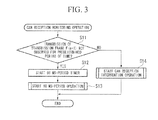
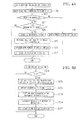
- FIGS. 3 , 4A, and 4B are flowcharts showing a transmission operation of the sub sensor units SU2 - SU4. Incidentally, the transmission operation shown in FIGS. 3 and 4 is performed by each of the sub sensor units SU2 - SU4. In the following description, an explanation of the sub sensor unit SU2 is provided as a representative example.
- the sub sensor unit SU2 may also receive the transmission frame F(a+1). Therefore, the sub sensor unit SU2 executes a monitoring operation of the CAN reception shown in FIG 3 based on the differential voltage imported from the transmission bus BS.
- the sub sensor unit SU2 determines whether or not a transmission of the transmission frame F(a+1) from the main sensor unit SU1 to the battery control unit MU was observed for a certain period of time (i.e., whether the differential voltage did not change for a certain period of time) (step S11).
- step S11 When the result of step S11 is "Yes,” the sub sensor unit SU2 starts the timer for the 60 ms period (step S12). At the same time, the sub sensor unit SU2 starts a 60 ms-period-operation in a similar manner as the main sensor unit SU1 (step S13). In other words, when a transmission of the transmission frame F(a+1) from the main sensor unit SU1 to the battery control unit MU is not observed for a certain period of time, the sub sensor unit SU2 measures the cell voltage of the twelve cells included in the cell module M2 at a period of 60 ms. In addition, the sub sensor unit divides the measurement result of the cell voltage and performs a CAN transmission to the battery control unit MU at a period of 20 ms.
- the sub sensor unit SU2 can continue to measure the cell voltage of the twelve cells included in the self module M2 and continue to transmit the measurement result of the cell voltage to the battery control unit MU
- the sub sensor unit SU2 performs the CAN reception intervention operation shown in FIG 4A as an intervention operation at a timing at which the transmission frame F(a+1) is received.
- the sub sensor unit SU2 checks the transmission frame F(a+1) which was received (step S21). The sub sensor unit SU2 determines whether or not a reception was made properly (step S22).
- the sub sensor unit SU2 determines whether or not the transmission frame F(a+1) that has been received is the first transmission frame that was first transmitted from the main sensor unit SU1 to the battery control unit MU (step S23).
- step S23 When the result of the step S23 described above is "Yes,” i.e., when a first transmission of the transmission frame F(1) from the main sensor unit SU1 to the battery control unit MU is observed, the sub sensor unit SU2 starts the timer for the 20 ms period (step S24), measures the cell voltage of each of the cells C1_M2 to C12_M2 included in the cell module M2, and obtains the measurement result of the cell voltage for twelve cells (step S25).
- step S26 the sub sensor unit SU2 resets the counter b for the number of operations to "0" (step S26). Then, the sub sensor unit SU2 starts the 20 ms-period-operation shown in FIG 4B (step S27). Incidentally, when the result of step S22 above is "No" (i.e., when an abnormality has been received), the sub sensor unit SU2 carries out a predetermined error processing on received data (step S28).
- the sub sensor unit SU2 determines, as shown in FIG 4B , whether or not the counter b for the number of operations is less than "3" (step S27a). When the result is "No” (i.e., b ⁇ 3), the sub sensor unit SU2 terminates the 20 ms-period-operation. On the other hand, when the result in step S27a above is "Yes” (i.e., b ⁇ 3), the sub sensor unit SU2 extracts a (b+1)th group including the measurement results of the cell voltage of cells C(bx4+1)_M2 to C(bx4+4)_M2 from the measurement results of the cell voltage of twelve cells (step S27b).
- step S27b the first group (64 bit data) including the measurement result of the cell voltage of cells C1_M2 to C4_M2 is extracted from the measurement result of the cell voltage of twelve cells.
- the sub sensor unit SU2 creates a transmission frame F(b+1) by setting the measurement result of the cell voltage included in the (b+1)th group to the data field of the data frame (step S27c).
- the sub sensor unit SU2 transmits the transmission frame F(b+1), created as described above, to the battery control unit MU via a CAN transmission (step S27d).
- the sub sensor unit SU2 increments the counter b for the number of operations (step S27e).
- the sub sensor unit SU2 carries out the 20 ms-period-operation at a timing at which the timer for the 20 ms-period completes measuring 20 ms (i.e., the timing at which the time measurement for the next 20 ms-period is commenced) (step S27f).
- step S27 described above the second group including the measurement results of the cell voltage for cells C5_M2 to C8_M2 is extracted from the measurement result of the cell voltage of twelve cells.
- the transmission frame F(2) including the measurement results for the cell voltage included in the second group is transmitted to the battery control unit MU via a CAN transmission.
- step S27 described above the third group including the measurement results of the cell voltage for cells C9_M2 to C12_M2 is extracted from the measurement result of the cell voltage of twelve cells.
- the transmission frame F(3) including the measurement results for the cell voltage included in the third group is transmitted to the battery control unit MU via a CAN transmission.
- the measurement results of the cell voltage for twelve cells included in the module M2 are obtained.
- all of the measurement results of the cell voltage for the twelve cells are divided into three groups and are transmitted to the battery control unit MU at a period of 20 ms.
- the measurement results of the cell voltage for the twelve cells included in the module M2 are obtained at a period of 60 ms.
- all of the measurement results of the cell voltage for the twelve cells are divided into three groups and are transmitted to the battery control unit MU at a period of 20 ms.
- the sub sensor units SU3 and SU4 perform the same transmission operation as the sub sensor unit SU2 performs. Therefore, consequently, when the first transmission of the transmission frame from the main sensor unit SU1 to the battery control unit MU is observed, the measurement results of the cell voltage for 36 cells included in the modules M2 to M4 are obtained simultaneously. In addition, until the first transmission of the transmission frame from the main sensor unit SU1 to the battery control unit MU is observed next, all of the measurement results of the cell voltage for the 36 cells are divided into three groups at a period of 20 ms, and are transmitted to the battery control unit MU
- the measurement results of the cell voltage of 36 cells included in modules M2 to M4 are obtained at a period of 60 ms.
- all of the measurement results of the cell voltage of the 36 cells are divided into three groups and are transmitted to the battery control unit MU at a period of 20 ms.
- the other sub sensor units SU2 to SU4 may transmit to the battery control unit MU, the measurement result of the cell voltage obtained by measuring the cell voltage of twelve cells. Therefore, a continuity of communication may be maintained even when a malfunction occurs.
- the timing at which the sub sensor units SU2 to SU4 measures the cell voltage is synchronized in the overall system.
Landscapes
- Engineering & Computer Science (AREA)
- Power Engineering (AREA)
- Computer Networks & Wireless Communication (AREA)
- Secondary Cells (AREA)
- Charge And Discharge Circuits For Batteries Or The Like (AREA)
- Electric Propulsion And Braking For Vehicles (AREA)
- Programmable Controllers (AREA)
- Mobile Radio Communication Systems (AREA)
- Interconnected Communication Systems, Intercoms, And Interphones (AREA)
Abstract
Description
- The present invention relates to a telecommunication system.
- It is well known that vehicles such as electric cars and hybrid cars are mounted with a motor and a high-pressure, high-capacity battery. The motor acts as a power source. The high-pressure, high-capacity battery supplies electric power to this motor. This battery is structured by connecting a plurality of battery cells in series. The battery cell includes a lithium-ion battery, a hydrogen nickel battery, and the like. Conventionally, in order to use the battery safely, the cell voltage of each battery cell is monitored. In this way, a control is performed to prevent an overcharge and an over discharge.
- In general, in order to monitor the cell voltage of each cell included in the battery, a plurality of measuring units are prepared according to the total number of cells. The measuring unit is able to simultaneously measure the cell voltage of a plurality of cells. In more precise terms, approximately 100 µs is necessary in order to obtain a measurement result of voltage (digital value) of the entire twelve cells, for example. However, when a discrepancy occurs in the timing at which the measuring unit measures the cell voltage, it is difficult to precisely determine the condition of each cell (whether the cell is overcharged or in a state of over discharge). Thus, it becomes difficult to perform a control of the battery in an appropriate manner.
- For example, according to the technology disclosed in Japanese Unexamined Patent Application No.
2002-354697 Patent Document 1, the monitoring device includes a master monitoring device and a subservient monitoring device. The master monitoring device receives a clock signal from a system controller. The subservient monitoring device receives a clock signal from the master monitoring device. Each device communicates in synchrony with the clock signal. In this way, the communication between each device is synchronized. - Furthermore, according to the technology disclosed in
Patent Document 1, each monitoring device has a feature such that the monitoring device switches into a dormant condition when the clock signal is not supplied for a certain period of time. When an abnormality occurs in the battery, the supply of clock signal from the system controller to the master monitoring device is halted. Furthermore, the master monitoring device and the subservient monitoring device are switched into a dormant condition. In this way, electric power is prevented from being wasted. - However, according to the technology disclosed in
Patent Document 1, even if an abnormality has not occurred in a battery, the subservient device is switched to a dormant condition when the master monitoring device malfunctions and the supply of clock signal to the subservient monitoring device is halted. Therefore, even though the subservient monitoring device is normal, it becomes impossible for the subservient monitoring device to measure the cell voltage and transmit the measurement result of the cell voltage to the system controller. Thus, when a malfunction occurs, it is difficult to continue communicating. - The present invention is made according to the considerations described above. An object of the present invention is to provide a telecommunication system which can maintain a continuous communication even when a malfunction occurs.
- In order to achieve the above object, the present invention employs the following.
- (1) Namely, a telecommunication system according to an aspect of the present invention includes: a master unit; a plurality of sub units; and a timer, wherein the plurality of sub units transmits to the master unit, an operation result of a predetermined operation; a transmission of the operation result to the master unit from at least one of the plurality of sub units is monitored by an other sub unit among the plurality of sub units; when the transmission of the operation result is not observed for a predetermined period of time, the other sub unit transmits to the master unit based on the timer, an operation result obtained by the predetermined operation.
- (2) In addition, the above telecommunication system according to (1) may be configured as follows: The at least one of the plurality of sub units executes the predetermined operation at a first period, and transmits to the master unit in a plurality of groups, an operation result of the predetermined operation at a second period shorter than the first period. When a transmission of the operation result to the master unit from the at least one of the plurality of sub units is not observed for a predetermined period of time, the other sub unit executes the predetermined operation at a third period based on the timer, and transmits to the master unit in a plurality of groups, an operation result of the predetermined operation at a fourth period shorter than the third period.
- (3) In addition, the above telecommunication system according to (1) or (2) may be configured as follows: The master unit and the plurality of sub units are connected via a CAN bus.
- (4) In addition, the above telecommunication system according to any one of (1) to (3) may be configured as follows: The master unit is a battery control unit managing a charging and a discharging of a battery including a cell. The sub unit is a cell voltage sensor unit measuring a voltage of the cell as the predetermined operation and transmitting to the battery control unit, a measurement result of the voltage of the cell as the operation result.
- According to the present invention, even when the additional subservient unit has malfunctioned and the processing result cannot be transmitted to the master unit, another subservient unit may transmit to the master unit, a processing result obtained by each of the predetermined processes. As a result, it is possible to maintain a continuity of the telecommunication even when a malfunction occurs.
-
-
FIG 1 is a schematic diagram of a structure of a battery management system (telecommunication system) according to an embodiment of the present invention. -
FIG 2A is a flow chart showing a telecommunication operation of a main sensor unit SU1. -
FIG 2B is a flow chart showing a telecommunication operation of a main sensor unit SU1. -
FIG 3 is a first flow chart showing a telecommunication operation of a sub-sensor unit SU2 - SU4. -
FIG 4A is a second flow chart showing a telecommunication operation of a sub-sensor unit SU2 - SU4. -
FIG 4B is a second flow chart showing a telecommunication operation of a sub-sensor unit SU2 - SU4. - Hereinafter, an embodiment of the present invention is described with reference to the attached diagrams. In the following description, a system described as an example of an embodiment of a telecommunication system according to the present invention is a battery management system managing a charging and a discharging of a battery mounted on a vehicle such as an electric vehicle and a hybrid vehicle. As shown in
FIG 1 , this battery management system includes a battery BT, a battery control unit MU, and four cell voltage sensor units SU1 to SU4. - The battery BT is configured so that four self modules M1 to M4 are connected in series.
- In addition, each cell module M1 to M4 is configured so that twelve battery cells (hereinafter referred to as "cell") are connected in series. Each battery cell includes a lithium ion battery or a hydrogen nickel battery.
- In other words, the battery BT is structured so that a total of 48 cells are connected in series.
- Incidentally, in
FIG 1 , the reference numerals C1_M1 to C12_M1 indicate each cell included in the cell module M1. The reference numerals C1_M2 to C12_M2 indicate each cell included in the cell module M2. The reference numerals C1_M3 to C12_M3 indicate each cell included in the cell module M3. The reference numerals C1_M4 to C12_M4 indicate each cell included in the cell module M4. - The battery control unit MU and each cell voltage sensor unit SU1 to SU4 are connected via a telecommunication bus BS (CAN bus). The telecommunication bus BS includes two telecommunication lines (twist pair lines). The CAN (Controller Area Network) telecommunication employs a differential voltage telecommunication method in which data of "0" or "1" is transmitted depending on whether there is a difference in the voltage of two telecommunication lines included in the telecommunication bus BS. Therefore, the CAN telecommunication has a high anti-noise capacity. Further, the CAN telecommunication is suitable for telecommunication between units mounted on a vehicle.
- The cell voltage sensor unit SU1 is connected to both terminals (positive terminal, negative terminal) of each cell C1_M1 to C12_M1 with thirteen wires in order to measure the voltage (cell voltage) between the terminals of each cell C1_M1 to C12_M1 included in the cell module M1.
- The cell voltage sensor unit SU2 is connected to both terminals of each cell C1_M2 to C12_M2 with thirteen wires in order to measure the cell voltage of each cell C1_M2 to C12_M2 included in the cell module M2.
- The cell voltage sensor unit SU3 is connected to both terminals of each cell C1_M3 to C12_M3 with thirteen wires in order to measure the cell voltage of each cell C1_M3 to C12_M3 included in the cell module M3.
- The cell voltage sensor unit SU4 is connected to both terminals of each cell C1_M4 to C12_M4 with thirteen wires in order to measure the cell voltage of each cell C1_M4 to C12_M4 included in the cell module M4.
- The cell voltage sensor unit SU1 measures the cell voltage of each of the cells C1_M1 to C12_M1 included in the cell module M1 in the first period. In addition, in the second period which is shorter than the first period, the cell voltage sensor unit SU1 divides the measurement results of the cell voltage and performs a CAN transmission to the battery control unit MU Here, a CAN transmission refers to a transmission in which a data frame for transmission (hereinafter referred to as a transmission frame) is created by setting the measurement results of the cell voltage (digital data) to a data field of a data frame prescribed by a CAN protocol, and this data frame is transmitted by a differential voltage transmission method.
- The first period and the second period may be set as appropriate according to the bit length of the measurement result of the cell voltage for each cell. For example, if the bit length of the measurement result of the cell voltage for each cell is 16 bits, the maximum bit length for setting to a data field of a data frame prescribed by a CAN protocol is 64 bits. Therefore, in one CAN transmission, the measurement result of a cell voltage for only four cells can be transmitted. Therefore, if the bit length of the measurement result of the cell voltage for each cell is 16 bits, the measurement results of a cell voltage for twelve cells need to be transmitted in three parts.
- In this case, for example, when the first period is 60 ms, and the second period is 20 ms, the cell voltage sensor unit SU1 simultaneously measures in a period of 60 ms, the cell voltage of twelve cells C1_M1 to C12_M1 included in the cell module M1. Incidentally, in precise terms, the cell voltage sensor unit SU1 measures the cell voltage (A/D conversion) in series from the cell C1_M1. As a result, approximately 100 µs is needed to obtain the measurement results of the cell voltage of all of the twelve cells (16 bit data x 12). Therefore, 100 µs, which is the duration of time required to measure the cell voltage of all of the twelve cells, is, in practical terms, a value which ensures the simultaneousness of the timing at which the cell voltage is measured.
- Further, the cell voltage sensor unit SU1 transmits the measurement results of the cell voltage for twelve cells obtained as described above in a period of 60 ms by dividing the measurement results into a first group including the measurement results of the cell voltage of cells C1_M1 to C4_M1, a second group including the measurement results of the cell voltage of cells C5_M1 to C8_M1, and a third group including the measurement results of the cell voltage of cells C9_M1 to C12_M1, and by setting the measurement results of the cell voltage included in each group to a data frame in series at a period of 20 ms, and thereby transmitting the measurement results. As a result, in 60 ms, the measurement results of the cell voltage of all of the twelve cells are transmitted to the battery control unit MU
- By the way, in the following description, a cell voltage sensor unit SU1 having the characteristics as described above is referred to as a main sensor unit, for convenience.
- Meanwhile, the cell voltage sensor unit SU2 monitors the transmission of the transmission frame from the main sensor unit SU1 to the battery control unit MU. When the first transmission of the transmission frame is observed, the cell voltage sensor unit SU2 measures the cell voltage of each of the cells C1_M2 to C12_M2 included in the cell module M2. In addition, the cell voltage sensor unit SU2 divides the measurement results of the cell voltage in the second period, and performs a CAN transmission of the measurement results to the battery control unit MU
- The second period of the cell voltage sensor unit SU2 is set to be the same value as the second period of the main sensor unit SU1. In other words, when the second period equals 20 ms, the cell voltage sensor unit SU2 simultaneously measures the cell voltage of the twelve cells C1_M2 to C12_M2 included in the self module M2, at the time a first transmission of the transmission frame from the main sensor unit SU1 to the battery control unit MU is observed. The first transmission of the transmission form is observed in the period of 60 ms. Incidentally, in precise terms, approximately 100 µs is necessary to obtain all of the measurement results of the cell voltage of all twelve cells. However, the simultaneousness of the timing at which the cell voltage is measured is assured.
- Further, the cell voltage sensor unit SU2 transmits the measurement results of the cell voltage for twelve cells obtained as described above by dividing the measurement results into a first group including the measurement results of the cell voltage of cells C1_M2 to C4_M2, a second group including the measurement results of the cell voltage of cells C5_M2 to C8_M2, and a third group including the measurement results of the cell voltage of cells C9_M2 to C12_M2, and by setting the measurement results of the cell voltage included in each group to a data frame in series at a period of 20 ms, and thereby transmitting the measurement results. As a result, until the next time at which the first transmission of the transmission frame from the main sensor unit SU1 to the battery control unit MU is observed, in other words in 60 ms, the measurement results of the cell voltage of all of the twelve cells are transmitted to the battery control unit MU
- In addition, when a transmission of the transmission frame from the main sensor unit SU1 to the battery control unit MU is not observed for a certain period of time, the cell voltage sensor unit SU2 measures the cell voltage of each of the cells C1_M2 to C12_M2 included in the cell module M2 during the third period based on a timer. In addition, during the fourth period which is shorter than the third period, the cell voltage sensor unit SU2 divides the measurement results of the cell voltage and performs a CAN transmission to the battery control unit MU. According to the present embodiment, the third period is set to be an equal value as the first period (60 ms), and the fourth period is set to be an equal value as the second period (20 ms). However, the third period may be set to a value different from the first period. Similarly, the fourth period may be set to a value different from the second period.
- The cell voltage sensor unit SU3 also monitors a transmission of a transmission frame from the main sensor unit SU1 to the battery control unit MU in a similar manner. When the first transmission of the transmission frame is observed, the cell voltage sensor unit SU3 measures the cell voltage of each of the cells C1_M3 to C12_M3 included in the self module M3. In addition, during the second period, the cell voltage sensor unit SU3 divides the measurement results of the cell voltage and performs a CAN transmission to the battery control unit MU.
- In other words, when the first transmission of the transmission frame from the main sensor unit SU1 to the battery control unit MU is observed, the cell voltage sensor unit SU3 simultaneously measures the cell voltage of the twelve cells C1_M3 - C12_M3 included in the cell module M3. Incidentally, in precise terms, approximately 100 µs is necessary to obtain all of the measurement results of the cell voltage of all twelve cells. However, the simultaneousness of the timing at which the cell voltage is measured is assured.
- Further, the cell voltage sensor unit SU3 transmits the measurement results of the cell voltage for twelve cells obtained as described above by dividing the measurement results into a first group including the measurement results of the cell voltage of cells C1_M3 to C4_M3, a second group including the measurement results of the cell voltage of cells C5_M3 to C8_M3, and a third group including the measurement results of the cell voltage of cells C9_M3 to C12_M3, and by setting the measurement results of the cell voltage included in each group to a data frame in series at a period of 20 ms, and thereby transmitting the measurement results. As a result, until the next time at which the first transmission of the transmission frame from the main sensor unit SU1 to the battery control unit MU is observed, in other words in 60 ms, the measurement results of the cell voltage of all of the twelve cells included in the cell module M3 are transmitted to the battery control unit MU.
- In addition, when a transmission of the transmission frame from the main sensor unit SU1 to the battery control unit MU is not observed for a certain period of time, the cell voltage sensor unit SU3 measures the cell voltage of each of the cells C1_M3 to C12_M3 included in the cell module M3 during the third period based on a timer. In addition, during the fourth period which is shorter than the third period, the cell voltage sensor unit SU3 divides the measurement results of the cell voltage and performs a CAN transmission to the battery control unit MU.
- The cell voltage sensor unit SU4 also monitors a transmission of a transmission frame from the main sensor unit SU1 to the battery control unit MU in a similar manner. When the first transmission of the transmission frame is observed, the cell voltage sensor unit SU4 measures the cell voltage of each of the cells C1_M4 to C12_M4 included in the self module M4. In addition, during the second period, the cell voltage sensor unit SU4 divides the measurement results of the cell voltage and performs a CAN transmission to the battery control unit MU.
- In other words, when the first transmission of the transmission frame from the main sensor unit SU1 to the battery control unit MU is observed, the cell voltage sensor unit SU4 simultaneously measures the cell voltage of the twelve cells C1_M4 - C12_M4 included in the cell module M4. Incidentally, in precise terms, approximately 100 µs is necessary to obtain all of the measurement results of the cell voltage of all twelve cells. However, the simultaneousness of the timing at which the cell voltage is measured is assured.
- Further, the cell voltage sensor unit SU4 transmits the measurement results of the cell voltage for twelve cells obtained as described above by dividing the measurement results into a first group including the measurement results of the cell voltage of cells C1_M4 to C4_M4, a second group including the measurement results of the cell voltage of cells C5_M4 to C8_M4, and a third group including the measurement results of the cell voltage of cells C9_M4 to C12_M4, and by setting the measurement results of the cell voltage included in each group to a data frame in series at a period of 20 ms, and thereby transmitting the measurement results. As a result, until the next time at which the first transmission of the transmission frame from the main sensor unit SU1 to the battery control unit MU is observed, in other words in 60 ms, the measurement results of the cell voltage of all of the twelve cells included in the cell module M4 are transmitted to the battery control unit MU.
- In addition, when a transmission of the transmission frame from the main sensor unit SU1 to the battery control unit MU is not observed for a certain period of time, the cell voltage sensor unit SU4 measures the cell voltage of each of the cells C1_M4 to C12_M4 included in the cell module M4 during the third period based on a timer. In addition, during the fourth period which is shorter than the third period, the cell voltage sensor unit SU4 divides the measurement results of the cell voltage and performs a CAN transmission to the battery control unit MU.
- Incidentally, for purposes of convenience, in the following description, the cell voltage sensor units SU2 - SU4 having the same characteristics as described above are referred to as a sub sensor unit.
- According to the present battery management system configured as described above, the battery control unit MU corresponds to the "master unit" according to the present invention. The cell voltage sensor units SU1 - SU4 correspond to the "subservient unit" according to the present invention. In addition, the main sensor unit SU1 corresponds to "at least one subservient unit." The sub sensor units SU2 - SU4 correspond to "an other subservient unit."
- Incidentally, when a transmission frame is transmitted from the main sensor unit SU1 to the battery control unit MU, a differential voltage occurs at the transmission bus BS according to the transmission frame. Therefore, each of the sub sensor units SU2-SU4 may also receive the transmission frame. Hence, each of the sub sensor units SU2 - SU4 monitors the transmission of the transmission frame from the main sensor unit SU1 to the battery control unit MU according to a differential voltage imported from the transmission bus BS.
- In addition, as is well known, a data frame prescribed by a CAN protocol includes information ("ID") which determines the priority ranking of adjusting a transmission. Therefore, even when a CAN transmission (transmission of the transmission frame) from each of the sub sensor units SU2 - SU4 is performed simultaneously to the battery control unit MU, the transmission is made in succession from a transmission frame of a unit having a high priority ranking. Therefore, a collision of data does not occur.
- Next, the transmission operation of the present battery management system explained above is described in detail.
FIGS. 2A and 2B are flowcharts showing a transmission operation of the main sensor unit SU1. The main sensor unit SU1 performs a 60 ms-period operation shown inFIG 2A at a period of 60 ms. As shown inFIG 2A , the main sensor unit SU1 starts a 20 ms-period timer at the same time when the 60 ms period starts (step S1). - Next, the main sensor unit SU1 performs a measurement (A/D conversion) of a cell voltage of each of the cells C1_M1 to C12_M1 included in the cell module M1. Thus, the main sensor unit SU1 obtains the measurement results of the cell voltage of twelve cells (16 bit data times 12) (step S2). Incidentally, as described above, approximately 100 µs is necessary to obtain all of the measurement results of the cell voltage of all twelve cells. However, the simultaneousness of the timing at which the cell voltage is measured is assured. Furthermore, the main sensor unit SU1 resets the operation number counter a to "0" (step S3). Then, the main sensor unit SU1 starts the 20 ms-period-operation shown in
FIG 2B (step S4). - After the 20 ms-period-operation has started, the main sensor unit SU1 determines, as shown in
FIG 2B , whether or not the operation number counter a is less than "3" (step S4a). When the result is "No" (i.e., when a ≥ 3), the 20 ms-period-operation is terminated. On the other hand, in the step S4, when the result is "Yes" (a < 3), the main sensor unit SU1 extracts from the measurement results of the cell voltage for the twelve cells, the (a+1)th group including the measurement results of the cell voltage for cells C(ax4 + 1)_M1 to C(ax4 + 4)_M1 (step S4b). - Here, in the case of a first 20 ms-period-operation, the counter for the number of operations a equals zero. As a result, in step S4b, a first group (64 bit data) including the measurement results of the cell voltage of cells C1_M1 to C4_M1 is extracted from the measurement results of the cell voltage of twelve cells.
- Next, the main sensor unit SU1 creates a transmission frame F(a+1) by setting the measurement results of the cell voltage included in the (a+1)th group to the data field of the data frame (step S4c). Then, the main sensor unit SU1 performs a CAN transmission of the transmission frame F(a+1), created as described above, to the battery control unit MU (step S4d). Here, when the counter for the number of operation a equals zero (a=0), for example, the transmission frame F(a+1) becomes F(1). F(1) refers to the transmission frame which is transmitted for the first time.
- Then, the main sensor unit SU1 increments the counter for the number of operation a (step S4e). The main sensor unit SU1 performs the 20 ms-period-operation, described above, at a timing at which the 20 ms-period timer completes measuring 20 ms (i.e., the timing at which the measurement of the next 20 ms period is measured) (step S4f).
- In other words, when the 20 ms-period-operation is performed for the second time, the counter for the number of operation a equals 1 (a=1). As a result, in step S4b described above, a second group including the measurement result of the cell voltage of cells C5_M1 to C8_M1 is extracted from the measurement results of the cell voltage for the twelve cells. In step S4d, the transmission frame F(2) including the measurement result of the cell voltage included in the second group is sent to the battery control unit MU via a CAN transmission.
- Furthermore, when the 20 ms-period-operation is performed for the third time, the counter for the number of operation a equals 2 (a=2). As a result, in step S4b described above, a third group including the measurement result of the cell voltage of cells C9_M1 to C12_M1 is extracted from the measurement results of the cell voltage for the twelve cells. In step S4d, the transmission frame F(3) including the measurement result of the cell voltage included in the third group is sent to the battery control unit MU via a CAN transmission.
- As a result of the transmission operation of the main sensor unit SU1 described above, the measurement result of the cell voltage for the twelve cells included in the module M1 is obtained at a period of 60 ms. In addition, during this 60 ms period, the measurement result of the cell voltage for all of the twelve cells is divided into three groups and is transmitted to the battery control unit MU at a period of 20 ms.
-
FIGS. 3 ,4A, and 4B are flowcharts showing a transmission operation of the sub sensor units SU2 - SU4. Incidentally, the transmission operation shown inFIGS. 3 and4 is performed by each of the sub sensor units SU2 - SU4. In the following description, an explanation of the sub sensor unit SU2 is provided as a representative example. - As described above, when the transmission frame F(a+1) is transmitted from the main sensor unit SU1 to the battery control unit MU, a differential voltage occurs at the transmission bus BS according to the transmission frame. As a result, the sub sensor unit SU2 may also receive the transmission frame F(a+1). Therefore, the sub sensor unit SU2 executes a monitoring operation of the CAN reception shown in
FIG 3 based on the differential voltage imported from the transmission bus BS. - As shown in
FIG 3 , based on the differential voltage imported from the transmission bus BS, the sub sensor unit SU2 determines whether or not a transmission of the transmission frame F(a+1) from the main sensor unit SU1 to the battery control unit MU was observed for a certain period of time (i.e., whether the differential voltage did not change for a certain period of time) (step S11). - When the result of step S11 is "Yes," the sub sensor unit SU2 starts the timer for the 60 ms period (step S12). At the same time, the sub sensor unit SU2 starts a 60 ms-period-operation in a similar manner as the main sensor unit SU1 (step S13). In other words, when a transmission of the transmission frame F(a+1) from the main sensor unit SU1 to the battery control unit MU is not observed for a certain period of time, the sub sensor unit SU2 measures the cell voltage of the twelve cells included in the cell module M2 at a period of 60 ms. In addition, the sub sensor unit divides the measurement result of the cell voltage and performs a CAN transmission to the battery control unit MU at a period of 20 ms.
- As a result, even if the main sensor unit SU1 has malfunctioned, and a transmission of the transmission frame F(a+1) to the battery control unit MU cannot be performed, the sub sensor unit SU2 can continue to measure the cell voltage of the twelve cells included in the self module M2 and continue to transmit the measurement result of the cell voltage to the battery control unit MU
- On the other hand, when the result in the
step S 11 is "No," and when a transmission of the transmission frame F(a+1) from the main sensor unit SU1 to the battery control unit MU is observed within a certain period of time (i.e, when the transmission frame F(a+1) is received), the sub sensor unit SU2 performs the CAN reception intervention operation shown inFIG 4A as an intervention operation at a timing at which the transmission frame F(a+1) is received. - As shown in this
FIG 4A , when the sub sensor unit SU2 receives the transmission frame F(a+1) and begins the CAN reception intervention operation, the sub sensor unit SU2 checks the transmission frame F(a+1) which was received (step S21). The sub sensor unit SU2 determines whether or not a reception was made properly (step S22). - When the result in the step S22 is "Yes" (i.e., when the reception has been made properly), the sub sensor unit SU2 determines whether or not the transmission frame F(a+1) that has been received is the first transmission frame that was first transmitted from the main sensor unit SU1 to the battery control unit MU (step S23).
- When the result of the step S23 described above is "Yes," i.e., when a first transmission of the transmission frame F(1) from the main sensor unit SU1 to the battery control unit MU is observed, the sub sensor unit SU2 starts the timer for the 20 ms period (step S24), measures the cell voltage of each of the cells C1_M2 to C12_M2 included in the cell module M2, and obtains the measurement result of the cell voltage for twelve cells (step S25).
- In addition, the sub sensor unit SU2 resets the counter b for the number of operations to "0" (step S26). Then, the sub sensor unit SU2 starts the 20 ms-period-operation shown in
FIG 4B (step S27). Incidentally, when the result of step S22 above is "No" (i.e., when an abnormality has been received), the sub sensor unit SU2 carries out a predetermined error processing on received data (step S28). - After the 20 ms-period-operation is started, the sub sensor unit SU2 determines, as shown in
FIG 4B , whether or not the counter b for the number of operations is less than "3" (step S27a). When the result is "No" (i.e., b≥3), the sub sensor unit SU2 terminates the 20 ms-period-operation. On the other hand, when the result in step S27a above is "Yes" (i.e., b<3), the sub sensor unit SU2 extracts a (b+1)th group including the measurement results of the cell voltage of cells C(bx4+1)_M2 to C(bx4+4)_M2 from the measurement results of the cell voltage of twelve cells (step S27b). - Here, in the case of the first 20 ms-period-operation, the counter b for the number of operations equals zero (b=0). Therefore, in step S27b, the first group (64 bit data) including the measurement result of the cell voltage of cells C1_M2 to C4_M2 is extracted from the measurement result of the cell voltage of twelve cells. Next, the sub sensor unit SU2 creates a transmission frame F(b+1) by setting the measurement result of the cell voltage included in the (b+1)th group to the data field of the data frame (step S27c). Next, the sub sensor unit SU2 transmits the transmission frame F(b+1), created as described above, to the battery control unit MU via a CAN transmission (step S27d).
- Further, the sub sensor unit SU2 increments the counter b for the number of operations (step S27e). In addition, the sub sensor unit SU2 carries out the 20 ms-period-operation at a timing at which the timer for the 20 ms-period completes measuring 20 ms (i.e., the timing at which the time measurement for the next 20 ms-period is commenced) (step S27f).
- In other words, when a 20 ms-period-operation is carried out for the second time, the counter b for the number of operations equals one (b=1). Therefore, in step S27 described above, the second group including the measurement results of the cell voltage for cells C5_M2 to C8_M2 is extracted from the measurement result of the cell voltage of twelve cells. In step S27 described above, the transmission frame F(2) including the measurement results for the cell voltage included in the second group is transmitted to the battery control unit MU via a CAN transmission.
- Furthermore, when a 20 ms-period-operation is carried out for the third time, the counter b for the number of operations equals two (b=2). Therefore, in step S27 described above, the third group including the measurement results of the cell voltage for cells C9_M2 to C12_M2 is extracted from the measurement result of the cell voltage of twelve cells. In step S27 described above, the transmission frame F(3) including the measurement results for the cell voltage included in the third group is transmitted to the battery control unit MU via a CAN transmission.
- According to the transmission operation of the sub sensor unit SU2 as described above, when a first transmission of the transmission frame from the main sensor unit SU1 to the battery control unit MU is observed, the measurement results of the cell voltage for twelve cells included in the module M2 are obtained. In addition, until the first transmission of the transmission frame from the main sensor unit SU1 to the battery control unit MU is observed next, all of the measurement results of the cell voltage for the twelve cells are divided into three groups and are transmitted to the battery control unit MU at a period of 20 ms.
- Further, when the first transmission of the transmission form from the main sensor unit SU1 to the battery control unit MU is not observed, i.e., when the main sensor unit SU1 malfunctions, and the transmission frame F(a+1) cannot be transmitted to the battery control unit MU, the measurement results of the cell voltage for the twelve cells included in the module M2 are obtained at a period of 60 ms. In addition, all of the measurement results of the cell voltage for the twelve cells are divided into three groups and are transmitted to the battery control unit MU at a period of 20 ms.
- The sub sensor units SU3 and SU4 perform the same transmission operation as the sub sensor unit SU2 performs. Therefore, consequently, when the first transmission of the transmission frame from the main sensor unit SU1 to the battery control unit MU is observed, the measurement results of the cell voltage for 36 cells included in the modules M2 to M4 are obtained simultaneously. In addition, until the first transmission of the transmission frame from the main sensor unit SU1 to the battery control unit MU is observed next, all of the measurement results of the cell voltage for the 36 cells are divided into three groups at a period of 20 ms, and are transmitted to the battery control unit MU
- Furthermore, even when the first transmission of the transmission frame from the main sensor unit SU1 to the battery control unit MU is not observed, the measurement results of the cell voltage of 36 cells included in modules M2 to M4 are obtained at a period of 60 ms. In addition, all of the measurement results of the cell voltage of the 36 cells are divided into three groups and are transmitted to the battery control unit MU at a period of 20 ms.
- As described above, according to the present embodiment, even when the main sensor unit SU1 malfunctions and a transmission frame cannot be transmitted to the battery control unit MU, the other sub sensor units SU2 to SU4 may transmit to the battery control unit MU, the measurement result of the cell voltage obtained by measuring the cell voltage of twelve cells. Therefore, a continuity of communication may be maintained even when a malfunction occurs.
- Incidentally, according to the present embodiment, there is no time discrepancy in the timing at which the sub sensor units SU2 to SU4 measures the cell voltage (i.e., the measurements are in synchrony). However, between the main sensor unit SU1 and the sub sensor unit SU2 to SU4, there is a discrepancy in the timing at which the cell voltage is measured. However, this discrepancy is of a degree which can be practically tolerated. Therefore, the timing at which the cell voltage sensor units SU1 to SU4 measure the cell voltage is synchronized in the overall system.
- The present invention is not limited to the embodiment described above. The following modifications may be made.
- (1) According to the embodiment described above, an example was described in which each of the cell voltage sensor units SU1 to SU4 divides the measurement results of the cell voltage of twelve cells into three groups and transmits to the battery control unit MU. However, when the measurement result of the cell voltage of one cell module may be transmitted via a CAN transmission in one transmission, it is not necessary to divide the measurement results into groups. Such instances include a case in which the number of cells in one cell module is small and a case in which the bit length of the measurement result of a cell voltage for one cell is small.
When a transmission is made in this way without dividing the measurement results into groups, the main sensor unit SU1 measures the cell voltage of the twelve cells included in the cell module M1 at a predetermined period. In addition, the main sensor unit SU1 transmits to the battery control unit MU, the transmission frame including the measurement result of the cell voltage. On the other hand, each of the sub sensor units SU2 to SU4 obtains the measurement result of the cell voltage of 36 cells included in the modules M2 to M4 when the transmission of the transmission frame from the main sensor unit SU1 to the battery control unit MU is observed. Further, each of the sub sensor units SU2 to SU4 transmits to the battery control unit MU, the transmission frame including the measurement result of the cell voltage of 36 cells included in the modules M2 to M4. In addition, when a transmission of the transmission frame from the main sensor unit SU1 to the battery control unit MU is not observed for a certain period of time, each of the sub sensor units SU2 to SU4 obtains the measurement results of the cell voltage of the 36 cells included in the modules M2 to M4 at a period of 60 ms. Further, each of the sub sensor units SU2 to SU4 transmits to the battery control unit MU, the transmission frame including the measurement results of the cell voltage of the 36 cells included in the modules M2 to M4. - (2) According to the embodiment described above, a battery management system managing a charging and discharging of a battery mounted on vehicles such as electric cars and hybrid cars was given as an example of a communication system based on the present invention. However, the present invention is not limited to this embodiment. The present invention may be applied broadly to a communication system configured so that the communication system includes a master unit and a plurality of subservient units, and the plurality of subservient units transmits to the master unit, an operation result of a predetermined operation.
- (3) According to the embodiment described above, a battery management system including four cell voltage sensor units SU1 to SU4 was given as an example. However, the number of cell voltage sensor units (i.e., the subsidiary units) is not limited to this configuration. The number of cell voltage sensor units need only be greater than or equal to two. In addition, the number of cell modules included in the battery BT is not limited to four. Further, the number of cells included in the cell module is not limited to twelve.
- While a preferred embodiment of the present invention has been described above with reference to the attached figures, it should be noted that these are exemplary of the invention and are not to be considered as limiting the present invention. Additions, omissions, substitutions, and other modifications can be made without departing from the scope of the present invention.
Claims (4)
- A telecommunication system comprising:a master unit (MU);a plurality of sub units (SU1-SU4); anda timer, whereinthe plurality of sub units (SU) transmit to the master unit (MU), an operation result of a predetermined operation;a transmission of the operation result to the master unit (MU) from at least one of the plurality of sub units (SU) is monitored by an other sub unit (SU) among the plurality of sub units (SU); andwhen the transmission of the operation result is not observed for a predetermined period of time, the other sub unit (SU) transmits to the master unit (MU) based on the timer, an operation result obtained by the predetermined operation.
- The telecommunication according to claim 1, wherein
the at least one of the plurality of sub units (SU) executes the predetermined operation at a first period, and transmits to the master unit (MU) in a plurality of groups, an operation result of the predetermined operation at a second period shorter than the first period; and
when a transmission of the operation result to the master unit (MU) from the at least one of the plurality of sub units (SU) is not observed for a predetermined period of time, the other sub unit (SU) executes the predetermined operation at a third period based on the timer, and transmits to the master unit (MU) in a plurality of groups, an operation result of the predetermined operation at a fourth period shorter than the third period. - The telecommunication system according to either one of claim 1 or claim 2, wherein the master unit (MU) and the plurality of sub units (SU) are connected via a CAN bus (BS).
- The telecommunication system according to any one of claims 1, 2, or 3, wherein
the master unit (MU) is a battery control unit managing a charging and a discharging of a battery (BT) comprising a cell; and
the sub unit (SU) is a cell voltage sensor unit measuring a voltage of the cell as the predetermined operation and transmitting to the battery control unit, a measurement result of the voltage of the cell as the operation result.
Applications Claiming Priority (1)
| Application Number | Priority Date | Filing Date | Title |
|---|---|---|---|
| JP2010250695A JP5656571B2 (en) | 2010-11-09 | 2010-11-09 | Communications system |
Publications (3)
| Publication Number | Publication Date |
|---|---|
| EP2451046A2 true EP2451046A2 (en) | 2012-05-09 |
| EP2451046A3 EP2451046A3 (en) | 2017-11-15 |
| EP2451046B1 EP2451046B1 (en) | 2020-04-29 |
Family
ID=44992658
Family Applications (1)
| Application Number | Title | Priority Date | Filing Date |
|---|---|---|---|
| EP11188171.0A Active EP2451046B1 (en) | 2010-11-09 | 2011-11-08 | Telecommunication system |
Country Status (3)
| Country | Link |
|---|---|
| EP (1) | EP2451046B1 (en) |
| JP (1) | JP5656571B2 (en) |
| CN (1) | CN102468980B (en) |
Cited By (1)
| Publication number | Priority date | Publication date | Assignee | Title |
|---|---|---|---|---|
| DE102017101869A1 (en) | 2017-01-31 | 2018-08-02 | Jungheinrich Aktiengesellschaft | Charger for several power modules, each equipped with a fieldbus interface |
Families Citing this family (6)
| Publication number | Priority date | Publication date | Assignee | Title |
|---|---|---|---|---|
| KR101356227B1 (en) | 2012-12-21 | 2014-01-29 | 넥스콘 테크놀러지 주식회사 | Energy storage system slave bms using mux and can automatic address setting |
| CN104885326B (en) * | 2012-12-28 | 2017-06-13 | 日立麦克赛尔株式会社 | The monitoring control method of assembled battery system, battery system and assembled battery system |
| CN106569424B (en) * | 2016-11-03 | 2019-06-28 | 上海理工大学 | The on-line synchronous method of battery management system data storage |
| KR102680803B1 (en) | 2019-06-18 | 2024-07-04 | 주식회사 엘지에너지솔루션 | Battery management system and method |
| DE102021122664A1 (en) | 2021-09-01 | 2023-03-02 | Elringklinger Ag | Control device for a battery system |
| US20250166424A1 (en) * | 2022-03-04 | 2025-05-22 | Hitachi Astemo, Ltd. | Battery control device |
Citations (1)
| Publication number | Priority date | Publication date | Assignee | Title |
|---|---|---|---|---|
| JP2002354697A (en) | 2001-05-18 | 2002-12-06 | Osaka Gas Co Ltd | Control system for electric storage device |
Family Cites Families (8)
| Publication number | Priority date | Publication date | Assignee | Title |
|---|---|---|---|---|
| JP3484962B2 (en) * | 1997-12-09 | 2004-01-06 | 住友電気工業株式会社 | Light receiving element |
| US20040208158A1 (en) * | 1998-08-19 | 2004-10-21 | Fellman Ronald D. | Methods and apparatus for providing quality-of-service guarantees in computer networks |
| JP2001320389A (en) * | 2000-05-11 | 2001-11-16 | Mitsubishi Electric Corp | Time-saving serial data transmission / reception system |
| US20020101874A1 (en) * | 2000-11-21 | 2002-08-01 | Whittaker G. Allan | Physical layer transparent transport information encapsulation methods and systems |
| JP2002232432A (en) * | 2001-02-01 | 2002-08-16 | Hitachi Kokusai Electric Inc | Wireless data error rate measurement system |
| CN1228908C (en) * | 2001-12-31 | 2005-11-23 | 艾默生网络能源有限公司 | Switch synchronization method of parallel converter system. |
| JP2010061939A (en) * | 2008-09-03 | 2010-03-18 | Omron Corp | Multi-cell battery system and method for applying management number |
| US8417472B2 (en) * | 2008-12-19 | 2013-04-09 | 02Micro Inc. | Synchronized data sampling systems and methods |
-
2010
- 2010-11-09 JP JP2010250695A patent/JP5656571B2/en not_active Expired - Fee Related
-
2011
- 2011-11-07 CN CN201110348534.XA patent/CN102468980B/en active Active
- 2011-11-08 EP EP11188171.0A patent/EP2451046B1/en active Active
Patent Citations (1)
| Publication number | Priority date | Publication date | Assignee | Title |
|---|---|---|---|---|
| JP2002354697A (en) | 2001-05-18 | 2002-12-06 | Osaka Gas Co Ltd | Control system for electric storage device |
Cited By (2)
| Publication number | Priority date | Publication date | Assignee | Title |
|---|---|---|---|---|
| DE102017101869A1 (en) | 2017-01-31 | 2018-08-02 | Jungheinrich Aktiengesellschaft | Charger for several power modules, each equipped with a fieldbus interface |
| DE102017101869B4 (en) * | 2017-01-31 | 2024-07-25 | Jungheinrich Aktiengesellschaft | Charger for several power modules, each equipped with a fieldbus interface |
Also Published As
| Publication number | Publication date |
|---|---|
| JP5656571B2 (en) | 2015-01-21 |
| CN102468980B (en) | 2015-11-04 |
| EP2451046A3 (en) | 2017-11-15 |
| JP2012103839A (en) | 2012-05-31 |
| EP2451046B1 (en) | 2020-04-29 |
| CN102468980A (en) | 2012-05-23 |
Similar Documents
| Publication | Publication Date | Title |
|---|---|---|
| EP2451046B1 (en) | Telecommunication system | |
| US20120112701A1 (en) | Telecommunication system | |
| US8552729B2 (en) | State monitoring unit for assembled battery | |
| US9529053B2 (en) | Battery management system and method for determining the charge state battery cells, battery and motor vehicle comprising a battery management system | |
| EP2725686B1 (en) | System and method for allocating identifier to multi-bms | |
| EP2245719B1 (en) | Battery pack control apparatus | |
| CN104871395B (en) | Battery management system for sending secondary protection signals and diagnostic signals using a small number of insulating components | |
| US20130108898A1 (en) | Modular battery control system architecture | |
| US9393880B2 (en) | Method for data transfer between electronic control devices, battery and motor vehicle with such a battery | |
| US20150303729A1 (en) | Energy Storage System Controller | |
| US11031640B2 (en) | Battery pack, battery monitoring device, and vehicle | |
| US9705663B2 (en) | Communication system having synchronized units and synchronization method for units | |
| US20110050237A1 (en) | State monitoring unit for assembled battery | |
| WO2017071573A1 (en) | Synchronous sampling method and sampling system for battery management system | |
| CN102096407A (en) | Chain type STATCOM control system based on EtherCA technology | |
| JP7228704B2 (en) | Storage battery device | |
| KR101613230B1 (en) | Wired communication unit changing communication protocol when malfunction has occurred in the communication line and wired communication system including thereof | |
| EP3731535A1 (en) | Hybrid three-tier battery management system for fast data acquisition time | |
| EP2988190B1 (en) | Communication terminal for constructing daisy chain communication network without distinction between input connector and output connector | |
| WO2026040591A1 (en) | Battery pack power supply system, battery pack power supply processing method, and vehicle | |
| JP2011072161A (en) | Power device | |
| JP7757518B2 (en) | Battery control device | |
| CN215451505U (en) | Energy management device for energy storage container | |
| KR20240073797A (en) | Battery cell monitoring system using power line communication | |
| KR20150007052A (en) | Microprocessor changing communication protocol when malfunction has occurred in the communication line and communication system including thereof |
Legal Events
| Date | Code | Title | Description |
|---|---|---|---|
| PUAI | Public reference made under article 153(3) epc to a published international application that has entered the european phase |
Free format text: ORIGINAL CODE: 0009012 |
|
| AK | Designated contracting states |
Kind code of ref document: A2 Designated state(s): AL AT BE BG CH CY CZ DE DK EE ES FI FR GB GR HR HU IE IS IT LI LT LU LV MC MK MT NL NO PL PT RO RS SE SI SK SM TR |
|
| AX | Request for extension of the european patent |
Extension state: BA ME |
|
| PUAL | Search report despatched |
Free format text: ORIGINAL CODE: 0009013 |
|
| AK | Designated contracting states |
Kind code of ref document: A3 Designated state(s): AL AT BE BG CH CY CZ DE DK EE ES FI FR GB GR HR HU IE IS IT LI LT LU LV MC MK MT NL NO PL PT RO RS SE SI SK SM TR |
|
| AX | Request for extension of the european patent |
Extension state: BA ME |
|
| RIC1 | Information provided on ipc code assigned before grant |
Ipc: H02J 7/00 20060101AFI20171010BHEP Ipc: H04Q 9/00 20060101ALI20171010BHEP |
|
| STAA | Information on the status of an ep patent application or granted ep patent |
Free format text: STATUS: REQUEST FOR EXAMINATION WAS MADE |
|
| 17P | Request for examination filed |
Effective date: 20180119 |
|
| RBV | Designated contracting states (corrected) |
Designated state(s): AL AT BE BG CH CY CZ DE DK EE ES FI FR GB GR HR HU IE IS IT LI LT LU LV MC MK MT NL NO PL PT RO RS SE SI SK SM TR |
|
| STAA | Information on the status of an ep patent application or granted ep patent |
Free format text: STATUS: EXAMINATION IS IN PROGRESS |
|
| 17Q | First examination report despatched |
Effective date: 20190219 |
|
| GRAP | Despatch of communication of intention to grant a patent |
Free format text: ORIGINAL CODE: EPIDOSNIGR1 |
|
| STAA | Information on the status of an ep patent application or granted ep patent |
Free format text: STATUS: GRANT OF PATENT IS INTENDED |
|
| INTG | Intention to grant announced |
Effective date: 20191209 |
|
| GRAS | Grant fee paid |
Free format text: ORIGINAL CODE: EPIDOSNIGR3 |
|
| GRAA | (expected) grant |
Free format text: ORIGINAL CODE: 0009210 |
|
| STAA | Information on the status of an ep patent application or granted ep patent |
Free format text: STATUS: THE PATENT HAS BEEN GRANTED |
|
| AK | Designated contracting states |
Kind code of ref document: B1 Designated state(s): AL AT BE BG CH CY CZ DE DK EE ES FI FR GB GR HR HU IE IS IT LI LT LU LV MC MK MT NL NO PL PT RO RS SE SI SK SM TR |
|
| REG | Reference to a national code |
Ref country code: GB Ref legal event code: FG4D |
|
| REG | Reference to a national code |
Ref country code: CH Ref legal event code: EP |
|
| REG | Reference to a national code |
Ref country code: AT Ref legal event code: REF Ref document number: 1264750 Country of ref document: AT Kind code of ref document: T Effective date: 20200515 |
|
| REG | Reference to a national code |
Ref country code: DE Ref legal event code: R096 Ref document number: 602011066496 Country of ref document: DE |
|
| REG | Reference to a national code |
Ref country code: IE Ref legal event code: FG4D |
|
| REG | Reference to a national code |
Ref country code: NL Ref legal event code: MP Effective date: 20200429 |
|
| REG | Reference to a national code |
Ref country code: LT Ref legal event code: MG4D |
|
| PG25 | Lapsed in a contracting state [announced via postgrant information from national office to epo] |
Ref country code: PT Free format text: LAPSE BECAUSE OF FAILURE TO SUBMIT A TRANSLATION OF THE DESCRIPTION OR TO PAY THE FEE WITHIN THE PRESCRIBED TIME-LIMIT Effective date: 20200831 Ref country code: IS Free format text: LAPSE BECAUSE OF FAILURE TO SUBMIT A TRANSLATION OF THE DESCRIPTION OR TO PAY THE FEE WITHIN THE PRESCRIBED TIME-LIMIT Effective date: 20200829 Ref country code: GR Free format text: LAPSE BECAUSE OF FAILURE TO SUBMIT A TRANSLATION OF THE DESCRIPTION OR TO PAY THE FEE WITHIN THE PRESCRIBED TIME-LIMIT Effective date: 20200730 Ref country code: LT Free format text: LAPSE BECAUSE OF FAILURE TO SUBMIT A TRANSLATION OF THE DESCRIPTION OR TO PAY THE FEE WITHIN THE PRESCRIBED TIME-LIMIT Effective date: 20200429 Ref country code: SE Free format text: LAPSE BECAUSE OF FAILURE TO SUBMIT A TRANSLATION OF THE DESCRIPTION OR TO PAY THE FEE WITHIN THE PRESCRIBED TIME-LIMIT Effective date: 20200429 Ref country code: FI Free format text: LAPSE BECAUSE OF FAILURE TO SUBMIT A TRANSLATION OF THE DESCRIPTION OR TO PAY THE FEE WITHIN THE PRESCRIBED TIME-LIMIT Effective date: 20200429 Ref country code: NO Free format text: LAPSE BECAUSE OF FAILURE TO SUBMIT A TRANSLATION OF THE DESCRIPTION OR TO PAY THE FEE WITHIN THE PRESCRIBED TIME-LIMIT Effective date: 20200729 |
|
| REG | Reference to a national code |
Ref country code: AT Ref legal event code: MK05 Ref document number: 1264750 Country of ref document: AT Kind code of ref document: T Effective date: 20200429 |
|
| PG25 | Lapsed in a contracting state [announced via postgrant information from national office to epo] |
Ref country code: LV Free format text: LAPSE BECAUSE OF FAILURE TO SUBMIT A TRANSLATION OF THE DESCRIPTION OR TO PAY THE FEE WITHIN THE PRESCRIBED TIME-LIMIT Effective date: 20200429 Ref country code: HR Free format text: LAPSE BECAUSE OF FAILURE TO SUBMIT A TRANSLATION OF THE DESCRIPTION OR TO PAY THE FEE WITHIN THE PRESCRIBED TIME-LIMIT Effective date: 20200429 Ref country code: BG Free format text: LAPSE BECAUSE OF FAILURE TO SUBMIT A TRANSLATION OF THE DESCRIPTION OR TO PAY THE FEE WITHIN THE PRESCRIBED TIME-LIMIT Effective date: 20200729 Ref country code: RS Free format text: LAPSE BECAUSE OF FAILURE TO SUBMIT A TRANSLATION OF THE DESCRIPTION OR TO PAY THE FEE WITHIN THE PRESCRIBED TIME-LIMIT Effective date: 20200429 |
|
| PG25 | Lapsed in a contracting state [announced via postgrant information from national office to epo] |
Ref country code: AL Free format text: LAPSE BECAUSE OF FAILURE TO SUBMIT A TRANSLATION OF THE DESCRIPTION OR TO PAY THE FEE WITHIN THE PRESCRIBED TIME-LIMIT Effective date: 20200429 Ref country code: NL Free format text: LAPSE BECAUSE OF FAILURE TO SUBMIT A TRANSLATION OF THE DESCRIPTION OR TO PAY THE FEE WITHIN THE PRESCRIBED TIME-LIMIT Effective date: 20200429 |
|
| PG25 | Lapsed in a contracting state [announced via postgrant information from national office to epo] |
Ref country code: AT Free format text: LAPSE BECAUSE OF FAILURE TO SUBMIT A TRANSLATION OF THE DESCRIPTION OR TO PAY THE FEE WITHIN THE PRESCRIBED TIME-LIMIT Effective date: 20200429 Ref country code: EE Free format text: LAPSE BECAUSE OF FAILURE TO SUBMIT A TRANSLATION OF THE DESCRIPTION OR TO PAY THE FEE WITHIN THE PRESCRIBED TIME-LIMIT Effective date: 20200429 Ref country code: ES Free format text: LAPSE BECAUSE OF FAILURE TO SUBMIT A TRANSLATION OF THE DESCRIPTION OR TO PAY THE FEE WITHIN THE PRESCRIBED TIME-LIMIT Effective date: 20200429 Ref country code: CZ Free format text: LAPSE BECAUSE OF FAILURE TO SUBMIT A TRANSLATION OF THE DESCRIPTION OR TO PAY THE FEE WITHIN THE PRESCRIBED TIME-LIMIT Effective date: 20200429 Ref country code: RO Free format text: LAPSE BECAUSE OF FAILURE TO SUBMIT A TRANSLATION OF THE DESCRIPTION OR TO PAY THE FEE WITHIN THE PRESCRIBED TIME-LIMIT Effective date: 20200429 Ref country code: IT Free format text: LAPSE BECAUSE OF FAILURE TO SUBMIT A TRANSLATION OF THE DESCRIPTION OR TO PAY THE FEE WITHIN THE PRESCRIBED TIME-LIMIT Effective date: 20200429 Ref country code: SM Free format text: LAPSE BECAUSE OF FAILURE TO SUBMIT A TRANSLATION OF THE DESCRIPTION OR TO PAY THE FEE WITHIN THE PRESCRIBED TIME-LIMIT Effective date: 20200429 Ref country code: DK Free format text: LAPSE BECAUSE OF FAILURE TO SUBMIT A TRANSLATION OF THE DESCRIPTION OR TO PAY THE FEE WITHIN THE PRESCRIBED TIME-LIMIT Effective date: 20200429 |
|
| REG | Reference to a national code |
Ref country code: DE Ref legal event code: R097 Ref document number: 602011066496 Country of ref document: DE |
|
| PG25 | Lapsed in a contracting state [announced via postgrant information from national office to epo] |
Ref country code: SK Free format text: LAPSE BECAUSE OF FAILURE TO SUBMIT A TRANSLATION OF THE DESCRIPTION OR TO PAY THE FEE WITHIN THE PRESCRIBED TIME-LIMIT Effective date: 20200429 Ref country code: PL Free format text: LAPSE BECAUSE OF FAILURE TO SUBMIT A TRANSLATION OF THE DESCRIPTION OR TO PAY THE FEE WITHIN THE PRESCRIBED TIME-LIMIT Effective date: 20200429 |
|
| PLBE | No opposition filed within time limit |
Free format text: ORIGINAL CODE: 0009261 |
|
| STAA | Information on the status of an ep patent application or granted ep patent |
Free format text: STATUS: NO OPPOSITION FILED WITHIN TIME LIMIT |
|
| 26N | No opposition filed |
Effective date: 20210201 |
|
| PG25 | Lapsed in a contracting state [announced via postgrant information from national office to epo] |
Ref country code: SI Free format text: LAPSE BECAUSE OF FAILURE TO SUBMIT A TRANSLATION OF THE DESCRIPTION OR TO PAY THE FEE WITHIN THE PRESCRIBED TIME-LIMIT Effective date: 20200429 |
|
| PG25 | Lapsed in a contracting state [announced via postgrant information from national office to epo] |
Ref country code: MC Free format text: LAPSE BECAUSE OF FAILURE TO SUBMIT A TRANSLATION OF THE DESCRIPTION OR TO PAY THE FEE WITHIN THE PRESCRIBED TIME-LIMIT Effective date: 20200429 |
|
| REG | Reference to a national code |
Ref country code: CH Ref legal event code: PL |
|
| GBPC | Gb: european patent ceased through non-payment of renewal fee |
Effective date: 20201108 |
|
| PG25 | Lapsed in a contracting state [announced via postgrant information from national office to epo] |
Ref country code: LU Free format text: LAPSE BECAUSE OF NON-PAYMENT OF DUE FEES Effective date: 20201108 |
|
| REG | Reference to a national code |
Ref country code: BE Ref legal event code: MM Effective date: 20201130 |
|
| PG25 | Lapsed in a contracting state [announced via postgrant information from national office to epo] |
Ref country code: LI Free format text: LAPSE BECAUSE OF NON-PAYMENT OF DUE FEES Effective date: 20201130 Ref country code: CH Free format text: LAPSE BECAUSE OF NON-PAYMENT OF DUE FEES Effective date: 20201130 |
|
| PG25 | Lapsed in a contracting state [announced via postgrant information from national office to epo] |
Ref country code: IE Free format text: LAPSE BECAUSE OF NON-PAYMENT OF DUE FEES Effective date: 20201108 |
|
| PG25 | Lapsed in a contracting state [announced via postgrant information from national office to epo] |
Ref country code: GB Free format text: LAPSE BECAUSE OF NON-PAYMENT OF DUE FEES Effective date: 20201108 |
|
| REG | Reference to a national code |
Ref country code: DE Ref legal event code: R081 Ref document number: 602011066496 Country of ref document: DE Owner name: HITACHI ASTEMO, LTD., HITACHINAKA-SHI, JP Free format text: FORMER OWNER: KEIHIN CORPORATION, TOKYO, JP |
|
| PG25 | Lapsed in a contracting state [announced via postgrant information from national office to epo] |
Ref country code: TR Free format text: LAPSE BECAUSE OF FAILURE TO SUBMIT A TRANSLATION OF THE DESCRIPTION OR TO PAY THE FEE WITHIN THE PRESCRIBED TIME-LIMIT Effective date: 20200429 Ref country code: MT Free format text: LAPSE BECAUSE OF FAILURE TO SUBMIT A TRANSLATION OF THE DESCRIPTION OR TO PAY THE FEE WITHIN THE PRESCRIBED TIME-LIMIT Effective date: 20200429 Ref country code: CY Free format text: LAPSE BECAUSE OF FAILURE TO SUBMIT A TRANSLATION OF THE DESCRIPTION OR TO PAY THE FEE WITHIN THE PRESCRIBED TIME-LIMIT Effective date: 20200429 |
|
| PG25 | Lapsed in a contracting state [announced via postgrant information from national office to epo] |
Ref country code: MK Free format text: LAPSE BECAUSE OF FAILURE TO SUBMIT A TRANSLATION OF THE DESCRIPTION OR TO PAY THE FEE WITHIN THE PRESCRIBED TIME-LIMIT Effective date: 20200429 |
|
| PG25 | Lapsed in a contracting state [announced via postgrant information from national office to epo] |
Ref country code: BE Free format text: LAPSE BECAUSE OF NON-PAYMENT OF DUE FEES Effective date: 20201130 |
|
| PGFP | Annual fee paid to national office [announced via postgrant information from national office to epo] |
Ref country code: FR Payment date: 20221010 Year of fee payment: 12 |
|
| PGFP | Annual fee paid to national office [announced via postgrant information from national office to epo] |
Ref country code: DE Payment date: 20220930 Year of fee payment: 12 |
|
| REG | Reference to a national code |
Ref country code: DE Ref legal event code: R119 Ref document number: 602011066496 Country of ref document: DE |
|
| PG25 | Lapsed in a contracting state [announced via postgrant information from national office to epo] |
Ref country code: DE Free format text: LAPSE BECAUSE OF NON-PAYMENT OF DUE FEES Effective date: 20240601 |
|
| PG25 | Lapsed in a contracting state [announced via postgrant information from national office to epo] |
Ref country code: FR Free format text: LAPSE BECAUSE OF NON-PAYMENT OF DUE FEES Effective date: 20231130 |
|
| PG25 | Lapsed in a contracting state [announced via postgrant information from national office to epo] |
Ref country code: FR Free format text: LAPSE BECAUSE OF NON-PAYMENT OF DUE FEES Effective date: 20231130 Ref country code: DE Free format text: LAPSE BECAUSE OF NON-PAYMENT OF DUE FEES Effective date: 20240601 |
|
| PG25 | Lapsed in a contracting state [announced via postgrant information from national office to epo] |
Ref country code: IS Free format text: LAPSE BECAUSE OF NON-PAYMENT OF DUE FEES Effective date: 20200829 |