EP2447876A2 - System und Verfahren eines serverbasierten Antivirus-Scans von von einem Netzwerk heruntergeladenen Daten - Google Patents
System und Verfahren eines serverbasierten Antivirus-Scans von von einem Netzwerk heruntergeladenen Daten Download PDFInfo
- Publication number
- EP2447876A2 EP2447876A2 EP11174657A EP11174657A EP2447876A2 EP 2447876 A2 EP2447876 A2 EP 2447876A2 EP 11174657 A EP11174657 A EP 11174657A EP 11174657 A EP11174657 A EP 11174657A EP 2447876 A2 EP2447876 A2 EP 2447876A2
- Authority
- EP
- European Patent Office
- Prior art keywords
- data
- downloaded
- program code
- malicious program
- antivirus
- Prior art date
- Legal status (The legal status is an assumption and is not a legal conclusion. Google has not performed a legal analysis and makes no representation as to the accuracy of the status listed.)
- Granted
Links
Images



Classifications
-
- G—PHYSICS
- G06—COMPUTING OR CALCULATING; COUNTING
- G06F—ELECTRIC DIGITAL DATA PROCESSING
- G06F21/00—Security arrangements for protecting computers, components thereof, programs or data against unauthorised activity
- G06F21/50—Monitoring users, programs or devices to maintain the integrity of platforms, e.g. of processors, firmware or operating systems
- G06F21/55—Detecting local intrusion or implementing counter-measures
- G06F21/56—Computer malware detection or handling, e.g. anti-virus arrangements
- G06F21/567—Computer malware detection or handling, e.g. anti-virus arrangements using dedicated hardware
-
- G—PHYSICS
- G06—COMPUTING OR CALCULATING; COUNTING
- G06F—ELECTRIC DIGITAL DATA PROCESSING
- G06F21/00—Security arrangements for protecting computers, components thereof, programs or data against unauthorised activity
- G06F21/50—Monitoring users, programs or devices to maintain the integrity of platforms, e.g. of processors, firmware or operating systems
- G06F21/55—Detecting local intrusion or implementing counter-measures
- G06F21/56—Computer malware detection or handling, e.g. anti-virus arrangements
-
- H—ELECTRICITY
- H04—ELECTRIC COMMUNICATION TECHNIQUE
- H04L—TRANSMISSION OF DIGITAL INFORMATION, e.g. TELEGRAPHIC COMMUNICATION
- H04L63/00—Network architectures or network communication protocols for network security
- H04L63/02—Network architectures or network communication protocols for network security for separating internal from external traffic, e.g. firewalls
- H04L63/0227—Filtering policies
-
- H—ELECTRICITY
- H04—ELECTRIC COMMUNICATION TECHNIQUE
- H04L—TRANSMISSION OF DIGITAL INFORMATION, e.g. TELEGRAPHIC COMMUNICATION
- H04L63/00—Network architectures or network communication protocols for network security
- H04L63/14—Network architectures or network communication protocols for network security for detecting or protecting against malicious traffic
- H04L63/1441—Countermeasures against malicious traffic
- H04L63/145—Countermeasures against malicious traffic the attack involving the propagation of malware through the network, e.g. viruses, trojans or worms
Definitions
- the invention relates to a method for automatically screening a data item requested to be downloaded as well as to a computer-implemented apparatus according to the preamble of claim 1. More specifically the invention relates to computer security arrangements and techniques for antivirus scanning, at a security server, of data downloaded from a network.
- U.S. Pub. No. 2008/0301796 discloses adjusting the extensiveness of antivirus scanning at a proxy server based on various indicia, such as the content type, the content's security zone, infection history of the client or content, and threat level.
- various indicia such as the content type, the content's security zone, infection history of the client or content, and threat level.
- One aspect of the invention is directed to antivirus scanning, by a proxy server, of data downloaded from the network onto a PC workstation.
- the antivirus scanning is optimized for each scan by selecting an algorithm for that scan based on a determined overall likelihood that the downloaded data contains malicious code.
- a computer-implemented apparatus for facilitating data transfer over a network between a destination computer system and a data source includes an intermediate computer system (including a processor circuit operatively coupled with a data storage circuit and network interface circuitry that is adapted to be communicatively coupled to a computer network) that is configured to implement a data reception module, a data transmission module, an antivirus module, and a data analysis module.
- an intermediate computer system including a processor circuit operatively coupled with a data storage circuit and network interface circuitry that is adapted to be communicatively coupled to a computer network
- the data reception module is adapted to obtain, via the network interface circuitry, a data item to be received from the data source in response to a request by the destination computer system.
- the data transmission module is adapted to conditionally transmit, via the network interface circuitry, the data item to the destination computer system, wherein transmission of the data item is conditioned on a result of a security evaluation.
- the antivirus module is adapted to perform the security evaluation on the data item according to selectable ones of a plurality of malware detection techniques, which include at least one first technique having a predetermined level of computational complexity which is called hereinafter as a relatively computationally easy technique, and at least one second technique having a higher level of computational complexity in comparison with the first technique which is called hereinafter as a relatively computationally difficult technique.
- the data analysis module is adapted to collect a plurality of parameters that represent various characteristics relating to a security threat level, and/or the data item, and/or the data source, and collect statistical information relating to previous malware detection results for the data item and/or the data source. Further, the data analysis module is adapted to calculate, based on the plurality of parameters and on the statistical information, an overall risk probability of whether the data item is infected with malware.
- the data analysis module is further adapted to analyze the statistical information relating to the previous malware detection results for the data item and/or the data source and, if the statistical information meets predetermined confidence criteria, to invoke at least one priority rule that assigns an override value for the overall risk probability. Invocation of the at least one priority rule permits fast and accurate determination of the overall risk probability and, in turn, fast and accurate selection of the most appropriate antivirus detection technique(s).
- the antivirus module is further adapted selectively apply at least one malware detection technique from among the plurality of malware detection techniques based on the overall risk probability, such that the selectively applied at least one malware detection technique has a level of computational difficulty that generally corresponds to the overall risk probability.
- the intermediate computer system can be configured as a proxy server through which the destination computer system accesses a plurality of other data sources in addition to said data source.
- the above-mentioned data item is a file
- the data source is a website
- the computer network is the Internet.
- detection techniques can be used at least virus signature analysis and heuristic analysis.
- the plurality of detection techniques can be detection techniques of varying depths. It is also possible that the plurality of detection techniques includes an omission of an antivirus detection process.
- the overall risk probability is expressed in terms of fuzzy logic.
- the various indicia of malware risk relating to the data item include at least one of: a security threat level, characteristics of the data item, and/or characteristics of the data source.
- the overall risk probability is based on a statistical aggregation of the plurality of parameters.
- the antivirus module is adapted in a further embodiment to selectively apply a malware detection technique that requires a full download of the data item into a cache of the intermediate computer system, and requires a complete malware scan of the data item prior to authorizing transmission of the data item to the destination computer system.
- the antivirus module can be further adapted to issue a notification to be displayed on the destination computer system in response to the relatively high overall risk probability, the notification being informative of a progress of the full download of the data item into the cache of the intermediate computer system and a progress of further malware scan.
- the antivirus module is adapted such that, in response to a relatively low overall risk probability, the antivirus module selectively applies a malware detection technique that permits portions of the data item to be transmitted to the destination computer system during a malware scan of other portions of the data item.
- the data transmission module is adapted to transmit action instructions to the destination computer system for responding to the malware.
- the above mentioned at least one priority rule forces either a decreased intensity malware detection technique, or an increased intensity malware detection technique relative to the malware detection technique that corresponds to the overall risk probability.
- a further embodiment of the computer-implemented apparatus for facilitating data transfer over a network between a destination computer system and a data source includes an intermediate computer system that is configured to implement a data reception module, a data transmission module, an antivirus module, and a data analysis module.
- the data reception module is adapted to obtain, via the network interface circuitry, a data item to be received from the data source in response to a request by the destination computer system.
- the data transmission module is adapted to conditionally transmit, via the network interface circuitry, the data item to the destination computer system, wherein transmission of the data item is conditioned on a result of a security evaluation.
- the antivirus module is adapted to perform the security evaluation of the data item; and the data analysis module is adapted to track a destination-specific history of the data item and security evaluation results for that data item, and to compare the destination-specific history to subsequent security evaluation results relating to the same data item and, in response to the comparison indicating a past failure of the security evaluation, to provide corrective action instructions to be transmitted to the destination computer system for addressing the past failure.
- the destination-specific history can be maintained thereby in a specialized database.
- the above mentioned corrective action instructions include at least one instruction selected from the group consisting of: quarantining of the data item, treating the data item, to remove any malware therefrom, or initiating a new download of a treated replacement data item.
- a further embodiment of the computer-implemented apparatus for facilitating data transfer over a network between a destination computer system and a data source includes an intermediate computer system configured to implement: a data reception module adapted to obtain, via the network interface circuitry, a data item to be received from the data source in response to a request by the destination computer system; a data transmission module adapted to conditionally transmit, via the network interface circuitry, the data item to the destination computer system, wherein transmission of the data item is conditioned on a result of a security evaluation; an antivirus module adapted to perform the security evaluation on the data item according to selectable ones of a plurality of malware detection techniques, wherein the plurality of malware detection techniques include at least one first technique having a predetermined level of computational complexity which is called hereinafter as a relatively computationally easy technique, and at least one second technique having a higher level of computational complexity in comparison with the first technique which is called hereinafter as a relatively computationally difficult technique; and a data analysis module adapted to collect a plurality of parameters that represent various indicia
- the antivirus module is further adapted to selectively apply at least one malware detection technique from among the plurality of malware detection techniques based on the overall risk probability such that the selectively applied at least one malware detection technique has a level of computational difficulty that generally corresponds to the overall risk probability.
- the antivirus module is adapted to selectively apply a malware detection technique on a sampling basis according to an adjustable sampling interval.
- the method includes:
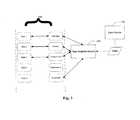
- Fig. 1 is a block diagram illustrating at a general level an exemplary system for antivirus scanning of data downloaded from a network on a server according to one embodiment.
- one aspect of the invention is directed to the examination, at the server side, of data which are downloadable using conventional means such as, for instance, when a user selects a file to be downloaded using a Web browser.
- the exemplary system according to one embodiment includes PC workstation 101, proxy server 102, network 103 (such as the Internet) and the data server 104.
- PC workstation 101 To download the required data from data server 104, which can be achieved via HTTP, FTP, SMTP, POP3 or other such services, PC workstation 101 generates and sends a request to data server 104 requesting to download data via proxy server 102 over the Internet 103. In response to the request, data server 104 sends the necessary data via the Internet to proxy server 102. Before relaying data received from data server 104 to PC workstation 101, the data is checked for malicious code on the proxy server 102.
- Fig. 2 illustrates the main components of proxy server 102 according to one type of embodiment.
- Proxy server 102 includes data reception module 201a, data transmission module 201b, antivirus module 202, proxy server database 203, data analysis module 204, feedback module 205 and cache 206.
- Data module reception module 201a, data transmission module 201b, antivirus module 202, data analysis module 204, and feedback module 205 are all are implemented as modules.
- module means a real-world device, component, or arrangement of components implemented using hardware, which may include an application specific integrated circuit (ASIC) or field-programmable gate array (FPGA), for example, or a microprocessor system under the control of and a set of instructions to implement the module's functionality, which (while being executed) transform the microprocessor system into a special-purpose device for carrying out the module's functions.
- a module can also be implemented as a combination of hardware alone and software-controlled hardware, with certain functions facilitated by the hardware alone, and other functions facilitated by a combination of hardware and software.
- a module can be executed on the processor(s) of a general purpose computer (such as the computer on which proxy server 102 is implemented) that executes an operating system, system programs, and application programs, while also implementing the module using multitasking, multithreading, distributed (e.g., cloud) processing, or other such techniques.
- a general purpose computer such as the computer on which proxy server 102 is implemented
- each module can be realized in a variety of suitable configurations, and should not be limited to any particular implementation exemplified herein.
- the data transmitted, by data server 104 in response to a request through the Internet 103, to PC workstation 101 arrives initially at proxy server 102 and, more specifically, at data reception module 201a.
- the received data is then passed to data analysis module 204.
- Data analysis module 204 examines parameters of the downloaded data such as, for example, the file extension of the downloaded file, the source of downloaded file, and the size of downloaded file, the filename, and the file's checksum (e.g., CRC, hash, etc.). Parameters of the downloaded data that can be examined by the data analysis module 204 according to various embodiments of the invention are not limited to these examples.
- Data analysis module 204 accesses an updateable database 203 of the proxy server 102, which contains rules for determining the overall likelihood that the downloaded data contains malicious code.
- these rules are based on three key properties, such as the extension of downloaded file, the security of the source of the downloaded file, and the current level of threats. In variations of this embodiment type, these rules may be based on fuzzy logic or classical (Boolean) logic.
- the database 203 of the proxy server 102 also contains rules for determining the depth, or comprehensiveness, of the antivirus scan, which depends on the overall likelihood that the downloaded data contains malicious code.
- FIG. 3 diagrams the interaction between data server 104, data analysis module 204, and database 203 of the proxy server 102.
- a user of PC workstation 101 is trying to download data from data server 104 at a particular web address.
- the data that the user wants to download is an executable file with the file extension .EXE, for example Hello.exe.
- This file is downloaded in typical fashion, that is, the PC user 101 clicks on the link "download file" in the Web browser.
- the database 203 of the proxy server 102 has three main attributes: "Data Type", “Source” and “Threat Level”.
- the database 203 of the proxy server 102 may contain other attributes such as, for example, "Size of downloaded data", "The level of protection” and the like.
- one or more rules are selected from among Rule 1, Rule 2, Rule 3, Rule 4, ... Rule N. This selection may be achieved through use of fuzzy logic techniques.
- each rule determines its own probability level. Then the attributes, defined in this way, transition from being fuzzy into precise values, with each value making a contribution to the overall determination of the likelihood that the downloaded data contains malicious code. The overall probability may then be re-translated into a fuzzy representation.
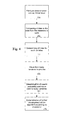
- Fig. 4 is a flow diagram illustrating an algorithm according to one embodiment to determine the overall likelihood that the downloaded data contains malicious code, based on fuzzy logic.
- the illustrated process begins after the PC user clicks in the Web browser on a "download file" link, the data from data server 104 are transmitted to the proxy server 102, where data analysis module 204 receives the data.
- module 204 examines the attributes of the downloaded data file. For example, one attribute to be determined is the file extension (e.g., .EXE, .DLL, .BAT, or the like). Another of the attributes relating to the downloaded data file is the address from where the file was sent. Determination of the downloaded data's attributes in this embodiment is significantly more computationally efficient (i.e., easier) compared with brute-force scanning the downloaded data for the presence of malware.
- data analysis module 204 compares the determined attribute data with the data from the database 203 of the proxy server 102 to determine if any particular predetermined rules exist to be applied in analysis of the downloaded data.
- rules are selected and applied.
- the rules are selected and applied using fuzzy logic. The application of each rule to each attribute produces a linguistic variable "risk probability", to which will correspond, for example, three definitions, such as: "low", “medium” and "high".
- a similar rule for the attribute "data type”, namely for the file extension (e.g., .EXE) may be the following logical rule: "IF allowing the downloading of filename.EXE, THEN the probability that the downloaded file contains malicious code is high.”
- the level of threats may be used to dynamically assign a threat level to an unknown source. Since the database 203 of the proxy server 102 is periodically updated (with the updates including data on the present level of threats) the parameter "level of threats" may be substituted for the unknown threat level of a unknown source.
- the parameter "level of threats” is measured on a scale of 1 to 10.
- the linguistic variable “probability” in this case would also correspond to three definitions, such as: “low”, “medium” and “high”.
- An exemplary rule for the variable "level of threats” is as follows: If the threat level is at least 8, THEN the probability that the downloaded file contains malicious code is high. This output is expressed in terms of membership in a fuzzy set.
- a process of defuzzification is applied to convert the fuzzy result into a numerical value.
- a wide variety of defuzzification techniques are known in the art, and it is contemplated that any suitabnle technique, known or arising in the future, may be applied.
- the range of values from database 203 of the proxy server is determined, which corresponds to the definitions that belong to the resulting linguistic variable. For example, it is determined that the value of "low” for the linguistic variable "probability” will be matched by a value in the range from 1% to 30%, the value of "average” for the linguistic variable “probability” will be matched by a value in the range from 31% to 50%, the value of "high” for the linguistic variable “probability” will be matched by a value in the range from 51% to 99%. It should be noted that this is a simple illustrative example, and in various other embodiments, the number of values for the linguistic variable "probability” may be greater.
- the range of values for these values of the linguistic variable "probability” for each variable such as "Data Type", “Source”, “Threat Level” can vary.
- Data analysis module 204 calculates the average value of these probability values, and this value will be the overall probability that the downloaded data contains malicious code.
- the database 203 of the proxy server also contains the linguistic variable "overall probability", to which correspond, for example, five definitions, such as "low”, “low-to-medium” “medium”, “medium-to-high” and "high”. And the value ranges, which correspond to a particular value of linguistic variable "overall probability" are set. They also are in the database 203 of the proxy server 102.
- the definition of "low” would be consistent with the overall probability range from 1% to 15%
- the definition of "low-to-medium” is equivalent to the overall probability in the range from 16% to 30%
- the definition of "average” would be consistent with the overall probability of 31 % to 40%
- the definition of "medium-to-high” would be consistent with the overall probability of 41 % to 50%
- the definition of "high” would be consistent with the overall probability of 51% to 99%.
- the determination of the overall likelihood that the downloaded data contains malicious code may be based on conventional logic.
- Fig. 5 illustrates an example of interaction between the data server 104, data analysis module 204 and the database 203 of the proxy server 102 according to one embodiment.
- Data metadata, information
- the database 203 of the proxy server 102 has three main variables: "Data Type”, “Source” and “Threat Level”, which are used to determine the overall likelihood that the downloaded data contains malicious code.
- the proxy server 102 selects a set of rules such as Rule 1, Rule 2 and Rule 3 that are based on conventional logic.
- the coefficient of k i applied to the rule affects the weighting of the value of probability determined by the rule.
- the coefficients of k i are also found in the database 203 of the proxy server 102 and updated by the security services provider to tune the accuracy of the system's decision-making.
- Each download of data may trigger several rules at once.
- Each rule contributes to the formation of the final conclusion about the overall probability that the data may contain malicious code.
- each rule includes two components: the basic probability p and the coefficient k. Later, the contributions from each rule are summed; forming the overall likelihood of whether the downloaded data contains malicious code. If the overall probability exceeds a certain threshold value, then the download process is found to be dangerous, and the corresponding downloadable object is deemed to contain malicious code.
- the threshold can be preset at data analysis module 204, or data analysis module 204 can request data on the threshold values from the database 203 of the proxy server 102, which can be stored there and regularly updated.
- Fig. 6 illustrates an example of classification criteria to be applied to downloaded objects, related to the overall risk probability.
- data analysis module 204 can be preset with four thresholds of the overall risk probability, such as high probability 607, medium-to-high probability 606, medium probability 605 and low-to-medium probability 604.
- the downloaded data is categorized as safe 601, i.e., not containing malicious data. If the overall probability is higher than the threshold of low-to-medium 604, but lower than the threshold of medium-to-high 606, then the downloaded data is deemed as possibly containing malicious code, and is categorized as suspicious 602. If the overall probability is higher than the threshold of medium-to-high 606, then the downloaded data, with a high confidence, is deemed to contain malicious code is categirized as malicious 603, i.e., containing malicious code.
- the system will instruct antivirus module 202 to apply a more in-depth antivirus scanning algorithm to the data downloaded from the network. If, on the other hand, the overall risk probability does not exceed the threshold of high probability 607, then the system will instruct antivirus module 202 to apply a faster antivirus scanning algorithm.
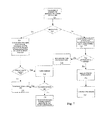
- Fig. 7 is a flow diagram illustrating an exemplary algorithm for antivirus scanning, on proxy server 102, of data downloaded from the data source 104 via network 103.
- data analysis module 204 of proxy server 102 computes an overall probability that the downloaded data contains malicious code. The process can be initiated in response to a direct request by the user of PC workstation 101 to downloaded a file, such as by clicking inside a Web browser on a link "download file”.
- data analysis module 204 determines that the overall probability that the downloaded data contains malicious code is high, the algorithm continues to block 703, where data analysis module 204 transmits information indicative of the high overall likelihood that the downloaded data contains malicious code to the antivirus module 202.
- antivirus module 202 and data analysis module 204 initiate operation in a high-risk mode.
- data analysis module 204 fully downloads data from the data server 104 into its cache 206.
- antivirus module 202 initiates feedback module 205, which transmits feedback information relating to the antivirus scanning to the PC workstation 101, such as information informing the user of PC workstation 101 that an antivirus scan is in progress.
- the feedback information can further include a progress indicator showing the download progress of the complete set of data to cache 206.
- This feedback information may be an HTML-page, an HTML-page with Javascript, an HTML-page with AJAX, or the like.
- This HTML-page automatically opens in the Web browser on PC workstation 101 and displays the progress of downloading the requested data to the proxy server 102, namely, cache 206, as well as their further antivirus scan after the downloading by the antivirus module 202, thereby providing information accounting for any apparent delay in transferring the file to the user, or simply apprising the user of the operation of the system's data security.
- antivirus module 202 performs an antivirus scan.
- the scan is completed, and, if malicious code isn't detected, then in block 705 antivirus module 202 initiates data transfer module 201b, which sends data to the PC workstation 101 from cache 206.
- the cache 206 is then cleared. If malicious code is detected, then antivirus module 202 attempts to treat the infection of the downloaded data at block 706. If, at block 707, the treatment is successful, then at block 705 data transmission module 201b transmits data to PC workstation 101 from the cache 206.
- the antivirus module 202 initiates the feedback module 205 to transfer to the PC workstation 101 messages that informs the user that the downloaded data contains malicious code.
- the downloaded data is kept from being accessible to the user, the connection terminated, and cache 206 is cleared.
- data analysis module 204 determines that the overall probability that the downloaded data contains malicious code is low, the algorithm will continue to block 709.
- data analysis module 204 transmits information about the low likelihood that the downloaded data contains malicious code to the antivirus module 202.
- the antivirus module 202 and data analysis module 204 initiate operation in low-risk mode.
- Data analysis module 204 begins to transmit data received from the data server 104 via the antivirus module 202 to data transmission module 201b, which in turn will transmit the data to PC workstation 101.
- the antivirus module 202 passes data to the data transmission module 201b for transmission in small amounts even before the end of the full scan.
- Data analysis module 204 provides an indication of the overall risk probability to antivirus module 202, which in turn, based on the rules for these probabilities, determines the depth of antivirus scan. With a higher overall risk probability, the scan is adjusted to be more extensive. Adjusting the depth of antivirus scanning can be done by adding or taking away different types of data analysis, such as signature analysis, heuristic analysis, and other known mechanisms for identifying malicious code, or by adjusting the comprehensiveness of a given type of analysis.
- Determination of the depth of antivirus scan may be determined by rules based both on classical and on fuzzy logic, which are found in database 203 of the proxy server 102. For example, in the described implementation of the system for antivirus scan of the data downloaded from the network on the server, there may be provided a rule from the database 203 of the proxy server 102 which states that if the overall probability that the downloaded data contains malicious code (as determined by data analysis module 204) is high, then the depth of the antivirus scan should be set to maximum level.
- the system's behavior is markedly different if the overall probability that the downloaded data contains malicious code is low.
- the data may be scanned by the antivirus module 202 while it is being transferred to PC workstation 101.
- the extensiveness of the antivirus scanning is also adjustable.
- the linguistic variable "overall probability" corresponds to values of "low”, “low-to-medium” “medium,” “medium-to-high” and "high”.
- the first four values are relevant for developing the algorithm, involving the transfer of data to the PC workstation 101 during the scanning process. For each such determination there is a rule in the database 203 of the proxy server 102.
- the antivirus module 202 based on the relevant rules from the database 203 of the proxy server 102, will complete a fast malware signature scan.
- antivirus module 202 based on the relevant rules from the database 203 of the proxy server 102, will perform the a more thorough check.
- the rate of data transfer during the scanning process changes. If the scan is most extensive, the speed of data transmission to the PC workstation 101 during the scanning process is set to be relatively slow. If the scan is not very deep, for example, only the signature analysis, the data transmission rate on the PC workstation 101 during the scanning process is substantially higher. Also in a particular embodiment, the depth of the antivirus scan can be set by the user.
- streaming data verification by the antivirus module 202 during transmission of data from data analysis module 204 to a PC workstation 101 via the antivirus module 202 and the data transmission module 201b is carried out.
- the downloaded data is disaggregated in the analysis module 204 into blocks and these blocks are sent to the antivirus module 202, where the data blocks are checked in sequence and, if the downloaded data does not contain malicious code, are sent to the PC workstation 101 via the data transmission module 201b.
- a similar process is carried out for all blocks into which the data received from data server 104 is disaggregated.
- the data transmission module 201b will transmit the remaining (as-yet un-transmitted) data to the PC workstation 101 at an increased rate due to the absence of the scan, which otherwise causes the transmission rate to be reduced.
- the antivirus module 202 finds that the data contains malicious code, then at block 712 the system mitigates risk due to the malicious code.
- the connection is terminated, and the antivirus module 202 via the feedback module 205 transmits to the PC workstation 101 information that the downloaded data contains malicious code. This approach applies in situations where treatment of infected data is not practicable or not desired.
- the connection is not terminated immediately. Instead, antivirus module 202 treats the complete set of data, and data transmission module transmits the treated file to PC workstation 101, along with a notification to be displayed to the user of PC workstation 101, and/or instructions for PC workstation 101 to replace the originally-streamed data with the treated data.
- a notification may be transmitted to PC workstation 101 to provide its user a notification that there will be a delay due to either re-transmission of the data, or due to treatment ad re-transmission of the data.
- a pop-up window or other suitable message may be initiated in the browser of PC workstation 101.
- PC workstation 101 may be programmed to receive and respond to an instruction from antivirus module 202.
- PC workstation 101 runs a Web browser plug-in that enables receipt and execution of the instruction to receive and replace the originally-streamed data with treated data.
- antivirus module 202 upon detection of malicious code in the data being uploaded to PC workstation 101, antivirus module 202, via data transmission module 201b, transmits an indication of the data being infected to PC workstation 101.
- the client-side software running on PC workstation 101 e.g., via Javascript or Web browser plug-in
- antivirus module 202 transmits instructions for performing the treatment along with the indication that the data is infected. This particular approach may be particularly useful in cases where the data being transferred is so large that the time to re-send the treated version of that data is greater than the time it would require to treat the data locally at PC workstation 101.
- the antivirus module 202 If, while the overall risk probability that the downloaded data contains malicious code is low, the antivirus module 202 nevertheless detects malicious code in the data, then the system recognizes that the overall risk probability was determined incorrectly, and the rules upon which this the overall probability was based are deemed to be obsolete. Therefore, at block 713, a correction of the database 203 of the proxy server 102 takes place.
- the rules based on fuzzy logic which were chosen to determine the overall probability, are sent to the security services provider for analysis and adjustment. If the rules are based on classical logic and the summary rating of rules is important to determine the overall probability, then only the coefficients k i can be sent to the service provider for editing.
- the security service provider in addition to regular updates of the database 203 of the proxy server 102 for the reliability of detection, feedback is sent to the security service provider for adjusting the rules, if the rules which determine the overall risk probability and, ultimately, the antivirus scan as a whole, are not valid.
- the service provider may adjust the rules manually, based on a review and analysis by a human analyst.
- automated systems either assist the human analyst in determining the corrections to make to the rules, or perform adjustment of the rules automatically without human involvement
- database 203 of the proxy server 102 may collect statistical information about the downloaded data.
- data is downloaded to a large number of PC workstations 101 via a proxy server 102.
- Identical data can be downloaded onto many PCs 101, for example, the same exact files from the same data server 104.
- the collected statistics in this case can allow the system to determine, in advance, whether a given user is downloading a file containing malicious code.
- database 203 of the proxy server 102 may be divided into two interrelated sections.
- the first section contains updateable rules that determine the overall likelihood that the downloaded data contains malicious code, as well as rules for determining the depth of the antivirus scan, depending on the overall likelihood that the downloaded data contains malicious code.
- a second section contains history and statistical data on all previously-downloaded objects, including those that contain malicious code. Such information may include names of downloaded files, the checksums of downloaded data, the IP address of the data server 104, the number of downloads of each file, the number of downloads from the same data server 104, the number of files containing malicious code for each data server 104, and the number of files not containing malicious code, and so on.
- the first section of the database 203 of the proxy server containing the rules for determining the overall risk probability that the downloaded data contains malicious code, as well as rules for determining the depth of antivirus scan (depending on the overall risk probability that the downloaded data contains malicious code) maintains priority rules for statistical data of the second section.
- rules can be based either on fuzzy, or on conventional logic, or on both.
- users of PC workstation 101 are provided an interface that facilitates setting up their own rules, or define parameter values for predefined rules.
- One such rule for example may be: "IF the source of the downloaded file is known and safe and the number of downloads of this file is more than 50, THEN the likelihood that the downloaded file contains malicious code is low".
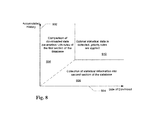
- FIG. 8 is a diagram illustrating a decision process according to one embodiment for whether, and when, to apply the set of priority rules.
- actions are taken based on an accumulated history 802 associated with a particular source of a download (e.g. a website), or with a particular file (which may have been obtained from numerous different sources). Actions are also taken based on the size of the file presently being downloaded 804.
- statistical information is collected and placed in the second section of database 203 of the proxy server 102, as depicted in region 806.
- data analysis module 204 operates in its primary operation mode as described above, indicated at region 808, in which it determines the parameters of the data that are applicable to the rule set, and applies the rules of the first section of the database 203 of the proxy server 102 to determine the overall risk probability that the downloaded data contains malicious code.
- region 808 there is either insufficient accumulation of history for the priority rules to be invoked, or the size of the file being downloaded does not present a significant obstacle to fast processing using operation of region 808.
- the priority rules based on that statistical information may be triggered at region 810 in FIG. 8 .
- invocation of the priority rules can also be based on a comparison of the parameters of the downloaded data with the rules of the first section of the database. Applying the exemplary priority rule presented above, for example, if the name of the downloaded file and its checksum match the name and checksum of a file from the second section of the database 203 of the proxy server 102, which contains statistical information and has been downloaded more than fifty times, and did not contain malicious code, then a priority rule will be invoked.
- Such a rule might override the usual overall risk probability determination to assign the overall risk probability to the lowest level, thus forcing a minimal-depth antivirus scan by the antivirus module 202.
- a priority rule may bypass antivirus checking altogether in order to increase the speed of data transmission to PC workstation 101.
- the priority rules may also apply to increase the level of scrutiny for checking downloaded data at the proxy server 102. For example, in one embodiment, if the data server 104 has been the source of more than 50 file downloads, and more than 10% of the downloads from that source have included malware, then a priority rule is invoked which overrides the usual overall risk probability determination and sets the overall risk probability to high, which would require a more comprehensive type of screening to be performed. In a related embodiment, a priority rule requires the initiation by the antivirus module 202 of the feedback module 205 for transmission the PC workstation 101 of a notification that the downloaded data contains malicious code. In this case, proxy server 102 can immediately disconnect from the data source, and forgo antivirus scanning by the antivirus module 202.
- a hierarchy of priority rules is used, in which the depth or thoroughness of antivirus scanning (or other security checks) are set based on the statistical confidence, margin of error, or other measure of accuracy of the statistical prediction of overall risk probability.
- the measure of confidence that this particular file from this particular source is free from malware is quite high. Accordingly, antivirus checking may be skipped in this instance.
- proxy server 102 is configured to perform certain scans on a sampling basis.
- antivirus scanning may be performed at a sampling interval of 10% of the time, for example.
- the sampling interval may be adjustable based on the strength or extent of the statistical data corresponding to the file or source deemed relatively safe.
- proxy server 102 includes a client-specific history database in which records are maintained representing each file transferred to each PC workstation 101. Each entry in the client-specific history database includes an indication of the type and extent of antivirus scans or other security checks, as well as whether (and what type) of treatment was performed for that download. If a file, which had been transferred to one or more PC workstations 101 with reduced, obsolete, or entirely skipped antivirus checks, is later determined to be infected with malware (such as if the file is sampled), the client-specific history database enables proxy server 102 to send notifications, via feedback module 205, to each client. The notifications can include instructions to implement corrective action, such as quarantining of the file and, if possible, instructions on treatment to be applied in order to remove the malware or instructions to initiate a new download from the proxy server 102 to obtain a treated replacement file.
- the notifications can include instructions to implement corrective action, such as quarantining of the file and, if possible, instructions on treatment to be applied in order to remove the malware or instructions to initiate a new download
- aspects of the present invention can be implemented as part of a computer system of one or more individual computers.
- the computer system can be one physical machine, or can be distributed among multiple physical machines, such as by role or function, or by process thread in the case of a cloud computing distributed model.
- aspects of the invention can be configured to run in virtual machines that in turn are executed on one or more physical machines. It will be understood by persons of skill in the art that features of the invention may be realized by a variety of different suitable machine implementations.
- Fig. 9 is a diagram illustrating a computer system 900 on which aspects of the invention as described herein may be implemented according to various embodiments.
- the computer system 900 may include a computing device such as a personal computer 902.
- the personal computer 902 includes one or more processing units 904, a system memory 906, a video interface 908, an output peripheral interface 910, a network interface 912, a user input interface 914, removable 916 and non-removable 918 memory interfaces and a system bus or high-speed communications channel 920 coupling the various components.
- the processing units 904 may have multiple logical cores that are able to process information stored on computer readable media such as the system memory 906 or memory attached to the removable 916 and non-removable memory interfaces 918.
- the computer 902 system memory 906 may include non-volatile memory such as Read Only Memory (ROM) 922 or volatile memory such as Random Access Memory (RAM) 924.
- ROM Read Only Memory
- RAM Random Access Memory
- the ROM 922 may include a basic input/output system (BIOS) 926 to help communicate with the other portion of the computer 902.
- BIOS basic input/output system
- the RAM 924 may store portions of various software applications such as the operating system 928, application programs 930 and other program modules 932. Further, the RAM 924 may store other information such as program or application data 934. In various embodiments, the RAM 924 stores information that requires low-latencies and efficient access, such as programs and data being manipulated or operated on.
- RAM 924 comprises Double Data Rate (DDR) memory, Error Correcting memory (ECC) or other memory technologies with varying latencies and configurations such as RAMBUS or DDR2 and DDR3.
- DDR Double Data Rate
- ECC Error Correcting memory
- the system memory 906 may store the input data store, access credential data store, operating memory data store, instruction set data store, analysis result data store and the operating memory data store.
- the processing units 904 may be configured to execute instructions that limit access to the aforementioned data stores by requiring access credential before access to the information is granted.
- the removable 916 and non-removable 918 memory interfaces may couple the computer 902 to disk drives 936 such as SSD or rotational disk drives.
- disk drives 936 may provide further storage for various software applications such as the operating system 938, application programs 940 and other program modules 942. Further, the disk drives 936 may store other information such as program or application data 944. In various embodiments, the disk drives 936 store information that doesn't require the same low-latencies as in other storage mediums. Further, the operating system 938, application program 940 data, program modules 942 and program or application data 944 may be the same information as that stored in the RAM 924 in various embodiments mentioned above or it may be different data potentially derivative of the RAM 924 stored data.
- the removable non-volatile memory interface 916 may couple the computer 902 to magnetic portable disk drives 946 that utilize magnetic media such as the floppy disk 948, Iomega® Zip or jazz, or optical disk drives 950 that utilize optical media 952 for storage of computer readable media such as Blu-Ray®, DVD-R/RW, CD-R/RW and other similar formats.
- magnetic portable disk drives 946 that utilize magnetic media such as the floppy disk 948, Iomega® Zip or jazz
- optical disk drives 950 that utilize optical media 952 for storage of computer readable media such as Blu-Ray®, DVD-R/RW, CD-R/RW and other similar formats.
- Other embodiments utilize SSD or rotational disks housed in portable enclosures 954 to increase the capacity of removable memory.
- Still other embodiments utilize removable Flash non-volatile memory devices that are interfaced with using a card reader device.
- the computer 902 may utilize the network interface 912 to communicate with one or more remote computers 956 over a local area network (LAN) 958 or a wide area network (WAN) 960.
- the network interface 912 may utilize a Network Interface Card (NIC) or other interface such as a modem 962 to enable communication.
- the modem 962 may enable communication over telephone lines, coaxial, fiber optic, powerline, or wirelessly.
- the remote computer 956 may contain a similar hardware and software configuration or may have a memory 964 that contains remote application programs 966 that may provide additional computer readable instructions to the computer 902.
- the remote computer memory 964 can be utilized to store information such as identified file information that may be later downloaded to local system memory 906.
- the remote computer 956 may be an application server, an administrative server, client computers, or a network appliance.
- a user may enter information to the computer 902 using input devices connected to the user input interface 914 such as a mouse 968 and keyboard 970. Additionally, the input device may be a trackpad, fingerprint scanner, joystick, barcode scanner, media scanner or the like.
- the video interface 908 may provide visual information to a display such as a monitor 972.
- the video interface 908 may be an embedded interface or it may be a discrete interface.
- the computer may utilize a plurality of video interfaces 908, network interfaces 912 and removable 916 and non-removable 918 interfaces in order to increase the flexibility in operation of the computer 902. Further, various embodiments utilize several monitors 972 and several video interfaces 908 to vary the performance and capabilities of the computer 902. Other computer interfaces may be included in computer 902 such as the output peripheral interface 910. This interface may be coupled to a printer 974 or speakers 976 or other peripherals to provide additional functionality to the computer 902.
- the processing unit 904 may include an embedded memory controller (not shown) to enable more efficient transfer of data from the system memory 906 than the system bus 920 may provide.
Landscapes
- Engineering & Computer Science (AREA)
- Computer Security & Cryptography (AREA)
- Computer Hardware Design (AREA)
- General Engineering & Computer Science (AREA)
- Theoretical Computer Science (AREA)
- Software Systems (AREA)
- General Health & Medical Sciences (AREA)
- Health & Medical Sciences (AREA)
- Virology (AREA)
- Signal Processing (AREA)
- Computer Networks & Wireless Communication (AREA)
- Physics & Mathematics (AREA)
- General Physics & Mathematics (AREA)
- Computing Systems (AREA)
- Computer And Data Communications (AREA)
- Information Transfer Between Computers (AREA)
Applications Claiming Priority (1)
| Application Number | Priority Date | Filing Date | Title |
|---|---|---|---|
| RU2010144593/08A RU2449348C1 (ru) | 2010-11-01 | 2010-11-01 | Система и способ для антивирусной проверки на стороне сервера скачиваемых из сети данных |
Publications (3)
| Publication Number | Publication Date |
|---|---|
| EP2447876A2 true EP2447876A2 (de) | 2012-05-02 |
| EP2447876A3 EP2447876A3 (de) | 2013-10-23 |
| EP2447876B1 EP2447876B1 (de) | 2016-09-07 |
Family
ID=44508826
Family Applications (1)
| Application Number | Title | Priority Date | Filing Date |
|---|---|---|---|
| EP11174657.4A Active EP2447876B1 (de) | 2010-11-01 | 2011-07-20 | System und Verfahren eines serverbasierten Antivirus-Scans von einem Netzwerk heruntergeladenen Daten |
Country Status (4)
| Country | Link |
|---|---|
| US (1) | US9003534B2 (de) |
| EP (1) | EP2447876B1 (de) |
| CN (1) | CN102195992B (de) |
| RU (1) | RU2449348C1 (de) |
Cited By (1)
| Publication number | Priority date | Publication date | Assignee | Title |
|---|---|---|---|---|
| WO2015066509A1 (en) * | 2013-10-31 | 2015-05-07 | Cyberpoint International Llc | Methods and systems for malware analysis |
Families Citing this family (186)
| Publication number | Priority date | Publication date | Assignee | Title |
|---|---|---|---|---|
| US8584239B2 (en) | 2004-04-01 | 2013-11-12 | Fireeye, Inc. | Virtual machine with dynamic data flow analysis |
| US8528086B1 (en) | 2004-04-01 | 2013-09-03 | Fireeye, Inc. | System and method of detecting computer worms |
| US8549638B2 (en) | 2004-06-14 | 2013-10-01 | Fireeye, Inc. | System and method of containing computer worms |
| US8793787B2 (en) | 2004-04-01 | 2014-07-29 | Fireeye, Inc. | Detecting malicious network content using virtual environment components |
| US8881282B1 (en) | 2004-04-01 | 2014-11-04 | Fireeye, Inc. | Systems and methods for malware attack detection and identification |
| US7587537B1 (en) | 2007-11-30 | 2009-09-08 | Altera Corporation | Serializer-deserializer circuits formed from input-output circuit registers |
| US9106694B2 (en) | 2004-04-01 | 2015-08-11 | Fireeye, Inc. | Electronic message analysis for malware detection |
| US8171553B2 (en) | 2004-04-01 | 2012-05-01 | Fireeye, Inc. | Heuristic based capture with replay to virtual machine |
| US8566946B1 (en) | 2006-04-20 | 2013-10-22 | Fireeye, Inc. | Malware containment on connection |
| US8898788B1 (en) | 2004-04-01 | 2014-11-25 | Fireeye, Inc. | Systems and methods for malware attack prevention |
| US9729513B2 (en) * | 2007-11-08 | 2017-08-08 | Glasswall (Ip) Limited | Using multiple layers of policy management to manage risk |
| US8997219B2 (en) | 2008-11-03 | 2015-03-31 | Fireeye, Inc. | Systems and methods for detecting malicious PDF network content |
| US8832829B2 (en) | 2009-09-30 | 2014-09-09 | Fireeye, Inc. | Network-based binary file extraction and analysis for malware detection |
| CN101877710B (zh) * | 2010-07-13 | 2012-10-17 | 成都市华为赛门铁克科技有限公司 | 代理网关防病毒实现方法、预分类器和代理网关 |
| US8533834B1 (en) * | 2011-04-22 | 2013-09-10 | Juniper Networks, Inc. | Antivirus intelligent flow framework |
| US9141805B2 (en) * | 2011-09-16 | 2015-09-22 | Rapid7 LLC | Methods and systems for improved risk scoring of vulnerabilities |
| WO2013117151A1 (zh) * | 2012-02-07 | 2013-08-15 | 北京奇虎科技有限公司 | 文件快速扫描方法和系统 |
| CN103369520B (zh) * | 2012-03-27 | 2016-12-14 | 百度在线网络技术(北京)有限公司 | 移动终端的应用程序可疑行为的意图预判系统及方法 |
| CN103366116B (zh) * | 2012-03-27 | 2016-12-14 | 百度在线网络技术(北京)有限公司 | 移动终端的应用程序潜在威胁的预判系统、方法及装置 |
| US9661003B2 (en) * | 2012-05-11 | 2017-05-23 | Thomas W. Parker | System and method for forensic cyber adversary profiling, attribution and attack identification |
| US9270689B1 (en) * | 2012-06-21 | 2016-02-23 | Cisco Technology, Inc. | Dynamic and adaptive traffic scanning |
| US8646064B1 (en) | 2012-08-07 | 2014-02-04 | Cloudflare, Inc. | Determining the likelihood of traffic being legitimately received at a proxy server in a cloud-based proxy service |
| CN102982278B (zh) * | 2012-10-31 | 2015-09-16 | 北京奇虎科技有限公司 | 一种扫描文件的方法、装置和系统 |
| CN102970283B (zh) * | 2012-10-31 | 2015-08-12 | 北京奇虎科技有限公司 | 文件扫描系统 |
| RU2536664C2 (ru) * | 2012-12-25 | 2014-12-27 | Закрытое акционерное общество "Лаборатория Касперского" | Система и способ автоматической модификации антивирусной базы данных |
| US10572665B2 (en) | 2012-12-28 | 2020-02-25 | Fireeye, Inc. | System and method to create a number of breakpoints in a virtual machine via virtual machine trapping events |
| US9092615B1 (en) * | 2013-01-28 | 2015-07-28 | Symantec Corporation | Identifying application sources on non-rooted devices |
| US9009823B1 (en) | 2013-02-23 | 2015-04-14 | Fireeye, Inc. | Framework for efficient security coverage of mobile software applications installed on mobile devices |
| US9176843B1 (en) | 2013-02-23 | 2015-11-03 | Fireeye, Inc. | Framework for efficient security coverage of mobile software applications |
| US9195829B1 (en) | 2013-02-23 | 2015-11-24 | Fireeye, Inc. | User interface with real-time visual playback along with synchronous textual analysis log display and event/time index for anomalous behavior detection in applications |
| US9367681B1 (en) | 2013-02-23 | 2016-06-14 | Fireeye, Inc. | Framework for efficient security coverage of mobile software applications using symbolic execution to reach regions of interest within an application |
| US8990944B1 (en) | 2013-02-23 | 2015-03-24 | Fireeye, Inc. | Systems and methods for automatically detecting backdoors |
| US9355247B1 (en) | 2013-03-13 | 2016-05-31 | Fireeye, Inc. | File extraction from memory dump for malicious content analysis |
| US9626509B1 (en) | 2013-03-13 | 2017-04-18 | Fireeye, Inc. | Malicious content analysis with multi-version application support within single operating environment |
| US9104867B1 (en) | 2013-03-13 | 2015-08-11 | Fireeye, Inc. | Malicious content analysis using simulated user interaction without user involvement |
| US9430646B1 (en) | 2013-03-14 | 2016-08-30 | Fireeye, Inc. | Distributed systems and methods for automatically detecting unknown bots and botnets |
| US9311479B1 (en) | 2013-03-14 | 2016-04-12 | Fireeye, Inc. | Correlation and consolidation of analytic data for holistic view of a malware attack |
| US10713358B2 (en) | 2013-03-15 | 2020-07-14 | Fireeye, Inc. | System and method to extract and utilize disassembly features to classify software intent |
| WO2014145805A1 (en) | 2013-03-15 | 2014-09-18 | Mandiant, Llc | System and method employing structured intelligence to verify and contain threats at endpoints |
| CN103150518B (zh) * | 2013-03-22 | 2016-02-17 | 腾讯科技(深圳)有限公司 | 一种文件实时防护的方法和装置 |
| US10409987B2 (en) | 2013-03-31 | 2019-09-10 | AO Kaspersky Lab | System and method for adaptive modification of antivirus databases |
| US9495180B2 (en) | 2013-05-10 | 2016-11-15 | Fireeye, Inc. | Optimized resource allocation for virtual machines within a malware content detection system |
| US9635039B1 (en) | 2013-05-13 | 2017-04-25 | Fireeye, Inc. | Classifying sets of malicious indicators for detecting command and control communications associated with malware |
| CN104217155A (zh) * | 2013-05-30 | 2014-12-17 | 宁夏新航信息科技有限公司 | 一种对计算机软件进行保护的方法和装置 |
| US10133863B2 (en) | 2013-06-24 | 2018-11-20 | Fireeye, Inc. | Zero-day discovery system |
| US9491193B2 (en) * | 2013-06-27 | 2016-11-08 | Secureage Technology, Inc. | System and method for antivirus protection |
| US9300686B2 (en) | 2013-06-28 | 2016-03-29 | Fireeye, Inc. | System and method for detecting malicious links in electronic messages |
| US9477728B2 (en) * | 2013-08-09 | 2016-10-25 | Oracle International Corporation | Handling of errors in data transferred from a source application to a target application of an enterprise resource planning (ERP) system |
| US9294501B2 (en) | 2013-09-30 | 2016-03-22 | Fireeye, Inc. | Fuzzy hash of behavioral results |
| US10515214B1 (en) | 2013-09-30 | 2019-12-24 | Fireeye, Inc. | System and method for classifying malware within content created during analysis of a specimen |
| US9171160B2 (en) * | 2013-09-30 | 2015-10-27 | Fireeye, Inc. | Dynamically adaptive framework and method for classifying malware using intelligent static, emulation, and dynamic analyses |
| US9736179B2 (en) | 2013-09-30 | 2017-08-15 | Fireeye, Inc. | System, apparatus and method for using malware analysis results to drive adaptive instrumentation of virtual machines to improve exploit detection |
| US9628507B2 (en) | 2013-09-30 | 2017-04-18 | Fireeye, Inc. | Advanced persistent threat (APT) detection center |
| US9690936B1 (en) | 2013-09-30 | 2017-06-27 | Fireeye, Inc. | Multistage system and method for analyzing obfuscated content for malware |
| CN103632094B (zh) * | 2013-11-04 | 2017-11-14 | 天津汉柏信息技术有限公司 | 一种云计算大数据上传病毒防御系统 |
| US9921978B1 (en) | 2013-11-08 | 2018-03-20 | Fireeye, Inc. | System and method for enhanced security of storage devices |
| CN103605608B (zh) * | 2013-12-04 | 2016-04-20 | 中国航空综合技术研究所 | 一种嵌入式软件安全性分析充分性检查方法 |
| CN103632073A (zh) * | 2013-12-05 | 2014-03-12 | 北京网秦天下科技有限公司 | 用于控制终端应用权限的方法和装置 |
| US9405904B1 (en) * | 2013-12-23 | 2016-08-02 | Symantec Corporation | Systems and methods for providing security for synchronized files |
| US9747446B1 (en) | 2013-12-26 | 2017-08-29 | Fireeye, Inc. | System and method for run-time object classification |
| US9756074B2 (en) | 2013-12-26 | 2017-09-05 | Fireeye, Inc. | System and method for IPS and VM-based detection of suspicious objects |
| US9292686B2 (en) | 2014-01-16 | 2016-03-22 | Fireeye, Inc. | Micro-virtualization architecture for threat-aware microvisor deployment in a node of a network environment |
| US9262635B2 (en) | 2014-02-05 | 2016-02-16 | Fireeye, Inc. | Detection efficacy of virtual machine-based analysis with application specific events |
| US9241010B1 (en) | 2014-03-20 | 2016-01-19 | Fireeye, Inc. | System and method for network behavior detection |
| US10242185B1 (en) | 2014-03-21 | 2019-03-26 | Fireeye, Inc. | Dynamic guest image creation and rollback |
| US9591015B1 (en) | 2014-03-28 | 2017-03-07 | Fireeye, Inc. | System and method for offloading packet processing and static analysis operations |
| US9432389B1 (en) | 2014-03-31 | 2016-08-30 | Fireeye, Inc. | System, apparatus and method for detecting a malicious attack based on static analysis of a multi-flow object |
| US9223972B1 (en) | 2014-03-31 | 2015-12-29 | Fireeye, Inc. | Dynamically remote tuning of a malware content detection system |
| EP2942925B1 (de) * | 2014-05-05 | 2016-08-24 | Advanced Digital Broadcast S.A. | Verfahren und System zur Bereitstellung eines privaten Netzwerks |
| US9973531B1 (en) | 2014-06-06 | 2018-05-15 | Fireeye, Inc. | Shellcode detection |
| US9438623B1 (en) | 2014-06-06 | 2016-09-06 | Fireeye, Inc. | Computer exploit detection using heap spray pattern matching |
| US9594912B1 (en) | 2014-06-06 | 2017-03-14 | Fireeye, Inc. | Return-oriented programming detection |
| US10084813B2 (en) | 2014-06-24 | 2018-09-25 | Fireeye, Inc. | Intrusion prevention and remedy system |
| US9398028B1 (en) | 2014-06-26 | 2016-07-19 | Fireeye, Inc. | System, device and method for detecting a malicious attack based on communcations between remotely hosted virtual machines and malicious web servers |
| US10805340B1 (en) | 2014-06-26 | 2020-10-13 | Fireeye, Inc. | Infection vector and malware tracking with an interactive user display |
| US10002252B2 (en) | 2014-07-01 | 2018-06-19 | Fireeye, Inc. | Verification of trusted threat-aware microvisor |
| US9363280B1 (en) | 2014-08-22 | 2016-06-07 | Fireeye, Inc. | System and method of detecting delivery of malware using cross-customer data |
| US10671726B1 (en) | 2014-09-22 | 2020-06-02 | Fireeye Inc. | System and method for malware analysis using thread-level event monitoring |
| US10027689B1 (en) | 2014-09-29 | 2018-07-17 | Fireeye, Inc. | Interactive infection visualization for improved exploit detection and signature generation for malware and malware families |
| US9773112B1 (en) | 2014-09-29 | 2017-09-26 | Fireeye, Inc. | Exploit detection of malware and malware families |
| US9690933B1 (en) | 2014-12-22 | 2017-06-27 | Fireeye, Inc. | Framework for classifying an object as malicious with machine learning for deploying updated predictive models |
| US10075455B2 (en) | 2014-12-26 | 2018-09-11 | Fireeye, Inc. | Zero-day rotating guest image profile |
| US9934376B1 (en) | 2014-12-29 | 2018-04-03 | Fireeye, Inc. | Malware detection appliance architecture |
| US9838417B1 (en) | 2014-12-30 | 2017-12-05 | Fireeye, Inc. | Intelligent context aware user interaction for malware detection |
| US10148693B2 (en) | 2015-03-25 | 2018-12-04 | Fireeye, Inc. | Exploit detection system |
| US9690606B1 (en) | 2015-03-25 | 2017-06-27 | Fireeye, Inc. | Selective system call monitoring |
| US9438613B1 (en) | 2015-03-30 | 2016-09-06 | Fireeye, Inc. | Dynamic content activation for automated analysis of embedded objects |
| US10474813B1 (en) | 2015-03-31 | 2019-11-12 | Fireeye, Inc. | Code injection technique for remediation at an endpoint of a network |
| US9483644B1 (en) | 2015-03-31 | 2016-11-01 | Fireeye, Inc. | Methods for detecting file altering malware in VM based analysis |
| US10417031B2 (en) | 2015-03-31 | 2019-09-17 | Fireeye, Inc. | Selective virtualization for security threat detection |
| US9654485B1 (en) | 2015-04-13 | 2017-05-16 | Fireeye, Inc. | Analytics-based security monitoring system and method |
| US9594904B1 (en) | 2015-04-23 | 2017-03-14 | Fireeye, Inc. | Detecting malware based on reflection |
| US9813437B2 (en) * | 2015-06-15 | 2017-11-07 | Symantec Corporation | Systems and methods for determining malicious-download risk based on user behavior |
| US10341355B1 (en) | 2015-06-23 | 2019-07-02 | Amazon Technologies, Inc. | Confidential malicious behavior analysis for virtual computing resources |
| US10129291B2 (en) * | 2015-06-27 | 2018-11-13 | Mcafee, Llc | Anomaly detection to identify malware |
| US10642753B1 (en) | 2015-06-30 | 2020-05-05 | Fireeye, Inc. | System and method for protecting a software component running in virtual machine using a virtualization layer |
| US10726127B1 (en) | 2015-06-30 | 2020-07-28 | Fireeye, Inc. | System and method for protecting a software component running in a virtual machine through virtual interrupts by the virtualization layer |
| US11113086B1 (en) | 2015-06-30 | 2021-09-07 | Fireeye, Inc. | Virtual system and method for securing external network connectivity |
| US10454950B1 (en) | 2015-06-30 | 2019-10-22 | Fireeye, Inc. | Centralized aggregation technique for detecting lateral movement of stealthy cyber-attacks |
| GB2540949B (en) * | 2015-07-31 | 2019-01-30 | Arm Ip Ltd | Probabilistic Processor Monitoring |
| US10715542B1 (en) | 2015-08-14 | 2020-07-14 | Fireeye, Inc. | Mobile application risk analysis |
| US10176321B2 (en) | 2015-09-22 | 2019-01-08 | Fireeye, Inc. | Leveraging behavior-based rules for malware family classification |
| US10033747B1 (en) | 2015-09-29 | 2018-07-24 | Fireeye, Inc. | System and method for detecting interpreter-based exploit attacks |
| US9825989B1 (en) | 2015-09-30 | 2017-11-21 | Fireeye, Inc. | Cyber attack early warning system |
| US10817606B1 (en) | 2015-09-30 | 2020-10-27 | Fireeye, Inc. | Detecting delayed activation malware using a run-time monitoring agent and time-dilation logic |
| US10601865B1 (en) | 2015-09-30 | 2020-03-24 | Fireeye, Inc. | Detection of credential spearphishing attacks using email analysis |
| RU2617923C2 (ru) * | 2015-09-30 | 2017-04-28 | Акционерное общество "Лаборатория Касперского" | Система и способ настройки антивирусной проверки |
| US10210329B1 (en) | 2015-09-30 | 2019-02-19 | Fireeye, Inc. | Method to detect application execution hijacking using memory protection |
| US9825976B1 (en) | 2015-09-30 | 2017-11-21 | Fireeye, Inc. | Detection and classification of exploit kits |
| US10706149B1 (en) | 2015-09-30 | 2020-07-07 | Fireeye, Inc. | Detecting delayed activation malware using a primary controller and plural time controllers |
| US10284575B2 (en) | 2015-11-10 | 2019-05-07 | Fireeye, Inc. | Launcher for setting analysis environment variations for malware detection |
| US10846117B1 (en) | 2015-12-10 | 2020-11-24 | Fireeye, Inc. | Technique for establishing secure communication between host and guest processes of a virtualization architecture |
| US10447728B1 (en) | 2015-12-10 | 2019-10-15 | Fireeye, Inc. | Technique for protecting guest processes using a layered virtualization architecture |
| US10108446B1 (en) | 2015-12-11 | 2018-10-23 | Fireeye, Inc. | Late load technique for deploying a virtualization layer underneath a running operating system |
| US10565378B1 (en) | 2015-12-30 | 2020-02-18 | Fireeye, Inc. | Exploit of privilege detection framework |
| US10133866B1 (en) | 2015-12-30 | 2018-11-20 | Fireeye, Inc. | System and method for triggering analysis of an object for malware in response to modification of that object |
| US10050998B1 (en) * | 2015-12-30 | 2018-08-14 | Fireeye, Inc. | Malicious message analysis system |
| US10621338B1 (en) | 2015-12-30 | 2020-04-14 | Fireeye, Inc. | Method to detect forgery and exploits using last branch recording registers |
| US9824216B1 (en) | 2015-12-31 | 2017-11-21 | Fireeye, Inc. | Susceptible environment detection system |
| US11552986B1 (en) | 2015-12-31 | 2023-01-10 | Fireeye Security Holdings Us Llc | Cyber-security framework for application of virtual features |
| US10581874B1 (en) | 2015-12-31 | 2020-03-03 | Fireeye, Inc. | Malware detection system with contextual analysis |
| JP2017142552A (ja) * | 2016-02-08 | 2017-08-17 | 株式会社日立アドバンストシステムズ | マルウェア注意喚起装置および方法 |
| US10785255B1 (en) | 2016-03-25 | 2020-09-22 | Fireeye, Inc. | Cluster configuration within a scalable malware detection system |
| US10616266B1 (en) | 2016-03-25 | 2020-04-07 | Fireeye, Inc. | Distributed malware detection system and submission workflow thereof |
| US10601863B1 (en) | 2016-03-25 | 2020-03-24 | Fireeye, Inc. | System and method for managing sensor enrollment |
| US10671721B1 (en) | 2016-03-25 | 2020-06-02 | Fireeye, Inc. | Timeout management services |
| US10893059B1 (en) | 2016-03-31 | 2021-01-12 | Fireeye, Inc. | Verification and enhancement using detection systems located at the network periphery and endpoint devices |
| US10826933B1 (en) | 2016-03-31 | 2020-11-03 | Fireeye, Inc. | Technique for verifying exploit/malware at malware detection appliance through correlation with endpoints |
| JP6391889B2 (ja) * | 2016-04-19 | 2018-09-19 | 三菱電機株式会社 | 中継装置 |
| RU2634177C1 (ru) * | 2016-05-20 | 2017-10-24 | Акционерное общество "Лаборатория Касперского" | Система и способ обнаружения нежелательного программного обеспечения |
| US10169585B1 (en) | 2016-06-22 | 2019-01-01 | Fireeye, Inc. | System and methods for advanced malware detection through placement of transition events |
| US10462173B1 (en) | 2016-06-30 | 2019-10-29 | Fireeye, Inc. | Malware detection verification and enhancement by coordinating endpoint and malware detection systems |
| US10592678B1 (en) | 2016-09-09 | 2020-03-17 | Fireeye, Inc. | Secure communications between peers using a verified virtual trusted platform module |
| US10491627B1 (en) | 2016-09-29 | 2019-11-26 | Fireeye, Inc. | Advanced malware detection using similarity analysis |
| CN106503556A (zh) * | 2016-10-25 | 2017-03-15 | 广东欧珀移动通信有限公司 | 数据存储的方法、装置及系统 |
| US10795991B1 (en) | 2016-11-08 | 2020-10-06 | Fireeye, Inc. | Enterprise search |
| US10587647B1 (en) | 2016-11-22 | 2020-03-10 | Fireeye, Inc. | Technique for malware detection capability comparison of network security devices |
| US10581879B1 (en) | 2016-12-22 | 2020-03-03 | Fireeye, Inc. | Enhanced malware detection for generated objects |
| US10552610B1 (en) | 2016-12-22 | 2020-02-04 | Fireeye, Inc. | Adaptive virtual machine snapshot update framework for malware behavioral analysis |
| US10523609B1 (en) | 2016-12-27 | 2019-12-31 | Fireeye, Inc. | Multi-vector malware detection and analysis |
| US10904286B1 (en) | 2017-03-24 | 2021-01-26 | Fireeye, Inc. | Detection of phishing attacks using similarity analysis |
| US10791138B1 (en) | 2017-03-30 | 2020-09-29 | Fireeye, Inc. | Subscription-based malware detection |
| US10848397B1 (en) | 2017-03-30 | 2020-11-24 | Fireeye, Inc. | System and method for enforcing compliance with subscription requirements for cyber-attack detection service |
| US10902119B1 (en) * | 2017-03-30 | 2021-01-26 | Fireeye, Inc. | Data extraction system for malware analysis |
| US10798112B2 (en) | 2017-03-30 | 2020-10-06 | Fireeye, Inc. | Attribute-controlled malware detection |
| US10902125B2 (en) * | 2017-04-06 | 2021-01-26 | Walmart Apollo, Llc | Infected file detection and quarantine system |
| US10601848B1 (en) | 2017-06-29 | 2020-03-24 | Fireeye, Inc. | Cyber-security system and method for weak indicator detection and correlation to generate strong indicators |
| US10855700B1 (en) | 2017-06-29 | 2020-12-01 | Fireeye, Inc. | Post-intrusion detection of cyber-attacks during lateral movement within networks |
| US10503904B1 (en) | 2017-06-29 | 2019-12-10 | Fireeye, Inc. | Ransomware detection and mitigation |
| US10893068B1 (en) | 2017-06-30 | 2021-01-12 | Fireeye, Inc. | Ransomware file modification prevention technique |
| US10462208B2 (en) * | 2017-07-11 | 2019-10-29 | Bank Of America Corporation | File transfer system with dynamic file exchange control functions |
| US10747872B1 (en) | 2017-09-27 | 2020-08-18 | Fireeye, Inc. | System and method for preventing malware evasion |
| US10805346B2 (en) | 2017-10-01 | 2020-10-13 | Fireeye, Inc. | Phishing attack detection |
| US11108809B2 (en) | 2017-10-27 | 2021-08-31 | Fireeye, Inc. | System and method for analyzing binary code for malware classification using artificial neural network techniques |
| US11005860B1 (en) | 2017-12-28 | 2021-05-11 | Fireeye, Inc. | Method and system for efficient cybersecurity analysis of endpoint events |
| US11240275B1 (en) | 2017-12-28 | 2022-02-01 | Fireeye Security Holdings Us Llc | Platform and method for performing cybersecurity analyses employing an intelligence hub with a modular architecture |
| US11271955B2 (en) | 2017-12-28 | 2022-03-08 | Fireeye Security Holdings Us Llc | Platform and method for retroactive reclassification employing a cybersecurity-based global data store |
| CN110071845B (zh) * | 2018-01-24 | 2021-09-10 | 中国移动通信有限公司研究院 | 一种对未知应用进行分类的方法及装置 |
| US10826931B1 (en) | 2018-03-29 | 2020-11-03 | Fireeye, Inc. | System and method for predicting and mitigating cybersecurity system misconfigurations |
| US11003773B1 (en) | 2018-03-30 | 2021-05-11 | Fireeye, Inc. | System and method for automatically generating malware detection rule recommendations |
| US11558401B1 (en) | 2018-03-30 | 2023-01-17 | Fireeye Security Holdings Us Llc | Multi-vector malware detection data sharing system for improved detection |
| US10956477B1 (en) | 2018-03-30 | 2021-03-23 | Fireeye, Inc. | System and method for detecting malicious scripts through natural language processing modeling |
| US10594717B2 (en) * | 2018-05-03 | 2020-03-17 | Sophos Limited | Context-dependent timeout for remote security services |
| US11075930B1 (en) | 2018-06-27 | 2021-07-27 | Fireeye, Inc. | System and method for detecting repetitive cybersecurity attacks constituting an email campaign |
| US11314859B1 (en) | 2018-06-27 | 2022-04-26 | FireEye Security Holdings, Inc. | Cyber-security system and method for detecting escalation of privileges within an access token |
| US11228491B1 (en) | 2018-06-28 | 2022-01-18 | Fireeye Security Holdings Us Llc | System and method for distributed cluster configuration monitoring and management |
| US11316900B1 (en) | 2018-06-29 | 2022-04-26 | FireEye Security Holdings Inc. | System and method for automatically prioritizing rules for cyber-threat detection and mitigation |
| US10333898B1 (en) | 2018-07-09 | 2019-06-25 | Centripetal Networks, Inc. | Methods and systems for efficient network protection |
| CN110875900B (zh) * | 2018-08-31 | 2022-06-21 | 重庆小雨点小额贷款有限公司 | 企业安全管理方法、装置及安全管理服务器 |
| CN109525546A (zh) * | 2018-09-11 | 2019-03-26 | 江苏拓华人防工程有限公司 | 一种面向移动终端的云监控系统 |
| US11182473B1 (en) | 2018-09-13 | 2021-11-23 | Fireeye Security Holdings Us Llc | System and method for mitigating cyberattacks against processor operability by a guest process |
| US11763004B1 (en) | 2018-09-27 | 2023-09-19 | Fireeye Security Holdings Us Llc | System and method for bootkit detection |
| CN109274585A (zh) * | 2018-10-12 | 2019-01-25 | 山东鲁能软件技术有限公司 | 基于ajax的b/s模式下的即时消息桌面系统及方法 |
| US11368475B1 (en) | 2018-12-21 | 2022-06-21 | Fireeye Security Holdings Us Llc | System and method for scanning remote services to locate stored objects with malware |
| US12074887B1 (en) | 2018-12-21 | 2024-08-27 | Musarubra Us Llc | System and method for selectively processing content after identification and removal of malicious content |
| CN110086806B (zh) * | 2019-04-26 | 2020-04-14 | 中国南方电网有限责任公司 | 一种厂站设备系统漏洞的扫描系统 |
| US11258806B1 (en) | 2019-06-24 | 2022-02-22 | Mandiant, Inc. | System and method for automatically associating cybersecurity intelligence to cyberthreat actors |
| US11968241B1 (en) * | 2019-06-26 | 2024-04-23 | Amazon Technologies, Inc. | Auto-tuning permissions using a learning mode |
| US11556640B1 (en) | 2019-06-27 | 2023-01-17 | Mandiant, Inc. | Systems and methods for automated cybersecurity analysis of extracted binary string sets |
| US11392700B1 (en) | 2019-06-28 | 2022-07-19 | Fireeye Security Holdings Us Llc | System and method for supporting cross-platform data verification |
| US11886585B1 (en) | 2019-09-27 | 2024-01-30 | Musarubra Us Llc | System and method for identifying and mitigating cyberattacks through malicious position-independent code execution |
| US11637862B1 (en) | 2019-09-30 | 2023-04-25 | Mandiant, Inc. | System and method for surfacing cyber-security threats with a self-learning recommendation engine |
| FR3104761A1 (fr) * | 2019-12-12 | 2021-06-18 | Orange | Procédé de surveillance de données transitant par un équipement utilisateur |
| CN113240225B (zh) * | 2021-03-02 | 2023-12-12 | 国网浙江省电力有限公司建设分公司 | 基于模糊最劣指标的输变电工程造价风险定级方法 |
| US11526609B1 (en) * | 2021-11-18 | 2022-12-13 | Uab 360 It | System and method for recent file malware scanning |
| CN117112229A (zh) * | 2023-09-13 | 2023-11-24 | 郑州雷棠信息科技有限公司 | 云计算大数据上传病毒防御系统及方法 |
Citations (1)
| Publication number | Priority date | Publication date | Assignee | Title |
|---|---|---|---|---|
| US20080301796A1 (en) | 2007-05-31 | 2008-12-04 | Microsoft Corporation | Adjusting the Levels of Anti-Malware Protection |
Family Cites Families (32)
| Publication number | Priority date | Publication date | Assignee | Title |
|---|---|---|---|---|
| ATE441897T1 (de) * | 1995-02-13 | 2009-09-15 | Intertrust Tech Corp | Systeme und verfahren zur verwaltung von gesicherten transaktionen und zum schutz von elektronischen rechten |
| US5889943A (en) | 1995-09-26 | 1999-03-30 | Trend Micro Incorporated | Apparatus and method for electronic mail virus detection and elimination |
| US5623600A (en) | 1995-09-26 | 1997-04-22 | Trend Micro, Incorporated | Virus detection and removal apparatus for computer networks |
| US6119165A (en) | 1997-11-17 | 2000-09-12 | Trend Micro, Inc. | Controlled distribution of application programs in a computer network |
| US6088803A (en) * | 1997-12-30 | 2000-07-11 | Intel Corporation | System for virus-checking network data during download to a client device |
| GB2353372B (en) * | 1999-12-24 | 2001-08-22 | F Secure Oyj | Remote computer virus scanning |
| US7096502B1 (en) * | 2000-02-08 | 2006-08-22 | Harris Corporation | System and method for assessing the security posture of a network |
| US6785732B1 (en) | 2000-09-11 | 2004-08-31 | International Business Machines Corporation | Web server apparatus and method for virus checking |
| US20020059371A1 (en) | 2000-11-16 | 2002-05-16 | Jamail John M. | Caching proxy streaming appliance systems and methods |
| US7383574B2 (en) * | 2000-11-22 | 2008-06-03 | Hewlett Packard Development Company L.P. | Method and system for limiting the impact of undesirable behavior of computers on a shared data network |
| US7363657B2 (en) | 2001-03-12 | 2008-04-22 | Emc Corporation | Using a virus checker in one file server to check for viruses in another file server |
| US7188367B1 (en) | 2001-03-30 | 2007-03-06 | Moafee, Inc. | Virus scanning prioritization using pre-processor checking |
| DE60200323T2 (de) * | 2002-03-26 | 2005-02-24 | Soteres Gmbh | Verfahren zum Schutz der Integrität von Programmen |
| US7437760B2 (en) * | 2002-10-10 | 2008-10-14 | International Business Machines Corporation | Antiviral network system |
| JP4181965B2 (ja) | 2002-11-11 | 2008-11-19 | キヤノン株式会社 | コンピュータ周辺装置およびその制御方法 |
| US7640586B1 (en) * | 2003-07-07 | 2009-12-29 | Mcafee, Inc. | Reducing HTTP malware scanner latency using HTTP range queries for random access |
| US8544096B2 (en) | 2003-12-30 | 2013-09-24 | Emc Corporation | On-access and on-demand distributed virus scanning |
| US7567573B2 (en) | 2004-09-07 | 2009-07-28 | F5 Networks, Inc. | Method for automatic traffic interception |
| US20070294373A1 (en) * | 2004-10-22 | 2007-12-20 | Simon Harrison | Management of Content Download |
| JP2006195702A (ja) | 2005-01-13 | 2006-07-27 | Hitachi Ltd | データ処理システム及び方法 |
| US7844700B2 (en) | 2005-03-31 | 2010-11-30 | Microsoft Corporation | Latency free scanning of malware at a network transit point |
| US8516583B2 (en) * | 2005-03-31 | 2013-08-20 | Microsoft Corporation | Aggregating the knowledge base of computer systems to proactively protect a computer from malware |
| WO2007038517A1 (en) * | 2005-09-26 | 2007-04-05 | Wiresoft, Inc. | Methods, software and apparatus for detecting and neutralizing viruses from computer systems and networks |
| US7761915B2 (en) | 2005-12-28 | 2010-07-20 | Zyxel Communications Corp. | Terminal and related computer-implemented method for detecting malicious data for computer network |
| US20080047009A1 (en) | 2006-07-20 | 2008-02-21 | Kevin Overcash | System and method of securing networks against applications threats |
| US8255999B2 (en) | 2007-05-24 | 2012-08-28 | Microsoft Corporation | Anti-virus scanning of partially available content |
| US7392544B1 (en) | 2007-12-18 | 2008-06-24 | Kaspersky Lab, Zao | Method and system for anti-malware scanning with variable scan settings |
| US8214977B2 (en) * | 2008-05-21 | 2012-07-10 | Symantec Corporation | Centralized scanner database with optimal definition distribution using network queries |
| KR20100023494A (ko) | 2008-08-22 | 2010-03-04 | 엘지전자 주식회사 | 단말기 및 그 바이러스 보호 방법 |
| RU83145U1 (ru) * | 2008-08-25 | 2009-05-20 | Государственное образовательное учреждение высшего профессионального образования Академия Федеральной службы охраны Российской Федерации (Академия ФСО России) | Устройство обнаружения вирусных воздействий на информационные системы |
| RU94016U1 (ru) * | 2009-12-02 | 2010-05-10 | Закрытое акционерное общество "Лаборатория Касперского" | Система обнаружения обфусцированного кода вредоносного программного обеспечения |
| US8869277B2 (en) * | 2010-09-30 | 2014-10-21 | Microsoft Corporation | Realtime multiple engine selection and combining |
-
2010
- 2010-11-01 RU RU2010144593/08A patent/RU2449348C1/ru active
-
2011
- 2011-03-31 US US13/077,328 patent/US9003534B2/en active Active
- 2011-07-01 CN CN201110183649.8A patent/CN102195992B/zh active Active
- 2011-07-20 EP EP11174657.4A patent/EP2447876B1/de active Active
Patent Citations (1)
| Publication number | Priority date | Publication date | Assignee | Title |
|---|---|---|---|---|
| US20080301796A1 (en) | 2007-05-31 | 2008-12-04 | Microsoft Corporation | Adjusting the Levels of Anti-Malware Protection |
Cited By (2)
| Publication number | Priority date | Publication date | Assignee | Title |
|---|---|---|---|---|
| WO2015066509A1 (en) * | 2013-10-31 | 2015-05-07 | Cyberpoint International Llc | Methods and systems for malware analysis |
| US9350747B2 (en) | 2013-10-31 | 2016-05-24 | Cyberpoint International Llc | Methods and systems for malware analysis |
Also Published As
| Publication number | Publication date |
|---|---|
| CN102195992A (zh) | 2011-09-21 |
| CN102195992B (zh) | 2014-08-06 |
| RU2449348C1 (ru) | 2012-04-27 |
| US9003534B2 (en) | 2015-04-07 |
| US20120110667A1 (en) | 2012-05-03 |
| EP2447876B1 (de) | 2016-09-07 |
| EP2447876A3 (de) | 2013-10-23 |
Similar Documents
| Publication | Publication Date | Title |
|---|---|---|
| EP2447876B1 (de) | System und Verfahren eines serverbasierten Antivirus-Scans von einem Netzwerk heruntergeladenen Daten | |
| US11743290B2 (en) | System and method for detecting cyberattacks impersonating legitimate sources | |
| AU2018217323B2 (en) | Methods and systems for identifying potential enterprise software threats based on visual and non-visual data | |
| US10902117B1 (en) | Framework for classifying an object as malicious with machine learning for deploying updated predictive models | |
| US8752172B1 (en) | Processing email messages based on authenticity analysis | |
| US8595282B2 (en) | Simplified communication of a reputation score for an entity | |
| US8806622B2 (en) | Fraudulent page detection | |
| CN105913257B (zh) | 用于检测欺诈性在线交易的系统和方法 | |
| CN110119620B (zh) | 训练用于检测恶意容器的机器学习模型的系统和方法 | |
| US8312536B2 (en) | Hygiene-based computer security | |
| EP2805286B1 (de) | Systeme und verfahren zur dynamischen bewertungsaggregation von online-betrugserkennung | |
| US8769695B2 (en) | Phish probability scoring model | |
| US8495096B1 (en) | Decision tree induction that is sensitive to attribute computational complexity | |
| EP3024196B1 (de) | System und verfahren zur dynamischen netzwerkressourcenkategorisierungsneuzuordnung | |
| US12200013B2 (en) | System and method for detecting cyberattacks impersonating legitimate sources | |
| KR102120200B1 (ko) | 악성 코드 수집 방법 및 시스템 | |
| JP7320462B2 (ja) | アクセス権に基づいてコンピューティングデバイス上でタスクを実行するシステムおよび方法 |
Legal Events
| Date | Code | Title | Description |
|---|---|---|---|
| PUAI | Public reference made under article 153(3) epc to a published international application that has entered the european phase |
Free format text: ORIGINAL CODE: 0009012 |
|
| 17P | Request for examination filed |
Effective date: 20110720 |
|
| AK | Designated contracting states |
Kind code of ref document: A2 Designated state(s): AL AT BE BG CH CY CZ DE DK EE ES FI FR GB GR HR HU IE IS IT LI LT LU LV MC MK MT NL NO PL PT RO RS SE SI SK SM TR |
|
| AX | Request for extension of the european patent |
Extension state: BA ME |
|
| PUAL | Search report despatched |
Free format text: ORIGINAL CODE: 0009013 |
|
| AK | Designated contracting states |
Kind code of ref document: A3 Designated state(s): AL AT BE BG CH CY CZ DE DK EE ES FI FR GB GR HR HU IE IS IT LI LT LU LV MC MK MT NL NO PL PT RO RS SE SI SK SM TR |
|
| AX | Request for extension of the european patent |
Extension state: BA ME |
|
| RIC1 | Information provided on ipc code assigned before grant |
Ipc: H04L 29/06 20060101ALI20130916BHEP Ipc: G06F 21/00 20130101AFI20130916BHEP |
|
| RAP1 | Party data changed (applicant data changed or rights of an application transferred) |
Owner name: KASPERSKY LAB, ZAO |
|
| RBV | Designated contracting states (corrected) |
Designated state(s): AL AT BE BG CH CY CZ DE DK EE ES FI FR GB GR HR HU IE IS IT LI LT LU LV MC MK MT NL NO PL PT RO RS SE SI SK SM TR |
|
| 17Q | First examination report despatched |
Effective date: 20140714 |
|
| REG | Reference to a national code |
Ref country code: DE Ref legal event code: R079 Ref document number: 602011030042 Country of ref document: DE Free format text: PREVIOUS MAIN CLASS: G06F0021000000 Ipc: G06F0021560000 |
|
| RIC1 | Information provided on ipc code assigned before grant |
Ipc: H04L 29/06 20060101ALI20151202BHEP Ipc: G06F 21/56 20130101AFI20151202BHEP |
|
| GRAP | Despatch of communication of intention to grant a patent |
Free format text: ORIGINAL CODE: EPIDOSNIGR1 |
|
| INTG | Intention to grant announced |
Effective date: 20160126 |
|
| GRAS | Grant fee paid |
Free format text: ORIGINAL CODE: EPIDOSNIGR3 |
|
| GRAR | Information related to intention to grant a patent recorded |
Free format text: ORIGINAL CODE: EPIDOSNIGR71 |
|
| INTG | Intention to grant announced |
Effective date: 20160614 |
|
| GRAA | (expected) grant |
Free format text: ORIGINAL CODE: 0009210 |
|
| AK | Designated contracting states |
Kind code of ref document: B1 Designated state(s): AL AT BE BG CH CY CZ DE DK EE ES FI FR GB GR HR HU IE IS IT LI LT LU LV MC MK MT NL NO PL PT RO RS SE SI SK SM TR |
|
| REG | Reference to a national code |
Ref country code: GB Ref legal event code: FG4D |
|
| REG | Reference to a national code |
Ref country code: CH Ref legal event code: EP |
|
| REG | Reference to a national code |
Ref country code: IE Ref legal event code: FG4D |
|
| REG | Reference to a national code |
Ref country code: AT Ref legal event code: REF Ref document number: 827441 Country of ref document: AT Kind code of ref document: T Effective date: 20161015 |
|
| REG | Reference to a national code |
Ref country code: DE Ref legal event code: R096 Ref document number: 602011030042 Country of ref document: DE |
|
| REG | Reference to a national code |
Ref country code: LT Ref legal event code: MG4D |
|
| REG | Reference to a national code |
Ref country code: NL Ref legal event code: MP Effective date: 20160907 |
|
| PG25 | Lapsed in a contracting state [announced via postgrant information from national office to epo] |
Ref country code: HR Free format text: LAPSE BECAUSE OF FAILURE TO SUBMIT A TRANSLATION OF THE DESCRIPTION OR TO PAY THE FEE WITHIN THE PRESCRIBED TIME-LIMIT Effective date: 20160907 Ref country code: RS Free format text: LAPSE BECAUSE OF FAILURE TO SUBMIT A TRANSLATION OF THE DESCRIPTION OR TO PAY THE FEE WITHIN THE PRESCRIBED TIME-LIMIT Effective date: 20160907 Ref country code: FI Free format text: LAPSE BECAUSE OF FAILURE TO SUBMIT A TRANSLATION OF THE DESCRIPTION OR TO PAY THE FEE WITHIN THE PRESCRIBED TIME-LIMIT Effective date: 20160907 Ref country code: NO Free format text: LAPSE BECAUSE OF FAILURE TO SUBMIT A TRANSLATION OF THE DESCRIPTION OR TO PAY THE FEE WITHIN THE PRESCRIBED TIME-LIMIT Effective date: 20161207 Ref country code: LT Free format text: LAPSE BECAUSE OF FAILURE TO SUBMIT A TRANSLATION OF THE DESCRIPTION OR TO PAY THE FEE WITHIN THE PRESCRIBED TIME-LIMIT Effective date: 20160907 |
|
| REG | Reference to a national code |
Ref country code: AT Ref legal event code: MK05 Ref document number: 827441 Country of ref document: AT Kind code of ref document: T Effective date: 20160907 |
|
| PG25 | Lapsed in a contracting state [announced via postgrant information from national office to epo] |
Ref country code: ES Free format text: LAPSE BECAUSE OF FAILURE TO SUBMIT A TRANSLATION OF THE DESCRIPTION OR TO PAY THE FEE WITHIN THE PRESCRIBED TIME-LIMIT Effective date: 20160907 Ref country code: GR Free format text: LAPSE BECAUSE OF FAILURE TO SUBMIT A TRANSLATION OF THE DESCRIPTION OR TO PAY THE FEE WITHIN THE PRESCRIBED TIME-LIMIT Effective date: 20161208 Ref country code: LV Free format text: LAPSE BECAUSE OF FAILURE TO SUBMIT A TRANSLATION OF THE DESCRIPTION OR TO PAY THE FEE WITHIN THE PRESCRIBED TIME-LIMIT Effective date: 20160907 Ref country code: SE Free format text: LAPSE BECAUSE OF FAILURE TO SUBMIT A TRANSLATION OF THE DESCRIPTION OR TO PAY THE FEE WITHIN THE PRESCRIBED TIME-LIMIT Effective date: 20160907 Ref country code: NL Free format text: LAPSE BECAUSE OF FAILURE TO SUBMIT A TRANSLATION OF THE DESCRIPTION OR TO PAY THE FEE WITHIN THE PRESCRIBED TIME-LIMIT Effective date: 20160907 |
|
| PG25 | Lapsed in a contracting state [announced via postgrant information from national office to epo] |
Ref country code: RO Free format text: LAPSE BECAUSE OF FAILURE TO SUBMIT A TRANSLATION OF THE DESCRIPTION OR TO PAY THE FEE WITHIN THE PRESCRIBED TIME-LIMIT Effective date: 20160907 Ref country code: EE Free format text: LAPSE BECAUSE OF FAILURE TO SUBMIT A TRANSLATION OF THE DESCRIPTION OR TO PAY THE FEE WITHIN THE PRESCRIBED TIME-LIMIT Effective date: 20160907 |
|
| PG25 | Lapsed in a contracting state [announced via postgrant information from national office to epo] |
Ref country code: SM Free format text: LAPSE BECAUSE OF FAILURE TO SUBMIT A TRANSLATION OF THE DESCRIPTION OR TO PAY THE FEE WITHIN THE PRESCRIBED TIME-LIMIT Effective date: 20160907 Ref country code: CZ Free format text: LAPSE BECAUSE OF FAILURE TO SUBMIT A TRANSLATION OF THE DESCRIPTION OR TO PAY THE FEE WITHIN THE PRESCRIBED TIME-LIMIT Effective date: 20160907 Ref country code: IS Free format text: LAPSE BECAUSE OF FAILURE TO SUBMIT A TRANSLATION OF THE DESCRIPTION OR TO PAY THE FEE WITHIN THE PRESCRIBED TIME-LIMIT Effective date: 20170107 Ref country code: SK Free format text: LAPSE BECAUSE OF FAILURE TO SUBMIT A TRANSLATION OF THE DESCRIPTION OR TO PAY THE FEE WITHIN THE PRESCRIBED TIME-LIMIT Effective date: 20160907 Ref country code: BE Free format text: LAPSE BECAUSE OF FAILURE TO SUBMIT A TRANSLATION OF THE DESCRIPTION OR TO PAY THE FEE WITHIN THE PRESCRIBED TIME-LIMIT Effective date: 20160907 Ref country code: BG Free format text: LAPSE BECAUSE OF FAILURE TO SUBMIT A TRANSLATION OF THE DESCRIPTION OR TO PAY THE FEE WITHIN THE PRESCRIBED TIME-LIMIT Effective date: 20161207 Ref country code: AT Free format text: LAPSE BECAUSE OF FAILURE TO SUBMIT A TRANSLATION OF THE DESCRIPTION OR TO PAY THE FEE WITHIN THE PRESCRIBED TIME-LIMIT Effective date: 20160907 Ref country code: PL Free format text: LAPSE BECAUSE OF FAILURE TO SUBMIT A TRANSLATION OF THE DESCRIPTION OR TO PAY THE FEE WITHIN THE PRESCRIBED TIME-LIMIT Effective date: 20160907 Ref country code: PT Free format text: LAPSE BECAUSE OF FAILURE TO SUBMIT A TRANSLATION OF THE DESCRIPTION OR TO PAY THE FEE WITHIN THE PRESCRIBED TIME-LIMIT Effective date: 20170109 |
|
| REG | Reference to a national code |
Ref country code: DE Ref legal event code: R097 Ref document number: 602011030042 Country of ref document: DE |
|
| REG | Reference to a national code |
Ref country code: FR Ref legal event code: PLFP Year of fee payment: 7 |
|
| PG25 | Lapsed in a contracting state [announced via postgrant information from national office to epo] |
Ref country code: IT Free format text: LAPSE BECAUSE OF FAILURE TO SUBMIT A TRANSLATION OF THE DESCRIPTION OR TO PAY THE FEE WITHIN THE PRESCRIBED TIME-LIMIT Effective date: 20160907 |
|
| PLBE | No opposition filed within time limit |
Free format text: ORIGINAL CODE: 0009261 |
|
| STAA | Information on the status of an ep patent application or granted ep patent |
Free format text: STATUS: NO OPPOSITION FILED WITHIN TIME LIMIT |
|
| PG25 | Lapsed in a contracting state [announced via postgrant information from national office to epo] |
Ref country code: DK Free format text: LAPSE BECAUSE OF FAILURE TO SUBMIT A TRANSLATION OF THE DESCRIPTION OR TO PAY THE FEE WITHIN THE PRESCRIBED TIME-LIMIT Effective date: 20160907 |
|
| 26N | No opposition filed |
Effective date: 20170608 |
|
| PG25 | Lapsed in a contracting state [announced via postgrant information from national office to epo] |
Ref country code: SI Free format text: LAPSE BECAUSE OF FAILURE TO SUBMIT A TRANSLATION OF THE DESCRIPTION OR TO PAY THE FEE WITHIN THE PRESCRIBED TIME-LIMIT Effective date: 20160907 |
|
| REG | Reference to a national code |
Ref country code: CH Ref legal event code: PL |
|
| REG | Reference to a national code |
Ref country code: IE Ref legal event code: MM4A |
|
| PG25 | Lapsed in a contracting state [announced via postgrant information from national office to epo] |
Ref country code: CH Free format text: LAPSE BECAUSE OF NON-PAYMENT OF DUE FEES Effective date: 20170731 Ref country code: LI Free format text: LAPSE BECAUSE OF NON-PAYMENT OF DUE FEES Effective date: 20170731 Ref country code: IE Free format text: LAPSE BECAUSE OF NON-PAYMENT OF DUE FEES Effective date: 20170720 |
|
| REG | Reference to a national code |
Ref country code: FR Ref legal event code: PLFP Year of fee payment: 8 |
|
| PG25 | Lapsed in a contracting state [announced via postgrant information from national office to epo] |
Ref country code: LU Free format text: LAPSE BECAUSE OF NON-PAYMENT OF DUE FEES Effective date: 20170720 |
|
| PG25 | Lapsed in a contracting state [announced via postgrant information from national office to epo] |
Ref country code: MT Free format text: LAPSE BECAUSE OF NON-PAYMENT OF DUE FEES Effective date: 20170720 |
|
| PG25 | Lapsed in a contracting state [announced via postgrant information from national office to epo] |
Ref country code: AL Free format text: LAPSE BECAUSE OF FAILURE TO SUBMIT A TRANSLATION OF THE DESCRIPTION OR TO PAY THE FEE WITHIN THE PRESCRIBED TIME-LIMIT Effective date: 20160907 |
|
| PG25 | Lapsed in a contracting state [announced via postgrant information from national office to epo] |
Ref country code: MC Free format text: LAPSE BECAUSE OF FAILURE TO SUBMIT A TRANSLATION OF THE DESCRIPTION OR TO PAY THE FEE WITHIN THE PRESCRIBED TIME-LIMIT Effective date: 20160907 Ref country code: HU Free format text: LAPSE BECAUSE OF FAILURE TO SUBMIT A TRANSLATION OF THE DESCRIPTION OR TO PAY THE FEE WITHIN THE PRESCRIBED TIME-LIMIT; INVALID AB INITIO Effective date: 20110720 |
|
| PG25 | Lapsed in a contracting state [announced via postgrant information from national office to epo] |
Ref country code: CY Free format text: LAPSE BECAUSE OF NON-PAYMENT OF DUE FEES Effective date: 20160907 |
|
| PG25 | Lapsed in a contracting state [announced via postgrant information from national office to epo] |
Ref country code: MK Free format text: LAPSE BECAUSE OF FAILURE TO SUBMIT A TRANSLATION OF THE DESCRIPTION OR TO PAY THE FEE WITHIN THE PRESCRIBED TIME-LIMIT Effective date: 20160907 |
|
| PG25 | Lapsed in a contracting state [announced via postgrant information from national office to epo] |
Ref country code: TR Free format text: LAPSE BECAUSE OF FAILURE TO SUBMIT A TRANSLATION OF THE DESCRIPTION OR TO PAY THE FEE WITHIN THE PRESCRIBED TIME-LIMIT Effective date: 20160907 |
|
| PGFP | Annual fee paid to national office [announced via postgrant information from national office to epo] |
Ref country code: GB Payment date: 20240530 Year of fee payment: 14 |
|
| PGFP | Annual fee paid to national office [announced via postgrant information from national office to epo] |
Ref country code: FR Payment date: 20240611 Year of fee payment: 14 |
|
| PGFP | Annual fee paid to national office [announced via postgrant information from national office to epo] |
Ref country code: DE Payment date: 20240604 Year of fee payment: 14 |