EP2447596A2 - Light emitting device and illumination device - Google Patents
Light emitting device and illumination device Download PDFInfo
- Publication number
- EP2447596A2 EP2447596A2 EP11186669A EP11186669A EP2447596A2 EP 2447596 A2 EP2447596 A2 EP 2447596A2 EP 11186669 A EP11186669 A EP 11186669A EP 11186669 A EP11186669 A EP 11186669A EP 2447596 A2 EP2447596 A2 EP 2447596A2
- Authority
- EP
- European Patent Office
- Prior art keywords
- light emitting
- mounting pads
- lead pattern
- emitting elements
- substrate
- Prior art date
- Legal status (The legal status is an assumption and is not a legal conclusion. Google has not performed a legal analysis and makes no representation as to the accuracy of the status listed.)
- Withdrawn
Links
Images


Classifications
-
- F—MECHANICAL ENGINEERING; LIGHTING; HEATING; WEAPONS; BLASTING
- F21—LIGHTING
- F21K—NON-ELECTRIC LIGHT SOURCES USING LUMINESCENCE; LIGHT SOURCES USING ELECTROCHEMILUMINESCENCE; LIGHT SOURCES USING CHARGES OF COMBUSTIBLE MATERIAL; LIGHT SOURCES USING SEMICONDUCTOR DEVICES AS LIGHT-GENERATING ELEMENTS; LIGHT SOURCES NOT OTHERWISE PROVIDED FOR
- F21K9/00—Light sources using semiconductor devices as light-generating elements, e.g. using light-emitting diodes [LED] or lasers
-
- H—ELECTRICITY
- H10—SEMICONDUCTOR DEVICES; ELECTRIC SOLID-STATE DEVICES NOT OTHERWISE PROVIDED FOR
- H10H—INORGANIC LIGHT-EMITTING SEMICONDUCTOR DEVICES HAVING POTENTIAL BARRIERS
- H10H20/00—Individual inorganic light-emitting semiconductor devices having potential barriers, e.g. light-emitting diodes [LED]
- H10H20/80—Constructional details
- H10H20/85—Packages
- H10H20/858—Means for heat extraction or cooling
- H10H20/8581—Means for heat extraction or cooling characterised by their material
-
- F—MECHANICAL ENGINEERING; LIGHTING; HEATING; WEAPONS; BLASTING
- F21—LIGHTING
- F21V—FUNCTIONAL FEATURES OR DETAILS OF LIGHTING DEVICES OR SYSTEMS THEREOF; STRUCTURAL COMBINATIONS OF LIGHTING DEVICES WITH OTHER ARTICLES, NOT OTHERWISE PROVIDED FOR
- F21V29/00—Protecting lighting devices from thermal damage; Cooling or heating arrangements specially adapted for lighting devices or systems
- F21V29/50—Cooling arrangements
- F21V29/502—Cooling arrangements characterised by the adaptation for cooling of specific components
- F21V29/505—Cooling arrangements characterised by the adaptation for cooling of specific components of reflectors
-
- H—ELECTRICITY
- H05—ELECTRIC TECHNIQUES NOT OTHERWISE PROVIDED FOR
- H05K—PRINTED CIRCUITS; CASINGS OR CONSTRUCTIONAL DETAILS OF ELECTRIC APPARATUS; MANUFACTURE OF ASSEMBLAGES OF ELECTRICAL COMPONENTS
- H05K1/00—Printed circuits
- H05K1/02—Details
- H05K1/0201—Thermal arrangements, e.g. for cooling, heating or preventing overheating
- H05K1/0203—Cooling of mounted components
- H05K1/0209—External configuration of printed circuit board adapted for heat dissipation, e.g. lay-out of conductors, coatings
-
- H—ELECTRICITY
- H10—SEMICONDUCTOR DEVICES; ELECTRIC SOLID-STATE DEVICES NOT OTHERWISE PROVIDED FOR
- H10H—INORGANIC LIGHT-EMITTING SEMICONDUCTOR DEVICES HAVING POTENTIAL BARRIERS
- H10H20/00—Individual inorganic light-emitting semiconductor devices having potential barriers, e.g. light-emitting diodes [LED]
- H10H20/80—Constructional details
- H10H20/85—Packages
- H10H20/8506—Containers
-
- F—MECHANICAL ENGINEERING; LIGHTING; HEATING; WEAPONS; BLASTING
- F21—LIGHTING
- F21Y—INDEXING SCHEME ASSOCIATED WITH SUBCLASSES F21K, F21L, F21S and F21V, RELATING TO THE FORM OR THE KIND OF THE LIGHT SOURCES OR OF THE COLOUR OF THE LIGHT EMITTED
- F21Y2103/00—Elongate light sources, e.g. fluorescent tubes
- F21Y2103/10—Elongate light sources, e.g. fluorescent tubes comprising a linear array of point-like light-generating elements
-
- F—MECHANICAL ENGINEERING; LIGHTING; HEATING; WEAPONS; BLASTING
- F21—LIGHTING
- F21Y—INDEXING SCHEME ASSOCIATED WITH SUBCLASSES F21K, F21L, F21S and F21V, RELATING TO THE FORM OR THE KIND OF THE LIGHT SOURCES OR OF THE COLOUR OF THE LIGHT EMITTED
- F21Y2105/00—Planar light sources
- F21Y2105/10—Planar light sources comprising a two-dimensional array of point-like light-generating elements
-
- F—MECHANICAL ENGINEERING; LIGHTING; HEATING; WEAPONS; BLASTING
- F21—LIGHTING
- F21Y—INDEXING SCHEME ASSOCIATED WITH SUBCLASSES F21K, F21L, F21S and F21V, RELATING TO THE FORM OR THE KIND OF THE LIGHT SOURCES OR OF THE COLOUR OF THE LIGHT EMITTED
- F21Y2115/00—Light-generating elements of semiconductor light sources
- F21Y2115/10—Light-emitting diodes [LED]
-
- H—ELECTRICITY
- H05—ELECTRIC TECHNIQUES NOT OTHERWISE PROVIDED FOR
- H05K—PRINTED CIRCUITS; CASINGS OR CONSTRUCTIONAL DETAILS OF ELECTRIC APPARATUS; MANUFACTURE OF ASSEMBLAGES OF ELECTRICAL COMPONENTS
- H05K1/00—Printed circuits
- H05K1/02—Details
- H05K1/11—Printed elements for providing electric connections to or between printed circuits
- H05K1/111—Pads for surface mounting, e.g. lay-out
- H05K1/112—Pads for surface mounting, e.g. lay-out directly combined with via connections
- H05K1/113—Via provided in pad; Pad over filled via
-
- H—ELECTRICITY
- H05—ELECTRIC TECHNIQUES NOT OTHERWISE PROVIDED FOR
- H05K—PRINTED CIRCUITS; CASINGS OR CONSTRUCTIONAL DETAILS OF ELECTRIC APPARATUS; MANUFACTURE OF ASSEMBLAGES OF ELECTRICAL COMPONENTS
- H05K2201/00—Indexing scheme relating to printed circuits covered by H05K1/00
- H05K2201/10—Details of components or other objects attached to or integrated in a printed circuit board
- H05K2201/10007—Types of components
- H05K2201/10106—Light emitting diode [LED]
-
- H—ELECTRICITY
- H05—ELECTRIC TECHNIQUES NOT OTHERWISE PROVIDED FOR
- H05K—PRINTED CIRCUITS; CASINGS OR CONSTRUCTIONAL DETAILS OF ELECTRIC APPARATUS; MANUFACTURE OF ASSEMBLAGES OF ELECTRICAL COMPONENTS
- H05K2201/00—Indexing scheme relating to printed circuits covered by H05K1/00
- H05K2201/20—Details of printed circuits not provided for in H05K2201/01 - H05K2201/10
- H05K2201/2054—Light-reflecting surface, e.g. conductors, substrates, coatings, dielectrics
-
- H—ELECTRICITY
- H05—ELECTRIC TECHNIQUES NOT OTHERWISE PROVIDED FOR
- H05K—PRINTED CIRCUITS; CASINGS OR CONSTRUCTIONAL DETAILS OF ELECTRIC APPARATUS; MANUFACTURE OF ASSEMBLAGES OF ELECTRICAL COMPONENTS
- H05K3/00—Apparatus or processes for manufacturing printed circuits
- H05K3/22—Secondary treatment of printed circuits
- H05K3/28—Applying non-metallic protective coatings
- H05K3/284—Applying non-metallic protective coatings for encapsulating mounted components
-
- H10W72/5522—
-
- H10W72/884—
Definitions
- Embodiments described herein relate generally to a light emitting device and an illumination device using a light emitting element such as an LED as a light source.
- LEDs have been used as light sources of illumination devices.
- Such light sources include many bare LED chips disposed on a substrate and mounted to the substrate by electrically connecting the LED chips to a lead pattern by bonding wires. Then, the substrate is multiply included in an LED illumination device by being embedded in a main body made of a metal such as aluminum, etc.
- lighting control of the LED is performed by power being supplied by a lighting device connected to an alternating-current power source.
- the main body made of the metal has a grounding potential by being grounded.
- a light emitting device in general, includes a substrate, a lead pattern and a plurality of mounting pads, and a plurality of light emitting elements.
- the substrate includes an insulating layer.
- the lead pattern and the plurality of mounting pads are formed on a surface of the substrate.
- the lead pattern and the plurality of mounting pads are conductive.
- the plurality of mounting pads are configured not to electrically conduct.
- the lead pattern is configured to electrically conduct.
- the plurality of light emitting elements are mounted on the mounting pads and electrically connected to the lead pattern.
- a light emitting device 1 includes a substrate 2, mounting pads 3 and a lead pattern 4 that are formed on a surface of the substrate 2, multiple light emitting elements 5, and a sealing member 6.
- the substrate 2 is insulative.
- the substrate 2 is an insulating layer made of an insulating material such as a glass epoxy resin, etc., and is formed in a slender rectangular configuration.
- the length dimension is about 250 mm to 300 mm; and the width dimension is about 10 mm to 32 mm. It is favorable for the thickness dimension of the substrate 2 to be not less than 0.5 mm and not more than 1.8 mm; and a thickness dimension of about 1 mm is used in this embodiment.
- the configuration of the substrate 2 is not limited to a rectangular configuration. A square configuration or a circular configuration may be used. A ceramic material or another synthetic resin material may be used as the material of the substrate 2.
- a substrate made of a metal may be used as the substrate 2, where a base plate made of a metal material such as aluminum, etc., that has good thermal conductivity and excellent heat dissipation is provided and an insulating layer is stacked on one surface of the base plate.
- FIG. 4 and FIG. 5 illustrate the mounting pads 3 and the lead pattern 4 formed on the surface of the substrate 2.
- the mounting pads 3 and the lead pattern 4 are conductive and have a three layer configuration as described below.
- the layer structure of the mounting pads 3 is the same as the layer structure of the lead pattern 4. In other words, layers that are formed from the same material and have the same thicknesses are stacked in the same order.
- the mounting pad 3 is the portion where the light emitting element 5 is mounted; the mounting pad 3 has a substantially circular configuration; and a pair of notches 3a are made in the mounting pad 3 by opposing portions of the circumference (in FIG. 5 , the portion on the upper side and the portion on the lower side) being notched in arc configurations.
- the power supply members 4a extend from the lead pattern 4 and are disposed inside the pair of notches 3a. In other words, the power supply members 4a enter the notches 3a.
- the notch 3a and the power supply member 4a are insulated from each other by being separated by a prescribed distance.
- the mounting pads 3 are multiply formed in a column along the longitudinal direction of the substrate 2. Specifically, there are two columns along the longitudinal direction of the substrate 2; and one column has thirty-five mounting pads 3 disposed at substantially uniform spacing.
- the mounting pad 3 is a nonconducting pad that is conductive but is configured not to electrically conduct and is electrically isolated.
- the surface of the mounting pad 3 functions as a reflective layer and functions as a heat dissipation layer that dissipates heat generated by the light emitting element 5.
- the lead pattern 4 is included in a power supply path, has a pattern of fine leads, and can supply power from a power source side to the light emitting elements 5.
- the power supply members 4a to which the light emitting elements 5 are connected, are provided in the lead pattern 4.
- a pattern of a metal layer, e.g., a copper foil 7, that dissipates the heat of the substrate 2 is formed over the entire surface of each of the regions substantially surrounded by the mounting pads 3 and the lead pattern 4.
- the copper foil 7 is insulated from the mounting pads 3 and the lead pattern 4. Thereby, the thermal uniformity of the entire substrate 2 can be increased and the heat dissipation performance can be improved.
- the mounting pads 3 and the lead pattern 4 have a three layer configuration in which a copper pattern is provided by etching as a first layer A on the surface of the substrate 2.
- Nickel (Ni) is electroplated as a second layer B on the copper pattern layer; and silver (Ag) is electroplated as a third layer C. Therefore, the third layer C, i.e., the surface layer, is a silver (Ag) plating layer.
- the upper surfaces of the mounting pads 3 and the lead pattern 4 have a metallic luster and a high total luminous reflectance of 90%.
- the electroplating it is favorable to form the nickel (Ni) of the second layer B with a film thickness not less than 5 ⁇ m and the silver (Ag) of the third layer C with a film thickness not less than 1 ⁇ m.
- Ni nickel
- Ag silver
- a white resist layer 8 that has a high reflectance is stacked on substantially the entire surface of the surface layer of the substrate 2 except for the regions of the mounting pads 3 used as the mounting regions of the light emitting elements 5, the regions of the power supply members 4a of the lead pattern 4, and the mounting portions of parts.
- the multiple light emitting elements 5 are made of bare LED chips.
- a chip configured to emit blue light, for example, is used as the bare LED chip to emit whitish light from a light emitting unit.
- the bare LED chips are bonded onto the mounting pads 3 using a silicone resin-type insulative bonding agent 9.
- the bare LED chip is, for example, an InGaN-type element formed by stacking a light emitting layer on a transparent sapphire element substrate, where the light emitting layer is formed by sequentially stacking an n-type nitride semiconductor layer, an InGaN light emitting layer, and a p-type nitride semiconductor layer.
- the electrodes for causing a current to flow in the light emitting layer include a positive-side electrode formed of a p-type electrode pad on the p-type nitride semiconductor layer and a negative-side electrode formed of an n-type electrode pad on the n-type nitride semiconductor layer.
- the bonding wires 10 are made of fine gold (Au) wires and are connected via bumps (not illustrated) having a main component of gold (Au) to increase the mounting strength and reduce damage of the bare LED chips.
- the multiple light emitting elements 5 are mounted on the mounting pads 3 in substantially central portions of the substantially circular configurations of the mounting pads 3; and the light emitting elements 5 and the mounting pads 3 are disposed with a one-to-one relationship. Accordingly, two columns of light emitting elements are formed by mounting the light emitting elements 5 on the multiple mounting pads 3 arranged in the longitudinal direction.
- the power supply members 4a it is favorable for the power supply members 4a to be formed with a surface area in a range of 1 to 2 times the surface area of the upper surface of the bare LED chip. In the case of being less than a factor of 1, there is a possibility that discrepancies may occur during the bonding and during use because the reliability of the bonding of the bonding wires 10 is poor. In the case of being greater than a factor of 2, the surface area of not only the power supply members 4a but also the lead pattern 4 increases as an entirety; and there is a tendency for erroneous lighting of the light emitting elements 5 to occur easily as described below.
- the dimensions of the upper surface of the bare LED chip are 0.5 mm by 0.3 mm; the surface area of the upper surface of the bare LED chip is 0.15 mm 2 ; and the surface area of the power supply member 4a is 0.25 mm 2 .
- the light emitting elements 5 thus disposed are connected from a positive-side power source through the lead pattern 4, through one of the power supply members 4a, and through the bonding wire 10 to the positive-side electrode of the light emitting element 5 and from the negative-side electrode of the light emitting element 5 through the bonding wire 10 to one other of the power supply members 4a; and the light emitting elements 5 are supplied with power by the lead pattern 4. Accordingly, the mounting pads 3 are in a state of being isolated without being electrically connected.
- the light emitting elements 5 connected as recited above are in a connection state such as that illustrated in FIG. 6 . That is, seven circuits are connected in series; each of the seven circuits includes two parallel circuits connected in series; the condenser C1 for preventing the erroneous lighting of the light emitting elements 5 is connected between two ends of the two parallel circuits; and each of the two parallel circuits includes five of the light emitting elements 5 connected in parallel.
- the condenser C1 is connected to two ends of a circuit made of at least one of the light emitting elements 5.
- the substrate 2 may be electrically connected multiply and continuously; and the number of the substrates 2 used may be appropriately selected.
- the sealing member 6 is made of a transparent synthetic resin, e.g., a transparent silicone resin, and contains an appropriate amount of a fluorescer such as YAG:Ce and the like.
- the sealing member 6 includes multiple protrusion-shaped fluorescer layers; and in this embodiment, the sealing member 6 includes a collection of protrusion-shaped fluorescer layers that respectively cover the individual light emitting element 5.
- the protrusion-shaped fluorescer layers are formed in hill-shaped configurations with arc-like protruding configurations that are linked to adjacent protrusion-shaped fluorescer layers at the base portions. In other words, the sealing member 6 has a configuration in which the multiple protrusion-shaped fluorescer layers are linked in a column.
- each of the protrusion-shaped fluorescer layers is, for example, a convex lens or a portion of a sphere. Accordingly, the sealing member 6 is formed in multiple columns along the light emitting element columns, that is, is formed in two columns, to cover and seal the light emitting elements 5 and the bonding wires 10.
- the fluorescer is excited by light emitted by the light emitting element 5 and radiates light of a color that is different from the color of the light emitted by the light emitting element 5.
- a yellow fluorescer which radiates a yellowish light which is complementary to the blue light, is used as the fluorescer.
- the sealing member 6 is formed by being coated onto the light emitting elements 5 and the bonding wires 10 in an uncured state and by subsequently being cured by being thermally cured or by being left for a prescribed amount of time.
- FIG. 7 is a schematic connection diagram illustrating an illumination device.
- the illumination device 20 has, for example, a form used as general lighting and includes a lighting device 21, which is connected to a commercial alternating-current power source AC via a power source switch SW, and a main body 22, which contains the light emitting device 1.
- the lighting device 21 includes, for example, a smoothing condenser connected between the output terminals of a full-wave rectifying circuit and by connecting a direct-current voltage conversion circuit and a current detection unit to the smoothing condenser.
- Direct-current power is supplied from the lighting device 21 via a connector to the light emitting device 1; and lighting control of the light emitting elements 5 of the light emitting device 1 is performed.
- the main body 22 is made of a metal that is conductive such as aluminum, etc., and has a grounding potential by being grounded.
- the light emitting elements 5 which are covered with the sealing member 6 simultaneously emit light; and the light emitting device 1 is used as a planar light source to emit white light.
- the light that is emitted toward the substrate 2 side during the light emission is reflected by the surface layer of the mounting pads 3 mainly in the utilization direction of the light.
- the mounting pads 3 function as heat spreaders to promote the heat dissipation by diffusing the heat emitted by the light emitting elements 5.
- the light is reflected efficiently with the central portions of the mounting pads 3 as the centers of light emission because the light emitting elements 5 are mounted on substantially the central portions of the substantially circular configurations of the mounting pads 3. Additionally, wasteful regions of the mounting pads 3 can be reduced because it is possible to reduce the surface area of the regions of the mounting pads 3 not utilized for the reflection.
- the main body 22 which has the grounding potential, forms one electrode; mainly the lead pattern 4 forms one other electrode; and electrostatic coupling occurs via a dielectric between these electrodes.
- the size of the stray capacitance is proportional to the surface area of the electrodes.
- the mounting pads 3 are nonconducting pads that are conductive but are configured not to electrically conduct and are electrically isolated.
- the stray capacitance Cs can be reduced because the surface area of the one other electrode can be reduced because the mounting pads 3 do not form the one other electrode.
- the bonding wires 10 may be connected to the mounting pads 3 to which the light emitting elements 5 are mounted and for the mounting pads 3 to be used also as the lead pattern 4 by being configured to electrically conduct.
- the surface area of the mounting pads 3 is increased to improve the heat dissipation effects and the reflection effects of the light of the light emitting element 5, this acts to accordingly increase the stray capacitance Cs; and there is a possibility that the leak current due to the noise may flow in the light emitting elements 5 and the erroneous lighting of the light emitting elements 5 may occur.
- the mounting pads 3 because the surface area of the mounting pads 3 does not act to increase the stray capacitance Cs even in the case where the surface area of the mounting pads 3 is increased because the mounting pads 3 are nonconducting pads configured not to electrically conduct, the mounting pads 3 can be effectively and practically used; and the erroneous lighting of the light emitting elements 5 can be suppressed while increasing the heat dissipation effects and the reflection effects of the light of the light emitting elements 5 by suppressing the flow of the micro current as the leak current in the light emitting elements 5.
- the erroneous lighting of the light emitting elements 5 can be suppressed by reducing the stray capacitance Cs while effectively and practically using the mounting pads 3.
- illumination appliances that are used indoors or outdoors are applicable as the illumination device.
Landscapes
- Engineering & Computer Science (AREA)
- Microelectronics & Electronic Packaging (AREA)
- General Engineering & Computer Science (AREA)
- Physics & Mathematics (AREA)
- Optics & Photonics (AREA)
- Led Device Packages (AREA)
- Non-Portable Lighting Devices Or Systems Thereof (AREA)
- Led Devices (AREA)
- Fastening Of Light Sources Or Lamp Holders (AREA)
Abstract
Description
- Embodiments described herein relate generally to a light emitting device and an illumination device using a light emitting element such as an LED as a light source.
- Recently, LEDs have been used as light sources of illumination devices. Such light sources include many bare LED chips disposed on a substrate and mounted to the substrate by electrically connecting the LED chips to a lead pattern by bonding wires. Then, the substrate is multiply included in an LED illumination device by being embedded in a main body made of a metal such as aluminum, etc.
- Normally, in such a conventional illumination device, lighting control of the LED is performed by power being supplied by a lighting device connected to an alternating-current power source. Also, the main body made of the metal has a grounding potential by being grounded.
-
-
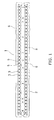
FIG. 1 is a plan view illustrating a light emitting device according to an embodiment of the invention; -
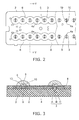
FIG. 2 is an enlarged plan view illustrating a part of the light emitting device in a state before forming a sealing member; -
FIG. 3 is a schematic cross-sectional view illustrating the light emitting device taken along line Y-Y shown inFIG. 2 ; -
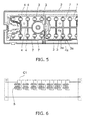
FIG. 4 is a plan view illustrating a mounting pad and a lead pattern of the light emitting device; -
FIG. 5 is an enlarged plan view illustrating the mounting pad and the lead pattern of the light emitting device; -
FIG. 6 is a circuit diagram illustrating a connection state of light emitting elements of the light emitting device; and -
FIG. 7 is a circuit diagram illustrating an illumination device according to the embodiment of the invention. - In general, according to one embodiment, a light emitting device includes a substrate, a lead pattern and a plurality of mounting pads, and a plurality of light emitting elements. The substrate includes an insulating layer. The lead pattern and the plurality of mounting pads are formed on a surface of the substrate. The lead pattern and the plurality of mounting pads are conductive. The plurality of mounting pads are configured not to electrically conduct. The lead pattern is configured to electrically conduct. The plurality of light emitting elements are mounted on the mounting pads and electrically connected to the lead pattern. The light emitting device and the illumination device according to an embodiment of the invention will now be described with reference to
FIG. 1 to FIG. 7 .FIG. 1 to FIG. 6 illustrate the light emitting device; andFIG. 7 illustrates the illumination device. Similar portions in the drawings are marked with like reference numerals, and duplicate descriptions are omitted. - As illustrated in
FIG. 1 to FIG. 5 , alight emitting device 1 includes asubstrate 2,mounting pads 3 and alead pattern 4 that are formed on a surface of thesubstrate 2, multiplelight emitting elements 5, and asealing member 6. - At least an upper surface of the
substrate 2 is insulative. For example, thesubstrate 2 is an insulating layer made of an insulating material such as a glass epoxy resin, etc., and is formed in a slender rectangular configuration. The length dimension is about 250 mm to 300 mm; and the width dimension is about 10 mm to 32 mm. It is favorable for the thickness dimension of thesubstrate 2 to be not less than 0.5 mm and not more than 1.8 mm; and a thickness dimension of about 1 mm is used in this embodiment. - The configuration of the
substrate 2 is not limited to a rectangular configuration. A square configuration or a circular configuration may be used. A ceramic material or another synthetic resin material may be used as the material of thesubstrate 2. To improve the heat dissipation of thelight emitting elements 5, a substrate made of a metal may be used as thesubstrate 2, where a base plate made of a metal material such as aluminum, etc., that has good thermal conductivity and excellent heat dissipation is provided and an insulating layer is stacked on one surface of the base plate. -
FIG. 4 andFIG. 5 illustrate themounting pads 3 and thelead pattern 4 formed on the surface of thesubstrate 2. As in a typical description referring toFIG. 4 andFIG. 5 , themounting pads 3 and thelead pattern 4 are conductive and have a three layer configuration as described below. The layer structure of themounting pads 3 is the same as the layer structure of thelead pattern 4. In other words, layers that are formed from the same material and have the same thicknesses are stacked in the same order. - The
mounting pad 3 is the portion where thelight emitting element 5 is mounted; themounting pad 3 has a substantially circular configuration; and a pair ofnotches 3a are made in themounting pad 3 by opposing portions of the circumference (inFIG. 5 , the portion on the upper side and the portion on the lower side) being notched in arc configurations. Thepower supply members 4a extend from thelead pattern 4 and are disposed inside the pair ofnotches 3a. In other words, thepower supply members 4a enter thenotches 3a. Thenotch 3a and thepower supply member 4a are insulated from each other by being separated by a prescribed distance. - As illustrated in
FIG. 4 , themounting pads 3 are multiply formed in a column along the longitudinal direction of thesubstrate 2. Specifically, there are two columns along the longitudinal direction of thesubstrate 2; and one column has thirty-fivemounting pads 3 disposed at substantially uniform spacing. - The
mounting pad 3 is a nonconducting pad that is conductive but is configured not to electrically conduct and is electrically isolated. The surface of themounting pad 3 functions as a reflective layer and functions as a heat dissipation layer that dissipates heat generated by thelight emitting element 5. - The
lead pattern 4 is included in a power supply path, has a pattern of fine leads, and can supply power from a power source side to thelight emitting elements 5. As described above, thepower supply members 4a, to which thelight emitting elements 5 are connected, are provided in thelead pattern 4. A pattern of a metal layer, e.g., acopper foil 7, that dissipates the heat of thesubstrate 2 is formed over the entire surface of each of the regions substantially surrounded by themounting pads 3 and thelead pattern 4. Thecopper foil 7 is insulated from themounting pads 3 and thelead pattern 4. Thereby, the thermal uniformity of theentire substrate 2 can be increased and the heat dissipation performance can be improved. - As illustrated in
FIG. 3 , themounting pads 3 and thelead pattern 4 have a three layer configuration in which a copper pattern is provided by etching as a first layer A on the surface of thesubstrate 2. Nickel (Ni) is electroplated as a second layer B on the copper pattern layer; and silver (Ag) is electroplated as a third layer C. Therefore, the third layer C, i.e., the surface layer, is a silver (Ag) plating layer. Thereby, the upper surfaces of themounting pads 3 and thelead pattern 4 have a metallic luster and a high total luminous reflectance of 90%. - For the electroplating, it is favorable to form the nickel (Ni) of the second layer B with a film thickness not less than 5 µm and the silver (Ag) of the third layer C with a film thickness not less than 1 µm. By such film thickness dimensions, it is possible to realize a uniform film thickness formation and provide a uniform reflectance.
- As illustrated in
FIG. 1 to FIG. 3 , awhite resist layer 8 that has a high reflectance is stacked on substantially the entire surface of the surface layer of thesubstrate 2 except for the regions of themounting pads 3 used as the mounting regions of thelight emitting elements 5, the regions of thepower supply members 4a of thelead pattern 4, and the mounting portions of parts. - The multiple
light emitting elements 5 are made of bare LED chips. A chip configured to emit blue light, for example, is used as the bare LED chip to emit whitish light from a light emitting unit. The bare LED chips are bonded onto themounting pads 3 using a silicone resin-typeinsulative bonding agent 9. - The bare LED chip is, for example, an InGaN-type element formed by stacking a light emitting layer on a transparent sapphire element substrate, where the light emitting layer is formed by sequentially stacking an n-type nitride semiconductor layer, an InGaN light emitting layer, and a p-type nitride semiconductor layer. The electrodes for causing a current to flow in the light emitting layer include a positive-side electrode formed of a p-type electrode pad on the p-type nitride semiconductor layer and a negative-side electrode formed of an n-type electrode pad on the n-type nitride semiconductor layer. These electrodes are electrically connected to the upper surfaces of the
power supply members 4a of thelead pattern 4 bybonding wires 10. Thebonding wires 10 are made of fine gold (Au) wires and are connected via bumps (not illustrated) having a main component of gold (Au) to increase the mounting strength and reduce damage of the bare LED chips. - The multiple
light emitting elements 5 are mounted on the mountingpads 3 in substantially central portions of the substantially circular configurations of the mountingpads 3; and thelight emitting elements 5 and the mountingpads 3 are disposed with a one-to-one relationship. Accordingly, two columns of light emitting elements are formed by mounting thelight emitting elements 5 on the multiple mountingpads 3 arranged in the longitudinal direction. - Because the
power supply members 4a of thelead pattern 4 extend into thenotches 3a of the mountingpads 3, it is possible for thebonding wires 10 to be shorter by that amount. - It is favorable for the
power supply members 4a to be formed with a surface area in a range of 1 to 2 times the surface area of the upper surface of the bare LED chip. In the case of being less than a factor of 1, there is a possibility that discrepancies may occur during the bonding and during use because the reliability of the bonding of thebonding wires 10 is poor. In the case of being greater than a factor of 2, the surface area of not only thepower supply members 4a but also thelead pattern 4 increases as an entirety; and there is a tendency for erroneous lighting of thelight emitting elements 5 to occur easily as described below. - Specifically, the dimensions of the upper surface of the bare LED chip are 0.5 mm by 0.3 mm; the surface area of the upper surface of the bare LED chip is 0.15 mm2; and the surface area of the
power supply member 4a is 0.25 mm2. - For example, the
light emitting elements 5 thus disposed are connected from a positive-side power source through thelead pattern 4, through one of thepower supply members 4a, and through thebonding wire 10 to the positive-side electrode of thelight emitting element 5 and from the negative-side electrode of thelight emitting element 5 through thebonding wire 10 to one other of thepower supply members 4a; and thelight emitting elements 5 are supplied with power by thelead pattern 4. Accordingly, the mountingpads 3 are in a state of being isolated without being electrically connected. - The
light emitting elements 5 connected as recited above are in a connection state such as that illustrated inFIG. 6 . That is, seven circuits are connected in series; each of the seven circuits includes two parallel circuits connected in series; the condenser C1 for preventing the erroneous lighting of thelight emitting elements 5 is connected between two ends of the two parallel circuits; and each of the two parallel circuits includes five of thelight emitting elements 5 connected in parallel. In other words, the condenser C1 is connected to two ends of a circuit made of at least one of thelight emitting elements 5. Thesubstrate 2 may be electrically connected multiply and continuously; and the number of thesubstrates 2 used may be appropriately selected. - The sealing
member 6 is made of a transparent synthetic resin, e.g., a transparent silicone resin, and contains an appropriate amount of a fluorescer such as YAG:Ce and the like. The sealingmember 6 includes multiple protrusion-shaped fluorescer layers; and in this embodiment, the sealingmember 6 includes a collection of protrusion-shaped fluorescer layers that respectively cover the individuallight emitting element 5. The protrusion-shaped fluorescer layers are formed in hill-shaped configurations with arc-like protruding configurations that are linked to adjacent protrusion-shaped fluorescer layers at the base portions. In other words, the sealingmember 6 has a configuration in which the multiple protrusion-shaped fluorescer layers are linked in a column. The configuration of each of the protrusion-shaped fluorescer layers is, for example, a convex lens or a portion of a sphere. Accordingly, the sealingmember 6 is formed in multiple columns along the light emitting element columns, that is, is formed in two columns, to cover and seal thelight emitting elements 5 and thebonding wires 10. - The fluorescer is excited by light emitted by the
light emitting element 5 and radiates light of a color that is different from the color of the light emitted by thelight emitting element 5. To emit white light in this embodiment in which thelight emitting element 5 emits blue light, a yellow fluorescer, which radiates a yellowish light which is complementary to the blue light, is used as the fluorescer. - The sealing
member 6 is formed by being coated onto thelight emitting elements 5 and thebonding wires 10 in an uncured state and by subsequently being cured by being thermally cured or by being left for a prescribed amount of time. - Effects of the
light emitting device 1 recited above will now be described also with reference toFIG. 7. FIG. 7 is a schematic connection diagram illustrating an illumination device. Theillumination device 20 has, for example, a form used as general lighting and includes alighting device 21, which is connected to a commercial alternating-current power source AC via a power source switch SW, and amain body 22, which contains thelight emitting device 1. Thelighting device 21 includes, for example, a smoothing condenser connected between the output terminals of a full-wave rectifying circuit and by connecting a direct-current voltage conversion circuit and a current detection unit to the smoothing condenser. Direct-current power is supplied from thelighting device 21 via a connector to thelight emitting device 1; and lighting control of thelight emitting elements 5 of thelight emitting device 1 is performed. Themain body 22 is made of a metal that is conductive such as aluminum, etc., and has a grounding potential by being grounded. - When a current is provided to the
light emitting device 1, thelight emitting elements 5 which are covered with the sealingmember 6 simultaneously emit light; and thelight emitting device 1 is used as a planar light source to emit white light. Of the light radiated by thelight emitting element 5, the light that is emitted toward thesubstrate 2 side during the light emission is reflected by the surface layer of the mountingpads 3 mainly in the utilization direction of the light. The mountingpads 3 function as heat spreaders to promote the heat dissipation by diffusing the heat emitted by thelight emitting elements 5. - In such a case, the light is reflected efficiently with the central portions of the mounting
pads 3 as the centers of light emission because thelight emitting elements 5 are mounted on substantially the central portions of the substantially circular configurations of the mountingpads 3. Additionally, wasteful regions of the mountingpads 3 can be reduced because it is possible to reduce the surface area of the regions of the mountingpads 3 not utilized for the reflection. - However, there is a possibility that a stray capacitance Cs may occur in the case where the
main body 22 is proximal to thelead pattern 4 that connects thelight emitting elements 5. For such stray capacitance, themain body 22, which has the grounding potential, forms one electrode; mainly thelead pattern 4 forms one other electrode; and electrostatic coupling occurs via a dielectric between these electrodes. In such a case, the size of the stray capacitance is proportional to the surface area of the electrodes. In thelight emitting device 1 as recited above, the mountingpads 3 are nonconducting pads that are conductive but are configured not to electrically conduct and are electrically isolated. - Accordingly, the stray capacitance Cs can be reduced because the surface area of the one other electrode can be reduced because the
mounting pads 3 do not form the one other electrode. - Thereby, in the state in which the power source switch SW is off, even in the case where noise is superimposed in the power line, the flow of a micro current as a leak current in the
light emitting elements 5 can be suppressed; and as a result, it is possible to avoid the erroneous lighting of thelight emitting elements 5. - It may be conceivable for the
bonding wires 10 to be connected to the mountingpads 3 to which thelight emitting elements 5 are mounted and for the mountingpads 3 to be used also as thelead pattern 4 by being configured to electrically conduct. However, in such a case, if the surface area of the mountingpads 3 is increased to improve the heat dissipation effects and the reflection effects of the light of thelight emitting element 5, this acts to accordingly increase the stray capacitance Cs; and there is a possibility that the leak current due to the noise may flow in thelight emitting elements 5 and the erroneous lighting of thelight emitting elements 5 may occur. - In this embodiment, because the surface area of the mounting
pads 3 does not act to increase the stray capacitance Cs even in the case where the surface area of the mountingpads 3 is increased because themounting pads 3 are nonconducting pads configured not to electrically conduct, the mountingpads 3 can be effectively and practically used; and the erroneous lighting of thelight emitting elements 5 can be suppressed while increasing the heat dissipation effects and the reflection effects of the light of thelight emitting elements 5 by suppressing the flow of the micro current as the leak current in thelight emitting elements 5. - Additionally, it is possible to further increase the effect of suppressing the erroneous lighting of the
light emitting elements 5 by the condensers C1 illustrated inFIG. 6 . - According to this embodiment as recited above, the erroneous lighting of the
light emitting elements 5 can be suppressed by reducing the stray capacitance Cs while effectively and practically using themounting pads 3. - The invention is not limited to the configurations of the embodiments recited above; and various modifications are possible without departing from the spirit of the invention. For example, illumination appliances, display devices, etc., that are used indoors or outdoors are applicable as the illumination device.
- According to the embodiments described above, it is possible to provide a light emitting device and an illumination device that can suppress the erroneous lighting of the light emitting elements while effectively and practically using the mounting pads.
- While certain embodiments have been described, these embodiments have been presented by way of example only, and are not intended to limit the scope of the inventions. Indeed, the novel embodiments described herein may be embodied in a variety of other forms; furthermore, various omissions, substitutions and changes in the form of the embodiments described herein may be made without departing from the spirit of the inventions. The accompanying claims and their equivalents are intended to cover such forms or modifications as would fall within the scope and spirit of the invention.
Claims (3)
- A light emitting device(1), comprising:a substrate(2) including an insulating layer;a lead pattern(4) and a plurality of mounting pads(3) formed on a surface of the substrate(2), the lead pattern and the plurality of mounting pads being conductive, the plurality of mounting pads being configured not to electrically conduct, the lead pattern being configured to electrically conduct; anda plurality of light emitting elements(5) mounted on the mounting pads(3) and electrically connected to the lead pattern(4).
- The light emitting device(1) according to claim 1, wherein the mounting pad(3) has a substantially circular configuration and the light emitting element(5) is mounted on substantially a central portion of the substantially circular configuration, a reflective layer being formed in a surface of the substantially circular configuration.
- An illumination device(20), comprising:a device main body(22), a grounding potential being applied to the device main body, the device main body being conductive;the light emitting device(1) according to claim 1 or 2 disposed on the device main body(22); anda lighting device(21) connected to an alternating-current power source, the lighting device being configured to supply power to the light emitting device(1).
Applications Claiming Priority (1)
| Application Number | Priority Date | Filing Date | Title |
|---|---|---|---|
| JP2010240190A JP2012094661A (en) | 2010-10-26 | 2010-10-26 | Light-emitting device and lighting device |
Publications (2)
| Publication Number | Publication Date |
|---|---|
| EP2447596A2 true EP2447596A2 (en) | 2012-05-02 |
| EP2447596A3 EP2447596A3 (en) | 2013-04-03 |
Family
ID=44925336
Family Applications (1)
| Application Number | Title | Priority Date | Filing Date |
|---|---|---|---|
| EP11186669A Withdrawn EP2447596A3 (en) | 2010-10-26 | 2011-10-26 | Light emitting device and illumination device |
Country Status (4)
| Country | Link |
|---|---|
| US (1) | US20120099309A1 (en) |
| EP (1) | EP2447596A3 (en) |
| JP (1) | JP2012094661A (en) |
| CN (1) | CN102569278A (en) |
Cited By (1)
| Publication number | Priority date | Publication date | Assignee | Title |
|---|---|---|---|---|
| WO2013175261A1 (en) | 2012-05-21 | 2013-11-28 | Linxens Holding | Interconnection substrate and method of manufacturing the same |
Families Citing this family (2)
| Publication number | Priority date | Publication date | Assignee | Title |
|---|---|---|---|---|
| JP2014056856A (en) * | 2012-09-11 | 2014-03-27 | Toshiba Lighting & Technology Corp | Light-emitting device and luminaire |
| JP6511762B2 (en) * | 2014-10-03 | 2019-05-15 | 三菱電機株式会社 | Light emitting element mounting substrate |
Family Cites Families (4)
| Publication number | Priority date | Publication date | Assignee | Title |
|---|---|---|---|---|
| US6498355B1 (en) * | 2001-10-09 | 2002-12-24 | Lumileds Lighting, U.S., Llc | High flux LED array |
| JP2007516592A (en) * | 2003-06-30 | 2007-06-21 | コーニンクレッカ フィリップス エレクトロニクス エヌ ヴィ | LED thermal management system |
| KR100782798B1 (en) * | 2006-02-22 | 2007-12-05 | 삼성전기주식회사 | Substrate Package and Manufacturing Method Thereof |
| KR200429400Y1 (en) * | 2006-07-28 | 2006-10-23 | 지아 쭁 엔터프라이즈 컴퍼니 리미티드 | Dipolar substrate structure of liquid crystal display |
-
2010
- 2010-10-26 JP JP2010240190A patent/JP2012094661A/en active Pending
-
2011
- 2011-10-25 US US13/280,433 patent/US20120099309A1/en not_active Abandoned
- 2011-10-25 CN CN2011103281145A patent/CN102569278A/en active Pending
- 2011-10-26 EP EP11186669A patent/EP2447596A3/en not_active Withdrawn
Non-Patent Citations (1)
| Title |
|---|
| None |
Cited By (1)
| Publication number | Priority date | Publication date | Assignee | Title |
|---|---|---|---|---|
| WO2013175261A1 (en) | 2012-05-21 | 2013-11-28 | Linxens Holding | Interconnection substrate and method of manufacturing the same |
Also Published As
| Publication number | Publication date |
|---|---|
| US20120099309A1 (en) | 2012-04-26 |
| JP2012094661A (en) | 2012-05-17 |
| CN102569278A (en) | 2012-07-11 |
| EP2447596A3 (en) | 2013-04-03 |
Similar Documents
| Publication | Publication Date | Title |
|---|---|---|
| US20110175548A1 (en) | Lighting apparatus | |
| US8368113B2 (en) | Light emitting device and lighting apparatus | |
| CN101800219B (en) | light-emitting element | |
| US8641232B2 (en) | Light emitting device and illumination apparatus | |
| CN102109126B (en) | lighting device | |
| JP2012004391A (en) | Light-emitting device and luminaire | |
| TWI575785B (en) | Illuminating device | |
| EP2434201A2 (en) | Light-emitting device and lighting apparatus | |
| CN102163602B (en) | Light-emitting device and lighting device with the light-emitting device | |
| JP5516956B2 (en) | Light emitting device and lighting device | |
| CN203192853U (en) | Light emitting device and lighting device | |
| JP2015115432A (en) | Semiconductor device | |
| EP2447596A2 (en) | Light emitting device and illumination device | |
| JP2011166036A (en) | Light emitting device and lighting apparatus | |
| JP2011096876A (en) | Light emitting device, and lighting apparatus | |
| JP2011090972A (en) | Light emitting device and lighting device | |
| JP2012009631A (en) | Light emitting device and lighting system | |
| JP2012015226A (en) | Light emitting device and illumination device | |
| JP2012156440A (en) | Light-emitting device and luminaire | |
| JP2018142746A (en) | Semiconductor device | |
| JP2012004517A (en) | Light-emitting device and luminaire | |
| TWI648885B (en) | Light emitting device | |
| JP2012209280A (en) | Light-emitting device and illumination device |
Legal Events
| Date | Code | Title | Description |
|---|---|---|---|
| PUAI | Public reference made under article 153(3) epc to a published international application that has entered the european phase |
Free format text: ORIGINAL CODE: 0009012 |
|
| 17P | Request for examination filed |
Effective date: 20111026 |
|
| AK | Designated contracting states |
Kind code of ref document: A2 Designated state(s): AL AT BE BG CH CY CZ DE DK EE ES FI FR GB GR HR HU IE IS IT LI LT LU LV MC MK MT NL NO PL PT RO RS SE SI SK SM TR |
|
| AX | Request for extension of the european patent |
Extension state: BA ME |
|
| PUAL | Search report despatched |
Free format text: ORIGINAL CODE: 0009013 |
|
| AK | Designated contracting states |
Kind code of ref document: A3 Designated state(s): AL AT BE BG CH CY CZ DE DK EE ES FI FR GB GR HR HU IE IS IT LI LT LU LV MC MK MT NL NO PL PT RO RS SE SI SK SM TR |
|
| AX | Request for extension of the european patent |
Extension state: BA ME |
|
| RIC1 | Information provided on ipc code assigned before grant |
Ipc: F21K 99/00 20100101AFI20130226BHEP Ipc: F21Y 101/02 20060101ALN20130226BHEP Ipc: H05K 1/02 20060101ALI20130226BHEP Ipc: F21Y 105/00 20060101ALN20130226BHEP Ipc: H05K 1/11 20060101ALI20130226BHEP |
|
| 17Q | First examination report despatched |
Effective date: 20140318 |
|
| STAA | Information on the status of an ep patent application or granted ep patent |
Free format text: STATUS: THE APPLICATION IS DEEMED TO BE WITHDRAWN |
|
| 18D | Application deemed to be withdrawn |
Effective date: 20140729 |