EP2444477A1 - Container for formation of aggregated cell mass, and method for formation of aggregated cell mass - Google Patents
Container for formation of aggregated cell mass, and method for formation of aggregated cell mass Download PDFInfo
- Publication number
- EP2444477A1 EP2444477A1 EP10789497A EP10789497A EP2444477A1 EP 2444477 A1 EP2444477 A1 EP 2444477A1 EP 10789497 A EP10789497 A EP 10789497A EP 10789497 A EP10789497 A EP 10789497A EP 2444477 A1 EP2444477 A1 EP 2444477A1
- Authority
- EP
- European Patent Office
- Prior art keywords
- group
- container
- cell
- cell aggregate
- forming
- Prior art date
- Legal status (The legal status is an assumption and is not a legal conclusion. Google has not performed a legal analysis and makes no representation as to the accuracy of the status listed.)
- Withdrawn
Links
Images





Classifications
-
- C—CHEMISTRY; METALLURGY
- C12—BIOCHEMISTRY; BEER; SPIRITS; WINE; VINEGAR; MICROBIOLOGY; ENZYMOLOGY; MUTATION OR GENETIC ENGINEERING
- C12M—APPARATUS FOR ENZYMOLOGY OR MICROBIOLOGY; APPARATUS FOR CULTURING MICROORGANISMS FOR PRODUCING BIOMASS, FOR GROWING CELLS OR FOR OBTAINING FERMENTATION OR METABOLIC PRODUCTS, i.e. BIOREACTORS OR FERMENTERS
- C12M23/00—Constructional details, e.g. recesses, hinges
- C12M23/20—Material Coatings
-
- C—CHEMISTRY; METALLURGY
- C12—BIOCHEMISTRY; BEER; SPIRITS; WINE; VINEGAR; MICROBIOLOGY; ENZYMOLOGY; MUTATION OR GENETIC ENGINEERING
- C12N—MICROORGANISMS OR ENZYMES; COMPOSITIONS THEREOF; PROPAGATING, PRESERVING, OR MAINTAINING MICROORGANISMS; MUTATION OR GENETIC ENGINEERING; CULTURE MEDIA
- C12N5/00—Undifferentiated human, animal or plant cells, e.g. cell lines; Tissues; Cultivation or maintenance thereof; Culture media therefor
- C12N5/0068—General culture methods using substrates
-
- C—CHEMISTRY; METALLURGY
- C12—BIOCHEMISTRY; BEER; SPIRITS; WINE; VINEGAR; MICROBIOLOGY; ENZYMOLOGY; MUTATION OR GENETIC ENGINEERING
- C12N—MICROORGANISMS OR ENZYMES; COMPOSITIONS THEREOF; PROPAGATING, PRESERVING, OR MAINTAINING MICROORGANISMS; MUTATION OR GENETIC ENGINEERING; CULTURE MEDIA
- C12N5/00—Undifferentiated human, animal or plant cells, e.g. cell lines; Tissues; Cultivation or maintenance thereof; Culture media therefor
- C12N5/06—Animal cells or tissues; Human cells or tissues
- C12N5/0602—Vertebrate cells
- C12N5/0618—Cells of the nervous system
- C12N5/062—Sensory transducers, e.g. photoreceptors; Sensory neurons, e.g. for hearing, taste, smell, pH, touch, temperature, pain
-
- C—CHEMISTRY; METALLURGY
- C12—BIOCHEMISTRY; BEER; SPIRITS; WINE; VINEGAR; MICROBIOLOGY; ENZYMOLOGY; MUTATION OR GENETIC ENGINEERING
- C12N—MICROORGANISMS OR ENZYMES; COMPOSITIONS THEREOF; PROPAGATING, PRESERVING, OR MAINTAINING MICROORGANISMS; MUTATION OR GENETIC ENGINEERING; CULTURE MEDIA
- C12N5/00—Undifferentiated human, animal or plant cells, e.g. cell lines; Tissues; Cultivation or maintenance thereof; Culture media therefor
- C12N5/06—Animal cells or tissues; Human cells or tissues
- C12N5/0602—Vertebrate cells
- C12N5/0652—Cells of skeletal and connective tissues; Mesenchyme
- C12N5/0662—Stem cells
- C12N5/0667—Adipose-derived stem cells [ADSC]; Adipose stromal stem cells
-
- C—CHEMISTRY; METALLURGY
- C12—BIOCHEMISTRY; BEER; SPIRITS; WINE; VINEGAR; MICROBIOLOGY; ENZYMOLOGY; MUTATION OR GENETIC ENGINEERING
- C12N—MICROORGANISMS OR ENZYMES; COMPOSITIONS THEREOF; PROPAGATING, PRESERVING, OR MAINTAINING MICROORGANISMS; MUTATION OR GENETIC ENGINEERING; CULTURE MEDIA
- C12N5/00—Undifferentiated human, animal or plant cells, e.g. cell lines; Tissues; Cultivation or maintenance thereof; Culture media therefor
- C12N5/06—Animal cells or tissues; Human cells or tissues
- C12N5/0602—Vertebrate cells
- C12N5/067—Hepatocytes
- C12N5/0671—Three-dimensional culture, tissue culture or organ culture; Encapsulated cells
-
- C—CHEMISTRY; METALLURGY
- C12—BIOCHEMISTRY; BEER; SPIRITS; WINE; VINEGAR; MICROBIOLOGY; ENZYMOLOGY; MUTATION OR GENETIC ENGINEERING
- C12N—MICROORGANISMS OR ENZYMES; COMPOSITIONS THEREOF; PROPAGATING, PRESERVING, OR MAINTAINING MICROORGANISMS; MUTATION OR GENETIC ENGINEERING; CULTURE MEDIA
- C12N5/00—Undifferentiated human, animal or plant cells, e.g. cell lines; Tissues; Cultivation or maintenance thereof; Culture media therefor
- C12N5/06—Animal cells or tissues; Human cells or tissues
- C12N5/0602—Vertebrate cells
- C12N5/0693—Tumour cells; Cancer cells
-
- G—PHYSICS
- G01—MEASURING; TESTING
- G01N—INVESTIGATING OR ANALYSING MATERIALS BY DETERMINING THEIR CHEMICAL OR PHYSICAL PROPERTIES
- G01N33/00—Investigating or analysing materials by specific methods not covered by groups G01N1/00 - G01N31/00
- G01N33/48—Biological material, e.g. blood, urine; Haemocytometers
- G01N33/50—Chemical analysis of biological material, e.g. blood, urine; Testing involving biospecific ligand binding methods; Immunological testing
- G01N33/5005—Chemical analysis of biological material, e.g. blood, urine; Testing involving biospecific ligand binding methods; Immunological testing involving human or animal cells
- G01N33/5008—Chemical analysis of biological material, e.g. blood, urine; Testing involving biospecific ligand binding methods; Immunological testing involving human or animal cells for testing or evaluating the effect of chemical or biological compounds, e.g. drugs, cosmetics
- G01N33/5082—Supracellular entities, e.g. tissue, organisms
-
- C—CHEMISTRY; METALLURGY
- C12—BIOCHEMISTRY; BEER; SPIRITS; WINE; VINEGAR; MICROBIOLOGY; ENZYMOLOGY; MUTATION OR GENETIC ENGINEERING
- C12N—MICROORGANISMS OR ENZYMES; COMPOSITIONS THEREOF; PROPAGATING, PRESERVING, OR MAINTAINING MICROORGANISMS; MUTATION OR GENETIC ENGINEERING; CULTURE MEDIA
- C12N2503/00—Use of cells in diagnostics
-
- C—CHEMISTRY; METALLURGY
- C12—BIOCHEMISTRY; BEER; SPIRITS; WINE; VINEGAR; MICROBIOLOGY; ENZYMOLOGY; MUTATION OR GENETIC ENGINEERING
- C12N—MICROORGANISMS OR ENZYMES; COMPOSITIONS THEREOF; PROPAGATING, PRESERVING, OR MAINTAINING MICROORGANISMS; MUTATION OR GENETIC ENGINEERING; CULTURE MEDIA
- C12N2533/00—Supports or coatings for cell culture, characterised by material
- C12N2533/30—Synthetic polymers
Definitions
- the present invention relates to a container for forming a cell aggregate, a method for forming a cell aggregate, a cell aggregate, a method for screening a substance, and a method for exploring a cell function.
- a cell aggregate is formed by culturing an adherent cell and a non-adherent cell.
- Patent document 1 discloses a method for forming a neural stem cell aggregate in which a tissue including a pluripotent neural stem cell is suspended in a culture medium containing at least one kind of a stem cell growth factor and disseminated to and cultured in a container for forming a neural stem cell aggregate.
- the container for forming a neural stem cell aggregate has a non-aqueous cured coating layer on an inner surface thereof and is manufactured by coating an inner surface of a container with an aqueous resin to form an aqueous resin coating layer and subsequently curing the aqueous resin coating layer to be modified into an non-aqueous cured coating layer.
- a copolymer of 2-methacryloyloxyethylphosphorylcholine and another monomer for example, butyl methacrylate, etc.
- the present invention aims at providing a container for forming a cell aggregate capable of forming a cell aggregate of adherent cells and a method for forming a cell aggregate by using the container for forming a cell aggregate, while a problem possessed by the above-mentioned conventional art is taken into consideration. Furthermore, the present invention aims at providing a method for screening a substance and method for exploring a cell function by using the method for forming a cell aggregate.
- the invention as recited in claim 1 is a container for forming a cell aggregate, characterized in that a group represented by a general formula of: (in the formula, each of R 1 , R 2 , and R 3 is independently an alkyl group with a carbon number of 1 or more and 6 or less and m is an integer of 2 or more and 6 or less.) and at least one of an amino group, a carboxyl group, and a hydroxyl group are present near a surface thereof.
- the invention as recited in claim 2 is the container for forming a cell aggregate as recited in claim 1, characterized by being manufactured by reacting a compound having a functional group having a reactivity with a carboxyl group, an amino group, or a hydroxyl group, a group represented by the general formula, and a molecular weight of 225 or more and 650 or less, with a container in which a carboxyl group, an amino group, and a hydroxyl group are present near a surface thereof.
- the invention as recited in claim 3 is the container for forming a cell aggregate as recited in claim 2, characterized in that the container in which a carboxyl group, an amino group, and a hydroxyl group are present near a surface thereof is plasma-treated with under an atmosphere including at least one of oxygen, ozone, and a water vapor, and ammonia and/or nitrogen.
- the invention as recited in claim 4 is the container for forming a cell aggregate as recited in claim 1, characterized by being manufactured by reacting a first compound having a functional group capable of producing a silanol group through hydrolysis thereof, a group represented by the general formula, and a molecular weight of 315 or more and 650 or less, and a second compound having a functional group capable of producing a silanol group through hydrolysis thereof and at least one of an amino group, a functional group capable of producing a carboxyl group through hydrolysis thereof, and a functional group capable of producing a hydroxyl group through hydrolysis thereof, with a container in which at least one of a functional group capable of producing a silanol group through hydrolysis thereof, a silanol group, a hydroxyl group originating from a semimetal oxide, and a hydroxyl group originating from a metal oxide is present near a surface thereof.
- the invention as recited in claim 5 is the container for forming a cell aggregate as recited in claim 1, characterized in that a layer including a resin having a group represented by the general formula and at least one of an amino group, a carboxyl group, and a hydroxyl group is formed on a surface thereof.
- the invention as recited in claim 6 is a method for forming a cell aggregate, characterized in that a somatic cell is cultured by using the container for forming a cell aggregate as recited in any one of claims 1 to 5 to form a cell aggregate.
- the invention as recited in claim 7 is the method for forming a cell aggregate as recited in claim 6, characterized in that the somatic cell is an adherent cell.
- the invention as recited in claim 8 is a method for screening a substance, characterized by including a step of culturing a somatic cell by using the container for forming a cell aggregate as recited in any one of claims 1 to 5 to form a cell aggregate and a step of screening a substance by using the cell aggregate.
- the invention as recited in claim 9 is the method for screening a substance as recited in claim 8, characterized in that the somatic cell is an adherent cell.
- the invention as recited in claim 10 is a method for exploring a cell function, characterized by including a step of culturing a somatic cell by using the container for forming a cell aggregate as recited in any one of claims 1 to 5 to form a cell aggregate and a step of exploring a cell function by using the cell aggregate.
- the invention as recited in claim 11 is the method for exploring a cell function as recited in claim 10, characterized in that the somatic cell is an adherent cell.
- the present invention it is possible to provide a container for forming a cell aggregate capable of forming a cell aggregate of adherent cells and a method for forming a cell aggregate by using the container for forming a cell aggregate. Furthermore, according to the present invention, it is possible to provide a method for screening a substance and method for exploring a cell function by using the method for forming a cell aggregate.
- a phosphorylcholine-like group represented by a general formula of: (in the formula, each of R 1 , R 2 , and R 3 is independently an alkyl group with a carbon number of 1 - 6 and m is an integer of 2 - 6.) and at least one of an amino group, a carboxyl group, and a hydroxyl group are present near a surface thereof.
- FIG. 1 illustrates one example of a method for forming a cell aggregate by using a container for forming a cell aggregate in the present invention.
- an adherent cell C and a culture medium (not illustrated in the figure) are added into a container for forming a cell aggregate D
- an adherent cell C adheres to a part of a container for forming a cell aggregate D (see FIG. 1A ). It is considered that this is because an adherent cell C adheres to a region D 1 in which at least one of an amino group, a carboxyl group, and a hydroxyl group of a container for forming a cell aggregate D is present near a surface thereof.
- a form of a container for forming a cell aggregate in the present invention is not particularly limited, and there is provided a dish, a multi-well plate, a flask, a roller bottle, a unit of a device having a cell culturing process, or the like.
- a first embodiment of a container for forming a cell aggregate in the present invention is manufactured by reacting a surface modifying agent having a functional group having a reactivity with a carboxyl group, an amino group, or a hydroxyl group, and a phosphorylcholine-like group, with a container in which a carboxyl group, an amino group, and a hydroxyl group are present near a surface thereof.
- a molecular weight of a surface modifying agent is 225 - 650.
- a method for introducing an amino group near a surface of a container is not particularly limited, and there is provided a nitrogen plasma treatment, an ammonia plasma treatment, a method for reacting a surface treating agent, a silicone vapor phase treatment, or the like.
- an amino group is introduced near a surface of a container by generating a low temperature plasma under a nitrogen gas atmosphere (for example, see Surface and Coatings Technology 116-119 (1999 ) 802 - 807, Colloids and Surfaces A: Physicochem. Eng. Aspects 195 (2001) 81 - 95 , Macromol. Chem. Phys. 200. 989 - 996 (1999 )).
- nitrogen gas is introduced thereinto and glow discharge is conducted.
- an amino group is introduced near a surface of a container by generating a low temperature plasma under an ammonia gas atmosphere. Specifically, after a container is put in a reactor and evacuation inside a reactor is conducted by a vacuum pump, ammonia gas is introduced thereinto and glow discharge is conducted.
- a material for making a container is not particularly limited and there is provided a polyvinyl chloride, an acryl resin, a polystyrene, a polypropylene, a polyethylene, a polyester, a cycloolefin resin, a polycarbonate, a glass, or the like.
- an amino group is introduced near a surface of a container in which at least one of a functional group capable of producing a silanol group through hydrolysis of an alkoxysilyl group or the like, a silanol group, a hydroxyl group originating from a semimetal oxide, and a hydroxyl group originating from a metal oxide is present near a surface thereof, by using a surface treating agent such as an alkoxy silane, chlorosilane, or silazane having an amino group.
- a surface treating agent such as an alkoxy silane, chlorosilane, or silazane having an amino group.
- a material for making a container is not particularly limited and there is provided a 3-trimethoxysilylpropyl methacrylate - methyl methacrylate - divinylbenzene copolymer, a polyvinyl chloride, an acryl resin, a polystyrene, a polypropylene, a polyethylene, a polyester, a cycloolefin resin, a polycarbonate, a silica, a glass, an alumina, a talc, a clay, a mica, an asbestos, a titanium oxide, a zinc flower, an iron oxide, or the like.
- a hydroxyl group is introduced near a surface of a container by using 1,3,5,7-tetramethylcyclotetrasiloxane
- an amino group is introduced near a surface of a container by reacting an alkene having an amino group therewith (for example, see Japanese Examined Patent Application Publication No. 1-54379 , Japanese Examined Patent Application Publication No. 1-54380 , or Japanese Examined Patent Application Publication No. 1-54381 ).
- 1,3,5,7-tetramethylcyclotetrasiloxane and a container are first put in a desiccator and degassing is conducted by an aspirator.
- a material for making a container is not particularly limited, and there is provided a styrene - divinylbenzene copolymer, a polyvinyl chloride, an acryl resin, a polystyrene, a polypropylene, a polyethylene, a polyester, a cycloolefin resin, a polycarbonate, a mica, a talc, a kaolin, an alumina, a titanium oxide, a zinc oxide, an iron oxide, or the like.
- An alkene having an amino group is not limited to allylamine, and it is possible to be an amine having a vinyl group, an amine having an acryl group, or the like. Furthermore, an amino group may be protected with a butoxycarbonyl group, a benzyloxycarbonyl group, or the like. Furthermore, for example, an alkene having a functional group capable of introducing an amino group through a reaction with a diamine, such as an epoxy group, may be used, instead of an alkene having an amino group.
- a method for introducing a carboxyl group and/or a hydroxyl group near a surface of a container is not particularly limited, and there is provided an oxygen plasma treatment, an ozone treatment, a water vapor plasma treatment, or the like.
- a carboxyl group and a hydroxyl group are introduced near a surface of a container by generating a low temperature plasma under an oxygen gas atmosphere. Specifically, after a container is put in a reactor and evacuation inside a reactor is conducted by a vacuum pump, an oxygen gas is introduced thereinto and glow discharge is conducted.
- a carboxyl group and a hydroxyl group are introduced near a surface of a container by charging an aqueous solution of ozone into a container. Specifically, an aqueous solution of ozone at 40 ppm is charged into a container and treatment is conducted at room temperature for 15 minutes.
- a hydroxyl group is introduced near a surface of a container by generating a low temperature plasma under a water vapor atmosphere. Specifically, after a container is put in a reactor and evacuation inside a reactor is conducted by a vacuum pump, a water vapor is introduced thereinto and glow discharge is conducted.
- a material for making a container is not particularly limited, and there is provided a polystyrene, a polyethylene terephthalate, a polycarbonate, a polymethyl methacrylate, a polytetrafluoroethylene, a polyether ether ketone, a cycloolefin resin, a polycarbonate, or the like.
- a method for introducing a carboxyl group near a surface of a container is not particularly limited, and there is provided a method for reacting a surface treating agent, a silicone vapor phase treatment, or the like.
- a carboxyl group is introduced near a surface of a container in which at least one of a functional group capable of producing a silanol group through hydrolysis of an alkoxysilyl group or the like, a silanol group, a hydroxyl group originating from a semimetal oxide, and a hydroxyl group originating from a metal oxide is present near a surface of a container, by using a surface treating agent such as an alkoxysilane, chlorosilane, or silazane having a carboxyl group.
- a surface treating agent such as an alkoxysilane, chlorosilane, or silazane having a carboxyl group.
- triethoxysilylpropylsuccinic anhydride is first dissolved in N,N-dimethylformamide, then a distilled water and 4-dimethylaminopyridine are added thereinto, and agitation is conducted at room temperature for 16 hours, to synthesize a silane coupling agent having a carboxyl group. Then, after a mixed liquid of water / 2-propanol is charged into a container and a silane coupling agent having a carboxyl group is added thereto, heating at 100 °C is conducted to cause a reaction for 6 hours. Furthermore, after cooling is conducted at room temperature, washing with methanol and drying are conducted.
- a material for making a container is not particularly limited, and there is provided 3-trimethoxysilylpropyl methacrylate - methyl methacrylate - divinylbenzene copolymer, a silica, a glass, an alumina, a talc, a clay, a mica, an asbestos, a titanium oxide; a zinc flower, an iron oxide, or the like.
- a carboxyl group is introduced near a surface of a container by reacting an alkene having a carboxyl group therewith (for example, see Japanese Examined Patent Application Publication No. 1-54379 , Japanese Examined Patent Application Publication No. 1-54380 , or Japanese Examined Patent Application Publication No. 1-54381 ).
- a container in which 1,3,5,7-tetramethylcyclotetrasiloxane is charged is first put in a desiccator and degassing is conducted by an aspirator.
- a material for making a container is not particularly limited, and there is provided a styrene - divinylbenzene copolymer, a mica, a talc, a kaolin, an alumina, a titanium oxide, a zinc oxide, an iron oxide, or the like.
- An alkene having a carboxyl group is not limited to allylcarboxylic acid, and it is possible to be a carboxylic acid having a vinyl group, a carboxylic acid having an acryl group, or the like.
- a method for introducing an amino group, a carboxyl group, and a hydroxyl group near a surface of a container is not particularly limited, and there is provided a method for conducting a plasma treatment under an atmosphere including an oxygen gas and an ammonia gas or the like. Specifically, after a container is put in a reactor and evacuation inside a reactor is conducted by a vacuum pump, an oxygen gas and an ammonia gas are introduced thereinto and glow discharge is conducted to generate a low temperature plasma.
- a functional group having a reactivity with a carboxyl group there is provided an amino group, a hydroxyl group, or the like, and an amino group is preferable because a reactivity thereof is high.
- a functional group having a reactivity with an amino group or a hydroxyl group there is provided a carboxyl group, an aldehyde group, or the like, and a carboxyl group is preferable because a reactivity thereof is high.
- a functional group having a reactivity with a carboxyl group, an amino group, or a hydroxyl group is bonded to a phosphorylcholine-like group via a spacer.
- a spacer is not particularly limited, and there is provided a methylene group, an oxyethylene group, an alkylene group having one or more amino groups, or the like.
- a surface modifying agent having an amino group and a phosphorylcholine-like group is not particularly limited, and there is provided a compound disclosed in Japanese Patent Application Publication No. 2006-007203 , Japanese Patent Application Publication No. 2006-007204 , or Japanese Patent Application Publication No. 2008-174491 , or the like.
- a surface modifying agent having a hydroxyl group and a phosphorylcholine-like group is not particularly limited, and there is provided L- ⁇ -glycerophosphorylcholine, or the like.
- a surface modifying agent having a carboxyl group and a phosphorylcholine-like group is not particularly limited, and there is provided a compound disclosed in Japanese Patent Application Publication No. 2006-011381 or the like.
- an amide linkage is formed. Specifically, after a surface modifying agent is added into a solution of N-hydroxysuccinimide and/or 1-ethyl-3-(3-dimethylaminopropyl)carbodiimide to active-esterify a carboxyl group, charging thereof into a container is conducted.
- a surface modifying agent having an aldehyde group and a phosphorylcholine-like group is not particularly limited, and there is provided a compound disclosed in Japanese Patent Application Publication No. 2006-011383 or the like.
- an imino linkage is formed. Specifically, after a surface modifying agent and methanol are charged into a container and leaving thereof at room temperature for 6 hours is conducted, sodium cyanotrihydroborate is added thereto at 0 °C and heating and agitation thereof are conducted overnight.
- a protic solvent such as water, ethanol, or 2-propanol, other than methanol, for a reaction solvent, and an introduction rate in a case where methanol is used tends to be high.
- a hydroxyl group which is present near a surface of a container and an aldehyde group possessed by a surface modifying agent are added through a general reaction, an acetal linkage is formed. Specifically, after a container and a surface modifying agent are left in methanol at room temperature for 6 hours, sodium cyanotrihydroborate is added thereto at 0 °C and heating and agitation thereof are conducted overnight.
- a protic solvent such as water, ethanol, or 2-propanol, other than methanol, for a reaction solvent, and an introduction rate in a case where methanol is used tends to be high.
- a surface modifying agent having a functional group having a reactivity with an aldehyde group and a phosphorylcholine-like group may be reacted by using a container in which an aldehyde group and an amino group and/or a hydroxyl group are present near a surface thereof, instead of a container in which a carboxyl group, an amino group, and a hydroxyl group are present near a surface thereof.
- a method for introducing an aldehyde group near a surface of a container is not particularly limited, and there is provided a method for reacting glutaraldehyde with a container in which an amino group is present near a surface thereof, or the like.
- a functional group having a reactivity with an aldehyde group there is provided an amino group, a hydroxyl group, or the like, and an amino group is preferable because a reactivity thereof is high.
- a functional group having a reactivity with an aldehyde group is bonded to a phosphorylcholine-like group via a spacer.
- a spacer is not particularly limited, and there is provided a methylene group, an oxyethylene group, an alkylene group having one or more amino groups, or the like.
- a surface modifying agent having an amino group and a phosphorylcholine-like group is not particularly limited, and there is provided a compound disclosed in Japanese Patent Application Publication No. 2006-007203 , Japanese Patent Application Publication No. 2006-007204 , or Japanese Patent Application Publication No. 2008-174491 , or the like.
- an imino linkage is formed. Specifically, after a container and a surface modifying agent are left in ethanol at room temperature for 6 hours, sodium cyanotrihydroborate is added thereto at 0 °C and heating and agitation thereof is conducted overnight.
- a protic solvent such as water, ethanol, or 2-propanol, other than methanol, for a reaction solvent, and an introduction rate in a case where methanol is used tends to be high.
- a surface modifying agent having a hydroxyl group and a phosphorylcholine-like group is not particularly limited, and there is provided L- ⁇ -glycerophosphorylcholine, or the like.
- an aldehyde group which is present near a surface of a container and a hydroxyl group possessed by a surface modifying agent are added through a general reaction, an acetal linkage is formed. Specifically, after a container and a surface modifying agent are left in methanol at room temperature for 6 hours, sodium cyanotrihydroborate is added thereto at 0 °C and heating and agitation thereof is conducted overnight.
- a protic solvent such as water, ethanol, or 2-propanol, other than methanol, for a reaction solvent, and an introduction rate in a case where methanol is used tends to be high.
- a surface modifying agent having a functional group having a reactivity with an amino group or a hydroxyl group and a phosphorylcholine-like group may be reacted by using a container in which a carboxyl group, an amino group, or a hydroxyl group is present near a surface thereof, instead of a container in which a carboxyl group, an amino group, and a hydroxyl group are present near a surface thereof.
- a surface modifying agent having a functional group having a reactivity with an amino group or a hydroxyl group and a phosphorylcholine-like group may be reacted by using a container in which an amino group and a hydroxyl group are present near a surface thereof, instead of a container in which a carboxyl group, an amino group, and a hydroxyl group are present near a surface thereof, so that an unreacted amino group and/or hydroxyl group remain(s) near a surface of a container.
- a surface modifying agent having a functional group having a reactivity with a carboxyl group, an amino group, or a hydroxyl group and a phosphorylcholine-like group may be reacted by using a container in which a carboxyl group, an amino group, or a hydroxyl group is present near a surface thereof, instead of a container in which a carboxyl group, an amino group, and a hydroxyl group are present near a surface thereof, so that an unreacted carboxyl group, amino group, or hydroxyl group remains near a surface of a container.
- a second embodiment of a container for forming a cell aggregate in the present invention is manufactured by reacting a first surface modifying agent having a functional group capable of producing a silanol group through hydrolysis thereof and a phosphorylcholine-like group and a second surface modifying agent having a functional group capable of producing a silanol group through hydrolysis thereof and at least one of an amino group, a carboxyl group, and a hydroxyl group, with a container in which at least one of a functional group capable of producing a silanol group through hydrolysis thereof, a silanol group, a hydroxyl group originating from a semimetal oxide, and a hydroxyl group originating from a metal oxide is present near a surface thereof.
- a molecular weight of a first surface modifying agent is 315 - 650.
- a method for introducing a functional group capable of producing a silanol group through hydrolysis thereof and/or a silanol group near a surface of a container there is provided a method for applying an application liquid containing a polymer having a functional group capable of producing a silanol group through hydrolysis thereof (referred to as a hydrolysable polymer, below) and an alkoxysilane to a container.
- a hydrolysable polymer an alkoxysilane
- a hydrolysable polymer and an alkoxysilabe are hydrolyzed to produce a silanol group. Furthermore, a hydrolysable polymer is cross-linked through dehydration and condensation of silanol groups thereof with one another to form a layer of a cross-linked polymer in which a silanol group is introduced.
- an application liquid is applied to a material
- water, an acid, or an alkali is applied thereto and/or heating is conducted.
- an application liquid may be applied thereto.
- water, an acid, or an alkali may be mixed into an application liquid.
- heating may be conducted, but, generally, a reaction sufficiently proceeds at room temperature.
- a reaction gradually proceeds due to atmospheric moisture.
- An acid or alkali to be used for hydrolysis is not particularly limited as long as it is possible to conduct hydrolysis, wherein it is possible to mix and use two or more kinds thereof and use thereof in an aqueous solution may be conducted.
- an organic solvent is not particularly limited, and there is provided an aliphatic hydrocarbon, an aromatic hydrocarbon, a chlorinated hydrocarbon, an ether, an alcohol such as a 1 - 4 -hydric aliphatic alcohol with a carbon number of 1 - 4, a cellosolve such as ethylcellosolve or butylcellosolve, a dioxane, methyl acetate, a diformamide, or the like, wherein two or more kinds thereof may be used in combination.
- a content of a hydrolysable polymer in an application liquid is generally 0.001 - 20% by mass and 0.1 - 5% by mass is preferable. If a content of a hydrolysable polymer in application liquid is less than 0.001 % by mass, a sufficient effect may not be obtained in a single application, and if it is more than 20% by mass, an application property may be degraded.
- a mass ratio of a hydrolysable polymer to an alkoxysilane is generally 0.01 - 20%, and 0.2 - 5% is preferable. If a mass ratio of a hydrolysable polymer to an alkoxysilane is less than 0.01%, a strength of a cross-linked polymer layer may be insufficient, and if it is more than 20%, an amount of a silanol group to be introduced into a cross-linked polymer layer may be insufficient.
- a method for applying an application liquid is not particularly limited, and there is provided a dip coating method, a spray coating method, a spin-cast method, or the like.
- a material for making a container is not particularly limited and there is provided an organic material such as a PP (polypropylene), a cycloolefin resin, a polycarbonate, a PET (polyethylene terephthalate), a PEEK, a fluororesin, a polystyrene, or a polyvinyl chloride; an inorganic material such as gold, titanium, aluminum, iron, copper, a stainless steel, an alumina, a titanium oxide, or a zinc oxide; or the like.
- an organic material such as a PP (polypropylene), a cycloolefin resin, a polycarbonate, a PET (polyethylene terephthalate), a PEEK, a fluororesin, a polystyrene, or a polyvinyl chloride
- an inorganic material such as gold, titanium, aluminum, iron, copper, a stainless steel, an alumina, a titanium oxide, or a zinc oxide
- a hydrolysable polymer is not particularly limited as long as a polymer has a functional group capable of producing a silanol group through hydrolysis thereof, and it is possible to use a homopolymer or copolymer (as referred to as a polymer (A), below) obtained by polymerizing a monomer (A-1) represented by a general formula of: (in the formula, R 1 is a hydrogen atom or a methyl group, R 2 is an alkylene group with a carbon number of 1 - 6, and preferably a propylene group, and each of R 3 , R 4 , and R 5 is independently an alkoxyl group with a carbon number of 1 - 6, and preferably a methoxyl group or an ethoxyl group.).
- a monomer (A-1) represented by a general formula of:
- R 1 is a hydrogen atom or a methyl group
- R 2 is an alkylene group with a carbon number of 1 - 6, and preferably a propylene
- a monomer (A-2) represented by a general formula of: (in the formula, R 1 is a hydrogen atom or a methyl group, and R 2 is a linear, branched, or cyclic alkyl group with a carbon number of 1 - 18, preferably an alkyl group with a carbon number of 1 - 6, and particularly preferably a methyl group.) may be copolymerized.
- R 1 is a hydrogen atom or a methyl group
- R 2 is a linear, branched, or cyclic alkyl group with a carbon number of 1 - 18, preferably an alkyl group with a carbon number of 1 - 6, and particularly preferably a methyl group.
- a monomer (A-3) represented by a general formula of: (in the formula, R 1 is a hydrogen atom or a methyl group, R 2 is an alkylene group with a carbon number of 1 - 6 and preferably an ethylene group, a propylene group, or 2-hydroxypropylene group, and X is a functional group (X-1) represented by a general formula of: (in the formula, each of R 1 , R 2 , R 3 , R 4 , R 5 , R 6 , R 7 , and R 8 is independently a linear or branched alkyl group with a carbon number of 1 - 6 and preferably a methyl group.), a functional group (X-2) represented by a general formula of: (in the formula, each of R 1 , R 2 , R 3 , R 4 , R 5 , and R 6 is independently a linear or branched alkyl group with a carbon number of 1 - 6 and preferably
- X is a functional group (X-2) or (X-3)
- a molecular weight of a monomer (A-3) is 1000 - 100000 and 2000 - 20000 is particularly preferable.
- two or more kinds of monomers (A-3) may be used.
- two or more kinds of monomers in the formula, two or more kinds of monomers
- a polymer (A) when a polymer (A) is polymerized, at least one of a monomer (A-2), a monomer (A-3), and a monomer (A-4) may be copolymerized with a monomer (A-1).
- a content of a monomer (A-1) in all of monomers to be used to synthesize a polymer (A) is 40 - 85% by mass. If a content of a monomer (A-1) in all of monomers is less than 40% by mass, a crosslink density may be lowered, whereby an effect of providing a hydrophilicity may not sufficiently be maintained, and if it is more than 85% by mass, a uniformity of a cross-linked polymer layer may be lowered.
- a content of a monomer (A-2) in all of monomers to be used to synthesize a polymer (A) is generally 1 - 75% by mass, and 10 - 60% by mass is preferable. If a content of a monomer (A-2) in all of monomers is less than 1% by mass, a water resisting property of a cross-linked polymer layer may be degraded, and if it is more than 75% by mass, a polymer (A) may be difficult to dissolve in an alcohol.
- a content of a monomer (A-3) in all of monomers to be used to synthesize a polymer (A) is generally 1 - 70% by mass, and 5 - 60% by mass is preferable. If a content of a monomer (A-3) in all of monomers is less than 1% by mass, a water resisting property of a cross-linked polymer layer may be degraded, and if it is more than 70% by mass, a polymer (A) may be difficult to dissolve in an alcohol.
- a ratio of a mass of a monomer (A-4) to a total mass of a monomer (A-1), monomer (A-2), and monomer (A-3) is generally 0.01 - 1, and 0.05 - 0.5 is preferable. If this ratio is less than 0.01, a flexibility of a cross-linked polymer layer may be degraded, and if it is more than 1, a water resisting property of a cross-linked polymer layer may be degraded.
- a number-average molecular weight of a polymer (A) is 2000 - 150000. If a number average molecular weight of a polymer (A) is less than 2000, a period of time for forming a cross-linked polymer layer may be long, and if it is more than 150000, a viscosity of an application liquid may be high, whereby an application property or workability may be degraded.
- a hydrolysable polymer it is possible to use a homopolymer or copolymer (referred to as a polymer (B), below) having a structural unit (B-1) represented by a general formula of: (in the formula, R 1 is an alkyl group with a carbon number of 1 - 22 or a phenyl group, and preferably a methyl group.).
- a polymer (B) may have two or more kinds of structural units (B-1).
- a polymer (B) may have a structural unit (B-2) represented by a general formula of: (in the formula, each of R 1 and R 2 is independently an alkyl group with a carbon number of 1 - 22 or a phenyl group, and preferably a methyl group.).
- a polymer (B) may have a structural unit (B-2) represented by a general formula of: (in the formula, each of R 1 and R 2 is independently an alkyl group with a carbon number of 1 - 22 or a phenyl group, and preferably a methyl group.).
- a polymer (B) may have a structural unit (B-2) represented by a general formula of: (in the formula, each of R 1 and R 2 is independently an alkyl group with a carbon number of 1 - 22 or a phenyl group, and preferably a methyl group.).
- (B) may have two or more kinds of structural units (B-2).
- a content of a structural unit (B-1) in a polymer (B) is 1 - 90% by mass. If a content of a structural unit (B-1) is less than 1% by mass, a crosslink density may be lowered, whereby an effect of providing a hydrophilicity may not sufficiently be maintained, and if it is more than 90% by mass, a uniformity of a cross-linked polymer layer may be degraded.
- a content of a structural unit (B-2) in a polymer (B) is 10 - 99% by mass. If a content of a structural unit (B-2) is less than 10% by mass, a uniformity of a cross-linked polymer layer may be degraded, and if it is more than 99% by mass, a crosslink density may be lowered, whereby an effect of providing a hydrophilicity may not sufficiently be maintained.
- a number average molecular weight of a polymer (B) is 2000 - 500000. If a number average molecular weight is less than 2000, a period of time for forming a cross-linked polymer layer may be long, and if it is more than 500000, a viscosity of an application liquid may be high, whereby an application property or workability may be degraded.
- a hydrolysable polymer for a hydrolysable polymer, a polymer (A) and a polymer (B) may be used in combination, and a hydrolysable polymer and a non-hydrolysable polymer may be used in combination.
- a non-hydrolysable polymer is not particularly limited, and there is provided a polymer (A) or polymer (B) having no functional group capable of producing a silanol group through hydrolysis thereof, or the like.
- a method for introducing a silanol group near a surface of a container is not particularly limited, and there is provided a method for applying an application liquid containing a silicone resin to a container to form a film containing a silicone resin having a silanol group, or the like.
- a contact angle of water on a film containing a silicone resin having a silanol group is 3 - 8°. It is difficult to form a film with a contact angle of water which is less than 3°, and if a film with a contact angle of water which is more than 8° is formed, it may not be possible to introduce a phosphorylcholine-like group at a high density.
- a silicone resin contained in an application liquid is not particularly limited, and there is provided a resin obtained by hydrolyzing and subsequently condensing an alkoxysilane represented by a general formula of: (R 1 O) n Si(R 2 ) 4-n (in the formula, each of R 1 and R 2 is independently an alkyl group with a carbon number of 1 - 8 and n is an integer of 1 - 4, wherein a plurality of R 2 may be identical or different in a case where n is 1 or 2 and a plurality of R 1 may be identical or different in a case where n is 2 or 3.), wherein two or more kinds thereof may be used in combination.
- a silicone resin having a silanol group which is contained in a film with a contact angle of water being 3-8° may be identical to or may be different from a silicone resin contained in an application liquid.
- An organic solvent contained in application liquid is not particularly limited, and there is provided an aliphatic hydrocarbon, an aromatic hydrocarbon, a chlorinated hydrocarbon, an ether, an alcohol such as a 1 - 4-hydric aliphatic alcohol with a carbon number of 1 - 4, a cellosolve such as ethylcellosolve or butylcellosolve, a dioxane, methyl acetate, a diformamide, or the like, wherein two or more kinds thereof may be used in combination.
- a content of a silicone resin in an application liquid is generally 0.01 - 1% by mass and 0.1 - 1% by mass is preferable. If a content of a silicone resin in an application liquid is less than 0.001% by mass, a uniform film may not be formed, and if it is more than 20% by mass, an application property may be degraded.
- a method for applying an application liquid is not particularly limited, and there is provided a dip coating method, a spray coating method, a spin-cast method, or the like.
- a material for making a container is not particularly limited, and there is provided an organic material such as a polycarbonate, a PET (polyethylene terephthalate), a polystyrene, or an acryl resin; an inorganic material such as gold, titanium, aluminum, iron, copper, a stainless steel, an alumina, a titanium oxide, or a zinc oxide; or the like.
- an organic material such as a polycarbonate, a PET (polyethylene terephthalate), a polystyrene, or an acryl resin
- an inorganic material such as gold, titanium, aluminum, iron, copper, a stainless steel, an alumina, a titanium oxide, or a zinc oxide; or the like.
- a container made of a glass may be used for a container in which a silanol group is present near a surface thereof.
- a metal oxide for making a container in which a hydroxyl group originating from a metal oxide is present near a surface thereof is not particularly limited, and there is provided a titanium oxide, a zinc oxide, an iron oxide, a chromium oxide, an aluminum oxide, or the like.
- a metal oxide for making a container in which a hydroxyl group originating from a semimetal oxide is present near a surface thereof is not particularly limited, and there is provided a germanium oxide, an arsenic oxide, a boron oxide, or the like.
- a functional group having a reactivity with at least one of a functional group capable of producing a silanol group through hydrolysis thereof, a silanol group, a hydroxyl group originating from a semimetal oxide, and a hydroxyl group originating from a metal oxide there is provided a functional group capable of producing a silanol group through hydrolysis thereof.
- a functional group capable of producing a silanol group through hydrolysis thereof is bonded to a phosphorylcholine-like group via a spacer in a first surface modifying agent.
- a spacer is not particularly limited, and there is provided a methylene group, an oxyethylene group, an alkylene group having one or more'amino groups, or the like.
- a hydrosilyl group for a functional group capable of producing a silanol group through hydrolysis thereof, there is provided a hydrosilyl group, an alkoxysilyl group, a halosilyl group, an acyloxysilyl group, an aminosilyl group, or the like, wherein an alkoxysilyl group with a carbon number of 1 - 6 or a hydrosilyl group is preferable from the viewpoint of a stability, a reactivity, or the like.
- a first surface modifying agent is not particularly limited as long as a functional group capable of producing a silanol group through hydrolysis thereof and a phosphorylcholine-like group are possessed, and there is provided a compound disclosed in Japanese Patent Application Publication No. 2006-011380 .
- a second surface modifying agent is not particularly limited as long as a functional group capable of producing a silanol group through hydrolysis thereof and at least one of an amino group, a functional group capable of producing a carboxyl group through hydrolysis thereof, and a functional group capable of producing a hydroxyl group through hydrolysis thereof are possessed, and there is provided a compound having an amino group such as 3-aminopropyltrimethoxysilane or p-aminophenyltrimethoxysilane; a compound having a functional group capable of producing a carboxyl group through hydrolysis thereof such as 3-(triethoxysilyl)propylsuccinic anhydride; a compound having a functional group capable of producing a hydroxyl group through hydrolysis thereof such as 3-glycidoxypropyltrimethoxysilane or 3-glycidoxypropylmethyldiethoxysilane; or the like, wherein two or more kinds thereof may be used in combination.
- a second surface modifying agent has a functional group capable of producing a carboxyl group and/or a hydroxyl group through hydrolysis thereof, it is possible to introduce a functional group capable of producing a carboxyl group and/or a hydroxyl group through hydrolysis thereof near a surface of a container and subsequently conduct hydrolysis thereof.
- a second surface modifying agent may have a carboxyl group or hydroxyl group protected by a protecting group capable of conducting deprotection through a reaction other than hydrolysis thereof, instead of a functional group capable of producing a carboxyl group or hydroxyl group through hydrolysis thereof.
- a second surface modifying agent has at least one of an amino group, carboxyl group, and hydroxyl group protected by a protecting group
- a method for introducing a phosphorylcholine-like group and at least one of an amino group, a functional group capable of producing a carboxyl group through hydrolysis thereof, and a functional group capable of producing a hydroxyl group through hydrolysis thereof into a container in which at least one of a functional group capable of producing a silanol group through hydrolysis thereof, a silanol group, a hydroxyl group originating from a semimetal oxide, and a hydroxyl group originating from a metal oxide are present near a surface thereof will be described.
- an application liquid containing a first surface modifying agent and a second surface modifying agent is applied to a container in which a functional group capable of producing a silanol group through hydrolysis thereof, a silanol group, a hydroxyl group originating from a semimetal oxide, and a hydroxyl group originating from a metal oxide are present near a surface thereof.
- a functional group capable of producing a silanol group through hydrolysis thereof is hydrolyzed to produce a silanol group.
- a surface of a container is modified through dehydration and condensation of at least one of a silanol group originating from a surface modifying agent, a silanol group originating from a container, a hydroxyl group originating from a semimetal oxide,'and a hydroxyl group originating from a metal oxide.
- a silanol group originating from a surface modifying agent e.g., water, an acid, or an alkali may be applied thereto or heating thereof may be conducted.
- an application liquid may be applied thereto.
- water, an acid, or an alkali may be mixed into an application liquid.
- an application liquid it is preferable to prepare an application liquid at the time of application appropriately, because hydrolysis is caused in an application liquid.
- heating may be conducted, but, generally, a reaction sufficiently proceeds at room temperature.
- a reaction gradually proceeds due to atmospheric moisture.
- An acid or alkali is not particularly limited as long as it is possible to hydrolyze a functional group capable of producing a silanol group through hydrolysis thereof, wherein two or more kinds thereof may be used in combination. Additionally, an acid or alkali to be used for hydrolysis may be used in an aqueous solution.
- an application liquid in which a first surface modifying agent and a second surface modifying agent are dissolved or dispersed in an organic solvent.
- an organic solvent there is provided an aliphatic hydrocarbon, an aromatic hydrocarbon, a chlorinated hydrocarbon, an ether, an alcohol such as a 1 - 4-hydric aliphatic alcohol with a carbon number of 1 - 4, a cellosolve such as ethylcellosolve or butylcellosolve, a dioxane, methyl acetate, a diformamide, or the like.
- a content of a first surface modifying agent in an application liquid is generally 0.1 - 30% by mass, and 1 - 10% by mass is preferable. If a content of a first surface modifying agent in an application liquid is less than 0.1% by mass, it may not be possible to apply a first surface modifying agent sufficiently in a single application, and if it is more than 30% by mass, an application property may be degraded.
- a ratio of an equivalent weight of a phosphorylcholine-like group of a first surface modifying agent to that of an amino group of a second surface modifying agent in an application liquid is generally 3/7 - 19.
- a method for applying an application liquid is not particularly limited, and there is provided a dip coating method, a spray coating method, a spin-cast method, or the like.
- each of an application liquid containing a first surface modifying agent and an application liquid containing a second surface modifying agent may be applied to a container.
- a silanol group originating from a surface modifying agent and at least one of a silanol group originating from a container, a hydroxyl group originating from a semimetal oxide, and a hydroxyl group originating from a metal oxide may be reacted in such a manner that at least one of an unreacted silanol group, a hydroxyl group originating from a semimetal oxide, and a hydroxyl group originating from a metal oxide remains near a surface of a container.
- a layer containing a resin having a phosphorylcholine-like group and at least one of an amino group, a carboxyl group, and a hydroxyl group is formed on a surface thereof.
- a resin having a phosphorylcholine-like group and at least one of an amino group, a carboxyl group, and a hydroxyl group is not particularly limited, and there is provided a resin obtained by copolymerizing a monomer having a phosphorylcholine-like group and at least one of a monomer having an amino group, a monomer having a carboxyl group, and a monomer having a hydroxyl group (for example, see Japanese Patent Application Publication No. 7-184990 ).
- a material for making a container is not particularly limited, and there is provided an organic material such as a cycloolefin resin, a polycarbonate, a PET (polyethylene terephthalate), a polystyrene, or an acryl resin; an inorganic material such as gold, titanium, aluminum, iron, copper, a stainless steel, an alumina, a titanium oxide, or a zinc oxide; or the like.
- an organic material such as a cycloolefin resin, a polycarbonate, a PET (polyethylene terephthalate), a polystyrene, or an acryl resin
- an inorganic material such as gold, titanium, aluminum, iron, copper, a stainless steel, an alumina, a titanium oxide, or a zinc oxide; or the like.
- a monomer having a hydrophobic group is not particularly limited, and there is provided butyl methacrylate or the like.
- a method for forming a layer containing a resin having a phosphorylcholine-like group and at least one of an amino group, a carboxyl group, and a hydroxyl group near a surface of a container there is provided a method for applying an application liquid containing a resin having a phosphorylcholine-like group and at least one of an amino group, a carboxyl group, and a hydroxyl group to a container.
- an application liquid in which a resin is dissolved or dispersed in an organic solvent.
- an organic solvent there is provided an aliphatic hydrocarbon, an aromatic hydrocarbon, a chlorinated hydrocarbon, an ether, an alcohol such as a 1 - 4 ⁇ hydric aliphatic alcohol with a carbon number of 1 - 4, a cellosolve such as ethylcellosolve or butylcellosolve, a dioxane, methyl methacrylate, a diformamide, or the like.
- a content of a resin in an application liquid is generally 0.1 - 30% by mass, and 1 - 10% by mass is preferable. If a content of a resin in an application liquid is less than 0.1% by mass, it may not be possible to apply a resin sufficiently in a single application, and if it is more than 30% by mass, an application property may be degraded.
- a method for applying an application liquid is not particularly limited, and there is provided a dip coating method, a spray coating method, a spin-cast method, or the like.
- a somatic cell is cultured by using a container for forming a cell aggregate in the present invention to form a cell aggregate.
- a somatic cell includes a pluripotent stem cell.
- a somatic cell capable of being applied to a method for forming a cell aggregate in the present invention is not particularly limited, and there is provided an adherent cell such as a mesenchymal stem cell, a hepatic cell, a hepatic stem cell, a cardiac muscle cell, a cancer cell, a cancer stem cell, a fibroblast, a nerve cell, or a vascular endothelial precursor cell; or a non-adherent cell such as a neural stem cell, a hematopoietic stem cell, or a lymphoma cell.
- an adherent cell such as a mesenchymal stem cell, a hepatic cell, a hepatic stem cell, a cardiac muscle cell, a cancer cell, a cancer stem cell, a fibroblast, a nerve cell, or a vascular endothelial precursor cell
- a non-adherent cell such as a neural stem cell, a hematopoietic stem cell, or
- a somatic cell originating from a mammal such as a human being, a rat, a mouse, or primate
- a method for forming a cell aggregate in the present invention usefulness is provided to a below-mentioned method for screening a substance or method for exploring a cell function.
- a method for culturing a somatic cell is not particularly limited, and it is possible to apply a publicly-known condition depending on a somatic cell, wherein there is provided a method for culturing a somatic cell at 37 °C under an atmosphere containing 5% by volume of carbon dioxide by using a Dulbecco's modified culture medium (DMEM) containing 10% by mass of a fetal bovine serum (FBS), 1 mM of glutamine, and a suitable amount of an antibiotic substance or the like.
- DMEM Dulbecco's modified culture medium
- a substance is screened by using a cell aggregate formed by a method for forming a cell aggregate in the present invention.
- a method for screening a substance in the present invention to a publicly-known method for screening a substance such as a method for evaluating a toxicity of a substance by using a hepatic cell or a cardiac muscle cell or a method for testing an effect of a drug by using a cancer cell.
- a method for evaluating a toxicity of a substance there is provided a method based on cell proliferation such as a MTT assay or an Alamar Blue assay.
- a cell function is explored by using a cell aggregate formed by a method for forming a cell aggregate in the present invention.
- a method for exploring a cell function in the present invention it is possible to apply to a publicly-known method for exploring a cell function such as a method for elucidating a biochemical function of a somatic cell or a method for exploring a biomarker.
- the Primaria dish is a dish made of a polystyrene and subjected to plasma treatment under an atmosphere containing oxygen and ammonia.
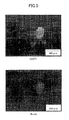
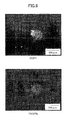
- Nestin (produced by Abcam PLC), CD271 (produced by Abcam PLC), and CD133 (produced by Abcam PLC) are a marker for a stem cell originating from a nerve, a marker for a stem cell originating from a fat, and a marker for a stem cell, respectively, and PDGFRa (produced by R&D Co., Ltd.) and PDGFRb (produced by R&D Co., Ltd.) are markers for a mesenchymal stem cell. Furthermore, evaluation results of the cell aggregate in practical example 1 are illustrated in FIGS. 5-8 . It can be seen from Table 1 that the cell aggregate in practical example 1 was Nestin-positive, and accordingly, the stem cell originating from a fat could acquire a property of a stem cell originating from a nerve in vitro.
- the obtained application liquid was applied to a glass bottom dish (produced by Matsunami Glass Ind., Ltd.) and dried at room temperature. Then, after drying by heating and drying at room temperature were conducted, washing with water and drying were conducted to obtain a container for forming a cell aggregate.
- the obtained application liquid was applied to a glass bottom dish (produced by Matsunami Glass Ind., Ltd.) and dried at room temperature. Then, after drying by heating and drying at room temperature were conducted, washing with water and drying were conducted to obtain a container for forming a cell aggregate.
- the cell aggregate in practical example 3 also developed a green color similarly to the cell aggregate in practical example 2, and accordingly, was positive for CD271.
Landscapes
- Health & Medical Sciences (AREA)
- Engineering & Computer Science (AREA)
- Life Sciences & Earth Sciences (AREA)
- Biomedical Technology (AREA)
- Chemical & Material Sciences (AREA)
- Bioinformatics & Cheminformatics (AREA)
- Organic Chemistry (AREA)
- Wood Science & Technology (AREA)
- Zoology (AREA)
- Biotechnology (AREA)
- Genetics & Genomics (AREA)
- Microbiology (AREA)
- Biochemistry (AREA)
- General Health & Medical Sciences (AREA)
- General Engineering & Computer Science (AREA)
- Cell Biology (AREA)
- Immunology (AREA)
- Developmental Biology & Embryology (AREA)
- Clinical Laboratory Science (AREA)
- Sustainable Development (AREA)
- Hematology (AREA)
- Physics & Mathematics (AREA)
- Molecular Biology (AREA)
- Analytical Chemistry (AREA)
- Neurology (AREA)
- Urology & Nephrology (AREA)
- Rheumatology (AREA)
- Neurosurgery (AREA)
- General Physics & Mathematics (AREA)
- Toxicology (AREA)
- Oncology (AREA)
- Food Science & Technology (AREA)
- Acoustics & Sound (AREA)
- Medicinal Chemistry (AREA)
- Tropical Medicine & Parasitology (AREA)
- Pathology (AREA)
- Gastroenterology & Hepatology (AREA)
- Apparatus Associated With Microorganisms And Enzymes (AREA)
- Details Of Rigid Or Semi-Rigid Containers (AREA)
- Measuring Or Testing Involving Enzymes Or Micro-Organisms (AREA)
Abstract
Description
- The present invention relates to a container for forming a cell aggregate, a method for forming a cell aggregate, a cell aggregate, a method for screening a substance, and a method for exploring a cell function.
- Conventionally, a cell aggregate is formed by culturing an adherent cell and a non-adherent cell.
- Patent document 1 discloses a method for forming a neural stem cell aggregate in which a tissue including a pluripotent neural stem cell is suspended in a culture medium containing at least one kind of a stem cell growth factor and disseminated to and cultured in a container for forming a neural stem cell aggregate. Herein, the container for forming a neural stem cell aggregate has a non-aqueous cured coating layer on an inner surface thereof and is manufactured by coating an inner surface of a container with an aqueous resin to form an aqueous resin coating layer and subsequently curing the aqueous resin coating layer to be modified into an non-aqueous cured coating layer. Furthermore, a copolymer of 2-methacryloyloxyethylphosphorylcholine and another monomer (for example, butyl methacrylate, etc.) is illustrated for an aqueous resin.
- However, when an adherent cell is cultured by such a container for forming a neural stem cell aggregate, adhesion of the adherent cell is inhibited by a non-aqueous cured coating layer, and as a consequence, the adherent cell is killed, which causes a problem that it is not possible to form a cell aggregate of adherent cells.
- Patent document 1: Japanese Patent Application Publication No.
2008-220205 - The present invention aims at providing a container for forming a cell aggregate capable of forming a cell aggregate of adherent cells and a method for forming a cell aggregate by using the container for forming a cell aggregate, while a problem possessed by the above-mentioned conventional art is taken into consideration. Furthermore, the present invention aims at providing a method for screening a substance and method for exploring a cell function by using the method for forming a cell aggregate.
- The invention as recited in claim 1 is a container for forming a cell aggregate, characterized in that a group represented by a general formula of:

- The invention as recited in
claim 2 is the container for forming a cell aggregate as recited in claim 1, characterized by being manufactured by reacting a compound having a functional group having a reactivity with a carboxyl group, an amino group, or a hydroxyl group, a group represented by the general formula, and a molecular weight of 225 or more and 650 or less, with a container in which a carboxyl group, an amino group, and a hydroxyl group are present near a surface thereof. - The invention as recited in claim 3 is the container for forming a cell aggregate as recited in
claim 2, characterized in that the container in which a carboxyl group, an amino group, and a hydroxyl group are present near a surface thereof is plasma-treated with under an atmosphere including at least one of oxygen, ozone, and a water vapor, and ammonia and/or nitrogen. - The invention as recited in claim 4 is the container for forming a cell aggregate as recited in claim 1, characterized by being manufactured by reacting a first compound having a functional group capable of producing a silanol group through hydrolysis thereof, a group represented by the general formula, and a molecular weight of 315 or more and 650 or less, and a second compound having a functional group capable of producing a silanol group through hydrolysis thereof and at least one of an amino group, a functional group capable of producing a carboxyl group through hydrolysis thereof, and a functional group capable of producing a hydroxyl group through hydrolysis thereof, with a container in which at least one of a functional group capable of producing a silanol group through hydrolysis thereof, a silanol group, a hydroxyl group originating from a semimetal oxide, and a hydroxyl group originating from a metal oxide is present near a surface thereof.
- The invention as recited in claim 5 is the container for forming a cell aggregate as recited in claim 1, characterized in that a layer including a resin having a group represented by the general formula and at least one of an amino group, a carboxyl group, and a hydroxyl group is formed on a surface thereof.
- The invention as recited in claim 6 is a method for forming a cell aggregate, characterized in that a somatic cell is cultured by using the container for forming a cell aggregate as recited in any one of claims 1 to 5 to form a cell aggregate.
- The invention as recited in claim 7 is the method for forming a cell aggregate as recited in claim 6, characterized in that the somatic cell is an adherent cell.
- The invention as recited in claim 8 is a method for screening a substance, characterized by including a step of culturing a somatic cell by using the container for forming a cell aggregate as recited in any one of claims 1 to 5 to form a cell aggregate and a step of screening a substance by using the cell aggregate.
- The invention as recited in claim 9 is the method for screening a substance as recited in claim 8, characterized in that the somatic cell is an adherent cell.
- The invention as recited in claim 10 is a method for exploring a cell function, characterized by including a step of culturing a somatic cell by using the container for forming a cell aggregate as recited in any one of claims 1 to 5 to form a cell aggregate and a step of exploring a cell function by using the cell aggregate.
- The invention as recited in claim 11 is the method for exploring a cell function as recited in claim 10, characterized in that the somatic cell is an adherent cell.
- According to the present invention, it is possible to provide a container for forming a cell aggregate capable of forming a cell aggregate of adherent cells and a method for forming a cell aggregate by using the container for forming a cell aggregate. Furthermore, according to the present invention, it is possible to provide a method for screening a substance and method for exploring a cell function by using the method for forming a cell aggregate.
-
-
FIG. 1A is a diagram (part 1) illustrating one example of a method for forming a cell aggregate by using a container for forming a cell aggregate in the present invention. -
FIG. 1B is a diagram (part 2) illustrating one example of a method for forming a cell aggregate by using a container for forming a cell aggregate in the present invention. -
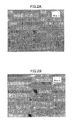
FIG. 2A is an optical micrograph illustrating a cell aggregate in practical example 1 (in a case of culturing for 2 days). -
FIG. 2B is an optical micrograph illustrating a cell aggregate in practical example 1 (in a case of culturing for 5 days). -
FIG. 3 is an optical micrograph illustrating a cultured cell in comparative example 1 (in a case of culturing for 5 days). -
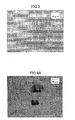
FIG. 4A is an optical micrograph illustrating an evaluation result of an alkaline phosphatase activity of a cell aggregate in practical example 1. -
FIG. 4B is an optical micrograph illustrating an evaluation result of an alkaline phosphatase activity of a cell aggregate in comparative example 1. -
FIG. 5 is a fluorescence micrograph illustrating an evaluation result (part 1) of dual immunostaining of a cell aggregate in practical example 1. -
FIG. 6 is a fluorescence micrograph illustrating an evaluation result (part 2) of dual immunostaining of a cell aggregate in practical example 1. -
FIG. 7 is a fluorescence micrograph illustrating an evaluation result (part 3) of dual immunostaining of a cell aggregate in practical example 1. -
FIG. 8 is a fluorescence micrograph illustrating an evaluation result (part 4) of dual immunostaining of a cell aggregate in practical example 1. -
FIG. 9 is an optical micrograph illustrating a cell aggregate in practical example 2 (in a case of culturing for 7 days). -
FIG. 10 is an optical micrograph illustrating a cell aggregate in practical example 3 (in a case of culturing for 7 days). -
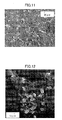
FIG. 11 is an optical micrograph illustrating a cultured cell in comparative example 2 (in a case of culturing for 7 days). -
FIG. 12 is a photograph illustrating an evaluation result of immunostaining of a cell aggregate in practical example 2. - Next, an embodiment for implementing the present invention will be described in conjunction with the drawings.
- In a container for forming a cell aggregate in the present invention, a phosphorylcholine-like group represented by a general formula of:

-
FIG. 1 illustrates one example of a method for forming a cell aggregate by using a container for forming a cell aggregate in the present invention. When an adherent cell C and a culture medium (not illustrated in the figure) are added into a container for forming a cell aggregate D, an adherent cell C adheres to a part of a container for forming a cell aggregate D (seeFIG. 1A ). It is considered that this is because an adherent cell C adheres to a region D1 in which at least one of an amino group, a carboxyl group, and a hydroxyl group of a container for forming a cell aggregate D is present near a surface thereof. Then, when an adherent cell C is cultured, an adherent cell C proliferates and a cell aggregate C' of adherent cells C is formed autonomously (seeFIG. 1B ). It is considered that this is because a region D2 in which an amino group, a carboxyl group, or a hydroxyl group of a container for forming a cell aggregate D is not present near a surface thereof inhibits adhesion of an adherent cell C, and accordingly, proliferated adherent cells C are formed on an adherent cell C. Thus, when an adherent cell C is cultured by using a container for forming a cell aggregate D, it is possible to form a cell aggregate C' of an adherent cell C. - A form of a container for forming a cell aggregate in the present invention is not particularly limited, and there is provided a dish, a multi-well plate, a flask, a roller bottle, a unit of a device having a cell culturing process, or the like.
- A first embodiment of a container for forming a cell aggregate in the present invention is manufactured by reacting a surface modifying agent having a functional group having a reactivity with a carboxyl group, an amino group, or a hydroxyl group, and a phosphorylcholine-like group, with a container in which a carboxyl group, an amino group, and a hydroxyl group are present near a surface thereof. Herein, a molecular weight of a surface modifying agent is 225 - 650. Thereby, it is possible to introduce a phosphorylcholine-like group at a high density.
- A method for introducing an amino group near a surface of a container is not particularly limited, and there is provided a nitrogen plasma treatment, an ammonia plasma treatment, a method for reacting a surface treating agent, a silicone vapor phase treatment, or the like.
- In a nitrogen plasma treatment, an amino group is introduced near a surface of a container by generating a low temperature plasma under a nitrogen gas atmosphere (for example, see Surface and Coatings Technology 116-119 (1999) 802 - 807, Colloids and Surfaces A: Physicochem. Eng. Aspects 195 (2001) 81 - 95, Macromol. Chem. Phys. 200. 989 - 996 (1999)). Specifically, after a container is put in a reactor and evacuation inside a reactor is conducted by a vacuum pump, nitrogen gas is introduced thereinto and glow discharge is conducted.
- In an ammonia plasma treatment, an amino group is introduced near a surface of a container by generating a low temperature plasma under an ammonia gas atmosphere. Specifically, after a container is put in a reactor and evacuation inside a reactor is conducted by a vacuum pump, ammonia gas is introduced thereinto and glow discharge is conducted.
- A material for making a container is not particularly limited and there is provided a polyvinyl chloride, an acryl resin, a polystyrene, a polypropylene, a polyethylene, a polyester, a cycloolefin resin, a polycarbonate, a glass, or the like.
- In a method for reacting a surface treating agent, an amino group is introduced near a surface of a container in which at least one of a functional group capable of producing a silanol group through hydrolysis of an alkoxysilyl group or the like, a silanol group, a hydroxyl group originating from a semimetal oxide, and a hydroxyl group originating from a metal oxide is present near a surface thereof, by using a surface treating agent such as an alkoxy silane, chlorosilane, or silazane having an amino group. Specifically, after a mixed liquid of water / 2-propanol is first charged into a container and 3-aminopropyltrimethoxysilane is added thereto, heating at 100 °C is conducted to cause a reaction for 6 hours. Then, after cooling is conducted at room temperature, washing with methanol and drying are conducted.
- A material for making a container is not particularly limited and there is provided a 3-trimethoxysilylpropyl methacrylate - methyl methacrylate - divinylbenzene copolymer, a polyvinyl chloride, an acryl resin, a polystyrene, a polypropylene, a polyethylene, a polyester, a cycloolefin resin, a polycarbonate, a silica, a glass, an alumina, a talc, a clay, a mica, an asbestos, a titanium oxide, a zinc flower, an iron oxide, or the like.
- In a silicone vapor phase treatment, after a hydroxyl group is introduced near a surface of a container by using 1,3,5,7-tetramethylcyclotetrasiloxane, an amino group is introduced near a surface of a container by reacting an alkene having an amino group therewith (for example, see Japanese Examined Patent Application Publication No.
1-54379 1-54380 1-54381 - A material for making a container is not particularly limited, and there is provided a styrene - divinylbenzene copolymer, a polyvinyl chloride, an acryl resin, a polystyrene, a polypropylene, a polyethylene, a polyester, a cycloolefin resin, a polycarbonate, a mica, a talc, a kaolin, an alumina, a titanium oxide, a zinc oxide, an iron oxide, or the like.
- An alkene having an amino group is not limited to allylamine, and it is possible to be an amine having a vinyl group, an amine having an acryl group, or the like. Furthermore, an amino group may be protected with a butoxycarbonyl group, a benzyloxycarbonyl group, or the like. Furthermore, for example, an alkene having a functional group capable of introducing an amino group through a reaction with a diamine, such as an epoxy group, may be used, instead of an alkene having an amino group.
- A method for introducing a carboxyl group and/or a hydroxyl group near a surface of a container is not particularly limited, and there is provided an oxygen plasma treatment, an ozone treatment, a water vapor plasma treatment, or the like.
- In an oxygen plasma treatment, a carboxyl group and a hydroxyl group are introduced near a surface of a container by generating a low temperature plasma under an oxygen gas atmosphere. Specifically, after a container is put in a reactor and evacuation inside a reactor is conducted by a vacuum pump, an oxygen gas is introduced thereinto and glow discharge is conducted.
- In an oxygen treatment, a carboxyl group and a hydroxyl group are introduced near a surface of a container by charging an aqueous solution of ozone into a container. Specifically, an aqueous solution of ozone at 40 ppm is charged into a container and treatment is conducted at room temperature for 15 minutes.
- In a water vapor plasma treatment, a hydroxyl group is introduced near a surface of a container by generating a low temperature plasma under a water vapor atmosphere. Specifically, after a container is put in a reactor and evacuation inside a reactor is conducted by a vacuum pump, a water vapor is introduced thereinto and glow discharge is conducted.
- A material for making a container is not particularly limited, and there is provided a polystyrene, a polyethylene terephthalate, a polycarbonate, a polymethyl methacrylate, a polytetrafluoroethylene, a polyether ether ketone, a cycloolefin resin, a polycarbonate, or the like.
- A method for introducing a carboxyl group near a surface of a container is not particularly limited, and there is provided a method for reacting a surface treating agent, a silicone vapor phase treatment, or the like.
- In a method for reacting a surface treating agent, a carboxyl group is introduced near a surface of a container in which at least one of a functional group capable of producing a silanol group through hydrolysis of an alkoxysilyl group or the like, a silanol group, a hydroxyl group originating from a semimetal oxide, and a hydroxyl group originating from a metal oxide is present near a surface of a container, by using a surface treating agent such as an alkoxysilane, chlorosilane, or silazane having a carboxyl group. Specifically, triethoxysilylpropylsuccinic anhydride is first dissolved in N,N-dimethylformamide, then a distilled water and 4-dimethylaminopyridine are added thereinto, and agitation is conducted at room temperature for 16 hours, to synthesize a silane coupling agent having a carboxyl group. Then, after a mixed liquid of water / 2-propanol is charged into a container and a silane coupling agent having a carboxyl group is added thereto, heating at 100 °C is conducted to cause a reaction for 6 hours. Furthermore, after cooling is conducted at room temperature, washing with methanol and drying are conducted.
- A material for making a container is not particularly limited, and there is provided 3-trimethoxysilylpropyl methacrylate - methyl methacrylate - divinylbenzene copolymer, a silica, a glass, an alumina, a talc, a clay, a mica, an asbestos, a titanium oxide; a zinc flower, an iron oxide, or the like.
- In a silicone vapor phase treatment, after a hydrosilyl group is introduced near a surface of a container by using 1,3,5,7-tetramethylcyclotetrasiloxane, a carboxyl group is introduced near a surface of a container by reacting an alkene having a carboxyl group therewith (for example, see Japanese Examined Patent Application Publication No.
1-54379 1-54380 1-54381 - A material for making a container is not particularly limited, and there is provided a styrene - divinylbenzene copolymer, a mica, a talc, a kaolin, an alumina, a titanium oxide, a zinc oxide, an iron oxide, or the like.
- An alkene having a carboxyl group is not limited to allylcarboxylic acid, and it is possible to be a carboxylic acid having a vinyl group, a carboxylic acid having an acryl group, or the like.
- A method for introducing an amino group, a carboxyl group, and a hydroxyl group near a surface of a container is not particularly limited, and there is provided a method for conducting a plasma treatment under an atmosphere including an oxygen gas and an ammonia gas or the like. Specifically, after a container is put in a reactor and evacuation inside a reactor is conducted by a vacuum pump, an oxygen gas and an ammonia gas are introduced thereinto and glow discharge is conducted to generate a low temperature plasma.
- For a functional group having a reactivity with a carboxyl group, there is provided an amino group, a hydroxyl group, or the like, and an amino group is preferable because a reactivity thereof is high.
- For a functional group having a reactivity with an amino group or a hydroxyl group, there is provided a carboxyl group, an aldehyde group, or the like, and a carboxyl group is preferable because a reactivity thereof is high.
- Furthermore, for a surface modifying agent, it is preferable that a functional group having a reactivity with a carboxyl group, an amino group, or a hydroxyl group is bonded to a phosphorylcholine-like group via a spacer. A spacer is not particularly limited, and there is provided a methylene group, an oxyethylene group, an alkylene group having one or more amino groups, or the like.
- Next, a surface modifying agent having an amino group and a phosphorylcholine-like group will be described.
- A surface modifying agent having an amino group and a phosphorylcholine-like group is not particularly limited, and there is provided a compound disclosed in Japanese Patent Application Publication No.
2006-007203 2006-007204 2008-174491 - When a carboxyl group which is present near a surface of a container and an amino group possessed by a surface modifying agent are condensed through a general reaction, an amide linkage is formed. Specifically, after a solution of N-hydroxysuccinimide and/or 1-ethyl-3-(3-dimethylaminopropyl)carbodiimide is charged into a container to active-esterify a carboxyl group of a container, a surface modifying agent is added thereto.
- Next, a surface modifying agent having a hydroxyl group and a phosphorylcholine-like group will be described.
- A surface modifying agent having a hydroxyl group and a phosphorylcholine-like group is not particularly limited, and there is provided L-α-glycerophosphorylcholine, or the like.
- When a carboxyl group which is present near a surface of a container and a hydroxyl group possessed by a surface modifying agent are condensed through a general reaction, an ester linkage is formed. Specifically, after a hydroxyl group of a surface modifying agent is activated by using cyanogen bromide, charging thereof into a container is conducted.
- Next, a surface modifying agent having a carboxyl group and a phosphorylcholine-like group will be described.
- A surface modifying agent having a carboxyl group and a phosphorylcholine-like group is not particularly limited, and there is provided a compound disclosed in Japanese Patent Application Publication No.
2006-011381 - When an amino group which is present near a surface of a container and a carboxyl group possessed by a surface modifying agent are condensed through a general reaction, an amide linkage is formed. Specifically, after a surface modifying agent is added into a solution of N-hydroxysuccinimide and/or 1-ethyl-3-(3-dimethylaminopropyl)carbodiimide to active-esterify a carboxyl group, charging thereof into a container is conducted.
- When a hydroxyl group which is present near a surface of a container and a carboxyl group possessed by a surface modifying agent are condensed through a general reaction, an ester linkage is formed. Specifically, after a hydroxyl group of a surface modifying agent is activated by using cyanogen bromide, a container is dipped.
- Next, a surface modifying agent having an aldehyde group and a phosphorylcholine-like group will be described.
- A surface modifying agent having an aldehyde group and a phosphorylcholine-like group is not particularly limited, and there is provided a compound disclosed in Japanese Patent Application Publication No.
2006-011383 - When an amino group which is present near a surface of a container and an aldehyde group possessed by a surface modifying agent are condensed through a general reaction, an imino linkage is formed. Specifically, after a surface modifying agent and methanol are charged into a container and leaving thereof at room temperature for 6 hours is conducted, sodium cyanotrihydroborate is added thereto at 0 °C and heating and agitation thereof are conducted overnight. In addition, it is also possible to use a protic solvent such as water, ethanol, or 2-propanol, other than methanol, for a reaction solvent, and an introduction rate in a case where methanol is used tends to be high.
- When a hydroxyl group which is present near a surface of a container and an aldehyde group possessed by a surface modifying agent are added through a general reaction, an acetal linkage is formed. Specifically, after a container and a surface modifying agent are left in methanol at room temperature for 6 hours, sodium cyanotrihydroborate is added thereto at 0 °C and heating and agitation thereof are conducted overnight. In addition, it is also possible to use a protic solvent such as water, ethanol, or 2-propanol, other than methanol, for a reaction solvent, and an introduction rate in a case where methanol is used tends to be high.
- Additionally, a surface modifying agent having a functional group having a reactivity with an aldehyde group and a phosphorylcholine-like group may be reacted by using a container in which an aldehyde group and an amino group and/or a hydroxyl group are present near a surface thereof, instead of a container in which a carboxyl group, an amino group, and a hydroxyl group are present near a surface thereof.
- A method for introducing an aldehyde group near a surface of a container is not particularly limited, and there is provided a method for reacting glutaraldehyde with a container in which an amino group is present near a surface thereof, or the like.
- For a functional group having a reactivity with an aldehyde group, there is provided an amino group, a hydroxyl group, or the like, and an amino group is preferable because a reactivity thereof is high.
- Furthermore, for a surface modifying agent, it is preferable that a functional group having a reactivity with an aldehyde group is bonded to a phosphorylcholine-like group via a spacer. A spacer is not particularly limited, and there is provided a methylene group, an oxyethylene group, an alkylene group having one or more amino groups, or the like.
- Next, a surface modifying agent having an amino group and a phosphorylcholine-like group will be described.
- A surface modifying agent having an amino group and a phosphorylcholine-like group is not particularly limited, and there is provided a compound disclosed in Japanese Patent Application Publication No.
2006-007203 2006-007204 2008-174491 - When an aldehyde group which is present near a surface of a container and an amino group possessed by a surface modifying agent are condensed through a general reaction, an imino linkage is formed. Specifically, after a container and a surface modifying agent are left in ethanol at room temperature for 6 hours, sodium cyanotrihydroborate is added thereto at 0 °C and heating and agitation thereof is conducted overnight. In addition, it is also possible to use a protic solvent such as water, ethanol, or 2-propanol, other than methanol, for a reaction solvent, and an introduction rate in a case where methanol is used tends to be high.
- Next, a surface modifying agent having a hydroxyl group and a phosphorylcholine-like group will be described.
- A surface modifying agent having a hydroxyl group and a phosphorylcholine-like group is not particularly limited, and there is provided L-α-glycerophosphorylcholine, or the like.
- When an aldehyde group which is present near a surface of a container and a hydroxyl group possessed by a surface modifying agent are added through a general reaction, an acetal linkage is formed. Specifically, after a container and a surface modifying agent are left in methanol at room temperature for 6 hours, sodium cyanotrihydroborate is added thereto at 0 °C and heating and agitation thereof is conducted overnight. In addition, it is also possible to use a protic solvent such as water, ethanol, or 2-propanol, other than methanol, for a reaction solvent, and an introduction rate in a case where methanol is used tends to be high.
- Furthermore, a surface modifying agent having a functional group having a reactivity with an amino group or a hydroxyl group and a phosphorylcholine-like group may be reacted by using a container in which a carboxyl group, an amino group, or a hydroxyl group is present near a surface thereof, instead of a container in which a carboxyl group, an amino group, and a hydroxyl group are present near a surface thereof.
- Moreover, a surface modifying agent having a functional group having a reactivity with an amino group or a hydroxyl group and a phosphorylcholine-like group may be reacted by using a container in which an amino group and a hydroxyl group are present near a surface thereof, instead of a container in which a carboxyl group, an amino group, and a hydroxyl group are present near a surface thereof, so that an unreacted amino group and/or hydroxyl group remain(s) near a surface of a container.
- Furthermore, a surface modifying agent having a functional group having a reactivity with a carboxyl group, an amino group, or a hydroxyl group and a phosphorylcholine-like group may be reacted by using a container in which a carboxyl group, an amino group, or a hydroxyl group is present near a surface thereof, instead of a container in which a carboxyl group, an amino group, and a hydroxyl group are present near a surface thereof, so that an unreacted carboxyl group, amino group, or hydroxyl group remains near a surface of a container.
- A second embodiment of a container for forming a cell aggregate in the present invention is manufactured by reacting a first surface modifying agent having a functional group capable of producing a silanol group through hydrolysis thereof and a phosphorylcholine-like group and a second surface modifying agent having a functional group capable of producing a silanol group through hydrolysis thereof and at least one of an amino group, a carboxyl group, and a hydroxyl group, with a container in which at least one of a functional group capable of producing a silanol group through hydrolysis thereof, a silanol group, a hydroxyl group originating from a semimetal oxide, and a hydroxyl group originating from a metal oxide is present near a surface thereof. Herein, a molecular weight of a first surface modifying agent is 315 - 650. Thereby, it is possible to introduce a phosphorylcholine-like group at a high density.
- For a method for introducing a functional group capable of producing a silanol group through hydrolysis thereof and/or a silanol group near a surface of a container, there is provided a method for applying an application liquid containing a polymer having a functional group capable of producing a silanol group through hydrolysis thereof (referred to as a hydrolysable polymer, below) and an alkoxysilane to a container.
- When an application liquid containing a hydrolysable polymer and an alkoxysilane is applied to a container, a hydrolysable polymer and an alkoxysilabe are hydrolyzed to produce a silanol group. Furthermore, a hydrolysable polymer is cross-linked through dehydration and condensation of silanol groups thereof with one another to form a layer of a cross-linked polymer in which a silanol group is introduced. Specifically, after an application liquid is applied to a material, water, an acid, or an alkali is applied thereto and/or heating is conducted. Furthermore, after water, an acid, or an alkali is applied to a material, an application liquid may be applied thereto. Moreover, water, an acid, or an alkali may be mixed into an application liquid. In such a case, it is preferable to prepare an application liquid at the time of application appropriately, because hydrolysis thereof is caused in an application liquid. In addition, when water, an acid, or an alkali is used, heating may be conducted, but, generally, a reaction sufficiently proceeds at room temperature. Furthermore, even if water, an acid, or an alkali is not used, a reaction gradually proceeds due to atmospheric moisture.
- An acid or alkali to be used for hydrolysis is not particularly limited as long as it is possible to conduct hydrolysis, wherein it is possible to mix and use two or more kinds thereof and use thereof in an aqueous solution may be conducted.
- For an application liquid, it is possible to use a hydrolysable polymer and an alkoxysilane which are dissolved or dispersed in an organic solvent. An organic solvent is not particularly limited, and there is provided an aliphatic hydrocarbon, an aromatic hydrocarbon, a chlorinated hydrocarbon, an ether, an alcohol such as a 1 - 4 -hydric aliphatic alcohol with a carbon number of 1 - 4, a cellosolve such as ethylcellosolve or butylcellosolve, a dioxane, methyl acetate, a diformamide, or the like, wherein two or more kinds thereof may be used in combination.
- A content of a hydrolysable polymer in an application liquid is generally 0.001 - 20% by mass and 0.1 - 5% by mass is preferable. If a content of a hydrolysable polymer in application liquid is less than 0.001 % by mass, a sufficient effect may not be obtained in a single application, and if it is more than 20% by mass, an application property may be degraded.
- Furthermore, a mass ratio of a hydrolysable polymer to an alkoxysilane is generally 0.01 - 20%, and 0.2 - 5% is preferable. If a mass ratio of a hydrolysable polymer to an alkoxysilane is less than 0.01%, a strength of a cross-linked polymer layer may be insufficient, and if it is more than 20%, an amount of a silanol group to be introduced into a cross-linked polymer layer may be insufficient.
- A method for applying an application liquid is not particularly limited, and there is provided a dip coating method, a spray coating method, a spin-cast method, or the like.
- A material for making a container is not particularly limited and there is provided an organic material such as a PP (polypropylene), a cycloolefin resin, a polycarbonate, a PET (polyethylene terephthalate), a PEEK, a fluororesin, a polystyrene, or a polyvinyl chloride; an inorganic material such as gold, titanium, aluminum, iron, copper, a stainless steel, an alumina, a titanium oxide, or a zinc oxide; or the like.
- A hydrolysable polymer is not particularly limited as long as a polymer has a functional group capable of producing a silanol group through hydrolysis thereof, and it is possible to use a homopolymer or copolymer (as referred to as a polymer (A), below) obtained by polymerizing a monomer (A-1) represented by a general formula of:

- Furthermore, when a polymer (A) is synthesized, a monomer (A-2) represented by a general formula of:

- Furthermore, when a polymer (A) is synthesized, a monomer (A-3) represented by a general formula of:


- Furthermore, when a polymer (A) is synthesized, a monomer (A-4) represented by a general formula of:


- That is, when a polymer (A) is polymerized, at least one of a monomer (A-2), a monomer (A-3), and a monomer (A-4) may be copolymerized with a monomer (A-1).
- It is preferable that a content of a monomer (A-1) in all of monomers to be used to synthesize a polymer (A) is 40 - 85% by mass. If a content of a monomer (A-1) in all of monomers is less than 40% by mass, a crosslink density may be lowered, whereby an effect of providing a hydrophilicity may not sufficiently be maintained, and if it is more than 85% by mass, a uniformity of a cross-linked polymer layer may be lowered.
- Furthermore, a content of a monomer (A-2) in all of monomers to be used to synthesize a polymer (A) is generally 1 - 75% by mass, and 10 - 60% by mass is preferable. If a content of a monomer (A-2) in all of monomers is less than 1% by mass, a water resisting property of a cross-linked polymer layer may be degraded, and if it is more than 75% by mass, a polymer (A) may be difficult to dissolve in an alcohol.
- Moreover, a content of a monomer (A-3) in all of monomers to be used to synthesize a polymer (A) is generally 1 - 70% by mass, and 5 - 60% by mass is preferable. If a content of a monomer (A-3) in all of monomers is less than 1% by mass, a water resisting property of a cross-linked polymer layer may be degraded, and if it is more than 70% by mass, a polymer (A) may be difficult to dissolve in an alcohol.
- Furthermore, a ratio of a mass of a monomer (A-4) to a total mass of a monomer (A-1), monomer (A-2), and monomer (A-3) is generally 0.01 - 1, and 0.05 - 0.5 is preferable. If this ratio is less than 0.01, a flexibility of a cross-linked polymer layer may be degraded, and if it is more than 1, a water resisting property of a cross-linked polymer layer may be degraded.
- It is preferable that a number-average molecular weight of a polymer (A) is 2000 - 150000. If a number average molecular weight of a polymer (A) is less than 2000, a period of time for forming a cross-linked polymer layer may be long, and if it is more than 150000, a viscosity of an application liquid may be high, whereby an application property or workability may be degraded.
- In addition, a specific example and manufacturing method for a polymer (A) are disclosed in Japanese Patent Application Publication No.
11-302129 - Furthermore, for a hydrolysable polymer, it is possible to use a homopolymer or copolymer (referred to as a polymer (B), below) having a structural unit (B-1) represented by a general formula of:

- Furthermore, a polymer (B) may have a structural unit (B-2) represented by a general formula of:

- It is preferable that a content of a structural unit (B-1) in a polymer (B) is 1 - 90% by mass. If a content of a structural unit (B-1) is less than 1% by mass, a crosslink density may be lowered, whereby an effect of providing a hydrophilicity may not sufficiently be maintained, and if it is more than 90% by mass, a uniformity of a cross-linked polymer layer may be degraded.
- Moreover, it is preferable that a content of a structural unit (B-2) in a polymer (B) is 10 - 99% by mass. If a content of a structural unit (B-2) is less than 10% by mass, a uniformity of a cross-linked polymer layer may be degraded, and if it is more than 99% by mass, a crosslink density may be lowered, whereby an effect of providing a hydrophilicity may not sufficiently be maintained.
- It is preferable that a number average molecular weight of a polymer (B) is 2000 - 500000. If a number average molecular weight is less than 2000, a period of time for forming a cross-linked polymer layer may be long, and if it is more than 500000, a viscosity of an application liquid may be high, whereby an application property or workability may be degraded.
- For a hydrolysable polymer, a polymer (A) and a polymer (B) may be used in combination, and a hydrolysable polymer and a non-hydrolysable polymer may be used in combination. A non-hydrolysable polymer is not particularly limited, and there is provided a polymer (A) or polymer (B) having no functional group capable of producing a silanol group through hydrolysis thereof, or the like.
- A method for introducing a silanol group near a surface of a container is not particularly limited, and there is provided a method for applying an application liquid containing a silicone resin to a container to form a film containing a silicone resin having a silanol group, or the like.
- It is preferable that a contact angle of water on a film containing a silicone resin having a silanol group is 3 - 8°. It is difficult to form a film with a contact angle of water which is less than 3°, and if a film with a contact angle of water which is more than 8° is formed, it may not be possible to introduce a phosphorylcholine-like group at a high density.
- A silicone resin contained in an application liquid is not particularly limited, and there is provided a resin obtained by hydrolyzing and subsequently condensing an alkoxysilane represented by a general formula of:
(R1O)nSi(R2)4-n
(in the formula, each of R1 and R2 is independently an alkyl group with a carbon number of 1 - 8 and n is an integer of 1 - 4, wherein a plurality of R2 may be identical or different in a case where n is 1 or 2 and a plurality of R1 may be identical or different in a case where n is 2 or 3.), wherein two or more kinds thereof may be used in combination. Herein, a silicone resin having a silanol group which is contained in a film with a contact angle of water being 3-8° may be identical to or may be different from a silicone resin contained in an application liquid. - An organic solvent contained in application liquid is not particularly limited, and there is provided an aliphatic hydrocarbon, an aromatic hydrocarbon, a chlorinated hydrocarbon, an ether, an alcohol such as a 1 - 4-hydric aliphatic alcohol with a carbon number of 1 - 4, a cellosolve such as ethylcellosolve or butylcellosolve, a dioxane, methyl acetate, a diformamide, or the like, wherein two or more kinds thereof may be used in combination.
- A content of a silicone resin in an application liquid is generally 0.01 - 1% by mass and 0.1 - 1% by mass is preferable. If a content of a silicone resin in an application liquid is less than 0.001% by mass, a uniform film may not be formed, and if it is more than 20% by mass, an application property may be degraded.
- A method for applying an application liquid is not particularly limited, and there is provided a dip coating method, a spray coating method, a spin-cast method, or the like.
- A material for making a container is not particularly limited, and there is provided an organic material such as a polycarbonate, a PET (polyethylene terephthalate), a polystyrene, or an acryl resin; an inorganic material such as gold, titanium, aluminum, iron, copper, a stainless steel, an alumina, a titanium oxide, or a zinc oxide; or the like.
- Furthermore, a container made of a glass may be used for a container in which a silanol group is present near a surface thereof.
- A metal oxide for making a container in which a hydroxyl group originating from a metal oxide is present near a surface thereof is not particularly limited, and there is provided a titanium oxide, a zinc oxide, an iron oxide, a chromium oxide, an aluminum oxide, or the like.
- A metal oxide for making a container in which a hydroxyl group originating from a semimetal oxide is present near a surface thereof is not particularly limited, and there is provided a germanium oxide, an arsenic oxide, a boron oxide, or the like.
- For a functional group having a reactivity with at least one of a functional group capable of producing a silanol group through hydrolysis thereof, a silanol group, a hydroxyl group originating from a semimetal oxide, and a hydroxyl group originating from a metal oxide, there is provided a functional group capable of producing a silanol group through hydrolysis thereof.
- Furthermore, it is preferable that a functional group capable of producing a silanol group through hydrolysis thereof is bonded to a phosphorylcholine-like group via a spacer in a first surface modifying agent. A spacer is not particularly limited, and there is provided a methylene group, an oxyethylene group, an alkylene group having one or more'amino groups, or the like.
- For a functional group capable of producing a silanol group through hydrolysis thereof, there is provided a hydrosilyl group, an alkoxysilyl group, a halosilyl group, an acyloxysilyl group, an aminosilyl group, or the like, wherein an alkoxysilyl group with a carbon number of 1 - 6 or a hydrosilyl group is preferable from the viewpoint of a stability, a reactivity, or the like.
- A first surface modifying agent is not particularly limited as long as a functional group capable of producing a silanol group through hydrolysis thereof and a phosphorylcholine-like group are possessed, and there is provided a compound disclosed in Japanese Patent Application Publication No.
2006-011380 - A second surface modifying agent is not particularly limited as long as a functional group capable of producing a silanol group through hydrolysis thereof and at least one of an amino group, a functional group capable of producing a carboxyl group through hydrolysis thereof, and a functional group capable of producing a hydroxyl group through hydrolysis thereof are possessed, and there is provided a compound having an amino group such as 3-aminopropyltrimethoxysilane or p-aminophenyltrimethoxysilane; a compound having a functional group capable of producing a carboxyl group through hydrolysis thereof such as 3-(triethoxysilyl)propylsuccinic anhydride; a compound having a functional group capable of producing a hydroxyl group through hydrolysis thereof such as 3-glycidoxypropyltrimethoxysilane or 3-glycidoxypropylmethyldiethoxysilane; or the like, wherein two or more kinds thereof may be used in combination.
- When a second surface modifying agent has a functional group capable of producing a carboxyl group and/or a hydroxyl group through hydrolysis thereof, it is possible to introduce a functional group capable of producing a carboxyl group and/or a hydroxyl group through hydrolysis thereof near a surface of a container and subsequently conduct hydrolysis thereof.
- In addition, an amino group possessed by a second surface modifying agent may be protected by a protecting group. Furthermore, a second surface modifying agent may have a carboxyl group or hydroxyl group protected by a protecting group capable of conducting deprotection through a reaction other than hydrolysis thereof, instead of a functional group capable of producing a carboxyl group or hydroxyl group through hydrolysis thereof.
- When a second surface modifying agent has at least one of an amino group, carboxyl group, and hydroxyl group protected by a protecting group, it is possible to introduce at least one of an amino group, carboxyl group, and hydroxyl group protected by a protecting group near a surface of a container and subsequently conduct deprotection thereof.
- Next, a method for introducing a phosphorylcholine-like group and at least one of an amino group, a functional group capable of producing a carboxyl group through hydrolysis thereof, and a functional group capable of producing a hydroxyl group through hydrolysis thereof into a container in which at least one of a functional group capable of producing a silanol group through hydrolysis thereof, a silanol group, a hydroxyl group originating from a semimetal oxide, and a hydroxyl group originating from a metal oxide are present near a surface thereof will be described.
- First, an application liquid containing a first surface modifying agent and a second surface modifying agent is applied to a container in which a functional group capable of producing a silanol group through hydrolysis thereof, a silanol group, a hydroxyl group originating from a semimetal oxide, and a hydroxyl group originating from a metal oxide are present near a surface thereof. Herein, a functional group capable of producing a silanol group through hydrolysis thereof is hydrolyzed to produce a silanol group. Furthermore, a surface of a container is modified through dehydration and condensation of at least one of a silanol group originating from a surface modifying agent, a silanol group originating from a container, a hydroxyl group originating from a semimetal oxide,'and a hydroxyl group originating from a metal oxide. Specifically, after an application liquid is applied to a container, water, an acid, or an alkali may be applied thereto or heating thereof may be conducted. Furthermore, after water, an acid, or an alkali is applied to a container, an application liquid may be applied thereto. Moreover, water, an acid, or an alkali may be mixed into an application liquid. In this case, it is preferable to prepare an application liquid at the time of application appropriately, because hydrolysis is caused in an application liquid. In addition, when water, an acid, or an alkali is used, heating may be conducted, but, generally, a reaction sufficiently proceeds at room temperature. Furthermore, even if water, an acid, or an alkali is not used, a reaction gradually proceeds due to atmospheric moisture.
- An acid or alkali is not particularly limited as long as it is possible to hydrolyze a functional group capable of producing a silanol group through hydrolysis thereof, wherein two or more kinds thereof may be used in combination. Additionally, an acid or alkali to be used for hydrolysis may be used in an aqueous solution.
- It is possible to use an application liquid in which a first surface modifying agent and a second surface modifying agent are dissolved or dispersed in an organic solvent. For an organic solvent, there is provided an aliphatic hydrocarbon, an aromatic hydrocarbon, a chlorinated hydrocarbon, an ether, an alcohol such as a 1 - 4-hydric aliphatic alcohol with a carbon number of 1 - 4, a cellosolve such as ethylcellosolve or butylcellosolve, a dioxane, methyl acetate, a diformamide, or the like.
- A content of a first surface modifying agent in an application liquid is generally 0.1 - 30% by mass, and 1 - 10% by mass is preferable. If a content of a first surface modifying agent in an application liquid is less than 0.1% by mass, it may not be possible to apply a first surface modifying agent sufficiently in a single application, and if it is more than 30% by mass, an application property may be degraded.
- If a second surface modifying agent has an amino group, a ratio of an equivalent weight of a phosphorylcholine-like group of a first surface modifying agent to that of an amino group of a second surface modifying agent in an application liquid is generally 3/7 - 19.
- A method for applying an application liquid is not particularly limited, and there is provided a dip coating method, a spray coating method, a spin-cast method, or the like.
- In addition, each of an application liquid containing a first surface modifying agent and an application liquid containing a second surface modifying agent may be applied to a container.
- Furthermore, a silanol group originating from a surface modifying agent and at least one of a silanol group originating from a container, a hydroxyl group originating from a semimetal oxide, and a hydroxyl group originating from a metal oxide may be reacted in such a manner that at least one of an unreacted silanol group, a hydroxyl group originating from a semimetal oxide, and a hydroxyl group originating from a metal oxide remains near a surface of a container.
- In a third embodiment of a container for forming a cell aggregate in the present invention, a layer containing a resin having a phosphorylcholine-like group and at least one of an amino group, a carboxyl group, and a hydroxyl group is formed on a surface thereof.
- A resin having a phosphorylcholine-like group and at least one of an amino group, a carboxyl group, and a hydroxyl group is not particularly limited, and there is provided a resin obtained by copolymerizing a monomer having a phosphorylcholine-like group and at least one of a monomer having an amino group, a monomer having a carboxyl group, and a monomer having a hydroxyl group (for example, see Japanese Patent Application Publication No.
7-184990 - A material for making a container is not particularly limited, and there is provided an organic material such as a cycloolefin resin, a polycarbonate, a PET (polyethylene terephthalate), a polystyrene, or an acryl resin; an inorganic material such as gold, titanium, aluminum, iron, copper, a stainless steel, an alumina, a titanium oxide, or a zinc oxide; or the like.
- In addition, when a container made of an organic material is used, it is preferable to use a resin obtained by copolymerizing a monomer having a phosphorylcholine-like group, a monomer having at least one of an amino group, a carboxyl group, and a hydroxyl group, and a monomer having a hydrophobic group in view of an adhesive property thereof to a container.
- A monomer having a hydrophobic group is not particularly limited, and there is provided butyl methacrylate or the like.
- For a method for forming a layer containing a resin having a phosphorylcholine-like group and at least one of an amino group, a carboxyl group, and a hydroxyl group near a surface of a container, there is provided a method for applying an application liquid containing a resin having a phosphorylcholine-like group and at least one of an amino group, a carboxyl group, and a hydroxyl group to a container.
- It is possible to use an application liquid in which a resin is dissolved or dispersed in an organic solvent. For an organic solvent, there is provided an aliphatic hydrocarbon, an aromatic hydrocarbon, a chlorinated hydrocarbon, an ether, an alcohol such as a 1 - 4^hydric aliphatic alcohol with a carbon number of 1 - 4, a cellosolve such as ethylcellosolve or butylcellosolve, a dioxane, methyl methacrylate, a diformamide, or the like.
- A content of a resin in an application liquid is generally 0.1 - 30% by mass, and 1 - 10% by mass is preferable. If a content of a resin in an application liquid is less than 0.1% by mass, it may not be possible to apply a resin sufficiently in a single application, and if it is more than 30% by mass, an application property may be degraded.
- A method for applying an application liquid is not particularly limited, and there is provided a dip coating method, a spray coating method, a spin-cast method, or the like.
- In a method for forming a cell aggregate in the present invention, a somatic cell is cultured by using a container for forming a cell aggregate in the present invention to form a cell aggregate. Thereby, it is possible to form a cell aggregate of adherent cells. In the specification and claims for the present application, a somatic cell includes a pluripotent stem cell.
- In addition, when a non-adherent cell capable of forming a cell aggregate through suspension culture is suspension-cultured by using a method for forming a cell aggregate in the present invention, it is possible to form a cell aggregate.
- A somatic cell capable of being applied to a method for forming a cell aggregate in the present invention is not particularly limited, and there is provided an adherent cell such as a mesenchymal stem cell, a hepatic cell, a hepatic stem cell, a cardiac muscle cell, a cancer cell, a cancer stem cell, a fibroblast, a nerve cell, or a vascular endothelial precursor cell; or a non-adherent cell such as a neural stem cell, a hematopoietic stem cell, or a lymphoma cell.
- When a somatic cell originating from a mammal such as a human being, a rat, a mouse, or primate is applied to a method for forming a cell aggregate in the present invention, usefulness is provided to a below-mentioned method for screening a substance or method for exploring a cell function.
- In the present invention, a method for culturing a somatic cell is not particularly limited, and it is possible to apply a publicly-known condition depending on a somatic cell, wherein there is provided a method for culturing a somatic cell at 37 °C under an atmosphere containing 5% by volume of carbon dioxide by using a Dulbecco's modified culture medium (DMEM) containing 10% by mass of a fetal bovine serum (FBS), 1 mM of glutamine, and a suitable amount of an antibiotic substance or the like.
- In a method for screening a substance in the present invention, a substance is screened by using a cell aggregate formed by a method for forming a cell aggregate in the present invention. Herein, it is possible to apply a method for screening a substance in the present invention to a publicly-known method for screening a substance such as a method for evaluating a toxicity of a substance by using a hepatic cell or a cardiac muscle cell or a method for testing an effect of a drug by using a cancer cell. For a method for evaluating a toxicity of a substance, there is provided a method based on cell proliferation such as a MTT assay or an Alamar Blue assay. Furthermore, it is also possible to quantify a quantity of SDF-1, LIF, EGFR, or the like which is a factor associated with yielding or release of an inflammatory cytokine or canceration by a method such as RT-PCR or ELISA.
- Furthermore, it is possible to screen a substance by using a cell aggregate of somatic cells for each individual, so that a method for screening a substance in the present invention is applied to a tailor-made medicine.
- In a method for exploring a cell function in the present invention, a cell function is explored by using a cell aggregate formed by a method for forming a cell aggregate in the present invention. Herein, it is possible to apply a method for exploring a cell function in the present invention to a publicly-known method for exploring a cell function such as a method for elucidating a biochemical function of a somatic cell or a method for exploring a biomarker.
- After 1 g of N-hydroxysuccinimide and a 1% by mass aqueous solution of 1 g of 1-ethyl-3-(3-dimethylaminopropyl)carbodiimide were charged into a Primaria dish (produced by Nippon Becton Dickinson Co., Ltd.), a solution in which 1 g of a compound represented by a chemical formula of:

- When 10 ml of a MensenPRO RS culture medium produced by Invitrogen Corporation) and 1 × 10⁶ / dish of stem cells originating from a human fat (produced by Invitrogen Corporation) as mesenchymal cells were added into the container for forming a cell aggregate to culture the stem cells originating from a human fat, the cells proliferated and formed a cell aggregate (see
FIG. 2A and FIG. 2B ). - When 10 ml of a MensenPRO RS culture medium produced by Invitrogen Corporation) and 1 × 10⁶ / dish of stem cells originating from a human fat (produced by Invitrogen Corporation) were added into a petri dish made of a polystyrene and subjected to no surface treatment (produced by Nippon Becton Dickinson Co., Ltd.) to culture the stem cells originating from a human fat, the cells stretched and proliferated in the state of a single layer and formed no cell aggregate (see
FIG. 3 ). - After a 4% by mass paraformaldehyde - phosphate buffer was added to a cell aggregate in practical example 1 and a cultured cell in comparative example 1 to conduct treatment thereof for 5 minutes, washing was conducted by using a TBS buffer and a TBST buffer. Then, after a BM Purple AP Substrate (produced by Roche Diagnostics Corporation) was added thereto and a reaction was conducted at 37 °C for 1 hour, washing was conducted by using a TBST buffer. Evaluation results were illustrated in
FIG. 4A and4B . It can be seen fromFIG. 4A andFIG. 4B that a cell aggregate in practical example 1 was positive for an alkaline phosphatase activity thereof whereas a cultured cell in comparative example 1 was negative for an alkaline phosphatase activity thereof. - After a 4% by mass paraformaldehyde - phosphate buffer was added to a cell aggregate in practical example 1 and a cultured cell in comparative example 1 to conduct treatment thereof for 5 minutes, washing was conducted by using a TBS buffer and a TBST buffer. Then, after a first primary antibody was diluted in accordance with a method described in a catalogue thereof and reacted with the cells, a first Alexa Fluor-labeled secondary antibody (produced by Invitrogen Corporation) was reacted with the cells and washing was conducted by using a TBST buffer. Furthermore, after a second primary antibody was diluted in accordance with a method described in a catalogue thereof and reacted with the cells, a second Alexa Fluor-labeled secondary antibody (produced by Invitrogen Corporation) was reacted with the cells and washing was conducted by using a TBST buffer. Evaluation results are illustrated in table 1.
Table 1 Practical example 1 Comparative example 1 Nestin Positive Negative CD271 High Low CD133 Positive Negative PDGFRa High Low PDGFRb High Low - Herein, Nestin (produced by Abcam PLC), CD271 (produced by Abcam PLC), and CD133 (produced by Abcam PLC) are a marker for a stem cell originating from a nerve, a marker for a stem cell originating from a fat, and a marker for a stem cell, respectively, and PDGFRa (produced by R&D Co., Ltd.) and PDGFRb (produced by R&D Co., Ltd.) are markers for a mesenchymal stem cell. Furthermore, evaluation results of the cell aggregate in practical example 1 are illustrated in
FIGS. 5-8 . It can be seen from Table 1 that the cell aggregate in practical example 1 was Nestin-positive, and accordingly, the stem cell originating from a fat could acquire a property of a stem cell originating from a nerve in vitro. - An application liquid composed of 0.5 mL of a 0.15 mol/L solution of 3-aminopropyltrimethoxysilane in methanol, 9.5 mL of a 0.15 mol/L solution of a compound (A) represented by a chemical formula of:
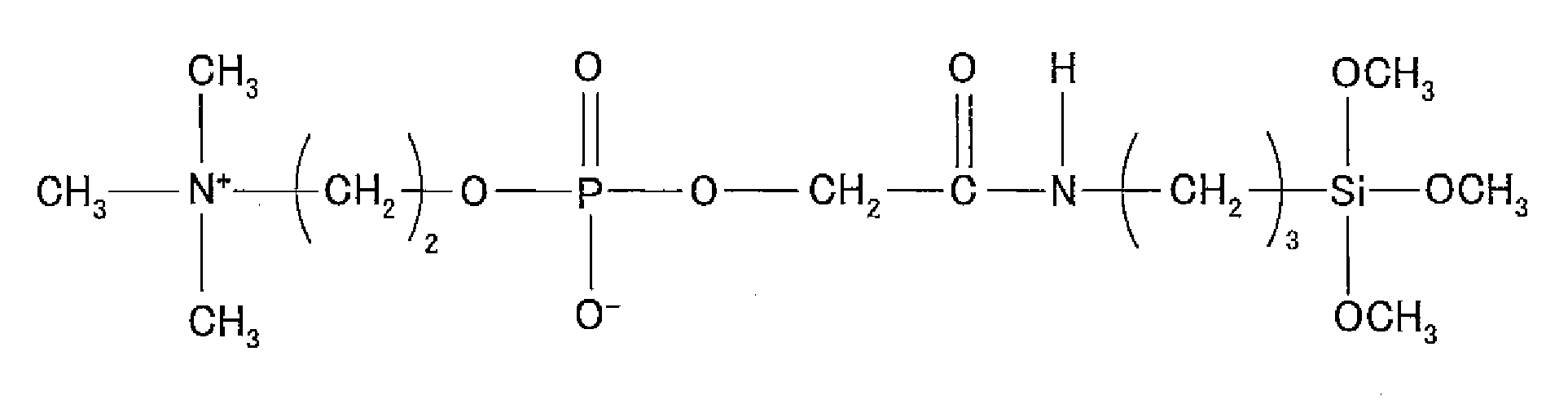
- The obtained application liquid was applied to a glass bottom dish (produced by Matsunami Glass Ind., Ltd.) and dried at room temperature. Then, after drying by heating and drying at room temperature were conducted, washing with water and drying were conducted to obtain a container for forming a cell aggregate.
- When 2.5 ml of a MensenPRO RS culture medium (produced by Invitrogen Corporation) and 1 × 10⁵ / container of stem cells originating from a human fat (produced by Invitrogen Corporation) were added into the container for forming a cell aggregate to culture the stem cells originating from a human fat, the cells proliferated and formed a cell aggregate (see
FIG. 9 ). - An application liquid composed of 7 mL of 0.15 mol/L solution of 3-aminopropyltrimethoxysilane in methanol, 3 mL of 0.15 mol/L solution of compound (A) in methanol, and 10 mL of methanol was obtained.
- The obtained application liquid was applied to a glass bottom dish (produced by Matsunami Glass Ind., Ltd.) and dried at room temperature. Then, after drying by heating and drying at room temperature were conducted, washing with water and drying were conducted to obtain a container for forming a cell aggregate.
- When 2.5 ml of a MensenPRO RS culture medium (produced by Invitrogen Corporation) and 1 × 10⁵ / container of stem cells originating from a human fat (produced by Invitrogen Corporation) were added to the container for forming a cell aggregate to culture the stem cells originating from a human fat, the cells proliferated and formed a cell aggregate (see
FIG. 10 ). - When 2.5 ml of a MensenPRO RS culture medium (produced by Invitrogen Corporation) and 1 × 10⁵ / dish of stem cells originating from a human fat (produced by Invitrogen Corporation) were added to a glass bottom dish subjected to no surface treatment (produced by Matsunami Glass Ind., Ltd.) to culture the stem cells originating from a human fat, the cells stretched and proliferated in the state of a single layer and formed no cell aggregate (see
FIG. 11 ). - After a 4% by mass paraformaldehyde - phosphate buffer was added to cultured cells in the cell aggregate in practical example 2 for conducting treatment thereof for 5 minutes, washing was conducted by using a 0.2% by mass Triton X-100 (produced by produced by Roche Diagnostics Corporation) / TBS buffer and 0.2% by mass Tween 20 (produced by Tokyo Chemical Industry Co., Ltd.) / TBS buffer. Then, a nonspecific reaction was blocked by Protein Block (produced by DAKO Corporation). Furthermore, after an anti-CD271 rabbit polyclonal antibody which was a primary antibody diluted 200 times (produced by Abcam PLC) and a CD90 mouse monoclonal antibody (produced by Abcam PLC) were reacted with the cells overnight, washing was conducted by using a 0.2% by mass Tween 20 (produced by Tokyo Chemical Industry Co., Ltd.) / TBS buffer. Then, after an Alexa 488 anti-rabbit antibody (produced by Invitrogen Corporation) and Alexa 594 anti-mouse antibody (produced by Invitrogen Corporation) which were fluorescent secondary antibodies diluted 250 times and capable of developing a green color and a red color, respectively, were reacted with the cells for 2 hours, washing was conducted by using a 0.2% by mass Tween 20 (produced by Tokyo Chemical Industry Co., Ltd.) / TBS buffer. Moreover, after a nucleus was stained with a Vectorshield-DAPI which was capable of developing a blue color (produced by Vector Corporation), observation was conducted by using a confocal laser microscope LSM 5 PASCAL (produced by Carl Zeiss). As a result, it could be seen that the cell aggregate in practical example 2 developed a green color, and accordingly, was positive for CD271 (see
FIG. 12 ). - In addition, the cell aggregate in practical example 3 also developed a green color similarly to the cell aggregate in practical example 2, and accordingly, was positive for CD271.
- The present international application claims the priority based on Japanese Patent Application No.
2009-142254 filed on June 15, 2009 2009-142254 -
- C An adherent cell
- D A container for forming a cell aggregate
Claims (11)
- A container for forming a cell aggregate, characterized in that a group represented by a general formula of:

- The container for forming a cell aggregate as claimed in claim 1, characterized by being manufactured by reacting a compound having a functional group having a reactivity with a carboxyl group, an amino group, or a hydroxyl group, a group represented by the general formula, and a molecular weight of 225 or more and 650 or less, with a container in which a carboxyl group, an amino group, and a hydroxyl group are present near a surface thereof.
- The container for forming a cell aggregate as claimed in claim 2, characterized in that the container in which a carboxyl group, an amino group, and a hydroxyl group are present near a surface thereof is plasma-treated with under an atmosphere including at least one of oxygen, ozone, and a water vapor, and ammonia and/or nitrogen.
- The container for forming a cell aggregate as claimed in claim 1, characterized by being manufactured by reacting a first compound having a functional group capable of producing a silanol group through hydrolysis thereof, a group represented by the general formula, and a molecular weight of 315 or more and 650 or less, and a second compound having a functional group capable of producing a silanol group through hydrolysis thereof and at least one of an amino group, a functional group capable of producing a carboxyl group through hydrolysis thereof, and a functional group capable of producing a hydroxyl group through hydrolysis thereof, with a container in which at least one of a functional group capable of producing a silanol group through hydrolysis thereof, a silanol group, a hydroxyl group originating from a semimetal oxide, and a hydroxyl group originating from a metal oxide is present near a surface thereof.
- The container for forming a cell aggregate as claimed in claim 1, characterized in that a layer including a resin having a group represented by the general formula and at least one of an amino group, a carboxyl group, and a hydroxyl group is formed on a surface thereof.
- A method for forming a cell aggregate, characterized in that a somatic cell is cultured by using the container for forming a cell aggregate as claimed in any one of claims 1 to 5 to form a cell aggregate.
- The method for forming a cell aggregate as claimed in claim 6, characterized in that the somatic cell is an adherent cell.
- A method for screening a substance, characterized by including a step of culturing a somatic cell by using the container for forming a cell aggregate as claimed in any one of claims 1 to 5 to form a cell aggregate and a step of screening a substance by using the cell aggregate.
- The method for screening a substance as claimed in claim 8, characterized in that the somatic cell is an adherent cell.
- A method for exploring a cell function, characterized by including a step of culturing a somatic cell by using the container for forming a cell aggregate as claimed in any one of claims 1 to 5 to form a cell aggregate and a step of exploring a cell function by using the cell aggregate.
- The method for exploring a cell function as claimed in claim 10, characterized in that the somatic cell is an adherent cell.
Applications Claiming Priority (2)
| Application Number | Priority Date | Filing Date | Title |
|---|---|---|---|
| JP2009142254 | 2009-06-15 | ||
| PCT/JP2010/060142 WO2010147122A1 (en) | 2009-06-15 | 2010-06-15 | Container for formation of aggregated cell mass, and method for formation of aggregated cell mass |
Publications (2)
| Publication Number | Publication Date |
|---|---|
| EP2444477A1 true EP2444477A1 (en) | 2012-04-25 |
| EP2444477A4 EP2444477A4 (en) | 2013-01-09 |
Family
ID=43356439
Family Applications (1)
| Application Number | Title | Priority Date | Filing Date |
|---|---|---|---|
| EP10789497A Withdrawn EP2444477A4 (en) | 2009-06-15 | 2010-06-15 | CONTAINER FOR FORMATION OF AGGREGATED CELL MASS AND METHOD FOR FORMATION OF AGGREGATED CELL MASS |
Country Status (7)
| Country | Link |
|---|---|
| US (1) | US9347031B2 (en) |
| EP (1) | EP2444477A4 (en) |
| JP (1) | JP4719824B2 (en) |
| KR (1) | KR101307305B1 (en) |
| CN (1) | CN102459559A (en) |
| RU (1) | RU2012101112A (en) |
| WO (1) | WO2010147122A1 (en) |
Families Citing this family (5)
| Publication number | Priority date | Publication date | Assignee | Title |
|---|---|---|---|---|
| WO2010147122A1 (en) * | 2009-06-15 | 2010-12-23 | 株式会社資生堂 | Container for formation of aggregated cell mass, and method for formation of aggregated cell mass |
| JP5095855B2 (en) * | 2010-12-13 | 2012-12-12 | 株式会社 資生堂 | Method for forming cell aggregate |
| JP2013135640A (en) * | 2011-12-28 | 2013-07-11 | Shiseido Co Ltd | Culture method for forming nerve cell and/or glial cell from neural stem cell |
| CA2914618A1 (en) * | 2013-06-07 | 2014-12-11 | Nissan Chemical Industries, Ltd. | Cell culture vessel |
| JP6183070B2 (en) * | 2013-08-30 | 2017-08-23 | 日油株式会社 | Cell aggregate production method and drug screening method |
Family Cites Families (29)
| Publication number | Priority date | Publication date | Assignee | Title |
|---|---|---|---|---|
| JPS61268763A (en) | 1984-11-26 | 1986-11-28 | Shiseido Co Ltd | Production of treated powder |
| JPS63113081A (en) | 1985-07-29 | 1988-05-18 | Shiseido Co Ltd | Modified powder |
| JPS6454381A (en) | 1987-08-26 | 1989-03-01 | Fujikura Ltd | Optical fiber magnetic field sensor |
| JP2703904B2 (en) | 1987-08-26 | 1998-01-26 | 日本電気株式会社 | Probe substrate for semiconductor integrated circuit measurement |
| JPH06105286B2 (en) | 1987-08-26 | 1994-12-21 | 富士通株式会社 | Electronic circuit package with automatic test function |
| JPH0646831A (en) * | 1992-07-30 | 1994-02-22 | Sumitomo Bakelite Co Ltd | Cell culture base and its production |
| JPH06153905A (en) | 1992-11-24 | 1994-06-03 | Sanyo Chem Ind Ltd | Cell culture base and method for cell culture |
| JPH07184990A (en) | 1993-12-28 | 1995-07-25 | Kuraray Co Ltd | Medical polymer materials and medical materials |
| JP3670841B2 (en) | 1997-05-30 | 2005-07-13 | 株式会社資生堂 | Hair treatment composition and hair treatment method |
| JP2004290111A (en) * | 2003-03-27 | 2004-10-21 | Sumitomo Bakelite Co Ltd | Container for culturing cell and method for producing the same |
| US20050019801A1 (en) * | 2003-06-04 | 2005-01-27 | Curis, Inc. | Stem cell-based methods for identifying and characterizing agents |
| EP1657302B1 (en) * | 2003-06-25 | 2013-01-16 | Nof Corporation | Method of forming embryoid bodies |
| JP4086305B2 (en) * | 2003-12-02 | 2008-05-14 | 株式会社資生堂 | Phosphorylcholine group-containing compound and surface modifier comprising the compound |
| JP4591926B2 (en) * | 2004-05-21 | 2010-12-01 | 株式会社資生堂 | Material surface modification method |
| JP3715309B1 (en) | 2004-05-24 | 2005-11-09 | 株式会社資生堂 | Ophthalmic lens material and manufacturing method thereof |
| JP3715308B1 (en) | 2004-05-24 | 2005-11-09 | 株式会社資生堂 | Ophthalmic lens material and manufacturing method thereof |
| JP3809177B2 (en) | 2004-05-24 | 2006-08-16 | 株式会社資生堂 | Affinity particles and affinity separation method |
| JP3922648B2 (en) | 2004-05-24 | 2007-05-30 | 株式会社資生堂 | Affinity particles and affinity separation method |
| JP3715310B1 (en) | 2004-05-24 | 2005-11-09 | 株式会社資生堂 | Protein adsorption preventing ophthalmic lens material and method for producing the same |
| JP4967238B2 (en) * | 2005-01-31 | 2012-07-04 | 住友ベークライト株式会社 | Cell culture container manufacturing method and cell culture container |
| JP4887222B2 (en) * | 2006-06-16 | 2012-02-29 | ニプロ株式会社 | Cell culture container, method for producing the same, and cell culture method |
| JP2008061609A (en) * | 2006-09-08 | 2008-03-21 | Sumitomo Bakelite Co Ltd | Method for producing cell-culturing container and cell culturing container |
| JP4191225B2 (en) | 2007-01-18 | 2008-12-03 | 株式会社資生堂 | Surface modification method and surface modification material |
| JP2008220205A (en) | 2007-03-09 | 2008-09-25 | Sumitomo Bakelite Co Ltd | Container for forming neural stem cell aggregate, method for producing the same and method for preparing neural stem cell aggregate |
| JP2009050194A (en) * | 2007-08-27 | 2009-03-12 | Sumitomo Bakelite Co Ltd | Vessel for cell aggregate-forming culture |
| JP2009142254A (en) | 2007-12-11 | 2009-07-02 | Yamaguchi Prefecture | Bird net support device and method |
| US8242222B2 (en) * | 2008-03-31 | 2012-08-14 | Shiseido Company, Ltd. | Polysiloxane, acrylic compound and vinylic compound |
| EP2405267A4 (en) * | 2009-03-02 | 2012-01-11 | Shiseido Co Ltd | Surface-modified base plate, biochip and process for producing the biochip |
| WO2010147122A1 (en) * | 2009-06-15 | 2010-12-23 | 株式会社資生堂 | Container for formation of aggregated cell mass, and method for formation of aggregated cell mass |
-
2010
- 2010-06-15 WO PCT/JP2010/060142 patent/WO2010147122A1/en not_active Ceased
- 2010-06-15 EP EP10789497A patent/EP2444477A4/en not_active Withdrawn
- 2010-06-15 RU RU2012101112/10A patent/RU2012101112A/en unknown
- 2010-06-15 KR KR1020117029714A patent/KR101307305B1/en not_active Expired - Fee Related
- 2010-06-15 US US13/377,850 patent/US9347031B2/en active Active
- 2010-06-15 JP JP2010524692A patent/JP4719824B2/en active Active
- 2010-06-15 CN CN2010800264758A patent/CN102459559A/en active Pending
Also Published As
| Publication number | Publication date |
|---|---|
| EP2444477A4 (en) | 2013-01-09 |
| CN102459559A (en) | 2012-05-16 |
| KR20120023084A (en) | 2012-03-12 |
| RU2012101112A (en) | 2013-07-27 |
| KR101307305B1 (en) | 2013-09-11 |
| US9347031B2 (en) | 2016-05-24 |
| JP4719824B2 (en) | 2011-07-06 |
| US20120156696A1 (en) | 2012-06-21 |
| JPWO2010147122A1 (en) | 2012-12-06 |
| WO2010147122A1 (en) | 2010-12-23 |
Similar Documents
| Publication | Publication Date | Title |
|---|---|---|
| US9347031B2 (en) | Container for forming a cell aggregate and a method for forming a cell aggregate | |
| US20150064738A1 (en) | Culture vessel for forming aggregated cell mass | |
| US20100304427A1 (en) | Substrates for adhering, culturing and assaying cells | |
| You et al. | Multilayered heparin hydrogel microwells for cultivation of primary hepatocytes | |
| Zhang et al. | High-throughput superhydrophobic microwell arrays for investigating multifactorial stem cell niches | |
| US20200299626A1 (en) | Cell culture container | |
| Leivo et al. | A durable and biocompatible ascorbic acid-based covalent coating method of polydimethylsiloxane for dynamic cell culture | |
| KR101969115B1 (en) | Platform for preparing surface stimuli-responsive 3D multicellular spheroids and Use Thereof | |
| EP2653534A1 (en) | Method for forming cell aggregate | |
| CN103502425A (en) | Cell Adhesive Photocontrollable Substrates | |
| CN102680679A (en) | Cell microporous chip for detecting specific antibody secretion of single cell and preparation method thereof | |
| AU2013229764A1 (en) | Adhesion signatures | |
| US20250041491A1 (en) | Medical device | |
| Park et al. | Microfluidic‐Printed Microcarrier for In Vitro Expansion of Adherent Stem Cells in 3D Culture Platform | |
| US20130012413A1 (en) | In vitro assays for enriching and determining the clonogenic potential of stem cells | |
| CA2537997A1 (en) | Methods of surface modification to enhance cell adhesion | |
| HK1170762A (en) | Container for formation of aggregated cell mass, and method for formation of aggregated cell mass | |
| Yang et al. | Peptides-modified polystyrene-based polymers as high-performance substrates for the growth and propagation of human embryonic stem cells | |
| Cao et al. | The effect of curvature on chondrocytes migration and bone mesenchymal stem cells differentiation | |
| Lucendo-Villarin et al. | Stabilizing hepatocellular phenotype using optimized synthetic surfaces | |
| Ogiwara et al. | Cell spheroid formation on the surface of multi‐block copolymers composed of Poly (2‐methoxyethyl acrylate) and polyethylene glycol | |
| US11130941B2 (en) | Method of fabricating substrate for culturing stem cell | |
| JP2013135640A (en) | Culture method for forming nerve cell and/or glial cell from neural stem cell | |
| Krasteva et al. | Effect of Ammonia Plasma Treatment on the Biological Performance of Plasma Polymerized Hexamethyldisiloxane | |
| Hickman | Interactions between cancer cells and inorganic materials |
Legal Events
| Date | Code | Title | Description |
|---|---|---|---|
| PUAI | Public reference made under article 153(3) epc to a published international application that has entered the european phase |
Free format text: ORIGINAL CODE: 0009012 |
|
| 17P | Request for examination filed |
Effective date: 20111220 |
|
| AK | Designated contracting states |
Kind code of ref document: A1 Designated state(s): AL AT BE BG CH CY CZ DE DK EE ES FI FR GB GR HR HU IE IS IT LI LT LU LV MC MK MT NL NO PL PT RO SE SI SK SM TR |
|
| DAX | Request for extension of the european patent (deleted) | ||
| A4 | Supplementary search report drawn up and despatched |
Effective date: 20121212 |
|
| RIC1 | Information provided on ipc code assigned before grant |
Ipc: C12N 5/07 20100101ALI20121206BHEP Ipc: C09D 133/14 20060101ALI20121206BHEP Ipc: C08J 7/04 20060101ALI20121206BHEP Ipc: C12M 1/00 20060101AFI20121206BHEP Ipc: C08J 7/12 20060101ALI20121206BHEP Ipc: C12M 3/00 20060101ALI20121206BHEP |
|
| 17Q | First examination report despatched |
Effective date: 20160217 |
|
| STAA | Information on the status of an ep patent application or granted ep patent |
Free format text: STATUS: THE APPLICATION IS DEEMED TO BE WITHDRAWN |
|
| 18D | Application deemed to be withdrawn |
Effective date: 20201001 |