EP2441030B1 - Content mesh searching - Google Patents
Content mesh searching Download PDFInfo
- Publication number
- EP2441030B1 EP2441030B1 EP10786863.0A EP10786863A EP2441030B1 EP 2441030 B1 EP2441030 B1 EP 2441030B1 EP 10786863 A EP10786863 A EP 10786863A EP 2441030 B1 EP2441030 B1 EP 2441030B1
- Authority
- EP
- European Patent Office
- Prior art keywords
- content
- index
- server
- computer
- search results
- Prior art date
- Legal status (The legal status is an assumption and is not a legal conclusion. Google has not performed a legal analysis and makes no representation as to the accuracy of the status listed.)
- Active
Links
- 238000000034 method Methods 0.000 claims description 16
- 230000003993 interaction Effects 0.000 claims description 3
- 230000004931 aggregating effect Effects 0.000 claims 1
- 238000005516 engineering process Methods 0.000 description 11
- 238000004891 communication Methods 0.000 description 7
- 238000012545 processing Methods 0.000 description 6
- 230000006855 networking Effects 0.000 description 5
- 230000003287 optical effect Effects 0.000 description 5
- 230000008569 process Effects 0.000 description 5
- 230000007246 mechanism Effects 0.000 description 4
- 230000002093 peripheral effect Effects 0.000 description 4
- 230000008901 benefit Effects 0.000 description 3
- 238000010586 diagram Methods 0.000 description 3
- 238000009434 installation Methods 0.000 description 3
- 230000005055 memory storage Effects 0.000 description 3
- 230000008859 change Effects 0.000 description 2
- 238000010276 construction Methods 0.000 description 2
- 238000012986 modification Methods 0.000 description 2
- 230000004048 modification Effects 0.000 description 2
- 238000010926 purge Methods 0.000 description 2
- 239000007787 solid Substances 0.000 description 2
- 230000004044 response Effects 0.000 description 1
- 238000010845 search algorithm Methods 0.000 description 1
- 238000012546 transfer Methods 0.000 description 1
- 230000007723 transport mechanism Effects 0.000 description 1
Images


Classifications
-
- H—ELECTRICITY
- H04—ELECTRIC COMMUNICATION TECHNIQUE
- H04L—TRANSMISSION OF DIGITAL INFORMATION, e.g. TELEGRAPHIC COMMUNICATION
- H04L63/00—Network architectures or network communication protocols for network security
- H04L63/02—Network architectures or network communication protocols for network security for separating internal from external traffic, e.g. firewalls
- H04L63/029—Firewall traversal, e.g. tunnelling or, creating pinholes
Definitions
- various aspects of the subject matter described herein are directed towards a technology by which a content maintained behind a firewall may be searched via an index outside of the firewall. Further, search results that are returned may be interacted with by a user (e.g., clicked-on), in order to request content.
- the content maintained behind a firewall is maintained in a mesh (e.g., internet storage based upon Microsoft Corporation's Live MeshTM technology), with watch folders monitored to detect any change to the content, which is then indexed.
- Searching of the index may include checking permissions of a searching entity (e.g., user) against permissions associated with metadata in the index.
- the association with the permissions may be per watch folder.
- the search may be performed over more than one index, and the search results may be aggregated.
- a request is made.
- An application behind the firewall polls for such requests, and when detected, pushes a copy of the content to the requestor.
- This copy may be read-only or not.
- This copy may be pushed through the firewall to the user or may be a copy stored on one or more servers in the cloud.
- a searching entity e.g., user, group, domain and so forth
- permissions e.g., fully public, specific domain, specific group, specific ID, and so forth
- the user is generally able to access the searched content by requesting a copy, which the server then delivers.
- a system may also pre-populate a browse style page listing all of the items to which an end user has access.
- Mesh searching In general, this is accomplished via “mesh searching” technology which gives users the ability to search over content to which they have permission to access, but heretofore were unable to search or access when roaming because of a firewall.
- Mesh searching enables an institution, corporation, individual, or any other entity to share content files that are searched by appropriate users, and also ensure ongoing, controlled sharing when new content is created or if considerations need to be changed on previously created or shared content or files.
- Mesh searching also allows users to easily share files with other users simply by saving a file to a specific server container; (for example, folders are used as the container in one implementation because it is easy for even non-technical users to perform sharing by simply dropping a file into an watched folder, whereby it gets indexed and possibly shared depending on the folder's settings; however another suitable container or way to designate content, including as an individual file, by file type and so forth may be used).
- An enterprise is thus able to share a file maintained behind a firewall with searchers in a controlled manner that is straightforward to set up, as well as easy for end users to use.
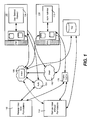
- FIG. 1 there is shown a representation of a mesh searching environment in which a remote user 102 with appropriate permissions granted by an authentication mechanism 104 (e.g., a service such as Windows® Live ID) is able to search for content that is maintained behind a firewall (FW) and/or in a mesh. Further, the user is generally able to request and have delivered a copy of each piece of content that is referenced in the search results.
- an authentication mechanism 104 e.g., a service such as Windows® Live ID
- FW firewall
- the use of Windows® Live ID allows a user to potentially search various indexes (e.g., of different institutions) with a single user ID and password.
- the user 102 searches for content via an index 106 of metadata that is maintained in a "cloud" service.
- the metadata may be anything that the source (e.g., an enterprise, institution or even a single user) wants to have indexed, such as the title of each file, its first few lines, first paragraph, or first N words of the document, file name, subject, tags, categories, comments, author, subject, keywords, size, date and so forth. Note that this technology further allows anyone to deliver content from a personal computer with a connection to the internet, for example, and have that content gets indexed so as to be searchable, without having to set up a website.
- the index 106 is not maintained behind the firewall but at a cloud location.
- the content may be accessed via a mesh 110, as also described below.
- the index 106 may be built by accessing the mesh 110 to process the content, although an administrator may choose to only output metadata regarding some or all of the content. It is also feasible to build the index on the server and then output the index outside of the firewall.
- an administrator-level user or otherwise authorized advanced-level user sets up a watch folder on a content server 114 so as to determine what content is indexed, what content is accessible and what permissions are needed to search the index and/or access content.
- the administrator 112 behind the firewall decides what level of permission goes with which metadata, and which content.
- An institution may set up different levels of administrators with the ability to do different tasks.
- the administrator may also be set up to configure content on machines behind the firewall, from a location outside of the firewall.
- the administrator 112 is able to set up other content that is public, e.g., accessed by a public cache 116 including by a user without permissions (block 118). This gives an option to publicly release select documents, for example, and cache them for efficient access.
- the user 102 may also get search results from the internet 120 or other public sources, as well as content from a different server 122 behind a different firewall. Indeed, searching via the index 106 may obtain more results than does a user 124 behind the firewall (unless that user 124 also goes to the cloud index 106). This is valuable in many ways, e.g., a university with two different campuses each behind a firewall can have its content indexed from both; a user can search both together, can get documents from either server and so forth, and can also have private search results combined with public internet content search results.
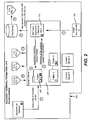
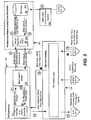
- mesh searching includes four general aspects, namely 1) application installation, configuration, and synchronization (block 220); 2) Internet user UI experience (block 330); 3) permissions-based search over metadata (block 332); and 4) file downloading (block 334).
- the application installation, configuration, and synchronization aspect is directed to the server application 222 (or applications) that the administrator uses to define which servers and which folders to keep updated for mesh searching data, as well as who has access to view the corresponding search results.
- These servers may be located across a variety of network or physical locations.
- the "application” may be an operating system component or other logic, and thus while exemplified herein as an application, may be any logic such as program code.
- one or more user interfaces 224 are presented to the administrator. This allows setting up one or more watch folders (e.g., Folder 1) 226 on one or more servers (e.g., Server 1) 228 and to set up permissions for use in searching and requesting content. Permissions may be defined for any searching entity, e.g., identified by domain, organizational unit, Active Directory®, individual user, administrator, or group, such as a list of user IDs, a group ID, or public access. Note that further code may be present that facilitates upgrades / patches to the server application 222 and other logic (e.g., background processes) over time.
- other logic e.g., background processes
- the other folders that are shown may or may not similarly be watched.
- the other servers shown e.g., Server 2 through Server n
- the application 222 When a file is added to a watch folder (the arrow labeled two (2)), such as by a teacher in an educational environment, the application 222 detects the change, and notifies the system (e.g., including a file server 230) to relevant changes to files in the watch folders (the arrows labeled three (3) through six (6)). Over time, as users add / edit / delete files within the watch folders on watched servers, the application 222 synchronizes metadata and file updates from a content server at the institution to the file server 230 or database in another location (e.g., in a corporate server farm, but alternatively in any suitable storage location).
- the application 222 synchronizes metadata and file updates from a content server at the institution to the file server 230 or database in another location (e.g., in a corporate server farm, but alternatively in any suitable storage location).
- the application 222 pushes changes to the index, (and as described below, polls for requests for content; in one implementation this is done via the application 222, but equivalently may be done via separate applications).
- the changes may be the entire content, or appropriate notifications with deltas; alternatively (or in addition), the index may poll for whether the application has changes.
- the technology enables sharing files through search with appropriate users in a secure way by installing a small application on their content servers, defining watched folders, and defining permissions lists. This allows users to easily share files with other users simply by saving a file to a specific watched folder.
- the application 222 monitors data newly shared folders, new files in shared folders, changed/removed metadata and files and sub-folders in shared folders, permissions changes for folders, metadata versus full index data exchange changes in shared folders.
- the Internet user UI experience (block 330) includes the UI that a user sees when visiting a search results page when the user has been given access to search the index and thereby view search results from a given mesh searching system.
- This UI may be on an internet facing webpage, in a private browser instance, in a client application, on a mobile device through SMS, WAP or mobile browser, and so forth. These UI options are represented in FIG. 3 via the remote computer 340.
- the arrows labeled seven (7) through twelve (12) represent the search process. If there are mesh searching results to return to a user, then those results may be displayed in a separate, labeled area on a search results page/list or combined with (e.g., integrated into) other search results. In one implementation, the UI handles results from multiple providers in a unified list, if needed.
- FIG. 4 shows an example search results page 440, in which a user may have results aggregated and/or merged from different sources (e.g., different educational institutions). This may be done by having a merged index built from various content sources, and/or by searching the indexes of different institutions and then combining the results. Metadata such as a logo (e.g., 441-443) representing each source index may be used help the user determine where the content corresponding to each search result originated.
- the results may be aggregated and presented in any way, e.g., interleaved based on relevance, separated by source, based upon commercial payments, separated such that public and private results are in different sections, and so forth.
- a custom "no results" message may be displayed, and/or any custom sections not displayed.
- the permissions-based search over metadata aspect (block 332) is directed towards the search and permissions infrastructure and logic used to generate the search results and control who sees the results. Credentials are used and matched to the content that each user can search for and receive, (except for metadata and/or content that is put into the public domain via the administrator-determined settings).
- the metadata provided by the mesh searching application is crawled to create a mesh searching index 348. As represented by the block 350, this can be done using an existing crawler or by other suitable code.
- the search algorithm 352 e.g., based upon FAST technology
- the search algorithm 352 that is used to search over the index 350 can also be done using existing code or by creating custom code.
- the file downloading aspect (block 334) is directed towards the file return and permissions logic used to let user obtain a copy of content corresponding to a mesh searching result that the user found. Similar to when a user clicks on a search result in a web search engine and gets a copy of the web page file, file downloading allows users to retrieve a copy of the files they find in the mesh searching results.
- the same permissions levels and logic that apply to getting mesh searching results may apply with respect to file downloading.
- the administrator may allow items to be searched via the index but not downloaded, as the metadata and file content may have different permissions.
- some or all of the indexed content may be available for the public to search, such as to advertise content as available to the general public; a user without appropriate permissions user will then need to contact the institution for a full copy.
- the user requests a file via a cloud service.
- the server application 222 needs to open a port to push the file through the firewall.
- the server application 222 also polls the cloud service for outstanding requests for content, and satisfies those by delivering content to users having the proper permissions.
- multiple nodes of content may be configured so as to let defined searchers search over files in a defined set of watch folders that automatically result in index updates as changes are made, e.g., so that any other user may share a file in a secured manner by saving it to a watch folder.
- One implementation leverages live mesh code to manage file notifications, however this may be alternatively completed with any synchronization process in which a client maintains timely connectivity with a cloud process.
- an authenticated user may search over metadata from files in watch folders.
- an authenticated user may access a file that is located behind a firewall by clicking on a link in a website to get a copy of that file.
- FIGURE 5 illustrates an example of a suitable computing and networking environment 500 into which the examples and implementations of any of FIGS. 1-4 may be implemented.
- the computing system environment 500 is only one example of a suitable computing environment and is not intended to suggest any limitation as to the scope of use or functionality of the invention. Neither should the computing environment 500 be interpreted as having any dependency or requirement relating to any one or combination of components illustrated in the exemplary operating environment 500.
- the invention is operational with numerous other general purpose or special purpose computing system environments or configurations.
- Examples of well known computing systems, environments, and/or configurations that may be suitable for use with the invention include, but are not limited to: personal computers, server computers, handheld or laptop devices, tablet devices, multiprocessor systems, microprocessor-based systems, set top boxes, programmable consumer electronics, network PCs, minicomputers, mainframe computers, distributed computing environments that include any of the above systems or devices, and the like.
- the invention may be described in the general context of computer-executable instructions, such as program modules, being executed by a computer.
- program modules include routines, programs, objects, components, data structures, and so forth, which perform particular tasks or implement particular abstract data types.
- the invention may also be practiced in distributed computing environments where tasks are performed by remote processing devices that are linked through a communications network.
- program modules may be located in local and/or remote computer storage media including memory storage devices.
- an exemplary system for implementing various aspects of the invention may include a general purpose computing device in the form of a computer 510.
- Components of the computer 510 may include, but are not limited to, a processing unit 520, a system memory 530, and a system bus 521 that couples various system components including the system memory to the processing unit 520.
- the system bus 521 may be any of several types of bus structures including a memory bus or memory controller, a peripheral bus, and a local bus using any of a variety of bus architectures.
- such architectures include Industry Standard Architecture (ISA) bus, Micro Channel Architecture (MCA) bus, Enhanced ISA (EISA) bus, Video Electronics Standards Association (VESA) local bus, and Peripheral Component Interconnect (PCI) bus also known as Mezzanine bus.
- ISA Industry Standard Architecture
- MCA Micro Channel Architecture
- EISA Enhanced ISA
- VESA Video Electronics Standards Association
- PCI Peripheral Component Interconnect
- the computer 510 typically includes a variety of computer-readable media.
- Computer-readable media can be any available media that can be accessed by the computer 510 and includes both volatile and nonvolatile media, and removable and non-removable media.
- Computer-readable media may comprise computer storage media and communication media.
- Computer storage media includes volatile and nonvolatile, removable and non-removable media implemented in any method or technology for storage of information such as computer-readable instructions, data structures, program modules or other data.
- Computer storage media includes, but is not limited to, RAM, ROM, EEPROM, flash memory or other memory technology, CD-ROM, digital versatile disks (DVD) or other optical disk storage, magnetic cassettes, magnetic tape, magnetic disk storage or other magnetic storage devices, or any other medium which can be used to store the desired information and which can accessed by the computer 510.
- Communication media typically embodies computer-readable instructions, data structures, program modules or other data in a modulated data signal such as a carrier wave or other transport mechanism and includes any information delivery media.
- modulated data signal means a signal that has one or more of its characteristics set or changed in such a manner as to encode information in the signal.
- communication media includes wired media such as a wired network or direct-wired connection, and wireless media such as acoustic, RF, infrared and other wireless media. Combinations of the any of the above may also be included within the scope of computer-readable media.
- the system memory 530 includes computer storage media in the form of volatile and/or nonvolatile memory such as read only memory (ROM) 531 and random access memory (RAM) 532.
- ROM read only memory
- RAM random access memory
- BIOS basic input/output system 533
- RAM 532 typically contains data and/or program modules that are immediately accessible to and/or presently being operated on by processing unit 520.
- FIG. 5 illustrates operating system 534, application programs 535, other program modules 536 and program data 537.
- the computer 510 may also include other removable/non-removable, volatile/nonvolatile computer storage media.
- FIG. 5 illustrates a hard disk drive 541 that reads from or writes to non-removable, nonvolatile magnetic media, a magnetic disk drive 551 that reads from or writes to a removable, nonvolatile magnetic disk 552, and an optical disk drive 555 that reads from or writes to a removable, nonvolatile optical disk 556 such as a CD ROM or other optical media.
- removable/non-removable, volatile/nonvolatile computer storage media that can be used in the exemplary operating environment include, but are not limited to, magnetic tape cassettes, flash memory cards, digital versatile disks, digital video tape, solid state RAM, solid state ROM, and the like.
- the hard disk drive 541 is typically connected to the system bus 521 through a non-removable memory interface such as interface 540, and magnetic disk drive 551 and optical disk drive 555 are typically connected to the system bus 521 by a removable memory interface, such as interface 550.
- the drives and their associated computer storage media provide storage of computer-readable instructions, data structures, program modules and other data for the computer 510.
- hard disk drive 541 is illustrated as storing operating system 544, application programs 545, other program modules 546 and program data 547. Note that these components can either be the same as or different from operating system 534, application programs 535, other program modules 536, and program data 537.
- Operating system 544, application programs 545, other program modules 546, and program data 547 are given different numbers herein to illustrate that, at a minimum, they are different copies.
- a user may enter commands and information into the computer 510 through input devices such as a tablet, or electronic digitizer, 564, a microphone 563, a keyboard 562 and pointing device 561, commonly referred to as mouse, trackball or touch pad.
- Other input devices not shown in FIG. 5 may include a joystick, game pad, satellite dish, scanner, or the like.
- These and other input devices are often connected to the processing unit 520 through a user input interface 560 that is coupled to the system bus, but may be connected by other interface and bus structures, such as a parallel port, game port or a universal serial bus (USB).
- a monitor 591 or other type of display device is also connected to the system bus 521 via an interface, such as a video interface 590.
- the monitor 591 may also be integrated with a touch-screen panel or the like. Note that the monitor and/or touch screen panel can be physically coupled to a housing in which the computing device 510 is incorporated, such as in a tablet-type personal computer. In addition, computers such as the computing device 510 may also include other peripheral output devices such as speakers 595 and printer 596, which may be connected through an output peripheral interface 594 or the like.
- the computer 510 may operate in a networked environment using logical connections to one or more remote computers, such as a remote computer 580.
- the remote computer 580 may be a personal computer, a server, a router, a network PC, a peer device or other common network node, and typically includes many or all of the elements described above relative to the computer 510, although only a memory storage device 581 has been illustrated in FIG. 5 .
- the logical connections depicted in FIG. 5 include one or more local area networks (LAN) 571 and one or more wide area networks (WAN) 573, but may also include other networks.
- LAN local area network
- WAN wide area network
- Such networking environments are commonplace in offices, enterprise-wide computer networks, intranets and the Internet.
- the computer 510 When used in a LAN networking environment, the computer 510 is connected to the LAN 571 through a network interface or adapter 570. When used in a WAN networking environment, the computer 510 typically includes a modem 572 or other means for establishing communications over the WAN 573, such as the Internet.
- the modem 572 which may be internal or external, may be connected to the system bus 521 via the user input interface 560 or other appropriate mechanism.
- a wireless networking component 574 such as comprising an interface and antenna may be coupled through a suitable device such as an access point or peer computer to a WAN or LAN.
- program modules depicted relative to the computer 510, or portions thereof, may be stored in the remote memory storage device.
- FIG. 5 illustrates remote application programs 585 as residing on memory device 581. It may be appreciated that the network connections shown are exemplary and other means of establishing a communications link between the computers may be used.
- An auxiliary subsystem 599 may be connected via the user interface 560 to allow data such as program content, system status and event notifications to be provided to the user, even if the main portions of the computer system are in a low power state.
- the auxiliary subsystem 599 may be connected to the modem 572 and/or network interface 570 to allow communication between these systems while the main processing unit 520 is in a low power state.
Landscapes
- Engineering & Computer Science (AREA)
- Computer Hardware Design (AREA)
- Computer Security & Cryptography (AREA)
- Computing Systems (AREA)
- General Engineering & Computer Science (AREA)
- Computer Networks & Wireless Communication (AREA)
- Signal Processing (AREA)
- Storage Device Security (AREA)
- Information Transfer Between Computers (AREA)
- Information Retrieval, Db Structures And Fs Structures Therefor (AREA)
Applications Claiming Priority (2)
| Application Number | Priority Date | Filing Date | Title |
|---|---|---|---|
| US12/483,253 US8407241B2 (en) | 2009-06-12 | 2009-06-12 | Content mesh searching |
| PCT/US2010/038215 WO2010144733A2 (en) | 2009-06-12 | 2010-06-10 | Content mesh searching |
Publications (3)
| Publication Number | Publication Date |
|---|---|
| EP2441030A2 EP2441030A2 (en) | 2012-04-18 |
| EP2441030A4 EP2441030A4 (en) | 2013-10-30 |
| EP2441030B1 true EP2441030B1 (en) | 2014-11-26 |
Family
ID=43307264
Family Applications (1)
| Application Number | Title | Priority Date | Filing Date |
|---|---|---|---|
| EP10786863.0A Active EP2441030B1 (en) | 2009-06-12 | 2010-06-10 | Content mesh searching |
Country Status (6)
| Country | Link |
|---|---|
| US (1) | US8407241B2 (OSRAM) |
| EP (1) | EP2441030B1 (OSRAM) |
| JP (1) | JP5492295B2 (OSRAM) |
| KR (1) | KR101724167B1 (OSRAM) |
| CN (1) | CN102804202B (OSRAM) |
| WO (1) | WO2010144733A2 (OSRAM) |
Families Citing this family (16)
| Publication number | Priority date | Publication date | Assignee | Title |
|---|---|---|---|---|
| US8577839B2 (en) * | 2002-08-06 | 2013-11-05 | Sheng Tai (Ted) Tsao | Method and apparatus of dynamic updating web portals |
| USD665405S1 (en) * | 2011-01-21 | 2012-08-14 | Microsoft Corporation | Display screen with graphical user interface |
| US8516567B2 (en) * | 2011-11-29 | 2013-08-20 | Motorola Solutions, Inc. | Distributed firewalling in a wireless communication network |
| CN103368994B (zh) * | 2012-03-28 | 2019-07-30 | 百度在线网络技术(北京)有限公司 | 特定数据的推送方法及系统以及检索服务器 |
| US20130332854A1 (en) * | 2012-06-10 | 2013-12-12 | Apple Inc. | Creating image streams and sharing the image streams across different devices |
| KR101638656B1 (ko) | 2012-08-23 | 2016-07-11 | 엘에스산전 주식회사 | 산업용 자동화를 위한 클라우드 컴퓨팅 기반의 데이터 공유 시스템 및 산업용 기기 관리 장치 |
| US20140164923A1 (en) * | 2012-12-12 | 2014-06-12 | Adobe Systems Incorporated | Intelligent Adaptive Content Canvas |
| US9575998B2 (en) | 2012-12-12 | 2017-02-21 | Adobe Systems Incorporated | Adaptive presentation of content based on user action |
| US9569083B2 (en) | 2012-12-12 | 2017-02-14 | Adobe Systems Incorporated | Predictive directional content queue |
| US20150112996A1 (en) | 2013-10-23 | 2015-04-23 | Microsoft Corporation | Pervasive search architecture |
| US9792315B2 (en) * | 2014-08-21 | 2017-10-17 | Dropbox, Inc. | Multi-user search system with methodology for bypassing instant indexing |
| EP3226482B1 (en) * | 2014-12-17 | 2020-07-29 | Huawei Technologies Co. Ltd. | Method and apparatus for determining gateway information |
| US9384226B1 (en) | 2015-01-30 | 2016-07-05 | Dropbox, Inc. | Personal content item searching system and method |
| US9183303B1 (en) | 2015-01-30 | 2015-11-10 | Dropbox, Inc. | Personal content item searching system and method |
| CN114329673B (zh) * | 2021-12-28 | 2025-07-08 | 深圳须弥云图空间科技有限公司 | 墙体搜索方法、装置、电子设备及存储介质 |
| US20250005081A1 (en) * | 2023-06-29 | 2025-01-02 | Microsoft Technology Licensing, Llc | Universal search indexer for enterprise websites and cloud accessible websites |
Family Cites Families (20)
| Publication number | Priority date | Publication date | Assignee | Title |
|---|---|---|---|---|
| JP3566478B2 (ja) * | 1996-12-27 | 2004-09-15 | キヤノン株式会社 | 文書セキュリティ管理システム、文書セキュリティ管理方法および文書検索装置 |
| AU6065400A (en) | 1999-07-03 | 2001-01-22 | Ibm | Fundamental entity-relationship models for the generic audio visual data signal description |
| US7424543B2 (en) * | 1999-09-08 | 2008-09-09 | Rice Iii James L | System and method of permissive data flow and application transfer |
| US20020069366A1 (en) * | 2000-12-01 | 2002-06-06 | Chad Schoettger | Tunnel mechanis for providing selective external access to firewall protected devices |
| US6816455B2 (en) | 2001-05-09 | 2004-11-09 | Telecom Italia S.P.A. | Dynamic packet filter utilizing session tracking |
| US6993534B2 (en) | 2002-05-08 | 2006-01-31 | International Business Machines Corporation | Data store for knowledge-based data mining system |
| US20040044909A1 (en) | 2002-09-04 | 2004-03-04 | Mirza Absar Ahmed | Method and system for accessing an object behind a firewall |
| JP2004145417A (ja) * | 2002-10-22 | 2004-05-20 | Hitachi Sci Syst Ltd | 通信網を介した情報検索サービス方法 |
| JP2004151792A (ja) * | 2002-10-28 | 2004-05-27 | Fuji Xerox Co Ltd | 検索システムおよび方法並びにコンテンツ提供装置、方法およびプログラム |
| US7698550B2 (en) | 2002-11-27 | 2010-04-13 | Microsoft Corporation | Native wi-fi architecture for 802.11 networks |
| JP2004192165A (ja) * | 2002-12-09 | 2004-07-08 | Noritake Co Ltd | 検索データ表示装置 |
| US7451217B2 (en) * | 2002-12-19 | 2008-11-11 | International Business Machines Corporation | Method and system for peer-to-peer authorization |
| US7389532B2 (en) * | 2003-11-26 | 2008-06-17 | Microsoft Corporation | Method for indexing a plurality of policy filters |
| US7346925B2 (en) * | 2003-12-11 | 2008-03-18 | Microsoft Corporation | Firewall tunneling and security service |
| JP2005182623A (ja) * | 2003-12-22 | 2005-07-07 | Fuji Xerox Co Ltd | 文書収集装置、文書収集方法及びプログラム |
| US7930346B2 (en) * | 2005-08-24 | 2011-04-19 | Microsoft Corporation | Security in peer to peer synchronization applications |
| EP1801720A1 (en) * | 2005-12-22 | 2007-06-27 | Microsoft Corporation | Authorisation and authentication |
| WO2007137145A2 (en) * | 2006-05-17 | 2007-11-29 | Newsilike Media Group, Inc | Certificate-based search |
| US20080082670A1 (en) * | 2006-09-28 | 2008-04-03 | Microsoft Corporation | Resilient communications between clients comprising a cloud |
| US8141143B2 (en) * | 2007-05-31 | 2012-03-20 | Imera Systems, Inc. | Method and system for providing remote access to resources in a secure data center over a network |
-
2009
- 2009-06-12 US US12/483,253 patent/US8407241B2/en active Active
-
2010
- 2010-06-10 KR KR1020117029545A patent/KR101724167B1/ko active Active
- 2010-06-10 JP JP2012515154A patent/JP5492295B2/ja not_active Expired - Fee Related
- 2010-06-10 CN CN201080026396.7A patent/CN102804202B/zh active Active
- 2010-06-10 WO PCT/US2010/038215 patent/WO2010144733A2/en not_active Ceased
- 2010-06-10 EP EP10786863.0A patent/EP2441030B1/en active Active
Also Published As
| Publication number | Publication date |
|---|---|
| JP5492295B2 (ja) | 2014-05-14 |
| KR101724167B1 (ko) | 2017-04-06 |
| US8407241B2 (en) | 2013-03-26 |
| US20100318554A1 (en) | 2010-12-16 |
| JP2012530292A (ja) | 2012-11-29 |
| EP2441030A4 (en) | 2013-10-30 |
| KR20120028912A (ko) | 2012-03-23 |
| WO2010144733A2 (en) | 2010-12-16 |
| CN102804202B (zh) | 2015-11-25 |
| EP2441030A2 (en) | 2012-04-18 |
| WO2010144733A3 (en) | 2011-03-03 |
| CN102804202A (zh) | 2012-11-28 |
Similar Documents
| Publication | Publication Date | Title |
|---|---|---|
| EP2441030B1 (en) | Content mesh searching | |
| US12149581B2 (en) | Link file sharing and synchronization | |
| US9749327B2 (en) | System and method for secure content sharing and synchronization | |
| US10496609B2 (en) | Systems and methods for automatic synchronization of recently modified data | |
| EP3278539B1 (en) | Shared workspaces with selective content item synchronization | |
| AU2016222323B2 (en) | Predictive storage service | |
| US10963430B2 (en) | Shared workspaces with selective content item synchronization | |
| Mendoza et al. | BrowStEx: A tool to aggregate browser storage artifacts for forensic analysis | |
| US8495368B1 (en) | Method to create a content management recommendation based on presence of confidential information in content | |
| Povar et al. | Digital forensic architecture for cloud computing systems: methods of evidence identification, segregation, collection and partial analysis | |
| Zhang et al. | Secure quasi-realtime collaborative editing over low-cost storage services |
Legal Events
| Date | Code | Title | Description |
|---|---|---|---|
| PUAI | Public reference made under article 153(3) epc to a published international application that has entered the european phase |
Free format text: ORIGINAL CODE: 0009012 |
|
| 17P | Request for examination filed |
Effective date: 20111208 |
|
| AK | Designated contracting states |
Kind code of ref document: A2 Designated state(s): AL AT BE BG CH CY CZ DE DK EE ES FI FR GB GR HR HU IE IS IT LI LT LU LV MC MK MT NL NO PL PT RO SE SI SK SM TR |
|
| DAX | Request for extension of the european patent (deleted) | ||
| REG | Reference to a national code |
Ref country code: DE Ref legal event code: R079 Ref document number: 602010020579 Country of ref document: DE Free format text: PREVIOUS MAIN CLASS: G06F0021240000 Ipc: H04L0029060000 |
|
| A4 | Supplementary search report drawn up and despatched |
Effective date: 20131002 |
|
| RIC1 | Information provided on ipc code assigned before grant |
Ipc: G06F 9/06 20060101ALI20130926BHEP Ipc: H04L 29/06 20060101AFI20130926BHEP Ipc: G06F 15/16 20060101ALI20130926BHEP Ipc: G06F 17/00 20060101ALI20130926BHEP |
|
| GRAP | Despatch of communication of intention to grant a patent |
Free format text: ORIGINAL CODE: EPIDOSNIGR1 |
|
| INTG | Intention to grant announced |
Effective date: 20140611 |
|
| GRAS | Grant fee paid |
Free format text: ORIGINAL CODE: EPIDOSNIGR3 |
|
| GRAA | (expected) grant |
Free format text: ORIGINAL CODE: 0009210 |
|
| AK | Designated contracting states |
Kind code of ref document: B1 Designated state(s): AL AT BE BG CH CY CZ DE DK EE ES FI FR GB GR HR HU IE IS IT LI LT LU LV MC MK MT NL NO PL PT RO SE SI SK SM TR |
|
| REG | Reference to a national code |
Ref country code: GB Ref legal event code: FG4D |
|
| REG | Reference to a national code |
Ref country code: CH Ref legal event code: EP |
|
| REG | Reference to a national code |
Ref country code: AT Ref legal event code: REF Ref document number: 698736 Country of ref document: AT Kind code of ref document: T Effective date: 20141215 |
|
| REG | Reference to a national code |
Ref country code: IE Ref legal event code: FG4D |
|
| REG | Reference to a national code |
Ref country code: DE Ref legal event code: R096 Ref document number: 602010020579 Country of ref document: DE Effective date: 20141231 |
|
| REG | Reference to a national code |
Ref country code: NL Ref legal event code: T3 |
|
| REG | Reference to a national code |
Ref country code: CH Ref legal event code: PUE Owner name: MICROSOFT TECHNOLOGY LICENSING, LLC, US Free format text: FORMER OWNER: MICROSOFT CORPORATION, US |
|
| REG | Reference to a national code |
Ref country code: AT Ref legal event code: MK05 Ref document number: 698736 Country of ref document: AT Kind code of ref document: T Effective date: 20141126 Ref country code: GB Ref legal event code: 732E Free format text: REGISTERED BETWEEN 20150319 AND 20150325 |
|
| RAP2 | Party data changed (patent owner data changed or rights of a patent transferred) |
Owner name: MICROSOFT TECHNOLOGY LICENSING, LLC |
|
| REG | Reference to a national code |
Ref country code: LT Ref legal event code: MG4D |
|
| PG25 | Lapsed in a contracting state [announced via postgrant information from national office to epo] |
Ref country code: PT Free format text: LAPSE BECAUSE OF FAILURE TO SUBMIT A TRANSLATION OF THE DESCRIPTION OR TO PAY THE FEE WITHIN THE PRESCRIBED TIME-LIMIT Effective date: 20150326 Ref country code: LT Free format text: LAPSE BECAUSE OF FAILURE TO SUBMIT A TRANSLATION OF THE DESCRIPTION OR TO PAY THE FEE WITHIN THE PRESCRIBED TIME-LIMIT Effective date: 20141126 Ref country code: IS Free format text: LAPSE BECAUSE OF FAILURE TO SUBMIT A TRANSLATION OF THE DESCRIPTION OR TO PAY THE FEE WITHIN THE PRESCRIBED TIME-LIMIT Effective date: 20150326 Ref country code: FI Free format text: LAPSE BECAUSE OF FAILURE TO SUBMIT A TRANSLATION OF THE DESCRIPTION OR TO PAY THE FEE WITHIN THE PRESCRIBED TIME-LIMIT Effective date: 20141126 Ref country code: ES Free format text: LAPSE BECAUSE OF FAILURE TO SUBMIT A TRANSLATION OF THE DESCRIPTION OR TO PAY THE FEE WITHIN THE PRESCRIBED TIME-LIMIT Effective date: 20141126 Ref country code: NO Free format text: LAPSE BECAUSE OF FAILURE TO SUBMIT A TRANSLATION OF THE DESCRIPTION OR TO PAY THE FEE WITHIN THE PRESCRIBED TIME-LIMIT Effective date: 20150226 |
|
| PG25 | Lapsed in a contracting state [announced via postgrant information from national office to epo] |
Ref country code: GR Free format text: LAPSE BECAUSE OF FAILURE TO SUBMIT A TRANSLATION OF THE DESCRIPTION OR TO PAY THE FEE WITHIN THE PRESCRIBED TIME-LIMIT Effective date: 20150227 Ref country code: AT Free format text: LAPSE BECAUSE OF FAILURE TO SUBMIT A TRANSLATION OF THE DESCRIPTION OR TO PAY THE FEE WITHIN THE PRESCRIBED TIME-LIMIT Effective date: 20141126 Ref country code: LV Free format text: LAPSE BECAUSE OF FAILURE TO SUBMIT A TRANSLATION OF THE DESCRIPTION OR TO PAY THE FEE WITHIN THE PRESCRIBED TIME-LIMIT Effective date: 20141126 Ref country code: CY Free format text: LAPSE BECAUSE OF FAILURE TO SUBMIT A TRANSLATION OF THE DESCRIPTION OR TO PAY THE FEE WITHIN THE PRESCRIBED TIME-LIMIT Effective date: 20141126 Ref country code: SE Free format text: LAPSE BECAUSE OF FAILURE TO SUBMIT A TRANSLATION OF THE DESCRIPTION OR TO PAY THE FEE WITHIN THE PRESCRIBED TIME-LIMIT Effective date: 20141126 Ref country code: HR Free format text: LAPSE BECAUSE OF FAILURE TO SUBMIT A TRANSLATION OF THE DESCRIPTION OR TO PAY THE FEE WITHIN THE PRESCRIBED TIME-LIMIT Effective date: 20141126 |
|
| REG | Reference to a national code |
Ref country code: FR Ref legal event code: TP Owner name: MICROSOFT TECHNOLOGY LICENSING, LLC, US Effective date: 20150429 |
|
| PG25 | Lapsed in a contracting state [announced via postgrant information from national office to epo] |
Ref country code: CZ Free format text: LAPSE BECAUSE OF FAILURE TO SUBMIT A TRANSLATION OF THE DESCRIPTION OR TO PAY THE FEE WITHIN THE PRESCRIBED TIME-LIMIT Effective date: 20141126 Ref country code: RO Free format text: LAPSE BECAUSE OF FAILURE TO SUBMIT A TRANSLATION OF THE DESCRIPTION OR TO PAY THE FEE WITHIN THE PRESCRIBED TIME-LIMIT Effective date: 20141126 Ref country code: EE Free format text: LAPSE BECAUSE OF FAILURE TO SUBMIT A TRANSLATION OF THE DESCRIPTION OR TO PAY THE FEE WITHIN THE PRESCRIBED TIME-LIMIT Effective date: 20141126 Ref country code: SK Free format text: LAPSE BECAUSE OF FAILURE TO SUBMIT A TRANSLATION OF THE DESCRIPTION OR TO PAY THE FEE WITHIN THE PRESCRIBED TIME-LIMIT Effective date: 20141126 Ref country code: DK Free format text: LAPSE BECAUSE OF FAILURE TO SUBMIT A TRANSLATION OF THE DESCRIPTION OR TO PAY THE FEE WITHIN THE PRESCRIBED TIME-LIMIT Effective date: 20141126 |
|
| REG | Reference to a national code |
Ref country code: DE Ref legal event code: R097 Ref document number: 602010020579 Country of ref document: DE |
|
| PG25 | Lapsed in a contracting state [announced via postgrant information from national office to epo] |
Ref country code: PL Free format text: LAPSE BECAUSE OF FAILURE TO SUBMIT A TRANSLATION OF THE DESCRIPTION OR TO PAY THE FEE WITHIN THE PRESCRIBED TIME-LIMIT Effective date: 20141126 |
|
| PLBE | No opposition filed within time limit |
Free format text: ORIGINAL CODE: 0009261 |
|
| STAA | Information on the status of an ep patent application or granted ep patent |
Free format text: STATUS: NO OPPOSITION FILED WITHIN TIME LIMIT |
|
| 26N | No opposition filed |
Effective date: 20150827 |
|
| PG25 | Lapsed in a contracting state [announced via postgrant information from national office to epo] |
Ref country code: IT Free format text: LAPSE BECAUSE OF FAILURE TO SUBMIT A TRANSLATION OF THE DESCRIPTION OR TO PAY THE FEE WITHIN THE PRESCRIBED TIME-LIMIT Effective date: 20141126 |
|
| PG25 | Lapsed in a contracting state [announced via postgrant information from national office to epo] |
Ref country code: MC Free format text: LAPSE BECAUSE OF FAILURE TO SUBMIT A TRANSLATION OF THE DESCRIPTION OR TO PAY THE FEE WITHIN THE PRESCRIBED TIME-LIMIT Effective date: 20141126 |
|
| REG | Reference to a national code |
Ref country code: CH Ref legal event code: PL |
|
| PG25 | Lapsed in a contracting state [announced via postgrant information from national office to epo] |
Ref country code: LU Free format text: LAPSE BECAUSE OF FAILURE TO SUBMIT A TRANSLATION OF THE DESCRIPTION OR TO PAY THE FEE WITHIN THE PRESCRIBED TIME-LIMIT Effective date: 20150610 Ref country code: SI Free format text: LAPSE BECAUSE OF FAILURE TO SUBMIT A TRANSLATION OF THE DESCRIPTION OR TO PAY THE FEE WITHIN THE PRESCRIBED TIME-LIMIT Effective date: 20141126 |
|
| REG | Reference to a national code |
Ref country code: IE Ref legal event code: MM4A |
|
| PG25 | Lapsed in a contracting state [announced via postgrant information from national office to epo] |
Ref country code: LI Free format text: LAPSE BECAUSE OF NON-PAYMENT OF DUE FEES Effective date: 20150630 Ref country code: CH Free format text: LAPSE BECAUSE OF NON-PAYMENT OF DUE FEES Effective date: 20150630 Ref country code: IE Free format text: LAPSE BECAUSE OF NON-PAYMENT OF DUE FEES Effective date: 20150610 |
|
| REG | Reference to a national code |
Ref country code: FR Ref legal event code: PLFP Year of fee payment: 7 |
|
| PG25 | Lapsed in a contracting state [announced via postgrant information from national office to epo] |
Ref country code: MT Free format text: LAPSE BECAUSE OF FAILURE TO SUBMIT A TRANSLATION OF THE DESCRIPTION OR TO PAY THE FEE WITHIN THE PRESCRIBED TIME-LIMIT Effective date: 20141126 |
|
| REG | Reference to a national code |
Ref country code: FR Ref legal event code: PLFP Year of fee payment: 8 |
|
| PG25 | Lapsed in a contracting state [announced via postgrant information from national office to epo] |
Ref country code: BG Free format text: LAPSE BECAUSE OF FAILURE TO SUBMIT A TRANSLATION OF THE DESCRIPTION OR TO PAY THE FEE WITHIN THE PRESCRIBED TIME-LIMIT Effective date: 20141126 Ref country code: SM Free format text: LAPSE BECAUSE OF FAILURE TO SUBMIT A TRANSLATION OF THE DESCRIPTION OR TO PAY THE FEE WITHIN THE PRESCRIBED TIME-LIMIT Effective date: 20141126 Ref country code: HU Free format text: LAPSE BECAUSE OF FAILURE TO SUBMIT A TRANSLATION OF THE DESCRIPTION OR TO PAY THE FEE WITHIN THE PRESCRIBED TIME-LIMIT; INVALID AB INITIO Effective date: 20100610 |
|
| PG25 | Lapsed in a contracting state [announced via postgrant information from national office to epo] |
Ref country code: TR Free format text: LAPSE BECAUSE OF FAILURE TO SUBMIT A TRANSLATION OF THE DESCRIPTION OR TO PAY THE FEE WITHIN THE PRESCRIBED TIME-LIMIT Effective date: 20141126 |
|
| PG25 | Lapsed in a contracting state [announced via postgrant information from national office to epo] |
Ref country code: BE Free format text: LAPSE BECAUSE OF FAILURE TO SUBMIT A TRANSLATION OF THE DESCRIPTION OR TO PAY THE FEE WITHIN THE PRESCRIBED TIME-LIMIT Effective date: 20141126 |
|
| REG | Reference to a national code |
Ref country code: NL Ref legal event code: PD Owner name: MICROSOFT TECHNOLOGY LICENSING, LLC; US Free format text: DETAILS ASSIGNMENT: CHANGE OF OWNER(S), ASSIGNMENT; FORMER OWNER NAME: MICROSOFT CORPORATION Effective date: 20170922 |
|
| REG | Reference to a national code |
Ref country code: DE Ref legal event code: R082 Ref document number: 602010020579 Country of ref document: DE Representative=s name: GRUENECKER PATENT- UND RECHTSANWAELTE PARTG MB, DE Ref country code: DE Ref legal event code: R081 Ref document number: 602010020579 Country of ref document: DE Owner name: MICROSOFT TECHNOLOGY LICENSING, LLC, REDMOND, US Free format text: FORMER OWNER: MICROSOFT CORP., REDMOND, WASH., US |
|
| REG | Reference to a national code |
Ref country code: FR Ref legal event code: PLFP Year of fee payment: 9 |
|
| PG25 | Lapsed in a contracting state [announced via postgrant information from national office to epo] |
Ref country code: MK Free format text: LAPSE BECAUSE OF FAILURE TO SUBMIT A TRANSLATION OF THE DESCRIPTION OR TO PAY THE FEE WITHIN THE PRESCRIBED TIME-LIMIT Effective date: 20141126 |
|
| PG25 | Lapsed in a contracting state [announced via postgrant information from national office to epo] |
Ref country code: AL Free format text: LAPSE BECAUSE OF FAILURE TO SUBMIT A TRANSLATION OF THE DESCRIPTION OR TO PAY THE FEE WITHIN THE PRESCRIBED TIME-LIMIT Effective date: 20141126 |
|
| REG | Reference to a national code |
Ref country code: DE Ref legal event code: R079 Ref document number: 602010020579 Country of ref document: DE Free format text: PREVIOUS MAIN CLASS: H04L0029060000 Ipc: H04L0065000000 |
|
| P01 | Opt-out of the competence of the unified patent court (upc) registered |
Effective date: 20230505 |
|
| PGFP | Annual fee paid to national office [announced via postgrant information from national office to epo] |
Ref country code: NL Payment date: 20230523 Year of fee payment: 14 |
|
| PGFP | Annual fee paid to national office [announced via postgrant information from national office to epo] |
Ref country code: GB Payment date: 20240521 Year of fee payment: 15 |
|
| PGFP | Annual fee paid to national office [announced via postgrant information from national office to epo] |
Ref country code: DE Payment date: 20240521 Year of fee payment: 15 |
|
| PGFP | Annual fee paid to national office [announced via postgrant information from national office to epo] |
Ref country code: FR Payment date: 20240521 Year of fee payment: 15 |
|
| REG | Reference to a national code |
Ref country code: NL Ref legal event code: MM Effective date: 20240701 |
|
| PG25 | Lapsed in a contracting state [announced via postgrant information from national office to epo] |
Ref country code: NL Free format text: LAPSE BECAUSE OF NON-PAYMENT OF DUE FEES Effective date: 20240701 |
|
| PG25 | Lapsed in a contracting state [announced via postgrant information from national office to epo] |
Ref country code: NL Free format text: LAPSE BECAUSE OF NON-PAYMENT OF DUE FEES Effective date: 20240701 |