EP2437547A2 - Vorrichtung und Verfahren zur Durchführung einer Übergabe zwischen heterogenen Funknetzwerken - Google Patents
Vorrichtung und Verfahren zur Durchführung einer Übergabe zwischen heterogenen Funknetzwerken Download PDFInfo
- Publication number
- EP2437547A2 EP2437547A2 EP11183356A EP11183356A EP2437547A2 EP 2437547 A2 EP2437547 A2 EP 2437547A2 EP 11183356 A EP11183356 A EP 11183356A EP 11183356 A EP11183356 A EP 11183356A EP 2437547 A2 EP2437547 A2 EP 2437547A2
- Authority
- EP
- European Patent Office
- Prior art keywords
- mobile device
- handover
- server
- wireless network
- mih
- Prior art date
- Legal status (The legal status is an assumption and is not a legal conclusion. Google has not performed a legal analysis and makes no representation as to the accuracy of the status listed.)
- Withdrawn
Links
Images



Classifications
-
- H—ELECTRICITY
- H04—ELECTRIC COMMUNICATION TECHNIQUE
- H04W—WIRELESS COMMUNICATION NETWORKS
- H04W36/00—Hand-off or reselection arrangements
- H04W36/02—Buffering or recovering information during reselection ; Modification of the traffic flow during hand-off
-
- H—ELECTRICITY
- H04—ELECTRIC COMMUNICATION TECHNIQUE
- H04W—WIRELESS COMMUNICATION NETWORKS
- H04W36/00—Hand-off or reselection arrangements
- H04W36/0005—Control or signalling for completing the hand-off
- H04W36/005—Control or signalling for completing the hand-off involving radio access media independent information, e.g. MIH [Media independent Hand-off]
-
- H—ELECTRICITY
- H04—ELECTRIC COMMUNICATION TECHNIQUE
- H04W—WIRELESS COMMUNICATION NETWORKS
- H04W36/00—Hand-off or reselection arrangements
- H04W36/14—Reselecting a network or an air interface
-
- H—ELECTRICITY
- H04—ELECTRIC COMMUNICATION TECHNIQUE
- H04W—WIRELESS COMMUNICATION NETWORKS
- H04W88/00—Devices specially adapted for wireless communication networks, e.g. terminals, base stations or access point devices
- H04W88/02—Terminal devices
- H04W88/06—Terminal devices adapted for operation in multiple networks or having at least two operational modes, e.g. multi-mode terminals
Definitions
- the present invention relates generally to an apparatus, system, and method associated with assisting a handover from one wireless network to another.
- Wi-Fi ® hot spots or Access Points have evolved.
- APs Access Points
- a user may travel between one AP and another while being connected to the Internet. For example, this commonly happens when a Voice over Internet Protocol (VoIP) call is being made or digital content, e.g., music or video, is being streamed.
- VoIP Voice over Internet Protocol
- a handover between different types of network can occur. For example, a data connection may be established using Wi-Fi ® , but then a handover to a cellular data system, such as 3G, may occur.
- a handover between different APs, provided by different entities can pose a problem in that the data connection to the Internet can be dropped during the handover process.
- MIH Media Independent Handover
- FIG. 1 illustrates a conventional MIH-enabled system.
- a mobile device 1 operating at a first location is assigned an IP address of a.b.c.d when connected via a wireless interface A.
- the mobile device 1 is MIH-capable, and therefore, conducts MIH communications with MIH server 10 over the interface A.
- the user When connected via interface A, the user utilizes a video-streaming application, e.g., a web browser accessing YouTube ® .
- the web browser establishes a session with the video-streaming server 20 over the Internet.
- the video-streaming server 20 then continuously sends video data packets to the mobile device 1 over interface A, having the IP address a.b.c.d.
- the mobile device 1 may, at some point, be directed to move to a different interface B, e.g., due to deteriorating signal conditions.
- the mobile device 1 is then assigned a new IP address p.q.r.s over the new interface B and performs registration over the new interface B. It is possible, but not necessary, that the new MIH server 10' is different from the previous one, i.e., MIH server 10, and in a new location.
- MIH IP address of the mobile device 1. Accordingly, in a situation as described above, connection with the video streaming server 20 is lost due to the change in IP address from a.b.c.d to p.q.r.s. This is an annoyance to the user, who must then re-establish the session with the video-streaming server 20.
- MIP Mobile IP
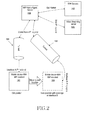
- FIG. 2 illustrates a conventional system utilizing MIH and MIP. Specifically, FIG. 2 illustrates a Mobile IP server that uses a data tunnel for communication with a mobile device, associating a fixed (or constant) IP address with the mobile device.
- a mobile device 101 which is MIP and MIH enabled, is connected via a wireless interface A to MIP Home Agent (HA) server 130 and then on to the Internet and MIH servers 110.
- MIP Home Agent HA
- the mobile device 101 is associated with a fixed home IP address x.y.z.w, even though its actual IP address may change as the mobile device 101 moves between networks.
- Data packets destined for the mobile device 101 are delivered to the constant IP address and re-routed by the MIP HA server 130, which is always aware of the actual IP address of the mobile device 101.
- the mobile device 101 is connected via tunnel 131 to MIP HA server 130.
- the mobile device is connected to a video streaming server 120, which streams video to the fixed IP address x.y.z.w.
- the video streaming server 120 does not know or need to know the actual IP address of the mobile device 101, as the MIP HA server 130 re-directs all data packets to the mobile device 101.
- the new interface B may be a cellular data interface provided by a 3G system.
- the actual IP address of the mobile device changes from a.b.c.d to p.q.r.s, but data packets are routed via new tunnel 132, setup by the MIP HA server 130. Because the fixed IP address x.y.z.w of the mobile device 101 has not changed, data packets from the video streaming server 120 still reach the mobile device 101 and the user does not notice any deterioration in performance of the mobile device 101 due to the handover.
- a problem in a system with MIP and MIH is that during a handover, the MIP HA server transmits packets on an old interface for a period of time until the MIP tunnel is correctly established. During this period, a high level of packet loss may occur.
- a further problem is that a handover typically occurs due to a decline in signal strength.
- the MIP tunnel needs to be stable before MIH messages can pass through it. Accordingly, handover can take longer than is desirable.
- the present invention has been made to solve the above ⁇ mentioned problems occurring in the prior art, and to provide at least the advantages described below.
- a method of performing a handover of a mobile device from a first wireless network to a second wireless network is provided, the mobile device being operably connected, via a tunnel, to a server of a Mobile Internet Protocol (IP) system, and to an information server coupled to the first wireless network and the second wireless network.
- the method includes transmitting, by the mobile device, a handover data packet to the information server via the tunnel, and transmitting, by the mobile device, the handover data packet to the information server via another route.
- IP Mobile Internet Protocol
- a mobile device communicates with a first wireless network and a second wireless network, the mobile device being operably connected, via a tunnel, to a server of a Mobile Internet Protocol (IP) system, and to an information server coupled to the first wireless network and the second wireless networks.
- IP Mobile Internet Protocol
- the mobile device includes a controller for controlling the mobile device to perform a handover from the first wireless network to the second wireless network, and a transceiver for transmitting a handover data packet to the information server via the tunnel, and transmitting the handover data packet to the information server via another route.
- a method of performing a handover of a mobile device from a first wireless network to a second wireless network is provided, the mobile device being operably connected, via a tunnel, to a server of a Mobile Internet Protocol (IP) system and to an information server coupled to the first wireless network and the second wireless network.
- IP Mobile Internet Protocol
- the method includes determining, by the mobile device, that the handover is imminent or in progress, buffering data packets to be transmitted from the mobile device, and transmitting buffered data packets such that buffered handover data packets are transmitted with priority over buffered application data packets.
- a mobile device that communicates with a first wireless network and a second wireless network, the mobile device being operably connected, via a tunnel, to a server of a Mobile Internet Protocol (IP) system, and to an information server coupled to the first wireless network and the second wireless network.
- IP Mobile Internet Protocol
- the mobile device includes a controller that determines that a handover from the first wireless network to the second wireless network is imminent or in progress, a memory that buffers data packets to be transmitted from the mobile device, and a transceiver that transmits the buffered data packets such that buffered handover data packets are transmitted with priority over buffered application data packets.
- a method of performing a handover of a mobile device from a first wireless network to a second wireless network is provided, the mobile device being operably connected, via a tunnel, to a server of a Mobile Internet Protocol (IP) system and to an information server coupled to the first wireless network and the second wireless network.
- IP Mobile Internet Protocol
- the method includes determining, by the server, that the handover is imminent or in progress, buffering, by the server, handover data packets to be transmitted, when the handover is imminent or in progress, and transmitting, by the server, the handover data packets to the mobile device.
- a server of a Mobile Internet Protocol (IP) system is provided, the server being operably coupled to a mobile device via a tunnel, the mobile device being operably connected to an information server coupled to a first wireless network and a second wireless network.
- the server includes a controller for determining that a handover is imminent or in progress, a memory for buffering handover data packets to be transmitted, when the handover is imminent or in progress, and a transceiver for transmitting the handover data packets to the mobile device.
- the basic hardware requirements of the system i.e., a mobile device and fixed network elements
- the method of operation will vary as described.
- use of the same hardware, modified in its operation assists in ensuring backward compatibility with conventional devices.
- the modification to known hardware can be achieved by suitable programming or by the provision of suitable custom hardware.
- data packets can be passed between the Internet and an MIP and MIH enabled mobile device, e.g., via an MIP data tunnel because the actual device IP address is known by the MIH server. If the actual device IP address is not known, then MIH discovery procedures can be used to locate the server.
- FIG. 3 illustrates a system utilizing MIH and MIP according to an embodiment of the present invention. Specifically, FIG. 3 illustrates a basic system configuration, which differs from that illustrated in FIG. 2 in that a separate communication route is established between a mobile device and an MIH server.
- the system includes a mobile device 201, an MIP HA server 230, an MIH server 210, and a video streaming server 120.
- MIH message packets can additionally be sent to the MIH server 210 by a route outside data tunnel 231, and therefore, the handover process is not entirely dependent on an MIP data tunnel being completely established to achieve handover. Accordingly, in addition to transmitting via an MIP tunnel 232, the mobile device 201 transmits MIH handover messages to the MIH server 210 via a separate communication route 233, which does not use the MIP tunnel 232.
- FIG. 3 illustrates the mobile device 201 transmitting directly to the MIH server 210 via the separate communication route 233
- the separate communication route 233 may also indirectly reach the MIH server 210, i.e., pass via any other intermediary device, such as a different server or router.
- Whichever device responds first i.e., either the MIP HA server 230 or the MIH server 210, will give an indication of the status of the handover process. Subsequent responses may be ignored as redundant.
- the MIH client initiates a new communication sequence with MIH MM and IS servers, through the tunnel 232 just created on the new radio interface.
- the handover is considered complete when the MIH client exchanges all messages as required by an MIH protocol and the MIP tunnel 232 is established.
- the MIH server 210 cannot complete the handover, then the attempted handover is deemed to have failed, which results in a failure procedure being started.
- the failure procedure In the failure procedure, a handover is attempted on a next preferred radio link.
- the failure procedure also involves re-establishing an MIP tunnel on the old radio interface and possibly further communication with the MIH servers over the old radio link. These steps are very similar to the handover process itself. If these steps fail, then the mobile device 201 will lose connectivity with the servers and any attempt to recover will be similar to normal mobile device power-on procedures.
- the main thread of the application enters a wait state, awaiting MIP registration with the MIP HA server 210 and the tunnel 232 to be complete. If MIP registration is not possible over the new radio interface, then the mobile device 201 may abandon the new radio interface and attempt a new handover to the next preferred radio interface or may continue on the current interface in an idle mode with connectivity only to the MIH server 210 (and not the MIP HA server 230). This ensures continuous connectivity, but not a constant IP address, meaning that some applications will either not function or will function with a reduced feature set.
- the MIH client may choose to re-register with the MIH server 210 again through the tunnel 232 established with the MIP HA server 230. This enables messages to be transferred via a single route and avoids unnecessary duplication. Applications can then run on the mobile device 201 with full IP transparency.
- buffering is used to provide additional data security during a handover.
- data buffering is performed on a server side, i.e., a server-side solution, or on a device side, i.e., a device-side solution.
- an MIP HA server which, in conventional systems, merely passes data packets to an intended mobile device without examining them further, seeks out MIH packets in the data traffic, which are destined for a particular user.
- the MIP HA server looks for a distinctive MIH signature within data packets by "sniffing" MIH packet headers to search for MIH handover related messages (e.g., a candidate query/commit message). Detection of such handover related messages triggers the buffering activity, and any subsequent packets are stored as well as transmitted in the normal way.
- the initiation of the buffering starts a timer, and ongoing buffering continues for a defined period of time.
- the period of time is selected to suit particular cases, in the assumption that handover is imminent.
- the timer is used, because the handover may yet fail, meaning that no new messages appear on the link.
- the timer duration can be selected in light of a server's ability to buffer, which may depend on an overall network load and/or how many other handovers are in progress. In the event that few active handovers are in place, then more buffer space can be allocated. For example, a typical buffer period may be 5 minutes, although this may be increased or decreased, as per a particular instance.
- the MIP HA server receives a new registration message on a new link from a new "Care of" address from the same user, then a timer is started and runs for a predetermined period. At the expiry of the timer, the packets in the buffer are sent to an HA encapsulation engine, which sends them to the mobile device.
- the HA encapsulation engine packages up individual datagrams for sending to the mobile device's "care of" address.
- the buffered data packets can be discarded, and ongoing communications with the device can continue as usual.
- an MIP tunnel is first broken on an old radio link and then re-created on a new radio link to an MIP HA server. During this period, packet loss for packets transmitted via the tunnel can be considerably higher than at other times. Also, conventionally, all data packets sent via the tunnel are treated and transmitted with equal priority.
- MIH packets which are relatively infrequent compared to the application data packets, are more important in terms of ensuring link stability and reliability. Therefore, in accordance with an embodiment of the present invention priority is given to MIH data packets over application data packets.
- the application running on the mobile device is better able to cope with missing application data packets than it is with missing MIH data packets, without which the link may be lost completely, thereby possibly killing the application which may rely on a continuous connection. It is therefore in the interest of the application that a handover is completed and a new link is quickly established so that application data packets can once more pass promptly.
- two buffers are created in a mobile device.
- the first buffer is for MIH data packets and the second is for application data packets.
- the two buffers are then operated such that when the MIH data packet buffer is empty, then data may be sent from the application data buffer. As such, priority is given to MIH data packets over application data packets.
- FIG. 4 is a flowchart illustrating a method for sending a transmit message by a mobile device according to an embodiment of an aspect of the present invention. Specifically, FIG. 4 illustrates a method identifying MIH data packets and application data packets for transmission.
- an existing data link layer forwards a packet to be transmitted via a tunnel.
- the mobile device determines whether the packet is an MIH packet. If the packet is not an MIH packet and is therefore, an application data packet, the packet is added to the application data packet buffer (or bucket) in step 340.
- a transmit message is sent to a transmitter thread to indicate that there is a packet for transmission.
- the mobile device determines that the packet to be transmitted is an MIH packet in step 310, the packet is added to an MIH packet buffer (or bucket) in step 320.
- FIG. 5 is a flowchart illustrating a method for packet transmission according to an embodiment of an aspect of the present invention. Specifically, FIG. 5 illustrates a method wherein priority is given to MIH data packets over application data packets, such that packets from the application data buffer are transmitted when the MIH packet buffer is empty.
- step 400 a transmit message is received.
- step 410 the mobile device checks a status of the MIH packet buffer. If there are packets in the MIH packet buffer to send, the entire contents of the MIH packet buffer are transmitted in step 420.
- the mobile device checks whether there are any packets to transmit in the application data buffer in step 430. If there are packets to transmit in the application data buffer, then one of the packets is transmitted in step 440. If there is no application data packet in the application data buffer, the mobile device completes a transmission process in step 460.
- step 450 the mobile device checks the packet MIH buffer to determine if it includes new MIH packets to transmit. If there are new MIH packets to transmit, then step 420 is repeated before another packet from the application data buffer is transmitted in step 440.
- step 450 if there are no new MIH packets to transmit in step 450, then the method returns to step 430 to determine if there are application data packets in the application data buffer.
- step 410 if there are no MIH packets in the buffer in step 410, then method proceeds directly to step 430.
- priority is given to MIH packets over application data packets, ensuring that the handover process has priority over any applications running on the mobile device at the time of a handover.
- the size of one or both buffers can be dynamically varied to give more or less priority to either type of data packet.
- FIG. 6 is a block diagram illustrating a mobile device according to an embodiment of the present invention.
- the mobile device includes a controller 601, a memory 602, and a transceiver 603.
- the controller 601 controls the overall operations of the mobile device as described in the embodiments above.
- the memory 602 stores programs for controlling the mobile device and includes buffers for buffering MIH packets and application data packets.
- the transceiver 603 communicates with MIP and MIH servers.
- FIG. 7 is a block diagram illustrating an MIP server according to an embodiment of the present invention.
- the MIP server includes a controller 701, a memory 702, and a transceiver 703.
- the controller 701 controls the overall operations of the MIP server as described in the embodiments above.
- the memory 702 stores programs for controlling the MIP server and includes buffers for buffering MIH packets and application data packets.
- the transceiver 703 communicates with mobile devices, video streaming servers, and MIH servers.
- At least some elements discussed herein may be constructed, partially or wholly, using dedicated special-purpose hardware.
- Terms such as “component”, “module” or “'unit” used herein may include, but are not limited to, a hardware device, such as a Field Programmable Gate Array (FPGA) or Application Specific Integrated Circuit (ASIC), which performs certain tasks.
- FPGA Field Programmable Gate Array
- ASIC Application Specific Integrated Circuit
- Machine-readable instructions stored on any of the above-mentioned storage media may be executable by a processor in a mobile device or a server.
- a computer program may include machine-readable instructions capable of managing capabilities of the mobile device or server.
- the program may be included on a Compact Disc-ROM (CD-ROM) and loaded from the CD-ROM to a hard drive in the non-volatile memory.
- the machine-readable instructions may cause the mobile device or server to operate according to the various embodiments of the present invention.
- At least some elements may be may be configured to reside on an addressable storage medium and be configured to execute on one or more processors. That is, the elements may be implemented in the form of a tangible computer-readable storage medium having recorded thereon instructions that are, in use, executed by a computer or other suitable device.
- the elements may include, by way of example, components such as software components, object-oriented software components, class components, and task components, processes, functions, attributes, procedures, subroutines, segments of program code, drivers, firmware, microcode, databases, data structures, tables, arrays, and variables.
- the tangible medium may take any suitable form, but examples include solid-state memory devices (e.g., Read Only Memories (ROM), Random Access Memories (RAM), Electrically Programmable ROM (EPROM), Electrically Erasable Programmable ROM (EEPROM), etc.), optical discs (e.g. Compact Discs, DVDs, and others), magnetic discs, magnetic tapes and magneto-optic storage devices.
- solid-state memory devices e.g., Read Only Memories (ROM), Random Access Memories (RAM), Electrically Programmable ROM (EPROM), Electrically Erasable Programmable ROM (EEPROM), etc.
- optical discs e.g. Compact Discs, DVDs, and others
- magnetic discs e.g. Compact Discs, DVDs, and others
- magnetic tapes e.g., magnetic tapes and magneto-optic storage devices.
Landscapes
- Engineering & Computer Science (AREA)
- Computer Networks & Wireless Communication (AREA)
- Signal Processing (AREA)
- Mobile Radio Communication Systems (AREA)
Applications Claiming Priority (2)
| Application Number | Priority Date | Filing Date | Title |
|---|---|---|---|
| GB1016454.9A GB2484125B (en) | 2010-09-30 | 2010-09-30 | Improvements in handover between heterogeneous radio networks |
| KR1020110087429A KR20120033971A (ko) | 2010-09-30 | 2011-08-30 | 이질적인 무선 네트워크들 간의 핸드오버 수행 장치 및 방법, 그리고 그에 대한 시스템 |
Publications (2)
| Publication Number | Publication Date |
|---|---|
| EP2437547A2 true EP2437547A2 (de) | 2012-04-04 |
| EP2437547A3 EP2437547A3 (de) | 2013-12-04 |
Family
ID=44677771
Family Applications (1)
| Application Number | Title | Priority Date | Filing Date |
|---|---|---|---|
| EP11183356.2A Withdrawn EP2437547A3 (de) | 2010-09-30 | 2011-09-29 | Vorrichtung und Verfahren zur Durchführung einer Übergabe zwischen heterogenen Funknetzwerken |
Country Status (2)
| Country | Link |
|---|---|
| US (1) | US20120082134A1 (de) |
| EP (1) | EP2437547A3 (de) |
Families Citing this family (2)
| Publication number | Priority date | Publication date | Assignee | Title |
|---|---|---|---|---|
| DE102012210243B4 (de) * | 2012-06-18 | 2017-12-28 | Siemens Aktiengesellschaft | Verfahren zum Übertragen von Datenpaketen in einem Kommunikationsnetzwerk und Kommunikationsnetzwerk |
| US12477418B2 (en) | 2023-03-30 | 2025-11-18 | Cisco Technology, Inc. | Handovers in wireless controller-based systems |
Family Cites Families (10)
| Publication number | Priority date | Publication date | Assignee | Title |
|---|---|---|---|---|
| US7155716B2 (en) * | 2002-03-08 | 2006-12-26 | Intel Corporation | Weighted and prioritized task scheduler |
| KR100689543B1 (ko) * | 2003-08-26 | 2007-03-02 | 삼성전자주식회사 | 이동통신 시스템에서 상향링크 패킷 전송을 위한 스케쥴링 요청 방법 및 장치 |
| JP4335724B2 (ja) * | 2004-03-26 | 2009-09-30 | 富士通株式会社 | 送信パケット補填システムおよび送信パケット補填方法 |
| US7395066B2 (en) * | 2005-06-15 | 2008-07-01 | Nokia Corporation | Method, system and device for improving performance during cell change |
| GB0702169D0 (en) * | 2007-02-05 | 2007-03-14 | Nec Corp | Resource Allocation |
| FI20075631A0 (fi) * | 2007-09-10 | 2007-09-10 | Nokia Siemens Networks Oy | Menetelmä, radiojärjestelmä ja tukiasema |
| KR100960112B1 (ko) * | 2007-12-14 | 2010-05-27 | 한국전자통신연구원 | IPv6 Over IPv4 터널링 기반의 이종망간 심리스 핸드오버 제어 방법 및 장치 |
| NZ588672A (en) * | 2008-05-15 | 2013-05-31 | Ericsson Telefon Ab L M | Storing and forwarding data packets for user equipment during handover |
| KR101028330B1 (ko) * | 2008-06-27 | 2011-04-12 | 주식회사 케이티 | 이종 이동성 프로토콜 혼재망에서의 핸드오버 처리 방법 및 그 시스템과 mip 클라이언트 장치 |
| WO2009157742A2 (ko) * | 2008-06-27 | 2009-12-30 | 주식회사 케이티 | 이종 이동성 프로토콜 혼재망에서의 핸드오버 처리 방법 및 그 시스템과 mip 클라이언트 장치 |
-
2011
- 2011-09-29 EP EP11183356.2A patent/EP2437547A3/de not_active Withdrawn
- 2011-09-30 US US13/249,958 patent/US20120082134A1/en not_active Abandoned
Non-Patent Citations (1)
| Title |
|---|
| None |
Also Published As
| Publication number | Publication date |
|---|---|
| EP2437547A3 (de) | 2013-12-04 |
| US20120082134A1 (en) | 2012-04-05 |
Similar Documents
| Publication | Publication Date | Title |
|---|---|---|
| JP5113684B2 (ja) | アクセスゲートウェイ装置の制御方法及び通信システム | |
| JP6293835B2 (ja) | 無線アクセス技術間のサービス品質パラメータのマッピング | |
| CN103430616B (zh) | 用于在无线电接入技术间服务重试期间保留会话上下文的系统和方法 | |
| CA2680523C (en) | Apparatus and method of performing a handoff in a communication network | |
| AU2018413527A1 (en) | Method and apparatus for updating ue policy, and computer storage medium | |
| EP3949512B1 (de) | Verfahren und system zum netzwerk-handover auf einer transportschicht | |
| JP2015073324A (ja) | ワイヤレス通信システムにおける無線アクセス技術間ハンドオーバ中のQoSコンテキスト転送のための方法および装置 | |
| CN102138362A (zh) | 使用多无线电的装置的ip移动性 | |
| US20070165574A1 (en) | Method and apparatus to minimize packet loss during active data hard handoff | |
| US9232453B2 (en) | Method and device for processing AT command when mobile phone loses coverage and switches between systems | |
| EP1869935B1 (de) | Verfahren zur herstellung einer verbindung zur weiterreichung durch ein multimodus-mobilendgerät | |
| CN105813228A (zh) | 基于SIP over TCP/TLS的通信方法及相关装置 | |
| CN101557631A (zh) | 基站控制装置及访问限制方法 | |
| EP2437547A2 (de) | Vorrichtung und Verfahren zur Durchführung einer Übergabe zwischen heterogenen Funknetzwerken | |
| DK2761969T3 (en) | PMIPv6-MAG RECOVERY | |
| CN101120600B (zh) | 在多模移动终端中切换后释放链路连接的方法以及终端 | |
| CN101742578A (zh) | 一种lte网络中实现信息跟踪激活的方法、装置 | |
| KR101293442B1 (ko) | 패킷 데이터 네트워크 통신 디바이스 및 방법 | |
| RU2417543C2 (ru) | Передача обслуживания терминала доступа на сетевом уровне в сети доступа | |
| KR20030050551A (ko) | 패킷데이터서비스네트워크에서 홈 에이전트 장애 처리장치 및 그 방법 | |
| GB2495006A (en) | Separate buffering of handover related data packets and application related data packets in handover. | |
| GB2484125A (en) | Handover between heterogeneous radio networks including out of tunnel handover message transmitted directly to an information server | |
| CN103795878B (zh) | 一种ip承载语音业务的保护方法、设备和系统 | |
| GB2495007A (en) | Handover method comprising transmitting data packets to a mobile device from the server and also buffering selected data packets containing handover messages | |
| RU2439844C2 (ru) | Устройство и способ выполнения передачи обслуживания в сети связи |
Legal Events
| Date | Code | Title | Description |
|---|---|---|---|
| PUAI | Public reference made under article 153(3) epc to a published international application that has entered the european phase |
Free format text: ORIGINAL CODE: 0009012 |
|
| AK | Designated contracting states |
Kind code of ref document: A2 Designated state(s): AL AT BE BG CH CY CZ DE DK EE ES FI FR GB GR HR HU IE IS IT LI LT LU LV MC MK MT NL NO PL PT RO RS SE SI SK SM TR |
|
| AX | Request for extension of the european patent |
Extension state: BA ME |
|
| RAP1 | Party data changed (applicant data changed or rights of an application transferred) |
Owner name: SAMSUNG ELECTRONICS CO., LTD. |
|
| RIC1 | Information provided on ipc code assigned before grant |
Ipc: H04W 36/14 20090101AFI20130718BHEP |
|
| PUAL | Search report despatched |
Free format text: ORIGINAL CODE: 0009013 |
|
| AK | Designated contracting states |
Kind code of ref document: A3 Designated state(s): AL AT BE BG CH CY CZ DE DK EE ES FI FR GB GR HR HU IE IS IT LI LT LU LV MC MK MT NL NO PL PT RO RS SE SI SK SM TR |
|
| AX | Request for extension of the european patent |
Extension state: BA ME |
|
| RIC1 | Information provided on ipc code assigned before grant |
Ipc: H04W 36/14 20090101AFI20131025BHEP Ipc: H04W 36/02 20090101ALN20131025BHEP |
|
| 17P | Request for examination filed |
Effective date: 20140604 |
|
| 17Q | First examination report despatched |
Effective date: 20141017 |
|
| STAA | Information on the status of an ep patent application or granted ep patent |
Free format text: STATUS: THE APPLICATION IS DEEMED TO BE WITHDRAWN |
|
| 18D | Application deemed to be withdrawn |
Effective date: 20150228 |