EP2437538B1 - Multi-netz und -ebenen smsc-system und verfahren - Google Patents
Multi-netz und -ebenen smsc-system und verfahren Download PDFInfo
- Publication number
- EP2437538B1 EP2437538B1 EP09845430.9A EP09845430A EP2437538B1 EP 2437538 B1 EP2437538 B1 EP 2437538B1 EP 09845430 A EP09845430 A EP 09845430A EP 2437538 B1 EP2437538 B1 EP 2437538B1
- Authority
- EP
- European Patent Office
- Prior art keywords
- module
- short message
- message
- virtual
- office
- Prior art date
- Legal status (The legal status is an assumption and is not a legal conclusion. Google has not performed a legal analysis and makes no representation as to the accuracy of the status listed.)
- Active
Links
- 238000000034 method Methods 0.000 title claims description 70
- 238000012545 processing Methods 0.000 claims description 234
- 230000011664 signaling Effects 0.000 claims description 95
- 230000008569 process Effects 0.000 claims description 41
- 238000012544 monitoring process Methods 0.000 claims description 5
- 230000004044 response Effects 0.000 description 42
- 238000005516 engineering process Methods 0.000 description 10
- 102100028633 Cdc42-interacting protein 4 Human genes 0.000 description 8
- 101000766830 Homo sapiens Cdc42-interacting protein 4 Proteins 0.000 description 8
- 238000010586 diagram Methods 0.000 description 7
- 238000004891 communication Methods 0.000 description 6
- 238000013459 approach Methods 0.000 description 3
- 238000006243 chemical reaction Methods 0.000 description 3
- 230000010354 integration Effects 0.000 description 3
- 238000012423 maintenance Methods 0.000 description 3
- 230000007246 mechanism Effects 0.000 description 2
- 238000012986 modification Methods 0.000 description 2
- 230000004048 modification Effects 0.000 description 2
- 230000002159 abnormal effect Effects 0.000 description 1
- 238000010295 mobile communication Methods 0.000 description 1
- 230000006855 networking Effects 0.000 description 1
- 238000012546 transfer Methods 0.000 description 1
Images
Classifications
-
- H—ELECTRICITY
- H04—ELECTRIC COMMUNICATION TECHNIQUE
- H04L—TRANSMISSION OF DIGITAL INFORMATION, e.g. TELEGRAPHIC COMMUNICATION
- H04L41/00—Arrangements for maintenance, administration or management of data switching networks, e.g. of packet switching networks
- H04L41/40—Arrangements for maintenance, administration or management of data switching networks, e.g. of packet switching networks using virtualisation of network functions or resources, e.g. SDN or NFV entities
-
- H—ELECTRICITY
- H04—ELECTRIC COMMUNICATION TECHNIQUE
- H04L—TRANSMISSION OF DIGITAL INFORMATION, e.g. TELEGRAPHIC COMMUNICATION
- H04L41/00—Arrangements for maintenance, administration or management of data switching networks, e.g. of packet switching networks
- H04L41/04—Network management architectures or arrangements
- H04L41/046—Network management architectures or arrangements comprising network management agents or mobile agents therefor
-
- H—ELECTRICITY
- H04—ELECTRIC COMMUNICATION TECHNIQUE
- H04L—TRANSMISSION OF DIGITAL INFORMATION, e.g. TELEGRAPHIC COMMUNICATION
- H04L41/00—Arrangements for maintenance, administration or management of data switching networks, e.g. of packet switching networks
- H04L41/06—Management of faults, events, alarms or notifications
- H04L41/0654—Management of faults, events, alarms or notifications using network fault recovery
- H04L41/0668—Management of faults, events, alarms or notifications using network fault recovery by dynamic selection of recovery network elements, e.g. replacement by the most appropriate element after failure
-
- H—ELECTRICITY
- H04—ELECTRIC COMMUNICATION TECHNIQUE
- H04L—TRANSMISSION OF DIGITAL INFORMATION, e.g. TELEGRAPHIC COMMUNICATION
- H04L43/00—Arrangements for monitoring or testing data switching networks
- H04L43/08—Monitoring or testing based on specific metrics, e.g. QoS, energy consumption or environmental parameters
- H04L43/0805—Monitoring or testing based on specific metrics, e.g. QoS, energy consumption or environmental parameters by checking availability
- H04L43/0817—Monitoring or testing based on specific metrics, e.g. QoS, energy consumption or environmental parameters by checking availability by checking functioning
-
- H—ELECTRICITY
- H04—ELECTRIC COMMUNICATION TECHNIQUE
- H04L—TRANSMISSION OF DIGITAL INFORMATION, e.g. TELEGRAPHIC COMMUNICATION
- H04L43/00—Arrangements for monitoring or testing data switching networks
- H04L43/20—Arrangements for monitoring or testing data switching networks the monitoring system or the monitored elements being virtualised, abstracted or software-defined entities, e.g. SDN or NFV
-
- H—ELECTRICITY
- H04—ELECTRIC COMMUNICATION TECHNIQUE
- H04L—TRANSMISSION OF DIGITAL INFORMATION, e.g. TELEGRAPHIC COMMUNICATION
- H04L45/00—Routing or path finding of packets in data switching networks
- H04L45/28—Routing or path finding of packets in data switching networks using route fault recovery
-
- H—ELECTRICITY
- H04—ELECTRIC COMMUNICATION TECHNIQUE
- H04L—TRANSMISSION OF DIGITAL INFORMATION, e.g. TELEGRAPHIC COMMUNICATION
- H04L51/00—User-to-user messaging in packet-switching networks, transmitted according to store-and-forward or real-time protocols, e.g. e-mail
- H04L51/06—Message adaptation to terminal or network requirements
-
- H—ELECTRICITY
- H04—ELECTRIC COMMUNICATION TECHNIQUE
- H04L—TRANSMISSION OF DIGITAL INFORMATION, e.g. TELEGRAPHIC COMMUNICATION
- H04L51/00—User-to-user messaging in packet-switching networks, transmitted according to store-and-forward or real-time protocols, e.g. e-mail
- H04L51/21—Monitoring or handling of messages
- H04L51/23—Reliability checks, e.g. acknowledgments or fault reporting
-
- H—ELECTRICITY
- H04—ELECTRIC COMMUNICATION TECHNIQUE
- H04L—TRANSMISSION OF DIGITAL INFORMATION, e.g. TELEGRAPHIC COMMUNICATION
- H04L51/00—User-to-user messaging in packet-switching networks, transmitted according to store-and-forward or real-time protocols, e.g. e-mail
- H04L51/58—Message adaptation for wireless communication
-
- H—ELECTRICITY
- H04—ELECTRIC COMMUNICATION TECHNIQUE
- H04L—TRANSMISSION OF DIGITAL INFORMATION, e.g. TELEGRAPHIC COMMUNICATION
- H04L67/00—Network arrangements or protocols for supporting network services or applications
- H04L67/01—Protocols
- H04L67/10—Protocols in which an application is distributed across nodes in the network
- H04L67/1001—Protocols in which an application is distributed across nodes in the network for accessing one among a plurality of replicated servers
- H04L67/1034—Reaction to server failures by a load balancer
-
- H—ELECTRICITY
- H04—ELECTRIC COMMUNICATION TECHNIQUE
- H04L—TRANSMISSION OF DIGITAL INFORMATION, e.g. TELEGRAPHIC COMMUNICATION
- H04L69/00—Network arrangements, protocols or services independent of the application payload and not provided for in the other groups of this subclass
- H04L69/40—Network arrangements, protocols or services independent of the application payload and not provided for in the other groups of this subclass for recovering from a failure of a protocol instance or entity, e.g. service redundancy protocols, protocol state redundancy or protocol service redirection
-
- H—ELECTRICITY
- H04—ELECTRIC COMMUNICATION TECHNIQUE
- H04W—WIRELESS COMMUNICATION NETWORKS
- H04W24/00—Supervisory, monitoring or testing arrangements
- H04W24/04—Arrangements for maintaining operational condition
-
- H—ELECTRICITY
- H04—ELECTRIC COMMUNICATION TECHNIQUE
- H04L—TRANSMISSION OF DIGITAL INFORMATION, e.g. TELEGRAPHIC COMMUNICATION
- H04L41/00—Arrangements for maintenance, administration or management of data switching networks, e.g. of packet switching networks
- H04L41/08—Configuration management of networks or network elements
- H04L41/0803—Configuration setting
- H04L41/0813—Configuration setting characterised by the conditions triggering a change of settings
- H04L41/0816—Configuration setting characterised by the conditions triggering a change of settings the condition being an adaptation, e.g. in response to network events
-
- H—ELECTRICITY
- H04—ELECTRIC COMMUNICATION TECHNIQUE
- H04L—TRANSMISSION OF DIGITAL INFORMATION, e.g. TELEGRAPHIC COMMUNICATION
- H04L41/00—Arrangements for maintenance, administration or management of data switching networks, e.g. of packet switching networks
- H04L41/08—Configuration management of networks or network elements
- H04L41/0894—Policy-based network configuration management
-
- H—ELECTRICITY
- H04—ELECTRIC COMMUNICATION TECHNIQUE
- H04L—TRANSMISSION OF DIGITAL INFORMATION, e.g. TELEGRAPHIC COMMUNICATION
- H04L43/00—Arrangements for monitoring or testing data switching networks
- H04L43/08—Monitoring or testing based on specific metrics, e.g. QoS, energy consumption or environmental parameters
- H04L43/0876—Network utilisation, e.g. volume of load or congestion level
-
- H—ELECTRICITY
- H04—ELECTRIC COMMUNICATION TECHNIQUE
- H04W—WIRELESS COMMUNICATION NETWORKS
- H04W88/00—Devices specially adapted for wireless communication networks, e.g. terminals, base stations or access point devices
- H04W88/18—Service support devices; Network management devices
- H04W88/184—Messaging devices, e.g. message centre
Definitions
- the present invention relates to communication field, and especially, to a short message center system with multi-network multi-plane structure and an implementation method thereof.
- the short message service is an important service among mobile communication services, the income thereof accounting for a growing percentage of total operator income. Hence, the operating security and stability of the short message center, the core of what provides the service, have also become a focus of increasing attention of operators and device manufacturers.
- the double-network double-plane scheme two or more short message offices are connected to network by the way of pairwise interconnecting, and once one short message office is faulted, the other short message office may take over all the service; at the same time, the traffic is transferred from an over loaded short message center to a light loaded short message center to balance the traffic.
- This double-network double-plane technology improves the security and stability of short message center from disaster-tolerating and load-balancing point of view, but has the following disadvantages:
- a cluster system equips each short message office with one cluster crunode server, and then manages the cluster crunode server by a cluster dispatch center, thereby implementing uniform management for two or more short message offices, also, functions as disaster-tolerating and shunting.
- the cluster system also has some disadvantages:
- the present invention provides a short message center system with multi-network multi-plane structure and an implementation method thereof to solve the problems of high fault probability in double-network double-plane technologies and the complex architecture of cluster system technologies.
- the present invention provides a short message center system according to claim 1, and a method for implementing a short message center system according to independent claim 7.
- a short message center system with multi-network multi-plane structure of present invention includes a virtual short message office and at least two short message offices, said short message office including a signaling processing module, a service processing module and a SMPP AGENT module, said virtual short message office monitors and manages traffic and status of each of the at least two short message offices, does not process specific services but receives and forwards messages from each of the at least two short message offices according to a configurable load-balancing policy, including a forwarding module and a returning module, said forwarding module is used to, when a module of a short message office is faulted, forward a message to be processed by the faulted module to a corresponding module in another short message office to be processed, said returning module is used to return a processing result to the short message office with faulted module.
- said forwarding module is a virtual signaling processing module
- said returning module is a virtual service processing module
- said virtual signaling processing module is used to, when a signaling processing module of the short message offices is faulted, forward a message to be processed by the faulted signaling processing module to a signaling processing module in another short message office to process the message;
- said virtual service processing module is used to return a processing result to the service processing module of a short message office with the faulted signaling processing module.
- said forwarding module is a virtual service processing module
- said returning module is a virtual signaling processing module
- said virtual service processing module is used to, when the service processing module of short message office is faulted, forward a message to be processed by the faulted service processing module to a service processing module in another short message office to process the message;
- said virtual signaling processing module is used to return a processing result to the signaling processing module of a short message office with the faulted service processing module.
- said forwarding module is a virtual service processing module
- said returning module is a virtual SMPP AGENT module
- said virtual service processing module is used to, when a service processing module of short message offices is faulted, forward a message to be processed by the faulted service processing module to a service processing module in another short message office to process the message
- said virtual SMPP AGENT module is used to return a processing result to the SMPP AGENT module of a short message office with the faulted service processing module.
- said forwarding module is a virtual SMPP AGENT module
- said returning module is a virtual service processing module
- said virtual SMPP AGENT module is used to, when a SMPP AGENT module of the short message offices is faulted, forward a message to be processed by the faulted SMPP AGENT module to a SMPP AGENT module in another short message office to process the message
- said virtual service processing module is used to return a processing result to the service processing module of a short message office with faulted SMPP AGENT module.
- said virtual short message office further includes a configuration management module, said configuration management module being used to monitor the load status of each module of said short message offices, provide a shunt policy for said forwarding module so that the forwarding module selects a module with minimum load to which the message is forwarded according to the load status of each module.
- a method for implementing a short message center system with multi-network multi-plane structure of the present invention comprises the following steps of:
- the method further includes: a configuration management module of said virtual short message office creating a forwarding relation table, and setting identification information of the original short message office, identification information of modules of the original short message office, and identification information of other corresponding short message offices processing the message, and identification information of corresponding modules of other short message offices in said forwarding relation table to be queried by said returning module to return said processing result.
- the method further includes: a configuration management module of said virtual short message office monitoring load status of each module of said short message office, providing a shunt policy for said forwarding module so that the forwarding module selects a corresponding module with minimum load to which the message is forwarded according to the load status of each module.
- said forwarding module, a returning module, a module sending the message, a module processing the message are respectively one group of the followings: 1a virtual signaling processing module, a virtual service processing module, a service processing module, a signaling processing module; 2a virtual service processing module, a virtual signaling processing module, a signaling processing module, a service processing module; 3a virtual service processing module, a virtual SMPP AGENT module, a SMPP AGENT module, a service processing module; or 4a virtual SMPP AGENT module, a virtual service processing module, a service processing module, a SMPP AGENT module.
- the short message center system with multi-network multi-plane structure and the implementation method thereof of the present invention simplifies the system structure, is simpler than the system with multi-network multi-plane structure acquired by expansion based on the existing double-network double-plane technologies or a cluster system in its implementation approach, and brings convenience and flexibility in aspects such as link management, operation and maintenance, load-balancing policy and so on.
- the advantages of being strong in integration, convenient in expansion and management, flexible in load-balancing policy of this system make the short message center system have better security and stability.
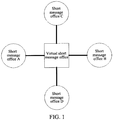
- FIG. 1 it illustrates the structure of-a short message center system with multi-network multi-plane structure of the present invention.
- the short message center system with multi-network multi-plane structure of the present invention includes a virtual short message office, short message office A, short message office B, short message office C and short message office D. Relative to the virtual short message office, short message office A, short message office B, short message office C and short message office D may be called real short message offices.
- Short message office A, short message office B, short message office C and short message office D are connected with the virtual short message office respectively, thereby a star network centering around the virtual short message office is formed, called as a multi-network multi-plane structure.
- the existing double-network double-plane technologies are used in the connection between the real short message offices and the virtual short message office, and the virtual short message office monitors and manages the traffic and status of each node, receives and forwards messages from each real short message office according to a configurable load-balancing policy.
- the multi-network multi-plane structure is transparent and invisible to each real short message office, and only the virtual short message office knows which real short message offices have joined the multi-network multi-plane structure.
- the virtual short message office receives specific services, but it doesn't process the specific service, instead it forwards the services to the real short message offices for processing therein according to a load-balancing policy.
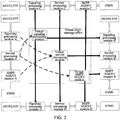
- FIG. 2 illustrates the modules of a short message center system with multi-network multi-plane structure of the present invention
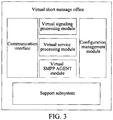
- FIG. 3 illustrates the modules of the virtual short message office of a short message center system with multi-network multi-plane structure of the present invention.
- Short message office A, short message office B, short message office C and short message office D are connected respectively with a plurality of high level/low level signaling transfer points (HSTP/LSTP) and a plurality of extended short message entities (ESME) in network, and the virtual short message office is connected respectively with short message office A, short message office B, short message office C and short message office D.
- HSTP/LSTP implements router's function to connect other signaling points with network together to form a larger network. They generally do not generate messages, but check every message sent by service exchange points, and then switch every message to where it should be through No.7 signaling network.
- STP is connected with a signaling processing module, and is in charge of forwarding originating call, terminating call messages between a mobile phone and the short message center system.
- ESME is a short message entity in non-PLMN mobile networks, is generally connected to SMPP AGENT module by TCP/IP or X.25 network, and uses SMPP protocol and SMPP AGENT protocol to communicate for receiving and sending short messages.
- Short message office A includes signaling processing module A, service processing module A and SMPP AGENT module A. Internally, signaling processing module A is connected with SMPP AGENT module A through service processing module A; Externally, the short message office A is connected with HSTP/LSTP in No.7 signaling network through signaling processing module A, and is connected with ESME through SMPP AGENT module A. Similarly, short message office B, short message office C and short message office D also include the corresponding modules.
- Signaling processing module A connected with HSTP/LSTP in network and service processing module A of short message office A respectively, providing a signaling channel for receiving and sending a short message between short message center and mobile network, and completing protocol conversion.
- Signaling processing module A is in charge of receiving messages of No.7 signaling network, and processes them into internal messages, and then forwards them to service processing module A; meanwhile, it receives internal messages sent by service processing module A and sends them to No.7 signaling network after processing them into standard signaling.
- Service processing module A connected with signaling processing module A and SMPP AGENT module A respectively, and in charge of processing specific short message services.
- Service processing module A is in charge of receiving messages from signaling processing module A or SMPP AGENT module A, and forwarding them to signaling processing module A or SMPP AGENT module A respectively after processing them.
- SMPP AGENT module A connected with service processing module A and ESME respectively, providing a channel for receiving and sending a message between short message center and ESME, and completing protocol conversion.
- SMPP AGENT module A is in charge of receiving messages from ESME in external network (TCP/IP or X.25), and processing them into internal messages, and then forwarding them to service processing module A; meanwhile, it receives internal messages sent by service processing module A, and sends them to ESME after processing them into messages which comply with SMPP protocol.
- the virtual short message office includes a virtual signaling processing module, a virtual service processing module, a virtual SMPP AGENT module, a configuration management module, a support subsystem and a communication interface.
- the three modules of the virtual signaling processing module, the virtual service processing module and the virtual SMPP AGENT module are connected with every real short message office respectively, but they are not interconnected, i.e. there is no message flow between the internal modules of the virtual short message office.
- Virtual signaling processing module connected with signaling processing modules and service processing modules of all the real short message offices respectively, providing a forwarding channel for messages sent to the signaling processing module.
- the virtual signaling processing module receives messages from service processing modules of real short message offices, and forwards messages to the signaling processing module of a certain real short message office by the way of load balancing.
- Virtual service processing module connected with service processing modules, signaling processing modules and SMPP AGENT modules of all the real short message offices respectively, and providing a forwarding channel for messages sent to the service processing modules.
- Virtual SMPP AGENT module connected with service processing modules and SMPP AGENT modules of all the real short message offices respectively, and providing a forwarding channel for messages sent to the signaling processing modules.
- Configuration management module being in charge of configuration and management functions such as node configuring, node status monitoring, node load monitoring, shunt policy configuring and so on, and maintaining the binding information of ESME in each SMPP AGENT module.
- the node refers to each module of each real short message office.
- Support subsystem in charge of providing running support of the whole software system.
- Communication interface being in charge of communication of a virtual signaling processing module, a virtual service processing module and a virtual SMPP AGENT module with external system, and it may be integrated in the support subsystem.
- the communication links for a real short message office to send a message to the virtual short message office, taking short message office A as an example, are indicated in dashed lines; the communication links for the virtual short message office to forward a message to real short message offices, taking short message office B, short message office C, and short message office D as examples, are indicated with black one-way arrows.
- the signaling processing modules, the service processing modules, and the SMPP AGENT modules are classified into three levels, where a receiving channel of each module of the virtual short message office only receives messages sent by the module of adjacent level of a real short message office, and a sending channel only sends messages to a module of same level of a real short message office.
- a receiving channel of each module of the virtual short message office only receives messages sent by the module of adjacent level of a real short message office
- a sending channel only sends messages to a module of same level of a real short message office.
- each module of the virtual short message office can receive services, but cannot process services, and can only forward messages to a corresponding module of a real short message office to process the messages by the way of forwarding.
- the virtual short message office cannot process services, so they will send messages to the level, which should process services, of the virtual short message office, however, the virtual short message office cannot process services, and will choose one target real short message office module by a load-balancing mechanism, disguise the messages as those to be sent to this module, and forward the messages to this module.
- the target real short message office module finishes processing the messages and returns a response result to the virtual short message office, it also regards the virtual short message office as the real short message office, and sends the response result to the module, which should process services, of the virtual short message office.
- Message channels of each module are relatively independent, therefore, when a certain module among the signaling processing module, the service processing module and the SMPP AGENT module of a real short message office is faulted, only messages to be processed by the module will be forwarded to the virtual short message office and then forwarded to a corresponding module of other real short message offices to be processed, and the modules without faults may continue to work normally, and may further be used to receive messages of other real short message offices forwarded by the virtual short message office.
- the virtual short message office needs to monitor the traffic and the working status of each module of each real short message office, and this function is implemented by the configuration management module of the virtual short message office.
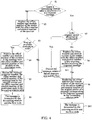
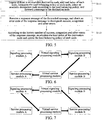
- FIG. 4 it illustrates the flow of the method for implementing a short message center system with multi-network multi-plane structure of the present invention.
- the receiver and returning module to be mentioned hereinafter is one of the virtual signaling processing module, the virtual service processing module and the virtual SMPP AGENT module of the virtual short message office
- the sender is one of the signaling processing module, the service processing module or the SMPP AGENT module of the real short message office
- the identification information of the virtual short message office and the real short message office is an office number
- the identification information of modules of the virtual short message office and the real short message office is a module number.
- FIG. 5 it illustrates a working flowchart of the configuration management module of a short message center system with multi-network multi-plane structure of the present invention.
- step S3 one important function of the configuration management module is to monitor the load condition of each module of the real short message offices, and working steps thereof are as follows:
- the originating call and response message process of one mobile-to-mobile short message is exemplified below.
- FIG. 6 it illustrates a first example of the method for implementing a short message center system with multi-network multi-plane structure of the present invention.
- the module being faulted is signaling processing module A of short message office A, it is signaling processing module B of short message office B that replaces it to process messages according to the load-balancing policy of each node.
- HSTP/LSTP module A For a MO message from No.7 signaling network, when signaling processing module A of short message office A is faulted, HSTP/LSTP module A will send the MO message to the signaling processing module of another real short message office working normally connected to it, and the MO message is processed.
- a MT internal message sent to signaling processing module A by service processing module A when service processing module A finds that there is no available signaling processing module A in this office, i.e. short message office A, it will send the MT message to the virtual signaling processing module of the virtual short message office.
- the virtual signaling processing module doesn't process the MT internal message after receiving it, and forwards the message to the signaling processing module of another real short message office in multi-network multi-plane according to the load-balancing policy of each node. Given that the message is sent to signaling processing module B of short message office B, then the short message office B implements this short message terminating call process.
- Signaling processing module B doesn't know that this message is forwarded from the same level of the virtual signaling module, instead regards it as the message sent by the opposite end office of the double-network double-plane system, i.e. the virtual service processing module of the virtual short message office to process the message, and returns the MT response message to the virtual service processing module of the virtual office.
- the virtual service processing module judges it to be a response message, and forwards the response message back to service processing module A of short message office A, also, service processing module A doesn't know this message is forwarded from the same level of the virtual service module either, instead regards it as the message returned by the opposite end office of the double-network double-plane system, i.e. the virtual signaling processing module of the virtual short message office to process the message , thereby the terminating call process is completed.
- FIG. 7 it illustrates a second example of the method for implementing a short message center system with multi-network multi-plane structure of the present invention.
- the module being faulted is service processing module A of short message office A, it is service processing module B of short message office B that replaces it to process messages according to the load-balancing policy of each node.
- the virtual signaling processing module After receiving the response, the virtual signaling processing module judges it to be a response message, and returns the response message to signaling processing module A, and signaling processing module A regards the response message as a message processing result returned by the virtual service processing module of the virtual short message office, and sends it to No.7 signaling network, thereby the mobile-to-mobile short message originating call and terminating call process is completed.
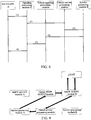
- FIG. 8 it illustrates the flow of a second example of the method for implementing a short message center system with multi-network multi-plane structure of the present invention.
- the flow of the second example is as follows:
- SMPP AGENT module A For an internal message sent to service processing module A by SMPP AGENT module A, when SMPP AGENT module A finds that there is no available service processing module A, it will send the internal message to the virtual service processing module of the virtual short message office.
- the virtual service processing module receives the internal message, it forwards the message to the service processing module of another real short message office in the multi-network multi-plane system according to the load-balancing policy of each node. Given that the message is sent to service processing module B of short message office B, the short message office B implements this short message terminating call process.
- Service processing module B doesn't know that this message is forwarded from the same level of the virtual service module, instead regards it as the message sent by the virtual SMPP AGENT module of the opposite end office of the virtual short message office of the double-network double-plane system to process the message, and returns the response message to the virtual SMPP AGENT module of the virtual short message office.
- the virtual SMPP AGENT module After receiving the response, the virtual SMPP AGENT module judges it to be a response message, and forwards the response message back to SMPP AGENT module A of short message office A, also, SMPP AGENT module A doesn't know the response message is forwarded from the same level of the virtual SMPP AGENT module either, instead regards it as a message processing result returned by the virtual service processing module of opposite end office of the double-network double-plane system.
- FIG. 9 it illustrates a third example of the method for implementing a short message center system with multi-network multi-plane structure of the present invention.
- the module being faulted is SMPP AGENT module A of short message office A
- it is SMPP AGENT module B of short message office B that replaces it to process messages according to the load-balancing policy of each node.
- ESME When SMPP AGENT module A is faulted, ESME can't be bound to the virtual short message office since the virtual SMPP AGENT module doesn't have the function of a real SMPP AGENT.
- ESME For an AO message initiated by ESME, if ESME binds the SMPP AGENT modules of other real short message offices at the same time, it may submit the AO message to these SMPP AGENTs working normally to process the message.
- the virtual SMPP AGENT module doesn't provide the binding function of ESME and can't process an AO message, but it may forward an AT message to ESME.
- the virtual short message office needs to synchronize the binding information of ESME with each real short message office connected with it.
- service processing module A sends the AT message to ESME, it finds SMPP AGENT module A is faulted, and sends the AT message to the virtual SMPP AGENT module, after the SMPP AGENT module inquires the binding information of ESME, it forwards the AT message to the SMPP AGENT module of another real short message office bound to ESME, given the SMPP AGENT module B of short message office B, according to the load-balancing policy of each node.
- SMPP AGENT module B doesn't know the message is forwarded from the same level of the virtual SMPP AGENT module, instead regards it as the message sent by the virtual service processing module, and sends the message to ESME. After receiving the message, ESME returns a response message to SMPP AGENT module B. SMPP AGENT module B returns the response message to the virtual service processing module, and after the virtual service processing module judges it to be the response message, it is forwarded to service processing module A.
- the short message center system with multi-network multi-plane structure and implementation method thereof of the present invention simplifies the system structure, and is simpler than the system with multi-network multi-plane structure acquired by expansion based on the existing double-network double-plane technologies or a cluster system in implementation approach, and brings the convenience and flexibility in aspects such as links management, operation and maintenance, a load-balancing policy and so on.
- the advantages of being strong in integration, convenient in expansion and management, and flexible in load-balancing policy of this system make the short message center system have better security and stability.
- the short message center system with multi-network multi-plane structure and the implementation method thereof of the present invention simplifies the system structure, is simpler than the system with multi-network multi-plane structure acquired by expansion based on the existing double-network double-plane technologies or a cluster system in its implementation approach, and brings the convenience and flexibility in aspects such as links management, operation and maintenance, load-balancing policy and so on.
- the advantages of being strong in integration, convenient in expansion and management, flexible in load-balancing policy of this system make the short message center system have better security and stability.
Landscapes
- Engineering & Computer Science (AREA)
- Computer Networks & Wireless Communication (AREA)
- Signal Processing (AREA)
- Environmental & Geological Engineering (AREA)
- Computer Security & Cryptography (AREA)
- Data Exchanges In Wide-Area Networks (AREA)
- Telephonic Communication Services (AREA)
Claims (10)
- SMSC-System (Short Message Center), umfassend mindestens zwei SMOs (Short Message Offices) und ein virtuelles SMO umfasst, wobei
das SMO ein Signalisierungs-Verarbeitungsmodul, ein Dienstverarbeitungsmodul und ein SMPP-Agentenmodul umfasst, wobei ein Modul des Signalisierungs-Verarbeitungsmoduls, des Dienstverarbeitungsmoduls und des SMPP-Agentenmoduls eines der mindestens zwei SMOs fehlerhaft ist, nur eine vom fehlerhaften Modul zu verarbeitende Nachricht an das virtuelle SMO weitergeleitet wird und die anderen fehlerfreien Module des mindestens eines der SMOs weiterhin normal funktionieren,
wobei das virtuelle SMO den Verkehr sowie den Status jedes der mindestens zwei SMOs überwacht und verwaltet, keine konkreten Dienste verarbeitet, aber Nachrichten von jedem der mindestens zwei SMOs gemäß einer konfigurierbaren Lastenausgleichspolitik empfängt und weiterleitet und ein Weiterleitungs- und ein Rückgabemodul umfasst,
wobei das Weiterleitungsmodul derart konfiguriert ist, dass es, wenn das eine Modul der mindestens zwei SMOs fehlerhaft ist, die vom fehlerhaften Modul zu verarbeitende Nachricht an Modul eines anderen der mindestens zwei SMOs, das dem fehlerhaften Modul entspricht, zwecks Verarbeitung weiterleitet,
wobei das Rückgabemodul derart konfiguriert ist, dass es dem SMO mit dem fehlerhaften Modul ein Verarbeitungsergebnis zurückgibt,
wodurch ein SMC-System mit einer aus meheren Netzwerken und mehreren Ebenen bestehenden Struktur ausgeführt wird. - System nach Anspruch 1, wobei:das Weiterleitungsmodul ein virtuelles Signalisierungs-Verarbeitungsmodul ist und das Rückgabemodul ein virtuelles Signalisierungs-Verarbeitungsmodul ist,das virtuelle Signalisierungs-Verarbeitungsmodul derart konfiguriert ist, dass es, wenn es sich beim fehlerhaften Modul um das Signalisierungs-Verarbeitungsmodul handelt, eine vom fehlerhaften Signalisierungs-Verarbeitungsmodul zu verarbeitende Nachricht an das Signalisierungs-Verarbeitungsmoduls des anderen SMO als das SMO mit dem fehlerhaften Signalisierungs-Verarbeitungsmodul unter den mindestens zwei SMOs weiterleitet, um die Nachricht zu verarbeiten,wobei das virtuelle Dienstverarbeitungsmodul derart konfiguriert ist, dass es das Verarbeitungsergebnis dem Dienstverarbeitungsmodul des SMO mit dem fehlerhaften Signalisierungs-Verarbeitungsmodul zurückgibt.
- System nach Anspruch 1, wobei:das Weiterleitungsmodul ein virtuelles Dienstverarbeitungsmodul ist und das Rückgabemodul ein virtuelles Signalisierungs-Verarbeitungsmodul ist,das virtuelle Dienstverarbeitungsmodul derart konfiguriert ist, dass es, wenn es sich beim fehlerhaften Modul um das Dienstverarbeitungsmodul handelt, eine vom fehlerhaften Dienstverarbeitungsmodul zu verarbeitende Nachricht an das Dienstverarbeitungsmoduls des anderen SMO als das SMO mit dem fehlerhaften Dienstverarbeitungsmodul unter den mindestens zwei SMOs weiterleitet, um die Nachricht zu verarbeiten,das virtuelle Signalisierungs-Verarbeitungsmodul derart konfiguriert ist, dass es das Verarbeitungsergebnis dem Signalisierungs-Verarbeitungsmodul des SMO mit dem fehlerhaften Dienstverarbeitungsmodul zurückgibt.
- System nach Anspruch 1, wobei:das Weiterleitungsmodul ein virtuelles Dienstverarbeitungsmodul ist und das Rückgabemodul ein virtuelles SMPP-Agentenmodul ist,das virtuelle Dienstverarbeitungsmodul derart konfiguriert ist, dass es, wenn es sich beim fehlerhaften Modul um das Dienstverarbeitungsmodul handelt, eine vom fehlerhaften Dienstverarbeitungsmodul zu verarbeitende Nachricht an das Dienstverarbeitungsmoduls des anderen SMO als das SMO mit dem fehlerhaften Dienstverarbeitungsmodul unter den mindestens zwei SMOs weiterleitet, um die Nachricht zu verarbeiten,das virtuelle SMPP-Agentenmodul derart konfiguriert ist, dass es das Verarbeitungsergebnis dem SMPP-Agentenmodul des SMO mit dem fehlerhaften Dienstverarbeitungsmodul zurückgibt.
- System nach Anspruch 1, wobei:das Weiterleitungsmodul ein virtuelles SMPP-Agentenmodul ist und das Rückgabemodul ein virtuelles Dienstverarbeitungsmodul ist,das virtuelle SMPP-Agentenmodul derart konfiguriert ist, dass es, wenn es sich beim fehlerhaften Modul um das SMPP-Agentenmodul handelt, eine vom fehlerhaften SMPP-Agentenmodul zu verarbeitende Nachricht an das SMPP-Agentenmodul des anderen SMO als das SMO mit dem fehlerhaften SMPP-Agentenmodul unter den mindestens zwei SMOs weiterleitet, um die Nachricht zu verarbeiten,wobei das virtuelle Dienstverarbeitungsmodul derart konfiguriert ist, dass es das Verarbeitungsergebnis dem Dienstverarbeitungsmodul des SMO mit dem fehlerhaften SMPP-Agentenmodul zurückgibt.
- System nach einem der Ansprüche 1 - 5, wobei
das virtuelle SMO ferner ein Konfigurationsverwaltungsmodul umfasst, wobei das Konfigurationsverwaltungsmodul derart konfiguriert ist, dass es den Lastzustand eines Moduls jedes SMO unter den mindestens zwei SMOs überwacht, das dem fehlerhaften Modul entspricht, eine Überbrückungspolitik für das Weiterleitungsmodul vorsieht, damit das Weiterleitungsmodul unter den entsprechenden Modulen gemäß dem Lastzustand der entsprechenden Module ein Modul mit der minimalen Last auswählt. - Verfahren zum Ausführen eines SMCS, umfassend die Schritte:Erstellen eines virtuellen SMO, das mit mindestens zwei SMOs verbunden ist, umfassend ein Signalisierungs-Verarbeitungsmodul, ein Dienstverarbeitungsmodul und ein SMPP-Agentenmodul umfasst, um Verkehr und Status der mindestens zwei SMOs zu überwachen und zu verwalten, nicht um konkrete Dienste zu verarbeiten, sondern um Nachrichten von jedem der mindestens zwei SMOs gemäß einer konfigurierbaren Lastenausgleichspolitik zu empfangen und weiterzuleiten, wobei, wenn eines des Signalisierungs-Verarbeitungsmoduls, des Dienstverarbeitungsmoduls und des SMPP-Agentenmoduls der mindestens zwei SMOs fehlerhaft ist, ein Weiterleitungsmoduls des virtuellen SMO eine vom fehlerhaften Modul des einen der mindestens zwei SMOs zu verarbeitende Nachricht empfängt und die Nachricht zwecks Verarbeitung an ein Modul eines anderen der mindestens zwei SMOs weiterleitet, das dem Weiterleitungsmodul entspricht,ein Rückgabemodul des virtuellen SMO ein Verarbeitungsergebnis empfängt und Zurückgeben des Verarbeitungsergebnisses an das Modul, das die Nachricht sendet,wobei die anderen fehlerhaften Module der mindestens zwei SMOs normal funktionieren,wodurch ein SMC-System mit einer aus meheren Netzwerken und mehreren Ebenen bestehenden Struktur ausgeführt wird.
- Verfahren nach Anspruch 7 vor dem Schritt des Zurückgebens des Verarbeitungsergebnis an das die Nachricht sendende Modul, ferner umfassend:
ein Konfigurationsverwaltungsmodul des virtuellen SMO, das eine Weiterleitungsbeziehungstabelle erstellt, Kennungsdaten des SMO mit dem die Nachricht sendenden Modul, Kennungsdaten von Modulen des SMO mit dem die Nachricht senden Modulen und Kennungsdaten des SMO mit dem Modul, an das die Nachricht weitergeleitet wird, Kennungsdaten bestimmt, wobei Kennungsdaten eines Moduls, an das die Nachricht weitergeleitet wird, in der Tabelle vom Rückgabemodul abzufragen sind, um das Verarbeitungsergebnis zurückzugeben. - Verfahren nach Anspruch 7, vor dem Schritt des Weiterleitens der Nachricht zwecks Verarbeitung durch das Weiterleitungsmodul an ein Modul des anderen der mindestens zwei SMOs, das dem Weiterleitungsmodul entspricht, ferner umfassend:
ein Konfigurationsverwaltungsmodul des virtuellen SMO, das den Lastzustand von Modulen überwacht und dem Weiterleitungsmodul jedes anderen SMO als des SMO mit dem die Nachricht sendenden Modul unter den mindestens zwei SMOs entspricht, und eine Überbrückungspolitik für das Weiterleitungsmodul bestimmt, damit das Weiterleitungsmodul gemäß dem überwachten Lastzustand der Module ein Modul mit der minimalen Last auswählt. - Verfahren nach einem der Ansprüche 7 - 9, wobei
das Weiterleitungsmodul ein virtuelles Signalisierungs-Verarbeitungsmodul ist, das Rückgabemodul ein virtuelles Dienstverarbeitungsmodul ist, das die Nachricht sendende Modul ein Dienstverarbeitungsmodul ist und das Modul, an das die Nachricht weitergeleitet wird, ein Signalisierungs-Verarbeitungsmodul ist, oder
das Weiterleitungsmodul ein virtuelles Dienstverarbeitungsmodul ist, das Rückgabemodul ein virtuelles Signalisierungs-Verarbeitungsmodul ist, das die Nachricht sendende Modul ein Signalisierungs-Verarbeitungsmodul ist und das Modul, an das die Nachricht weitergeleitet wird, ein Dienstverarbeitungsmodul ist, oder
das Weiterleitungsmodul ein virtuelles Dienstverarbeitungsmodul ist, das Rückgabemodul ein virtuelles SMPP-Agentenmodul ist, das die Nachricht sendende Modul ein SMPP-Agentenmodul ist und das Modul, an das die Nachricht weitergeleitet wird, ein Dienstverarbeitungsmodul ist, oder
das Weiterleitungsmodul ein virtuelles SMPP-Agentenmodul ist, das Rückgabemodul ein virtuelles Dienstverarbeitungsmodul ist, das die Nachricht sendende Modul ein Dienstverarbeitungsmodul ist und das Modul, an das die Nachricht weitergeleitet wird, ein SMPP-Agentenmodul ist.
Applications Claiming Priority (2)
| Application Number | Priority Date | Filing Date | Title |
|---|---|---|---|
| CNA200910107683XA CN101610534A (zh) | 2009-06-04 | 2009-06-04 | 多网多平面结构的短消息中心系统及其实现方法 |
| PCT/CN2009/074254 WO2010139150A1 (zh) | 2009-06-04 | 2009-09-27 | 多网多平面结构的短消息中心系统及其实现方法 |
Publications (3)
| Publication Number | Publication Date |
|---|---|
| EP2437538A1 EP2437538A1 (de) | 2012-04-04 |
| EP2437538A4 EP2437538A4 (de) | 2017-04-26 |
| EP2437538B1 true EP2437538B1 (de) | 2019-12-11 |
Family
ID=41484061
Family Applications (1)
| Application Number | Title | Priority Date | Filing Date |
|---|---|---|---|
| EP09845430.9A Active EP2437538B1 (de) | 2009-06-04 | 2009-09-27 | Multi-netz und -ebenen smsc-system und verfahren |
Country Status (4)
| Country | Link |
|---|---|
| US (1) | US8799382B2 (de) |
| EP (1) | EP2437538B1 (de) |
| CN (1) | CN101610534A (de) |
| WO (1) | WO2010139150A1 (de) |
Families Citing this family (9)
| Publication number | Priority date | Publication date | Assignee | Title |
|---|---|---|---|---|
| US8347100B1 (en) | 2010-07-14 | 2013-01-01 | F5 Networks, Inc. | Methods for DNSSEC proxying and deployment amelioration and systems thereof |
| WO2014068984A1 (en) * | 2012-10-31 | 2014-05-08 | Nec Corporation | Network communication system and virtualization method thereof |
| US9344865B1 (en) | 2013-03-07 | 2016-05-17 | F5 Networks, Inc. | Methods for improving service of SMPP messages and devices thereof |
| US10797888B1 (en) | 2016-01-20 | 2020-10-06 | F5 Networks, Inc. | Methods for secured SCEP enrollment for client devices and devices thereof |
| US11256606B2 (en) * | 2016-11-04 | 2022-02-22 | Salesforce.Com, Inc. | Declarative signup for ephemeral organization structures in a multitenant environment |
| US10136270B1 (en) * | 2018-02-11 | 2018-11-20 | Edge Opti Tech Ltd. | System and method for monitoring receptions of short messages |
| US11010272B2 (en) | 2018-07-31 | 2021-05-18 | Salesforce.Com, Inc. | Systems and methods for secure data transfer between entities in a multi-user on-demand computing environment |
| US11010481B2 (en) | 2018-07-31 | 2021-05-18 | Salesforce.Com, Inc. | Systems and methods for secure data transfer between entities in a multi-user on-demand computing environment |
| US11303699B1 (en) * | 2021-06-04 | 2022-04-12 | Shopify Inc. | Dynamic configuration of multi-part transfers |
Family Cites Families (8)
| Publication number | Priority date | Publication date | Assignee | Title |
|---|---|---|---|---|
| US7546346B2 (en) * | 1997-07-28 | 2009-06-09 | Juniper Networks, Inc. | Workflow systems and methods for project management and information management |
| CN1176556C (zh) | 2001-07-04 | 2004-11-17 | 华为技术有限公司 | 一种移动数据业务网络系统及其通信方法 |
| US7003307B1 (en) * | 2002-01-31 | 2006-02-21 | Cellco Partnership | System and method for a messaging gateway |
| CN100388803C (zh) * | 2003-03-04 | 2008-05-14 | 中兴通讯股份有限公司 | 具有双网双平面结构的短消息中心系统 |
| KR100621325B1 (ko) * | 2003-07-03 | 2006-09-13 | 에스케이 텔레콤주식회사 | Ss7 게이트웨이를 이용한 부하 분산 방식의 단문 메시지서비스 시스템 및 그를 이용한 sms 메시지의 처리 방법 |
| CN100440995C (zh) * | 2005-07-24 | 2008-12-03 | 华为技术有限公司 | 一种分流短消息的方法及其系统 |
| US7496579B2 (en) * | 2006-03-30 | 2009-02-24 | International Business Machines Corporation | Transitioning of database service responsibility responsive to server failure in a partially clustered computing environment |
| CN101287152A (zh) | 2007-04-10 | 2008-10-15 | 中兴通讯股份有限公司 | 多网络短消息终呼业务的实现方法 |
-
2009
- 2009-06-04 CN CNA200910107683XA patent/CN101610534A/zh active Pending
- 2009-09-27 WO PCT/CN2009/074254 patent/WO2010139150A1/zh not_active Ceased
- 2009-09-27 EP EP09845430.9A patent/EP2437538B1/de active Active
- 2009-09-27 US US13/257,893 patent/US8799382B2/en not_active Expired - Fee Related
Non-Patent Citations (1)
| Title |
|---|
| None * |
Also Published As
| Publication number | Publication date |
|---|---|
| EP2437538A1 (de) | 2012-04-04 |
| EP2437538A4 (de) | 2017-04-26 |
| US8799382B2 (en) | 2014-08-05 |
| CN101610534A (zh) | 2009-12-23 |
| US20130110939A1 (en) | 2013-05-02 |
| WO2010139150A1 (zh) | 2010-12-09 |
Similar Documents
| Publication | Publication Date | Title |
|---|---|---|
| EP2437538B1 (de) | Multi-netz und -ebenen smsc-system und verfahren | |
| US7215970B2 (en) | Messaging applications router | |
| JP4399599B2 (ja) | Ipドメインのplmnメッセージングサービスの制御 | |
| US8107409B2 (en) | OAMP for distributed mobile architecture | |
| EP2533475B1 (de) | Verfahren und system für host-routenerreichbarkeit in einem zugangsring eines pakettransportnetzwerkes | |
| EP2081336B1 (de) | Verfahren, system und vorrichtung zur übertragung kommerzieller nachrichten | |
| US8976681B2 (en) | Network system, network management server, and OAM test method | |
| TW200303690A (en) | Distributed message transmission system and method | |
| US11350295B2 (en) | Generation node and data store | |
| WO2021000752A1 (zh) | 一种在数据中心网络中转发报文的方法及相关装置 | |
| EP2472793A1 (de) | Verfahren, vorrichtung und system zur übertragung von e1-bidirektionalen schleifennetzwerkdaten | |
| CN101616383A (zh) | 短信路由方法、系统及与国际网关互联的网元 | |
| CN101442429B (zh) | 一种实现业务系统容灾的方法及系统 | |
| CN100388803C (zh) | 具有双网双平面结构的短消息中心系统 | |
| RU2577782C2 (ru) | Беспроводное передающее устройство, способ пересылки информации отказа и способ уведомления информации отказа | |
| CN102958085B (zh) | 一种短信中心平台以及呼叫方法 | |
| EP1865731B1 (de) | Verfahren zur realisierung eines kurznachrichten-anrufdienstes und kurznachrichten-prozesssystem | |
| EP2701343A1 (de) | System und Verfahren zur Fehlerbehandlung in einem Funkzugangsnetzwerk | |
| CN102006523B (zh) | 一种跨信令网的信息发送方法及系统 | |
| US7710880B2 (en) | Method and apparatus for security protection of service interruption in switch network | |
| CN102917322B (zh) | 一种实现多媒体消息业务系统容灾的方法以及装置 | |
| CN105049344B (zh) | 一种行业网关系统 | |
| EP2320697B1 (de) | Verfahren zum wechseln des msc-pools zwischen ämtern | |
| CN106790227B (zh) | 一种在ip通信网络中采用服务+代理模式构建网络管控总线的方法 | |
| EP2582163B1 (de) | Verfahren zur meldung eines kurznachrichtenstatus und kooperierender signalisierungsgateway |
Legal Events
| Date | Code | Title | Description |
|---|---|---|---|
| PUAI | Public reference made under article 153(3) epc to a published international application that has entered the european phase |
Free format text: ORIGINAL CODE: 0009012 |
|
| 17P | Request for examination filed |
Effective date: 20111227 |
|
| AK | Designated contracting states |
Kind code of ref document: A1 Designated state(s): AT BE BG CH CY CZ DE DK EE ES FI FR GB GR HR HU IE IS IT LI LT LU LV MC MK MT NL NO PL PT RO SE SI SK SM TR |
|
| DAX | Request for extension of the european patent (deleted) | ||
| RA4 | Supplementary search report drawn up and despatched (corrected) |
Effective date: 20170323 |
|
| RIC1 | Information provided on ipc code assigned before grant |
Ipc: H04L 12/24 20060101AFI20170317BHEP Ipc: H04L 12/58 20060101ALI20170317BHEP Ipc: H04L 12/26 20060101ALI20170317BHEP Ipc: H04W 88/18 20090101ALN20170317BHEP Ipc: H04L 29/14 20060101ALI20170317BHEP Ipc: H04L 29/08 20060101ALI20170317BHEP Ipc: H04W 24/04 20090101ALI20170317BHEP |
|
| STAA | Information on the status of an ep patent application or granted ep patent |
Free format text: STATUS: EXAMINATION IS IN PROGRESS |
|
| 17Q | First examination report despatched |
Effective date: 20180209 |
|
| RIC1 | Information provided on ipc code assigned before grant |
Ipc: H04L 29/08 20060101ALI20190515BHEP Ipc: H04L 12/26 20060101ALI20190515BHEP Ipc: H04W 24/04 20090101AFI20190515BHEP Ipc: H04W 88/18 20090101ALN20190515BHEP Ipc: H04L 29/14 20060101ALI20190515BHEP Ipc: H04L 12/24 20060101ALI20190515BHEP Ipc: H04L 12/58 20060101ALI20190515BHEP |
|
| GRAP | Despatch of communication of intention to grant a patent |
Free format text: ORIGINAL CODE: EPIDOSNIGR1 |
|
| STAA | Information on the status of an ep patent application or granted ep patent |
Free format text: STATUS: GRANT OF PATENT IS INTENDED |
|
| INTG | Intention to grant announced |
Effective date: 20190625 |
|
| GRAS | Grant fee paid |
Free format text: ORIGINAL CODE: EPIDOSNIGR3 |
|
| GRAA | (expected) grant |
Free format text: ORIGINAL CODE: 0009210 |
|
| STAA | Information on the status of an ep patent application or granted ep patent |
Free format text: STATUS: THE PATENT HAS BEEN GRANTED |
|
| AK | Designated contracting states |
Kind code of ref document: B1 Designated state(s): AT BE BG CH CY CZ DE DK EE ES FI FR GB GR HR HU IE IS IT LI LT LU LV MC MK MT NL NO PL PT RO SE SI SK SM TR |
|
| REG | Reference to a national code |
Ref country code: GB Ref legal event code: FG4D |
|
| REG | Reference to a national code |
Ref country code: CH Ref legal event code: EP |
|
| REG | Reference to a national code |
Ref country code: AT Ref legal event code: REF Ref document number: 1213425 Country of ref document: AT Kind code of ref document: T Effective date: 20191215 |
|
| REG | Reference to a national code |
Ref country code: DE Ref legal event code: R096 Ref document number: 602009060711 Country of ref document: DE |
|
| REG | Reference to a national code |
Ref country code: IE Ref legal event code: FG4D |
|
| REG | Reference to a national code |
Ref country code: NL Ref legal event code: MP Effective date: 20191211 |
|
| REG | Reference to a national code |
Ref country code: LT Ref legal event code: MG4D |
|
| PG25 | Lapsed in a contracting state [announced via postgrant information from national office to epo] |
Ref country code: ES Free format text: LAPSE BECAUSE OF FAILURE TO SUBMIT A TRANSLATION OF THE DESCRIPTION OR TO PAY THE FEE WITHIN THE PRESCRIBED TIME-LIMIT Effective date: 20191211 Ref country code: SE Free format text: LAPSE BECAUSE OF FAILURE TO SUBMIT A TRANSLATION OF THE DESCRIPTION OR TO PAY THE FEE WITHIN THE PRESCRIBED TIME-LIMIT Effective date: 20191211 Ref country code: LV Free format text: LAPSE BECAUSE OF FAILURE TO SUBMIT A TRANSLATION OF THE DESCRIPTION OR TO PAY THE FEE WITHIN THE PRESCRIBED TIME-LIMIT Effective date: 20191211 Ref country code: GR Free format text: LAPSE BECAUSE OF FAILURE TO SUBMIT A TRANSLATION OF THE DESCRIPTION OR TO PAY THE FEE WITHIN THE PRESCRIBED TIME-LIMIT Effective date: 20200312 Ref country code: BG Free format text: LAPSE BECAUSE OF FAILURE TO SUBMIT A TRANSLATION OF THE DESCRIPTION OR TO PAY THE FEE WITHIN THE PRESCRIBED TIME-LIMIT Effective date: 20200311 Ref country code: NO Free format text: LAPSE BECAUSE OF FAILURE TO SUBMIT A TRANSLATION OF THE DESCRIPTION OR TO PAY THE FEE WITHIN THE PRESCRIBED TIME-LIMIT Effective date: 20200311 Ref country code: LT Free format text: LAPSE BECAUSE OF FAILURE TO SUBMIT A TRANSLATION OF THE DESCRIPTION OR TO PAY THE FEE WITHIN THE PRESCRIBED TIME-LIMIT Effective date: 20191211 Ref country code: FI Free format text: LAPSE BECAUSE OF FAILURE TO SUBMIT A TRANSLATION OF THE DESCRIPTION OR TO PAY THE FEE WITHIN THE PRESCRIBED TIME-LIMIT Effective date: 20191211 |
|
| PG25 | Lapsed in a contracting state [announced via postgrant information from national office to epo] |
Ref country code: HR Free format text: LAPSE BECAUSE OF FAILURE TO SUBMIT A TRANSLATION OF THE DESCRIPTION OR TO PAY THE FEE WITHIN THE PRESCRIBED TIME-LIMIT Effective date: 20191211 |
|
| PG25 | Lapsed in a contracting state [announced via postgrant information from national office to epo] |
Ref country code: RO Free format text: LAPSE BECAUSE OF FAILURE TO SUBMIT A TRANSLATION OF THE DESCRIPTION OR TO PAY THE FEE WITHIN THE PRESCRIBED TIME-LIMIT Effective date: 20191211 Ref country code: EE Free format text: LAPSE BECAUSE OF FAILURE TO SUBMIT A TRANSLATION OF THE DESCRIPTION OR TO PAY THE FEE WITHIN THE PRESCRIBED TIME-LIMIT Effective date: 20191211 Ref country code: PT Free format text: LAPSE BECAUSE OF FAILURE TO SUBMIT A TRANSLATION OF THE DESCRIPTION OR TO PAY THE FEE WITHIN THE PRESCRIBED TIME-LIMIT Effective date: 20200506 Ref country code: CZ Free format text: LAPSE BECAUSE OF FAILURE TO SUBMIT A TRANSLATION OF THE DESCRIPTION OR TO PAY THE FEE WITHIN THE PRESCRIBED TIME-LIMIT Effective date: 20191211 Ref country code: NL Free format text: LAPSE BECAUSE OF FAILURE TO SUBMIT A TRANSLATION OF THE DESCRIPTION OR TO PAY THE FEE WITHIN THE PRESCRIBED TIME-LIMIT Effective date: 20191211 |
|
| PG25 | Lapsed in a contracting state [announced via postgrant information from national office to epo] |
Ref country code: SM Free format text: LAPSE BECAUSE OF FAILURE TO SUBMIT A TRANSLATION OF THE DESCRIPTION OR TO PAY THE FEE WITHIN THE PRESCRIBED TIME-LIMIT Effective date: 20191211 Ref country code: SK Free format text: LAPSE BECAUSE OF FAILURE TO SUBMIT A TRANSLATION OF THE DESCRIPTION OR TO PAY THE FEE WITHIN THE PRESCRIBED TIME-LIMIT Effective date: 20191211 Ref country code: IS Free format text: LAPSE BECAUSE OF FAILURE TO SUBMIT A TRANSLATION OF THE DESCRIPTION OR TO PAY THE FEE WITHIN THE PRESCRIBED TIME-LIMIT Effective date: 20200411 |
|
| REG | Reference to a national code |
Ref country code: DE Ref legal event code: R097 Ref document number: 602009060711 Country of ref document: DE |
|
| REG | Reference to a national code |
Ref country code: AT Ref legal event code: MK05 Ref document number: 1213425 Country of ref document: AT Kind code of ref document: T Effective date: 20191211 |
|
| PLBE | No opposition filed within time limit |
Free format text: ORIGINAL CODE: 0009261 |
|
| STAA | Information on the status of an ep patent application or granted ep patent |
Free format text: STATUS: NO OPPOSITION FILED WITHIN TIME LIMIT |
|
| PG25 | Lapsed in a contracting state [announced via postgrant information from national office to epo] |
Ref country code: DK Free format text: LAPSE BECAUSE OF FAILURE TO SUBMIT A TRANSLATION OF THE DESCRIPTION OR TO PAY THE FEE WITHIN THE PRESCRIBED TIME-LIMIT Effective date: 20191211 |
|
| PGFP | Annual fee paid to national office [announced via postgrant information from national office to epo] |
Ref country code: DE Payment date: 20200929 Year of fee payment: 12 |
|
| 26N | No opposition filed |
Effective date: 20200914 |
|
| PG25 | Lapsed in a contracting state [announced via postgrant information from national office to epo] |
Ref country code: SI Free format text: LAPSE BECAUSE OF FAILURE TO SUBMIT A TRANSLATION OF THE DESCRIPTION OR TO PAY THE FEE WITHIN THE PRESCRIBED TIME-LIMIT Effective date: 20191211 Ref country code: AT Free format text: LAPSE BECAUSE OF FAILURE TO SUBMIT A TRANSLATION OF THE DESCRIPTION OR TO PAY THE FEE WITHIN THE PRESCRIBED TIME-LIMIT Effective date: 20191211 Ref country code: PL Free format text: LAPSE BECAUSE OF FAILURE TO SUBMIT A TRANSLATION OF THE DESCRIPTION OR TO PAY THE FEE WITHIN THE PRESCRIBED TIME-LIMIT Effective date: 20191211 |
|
| PG25 | Lapsed in a contracting state [announced via postgrant information from national office to epo] |
Ref country code: IT Free format text: LAPSE BECAUSE OF FAILURE TO SUBMIT A TRANSLATION OF THE DESCRIPTION OR TO PAY THE FEE WITHIN THE PRESCRIBED TIME-LIMIT Effective date: 20191211 |
|
| PG25 | Lapsed in a contracting state [announced via postgrant information from national office to epo] |
Ref country code: MC Free format text: LAPSE BECAUSE OF FAILURE TO SUBMIT A TRANSLATION OF THE DESCRIPTION OR TO PAY THE FEE WITHIN THE PRESCRIBED TIME-LIMIT Effective date: 20191211 |
|
| REG | Reference to a national code |
Ref country code: CH Ref legal event code: PL |
|
| GBPC | Gb: european patent ceased through non-payment of renewal fee |
Effective date: 20200927 |
|
| REG | Reference to a national code |
Ref country code: BE Ref legal event code: MM Effective date: 20200930 |
|
| PG25 | Lapsed in a contracting state [announced via postgrant information from national office to epo] |
Ref country code: LU Free format text: LAPSE BECAUSE OF NON-PAYMENT OF DUE FEES Effective date: 20200927 |
|
| PG25 | Lapsed in a contracting state [announced via postgrant information from national office to epo] |
Ref country code: FR Free format text: LAPSE BECAUSE OF NON-PAYMENT OF DUE FEES Effective date: 20200930 |
|
| PG25 | Lapsed in a contracting state [announced via postgrant information from national office to epo] |
Ref country code: LI Free format text: LAPSE BECAUSE OF NON-PAYMENT OF DUE FEES Effective date: 20200930 Ref country code: IE Free format text: LAPSE BECAUSE OF NON-PAYMENT OF DUE FEES Effective date: 20200927 Ref country code: GB Free format text: LAPSE BECAUSE OF NON-PAYMENT OF DUE FEES Effective date: 20200927 Ref country code: BE Free format text: LAPSE BECAUSE OF NON-PAYMENT OF DUE FEES Effective date: 20200930 Ref country code: CH Free format text: LAPSE BECAUSE OF NON-PAYMENT OF DUE FEES Effective date: 20200930 |
|
| REG | Reference to a national code |
Ref country code: DE Ref legal event code: R119 Ref document number: 602009060711 Country of ref document: DE |
|
| PG25 | Lapsed in a contracting state [announced via postgrant information from national office to epo] |
Ref country code: TR Free format text: LAPSE BECAUSE OF FAILURE TO SUBMIT A TRANSLATION OF THE DESCRIPTION OR TO PAY THE FEE WITHIN THE PRESCRIBED TIME-LIMIT Effective date: 20191211 Ref country code: MT Free format text: LAPSE BECAUSE OF FAILURE TO SUBMIT A TRANSLATION OF THE DESCRIPTION OR TO PAY THE FEE WITHIN THE PRESCRIBED TIME-LIMIT Effective date: 20191211 Ref country code: CY Free format text: LAPSE BECAUSE OF FAILURE TO SUBMIT A TRANSLATION OF THE DESCRIPTION OR TO PAY THE FEE WITHIN THE PRESCRIBED TIME-LIMIT Effective date: 20191211 |
|
| PG25 | Lapsed in a contracting state [announced via postgrant information from national office to epo] |
Ref country code: MK Free format text: LAPSE BECAUSE OF FAILURE TO SUBMIT A TRANSLATION OF THE DESCRIPTION OR TO PAY THE FEE WITHIN THE PRESCRIBED TIME-LIMIT Effective date: 20191211 |
|
| PG25 | Lapsed in a contracting state [announced via postgrant information from national office to epo] |
Ref country code: DE Free format text: LAPSE BECAUSE OF NON-PAYMENT OF DUE FEES Effective date: 20220401 |