EP2434451A2 - Vorrichtung und verfahren zur einfürhung eines frequenzanalysemoduls für ein quantitatives risikobewertungssystem - Google Patents
Vorrichtung und verfahren zur einfürhung eines frequenzanalysemoduls für ein quantitatives risikobewertungssystem Download PDFInfo
- Publication number
- EP2434451A2 EP2434451A2 EP11773646A EP11773646A EP2434451A2 EP 2434451 A2 EP2434451 A2 EP 2434451A2 EP 11773646 A EP11773646 A EP 11773646A EP 11773646 A EP11773646 A EP 11773646A EP 2434451 A2 EP2434451 A2 EP 2434451A2
- Authority
- EP
- European Patent Office
- Prior art keywords
- accident
- module
- scenario
- frequency
- user
- Prior art date
- Legal status (The legal status is an assumption and is not a legal conclusion. Google has not performed a legal analysis and makes no representation as to the accuracy of the status listed.)
- Withdrawn
Links
Images
Classifications
-
- G—PHYSICS
- G06—COMPUTING OR CALCULATING; COUNTING
- G06Q—INFORMATION AND COMMUNICATION TECHNOLOGY [ICT] SPECIALLY ADAPTED FOR ADMINISTRATIVE, COMMERCIAL, FINANCIAL, MANAGERIAL OR SUPERVISORY PURPOSES; SYSTEMS OR METHODS SPECIALLY ADAPTED FOR ADMINISTRATIVE, COMMERCIAL, FINANCIAL, MANAGERIAL OR SUPERVISORY PURPOSES, NOT OTHERWISE PROVIDED FOR
- G06Q10/00—Administration; Management
- G06Q10/06—Resources, workflows, human or project management; Enterprise or organisation planning; Enterprise or organisation modelling
- G06Q10/063—Operations research, analysis or management
- G06Q10/0635—Risk analysis of enterprise or organisation activities
-
- G—PHYSICS
- G06—COMPUTING OR CALCULATING; COUNTING
- G06Q—INFORMATION AND COMMUNICATION TECHNOLOGY [ICT] SPECIALLY ADAPTED FOR ADMINISTRATIVE, COMMERCIAL, FINANCIAL, MANAGERIAL OR SUPERVISORY PURPOSES; SYSTEMS OR METHODS SPECIALLY ADAPTED FOR ADMINISTRATIVE, COMMERCIAL, FINANCIAL, MANAGERIAL OR SUPERVISORY PURPOSES, NOT OTHERWISE PROVIDED FOR
- G06Q10/00—Administration; Management
- G06Q10/06—Resources, workflows, human or project management; Enterprise or organisation planning; Enterprise or organisation modelling
- G06Q10/063—Operations research, analysis or management
- G06Q10/0631—Resource planning, allocation, distributing or scheduling for enterprises or organisations
-
- G—PHYSICS
- G06—COMPUTING OR CALCULATING; COUNTING
- G06Q—INFORMATION AND COMMUNICATION TECHNOLOGY [ICT] SPECIALLY ADAPTED FOR ADMINISTRATIVE, COMMERCIAL, FINANCIAL, MANAGERIAL OR SUPERVISORY PURPOSES; SYSTEMS OR METHODS SPECIALLY ADAPTED FOR ADMINISTRATIVE, COMMERCIAL, FINANCIAL, MANAGERIAL OR SUPERVISORY PURPOSES, NOT OTHERWISE PROVIDED FOR
- G06Q50/00—Information and communication technology [ICT] specially adapted for implementation of business processes of specific business sectors, e.g. utilities or tourism
- G06Q50/02—Agriculture; Fishing; Forestry; Mining
Definitions
- the present invention relates to a frequency analysis module implementing apparatus and method of a quantitative risk assessment system, and more particularly, to a frequency analysis module implementing apparatus and method of a quantitative risk assessment system, capable of performing quantitative risk assessment by merely selecting a module from among a plurality of modules implemented by using questions and formulas which previously obtained from a frequency analysis theory by an expert to perform frequency analysis.
- Quantitative risk assessment includes generating accident scenarios, performing stochastic frequency analysis on each accident scenario, assessing consequence/effect when an accident situation occurs, and estimating a risk level.
- frequency analysis and consequence analysis are separately developed as professional programs and are commercialized.
- a standard system for quantitative assessment may not be easily formed and thus a system in which frequency analysis and consequence analysis are integrated is not yet currently provided.
- a program that is the closest to quantitative assessment from among currently developed programs is Phast-Risk by Det Norske Veritas (DNV). Even in this program, a user has to manually input a value by analyzing the frequency of a leak accident.
- DNV Det Norske Veritas
- the present invention provides a frequency analysis module implementing apparatus and method of a quantitative risk assessment system, capable of performing quantitative risk assessment by merely selecting a module from among a plurality of modules individually implemented in corrrespondance with accident scenarios required to perform accident frequency analysis and defined according to accident situations by an expert.
- the present invention also provides a frequency analysis module implementing apparatus and method of a quantitative risk assessment system, capable of performing accident frequency analysis even without an expert by merely applying an answer input from a user in response to a question of each accident scenario and a formula of the accident scenario by using questions and formulas, which previously defined by the expert, according to accident scenarios.
- a frequency analysis module implementing apparatus of a quantitative risk assessment system according to a leak of a hazardous material
- the apparatus including an accident scenario generation unit for generating a plurality of accident scenarios that define questions and formulas, which previously obtained from an expert, according to each accident situation to perform accident frequency and risk analysis; a module generation unit for generating a plurality of modules individually corresponding to the plurality of accident scenarios; and a module driving unit for driving a module selected in correspondence with a accident situation from among the plurality of modules when the accident situation such as a leak of a hazardous material occurs.
- the module driven by the module driving unit may perform accident frequency and risk analysis by calling an accident scenario corresponding to the module, providing a question defined by the accident scenario, and applying an answer input from a user in response to the question and a formula defined by the accident scenario.
- the module may include an accident frequency analysis engine for performing accident frequency analysis by applying an answer input from a user and a formula defined by the accident scenario; and a risk analysis engine for performing risk analysis on the accident situation by applying an answer input from a user, a formula defined by the accident scenario and a result of the accident frequency analysis performed by the accident frequency analysis engine.
- the plurality of modules may be individually disposed in regions designated by the user to perform accident frequency and risk analysis and assessment.
- the module generation unit may set a leak material and a leak condition that satisfy a condition of an accident situation corresponding to the accident scenario, and may set a combination of one or more equipments that cause the accident situation.
- the module generation unit may set a connection between the module and an accident scenario corresponding to the module.
- the apparatus may further include a module selection unit for selecting at least one of the plurality of modules according to a module selection command of the user when a leak of a hazardous material occurs, and may further include an input/output unit for receiving a module selection command from the user and outputting results of accident frequency and risk analysis performed by driving the module.
- a frequency analysis module implementing method of a quantitative risk assessment system according to a leak of a hazardous material, the method including generating a plurality of accident scenarios that define questions and formulas, which previously obtained from an expert, according to each accident situation to perform accident frequency and risk analysis; generating a plurality of modules individually corresponding to the plurality of accident scenarios; driving a module selected in correspondence with the accident situation from among the plurality of modules when an accident situation such as a leak of a hazardous material occurs; and performing accident frequency and risk analysis by calling an accident scenario corresponding to the driven module, providing a question defined by the accident scenario, and applying an answer input from a user in response to the question and a formula defined by the accident scenario.
- the performing of the accident frequency and risk analysis may include performing accident frequency analysis by applying an answer input from a user in response to a question defined by an accident scenario corresponding to the module and a formula to an accident frequency analysis engine of the module; and performing risk analysis on the accident situation by applying an answer input from a user, a formula and a result of the accident frequency analysis performed by the accident frequency analysis engine to a risk analysis engine of the module.
- the generating of the plurality of modules may further include, setting a leak material and a leak condition that satisfy a condition of an accident situation corresponding to the accident scenario when the module is generated; and setting a combination of one or more equipments that cause the accident situation.
- the generating of the plurality of modules may further include, setting a connection between the module and an accident scenario corresponding to the module when the module is generated.
- the method may further include selecting at least one of the plurality of modules according to a module selection command of the user when a leak of a hazardous material occurs, and may further include outputting results of accident frequency and risk analysis performed by driving the module.
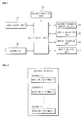
- FIG. 1 is a block diagram of a frequency analysis module implementing apparatus of a quantitative risk assessment system, according to an embodiment of the present invention.
- the frequency analysis module implementing apparatus includes a control unit 10, an input/output unit 11, a storage unit 12, an accident detection unit 13, an accident scenario generation unit 14, a module generation unit 15, a module selection unit 16, and a module driving unit 17.
- the control unit 10 controls operations of other elements.
- the input/output unit 11 receives questions and formulas according to accident situations from an expert. Also, the input/output unit 11 receives module selection information and etc. from a user. Meanwhile, the input/output unit 11 outputs to the user a question of an accident scenario corresponding to the module selection information. Furthermore, the input/output unit 11 externally outputs a result of quantitative risk assessment.
- the input/output unit 11 may be, for example, a touch screen.
- the input/output unit 11 integrally includes an input unit and an output unit in FIG. 1 , alternatively, the input unit and the output unit may be separately included.
- the storage unit 12 stores accident scenarios and stores questions and formulas defined by the accident scenarios. Also, the storage unit 12 may store connections set between the accident scenarios and modules. Furthermore, the storage unit 12 may store results of quantitative risk assessment.
- the accident detection unit 13 detects an accident situation such as a gas leak. For example, the accident detection unit 13 detects a leak of a certain material, and detects a scale of the leak amount. Also, the accident detection unit 13 may detect an error of equipment having a leak of a certain material.
- the accident scenario generation unit 14 classifies the input questions and formulas according to the accident situations and generates a plurality of accident scenarios. In this case, the accident scenarios are generated in correspondence with different accident situations.
- the accident scenario generation unit 14 generates accident scenarios in correspondence with a leak caused by a pressure increase or a discharge failure, a leak caused by a loss of wholesomeness in a process pipe, a valve, a flange, or a device, a leak caused by opening of a front or rear valve during a monostat is being repaired, a leak caused by a broken pipe in heavy equipment, and a leak caused by internal-leakage or displacement in a PV(Purge Valve).
- each accident scenario defines a question and formula required to perform accident frequency analysis on each accident situation.
- the module generation unit 15 generates a plurality of modules corresponding to the accident scenarios generated by the accident scenario generation unit 14. In this case, the module generation unit 15 generates a plurality of modules according to conditions corresponding to accident situations.
- the module generation unit 15 generates a module by setting a leak material and a leak condition that satisfy a condition of an accident situation corresponding to any one accident scenario, and setting equipment that causes the accident situation, e.g., a liquefied natural gas (LNG) pump, an RPM(Remote Butterfly type Motorized) valve, an RVM(Remote Gate type Motorized) valve, or a PSV(Pressure Safety Valve). Also, the module generation unit 15 generates a module in connection with an accident scenario corresponding to the accident situation.
- LNG liquefied natural gas
- RPM Remote Butterfly type Motorized
- RVM Remote Gate type Motorized
- PSV Pressure Safety Valve
- the module generation unit 15 may generate and provide a manual for selecting a module corresponding to an accident scenario of each accident situation to the user, thereby allowing the user to easily select a module according to an accident situation.
- the generated modules are individually disposed in regions designated by the user to perform accident frequency and risk analysis and assessment, e.g., a filter region, a heater region, a static pressure region, and a measuring region.
- the module selection unit 16 selects at least one of the modules disposed in the regions, according to the user's module selection command input via the input/output unit 11.
- the module driving unit 17 drives the selected module to perform accident frequency and risk analysis and assessment in a region corresponding to the selected module.
- the module selected by the module driving unit 17 performs accident frequency and risk analysis by calling an accident scenario connected to the module, providing a question of the accident scenario to the user, and applying an answer input in response to the question and a formula of the accident scenario.
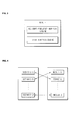
- FIG. 2 is a diagram for describing accident scenarios used in a frequency analysis module implementing apparatus of a quantitative risk assessment system, according to an embodiment of the present invention.
- accident scenarios are individually generated in correspondence with accident situations A to Z.
- each accident scenario defines a question and formula required to perform accident frequency and risk analysis on an accident situation corresponding to the accident scenario.
- scenario A is an accident scenario corresponding to the accident situation A, and defines question A and formula A required to perform accident frequency and risk analysis on the accident situation A.
- scenario B is an accident scenario corresponding to the accident situation B, and defines question B and formula B required to perform accident frequency and risk analysis on the accident situation B.
- scenario Z is an accident scenario corresponding to the accident situation Z, and defines question Z and formula Z required to perform accident frequency and risk analysis on the accident situation Z.
- FIG. 4 is a diagram showing connections between accident scenarios and modules, according to an embodiment of the present invention.
- accident scenarios individually generated in corrrespondance with accident situations A to Z e.g., scenarios A to Z, are connected to modules individually generated in corrrespondance with the accident scenarios.
- the scenario A is connected to module B, and the scenario B is connected to module A.
- the scenario Z is connected to module Z. Connections between the accident scenarios and the modules are not sequentially set.
- the module B performs accident frequency and risk analysis by calling the scenario A corresponding to the module B, providing question A to the user, and applying an answer input in response to the question A to formula A.
- FIG. 3 is a block diagram of a module generated by a frequency analysis module implementing apparatus of a quantitative risk assessment system, according to an embodiment of the present invention.
- each module corresponding to an accident scenario includes an accident frequency analysis engine and a risk analysis engine.
- the module drives the accident frequency analysis engine and the risk analysis engine.
- the accident frequency analysis engine performs accident frequency analysis by applying an answer input from a user in response to a question of an accident scenario corresponding to the module and a formula of the accident scenario.
- the risk analysis engine performs risk analysis on a corresponding accident situation by applying an answer input from a user in response to a question of an accident scenario corresponding to the module, a formula of the accident scenario and a result of the accident frequency analysis performed by the accident frequency analysis engine.
- the accident frequency analysis engine and the risk analysis engine output results of the accident frequency and risk analysis.
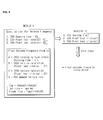
- FIG. 5 is a diagram for describing operation of a frequency analysis module implementing apparatus of a quantitative risk assessment system, according to an embodiment of the present invention.
- module A and scenario A are connected to each other.
- the module A calls the scenario A corresponding to the module A.
- the scenario A includes question A and formula A.
- the question A defines the following questions.
- formula A defines the following formulas.
- the module A performs accident frequency and risk analysis on accident situation A by providing the question A to a user and applying X1, X2, and X3 of an answer input in response to the question A to the formula A.
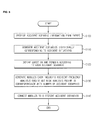
- FIG. 6 is a flowchart of a frequency analysis module generating method of a quantitative risk assessment system, according to an embodiment of the present invention.
- system receives accident scenario information corresponding to accident situation from an expert(operation S100), accident scenarios individually corresponding to the accident situations are generated based on the accident scenario information(operation S110).
- each of the modules generated in operation S130 includes an accident frequency analysis engine and a risk analysis engine.
- each module is connected to each accident scenario based on correspondence to the module. (operation S140).
- the modules connected to the accident scenarios are individually disposed in regions designated by a user to perform accident frequency and risk analysis and assessment, e.g., a filter region, a heater region, a static pressure region, and a measuring region, thereby completing a basic environment of the quantitative risk assessment system for performing accident frequency and risk analysis.
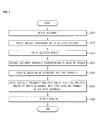
- FIG. 7 is a flowchart of a frequency analysis module driving method of a quantitative risk assessment system, according to an embodiment of the present invention.
- the quantitative risk assessment system if an accident situation, e.g., a gas leak, caused by various reasons is detected (operation S200), a user selects a module corresponding to the detected accident situation (operation S21 0). In this case, the quantitative risk assessment system drives the module selected in operation S210 (operation S220).
- an accident scenario corresponding to the selected module is extracted (operation S230), and a question of the extracted accident scenario is provided to the user(operation S240).
- the user inputs an answer in response to the question
- the module drives an accident frequency analysis engine and a risk analysis engine by applying the answer input from the user and a formula of the accident scenario (operation S250).
- the quantitative risk assessment system performs accident frequency and risk analysis on a leak of a hazardous material, and externally outputs analysis results(operation S260).
- the quantitative risk assessment may be easily performed even without an expert.
Landscapes
- Business, Economics & Management (AREA)
- Human Resources & Organizations (AREA)
- Engineering & Computer Science (AREA)
- Strategic Management (AREA)
- Economics (AREA)
- Entrepreneurship & Innovation (AREA)
- Tourism & Hospitality (AREA)
- Physics & Mathematics (AREA)
- Theoretical Computer Science (AREA)
- General Physics & Mathematics (AREA)
- General Business, Economics & Management (AREA)
- Marketing (AREA)
- Game Theory and Decision Science (AREA)
- Development Economics (AREA)
- Quality & Reliability (AREA)
- Operations Research (AREA)
- Educational Administration (AREA)
- Marine Sciences & Fisheries (AREA)
- Mining & Mineral Resources (AREA)
- General Health & Medical Sciences (AREA)
- Animal Husbandry (AREA)
- Agronomy & Crop Science (AREA)
- Health & Medical Sciences (AREA)
- Primary Health Care (AREA)
- Life Sciences & Earth Sciences (AREA)
- Financial Or Insurance-Related Operations Such As Payment And Settlement (AREA)
- Management, Administration, Business Operations System, And Electronic Commerce (AREA)
- Testing Of Devices, Machine Parts, Or Other Structures Thereof (AREA)
Applications Claiming Priority (2)
| Application Number | Priority Date | Filing Date | Title |
|---|---|---|---|
| KR1020100063370A KR101115229B1 (ko) | 2010-07-01 | 2010-07-01 | 정량적 위험성 평가 시스템의 빈도 분석 모듈 구현 장치 및 방법 |
| PCT/KR2011/004675 WO2012002686A2 (ko) | 2010-07-01 | 2011-06-28 | 정량적 위험성 평가 시스템의 빈도 분석 모듈 구현 장치 및 방법 |
Publications (2)
| Publication Number | Publication Date |
|---|---|
| EP2434451A2 true EP2434451A2 (de) | 2012-03-28 |
| EP2434451A4 EP2434451A4 (de) | 2014-03-05 |
Family
ID=45402533
Family Applications (1)
| Application Number | Title | Priority Date | Filing Date |
|---|---|---|---|
| EP11773646.2A Withdrawn EP2434451A4 (de) | 2010-07-01 | 2011-06-28 | Vorrichtung und verfahren zur einfürhung eines frequenzanalysemoduls für ein quantitatives risikobewertungssystem |
Country Status (4)
| Country | Link |
|---|---|
| US (1) | US20120185295A1 (de) |
| EP (1) | EP2434451A4 (de) |
| KR (1) | KR101115229B1 (de) |
| WO (1) | WO2012002686A2 (de) |
Families Citing this family (9)
| Publication number | Priority date | Publication date | Assignee | Title |
|---|---|---|---|---|
| US10346786B1 (en) * | 2011-07-14 | 2019-07-09 | Stephen D. Lakowske | Method for applying expert usage based data |
| KR101496756B1 (ko) * | 2013-09-16 | 2015-02-27 | 한국수력원자력 주식회사 | 원자력 발전소의 격실 건전성을 반영한 보안 대응 시나리오 평가 시스템 및 그 방법 |
| WO2015151267A1 (ja) * | 2014-04-04 | 2015-10-08 | 株式会社日立製作所 | プラント事故時運転支援装置 |
| KR101662950B1 (ko) * | 2015-05-28 | 2016-10-07 | 중앙대학교 산학협력단 | 밀폐 공간의 가스 누출에 의한 사고 피해의 정량 예측 시스템 |
| CN111105108B (zh) * | 2018-10-25 | 2022-06-07 | 中国石油化工股份有限公司 | 一种输气管道的社会风险计算方法及系统 |
| CN111401670B (zh) * | 2018-12-28 | 2022-06-07 | 中国石油化工股份有限公司 | 油气管道周边区域的社会风险评价方法与电子设备 |
| CN113051722B (zh) * | 2021-03-12 | 2022-03-11 | 哈尔滨工程大学 | 利用嵌入离散动态事件树改进核电厂安全性能分析的方法 |
| CN113393108A (zh) * | 2021-06-07 | 2021-09-14 | 中国石油大学(北京) | 危化品运输车辆聚集区域的风险评价方法 |
| KR20250061536A (ko) * | 2023-10-27 | 2025-05-08 | 주식회사 에이디오트 | 멀티 에이전트를 이용한 건물 에너지 관리 방법 |
Family Cites Families (24)
| Publication number | Priority date | Publication date | Assignee | Title |
|---|---|---|---|---|
| US5210704A (en) * | 1990-10-02 | 1993-05-11 | Technology International Incorporated | System for prognosis and diagnostics of failure and wearout monitoring and for prediction of life expectancy of helicopter gearboxes and other rotating equipment |
| US6983227B1 (en) * | 1995-01-17 | 2006-01-03 | Intertech Ventures, Ltd. | Virtual models of complex systems |
| US6223143B1 (en) * | 1998-08-31 | 2001-04-24 | The United States Government As Represented By The Administrator Of The National Aeronautics And Space Administration | Quantitative risk assessment system (QRAS) |
| US7194395B2 (en) * | 2000-02-23 | 2007-03-20 | The United States Of America As Represented By The Secretary Of The Army | System and method for hazardous incident decision support and training |
| US7016825B1 (en) * | 2000-10-26 | 2006-03-21 | Vextec Corporation | Method and apparatus for predicting the failure of a component |
| US6735549B2 (en) * | 2001-03-28 | 2004-05-11 | Westinghouse Electric Co. Llc | Predictive maintenance display system |
| KR100440735B1 (ko) * | 2001-04-25 | 2004-07-15 | 노삼규 | 지리정보를 이용한 위험정보시스템 및 그의 제어방법 |
| US20040014016A1 (en) * | 2001-07-11 | 2004-01-22 | Howard Popeck | Evaluation and assessment system |
| US7599870B2 (en) * | 2002-04-12 | 2009-10-06 | Glo Software Llc | System, method and framework for generating scenarios |
| KR100681487B1 (ko) * | 2002-10-30 | 2007-02-09 | 한국전력공사 | 원자력발전소 안전해석을 위한 최적평가체계 |
| US20040166484A1 (en) * | 2002-12-20 | 2004-08-26 | Mark Alan Budke | System and method for simulating training scenarios |
| US20040138936A1 (en) * | 2003-01-09 | 2004-07-15 | Johnson Christopher D. | Performing what-if forecasts using a business information and decisioning control system |
| GB0307406D0 (en) * | 2003-03-31 | 2003-05-07 | British Telecomm | Data analysis system and method |
| KR100524142B1 (ko) * | 2003-05-29 | 2005-10-27 | 한국가스안전공사 | 도시 가스 배관의 안전 관리 방법 |
| KR100587819B1 (ko) * | 2003-07-15 | 2006-06-12 | 한국가스안전공사 | 중대산업설비의 위험등급에 따른 진단평가 방법 및 그 프로그램을 저장한 컴퓨터로 읽을 수 있는 기록매체 |
| US20050091642A1 (en) * | 2003-10-28 | 2005-04-28 | Miller William L. | Method and systems for learning model-based lifecycle diagnostics |
| JP4237610B2 (ja) * | 2003-12-19 | 2009-03-11 | 株式会社東芝 | 保守支援方法及びプログラム |
| US20070028220A1 (en) * | 2004-10-15 | 2007-02-01 | Xerox Corporation | Fault detection and root cause identification in complex systems |
| US7392433B2 (en) * | 2005-01-25 | 2008-06-24 | International Business Machines Corporation | Method and system for deciding when to checkpoint an application based on risk analysis |
| US20090012631A1 (en) * | 2007-07-03 | 2009-01-08 | Dale Fuller | Automation safety life cycle |
| US7702401B2 (en) * | 2007-09-05 | 2010-04-20 | Fisher-Rosemount Systems, Inc. | System for preserving and displaying process control data associated with an abnormal situation |
| KR20090028902A (ko) * | 2007-09-17 | 2009-03-20 | (주) 코네스코퍼레이션 | 방사성폐기물 운반 안전성 평가 시스템 |
| US8352309B2 (en) * | 2008-08-19 | 2013-01-08 | International Business Machines Corporation | Defining a serviceability assessment measure |
| US8259134B2 (en) * | 2009-06-19 | 2012-09-04 | Microsoft Corporation | Data-driven model implemented with spreadsheets |
-
2010
- 2010-07-01 KR KR1020100063370A patent/KR101115229B1/ko active Active
-
2011
- 2011-06-28 US US13/322,141 patent/US20120185295A1/en not_active Abandoned
- 2011-06-28 WO PCT/KR2011/004675 patent/WO2012002686A2/ko not_active Ceased
- 2011-06-28 EP EP11773646.2A patent/EP2434451A4/de not_active Withdrawn
Non-Patent Citations (2)
| Title |
|---|
| No further relevant documents disclosed * |
| See also references of WO2012002686A2 * |
Also Published As
| Publication number | Publication date |
|---|---|
| US20120185295A1 (en) | 2012-07-19 |
| EP2434451A4 (de) | 2014-03-05 |
| WO2012002686A2 (ko) | 2012-01-05 |
| KR101115229B1 (ko) | 2012-06-12 |
| KR20120002717A (ko) | 2012-01-09 |
| WO2012002686A3 (ko) | 2012-02-23 |
Similar Documents
| Publication | Publication Date | Title |
|---|---|---|
| EP2434451A2 (de) | Vorrichtung und verfahren zur einfürhung eines frequenzanalysemoduls für ein quantitatives risikobewertungssystem | |
| KR101341248B1 (ko) | 발전설비의 위험도 기반 정비 시스템 | |
| Adedigba et al. | An integrated approach for dynamic economic risk assessment of process systems | |
| WO2019211288A1 (en) | A method and system for discovering and visualizing potential operational problems of processes running in equipment and systems in an installation | |
| EP3944043B1 (de) | Vorrichtung zur unterstützung von wartungsarbeiten | |
| CN117495356B (zh) | 基于人机联动的智慧燃气管道维修方法和物联网系统 | |
| EP1065578A1 (de) | Fehlerdiagnose in einem komplexen System, insbesondere in einer kerntechnischen Anlage | |
| Kim et al. | A data-informed dependency assessment of human reliability | |
| US20160085608A1 (en) | Diagnosing combinations of failures in a system | |
| EP3035260A1 (de) | Fallmanagementverbindung von aktualisierungen, beweis und auslöser | |
| Merkelbach et al. | Towards the generation of models for fault diagnosis of CPS using VQA models | |
| US9223470B2 (en) | Method for monitoring a technical installation and monitoring system for carrying out said method | |
| AU2021201892A1 (en) | Global benchmarking for a terminal automation solution | |
| KR101670235B1 (ko) | 원전의 결함 정보 분석 시스템 및 방법 | |
| US20160259328A1 (en) | Diagnostic Device and Method for Monitoring the Operation of Control Loops | |
| JP7466788B2 (ja) | 機器保守支援装置及びその動作方法 | |
| Yasseri et al. | A systems engineering framework for delivering reliable subsea equipment | |
| Julius et al. | Next Generation Human Reliability Analysis–Addressing Future Needs Today for Digital Control Systems | |
| JPH07295853A (ja) | 故障診断方法 | |
| Park et al. | A Framework to Integrate Human Reliability Data Obtained from Different Sources Based on the Complexity Scores of Proceduralized Tasks | |
| Embrey et al. | A set of computer based tools identifying and preventing human error in plant operations | |
| JPH07121230A (ja) | プラント状態予測装置 | |
| Liao et al. | Testing the Internal At-Power Application of the IDHEAS HRA Method. | |
| JP2020201304A (ja) | 評価システム、評価方法及びプログラム | |
| EP4660894A1 (de) | Fehlermodusanalyseunterstützungssystem |
Legal Events
| Date | Code | Title | Description |
|---|---|---|---|
| PUAI | Public reference made under article 153(3) epc to a published international application that has entered the european phase |
Free format text: ORIGINAL CODE: 0009012 |
|
| 17P | Request for examination filed |
Effective date: 20111102 |
|
| AK | Designated contracting states |
Kind code of ref document: A2 Designated state(s): AL AT BE BG CH CY CZ DE DK EE ES FI FR GB GR HR HU IE IS IT LI LT LU LV MC MK MT NL NO PL PT RO RS SE SI SK SM TR |
|
| RIN1 | Information on inventor provided before grant (corrected) |
Inventor name: YOON, IK KEUN Inventor name: OH, SHIN-KYU |
|
| DAX | Request for extension of the european patent (deleted) | ||
| RIN1 | Information on inventor provided before grant (corrected) |
Inventor name: YOON, IK KEUN Inventor name: OH, SHIN-KYU |
|
| A4 | Supplementary search report drawn up and despatched |
Effective date: 20140205 |
|
| RIC1 | Information provided on ipc code assigned before grant |
Ipc: G06Q 10/06 20120101AFI20140130BHEP |
|
| 17Q | First examination report despatched |
Effective date: 20141216 |
|
| STAA | Information on the status of an ep patent application or granted ep patent |
Free format text: STATUS: THE APPLICATION IS DEEMED TO BE WITHDRAWN |
|
| 18D | Application deemed to be withdrawn |
Effective date: 20150429 |