EP2431344B1 - Method for producing hollow microspheres - Google Patents
Method for producing hollow microspheres Download PDFInfo
- Publication number
- EP2431344B1 EP2431344B1 EP10766579.6A EP10766579A EP2431344B1 EP 2431344 B1 EP2431344 B1 EP 2431344B1 EP 10766579 A EP10766579 A EP 10766579A EP 2431344 B1 EP2431344 B1 EP 2431344B1
- Authority
- EP
- European Patent Office
- Prior art keywords
- slurry
- ceramic
- hollow
- metal
- microspheres
- Prior art date
- Legal status (The legal status is an assumption and is not a legal conclusion. Google has not performed a legal analysis and makes no representation as to the accuracy of the status listed.)
- Not-in-force
Links
Images


Classifications
-
- C—CHEMISTRY; METALLURGY
- C04—CEMENTS; CONCRETE; ARTIFICIAL STONE; CERAMICS; REFRACTORIES
- C04B—LIME, MAGNESIA; SLAG; CEMENTS; COMPOSITIONS THEREOF, e.g. MORTARS, CONCRETE OR LIKE BUILDING MATERIALS; ARTIFICIAL STONE; CERAMICS; REFRACTORIES; TREATMENT OF NATURAL STONE
- C04B20/00—Use of materials as fillers for mortars, concrete or artificial stone according to more than one of groups C04B14/00 - C04B18/00 and characterised by shape or grain distribution; Treatment of materials according to more than one of the groups C04B14/00 - C04B18/00 specially adapted to enhance their filling properties in mortars, concrete or artificial stone; Expanding or defibrillating materials
- C04B20/0016—Granular materials, e.g. microballoons
- C04B20/002—Hollow or porous granular materials
-
- B—PERFORMING OPERATIONS; TRANSPORTING
- B01—PHYSICAL OR CHEMICAL PROCESSES OR APPARATUS IN GENERAL
- B01J—CHEMICAL OR PHYSICAL PROCESSES, e.g. CATALYSIS OR COLLOID CHEMISTRY; THEIR RELEVANT APPARATUS
- B01J13/00—Colloid chemistry, e.g. the production of colloidal materials or their solutions, not otherwise provided for; Making microcapsules or microballoons
- B01J13/02—Making microcapsules or microballoons
- B01J13/04—Making microcapsules or microballoons by physical processes, e.g. drying, spraying
- B01J13/043—Drying and spraying
-
- B—PERFORMING OPERATIONS; TRANSPORTING
- B22—CASTING; POWDER METALLURGY
- B22F—WORKING METALLIC POWDER; MANUFACTURE OF ARTICLES FROM METALLIC POWDER; MAKING METALLIC POWDER; APPARATUS OR DEVICES SPECIALLY ADAPTED FOR METALLIC POWDER
- B22F1/00—Metallic powder; Treatment of metallic powder, e.g. to facilitate working or to improve properties
- B22F1/06—Metallic powder characterised by the shape of the particles
- B22F1/065—Spherical particles
- B22F1/0655—Hollow particles
-
- B—PERFORMING OPERATIONS; TRANSPORTING
- B22—CASTING; POWDER METALLURGY
- B22F—WORKING METALLIC POWDER; MANUFACTURE OF ARTICLES FROM METALLIC POWDER; MAKING METALLIC POWDER; APPARATUS OR DEVICES SPECIALLY ADAPTED FOR METALLIC POWDER
- B22F9/00—Making metallic powder or suspensions thereof
- B22F9/02—Making metallic powder or suspensions thereof using physical processes
- B22F9/06—Making metallic powder or suspensions thereof using physical processes starting from liquid material
- B22F9/08—Making metallic powder or suspensions thereof using physical processes starting from liquid material by casting, e.g. through sieves or in water, by atomising or spraying
- B22F9/082—Making metallic powder or suspensions thereof using physical processes starting from liquid material by casting, e.g. through sieves or in water, by atomising or spraying atomising using a fluid
-
- C—CHEMISTRY; METALLURGY
- C01—INORGANIC CHEMISTRY
- C01B—NON-METALLIC ELEMENTS; COMPOUNDS THEREOF; METALLOIDS OR COMPOUNDS THEREOF NOT COVERED BY SUBCLASS C01C
- C01B13/00—Oxygen; Ozone; Oxides or hydroxides in general
- C01B13/14—Methods for preparing oxides or hydroxides in general
- C01B13/145—After-treatment of oxides or hydroxides, e.g. pulverising, drying, decreasing the acidity
-
- C—CHEMISTRY; METALLURGY
- C01—INORGANIC CHEMISTRY
- C01B—NON-METALLIC ELEMENTS; COMPOUNDS THEREOF; METALLOIDS OR COMPOUNDS THEREOF NOT COVERED BY SUBCLASS C01C
- C01B21/00—Nitrogen; Compounds thereof
- C01B21/06—Binary compounds of nitrogen with metals, with silicon, or with boron, or with carbon, i.e. nitrides; Compounds of nitrogen with more than one metal, silicon or boron
- C01B21/068—Binary compounds of nitrogen with metals, with silicon, or with boron, or with carbon, i.e. nitrides; Compounds of nitrogen with more than one metal, silicon or boron with silicon
- C01B21/0687—After-treatment, e.g. grinding, purification
-
- C—CHEMISTRY; METALLURGY
- C01—INORGANIC CHEMISTRY
- C01F—COMPOUNDS OF THE METALS BERYLLIUM, MAGNESIUM, ALUMINIUM, CALCIUM, STRONTIUM, BARIUM, RADIUM, THORIUM, OR OF THE RARE-EARTH METALS
- C01F7/00—Compounds of aluminium
- C01F7/02—Aluminium oxide; Aluminium hydroxide; Aluminates
- C01F7/021—After-treatment of oxides or hydroxides
-
- C—CHEMISTRY; METALLURGY
- C04—CEMENTS; CONCRETE; ARTIFICIAL STONE; CERAMICS; REFRACTORIES
- C04B—LIME, MAGNESIA; SLAG; CEMENTS; COMPOSITIONS THEREOF, e.g. MORTARS, CONCRETE OR LIKE BUILDING MATERIALS; ARTIFICIAL STONE; CERAMICS; REFRACTORIES; TREATMENT OF NATURAL STONE
- C04B35/00—Shaped ceramic products characterised by their composition; Ceramics compositions; Processing powders of inorganic compounds preparatory to the manufacturing of ceramic products
- C04B35/622—Forming processes; Processing powders of inorganic compounds preparatory to the manufacturing of ceramic products
-
- C—CHEMISTRY; METALLURGY
- C04—CEMENTS; CONCRETE; ARTIFICIAL STONE; CERAMICS; REFRACTORIES
- C04B—LIME, MAGNESIA; SLAG; CEMENTS; COMPOSITIONS THEREOF, e.g. MORTARS, CONCRETE OR LIKE BUILDING MATERIALS; ARTIFICIAL STONE; CERAMICS; REFRACTORIES; TREATMENT OF NATURAL STONE
- C04B38/00—Porous mortars, concrete, artificial stone or ceramic ware; Preparation thereof
- C04B38/009—Porous or hollow ceramic granular materials, e.g. microballoons
-
- C—CHEMISTRY; METALLURGY
- C09—DYES; PAINTS; POLISHES; NATURAL RESINS; ADHESIVES; COMPOSITIONS NOT OTHERWISE PROVIDED FOR; APPLICATIONS OF MATERIALS NOT OTHERWISE PROVIDED FOR
- C09C—TREATMENT OF INORGANIC MATERIALS, OTHER THAN FIBROUS FILLERS, TO ENHANCE THEIR PIGMENTING OR FILLING PROPERTIES ; PREPARATION OF CARBON BLACK ; PREPARATION OF INORGANIC MATERIALS WHICH ARE NO SINGLE CHEMICAL COMPOUNDS AND WHICH ARE MAINLY USED AS PIGMENTS OR FILLERS
- C09C1/00—Treatment of specific inorganic materials other than fibrous fillers; Preparation of carbon black
- C09C1/40—Compounds of aluminium
- C09C1/407—Aluminium oxides or hydroxides
-
- C—CHEMISTRY; METALLURGY
- C09—DYES; PAINTS; POLISHES; NATURAL RESINS; ADHESIVES; COMPOSITIONS NOT OTHERWISE PROVIDED FOR; APPLICATIONS OF MATERIALS NOT OTHERWISE PROVIDED FOR
- C09C—TREATMENT OF INORGANIC MATERIALS, OTHER THAN FIBROUS FILLERS, TO ENHANCE THEIR PIGMENTING OR FILLING PROPERTIES ; PREPARATION OF CARBON BLACK ; PREPARATION OF INORGANIC MATERIALS WHICH ARE NO SINGLE CHEMICAL COMPOUNDS AND WHICH ARE MAINLY USED AS PIGMENTS OR FILLERS
- C09C3/00—Treatment in general of inorganic materials, other than fibrous fillers, to enhance their pigmenting or filling properties
-
- C—CHEMISTRY; METALLURGY
- C09—DYES; PAINTS; POLISHES; NATURAL RESINS; ADHESIVES; COMPOSITIONS NOT OTHERWISE PROVIDED FOR; APPLICATIONS OF MATERIALS NOT OTHERWISE PROVIDED FOR
- C09C—TREATMENT OF INORGANIC MATERIALS, OTHER THAN FIBROUS FILLERS, TO ENHANCE THEIR PIGMENTING OR FILLING PROPERTIES ; PREPARATION OF CARBON BLACK ; PREPARATION OF INORGANIC MATERIALS WHICH ARE NO SINGLE CHEMICAL COMPOUNDS AND WHICH ARE MAINLY USED AS PIGMENTS OR FILLERS
- C09C3/00—Treatment in general of inorganic materials, other than fibrous fillers, to enhance their pigmenting or filling properties
- C09C3/04—Physical treatment, e.g. grinding or treatment with ultrasonic vibrations
-
- B—PERFORMING OPERATIONS; TRANSPORTING
- B22—CASTING; POWDER METALLURGY
- B22F—WORKING METALLIC POWDER; MANUFACTURE OF ARTICLES FROM METALLIC POWDER; MAKING METALLIC POWDER; APPARATUS OR DEVICES SPECIALLY ADAPTED FOR METALLIC POWDER
- B22F9/00—Making metallic powder or suspensions thereof
- B22F9/02—Making metallic powder or suspensions thereof using physical processes
- B22F9/06—Making metallic powder or suspensions thereof using physical processes starting from liquid material
- B22F9/08—Making metallic powder or suspensions thereof using physical processes starting from liquid material by casting, e.g. through sieves or in water, by atomising or spraying
- B22F9/082—Making metallic powder or suspensions thereof using physical processes starting from liquid material by casting, e.g. through sieves or in water, by atomising or spraying atomising using a fluid
- B22F2009/0888—Making metallic powder or suspensions thereof using physical processes starting from liquid material by casting, e.g. through sieves or in water, by atomising or spraying atomising using a fluid casting construction of the melt process, apparatus, intermediate reservoir, e.g. tundish, devices for temperature control
-
- B—PERFORMING OPERATIONS; TRANSPORTING
- B22—CASTING; POWDER METALLURGY
- B22F—WORKING METALLIC POWDER; MANUFACTURE OF ARTICLES FROM METALLIC POWDER; MAKING METALLIC POWDER; APPARATUS OR DEVICES SPECIALLY ADAPTED FOR METALLIC POWDER
- B22F2999/00—Aspects linked to processes or compositions used in powder metallurgy
-
- C—CHEMISTRY; METALLURGY
- C01—INORGANIC CHEMISTRY
- C01P—INDEXING SCHEME RELATING TO STRUCTURAL AND PHYSICAL ASPECTS OF SOLID INORGANIC COMPOUNDS
- C01P2004/00—Particle morphology
- C01P2004/01—Particle morphology depicted by an image
- C01P2004/03—Particle morphology depicted by an image obtained by SEM
-
- C—CHEMISTRY; METALLURGY
- C01—INORGANIC CHEMISTRY
- C01P—INDEXING SCHEME RELATING TO STRUCTURAL AND PHYSICAL ASPECTS OF SOLID INORGANIC COMPOUNDS
- C01P2004/00—Particle morphology
- C01P2004/30—Particle morphology extending in three dimensions
- C01P2004/32—Spheres
- C01P2004/34—Spheres hollow
-
- C—CHEMISTRY; METALLURGY
- C01—INORGANIC CHEMISTRY
- C01P—INDEXING SCHEME RELATING TO STRUCTURAL AND PHYSICAL ASPECTS OF SOLID INORGANIC COMPOUNDS
- C01P2004/00—Particle morphology
- C01P2004/60—Particles characterised by their size
- C01P2004/61—Micrometer sized, i.e. from 1-100 micrometer
-
- Y—GENERAL TAGGING OF NEW TECHNOLOGICAL DEVELOPMENTS; GENERAL TAGGING OF CROSS-SECTIONAL TECHNOLOGIES SPANNING OVER SEVERAL SECTIONS OF THE IPC; TECHNICAL SUBJECTS COVERED BY FORMER USPC CROSS-REFERENCE ART COLLECTIONS [XRACs] AND DIGESTS
- Y10—TECHNICAL SUBJECTS COVERED BY FORMER USPC
- Y10T—TECHNICAL SUBJECTS COVERED BY FORMER US CLASSIFICATION
- Y10T428/00—Stock material or miscellaneous articles
- Y10T428/29—Coated or structually defined flake, particle, cell, strand, strand portion, rod, filament, macroscopic fiber or mass thereof
- Y10T428/2982—Particulate matter [e.g., sphere, flake, etc.]
Definitions
- the present invention relates to a process for preparing hollow ceramic or metallic microspheres.
- Hollow ceramic microspheres are hollow inorganic non-metallic spheres in small size, with a particle diameter ranging from 0.01 to 1.0 mm. They have the advantages of light weight, low heat conductivity, sound insulation, wear resistance, high dispersion, good electric insulation and good heat stability, with low manufacture cost, being novel light materials having light weight, high strength, and excellent properties with diversified uses.
- the hollow ceramic microspheres have higher compressive strength, which can be tens of times higher than the former one.
- hollow ceramic microspheres are used to reduce the weight of articles and improve the anti-cracking ability of articles.
- Hollow ceramic microspheres are used to manufacture synthetic woods, with the products having the same visual sense, appearance and structure as woods. They are mainly used for the fabrication of high-quality furniture, sanitary ware, furniture casts, and decorative boards et al.
- Hollow ceramic microspheres are used as composite materials for repairing.
- the typical application is that hollow glass microspheres are added to resins to replace part of the fillers like calcium carbonate, talcum powder, etc, to prepare lime putty (putty).
- This novel lime putty has the advantages of light weight, strong adhesion, easy application, low shrinkage, and short curing time, particularly significantly improving the performance of foundry milling and polishing properties. They have been widely used in the repairing of various vehicles, shipping, and machine tools.
- Hollow ceramic microspheres can be hollow spheres containing an amount of gases inside, with low thermal conductivity.
- hollow glass microspheres have the features of sound insulation and heat insulation, and therefore are good fillers of various heat insulating materials and sound insulating materials. Meanwhile, the hollow ceramic microspheres have been widely used in heat insulation materials.
- hollow ceramic microspheres are also excellent sensitizers of emulsion explosives, can improve the sensitivity of emulsion explosives and prolonging the shelf time of explosives.
- Existing hollow ceramic microspheres particularly mean hollow microspheres or hollow floating beads consisting of silicon dioxide (SiO 2 ) and aluminum oxide (Al 2 O 3 ), which are obtained by grading process, e.g. flotation, from fly ash or coal gangue.
- the hollow ceramic microspheres are actually micro- or sub-micro-size glass microspheres having a hollow structure and a shell of aluminosilicate glass, and are widely used in inks, binders, engineering plastics, modified rubbers, electrical appliance insulators.
- hollow ceramic microspheres other than aluminosilicates glass are difficult to be similarly prepared by this process at present.
- hollow microspheres of other materials such as TiO 2 ( Zhang Junling, et al, CN101580275A ), ZnO ( Xu Zhibing et al, CN1807254A ), CdS ( Xie Rongguo, et al, CN1559911A ), Fe 3 O 4 ( Nie Zuoren, et al., CN101475223A ), SiO 2 ( Yin Hengbo, et al., CN101559951A ).
- these methods are restricted by the process and basically limited to prepare hollow microspheres with specific composition that can be obtained by solution chemical process, but difficult to be used for the preparation of hollow microspheres other than those with specific components.
- centrifugal atomization is one of commonly used atomization techniques. This process results in greater cooling rate than gas atomization process.
- centrifugal atomization process is used to produce metal powders or rapid-solidified alloy powders, in which process, the metal is heated and melted, and spinned-out and crushed into droplets under centrifugal force, and then cooled by liquid nitrogen to solidify it into powders.
- the microcrystalline powders manufactured by the process have very fine texture and small segregation with low cost, and can be easily produced in industrial scale.
- centrifugal atomization technique is used, for the first time, in the manufacture of ceramic hollow microspheres.
- Aqueous or non-aqueous slurries having certain characteristics highly-stable foams having a certain solid phase content
- the foam slurries are atomized by centrifugal atomization to form hollow slurry droplets
- the hollow slurry droplets are dried rapidly to obtain ceramic hollow microspheres.
- the process is versatile to ceramic powders of various material systems and can be used for the production of hollow microspheres of various ceramic materials (e.g., Al 2 O 3 , ZrO 2 , Si 3 N 4 , SiC etc.), solid wastes containing inorganic non-metallic materials (e.g., coal gangue, fly ash), and various metal and alloy material systems (e.g., WC, Ni, etc.).
- the hollow microspheres have a diameter of 0.001-1.5 mm, including closed-cell hollow microspheres and open-cell hollow microspheres.
- the open-cell or closed-cell hollow microspheres of this material system having a diameter of 0.001-1.5 mm have not been reported.
- the present invention provides a process for the preparation of hollow ceramic or metal microspheres.
- the process is adapted to ceramics or metal powders of various material systems and can be used to prepare hollow microspheres of various inorganic non-metallic materials, for example, including: oxide and non-oxide ceramics, solid wastes such as coal gangue, fly ash, tailings, sludge, waste stones, and metal or alloy materials.
- the process is simple in operation. Feedstock powders are directly prepared into foam stable slurry having a certain amount of solid phase, to prepare target hollow microspheres. This process is versatile to various raw materials and has no restriction of application. Hollow microspheres which are difficult to be prepared by other processes have been successfully produced by the process of the invention.
- the present disclosure provides hollow ceramic or metal microspheres.
- Said microspheres have a diameter of 0.001-1.5mm.
- the hollow microspheres can have a diameter of more than 1 micron, such as 1-100 microns, or 500-1500 microns, and contain components other than aluminum silicate, such as high-temperature (heat-resistant) ceramics and high-temperature (heat-resistant) metals/alloys selected from non-oxides, or selected from non-oxide ceramics, carbides.
- hollow ceramic microspheres consist of components selected from the group consisting of ZrO 2 , Si 3 N 4 , WC, SiC.
- the hollow ceramic microspheres can have open holes on the surface.
- the present invention provides a process for the preparation of hollow ceramic or metal microspheres, comprising the steps of: forming ceramic or metal slurry, comprising ceramic or metal powders, water and dispersant and having a certain solid phase content, into stable foam slurry by using a foaming agent; providing the stable foam slurry into centrifugal atomization device to atomize into hollow slurry droplets, and being sprayed into molding chamber, drying rapidly to form hollow microsphere green body; collecting the hollow microsphere green body and sintering.
- ceramic or metal powders are mixed with water and dispersant and ball-milled to obtain ceramic or metal slurry having a certain solid phase content.
- solid phase content means the volume content of solid (ceramic or metal) powders in the slurry, ranging between 5 and 60%.
- stable foam slurry means that the foam slurry remain stable during a fairly long period of time, e.g., at least 6 hours, generally 1-3 days, without apparent aggregation or sedimentation of solid particles, and without antifoaming or foam joining of foam in the slurry.
- the stable foam slurry could be obtained by appropriate action of dispersant and foaming agent. The particles are retained to be stably dispersed in a solution by steric hindrance effect and electrostatic effect of dispersant.
- the foaming effect of foaming agent should be mainly considered to allow the foaming rate of the slurry between 20% and 600% and the diameter of air bubble between 0.001 mm and 1.5 mm, without apparant antifoaming or foam joining phenomenon for 1-10 days shelf time.
- the foaming rate is defined to be the volume ratio of foamed slurry to un-foamed slurry.
- foaming effect is bad, e.g., foaming rate is low, or foam is unstable to cause foam joining or antifoaming, and the hollow rate and the diameter of microspheres of final hollow microspheres will be influenced.
- the diameter of air bubble can be adjusted via addition amount of foaming agent and the stirring or ball milling time after the addition of foaming agent.
- Ceramic or metal slurry having a certain solid phase content can be obtained by mixing powders with water and dispersant, and ball-milling.
- the ceramic powders can be raw materials of various ceramic materials.
- the raw materials are selected from claim 1, while other suitable materials include general inorganic non-metallic material powders, such as oxide powders, non-oxide ceramic powders, and solid wastes containing inorganic non-metal materials such as tailings, sludge, as well as loess powders, and metal or alloy powders can also be used.
- Some specific examples include ZrO 2 , Si 3 N 4 , SiC, coal gangue, fly ash, WC, Ni, etc.
- dispersant does not depend upon the selection of specific dispersant, provided that the dispersant can cause appropriate dispersion of ceramic powder in the slurry.
- Some examples of dispersants are ammonium polyacrylate, tetramethyl ammonium hydroxide, ammonium citrate, ammonium polymethacrylate, tetramethylethylene diamine, calgon, etc.
- dispersants can be correspondingly selected in terms of different powders. For example, ammonium citrate is selected for zirconium oxide powder, and tetramethyl ammonium hydroxide is selected for silicon nitride powder.
- foaming agent does not depend on the selection of specific foaming agent, provided that the foaming agent can cause the ceramic slurry having a certain phase solid content forming into stable foam slurry, for example, foaming agents which do not react with powders can be selected.
- foaming agents which do not react with powders can be selected.
- Some examples of useable foaming agents are triton, propyl gallate.
- the foaming agent has a foaming rate of between 20% and 600%; the air bubble has a diameter of between 0.001 mm and 1.5 mm, without apparent antifoaming or foam joining phenomenon for 1-10 days shelf time.
- the ratio of ceramic or metal powders to water or dispersants is preferably a ratio to obtain slurry having a certain solid phase content.
- the volume of powders is about 5-60% of the total volume of the solution after the addition of powders; the dispersant is about 0.1-3% of the total volume; the foaming agent is about 0.1-1% of the total volume, and balance being water.
- Ceramic or metal slurries having a certain solid phase content can be obtained by ball-milling process.
- slurries having a certain solid phase content can be obtained by other similar processes, for example, mixing by using a mixer.
- it is not limited to ball-milling process, but any process is feasible as long as ceramic or metal slurry having a certain solid phase content can be obtained.
- a device for preparing hollow microspheres is as shown in Figure 2 , comprising centrifugal atomization equipment 1, molding chamber 2, exhaust gas system 4, separation system 3, and hot-blast air system 5 providing hot-blast air for molding chamber.
- the centrifugal atomization equipment is located at upper part, with its lower part being connected with the molding chamber.
- An exhaust gas system is connected to the upper part of the molding chamber, a separation system is arranged below the molding chamber, and the molding chamber is connected with the hot-blast air system.
- the centrifugal atomization system is the key part of the device.
- Foam slurry can be dispersed via centrifugal atomization system into hollow droplets with a diameter of 0.2-1.5 mm, and sprayed into molding chamber.
- Air (if desired, other gases, such as inert gas, can be used) is filtered and heated to 80-300°C by hot-blast air system, and introduced evenly in twist into the molding chamber from the upper part thereof, co-current flowing and contacting with hollow droplets and drying the droplets in a very short time (instantly, generally less than 1 second) to form hollow microsphere green body.
- the waste gas is exhausted via exhaust gas system.
- Hollow microsphere green body is continuously output from the separation system at the bottom of the molding chamber.
- This device has rapid molding rate; the foam slurry is completely dispersed and dried in several seconds, especially suitable for industrial production.
- the hollow microsphere green body formed by the device has good distribution of particle size.
- the particle size of the products can be adjusted by altering operation conditions.
- the product has high strength, the production process is simple with convenient operation control.
- the process and device are versatile to powders of various material systems, and can be used to prepare hollow microspheres of various ceramic materials (Al 2 O 3 , ZrO 2 , Si 3 N 4 , SiC, etc.), of solid wastes containing inorganic non-metal materials (coal gangue, fly ash, etc.), of metal and alloy materials (WC, Ni, etc.).
- the hollow ceramic microspheres have a diameter of 0.001 mm-1.5 mm, including closed-cell hollow microspheres and open-cell hollow microspheres.
- the hollow microsphere green body formed by the device has good distribution of particle size; the particle size of the products can be adjusted by altering operation conditions; the product has high strength, the production process is simple with convenient operation control; the hollow ceramic microspheres of various ceramic material systems can be prepared, and the distribution of particle size of the microspheres and the thickness of the wall of hollow microspheres can be adjusted by production process; the process is simple and has high production efficiency, and is suitable for large-scale industrial production.
- Example 1 The preparation of Al 2 O 3 hollow microspheres
- the volume ratio of Al 2 O 3 ceramic powders to water was controlled at 1:3. 0.1 vol.% (based on the total volume) ammonium polyacrylate dispersant was added, followed by mixing and ball-milling to obtain ceramic slurry with 25 vol.% of solid phase content.
- Propyl gallate foaming agent is added to the ceramic slurry in 0.3 vol.%, followed by stirring sufficiently or ball-milling to prepare the slurry with high solid phase content into a stable foam slurry; the stable foam slurry was introduced into centrifugal atomization equipment via diaphragm pump to atomize into hollow slurry droplets while being sprayed into the molding chamber.
- the temperature in the molding chamber was 280°C.
- the slurry droplets were dried instantly to form hollow Al 2 O 3 microsphere green body; the hollow Al 2 O 3 microsphere green body was collected, and placed in Si-Mo bar sintering furnace and sintered at 1580°C to obtain hollow Al 2 O 3 microspheres.
- the hollow microspheres have a size of between 10 ⁇ m and 200 ⁇ m.
- Example 2 The preparation of ZrO 2 hollow microspheres
- the volume ratio of ZrO 2 ceramic powders to water was controlled at 1:5. 0.15 vol.% (based on the total volume) ammonium polyacrylate dispersant was added, followed by mixing and ball-milling to obtain ceramic slurry with 16.7 vol.% of solid phase content.
- Triton X-100 foaming agent was added into the ceramic slurry in 1.5 vol.%, followed by stirring sufficiently to prepare the slurry with high solid phase content into a stable foam slurry.
- the stable foam slurry was introduced into centrifugal atomization equipment to atomize into hollow slurry droplets while being sprayed into the molding chamber.
- the temperature in the molding chamber was 280°C.
- the slurry droplets were dried instantly to form hollow ZrO 2 microsphere green body; the hollow ZrO 2 microsphere green body was collected, and placed in Si-Mo bar high temperature electric furnace and sintered at 1520°C to obtain hollow ZrO 2 microspheres.
- the hollow microspheres have a size of between 10 ⁇ m and 300 ⁇ m.
- the volume ratio of Si 3 N 4 ceramic powders to water was controlled at 1:5. 2 vol.% (based on the total volume) tetramethyl ammonium hydroxide was mixed, followed by mixing and ball-milling to obtain ceramic slurry with 25 vol.% of solid phase content. 0.8 vol.% triton X-114 foaming agent was added into the ceramic slurry, followed by stirring sufficiently to prepare the slurry with high solid phase content into a stable foam slurry; the stable foam slurry was introduced into centrifugal atomization equipment via to atomize into hollow slurry droplets while being sprayed into the molding chamber. The temperature in the molding chamber was 250°C.
- the slurry droplets were dried instantly to form hollow Si 3 N 4 microsphere green body; the hollow Si 3 N 4 microsphere green body was collected, and placed in unpressurized vacuum sintering furnace and sintered at 1780°C to obtain hollow Si 3 N 4 microspheres.
- the appearance of the microspheres was as shown in Fig. 3 (the scale in the figure refers 50 microns).
- the hollow microspheres have a size of between 10 ⁇ m and 300 ⁇ m.
- Example 4 The preparation of gangue hollow microspheres
- the volume ratio of coal gangue powders to water was controlled at 1:4, with 1 vol.% (based on the total volume) ammonium citrate added, followed by mixing and ball-milling to obtain ceramic slurry with 20 vol.% of solid phase content.
- 1 vol.% triton X-100 foaming agent was added into the ceramic slurry, followed by stirring sufficiently to prepare the slurry into a stable foam slurry; the stable foam slurry was introduced into centrifugal atomization equipment to atomize into hollow slurry droplets while being sprayed into the molding chamber.
- the temperature in the molding chamber was 200°C.
- the slurry droplets were dried instantly to form hollow coal gangue microsphere green body; the hollow gangue microsphere green body was collected, and placed in rotary kiln furnace and sintered at 1200°C to obtain hollow gangue microspheres.
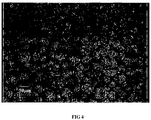
- the appearance of the microspheres was as shown in Fig. 4 (the scale in the figure refers 50 microns).
- the hollow microspheres have a size of between 10 ⁇ m and 100 ⁇ m.
Landscapes
- Chemical & Material Sciences (AREA)
- Organic Chemistry (AREA)
- Engineering & Computer Science (AREA)
- Ceramic Engineering (AREA)
- Inorganic Chemistry (AREA)
- Structural Engineering (AREA)
- Materials Engineering (AREA)
- Manufacturing & Machinery (AREA)
- Geology (AREA)
- Dispersion Chemistry (AREA)
- Chemical Kinetics & Catalysis (AREA)
- Life Sciences & Earth Sciences (AREA)
- Nanotechnology (AREA)
- Manufacturing Of Micro-Capsules (AREA)
- Compositions Of Oxide Ceramics (AREA)
- Glanulating (AREA)
- Emulsifying, Dispersing, Foam-Producing Or Wetting Agents (AREA)
Description
- The present invention relates to a process for preparing hollow ceramic or metallic microspheres.
- Hollow ceramic microspheres are hollow inorganic non-metallic spheres in small size, with a particle diameter ranging from 0.01 to 1.0 mm. They have the advantages of light weight, low heat conductivity, sound insulation, wear resistance, high dispersion, good electric insulation and good heat stability, with low manufacture cost, being novel light materials having light weight, high strength, and excellent properties with diversified uses. They can meet the requirements of petroleum cementing, automobile chassis shock-resistance, hull deck, fillers for organics including resins etc, emulsion explosive, high-quality fire-resistant coating, heat insulating refractory material, building interlayer heat insulation, sound absorption and noise taming, heat insulation and energy saving of building exterior wall, regression reflection materials, carriers of release-controlled drugs in biological pharmaceutical preparation, and can also be potentially used as light packaging materials of electronic industry, wave absorption materials, deep water floatation materials, low density adhesives, light weight and high strength concretes. As compared to traditional hollow glass microspheres, the hollow ceramic microspheres have higher compressive strength, which can be tens of times higher than the former one.
- In the preparing of artificial marbles, hollow ceramic microspheres are used to reduce the weight of articles and improve the anti-cracking ability of articles. Hollow ceramic microspheres are used to manufacture synthetic woods, with the products having the same visual sense, appearance and structure as woods. They are mainly used for the fabrication of high-quality furniture, sanitary ware, furniture casts, and decorative boards et al.
- Hollow ceramic microspheres are used as composite materials for repairing. The typical application is that hollow glass microspheres are added to resins to replace part of the fillers like calcium carbonate, talcum powder, etc, to prepare lime putty (putty). This novel lime putty has the advantages of light weight, strong adhesion, easy application, low shrinkage, and short curing time, particularly significantly improving the performance of foundry milling and polishing properties. They have been widely used in the repairing of various vehicles, shipping, and machine tools.
- Hollow ceramic microspheres can be hollow spheres containing an amount of gases inside, with low thermal conductivity. Thus, hollow glass microspheres have the features of sound insulation and heat insulation, and therefore are good fillers of various heat insulating materials and sound insulating materials. Meanwhile, the hollow ceramic microspheres have been widely used in heat insulation materials.
- Besides, hollow ceramic microspheres are also excellent sensitizers of emulsion explosives, can improve the sensitivity of emulsion explosives and prolonging the shelf time of explosives.
- Existing hollow ceramic microspheres particularly mean hollow microspheres or hollow floating beads consisting of silicon dioxide (SiO2) and aluminum oxide (Al2O3), which are obtained by grading process, e.g. flotation, from fly ash or coal gangue. The hollow ceramic microspheres are actually micro- or sub-micro-size glass microspheres having a hollow structure and a shell of aluminosilicate glass, and are widely used in inks, binders, engineering plastics, modified rubbers, electrical appliance insulators. However, hollow ceramic microspheres other than aluminosilicates glass are difficult to be similarly prepared by this process at present.
- Additionally, researchers have prepared hollow microspheres of other materials, such as TiO2 (
Zhang Junling, et al, CN101580275A ), ZnO (Xu Zhibing et al, CN1807254A ), CdS (Xie Rongguo, et al, CN1559911A ), Fe3O4 (Nie Zuoren, et al., CN101475223A ), SiO2 (Yin Hengbo, et al., CN101559951A ). However, these methods are restricted by the process and basically limited to prepare hollow microspheres with specific composition that can be obtained by solution chemical process, but difficult to be used for the preparation of hollow microspheres other than those with specific components. - The applicant has successfully prepared hollow microspheres of varies materials such as Al2O3, ZrO2, Si3N4, SiC, coal gangue, fly ash, WC, Ni etc, by preparing stable foam slurry and using centrifugal atomization process. One of the key steps used in the process is centrifugal atomization. Centrifugal atomization is one of commonly used atomization techniques. This process results in greater cooling rate than gas atomization process. At present, centrifugal atomization process is used to produce metal powders or rapid-solidified alloy powders, in which process, the metal is heated and melted, and spinned-out and crushed into droplets under centrifugal force, and then cooled by liquid nitrogen to solidify it into powders. The microcrystalline powders manufactured by the process have very fine texture and small segregation with low cost, and can be easily produced in industrial scale. In the present invention, centrifugal atomization technique is used, for the first time, in the manufacture of ceramic hollow microspheres. Aqueous or non-aqueous slurries having certain characteristics (highly-stable foams having a certain solid phase content) are prepared, the foam slurries are atomized by centrifugal atomization to form hollow slurry droplets, the hollow slurry droplets are dried rapidly to obtain ceramic hollow microspheres. This is the first time that this technique is successfully used in ceramic systems and solid wastes containing inorganic non-metallic materials, broadening the application scopes and application prospects of hollow microspheres, and providing new approach to recycle solid wastes. At the meantime, this technique is also successfully used in the preparation of hollow microspheres of metals and alloy materials.
- The process is versatile to ceramic powders of various material systems and can be used for the production of hollow microspheres of various ceramic materials (e.g., Al2O3, ZrO2, Si3N4, SiC etc.), solid wastes containing inorganic non-metallic materials (e.g., coal gangue, fly ash), and various metal and alloy material systems (e.g., WC, Ni, etc.). The hollow microspheres have a diameter of 0.001-1.5 mm, including closed-cell hollow microspheres and open-cell hollow microspheres. The open-cell or closed-cell hollow microspheres of this material system having a diameter of 0.001-1.5 mm have not been reported.
- The present invention provides a process for the preparation of hollow ceramic or metal microspheres. The process is adapted to ceramics or metal powders of various material systems and can be used to prepare hollow microspheres of various inorganic non-metallic materials, for example, including: oxide and non-oxide ceramics, solid wastes such as coal gangue, fly ash, tailings, sludge, waste stones, and metal or alloy materials. The process is simple in operation. Feedstock powders are directly prepared into foam stable slurry having a certain amount of solid phase, to prepare target hollow microspheres. This process is versatile to various raw materials and has no restriction of application. Hollow microspheres which are difficult to be prepared by other processes have been successfully produced by the process of the invention.
- The present disclosure provides hollow ceramic or metal microspheres. Said microspheres have a diameter of 0.001-1.5mm. The hollow microspheres can have a diameter of more than 1 micron, such as 1-100 microns, or 500-1500 microns, and contain components other than aluminum silicate, such as high-temperature (heat-resistant) ceramics and high-temperature (heat-resistant) metals/alloys selected from non-oxides, or selected from non-oxide ceramics, carbides. In some embodiments, hollow ceramic microspheres consist of components selected from the group consisting of ZrO2, Si3N4, WC, SiC. The hollow ceramic microspheres can have open holes on the surface.
- The present invention provides a process for the preparation of hollow ceramic or metal microspheres, comprising the steps of: forming ceramic or metal slurry, comprising ceramic or metal powders, water and dispersant and having a certain solid phase content, into stable foam slurry by using a foaming agent; providing the stable foam slurry into centrifugal atomization device to atomize into hollow slurry droplets, and being sprayed into molding chamber, drying rapidly to form hollow microsphere green body; collecting the hollow microsphere green body and sintering. In some embodiments of the production process according to the invention, ceramic or metal powders are mixed with water and dispersant and ball-milled to obtain ceramic or metal slurry having a certain solid phase content. The foaming agent is added into the ceramic or metal slurry having a certain solid phase content, and the slurry is stirred sufficiently to prepare into stable foam slurry. In the present invention, solid phase content means the volume content of solid (ceramic or metal) powders in the slurry, ranging between 5 and 60%.
- In the present invention, stable foam slurry means that the foam slurry remain stable during a fairly long period of time, e.g., at least 6 hours, generally 1-3 days, without apparent aggregation or sedimentation of solid particles, and without antifoaming or foam joining of foam in the slurry. The stable foam slurry could be obtained by appropriate action of dispersant and foaming agent. The particles are retained to be stably dispersed in a solution by steric hindrance effect and electrostatic effect of dispersant. The foaming effect of foaming agent should be mainly considered to allow the foaming rate of the slurry between 20% and 600% and the diameter of air bubble between 0.001 mm and 1.5 mm, without apparant antifoaming or foam joining phenomenon for 1-10 days shelf time. The foaming rate is defined to be the volume ratio of foamed slurry to un-foamed slurry. When foaming effect is bad, e.g., foaming rate is low, or foam is unstable to cause foam joining or antifoaming, and the hollow rate and the diameter of microspheres of final hollow microspheres will be influenced. The diameter of air bubble can be adjusted via addition amount of foaming agent and the stirring or ball milling time after the addition of foaming agent. The droplets after centrifugal atomization are dried instantly to keep and fix their shape. If the drying rate is not rapid enough, the droplets will deform under gravity or blowing force. Ceramic or metal slurry having a certain solid phase content can be obtained by mixing powders with water and dispersant, and ball-milling. Among others, the ceramic powders can be raw materials of various ceramic materials. The raw materials are selected from
claim 1, while other suitable materials include general inorganic non-metallic material powders, such as oxide powders, non-oxide ceramic powders, and solid wastes containing inorganic non-metal materials such as tailings, sludge, as well as loess powders, and metal or alloy powders can also be used. Some specific examples include ZrO2, Si3N4, SiC, coal gangue, fly ash, WC, Ni, etc. - With regarding to dispersant, the present invention does not depend upon the selection of specific dispersant, provided that the dispersant can cause appropriate dispersion of ceramic powder in the slurry. Some examples of dispersants are ammonium polyacrylate, tetramethyl ammonium hydroxide, ammonium citrate, ammonium polymethacrylate, tetramethylethylene diamine, calgon, etc. To achieve better dispersion effect, dispersants can be correspondingly selected in terms of different powders. For example, ammonium citrate is selected for zirconium oxide powder, and tetramethyl ammonium hydroxide is selected for silicon nitride powder.
- With regard to foaming agent, the present invention does not depend on the selection of specific foaming agent, provided that the foaming agent can cause the ceramic slurry having a certain phase solid content forming into stable foam slurry, for example, foaming agents which do not react with powders can be selected. Some examples of useable foaming agents are triton, propyl gallate. In the present invention, the foaming agent has a foaming rate of between 20% and 600%; the air bubble has a diameter of between 0.001 mm and 1.5 mm, without apparent antifoaming or foam joining phenomenon for 1-10 days shelf time.
- The ratio of ceramic or metal powders to water or dispersants is preferably a ratio to obtain slurry having a certain solid phase content. The volume of powders is about 5-60% of the total volume of the solution after the addition of powders; the dispersant is about 0.1-3% of the total volume; the foaming agent is about 0.1-1% of the total volume, and balance being water.
- Ceramic or metal slurries having a certain solid phase content can be obtained by ball-milling process. However, those skilled in the art can understand that slurries having a certain solid phase content can be obtained by other similar processes, for example, mixing by using a mixer. In the present invention, it is not limited to ball-milling process, but any process is feasible as long as ceramic or metal slurry having a certain solid phase content can be obtained. A device for preparing hollow microspheres is as shown in
Figure 2 , comprisingcentrifugal atomization equipment 1, molding chamber 2,exhaust gas system 4,separation system 3, and hot-blast air system 5 providing hot-blast air for molding chamber. Among others, the centrifugal atomization equipment is located at upper part, with its lower part being connected with the molding chamber. An exhaust gas system is connected to the upper part of the molding chamber, a separation system is arranged below the molding chamber, and the molding chamber is connected with the hot-blast air system. The centrifugal atomization system is the key part of the device. For the centrifugal atomization mechanism and equipments, the description in, e.g. "Production of Metal Powders by Centrifugal Atomization" ( Wen Shude, "Heat Treatment of Metals Abroad". No.3, 1997 ) can be referred. Foam slurry can be dispersed via centrifugal atomization system into hollow droplets with a diameter of 0.2-1.5 mm, and sprayed into molding chamber. Air (if desired, other gases, such as inert gas, can be used) is filtered and heated to 80-300°C by hot-blast air system, and introduced evenly in twist into the molding chamber from the upper part thereof, co-current flowing and contacting with hollow droplets and drying the droplets in a very short time (instantly, generally less than 1 second) to form hollow microsphere green body. The waste gas is exhausted via exhaust gas system. Hollow microsphere green body is continuously output from the separation system at the bottom of the molding chamber. This device has rapid molding rate; the foam slurry is completely dispersed and dried in several seconds, especially suitable for industrial production. The hollow microsphere green body formed by the device has good distribution of particle size. The particle size of the products can be adjusted by altering operation conditions. The product has high strength, the production process is simple with convenient operation control. - The process and device are versatile to powders of various material systems, and can be used to prepare hollow microspheres of various ceramic materials (Al2O3, ZrO2, Si3N4, SiC, etc.), of solid wastes containing inorganic non-metal materials (coal gangue, fly ash, etc.), of metal and alloy materials (WC, Ni, etc.). The hollow ceramic microspheres have a diameter of 0.001 mm-1.5 mm, including closed-cell hollow microspheres and open-cell hollow microspheres.
- The advantageous effects of the present disclosure are: the hollow microsphere green body formed by the device has good distribution of particle size; the particle size of the products can be adjusted by altering operation conditions; the product has high strength, the production process is simple with convenient operation control; the hollow ceramic microspheres of various ceramic material systems can be prepared, and the distribution of particle size of the microspheres and the thickness of the wall of hollow microspheres can be adjusted by production process; the process is simple and has high production efficiency, and is suitable for large-scale industrial production.
-
-
Fig. 1 : A flow chart of the process for producing hollow ceramic microspheres according to the present invention. -
Fig. 2 : A diagrammatic drawing of the structure of the device for preparing hollow ceramic microspheres. -
Fig. 3 : Microphotograph of open-cell hollow ceramic microspheres of silicon nitride prepared by the process of then present invention; -
Fig. 4 : Microphotograph of hollow ceramic microspheres of coal gangue prepared by the process of the present invention. - The reference numbers in
Fig. 2 - 1. Centrifugal atomization equipment;
- 2. Molding chamber;
- 3. Separation system;
- 4. Exhaust gas system;
- 5. Hot-blast air system
- The volume ratio of Al2O3 ceramic powders to water was controlled at 1:3. 0.1 vol.% (based on the total volume) ammonium polyacrylate dispersant was added, followed by mixing and ball-milling to obtain ceramic slurry with 25 vol.% of solid phase content. Propyl gallate foaming agent is added to the ceramic slurry in 0.3 vol.%, followed by stirring sufficiently or ball-milling to prepare the slurry with high solid phase content into a stable foam slurry; the stable foam slurry was introduced into centrifugal atomization equipment via diaphragm pump to atomize into hollow slurry droplets while being sprayed into the molding chamber. The temperature in the molding chamber was 280°C. The slurry droplets were dried instantly to form hollow Al2O3 microsphere green body; the hollow Al2O3 microsphere green body was collected, and placed in Si-Mo bar sintering furnace and sintered at 1580°C to obtain hollow Al2O3 microspheres. The hollow microspheres have a size of between 10 µm and 200 µm.
- The volume ratio of ZrO2 ceramic powders to water was controlled at 1:5. 0.15 vol.% (based on the total volume) ammonium polyacrylate dispersant was added, followed by mixing and ball-milling to obtain ceramic slurry with 16.7 vol.% of solid phase content. Triton X-100 foaming agent was added into the ceramic slurry in 1.5 vol.%, followed by stirring sufficiently to prepare the slurry with high solid phase content into a stable foam slurry. The stable foam slurry was introduced into centrifugal atomization equipment to atomize into hollow slurry droplets while being sprayed into the molding chamber. The temperature in the molding chamber was 280°C. The slurry droplets were dried instantly to form hollow ZrO2 microsphere green body; the hollow ZrO2 microsphere green body was collected, and placed in Si-Mo bar high temperature electric furnace and sintered at 1520°C to obtain hollow ZrO2 microspheres. The hollow microspheres have a size of between 10 µm and 300 µm.
- The volume ratio of Si3N4 ceramic powders to water was controlled at 1:5. 2 vol.% (based on the total volume) tetramethyl ammonium hydroxide was mixed, followed by mixing and ball-milling to obtain ceramic slurry with 25 vol.% of solid phase content. 0.8 vol.% triton X-114 foaming agent was added into the ceramic slurry, followed by stirring sufficiently to prepare the slurry with high solid phase content into a stable foam slurry; the stable foam slurry was introduced into centrifugal atomization equipment via to atomize into hollow slurry droplets while being sprayed into the molding chamber. The temperature in the molding chamber was 250°C. The slurry droplets were dried instantly to form hollow Si3N4 microsphere green body; the hollow Si3N4 microsphere green body was collected, and placed in unpressurized vacuum sintering furnace and sintered at 1780°C to obtain hollow Si3N4 microspheres. The appearance of the microspheres was as shown in
Fig. 3 (the scale in the figure refers 50 microns). The hollow microspheres have a size of between 10 µm and 300 µm. - The volume ratio of coal gangue powders to water was controlled at 1:4, with 1 vol.% (based on the total volume) ammonium citrate added, followed by mixing and ball-milling to obtain ceramic slurry with 20 vol.% of solid phase content. 1 vol.% triton X-100 foaming agent was added into the ceramic slurry, followed by stirring sufficiently to prepare the slurry into a stable foam slurry; the stable foam slurry was introduced into centrifugal atomization equipment to atomize into hollow slurry droplets while being sprayed into the molding chamber. The temperature in the molding chamber was 200°C. The slurry droplets were dried instantly to form hollow coal gangue microsphere green body; the hollow gangue microsphere green body was collected, and placed in rotary kiln furnace and sintered at 1200°C to obtain hollow gangue microspheres. The appearance of the microspheres was as shown in
Fig. 4 (the scale in the figure refers 50 microns). The hollow microspheres have a size of between 10 µm and 100 µm. - Although the present invention is described above with reference to some embodiments, the present invention is not limited to the embodiments, but can be modified and substituted within the scope of following claims.
Claims (3)
- A process for preparing hollow ceramic or metal microspheres, comprising the steps of:(1) forming ceramic or metal slurry, comprising ceramic or metal powders, water and dispersant and having a certain solid phase content, into a stable foam slurry by using a foaming agent; and said solid phase content is in the range of 5-60% by volume;(2) introducing the stable foam slurry into a centrifugal atomization equipment to atomize it into hollow slurry droplets, while spraying the hollow slurry droplets into a molding chamber; drying instantly to form hollow microsphere green body; and(3) collecting the hollow microsphere green body and sintering;
wherein, in the ceramic or metal slurry having a certain solid phase content, the volume of said powders is 5-60% of the total volume of the solution after the addition of said powders; the dispersant is 0.1-3% of the total volume; the foaming agent is 0.1-1% of the total volume, and balance being water; and
wherein the stable foam slurry has a slurry foaming rate of between 20% and 600% and a diameter of air bubble of between 0.001 mm and 1.5 mm, and has no apparent antifoaming or foam joining phenomenon for 1-10 days shelf time. - The process as claimed in claim 1, wherein the ceramic or metal powder is selected from oxide ceramic, non-oxide ceramic, coal gangue, fly ash, and metal/alloy materials.
- The process as claimed in claim 1, wherein ceramic or metal slurry having certain solid phase contend is prepared by mixing the ceramic or metal powders with water and dispersant and ball-milling; the foaming agent is added to the ceramic or metal slurry having a certain solid content followed by stirring sufficiently to prepare the slurry into a stable foam slurry.
Applications Claiming Priority (2)
| Application Number | Priority Date | Filing Date | Title |
|---|---|---|---|
| CN2009101310517A CN101870588B (en) | 2009-04-21 | 2009-04-21 | Method and device for preparing hollow ceramic microspheres |
| PCT/CN2010/000538 WO2010121488A1 (en) | 2009-04-21 | 2010-04-20 | Method and device for producing hollow microspheres |
Publications (3)
| Publication Number | Publication Date |
|---|---|
| EP2431344A1 EP2431344A1 (en) | 2012-03-21 |
| EP2431344A4 EP2431344A4 (en) | 2015-03-25 |
| EP2431344B1 true EP2431344B1 (en) | 2017-07-12 |
Family
ID=42995695
Family Applications (1)
| Application Number | Title | Priority Date | Filing Date |
|---|---|---|---|
| EP10766579.6A Not-in-force EP2431344B1 (en) | 2009-04-21 | 2010-04-20 | Method for producing hollow microspheres |
Country Status (9)
| Country | Link |
|---|---|
| US (1) | US8845936B2 (en) |
| EP (1) | EP2431344B1 (en) |
| CN (1) | CN101870588B (en) |
| AU (1) | AU2010239045B2 (en) |
| BR (1) | BRPI1013934A2 (en) |
| CA (1) | CA2759758C (en) |
| EA (1) | EA020857B1 (en) |
| WO (1) | WO2010121488A1 (en) |
| ZA (1) | ZA201107654B (en) |
Families Citing this family (34)
| Publication number | Priority date | Publication date | Assignee | Title |
|---|---|---|---|---|
| CN102603305B (en) * | 2012-03-03 | 2014-03-19 | 赣州虔东稀土集团股份有限公司 | Forming method and device of ceramic micro-bead green body |
| US8733500B1 (en) | 2012-11-12 | 2014-05-27 | Hexcel Corporation | Acoustic structure with internal thermal regulators |
| CN103011882B (en) * | 2012-12-29 | 2014-09-24 | 清华大学 | Inorganic heat-insulating material with three-level hole structure and preparation method of inorganic heat-insulating material |
| CN103172253B (en) * | 2013-04-17 | 2016-05-11 | 清华大学 | A kind of method of utilizing the spontaneous brewed standby froth inorganic stock of gangue cenosphere |
| CN103570463B (en) * | 2013-10-30 | 2015-06-10 | 清华大学 | Water-retention and slow-release fertilizer based on coal gangue micron-grade hollow sphere and preparation method of fertilizer |
| CN103553343B (en) * | 2013-10-31 | 2015-12-09 | 河北勇龙邦大新材料有限公司 | A kind of method utilizing cullet to prepare fine-celled foam glass |
| CN104649234A (en) * | 2013-11-25 | 2015-05-27 | 中国人民解放军军械工程学院 | Preparation method of oxide hollow microspheres |
| JP6434237B2 (en) * | 2014-02-19 | 2018-12-05 | 学校法人慶應義塾 | Method for producing hollow metal particles and hollow metal particles |
| US9901844B2 (en) * | 2014-03-07 | 2018-02-27 | University of Pittsburgh—of the Commonwealth System of Higher Education | Nano seeding tools to generate nanometer size crystallization seeds |
| CN103880550B (en) * | 2014-03-27 | 2016-06-15 | 清华大学 | Utilize slow release chemical fertilizer prepared by hollow ceramic microspheres cladding process and preparation method thereof |
| CN103880549B (en) * | 2014-03-27 | 2016-06-15 | 清华大学 | A kind of method of hollow ceramic microspheres appendix urea aldehyde slow release chemical fertilizer |
| CN104016703B (en) * | 2014-06-09 | 2016-06-15 | 清华大学 | A kind of preparation method of Ultralight closed pore pottery |
| CN104310787A (en) * | 2014-09-28 | 2015-01-28 | 中国建材国际工程集团有限公司 | Preparation method of fly ash artificial hollow floating beads |
| CN106431396A (en) * | 2016-08-31 | 2017-02-22 | 赣州科盈结构陶瓷有限公司 | Ceramic blank preparation method |
| MY202228A (en) | 2017-09-11 | 2024-04-18 | Basf Se | Microspheres comprising polydisperse polymer nanospheres and porous metal oxide microspheres |
| AU2018329173B2 (en) | 2017-09-11 | 2023-10-05 | Basf Se | Porous metal oxide microspheres |
| CN109694240A (en) * | 2017-10-24 | 2019-04-30 | 天津大学(青岛)海洋工程研究院有限公司 | A kind of preparation method of high temperature resistant floating bead/mullite solid buoyancy material |
| CN108856703B (en) * | 2018-06-29 | 2021-02-19 | 中国电子科技集团公司第二十六研究所 | Two-phase spherical material, manufacturing device and manufacturing method thereof, and manufacturing method of plate |
| AU2019317217B2 (en) * | 2018-08-08 | 2021-11-11 | Fast Build Systems Pty Ltd | Preform, composite structure and panel, and methods of forming same |
| CN111848206A (en) * | 2020-07-20 | 2020-10-30 | 贵州正业龙腾新材料开发有限公司 | Preparation method of monodisperse micron-sized hollow ceramic microspheres |
| CN112358351A (en) * | 2020-11-10 | 2021-02-12 | 宁波大学 | Ceramic hollow microsphere coated fish protein amino acid water-soluble slow-release fertilizer and preparation method thereof |
| CN113045263B (en) * | 2021-03-18 | 2022-11-08 | 西南石油大学 | A kind of hybrid fiber cement-based foam composite wave absorbing material and preparation method thereof |
| CN113372131B (en) * | 2021-04-26 | 2022-06-07 | 西安理工大学 | Micro-nano pore channel structure tetragonal phase BaTiO3Preparation method of/HA hollow microspheres |
| CN113976876B (en) * | 2021-11-23 | 2023-03-21 | 西北有色金属研究院 | Preparation method of hollow metal ball |
| CN113979746A (en) * | 2021-11-29 | 2022-01-28 | 天津大学(青岛)海洋工程研究院有限公司 | Preparation method of oxide structure ceramic-based hollow floating ball |
| CN114230365A (en) * | 2021-12-28 | 2022-03-25 | 黄世荣 | Preparation method of micro-nano ceramic powder composite material |
| CN115594475B (en) * | 2022-09-28 | 2023-06-30 | 杭州蓝田涂料有限公司 | Thermal insulation gypsum-based self-leveling mortar and preparation method thereof |
| CN116422225B (en) * | 2023-04-14 | 2023-11-28 | 北京华圻生态科技有限公司 | Spherical hollow powder and preparation method and application thereof |
| CN116422224B (en) * | 2023-04-14 | 2024-03-12 | 北京华圻生态科技有限公司 | Spherical hollow powder and preparation method and application thereof |
| CN116621645A (en) * | 2023-04-14 | 2023-08-22 | 北京华圻生态科技有限公司 | Water-retaining slow-release fertilizer and preparation method thereof |
| CN116425564B (en) * | 2023-04-14 | 2024-03-12 | 北京华圻生态科技有限公司 | Alumina refractory material and preparation method thereof |
| CN118703083B (en) * | 2024-07-16 | 2025-02-28 | 广州佰时居建材有限公司 | A metal roof reflective heat-insulating coating formula and preparation method |
| FR3165884A1 (en) * | 2024-09-05 | 2026-03-06 | Saint-Gobain Centre De Recherches Et D'etudes Europeen | OVEN REPAIR PRODUCT |
| TWI915100B (en) | 2024-11-29 | 2026-02-11 | 財團法人金屬工業研究發展中心 | Method for producing hollow sphere from waste cast sand, and hollow sphere |
Family Cites Families (22)
| Publication number | Priority date | Publication date | Assignee | Title |
|---|---|---|---|---|
| JPS5522522B2 (en) * | 1972-07-17 | 1980-06-17 | ||
| US4127158A (en) * | 1973-10-15 | 1978-11-28 | Toyo Kohan Co., Ltd. | Process for preparing hollow metallic bodies |
| DE3640586A1 (en) * | 1986-11-27 | 1988-06-09 | Norddeutsche Affinerie | METHOD FOR PRODUCING HOLLOW BALLS OR THEIR CONNECTED WITH WALLS OF INCREASED STRENGTH |
| JP2705133B2 (en) | 1988-08-30 | 1998-01-26 | 東ソー株式会社 | Zirconia micro hollow spherical particles and method for producing the same |
| US5322821A (en) * | 1993-08-23 | 1994-06-21 | W. R. Grace & Co.-Conn. | Porous ceramic beads |
| US5492870A (en) * | 1994-04-13 | 1996-02-20 | The Board Of Trustees Of The University Of Illinois | Hollow ceramic microspheres by sol-gel dehydration with improved control over size and morphology |
| CN1048998C (en) * | 1994-06-02 | 2000-02-02 | 中国科学院化学研究所 | Porous oxide micro-balls with uniform granule size and preparing method |
| CN1123772A (en) * | 1994-11-29 | 1996-06-05 | 淄博市新材料研究所 | Manufacture of hollow glass micro-ball |
| JP2002029764A (en) | 2000-07-19 | 2002-01-29 | Asahi Glass Co Ltd | Micro hollow glass sphere and method for producing the same |
| CA2328285A1 (en) | 2000-12-15 | 2002-06-15 | Gauthier, Alain | Ballistic armour for protection against hollow-charge projectiles |
| JP2002355544A (en) * | 2001-05-30 | 2002-12-10 | Tdk Corp | Method for producing spherical ceramic powder, spherical ceramic powder and composite material |
| CN2582742Y (en) * | 2002-11-29 | 2003-10-29 | 舒永兴 | Foam centrifugal spraying drying pelletizer |
| CN1226192C (en) | 2004-02-20 | 2005-11-09 | 浙江大学 | Process for preparing hollow ball of single dispersion cadmium sulfide |
| CA2613596A1 (en) | 2005-06-27 | 2007-01-04 | Applied Thin Films, Inc. | Aluminum phosphate based microspheres |
| JP4235644B2 (en) * | 2005-12-01 | 2009-03-11 | 株式会社ニワショーセラム | Method for producing porous ceramic sintered body |
| CN100357186C (en) | 2006-01-26 | 2007-12-26 | 徐志兵 | Zinc oxide hollow microsphere preparation method |
| CN2931473Y (en) * | 2006-06-09 | 2007-08-08 | 杨勇 | Sphere forming tower for producing hollow glass microsphere |
| EP2138461B1 (en) * | 2007-03-29 | 2019-01-09 | Toho Titanium CO., LTD. | Method for production of alkali titanate, method for production of hollow powder of alkali titanate, alkali titanate and hollow powder thereof produced by the methods, and friction material comprising the alkali titanate or the hollow powder thereof |
| CN101815563B (en) * | 2007-07-18 | 2013-02-13 | 新加坡南洋理工大学 | Hollow porous microspheres |
| CN101580275B (en) | 2008-05-15 | 2012-07-04 | 中国科学院过程工程研究所 | Method for preparing titanium dioxide hollow spherical powder |
| CN101475223B (en) | 2009-01-16 | 2010-09-08 | 北京工业大学 | A kind of preparation method of nano-structure α-type ferric oxide hollow submicrospheres |
| CN101559951B (en) | 2009-05-15 | 2011-07-06 | 江苏大学 | A kind of method for preparing nanometer silicon dioxide hollow microsphere |
-
2009
- 2009-04-21 CN CN2009101310517A patent/CN101870588B/en not_active Expired - Fee Related
-
2010
- 2010-04-20 US US13/265,463 patent/US8845936B2/en not_active Expired - Fee Related
- 2010-04-20 EP EP10766579.6A patent/EP2431344B1/en not_active Not-in-force
- 2010-04-20 BR BRPI1013934A patent/BRPI1013934A2/en not_active IP Right Cessation
- 2010-04-20 AU AU2010239045A patent/AU2010239045B2/en not_active Ceased
- 2010-04-20 WO PCT/CN2010/000538 patent/WO2010121488A1/en not_active Ceased
- 2010-04-20 EA EA201171263A patent/EA020857B1/en not_active IP Right Cessation
- 2010-04-20 CA CA2759758A patent/CA2759758C/en not_active Expired - Fee Related
-
2011
- 2011-10-19 ZA ZA2011/07654A patent/ZA201107654B/en unknown
Also Published As
| Publication number | Publication date |
|---|---|
| EA020857B1 (en) | 2015-02-27 |
| CA2759758C (en) | 2016-11-29 |
| AU2010239045A1 (en) | 2011-11-17 |
| AU2010239045B2 (en) | 2013-10-03 |
| CN101870588B (en) | 2012-10-31 |
| US20120107611A1 (en) | 2012-05-03 |
| CN101870588A (en) | 2010-10-27 |
| BRPI1013934A2 (en) | 2016-08-09 |
| US8845936B2 (en) | 2014-09-30 |
| EA201171263A1 (en) | 2012-03-30 |
| CA2759758A1 (en) | 2010-10-28 |
| ZA201107654B (en) | 2012-07-25 |
| WO2010121488A1 (en) | 2010-10-28 |
| EP2431344A4 (en) | 2015-03-25 |
| EP2431344A1 (en) | 2012-03-21 |
Similar Documents
| Publication | Publication Date | Title |
|---|---|---|
| US8845936B2 (en) | Process and device for the preparation of hollow microspheres comprising centrifugal atomization | |
| Liu et al. | Synthesis of porous glass ceramics with hierarchical and interconnected pores from secondary aluminum dross and waste glass | |
| US20070259768A1 (en) | Nanocomposite ceramic and method for producing the same | |
| CN103922768B (en) | A kind of function composite zirconia refractory product and preparation method thereof | |
| CN103288426B (en) | A kind of method utilizing industrial waste to prepare the special fracturing propping agents of shale gas | |
| US20190077715A1 (en) | Thermoset ceramic compositions, inorganic polymer coatings, inorganic polymer mold tooling, inorganic polymer hydraulic fracking proppants, methods of preparation and applications therefore | |
| CN102491761B (en) | Preparation method of hollow alumina ball thermal insulation refractory material | |
| KR20120123671A (en) | Ceramic particles with controlled pore and/or microsphere placement and/or size and method of making same | |
| CN109867513A (en) | A kind of preparation method of foamed ceramic | |
| CN101618967A (en) | Dry coke quenching furnace circular passage tilt channel regional patching material | |
| CN107937750B (en) | A device and method for preparing aluminum foam by bottom blowing powder spraying method | |
| US20220081367A1 (en) | Thermoset ceramic compositions, inorganic polymer coatings, inorganic polymer mold tooling, inorganic polymer hydraulic fracking proppants, methods of preparation and applications therefore | |
| CN103172253B (en) | A kind of method of utilizing the spontaneous brewed standby froth inorganic stock of gangue cenosphere | |
| CN111004047A (en) | Novel process for industrial mass production of foamed ceramics, application of foamed ceramics and building component | |
| CN113526946A (en) | High-toughness modified silicon corundum brick | |
| CN103803952B (en) | Preparation method of high-strength lightweight aluminium-zirconium hollow microspheres | |
| CN108315629B (en) | Preparation method of Al/SiC metal ceramic composite material | |
| CN111606689B (en) | Light microcrystal foaming thermal insulation material made from waste stone powder and manufacturing method thereof | |
| CN104311048A (en) | High-strength alkali-resisting refractory castable | |
| CN116239383B (en) | Silicon carbide ceramic preform and preparation method and application thereof | |
| CN102503143A (en) | Preparation method of fused quartz ceramic material containing nano yttrium oxide | |
| CN114057437A (en) | Electric heating and heat preservation integrated plate and preparation method thereof | |
| CN107382343B (en) | A kind of AlON-BN composite ceramic material and its preparation method and application | |
| CN112851391B (en) | Energy-saving light mullite refractory material and preparation method thereof | |
| CN109650919B (en) | Aggregate for preparing tin bath bottom brick, preparation method of aggregate and tin bath bottom brick |
Legal Events
| Date | Code | Title | Description |
|---|---|---|---|
| PUAI | Public reference made under article 153(3) epc to a published international application that has entered the european phase |
Free format text: ORIGINAL CODE: 0009012 |
|
| 17P | Request for examination filed |
Effective date: 20111115 |
|
| AK | Designated contracting states |
Kind code of ref document: A1 Designated state(s): AT BE BG CH CY CZ DE DK EE ES FI FR GB GR HR HU IE IS IT LI LT LU LV MC MK MT NL NO PL PT RO SE SI SK SM TR |
|
| DAX | Request for extension of the european patent (deleted) | ||
| A4 | Supplementary search report drawn up and despatched |
Effective date: 20150219 |
|
| RIC1 | Information provided on ipc code assigned before grant |
Ipc: C04B 38/02 20060101AFI20150213BHEP |
|
| REG | Reference to a national code |
Ref country code: DE Ref legal event code: R079 Ref document number: 602010043585 Country of ref document: DE Free format text: PREVIOUS MAIN CLASS: C04B0038020000 Ipc: B01J0013040000 |
|
| GRAP | Despatch of communication of intention to grant a patent |
Free format text: ORIGINAL CODE: EPIDOSNIGR1 |
|
| RIC1 | Information provided on ipc code assigned before grant |
Ipc: B01J 13/04 20060101AFI20170105BHEP |
|
| INTG | Intention to grant announced |
Effective date: 20170208 |
|
| GRAS | Grant fee paid |
Free format text: ORIGINAL CODE: EPIDOSNIGR3 |
|
| GRAA | (expected) grant |
Free format text: ORIGINAL CODE: 0009210 |
|
| AK | Designated contracting states |
Kind code of ref document: B1 Designated state(s): AT BE BG CH CY CZ DE DK EE ES FI FR GB GR HR HU IE IS IT LI LT LU LV MC MK MT NL NO PL PT RO SE SI SK SM TR |
|
| REG | Reference to a national code |
Ref country code: GB Ref legal event code: FG4D |
|
| REG | Reference to a national code |
Ref country code: CH Ref legal event code: EP |
|
| REG | Reference to a national code |
Ref country code: AT Ref legal event code: REF Ref document number: 907825 Country of ref document: AT Kind code of ref document: T Effective date: 20170715 |
|
| REG | Reference to a national code |
Ref country code: IE Ref legal event code: FG4D |
|
| REG | Reference to a national code |
Ref country code: DE Ref legal event code: R096 Ref document number: 602010043585 Country of ref document: DE |
|
| REG | Reference to a national code |
Ref country code: NL Ref legal event code: MP Effective date: 20170712 |
|
| REG | Reference to a national code |
Ref country code: LT Ref legal event code: MG4D |
|
| REG | Reference to a national code |
Ref country code: AT Ref legal event code: MK05 Ref document number: 907825 Country of ref document: AT Kind code of ref document: T Effective date: 20170712 |
|
| PG25 | Lapsed in a contracting state [announced via postgrant information from national office to epo] |
Ref country code: AT Free format text: LAPSE BECAUSE OF FAILURE TO SUBMIT A TRANSLATION OF THE DESCRIPTION OR TO PAY THE FEE WITHIN THE PRESCRIBED TIME-LIMIT Effective date: 20170712 Ref country code: FI Free format text: LAPSE BECAUSE OF FAILURE TO SUBMIT A TRANSLATION OF THE DESCRIPTION OR TO PAY THE FEE WITHIN THE PRESCRIBED TIME-LIMIT Effective date: 20170712 Ref country code: HR Free format text: LAPSE BECAUSE OF FAILURE TO SUBMIT A TRANSLATION OF THE DESCRIPTION OR TO PAY THE FEE WITHIN THE PRESCRIBED TIME-LIMIT Effective date: 20170712 Ref country code: LT Free format text: LAPSE BECAUSE OF FAILURE TO SUBMIT A TRANSLATION OF THE DESCRIPTION OR TO PAY THE FEE WITHIN THE PRESCRIBED TIME-LIMIT Effective date: 20170712 Ref country code: SE Free format text: LAPSE BECAUSE OF FAILURE TO SUBMIT A TRANSLATION OF THE DESCRIPTION OR TO PAY THE FEE WITHIN THE PRESCRIBED TIME-LIMIT Effective date: 20170712 Ref country code: NO Free format text: LAPSE BECAUSE OF FAILURE TO SUBMIT A TRANSLATION OF THE DESCRIPTION OR TO PAY THE FEE WITHIN THE PRESCRIBED TIME-LIMIT Effective date: 20171012 Ref country code: NL Free format text: LAPSE BECAUSE OF FAILURE TO SUBMIT A TRANSLATION OF THE DESCRIPTION OR TO PAY THE FEE WITHIN THE PRESCRIBED TIME-LIMIT Effective date: 20170712 |
|
| PG25 | Lapsed in a contracting state [announced via postgrant information from national office to epo] |
Ref country code: BG Free format text: LAPSE BECAUSE OF FAILURE TO SUBMIT A TRANSLATION OF THE DESCRIPTION OR TO PAY THE FEE WITHIN THE PRESCRIBED TIME-LIMIT Effective date: 20171012 Ref country code: GR Free format text: LAPSE BECAUSE OF FAILURE TO SUBMIT A TRANSLATION OF THE DESCRIPTION OR TO PAY THE FEE WITHIN THE PRESCRIBED TIME-LIMIT Effective date: 20171013 Ref country code: LV Free format text: LAPSE BECAUSE OF FAILURE TO SUBMIT A TRANSLATION OF THE DESCRIPTION OR TO PAY THE FEE WITHIN THE PRESCRIBED TIME-LIMIT Effective date: 20170712 Ref country code: ES Free format text: LAPSE BECAUSE OF FAILURE TO SUBMIT A TRANSLATION OF THE DESCRIPTION OR TO PAY THE FEE WITHIN THE PRESCRIBED TIME-LIMIT Effective date: 20170712 Ref country code: PL Free format text: LAPSE BECAUSE OF FAILURE TO SUBMIT A TRANSLATION OF THE DESCRIPTION OR TO PAY THE FEE WITHIN THE PRESCRIBED TIME-LIMIT Effective date: 20170712 Ref country code: IS Free format text: LAPSE BECAUSE OF FAILURE TO SUBMIT A TRANSLATION OF THE DESCRIPTION OR TO PAY THE FEE WITHIN THE PRESCRIBED TIME-LIMIT Effective date: 20171112 |
|
| REG | Reference to a national code |
Ref country code: DE Ref legal event code: R097 Ref document number: 602010043585 Country of ref document: DE |
|
| PG25 | Lapsed in a contracting state [announced via postgrant information from national office to epo] |
Ref country code: RO Free format text: LAPSE BECAUSE OF FAILURE TO SUBMIT A TRANSLATION OF THE DESCRIPTION OR TO PAY THE FEE WITHIN THE PRESCRIBED TIME-LIMIT Effective date: 20170712 Ref country code: CZ Free format text: LAPSE BECAUSE OF FAILURE TO SUBMIT A TRANSLATION OF THE DESCRIPTION OR TO PAY THE FEE WITHIN THE PRESCRIBED TIME-LIMIT Effective date: 20170712 Ref country code: DK Free format text: LAPSE BECAUSE OF FAILURE TO SUBMIT A TRANSLATION OF THE DESCRIPTION OR TO PAY THE FEE WITHIN THE PRESCRIBED TIME-LIMIT Effective date: 20170712 |
|
| PLBE | No opposition filed within time limit |
Free format text: ORIGINAL CODE: 0009261 |
|
| STAA | Information on the status of an ep patent application or granted ep patent |
Free format text: STATUS: NO OPPOSITION FILED WITHIN TIME LIMIT |
|
| PG25 | Lapsed in a contracting state [announced via postgrant information from national office to epo] |
Ref country code: SK Free format text: LAPSE BECAUSE OF FAILURE TO SUBMIT A TRANSLATION OF THE DESCRIPTION OR TO PAY THE FEE WITHIN THE PRESCRIBED TIME-LIMIT Effective date: 20170712 Ref country code: EE Free format text: LAPSE BECAUSE OF FAILURE TO SUBMIT A TRANSLATION OF THE DESCRIPTION OR TO PAY THE FEE WITHIN THE PRESCRIBED TIME-LIMIT Effective date: 20170712 Ref country code: IT Free format text: LAPSE BECAUSE OF FAILURE TO SUBMIT A TRANSLATION OF THE DESCRIPTION OR TO PAY THE FEE WITHIN THE PRESCRIBED TIME-LIMIT Effective date: 20170712 Ref country code: SM Free format text: LAPSE BECAUSE OF FAILURE TO SUBMIT A TRANSLATION OF THE DESCRIPTION OR TO PAY THE FEE WITHIN THE PRESCRIBED TIME-LIMIT Effective date: 20170712 |
|
| 26N | No opposition filed |
Effective date: 20180413 |
|
| PG25 | Lapsed in a contracting state [announced via postgrant information from national office to epo] |
Ref country code: SI Free format text: LAPSE BECAUSE OF FAILURE TO SUBMIT A TRANSLATION OF THE DESCRIPTION OR TO PAY THE FEE WITHIN THE PRESCRIBED TIME-LIMIT Effective date: 20170712 |
|
| REG | Reference to a national code |
Ref country code: DE Ref legal event code: R119 Ref document number: 602010043585 Country of ref document: DE |
|
| PG25 | Lapsed in a contracting state [announced via postgrant information from national office to epo] |
Ref country code: MC Free format text: LAPSE BECAUSE OF FAILURE TO SUBMIT A TRANSLATION OF THE DESCRIPTION OR TO PAY THE FEE WITHIN THE PRESCRIBED TIME-LIMIT Effective date: 20170712 |
|
| REG | Reference to a national code |
Ref country code: CH Ref legal event code: PL |
|
| REG | Reference to a national code |
Ref country code: BE Ref legal event code: MM Effective date: 20180430 |
|
| GBPC | Gb: european patent ceased through non-payment of renewal fee |
Effective date: 20180420 |
|
| REG | Reference to a national code |
Ref country code: IE Ref legal event code: MM4A |
|
| PG25 | Lapsed in a contracting state [announced via postgrant information from national office to epo] |
Ref country code: DE Free format text: LAPSE BECAUSE OF NON-PAYMENT OF DUE FEES Effective date: 20181101 Ref country code: LU Free format text: LAPSE BECAUSE OF NON-PAYMENT OF DUE FEES Effective date: 20180420 |
|
| PG25 | Lapsed in a contracting state [announced via postgrant information from national office to epo] |
Ref country code: GB Free format text: LAPSE BECAUSE OF NON-PAYMENT OF DUE FEES Effective date: 20180420 Ref country code: BE Free format text: LAPSE BECAUSE OF NON-PAYMENT OF DUE FEES Effective date: 20180430 Ref country code: LI Free format text: LAPSE BECAUSE OF NON-PAYMENT OF DUE FEES Effective date: 20180430 Ref country code: CH Free format text: LAPSE BECAUSE OF NON-PAYMENT OF DUE FEES Effective date: 20180430 |
|
| PG25 | Lapsed in a contracting state [announced via postgrant information from national office to epo] |
Ref country code: IE Free format text: LAPSE BECAUSE OF NON-PAYMENT OF DUE FEES Effective date: 20180420 Ref country code: FR Free format text: LAPSE BECAUSE OF NON-PAYMENT OF DUE FEES Effective date: 20180430 |
|
| PG25 | Lapsed in a contracting state [announced via postgrant information from national office to epo] |
Ref country code: MT Free format text: LAPSE BECAUSE OF NON-PAYMENT OF DUE FEES Effective date: 20180420 |
|
| PG25 | Lapsed in a contracting state [announced via postgrant information from national office to epo] |
Ref country code: TR Free format text: LAPSE BECAUSE OF FAILURE TO SUBMIT A TRANSLATION OF THE DESCRIPTION OR TO PAY THE FEE WITHIN THE PRESCRIBED TIME-LIMIT Effective date: 20170712 |
|
| PG25 | Lapsed in a contracting state [announced via postgrant information from national office to epo] |
Ref country code: HU Free format text: LAPSE BECAUSE OF FAILURE TO SUBMIT A TRANSLATION OF THE DESCRIPTION OR TO PAY THE FEE WITHIN THE PRESCRIBED TIME-LIMIT; INVALID AB INITIO Effective date: 20100420 Ref country code: PT Free format text: LAPSE BECAUSE OF FAILURE TO SUBMIT A TRANSLATION OF THE DESCRIPTION OR TO PAY THE FEE WITHIN THE PRESCRIBED TIME-LIMIT Effective date: 20170712 |
|
| PG25 | Lapsed in a contracting state [announced via postgrant information from national office to epo] |
Ref country code: MK Free format text: LAPSE BECAUSE OF NON-PAYMENT OF DUE FEES Effective date: 20170712 Ref country code: CY Free format text: LAPSE BECAUSE OF FAILURE TO SUBMIT A TRANSLATION OF THE DESCRIPTION OR TO PAY THE FEE WITHIN THE PRESCRIBED TIME-LIMIT Effective date: 20170712 |