EP2425956B1 - Injection molded case having antenna pattern and manufacturing method thereof - Google Patents
Injection molded case having antenna pattern and manufacturing method thereof Download PDFInfo
- Publication number
- EP2425956B1 EP2425956B1 EP11179761.9A EP11179761A EP2425956B1 EP 2425956 B1 EP2425956 B1 EP 2425956B1 EP 11179761 A EP11179761 A EP 11179761A EP 2425956 B1 EP2425956 B1 EP 2425956B1
- Authority
- EP
- European Patent Office
- Prior art keywords
- antenna patterns
- injection
- fixing holes
- molded case
- antenna
- Prior art date
- Legal status (The legal status is an assumption and is not a legal conclusion. Google has not performed a legal analysis and makes no representation as to the accuracy of the status listed.)
- Not-in-force
Links
Images




Classifications
-
- B—PERFORMING OPERATIONS; TRANSPORTING
- B29—WORKING OF PLASTICS; WORKING OF SUBSTANCES IN A PLASTIC STATE IN GENERAL
- B29C—SHAPING OR JOINING OF PLASTICS; SHAPING OF MATERIAL IN A PLASTIC STATE, NOT OTHERWISE PROVIDED FOR; AFTER-TREATMENT OF THE SHAPED PRODUCTS, e.g. REPAIRING
- B29C45/00—Injection moulding, i.e. forcing the required volume of moulding material through a nozzle into a closed mould; Apparatus therefor
- B29C45/14—Injection moulding, i.e. forcing the required volume of moulding material through a nozzle into a closed mould; Apparatus therefor incorporating preformed parts or layers, e.g. injection moulding around inserts or for coating articles
- B29C45/14639—Injection moulding, i.e. forcing the required volume of moulding material through a nozzle into a closed mould; Apparatus therefor incorporating preformed parts or layers, e.g. injection moulding around inserts or for coating articles for obtaining an insulating effect, e.g. for electrical components
-
- B—PERFORMING OPERATIONS; TRANSPORTING
- B29—WORKING OF PLASTICS; WORKING OF SUBSTANCES IN A PLASTIC STATE IN GENERAL
- B29C—SHAPING OR JOINING OF PLASTICS; SHAPING OF MATERIAL IN A PLASTIC STATE, NOT OTHERWISE PROVIDED FOR; AFTER-TREATMENT OF THE SHAPED PRODUCTS, e.g. REPAIRING
- B29C45/00—Injection moulding, i.e. forcing the required volume of moulding material through a nozzle into a closed mould; Apparatus therefor
- B29C45/14—Injection moulding, i.e. forcing the required volume of moulding material through a nozzle into a closed mould; Apparatus therefor incorporating preformed parts or layers, e.g. injection moulding around inserts or for coating articles
- B29C45/14065—Positioning or centering articles in the mould
-
- H—ELECTRICITY
- H01—ELECTRIC ELEMENTS
- H01Q—ANTENNAS, i.e. RADIO AERIALS
- H01Q1/00—Details of, or arrangements associated with, antennas
- H01Q1/12—Supports; Mounting means
- H01Q1/22—Supports; Mounting means by structural association with other equipment or articles
- H01Q1/24—Supports; Mounting means by structural association with other equipment or articles with receiving set
- H01Q1/241—Supports; Mounting means by structural association with other equipment or articles with receiving set used in mobile communications, e.g. GSM
- H01Q1/242—Supports; Mounting means by structural association with other equipment or articles with receiving set used in mobile communications, e.g. GSM specially adapted for hand-held use
- H01Q1/243—Supports; Mounting means by structural association with other equipment or articles with receiving set used in mobile communications, e.g. GSM specially adapted for hand-held use with built-in antennas
-
- B—PERFORMING OPERATIONS; TRANSPORTING
- B29—WORKING OF PLASTICS; WORKING OF SUBSTANCES IN A PLASTIC STATE IN GENERAL
- B29C—SHAPING OR JOINING OF PLASTICS; SHAPING OF MATERIAL IN A PLASTIC STATE, NOT OTHERWISE PROVIDED FOR; AFTER-TREATMENT OF THE SHAPED PRODUCTS, e.g. REPAIRING
- B29C45/00—Injection moulding, i.e. forcing the required volume of moulding material through a nozzle into a closed mould; Apparatus therefor
- B29C45/14—Injection moulding, i.e. forcing the required volume of moulding material through a nozzle into a closed mould; Apparatus therefor incorporating preformed parts or layers, e.g. injection moulding around inserts or for coating articles
- B29C45/14311—Injection moulding, i.e. forcing the required volume of moulding material through a nozzle into a closed mould; Apparatus therefor incorporating preformed parts or layers, e.g. injection moulding around inserts or for coating articles using means for bonding the coating to the articles
- B29C2045/14327—Injection moulding, i.e. forcing the required volume of moulding material through a nozzle into a closed mould; Apparatus therefor incorporating preformed parts or layers, e.g. injection moulding around inserts or for coating articles using means for bonding the coating to the articles anchoring by forcing the material to pass through a hole in the article
-
- B—PERFORMING OPERATIONS; TRANSPORTING
- B29—WORKING OF PLASTICS; WORKING OF SUBSTANCES IN A PLASTIC STATE IN GENERAL
- B29C—SHAPING OR JOINING OF PLASTICS; SHAPING OF MATERIAL IN A PLASTIC STATE, NOT OTHERWISE PROVIDED FOR; AFTER-TREATMENT OF THE SHAPED PRODUCTS, e.g. REPAIRING
- B29C45/00—Injection moulding, i.e. forcing the required volume of moulding material through a nozzle into a closed mould; Apparatus therefor
- B29C45/0053—Injection moulding, i.e. forcing the required volume of moulding material through a nozzle into a closed mould; Apparatus therefor combined with a final operation, e.g. shaping
- B29C45/006—Joining parts moulded in separate cavities
-
- B—PERFORMING OPERATIONS; TRANSPORTING
- B29—WORKING OF PLASTICS; WORKING OF SUBSTANCES IN A PLASTIC STATE IN GENERAL
- B29C—SHAPING OR JOINING OF PLASTICS; SHAPING OF MATERIAL IN A PLASTIC STATE, NOT OTHERWISE PROVIDED FOR; AFTER-TREATMENT OF THE SHAPED PRODUCTS, e.g. REPAIRING
- B29C45/00—Injection moulding, i.e. forcing the required volume of moulding material through a nozzle into a closed mould; Apparatus therefor
- B29C45/14—Injection moulding, i.e. forcing the required volume of moulding material through a nozzle into a closed mould; Apparatus therefor incorporating preformed parts or layers, e.g. injection moulding around inserts or for coating articles
- B29C45/14311—Injection moulding, i.e. forcing the required volume of moulding material through a nozzle into a closed mould; Apparatus therefor incorporating preformed parts or layers, e.g. injection moulding around inserts or for coating articles using means for bonding the coating to the articles
-
- B—PERFORMING OPERATIONS; TRANSPORTING
- B29—WORKING OF PLASTICS; WORKING OF SUBSTANCES IN A PLASTIC STATE IN GENERAL
- B29C—SHAPING OR JOINING OF PLASTICS; SHAPING OF MATERIAL IN A PLASTIC STATE, NOT OTHERWISE PROVIDED FOR; AFTER-TREATMENT OF THE SHAPED PRODUCTS, e.g. REPAIRING
- B29C45/00—Injection moulding, i.e. forcing the required volume of moulding material through a nozzle into a closed mould; Apparatus therefor
- B29C45/14—Injection moulding, i.e. forcing the required volume of moulding material through a nozzle into a closed mould; Apparatus therefor incorporating preformed parts or layers, e.g. injection moulding around inserts or for coating articles
- B29C45/14778—Injection moulding, i.e. forcing the required volume of moulding material through a nozzle into a closed mould; Apparatus therefor incorporating preformed parts or layers, e.g. injection moulding around inserts or for coating articles the article consisting of a material with particular properties, e.g. porous, brittle
-
- B—PERFORMING OPERATIONS; TRANSPORTING
- B29—WORKING OF PLASTICS; WORKING OF SUBSTANCES IN A PLASTIC STATE IN GENERAL
- B29K—INDEXING SCHEME ASSOCIATED WITH SUBCLASSES B29B, B29C OR B29D, RELATING TO MOULDING MATERIALS OR TO MATERIALS FOR MOULDS, REINFORCEMENTS, FILLERS OR PREFORMED PARTS, e.g. INSERTS
- B29K2705/00—Use of metals, their alloys or their compounds, for preformed parts, e.g. for inserts
-
- B—PERFORMING OPERATIONS; TRANSPORTING
- B29—WORKING OF PLASTICS; WORKING OF SUBSTANCES IN A PLASTIC STATE IN GENERAL
- B29L—INDEXING SCHEME ASSOCIATED WITH SUBCLASS B29C, RELATING TO PARTICULAR ARTICLES
- B29L2031/00—Other particular articles
- B29L2031/34—Electrical apparatus, e.g. sparking plugs or parts thereof
- B29L2031/3431—Telephones, Earphones
-
- B—PERFORMING OPERATIONS; TRANSPORTING
- B29—WORKING OF PLASTICS; WORKING OF SUBSTANCES IN A PLASTIC STATE IN GENERAL
- B29L—INDEXING SCHEME ASSOCIATED WITH SUBCLASS B29C, RELATING TO PARTICULAR ARTICLES
- B29L2031/00—Other particular articles
- B29L2031/34—Electrical apparatus, e.g. sparking plugs or parts thereof
- B29L2031/3456—Antennas, e.g. radomes
-
- B—PERFORMING OPERATIONS; TRANSPORTING
- B29—WORKING OF PLASTICS; WORKING OF SUBSTANCES IN A PLASTIC STATE IN GENERAL
- B29L—INDEXING SCHEME ASSOCIATED WITH SUBCLASS B29C, RELATING TO PARTICULAR ARTICLES
- B29L2031/00—Other particular articles
- B29L2031/34—Electrical apparatus, e.g. sparking plugs or parts thereof
- B29L2031/3481—Housings or casings incorporating or embedding electric or electronic elements
Definitions
- the present invention relates to an injection-molded case and a manufacturing method thereof. More particularly, the present invention relates to an injection molded case and manufacturing method in which antenna patterns are formed in the injection-molded case.
- a portable communication device refers to a device with which a user performs wireless communications with another party.
- a portable communication device generally includes an HHP, a CT-2 cellular phone, a digital phone, a PCS phone, a PDA, etc., and can be further classified into various types of devices according to the appearance.
- a wireless terminal is classified into one of a bar-type, flip-type, folder-type, and slide-type of wireless terminals according to appearance.
- the above enumerated conventional portable communication devices are necessarily provided with an antenna device, a data input/output device, and a data transmitting/receiving device.
- the data input device a keypad through which data can be input mainly by a fmger-pressing operation is generally used.
- Portable communication devices have become smaller and lighter with each generation of devices. Accordingly, an antenna device applied to the portable communication device also has become smaller, and an internal antenna which can be embedded in the communication device has become the typical antenna used in such devices, whereas a few years back users had antennas physically extending from the portable communication device.
- a metallic sheet is cut by a press process to fabricate an antenna pattern 2a, and then as shown in FIG. 2 , the antenna pattern 2a is integratedly mounted in an injection-molded article 2b by a first-insert injection molding process.
- the injection-molded article 2b mounted with the antenna pattern 2a is integratedly mounted in the battery cover part 1 of the portable communication device by a second insert injection molding process.
- a metallic sheet is cut by a press process in accordance with the shape of the portable communication device so as to fabricate an antenna pattern 20a, and then as shown in FIG. 5 , the antenna pattern 20a is integratedly mounted in an injection-molded article 20b by a first insert injection molding process.
- the injection-molded article 20b mounted with the antenna pattern 20a is integratedly mounted in the rear case 10 of the portable communication device by a second insert injection molding process.
- the mounting process is divided into two steps. In other words, the process is carried out by first and second insert injection molding processes.
- a conventional internal antenna device has a problem in that a manufacturing cost of a product is increased due to a complicated manufacturing process and an increase of a manufacturing time because an antenna pattern is fabricated by a press process and then is formed in an injection-molded article, a battery cover part, or a rear case of a communication device through first and second insert injection molding processes.
- US-2010/039347-A1 discloses a housing according to the preamble of claim 1, functioning as an antenna including an antenna base including two protruding flanges.
- the housing is formed by injection molding a molten plastic material over and around the antenna base, whereby the antenna base is embedded in the housing, and the protruding flanges are exposed out of the housing. A method for fabricating the housing is also described.
- US-2009/322629-A1 discloses a cover adapted to a communication device, a communication device including the same and a method for manufacturing the same.
- the cover according to the invention includes a cover body and an antenna.
- the cover body has a bottom surface.
- the antenna is fixed at a predetermined position on the bottom surface by an insert molding process.
- Embodiments of the present invention provide an injection-molded case having antenna patterns and the manufacturing method thereof, in which antenna patterns are formed in the injection-molded case by only one (i.e. single) insert injection molding process, unlike a conventional technology where antenna patterns are formed in an injection-molded case by first insert and second insert injection molding processes. Since an additional insert injection molding process is not required, the present invention reduces a manufacturing process and a manufacturing time of a product. Also, since it is not required to manufacture an additional (i.e. second) mold, it is possible to reduce a manufacturing cost of a product.
- an injection-molded case having one or more antenna patterns
- the injection-molded case comprising: one or more antenna patterns fabricated by a press process; and an injection-molded case having the antenna patterns provided therewithin, in which the injection molded case is fabricated by fixing the antenna patterns on an injection mold and performing single insert injection molding process; wherein each antenna pattern comprises one or more first fixing holes formed in the antenna pattern an arranged to fixedly couple with at least one of ribs or fixing protrusions formed on an injections mold, one or more second fixing holds formed at positions adjacent to the first fixing holes in the antenna patterns, in which the one or more second fixing holds are arranged to fixedly couple with ribs or fixing protrusions formed on the injection-molded case after the single insert injection molding process, and one or more third fixing holes formed with jaws arranged to receive an injected resin inserted into the jaws during the single insert injection molding process such that the resin rises in and over the jaws of the third fixing holes so as to fix the
- a method according to claim 5 for manufacturing an injection-molded case having one or more antenna patterns comprising the steps of: fabricating one or more antenna patterns fabricated by a press process; and fabricating an injection-molded case having the antenna patterns provided therewithin by fixing the antenna patterns on an injection mold and performing a single insert injection molding process; wherein in step each antenna pattern is formed with one or more first fixing holes for being fixedly coupled with ribs or fixing protrusions formed on the injection mold, one or more second fixing holes formed for being fixedly coupled with ribs or fixing protrusions formed on the injection-molded case part after the insert injection molding process, and one or more third fixing holes, which are formed with jaws and in step the resin of the injection is received in the jaws such that the resin rises in and over the jaws of the third fixing holes so as to fix the antenna patterns.
- an injection-molded case 100 provided with antenna patterns preferably includes one or more antenna patterns 110, and an injection-molded case 120 (shown in FIG. 8 ).
- the antenna patterns 110 are fabricated by a press process, and the injection-molded case 120 is provided with the antenna patterns 110 therewithin, in which the antenna patterns 110 are fixed on an injection mold 130 ( FIG. 11 ) and subjected to an insert injection molding process.
- the antenna patterns 110 preferably include one or more first fixing holes 111, one or more second fixing holes 112, and one or more third fixing holes 113.
- the first fixing holes 111 are formed in the antenna pattern 110 such that they can be fixedly coupled with ribs 132 or fixing protrusions formed on the injection mold 130 (FIG. 132).
- the second fixing holes 112 are formed preferably at positions adjacent to the first fixing holes 111 in such that they can be fixedly coupled with ribs 121 ( FIG. 8 ) or fixing protrusions formed on the injection-molded case 120 after the insert injection molding process.
- the third fixing holes 113 are formed with jaws 113a, and are formed preferably at positions adjacent to the first and second fixing holes 111 and 112 in such a manner that an injected resin A1 can be inserted into the jaws 113a after the single insert injection molding process.
- the guide rail 131 preferably includes a guide groove.
- the injection-molded case 120 includes a battery cover portion 123. Also, the injection-molded case 120 may include another cover portion beside the battery cover portion (e.g., a terminal cover portion, an earphone cover portion, etc.).
- the sheet portion 122 is made of a poly carbonate (PC), and may be made of another material than the PC (e.g., a silicon material, etc.)
- PC poly carbonate
- the injection-molded case includes a rear case 200 of a portable communication device. Also, the injection-molded case may include another case portion beside the rear case 200 (e.g., an upper case, etc.).
- the injection-molded case 120 and 200 provided with the antenna patterns 110 and 210 representatively include the battery cover portion 123 and the rear case 200 of a portable communication device.
- the injection-molded case 120, 200 according to the present invention is not limited to the battery cover 123 and the rear case 200, and may be applied to various types of battery covers and rear cases (e.g., a bar-type portable communication device, a folder-type portable communication device, a sliding-type portable communication device, a swing-type portable communication device, etc.).
- Examples of a portable communication device may include not only all mobile communication terminals which operate in accordance with communication protocols corresponding to various communication systems, but also all information communication devices and multimedia devices (such as a portable multimedia player (PMP), an MP3 player, a navigation device, a game device, a notebook computer, an advertisement panel, a TV, a digital broadcast player, a personal digital assistant (PDA), a smart phone, a waterproof phone), and their application devices, just to name some non-limiting examples.
- the injection-molded case 100 includes one or more antenna patterns 110, and the injection-molded case 120.
- the first fixing holes 111 of the antenna patterns 110 are used to fix the antenna patterns with the injection mold 130. Also, when the resin A1 comes into the injection mold 130, the magnetic force of the magnetic parts 140 provided in the injection mold 130 fix the antenna patterns 110 while preventing them from escaping. Also, the antenna patterns 100 are fixed with and seated on the fixing ribs 133 formed on the injection mold 130.
- the guide rail 131 prevents the antenna patterns 110 from becoming loosened by the injected resin A1, while guiding the resin A1 in such a manner that the resin R can cover the antenna patterns 110.
- the ribs 121 formed on the injection-molded case 120 are fixedly coupled with the second fixing holes 112 of the antenna patterns 110.
- the resin A1 is inserted into the jaws 113a of the third fixing holes 113 of the antenna patterns 110 and rises while fixing the antenna patterns 110.
- the resin A1 rises in the jaws 113a of the third fixing holes 113, thereby forming a "T" shape.
- the injection-molded case 120 includes a battery cover of a portable communication device.
- the sheet part 122 is attached.
- the injection-molded case preferably includes the rear case 200 of a portable communication device. Also, in the upper and lower portions of the rear case 200, the antenna patterns 210 are provided.
- the antenna patterns 210 are preferably fabricated by a press process.
- one or more first fixing holes 211 are formed, which are to be fixedly coupled with the fixing protrusions 301 formed on an injection mold 300.
- one or more second fixing holes 212 are formed, which are to be fixedly coupled with fixing protrusions 202 formed on the rear case 200 after the single insert injection molding process.
- the first fixing holes 211 of the antenna patterns 210 are used to fix the antenna patterns with the injection mold 300.
- the magnetic force of magnetic parts (not shown) provided in the injection mold 300 fix the antenna patterns 210 while preventing them from movement.
- the rear case 200 is fabricated and the antenna patterns 210 are provided in the upper and lower portions at the inner side of the rear case 200.
- the fixing protrusions 202 formed on the rear case 200 are fixedly coupled with the second fixing holes 212 of the antenna patterns 210, and the resin A1 rises and covers the surface of the second fixing holes 212.
- the seating ribs 201 formed on the rear case 200 seat the antenna patterns 210 while avoiding interference with another component (not shown) of a portable communication device.
- antenna patterns 110 are preferably fabricated by a press process in step S1.
- first fixing holes 111 are designed to be fixedly coupled with the ribs 132 formed on the injection mold 130.
- the second fixing holes 112 are designed to be fixedly coupled with the ribs 121 formed on the injection-molded case 120 after the single insert injection molding process.
- the third fixing holes 113 are formed with the jaws 113a in such that the injected resin A1 (shown in FIG. 10 ) of injection can be inserted into the jaws 113a after the single insert injection molding process.
- the first fixing holes 111 of the antenna patterns 110 from S1 are used to fix the antenna patterns with the injection mold 130. Also, when the resin A1 comes into the injection mold 130, the magnetic force of the magnetic parts 140 provided in the injection mold 130 fix the antenna patterns 110 while preventing them from escaping. Also, the antenna patterns 100 are fixed with and seated on the fixing ribs 133 formed on the injection mold 130.
- the injection-molded case 120 is fabricated and the antenna patterns 110 are provided at the inner side of the injection-molded case 120, in step S2.
- the injected resin A1 comes into the injection mold 130 along the guide rail 131 formed in the injection mold 130.
- the guide rail 131 prevents the antenna patterns 110 from becoming loosened by the injected resin A1, while guiding the resin A1 such that the resin A1 can cover the antenna patterns 110.
- the resin A1 is inserted into the jaws 113a of the third fixing holes 113 of the antenna patterns 110 and rises while fixing the antenna patterns 110.
- the resin A1 rises in/over the jaws 113a of the third fixing holes 113, thereby forming a "T" shape.
- the injection-molded case part includes the rear case 200 of a portable communication device. Also, in the upper and lower portions of the rear case 200, the antenna patterns 210 are provided.
- the first fixing holes 211 of the antenna patterns 210 from step S1 are used to fix the antenna patterns with the injection mold 300.
- the seating ribs 201 formed on the rear case 200 seat the antenna patterns 210 while avoiding interference with another component (not shown) of a portable communication device.
- antenna patterns are formed on an injection-molded case part by only one (i.e. single) insert injection molding process whereas in a conventional technology, antenna patterns are formed on an injection-molded case part by first insert and second insert injection molding processes.
- an additional insert injection molding process is not required, it is possible to reduce a manufacturing process and a manufacturing time.
- the present invention does not require the additional manufacture of a mold, it is possible to reduce a manufacturing cost of a product.
Landscapes
- Engineering & Computer Science (AREA)
- Manufacturing & Machinery (AREA)
- Mechanical Engineering (AREA)
- Computer Networks & Wireless Communication (AREA)
- Telephone Set Structure (AREA)
- Injection Moulding Of Plastics Or The Like (AREA)
- Support Of Aerials (AREA)
- Details Of Aerials (AREA)
Description
- The present invention relates to an injection-molded case and a manufacturing method thereof. More particularly, the present invention relates to an injection molded case and manufacturing method in which antenna patterns are formed in the injection-molded case.
- In general, "a portable communication device" refers to a device with which a user performs wireless communications with another party. Such a portable communication device generally includes an HHP, a CT-2 cellular phone, a digital phone, a PCS phone, a PDA, etc., and can be further classified into various types of devices according to the appearance. For example, a wireless terminal is classified into one of a bar-type, flip-type, folder-type, and slide-type of wireless terminals according to appearance. The above enumerated conventional portable communication devices are necessarily provided with an antenna device, a data input/output device, and a data transmitting/receiving device. Naturally, as the data input device, a keypad through which data can be input mainly by a fmger-pressing operation is generally used.
- Portable communication devices have become smaller and lighter with each generation of devices. Accordingly, an antenna device applied to the portable communication device also has become smaller, and an internal antenna which can be embedded in the communication device has become the typical antenna used in such devices, whereas a few years back users had antennas physically extending from the portable communication device.
- As shown in
FIGs. 1 to 3 , the process of mounting theinternal antenna 2 at the inner side of a battery cover part 1 of the portable communication device will be described below. - First, as shown in
FIG. 1 , in the mounting of theinternal antenna 2, a metallic sheet is cut by a press process to fabricate anantenna pattern 2a, and then as shown inFIG. 2 , theantenna pattern 2a is integratedly mounted in an injection-moldedarticle 2b by a first-insert injection molding process. As shown inFIG. 3 , the injection-moldedarticle 2b mounted with theantenna pattern 2a is integratedly mounted in the battery cover part 1 of the portable communication device by a second insert injection molding process. - As described above, since it is not easy to fix the
antenna pattern 2a, the conventional mounting process is divided into two steps. In other words, the process is carried out by first and second insert injection molding processes. - Also, as shown in
FIGs. 4 to 6 , the process of mounting theinternal antenna 20 at the inner side of arear case 10 of the portable communication device will be described below. - First, as shown in
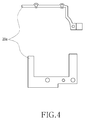
FIG. 4 , in the mounting of theinternal antenna 20, a metallic sheet is cut by a press process in accordance with the shape of the portable communication device so as to fabricate anantenna pattern 20a, and then as shown inFIG. 5 , theantenna pattern 20a is integratedly mounted in an injection-moldedarticle 20b by a first insert injection molding process. As shown inFIG. 6 , the injection-moldedarticle 20b mounted with theantenna pattern 20a is integratedly mounted in therear case 10 of the portable communication device by a second insert injection molding process. - Likewise, since it is not easy to fix the
antenna pattern 20a, the mounting process is divided into two steps. In other words, the process is carried out by first and second insert injection molding processes. - However, a conventional internal antenna device has a problem in that a manufacturing cost of a product is increased due to a complicated manufacturing process and an increase of a manufacturing time because an antenna pattern is fabricated by a press process and then is formed in an injection-molded article, a battery cover part, or a rear case of a communication device through first and second insert injection molding processes.
-
US-2010/039347-A1 discloses a housing according to the preamble of claim 1, functioning as an antenna including an antenna base including two protruding flanges. The housing is formed by injection molding a molten plastic material over and around the antenna base, whereby the antenna base is embedded in the housing, and the protruding flanges are exposed out of the housing. A method for fabricating the housing is also described. -
US-2009/322629-A1 discloses a cover adapted to a communication device, a communication device including the same and a method for manufacturing the same. The cover according to the invention includes a cover body and an antenna. The cover body has a bottom surface. Particularly, the antenna is fixed at a predetermined position on the bottom surface by an insert molding process. - Accordingly, there is required a method for forming the antenna pattern in a battery cover part and a rear case by only one insert injection molding process, instead of a method for forming the antenna pattern in the battery cover part and the rear case by first and second insert injection molding processes.
- Embodiments of the present invention provide an injection-molded case having antenna patterns and the manufacturing method thereof, in which antenna patterns are formed in the injection-molded case by only one (i.e. single) insert injection molding process, unlike a conventional technology where antenna patterns are formed in an injection-molded case by first insert and second insert injection molding processes. Since an additional insert injection molding process is not required, the present invention reduces a manufacturing process and a manufacturing time of a product. Also, since it is not required to manufacture an additional (i.e. second) mold, it is possible to reduce a manufacturing cost of a product.
- In accordance with a first aspect of the present invention, there is provided an injection-molded case according to claim 1 having one or more antenna patterns, the injection-molded case comprising: one or more antenna patterns fabricated by a press process; and an injection-molded case having the antenna patterns provided therewithin, in which the injection molded case is fabricated by fixing the antenna patterns on an injection mold and performing single insert injection molding process; wherein each antenna pattern comprises one or more first fixing holes formed in the antenna pattern an arranged to fixedly couple with at least one of ribs or fixing protrusions formed on an injections mold, one or more second fixing holds formed at positions adjacent to the first fixing holes in the antenna patterns, in which the one or more second fixing holds are arranged to fixedly couple with ribs or fixing protrusions formed on the injection-molded case after the single insert injection molding process, and one or more third fixing holes formed with jaws arranged to receive an injected resin inserted into the jaws during the single insert injection molding process such that the resin rises in and over the jaws of the third fixing holes so as to fix the antenna patterns in place within the injection-molded case.
- In accordance with a second aspect of the present invention, there is provided a method according to claim 5 for manufacturing an injection-molded case having one or more antenna patterns, the method comprising the steps of: fabricating one or more antenna patterns fabricated by a press process; and fabricating an injection-molded case having the antenna patterns provided therewithin by fixing the antenna patterns on an injection mold and performing a single insert injection molding process; wherein in step each antenna pattern is formed with one or more first fixing holes for being fixedly coupled with ribs or fixing protrusions formed on the injection mold, one or more second fixing holes formed for being fixedly coupled with ribs or fixing protrusions formed on the injection-molded case part after the insert injection molding process, and one or more third fixing holes, which are formed with jaws and in step the resin of the injection is received in the jaws such that the resin rises in and over the jaws of the third fixing holes so as to fix the antenna patterns.
- The above and other aspects, features and advantages of the present invention will become more apparent from the following detailed description taken in conjunction with the accompanying drawings, in which
Figures 1 to 6 illustrate features of conventional antenna patterns,Figures 7 to 11 and18 illustrate embodiments of the present invention andFigures 12 to 17 illustrate additional embodiments of similar subject matter. In detailed summary: -
FIG. 1 is a view illustrating a conventional antenna pattern fabricated by a press process; -
FIG. 2 is a view illustrating a state where a conventional antenna pattern is formed on an injection-molded article by a first insert injection molding process; -
FIG. 3 is a view illustrating a state where a conventional injection-molded article formed by a first insert injection molding process is formed at the inner side of a battery cover part of a portable communication device by a second insert injection molding process; -
FIG. 4 is a view illustrating a conventional antenna pattern designed to be provided in a rear case of a portable communication device; -
FIG. 5 is a view illustrating a state where an antenna pattern shown inFIG. 4 is formed on an injection-molded article by a first insert injection molding process that is the first part of the conventional process; -
FIG. 6 is a view illustrating a state where an injection-molded article formed by a first insert injection molding process, shown inFIG. 5 , is formed at the inner side of a rear case of a portable communication device by a second insert injection molding process that is the second part of the conventional process; -
FIG. 7 is a view illustrating an antenna pattern to be configured in a battery cover part of a portable communication device, according to an exemplary embodiment of the present invention; -
FIG. 8 is a view illustrating a state where an antenna pattern shown inFIG. 7 is provided at the inner side of a battery cover part of a portable communication device by an insert injection molding process according to the present invention; -
FIG. 9 is a view illustrating a state where a sheet part is attached on an antenna pattern provided at the inner side of a battery cover part of a portable communication device, according to an exemplary embodiment of the present invention; -
FIG. 10 is a cut-away view illustrating a third fixing hole of an antenna pattern provided at the inner side of a battery cover part of a portable communication device, according to an exemplary embodiment of the present invention; -
FIG. 11 is a view illustrating an injection mold of a battery cover part of a portable communication device, according to an exemplary embodiment of the present invention; -
FIG. 12 is a view illustrating antenna patterns to be configured in a rear case of a portable communication device; -
FIG. 13 is a view illustrating a state where antenna patterns shown inFIG. 12 are provided at the inner side of upper and lower portions of a rear case of a portable communication device by an insert injection molding process; -
FIG. 14 is a view illustrating the inner side of an upper portion of a rear case of a portable communication device; -
FIG. 15 is a view illustrating the inner side of a lower portion of a rear case of a portable communication device; -
FIG. 16 is a view illustrating the upper side of an injection mold of a rear case of a portable communication device -
FIG. 17 is a view illustrating the lower side of an injection mold of a rear case of a portable communication device; and -
FIG. 18 is a flow diagram illustrating a method for manufacturing an injection-molded case provided with antenna patterns according to an exemplary embodiment of the present invention. - Hereinafter, preferred exemplary embodiments of the present invention will be described in detail with reference to the accompanying drawings. The exemplary embodiments and configurations disclosed and shown in the drawings herein are only exemplary preferred embodiments of the present invention. It should be understood that various modifications replacing these can exist at the time of application.
- As shown in
FIGs. 7 to 17 , an injection-moldedcase 100 provided with antenna patterns preferably includes one ormore antenna patterns 110, and an injection-molded case 120 (shown inFIG. 8 ). Theantenna patterns 110 are fabricated by a press process, and the injection-moldedcase 120 is provided with theantenna patterns 110 therewithin, in which theantenna patterns 110 are fixed on an injection mold 130 (FIG. 11 ) and subjected to an insert injection molding process. - As shown in
FIGs. 7 to 10 , theantenna patterns 110 preferably include one or more first fixingholes 111, one or more second fixing holes 112, and one or more third fixing holes 113. The first fixing holes 111 are formed in theantenna pattern 110 such that they can be fixedly coupled withribs 132 or fixing protrusions formed on the injection mold 130 (FIG. 132). The second fixing holes 112 are formed preferably at positions adjacent to the first fixingholes 111 in such that they can be fixedly coupled with ribs 121 (FIG. 8 ) or fixing protrusions formed on the injection-moldedcase 120 after the insert injection molding process. - As shown in
FIG. 10 , the third fixing holes 113 are formed withjaws 113a, and are formed preferably at positions adjacent to the first and second fixing holes 111 and 112 in such a manner that an injected resin A1 can be inserted into thejaws 113a after the single insert injection molding process. - The surface of the
antenna patterns 110 is designed in such that after the single insert injection molding process, the resin A1 is injected to cover and fix theantenna patterns 110. - As shown in
FIG. 11 , in theinjection mold 130, aguide rail 131 is formed. The guide rail fixes theantenna patterns 110, and during the single insert injection molding process, prevents theantenna patterns 110 from becoming loosened or displaced by the resin A1, while guiding the resin A1 in such a manner that the resin A1 can cover theantenna patterns 110. In theinjection mold 130, one or moremagnetic parts 140 are provided in such a manner that they can fix theantenna patterns 110 by a magnetic force so as to prevent theantenna patterns 110 from escaping during the single insert injection molding process. Also, in theinjection mold 130, fixingribs 133 are formed in order to fix and seat theantenna patterns 110. - As shown in
FIG. 11 , theguide rail 131 preferably includes a guide groove. - As shown in
FIGs. 8 and9 , the injection-moldedcase 120 includes abattery cover portion 123. Also, the injection-moldedcase 120 may include another cover portion beside the battery cover portion (e.g., a terminal cover portion, an earphone cover portion, etc.). - As shown in
FIG. 9 , on the externally exposed surface of theantenna patterns 110 provided in thebattery cover portion 123, asheet portion 122 is attached in so that the sheet portion can protect theantenna patterns 110. - The
sheet portion 122 is made of a poly carbonate (PC), and may be made of another material than the PC (e.g., a silicon material, etc.) - Also, as shown in
FIGs. 12 to 17 , the injection-molded case includes arear case 200 of a portable communication device. Also, the injection-molded case may include another case portion beside the rear case 200 (e.g., an upper case, etc.). - The injection-molded case is preferably configured such that by only one insert injection molding process (i.e. a single insert injection molding process), the
rear case 200 is fabricated, andantenna patterns 210 are provided at the inner side of upper and lower portions of therear case 200. - Referring to
FIG.; 13 , in therear case 200, seatingribs 201 are formed so as to seat theantenna patterns 210. - Meanwhile, according to an exemplary embodiment of the present invention, the injection-molded
case antenna patterns battery cover portion 123 and therear case 200 of a portable communication device. However, the injection-moldedcase battery cover 123 and therear case 200, and may be applied to various types of battery covers and rear cases (e.g., a bar-type portable communication device, a folder-type portable communication device, a sliding-type portable communication device, a swing-type portable communication device, etc.). - Examples of a portable communication device according to the above described exemplary embodiment of the present invention may include not only all mobile communication terminals which operate in accordance with communication protocols corresponding to various communication systems, but also all information communication devices and multimedia devices (such as a portable multimedia player (PMP), an MP3 player, a navigation device, a game device, a notebook computer, an advertisement panel, a TV, a digital broadcast player, a personal digital assistant (PDA), a smart phone, a waterproof phone), and their application devices, just to name some non-limiting examples.
- Hereinafter, the operation process of an injection-molded case provided with antenna patterns according to one preferred exemplary embodiment of the present invention, with the above described configuration, will be described in more detail with reference to
FIGs. 7 to 17 . - As shown in
FIGs. 7 to 11 , the injection-moldedcase 100 includes one ormore antenna patterns 110, and the injection-moldedcase 120. - As shown in
FIG. 7 , theantenna patterns 110 are fabricated by a press process. Herein, in theantenna patterns 110, one or more first fixingholes 111, one or more second fixing holes 112, and one or more third fixingholes 113 are formed. The first fixing holes 111 are designed to be fixedly coupled with theribs 132 formed on theinjection mold 130. The second fixing holes 112 are designed to be fixedly coupled with theribs 121 formed on the injection-moldedcase 120 after the single insert injection molding process. The third fixing holes 113 are formed with thejaws 113a in such a manner that the injected resin A1 can be inserted into thejaws 113a after the insert injection molding process. - As shown in
FIG. 11 , the first fixingholes 111 of theantenna patterns 110 are used to fix the antenna patterns with theinjection mold 130. Also, when the resin A1 comes into theinjection mold 130, the magnetic force of themagnetic parts 140 provided in theinjection mold 130 fix theantenna patterns 110 while preventing them from escaping. Also, theantenna patterns 100 are fixed with and seated on the fixingribs 133 formed on theinjection mold 130. - In this state, as shown in
FIG. 8 , by performing only one insert injection molding process (i.e. a single insert injection molding process), the injection-moldedcase 120 is fabricated and theantenna patterns 110 are provided at the inner side of the injection-moldedcase 120. - Herein, as shown in
FIG. 11 , the injected resin A1 comes into theinjection mold 130 along theguide rail 131 formed in theinjection mold 130. - The
guide rail 131 prevents theantenna patterns 110 from becoming loosened by the injected resin A1, while guiding the resin A1 in such a manner that the resin R can cover theantenna patterns 110. - Herein, the
ribs 121 formed on the injection-moldedcase 120 are fixedly coupled with the second fixing holes 112 of theantenna patterns 110. - Also, during the single insert injection molding process, the resin A1 is inserted into the
jaws 113a of the third fixing holes 113 of theantenna patterns 110 and rises while fixing theantenna patterns 110. - Herein, as shown in
FIG. 10 , the resin A1 rises in thejaws 113a of the third fixing holes 113, thereby forming a "T" shape. - Herein, as shown in
FIG. 9 , the injection-moldedcase 120 includes a battery cover of a portable communication device. On the externally exposed surface of theantenna patterns 110 provided within thebattery cover portion 123, thesheet part 122 is attached. - Also, as shown in
FIGs. 12 to 17 , the injection-molded case preferably includes therear case 200 of a portable communication device. Also, in the upper and lower portions of therear case 200, theantenna patterns 210 are provided. - Likewise, as shown in
FIG. 12 , theantenna patterns 210 are preferably fabricated by a press process. - Herein, as shown in
FIGs. 16 to 17 , in the antenna patterns 210 (such as shown inFIG. 12 ), one or more first fixingholes 211 are formed, which are to be fixedly coupled with the fixingprotrusions 301 formed on aninjection mold 300. Also, in theantenna patterns 210, one or more second fixing holes 212 are formed, which are to be fixedly coupled with fixingprotrusions 202 formed on therear case 200 after the single insert injection molding process. The first fixing holes 211 of theantenna patterns 210 are used to fix the antenna patterns with theinjection mold 300. - Also, when the resin A1 comes into the
injection mold 300, the magnetic force of magnetic parts (not shown) provided in theinjection mold 300 fix theantenna patterns 210 while preventing them from movement. - In this state, as shown in
FIGs. 13 to 17 , by only one insert injection molding process, therear case 200 is fabricated and theantenna patterns 210 are provided in the upper and lower portions at the inner side of therear case 200. - Herein, as shown in
FIGs. 14 to 15 , the fixingprotrusions 202 formed on therear case 200 are fixedly coupled with the second fixing holes 212 of theantenna patterns 210, and the resin A1 rises and covers the surface of the second fixing holes 212. - The
seating ribs 201 formed on therear case 200 seat theantenna patterns 210 while avoiding interference with another component (not shown) of a portable communication device. - Hereinafter, the fabrication method and the operation process of an injection-molded case provided with antenna patterns according to one preferred exemplary embodiment of the present invention, with the above described configuration, will now be described in more detail with reference to
FIG. 18 . - As shown in
FIGs. 7 to 11 , and the flowchart ofFIG. 18 , in the fabrication method of an injection-molded case,antenna patterns 110 are preferably fabricated by a press process in step S1. - Herein, as shown in
FIG. 7 , in theantenna patterns 110, one or more first fixingholes 111, one or more second fixing holes 112, and one or more third fixingholes 113 are formed. The first fixing holes 111 are designed to be fixedly coupled with theribs 132 formed on theinjection mold 130. The second fixing holes 112 are designed to be fixedly coupled with theribs 121 formed on the injection-moldedcase 120 after the single insert injection molding process. The third fixing holes 113 are formed with thejaws 113a in such that the injected resin A1 (shown inFIG. 10 ) of injection can be inserted into thejaws 113a after the single insert injection molding process. - As shown in
FIG. 11 , the first fixingholes 111 of theantenna patterns 110 from S1 are used to fix the antenna patterns with theinjection mold 130. Also, when the resin A1 comes into theinjection mold 130, the magnetic force of themagnetic parts 140 provided in theinjection mold 130 fix theantenna patterns 110 while preventing them from escaping. Also, theantenna patterns 100 are fixed with and seated on the fixingribs 133 formed on theinjection mold 130. - In this state, as shown in
FIG. 8 , by only one insert injection molding process (i.e. a single insert injection molding process), the injection-moldedcase 120 is fabricated and theantenna patterns 110 are provided at the inner side of the injection-moldedcase 120, in step S2. - Herein, the injected resin A1 comes into the
injection mold 130 along theguide rail 131 formed in theinjection mold 130. - The
guide rail 131 prevents theantenna patterns 110 from becoming loosened by the injected resin A1, while guiding the resin A1 such that the resin A1 can cover theantenna patterns 110. - Herein, the
ribs 121 formed on the injection-moldedcase 120 are fixedly coupled with the second fixing holes 112 of theantenna patterns 110. - Also, as shown in
FIG. 10 , during the single insert injection molding process, the resin A1 is inserted into thejaws 113a of the third fixing holes 113 of theantenna patterns 110 and rises while fixing theantenna patterns 110. Herein, the resin A1 rises in/over thejaws 113a of the third fixing holes 113, thereby forming a "T" shape. - Herein, as shown in
FIG. 9 , the injection-moldedcase 120 preferably includes abattery cover portion 123 of a portable communication device. On the externally exposed surface of theantenna patterns 110 provided within thebattery cover portion 123, thesheet portion 122 is attached. - Also, as shown in
FIGs. 12 to 18 , the injection-molded case part includes therear case 200 of a portable communication device. Also, in the upper and lower portions of therear case 200, theantenna patterns 210 are provided. - Likewise, as shown in
FIG. 12 , one ormore antenna patterns 210 are fabricated by a press process, in step S1. - Herein, as shown in
FIGs. 16 to 17 , in theantenna patterns 210, one or more first fixingholes 211 are formed, which are to be fixedly coupled with the fixingprotrusions 301 formed on aninjection mold 300. Also, in theantenna patterns 210, one or more second fixing holes 212 are formed, which are to be fixedly coupled with fixingprotrusions 202 formed on therear case 200 after the insert injection molding process. - The first fixing holes 211 of the
antenna patterns 210 from step S1 are used to fix the antenna patterns with theinjection mold 300. - In this state, as shown in
FIGs. 13 to 15 , by only one (i.e. single) insert injection molding process, in S2 therear case 200 is fabricated and theantenna patterns 210 are provided at the inner side of therear case 200. - Herein, as shown in
FIGs. 14 to 15 , the fixingprotrusions 202 formed on therear case 200 are fixedly coupled with the second fixing holes 212 of theantenna patterns 210, and the resin A1 rises over and covers the surface of the second fixing holes 212. - The
seating ribs 201 formed on therear case 200 seat theantenna patterns 210 while avoiding interference with another component (not shown) of a portable communication device. - As described above, in the present invention, antenna patterns are formed on an injection-molded case part by only one (i.e. single) insert injection molding process whereas in a conventional technology, antenna patterns are formed on an injection-molded case part by first insert and second insert injection molding processes. Thus, since an additional insert injection molding process is not required, it is possible to reduce a manufacturing process and a manufacturing time. Also, since as the present invention does not require the additional manufacture of a mold, it is possible to reduce a manufacturing cost of a product.
- The injection-molded case having antenna patterns and the manufacturing method thereof, according to the present invention, as described above, are not limited to the above described exemplary embodiments and drawings. It will be apparent to those skilled in the art that the exemplary embodiment of the present invention may be modified, changed, and substituted in various types of terminals (e.g., sliding-type, swing-type, and waterproof terminals) in a number of ways that are within the scope of the appended claims.
- While the invention has been shown and described with reference to certain exemplary embodiments thereof, it will be understood by those skilled in the art that various changes in form and details may be made therein without departing from the scope of the invention as defined by the appended claims.
Claims (9)
- An injection-molded case having one or more antenna patterns, the injection-molded case (100) comprising:one or more antenna patterns (110) fabricated by a press process; andan injection-molded case (120) having the antenna patterns provided therewithin, in which the injection molded case is fabricated by fixing the antenna patterns on an injection mold (130) and performing single insert injection molding process;wherein each antenna pattern (110) comprises:one or more first fixing holes (111) formed in the antenna pattern and arranged to fixedly couple with at least one of ribs (132) or fixing protrusions formed on an injection mold (130);one or more second fixing holes (112) formed at positions adjacent to the first fixing holes in the antenna patterns, in which the one or more second fixing holes are arranged to fixedly couple with ribs (121) or fixing protrusions formed on the injection-molded case (120) after the single insert injection molding process; andone or more third fixing holes (113) formed at positions adjacent to the first and second fixing holes in the antenna patterns, characterized in that the third fixing holes (113) are formed with jaws (113a) arranged to receive an injected resin (A1) inserted into the jaws (113a) during the single insert injection molding process such that the resin (A1) rises in and over the jaws of the third fixing holes (113) thereby forming a "T" shape, so as to fix the antenna patterns in place within the injection-molded case.
- The injection-molded case as claimed in claim 1, wherein the injection-molded case part (120) comprises a battery cover (123) or a rear case (200) of a portable communication device.
- The injection-molded case as claimed in claim 2, wherein in the rear case, seating ribs (201) for seating the antenna patterns (210) are formed.
- The injection-molded case as claimed in claim 2, wherein a sheet part (122) is attached to an externally exposed surface of the antenna patterns provided in the battery cover, wherein the sheet part is made of a poly carbonate (PC).
- A method for manufacturing an injection-molded case having one or more antenna patterns, the method comprising the steps of:(S1) fabricating one or more antenna patterns (110) fabricated by a press process; and(S2) fabricating an injection-molded case (120) having the antenna patterns provided therewithin by fixing the antenna patterns on an injection mold (130) and performing a single insert injection molding process;wherein in step (S1) each antenna pattern is formed with:one or more first fixing holes (111) for being fixedly coupled with ribs (132) or fixing protrusions formed on the injection mold (130);one or more second fixing holes (112) are formed for being fixedly coupled with ribs (121) or fixing protrusions formed on the injection-molded case part (120) after the insert injection molding process; andone or more third fixing holes (113) formed at positions adjacent to the first and second fixing holes in the antenna patterns, which are formed with jaws (113a) and in step (S2) the resin (A1) of the injection is received in the jaws (113a) such that the resin (A1) rises in and over the jaws of the third fixing holes (113) thereby forming a "T" shape, so as to fix the antenna patterns.
- The method as claimed in claim 5, wherein in step (S2), in the injection mold, a guide rail (131) is formed, which fixes the antenna patterns, and during the single insert injection molding process, prevents the antenna patterns from becoming loosened by the resin, while guiding the resin in such a manner that the resin covers the antenna patterns;
wherein in the injection mold, one or more magnetic parts (140) are provided, which fix the antenna patterns by a magnetic force during the insert injection molding process; and
wherein that the guide rail (131) comprises a guide groove. - The method as claimed in claim 5, wherein in step (S2), the injection-molded case part (120) comprises a battery cover part (123) or a rear case (200) of a portable communication device.
- The method as claimed in claim 7, wherein in the rear case, seating ribs (201) for seating the antenna patterns (210) are formed.
- The method as claimed in claim 7, wherein in step (S2) a sheet part(122) is attached on an externally exposed surface of the antenna patterns provided in the battery cover part, wherein the sheet part is made of a poly carbonate.
Applications Claiming Priority (1)
| Application Number | Priority Date | Filing Date | Title |
|---|---|---|---|
| KR1020100087421A KR101687025B1 (en) | 2010-09-07 | 2010-09-07 | Injection molding case having antenna pattern and manufacturing method thereof |
Publications (2)
| Publication Number | Publication Date |
|---|---|
| EP2425956A1 EP2425956A1 (en) | 2012-03-07 |
| EP2425956B1 true EP2425956B1 (en) | 2016-06-29 |
Family
ID=44785307
Family Applications (1)
| Application Number | Title | Priority Date | Filing Date |
|---|---|---|---|
| EP11179761.9A Not-in-force EP2425956B1 (en) | 2010-09-07 | 2011-09-01 | Injection molded case having antenna pattern and manufacturing method thereof |
Country Status (4)
| Country | Link |
|---|---|
| US (1) | US9199397B2 (en) |
| EP (1) | EP2425956B1 (en) |
| KR (1) | KR101687025B1 (en) |
| CN (1) | CN202111950U (en) |
Families Citing this family (12)
| Publication number | Priority date | Publication date | Assignee | Title |
|---|---|---|---|---|
| KR101687025B1 (en) * | 2010-09-07 | 2016-12-16 | 삼성전자주식회사 | Injection molding case having antenna pattern and manufacturing method thereof |
| JP5666399B2 (en) * | 2011-08-12 | 2015-02-12 | シャープ株式会社 | Manufacturing method of structure |
| US10109908B2 (en) * | 2014-04-04 | 2018-10-23 | Samsung Electronics Co., Ltd. | Antenna module and electronic devices comprising the same |
| KR101532379B1 (en) * | 2014-09-11 | 2015-06-30 | 주식회사 마이크로알에프 | Case of electronic device including antenna and manufacturing method therefor |
| KR102411372B1 (en) * | 2015-01-30 | 2022-06-22 | 삼성전자주식회사 | Housing, manufacturing method thereof, and electronic device having it |
| KR20160107592A (en) * | 2015-03-04 | 2016-09-19 | 삼성전기주식회사 | Antenna pattern frame, electronic device including the same and manufacturing method of the same |
| CN105048088A (en) * | 2015-07-08 | 2015-11-11 | 深圳市共进电子股份有限公司 | Protection method of antenna body and antenna |
| CN105024140A (en) * | 2015-07-08 | 2015-11-04 | 深圳市共进电子股份有限公司 | Manufacturing method of antenna module and antenna |
| KR102456890B1 (en) * | 2018-03-26 | 2022-10-21 | 엘지전자 주식회사 | Mobile terminal including internal frame and method of manufacturing internal frame |
| CN108511878B (en) * | 2018-04-02 | 2020-08-04 | Oppo广东移动通信有限公司 | Manufacturing method of antenna assembly, antenna assembly and electronic equipment |
| CN108448231B (en) * | 2018-04-02 | 2020-10-09 | Oppo广东移动通信有限公司 | Manufacturing method of antenna assembly, antenna assembly and electronic equipment |
| WO2022154499A1 (en) * | 2021-01-13 | 2022-07-21 | 삼성전자 주식회사 | Antenna and electronic device comprising same |
Family Cites Families (8)
| Publication number | Priority date | Publication date | Assignee | Title |
|---|---|---|---|---|
| US7080787B2 (en) | 2003-07-03 | 2006-07-25 | Symbol Technologies, Inc. | Insert molded antenna |
| JP2006268090A (en) * | 2005-03-22 | 2006-10-05 | Fujitsu Ltd | RFID tag |
| KR101483304B1 (en) * | 2008-06-02 | 2015-01-15 | 주식회사 케이티 | Detachable cover united with antenna and mobile terminal including the same |
| TWI384931B (en) * | 2008-06-27 | 2013-02-01 | Asustek Comp Inc | Cover for communication device and method for fabricating the same |
| CN101652040A (en) * | 2008-08-15 | 2010-02-17 | 深圳富泰宏精密工业有限公司 | Casing component embedded with antenna and manufacturing method thereof |
| KR100932079B1 (en) * | 2009-03-31 | 2009-12-15 | 마상영 | Insert antenna module for portable terminal and manufacturing method thereof |
| KR20100080039A (en) * | 2008-12-31 | 2010-07-08 | 엘지전자 주식회사 | Portable terminal |
| KR101687025B1 (en) * | 2010-09-07 | 2016-12-16 | 삼성전자주식회사 | Injection molding case having antenna pattern and manufacturing method thereof |
-
2010
- 2010-09-07 KR KR1020100087421A patent/KR101687025B1/en not_active Expired - Fee Related
-
2011
- 2011-05-25 CN CN2011201765271U patent/CN202111950U/en not_active Expired - Lifetime
- 2011-07-15 US US13/183,747 patent/US9199397B2/en active Active
- 2011-09-01 EP EP11179761.9A patent/EP2425956B1/en not_active Not-in-force
Also Published As
| Publication number | Publication date |
|---|---|
| CN202111950U (en) | 2012-01-11 |
| EP2425956A1 (en) | 2012-03-07 |
| US9199397B2 (en) | 2015-12-01 |
| US20120056798A1 (en) | 2012-03-08 |
| KR20120025192A (en) | 2012-03-15 |
| KR101687025B1 (en) | 2016-12-16 |
Similar Documents
| Publication | Publication Date | Title |
|---|---|---|
| EP2425956B1 (en) | Injection molded case having antenna pattern and manufacturing method thereof | |
| US8203491B2 (en) | Housing, wireless communication device using the housing, and manufacturing method thereof | |
| US7697269B2 (en) | Housing mechanism for electronic device | |
| US6809660B2 (en) | Keypad and electronic device | |
| US20130222193A1 (en) | Method of manufacturing case for mobile communications terminal, case for mobile communications terminal and mobile communications terminal having the same | |
| US20090152083A1 (en) | Keypad assembly for electronic device | |
| US20090189817A1 (en) | Housing, wireless communication device using the housing, and manufacturing method thereof | |
| US7551735B2 (en) | Housing for an electronic device, and method for making the same | |
| CN102544688A (en) | Antenna manufacturing method | |
| KR100690766B1 (en) | Slide type mobile communication terminal with piezo speaker | |
| KR101103124B1 (en) | Case insert antenna using polymer compound and manufacturing method | |
| KR20130051054A (en) | Mobile device case with built-in antenna and manufacturing method of the same | |
| US20120223071A1 (en) | Housing for portable electronic device | |
| US20140017434A1 (en) | Injection-molded product and mold for fabricating the same | |
| US20080310089A1 (en) | Housing assembly for portable electronic device | |
| US20120193206A1 (en) | Keypad apparatus for portable communication device | |
| US8583196B2 (en) | Slide-type portable terminal | |
| EP2395530B1 (en) | Keypad stiffener and method of manufacture | |
| US20110094865A1 (en) | Key mechanism and electronic device using the same | |
| KR101126380B1 (en) | Keypad apparatus for mobile phone | |
| KR20050010373A (en) | Stylus pen with microphone for portable terminal | |
| US20090289817A1 (en) | Keyboard structure and electronic device using the same | |
| KR200256011Y1 (en) | A mobile communication apparatus | |
| JP2011176604A (en) | Mobile terminal | |
| JP2008251496A (en) | Key device and portable information terminal |
Legal Events
| Date | Code | Title | Description |
|---|---|---|---|
| AK | Designated contracting states |
Kind code of ref document: A1 Designated state(s): AL AT BE BG CH CY CZ DE DK EE ES FI FR GB GR HR HU IE IS IT LI LT LU LV MC MK MT NL NO PL PT RO RS SE SI SK SM TR |
|
| AX | Request for extension of the european patent |
Extension state: BA ME |
|
| PUAI | Public reference made under article 153(3) epc to a published international application that has entered the european phase |
Free format text: ORIGINAL CODE: 0009012 |
|
| RAP1 | Party data changed (applicant data changed or rights of an application transferred) |
Owner name: SAMSUNG ELECTRONICS CO., LTD. |
|
| 17P | Request for examination filed |
Effective date: 20120907 |
|
| 17Q | First examination report despatched |
Effective date: 20150410 |
|
| GRAP | Despatch of communication of intention to grant a patent |
Free format text: ORIGINAL CODE: EPIDOSNIGR1 |
|
| INTG | Intention to grant announced |
Effective date: 20160208 |
|
| GRAS | Grant fee paid |
Free format text: ORIGINAL CODE: EPIDOSNIGR3 |
|
| GRAA | (expected) grant |
Free format text: ORIGINAL CODE: 0009210 |
|
| AK | Designated contracting states |
Kind code of ref document: B1 Designated state(s): AL AT BE BG CH CY CZ DE DK EE ES FI FR GB GR HR HU IE IS IT LI LT LU LV MC MK MT NL NO PL PT RO RS SE SI SK SM TR |
|
| REG | Reference to a national code |
Ref country code: GB Ref legal event code: FG4D |
|
| REG | Reference to a national code |
Ref country code: CH Ref legal event code: EP |
|
| REG | Reference to a national code |
Ref country code: AT Ref legal event code: REF Ref document number: 808728 Country of ref document: AT Kind code of ref document: T Effective date: 20160715 |
|
| REG | Reference to a national code |
Ref country code: IE Ref legal event code: FG4D |
|
| REG | Reference to a national code |
Ref country code: DE Ref legal event code: R096 Ref document number: 602011027702 Country of ref document: DE |
|
| REG | Reference to a national code |
Ref country code: LT Ref legal event code: MG4D |
|
| PG25 | Lapsed in a contracting state [announced via postgrant information from national office to epo] |
Ref country code: FI Free format text: LAPSE BECAUSE OF FAILURE TO SUBMIT A TRANSLATION OF THE DESCRIPTION OR TO PAY THE FEE WITHIN THE PRESCRIBED TIME-LIMIT Effective date: 20160629 Ref country code: LT Free format text: LAPSE BECAUSE OF FAILURE TO SUBMIT A TRANSLATION OF THE DESCRIPTION OR TO PAY THE FEE WITHIN THE PRESCRIBED TIME-LIMIT Effective date: 20160629 Ref country code: NO Free format text: LAPSE BECAUSE OF FAILURE TO SUBMIT A TRANSLATION OF THE DESCRIPTION OR TO PAY THE FEE WITHIN THE PRESCRIBED TIME-LIMIT Effective date: 20160929 |
|
| REG | Reference to a national code |
Ref country code: NL Ref legal event code: MP Effective date: 20160629 |
|
| PG25 | Lapsed in a contracting state [announced via postgrant information from national office to epo] |
Ref country code: RS Free format text: LAPSE BECAUSE OF FAILURE TO SUBMIT A TRANSLATION OF THE DESCRIPTION OR TO PAY THE FEE WITHIN THE PRESCRIBED TIME-LIMIT Effective date: 20160629 Ref country code: SE Free format text: LAPSE BECAUSE OF FAILURE TO SUBMIT A TRANSLATION OF THE DESCRIPTION OR TO PAY THE FEE WITHIN THE PRESCRIBED TIME-LIMIT Effective date: 20160629 Ref country code: NL Free format text: LAPSE BECAUSE OF FAILURE TO SUBMIT A TRANSLATION OF THE DESCRIPTION OR TO PAY THE FEE WITHIN THE PRESCRIBED TIME-LIMIT Effective date: 20160629 Ref country code: GR Free format text: LAPSE BECAUSE OF FAILURE TO SUBMIT A TRANSLATION OF THE DESCRIPTION OR TO PAY THE FEE WITHIN THE PRESCRIBED TIME-LIMIT Effective date: 20160930 Ref country code: LV Free format text: LAPSE BECAUSE OF FAILURE TO SUBMIT A TRANSLATION OF THE DESCRIPTION OR TO PAY THE FEE WITHIN THE PRESCRIBED TIME-LIMIT Effective date: 20160629 Ref country code: HR Free format text: LAPSE BECAUSE OF FAILURE TO SUBMIT A TRANSLATION OF THE DESCRIPTION OR TO PAY THE FEE WITHIN THE PRESCRIBED TIME-LIMIT Effective date: 20160629 |
|
| REG | Reference to a national code |
Ref country code: AT Ref legal event code: MK05 Ref document number: 808728 Country of ref document: AT Kind code of ref document: T Effective date: 20160629 |
|
| PG25 | Lapsed in a contracting state [announced via postgrant information from national office to epo] |
Ref country code: IT Free format text: LAPSE BECAUSE OF FAILURE TO SUBMIT A TRANSLATION OF THE DESCRIPTION OR TO PAY THE FEE WITHIN THE PRESCRIBED TIME-LIMIT Effective date: 20160629 Ref country code: IS Free format text: LAPSE BECAUSE OF FAILURE TO SUBMIT A TRANSLATION OF THE DESCRIPTION OR TO PAY THE FEE WITHIN THE PRESCRIBED TIME-LIMIT Effective date: 20161029 Ref country code: CZ Free format text: LAPSE BECAUSE OF FAILURE TO SUBMIT A TRANSLATION OF THE DESCRIPTION OR TO PAY THE FEE WITHIN THE PRESCRIBED TIME-LIMIT Effective date: 20160629 Ref country code: EE Free format text: LAPSE BECAUSE OF FAILURE TO SUBMIT A TRANSLATION OF THE DESCRIPTION OR TO PAY THE FEE WITHIN THE PRESCRIBED TIME-LIMIT Effective date: 20160629 Ref country code: RO Free format text: LAPSE BECAUSE OF FAILURE TO SUBMIT A TRANSLATION OF THE DESCRIPTION OR TO PAY THE FEE WITHIN THE PRESCRIBED TIME-LIMIT Effective date: 20160629 Ref country code: SK Free format text: LAPSE BECAUSE OF FAILURE TO SUBMIT A TRANSLATION OF THE DESCRIPTION OR TO PAY THE FEE WITHIN THE PRESCRIBED TIME-LIMIT Effective date: 20160629 |
|
| PG25 | Lapsed in a contracting state [announced via postgrant information from national office to epo] |
Ref country code: BE Free format text: LAPSE BECAUSE OF NON-PAYMENT OF DUE FEES Effective date: 20160629 Ref country code: ES Free format text: LAPSE BECAUSE OF FAILURE TO SUBMIT A TRANSLATION OF THE DESCRIPTION OR TO PAY THE FEE WITHIN THE PRESCRIBED TIME-LIMIT Effective date: 20160629 Ref country code: AT Free format text: LAPSE BECAUSE OF FAILURE TO SUBMIT A TRANSLATION OF THE DESCRIPTION OR TO PAY THE FEE WITHIN THE PRESCRIBED TIME-LIMIT Effective date: 20160629 Ref country code: PL Free format text: LAPSE BECAUSE OF FAILURE TO SUBMIT A TRANSLATION OF THE DESCRIPTION OR TO PAY THE FEE WITHIN THE PRESCRIBED TIME-LIMIT Effective date: 20160629 Ref country code: PT Free format text: LAPSE BECAUSE OF FAILURE TO SUBMIT A TRANSLATION OF THE DESCRIPTION OR TO PAY THE FEE WITHIN THE PRESCRIBED TIME-LIMIT Effective date: 20161031 Ref country code: SM Free format text: LAPSE BECAUSE OF FAILURE TO SUBMIT A TRANSLATION OF THE DESCRIPTION OR TO PAY THE FEE WITHIN THE PRESCRIBED TIME-LIMIT Effective date: 20160629 |
|
| REG | Reference to a national code |
Ref country code: DE Ref legal event code: R097 Ref document number: 602011027702 Country of ref document: DE |
|
| PG25 | Lapsed in a contracting state [announced via postgrant information from national office to epo] |
Ref country code: MC Free format text: LAPSE BECAUSE OF FAILURE TO SUBMIT A TRANSLATION OF THE DESCRIPTION OR TO PAY THE FEE WITHIN THE PRESCRIBED TIME-LIMIT Effective date: 20160629 |
|
| REG | Reference to a national code |
Ref country code: CH Ref legal event code: PL |
|
| PLBE | No opposition filed within time limit |
Free format text: ORIGINAL CODE: 0009261 |
|
| STAA | Information on the status of an ep patent application or granted ep patent |
Free format text: STATUS: NO OPPOSITION FILED WITHIN TIME LIMIT |
|
| PG25 | Lapsed in a contracting state [announced via postgrant information from national office to epo] |
Ref country code: DK Free format text: LAPSE BECAUSE OF FAILURE TO SUBMIT A TRANSLATION OF THE DESCRIPTION OR TO PAY THE FEE WITHIN THE PRESCRIBED TIME-LIMIT Effective date: 20160629 |
|
| 26N | No opposition filed |
Effective date: 20170330 |
|
| REG | Reference to a national code |
Ref country code: IE Ref legal event code: MM4A |
|
| REG | Reference to a national code |
Ref country code: FR Ref legal event code: ST Effective date: 20170531 |
|
| PG25 | Lapsed in a contracting state [announced via postgrant information from national office to epo] |
Ref country code: CH Free format text: LAPSE BECAUSE OF NON-PAYMENT OF DUE FEES Effective date: 20160930 Ref country code: FR Free format text: LAPSE BECAUSE OF NON-PAYMENT OF DUE FEES Effective date: 20160930 Ref country code: IE Free format text: LAPSE BECAUSE OF NON-PAYMENT OF DUE FEES Effective date: 20160901 Ref country code: LI Free format text: LAPSE BECAUSE OF NON-PAYMENT OF DUE FEES Effective date: 20160930 |
|
| PG25 | Lapsed in a contracting state [announced via postgrant information from national office to epo] |
Ref country code: LU Free format text: LAPSE BECAUSE OF NON-PAYMENT OF DUE FEES Effective date: 20160901 Ref country code: BG Free format text: LAPSE BECAUSE OF FAILURE TO SUBMIT A TRANSLATION OF THE DESCRIPTION OR TO PAY THE FEE WITHIN THE PRESCRIBED TIME-LIMIT Effective date: 20160929 Ref country code: SI Free format text: LAPSE BECAUSE OF FAILURE TO SUBMIT A TRANSLATION OF THE DESCRIPTION OR TO PAY THE FEE WITHIN THE PRESCRIBED TIME-LIMIT Effective date: 20160629 |
|
| PG25 | Lapsed in a contracting state [announced via postgrant information from national office to epo] |
Ref country code: CY Free format text: LAPSE BECAUSE OF FAILURE TO SUBMIT A TRANSLATION OF THE DESCRIPTION OR TO PAY THE FEE WITHIN THE PRESCRIBED TIME-LIMIT Effective date: 20160629 Ref country code: HU Free format text: LAPSE BECAUSE OF FAILURE TO SUBMIT A TRANSLATION OF THE DESCRIPTION OR TO PAY THE FEE WITHIN THE PRESCRIBED TIME-LIMIT; INVALID AB INITIO Effective date: 20110901 |
|
| PG25 | Lapsed in a contracting state [announced via postgrant information from national office to epo] |
Ref country code: MT Free format text: LAPSE BECAUSE OF NON-PAYMENT OF DUE FEES Effective date: 20160930 Ref country code: TR Free format text: LAPSE BECAUSE OF FAILURE TO SUBMIT A TRANSLATION OF THE DESCRIPTION OR TO PAY THE FEE WITHIN THE PRESCRIBED TIME-LIMIT Effective date: 20160629 Ref country code: MK Free format text: LAPSE BECAUSE OF FAILURE TO SUBMIT A TRANSLATION OF THE DESCRIPTION OR TO PAY THE FEE WITHIN THE PRESCRIBED TIME-LIMIT Effective date: 20160629 |
|
| PG25 | Lapsed in a contracting state [announced via postgrant information from national office to epo] |
Ref country code: AL Free format text: LAPSE BECAUSE OF FAILURE TO SUBMIT A TRANSLATION OF THE DESCRIPTION OR TO PAY THE FEE WITHIN THE PRESCRIBED TIME-LIMIT Effective date: 20160629 |
|
| PGFP | Annual fee paid to national office [announced via postgrant information from national office to epo] |
Ref country code: DE Payment date: 20200820 Year of fee payment: 10 Ref country code: GB Payment date: 20200824 Year of fee payment: 10 |
|
| REG | Reference to a national code |
Ref country code: DE Ref legal event code: R119 Ref document number: 602011027702 Country of ref document: DE |
|
| GBPC | Gb: european patent ceased through non-payment of renewal fee |
Effective date: 20210901 |
|
| PG25 | Lapsed in a contracting state [announced via postgrant information from national office to epo] |
Ref country code: GB Free format text: LAPSE BECAUSE OF NON-PAYMENT OF DUE FEES Effective date: 20210901 Ref country code: DE Free format text: LAPSE BECAUSE OF NON-PAYMENT OF DUE FEES Effective date: 20220401 |