EP2425339B1 - Verfahren und vorrichtung zum empfangen von feedback-informationen in einer virtuellen umgebung für serverlastausgleich - Google Patents
Verfahren und vorrichtung zum empfangen von feedback-informationen in einer virtuellen umgebung für serverlastausgleich Download PDFInfo
- Publication number
- EP2425339B1 EP2425339B1 EP10719691.7A EP10719691A EP2425339B1 EP 2425339 B1 EP2425339 B1 EP 2425339B1 EP 10719691 A EP10719691 A EP 10719691A EP 2425339 B1 EP2425339 B1 EP 2425339B1
- Authority
- EP
- European Patent Office
- Prior art keywords
- virtual
- virtual machine
- computing system
- load
- performance metrics
- Prior art date
- Legal status (The legal status is an assumption and is not a legal conclusion. Google has not performed a legal analysis and makes no representation as to the accuracy of the status listed.)
- Active
Links
Images




Classifications
-
- G—PHYSICS
- G06—COMPUTING OR CALCULATING; COUNTING
- G06F—ELECTRIC DIGITAL DATA PROCESSING
- G06F9/00—Arrangements for program control, e.g. control units
- G06F9/06—Arrangements for program control, e.g. control units using stored programs, i.e. using an internal store of processing equipment to receive or retain programs
- G06F9/46—Multiprogramming arrangements
- G06F9/48—Program initiating; Program switching, e.g. by interrupt
- G06F9/4806—Task transfer initiation or dispatching
- G06F9/4843—Task transfer initiation or dispatching by program, e.g. task dispatcher, supervisor, operating system
- G06F9/485—Task life-cycle, e.g. stopping, restarting, resuming execution
- G06F9/4856—Task life-cycle, e.g. stopping, restarting, resuming execution resumption being on a different machine, e.g. task migration, virtual machine migration
- G06F9/4862—Task life-cycle, e.g. stopping, restarting, resuming execution resumption being on a different machine, e.g. task migration, virtual machine migration the task being a mobile agent, i.e. specifically designed to migrate
-
- G—PHYSICS
- G06—COMPUTING OR CALCULATING; COUNTING
- G06F—ELECTRIC DIGITAL DATA PROCESSING
- G06F9/00—Arrangements for program control, e.g. control units
- G06F9/06—Arrangements for program control, e.g. control units using stored programs, i.e. using an internal store of processing equipment to receive or retain programs
- G06F9/46—Multiprogramming arrangements
- G06F9/50—Allocation of resources, e.g. of the central processing unit [CPU]
- G06F9/5083—Techniques for rebalancing the load in a distributed system
-
- H—ELECTRICITY
- H04—ELECTRIC COMMUNICATION TECHNIQUE
- H04L—TRANSMISSION OF DIGITAL INFORMATION, e.g. TELEGRAPHIC COMMUNICATION
- H04L43/00—Arrangements for monitoring or testing data switching networks
- H04L43/08—Monitoring or testing based on specific metrics, e.g. QoS, energy consumption or environmental parameters
-
- H—ELECTRICITY
- H04—ELECTRIC COMMUNICATION TECHNIQUE
- H04L—TRANSMISSION OF DIGITAL INFORMATION, e.g. TELEGRAPHIC COMMUNICATION
- H04L47/00—Traffic control in data switching networks
- H04L47/10—Flow control; Congestion control
- H04L47/12—Avoiding congestion; Recovering from congestion
- H04L47/125—Avoiding congestion; Recovering from congestion by balancing the load, e.g. traffic engineering
Definitions
- Embodiments described in this disclosure generally relate to methods and apparatus for load balancing in a system having one or more virtual machines. More specifically, embodiments described in this disclosure relate to methods and apparatus to get feedback information in virtual environment for server load balancing.
- a load balancer in a network makes forwarding decisions according to availability information reported by servers managed by the load balancer.
- Various factors can be used by the servers and load balancers in reporting load and making forwarding decisions.
- a feedback agent running on each server may provide performance metrics to the load balancer.
- the load balancer uses the performance metrics to decide how to distribute multiple requests among the different servers.
- servers operate on multiple virtual machines running on a physical machine.
- a server on a virtual machine reports performance metrics of the virtual machine to the load balancer. Because multiple virtual machines may run on a single physical machine simultaneously, the performance metrics reported by a server running on a virtual machine may not account for the all aspects of load on the physical machine. As a result, a physical machine running several virtual machines could be fully loaded while servers on each virtual machine report to the load balancer as being under loaded.
- US 2006/230407 discloses a method for managing a distributed-memory parallel application running on multiple servers that includes dynamically moving a plurality of executable program components, where each of the plurality of executable program components are running on one of a plurality of virtual machines, using migration of the virtual machines between physical servers.
- the load balancing is operated based on a workload of each of the virtual machines and servers, where a virtual machine, or a plurality of virtual machines, are transferred to balance the workload between each of the servers.
- US 2008/104608 discloses a system that has plural physical machines that contain virtual machines.
- a load balancer receives a request from a client. In response to the request, it is determined whether at least one additional virtual machine should be started up.
- Embodiments described herein relate to methods and apparatus for providing normalized availability information of one or more virtual machines.
- the normalized availability information of the one or more virtual machines is generated from both performance metrics of the virtual machine and performance metrics of a physical machine on which the virtual machine operates.
- One embodiment comprises a system having a processor, a network interface, a memory containing a hypervisor, and a feedback agent.
- the hypervisor may be configured to execute a plurality of virtual machines on the first computing system.
- the feedback agent may be generally configured to perform an operation to monitor an availability of at least a first virtual machine, of the plurality.
- the operation may generally include monitoring one or more performance metrics of the first virtual machine and monitoring one or more performance metrics of the computing system.
- the operation may further include normalizing the one or more performance metrics of the first virtual machine based on the performance metrics of the computing system and sending, over the network interface, the normalized performance metrics of the virtual machine to a load balancer.
- the load balancer may generally provide a program executing on a second computing system.
- the load balancer may be configured to distribute computing tasks among the plurality of virtual machines based on the normalized performance metrics.
- the feedback agent is a component of the hypervisor.
- the feedback agent may report performance metrics of the physical machine as well as performance metrics of each virtual machine running on the hypervisor.
- an instance of the feedback agent may be executed on each of the plurality of virtual machines.
- the computing tasks may comprise IP network service requests.
- the load balancer may be further configured to assign each request to a network connection on one of the virtual machines.
- some virtualization systems allow a virtual machine to be migrated from one physical server to another.
- the load balancer may receive an indication that a virtual machine on one host (and associated network connections) is going to be migrated to another host.
- the load balancer may monitor the migration that virtual machines from the originating computing system to a target computing system.
- the load balancer may selectively drop network traffic addressed to connections on the virtual machine while it is migrated, allowing higher layer protocols to address any dropped traffic resulting from the migration.
- Embodiments described herein disclose methods and apparatus for providing load and performance data of a virtual machine to a load balancer.
- the load and performance data of the virtual machine is normalized from performance metrics of the virtual machine and performance metrics of the physical machine on which the virtual machine operates.
- the normalized information allows the load balancer to make smart forwarding decisions without knowing whether the servers are running on virtual machines or physical machines.
- the performance metrics of a virtual machine may include information about the loads on a virtual CPU, virtual memory, virtual network interface, virtual storage, migration status, other virtual hardware, and combinations thereof.
- the performance metrics of a physical machine may include information about a CPU, memory, network interface, storage, other hardware, and combinations thereof.
- the normalized availability of a virtual machine is provided by a feedback agent running on each virtual machine.
- the feedback agent may utilize an API provided by the virtualization software running on the virtual machine to obtain performance metrics related to system loads on the physical machine.
- the feedback agent then generates normalized availability information related to loads on the virtual machine from the performance metrics of both the physical machine and the virtual machine.
- the feedback agent then conveys the normalized availability information to the load balancer.
- the normalized availability information may be sent using an existing protocol understood by the load balancer, therefore, no adjustment is required on the load balancer.
- the normalized availability of a virtual machine is provided by a feedback agent operating within a hypervisor managing the virtual machine.
- the hypervisor has access to performance metrics of each virtual machine.
- the feedback agent within the hypervisor then conveys related loads on each virtual machine to the load balancer.
- the normalized availability information may be sent using the protocol used by the load balancer.
- the normalized availability information of all the virtual machines running on the hypervisor is sent to the load balancer in an aggregated manner.
- the normalized availability information of each virtual machine running the hypervisor is sent to the load balancer individually.
- migration status of a virtual machine may be provided to the load balancer.
- the load balancer may stop forwarding traffic, or assigning new connections, to the migrating virtual machine until migration is completed.
- the load balancer may also selectively drop any traffic addressed as going to the virtual machine being migrated until an indication is received that the migration is complete. Doing so facilitates the migration to a new physical server as upper layer protocols can adapt to the drop in packets. Since the virtual server does not receive any new packets during the migration, its state does not changes and thus it does not need to checkpoint any changes to the virtual server at the new location.
- FIG. 1A is a block diagram illustrating an example computing environment 100, according to one embodiment.
- the computing environment 100 includes a load balancer 110 and one or more physical machines 120.
- Each physical machine 120 may host one or more virtual machines 130.
- the load balancer 110 may distribute tasks among the virtual machines 130 running on the one or more physical machines 120.
- Each virtual machine 130 is assigned (or is configured with a network layer address ( e.g. , an IP address).
- the load balancer 110 receives availability information 121 from each virtual machine 130 and distributes tasks among the virtual machines 130 to balance the loads on the virtual machines.
- a feedback agent 141 running on the hypervisor 140 may be configured to provide availability information regarding the virtual machines 130 on that physical system to the load balancer 110.
- the availability information provided by the feedback agent 141 may be normalized to account for not only the loads of virtual hardware seen by each virtual machine 130 but also for the performance metrics of system hardware 150 of the physical machine 120 on which the virtual machines 130 are running.
- Figure 1A shows two physical machines 130 1 and 130 2 connected to the load balancer 110.
- any number of virtual hosts 130 may be connected to the load balancer 110.
- one or more physical machines operating without virtual machines may be connected to the load balancer 110 and the load balancer 110 can be configured to distributing tasks among applications running on the virtual machines 130 and applications running on the physical machines.
- the load balancer 110 is configured to distribute tasks among multiple virtual machines 130, according to availability information of different resources on each individual virtual machine. Examples of availability information includes central processing unit (CPU) loads, memory/cache usage, cache performance, network interface controller (NIC) usage, storage unit usage, or performance metrics related other hardware, as well as combinations of usage information. Also, as noted above, when one of the virtual machines 130 is being migrated from one physical host to another, the load balancer may drop any traffic addressed to a port on that host.
- CPU central processing unit
- NIC network interface controller
- the load balancer 110 is connected to a network 102 which is connected with a plurality of clients 103.
- the load balancer may be implemented as a software application running in a computer system connected to network 102, or in other network hardware connected to network 102, such as a switch or a router configured to provide load balancing services for a server cluster.
- Requests 111 from the clients 103 may be routed to the load balancer 110 via the network 102.
- the load balancer 110 then forwards each new request to a server on an available virtual machine 130.
- One application of the embodiment shown in Figure 1A includes providing load balancing requests made to web servers running on virtual machines.
- the load balancer 110 is shown connected to a cluster of physical machines 120.
- multiple virtual machines 120 are shown running on each physical machine 120.
- Each virtual machine 130 may be running one or more web server applications.
- each virtual machine 130 shares the resources of the system hardware 150 in each physical machine 120.
- the utilization of the physical machines 120 may be increased.
- each IP network service request from one of the clients 103 is received by the load balancer 110.
- the load balancer 110 assigns the request to a connection on one of the virtual machines 130.
- http requests are first received from clients 103 by the load balancer 110 and assigned to a connection with an http server process running on one of the virtual machines 130.
- any IP network service requests may be balanced among a plurality of virtual machines 130 using the load balancing techniques disclosed herein.
- the load balancer 110 monitors the availability of each virtual machine 130 using availability information received from the feedback agents 141 and selects what virtual machine to route each IP network service request based on such information.
- the feedback agent 141 agent may be integrated as part of the hypervisor 140.
- the feedback agent 141 may provide the load balancer with status and load data for each virtual machine managed by the hypervisor 140.
- the load balancer 110 then forwards each new request to one of the web servers running on a target virtual machine, based in part on the feedback information provided by the feedback agent 141.
- the server on the target virtual machine 130 can generate a response to the request and send the response through the system hardware 150 via the network 102 to the client 103.
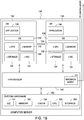
- FIG. 1B is a block diagram illustrating components of the physical machine 120 in the computing environment of Figure 1A .
- the physical machine 120 generally includes a set of system hardware 150, such as a network interface NIC 151, a memory 152, a CPU 153, and a storage device 154, and a cache 155.
- the hypervisor 140 also known as a virtual machine monitor (VMM), generally runs over the system hardware 150 and allows the system hardware 150 to host multiple virtual machines 130.
- the cache 155 provides a high-speed memory accessed by the CPU 153.
- the hypervisor 140 may be implemented as a software layer that runs directly on the hardware 150 intercepting some, or all, operating system calls to the hardware 150.
- the hypervisor 140 virtualizes CPU and memory while a single privileged guest (commonly referred to as a host) is assigned to manage and virtualize network traffic and storage I/O. That is, the host (one of the virtual machines 130) is also tasked with performing as a management system for some aspects of the virtualized system.
- the host generally runs using a specially privileged kernel that can access hardware devices 150 and can create/destroy virtual machines (guests).
- guests virtual machines
- each virtual machine includes a virtual CPU 133, a virtual memory 132, a virtual network interface 131, and virtual storage 134.
- each virtual machine 130 runs an operating system (OS) 135 on the virtual hardware exposed by the hypervisor 140.
- OS operating system
- the virtual hardware and operating system 135 provide a virtualized computing platform for applications 136.
- these virtual hardware allocations appear distinct to the OS and applications running on each virtual machine 130, often they are either shared or contend for some shared resource below the virtualization layer. That is, the virtual resources provide an abstraction for the underlying physical resources - and the underlying physical resources are shared among the virtual machines 130. Examples of this include a memory bus, L1/L2 cache, and physical network interfaces (e.g., NIC 151), etc.
- the feedback agent 141 is integrated with the hypervisor 140.
- the hypervisor 140 may be configured to generate normalized availability information regarding the status and loads of each virtual machine 130 and provide this information to the load balancer 110.
- the hypervisor 140 has access to performance metrics of each virtual machine 130.
- the hypervisor 140 runs directly on the system hardware 150, the hypervisor 140 also has access to performance metrics of the physical machine 120.
- the feedback agent 141 can monitor performance metrics of both the physical machine 120 and each virtual machine 130. Further, the feedback agent may report on the availability of a given virtual machine 130, taking into account both the availability of the physical machine 120 and the availability of the given virtual machine 130.
- the feedback agent 141 running on the hypervisor 140 may provide the load balancer 110 with information regarding each virtual machine executing over hypervisor 140.
- the hypervisor 140 can monitor actual loads on system hardware 150 as well as loads on the virtual devices, ( e.g. , virtual CPU 133), the hypervisor can provide the load 110 balancer with more useful information about the status and loads being experienced on the virtual machines 130. In turn, this allows the load balancer 110 to make better balancing decisions when distributing work requests to a cluster of virtualized systems ( i.e., to the virtual machines 130).
- Figure 1C is a flow chart illustrating a method 180 for a feedback agent 141 to provide availability information of a virtual machine to a load balancer 110, according to one embodiment.
- the method 180 may be performed periodically to provide the load balancer 110 with updated availability information of the virtual machines 130.
- the method begins at step 182, where performance metrics of the system hardware 150 are monitored.
- the performance metrics of the system hardware 150 may be obtained.
- API calls provided by the hypervisor 140 may be used to obtain load and status information such as (e g., CPU loads, memory usage, I/O operations, network congestion, etc. ) regarding the system hardware 150.
- the performance metrics of the system hardware 150 may be reported to the load balancer 110.
- the feedback agent 141 running as part of the hypervisor 140 provides the load balancer 110 with a direct view of the system hardware 150 to allow better virtual environment management.
- the feedback agent 141 can provide available network bandwidth of the physical machine 120 for related applications to avoid, e.g., oversubscription of the NIC.
- load and status information regarding the performance of individual virtual machines 130 may be monitored.
- the performance metrics of each virtual machine 130 may be obtained from the hypervisor 140.
- the feedback agent 141 may invoke API calls provided by the hypervisor 140 to obtain load and status information (CPU loads, memory usage, I/O operations, network congestion, etc. ) related to the virtual hardware devices exposed to each virtual machine 130.
- load and status information CPU loads, memory usage, I/O operations, network congestion, etc.
- a migrating status of a virtual machine 130 being migrated from one physical system to another may also be monitored.
- the performance metrics of an individual virtual machine 130 is normalized to account for the performance metrics of the physical machine 120 on which the virtual machine 130 is running.
- the formula for generating normalized availability information can be customized according to the server applications and tasks running on the virtual machines 130. For example, a normalized availability of a virtual machine could be the lower of two availability metrics, the first calculated by the virtual machine based on session counts ( i.e., requests assigned to that machine) and CPU utilization, and the second metric from the hypervisor could be used to account for memory bus utilization, network utilization and cache contention (which impacts data access times). In cases where a virtual machine is migrating form one physical host to another, the availability or load and status information of that machine may be set to a value that effectively represents a machine status of "not available.”
- a physical server has 8 GB RAM and a 2.0 GHz processor with two processing cores (resulting in ⁇ 4 GHz processing power).
- One reasonable virtual server configuration is to provide 1 GB RAM to each virtual machine, allowing eight identical virtual servers to be configured.
- the weighted average of resources available to a server is 1GB RAM (8/8) and 512 MHz of processing power (4000 Mhz/8). Note that this is a raw approximation only.
- the normalized availability information of each virtual machine 130 is sent to the load balancer 110.
- the normalized availability information may be sent using various load balancing protocols, such as DFP (dynamic feedback protocol) or KALAP (KeepAlive-Access Protocol), among others, and the normalized availability information may be packaged using such protocols, as appropriate for a particular load balancer 110.
- DFP dynamic feedback protocol
- KALAP KeepAlive-Access Protocol
- the load balancer 110 may not recognize that the virtualized systems are, in fact, virtualized. In such a case, the load balancer 110 may view each of the virtual machines 130 as an independent physical machine. However, as the load balancing information has been normalized prior to being sent to the load balancer 110, balancing decisions may be made based on the actual loads experienced by the physical systems underlying a given virtual machine. Alternatively, the normalized availability information of each virtual machine 130 running the hypervisor 140 is sent to the load balancer 110 individually. In such a case, the load balancer 110 may be configured to make load balancing determinations based on the feedback reported by each virtual machine individually as well as the feedback related to the overall performance on the server hosting the virtual machines.
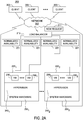
- FIG. 2A is a schematic block diagram illustrating an example computing environment 200, according to one embodiment.
- computing environment 200 includes a load balancer 210 and one or more physical machines 220 each configured to host one or more virtual machines 230.
- the load balancer 210 is configured to distribute tasks among the virtual machines 230 running on the one or more physical machines 220.
- the load balancer 210 receives availability information 221 from each virtual machine 230 and distributes tasks among the virtual machines 230 based, at least in part, on this information.
- the availability information from each virtual machine 230 is provided to the load balancer 210 by a feedback agent 237 running individually on each virtual machine 230. However, before being sent to the load balancer 210, the feedback agent normalizes the availability information for a given virtual machine 230 to account for the performance metrics of system hardware 250 of the physical machine 220 on which the virtual machine 230 resides.
- the load balancer 210 is configured to distribute tasks among virtual machines 230, based in part on the availability information and system loads reported by the virtual machines 230.
- availability information include central processing unit (CPU) loads, memory usage, network interface controller (NIC) usage, storage unit usage, etc.
- the loads obtained typically relate to the loads on the virtual machine (e.g., the load on a virtual CPU), and thus may not reflect the actual loads and availability of an underlying system (or CPU) running multiple virtual machines 230.
- the load balancer 210 is connected to a network 202 which is connected with a plurality of clients 203. New requests 211 from the clients 203 are routed to the load balancer 210 via the network 202. The load balancer 210 forwards each new request to a server on an available virtual machine 230 according to the received available information.
- FIG. 2B is a block diagram illustrating the physical machine 220 in the computing environment of Figure 2A .
- the physical machine 220 generally includes a set of system hardware 250, such as one or more network interfaces (NIC) 251, memory 252, a CPU 253, a cache 255, and a storage device 254, etc.
- the hypervisor 240 generally runs on top of the system hardware 250, allowing multiple operating systems on virtual machines 230 to be spawned and executed over the system hardware 250.
- the hypervisor 240 may be configured to intercept some, or all, operating system calls to the hardware 250 and manage how the different virtual machines are granted access to the underlying hardware 250.
- each virtual machine 230 runs its own operating system (OS) 235 on a virtual set of hardware exposed by the hypervisor.
- OS operating system
- each virtual machine exposes a set of virtual hardware, such as a virtual CPU 233, virtual memory 232, a virtual NIC 231, and virtual storage devices 234.
- applications 236 e.g., a set of web servers, application servers, database systems, etc. ) are shown being executed by the OS 235 on the virtual hardware.
- the OS 235 on each virtual machine 230 is shown running a feedback agent 237.
- the feedback agent 237 operates within each virtual machine 230 and provides the normalized availability information to the load balancer 210.
- the feedback agent 237 can query the hypervisor 240 to obtain performance metrics of the physical hardware 250 and query the OS 235 to obtain performance metrics of the virtual machine 230.
- the feedback agent 237 then generates a normalized the availability information of the virtual machine 230 from the performance metrics of both the physical machine 220 and the virtual machine 230.
- the feedback agent 237then conveys the normalized availability information to the load balancer 210.
- each feedback agent 237 on a given virtual machine 230 monitors the resource loads on that virtual machine 230 and reports this information back to the load balancer 210.
- each feedback agent 237 may normalize the load and status data to reflect what is occurring on the system as whole.
- the overall load on the underlying physical machine might be at (or near) peak capacity.
- the load balancer 210 if it is unaware of the system virtualization, it might make load balancing decisions to send requests to each virtual server - resulting in an overloaded physical system.
- the feedback agent 237 on each of the three virtual machines may normalize the load and status information, resulting in higher loads being reported to the load balancer 210 than was actually observed by the feedback agent 237 on any of the virtual machines 230 individually.
- the feedback agent 237 may use API calls supported by the hypervisor 240 to obtain a more accurate picture of the loads on the physical machine 220 in order to normalize loads reported the loads on the respective virtual machine 230.
- FIG. 2C is a flow chart illustrating a method 280 for a feedback agent to provide availability information for a virtual machine 230 to the load balancer 220, according to one embodiment.
- the method 280 may be performed periodically to provide updated availability information of the virtual machines 230.
- the method begins at step 282, where the feedback agent running on a given virtual machine 230 monitors performance metrics of the system hardware 250.
- the performance metrics of the system hardware 250 such as loading, may be obtained by querying the hypervisor 240 using propriety API or known API on the virtual machine 230.
- the feedback agent 237 monitors performance metrics of individual virtual machine 230.
- the performance metrics of the virtual machine 230 may be obtained using propriety API or known API on the OS 235 of the virtual machine 230.
- the performance metrics of the virtual machine 230 are modified by the performance metrics of the physical machine 220 on which the virtual machine 230 is executing to generate normalized availability information.
- the formula for generating normalized availability information can be customized according to applications of the virtual environment.
- the normalized availability information of the virtual machine 230 is sent to the load balancer 210.
- the normalized availability information may be sent using a variety of load balancing protocols, (such as DFP (dynamic feedback protocol), KALAP, among others.
- FIG 3 is a flow chart illustrating a method 300 for balancing application load among multiple servers in a computing environment having one or more virtual machines.
- the method 300 may be run in a program in a load balancer, such as the load balancer 110 of Figure 1A and the load balancer 210 of Figure 2A .
- the load balancer may be configured to balance load among applications running on virtual machines, physical machines, or combination of virtual machines and physical machines.
- a new request is received by the load balancer.
- the request may be related to any service that is distributable among applications on the virtual machines and/or physical machines connected to the load balancer, such as, e.g., a request for a web server or a query for a database.
- the new request may be received from a network connected to the load balancer.
- the load balancer evaluates availability information of a virtual machines and/or physical machines connected in the system. In one embodiment, the load balancer does not distinguish virtual machines from physical machines.
- the availability information is provided by a feedback agent in each virtual/physical machine, or by a feedback agent within a hypervisor for virtual machines. In one embodiment, the availability information for virtual machines is normalized to account for both the performance metrics of the virtual hardware seen by the virtual machine and the performance metrics of the physical hardware on which the virtual machine is ran.
- the load balancer selects a target machine among the virtual machines and/or the physical machines.
- the virtual machine/physical machine with the most available resources associated with the request is selected to be the target machine.
- the load balancer distributes the new request to the target machine. For example, the load balancer may forward the request to a sever application running on the selected virtual machine, i.e., to a port and IP address assigned to the selected virtual machine.
Landscapes
- Engineering & Computer Science (AREA)
- Software Systems (AREA)
- Theoretical Computer Science (AREA)
- Physics & Mathematics (AREA)
- General Engineering & Computer Science (AREA)
- General Physics & Mathematics (AREA)
- Computer Networks & Wireless Communication (AREA)
- Signal Processing (AREA)
- Environmental & Geological Engineering (AREA)
- Debugging And Monitoring (AREA)
- Computer And Data Communications (AREA)
Claims (13)
- Computerimplementiertes Verfahren zum Versorgen einer Lastausgleicheranwendung mit Feedbackinformationen zum Ausgleichen der Belastung durch Anwendungen, die an einer Vielzahl von virtuellen Maschinen ausgeführt werden, wobei das Verfahren Folgendes umfasst:Überwachen (282) von ein oder mehr Leistungsmetriken virtueller Hardwarekomponenten einer ersten virtuellen Maschine der Vielzahl von virtuellen Maschinen durch einen Feedback-Agenten;Überwachen (284) von ein oder mehr Leistungsmetriken von Hardwarekomponenten eines ersten Rechensystems, das Host der ersten virtuellen Maschine ist;Normalisieren (286) der ein oder mehr Leistungsmetriken der virtuellen Hardwarekomponenten der ersten virtuellen Maschine auf Basis der Leistungsmetriken der Hardwarekomponenten des ersten Rechensystems zum Erzeugen normalisierter Verfügbarkeitsinformationen für die erste virtuelle Maschine, die Belastung und Status der virtuellen Hardwarekomponenten der ersten virtuellen Maschine bereitstellen, die Belastung und Status der Hardware-Rechenkomponenten des ersten Rechensystems reflektieren; undSenden (288) der normalisierten Verfügbarkeitsinformationen für die erste virtuelle Maschine über eine Netzschnittstelle an die Lastausgleicheranwendung, so dass die Lastausgleicheranwendung Rechenprozesse auf Basis der normalisierten Verfügbarkeitsinformationen auf die Vielzahl der virtuellen Maschinen verteilen kann,wobei die Lastausgleicheranwendung ein Programm, das auf einem zweiten Rechensystem ausgeführt wird, aufweist und wobei die Rechenprozesse IP-Netzwerk-Dienstanforderungen umfassen und wobei die Lastausgleicheranwendung konfiguriert ist zum:Zuweisen jeder Anforderung zu einer Netzwerkverbindung an einer der virtuellen Maschinen;Überwachen einer Migration von einer der virtuellen Maschinen vom ersten Rechensystem zu einem Ziel-Rechensystem; undselektives Verwerfen von an Verbindungen an der virtuellen Maschine, die migriert wird, gerichtetem Netzverkehr während der Migration.
- Computerimplementiertes Verfahren nach Anspruch 1, wobei der Feedback-Agent eine Komponente eines Hypervisors ist, der das erste Rechensystem ausführt.
- Computerimplementiertes Verfahren nach Anspruch 1, wobei die ein oder mehr Leistungsmetriken der ersten virtuellen Maschine wenigstens eine von einer Belastung einer virtuellen CPU und einer Belastung einer virtuellen Netzschnittstelle umfassen.
- Computerimplementiertes Verfahren nach Anspruch 1, wobei die ein oder mehr Leistungsmetriken des ersten Rechensystems wenigstens eine von einer Belastung einer CPU und einer Belastung der Netzschnittstelle umfassen.
- Computerimplementiertes Verfahren nach Anspruch 1, wobei eine Instanz des Feedback-Agenten auf jeder der Vielzahl von virtuellen Maschinen ausgeführt wird.
- Computerimplementiertes Verfahren nach Anspruch 5, wobei die Instanz des Feedback-Agenten auf einer der Vielzahl von virtuellen Maschinen zum Erhalten der Überwachungsleistungsmetriken des Rechensystems durch Abfragen des Hypervisors konfiguriert ist.
- Computerlesbares Speichermedium, das ausführbare Anweisungen enthält, die bei Ausführung auf einem Verarbeitungssystem das Verarbeitungssystem zum Durchführen aller Schritte eines Verfahrens nach einem der Ansprüche 1 bis 6 veranlassen.
- Rechensystem, umfassend:einen Feedback-Agenten, der konfiguriert ist zum:Überwachen (282) von ein oder mehr Leistungsmetriken virtueller Hardwarekomponenten einer ersten virtuellen Maschine der Vielzahl von virtuellen Maschinen;Überwachen (284) von ein oder mehr Leistungsmetriken von Hardwarekomponenten eines ersten Rechensystems, das Host der ersten virtuellen Maschine ist;Normalisieren (286) der ein oder mehr Leistungsmetriken der virtuellen Hardwarekomponenten der ersten virtuellen Maschine auf Basis der Leistungsmetriken der Hardwarekomponenten des ersten Rechensystems zum Erzeugen normalisierter Verfügbarkeitsinformationen für die erste virtuelle Maschine, die Belastung und Status der virtuellen Hardwarekomponenten der ersten virtuellen Maschine bereitstellen, die Belastung und Status der Hardware-Rechenkomponenten des ersten Rechensystems reflektieren; undSenden (288) der normalisierten Verfügbarkeitsinformationen für die erste virtuelle Maschine über eine Netzschnittstelle an die Lastausgleicheranwendung, so dass die Lastausgleicheranwendung Rechenprozesse auf Basis der normalisierten Verfügbarkeitsinformationen auf die Vielzahl der virtuellen Maschinen verteilen kann; undeine Lastausgleicheranwendung, die auf einem zweiten Rechensystem ausgeführt wird, wobei die Rechenprozesse IP-Netzwerk-Dienstanforderungen umfassen und wobei die Lastausgleicheranwendung konfiguriert ist zum:Zuweisen jeder Anforderung zu einer Netzwerkverbindung an einer der virtuellen Maschinen;Überwachen einer Migration von einer der virtuellen Maschinen vom ersten Rechensystem zu einem Ziel-Rechensystem; undselektives Verwerfen von an Verbindungen an der virtuellen Maschine, die migriert wird, gerichtetem Netzverkehr während der Migration.
- Rechensystem nach Anspruch 8, wobei der Feedback-Agent eine Komponente eines das erste Rechensystem ausführenden Hypervisors ist.
- Rechensystem nach Anspruch 8, wobei die ein oder mehr Leistungsmetriken der ersten virtuellen Maschine wenigstens eine von einer Belastung einer virtuellen CPU und einer Belastung einer virtuellen Netzschnittstelle umfassen.
- Rechensystem nach Anspruch 8, wobei die ein oder mehr Leistungsmetriken des ersten Rechensystems wenigstens eine von einer Belastung einer CPU und einer Belastung einer Netzschnittstelle umfassen.
- Rechensystem nach Anspruch 8, wobei eine Instanz des Feedback-Agenten auf jeder der Vielzahl von virtuellen Maschinen ausgeführt wird.
- Rechensystem nach Anspruch 12, wobei die Instanz des Feedback-Agenten auf einer der Vielzahl von virtuellen Maschinen zum Erhalten der Überwachungsleistungsmetriken des Rechensystems durch Abfragen des Hypervisors konfiguriert ist.
Applications Claiming Priority (2)
| Application Number | Priority Date | Filing Date | Title |
|---|---|---|---|
| US12/431,546 US9600332B2 (en) | 2009-04-28 | 2009-04-28 | Server load balancing based on virtual utilization, physical utilization, and feedback |
| PCT/US2010/032792 WO2010127017A1 (en) | 2009-04-28 | 2010-04-28 | Methods and apparatus to get feedback information in virtual environment for server load balancing |
Publications (2)
| Publication Number | Publication Date |
|---|---|
| EP2425339A1 EP2425339A1 (de) | 2012-03-07 |
| EP2425339B1 true EP2425339B1 (de) | 2020-04-01 |
Family
ID=42338176
Family Applications (1)
| Application Number | Title | Priority Date | Filing Date |
|---|---|---|---|
| EP10719691.7A Active EP2425339B1 (de) | 2009-04-28 | 2010-04-28 | Verfahren und vorrichtung zum empfangen von feedback-informationen in einer virtuellen umgebung für serverlastausgleich |
Country Status (4)
| Country | Link |
|---|---|
| US (1) | US9600332B2 (de) |
| EP (1) | EP2425339B1 (de) |
| CN (1) | CN102187315B (de) |
| WO (1) | WO2010127017A1 (de) |
Families Citing this family (86)
| Publication number | Priority date | Publication date | Assignee | Title |
|---|---|---|---|---|
| WO2009058042A1 (en) * | 2007-10-29 | 2009-05-07 | Intel Corporation | A method of external performance monitoring for virtualized environments |
| US9122537B2 (en) * | 2009-10-30 | 2015-09-01 | Cisco Technology, Inc. | Balancing server load according to availability of physical resources based on the detection of out-of-sequence packets |
| US8245140B2 (en) * | 2009-12-31 | 2012-08-14 | International Business Machines Corporation | Visualization and consolidation of virtual machines in a virtualized data center |
| US20110209160A1 (en) * | 2010-02-22 | 2011-08-25 | Vasanth Venkatachalam | Managed Code State Indicator |
| US9442748B2 (en) | 2010-03-17 | 2016-09-13 | Zerto, Ltd. | Multi-RPO data protection |
| US9389892B2 (en) | 2010-03-17 | 2016-07-12 | Zerto Ltd. | Multiple points in time disk images for disaster recovery |
| US11256529B2 (en) | 2010-03-17 | 2022-02-22 | Zerto Ltd. | Methods and apparatus for providing hypervisor level data services for server virtualization |
| US10649799B2 (en) | 2010-03-17 | 2020-05-12 | Zerto Ltd. | Hypervisor virtual server system, and method for providing data services within a hypervisor virtual server system |
| US9710294B2 (en) * | 2010-03-17 | 2017-07-18 | Zerto Ltd. | Methods and apparatus for providing hypervisor level data services for server virtualization |
| US8782434B1 (en) | 2010-07-15 | 2014-07-15 | The Research Foundation For The State University Of New York | System and method for validating program execution at run-time |
| US8327373B2 (en) * | 2010-08-24 | 2012-12-04 | Novell, Inc. | System and method for structuring self-provisioning workloads deployed in virtualized data centers |
| US8949410B2 (en) | 2010-09-10 | 2015-02-03 | Cisco Technology, Inc. | Server load balancer scaling for virtual servers |
| US8769534B2 (en) * | 2010-09-23 | 2014-07-01 | Accenture Global Services Limited | Measuring CPU utilization in a cloud computing infrastructure by artificially executing a bursting application on a virtual machine |
| US9223624B2 (en) * | 2010-10-20 | 2015-12-29 | International Business Machines Corporation | Processing requests in a cloud computing environment |
| CN102082692B (zh) * | 2011-01-24 | 2012-10-17 | 华为技术有限公司 | 基于网络数据流向的虚拟机迁移方法、设备和集群系统 |
| US8612550B2 (en) | 2011-02-07 | 2013-12-17 | Microsoft Corporation | Proxy-based cache content distribution and affinity |
| US8483234B2 (en) * | 2011-02-17 | 2013-07-09 | Alcatel Lucent | Monitoring resource congestion in a network processor |
| EP2500823A1 (de) * | 2011-03-15 | 2012-09-19 | Siemens Aktiengesellschaft | Betrieb eines Datenverarbeitungsnetzes mit mehreren geografisch beabstandeten Datenzentren |
| US9176759B1 (en) * | 2011-03-16 | 2015-11-03 | Google Inc. | Monitoring and automatically managing applications |
| US8966059B2 (en) * | 2011-04-06 | 2015-02-24 | Microsoft Technology Licensing, Llc | Cached data detection |
| JP5939740B2 (ja) * | 2011-04-11 | 2016-06-22 | インターナショナル・ビジネス・マシーンズ・コーポレーションInternational Business Machines Corporation | 動的にリソースを割り当てる方法、システム及びプログラム |
| US9251481B2 (en) * | 2011-06-13 | 2016-02-02 | Accenture Global Services Limited | Distributed metering and monitoring system |
| US9766947B2 (en) * | 2011-06-24 | 2017-09-19 | At&T Intellectual Property I, L.P. | Methods and apparatus to monitor server loads |
| US10264058B1 (en) | 2011-06-30 | 2019-04-16 | Emc Corporation | Defining virtual application templates |
| US10042657B1 (en) | 2011-06-30 | 2018-08-07 | Emc Corporation | Provisioning virtual applciations from virtual application templates |
| US9058336B1 (en) * | 2011-06-30 | 2015-06-16 | Emc Corporation | Managing virtual datacenters with tool that maintains communications with a virtual data center that is moved |
| US9282142B1 (en) | 2011-06-30 | 2016-03-08 | Emc Corporation | Transferring virtual datacenters between hosting locations while maintaining communication with a gateway server following the transfer |
| US9323820B1 (en) | 2011-06-30 | 2016-04-26 | Emc Corporation | Virtual datacenter redundancy |
| US9189259B2 (en) * | 2011-08-22 | 2015-11-17 | International Business Machines Corporation | Provisioning of virtual machine pools based on historical data in a networked computing environment |
| US8949431B2 (en) * | 2011-08-24 | 2015-02-03 | Radware, Ltd. | Method for live migration of virtual machines |
| US9250944B2 (en) | 2011-08-30 | 2016-02-02 | International Business Machines Corporation | Selection of virtual machines from pools of pre-provisioned virtual machines in a networked computing environment |
| US8635152B2 (en) | 2011-09-14 | 2014-01-21 | Microsoft Corporation | Multi tenancy for single tenancy applications |
| US8825863B2 (en) * | 2011-09-20 | 2014-09-02 | International Business Machines Corporation | Virtual machine placement within a server farm |
| US9154549B2 (en) | 2011-10-27 | 2015-10-06 | Cisco Technology, Inc. | Dynamic server farms |
| CN102508718B (zh) * | 2011-11-22 | 2015-04-15 | 杭州华三通信技术有限公司 | 一种虚拟机负载均衡方法和装置 |
| US9946563B2 (en) * | 2012-02-21 | 2018-04-17 | Disney Enterprises, Inc. | Batch scheduler management of virtual machines |
| US20130232254A1 (en) * | 2012-03-02 | 2013-09-05 | Computenext Inc. | Cloud resource utilization management |
| US10353738B2 (en) | 2012-03-21 | 2019-07-16 | International Business Machines Corporation | Resource allocation based on social networking trends in a networked computing environment |
| US9842002B2 (en) | 2012-05-01 | 2017-12-12 | Red Hat, Inc. | Node selection for a new application in a multi-tenant cloud hosting environment |
| US10365953B2 (en) * | 2012-05-01 | 2019-07-30 | Red Hat, Inc. | Tracking and utilizing facts about a node of a multi-tenant cloud hosting environment |
| US9317325B2 (en) | 2012-05-01 | 2016-04-19 | Red Hat, Inc. | Application idling in a multi-tenant cloud-based application hosting environment |
| JP5579224B2 (ja) | 2012-05-02 | 2014-08-27 | 株式会社Nttドコモ | 移動体通信システム、呼処理ノード及び通信制御方法 |
| CN102790793A (zh) * | 2012-05-08 | 2012-11-21 | 北京邮电大学 | 一种面向云计算虚拟机迁移的决策方法及控制模块 |
| US9063721B2 (en) | 2012-09-14 | 2015-06-23 | The Research Foundation For The State University Of New York | Continuous run-time validation of program execution: a practical approach |
| US9069782B2 (en) | 2012-10-01 | 2015-06-30 | The Research Foundation For The State University Of New York | System and method for security and privacy aware virtual machine checkpointing |
| US9208041B2 (en) | 2012-10-05 | 2015-12-08 | International Business Machines Corporation | Dynamic protection of a master operating system image |
| US9286051B2 (en) | 2012-10-05 | 2016-03-15 | International Business Machines Corporation | Dynamic protection of one or more deployed copies of a master operating system image |
| US9311070B2 (en) | 2012-10-05 | 2016-04-12 | International Business Machines Corporation | Dynamically recommending configuration changes to an operating system image |
| US9246998B2 (en) | 2012-10-16 | 2016-01-26 | Microsoft Technology Licensing, Llc | Load balancer bypass |
| US8990772B2 (en) | 2012-10-16 | 2015-03-24 | International Business Machines Corporation | Dynamically recommending changes to an association between an operating system image and an update group |
| US9015714B2 (en) | 2012-11-27 | 2015-04-21 | Citrix Systems, Inc. | Diagnostic virtual machine created to monitor cluster of hypervisors based on user requesting assistance from cluster administrator |
| US9712375B2 (en) | 2012-12-12 | 2017-07-18 | Microsoft Technology Licensing, Llc | Workload deployment with infrastructure management agent provisioning |
| US9384115B2 (en) * | 2013-05-21 | 2016-07-05 | Amazon Technologies, Inc. | Determining and monitoring performance capabilities of a computer resource service |
| US10554546B1 (en) * | 2013-06-28 | 2020-02-04 | EMC IP Holding Company LLC | System modeling of data centers to drive cross domain characterization, automation, and predictive analytics |
| US9781041B2 (en) * | 2013-07-24 | 2017-10-03 | Dell Products Lp | Systems and methods for native network interface controller (NIC) teaming load balancing |
| US9378230B1 (en) | 2013-09-16 | 2016-06-28 | Amazon Technologies, Inc. | Ensuring availability of data in a set being uncorrelated over time |
| US10261813B2 (en) * | 2013-09-25 | 2019-04-16 | Arm Limited | Data processing system for dispatching tasks from a plurality of applications to a shared resource provided by an accelerator |
| JP6224255B2 (ja) | 2013-12-24 | 2017-11-01 | インテル コーポレイション | ヒューリスティック競合モデルを使用したクラウド計算スケジューリング |
| CN103685561B (zh) * | 2013-12-30 | 2017-01-11 | 上海交通大学 | IaaS平台虚拟机调度方法 |
| US9513939B2 (en) | 2014-05-19 | 2016-12-06 | International Business Machines Corporation | Agile VM load balancing through micro-checkpointing and multi-architecture emulation |
| US9600314B2 (en) | 2014-05-27 | 2017-03-21 | Red Hat Israel, Ltd. | Scheduler limited virtual device polling |
| US9792050B2 (en) * | 2014-08-13 | 2017-10-17 | PernixData, Inc. | Distributed caching systems and methods |
| US9471362B2 (en) * | 2014-09-23 | 2016-10-18 | Splunk Inc. | Correlating hypervisor data for a virtual machine with associated operating system data |
| US9836339B1 (en) | 2014-09-24 | 2017-12-05 | Amazon Technologies, Inc. | Application programming interface as a service |
| US9766917B2 (en) | 2014-10-29 | 2017-09-19 | Red Hat Israel, Ltd. | Limited virtual device polling based on virtual CPU pre-emption |
| US9727387B2 (en) * | 2014-11-10 | 2017-08-08 | International Business Machines Corporation | System management and maintenance in a distributed computing environment |
| US9916174B2 (en) * | 2015-05-27 | 2018-03-13 | International Business Machines Corporation | Updating networks having virtual machines with migration information |
| US10310883B2 (en) * | 2015-07-06 | 2019-06-04 | Purdue Research Foundation | Integrated configuration engine for interference mitigation in cloud computing |
| US10296227B2 (en) * | 2015-08-18 | 2019-05-21 | Oracle International Corporation | System and method for dynamic cache distribution for in-memory data grids |
| US9942631B2 (en) * | 2015-09-25 | 2018-04-10 | Intel Corporation | Out-of-band platform tuning and configuration |
| CN105260245B (zh) * | 2015-11-04 | 2018-11-13 | 浪潮(北京)电子信息产业有限公司 | 一种资源调度方法及装置 |
| US10361919B2 (en) | 2015-11-09 | 2019-07-23 | At&T Intellectual Property I, L.P. | Self-healing and dynamic optimization of VM server cluster management in multi-cloud platform |
| WO2017091116A1 (en) * | 2015-11-26 | 2017-06-01 | Telefonaktiebolaget Lm Ericsson (Publ) | Balancing processing loads of virtual machines |
| CN105959346A (zh) * | 2016-04-19 | 2016-09-21 | 中国银联股份有限公司 | 基于服务器集群的数据处理系统及方法 |
| US10345883B2 (en) | 2016-05-31 | 2019-07-09 | Taiwan Semiconductor Manufacturing Co., Ltd. | Power estimation |
| US10372498B2 (en) * | 2016-09-26 | 2019-08-06 | Intel Corporation | Dynamic virtual CPU core allocation |
| US10740130B1 (en) * | 2016-09-29 | 2020-08-11 | EMC IP Holding Company LLC | Administrative system for rendering a user interface within a virtual machine to allow a user to administer the virtual machine and group of underlying hardware of a hypervisor |
| US10579407B2 (en) * | 2016-10-28 | 2020-03-03 | ShieldX Networks, Inc. | Systems and methods for deploying microservices in a networked microservices system |
| US20190020559A1 (en) * | 2017-07-17 | 2019-01-17 | Nicira, Inc. | Distributed health check in virtualized computing environments |
| JP2019029946A (ja) * | 2017-08-03 | 2019-02-21 | 富士通株式会社 | 通信制御装置、通信制御システム、及び通信制御方法 |
| CN107949019B (zh) * | 2017-10-24 | 2021-09-21 | 上海连尚网络科技有限公司 | 一种无线接入点的负载均衡方法 |
| US10778785B2 (en) * | 2017-11-28 | 2020-09-15 | International Business Machines Corporation | Cognitive method for detecting service availability in a cloud environment |
| JP6977621B2 (ja) * | 2018-03-02 | 2021-12-08 | 日本電信電話株式会社 | 制御装置、及び制御方法 |
| US11936562B2 (en) * | 2018-07-19 | 2024-03-19 | Vmware, Inc. | Virtual machine packet processing offload |
| TWI742774B (zh) * | 2020-07-22 | 2021-10-11 | 財團法人國家實驗研究院 | 運算系統及其主機資源分配方法 |
| CN111901409B (zh) * | 2020-07-24 | 2022-04-29 | 山东海量信息技术研究院 | 虚拟化云平台的负载均衡实现方法、装置及可读存储介质 |
Family Cites Families (25)
| Publication number | Priority date | Publication date | Assignee | Title |
|---|---|---|---|---|
| US7203944B1 (en) * | 2003-07-09 | 2007-04-10 | Veritas Operating Corporation | Migrating virtual machines among computer systems to balance load caused by virtual machines |
| EP1678617A4 (de) * | 2003-10-08 | 2008-03-26 | Unisys Corp | Computersystem-paravirtualisierung durch verwendung eines hypervisors, der in einer partition des hostsystems implementiert wird |
| US20050198303A1 (en) * | 2004-01-02 | 2005-09-08 | Robert Knauerhase | Dynamic virtual machine service provider allocation |
| US7383405B2 (en) * | 2004-06-30 | 2008-06-03 | Microsoft Corporation | Systems and methods for voluntary migration of a virtual machine between hosts with common storage connectivity |
| US9264384B1 (en) * | 2004-07-22 | 2016-02-16 | Oracle International Corporation | Resource virtualization mechanism including virtual host bus adapters |
| US7886294B2 (en) * | 2004-12-28 | 2011-02-08 | Sap Ag | Virtual machine monitoring |
| US7424745B2 (en) * | 2005-02-14 | 2008-09-09 | Lenovo (Singapore) Pte. Ltd. | Anti-virus fix for intermittently connected client computers |
| US7607129B2 (en) * | 2005-04-07 | 2009-10-20 | International Business Machines Corporation | Method and apparatus for using virtual machine technology for managing parallel communicating applications |
| US7562349B2 (en) * | 2005-04-25 | 2009-07-14 | Sap Ag | Version adaptation interface for integration of different virtual machines |
| US7689660B2 (en) * | 2005-06-09 | 2010-03-30 | Sap Ag | Application server architecture |
| US7587492B2 (en) * | 2005-07-29 | 2009-09-08 | Hewlett-Packard Development Company, L.P. | Dynamic performance management for virtual servers |
| WO2007021836A2 (en) * | 2005-08-15 | 2007-02-22 | Toutvirtual Inc. | Virtual systems management |
| WO2007136021A1 (ja) * | 2006-05-24 | 2007-11-29 | Nec Corporation | 仮想マシン管理装置、仮想マシン管理方法およびプログラム |
| US8185893B2 (en) * | 2006-10-27 | 2012-05-22 | Hewlett-Packard Development Company, L.P. | Starting up at least one virtual machine in a physical machine by a load balancer |
| US7778220B2 (en) * | 2006-11-06 | 2010-08-17 | Cisco Technology, Inc. | Method to loadbalance among mobile IPv6 home agents |
| US8381209B2 (en) * | 2007-01-03 | 2013-02-19 | International Business Machines Corporation | Moveable access control list (ACL) mechanisms for hypervisors and virtual machines and virtual port firewalls |
| US20080201455A1 (en) * | 2007-02-15 | 2008-08-21 | Husain Syed M Amir | Moving Execution of a Virtual Machine Across Different Virtualization Platforms |
| US8086739B2 (en) * | 2007-12-10 | 2011-12-27 | Oracle America, Inc. | Method and system for monitoring virtual wires |
| US20090193146A1 (en) * | 2008-01-24 | 2009-07-30 | Cisco Technology, Inc. | Utilizing Virtual Server Weight for Loadbalancing |
| US8013859B2 (en) * | 2008-03-20 | 2011-09-06 | Vmware, Inc. | Graphical display for illustrating effectiveness of resource management and resource balancing |
| US20090265707A1 (en) * | 2008-04-21 | 2009-10-22 | Microsoft Corporation | Optimizing application performance on virtual machines automatically with end-user preferences |
| US8219653B1 (en) * | 2008-09-23 | 2012-07-10 | Gogrid, LLC | System and method for adapting a system configuration of a first computer system for hosting on a second computer system |
| US7962647B2 (en) * | 2008-11-24 | 2011-06-14 | Vmware, Inc. | Application delivery control module for virtual network switch |
| US8146082B2 (en) * | 2009-03-25 | 2012-03-27 | Vmware, Inc. | Migrating virtual machines configured with pass-through devices |
| DE102009060686A1 (de) * | 2009-12-29 | 2011-06-30 | Siemens Aktiengesellschaft, 80333 | Verfahren und Vorrichtung zum Betreiben einer virtuellen Maschine gemäß einer zugeordneten Rechteinformation |
-
2009
- 2009-04-28 US US12/431,546 patent/US9600332B2/en active Active
-
2010
- 2010-04-28 CN CN201080002904.8A patent/CN102187315B/zh active Active
- 2010-04-28 WO PCT/US2010/032792 patent/WO2010127017A1/en not_active Ceased
- 2010-04-28 EP EP10719691.7A patent/EP2425339B1/de active Active
Non-Patent Citations (1)
| Title |
|---|
| None * |
Also Published As
| Publication number | Publication date |
|---|---|
| CN102187315B (zh) | 2015-01-28 |
| CN102187315A (zh) | 2011-09-14 |
| WO2010127017A1 (en) | 2010-11-04 |
| US20100274890A1 (en) | 2010-10-28 |
| US9600332B2 (en) | 2017-03-21 |
| EP2425339A1 (de) | 2012-03-07 |
Similar Documents
| Publication | Publication Date | Title |
|---|---|---|
| EP2425339B1 (de) | Verfahren und vorrichtung zum empfangen von feedback-informationen in einer virtuellen umgebung für serverlastausgleich | |
| US11736560B2 (en) | Distributed network services | |
| US10282222B2 (en) | Cloud virtual machine defragmentation for hybrid cloud infrastructure | |
| US10579407B2 (en) | Systems and methods for deploying microservices in a networked microservices system | |
| US8613085B2 (en) | Method and system for traffic management via virtual machine migration | |
| KR101906632B1 (ko) | 네트워크 사용 제어 기법 | |
| US8566822B2 (en) | Method and system for distributing hypervisor functionality over multiple physical devices in a network and configuring sub-hypervisor to control the virtual machines | |
| US10616319B2 (en) | Methods and apparatus to allocate temporary protocol ports to control network load balancing | |
| Chiang et al. | SDN-based server clusters with dynamic load balancing and performance improvement | |
| US20120227039A1 (en) | Method for executing virtual application delivery controllers having different application versions over a computing device | |
| US9848060B2 (en) | Combining disparate applications into a single workload group | |
| WO2016134542A1 (zh) | 虚拟机的迁移方法、装置及设备 | |
| US11647083B2 (en) | Cluster-aware multipath transmission control protocol (MPTCP) session load balancing | |
| US20140289728A1 (en) | Apparatus, system, method, and storage medium | |
| JP5151509B2 (ja) | 仮想マシンシステム及びそれに用いる仮想マシン分散方法 | |
| Wang et al. | Scheduling network function chains under sub-millisecond latency slos | |
| Chang et al. | Design and implementation of scalable and load-balanced virtual machine clusters | |
| US11716393B1 (en) | Switching connectors for establishing sessions to access services according to network conditions | |
| Na et al. | Optimal service placement using pseudo service chaining mechanism for cloud-based multimedia services | |
| Berwal et al. | Load balancing in cloud computing | |
| WO2026090476A1 (en) | Generalized edge compute (gec) architecture with egress link safety | |
| Ghorpade et al. | A Cost Effective Approach for Provisioning In Cloud |
Legal Events
| Date | Code | Title | Description |
|---|---|---|---|
| PUAI | Public reference made under article 153(3) epc to a published international application that has entered the european phase |
Free format text: ORIGINAL CODE: 0009012 |
|
| 17P | Request for examination filed |
Effective date: 20101223 |
|
| AK | Designated contracting states |
Kind code of ref document: A1 Designated state(s): AT BE BG CH CY CZ DE DK EE ES FI FR GB GR HR HU IE IS IT LI LT LU LV MC MK MT NL NO PL PT RO SE SI SK SM TR |
|
| DAX | Request for extension of the european patent (deleted) | ||
| 17Q | First examination report despatched |
Effective date: 20160506 |
|
| STAA | Information on the status of an ep patent application or granted ep patent |
Free format text: STATUS: EXAMINATION IS IN PROGRESS |
|
| REG | Reference to a national code |
Ref country code: DE Ref legal event code: R079 Ref document number: 602010063724 Country of ref document: DE Free format text: PREVIOUS MAIN CLASS: G06F0009460000 Ipc: G06F0009480000 |
|
| RIC1 | Information provided on ipc code assigned before grant |
Ipc: G06F 9/48 20060101AFI20190827BHEP Ipc: G06F 9/50 20060101ALI20190827BHEP |
|
| GRAP | Despatch of communication of intention to grant a patent |
Free format text: ORIGINAL CODE: EPIDOSNIGR1 |
|
| STAA | Information on the status of an ep patent application or granted ep patent |
Free format text: STATUS: GRANT OF PATENT IS INTENDED |
|
| INTG | Intention to grant announced |
Effective date: 20191025 |
|
| RIN1 | Information on inventor provided before grant (corrected) |
Inventor name: ALBERT, MARK Inventor name: PATEL, ALPESH, S. Inventor name: SRINIVASAN, UDAYAKUMAR Inventor name: O'ROURKE, CHRIS |
|
| GRAS | Grant fee paid |
Free format text: ORIGINAL CODE: EPIDOSNIGR3 |
|
| GRAA | (expected) grant |
Free format text: ORIGINAL CODE: 0009210 |
|
| STAA | Information on the status of an ep patent application or granted ep patent |
Free format text: STATUS: THE PATENT HAS BEEN GRANTED |
|
| AK | Designated contracting states |
Kind code of ref document: B1 Designated state(s): AT BE BG CH CY CZ DE DK EE ES FI FR GB GR HR HU IE IS IT LI LT LU LV MC MK MT NL NO PL PT RO SE SI SK SM TR |
|
| REG | Reference to a national code |
Ref country code: GB Ref legal event code: FG4D |
|
| REG | Reference to a national code |
Ref country code: CH Ref legal event code: EP Ref country code: AT Ref legal event code: REF Ref document number: 1252249 Country of ref document: AT Kind code of ref document: T Effective date: 20200415 |
|
| REG | Reference to a national code |
Ref country code: DE Ref legal event code: R096 Ref document number: 602010063724 Country of ref document: DE |
|
| REG | Reference to a national code |
Ref country code: IE Ref legal event code: FG4D |
|
| PG25 | Lapsed in a contracting state [announced via postgrant information from national office to epo] |
Ref country code: BG Free format text: LAPSE BECAUSE OF FAILURE TO SUBMIT A TRANSLATION OF THE DESCRIPTION OR TO PAY THE FEE WITHIN THE PRESCRIBED TIME-LIMIT Effective date: 20200701 |
|
| REG | Reference to a national code |
Ref country code: NL Ref legal event code: MP Effective date: 20200401 |
|
| REG | Reference to a national code |
Ref country code: LT Ref legal event code: MG4D |
|
| PG25 | Lapsed in a contracting state [announced via postgrant information from national office to epo] |
Ref country code: SE Free format text: LAPSE BECAUSE OF FAILURE TO SUBMIT A TRANSLATION OF THE DESCRIPTION OR TO PAY THE FEE WITHIN THE PRESCRIBED TIME-LIMIT Effective date: 20200401 Ref country code: GR Free format text: LAPSE BECAUSE OF FAILURE TO SUBMIT A TRANSLATION OF THE DESCRIPTION OR TO PAY THE FEE WITHIN THE PRESCRIBED TIME-LIMIT Effective date: 20200702 Ref country code: NL Free format text: LAPSE BECAUSE OF FAILURE TO SUBMIT A TRANSLATION OF THE DESCRIPTION OR TO PAY THE FEE WITHIN THE PRESCRIBED TIME-LIMIT Effective date: 20200401 Ref country code: PT Free format text: LAPSE BECAUSE OF FAILURE TO SUBMIT A TRANSLATION OF THE DESCRIPTION OR TO PAY THE FEE WITHIN THE PRESCRIBED TIME-LIMIT Effective date: 20200817 Ref country code: LT Free format text: LAPSE BECAUSE OF FAILURE TO SUBMIT A TRANSLATION OF THE DESCRIPTION OR TO PAY THE FEE WITHIN THE PRESCRIBED TIME-LIMIT Effective date: 20200401 Ref country code: CZ Free format text: LAPSE BECAUSE OF FAILURE TO SUBMIT A TRANSLATION OF THE DESCRIPTION OR TO PAY THE FEE WITHIN THE PRESCRIBED TIME-LIMIT Effective date: 20200401 Ref country code: IS Free format text: LAPSE BECAUSE OF FAILURE TO SUBMIT A TRANSLATION OF THE DESCRIPTION OR TO PAY THE FEE WITHIN THE PRESCRIBED TIME-LIMIT Effective date: 20200801 Ref country code: NO Free format text: LAPSE BECAUSE OF FAILURE TO SUBMIT A TRANSLATION OF THE DESCRIPTION OR TO PAY THE FEE WITHIN THE PRESCRIBED TIME-LIMIT Effective date: 20200701 Ref country code: FI Free format text: LAPSE BECAUSE OF FAILURE TO SUBMIT A TRANSLATION OF THE DESCRIPTION OR TO PAY THE FEE WITHIN THE PRESCRIBED TIME-LIMIT Effective date: 20200401 |
|
| REG | Reference to a national code |
Ref country code: AT Ref legal event code: MK05 Ref document number: 1252249 Country of ref document: AT Kind code of ref document: T Effective date: 20200401 |
|
| PG25 | Lapsed in a contracting state [announced via postgrant information from national office to epo] |
Ref country code: LV Free format text: LAPSE BECAUSE OF FAILURE TO SUBMIT A TRANSLATION OF THE DESCRIPTION OR TO PAY THE FEE WITHIN THE PRESCRIBED TIME-LIMIT Effective date: 20200401 Ref country code: HR Free format text: LAPSE BECAUSE OF FAILURE TO SUBMIT A TRANSLATION OF THE DESCRIPTION OR TO PAY THE FEE WITHIN THE PRESCRIBED TIME-LIMIT Effective date: 20200401 |
|
| REG | Reference to a national code |
Ref country code: CH Ref legal event code: PL |
|
| REG | Reference to a national code |
Ref country code: DE Ref legal event code: R097 Ref document number: 602010063724 Country of ref document: DE |
|
| PG25 | Lapsed in a contracting state [announced via postgrant information from national office to epo] |
Ref country code: RO Free format text: LAPSE BECAUSE OF FAILURE TO SUBMIT A TRANSLATION OF THE DESCRIPTION OR TO PAY THE FEE WITHIN THE PRESCRIBED TIME-LIMIT Effective date: 20200401 Ref country code: MC Free format text: LAPSE BECAUSE OF FAILURE TO SUBMIT A TRANSLATION OF THE DESCRIPTION OR TO PAY THE FEE WITHIN THE PRESCRIBED TIME-LIMIT Effective date: 20200401 Ref country code: ES Free format text: LAPSE BECAUSE OF FAILURE TO SUBMIT A TRANSLATION OF THE DESCRIPTION OR TO PAY THE FEE WITHIN THE PRESCRIBED TIME-LIMIT Effective date: 20200401 Ref country code: LI Free format text: LAPSE BECAUSE OF NON-PAYMENT OF DUE FEES Effective date: 20200430 Ref country code: CH Free format text: LAPSE BECAUSE OF NON-PAYMENT OF DUE FEES Effective date: 20200430 Ref country code: SM Free format text: LAPSE BECAUSE OF FAILURE TO SUBMIT A TRANSLATION OF THE DESCRIPTION OR TO PAY THE FEE WITHIN THE PRESCRIBED TIME-LIMIT Effective date: 20200401 Ref country code: AT Free format text: LAPSE BECAUSE OF FAILURE TO SUBMIT A TRANSLATION OF THE DESCRIPTION OR TO PAY THE FEE WITHIN THE PRESCRIBED TIME-LIMIT Effective date: 20200401 Ref country code: EE Free format text: LAPSE BECAUSE OF FAILURE TO SUBMIT A TRANSLATION OF THE DESCRIPTION OR TO PAY THE FEE WITHIN THE PRESCRIBED TIME-LIMIT Effective date: 20200401 Ref country code: LU Free format text: LAPSE BECAUSE OF NON-PAYMENT OF DUE FEES Effective date: 20200428 Ref country code: IT Free format text: LAPSE BECAUSE OF FAILURE TO SUBMIT A TRANSLATION OF THE DESCRIPTION OR TO PAY THE FEE WITHIN THE PRESCRIBED TIME-LIMIT Effective date: 20200401 Ref country code: DK Free format text: LAPSE BECAUSE OF FAILURE TO SUBMIT A TRANSLATION OF THE DESCRIPTION OR TO PAY THE FEE WITHIN THE PRESCRIBED TIME-LIMIT Effective date: 20200401 |
|
| REG | Reference to a national code |
Ref country code: BE Ref legal event code: MM Effective date: 20200430 |
|
| PLBE | No opposition filed within time limit |
Free format text: ORIGINAL CODE: 0009261 |
|
| STAA | Information on the status of an ep patent application or granted ep patent |
Free format text: STATUS: NO OPPOSITION FILED WITHIN TIME LIMIT |
|
| PG25 | Lapsed in a contracting state [announced via postgrant information from national office to epo] |
Ref country code: SK Free format text: LAPSE BECAUSE OF FAILURE TO SUBMIT A TRANSLATION OF THE DESCRIPTION OR TO PAY THE FEE WITHIN THE PRESCRIBED TIME-LIMIT Effective date: 20200401 Ref country code: BE Free format text: LAPSE BECAUSE OF NON-PAYMENT OF DUE FEES Effective date: 20200430 Ref country code: PL Free format text: LAPSE BECAUSE OF FAILURE TO SUBMIT A TRANSLATION OF THE DESCRIPTION OR TO PAY THE FEE WITHIN THE PRESCRIBED TIME-LIMIT Effective date: 20200401 |
|
| 26N | No opposition filed |
Effective date: 20210112 |
|
| PG25 | Lapsed in a contracting state [announced via postgrant information from national office to epo] |
Ref country code: IE Free format text: LAPSE BECAUSE OF NON-PAYMENT OF DUE FEES Effective date: 20200428 |
|
| PG25 | Lapsed in a contracting state [announced via postgrant information from national office to epo] |
Ref country code: SI Free format text: LAPSE BECAUSE OF FAILURE TO SUBMIT A TRANSLATION OF THE DESCRIPTION OR TO PAY THE FEE WITHIN THE PRESCRIBED TIME-LIMIT Effective date: 20200401 |
|
| PGFP | Annual fee paid to national office [announced via postgrant information from national office to epo] |
Ref country code: DE Payment date: 20210428 Year of fee payment: 12 Ref country code: FR Payment date: 20210426 Year of fee payment: 12 |
|
| PGFP | Annual fee paid to national office [announced via postgrant information from national office to epo] |
Ref country code: GB Payment date: 20210427 Year of fee payment: 12 |
|
| PG25 | Lapsed in a contracting state [announced via postgrant information from national office to epo] |
Ref country code: TR Free format text: LAPSE BECAUSE OF FAILURE TO SUBMIT A TRANSLATION OF THE DESCRIPTION OR TO PAY THE FEE WITHIN THE PRESCRIBED TIME-LIMIT Effective date: 20200401 Ref country code: MT Free format text: LAPSE BECAUSE OF FAILURE TO SUBMIT A TRANSLATION OF THE DESCRIPTION OR TO PAY THE FEE WITHIN THE PRESCRIBED TIME-LIMIT Effective date: 20200401 Ref country code: CY Free format text: LAPSE BECAUSE OF FAILURE TO SUBMIT A TRANSLATION OF THE DESCRIPTION OR TO PAY THE FEE WITHIN THE PRESCRIBED TIME-LIMIT Effective date: 20200401 |
|
| PG25 | Lapsed in a contracting state [announced via postgrant information from national office to epo] |
Ref country code: MK Free format text: LAPSE BECAUSE OF FAILURE TO SUBMIT A TRANSLATION OF THE DESCRIPTION OR TO PAY THE FEE WITHIN THE PRESCRIBED TIME-LIMIT Effective date: 20200401 |
|
| REG | Reference to a national code |
Ref country code: DE Ref legal event code: R119 Ref document number: 602010063724 Country of ref document: DE |
|
| GBPC | Gb: european patent ceased through non-payment of renewal fee |
Effective date: 20220428 |
|
| PG25 | Lapsed in a contracting state [announced via postgrant information from national office to epo] |
Ref country code: GB Free format text: LAPSE BECAUSE OF NON-PAYMENT OF DUE FEES Effective date: 20220428 Ref country code: FR Free format text: LAPSE BECAUSE OF NON-PAYMENT OF DUE FEES Effective date: 20220430 Ref country code: DE Free format text: LAPSE BECAUSE OF NON-PAYMENT OF DUE FEES Effective date: 20221103 |
|
| P01 | Opt-out of the competence of the unified patent court (upc) registered |
Effective date: 20230525 |