EP2424031A2 - Electrode assembly, secondary battery including the same, and method of manufacturing the same - Google Patents
Electrode assembly, secondary battery including the same, and method of manufacturing the same Download PDFInfo
- Publication number
- EP2424031A2 EP2424031A2 EP20110178671 EP11178671A EP2424031A2 EP 2424031 A2 EP2424031 A2 EP 2424031A2 EP 20110178671 EP20110178671 EP 20110178671 EP 11178671 A EP11178671 A EP 11178671A EP 2424031 A2 EP2424031 A2 EP 2424031A2
- Authority
- EP
- European Patent Office
- Prior art keywords
- plate
- electrode assembly
- coating layer
- inorganic coating
- inorganic
- Prior art date
- Legal status (The legal status is an assumption and is not a legal conclusion. Google has not performed a legal analysis and makes no representation as to the accuracy of the status listed.)
- Granted
Links
Images




Classifications
-
- H—ELECTRICITY
- H01—ELECTRIC ELEMENTS
- H01M—PROCESSES OR MEANS, e.g. BATTERIES, FOR THE DIRECT CONVERSION OF CHEMICAL ENERGY INTO ELECTRICAL ENERGY
- H01M10/00—Secondary cells; Manufacture thereof
- H01M10/04—Construction or manufacture in general
- H01M10/0431—Cells with wound or folded electrodes
-
- H—ELECTRICITY
- H01—ELECTRIC ELEMENTS
- H01M—PROCESSES OR MEANS, e.g. BATTERIES, FOR THE DIRECT CONVERSION OF CHEMICAL ENERGY INTO ELECTRICAL ENERGY
- H01M10/00—Secondary cells; Manufacture thereof
- H01M10/42—Methods or arrangements for servicing or maintenance of secondary cells or secondary half-cells
- H01M10/4235—Safety or regulating additives or arrangements in electrodes, separators or electrolyte
-
- H—ELECTRICITY
- H01—ELECTRIC ELEMENTS
- H01M—PROCESSES OR MEANS, e.g. BATTERIES, FOR THE DIRECT CONVERSION OF CHEMICAL ENERGY INTO ELECTRICAL ENERGY
- H01M50/00—Constructional details or processes of manufacture of the non-active parts of electrochemical cells other than fuel cells, e.g. hybrid cells
- H01M50/40—Separators; Membranes; Diaphragms; Spacing elements inside cells
- H01M50/46—Separators, membranes or diaphragms characterised by their combination with electrodes
-
- Y—GENERAL TAGGING OF NEW TECHNOLOGICAL DEVELOPMENTS; GENERAL TAGGING OF CROSS-SECTIONAL TECHNOLOGIES SPANNING OVER SEVERAL SECTIONS OF THE IPC; TECHNICAL SUBJECTS COVERED BY FORMER USPC CROSS-REFERENCE ART COLLECTIONS [XRACs] AND DIGESTS
- Y02—TECHNOLOGIES OR APPLICATIONS FOR MITIGATION OR ADAPTATION AGAINST CLIMATE CHANGE
- Y02E—REDUCTION OF GREENHOUSE GAS [GHG] EMISSIONS, RELATED TO ENERGY GENERATION, TRANSMISSION OR DISTRIBUTION
- Y02E60/00—Enabling technologies; Technologies with a potential or indirect contribution to GHG emissions mitigation
- Y02E60/10—Energy storage using batteries
-
- Y—GENERAL TAGGING OF NEW TECHNOLOGICAL DEVELOPMENTS; GENERAL TAGGING OF CROSS-SECTIONAL TECHNOLOGIES SPANNING OVER SEVERAL SECTIONS OF THE IPC; TECHNICAL SUBJECTS COVERED BY FORMER USPC CROSS-REFERENCE ART COLLECTIONS [XRACs] AND DIGESTS
- Y02—TECHNOLOGIES OR APPLICATIONS FOR MITIGATION OR ADAPTATION AGAINST CLIMATE CHANGE
- Y02P—CLIMATE CHANGE MITIGATION TECHNOLOGIES IN THE PRODUCTION OR PROCESSING OF GOODS
- Y02P70/00—Climate change mitigation technologies in the production process for final industrial or consumer products
- Y02P70/50—Manufacturing or production processes characterised by the final manufactured product
-
- Y—GENERAL TAGGING OF NEW TECHNOLOGICAL DEVELOPMENTS; GENERAL TAGGING OF CROSS-SECTIONAL TECHNOLOGIES SPANNING OVER SEVERAL SECTIONS OF THE IPC; TECHNICAL SUBJECTS COVERED BY FORMER USPC CROSS-REFERENCE ART COLLECTIONS [XRACs] AND DIGESTS
- Y10—TECHNICAL SUBJECTS COVERED BY FORMER USPC
- Y10T—TECHNICAL SUBJECTS COVERED BY FORMER US CLASSIFICATION
- Y10T29/00—Metal working
- Y10T29/49—Method of mechanical manufacture
- Y10T29/49002—Electrical device making
- Y10T29/49108—Electric battery cell making
-
- Y—GENERAL TAGGING OF NEW TECHNOLOGICAL DEVELOPMENTS; GENERAL TAGGING OF CROSS-SECTIONAL TECHNOLOGIES SPANNING OVER SEVERAL SECTIONS OF THE IPC; TECHNICAL SUBJECTS COVERED BY FORMER USPC CROSS-REFERENCE ART COLLECTIONS [XRACs] AND DIGESTS
- Y10—TECHNICAL SUBJECTS COVERED BY FORMER USPC
- Y10T—TECHNICAL SUBJECTS COVERED BY FORMER US CLASSIFICATION
- Y10T29/00—Metal working
- Y10T29/49—Method of mechanical manufacture
- Y10T29/49002—Electrical device making
- Y10T29/49108—Electric battery cell making
- Y10T29/49115—Electric battery cell making including coating or impregnating
Definitions
- the invention relates to an electrode assembly and a secondary battery including the same.
- a secondary battery for use by winding an electrode assembly, accommodating the electrode assembly in a case, injecting an electrolyte into the case, and sealing the case, the electrode assembly being formed by applying an active material to each of a positive current collector and a negative current collector and inserting a separator therebetween.
- the separator may be formed of polyethylene (PE) or polypropylene (PP)-based porous materials to prevent a short circuit by direct contact between a positive electrode and a negative electrode.
- PE polyethylene
- PP polypropylene
- occurrence of a short circuit or explosion of a battery may be caused by burrs which are inevitably formed on cut surfaces of a positive plate and a negative plate, and thus solutions to safety issues are desirable.
- the present invention sets out to provide an electrode assembly which relieves occurrence of burrs on a cut surface of the electrode assembly and supplements a low thermal stability of a separator.
- an electrode assembly including a positive plate, a negative plate, and a separator located between the positive plate and the negative plate, each of the positive plate and the negative plate having an active part formed by applying an active material to at least one surface and a non-applied part from which the active material is omitted, wherein a side part extending from at least one of the active part of the positive plate and the active part of the negative plate is coated with an inorganic coating layer.
- the inorganic coating layer covers the side part in a lengthwise direction of the positive plate or the negative plate and may entirely cover the active part. Additionally, the inorganic coating layer may cover a portion of the non-applied part.
- the inorganic coating layer comprises a dried inorganic ceramic material which may include ceramic powder of at least one selected from alumina, zirconia, and an alumina-zirconia mixture.
- a secondary battery including an electrode assembly having a positive plate, a negative plate, and a separator located between the positive plate and the negative plate, each of the positive plate and the negative plate including an active part formed by applying an active material to at least one surface and a non-applied part from which the active material is omitted, wherein a side part extending from at least one of the active part of the positive plate and the active part of the negative plate is coated with an inorganic coating layer; a positive tab and a negative tab respectively connected to the positive plate and the negative plate of the electrode assembly; and a case housing the electrode assembly.
- a method of manufacturing a secondary battery including an electrode assembly having a positive plate, a negative plate, and a separator located between the positive plate and the negative plate including applying an active material to a portion at least one surface of the positive plate and the negative plate to form an active part and a non-applied part to which the active material is omitted; cutting the positive plate or the negative plate into a desired size; and applying an inorganic coating layer on a side part extending from at least one of the active part of the positive plate and the active part of the negative part.
- the cutting and the applying the inorganic coating layer are performed simultaneously or sequentially. Additionally, the inorganic coating layer may be applied to cover the side part in a lengthwise direction of the positive plate or the negative plate. Further, the inorganic coating layer may be applied to cover the entire active part and also to cover a portion of the non-applied part.
- a secondary battery which relieves occurrence of burrs on a cut surface of the electrode assembly and supplements a low thermal stability of a separator and a method of manufacturing the same. Moreover, the likelihood of a short circuit and explosion of a battery is significantly reduced to improve reliability of a product. In addition, the likelihood of a defective battery being manufactured is minimized, thereby reducing manufacturing costs.
- FIG. 1 is a perspective view illustrating an electrode assembly of a secondary battery according to an embodiment of the present invention
- FIG. 2A is a cross-sectional view schematically illustrating a positive plate of the secondary battery according to Fig. 1 ;
- FIG. 2B is a perspective view schematically illustrating the positive plate of the secondary battery according to Fig. 1 ;
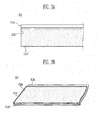
- FIG. 3A is a cross-sectional view schematically illustrating a positive plate of a secondary battery according to another embodiment of the present invention.
- FIG. 3B is a perspective view schematically illustrating the positive plate of the secondary battery according to Fig. 2 ;
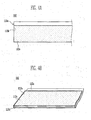
- FIG. 4A is a cross-sectional view schematically illustrating a negative plate of a secondary battery according to an embodiment of the present invention
- FIG. 4B is a perspective view schematically illustrating the negative plate of FIG. 4A ;
- FIG. 5A is a cross-sectional view schematically illustrating a negative plate of a secondary battery according to another embodiment of the present invention.
- FIG. 5B is a perspective view schematically illustrating the negative plate of FIG. 5B ;
- FIG. 6 schematically illustrates a roll coating device according to an embodiment of the present invention
- FIG. 7 schematically illustrates a roll coating device according to another embodiment of the present invention.
- FIG. 8 schematically illustrates a roll coating device according to still another embodiment of the present invention.
- FIGS. 1 to 5B schematically illustrate an electrode assembly, a positive plate or a negative plate according to embodiments of the present invention.
- the electrode assembly 110 for a secondary battery includes a positive plate 111, a negative plate 112, and a separator 113 located between the two plates 111 and 112.
- the positive plate 111 may be a thin plate of aluminum (AI)
- the negative plate 112 may be a thin plate of copper (Cu).
- the positive plate 111 and the negative plate 112 are not limited to the above metals.
- the electrode assembly 110 further includes a positive tab 114 and a negative tab 115, each of which has one end portion protruding from the positive and negative plates 111, 112.
- an insulating tape 116 is wound around a portion of the positive tab 194 and the negative tab 115 protruding on the upper part of the electrode assembly 110 to prevent a short circuit between the plates 111 and 112.
- the electrode assembly 110 is manufactured by inserting the separator 113 between the positive plate 111 and the negative plate 112 to insulate them from each other and winding the plates and the separator into a jelly roll in order to increase an electric capacity.
- a positive active material and a negative active material are applied to one surface of the positive plate 111 and one surface of the negative plate 112, respectively, to form an active part 111 b and 112b.
- the positive active material may include manganese oxides having a high stability
- the negative active material may include carbon-based compounds.
- the active materials are not limited to the above materials.
- a non-applied part 111 a and 112a is formed on a portion of the surface to which the positive active material or the negative active material is not applied.
- a part which situated at an edge of the active part 111b or 112b is defined as a "side part".
- the side part has the designation 111d.
- the side part has the designation 112d.
- the side part practically refers to a surface formed by cutting when the positive plate 111 and the negative plate 112 are cut in a lengthwise direction during a manufacturing process.
- the surface of the side part 111d, 112d is generally transverse to the major surface of the active part 111b, 112b.
- the side part 111d, 112d is coated with an inorganic coating layer 111c and 112c.
- the inorganic coating layer 111 c and 112c is formed to cover the side part 111 d, 112d in the lengthwise direction of the positive plate 111 and the negative plate 112. Further, the inorganic coating layer 111 c and 112c also covers the active part 111 b and 112b.
- the inorganic coating layer 111 c and 112c may have a thickness of between about 1 ⁇ m and about 15 ⁇ m.
- the inorganic coating layer 111c and 112c is formed by applying slurry containing inorganic ceramic paste and drying the slurry, wherein the inorganic ceramic paste may include ceramic powder of at least one selected from alumina, zirconia, and an alumina-zirconia mixture.
- the ceramic powder may be included at about 7% or less of the total weight of the inorganic ceramic paste, and the inorganic ceramic paste may have a viscosity of between about 1 cps and about 500 cps.
- An active part 111 b and 112b is formed by applying a positive active material and a negative active material to one surface of a positive plate 111 and one surface of a negative plate 112, respectively. Further, a non-applied part 111a and 112a is formed on a portion of the one surface which the positive active material or the negative active material is not applied to.
- a side part 111d, 112d is coated with an inorganic coating layer 111c' and 112c'.
- the inorganic coating layer 111 c' and 112c' is formed to cover the side part in the lengthwise direction of the positive plate 111 and the negative plate 112. Further, the inorganic coating layer 111c' and 112c' also covers the active part 111 b and 112b.
- the inorganic coating layer 111c' and 112c' is formed not only to cover an upper side of the active part 111b and 112b but to extend to cover a portion of the non-applied part 111 a and 112a.
- the inorganic coating layer 111c' and 112c' may have a thickness of between about 1 ⁇ m and about 15 ⁇ m.
- the inorganic coating layer 111c' and 112c' has a thickness of 1 ⁇ m or less, thermal stability may not be securely achieved.
- the inorganic coating layer 111c' and 112c' has a thickness of 15 ⁇ m or more, thermal stability is excellent, but an ion transfer speed is decreased during charging and discharging.
- a volume of the inorganic coating layer in a secondary battery 100 increases, and thus a capacity per unit volume may decrease as compared with a secondary battery 100 having the same size.
- the inorganic coating layer 111c' and 112c' is also formed by applying slurry containing inorganic ceramic paste and drying the slurry, wherein the inorganic ceramic paste may include ceramic powder of at least one selected from alumina, zirconia, and an alumina-zirconia mixture.
- the ceramic powder may be included at about 7% or less of the total weight of the inorganic ceramic paste, and the inorganic ceramic paste may have a viscosity of between about 1 cps and about 500 cps.
- a target thickness of the inorganic coating layer 111 c' and 112c' may be maintained within a range of 1 ⁇ m to 15 ⁇ m.
- the inorganic coating layer 111c, 112c, 111c', and 112c' is formed on the active part 111 b and 112b of the positive plate 111 and the negative plate 112, the side part 111 d, 112d, and the portion of the non-applied part 111a and 112a, thereby preventing occurrence of a short circuit or explosion of a battery caused by burrs which are inevitably formed on cut surfaces of the positive plate 111 and the negative plate 112.
- the separator 113 formed of a porous material which is vulnerable to heat is supplemented to reinforce thermal stability of the battery.
- the positive plate 111 including an active part 111 b formed by applying an active material on one surface of the positive plate 111, a non-applied part 111c that is a portion of the surface to which the active material is not applied, and a side part 111d that is a portion of the surface that is generally transverse to the active part 111 b is provided.
- the positive plate 111 is cut into a desired size using a slitter 15. Then, the inorganic coating layer 111 c is formed on the side part 111d.
- the inorganic coating layer 111c is formed on the surface of the positive plate 111 and covers the side part 111d in a lengthwise direction of the positive plate 111 as it runs down the side of the positive plate 111. Further, the inorganic coating layer 111c is formed to cover the active part 111 b.
- a process of forming the inorganic coating layer 111 c may be performed by a roll coating device 17a.
- the roll coating device 17a may be oriented to cover the positive plate 111 which is not yet cut transversely with respect to a thickness direction of the positive plate 111, and includes inorganic ceramic paste for forming the inorganic coating layer 111c throughout an inside or a lower part.
- the positive plate 111 is cut into the desired size using the slitter 15, and the inorganic coating layer 111c is formed on the surface of the positive plate 111 using the roll coating device having an un-winder 11 and a re-winder 13.
- the inorganic coating layer 111 c may be formed by applying slurry containing inorganic ceramic paste and drying. Most of the slurry is applied on the upper surface of the positive plate 111, but some of the slurry runs down the sides of the positive plate 111 and thereby covers the side part 111d.
- the above cutting process and the process of forming the inorganic coating layer 111 c may be performed simultaneously or sequentially.
- the inorganic coating layer 111 c may be formed to cover a portion of the non-applied part 111a.
- a plurality of roll coating devices 17b and 17b' may be provided to freely form the inorganic coating layer 111c.
- inorganic ceramic paste for the inorganic coating layer 111c is put in a portion of one roll coating device 17c, and the device is driven to form the inorganic coating layer 111 c in a desired position.
- the electrode assembly 110 may be accommodated in a case, or a plurality of electrode assemblies 110 are accommodated in a single case to form into a high-capacity product.
- the case may be sealed by a cap assembly.
- a secondary battery which relieves occurrence of burrs on a cut surface of the electrode assembly and supplements a low thermal stability of a separator and a method of manufacturing the same. Moreover, the likelihood of an occurrence of a short circuit and/or explosion of a battery is significantly reduce to improve reliability of a product. In addition, occurrence of a defective battery is minimized in a manufacturing process of a battery to reduce manufacturing costs.
Landscapes
- Chemical & Material Sciences (AREA)
- Chemical Kinetics & Catalysis (AREA)
- Electrochemistry (AREA)
- General Chemical & Material Sciences (AREA)
- Engineering & Computer Science (AREA)
- Manufacturing & Machinery (AREA)
- Battery Electrode And Active Subsutance (AREA)
- Secondary Cells (AREA)
- Cell Separators (AREA)
Abstract
Description
- The invention relates to an electrode assembly and a secondary battery including the same.
- A secondary battery is provided for use by winding an electrode assembly, accommodating the electrode assembly in a case, injecting an electrolyte into the case, and sealing the case, the electrode assembly being formed by applying an active material to each of a positive current collector and a negative current collector and inserting a separator therebetween.
- The separator may be formed of polyethylene (PE) or polypropylene (PP)-based porous materials to prevent a short circuit by direct contact between a positive electrode and a negative electrode. However, when a short circuit occurs due to internal foreign substances or external impact, the porous structure of the separator may be fractured or melted due to a low thermal stability of the porous materials, potentially causing the separator to stop functioning properly.
- Further, occurrence of a short circuit or explosion of a battery may be caused by burrs which are inevitably formed on cut surfaces of a positive plate and a negative plate, and thus solutions to safety issues are desirable.
- The present invention sets out to provide an electrode assembly which relieves occurrence of burrs on a cut surface of the electrode assembly and supplements a low thermal stability of a separator.
- According to an aspect of the present invention, an electrode assembly is provided including a positive plate, a negative plate, and a separator located between the positive plate and the negative plate, each of the positive plate and the negative plate having an active part formed by applying an active material to at least one surface and a non-applied part from which the active material is omitted, wherein a side part extending from at least one of the active part of the positive plate and the active part of the negative plate is coated with an inorganic coating layer.
- In one embodiment, the inorganic coating layer covers the side part in a lengthwise direction of the positive plate or the negative plate and may entirely cover the active part. Additionally, the inorganic coating layer may cover a portion of the non-applied part.
- In one embodiment, the inorganic coating layer comprises a dried inorganic ceramic material which may include ceramic powder of at least one selected from alumina, zirconia, and an alumina-zirconia mixture.
- In another embodiment, a secondary battery is provided including an electrode assembly having a positive plate, a negative plate, and a separator located between the positive plate and the negative plate, each of the positive plate and the negative plate including an active part formed by applying an active material to at least one surface and a non-applied part from which the active material is omitted, wherein a side part extending from at least one of the active part of the positive plate and the active part of the negative plate is coated with an inorganic coating layer; a positive tab and a negative tab respectively connected to the positive plate and the negative plate of the electrode assembly; and a case housing the electrode assembly.
- Further, in another embodiment, a method of manufacturing a secondary battery including an electrode assembly having a positive plate, a negative plate, and a separator located between the positive plate and the negative plate is provided, the method including applying an active material to a portion at least one surface of the positive plate and the negative plate to form an active part and a non-applied part to which the active material is omitted; cutting the positive plate or the negative plate into a desired size; and applying an inorganic coating layer on a side part extending from at least one of the active part of the positive plate and the active part of the negative part.
- In embodiments, the cutting and the applying the inorganic coating layer are performed simultaneously or sequentially. Additionally, the inorganic coating layer may be applied to cover the side part in a lengthwise direction of the positive plate or the negative plate. Further, the inorganic coating layer may be applied to cover the entire active part and also to cover a portion of the non-applied part.
- As described above, according to embodiments of the present invention, there is provided a secondary battery which relieves occurrence of burrs on a cut surface of the electrode assembly and supplements a low thermal stability of a separator and a method of manufacturing the same. Moreover, the likelihood of a short circuit and explosion of a battery is significantly reduced to improve reliability of a product. In addition, the likelihood of a defective battery being manufactured is minimized, thereby reducing manufacturing costs.
- At least some of the above and other features of the invention are set out in the Claims.
- The accompanying drawings, together with the description, illustrate exemplary embodiments of the present invention, and serve to explain the principles of the present invention.
-
FIG. 1 is a perspective view illustrating an electrode assembly of a secondary battery according to an embodiment of the present invention; -
FIG. 2A is a cross-sectional view schematically illustrating a positive plate of the secondary battery according toFig. 1 ; -
FIG. 2B is a perspective view schematically illustrating the positive plate of the secondary battery according toFig. 1 ; -
FIG. 3A is a cross-sectional view schematically illustrating a positive plate of a secondary battery according to another embodiment of the present invention; -
FIG. 3B is a perspective view schematically illustrating the positive plate of the secondary battery according toFig. 2 ; -
FIG. 4A is a cross-sectional view schematically illustrating a negative plate of a secondary battery according to an embodiment of the present invention; -
FIG. 4B is a perspective view schematically illustrating the negative plate ofFIG. 4A ; -
FIG. 5A is a cross-sectional view schematically illustrating a negative plate of a secondary battery according to another embodiment of the present invention; -
FIG. 5B is a perspective view schematically illustrating the negative plate ofFIG. 5B ; -
FIG. 6 schematically illustrates a roll coating device according to an embodiment of the present invention; -
FIG. 7 schematically illustrates a roll coating device according to another embodiment of the present invention; and -
FIG. 8 schematically illustrates a roll coating device according to still another embodiment of the present invention. - In the following detailed description, only certain embodiments of the present invention have been shown and described, simply by way of illustration. As those skilled in the art would realize, the described embodiments may be modified in various different ways, all without departing from the scope of the present invention. Accordingly, the drawings and description are to be regarded as illustrative in nature and not restrictive. In addition, when an element is referred to as being "on" another element, it can be directly on the other element or be indirectly on the other element with one or more intervening elements interposed therebetween. Also, when an element is referred to as being "connected to" another element, it can be directly connected to the other element or be indirectly connected to the other element with one or more intervening elements interposed therebetween. Hereinafter, like reference numerals refer to like elements.
- The terminology used herein is for the purpose of describing particular embodiments only and is not intended to be limiting of the invention. As used herein, the singular forms "a," "an" and "the" are intended to include the plural forms as well, unless the context clearly indicates otherwise. It will be further understood that the terms "comprises" and/or "comprising," when used in this specification, specify the presence of stated features, integers, steps, operations, elements, and/or components, but do not preclude the presence or addition of one or more other features, integers, steps, operations, elements, components, and/or groups thereof.
- Hereinafter, embodiments of the present invention will be described in detail with reference to the accompanying drawings.
-
FIGS. 1 to 5B schematically illustrate an electrode assembly, a positive plate or a negative plate according to embodiments of the present invention. - In
FIG. 1 , theelectrode assembly 110 for a secondary battery according to an embodiment of the present invention includes apositive plate 111, anegative plate 112, and aseparator 113 located between the twoplates positive plate 111 may be a thin plate of aluminum (AI), and thenegative plate 112 may be a thin plate of copper (Cu). However, thepositive plate 111 and thenegative plate 112 are not limited to the above metals. Theelectrode assembly 110 further includes apositive tab 114 and anegative tab 115, each of which has one end portion protruding from the positive andnegative plates insulating tape 116 is wound around a portion of the positive tab 194 and thenegative tab 115 protruding on the upper part of theelectrode assembly 110 to prevent a short circuit between theplates electrode assembly 110 is manufactured by inserting theseparator 113 between thepositive plate 111 and thenegative plate 112 to insulate them from each other and winding the plates and the separator into a jelly roll in order to increase an electric capacity. - Referring to
FIGS. 2A , 2B ,4A, and 4B , a positive active material and a negative active material are applied to one surface of thepositive plate 111 and one surface of thenegative plate 112, respectively, to form anactive part non-applied part active part Figures 2B and3B , the side part has thedesignation 111d. InFigures 4B and5B , the side part has thedesignation 112d. The side part practically refers to a surface formed by cutting when thepositive plate 111 and thenegative plate 112 are cut in a lengthwise direction during a manufacturing process. The surface of theside part active part - According to the present embodiment, the
side part inorganic coating layer inorganic coating layer side part positive plate 111 and thenegative plate 112. Further, theinorganic coating layer active part inorganic coating layer - In this embodiment, the
inorganic coating layer - Referring to
FIGS. 3A, 3B ,5A, and 5B , another embodiment of the present invention is described. Anactive part positive plate 111 and one surface of anegative plate 112, respectively. Further, anon-applied part - In the present embodiment, a
side part inorganic coating layer 111c' and 112c'. In detail, theinorganic coating layer 111 c' and 112c' is formed to cover the side part in the lengthwise direction of thepositive plate 111 and thenegative plate 112. Further, theinorganic coating layer 111c' and 112c' also covers theactive part inorganic coating layer 111c' and 112c' is formed not only to cover an upper side of theactive part non-applied part inorganic coating layer 111c' and 112c' may have a thickness of between about 1 µm and about 15 µm. When theinorganic coating layer 111c' and 112c' has a thickness of 1 µm or less, thermal stability may not be securely achieved. When theinorganic coating layer 111c' and 112c' has a thickness of 15 µm or more, thermal stability is excellent, but an ion transfer speed is decreased during charging and discharging. Further, a volume of the inorganic coating layer in a secondary battery 100 increases, and thus a capacity per unit volume may decrease as compared with a secondary battery 100 having the same size. - In this embodiment, the
inorganic coating layer 111c' and 112c' is also formed by applying slurry containing inorganic ceramic paste and drying the slurry, wherein the inorganic ceramic paste may include ceramic powder of at least one selected from alumina, zirconia, and an alumina-zirconia mixture. The ceramic powder may be included at about 7% or less of the total weight of the inorganic ceramic paste, and the inorganic ceramic paste may have a viscosity of between about 1 cps and about 500 cps. That is, when the ceramic powder is included at 7% or less of the total weight of the inorganic ceramic paste, and a viscosity of the inorganic ceramic paste is maintained within a range of 1 cps to 500 cps, a target thickness of theinorganic coating layer 111 c' and 112c' may be maintained within a range of 1 µm to 15 µm. - As described above, the
inorganic coating layer active part positive plate 111 and thenegative plate 112, theside part non-applied part positive plate 111 and thenegative plate 112. In addition, theseparator 113 formed of a porous material which is vulnerable to heat is supplemented to reinforce thermal stability of the battery. - Hereinafter, a process of forming an inorganic coating layer on a positive plate according to an embodiment of the present invention is described schematically with reference to
FIGS. 6 to 8 . - First, the
positive plate 111 including anactive part 111 b formed by applying an active material on one surface of thepositive plate 111, anon-applied part 111c that is a portion of the surface to which the active material is not applied, and aside part 111d that is a portion of the surface that is generally transverse to theactive part 111 b is provided. - As shown in
FIG. 6 , thepositive plate 111 is cut into a desired size using aslitter 15. Then, theinorganic coating layer 111 c is formed on theside part 111d. Here, theinorganic coating layer 111c is formed on the surface of thepositive plate 111 and covers theside part 111d in a lengthwise direction of thepositive plate 111 as it runs down the side of thepositive plate 111. Further, theinorganic coating layer 111c is formed to cover theactive part 111 b. A process of forming theinorganic coating layer 111 c may be performed by aroll coating device 17a. Theroll coating device 17a may be oriented to cover thepositive plate 111 which is not yet cut transversely with respect to a thickness direction of thepositive plate 111, and includes inorganic ceramic paste for forming theinorganic coating layer 111c throughout an inside or a lower part. Thepositive plate 111 is cut into the desired size using theslitter 15, and theinorganic coating layer 111c is formed on the surface of thepositive plate 111 using the roll coating device having an un-winder 11 and a re-winder 13. Here, theinorganic coating layer 111 c may be formed by applying slurry containing inorganic ceramic paste and drying. Most of the slurry is applied on the upper surface of thepositive plate 111, but some of the slurry runs down the sides of thepositive plate 111 and thereby covers theside part 111d. - The above cutting process and the process of forming the
inorganic coating layer 111 c may be performed simultaneously or sequentially. - Also, like in the other embodiment, the
inorganic coating layer 111 c may be formed to cover a portion of thenon-applied part 111a. - As shown in
FIG. 7 , a plurality ofroll coating devices inorganic coating layer 111c. As shown inFIG. 8 , inorganic ceramic paste for theinorganic coating layer 111c is put in a portion of oneroll coating device 17c, and the device is driven to form theinorganic coating layer 111 c in a desired position. - The
electrode assembly 110 may be accommodated in a case, or a plurality ofelectrode assemblies 110 are accommodated in a single case to form into a high-capacity product. The case may be sealed by a cap assembly. - According to embodiments of the present invention, there is provided a secondary battery which relieves occurrence of burrs on a cut surface of the electrode assembly and supplements a low thermal stability of a separator and a method of manufacturing the same. Moreover, the likelihood of an occurrence of a short circuit and/or explosion of a battery is significantly reduce to improve reliability of a product. In addition, occurrence of a defective battery is minimized in a manufacturing process of a battery to reduce manufacturing costs.
- While the present invention has been described in connection with certain embodiments of the invention, it is to be understood that the invention is not limited to the disclosed embodiments, but, on the contrary, is intended to cover various modifications and equivalent arrangements included within the scope of the appended claims, and equivalents thereof.
Claims (15)
- An electrode assembly comprising a first plate, a second plate, and a separator located between the first plate and the second plate, each of the first plate and the second plate comprising an active part formed by applying an active material to at least one surface and a non-applied part from which the active material is omitted,
wherein a side part of the first plate which extends from the active part of the first plate is coated with an inorganic coating layer. - An electrode assembly according to claim 1, wherein the inorganic coating layer entirely covers the active part of the first plate.
- An electrode assembly according to claim 1 or 2, wherein the inorganic coating layer covers a portion of the non-applied part of the first plate.
- An electrode assembly according to any preceding claim, wherein the inorganic coating layer comprises a dried inorganic ceramic material.
- An electrode assembly according to claim 4, wherein the inorganic ceramic material comprises ceramic powder of at least one selected from alumina, zirconia, and an alumina-zirconia mixture.
- An electrode assembly according to claim 5, wherein the ceramic powder is about 7% or less of a weight of the inorganic ceramic material.
- An electrode assembly according to claims 4, 5 or 6, wherein the inorganic ceramic material has a pre-dried viscosity of from 1 cps to 500 cps.
- An electrode assembly according to any preceding claim, wherein the inorganic coating layer has a thickness of from 1 µm to 15 µm.
- An electrode assembly according to any preceding claim, wherein a side part of the second plate which extends from the active part of the second plate is coated with an inorganic coating layer.
- A secondary battery comprising:an electrode assembly according to any preceding claim a first tab and a second tab respectively connected to the first plate and the second plate of the electrode assembly; anda case housing the electrode assembly.
- A method of manufacturing a secondary battery including an electrode assembly having a first plate, a second plate, and a separator located between the first plate and the second plate, the method comprising:applying an active material to a portion of at least one surface of the first plate to form an active part and a non-applied part to which the active material is omitted;cutting the first plate into a desired size; andapplying an inorganic coating layer on a side part of the first plate that extends from the active part of the first plate.
- A method according to claim 11, wherein the cutting and the applying the inorganic coating layer are performed simultaneously,
- A method according to claim 11, wherein the cutting and the applying the inorganic coating layer are performed sequentially.
- A method according to one of claims 11 to 13, wherein the inorganic coating layer is applied to cover the entire active part.
- A method according to one of claims 11 to 14, wherein the inorganic coating layer is applied to cover a portion of the non-applied part.
Applications Claiming Priority (1)
| Application Number | Priority Date | Filing Date | Title |
|---|---|---|---|
| KR1020100082404A KR101252914B1 (en) | 2010-08-25 | 2010-08-25 | Electrode assembly, secondary battery including the same and manufacturing method of the same |
Publications (3)
| Publication Number | Publication Date |
|---|---|
| EP2424031A2 true EP2424031A2 (en) | 2012-02-29 |
| EP2424031A3 EP2424031A3 (en) | 2012-07-25 |
| EP2424031B1 EP2424031B1 (en) | 2015-11-25 |
Family
ID=44514566
Family Applications (1)
| Application Number | Title | Priority Date | Filing Date |
|---|---|---|---|
| EP11178671.1A Active EP2424031B1 (en) | 2010-08-25 | 2011-08-24 | Electrode assembly, secondary battery including the same, and method of manufacturing the same |
Country Status (5)
| Country | Link |
|---|---|
| US (1) | US20120052369A1 (en) |
| EP (1) | EP2424031B1 (en) |
| JP (1) | JP2012049103A (en) |
| KR (1) | KR101252914B1 (en) |
| CN (1) | CN102386371A (en) |
Families Citing this family (6)
| Publication number | Priority date | Publication date | Assignee | Title |
|---|---|---|---|---|
| KR101137363B1 (en) | 2009-11-16 | 2012-04-23 | 에스비리모티브 주식회사 | Secondary battery |
| KR101470696B1 (en) * | 2012-10-10 | 2014-12-08 | 한국생산기술연구원 | Manufacturing method of separator of lithium secondary battery and the separator manufactured thereby and the lithium secondary battery having the separator |
| KR102443991B1 (en) * | 2015-01-28 | 2022-09-16 | 삼성에스디아이 주식회사 | Deburring device for electrode plate |
| KR102889438B1 (en) * | 2021-11-30 | 2025-11-20 | 주식회사 엘지에너지솔루션 | Slitter simulation device and method for secondary battery production |
| EP4468445B1 (en) * | 2022-01-19 | 2026-03-04 | LG Energy Solution, Ltd. | Electrode assembly having short-circuit prevention structure |
| KR20250147159A (en) * | 2024-04-03 | 2025-10-13 | 주식회사 엘지에너지솔루션 | Simulation system and operating method of simulation system |
Family Cites Families (13)
| Publication number | Priority date | Publication date | Assignee | Title |
|---|---|---|---|---|
| JPH0620707A (en) * | 1992-07-02 | 1994-01-28 | Hitachi Maxell Ltd | Spiral lithium battery |
| US7335448B2 (en) * | 2002-05-30 | 2008-02-26 | Matsushita Electric Industrial Co., Ltd. | Lithium ion secondary battery |
| WO2005067080A1 (en) * | 2004-01-09 | 2005-07-21 | Matsushita Electric Industrial Co., Ltd. | Lithium ion secondary cell |
| JP2006351386A (en) * | 2005-06-16 | 2006-12-28 | Mitsubishi Electric Corp | Battery and manufacturing method thereof |
| JP5113434B2 (en) * | 2006-06-16 | 2013-01-09 | パナソニック株式会社 | Nonaqueous electrolyte secondary battery |
| JP2008103310A (en) * | 2006-09-19 | 2008-05-01 | Matsushita Electric Ind Co Ltd | Manufacturing method of secondary battery electrode and secondary battery |
| WO2009008160A1 (en) * | 2007-07-09 | 2009-01-15 | Panasonic Corporation | Electrode plate for rechargeable battery with nonaqueous electrolyte and rechargeable battery with nonaqueous electrolyte using the electrode plate |
| JP4355356B2 (en) * | 2007-07-20 | 2009-10-28 | パナソニック株式会社 | Battery electrode plate, battery electrode group, lithium secondary battery, and battery electrode plate manufacturing method |
| JP2009163942A (en) * | 2007-12-28 | 2009-07-23 | Panasonic Corp | Non-aqueous secondary battery and manufacturing method thereof |
| JP5200585B2 (en) * | 2008-02-29 | 2013-06-05 | Tdk株式会社 | Electrochemical device and method for producing electrochemical device |
| JP5262323B2 (en) * | 2008-06-11 | 2013-08-14 | ソニー株式会社 | Negative electrode with porous protective film and method for producing negative electrode with porous protective film |
| JP2010009818A (en) | 2008-06-25 | 2010-01-14 | Panasonic Corp | Electrode plate for nonaqueous secondary battery, and nonaqueous secondary battery using the same |
| CN201340888Y (en) * | 2009-01-08 | 2009-11-04 | 东莞新能源科技有限公司 | Lithium ion battery |
-
2010
- 2010-08-25 KR KR1020100082404A patent/KR101252914B1/en active Active
-
2011
- 2011-03-14 JP JP2011055541A patent/JP2012049103A/en active Pending
- 2011-08-02 US US13/196,822 patent/US20120052369A1/en not_active Abandoned
- 2011-08-24 EP EP11178671.1A patent/EP2424031B1/en active Active
- 2011-08-25 CN CN2011102451172A patent/CN102386371A/en active Pending
Non-Patent Citations (1)
| Title |
|---|
| None |
Also Published As
| Publication number | Publication date |
|---|---|
| EP2424031A3 (en) | 2012-07-25 |
| EP2424031B1 (en) | 2015-11-25 |
| JP2012049103A (en) | 2012-03-08 |
| US20120052369A1 (en) | 2012-03-01 |
| KR20120019173A (en) | 2012-03-06 |
| CN102386371A (en) | 2012-03-21 |
| KR101252914B1 (en) | 2013-04-09 |
Similar Documents
| Publication | Publication Date | Title |
|---|---|---|
| JP6249493B2 (en) | Non-aqueous electrolyte secondary battery | |
| US9231245B2 (en) | Positive electrode plate for nonaqueous electrolyte secondary battery, method for manufacturing the positive electrode plate, nonaqueous electrolyte secondary battery, and method for manufacturing the battery | |
| CN100533842C (en) | Rectangular battery with scroll electrodes | |
| EP3404740B1 (en) | Battery | |
| JP7744502B2 (en) | Electrode assembly, cylindrical battery cell, battery pack including the same, and automobile | |
| KR102431002B1 (en) | Stepped electrochemical cell with folded seal | |
| EP2492989B1 (en) | Pouch type battery and method of manufacturing the same | |
| EP2544259B1 (en) | Laminate outer packaging storage device | |
| EP3032632B1 (en) | Secondary battery and method for manufacturing same | |
| EP2677590B1 (en) | Separator, preparation method thereof, and electrochemical device comprising same | |
| EP2424031B1 (en) | Electrode assembly, secondary battery including the same, and method of manufacturing the same | |
| CN117981158A (en) | Separator, electrode assembly, cylindrical battery cell, battery pack, and vehicle including the battery pack | |
| JP6290175B2 (en) | Lithium ion prismatic cell containing multiple jelly rolls with additional material between jelly rolls | |
| KR101314972B1 (en) | Secondary battery | |
| WO2016059464A1 (en) | Nonaqueous electrolyte secondary battery and manufacturing method therefor | |
| EP2866290A1 (en) | Electrode assembly for polymer secondary battery cell | |
| EP3703160B1 (en) | Secondary battery | |
| JP2011054555A (en) | Electrode assembly, and rechargeable battery with the same | |
| KR20180058333A (en) | Electrode for Secondary Battery Comprising Layer for Protecting Electrode Layer | |
| JP6322947B2 (en) | Storage element and electrode plate | |
| US20240170808A1 (en) | Battery cell including current collecting structure and battery device including the same | |
| JP4232458B2 (en) | Lithium ion polymer secondary battery | |
| KR20240134746A (en) | Method for manufacturing storage device | |
| JP6229430B2 (en) | Stacked battery | |
| CN106953115A (en) | Li-ion batteries for accumulators, Li-ion accumulators |
Legal Events
| Date | Code | Title | Description |
|---|---|---|---|
| AK | Designated contracting states |
Kind code of ref document: A2 Designated state(s): AL AT BE BG CH CY CZ DE DK EE ES FI FR GB GR HR HU IE IS IT LI LT LU LV MC MK MT NL NO PL PT RO RS SE SI SK SM TR |
|
| AX | Request for extension of the european patent |
Extension state: BA ME |
|
| PUAI | Public reference made under article 153(3) epc to a published international application that has entered the european phase |
Free format text: ORIGINAL CODE: 0009012 |
|
| 17P | Request for examination filed |
Effective date: 20120329 |
|
| PUAL | Search report despatched |
Free format text: ORIGINAL CODE: 0009013 |
|
| AK | Designated contracting states |
Kind code of ref document: A3 Designated state(s): AL AT BE BG CH CY CZ DE DK EE ES FI FR GB GR HR HU IE IS IT LI LT LU LV MC MK MT NL NO PL PT RO RS SE SI SK SM TR |
|
| AX | Request for extension of the european patent |
Extension state: BA ME |
|
| RIC1 | Information provided on ipc code assigned before grant |
Ipc: H01M 4/62 20060101ALI20120621BHEP Ipc: H01M 2/34 20060101ALI20120621BHEP Ipc: H01M 10/42 20060101AFI20120621BHEP |
|
| 17Q | First examination report despatched |
Effective date: 20130311 |
|
| RIC1 | Information provided on ipc code assigned before grant |
Ipc: H01M 2/16 20060101ALI20150417BHEP Ipc: H01M 10/42 20060101AFI20150417BHEP |
|
| GRAP | Despatch of communication of intention to grant a patent |
Free format text: ORIGINAL CODE: EPIDOSNIGR1 |
|
| INTG | Intention to grant announced |
Effective date: 20150603 |
|
| GRAS | Grant fee paid |
Free format text: ORIGINAL CODE: EPIDOSNIGR3 |
|
| GRAA | (expected) grant |
Free format text: ORIGINAL CODE: 0009210 |
|
| AK | Designated contracting states |
Kind code of ref document: B1 Designated state(s): AL AT BE BG CH CY CZ DE DK EE ES FI FR GB GR HR HU IE IS IT LI LT LU LV MC MK MT NL NO PL PT RO RS SE SI SK SM TR |
|
| REG | Reference to a national code |
Ref country code: GB Ref legal event code: FG4D |
|
| REG | Reference to a national code |
Ref country code: CH Ref legal event code: EP |
|
| REG | Reference to a national code |
Ref country code: AT Ref legal event code: REF Ref document number: 763004 Country of ref document: AT Kind code of ref document: T Effective date: 20151215 |
|
| REG | Reference to a national code |
Ref country code: IE Ref legal event code: FG4D |
|
| REG | Reference to a national code |
Ref country code: DE Ref legal event code: R096 Ref document number: 602011021579 Country of ref document: DE |
|
| REG | Reference to a national code |
Ref country code: LT Ref legal event code: MG4D |
|
| REG | Reference to a national code |
Ref country code: NL Ref legal event code: MP Effective date: 20160225 |
|
| REG | Reference to a national code |
Ref country code: AT Ref legal event code: MK05 Ref document number: 763004 Country of ref document: AT Kind code of ref document: T Effective date: 20151125 |
|
| PG25 | Lapsed in a contracting state [announced via postgrant information from national office to epo] |
Ref country code: NL Free format text: LAPSE BECAUSE OF FAILURE TO SUBMIT A TRANSLATION OF THE DESCRIPTION OR TO PAY THE FEE WITHIN THE PRESCRIBED TIME-LIMIT Effective date: 20151125 Ref country code: LT Free format text: LAPSE BECAUSE OF FAILURE TO SUBMIT A TRANSLATION OF THE DESCRIPTION OR TO PAY THE FEE WITHIN THE PRESCRIBED TIME-LIMIT Effective date: 20151125 Ref country code: HR Free format text: LAPSE BECAUSE OF FAILURE TO SUBMIT A TRANSLATION OF THE DESCRIPTION OR TO PAY THE FEE WITHIN THE PRESCRIBED TIME-LIMIT Effective date: 20151125 Ref country code: NO Free format text: LAPSE BECAUSE OF FAILURE TO SUBMIT A TRANSLATION OF THE DESCRIPTION OR TO PAY THE FEE WITHIN THE PRESCRIBED TIME-LIMIT Effective date: 20160225 Ref country code: ES Free format text: LAPSE BECAUSE OF FAILURE TO SUBMIT A TRANSLATION OF THE DESCRIPTION OR TO PAY THE FEE WITHIN THE PRESCRIBED TIME-LIMIT Effective date: 20151125 Ref country code: IS Free format text: LAPSE BECAUSE OF FAILURE TO SUBMIT A TRANSLATION OF THE DESCRIPTION OR TO PAY THE FEE WITHIN THE PRESCRIBED TIME-LIMIT Effective date: 20160325 |
|
| PG25 | Lapsed in a contracting state [announced via postgrant information from national office to epo] |
Ref country code: SE Free format text: LAPSE BECAUSE OF FAILURE TO SUBMIT A TRANSLATION OF THE DESCRIPTION OR TO PAY THE FEE WITHIN THE PRESCRIBED TIME-LIMIT Effective date: 20151125 Ref country code: FI Free format text: LAPSE BECAUSE OF FAILURE TO SUBMIT A TRANSLATION OF THE DESCRIPTION OR TO PAY THE FEE WITHIN THE PRESCRIBED TIME-LIMIT Effective date: 20151125 Ref country code: LV Free format text: LAPSE BECAUSE OF FAILURE TO SUBMIT A TRANSLATION OF THE DESCRIPTION OR TO PAY THE FEE WITHIN THE PRESCRIBED TIME-LIMIT Effective date: 20151125 Ref country code: GR Free format text: LAPSE BECAUSE OF FAILURE TO SUBMIT A TRANSLATION OF THE DESCRIPTION OR TO PAY THE FEE WITHIN THE PRESCRIBED TIME-LIMIT Effective date: 20160226 Ref country code: PL Free format text: LAPSE BECAUSE OF FAILURE TO SUBMIT A TRANSLATION OF THE DESCRIPTION OR TO PAY THE FEE WITHIN THE PRESCRIBED TIME-LIMIT Effective date: 20151125 Ref country code: AT Free format text: LAPSE BECAUSE OF FAILURE TO SUBMIT A TRANSLATION OF THE DESCRIPTION OR TO PAY THE FEE WITHIN THE PRESCRIBED TIME-LIMIT Effective date: 20151125 Ref country code: RS Free format text: LAPSE BECAUSE OF FAILURE TO SUBMIT A TRANSLATION OF THE DESCRIPTION OR TO PAY THE FEE WITHIN THE PRESCRIBED TIME-LIMIT Effective date: 20151125 Ref country code: PT Free format text: LAPSE BECAUSE OF FAILURE TO SUBMIT A TRANSLATION OF THE DESCRIPTION OR TO PAY THE FEE WITHIN THE PRESCRIBED TIME-LIMIT Effective date: 20160325 |
|
| PG25 | Lapsed in a contracting state [announced via postgrant information from national office to epo] |
Ref country code: IT Free format text: LAPSE BECAUSE OF FAILURE TO SUBMIT A TRANSLATION OF THE DESCRIPTION OR TO PAY THE FEE WITHIN THE PRESCRIBED TIME-LIMIT Effective date: 20151125 Ref country code: CZ Free format text: LAPSE BECAUSE OF FAILURE TO SUBMIT A TRANSLATION OF THE DESCRIPTION OR TO PAY THE FEE WITHIN THE PRESCRIBED TIME-LIMIT Effective date: 20151125 |
|
| REG | Reference to a national code |
Ref country code: FR Ref legal event code: PLFP Year of fee payment: 6 |
|
| REG | Reference to a national code |
Ref country code: DE Ref legal event code: R097 Ref document number: 602011021579 Country of ref document: DE |
|
| PG25 | Lapsed in a contracting state [announced via postgrant information from national office to epo] |
Ref country code: SM Free format text: LAPSE BECAUSE OF FAILURE TO SUBMIT A TRANSLATION OF THE DESCRIPTION OR TO PAY THE FEE WITHIN THE PRESCRIBED TIME-LIMIT Effective date: 20151125 Ref country code: SK Free format text: LAPSE BECAUSE OF FAILURE TO SUBMIT A TRANSLATION OF THE DESCRIPTION OR TO PAY THE FEE WITHIN THE PRESCRIBED TIME-LIMIT Effective date: 20151125 Ref country code: EE Free format text: LAPSE BECAUSE OF FAILURE TO SUBMIT A TRANSLATION OF THE DESCRIPTION OR TO PAY THE FEE WITHIN THE PRESCRIBED TIME-LIMIT Effective date: 20151125 Ref country code: DK Free format text: LAPSE BECAUSE OF FAILURE TO SUBMIT A TRANSLATION OF THE DESCRIPTION OR TO PAY THE FEE WITHIN THE PRESCRIBED TIME-LIMIT Effective date: 20151125 Ref country code: RO Free format text: LAPSE BECAUSE OF FAILURE TO SUBMIT A TRANSLATION OF THE DESCRIPTION OR TO PAY THE FEE WITHIN THE PRESCRIBED TIME-LIMIT Effective date: 20151125 |
|
| PLBE | No opposition filed within time limit |
Free format text: ORIGINAL CODE: 0009261 |
|
| STAA | Information on the status of an ep patent application or granted ep patent |
Free format text: STATUS: NO OPPOSITION FILED WITHIN TIME LIMIT |
|
| 26N | No opposition filed |
Effective date: 20160826 |
|
| PG25 | Lapsed in a contracting state [announced via postgrant information from national office to epo] |
Ref country code: SI Free format text: LAPSE BECAUSE OF FAILURE TO SUBMIT A TRANSLATION OF THE DESCRIPTION OR TO PAY THE FEE WITHIN THE PRESCRIBED TIME-LIMIT Effective date: 20151125 |
|
| PG25 | Lapsed in a contracting state [announced via postgrant information from national office to epo] |
Ref country code: BE Free format text: LAPSE BECAUSE OF FAILURE TO SUBMIT A TRANSLATION OF THE DESCRIPTION OR TO PAY THE FEE WITHIN THE PRESCRIBED TIME-LIMIT Effective date: 20151125 |
|
| PG25 | Lapsed in a contracting state [announced via postgrant information from national office to epo] |
Ref country code: MC Free format text: LAPSE BECAUSE OF FAILURE TO SUBMIT A TRANSLATION OF THE DESCRIPTION OR TO PAY THE FEE WITHIN THE PRESCRIBED TIME-LIMIT Effective date: 20151125 |
|
| REG | Reference to a national code |
Ref country code: CH Ref legal event code: PL |
|
| PG25 | Lapsed in a contracting state [announced via postgrant information from national office to epo] |
Ref country code: LI Free format text: LAPSE BECAUSE OF NON-PAYMENT OF DUE FEES Effective date: 20160831 Ref country code: CH Free format text: LAPSE BECAUSE OF NON-PAYMENT OF DUE FEES Effective date: 20160831 |
|
| REG | Reference to a national code |
Ref country code: IE Ref legal event code: MM4A |
|
| REG | Reference to a national code |
Ref country code: FR Ref legal event code: PLFP Year of fee payment: 7 |
|
| PG25 | Lapsed in a contracting state [announced via postgrant information from national office to epo] |
Ref country code: IE Free format text: LAPSE BECAUSE OF NON-PAYMENT OF DUE FEES Effective date: 20160824 |
|
| PG25 | Lapsed in a contracting state [announced via postgrant information from national office to epo] |
Ref country code: LU Free format text: LAPSE BECAUSE OF NON-PAYMENT OF DUE FEES Effective date: 20160824 |
|
| PG25 | Lapsed in a contracting state [announced via postgrant information from national office to epo] |
Ref country code: CY Free format text: LAPSE BECAUSE OF FAILURE TO SUBMIT A TRANSLATION OF THE DESCRIPTION OR TO PAY THE FEE WITHIN THE PRESCRIBED TIME-LIMIT Effective date: 20151125 Ref country code: HU Free format text: LAPSE BECAUSE OF FAILURE TO SUBMIT A TRANSLATION OF THE DESCRIPTION OR TO PAY THE FEE WITHIN THE PRESCRIBED TIME-LIMIT; INVALID AB INITIO Effective date: 20110824 |
|
| PG25 | Lapsed in a contracting state [announced via postgrant information from national office to epo] |
Ref country code: MT Free format text: LAPSE BECAUSE OF NON-PAYMENT OF DUE FEES Effective date: 20160831 Ref country code: MK Free format text: LAPSE BECAUSE OF FAILURE TO SUBMIT A TRANSLATION OF THE DESCRIPTION OR TO PAY THE FEE WITHIN THE PRESCRIBED TIME-LIMIT Effective date: 20151125 Ref country code: TR Free format text: LAPSE BECAUSE OF FAILURE TO SUBMIT A TRANSLATION OF THE DESCRIPTION OR TO PAY THE FEE WITHIN THE PRESCRIBED TIME-LIMIT Effective date: 20151125 |
|
| REG | Reference to a national code |
Ref country code: FR Ref legal event code: PLFP Year of fee payment: 8 |
|
| PG25 | Lapsed in a contracting state [announced via postgrant information from national office to epo] |
Ref country code: BG Free format text: LAPSE BECAUSE OF FAILURE TO SUBMIT A TRANSLATION OF THE DESCRIPTION OR TO PAY THE FEE WITHIN THE PRESCRIBED TIME-LIMIT Effective date: 20151125 |
|
| PG25 | Lapsed in a contracting state [announced via postgrant information from national office to epo] |
Ref country code: AL Free format text: LAPSE BECAUSE OF FAILURE TO SUBMIT A TRANSLATION OF THE DESCRIPTION OR TO PAY THE FEE WITHIN THE PRESCRIBED TIME-LIMIT Effective date: 20151125 |
|
| P01 | Opt-out of the competence of the unified patent court (upc) registered |
Effective date: 20230528 |
|
| PGFP | Annual fee paid to national office [announced via postgrant information from national office to epo] |
Ref country code: DE Payment date: 20240806 Year of fee payment: 14 |
|
| PGFP | Annual fee paid to national office [announced via postgrant information from national office to epo] |
Ref country code: GB Payment date: 20240808 Year of fee payment: 14 |
|
| PGFP | Annual fee paid to national office [announced via postgrant information from national office to epo] |
Ref country code: FR Payment date: 20240808 Year of fee payment: 14 |
|
| REG | Reference to a national code |
Ref country code: DE Ref legal event code: R119 Ref document number: 602011021579 Country of ref document: DE |