EP2418295A1 - Low thermal expansion Ni-base superalloy - Google Patents
Low thermal expansion Ni-base superalloy Download PDFInfo
- Publication number
- EP2418295A1 EP2418295A1 EP11008616A EP11008616A EP2418295A1 EP 2418295 A1 EP2418295 A1 EP 2418295A1 EP 11008616 A EP11008616 A EP 11008616A EP 11008616 A EP11008616 A EP 11008616A EP 2418295 A1 EP2418295 A1 EP 2418295A1
- Authority
- EP
- European Patent Office
- Prior art keywords
- less
- thermal expansion
- phase
- low thermal
- base superalloy
- Prior art date
- Legal status (The legal status is an assumption and is not a legal conclusion. Google has not performed a legal analysis and makes no representation as to the accuracy of the status listed.)
- Granted
Links
Images

Classifications
-
- C—CHEMISTRY; METALLURGY
- C22—METALLURGY; FERROUS OR NON-FERROUS ALLOYS; TREATMENT OF ALLOYS OR NON-FERROUS METALS
- C22C—ALLOYS
- C22C19/00—Alloys based on nickel or cobalt
- C22C19/03—Alloys based on nickel or cobalt based on nickel
- C22C19/05—Alloys based on nickel or cobalt based on nickel with chromium
- C22C19/051—Alloys based on nickel or cobalt based on nickel with chromium and Mo or W
- C22C19/056—Alloys based on nickel or cobalt based on nickel with chromium and Mo or W with the maximum Cr content being at least 10% but less than 20%
-
- C—CHEMISTRY; METALLURGY
- C22—METALLURGY; FERROUS OR NON-FERROUS ALLOYS; TREATMENT OF ALLOYS OR NON-FERROUS METALS
- C22C—ALLOYS
- C22C19/00—Alloys based on nickel or cobalt
- C22C19/03—Alloys based on nickel or cobalt based on nickel
- C22C19/05—Alloys based on nickel or cobalt based on nickel with chromium
- C22C19/051—Alloys based on nickel or cobalt based on nickel with chromium and Mo or W
- C22C19/055—Alloys based on nickel or cobalt based on nickel with chromium and Mo or W with the maximum Cr content being at least 20% but less than 30%
Definitions
- the present invention relates to a low thermal expansion Ni-base superalloy with excellent weldability, which is suitable for the application to large-sized parts such as a rotor and a disc of a steam turbine or gas turbine, particularly those used at a high temperature of 600 to 800°C.
- 12 Cr ferritic steel having a low thermal expansion coefficient e.g., C: 0.14%, Si: 0.05%, Mn: 0.50%, Ni: 0.6%, Cr: 10.3%, Mo: 1.5%, V: 0.17%, Nb: 0.06% and Fe: the balance
- C 0.14%
- Si 0.05%
- Mn 0.50%
- Cr 10.3%
- Mo 1.5%
- V 0.17%
- Nb 0.06%
- Fe the balance
- austenitic superalloys e.g., A-286 (Cr: 15%, Ni: 26%, Mo: 1.25%, Ti: 2%, Al: 0.2%, C: 0.04%, B: 0.005%, V: 0.3%, Fe: the balance), Inconel 617 (Cr: 22%, Co: 12.5%, Mo: 9%, Al: 1%, C: 0.07%, Ni: the balance), Inconel 625 (Cr: 21.5%, Mo: 9%, Nb: 3.6%, Ti: 0.2%, Fe: 2.5%, C: 0.05%, Ni: the balance), or Inconel 706 (Cr: 16%, Ti: 1.75%, Al: 0.2%, Fe: 37.5%, C: 0.03%, Nb + Ta: 2.9%, Ni: the balance), which are excellent in corrosion resistance and oxidation resistance and have a excellent high temperature strength in comparison with 12 Cr ferritic steel.
- A-286 Cr: 15%, Ni: 26%, Mo: 1.25%, Ti: 2%, Al
- All the parts constituting the steam turbine etc. are not necessarily exposed to 650°C or higher and some parts are not required to have such high temperature strength, so that it is possible to use conventional 12 Cr ferritic steel for such parts.
- the turbine structure can be considered for the turbine structure to be assembled with 12 Cr ferritic steel and austenitic superalloys, but there is a possibility of inconvenience caused by a difference in thermal expansion.
- Patent Document 1 does not note any such weldability.
- Patent Document 1 JP-A-9-157779
- the present invention relates to the followings.
- the amounts of A1 + Ti + Nb + Ta and Mo + 1/2(W + Re) are properly set, in particular, the amount ofTi to be added is set at such a low amount of 0.10 to 0.95%.
- ⁇ ' precipitation phase Ni 3 (Al, Ti)
- Al in Ni 3 Al is partially substituted with Ti
- Ti strengthens the ⁇ ' phase and also lowers the thermal expansion coefficient.
- the high temperature strength of the Ni-base superalloy is enhanced due to the ⁇ ' phase. The effect thereof can be maintained in the case where Ti is added in an amount of 0.10% or more.
- the high temperature strength can be gotten as well as that of the conventional Ni-base superalloys by addition of Ti up to 1% (specifically 0.95%), and the high temperature strength further increases by increasing Ti.
- weld crack is apt to be generated starting from the segregated portion of Ti.
- the invention is accomplished based on such findings and an excellent weldability can be secured with maintaining good high temperature strength, low thermal expansion and hot-workability, by setting the amount of Ti to be added at 0.95% or less.
- the low thermal expansion Ni-base superalloy of the invention can be produced in the same manner as in the case of the conventional Ni-base superalloys.
- both of single aging (600 to 850°C) and two-step aging (first step: 700 to 900°C, second step: 600 to 750°C) are effective.
- the low thermal expansion Ni-base superalloy of the invention may have a mean thermal expansion coefficient of 14.5 ⁇ 10 -6 /°C or less, desirably 14.0 ⁇ 10 -6 /°C or less, within a temperature range of from room temperature to 700°C.
- C is an element contained in order to form carbides in combination with Ti, Nb, Cr and Mo, thereby to enhance the high-temperature strength and to prevent grain coarsening. Since hot-workability is deteriorated when the content thereof exceeds 0.15%, the content is limited to 0.15% or less, desirably 0.10% or less.
- Si is added not only as a deoxidant but also to improve the oxidation resistance. Since ductility is lowered when Si is contained in an amount exceeding 1%, the content thereof is limited to 1% or less, desirably 0.5% or less.
- Mn is added as a deoxidant.
- Mn is contained in an amount exceeding 1%, not only the high temperature oxidation characteristic is deteriorated but also the precipitation of the ⁇ phase (Ni 3 Ti) spoiling the ductility is promoted. Therefore, the content thereof is limited to 1% or less, desirably 0.5% or less.
- Cr is an element which dissolves in the austenite phase and is contained in order to improve the high temperature oxidation resistance and corrosion resistance.
- Cr increases the thermal expansion coefficient, so that the content thereof is desirably less than 20% in view of the thermal expansion.
- the Cr content is desirably 5% or more but less than 20%.
- the content thereof is desirably 10% or more.
- Mo, W and Re are elements which dissolve in the austenite phase and are contained in order to increase the high temperature strength due to solid solution hardening and to lower the thermal expansion coefficient.
- Mo + 1/2(W + Re) becomes 5% or more.
- Mo + 1/2(W + Re) is 20% or more, not only hot-workability is deteriorated but also an embrittling phase is precipitated to reduce the ductility. Therefore, Mo + 1/2(W + Re) is limited to 5% or more but less than 20%.
- W is added in an amount exceeding 10%, ⁇ -W precipitates and hot-workability is lowered, so that W is desirably limited to 10% or less.
- the content thereof is preferably less than 17% and, in order to obtain a better effect, it is desirably less than 10%.
- Ti forms the ⁇ ' phase in combination with Ni to strengthen the ⁇ ' phase, lowers the thermal expansion coefficient, and promotes the aging precipitation hardening of the ⁇ ' phase.
- Ti is contained in an amount of 0.10% or more in the invention.
- Al is the most important element to enhance oxidation resistance and to form the ⁇ ' phase in combination with Ni to thereby strengthen the alloy by precipitation, and hence is contained in the alloy.
- the content thereof is set at 0.1 to 2.5%, and preferably 0.2% or more but less than 2.0%.
- B and Zr segregate at grain boundary to increase creep strength.
- B has an effect of suppressing the precipitation of ⁇ phase in the alloy containing a large amount of Ti.
- excessive contents of these elements deteriorate hot-workability and weldability, so that the content of B is set at 0.001% to 0.02% and the content ofZr is set at 0.001 to 0.2%.
- Co increases the high temperature strength through solid solution in the alloy.
- the addition of 0.5% or more thereof is necessary to obtain such effect and, since Co is expensive, the content thereof is set at less than 5%.
- Nb and Ta are elements to form the ⁇ ' phase (Ni 3 (Al, Nb, Ta)) which is a precipitation strengthening phase ofNi-base superalloys. These elements have effects of not only strengthening the ⁇ ' phase but also preventing the coarsening of the ⁇ ' phase, so that they are contained in the alloy. However, when they are contained excessively, the ⁇ phase (Ni 3 (Nb, Ta)) is precipitated to lower hot-workability and ductility. Therefore, the contents thereof are set so that Nb + 1/2Ta satisfies 1.5% or less. A desired range thereof is 1.0% or less.
- Fe is added in order to reduce the cost of the alloy or contained in the alloy through the use of crude ferroalloys as mother materials to be added to the alloy for adjusting components such as W and Mo.
- Fe decreases the high temperature strength of the alloy and increases the thermal expansion coefficient. Therefore, it is preferable that the content thereof is low.
- the content thereof is 4.0% or less, the influences on the high temperature strength and the thermal expansion coefficient are small, so that an upper limit thereof is set at 4.0%. More desirably, the content thereof is limited to 2.0% or less.
- Ni is a main element which creates austenite which serves as a matrix, and which can enhance heat resistance and corrosion resistance.
- Ni forms the ⁇ ' phase which is a precipitation strengthening phase.
- Al + Ti + Nb + Ta 2.0 to 6.5% in terms of atomic %
- Al, Ti, Nb and Ta are elements constituting the ⁇ ' phase. Therefore, when there is sufficient amount of Ni, the volume fraction of the precipitated ⁇ ' phase is proportional to the total of the atomic percents of these elements.
- the high temperature strength is proportional to the volume fraction of the ⁇ ' phase, the high temperature strength increases proportionally to the total of the atomic percents of these elements.
- the total amount thereof is required to be 2.0 atomic % or more.
- the total amount thereof exceeds 6.5 atomic %, the volume fraction of the ⁇ ' phase is excessively increased thereby to deteriorate hot-workability remarkably, so that the total amount thereof is set at 2.0 to 6.5% in terms of atomic %, desirably 3.5 to 6.0% in terms of atomic %.
- the properties of the low thermal expansion Ni-base superalloy according to the invention is not deteriorated so long as Mg: 0.03% or less, Ca: 0.03% or less, P: 0.05% or less, S: 0.01% or less, and Cu: 2% or less.
- the alloys having the compositions shown in Tables 1 and 2 were respectively melted under vacuum and then cast to prepare respective ingots weighing 50 kg.
- test specimen having a diameter of parallel portion of 4.5 mm was cut away from each ingot and then it was subjected to a soaking heat treatment at 1200°C for 16 hours. Thereafter, the specimen was subjected to a Greeble tensile testing at a temperature of 1100°C to 1200°C at a tensile rate of 50.8 mm/second. Productivity (hot-workability) of a large-sized component was evaluated by an average reduction of area.
- each ingot was homogenized at 1200°C for 16 hours and then was forged into rod having a diameter of 15 mm.
- Each rod was subjected to a solution treatment (heated at 1100°C for 2 hours and then water-cooled) and an aging treatment (heated at 750°C for 24 hours) and then a mean thermal expansion coefficient from room temperature thereof was measured.
- the mean thermal expansion coefficient within a temperature range of from room temperature to 700°C was measured by a differential dilatometry on an apparatus for thermomechanical analysis TMA manufactured by RIGAKU DENKI Co. Ltd., using quartz as a standard sample, under the condition of a temperature-elevating rate of 5°C/min.
- a continuous oxidation test under conditions at 700°C for 200 hours and also a steam oxidation test under conditions at 700°C for 1000 hours were carried out to measure an oxidation weight gain, to evaluate oxidation resistance.
- the oxidation test and the steam oxidation test were carried out in accordance with JIS Z 2281, and the test environments were normal pressure, a steam concentration of 83%, and a steam flow rate of 7.43 ml/s.
- the weldability which is an important property in the invention, was evaluated as follows.
- a TIG welded joint having a shape shown in FIG 1 was prepared under TIG welding conditions shown in Table 3 and its weldability was evaluated.
- Table 3 Welding method Welding current (A) Welding voltage (V) Welding speed (mm/min) Wire diameter ( ⁇ mm) Wire-feeding speed (mm/min) Pre-heating Shield gas Ar (L/min) Welding position TIG welding 160 12 80 1.0 300 None 15 Flat position
- the comparative alloy 1 in Table 2 is the above-mentioned A-286, the comparative alloy 2 is Inconel 617, the comparative alloy 3 is Inconel 625, and the comparative alloy 4 is Inconel 706.
- the comparative alloy 5 is an alloy in which the content ofTi exceeds the upper limit of the invention.
- the comparative alloy 6 is an alloy in which the content of W exceeds the upper limit of the invention.
- Table 4 Greeble tensile testing Alloy Average reduction of area (%) of high-temperature tensile test Average coefficient of thermal expansion from room temperature to 700°C ( ⁇ 10 -6 /°C) Tensile strength at 700°C (MPa) Creep rupture time at 700°C/343 MPa (Hr) Oxidation weight gain in air at 700°C x 200h (mg/cm 2 ) Steam oxidation weight gain at 700°C x 1000h (mg/cm 2 ) Weld Crack Alloy of the invention 1 66 13.5 905 1561 0.07 0.54 No 2 54 13.0 911 2070 0.11 0.62 No 3 48 13.8 956 2059 0.05 0.44 No 4 50 13.0 880 1368 0.14 0.65 No 5 58 13.4 909 1991 0.07 0.47 No 6 63 13.5 1107 1792 0.06 0.55 No 7 57 13.2 1192 1994 0.11 0.56 No 8 56 13.2 1088 2182 0.09
- the alloys of the invention showed ductility over 50% and hence it is confirmed that they are excellent in hot-workability.
- the ductility (average reduction of area) of each of the comparative alloy 5 having a Ti content of 1% or more and the comparative alloy 6 to which W was excessively added was found to be under 50% in the test at 1100 to 1200°C, so that they were poor in hot-workability.
- the ductility of the comparative alloys 1 and 2 are lower values:
- steam oxidation resistance of inventive alloys are equal to that of the comparative alloys 1 to 4, so that they have a good corrosion resistance.
- the low thermal expansion Ni-base superalloy of the present invention has a thermal expansion coefficient almost equal to that of 12 Cr ferritic steel, excellent high temperature strength, excellent corrosion and oxidation resistance, good hot-workability, and excellent weldability.
Landscapes
- Chemical & Material Sciences (AREA)
- Engineering & Computer Science (AREA)
- Materials Engineering (AREA)
- Mechanical Engineering (AREA)
- Metallurgy (AREA)
- Organic Chemistry (AREA)
- Turbine Rotor Nozzle Sealing (AREA)
- Arc Welding In General (AREA)
Abstract
Description
- The present invention relates to a low thermal expansion Ni-base superalloy with excellent weldability, which is suitable for the application to large-sized parts such as a rotor and a disc of a steam turbine or gas turbine, particularly those used at a high temperature of 600 to 800°C.
- Conventionally, as a material for the rotor to be used at high temperature portion of a steam turbine or gas turbine, 12 Cr ferritic steel having a low thermal expansion coefficient (e.g., C: 0.14%, Si: 0.05%, Mn: 0.50%, Ni: 0.6%, Cr: 10.3%, Mo: 1.5%, V: 0.17%, Nb: 0.06% and Fe: the balance) has been mainly used.
- However, in recent years, in order to improve thermal efficiency, for example in a steam turbine, development has progressed so as to elevate the steam temperature to 650°C or higher.
- When the steam temperature is elevated to such high temperature, heat-resistant strength required for large-sized parts such as rotor also increases, so that conventional 12 Cr ferritic steel cannot be applied such requirement.
- Thus, in view of material quality, materials having high heat-resistant strength at the higher temperature have been required.
- For the material therefor, there has been known austenitic superalloys (e.g., A-286 (Cr: 15%, Ni: 26%, Mo: 1.25%, Ti: 2%, Al: 0.2%, C: 0.04%, B: 0.005%, V: 0.3%, Fe: the balance), Inconel 617 (Cr: 22%, Co: 12.5%, Mo: 9%, Al: 1%, C: 0.07%, Ni: the balance), Inconel 625 (Cr: 21.5%, Mo: 9%, Nb: 3.6%, Ti: 0.2%, Fe: 2.5%, C: 0.05%, Ni: the balance), or Inconel 706 (Cr: 16%, Ti: 1.75%, Al: 0.2%, Fe: 37.5%, C: 0.03%, Nb + Ta: 2.9%, Ni: the balance), which are excellent in corrosion resistance and oxidation resistance and have a excellent high temperature strength in comparison with 12 Cr ferritic steel.
- However, they have an excellent high temperature strength but have a high thermal expansion coefficient, so that there is a problem that design flexibility is low.
- All the parts constituting the steam turbine etc. are not necessarily exposed to 650°C or higher and some parts are not required to have such high temperature strength, so that it is possible to use conventional 12 Cr ferritic steel for such parts.
- In this case, it can be considered for the turbine structure to be assembled with 12 Cr ferritic steel and austenitic superalloys, but there is a possibility of inconvenience caused by a difference in thermal expansion.
- In view of the application, austenitic superalloys with low thermal expansion coefficient have been disclosed in Patent Document 1.
- Whereas a rotor of the steam turbine is extremely large and hence it is difficult to form whole structure with an austenitic superalloy. Therefore, a welded rotor in which plurality of rotor (disc) materials are produced and are subsequently integrated by welding is employed.
- Consequently, materials for the combined welded rotor are required to have an excellent weldability.
- In this regard, Patent Document 1 does not note any such weldability.
- Moreover, although the above-mentioned individual rotor (disc) is smaller than a mono-block rotor, the welded rotor (disc) is also large and hence an excellent hot-workability is required for materials constituting the rotor (disc).
- Patent Document 1 :
JP-A-9-157779 - Under the above-mentioned circumstances, it is an object of the invention to provide a γ' precipitation hardening Ni-base superalloy with low thermal expansion which is almost equal to that of 12 Cr ferritic steel, excellent high temperature strength, excellent corrosion and oxidation resistance, good hot-workability, and excellent weldability.
-
-
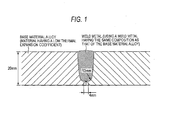
FIG 1 is a figure illustrating a TIG welded joint. -
FIG 2 is a graph showing evaluation of weldability. - Namely, the present invention relates to the followings.
- (1) A low thermal expansion Ni-base superalloy comprising, in terms of mass %,
- C: 0.15% or less;
- Si: 1% or less;
- Mn: 1% or less;
- Cr: 5% or more but less than 20%;
- at least one of Mo, W and Re, in which Mo + 1/2(W + Re) is 5% or more but less than 20%;
- W: 10% or less;
- Al: 0.1 to 2.5%;
- Ti: 0.10 to 0.95%;
- Nb + 1/2Ta: 1.5% or less;
- B: 0.001 to 0.02%;
- Zr: 0.001 to 0.2%;
- Fe: 4.0% or less; and
- a balance of inevitable impurities and Ni,
- (2) The low thermal expansion Ni-base superalloy according to (1) above, further comprising, in terms of mass %,
Co: 0.5% or more but less than 5.0%. - (3) The low thermal expansion Ni-base superalloy according to (1) or (2) above, wherein Mo + 1/2(W + Re) is 5% or more but less than 10%.
- In this specification, "%" means "mass %" unless otherwise indicated. Furthermore, all percentages and the like defined by mass are the same with those by weight.
- In the present invention, the amounts of A1 + Ti + Nb + Ta and Mo + 1/2(W + Re) are properly set, in particular, the amount ofTi to be added is set at such a low amount of 0.10 to 0.95%.
- In the γ' precipitation hardening austenitic Ni-base superalloy by addition of Ti, γ' precipitation phase (Ni3(Al, Ti)), in which Al in Ni3Al is partially substituted with Ti, is formed.
- The addition ofTi strengthens the γ' phase and also lowers the thermal expansion coefficient. The high temperature strength of the Ni-base superalloy is enhanced due to the γ' phase. The effect thereof can be maintained in the case where Ti is added in an amount of 0.10% or more.
- Moreover, in the component system of the invention, the high temperature strength can be gotten as well as that of the conventional Ni-base superalloys by addition of Ti up to 1% (specifically 0.95%), and the high temperature strength further increases by increasing Ti.
- However, when Ti is added in an amount exceeding 0.95%, welding is inhibited owing to low weldability.
- On the other hand, when the addition of Ti exceeds 0.95%, the solidus temperature of the γ' phase increases and the precipitation of the γ' phase on cooling at hot forging is fast, so that hot-workability is deteriorated.
- Furthermore, since Ti is apt to be segregated and is also apt to cause the precipitation of the η phase which is an embrittling phase, cracking is apt to occur starting from the η phase, which also causes the deterioration of hot-workability.
- Therefore, at the production of the above-mentioned large-sized rotor (disc), forging crack and heat crack may be generated at high possibility.
- Moreover, when welding is performed, weld crack is apt to be generated starting from the segregated portion of Ti.
- The invention is accomplished based on such findings and an excellent weldability can be secured with maintaining good high temperature strength, low thermal expansion and hot-workability, by setting the amount of Ti to be added at 0.95% or less.
- The low thermal expansion Ni-base superalloy of the invention can be produced in the same manner as in the case of the conventional Ni-base superalloys. In the heat treatment, after a heat treatment for solid solution at 950°C or higher, both of single aging (600 to 850°C) and two-step aging (first step: 700 to 900°C, second step: 600 to 750°C) are effective.
- Moreover, the low thermal expansion Ni-base superalloy of the invention may have a mean thermal expansion coefficient of 14.5×10⁻⁶/°C or less, desirably 14.0×10⁻⁶/°C or less, within a temperature range of from room temperature to 700°C.
- The following will describe in detail the reasons why each chemical component is limited in the invention.
- C is an element contained in order to form carbides in combination with Ti, Nb, Cr and Mo, thereby to enhance the high-temperature strength and to prevent grain coarsening. Since hot-workability is deteriorated when the content thereof exceeds 0.15%, the content is limited to 0.15% or less, desirably 0.10% or less.
- Si is added not only as a deoxidant but also to improve the oxidation resistance. Since ductility is lowered when Si is contained in an amount exceeding 1%, the content thereof is limited to 1% or less, desirably 0.5% or less.
- Similar to Si, Mn is added as a deoxidant. When Mn is contained in an amount exceeding 1%, not only the high temperature oxidation characteristic is deteriorated but also the precipitation of the η phase (Ni3Ti) spoiling the ductility is promoted. Therefore, the content thereof is limited to 1% or less, desirably 0.5% or less.
- Cr is an element which dissolves in the austenite phase and is contained in order to improve the high temperature oxidation resistance and corrosion resistance.
- In order to maintain a sufficient high temperature oxidation resistance and corrosion resistance, a larger content of Cr is desired. However, Cr increases the thermal expansion coefficient, so that the content thereof is desirably less than 20% in view of the thermal expansion.
- In order to obtain a target thermal expansion coefficient in the vicinity of 650 to 700°C, which is a target temperature to be used in the invention, the Cr content is desirably 5% or more but less than 20%.
- In order to maintain a sufficient high temperature oxidation resistance and corrosion resistance, the content thereof is desirably 10% or more.
- Mo, W and Re are elements which dissolve in the austenite phase and are contained in order to increase the high temperature strength due to solid solution hardening and to lower the thermal expansion coefficient.
- In order to obtain the target thermal expansion coefficient intended in the invention, it is necessary that the contents of one or more of these elements are selected so that Mo + 1/2(W + Re) becomes 5% or more. When Mo + 1/2(W + Re) is 20% or more, not only hot-workability is deteriorated but also an embrittling phase is precipitated to reduce the ductility. Therefore, Mo + 1/2(W + Re) is limited to 5% or more but less than 20%.
- Moreover, when Mo + 1/2(W + Re) is less than 17%, precipitation of A2B phase can be suppressed and phase stability can be enhanced. More desirably, the content thereof is less than 10%.
- Furthermore, when W is added in an amount exceeding 10%, α-W precipitates and hot-workability is lowered, so that W is desirably limited to 10% or less.
- Since Mo lowers oxidation resistance, the content thereof is preferably less than 17% and, in order to obtain a better effect, it is desirably less than 10%.
- Ti forms the γ' phase in combination with Ni to strengthen the γ' phase, lowers the thermal expansion coefficient, and promotes the aging precipitation hardening of the γ' phase.
- In order to obtain such effects, Ti is contained in an amount of 0.10% or more in the invention.
- On the other hand, when Ti is added excessively in an amount exceeding 0.95%, the precipitation of the η phase (Ni3Ti) which is an embrittling phase is promoted, weldability and also hot-workability are deteriorated, and also ductility is deteriorated. Therefore, an upper limit thereof is set at 0.95%.
- Al is the most important element to enhance oxidation resistance and to form the γ' phase in combination with Ni to thereby strengthen the alloy by precipitation, and hence is contained in the alloy.
- When the content thereof is less than 0.1%, the precipitation of the γ' phase is insufficient. When Ti, Nb and Ta are present in large amounts, the γ' phase becomes unstable and the η phase and δ phase precipitate to cause embrittlement, which deteriorates hot-workability and makes it difficult to forge and mold the alloy into parts. Therefore, the content thereof is set at 0.1 to 2.5%, and preferably 0.2% or more but less than 2.0%.
- B and Zr segregate at grain boundary to increase creep strength. In addition, B has an effect of suppressing the precipitation of η phase in the alloy containing a large amount of Ti. However, excessive contents of these elements deteriorate hot-workability and weldability, so that the content of B is set at 0.001% to 0.02% and the content ofZr is set at 0.001 to 0.2%.
- Co increases the high temperature strength through solid solution in the alloy. The addition of 0.5% or more thereof is necessary to obtain such effect and, since Co is expensive, the content thereof is set at less than 5%.
- Nb and Ta are elements to form the γ' phase (Ni3(Al, Nb, Ta)) which is a precipitation strengthening phase ofNi-base superalloys. These elements have effects of not only strengthening the γ' phase but also preventing the coarsening of the γ' phase, so that they are contained in the alloy. However, when they are contained excessively, the δ phase (Ni3(Nb, Ta)) is precipitated to lower hot-workability and ductility. Therefore, the contents thereof are set so that Nb + 1/2Ta satisfies 1.5% or less. A desired range thereof is 1.0% or less.
- Fe is added in order to reduce the cost of the alloy or contained in the alloy through the use of crude ferroalloys as mother materials to be added to the alloy for adjusting components such as W and Mo.
- Fe decreases the high temperature strength of the alloy and increases the thermal expansion coefficient. Therefore, it is preferable that the content thereof is low. When the content thereof is 4.0% or less, the influences on the high temperature strength and the thermal expansion coefficient are small, so that an upper limit thereof is set at 4.0%. More desirably, the content thereof is limited to 2.0% or less.
- Ni is a main element which creates austenite which serves as a matrix, and which can enhance heat resistance and corrosion resistance.
- In addition, Ni forms the γ' phase which is a precipitation strengthening phase.
- Al, Ti, Nb and Ta are elements constituting the γ' phase. Therefore, when there is sufficient amount of Ni, the volume fraction of the precipitated γ' phase is proportional to the total of the atomic percents of these elements.
- Moreover, since the high temperature strength is proportional to the volume fraction of the γ' phase, the high temperature strength increases proportionally to the total of the atomic percents of these elements.
- In order to obtain a sufficient strength intended in the invention, the total amount thereof is required to be 2.0 atomic % or more. However, when the total amount thereof exceeds 6.5 atomic %, the volume fraction of the γ' phase is excessively increased thereby to deteriorate hot-workability remarkably, so that the total amount thereof is set at 2.0 to 6.5% in terms of atomic %, desirably 3.5 to 6.0% in terms of atomic %.
- With regard to elements Mg, Ca, P, S and Cu, the properties of the low thermal expansion Ni-base superalloy according to the invention is not deteriorated so long as Mg: 0.03% or less, Ca: 0.03% or less, P: 0.05% or less, S: 0.01% or less, and Cu: 2% or less.
- The present invention is now illustrated in greater detail with reference to Examples and Comparative Examples.
- The alloys having the compositions shown in Tables 1 and 2 were respectively melted under vacuum and then cast to prepare respective ingots weighing 50 kg.


- The test specimen having a diameter of parallel portion of 4.5 mm was cut away from each ingot and then it was subjected to a soaking heat treatment at 1200°C for 16 hours. Thereafter, the specimen was subjected to a Greeble tensile testing at a temperature of 1100°C to 1200°C at a tensile rate of 50.8 mm/second. Productivity (hot-workability) of a large-sized component was evaluated by an average reduction of area.
- Additionally, each ingot was homogenized at 1200°C for 16 hours and then was forged into rod having a diameter of 15 mm.
- Each rod was subjected to a solution treatment (heated at 1100°C for 2 hours and then water-cooled) and an aging treatment (heated at 750°C for 24 hours) and then a mean thermal expansion coefficient from room temperature thereof was measured.
- With regard to the measurement of the thermal expansion coefficient., the mean thermal expansion coefficient within a temperature range of from room temperature to 700°C was measured by a differential dilatometry on an apparatus for thermomechanical analysis TMA manufactured by RIGAKU DENKI Co. Ltd., using quartz as a standard sample, under the condition of a temperature-elevating rate of 5°C/min.
- In addition, tensile strength at 700°C was measured.
- Furthermore, a creep rupture test was carried out with a test specimen having a diameter of parallel portion of 6.4 mm under conditions with a temperature of 700°C and a load of 343 MPa to evaluate a rupture life.
- In addition, a continuous oxidation test under conditions at 700°C for 200 hours and also a steam oxidation test under conditions at 700°C for 1000 hours were carried out to measure an oxidation weight gain, to evaluate oxidation resistance. The oxidation test and the steam oxidation test were carried out in accordance with JIS Z 2281, and the test environments were normal pressure, a steam concentration of 83%, and a steam flow rate of 7.43 ml/s.
- The weldability, which is an important property in the invention, was evaluated as follows.
- A TIG welded joint having a shape shown in
FIG 1 was prepared under TIG welding conditions shown in Table 3 and its weldability was evaluated.Table 3 Welding method Welding current (A) Welding voltage (V) Welding speed (mm/min) Wire diameter (φmm) Wire-feeding speed (mm/min) Pre-heating Shield gas Ar (L/min) Welding position TIG welding 160 12 80 1.0 300 None 15 Flat position - At this moment, an alloy consisting of the same composition as well as the base alloy was used as a welding metal.
- With regard to the presence of welding cracks, cross-sectional texture investigation was carried out after the welding and the presence of cracks was confirmed.
- The comparative alloy 1 in Table 2 is the above-mentioned A-286, the comparative alloy 2 is Inconel 617, the comparative alloy 3 is Inconel 625, and the comparative alloy 4 is Inconel 706.
- The comparative alloy 5 is an alloy in which the content ofTi exceeds the upper limit of the invention. Moreover, the comparative alloy 6 is an alloy in which the content of W exceeds the upper limit of the invention.
- The results of the above each evaluation are shown in Tables 4 and 5.
Table 4 Greeble tensile testing Alloy Average reduction of area (%) of high-temperature tensile test Average coefficient of thermal expansion from room temperature to 700°C (× 10-6/°C) Tensile strength at 700°C (MPa) Creep rupture time at 700°C/343 MPa (Hr) Oxidation weight gain in air at 700°C x 200h (mg/cm2) Steam oxidation weight gain at 700°C x 1000h (mg/cm2) Weld Crack Alloy of the invention 1 66 13.5 905 1561 0.07 0.54 No 2 54 13.0 911 2070 0.11 0.62 No 3 48 13.8 956 2059 0.05 0.44 No 4 50 13.0 880 1368 0.14 0.65 No 5 58 13.4 909 1991 0.07 0.47 No 6 63 13.5 1107 1792 0.06 0.55 No 7 57 13.2 1192 1994 0.11 0.56 No 8 56 13.2 1088 2182 0.09 0.60 No 9 68 13.4 1023 1706 0.06 0.48 No 10 63 13.3 1135 1815 0.05 0.48 No 11 70 13.5 932 1658 0.05 0.47 No 12 62 13.2 920 1899 0.08 0.51 No 13 63 13.3 1204 1931 0.06 0.47 No 14 62 13.4 1071 1767 0.08 0.49 No Table 5 Greeble tensile testing Alloy Average reduction of area (%) of high-temperature tensile test Average coefficient of thermal expansion from room temperature to 700°C (×10-6/°C) Tensile strength at 700°C (MPa) Creep rupture time at 700°C/343 MPa (Hr) Oxidation weight gain in air at 700°C x 200h (mg/cm2) Steam oxidation weight gain at 700°C x 1000h (mg/cm2) Weld Crack Comparative alloy 1 74 18.2 580 72 0.11 0.61 - 2 62 14.7 503 81 0.03 0.43 - 3 60 15.0 693 93 0.03 0.39 - 4 53 16.5 880 3520 0.08 0.50 - 5 37 13.0 1223 2856 0.07 0.50 Yes 6 22 13.8 1135 1885 0.08 0.63 No - In the results of the Gleeble tensile testing, the alloys of the invention showed ductility over 50% and hence it is confirmed that they are excellent in hot-workability.
- On the other hand, the ductility (average reduction of area) of each of the comparative alloy 5 having a Ti content of 1% or more and the comparative alloy 6 to which W was excessively added was found to be under 50% in the test at 1100 to 1200°C, so that they were poor in hot-workability.
- The ductility of the comparative alloys 1 and 2 are lower values:
- Furthermore, in terms of both of the tensile strength at 700°C and the creep rupture life, the alloys of the invention were found to be superior to the comparative alloys 1 to 3 which are conventional ones.
- Moreover, in terms of the steam oxidation weight gain at 700°C, steam oxidation resistance of inventive alloys are equal to that of the comparative alloys 1 to 4, so that they have a good corrosion resistance.
- On the other hand, with regard to the weldability, although cracking was observed at TIG welding in the comparative alloy 5 having a Ti content of 1% or more, cracking was not observed in the alloys of the invention having the content thereof of 0.95% or less.
- Then, in order to investigate the relationship between the amount of Ti added and the weldability in further detail, the alloys having compositions shown in Table 6 were produced and a trans-varestrain test was carried out under condition shown in Table 7, to evaluate the weldability by determining a maximum crack length.
- The results are shown in
FIG 2 .Table 6 Alloy Chemical composition (% by mass) C Si Mn Fe Co Cr Re Mo W Ta Nb Al Ti Zr B Ni Alloy of the invention 15 0.03 0.06 0.05 0.45 - 12.0 - 5.9 7.2 - - 1.51 0.51 0.004 0.004 Bal. 16 0.04 0.05 0.04 0.51 - 12.1 - 6.0 6.9 - - 1.50 0.74 0.003 0.003 Bal. 17 0.03 0.04 0.06 0.48 - 11.9 - 6.2 7.0 - - 1.51 0.95 0.004 0.003 Bal. Comparative alloy A 0.03 0.06 0.06 0.49 - 12.0 - 6.1 6.9 - - 1.49 1.21 0.004 0.003 Bal. B 0.04 0.04 0.05 0.43 - 11.9 - 6.0 7.0 - - 1.50 1.49 0.005 0.004 Bal. Table 7 Shape of test specimen 110 x 50 x 5t Welding conditions Welding method TIG Welding current 100 A Welding voltage 9 V Welding speed 65 mm/min Energy input 8.3 kJ/cm Strain 5% - As shown in
FIG 2 , it is confirmed that the weldability is lowered as the amount of Ti increases and a maximum crack length can be achieved under 1mm, which is a target value by setting the amount of Ti to be 0.95% or less. - While the present invention has been described in detail and with reference to specific embodiments thereof, it will be apparent to one skilled in the art that various changes and modifications can be made therein without departing from the spirit and scope thereof.
- The present application is based on Japanese Patent Application No.
2006-163969 filed on June 13, 2006 - The low thermal expansion Ni-base superalloy of the present invention has a thermal expansion coefficient almost equal to that of 12 Cr ferritic steel, excellent high temperature strength, excellent corrosion and oxidation resistance, good hot-workability, and excellent weldability.
- The subject matter described in the following paragraphs that are numbered for reference is part of the disclosure of the present application, each of which can be claimed in the present application, and in one or more future divisional applications there from:
- (1) A low thermal expansion Ni-base superalloy comprising, in terms of mass %: C: 0.15 % or less; Si: 1 % or less; Mn: 1 % or less; Cr: 5 % or more but less than 20 %; at least one of Mo, W and Re, in which Mo + 1/2(W + Re) is 5 % or more but less than 20 %; W: 10 % or less: Al: 0.1 to 2.5 %; Ti: 0.10 to 0.95 %; Nb + 1/2 Ta: 1.5 % or less; B: 0.001 to 0.02 %; Zr: 0.001 to 0.2 %; Fe: 4.0 % or less; and a balance of inevitable impurities and Ni, wherein the total amount of Al, Ti, Nb and Ta is 2.0 to 6.5 % in terms of atomic %.
- (2) The low thermal expansion Ni-base superalloy according to paragraph 1 above, further comprising, in terms of mass %, Co: 0.5 % or more but less than 5.0 %.
- (3) The low thermal expansion Ni-base superalloy according to paragraph 1 above, wherein Mo + 1/2(W + Re) is 5 % or more but less than 10 %.
- (4) The low thermal expansion Ni-base superalloy according to paragraph 2 above, wherein Mo + 1/2(W + Re) is 5 % or more but less than 10%.
Claims (2)
- A low thermal expansion Ni-base superalloy comprising, in terms of mass %:C: 0.15 % or less;Si: 1% or less;Mn: 1 % or less;Cr: 5 % or more but less than 20 %;at least one of Mo, W and Re, in which Mo + 1/2(W + Re) is 5 % or more but less than 17 %;W: 10 % or less;Al: 0.1 to 2.5 %;Ti: 0.10 to 0.95 %;Nb + 1/2 Ta: 1.5 % or less;B: 0.001 to 0.02 %;Zr: 0.001 to 0.2 %;Fe: 4.0 % or less;optionally contains: Co: less than 5.0%; anda balance of inevitable impurities and Ni, wherein the total amount of Al, Ti, Nb and Ta is 2.0 to 6.5 % in terms of atomic %.
- The low thermal expansion Ni-base superalloy according to claim 1, comprising, in terms of mass %,
Co: 0.5 % or more.
Applications Claiming Priority (2)
| Application Number | Priority Date | Filing Date | Title |
|---|---|---|---|
| JP2006163969A JP4800856B2 (en) | 2006-06-13 | 2006-06-13 | Low thermal expansion Ni-base superalloy |
| EP07011609A EP1867740B1 (en) | 2006-06-13 | 2007-06-13 | Low thermal expansion Ni-base superalloy |
Related Parent Applications (2)
| Application Number | Title | Priority Date | Filing Date |
|---|---|---|---|
| EP07011609A Division EP1867740B1 (en) | 2006-06-13 | 2007-06-13 | Low thermal expansion Ni-base superalloy |
| EP07011609.0 Division | 2007-06-13 |
Publications (2)
| Publication Number | Publication Date |
|---|---|
| EP2418295A1 true EP2418295A1 (en) | 2012-02-15 |
| EP2418295B1 EP2418295B1 (en) | 2017-10-11 |
Family
ID=38294021
Family Applications (2)
| Application Number | Title | Priority Date | Filing Date |
|---|---|---|---|
| EP07011609A Active EP1867740B1 (en) | 2006-06-13 | 2007-06-13 | Low thermal expansion Ni-base superalloy |
| EP11008616.2A Active EP2418295B1 (en) | 2006-06-13 | 2007-06-13 | Low thermal expansion Ni-base superalloy |
Family Applications Before (1)
| Application Number | Title | Priority Date | Filing Date |
|---|---|---|---|
| EP07011609A Active EP1867740B1 (en) | 2006-06-13 | 2007-06-13 | Low thermal expansion Ni-base superalloy |
Country Status (3)
| Country | Link |
|---|---|
| US (1) | US8491838B2 (en) |
| EP (2) | EP1867740B1 (en) |
| JP (1) | JP4800856B2 (en) |
Families Citing this family (46)
| Publication number | Priority date | Publication date | Assignee | Title |
|---|---|---|---|---|
| US8712001B2 (en) | 2006-06-30 | 2014-04-29 | Holtec International, Inc. | Fuel basket spacer, apparatus and method using the same for storing high level radioactive waste |
| US8444778B2 (en) * | 2007-08-31 | 2013-05-21 | Hitachi Metals, Ltd. | Low-thermal-expansion Ni-based super-heat-resistant alloy for boiler and having excellent high-temperature strength, and boiler component and boiler component production method using the same |
| RU2360990C1 (en) * | 2008-02-01 | 2009-07-10 | Юлия Алексеевна Щепочкина | Alloy on basis of nickel |
| JP5254693B2 (en) | 2008-07-30 | 2013-08-07 | 三菱重工業株式会社 | Welding material for Ni-base alloy |
| JP5500452B2 (en) * | 2008-09-30 | 2014-05-21 | 日立金属株式会社 | Ni-based alloy manufacturing method and Ni-based alloy |
| CN101748314A (en) * | 2008-11-28 | 2010-06-23 | 江苏龙鑫特殊钢实业总公司 | Nickel-based alloy of nuclear power steam generator |
| US8101122B2 (en) * | 2009-05-06 | 2012-01-24 | General Electric Company | NiCrMoCb alloy with improved mechanical properties |
| JP5381677B2 (en) * | 2009-12-15 | 2014-01-08 | 大同特殊鋼株式会社 | Manufacturing method of welding wire |
| US20110256421A1 (en) * | 2010-04-16 | 2011-10-20 | United Technologies Corporation | Metallic coating for single crystal alloys |
| CN103635284B (en) | 2011-03-23 | 2017-03-29 | 思高博塔公司 | The particulate nickel-base alloy split for stress corrosion resistant and its method for designing |
| CA2861581C (en) | 2011-12-30 | 2021-05-04 | Scoperta, Inc. | Coating compositions |
| US20150275341A1 (en) | 2012-10-11 | 2015-10-01 | Scoperta, Inc. | Non-magnetic metal alloy compositions and applications |
| CN103084753B (en) * | 2013-01-23 | 2016-07-27 | 宝山钢铁股份有限公司 | A kind of ferronickel Precise Alloy welding wire |
| US9540714B2 (en) * | 2013-03-15 | 2017-01-10 | Ut-Battelle, Llc | High strength alloys for high temperature service in liquid-salt cooled energy systems |
| US10017842B2 (en) | 2013-08-05 | 2018-07-10 | Ut-Battelle, Llc | Creep-resistant, cobalt-containing alloys for high temperature, liquid-salt heat exchanger systems |
| US9435011B2 (en) * | 2013-08-08 | 2016-09-06 | Ut-Battelle, Llc | Creep-resistant, cobalt-free alloys for high temperature, liquid-salt heat exchanger systems |
| CN103498076B (en) * | 2013-09-04 | 2016-03-23 | 西安热工研究院有限公司 | A kind of low-expansibility and antioxidant Ni-Fe-Cr based high-temperature alloy and preparation method thereof |
| CN109830269B (en) | 2013-10-10 | 2023-09-19 | 思高博塔公司 | Method for selecting a material composition and designing a material having a target property |
| WO2015081209A1 (en) | 2013-11-26 | 2015-06-04 | Scoperta, Inc. | Corrosion resistant hardfacing alloy |
| US9683280B2 (en) * | 2014-01-10 | 2017-06-20 | Ut-Battelle, Llc | Intermediate strength alloys for high temperature service in liquid-salt cooled energy systems |
| US9683279B2 (en) | 2014-05-15 | 2017-06-20 | Ut-Battelle, Llc | Intermediate strength alloys for high temperature service in liquid-salt cooled energy systems |
| US11130205B2 (en) | 2014-06-09 | 2021-09-28 | Oerlikon Metco (Us) Inc. | Crack resistant hardfacing alloys |
| US9605565B2 (en) | 2014-06-18 | 2017-03-28 | Ut-Battelle, Llc | Low-cost Fe—Ni—Cr alloys for high temperature valve applications |
| MY190226A (en) | 2014-07-24 | 2022-04-06 | Oerlikon Metco Us Inc | Hardfacing alloys resistant to hot tearing and cracking |
| CN106661700B (en) | 2014-07-24 | 2019-05-03 | 思高博塔公司 | Impact-resistant hardfacing and alloy and method of making the same |
| WO2016056654A1 (en) | 2014-10-10 | 2016-04-14 | 三菱日立パワーシステムズ株式会社 | Method for manufacturing shaft body |
| CA2971202C (en) | 2014-12-16 | 2023-08-15 | Scoperta, Inc. | Tough and wear resistant ferrous alloys containing multiple hardphases |
| MX2018002635A (en) | 2015-09-04 | 2019-02-07 | Scoperta Inc | Chromium free and low-chromium wear resistant alloys. |
| EP3347501B8 (en) | 2015-09-08 | 2021-05-12 | Oerlikon Metco (US) Inc. | Non-magnetic, strong carbide forming alloys for powder manufacture |
| CN105112727B (en) * | 2015-09-23 | 2017-05-03 | 中国科学院上海应用物理研究所 | Fused salt corrosion resistant nickel-based deformable high-temperature alloy and preparation method thereof |
| EP3374536A4 (en) | 2015-11-10 | 2019-03-20 | Scoperta, Inc. | TWO WIRE ARC FLOORING MATERIALS WITH CONTROLLED OXIDATION |
| CA3017642A1 (en) | 2016-03-22 | 2017-09-28 | Scoperta, Inc. | Fully readable thermal spray coating |
| CN106077997B (en) * | 2016-07-15 | 2018-02-09 | 中国科学院上海应用物理研究所 | A kind of solder for anti-fused salt corrosion nickel base superalloy fusion welding |
| CN106181131B (en) * | 2016-07-15 | 2018-05-29 | 中国科学院上海应用物理研究所 | For the solid core welding wire preparation method of anti-fused salt corrosion nickel base superalloy welding |
| CA3095046A1 (en) | 2018-03-29 | 2019-10-03 | Oerlikon Metco (Us) Inc. | Reduced carbides ferrous alloys |
| US11174536B2 (en) * | 2018-08-27 | 2021-11-16 | Battelle Energy Alliance, Llc | Transition metal-based materials for use in high temperature and corrosive environments |
| EP3870727A1 (en) | 2018-10-26 | 2021-09-01 | Oerlikon Metco (US) Inc. | Corrosion and wear resistant nickel based alloys |
| CN113631750A (en) | 2019-03-28 | 2021-11-09 | 欧瑞康美科(美国)公司 | Thermally sprayed iron-based alloys for coating engine cylinder bores |
| CA3136967A1 (en) | 2019-05-03 | 2020-11-12 | Oerlikon Metco (Us) Inc. | Powder feedstock for wear resistant bulk welding configured to optimize manufacturability |
| KR102870036B1 (en) | 2019-07-09 | 2025-10-13 | 오를리콘 메트코 (유에스) 아이엔씨. | Iron-based alloys designed for wear and corrosion resistance |
| RU2768947C1 (en) * | 2021-06-24 | 2022-03-25 | Публичное акционерное общество "ОДК-Уфимское моторостроительное производственное объединение (ПАО "ОДК-УМПО") | Heat-resistant nickel alloy for casting parts with monocrystalline structure |
| CN113528924B (en) * | 2021-07-23 | 2022-04-15 | 承德天大钒业有限责任公司 | Nickel-niobium-chromium intermediate alloy and preparation method thereof |
| CN115044805B (en) * | 2022-05-30 | 2023-04-11 | 北京科技大学 | Nickel-based single crystal superalloy with balanced multiple properties and preparation method thereof |
| CN115505789B (en) * | 2022-09-20 | 2023-06-16 | 中国联合重型燃气轮机技术有限公司 | Nickel-based superalloy with excellent high-temperature tensile property, and preparation method and application thereof |
| CN117144195A (en) * | 2023-09-19 | 2023-12-01 | 西安交通大学 | A dual-phase bonding layer alloy for high-temperature alloys and its application |
| CN117431432B (en) * | 2023-12-20 | 2024-03-12 | 北京北冶功能材料有限公司 | Nickel-based high-temperature alloy foil with good long-term oxidation performance and preparation method thereof |
Citations (5)
| Publication number | Priority date | Publication date | Assignee | Title |
|---|---|---|---|---|
| US4810466A (en) * | 1986-11-28 | 1989-03-07 | Korea Advanced Institute Of Science And Technology | Heat resistance Ni--Cr--W--Al--Ti--Ta alloy |
| JPH09157779A (en) | 1995-10-05 | 1997-06-17 | Hitachi Metals Ltd | Low thermal expansion nickel base superalloy and its production |
| EP1035225A1 (en) * | 1999-03-03 | 2000-09-13 | Daido Tokushuko Kabushiki Kaisha | Ni-base superalloy |
| EP1591548A1 (en) * | 2004-04-27 | 2005-11-02 | Daido Steel Co., Ltd. | Method for producing of a low thermal expansion Ni-base superalloy |
| JP2006163969A (en) | 2004-12-09 | 2006-06-22 | Dainippon Printing Co Ltd | Server, electronic pen, electronic pen form and program |
Family Cites Families (7)
| Publication number | Priority date | Publication date | Assignee | Title |
|---|---|---|---|---|
| US3655458A (en) * | 1970-07-10 | 1972-04-11 | Federal Mogul Corp | Process for making nickel-based superalloys |
| US4400211A (en) * | 1981-06-10 | 1983-08-23 | Sumitomo Metal Industries, Ltd. | Alloy for making high strength deep well casing and tubing having improved resistance to stress-corrosion cracking |
| DE3428316A1 (en) * | 1984-08-01 | 1986-02-13 | Hochtemperatur-Reaktorbau GmbH, 4600 Dortmund | Powder-metallurgical product made from a nickel-based superalloy |
| US4789410A (en) * | 1987-03-03 | 1988-12-06 | United Technologies Corporation | Method for heat treating and quenching complex metal components using salt baths |
| US7160400B2 (en) * | 1999-03-03 | 2007-01-09 | Daido Tokushuko Kabushiki Kaisha | Low thermal expansion Ni-base superalloy |
| KR100372482B1 (en) * | 1999-06-30 | 2003-02-17 | 스미토모 긴조쿠 고교 가부시키가이샤 | Heat resistant Ni base alloy |
| WO2002040728A1 (en) * | 2000-11-16 | 2002-05-23 | Sumitomo Metal Industries, Ltd. | Ni-base heat-resistant alloy and weld joint using the same |
-
2006
- 2006-06-13 JP JP2006163969A patent/JP4800856B2/en active Active
-
2007
- 2007-06-12 US US11/808,614 patent/US8491838B2/en active Active
- 2007-06-13 EP EP07011609A patent/EP1867740B1/en active Active
- 2007-06-13 EP EP11008616.2A patent/EP2418295B1/en active Active
Patent Citations (5)
| Publication number | Priority date | Publication date | Assignee | Title |
|---|---|---|---|---|
| US4810466A (en) * | 1986-11-28 | 1989-03-07 | Korea Advanced Institute Of Science And Technology | Heat resistance Ni--Cr--W--Al--Ti--Ta alloy |
| JPH09157779A (en) | 1995-10-05 | 1997-06-17 | Hitachi Metals Ltd | Low thermal expansion nickel base superalloy and its production |
| EP1035225A1 (en) * | 1999-03-03 | 2000-09-13 | Daido Tokushuko Kabushiki Kaisha | Ni-base superalloy |
| EP1591548A1 (en) * | 2004-04-27 | 2005-11-02 | Daido Steel Co., Ltd. | Method for producing of a low thermal expansion Ni-base superalloy |
| JP2006163969A (en) | 2004-12-09 | 2006-06-22 | Dainippon Printing Co Ltd | Server, electronic pen, electronic pen form and program |
Also Published As
| Publication number | Publication date |
|---|---|
| EP1867740B1 (en) | 2012-08-01 |
| JP2007332412A (en) | 2007-12-27 |
| EP1867740A1 (en) | 2007-12-19 |
| JP4800856B2 (en) | 2011-10-26 |
| US20070284018A1 (en) | 2007-12-13 |
| EP2418295B1 (en) | 2017-10-11 |
| US8491838B2 (en) | 2013-07-23 |
Similar Documents
| Publication | Publication Date | Title |
|---|---|---|
| EP1867740B1 (en) | Low thermal expansion Ni-base superalloy | |
| EP1591548B1 (en) | Method for producing of a low thermal expansion Ni-base superalloy | |
| EP2196551B1 (en) | Use of low-thermal-expansion nickel-based superalloy for a boiler component, according boiler component and method for its production | |
| EP1696108B1 (en) | Heat resistant alloy for exhaust valves durable at 900°C and exhaust valves made for the alloy | |
| EP2971205B1 (en) | Fabricable, high strength, oxidation resistant ni-cr-co-mo-al alloys | |
| EP2330225B1 (en) | Nickel based heat-resistant alloy | |
| EP1900835B1 (en) | Cobalt-chromium-iron-nickel alloys amenable to nitride strengthening | |
| EP2072627B1 (en) | Weldable oxidation resistant nickel-iron-chromium-aluminum alloy | |
| EP2725112B1 (en) | Carburization-resistant metal material and uses of the carburization-resistant metal material | |
| EP2172299B1 (en) | Welded rotor for turbine and method for manufacturing the same | |
| EP2479302B1 (en) | Ni-based heat resistant alloy, gas turbine component and gas turbine | |
| US20030005981A1 (en) | Ni-base heat resistant alloy and welded joint thereof | |
| EP3202931B1 (en) | Ni BASED SUPERHEAT-RESISTANT ALLOY | |
| KR102031776B1 (en) | Manufacturing method of austenitic heat resistant alloy weld joint and welded joint obtained using the same | |
| EP2826877A2 (en) | Hot-forgeable Nickel-based superalloy excellent in high temperature strength | |
| EP2677053B1 (en) | Ni-based alloy for welding material and welding wire, rod and powder | |
| EP3318651B1 (en) | Austenitic heat-resistant alloy and welded joint | |
| EP2039789A1 (en) | Nickel-based alloy for turbine rotor of steam turbine and turbine rotor of steam turbine | |
| JP5147037B2 (en) | Ni-base heat-resistant alloy for gas turbine combustor | |
| EP2302085B1 (en) | Nickel base wrought alloy | |
| JP3781402B2 (en) | Low thermal expansion Ni-base superalloy | |
| EP3249063B1 (en) | High strength ni-based superalloy | |
| JP5283139B2 (en) | Low thermal expansion Ni-base superalloy | |
| JPWO2019182024A1 (en) | Ni-based alloy and heat-resistant plate material using the same | |
| EP0669405A2 (en) | Heat resisting steel |
Legal Events
| Date | Code | Title | Description |
|---|---|---|---|
| 17P | Request for examination filed |
Effective date: 20111027 |
|
| AC | Divisional application: reference to earlier application |
Ref document number: 1867740 Country of ref document: EP Kind code of ref document: P |
|
| AK | Designated contracting states |
Kind code of ref document: A1 Designated state(s): AT BE BG CH CY CZ DE DK EE ES FI FR GB GR HU IE IS IT LI LT LU LV MC MT NL PL PT RO SE SI SK TR |
|
| AX | Request for extension of the european patent |
Extension state: AL BA HR MK RS |
|
| PUAI | Public reference made under article 153(3) epc to a published international application that has entered the european phase |
Free format text: ORIGINAL CODE: 0009012 |
|
| RIN1 | Information on inventor provided before grant (corrected) |
Inventor name: NISHIMOTO, SHIN Inventor name: NAKANO, TAKASHI Inventor name: KADOYA, YOSHIKUNI Inventor name: YAMAMOTO, RYUICHI Inventor name: UETA, SHIGEKI Inventor name: HAMANO, SHUJI |
|
| 17Q | First examination report despatched |
Effective date: 20130925 |
|
| GRAP | Despatch of communication of intention to grant a patent |
Free format text: ORIGINAL CODE: EPIDOSNIGR1 |
|
| INTG | Intention to grant announced |
Effective date: 20161025 |
|
| GRAJ | Information related to disapproval of communication of intention to grant by the applicant or resumption of examination proceedings by the epo deleted |
Free format text: ORIGINAL CODE: EPIDOSDIGR1 |
|
| GRAP | Despatch of communication of intention to grant a patent |
Free format text: ORIGINAL CODE: EPIDOSNIGR1 |
|
| INTG | Intention to grant announced |
Effective date: 20161206 |
|
| GRAS | Grant fee paid |
Free format text: ORIGINAL CODE: EPIDOSNIGR3 |
|
| GRAA | (expected) grant |
Free format text: ORIGINAL CODE: 0009210 |
|
| AC | Divisional application: reference to earlier application |
Ref document number: 1867740 Country of ref document: EP Kind code of ref document: P |
|
| AK | Designated contracting states |
Kind code of ref document: B1 Designated state(s): AT BE BG CH CY CZ DE DK EE ES FI FR GB GR HU IE IS IT LI LT LU LV MC MT NL PL PT RO SE SI SK TR |
|
| RAP1 | Party data changed (applicant data changed or rights of an application transferred) |
Owner name: DAIDO TOKUSHUKO KABUSHIKI KAISHA Owner name: MITSUBISHI HEAVY INDUSTRIES, LTD. |
|
| REG | Reference to a national code |
Ref country code: GB Ref legal event code: FG4D |
|
| REG | Reference to a national code |
Ref country code: CH Ref legal event code: EP |
|
| REG | Reference to a national code |
Ref country code: IE Ref legal event code: FG4D |
|
| REG | Reference to a national code |
Ref country code: AT Ref legal event code: REF Ref document number: 936079 Country of ref document: AT Kind code of ref document: T Effective date: 20171115 |
|
| REG | Reference to a national code |
Ref country code: DE Ref legal event code: R096 Ref document number: 602007052698 Country of ref document: DE |
|
| REG | Reference to a national code |
Ref country code: NL Ref legal event code: MP Effective date: 20171011 |
|
| REG | Reference to a national code |
Ref country code: LT Ref legal event code: MG4D |
|
| PG25 | Lapsed in a contracting state [announced via postgrant information from national office to epo] |
Ref country code: NL Free format text: LAPSE BECAUSE OF FAILURE TO SUBMIT A TRANSLATION OF THE DESCRIPTION OR TO PAY THE FEE WITHIN THE PRESCRIBED TIME-LIMIT Effective date: 20171011 |
|
| RIN2 | Information on inventor provided after grant (corrected) |
Inventor name: YAMAMOTO, RYUICHI Inventor name: HAMANO, SHUJI Inventor name: UETA, SHIGEKI Inventor name: NISHIMOTO, SHIN Inventor name: NAKANO, TAKASHI Inventor name: KADOYA, YOSHIKUNI |
|
| PG25 | Lapsed in a contracting state [announced via postgrant information from national office to epo] |
Ref country code: SE Free format text: LAPSE BECAUSE OF FAILURE TO SUBMIT A TRANSLATION OF THE DESCRIPTION OR TO PAY THE FEE WITHIN THE PRESCRIBED TIME-LIMIT Effective date: 20171011 Ref country code: LT Free format text: LAPSE BECAUSE OF FAILURE TO SUBMIT A TRANSLATION OF THE DESCRIPTION OR TO PAY THE FEE WITHIN THE PRESCRIBED TIME-LIMIT Effective date: 20171011 Ref country code: FI Free format text: LAPSE BECAUSE OF FAILURE TO SUBMIT A TRANSLATION OF THE DESCRIPTION OR TO PAY THE FEE WITHIN THE PRESCRIBED TIME-LIMIT Effective date: 20171011 Ref country code: ES Free format text: LAPSE BECAUSE OF FAILURE TO SUBMIT A TRANSLATION OF THE DESCRIPTION OR TO PAY THE FEE WITHIN THE PRESCRIBED TIME-LIMIT Effective date: 20171011 |
|
| REG | Reference to a national code |
Ref country code: FR Ref legal event code: PLFP Year of fee payment: 12 |
|
| PG25 | Lapsed in a contracting state [announced via postgrant information from national office to epo] |
Ref country code: BG Free format text: LAPSE BECAUSE OF FAILURE TO SUBMIT A TRANSLATION OF THE DESCRIPTION OR TO PAY THE FEE WITHIN THE PRESCRIBED TIME-LIMIT Effective date: 20180111 Ref country code: GR Free format text: LAPSE BECAUSE OF FAILURE TO SUBMIT A TRANSLATION OF THE DESCRIPTION OR TO PAY THE FEE WITHIN THE PRESCRIBED TIME-LIMIT Effective date: 20180112 Ref country code: LV Free format text: LAPSE BECAUSE OF FAILURE TO SUBMIT A TRANSLATION OF THE DESCRIPTION OR TO PAY THE FEE WITHIN THE PRESCRIBED TIME-LIMIT Effective date: 20171011 Ref country code: IS Free format text: LAPSE BECAUSE OF FAILURE TO SUBMIT A TRANSLATION OF THE DESCRIPTION OR TO PAY THE FEE WITHIN THE PRESCRIBED TIME-LIMIT Effective date: 20180211 |
|
| REG | Reference to a national code |
Ref country code: DE Ref legal event code: R097 Ref document number: 602007052698 Country of ref document: DE |
|
| PG25 | Lapsed in a contracting state [announced via postgrant information from national office to epo] |
Ref country code: CZ Free format text: LAPSE BECAUSE OF FAILURE TO SUBMIT A TRANSLATION OF THE DESCRIPTION OR TO PAY THE FEE WITHIN THE PRESCRIBED TIME-LIMIT Effective date: 20171011 Ref country code: SK Free format text: LAPSE BECAUSE OF FAILURE TO SUBMIT A TRANSLATION OF THE DESCRIPTION OR TO PAY THE FEE WITHIN THE PRESCRIBED TIME-LIMIT Effective date: 20171011 Ref country code: EE Free format text: LAPSE BECAUSE OF FAILURE TO SUBMIT A TRANSLATION OF THE DESCRIPTION OR TO PAY THE FEE WITHIN THE PRESCRIBED TIME-LIMIT Effective date: 20171011 Ref country code: DK Free format text: LAPSE BECAUSE OF FAILURE TO SUBMIT A TRANSLATION OF THE DESCRIPTION OR TO PAY THE FEE WITHIN THE PRESCRIBED TIME-LIMIT Effective date: 20171011 |
|
| PLBE | No opposition filed within time limit |
Free format text: ORIGINAL CODE: 0009261 |
|
| STAA | Information on the status of an ep patent application or granted ep patent |
Free format text: STATUS: NO OPPOSITION FILED WITHIN TIME LIMIT |
|
| PG25 | Lapsed in a contracting state [announced via postgrant information from national office to epo] |
Ref country code: PL Free format text: LAPSE BECAUSE OF FAILURE TO SUBMIT A TRANSLATION OF THE DESCRIPTION OR TO PAY THE FEE WITHIN THE PRESCRIBED TIME-LIMIT Effective date: 20171011 Ref country code: RO Free format text: LAPSE BECAUSE OF FAILURE TO SUBMIT A TRANSLATION OF THE DESCRIPTION OR TO PAY THE FEE WITHIN THE PRESCRIBED TIME-LIMIT Effective date: 20171011 Ref country code: IT Free format text: LAPSE BECAUSE OF FAILURE TO SUBMIT A TRANSLATION OF THE DESCRIPTION OR TO PAY THE FEE WITHIN THE PRESCRIBED TIME-LIMIT Effective date: 20171011 |
|
| 26N | No opposition filed |
Effective date: 20180712 |
|
| PG25 | Lapsed in a contracting state [announced via postgrant information from national office to epo] |
Ref country code: SI Free format text: LAPSE BECAUSE OF FAILURE TO SUBMIT A TRANSLATION OF THE DESCRIPTION OR TO PAY THE FEE WITHIN THE PRESCRIBED TIME-LIMIT Effective date: 20171011 |
|
| REG | Reference to a national code |
Ref country code: CH Ref legal event code: PL |
|
| REG | Reference to a national code |
Ref country code: BE Ref legal event code: MM Effective date: 20180630 |
|
| REG | Reference to a national code |
Ref country code: IE Ref legal event code: MM4A |
|
| PG25 | Lapsed in a contracting state [announced via postgrant information from national office to epo] |
Ref country code: MC Free format text: LAPSE BECAUSE OF FAILURE TO SUBMIT A TRANSLATION OF THE DESCRIPTION OR TO PAY THE FEE WITHIN THE PRESCRIBED TIME-LIMIT Effective date: 20171011 Ref country code: LU Free format text: LAPSE BECAUSE OF NON-PAYMENT OF DUE FEES Effective date: 20180613 |
|
| PG25 | Lapsed in a contracting state [announced via postgrant information from national office to epo] |
Ref country code: CH Free format text: LAPSE BECAUSE OF NON-PAYMENT OF DUE FEES Effective date: 20180630 Ref country code: IE Free format text: LAPSE BECAUSE OF NON-PAYMENT OF DUE FEES Effective date: 20180613 Ref country code: LI Free format text: LAPSE BECAUSE OF NON-PAYMENT OF DUE FEES Effective date: 20180630 |
|
| PG25 | Lapsed in a contracting state [announced via postgrant information from national office to epo] |
Ref country code: BE Free format text: LAPSE BECAUSE OF NON-PAYMENT OF DUE FEES Effective date: 20180630 |
|
| PGFP | Annual fee paid to national office [announced via postgrant information from national office to epo] |
Ref country code: FR Payment date: 20190510 Year of fee payment: 13 |
|
| PGFP | Annual fee paid to national office [announced via postgrant information from national office to epo] |
Ref country code: AT Payment date: 20190528 Year of fee payment: 13 Ref country code: GB Payment date: 20190612 Year of fee payment: 13 |
|
| PG25 | Lapsed in a contracting state [announced via postgrant information from national office to epo] |
Ref country code: MT Free format text: LAPSE BECAUSE OF NON-PAYMENT OF DUE FEES Effective date: 20180613 |
|
| PG25 | Lapsed in a contracting state [announced via postgrant information from national office to epo] |
Ref country code: TR Free format text: LAPSE BECAUSE OF FAILURE TO SUBMIT A TRANSLATION OF THE DESCRIPTION OR TO PAY THE FEE WITHIN THE PRESCRIBED TIME-LIMIT Effective date: 20171011 |
|
| PG25 | Lapsed in a contracting state [announced via postgrant information from national office to epo] |
Ref country code: PT Free format text: LAPSE BECAUSE OF FAILURE TO SUBMIT A TRANSLATION OF THE DESCRIPTION OR TO PAY THE FEE WITHIN THE PRESCRIBED TIME-LIMIT Effective date: 20171011 Ref country code: HU Free format text: LAPSE BECAUSE OF FAILURE TO SUBMIT A TRANSLATION OF THE DESCRIPTION OR TO PAY THE FEE WITHIN THE PRESCRIBED TIME-LIMIT; INVALID AB INITIO Effective date: 20070613 |
|
| PG25 | Lapsed in a contracting state [announced via postgrant information from national office to epo] |
Ref country code: CY Free format text: LAPSE BECAUSE OF FAILURE TO SUBMIT A TRANSLATION OF THE DESCRIPTION OR TO PAY THE FEE WITHIN THE PRESCRIBED TIME-LIMIT Effective date: 20171011 |
|
| REG | Reference to a national code |
Ref country code: DE Ref legal event code: R082 Ref document number: 602007052698 Country of ref document: DE Representative=s name: DIEHL & PARTNER PATENT- UND RECHTSANWALTSKANZL, DE Ref country code: DE Ref legal event code: R081 Ref document number: 602007052698 Country of ref document: DE Owner name: MITSUBISHI POWER, LTD., YOKOHAMA-SHI, JP Free format text: FORMER OWNERS: DAIDO STEEL CO., LTD., NAGOYA, AICHI, JP; MITSUBISHI HEAVY INDUSTRIES, LTD., TOKYO, JP |
|
| REG | Reference to a national code |
Ref country code: DE Ref legal event code: R082 Ref document number: 602007052698 Country of ref document: DE Representative=s name: DIEHL & PARTNER PATENT- UND RECHTSANWALTSKANZL, DE Ref country code: DE Ref legal event code: R081 Ref document number: 602007052698 Country of ref document: DE Owner name: MITSUBISHI POWER, LTD., YOKOHAMA-SHI, JP Free format text: FORMER OWNERS: DAIDO TOKUSHUKO KABUSHIKI KAISHA, NAGOYA-SHI, AICHI-KEN, JP; MITSUBISHI HEAVY INDUSTRIES, LTD., TOKYO, JP |
|
| REG | Reference to a national code |
Ref country code: AT Ref legal event code: MM01 Ref document number: 936079 Country of ref document: AT Kind code of ref document: T Effective date: 20200613 |
|
| GBPC | Gb: european patent ceased through non-payment of renewal fee |
Effective date: 20200613 |
|
| PG25 | Lapsed in a contracting state [announced via postgrant information from national office to epo] |
Ref country code: FR Free format text: LAPSE BECAUSE OF NON-PAYMENT OF DUE FEES Effective date: 20200630 Ref country code: GB Free format text: LAPSE BECAUSE OF NON-PAYMENT OF DUE FEES Effective date: 20200613 |
|
| PG25 | Lapsed in a contracting state [announced via postgrant information from national office to epo] |
Ref country code: AT Free format text: LAPSE BECAUSE OF NON-PAYMENT OF DUE FEES Effective date: 20200613 |
|
| REG | Reference to a national code |
Ref country code: AT Ref legal event code: UEP Ref document number: 936079 Country of ref document: AT Kind code of ref document: T Effective date: 20171011 |
|
| PGFP | Annual fee paid to national office [announced via postgrant information from national office to epo] |
Ref country code: DE Payment date: 20250429 Year of fee payment: 19 |