EP2414959B1 - Image compression acceleration using multiple processors - Google Patents
Image compression acceleration using multiple processors Download PDFInfo
- Publication number
- EP2414959B1 EP2414959B1 EP10759444.2A EP10759444A EP2414959B1 EP 2414959 B1 EP2414959 B1 EP 2414959B1 EP 10759444 A EP10759444 A EP 10759444A EP 2414959 B1 EP2414959 B1 EP 2414959B1
- Authority
- EP
- European Patent Office
- Prior art keywords
- slice
- image
- compressed
- client
- processor
- Prior art date
- Legal status (The legal status is an assumption and is not a legal conclusion. Google has not performed a legal analysis and makes no representation as to the accuracy of the status listed.)
- Active
Links
Images
Classifications
-
- H—ELECTRICITY
- H03—ELECTRONIC CIRCUITRY
- H03M—CODING; DECODING; CODE CONVERSION IN GENERAL
- H03M7/00—Conversion of a code where information is represented by a given sequence or number of digits to a code where the same, similar or subset of information is represented by a different sequence or number of digits
- H03M7/30—Compression; Expansion; Suppression of unnecessary data, e.g. redundancy reduction
-
- G—PHYSICS
- G06—COMPUTING OR CALCULATING; COUNTING
- G06F—ELECTRIC DIGITAL DATA PROCESSING
- G06F9/00—Arrangements for program control, e.g. control units
- G06F9/06—Arrangements for program control, e.g. control units using stored programs, i.e. using an internal store of processing equipment to receive or retain programs
- G06F9/44—Arrangements for executing specific programs
- G06F9/451—Execution arrangements for user interfaces
- G06F9/452—Remote windowing, e.g. X-Window System, desktop virtualisation
-
- G—PHYSICS
- G06—COMPUTING OR CALCULATING; COUNTING
- G06F—ELECTRIC DIGITAL DATA PROCESSING
- G06F9/00—Arrangements for program control, e.g. control units
- G06F9/06—Arrangements for program control, e.g. control units using stored programs, i.e. using an internal store of processing equipment to receive or retain programs
- G06F9/46—Multiprogramming arrangements
- G06F9/50—Allocation of resources, e.g. of the central processing unit [CPU]
- G06F9/5005—Allocation of resources, e.g. of the central processing unit [CPU] to service a request
- G06F9/5027—Allocation of resources, e.g. of the central processing unit [CPU] to service a request the resource being a machine, e.g. CPUs, Servers, Terminals
-
- H—ELECTRICITY
- H04—ELECTRIC COMMUNICATION TECHNIQUE
- H04N—PICTORIAL COMMUNICATION, e.g. TELEVISION
- H04N19/00—Methods or arrangements for coding, decoding, compressing or decompressing digital video signals
- H04N19/42—Methods or arrangements for coding, decoding, compressing or decompressing digital video signals characterised by implementation details or hardware specially adapted for video compression or decompression, e.g. dedicated software implementation
- H04N19/436—Methods or arrangements for coding, decoding, compressing or decompressing digital video signals characterised by implementation details or hardware specially adapted for video compression or decompression, e.g. dedicated software implementation using parallelised computational arrangements
-
- G—PHYSICS
- G06—COMPUTING OR CALCULATING; COUNTING
- G06F—ELECTRIC DIGITAL DATA PROCESSING
- G06F2209/00—Indexing scheme relating to G06F9/00
- G06F2209/50—Indexing scheme relating to G06F9/50
- G06F2209/5017—Task decomposition
-
- H—ELECTRICITY
- H04—ELECTRIC COMMUNICATION TECHNIQUE
- H04L—TRANSMISSION OF DIGITAL INFORMATION, e.g. TELEGRAPHIC COMMUNICATION
- H04L67/00—Network arrangements or protocols for supporting network services or applications
- H04L67/01—Protocols
- H04L67/08—Protocols specially adapted for terminal emulation, e.g. Telnet
-
- H—ELECTRICITY
- H04—ELECTRIC COMMUNICATION TECHNIQUE
- H04N—PICTORIAL COMMUNICATION, e.g. TELEVISION
- H04N19/00—Methods or arrangements for coding, decoding, compressing or decompressing digital video signals
- H04N19/10—Methods or arrangements for coding, decoding, compressing or decompressing digital video signals using adaptive coding
- H04N19/169—Methods or arrangements for coding, decoding, compressing or decompressing digital video signals using adaptive coding characterised by the coding unit, i.e. the structural portion or semantic portion of the video signal being the object or the subject of the adaptive coding
- H04N19/17—Methods or arrangements for coding, decoding, compressing or decompressing digital video signals using adaptive coding characterised by the coding unit, i.e. the structural portion or semantic portion of the video signal being the object or the subject of the adaptive coding the unit being an image region, e.g. an object
- H04N19/174—Methods or arrangements for coding, decoding, compressing or decompressing digital video signals using adaptive coding characterised by the coding unit, i.e. the structural portion or semantic portion of the video signal being the object or the subject of the adaptive coding the unit being an image region, e.g. an object the region being a slice, e.g. a line of blocks or a group of blocks
Definitions
- One increasing popular form of networking may generally be referred to as virtual computing systems, which can use protocols such as Remote Desktop Protocol (RDP), Independent Computing Architecture (ICA), and others to share a desktop and other applications with a remote client over a remote session.
- RDP Remote Desktop Protocol
- ICA Independent Computing Architecture
- Such computing systems typically transmit the keyboard presses and mouse clicks or selections from the client to a server, relaying the screen updates back in the other direction over a network connection (e.g., the INTERNET).
- a network connection e.g., the INTERNET
- the user has the experience as if their machine is operating as part of a LAN, when in reality the client device is only sent screenshots of the applications as they appear on the server side.
- Compression algorithms are important to reducing the bandwidth used by a remote session to levels that make transmission over LANs, wireless LANs (wLANs) and WANs. These compression algorithms trade processing time on a server in exchange for a lower bandwidth required for the session.
- Too high an amount of processing time can inhibit scalability of the server as well as increase the time required to encode a frame, which reduces the overall framerate (FPS) of the remote session.
- FPS overall framerate
- a moving picture compression coding apparatus includes a region segmentation unit, a plurality of encoding units, an encoded-data combining unit, and a coding control unit.
- the region segmentation unit is configured to horizontally divide a screen constituting moving picture data into at least three regions.
- the plurality of encoding units are configured to encode the moving picture data for each of the regions to form encoded data elements, a number of the encoding units being smaller than a number of the regions.
- the encoding control enables the continuity between the quantization step size in the second area located in the vicinity of the center of the screen and that in the third area, which is adjacent to the second area, to be ensured. Accordingly, the continuity of image quality in the vicinity of the center of the screen, where differences in image quality are prone to being visually recognized, can be ensured.
- US 2008/0310555 A1 relates to a distributed decoding technology using a multi-core processor which can properly distribute a decoding processing to a plurality of cores of a multi-core processor such that computing power of each core can be effectively utilized.
- a distributed decoding technology is provided which can effectively divide the decoding processing of MPEG data into a plurality of decoding threads for the plurality of cores.
- US 2007/0097130 A1 relates to an efficient architecture for a host or server system in a multi-user computer system including one or more Remote Terminals capable of interactive graphics and video.
- the host computer system generally manages applications and performs server based computing. Each RT has its own keyboard, mouse and display and possibly other peripheral devices. The RTs provide individual users with access to the applications on the server as well as a rich graphical user interface.
- the host system includes an auxiliary processor referred to as a Terminal Services Accelerator (TSA) that offloads the computational tasks of managing a remote graphics protocol for each RT.
- TSA Terminal Services Accelerator
- the TSA allows a multi-user host computer to economically scale to adaptively support numerous and different RTs that may be networked over a variety of different bandwidth solutions.
- the resources of multiple processors may be taken advantage of through use of a multi-processor (or core) work manager that allocates a physical central processing unit (CPU) thread per core.
- An image that is to be encoded is divided into a series of slices - rectangular strips that are of the same width as the image.
- the work manager dynamically balances and allocates work to available cores and collects completion notifications to allow the final compressed images slices to be re-assembled into a coherent compressed image.
- the work manager dispatches slices to available processors, such as dispatching a slice to the first processor available.
- the processor to which the slice is dispatched independently compresses the slice.
- the work manager receives completion notifications for each slice from each respective core and assembles those compressed slices into the compressed image.
- compression speed is increased.
- Cache thrashing is reduced by dividing the image and allocating slices of the image to different cores.
- Various techniques are available for dynamically allocating compression workload of slices to different processors. Corresponding techniques may be implemented to decompress the compressed image.
- circuitry and/or programming for effecting the herein-referenced aspects of the present disclosure
- the circuitry and/or programming can be virtually any combination of hardware, software, and/or firmware configured to effect the herein-referenced aspects depending upon the design choices of the system designer.
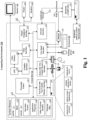
- FIG. 1 is a block diagram of a general purpose computing device in which the techniques described herein may be employed.
- the computing system environment 120 is only one example of a suitable computing environment and is not intended to suggest any limitation as to the scope of use or functionality of the presently disclosed subject matter. Neither should the computing environment 120 be interpreted as having any dependency or requirement relating to any one or combination of components illustrated in the exemplary operating environment 120.
- the various depicted computing elements may include circuitry configured to instantiate specific aspects of the present disclosure.
- the term circuitry used in the disclosure can include specialized hardware components configured to perform function(s) by firmware or switches.
- circuitry can include a general purpose processing unit, memory, etc., configured by software instructions that embody logic operable to perform function(s).
- an implementer may write source code embodying logic and the source code can be compiled into machine readable code that can be processed by the general purpose processing unit. Since one skilled in the art can appreciate that the state of the art has evolved to a point where there is little difference between hardware, software, or a combination of hardware/software, the selection of hardware versus software to effectuate specific functions is a design choice left to an implementer. More specifically, one of skill in the art can appreciate that a software process can be transformed into an equivalent hardware structure, and a hardware structure can itself be transformed into an equivalent software process. Thus, the selection of a hardware implementation versus a software implementation is one of design choice and left to the implementer.
- Computer 141 typically includes a variety of computer readable media.
- Computer readable media can be any available media that can be accessed by computer 141 and includes both volatile and nonvolatile media, removable and non-removable media.
- the system memory 122 includes computer storage media in the form of volatile and/or nonvolatile memory such as read only memory (ROM) 123 and random access memory
- RAM 160 A basic input/output system 124 (BIOS), containing the basic routines that help to transfer information between elements within computer 141, such as during start-up, is typically stored in ROM 123.
- BIOS basic input/output system 124
- RAM 160 typically contains data and/or program modules that are immediately accessible to and/or presently being operated on by processing unit 159.
- FIG. 1 illustrates operating system 125, application programs 126, other program modules 127, and program data 128.
- the computer 141 may also include other removable/non-removable, volatile/nonvolatile computer storage media.
- FIG. 1 illustrates a hard disk drive 138 that reads from or writes to non-removable, nonvolatile magnetic media, a magnetic disk drive 139 that reads from or writes to a removable, nonvolatile magnetic disk 154, and an optical disk drive 140 that reads from or writes to a removable, nonvolatile optical disk 153 such as a CD ROM or other optical media.
- removable/non-removable, volatile/nonvolatile computer storage media that can be used in the exemplary operating environment include, but are not limited to, magnetic tape cassettes, flash memory cards, digital versatile disks, digital video tape, solid state RAM, solid state ROM, and the like.
- the hard disk drive 138 is typically connected to the system bus 121 through an non-removable memory interface such as interface 134, and magnetic disk drive 139 and optical disk drive 140 are typically connected to the system bus 121 by a removable memory interface, such as interface 135.
- hard disk drive 138 is illustrated as storing operating system 158, application programs 157, other program modules 156, and program data 155. Note that these components can either be the same as or different from operating system 125, application programs 126, other program modules 127, and program data 128. Operating system 158, application programs 157, other program modules 156, and program data 155 are given different numbers here to illustrate that, at a minimum, they are different copies.
- a user may enter commands and information into the computer 141 through input devices such as a keyboard 151 and pointing device 152, commonly referred to as a mouse, trackball or touch pad.
- Other input devices may include a microphone, joystick, game pad, satellite dish, scanner, or the like.
- These and other input devices are often connected to the processing unit 159 through a user input interface 136 that is coupled to the system bus, but may be connected by other interface and bus structures, such as a parallel port, game port or a universal serial bus (USB).
- a monitor 142 or other type of display device is also connected to the system bus 121 via an interface, such as a video interface 132.
- computers may also include other peripheral output devices such as speakers 144 and printer 143, which may be connected through a output peripheral interface 133.
- the computer 141 may operate in a networked environment using logical connections to one or more remote computers, such as a remote computer 146.
- the remote computer 146 may be a personal computer, a server, a router, a network PC, a peer device or other common network node, and typically includes many or all of the elements described above relative to the computer 141, although only a memory storage device 147 has been illustrated in FIG. 1 .
- the logical connections depicted in FIG. 1 include a local area network (LAN) 145 and a wide area network (WAN) 149, but may also include other networks.
- LAN local area network
- WAN wide area network
- Such networking environments are commonplace in offices, enterprise-wide computer networks, intranets and the Internet.
- the computer 141 When used in a LAN networking environment, the computer 141 is connected to the LAN 145 through a network interface or adapter 137. When used in a WAN networking environment, the computer 141 typically includes a modem 150 or other means for establishing communications over the WAN 149, such as the Internet.
- the modem 150 which may be internal or external, may be connected to the system bus 121 via the user input interface 136, or other appropriate mechanism.
- program modules depicted relative to the computer 141, or portions thereof, may be stored in the remote memory storage device.
- FIG. 1 illustrates remote application programs 148 as residing on memory device 147. It will be appreciated that the network connections shown are exemplary and other means of establishing a communications link between the computers may be used.
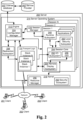
- FIG. 2 it generally illustrates an example environment wherein aspects of the present disclosure can be implemented.
- the example elements depicted by FIG. 2 provide an operational framework for describing the present disclosure. Accordingly, in some embodiments the physical layout of the environment may be different depending on different implementation schemes. Thus the example operational framework is to be treated as illustrative only and in no way limit the scope of the claims.
- the following discussion is introductory and the elements depicted by FIG. 2 are described in more detail within the discussion of the operational procedures of FIG. 3 through FIG. 8.
- FIG. 2 depicts a high level overview of a terminal server environment that can be configured to include aspects of the present disclosure.
- a server 204 is depicted that can include circuitry configured to effectuate a terminal server and for example, three example clients 201, 202, and 203 (while three clients are depicted the server 204 in embodiments can service more or less clients).
- the example clients 201-203 can include computer terminals effectuated by hardware configured to direct user input to the server 204 and display user interface information generated by the server 204.
- clients 201-203 can be computers that include similar elements as those of computer 20 FIG. 1 .
- clients 201-203 can include circuitry configured to effect operating systems and circuitry configured to emulate the functionality of terminals.
- the circuitry configured to effectuate the operating systems can also include the circuitry configured to emulate terminals.
- a session in example embodiments of the present disclosure can generally include an operational environment that is effectuated by a plurality of subsystems, e.g., software code, that are configured to effectuate an execution environment and interact with a kernel 218 of an operating system 214.
- a session can include a shell and a user interface such as a desktop, the subsystems that track mouse movement within the desktop, the subsystems that translate a mouse click on an icon into commands that effectuate an instance of a program, etc.
- the session can include an application.
- a desktop environment may still be generated and hidden from the user.
- the session in this example can include similar subsystems as the session described above.
- a session can be generated by the server 204 on a user by user basis when, for example, the server 204 receives a connection request over a network connection from a client such as client 201.
- a connection request can first be handled by the transport logic 210 that can, for example, be effectuated by circuitry of the server 204.
- the transport logic 210 can include a network adaptor, firmware, and software that can be configured to listen for connection messages and forward them to the engine 212.
- the transport logic 210 can include protocol stack instances for each session.
- each protocol stack instance can be configured to route user interface output to an associated client and route user input received from the associated client to the appropriate session core 244.
- the engine 212 can be configured to obtain a license for the session.
- the engine 212 can receive a license from the client 201 during the session generation process.
- the engine 212 can receive a copy of a license from a license database 222.
- the license database 222 can include a relational database management program that can be executed on an operating system of a computer such as computer 20 of FIG. 1 .
- it can store one or more licenses that can be checked out when a client attempts to obtain a session from the server 204.
- a configuration manager 224 in an example can include computer readable instructions that when executed instantiate a process that can receive a license during the session creation process and determine a service level for a newly spawned session by interfacing with various subsystems such as session manager 216.
- the session manager 216 can be configured to initialize and manage each session by for example, generating a session identifier for a session space; adding the session identifier to a table; assigning memory to the session space; and generating system environment variables and instances of subsystem processes in memory assigned to the session space.
- the session core 244 can include a graphics display interface 246 (GDI) and an input subsystem 252.
- the input subsystem 252 in an example can be configured to receive user input from a client 201 via the protocol stack instance associated with the session and transmit the input to the session core 244.
- the user input can in some examples include signals indicative of absolute and/or relative mouse movement commands, mouse coordinates, mouse clicks, keyboard signals, joystick movement signals, etc.
- User input for example, a mouse double-click on an icon, can be received by the session core 244 and the input subsystem 252 can be configured to determine that an icon is located at the coordinates associated with the double-click.
- the input subsystem 252 can then be configured to send a notification to the runtime subsystem 240 that can execute a process for the application associated with the icon.
- draw commands can be received from applications and/or a desktop and processed by the GDI 246.
- the GDI 246 in general can include a process that can generate graphical object draw commands.
- the GDI 246 in this example can be configured to pass the commands to the remote display subsystem 254 that can instantiate a display driver for the session.
- the remote display subsystem 254 can be configured to include virtual display driver(s) that may not be associated with displays physically attached to the server 204, e.g., the server 204 could be running headless.
- the virtual display driver in this example can be configured to receive the draw commands and transmit them to the client 201 via a stack instance associated with the session.
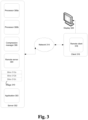
- FIG. 3 illustrates a client 316 and server 302 communicating via a remote session, wherein the server uses multi-processor compression of images 310 that it sends to the client.
- client 316 and server 302 communicate via a remote session that is effectuated by remote server 304 on server 302 communicating with remote client 318 on client 316 across communications network 314.
- the remote client 318 sends input commands, such as mouse movement or key strokes to the remote server 304, which interprets them and sends the client 318 image data 310 corresponding to the result of that input.
- client 316 may issue mouse movement and clicks to open a video.
- the server 304 will receive this input information, determine that a video is to be played as a result, and send the resulting images 310, and possibly audio, that corresponds to that video being played to the client 318 for display on display device 320.
- the server 302 will often compress the images 310 that it sends to the client 316, so as to conserve bandwidth.
- the server 302 sends each image 310 to a work manager 306, which manages the compression of each image 310 across each of the multiple processors 308 or cores present on the server 302.
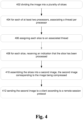
- the work manager 306 will receive an image 310 and partition it into one or more slices 312.
- a typical remote session compression algorithm may operate on tiles (e.g. 64x64 pixel squares) or strips (e.g. 1680x2 pixel rectangles)
- a slice 312 is typically a much larger section of the image 310 (e.g. 1680x128 pixels).
- the slices 312 may selected so as to avoid any cache thrashing issues for a processor 308.
- a slice 312 may be further divided up into tiles or strips, but the slice 312 is the unit that is allocated to a processor 308, so all tiles or stripes within a slice 312 remain allocated to that core.
- the remote server may be asynchronous.
- the remote server dispatches an image to the work manager 306 and then immediately does further processing, such as parsing received client input or generating a second image for the work manager 306 to compress. It later accepts an asynchronous completion notification from the work manager 306 comprising an indication that the image has been compressed or the compressed image itself.
Landscapes
- Engineering & Computer Science (AREA)
- Theoretical Computer Science (AREA)
- Software Systems (AREA)
- Physics & Mathematics (AREA)
- General Engineering & Computer Science (AREA)
- General Physics & Mathematics (AREA)
- Computing Systems (AREA)
- Multimedia (AREA)
- Signal Processing (AREA)
- Human Computer Interaction (AREA)
- Information Transfer Between Computers (AREA)
- Compression Or Coding Systems Of Tv Signals (AREA)
- Compression Of Band Width Or Redundancy In Fax (AREA)
Applications Claiming Priority (2)
| Application Number | Priority Date | Filing Date | Title |
|---|---|---|---|
| US12/416,791 US8705879B2 (en) | 2009-04-01 | 2009-04-01 | Image compression acceleration using multiple processors |
| PCT/US2010/029710 WO2010115057A2 (en) | 2009-04-01 | 2010-04-01 | Image compression acceleration using multiple processors |
Publications (3)
| Publication Number | Publication Date |
|---|---|
| EP2414959A2 EP2414959A2 (en) | 2012-02-08 |
| EP2414959A4 EP2414959A4 (en) | 2013-10-16 |
| EP2414959B1 true EP2414959B1 (en) | 2024-12-04 |
Family
ID=42826231
Family Applications (1)
| Application Number | Title | Priority Date | Filing Date |
|---|---|---|---|
| EP10759444.2A Active EP2414959B1 (en) | 2009-04-01 | 2010-04-01 | Image compression acceleration using multiple processors |
Country Status (5)
| Country | Link |
|---|---|
| US (1) | US8705879B2 (enExample) |
| EP (1) | EP2414959B1 (enExample) |
| JP (1) | JP5788865B2 (enExample) |
| CN (1) | CN102378976B (enExample) |
| WO (1) | WO2010115057A2 (enExample) |
Families Citing this family (9)
| Publication number | Priority date | Publication date | Assignee | Title |
|---|---|---|---|---|
| PL4351137T3 (pl) | 2012-09-26 | 2025-08-04 | Sun Patent Trust | Sposób dekodowania obrazów i aparat dekodujący obrazy |
| MX345003B (es) * | 2012-09-26 | 2017-01-13 | Panasonic Ip Corp America | Metodo de decodificacion de imagen, metodo de codificacion de imagen, aparato de decodificacion de imagen, aparato de codificacion de imagen y aparato de codificacion y decodificacion de imagen. |
| US9319483B2 (en) * | 2012-11-13 | 2016-04-19 | Karl Storz Imaging, Inc. | Asynchronous open task for operating room control system |
| US20140172452A1 (en) * | 2012-12-14 | 2014-06-19 | Advanced Medical Imaging Development S.R.L. | System for processing medical data |
| US11228769B2 (en) | 2013-06-03 | 2022-01-18 | Texas Instruments Incorporated | Multi-threading in a video hardware engine |
| US9875723B2 (en) | 2013-08-13 | 2018-01-23 | Mediatek Inc. | Data processing apparatus for transmitting/receiving randomly accessible compressed pixel data groups over display interface and related data processing method |
| US10193934B2 (en) * | 2015-12-03 | 2019-01-29 | Microsoft Technology Licensing, Llc | Data compression for communications signalling |
| US10073775B2 (en) * | 2016-04-01 | 2018-09-11 | Intel Corporation | Apparatus and method for triggered prefetching to improve I/O and producer-consumer workload efficiency |
| WO2020105069A1 (en) | 2018-11-21 | 2020-05-28 | Datalogic Ip Tech S.R.L. | Image multiprocessing method for vision systems |
Citations (1)
| Publication number | Priority date | Publication date | Assignee | Title |
|---|---|---|---|---|
| WO2001047276A1 (en) * | 1999-12-22 | 2001-06-28 | Nokia Corporation | A method for transmitting video images, a data transmission system, a transmitting video terminal, and a receiving video terminal |
Family Cites Families (29)
| Publication number | Priority date | Publication date | Assignee | Title |
|---|---|---|---|---|
| US5138447A (en) | 1991-02-11 | 1992-08-11 | General Instrument Corporation | Method and apparatus for communicating compressed digital video signals using multiple processors |
| JP2734465B2 (ja) * | 1991-04-10 | 1998-03-30 | 三菱電機株式会社 | ネットワーク用入出力装置 |
| US6148111A (en) * | 1998-04-27 | 2000-11-14 | The United States Of America As Represented By The Secretary Of The Navy | Parallel digital image compression system for exploiting zerotree redundancies in wavelet coefficients |
| JP2000295616A (ja) * | 1999-04-08 | 2000-10-20 | Matsushita Electric Ind Co Ltd | 画像符号化装置、画像復号装置、画像符号化方法、画像復号方法及びプログラム記録媒体 |
| US6651252B1 (en) * | 1999-10-27 | 2003-11-18 | Diva Systems Corporation | Method and apparatus for transmitting video and graphics in a compressed form |
| US6625671B1 (en) * | 1999-05-03 | 2003-09-23 | Computer Network Technology Corporation | Compression of buffered data |
| US20020101932A1 (en) * | 2000-11-29 | 2002-08-01 | Montgomery Dennis L. | Method and apparatus for encoding information using multiple passes and decoding in a single pass |
| US7171444B2 (en) * | 2001-11-14 | 2007-01-30 | Sharp Laboratories Of America, Inc. | Remote desktop protocol compression system |
| US6978466B2 (en) * | 2002-01-02 | 2005-12-20 | Intel Corporation | Method and system to reduce thrashing in a multi-threaded programming environment |
| US7365743B1 (en) * | 2002-10-08 | 2008-04-29 | Adobe Systems Incorporated | Assignments for parallel rasterization |
| US7636810B2 (en) * | 2003-11-26 | 2009-12-22 | Intel Corporation | Method, system, and apparatus for memory compression with flexible in-memory cache |
| US20050235284A1 (en) * | 2004-04-14 | 2005-10-20 | International Business Machines Corporation | Systems and methods for tracking processing unit usage |
| US7614075B2 (en) * | 2004-08-13 | 2009-11-03 | Microsoft Corporation | Dynamically generating video streams for user interfaces |
| US8549149B2 (en) * | 2004-12-30 | 2013-10-01 | Citrix Systems, Inc. | Systems and methods for providing client-side accelerated access to remote applications via TCP multiplexing |
| JP4384607B2 (ja) * | 2005-01-25 | 2009-12-16 | 株式会社日立国際電気 | 画像処理装置 |
| JP2006340183A (ja) * | 2005-06-03 | 2006-12-14 | Canon Inc | 画像符号化装置及び画像符号化方法 |
| KR100657331B1 (ko) | 2005-08-24 | 2006-12-14 | 삼성전자주식회사 | 멀티 프로세서를 채용한 화상형성장치 및 이를 이용한화상형성방법 |
| US7653749B2 (en) * | 2005-08-31 | 2010-01-26 | Microsoft Corporation | Remote protocol support for communication of large objects in arbitrary format |
| US7899864B2 (en) * | 2005-11-01 | 2011-03-01 | Microsoft Corporation | Multi-user terminal services accelerator |
| US7870551B2 (en) * | 2006-05-18 | 2011-01-11 | International Business Machines Corporation | Optimization of thread wake up for shared processor partitions |
| US8107669B2 (en) * | 2006-06-14 | 2012-01-31 | Samsung Electronics Co., Ltd. | Video watermarking apparatus in compression domain and method using the same |
| US8000388B2 (en) * | 2006-07-17 | 2011-08-16 | Sony Corporation | Parallel processing apparatus for video compression |
| EP2151124A4 (en) * | 2007-04-26 | 2010-12-29 | Polycom Inc | ENTSPERRUNGSFILTERANORDNUNGEN |
| KR100801630B1 (ko) * | 2007-06-15 | 2008-02-05 | 디비코 주식회사 | 멀티코어 프로세서를 이용한 분산 디코딩 처리 장치 및방법 |
| US8126262B2 (en) * | 2007-06-18 | 2012-02-28 | International Business Machines Corporation | Annotating video segments using feature rhythm models |
| US8649615B2 (en) * | 2007-06-18 | 2014-02-11 | Canon Kabushiki Kaisha | Moving picture compression coding apparatus |
| JP5084543B2 (ja) * | 2008-02-12 | 2012-11-28 | キヤノン株式会社 | 画像処理装置及び画像処理方法 |
| CN101282478A (zh) * | 2008-04-24 | 2008-10-08 | 上海华平信息技术股份有限公司 | 实现高清视频并行编码的方法及系统 |
| JP5097830B2 (ja) * | 2008-06-26 | 2012-12-12 | ジーブイビービー ホールディングス エス.エイ.アール.エル. | 動画像処理方法、プログラム、及び装置 |
-
2009
- 2009-04-01 US US12/416,791 patent/US8705879B2/en active Active
-
2010
- 2010-04-01 CN CN201080016209.7A patent/CN102378976B/zh active Active
- 2010-04-01 WO PCT/US2010/029710 patent/WO2010115057A2/en not_active Ceased
- 2010-04-01 JP JP2012503727A patent/JP5788865B2/ja active Active
- 2010-04-01 EP EP10759444.2A patent/EP2414959B1/en active Active
Patent Citations (1)
| Publication number | Priority date | Publication date | Assignee | Title |
|---|---|---|---|---|
| WO2001047276A1 (en) * | 1999-12-22 | 2001-06-28 | Nokia Corporation | A method for transmitting video images, a data transmission system, a transmitting video terminal, and a receiving video terminal |
Non-Patent Citations (1)
| Title |
|---|
| TILL HALBACH AND STEFFEN OLSEN: "Error robustness evaluation of H.264/MPEG-4 AVC", VISUAL COMMUNICATIONS AND IMAGE PROCESSING; 20-1-2004 - 20-1-2004; SAN JOSE,, 20 January 2004 (2004-01-20), XP030081324 * |
Also Published As
| Publication number | Publication date |
|---|---|
| US20100254616A1 (en) | 2010-10-07 |
| WO2010115057A3 (en) | 2011-01-20 |
| EP2414959A4 (en) | 2013-10-16 |
| JP5788865B2 (ja) | 2015-10-07 |
| JP2012523176A (ja) | 2012-09-27 |
| US8705879B2 (en) | 2014-04-22 |
| WO2010115057A2 (en) | 2010-10-07 |
| CN102378976A (zh) | 2012-03-14 |
| EP2414959A2 (en) | 2012-02-08 |
| CN102378976B (zh) | 2015-08-26 |
Similar Documents
| Publication | Publication Date | Title |
|---|---|---|
| EP2414959B1 (en) | Image compression acceleration using multiple processors | |
| US9146884B2 (en) | Push pull adaptive capture | |
| US8189661B2 (en) | Remote desktop protocol (RDP) tile image classification for improving compression efficiency and quality | |
| US8760453B2 (en) | Adaptive grid generation for improved caching and image classification | |
| US9235452B2 (en) | Graphics remoting using augmentation data | |
| US9225784B2 (en) | Loss tolerant protocol for remoting desktop graphics | |
| US8385666B2 (en) | Classification and encoder selection based on content | |
| US8924507B2 (en) | Cross-frame progressive spoiling support for reduced network bandwidth usage | |
| AU2011314228B2 (en) | Entropy coder for image compression | |
| US20120042275A1 (en) | Cloning specific windows on a wireless display surface | |
| US20120075346A1 (en) | Low Complexity Method For Motion Compensation Of DWT Based Systems | |
| US8654134B2 (en) | Command remoting | |
| US8307103B2 (en) | Tear-free remote desktop protocol (RDP) display | |
| EP2622461A2 (en) | Shared memory between child and parent partitions | |
| US20090328037A1 (en) | 3d graphics acceleration in remote multi-user environment |
Legal Events
| Date | Code | Title | Description |
|---|---|---|---|
| PUAI | Public reference made under article 153(3) epc to a published international application that has entered the european phase |
Free format text: ORIGINAL CODE: 0009012 |
|
| 17P | Request for examination filed |
Effective date: 20110926 |
|
| AK | Designated contracting states |
Kind code of ref document: A2 Designated state(s): AT BE BG CH CY CZ DE DK EE ES FI FR GB GR HR HU IE IS IT LI LT LU LV MC MK MT NL NO PL PT RO SE SI SK SM TR |
|
| DAX | Request for extension of the european patent (deleted) | ||
| A4 | Supplementary search report drawn up and despatched |
Effective date: 20130913 |
|
| RIC1 | Information provided on ipc code assigned before grant |
Ipc: G06F 3/14 20060101ALI20130909BHEP Ipc: G06F 9/46 20060101ALI20130909BHEP Ipc: H04N 7/26 20060101ALI20130909BHEP Ipc: G06F 15/163 20060101AFI20130909BHEP |
|
| 17Q | First examination report despatched |
Effective date: 20140326 |
|
| RAP1 | Party data changed (applicant data changed or rights of an application transferred) |
Owner name: MICROSOFT TECHNOLOGY LICENSING, LLC |
|
| APBK | Appeal reference recorded |
Free format text: ORIGINAL CODE: EPIDOSNREFNE |
|
| APBN | Date of receipt of notice of appeal recorded |
Free format text: ORIGINAL CODE: EPIDOSNNOA2E |
|
| APBR | Date of receipt of statement of grounds of appeal recorded |
Free format text: ORIGINAL CODE: EPIDOSNNOA3E |
|
| APAF | Appeal reference modified |
Free format text: ORIGINAL CODE: EPIDOSCREFNE |
|
| APBX | Invitation to file observations in appeal sent |
Free format text: ORIGINAL CODE: EPIDOSNOBA2E |
|
| APBZ | Receipt of observations in appeal recorded |
Free format text: ORIGINAL CODE: EPIDOSNOBA4E |
|
| APBT | Appeal procedure closed |
Free format text: ORIGINAL CODE: EPIDOSNNOA9E |
|
| RAP3 | Party data changed (applicant data changed or rights of an application transferred) |
Owner name: MICROSOFT TECHNOLOGY LICENSING, LLC |
|
| STAA | Information on the status of an ep patent application or granted ep patent |
Free format text: STATUS: EXAMINATION IS IN PROGRESS |
|
| REG | Reference to a national code |
Ref country code: DE Ref legal event code: R079 Free format text: PREVIOUS MAIN CLASS: G06F0015163000 Ipc: H04N0019000000 Ref country code: DE Ref legal event code: R079 Ref document number: 602010069601 Country of ref document: DE Free format text: PREVIOUS MAIN CLASS: G06F0015163000 Ipc: H04N0019000000 |
|
| GRAP | Despatch of communication of intention to grant a patent |
Free format text: ORIGINAL CODE: EPIDOSNIGR1 |
|
| STAA | Information on the status of an ep patent application or granted ep patent |
Free format text: STATUS: GRANT OF PATENT IS INTENDED |
|
| RIC1 | Information provided on ipc code assigned before grant |
Ipc: G06F 9/46 20060101ALI20240613BHEP Ipc: H04N 19/00 20140101AFI20240613BHEP |
|
| INTG | Intention to grant announced |
Effective date: 20240701 |
|
| RIN1 | Information on inventor provided before grant (corrected) |
Inventor name: ALBU, VOICU ANTON Inventor name: ABDO, NADIM Y. |
|
| P01 | Opt-out of the competence of the unified patent court (upc) registered |
Free format text: CASE NUMBER: APP_44823/2024 Effective date: 20240801 |
|
| GRAS | Grant fee paid |
Free format text: ORIGINAL CODE: EPIDOSNIGR3 |
|
| GRAA | (expected) grant |
Free format text: ORIGINAL CODE: 0009210 |
|
| STAA | Information on the status of an ep patent application or granted ep patent |
Free format text: STATUS: THE PATENT HAS BEEN GRANTED |
|
| AK | Designated contracting states |
Kind code of ref document: B1 Designated state(s): AT BE BG CH CY CZ DE DK EE ES FI FR GB GR HR HU IE IS IT LI LT LU LV MC MK MT NL NO PL PT RO SE SI SK SM TR |
|
| REG | Reference to a national code |
Ref country code: GB Ref legal event code: FG4D |
|
| REG | Reference to a national code |
Ref country code: CH Ref legal event code: EP |
|
| REG | Reference to a national code |
Ref country code: DE Ref legal event code: R096 Ref document number: 602010069601 Country of ref document: DE |
|
| REG | Reference to a national code |
Ref country code: IE Ref legal event code: FG4D |
|
| REG | Reference to a national code |
Ref country code: LT Ref legal event code: MG9D |
|
| REG | Reference to a national code |
Ref country code: NL Ref legal event code: MP Effective date: 20241204 |
|
| PG25 | Lapsed in a contracting state [announced via postgrant information from national office to epo] |
Ref country code: HR Free format text: LAPSE BECAUSE OF FAILURE TO SUBMIT A TRANSLATION OF THE DESCRIPTION OR TO PAY THE FEE WITHIN THE PRESCRIBED TIME-LIMIT Effective date: 20241204 |
|
| PG25 | Lapsed in a contracting state [announced via postgrant information from national office to epo] |
Ref country code: FI Free format text: LAPSE BECAUSE OF FAILURE TO SUBMIT A TRANSLATION OF THE DESCRIPTION OR TO PAY THE FEE WITHIN THE PRESCRIBED TIME-LIMIT Effective date: 20241204 |
|
| PG25 | Lapsed in a contracting state [announced via postgrant information from national office to epo] |
Ref country code: BG Free format text: LAPSE BECAUSE OF FAILURE TO SUBMIT A TRANSLATION OF THE DESCRIPTION OR TO PAY THE FEE WITHIN THE PRESCRIBED TIME-LIMIT Effective date: 20241204 |
|
| PG25 | Lapsed in a contracting state [announced via postgrant information from national office to epo] |
Ref country code: ES Free format text: LAPSE BECAUSE OF FAILURE TO SUBMIT A TRANSLATION OF THE DESCRIPTION OR TO PAY THE FEE WITHIN THE PRESCRIBED TIME-LIMIT Effective date: 20241204 |
|
| PG25 | Lapsed in a contracting state [announced via postgrant information from national office to epo] |
Ref country code: NO Free format text: LAPSE BECAUSE OF FAILURE TO SUBMIT A TRANSLATION OF THE DESCRIPTION OR TO PAY THE FEE WITHIN THE PRESCRIBED TIME-LIMIT Effective date: 20250304 |
|
| PG25 | Lapsed in a contracting state [announced via postgrant information from national office to epo] |
Ref country code: LV Free format text: LAPSE BECAUSE OF FAILURE TO SUBMIT A TRANSLATION OF THE DESCRIPTION OR TO PAY THE FEE WITHIN THE PRESCRIBED TIME-LIMIT Effective date: 20241204 Ref country code: GR Free format text: LAPSE BECAUSE OF FAILURE TO SUBMIT A TRANSLATION OF THE DESCRIPTION OR TO PAY THE FEE WITHIN THE PRESCRIBED TIME-LIMIT Effective date: 20250305 |
|
| PGFP | Annual fee paid to national office [announced via postgrant information from national office to epo] |
Ref country code: GB Payment date: 20250319 Year of fee payment: 16 |
|
| PG25 | Lapsed in a contracting state [announced via postgrant information from national office to epo] |
Ref country code: NL Free format text: LAPSE BECAUSE OF FAILURE TO SUBMIT A TRANSLATION OF THE DESCRIPTION OR TO PAY THE FEE WITHIN THE PRESCRIBED TIME-LIMIT Effective date: 20241204 |
|
| REG | Reference to a national code |
Ref country code: AT Ref legal event code: MK05 Ref document number: 1749397 Country of ref document: AT Kind code of ref document: T Effective date: 20241204 |
|
| PG25 | Lapsed in a contracting state [announced via postgrant information from national office to epo] |
Ref country code: SM Free format text: LAPSE BECAUSE OF FAILURE TO SUBMIT A TRANSLATION OF THE DESCRIPTION OR TO PAY THE FEE WITHIN THE PRESCRIBED TIME-LIMIT Effective date: 20241204 |
|
| PG25 | Lapsed in a contracting state [announced via postgrant information from national office to epo] |
Ref country code: PL Free format text: LAPSE BECAUSE OF FAILURE TO SUBMIT A TRANSLATION OF THE DESCRIPTION OR TO PAY THE FEE WITHIN THE PRESCRIBED TIME-LIMIT Effective date: 20241204 |
|
| PGFP | Annual fee paid to national office [announced via postgrant information from national office to epo] |
Ref country code: DE Payment date: 20250319 Year of fee payment: 16 |
|
| PG25 | Lapsed in a contracting state [announced via postgrant information from national office to epo] |
Ref country code: IS Free format text: LAPSE BECAUSE OF FAILURE TO SUBMIT A TRANSLATION OF THE DESCRIPTION OR TO PAY THE FEE WITHIN THE PRESCRIBED TIME-LIMIT Effective date: 20250404 |
|
| PG25 | Lapsed in a contracting state [announced via postgrant information from national office to epo] |
Ref country code: PT Free format text: LAPSE BECAUSE OF FAILURE TO SUBMIT A TRANSLATION OF THE DESCRIPTION OR TO PAY THE FEE WITHIN THE PRESCRIBED TIME-LIMIT Effective date: 20250404 |
|
| PG25 | Lapsed in a contracting state [announced via postgrant information from national office to epo] |
Ref country code: EE Free format text: LAPSE BECAUSE OF FAILURE TO SUBMIT A TRANSLATION OF THE DESCRIPTION OR TO PAY THE FEE WITHIN THE PRESCRIBED TIME-LIMIT Effective date: 20241204 |
|
| PG25 | Lapsed in a contracting state [announced via postgrant information from national office to epo] |
Ref country code: AT Free format text: LAPSE BECAUSE OF FAILURE TO SUBMIT A TRANSLATION OF THE DESCRIPTION OR TO PAY THE FEE WITHIN THE PRESCRIBED TIME-LIMIT Effective date: 20241204 Ref country code: RO Free format text: LAPSE BECAUSE OF FAILURE TO SUBMIT A TRANSLATION OF THE DESCRIPTION OR TO PAY THE FEE WITHIN THE PRESCRIBED TIME-LIMIT Effective date: 20241204 |
|
| PG25 | Lapsed in a contracting state [announced via postgrant information from national office to epo] |
Ref country code: SK Free format text: LAPSE BECAUSE OF FAILURE TO SUBMIT A TRANSLATION OF THE DESCRIPTION OR TO PAY THE FEE WITHIN THE PRESCRIBED TIME-LIMIT Effective date: 20241204 |
|
| PG25 | Lapsed in a contracting state [announced via postgrant information from national office to epo] |
Ref country code: CZ Free format text: LAPSE BECAUSE OF FAILURE TO SUBMIT A TRANSLATION OF THE DESCRIPTION OR TO PAY THE FEE WITHIN THE PRESCRIBED TIME-LIMIT Effective date: 20241204 |
|
| PG25 | Lapsed in a contracting state [announced via postgrant information from national office to epo] |
Ref country code: IT Free format text: LAPSE BECAUSE OF FAILURE TO SUBMIT A TRANSLATION OF THE DESCRIPTION OR TO PAY THE FEE WITHIN THE PRESCRIBED TIME-LIMIT Effective date: 20241204 |
|
| REG | Reference to a national code |
Ref country code: DE Ref legal event code: R097 Ref document number: 602010069601 Country of ref document: DE |
|
| PG25 | Lapsed in a contracting state [announced via postgrant information from national office to epo] |
Ref country code: SE Free format text: LAPSE BECAUSE OF FAILURE TO SUBMIT A TRANSLATION OF THE DESCRIPTION OR TO PAY THE FEE WITHIN THE PRESCRIBED TIME-LIMIT Effective date: 20241204 |
|
| PG25 | Lapsed in a contracting state [announced via postgrant information from national office to epo] |
Ref country code: DK Free format text: LAPSE BECAUSE OF FAILURE TO SUBMIT A TRANSLATION OF THE DESCRIPTION OR TO PAY THE FEE WITHIN THE PRESCRIBED TIME-LIMIT Effective date: 20241204 |
|
| PLBE | No opposition filed within time limit |
Free format text: ORIGINAL CODE: 0009261 |
|
| STAA | Information on the status of an ep patent application or granted ep patent |
Free format text: STATUS: NO OPPOSITION FILED WITHIN TIME LIMIT |
|
| REG | Reference to a national code |
Ref country code: CH Ref legal event code: L10 Free format text: ST27 STATUS EVENT CODE: U-0-0-L10-L00 (AS PROVIDED BY THE NATIONAL OFFICE) Effective date: 20251015 |
|
| 26N | No opposition filed |
Effective date: 20250905 |
|
| REG | Reference to a national code |
Ref country code: CH Ref legal event code: H13 Free format text: ST27 STATUS EVENT CODE: U-0-0-H10-H13 (AS PROVIDED BY THE NATIONAL OFFICE) Effective date: 20251125 |
|
| PG25 | Lapsed in a contracting state [announced via postgrant information from national office to epo] |
Ref country code: LU Free format text: LAPSE BECAUSE OF NON-PAYMENT OF DUE FEES Effective date: 20250401 |
|
| PG25 | Lapsed in a contracting state [announced via postgrant information from national office to epo] |
Ref country code: MC Free format text: LAPSE BECAUSE OF FAILURE TO SUBMIT A TRANSLATION OF THE DESCRIPTION OR TO PAY THE FEE WITHIN THE PRESCRIBED TIME-LIMIT Effective date: 20241204 |