EP2406263B1 - Derivés de pyrazolo[1,5-a]-1,3,5-triazines, leur preparation et leur application en thérapeutique - Google Patents
Derivés de pyrazolo[1,5-a]-1,3,5-triazines, leur preparation et leur application en thérapeutique Download PDFInfo
- Publication number
- EP2406263B1 EP2406263B1 EP10710681.7A EP10710681A EP2406263B1 EP 2406263 B1 EP2406263 B1 EP 2406263B1 EP 10710681 A EP10710681 A EP 10710681A EP 2406263 B1 EP2406263 B1 EP 2406263B1
- Authority
- EP
- European Patent Office
- Prior art keywords
- group
- pyrazolo
- isopropyl
- triazine
- ylamino
- Prior art date
- Legal status (The legal status is an assumption and is not a legal conclusion. Google has not performed a legal analysis and makes no representation as to the accuracy of the status listed.)
- Active
Links
- 0 CC1(*)CN(C)CCC(*)C1 Chemical compound CC1(*)CN(C)CCC(*)C1 0.000 description 12
- OVMRRCXDBKEQIU-QMMMGPOBSA-N CN1[C@H](CCO)CCCC1 Chemical compound CN1[C@H](CCO)CCCC1 OVMRRCXDBKEQIU-QMMMGPOBSA-N 0.000 description 3
- OYVRBPWHBXODQV-UHFFFAOYSA-N CN(CC1)CCC1C1CCN(CCO)CC1 Chemical compound CN(CC1)CCC1C1CCN(CCO)CC1 OYVRBPWHBXODQV-UHFFFAOYSA-N 0.000 description 2
- PGPXRIFFCBCWEO-UHFFFAOYSA-N CN1CCC(CCO)CC1 Chemical compound CN1CCC(CCO)CC1 PGPXRIFFCBCWEO-UHFFFAOYSA-N 0.000 description 2
- QHTUMQYGZQYEOZ-UHFFFAOYSA-N CN1CCN(CCO)CC1 Chemical compound CN1CCN(CCO)CC1 QHTUMQYGZQYEOZ-UHFFFAOYSA-N 0.000 description 2
- HPSZOODGSFZDNO-UHFFFAOYSA-N CC(C)c(cn[n]1c(NCc(cc2)ccc2-c2ccccn2)n2)c1nc2S(C)=O Chemical compound CC(C)c(cn[n]1c(NCc(cc2)ccc2-c2ccccn2)n2)c1nc2S(C)=O HPSZOODGSFZDNO-UHFFFAOYSA-N 0.000 description 1
- YUSGVTSOASJXBJ-AIZNXBIQSA-N CC(C)c1c2nc(NC([C@@H](CCC3)O)[C@H]3O)nc(NCc(cc3)ccc3-c3ccccn3)[n]2nc1 Chemical compound CC(C)c1c2nc(NC([C@@H](CCC3)O)[C@H]3O)nc(NCc(cc3)ccc3-c3ccccn3)[n]2nc1 YUSGVTSOASJXBJ-AIZNXBIQSA-N 0.000 description 1
- AVDYRTSNUIKEDC-AIZNXBIQSA-N CC(C)c1c2nc(NC([C@@H](CCC3)O)[C@H]3O)nc(NCc3ccc(-c4ccccc4)nc3)[n]2nc1 Chemical compound CC(C)c1c2nc(NC([C@@H](CCC3)O)[C@H]3O)nc(NCc3ccc(-c4ccccc4)nc3)[n]2nc1 AVDYRTSNUIKEDC-AIZNXBIQSA-N 0.000 description 1
- YXDAAVYZDHDSMB-VQTJNVASSA-N CC(C)c1c2nc(NC[C@H](C3)NC[C@@H]3O)nc(NCc(cc3)ccc3-c3ccccn3)[n]2nc1 Chemical compound CC(C)c1c2nc(NC[C@H](C3)NC[C@@H]3O)nc(NCc(cc3)ccc3-c3ccccn3)[n]2nc1 YXDAAVYZDHDSMB-VQTJNVASSA-N 0.000 description 1
- UILKGRXRYPKODF-VQTJNVASSA-N CC(C)c1c2nc(NC[C@H](C3)NC[C@@H]3O)nc(NCc3ccc(-c4ccccc4)nc3)[n]2nc1 Chemical compound CC(C)c1c2nc(NC[C@H](C3)NC[C@@H]3O)nc(NCc3ccc(-c4ccccc4)nc3)[n]2nc1 UILKGRXRYPKODF-VQTJNVASSA-N 0.000 description 1
- FLCVAPVJTOIMQY-GKAPJAKFSA-N CC(COC=C)[C@@H](NC)[O](C)=C Chemical compound CC(COC=C)[C@@H](NC)[O](C)=C FLCVAPVJTOIMQY-GKAPJAKFSA-N 0.000 description 1
- BXHUJHSWZZFZEC-LJQANCHMSA-N CC[C@H](CO)Nc1nc2c(C(C)C)cn[n]2c(NCc(cc2)ccc2-c2c[s]cc2)n1 Chemical compound CC[C@H](CO)Nc1nc2c(C(C)C)cn[n]2c(NCc(cc2)ccc2-c2c[s]cc2)n1 BXHUJHSWZZFZEC-LJQANCHMSA-N 0.000 description 1
- WYYZMOWBDJCGSN-UHFFFAOYSA-N CCc(cn[n]1c(Cl)n2)c1nc2SC Chemical compound CCc(cn[n]1c(Cl)n2)c1nc2SC WYYZMOWBDJCGSN-UHFFFAOYSA-N 0.000 description 1
- HFGOKQBPAQGKBP-UHFFFAOYSA-N CCc(cn[n]1c(NCc(cc2)ccc2-c2ccccn2)n2)c1nc2S(C)=O Chemical compound CCc(cn[n]1c(NCc(cc2)ccc2-c2ccccn2)n2)c1nc2S(C)=O HFGOKQBPAQGKBP-UHFFFAOYSA-N 0.000 description 1
- NEPVRKMWYJSSHN-UHFFFAOYSA-N CCc(cn[n]1c(NCc(cc2)ccc2-c2ncccc2)n2)c1nc2SC Chemical compound CCc(cn[n]1c(NCc(cc2)ccc2-c2ncccc2)n2)c1nc2SC NEPVRKMWYJSSHN-UHFFFAOYSA-N 0.000 description 1
- RYNQTKGKKPOQIT-GOSISDBHSA-N CCc1c2nc(NC[C@H](CO)O)nc(NCc(cc3)ccc3-c3ncccc3)[n]2nc1 Chemical compound CCc1c2nc(NC[C@H](CO)O)nc(NCc(cc3)ccc3-c3ncccc3)[n]2nc1 RYNQTKGKKPOQIT-GOSISDBHSA-N 0.000 description 1
- HQJNICHOQUOPCX-UHFFFAOYSA-N CN(CC1)CCC1C1=CCN(CCO)CC1 Chemical compound CN(CC1)CCC1C1=CCN(CCO)CC1 HQJNICHOQUOPCX-UHFFFAOYSA-N 0.000 description 1
- OVMRRCXDBKEQIU-MRVPVSSYSA-N CN1[C@@H](CCO)CCCC1 Chemical compound CN1[C@@H](CCO)CCCC1 OVMRRCXDBKEQIU-MRVPVSSYSA-N 0.000 description 1
Classifications
-
- C—CHEMISTRY; METALLURGY
- C07—ORGANIC CHEMISTRY
- C07D—HETEROCYCLIC COMPOUNDS
- C07D487/00—Heterocyclic compounds containing nitrogen atoms as the only ring hetero atoms in the condensed system, not provided for by groups C07D451/00 - C07D477/00
- C07D487/02—Heterocyclic compounds containing nitrogen atoms as the only ring hetero atoms in the condensed system, not provided for by groups C07D451/00 - C07D477/00 in which the condensed system contains two hetero rings
- C07D487/04—Ortho-condensed systems
-
- A—HUMAN NECESSITIES
- A61—MEDICAL OR VETERINARY SCIENCE; HYGIENE
- A61P—SPECIFIC THERAPEUTIC ACTIVITY OF CHEMICAL COMPOUNDS OR MEDICINAL PREPARATIONS
- A61P11/00—Drugs for disorders of the respiratory system
-
- A—HUMAN NECESSITIES
- A61—MEDICAL OR VETERINARY SCIENCE; HYGIENE
- A61P—SPECIFIC THERAPEUTIC ACTIVITY OF CHEMICAL COMPOUNDS OR MEDICINAL PREPARATIONS
- A61P13/00—Drugs for disorders of the urinary system
- A61P13/12—Drugs for disorders of the urinary system of the kidneys
-
- A—HUMAN NECESSITIES
- A61—MEDICAL OR VETERINARY SCIENCE; HYGIENE
- A61P—SPECIFIC THERAPEUTIC ACTIVITY OF CHEMICAL COMPOUNDS OR MEDICINAL PREPARATIONS
- A61P19/00—Drugs for skeletal disorders
- A61P19/02—Drugs for skeletal disorders for joint disorders, e.g. arthritis, arthrosis
-
- A—HUMAN NECESSITIES
- A61—MEDICAL OR VETERINARY SCIENCE; HYGIENE
- A61P—SPECIFIC THERAPEUTIC ACTIVITY OF CHEMICAL COMPOUNDS OR MEDICINAL PREPARATIONS
- A61P25/00—Drugs for disorders of the nervous system
-
- A—HUMAN NECESSITIES
- A61—MEDICAL OR VETERINARY SCIENCE; HYGIENE
- A61P—SPECIFIC THERAPEUTIC ACTIVITY OF CHEMICAL COMPOUNDS OR MEDICINAL PREPARATIONS
- A61P25/00—Drugs for disorders of the nervous system
- A61P25/04—Centrally acting analgesics, e.g. opioids
-
- A—HUMAN NECESSITIES
- A61—MEDICAL OR VETERINARY SCIENCE; HYGIENE
- A61P—SPECIFIC THERAPEUTIC ACTIVITY OF CHEMICAL COMPOUNDS OR MEDICINAL PREPARATIONS
- A61P25/00—Drugs for disorders of the nervous system
- A61P25/08—Antiepileptics; Anticonvulsants
-
- A—HUMAN NECESSITIES
- A61—MEDICAL OR VETERINARY SCIENCE; HYGIENE
- A61P—SPECIFIC THERAPEUTIC ACTIVITY OF CHEMICAL COMPOUNDS OR MEDICINAL PREPARATIONS
- A61P25/00—Drugs for disorders of the nervous system
- A61P25/14—Drugs for disorders of the nervous system for treating abnormal movements, e.g. chorea, dyskinesia
- A61P25/16—Anti-Parkinson drugs
-
- A—HUMAN NECESSITIES
- A61—MEDICAL OR VETERINARY SCIENCE; HYGIENE
- A61P—SPECIFIC THERAPEUTIC ACTIVITY OF CHEMICAL COMPOUNDS OR MEDICINAL PREPARATIONS
- A61P25/00—Drugs for disorders of the nervous system
- A61P25/28—Drugs for disorders of the nervous system for treating neurodegenerative disorders of the central nervous system, e.g. nootropic agents, cognition enhancers, drugs for treating Alzheimer's disease or other forms of dementia
-
- A—HUMAN NECESSITIES
- A61—MEDICAL OR VETERINARY SCIENCE; HYGIENE
- A61P—SPECIFIC THERAPEUTIC ACTIVITY OF CHEMICAL COMPOUNDS OR MEDICINAL PREPARATIONS
- A61P29/00—Non-central analgesic, antipyretic or antiinflammatory agents, e.g. antirheumatic agents; Non-steroidal antiinflammatory drugs [NSAID]
-
- A—HUMAN NECESSITIES
- A61—MEDICAL OR VETERINARY SCIENCE; HYGIENE
- A61P—SPECIFIC THERAPEUTIC ACTIVITY OF CHEMICAL COMPOUNDS OR MEDICINAL PREPARATIONS
- A61P3/00—Drugs for disorders of the metabolism
- A61P3/08—Drugs for disorders of the metabolism for glucose homeostasis
- A61P3/10—Drugs for disorders of the metabolism for glucose homeostasis for hyperglycaemia, e.g. antidiabetics
-
- A—HUMAN NECESSITIES
- A61—MEDICAL OR VETERINARY SCIENCE; HYGIENE
- A61P—SPECIFIC THERAPEUTIC ACTIVITY OF CHEMICAL COMPOUNDS OR MEDICINAL PREPARATIONS
- A61P31/00—Antiinfectives, i.e. antibiotics, antiseptics, chemotherapeutics
- A61P31/12—Antivirals
-
- A—HUMAN NECESSITIES
- A61—MEDICAL OR VETERINARY SCIENCE; HYGIENE
- A61P—SPECIFIC THERAPEUTIC ACTIVITY OF CHEMICAL COMPOUNDS OR MEDICINAL PREPARATIONS
- A61P31/00—Antiinfectives, i.e. antibiotics, antiseptics, chemotherapeutics
- A61P31/12—Antivirals
- A61P31/14—Antivirals for RNA viruses
-
- A—HUMAN NECESSITIES
- A61—MEDICAL OR VETERINARY SCIENCE; HYGIENE
- A61P—SPECIFIC THERAPEUTIC ACTIVITY OF CHEMICAL COMPOUNDS OR MEDICINAL PREPARATIONS
- A61P31/00—Antiinfectives, i.e. antibiotics, antiseptics, chemotherapeutics
- A61P31/12—Antivirals
- A61P31/14—Antivirals for RNA viruses
- A61P31/18—Antivirals for RNA viruses for HIV
-
- A—HUMAN NECESSITIES
- A61—MEDICAL OR VETERINARY SCIENCE; HYGIENE
- A61P—SPECIFIC THERAPEUTIC ACTIVITY OF CHEMICAL COMPOUNDS OR MEDICINAL PREPARATIONS
- A61P31/00—Antiinfectives, i.e. antibiotics, antiseptics, chemotherapeutics
- A61P31/12—Antivirals
- A61P31/20—Antivirals for DNA viruses
- A61P31/22—Antivirals for DNA viruses for herpes viruses
-
- A—HUMAN NECESSITIES
- A61—MEDICAL OR VETERINARY SCIENCE; HYGIENE
- A61P—SPECIFIC THERAPEUTIC ACTIVITY OF CHEMICAL COMPOUNDS OR MEDICINAL PREPARATIONS
- A61P33/00—Antiparasitic agents
-
- A—HUMAN NECESSITIES
- A61—MEDICAL OR VETERINARY SCIENCE; HYGIENE
- A61P—SPECIFIC THERAPEUTIC ACTIVITY OF CHEMICAL COMPOUNDS OR MEDICINAL PREPARATIONS
- A61P33/00—Antiparasitic agents
- A61P33/02—Antiprotozoals, e.g. for leishmaniasis, trichomoniasis, toxoplasmosis
-
- A—HUMAN NECESSITIES
- A61—MEDICAL OR VETERINARY SCIENCE; HYGIENE
- A61P—SPECIFIC THERAPEUTIC ACTIVITY OF CHEMICAL COMPOUNDS OR MEDICINAL PREPARATIONS
- A61P35/00—Antineoplastic agents
-
- A—HUMAN NECESSITIES
- A61—MEDICAL OR VETERINARY SCIENCE; HYGIENE
- A61P—SPECIFIC THERAPEUTIC ACTIVITY OF CHEMICAL COMPOUNDS OR MEDICINAL PREPARATIONS
- A61P35/00—Antineoplastic agents
- A61P35/02—Antineoplastic agents specific for leukemia
-
- A—HUMAN NECESSITIES
- A61—MEDICAL OR VETERINARY SCIENCE; HYGIENE
- A61P—SPECIFIC THERAPEUTIC ACTIVITY OF CHEMICAL COMPOUNDS OR MEDICINAL PREPARATIONS
- A61P9/00—Drugs for disorders of the cardiovascular system
Definitions
- the invention relates to pyrazolo [1,5- a ] -1,3,5-triazine derivatives, to their preparation and to their therapeutic application.
- pyrazolotriazine compounds are known as kinase inhibitors.
- CDKs Cyclin-dependent kinase inhibitor
- GSK-3 Glycogen Synthase Kinase-3
- R 1 represents a (C 1 -C 6 ) alkyl group or a (C 3 -C 6 ) cycloalkyl group
- R 2 represents a (C 1 -C 6 ) alkyl group, a (C 1 -C 6 ) cycloalkyl group, a (C 1 -C 6 ) alkenyl group, a (C 1 -C 6 ) fluoroalkyl group, a C 1 -C 3 ) fluoroalkoxy or a (C 1 -C 6 ) alkoxy (C 1 -C 6 ) alkyl group substituted with (i) one to three hydroxy groups, or (ii) a NR a R b group , where R a and R b independently represent a hydrogen atom or a (C 1 -C 3 ) alkyl group, or R 2 represents a pyrrolidinylmethyl group substituted with one to
- Said natural or unnatural amino acid derived group may be derived from natural amino acids.
- natural amino acids mention may in particular be made of L-valine, L-leucine, L-serine, L-threonine, L-asparagine and aspartic acid.
- acyl derivatives of natural amino acids namely having in place of the -COOH terminal group a (C 1 -C 3 ) alkylcarbonyl group or a (C 1 -C 4 ) alkoxycarbonyl, especially a methylcarbonyl group giving an acetyl derivative or a tert-butoxycarbonyl group giving a Boc derivative.
- D-configuration amino acid derivatives may also be used.
- the heteroaryl group is selected from a thienyl group, a furanyl group and a pyridyl group.
- R 3 represents one of the following formulas ( a-1 ) to (a-5): where Boc is a tert-butoxycarbonyl group and Ac is an acetyl group, as well as their enantiomers.
- the compounds of formula ( I ) may comprise one or more asymmetric carbon atoms. They can therefore exist as enantiomers or diastereoisomers. These enantiomers, diastereoisomers, as well as their mixtures, including the racemic mixtures, form part of the invention.
- the compounds of formula ( I ) may exist in the form of bases or addition salts with acids. Such addition salts are part of the invention.
- salts are advantageously prepared with pharmaceutically acceptable acids, but the salts of other acids that are useful, for example, for the purification or the isolation of the compounds of formula ( I ) are also part of the invention.
- hydrochloric acid hydrobromic acid, trifluoroacetic acid, fumaric acid, tartaric acid, citric acid, ascorbic acid and maleic acid.
- the compounds of formula (I) may also exist in the form of hydrates or solvates, namely in the form of associations or combinations with one or more water molecules or with a solvent. Such hydrates and solvates are also part of the invention.
- the group R 1 represents an ethyl group or an isopropyl group.
- the groups X and Y are not substituted.
- the X and Y groups when at least one of the X and Y groups is substituted, it comprises one or two substitution groups and said substitution group is advantageously independently selected from a (C 1 -C 2 ) alkyl group. fluoroalkyl (C 1 -C 2 ), (C 1 -C 2 ) alkoxy, (C 1 -C 2 ) fluoroalkoxy, halogen, hydroxy and -COOH.
- the group R 2 represents one of the following formulas, the group R 9 then being a hydrogen atom:
- the group R 2 represents one of the formulas ( b-1 ), ( b-2 ), ( b-10 ), ( b-11 ), ( b-13 ), b-14 ) or ( b-15 ) as defined above.
- the pyrrolidinyl group is advantageously a pyrrolidin-1-yl group
- the piperidinyl group is advantageously a piperidin-1-yl group
- the piperazinyl group is advantageously a piperazin-1-yl group
- the piperidinylpiperidinyl group is advantageously a piperidin-4-ylpiperidin-1-yl group.
- the group NR 2 R 9 represents one of the following formulas:
- the group NR 2 R 9 has one of the formulas ( b-35 ) to ( b-43 ), excluding the groups ( b-38 ) and ( b-39 ) .
- the invention relates to compounds of formula ( I ) as defined above, in which R 1 represents an isopropyl group; R 2 is (C 1 -C 6) alkyl, a (C 1 -C 6) fluoroalkyl or a (C 1 -C 3) fluoroalkoxy group or a (C 1 -C 6) alkoxy (C 1 - C 6) alkyl, said group being substituted by one to three hydroxy groups, and preferably represents one of the formulas (b-1), (b-2), (b-10) (b-11), (b- 13 ), ( b-14 ) or (b-15) as defined above; and X and Y are as defined above and are unsubstituted and are advantageously independently a phenyl group, a pyridyl group or a thienyl group, it being understood that X and Y are not simultaneously a thienyl group or a pyridyl group.
- the piperidyl group of formula ( B ) is a group:
- the invention also relates to a process for preparing the compounds of formula ( I ) .
- the compound of formula ( IIa ), wherein X, Y and R 1 are as defined above, is subjected to an oxidation reaction in the presence of meta-chloroperbenzoic acid (meta-chloroperbenzoic acid), for example in dichloromethane at 0 ° C to yield the corresponding sulfone.
- metal-chloroperbenzoic acid meta-chloroperbenzoic acid
- the latter is directly involved in an aromatic nucleophilic substitution reaction (SN AR ) in the presence of a primary amine of formula NH-R 2 R 9 , where R 2 and R 9 are as defined above, at a temperature ranging from 100 at 180 ° C, for example at 140 ° C, to yield the compound of formula ( I ).
- the compounds of type ( I ) can also be prepared from the compounds of formula ( IIb ).
- Those compounds ( IIb ) in which X and R 1 are as defined above, are initially involved in a metal-catalyzed coupling reaction such as palladium (Suzuki-Miyaura or Stille reaction) or nickel, to give the intermediaries ( IIa ) .
- These same compounds ( IIb ) can be oxidized in the presence of meta-chloroperbenzoic acid in dichloromethane at 0 ° C to yield the sulfone which is displaced by a primary amine (SN AR ) to give the compounds of formula ( III ) .
- the latter subjected to a catalyzed coupling reaction by a metal such as palladium or nickel, lead to the compounds of formula ( I ) .
- the present invention relates to a method for preparing a compound of formula ( I ) according to the invention, characterized in that a compound of formula ( IIa ) is reacted which follows: wherein X, Y and R 1 are as previously defined, with meta-chloroperbenzoic acid in an oxidation reaction and in that the sulfone obtained is directly engaged in a nucleophilic substitution reaction in the presence of a primary amine of formula NH 2 -R 2 , wherein R 2 is as defined above, at a temperature ranging from 100 to 180 ° C, for example at 140 ° C, to yield the compound of formula ( I ), or reacting a compound of formula ( IIb ) in which X and R 1 are as defined above, with a metal such as palladium or nickel, to give a compound of formula ( IIa ) as defined above, or alternatively, in that one react a compound of formula ( IIb ) as defined above with meta-chloroperbenzoic
- the derivatives of formula ( IIa ) or ( IIb ) may be prepared from compounds ( IV ) by the method described in document "Pyrazolo [1,5-a] -1,3,5-triazine as a purine bioisostere: access to potent cyclin-dependent kinase inhibitor (R) -roscovitine analogue", J. Med. Chem. 2009, 52, 655 .
- the compounds of formula ( IV ), when not commercially available, can be prepared from the methods described in the literature, for example in the publication "pyrazolo [1,5- a ] -1,3,5- triazine as purine bioisostere: access to potent cyclin-dependent kinase inhibitor (R) -roscovitine analogue ", cited above.
- compound IIa.5 is obtained from 8-isopropyl-4- ( N -methyl- N- phenylamino) -2- (methylsulfanyl) pyrazolo [1].
- compound III.5 (103 mg, 0.24 mmol) is added to a degassed solution of tri-n-butyl (pyridin-2-yl) stannane (177 mg, 0.48 mmol) and Pd (PPh 3 ) 4 (23 mg, 0.02 mmol) in toluene (10 mL).
- the final solution was shaved and heated to 110 ° C overnight. After cooling and dilution with NaHCO 3 solution, the solution is extracted with CH 2 Cl 2 (3 x 12 mL). The isolated organic phase is washed with a solution of NaCl. After drying over MgSO 4 , the solvent is evaporated under reduced pressure.
- compound III . 5 (180 mg, 0.41 mmol) is added to a degassed solution of thiophen-3-ylboronic acid (79 mg, 0.62 mmol), Pd (PPh 3) 4 (47 mg, 0.04 mmol ) and 3M NaHCO 3 (2 mL) in toluene (10 mL).
- the final solution is heated at 140 ° C overnight. After cooling and dilution with H 2 O, the solution is extracted with CH 2 Cl 2 (3 x 12 mL). The isolated organic phase is washed with a solution of NaCl. After drying over MgSO 4 , the solvent is evaporated under pressure scaled down.
- This compound is oxidized by meta-chloroperbenzoic acid according to the following protocol.
- the oxidation is carried out as for the preparation of IVa with stirring at 0 ° C 4.76 g of IIa.5 in 259.8 ml of CH 2 Cl 2 with 2 g of meta-chloroperbenzoic acid.
- the sulfoxide IVb is obtained with a yield of 87%.
- This compound is obtained from the sulfoxide IVb using ( 2R , 3R ) -threoninol according to a protocol identical to that used in the previous examples.
- Example 27 ( R ) 2 - [[8-Isopropyl-4 - [[4- (2-pyridyl) phenyl] methylamino] pyrazolo [1,5-a] [1,3,5] triazin-2-yl] amino] -4-methyl-pentan-1-ol or ( R ) 2- (1-hydroxy-4-methylpent-2-ylamino) -8-isopropyl-4- [4-phenyl (pyridin-3-yl) methylamino) ] pyrazolo [1,5- a ] -1,3,5-triazine (25)
- This product is prepared by heating the sulfoxide IVA (0.2 g) with D-valinol (0.406 g) according to the conditions described in Example 23.
- Example 28 ( S ) 2 - [[8-Isopropyl-4 - [[4- (2-pyridyl) phenyl] methylamino] pyrazolo [1,5-a] [1,3,5] triazin-2-yl] amino] -4-methylpentan-1-ol or ( S ) 2- (1-hydroxy-4-methylpent-2-ylamino) -8-isopropyl-4- [4-phenyl (pyridin-3-yl) methylamino) ] pyrazolo [1,5- a ] -1,3,5-triazine (26)
- This product is prepared by heating the sulfoxide IVa (0.2 g) with L-valinol (0.406 g) according to the conditions described in Example 23.
- the derivative 27 is prepared by heating the product IVc 0.2 g with 0.512 g of (S) -tert leucinol after heating for 4 h at 140 ° C. After extraction with AcOEt and washing with water, the product formed crystallizes by concentration of the solvent.
- the derivative 29 is prepared as in Example 29 by heating the product IVc with the bispiperidine-ethanol described by P. Leon, C. Garbay-Jaureguiberry, B. Lambert, JB Le Pecq, BP Roques.
- the product 31 is prepared from the intermediate VI obtained as described by Z Nie, CPerretta, Ph Erickson, Margosiak S, Ji Lu, Averill, Rt Almassy, Shaosong hu. Structure-based design and synthesis of novel macrocyclic pyrazolo [1,5-a] [1,3,5] triazine compounds as potent CK2 inhibitors of protein kinase and their anticancer activities Bioorganic & Medicinal Chemistry Letters, Volume 18, Issue 2, 15 January 2008, Pages 619-623 .
- the mixture is stirred for 24 hours at room temperature and then concentrated under vacuum, taken up with AcOEt.
- the organic phase is washed with a citric acid solution and then with a solution of sodium carbonate and with water.
- the organic phase is dried and then evaporated under vacuum.
- the residue contains the substantially pure ester which can be purified on a silica column (eluent: AcOEt / cyclohexane / THF / Et 3 N 45: 50: 4: 1).
- the ester 32 is obtained with a yield of 75%.
- the secondary alcohols can also be esterified under similar conditions, the exclusive formation of the primary alcohol ester is unexpectedly found.
- Example 35 ( S ) 2- (1,2-Dihydroxypropan-3-ylamino) -8-ethyl-4- [4- (pyridin-2-yl) benzylamino] pyrazolo [1,5- a ] -1,3 , 5-triazine (34).
- This product is prepared as its enantiomer 31 (Example 34). In the tests on the 4 kinases tested the derivative 34 is more active than the derivative 31.
- Example 36 ( S ) 8-Ethyl-2 - (- 1-hydroxybut-2-ylamino) -4- [4- (pyridin-2-yl) benzylamino] pyrazolo [1,5- a ] -1,3, 5-triazine (35)
- the product 31 is prepared by heating at 140 ° C of the intermediate VIII , under the conditions of Example 23, with the commercial ( S ) - (+) - 2-aminobutanol.
- the product 36 is prepared by heating at 140 ° C of the intermediate VIII , under the conditions of Example 23, with the commercial ( R ) - (-) - 2-aminobutanol.
- Example 38 2- (1,3-Dihydroxyprop-2-ylamino) -8-ethyl-4- [4- (pyridin-2-yl) benzylamino] pyrazolo [1,5- a ] -1,3,5- triazine (37)
- the product 37 is prepared by heating at 140 ° C. of intermediate VIII , under the conditions of Example 23, with serinol.
- Example 39 2 - [( 2S ) -1- [8-ethyl-4 - [[4- (pyridin-2-yl) phenyl] methylamino] pyrazolo [1,5- a ] -1,3,5-triazin -2-yl] piperidin-2-yl] ethanol (38).
- Example 40 2 - [[8-ethyl-4 - [[4- (2-pyridyl) phenyl] methylamino] pyrazolo [1,5-a] [1,3,5] triazin-2-yl] - ( 2-hydroxyethyl) amino] ethanol (39).
- Product 39 is prepared by heating at 140 ° C. of the intermediate, VIII , under the conditions of Example 23, with diethanolamine.
- the product 40 is prepared by heating at 140 ° C of the intermediate, VIII , under the conditions of Example 23, with L-threoninol (2 R , 3 R- threoninol).
- the product 41 is prepared by heating at 140 ° C. of the intermediate, VIII, under the conditions of Example 23, with D- threoninol (2 S , 3 S- threoninol).
- Table II illustrates the chemical structures and the physical properties of some examples of compounds of formula (I) according to the invention.
- - PF Melting Point, in degrees Celsius (° C) -
- Yield means the yield (%)
- - MH + mass spectrometry (m / z)
- isoPr represents an isopropyl group
- MH + mass spectrometry (m / z)
- isoPr represents an isopropyl group
- And represents an ethyl group, in the column “salts”
- "-” represents a compound in free base form
- “fumarate” represents a compound in the form of fumarate
- (+) indicates that the compound is a dextrorotatory enantiomer
- (-) a levorotatory enantiomer ⁇ b> ⁇ u> Table II ⁇ / u> ⁇ /b> No.
- the compounds according to the invention have been the subject of pharmacological tests for determining their inhibitory effect on the activity of protein kinases.
- the inhibitory activity of the compounds according to the invention on CDK1, CDK2, CDK5 and CDK9 generally has an IC 50 around 0.050 ⁇ M.
- CDK9: 0.030-0.091 ⁇ M On CK1, the compounds of the invention show an IC 50 between 0.06 and 0.2 ⁇ M, whereas on DYRK1A and GSK-3, the IC 50 values are around 0.5-2.0 ⁇ M and> 2, 8 ⁇ M, respectively.
- Table III summarizes the results on IC 50 reported in ⁇ M.
- Homogenization buffers 60 mM ⁇ -glycerophosphate, 15 mM p-nitrophenylphosphate, 25 mM Mops (pH 7.2), 15 mM EGTA, 15 mM MgCl 2 , 1 mM DTT, 1 mM sodium vanadate, 1 mM NaF, 1 mM phenylphosphate , 10 ⁇ g leupeptin / ml, 10 ⁇ g aprotinin / ml, 10 ⁇ g of soy trypsin inhibitor / ml and 100 ⁇ M benzamidine.
- Buffer A 10 mM MgCl 2 , 1 mM EGTA, 1 mM DTT, 25 mM Tris-HCl pH 7.5, 50 ⁇ g heparin / ml.
- Buffer C 60 mM ⁇ -glycerophosphate, 15 mM p-nitrophenylphosphate, 25 mM Mops (pH 7.2), 5 mM EGTA, 15 mM MgCl 2 , 1 mM DTT, 1 mM sodium vanadate, 1 mM phenylphosphate, 10 ⁇ g leupeptin / ml , 10 ⁇ g aprotinin / ml and 100 ⁇ M benzamidine.
- the kinases were assayed in buffer A or buffer C at 30 ° C at a final concentration of ATP of 15 ⁇ M.
- the blank values were subtracted and the activities calculated as ⁇ moles of phosphate incorporated for 10 minutes of incubation.
- the activities are usually expressed in% (percentage) of maximal activity, that is, in the absence of inhibitors. Controls were carried out with appropriate dilutions of dimethylsulfoxide.
- CDK1 / cyclin B was extracted in a homogenization buffer from oocytes starfish phase M ( Marthasterias glacialis ), purified by affinity chromatography on p19 CKShs1- marked Sepharose beads which he has eluted by free p9 CKShs1 as previously described in Meijer et al., (1997) "Biochemical and cellular effects of roscovitine, a potent and selective inhibitor of the cyclin-dependent kinases cdc2, cdk2 and cdk5", Eur. J. Biochem. 1997, 243, 527-536 .
- the kinase activity was assayed in buffer C, with 1 mg of histone H1 / ml, in the presence of 15 ⁇ M of [ ⁇ - 33 P] ATP (3000 Ci / mmol, 10 mCi / ml) in one volume. final 30 ⁇ l. After 30 minutes of incubation at 30 ° C., 25 ⁇ l aliquots of the supernatant were stained on Whatman P81 phosphocellulose paper filters, and, 20 seconds later, the filters were washed five times. minus five minutes each time) in a solution of 10 ml of phosphoric acid / liter of water. The wet filters were counted in the presence of Amersham ACS scintillation fluid.
- CDK2 / cyclin A human, recombinant, expressed in insect cells was assayed as described for CDK1 / cyclin B.
- CDK5 / p25 was reconstituted by mixing equal amounts of recombinant mammalian CDK5 and p25 expressed in E. coli as a GST (glutathione-S-transferase) fusion protein and purified by glutathione-agarose affinity chromatography (p25 is a truncated version of p35, the 35 kDa CDK5 activator). Its activity was assayed with histone H1 in buffer C as described for CDK1 / cyclin B.
- CDK9 / cyclin T human, recombinant, expressed in insect cells was assayed as described for CDK1 / cyclin B, but using a pRB fragment (aa773-928) (3.5 ⁇ g / assay) as substrate.
- GSK-3 ⁇ / ⁇ (porcine brain, native, affinity purified) is assayed as described for CDK1 but in buffer A and with a substrate specific for GSK-3 (GS-1: YRRAAVPPSPSLSRHSSPHQSpEDEEE) (Sp: phosphorylated serine) ( Bach S. et al. J Biol Chem 2005; 280: 31208-19 ).
- CK1 ⁇ / ⁇ (porcine brain, native, affinity purified) is assayed as described for CDK1 with a substrate specific for CK1, RRKHAAIGSpAYSITA ( Reinhardt J. et al. Protein Expr & Purif 2007; 54: 101-9 ).
- DYRK1A human, recombinant, expressed as E. coli as GST fusion protein
- glutathione-agarose assayed as described for CDK1 / cyclin B with myelin basic protein (1 mg / ml) as substrate.
- a Cell Titer 96 ® kit containing MTS reagent was purchased from Promega (Madison, WI, USA).
- the protease inhibitor cocktail originated from Roche and fetal calf serum (FCS) originated from Invitrogen. Unlisted reagents were from Sigma unless otherwise indicated.
- the human neuroblastoma cell line SH-SY5Y was grown in DMEM medium with L-glutamine from Invitrogen (Cergy Pontoise, France), antibiotics and 10% by volume of FCS from Invitrogen.
- the general culture conditions were an atmosphere of 5% CO 2 and a temperature of 37 ° C.
- Culture plates and other disposable plastic tools were provided by Corning (Coming, NY, USA).
- the treatments with the compounds of the invention were carried out on exponentially growing cultures at the time and concentrations indicated.
- the control experiments were carried out using also appropriate dilutions of DMSO.
- B. Human Lymphocyte Chronic Lymphocytic Leukemia (B-LLC) B.
- CLL cells were isolated from heparinized blood from untreated patients after informed consent.
- Mononuclear cells were isolated by Lymphosep density gradient centrifugation (Biowest). All the B-CLL samples had a Matute score of 4 or 5. The percentage of B-CLL lymphocytes was evaluated by flow cytometry after CD19-PE labeling (clone J4,119) and CD5-PC5 (clone BL1a). and cells analyzed by FACS (EPICS XL, Beckman Coulter, France). When the percentage of CD19 + / CD5 + cells was less than 90%, the B cells were enriched using the B cell enrichment kit II by immunomagnetic depletion of monocytes, NK, granulocytes, and T cells (Miltenyi Biotech).
- B-LLC cells were cultured (300,000 cells / well) at 37 ° C in RPMI 1640 medium (Lonza) containing 10% FCS (InVitrogen) with various concentrations of the compounds of the invention. After incubation, the B-CLL cells were harvested, washed in PBS and resuspended in 100 ⁇ l of binding buffer 1x containing FITC-conjugated annexin V and Beckman Coulter Apoptosis Detection Kit (Propidium iodide). After 10 min of incubation on ice the cells were analyzed by flow cytometry and the percentage of cells in apoptosis was determined.
- the compounds of the invention generally have an IC 50 of less than 1 ⁇ m for the two cell lines in question.
- the compounds according to the invention can therefore be used for the preparation of medicaments, in particular medicinal products having a protein kinase inhibitory activity and in particular cyclin-dependent kinases (CDKs), casein kinase 1 (CK1s) and DYRKs.
- CDKs protein kinase inhibitory activity
- CK1s casein kinase 1
- DYRKs DYRKs
- the present invention relates to medicaments which comprise a compound of formula ( I ), or an addition salt thereof to a pharmaceutically acceptable acid, or a hydrate or a solvate.
- These drugs find their therapeutic use, especially in the prevention and treatment of various pathologies such as cancer, chronic neurodegenerative diseases such as Alzheimer's disease, Parkinson's disease, acute neurodegenerative diseases such as brain trauma, stroke, epilepsy, pulmonary inflammation, arthritis, viral infections (AIDS, Herpes), pain treatment, diabetes, especially type 2, kidney diseases such as polycystic kidney disease or glomerulonephritis, leukemia such as chronic lymphocytic leukemia, particularly type B, parasites such as Plasmodium and Leishmania.
- chronic neurodegenerative diseases such as Alzheimer's disease, Parkinson's disease, acute neurodegenerative diseases such as brain trauma, stroke, epilepsy, pulmonary inflammation, arthritis, viral infections (AIDS, Herpes)
- AIDS HIV, Herpes
- pain treatment diabetes, especially type 2, kidney diseases such as polycystic kidney disease or glomerulonephritis, leukemia such as chronic lymphocytic leukemia, particularly type B, parasites such as Plasmodium and Leishmania.
- the compounds of the invention are particularly useful for preventing and / or treating the following diseases: cancers, chronic lymphocytic leukemia, Alzheimer's disease, Parkinson's disease, cerebrovascular accident, pulmonary inflammation, AIDS, polycystic kidney disease, glomerulonephritis.
- the present invention relates to pharmaceutical compositions comprising, as active principle, a compound according to the invention.
- These pharmaceutical compositions contain an effective dose of at least one compound according to the invention, or a pharmaceutically acceptable salt, a hydrate or solvate of said compound, as well as at least one pharmaceutically acceptable excipient.
- Said excipients are chosen according to the pharmaceutical form and the desired mode of administration, from the usual excipients which are known to those skilled in the art.
- compositions of the present invention for oral, sublingual, subcutaneous, intramuscular, intravenous, topical, local, intratracheal, intranasal, transdermal or rectal administration the active ingredient of formula (I) above, or its salt, solvate or hydrate, may be administered in unit dosage form, in admixture with conventional pharmaceutical excipients, to humans for the prophylaxis or treatment of disorders or diseases mentioned above.
- Suitable unit dosage forms include oral forms such as tablets, soft or hard capsules, powders, granules and oral solutions or suspensions, sublingual, oral, intratracheal, intraocular, intranasal forms of administration. by inhalation, topical, transdermal, subcutaneous, intramuscular or intravenous administration forms, rectal administration forms and implants.
- the dose of active principle administered per day can reach 1 to 500 mg / kg, in one or more doses,
- the dosage appropriate to each patient is determined by the physician according to the mode of administration, the weight and the response of said patient.
- the present invention relates to the use of a compound of formula ( I ), ( Ia ), ( Ib ), ( Ic ), ( Id ), ( Ie ), ( If ) or ( 1) ) to ( 38 ) or a pharmaceutically acceptable salt thereof, for the preparation of a medicament for treating at least one of the diseases mentioned above and in particular cancer.
- the present invention relates to a compound of formula ( I ), ( Ia ), ( Ib ), ( Ic ), ( Id ), ( Ie ), ( If ) or ( 1 ) to ( 38 ) or one of its pharmaceutically acceptable salts for use as a medicament for the treatment and prevention of at least one of the diseases mentioned above and in particular as an anti-cancer agent.
- the present invention also relates to a method of preventing and / or treating the pathologies indicated above which comprises the administration to a patient of an effective dose of a compound according to the invention.
- invention or a pharmaceutically acceptable salt thereof or hydrates or solvates thereof.
- compositions according to the invention may also find use in the veterinary field and also be administered to animals such as dogs and cats for the prophylaxis or treatment of the disorders or diseases mentioned above.
Landscapes
- Health & Medical Sciences (AREA)
- Life Sciences & Earth Sciences (AREA)
- Organic Chemistry (AREA)
- Chemical & Material Sciences (AREA)
- Veterinary Medicine (AREA)
- General Chemical & Material Sciences (AREA)
- General Health & Medical Sciences (AREA)
- Nuclear Medicine, Radiotherapy & Molecular Imaging (AREA)
- Public Health (AREA)
- Pharmacology & Pharmacy (AREA)
- Chemical Kinetics & Catalysis (AREA)
- Animal Behavior & Ethology (AREA)
- Medicinal Chemistry (AREA)
- Engineering & Computer Science (AREA)
- Bioinformatics & Cheminformatics (AREA)
- Virology (AREA)
- Neurosurgery (AREA)
- Neurology (AREA)
- Biomedical Technology (AREA)
- Oncology (AREA)
- Communicable Diseases (AREA)
- Pain & Pain Management (AREA)
- Molecular Biology (AREA)
- Diabetes (AREA)
- Tropical Medicine & Parasitology (AREA)
- Rheumatology (AREA)
- Hematology (AREA)
- Psychology (AREA)
- Endocrinology (AREA)
- Biotechnology (AREA)
- AIDS & HIV (AREA)
- Cardiology (AREA)
- Emergency Medicine (AREA)
- Obesity (AREA)
- Hospice & Palliative Care (AREA)
- Psychiatry (AREA)
- Heart & Thoracic Surgery (AREA)
- Pulmonology (AREA)
- Immunology (AREA)
- Orthopedic Medicine & Surgery (AREA)
Description
- L'invention se rapporte à des dérivés de pyrazolo[1,5-a]-1,3,5-triazines, à leur préparation et à leur application en thérapeutique.
- Un certain nombre de documents décrivent des composés dérivés de pyrazolo[1,5-a]-1,3,5-triazines.
- Ainsi, du document
WO 2005/082908 sont connus des composés pyrazolotriazines en tant qu'inhibiteurs de kinase. - Du document
WO 2002/50079 - Enfin, le document
WO 2004/011464 décrit entre autres des composés inhibiteurs des phosphodiestérases PDE2 et PDE4. - Par ailleurs, Bettayeb et al., « N-&-N, a new class of cell death-inducing kinase inhibitors derived from the purine roscovitine », Mol. Cancer Ther. 2008, 7, 2713 et « Pyrazolo[1,5-a]-1,3,5-triazine as a purine bioisostere : access to potent cyclin-dependent kinase inhibitor (R)-roscovitine analogue », J. Med. Chem. 2009, 52, 655, décrivent le potentiel antitumoral du composé nommé N-&-N1:

- L'invention a pour objet des composés répondant à la formule (I) ci-après : dans laquelle :

R2 représente un groupe (C1-C6)alkyle, un groupe (C1-C6)cycloalkyle, un groupe (C1-C6)alkényle, un groupe (C1-C6)fluoroalkyle, un groupe (C1-C3)fluoroalcoxy ou un groupe (C1-C6)alcoxy(C1-C6)alkyle, substitué (i) par un à trois groupes hydroxy, ou (ii) par un groupe NRaRb, où Ra et Rb représentent indépendamment un atome d'hydrogène ou un groupe (C1-C3)alkyle,
ou bien R2 représente un groupe pyrrolidinylméthyle substitué par un à trois groupes hydroxy,
ledit groupe R2 étant éventuellement substitué par un groupe -OCOR3, dans lequel R3 représente un dérivé d'acide aminé naturel ou non naturel ou un groupe pipéridyle de formule (B) dans laquelle :
R9 prend la même signification que R2 et peut également représenter un atome d'hydrogène,
alternativement R2 et R9 forment ensemble, avec l'atome d'azote qui les porte, un hétérocycle choisi parmi les groupes pyrrolidinyle, pipéridinyle, pipérazinyle, et pipéridinylpipéridinyle, ces hétérocycles pouvant être substitués par un à trois groupes choisis parmi hydroxy, (C1-C6)alkyle ou (C1-C6)alcoxy(C1-C6)alkyle, ces deux derniers groupes étant substitués (i) par un à trois groupes hydroxy, ou (ii) par un groupe NRaRb, où Ra et Rb représentent indépendamment un atome d'hydrogène ou un groupe (C1-C3)alkyle,
X et Y représentent indépendamment un groupe phényle ou un groupe hétéroaryle, lesdits groupes hétéroaryle et phényle pouvant être substitués par un ou deux groupes indépendamment choisis parmi un groupe (C1-C2)alkyle, un groupe (C1-C2)alcoxy, un atome d'halogène, un groupe (C1-C2)fluoroalkyle, un groupe (C1-C2)fluoroalcoxy, un groupe hydroxy, un groupe -COOH, un groupe -CONHR6 et un groupe -NRaRb, où Ra et Rb sont tels que définis précédemment,
R6 est un hydrogène ou un groupe (C1-C3)alkyle,
ledit groupe hétéroaryle étant choisi parmi un groupe thiényle, un groupe pyridyle, un groupe pyrimidinyle, un groupe thiazolyle, un groupe pyrrolyle et un groupe furanyle,
ainsi que ses sels pharmaceutiquement acceptables. - Ledit groupe dérivé d'acide aminé naturel ou non naturel peut dériver des 20 acides aminés naturels. Parmi lesdits acides aminés naturels, on peut en particulier citer la L-valine, la L-leucine, la L-sérine, la L-thréonine, la L-asparagine et l'acide aspartique.
- Parmi les dérivés d'acide aminé non naturels, on peut citer les dérivés acylés des acides aminés naturels, à savoir comportant à la place du groupe -COOH terminal un groupe (C1-C3)alkylcarbonyle ou un groupe (C1-C4)alcoxycarbonyle, notamment un groupe méthylcarbonyle donnant un dérivé acétylé ou encore un groupe tert-butoxycarbonyle donnant un dérivé Boc.
- Des dérivés d'acides aminés de configuration D peuvent aussi être utilisés.
- Selon un aspect de l'invention, le groupe hétéroaryle est choisi parmi un groupe thiényle, un groupe furanyle et un groupe pyridyle.
- Selon un aspect particulier de l'invention, R3 représente une des formules (a-1) à (a-5) suivantes :


- Les composés de formule (I) peuvent comporter un ou plusieurs atomes de carbone asymétriques. Ils peuvent donc exister sous forme d'énantiomères ou de diastéréoisomères. Ces énantiomères, diastéréoisomères, ainsi que leurs mélanges, y compris les mélanges racémiques, font partie de l'invention.
- Les composés de formule (I) peuvent exister à l'état de bases ou de sels d'addition à des acides. De tels sels d'addition font partie de l'invention.
- Ces sels sont avantageusement préparés avec des acides pharmaceutiquement acceptables, mais les sels d'autres acides utiles, par exemple, pour la purification ou l'isolement des composés de formule (I) font également partie de l'invention.
- Parmi les acides pharmaceutiquement acceptables on peut notamment citer l'acide chlorhydrique, l'acide bromhydrique, l'acide trifluoroacétique, l'acide fumarique, l'acide tartrique, l'acide citrique, l'acide ascorbique et l'acide maléique.
- Les composés de formule (I) peuvent également exister sous forme d'hydrates ou de solvats, à savoir sous forme d'associations ou de combinaisons avec une ou plusieurs molécules d'eau ou avec un solvant. De tels hydrates et solvats font également partie de l'invention.
- Dans le cadre de la présente invention, on entend par :
- (Ct-Cz) où t et z peuvent prendre les valeurs de 1 à 6, une chaîne carbonée pouvant avoir de t à z atomes de carbone, par exemple (C1-C3) une chaîne carbonée qui peut avoir de 1 à 3 atomes de carbone ;
- « halogène » un atome choisi parmi le fluor, le chlore, le brome et l'iode, notamment parmi le fluor, le chlore, le brome ;
- un groupe alkyle : un groupe aliphatique saturé linéaire ou ramifié. A titre d'exemples, on peut citer les groupes méthyle, éthyle, propyle, isopropyle, butyle, isobutyle, tert-butyle, pentyle, etc ;
- un groupe alkényle : un groupe aliphatique linéaire ou ramifié comprenant une ou deux insaturations. A titre d'exemple, on peut citer les groupes éthényle, propényle, isopropényle, butényle, isobutényle, tert-butényle, pentényle, etc.,
- un groupe cycloalkyle : un groupe alkyle cyclique. A titre d'exemples, on peut citer les groupes cyclopropyle, cyclobutyle, cyclopentyle, cyclohexyle, etc ;
- un groupe alcoxy : un groupe -O-alkyle où le groupe alkyle est tel que précédemment défini ;
- un groupe phényle, à la fois le groupe phényle (monovalent) et le groupe divalent correspondant phénylène ;
- un groupe hétéroaryle, à la fois le groupe hétéroaryle (monovalent) et le groupe divalent correspondant hétéroarylène, ledit groupe hétéroaryle représentant un groupe mono ou bicyclique, aromatique ou non, comprenant un ou deux hétéroatomes tels que l'azote, l'oxygène ou le soufre ;
- un groupe fluoroalkyle et un groupe fluoroalcoxy, respectivement un groupe alkyle et un groupe alcoxy, tels que définis précédemment, substitués par au moins un atome de fluor. A titre d'exemples, on peut citer les groupes perfluoroalkyles, tels le trifluorométhyle ou le perfluoropropyle.
- Selon un mode de réalisation particulier, le groupe R1 représente un groupe éthyle ou un groupe isopropyle.
- Selon un mode de réalisation particulier, les groupes X et Y ne sont pas substitués.
- Selon un autre mode de réalisation particulier, lorsque l'un au moins des groupes X et Y est substitué, il comporte un ou deux groupes de substitution et ledit groupe de substitution est avantageusement indépendamment choisi parmi un groupe (C1-C2)alkyle, un groupe (C1-C2)fluoroalkyle, un groupe (C1-C2)alcoxy, un groupe (C1-C2)fluoroalcoxy, un atome d'halogène, un groupe hydroxy et un groupe -COOH.
- Toujours selon cet autre mode de réalisation, lorsque Y est un groupe hétéroaryle et est monosubstitué, la substitution se situe avantageusement en position 3 ou 5.
- Selon un autre mode de réalisation particulier, le groupe R2 représente l'une des formules suivantes, le groupe R9 étant alors un atome d'hydrogène :


- Selon un mode de réalisation encore plus particulier, le groupe R2 représente l'une des formules (b-1), (b-2), (b-10), (b-11), (b-13), (b-14) ou (b-15) telles que définies ci-dessus.
- Selon un mode de réalisation particulier, lorsque R2 et R9 forment ensemble un hétérocycle, le groupe pyrrolidinyle est avantageusement un groupe pyrrolidin-1-yle, le groupe pipéridinyle est avantageusement un groupe pipéridin-1-yle, le groupe pipérazinyle est avantageusement un groupe pipérazin-1-yle et le groupe pipéridinylpipéridinyle est avantageusement un groupe pipéridin-4-ylpipéridin-1-yle.
- Selon encore un autre mode de réalisation particulier le groupement NR2R9 représente l'une des formules suivantes :


- Selon encore un autre mode de réalisation particulier, le groupement NR2R9 présente l'une des formules (b-35) à (b-43), à l'exclusion des groupements (b-38) et (b-39).
- Selon un autre mode de réalisation encore plus particulier, l'invention est relative à des composés de formule (I) telle que définie ci-dessus, dans laquelle R1 représente un groupe isopropyle ; R2 représente un groupe (C1-C6)alkyle, un groupe (C1-C6)fluoroalkyle, un groupe (C1-C3)fluoroalcoxy ou un groupe (C1-C6)alcoxy(C1-C6)alkyle, ledit groupe étant substitué par un à trois groupes hydroxy et avantageusement représente l'une des formules (b-1), (b-2), (b-10), (b-11), (b-13), (b-14) ou (b-15) telles que définies ci-dessus ; et X et Y sont tels que définis ci-dessus et ne sont pas substitués et sont avantageusement indépendamment un groupe phényle, un groupe pyridyle ou un groupe thiényle, étant entendu que X et Y ne sont pas simultanément un groupe thiényle ou un groupe pyridyle.
- Selon encore un autre mode de réalisation particulier, le groupe pipéridyle de formule (B) est un groupe :

- Parmi les composés objets de l'invention, on peut citer un premier groupe de composés de formule (Ia), couverts par la formule (I) :
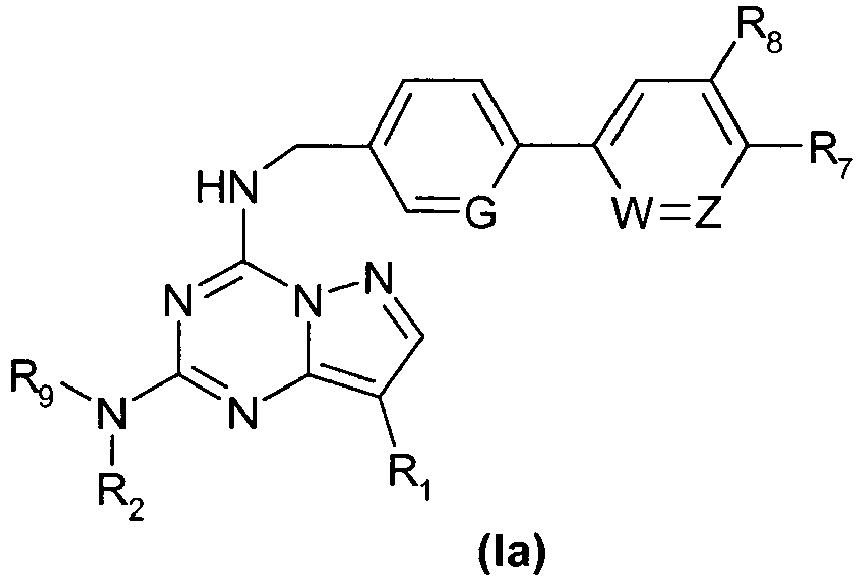
- R1 est tel que défini précédemment et est avantageusement un groupe isopropyle,
- R2 et R9 représentent indépendamment un groupe (C1-C6)alkyle, un groupe (C1-C6)fluoroalkyle, un groupe (C1-C3)fluoroalcoxy ou un groupe (C1-C6)alcoxy(C1-C6)alkyle, ledit groupe étant substitué par un à trois groupes hydroxy avec R9 pouvant représenter un atome d'hydrogène et R2 représente avantageusement l'une des formules (b-1), (b-2), (b-10), (b-11), (b-13), (b-14) ou (b-15) telles que définies ci-dessus, tandis que R9 est un atome d'hydrogène,
- ou bien R2 et R9 forment ensemble, avec l'atome d'azote qui les porte, un groupe pipéridin-1-yle ou pipéridin-4-ylpipéridin-1-yle, ledit groupe étant substitué par un à trois groupes (C1-C6)alkyle substitué par un groupe hydroxy et R2 et R9 pris ensemble représentent avantageusement l'une des formules (b-37), (b-38), (b-39) ou (b-40) telles que définies ci-dessus,
- R7 et R8 représentent indépendamment un atome d'hydrogène, un groupe (C1-C2)alkyle, un groupe (C1-C2)fluoroalkyle, un groupe (C1-C2)alcoxy, un groupe (C1-C2)fluoroalcoxy, un atome d'halogène, un groupe hydroxy ou un groupe -COOH,
- G représente -CH=, ou -N=, et
- lorsque G représente -CH=, les groupes W et Z représentent soit simultanément -CH=, soit l'un représente -N= et l'autre représente -CH=,
- lorsque G représente -N=, alors W et Z représentent -CH=.
- Parmi les composés objets de l'invention, on peut citer un deuxième groupe de composés de formule (Ib), couverts par la formule (I) :
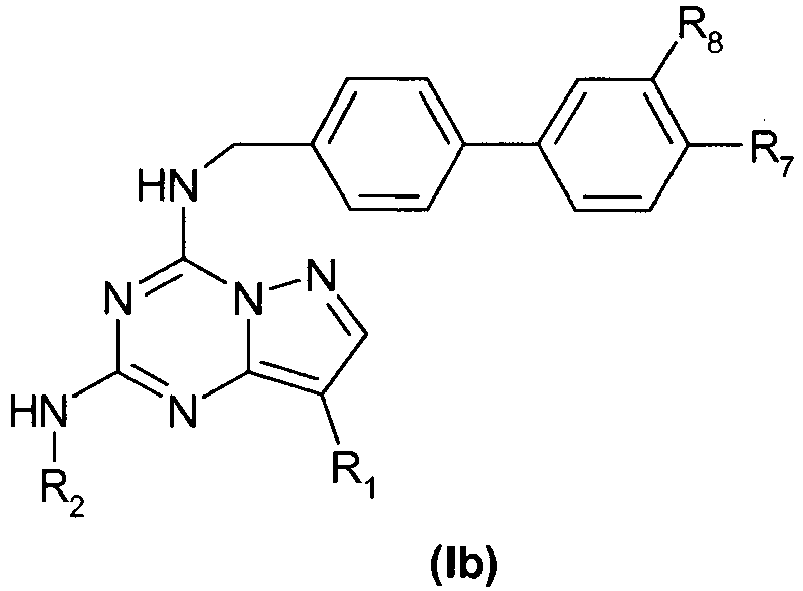
- R1 est tel que défini précédemment et est avantageusement un groupe isopropyle,
- R2 représente un groupe (C1-C6)alkyle, un groupe (C1-C6)fluoroalkyle, un groupe (C1-C3)fluoroalcoxy ou un groupe (C1-C6)alcoxy(C1-C6)alkyle, ledit groupe étant substitué par un à trois groupes hydroxy, et avantageusement représente l'une des formules (b-1), (b-2), (b-10), (b-11), (b-13), (b-14) ou (b-15) telles que définies ci-dessus, et
- R7 et R8 représentent indépendamment un atome d'hydrogène, un groupe (C1-C2)alkyle, un groupe (C1-C2)fluoroalkyle, un groupe (C1-C2)alcoxy, un groupe (C1-C2)fluoroalcoxy, un atome d'halogène, un groupe hydroxy ou un groupe -COOH.
- Parmi les composés objets de l'invention, on peut citer un troisième groupe de composés de formule (Ic), couverts par la formule (I) :

- R1 est tel que défini précédemment et est avantageusement un groupe éthyle ou isopropyle,
- soit R9 est un atome d'hydrogène et R2 représente un groupe (C1-C6)alkyle, un groupe (C1-C6)fluoroalkyle, un groupe (C1-C3)fluoroalcoxy ou un groupe (C1-C6)alcoxy(C1-C6)alkyle, ledit groupe étant substitué par un à trois groupes hydroxy, et avantageusement représente l'une des formules (b-1), (b-2), (b-10), (b-11), (b-13), (b-14) ou (b-15) telles que définies ci-dessus,
- soit R2 et R9 forment ensemble, avec l'atome d'azote qui les porte, un groupe pipéridin-1-yle ou pipéridin-4-ylpipéridin-1-yle, ledit groupe étant substitué par un à trois groupes (C1-C6)alkyle substitué par un groupe hydroxy et R2 et R9 pris ensemble représentent avantageusement l'une des formules (b-37), (b-38), (b-39) ou (b-40) telles que définies ci-dessus, et
- R7 et R8 représentent indépendamment un atome d'hydrogène, un groupe (C1-C2)alkyle, un groupe (C1-C2)fluoroalkyle, un groupe (C1-C2)alcoxy, un groupe (C1-C2)fluoroalcoxy, un atome d'halogène, un groupe hydroxy ou un groupe -COOH.
- Parmi les composés objets de l'invention, on peut citer un troisième groupe de composés de formule (Id), couverts par la formule (I) :

- R1 est tel que défini précédemment et est avantageusement un groupe isopropyle,
- R2 représente un groupe (C1-C6)alkyle, un groupe (C1-C6)fluoroalkyle, un groupe (C1-C3)fluoroalcoxy ou un groupe (C1-C6)alcoxy(C1-C6)alkyle, ledit groupe étant substitué par un à trois groupes hydroxy, et avantageusement représente l'une des formules (b-1), (b-2), (b-10), (b-11), (b-13), (b-14) ou (b-15) telles que définies ci-dessus, et
- R7 représente un atome d'hydrogène, un groupe (C1-C2)alkyle, un groupe (C1-C2)fluoroalkyle, un groupe (C1-C2)alcoxy, un groupe (C1-C2)fluoroalcoxy, un atome d'halogène, un groupe hydroxy ou un groupe -COOH.
- Parmi les composés objets de l'invention, on peut citer un quatrième groupe de composés de formule (Ie), couverts par la formule (I) :

- R1 est tel que défini précédemment et avantageusement un groupe isopropyle,
- R2 représente un groupe (C1-C6)alkyle, un groupe (C1-C6)fluoroalkyle, un groupe (C1-C3)fluoroalcoxy ou un groupe (C1-C6)alcoxy(C1-C6)alkyle, ledit groupe étant substitué par un à trois groupes hydroxy, et avantageusement représente l'une des formules (b-1), (b-2), (b-10), (b-11), (b-13), (b-14) ou (b-15) telles que définies ci-dessus.
- Parmi les composés objets de l'invention, on peut citer un cinquième groupe de composés de formule (If), couverts par la formule (I) :

- R1 est tel que défini précédemment et avantageusement un groupe isopropyle,
- R2 représente un groupe (C1-C6)alkyle, un groupe (C1-C6)fluoroalkyle, un groupe (C1-C3)fluoroalcoxy ou un groupe (C1-C6)alcoxy(C1-C6)alkyle, ledit groupe étant substitué par un à trois groupes hydroxy, et avantageusement représente l'une des formules (b-1), (b-2), (b-10), (b-11), (b-13), (b-14) ou (b-15) telles que définies ci-dessus.
- Les sels pharmaceutiquement acceptables des composés de formule (Ia), (Ib), (Ic), (Id), (Ie) et (If) font également partie de l'invention.
- Parmi les composés de formule (I) de l'invention, on peut notamment citer les composés suivants :
- (R) 2-(1-hydroxybut-2-ylamino)-8-isopropyl-4-(4-phénylbenzylamino)pyrazolo[1,5-a]-1,3,5-triazine (1)
- (R) 2-(1-hydroxybut-2-ylamino)-8-isopropyl-4-[4-(pyridin-2-yl)benzylamino]pyrazolo[1,5-a]-1,3,5-triazine (2)
- Sel de fumarate du (R) 2-(1-hydroxybut-2-ylamino)-8-isopropyl-4-[4-(pyridin-2-yl)benzylamino]pyrazolo[1,5-a]-1,3,5-triazine (3)
- (S) 2-(1-hydroxybut-2-ylamino)-8-isopropyl-4-[4-(pyridin-2-yl)benzylamino]pyrazolo[1,5-a]-1,3,5-triazine (4)
- Sel de fumarate du (S) 2-(1-hydroxybut-2-ylamino)-8-isopropyl-4-[4-(pyridin-2-yl)benzylamino]pyrazolo[1,5-a]-1,3,5-triazine (5)
- (R) 2-(1-hydroxybut-2-ylamino)-8-isopropyl-4-[4-(thiophén-3-yl)benzylamino]pyrazolo[1,5-a]-1,3,5-triazine (6)
- (S) 2-(1-hydroxybut-2-ylamino)-8-isopropyl-4-[4-(thiophén-3-yl)benzylamino]pyrazolo[1,5-a]-1,3,5-triazine (7)
- (S) 2-(1,2-dihydroxypropan-3-ylamino)-8-isopropyl-4-[4-(pyridin-2-yl)benzylamino]pyrazolo[1,5-a]-1,3,5-triazine (8)
- Sel de fumarate du (S) 2-(1,2-dihydroxypropan-3-ylamino)-8-isopropyl-4-[4-(pyridin-2-yl)benzylamino]pyrazolo[1,5-a]-1,3,5-triazine (9)
- (R) 2-(1,2-dihydroxypropan-3-ylamino)-8-isopropyl-4-[4-(pyridin-2-yl)benzylamino]pyrazolo[1,5-a]-1,3,5-triazine (10)
- Sel de fumarate du (R) 2-(1,2-dihydroxypropan-3-ylamino)-8-isopropyl-4-[4-(pyridin-2-yl)benzylamino]pyrazolo[1,5-a]-1,3,5-triazine (11)
- (2R,3R) 2-(1,3-dihydroxybut-2-ylamino)-8-isopropyl-4-[4-(pyridin-2-yl)benzylamino]pyrazolo[1,5-a]-1,3,5-triazine (12)
- sel de fumarate du (2R,3R) 2-(1,3-dihydroxybut-2-ylamino)-8-isopropyl-4-[4-(pyridin-2-yl)benzylamino]pyrazolo[1,5-a]-1,3,5-triazine (13)
- (2S,3S) 2-(1,3-dihydroxybut-2-ylamino)-8-isopropyl-4-[4-(pyridin-2-yl)benzylamino]pyrazolo[1,5-a]-1,3,5-triazine (14)
- Sel de fumarate du (2S,3S) 2-(1,3-dihydroxybut-2-ylamino)-8-isopropyl-4-[4-(pyridin-2-yl)benzylamino]pyrazolo[1,5-a]-1,3,5-triazine (15)
- (2R,3R) 2-(1,3-dihydroxybut-2-ylamino)-8-isopropyl-4-[4-(thiophén-3-yl)benzylamino]pyrazolo[1,5-a]-1,3,5-triazine (16)
- 2-(1,3-dihydroxyprop-2-ylamino)-8-isopropyl-4-[4-(pyridin-2-yl)benzylamino]pyrazolo[1,5-a]-1,3,5-triazine (17)
- Sel de fumarate du 2-(1,3-dihydroxyprop-2-ylamino)-8-isopropyl-4-[4-(pyridin-2-yl)benzylamino]pyrazolo[1,5-a]-1,3,5-triazine (18),
- 2-(1,3-dihydroxyprop-2-ylamino)-8-isopropyl-4-[4-(pyridin-3-yl)benzylamino]pyrazolo[1,5-a]-1,3,5-triazine (19)
- (S) 2-(-1-hydroxybut-2-ylamino)-8-isopropyl-4-[4-(pyridin-3-yl)benzylamino]pyrazolo[1,5-a]-1,3,5-triazine (20)
- (2S,3S) 2-(1,3-dihydroxybut-2-ylamino)-8-isopropyl-4-[4-phényl(pyridin-3-yl)méthylamino]pyrazolo[1,5-a]-1,3,5-triazine (21)
- (S) 2-(-1-hydroxybut-2-ylamino)-8-isopropyl-4-[4-phényl(pyridin-3-yl)méthylamino]pyrazolo[1,5-a]-1,3,5-triazine (22)
- (2R,3R) 2-(1,3-dihydroxybut-2-ylamino)-8-isopropyl-4-[4-phényl(pyridin-3-yl)méthylamino]pyrazolo[1,5-a]-1,3,5-triazine (23)
- 2-(1,3-dihydroxyprop-2-ylamino)-8-isopropyl-4-[4-phényl(pyridin-3-yl)méthylamino]pyrazolo[1,5-a]-1,3,5-triazine (24)
- (R) 2-(1-hydroxy-4-méthylpent-2-ylamino)-8-isopropyl-4-[4-phényl(pyridin-3-yl)méthylamino]pyrazolo[1,5-a]-1,3,5-triazine (25)
- (S) 2-(1-hydroxy-4-méthylpent-2-ylamino)-8-isopropyl-4-[4-phényl(pyridin-3-yl)méthylamino]pyrazolo[1,5-a]-1,3,5-triazine (26)
- (S) 2-(1-hydroxy-3,3-diméthylbut-2-ylamino)-8-isopropyl-4-[4-(pyridin-2-yl)benzylamino]pyrazolo[1,5-a]-1,3,5-triazine (27)
- (S) 2-(1-hydroxy-3-méthylbut-2-ylamino)-8-isopropyl-4-[4-(pyridin-2-yl)benzylamino]pyrazolo[1,5-a]-1,3,5-triazine (28)
- 2-[4-[1-[8-isopropyl-4-[[4-(pyridin-2-yl)phényl]méthylamino]pyrazolo[1,5-a]-1,3,5-triazin-2-yl]pipéridin-4-yl]pipéridin-1-yl]éthanol (29)
- 2-[4-[8-isopropyl-4-[[4-(pyridin-2-yl)phényl]méthylamino]pyrazolo[1,5-a]-1,3,5-triazin-2-yl]pipérazin-1-yl]éthanol (30)
- (R) 2-(1,2-dihydroxypropan-3-ylamino)-8-éthyl-4-[4-(pyridin-2-yl)benzylamino]pyrazolo[1,5-a]-1,3,5-triazine (31)
- [(2R)-3-[[8-ethyl-4-[[4-(2-pyridyl)phenyl]methyl-amino]pyrazolo[1,5-a][1,3,5]triazin-2-yl]amino]-2-hydroxy-propyl] (2R)-2-Bocamino-3-methyl-butanoate (32)
- [(2R)-3-[[8-ethyl-4-[[4-(2-pyridyl)phenyl]methylamino]pyrazolo[1,5-a][1,3,5]triazin-2-yl]amino]-2-hydroxy-propyl] (2R)-2-amino-3-methyl-butanoate (33) à l'état de base ou de sel notamment de dichlorhydrate
- (S) 2-(1,2-dihydroxypropan-3-ylamino)-8-éthyl-4-[4-(pyridin-2-yl)benzylamino]pyrazolo[1,5-a]-1,3,5-triazine (34)
- (S) 8-ethyl-2-(-1-hydroxybut-2-ylamino)-4-[4-(pyridin-2-yl)benzylamino]pyrazolo[1,5-a]-1,3,5-triazine (35)
- (R) 8-ethyl-2-(-1-hydroxybut-2-ylamino)-4-[4-(pyridin-2-yl)benzylamino]pyrazolo[1,5-a]-1,3,5-triazine (36)
- 2-(1,3-dihydroxyprop-2-ylamino)-8-éthyl-4-[4-(pyridin-2-yl)benzylamino]pyrazolo[1,5-a]-1,3,5-triazine (37)
- 2-[(2S)-1-[8-éthyl-4-[[4-(2-pyridyl)phényl]methylamino]pyrazolo[1,5-a][1,3,5]triazin-2-yl]-2-pipéridyl]éthanol (38)
- 2-[[8-éthyl-4-[[4-(2-pyridyl)phényl]méthylamino]-pyrazolo[1,5-a][1,3,5]triazin-2-yl]-(2-hydroxyéthyl)amino]éthanol (39)
- (2R,3R)-2-[[8-éthyl-4-[[4-(2-pyridyl)phényl]méthylamino]pyrazolo[1,5-a][1,3,5]triazin-2-yl]amino]butane-1,3-diol (40)
- (2S,3S)-2-[[8-éthyl-4-[[4-(2-pyridyl)phényl]méthylamino]pyrazolo[1,5-a][1,3,5]triazin-2-yl]amino]butane-1,3-diol (41)
- Les composés suivants font également partie de l'invention.
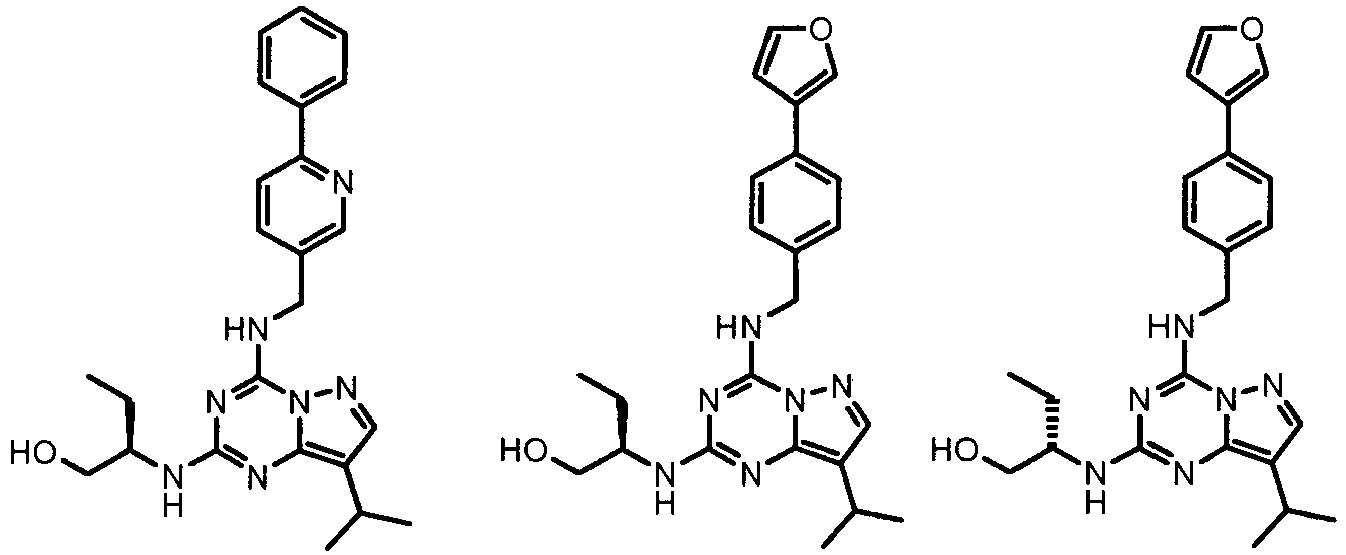


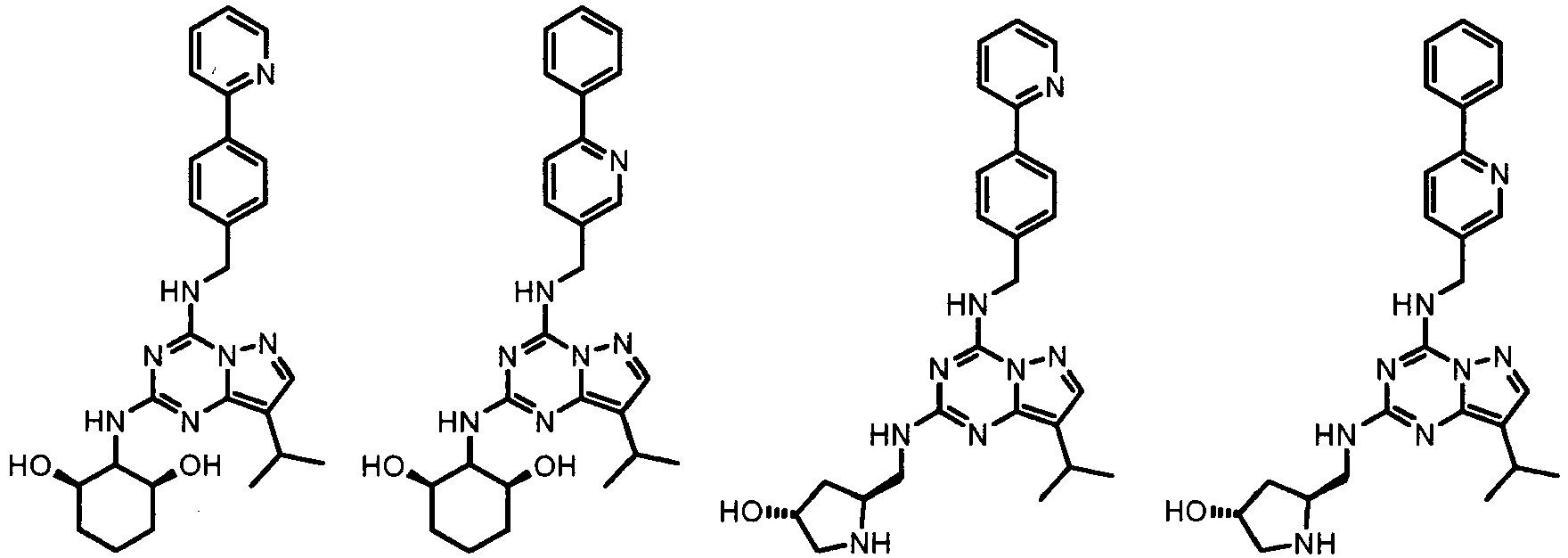


- et leurs sels d'acides pharmaceutiquement acceptables.
- L'invention a également pour objet un procédé de préparation des composés de formule (I).
- Les composés de l'invention peuvent être préparés selon différentes méthodes décrites selon le Schéma 1 décrit ci-dessous :

- Selon le schéma 1, le composé de formule (IIa), où X, Y et R1 sont tels que définis précédemment, est soumis à une réaction d'oxydation en présence d'acide méta-chloroperbenzoïque (acide méta-chloroperbenzoïque) par exemple dans le dichlorométhane à 0°C, pour conduire à la sulfone correspondante. Cette dernière est engagée directement dans une réaction de substitution nucléophile aromatique (SNAR) en présence d'une amine primaire de formule NH-R2R9, où R2 et R9 sont tels que définis précédemment, à une température variant de 100 à 180°C, par exemple à 140°C, pour conduire au composé de formule (I). Alternativement, on peut également préparer les composés de type (I) à partir des composés de formule (IIb). Ces composés (IIb) où X et R1 sont tels que définis précédemment, sont initialement engagés dans une réaction de couplage catalysée par un métal comme par exemple le palladium (réaction de Suzuki-Miyaura ou de Stille) ou le nickel, pour donner les intermédiaires (IIa). Ces mêmes composés (IIb) peuvent être oxydés en présence d'acide méta-chloroperbenzoïque dans le dichlorométhane à 0°C pour conduire à la sulfone qui est déplacée par une amine primaire (SNAR) pour donner les composés de formule (III). Ces derniers, soumis à une réaction de couplage catalysée par un métal comme par exemple le palladium ou le nickel, conduisent aux composés de formule (I).
- Ainsi, la présente invention concerne selon un de ses aspects un procédé de préparation d'un composé de formule (I) conforme à l'invention, caractérisé en ce que l'on fait réagir un composé de formule (IIa) qui suit :


- On décrit ci-après les méthodes de préparation des dérivés de formule (IIa) ou (IIb) qui sont utilisés pour la préparation des composés de formule (I) de l'invention.
- Les dérivés de formule (IIa) ou (IIb) peuvent être préparés à partir des composés (IV) par la méthode décrite dans le document « pyrazolo[1,5-a]-1,3,5-triazine as a purine bioisostere: access to potent cyclin-dependent kinase inhibitor (R)-roscovitine analogue », J. Med. Chem. 2009, 52, 655.
- De façon générale, on fait réagir les 4-(N-méthyl-N-phénylamino)-2-thiomëthylpyrazolo[1,5-a]-1,3,5-triazines substituées en position 8 (IV), où R1 est tel que défini précédemment avec les aryl- ou hétéroarylméthylèneamines (V), où X et Y sont tels que définis précédemment, à une température variant de 100 à 180 °C, par exemple à 140 °C pour conduire aux composés de formule (IIa) ou (IIb) selon le Schéma 2 décrits ci-dessous :

- Les composés de formule (IV), lorsqu'ils ne sont pas disponibles commercialement, peuvent être préparés à partir des procédés décrits dans la littérature, par exemple dans la publication « pyrazolo[1,5-a]-1,3,5-triazine as a purine bioisostere : access to potent cyclin-dependent kinase inhibitor (R)-roscovitine analogue », citée plus haut.
- Les composés de formule (V), lorsqu'ils ne sont pas disponibles commercialement, peuvent être préparés à partir des procédés décrits dans la littérature, par exemple dans la publication
WO 2003/022805 . - Dans les schémas généraux de synthèse 1 et 2, les composés de départ et les réactifs, quand leur mode de préparation n'est pas décrit, sont disponibles dans le commerce ou décrits dans la littérature, ou bien peuvent être préparés selon des méthodes qui y sont décrites ou qui sont connues de l'homme du métier.
- L'invention, selon un autre de ses aspects, a également pour objet les composés de formule (II)

- X, Y et R1 sont tels que définis précédemment.
- Ces composés sont utiles comme intermédiaires de synthèse des composés de formule (I). Des exemples de composés de formule (II) sont donnés dans le tableau 1 ci-après.
- Les exemples qui suivent décrivent également la préparation de composés de formule (I) conformes à l'invention. Ces exemples ne sont pas limitatifs et ne font qu'illustrer l'invention. Les numéros des composés exemplifiés renvoient à ceux donnés dans le tableau 2, qui illustre les structures chimiques et les propriétés physiques de quelques composés selon l'invention.
- Dans les préparations et exemples qui suivent :
- PF = Point de Fusion (en degré Celsius) tel que mesuré sur un appareil Büchi B545 avec un gradient de température de 1°C par minute.
- RMN = résonance magnétique nucléaire réalisée avec un spectromètre Bruker 300 MHz ou 400 MHz. Les solvants employés sont le DMSO-d6 et le CDCl3 et les déplacements chimiques sont exprimés par rapport au TMS. Les abréviations utilisées sont :
- s = singulet,
- d = doublet,
- dd = doublet dédoublé,
- t = triplet,
- m = multiplet,
- sél = singulet élargi.
-

- Dans un tube scellé, une solution de 8-isopropyl-4-(N-méthyl-N-phénylamino)-2-(méthylsulfanyl)pyrazolo[1,5-a]-1,3,5-triazine (114 mg, 0,36 mmol) et de 4-phénylbenzylamine (100 mg, 0,55 mmol) est chauffé à 140°C pendant 24 h. Après refroidissement, le solvant est évaporé. Le composé brut recueilli est purifié par chromatographie flash (EP/Et2O 9:1) pour donner IIa.1 (95 mg, 67%). PF = 134-135 °C (MeOH). 1H RMN (300 MHz, CDCl3): δ 7,75 (s, 1H, Harom), 7,59-7,56 (m, 4H, Harom), 7,45-7,34 (m, 5H, Harom), 6,93 (sél, 1H, NH), 4.85 (d, 2H, J = 5,7 Hz, CH2), 3,18 (hept, 1H, J = 7,2 Hz, CH), 2,58 (s, 3H, CH3), 1,33 (d, 6H, J = 7,2 Hz, 2 CH3). SM (ESI): m/z 390 (MH+).
-

- Selon les mêmes conditions conduisant à la préparation du composé IIa.1, le composé IIa.2 est préparé à partir de 8-isopropyl-4-(N-méthyl-N-phénylamino)-2-(méthylsulfanyl)pyrazolo[1,5-a]-1,3,5-triazine et de 4-(pyridin-2-yl)benzylamine. Rdt = 60%. PF = 136-138°C (EtOH). 1H RMN (300 MHz, CDCl3): δ 8,71 (d, 1H, J = 4,7 Hz, Harom), 8,00 (d, 2H, J = 8,1 Hz, Harom), 7,82-7,72 (m, 3H, Harom), 7.49 (d, 2H, J = 8,1 Hz, Harom), 7,26 (dd, 1H, J = 4,7, 7,2 Hz, Harom), 6,76 (sél, 1H, NH), 4,86 (d, 2H, J = 6,0 Hz, CH2), 3,16 (hept, 1H, J = 7,0 Hz, CH), 2,57 (s, 3H, CH3), 1,33 (d, 6H, J = 7,0 Hz, 2 CH3). SM (ESI): m/z 391 (MH+).
-

- Selon les mêmes conditions conduisant à la préparation du composé IIa.1, le composé IIa.3 est préparé à partir de 8-isopropyl-4-(N-méthyl-N-phénylamino)-2-(méthylsulfanyl)pyrazolo[1,5-a]-1,3,5-triazine et de 4-(thiophén-3-yl)benzylamine. Rdt = 74%. PF = 141-143°C (EtOH). 1H RMN (300 MHz, CDCl3): δ 7,73 (s, 1H, Harom), 7,57 (d, 2H, J = 8,3 Hz, Harom), 7,45-7,36 (m, 5H, Harom), 6,78 (sél, 1H, NH), 4,81 (d, 2H, J = 6,0 Hz, CH2), 3,16 (hept, 1H, J = 7,0 Hz, CH), 2,58 (s, 3H, CH3), 1,33 (d, 6H, J = 7,0 Hz, 2 CH3). SM (ESI): m/z 396 (MH+).
-

- Selon les mêmes conditions conduisant à la préparation du composé IIa.2, le composé IIb.4 est préparé à partir de 8-isopropyl-4-(N-méthyl-N-phénylamino)-2-(méthylsulfanyl)pyrazolo[1,5-a]-1,3,5-triazine et de 4-bromobenzylamine. Rdt = 75%. PF = 171-172°C (EtOH). 1H RMN (300 MHz, CDCl3): δ 7,74 (s, 1H, Harom), 7,47 (d, 2H, J = 8,3 Hz, Harom), 7,24 (d, 2H, J = 8,3 Hz, Harom), 6,76 (sél, 1H, NH), 4,75 (d, 2H, J = 6,0 Hz, CH2), 3,15 (hept, 1H, J = 6,8 Hz, CH), 2,56 (s, 3H, CH3), 1,33 (d, 6H, J = 6,8 Hz, 2 CH3). SM (ESI): m/z 394 (Br81, MH+), 392 (Br79, MH+).
-

- Une solution de IIb.4 (200 mg, 0,51 mmol) dans le dichlorométhane (CH2Cl2) (6 mL) est agitée à 0 °C. L'acide méta-chloroperbenzoïque 70-75% (126 mg, 0,51 mmol) est ajouté, puis la solution est agitée pendant 1 h. La même quantité d'acide est additionnée une seconde fois. La solution finale est agitée pendant 2 h à 0°C. Après ajout d'une solution de NaHCO3, l'extraction liquide-liquide est réalisée. La phase organique isolée est lavée par une solution de NaCl, séchée sur MgSO4, puis évaporée sous pression réduite. La sulfone est obtenue avec un rendement quantitatif, puis engagée dans l'étape suivante sans autre purification. Une solution de sulfone (216 mg, 0,51 mmol) et de (R)-(-)-2-aminobutanol commercial (247 µL, 2,62 mmol) est chauffée à 140°C pendant 24 h. Après refroidissement, le solvant est évaporé. Le composé brut recueilli est purifié par chromatographie flash (EP/AcOEt 9:1 à 6:4) pour donner III.5 (103 mg, 47%). Huile. 1H RMN (300 MHz, CDCl3): δ 7,57 (s, 1H, Harom), 7,42 (d, 2H, J = 8,3 Hz, Harom), 7,15 (d, 2H, J = 8,3 Hz, Harom), 7,10 (sél, 1H, NH), 5,15 (sél, 1H, NH), 4,61 (d, 2H, J = 6,0 Hz, CH2), 3,93-3,61 (m, 3H, CH + CH2), 3,00 (hept, 1H, J = 6,8 Hz, CH), 1,70-1,52 (m, 2H, CH2), 1,25 (d, 6H, J = 6,8 Hz, 2 CH3), 1,00 (t, 3H, J = 7,4 Hz, CH3). SM (ESI): m/z 435 (Br81, MH+), 433 (Br79, MH+).
-

- Selon les mêmes conditions conduisant à l'obtention du composé IIa.2, le composé IIa.4 est obtenu à partir de la 8-isopropyl-4-(N-méthyl-N-phénylamino)-2-(méthylsulfanyl)pyrazolo[1,5-a]-1,3,5-triazine et de 4-(pyridin-3-yl)benzylamine. Rdt = 65%. 1H RMN (400 MHz, CDCl3): δ 8,83 (s, 1H, Harom), 8,60 (d, 1H, Harom), 7,88 (d, 1H, Harom), 7,76(s, 1H, Harom), 7.58 (d, 2H, Harom), 7,51 (d, 2H, Harom), 7,42 (m, 1H, Harom), 6.78 (t, 1H, NH); 4.87 (d, 2H, J = 6,0 Hz, CH2), 3,17 (hept, 1H, J = 6,8 Hz, CH), 2,55 (s, 3H, CH3); 1,35 (d, 6H, J = 6,8 Hz, 2 CH3). SM (ESI): m/z 391 (MH+).
-

- Selon les mêmes conditions conduisant à l'obtention du composé II.a2, le composé IIa.5 est obtenu à partir de la 8-isopropyl-4-(N-méthyl-N-phénylamino)-2-(méthylsulfanyl)pyrazolo[1,5-a]-1,3,5-triazine et de (6-phénylpyridin-3-yl)méthanamine. 1H RMN(400 MHz, CDCl3): δ 8,71(s, 1H, Harom), 7,98 (m, 3H, Harom), 7,75 (m, 3H, Harom), 7,45(m, 2H, Harom), 6,85(t, 1H, NH), 4,85 (d, 2H, J = 6,0 Hz, CH2), 3,15 (hept, 1H, J = 6,8 Hz, CH), 1,70(s, 3H, CH3), (d, 6H, J = 6,8 Hz, 2 CH3). SM (ESI): m/z 391 (MH+).
Tableau 1 Préparations n° R1 R2 X Y PF (°C) et/ou masse (m/z) IIa.1 isoPr -SMe 

PF = 134-135 MH+ = 390 IIa.2 isoPr -SMe 

PF = 136-138 MH+ = 391 IIa.3 isoPr -SMe 

PF = 141-143 MH+ = 396 IIb.4 isoPr -SMe 
/ PF = 171-172 MH+ = 394 III.5 isoPr 

/ MH+ = 435 IIIa.4 isoPr -SMe 

MH+ = 391 IIIa.5 isoPr -SMe 
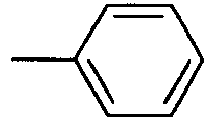
MH+ = 391 - Les exemples qui suivent illustrent l'invention sans la limiter.
-

- Une solution de IIa.1 (160 mg, 0,41 mmol) dans le CH2Cl2 (4 mL) est agitée à 0 °C. L'acide méta-chloroperbenzoïque 70-75% (100 mg, 0,41 mmol) est ajouté, puis la solution est agitée pendant 1 h. La même quantité d'acide est additionnée une seconde fois. La solution finale est agitée pendant 2 h à 0°C. Après ajout d'une solution de NaHCO3, l'extraction liquide-liquide est réalisée. La phase organique isolée est lavée par une solution de NaCl, séchée sur MgSO4, puis évaporée sous pression réduite. La sulfone est obtenue avec un rendement quantitatif, puis engagée dans l'étape suivante sans autre purification. Une solution de 8-isopropyl-2-(méthylsulfonyl)-4-[N-(4-phényl)benzylamino]pyrazolo[1,5-a]-1,3,5-triazine (173 mg, 0,41 mmol) et de (R)-(-)-2-aminobutanol commercial (193 µL, 2,03 mmol) est chauffé à 140°C pendant 24 h. Après refroidissement, le solvant est évaporé. Le composé brut recueilli est purifié par chromatographie flash (EP/AcOEt 8:2, puis 1:1) pour donner 1 (75 mg, 43%). Huile. 1H RMN (300 MHz, CDCl3): δ 7,63 (s, 1H, Harom), 7,59-7,56 (m, 4H, Harom), 7,47-7,33 (m, 5H, Harom), 6.74 (sél, 1H, NH), 4,78-4,75 (m, 2H, CH2), 3,94-3,96 (sél, 1H, CH), 3,82 (d, 1 H, J = 10,8 Hz, CH2), 3,68 (dd, 1 H, J = 7,3, 10,8 Hz, CH2), 3,02 (hept, 1H, J = 6,6 Hz, CH), 1,70-1,52 (m, 2H, CH2), 1,28 (d, 6H, J = 6,8 Hz, 2 CH3), 1,03 (t, 3H, J = 7,4 Hz, CH3). SM (ESI): m/z 431 (MH+).
-

- Une solution de IIa.2 (400 mg, 1,02 mmol) dans le CH2Cl2 (12 mL) est agitée à 0 °C. L'acide méta-chloroperbenzoïque 70-75 % (250 mg, 1,02 mmol) est ajouté, puis la soltuion est agitée pendant 1 h. La même quantité d'acide est additionnée une seconde fois. La solution finale est agitée pendant 2 h à 0 °C. Après ajout d'une solution de NaHCO3, l'extraction liquide-liquide est réalisée. La phase organique isolée est lavée par une solution de NaCl, séchée sur MgSO4 puis évaporée sous pression réduite. La sulfone est obtenue avec un rendement quantitatif, puis engagée dans l'étape suivante sans autre purification. Une solution de sulfone (430 mg, 1,02 mmol) et de (R)-(-)-2-aminobutanol commercial (482 µL, 5,09 mmol) est chauffée à 140 °C pendant 12 h. Après refroidissement, le solvant est évaporé. Le composé brut recueilli est purifié par chromatographie flash (EP/AcOEt 9:1 à 6:4) pour donner 2 (200 mg, 45 %). Mousse. 1H RMN (300 MHz, CDCl3): δ 8,69 (d, 1H, J = 4,1 Hz, Harom), 7,96 (d, 2H, J = 7,9 Hz, Harom), 7,78-7,69 (m, 2H, Harom), 7,62 (s, 1H, Harom), 7,42 (d, 2H, J = 7,9 Hz, Harom), 7,26-7,21 (m, 1H, Harom), 6,91 (sél, 1H, NH), 5,10 (s, 1H, H échangeable), 4,75 (d, 2H, J = 6,0 Hz, CH2), 3,93 (sél, 1H, CH), 3,83-3,62 (m, 2H, CH2), 3,02 (hept, 1H, J = 6,8 Hz, CH), 1,70-1,52 (m, 2H, CH2), 1,27 (d, 6H, J = 6,8 Hz, 2 CH3), 1,02 (t, 3H, J = 7,4 Hz, CH3). SM (ESI): m/z 432 (MH+).
- Dans un tube scellé, le composé III.5 (103 mg, 0,24 mmol) est additionné à une solution dégasée de tri-n-butyl(pyridin-2-yl)stannane (177 mg, 0,48 mmol) et de Pd(PPh3)4 (23 mg, 0,02 mmol) dans le toluène (10 mL). La solution finale dégasée est chauffée à 110°C pendant une nuit. Après refroidissement et dilution avec une solution de NaHCO3, la solution est extraite avec le CH2Cl2 (3 x 12 mL). La phase organique isolée est lavée par une solution de NaCl. Après séchage sur MgSO4, le solvant est évaporé sous pression réduite. Le résidu est purifié par chromatographie flash (EP/AcOEt 9:1 à 6:4) pour donner 2 (35 mg, 34 %). Mousse. 1H RMN (300 MHz, CDCl3): δ 8,69 (d, 1H, J = 4,1 Hz, Ha.rom), 7,96 (d, 2H, J = 7,9 Hz, Harom), 7,78-7,69 (m, 2H, Harom), 7,62 (s, 1H, Harom), 7,42. (d, 2H, J = 7,9 Hz, Harom), 7,26-7,21 (m, 1H, Harom), 6,91 (sél, 1H, NH), 5,10 (s, 1H, H échangeable), 4,75 (d, 2H, J = 6,0 Hz, CH2), 3,93 (sél, 1H, CH), 3,83-3,62 (m, 2H, CH2), 3,02 (hept, 1H, J= 6,8 Hz, CH), 1,70-1,52 (m, 2H, CH2), 1,27 (d, 6H, J = 6,8 Hz, 2 CH3), 1,02 (t, 3H, J = 7,4 Hz, CH3). SM (ESI): m/z 432 (MH+).
- Le produit 2 est traité par de l'acide fumarique dans une solution EtOH/Et2O. Le sel de l'acide fumarique 3 cristallise dans le milieu réactionnel à 0°C. PF = 175-177 °C. 1H RMN (300 MHz, DMSO-d6 ): δ 13,12 (sél, 2H, OH), 8,70 (sél, 1H, NH), 8,64 (d, 1H, J = 4,1 Hz, Harom), 8,03 (d, 2H, J = 8,3 Hz, Harom), 7,92 (d, 1H, J = 8,0 Hz, Harom), 7,86 (t, 1H, J = 8,0 Hz, Harom), 7,70 (s, 1H, Harom), 7,48 (d large, 2H, J = 8,3 Hz, Harom), 7,35-7,31 (m, 1H, Harom), 6,62 (s, 2H, =CH), 6,51 (sél, 1H, NH), 4,67 (sél, 2H, CH2), 4,51 (sél, 1H, OH), 3,82 (sél, 1H, CH), 3,45-3,32 (m, 2H, CH2), 2,90 (hept, 1H, J = 6,8 Hz, CH), 1,65-1,35 (m, 2H, CH2), 1,23 (d, 6H, J = 6,8 Hz, 2 CH3), 0,84 (t, 3H, J = 7,4 Hz, CH3).
-

- Selon les mêmes conditions conduisant à la préparation du composé 2, le composé 4 est préparé à partir de IIa.2 par réaction d'oxydation de l'atome de soufre puis introduction du (S)-(+)-2-aminobutanol commercial. Rdt = 48%. Mousse. 1H RMN (300 MHz, CDCl3): δ 8,69 (d, 1H, J = 4,1 Hz, Harom), 7,96 (d, 2H, J = 7,9 Hz, Harom), 7,78-7,69 (m, 2H, Harom), 7,62 (s, 1H, Harom), 7,42 (d, 2H, J = 7,9 Hz, Harom), 7,26-7,21 (m, 1H, Harom), 6,91 (sél, 1H, NH), 5,10 (s, 1H, H échangeable), 4,75 (d, 2H, J = 6,0 Hz, CH2), 3,93 (sél, 1H, CH), 3,83-3,62 (m, 2H, CH2), 3,02 (hept, 1H, J = 6,8 Hz, CH), 1,70-1,52 (m, 2H, CH2), 1,27 (d, 6H, J = 6,8 Hz, 2 CH3), 1,02 (t, 3H, J= 7,4 Hz, CH3). SM (ESI): m/z 432 (MH+).
- Le produit 4 est traité par de l'acide fumarique dans une solution EtOH/Et2O. Le sel de l'acide fumarique 5 cristallise dans le milieu réactionnel. PF = 175-177 °C. 1H RMN (300 MHz, DMSO-d6 ): δ 13,12 (sél, 2H, OH), 8,71 (sél, 1H, NH), 8,64 (d, 1H, J = 4,1 Hz, Harom), 8,03 (d, 2H, J = 8,3 Hz, Harom), 7,92 (d, 1H, J = 8,0 Hz, Harom), 7,86 (t, 1H, J = 8,0 Hz, Harom), 7,70 (s, 1H, Harom), 7,48 (d, 2H, J = 8,3 Hz, Harom), 7,35-7,31 (m, 1H, Harom), 6,62 (s, 2H, =CH), 6,51 (sél, 1H, NH), 4,67 (sél, 2H, CH2), 4,51 (sél, 1H. OH), 3,82 (sél, 1H, CH), 3,45-3,32 (m, 2H, CH2), 2,90 (hept, 1H, J = 6,8 Hz, CH), 1,65-1,35 (m, 2H, CH2), 1,23 (d, 6H, J = 6,8 Hz, 2 CH3), 0,84 (t, 3H, J = 7,4 Hz, CH3).
-

- Selon les mêmes conditions conduisant à la préparation du composé 2, le composé 6 est préparé à partir de IIa.3 par réaction d'oxydation de l'atome de soufre puis introduction du (R)-(-)-2-aminobutanol commercial. Rdt = 50 %. Huile. 1H RMN (300 MHz, CDCl3): δ (s, 1H, Harom), 7,57 (d, 2H, J = 8,3 Hz, Harom), 7,44 (sél, 1H, Harom), 7,40-7,34 (m, 4H, Harom), 6,83 (sél, 1H, NH), 5,10 (sél, 1H, H échangeable), 4,72 (d, 2H, J = 6,0 Hz, CH2), 4,00-3,92 (m, 1H, CH), 3,83 (d, 1H, J = 10,7 Hz, CH2), 3,66 (dd, 1H, J = 7,3, 10,7 Hz, CH2), 3,02 (hept, 1H, J = 6,8 Hz, CH), 1,70-1,52 (m, 2H, CH2), 1,27 (d, 6H, J = 6,8 Hz, 2 CH3), 1,03 (t, 3H, J = 7,4 Hz, CH3). SM (ESI): m/z 437 (MH+).
-

- Dans un tube scellé, le composé III.5 (180 mg, 0,41 mmol) est additionné à une solution dégasée de l'acide thiophén-3-ylboronique (79 mg, 0,62 mmol), de Pd(PPh3)4 (47 mg, 0,04 mmol) et de NaHCO3 2 M (2 mL) dans le toluène (10 mL). La solution finale est chauffée à 140 °C pendant une nuit. Après refroidissement et dilution avec de l'H2O, la solution est extraite avec le CH2Cl2 (3 x 12 mL). La phase organique isolée est lavée par une solution de NaCl. Après séchage sur MgSO4, le solvant est évaporé sous pression réduite. Le résidu est purifié par chromatographie flash (EP/AcOEt 9:1 à 6:4) pour donner 6 (90 mg, 50 %). Huile. 1H RMN (300 MHz, CDCl3): δ 7,61 (s, 1H, Harom), 7,57 (d, 2H, J = 8,3 Hz, Harom), 7,44 (sél, 1H, Harom), 7,40-7,34 (m, 4H, Harom), 6,80 (sél, 1H, NH), 5,11 (sél, 1 H, H échangeable), 4,72 (d, 2H, J = 6,0 Hz, CH2), 4,00-3,92 (m, 1H, CH), 3,83 (d, 1H, J = 10,7 Hz, CH2), 3,66 (dd, 1H, J = 7,3, 10,7 Hz, CH2), 3,02 (hept, 1H, J = 6,8 Hz, CH), 1,70-1,52 (m, 2H, CH2), 1,27 (d, 6H, J = 6,8 Hz, 2 CH3), 1,03 (t, 3H, J = 7,4 Hz, CH3). SM (ESI): m/z 437 (MH+).
-
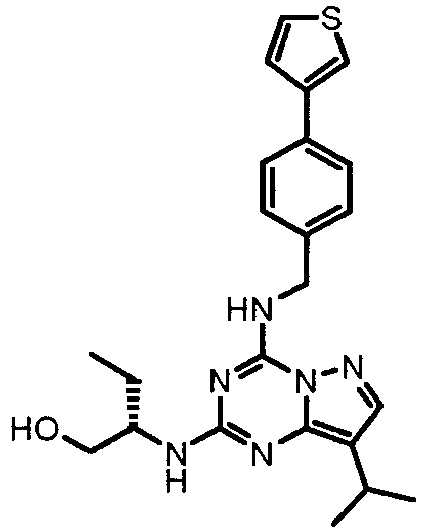
- Selon les mêmes conditions conduisant à la préparation du composé 2, le composé 6 est préparé à partir de IIa.3 par réaction d'oxydation de l'atome de soufre puis introduction du (S)-(+)-2-aminobutanol commercial. Rdt = 49 %. Huile. 1H RMN (300 MHz, CDCl3): δ 7,61 (s, 1H, Harom), 7,57 (d, 2H, J = 8,3 Hz, Harom), 7,44 (sél, 1H, Harom), 7,40-7,34 (m, 4H, Harom), 6,81 (sél, 1H, NH), 5,08 (sél, 1H, NH), 4,72 (d, 2H, J = 6,0 Hz, CH2), 4,00-3,92 (m, 1H, CH), 3,83 (d, 1H, J = 10,7 Hz, CH2), 3,66 (dd, 1H, J = 7,3, 10,7 Hz, CH2), 3,02 (hept, 1H, J = 6,8 Hz, CH), 1,70-1,52 (m, 2H, CH2), 1,27 (d, 6H, J = 6,8 Hz, 2 CH3), 1,03 (t, 3H, J = 7,4 Hz, CH3). SM (ESI): m/z 437 (MH+).
-

- Selon les mêmes conditions conduisant à la préparation du composé 2, le composé 8 est préparé à partir de IIa.2 par réaction d'oxydation de l'atome de soufre puis introduction du (S)-3-amino-1,2-propanediol commercial. Rdt = 20%. Huile. 1H RMN (300 MHz, CDCl3): δ 8,69 (d, 1H, J = 4,5 Hz, Harom), 7,98 (d, 2H, J = 8,3 Hz, Harom), 7,79-7,70 (m, 2H, Harom), 7,66 (s, 1H, Harom), 7,45 (d, 2H, J = 8,3 Hz, Harom), 7,27-7,22 (m, 1H, Harom), 6,81 (sél, 1H, NH), 4,78 (d, 2H, J = 5,8 Hz, CH2), 3,83-3,79 (m, 1H, CH), 3,65-3-3,55 (m, 4H, 2 CH2), 3,03 (hept, 1H, J = 7,0 Hz, CH), 1,28 (d, 6H, J = 7,0 Hz, 2 CH3). SM (ESI): m/z 434 (MH+).
- Le produit 8 est traité par de l'acide fumarique dans une solution EtOH/Et2O. Le sel de l'acide fumarique 9 cristallise dans le milieu réactionnel. PF = 168-170 °C. 1H RMN (300 MHz, CDCl3 + 1 goutte DMSO-d 6): δ 8,64 (d, 1H, J = 3,8 Hz, Harom), 7,93 (d, 2H, J = 8,1 Hz, Harom), 7,74-7,65 (m, 2H, Harom), 7,60 (s, 1H, Harom), 7,42 (d, 2H, J = 8,1 Hz, Harom), 7,26-7,18 (m, 1H, Harom), 6,76 (s, 2H, =CH), 4,74 (d, 2H, J = 5,9 Hz, CH2), 3,80-3,75 (m, 1H, CH), 3,56-3,45 (m, 4H, 2 CH2), 2,99 (hept, 1H, J = 6,8 Hz, CH), 1,23 (d, 6H, J = 6,8 Hz, 2 CH3).
-

- Selon les mêmes conditions conduisant à la préparation du composé 2, le composé 10 est préparé à partir de IIa.2 par réaction d'oxydation de l'atome de soufre puis introduction du (R)-3-amino-1,2-propanediol commercial. Rdt = 35%. Huile. 1H RMN (300 MHz, CDCl3): δ 8,69 (d, 1H, J = 4,5 Hz, Harom), 7,98 (d, 2H, J = 8,3 Hz, Harom), 7,79-7,70 (m, 2H, Harom), 7,66 (s, 1H, Harom), 7,45 (d, 2H, J = 8,3 Hz, Harom), 7,27,28-7,22 (m, 1H, Harom), 6,80 (sél, 1H, NH), 4,78 (d, 2H, J = 5,8 Hz, CH2), 3,83-3,79 (m, 1H, CH), 3,65-3-3,55 (m, 4H, 2 CH2), 3,03 (hept, 1H, J = 7,0 Hz, CH), 1,28 (d, 6H, J = 7,0 Hz, 2 CH3). SM (ESI): m/z 434 (MH+).
- Le produit 10 est traité par de l'acide fumarique dans une solution EtOH/Et2O. Le sel de l'acide fumarique 11 cristallise dans le milieu réactionnel. PF = 168-170°C. 1H RMN (300 MHz, CDCl3 + 1 goutte DMSO-d 6): δ 8,64 (d, 1H, J = 3,8 Hz, Harom), 7,93 (d, 2H, J = 8,1 Hz, Harom), 7,74-7,65 (m, 2H, Harom), 7,60 (s, 1H, Harom), 7,42 (d, 2H, J = 8,1 Hz, Harom), 7,26-7,18 (m, 1H, Harom), 6,76 (s, 2H, =CH), 4,74 (d, 2H, J = 5,9 Hz, CH2), 3,80-3,75 (m, 1H, CH), 3,56-3,45 (m, 4H, 2 CH2), 2,99 (hept, 1H, J = 6,8 Hz, CH), 1,23 (d, 6H, J = 6,8 Hz, 2 CH3).
-
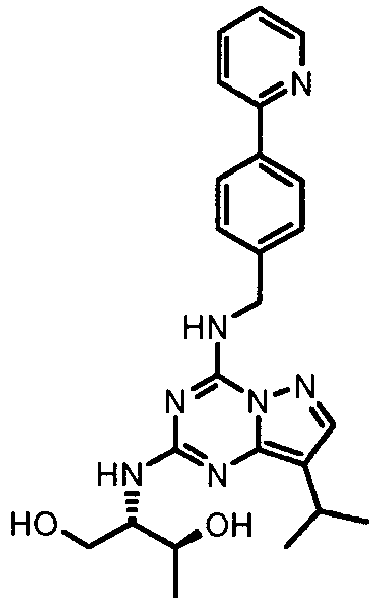
- Selon les mêmes conditions conduisant à la préparation du composé 2, le composé 12 est préparé à partir de IIa.2 par réaction d'oxydation de l'atome de soufre puis introduction du L-thréoninol. Rdt = 43 %. Huile. 1H RMN (300 MHz, CDCl3): δ 8,69 (d, 1H, J = 4,7 Hz, Harom), 7,97 (d, 2H, J = 8,3 Hz, Harom), 7,78-7,69 (m, 2H, Harom), 7,63 (s, 1H, Harom), 7,45 (d, 2H, J = 8,3 Hz, Harom), 7,26-7.21 (m, 1H, Harom), 6,75 (sél, 1H, NH), 5,63 (d, 1H, J = 5,8 Hz, NH), 4,77 (d, 2H, J = 6,0 Hz, CH2), 4,22-4,15 (m, 1H, CH), 3,97-3,84 (m, 3H, CH + CH2), 3,01 (hept, 1H, J = 7,0 Hz, CH), 1,29 (d, 3H, J = 6,2 Hz, CH3), 1,28 (d, 6H, J = 7,0 Hz, 2 CH3). SM (ESI): m/z 448 (MH+).
- Le produit 12 est traité par de l'acide fumarique dans une solution EtOH/Et2O. Le sel de l'acide fumarique 13 cristallise dans le milieu réactionnel. PF = 187-189 °C. 1H RMN (300 MHz, DMSO-d 6): δ 13,12 (sél, 2H, OH), 8,77 (sél, 1H, NH), 8,64 (d, 1H, J = 4,5 Hz, Harom), 8,03 (d, 2H, J = 8,1 Hz, Harom), 7,94-7,82 (m, 2H, Harom), 7,72 (s, 1H, Harom), 7,49 (sél, 2H, Harom), 7,35-7.31 (m, 1H, Harom), 6,62 (s, 2H, 2 =CH), 6,06 (d, 1H, J = 8,7 Hz, NH), 4,73 (sél, 2H, CH2), 4,00-3,89 (sél, 1H, CH), 3,89-3,76 (sél, 1H, CH), 3,58-3,40 (m, 2H, CH2), 2,90 (hept, 1H, J = 7,0 Hz, CH), 1,22 (d, 6H, J = 5,8 Hz, 2 CH3), 1,04 (sél, 3H, CH3).
-
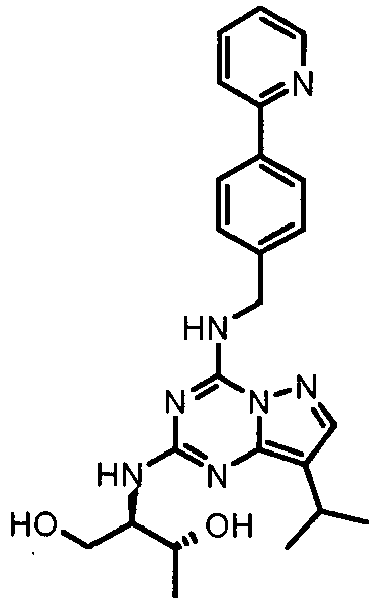
- Selon les mêmes conditions conduisant à la préparation du composé 2, le composé 12 est préparé à partir de IIa.2 par réaction d'oxydation de l'atome de soufre puis introduction du D-thréoninol. Rdt = 42%. Huile. 1H RMN (300 MHz, CDCl3): δ 8,69 (d, 1H, J = 4,7 Hz, Harom), 7,97 (d, 2H, J = 8,3 Hz, Harom), 7,78-7,69 (m, 2H, Harom), 7,63 (s, 1H, Harom), 7,45 (d, 2H, J = 8,3 Hz, Harom), 7,26-7.21 (m, 1H, Harom), 6,71 (sél, 1H, NH), 5,62 (d, 1H, J = 6,6 Hz, NH), 4,77 (d, 2H, J = 6,0 Hz, CH2), 4,22-4,15 (m, 1H, CH), 3,97-3,84 (m, 3H, CH + CH2), 3,01 (hept, 1H, J = 7,0 Hz, CH), 1,29 (d, 3H, J = 6,2 Hz, CH3), 1,28 (d, 6H, J = 7,0 Hz, 2 CH3). SM (ESI): m/z 448 (MH+).
- Le produit 14 est traité par de l'acide fumarique dans une solution EtOH/Et2O. Le sel de l'acide fumarique 15 cristallise dans le milieu réactionnel. PF = 187-189 °C. 1H RMN (300 MHz, DMSO-d 6): δ 13,12 (sél, 2H, OH), 8,75 (sél, 1H, NH), 8,64 (d, 1H, J = 4,5 Hz, Harom), 8,03 (d, 2H, J = 8,1 Hz, Harom), 7,94-7,82 (m, 2H, Harom), 7,72 (s, 1H, Harom), 7,49 (sél, 2H, Harom), 7,35-7.31 (m, 1H, Harom), 6,62 (s, 2H, 2 =CH), 6,05 (d, 1H, J = 8,7 Hz, NH), 4,67 (sél, 2H, CH2), 4,00-3,89 (sél, 1H, CH), 3,89-3,76 (sél, 1H, CH), 3,58-3,40 (m, 2H, CH2), 2,90 (hept, 1H, J = 7,0 Hz, CH), 1,22 (d, 6H, J = 5,8 Hz, 2 CH3), 1,04 (sél, 3H, CH3).
-

- Selon les mêmes conditions conduisant à la préparation du composé 2, le composé 6 est préparé à partir de IIa.3 par réaction d'oxydation de l'atome de soufre puis introduction du L-thréoninol commercial. Rdt = 40 %. Huile. 1H RMN (300 MHz, CDCl3): δ 7,62 (s, 1H, Harom), 7,56 (d, 2H, J = 8,3 Hz, Harom), 7,45-7,43 (m, 1H, Harom), 7,40-7,33 (m, 4H, Harom), 6,83 (sél, 1H, NH), 5,83 (sél, 1H, NH), 4,71 (d, 2H, J = 5,7 Hz, CH2), 4,22-4,15 (m, 1H, CH), 3,97-3,87 (m, 3H, CH + CH2), 3,00 (hept, 1H, J = 6,8 Hz, CH), 1,28 (d, 3H, J = 6,2 Hz, CH3), 1,27 (d, 6H, J = 6,8 Hz, 2 CH3). SM (ESI): m/z 453 (MH+).
-

- Selon les mêmes conditions conduisant à la préparation du composé 2, le composé 17 est préparé à partir de IIa.2 par réaction d'oxydation de l'atome de soufre puis introduction du serinol. Rdt = 30 %. Huile. 1H RMN (300 MHz, CDCl3): δ 8,68 (d, 1H, J = 4,4 Hz, Harom), 7,96 (d, 2H, J = 8,3 Hz, Harom), 7,79-7,69 (m, 2H, Harom), 7,64 (s, 1H, Harom), 7,45 (d, 2H, J = 8,3 Hz, Harom), 7,26-7,21 (m, 1H, Harom), 6,80 (sél, 1H, NH), 5,71 (sél, 1H, NH), 4,77 (d, 2H, J = 5,9 Hz, CH2), 4,08-4,95 (m, 1H, CH), 3,92-3,80 (m, 4H, 2 CH2), 3,02 (hept, 1H, J = 7,0 Hz, CH), 1,28 (d, 6H, J = 7,0 Hz, 2 CH3). SM (ESI): m/z 434 (MH+).
- Le produit 17 est traité par de l'acide fumarique dans une solution EtOH/Et2O. Le sel de l'acide fumarique 18 cristallise dans le milieu réactionnel. PF = 179-181°C. 1H RMN (300 MHz, DMSO-d 6): δ 13,11 (sél, 2H, OH), 8,76 (sél, 1H, NH), 8,64 (d, 1H, J = 4,5 Hz, Harom), 8,03 (d, 2H, J = 8,1 Hz, Harom), 7,94-7,82 (m, 2H, Harom), 7,72 (s, 1H, Harom), 7,49 (sél, 2H, Harom), 7,35-7.31 (m, 1H, Harom), 6,63 (s, 2H, 2 =CH), 6,33 (d, 1H, J = 6,0 Hz, NH), 4,67 (d, 2H, J = 6,0 Hz, CH2), 3,98-3,83 (m, 1H, CH), 3,58-3,42 (m, 4H, 2 CH2), 2,91 (hept, 1H, J = 7,0 Hz, CH), 1,23 (d, 6H, J = 7,0 Hz, 2 CH3).
-

-

- Ce composé est oxydé par l'acide méta-chloroperbenzoïque selon le protocole suivant. Une solution de IIa.4 (5,22 g, 13,3 mmol) dissout dans 277 mL de dichlorométhane est refroidie à 0 °C puis additionnée de 3,46 g d'acide méta-chloroperbenzoïque à 80 %. Après 1 h d'agitation, le mélange est lavé par une solution de carbonate de sodium. Le produit cristallise par concentration. Le précipité (IVa) est lavé par un peu d'éther. Rdt = 84%. 1H RMN (400 MHz, DMSO-d6): δ 8,85 (d, 1H, Harom), 8,60 (d, 1H, Harom), 7,95 (s, 1H, Harom), 7,85 (d, 1H, Harom), 7,60 (d, 2H, Harom), 7,50 (d, 2H, Harom), 7,40 (m, 1H, Harom), 7,10 (m, 1H, Harom), 4,98 (d, 2H, CH2), 3,32 (hept, 1H, CH); 2,95 (s, 3H, CH3), 1,35 (d, 6H, 2 CH3).
- Le sulfoxyde (IVa) à hauteur de 0,2 g est chauffé à 140 °C pendant 4 h en présence de sérinol (2-aminopropan-1,3-diol), dans une teneur de 0,36 g (3,9 mmol) pendant 12 h à 140 °C pour former le produit 19 qui est isolé par cristallisation dans un mélange d'acétate d'éthyle et d'éther éthylique. Rdt = 75%. 1H RMN (400 MHz, CDCl3): δ 8,70 (d, 1H, Harom), 8,55 (d, 1H, Harom), 7,82 (d, 1H, Harom), 7,68(s, 1H, Harom), 7,35 (m, 3H, Harom), 7,58 (t, 1H, NH), 7,10 (d, 2H, Harom), 5,80 (d, 1H, NH), 4,35 (d, 2H, CH2), 3,85 (m, 1H), 3,75 (m, 1H), 2,98 (hept, 1H, CH); 1,28 (d, 6H, 2CH3). SM (ESI): m/z 434 (MH+).
-

- Le produit 20 est préparé dans les mêmes conditions que 19 en chauffant 0,2 g de sulfoxyde IVa avec 0,368 mL de (S)-(+)-2-aminobutanol commercial. Rdt = 91 %. 1H RMN (400 MHz, CDCl3): δ 8,85 (d, 1H, Harom), 8,60 (d, 1H, Harom), 7,85 (dd, 1H, Harom), 7,65 (s, 1H, Harom H), 7,55 (d, 2H, Harom), 7,45 (d, 2H, Harom), 7,40 (m, 1H, Harom), 6,75 (t, 1H, .NH), 5,00 (d, 1H, NH), 4,75 (d, 2H, CH2), 3,95 (m, 1H), 3,85 (m, 1H), 3,65 (m, 1H), 3,04 (hept, 1H, CH), 1,65 (2H, CH2), 1,25 (d, 6H, 2 CH3), 1.03 (t, 3H, CH3). ). SM (ESI): m/z 432 (MH+).
-

-

- L'oxydation est réalisée comme pour la préparation de IVa en agitant à 0 °C 4,76 g de IIa.5 dans 259,8 mL de CH2Cl2 avec 2 g d'acide méta-chloroperbenzoïque. Le sulfoxyde IVb est obtenu avec un rendement de 87 %. 1H RMN (400 MHz, CDCl3): δ 8,78 (s, 1H, Harom), 8,00 (d, 2H, Harom), 7,95 (s, 1H, Harom), 7,85 (d, 1H, Harom), 7,75 (d, 1H, Harom), 7,45 (m, 3H, Harom), 4,95 (d, 2H, CH2), 3,42 (hept, 1H, CH), 2,95 (s, 3H, CH3), 1,3 (d, 6H, 2 CH3).
- Le produit 21 est préparé comme le produit 20 par chauffage à 140° de 0,2 g IVb avec 0,413 g de (2S,3S)-thréoninol. Après refroidissement, le produit 21 est extrait par l'acétate d'éthyle et purifié sur une colonne de silice avec l'acétate d'éthyle 100 % comme éluant. Rdt = 82%. 1H RMN (400 MHz, CDCl3): δ 8,72 (s, 1H, Harom), 7,95 (d, 2H, Harom), 7,70 (m, 2H), 7,62 (s, 1H, Harom), 7,45 (m, 3H, Harom), 6.85 (sél, 1H, NH), 6,56 (d, 1H), 4,72 (d, 2H, CH2), 4,20 (m, 1H, CH), 3,80 (m, 3H, CH2OH) 2,99 (hept, 1H, CH), 1,30 (m, 9H, 3 CH3). SM (ESI): m/z 448 (MH+).
-

- Ce produit est obtenu par chauffage de 0,3 g sulfoxyde IVb à 140 °C pendant 4 h de 0,553 mL de (S)-(+)-2-aminobutanol commercial. Après 4 h le produit est isolé par extraction avec l'acétate d'éthyle et purifié sur colonne de silice (éluant: AcOEt/CH2Cl2 1:1). Rdt = 80%. 1H RMN (400 MHz, CDCl3): δ 8,70 (d, 1H, Harom), 8,00 (d, 2H, Harom), 7,70 (m, 2H, Harom), 7,62 (s, 1H, Harom), 7,50 (m, 3H, Harom), 6,90 (br s, 1H), 5,05 (d, 1H, NH), 4,75 (d, 2H, CH2), 3,90 (m, 1H, CH), 3,80 (m, 1H, CH2), 3,60 (m, 1H, CH2OH), 3,00 (hept, CH), 1,60 (m, 2H, CH2), 1,25 (d, 6H, 2 CH3), 1,00 (t, 3H, CH3). SM (ESI): m/z 432 (MH+).
-

- Ce composé est obtenu à partir du sulfoxyde IVb en utilisant le (2R,3R)-thréoninol selon un protocole identique à celui utilisé dans les exemples précédents. Le produit 23 est purifié par chromatographie sur colonne de silice (éluant: AcOEt/CH2Cl2 8:2). Rdt = 91%. 1H-RMN (400 MHz, CDCl3) δ 8,72 (s, 1H, Harom), 7,95 (d, 2H, Harom), 7,62 (s, 1H, Harom), 7,70 (m, 2H, Harom), 7,45 (m, 3H, Harom), 6,85 (s large, 1H, NH), 6,56 (d, 1H), 4,72 (d, 2H, CH2), 4,20 (m, 1H, CH), 3,80 (m, 3H, CH2), 2,99 (hept, 1H, CH), 1,30 (m, 9H, 3 CH3). SM (ESI): m/z 448 (MH+).
-

- Ce produit est préparé par chauffage du sulfoxyde IV b avec le sérinol selon les conditions décrites dans l'exemple 23. Le produit est purifié sur colonne de silice(éluant: AcOEt). Rdt = 78%. 1H RMN (400 MHz, CDCl3): δ 8,71 (s, 1H, Harom), 7,95 (d, 2H, Harom), 7,73 (m, 2H, Harom), 7,64 (s, 1H, Harom), 7,47 (m, 3H, Harom), 6,98 (sél, 1H), 5,71 (d,1H, NH), 4,75 (d, 2H, CH2), 4,06 (m, 1H,CH); 3,84 (m, 4H, 2 CH2), 2,99 (hept, 1H), 1,26 (d, 6H, 2 CH3).
-

- Ce produit est préparé par chauffage du sulfoxyde IVA (0,2 g) avec le D-valinol (0,406 g) selon les conditions décrites dans l'exemple 23. Le produit est purifié sur colonne de silice (éluant: AcOEt/cyclohexane 1:1). Rdt = 76%. 1H NMR (400 MHz, CDCl3): δ 8,71 (s, 1H, Harom), 7,99 (d, 2H, Harom), 7,75 (m, 2H, Harom), 7,63 (s, 1H, Harom), 7,47 (d, 2H, Harom), 6,72 (sél, 1H), 4,95 (d, 1H, NH), 4,75 (m, 2H, CH2), 4,10 (m, 1H), 3,80 m, 1H), 3,60(m, 2H), 3,03 (hept, 1H, CH), 1,40-1,80 (m 3H) 1,30 (d 6H, 2 CH3), 0.93(m, 6H, 2CH3).
-

- Ce produit est préparé par chauffage du sulfoxyde IVa (0,2 g) avec le L-valinol (0,406 g) selon les conditions décrites dans l'exemple 23.. Le produit est purifié sur colonne de silice (éluant: AcOEt/cyclohexane 1:1). Rdt = 76%. 1H NMR (400 MHz, CDCl3): δ 8,71 (d, 1H, Harom), 7,99 (d, 2H, Harom), 7,75 (m, 2H, Harom), 7,63 (s, 1H, Harom), 7,47 (d, 2H, Harom), 6,72 (sél, 1H), 4,95 (d, 1H, NH), 4,75 (m, 2H, CH2), 4,10 (m, 1H), 3,80 (m, 1H), 3,60 (m, 2H), 3,03 (hept, 1H, CH), 1,40-1,80 (m 3H) 1,31 (d 6H, 2 CH3), .0.93(m, 6H, 2CH3).
-

-

- L'oxydation est réalisée comme pour la préparation IVb en agitant à 0 °C 4,76 g de IIa2 dans 259,8 mL de CH2Cl2 avec 2 g d'acide méta-chloroperbenzoïque. Rdt = 90%. 1H NMR (400 MHz, CDCl3): δ 8.70 (d, 1H, Harom), 8,05 (d, 2H, Harom), 7,95 (s, 1H, Harom), 7,75 (m, 2H, Harom), 7,50 (d, 2H, Harom), 7,22 (m, 1H, Harom), 7,10 (t, 1H, NH), 4,92 (d, 2H, CH2), 3,32 (hept, 1H, CH), 2,92 (s, 3H, CH3), 1,3 (d, 6H, 2 CH3).
- Le dérivé 27 est préparé par chauffage du produit IVc 0,2 g avec le 0,512 g de (S)-tert leucinol après 4 h de chauffage à 140 °C. Après extraction par l'AcOEt et lavage par l'eau, le produit formé cristallise par concentration du solvant. 1H NMR (400 MHz, CDCl3): δ 8,00 (d, 2H, Harom), 7,75 (m, 2H, Harom), 7,62 (s, 1H, Harom), 7,45 (d, 2H, Harom), 7,25 (1H, Harom), 6,75 (s, 1H), 5,10 (m, 1H), 4,70 (m, 2H), 4,04 (m, 1 H), 3,92 (m, 1H), 3,62 (m, 1H), 3,03 (hept, CH), 1,30 (d, 6H, 2 CH3), 1,00 (s, 9H, 3 CH3).
-

- Le dérivé 28 est préparé comme dans l'exemple 29 par chauffage du produit IVc avec le (S)-(L)-valinol. Rdt = 72%. 1H NMR (400 MHz, CDCl3): δ 8,70 (d, 1H, Harom), 7,98 (d, 2H, Harom), 7,75 (m, 2H, Harom), 7,62 (s, 1H, Harom), 7,45 (d, 2H, Harom), 7,25 (m, 1H, Harom), 6,80 (s, 1H, NH), 5,10 (d, 1H, NH), 4,80 (d, 2H, CH2), 3,80 (m, 2H, CH2), 3,0X (CH, 1H), 1,80 (m, 1H, CH), 1,25 (d, 6H, 2 CH3), 1,0X (d, 6H, 2 CH3),
-

- Le dérivé 29 est préparé comme dans l'exemple 29 par chauffage du produit IVc avec la bispipéridine-éthanol décrite par P. Leon, C. Garbay-Jaureguiberry, B. Lambert, J. B. Le Pecq, B. P. Roques. Asymmetrical bisintercalators as potential antitumor agents J. Med. Chem., 1988, 31 (5), pp 1021-1026
- Rdt = 78%. 1H NMR (400 MHz, CDCl3): δ 8,68 (d, 1H, Harom), 7,98 (d, 2H Harom), 7,75 (m, 2H, Harom), 7,60 (s, 1H, Harom), 7,48 (d, 2H, Harom), 7,22 (m, 1H, Harom), 6,64 (t, 1H, NH), 4,85 (s, 1H), 4,8 (s, 1H), 4,70 (d, 2H, CH2), 3,80 (m, 2H, CH2), 3,60 (m, 2H, CH2), 3,00 (d, 2H, CH2), 2,74 (t, 2H, CH2), 2,55 (m, 1H), 2 (t, 2H, CH2), 1,70 (m, 4H, CH2), 1,40 (m, 2H, CH2), 1,30 (d, 6H, 2 CH3), 1,15 (m, 2H).
-

- Le produit 30 est préparé comme dans l'exemple 29 par chauffage du produit IVc avec la 2-pipérazinyléthanol. Rdt = 65%. 1H NMR (400 MHz, CDCl3): δ 8,70 (d, 1H, Harom), 7,98 (d, 2H, Harom), 7,72 (m, 2H, Harom), 7,65 (s, 1H, Harom), 7,48 (d, 2H, Harom), 7,25 (m, 1H, Harom), 6,70 (t, 1H, NH), 4,78 (d, 2H, CH2), 3,83 (m, 4H, CH2), 3,65 (m, 2H, CH2), 3,05 (hept, 1H, CH), 2,52 (m, 2H, CH2) 2,48 (m, 4H, CH2), 1,30 (d, 6H, 2 CH3).
-

- Le produit 31 est préparé à partir de l'intermédiaire VI obtenu comme décrit par Z Nie, CPerretta, Ph Erickson, S Margosiak, Ji Lu, A Averill, Rt Almassy, Shaosong hu . Structure-based design and synthesis of novel macrocyclic pyrazolo[1,5-a] [1,3,5]triazine compounds as potent inhibitors of protein kinase CK2 and their anticancer activities Bioorganic & Medicinal Chemistry Letters, Volume 18, Issue 2, 15 January 2008, Pages 619-623 .
- L'intermédiaire VIII est caractérisé par RMN. 1H RMN (400 MHz, CDCl3): δ 8,70 (d, 1H, Harom), 8.00 (d, 2H, Harom), 7,75 (m, 2H, Harom), 7,50 (d, 2H, Harom), 7,26 (s, 1H, Harom), 6,80 (t, 1H, NH), 4,85 (d, 2H, CH2), 2,68(q, 2H, CH2), 2,55 (s, 3H, CH3), 1,25 (t, 3H, CH3).
- Le produit 31 est préparé par chauffage à 140 °C de l'intermédiaire VIII, dans les conditions de l'exemple 23, avec le (R)-3-amino-1,2-propanediol commercial. Rdt = 76 %. 1H NMR (400 MHz, CDCl3): δ 8,70 (d, 1H, Harom), 8,00 (d, 2H, Harom), 7,75 (m, 2H, Harom), 7,66 (s, 1H, Harom), 7,48 (d, 2H, Harom), 7,82 (sél, 1H, NH), 7,25 (m, 1H), 5,32 (sél, 1H), 4,75 (d, 2H, CH2), 3,80 (m, 1H, CH), 3,60 (m, 4H, 2 CH2), 2,55 (q, 2H, CH2), 1,21 (t, 3 H, CH3).
-

- Une solution de 0,7 g de D-BocValine et de 0,49 g d'hydroxybenzotriazole (HOBt) dans 10 mL d'AcOEt est refroidie sous agitation à 0 °C. A cette solution est ajoutée 0,763 g, de dicyclohexylcarbodiimide (DCC). Le mélange est alors agité 2 h à température ambiante puis filtré. Le précipité (dicyclohexylurée) est rincé par 3 mL d'AcOEt. Le filtrat est immédiatement ajouté à une solution de 0,73 g de 31 et de triéthylamine (1,5 mL) dans le tétrahydrofuranne (THF, 15 mL). Le mélange est agité 24 h à température ambiante puis concentré sous vide, repris par de l'AcOEt. La phase organique est lavée par une solution d'acide citrique puis par une solution de carbonate de sodium et par de l'eau. La phase organique est séchée puis évaporée sous vide. Le résidu contient l'ester pratiquement pur qui peut être purifié sur colonne de silice (éluant: AcOEt/cyclohexane/THF/Et3N 45:50:4:1). L'ester 32 est obtenu avec un rendement de 75%. Dans cette réaction d'estérification, bien que les alcools secondaires puissent également être estérifiés dans des conditions similaires, on constate de manière inattendue, la formation exclusive de l'ester de l'alcool primaire.
- A l'ester 32 en solution dans de l'éther éthylique, on ajoute une solution d'acide chlorhydrique anhydre (2 M) dans l'éther éthylique. Après 30 min à température ambiante, le précipité (33) est filtré, lavé à l'éther et séché sous vide. Rdt = 90%. 1H NMR (400 MHz, DMSO-d6 ): δ 10,05 (t, 1H), 8,60 (d, 1H), 8,55 (sél, 1H), 8,20 (m, 2H, Harom), 8,05 (d, 1H, Harom), 7,85 (m, 2H, Harom), 7,60 (t, 1H, Harom), 7,40 (m, 3H, Harom), 4,50 (d, 2H), 3,95 (m, 1H), 3,80 (m, 1H), 3,70 (m, 1H), 3,40 (m, 1H), 2,00 (m, 2H), 0,90 (t, 3H, CH3), 0,65 et 0.70 (2 d, 6H, 2 CH3).
-

- Ce produit est préparé comme son énantiomère 31 (exemple 34). Dans les tests sur les 4 kinases essayées le dérivé 34 se montre plus actif que le dérivé 31.
-

- Le produit 31 est préparé par chauffage à 140°C de l'intermédiaire VIII, dans les conditions de l'exemple 23, avec le (S)-(+)-2-aminobutanol commercial.
- 1H NMR (400 MHz, CDCl3): δ 8.70 (d, 1H) ; 8.00(d, 2H) ; 7.75(m, 2H) ; 7,64(s, 1H); 7.48(m, 2H); 7,25(m, 1H); 4.80(m, 2H); 3,95(m, 1H); 3,80(m, 1H); 3,63(m, 1H); 1,60(m, 1H); 1.22(m, 5H).
- Le produit 36 est préparé par chauffage à 140 °C de l'intermédiaire VIII, dans les conditions de l'exemple 23, avec le (R)-(-)-2-aminobutanol commercial.

- 1H NMR (400 MHz, CDCl3): δ: 8.70 (d, 1H) ; 8.00(d, 2H) ; 7.75(m, 2H) ; 7,64(s, 1H); 7.48(m, 2H); 7,25(m, 1H); 4.80(m, 2H); 3,95(m, 1H); 3,80(m, 1H); 3,63(m, 1H); 1,60(m, 1H); 1.22(m, 5H).
-

- Le produit 37 est préparé par chauffage à 140°C de l'intermédiaire VIII, dans les conditions de l'exemple 23, avec le sérinol.
-
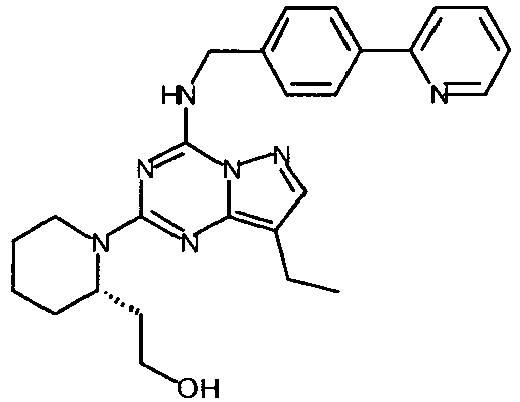
- Le produit 38 est préparé par chauffage à 140 °C de l'intermédiaire VIII, dans les conditions de l'exemple 23, avec le (S) 2-(pipéridin-2yl)éthanol.. Rdt = 75%. 1H NMR (400 MHz, CDCl3): 8,64 (d, 1H, Haro), 7.92 (d, 2H, Harom), 7,70 (m, 2H, Harom), 7,54 (s, 1H, Harom), 7,42 (d, 2H, Harom), 4,95(m, 1H), 4,79 (m, 1H), 4,75 (d, 2H), 3,55 (d, 1H), 3,28 (t, 1H), 2,74 (t, 1H), 2,47 (q, 2H), 2,03(t, 1H); 1,40-1,80(m, piperidine) 1,14 (t, 3H, CH3).
- Le produit 39 est préparé par chauffage à 140 °C de l'intermédiaire, VIII, dans les conditions de l'exemple 23, avec la diéthanolamine.

- Rdt = 78 %. 1H NMR (400 MHz, CDCl3): δ 8,68 (d, 1H, Harom), 7,96 (d, 2H Harom), 7,74 (m, 2H, Harom), 7,65 (s, 1H, 7-H), 7,43 (d, 2H, Harom), 7,26 (m, 1H, Harom), 6,97(t, 1H, NH), 4,74 (d, 2H, CH2N), 3,77 (m, 4H, 2 CH2OH), 2,56 (q, 2H, CH 2CH3), 1,22(t, 3H, CH3).
- Le produit 40 est préparé par chauffage à 140 °C de l'intermédiaire, VIII, dans les conditions de l'exemple 23, avec le L-thréoninol (2R,3R-thréoninol).

- Rdt = 78 %. 1H NMR (400 MHz, CDCl3): δ 8,68 (d, 1H, Harom), 7,96 (d, 2H Harom), 7,74 (m, 2H, Harom), 7,65 (s, 1H, 7-H), 7,43 (d, 2H, Harom), 7,26 (m, 1H, Harom), 6,97(t, 1H, NH), 4,74 (d, 2H, CH2N), 3,77 (m, 4H, 2 CH2OH), 2,56 (q, 2H, CH 2 CH3), 1,22(t, 3H, CH3).
- Le produit 41 est préparé par chauffage à 140 °C de l'intermédiaire, VIII, dans les conditions de l'exemple 23, avec le D-thréoninol (2S,3S-thréoninol).

- Rdt = 75 %. 1H NMR (400 MHz, CDCl3): δ 8,68 (d, 1H, Harom), 7,97 (d, 2H Harom), 7,75 (m, 2H, Harom), 7,63 (s, 1H, 7-H), 7,45 (d, 2H, Harom), 7,24 (m, 1H, Harom), 6,75(t, 1H, NH), 4,77 (d, 2H, CH2N), 4.18 (m, 1H), 3.90(m, 3H), 2,55 (q, 2H, CH 2 CH3), 1,30(d, 3H, CHCH 3 ); 1,42(t, 3H, CH2CH3).
- Le tableau II ci-après illustre les structures chimiques et les propriétés physiques de quelques exemples de composés de formule (I) selon l'invention. Dans ce tableau :
- PF = Point de Fusion, en degré Celsius (°C)
- « Rdt » désigne le rendement (%),
- MH+ = spectrométrie de masse (m/z),
- isoPr représente un groupe isopropyle,
- Et représente un groupe éthyle,
- dans la colonne « sels », « - » représente un composé sous forme de base libre, alors que « fumarate » représente un composé sous sa forme de fumarate,
- (+) indique que le composé est un énantiomère dextrogyre, (-) un énantiomère lévogyre :
Tableau II No compos é R1 R2 ou NR2R9 R9 X Y sel PF (°C) et/ou masse (m/z) 1 isoPr 
H 

- MH+ = 431 2 isoPr 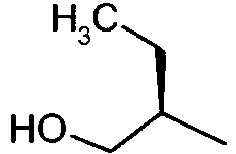
H 

- MH+= 432 3 isoPr 
H 

fu PF = 175-177 4 isoPr 
H 

- MH+ = 432 5 isoPr 
H 

fu PF = 175-177 6 isoPr 
H 

- MH+ = 437 7 isoPr 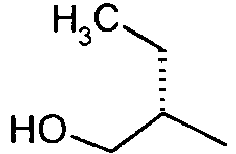
H 

- MH+ = 437 8 isoPr 
H 

- MH+ = 434 9 isoPr 
H 

fu PF= 168-170 10 isoPr 
H 

- MH+ = 434 11 isoPr 
H 

fu PF = 168-170 12 isoPr 
H 

- MH+ = 448 13 isoPr 
H 

fu PF = 187-189 14 isoPr 
H 

- MH+ = 448 15 isoPr 
H 

fu PF = 187-189 16 isoPr 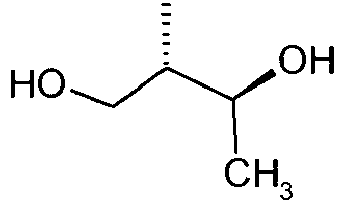
H 

- MH+ = 453 17 isoPr 
H 

- MH+ = 434 18 isoPr 
H 

fu PF = 179-181 19 isoPr 
H 

- MH+= 434 20 isoPr 
H 

- MH+= 432 21 isoPr 
H 

- MH+= 448 22 isoPr 
H 
- MH+= 432 23 isoPr 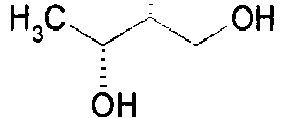
H 

- MH+= 448 24 isoPr 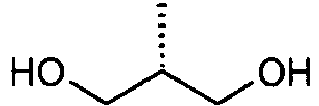
H 

- MH+= 448 25 isoPr 
H 

- MH+= 460 26 isoPr 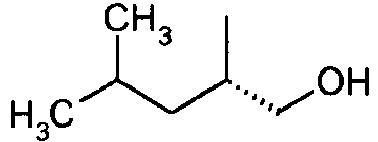
H 

- MH+= 460 27 isoPr 
H 

- MH+= 460 28 isoPr 
H 

- MH+= 446 29 isoPr 


- 30 isoPr 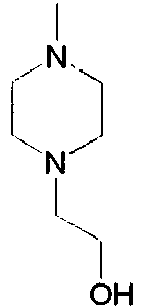


- 31 Et 
H 

- MH+= 420 32 Et 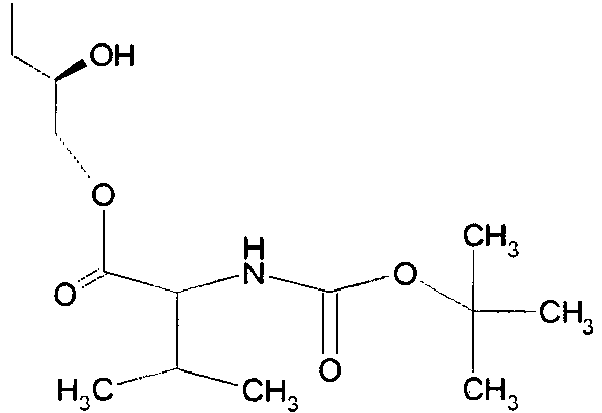
H 

- MH+= 618 33 Et 
H 

H - 34 Et 
H 

- MH+= 420 35 Et 
H 

- MH+= 418 36 Et 
H 

- MH+= 418 37 Et 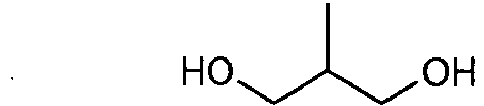
H 

- MH+=420 38 Et 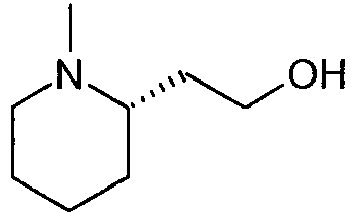


- MH+= 458 39 Et 


- MH+= 434 40 Et 
H 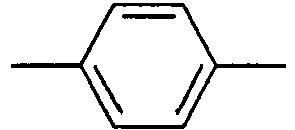
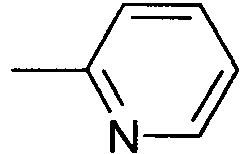
MH+= 434 41 Et 
H 

MH+= 434 - Les composés selon l'invention ont fait l'objet d'essais pharmacologiques permettant de déterminer leur effet inhibiteur de l'activité des protéines kinases.
- Selon une première série d'essais pharmacologiques, les composés ont été testés sur 7 protéines kinases selon la méthodologie décrite ci-après.
- On constate en particulier que l'activité inhibitrice des composés selon l'invention sur CDK1, CDK2, CDK5 et CDK9 présente généralement une CI50 autour de 0,050 µM. (CDK1 : 0,015-0,070 µM ; CDK2 : 0,012-0,060 µM ; CDK5 : 0,018-0,064 µM; CDK9 : 0,030-0,091 µM). Sur CK1, les composés de l'invention montrent une CI50 entre 0,06 et 0,2 µM, alors que sur DYRK1A et GSK-3, les CI50 sont autour de 0,5-2,0 µM et > 2,8 µM, respectivement.
- Le tableau III rassemble les résultats sur les CI50 rapportés en µM.
- Tampons d'homogénéisation: 60 mM β-glycérophosphate, 15 mM p-nitrophénylphosphate, 25 mM Mops (pH 7.2), 15 mM EGTA, 15 mM MgCl2, 1 mM DTT, 1 mM sodium vanadate, 1 mM NaF, 1 mM phénylphosphate, 10 µg leupeptine/ml, 10 µg aprotinine/ml, 10 µg d'inhibiteur de trypsine de soja /ml et 100 µM benzamidine.
- Tampon A: 10 mM MgCl2, 1 mM EGTA, 1 mM DTT, 25 mM Tris-HCl pH 7,5, 50 µg héparine/ml.
- Tampon C: 60 mM β-glycérophosphate, 15 mM p-nitrophénylphosphate, 25 mM Mops (pH 7.2), 5 mM EGTA, 15 mM MgCl2, 1 mM DTT, 1 mM sodium vanadate, 1 mM phénylphosphate, 10 µg leupeptine/ml, 10 µg aprotinine/ml et 100 µM benzamidine.
- Les kinases ont été dosées dans le tampon A ou le tampon C, à 30 °C, à une concentration finale en ATP de 15 µM. Les valeurs de blanc ont été soustraites et les activités calculées en tant que µmoles de phosphate incorporé pour 10 minutes d'incubation. Les activités sont habituellement exprimées en % (pourcentage) de l'activité maximale, c'est-à-dire en l'absence d'inhibiteurs. Des contrôles ont été effectués avec des dilutions appropriées de diméthylsulfoxide.
- CDK1/cycline B : a été extrait dans un tampon d'homogénisation à partir d'oocytes d'étoiles de mer de phase M (Marthasterias glacialis), purifié par chromatographie d'affinité sur des billes de sépharose marquées à p9CKShs1 dont il a été élué par p9CKShs1 libre comme antérieurement décrit dans Meijer et al., (1997) « Biochemical and cellular effects of roscovitine, a potent and selective inhibitor of the cyclin-dependent kinases cdc2, cdk2 and cdk5 », Eur. J. Biochem. 1997, 243, 527-536. L'activité kinase a été dosée dans le tampon C, avec 1 mg d'histone Hl/ml, en présence de 15 µM de [γ-33P] ATP (3 000 Ci/mmol; 10 mCi/ml) dans un volume final de 30 µl. Après 30 minutes d'incubation à 30 °C, des aliquotes de 25 µl du surnageant ont été mises en tâches sur des filtres en papier de phosphocellulose Whatman P81, et, 20 secondes plus tard, les filtres ont été lavés cinq fois (pendant au moins cinq minutes, chaque fois) dans une solution de 10 ml d'acide phosphorique/litre d'eau. Les filtres humides ont été soumis à un comptage en présence d'un fluide de scintillation ACS d'Amersham.
- CDK2/ cycline A (humain, recombinant, exprimé dans des cellules d'insecte) a été dosé comme décrit pour CDK1/cycline B.
- CDK5/p25 a été reconstitué en mélangeant des quantités égales de CDK5 mammalien recombinant et p25 exprimé dans E. coli en tant que protéine de fusion GST (glutathione-S-transférase) et purifié par chomatographie d'affinité sur glutathione-agarose (p25 est une version tronquée de p35, l'activateur de CDK5 de 35 kDa). Son activité a été dosée avec de l'histone H1 dans le tampon C comme décrit pour CDK1/cycline B.
- CDK9/cycline T (humain, recombinant, exprimé dans des cellules d'insecte) a été dosé comme décrit pour CDK1/cycline B, mais en utilisant un fragment pRB (a.a.773-928) (3.5µg/dosage) en tant que substrat.
- GSK-3α/ β (cerveau de porc, native, purifiée par affinité) est dosée comme décrit pour la CDK1 mais dans le tampon A et avec un substrat spécifique de GSK-3 (GS-1: YRRAAVPPSPSLSRHSSPHQSpEDEEE) (Sp : serine phosphorylée) (Bach S. et al. J Biol Chem 2005; 280:31208-19).
- CK1δ/ ε (cerveau de porc, native, purifiée par affinité) est dosée comme décrit pour la CDK1 avec un substrat spécifique de CK1, RRKHAAIGSpAYSITA (Reinhardt J. et al. Protein Expr & Purif 2007; 54:101-9).
- DYRK1A (humaine, recombinante, exprimée en E. coli comme protéine de fusion GST) a été purifiée sur glutathion-agarose dosée comme décrit pour la CDK1/cyclin B avec la myelin basic protein (1 mg/ml) comme substrat.
Tableau III Kinase CDK1/ cyclin B CDK2/ cyclin A CDK5/ p25 CDK9/ cyclin T GSK-3α/β CK1 DYRK1A Roscovitine 0,33 0,21 0,28 0,23 60 4,0 3,0 N-&-N1 0,09 0,04 0,07 0,043 11,0 1,2 1,3 1 0,18 0,22 0,18 0,093 > 10 0,21 2,2 2 0,023 0,028 0,040 0,073 4,0 0,21 1,8 3 0,016 0,021 0,018 0,031 3,1 0,13 2,2 5 0,023 0,016 0,031 0,030 3,5 0,21 0,5 17 0,070 0,062 0,053 0,068 4,4 0,092 0,92 12 0,029 0,022 0,029 0,060 3,0 0,20 0,47 9 0,019 0,012 0,014 0,038 1,8 0,061 0,26 13 0,031 0,020 0,021 0,049 2,3 0,18 0,30 16 0,059 0,034 0,050 0,091 4,2 0,19 1,80 14 0,042 0,042 0,044 0,053 2,5 0,12 0,58 15 0,042 0,031 0,045 0,060 2,2 0,12 0,53 18 0,051 0,049 0,064 0,061 2,8 0,12 0,61 25 NT NT 0,11 NT >10 0,23 1,4 34 NT NT 0,010 NT 0,53 0.10 0,42 35 NT NT 0,034 NT 1,4 0,93 0,82 36 NT NT 0,022 NT 1,6 0,58 1,6 31 NT NT 0,025 NT 1,0 0,36 0,71 23 NT NT <0,03 NT 1,2 0,13 1,3 21 NT NT 0,043 NT 1,2 0,11 1,2 28 NT NT 0,12 NT 7,0 0,41 0,58 30 NT NT 0,38 NT 2,1 0,56 1,4 « NT » : Non testé - Selon une deuxième série d'essais pharmacologiques, des tests sur cellules ont été menés, plus particulièrement sur la lignée SH-SY5Y et CLL selon la méthodologie décrite ci-après. Le tableau IV rassemble des exemples de résultats en valeurs de CI50 en µM.
- Un kit Cell Titer 96® contenant le réactif MTS a été acheté à Promega (Madison, WI, USA). Le cocktail inhibiteur de protéase provenait de Roche et le sérum de veau foetal (FCS) provenait d'Invitrogen. Les réactifs non listés provenaient de Sigma, sauf s'il en est indiqué autrement.
- La lignée de cellules du neuroblastome humain SH-SY5Y a été mise à pousser dans un milieu DMEM avec de la L-glutamine provenant d'Invitrogen (Cergy Pontoise, France), des antibiotiques et 10 % en volume de FCS provenant d'Invitrogen. Les conditions générales de culture étaient une atmosphère de 5 % en CO2 et une température de 37°C. Les plaques de culture et autres outils en plastique jetables ont été fournis par Corning (Coming, NY, USA). Les traitements par les composés de l'invention ont été effectués sur des cultures en croissance exponentielle au temps, et concentrations indiquées. Les expériences de contrôles ont été mises en oeuvre en utilisant également des dilutions appropriées de DMSO.
- La viabilité des cellules a été déterminée en mesurant la réduction de 3-(4,5-diméthylthiazol-2-yl)-5-(3-carboxyméthoxyphényl)-2-(4-sulfophényl)-2H-tétrazolium (MTS). La procédure était telle que décrite en détails dans Ribas J, et al., 2004, « Cell differentiation, caspase inhibition, and macromolecular synthesis blockage, but not BCL-2 or BCL-XL proteins, protect SH-SYS5 cells from apoptosis triggered by two CDK inhibitory drugs », Exp. Cell Res, 2004, 195, 9-24.
- Les cellules LLC ont été isolées à partir de sang héparinisé de patients non traités après consentement éclairé.
- Les cellules mononucleaires ont été isolées par centrifugation sur gradient de densité Lymphosep (Biowest). Tous les échantillons de LLC-B avaient un score de Matutes de 4 ou 5. Le pourcentage de lymphocytes B LLC a été évalué par cytométrie de flux après marquage au CD19-PE (clone J4,119) et CD5-PC5 (clone BL1a) et les cellules analysées par FACS (EPICS XL, Beckman Coulter, France). Lorsque le pourcentage de cellules CD19+/CD5+ était inferieur à 90%, les lymphocytes B ont été enrichies en utilisant le kit II d'enrichissement en cellules B par déplétion immuno-magnétique des monocytes, NK, granulocytes et lymphocytes T (Miltenyi Biotech).
- Les cellules B-LLC ont été cultivées (300 000 cellules /puits) à 37 °C dans le milieu RPMI 1640 (Lonza) contenant 10% de FCS (InVitrogen) avec diverses concentrations des composés de l'invention. Après incubation, les cellules B-LLC ont été récoltées, lavées en PBS et remises en suspension dans 100µL de « binding buffer 1x » contenant l'annexine V conjugee au FITC et de l'iodure de Propidium (Beckman Coulter Apoptosis Detection Kit). Après 10 min d'incubation sur la glace les cellules ont été analysées par cytométrie de flux et le pourcentage de cellules en apoptose a été déterminé.
- Les composés de l'invention présentent généralement une CI50 inférieure à 1 µm pour les deux lignées cellulaires considérées.

- Les composés selon l'invention peuvent donc être utilisés pour la préparation de médicaments, en particulier de médicaments présentant une activité inhibitrice des protéines kinases et en particulier des kinases cycline-dépendantes (CDKs), des Caseine kinase 1 (CK1s) et des DYRKs.
- Ainsi, selon un autre de ses aspects, la présente invention a pour objet des médicaments qui comprennent un composé de formule (I), ou un sel d'addition de ce dernier à un acide pharmaceutiquement acceptable, ou encore un hydrate ou un solvat.
- Ces médicaments trouvent leur emploi en thérapeutique, notamment dans la prévention et le traitement de différentes pathologies telles que les cancers, maladies neurodégénératives chroniques telles que maladies d'Alzheimer, de Parkinson, maladies neurodégénératives aigües telles que traumatisme cérébral, accident vasculaire cérébral, épilepsie, inflammations pulmonaires, arthrite, infections virales (SIDA, Herpes), traitement de la douleur, diabète, en particulier de type 2, maladies rénales telle que la polykystose rénale ou les glomérulonéphrites, leucémies telles que la leucémie lymphoïde chronique, en particulier de type B, parasites tels que Plasmodium et Leishmania.
- Les composés de l'invention sont tout particulièrement utiles pour prévenir et/ou traiter les maladies suivantes : cancers, leucémie lymphoïde chronique, maladie d'Alzheimer, maladie de Parkinson, accident vasculaire cérébral, inflammations pulmonaires, SIDA, polykystose rénale, glomérulonéphrites.
- Selon un autre de ses aspects, la présente invention concerne des compositions pharmaceutiques comprenant, en tant que principe actif, un composé selon l'invention. Ces compositions pharmaceutiques contiennent une dose efficace d'au moins un composé selon l'invention, ou un sel pharmaceutiquement acceptable, un hydrate ou solvat dudit composé, ainsi qu'au moins un excipient pharmaceutiquement acceptable.
- Lesdits excipients sont choisis selon la forme pharmaceutique et le mode d'administration souhaité, parmi les excipients habituels qui sont connus de l'homme du métier.
- Dans les compositions pharmaceutiques de la présente invention pour l'administration orale, sublinguale, sous-cutanée, intramusculaire, intraveineuse, topique, locale, intratrachéale, intranasale, transdermique ou rectale, le principe actif de formule (I) ci-dessus, ou son sel, solvat ou hydrate éventuel, peut être administré sous forme unitaire d'administration, en mélange avec des excipients pharmaceutiques classiques, aux êtres humains pour la prophylaxie ou le traitement des troubles ou des maladies cités ci-dessus.
- Les formes unitaires d'administration appropriées comprennent les formes par voie orale telles que les comprimés, les gélules molles ou dures, les poudres, les granules et les solutions ou suspensions orales, les formes d'administration sublinguale, buccale, intratrachéale, intraoculaire, intranasale, par inhalation, les formes d'administration topique, transdermique, sous-cutanée, intramusculaire ou intraveineuse, les formes d'administration rectale et les implants.
- Par voie orale, la dose de principe actif administrée par jour peut atteindre 1 à 500 mg/kg, en une ou plusieurs prises,
- Il peut y avoir des cas particuliers où des dosages plus élevés ou plus faibles sont appropriés ; de tels dosages ne sortent pas du cadre de l'invention. Selon la pratique habituelle, le dosage approprié à chaque patient est déterminé par le médecin selon le mode d'administration, le poids et la réponse dudit patient.
- La présente invention, selon un de ses aspects, concerne l'utilisation d'un composé de formule (I), (Ia), (Ib), (Ic), (Id), (Ie), (If) ou (1) à (38) ou l'un de ses sels pharmaceutiquement acceptable, pour la préparation d'un médicament destiné à traiter l'une au moins des maladies citées ci-dessus et en particulier le cancer.
- Selon un autre de ses aspects, la présente invention concerne un composé de formule (I), (Ia), (Ib), (Ic), (Id), (Ie), (If) ou (1) à (38) ou l'un de ses sels pharmaceutiquement acceptable pour son utilisation à titre de médicament destiné au traitement et à la prévention d'au moins une des maladies citées ci-dessus et en particulier à titre d'agent anticancéreux.
- La présente invention, selon encore un autre de ses aspects, concerne également une méthode de prévention et/ou de traitement des pathologies indiquées ci-dessus qui comprend l'administration, à un patient, d'une dose efficace d'un composé selon l'invention, ou un de ses sels pharmaceutiquement acceptables ou hydrates ou solvats.
- Les compositions pharmacetuiques selon l'invention peuvent également trouver une utilisation dans le domaine vétérinaire et aussi être administrées à des animaux tels que chiens et chats pour la prophylaxie ou le traitement des troubles ou des maladies cités ci-dessus.
Claims (14)
- Composé de formule (I) suivante :
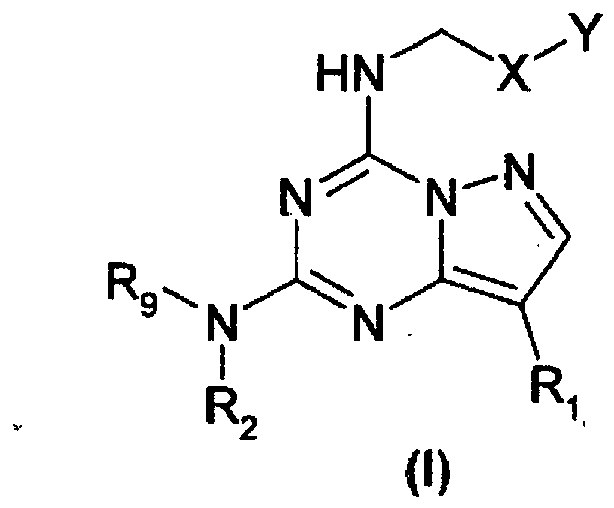 R1 représente un groupe (C1-C6)alkyle ou un groupe (C3-C6)cycloalkyle,R2 représente un groupe (C1-C6)alkyle, un groupe (C3-C6)cycloalkyle, un groupe (C1-C6)alkényle, un groupe (C1-C6)fluoroalkyle, un groupe (C1-C3)fluoroalcoxy ou un groupe (C1-C6)alcoxy(C1-C6)alkyle, substitué (i) par un à trois groupes hydroxy, ou (ii) par un groupe NRaRb, où Ra et Rb représentent indépendamment un atome d'hydrogène ou un groupe (C1-C3)alkyle,ou bien R2 représente un groupe pyrrolidinylméthyle substitué par un à trois groupes hydroxy,ledit groupe R2 étant éventuellement substitué par un groupe -OCOR3, dans lequel R3 représente un dérivé d'acide aminé naturel ou non naturel ou un groupepipéridyle de formule (B)
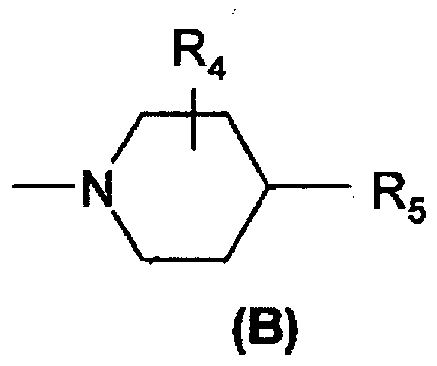 R4 représente un hydrogène, un atome d'halogène, un groupe (C1-C3)alkyle, un groupe hydroxy(C1-C3)alkyle ou un groupe -NRaRb, où Ra et Rb sont tels que définis précédemment et R5 représente un hydrogène, un groupe (C1-C3)alkyle, un groupe -N(Me)2, un groupe pipéridyle ou un groupe morpholinyle,R9 prend la même signification que R2 et peut également représenter un atome d'hydrogène,alternativement R2 et R9 forment ensemble, avec l'atome d'azote qui les porte, un hétérocycle choisi parmi les groupes pyrrolidinyle, pipéridinyle, pipérazinyle et pipéridinylpipéridinyle, ces hétérocycles pouvant être substitués par un à trois groupes choisis parmi hydroxy, (C1-C6)alkyle ou (C1-C6)alcoxy(C1-C6)alkyle, ces deux derniers groupes étant substitués (i) par un à trois groupes hydroxy, ou (ii) par un groupe NRaRb, ou Ra et Rb représentent indépendamment un atome d'hydrogène ou un groupe (C1-C3)alkyle,X et Y représentent indépendamment un groupe phényle ou un groupe hétéroaryle, lesdits groupes hétéroaryle et phényle pouvant être substitués par un ou deux groupes indépendamment choisis parmi un groupe (C1-C2)alkyle, un groupe (C1-C2)alcoxy, un atome d'halogène, un groupe (C1-C2)fluoroalkyle, un groupe (C1-C2)fluoroalcoxy, un groupe hydroxy, un groupe -COOH, un groupe -CONHR6 et un groupe -NRaRb, où Ra et Rb sont tels que définis précédemment,R6 est un hydrogène ou un groupe (C1-C3)alkyle,ledit groupe hétéroaryle étant choisi parmi un groupe thiényle, un groupe pyridyle, un groupe pyrimidinyle, un groupe thiazolyle, un groupe pyrrolyle et un groupe furanyle,ainsi que ses sels pharmaceutiquement acceptables.
 - Composé selon la revendication 1, caractérisé en ce que R3 représente une des formules (a-1) à (a-5) suivantes :


- Composé selon la revendication 1 ou 2, caractérisé en ce que l'un au moins des groupes X et Y est substitué et comporte un ou deux groupes de substitution, ledit groupe de substitution étant choisi parmi un groupe (C1-C2)alkyle, un groupe (C1-C2)fluoroalkyle, un groupe (C1-C2)alcoxy, un groupe (C1-C2)fluoroalcoxy, un atome d'halogène, un groupe hydroxy et un groupe -COOH.
- Composé selon l'une quelconque des revendications précédentes, caractérisé en ce que R2 représente l'une des formules suivantes :


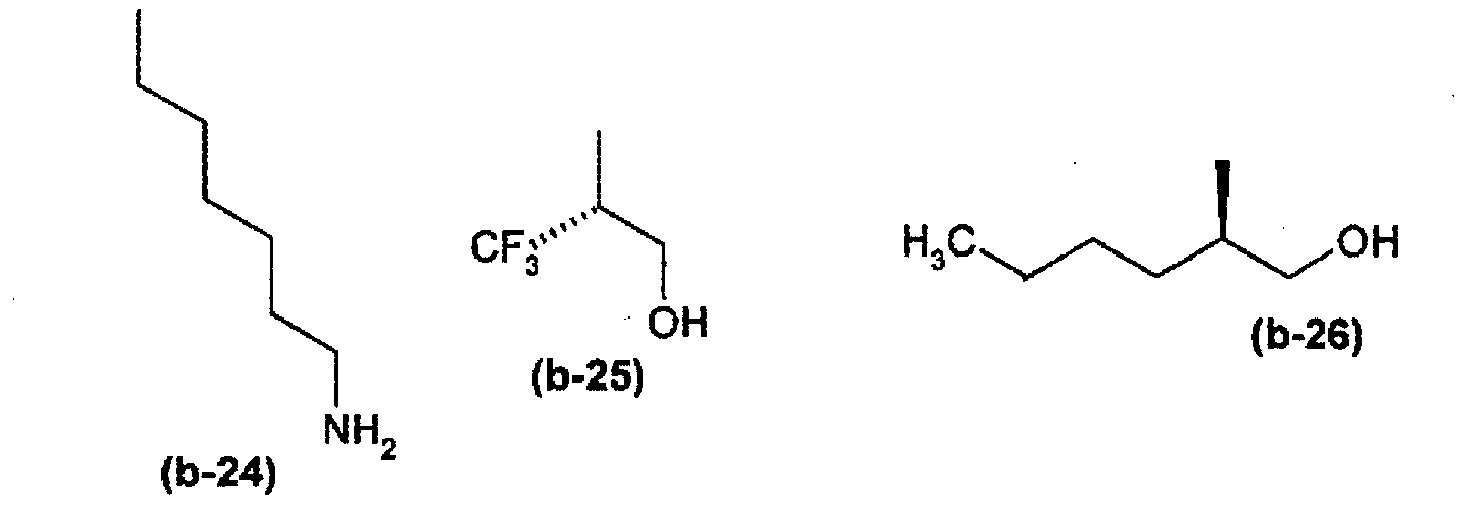


- Composé selon l'une quelconque des revendications précédentes, caractérisé en ce qu'il présente une formule (Ia) :
 R1 est tel que défini en revendication 1 et est avantageusement un groupe isopropyle,R2 et R9 représentent indépendamment un groupe (C1-C6)alkyle, un groupe (C1-C6)fluoroalkyle, un groupe (C1-C3)fluoroalcoxy ou un groupe (C1-C6)alcoxy(C1-C6)alkyle, ledit groupe étant substitué par un à trois groupes hydroxy avec R9 pouvant représenter un atome d'hydrogène et R2 représente avantageusement l'une des formules (b-1), (b-2), (b-10), (b-11), (b-13), (b-14) ou (b-15) telles que définies ci-dessus, tandis que R9 est un atome d'hydrogène, ou bien,R2 et R9 forment ensemble, avec l'atome d'azote qui les porte, un groupe pipéridin-1-yle ou pipéridin-4-ylpipéridin-1-yle, ledit groupe étant substitué par un à trois groupes (C1-C6)alkyle substitué par un groupe hydroxy et R2 et R9 pris ensemble représentent avantageusement l'une des formules (b-37), (b-38), (b-39) ou (b-40) telles que définies ci-dessus,R7 et R8 représentent indépendamment un atome d'hydrogène, un groupe (C1-C2)alkyle, un groupe (C1-C2)fluoroalkyle, un groupe (C1-C2)alcoxy, un groupe (C1-C2)fluoroalcoxy, un atome d'halogène, un groupe hydroxy ou un groupe -COOH,G représente -CH=, ou -N=, etlorsque G représente -CH=, les groupes W et Z représentent soit simultanément -CH=, soit l'un représente -N= et l'autre représente -CH=,lorsque G représente -N=, alors W et Z représentent -CH=,ou un de ses sels pharmaceutiquement acceptables.
 - Composé selon l'une quelconque des revendications 1 à 4, caractérisé en ce qu'il présente une formule (Ib) :
 R1 est tel que défini en revendication 1 et est avantageusement un groupe isopropyle,R2, R7 et R8 sont tels que définis dans la revendication précédente,ou un de ses sels pharmaceutiquement acceptables.
 - Composé selon l'une quelconque des revendications 1 à 4, caractérisé en ce qu'il présente une formule (Ic) :
 R1 est tel que défini en revendication 1 et est avantageusement un groupe éthyle ou isopropyle,soit R9 est un atome d'hydrogène et R2 représente un groupe (C1-C6)alkyle, un groupe (C1-C6)fluoroalkyle, un groupe (C1-C3)fluoroalcoxy ou un groupe (C1-C6)alcoxy(C1-C6)alkyle, ledit groupe étant substitué par un à trois groupes hydroxy, et avantageusement représente l'une des formules (b-1), (b-2), (b-10), (b-11), (b-13), (b-14) ou (b-15) telles que définies ci-dessus ou alternativement,soit R2 et R9 forment ensemble, avec l'atome d'azote qui les porte, un groupe pipéridin-1-yle ou pipéridin-4-ylpipéridin-1-yle, ledit groupe étant substitué par un à trois groupes (C1-C6)alkyle substitué par un groupe hydroxy et R2 et R9 pris ensemble représentent avantageusement l'une des formules (b-37), (b-38), (b-39) ou (b-40) telles que définies ci-dessus, etR7 et R8 sont tels que définis dans la revendication 5,ou un de ses sels pharmaceutiquement acceptables.
 - Composé selon l'une quelconque des revendications 1 à 4, caractérisé en ce qu'il présente une formule (Id) :
dans laquelle :
R2 et R7 sont tels que définis dans la revendication 5,
ou un de ses sels pharmaceutiquement acceptables. - Composé selon l'une quelconque des revendications 1 à 4, caractérisé en ce qu'il présente une formule (Ic) :
 R1 est tel que défini en revendication 1 et est avantageusement un groupe isopropyle,R2 représente un groupe (C1-C6)alkyle, un groupe (C1-C6)fluoroalkyle, un groupe (C1-C3)fluoroalcoxy ou un groupe (C1-C6)alcoxy(C1-C6)alkyle, ledit groupe étant substitué par un à trois groupes hydroxy, et avantageusement représente l'une des formules (b-1), (b-2), (b-10), (b-11), (b-13), (b-14) ou (b-15) telles que définies ci-dessus,ou encore une formule (If) :
 R1 est tel que défini en revendication 1 et est avantageusement un groupe isopropyle,R2 représente un groupe (C1-C6)alkyle, un groupe (C1-C6)fluoroalkyle, un groupe (C1-C3)fluoroalcoxy ou un groupe (C1-C6)alcoxy(C1-C6)alkyle, ledit groupe étant substitué par un à trois groupes hydroxy, et avantageusement représente l'une des formules (b-1), (b-2), (b-10), (b-11), (b-13), (b-14) ou (b-15) telles que définies ci-dessus.
 - Composé selon l'une quelconque des revendications précédentes, caractérisé en ce qu'il est choisi parmi l'un des composés suivants :- (R) 2-(1-hydroxybut-2-ylamino)-8-isopropyl-4-(4-phénylbenzylamino)pyrazolo[1,5-a]-1,3,5-triazine (1)- (R) 2-(1-hydroxybut-2-ylamino)-8-isopropyl-4-[4-(pyridin-2-yl)benzylamino]pyrazolo[1,5-a]-1,3,5-triazine (2)- Sel de fumarate du (R) 2-(1-hydroxybut-2-ylamino)-8-isopropyl-4-[4-(pyridin-2-yl)benzylamino]pyrazolo[1,5-a]-1,3,5-triazine (3)- (S) 2-(1-hydroxybut-2-ylamino)-8-isopropyl-4-[4-(pyridin-2-yl)benzylamino]pyrazolo[1,5-a]-1,3,5-triazine (4)- Sel de fumarate du (S) 2-(1-hydroxybut-2-ylamino)-8-isopropyl-4-[4-(pyridin-2-yl)benzylamino]pyrazolo[1,5-a]-1,3,5-triazine (5)- (R) 2-(1-hydroxybut-2-ylamino)-8-isopropyl-4-[4-(thiophén-3-yl)benzylamino]pyrazolo[1,5-a]-1,3,5-triazine (6)- (S) 2-(1-hydroxybut-2-ylamino)-8-isopropyl-4-[4-(thiophén-3-yl)benzylamino]pyrazolo[1,5-a]-1,3,5-triazine (7)- (S) 2-(1,2-dihydroxypropan-3-ylamino)-8-isopropyl-4-[4-(pyridin-2-yl)benzylamino]pyrazolo[1,5-a]-1,3,5-triazine (8)- Sel de fumarate du (S) 2-(1,2-dihydroxypropan-3-ylamino)-8-isopropyl-4-[4-(pyridin-2-yl)benzylamino]pyrazolo[1,5-a]-1,3,5-triazine (9)- (R) 2-(1,2-dihydroxypropan-3-ylamino)-8-isopropyl-4-[4-(pyridin-2-yl)benzylamino]pyrazolo[1,5-a]-1,3,5-triazine (10)- Sel de fumarate du (R) 2-(1,2-dihydroxypropan-3-ylamino)-8-isopropyl-4-[4-(pyridin-2-yl)benzylamino]pyrazolo[1,5-a]-1,3,5-triazine (11)- (2R,3R) 2-(1,3-dihydroxybut-2-ylamino)-8-isopropyl-4-[4-(pyridin-2-yl)benzylamino]pyrazolo[1,5-a]-1,3,5-triazine (12)- sel de fumarate du (2R,3R) 2-(1,3-dihydroxybut-2-ylamino)-8-isopropyl-4-[4-(pyridin-2-yl)benzylamino]pyrazolo[1,5-a]-1,3,5-triazine (13)- (2S,3S) 2-(1,3-dihydroxybut-2-ylamino)-8-isopropyl-4-[4-(pyridin-2-yl)benzylamino]pyrazolo[1,5-a]-1,3,5-triazine (14)- Sel de fumarate du (2S,3S) 2-(1,3-dihydroxybut-2-ylamino)-8-isopropyl-4-[4-(pyridin-2-yl)benzylamino]pyrazolo [1,5-a]-1,3,5-triazine (15)- (2R,3R) 2-(1,3-dihydroxybut-2-ylamino)-8-isopropyl-4-[4-(thiophén-3-yl)benzylamino]pyrazolo[1,5-a]-1,3,5-triazine (16)- 2-(1,3-dihydroxyprop-2-ylamino)-8-isopropyl-4-[4-(pyridin-2-yl)benzylamino]pyrazolo[1,5-a]-1,3,5-triazine (17)- Sel de fumarate du 2-(1,3-dihydroxyprop-2-ylamino)-8-isopropyl-4-[4-(pyridin-2-yl)benzylamino]pyrazolo[1,5-a]-1,3,5-triazine (18),- 2-(1,3-dihydroxyprop-2-ylamino)-8-isopropyl-4-[4-(pyridin-3-yl)benzylamino]pyrazolo[1,5-a]-1,3,5-triazine (19)- (S) 2-(-1-hydroxybut-2-ylamino)-8-isopropyl-4-[4-(pyridin-3-yl)benzylamino]pyrazolo[1,5-a]-1,3,5-triazine (20)- (2S,3S) 2-(1,3-dihydroxybut-2-ylamino)-8-isopropyl-4-[4-phényl(pyridin-3-yl)méthylamino]pyraxolo[1,5-a]-1,3,5-triazine (21)- (S) 2-(-1-hydroxybut-2-ylamino)-8-isopropyl-4-[4-phényl(pyridin-3-yl)méthylamino]pyrazolo[1,5-a]-1,3,5-triazine (22)- (2R,3R) 2-{1,3-dihydroxybut-2-ylamino)-8-isopropyl-4-[4-phényl(pyridin-3-yl)méthylamino]pyrazolo[1,5-a]-1,3,5-triazine (23)- 2-(1,3-dihydroxyprop-2-ylamino)-8-isopropyl-4-[4-phényl(pyridin-3-yl)méthylamino]pyrazolo[1,5-a]-1,3,5-triazine (24)- (R) 2-(1-hydroxy-4-méthylpent-2-ylamino)-8-isopropyl-4-[4-phényl(pyridin-3-yl)méthylamino]pyrazolo[1,5-a]-1,3,5-triazine (25)- (S) 2-(1-hydroxy-4-méthylpent-2-ylamino)-8-isopropyl-4-[4-phényl(pyridin-3-yl)méthylamino]pyrazolo[1,5-a]-1,3,5-triazine (26)- (S) 2-(1-hydroxy-3,3-diméthylbut-2-ylamino)-8-isopropyl-4-[4-(pyridin-2-yl)benzylamino]pyrazolo[1,5-a]-1,3,5-triazine (27)- (S) 2-(1-hydroxy-3-méthylbut-2-ylamino)-8-isopropyl-4-[4-(pyridin-2-yl)benzylamino]pyrazolo[1,5-a]-1,3,5-triazine (28)- 2-[4-[1-[8-isopropyl-4-[[4-(pyridin-2-yl)phényl]méthylamino]pyrazolo[1,5-a]-1,3,5-triazin-2-yl]pipéridin-4-yl]pipéridin-1-yl]éthanol (29)- 2-[4-[8-isopropyl-4-[[4-(pyridin-2-yl)phényl]méthylamino]pyrazolo[1,5-a]-1,3,5-triazin-2-yl]pipérazin-1-yl]éthanol (30)- (R) 2-(1,2-dihydroxypropan-3-ylamino)-8-éthyl-4-[4-(pyridin-2-yl)benzylamino]pyrazolo[1,5-a]-1,3,5-triazine (31)- [(2R)-3-[[8-ethyl-4-[[4-(2-pyridyl)phenyl]methylamino]pyrazolo[1,5-a][1,3,5]triazin-2-yl]amino]-2-hydroxy-propyl] (2R)-2-Bocamino-3-methyl-butanoate (32)- [(2R)-3-[[8-ethyl-4-[[4-(2-pyridyl)phenyl]methylamino]pyrazolo[1,5-a][1,3,5]triazin-2-yl]amino]-2-hydroxy-propyl] (2R)-2-amino-3-methyl-butanoate (33) à l'état de base ou de sel notamment de dichlorhydrate- (S) 2-(1,2-dihydroxypropan-3-ylamino)-8-éthyl-4-[4-(pyridin-2-yl)benzylamino]pyrazolo[1,5-a]-1,3,5-triazine (34)- (S) 8-ethyl-2-(-1-hydroxybut-2-ylamino)-4-[4-(pyridin-2-yl)benzylamino]pyrazolo[1,5-a]-1,3,5-triazine (35)- (R) 8-ethyl-2-(-1-hydroxybut-2-ylamino)-4-[4-(pyridin-2-yl)benzylamino]pyrazolo[1,5-a]-1,3,5-triazine (36)- 2-(1,3-dihydroxyprop-2-ylamino)-8-éthyl-4-[4-(pyridin-2-yl)benzylamino]pyrazolo[1,5-a]-1,3,5-triazine (37)- 2-[(2S)-1-[8-éthyl-4-[[4-(2-pyridyl)phényl]methylamino]pyrazolo[1,5-a][1,3,5]triazin-2-yl]-2-pipéridyl]éthanol (38)- 2-[[8-éthyl-4-[[4-(2-pyridyl)phényl]méthylamino]-pyrazolo[1,5-a][1,3,5]triazin-2-yl]-(2-hydroxyéthyl)amino]éthanol (39)- (2R,3R)-2-[[8-éthyl-4-[[4-(2-pyridyl)phényl]méthylamino]pyrazolo[1,5-a][1,3,5]triazin-2-yl]amino]butane-1,3-diol (40)- (2S,3S)-2-[[8-ethyl-4-[[4-(2-pyridyl)phényl]méthylamino]pyrazolo[1,5-a][1,3,5]triazin-2-yl]amino]butane-1,3-diol (41)
ainsi que leurs éventuels sels d'acides pharmaceutiquement acceptables, - Procédé de préparation d'un composé de formule (I) selon l'une quelconque des revendications précédentes, caractérisé en ce que l'on fait réagir un composé de formule (IIa) qui suit :

ou bien en ce que l'on fait réagir un composé de formule (IIb)

- Médicament, caractérisé en ce qu'il comprend un composé de formule (I) selon l'une quelconque des revendications 1 à 10.
- Composition pharmaceutique, caractérisée en ce qu'elle comprend un composé de formule (I) selon l'une quelconque des revendications 1 à 10, ainsi qu'au moins un excipent pharmaceutiquement acceptable.
- Composé de formule (I) selon l'une quelconque des revendications 1 à 10, pour son utilisation à titre de médicament destiné au traitement et à la prévention des maladies suivantes : cancers, maladies neurodégénératives chroniques telles que maladies d'Alzheimer, de Parkinson, maladies neurodégénératives aigües telles que traumatisme cérébral, accident vasculaire cérébral, épilepsie, inflammations pulmonaires, arthrite, infections virales (SIDA, Herpes), traitement de la douleur, diabète, en particulier de type 2, maladies rénales telle que la polykystose rénale ou les glomérulonéphrites, leucémies telles que la leucémie lymphoïde chronique, en particulier de type B, parasites tels que Plasmodium et Leishmania.
Applications Claiming Priority (3)
| Application Number | Priority Date | Filing Date | Title |
|---|---|---|---|
| US15924609P | 2009-03-11 | 2009-03-11 | |
| FR0951521A FR2943058B1 (fr) | 2009-03-11 | 2009-03-11 | Derives de pyrazolo°1,5-a!-1,3,5-triazines, leur preparation et leur application en therapeutique. |
| PCT/IB2010/051063 WO2010103486A1 (fr) | 2009-03-11 | 2010-03-11 | Derives de pyrazolo[1,5-a]-1,3,5-triazines, leur preparation et leur application en therapeutique |
Publications (2)
| Publication Number | Publication Date |
|---|---|
| EP2406263A1 EP2406263A1 (fr) | 2012-01-18 |
| EP2406263B1 true EP2406263B1 (fr) | 2013-09-25 |
Family
ID=41110928
Family Applications (1)
| Application Number | Title | Priority Date | Filing Date |
|---|---|---|---|
| EP10710681.7A Active EP2406263B1 (fr) | 2009-03-11 | 2010-03-11 | Derivés de pyrazolo[1,5-a]-1,3,5-triazines, leur preparation et leur application en thérapeutique |
Country Status (8)
| Country | Link |
|---|---|
| US (1) | US8691982B2 (fr) |
| EP (1) | EP2406263B1 (fr) |
| JP (1) | JP2012520288A (fr) |
| CA (1) | CA2753135A1 (fr) |
| DK (1) | DK2406263T3 (fr) |
| ES (1) | ES2440323T3 (fr) |
| FR (1) | FR2943058B1 (fr) |
| WO (1) | WO2010103486A1 (fr) |
Families Citing this family (17)
| Publication number | Priority date | Publication date | Assignee | Title |
|---|---|---|---|---|
| US20120083498A1 (en) * | 2010-06-17 | 2012-04-05 | Fatah Kashanchi | Modulators of Viral Transcription, and Methods and Compositions Therewith |
| US20120149708A1 (en) * | 2010-06-17 | 2012-06-14 | George Mason University | Modulators of viral transcription, and methods and compositions therewith |
| EP2602248A1 (fr) | 2011-12-05 | 2013-06-12 | University Of Leicester | Nouveaux composés pyrroliques |
| EP2634190A1 (fr) | 2012-03-01 | 2013-09-04 | Lead Discovery Center GmbH | dérivés de pyrazolo-triazine en tant qu'inhibiteurs des kinases dépendantes de la cycline |
| EP2634189A1 (fr) * | 2012-03-01 | 2013-09-04 | Lead Discovery Center GmbH | Dérivés de pyrazolo-triazine en tant qu'inhibiteurs sélectifs de kinases dépendantes de la cycline |
| WO2014189830A1 (fr) | 2013-05-20 | 2014-11-27 | University Of Pittsburgh-Of The Commonwealth System Of Higher Education | Agonistes de canaux calciques |
| CN107530329B (zh) * | 2015-03-09 | 2021-10-08 | 奥瑞基尼探索技术有限公司 | 用作CDK抑制剂的吡唑并[1,5-a][1,3,5]三嗪和吡唑并[1,5-a]嘧啶衍生物 |
| US10722513B2 (en) * | 2015-03-23 | 2020-07-28 | The University Of Melbourne | Treatment of respiratory diseases |
| WO2016193939A1 (fr) | 2015-06-04 | 2016-12-08 | Aurigene Discovery Technologies Limited | Dérivés hétérocyclyle substitués en tant qu'inhibiteurs de cdk |
| WO2016206999A1 (fr) | 2015-06-24 | 2016-12-29 | Apodemus Ab | Dérivés de pyrazolo[1,5-a]triazin -4-amine utiles en thérapie |
| RU2770363C2 (ru) | 2017-04-05 | 2022-04-15 | Куровир Аб | Гетероароматические соединения, пригодные в терапии |
| EP3877382B1 (fr) | 2018-11-07 | 2026-03-18 | Tianli Biotech Pty Ltd | Nouveaux composés pour le traitement de maladies respiratoires |
| CN111217814B (zh) * | 2018-11-26 | 2022-08-26 | 天津科技大学 | 一类联哌啶衍生物及其作为抗肿瘤药物的应用 |
| CN112479956A (zh) * | 2019-07-30 | 2021-03-12 | 杭州阿诺生物医药科技有限公司 | 一种用于制备腺苷受体抑制剂中间体的方法 |
| EP4512806A1 (fr) * | 2023-08-25 | 2025-02-26 | Mablink Bioscience | Agents de dégradation de colle moléculaire et leurs utilisations |
| EP4512427A1 (fr) * | 2023-08-25 | 2025-02-26 | Mablink Bioscience | Conjugués anticorps-médicament basés sur des agents de dégradation de colle moléculaire et leurs utilisations |
| CN119707984A (zh) * | 2023-09-28 | 2025-03-28 | 中国科学院上海药物研究所 | 吡唑并三嗪及吡唑并嘧啶衍生物、其制备方法、药物组合物及其用途 |
Family Cites Families (5)
| Publication number | Priority date | Publication date | Assignee | Title |
|---|---|---|---|---|
| US6627633B2 (en) * | 1999-03-17 | 2003-09-30 | Albany Molecular Research, Inc. | 6-substituted biaryl purine derivatives as potent cyclin/CDK inhibitors and antiproliferative agents |
| CA2432417A1 (fr) | 2000-12-20 | 2002-06-27 | Societe De Conseils De Recherches Et D'applications Scientifiques (S.C.R .A.S.) | Inhibiteurs de kinases dependantes des cylines (cdk) et de la glycogene synthase kinase-3 (gsk-3) |
| US6812232B2 (en) | 2001-09-11 | 2004-11-02 | Amr Technology, Inc. | Heterocycle substituted purine derivatives as potent antiproliferative agents |
| FR2842809A1 (fr) | 2002-07-26 | 2004-01-30 | Greenpharma Sas | NOUVELLES PYRAZOLO[1,5-a]-1,3,5-TRIAZINES SUBSTITUEES ET LEURS ANALOGUES, COMPOSITIONS PHARMACEUTIQUES LES CONTENANT, UTILISATION A TITRE DE MEDICAMENT ET PROCEDES POUR LEUR PREPARATION |
| TW200536536A (en) * | 2004-02-25 | 2005-11-16 | Schering Corp | Pyrazolotriazines as kinase inhibitors |
-
2009
- 2009-03-11 FR FR0951521A patent/FR2943058B1/fr not_active Expired - Fee Related
-
2010
- 2010-03-11 WO PCT/IB2010/051063 patent/WO2010103486A1/fr not_active Ceased
- 2010-03-11 EP EP10710681.7A patent/EP2406263B1/fr active Active
- 2010-03-11 JP JP2011553591A patent/JP2012520288A/ja active Pending
- 2010-03-11 DK DK10710681.7T patent/DK2406263T3/da active
- 2010-03-11 CA CA2753135A patent/CA2753135A1/fr not_active Abandoned
- 2010-03-11 ES ES10710681.7T patent/ES2440323T3/es active Active
- 2010-03-11 US US13/203,427 patent/US8691982B2/en not_active Expired - Fee Related
Also Published As
| Publication number | Publication date |
|---|---|
| US20120184557A1 (en) | 2012-07-19 |
| WO2010103486A1 (fr) | 2010-09-16 |
| EP2406263A1 (fr) | 2012-01-18 |
| FR2943058A1 (fr) | 2010-09-17 |
| US8691982B2 (en) | 2014-04-08 |
| DK2406263T3 (da) | 2014-01-13 |
| FR2943058B1 (fr) | 2011-06-03 |
| CA2753135A1 (fr) | 2010-09-16 |
| JP2012520288A (ja) | 2012-09-06 |
| ES2440323T3 (es) | 2014-01-28 |
Similar Documents
| Publication | Publication Date | Title |
|---|---|---|
| WO2010103486A1 (fr) | Derives de pyrazolo[1,5-a]-1,3,5-triazines, leur preparation et leur application en therapeutique | |
| EP2178881B1 (fr) | Nouveaux derives de 6-triazolopyridazine-sulfanyl benzothiazole et benzimidazole, leur procede de preparation, leur application a titre de medicaments, compositions pharmaceutiques et nouvelle utilisation notamment comme inhibiteurs de met | |
| US20250288573A1 (en) | Dimeric immuno-modulatory compounds against cereblon-based mechanisms | |
| EP3209656B1 (fr) | Composés indolecarboxamides utiles comme inhibiteurs de kinase | |
| EP1442019B1 (fr) | Derives amides utilises en tant qu'inhibiteurs de la glycogene synthase kinase 3-beta | |
| JP5280357B2 (ja) | Pde4の二環式ヘテロアリール阻害剤 | |
| EP2125803B1 (fr) | Composes pyrrolo[2,3-b]pyridine, composes azaindoles utiles dans la synthese de ces composes pyrrolo[2,3-b]pyridine, leurs procedes de fabrication et leurs utilisations | |
| EP2125787B1 (fr) | Derives de n-(heteroaryl)-1-heteroaryl-1h-indole-2-carboxamides, leur preparation et leur application en therapeutique | |
| EP3939979A1 (fr) | Inhibiteur de kinase jak, son procédé de préparation et ses applications dans le domaine de la médecine | |
| CN1742012A (zh) | 可用作蛋白激酶抑制剂的三唑并哒嗪 | |
| JP2017506250A (ja) | Cdk阻害剤としてのピラゾロ[1,5‐a]ピリミジン‐5,7‐ジアミン化合物及びその治療用途 | |
| MC1068A1 (fr) | Derives de la purine et medicaments qui en contienprocede de preparation de derives de la purine nent | |
| EP3353170A1 (fr) | Nouveaux dérivés de benzimidazole comme inhibiteurs de la famille des kinases tec | |
| US11168078B2 (en) | Sulfoximine, sulfonimidamide, sulfondiimine and diimidosulfonamide compounds as inhibitors of indoleamine 2,3-dioxygenase | |
| US11766442B2 (en) | T-cell lymphoma treatments | |
| FR2932481A1 (fr) | Derives de 4-{2-°4-phenyl-3,6-dihydro-2h-pyridin-1-yl!-2- oxo-alkyl}-1-piperazin-2-one, leur preparation et leur application en therapeutique. | |
| EP3189060B1 (fr) | Derives de n-aryl-2-amino-4-aryl-pyrimidines polyethers macrocycliques comme inhibiteurs de la ftl3 and jak | |
| US20040242869A1 (en) | Semicarbazides and their uses | |
| WO2020051571A1 (fr) | Inhibiteurs de brd4-jak2 | |
| KR101986580B1 (ko) | 세포괴사 저해제로서의 인돌 화합물 | |
| EP1814879A1 (fr) | Derives de 4,7-dioxobenzothiazole-2-carboxamides, leur preparation et leurs applications therapeutiques | |
| EP3634957B1 (fr) | Modulateurs de recepteurs nmda, compositions les comprenant et utilisation de ces composés dans le traitement de maladies impliquant le systeme nerveux central | |
| EP0699679A1 (fr) | Nouveaux composés tétrahydropyraniques, leur procédé de préparation et les compositions pharmaceutiques qui les contiennent | |
| KR20180020119A (ko) | 새로운 5형포스포디에스테라아제 억제제 및 그 용도 | |
| JP2009517483A (ja) | 一酸化窒素シンターゼの二量化の抑制剤としてのイミダゾール誘導体 |
Legal Events
| Date | Code | Title | Description |
|---|---|---|---|
| PUAI | Public reference made under article 153(3) epc to a published international application that has entered the european phase |
Free format text: ORIGINAL CODE: 0009012 |
|
| 17P | Request for examination filed |
Effective date: 20110906 |
|
| AK | Designated contracting states |
Kind code of ref document: A1 Designated state(s): AT BE BG CH CY CZ DE DK EE ES FI FR GB GR HR HU IE IS IT LI LT LU LV MC MK MT NL NO PL PT RO SE SI SK SM TR |
|
| DAX | Request for extension of the european patent (deleted) | ||
| GRAP | Despatch of communication of intention to grant a patent |
Free format text: ORIGINAL CODE: EPIDOSNIGR1 |
|
| INTG | Intention to grant announced |
Effective date: 20130430 |
|
| GRAS | Grant fee paid |
Free format text: ORIGINAL CODE: EPIDOSNIGR3 |
|
| GRAA | (expected) grant |
Free format text: ORIGINAL CODE: 0009210 |
|
| AK | Designated contracting states |
Kind code of ref document: B1 Designated state(s): AT BE BG CH CY CZ DE DK EE ES FI FR GB GR HR HU IE IS IT LI LT LU LV MC MK MT NL NO PL PT RO SE SI SK SM TR |
|
| REG | Reference to a national code |
Ref country code: GB Ref legal event code: FG4D Free format text: NOT ENGLISH |
|
| REG | Reference to a national code |
Ref country code: CH Ref legal event code: EP |
|
| REG | Reference to a national code |
Ref country code: AT Ref legal event code: REF Ref document number: 633671 Country of ref document: AT Kind code of ref document: T Effective date: 20131015 |
|
| REG | Reference to a national code |
Ref country code: IE Ref legal event code: FG4D Free format text: LANGUAGE OF EP DOCUMENT: FRENCH |
|
| REG | Reference to a national code |
Ref country code: DE Ref legal event code: R096 Ref document number: 602010010532 Country of ref document: DE Effective date: 20131121 |
|
| REG | Reference to a national code |
Ref country code: CH Ref legal event code: NV Representative=s name: KIRKER AND CIE S.A., CH |
|
| REG | Reference to a national code |
Ref country code: NL Ref legal event code: T3 |
|
| REG | Reference to a national code |
Ref country code: DK Ref legal event code: T3 Effective date: 20140107 |
|
| REG | Reference to a national code |
Ref country code: ES Ref legal event code: FG2A Ref document number: 2440323 Country of ref document: ES Kind code of ref document: T3 Effective date: 20140128 |
|
| PG25 | Lapsed in a contracting state [announced via postgrant information from national office to epo] |
Ref country code: NO Free format text: LAPSE BECAUSE OF FAILURE TO SUBMIT A TRANSLATION OF THE DESCRIPTION OR TO PAY THE FEE WITHIN THE PRESCRIBED TIME-LIMIT Effective date: 20131225 Ref country code: SE Free format text: LAPSE BECAUSE OF FAILURE TO SUBMIT A TRANSLATION OF THE DESCRIPTION OR TO PAY THE FEE WITHIN THE PRESCRIBED TIME-LIMIT Effective date: 20130925 Ref country code: HR Free format text: LAPSE BECAUSE OF FAILURE TO SUBMIT A TRANSLATION OF THE DESCRIPTION OR TO PAY THE FEE WITHIN THE PRESCRIBED TIME-LIMIT Effective date: 20130925 Ref country code: LT Free format text: LAPSE BECAUSE OF FAILURE TO SUBMIT A TRANSLATION OF THE DESCRIPTION OR TO PAY THE FEE WITHIN THE PRESCRIBED TIME-LIMIT Effective date: 20130925 |
|
| REG | Reference to a national code |
Ref country code: AT Ref legal event code: MK05 Ref document number: 633671 Country of ref document: AT Kind code of ref document: T Effective date: 20130925 |
|
| REG | Reference to a national code |
Ref country code: LT Ref legal event code: MG4D |
|
| PG25 | Lapsed in a contracting state [announced via postgrant information from national office to epo] |
Ref country code: GR Free format text: LAPSE BECAUSE OF FAILURE TO SUBMIT A TRANSLATION OF THE DESCRIPTION OR TO PAY THE FEE WITHIN THE PRESCRIBED TIME-LIMIT Effective date: 20131226 Ref country code: LV Free format text: LAPSE BECAUSE OF FAILURE TO SUBMIT A TRANSLATION OF THE DESCRIPTION OR TO PAY THE FEE WITHIN THE PRESCRIBED TIME-LIMIT Effective date: 20130925 Ref country code: SI Free format text: LAPSE BECAUSE OF FAILURE TO SUBMIT A TRANSLATION OF THE DESCRIPTION OR TO PAY THE FEE WITHIN THE PRESCRIBED TIME-LIMIT Effective date: 20130925 Ref country code: FI Free format text: LAPSE BECAUSE OF FAILURE TO SUBMIT A TRANSLATION OF THE DESCRIPTION OR TO PAY THE FEE WITHIN THE PRESCRIBED TIME-LIMIT Effective date: 20130925 |
|
| PG25 | Lapsed in a contracting state [announced via postgrant information from national office to epo] |
Ref country code: RO Free format text: LAPSE BECAUSE OF FAILURE TO SUBMIT A TRANSLATION OF THE DESCRIPTION OR TO PAY THE FEE WITHIN THE PRESCRIBED TIME-LIMIT Effective date: 20130925 Ref country code: CZ Free format text: LAPSE BECAUSE OF FAILURE TO SUBMIT A TRANSLATION OF THE DESCRIPTION OR TO PAY THE FEE WITHIN THE PRESCRIBED TIME-LIMIT Effective date: 20130925 Ref country code: EE Free format text: LAPSE BECAUSE OF FAILURE TO SUBMIT A TRANSLATION OF THE DESCRIPTION OR TO PAY THE FEE WITHIN THE PRESCRIBED TIME-LIMIT Effective date: 20130925 Ref country code: IS Free format text: LAPSE BECAUSE OF FAILURE TO SUBMIT A TRANSLATION OF THE DESCRIPTION OR TO PAY THE FEE WITHIN THE PRESCRIBED TIME-LIMIT Effective date: 20140125 Ref country code: SK Free format text: LAPSE BECAUSE OF FAILURE TO SUBMIT A TRANSLATION OF THE DESCRIPTION OR TO PAY THE FEE WITHIN THE PRESCRIBED TIME-LIMIT Effective date: 20130925 |
|
| PG25 | Lapsed in a contracting state [announced via postgrant information from national office to epo] |
Ref country code: CY Free format text: LAPSE BECAUSE OF FAILURE TO SUBMIT A TRANSLATION OF THE DESCRIPTION OR TO PAY THE FEE WITHIN THE PRESCRIBED TIME-LIMIT Effective date: 20130925 Ref country code: PL Free format text: LAPSE BECAUSE OF FAILURE TO SUBMIT A TRANSLATION OF THE DESCRIPTION OR TO PAY THE FEE WITHIN THE PRESCRIBED TIME-LIMIT Effective date: 20130925 Ref country code: AT Free format text: LAPSE BECAUSE OF FAILURE TO SUBMIT A TRANSLATION OF THE DESCRIPTION OR TO PAY THE FEE WITHIN THE PRESCRIBED TIME-LIMIT Effective date: 20130925 |
|
| REG | Reference to a national code |
Ref country code: DE Ref legal event code: R097 Ref document number: 602010010532 Country of ref document: DE |
|
| PG25 | Lapsed in a contracting state [announced via postgrant information from national office to epo] |
Ref country code: PT Free format text: LAPSE BECAUSE OF FAILURE TO SUBMIT A TRANSLATION OF THE DESCRIPTION OR TO PAY THE FEE WITHIN THE PRESCRIBED TIME-LIMIT Effective date: 20140127 |
|
| PLBE | No opposition filed within time limit |
Free format text: ORIGINAL CODE: 0009261 |
|
| STAA | Information on the status of an ep patent application or granted ep patent |
Free format text: STATUS: NO OPPOSITION FILED WITHIN TIME LIMIT |
|
| 26N | No opposition filed |
Effective date: 20140626 |
|
| REG | Reference to a national code |
Ref country code: DE Ref legal event code: R097 Ref document number: 602010010532 Country of ref document: DE Effective date: 20140626 |
|
| REG | Reference to a national code |
Ref country code: FR Ref legal event code: PLFP Year of fee payment: 7 |
|
| PG25 | Lapsed in a contracting state [announced via postgrant information from national office to epo] |
Ref country code: MT Free format text: LAPSE BECAUSE OF FAILURE TO SUBMIT A TRANSLATION OF THE DESCRIPTION OR TO PAY THE FEE WITHIN THE PRESCRIBED TIME-LIMIT Effective date: 20130925 |
|
| PG25 | Lapsed in a contracting state [announced via postgrant information from national office to epo] |
Ref country code: SM Free format text: LAPSE BECAUSE OF FAILURE TO SUBMIT A TRANSLATION OF THE DESCRIPTION OR TO PAY THE FEE WITHIN THE PRESCRIBED TIME-LIMIT Effective date: 20130925 |
|
| PG25 | Lapsed in a contracting state [announced via postgrant information from national office to epo] |
Ref country code: BG Free format text: LAPSE BECAUSE OF FAILURE TO SUBMIT A TRANSLATION OF THE DESCRIPTION OR TO PAY THE FEE WITHIN THE PRESCRIBED TIME-LIMIT Effective date: 20130925 |
|
| PG25 | Lapsed in a contracting state [announced via postgrant information from national office to epo] |
Ref country code: TR Free format text: LAPSE BECAUSE OF FAILURE TO SUBMIT A TRANSLATION OF THE DESCRIPTION OR TO PAY THE FEE WITHIN THE PRESCRIBED TIME-LIMIT Effective date: 20130925 Ref country code: HU Free format text: LAPSE BECAUSE OF FAILURE TO SUBMIT A TRANSLATION OF THE DESCRIPTION OR TO PAY THE FEE WITHIN THE PRESCRIBED TIME-LIMIT; INVALID AB INITIO Effective date: 20100311 |
|
| REG | Reference to a national code |
Ref country code: FR Ref legal event code: PLFP Year of fee payment: 8 |
|
| REG | Reference to a national code |
Ref country code: FR Ref legal event code: PLFP Year of fee payment: 9 |
|
| PG25 | Lapsed in a contracting state [announced via postgrant information from national office to epo] |
Ref country code: MK Free format text: LAPSE BECAUSE OF FAILURE TO SUBMIT A TRANSLATION OF THE DESCRIPTION OR TO PAY THE FEE WITHIN THE PRESCRIBED TIME-LIMIT Effective date: 20130925 |
|
| REG | Reference to a national code |
Ref country code: LU Ref legal event code: PD Owner name: UNIVERSITE CLAUDE BERNARD LYON I; FR Free format text: FORMER OWNER: INSTITUT NATIONAL DE LA SANTE ET DE LA RECHERCHE MEDICALE (INSERM) Effective date: 20210813 |
|
| REG | Reference to a national code |
Ref country code: CH Ref legal event code: PK Free format text: RECTIFICATIONS |
|
| REG | Reference to a national code |
Ref country code: BE Ref legal event code: PD Owner name: UNIVERSITE DE PARIS; FR Free format text: DETAILS ASSIGNMENT: CHANGE OF OWNER(S), MERGE; FORMER OWNER NAME: INSERM - INSTITUT NATIONAL DE LA SANTE ET DE LA RECHERCHE MEDICALE Effective date: 20211013 |
|
| REG | Reference to a national code |
Ref country code: GB Ref legal event code: 732E Free format text: REGISTERED BETWEEN 20220113 AND 20220119 |
|
| REG | Reference to a national code |
Ref country code: NL Ref legal event code: PD Owner name: UNIVERSITE DE PARIS; FR Free format text: DETAILS ASSIGNMENT: CHANGE OF OWNER(S), MERGE; FORMER OWNER NAME: UNIVERSITE PARIS DESCARTES Effective date: 20220110 |
|
| REG | Reference to a national code |
Ref country code: DE Ref legal event code: R081 Ref document number: 602010010532 Country of ref document: DE Owner name: UNIVERSITE PARIS CITE, FR Free format text: FORMER OWNERS: CENTRE NATIONAL DE LA RECHERCHE SCIENTIFIQUE (C.N.R.S.), PARIS, FR; INSERM - INSTITUT NATIONAL DE LA SANTE ET DE LA RECHERCHE MEDICALE, PARIS, FR; UNIVERSITE CLAUDE BERNARD LYON I, VILLEURBANNE, FR; UNIVERSITE PARIS DESCARTES, PARIS, FR Ref country code: DE Ref legal event code: R081 Ref document number: 602010010532 Country of ref document: DE Owner name: UNIVERSITE DE PARIS, FR Free format text: FORMER OWNERS: CENTRE NATIONAL DE LA RECHERCHE SCIENTIFIQUE (C.N.R.S.), PARIS, FR; INSERM - INSTITUT NATIONAL DE LA SANTE ET DE LA RECHERCHE MEDICALE, PARIS, FR; UNIVERSITE CLAUDE BERNARD LYON I, VILLEURBANNE, FR; UNIVERSITE PARIS DESCARTES, PARIS, FR Ref country code: DE Ref legal event code: R081 Ref document number: 602010010532 Country of ref document: DE Owner name: UNIVERSITE CLAUDE BERNARD LYON I, FR Free format text: FORMER OWNERS: CENTRE NATIONAL DE LA RECHERCHE SCIENTIFIQUE (C.N.R.S.), PARIS, FR; INSERM - INSTITUT NATIONAL DE LA SANTE ET DE LA RECHERCHE MEDICALE, PARIS, FR; UNIVERSITE CLAUDE BERNARD LYON I, VILLEURBANNE, FR; UNIVERSITE PARIS DESCARTES, PARIS, FR Ref country code: DE Ref legal event code: R081 Ref document number: 602010010532 Country of ref document: DE Owner name: INSERM - INSTITUT NATIONAL DE LA SANTE ET DE L, FR Free format text: FORMER OWNERS: CENTRE NATIONAL DE LA RECHERCHE SCIENTIFIQUE (C.N.R.S.), PARIS, FR; INSERM - INSTITUT NATIONAL DE LA SANTE ET DE LA RECHERCHE MEDICALE, PARIS, FR; UNIVERSITE CLAUDE BERNARD LYON I, VILLEURBANNE, FR; UNIVERSITE PARIS DESCARTES, PARIS, FR Ref country code: DE Ref legal event code: R081 Ref document number: 602010010532 Country of ref document: DE Owner name: CENTRE NATIONAL DE LA RECHERCHE SCIENTIFIQUE (, FR Free format text: FORMER OWNERS: CENTRE NATIONAL DE LA RECHERCHE SCIENTIFIQUE (C.N.R.S.), PARIS, FR; INSERM - INSTITUT NATIONAL DE LA SANTE ET DE LA RECHERCHE MEDICALE, PARIS, FR; UNIVERSITE CLAUDE BERNARD LYON I, VILLEURBANNE, FR; UNIVERSITE PARIS DESCARTES, PARIS, FR |
|
| REG | Reference to a national code |
Ref country code: DE Ref legal event code: R081 Ref document number: 602010010532 Country of ref document: DE Owner name: UNIVERSITE PARIS CITE, FR Free format text: FORMER OWNERS: CENTRE NATIONAL DE LA RECHERCHE SCIENTIFIQUE (C.N.R.S.), PARIS, FR; INSERM - INSTITUT NATIONAL DE LA SANTE ET DE LA RECHERCHE MEDICALE, PARIS, FR; UNIVERSITE CLAUDE BERNARD LYON I, VILLEURBANNE, FR; UNIVERSITE DE PARIS, PARIS, FR Ref country code: DE Ref legal event code: R081 Ref document number: 602010010532 Country of ref document: DE Owner name: UNIVERSITE CLAUDE BERNARD LYON I, FR Free format text: FORMER OWNERS: CENTRE NATIONAL DE LA RECHERCHE SCIENTIFIQUE (C.N.R.S.), PARIS, FR; INSERM - INSTITUT NATIONAL DE LA SANTE ET DE LA RECHERCHE MEDICALE, PARIS, FR; UNIVERSITE CLAUDE BERNARD LYON I, VILLEURBANNE, FR; UNIVERSITE DE PARIS, PARIS, FR Ref country code: DE Ref legal event code: R081 Ref document number: 602010010532 Country of ref document: DE Owner name: INSERM - INSTITUT NATIONAL DE LA SANTE ET DE L, FR Free format text: FORMER OWNERS: CENTRE NATIONAL DE LA RECHERCHE SCIENTIFIQUE (C.N.R.S.), PARIS, FR; INSERM - INSTITUT NATIONAL DE LA SANTE ET DE LA RECHERCHE MEDICALE, PARIS, FR; UNIVERSITE CLAUDE BERNARD LYON I, VILLEURBANNE, FR; UNIVERSITE DE PARIS, PARIS, FR Ref country code: DE Ref legal event code: R081 Ref document number: 602010010532 Country of ref document: DE Owner name: CENTRE NATIONAL DE LA RECHERCHE SCIENTIFIQUE (, FR Free format text: FORMER OWNERS: CENTRE NATIONAL DE LA RECHERCHE SCIENTIFIQUE (C.N.R.S.), PARIS, FR; INSERM - INSTITUT NATIONAL DE LA SANTE ET DE LA RECHERCHE MEDICALE, PARIS, FR; UNIVERSITE CLAUDE BERNARD LYON I, VILLEURBANNE, FR; UNIVERSITE DE PARIS, PARIS, FR |
|
| REG | Reference to a national code |
Ref country code: LU Ref legal event code: HC Owner name: UNIVERSITE CLAUDE BERNARD LYON I; FR Free format text: FORMER OWNER: UNIVERSITE DE PARIS Effective date: 20220720 |
|
| REG | Reference to a national code |
Ref country code: NL Ref legal event code: HC Owner name: UNIVERSITE PARIS CITE; FR Free format text: DETAILS ASSIGNMENT: CHANGE OF OWNER(S), CHANGE OF OWNER(S) NAME; FORMER OWNER NAME: UNIVERSITE DE PARIS Effective date: 20220818 |
|
| REG | Reference to a national code |
Ref country code: BE Ref legal event code: HC Owner name: INSERM - INSTITUT NATIONAL DE LA SANTE ET DE LA RECHERCHE MEDICALE; FR Free format text: DETAILS ASSIGNMENT: CHANGE OF OWNER(S), CHANGE OF OWNER(S) NAME; FORMER OWNER NAME: UNIVERSITE DE PARIS Effective date: 20220812 |
|
| REG | Reference to a national code |
Ref country code: ES Ref legal event code: PC2A Owner name: UNIVERSITE DE PARIS Effective date: 20221216 |
|
| REG | Reference to a national code |
Ref country code: ES Ref legal event code: PC2A Owner name: UNIVERSITE PARIS CITE Effective date: 20230214 |
|
| PGFP | Annual fee paid to national office [announced via postgrant information from national office to epo] |
Ref country code: LU Payment date: 20240328 Year of fee payment: 15 Ref country code: IE Payment date: 20240328 Year of fee payment: 15 Ref country code: NL Payment date: 20240328 Year of fee payment: 15 |
|
| PGFP | Annual fee paid to national office [announced via postgrant information from national office to epo] |
Ref country code: MC Payment date: 20240329 Year of fee payment: 15 |
|
| PGFP | Annual fee paid to national office [announced via postgrant information from national office to epo] |
Ref country code: GB Payment date: 20240328 Year of fee payment: 15 |
|
| PGFP | Annual fee paid to national office [announced via postgrant information from national office to epo] |
Ref country code: FR Payment date: 20240328 Year of fee payment: 15 Ref country code: BE Payment date: 20240328 Year of fee payment: 15 |
|
| PGFP | Annual fee paid to national office [announced via postgrant information from national office to epo] |
Ref country code: DE Payment date: 20240426 Year of fee payment: 15 |
|
| PGFP | Annual fee paid to national office [announced via postgrant information from national office to epo] |
Ref country code: DK Payment date: 20240402 Year of fee payment: 15 |
|
| PGFP | Annual fee paid to national office [announced via postgrant information from national office to epo] |
Ref country code: CH Payment date: 20240404 Year of fee payment: 15 |
|
| PGFP | Annual fee paid to national office [announced via postgrant information from national office to epo] |
Ref country code: ES Payment date: 20240426 Year of fee payment: 15 |
|
| PGFP | Annual fee paid to national office [announced via postgrant information from national office to epo] |
Ref country code: IT Payment date: 20240328 Year of fee payment: 15 |
|
| REG | Reference to a national code |
Ref country code: DE Ref legal event code: R119 Ref document number: 602010010532 Country of ref document: DE |
|
| PG25 | Lapsed in a contracting state [announced via postgrant information from national office to epo] |
Ref country code: MC Free format text: LAPSE BECAUSE OF NON-PAYMENT OF DUE FEES Effective date: 20250331 |
|
| REG | Reference to a national code |
Ref country code: CH Ref legal event code: H13 Free format text: ST27 STATUS EVENT CODE: U-0-0-H10-H13 (AS PROVIDED BY THE NATIONAL OFFICE) Effective date: 20251023 |
|
| REG | Reference to a national code |
Ref country code: DK Ref legal event code: EBP Effective date: 20250331 |
|
| REG | Reference to a national code |
Ref country code: NL Ref legal event code: MM Effective date: 20250401 |
|
| PG25 | Lapsed in a contracting state [announced via postgrant information from national office to epo] |
Ref country code: LU Free format text: LAPSE BECAUSE OF NON-PAYMENT OF DUE FEES Effective date: 20250311 |
|
| GBPC | Gb: european patent ceased through non-payment of renewal fee |
Effective date: 20250311 |
|
| REG | Reference to a national code |
Ref country code: BE Ref legal event code: MM Effective date: 20250331 |
|
| PG25 | Lapsed in a contracting state [announced via postgrant information from national office to epo] |
Ref country code: NL Free format text: LAPSE BECAUSE OF NON-PAYMENT OF DUE FEES Effective date: 20250401 |
|
| PG25 | Lapsed in a contracting state [announced via postgrant information from national office to epo] |
Ref country code: DE Free format text: LAPSE BECAUSE OF NON-PAYMENT OF DUE FEES Effective date: 20251001 |
|
| PG25 | Lapsed in a contracting state [announced via postgrant information from national office to epo] |
Ref country code: GB Free format text: LAPSE BECAUSE OF NON-PAYMENT OF DUE FEES Effective date: 20250311 |
|
| PG25 | Lapsed in a contracting state [announced via postgrant information from national office to epo] |
Ref country code: IT Free format text: LAPSE BECAUSE OF NON-PAYMENT OF DUE FEES Effective date: 20250311 Ref country code: FR Free format text: LAPSE BECAUSE OF NON-PAYMENT OF DUE FEES Effective date: 20250331 |
|
| PG25 | Lapsed in a contracting state [announced via postgrant information from national office to epo] |
Ref country code: BE Free format text: LAPSE BECAUSE OF NON-PAYMENT OF DUE FEES Effective date: 20250331 |
|
| PG25 | Lapsed in a contracting state [announced via postgrant information from national office to epo] |
Ref country code: CH Free format text: LAPSE BECAUSE OF NON-PAYMENT OF DUE FEES Effective date: 20250331 |
|
| PG25 | Lapsed in a contracting state [announced via postgrant information from national office to epo] |
Ref country code: IE Free format text: LAPSE BECAUSE OF NON-PAYMENT OF DUE FEES Effective date: 20250311 |
|
| PG25 | Lapsed in a contracting state [announced via postgrant information from national office to epo] |
Ref country code: DK Free format text: LAPSE BECAUSE OF NON-PAYMENT OF DUE FEES Effective date: 20250331 |
|
| REG | Reference to a national code |
Ref country code: ES Ref legal event code: FD2A Effective date: 20260429 |