EP2401611B1 - Verbesserte identifzierungsverfahren - Google Patents
Verbesserte identifzierungsverfahren Download PDFInfo
- Publication number
- EP2401611B1 EP2401611B1 EP10706318.2A EP10706318A EP2401611B1 EP 2401611 B1 EP2401611 B1 EP 2401611B1 EP 10706318 A EP10706318 A EP 10706318A EP 2401611 B1 EP2401611 B1 EP 2401611B1
- Authority
- EP
- European Patent Office
- Prior art keywords
- sstr2
- bsci
- activity
- cells
- compounds
- Prior art date
- Legal status (The legal status is an assumption and is not a legal conclusion. Google has not performed a legal analysis and makes no representation as to the accuracy of the status listed.)
- Not-in-force
Links
- 238000000034 method Methods 0.000 title claims description 140
- 102000004052 somatostatin receptor 2 Human genes 0.000 claims description 333
- 108090000586 somatostatin receptor 2 Proteins 0.000 claims description 332
- 150000001875 compounds Chemical class 0.000 claims description 221
- 230000000694 effects Effects 0.000 claims description 220
- 210000004027 cell Anatomy 0.000 claims description 152
- 239000000556 agonist Substances 0.000 claims description 130
- 102000019034 Chemokines Human genes 0.000 claims description 81
- 108010012236 Chemokines Proteins 0.000 claims description 81
- 239000003795 chemical substances by application Substances 0.000 claims description 80
- 230000027455 binding Effects 0.000 claims description 68
- 239000003446 ligand Substances 0.000 claims description 57
- 238000003556 assay Methods 0.000 claims description 55
- 241000282414 Homo sapiens Species 0.000 claims description 49
- NHXLMOGPVYXJNR-ATOGVRKGSA-N somatostatin Chemical compound C([C@H]1C(=O)N[C@H](C(N[C@@H](CO)C(=O)N[C@@H](CSSC[C@@H](C(=O)N[C@@H](CCCCN)C(=O)N[C@@H](CC(N)=O)C(=O)N[C@@H](CC=2C=CC=CC=2)C(=O)N[C@@H](CC=2C=CC=CC=2)C(=O)N[C@@H](CC=2C3=CC=CC=C3NC=2)C(=O)N[C@@H](CCCCN)C(=O)N[C@H](C(=O)N1)[C@@H](C)O)NC(=O)CNC(=O)[C@H](C)N)C(O)=O)=O)[C@H](O)C)C1=CC=CC=C1 NHXLMOGPVYXJNR-ATOGVRKGSA-N 0.000 claims description 37
- 230000001629 suppression Effects 0.000 claims description 37
- 102000005157 Somatostatin Human genes 0.000 claims description 35
- 108010056088 Somatostatin Proteins 0.000 claims description 35
- 230000003993 interaction Effects 0.000 claims description 35
- 102000018997 Growth Hormone Human genes 0.000 claims description 33
- 108010051696 Growth Hormone Proteins 0.000 claims description 33
- 108050001286 Somatostatin Receptor Proteins 0.000 claims description 33
- 102000011096 Somatostatin receptor Human genes 0.000 claims description 33
- 239000000122 growth hormone Substances 0.000 claims description 33
- 230000012292 cell migration Effects 0.000 claims description 32
- 238000002825 functional assay Methods 0.000 claims description 31
- 229960000553 somatostatin Drugs 0.000 claims description 28
- 238000001727 in vivo Methods 0.000 claims description 23
- WQZGKKKJIJFFOK-GASJEMHNSA-N Glucose Natural products OC[C@H]1OC(O)[C@H](O)[C@@H](O)[C@@H]1O WQZGKKKJIJFFOK-GASJEMHNSA-N 0.000 claims description 21
- 239000008103 glucose Substances 0.000 claims description 21
- 239000000203 mixture Substances 0.000 claims description 21
- 238000000338 in vitro Methods 0.000 claims description 18
- 230000003914 insulin secretion Effects 0.000 claims description 17
- 239000003112 inhibitor Substances 0.000 claims description 13
- 230000001419 dependent effect Effects 0.000 claims description 10
- 239000012634 fragment Substances 0.000 claims description 9
- 230000028327 secretion Effects 0.000 claims description 9
- 239000012528 membrane Substances 0.000 claims description 8
- 241001465754 Metazoa Species 0.000 claims description 6
- 230000004001 molecular interaction Effects 0.000 claims description 3
- 238000002560 therapeutic procedure Methods 0.000 claims description 3
- 102000004127 Cytokines Human genes 0.000 claims description 2
- 108090000695 Cytokines Proteins 0.000 claims description 2
- 210000002443 helper t lymphocyte Anatomy 0.000 claims description 2
- 239000000960 hypophysis hormone Substances 0.000 claims description 2
- 238000001356 surgical procedure Methods 0.000 claims description 2
- 102000051325 Glucagon Human genes 0.000 claims 1
- 108060003199 Glucagon Proteins 0.000 claims 1
- 102000011923 Thyrotropin Human genes 0.000 claims 1
- 108010061174 Thyrotropin Proteins 0.000 claims 1
- 239000000090 biomarker Substances 0.000 claims 1
- MASNOZXLGMXCHN-ZLPAWPGGSA-N glucagon Chemical compound C([C@@H](C(=O)N[C@H](C(=O)N[C@@H](CCC(N)=O)C(=O)N[C@@H](CC=1C2=CC=CC=C2NC=1)C(=O)N[C@@H](CC(C)C)C(=O)N[C@@H](CCSC)C(=O)N[C@@H](CC(N)=O)C(=O)N[C@@H]([C@@H](C)O)C(O)=O)C(C)C)NC(=O)[C@H](CC(O)=O)NC(=O)[C@H](CCC(N)=O)NC(=O)[C@H](C)NC(=O)[C@H](CCCNC(N)=N)NC(=O)[C@H](CCCNC(N)=N)NC(=O)[C@H](CO)NC(=O)[C@H](CC(O)=O)NC(=O)[C@H](CC(C)C)NC(=O)[C@H](CC=1C=CC(O)=CC=1)NC(=O)[C@H](CCCCN)NC(=O)[C@H](CO)NC(=O)[C@H](CC=1C=CC(O)=CC=1)NC(=O)[C@H](CC(O)=O)NC(=O)[C@H](CO)NC(=O)[C@@H](NC(=O)[C@H](CC=1C=CC=CC=1)NC(=O)[C@@H](NC(=O)CNC(=O)[C@H](CCC(N)=O)NC(=O)[C@H](CO)NC(=O)[C@@H](N)CC=1NC=NC=1)[C@@H](C)O)[C@@H](C)O)C1=CC=CC=C1 MASNOZXLGMXCHN-ZLPAWPGGSA-N 0.000 claims 1
- 229960004666 glucagon Drugs 0.000 claims 1
- 230000005012 migration Effects 0.000 description 87
- 238000013508 migration Methods 0.000 description 87
- 210000000265 leukocyte Anatomy 0.000 description 78
- 102000005962 receptors Human genes 0.000 description 78
- 108020003175 receptors Proteins 0.000 description 78
- 230000036515 potency Effects 0.000 description 60
- 239000005557 antagonist Substances 0.000 description 43
- 230000003110 anti-inflammatory effect Effects 0.000 description 39
- 108090000765 processed proteins & peptides Proteins 0.000 description 36
- 230000005764 inhibitory process Effects 0.000 description 33
- 102100021943 C-C motif chemokine 2 Human genes 0.000 description 30
- 101710155857 C-C motif chemokine 2 Proteins 0.000 description 30
- 230000004044 response Effects 0.000 description 30
- 238000012216 screening Methods 0.000 description 26
- 108010003297 BIM 23627 Proteins 0.000 description 25
- 210000001744 T-lymphocyte Anatomy 0.000 description 24
- 238000012360 testing method Methods 0.000 description 23
- NOESYZHRGYRDHS-UHFFFAOYSA-N insulin Chemical compound N1C(=O)C(NC(=O)C(CCC(N)=O)NC(=O)C(CCC(O)=O)NC(=O)C(C(C)C)NC(=O)C(NC(=O)CN)C(C)CC)CSSCC(C(NC(CO)C(=O)NC(CC(C)C)C(=O)NC(CC=2C=CC(O)=CC=2)C(=O)NC(CCC(N)=O)C(=O)NC(CC(C)C)C(=O)NC(CCC(O)=O)C(=O)NC(CC(N)=O)C(=O)NC(CC=2C=CC(O)=CC=2)C(=O)NC(CSSCC(NC(=O)C(C(C)C)NC(=O)C(CC(C)C)NC(=O)C(CC=2C=CC(O)=CC=2)NC(=O)C(CC(C)C)NC(=O)C(C)NC(=O)C(CCC(O)=O)NC(=O)C(C(C)C)NC(=O)C(CC(C)C)NC(=O)C(CC=2NC=NC=2)NC(=O)C(CO)NC(=O)CNC2=O)C(=O)NCC(=O)NC(CCC(O)=O)C(=O)NC(CCCNC(N)=N)C(=O)NCC(=O)NC(CC=3C=CC=CC=3)C(=O)NC(CC=3C=CC=CC=3)C(=O)NC(CC=3C=CC(O)=CC=3)C(=O)NC(C(C)O)C(=O)N3C(CCC3)C(=O)NC(CCCCN)C(=O)NC(C)C(O)=O)C(=O)NC(CC(N)=O)C(O)=O)=O)NC(=O)C(C(C)CC)NC(=O)C(CO)NC(=O)C(C(C)O)NC(=O)C1CSSCC2NC(=O)C(CC(C)C)NC(=O)C(NC(=O)C(CCC(N)=O)NC(=O)C(CC(N)=O)NC(=O)C(NC(=O)C(N)CC=1C=CC=CC=1)C(C)C)CC1=CN=CN1 NOESYZHRGYRDHS-UHFFFAOYSA-N 0.000 description 22
- 239000003814 drug Substances 0.000 description 20
- 108090000623 proteins and genes Proteins 0.000 description 17
- 241000700159 Rattus Species 0.000 description 15
- 230000014509 gene expression Effects 0.000 description 15
- 230000035945 sensitivity Effects 0.000 description 15
- 150000001413 amino acids Chemical class 0.000 description 14
- 231100000673 dose–response relationship Toxicity 0.000 description 14
- 238000010232 migration assay Methods 0.000 description 14
- 235000018102 proteins Nutrition 0.000 description 14
- 102000004169 proteins and genes Human genes 0.000 description 14
- DDVPVAOEMZRZQU-JONNCTARSA-N n-[(2r,3s)-1-[[(1r,3r)-3-(aminomethyl)cyclohexyl]methylamino]-3-(1h-indol-3-yl)-1-oxobutan-2-yl]-4-(2-oxo-3h-benzimidazol-1-yl)piperidine-1-carboxamide Chemical compound O=C([C@H](NC(=O)N1CCC(CC1)N1C(NC2=CC=CC=C21)=O)[C@@H](C)C=1C2=CC=CC=C2NC=1)NC[C@@H]1CCC[C@@H](CN)C1 DDVPVAOEMZRZQU-JONNCTARSA-N 0.000 description 13
- IAZDPXIOMUYVGZ-UHFFFAOYSA-N Dimethylsulphoxide Chemical compound CS(C)=O IAZDPXIOMUYVGZ-UHFFFAOYSA-N 0.000 description 12
- 108010039811 Starch synthase Proteins 0.000 description 12
- 238000002474 experimental method Methods 0.000 description 12
- 108020004999 messenger RNA Proteins 0.000 description 12
- 238000010186 staining Methods 0.000 description 12
- 239000006144 Dulbecco’s modified Eagle's medium Substances 0.000 description 11
- 206010061218 Inflammation Diseases 0.000 description 11
- 102000004877 Insulin Human genes 0.000 description 11
- 108090001061 Insulin Proteins 0.000 description 11
- 238000000684 flow cytometry Methods 0.000 description 11
- 230000004054 inflammatory process Effects 0.000 description 11
- 229940125396 insulin Drugs 0.000 description 11
- 210000002966 serum Anatomy 0.000 description 11
- 108020004414 DNA Proteins 0.000 description 10
- 238000006243 chemical reaction Methods 0.000 description 10
- 239000002158 endotoxin Substances 0.000 description 10
- 210000005259 peripheral blood Anatomy 0.000 description 10
- 239000011886 peripheral blood Substances 0.000 description 10
- XUWHAWMETYGRKB-UHFFFAOYSA-N piperidin-2-one Chemical compound O=C1CCCCN1 XUWHAWMETYGRKB-UHFFFAOYSA-N 0.000 description 10
- 239000000243 solution Substances 0.000 description 10
- 241000894007 species Species 0.000 description 10
- 108010074051 C-Reactive Protein Proteins 0.000 description 9
- 102100032752 C-reactive protein Human genes 0.000 description 9
- 108060008682 Tumor Necrosis Factor Proteins 0.000 description 9
- 102000000852 Tumor Necrosis Factor-alpha Human genes 0.000 description 9
- 229940121363 anti-inflammatory agent Drugs 0.000 description 9
- 239000002260 anti-inflammatory agent Substances 0.000 description 9
- 238000011161 development Methods 0.000 description 9
- 230000018109 developmental process Effects 0.000 description 9
- MZOFCQQQCNRIBI-VMXHOPILSA-N (3s)-4-[[(2s)-1-[[(2s)-1-[[(1s)-1-carboxy-2-hydroxyethyl]amino]-4-methyl-1-oxopentan-2-yl]amino]-5-(diaminomethylideneamino)-1-oxopentan-2-yl]amino]-3-[[2-[[(2s)-2,6-diaminohexanoyl]amino]acetyl]amino]-4-oxobutanoic acid Chemical compound OC[C@@H](C(O)=O)NC(=O)[C@H](CC(C)C)NC(=O)[C@H](CCCN=C(N)N)NC(=O)[C@H](CC(O)=O)NC(=O)CNC(=O)[C@@H](N)CCCCN MZOFCQQQCNRIBI-VMXHOPILSA-N 0.000 description 8
- 108010008951 Chemokine CXCL12 Proteins 0.000 description 8
- 102000006573 Chemokine CXCL12 Human genes 0.000 description 8
- 235000001014 amino acid Nutrition 0.000 description 8
- 229940024606 amino acid Drugs 0.000 description 8
- 239000002299 complementary DNA Substances 0.000 description 8
- 229960003957 dexamethasone Drugs 0.000 description 8
- UREBDLICKHMUKA-CXSFZGCWSA-N dexamethasone Chemical compound C1CC2=CC(=O)C=C[C@]2(C)[C@]2(F)[C@@H]1[C@@H]1C[C@@H](C)[C@@](C(=O)CO)(O)[C@@]1(C)C[C@@H]2O UREBDLICKHMUKA-CXSFZGCWSA-N 0.000 description 8
- 230000001965 increasing effect Effects 0.000 description 8
- 230000001404 mediated effect Effects 0.000 description 8
- 102000009410 Chemokine receptor Human genes 0.000 description 7
- 108050000299 Chemokine receptor Proteins 0.000 description 7
- 230000008901 benefit Effects 0.000 description 7
- 239000006285 cell suspension Substances 0.000 description 7
- 201000010099 disease Diseases 0.000 description 7
- 208000037265 diseases, disorders, signs and symptoms Diseases 0.000 description 7
- 229940079593 drug Drugs 0.000 description 7
- 230000003389 potentiating effect Effects 0.000 description 7
- 238000002360 preparation method Methods 0.000 description 7
- 102000004196 processed proteins & peptides Human genes 0.000 description 7
- 239000000047 product Substances 0.000 description 7
- 230000002829 reductive effect Effects 0.000 description 7
- YMWUJEATGCHHMB-UHFFFAOYSA-N Dichloromethane Chemical compound ClCCl YMWUJEATGCHHMB-UHFFFAOYSA-N 0.000 description 6
- 238000002965 ELISA Methods 0.000 description 6
- PEDCQBHIVMGVHV-UHFFFAOYSA-N Glycerine Chemical compound OCC(O)CO PEDCQBHIVMGVHV-UHFFFAOYSA-N 0.000 description 6
- 238000005119 centrifugation Methods 0.000 description 6
- 230000008859 change Effects 0.000 description 6
- 239000002975 chemoattractant Substances 0.000 description 6
- 239000003246 corticosteroid Substances 0.000 description 6
- 239000002609 medium Substances 0.000 description 6
- 230000009870 specific binding Effects 0.000 description 6
- 108091093088 Amplicon Proteins 0.000 description 5
- 102100030851 Cortistatin Human genes 0.000 description 5
- 229930185483 Cortistatin Natural products 0.000 description 5
- 102000003688 G-Protein-Coupled Receptors Human genes 0.000 description 5
- 108090000045 G-Protein-Coupled Receptors Proteins 0.000 description 5
- 238000007792 addition Methods 0.000 description 5
- 239000003855 balanced salt solution Substances 0.000 description 5
- 210000004369 blood Anatomy 0.000 description 5
- 239000008280 blood Substances 0.000 description 5
- 238000011260 co-administration Methods 0.000 description 5
- 108010005430 cortistatin Proteins 0.000 description 5
- DDRPLNQJNRBRNY-WYYADCIBSA-N cortistatin-14 Chemical compound C([C@H]1C(=O)N[C@@H](CC=2C3=CC=CC=C3NC=2)C(=O)N[C@@H](CCCCN)C(=O)N[C@H](C(N[C@@H](CC=2C=CC=CC=2)C(=O)N[C@@H](CO)C(=O)N[C@@H](CO)C(=O)N[C@@H](CSSC[C@@H](C(=O)N[C@@H](CCCCN)C(=O)N[C@@H](CC(N)=O)C(=O)N[C@@H](CC=2C=CC=CC=2)C(=O)N1)NC(=O)[C@H]1NCCC1)C(=O)N[C@@H](CCCCN)C(O)=O)=O)[C@H](O)C)C1=CC=CC=C1 DDRPLNQJNRBRNY-WYYADCIBSA-N 0.000 description 5
- 238000011534 incubation Methods 0.000 description 5
- 230000002401 inhibitory effect Effects 0.000 description 5
- 229920006008 lipopolysaccharide Polymers 0.000 description 5
- 239000003550 marker Substances 0.000 description 5
- 210000001616 monocyte Anatomy 0.000 description 5
- 210000000280 pituicyte Anatomy 0.000 description 5
- 239000013612 plasmid Substances 0.000 description 5
- 230000008569 process Effects 0.000 description 5
- 230000007115 recruitment Effects 0.000 description 5
- 230000011664 signaling Effects 0.000 description 5
- 230000003294 somatostatinlike Effects 0.000 description 5
- 230000006433 tumor necrosis factor production Effects 0.000 description 5
- XEKOWRVHYACXOJ-UHFFFAOYSA-N Ethyl acetate Chemical compound CCOC(C)=O XEKOWRVHYACXOJ-UHFFFAOYSA-N 0.000 description 4
- 241000282412 Homo Species 0.000 description 4
- 102100034343 Integrase Human genes 0.000 description 4
- 108010092799 RNA-directed DNA polymerase Proteins 0.000 description 4
- CDBYLPFSWZWCQE-UHFFFAOYSA-L Sodium Carbonate Chemical compound [Na+].[Na+].[O-]C([O-])=O CDBYLPFSWZWCQE-UHFFFAOYSA-L 0.000 description 4
- 229940127504 Somatostatin Receptor Agonists Drugs 0.000 description 4
- 101150038447 Sstr2 gene Proteins 0.000 description 4
- 239000000872 buffer Substances 0.000 description 4
- 230000001413 cellular effect Effects 0.000 description 4
- 238000013461 design Methods 0.000 description 4
- 238000010586 diagram Methods 0.000 description 4
- 229940042399 direct acting antivirals protease inhibitors Drugs 0.000 description 4
- 239000000975 dye Substances 0.000 description 4
- 230000006870 function Effects 0.000 description 4
- 210000003714 granulocyte Anatomy 0.000 description 4
- 239000007788 liquid Substances 0.000 description 4
- 230000007246 mechanism Effects 0.000 description 4
- 230000007459 negative regulation of leukocyte migration Effects 0.000 description 4
- 230000009871 nonspecific binding Effects 0.000 description 4
- 239000008188 pellet Substances 0.000 description 4
- 239000000137 peptide hydrolase inhibitor Substances 0.000 description 4
- 239000002243 precursor Substances 0.000 description 4
- PUDHBTGHUJUUFI-SCTWWAJVSA-N (4r,7s,10s,13r,16s,19r)-10-(4-aminobutyl)-n-[(2s,3r)-1-amino-3-hydroxy-1-oxobutan-2-yl]-19-[[(2r)-2-amino-3-naphthalen-2-ylpropanoyl]amino]-16-[(4-hydroxyphenyl)methyl]-13-(1h-indol-3-ylmethyl)-6,9,12,15,18-pentaoxo-7-propan-2-yl-1,2-dithia-5,8,11,14,17-p Chemical compound C([C@H]1C(=O)N[C@H](CC=2C3=CC=CC=C3NC=2)C(=O)N[C@@H](CCCCN)C(=O)N[C@H](C(N[C@@H](CSSC[C@@H](C(=O)N1)NC(=O)[C@H](N)CC=1C=C2C=CC=CC2=CC=1)C(=O)N[C@@H]([C@@H](C)O)C(N)=O)=O)C(C)C)C1=CC=C(O)C=C1 PUDHBTGHUJUUFI-SCTWWAJVSA-N 0.000 description 3
- 108700012588 BIM 23120 Proteins 0.000 description 3
- 108010004356 BIM 23454 Proteins 0.000 description 3
- 229940122444 Chemokine receptor antagonist Drugs 0.000 description 3
- 208000037487 Endotoxemia Diseases 0.000 description 3
- LFQSCWFLJHTTHZ-UHFFFAOYSA-N Ethanol Chemical compound CCO LFQSCWFLJHTTHZ-UHFFFAOYSA-N 0.000 description 3
- DHMQDGOQFOQNFH-UHFFFAOYSA-N Glycine Chemical compound NCC(O)=O DHMQDGOQFOQNFH-UHFFFAOYSA-N 0.000 description 3
- 102000004218 Insulin-Like Growth Factor I Human genes 0.000 description 3
- 108090000723 Insulin-Like Growth Factor I Proteins 0.000 description 3
- 108091034117 Oligonucleotide Proteins 0.000 description 3
- 102000001708 Protein Isoforms Human genes 0.000 description 3
- 108010029485 Protein Isoforms Proteins 0.000 description 3
- YZCKVEUIGOORGS-NJFSPNSNSA-N Tritium Chemical compound [3H] YZCKVEUIGOORGS-NJFSPNSNSA-N 0.000 description 3
- 239000004480 active ingredient Substances 0.000 description 3
- 230000001154 acute effect Effects 0.000 description 3
- 238000013459 approach Methods 0.000 description 3
- 210000003719 b-lymphocyte Anatomy 0.000 description 3
- 230000006399 behavior Effects 0.000 description 3
- 230000015572 biosynthetic process Effects 0.000 description 3
- 239000002559 chemokine receptor antagonist Substances 0.000 description 3
- 230000035605 chemotaxis Effects 0.000 description 3
- NNBZCPXTIHJBJL-AOOOYVTPSA-N cis-decalin Chemical class C1CCC[C@H]2CCCC[C@H]21 NNBZCPXTIHJBJL-AOOOYVTPSA-N 0.000 description 3
- 239000003636 conditioned culture medium Substances 0.000 description 3
- 239000010432 diamond Substances 0.000 description 3
- ZDXPYRJPNDTMRX-UHFFFAOYSA-N glutamine Natural products OC(=O)C(N)CCC(N)=O ZDXPYRJPNDTMRX-UHFFFAOYSA-N 0.000 description 3
- 230000004179 hypothalamic–pituitary–adrenal axis Effects 0.000 description 3
- 210000000987 immune system Anatomy 0.000 description 3
- 230000028709 inflammatory response Effects 0.000 description 3
- 238000007912 intraperitoneal administration Methods 0.000 description 3
- 239000007928 intraperitoneal injection Substances 0.000 description 3
- 238000011835 investigation Methods 0.000 description 3
- 238000002955 isolation Methods 0.000 description 3
- 108010021336 lanreotide Proteins 0.000 description 3
- 229960002437 lanreotide Drugs 0.000 description 3
- 238000002483 medication Methods 0.000 description 3
- 230000009456 molecular mechanism Effects 0.000 description 3
- 210000000440 neutrophil Anatomy 0.000 description 3
- KDLHZDBZIXYQEI-UHFFFAOYSA-N palladium Substances [Pd] KDLHZDBZIXYQEI-UHFFFAOYSA-N 0.000 description 3
- 210000000496 pancreas Anatomy 0.000 description 3
- 230000001817 pituitary effect Effects 0.000 description 3
- 229920001184 polypeptide Polymers 0.000 description 3
- 239000013641 positive control Substances 0.000 description 3
- 239000000018 receptor agonist Substances 0.000 description 3
- 229940044601 receptor agonist Drugs 0.000 description 3
- 238000001525 receptor binding assay Methods 0.000 description 3
- 230000009467 reduction Effects 0.000 description 3
- BOLDJAUMGUJJKM-LSDHHAIUSA-N renifolin D Natural products CC(=C)[C@@H]1Cc2c(O)c(O)ccc2[C@H]1CC(=O)c3ccc(O)cc3O BOLDJAUMGUJJKM-LSDHHAIUSA-N 0.000 description 3
- 238000012552 review Methods 0.000 description 3
- 238000013391 scatchard analysis Methods 0.000 description 3
- 238000007423 screening assay Methods 0.000 description 3
- 150000003384 small molecules Chemical class 0.000 description 3
- 239000011550 stock solution Substances 0.000 description 3
- 239000000126 substance Substances 0.000 description 3
- 230000009885 systemic effect Effects 0.000 description 3
- 230000001988 toxicity Effects 0.000 description 3
- 231100000419 toxicity Toxicity 0.000 description 3
- 238000013519 translation Methods 0.000 description 3
- 229910052722 tritium Inorganic materials 0.000 description 3
- XLYOFNOQVPJJNP-UHFFFAOYSA-N water Substances O XLYOFNOQVPJJNP-UHFFFAOYSA-N 0.000 description 3
- PKJVMTFIBOCHEH-ZETCQYMHSA-N 2,2-dimethyl-n-[(3s)-2-oxopiperidin-3-yl]propanamide Chemical compound CC(C)(C)C(=O)N[C@H]1CCCNC1=O PKJVMTFIBOCHEH-ZETCQYMHSA-N 0.000 description 2
- KSHMOCNERSGKDR-KTKRTIGZSA-N 4-amino-1-[(Z)-octadec-9-enoyl]azepan-2-one Chemical compound CCCCCCCC\C=C/CCCCCCCC(=O)N1CCCC(N)CC1=O KSHMOCNERSGKDR-KTKRTIGZSA-N 0.000 description 2
- 201000001320 Atherosclerosis Diseases 0.000 description 2
- -1 BN83253 ("E") Chemical class 0.000 description 2
- 108020004705 Codon Proteins 0.000 description 2
- 239000000055 Corticotropin-Releasing Hormone Substances 0.000 description 2
- 201000004624 Dermatitis Diseases 0.000 description 2
- KCXVZYZYPLLWCC-UHFFFAOYSA-N EDTA Chemical compound OC(=O)CN(CC(O)=O)CCN(CC(O)=O)CC(O)=O KCXVZYZYPLLWCC-UHFFFAOYSA-N 0.000 description 2
- WHUUTDBJXJRKMK-UHFFFAOYSA-N Glutamic acid Natural products OC(=O)C(N)CCC(O)=O WHUUTDBJXJRKMK-UHFFFAOYSA-N 0.000 description 2
- DCXYFEDJOCDNAF-REOHCLBHSA-N L-asparagine Chemical compound OC(=O)[C@@H](N)CC(N)=O DCXYFEDJOCDNAF-REOHCLBHSA-N 0.000 description 2
- KDXKERNSBIXSRK-UHFFFAOYSA-N Lysine Natural products NCCCCC(N)C(O)=O KDXKERNSBIXSRK-UHFFFAOYSA-N 0.000 description 2
- 241000699666 Mus <mouse, genus> Species 0.000 description 2
- 241000699670 Mus sp. Species 0.000 description 2
- 230000010799 Receptor Interactions Effects 0.000 description 2
- 241000219061 Rheum Species 0.000 description 2
- 239000006146 Roswell Park Memorial Institute medium Substances 0.000 description 2
- VYPSYNLAJGMNEJ-UHFFFAOYSA-N Silicium dioxide Chemical compound O=[Si]=O VYPSYNLAJGMNEJ-UHFFFAOYSA-N 0.000 description 2
- PXIPVTKHYLBLMZ-UHFFFAOYSA-N Sodium azide Chemical compound [Na+].[N-]=[N+]=[N-] PXIPVTKHYLBLMZ-UHFFFAOYSA-N 0.000 description 2
- FAPWRFPIFSIZLT-UHFFFAOYSA-M Sodium chloride Chemical compound [Na+].[Cl-] FAPWRFPIFSIZLT-UHFFFAOYSA-M 0.000 description 2
- 238000002835 absorbance Methods 0.000 description 2
- 230000004913 activation Effects 0.000 description 2
- 208000038016 acute inflammation Diseases 0.000 description 2
- 230000006022 acute inflammation Effects 0.000 description 2
- 239000011543 agarose gel Substances 0.000 description 2
- 238000004458 analytical method Methods 0.000 description 2
- 239000012148 binding buffer Substances 0.000 description 2
- 210000001185 bone marrow Anatomy 0.000 description 2
- 210000004899 c-terminal region Anatomy 0.000 description 2
- 239000003054 catalyst Substances 0.000 description 2
- 238000009903 catalytic hydrogenation reaction Methods 0.000 description 2
- 210000000170 cell membrane Anatomy 0.000 description 2
- 230000036755 cellular response Effects 0.000 description 2
- 230000001684 chronic effect Effects 0.000 description 2
- 229960001334 corticosteroids Drugs 0.000 description 2
- IDLFZVILOHSSID-OVLDLUHVSA-N corticotropin Chemical compound C([C@@H](C(=O)N[C@@H](CO)C(=O)N[C@@H](CCSC)C(=O)N[C@@H](CCC(O)=O)C(=O)N[C@@H](CC=1NC=NC=1)C(=O)N[C@@H](CC=1C=CC=CC=1)C(=O)N[C@@H](CCCNC(N)=N)C(=O)N[C@@H](CC=1C2=CC=CC=C2NC=1)C(=O)NCC(=O)N[C@@H](CCCCN)C(=O)N1[C@@H](CCC1)C(=O)N[C@@H](C(C)C)C(=O)NCC(=O)N[C@@H](CCCCN)C(=O)N[C@@H](CCCCN)C(=O)N[C@@H](CCCNC(N)=N)C(=O)N[C@@H](CCCNC(N)=N)C(=O)N1[C@@H](CCC1)C(=O)N[C@@H](C(C)C)C(=O)N[C@@H](CCCCN)C(=O)N[C@@H](C(C)C)C(=O)N[C@@H](CC=1C=CC(O)=CC=1)C(=O)N1[C@@H](CCC1)C(=O)N[C@@H](CC(N)=O)C(=O)NCC(=O)N[C@@H](C)C(=O)N[C@@H](CCC(O)=O)C(=O)N[C@@H](CC(O)=O)C(=O)N[C@@H](CCC(O)=O)C(=O)N[C@@H](CO)C(=O)N[C@@H](C)C(=O)N[C@@H](CCC(O)=O)C(=O)N[C@@H](C)C(=O)N[C@@H](CC=1C=CC=CC=1)C(=O)N1[C@@H](CCC1)C(=O)N[C@@H](CC(C)C)C(=O)N[C@@H](CCC(O)=O)C(=O)N[C@@H](CC=1C=CC=CC=1)C(O)=O)NC(=O)[C@@H](N)CO)C1=CC=C(O)C=C1 IDLFZVILOHSSID-OVLDLUHVSA-N 0.000 description 2
- 229960000258 corticotropin Drugs 0.000 description 2
- 239000006185 dispersion Substances 0.000 description 2
- 230000005014 ectopic expression Effects 0.000 description 2
- 238000005516 engineering process Methods 0.000 description 2
- 210000003979 eosinophil Anatomy 0.000 description 2
- ZMMJGEGLRURXTF-UHFFFAOYSA-N ethidium bromide Chemical compound [Br-].C12=CC(N)=CC=C2C2=CC=C(N)C=C2[N+](CC)=C1C1=CC=CC=C1 ZMMJGEGLRURXTF-UHFFFAOYSA-N 0.000 description 2
- 229960005542 ethidium bromide Drugs 0.000 description 2
- 235000019439 ethyl acetate Nutrition 0.000 description 2
- 230000001605 fetal effect Effects 0.000 description 2
- 239000012737 fresh medium Substances 0.000 description 2
- 239000007789 gas Substances 0.000 description 2
- 238000013537 high throughput screening Methods 0.000 description 2
- 150000003949 imides Chemical group 0.000 description 2
- 230000001939 inductive effect Effects 0.000 description 2
- 230000002757 inflammatory effect Effects 0.000 description 2
- 230000000670 limiting effect Effects 0.000 description 2
- 210000004698 lymphocyte Anatomy 0.000 description 2
- 239000000463 material Substances 0.000 description 2
- 239000011159 matrix material Substances 0.000 description 2
- VMGAPWLDMVPYIA-HIDZBRGKSA-N n'-amino-n-iminomethanimidamide Chemical compound N\N=C\N=N VMGAPWLDMVPYIA-HIDZBRGKSA-N 0.000 description 2
- VLKZOEOYAKHREP-UHFFFAOYSA-N n-Hexane Chemical class CCCCCC VLKZOEOYAKHREP-UHFFFAOYSA-N 0.000 description 2
- 239000013642 negative control Substances 0.000 description 2
- 230000017066 negative regulation of growth Effects 0.000 description 2
- 239000000041 non-steroidal anti-inflammatory agent Substances 0.000 description 2
- 229940021182 non-steroidal anti-inflammatory drug Drugs 0.000 description 2
- 238000005580 one pot reaction Methods 0.000 description 2
- 239000012044 organic layer Substances 0.000 description 2
- 239000008194 pharmaceutical composition Substances 0.000 description 2
- 238000011170 pharmaceutical development Methods 0.000 description 2
- 239000002831 pharmacologic agent Substances 0.000 description 2
- YBYRMVIVWMBXKQ-UHFFFAOYSA-N phenylmethanesulfonyl fluoride Chemical compound FS(=O)(=O)CC1=CC=CC=C1 YBYRMVIVWMBXKQ-UHFFFAOYSA-N 0.000 description 2
- 239000000902 placebo Substances 0.000 description 2
- 229940068196 placebo Drugs 0.000 description 2
- 230000017854 proteolysis Effects 0.000 description 2
- LVTJOONKWUXEFR-FZRMHRINSA-N protoneodioscin Natural products O(C[C@@H](CC[C@]1(O)[C@H](C)[C@@H]2[C@]3(C)[C@H]([C@H]4[C@@H]([C@]5(C)C(=CC4)C[C@@H](O[C@@H]4[C@H](O[C@H]6[C@@H](O)[C@@H](O)[C@@H](O)[C@H](C)O6)[C@@H](O)[C@H](O[C@H]6[C@@H](O)[C@@H](O)[C@@H](O)[C@H](C)O6)[C@H](CO)O4)CC5)CC3)C[C@@H]2O1)C)[C@H]1[C@H](O)[C@H](O)[C@H](O)[C@@H](CO)O1 LVTJOONKWUXEFR-FZRMHRINSA-N 0.000 description 2
- 238000007859 qualitative PCR Methods 0.000 description 2
- 239000002287 radioligand Substances 0.000 description 2
- 230000002441 reversible effect Effects 0.000 description 2
- 206010039073 rheumatoid arthritis Diseases 0.000 description 2
- QZAYGJVTTNCVMB-UHFFFAOYSA-N serotonin Chemical compound C1=C(O)C=C2C(CCN)=CNC2=C1 QZAYGJVTTNCVMB-UHFFFAOYSA-N 0.000 description 2
- 229910000029 sodium carbonate Inorganic materials 0.000 description 2
- 239000007929 subcutaneous injection Substances 0.000 description 2
- 238000010254 subcutaneous injection Methods 0.000 description 2
- 239000000725 suspension Substances 0.000 description 2
- 238000003786 synthesis reaction Methods 0.000 description 2
- 238000001890 transfection Methods 0.000 description 2
- 239000012096 transfection reagent Substances 0.000 description 2
- AOFUBOWZWQFQJU-SNOJBQEQSA-N (2r,3s,4s,5r)-2,5-bis(hydroxymethyl)oxolane-2,3,4-triol;(2s,3r,4s,5s,6r)-6-(hydroxymethyl)oxane-2,3,4,5-tetrol Chemical compound OC[C@H]1O[C@](O)(CO)[C@@H](O)[C@@H]1O.OC[C@H]1O[C@H](O)[C@H](O)[C@@H](O)[C@@H]1O AOFUBOWZWQFQJU-SNOJBQEQSA-N 0.000 description 1
- CZSQAYAIWDEOSA-QRIDDKLISA-N (2s)-2-amino-3-(1h-indol-3-yl)butanoic acid Chemical class C1=CC=C2C(C([C@H](N)C(O)=O)C)=CNC2=C1 CZSQAYAIWDEOSA-QRIDDKLISA-N 0.000 description 1
- OIXLLKLZKCBCPS-RZVRUWJTSA-N (2s)-2-azanyl-5-[bis(azanyl)methylideneamino]pentanoic acid Chemical compound OC(=O)[C@@H](N)CCCNC(N)=N.OC(=O)[C@@H](N)CCCNC(N)=N OIXLLKLZKCBCPS-RZVRUWJTSA-N 0.000 description 1
- VVEJUSYNERNRME-XGFVQVCISA-N (4r,7s,10r,13s,16r,19s,22r,25s,28r,31s)-13,28-bis(4-aminobutyl)-25-(2-amino-2-oxoethyl)-31-[[2-[[(2s)-2-aminopropanoyl]amino]acetyl]amino]-19,22-dibenzyl-10-[(1r)-1-hydroxyethyl]-7-(hydroxymethyl)-16-(1h-indol-3-ylmethyl)-6,9,12,15,18,21,24,27,30-nonaoxo- Chemical compound C([C@H]1C(=O)N[C@H](CC=2C3=CC=CC=C3NC=2)C(=O)N[C@@H](CCCCN)C(=O)N[C@@H](C(N[C@@H](CO)C(=O)N[C@@H](CSSC[C@H](C(=O)N[C@H](CCCCN)C(=O)N[C@@H](CC(N)=O)C(=O)N[C@H](CC=2C=CC=CC=2)C(=O)N1)NC(=O)CNC(=O)[C@H](C)N)C(O)=O)=O)[C@H](O)C)C1=CC=CC=C1 VVEJUSYNERNRME-XGFVQVCISA-N 0.000 description 1
- DEQANNDTNATYII-OULOTJBUSA-N (4r,7s,10s,13r,16s,19r)-10-(4-aminobutyl)-19-[[(2r)-2-amino-3-phenylpropanoyl]amino]-16-benzyl-n-[(2r,3r)-1,3-dihydroxybutan-2-yl]-7-[(1r)-1-hydroxyethyl]-13-(1h-indol-3-ylmethyl)-6,9,12,15,18-pentaoxo-1,2-dithia-5,8,11,14,17-pentazacycloicosane-4-carboxa Chemical compound C([C@@H](N)C(=O)N[C@H]1CSSC[C@H](NC(=O)[C@H]([C@@H](C)O)NC(=O)[C@H](CCCCN)NC(=O)[C@@H](CC=2C3=CC=CC=C3NC=2)NC(=O)[C@H](CC=2C=CC=CC=2)NC1=O)C(=O)N[C@H](CO)[C@H](O)C)C1=CC=CC=C1 DEQANNDTNATYII-OULOTJBUSA-N 0.000 description 1
- SLGNTJVOAJFLIL-UHFFFAOYSA-N 2,2-dimethyldodec-4-enoyl chloride Chemical compound CCCCCCCC=CCC(C)(C)C(Cl)=O SLGNTJVOAJFLIL-UHFFFAOYSA-N 0.000 description 1
- YVOOPGWEIRIUOX-UHFFFAOYSA-N 2-azanyl-3-sulfanyl-propanoic acid Chemical compound SCC(N)C(O)=O.SCC(N)C(O)=O YVOOPGWEIRIUOX-UHFFFAOYSA-N 0.000 description 1
- AZKSAVLVSZKNRD-UHFFFAOYSA-M 3-(4,5-dimethylthiazol-2-yl)-2,5-diphenyltetrazolium bromide Chemical compound [Br-].S1C(C)=C(C)N=C1[N+]1=NC(C=2C=CC=CC=2)=NN1C1=CC=CC=C1 AZKSAVLVSZKNRD-UHFFFAOYSA-M 0.000 description 1
- FWMNVWWHGCHHJJ-SKKKGAJSSA-N 4-amino-1-[(2r)-6-amino-2-[[(2r)-2-[[(2r)-2-[[(2r)-2-amino-3-phenylpropanoyl]amino]-3-phenylpropanoyl]amino]-4-methylpentanoyl]amino]hexanoyl]piperidine-4-carboxylic acid Chemical compound C([C@H](C(=O)N[C@H](CC(C)C)C(=O)N[C@H](CCCCN)C(=O)N1CCC(N)(CC1)C(O)=O)NC(=O)[C@H](N)CC=1C=CC=CC=1)C1=CC=CC=C1 FWMNVWWHGCHHJJ-SKKKGAJSSA-N 0.000 description 1
- 206010000599 Acromegaly Diseases 0.000 description 1
- 102100035248 Alpha-(1,3)-fucosyltransferase 4 Human genes 0.000 description 1
- 108700023418 Amidases Proteins 0.000 description 1
- DCXYFEDJOCDNAF-UHFFFAOYSA-N Asparagine Natural products OC(=O)C(N)CC(N)=O DCXYFEDJOCDNAF-UHFFFAOYSA-N 0.000 description 1
- 206010003497 Asphyxia Diseases 0.000 description 1
- 208000023275 Autoimmune disease Diseases 0.000 description 1
- 241000271566 Aves Species 0.000 description 1
- 241000894006 Bacteria Species 0.000 description 1
- 102100031172 C-C chemokine receptor type 1 Human genes 0.000 description 1
- 101710149814 C-C chemokine receptor type 1 Proteins 0.000 description 1
- 102100024167 C-C chemokine receptor type 3 Human genes 0.000 description 1
- 101710149862 C-C chemokine receptor type 3 Proteins 0.000 description 1
- 102100032367 C-C motif chemokine 5 Human genes 0.000 description 1
- 102100031650 C-X-C chemokine receptor type 4 Human genes 0.000 description 1
- 108700012434 CCL3 Proteins 0.000 description 1
- 210000001239 CD8-positive, alpha-beta cytotoxic T lymphocyte Anatomy 0.000 description 1
- OKTJSMMVPCPJKN-UHFFFAOYSA-N Carbon Chemical group [C] OKTJSMMVPCPJKN-UHFFFAOYSA-N 0.000 description 1
- 201000009030 Carcinoma Diseases 0.000 description 1
- 102000000844 Cell Surface Receptors Human genes 0.000 description 1
- 108010001857 Cell Surface Receptors Proteins 0.000 description 1
- 102000000013 Chemokine CCL3 Human genes 0.000 description 1
- 108010055166 Chemokine CCL5 Proteins 0.000 description 1
- 101710172503 Chemokine-binding protein Proteins 0.000 description 1
- 229940126062 Compound A Drugs 0.000 description 1
- 102000053602 DNA Human genes 0.000 description 1
- 102000012410 DNA Ligases Human genes 0.000 description 1
- 108010061982 DNA Ligases Proteins 0.000 description 1
- 101710088194 Dehydrogenase Proteins 0.000 description 1
- 238000012286 ELISA Assay Methods 0.000 description 1
- 201000009273 Endometriosis Diseases 0.000 description 1
- 102000004190 Enzymes Human genes 0.000 description 1
- 108090000790 Enzymes Proteins 0.000 description 1
- 108091006027 G proteins Proteins 0.000 description 1
- 229940125633 GPCR agonist Drugs 0.000 description 1
- 102000030782 GTP binding Human genes 0.000 description 1
- 108091000058 GTP-Binding Proteins 0.000 description 1
- 239000004471 Glycine Substances 0.000 description 1
- NLDMNSXOCDLTTB-UHFFFAOYSA-N Heterophylliin A Natural products O1C2COC(=O)C3=CC(O)=C(O)C(O)=C3C3=C(O)C(O)=C(O)C=C3C(=O)OC2C(OC(=O)C=2C=C(O)C(O)=C(O)C=2)C(O)C1OC(=O)C1=CC(O)=C(O)C(O)=C1 NLDMNSXOCDLTTB-UHFFFAOYSA-N 0.000 description 1
- 101001022185 Homo sapiens Alpha-(1,3)-fucosyltransferase 4 Proteins 0.000 description 1
- 101000922348 Homo sapiens C-X-C chemokine receptor type 4 Proteins 0.000 description 1
- 101000946889 Homo sapiens Monocyte differentiation antigen CD14 Proteins 0.000 description 1
- 101500024338 Homo sapiens Somatostatin-14 Proteins 0.000 description 1
- 206010020751 Hypersensitivity Diseases 0.000 description 1
- 206010062767 Hypophysitis Diseases 0.000 description 1
- 108090001007 Interleukin-8 Proteins 0.000 description 1
- 102000004890 Interleukin-8 Human genes 0.000 description 1
- ONIBWKKTOPOVIA-BYPYZUCNSA-N L-Proline Chemical compound OC(=O)[C@@H]1CCCN1 ONIBWKKTOPOVIA-BYPYZUCNSA-N 0.000 description 1
- QNAYBMKLOCPYGJ-REOHCLBHSA-N L-alanine Chemical compound C[C@H](N)C(O)=O QNAYBMKLOCPYGJ-REOHCLBHSA-N 0.000 description 1
- CKLJMWTZIZZHCS-REOHCLBHSA-N L-aspartic acid Chemical compound OC(=O)[C@@H](N)CC(O)=O CKLJMWTZIZZHCS-REOHCLBHSA-N 0.000 description 1
- AGPKZVBTJJNPAG-WHFBIAKZSA-N L-isoleucine Chemical compound CC[C@H](C)[C@H](N)C(O)=O AGPKZVBTJJNPAG-WHFBIAKZSA-N 0.000 description 1
- ROHFNLRQFUQHCH-YFKPBYRVSA-N L-leucine Chemical compound CC(C)C[C@H](N)C(O)=O ROHFNLRQFUQHCH-YFKPBYRVSA-N 0.000 description 1
- FFEARJCKVFRZRR-BYPYZUCNSA-N L-methionine Chemical compound CSCC[C@H](N)C(O)=O FFEARJCKVFRZRR-BYPYZUCNSA-N 0.000 description 1
- COLNVLDHVKWLRT-QMMMGPOBSA-N L-phenylalanine Chemical compound OC(=O)[C@@H](N)CC1=CC=CC=C1 COLNVLDHVKWLRT-QMMMGPOBSA-N 0.000 description 1
- QIVBCDIJIAJPQS-VIFPVBQESA-N L-tryptophane Chemical compound C1=CC=C2C(C[C@H](N)C(O)=O)=CNC2=C1 QIVBCDIJIAJPQS-VIFPVBQESA-N 0.000 description 1
- OUYCCCASQSFEME-QMMMGPOBSA-N L-tyrosine Chemical compound OC(=O)[C@@H](N)CC1=CC=C(O)C=C1 OUYCCCASQSFEME-QMMMGPOBSA-N 0.000 description 1
- ROHFNLRQFUQHCH-UHFFFAOYSA-N Leucine Natural products CC(C)CC(N)C(O)=O ROHFNLRQFUQHCH-UHFFFAOYSA-N 0.000 description 1
- GDBQQVLCIARPGH-UHFFFAOYSA-N Leupeptin Natural products CC(C)CC(NC(C)=O)C(=O)NC(CC(C)C)C(=O)NC(C=O)CCCN=C(N)N GDBQQVLCIARPGH-UHFFFAOYSA-N 0.000 description 1
- 102000003960 Ligases Human genes 0.000 description 1
- 108090000364 Ligases Proteins 0.000 description 1
- 239000004472 Lysine Substances 0.000 description 1
- 101150031278 MP gene Proteins 0.000 description 1
- FQISKWAFAHGMGT-SGJOWKDISA-M Methylprednisolone sodium succinate Chemical compound [Na+].C([C@@]12C)=CC(=O)C=C1[C@@H](C)C[C@@H]1[C@@H]2[C@@H](O)C[C@]2(C)[C@@](O)(C(=O)COC(=O)CCC([O-])=O)CC[C@H]21 FQISKWAFAHGMGT-SGJOWKDISA-M 0.000 description 1
- 102100035877 Monocyte differentiation antigen CD14 Human genes 0.000 description 1
- 241001529936 Murinae Species 0.000 description 1
- 229930193140 Neomycin Natural products 0.000 description 1
- 206010028980 Neoplasm Diseases 0.000 description 1
- 108091028043 Nucleic acid sequence Proteins 0.000 description 1
- 108010016076 Octreotide Proteins 0.000 description 1
- 241000283973 Oryctolagus cuniculus Species 0.000 description 1
- 108010043958 Peptoids Proteins 0.000 description 1
- 241000009328 Perro Species 0.000 description 1
- BELBBZDIHDAJOR-UHFFFAOYSA-N Phenolsulfonephthalein Chemical compound C1=CC(O)=CC=C1C1(C=2C=CC(O)=CC=2)C2=CC=CC=C2S(=O)(=O)O1 BELBBZDIHDAJOR-UHFFFAOYSA-N 0.000 description 1
- 108091000080 Phosphotransferase Proteins 0.000 description 1
- 102000006877 Pituitary Hormones Human genes 0.000 description 1
- 108010047386 Pituitary Hormones Proteins 0.000 description 1
- 241000288906 Primates Species 0.000 description 1
- ONIBWKKTOPOVIA-UHFFFAOYSA-N Proline Natural products OC(=O)C1CCCN1 ONIBWKKTOPOVIA-UHFFFAOYSA-N 0.000 description 1
- 201000004681 Psoriasis Diseases 0.000 description 1
- 239000012979 RPMI medium Substances 0.000 description 1
- 239000012980 RPMI-1640 medium Substances 0.000 description 1
- 244000061121 Rauvolfia serpentina Species 0.000 description 1
- 108020004511 Recombinant DNA Proteins 0.000 description 1
- 101150011438 SST gene Proteins 0.000 description 1
- MTCFGRXMJLQNBG-UHFFFAOYSA-N Serine Natural products OCC(N)C(O)=O MTCFGRXMJLQNBG-UHFFFAOYSA-N 0.000 description 1
- 102400000820 Somatostatin-14 Human genes 0.000 description 1
- 208000006011 Stroke Diseases 0.000 description 1
- 108010006785 Taq Polymerase Proteins 0.000 description 1
- AYFVYJQAPQTCCC-UHFFFAOYSA-N Threonine Natural products CC(O)C(N)C(O)=O AYFVYJQAPQTCCC-UHFFFAOYSA-N 0.000 description 1
- 239000004473 Threonine Substances 0.000 description 1
- 208000031737 Tissue Adhesions Diseases 0.000 description 1
- 229920004890 Triton X-100 Polymers 0.000 description 1
- 239000013504 Triton X-100 Substances 0.000 description 1
- QIVBCDIJIAJPQS-UHFFFAOYSA-N Tryptophan Natural products C1=CC=C2C(CC(N)C(O)=O)=CNC2=C1 QIVBCDIJIAJPQS-UHFFFAOYSA-N 0.000 description 1
- BLGXFZZNTVWLAY-CCZXDCJGSA-N Yohimbine Natural products C1=CC=C2C(CCN3C[C@@H]4CC[C@@H](O)[C@H]([C@H]4C[C@H]33)C(=O)OC)=C3NC2=C1 BLGXFZZNTVWLAY-CCZXDCJGSA-N 0.000 description 1
- 238000009825 accumulation Methods 0.000 description 1
- 230000009471 action Effects 0.000 description 1
- 239000000384 adrenergic alpha-2 receptor agonist Substances 0.000 description 1
- 230000008484 agonism Effects 0.000 description 1
- 235000004279 alanine Nutrition 0.000 description 1
- 229930013930 alkaloid Natural products 0.000 description 1
- 150000003797 alkaloid derivatives Chemical class 0.000 description 1
- 208000026935 allergic disease Diseases 0.000 description 1
- 230000007815 allergy Effects 0.000 description 1
- 102000005922 amidase Human genes 0.000 description 1
- AVKUERGKIZMTKX-NJBDSQKTSA-N ampicillin Chemical compound C1([C@@H](N)C(=O)N[C@H]2[C@H]3SC([C@@H](N3C2=O)C(O)=O)(C)C)=CC=CC=C1 AVKUERGKIZMTKX-NJBDSQKTSA-N 0.000 description 1
- 229960000723 ampicillin Drugs 0.000 description 1
- 230000003321 amplification Effects 0.000 description 1
- 230000003698 anagen phase Effects 0.000 description 1
- 238000010171 animal model Methods 0.000 description 1
- 239000008346 aqueous phase Substances 0.000 description 1
- 235000009582 asparagine Nutrition 0.000 description 1
- 229960001230 asparagine Drugs 0.000 description 1
- 235000003704 aspartic acid Nutrition 0.000 description 1
- 208000006673 asthma Diseases 0.000 description 1
- 208000010668 atopic eczema Diseases 0.000 description 1
- 150000001540 azides Chemical class 0.000 description 1
- 230000001580 bacterial effect Effects 0.000 description 1
- 210000003651 basophil Anatomy 0.000 description 1
- 230000009286 beneficial effect Effects 0.000 description 1
- CZSQAYAIWDEOSA-UHFFFAOYSA-N beta-Methyltryptophan Natural products C1=CC=C2C(C(C(N)C(O)=O)C)=CNC2=C1 CZSQAYAIWDEOSA-UHFFFAOYSA-N 0.000 description 1
- BLGXFZZNTVWLAY-UHFFFAOYSA-N beta-Yohimbin Natural products C1=CC=C2C(CCN3CC4CCC(O)C(C4CC33)C(=O)OC)=C3NC2=C1 BLGXFZZNTVWLAY-UHFFFAOYSA-N 0.000 description 1
- OQFSQFPPLPISGP-UHFFFAOYSA-N beta-carboxyaspartic acid Natural products OC(=O)C(N)C(C(O)=O)C(O)=O OQFSQFPPLPISGP-UHFFFAOYSA-N 0.000 description 1
- 230000008827 biological function Effects 0.000 description 1
- 230000033228 biological regulation Effects 0.000 description 1
- 230000000903 blocking effect Effects 0.000 description 1
- 230000017531 blood circulation Effects 0.000 description 1
- 230000036772 blood pressure Effects 0.000 description 1
- 239000001045 blue dye Substances 0.000 description 1
- 238000004364 calculation method Methods 0.000 description 1
- 244000309466 calf Species 0.000 description 1
- 201000011510 cancer Diseases 0.000 description 1
- 238000012754 cardiac puncture Methods 0.000 description 1
- 150000003943 catecholamines Chemical class 0.000 description 1
- 238000004113 cell culture Methods 0.000 description 1
- 230000007541 cellular toxicity Effects 0.000 description 1
- 238000012512 characterization method Methods 0.000 description 1
- 150000005829 chemical entities Chemical class 0.000 description 1
- 239000003153 chemical reaction reagent Substances 0.000 description 1
- 230000031902 chemoattractant activity Effects 0.000 description 1
- 102000027005 chemokine binding proteins Human genes 0.000 description 1
- 210000000038 chest Anatomy 0.000 description 1
- 210000000349 chromosome Anatomy 0.000 description 1
- 238000010367 cloning Methods 0.000 description 1
- 238000004440 column chromatography Methods 0.000 description 1
- 230000009137 competitive binding Effects 0.000 description 1
- 230000002860 competitive effect Effects 0.000 description 1
- 238000004590 computer program Methods 0.000 description 1
- 235000009508 confectionery Nutrition 0.000 description 1
- 238000007796 conventional method Methods 0.000 description 1
- 230000002596 correlated effect Effects 0.000 description 1
- 239000002577 cryoprotective agent Substances 0.000 description 1
- 125000004122 cyclic group Chemical group 0.000 description 1
- 210000004395 cytoplasmic granule Anatomy 0.000 description 1
- 210000005220 cytoplasmic tail Anatomy 0.000 description 1
- 238000012217 deletion Methods 0.000 description 1
- 230000037430 deletion Effects 0.000 description 1
- 210000004443 dendritic cell Anatomy 0.000 description 1
- 230000000994 depressogenic effect Effects 0.000 description 1
- 238000001514 detection method Methods 0.000 description 1
- 229910003460 diamond Inorganic materials 0.000 description 1
- DCOPUUMXTXDBNB-UHFFFAOYSA-N diclofenac Chemical compound OC(=O)CC1=CC=CC=C1NC1=C(Cl)C=CC=C1Cl DCOPUUMXTXDBNB-UHFFFAOYSA-N 0.000 description 1
- 229960001259 diclofenac Drugs 0.000 description 1
- 238000010790 dilution Methods 0.000 description 1
- 239000012895 dilution Substances 0.000 description 1
- 238000009826 distribution Methods 0.000 description 1
- 229940000406 drug candidate Drugs 0.000 description 1
- 238000007877 drug screening Methods 0.000 description 1
- 230000000667 effect on insulin Effects 0.000 description 1
- 230000000482 effect on migration Effects 0.000 description 1
- 230000002124 endocrine Effects 0.000 description 1
- 230000002255 enzymatic effect Effects 0.000 description 1
- 238000011156 evaluation Methods 0.000 description 1
- 238000001704 evaporation Methods 0.000 description 1
- 230000008020 evaporation Effects 0.000 description 1
- 210000003020 exocrine pancreas Anatomy 0.000 description 1
- 238000001914 filtration Methods 0.000 description 1
- MHMNJMPURVTYEJ-UHFFFAOYSA-N fluorescein-5-isothiocyanate Chemical compound O1C(=O)C2=CC(N=C=S)=CC=C2C21C1=CC=C(O)C=C1OC1=CC(O)=CC=C21 MHMNJMPURVTYEJ-UHFFFAOYSA-N 0.000 description 1
- 238000002875 fluorescence polarization Methods 0.000 description 1
- 239000000499 gel Substances 0.000 description 1
- 238000001502 gel electrophoresis Methods 0.000 description 1
- 238000007429 general method Methods 0.000 description 1
- 231100000025 genetic toxicology Toxicity 0.000 description 1
- 230000001738 genotoxic effect Effects 0.000 description 1
- 229910000078 germane Inorganic materials 0.000 description 1
- 235000013922 glutamic acid Nutrition 0.000 description 1
- 239000004220 glutamic acid Substances 0.000 description 1
- 125000000404 glutamine group Chemical group N[C@@H](CCC(N)=O)C(=O)* 0.000 description 1
- 210000003630 histaminocyte Anatomy 0.000 description 1
- HNDVDQJCIGZPNO-UHFFFAOYSA-N histidine Natural products OC(=O)C(N)CC1=CN=CN1 HNDVDQJCIGZPNO-UHFFFAOYSA-N 0.000 description 1
- 210000003917 human chromosome Anatomy 0.000 description 1
- 229910052739 hydrogen Inorganic materials 0.000 description 1
- 239000001257 hydrogen Substances 0.000 description 1
- 230000007062 hydrolysis Effects 0.000 description 1
- 238000006460 hydrolysis reaction Methods 0.000 description 1
- 230000002519 immonomodulatory effect Effects 0.000 description 1
- 231100001039 immunological change Toxicity 0.000 description 1
- 238000003780 insertion Methods 0.000 description 1
- 230000037431 insertion Effects 0.000 description 1
- 230000003834 intracellular effect Effects 0.000 description 1
- 230000004068 intracellular signaling Effects 0.000 description 1
- AGPKZVBTJJNPAG-UHFFFAOYSA-N isoleucine Natural products CCC(C)C(N)C(O)=O AGPKZVBTJJNPAG-UHFFFAOYSA-N 0.000 description 1
- 229960000310 isoleucine Drugs 0.000 description 1
- 210000001865 kupffer cell Anatomy 0.000 description 1
- 238000002372 labelling Methods 0.000 description 1
- 150000003951 lactams Chemical class 0.000 description 1
- GDBQQVLCIARPGH-ULQDDVLXSA-N leupeptin Chemical compound CC(C)C[C@H](NC(C)=O)C(=O)N[C@@H](CC(C)C)C(=O)N[C@H](C=O)CCCN=C(N)N GDBQQVLCIARPGH-ULQDDVLXSA-N 0.000 description 1
- 108010052968 leupeptin Proteins 0.000 description 1
- 238000004895 liquid chromatography mass spectrometry Methods 0.000 description 1
- 210000004072 lung Anatomy 0.000 description 1
- 210000003563 lymphoid tissue Anatomy 0.000 description 1
- 229920002521 macromolecule Polymers 0.000 description 1
- 238000004519 manufacturing process Methods 0.000 description 1
- 229930182817 methionine Natural products 0.000 description 1
- 229960004584 methylprednisolone Drugs 0.000 description 1
- 210000000274 microglia Anatomy 0.000 description 1
- 238000012986 modification Methods 0.000 description 1
- 230000004048 modification Effects 0.000 description 1
- QXHGCPJNSWAYQT-ZZTKBFGJSA-N n-[(4s)-2-oxoazepan-4-yl]adamantane-1-carboxamide Chemical compound C1C(C2)CC(C3)CC2CC13C(=O)N[C@H]1CCCNC(=O)C1 QXHGCPJNSWAYQT-ZZTKBFGJSA-N 0.000 description 1
- 210000000822 natural killer cell Anatomy 0.000 description 1
- 229930014626 natural product Natural products 0.000 description 1
- 230000013152 negative regulation of cell migration Effects 0.000 description 1
- 229960004927 neomycin Drugs 0.000 description 1
- 208000015122 neurodegenerative disease Diseases 0.000 description 1
- 238000003199 nucleic acid amplification method Methods 0.000 description 1
- 239000002773 nucleotide Substances 0.000 description 1
- 125000003729 nucleotide group Chemical group 0.000 description 1
- 229960002700 octreotide Drugs 0.000 description 1
- 230000003287 optical effect Effects 0.000 description 1
- 238000003305 oral gavage Methods 0.000 description 1
- 210000002997 osteoclast Anatomy 0.000 description 1
- 230000001151 other effect Effects 0.000 description 1
- 230000002018 overexpression Effects 0.000 description 1
- 229910052763 palladium Inorganic materials 0.000 description 1
- 230000037361 pathway Effects 0.000 description 1
- 210000003819 peripheral blood mononuclear cell Anatomy 0.000 description 1
- 210000003024 peritoneal macrophage Anatomy 0.000 description 1
- 230000000144 pharmacologic effect Effects 0.000 description 1
- 229960003531 phenolsulfonphthalein Drugs 0.000 description 1
- COLNVLDHVKWLRT-UHFFFAOYSA-N phenylalanine Natural products OC(=O)C(N)CC1=CC=CC=C1 COLNVLDHVKWLRT-UHFFFAOYSA-N 0.000 description 1
- 102000020233 phosphotransferase Human genes 0.000 description 1
- 210000003635 pituitary gland Anatomy 0.000 description 1
- 230000036470 plasma concentration Effects 0.000 description 1
- 229920003023 plastic Polymers 0.000 description 1
- 230000008488 polyadenylation Effects 0.000 description 1
- 238000012545 processing Methods 0.000 description 1
- 229940076376 protein agonist Drugs 0.000 description 1
- 238000000746 purification Methods 0.000 description 1
- 230000002285 radioactive effect Effects 0.000 description 1
- 210000003289 regulatory T cell Anatomy 0.000 description 1
- 230000001105 regulatory effect Effects 0.000 description 1
- 230000010076 replication Effects 0.000 description 1
- 230000000717 retained effect Effects 0.000 description 1
- 238000010839 reverse transcription Methods 0.000 description 1
- 238000003345 scintillation counting Methods 0.000 description 1
- 210000005212 secondary lymphoid organ Anatomy 0.000 description 1
- 238000002864 sequence alignment Methods 0.000 description 1
- 238000012163 sequencing technique Methods 0.000 description 1
- 238000013207 serial dilution Methods 0.000 description 1
- 229940076279 serotonin Drugs 0.000 description 1
- 239000000377 silicon dioxide Substances 0.000 description 1
- 239000011780 sodium chloride Substances 0.000 description 1
- 108010082379 somatostatin receptor type 1 Proteins 0.000 description 1
- GGYTXJNZMFRSLX-DFTNLTQTSA-N somatostatin-28 Chemical compound N([C@@H](C)C(=O)N[C@@H](CCSC)C(=O)N[C@@H](C)C(=O)N1[C@@H](CCC1)C(=O)N[C@@H](CCCNC(N)=N)C(=O)N[C@@H](CCC(O)=O)C(=O)N[C@@H](CCCNC(N)=N)C(=O)N[C@@H](CCCCN)C(=O)N[C@@H](C)C(=O)NCC(=O)N[C@@H]1C(N[C@@H](CCCCN)C(=O)N[C@@H](CC(N)=O)C(=O)N[C@@H](CC=2C=CC=CC=2)C(=O)N[C@@H](CC=2C=CC=CC=2)C(=O)N[C@@H](CC=2C3=CC=CC=C3NC=2)C(=O)N[C@@H](CCCCN)C(=O)N[C@H](C(=O)N[C@@H](CC=2C=CC=CC=2)C(=O)N[C@H](C(=O)N[C@@H](CO)C(=O)N[C@@H](CSSC1)C(O)=O)[C@@H](C)O)[C@@H](C)O)=O)C(=O)[C@@H]1CCCN1C(=O)[C@H](CC(N)=O)NC(=O)[C@H](CO)NC(=O)[C@H](CC(N)=O)NC(=O)[C@H](C)NC(=O)[C@@H](N)CO GGYTXJNZMFRSLX-DFTNLTQTSA-N 0.000 description 1
- 210000000952 spleen Anatomy 0.000 description 1
- 238000003153 stable transfection Methods 0.000 description 1
- 238000010561 standard procedure Methods 0.000 description 1
- 238000005556 structure-activity relationship Methods 0.000 description 1
- 230000002483 superagonistic effect Effects 0.000 description 1
- 239000006228 supernatant Substances 0.000 description 1
- 230000002123 temporal effect Effects 0.000 description 1
- 238000011287 therapeutic dose Methods 0.000 description 1
- 230000001225 therapeutic effect Effects 0.000 description 1
- 210000001519 tissue Anatomy 0.000 description 1
- 231100000331 toxic Toxicity 0.000 description 1
- 230000002588 toxic effect Effects 0.000 description 1
- 231100000041 toxicology testing Toxicity 0.000 description 1
- 239000003053 toxin Substances 0.000 description 1
- 231100000765 toxin Toxicity 0.000 description 1
- 238000013518 transcription Methods 0.000 description 1
- 230000035897 transcription Effects 0.000 description 1
- 238000010361 transduction Methods 0.000 description 1
- 230000026683 transduction Effects 0.000 description 1
- 230000032258 transport Effects 0.000 description 1
- OUYCCCASQSFEME-UHFFFAOYSA-N tyrosine Natural products OC(=O)C(N)CC1=CC=C(O)C=C1 OUYCCCASQSFEME-UHFFFAOYSA-N 0.000 description 1
- 238000011144 upstream manufacturing Methods 0.000 description 1
- 238000010200 validation analysis Methods 0.000 description 1
- 238000003041 virtual screening Methods 0.000 description 1
- BLGXFZZNTVWLAY-SCYLSFHTSA-N yohimbine Chemical compound C1=CC=C2C(CCN3C[C@@H]4CC[C@H](O)[C@@H]([C@H]4C[C@H]33)C(=O)OC)=C3NC2=C1 BLGXFZZNTVWLAY-SCYLSFHTSA-N 0.000 description 1
- 229960000317 yohimbine Drugs 0.000 description 1
- AADVZSXPNRLYLV-UHFFFAOYSA-N yohimbine carboxylic acid Natural products C1=CC=C2C(CCN3CC4CCC(C(C4CC33)C(O)=O)O)=C3NC2=C1 AADVZSXPNRLYLV-UHFFFAOYSA-N 0.000 description 1
Images









Classifications
-
- G—PHYSICS
- G01—MEASURING; TESTING
- G01N—INVESTIGATING OR ANALYSING MATERIALS BY DETERMINING THEIR CHEMICAL OR PHYSICAL PROPERTIES
- G01N33/00—Investigating or analysing materials by specific methods not covered by groups G01N1/00 - G01N31/00
- G01N33/48—Biological material, e.g. blood, urine; Haemocytometers
- G01N33/50—Chemical analysis of biological material, e.g. blood, urine; Testing involving biospecific ligand binding methods; Immunological testing
- G01N33/5005—Chemical analysis of biological material, e.g. blood, urine; Testing involving biospecific ligand binding methods; Immunological testing involving human or animal cells
- G01N33/5008—Chemical analysis of biological material, e.g. blood, urine; Testing involving biospecific ligand binding methods; Immunological testing involving human or animal cells for testing or evaluating the effect of chemical or biological compounds, e.g. drugs, cosmetics
- G01N33/5044—Chemical analysis of biological material, e.g. blood, urine; Testing involving biospecific ligand binding methods; Immunological testing involving human or animal cells for testing or evaluating the effect of chemical or biological compounds, e.g. drugs, cosmetics involving specific cell types
- G01N33/5047—Cells of the immune system
-
- A—HUMAN NECESSITIES
- A61—MEDICAL OR VETERINARY SCIENCE; HYGIENE
- A61P—SPECIFIC THERAPEUTIC ACTIVITY OF CHEMICAL COMPOUNDS OR MEDICINAL PREPARATIONS
- A61P17/00—Drugs for dermatological disorders
- A61P17/04—Antipruritics
-
- A—HUMAN NECESSITIES
- A61—MEDICAL OR VETERINARY SCIENCE; HYGIENE
- A61P—SPECIFIC THERAPEUTIC ACTIVITY OF CHEMICAL COMPOUNDS OR MEDICINAL PREPARATIONS
- A61P17/00—Drugs for dermatological disorders
- A61P17/06—Antipsoriatics
-
- A—HUMAN NECESSITIES
- A61—MEDICAL OR VETERINARY SCIENCE; HYGIENE
- A61P—SPECIFIC THERAPEUTIC ACTIVITY OF CHEMICAL COMPOUNDS OR MEDICINAL PREPARATIONS
- A61P25/00—Drugs for disorders of the nervous system
-
- A—HUMAN NECESSITIES
- A61—MEDICAL OR VETERINARY SCIENCE; HYGIENE
- A61P—SPECIFIC THERAPEUTIC ACTIVITY OF CHEMICAL COMPOUNDS OR MEDICINAL PREPARATIONS
- A61P29/00—Non-central analgesic, antipyretic or antiinflammatory agents, e.g. antirheumatic agents; Non-steroidal antiinflammatory drugs [NSAID]
-
- A—HUMAN NECESSITIES
- A61—MEDICAL OR VETERINARY SCIENCE; HYGIENE
- A61P—SPECIFIC THERAPEUTIC ACTIVITY OF CHEMICAL COMPOUNDS OR MEDICINAL PREPARATIONS
- A61P37/00—Drugs for immunological or allergic disorders
- A61P37/02—Immunomodulators
-
- A—HUMAN NECESSITIES
- A61—MEDICAL OR VETERINARY SCIENCE; HYGIENE
- A61P—SPECIFIC THERAPEUTIC ACTIVITY OF CHEMICAL COMPOUNDS OR MEDICINAL PREPARATIONS
- A61P37/00—Drugs for immunological or allergic disorders
- A61P37/08—Antiallergic agents
-
- A—HUMAN NECESSITIES
- A61—MEDICAL OR VETERINARY SCIENCE; HYGIENE
- A61P—SPECIFIC THERAPEUTIC ACTIVITY OF CHEMICAL COMPOUNDS OR MEDICINAL PREPARATIONS
- A61P43/00—Drugs for specific purposes, not provided for in groups A61P1/00-A61P41/00
-
- A—HUMAN NECESSITIES
- A61—MEDICAL OR VETERINARY SCIENCE; HYGIENE
- A61P—SPECIFIC THERAPEUTIC ACTIVITY OF CHEMICAL COMPOUNDS OR MEDICINAL PREPARATIONS
- A61P9/00—Drugs for disorders of the cardiovascular system
- A61P9/10—Drugs for disorders of the cardiovascular system for treating ischaemic or atherosclerotic diseases, e.g. antianginal drugs, coronary vasodilators, drugs for myocardial infarction, retinopathy, cerebrovascula insufficiency, renal arteriosclerosis
-
- G—PHYSICS
- G01—MEASURING; TESTING
- G01N—INVESTIGATING OR ANALYSING MATERIALS BY DETERMINING THEIR CHEMICAL OR PHYSICAL PROPERTIES
- G01N33/00—Investigating or analysing materials by specific methods not covered by groups G01N1/00 - G01N31/00
- G01N33/48—Biological material, e.g. blood, urine; Haemocytometers
- G01N33/50—Chemical analysis of biological material, e.g. blood, urine; Testing involving biospecific ligand binding methods; Immunological testing
- G01N33/53—Immunoassay; Biospecific binding assay; Materials therefor
- G01N33/566—Immunoassay; Biospecific binding assay; Materials therefor using specific carrier or receptor proteins as ligand binding reagents where possible specific carrier or receptor proteins are classified with their target compounds
-
- G—PHYSICS
- G01—MEASURING; TESTING
- G01N—INVESTIGATING OR ANALYSING MATERIALS BY DETERMINING THEIR CHEMICAL OR PHYSICAL PROPERTIES
- G01N2333/00—Assays involving biological materials from specific organisms or of a specific nature
- G01N2333/435—Assays involving biological materials from specific organisms or of a specific nature from animals; from humans
- G01N2333/575—Hormones
- G01N2333/655—Somatostatins
-
- G—PHYSICS
- G01—MEASURING; TESTING
- G01N—INVESTIGATING OR ANALYSING MATERIALS BY DETERMINING THEIR CHEMICAL OR PHYSICAL PROPERTIES
- G01N2333/00—Assays involving biological materials from specific organisms or of a specific nature
- G01N2333/435—Assays involving biological materials from specific organisms or of a specific nature from animals; from humans
- G01N2333/705—Assays involving receptors, cell surface antigens or cell surface determinants
- G01N2333/72—Assays involving receptors, cell surface antigens or cell surface determinants for hormones
- G01N2333/726—G protein coupled receptor, e.g. TSHR-thyrotropin-receptor, LH/hCG receptor, FSH
-
- G—PHYSICS
- G01—MEASURING; TESTING
- G01N—INVESTIGATING OR ANALYSING MATERIALS BY DETERMINING THEIR CHEMICAL OR PHYSICAL PROPERTIES
- G01N2500/00—Screening for compounds of potential therapeutic value
- G01N2500/04—Screening involving studying the effect of compounds C directly on molecule A (e.g. C are potential ligands for a receptor A, or potential substrates for an enzyme A)
Definitions
- the invention relates to methods for the discovery of new chemical entities and pharmaceutical compositions with broad-spectrum chemokine inhibitor (BSCI) activity, together with the use of such agents as anti-inflammatory medicaments.
- BSCI broad-spectrum chemokine inhibitor
- Chemokines are a family of almost 50 structurally-related, mostly small (8-12kDa) proteins which play a key role in regulation of the mammalian immune system.
- the chemokine ligands signal through almost 20 closely-related receptors, which are members of the type-1 class of G-protein Coupled Receptors (GPCRs).
- GPCRs G-protein Coupled Receptors
- many of the ligands bind to, and productively signal through, more than one of the receptors.
- many of the receptors bind to more than one of the ligands.
- chemokine receptors are expressed on particular types of leukocyte. As a result of this complex degeneracy, tight temporal and spatial control of leukocyte recruitment is possible. It is likely that chemokines play a central role as the "traffic police" of the immune system, encoding the complex route that various leukocytes take from the bone marrow, through the blood, to secondary lymphoid tissue or to the site of an inflammatory response.
- chemokine receptor antagonists have been slow to fulfil this promise. Firstly, they have been difficult to find using conventional high-throughput molecular screening techniques (for example, where random libraries are screened in receptor binding assays for agents capable of blocking the ligand:receptor interaction).
- the similarity between chemokine receptors has meant that compounds often react with a subset of chemokine receptors (rather than having specificity for a single receptor), and worse still many early chemokine receptor modulating agents bound to related receptors in the serotonin and catecholamine systems resulting in undesirable side-effects on behaviour, blood pressure and other phenotypes.
- BSCI broad-spectrum chemokine inhibitor
- BSCIs as a class are remarkably devoid of toxicity or more minor side-effects ( Schroff et al. (2005) Mini Rev Med Chem. 5:849-55 ).
- Aminolactam BSCIs for example, have been evaluated in a wide range of acute and chronic toxicology studies by a number of routes of administration, with no-effect levels at least 1,000 fold higher than the maximum therapeutic dose. These aminolactam BSCIs also display excellent safety pharmacology profiles (with no effect on hERG tail currents, or in assays of genotoxicity; see for example WO2009/016390 ).
- the first compound with BSCI activity was a peptide, termed Peptide 3, which was selected from the sequence of MCP-1 and tested for the ability to bind to multiple chemokine receptors ( Reckless & Grainger (1999) Biochem. J. 340:803-11 ). Although it transpired that Peptide 3 did not bind multiple chemokine receptors (but in fact binds to a single unidentified high affinity site on the cell surface; Grainger & Reckless (2003) Biochem. Pharmacol. 65:1027-34 ), it did nevertheless possess BSCI activity against at least five chemokines between them capable of binding to at least 10 different receptors.
- NR58,4 was not an ideal compound for pharmaceutical development.
- the key imide ring was susceptible to hydrolysis by an unidentified amidase in plasma, and as a result the compound was rapidly inactivated in vivo ( Fox et al. (2005) J. Med. Chem. 48:867-74 ).
- BSCI non-peptide BSCI
- alkaloid yohimbine an alpha2-adrenoceptor agonist derived from the root of Rauwolfia Serpentina
- the alkaloid yohimbine has a carbon skeleton which resembles a particular conformation of the WVQ tripeptide, and 17-amide derivatives of yohimbine are highly active as BSCIs ( WO99/12968 ; Grainger et al. (2005) Mini Rev Med Chem. 5:825-32 ).
- the present invention is based in part on our description of the molecular target of the peptide and aminolactam BSCIs, which provides the first molecular screening method useful to identify structurally diverse families of BSCIs which share the mechanism of the known drug candidates, but do not necessarily contain the same structural motifs.
- a method for the identification of a compound or agent BSCI activity comprising the following steps:
- the invention provides a method where one or more compounds or agents are screened for interaction with the BSCI target receptor, and then in a second step those compounds or agents which interact with the target receptor are screened for the ability to inhibit leukocyte migration induced by a chemokine. Compounds or agents that inhibit chemokine-induced leukocyte migration are then tested for BSCI activity in vitro. Importantly, not all compounds or agents that are agonists at the target receptor have BSCI activity. As a result, the two steps of the invention are both necessary and sufficient to identify compounds with BSCI activity.
- the method of the invention therefore in one aspect involves screening one or more compounds for interaction with sstr2.
- the compound or compounds (or one or more agents) to be screened are first tested for their ability to interact with sstr2 by exposing cells expressing sstr2 to a radioligand capable of binding to sstr2 (such as labelled somatostatin) in the presence and absence of the test compounds.
- a radioligand capable of binding to sstr2 such as labelled somatostatin
- the amount of somatostatin specifically bound to the receptor will be altered:
- Such a receptor binding assay could be performed in many different ways to achieve the same end: different ligands could be used (such as the sstr2-specific antagonist BIM23627; Tulipano et al.
- different reporter systems could be used to visualise ligand binding (scintillation proximity or fluorescence polarisation are just two such examples); different cells, including cell membrane preparations or cells expressing sstr2 from a recombinant system could be used; different vehicles could be used to expose the cells to the test compounds; different buffer conditions could be used to observe the specific binding of the ligand and so forth.
- somatostatin per se may be excluded as a candidate compound or agent according to the invention.
- those compounds or agents that demonstrated interaction with the sstr2 receptor are screened for the inhibition of chemokine-induced leukocyte migration.
- leukocytes are placed in a Transwell RTM migration assay plate in the presence of a gradient of the chemokine MCP-1, and incubated at 37°C for 2 hours in the presence or absence of the test compound(s) ( Frow et al. (2004) Med. Res. Rev. 24:276-98 ).
- the number of cells which have undergone migration at the end of the experiment is then determined, such as with the vital dye MTT and interpolation to a standard curve. Where the test compounds inhibit chemokine-induced migration there will be less undergoing migration in wells receiving the compound.
- Such a migration assay could be performed in many different ways to achieve the same end: different migration chambers could be used (multiwell format Transwell RTM migration chambers, conventional Boyden chambers, in-gel migration wells, Dunn Chambers and so forth); different chemokines could be used (SDF-1 ⁇ , IL-8, MIP-1 ⁇ , RANTES etc); different leukocytes could be applied to the chambers (including freshly prepared peripheral blood neutrophils or lymphocytes, peritoneal macrophages or cell lines such as THP-1 or Jurkat); different detection systems can be used to quantify the number of cells migrated and so forth.
- different migration chambers could be used (multiwell format Transwell RTM migration chambers, conventional Boyden chambers, in-gel migration wells, Dunn Chambers and so forth); different chemokines could be used (SDF-1 ⁇ , IL-8, MIP-1 ⁇ , RANTES etc); different leukocytes could be applied to the chambers (including freshly prepared peripheral blood neutrophils or lymphocytes, peritoneal macrophage
- the method of the present invention could readily be applied to screen a library of compounds or agents to identify which one(s) were most likely to possess BSCI activity.
- a library could be a random library (for example, a large library of structurally diverse compounds used by many pharmaceutical companies for high throughput screening), or a directed library (for example, a library synthesised by combinatorial chemistry applied to a restricted number of precursor compounds).
- Certain directed libraries may be more likely to contain BSCI compounds (or, indeed, conventional sstr2 agonists), and as a result such libraries may be particularly useful when screened with the method of the present invention.
- the G-protein Agonist Enriched Library (GAEL) library which we have disclosed previously (see WO2006/085096 ), may be productively screened according to the method of the present invention since it is now clear that BSCI compounds are acting as a special class of agonist at a particular G-protein Coupled Receptor (sstr2).
- the use of directed libraries, such as GAEL may reduce the number of compounds that need to be screened in order to identify a compound with candidate BSCI activity according to the criteria disclosed herein.
- the method according to the present invention is sufficiently high throughput that it can be successfully applied to random libraries, and such applications are encompassed by the invention.
- the activity of the BSCI as a "classical" somatostatin agonist may also be determined.
- the agents identified according to the method of the invention are active in both types of functional assay (that is, a cell migration assay for BSCI activity and a functional assay for classical somatostatin-like activity), but are more potent (that is, they act at lower concentrations) inhibitors of chemokine-induced leukocyte migration than their potency as classical somatostatin receptor agonists.
- optimal BSCIs can be identified according to the method of the invention as compounds having all of the following three properties:
- the compound will interact with the sstr2 receptor with an affinity of at least 1 ⁇ M; more preferably, the compound will inhibit chemokine-induced leukocyte migration with a potency of at least 100nM; more preferably the potency of the compound against leukocyte migration will be more than 10-fold greater than the affinity of the interaction with sstr2 or the potency of classical sstr2 agonist activity.
- the compound will inhibit chemokine-induced leukocyte migration with a potency of at least 10nM; more preferably, the potency of the compound against leukocyte migration will be more than 50-fold greater than the affinity of the interaction with sstr2 or the potency of classical sstr2 agonist activity.
- the method of the invention is able to distinguish compounds with BSCI activity from conventional sstr2 agonists, such as somatostatin-14, octreotide, lanreotide or L-779,976 ( Rohrer et al..(1998) Science 282:737-40 ).
- sstr2 agonists such as somatostatin-14, octreotide, lanreotide or L-779,976 ( Rohrer et al..(1998) Science 282:737-40 ).
- Compounds that are conventional sstr2 agonists may inhibit chemokine-induced leukocyte migration but they only do so with similar potency, or lower potency, to the affinity of their interaction with sstr2.
- conventional sstr2 agonists only exert effects on chemokine-induced leukocyte migration at similar concentrations to which they exert conventional effects through sstr2 (such as inhibition of growth hormone release or modulation of insulin secretion in the pancreas).
- conventional sstr2 agonists may possess anti-inflammatory activity at certain doses, but such compounds also exert the effects of somatostatin acting through sstr2 at the same dose.
- a key advantage of the present method is not simply to identify agents with anti-inflammatory properties but to identify a superior sub-class of agents whose anti-inflammatory properties exceed the side-effect burden.
- the agents identified have greater potency as anti-inflammatory agents than as classical sstr2 agonists (a property not shared by all, or most likely even the majority, of sstr2 agonists).
- Peptide and aminolactam BSCIs are a special (and previously unidentified) subset of sstr2 agonists. Although these BSCIs and conventional sstr2 agonists share a common molecular target (the sstr2 receptor), the two groups of agents cause a different outcome on binding to the receptor. This concept has been described at length elsewhere for other receptors ( Urban et al (2007) J. Pharmacol. Exp. Ther. 320:1-13 ), and is termed functional selectivity.
- a useful analogy is to consider the receptor (in this case sstr2) as a piano keyboard: many different hand positions (equivalent to different ligands) can interact with the keyboard (equivalent to productive binding), but each generates a different chord sound (equivalent to a different functional outcome from the receptor, such as different second messengers being produced).
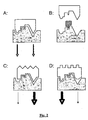
- the concept of functional selectivity is illustrated in Fig. 2 .
- peptide and aminolactam BSCIs are a special class of functionally selective sstr2 agonists allows compounds with BSCI activity to be identified without any pre-existing structural information (that is, without knowledge of the pharmacophores common to previously disclosed families of BSCI compounds).
- Such compounds may be identified according to the method of the invention, for example as follows.
- a first step compounds are screened for interaction with the sstr2 receptor.
- BSCIs are distinguished from conventional sstr2 agonists by the ability to inhibit chemokine-induced leukocyte migration with higher potency than its sstr2 agonist activity against conventional targets (such as suppression or growth hormone release).
- structural motifs may be identified which define new classes of BSCIs structurally unrelated to those previously disclosed.
- such a step would involve comparing structural elements among the compounds newly identified as BSCIs according to the method of the present invention, such that recurring structural elements are likely to correspond to motifs required to confer BSCI activity.
- the importance of such motifs can then be verified experimentally, for example by synthesising a range of molecules with related structures, to demonstrate that the presence of the motif is associated with the presence of BSCI activity.
- the method of the invention may be used to define whole classes of BSCI compounds (members of each class being related in respect of their structure to one another), even if only a single member of the class were originally identified through screening for interactions with sstr2.
- BSCI compounds identified by the method according to the present invention would act as the structural lead for the synthesis and characterisation of a family of novel, structurally related BSCIs.
- structural derivatives of the initial hit identified by the method of the invention are not directly identified through the application of the method of the invention, nevertheless the key step in their identification depended on the method of the invention, and consequently the indirect identification of a family of related BSCIs in this way is envisaged according to this aspect of the invention.
- the elements of the library may be individual compounds (or at least substantially pure compounds, where the target compound represents at least 25% of the material present, with no other compound present at higher levels), or else the elements of the library may be mixtures of compounds. Where the elements are mixtures of compounds, the components of the mixture may be known or predicted (as in many combinatorial libraries) or unknown (for example, in natural product isolates).
- the particular compound from the mixture which is responsible for the interaction with sstr2 will be isolated and identified prior to application of the second step (assessment of the effect of the compound on chemokine-induced leukocyte migration). If such an isolation step were not included in the method, then the method could not distinguish the case where a single compound in the mixture had BSCI activity (as desired) from the case where one compound in the mixture had conventional sstr2 agonist activity and a second unrelated compound inhibited leukocyte migration by a mechanism unrelated to BSCI activity.
- somatostatin-14 a conventional sstr2 agonist but not a BSCI
- sodium azide a cellular toxin which blocks cell migration but is not a BSCI
- this mixture would show a strong interaction with sstr2, and (depending on the relative concentration of azide present) inhibit chemokine-induced leukocyte migration with a higher potency than predicted from the affinity at sstr2.
- Such a mixture would be incorrectly identified as a BSCI.
- the component of the mixture responsible for the interaction with sstr2 in the case of this example, the somatostatin
- the method would correctly identify the mixture as lacking BSCI activity.
- the steps of the method of the invention could be applied in any order (for example, it would be possible in principle to determine the potency of the compound(s) under study as inhibitors of chemokine-induced migration and subsequently determine the affinity of the interaction (if any) of the compound with sstr2) such a method lacks the benefits of the preferred aspect of the present invention.
- random libraries could not be screened using the functional assay (due to the presence of toxic and insoluble compounds, as well as due to the resource implications of such a screen).
- screening for interaction with sstr2 will be performed as the first step, followed by a functional assay for inhibition of chemokine-induced leukocyte migration.
- This order of the steps reflects the optimal use of available resources, since the screen to assess interaction with sstr2 (an example of a molecular screen) requires considerably less resources per compound screened than the determination of activity against chemokine-induced leukocyte migration (an example of a functional screen).
- Application of the method of the invention is envisaged to include virtual screening as well as practical or physical screening.
- some (or all) of the information needed to identify a compound as a candidate BSCI according to the method of this invention may already be available.
- a library of compounds may already have been screened for interaction with sstr2 prior to the present disclosure, and the results be stored (for instance, on a computer hard drive).
- a subset of compounds from the library may.be selected and then tested for potency as inhibitors of the chemokine-induced migration in leukocytes and identified, according to the method of the invention, as candidate BSCIs.
- steps of the invention may be performed in any order (i.e. not necessarily in the preferred order noted herein).
- the sstr2 receptor encoded by the sstr2 gene, exists in at least two different variants, resulting from alternative splicing ( Olias et al. (2004) J. Neurochem. 89:1057-91 and the references therein) designated sstr2A and sstr2B ( Fig. 3 ).
- the spliced mRNA encoding sstr2A has an additional exon, which is skipped in the sstr2B transcript. This exon includes a stop codon, and as a result the sstr2A and sstr2B proteins differ in amino acid sequence only in the short C-terminal cytoplasmic tail.
- sstr2A All cell lines which have been tested to date that are sensitive to BSCIs express either sstr2A only or both sstr2A and sstr2B. Furthermore, we know that ectopic over-expression of sstr2A confers sensitivity to BSCIs in resistant cell lines (see Example 5 below). As a result, a preferred embodiment of the present invention employs data from cell lines expressing sstr2A (either alone or in combination with sstr2B). Such cell lines may naturally express sstr2, or may have been engineered (by methods well known in the art) to express sstr2.
- the novelty and inventive step of the present invention does not lie in the discovery that ligands acting through somatostatin receptors can have clinically useful anti-inflammatory effects (a discovery which would teach an invention with only a single step, namely to screen for interactions with sstr2 to identify potentially useful anti-inflammatory agents). Instead, the invention relates to the unexpected finding that some (and in all likelihood a very small proportion) of all agonists at the sstr2 receptor have anti-inflammatory activity substantially in place of classical somatostatin-like activity (such as suppression of Growth Hormone secretion).
- a ligand When a ligand binds to a receptor, there are multiple non-covalent bonding interactions between the ligand molecule and the receptor protein (including, but not limited to, Van der Waal's forces, hydrogen bonding, dipole interactions and salt bridges; see Fig. 2 ). These interactions are responsible for both the affinity of the interaction between ligand and receptor (and hence the selectivity of binding to target receptor(s) as opposed to other proteins) and also any signalling response to ligand binding. For the natural ligand, these interactions result in changes in the conformation of the receptor protein (the lowest energy conformation of the receptor:ligand complex is markedly different from that of the receptor and the ligand when separated).
- This conformational change transduces the signal from ligand binding to the outside of the cell into intracellular signalling cascades.
- the transduction may be direct (as in the case of receptors with endogenous kinase activity) or indirect (as in the case of G-protein coupled receptors, such as sstr2) where the conformational change promotes the association of one or more further proteins that in turn transduce the signal.
- Any agent that binds to the receptor and replicates the conformational change in the receptor seen with the natural ligand will be an agonist at the receptor ( Fig. 2A ).
- Any agent that binds to the receptor without inducing those changes will be an antagonist (assuming it blocks the binding of the natural ligand; Fig. 2B ).
- the agent may bind and induce a very different set of conformational changes that cause a qualitative, rather than quantitative, change in the nature of the signal which is subsequently transduced ( Fig. 2C & D) . It is this third, unusual, scenario which underpins the pharmacological phenomenon of functional selectivity (and, to some extent, of superagonists and inverse agonists).
- the present invention consists of two or more steps, each of which in isolation was a process known in the art.
- the first step has been used on a number of occasions for the purpose of locating agents that interact with somatostatin receptors either to replicate the known effects of the natural ligand or to block the known effects of the natural ligand.
- we and others have disclosed the use of a functional assay of chemokine-induced leukocyte migration for the purpose of characterising agents for BSCI activity.
- a good analogy of this inventive process is the composition of a new peptide: peptides are (almost all) composed of the same amino acid building blocks, linked in the same ways.
- peptides are (almost all) composed of the same amino acid building blocks, linked in the same ways.
- identification of a particular combination (a new peptide sequence) that has a particular function is considered inventive.
- receptors at which BSCI could have acted even if the search were restricted to those known to be able to mediate anti-inflammatory activity in vivo
- the present invention overcomes that impractical search for useful combinations, by providing a method for identifying BSCIs from a random library which is unexpectedly and particularly superior to many other combinations that were ab initio equally plausible.
- sstr2 in other species, including, but not limited to mouse, rat, dog and primates, as well as in non-mammalian species such as birds. If a non-human homolog of sstr2 is used for the purpose of identifying compounds according to the present invention which are intended for use in man (for example as anti-inflammatory medicaments) then an additional step may be required in which the agent identified using the non-human receptor is subsequently checked for functional selectivity at the human receptor.
- BSCI activity in a human system is the desired outcome of the screening exercise, then the methods of the invention should be applied to human sstr2.
- desired outcome is BSCI activity in a non-human system (for example, as a veterinary medicament) then it would be most appropriate to use the sstr2 analog from one or more of the target species.
- the method of the invention could be applied using incomplete fragments of the receptor, provided that the fragment of the receptor retains the ability to bind to somatostatin or another ligand of the full length receptor.
- functional fragments will contain the majority of the protein sequence, but parts that are not involved in ligand binding may be deleted (for example, to improve expression or stability) without affecting the application of the present invention.
- binding of the test agent to the receptor could be determined indirectly (through competition for binding with another ligand for the receptor, which had previously been labelled) or directly (where the test agent itself bears the label).
- the scope of the present invention is in no way intended to be limited by the methodology employed to detect the interaction of the test agent with the receptor.
- the functional assay used to detect the BSCI activity of the test agents could be performed in vitro (for example using a Transwell RTM migration assay) or in vivo (for example using intraperitoneal injection of a chemokine, followed by assessment of leukocyte recruitment in response).
- surrogate markers of leukocyte recruitment both in vitro and in vivo
- leukocytes are known to express the cytokine TNF-alpha.
- measuring levels of TNF-alpha in vitro or in vivo represents an alternative method for assessing leukocyte recruitment, and therefore of estimating BSCI activity.
- the scope of the present invention is in no way intended to be limited by the methodology employed to detect BSCI activity associated with a particular test compound.
- the functional assay used to detect classical sstr2 agonist activity of the test agents could be performed in vitro (for example by measuring GH release from pituitary cells) or in vivo (for example by measuring GH levels in serum).
- surrogate markers to estimate classical sstr2 agonist activity.
- GH regulates the level of insulin-like growth factor I (IGF-I) such that IGF-I levels may be measured as an indicator of GH levels, and therefore as an estimate of classical sstr2 agonist activity.
- IGF-I insulin-like growth factor I
- the scope of the present invention is in no way intended to be limited by the methodology employed to detect classical sstr2 agonist activity associated with a particular test compound.
- an additional step may be added to the method of the invention, to allow the identification of novel structural classes of "BSCI-type” sstr2 agonists, or “somatotaxins” based on the presence of one or more structural features of the compounds selected during the prior steps of the method of the invention. Identifying such structural motifs will allow, through application of the method of the invention, a much wider array of "BSCI-type” sstr2 agonists or “somatotaxins” than simply those compounds whose properties were probed either experimentally or theoretically in order to identify leads from among a library (whether random or composed of selected candidates).
- sstr2 For example, following screening of a random library for binding to sstr2 (the first step of the present invention), followed by determination of the inhibition of chemokine-induced leukocyte migration (a second step) and optionally determination of the potency against "classical" sstr2 targets, several new compounds may be selected according to the method of the invention. Two or more of these selected compounds may share a common structural motif, such as the presence of 3-substituted cis-decalin ring system.
- the method of the invention may comprise a minimum of two steps (determination of interaction with sstr2, followed by a functional assay for BSCI activity).
- a third step may be added (a functional assay for "classical" sstr2 agonist activity).
- the advantage of this third step is that it identifies a sub-group within the sstr2-directed BSCIs which have greater potency for the inhibition of leukocyte migration than they have potency as "classical" sstr2 agonists (that is, it identifies the "somatotaxin" subclass).
- a final step may be added (defining a structural motif associated with BSCI or somatotaxin activity), whether or not the optional third step had been applied previously.
- BSCI broad-spectrum chemokine inhibitor
- BSCI broad-spectrum chemokine inhibitor
- chemokines that normally signal through different receptors to induce migration, while having little or no impact on cell migration induced by non-chemokine chemoattractants. It is evident that this is an operational definition, and different compounds or agents may be BSCIs as a result of entirely different molecular mechanisms. The present invention, however, is concerned only with the identification of BSCIs which act through signalling at sstr2, or related receptors, identified herein as an important and extensively studied sub-category of BSCIs.
- BSCI type sstr2 agonist activity refers to the effect of certain sstr2 agonists on chemokine-induced cell migration in vitro or in vivo, as well as related immunological changes in vivo, such as re-balancing of T helper (CD4+) cell cytokine secretion profiles.
- Agents with "BSCI type sstr2 agonist activity” are also termed “somatotaxins” herein, and "BSCI type sstr2 activity” is therefore also termed “somatotaxin activity”.
- classical sstr2 agonist activity refers to the constellation of cellular responses which are well known to occur, possibly in different cell types, when cells expressing sstr2 at sufficient levels are exposed to any of the known sstr2 agonist compounds, including the natural ligand somatostatin.
- classical sstr2 agonist activity are the suppression of GH release by cells of the pituitary gland, and suppression of insulin release by cells of the pancreas ( Olias et al. (2004) J. Neurochem. 89:1057 ).
- sstr2 refers to the type 2 somatostatin receptor, in humans encoded by the sstr2 gene (HGNC ID: 11331; full gene sequence shown in SEQ ID NO: 1) on human chromosome 17q24 and encoding the amino acid sequence set forth in SEQ ID NO: 2 in the Sequence Listing below.
- sstr2 is intended to encompass the products of any alternatively spliced or otherwise differentially processed mRNA derived from the transcription of the gene locus shown in SEQ ID NO: 1.
- sstr2 encompasses either or both of the sstr2a and sstr2b proteins derived from alternative splicing of the sstr2 mRNA at the single intron located in the protein coding frame. Analogs and homologs in other species are also encompassed by the term, unless to do so would be nonsense in a particular context.
- somatostatin receptor refers to any receptor (whether presently known or not) to which somatostatin binds with high affinity (typically 1 ⁇ M or less). For the avoidance of doubt this includes sstr1, sstr2, sstr3, sstr4 and sstr5. Analogs and homologs in other species are also encompassed by the term, unless to do so would be nonsense in a particular context.
- somatostatin receptor additionally may encompass a polypeptide having an amino acid sequence which has at least 50% identity, for example at least 55%, 60%, 65%, 70%, 75%, 80%, 85%, 90%, 95% identity, or at least 96%, 97%, 98% or even 99% identity with the amino acid sequence of human sstr2 (as provided above.)
- the polypeptide preferably has somatostatin receptor activity as defined above.
- Sequence identity between amino acid sequences can be determined by comparing an alignment of the sequences. When an equivalent position in the compared sequences is occupied by the same amino acid, then the molecules are identical at that position. Scoring an alignment as a percentage of identity is a function of the number of identical amino acids or bases at positions shared by the compared sequences. When comparing sequences, optimal alignments may require gaps to be introduced into one or more of the sequences to take into consideration possible insertions and deletions in the sequences. Sequence comparison methods may employ gap penalties so that, for the same number of identical molecules in sequences being compared, a sequence alignment with as few gaps as possible, reflecting higher relatedness between the two compared sequences, will achieve a higher score than one with many gaps. Calculation of maximum percent identity involves the production of an optimal alignment, taking into consideration gap penalties.
- Suitable computer programs for carrying out sequence comparisons are widely available in the commercial and public sector. Examples include MatGat ( Campanella et al., 2003, BMC Bioinformatics 4: 29; program available from http://bitincka.com/ledion/matgat ), Gap ( Needleman & Wunsch, 1970, J. Mol. Biol. 48: 443-453 ), FASTA ( Altschul et al., 1990, J. Mol. Biol.
- sequence comparisons may be undertaken using the "needle" method of the EMBOSS Pairwise Alignment Algorithms, which determines an optimum alignment (including gaps) of two sequences when considered over their entire length and provides a percentage identity score.
- Default parameters for amino acid sequence comparisons (“Protein Molecule” option) may be Gap Extend penalty: 0.5, Gap Open penalty: 10.0, Matrix: Blosum 62.
- Default parameters for nucleotide sequence comparisons (“DNA Molecule” option) may be Gap Extend penalty: 0.5, Gap Open penalty: 10.0, Matrix: DNAfull.
- somatostatin refers to any of the products of the gene encoding somatostatin, in human encoded by the sst gene (HGNC ID: 11329) on chromosome 3q28, including fragments generated by regulated proteolysis of the gene product. Unless otherwise qualified, the term somatostatin (or sst) is intended to encompass any of the fragments generated by proteolysis to which a biological function has been assigned, including (but not limited to) sst-14 and sst-28. Analogs and homologs in other species are also encompassed by the term, unless to do so would be nonsense in a particular context.
- leukocyte refers to any or all of white blood cell populations found in blood, as well as the precursors of these cells in bone marrow or secondary lymphoid organs such as spleen, and the progeny of these cells found in tissues, such as osteoclasts, Kupffer cells, microglia, mast cells, dendritic cells and so forth.
- leukocytes include monocytes, lymphocytes (both B lymphocytes and T lymphocytes, including killer T cells, helper T cells, regulatory T cells and Natural Killer cells) and granulocytes (neutrophils, basophils and eosinophils).
- potency is used to describe the concentration of a particular substance that is required to have a particular effect. Typically potencies are quoted as the concentration of the compound required to inhibit the end-point under study by 50% (termed the ED50 or IC50). Hence, an ED50 or IC50 at a lower concentration represents a compound with a higher potency. Note that potency is entirely distinct from “power” (see below), which represents the maximal effect of the compound on the end-point under study at any concentration tested.
- Compounds may have high potency but low power (such as somatostatin acting on chemokine-induced migration with an ED50 of 0.05nM), but only inhibiting migration by 40% even at very high concentrations) or low potency and high power (such as an agent with an ED50 of 10 ⁇ M but which inhibits the end-point by 100% at concentrations above 100 ⁇ M).
- high potency but low power such as somatostatin acting on chemokine-induced migration with an ED50 of 0.05nM
- low potency and high power such as an agent with an ED50 of 10 ⁇ M but which inhibits the end-point by 100% at concentrations above 100 ⁇ M.
- power when applied.to a pharmacology assay, is used to describe the maximal effect of a particular substance on the end-point under study that can be obtained by selecting the optimal concentration of that agent in that assay.
- the optimal concentration is typically the highest concentration tested, although in some instances (for example, where a bell-shaped dose response is commonly observed, such as in the chemotaxis-response to chemokines) a lower concentration may have the maximal effect on the end-point under study.
- power is unrelated to potency, and a compound with low potency may still have high power and vice versa.
- compositions comprising as active ingredient a compound
- this terminology is intended to cover both compositions in which other active ingredients may be present and also compositions which consist only of one active ingredient as defined.
- Fig. 1 shows NR58-3.14.3 ("A") which is a cyclic retroinverso analog of a sequence derived from Peptide 3 (not shown).
- the tripeptide motif WxQ was identified as the key pharmacophore, and tripeptides such as WVQ ("B") have BSCI activity (albeit at low potency).
- Both Yohimban-16-amide (“C”) and NR58,4 (“D”) were identified as structural analogs of the WxQ tripeptide.
- Lactams, such as BN83253 (“E”) were then identified as stable analogs of imides such as NR58,4. The introduction of 2,2-disubstitution, as in BN83250 (“F”), was later found to increase potency.
- Valerolactams such as (S)-3-(2'2'-dimethylpropionoylamino)-tetrahydropyridin-2-one (“G”), have similar activity to caprolactams.
- panel A shows the natural ligand interacts with the receptor and generates multiple responses (arrows), which can be interpreted as either intracellular signals or functional consequences.
- panel B an antagonist binds to the receptor and prevents the natural ligand from binding, but does not engage with the parts of the receptor necessary to induce active signalling.
- panel C a functionally selective agonist binds to the receptor in such a way as to preferentially activate one response (thick arrow) over the other (thin arrow).
- panel D a different agonist with the opposite functional selectivity is illustrated.
- Transcript A in Transcript A (“T#1”), the intron is not spliced out, and a translation stop codon results in a truncated protein designated sstr2a.
- Transcript B in Transcript B (“T#2”) the intron is spliced out, and translation proceeds into the second exon and an alternative translation stop coding resulting in the sstr2b protein which differs from sstr2a only in the short C-terminal tail.
- the positions of the PCR primers used to unambiguously identify sstr2 transcripts are also shown as (a) for an sstr2 primer set and (b) for an sstr2A primer set.
- the sizes of the resulting amplicons from the two different transcripts are 398 bp (T#1, sstr2 primer set), 87 bp (T#1, sstr2A primer set), 57 bp (T#2, sstr2 primer set), and no band (T#2 sstr2A primer set).
- BN83253 inhibits MCP-1 induced cell migration in a dose-dependent manner.
- concentration of the antagonist is increased (lighter grey, larger symbols) the BSCI activity of BN832653 is progressively lost.
- valerolactam inhibits MCP-1 induced cell migration in a dose-dependent manner.
- concentration of the antagonist is increased (lighter grey, larger symbols) the BSCI activity of BN832653 is progressively lost.
- this valerolactam BSCI is 20-50 fold more potent than BIM 83253 and as a result, higher concentrations of the competitive antagonist (BIM 23627) are required to abolish its BSCI activity than from NIM83253 (compare this graph with Fig. 4 ).
- the BSCI inhibited TNF-alpha production in response to endotoxin in a dose-dependent manner (solid line, square symbols).
- the apparent potency of the BSCI was reduced by co-administration of BIM 23627 (dashed line, triangle symbols).
- Fig. 8 dexamethasone inhibited TNF-alpha production in response to endotoxin in a dose-dependent manner (solid line, square symbols).
- Co-administration of BIM 23627 had no effect on the apparent potency of dexamethasone;
- Fig. 9 for both cell types two different primer sets were used (see Fig. 3 ), one which produces an amplicon ("A") only from the sstr2a transcript, the other which generates different sized amplicons ("A*" and "B") from sstr2a and sstr2b (designated “sstr2" here):
- M1 is 398 bp
- M2 is 87 bp
- M3 is 57 bp.
- the data confirm the expression of sstr2a in THP-1 cells, and provide no evidence for the presence of sstr2b.
- Fig. 12 values are triplicate determinations ( ⁇ SD) at each drug concentration.
- Competition with an excess of unlabelled BN83250 (“A”, 10nM) 3H-BN83250) is shown as a control for non-specific binding, and determines the upper dashed line indicating specific binding.
- a negative control (“B”, excess cold) is provided and determines the lower dashed line indicating non-specific binding, while the effect of the sstr2 antagonist BIM 23627 (“C"; 100 ⁇ M) on BN83250 binding is shown for comparison.
- Fig. 13 "*" in the polylinker denotes that there is an ATG upstream of the XbaI site. Note the "Ampicillin” and “Neomycin” resistance-encoding reading frames, used to select for the presence of the plasmid in bacteria and Jurkat cells respectively.
- the cDNA insert is expressed under the CMV promoter ("P CMV") in the eukaryotic system, and carries a canonical polyadenylation sequence ("BGH pA").
- (A) shows that BN83250 inhibits SDF-1 ⁇ induced migration of Jurkat 3DB (albeit with a lower potency than is observed with THP-1 cells), but has little or no effect on the SDF-1 ⁇ induced migration of the parental Jurkat T cell line.
- the level of cell surface staining for sstr2A, determined by flow cytometry is shown in frequency histograms (B) to (D).
- Fig. 16 compounds with no effect on migration are plotted with a potency of 10 ⁇ M so that they appear on the graph.
- BN83250 open triangle
- (S)-3-(2'2'-dimethylpropionoylamino)-tetrahydropyridin-2-one open square
- somatostatin open diamond
- L-779,976 open circle
- a line of identity where ED50 and Ka are equal is shown to emphasise that all known "BSCI-type" sstr2 agonists lie in the lower right, while all known “classical” sstr2 agonists lie in the upper left.
- BSCIs shown in oval B are type 2 somatostatin receptor (sstr2) agonists (oval A).
- sstr2 agonists not all.sstr2 agonists have BSCI activity, and even among those which do the optimal subset are those which have higher potency as inhibitors of leukocyte migration than they do on "classical" targets of somatostatin, such as GH or glucose handling.
- Region 1 yohimban-16-amide or M3 chemokine binding protein
- Region 2 Peptide 3, NR58-3.14.3, BN83253, BN83250 or (S)-3-(2'2'dimethylpropionylamino)-tetrahydropyridin-2-one
- Region 3 somatostatin or L779,976
- Region 4 BIM23A1089 or BIM2-3120.
- Example 1 Sstr2 antagonists block BSCI activity in vitro
- the human myelomonocytic cell line THP-1 was used in these experiments, although similar results have also been obtained with human peripheral blood monocytes.
- Leukocyte migration was measured using the 96-well format micro Transwell RTM assay system from Neuroprobe (Gaithersburg, MD, USA). In principle, this assay consists of two chambers separated by a porous membrane. The chemoattractant is placed in the lower compartment and the cells are placed in the upper compartment. After incubation for a period at 37°C the cells move towards the chemoattractant, and the number of cells in the lower compartment is proportional to the chemoattractant activity (relative to a series of controls).
- the Transwell RTM migration systems were manufactured by Neuroprobe, Gaithersburg, MD, USA.
- Geys' Balanced Salt Solution was purchased from Sigma (Sigma G-9779).
- Fatty acid-free BSA was purchased from Sigma (Sigma A-8806).
- MTT i.e. 3-(4,5-dimethylthiazol-2-yl)-2,5-diphenyltetrazolium bromide
- RPMI-1640 without phenol red was purchased from Sigma (Sigma R-8755).
- the THP-1 cell line (European Cell culture Collection) were used as the leukocyte cell population.
- the cell suspension to be placed in the upper compartment was prepared.
- the THP-1 cells were pelleted by centrifugation (770 x g; 4 mins) and washed with Geys Balanced Salt Solution with 1mg/ml BSA (GBSS + BSA). This wash was then repeated, and the cells re-pelleted before being resuspended in a small volume of GBSS + BSA for counting, for example using a standard haemocytometer.
- the volume of GBSS + BSA was then adjusted depending on the number of cells present so that the cells were at final density of 4.45 x 10 6 cells per ml of GBSS + BSA. This ensured that there were 100,000 THP-1 cells in each 25 ⁇ l of the solution to be placed in the upper chamber of the plate.
- the suspension of THP-1 cells at 4.45 x 10 6 cells/ml was divided into three pots.
- the BSCI was added at an appropriate final concentration, in an appropriate vehicle (for example (S)- 3-(2',2'-dimethylpropanoylamino)-tetrahydropyridin-2-one was added at 1nM from a stock solution in GBSS).
- the BSCI was added at the same concentration as in the first pot, but additionally the sstr2 antagonist was also added (for example BIM 23454 [Tulipano et al.
- BIM 23627 were added at 66nM final concentration from a stock solution in GBSS).
- GBSS + BSA plus vehicle was added so that the volumes in three pots are equal, acting as a control.
- MCP-1 was diluted in GBSS + BSA to give a final concentration of 25 ng/ml (after all additions). Note that, as recommended by Frow et al (Med. Res. Rev. 24:276-98 ) this is the concentration of MCP-1 which induces maximal migration in this system. This solution was divided into three pots, as for the cell suspension.
- the BSCI was added to the same final concentration as was added to the cell suspension, in the second pot the BSCI and the sstr2 antagonist were both added at the same concentration as previously added to the cell suspension, while to the remaining pot GBSS + BSA plus vehicle as appropriate was added so that the volumes in the three pots were equal. Note that the volume of liquid that needs to be added to make the addition of the BSCI and the sstr2 antagonist compounds needs to be taken into account, when establishing the final concentration of MCP-1 in the solution for the lower compartment and the final concentration of cells in the upper compartment.
- the migration chamber was assembled. 29 ⁇ l of the appropriate chemoattractant solution was placed into the lower well of the chamber. Assays were performed with at least triplicate determinations of each condition. Once all the lower chambers were filled, the porous membrane was applied to the chamber in accordance with the manufacturer's instructions. Finally, 25 ⁇ l of the appropriate cell solution was applied to each upper chamber. A plastic lid was placed over the entire apparatus to prevent evaporation.
- the assembled chamber was incubated at 37 °C, 5% CO 2 , for 2 hours.
- a suspension of cells in GBSS + BSA was also incubated under identical conditions in a tube: these cells were used to construct a standard curve for determining the number of cells that migrated to the lower chamber under each condition.
- the liquid cell suspension was gently removed from the upper chamber, 20 ⁇ l of ice-cold 20mM EDTA in PBS was added to the upper chamber, and the apparatus was incubated at 4°C for 15 mins. This procedure caused any cells adhering to the underside of the membrane to fall into the lower chamber.
- the filter was carefully flushed with GBSS + BSA to wash off the EDTA, and then the filter was removed.
- the number of cells migrated into the lower chamber under each condition can then be determined by a number of methods, including direct counting, labelling with fluorescent or radioactive markers or through the use of a vital dye.
- a vital dye MTT. 3 ⁇ l of stock MTT solution were added to each well, and then the plate was incubated at 37 °C for 1-2 hours during which time dehydrogenase enzymes within the cells converted the soluble MTT to an insoluble blue formazan product that could be quantified spectrophotometrically.
- an 8-point standard curve was set up. Starting with the number of cells added to each upper chamber (100,000) and going down in 2-fold serial dilutions in GBSS + BSA, the cells were added to a plate in 25 ⁇ l, with 3 ⁇ l of MTT stock solution added. The standard curve plate was incubated along side the migration plate. At the end of this incubation, the liquid was carefully removed from the lower chambers, taking care not to disturb the precipitated formazan product. After allowing to air dry briefly, 20 ⁇ l of DMSO was added to each lower chamber to solubilise the blue dye, and absorbance at 595nm was determined using a 96-well plate reader. The absorbance of each well was then interpolated to the standard curve to estimate the number of cells in each lower chamber.
- the MCP-1 stimulated migration was determined by subtracting the average number of cells that reached the lower compartment in wells where no MCP-1 was added from the average number of cells that reached the lower compartment where MCP-1 was present at 25ng/ml.
- the impact of the BSCI was calculated by comparing the MCP-1-induced migration that occurred in the presence or absence of various concentrations of the BSCI. Typically, the inhibition of migration was expressed as a percentage of the total MCP-1 induced migration that was blocked by the presence of the BSCI. For most compounds, a dose-response graph was constructed by determining the inhibition of MCP-1 induced migration that occurs at a range of different compound concentrations (typically ranging from 1nM to 1 ⁇ M or higher in the case of poorly active compounds). The inhibitory activity of each compound was then expressed as the concentration of compound required to reduce the MCP-1-induced migration by 50% (the ED 50 concentration).
- the impact of the sstr2 antagonist was calculated by comparing the MCP-1-induced migration occurring in the presence of the sstr2 antagonist and the BSCI with the MCP-1-induced migration occurring in the presence of the BSCI alone, at the same concentration of BSGI compound. If the sstr2 antagonist inhibited the BSCI activity of the BSCI compound then more migration was expected to have occurred in the wells treated with both sstr2 antagonist and BSCI than in the wells receiving BSCI alone. Results: MCP-1 (25ng/ml) induced substantial migration of the THP-1 cells (25,000 to 40,000 more cells migrate into the lower chamber in the presence of MCP-1 than in the control wells with no MCP-1).
- Fig. 4 the inhibition of MCP-1 induced THP-1 cell migration in response to increasing concentrations of the BSCI BN83253 (N-oleoyl-3-aminocaprolactam; Fox et al. (2005) J. Med. Chem. 48:867-74 ) is shown (small squares).
- Fig. 5 the inhibition of MCP-1 induced THP-1 cell migration in response to increasing concentrations of the valerolactam BSCI (S)-3-(2'2'-dimethylpropionylamino)-tetrahydropyridin-2-one is shown (small squares).
- BIM23627 At lower doses of BIM23627 (for example, at 6nM, which is close to the Ki for this compound acting at this receptor; mid-size diamond symbols in Fig. 4 and Fig. 5 ), the BSCI effect was inhibited at lower doses of BSCI, but at higher doses THP-1 induced cell migration was still inhibited. This is consistent with a competition between the BSCI and the sstr2 antagonist for binding to the same site. At low BSCI concentrations, the sstr2 antagonist binds, and no inhibition of migration is seen. As the BSCI concentration rises, increasingly sstr2 is occupied by BSCI and not sstr2 antagonist and the BSCI activity manifests itself.
- BIM23627 At very low doses of BIM23627 (for example, at 0.06nM, which is approximately 100-fold lower than the Ki for this compound acting at sstr2; smaller diamonds in Fig. 4 and Fig. 5 ), the BSCI effect is seen at all concentrations of BSCI compound, although a small degree of reversal is seen at the lowest BSCI concentrations, again consistent with the competition between these agents for binding to the same site.
- BSCI activity is mediated through sstr2 (or a closely related receptor which is inhibited by both of the antagonists used) for a wide range of BSCI compounds of very different structural classes, ranging from peptides to aminocaprolactams and third generation aminovalerolactams.
- BIM23787 (a gift from Ipsen, Paris, France) which is an antagonist selective for sstr3 and sstr5, causes little ( ⁇ 10%) reversal of BSCI activity even at concentrations of antagonist >10-fold above the Ki for the target receptor.
- Example 2 Sstr2 antagonists block BSCI activity in vivo
- BSCI activity in vitro is mediated through sstr2 (or a closely related receptor which is inhibited by both BIM 23627 and BIM 23454).
- BIM 23627 has been shown to be active in vivo, and is able to block classical sstr2 mediated signals, at least for a short time following acute high dose administration (Tulipano et al. (2002) 143: 1218-24). Consequently, provided that we adopted a model of acute inflammation, it would be possible to determine if the anti-inflammatory effects of BSCIs were inhibited by concomitant sstr2 blockade.
- mice CD1 strain; adult males; 6 per group
- BSCI in an appropriate vehicle
- vehicle alone by an appropriate route.
- BN83250 see Fig. 1
- (S)-3-(2'2'-dimethylpropionylamino)-tetrahydropyridin-2-one was dosed by oral gavage.
- mice at each BSCI concentration received BIM 23627 at 4mg/animal (120mg/kg) by sub-cutaneous injection (a treatment condition known to suppress classical sstr2-mediated signalling, such as GH release, in rats; Tulipano et al. (2002) 143: 1218-24).
- sub-cutaneous injection a treatment condition known to suppress classical sstr2-mediated signalling, such as GH release, in rats; Tulipano et al. (2002) 143: 1218-24.
- the inflammatory challenge was elicited by intraperitoneal injection of 750 ⁇ g of LPS (Sigma; L4130 lot#024K4077; 900,000 EU/mg).
- Serum was prepared by conventional methods, and the level of TNF-alpha in serum was measured using an ELISA (R&D Systems; Murine Quantikine code# MTA00) performed in accordance with the manufacturer's instructions.
- Example 3 Sstr2 expression is correlated with BSCI sensitivity
- sstr2-specific antagonists demonstrate that BSCI activity depends on interaction with sstr2, or else to a different receptor (likely closely related to sstr2) that is also inhibited by the same antagonists.
- sstr2 as the molecular target for BSCIs, we have measured the levels of sstr2 by flow cytometry and by qualitative PCR in a range of different leukocyte types with differing sensitivity to BSCIs. A correlation between the presence of sstr2 and sensitivity to BSCIs further strengthens the conclusion that BSCI activity requires binding to, and activation of, sstr2.
- the resulting total leukocyte population was stained with a rabbit polyclonal anti human-sstr2 antibody (Sigma, Cat code S0694; 1 ⁇ g/ml) followed by a anti-rabbit secondary antibody labeled with FITC (Sigma F9887; 50 ⁇ g/ml) in parallel with a bank of monoclonal antibodies labeled with rPE against various leukocyte CD markers which could be used to unambiguously identify particular leukocyte subsets. After gating cell populations on the basis of their CD markers, the average level of sstr2 staining (with isotype control subtracted) was reported for triplicate determinations as mean ⁇ SEM. THP-1 and Jurkat cell lines in culture were also analysed using the same protocol, except that the cells were not treated with Erythrolyse.
- PCR was performed using the primer sets illustrated in Fig. 3 to distinguish the sstr2a and 2b transcripts.
- mRNA was prepared from THP-1 and Jurkat cells using the RNAqueous 4PCR kit (Ambion, Cat code #1914) in accordance with the manufacturer's instructions. The resulting mRNA preparations were then converted to cDNA using reverse transcriptase (RT), and the cDNA was then used to set up the following PCR reaction with sstr2 primers, dNTPs (Ambion), PCR buffer, and Taq polymerase in a total volume of 45 ⁇ l.
- RT reverse transcriptase
- the primer sequences were as follows: sstr2 forward 5' GCCAAGATGAAGACCATCAC 3' (SEQ ID NO: 3) and reverse 5' GATGAACCCTGTGTACCAAGC 3' (SEQ ID NO: 4).
- the PCR was performed using an Peltier PTC-200 thermal cycler in accordance with the manufacturer's instructions, using the following cycle times and conditions: 94°C for 2 min, followed by 30 cycles of 94°C, for 30 sec, 55°C for 30sec, 72°C for 1 min and finally 72°C for 10 min.
- the products were separated on a 2% agarose gel in the presence of ethidium bromide and visualised on a UV transilluminator (Stratagene Eagle Eye II cabinet).
- Panc-1 cells which are known to express sstr2 at high levels ( Li et al. (2004) J. Surg Res. 119:130-137 ), were used as the positive control.
- Reactions without reverse transcriptase were used as the negative control (ensuring false positive signals were not obtained as a result of genomic DNA contaminating the mRNA preparation).
- the primers were designed to span exon boundaries so that a genomic amplicon would be readily distinguished by size.
- Human peripheral blood leukocytes exhibit staining for sstr2 that is generally intermediate between the two cell lines.
- Granulocytes predominantly neutrophils
- monocytes express significant levels of sstr2, and both human peripheral blood leukocyte types are known to be sensitive to BSCIs.
- T lymphocytes (CD3+) express lower, but still detectable levels, which are likely similar on both CD4+ (helper) and CD8+ (killer) T cell populations, since the entire CD3+ population was homogeneously stained.
- sstr2 was not detected on the B lymphocyte population, a cell type that is insensitive to BSCIs (consistent with the lack of effect of BSCIs on antibody generation in response to a neoantigen in vivo).
- Table 1 Relative Levels of sstr2 Cell Surface Staining, Estimated by Flow Cytometry, in Various Leukocyte Populations.
- sstr2 The presence of mRNA for sstr2 was confirmed in THP-1 cells ( Fig. 9 ) and shown to be absent in Jurkat T cells by qualitative PCR. This confirms the expected specificity of the antibody reagent used in these studies. Furthermore, we have demonstrated that the majority of the sstr2 present in THP-1 cells is of the sstr2a isoform (based on the splicing pattern of the mRNA in these cells; Fig. 3 & 9 ). It is not known whether the antibody used for the flow cytometry experiments distinguishes between the sstr2a and sstr2b isoforms, but the results presented strongly suggest the antibody can detect the sstr2a isoform.
- [ 3 H]-BN83250 was synthesesized from (S,E)-3-(2',2'-dimethyldodec-4'-enoylamino)-caprolactam by catalytic hydrogenation using tritium gas over a palladium catalyst (CRB Ltd, Cleveland, UK), yielding the tritiated product at a concentration of 270 ⁇ M in ethanol with a specific activity of 220Ci/mmol.
- the (S,E)-3-(2',2'-dimethyldodec-4'-enoylamino)-caprolactam was prepared as follows: ( S,S )-3-amino-caprolactam hydro-pyrrolidine-5-carboxylate (10 mmol) and Na 2 CO 3 (30 mmol) in water (30 ml) were added to a solution of 2,2-dimethyl-dodec-4-enoyl chloride (10 mmol) in dichloromethane (30 ml) at ambient temperature and the reaction was stirred for 12 hours. The organic layer was then separated and the aqueous phase was extracted with additional dichloromethane (2 x 25 ml).
- [ 3 H]-BN83250 shows specific, competable binding to THP-1 cells under equilibrium conditions. Scatchard analysis of the binding is consistent with a single binding site present at 100,000 to 200,000 sites per cell, with an affinity of approximately 80nM ( Fig. 11 ). The specific binding of BN83250 to THP-1 cells is inhibited by 60-80% (depending on the experiment) by an excess (100 ⁇ M) of the sstr2 antagonist BN23627 ( Fig. 12 ).
- Example 5 Expression of sstr2 confers BSCI sensitivity on cell lines
- sstr2 in a leukocyte cell line, the Jurkat T cell line, which does not normally express sstr2.
- the level of expression achieved was determined by flow cytometry. Sensitivity of the stably transfected cell line to BSCIs was then determined, and compared with the parental Jurkat T cell line.
- Total mRNA was prepared from Panc-1 cells (a human pancreas cell line which is well known to express high levels of sstr2) using the RNAqueous 4PCR kit (Ambion, Cat code #1914) in accordance with the manufacturer's instructions. The mRNA was then reverse transcribed (using the RETROscript kit; Ambio) to yield a cDNA preparation.
- a full length cDNA of the sstr2 gene was then obtained by PCR (using a Peltier PTC-200 thermal cycler using the following cycle times and conditions: 94°C for 2 min, followed by 30 cycles of 94°C, for 30 sec, 55°C for 30sec, 72°C for 1 min and finally 72°C for 10 min), and isolated by preparative gel electrophoresis.
- the sequence of the sstr2 cDNA was confirmed by sequencing.
- the sstr2 cDNA was treated with EcoRI and Xhol to generate sticky ends, which allowed directional cloning into the polylinker of the plasmid pcDNA3.1+ (Invitrogen) followed by ligation (10 ⁇ l ligation reactions were run with 400 T4 DNA ligase (New England Biolabs) and the maximal amounts of DNA with an insert:plasmid ratio of 3:1 in ligase buffer incubated overnight at 13°C).
- the resulting vector (see Fig. 13 ) was used to transform XL-10 Ultracompetent cells (Stratagene) using standard techniques. Plasmid DNA was prepared using a MiniPrep kit (Wizard Plus SV Minipreps DNA purification System; Promega) in accordance with the manufacturer's instructions for transfection into Jurkat T cells.
- Jurkat T cells were grown in RPMI + 10% foetal calf serum (FCS), and subcultured by 1:3 dilution in fresh medium every 4 days.
- Jurkat T cells in logarithmic growth phase 48 hours after subculture were washed by centrifugation and resuspended in serum-free RPMI medium at 7.5 x 10 5 cells per ml.
- a mixture of DNA and transfection reagent (2 ⁇ g of DNA; 3 ⁇ l Fugene 6 transfection reagent; Roche) was then added and the cells were incubated at 37°C for 48 hours. The cells were then washed three times by centrifugation in RPMI + 10% FCS, before being suspended in fresh medium at 1 x 10 5 cells per ml.
- 68 ml of the resulting cell suspension was then plated out in a total of 226 wells in 96-well plates (Corning). After 48hrs, G418 (0.9mg/ml Active G418) was added to the medium to select for transfectants, and the cells were expanded by repeated subculture, keeping the populations from individual wells (which were considered clonal or oligoclonal expansions) separate. Once the cell populations had been expanded into 25cm 2 flask (approximately 5 x 10 6 cell in total), a small sample was removed and tested for expression of sstr2 by flow cytometry.
- sstr2 A number of individual cell lines were obtained in this way, which expressed significant levels of sstr2 on the cell surface, detected by flow cytometry using the human-sstr2 antibody (Sigma, S0694; see Example 3 for details of the flow cytometry protocol used).
- one line designated Jurkat-D3B
- the level of the SDF-1 ⁇ receptor CXCR4 was similar on Jurkat-D3B and the parental Jurkat T cell line. Furthermore, the Jurkat-D3B cells responded to SDF-1 ⁇ in a Transwell RTM chemotaxis assay (see Example 1 for the methodology employed) over a similar concentration range to the parental cell line. We conclude that the Jurkat T cells and the Jurkat-D3B cells exhibit identical chemokine-induced migration under the conditions of this experiment, and consequently are suitable for comparison of their sensitivity to BSCIs.
- BSCI BN83250 was then added at various concentrations between 0nM and 1000nM (each in triplicate) to both the upper and lower compartments (at the same concentration in each compartment, so as not to create a gradient of BSCI concentration).
- DMSO 1% final concentration was used as the vehicle, and was present in all wells at equal concentration.
- the parental Jurkat T cells which express low or undetectable levels of sstr2 ( Fig. 14 ) were virtually insensitive to BN83250 (the ED50 was considerably abovel ⁇ M, compared to an ED50 for the this BSCI of ⁇ 1nM on sensitive cells, such as the THP-1 cell line).
- the ED50 for BN83250 on Jurkat-D3B was approximately 10nM, representing more than 100-fold increase in BSCI sensitivity as a result of the ectopic expression of sstr2.
- Jurkat-D3B were also sensitive to inhibition with other, structurally distinct, BSCIs including the peptide NR58-3.14.3 and the valerolactam (S)-3-(2'2'-dimethylpriopionoylamino)-tetrahydropyridin-2-one, although in each case the potency was significantly lower than on THP-1 cells. This likely reflects the lower levels of sstr2 expression achieved in Jurkat-D3B compared with THP-1 cells ( Fig. 14 ). It is well known that potency of response to pharmacologic agents can correlate with the level of receptor expression (as a result of so-called "spare receptors"). Our data are consistent with the proposal that sensitivity to BSCI depends on the level of cell surface sstr2 expression.
- Example 6 Conventional sstr2 agonists do not possess BSCI activity in vitro
- Leukocyte migration assays were performed exactly as described in Example 1. Briefly, THP-1 cells were induced to migrate in response to 25ng/ml MCP-1 in the ChemoTxTM 96-well plate migration system (Neuroprobe Inc., Gaithersburg, MD). Various classical sstr2 agonists were added to different wells (in triplicate), at equal concentration in both the upper and lower compartments (exactly as in the experiments to demonstrate BSCI activity of acylaminolactams, described previously; Reckless & Grainger (1999) Biochem. J. 340:803-11 ; Fox et al. (2002) J. Med. Chem. 45:360-70 ; Fox et al. (2005) J. Med. Chem. 48:867-74 ). After 2 hours at 37°C, the number of cells migrated into the lower compartment is determined using the vital dye MTT and interpolation of a standard curve, all exactly as described in Example 1.
- sst14 only inhibits leukocyte migration at concentrations above the binding constant for sstr2 binding (approximately 0.05nM), whereas all the BSCIs tested to date inhibit leukocyte migration at concentrations below their binding affinity.
- BSCIs induce a more powerful signal (with respect to inhibiting leukocyte migration) than do classical sstr2 agonists, such as the natural ligand sst14.
- BSCIs need occupy only a tiny percentage of the cell surface receptors to maximally inhibit leukocyte migration, while conventional sstr2 agonists must occupy essentially all the receptors, and still do not achieve maximal inhibition.
- the maximum inhibition (“Max effect”) observed at the highest dose tested (1-10 ⁇ M) is also shown.
- the affinity of cortistatin at sstr2 has not been unambiguously reported.
- BIM23065 achieved 85% inhibition of cell migration at the highest concentration available to be tested (10 ⁇ M) so it is unclear whether this represents the maximum effect achievable.
- BIM23A387 is described in Pawlilcowsky et al. (2007) J. Physiol. Pharmacol. 58 :179-88, and BIM23120 is described in Ferrante et al.
- Agent Ka (sstr2) ED50 Max effect Sst-14 0.05nM 0.8nM 40-60% Sst-28 0.1nM 0.9nM 40-60% Cortistatin ? 75nM 40-60% BIM23065 3nM 3000nM 75%? BIM23032 109nM No effect No effect BIM23A108 0.05nM No effect No effect BIM23A387 0.2nM No effect No effect BIM23120 0.28nM No effect No effect No effect No effect
- BSCIs are a special class of sstr2 agonists, and that most compounds (including the natural ligands) are considerably less able to inhibit leukocyte migration (and hence exhibit anti-inflammatory activity in vivo) than those agents known to be BSCIs.
- the extent to which BSCIs differ from classical agonists is illustrated in Fig. 16 , which plots affinity at sstr2 versus ED50 for inhibition of chemokine-induced leukocyte migration.
- the BSCIs cluster together, and are markedly separated from the conventional agonists. It is, therefore, clearly possible to identify unambiguously new, structurally distinct families of BSCIs (which have no structural resemblance to any known BSCI) using this combination of tests.
- Example 7 BSCIs inhibit leukocyte migration more potently than other conventional sstr2 targets
- BSCIs are agonists at the sstr2 receptor, but not all sstr2 receptor agonists demonstrate BSCI activity.
- BSCIs possess potent sstr2-agonist like activity assessed by other functional assays do BSCIs possess potent sstr2-agonist like activity assessed by other functional assays?
- Glucose-sensitive sub-clones of the human Panc-1 a cell line derived from a pleiomorphic epithelioid carcinoma of the exocrine pancreas, were obtained essentially as described by Hamil et al. (2008) Biomed. Sci. Instrum. 44:441-6 . Briefly, Panc-1 cells were subcultured in 24 well plates, and the medium was supplemented with an additional 5% glucose. After 72 hrs, wells which showed the most marked changes towards the glucose-sensitive round phenotype were selected and expanded in normal medium.
- the resulting sub-lines were then tested for glucose sensitivity by preparing wells of a 96-well plate (5 x 10 4 cells per well) which were then exposed to cultured medium containing a range of glucose concentrations (low glucose DMEM, DMEM, DMEM + 1% glucose, DMEM ⁇ 2.5% glucose and DMEM + 5% glucose). After 24hrs incubation, the conditioned medium was collected and assayed for insulin secretion by ELISA (Linco; cat# EZHI-14K) in accordance with the manufacturer's instructions.
- Panc-2H4 which had the highest glucose sensitivity (insulin secretion increased 3.4 fold in 5% glucose compared to low glucose DMEM) and which was shown to express sstr2 by flow cytometry using the methods described in Example 3, we tested the ability of various sstr2. agonists to modulate glucose-dependent insulin secretion. Further 96 well plates were prepared using Panc-2H4 (5 x 10 4 cells per well) in DMEM. After 24hrs, the medium was switched to DMEM + 5% glucose containing various test agents at various concentrations (triplicate wells per condition). After a further 24hrs, the conditioned medium was harvested and the concentration of insulin was determined by ELISA as described above.
- a range of structurally distinct BSCIs including the peptides Peptide 3 and NR58-3.14.3, as well as the aminocaprolactams BN83250 and BN83470 and the valerolactam (S)-3-(2'2'-dimethylpropionoylamino)-tetrahydropridin-2-one inhibited GH release only at much higher concentrations (Table 3), and the maximal effect was smaller. None of these agents inhibited insulin secretion by Panc-2H4 even at the highest concentrations tested. However, as expected these agents potently inhibited the migration of THP-1 cells and rat peripheral blood leukocytes in response to chemokines (Table 3).
- the relative potency of these two categories of responses allows the sstr2 agonists to be functionally classified according to the method of the present invention: the first 7 agents are classified as “classical” sstr2 agonists and the last 5 agents are classified as "BSCI” sstr2 agonists.
- Valerolactam (3)-3-(2'2'-dimethylpropionoylamino)-tetrahydropyridin-2-one.
- BN83470 (S)-3-(admantane-1'-carbonylamino)-caprolactam.
- n.d. >1,000 ⁇ 10 n.d. >1,786 BIM23120 0.88 60 3.9 37 n.d. n.d >1,000 ⁇ 10 n.d. >256 L-779,976 2.9 55 17 40 n.d. n.d. 450 65 n.d.
- the groups of compounds used to illustrate here the two classes of sstr2 agonists are very distinct and readily distinguished (that is, all the members of each class are much more similar to each other than they are to any member of the other class, in terms of the functional responses they generate in several different assays). It is likely, however, that across all compound space there are agents that could be found which show "hybrid behaviour" - that is, they inhibit both GH/insulin secretion and chemokine-induced leukocyte migration with approximately equal potency and power. Such agents would not be readily assignable to either class on the basis of the methods provided here. As a result, we have provided a definition that unambiguously defines the members of each class, and excludes any such "hybrid behaviour" compounds from either category.
- Molecules with at least 2-fold higher potency (that is, the concentration required for half-maximal efficacy) in the GH or insulin secretion assay than in a chemokine-induced leukocyte migration assay are defined as "classical” sstr2 agonists.
- molecules with at least 2-fold higher potency or power in the chemokine-induced leukocyte migration assay than in the GH or insulin secretion assay i.e. a ratio less than 0.5 in the right hand columns of Table 3
- BSCI sstr2 agonists (somatotaxins) according to the method of the present invention.
- a compound which had ten-fold lower affinity at rat sstr2 than human sstr2 would be misclassified as a "BSCI" sstr2 agonist by the method of the invention if the agent was three-fold lower potency in the rat pituicyte GH suppression assay than in the human THP-1 chemokine-induced leukocyte migration assay (because, when corrected for the 10-fold difference in binding affinity at the receptor, the "classical” activity was actually higher than the "BSCI” activity). For this reason, the ratio of "classical” to "BSCI” activity in Table 3 is calculated separately for rat and human.
- Example 8 Identifying candidate BSCIs according to the method of the invention (1)
- L-779,976 is one of the earliest non-peptide sstr2-selective agonists to be described ( Rohrer et al. (1998) Science 282:737-40 ), and it was discovered through conventional screening, molecular design and medicinal chemistry approaches. It is loosely based around the key QFWK tetrapeptide (SEQ ID NO: 5) in the natural somatostatin ligand, and as a result exhibits classical sstr2 agonist properties (see Example 7).
- the QxWK (SEQ ID NO: 6) was also identified as a key motif in the earliest peptide BSCIs ( Fox et al. (2002) J. Med. Chem. 45:360-70 ), although the non-peptide BSCI sstr2 agonists described to date model the QxW end (see Fig. 1 ), whereas the classical sstr2 agonists model the WK end. This leads to the proposition that variants of L-779,976 fused with glutamine mimetic groupings may be a new class of BSCIs.
- Compound C is the first member of a novel structural class of BSCI compounds.
- the six compounds, illustrated in Fig. 17 were subjected to the Panc-2H4 insulin suppression assay (exactly as described in Example 7) and the chemokine-induced THP-1 migration suppression assay (exactly as described in Example 1) at various concentrations from 0.01nM to 1,000nM in DMSO vehicle (1% final concentration). The results are shown in Table 4. Table 4. Classical and BSCI sstr2 agonist activity of six analogues of L-779,976.
- the parental L-779,976 and Compound A are classical sstr2 agonists.
- Compounds D, E and F have insufficient activity in either assay to be assessed according to the method of the present invention in this experiment.
- Compound B has both classical and BSCI sstr2 activity.
- the method of the invention identifies Compound C as a novel, structurally distinct BSCI compound (a somatotaxin), since the potency of suppression of chemokine-induced leukocyte migration is more than 2-fold higher than the potency of suppression of insulin secretion.
- Example 9 Identifying candidate BSCIs according to the method of the invention (2)
- a molecular screen for compounds interacting with sstr2 was established using membranes prepared from Jurkat T cells stably transfected to express sstr2 (Jurkat D3B; see Example 5). Briefly, Jurkat D3B cells (5 x10 7 cells per preparation) were washed by centrifugation in Dulbecco's PBS and then resuspended in 1ml of ice-cold Dulbecco's PBS containing protease inhibitors (1mM PMSF, 100 ⁇ M Leupeptin).
- the cell suspension was then lysed using manual Dounce homogenizer, and the resulting homogenate was spun at 700 x g for 1 minute at 4°C to pellet any unbroken cells and large cellular fragments. The supernatant was removed, and transferred to an ultracentrifuge tube and spun at 60,000 x g for 2 hours at 4°C to yield a pellet of membrane fragments. The pellet was gently washed with ice cold Dulbecco's PBS containing protease inhibitors, and then resuspended in 100 ⁇ l of Dulbecco's PBS containing protease inhibitors.
- the protein concentration was then determined using a Coomassie Plus kit (Pierce) in accordance with the manufacturer's instructions and the final concentration was adjusted to 2mg/ml by addition of further Dulbecco's PBS containing protease inhibitors.
- An equal volume of glycerol was then added (yielding a final stock preparation of membranes at 1mg/ml total protein concentration in 50% glycerol) as a cryoprotectant and the stock was stored at -80°C for up to one month prior to use.
- Binding was allowed to occur for 2 hours at 37°C (conditions previously established to result in equilibrium binding), and the reaction was then filtered through a GFC filtration sheet in a 384-well manifold, and was washed with 10ml) of binding buffer additionally containing 0.5% Triton X-100 and 300mM NaCl by continuous flow. Bound counts were assessed by quantitative scintigraphy. On each plate, BIM 23627 (10 ⁇ M) was used as a positive control for binding and 100nM unlabelled somatostatin was used to determine the non-specific background. Binding was expressed as the percentage suppression of the specific counts in the presence of a given compound.
- the replicated hits (designated ASX.A through ASX.I in rank order of their apparent binding affinity for sstr2, with ASX.A having the highest apparent affinity) were then evaluated using the pair of functional assays, exactly as described in Example 7, and the results are shown in Table 5.
- L-779,976 and BN83250 are shown as examples of a classical-type and BSCI-type (somatotaixn) sstr2 agonist for comparison.
- Compound Panc-2H4 insulin suppression assay ("classical” target)
- Chemokine-induced THP-1 cell migration assay ("BSCI” target)
- RATIO ED50 (nM) Max Effect (%) ED50 (nM) Max Effect (%) L-779,976 17 40 450 65 26.5 BN83250 1,000 28 0.09 100 ⁇ 0.00009 ASX.A 180 52 >1,000 ⁇ 10 >5.6 ASX.B 680 >50 >1,000 ⁇ 1.0 n.c.
- ASX.F >1,000 ⁇ 10 720 30 n.c.
- ASX.G >1,000 ⁇ 10 >1,000 ⁇ 10 n.c.
- ASX.H 1,000 >20 45 100 0.045 ASX.I 550 48 >1,000 ⁇ 10 n.c.
- Example 10 In vivo validation of candidate BSCI identified according to the method of the invention
- Compound P was identified according to the method of the invention, in order to indentify a pharmaceutically useful agent with anti-inflammatory properties but not the endocrine modulatory properties of classical somatostatin receptor agonists.
- Compound P binds to sstr2, where it acts as an agonist. As shown in Fig. 19 , Compound P inhibits the migration of THP-1 cells in response to the chemokine MCP-1, in an assay in accordance with the method of the invention, with an ED50 of approximately 0.05nM.
- GH Growth Hormone
- the ratio of classical-type activity to BSCI-type activity for Compound P is thus calculated to be approximately 0.000025.
- Compound P was found to have approximately 100% oral bioavailability in humans, with a half life of approximately 25 hours.
- the expected exposure of the subjects to Compound P was confirmed using a validated LC-MS assay for Compound P in the serum of the subjects.
- CRP C-reactive Protein
- Fig. 21 confirm that Compound P is at least as effective as an anti-inflammatory agent as the synthetic corticosteroid Medrol RTM .
- HPA axis hypothalamic pituitary adrenal axis
- Compound P was found to have no effect on GH levels in humans treated for 7 days, even at very high doses. Furthermore, Compound P has no effect on ACTH levels in humans treated for 7 days, even at very high doses.
- ACTH is well established as the most sensitive marker of HPA axis disturbance in man (see Denef (2008) J. Neuroendocrinol. 20: 1-70 ), and taken together these investigations confirm that Compound P has clinically useful anti-inflammatory effects in man, while at the same doses having no classical-type somatostatin-mimetic effects.
- BSCIs bind to the somatostatin receptor sstr2 and that this interaction is necessary and sufficient to confer sensitivity to BSCIs on leukocytes (Examples 1 through 5).
- sstr2 agonist are able to act as BSCIs (Example 6).
- BSCIs represent a special, operationally defined sub-class of the larger general class of sstr2 receptor agonists (a class which we have termed "somatotaxins" since they are inhibitors of chemotaxis operating through a somatostatin receptor; Fig. 18 ).
- Example 8 In both Example 8 and Example 9 prior knowledge of the molecular target for BSCIs, the subject of the present invention, was utilised in order to identify novel, structurally distinct BSCI compounds.
- the knowledge of the target was used to select L-779,976 as a suitable scaffold for analogue generation, and these analogues were subsequently screened using a pair of assays (one for "classical” sstr2 agonist activity and one for "BSCI" sstr2 agonist activity) according to the method of the invention in order to identify the most promising candidate for further development as an anti-inflammatory medicament.
- Example 9 the knowledge of the target was used to design and deploy a straightforward molecular screen for sstr2 interacting structures, which were subsequently further refined through application of a pair of assays (one for "classical” sstr2 agonist activity and one for "BSCI” sstr2 agonist activity) according to the method of the invention. This resulted in the identification of the most promising library element for further development as an anti-inflammatory medicament.
- Example 10 the methods of the present invention were validated by demonstration that a compound identifiable by the invention, which binds to the type 2 somatostatin receptor, has clinically useful anti-inflammatory activity in man in the absence of undesirable endocrine-modulatory (or "classical-type") effects.
- BSCIs inhibit chemokine-induced cell migration by acting as agonists at the somatostatin type 2 receptor (sstr2), and furthermore that agents with BSCI activity are a special sub-class of sstr2 agonist, provides a unique and useful new way to identify agents with BSCI activity which have promise as novel anti-inflammatory agents for the treatment of a very wide range of diseases.
- sstr2 somatostatin type 2 receptor
- Using the method of the present invention reduces the resource implication considerably (and renders the search practically achievable with current technology) by first performing a conventional molecular screen using the sstr2 receptor, and then in a second step further screening the hits from the molecular screen using functional assays to identify the functional signature of BSCIs (that is, agents with greater potency for the suppression of chemokine-induced leukocyte migration that for the suppression of GH or insulin release). Since the molecular screen in the first step reduces the number of compounds in a random library by two to three orders of magnitude (since reasonable potency hits typically represent only 0.1-1% of a random library), the resource requirements for the subsequent functional screens become practicable despite the higher resource utilisation per compound screened.
Landscapes
- Health & Medical Sciences (AREA)
- Life Sciences & Earth Sciences (AREA)
- Engineering & Computer Science (AREA)
- Chemical & Material Sciences (AREA)
- Immunology (AREA)
- General Health & Medical Sciences (AREA)
- Medicinal Chemistry (AREA)
- Bioinformatics & Cheminformatics (AREA)
- General Chemical & Material Sciences (AREA)
- Chemical Kinetics & Catalysis (AREA)
- Nuclear Medicine, Radiotherapy & Molecular Imaging (AREA)
- Organic Chemistry (AREA)
- Pharmacology & Pharmacy (AREA)
- Animal Behavior & Ethology (AREA)
- Public Health (AREA)
- Veterinary Medicine (AREA)
- Biomedical Technology (AREA)
- Urology & Nephrology (AREA)
- Molecular Biology (AREA)
- Hematology (AREA)
- Cell Biology (AREA)
- Biochemistry (AREA)
- Biotechnology (AREA)
- Pathology (AREA)
- General Physics & Mathematics (AREA)
- Analytical Chemistry (AREA)
- Dermatology (AREA)
- Physics & Mathematics (AREA)
- Food Science & Technology (AREA)
- Microbiology (AREA)
- Tropical Medicine & Parasitology (AREA)
- Cardiology (AREA)
- Heart & Thoracic Surgery (AREA)
- Toxicology (AREA)
- Pulmonology (AREA)
- Vascular Medicine (AREA)
- Rheumatology (AREA)
- Neurology (AREA)
- Pain & Pain Management (AREA)
- Neurosurgery (AREA)
Claims (17)
- Verfahren zum Identifizieren einer Verbindung oder eines Agens mit Breitspektrum-Chemokin-Inhibitor-(BSCI)-Aktivität, das die folgenden Schritte beinhaltet:(a) zunächst Screenen von einer oder mehreren Kandidatverbindungen oder -agenzien außer Somatostatin im Hinblick auf eine Bindung an einen Somatostatinrezeptor, z.B. den Typ-2-Somatostatin-Rezeptor (sstr2) wie sstr2A oder sstr2B;(b) dann Testen von Verbindungen oder Agenzien, die eine Bindung an den Somatostatin-Rezeptor aufweisen, im Hinblick auf BSCI-Aktivität in einem Funktionsassay,wobei das Verfahren die Behandlung eines menschlichen oder tierischen Körpers durch Chirurgie oder Therapie ausschließt.
- Verfahren nach Anspruch 1, das den folgenden weiteren Schritt beinhaltet:(c) Testen von Verbindungen oder Agenzien, die eine Bindung an den Somatostatin-Rezeptor aufweisen, im Hinblick auf eine klassische sstr2-Agonistenaktivität in einem Funktionsassay,wobei Schritt (a) zuerst abgeschlossen wird, die Schritte (b) und (c) jedoch in einer beliebigen Reihenfolge oder gleichzeitig durchgeführt werden.
- Verfahren nach Anspruch 1 oder Anspruch 2, wobei der Funktionsassay im Hinblick auf BSCI-Aktivität ein Assay für die Unterdrückung der Chemokin-induzierten Zellmigration in vitro oder in vivo ist.
- Verfahren nach einem vorherigen Anspruch, wobei der Funktionsassay im Hinblick auf BSCI-Aktivität ein Assay für die Zytokinsekretion von T-Helferzellen ist.
- Verfahren nach einem vorherigen Anspruch, wobei die zu screenenden Kandidatverbindungen oder -agenzien aus einer Bibliothek ausgewählt werden oder zusammen eine solche bilden und/oder durch kombinatorische Chemie produziert werden.
- Verfahren nach einem vorherigen Anspruch, wobei die zu testenden Kandidatagenzien Gemische aus Verbindungen sind.
- Verfahren nach einem vorherigen Anspruch, wobei die molekulare Interaktion mit dem Somatostatin-Rezeptor unter Verwendung von ganzen Zellen oder Membranen von Zellen erfolgt, die den Somatostatin-Rezeptor exprimieren.
- Verfahren nach Anspruch 7, wobei die Zellen so konstruiert wurden, dass sie den Somatostatin-Rezeptor überexprimieren, und/oder wobei die Zellen ein funktionelles Fragment davon, das die Fähigkeit beibehält, sich an den natürlichen Liganden oder einen anderen Liganden des Somatostatin-Rezeptors zu binden, exprimieren oder zum Exprimieren eines solchen konstruiert wurden.
- Verfahren nach einem der Ansprüche 1-6, wobei die molekulare Interaktion mit dem Somatostatin-Rezeptor unter Verwendung des isolierten oder gereinigten Somatostatin-Rezeptors oder eines beliebigen funktionellen Fragments davon erfolgt, das die Fähigkeit beibehält, sich an den natürlichen Liganden oder einen anderen Liganden des Somatostatin-Rezeptors zu binden.
- Verfahren nach einem vorherigen Anspruch, wobei die Interaktion zwischen den Kandidatverbindungen oder-agenzien durch die Konkurrenz mit einem anderen markierten Liganden bestimmt wird, der sich an den Somatostatin-Rezeptor binden kann.
- Verfahren nach einem der Ansprüche 1-9, wobei die Interaktion zwischen den Kandidatverbindungen oder-agenzien direkt bestimmt wird.
- Verfahren nach einem vorherigen Anspruch, wobei die Interaktion der Kandidatverbindungen oder -agenzien mit dem Somatostatin-Rezeptor durch Hinzuziehen wissenschaftlicher Literatur oder vorher existierender Datenbanken jeglicher Art bestimmt oder hergeleitet wird.
- Verfahren nach einem der Ansprüche 2 oder 3-12, in Abhängigkeit von Anspruch 2, wobei der Funktionsassay für klassische sstr2-Agonisten-Aktivität die Unterdrückung der Hypophysenhormon-(wie Wachstumshormon oder thyreoidstimulierendes Hormon)-Freisetzung ist.
- Verfahren nach einem der Ansprüche 2 oder 3-12, in Abhängigkeit von Anspruch 2, wobei der Funktionsassay für klassische sstr2-Agonisten-Aktivität die Modulation der Glucosehandhabung ist, die beispielsweise durch Messen der Insulinsekretion oder durch Messen der Glucagonsekretion detektiert wird.
- Verfahren nach einem der Ansprüche 2 oder 3-14, in Abhängigkeit von Anspruch 2, wobei der Assay in vitro oder in vivo durchgeführt wird.
- Verfahren nach Anspruch 15, wobei der Assay in vivo durchgeführt wird und ein Surrogat-Biomarker zum Detektieren der Auswirkungen der klassischen sstr2-Agonisten-Aktivität verwendet wird.
- Verfahren nach einem vorherigen Anspruch mit einem zusätzlichen Schritt des Definierens einer neuen Strukturklasse von Somatotaxinen auf der Basis von einem oder mehreren Strukturmotiven, die in den Verbindungen vorliegen, die durch Anwenden der vorherigen Schritte ausgewählt werden.
Applications Claiming Priority (3)
| Application Number | Priority Date | Filing Date | Title |
|---|---|---|---|
| US39489709A | 2009-02-27 | 2009-02-27 | |
| GB0903495A GB0903495D0 (en) | 2009-02-27 | 2009-02-27 | Improved methods for identification |
| PCT/GB2010/000354 WO2010097600A1 (en) | 2009-02-27 | 2010-02-26 | Improved methods for identification |
Publications (2)
| Publication Number | Publication Date |
|---|---|
| EP2401611A1 EP2401611A1 (de) | 2012-01-04 |
| EP2401611B1 true EP2401611B1 (de) | 2013-11-06 |
Family
ID=42102798
Family Applications (1)
| Application Number | Title | Priority Date | Filing Date |
|---|---|---|---|
| EP10706318.2A Not-in-force EP2401611B1 (de) | 2009-02-27 | 2010-02-26 | Verbesserte identifzierungsverfahren |
Country Status (4)
| Country | Link |
|---|---|
| EP (1) | EP2401611B1 (de) |
| JP (1) | JP2012519272A (de) |
| CA (1) | CA2753787A1 (de) |
| WO (1) | WO2010097600A1 (de) |
Families Citing this family (2)
| Publication number | Priority date | Publication date | Assignee | Title |
|---|---|---|---|---|
| GB201103407D0 (en) | 2011-02-28 | 2011-04-13 | Funxional Therapeutics Ltd | Genetic association |
| GB201122146D0 (en) * | 2011-12-22 | 2012-02-01 | Galapagos Nv | Screening methods to identify compounds useful in the prevention and/or treatment of inflammatory conditions |
Family Cites Families (2)
| Publication number | Priority date | Publication date | Assignee | Title |
|---|---|---|---|---|
| GB2423085C (en) * | 2005-02-11 | 2011-11-09 | Cambridge Entpr Ltd | Ligands for G-protein coupled receptors |
| GB2452696B (en) * | 2007-08-02 | 2009-09-23 | Cambridge Entpr Ltd | 3-(2',2'-dimethylpropanoylamino)-tetrahydropyridin-2-one and its use in pharmaceutical compositions |
-
2010
- 2010-02-26 EP EP10706318.2A patent/EP2401611B1/de not_active Not-in-force
- 2010-02-26 CA CA2753787A patent/CA2753787A1/en not_active Abandoned
- 2010-02-26 WO PCT/GB2010/000354 patent/WO2010097600A1/en not_active Ceased
- 2010-02-26 JP JP2011551522A patent/JP2012519272A/ja active Pending
Also Published As
| Publication number | Publication date |
|---|---|
| EP2401611A1 (de) | 2012-01-04 |
| CA2753787A1 (en) | 2010-09-02 |
| WO2010097600A1 (en) | 2010-09-02 |
| JP2012519272A (ja) | 2012-08-23 |
Similar Documents
| Publication | Publication Date | Title |
|---|---|---|
| Meyrath et al. | The atypical chemokine receptor ACKR3/CXCR7 is a broad-spectrum scavenger for opioid peptides | |
| Harada et al. | N-Formylated humanin activates both formyl peptide receptor-like 1 and 2 | |
| Wang et al. | Selective inhibition of the Kir2 family of inward rectifier potassium channels by a small molecule probe: the discovery, SAR, and pharmacological characterization of ML133 | |
| Bailey et al. | Pharmacological characterization of rat amylin receptors: implications for the identification of amylin receptor subtypes | |
| JPWO2002044362A1 (ja) | 糖尿病治療剤スクリーニング方法 | |
| WO1998018456A1 (en) | Protease-activated receptor 3 and uses thereof | |
| Chen et al. | Molecular identification of the human melanocortin-2 receptor responsible for ligand binding and signaling | |
| EP2401611B1 (de) | Verbesserte identifzierungsverfahren | |
| Selkirk et al. | Identification of differential melanocortin 4 receptor agonist profiles at natively expressed receptors in rat cortical astrocytes and recombinantly expressed receptors in human embryonic kidney cells | |
| EP1331228B1 (de) | VERFAHREN ZUM SCREENEN EINES PLäTTCHENHEMMERS | |
| US8034574B2 (en) | Screening method for prokinetic agent | |
| CA2489405A1 (en) | Screening method of agents for increasing insulin content | |
| EP1340979A2 (de) | Neuropeptid Rezeptor und dessen Anwendungen | |
| Parody et al. | High level expression, activation, and antagonism of CC chemokine receptors CCR2 and CCR3 in Chinese hamster ovary cells | |
| US20120053076A1 (en) | Methods for identification | |
| US20120115742A1 (en) | Methods for identification | |
| AU779344B2 (en) | Novel assays | |
| EP3962510B1 (de) | Neue selektive ackr3-modulatoren sowie ihre verwendung | |
| EP1619499B1 (de) | Neues screening-verfahren | |
| Dautzenberg et al. | Establishment of robust functional assays for the characterization of neuropeptide Y (NPY) receptors: identification of 3-(5-benzoyl-thiazol-2-ylamino)-benzonitrile as selective NPY type 5 receptor antagonist | |
| US7476508B2 (en) | Method of screening agent for improving memory and learning ability | |
| JP6785494B2 (ja) | Gpr83の受容体機能を阻害する方法 | |
| US20030171293A1 (en) | Neuropeptide receptor and uses thereof | |
| JP2006345722A (ja) | 糖尿病の治療薬のスクリーニング方法 | |
| JPWO2003027142A1 (ja) | 新規g蛋白質共役型受容体 |
Legal Events
| Date | Code | Title | Description |
|---|---|---|---|
| PUAI | Public reference made under article 153(3) epc to a published international application that has entered the european phase |
Free format text: ORIGINAL CODE: 0009012 |
|
| 17P | Request for examination filed |
Effective date: 20110916 |
|
| AK | Designated contracting states |
Kind code of ref document: A1 Designated state(s): AT BE BG CH CY CZ DE DK EE ES FI FR GB GR HR HU IE IS IT LI LT LU LV MC MK MT NL NO PL PT RO SE SI SK SM TR |
|
| DAX | Request for extension of the european patent (deleted) | ||
| 17Q | First examination report despatched |
Effective date: 20120626 |
|
| REG | Reference to a national code |
Ref country code: HK Ref legal event code: DE Ref document number: 1165858 Country of ref document: HK |
|
| GRAP | Despatch of communication of intention to grant a patent |
Free format text: ORIGINAL CODE: EPIDOSNIGR1 |
|
| GRAJ | Information related to disapproval of communication of intention to grant by the applicant or resumption of examination proceedings by the epo deleted |
Free format text: ORIGINAL CODE: EPIDOSDIGR1 |
|
| GRAP | Despatch of communication of intention to grant a patent |
Free format text: ORIGINAL CODE: EPIDOSNIGR1 |
|
| INTG | Intention to grant announced |
Effective date: 20130515 |
|
| INTG | Intention to grant announced |
Effective date: 20130524 |
|
| GRAS | Grant fee paid |
Free format text: ORIGINAL CODE: EPIDOSNIGR3 |
|
| GRAA | (expected) grant |
Free format text: ORIGINAL CODE: 0009210 |
|
| AK | Designated contracting states |
Kind code of ref document: B1 Designated state(s): AT BE BG CH CY CZ DE DK EE ES FI FR GB GR HR HU IE IS IT LI LT LU LV MC MK MT NL NO PL PT RO SE SI SK SM TR |
|
| REG | Reference to a national code |
Ref country code: GB Ref legal event code: FG4D |
|
| REG | Reference to a national code |
Ref country code: CH Ref legal event code: EP |
|
| REG | Reference to a national code |
Ref country code: AT Ref legal event code: REF Ref document number: 639816 Country of ref document: AT Kind code of ref document: T Effective date: 20131215 |
|
| REG | Reference to a national code |
Ref country code: IE Ref legal event code: FG4D |
|
| REG | Reference to a national code |
Ref country code: DE Ref legal event code: R096 Ref document number: 602010011479 Country of ref document: DE Effective date: 20140102 |
|
| REG | Reference to a national code |
Ref country code: NL Ref legal event code: VDEP Effective date: 20131106 |
|
| REG | Reference to a national code |
Ref country code: AT Ref legal event code: MK05 Ref document number: 639816 Country of ref document: AT Kind code of ref document: T Effective date: 20131106 |
|
| REG | Reference to a national code |
Ref country code: LT Ref legal event code: MG4D |
|
| PG25 | Lapsed in a contracting state [announced via postgrant information from national office to epo] |
Ref country code: FI Free format text: LAPSE BECAUSE OF FAILURE TO SUBMIT A TRANSLATION OF THE DESCRIPTION OR TO PAY THE FEE WITHIN THE PRESCRIBED TIME-LIMIT Effective date: 20131106 Ref country code: HR Free format text: LAPSE BECAUSE OF FAILURE TO SUBMIT A TRANSLATION OF THE DESCRIPTION OR TO PAY THE FEE WITHIN THE PRESCRIBED TIME-LIMIT Effective date: 20131106 Ref country code: NO Free format text: LAPSE BECAUSE OF FAILURE TO SUBMIT A TRANSLATION OF THE DESCRIPTION OR TO PAY THE FEE WITHIN THE PRESCRIBED TIME-LIMIT Effective date: 20140206 Ref country code: LT Free format text: LAPSE BECAUSE OF FAILURE TO SUBMIT A TRANSLATION OF THE DESCRIPTION OR TO PAY THE FEE WITHIN THE PRESCRIBED TIME-LIMIT Effective date: 20131106 Ref country code: NL Free format text: LAPSE BECAUSE OF FAILURE TO SUBMIT A TRANSLATION OF THE DESCRIPTION OR TO PAY THE FEE WITHIN THE PRESCRIBED TIME-LIMIT Effective date: 20131106 Ref country code: IS Free format text: LAPSE BECAUSE OF FAILURE TO SUBMIT A TRANSLATION OF THE DESCRIPTION OR TO PAY THE FEE WITHIN THE PRESCRIBED TIME-LIMIT Effective date: 20140306 Ref country code: SE Free format text: LAPSE BECAUSE OF FAILURE TO SUBMIT A TRANSLATION OF THE DESCRIPTION OR TO PAY THE FEE WITHIN THE PRESCRIBED TIME-LIMIT Effective date: 20131106 |
|
| PG25 | Lapsed in a contracting state [announced via postgrant information from national office to epo] |
Ref country code: AT Free format text: LAPSE BECAUSE OF FAILURE TO SUBMIT A TRANSLATION OF THE DESCRIPTION OR TO PAY THE FEE WITHIN THE PRESCRIBED TIME-LIMIT Effective date: 20131106 Ref country code: ES Free format text: LAPSE BECAUSE OF FAILURE TO SUBMIT A TRANSLATION OF THE DESCRIPTION OR TO PAY THE FEE WITHIN THE PRESCRIBED TIME-LIMIT Effective date: 20131106 Ref country code: BE Free format text: LAPSE BECAUSE OF FAILURE TO SUBMIT A TRANSLATION OF THE DESCRIPTION OR TO PAY THE FEE WITHIN THE PRESCRIBED TIME-LIMIT Effective date: 20131106 Ref country code: LV Free format text: LAPSE BECAUSE OF FAILURE TO SUBMIT A TRANSLATION OF THE DESCRIPTION OR TO PAY THE FEE WITHIN THE PRESCRIBED TIME-LIMIT Effective date: 20131106 |
|
| PG25 | Lapsed in a contracting state [announced via postgrant information from national office to epo] |
Ref country code: PT Free format text: LAPSE BECAUSE OF FAILURE TO SUBMIT A TRANSLATION OF THE DESCRIPTION OR TO PAY THE FEE WITHIN THE PRESCRIBED TIME-LIMIT Effective date: 20140306 |
|
| PG25 | Lapsed in a contracting state [announced via postgrant information from national office to epo] |
Ref country code: EE Free format text: LAPSE BECAUSE OF FAILURE TO SUBMIT A TRANSLATION OF THE DESCRIPTION OR TO PAY THE FEE WITHIN THE PRESCRIBED TIME-LIMIT Effective date: 20131106 |
|
| REG | Reference to a national code |
Ref country code: DE Ref legal event code: R097 Ref document number: 602010011479 Country of ref document: DE |
|
| PG25 | Lapsed in a contracting state [announced via postgrant information from national office to epo] |
Ref country code: SK Free format text: LAPSE BECAUSE OF FAILURE TO SUBMIT A TRANSLATION OF THE DESCRIPTION OR TO PAY THE FEE WITHIN THE PRESCRIBED TIME-LIMIT Effective date: 20131106 Ref country code: IT Free format text: LAPSE BECAUSE OF FAILURE TO SUBMIT A TRANSLATION OF THE DESCRIPTION OR TO PAY THE FEE WITHIN THE PRESCRIBED TIME-LIMIT Effective date: 20131106 Ref country code: CZ Free format text: LAPSE BECAUSE OF FAILURE TO SUBMIT A TRANSLATION OF THE DESCRIPTION OR TO PAY THE FEE WITHIN THE PRESCRIBED TIME-LIMIT Effective date: 20131106 Ref country code: RO Free format text: LAPSE BECAUSE OF FAILURE TO SUBMIT A TRANSLATION OF THE DESCRIPTION OR TO PAY THE FEE WITHIN THE PRESCRIBED TIME-LIMIT Effective date: 20131106 Ref country code: PL Free format text: LAPSE BECAUSE OF FAILURE TO SUBMIT A TRANSLATION OF THE DESCRIPTION OR TO PAY THE FEE WITHIN THE PRESCRIBED TIME-LIMIT Effective date: 20131106 |
|
| REG | Reference to a national code |
Ref country code: DE Ref legal event code: R119 Ref document number: 602010011479 Country of ref document: DE |
|
| PLBE | No opposition filed within time limit |
Free format text: ORIGINAL CODE: 0009261 |
|
| STAA | Information on the status of an ep patent application or granted ep patent |
Free format text: STATUS: NO OPPOSITION FILED WITHIN TIME LIMIT |
|
| PG25 | Lapsed in a contracting state [announced via postgrant information from national office to epo] |
Ref country code: DK Free format text: LAPSE BECAUSE OF FAILURE TO SUBMIT A TRANSLATION OF THE DESCRIPTION OR TO PAY THE FEE WITHIN THE PRESCRIBED TIME-LIMIT Effective date: 20131106 Ref country code: LU Free format text: LAPSE BECAUSE OF FAILURE TO SUBMIT A TRANSLATION OF THE DESCRIPTION OR TO PAY THE FEE WITHIN THE PRESCRIBED TIME-LIMIT Effective date: 20140226 Ref country code: MC Free format text: LAPSE BECAUSE OF FAILURE TO SUBMIT A TRANSLATION OF THE DESCRIPTION OR TO PAY THE FEE WITHIN THE PRESCRIBED TIME-LIMIT Effective date: 20131106 |
|
| REG | Reference to a national code |
Ref country code: CH Ref legal event code: PL |
|
| 26N | No opposition filed |
Effective date: 20140807 |
|
| GBPC | Gb: european patent ceased through non-payment of renewal fee |
Effective date: 20140226 |
|
| PG25 | Lapsed in a contracting state [announced via postgrant information from national office to epo] |
Ref country code: CH Free format text: LAPSE BECAUSE OF NON-PAYMENT OF DUE FEES Effective date: 20140228 Ref country code: LI Free format text: LAPSE BECAUSE OF NON-PAYMENT OF DUE FEES Effective date: 20140228 |
|
| REG | Reference to a national code |
Ref country code: DE Ref legal event code: R097 Ref document number: 602010011479 Country of ref document: DE Effective date: 20140807 |
|
| REG | Reference to a national code |
Ref country code: DE Ref legal event code: R119 Ref document number: 602010011479 Country of ref document: DE Effective date: 20140902 |
|
| REG | Reference to a national code |
Ref country code: FR Ref legal event code: ST Effective date: 20141031 |
|
| REG | Reference to a national code |
Ref country code: IE Ref legal event code: MM4A |
|
| PG25 | Lapsed in a contracting state [announced via postgrant information from national office to epo] |
Ref country code: IE Free format text: LAPSE BECAUSE OF NON-PAYMENT OF DUE FEES Effective date: 20140226 Ref country code: FR Free format text: LAPSE BECAUSE OF NON-PAYMENT OF DUE FEES Effective date: 20140228 Ref country code: GB Free format text: LAPSE BECAUSE OF NON-PAYMENT OF DUE FEES Effective date: 20140226 Ref country code: DE Free format text: LAPSE BECAUSE OF NON-PAYMENT OF DUE FEES Effective date: 20140902 |
|
| PG25 | Lapsed in a contracting state [announced via postgrant information from national office to epo] |
Ref country code: SI Free format text: LAPSE BECAUSE OF FAILURE TO SUBMIT A TRANSLATION OF THE DESCRIPTION OR TO PAY THE FEE WITHIN THE PRESCRIBED TIME-LIMIT Effective date: 20131106 |
|
| PG25 | Lapsed in a contracting state [announced via postgrant information from national office to epo] |
Ref country code: MT Free format text: LAPSE BECAUSE OF FAILURE TO SUBMIT A TRANSLATION OF THE DESCRIPTION OR TO PAY THE FEE WITHIN THE PRESCRIBED TIME-LIMIT Effective date: 20131106 |
|
| PG25 | Lapsed in a contracting state [announced via postgrant information from national office to epo] |
Ref country code: SM Free format text: LAPSE BECAUSE OF FAILURE TO SUBMIT A TRANSLATION OF THE DESCRIPTION OR TO PAY THE FEE WITHIN THE PRESCRIBED TIME-LIMIT Effective date: 20131106 |
|
| PG25 | Lapsed in a contracting state [announced via postgrant information from national office to epo] |
Ref country code: CY Free format text: LAPSE BECAUSE OF FAILURE TO SUBMIT A TRANSLATION OF THE DESCRIPTION OR TO PAY THE FEE WITHIN THE PRESCRIBED TIME-LIMIT Effective date: 20131106 Ref country code: BG Free format text: LAPSE BECAUSE OF FAILURE TO SUBMIT A TRANSLATION OF THE DESCRIPTION OR TO PAY THE FEE WITHIN THE PRESCRIBED TIME-LIMIT Effective date: 20131106 Ref country code: GR Free format text: LAPSE BECAUSE OF FAILURE TO SUBMIT A TRANSLATION OF THE DESCRIPTION OR TO PAY THE FEE WITHIN THE PRESCRIBED TIME-LIMIT Effective date: 20140207 |
|
| PG25 | Lapsed in a contracting state [announced via postgrant information from national office to epo] |
Ref country code: TR Free format text: LAPSE BECAUSE OF FAILURE TO SUBMIT A TRANSLATION OF THE DESCRIPTION OR TO PAY THE FEE WITHIN THE PRESCRIBED TIME-LIMIT Effective date: 20131106 Ref country code: HU Free format text: LAPSE BECAUSE OF FAILURE TO SUBMIT A TRANSLATION OF THE DESCRIPTION OR TO PAY THE FEE WITHIN THE PRESCRIBED TIME-LIMIT; INVALID AB INITIO Effective date: 20100226 |
|
| PG25 | Lapsed in a contracting state [announced via postgrant information from national office to epo] |
Ref country code: MK Free format text: LAPSE BECAUSE OF FAILURE TO SUBMIT A TRANSLATION OF THE DESCRIPTION OR TO PAY THE FEE WITHIN THE PRESCRIBED TIME-LIMIT Effective date: 20131106 |
|
| REG | Reference to a national code |
Ref country code: HK Ref legal event code: WD Ref document number: 1165858 Country of ref document: HK |