EP2398570B1 - Process for the purification of amorolfine hydrochloride - Google Patents
Process for the purification of amorolfine hydrochloride Download PDFInfo
- Publication number
- EP2398570B1 EP2398570B1 EP10709176.1A EP10709176A EP2398570B1 EP 2398570 B1 EP2398570 B1 EP 2398570B1 EP 10709176 A EP10709176 A EP 10709176A EP 2398570 B1 EP2398570 B1 EP 2398570B1
- Authority
- EP
- European Patent Office
- Prior art keywords
- hydrochloride
- amorolfine
- crude
- bepromoline
- mobile phase
- Prior art date
- Legal status (The legal status is an assumption and is not a legal conclusion. Google has not performed a legal analysis and makes no representation as to the accuracy of the status listed.)
- Not-in-force
Links
- MQHLMHIZUIDKOO-AYHJJNSGSA-N amorolfine Chemical compound C1=CC(C(C)(C)CC)=CC=C1CC(C)CN1C[C@@H](C)O[C@@H](C)C1 MQHLMHIZUIDKOO-AYHJJNSGSA-N 0.000 title claims description 78
- 238000000034 method Methods 0.000 title claims description 75
- 229960005279 amorolfine hydrochloride Drugs 0.000 title claims description 61
- 238000000746 purification Methods 0.000 title claims description 10
- YMWUJEATGCHHMB-UHFFFAOYSA-N Dichloromethane Chemical compound ClCCl YMWUJEATGCHHMB-UHFFFAOYSA-N 0.000 claims description 93
- VEXZGXHMUGYJMC-UHFFFAOYSA-N Hydrochloric acid Chemical compound Cl VEXZGXHMUGYJMC-UHFFFAOYSA-N 0.000 claims description 60
- 229960003204 amorolfine Drugs 0.000 claims description 53
- KFZMGEQAYNKOFK-UHFFFAOYSA-N Isopropanol Chemical compound CC(C)O KFZMGEQAYNKOFK-UHFFFAOYSA-N 0.000 claims description 45
- OKKJLVBELUTLKV-UHFFFAOYSA-N Methanol Chemical compound OC OKKJLVBELUTLKV-UHFFFAOYSA-N 0.000 claims description 39
- MQHLMHIZUIDKOO-OKZBNKHCSA-N (2R,6S)-2,6-dimethyl-4-[(2S)-2-methyl-3-[4-(2-methylbutan-2-yl)phenyl]propyl]morpholine Chemical compound C1=CC(C(C)(C)CC)=CC=C1C[C@H](C)CN1C[C@@H](C)O[C@@H](C)C1 MQHLMHIZUIDKOO-OKZBNKHCSA-N 0.000 claims description 37
- 239000012071 phase Substances 0.000 claims description 35
- XLYOFNOQVPJJNP-UHFFFAOYSA-N water Substances O XLYOFNOQVPJJNP-UHFFFAOYSA-N 0.000 claims description 34
- 239000000243 solution Substances 0.000 claims description 28
- MSXVEPNJUHWQHW-UHFFFAOYSA-N tertiary amyl alcohol Natural products CCC(C)(C)O MSXVEPNJUHWQHW-UHFFFAOYSA-N 0.000 claims description 26
- 239000012535 impurity Substances 0.000 claims description 23
- 239000000203 mixture Substances 0.000 claims description 23
- 239000012074 organic phase Substances 0.000 claims description 23
- 230000005526 G1 to G0 transition Effects 0.000 claims description 15
- VSCWAEJMTAWNJL-UHFFFAOYSA-K aluminium trichloride Chemical compound Cl[Al](Cl)Cl VSCWAEJMTAWNJL-UHFFFAOYSA-K 0.000 claims description 13
- 239000003054 catalyst Substances 0.000 claims description 13
- 239000003960 organic solvent Substances 0.000 claims description 13
- 238000005727 Friedel-Crafts reaction Methods 0.000 claims description 12
- 230000002378 acidificating effect Effects 0.000 claims description 12
- 238000005804 alkylation reaction Methods 0.000 claims description 11
- 238000002360 preparation method Methods 0.000 claims description 11
- CRNIHJHMEQZAAS-UHFFFAOYSA-N tert-amyl chloride Chemical compound CCC(C)(C)Cl CRNIHJHMEQZAAS-UHFFFAOYSA-N 0.000 claims description 11
- QAOWNCQODCNURD-UHFFFAOYSA-N Sulfuric acid Chemical compound OS(O)(=O)=O QAOWNCQODCNURD-UHFFFAOYSA-N 0.000 claims description 10
- 238000004821 distillation Methods 0.000 claims description 10
- 238000004128 high performance liquid chromatography Methods 0.000 claims description 10
- 239000001117 sulphuric acid Substances 0.000 claims description 10
- 235000011149 sulphuric acid Nutrition 0.000 claims description 10
- 239000007864 aqueous solution Substances 0.000 claims description 9
- 230000029936 alkylation Effects 0.000 claims description 7
- 239000011541 reaction mixture Substances 0.000 claims description 7
- 239000000126 substance Substances 0.000 claims description 7
- WEVYAHXRMPXWCK-UHFFFAOYSA-N Acetonitrile Chemical compound CC#N WEVYAHXRMPXWCK-UHFFFAOYSA-N 0.000 claims description 6
- 238000003547 Friedel-Crafts alkylation reaction Methods 0.000 claims description 6
- RBTARNINKXHZNM-UHFFFAOYSA-K iron trichloride Chemical compound Cl[Fe](Cl)Cl RBTARNINKXHZNM-UHFFFAOYSA-K 0.000 claims description 6
- 229910021578 Iron(III) chloride Inorganic materials 0.000 claims description 5
- 239000000010 aprotic solvent Substances 0.000 claims description 5
- LRHPLDYGYMQRHN-UHFFFAOYSA-N N-Butanol Chemical compound CCCCO LRHPLDYGYMQRHN-UHFFFAOYSA-N 0.000 claims description 4
- DKGAVHZHDRPRBM-UHFFFAOYSA-N Tert-Butanol Chemical compound CC(C)(C)O DKGAVHZHDRPRBM-UHFFFAOYSA-N 0.000 claims description 4
- 238000010828 elution Methods 0.000 claims description 4
- 150000003839 salts Chemical class 0.000 claims description 4
- 238000005406 washing Methods 0.000 claims description 4
- 125000000217 alkyl group Chemical group 0.000 claims description 3
- 239000003446 ligand Substances 0.000 claims description 3
- 238000004811 liquid chromatography Methods 0.000 claims description 3
- 125000004432 carbon atom Chemical group C* 0.000 claims description 2
- BDERNNFJNOPAEC-UHFFFAOYSA-N propan-1-ol Chemical compound CCCO BDERNNFJNOPAEC-UHFFFAOYSA-N 0.000 claims description 2
- HEMHJVSKTPXQMS-UHFFFAOYSA-M Sodium hydroxide Chemical compound [OH-].[Na+] HEMHJVSKTPXQMS-UHFFFAOYSA-M 0.000 description 24
- 239000000047 product Substances 0.000 description 16
- RYAUSSKQMZRMAI-ALOPSCKCSA-N (2S,6R)-4-[3-(4-tert-butylphenyl)-2-methylpropyl]-2,6-dimethylmorpholine Chemical compound C=1C=C(C(C)(C)C)C=CC=1CC(C)CN1C[C@H](C)O[C@H](C)C1 RYAUSSKQMZRMAI-ALOPSCKCSA-N 0.000 description 13
- 239000005778 Fenpropimorph Substances 0.000 description 13
- QTBSBXVTEAMEQO-UHFFFAOYSA-N Acetic acid Chemical compound CC(O)=O QTBSBXVTEAMEQO-UHFFFAOYSA-N 0.000 description 12
- 239000002904 solvent Substances 0.000 description 9
- 239000008346 aqueous phase Substances 0.000 description 8
- -1 aryl silanes Chemical class 0.000 description 8
- 150000001875 compounds Chemical class 0.000 description 7
- 238000004519 manufacturing process Methods 0.000 description 7
- YXFVVABEGXRONW-UHFFFAOYSA-N Toluene Chemical compound CC1=CC=CC=C1 YXFVVABEGXRONW-UHFFFAOYSA-N 0.000 description 6
- 238000006243 chemical reaction Methods 0.000 description 5
- 238000002953 preparative HPLC Methods 0.000 description 5
- 235000011054 acetic acid Nutrition 0.000 description 4
- 230000015572 biosynthetic process Effects 0.000 description 4
- 239000007795 chemical reaction product Substances 0.000 description 4
- 238000002425 crystallisation Methods 0.000 description 4
- 238000001035 drying Methods 0.000 description 4
- 238000001914 filtration Methods 0.000 description 4
- 239000005695 Ammonium acetate Substances 0.000 description 3
- LFQSCWFLJHTTHZ-UHFFFAOYSA-N Ethanol Chemical compound CCO LFQSCWFLJHTTHZ-UHFFFAOYSA-N 0.000 description 3
- MUBZPKHOEPUJKR-UHFFFAOYSA-N Oxalic acid Chemical compound OC(=O)C(O)=O MUBZPKHOEPUJKR-UHFFFAOYSA-N 0.000 description 3
- 239000002253 acid Substances 0.000 description 3
- 235000019257 ammonium acetate Nutrition 0.000 description 3
- 230000008901 benefit Effects 0.000 description 3
- 238000001816 cooling Methods 0.000 description 3
- 238000001704 evaporation Methods 0.000 description 3
- 238000010438 heat treatment Methods 0.000 description 3
- FBAFATDZDUQKNH-UHFFFAOYSA-M iron chloride Chemical compound [Cl-].[Fe] FBAFATDZDUQKNH-UHFFFAOYSA-M 0.000 description 3
- VLKZOEOYAKHREP-UHFFFAOYSA-N n-Hexane Chemical compound CCCCCC VLKZOEOYAKHREP-UHFFFAOYSA-N 0.000 description 3
- 238000010626 work up procedure Methods 0.000 description 3
- USFZMSVCRYTOJT-UHFFFAOYSA-N Ammonium acetate Chemical compound N.CC(O)=O USFZMSVCRYTOJT-UHFFFAOYSA-N 0.000 description 2
- HEDRZPFGACZZDS-UHFFFAOYSA-N Chloroform Chemical compound ClC(Cl)Cl HEDRZPFGACZZDS-UHFFFAOYSA-N 0.000 description 2
- 101000610640 Homo sapiens U4/U6 small nuclear ribonucleoprotein Prp3 Proteins 0.000 description 2
- NBIIXXVUZAFLBC-UHFFFAOYSA-N Phosphoric acid Chemical compound OP(O)(O)=O NBIIXXVUZAFLBC-UHFFFAOYSA-N 0.000 description 2
- 101001110823 Saccharomyces cerevisiae (strain ATCC 204508 / S288c) 60S ribosomal protein L6-A Proteins 0.000 description 2
- 101000712176 Saccharomyces cerevisiae (strain ATCC 204508 / S288c) 60S ribosomal protein L6-B Proteins 0.000 description 2
- VYPSYNLAJGMNEJ-UHFFFAOYSA-N Silicium dioxide Chemical compound O=[Si]=O VYPSYNLAJGMNEJ-UHFFFAOYSA-N 0.000 description 2
- 102100040374 U4/U6 small nuclear ribonucleoprotein Prp3 Human genes 0.000 description 2
- 238000002835 absorbance Methods 0.000 description 2
- 238000010521 absorption reaction Methods 0.000 description 2
- 229940043376 ammonium acetate Drugs 0.000 description 2
- 239000012223 aqueous fraction Substances 0.000 description 2
- 239000000872 buffer Substances 0.000 description 2
- 239000006227 byproduct Substances 0.000 description 2
- 239000013078 crystal Substances 0.000 description 2
- 238000004090 dissolution Methods 0.000 description 2
- 230000008020 evaporation Effects 0.000 description 2
- PTCGDEVVHUXTMP-UHFFFAOYSA-N flutolanil Chemical compound CC(C)OC1=CC=CC(NC(=O)C=2C(=CC=CC=2)C(F)(F)F)=C1 PTCGDEVVHUXTMP-UHFFFAOYSA-N 0.000 description 2
- 238000009776 industrial production Methods 0.000 description 2
- JVTAAEKCZFNVCJ-UHFFFAOYSA-N lactic acid Chemical compound CC(O)C(O)=O JVTAAEKCZFNVCJ-UHFFFAOYSA-N 0.000 description 2
- 239000007788 liquid Substances 0.000 description 2
- BDAGIHXWWSANSR-UHFFFAOYSA-N methanoic acid Natural products OC=O BDAGIHXWWSANSR-UHFFFAOYSA-N 0.000 description 2
- 239000003495 polar organic solvent Substances 0.000 description 2
- SCVFZCLFOSHCOH-UHFFFAOYSA-M potassium acetate Chemical compound [K+].CC([O-])=O SCVFZCLFOSHCOH-UHFFFAOYSA-M 0.000 description 2
- 238000001556 precipitation Methods 0.000 description 2
- 239000012264 purified product Substances 0.000 description 2
- 238000011084 recovery Methods 0.000 description 2
- 239000000523 sample Substances 0.000 description 2
- 239000012488 sample solution Substances 0.000 description 2
- 239000000725 suspension Substances 0.000 description 2
- SCYULBFZEHDVBN-UHFFFAOYSA-N 1,1-Dichloroethane Chemical compound CC(Cl)Cl SCYULBFZEHDVBN-UHFFFAOYSA-N 0.000 description 1
- BMYNFMYTOJXKLE-UHFFFAOYSA-N 3-azaniumyl-2-hydroxypropanoate Chemical compound NCC(O)C(O)=O BMYNFMYTOJXKLE-UHFFFAOYSA-N 0.000 description 1
- OSWFIVFLDKOXQC-UHFFFAOYSA-N 4-(3-methoxyphenyl)aniline Chemical compound COC1=CC=CC(C=2C=CC(N)=CC=2)=C1 OSWFIVFLDKOXQC-UHFFFAOYSA-N 0.000 description 1
- QGZKDVFQNNGYKY-UHFFFAOYSA-O Ammonium Chemical compound [NH4+] QGZKDVFQNNGYKY-UHFFFAOYSA-O 0.000 description 1
- XDTMQSROBMDMFD-UHFFFAOYSA-N Cyclohexane Chemical compound C1CCCCC1 XDTMQSROBMDMFD-UHFFFAOYSA-N 0.000 description 1
- FEWJPZIEWOKRBE-JCYAYHJZSA-N Dextrotartaric acid Chemical compound OC(=O)[C@H](O)[C@@H](O)C(O)=O FEWJPZIEWOKRBE-JCYAYHJZSA-N 0.000 description 1
- CTKINSOISVBQLD-UHFFFAOYSA-N Glycidol Chemical compound OCC1CO1 CTKINSOISVBQLD-UHFFFAOYSA-N 0.000 description 1
- DGAQECJNVWCQMB-PUAWFVPOSA-M Ilexoside XXIX Chemical compound C[C@@H]1CC[C@@]2(CC[C@@]3(C(=CC[C@H]4[C@]3(CC[C@@H]5[C@@]4(CC[C@@H](C5(C)C)OS(=O)(=O)[O-])C)C)[C@@H]2[C@]1(C)O)C)C(=O)O[C@H]6[C@@H]([C@H]([C@@H]([C@H](O6)CO)O)O)O.[Na+] DGAQECJNVWCQMB-PUAWFVPOSA-M 0.000 description 1
- GRYLNZFGIOXLOG-UHFFFAOYSA-N Nitric acid Chemical compound O[N+]([O-])=O GRYLNZFGIOXLOG-UHFFFAOYSA-N 0.000 description 1
- 229920002292 Nylon 6 Polymers 0.000 description 1
- KDYFGRWQOYBRFD-UHFFFAOYSA-N Succinic acid Natural products OC(=O)CCC(O)=O KDYFGRWQOYBRFD-UHFFFAOYSA-N 0.000 description 1
- FEWJPZIEWOKRBE-UHFFFAOYSA-N Tartaric acid Natural products [H+].[H+].[O-]C(=O)C(O)C(O)C([O-])=O FEWJPZIEWOKRBE-UHFFFAOYSA-N 0.000 description 1
- RTAQQCXQSZGOHL-UHFFFAOYSA-N Titanium Chemical compound [Ti] RTAQQCXQSZGOHL-UHFFFAOYSA-N 0.000 description 1
- 150000008043 acidic salts Chemical class 0.000 description 1
- 150000007513 acids Chemical class 0.000 description 1
- 239000004480 active ingredient Substances 0.000 description 1
- 150000003973 alkyl amines Chemical class 0.000 description 1
- 125000005907 alkyl ester group Chemical group 0.000 description 1
- 150000005215 alkyl ethers Chemical class 0.000 description 1
- 150000001343 alkyl silanes Chemical class 0.000 description 1
- 229910000147 aluminium phosphate Inorganic materials 0.000 description 1
- 230000001857 anti-mycotic effect Effects 0.000 description 1
- 150000008378 aryl ethers Chemical class 0.000 description 1
- 238000009835 boiling Methods 0.000 description 1
- 239000008366 buffered solution Substances 0.000 description 1
- KDYFGRWQOYBRFD-NUQCWPJISA-N butanedioic acid Chemical compound O[14C](=O)CC[14C](O)=O KDYFGRWQOYBRFD-NUQCWPJISA-N 0.000 description 1
- 238000013375 chromatographic separation Methods 0.000 description 1
- 238000004587 chromatography analysis Methods 0.000 description 1
- 230000008025 crystallization Effects 0.000 description 1
- 230000000694 effects Effects 0.000 description 1
- 239000003480 eluent Substances 0.000 description 1
- OUHONEIDEVTEIG-UHFFFAOYSA-N ethyl(methoxy)silane Chemical compound CC[SiH2]OC OUHONEIDEVTEIG-UHFFFAOYSA-N 0.000 description 1
- 238000000605 extraction Methods 0.000 description 1
- 235000019253 formic acid Nutrition 0.000 description 1
- 230000000855 fungicidal effect Effects 0.000 description 1
- 238000002347 injection Methods 0.000 description 1
- 239000007924 injection Substances 0.000 description 1
- 239000004310 lactic acid Substances 0.000 description 1
- 235000014655 lactic acid Nutrition 0.000 description 1
- 239000000463 material Substances 0.000 description 1
- 150000007522 mineralic acids Chemical class 0.000 description 1
- 229910017604 nitric acid Inorganic materials 0.000 description 1
- 150000007524 organic acids Chemical class 0.000 description 1
- 235000005985 organic acids Nutrition 0.000 description 1
- 235000006408 oxalic acid Nutrition 0.000 description 1
- 239000002245 particle Substances 0.000 description 1
- 239000000825 pharmaceutical preparation Substances 0.000 description 1
- 229920000642 polymer Polymers 0.000 description 1
- 229920003053 polystyrene-divinylbenzene Polymers 0.000 description 1
- 239000011148 porous material Substances 0.000 description 1
- 235000011056 potassium acetate Nutrition 0.000 description 1
- 239000002244 precipitate Substances 0.000 description 1
- 125000002924 primary amino group Chemical group [H]N([H])* 0.000 description 1
- 230000000717 retained effect Effects 0.000 description 1
- 238000004007 reversed phase HPLC Methods 0.000 description 1
- 239000000377 silicon dioxide Substances 0.000 description 1
- 229910052708 sodium Inorganic materials 0.000 description 1
- 239000001632 sodium acetate Substances 0.000 description 1
- 235000017281 sodium acetate Nutrition 0.000 description 1
- 239000001488 sodium phosphate Substances 0.000 description 1
- 229910000162 sodium phosphate Inorganic materials 0.000 description 1
- 238000000935 solvent evaporation Methods 0.000 description 1
- 239000012798 spherical particle Substances 0.000 description 1
- 239000007858 starting material Substances 0.000 description 1
- 230000002195 synergetic effect Effects 0.000 description 1
- 238000010189 synthetic method Methods 0.000 description 1
- 239000011975 tartaric acid Substances 0.000 description 1
- 235000002906 tartaric acid Nutrition 0.000 description 1
- 239000010936 titanium Substances 0.000 description 1
- 229910052719 titanium Inorganic materials 0.000 description 1
- 230000000699 topical effect Effects 0.000 description 1
- RYFMWSXOAZQYPI-UHFFFAOYSA-K trisodium phosphate Chemical compound [Na+].[Na+].[Na+].[O-]P([O-])([O-])=O RYFMWSXOAZQYPI-UHFFFAOYSA-K 0.000 description 1
- 239000002699 waste material Substances 0.000 description 1
- 229910052845 zircon Inorganic materials 0.000 description 1
- GFQYVLUOOAAOGM-UHFFFAOYSA-N zirconium(iv) silicate Chemical compound [Zr+4].[O-][Si]([O-])([O-])[O-] GFQYVLUOOAAOGM-UHFFFAOYSA-N 0.000 description 1
Images

Classifications
-
- C—CHEMISTRY; METALLURGY
- C07—ORGANIC CHEMISTRY
- C07D—HETEROCYCLIC COMPOUNDS
- C07D265/00—Heterocyclic compounds containing six-membered rings having one nitrogen atom and one oxygen atom as the only ring hetero atoms
- C07D265/28—1,4-Oxazines; Hydrogenated 1,4-oxazines
- C07D265/30—1,4-Oxazines; Hydrogenated 1,4-oxazines not condensed with other rings
-
- B—PERFORMING OPERATIONS; TRANSPORTING
- B01—PHYSICAL OR CHEMICAL PROCESSES OR APPARATUS IN GENERAL
- B01D—SEPARATION
- B01D15/00—Separating processes involving the treatment of liquids with solid sorbents; Apparatus therefor
- B01D15/08—Selective adsorption, e.g. chromatography
- B01D15/26—Selective adsorption, e.g. chromatography characterised by the separation mechanism
- B01D15/32—Bonded phase chromatography
-
- B—PERFORMING OPERATIONS; TRANSPORTING
- B01—PHYSICAL OR CHEMICAL PROCESSES OR APPARATUS IN GENERAL
- B01D—SEPARATION
- B01D15/00—Separating processes involving the treatment of liquids with solid sorbents; Apparatus therefor
- B01D15/08—Selective adsorption, e.g. chromatography
- B01D15/26—Selective adsorption, e.g. chromatography characterised by the separation mechanism
- B01D15/32—Bonded phase chromatography
- B01D15/325—Reversed phase
-
- C—CHEMISTRY; METALLURGY
- C07—ORGANIC CHEMISTRY
- C07D—HETEROCYCLIC COMPOUNDS
- C07D265/00—Heterocyclic compounds containing six-membered rings having one nitrogen atom and one oxygen atom as the only ring hetero atoms
- C07D265/04—1,3-Oxazines; Hydrogenated 1,3-oxazines
- C07D265/06—1,3-Oxazines; Hydrogenated 1,3-oxazines not condensed with other rings
Definitions
- the present invention refers to the field of industrial production processes, and in particular to a process for the industrial production of amorolfine hydrochloride.
- Amorolfine hydrochloride (AMF ⁇ HCl), a compound of formula (I), is a pharmaceutical active ingredient with a fungicidal action used in topical preparations with antimycotic properties.
- EP0024334 B1 describes a method for producing the amorolfine base (AMF base) that is a compound with a structural formula (II): said method includes a step in which bepromoline (BPM), a compound of formula (III): is made to react with 2-methyl-2-butanol in a Friedel-Crafts alkylation to form the crude Amorolfine base.
- AMF base amorolfine base
- BPM bepromoline
- III compound of formula (III): is made to react with 2-methyl-2-butanol in a Friedel-Crafts alkylation to form the crude Amorolfine base.
- the Friedel-Crafts reaction is obtained using concentrated sulphuric acid as the catalyst.
- concentrated sulphuric acid is added to bepromoline in dichloromethane at -5°C, then 2-methyl-2-butanol is added.
- the reaction temperature is not considered a crucial parameter but it is recommended that it be kept between 0 and 50°C, and preferably 18-20°C.
- the solution is then treated with water and the aqueous phase is extracted several times with dichloromethane. Then the organic phases are washed with sodium hydroxide and water and, after drying, evaporation of the solvent produces the crude amorolfine base, in the form of an oily substance that is purified by low-pressure distillation with a boiling point at 120°C/0.1 mbar.
- WO2007012983 describes a variation of the production method described in EP0024334 .
- the process described in WO2007012983 involves treating a bepromoline hydrochloride solution in dichloromethane by adding iron trichloride at room temperature, followed by cooling to a temperature ranging between -40 and -60°C, and preferably -50°C, and the subsequent addition of 2-chloro-2-methylbutane.
- This method enables the crude amorolfine base to be obtained with a yield of approximately 90% and with a content of impurities that makes purification by distillation essential.
- the reaction is conducted at -50°C to reduce the formation of the fenpropimorph by-product, which is difficult to remove from the end-product.
- 2-chloro-2-methylbutane in proportions of 1:1 with respect to the starting bepromoline.
- the reaction work-up involves washing the organic phase with a solution of sodium phosphate and then with a solution of sodium hydroxide; said washing steps are then followed by a solvent exchange from dichloromethane to toluene and subsequent extraction with water.
- the crude amorolfine base After evaporating the toluene, the crude amorolfine base needs to be distilled at low pressure (0.14-0.15 mbar) at 141-144°C to obtain a sufficiently pure product.
- the above-described work-up is considered necessary in order to be able to perform the distillation step on an industrial scale.
- amorolfine hydrochloride is formed by the addition of gaseous hydrochloric acid and a crystallisation in ethanol to reduce the content of impurities in the end-product.
- the object of the invention is to provide a method for purifying the amorolfine hydrochloride, in particular a method applicable on an industrial scale that could allow, amorolfine hydrochloride to be obtained with an economically advantageous yield and a purity suitable for use in pharmaceutical preparations.
- the present invention relates to a method for purifying crude amorolfine hydrochloride by reverse-phase preparative high-performances liquid chromatography (prep-HPLC).
- prep-HPLC reverse-phase preparative high-performances liquid chromatography
- Said prep-HPLC method starting from a crude amorolfine hydrochloride having an analytical HPLC purity grade higher than 90%, with a bepromoline hydrochloride content of less than 5% and a fenpropimorph hydrochloride content below 3%.
- the prep-HPLC method allows to obtain a pure amorolfine hydrochloride product having an analytical HPLC purity grade higher than 99.5% with a content of impurities Bepromoline, Fenpropimorf and other detected impurities each ones below 0.1 wt%
- Subject of the present invention is therefore also a process for the production of Amorolfine HCl, said process comprising the prep-HPLC method as above described.
- Further subject of the present invention is a synthetic process for the preparation of a crude Amorolfine HCl, having an analytical HPLC purity grade higher than 90%, with a bepromoline hydrochloride content of less than 5% and a fenpropimorph hydrochloride content below 3%, therefore particularly suitable for being purified by means of the prep-HPLC method as above described, said synthetic method comprising steps ( I ) and ( II ) as above described.
- said process comprises a step ( I ) for preparing a crude amorolfine base by means of a Friedel-Crafts alkylation of bepromoline hydrochloride that is preferably performed by means of the following detailed steps:
- the prep-HPLC method is step (j) of an overall process which includes the above described synthetic process.
- step (c) and before step ( II ) the reaction mixture is worked up by means of the following steps to complete the alkylation reaction:
- One further advantage of the above-described process lies in that it enables amorolfine hydrochloride with a high purity grade (>90%) to be obtained, avoiding the need to distil the crude amorolfine base. Another advantage lies in the use of reaction temperatures no lower than -20°C for the Friedel-Crafts alkylation.
- aprotic solvent is used to mean an inert organic solvent, e.g. hexane, cyclohexane, chloroform, dichloromethane or dichloroethane; dichloromethane is preferred.
- step (a) is completed using molar quantities of catalyst in the range of 1.1 to 1.2 with respect to the bepromoline hydrochloride.
- step (a') is completed using molar quantities of catalyst in the range of 11 to 12 with respect to the bepromoline hydrochloride.
- step (b) is completed using molar quantities of 2-chloro-2-methylbutane in the range of 1.1 to 1.3 with respect to the bepromoline hydrochloride.
- step (b') is completed using molar quantities of 2-methyl-2-butanol in the range of 1.9 to 2.1 with respect to the bepromoline hydrochloride.
- step (c) can be monitored by means of methods known to a person skilled in the art.
- a preparative reverse-phase preparative high-performance liquid chromatography (prep-HPLC) method for purifying the compound with the formula (I), namely a crude amorolfine hydrochloride (with an analytical HPLC purity higher than 90%) obtaining a product with a content of bepromoline, fenpropimorph and other identified impurities of less than 0.1 wt% (for each impurity).
- the prep-HPLC method can be used for Crude Amorolfine HCl synthesised by means of known synthetic processes in so far these provide a crude Amorolfine HCl of a purity as above described.
- Known synthetic procedure if performed as diclosed provide an end product which is enough pure for pharmaceutical use, but if a batch processing was failed due to some issues, the prep-HPLC of the invention can be used as recovery procedure.
- a process known in the art is performed as disclosed but just omitting the distillation step of the crude AMF base, it would provide a crude Amorolfine HCl with a purity ⁇ 90% or a content of impurities higher to that suitable for the prep-HPLC purification.
- the crude amorolfine hydrochloride is obtained by the above-described synthetic process up to step (i), and is purified by means of the prep-HPLC method, step (j), according to the present invention.
- the prep-HPLC method is accomplished using an reverse phase as the stationary phase. By collecting a series of fractions, which are partially recycled, amorolfine hydrochloride with a high purity grade is eluted from the column and obtained with a high yield.
- the amorolfine hydrochloride produced according to the present prep-HPLC method has a content of bepromoline, fenpropimorph and other identified impurities of less than 0.1 wt% (each impurity).
- the crude amorolfine hydrochloride with a higher than 90% purity is dissolved in a mixture of water or acidic water and a polar organic solvent.
- a dissolution mixture is used just water, sometimes it is necessary to use acidic water to accomplished complete dissolution and guarantee the Amorolfine HCl is in its salt form .
- the concentration of the amorolfine hydrochloride in the solution is normally in the range of 20 g/l to 200 g/l, and preferably 70-80 g/l.
- the prep-HPLC method of the invention make use of a mobile phase which is a mixture of water or acidic water and a polar water-miscible organic solvent, wherein the amount of organic solvent in the mobile phase is comprised in the range 5 - 95 wt%, preferably 50-90 wt% more preferably 70-90 wt% in case of acidic water or 60-80 in case of just water.
- the polar organic solvent may be any water-miscible solvent, e.g. acetonitrile, methanol, propanol, isopropanol, butanol, t-butanol, and is preferably methanol.
- the acids used to acidify the amorolfine hydrochloride solution and the acidic mobile phase include inorganic acids such as hydrochloric acid, hydrobromic acid, phosphoric acid, nitric acid, and sulphuric acid.
- Organic acids may also be used, such as acetic acid, formic acid, oxalic acid, succinic acid, lactic acid, and tartaric acid.
- the quantity of acid added must be sufficient to lower the pH of the solution to a level in the range of 2 to 7.5, and preferably from 4 to 6.
- An acetic acid and ammonium, sodium or potassium acetate buffer is preferred.
- the quantity of acid added must guarantee the presence of the amorolfine hydrochloride in the form of a salt in the solution charged in the column. This is because it has been observed that the amorolfine base is retained strongly by the stationary phase of the column, so the amorolfine hydrochloride solution must be suitably acidified to ensure the recovery of the amorolfine hydrochloride with the limited volumes of eluent contained in the column.
- the stationary phase can consist of various materials, such as alkyl silanes, aryl silanes, haloalkyl silanes, alkyl esters, alkyl amines, alkyl cyan compounds, alkyl diols, alkyl ethers, aryl ethers, haloalkyl ethers, alkyl carboxylic acids, aryl carboxylic acids, alkyl sulfonic acids, aryl sulfonic acids, polystyrene divinylbenzene, amino polycaprolactam, and glycidol ethyl methoxysilane.
- materials such as alkyl silanes, aryl silanes, haloalkyl silanes, alkyl esters, alkyl amines, alkyl cyan compounds, alkyl diols, alkyl ethers, aryl ethers, haloalkyl ethers, alkyl carboxylic acids, aryl
- the stationary phase typically used is silica with alkyl ligands having 4 (C4), 8 (C8), and preferably 18 (C18) carbon atoms.
- the ligands can be attached to other particles, such as polymers, zircon oxide or titanium.
- the stationary phase consists of spherical particles with a diameter of 10-20 ⁇ m and a pore diameter of 60-120 Angstroms.
- Particularly preferred stationary phases are SepTech-ST60 10 ⁇ m RP18, Purospher STAR RP-18-e (10 ⁇ m), C18 Daisogel (10 um, 100 A), C18 Kromasil (10 um, 100 ⁇ ), C18 Luna (10 um, 100 A).
- a high-performance chromatographic column is used with an internal diameter greater than 5 cm and a length in the range of 5 to 100 cm, and preferably between 20 and 30 cm.
- the chromatographic separation is achieved by maintaining the temperature in a range of 10 to 40°C, and preferably 20-30°C.
- the amorolfine hydrochloride and its impurities become distributed between the stationary phase and the mobile phase and are eluted from the mobile phase consisting of an (optionally acidic) aqueous solution and an organic solvent.
- the aqueous solution is acidic is buffered and is preferably prepared by adding a quantity of acetic acid and ammonium acetate sufficient to adjust the pH to between 4 and 6.
- the charge ratio used in the prep-HPLC method is in the range of 70 to 130 grams of stationary phase per gram of amorolfine hydrochloride charged in the column before elution with the mobile phase.
- each component is eluted in isocratic conditions with the mobile phase containing a quantity of methanol in the range of 50 to 90 wt%.
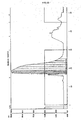
- fractions are collected in correspondence to the elution of the components of the mixture of crude amorolfine and its impurities, i.e. in line with the corresponding UV absorption peaks at 210 nm (as shown in figures 2 ).
- fractions are collected, those containing only purified Amorolfine HCl are pooled together, those containing also small amounts of impurities are reprocessed onto the column.
- prep-HPLC step (j)
- step (j) which provides buffered aqueous fractions containing amorolfine hydrochloride
- the mobile phase used in the prep-HPLC method is free of acidic salts or buffers and in this case the fractions eluted from the column containing the purified AMF HCl are simply pooled and after solvent evaporation the AMF HCl is crystallised, preferably from isopropyl alcohol.
- the eluate from the column corresponding to the Amorolfine HCl peak is divided in a plurality fractions which are all collected (as example see figure 2B ).
- the prep-HPLC method of the invention provides an high grade (>99.5 % purity) Amorolfine HCl which is suitable for pharmaceutical use.
- Further subject-matter of the present invention is a process for the production of Amorolfine HCl for pharmaceutical use, said process comprising the prep-HPLC method as above described.
- Amorolfine base is produced by making bepromoline hydrochloride react with 2-chloro-2-methyl butane in methylene chloride using iron chloride as the Friedel-Crafts catalyst and maintaining the temperature at -20°C.
- a reactor is loaded with 9.5 mmol of iron chloride and 4 ml of methylene chloride.
- the resulting mixture is heated to 30°C, then 6 ml of a methylene chloride solution containing 8.35 mmol of bepromoline hydrochloride are added drop by drop.
- the mixture is subsequently stirred for 10 minutes, maintaining the temperature at 33°C approx., then it is cooled to -20°C.
- Two ml of a methylene chloride solution containing 10.04 mmol of 2-chloro-2-methylbutane are added to the mixture drop by drop.
- the reaction mixture is stirred for 2.5 hours, maintaining the temperature at -20°C, then 6 ml of water are added and the temperature is maintained below 10°C.
- the aqueous phase is eliminated and the organic phase is washed with 6 ml of water. Twelve ml of water are added to the organic phase together with a quantity of 10% sodium hydroxide aqueous solution sufficient to adjust the pH to 10-12. The organic phase is separated and the aqueous phase is extracted again with 12 ml of methylene chloride. The organic phase is distilled until the methylene chloride has been completely removed, obtaining 2.6 g of amorolfine base in the form of an oily substance.
- Amorolfine base is produced by making bepromoline hydrochloride react with 2-chloro-2-methyl butane in methylene chloride using aluminium chloride as the Friedel-Crafts catalyst and maintaining the temperature at -10°C.
- a reactor is loaded with 9.5 mmol of aluminium chloride and 4 ml of methylene chloride.
- the resulting mixture is heated to 30°C, then 6 ml of a methylene chloride solution containing 8.35 mmol of bepromoline hydrochloride are added drop by drop.
- the mixture is subsequently stirred for 10 minutes, maintaining the temperature at 35°C approx., then it is cooled to -10°C.
- Two ml of a methylene chloride solution containing 10.04 mmol of 2-chloro-2-methylbutane are added to the mixture drop by drop.
- the reaction mixture is stirred for 2.5 hours, maintaining the temperature at -10°C, then 10 ml of water are added and the temperature is maintained below 10°C.
- the aqueous phase is eliminated and the organic phase is washed with 10 ml of water. Twelve ml of water are added to the organic phase together with a quantity of 10% sodium hydroxide aqueous solution sufficient to adjust the pH to 10-12. The organic phase is separated and the aqueous phase is extracted again with 12 ml of methylene chloride. The organic phase is distilled until the methylene chloride has been completely removed, obtaining 2.5 g of amorolfine base in the form an oily substance.
- Amorolfine base is produced by making bepromoline hydrochloride react with 2-methyl-2-butanol in methylene chloride using sulphuric acid as the Friedel-Crafts catalyst, and maintaining the temperature at -5°C:
- a reactor is loaded with 11.06 mmol of bepromoline hydrochloride and 18 ml of methylene chloride. The resulting mixture is cooled to -5°C, then 129.7 mmol of 96% sulphuric acid are added to the mixture drop by drop.
- Six ml of a methylene chloride solution containing 22.12 mmol of 2-methyl-2-butanol are subsequently added drop by drop, maintaining the temperature at -5°C.
- the reaction mixture is stirred for 1 hour, maintaining the temperature at -5°C, then 25 ml of water are added, maintaining the temperature below 10°C.
- the aqueous phase is eliminated and the organic phase is washed with 25 ml of water.
- a reactor is loaded with 2.6 g of amorolfine base (as obtained by means of any of the previous Examples 1-3) dissolved in 10.5 ml of isopropanol; gaseous hydrochloric acid is bubbled through the solution and the crude amorolfine hydrochloride precipitates.
- the amorolfine hydrochloride is crystallised in the same reactor, without isolating the product and without adding any other solvent, by heating the suspension until it has dissolved completely, then cooling it to 15-30°C until crystals form. The mixture is stirred at 15-30°C for 2 hours.
- the first fraction eluted (indicated as fraction 0 in figure 2A ) contains the bepromoline hydrochloride impurity
- the second fraction (indicated in figure 2A as fraction 1) contains the fenpropimorph hydrochloride impurity
- the third fraction (indicated in figure 2A as fraction 2) contains a small amount of amorolfine hydrochloride and the remainder of the fenpropimorph hydrochloride
- the fourth fraction (indicated in figure 2A as fraction 3) contains the purified amorolfine hydrochloride
- the fifth fraction (indicated in figure 2A as fraction 4) contains unidentified impurities.
- a sixth fraction is collected by eluting the column with a mobile phase containing approximately 90% of organic solvent (e.g. methanol) to eliminate the remaining amount of the charged crude amorolfine hydrochloride.
- This sixth fraction is combined with the third fraction, evaporated and reprocessed in the column.
- the eluate containing the purified product is combined with the fourth fraction.
- the combined fractions containing the purified amorolfine hydrochloride are evaporated to completely eliminate the methanol.
- the residue is diluted with 100 ml of water and 100 ml of methylene chloride. Sodium hydroxide is added to the mixture to adjust the pH to 12.
- the organic phase is separated and the aqueous phase is extracted again with 50 ml of dichloromethane.
- the organic phases are combined and the methylene chloride is removed by distillation, obtaining 1.2 g of amorolfine base in the form of an oily substance.
- amorolfine base 1.2 g are dissolved in 5 ml of isopropyl alcohol and gaseous hydrochloric acid is added to the solution with the precipitation of the amorolfine HCl that is then crystallised in isopropyl alcohol, obtaining a product with a high purity grade.
- gaseous hydrochloric acid is added to the solution with the precipitation of the amorolfine HCl that is then crystallised in isopropyl alcohol, obtaining a product with a high purity grade.
- the same reactor is used, without isolating the product and without adding any other solvent, to crystallise the amorolfine hydrochloride by heating the suspension until it has dissolved completely, then cooling to 15-30°C until crystals form. The mixture is stirred at 15-30°C for 2 hours.
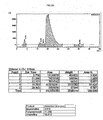
- amorolfine hydrochloride After filtering and drying, 1 g of amorolfine hydrochloride is obtained with a analytical HPLC purity > 99.8% and with a bepromoline hydrochloride content ⁇ 0.1%, a fenpropimorph hydrochloride content ⁇ 0.1% and a content of all the other impurities identified ⁇ 0.1 % (as shown in figure 3 ).
- Sample solution is loaded on column (the volume of each cycle is of 150 ml of the 0.2 g/ml sample solution) and eluted with mobile phase. For each cycle ten fractions are collected. as indicated in Fig. Fractions num 1,2 and 10 are reprocessed. An IPC is performed on the fractions 3,4, 8 and 9; if suitable these are collected with the fractions 5 , 6 and 7, if not these must be reprocessed with the num 1,2 and 10.
- the reprocess of the collected fractions is performed by evaporation, the residue is suspended in isopropyl alcohol , isolated by filtration and dried. The dried product is then dissolved in 70 % [MeOH] : 30% [H 2 O] solution in order to obtain a 0.2 g/ml solution and purified by HPLC (the total volume is divided in cycles of 150 ml each) for each cycle the only fractions 3-9 are collected (the fractions num 3,4,8 and 9 are collected after IPC control). The fractions 1,2 and 10 are sent to the waste.
- amorolfine hydrochloride is obtained with a analytical HPLC purity > 99.8% and with a bepromoline hydrochloride content ⁇ 0.1%, a fenpropimorph hydrochloride content ⁇ 0.1% and a content of all the other impurities identified ⁇ 0.1 % (as shown in figure 3 ).
Landscapes
- Chemical & Material Sciences (AREA)
- Organic Chemistry (AREA)
- Analytical Chemistry (AREA)
- Chemical Kinetics & Catalysis (AREA)
- Pharmaceuticals Containing Other Organic And Inorganic Compounds (AREA)
- Organic Low-Molecular-Weight Compounds And Preparation Thereof (AREA)
- Saccharide Compounds (AREA)
Description
- The present invention refers to the field of industrial production processes, and in particular to a process for the industrial production of amorolfine hydrochloride.
- Amorolfine hydrochloride (AMF·HCl), a compound of formula (I), is a pharmaceutical active ingredient with a fungicidal action used in topical preparations with antimycotic properties.

-
EP0024334 B1 describes a method for producing the amorolfine base (AMF base) that is a compound with a structural formula (II):

- The Friedel-Crafts reaction is obtained using concentrated sulphuric acid as the catalyst.
- In detail, concentrated sulphuric acid is added to bepromoline in dichloromethane at -5°C, then 2-methyl-2-butanol is added. The reaction temperature is not considered a crucial parameter but it is recommended that it be kept between 0 and 50°C, and preferably 18-20°C. The solution is then treated with water and the aqueous phase is extracted several times with dichloromethane. Then the organic phases are washed with sodium hydroxide and water and, after drying, evaporation of the solvent produces the crude amorolfine base, in the form of an oily substance that is purified by low-pressure distillation with a boiling point at 120°C/0.1 mbar.
-
WO2007012983 describes a variation of the production method described inEP0024334 . The process described inWO2007012983 involves treating a bepromoline hydrochloride solution in dichloromethane by adding iron trichloride at room temperature, followed by cooling to a temperature ranging between -40 and -60°C, and preferably -50°C, and the subsequent addition of 2-chloro-2-methylbutane. - This method enables the crude amorolfine base to be obtained with a yield of approximately 90% and with a content of impurities that makes purification by distillation essential. In particular, the reaction is conducted at -50°C to reduce the formation of the fenpropimorph by-product, which is difficult to remove from the end-product. To limit the formation of fenpropimorph, it is advisable to use 2-chloro-2-methylbutane in proportions of 1:1 with respect to the starting bepromoline. The reaction work-up involves washing the organic phase with a solution of sodium phosphate and then with a solution of sodium hydroxide; said washing steps are then followed by a solvent exchange from dichloromethane to toluene and subsequent extraction with water. After evaporating the toluene, the crude amorolfine base needs to be distilled at low pressure (0.14-0.15 mbar) at 141-144°C to obtain a sufficiently pure product. The above-described work-up is considered necessary in order to be able to perform the distillation step on an industrial scale.
- There is subsequently a description of how the amorolfine hydrochloride is formed by the addition of gaseous hydrochloric acid and a crystallisation in ethanol to reduce the content of impurities in the end-product.
- At the state of the art, in processes for the production of AMF·HCl for pharmaceutical use, the purification need to be performed at the AMF base stage and the only efficient methodology is the reduce pressure distillation step whose operation, at bulk scale, is difficult to be handled. At AMF·HCl stage the crystallization procedures do not allow to remove efficiently BPM or FPM eventually present and therefore pure AMF·HCl can be obtained only starting from an AMF base already enough pure. It is therefore evident the need of an alternative purification method in the production process of AMF·HCl.
- The object of the invention is to provide a method for purifying the amorolfine hydrochloride, in particular a method applicable on an industrial scale that could allow, amorolfine hydrochloride to be obtained with an economically advantageous yield and a purity suitable for use in pharmaceutical preparations.
- Further problem at the state of the art is that the best known synthetic processes require the bepromoline alkylation to be performed at very low temperatures, for controlling by-product formation, and require tedious and costly work-up operations. Is therefore evident the need of an improved synthetic process that at least could make it unnecessary to distil the amorolfine base, and wherein the bepromoline alkylation could be done at temperatures no lower than -20°C.
-
- AMF base: amorolfine base
- AMF·HCl: amorolfine hydrochloride
- BPM: bepromoline
- FPM: fenpropimorph
- Area %: unit of purity calculated using an analytical chromatogram. It is the area of the component required divided by the total area considered.
- Charge ratio: the mass of the stationary phase divided by the mass of the product charged in the column for a chromatographic run.
- Mobile phase: the liquid pumped through the column after charging the product. This liquid elutes the components of the product.
- Stationary phase: the medium that adsorbs the components charged in the column.
- Yield: the mass of the required component collected in the purified fractions divided by the mass of the product charged in the column.
- The present invention relates to a method for purifying crude amorolfine hydrochloride by reverse-phase preparative high-performances liquid chromatography (prep-HPLC). Said prep-HPLC method starting from a crude amorolfine hydrochloride having an analytical HPLC purity grade higher than 90%, with a bepromoline hydrochloride content of less than 5% and a fenpropimorph hydrochloride content below 3%. The prep-HPLC method allows to obtain a pure amorolfine hydrochloride product having an analytical HPLC purity grade higher than 99.5% with a content of impurities Bepromoline, Fenpropimorf and other detected impurities each ones below 0.1 wt%
- The inventors of the present patent application have further discovered that significant synergistic benefits, in terms of yield and product purity, can be obtained if said crude amorolfine hydrochloride is prepared by means of a synthetic process comprising:
- I. the preparation of a crude amorolfine base by means of bepromoline hydrochloride alkylation with:
- 2-chloro-2-methylbutane using a Friedel-Crafts catalyst chosen from the FeCl3 or AlCl3 group; or
- 2-methyl-2-butanol using concentrated sulphuric acid as the Friedel-Crafts catalyst;
- II. the preparation of a crude amorolfine hydrochloride from the crude amorolfine base, as obtained after the Friedel-Crafts alkylation (I), said preparation comprising a treatment with HCl.
- Subject of the present invention is therefore also a process for the production of Amorolfine HCl, said process comprising the prep-HPLC method as above described.
- Further subject of the present invention is a synthetic process for the preparation of a crude Amorolfine HCl, having an analytical HPLC purity grade higher than 90%, with a bepromoline hydrochloride content of less than 5% and a fenpropimorph hydrochloride content below 3%, therefore particularly suitable for being purified by means of the prep-HPLC method as above described, said synthetic method comprising steps (I) and (II) as above described.
-
-
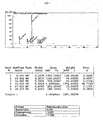
Figure 1 - Chromatogram of the crude amorolfine hydrochloride obtained by means of the synthetic process according to the present invention, before purification by reverse-phase prep-HPLC. -
Figure 2A - Chromatogram of the prep-HPLC method of the invention, as described in example 5, showing the main peaks and the corresponding fractions isolated by collecting the eluted mobile phase when the absorbance at 210 nm is higher than 1 % of the main peak of the fraction. -
Figure 2B - Chromatogram of the prep-HPLC method of the invention, as described in example 6, showing the main peak of AMF·HCl and the corresponding fractions isolated by collecting the eluted mobile phase when the absorbance at 210 nm is higher than 1 % of the main peak. -
Figure 3 - Analytical chromatogram of the amorolfine hydrochloride obtained by means of the process according to the present invention, after purification by reverse-phase HPLC. - Regarding the synthetic process for preparing crude amorolfine hydrochloride, according to the invention said process comprises a step (I) for preparing a crude amorolfine base by means of a Friedel-Crafts alkylation of bepromoline hydrochloride that is preferably performed by means of the following detailed steps:
- (a) bepromoline hydrochloride, a compound of formula (III), is added to a solution of FeCl3 or AlCl3, preferably FeCl3, in an aprotic solvent at a temperature in the range of 20 to 40°C;
- (b) 2-chloro-2-methylbutane is added to the mixture obtained from step (a), at a temperature T;
or:- (a') concentrated sulphuric acid is added to a solution of bepromoline hydrochloride, a compound of formula (III), in an aprotic solvent at a temperature in the range of -10 to -0°C;
- (b') 2-methyl-2-butanol is added to the mixture obtained from step (a'), at a temperature T.
- (c) the temperature T is maintained for the time it takes to complete the alkylation reaction;
- Preferably said process comprises a step (II) for preparing a crude amorolfine hydrochloride from the crude amorolfine base, as obtained from the above described step (I), that is preferably conducted by means of the following detailed steps:
- (h) the crude amorolfine base is dissolved in isopropyl alcohol and gaseous hydrochloric acid is added;
- (i) the crude amorolfine hydrochloride is crystallised in isopropyl alcohol;
- (j) the crude amorolfine hydrochloride is purified by reverse-phase preparative high-pressure chromatography (prep-HPLC) method according to the main subject of the invention.
- In a preferred embodiment of the present invention therefore the prep-HPLC method is step (j) of an overall process which includes the above described synthetic process.
- In a preferred case, after step (c) and before step (II), the reaction mixture is worked up by means of the following steps to complete the alkylation reaction:
- (d) water is added to the reaction mixture coming from step (c) while the temperature is maintained below 10°C;
- (e) the organic phase is separated (preferably with methylene chloride);
- (f) the organic phase is washed with a basic aqueous solution (e.g. a solution of sodium hydroxide) and then the organic phase is separated;
- (g) the solvent is removed from the organic phase (e.g. methylene chloride) by distillation and the crude amorolfine base is isolated as an oily substance.
- The above described synthetic process, after crystallisation in isopropyl alcohol, results in a crude amorolfine hydrochloride having an analytical HPLC purity grade higher than 90%, with a bepromoline hydrochloride content of less than 5% and a fenpropimorph hydrochloride content below 3% (as shown in
Figure 1 ). - Such low amount of the known impurities is surprising, especially when Friedel-Crafts is performed using 2-chloro-2-methylbutane as starting material, since performing the alkylation at temperatures not lower than -20°C the skilled in the art, from prior art teachings, would expect to find higher levels of FPM impurity. Furthermore it has been found that such a crude Amorolfine is particularly suitable for being efficiently purified by means of the prep-HPLC method according to the present invention, thus avoiding the tedious and costly distillation of the crude AM F base.
- One further advantage of the above-described process lies in that it enables amorolfine hydrochloride with a high purity grade (>90%) to be obtained, avoiding the need to distil the crude amorolfine base. Another advantage lies in the use of reaction temperatures no lower than -20°C for the Friedel-Crafts alkylation.
- For the purposes of the present invention, the term aprotic solvent is used to mean an inert organic solvent, e.g. hexane, cyclohexane, chloroform, dichloromethane or dichloroethane; dichloromethane is preferred.
- In a preferred case, step (a) is completed using molar quantities of catalyst in the range of 1.1 to 1.2 with respect to the bepromoline hydrochloride.
- In a preferred case, step (a') is completed using molar quantities of catalyst in the range of 11 to 12 with respect to the bepromoline hydrochloride.
- In a preferred case, step (b) is completed using molar quantities of 2-chloro-2-methylbutane in the range of 1.1 to 1.3 with respect to the bepromoline hydrochloride.
- In a preferred case, step (b') is completed using molar quantities of 2-methyl-2-butanol in the range of 1.9 to 2.1 with respect to the bepromoline hydrochloride. On completion of the alkylation reaction, step (c) can be monitored by means of methods known to a person skilled in the art.
- According to a first aspect of the invention, a preparative reverse-phase preparative high-performance liquid chromatography (prep-HPLC) method is described for purifying the compound with the formula (I), namely a crude amorolfine hydrochloride (with an analytical HPLC purity higher than 90%) obtaining a product with a content of bepromoline, fenpropimorph and other identified impurities of less than 0.1 wt% (for each impurity).
- The prep-HPLC method can be used for Crude Amorolfine HCl synthesised by means of known synthetic processes in so far these provide a crude Amorolfine HCl of a purity as above described. Known synthetic procedure if performed as diclosed provide an end product which is enough pure for pharmaceutical use, but if a batch processing was failed due to some issues, the prep-HPLC of the invention can be used as recovery procedure. To be noticed that if a process known in the art is performed as disclosed but just omitting the distillation step of the crude AMF base, it would provide a crude Amorolfine HCl with a purity <90% or a content of impurities higher to that suitable for the prep-HPLC purification. It was instead observed that combining the above described synthetic process with the prep-HPLC method the overall process bring advantageous effects in terms of purity of the end product, simplicity of operations (solvent exchanges are not needed and low pressure distillation of AMF base is avoided), energy saving, cost efficiency and process robustness.
- In a particularly preferred embodiment therefore the crude amorolfine hydrochloride is obtained by the above-described synthetic process up to step (i), and is purified by means of the prep-HPLC method, step (j), according to the present invention.
- The prep-HPLC method is accomplished using an reverse phase as the stationary phase. By collecting a series of fractions, which are partially recycled, amorolfine hydrochloride with a high purity grade is eluted from the column and obtained with a high yield. The amorolfine hydrochloride produced according to the present prep-HPLC method has a content of bepromoline, fenpropimorph and other identified impurities of less than 0.1 wt% (each impurity).
- According to the present invention, the crude amorolfine hydrochloride with a higher than 90% purity is dissolved in a mixture of water or acidic water and a polar organic solvent. Preferably for the dissolution mixture is used just water, sometimes it is necessary to use acidic water to accomplished complete dissolution and guarantee the Amorolfine HCl is in its salt form .The concentration of the amorolfine hydrochloride in the solution is normally in the range of 20 g/l to 200 g/l, and preferably 70-80 g/l.
- The prep-HPLC method of the invention make use of a mobile phase which is a mixture of water or acidic water and a polar water-miscible organic solvent, wherein the amount of organic solvent in the mobile phase is comprised in the range 5 - 95 wt%, preferably 50-90 wt% more preferably 70-90 wt% in case of acidic water or 60-80 in case of just water.
- The polar organic solvent may be any water-miscible solvent, e.g. acetonitrile, methanol, propanol, isopropanol, butanol, t-butanol, and is preferably methanol.
- Preferably in the mobile phase is used just water, sometimes it is necessary to use acidic water. The acids used to acidify the amorolfine hydrochloride solution and the acidic mobile phase include inorganic acids such as hydrochloric acid, hydrobromic acid, phosphoric acid, nitric acid, and sulphuric acid. Organic acids may also be used, such as acetic acid, formic acid, oxalic acid, succinic acid, lactic acid, and tartaric acid. The quantity of acid added must be sufficient to lower the pH of the solution to a level in the range of 2 to 7.5, and preferably from 4 to 6. An acetic acid and ammonium, sodium or potassium acetate buffer is preferred. Preferred mobile phases for C18 stationary phases are mixtures MeOH/water=60/40 or MeOH/acidic water=70/30.
- The quantity of acid added must guarantee the presence of the amorolfine hydrochloride in the form of a salt in the solution charged in the column. This is because it has been observed that the amorolfine base is retained strongly by the stationary phase of the column, so the amorolfine hydrochloride solution must be suitably acidified to ensure the recovery of the amorolfine hydrochloride with the limited volumes of eluent contained in the column.
- The stationary phase can consist of various materials, such as alkyl silanes, aryl silanes, haloalkyl silanes, alkyl esters, alkyl amines, alkyl cyan compounds, alkyl diols, alkyl ethers, aryl ethers, haloalkyl ethers, alkyl carboxylic acids, aryl carboxylic acids, alkyl sulfonic acids, aryl sulfonic acids, polystyrene divinylbenzene, amino polycaprolactam, and glycidol ethyl methoxysilane. The stationary phase typically used is silica with alkyl ligands having 4 (C4), 8 (C8), and preferably 18 (C18) carbon atoms. The ligands can be attached to other particles, such as polymers, zircon oxide or titanium. The stationary phase consists of spherical particles with a diameter of 10-20 µm and a pore diameter of 60-120 Angstroms. Particularly preferred stationary phases are SepTech-ST60 10µm RP18, Purospher STAR RP-18-e (10µm), C18 Daisogel (10 um, 100 A), C18 Kromasil (10 um, 100 Å), C18 Luna (10 um, 100 A).
- A high-performance chromatographic column is used with an internal diameter greater than 5 cm and a length in the range of 5 to 100 cm, and preferably between 20 and 30 cm.
- The chromatographic separation is achieved by maintaining the temperature in a range of 10 to 40°C, and preferably 20-30°C.
- The amorolfine hydrochloride and its impurities become distributed between the stationary phase and the mobile phase and are eluted from the mobile phase consisting of an (optionally acidic) aqueous solution and an organic solvent. When the aqueous solution is acidic is buffered and is preferably prepared by adding a quantity of acetic acid and ammonium acetate sufficient to adjust the pH to between 4 and 6.
- The charge ratio used in the prep-HPLC method is in the range of 70 to 130 grams of stationary phase per gram of amorolfine hydrochloride charged in the column before elution with the mobile phase.
- Operatively, after charging the column with the solution of crude amorolfine hydrochloride, each component (impurities and amorolfine hydrochloride) is eluted in isocratic conditions with the mobile phase containing a quantity of methanol in the range of 50 to 90 wt%.
- The fractions are collected in correspondence to the elution of the components of the mixture of crude amorolfine and its impurities, i.e. in line with the corresponding UV absorption peaks at 210 nm (as shown in
figures 2 ). Several fractions are collected, those containing only purified Amorolfine HCl are pooled together, those containing also small amounts of impurities are reprocessed onto the column. - In case the mobile phase comprises acidic buffered water, prep-HPLC (step (j)), which provides buffered aqueous fractions containing amorolfine hydrochloride, is followed by the steps described below:
- (k) the aqueous fractions containing the purified amorolfine hydrochloride are evaporated to completely eliminate the organic solvent (e.g. methanol) contained in the mobile phase;
- (I) a base (e.g. sodium hydroxide) is added to the resulting aqueous solution until a pH = 12 is obtained and the amorolfine base thus obtained is extracted with a water-immiscible organic solvent (e.g. methylene chloride) to obtain an oily product corresponding to a purified amorolfine base;
- (m)the purified amorolfine base is dissolved in isopropyl alcohol and gaseous hydrochloric acid is added to the solution, with the precipitation of the amorolfine HCl that is then crystallised in isopropyl alcohol, obtaining a product with a high purity grade.
- Preferably according to the invention the mobile phase used in the prep-HPLC method is free of acidic salts or buffers and in this case the fractions eluted from the column containing the purified AMF HCl are simply pooled and after solvent evaporation the AMF HCl is crystallised, preferably from isopropyl alcohol. Preferably, according to the present prep-HPLC method, the eluate from the column corresponding to the Amorolfine HCl peak is divided in a plurality fractions which are all collected (as example see
figure 2B ). Those fractions which contains only the purified Amorolfine HCl are pooled, those which contains impurities are pooled apart and reprocessed in the column then those reprocessed fractions which contains only the purified Amorolfine HCl are pooled together with the first ones. - The prep-HPLC method of the invention provides an high grade (>99.5 % purity) Amorolfine HCl which is suitable for pharmaceutical use.
- Further subject-matter of the present invention is a process for the production of Amorolfine HCl for pharmaceutical use, said process comprising the prep-HPLC method as above described.
- The present invention may be further clarified by means of the following practical examples.
- Amorolfine base is produced by making bepromoline hydrochloride react with 2-chloro-2-methyl butane in methylene chloride using iron chloride as the Friedel-Crafts catalyst and maintaining the temperature at -20°C.

- A reactor is loaded with 9.5 mmol of iron chloride and 4 ml of methylene chloride. The resulting mixture is heated to 30°C, then 6 ml of a methylene chloride solution containing 8.35 mmol of bepromoline hydrochloride are added drop by drop. The mixture is subsequently stirred for 10 minutes, maintaining the temperature at 33°C approx., then it is cooled to -20°C. Two ml of a methylene chloride solution containing 10.04 mmol of 2-chloro-2-methylbutane are added to the mixture drop by drop. The reaction mixture is stirred for 2.5 hours, maintaining the temperature at -20°C, then 6 ml of water are added and the temperature is maintained below 10°C. The aqueous phase is eliminated and the organic phase is washed with 6 ml of water. Twelve ml of water are added to the organic phase together with a quantity of 10% sodium hydroxide aqueous solution sufficient to adjust the pH to 10-12. The organic phase is separated and the aqueous phase is extracted again with 12 ml of methylene chloride. The organic phase is distilled until the methylene chloride has been completely removed, obtaining 2.6 g of amorolfine base in the form of an oily substance.
- Amorolfine base is produced by making bepromoline hydrochloride react with 2-chloro-2-methyl butane in methylene chloride using aluminium chloride as the Friedel-Crafts catalyst and maintaining the temperature at -10°C.

- A reactor is loaded with 9.5 mmol of aluminium chloride and 4 ml of methylene chloride. The resulting mixture is heated to 30°C, then 6 ml of a methylene chloride solution containing 8.35 mmol of bepromoline hydrochloride are added drop by drop. The mixture is subsequently stirred for 10 minutes, maintaining the temperature at 35°C approx., then it is cooled to -10°C. Two ml of a methylene chloride solution containing 10.04 mmol of 2-chloro-2-methylbutane are added to the mixture drop by drop. The reaction mixture is stirred for 2.5 hours, maintaining the temperature at -10°C, then 10 ml of water are added and the temperature is maintained below 10°C. The aqueous phase is eliminated and the organic phase is washed with 10 ml of water. Twelve ml of water are added to the organic phase together with a quantity of 10% sodium hydroxide aqueous solution sufficient to adjust the pH to 10-12. The organic phase is separated and the aqueous phase is extracted again with 12 ml of methylene chloride. The organic phase is distilled until the methylene chloride has been completely removed, obtaining 2.5 g of amorolfine base in the form an oily substance.
- Amorolfine base is produced by making bepromoline hydrochloride react with 2-methyl-2-butanol in methylene chloride using sulphuric acid as the Friedel-Crafts catalyst, and maintaining the temperature at -5°C:

- A reactor is loaded with 11.06 mmol of bepromoline hydrochloride and 18 ml of methylene chloride. The resulting mixture is cooled to -5°C, then 129.7 mmol of 96% sulphuric acid are added to the mixture drop by drop. Six ml of a methylene chloride solution containing 22.12 mmol of 2-methyl-2-butanol are subsequently added drop by drop, maintaining the temperature at -5°C. The reaction mixture is stirred for 1 hour, maintaining the temperature at -5°C, then 25 ml of water are added, maintaining the temperature below 10°C. The aqueous phase is eliminated and the organic phase is washed with 25 ml of water. Twenty ml of water are added to the organic phase together with a quantity of 10% sodium hydroxide aqueous solution sufficient to adjust the pH to 10-12. The organic phase is separated and the aqueous phase is extracted again with 20 ml of methylene chloride. The organic phase is distilled until the methylene chloride has been completely removed, obtaining 2.5 g of amorolfine base in the form of an oily substance.
-

- A reactor is loaded with 2.6 g of amorolfine base (as obtained by means of any of the previous Examples 1-3) dissolved in 10.5 ml of isopropanol; gaseous hydrochloric acid is bubbled through the solution and the crude amorolfine hydrochloride precipitates. The amorolfine hydrochloride is crystallised in the same reactor, without isolating the product and without adding any other solvent, by heating the suspension until it has dissolved completely, then cooling it to 15-30°C until crystals form. The mixture is stirred at 15-30°C for 2 hours. After filtering and drying, 2.8 g of crude amorolfine hydrochloride are obtained with a analytical HPLC purity grade > 90% and with a bepromoline hydrochloride content < 5% and a fenpropimorph hydrochloride content < 3% (as shown in
figure 1 ). - Crystallized crude amorolfine HCl, as obtained from example 4, is purified by preparative high performance liquid chromatography (HPLC). The chromatographic process is accomplished in a Shimadzu chromatographic system comprising:
- an LC-8A pump for liquid chromatography
- a Vis SPD-10Avp UV detector
- a FRC-10A fraction collector
- a CBM-20 ° system controller
- LC Solution software
- The chromatographic parameters are as follows:
- stationary phase: Purospher STAR RP-18-e (10µm), with an internal diameter of 2.5 cm and a length of 25 cm
- mobile phase: 30% aqueous solution (1% ammonium acetate + 3% acetic acid) - 70% methanol
- pH of the buffered solution = 4.1
- flow rate in the column: 30 ml/min
- detector (wavelength): 210 nm
- sample: 300 mg of crude amorolfine hydrochloride in 5 ml of mobile phase
- loop volume: 5 ml
- number of runs: 6
- In a flask, 1.8 g of 90% crude amorolfine hydrochloride are dissolved in 30 ml of mobile phase. After charging 5 ml of the amorolfine hydrochloride solution in the column, each component is eluted in isocratic conditions with the mobile phase and the corresponding fractions are collected at the time of elution of the various components of the mixture being purified, i.e. in line with their respective UV absorption peaks at 210 nm (as shown in
figure 2A ). - The first fraction eluted (indicated as
fraction 0 infigure 2A ) contains the bepromoline hydrochloride impurity, the second fraction (indicated infigure 2A as fraction 1) contains the fenpropimorph hydrochloride impurity, and the third fraction (indicated infigure 2A as fraction 2) contains a small amount of amorolfine hydrochloride and the remainder of the fenpropimorph hydrochloride, the fourth fraction (indicated infigure 2A as fraction 3) contains the purified amorolfine hydrochloride and, finally, the fifth fraction (indicated infigure 2A as fraction 4) contains unidentified impurities. A sixth fraction is collected by eluting the column with a mobile phase containing approximately 90% of organic solvent (e.g. methanol) to eliminate the remaining amount of the charged crude amorolfine hydrochloride. This sixth fraction is combined with the third fraction, evaporated and reprocessed in the column. The eluate containing the purified product is combined with the fourth fraction. The combined fractions containing the purified amorolfine hydrochloride are evaporated to completely eliminate the methanol. The residue is diluted with 100 ml of water and 100 ml of methylene chloride. Sodium hydroxide is added to the mixture to adjust the pH to 12. The organic phase is separated and the aqueous phase is extracted again with 50 ml of dichloromethane. The organic phases are combined and the methylene chloride is removed by distillation, obtaining 1.2 g of amorolfine base in the form of an oily substance. - These 1.2 g of amorolfine base are dissolved in 5 ml of isopropyl alcohol and gaseous hydrochloric acid is added to the solution with the precipitation of the amorolfine HCl that is then crystallised in isopropyl alcohol, obtaining a product with a high purity grade. The same reactor is used, without isolating the product and without adding any other solvent, to crystallise the amorolfine hydrochloride by heating the suspension until it has dissolved completely, then cooling to 15-30°C until crystals form. The mixture is stirred at 15-30°C for 2 hours.
- After filtering and drying, 1 g of amorolfine hydrochloride is obtained with a analytical HPLC purity > 99.8% and with a bepromoline hydrochloride content < 0.1%, a fenpropimorph hydrochloride content < 0.1% and a content of all the other impurities identified < 0.1 % (as shown in
figure 3 ). - Crystallized crude amorolfine HCl, as obtained from example 4, is purified by preparative high performance liquid chromatography (HPLC), the equipment used is the PrepLC system Varian, the component are following listed:
- PrepStar 530 Control Module (model OPTO Control 00150)
- PrepStar 530 Fluidics Module (model 530 Fluidics 00100)
- Solvent Delivery Module (model SD2B and SD 2A)
- Detector Prostar (model 325 EL06069028)
- Inject Pump (Prostar 218 01096)
- SepTech-ST60 10µm RP18. (or equivalent)
- 60 % [MeOH] : 40% [H2O]
- Flow: 200 ml/min.
- Detector: 225 nm
- crude Amorolfine HCl (batch code 1057AA00) dissolved in 70 % [MeOH] : 30% [H2O] solution in order to obtain a 0.2g/ml solution.
- Sample solution is loaded on column (the volume of each cycle is of 150 ml of the 0.2 g/ml sample solution) and eluted with mobile phase. For each cycle ten fractions are collected. as indicated in Fig.
Fractionsnum fractions fractions num - The reprocess of the collected fractions is performed by evaporation, the residue is suspended in isopropyl alcohol , isolated by filtration and dried. The dried product is then dissolved in 70 % [MeOH] : 30% [H2O] solution in order to obtain a 0.2 g/ml solution and purified by HPLC (the total volume is divided in cycles of 150 ml each) for each cycle the only fractions 3-9 are collected (the
fractions num fractions - Fractions containing the purified product are collected, the solvent is distilled off and to the residue isopropyl alcohol (2.4 l) is added, the reaction mass is dissolved by heating at about 55-65° C; cool down the reaction mass at 30-35° C maintaining the temperature for about 2 h; then cool down at 20-25° C maintaining the temperature for about 3 h.
The isolated purified Amorolfine is filtered washing the product on the filter with isopropyl alcohol; The isolated product is dried at 50° C for about 9 h till LOD NMT 0.5%.
After filtering and drying, amorolfine hydrochloride is obtained with a analytical HPLC purity > 99.8% and with a bepromoline hydrochloride content < 0.1%, a fenpropimorph hydrochloride content < 0.1% and a content of all the other impurities identified < 0.1 % (as shown infigure 3 ).
Claims (10)
- A method for the purification of amorolfine hydrochloride by means of a reverse phase preparative high performances liquid chromatography (prep-HPLC) said method starting from a crude amorolfine hydrochloride having purity higher than 90% and containing Bepromoline hydrochloride <5% and Fenpropimorf <3%, for obtaining a pure amorolfine hydrochloride product having an analytical HPLC purity grade higher than 99.5% with a content of impurities Bepromoline, Fenpropimorf and other detected impurities each ones below 0.1 wt%, said method having a charge ratio comprised in the range 70-130 g of stationary phase per gram of crude Amorolfine hydrochloride charged in column before elution with mobile phase; and said method using a mobile phase that is a mixture of water and a water miscible organic solvent wherein the amount of organic solvent in the mobile phase is comprised in the range 5 - 95 wt%; wherein said crude amorolfine hydrochloride is dissolved in a mixture of water or acidic water and an organic solvent.
- Method according to claim 1 wherein the stationary phase comprises alkyl ligands having 18 carbon atoms (C18).
- Method according to claim 1 wherein the amount of organic solvent in the mobile phase is comprised in the range 50 - 90 wt%.
- Method according to anyone of claims 1-3 wherein the organic solvent is chosen in the group consisting of acetonitrile, methanol, propanol, isopropanol, butanol, t-butanol.
- Method according to anyone of claims 1-4 wherein when the mobile phase comprises acidic water said mobile phase is buffered with suitable salts at a pH comprised in the range 2 - 7.5, otherwise when he mobile phase comprises just water it is free of any salts.
- Method according to anyone of claims 1-5 wherein the starting crude Amorolfine hydrochloride is prepared by a synthetic process comprising the following steps:I. preparation of Amorolfine base by alkylation of Bepromoline with:- 2-chloro-2-methylbutane in presence of a Friedel-Crafts catalyst chosen in the group consisting of FeCl3 or AlCl3; or- 2-methyl-2-butanol in presence of concentrated sulphuric acid as Friedel-Crafts catalyst;
said alkylation characterised by the fact of being performed at a temperature T higher than -20°C and lower than 0 °C;II. preparation of crude Amorolfine hydrochloride from Amorolfine base, as obtained from the Friedel-Crafts alkylation (I), by means of treatment with hydrochloric acid. - Process according to claim 6 wherein step (I) is performed in details through the following steps:(a) adding Bepromoline hydrochloride to a solution of FeCl3 or AlCl3 in an aprotic solvent at a temperature comprised between 20 and 40 °C;(b) adding 2-chloro-2-methylbutane, to the mixture obtained from step (a), at a temperature T;
or:(a') adding concentrated sulphuric acid, to a solution in an aprotic solvent of Bepromoline hydrochloride, at a temperature comprised between -10 and 0 °C;(b') adding 2-methyl-2-butanol, to the mixture obtained from step (a'), at a temperature T;
said steps (b) or (b') are followed by:(c) keeping temperature T for a time enough to complete the alkylation reaction. - Process according to anyone of claims 6-7 wherein step (II) is accomplished by the following steps:(h) dissolving crude Amorolfina base in isopropyl alcohol and adding gaseous hydrochloric acid;(i) crystallizing crude Amorolfine hydrochloride in isopropyl alcohol;
- Process according to anyone of claims 7-8 wherein, after step (c) and before step (II), the reaction mixture is worked-up by mean of the following steps:(d) adding water to the reaction mixture obtained from step (c) keeping the temperature below 10 °C;(e) separating the organic phase (preferably methylene chloride);(f) washing the organic phase with a basic aqueous solution and separating the organic phase;(g) removing the organic solvent (preferably methylene chloride) by distillation and isolating crude Amorolfine base as a oily substance.
- A process for the synthetic preparation of a crude Amorolfine hydrochloride having a purity higher than 90% and containing Bepromoline hydrochloride <5% and Fenpropimorf <3%, said process comprising the steps as described in any one of claims 6-9.
Applications Claiming Priority (2)
| Application Number | Priority Date | Filing Date | Title |
|---|---|---|---|
| IT000032A ITFI20090032A1 (en) | 2009-02-20 | 2009-02-20 | INDUSTRIAL PRODUCTION PROCESS OF CHLORIDATED AMOROLFIN |
| PCT/EP2010/052047 WO2010094739A1 (en) | 2009-02-20 | 2010-02-18 | Process for the purification of amorolfine hydrochloride |
Publications (2)
| Publication Number | Publication Date |
|---|---|
| EP2398570A1 EP2398570A1 (en) | 2011-12-28 |
| EP2398570B1 true EP2398570B1 (en) | 2014-09-03 |
Family
ID=41161360
Family Applications (1)
| Application Number | Title | Priority Date | Filing Date |
|---|---|---|---|
| EP10709176.1A Not-in-force EP2398570B1 (en) | 2009-02-20 | 2010-02-18 | Process for the purification of amorolfine hydrochloride |
Country Status (9)
| Country | Link |
|---|---|
| US (1) | US8664381B2 (en) |
| EP (1) | EP2398570B1 (en) |
| KR (1) | KR20110127674A (en) |
| CN (1) | CN102325572A (en) |
| BR (1) | BRPI1007858A2 (en) |
| CA (1) | CA2752965A1 (en) |
| IL (1) | IL214740A0 (en) |
| IT (1) | ITFI20090032A1 (en) |
| WO (1) | WO2010094739A1 (en) |
Cited By (1)
| Publication number | Priority date | Publication date | Assignee | Title |
|---|---|---|---|---|
| CN107764909A (en) * | 2017-09-01 | 2018-03-06 | 上海通用药业股份有限公司 | A kind of assay method of hydrochloric acid Amorolfine and its chaff interference |
Families Citing this family (4)
| Publication number | Priority date | Publication date | Assignee | Title |
|---|---|---|---|---|
| US11092577B2 (en) * | 2017-03-08 | 2021-08-17 | Waters Technologies Corporation | Polar pesticide determination using chromatography |
| US20230024202A1 (en) * | 2019-12-05 | 2023-01-26 | Fresenius Kabi Usa, Llc | Method for analyzing degarelix and associated products |
| US20220395767A1 (en) * | 2021-06-15 | 2022-12-15 | Perkinelmer Health Sciences, Inc. | Enhancing lcms analyte signals |
| CN113670680B (en) * | 2021-06-30 | 2024-08-27 | 杭州中美华东制药江东有限公司 | Preparation method of acarbose impurity reference substance |
Family Cites Families (6)
| Publication number | Priority date | Publication date | Assignee | Title |
|---|---|---|---|---|
| IT1220970B (en) | 1979-08-17 | 1990-06-21 | Hoffmann La Roche | HETEROCYCLIC COMPOUNDS WITH PARTICULAR FUNGICIDE ACTION FOR THE FIGHT AGAINST CANDIDA ALBICANS |
| WO2007000628A1 (en) * | 2005-01-07 | 2007-01-04 | Ranbaxy Laboratories Limited | Intermediate of amorolfine or its salt |
| EP1749826A1 (en) * | 2005-07-28 | 2007-02-07 | Galderma S.A. | Process of producing bepromoline |
| EP1749825A1 (en) * | 2005-07-28 | 2007-02-07 | Galderma S.A. | Process of producing amorolfine |
| EP1935889A1 (en) * | 2006-12-21 | 2008-06-25 | Galderma S.A. | Process of producing amorolfine |
| CN101070556A (en) * | 2007-02-26 | 2007-11-14 | 中国人民解放军第三军医大学 | Method for sieving active component or matter and active component therefrom |
-
2009
- 2009-02-20 IT IT000032A patent/ITFI20090032A1/en unknown
-
2010
- 2010-02-18 WO PCT/EP2010/052047 patent/WO2010094739A1/en not_active Ceased
- 2010-02-18 EP EP10709176.1A patent/EP2398570B1/en not_active Not-in-force
- 2010-02-18 US US13/202,502 patent/US8664381B2/en not_active Expired - Fee Related
- 2010-02-18 CN CN2010800082660A patent/CN102325572A/en active Pending
- 2010-02-18 BR BRPI1007858A patent/BRPI1007858A2/en not_active IP Right Cessation
- 2010-02-18 KR KR1020117020588A patent/KR20110127674A/en not_active Withdrawn
- 2010-02-18 CA CA2752965A patent/CA2752965A1/en not_active Abandoned
-
2011
- 2011-08-18 IL IL214740A patent/IL214740A0/en unknown
Cited By (2)
| Publication number | Priority date | Publication date | Assignee | Title |
|---|---|---|---|---|
| CN107764909A (en) * | 2017-09-01 | 2018-03-06 | 上海通用药业股份有限公司 | A kind of assay method of hydrochloric acid Amorolfine and its chaff interference |
| CN107764909B (en) * | 2017-09-01 | 2020-08-07 | 上海通用药业股份有限公司 | Determination method of amorolfine hydrochloride and interferent thereof |
Also Published As
| Publication number | Publication date |
|---|---|
| US8664381B2 (en) | 2014-03-04 |
| IL214740A0 (en) | 2011-11-30 |
| US20110301346A1 (en) | 2011-12-08 |
| WO2010094739A1 (en) | 2010-08-26 |
| CA2752965A1 (en) | 2010-08-26 |
| EP2398570A1 (en) | 2011-12-28 |
| CN102325572A (en) | 2012-01-18 |
| BRPI1007858A2 (en) | 2016-02-23 |
| KR20110127674A (en) | 2011-11-25 |
| ITFI20090032A1 (en) | 2010-08-21 |
Similar Documents
| Publication | Publication Date | Title |
|---|---|---|
| US8664381B2 (en) | Process for the preparation and purification of amorolfine hydrochloride | |
| US20150038567A1 (en) | Cannabinoid Carboxylic Acids, Salts of Cannabinoid Carboxylic Acids, and the Production and Uses of Same | |
| WO2021056811A1 (en) | Imine salt derivative and preparation method therefor, and preparation method for nicotine | |
| CN103582622A (en) | Method for producing bicyclic compound via iminium salt | |
| WO2011128911A2 (en) | Improved process for ll-[(z)-3-(dimethylamino)propyiidenel-6-ll- dihydrodibenz[b,el oxepin-2-aceticacid | |
| CN104402838B (en) | The process for purification of valsartan | |
| US9663450B2 (en) | Process for the purification of melphalan | |
| CN110590587A (en) | Synthetic method of 3-chloro-L-alanine methyl ester hydrochloride | |
| CN113227060B (en) | Preparation method of (5S)-4-[5-(3,5-dichlorophenyl)-5-(trifluoromethyl)-4H-isoxazol-3-yl]-2-methylbenzoic acid | |
| CN110467580B (en) | Resolution method of Raxinard axis chiral enantiomer | |
| JP3599804B2 (en) | Method for producing 9- (Z) -retinoic acid | |
| EP2402312B1 (en) | An improved process for the preparation of cilastatin acid | |
| CN108997377B (en) | Preparation method of E-type 7-ATCA | |
| CN108373411A (en) | The preparation method of high-purity 4- chloro-3-hydroxyl ethyl butyrates | |
| CN110741006B (en) | Process for converting crude ascomycin to purified pimecrolimus | |
| CN112645945B (en) | Preparation method of Wumei ammonium bromide intermediate | |
| CN101020626A (en) | Prepn process of high-purity optically active (-)-or(+)-gossypol | |
| US7393975B2 (en) | Process for the purification of gabapentin | |
| CN106478629A (en) | A kind of preparation technology of Li Gelieting | |
| EP2459517A1 (en) | Polymorphic form of toremifene citrate and process for its preparation | |
| US7476760B2 (en) | Purification and production methods of 1-aminocyclopropanecarboxylic acid | |
| CN114773266B (en) | Improved synthesis method of montelukast sodium | |
| CN105612145B (en) | Process for preparing gabapentin | |
| US11613555B2 (en) | Methods for onapristone synthesis dehydration and deprotection | |
| WO2026102990A1 (en) | Echinocandin drug impurity compound, preparation method therefor and use thereof |
Legal Events
| Date | Code | Title | Description |
|---|---|---|---|
| PUAI | Public reference made under article 153(3) epc to a published international application that has entered the european phase |
Free format text: ORIGINAL CODE: 0009012 |
|
| 17P | Request for examination filed |
Effective date: 20110920 |
|
| AK | Designated contracting states |
Kind code of ref document: A1 Designated state(s): AT BE BG CH CY CZ DE DK EE ES FI FR GB GR HR HU IE IS IT LI LT LU LV MC MK MT NL NO PL PT RO SE SI SK SM TR |
|
| RIN1 | Information on inventor provided before grant (corrected) |
Inventor name: ANGELI, ROBERTO Inventor name: DEMARTIS, SALVATORE Inventor name: POSSENTI, MARCO |
|
| DAX | Request for extension of the european patent (deleted) | ||
| 17Q | First examination report despatched |
Effective date: 20120628 |
|
| R17C | First examination report despatched (corrected) |
Effective date: 20120706 |
|
| GRAP | Despatch of communication of intention to grant a patent |
Free format text: ORIGINAL CODE: EPIDOSNIGR1 |
|
| INTG | Intention to grant announced |
Effective date: 20131118 |
|
| GRAP | Despatch of communication of intention to grant a patent |
Free format text: ORIGINAL CODE: EPIDOSNIGR1 |
|
| INTG | Intention to grant announced |
Effective date: 20140530 |
|
| GRAS | Grant fee paid |
Free format text: ORIGINAL CODE: EPIDOSNIGR3 |
|
| GRAA | (expected) grant |
Free format text: ORIGINAL CODE: 0009210 |
|
| AK | Designated contracting states |
Kind code of ref document: B1 Designated state(s): AT BE BG CH CY CZ DE DK EE ES FI FR GB GR HR HU IE IS IT LI LT LU LV MC MK MT NL NO PL PT RO SE SI SK SM TR |
|
| REG | Reference to a national code |
Ref country code: GB Ref legal event code: FG4D |
|
| REG | Reference to a national code |
Ref country code: CH Ref legal event code: EP Ref country code: AT Ref legal event code: REF Ref document number: 685251 Country of ref document: AT Kind code of ref document: T Effective date: 20140915 |
|
| REG | Reference to a national code |
Ref country code: IE Ref legal event code: FG4D |
|
| REG | Reference to a national code |
Ref country code: DE Ref legal event code: R096 Ref document number: 602010018705 Country of ref document: DE Effective date: 20141016 |
|
| REG | Reference to a national code |
Ref country code: AT Ref legal event code: MK05 Ref document number: 685251 Country of ref document: AT Kind code of ref document: T Effective date: 20140903 |
|
| PG25 | Lapsed in a contracting state [announced via postgrant information from national office to epo] |
Ref country code: GR Free format text: LAPSE BECAUSE OF FAILURE TO SUBMIT A TRANSLATION OF THE DESCRIPTION OR TO PAY THE FEE WITHIN THE PRESCRIBED TIME-LIMIT Effective date: 20141204 Ref country code: LT Free format text: LAPSE BECAUSE OF FAILURE TO SUBMIT A TRANSLATION OF THE DESCRIPTION OR TO PAY THE FEE WITHIN THE PRESCRIBED TIME-LIMIT Effective date: 20140903 Ref country code: SE Free format text: LAPSE BECAUSE OF FAILURE TO SUBMIT A TRANSLATION OF THE DESCRIPTION OR TO PAY THE FEE WITHIN THE PRESCRIBED TIME-LIMIT Effective date: 20140903 Ref country code: ES Free format text: LAPSE BECAUSE OF FAILURE TO SUBMIT A TRANSLATION OF THE DESCRIPTION OR TO PAY THE FEE WITHIN THE PRESCRIBED TIME-LIMIT Effective date: 20140903 Ref country code: NO Free format text: LAPSE BECAUSE OF FAILURE TO SUBMIT A TRANSLATION OF THE DESCRIPTION OR TO PAY THE FEE WITHIN THE PRESCRIBED TIME-LIMIT Effective date: 20141203 Ref country code: FI Free format text: LAPSE BECAUSE OF FAILURE TO SUBMIT A TRANSLATION OF THE DESCRIPTION OR TO PAY THE FEE WITHIN THE PRESCRIBED TIME-LIMIT Effective date: 20140903 |
|
| REG | Reference to a national code |
Ref country code: NL Ref legal event code: VDEP Effective date: 20140903 |
|
| REG | Reference to a national code |
Ref country code: LT Ref legal event code: MG4D |
|
| PG25 | Lapsed in a contracting state [announced via postgrant information from national office to epo] |
Ref country code: CY Free format text: LAPSE BECAUSE OF FAILURE TO SUBMIT A TRANSLATION OF THE DESCRIPTION OR TO PAY THE FEE WITHIN THE PRESCRIBED TIME-LIMIT Effective date: 20140903 Ref country code: LV Free format text: LAPSE BECAUSE OF FAILURE TO SUBMIT A TRANSLATION OF THE DESCRIPTION OR TO PAY THE FEE WITHIN THE PRESCRIBED TIME-LIMIT Effective date: 20140903 Ref country code: HR Free format text: LAPSE BECAUSE OF FAILURE TO SUBMIT A TRANSLATION OF THE DESCRIPTION OR TO PAY THE FEE WITHIN THE PRESCRIBED TIME-LIMIT Effective date: 20140903 Ref country code: AT Free format text: LAPSE BECAUSE OF FAILURE TO SUBMIT A TRANSLATION OF THE DESCRIPTION OR TO PAY THE FEE WITHIN THE PRESCRIBED TIME-LIMIT Effective date: 20140903 |
|
| PG25 | Lapsed in a contracting state [announced via postgrant information from national office to epo] |
Ref country code: NL Free format text: LAPSE BECAUSE OF FAILURE TO SUBMIT A TRANSLATION OF THE DESCRIPTION OR TO PAY THE FEE WITHIN THE PRESCRIBED TIME-LIMIT Effective date: 20140903 |
|
| PG25 | Lapsed in a contracting state [announced via postgrant information from national office to epo] |
Ref country code: PT Free format text: LAPSE BECAUSE OF FAILURE TO SUBMIT A TRANSLATION OF THE DESCRIPTION OR TO PAY THE FEE WITHIN THE PRESCRIBED TIME-LIMIT Effective date: 20150105 Ref country code: EE Free format text: LAPSE BECAUSE OF FAILURE TO SUBMIT A TRANSLATION OF THE DESCRIPTION OR TO PAY THE FEE WITHIN THE PRESCRIBED TIME-LIMIT Effective date: 20140903 Ref country code: CZ Free format text: LAPSE BECAUSE OF FAILURE TO SUBMIT A TRANSLATION OF THE DESCRIPTION OR TO PAY THE FEE WITHIN THE PRESCRIBED TIME-LIMIT Effective date: 20140903 Ref country code: RO Free format text: LAPSE BECAUSE OF FAILURE TO SUBMIT A TRANSLATION OF THE DESCRIPTION OR TO PAY THE FEE WITHIN THE PRESCRIBED TIME-LIMIT Effective date: 20140903 Ref country code: IS Free format text: LAPSE BECAUSE OF FAILURE TO SUBMIT A TRANSLATION OF THE DESCRIPTION OR TO PAY THE FEE WITHIN THE PRESCRIBED TIME-LIMIT Effective date: 20150103 Ref country code: SK Free format text: LAPSE BECAUSE OF FAILURE TO SUBMIT A TRANSLATION OF THE DESCRIPTION OR TO PAY THE FEE WITHIN THE PRESCRIBED TIME-LIMIT Effective date: 20140903 |
|
| PG25 | Lapsed in a contracting state [announced via postgrant information from national office to epo] |
Ref country code: PL Free format text: LAPSE BECAUSE OF FAILURE TO SUBMIT A TRANSLATION OF THE DESCRIPTION OR TO PAY THE FEE WITHIN THE PRESCRIBED TIME-LIMIT Effective date: 20140903 |
|
| REG | Reference to a national code |
Ref country code: DE Ref legal event code: R097 Ref document number: 602010018705 Country of ref document: DE |
|
| PG25 | Lapsed in a contracting state [announced via postgrant information from national office to epo] |
Ref country code: BE Free format text: LAPSE BECAUSE OF NON-PAYMENT OF DUE FEES Effective date: 20150228 |
|
| PLBE | No opposition filed within time limit |
Free format text: ORIGINAL CODE: 0009261 |
|
| STAA | Information on the status of an ep patent application or granted ep patent |
Free format text: STATUS: NO OPPOSITION FILED WITHIN TIME LIMIT |
|
| PG25 | Lapsed in a contracting state [announced via postgrant information from national office to epo] |
Ref country code: DK Free format text: LAPSE BECAUSE OF FAILURE TO SUBMIT A TRANSLATION OF THE DESCRIPTION OR TO PAY THE FEE WITHIN THE PRESCRIBED TIME-LIMIT Effective date: 20140903 |
|
| 26N | No opposition filed |
Effective date: 20150604 |
|
| PG25 | Lapsed in a contracting state [announced via postgrant information from national office to epo] |
Ref country code: IT Free format text: LAPSE BECAUSE OF FAILURE TO SUBMIT A TRANSLATION OF THE DESCRIPTION OR TO PAY THE FEE WITHIN THE PRESCRIBED TIME-LIMIT Effective date: 20140903 |
|
| REG | Reference to a national code |
Ref country code: DE Ref legal event code: R119 Ref document number: 602010018705 Country of ref document: DE |
|
| PG25 | Lapsed in a contracting state [announced via postgrant information from national office to epo] |
Ref country code: LU Free format text: LAPSE BECAUSE OF FAILURE TO SUBMIT A TRANSLATION OF THE DESCRIPTION OR TO PAY THE FEE WITHIN THE PRESCRIBED TIME-LIMIT Effective date: 20150218 |
|
| REG | Reference to a national code |
Ref country code: CH Ref legal event code: PL |
|
| GBPC | Gb: european patent ceased through non-payment of renewal fee |
Effective date: 20150218 |
|
| PG25 | Lapsed in a contracting state [announced via postgrant information from national office to epo] |
Ref country code: LI Free format text: LAPSE BECAUSE OF NON-PAYMENT OF DUE FEES Effective date: 20150228 Ref country code: MC Free format text: LAPSE BECAUSE OF FAILURE TO SUBMIT A TRANSLATION OF THE DESCRIPTION OR TO PAY THE FEE WITHIN THE PRESCRIBED TIME-LIMIT Effective date: 20140903 Ref country code: CH Free format text: LAPSE BECAUSE OF NON-PAYMENT OF DUE FEES Effective date: 20150228 |
|
| REG | Reference to a national code |
Ref country code: IE Ref legal event code: MM4A |
|
| REG | Reference to a national code |
Ref country code: FR Ref legal event code: ST Effective date: 20151030 |
|
| PG25 | Lapsed in a contracting state [announced via postgrant information from national office to epo] |
Ref country code: SI Free format text: LAPSE BECAUSE OF FAILURE TO SUBMIT A TRANSLATION OF THE DESCRIPTION OR TO PAY THE FEE WITHIN THE PRESCRIBED TIME-LIMIT Effective date: 20140903 |
|
| PG25 | Lapsed in a contracting state [announced via postgrant information from national office to epo] |
Ref country code: DE Free format text: LAPSE BECAUSE OF NON-PAYMENT OF DUE FEES Effective date: 20150901 Ref country code: GB Free format text: LAPSE BECAUSE OF NON-PAYMENT OF DUE FEES Effective date: 20150218 Ref country code: IE Free format text: LAPSE BECAUSE OF NON-PAYMENT OF DUE FEES Effective date: 20150218 |
|
| PG25 | Lapsed in a contracting state [announced via postgrant information from national office to epo] |
Ref country code: FR Free format text: LAPSE BECAUSE OF NON-PAYMENT OF DUE FEES Effective date: 20150302 |
|
| PG25 | Lapsed in a contracting state [announced via postgrant information from national office to epo] |
Ref country code: BE Free format text: LAPSE BECAUSE OF FAILURE TO SUBMIT A TRANSLATION OF THE DESCRIPTION OR TO PAY THE FEE WITHIN THE PRESCRIBED TIME-LIMIT Effective date: 20140903 |
|
| PG25 | Lapsed in a contracting state [announced via postgrant information from national office to epo] |
Ref country code: MT Free format text: LAPSE BECAUSE OF FAILURE TO SUBMIT A TRANSLATION OF THE DESCRIPTION OR TO PAY THE FEE WITHIN THE PRESCRIBED TIME-LIMIT Effective date: 20140903 |
|
| PG25 | Lapsed in a contracting state [announced via postgrant information from national office to epo] |
Ref country code: HU Free format text: LAPSE BECAUSE OF FAILURE TO SUBMIT A TRANSLATION OF THE DESCRIPTION OR TO PAY THE FEE WITHIN THE PRESCRIBED TIME-LIMIT; INVALID AB INITIO Effective date: 20100218 Ref country code: BG Free format text: LAPSE BECAUSE OF FAILURE TO SUBMIT A TRANSLATION OF THE DESCRIPTION OR TO PAY THE FEE WITHIN THE PRESCRIBED TIME-LIMIT Effective date: 20140903 Ref country code: SM Free format text: LAPSE BECAUSE OF FAILURE TO SUBMIT A TRANSLATION OF THE DESCRIPTION OR TO PAY THE FEE WITHIN THE PRESCRIBED TIME-LIMIT Effective date: 20140903 |
|
| PG25 | Lapsed in a contracting state [announced via postgrant information from national office to epo] |
Ref country code: TR Free format text: LAPSE BECAUSE OF FAILURE TO SUBMIT A TRANSLATION OF THE DESCRIPTION OR TO PAY THE FEE WITHIN THE PRESCRIBED TIME-LIMIT Effective date: 20140903 |
|
| PG25 | Lapsed in a contracting state [announced via postgrant information from national office to epo] |
Ref country code: MK Free format text: LAPSE BECAUSE OF FAILURE TO SUBMIT A TRANSLATION OF THE DESCRIPTION OR TO PAY THE FEE WITHIN THE PRESCRIBED TIME-LIMIT Effective date: 20140903 |