EP2395075A2 - Recombinant ralstonia eutropha capable of producing polylactic acid or polylatic acid copolymer, and method for producing polylactic acid or polylatic acid copolymer using same - Google Patents
Recombinant ralstonia eutropha capable of producing polylactic acid or polylatic acid copolymer, and method for producing polylactic acid or polylatic acid copolymer using same Download PDFInfo
- Publication number
- EP2395075A2 EP2395075A2 EP10738720A EP10738720A EP2395075A2 EP 2395075 A2 EP2395075 A2 EP 2395075A2 EP 10738720 A EP10738720 A EP 10738720A EP 10738720 A EP10738720 A EP 10738720A EP 2395075 A2 EP2395075 A2 EP 2395075A2
- Authority
- EP
- European Patent Office
- Prior art keywords
- acid
- hydroxy
- eutropha
- gene
- recombinant
- Prior art date
- Legal status (The legal status is an assumption and is not a legal conclusion. Google has not performed a legal analysis and makes no representation as to the accuracy of the status listed.)
- Granted
Links
Images


Classifications
-
- C—CHEMISTRY; METALLURGY
- C12—BIOCHEMISTRY; BEER; SPIRITS; WINE; VINEGAR; MICROBIOLOGY; ENZYMOLOGY; MUTATION OR GENETIC ENGINEERING
- C12N—MICROORGANISMS OR ENZYMES; COMPOSITIONS THEREOF; PROPAGATING, PRESERVING, OR MAINTAINING MICROORGANISMS; MUTATION OR GENETIC ENGINEERING; CULTURE MEDIA
- C12N9/00—Enzymes; Proenzymes; Compositions thereof; Processes for preparing, activating, inhibiting, separating or purifying enzymes
- C12N9/0004—Oxidoreductases (1.)
- C12N9/0006—Oxidoreductases (1.) acting on CH-OH groups as donors (1.1)
-
- C—CHEMISTRY; METALLURGY
- C12—BIOCHEMISTRY; BEER; SPIRITS; WINE; VINEGAR; MICROBIOLOGY; ENZYMOLOGY; MUTATION OR GENETIC ENGINEERING
- C12N—MICROORGANISMS OR ENZYMES; COMPOSITIONS THEREOF; PROPAGATING, PRESERVING, OR MAINTAINING MICROORGANISMS; MUTATION OR GENETIC ENGINEERING; CULTURE MEDIA
- C12N1/00—Microorganisms; Compositions thereof; Processes of propagating, maintaining or preserving microorganisms or compositions thereof; Processes of preparing or isolating a composition containing a microorganism; Culture media therefor
- C12N1/20—Bacteria; Culture media therefor
-
- C—CHEMISTRY; METALLURGY
- C12—BIOCHEMISTRY; BEER; SPIRITS; WINE; VINEGAR; MICROBIOLOGY; ENZYMOLOGY; MUTATION OR GENETIC ENGINEERING
- C12P—FERMENTATION OR ENZYME-USING PROCESSES TO SYNTHESISE A DESIRED CHEMICAL COMPOUND OR COMPOSITION OR TO SEPARATE OPTICAL ISOMERS FROM A RACEMIC MIXTURE
- C12P7/00—Preparation of oxygen-containing organic compounds
- C12P7/40—Preparation of oxygen-containing organic compounds containing a carboxyl group including Peroxycarboxylic acids
- C12P7/56—Lactic acid
-
- C—CHEMISTRY; METALLURGY
- C12—BIOCHEMISTRY; BEER; SPIRITS; WINE; VINEGAR; MICROBIOLOGY; ENZYMOLOGY; MUTATION OR GENETIC ENGINEERING
- C12N—MICROORGANISMS OR ENZYMES; COMPOSITIONS THEREOF; PROPAGATING, PRESERVING, OR MAINTAINING MICROORGANISMS; MUTATION OR GENETIC ENGINEERING; CULTURE MEDIA
- C12N15/00—Mutation or genetic engineering; DNA or RNA concerning genetic engineering, vectors, e.g. plasmids, or their isolation, preparation or purification; Use of hosts therefor
- C12N15/09—Recombinant DNA-technology
- C12N15/11—DNA or RNA fragments; Modified forms thereof; Non-coding nucleic acids having a biological activity
-
- C—CHEMISTRY; METALLURGY
- C12—BIOCHEMISTRY; BEER; SPIRITS; WINE; VINEGAR; MICROBIOLOGY; ENZYMOLOGY; MUTATION OR GENETIC ENGINEERING
- C12N—MICROORGANISMS OR ENZYMES; COMPOSITIONS THEREOF; PROPAGATING, PRESERVING, OR MAINTAINING MICROORGANISMS; MUTATION OR GENETIC ENGINEERING; CULTURE MEDIA
- C12N15/00—Mutation or genetic engineering; DNA or RNA concerning genetic engineering, vectors, e.g. plasmids, or their isolation, preparation or purification; Use of hosts therefor
- C12N15/09—Recombinant DNA-technology
- C12N15/63—Introduction of foreign genetic material using vectors; Vectors; Use of hosts therefor; Regulation of expression
-
- C—CHEMISTRY; METALLURGY
- C12—BIOCHEMISTRY; BEER; SPIRITS; WINE; VINEGAR; MICROBIOLOGY; ENZYMOLOGY; MUTATION OR GENETIC ENGINEERING
- C12N—MICROORGANISMS OR ENZYMES; COMPOSITIONS THEREOF; PROPAGATING, PRESERVING, OR MAINTAINING MICROORGANISMS; MUTATION OR GENETIC ENGINEERING; CULTURE MEDIA
- C12N15/00—Mutation or genetic engineering; DNA or RNA concerning genetic engineering, vectors, e.g. plasmids, or their isolation, preparation or purification; Use of hosts therefor
- C12N15/09—Recombinant DNA-technology
- C12N15/63—Introduction of foreign genetic material using vectors; Vectors; Use of hosts therefor; Regulation of expression
- C12N15/74—Vectors or expression systems specially adapted for prokaryotic hosts other than E. coli, e.g. Lactobacillus, Micromonospora
-
- C—CHEMISTRY; METALLURGY
- C12—BIOCHEMISTRY; BEER; SPIRITS; WINE; VINEGAR; MICROBIOLOGY; ENZYMOLOGY; MUTATION OR GENETIC ENGINEERING
- C12N—MICROORGANISMS OR ENZYMES; COMPOSITIONS THEREOF; PROPAGATING, PRESERVING, OR MAINTAINING MICROORGANISMS; MUTATION OR GENETIC ENGINEERING; CULTURE MEDIA
- C12N9/00—Enzymes; Proenzymes; Compositions thereof; Processes for preparing, activating, inhibiting, separating or purifying enzymes
- C12N9/10—Transferases (2.)
- C12N9/1025—Acyltransferases (2.3)
- C12N9/1029—Acyltransferases (2.3) transferring groups other than amino-acyl groups (2.3.1)
-
- C—CHEMISTRY; METALLURGY
- C12—BIOCHEMISTRY; BEER; SPIRITS; WINE; VINEGAR; MICROBIOLOGY; ENZYMOLOGY; MUTATION OR GENETIC ENGINEERING
- C12N—MICROORGANISMS OR ENZYMES; COMPOSITIONS THEREOF; PROPAGATING, PRESERVING, OR MAINTAINING MICROORGANISMS; MUTATION OR GENETIC ENGINEERING; CULTURE MEDIA
- C12N9/00—Enzymes; Proenzymes; Compositions thereof; Processes for preparing, activating, inhibiting, separating or purifying enzymes
- C12N9/10—Transferases (2.)
- C12N9/13—Transferases (2.) transferring sulfur containing groups (2.8)
-
- C—CHEMISTRY; METALLURGY
- C12—BIOCHEMISTRY; BEER; SPIRITS; WINE; VINEGAR; MICROBIOLOGY; ENZYMOLOGY; MUTATION OR GENETIC ENGINEERING
- C12P—FERMENTATION OR ENZYME-USING PROCESSES TO SYNTHESISE A DESIRED CHEMICAL COMPOUND OR COMPOSITION OR TO SEPARATE OPTICAL ISOMERS FROM A RACEMIC MIXTURE
- C12P7/00—Preparation of oxygen-containing organic compounds
- C12P7/62—Carboxylic acid esters
-
- C—CHEMISTRY; METALLURGY
- C12—BIOCHEMISTRY; BEER; SPIRITS; WINE; VINEGAR; MICROBIOLOGY; ENZYMOLOGY; MUTATION OR GENETIC ENGINEERING
- C12P—FERMENTATION OR ENZYME-USING PROCESSES TO SYNTHESISE A DESIRED CHEMICAL COMPOUND OR COMPOSITION OR TO SEPARATE OPTICAL ISOMERS FROM A RACEMIC MIXTURE
- C12P7/00—Preparation of oxygen-containing organic compounds
- C12P7/62—Carboxylic acid esters
- C12P7/625—Polyesters of hydroxy carboxylic acids
-
- C—CHEMISTRY; METALLURGY
- C12—BIOCHEMISTRY; BEER; SPIRITS; WINE; VINEGAR; MICROBIOLOGY; ENZYMOLOGY; MUTATION OR GENETIC ENGINEERING
- C12Y—ENZYMES
- C12Y101/00—Oxidoreductases acting on the CH-OH group of donors (1.1)
- C12Y101/01—Oxidoreductases acting on the CH-OH group of donors (1.1) with NAD+ or NADP+ as acceptor (1.1.1)
- C12Y101/01036—Acetoacetyl-CoA reductase (1.1.1.36)
-
- C—CHEMISTRY; METALLURGY
- C12—BIOCHEMISTRY; BEER; SPIRITS; WINE; VINEGAR; MICROBIOLOGY; ENZYMOLOGY; MUTATION OR GENETIC ENGINEERING
- C12Y—ENZYMES
- C12Y208/00—Transferases transferring sulfur-containing groups (2.8)
- C12Y208/03—CoA-transferases (2.8.3)
- C12Y208/03001—Propionate CoA-transferase (2.8.3.1)
-
- C—CHEMISTRY; METALLURGY
- C12—BIOCHEMISTRY; BEER; SPIRITS; WINE; VINEGAR; MICROBIOLOGY; ENZYMOLOGY; MUTATION OR GENETIC ENGINEERING
- C12Y—ENZYMES
- C12Y203/00—Acyltransferases (2.3)
- C12Y203/01—Acyltransferases (2.3) transferring groups other than amino-acyl groups (2.3.1)
Definitions
- the present invention relates to a recombinant Ralstonia eutropha capable of producing polylactate or a hydroxyalkanoate-lactate copolymer and a method of preparing polylactate or a hydroxyalkanoate-lactate copolymer using the same.
- Polylactate (PLA) is a common biodegradable polymer derived from lactate that is highly applicable to the synthesis of general-purpose or medical polymers.
- this direct polymerization of lactates can only produce PLA with low molecular weight (1000 to 5000 daltons).
- PLA with a molecular weight of 100,000 daltons or more may be polymerized from smaller PLA molecules produced by the direct polymerization of lactates using a chain coupling agent.
- this method adds some complications to the process due to the addition of a solvent or chain coupling agent, both of which are difficult to remove.
- the most widely used method of producing high molecular weight PLA includes the conversion of lactate into lactide as well as the synthesis of PLA using the ring-opening polyaddition of lactide rings.
- PLA When PLA is synthesized from lactate, producing a PLA homopolymer is easy. However, it is difficult to synthesize PLA copolymers that have various compositions of monomers and very ineffective in a commercial aspect.
- Polyhydroxyalkanoate is polyester that acts as an energy or carbon storage molecule in microorganisms when there are excessive levels of carbon but a lack of other nutrients such as phosphorus, nitrogen, magnesium and oxygen.
- PHA is known as an alternative to conventional synthetic plastic due to its similarity to conventional synthetic polymer derived from petroleum as well as its perfect biodegradability.
- the objective of the present invention is the development of a recombinant Ralstonia eutropha (R. eutropha) capable of producing a high-concentration polylactate or hydroxyalkanoate-lactate copolymer and a method of preparing polylactate or a hydroxyalkanoate-lactate copolymer using the same.
- R. eutropha Ralstonia eutropha
- One aspect of the present invention is a recombinant strain of R. eutropha capable of producing a high concentration of polylactate polymer or copolymer as well as a method of preparing polylactate or hydroxyalkanoate-lactate copolymer using said strain.
- the inventors succeeded in synthesizing polylactate polymer and copolymer using propionyl-CoA transferase derived from Clostridium propionicum (C. propionicum) that produces lactyl-CoA as well as a Pseudomonas sp. 6-19- derived mutant of polyhydroxyalkanoate synthase that uses the newly synthesized lactyl-CoA as a substrate (Korean Patent Application No. 10-2006-0116234 ).
- the inventors intended to prepare a recombinant strain of R . eutropha capable of efficiently producing polylactate polymer for the economical production of a biodegradable polymer.
- the inventors prepared a recombinant R. eutropha having lost PHA production capability, and a transformed recombinant R. eutropha by transforming the recombinant R. eutropha with a plasmid expressing propionyl-CoA transferase derived from C. propionicum and a polyhydroxyalkanoate synthase of Pseudomonas. sp.
- polylactate polymer and copolymer could be efficiently prepared from glucose using the recombinant R. eutropha as prepared above. This entails the present invention.
- the present invention includes a recombinant strain of Ralstonia eutropha (R. eutropha) capable of efficiently producing polylactate or hydroxyalkanoate-lactate copolymer as well as a method of preparing polylactate or hydroxyalkanoate-lactate copolymer by culturing this same strain.
- R. eutropha Ralstonia eutropha
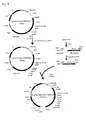
- FIGS. 1 and 2 illustrate the process of preparing a recombinant expression vector containing the mutant gene of polyhydroxyalkanoate synthase derived from Pseudomonas sp. 6-19 , the mutant gene of propionyl-CoA transferase derived from C. propionicum, and a phaAB gene derived from R. eutropha.
- FIG. 3 illustrates a process of mating between Escherichia coli S17-1 and R. eutropha as well as the insertion of a target gene into the chromosome of R. eutropha to prepare recombinant R. eutropha.
- the present invention provides a recombinant strain of R. eutropha that can produce polylactate or a hydroxyalkanoate-lactate copolymer, such that the polyhydroxyalkanoate (PHA) biosynthesis gene operon of wild-type Ralstonia eutropha is removed and the gene of the enzyme converting foreign lactate to lactyl-CoA along with the gene of PHA synthase whose substrate is lactyl-CoA is introduced.
- PHA polyhydroxyalkanoate
- the gene of the enzyme converting lactate to lactyl-CoA may be that of propionyl-CoA transferase ( pct ) .
- the pct gene can be derived from C. propionicum.
- the pct gene may be a mutant form that encodes propionyl-CoA transferase with equal or superior lactyl-CoA producing activity.
- the pct gene may have the following nucleotide sequences: the nucleotide sequence (cp-pct) of SEQ ID NO: 1; the nucleotide sequence (cppct512) of SEQ ID NO: 1 containing the A1200G mutation; the nucleotide sequence (cppct522) of SEQ ID NO: 1 containing the T78C, T669C, A1125G, and T1158C mutations; the nucleotide sequence (cppct531) of SEQ ID NO: 1 containing the A1200G mutation whose corresponding amino acid sequence contains the Gly335Asp mutation; the nucleotide sequence (cppct532) of SEQ ID NO: 1 containing the A1200G mutation whose corresponding amino acid sequence contains the Ala243Thr mutation; the nucleotide sequence (cppct533) of SEQ ID NO: 1 containing the T669C, A1125G, and T1158C mutations
- the pct gene mutants may be prepared by the method disclosed in Korean Patent Application No. 10-2007-0081855 .
- the pct gene preferably have the nucleotide sequence (cppct540) of SEQ ID NO: 1 containing the T78C, T669C, A1125G, and T1158C mutations whose corresponding amino acid sequence contains the Val193Ala mutation.
- the gene of PHA synthase using lactyl-CoA as its substrate may be the PHA synthase gene of Pseudomonas sp. 6-19.
- the gene of PHA synthase using lactyl-CoA as its substrate includes a mutant thereof that encodes PHA synthase having equal or superior PHA synthesizing capability.
- the gene of PHA synthase using lactyl-CoA as its substrate may possess, but is not limited to, a nucleotide sequence corresponding to the amino acid sequence of SEQ ID NO: 2 or the amino acid sequence of SEQ ID NO: 2 with at least one of the following mutations: E130D, S325T, L412M, S477R, S477H, S477F, S477Y, S477G, Q481M, Q481K and Q481R.
- Mutation of the gene encoding PHA synthase using lactyl-CoA as its substrate may be performed by the method disclosed in Korean Patent Application No. 10-2008-0068607 .
- the PHA synthase gene have the nucleotide sequence corresponding to at least one amino acid sequence selected from the group consisting of: the amino acid sequence (C1335) of SEQ ID NO: 2 containing the E130D, S325T, L412M, S477G and Q481M mutations; the amino acid sequence (C1310) of SEQ ID NO: 2 containing the E130D, S477F and Q481K mutations; and the amino acid sequence (C1312) of SEQ ID NO: 2 containing the E130D, S477F and Q481R mutations.
- the recombinant strain of R. eutropha may further include a gene coding 3HB-CoA synthase.
- the gene encoding 3HB-CoA synthase allows the preparation of hydroxyalkanoate-lactate copolymer with a high molar fraction of hydroxyalkanoate, even when hydroxyalkanoate is not present in the medium.
- the gene coding 3HB-CoA synthase may include a ketothiolase gene and acetoacetyl-CoA reductase gene, both of which may be derived from, but not limited to R. eutropha.
- recombinant R. eutropha may furthermore include a PhaG gene.
- the PhaG gene may be derived from P . Putida KT2440.
- the PhaG gene is also included in recombinant R. eutropha, recombinant R. eutropha becomes capable of producing a hydroxyalkanoate-lactate copolymer of MCL.
- Introduction of the gene encoding the enzyme that converts lactate to lactyl-CoA, the gene of PHA synthase that uses lactyl CoA as a substrate, the gene encoding 3HB-CoA synthase and/or the PhaG gene of recombinant R. eutropha may be performed by following a conventional method mentioned in the prior art.
- the method may include preparation of a vector containing the gene encoding the enzyme that converts lactate to lactyl-CoA and/or the gene of PHA synthase that uses lactyl-CoA as a substrate as well as transformation of R. eutropha in which a wild-type PHA synthesis operon is removed from the recombinant vector.
- the term "vector” implies a DNA construct containing a DNA sequence operably linked to a control sequence capable of expressing DNA in a suitable host.
- the vector may be a plasmid vector, bacteriophage vector, cosmid vector or Yeast Artificial Chromosome (YAC) vector, although a plasmid vector is typically used.
- a typical plasmid vector used herein may have (a) a replication origin for effective replication into several hundreds of plasmid vectors per host cell, (b) an antibiotic resistance gene for the selection of a host cell transformed by the plasmid vector, and (c) a restriction enzyme cutting site into which a foreign DNA fragment can be inserted.
- the vector may be easily ligated with foreign DNA using a synthetic oligonucleotide adaptor or linker following conventional methods.
- the corresponding gene should be operably linked to an expression control sequence that is involved in transcription and translation in the selected expression host.
- the expression control sequence and corresponding gene are included in a single expression vector containing both a bacterial selectable marker and replication origin.
- the expression vector should further include a useful expression marker.
- control sequence implies a DNA sequence that is essential for the expression of an operably linked coding sequence in a specific host.
- the control sequence includes a promoter for initiating transcription, a random operator sequence for controlling transcription, a sequence for coding a suitable mRNA ribosome binding site (RBS), and a sequence for controlling the termination of transcription and translation.
- a control sequence suitable for a prokaryote cell includes a promoter, a random operator sequence, and an mRNA RBS.
- a control sequence suitable for a eukaryotic cell includes a promoter, a polyadenylation signal, and an enhancer.
- the promoter is the most critical factor that affects the gene expression in a plasmid. Therefore, a high-expression promoter such as the SRa promoter or cytomegalovirus-derived promoter may be used.
- any one of the various expression control sequences may be employed in a vector.
- useful expression control sequences include the early and late promoters of SV40 or adenovirus as well as lac system, trp system, TAC system, TRC system, T3 and T7 promoters, the major operator and promoter regions of phage ⁇ , the control region of the fD coat protein, the promoter of the 3-phosphoglycerate kinase gene or that of a different glycolytic enzyme, the promoters of phosphatase genes, e.g., Pho5, a promoter of the yeast ⁇ -mating system, and other sequences with configurations or derivations known to control the expression of prokaryotic and eukaryotic cells or their viruses, and various combinations thereof.
- Nucleic acid becomes "operably linked" to a nucleotide sequence when both are in a functional relationship.
- An appropriate molecule e.g., a transcription-activating protein
- the DNA encoding a pre-sequence or secretory leader is operably linked to the DNA encoding a polypeptide when expressed as a pre-protein that participates in the secretion of said polypeptide; a promoter or enhancer that affects the transcription of a coding sequence is operably linked to said coding sequence; and an RBS that affects the transcription or translation of a coding sequence is operably linked to said coding sequence.
- operably linked implies that DNA sequences that are linked together are contiguous.
- secretory leader implies that DNA sequences are contiguous and in reading frame.
- an enhancer in contact with the coding sequence is not required.
- Linkage between sequences may be performed by ligation at a convenient restriction enzyme site.
- a synthetic oligonucleotide adaptor or linker may be used according to conventional methods when there is no restriction enzyme site.
- vectors and expression control sequences do function equally in the expression of DNA sequences according to the present invention.
- hosts do not function equally in the same expression system.
- those of ordinary skill in the art may be able to select various vectors, expression control sequences, and hosts without deviating from the scope of the present invention or increasing experimental error.
- a vector must be selected by considering the host.
- the present invention also provides a method for preparation of polylactate or a hydrolxyalkanoate-lactate copolymer, culture of a recombinant R. eutropha in medium containing a carbon source and lactate, or a carbon source, lactate and hydroxyalkanoate, and recovery of polylactate or hydroxyalkanoate-lactate copolymer from recombinant R. eutropha.
- recombinant R. eutropha when cultured in glucose-containing medium or medium containing glucose and hydroxyalkanoate, recombinant R. eutropha will produce either polylactate or a hydroxyalkanoate-lactate copolymer, respectively.
- recombinant R. eutropha expresses a gene encoding 3HB-CoA synthase
- hydroxyalkanoate-lactate copolymer can be prepared with a high molar fraction of hydroxyalkanoate, even when the medium is deficient in hydroxyalkanoate.
- recombinant R. eutropha expresses PhaG
- a hydroxyalkanoate-lactate copolymer of MCL can be prepared.
- the hydroxyalkanoate-lactate copolymer may include, but is not limited to, poly(3HA-co-LA), poly(3HB-co-LA), poly (3HP-co-LA), poly(3HB-co-4HB-co-LA), poly(3HP-co-4HB-co-LA), poly(3HB-co-3HV-co-LA), poly(4HB-co-LA-co-3HP), and poly(MCL 3-HA-co-LA).
- the yield of hydroxyalkanoate-lactate copolymer may vary according to the type of hydroxyalkanoate contained in the medium.
- the hydroxyalkanoate substrate for the synthesis of hydroxyalkanoate-lactate copolymer may be at least one of the following compounds: 3-hydroxybutyrate, 3-hydroxyvalerate, 4-hydroxybutyrate, medium-chain-length (D)-3-hydroxycarboxylic acid with 6 to 14 carbon atoms, 2-hydroxypropionic acid, 3-hydroxypropionic acid, 3-hydroxyhexanoic acid, 3-hydroxyheptanoic acid, 3-hydroxyoctanoic acid, 3-hydroxynonanoic acid, 3-hydroxydecanoic acid, 3-hydroxyundecanoic acid, 3-hydroxydodecanoic acid, 3-hydroxytetradecanoic acid, 3-hydroxyhexadecanoic acid, 4-hydroxyvaleric acid, 4-hydroxyhexanoic acid, 4-hydroxyheptanoic acid, 4-hydroxyoctanoic acid, 4-hydroxydecanoic acid, 5-hydroxyvaleric acid, 5-hydroxyhexanoic acid, 6-hydroxydodecanoic acid, 3-hydroxy
- the present invention provides a novel method for the preparation of polylactate or hydroxyalkanoate-lactate copolymer using a recombinant strain of Ralstonia eutropha.
- a DNA fragment containing the PHB-producing operon derived from R. eutropha H16 was cleaved from the pSYL105 vector ( Lee et al., Biotech. Bioeng., 1994, 44:1337-1347 ) by BamHI/EcoRI and inserted into the BamHI/EcoRI recognition site of pBluescript II (Stratagene), thereby producing pReCAB recombinant vector.
- PHA synthase (phaC RE ) along with monomer-supplying enzymes (phaA RE & phaB RE ) were constantly expressed in a pReCAB vector under the PHB operon promoter. It is known that this vector also effectively operates in E. coli ( Lee et al., Biotech. Bioeng., 1994, 44:1337-1347 ).
- the new pReCAB vector was cleaved with BstBI/NdeI to remove the genes encoding R.eutropha H16 PHA synthase (phaC RE ), b-ketothiolase (phaA RE ) and acetoacetyl-CoA reductase (phaB RE ).
- a GFP gene amplified from a pEGFP plasmid (BD Biosciences Clontech) by PCR was then inserted into the vector (p ⁇ CAB-GFP).
- the p ⁇ CAB-GFP vector was next cleaved with BamHI/XhoI, thereby producing a gene segment to which the R. eutropha PHA biosythesis promoter was attached in the 5' direction and to which a transcription terminator gene was attached in the 3'direction.
- the gene segment was inserted into a pK18mobSacB vector ( Schafer et al. Gene (1994) 145: 69-73 ) cleaved with BamHI/SalI, thereby producing the pK18- ⁇ CAB-GFP vector. Since the pK18mobSacB vector can express sacB, a recombinant microorganism was prepared by inserting a foreign gene into the chromosome using sucrose.
- the S17-1 (pK18- ⁇ CAB-GFP) was cultured in an LB liquid medium containing 25mg/l kanamycin at 37°C for 24 hours.
- R. eutropha NCIMB11599 was also cultured in an LB liquid medium at 30°C for 24 hours. These culture solutions were mixed with each other to have a volume ratio of the S17-1 (pK18- ⁇ CAB-GFP) to the R. eutropha NCIMB11599 of 3:1, and added drop by drop to an LB solid medium by 100 ul.
- the resulting plate was cultured in a static incubator at 30°C for 18 hours.
- a colony in which the pK18- ⁇ CAB-GFP was inserted into the chromosome of R. eutropha through the first crossover was selected by suspending the cells mated in the LB plate in an LB liquid medium, and plating the suspension on a plate containing 500 mg/L kanamycin and 35mg/l chloramphenicol.
- the recombinant R. eutropha in which the first crossover was done was cultured in an LB liquid medium at 30°C for 24 hours, and then 100 ul of the culture solution was plated on an LB plate containing 70 g/L sucrose.
- R. eutropha in which the second crossover occurred by a sacB gene was selected as recombinant R.
- the pK18- ⁇ CAB-GFP vector prepared in Example 1 was cleaved with BamHI/NdeI to remove GFP, and a gene segment obtained by cleaving a pPs619C1335CPPCT540 vector with BamHI/NdeI was inserted thereinto, thereby preparing a pK18- ⁇ CAB-335540 vector.
- a recombinant R . eutropha 335540 in which phaCAB was removed and phaC1 Ps6-19 335 from Pseudomonas sp.
- the pK18- ⁇ CAB-GFP vector prepared in Example 1 was cleaved with BamHI/NdeI to remove GFP, and a gene segment obtained by cleaving pPs619C1335ReAB vector with BamHI/NdeI was inserted thereinto, thereby preparing pK18- ⁇ CAB-335ReAB vector.
- a recombinant R. eutropha 335ReAB in which phaCAB was removed and phaC1 Ps6-19 335 from Pseudomonas sp.
- KCTC 11027BP PHB monomer-supplying enzymes (phaA RE & phaB RE ) from R: eutropha H16 were inserted into a chromosome, was prepared (see Table 1).
- the preparing process was performed in the same manners as Example 1 using E. coli S17-1 (see FIG. 3 ).
- Example 4 Preparation of recombinant R. eutropha into which PHA synthase from Pseudomonas sp. 6-19 (KCTC 11027BP), propionyl-CoA transferase (CPPCT) from Clostridium propionicum, and ketothiolase (phaA RE ) and acetoacetyl-CoA reductase (phaB RE ) from R. eutropha H16 are inserted
- the pK18- ⁇ CAB-GFP vector prepared in Example 1 was cleaved with BamHI/NdeI to remove GFP, and gene segments obtained by cleaving pPs619C1310CPPCT540ReAB and pPs619C1312CPPCT540ReAB vectors with BamHI/NdeI were inserted thereinto, thereby preparing pK18- ⁇ CAB-310540ReAB and pK18- ⁇ CAB-312540ReAB vectors, respectively.
- recombinant R. eutropha 310540ReAB and R were used to generate recombinant R. eutropha 310540ReAB and R.
- eutropha 312540ReABphaCAB in which phaCAB was removed and phaC1 Ps6-19 310 or phaC1 Ps6-19 312 from Pseudomonas sp. 6-19 (KCTC 11027BP), propionyl-CoA transferase(CPPCT540) from Clostridium propionicum, and PHB monomer-supplying enzymes (phaA RE & octenoic acid, malic acid, 3-hydroxysuccinic acid-methyl ester, 3-hydroxyadipinic acid-methyl ester, 3-hydroxysuberic acid-methyl ester, 3-hydroxyazelaic acid-methyl ester, 3-hydroxysebacic acid-methyl ester, 3-hydroxysuberic acid-ethyl ester, 3-hydroxysebacic acid-ethyl ester, 3-hydroxypimelic acid-propyl ester, 3-hydroxysebacic acid-benzyl ester, 3-hydroxy-8-acetoxyoctanoic acid, 3-hydroxy-9-ace
- the R. eutropha GFP was transformed to a vector expressing PHA synthase from Pseudomonas sp. 6-19 (KCTC 11027BP), propionyl-CoA transferase (CPPCT) from Clostridium propionicum, and PhaG from P. putida KT2440, and then cultured as described in Example 5.
- KCTC 11027BP Pseudomonas sp. 6-19
- CPPCT propionyl-CoA transferase
- PhaG from P. putida KT2440
- a process of preparing a vector was as follows.
- a phaG gene amplified from P. putida KT2440 by PCR was inserted into an NdeI site of a pPs619C1300CPPCT532 or pPs619C1334CPPCT532 vector (pPs619C1300CPPCT532PhaG or pPs619C1334CPPCT532PhaG).
- the pPs619C1300CPPCT532PhaG or pPs619C1334CPPCT532PhaG was cleaved with BamHI/XhoI, a gene segment obtained thereby was inserted into the same site of pBBR1MCS2 vector, thereby preparing a recombinant plasmid replicable in R. eutropha (pMCS2Ps619C1300CPPCT532PhaG or pMCS2Ps619C1334CPPCT532PhaG).
- R. eutropha pMCS2Ps619C1300CPPCT532PhaG or pMCS2Ps619C1334CPPCT532PhaG.
Landscapes
- Chemical & Material Sciences (AREA)
- Life Sciences & Earth Sciences (AREA)
- Health & Medical Sciences (AREA)
- Organic Chemistry (AREA)
- Engineering & Computer Science (AREA)
- Genetics & Genomics (AREA)
- Zoology (AREA)
- Wood Science & Technology (AREA)
- Bioinformatics & Cheminformatics (AREA)
- General Engineering & Computer Science (AREA)
- Biochemistry (AREA)
- General Health & Medical Sciences (AREA)
- Biotechnology (AREA)
- Microbiology (AREA)
- Biomedical Technology (AREA)
- Molecular Biology (AREA)
- Medicinal Chemistry (AREA)
- Chemical Kinetics & Catalysis (AREA)
- General Chemical & Material Sciences (AREA)
- Physics & Mathematics (AREA)
- Biophysics (AREA)
- Plant Pathology (AREA)
- Virology (AREA)
- Tropical Medicine & Parasitology (AREA)
- Micro-Organisms Or Cultivation Processes Thereof (AREA)
- Preparation Of Compounds By Using Micro-Organisms (AREA)
- Polyesters Or Polycarbonates (AREA)
Abstract
Description
- The present invention relates to a recombinant Ralstonia eutropha capable of producing polylactate or a hydroxyalkanoate-lactate copolymer and a method of preparing polylactate or a hydroxyalkanoate-lactate copolymer using the same.
- Polylactate (PLA) is a common biodegradable polymer derived from lactate that is highly applicable to the synthesis of general-purpose or medical polymers. Today, polymerization of lactates produced by microbial fermentation is a method for synthesizing PLA. However, this direct polymerization of lactates can only produce PLA with low molecular weight (1000 to 5000 daltons). PLA with a molecular weight of 100,000 daltons or more may be polymerized from smaller PLA molecules produced by the direct polymerization of lactates using a chain coupling agent. However, this method adds some complications to the process due to the addition of a solvent or chain coupling agent, both of which are difficult to remove. The most widely used method of producing high molecular weight PLA includes the conversion of lactate into lactide as well as the synthesis of PLA using the ring-opening polyaddition of lactide rings.
- When PLA is synthesized from lactate, producing a PLA homopolymer is easy. However, it is difficult to synthesize PLA copolymers that have various compositions of monomers and very ineffective in a commercial aspect.
- Polyhydroxyalkanoate (PHA) is polyester that acts as an energy or carbon storage molecule in microorganisms when there are excessive levels of carbon but a lack of other nutrients such as phosphorus, nitrogen, magnesium and oxygen. PHA is known as an alternative to conventional synthetic plastic due to its similarity to conventional synthetic polymer derived from petroleum as well as its perfect biodegradability.
- To produce PHA from microorganisms, there must be present an enzyme that converts the metabolic product of the microorganism into PHA monomer as well as PHA synthase, which then synthesizes PHA polymer from PHA monomers. To synthesize PLA and PLA copolymer using microorganisms, a system as described above is needed, as well as enzymes capable of providing lactyl-CoA and hydroxyacyl-CoA, which is originally a substrate for PHA synthase.
- Further, for economical production of biodegradable polymer, it is crucial to efficiently accumulate PLA and PLA copolymer in the cell. In particular, it is necessary to produce a high concentration of PLA and PLA copolymer through high concentration cultivation. Thus, technology that allows the efficient production of a recombinant microorganism compatible with the conditions described above is needed.
- The objective of the present invention is the development of a recombinant Ralstonia eutropha (R. eutropha) capable of producing a high-concentration polylactate or hydroxyalkanoate-lactate copolymer and a method of preparing polylactate or a hydroxyalkanoate-lactate copolymer using the same.
- One aspect of the present invention is a recombinant strain of R. eutropha capable of producing a high concentration of polylactate polymer or copolymer as well as a method of preparing polylactate or hydroxyalkanoate-lactate copolymer using said strain.
- The inventors succeeded in synthesizing polylactate polymer and copolymer using propionyl-CoA transferase derived from Clostridium propionicum (C. propionicum) that produces lactyl-CoA as well as a Pseudomonas sp. 6-19-derived mutant of polyhydroxyalkanoate synthase that uses the newly synthesized lactyl-CoA as a substrate (Korean Patent Application No.
10-2006-0116234 - Furthermore, the inventors intended to prepare a recombinant strain of R. eutropha capable of efficiently producing polylactate polymer for the economical production of a biodegradable polymer. To this end, the inventors prepared a recombinant R. eutropha having lost PHA production capability, and a transformed recombinant R. eutropha by transforming the recombinant R. eutropha with a plasmid expressing propionyl-CoA transferase derived from C. propionicum and a polyhydroxyalkanoate synthase of Pseudomonas. sp. 6-19 or introducing a gene expressing a propionyl-CoA transferase derived from C. propionicum and a gene expressing a polyhydroxyalkanoate synthase of P. sp. 6-19 to a recombinant R. eutropha having lost PHA production capability. The inventors found that polylactate polymer and copolymer could be efficiently prepared from glucose using the recombinant R. eutropha as prepared above. This entails the present invention.
- The present invention includes a recombinant strain of Ralstonia eutropha (R. eutropha) capable of efficiently producing polylactate or hydroxyalkanoate-lactate copolymer as well as a method of preparing polylactate or hydroxyalkanoate-lactate copolymer by culturing this same strain.
-
FIGS. 1 and2 illustrate the process of preparing a recombinant expression vector containing the mutant gene of polyhydroxyalkanoate synthase derived from Pseudomonas sp. 6-19, the mutant gene of propionyl-CoA transferase derived from C. propionicum, and a phaAB gene derived from R. eutropha. -
FIG. 3 illustrates a process of mating between Escherichia coli S17-1 and R. eutropha as well as the insertion of a target gene into the chromosome of R. eutropha to prepare recombinant R. eutropha. - The present invention provides a recombinant strain of R. eutropha that can produce polylactate or a hydroxyalkanoate-lactate copolymer, such that the polyhydroxyalkanoate (PHA) biosynthesis gene operon of wild-type Ralstonia eutropha is removed and the gene of the enzyme converting foreign lactate to lactyl-CoA along with the gene of PHA synthase whose substrate is lactyl-CoA is introduced.
- In the present invention, the gene of the enzyme converting lactate to lactyl-CoA may be that of propionyl-CoA transferase (pct).
- In one particular embodiment, the pct gene can be derived from C. propionicum.
- In the present invention, the pct gene may be a mutant form that encodes propionyl-CoA transferase with equal or superior lactyl-CoA producing activity.
- In one particular embodiment, the pct gene may have the following nucleotide sequences: the nucleotide sequence (cp-pct) of SEQ ID NO: 1; the nucleotide sequence (cppct512) of SEQ ID NO: 1 containing the A1200G mutation; the nucleotide sequence (cppct522) of SEQ ID NO: 1 containing the T78C, T669C, A1125G, and T1158C mutations; the nucleotide sequence (cppct531) of SEQ ID NO: 1 containing the A1200G mutation whose corresponding amino acid sequence contains the Gly335Asp mutation; the nucleotide sequence (cppct532) of SEQ ID NO: 1 containing the A1200G mutation whose corresponding amino acid sequence contains the Ala243Thr mutation; the nucleotide sequence (cppct533) of SEQ ID NO: 1 containing the T669C, A1125G, and T1158C mutations whose corresponding amino acid sequence contains the Asp65Gly mutation; the nucleotide sequence (cppct534) of SEQ ID NO: 1 containing the A1200G mutation whose corresponding amino acid sequence contains the i Asp257Asn mutation; the nucleotide sequence (cppct535) of SEQ ID NO: 1 containing the T669C, A1125G, and T1158C mutations whose corresponding amino acid sequence contains the Asp65Asn mutations; the nucleotide sequence (cppct537) of SEQ ID NO: 1 containing the T669C, A1125G, and T1158C mutations whose corresponding amino acid sequence contains the Thr199Ile mutation; and the nucleotide sequence (cppct540) of SEQ ID NO: 1 containing the T78C, T669C, A1125G, and T1158C mutations whose corresponding amino acid sequence contains the Val193Ala mutation.
- The pct gene mutants may be prepared by the method disclosed in Korean Patent Application No.
10-2007-0081855 - Meanwhile, in the present invention, the gene of PHA synthase using lactyl-CoA as its substrate may be the PHA synthase gene of Pseudomonas sp. 6-19.
- In the present invention, the gene of PHA synthase using lactyl-CoA as its substrate includes a mutant thereof that encodes PHA synthase having equal or superior PHA synthesizing capability.
- In one particular embodiment, the gene of PHA synthase using lactyl-CoA as its substrate may possess, but is not limited to, a nucleotide sequence corresponding to the amino acid sequence of SEQ ID NO: 2 or the amino acid sequence of SEQ ID NO: 2 with at least one of the following mutations: E130D, S325T, L412M, S477R, S477H, S477F, S477Y, S477G, Q481M, Q481K and Q481R.
Mutation of the gene encoding PHA synthase using lactyl-CoA as its substrate may be performed by the method disclosed in Korean Patent Application No.10-2008-0068607 - In the present invention, the recombinant strain of R. eutropha may further include a gene coding 3HB-CoA synthase. The gene encoding 3HB-CoA synthase allows the preparation of hydroxyalkanoate-lactate copolymer with a high molar fraction of hydroxyalkanoate, even when hydroxyalkanoate is not present in the medium.
- In one particular embodiment, the gene coding 3HB-CoA synthase may include a ketothiolase gene and acetoacetyl-CoA reductase gene, both of which may be derived from, but not limited to R. eutropha. In the present invention, recombinant R. eutropha may furthermore include a PhaG gene.
- In one particular embodiment, the PhaG gene may be derived from P. Putida KT2440. When the PhaG gene is also included in recombinant R. eutropha, recombinant R. eutropha becomes capable of producing a hydroxyalkanoate-lactate copolymer of MCL.
- Introduction of the gene encoding the enzyme that converts lactate to lactyl-CoA, the gene of PHA synthase that uses lactyl CoA as a substrate, the gene encoding 3HB-CoA synthase and/or the PhaG gene of recombinant R. eutropha may be performed by following a conventional method mentioned in the prior art. For example, the method may include preparation of a vector containing the gene encoding the enzyme that converts lactate to lactyl-CoA and/or the gene of PHA synthase that uses lactyl-CoA as a substrate as well as transformation of R. eutropha in which a wild-type PHA synthesis operon is removed from the recombinant vector.
- The term "vector" implies a DNA construct containing a DNA sequence operably linked to a control sequence capable of expressing DNA in a suitable host. In the present invention, the vector may be a plasmid vector, bacteriophage vector, cosmid vector or Yeast Artificial Chromosome (YAC) vector, although a plasmid vector is typically used. For example, a typical plasmid vector used herein may have (a) a replication origin for effective replication into several hundreds of plasmid vectors per host cell, (b) an antibiotic resistance gene for the selection of a host cell transformed by the plasmid vector, and (c) a restriction enzyme cutting site into which a foreign DNA fragment can be inserted. Although there is no suitable restriction enzyme cutting site, the vector may be easily ligated with foreign DNA using a synthetic oligonucleotide adaptor or linker following conventional methods.
- As shown in the prior art, to increase the expression of a transformed gene, the corresponding gene should be operably linked to an expression control sequence that is involved in transcription and translation in the selected expression host. Preferably, the expression control sequence and corresponding gene are included in a single expression vector containing both a bacterial selectable marker and replication origin. When the expression host is a eukaryotic cell, the expression vector should further include a useful expression marker.
- The term "expression control sequence" implies a DNA sequence that is essential for the expression of an operably linked coding sequence in a specific host. The control sequence includes a promoter for initiating transcription, a random operator sequence for controlling transcription, a sequence for coding a suitable mRNA ribosome binding site (RBS), and a sequence for controlling the termination of transcription and translation. For example, a control sequence suitable for a prokaryote cell includes a promoter, a random operator sequence, and an mRNA RBS. A control sequence suitable for a eukaryotic cell includes a promoter, a polyadenylation signal, and an enhancer. The promoter is the most critical factor that affects the gene expression in a plasmid. Therefore, a high-expression promoter such as the SRa promoter or cytomegalovirus-derived promoter may be used.
- To express a DNA sequence using the present invention, any one of the various expression control sequences may be employed in a vector. Examples of useful expression control sequences include the early and late promoters of SV40 or adenovirus as well as lac system, trp system, TAC system, TRC system, T3 and T7 promoters, the major operator and promoter regions of phage λ, the control region of the fD coat protein, the promoter of the 3-phosphoglycerate kinase gene or that of a different glycolytic enzyme, the promoters of phosphatase genes, e.g., Pho5, a promoter of the yeast α-mating system, and other sequences with configurations or derivations known to control the expression of prokaryotic and eukaryotic cells or their viruses, and various combinations thereof.
- Nucleic acid becomes "operably linked" to a nucleotide sequence when both are in a functional relationship. An appropriate molecule (e.g., a transcription-activating protein) may be the product of a gene and control sequence(s) that became linked in such a manner that enables gene expression. For example, the DNA encoding a pre-sequence or secretory leader is operably linked to the DNA encoding a polypeptide when expressed as a pre-protein that participates in the secretion of said polypeptide; a promoter or enhancer that affects the transcription of a coding sequence is operably linked to said coding sequence; and an RBS that affects the transcription or translation of a coding sequence is operably linked to said coding sequence. In general, "operably linked" implies that DNA sequences that are linked together are contiguous. Specifically, regarding the secretory leader, "operably linked" implies that DNA sequences are contiguous and in reading frame. However, an enhancer in contact with the coding sequence is not required. Linkage between sequences may be performed by ligation at a convenient restriction enzyme site. However, a synthetic oligonucleotide adaptor or linker may be used according to conventional methods when there is no restriction enzyme site.
- It should be noted that not all vectors and expression control sequences do function equally in the expression of DNA sequences according to the present invention. Similarly, all hosts do not function equally in the same expression system. However, those of ordinary skill in the art may be able to select various vectors, expression control sequences, and hosts without deviating from the scope of the present invention or increasing experimental error. For example, a vector must be selected by considering the host. In addition, on should consider the number of copies of the vector, the ability to control the number of copies, and the expression of other proteins encoded by the corresponding vector, such as an antibiotic marker. Considering these variables, those of ordinary skill in the art may be able to determine suitable combinations of vectors, expression control sequences and hosts.
- The present invention also provides a method for preparation of polylactate or a hydrolxyalkanoate-lactate copolymer, culture of a recombinant R. eutropha in medium containing a carbon source and lactate, or a carbon source, lactate and hydroxyalkanoate, and recovery of polylactate or hydroxyalkanoate-lactate copolymer from recombinant R. eutropha.
- For example, when cultured in glucose-containing medium or medium containing glucose and hydroxyalkanoate, recombinant R. eutropha will produce either polylactate or a hydroxyalkanoate-lactate copolymer, respectively. However, when recombinant R. eutropha expresses a gene encoding 3HB-CoA synthase, hydroxyalkanoate-lactate copolymer can be prepared with a high molar fraction of hydroxyalkanoate, even when the medium is deficient in hydroxyalkanoate. When recombinant R. eutropha expresses PhaG, a hydroxyalkanoate-lactate copolymer of MCL can be prepared.
- The hydroxyalkanoate-lactate copolymer may include, but is not limited to, poly(3HA-co-LA), poly(3HB-co-LA), poly (3HP-co-LA), poly(3HB-co-4HB-co-LA), poly(3HP-co-4HB-co-LA), poly(3HB-co-3HV-co-LA), poly(4HB-co-LA-co-3HP), and poly(MCL 3-HA-co-LA).
- Specifically, the yield of hydroxyalkanoate-lactate copolymer may vary according to the type of hydroxyalkanoate contained in the medium.
- According to the present invention, the hydroxyalkanoate substrate for the synthesis of hydroxyalkanoate-lactate copolymer may be at least one of the following compounds: 3-hydroxybutyrate, 3-hydroxyvalerate, 4-hydroxybutyrate, medium-chain-length (D)-3-hydroxycarboxylic acid with 6 to 14 carbon atoms, 2-hydroxypropionic acid, 3-hydroxypropionic acid, 3-hydroxyhexanoic acid, 3-hydroxyheptanoic acid, 3-hydroxyoctanoic acid, 3-hydroxynonanoic acid, 3-hydroxydecanoic acid, 3-hydroxyundecanoic acid, 3-hydroxydodecanoic acid, 3-hydroxytetradecanoic acid, 3-hydroxyhexadecanoic acid, 4-hydroxyvaleric acid, 4-hydroxyhexanoic acid, 4-hydroxyheptanoic acid, 4-hydroxyoctanoic acid, 4-hydroxydecanoic acid, 5-hydroxyvaleric acid, 5-hydroxyhexanoic acid, 6-hydroxydodecanoic acid, 3-hydroxy-pentenoic acid, 3-hydroxy-4-trans-hexenoic acid, 3-hydroxy-4-cis-hexenoic acid, 3-hydroxy-5-hexenoic acid, 3-hydroxy-6-trans-octenoic acid, 3-hydroxy-6-cis-octenoic acid, 3-hydroxy-7-octenoic acid, 3-hydroxy-8-nonenoic acid, 3-hydroxy-9-decenoic acid, 3-hydroxy-5-cis-dodecenoic acid, 3-hydroxy-6-cis dodecenoic acid, 3-hydroxy-5-cis tetradecenoic acid, 3-hydroxy-7-cis tetradecenoic acid, 3-hydroxy-5,8-cis-cis tetradecenoic acid, 3-hydroxy-4-methylvaleric acid, 3-hydroxy-4-methylhexanoic acid, 3-hydroxy-5-methylhexanoic acid, 3-hydroxy-6-methylheptanoic acid, 3-hydroxy-4-methyloctanoic acid, 3-hydroxy-5-methyloctanoic acid, 3-hydroxy-6-methyloctanoic acid, 3-hydroxy-7-methyloctanoic acid, 3-hydroxy-6-methylnonanoic acid, 3-hydroxy-7-methylnonanoic acid, 3-hydroxy-8-methylnonanoic acid, 3-hydroxy-7-methyldecanoic acid, 3-hydroxy-9-methyldecanoic acid, 3-hydroxy-7-methyl-6-octenoic acid, malic acid, 3-hydroxysuccinic acid-methyl ester, 3-hydroxyadipinic acid-methyl ester, 3-hydroxysuberic acid-methyl ester, 3-hydroxyazelaic acid-methyl ester, 3-hydroxysebacic acid-methyl ester, 3-hydroxysuberic acid-ethyl ester, 3-hydroxysebacic acid-ethyl ester, 3-hydroxypimelic acid-propyl ester, 3-hydroxysebacic acid-benzyl ester, 3-hydroxy-8-acetoxyoctanoic acid, 3-hydroxy-9-acetoxynonanoic acid, phenoxy-3-hydroxybutyric acid, phenoxy-3-hydroxyvaleric acid, phenoxy-3-hydroxyheptanoic acid, phenoxy-3-hydroxyoctanoic acid, para-cyanophenoxy-3-hydroxybutyric acid, para-cyanophenoxy-3-hydroxyvaleric acid, para-cyanophenoxy-3-hydroxyhexanoic acid, para-nitrophenoxy-3-hydroxyhexanoic acid, 3-hydroxy-5-phenylvaleric acid, 3-hydroxy-5-cyclohexylbutyric acid, 3, 12-dihydroxydodecanoic acid, 3,8-dihydroxy-5-cis-tetradecenoic acid, 3-hydroxy-4,5-epoxydecanoic acid, 3-hydroxy-6,7-epoxydodecanoic acid, 3-hydroxy-8,9-epoxy-5,6-cis-tetradecanoic acid, 7-cyano-3-hydroxyheptanoic acid, 9-cyano-3-hydroxynonanoic acid, 3-hydroxy-7-fluoroheptanoic acid, 3-hydroxy-9-fluorononanoic acid, 3-hydroxy-6-chlorohexanoic acid, 3-hydroxy-8-chlorooctanoic acid, 3-hydroxy-6-bromohexanoic acid, 3-hydroxy-8-bromooctanoic acid, 3-hydroxy-11-bromoundecanoic acid, 3-hydroxy-2-butenoic acid, 6-hydroxy-3-dodecenoic acid, 3-hydroxy-2-methylbutyric acid, 3-hydroxy-2-methylvaleric acid, and 3-hydroxy-2,6-dimethylheptenoic acid.
- The present invention provides a novel method for the preparation of polylactate or hydroxyalkanoate-lactate copolymer using a recombinant strain of Ralstonia eutropha.
- Exemplary embodimentsof the present invention have been disclosed herein. Although specific terms are employed, they are to be interpreted only in a generic and descriptive sense and not for the purpose of limitation. Accordingly, it should be understood by those of ordinary skill in the art that various changes in form and detail are possible without deviating from the spirit and scope of the present invention as set forth in the following claims.
- [Examples]
- <Example 1> Preparation of R. eutropha having lost PHA production capability
- To remove the PHA biosynthesis gene operon involved in the synthesis of poly(3-hydroxybutyrate)[P(3HB)] in Ralstonia eutropha (R. eutropha), a recombinant vector was prepared as follows.
- A DNA fragment containing the PHB-producing operon derived from R. eutropha H16 was cleaved from the pSYL105 vector (Lee et al., Biotech. Bioeng., 1994, 44:1337-1347) by BamHI/EcoRI and inserted into the BamHI/EcoRI recognition site of pBluescript II (Stratagene), thereby producing pReCAB recombinant vector.
- PHA synthase (phaCRE) along with monomer-supplying enzymes (phaARE & phaBRE) were constantly expressed in a pReCAB vector under the PHB operon promoter. It is known that this vector also effectively operates in E. coli (Lee et al., Biotech. Bioeng., 1994, 44:1337-1347). The new pReCAB vector was cleaved with BstBI/NdeI to remove the genes encoding R.eutropha H16 PHA synthase (phaCRE), b-ketothiolase (phaARE) and acetoacetyl-CoA reductase (phaBRE). A GFP gene amplified from a pEGFP plasmid (BD Biosciences Clontech) by PCR was then inserted into the vector (pΔCAB-GFP).
- EGFP_F_BstBI aaaaattcgaaac aggaaacagaat atggtgagcaag (SEQ ID NO: 3)
- EGFP_R_NdeI ggaattcCATATGttacttgtacagctcgtcca (SEQ ID NO: 4)
- The pΔCAB-GFP vector was next cleaved with BamHI/XhoI, thereby producing a gene segment to which the R. eutropha PHA biosythesis promoter was attached in the 5' direction and to which a transcription terminator gene was attached in the 3'direction. The gene segment was inserted into a pK18mobSacB vector (Schafer et al. Gene (1994) 145: 69-73) cleaved with BamHI/SalI, thereby producing the pK18-ΔCAB-GFP vector. Since the pK18mobSacB vector can express sacB, a recombinant microorganism was prepared by inserting a foreign gene into the chromosome using sucrose.
- After the pK18-ΔCAB-GFP vector was transformed to E. coli S 17-1, the S17-1 (pK18-ΔCAB-GFP) was cultured in an LB liquid medium containing 25mg/l kanamycin at 37°C for 24 hours. R. eutropha NCIMB11599 was also cultured in an LB liquid medium at 30°C for 24 hours. These culture solutions were mixed with each other to have a volume ratio of the S17-1 (pK18-ΔCAB-GFP) to the R. eutropha NCIMB11599 of 3:1, and added drop by drop to an LB solid medium by 100 ul. The resulting plate was cultured in a static incubator at 30°C for 18 hours. During the culture, mating occurred, in which the pK18-ΔCAB-GFP vector of the S17-1 was transferred to Ralstonia eutropha, resulting in, as shown in
FIG. 3 , a first crossover at a homology site of chromosomal DNA of Ralstonia. Since the pK18-ΔCAB-GFP is impossible to be replicated in R. eutropha, when the pK18-ΔCAB-GFP was normally inserted into the chromosome of R. eutropha through the first crossover between genes, R. eutropha showed resistance to the plate containing 500 mg/L kanamycin. - A colony in which the pK18-ΔCAB-GFP was inserted into the chromosome of R. eutropha through the first crossover was selected by suspending the cells mated in the LB plate in an LB liquid medium, and plating the suspension on a plate containing 500 mg/L kanamycin and 35mg/l chloramphenicol. For a second crossover, the recombinant R. eutropha in which the first crossover was done was cultured in an LB liquid medium at 30°C for 24 hours, and then 100 ul of the culture solution was plated on an LB plate containing 70 g/L sucrose. R. eutropha in which the second crossover occurred by a sacB gene was selected as recombinant R. eutropha through PCR (see
FIG. 3 ). After the second crossover was normally done, the recombinant R. eutropha lost the PHA biosynthesis operon (phaCAB), but the GFP gene remained in the chromosome. Through colony PCR, the recombinant R. eutropha in which the GFP was normally inserted into the chromosome was found, and was called as R. eutropha GFP. - <Example 2> Preparation of recombinant R. eutropha into which PHA synthase from Pseudomonas sp. 6-19 (KCTC 11027BP) and propionyl-CoA transferase (CPPCT) from Clostridium propionicum are inserted
- The pK18-ΔCAB-GFP vector prepared in Example 1 was cleaved with BamHI/NdeI to remove GFP, and a gene segment obtained by cleaving a pPs619C1335CPPCT540 vector with BamHI/NdeI was inserted thereinto, thereby preparing a pK18-ΔCAB-335540 vector. By using the vector, a recombinant R. eutropha 335540, in which phaCAB was removed and phaC1Ps6-19335 from Pseudomonas sp. 6-19 (KCTC 11027BP) and propionyl-CoA transferase (CPPCT540) from Clostridium propionicum were inserted into a chromosome, was prepared (see Table 1). The preparing process was performed in the same manners as Example 1 using E. coli S17-1 (see
FIG. 3 ). -
[Table 1] Recombinant R. eutropha Recombinant plasmid used herein R. eutropha NCIMB11599 R. eutropha GFP pK18-ΔCAB-GFP R. eutropha 335540 pK18-ΔCAB-335540 R. eutropha 335ReAB pK18-ΔCAB-335ReAB R. eutropha 310540ReAB pK18-ΔCAB-310540ReAB R. eutropha 312540ReAB pK18-ΔCAB-312540ReAB - <Example 3> Preparation of recombinant R. eutropha into which PHA synthase from Pseudomonas sp. 6-19 (KCTC 11027BP) and ketothiolase (phaARE) and acetoacetyl-CoA reductase (phaBRE) from R. eutropha H16 are inserted
- The pK18-ΔCAB-GFP vector prepared in Example 1 was cleaved with BamHI/NdeI to remove GFP, and a gene segment obtained by cleaving pPs619C1335ReAB vector with BamHI/NdeI was inserted thereinto, thereby preparing pK18-ΔCAB-335ReAB vector. By using the vector, a recombinant R. eutropha 335ReAB, in which phaCAB was removed and phaC1Ps6-19335 from Pseudomonas sp. 6-19 (KCTC 11027BP) and PHB monomer-supplying enzymes (phaARE & phaBRE) from R: eutropha H16 were inserted into a chromosome, was prepared (see Table 1). The preparing process was performed in the same manners as Example 1 using E. coli S17-1 (see
FIG. 3 ). - <Example 4> Preparation of recombinant R. eutropha into which PHA synthase from Pseudomonas sp. 6-19 (KCTC 11027BP), propionyl-CoA transferase (CPPCT) from Clostridium propionicum, and ketothiolase (phaARE) and acetoacetyl-CoA reductase (phaBRE) from R. eutropha H16 are inserted
- The pK18-ΔCAB-GFP vector prepared in Example 1 was cleaved with BamHI/NdeI to remove GFP, and gene segments obtained by cleaving pPs619C1310CPPCT540ReAB and pPs619C1312CPPCT540ReAB vectors with BamHI/NdeI were inserted thereinto, thereby preparing pK18-ΔCAB-310540ReAB and pK18-ΔCAB-312540ReAB vectors, respectively. By using these vectors, recombinant R. eutropha 310540ReAB and R. eutropha 312540ReABphaCAB, in which phaCAB was removed and phaC1Ps6-19310 or phaC1Ps6-19312 from Pseudomonas sp. 6-19 (KCTC 11027BP), propionyl-CoA transferase(CPPCT540) from Clostridium propionicum, and PHB monomer-supplying enzymes (phaARE & octenoic acid, malic acid, 3-hydroxysuccinic acid-methyl ester, 3-hydroxyadipinic acid-methyl ester, 3-hydroxysuberic acid-methyl ester, 3-hydroxyazelaic acid-methyl ester, 3-hydroxysebacic acid-methyl ester, 3-hydroxysuberic acid-ethyl ester, 3-hydroxysebacic acid-ethyl ester, 3-hydroxypimelic acid-propyl ester, 3-hydroxysebacic acid-benzyl ester, 3-hydroxy-8-acetoxyoctanoic acid, 3-hydroxy-9-acetoxynonanoic acid, phenoxy-3-hydroxybutyric acid, phenoxy-3-hydroxyvaleric acid, phenoxy-3-hydroxyheptanoic acid, phenoxy-3-hydroxyoctanoic acid, para-cyanophenoxy-3-hydroxybutyric acid, para-cyanophenoxy-3-hydroxyvaleric acid, para-cyanophenoxy-3-hydroxyhexanoic acid, para-nitrophenoxy-3-hydroxyhexanoic acid, 3-hydroxy-5-phenylvaleric acid, 3-hydroxy-5-cyclohexylbutyric acid, 3, 12-dihydroxydodecanoic acid, 3,8-dihydroxy-5-cis-tetradecenoic acid, 3-hydroxy-4,5-epoxydecanoic acid, 3-hydroxy-6,7-epoxydodecanoic acid, 3-hydroxy-8,9-epoxy-5,6-cis-tetradecanoic acid, 7-cyano-3-hydroxyheptanoic acid, 9-cyano-3-hydroxynonanoic acid, 3-hydroxy-7-fluoroheptanoic acid, 3-hydroxy-9-fluorononanoic acid, 3-hydroxy-6-chlorohexanoic acid, 3-hydroxy-8-chlorooctanoic acid, 3-hydroxy-6-bromohexanoic acid, 3-hydroxy-8-bromooctanoic acid, 3-hydroxy-11-bromoundecanoic acid, 3-hydroxy-2-butenoic acid, 6-hydroxy-3-dodecenoic acid, 3-hydroxy-2-methylbutyric acid, 3-hydroxy-2-methylvaleric acid, and 3-hydroxy-2,6-dimethylheptenoic acid.
R. eutropha 310540ReAB 2% glucose 46.33 0.05 1.5% glucose, NaL++ 24.06 8.64 R. eutropha 312540ReAB 2% glucose 46.50 0.06 1.5% glucose, NaL++ 12.87 7.18 NaL+++ 17.97 - *3HB: 3-hydroxybutyrate, 2 g/L
- +NaL: Sodium lactate (pH 7), 4 g/L
- ++NaL: Sodium lactate (pH 7), 6 g/L
- +++NaL: Sodium lactate (pH 7), 24 g/L
- <Example 6> Biosynthesis of P(3HB-co-LA-co-mcl3HA) copolymer through culture of recombinant R. eutropha
- The R. eutropha GFP was transformed to a vector expressing PHA synthase from Pseudomonas sp. 6-19 (KCTC 11027BP), propionyl-CoA transferase (CPPCT) from Clostridium propionicum, and PhaG from P. putida KT2440, and then cultured as described in Example 5. As a carbon source, 2% glucose was used. The content of a copolymer accumulated in a cell lysate is shown in Table 3.
- A process of preparing a vector was as follows.
- To begin with, a phaG gene amplified from P. putida KT2440 by PCR was inserted into an NdeI site of a pPs619C1300CPPCT532 or pPs619C1334CPPCT532 vector (pPs619C1300CPPCT532PhaG or pPs619C1334CPPCT532PhaG). Subsequently, the pPs619C1300CPPCT532PhaG or pPs619C1334CPPCT532PhaG was cleaved with BamHI/XhoI, a gene segment obtained thereby was inserted into the same site of pBBR1MCS2 vector, thereby preparing a recombinant plasmid replicable in R. eutropha (pMCS2Ps619C1300CPPCT532PhaG or pMCS2Ps619C1334CPPCT532PhaG). By using the vector, a recombinant R. eutropha was prepared.
- KTPhaG500f-NdeI ggaattc catatg ggggttggcgccggg ggag (SEQ ID NO: 5)
- KTPhaGb-2100-NdeI 5- ggaattc catatg gga tcg gtg ggt aat tgg cc (SEQ ID NO: 6)
- [Table 3]
- Biosynthesis of P(LA-co-3HB-co-mcl3HA) copolymer through culture of recombinant R. eutropha
Enzymes Plasmid in PHA content (wt%) PHA composition (mol %) LA (C3) 3HB (C4) 3HHx (C6) 3HO (C8) 3HD (C10) 3HDD (C12) 3H5DD (C12') PhaC1-300Ps6-19 Pct532 PhaG 20.9 2.0 94.1 0.5 0.8 0.9 1.5 0.3 PhaC1-334Ps6-19 Pct532 PhaG 19.7 2.7 91.7 0.5 1.2 1.3 2.3 0.3 



Claims (16)
- A recombinant Ralstonia eutropha (R. eutropha) capable of producing polylactate or a hydroxyalkanoate-lactate copolymer, wherein polyhydroxyalkanoate (PHA) biosynthesis gene operon of a wild-type R. eutropha is removed, and a gene of an enzyme converting lactate into lactyl-CoA and a gene of a PHA synthase using lactyl-CoA as a substrate are introduced.
- The recombinant R. eutropha according to claim 1, wherein the gene of the enzyme converting lactate into lactyl-CoA is a propionyl-CoA transferase (pct) gene.
- The recombinant R. eutropha according to claim 2, wherein the pct gene is derived from Clostridium propionicum.
- The recombinant R. eutropha according to claim 2, wherein the pct gene has a nucleotide sequence corresponding to one selected from the group consisting of:the nucleotide sequence (cp-pct) of SEQ ID NO: 1;the nucleotide sequence (cppct512) of SEQ ID NO: 1 containing the A1200G mutation;the nucleotide sequence (cppct522) of SEQ ID NO: 1 containing the T78C, T669C, A1125G, and T1158C mutations;the nucleotide sequence (cppct531) of SEQ ID NO: 1 containing the A1200G mutation whose corresponding amino acid sequence contains the Gly335Asp mutation;the nucleotide sequence (cppct532) of SEQ ID NO: 1 containing the A1200G mutation whose corresponding amino acid sequence contains the Ala243Thr mutation;the nucleotide sequence (cppct533) of SEQ ID NO: 1 containing the T669C, A1125G, and T1158C mutations whose corresponding amino acid sequence contains the Asp65Gly mutation;the nucleotide sequence (cppct534) of SEQ ID NO: 1 containing the A1200G mutation whose corresponding amino acid sequence contains the Asp257Asn mutation;the nucleotide sequence (cppct535) of SEQ ID NO: 1 containing the T669C, A1125G, and T1158C mutations whose corresponding amino acid sequence contains the Asp65Asn mutations;the nucleotide sequence (cppct537) of SEQ ID NO: 1 containing the T669C, A1125G, and T1158C mutations whose corresponding amino acid sequence contains the Thr199Ile mutation; andthe nucleotide sequence (cppct540) of SEQ ID NO: 1 containing the T78C, T669C, A1125G, and T1158C mutations whose corresponding amino acid sequence contains the Va1193Ala mutation.
- The recombinant R. eutropha according to claim 4, wherein the pct gene has the nucleotide sequence (cppct540) of SEQ ID NO: 1 containing the T78C, T669C, A1125G, and T1158C mutations whose corresponding amino acid sequence contains the Val193Ala mutation.
- The recombinant R. eutropha according to claim 1, wherein the gene of the PHA synthase using lactyl-CoA as a substrate is derived from Pseudomonas sp. 6-19.
- The recombinant R. eutropha according to claim 1, wherein the gene of the PHA synthase using lactyl-CoA as a substrate has a nucleotide sequence corresponding to the amino acid sequence of SEQ ID NO: 2 or the amino acid sequence of SEQ ID NO: 2 with at least one of the following mutations: E130D, S325T, L412M, S477R, S477H, S477F, S477Y, S477G, Q481M, Q481K and Q481R.
- The recombinant R. eutropha according to claim 7, wherein the gene of the PHA synthase using lactyl-CoA as a substrate has a nucleotide sequence corresponding to at least one amino acid sequence selected from the group consisting of:the amino acid sequence (C1335) of SEQ ID NO: 2 containing the E130D, S325T, L412M, S477G and Q481M mutations;the amino acid sequence (C1310) of SEQ ID NO: 2 containing the E130D, S477F and Q481K mutations; andthe amino acid sequence (C1312) of SEQ ID NO: 2 containing the E130D, S477F and Q481R mutations.
- The recombinant R. euti-opha according to claim 1, further comprising a gene coding a 3HB-CoA synthase.
- The recombinant R. eutropha according to claim 9, wherein the gene coding the 3HB-CoA synthase includes a ketothiolase gene and an acetoacetyl-CoA reductase gene.
- The recombinant R. eutropha according to claim 10, wherein the ketothiolase gene and the acetoacetyl-CoA reductase gene are derived from the R. eutropha.
- The recombinant R. eutropha according to claim 1, which is capable of producing a hydroxyalkanoate-lactate copolymer of MCL.
- The recombinant R. eutropha according to claim 1, further comprising a PhaG gene.
- The recombinant R. eutropha according to claim 13, wherein the PhaG gene is derived from P. Putida KT2440.
- A method of preparing polylactate or a hydroxyalkanoate-lactate copolymer, comprising:culturing a recombinant Ralstonia eutropha of any one of claims 1 to 14 in a medium containing a carbon source and lactate, or a carbon source, lactate and hydroxyalkanoate; andrecovering polylactate or a hydroxyalkanoate-lactate copolymer from the recombinant R. eutropha.
- The method according to claim 15, wherein hydroxyalkanoate of the hydroxyalkanoate-lactate copolymer includes at least one selected from the group consisting of 3-hydroxybutyrate, 3-hydroxyvalerate, 4-hydroxybutyrate, medium-chain-length (D)-3-hydroxycarboxylic acid with 6 to 14 carbon atoms, 2-hydroxypropionic acid, 3-hydroxypropionic acid, 3-hydroxyhexanoic acid, 3-hydroxyheptanoic acid, 3-hydroxyoctanoic acid, 3-hydroxynonanoic acid, 3-hydroxydecanoic acid, 3-hydroxyundecanoic acid, 3-hydroxydodecanoic acid, 3-hydroxytetradecanoic acid, 3-hydroxyhexadecanoic acid, 4-hydroxyvaleric acid, 4-hydroxyhexanoic acid, 4-hydroxyheptanoic acid, 4-hydroxyoctanoic acid, 4-hydroxydecanoic acid, 5-hydroxyvaleric acid, 5-hydroxyhexanoic acid, 6-hydroxydodecanoic acid, 3-hydroxy-pentenoic acid, 3-hydroxy-4-trans-hexenoic acid, 3-hydroxy-4-cis-hexenoic acid, 3-hydroxy-5-hexenoic acid, 3-hydroxy-6-trans-octenoic acid, 3-hydroxy-6-cis-octenoic acid, 3-hydroxy-7-octenoic acid, 3-hydroxy-8-nonenoic acid, 3-hydroxy-9-decenoic acid, 3-hydroxy-5-cis-dodecenoic acid, 3-hydroxy-6-cis dodecenoic acid, 3-hydroxy-5-cis tetradecenoic acid, 3-hydroxy-7-cis tetradecenoic acid, 3-hydroxy-5,8-cis-cis tetradecenoic acid, 3-hydroxy-4-methylvaleric acid, 3-hydroxy-4-methylhexanoic acid, 3-hydroxy-5-methylhexanoic acid, 3-hydroxy-6-methylheptanoic acid, 3-hydroxy-4-methyloctanoic acid, 3-hydroxy-5-methyloctanoic acid, 3-hydroxy-6-methyloctanoic acid, 3-hydroxy-7-methyloctanoic acid, 3-hydroxy-6-methylnonanoic acid, 3-hydroxy-7-methylnonanoic acid, 3-hydroxy-8-methylnonanoic acid, 3-hydroxy-7-methyldecanoic acid, 3-hydroxy-9-methyldecanoic acid, 3-hydroxy-7-methyl-6-octenoic acid, malic acid, 3-hydroxysuccinic acid-methyl ester, 3-hydroxyadipinic acid-methyl ester, 3-hydroxysuberic acid-methyl ester, 3-hydroxyazelaic acid-methyl ester, 3-hydroxysebacic acid-methyl ester, 3-hydroxysuberic acid-ethyl ester, 3-hydroxysebacic acid-ethyl ester, 3-hydroxypimelic acid-propyl ester, 3-hydroxysebacic acid-benzyl ester, 3-hydroxy-8-acetoxyoctanoic acid, 3-hydroxy-9-acetoxynonanoic acid, phenoxy-3-hydroxybutyric acid, phenoxy-3-hydroxyvaleric acid, phenoxy-3-hydroxyheptanoic acid, phenoxy-3-hydroxyoctanoic acid, para-cyanophenoxy-3-hydroxybutyric acid, para-cyanophenoxy-3-hydroxyvaleric acid, para-cyanophenoxy-3-hydroxyhexanoic acid, para-nitrophenoxy-3-hydroxyhexanoic acid, 3-hydroxy-5-phenylvaleric acid, 3-hydroxy-5-cyclohexylbutyric acid, 3, 12-dihydroxydodecanoic acid, 3,8-dihydroxy-5-cis-tetradecenoic acid, 3-hydroxy-4,5-epoxydecanoic acid, 3-hydroxy-6,7-epoxydodecanoic acid, 3-hydroxy-8,9-epoxy-5,6-cis-tetradecanoic acid, 7-cyano-3-hydroxyheptanoic acid, 9-cyano-3-hydroxynonanoic acid, 3-hydroxy-7-fluoroheptanoic acid, 3-hydroxy-9-fluorononanoic acid, 3-hydroxy-6-chlorohexanoic acid, 3-hydroxy-8-chlorooctanoic acid, 3-hydroxy-6-bromohexanoic acid, 3-hydroxy-8-bromooctanoic acid, 3-hydroxy-11-bromoundecanoic acid, 3-hydroxy-2-butenoic acid, 6-hydroxy-3-dodecenoic acid, 3-hydroxy-2-methylbutyric acid, 3-hydroxy-2-methylvaleric acid, and 3-hydroxy-2,6-dimethylheptenoic acid.
Applications Claiming Priority (2)
| Application Number | Priority Date | Filing Date | Title |
|---|---|---|---|
| KR1020090009256A KR101293886B1 (en) | 2009-02-05 | 2009-02-05 | Recombinant Ralstonia eutropha Having an Producing Ability of Polylactate or Its Copolymers and Method for Preparing Polylactate or Its Copolymers Using the Same |
| PCT/KR2010/000653 WO2010090436A2 (en) | 2009-02-05 | 2010-02-03 | Recombinant ralstonia eutropha capable of producing polylactic acid or polylatic acid copolymer, and method for producing polylactic acid or polylatic acid copolymer using same |
Publications (3)
| Publication Number | Publication Date |
|---|---|
| EP2395075A2 true EP2395075A2 (en) | 2011-12-14 |
| EP2395075A4 EP2395075A4 (en) | 2012-08-29 |
| EP2395075B1 EP2395075B1 (en) | 2013-12-25 |
Family
ID=42542499
Family Applications (1)
| Application Number | Title | Priority Date | Filing Date |
|---|---|---|---|
| EP10738720.1A Active EP2395075B1 (en) | 2009-02-05 | 2010-02-03 | Recombinant ralstonia eutropha capable of producing polylactic acid or polylactic acid copolymer, and method for producing polylactic acid or polylactic acid copolymer using same |
Country Status (7)
| Country | Link |
|---|---|
| US (3) | US8685701B2 (en) |
| EP (1) | EP2395075B1 (en) |
| JP (1) | JP5626735B2 (en) |
| KR (1) | KR101293886B1 (en) |
| CN (1) | CN102307988B (en) |
| TW (1) | TWI425090B (en) |
| WO (1) | WO2010090436A2 (en) |
Families Citing this family (15)
| Publication number | Priority date | Publication date | Assignee | Title |
|---|---|---|---|---|
| KR101045572B1 (en) * | 2007-08-14 | 2011-07-01 | 주식회사 엘지화학 | Propionyl-CoA Transferase Variants Derived from Cructostilridium Substances and Processes for Producing Lactate Polymers or Lactate Copolymers Using the Variants |
| KR101293886B1 (en) * | 2009-02-05 | 2013-08-07 | 주식회사 엘지화학 | Recombinant Ralstonia eutropha Having an Producing Ability of Polylactate or Its Copolymers and Method for Preparing Polylactate or Its Copolymers Using the Same |
| KR101328567B1 (en) * | 2011-03-11 | 2013-11-13 | 한국화학연구원 | Recombinant Microorganism Producing polyhydroxyalkanoate (PHA) containing 2-hydroxybutyrate (2HB) monomer and Preparing Method of PHA containing 2HB Using Thereof |
| US10113160B2 (en) * | 2014-01-30 | 2018-10-30 | Easel Biotechnologies, Llc | Carbon dioxide fixation via bypassing feedback regulation |
| JP6379537B2 (en) * | 2014-03-12 | 2018-08-29 | 東ソー株式会社 | Recombinant hydrogen-oxidizing bacteria and protein production method using the same |
| JP6589327B2 (en) * | 2015-03-27 | 2019-10-16 | 東ソー株式会社 | Recombinant hydrogen-oxidizing bacteria and protein production method using the same |
| KR101774431B1 (en) * | 2016-01-28 | 2017-09-05 | 한국과학기술원 | Recombinant Microorganism Having Ability Producing Poly(lactate-co-glycolate) and Its Copolymers from Xylose and Preparing Method of Poly(lactate-co-glycolate) and its copolymers Using Thereof |
| KR102241367B1 (en) * | 2018-01-05 | 2021-04-15 | 주식회사 엘지화학 | Block copolymer |
| KR102519456B1 (en) | 2018-03-15 | 2023-04-06 | 주식회사 엘지화학 | Method for preparing poly(3-hydroxypropionate-b-lactate) block copolymer by using microorganisms |
| KR102819364B1 (en) | 2019-03-26 | 2025-06-11 | 주식회사 엘지화학 | Tri block copolymer and process for preparation thereof |
| CN110724657B (en) * | 2019-10-29 | 2022-01-11 | 江南大学 | Strategy for regulating cell morphology and improving polylactic acid production performance |
| CN114806998B (en) * | 2022-06-27 | 2022-09-27 | 中国农业科学院北京畜牧兽医研究所 | Ralstonia engineering bacterium for producing glucose and fermentation production method |
| JPWO2024058182A1 (en) * | 2022-09-15 | 2024-03-21 | ||
| CN116083468B (en) * | 2022-11-09 | 2025-12-30 | 中国农业科学院北京畜牧兽医研究所 | Methods and strains for constructing engineered Rawstone bacteria that produce inositol using glucose, glycerol, and CO2 as carbon sources. |
| KR20250011822A (en) * | 2023-07-14 | 2025-01-22 | 삼성전자주식회사 | Gene recombinant microorganism producing polyhydroxyalkanoate and method for manufacturing the same |
Family Cites Families (15)
| Publication number | Priority date | Publication date | Assignee | Title |
|---|---|---|---|---|
| JP3684150B2 (en) | 1999-12-27 | 2005-08-17 | キヤノン株式会社 | Polyhydroxyalkanoate |
| BR0115877A (en) * | 2000-11-20 | 2003-10-07 | Cargill Inc | 3-hydroxypropionic acid and other organic compounds |
| DE60336757D1 (en) * | 2002-09-12 | 2011-05-26 | Metabolix Inc | PRODUCTION OF POLYHYDROXYALKANOATE BY COENZYME A-DEPENDENT ALDEHYDE DEHYDROGENASE WAYS |
| US20050163194A1 (en) | 2004-01-28 | 2005-07-28 | Qualcomm Incorporated | Interference estimation in a wireless communication system |
| KR100979694B1 (en) * | 2005-05-24 | 2010-09-02 | 한국과학기술원 | Cells or plants having a polylactate or its copolymer generating ability, and a method for producing the polylactate or its copolymer |
| KR20080053368A (en) * | 2005-09-08 | 2008-06-12 | 메레디언, 인크. | Deregulated bacteria with improved polyhydroxyalkanoate production |
| KR101241875B1 (en) | 2006-02-14 | 2013-03-11 | 엘지전자 주식회사 | Condensation type dryer device |
| JP4995469B2 (en) | 2006-03-01 | 2012-08-08 | 株式会社カネカ | Genetically modified microorganism and method for producing polyester using the same |
| US7384766B2 (en) * | 2006-07-26 | 2008-06-10 | Kaneka Corporation | Gene-substituted microorganisms, and production method of polyesters using the same |
| JP5565938B2 (en) | 2006-11-21 | 2014-08-06 | エルジー・ケム・リミテッド | Copolymer containing 4-hydroxybutyrate unit and lactate unit and method for producing the same |
| AU2007322532B2 (en) * | 2006-11-21 | 2012-02-02 | Korea Advanced Institute Of Science And Technology | Mutants of PHA synthase from Pseudomonas sp.6-19 and method for preparing lactate homopolymer or copolymer using the same |
| KR101045572B1 (en) * | 2007-08-14 | 2011-07-01 | 주식회사 엘지화학 | Propionyl-CoA Transferase Variants Derived from Cructostilridium Substances and Processes for Producing Lactate Polymers or Lactate Copolymers Using the Variants |
| KR101037354B1 (en) * | 2007-09-07 | 2011-05-26 | 한국과학기술원 | Recombinant microorganisms capable of producing polylactic acid or polylactic acid copolymers from sucrose and methods of preparing polylactic acid or lactic acid copolymers from sucrose using such microorganisms |
| KR20080068607A (en) | 2008-06-09 | 2008-07-23 | 한국정보통신주식회사 | Computer-readable record carrier |
| KR101293886B1 (en) * | 2009-02-05 | 2013-08-07 | 주식회사 엘지화학 | Recombinant Ralstonia eutropha Having an Producing Ability of Polylactate or Its Copolymers and Method for Preparing Polylactate or Its Copolymers Using the Same |
-
2009
- 2009-02-05 KR KR1020090009256A patent/KR101293886B1/en active Active
-
2010
- 2010-02-03 EP EP10738720.1A patent/EP2395075B1/en active Active
- 2010-02-03 CN CN201080006770.7A patent/CN102307988B/en active Active
- 2010-02-03 US US13/147,572 patent/US8685701B2/en active Active
- 2010-02-03 JP JP2011549062A patent/JP5626735B2/en active Active
- 2010-02-03 WO PCT/KR2010/000653 patent/WO2010090436A2/en not_active Ceased
- 2010-02-04 TW TW099103303A patent/TWI425090B/en active
-
2013
- 2013-12-18 US US14/133,072 patent/US9243265B2/en active Active
-
2015
- 2015-12-17 US US14/973,127 patent/US9920338B2/en active Active
Also Published As
| Publication number | Publication date |
|---|---|
| WO2010090436A2 (en) | 2010-08-12 |
| WO2010090436A3 (en) | 2010-11-25 |
| EP2395075A4 (en) | 2012-08-29 |
| US20120045801A1 (en) | 2012-02-23 |
| CN102307988A (en) | 2012-01-04 |
| US20140242650A1 (en) | 2014-08-28 |
| EP2395075B1 (en) | 2013-12-25 |
| KR101293886B1 (en) | 2013-08-07 |
| JP5626735B2 (en) | 2014-11-19 |
| CN102307988B (en) | 2014-07-02 |
| JP2012516695A (en) | 2012-07-26 |
| US20160177348A1 (en) | 2016-06-23 |
| US8685701B2 (en) | 2014-04-01 |
| TW201035313A (en) | 2010-10-01 |
| KR20100090019A (en) | 2010-08-13 |
| TWI425090B (en) | 2014-02-01 |
| US9243265B2 (en) | 2016-01-26 |
| US9920338B2 (en) | 2018-03-20 |
Similar Documents
| Publication | Publication Date | Title |
|---|---|---|
| EP2395075B1 (en) | Recombinant ralstonia eutropha capable of producing polylactic acid or polylactic acid copolymer, and method for producing polylactic acid or polylactic acid copolymer using same | |
| EP2188375B1 (en) | Mutant of propionyl-coa transferase from clostridium propionicum and preparing method for pla or pla copolymer using the same | |
| US8420357B2 (en) | Recombinant microorganism capable of producing polylactate or polylactate copolymer from sucrose and method for producing polylactate or polylactate copolymer from sucrose using the same | |
| EP2089522B1 (en) | Mutants of pha synthase from pseudomonas sp.6-19 and method for preparing lactate homopolymer or copolymer using the same | |
| KR101211767B1 (en) | Mutants of PHA Synthases and Method for Preparing PLA and PLA Copolymer Using the Same | |
| US20100136637A1 (en) | Recombinant microorganism having a producing ability of polylactate or its copolymers and method for preparing polyactate or its copolymers using the same | |
| KR101273599B1 (en) | Method for Preparing Polyhydroxyalkanoate Containing 2-Hydroxybutyrate | |
| US9120891B2 (en) | Method for preparing polylactate and copolymer thereof using a mutant microorganism with enhanced polylactate, and the copolymer producing capability thereof | |
| EP1208208A2 (en) | Transgenic systems for the manufacture of poly(3-hydroxy -butyrate -co -3- hydroxyhexanoate) | |
| WO2009031762A2 (en) | Recombinant microorganism capable of producing polylactate or polylactate copolymer from sucrose and method for producing polylactate or polylactate copolymer from sucrose using the same | |
| KR20170028189A (en) | Copolymer comprising 3-hydroxypropionate, 2-hydroxybutyrate and lactate as repeating unit and method for preparing the same | |
| KR102036828B1 (en) | Method for Preparing Polyhydroxyalkanoates Using 2-Hydroxyisocaproate-CoA Transferase | |
| KR20190073155A (en) | Adhesive Composition Comprising Polyhydroxyalkanoate | |
| KR102361618B1 (en) | Copolymer comprising 2-hydroxybutyrate and 3-hydroxybutyrate and method of preparing the same | |
| KR102088503B1 (en) | Copolymer comprising 4-hydroxybutyrate, 3-hydroxybutyrate and 2-hydroxybutyrate as repeating unit and method for preparing the same | |
| KR101260187B1 (en) | Recombinant microorganism able to produce polylactate or polylactate copolymer from glycerol and method for producing polylactate or polylactate copolymer from glycerol using the same | |
| KR102497785B1 (en) | Recombinant microorganism and method for preparing copolymer comprising 2-hydroxybutyrate and lactate | |
| KR102009420B1 (en) | Method for preparing copolymer comprising 4-hydroxybutyrate and lactate as repeating unit using glucose |
Legal Events
| Date | Code | Title | Description |
|---|---|---|---|
| PUAI | Public reference made under article 153(3) epc to a published international application that has entered the european phase |
Free format text: ORIGINAL CODE: 0009012 |
|
| 17P | Request for examination filed |
Effective date: 20110801 |
|
| AK | Designated contracting states |
Kind code of ref document: A2 Designated state(s): AT BE BG CH CY CZ DE DK EE ES FI FR GB GR HR HU IE IS IT LI LT LU LV MC MK MT NL NO PL PT RO SE SI SK SM TR |
|
| RTI1 | Title (correction) |
Free format text: RECOMBINANT RALSTONIA EUTROPHA CAPABLE OF PRODUCING POLYLACTIC ACID OR POLYLACTIC ACID COPOLYMER, AND METHOD FOR PRODUCING POLYLACTIC ACID OR POLYLACTIC ACID COPOLYMER USING SAME |
|
| DAX | Request for extension of the european patent (deleted) | ||
| A4 | Supplementary search report drawn up and despatched |
Effective date: 20120727 |
|
| RIC1 | Information provided on ipc code assigned before grant |
Ipc: C12N 1/21 20060101AFI20120723BHEP Ipc: C12N 15/31 20060101ALI20120723BHEP Ipc: C12N 15/63 20060101ALI20120723BHEP |
|
| GRAP | Despatch of communication of intention to grant a patent |
Free format text: ORIGINAL CODE: EPIDOSNIGR1 |
|
| INTG | Intention to grant announced |
Effective date: 20130807 |
|
| GRAS | Grant fee paid |
Free format text: ORIGINAL CODE: EPIDOSNIGR3 |
|
| GRAA | (expected) grant |
Free format text: ORIGINAL CODE: 0009210 |
|
| AK | Designated contracting states |
Kind code of ref document: B1 Designated state(s): AT BE BG CH CY CZ DE DK EE ES FI FR GB GR HR HU IE IS IT LI LT LU LV MC MK MT NL NO PL PT RO SE SI SK SM TR |
|
| REG | Reference to a national code |
Ref country code: GB Ref legal event code: FG4D |
|
| REG | Reference to a national code |
Ref country code: CH Ref legal event code: EP |
|
| REG | Reference to a national code |
Ref country code: AT Ref legal event code: REF Ref document number: 646669 Country of ref document: AT Kind code of ref document: T Effective date: 20140115 |
|
| REG | Reference to a national code |
Ref country code: IE Ref legal event code: FG4D |
|
| REG | Reference to a national code |
Ref country code: DE Ref legal event code: R096 Ref document number: 602010012691 Country of ref document: DE Effective date: 20140213 |
|
| PG25 | Lapsed in a contracting state [announced via postgrant information from national office to epo] |
Ref country code: SE Free format text: LAPSE BECAUSE OF FAILURE TO SUBMIT A TRANSLATION OF THE DESCRIPTION OR TO PAY THE FEE WITHIN THE PRESCRIBED TIME-LIMIT Effective date: 20131225 Ref country code: HR Free format text: LAPSE BECAUSE OF FAILURE TO SUBMIT A TRANSLATION OF THE DESCRIPTION OR TO PAY THE FEE WITHIN THE PRESCRIBED TIME-LIMIT Effective date: 20131225 Ref country code: LT Free format text: LAPSE BECAUSE OF FAILURE TO SUBMIT A TRANSLATION OF THE DESCRIPTION OR TO PAY THE FEE WITHIN THE PRESCRIBED TIME-LIMIT Effective date: 20131225 Ref country code: FI Free format text: LAPSE BECAUSE OF FAILURE TO SUBMIT A TRANSLATION OF THE DESCRIPTION OR TO PAY THE FEE WITHIN THE PRESCRIBED TIME-LIMIT Effective date: 20131225 Ref country code: NO Free format text: LAPSE BECAUSE OF FAILURE TO SUBMIT A TRANSLATION OF THE DESCRIPTION OR TO PAY THE FEE WITHIN THE PRESCRIBED TIME-LIMIT Effective date: 20140325 |
|
| REG | Reference to a national code |
Ref country code: NL Ref legal event code: VDEP Effective date: 20131225 |
|
| REG | Reference to a national code |
Ref country code: AT Ref legal event code: MK05 Ref document number: 646669 Country of ref document: AT Kind code of ref document: T Effective date: 20131225 |
|
| REG | Reference to a national code |
Ref country code: LT Ref legal event code: MG4D |
|
| PG25 | Lapsed in a contracting state [announced via postgrant information from national office to epo] |
Ref country code: LV Free format text: LAPSE BECAUSE OF FAILURE TO SUBMIT A TRANSLATION OF THE DESCRIPTION OR TO PAY THE FEE WITHIN THE PRESCRIBED TIME-LIMIT Effective date: 20131225 |
|
| PG25 | Lapsed in a contracting state [announced via postgrant information from national office to epo] |
Ref country code: BE Free format text: LAPSE BECAUSE OF FAILURE TO SUBMIT A TRANSLATION OF THE DESCRIPTION OR TO PAY THE FEE WITHIN THE PRESCRIBED TIME-LIMIT Effective date: 20131225 Ref country code: IS Free format text: LAPSE BECAUSE OF FAILURE TO SUBMIT A TRANSLATION OF THE DESCRIPTION OR TO PAY THE FEE WITHIN THE PRESCRIBED TIME-LIMIT Effective date: 20140425 Ref country code: EE Free format text: LAPSE BECAUSE OF FAILURE TO SUBMIT A TRANSLATION OF THE DESCRIPTION OR TO PAY THE FEE WITHIN THE PRESCRIBED TIME-LIMIT Effective date: 20131225 |
|
| PG25 | Lapsed in a contracting state [announced via postgrant information from national office to epo] |
Ref country code: PT Free format text: LAPSE BECAUSE OF FAILURE TO SUBMIT A TRANSLATION OF THE DESCRIPTION OR TO PAY THE FEE WITHIN THE PRESCRIBED TIME-LIMIT Effective date: 20140428 Ref country code: AT Free format text: LAPSE BECAUSE OF FAILURE TO SUBMIT A TRANSLATION OF THE DESCRIPTION OR TO PAY THE FEE WITHIN THE PRESCRIBED TIME-LIMIT Effective date: 20131225 Ref country code: SK Free format text: LAPSE BECAUSE OF FAILURE TO SUBMIT A TRANSLATION OF THE DESCRIPTION OR TO PAY THE FEE WITHIN THE PRESCRIBED TIME-LIMIT Effective date: 20131225 Ref country code: NL Free format text: LAPSE BECAUSE OF FAILURE TO SUBMIT A TRANSLATION OF THE DESCRIPTION OR TO PAY THE FEE WITHIN THE PRESCRIBED TIME-LIMIT Effective date: 20131225 Ref country code: CY Free format text: LAPSE BECAUSE OF FAILURE TO SUBMIT A TRANSLATION OF THE DESCRIPTION OR TO PAY THE FEE WITHIN THE PRESCRIBED TIME-LIMIT Effective date: 20131225 Ref country code: RO Free format text: LAPSE BECAUSE OF FAILURE TO SUBMIT A TRANSLATION OF THE DESCRIPTION OR TO PAY THE FEE WITHIN THE PRESCRIBED TIME-LIMIT Effective date: 20131225 Ref country code: ES Free format text: LAPSE BECAUSE OF FAILURE TO SUBMIT A TRANSLATION OF THE DESCRIPTION OR TO PAY THE FEE WITHIN THE PRESCRIBED TIME-LIMIT Effective date: 20131225 Ref country code: CZ Free format text: LAPSE BECAUSE OF FAILURE TO SUBMIT A TRANSLATION OF THE DESCRIPTION OR TO PAY THE FEE WITHIN THE PRESCRIBED TIME-LIMIT Effective date: 20131225 |
|
| REG | Reference to a national code |
Ref country code: DE Ref legal event code: R097 Ref document number: 602010012691 Country of ref document: DE |
|
| PG25 | Lapsed in a contracting state [announced via postgrant information from national office to epo] |
Ref country code: MC Free format text: LAPSE BECAUSE OF FAILURE TO SUBMIT A TRANSLATION OF THE DESCRIPTION OR TO PAY THE FEE WITHIN THE PRESCRIBED TIME-LIMIT Effective date: 20131225 Ref country code: LU Free format text: LAPSE BECAUSE OF FAILURE TO SUBMIT A TRANSLATION OF THE DESCRIPTION OR TO PAY THE FEE WITHIN THE PRESCRIBED TIME-LIMIT Effective date: 20140203 |
|
| REG | Reference to a national code |
Ref country code: CH Ref legal event code: PL |
|
| PG25 | Lapsed in a contracting state [announced via postgrant information from national office to epo] |
Ref country code: CH Free format text: LAPSE BECAUSE OF NON-PAYMENT OF DUE FEES Effective date: 20140228 Ref country code: DK Free format text: LAPSE BECAUSE OF FAILURE TO SUBMIT A TRANSLATION OF THE DESCRIPTION OR TO PAY THE FEE WITHIN THE PRESCRIBED TIME-LIMIT Effective date: 20131225 Ref country code: LI Free format text: LAPSE BECAUSE OF NON-PAYMENT OF DUE FEES Effective date: 20140228 |
|
| PLBE | No opposition filed within time limit |
Free format text: ORIGINAL CODE: 0009261 |
|
| STAA | Information on the status of an ep patent application or granted ep patent |
Free format text: STATUS: NO OPPOSITION FILED WITHIN TIME LIMIT |
|
| PG25 | Lapsed in a contracting state [announced via postgrant information from national office to epo] |
Ref country code: PL Free format text: LAPSE BECAUSE OF FAILURE TO SUBMIT A TRANSLATION OF THE DESCRIPTION OR TO PAY THE FEE WITHIN THE PRESCRIBED TIME-LIMIT Effective date: 20131225 |
|
| 26N | No opposition filed |
Effective date: 20140926 |
|
| REG | Reference to a national code |
Ref country code: IE Ref legal event code: MM4A |
|
| REG | Reference to a national code |
Ref country code: DE Ref legal event code: R097 Ref document number: 602010012691 Country of ref document: DE Effective date: 20140926 |
|
| PG25 | Lapsed in a contracting state [announced via postgrant information from national office to epo] |
Ref country code: IE Free format text: LAPSE BECAUSE OF NON-PAYMENT OF DUE FEES Effective date: 20140203 |
|
| PG25 | Lapsed in a contracting state [announced via postgrant information from national office to epo] |
Ref country code: SI Free format text: LAPSE BECAUSE OF FAILURE TO SUBMIT A TRANSLATION OF THE DESCRIPTION OR TO PAY THE FEE WITHIN THE PRESCRIBED TIME-LIMIT Effective date: 20131225 |
|
| REG | Reference to a national code |
Ref country code: FR Ref legal event code: PLFP Year of fee payment: 7 |
|
| PG25 | Lapsed in a contracting state [announced via postgrant information from national office to epo] |
Ref country code: MT Free format text: LAPSE BECAUSE OF FAILURE TO SUBMIT A TRANSLATION OF THE DESCRIPTION OR TO PAY THE FEE WITHIN THE PRESCRIBED TIME-LIMIT Effective date: 20131225 |
|
| PG25 | Lapsed in a contracting state [announced via postgrant information from national office to epo] |
Ref country code: SM Free format text: LAPSE BECAUSE OF FAILURE TO SUBMIT A TRANSLATION OF THE DESCRIPTION OR TO PAY THE FEE WITHIN THE PRESCRIBED TIME-LIMIT Effective date: 20131225 |
|
| PG25 | Lapsed in a contracting state [announced via postgrant information from national office to epo] |
Ref country code: GR Free format text: LAPSE BECAUSE OF FAILURE TO SUBMIT A TRANSLATION OF THE DESCRIPTION OR TO PAY THE FEE WITHIN THE PRESCRIBED TIME-LIMIT Effective date: 20140326 Ref country code: BG Free format text: LAPSE BECAUSE OF FAILURE TO SUBMIT A TRANSLATION OF THE DESCRIPTION OR TO PAY THE FEE WITHIN THE PRESCRIBED TIME-LIMIT Effective date: 20131225 Ref country code: IT Free format text: LAPSE BECAUSE OF FAILURE TO SUBMIT A TRANSLATION OF THE DESCRIPTION OR TO PAY THE FEE WITHIN THE PRESCRIBED TIME-LIMIT Effective date: 20131225 |
|
| PG25 | Lapsed in a contracting state [announced via postgrant information from national office to epo] |
Ref country code: HU Free format text: LAPSE BECAUSE OF FAILURE TO SUBMIT A TRANSLATION OF THE DESCRIPTION OR TO PAY THE FEE WITHIN THE PRESCRIBED TIME-LIMIT; INVALID AB INITIO Effective date: 20100203 Ref country code: TR Free format text: LAPSE BECAUSE OF FAILURE TO SUBMIT A TRANSLATION OF THE DESCRIPTION OR TO PAY THE FEE WITHIN THE PRESCRIBED TIME-LIMIT Effective date: 20131225 |
|
| REG | Reference to a national code |
Ref country code: FR Ref legal event code: PLFP Year of fee payment: 8 |
|
| REG | Reference to a national code |
Ref country code: FR Ref legal event code: PLFP Year of fee payment: 9 |
|
| PG25 | Lapsed in a contracting state [announced via postgrant information from national office to epo] |
Ref country code: MK Free format text: LAPSE BECAUSE OF FAILURE TO SUBMIT A TRANSLATION OF THE DESCRIPTION OR TO PAY THE FEE WITHIN THE PRESCRIBED TIME-LIMIT Effective date: 20131225 |
|
| PGFP | Annual fee paid to national office [announced via postgrant information from national office to epo] |
Ref country code: GB Payment date: 20260122 Year of fee payment: 17 |
|
| PGFP | Annual fee paid to national office [announced via postgrant information from national office to epo] |
Ref country code: DE Payment date: 20260120 Year of fee payment: 17 |
|
| PGFP | Annual fee paid to national office [announced via postgrant information from national office to epo] |
Ref country code: FR Payment date: 20260121 Year of fee payment: 17 |