EP2392012B1 - Compositions for radiolabeling diethylenetriaminepentaacetic acid (dtpa)-dextran - Google Patents
Compositions for radiolabeling diethylenetriaminepentaacetic acid (dtpa)-dextran Download PDFInfo
- Publication number
- EP2392012B1 EP2392012B1 EP10736135.4A EP10736135A EP2392012B1 EP 2392012 B1 EP2392012 B1 EP 2392012B1 EP 10736135 A EP10736135 A EP 10736135A EP 2392012 B1 EP2392012 B1 EP 2392012B1
- Authority
- EP
- European Patent Office
- Prior art keywords
- dextran
- dtpa
- composition
- sodium
- concentration
- Prior art date
- Legal status (The legal status is an assumption and is not a legal conclusion. Google has not performed a legal analysis and makes no representation as to the accuracy of the status listed.)
- Active
Links
Images




Classifications
-
- C—CHEMISTRY; METALLURGY
- C07—ORGANIC CHEMISTRY
- C07B—GENERAL METHODS OF ORGANIC CHEMISTRY; APPARATUS THEREFOR
- C07B59/00—Introduction of isotopes of elements into organic compounds ; Labelled organic compounds per se
- C07B59/005—Sugars; Derivatives thereof; Nucleosides; Nucleotides; Nucleic acids
-
- A—HUMAN NECESSITIES
- A61—MEDICAL OR VETERINARY SCIENCE; HYGIENE
- A61K—PREPARATIONS FOR MEDICAL, DENTAL OR TOILETRY PURPOSES
- A61K51/00—Preparations containing radioactive substances for use in therapy or testing in vivo
- A61K51/02—Preparations containing radioactive substances for use in therapy or testing in vivo characterised by the carrier, i.e. characterised by the agent or material covalently linked or complexing the radioactive nucleus
- A61K51/04—Organic compounds
- A61K51/06—Macromolecular compounds, carriers being organic macromolecular compounds, i.e. organic oligomeric, polymeric, dendrimeric molecules
- A61K51/065—Macromolecular compounds, carriers being organic macromolecular compounds, i.e. organic oligomeric, polymeric, dendrimeric molecules conjugates with carriers being macromolecules
-
- A—HUMAN NECESSITIES
- A61—MEDICAL OR VETERINARY SCIENCE; HYGIENE
- A61K—PREPARATIONS FOR MEDICAL, DENTAL OR TOILETRY PURPOSES
- A61K51/00—Preparations containing radioactive substances for use in therapy or testing in vivo
- A61K51/02—Preparations containing radioactive substances for use in therapy or testing in vivo characterised by the carrier, i.e. characterised by the agent or material covalently linked or complexing the radioactive nucleus
- A61K51/04—Organic compounds
- A61K51/0491—Sugars, nucleosides, nucleotides, oligonucleotides, nucleic acids, e.g. DNA, RNA, nucleic acid aptamers
-
- C—CHEMISTRY; METALLURGY
- C07—ORGANIC CHEMISTRY
- C07B—GENERAL METHODS OF ORGANIC CHEMISTRY; APPARATUS THEREFOR
- C07B59/00—Introduction of isotopes of elements into organic compounds ; Labelled organic compounds per se
- C07B59/001—Acyclic or carbocyclic compounds
-
- C—CHEMISTRY; METALLURGY
- C07—ORGANIC CHEMISTRY
- C07B—GENERAL METHODS OF ORGANIC CHEMISTRY; APPARATUS THEREFOR
- C07B59/00—Introduction of isotopes of elements into organic compounds ; Labelled organic compounds per se
- C07B59/004—Acyclic, carbocyclic or heterocyclic compounds containing elements other than carbon, hydrogen, halogen, oxygen, nitrogen, sulfur, selenium or tellurium
-
- C—CHEMISTRY; METALLURGY
- C07—ORGANIC CHEMISTRY
- C07B—GENERAL METHODS OF ORGANIC CHEMISTRY; APPARATUS THEREFOR
- C07B63/00—Purification; Separation; Stabilisation; Use of additives
- C07B63/04—Use of additives
-
- G—PHYSICS
- G01—MEASURING; TESTING
- G01N—INVESTIGATING OR ANALYSING MATERIALS BY DETERMINING THEIR CHEMICAL OR PHYSICAL PROPERTIES
- G01N33/00—Investigating or analysing materials by specific methods not covered by groups G01N1/00 - G01N31/00
- G01N33/48—Biological material, e.g. blood, urine; Haemocytometers
- G01N33/50—Chemical analysis of biological material, e.g. blood, urine; Testing involving biospecific ligand binding methods; Immunological testing
- G01N33/53—Immunoassay; Biospecific binding assay; Materials therefor
- G01N33/531—Production of immunochemical test materials
- G01N33/532—Production of labelled immunochemicals
- G01N33/534—Production of labelled immunochemicals with radioactive label
-
- G—PHYSICS
- G01—MEASURING; TESTING
- G01N—INVESTIGATING OR ANALYSING MATERIALS BY DETERMINING THEIR CHEMICAL OR PHYSICAL PROPERTIES
- G01N33/00—Investigating or analysing materials by specific methods not covered by groups G01N1/00 - G01N31/00
- G01N33/48—Biological material, e.g. blood, urine; Haemocytometers
- G01N33/50—Chemical analysis of biological material, e.g. blood, urine; Testing involving biospecific ligand binding methods; Immunological testing
- G01N33/58—Chemical analysis of biological material, e.g. blood, urine; Testing involving biospecific ligand binding methods; Immunological testing involving labelled substances
- G01N33/60—Chemical analysis of biological material, e.g. blood, urine; Testing involving biospecific ligand binding methods; Immunological testing involving labelled substances involving radioactive labelled substances
-
- C—CHEMISTRY; METALLURGY
- C07—ORGANIC CHEMISTRY
- C07B—GENERAL METHODS OF ORGANIC CHEMISTRY; APPARATUS THEREFOR
- C07B2200/00—Indexing scheme relating to specific properties of organic compounds
- C07B2200/05—Isotopically modified compounds, e.g. labelled
Definitions
- the present disclosure relates to the field of oncology and more particularly to the radiolabeling of a cancer detection agent.
- Sentinel node biopsy is rapidly gaining acceptance as a common practice for melanoma and breast cancer diagnosis ( Vera, D.R. et al. (2001) J. Nucl. Med. 42, 951-959 ).
- This technique has not been standardized; it typically involves the use of a 99m Tc-colloid and a blue dye.
- the radioisotope, 99m Technetium that is used in the colloid imaging agent and in the current invention, has several desirable properties: its ready availability, relatively low cost, excellent imaging quality, and its short half-life of 6 hours.
- This radiotracer is employed preoperatively to ascertain the location of the sentinel node and, then, it is used intraoperatively to pinpoint the dissection of the sentinel node(s).
- the blue dye which is cleared rapidly through the lymph channels and nodes, is used to visually confirm the selection of the radioactive node as the sentinel node. Because this biopsy procedure varies with individual practitioners, it is difficult to train practitioners with a consistent skill set and consequently, these biopsies result in a wide range of reported false-negative rates ( i.e., 0 to 12% - see Vera, D.R. ibid. ) .
- EP 0 326 226 A1 discloses paramagnetic compounds which are particularly suitable as contrast agents in magnetic resonance imaging.
- ROSER B Tehalose Drying: A Novel Replacement for Freeze-Drying
- US 3 852 413 discloses radionuclide labelled anionic polysaccharide compositions, in particular 99m Tc-sodium amylosulfate.
- the present disclosure provides a composition containing a dextran conjugated with the bifunctional chelating agent DTPA, with ease of use as an "instant" kit involving a single lyophilized vial and a liquid diluent vial, having high radiochemical purity upon radiolabeling.
- the present disclosure also provides long-term storage stability, as well as sufficient reconstituted stability to facilitate its pharmaceutical or clinical use for ease of manipulation and administration as a diagnostic imaging agent.
- the present disclosure Upon addition of Sodium 99m Tc-pertechnetate, the present disclosure displays high radiochemical purity (i.e., >90% 99m Tc-DTPA-dextran purity) for the bifunctional ligand, DTPA, which are conjugated to a number of amino-terminated leashes on to a dextran molecule via an amide bond with one of its five carboxylic arms. While free DTPA undoubtedly coordinates all five of its deprotonated carboxylic groups to bind to heavy metal ions, such as, for example, 111 Indium, as a potential octadentate ligand (also contains three nitrogen atoms - see H.R. Maecke, et al. (1989) J. Nucl. Med. 30, 1235-1239 ), the heptadentate DTPA binds with decreased thermodynamic stability, which makes it more susceptible to competition for binding 99m Tc ions, possibly resulting in decreased radiochemical purity.
- DTPA bifunctional ligand
- the high radiochemical purity of 99m Tc-DTPA-dextran was achieved by decreasing the pH to between about 2 and 4, screening for non-competing constituents and identifying the ideal transchelator, Glycine (which also serves as a pH buffer), and utilizing the following facts: (1) the distribution of competing ligands for 99m Tc is determined by association rate constants, and (2) the dissociation rate constants for 99m Tc from its DTPA-dextran complex is very slow and pH-dependent.
- the high efficiency of radiolabeling DTPA-dextran is enhanced by the transient binding to Glycine under highly acidic conditions, Glycine transferring the radioisotope to DTPA-dextran that more avidly binds it and the retention of the Technetium-99m (due to its slow dissociation rate constant) after the pH of this "instant" kit is shifted to mildly acidic conditions by its diluent.
- the present disclosure further provides a phosphate buffered saline diluent, enabling patient comfort by shifting pH from harsh acidic conditions (i.e., pH between about 3 and 4), which would cause pain on injection, to moderately acidic conditions (i.e., pH > -5), which would be well tolerated ( M. Stranz and E.S. Kastango (2002) Int. J. Pharm. Compound. 6(3), 216-220 ).
- harsh acidic conditions i.e., pH between about 3 and 4
- moderately acidic conditions i.e., pH > -5
- the present disclosure further provides a reducing agent, such as, for example, L-ascorbic acid, which further stabilizes a radiolabeled DTPA-dextran preparation containing excess stannous or stannic ions, preventing the formation of Sn-colloids or other radiochemical impurities, such as, Sn 4+ .
- a reducing agent such as, for example, L-ascorbic acid
- L-ascorbic acid which further stabilizes a radiolabeled DTPA-dextran preparation containing excess stannous or stannic ions, preventing the formation of Sn-colloids or other radiochemical impurities, such as, Sn 4+ .
- the present disclosure yet prevents the oxidative degradation of the drug substance and its constituents and the autoradiolysis of the radiolabeled drug product by containing L-ascorbic acid in the formulation.
- the present disclosure further provides a stable and esthetically pleasing environment for the DTPA-dextran in an amorphous disaccharide lyophilization cake, allowing for quick reconstitution with Sodium 99m Tc-pertechnetate and addition with a buffered saline diluent to produce a clear, non-particulate liquid for ease of use.
- the present disclosure also provides an inert gaseous headspace by backfilling the lyophilized vials with pharmaceutical-grade nitrogen gas, further stabilizing the stannous ions to provide an excess capacity over the storage lifetime of this invention for reducing Sodium 99m Tc-pertechnetate (or, 99m TcO 4 - ).
- the present method is an improved method for generating high radiochemical purity 99m Tc(III) (and possibly, 99m Tc(IV)) complexes of DTPA-dextran with a single, lyophilized vial that is further reconstituted with pH-buffered Diluent to shift final solution pH, resulting in a solution that is stable for at least 6 hours and that facilitates patient comfort ( Russell, C.D. (1980) J. Nucl. Med. 21, 354-360 ; Russell, C.D. and Suiter, A.G. (1982) Int. J. Appl. Radiat. Isot. 33, 903-906 ).
- the formulation of the lyophilized cold kit for DTPA-dextran is an "instant" kit, stabilizing the stannous chloride necessary to reduce Sodium 99m Tc-pertechnetate in a solid white lyophilized cake under a nitrogen environment, which has long-term storage stability.
- This kit generates high radiochemical purity by the Sn 2+ reduction of 99m Tc-pertechnetate under highly acidic conditions, while maintaining the 99m Technetium-DTPA-dextran complex in greater than 90% radiochemical yield following dilution with a phosphate-buffered saline solution to shift the reconstituted solution pH toward neutrality.
- the key to development of a commercial "instant" kit for sentinel node diagnosis is the rational design of an imaging agent that will possess the properties required for optimal sentinel node detection. These properties are a small molecular diameter and high receptor affinity, yielding a radiopharmaceutical agent with a rapid injection site clearance rate and low distal lymph node accumulation (Vera, D.R. ibid. ) .
- the drug substance that is employed uses a dextran platform to deliver the radiolabel.
- the dextran backbone is a pharmaceutical-grade, average molecular-weight polymer of about 9,500 that is very hydrophilic, lacking in charge, and flexible. All these physical properties reduce migration across membrane walls, which facilitate rapid injection site clearance.
- the dextran polymer is conjugated to amine-terminated tethers that are coupled to DTPA groups, giving the molecule high receptor affinity to complex 99m Technetium.
- the high signal density of 99m Tc-DTPA-mannosyl-dextran enables better detection of the sentinel node(s) due to a higher signal-to-background ratio.
- DTPA-mannosyl-dextran binds avidly to mannose-terminated glycoprotein receptors in vitro (Vera, D.R. ibid .) .
- 99m Tc-DTPA-mannosyl-dextran diffuses into lymph channels, flows to the sentinel node, and binds to mannose-binding glycoprotein receptors in macrophages and dendritic cells present in the sentinel node (Hoh, C.K.
- 99m Tc-DPTA-mannosyl-dextran is a superior targeted 99m Tc-labeled diagnostic agent for sentinel node detection (Hoh, C.K., ibid. ) . While the pre-clinical and Physician Phase I trials of 99m Tc-DTPA-mannosyl-dextran successfully employed a radiolabeling procedure that used multiple fluid transfers and multiple vials, this dosing format would have been undesirable for commercial usage.
- the composition accomplishes this delicate balancing act by utilizing a newly identified transchelator, Glycine, under highly acidic conditions.
- a transchelator is a weak chelator that transiently binds reduced 99m Technetium, facilitating the transfer of this radioisotope to a stronger chelator, or ligand.
- the ligand for reduced 99m Technetium is derivatized diethylenetriaminepentaacetic Acid (DTPA), a heptadentate bifunctional ligand that coupled to the dextran amine-terminated tether by one of its five carboxylic groups. This ligand is well known to the practitioners of the art.
- DTPA is a bifunctional chelator conjugated to peptides and proteins, usually as an anhydride form covalently attached through its carbon backbone.
- transchelators such as, for example, Citrate, Tartrate, Phosphate, Phosphonate, Glucoheptonate and even, Ascorbic Acid.
- these transchelators are largely employed in mildly acidic to neutral pH formulations and can interfere with radiolabeling the active ingredient with high efficiency.
- the optimal pH for using Ascorbic Acid as a transchelator is from pH 4.5 to 6.2 ( Liang et al. (1987) Nucl. Med. Biol. 14, 555-562 ). This stems from the pK a of its carboxylic group, pH 4.10 ( CRC: Handbook of Chemistry and Physics, 75th Edition, David R. Lide, Ph.D.
- the pK a of the carboxylic group of Glycine is 2.34. Its carboxylic group remains functional under highly acidic conditions (e.g. , partially deprotonated at pH 2 and is fully deprotonated at pH 4). At the preferred embodiment in this disclosure, Ascorbic Acid is fully protonated. Thus, the composition reduces the potential interference of ascorbic acid, utilizing the beneficial properties of this antioxidant, while employing Glycine as an optimal transchelator.
- the preferred embodiment is to have the composition range from pH about 3 to about 4 to enable high radiochemical efficiency, while shifting pH to greater than about pH 5 on dilution of the reconstituted "instant" kit with phosphate-buffered saline Diluent, which would be well tolerated by patients.
- all ingredients are desired to be USP-grade (United States Pharmacopeia).
- q.s.” has its standard pharmaceutical meaning of "as much as is sufficient”.
- Fig. 1 shows a typical elution profile for reconstituted 99m Technetium-labeled Lymphoseek Ligand Drug Product ( 99m Tc-DTPA-mannosyl-dextran), Lot NMK001, measured by a radioactivity (Nal, set at 1000 cps/Volt) detector using Size Exclusion Chromatography (SEC).
- SEC Size Exclusion Chromatography
- the lyophilized vial is reconstituted with 0.8cc of 10 milliCuries of 99m Tc-pertechnetate, mixed, and allowed to radiolabel for at least 10 minutes at ambient room temperature prior to partially neutralizing the sample in 0.2 cc Phosphate-buffered saline.
- a refrigerated drug product sample 15 ⁇ L, is injected and run at 0.6mL/minute for a run time of 40 minutes; the retention time of the 99m Tc-DTPA-mannosyl-dextran ( 99m Tc-DMD) peak is about 12 to 12.5 minutes, stretching between 9 and 15 minutes with a tailing shoulder of 99m Tc-labeled excipients eluting at a radioactive peak of about 15 to 15.5 minutes.
- the elution profile is very similar to that the potency method using the same column and mobile phase, employing a Refractive Index detector (due to the absence of a UV/VIS absorbance).
- the broad elution peak for 99m Tc-DTPA-mannosyl-dextran is a result of the heterogeneity of the dextran polymer, which is further acerbated by the heterogeneity of the coupling of mannosyl and DTPA groups to amino-terminated leases on dextran ( Vera, D.R. et al. (2001) J. Nucl. Med. 42, 951-959 ).
- the goal of the DTPA-mannosyl-dextran formulation was to achieve greater than 95% radiochemical purity in the bulk liquid drug substance formulation and greater than 90% radiochemical purity in the reconstituted lyophilized drug product.
- Fig. 2 displays a typical elution profile for 99m Technetium-labeled DTPA Standard radiolabeled with 10 milliCuries 99m Tc-pertechnetate using lyophilized Lymphoseek Ligand Drug Product Placebo (i.e., 4.5 mM L-Glycine, pH 3, 2.5 mM Sodium L(+)-Ascorbic Acid, 2% (w/v) ⁇ , ⁇ -Trehalose and 75 ⁇ glmL Stannous Chloride Dihydrate), measured by a Radioactivity (Nal) Detector using SEC radiochemical purity method, described above.
- the 99 mTc-DTPA peak retention time is about 15 minutes, eluting between 14 and 16 minutes, which are the approximate retention times for almost all of the 99m Tc-labeled low-molecular-weight excipients (data not shown).
- the topmost stacked radiochemical elution profile shows the initial lyophilized formulation pilot (5 ⁇ M (0.1 mg/mL) DTPA-mannosyl-dextran, 20 mM Sodium Citrate, pH 5.6, 5.7 mM Sodium L-Cysteine, 2% (w/v) D-Mannitol and 75 ⁇ glmL Stannous Chloride, Dihydrate) reconstituted with 10 milliCuries 99m Tc-pertechnetate and run via the SEC radiochemical purity method. (The initial lyophilized drug product formulation pilot just preceded the development of the SEC radiochemical purity method.) This elution profile clearly shows that the 99m Tc-DMD peak has less than about 25% radiochemical purity.
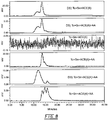
- Fig. 3 shows that three excipients of the initial pilot formulation display significant 99m Tc-labeled peaks. Proceeding from the topmost stacked radiochemical elution profile in a downward manner, the second elution profile shows a substantial 99m Tc-Citrate peak at RT-14.5 min, which may account for a significant amount of the 99m Tc-labeled interference at RT-14.5 min in the topmost pattern.
- Citrate is a known transchelator of DTPA at a pH range of 5 to 6 ( Hnatowich, D.J., Chapter 8, pg.
- the fifth elution profile at 1 mg/mL L-Cysteine clearly shows that Cysteine binds 99m Tc and interferes with the transchelation of Citrate, eluting at retention times ranging from 21 to 23 minutes.
- the sixth radiochemical elution profile involves the addition of 1mg/mL sodium L(+)-Ascorbic Acid Dihydrate to a Citrate formulation; Ascorbic Acid does not appear to interfere with 99m Tc-Citrate.
- Fig. 4 displays a comparison of the initial drug product formulation with liquid drug substance formulation pilots.
- the topmost stacked radiochemical elution profile is the initial drug product formulation and the second profile is that of Sodium Citrate in saline with SnCL 2 added to reduce 12.5 mCi 99m Tc-pertechnetate.
- the DTPA-mannosyl-dextran drug substance is partially radiolabeled with a significant 99m Tc-Citrate eluting at about 14.5 minutes.
- the use of Sodium Citrate is not a suitable pH buffer ⁇ transchelator choice.
- Fig. 5 is a stacked radiochemical elution profile for liquid DTPA-mannosyl-dextran drug substance placebo formulation pilots containing a Sodium Phosphate pH buffer and different combinations of transchelator, reducing agents and bulking agents, as measured by the SEC radiochemical purity method.
- the topmost stacked radiochemical elution profile shows a small 99m Tc-labeled interference peak with the 20 mM Sodium Phosphate buffer at pH 4 and 1.5 mg/mL Sodium Ascorbate.
- the second through the sixth elution profiles shows 20 mM Sodium Phosphate, pH 4, 75 ⁇ g/mL SnCL 2 ⁇ 2H 2 O and 12.5 mCi 99m Tc-pertechnetate with the following respective potential excipients: 1 mg/mL Sodium Citrate; 1% PEG 8000; 1 mg/mL Sodium Citrate and 1.5 mg/mL Sodium Ascorbate; 1.5 mg/mL Sodium Ascorbate and 1% PEG 8000; and 1.5 mg/mL Sodium Ascorbate, 1 mg/mL Sodium Citrate and 1% PEG 8000. They all display significant 99m Tc-labeled interference peaks eluting as early as RT-14 minutes for 99m Tc-PEG 8000 to a more low-molecular-weight retention time of -15 minutes for 99m Tc-Citrate.
- Fig. 6 the stacked radiochemical elution profiles for the corresponding liquid DTPA-mannosyl-dextran drug substance placebo formulation pilots containing a Sodium Phosphate pH buffer are seen.
- DTPA-mannosyl-dextran formulations containing 0.3 mg/mL, or 15 ⁇ M DMD in Fig. 6 the stacked radiochemical elution profiles show a little significant radiolabeling of the drug substance.
- the third profile from the top displays background levels of 99m Tc-DMD, indicating that phosphate and PEG 8000 do not serve as satisfactory transchelators. At one-fifth its pH buffer strength, Citrate is less efficient in radiolabeling drug substance and still interferes in these formulations.
- PEG 8000 apparently interferes with the drug substance yield with its hydroxyl groups and is unsuitable as a bulking agent. Since Sodium Phosphate is not an ideal pH buffer for lyophilization, alternative generally recognized as safe (GRAS) pH buffers were screened.
- GRAS safe
- Figs. 7A and 7B the stacked radiochemical elution profile for liquid DTPA-mannosyl-dextran drug substance and placebo formulation pilots containing 20 mM Sodium Acetate buffer at pH 4 are interspersed.
- the topmost radiochemical elution profile is the drug substance formulation with the potential transchelator, Sodium Tartrate at 1.5 mg/mL, displaying an enhanced radiolabeling of the drug substance with a significant interfering peak, 99m Tc-Tartrate (see fourth elution profile for corresponding placebo formulation).
- the second and third elution profiles in Fig. 7A show little difference in the presence of Sodium Ascorbate and PEG 8000.
- Fig. 7A show little difference in the presence of Sodium Ascorbate and PEG 8000.
- the radiochemical elution profiles demonstrate that the drug substance formulations for the Sodium Ascorbate and PEG 8000 combinations with Tartrate have less efficiency in radiolabeling the drug substance.
- the DTPA Standard has a small tailing edge shoulder with Sodium Acetate and Sodium Ascorbate at pH 4. Hence, the selection of Sodium Tartrate as potential transchelator in an Acetate pH buffer is unsatisfactory.
- the stacked radiochemical elution profile for liquid DTPA-mannosyl-dextran drug substance and placebo formulation pilots containing 20 mM Sodium Acetate buffer at pH 4 and 6 are also interspersed.
- the topmost and second radiochemical elution profiles show at pH 6, the presence of 1.5 mg/mL Sodium Ascorbate enhances the radiochemical purity of the drug substance, but the third and fourth profiles indicate that Ascorbate may contribute to a significant and a smaller interference peak of 99m Tc-Ascorbate at RT-13.5 and -15 minutes, respectively.
- the fifth elution profile demonstrates that the radiochemical purity is pH-sensitive, primarily radiolabeling the drug substance at pH 4 in the presence of Sodium Ascorbate.
- the fifth profile may contain some interfering material co-eluting with the 99m Tc-DMD peak, as observed in the slight shoulder of the trailing edge of the drug substance peak as well as the small 99m Tc-labeled peak at RT-16 minutes.
- Figs. 9A and 9B screening studies employing a reducing sugar with a primary amine and a zwitterionic amino acid, i.e., Sodium Glucosamine and Glycine, were conducted on an educated guess that these excipients would have some transient interactions with 99m Technetium, because this radioisotope forms stable complexes with amine and amide nitrogens, carboxylate oxygens, and thiolate and thioether sulfurs with a strong preference for thiolate sulfurs ( Giblin, M.F. et al. (1998) PNAS USA 95, 12814-12818 ).
- Fig. 9A and 9B screening studies employing a reducing sugar with a primary amine and a zwitterionic amino acid, i.e., Sodium Glucosamine and Glycine, were conducted on an educated guess that these excipients would have some transient interactions with 99m Technetium, because this radioisotope forms stable complexes with amine and
- Glycine and Sodium Ascorbate appeared compatible with enhanced radiochemical purity of the drug substance, the range of these excipients was investigated. Glycine and Sodium Ascorbate were evaluated at two final concentrations: for Gly 1 and Gly 2 , it is 0.5 and 2.0 mg/mL, respectively; and for AA 1 and AA 2 , it is 1.5 and 0.38 mg/mL, respectively.
- the mean average of two radiolabeling studies for Gly 1 and Gly 2 are 90.7 and 88.7% 99m Tc-DMD, respectively, as measured by the SEC radiochemical purity method.
- the mean average of two radiolabeling studies for the AA 1 and AA 2 drug substance formulations are 80.3 and 90.3% 99m Tc-DMD purity, respectively (see Figs. 10A and 10B ).
- the topmost elution profile displays the Acetate formulation at pH 4, which has 96.9% 99m Tc-DMD purity, as measured by the SEC radiochemical purity method.
- Glycine Hydrochloride As an acidic pH buffer and a transchelator, because the pH 3 and pH 2 drug substance formulations exhibit 97.6 and 97.1% 99m Tc-DMD purity, respectively, and meeting the desired goal of the drug substance formulation (see Fig. 13 ).
- the Acetate formulation at pH 4 failed to meet the goal for drug substance formulation (93.6% versus > 95% 99m Tc-DMD purity), but this may due to day-to-day variability in the preparation of the formulation, incomplete degassing of the solutions, the inadequate mixing of the Stannous Chloride Dihydrate, etc.
- the Glycine Hydrochloride buffer may be utilized in pH 4 formulations in addition to the Acetate buffer.
- the Class I glass vials were filled with sterile-filtered aliquots of this pH study, 1.05 mL, into 3 mL vials. Stoppers were placed in the necks of these vials, and the vials were placed on the VirTis Lyophilizer shelves for lyophilization. After the lyophilization cycle was completed, the vials were backfilled with nitrogen gas and stoppered. Subsequently, the stoppered vials were crimped with aluminum seals. On visual inspection, the lyophilized cakes for the Acetate, pH 4, and the Glycine, pH 3, drug product formulation vials retained their amorphous structure and appeared to have dried to low residual moisture.
- the preferred embodiment of this invention is the pH 3 drug product formulation (i.e., 12.5 to 25 ⁇ M DTPA-mannosyl-dextran (0.25 to 0.5 mg/mL), 0.5 mg/mL Glycine, pH 3, 0.5 mg/mL Sodium Ascorbate, 2% (w/v) ⁇ , ⁇ -Trehalose and 75 ⁇ g/mL SnCL 2 ⁇ 2H 2 O).
- the Lymphoseek Ligand Drug Product is formulated to meet the recommendations of the Infusion Nursing Society to be less than 500 mOsm ⁇ L following reconstitution with 1 mL of Sodium 99m Tc-pertechnetate.
- a suitable Diluent was identified for use with human parenterals, Buffered Saline for Injection from Greer Laboratories. The formulation of this Diluent is: 0.107% Sodium Phosphate, Heptahydrate, 0.036% Potassium Phosphate (desirably USP-NF, United States Pharmacopeia-National Formulary), 0.5% Sodium Chloride and 0.4% Phenol.
- the lyophilized Lymphoseek Ligand Drug Product vial is reconstituted with 0.7 cc of 10 to 50 mCi of Sodium 99m Tc-pertechnetate for at least 10 minutes at ambient room temperature, mixed intermittently and then, diluted with 0.3 cc of Buffered Saline for Injection.
- the Lymphoseek® Ligand Drug Product has at least twelve hours of reconstituted stability, but it is recommended that the reconstituted drug product be administered within six hours (data not shown).
- the neutralized 99m Tc-labeled Lymphoseek Ligand Drug Product should be well tolerated by patients upon intradermal injection.
Landscapes
- Health & Medical Sciences (AREA)
- Chemical & Material Sciences (AREA)
- Life Sciences & Earth Sciences (AREA)
- Immunology (AREA)
- Organic Chemistry (AREA)
- Engineering & Computer Science (AREA)
- Molecular Biology (AREA)
- General Health & Medical Sciences (AREA)
- Biomedical Technology (AREA)
- Hematology (AREA)
- Urology & Nephrology (AREA)
- Physics & Mathematics (AREA)
- Medicinal Chemistry (AREA)
- Biochemistry (AREA)
- Biotechnology (AREA)
- Analytical Chemistry (AREA)
- Microbiology (AREA)
- Cell Biology (AREA)
- General Physics & Mathematics (AREA)
- Pathology (AREA)
- Food Science & Technology (AREA)
- Pharmacology & Pharmacy (AREA)
- Optics & Photonics (AREA)
- Proteomics, Peptides & Aminoacids (AREA)
- Epidemiology (AREA)
- Animal Behavior & Ethology (AREA)
- Public Health (AREA)
- Veterinary Medicine (AREA)
- Medicines Containing Antibodies Or Antigens For Use As Internal Diagnostic Agents (AREA)
- Medicinal Preparation (AREA)
- Polysaccharides And Polysaccharide Derivatives (AREA)
Description
- The present disclosure relates to the field of oncology and more particularly to the radiolabeling of a cancer detection agent.
- Sentinel node biopsy is rapidly gaining acceptance as a common practice for melanoma and breast cancer diagnosis (Vera, D.R. et al. (2001) J. Nucl. Med. 42, 951-959). This technique has not been standardized; it typically involves the use of a 99mTc-colloid and a blue dye. The radioisotope, 99mTechnetium, that is used in the colloid imaging agent and in the current invention, has several desirable properties: its ready availability, relatively low cost, excellent imaging quality, and its short half-life of 6 hours. This radiotracer is employed preoperatively to ascertain the location of the sentinel node and, then, it is used intraoperatively to pinpoint the dissection of the sentinel node(s). The blue dye, which is cleared rapidly through the lymph channels and nodes, is used to visually confirm the selection of the radioactive node as the sentinel node. Because this biopsy procedure varies with individual practitioners, it is difficult to train practitioners with a consistent skill set and consequently, these biopsies result in a wide range of reported false-negative rates (i.e., 0 to 12% - see Vera, D.R. ibid.).
- There is another hurdle to standardization of this sentinel node biopsy technique. There is no blue dye or 99mTc-labeled agents specifically designed for sentinel node detection or extraction. Currently, the FDA (U.S. Food and Drug Administration) has not approved any dye, or 99mTc-labeled agent for sentinel node diagnosis. Thus, the following radiopharmaceutical agents are used off-label: 99mTc-sulfur colloid, filtered 99mTc-sulfur colloid, 99mTc-antimony trisulfide, and several preparations of 99mTc-labeled albumin microcolloids. (Note: Colloids are non-targeted particles that are sticky.) None of these agents display ideal properties of rapid injection site clearance or high sentinel node extraction (Hoh, C. K., et al. (2003). Nucl. Med. Biol. 30, 457-464).
- Hence, the development of a nuclear imaging diagnostic kit that is designed to meet the goals of optimal sentinel node detection (i.e., rapid injection site clearance and low distal lymph node accumulation) is an unmet medical need in breast and melanoma cancer treatment.
- VERA D R et al. "A synthetic macromolecule for sentinel node detection: 99mTc-DTPA-mannosyl-dextran" (Journal of Nuclear Medicine, vol. 42, no. 6, June 2001, pages 951-959) discloses a new radiolabeled macromolecule for use in sentinel node detection.
- HOH C K et al. "Preclinical studies of [99mTc]DTPA-mannosyl-dextran*" (Nuclear Medicine and Biology, vol. 30, no. 5, 1 May 2003, pages 457-464) discloses preclinical testing of [99mTc]DTPA-mannosyl-dextran. DTPA-mannosyl-dextran was synthesised as described in Vera D R et al. (2001).
- MENDEZ J et al. "Detection of gastric and colonic sentinel nodes through endoscopic administration of 99mTc-DTPA-mannosyl-dextran in pigs" (Journal of Nuclear Medicine, vol. 44, no. 10, October 2003, pages 1677-1681) discloses the use of [99mTc]DTPA-mannosyl-dextran in sentinel node detection. [99mTc]DTPA-mannosyl-dextran was synthesised as described in Vera D R et al. (2001) and Hoh C K et al. (2003).
- WALLACE A M et al. "Lymphoseek: A Molecular Imaging Agent for Melanoma Sentinel Lymph Node Mapping" (Annals of Surgical Oncology, vol. 14, no. 2, 5 December 2006, pages 913-921) discloses a further study into the use of [99mTc]DTPA-mannosyl-dextran in sentinel node detection. [99mTc]DTPA-mannosyl-dextran was synthesised as described in Vera D R et al. (2001) and Hoh C K et al. (2003).
- DE PAULIS T "Drug Evaluation: Lymphoseek - Neoprobe's sentinel lymph node imaging agent for use in cancer patients" (Current Opinion in Investigational Drugs, vol. 7, no. 12, 1 December 2006, pages 1100-1107) discloses a further study into the use of [99mTc]DTPA-mannosyl-dextran in sentinel node detection.
- HOH C K et al. "Preclinical studies of 99mTc-DTPA-mannosyl-dextran" (Journal of Nuclear Medicine. Vol. 43, no. 5 Supplement, No. 1469, May 2002, page 365P) discloses a further study into the use of [99mTc]DTPA-mannosyl-dextran in sentinel node detection.
-
US 6 409 990 B1 discloses new macromolecular carriers for diagnostic agents. - ELLNER SJ et al. "Dose-dependent biodistribution of [99mTc]DTPA-mannosyl-dextran for breast cancer sentinel lymph node mapping" (Nuclear Medicine and Biology, vol. 30, no. 8, 1 November 2003, pages 805-810) discloses the use of [99mTc]DTPA-mannosyl-dextran in sentinel node detection in breast cancer. [99mTc]DTPA-mannosyl-dextran was synthesised as described in Hoh C K et al. (2003).
- Wallace A M et al. "Lymphoseek: A Molecular Radiopharmaceutical for Sentinel Node Detection" (Annals of Surgical Oncology, vol. 10, no. 5, 1 June 2003, pages 531-538) discloses a further study into the use of [99mTc]DTPA-mannosyl-dextran in sentinel node detection. [99mTc]DTPA-mannosyl-dextran was synthesised as described in Vera D R et al. (2001) and Hoh C K et al. (2003).
-
EP 0 326 226 A1 discloses paramagnetic compounds which are particularly suitable as contrast agents in magnetic resonance imaging. - ROSER B "Trehalose Drying: A Novel Replacement for Freeze-Drying" (Biopharm, vol. 4, no. 8, 1 September 1991, pages 47-53) discloses the use of Trehalose to protect freeze-dried macromolecules.
- APRILE C et al. "Recombinant Aprotinin (tobacco): Technetium Labelling and Amyloid Fibrils Affinity" (European Journal of Nuclear Medicine and Molecular Imaging, vol. 34, no. 2, 134, 18 September 2007, page s148) discloses radiolabelling of aprotinin, a bovine pancreatic trypsin inhibitor.
-
US 3 852 413 discloses radionuclide labelled anionic polysaccharide compositions, in particular 99mTc-sodium amylosulfate. - The present disclosure provides a composition containing a dextran conjugated with the bifunctional chelating agent DTPA, with ease of use as an "instant" kit involving a single lyophilized vial and a liquid diluent vial, having high radiochemical purity upon radiolabeling. The present disclosure also provides long-term storage stability, as well as sufficient reconstituted stability to facilitate its pharmaceutical or clinical use for ease of manipulation and administration as a diagnostic imaging agent.
- Upon addition of Sodium 99mTc-pertechnetate, the present disclosure displays high radiochemical purity (i.e., >90% 99mTc-DTPA-dextran purity) for the bifunctional ligand, DTPA, which are conjugated to a number of amino-terminated leashes on to a dextran molecule via an amide bond with one of its five carboxylic arms. While free DTPA undoubtedly coordinates all five of its deprotonated carboxylic groups to bind to heavy metal ions, such as, for example, 111Indium, as a potential octadentate ligand (also contains three nitrogen atoms - see H.R. Maecke, et al. (1989) J. Nucl. Med. 30, 1235-1239), the heptadentate DTPA binds with decreased thermodynamic stability, which makes it more susceptible to competition for binding 99mTc ions, possibly resulting in decreased radiochemical purity.
- The high radiochemical purity of 99mTc-DTPA-dextran was achieved by decreasing the pH to between about 2 and 4, screening for non-competing constituents and identifying the ideal transchelator, Glycine (which also serves as a pH buffer), and utilizing the following facts: (1) the distribution of competing ligands for 99mTc is determined by association rate constants, and (2) the dissociation rate constants for 99mTc from its DTPA-dextran complex is very slow and pH-dependent. Hence, the high efficiency of radiolabeling DTPA-dextran is enhanced by the transient binding to Glycine under highly acidic conditions, Glycine transferring the radioisotope to DTPA-dextran that more avidly binds it and the retention of the Technetium-99m (due to its slow dissociation rate constant) after the pH of this "instant" kit is shifted to mildly acidic conditions by its diluent.
- The present disclosure further provides a phosphate buffered saline diluent, enabling patient comfort by shifting pH from harsh acidic conditions (i.e., pH between about 3 and 4), which would cause pain on injection, to moderately acidic conditions (i.e., pH > -5), which would be well tolerated (M. Stranz and E.S. Kastango (2002) Int. J. Pharm. Compound. 6(3), 216-220).
- The present disclosure further provides a reducing agent, such as, for example, L-ascorbic acid, which further stabilizes a radiolabeled DTPA-dextran preparation containing excess stannous or stannic ions, preventing the formation of Sn-colloids or other radiochemical impurities, such as, Sn4+. The present disclosure yet prevents the oxidative degradation of the drug substance and its constituents and the autoradiolysis of the radiolabeled drug product by containing L-ascorbic acid in the formulation.
- Furthermore, the present disclosure further provides a stable and esthetically pleasing environment for the DTPA-dextran in an amorphous disaccharide lyophilization cake, allowing for quick reconstitution with Sodium 99mTc-pertechnetate and addition with a buffered saline diluent to produce a clear, non-particulate liquid for ease of use. The present disclosure also provides an inert gaseous headspace by backfilling the lyophilized vials with pharmaceutical-grade nitrogen gas, further stabilizing the stannous ions to provide an excess capacity over the storage lifetime of this invention for reducing Sodium 99mTc-pertechnetate (or, 99mTcO4 -).
- The present method, then, is an improved method for generating high radiochemical purity 99mTc(III) (and possibly, 99mTc(IV)) complexes of DTPA-dextran with a single, lyophilized vial that is further reconstituted with pH-buffered Diluent to shift final solution pH, resulting in a solution that is stable for at least 6 hours and that facilitates patient comfort (Russell, C.D. (1980) J. Nucl. Med. 21, 354-360; Russell, C.D. and Speiser, A.G. (1982) Int. J. Appl. Radiat. Isot. 33, 903-906). The formulation of the lyophilized cold kit for DTPA-dextran is an "instant" kit, stabilizing the stannous chloride necessary to reduce Sodium 99mTc-pertechnetate in a solid white lyophilized cake under a nitrogen environment, which has long-term storage stability. This kit generates high radiochemical purity by the Sn2+ reduction of 99mTc-pertechnetate under highly acidic conditions, while maintaining the 99mTechnetium-DTPA-dextran complex in greater than 90% radiochemical yield following dilution with a phosphate-buffered saline solution to shift the reconstituted solution pH toward neutrality.
- For a fuller understanding of the nature and advantages of the present process, composition, and kit, reference should be had to the following detailed description taken in connection with the accompanying drawings, in which:
-
Fig. 1 shows a typical Size Exclusion Chrmotagraphy (SEC) elution profile for reconstituted 99mTechnetium-labeled Lymphoseek® (registered trademark of Neoprobe Corporation, Dublin, OHU.S. Patent No. 6,409,990 ) ligand drug product (99mTc-DTPA-mannosyl-dextran); -
Fig. 2 displays a typical elution profile for 99mTechnetium-labeled DTPA Standard radiolabeled with 10 milliCuries 99mTc-pertechnetate using lyophilized Lymphoseek ligand drug product placebo; -
Fig. 3 shows that three excipients (Citrate, Mannitol and L-Cysteine) of the initial pilot formulation display significant 99mTc-labeled peaks; -
Fig. 4 displays a comparison of the initial drug product formulation with liquid drug substance formulation pilots; -
Fig. 5 is a stacked SEC radiochemical elution profile for liquid DTPA-mannosyl-dextran drug substance placebo formulation pilots containing a sodium phosphate pH buffer and different combinations of transchelator (Citrate), reducing agents (Ascorbic Acid) and bulking agents (Polyethylene Glycol (PEG) 8000), as measured by the SEC radiochemical purity method; -
Fig. 6 is a stacked SEC radiochemical elution profiles for the corresponding liquid DTPA-mannosyl-dextran drug substance placebo formulation pilots containing a sodium phosphate pH buffer; -
Figs. 7A and 7B are the stacked SEC radiochemical elution profiles for liquid DTPA-mannosyl-dextran drug substance and placebo formulation pilots containing 20 mM sodium acetate buffer (ACE) atpH 4, Tartrate and PEG 8000; -
Fig. 8 are stacked SEC radiochemical elution profiles for liquid DTPA-mannosyl-dextran drug substance and placebo formulation pilots containing 20 mM sodium acetate buffer atpH -
Figs. 9A and 9B are screening studies employing a reducing sugar with a primary amine and a zwitterionic amino acid, i.e., Sodium Glucosamine (GlcNH) and Glycine (Gly); -
Figs. 10A and 10B are studies relating to the range of the excipients Glycine and Sodium Ascorbate at two final concentrations: for Gly1 and Gly2, it is 0.5 and 2.0 mg Glycine/mL, respectively; and for AA1 and AA2, it is 1.5 and 0.38 mg/mL Sodium Ascorbate, respectively; -
Fig. 11 are stacked SEC radiochemical elution profiles for the liquid drug substance formulation pilots with 20 mM sodium acetate buffer ranging from pH 5 to 4 with Glycine, Sodium Ascorbate and α, α-Trehalose; -
Fig. 12 are stacked SEC radiochemical elution profiles for the DMD drug substance formulations (containing 25 µM DTPA-mannosyl-dextran (0.5 mg/mL), pH buffer, 0.5 mg/mL Glycine, 0.5 mg/mL Sodium Ascorbate, 2% (w/v) α, α-Trehalose, 38.5 mm Sodium Chloride and 75 µg/mL SnCL2·2H2O) with the addition of 12.5 mCi 99mTc-pertechnetate. The pH buffer is Acetate,pH 4; Phosphate,pH 3; and Phosphate, pH 2 (from top panel to bottom); and -
Fig. 13 displays the stacked SEC radiochemical elution profiles for the DMD drug substance formulations atpH - The drawings will be described in greater detail in the examples below.
- The key to development of a commercial "instant" kit for sentinel node diagnosis is the rational design of an imaging agent that will possess the properties required for optimal sentinel node detection. These properties are a small molecular diameter and high receptor affinity, yielding a radiopharmaceutical agent with a rapid injection site clearance rate and low distal lymph node accumulation (Vera, D.R. ibid.). In the present invention, the drug substance that is employed uses a dextran platform to deliver the radiolabel. The dextran backbone is a pharmaceutical-grade, average molecular-weight polymer of about 9,500 that is very hydrophilic, lacking in charge, and flexible. All these physical properties reduce migration across membrane walls, which facilitate rapid injection site clearance. The dextran polymer is conjugated to amine-terminated tethers that are coupled to DTPA groups, giving the molecule high receptor affinity to complex 99mTechnetium. The high signal density of 99mTc-DTPA-mannosyl-dextran enables better detection of the sentinel node(s) due to a higher signal-to-background ratio.
- The addition of mannosyl groups, which are conjugated to other amine-terminated tethers, gives the binding specificity to DTPA-mannosyl-dextran to differentiate it from its alternative, non-targeted imaging agents. DTPA-mannosyl-dextran binds avidly to mannose-terminated glycoprotein receptors in vitro (Vera, D.R. ibid.). In rabbit biodistribution studies, it was shown that 99mTc-DTPA-mannosyl-dextran diffuses into lymph channels, flows to the sentinel node, and binds to mannose-binding glycoprotein receptors in macrophages and dendritic cells present in the sentinel node (Hoh, C.K. ibid.; Fiete, D. and Baenziger, J.U. (1997) J. Biol. Chem. 272(23), 14629-14637; Ramakrishna, V. et al. (2004) J. Immunol. 172, 2845-2852). Thus, 99mTc-DPTA-mannosyl-dextran is a superior targeted 99mTc-labeled diagnostic agent for sentinel node detection (Hoh, C.K., ibid.). While the pre-clinical and Physician Phase I trials of 99mTc-DTPA-mannosyl-dextran successfully employed a radiolabeling procedure that used multiple fluid transfers and multiple vials, this dosing format would have been undesirable for commercial usage.
- In order to commercialize this important nuclear imaging agent, the composition (formulation) and methods for making this composition of Lymphoseek® ligand drug product have been developed, which is the subject of the present disclosure. The development of a 99mTechnetium-labeled nuclear imaging "instant" kit is a delicate counterbalance between high radiochemical efficiency and the formation of non-specific 99mTc-labeled materials (i.e., 99mTc-colloid, or 99mTc-labeled formulation excipients). Also, reduced 99mTechnetium needs to be prevented from reoxidating to 99mTcO4 -. Hence, a lyophilized formulation was developed to stabilize stannous ions under an inert nitrogen environment.
- In this disclosure, the composition accomplishes this delicate balancing act by utilizing a newly identified transchelator, Glycine, under highly acidic conditions. A transchelator is a weak chelator that transiently binds reduced 99mTechnetium, facilitating the transfer of this radioisotope to a stronger chelator, or ligand. The ligand for reduced 99mTechnetium is derivatized diethylenetriaminepentaacetic Acid (DTPA), a heptadentate bifunctional ligand that coupled to the dextran amine-terminated tether by one of its five carboxylic groups. This ligand is well known to the practitioners of the art. It has been incorporated into "instant" kits for radiolabeling peptides and proteins (
Hansen et al., U.S. Patent No. 5,328,679 ;Zamora and Marek, U.S. Patent No. 6,685,912 B2 ; andWinchell, U.S. Patent No. 4,364,920 ) In these US patents, DTPA is a bifunctional chelator conjugated to peptides and proteins, usually as an anhydride form covalently attached through its carbon backbone. - These patents describe a spectrum of transchelators known to the art, such as, for example, Citrate, Tartrate, Phosphate, Phosphonate, Glucoheptonate and even, Ascorbic Acid. But, these transchelators are largely employed in mildly acidic to neutral pH formulations and can interfere with radiolabeling the active ingredient with high efficiency. The optimal pH for using Ascorbic Acid as a transchelator is from pH 4.5 to 6.2 (Liang et al. (1987) Nucl. Med. Biol. 14, 555-562). This stems from the pKa of its carboxylic group, pH 4.10 (CRC: Handbook of Chemistry and Physics, 75th Edition, David R. Lide, Ph.D. (CRC Press, London)). The pKa of the carboxylic group of Glycine is 2.34. Its carboxylic group remains functional under highly acidic conditions (e.g., partially deprotonated at
pH 2 and is fully deprotonated at pH 4). At the preferred embodiment in this disclosure, Ascorbic Acid is fully protonated. Thus, the composition reduces the potential interference of ascorbic acid, utilizing the beneficial properties of this antioxidant, while employing Glycine as an optimal transchelator. - When the covalently coupled DTPA binds reduced 99mTechnetium, the probable principal oxidation state is 99mTc(III) under acidic conditions, which should result in stable complex with a zero net charge (Russell, C.D. (1980) J. Nucl. Med. 21, 354-360). The liquid composition at
pH 2 radiolabels DTPA-dextran successfully, shifting to a higher pH on the addition of the diluent. But, at pH lower than, or equal to 2.7, the DTPA groups are fully protonated, possibly resulting in the total collapse of the lyophilized formulation at pH 2 (Hnatowich, D.J. et al. (1995) J. Nucl. Med. 36, 2306-2314). Hence, the preferred embodiment is to have the composition range from pH about 3 to about 4 to enable high radiochemical efficiency, while shifting pH to greater than about pH 5 on dilution of the reconstituted "instant" kit with phosphate-buffered saline Diluent, which would be well tolerated by patients. In this application,all ingredients are desired to be USP-grade (United States Pharmacopeia). Also, "q.s." has its standard pharmaceutical meaning of "as much as is sufficient". -
Fig. 1 shows a typical elution profile for reconstituted 99mTechnetium-labeled Lymphoseek Ligand Drug Product (99mTc-DTPA-mannosyl-dextran), Lot NMK001, measured by a radioactivity (Nal, set at 1000 cps/Volt) detector using Size Exclusion Chromatography (SEC). The conditions for this SEC radiochemical purity method are as follows: a TSKgel column, Tosoh Bioscience, G3000PWXL (7.8 x 30 cm, 6 µm, with a column temperature of 25 ± 5 °C) is employed with an isocratic mobile phase of 50 mM phosphate buffer, pH 7.2, and 300 mM sodium chloride. The lyophilized vial is reconstituted with 0.8cc of 10 milliCuries of 99mTc-pertechnetate, mixed, and allowed to radiolabel for at least 10 minutes at ambient room temperature prior to partially neutralizing the sample in 0.2 cc Phosphate-buffered saline. A refrigerated drug product sample, 15 µL, is injected and run at 0.6mL/minute for a run time of 40 minutes; the retention time of the 99mTc-DTPA-mannosyl-dextran (99mTc-DMD) peak is about 12 to 12.5 minutes, stretching between 9 and 15 minutes with a tailing shoulder of 99mTc-labeled excipients eluting at a radioactive peak of about 15 to 15.5 minutes. - The elution profile is very similar to that the potency method using the same column and mobile phase, employing a Refractive Index detector (due to the absence of a UV/VIS absorbance). The broad elution peak for 99mTc-DTPA-mannosyl-dextran is a result of the heterogeneity of the dextran polymer, which is further acerbated by the heterogeneity of the coupling of mannosyl and DTPA groups to amino-terminated leases on dextran (Vera, D.R. et al. (2001) J. Nucl. Med. 42, 951-959). The goal of the DTPA-mannosyl-dextran formulation was to achieve greater than 95% radiochemical purity in the bulk liquid drug substance formulation and greater than 90% radiochemical purity in the reconstituted lyophilized drug product.
-
Fig. 2 displays a typical elution profile for 99mTechnetium-labeled DTPA Standard radiolabeled with 10 milliCuries 99mTc-pertechnetate using lyophilized Lymphoseek Ligand Drug Product Placebo (i.e., 4.5 mM L-Glycine,pH 3, 2.5 mM Sodium L(+)-Ascorbic Acid, 2% (w/v) α,α-Trehalose and 75 µglmL Stannous Chloride Dihydrate), measured by a Radioactivity (Nal) Detector using SEC radiochemical purity method, described above. The 99mTc-DTPA peak retention time is about 15 minutes, eluting between 14 and 16 minutes, which are the approximate retention times for almost all of the 99mTc-labeled low-molecular-weight excipients (data not shown). - In
Fig. 3 , the topmost stacked radiochemical elution profile shows the initial lyophilized formulation pilot (5 µM (0.1 mg/mL) DTPA-mannosyl-dextran, 20 mM Sodium Citrate, pH 5.6, 5.7 mM Sodium L-Cysteine, 2% (w/v) D-Mannitol and 75 µglmL Stannous Chloride, Dihydrate) reconstituted with 10 milliCuries 99mTc-pertechnetate and run via the SEC radiochemical purity method. (The initial lyophilized drug product formulation pilot just preceded the development of the SEC radiochemical purity method.) This elution profile clearly shows that the 99mTc-DMD peak has less than about 25% radiochemical purity. - The following screening method (in the order of addition) was employed to determine potential interfering excipients in pilot formulations: (1) for drug substance placebo formulations, add 50 µL degassed saline to a 1.5 mL plastic test tube with a cap; for drug substance formulations, add 50 µL of 1.2 mg/mL DTPA-mannosyl-dextran in degassed saline for a final concentration of 0.3 mg/mL DMD; (2) for testing different excipients, add 50 µL of a four-fold concentrated, degassed solution; (3) for reduction of 99mTc-pertechnetate, add 50 µL of 300 µglmL of Stannous Chloride, Dihydrate in 0.01N degassed Hydrochloric Acid; and immediately following the addition of SnCL2, (4) for radio-labeling the formulation with reduced 99mTechnetium, add 50 µL of 50 milliCuries of 99mTc-pertechnetate for a final concentration of 12.5 mCi 99mTc-pertechnetate. (Note: Solutions were degassed by bubbling nitrogen gas for at least one hour.) Then, mix and let stand at ambient temperature at least 10 minutes before transferring to a capped HPLC autosampler vial to perform the SEC radiochemical purity assay.
-
Fig. 3 shows that three excipients of the initial pilot formulation display significant 99mTc-labeled peaks. Proceeding from the topmost stacked radiochemical elution profile in a downward manner, the second elution profile shows a substantial 99mTc-Citrate peak at RT-14.5 min, which may account for a significant amount of the 99mTc-labeled interference at RT-14.5 min in the topmost pattern. Citrate is a known transchelator of DTPA at a pH range of 5 to 6 (Hnatowich, D.J., Chapter 8, pg. 175, Cancer Imaging with Radiolabeled Antibodies (Goldenberg, D.M., ed., 1990: Kluwer Academic Publishers, Boston/Dordrecht/London)), but it appears to be too strong to use in the current formulation. In the third radiochemical elution profile, it appears that D-Mannitol competes for 99mTc, eluting at RT-16 min. This unexpected interference may be due to the impurities present in this natural product. In the fourth and fifth radiochemical elution profiles, two different L-Cysteine concentrations were employed: 0.25 and 1.0 mg/mL L-Cysteine in the final concentration, respectively. While the fourth elution profile displays some interference binding, the fifth elution profile at 1 mg/mL L-Cysteine clearly shows that Cysteine binds 99mTc and interferes with the transchelation of Citrate, eluting at retention times ranging from 21 to 23 minutes. The sixth radiochemical elution profile involves the addition of 1mg/mL sodium L(+)-Ascorbic Acid Dihydrate to a Citrate formulation; Ascorbic Acid does not appear to interfere with 99mTc-Citrate. -
Fig. 4 displays a comparison of the initial drug product formulation with liquid drug substance formulation pilots. The topmost stacked radiochemical elution profile is the initial drug product formulation and the second profile is that of Sodium Citrate in saline with SnCL2 added to reduce 12.5 mCi 99mTc-pertechnetate. In the third and fourth radiochemical elution profiles, the DTPA-mannosyl-dextran drug substance is partially radiolabeled with a significant 99mTc-Citrate eluting at about 14.5 minutes. Hence, the use of Sodium Citrate is not a suitable pH buffer\transchelator choice. -
Fig. 5 is a stacked radiochemical elution profile for liquid DTPA-mannosyl-dextran drug substance placebo formulation pilots containing a Sodium Phosphate pH buffer and different combinations of transchelator, reducing agents and bulking agents, as measured by the SEC radiochemical purity method. The topmost stacked radiochemical elution profile shows a small 99mTc-labeled interference peak with the 20 mM Sodium Phosphate buffer atpH 4 and 1.5 mg/mL Sodium Ascorbate. The second through the sixth elution profiles shows 20 mM Sodium Phosphate,pH 4, 75 µg/mL SnCL2·2H2O and 12.5 mCi 99mTc-pertechnetate with the following respective potential excipients: 1 mg/mL Sodium Citrate; 1% PEG 8000; 1 mg/mL Sodium Citrate and 1.5 mg/mL Sodium Ascorbate; 1.5 mg/mL Sodium Ascorbate and 1% PEG 8000; and 1.5 mg/mL Sodium Ascorbate, 1 mg/mL Sodium Citrate and 1% PEG 8000. They all display significant 99mTc-labeled interference peaks eluting as early as RT-14 minutes for 99mTc-PEG 8000 to a more low-molecular-weight retention time of -15 minutes for 99mTc-Citrate. - In
Fig. 6 , the stacked radiochemical elution profiles for the corresponding liquid DTPA-mannosyl-dextran drug substance placebo formulation pilots containing a Sodium Phosphate pH buffer are seen. For DTPA-mannosyl-dextran formulations containing 0.3 mg/mL, or 15 µM DMD inFig. 6 , the stacked radiochemical elution profiles show a little significant radiolabeling of the drug substance. The third profile from the top displays background levels of 99mTc-DMD, indicating that phosphate and PEG 8000 do not serve as satisfactory transchelators. At one-fifth its pH buffer strength, Citrate is less efficient in radiolabeling drug substance and still interferes in these formulations. In addition, PEG 8000 apparently interferes with the drug substance yield with its hydroxyl groups and is unsuitable as a bulking agent. Since Sodium Phosphate is not an ideal pH buffer for lyophilization, alternative generally recognized as safe (GRAS) pH buffers were screened. - In
Figs. 7A and 7B , the stacked radiochemical elution profile for liquid DTPA-mannosyl-dextran drug substance and placebo formulation pilots containing 20 mM Sodium Acetate buffer atpH 4 are interspersed. InFig. 7A , the topmost radiochemical elution profile is the drug substance formulation with the potential transchelator, Sodium Tartrate at 1.5 mg/mL, displaying an enhanced radiolabeling of the drug substance with a significant interfering peak, 99mTc-Tartrate (see fourth elution profile for corresponding placebo formulation). The second and third elution profiles inFig. 7A show little difference in the presence of Sodium Ascorbate and PEG 8000. InFig. 7B , the radiochemical elution profiles demonstrate that the drug substance formulations for the Sodium Ascorbate and PEG 8000 combinations with Tartrate have less efficiency in radiolabeling the drug substance. Finally, the DTPA Standard has a small tailing edge shoulder with Sodium Acetate and Sodium Ascorbate atpH 4. Hence, the selection of Sodium Tartrate as potential transchelator in an Acetate pH buffer is unsatisfactory. - In
Fig. 8 , the stacked radiochemical elution profile for liquid DTPA-mannosyl-dextran drug substance and placebo formulation pilots containing 20 mM Sodium Acetate buffer atpH pH 6, the presence of 1.5 mg/mL Sodium Ascorbate enhances the radiochemical purity of the drug substance, but the third and fourth profiles indicate that Ascorbate may contribute to a significant and a smaller interference peak of 99mTc-Ascorbate at RT-13.5 and -15 minutes, respectively. The fifth elution profile demonstrates that the radiochemical purity is pH-sensitive, primarily radiolabeling the drug substance atpH 4 in the presence of Sodium Ascorbate. The fifth profile may contain some interfering material co-eluting with the 99mTc-DMD peak, as observed in the slight shoulder of the trailing edge of the drug substance peak as well as the small 99mTc-labeled peak at RT-16 minutes. - In
Figs. 9A and 9B , screening studies employing a reducing sugar with a primary amine and a zwitterionic amino acid, i.e., Sodium Glucosamine and Glycine, were conducted on an educated guess that these excipients would have some transient interactions with 99mTechnetium, because this radioisotope forms stable complexes with amine and amide nitrogens, carboxylate oxygens, and thiolate and thioether sulfurs with a strong preference for thiolate sulfurs (Giblin, M.F. et al. (1998) PNAS USA 95, 12814-12818).Fig. 9A displays the liquid DTPA-mannosyl-dextran drug substance placebo formulation pilots with 20 mM Sodium Acetate buffer atpH 4 with either 1.5 mg/mL Sodium Glucosamine and Glycine in the absence and presence of Sodium Ascorbate (1.5 mg/mL). These excipients display background level radioactivity with small 99mTc-labeled peaks at RT-15 minutes, except for the third elution profile for just Sodium Glucosamine, which has greater than background radioactivity. InFig. 9B , the stacked radiochemical elution profiles for the liquid drug substance formulation pilots with 20 mM Sodium Acetate buffer,pH 4, and either 1.5 mg/mL Sodium Glucosamine, or Glycine are nearly identical, demonstrating an ability to efficiently radiolabel the 99mTc-DMD peak (at RT12.4 min) as transchelators. Because Sodium Glucosamine is not a GRAS excipient, it was not pursued in subsequent formulations. Glycine was identified as a potential, non-interfering transchelator. - Since Glycine and Sodium Ascorbate appeared compatible with enhanced radiochemical purity of the drug substance, the range of these excipients was investigated. Glycine and Sodium Ascorbate were evaluated at two final concentrations: for Gly1 and Gly2, it is 0.5 and 2.0 mg/mL, respectively; and for AA1 and AA2, it is 1.5 and 0.38 mg/mL, respectively. For the
Glycine # pH 4, 75 µg/mL SnCL2·2H2O and 12.5 mCi 99mTc-pertechnetate), the mean average of two radiolabeling studies for Gly1 and Gly2 are 90.7 and 88.7% 99mTc-DMD, respectively, as measured by the SEC radiochemical purity method. In the presence of Gly1, the mean average of two radiolabeling studies for the AA1 and AA2 drug substance formulations are 80.3 and 90.3% 99mTc-DMD purity, respectively (seeFigs. 10A and 10B ). - The screening for suitable bulking agents for lyophilization was conducted in 20 mM Sodium Acetate,
pH 4 to 5, formulations containing Glycine as a transchelator and Sodium Ascorbate as an antioxidant\reducing agent. It was determined that polymeric excipients, such as, PEG 2000 and Polyvinylpyrrolidone interfered with the efficiency of radiolabeling DTPA-mannosyl-dextran (data not shown). Finally, α, α-Trehalose (2% w/v) was identified as a potential non-interfering bulking agent for the liquid drug substance formulation. InFig. 11 , the stacked radiochemical elution profiles for the liquid drug substance formulation pilots with 20 mM Sodium Acetate buffer ranging from pH 5 to 4 with Glycine and Sodium Ascorbate shows that 2% α, α-Trehalose has little, if any, interference in the radiochemical purity of 99mTc-DMD. Furthermore, there is significant pH sensitivity in the Sodium Acetate formulations (15 µM DTPA-mannosyl-dextran, 20 mM Sodium Acetate, 1 mg/mL Glycine, 1 mg/mL Sodium Ascorbate, 2% (w/v) α, α-Trehalose, 38.5 mM Sodium Chloride, 75 µg/mL SnCL2·2H2O and 12.5 mCi 99mTc-pertechnetate), giving 86.8, 88.4 and 93.8% 99mTc-DMD purity for pH 5.0, 4.5 and 4.0, respectively. Hence, the screening process for identifying suitable excipients for potential use in a lyophilized drug product kit formulation was completed. The next step is to optimize the formulation, demonstrate the feasibility of the lyophilized kit format and develop a reconstitution procedure. - The apparent pH sensitivity of the Acetate buffer formulations, giving improved radiochemical purity for 99mTc-DMD at decreasing pH, needed to be explored. The initial pH studies employed 10 mM Sodium Phosphate at
pH pH 4.Fig. 12 shows the stacked radiochemical elution profiles for the DMD drug substance formulations (containing 25 µM DTPA-mannosyl-dextran (0.5 mg/mL), pH buffer, 0.5 mg/mL Glycine, 0.5 mg/mL Sodium Ascorbate, 2% (w/v) α, α-Trehalose, 38.5 mM Sodium Chloride and 75 µg/mL SnCL2·2H2O) with the addition of 12.5 mCi 99mTc-pertechnetate. The topmost elution profile displays the Acetate formulation atpH 4, which has 96.9% 99mTc-DMD purity, as measured by the SEC radiochemical purity method. This formulation meets our goal for liquid drug substance formulation (i.e., greater than 95% 99mTc-DMD purity). Unfortunately, the 10 mM Sodium Phosphate formulations atpH Fig. 12 ). Thus, it was determined that Glycine/Hydrochloric Acid should serve as a suitable acidic pH buffer as well as a potential non-interfering transchelator.Fig. 13 displays the stacked radiochemical elution profiles for the DMD drug substance formulations atpH pH 3 andpH 2 drug substance formulations exhibit 97.6 and 97.1% 99mTc-DMD purity, respectively, and meeting the desired goal of the drug substance formulation (seeFig. 13 ). InFig. 13 , the Acetate formulation atpH 4 failed to meet the goal for drug substance formulation (93.6% versus > 95% 99mTc-DMD purity), but this may due to day-to-day variability in the preparation of the formulation, incomplete degassing of the solutions, the inadequate mixing of the Stannous Chloride Dihydrate, etc. The Glycine Hydrochloride buffer may be utilized inpH 4 formulations in addition to the Acetate buffer. - The Class I glass vials were filled with sterile-filtered aliquots of this pH study, 1.05 mL, into 3 mL vials. Stoppers were placed in the necks of these vials, and the vials were placed on the VirTis Lyophilizer shelves for lyophilization. After the lyophilization cycle was completed, the vials were backfilled with nitrogen gas and stoppered. Subsequently, the stoppered vials were crimped with aluminum seals. On visual inspection, the lyophilized cakes for the Acetate,
pH 4, and the Glycine,pH 3, drug product formulation vials retained their amorphous structure and appeared to have dried to low residual moisture. In contrast, the Glycine,pH 2, drug product formulation vials were totally collapsed (i.e., devoid of structure). The preferred embodiment of this invention is thepH 3 drug product formulation (i.e., 12.5 to 25 µM DTPA-mannosyl-dextran (0.25 to 0.5 mg/mL), 0.5 mg/mL Glycine,pH 3, 0.5 mg/mL Sodium Ascorbate, 2% (w/v) α, α-Trehalose and 75 µg/mL SnCL2·2H2O). - Due the final pH of the Lymphoseek Ligand Drug Product formulation, about
pH 3, which is lower than the recommended pH for parenteral drugs (Stranz, M. and Kastango, E.S. (2002) Int. J. Pharm. Compound. 6(3), 216-220), it was decided to utilize a Diluent that neutralizes pH following the reconstitution with 99mTc-pertechnetate to a less painful and harmless pH (e.g., between pH 5 and 9). Sodium 99mTc-pertechnetate is eluted from a Molybdenum-99 generator with 0.9% Sodium Chloride, or isotonic saline. The Lymphoseek Ligand Drug Product is formulated to meet the recommendations of the Infusion Nursing Society to be less than 500 mOsm\L following reconstitution with 1 mL of Sodium 99mTc-pertechnetate. A suitable Diluent was identified for use with human parenterals, Buffered Saline for Injection from Greer Laboratories. The formulation of this Diluent is: 0.107% Sodium Phosphate, Heptahydrate, 0.036% Potassium Phosphate (desirably USP-NF, United States Pharmacopeia-National Formulary), 0.5% Sodium Chloride and 0.4% Phenol. It is recommended that the lyophilized Lymphoseek Ligand Drug Product vial is reconstituted with 0.7 cc of 10 to 50 mCi of Sodium 99mTc-pertechnetate for at least 10 minutes at ambient room temperature, mixed intermittently and then, diluted with 0.3 cc of Buffered Saline for Injection. The Lymphoseek® Ligand Drug Product has at least twelve hours of reconstituted stability, but it is recommended that the reconstituted drug product be administered within six hours (data not shown). Hence, the neutralized 99mTc-labeled Lymphoseek Ligand Drug Product should be well tolerated by patients upon intradermal injection. - In this application the US measurement system is used, unless otherwise expressly indicated.
Claims (14)
- A composition for radiolabeling diethylenetriaminepentaacetic Acid (DTPA)-dextran with Technetium-99m, comprising:(a) a DTPA-dextran with a concentration of up to 0.50 mg/vial;(b) a sugar selected from the group of non-reducing disaccharides with a concentration up to 2% (w/v);(c) a non-sulfhydryl anti-oxidant wherein the concentration is in the range of 0.5 mg/vial;(d) a stannous salt wherein the concentration of the dihydrate form of the stannous salt is up to 75 micrograms/vial;(e) a pH buffer selected from a group of pH buffers in the concentration range of up to 0.5 mg/vial;(f) a water for injection (WFI), wherein the water is degassed and deaerated with an inert gas; andg) a transchelator;wherein the pH of the composition is between 2 and 4; and the pH buffer and transchelator is glycine.
- The composition of claim 1, wherein the DTPA-dextran contains multiple DTPA groups conjugated to dextran in the molar range of 2:1 to 12:1.
- The composition of claim 1, wherein the DTPA-dextran contains dextran in the average molecular weight range of 5,000 to 20,000 Daltons.
- The composition of claim 1, wherein the DTPA-dextran is DTPA-mannosyl-dextran containing a molar ratio range of 2:1 to 12:1 conjugated Mannose groups to DTPA-dextran.
- The composition of claim 1, wherein the non-reducing disaccharide is α, α-Trehalose Dihydrate.
- The composition of claim 1, wherein the non-sulfhydryl anti-oxidant is L(+)-Ascorbic Acid Sodium salt.
- The composition of claim 1, wherein the stannous salt is Stannous Chloride Dihydrate.
- The composition of claim 1, wherein the inert gas used to deaerated WFI is nitrogen.
- A method for stabilizing a DTPA-dextran cold kit for long-term storage, comprising the steps of:(a) adding an aqueous composition, comprising;(i) a sugar selected from the group of non-reducing disaccharides with a concentration up to 2% (w/v);(ii) a pH buffer selected from a group of pH buffers in the concentration range of up to 0.5 mg/vial;(iii) a transchelator; wherein the pH buffer and the transchelator is glycine;to a vessel containing 90% of its target volume of degassed and deaerated water for injection;(b) adding a non-sulfhydryl anti-oxidant wherein the concentration is in the range of 0.5 mg/vial;(c) adjusting the solution pH to a target pH of 3.2 ± 0.2 with 6 N hydrochloric acid, while maintaining an inert gas sparge;(d) adding a stannous salt wherein the concentration of the dihydrate form of the stannous salt is up to 75 micrograms/vial;(e) adding a DTPA-dextran with a concentration of up to 0.50 mg/vial;(f) adjusting the solution pH to a target pH of 3.2 ± 0.2 with 6 N hydrochloric acid, while maintaining an inert gas sparge;(g) adjusting the volume of the formulation to 100% of its target volume with degassed and deaerated water for injection;(h) filtering the aqueous composition through a 0.22micron filter and filling the aqueous composition into glass vials with 1.0 ml. ± 10%;(i) removing the majority of the water content of the product, decreasing the residual moisture to less than 1 % water content by lyophilization;(j) backfilling the lyophilized product with an inert gas to 79.3 kPa (11.5 p.s.i.) prior to stoppering the vials;(k) crimping the lyophilized product vials with aluminum seals; and(l) storing the crimped-sealed lyophilized product vials at either 2° to 8°C, or 25°C.
- The method of claim 9, wherein:the non-reducing disaccharide is α, α-Trehalose Dihydrate;the non-sulfhydryl anti-oxidant is L(+)- Ascorbic Acid Sodium salt; orthe stannous salt is Stannous Chloride Dihydrate.
- The method of claim 9, wherein the DTPA-dextran contains multiple DTPA groups conjugated to dextran in a molar ratio range of 2:1 to 12:1.
- The method of claim 9, wherein the DTPA-dextran contains dextran in the average molecular weight range of 5,000 to 20,000 Daltons.
- The method of claim 9, wherein the DTPA-mannosyl-dextran containing a molar ratio range of 2:1 to 12:1 conjugated mannose groups to DTPA-dextran.
- A method for radiolabeling a DTPA-dextran cold kit with a Sodium 99mTc-Pertechnetate solution and a diluent for use as a diagnostic radiopharmaceutical and for adjusting the final solution pH for patient comfort, comprising the steps of:(a) to a DTPA-dextran cold kit produced according to the method of claim 10, adding an aqueous Sodium Pertechnetate (Tc99m) composition, comprising:(i) greater than 100 Curies of Sodium Pertechnetate/mmol DTPA-dextran in a volume of 0.7 mL;(ii) allowing for a Tc99m dose range from 0.3 to 5.0 millicuries Tc99m in a 0.2 mL dose in a final volume of 1.0 mL;(b) adding an aqueous buffered saline diluent composition in a volume of 0.3 ml, comprising:(i) 0.5% (w/v) Sodium Chloride, USP;(ii) 0.107% Sodium Phosphate Heptahydrate;(iii) 0.036% Potassium Phosphate;(iv) 0.4% Phenol;(v) adding water for injection (wfi) to q.s. to a final volume; and(vi) adding concentrated Sodium Hydroxide or Hydrochloric Acid, as needed to adjust pH to pH 7.0.
Priority Applications (1)
| Application Number | Priority Date | Filing Date | Title |
|---|---|---|---|
| EP21152405.3A EP3884965A1 (en) | 2009-01-30 | 2010-01-28 | Compositions for radiolabeling diethylenetriaminepentaacetic acid (dtpa)-dextran |
Applications Claiming Priority (2)
| Application Number | Priority Date | Filing Date | Title |
|---|---|---|---|
| US12/362,778 US20100196272A1 (en) | 2009-01-30 | 2009-01-30 | Compositions for radiolabeling diethylenetriaminepentaacetic acid (dtpa)-dextran |
| PCT/US2010/000222 WO2010087959A1 (en) | 2009-01-30 | 2010-01-28 | Compositions for radiolabeling diethylenetriaminepentaacetic acid (dtpa)-dextran |
Related Child Applications (1)
| Application Number | Title | Priority Date | Filing Date |
|---|---|---|---|
| EP21152405.3A Division EP3884965A1 (en) | 2009-01-30 | 2010-01-28 | Compositions for radiolabeling diethylenetriaminepentaacetic acid (dtpa)-dextran |
Publications (3)
| Publication Number | Publication Date |
|---|---|
| EP2392012A1 EP2392012A1 (en) | 2011-12-07 |
| EP2392012A4 EP2392012A4 (en) | 2012-11-14 |
| EP2392012B1 true EP2392012B1 (en) | 2021-01-20 |
Family
ID=42395938
Family Applications (2)
| Application Number | Title | Priority Date | Filing Date |
|---|---|---|---|
| EP21152405.3A Withdrawn EP3884965A1 (en) | 2009-01-30 | 2010-01-28 | Compositions for radiolabeling diethylenetriaminepentaacetic acid (dtpa)-dextran |
| EP10736135.4A Active EP2392012B1 (en) | 2009-01-30 | 2010-01-28 | Compositions for radiolabeling diethylenetriaminepentaacetic acid (dtpa)-dextran |
Family Applications Before (1)
| Application Number | Title | Priority Date | Filing Date |
|---|---|---|---|
| EP21152405.3A Withdrawn EP3884965A1 (en) | 2009-01-30 | 2010-01-28 | Compositions for radiolabeling diethylenetriaminepentaacetic acid (dtpa)-dextran |
Country Status (9)
| Country | Link |
|---|---|
| US (4) | US20100196272A1 (en) |
| EP (2) | EP3884965A1 (en) |
| JP (5) | JP5743905B2 (en) |
| KR (2) | KR101765717B1 (en) |
| CN (1) | CN102301429A (en) |
| AU (1) | AU2010208624B2 (en) |
| BR (1) | BRPI1007487A2 (en) |
| CA (1) | CA2750230C (en) |
| WO (1) | WO2010087959A1 (en) |
Families Citing this family (19)
| Publication number | Priority date | Publication date | Assignee | Title |
|---|---|---|---|---|
| US20100196272A1 (en) | 2009-01-30 | 2010-08-05 | Neoprobe Corporation | Compositions for radiolabeling diethylenetriaminepentaacetic acid (dtpa)-dextran |
| JP6163698B2 (en) * | 2013-03-21 | 2017-07-19 | 国立大学法人 千葉大学 | Novel polysaccharide metal complex compound recognizing macrophage mannose receptor and pharmaceutical composition thereof |
| HK1225623A1 (en) | 2013-07-22 | 2017-09-15 | 纳维迪亚生物制药有限公司 | Compositions, methods and kits for diagnosing and treating cd206 expressing cell-related disorders |
| WO2015189477A1 (en) | 2014-06-13 | 2015-12-17 | Tenboron Oy | Conjugates comprising an anti-egfr1 antibody |
| US10806803B2 (en) | 2014-07-17 | 2020-10-20 | Ohio State Innovation Foundation | Compositions for targeting macrophages and other CD206 high expressing cells and methods of treating and diagnosis |
| CA2955438C (en) * | 2014-07-17 | 2024-07-02 | Ohio State Innovation Foundation | Dextran conjugates for targeting macrophages and other mannose binding c-type lectin receptor expressing cells |
| EP3218352B1 (en) * | 2014-11-13 | 2020-08-05 | Waters Technologies Corporation | Method for liquid chromatography calibration for labeled n-glycans, method for preparing a dextran ladder calibrant and calibrant |
| GB201504064D0 (en) | 2015-03-10 | 2015-04-22 | Accretion Biotechnology Ltd | Method and kits for preparing radionuclide complexes |
| CN106317237B (en) * | 2015-07-03 | 2019-07-19 | 华中科技大学 | A kind of Radix Angelicae Sinensis polysaccharide derivative and its synthetic method for SPECT imaging |
| CN106188226B (en) * | 2016-07-04 | 2019-12-24 | 江苏省原子医学研究所 | Macromolecular developer for lymph node examination and preparation method thereof |
| US10695450B2 (en) | 2016-07-26 | 2020-06-30 | Laboratoires Cyclopharma | Synthesis of a radioactive agent composition |
| FR3054445B1 (en) * | 2016-07-26 | 2019-07-05 | Laboratoires Cyclopharma | SYNTHESIS OF A RADIOACTIVE AGENT COMPOSITION |
| WO2018068060A1 (en) | 2016-10-07 | 2018-04-12 | Navidea Biopharmaceuticals, Inc. | Compounds and methods for diagnosis and treatment of viral infections |
| JP6329302B2 (en) * | 2017-05-10 | 2018-05-23 | 国立大学法人千葉大学 | Novel polysaccharide metal complex compound recognizing macrophage mannose receptor and pharmaceutical composition thereof |
| JP7576334B2 (en) * | 2019-03-29 | 2024-10-31 | 国立研究開発法人量子科学技術研究開発機構 | Method for producing radiopharmaceutical and radiopharmaceutical |
| US11859023B2 (en) | 2020-07-08 | 2024-01-02 | Navidea Biopharmaceuticals, Inc. | Synthesis of uniformly defined molecular weight mannosylated dextrans and derivatives thereof |
| US12006339B2 (en) | 2022-05-20 | 2024-06-11 | Navidea Biopharmaceuticals, Inc. | CD206 targeted drug delivery vehicles carrying novel bisphosphonate drug payloads via a degradable linker |
| EP4598583A2 (en) | 2022-10-03 | 2025-08-13 | Navidea Biopharmaceuticals, Inc. | Amide linkages of sugar moieties to amine terminated leashes attached to carbohydrate polymers |
| CN116159340B (en) * | 2022-12-16 | 2026-06-12 | 浙江大学 | A buffer solution for size exclusion chromatography |
Family Cites Families (31)
| Publication number | Priority date | Publication date | Assignee | Title |
|---|---|---|---|---|
| IT1053508B (en) * | 1970-07-06 | 1981-10-10 | Searle & Co | PROCEDURE FOR PREPARING MARKED COMPOSITIONS SUITABLE TO HIGHLIGHT ALTERATIONS OF THE GASTROINTESTINAL MUCOSE PRODUCT OBTAINED AND RELATED METHOD OF USE |
| US4364920A (en) * | 1975-04-30 | 1982-12-21 | Medi-Physics, Inc. | Stable diagnostic reagents |
| US4048296A (en) * | 1975-05-27 | 1977-09-13 | Mallinckrodt, Inc. | Radiopharmaceutical scanning agents |
| JPS5569517A (en) * | 1978-11-20 | 1980-05-26 | Nippon Mejifuijitsukusu Kk | Labelling preparation for labelling of erythrocytes with radio-active technetium |
| SE465907B (en) | 1984-11-01 | 1991-11-18 | Nyegaard & Co As | DIAGNOSTIC AGENT CONTENT AND PARAMAGNETIC METAL |
| US5336762A (en) | 1985-11-18 | 1994-08-09 | Access Pharmaceuticals, Inc. | Polychelating agents for image and spectral enhancement (and spectral shift) |
| US4822594A (en) | 1987-01-27 | 1989-04-18 | Gibby Wendell A | Contrast enhancing agents for magnetic resonance images |
| CS263561B1 (en) | 1987-09-18 | 1989-04-14 | Kery Vladimir | Process for preparing water soluble allylderivatives of oligo and polysaccharides |
| GB8801646D0 (en) * | 1988-01-26 | 1988-02-24 | Nycomed As | Chemical compounds |
| US5328679A (en) * | 1988-04-01 | 1994-07-12 | Immunomedics, Inc. | Methods for technetium/rhenium labeling of proteins |
| DD286598A5 (en) | 1989-06-29 | 1991-01-31 | Adw Der Ddr,Zi F. Mulekularbiologie,De | PROCESS FOR THE INTRODUCTION OF PRIMARY AMINO GROUPS IN WATER-SOLUBLE POLYMERS |
| EP0516873A1 (en) * | 1991-06-06 | 1992-12-09 | THE STATE of ISRAEL Atomic Energy Commission Soreq Nuclear Research Center | A method and kit for protein labelling with 99 mTC |
| US5789578A (en) | 1996-01-11 | 1998-08-04 | Massey University | Methods for the preparation of resins with ligands attached thereto through a linking group comprising sulfide, sulfoxide or sulfone functionality |
| US6066309A (en) * | 1996-02-02 | 2000-05-23 | Rhomed Incorporated | Post-labeling stabilization of radiolabeled proteins and peptides |
| WO1997028181A2 (en) * | 1996-02-02 | 1997-08-07 | Rhomed Incorporated | Post-labeling stabilization of radiolabeled proteins and peptides |
| US20010055563A1 (en) * | 1999-09-09 | 2001-12-27 | Rhomed Incorporated | Post-labeling stabilization of radiolabeled proteins and peptides |
| WO1998023293A1 (en) | 1996-11-28 | 1998-06-04 | Nihon Schering K.K. | Contrast compound, contrast medium for mri, and method for mri |
| US6409990B1 (en) * | 1999-05-14 | 2002-06-25 | The Regents Of The University Of California | Macromolecular carrier for drug and diagnostic agent delivery |
| US6887462B2 (en) * | 2001-04-09 | 2005-05-03 | Chiron Corporation | HSA-free formulations of interferon-beta |
| US7666979B2 (en) | 2002-03-01 | 2010-02-23 | Bracco International B.V. | Methods for preparing multivalent constructs for therapeutic and diagnostic applications and methods of preparing the same |
| MXPA04011624A (en) * | 2002-05-24 | 2005-03-07 | Schering Corp | Neutralizing human anti-igfr antibody. |
| ES2557286T3 (en) | 2003-03-03 | 2016-01-25 | Dyax Corp. | Uses of peptides that specifically bind to the HGF receptor (cMet) |
| KR101188691B1 (en) * | 2004-10-29 | 2012-10-09 | 파르마 마르 에스.에이. | Formulations comprising ecteinascidin and a disaccharide |
| TWI398272B (en) * | 2005-03-08 | 2013-06-11 | Intervet Int Bv | Chemically defined stabiliser |
| EP2324850A1 (en) * | 2005-10-04 | 2011-05-25 | Alk-Abelló A/S | Solid vaccine formulation |
| AU2007234612B2 (en) * | 2006-12-14 | 2013-06-27 | Johnson & Johnson Regenerative Therapeutics, Llc | Protein stabilization formulations |
| ES2365832T3 (en) * | 2007-03-05 | 2011-10-11 | Cadila Healthcare Limited | COMPOSITIONS THAT INCLUDE PEG-INTERFERÓN ALFA AND RAFINOSA CONJUGATES AS A CRIOPROTECTOR. |
| US20100196272A1 (en) | 2009-01-30 | 2010-08-05 | Neoprobe Corporation | Compositions for radiolabeling diethylenetriaminepentaacetic acid (dtpa)-dextran |
| HK1225623A1 (en) | 2013-07-22 | 2017-09-15 | 纳维迪亚生物制药有限公司 | Compositions, methods and kits for diagnosing and treating cd206 expressing cell-related disorders |
| WO2016011419A1 (en) | 2014-07-17 | 2016-01-21 | Ohio State Innovation Foundation | Compositions for targeting macrophages and other cd206 high expressing cells and methods of treating and diagnosis |
| CA2955438C (en) | 2014-07-17 | 2024-07-02 | Ohio State Innovation Foundation | Dextran conjugates for targeting macrophages and other mannose binding c-type lectin receptor expressing cells |
-
2009
- 2009-01-30 US US12/362,778 patent/US20100196272A1/en not_active Abandoned
-
2010
- 2010-01-28 AU AU2010208624A patent/AU2010208624B2/en not_active Ceased
- 2010-01-28 JP JP2011547973A patent/JP5743905B2/en not_active Expired - Fee Related
- 2010-01-28 EP EP21152405.3A patent/EP3884965A1/en not_active Withdrawn
- 2010-01-28 EP EP10736135.4A patent/EP2392012B1/en active Active
- 2010-01-28 WO PCT/US2010/000222 patent/WO2010087959A1/en not_active Ceased
- 2010-01-28 KR KR1020177005797A patent/KR101765717B1/en not_active Expired - Fee Related
- 2010-01-28 KR KR1020117020202A patent/KR101713559B1/en not_active Expired - Fee Related
- 2010-01-28 CA CA2750230A patent/CA2750230C/en active Active
- 2010-01-28 CN CN2010800062510A patent/CN102301429A/en active Pending
- 2010-01-28 BR BRPI1007487A patent/BRPI1007487A2/en not_active IP Right Cessation
-
2012
- 2012-05-01 US US13/461,306 patent/US8545808B2/en active Active
-
2013
- 2013-09-27 US US14/039,648 patent/US9439985B2/en active Active
-
2015
- 2015-04-27 JP JP2015090380A patent/JP6040276B2/en active Active
-
2016
- 2016-08-10 US US15/233,144 patent/US20160347679A1/en not_active Abandoned
- 2016-11-07 JP JP2016217326A patent/JP6509796B2/en not_active Expired - Fee Related
-
2019
- 2019-04-03 JP JP2019071387A patent/JP6833892B2/en not_active Expired - Fee Related
-
2021
- 2021-02-03 JP JP2021015866A patent/JP2021088566A/en not_active Withdrawn
Non-Patent Citations (1)
| Title |
|---|
| RUSSELL C D ET AL: "DETERMINATION OF NET IONIC CHARGE ON TECHNETIUM-99M LABELED DI ETHYLENETRIAMINE PENTA ACETIC-ACID AND TECHNETIUM-99M LABELED EDTA BY A COLUMN ION EXCHANGE METHOD", JOURNAL OF NUCLEAR MEDICINE, vol. 21, no. 4, 1980, pages 354 - 360, ISSN: 0161-5505 * |
Also Published As
| Publication number | Publication date |
|---|---|
| CA2750230A1 (en) | 2010-08-05 |
| JP2021088566A (en) | 2021-06-10 |
| KR20110115148A (en) | 2011-10-20 |
| KR101765717B1 (en) | 2017-08-07 |
| JP2012516328A (en) | 2012-07-19 |
| US20160347679A1 (en) | 2016-12-01 |
| AU2010208624B2 (en) | 2016-02-04 |
| CN102301429A (en) | 2011-12-28 |
| JP2019178133A (en) | 2019-10-17 |
| US8545808B2 (en) | 2013-10-01 |
| KR20170027874A (en) | 2017-03-10 |
| JP6833892B2 (en) | 2021-02-24 |
| JP2015164933A (en) | 2015-09-17 |
| US20100196272A1 (en) | 2010-08-05 |
| AU2010208624A1 (en) | 2011-08-25 |
| US9439985B2 (en) | 2016-09-13 |
| JP2017066148A (en) | 2017-04-06 |
| CA2750230C (en) | 2018-06-05 |
| BRPI1007487A2 (en) | 2018-02-20 |
| US20120213700A1 (en) | 2012-08-23 |
| JP5743905B2 (en) | 2015-07-01 |
| WO2010087959A1 (en) | 2010-08-05 |
| JP6040276B2 (en) | 2016-12-07 |
| EP2392012A4 (en) | 2012-11-14 |
| KR101713559B1 (en) | 2017-03-08 |
| US20140023586A1 (en) | 2014-01-23 |
| EP2392012A1 (en) | 2011-12-07 |
| EP3884965A1 (en) | 2021-09-29 |
| JP6509796B2 (en) | 2019-05-08 |
Similar Documents
| Publication | Publication Date | Title |
|---|---|---|
| US8545808B2 (en) | Compositions for radiolabeling diethylenetriaminepentaacetic acid (DTPA)-dextran | |
| Peters | The utility of [99mTc] HMPAO-leukocytes for imaging infection | |
| ES2906332T3 (en) | 99MTc-EDDA/HYNIC-iPSMA as a radiopharmaceutical to detect overexpression of prostate-specific membrane antigen | |
| Callahan et al. | Preclinical evaluation and phase I clinical trial of a 99mTc-labeled synthetic polymer used in blood pool imaging. | |
| CA3103190A1 (en) | Composition containing a somatostatin analogue for radiopharmaceutical use | |
| US10363324B2 (en) | Pharmaceutical composition | |
| US20230165980A1 (en) | Methods for radiolabeling psma binding ligands and their kits | |
| EP1437145A1 (en) | Enhanced scintigraphic imaging agents for imaging of infection and inflammation | |
| US20250127941A1 (en) | Detection and localization of internal bleeding | |
| Faintuch et al. | Lanreotide and octreotide complexed with technetium-99m: labeling, stability and biodistribution studies | |
| Núñez et al. | Combining dose and injection volume for good performance of a specific radiopharmaceutical for sentinel node detection | |
| Chomet et al. | Supplementary Information Chapter 3 | |
| HK40000271B (en) | 99m tc-edda/hynic-ipsma as a radiopharmaceutical for detecting the overexpression of prostate-specific membrane antigen |
Legal Events
| Date | Code | Title | Description |
|---|---|---|---|
| PUAI | Public reference made under article 153(3) epc to a published international application that has entered the european phase |
Free format text: ORIGINAL CODE: 0009012 |
|
| 17P | Request for examination filed |
Effective date: 20110824 |
|
| AK | Designated contracting states |
Kind code of ref document: A1 Designated state(s): AT BE BG CH CY CZ DE DK EE ES FI FR GB GR HR HU IE IS IT LI LT LU LV MC MK MT NL NO PL PT RO SE SI SK SM TR |
|
| DAX | Request for extension of the european patent (deleted) | ||
| RIC1 | Information provided on ipc code assigned before grant |
Ipc: G01N 33/60 20060101ALI20121004BHEP Ipc: G01N 33/534 20060101ALI20121004BHEP Ipc: A61K 51/06 20060101AFI20121004BHEP |
|
| A4 | Supplementary search report drawn up and despatched |
Effective date: 20121011 |
|
| RAP1 | Party data changed (applicant data changed or rights of an application transferred) |
Owner name: NAVIDEA BIOPHARMACEUTICALS, INC. |
|
| STAA | Information on the status of an ep patent application or granted ep patent |
Free format text: STATUS: EXAMINATION IS IN PROGRESS |
|
| 111L | Licence recorded |
Designated state(s): AT BE BG CH CY CZ DE DK EE ES FI FR GB GR HR HU IE IS IT LT LU LV MC MK MT NL NO PL PT RO SE SI SK SM TR Free format text: EXCLUSIVE LICENSE Name of requester: SPEPHARM AG, CH Effective date: 20170213 |
|
| 17Q | First examination report despatched |
Effective date: 20170410 |
|
| RAP1 | Party data changed (applicant data changed or rights of an application transferred) |
Owner name: CARDINAL HEALTH 414, LLC |
|
| REG | Reference to a national code |
Ref country code: DE Ref legal event code: R079 Ref document number: 602010066366 Country of ref document: DE Free format text: PREVIOUS MAIN CLASS: G21C0001000000 Ipc: A61K0051060000 |
|
| GRAP | Despatch of communication of intention to grant a patent |
Free format text: ORIGINAL CODE: EPIDOSNIGR1 |
|
| STAA | Information on the status of an ep patent application or granted ep patent |
Free format text: STATUS: GRANT OF PATENT IS INTENDED |
|
| RIC1 | Information provided on ipc code assigned before grant |
Ipc: C07B 59/00 20060101ALI20200707BHEP Ipc: G01N 33/534 20060101ALI20200707BHEP Ipc: A61K 51/06 20060101AFI20200707BHEP Ipc: G01N 33/60 20060101ALI20200707BHEP |
|
| INTG | Intention to grant announced |
Effective date: 20200803 |
|
| GRAS | Grant fee paid |
Free format text: ORIGINAL CODE: EPIDOSNIGR3 |
|
| GRAA | (expected) grant |
Free format text: ORIGINAL CODE: 0009210 |
|
| STAA | Information on the status of an ep patent application or granted ep patent |
Free format text: STATUS: THE PATENT HAS BEEN GRANTED |
|
| 111L | Licence recorded |
Designated state(s): AT BE BG CH CY CZ DE DK EE ES FI FR GB GR HR HU IE IS IT LT LU LV MC MK MT NL NO PL PT RO SE SI SK SM TR Free format text: EXCLUSIVE LICENSE Name of requester: SPEPHARM AG, CH Effective date: 20170213 |
|
| AK | Designated contracting states |
Kind code of ref document: B1 Designated state(s): AT BE BG CH CY CZ DE DK EE ES FI FR GB GR HR HU IE IS IT LI LT LU LV MC MK MT NL NO PL PT RO SE SI SK SM TR |
|
| REG | Reference to a national code |
Ref country code: GB Ref legal event code: FG4D |
|
| REG | Reference to a national code |
Ref country code: CH Ref legal event code: EP |
|
| REG | Reference to a national code |
Ref country code: DE Ref legal event code: R096 Ref document number: 602010066366 Country of ref document: DE |
|
| REG | Reference to a national code |
Ref country code: AT Ref legal event code: REF Ref document number: 1360142 Country of ref document: AT Kind code of ref document: T Effective date: 20210215 |
|
| REG | Reference to a national code |
Ref country code: IE Ref legal event code: FG4D |
|
| REG | Reference to a national code |
Ref country code: CH Ref legal event code: NV Representative=s name: SERVOPATENT GMBH, CH |
|
| REG | Reference to a national code |
Ref country code: NL Ref legal event code: MP Effective date: 20210120 |
|
| REG | Reference to a national code |
Ref country code: LT Ref legal event code: MG9D |
|
| REG | Reference to a national code |
Ref country code: AT Ref legal event code: MK05 Ref document number: 1360142 Country of ref document: AT Kind code of ref document: T Effective date: 20210120 |
|
| PG25 | Lapsed in a contracting state [announced via postgrant information from national office to epo] |
Ref country code: LT Free format text: LAPSE BECAUSE OF FAILURE TO SUBMIT A TRANSLATION OF THE DESCRIPTION OR TO PAY THE FEE WITHIN THE PRESCRIBED TIME-LIMIT Effective date: 20210120 Ref country code: FI Free format text: LAPSE BECAUSE OF FAILURE TO SUBMIT A TRANSLATION OF THE DESCRIPTION OR TO PAY THE FEE WITHIN THE PRESCRIBED TIME-LIMIT Effective date: 20210120 Ref country code: GR Free format text: LAPSE BECAUSE OF FAILURE TO SUBMIT A TRANSLATION OF THE DESCRIPTION OR TO PAY THE FEE WITHIN THE PRESCRIBED TIME-LIMIT Effective date: 20210421 Ref country code: HR Free format text: LAPSE BECAUSE OF FAILURE TO SUBMIT A TRANSLATION OF THE DESCRIPTION OR TO PAY THE FEE WITHIN THE PRESCRIBED TIME-LIMIT Effective date: 20210120 Ref country code: PT Free format text: LAPSE BECAUSE OF FAILURE TO SUBMIT A TRANSLATION OF THE DESCRIPTION OR TO PAY THE FEE WITHIN THE PRESCRIBED TIME-LIMIT Effective date: 20210520 Ref country code: BG Free format text: LAPSE BECAUSE OF FAILURE TO SUBMIT A TRANSLATION OF THE DESCRIPTION OR TO PAY THE FEE WITHIN THE PRESCRIBED TIME-LIMIT Effective date: 20210420 Ref country code: NO Free format text: LAPSE BECAUSE OF FAILURE TO SUBMIT A TRANSLATION OF THE DESCRIPTION OR TO PAY THE FEE WITHIN THE PRESCRIBED TIME-LIMIT Effective date: 20210420 Ref country code: NL Free format text: LAPSE BECAUSE OF FAILURE TO SUBMIT A TRANSLATION OF THE DESCRIPTION OR TO PAY THE FEE WITHIN THE PRESCRIBED TIME-LIMIT Effective date: 20210120 |
|
| PG25 | Lapsed in a contracting state [announced via postgrant information from national office to epo] |
Ref country code: LV Free format text: LAPSE BECAUSE OF FAILURE TO SUBMIT A TRANSLATION OF THE DESCRIPTION OR TO PAY THE FEE WITHIN THE PRESCRIBED TIME-LIMIT Effective date: 20210120 Ref country code: PL Free format text: LAPSE BECAUSE OF FAILURE TO SUBMIT A TRANSLATION OF THE DESCRIPTION OR TO PAY THE FEE WITHIN THE PRESCRIBED TIME-LIMIT Effective date: 20210120 Ref country code: AT Free format text: LAPSE BECAUSE OF FAILURE TO SUBMIT A TRANSLATION OF THE DESCRIPTION OR TO PAY THE FEE WITHIN THE PRESCRIBED TIME-LIMIT Effective date: 20210120 Ref country code: SE Free format text: LAPSE BECAUSE OF FAILURE TO SUBMIT A TRANSLATION OF THE DESCRIPTION OR TO PAY THE FEE WITHIN THE PRESCRIBED TIME-LIMIT Effective date: 20210120 |
|
| PG25 | Lapsed in a contracting state [announced via postgrant information from national office to epo] |
Ref country code: LU Free format text: LAPSE BECAUSE OF NON-PAYMENT OF DUE FEES Effective date: 20210128 Ref country code: IS Free format text: LAPSE BECAUSE OF FAILURE TO SUBMIT A TRANSLATION OF THE DESCRIPTION OR TO PAY THE FEE WITHIN THE PRESCRIBED TIME-LIMIT Effective date: 20210520 |
|
| REG | Reference to a national code |
Ref country code: BE Ref legal event code: MM Effective date: 20210131 |
|
| REG | Reference to a national code |
Ref country code: DE Ref legal event code: R097 Ref document number: 602010066366 Country of ref document: DE |
|
| PG25 | Lapsed in a contracting state [announced via postgrant information from national office to epo] |
Ref country code: SM Free format text: LAPSE BECAUSE OF FAILURE TO SUBMIT A TRANSLATION OF THE DESCRIPTION OR TO PAY THE FEE WITHIN THE PRESCRIBED TIME-LIMIT Effective date: 20210120 Ref country code: MC Free format text: LAPSE BECAUSE OF FAILURE TO SUBMIT A TRANSLATION OF THE DESCRIPTION OR TO PAY THE FEE WITHIN THE PRESCRIBED TIME-LIMIT Effective date: 20210120 Ref country code: EE Free format text: LAPSE BECAUSE OF FAILURE TO SUBMIT A TRANSLATION OF THE DESCRIPTION OR TO PAY THE FEE WITHIN THE PRESCRIBED TIME-LIMIT Effective date: 20210120 Ref country code: CZ Free format text: LAPSE BECAUSE OF FAILURE TO SUBMIT A TRANSLATION OF THE DESCRIPTION OR TO PAY THE FEE WITHIN THE PRESCRIBED TIME-LIMIT Effective date: 20210120 |
|
| PLBE | No opposition filed within time limit |
Free format text: ORIGINAL CODE: 0009261 |
|
| STAA | Information on the status of an ep patent application or granted ep patent |
Free format text: STATUS: NO OPPOSITION FILED WITHIN TIME LIMIT |
|
| PG25 | Lapsed in a contracting state [announced via postgrant information from national office to epo] |
Ref country code: RO Free format text: LAPSE BECAUSE OF FAILURE TO SUBMIT A TRANSLATION OF THE DESCRIPTION OR TO PAY THE FEE WITHIN THE PRESCRIBED TIME-LIMIT Effective date: 20210120 Ref country code: SK Free format text: LAPSE BECAUSE OF FAILURE TO SUBMIT A TRANSLATION OF THE DESCRIPTION OR TO PAY THE FEE WITHIN THE PRESCRIBED TIME-LIMIT Effective date: 20210120 Ref country code: DK Free format text: LAPSE BECAUSE OF FAILURE TO SUBMIT A TRANSLATION OF THE DESCRIPTION OR TO PAY THE FEE WITHIN THE PRESCRIBED TIME-LIMIT Effective date: 20210120 Ref country code: ES Free format text: LAPSE BECAUSE OF FAILURE TO SUBMIT A TRANSLATION OF THE DESCRIPTION OR TO PAY THE FEE WITHIN THE PRESCRIBED TIME-LIMIT Effective date: 20210120 |
|
| 26N | No opposition filed |
Effective date: 20211021 |
|
| PG25 | Lapsed in a contracting state [announced via postgrant information from national office to epo] |
Ref country code: IE Free format text: LAPSE BECAUSE OF NON-PAYMENT OF DUE FEES Effective date: 20210128 |
|
| PG25 | Lapsed in a contracting state [announced via postgrant information from national office to epo] |
Ref country code: SI Free format text: LAPSE BECAUSE OF FAILURE TO SUBMIT A TRANSLATION OF THE DESCRIPTION OR TO PAY THE FEE WITHIN THE PRESCRIBED TIME-LIMIT Effective date: 20210120 |
|
| PG25 | Lapsed in a contracting state [announced via postgrant information from national office to epo] |
Ref country code: IS Free format text: LAPSE BECAUSE OF FAILURE TO SUBMIT A TRANSLATION OF THE DESCRIPTION OR TO PAY THE FEE WITHIN THE PRESCRIBED TIME-LIMIT Effective date: 20210520 |
|
| PG25 | Lapsed in a contracting state [announced via postgrant information from national office to epo] |
Ref country code: BE Free format text: LAPSE BECAUSE OF NON-PAYMENT OF DUE FEES Effective date: 20210131 |
|
| PG25 | Lapsed in a contracting state [announced via postgrant information from national office to epo] |
Ref country code: HU Free format text: LAPSE BECAUSE OF FAILURE TO SUBMIT A TRANSLATION OF THE DESCRIPTION OR TO PAY THE FEE WITHIN THE PRESCRIBED TIME-LIMIT; INVALID AB INITIO Effective date: 20100128 Ref country code: CY Free format text: LAPSE BECAUSE OF FAILURE TO SUBMIT A TRANSLATION OF THE DESCRIPTION OR TO PAY THE FEE WITHIN THE PRESCRIBED TIME-LIMIT Effective date: 20210120 |
|
| P01 | Opt-out of the competence of the unified patent court (upc) registered |
Effective date: 20230523 |
|
| PG25 | Lapsed in a contracting state [announced via postgrant information from national office to epo] |
Ref country code: MK Free format text: LAPSE BECAUSE OF FAILURE TO SUBMIT A TRANSLATION OF THE DESCRIPTION OR TO PAY THE FEE WITHIN THE PRESCRIBED TIME-LIMIT Effective date: 20210120 |
|
| PG25 | Lapsed in a contracting state [announced via postgrant information from national office to epo] |
Ref country code: MT Free format text: LAPSE BECAUSE OF FAILURE TO SUBMIT A TRANSLATION OF THE DESCRIPTION OR TO PAY THE FEE WITHIN THE PRESCRIBED TIME-LIMIT Effective date: 20210120 |
|
| PGFP | Annual fee paid to national office [announced via postgrant information from national office to epo] |
Ref country code: DE Payment date: 20240731 Year of fee payment: 15 |
|
| PGFP | Annual fee paid to national office [announced via postgrant information from national office to epo] |
Ref country code: GB Payment date: 20240708 Year of fee payment: 15 |
|
| PGFP | Annual fee paid to national office [announced via postgrant information from national office to epo] |
Ref country code: FR Payment date: 20240705 Year of fee payment: 15 |
|
| PGFP | Annual fee paid to national office [announced via postgrant information from national office to epo] |
Ref country code: CH Payment date: 20240704 Year of fee payment: 15 |
|
| PGFP | Annual fee paid to national office [announced via postgrant information from national office to epo] |
Ref country code: IT Payment date: 20240703 Year of fee payment: 15 |
|
| REG | Reference to a national code |
Ref country code: DE Ref legal event code: R119 Ref document number: 602010066366 Country of ref document: DE |
|
| REG | Reference to a national code |
Ref country code: CH Ref legal event code: PL |
|
| GBPC | Gb: european patent ceased through non-payment of renewal fee |
Effective date: 20250128 |
|
| PG25 | Lapsed in a contracting state [announced via postgrant information from national office to epo] |
Ref country code: DE Free format text: LAPSE BECAUSE OF NON-PAYMENT OF DUE FEES Effective date: 20250801 |
|
| PG25 | Lapsed in a contracting state [announced via postgrant information from national office to epo] |
Ref country code: GB Free format text: LAPSE BECAUSE OF NON-PAYMENT OF DUE FEES Effective date: 20250128 |
|
| PG25 | Lapsed in a contracting state [announced via postgrant information from national office to epo] |
Ref country code: FR Free format text: LAPSE BECAUSE OF NON-PAYMENT OF DUE FEES Effective date: 20250131 |
|
| PG25 | Lapsed in a contracting state [announced via postgrant information from national office to epo] |
Ref country code: CH Free format text: LAPSE BECAUSE OF NON-PAYMENT OF DUE FEES Effective date: 20250131 |
|
| PG25 | Lapsed in a contracting state [announced via postgrant information from national office to epo] |
Ref country code: TR Free format text: LAPSE BECAUSE OF FAILURE TO SUBMIT A TRANSLATION OF THE DESCRIPTION OR TO PAY THE FEE WITHIN THE PRESCRIBED TIME-LIMIT Effective date: 20210120 |
|
| PG25 | Lapsed in a contracting state [announced via postgrant information from national office to epo] |
Ref country code: IT Free format text: LAPSE BECAUSE OF NON-PAYMENT OF DUE FEES Effective date: 20250128 |