EP2374818A1 - High affinity antibodies to human IL-6 receptor - Google Patents
High affinity antibodies to human IL-6 receptor Download PDFInfo
- Publication number
- EP2374818A1 EP2374818A1 EP11171039A EP11171039A EP2374818A1 EP 2374818 A1 EP2374818 A1 EP 2374818A1 EP 11171039 A EP11171039 A EP 11171039A EP 11171039 A EP11171039 A EP 11171039A EP 2374818 A1 EP2374818 A1 EP 2374818A1
- Authority
- EP
- European Patent Office
- Prior art keywords
- antibody
- antigen
- hil
- binding fragment
- human
- Prior art date
- Legal status (The legal status is an assumption and is not a legal conclusion. Google has not performed a legal analysis and makes no representation as to the accuracy of the status listed.)
- Granted
Links
Classifications
-
- C—CHEMISTRY; METALLURGY
- C07—ORGANIC CHEMISTRY
- C07K—PEPTIDES
- C07K16/00—Immunoglobulins [IG], e.g. monoclonal or polyclonal antibodies
- C07K16/18—Immunoglobulins [IG], e.g. monoclonal or polyclonal antibodies against material from animals or humans
- C07K16/28—Immunoglobulins [IG], e.g. monoclonal or polyclonal antibodies against material from animals or humans against receptors, cell surface antigens or cell surface determinants
- C07K16/2866—Immunoglobulins [IG], e.g. monoclonal or polyclonal antibodies against material from animals or humans against receptors, cell surface antigens or cell surface determinants against receptors for cytokines, lymphokines, interferons
-
- A—HUMAN NECESSITIES
- A61—MEDICAL OR VETERINARY SCIENCE; HYGIENE
- A61K—PREPARATIONS FOR MEDICAL, DENTAL OR TOILETRY PURPOSES
- A61K40/00—Cellular immunotherapy
-
- A—HUMAN NECESSITIES
- A61—MEDICAL OR VETERINARY SCIENCE; HYGIENE
- A61P—SPECIFIC THERAPEUTIC ACTIVITY OF CHEMICAL COMPOUNDS OR MEDICINAL PREPARATIONS
- A61P1/00—Drugs for disorders of the alimentary tract or the digestive system
-
- A—HUMAN NECESSITIES
- A61—MEDICAL OR VETERINARY SCIENCE; HYGIENE
- A61P—SPECIFIC THERAPEUTIC ACTIVITY OF CHEMICAL COMPOUNDS OR MEDICINAL PREPARATIONS
- A61P1/00—Drugs for disorders of the alimentary tract or the digestive system
- A61P1/04—Drugs for disorders of the alimentary tract or the digestive system for ulcers, gastritis or reflux esophagitis, e.g. antacids, inhibitors of acid secretion, mucosal protectants
-
- A—HUMAN NECESSITIES
- A61—MEDICAL OR VETERINARY SCIENCE; HYGIENE
- A61P—SPECIFIC THERAPEUTIC ACTIVITY OF CHEMICAL COMPOUNDS OR MEDICINAL PREPARATIONS
- A61P19/00—Drugs for skeletal disorders
- A61P19/02—Drugs for skeletal disorders for joint disorders, e.g. arthritis, arthrosis
-
- A—HUMAN NECESSITIES
- A61—MEDICAL OR VETERINARY SCIENCE; HYGIENE
- A61P—SPECIFIC THERAPEUTIC ACTIVITY OF CHEMICAL COMPOUNDS OR MEDICINAL PREPARATIONS
- A61P29/00—Non-central analgesic, antipyretic or antiinflammatory agents, e.g. antirheumatic agents; Non-steroidal antiinflammatory drugs [NSAID]
-
- A—HUMAN NECESSITIES
- A61—MEDICAL OR VETERINARY SCIENCE; HYGIENE
- A61P—SPECIFIC THERAPEUTIC ACTIVITY OF CHEMICAL COMPOUNDS OR MEDICINAL PREPARATIONS
- A61P37/00—Drugs for immunological or allergic disorders
-
- A—HUMAN NECESSITIES
- A61—MEDICAL OR VETERINARY SCIENCE; HYGIENE
- A61P—SPECIFIC THERAPEUTIC ACTIVITY OF CHEMICAL COMPOUNDS OR MEDICINAL PREPARATIONS
- A61P37/00—Drugs for immunological or allergic disorders
- A61P37/02—Immunomodulators
-
- C—CHEMISTRY; METALLURGY
- C07—ORGANIC CHEMISTRY
- C07K—PEPTIDES
- C07K16/00—Immunoglobulins [IG], e.g. monoclonal or polyclonal antibodies
- C07K16/18—Immunoglobulins [IG], e.g. monoclonal or polyclonal antibodies against material from animals or humans
- C07K16/26—Immunoglobulins [IG], e.g. monoclonal or polyclonal antibodies against material from animals or humans against hormones ; against hormone releasing or inhibiting factors
-
- C—CHEMISTRY; METALLURGY
- C12—BIOCHEMISTRY; BEER; SPIRITS; WINE; VINEGAR; MICROBIOLOGY; ENZYMOLOGY; MUTATION OR GENETIC ENGINEERING
- C12N—MICROORGANISMS OR ENZYMES; COMPOSITIONS THEREOF; PROPAGATING, PRESERVING, OR MAINTAINING MICROORGANISMS; MUTATION OR GENETIC ENGINEERING; CULTURE MEDIA
- C12N15/00—Mutation or genetic engineering; DNA or RNA concerning genetic engineering, vectors, e.g. plasmids, or their isolation, preparation or purification; Use of hosts therefor
- C12N15/09—Recombinant DNA-technology
- C12N15/11—DNA or RNA fragments; Modified forms thereof; Non-coding nucleic acids having a biological activity
-
- A—HUMAN NECESSITIES
- A61—MEDICAL OR VETERINARY SCIENCE; HYGIENE
- A61K—PREPARATIONS FOR MEDICAL, DENTAL OR TOILETRY PURPOSES
- A61K39/00—Medicinal preparations containing antigens or antibodies
- A61K2039/505—Medicinal preparations containing antigens or antibodies comprising antibodies
-
- C—CHEMISTRY; METALLURGY
- C07—ORGANIC CHEMISTRY
- C07K—PEPTIDES
- C07K2317/00—Immunoglobulins specific features
- C07K2317/10—Immunoglobulins specific features characterized by their source of isolation or production
- C07K2317/14—Specific host cells or culture conditions, e.g. components, pH or temperature
-
- C—CHEMISTRY; METALLURGY
- C07—ORGANIC CHEMISTRY
- C07K—PEPTIDES
- C07K2317/00—Immunoglobulins specific features
- C07K2317/20—Immunoglobulins specific features characterized by taxonomic origin
- C07K2317/21—Immunoglobulins specific features characterized by taxonomic origin from primates, e.g. man
-
- C—CHEMISTRY; METALLURGY
- C07—ORGANIC CHEMISTRY
- C07K—PEPTIDES
- C07K2317/00—Immunoglobulins specific features
- C07K2317/50—Immunoglobulins specific features characterized by immunoglobulin fragments
- C07K2317/56—Immunoglobulins specific features characterized by immunoglobulin fragments variable (Fv) region, i.e. VH and/or VL
-
- C—CHEMISTRY; METALLURGY
- C07—ORGANIC CHEMISTRY
- C07K—PEPTIDES
- C07K2317/00—Immunoglobulins specific features
- C07K2317/50—Immunoglobulins specific features characterized by immunoglobulin fragments
- C07K2317/56—Immunoglobulins specific features characterized by immunoglobulin fragments variable (Fv) region, i.e. VH and/or VL
- C07K2317/565—Complementarity determining region [CDR]
-
- C—CHEMISTRY; METALLURGY
- C07—ORGANIC CHEMISTRY
- C07K—PEPTIDES
- C07K2317/00—Immunoglobulins specific features
- C07K2317/70—Immunoglobulins specific features characterized by effect upon binding to a cell or to an antigen
- C07K2317/76—Antagonist effect on antigen, e.g. neutralization or inhibition of binding
-
- C—CHEMISTRY; METALLURGY
- C07—ORGANIC CHEMISTRY
- C07K—PEPTIDES
- C07K2317/00—Immunoglobulins specific features
- C07K2317/90—Immunoglobulins specific features characterized by (pharmaco)kinetic aspects or by stability of the immunoglobulin
- C07K2317/92—Affinity (KD), association rate (Ka), dissociation rate (Kd) or EC50 value
Definitions
- Interleukin-6 is a pleiotropic cytokine produced by immune and non-immune cells that plays a crucial role in regulation of immune response, acute-phase reactions, and hematopoiesis. It binds to soluble and cell membrane bound IL-6R ( ⁇ chain) forming a binary complex and this complex is able to interact with cell membrane bound gp130 ( ⁇ chain), induces formation of signaling complex comprising two each of IL-6, IL-6R, and gp130.
- Antibodies to hIL-6R are described in US 5,670,373 , 5,795,965 , 5,817,790 , 6,410,691 , and EP 409 607B1 .
- Therapeutic methods are described in US 5,888,510 and 6,723,319 .
- the invention provides human antibodies, preferably recombinant human antibodies, that specifically bind human interleukin-6 receptor (hIL-6R). These antibodies are characterized by binding to hIL-6R with high affinity and slow dissociation kinetics and by the ability to neutralize IL-6 activity.
- the antibodies can be full-length (for example, an IgG1 or IgG4 antibody) or may comprise only an antigen-binding portion (for example, a Fab, F(ab') 2 or scFv fragment), and may be modified to effect functionality, e.g., to eliminate residual effector functions ( Reddy et al. (2000) J. Immunol. 164:1925-1933 ).
- the invention provides an antibody or antigen-binding fragment thereof, which binds human IL-6 receptor (SEQ ID NO:1) with a K D of about 500 pM or less, as measured by surface plasmon resonance.
- the antibody or antigen-binding fragment has a K D of less than 300 pM, or less than 200 pM, or even less than 100 pM.
- the antibody or antigen-binding fragment thereof blocks hIL-6 activity with an IC 50 of 250 pM or less, as measured by luciferase bioassay.
- the antibody or antigen-binding fragment thereof exhibits an IC 50 of 150 pM or less.
- the antibody or antigen-binding fragment of the invention binds hIL-6R with an affinity at least 2-fold higher than it binds monkey IL-6R.
- the antibody or antigen-binding fragment binds hIL-6R protein (SEQ ID NO:1) with an affinity that is up to about 3-fold higher relative to its binding to monkey IL-6R ( Macaca fascicularis extracellular domain shown in SEQ ID NO:251).
- the antibody or antigen-binding portion of the antibody of the invention comprises a heavy chain variable region (HCVR) selected from the group consisting of SEQ ID NO:3, 227, 19, 231, 35, 51, 67, 83, 99, 115, 131, 147, 239, 241, 163, 179, 235, 195 and 211, or substantially similar sequence thereof.
- the antibody or antigen-binding fragment thereof further comprises a light chain variable region (LCVR) selected from the group consisting of SEQ ID NO: 11, 229, 27, 233, 43, 59, 75, 91, 107, 123, 139, 155, 171, 187, 237, 203 and 219, or a substantially similar sequence thereof.
- the antibody or antigen-binding fragment thereof comprise HCVR/LCVR pairs selected from the group consisting of SEQ ID NO:3/11; 227/229; 19/27; 231/233; 35/43; 51/59; 67/75; 83/91; 99/107; 115/123; 131/139; 147/155; 239/155; 241/155; 163/171; 179/187; 235/237; 195/203; and 211/219, or substantially similar sequences thereof.
- the invention provides isolated nucleic acid molecules that encode an antibody or antigen-binding fragment of an antibody of the invention.
- the nucleic acid molecule of the invention encodes an antibody or fragment thereof comprising an HCVR as described above.
- the nucleic acid molecule encoding the HCVR is selected from the group consisting of SEQ ID NO:2, 226, 18, 230, 34, 50, 66, 82, 98, 114, 130, 146, 238, 240, 162, 178, 234, 194 and 210, or a substantially identical sequence thereof.
- the invention provides an isolated nucleic acid molecule encoding an LCVR as described above.
- the nucleic acid molecule encoding the LCVR is a nucleotide sequence selected from the group consisting of SEQ ID NO: 10, 228, 26, 232, 42, 58, 74, 90, 106, 122, 138, 154, 170, 186, 236, 202 and 218, or a substantially identical sequence thereof.
- the invention features an antibody or antigen-binding fragment, comprising:
- the antibody or antigen-binding fragment further comprises:
- the antigen or antigen-binding fragment comprises heavy chain CDR sequences SEQ ID NO:21, 23, 25 and light chain CDR sequences SEQ ID NO:29, 31, 33; heavy chain CDR sequences SEQ ID NO:149, 151, 153 and light chain CDR sequences SEQ ID NO:157, 169, 161; heavy chain CDR sequences SEQ ID NO:5, 7, 9 and light chain SEQ ID NO: 13, 15, 17; and heavy chain CDR sequences SEQ ID NO: 181. 183, 185 and light chain CDR sequences SEQ ID NO:189, 191, 193.
- the invention features isolated nucleic acid molecules encoding an antibody or antigen-binding fragments of the invention, wherein the antibody or fragment thereof comprises a heavy chain CDR3 domain encoded by a nucleotide sequence selected from the group consisting of SEQ ID NO:24, 152, 8, 184, 40, 56, 72, 88, 104, 120, 136, 168, 200 and 216; and a light chain CDR3 domain encoded by a nucleotide sequence selected from the group consisting of SEQ ID NO:32, 160, 16, 192, 48, 64, 80, 96, 112, 128, 144, 176, 208 and 224; as well as substantially identical nucleic acid sequences thereof.
- isolated nucleic acid molecules are provided encoding an antibody or antigen-binding fragment of the invention, wherein the antibody or fragment thereof comprises a heavy chain CDR1 encoded by a nucleotide sequence selected from the group consisting of SEQ ID NO: 20, 148, 4, 180, 36, 52, 68, 84, 100, 116, 132, 164, 196 and 212; a heavy chain CDR2 domain encoded by a nucleotide sequence selected from the group consisting of SEQ ID NO: 22, 150, 6, 182, 38, 54, 70, 86, 102, 118, 134, 166, 198 and 214; a light chain CDR1 domain encoded by a nucleotide sequence selected from the group consisting of SEQ ID NO:28, 156, 12, 188, 44, 60, 76, 92,108, 124, 140, 172, 204 and 220; and a light chain CDR2 domain encoded by a nucleotide sequence selected from
- the invention encompasses anti-hIL-6R antibodies or antigen-binding fragments thereof having a modified glycosylation pattern.
- modification to remove undesirable glycosylation sites may be useful, or an antibody lacking a fucose moiety on an oligosaccharide chain, for example, to increase antibody-dependent cellular cytotoxicity (ADCC) (see Shield et al. (2002) JBC 277:26733 ).
- ADCC antibody-dependent cellular cytotoxicity
- modification of a galactosylation can be made in order to modify complement-dependent cytotoxicity (CDC).
- the invention provides recombinant expression vectors carrying the nucleic acid molecules of the invention, and host cells into which such vectors have been introduced, as are methods of making the antibodies or antigen-binding fragments of the invention obtained by culturing the host cells of the invention.
- the host cell may be a prokaryotic or eukaryotic cell, preferably the host cell is an E. coli cell or a mammalian cell, such as a CHO cell.
- the invention features a pharmaceutical composition
- a pharmaceutical composition comprising a human antibody or antigen-binding fragment of an antibody which specifically binds hIL-6R and a pharmaceutically acceptable carrier.
- the invention features methods for inhibiting human IL-6 activity using an antibody, or antigen-binding portion thereof, of the invention.
- the invention encompasses a therapeutic method comprising administering an antibody of the invention, or a fragment thereof, to a human subject suffering from a disorder which is treated or ameliorated by inhibition of IL-6 activity.
- the disorder can be, for example, arthritis, including chronic rheumatoid arthritis; inflammatory bowel diseases, including Crohn's disease and ulcerative colitis; systemic lupus erythematosus; and inflammatory diseases.
- the invention provides the use of an antibody or antigen-binding fragment of an antibody as defined above in the manufacture of a medicament for use to attenuate or inhibit an IL-6-mediated disease or disorder in a human.
- the invention provides an antibody or antigen-binding fragment of an antibody as defined above for use in the attenuation or inhibition of an IL-6-mediated disease or disorder in a human.
- hIL-6R human IL6R
- IL-6 interleukin-6
- antibody is intended to refer to immunoglobulin molecules comprising four polypeptide chains, two heavy (H) chains and two light (L) chains interconnected by disulfide bonds.
- Each heavy chain comprises a heavy chain variable region (abbreviated herein as HCVR or VH) and a heavy chain constant region.
- the heavy chain constant region comprises three domains, CH1, CH2 and CH3.
- Each light chain comprises a light chain variable region (abbreviated herein as LCVR or VL) and a light chain constant region.
- the light chain constant region is comprised of one domain (CL1).
- VH and VL regions can be further subdivided into regions of hypervariability, termed complementary determining regions (CDR), interspersed with regions that are more conserved, termed framework regions (FR).
- CDR complementary determining regions
- FR framework regions
- Each VH and VL is composed of three CDRs and four FRs, arranged from amino-terminus to carboxy-terminus in the following order: FR1, CDR1, FR2, CDR2, FR3, CDR3, FR4.
- antigen-binding portion of an antibody refers to one or more fragments of an antibody that retain the ability to specifically bind to an antigen (e.g., hIL-6R). It has been shown that the antigen-binding function of an antibody can be performed by fragments of a full-length antibody.
- binding fragments encompassed within the term "antigen-binding portion" of an antibody include (i) a Fab fragment, a monovalent fragment consisting of the VL, VH, CL1 and CH1 domains; (ii) a F(ab') 2 fragment, a bivalent fragment comprising two Fab fragments linked by a disulfide bridge at the hinge region; (iii) a Fd fragment consisting of the VH and CH1 domains; (iv) a Fv fragment consisting of the VL and VH domains of a single arm of an antibody, (v) a dAb fragment ( Ward et al.
- VL and VH are coded for by separate genes, they can be joined, using recombinant methods, by a synthetic linker that enables them to be made as a single contiguous chain in which the VL and VH regions pair to form monovalent molecules (known as single chain Fv (scFv); see e.g., Bird et al. (1988) Science 242:423-426 ; and Huston et al. (1988) Proc. Natl. Acad. Sci. USA 85:5879-5883 ).
- scFv single chain Fv
- single chain antibodies are also intended to be encompassed within the term "antigen-binding portion" of an antibody.
- Other forms of single chain antibodies, such as diabodies, are also encompassed (see e.g., Holliger et al. (1993) Proc. Natl. Acad Sci. USA 90:6444-6448 ).
- a “neutralizing” or “blocking” antibody is intended to refer to an antibody whose binding to hIL-6R results in inhibition of the biological activity of hIL-6. This inhibition of the biological activity of hIL-6 can be assessed by measuring one or more indicators of hIL-6 biological activity known to the art, such as hIL-6-induced cellular activation and hIL-6 binding to hIL-6R (see examples below).
- a “CDR” or complementary determining region is a region of hypervariability interspersed within regions that are more conserved, termed “framework regions” (FR).
- FR framework regions
- the FRs may be identical to the human germline sequences, or may be naturally or artificially modified.
- surface plasmon resonance refers to an optical phenomenon that allows for the analysis of real-time interactions by detection of alterations in protein concentrations within a biosensor matrix, for example using the BIAcoreTM system (Pharmacia Biosensor AB).
- epitope is an antigenic determinant that interacts with a specific antigen binding site in the variable region of an antibody molecule known as a paratope.
- a single antigen may have more than one epitope.
- Epitopes may be either conformational or linear.
- a conformational epitope is produced by spatially juxtaposed amino acids from different segments of the linear polypeptide chain.
- a linear epitope is one produced by adjacent amino acid residues in a polypeptide chain.
- an epitope may include moieties of saccharides, phosphoryl groups, or sufonyl groups on the antigen.
- nucleic acid or fragment thereof indicates that, when optimally aligned with appropriate nucleotide insertions or deletions with another nucleic acid (or its complementary strand), there is nucleotide sequence identity in at least about 95%, and more preferably at least about 96%, 97%, 98% or 99% of the nucleotide bases, as measured by any well-known algorithm of sequence identity, such as FASTA, BLAST or Gap, as discussed below.
- the term "substantial similarity" or “substantially similar” means that two peptide sequences, when optimally aligned, such as by the programs GAP or BESTFIT using default gap weights, share at least 95% sequence identity, even more preferably at least 98% or 99% sequence identity.
- residue positions which are not identical differ by conservative amino acid substitutions.
- a "conservative amino acid substitution” is one in which an amino acid residue is substituted by another amino acid residue having a side chain (R group) with similar chemical properties (e.g., charge or hydrophobicity). In general, a conservative amino acid substitution will not substantially change the functional properties of a protein.
- the percent sequence identity or degree of similarity may be adjusted upwards to correct for the conservative nature of the substitution. Means for making this adjustment are well-known to those of skill in the art. See, e.g., Pearson (1994) Methods Mol. Biol. 24: 307-331 .
- Examples of groups of amino acids that have side chains with similar chemical properties include 1) aliphatic side chains: glycine, alanine, valine, leucine and isoleucine; 2) aliphatic-hydroxyl side chains: serine and threonine; 3) amide-containing side chains: asparagine and glutamine; 4) aromatic side chains: phenylalanine, tyrosine, and tryptophan; 5) basic side chains: lysine, arginine, and histidine; 6) acidic side chains: aspartate and glutamate, and 7) sulfur-containing side chains are cysteine and methionine.
- Preferred conservative amino acids substitution groups are: valine-leucine-isoleucine, phenylalanine-tyrosine, lysine-arginine, alanine-valine, glutamate-aspartate, and asparagine-glutamine.
- a conservative replacement is any change having a positive value in the PAM250 log-likelihood matrix disclosed in Gonnet et al. (1992) Science 256: 1443 45 .
- a "moderately conservative" replacement is any change having a nonnegative value in the PAM250 log-likelihood matrix.
- Sequence similarity for polypeptides is typically measured using sequence analysis software. Protein analysis software matches similar sequences using measures of similarity assigned to various substitutions, deletions and other modifications, including conservative amino acid substitutions.
- GCG software contains programs such as Gap and Bestfit which can be used with default parameters to determine sequence homology or sequence identity between closely related polypeptides, such as homologous polypeptides from different species of organisms or between a wild type protein and a mutein thereof. See, e.g., GCG Version 6.1. Polypeptide sequences also can be compared using FASTA using default or recommended parameters, a program in GCG Version 6.1.
- FASTA e.g., FASTA2 and FASTA3
- FASTA2 and FASTA3 provides alignments and percent sequence identity of the regions of the best overlap between the query and search sequences (Pearson (2000) supra ).
- Another preferred algorithm when comparing a sequence of the invention to a database containing a large number of sequences from different organisms is the computer program BLAST, especially blastp or tblastn, using default parameters. See, e.g., Altschul et al. (1990) J. Mol. Biol. 215: 403 410 and Altschul et al. (1997) Nucleic Acids Res. 25:3389 402 .
- Methods for generating human antibodies include, for example, VelocImmuneTM (Regeneron Pharmaceuticals), XenoMouseTM technology ( Green et al. (1994) Nature Genetics 7:13-21 ; Abgenix), the "minilocus” approach, and phage display (and see, for example, US 5,545,807 , US 6,787,637 ).
- the VelocImmuneTM technology ( US 6, 596,541 ) encompasses a method of generating a high specificity fully human antibody to a select antigen.
- This technology involves generation of a transgenic mouse having a genome comprising human heavy and light chain variable regions operably linked to endogenous mouse constant region loci such that the mouse produces an antibody comprising a human variable region and a mouse constant region in response to antigenic stimulation.
- the DNA encoding the variable regions of the heavy and light chains of the antibody are isolated and operably linked to DNA encoding the human heavy and light chain constant regions.
- the DNA is then expressed in a cell capable of expressing the fully human antibody.
- the cell is a CHO cell.
- Antibodies may be therapeutically useful in blocking a ligand-receptor interaction or inhibiting receptor component interaction, rather than by killing cells through fixation of complement (complement-dependent cytotoxicity)(CDC) and participation antibody-dependent cell-mediated cytotoxicity (ADCC)
- complement complement-dependent cytotoxicity
- ADCC participation antibody-dependent cell-mediated cytotoxicity
- the constant region of an antibody is important in the ability of an antibody to fix complement and mediate cell-dependent cytotoxicity.
- the isotype of an antibody may be selected on the basis of whether it is desirable for the antibody to mediate cytotoxicity.
- Human immunoglobulins can exist in two forms that are associated with hinge heterogeneity.
- an immunoglobulin molecule comprises a stable four chain construct of approximately 150-160 kDa in which the dimers are held together by an interchain heavy chain disulfide bond.
- the dimers are not linked via interchain disulfide bonds and a molecule of about 75-80 kDa is formed composed of a covantlently coupled light and heavy chain (half-antibody). These forms have been extremely difficult to separate, even after affinity purification.
- the frequency of appearance of the second form in various intact IgG isotypes is due to, but not limited to, structural differences associated with the hinge region isotype of the antibody.
- a single amino acid substitution in the hinge region of the human IgG4 hinge can significantly reduce the appearance of the second form ( Angal et al. (1993) Molecular Immunology 30:105 ) to levels typically observed using a human IgG1 hinge.
- the instant invention encompasses antibodies having one or more mutations in the hinge, CH2 or CH3 region which may be desirable, for example, in production, to improve the yield of the desired antibody form.
- Antibodies of the invention are preferably prepared with the use of VelocImmuneTM technology.
- a transgenic mouse in which the endogenous immunoglobulin heavy and light chain variable regions are replaced with the corresponding human variable regions is challenged with the antigen of interest, and lymphatic cells (such as B-cells) are recovered from the mice that express antibodies.
- lymphatic cells such as B-cells
- the lymphatic cells may be fused with a myeloma cell line to prepare immortal hybridoma cell lines, and such hybridoma cell lines are screened and selected to identify hybridoma cell lines that produce antibodies specific to the antigen of interest.
- DNA encoding the variable regions of the heavy chain and light chain may be isolated and linked to desirable isotypic constant regions of the heavy chain and light chain.
- Such an antibody protein may be produced in a cell, such as a CHO cell.
- DNA encoding the antigen-specific chimeric antibodies or the variable domains of the light and heavy chains may be isolated directly from antigen-specific lymphocytes
- the transgenic mouse comprises up to 18 functional human variable heavy chain genes and 12 functional human variable kappa light chain genes. In another embodiment, the transgenic mouse comprises up to 39 human variable heavy chain genes and 30 human variable kappa light chain genes. In yet another embodiment, the transgenic mouse comprises up to 80 human variable heavy chain genes and 40 human variable kappa light chain genes.
- the antibodies of the instant invention possess very high affinities, typically possessing K D S of from about 10 -9 through about 10 -12 M, when measured by binding to antigen either immobilized on solid phase or in solution phase.
- high affinity chimeric antibodies are isolated having a human variable region and a mouse constant region.
- the antibodies are characterized and selected for desirable characteristics, including binding affinity to hIL-6R, ability to block hIL-6, and/or selectivity for the human protein.
- the mouse constant regions are replaced with a desired human constant region to generate the fully human antibody of the invention, for example wild-type or modified IgG4 or IgG1 (for example, SEQ ID NO:242, 243, 244). While the constant region selected may vary according to specific use, high affinity antigen-binding and target specificity characteristics reside in the variable region.
- MAP Modification-Assisted Profiling
- SAP Antigen Structure-based Antibody Profiling
- mAbs monoclonal antibodies
- Each category may reflect a unique epitope either distinctly different from or partially overlapping with an epitope represented by another category. This technology allows rapid filtering of genetically identical antibodies, such that characterization can be focused on genetically distinct antibodies.
- MAP may facilitate identification of rare hybridoma clones with desired characteristics.
- MAP may be used to sort the hIL-6R antibodies of the invention into groups of antibodies binding different epitopes.
- Agents useful for altering the structure of the immobilized antigen are enzymes, such as, for example proteolytic enzymes and chemical agents.
- the antigen protein may be immobilized on either biosensor chip surfaces or polystyrene beads.
- the latter can be processed with, for example, an assay such as a multiplex LuminexTM detection assay (Luminex Corp., TX). Because of the capacity of LuminexTM to handle multiplex analysis with up to 100 different types of beads, LuminexTM provides almost unlimited antigen surfaces with various modifications, resulting in improved resolution in antibody epitope profiling over a biosensor assay.
- formulations include, for example, powders, pastes, ointments, jellies, waxes, oils, lipids, lipid (cationic or anionic) containing vesicles (such as LipofectinTM), DNA conjugates, anhydrous absorption pastes, oil-in-water and water-in-oil emulsions, emulsions carbowax (polyethylene glycols of various molecular weights), semi-solid gels, and semi-solid mixtures containing carbowax.
- vesicles such as LipofectinTM
- DNA conjugates such as LipofectinTM
- anhydrous absorption pastes oil-in-water and water-in-oil emulsions
- emulsions carbowax polyethylene glycols of various molecular weights
- semi-solid gels and semi-solid mixtures containing carbowax.
- Example 1 Generation of Human Antibodies to Human IL-6 Receptor.
- hIL-6R antigen is administered directly to mice which comprise DNA loci encoding both human Ig heavy chain variable region and Kappa light chain variable region (VelocImmuneTM, Regeneron Pharmaceuticals, Inc.; US 6,596,541 ), with an adjuvant to stimulate the immune response.
- Such an adjuvant includes complete and incomplete Freund's adjuvant, MPL+TDM adjuvant system (Sigma), or RIBI (muramyl dipeptides) (see O'Hagan, Vaccine Adjuvant, by Human Press, 2000, NJ).
- Such an adjuvant can prevent rapid dispersal of polypeptide by sequestering the antigen in a local depot, and may contain factors that can stimulate host immune response.
- hIL-6R is administered indirectly as DNA plasmid that contains hIL-6R gene and expresses hIL-6R using the host cellular protein expression machinery to produce antigen polypeptide in vivo . In both approaches, the immunization schedule requires several administrations spaced by a few weeks.
- the antibody immune response is monitored by standard antigen-specific immunoassay. When animals reached their maximum immune response, the antibody expressing B cells were harvested and fused with mouse myeloma cells to preserve their viability, forming hybridoma cells. To select functionally desirable monoclonal antibodies, conditioned media of the hybridoma cells or transfected cells were screened for specificity, antigen-binding affinity, and potency in blocking hIL-6 binding to hIL-6R (described below).
- DNA encoding VH and VL domains may be isolated directly from a single antigen positive B cell. Briefly, the hIL-6R ⁇ immunized transgenic mouse was terminated and splenocytes were harvested. Red blood cells were removed by lysis followed by pelleting the harvested splenocytes. Resuspended splenocytes were first incubated with a cocktail of human IgG, FITC-anti-mFc, and biotin-IL6Ra for 1 hour. The stained cells were washed twice with PBS, then stained with a cocktail of human and rat IgG, APC-anti-mlgM, and SA-PE for one hour.
- the stained cells were washed once with PBS and were analyzed by flow cytometry on a MoFlo (Cytomation). Each IgG positive, IgM negative, and antigen positive B cell was sorted and plated into a separate well on a 96-well plate.
- RT-PCR of antibody genes from these B cells was performed according to a method described by Wang et al. (2000) (J Immunol Methods 244:217-225 ). Briefly, cDNAs for each single B cell were synthesized via RT-PCR. Each resulting RT product was then split and transferred into two corresponding wells on two 96-well plates.
- One set of the resulting RT products was first amplified by PCR using a 5' degenerate primer specific for human IgG heavy chain variable region leader sequence and a 3' primer specific for mouse heavy chain constant region, to form an amplicon.
- the amplicon was then amplified again by PCR using a 5' degenerate primer set specific for framework 1 of human IgG heavy chain variable region sequence and a nested 3' primer specific for mouse heavy chain constant region.
- the other set of the resulting RT products was first amplified by PCR using a 5' degenerate primer specific for human kappa light chain variable region leader sequence and a 3' primer specific for mouse kappa light chain constant region to form an amplicon.
- the amplicon was then amplified again by PCR using a 5' degenerate primer set specific for framework 1 of human kappa light chain variable region sequence and a nested 3' primer specific for mouse kappa light chain constant region.
- the heavy chain and light chain PCR products were cloned into Sap I-linearized antibody vectors containing IgG1 heavy chain constant region and kappa light chain constant region, respectively.
- the heavy chain plasmid has a lox2272 site and a lox511 site flanking the heavy chain expression cassettes.
- immediately downstream of the lox2272 in the heavy chain plasmid there is a hygromycin-resistance gene that lacks a promoter and an initiating ATG.
- the hygromycin-resistance gene is also transcriptionally linked to a downstream eGFP gene via an IRES sequence.
- the light chain plasmid has a loxP site and lox2272 site flanking the light chain expression cassette.
- the light chain plasmid has a SV40 promoter immediately before an ATG at the lox2272 site, such that upon integration into an appropriate host cell the lox2272-proximal SV40 promoter and initiating ATG from the light chain plasmid is brought adjacent to the hygromycin-resistance gene in the heavy chain plasmid in the proper reading frame to allow transcription and translation of the hygromycin-resistance and eGFP genes.
- Purified recombinant plasmids having a heavy chain variable region sequence and plasmids having a light chain variable region sequence from the same B cell were then combined and transfected, together with a plasmid that expresses the Cre recombinase, into a modified CHO host cell line.
- the modified CHO host cell line contains, from 5' to 3', a loxP site, an eCFP, a lox2272 site, DsRed, and a lox511 site at a transcriptionally active locus. Consequently, the host CHO cell can be isolated by flow cytometry as a blue-positive, red-positive, and green-negative cell.
- CHO cells transfected with recombinant plasmids having a heavy chain variable region sequence and plasmids having a light chain variable region sequence from the same B cell were sorted by flow cytometry, and proper recombinants that show the blue-negative, red-negative, and green-positive phenotype were isolated, and stable recombinant antibody-expressing CHO cell lines were established from isolated clones.
- the K D of the antigen binding to the selected antibodies described above were determined by surface kinetics on a real-time biosensor surface plasmon resonance assay (BIAcoreTM). More specifically, the affinity of the antibodies for human IL-6R was measured using a BIAcore® 2000 or BIAcore® 3000. The antibody was captured on an anti-mouse IgG surface and exposed to various concentrations of recombinant hIL-6R protein either in monomeric or dimeric form. Kinetic analysis using BIAevaluationTM software was performed to obtain the association and dissociation rate constants.
- Binding affinities of the antibodies to hIL-6R was also measured for either hybridoma-conditioned media or purified proteins by plate-based competition immunoassay.
- the antibody proteins were purified using Protein G affinity chromatography from hybridoma cell conditioning medium that was bovine IgG-depleted (Invitrogen).
- competition ELISA briefly, constant amounts of antibody at different levels were premixed with serial dilutions of antigen protein, hIL-6R-hFc, ranging from 0 to 10 ⁇ g/ml, and incubated for two hours at room temperature to reach pseudo-binding equilibrium between the antibody and antigen.
- Results are shown in Table 1 (control: humanized monoclonal antibody to human IL-6R ( U.S. Patent No. 5,817,790 SEQ ID NO:69 and 71).
- hIL-6 blocking activities of the anti-hIL-6R antibodies of the invention were screened by hIL-6 blocking immunoassays, in vitro hIL-6 dependent cell growth bioassays, and surface plasmon resonance (BIAcoreTM).
- the immunoassay was used to screen ability of the tested antibody to block hIL-6 binding to hIL-6R, and the in vitro bioassay was used to determine the potency of the antibodies in neutralizing hIL-6R-mediated cellular signal transduction.
- hIL-6 recombinant protein was coated on a 96-well plate in PBS buffer overnight at 4°C. This plate was used to capture free hIL-6R-hFc from antibody sample solutions, and the amount of captured hIL-6R-hFc was quantified according to the standard curve.
- the sample solutions were composed of a constant amount of hIL-6R-hFc recombinant protein (100 pM) and varying amounts of antibody, either in crude hybridoma condition medium or as purified antibody protein, ranging from 0 to about 50 nM in serial dilutions.
- the antibody-antigen mixtures were incubated at room temperature for ⁇ 2 hours to allow antibody-antigen binding to reach equilibrium.
- test antibody to block hIL-6 binding to the hIL-6R receptor was determined using surface plasmon resonance.
- Purified antigen hIL-6R-hFc molecules were captured by goat anti-human IgG polyclonal antibodies immobilized on CM-5 surface through amine coupling to a density of 250 RU.
- hIL-6 solution (0.25ml, 50 nM) was injected over the receptor surface and bound hIL-6 recorded (first injection of IL-6). Bound hIL-6 was then removed with a pulse of 3 M MgCl 2 following by conditioning buffer.
- Anti-hIL6R antibody in hybridoma conditioned medium was injected over the captured receptor surface followed by second injection of hIL-6.
- VV6A9-5 0.35 100 1.10 0.188 VV1G4-7 1.10 34 1.80 0.578 VV6C10-1 4.60 61 >6.90 n.d.
- VV6F12-11 2.20 n.d. n.d. n.d.
- VV7G4-10 13.00 n.d. n.d. n.d.
- VV9A6-11 0.50 n.d. n.d. n.d.
- VV6C10-3 0.06 n.d. n.d. n.d. Control 2.20 91 1.50 0.854
- hIL-6R antibodies to block hIL-6 activity in vitro was measured in the hIL-6-dependent myeloma line XG-1.
- XG-1 cells maintained in hIL-6-containing medium were washed twice with hIL-6-free media and cultured for ⁇ 24 hours in hIL-6-free medium to deplete residual hIL-6.
- the starved cells were then spun down and re-suspended in the medium at 4 x 10 5 cells per ml and plated 20,000 cells per well in a 96-well tissue culture plate.
- the purified antibody proteins were serially diluted in medium and added to the plated cells at concentrations ranging from 0 to 50 nM.
- hIL-6 recombinant hIL-6 was added to the wells to a final concentration of 8 pM.
- Cells were allowed to grow for -72 hours at 37°C in a humidified 5% CO 2 incubator. At the end of growth period, live cells were measured using CCK-8 kit (Dojindo, Japan). IC 50 s were determined as described above, and reported in the third column of Table 2.
- hIL-6R antibodies to block hIL-6 activity was also measured in vitro in the hIL-6-responsive human hepatoma cell line, HepG2.
- HepG2 cells were transfected with a reporter plasmid containing a STAT3 (Signal Transducer and activator of Transcription 3) response element linked to a luciferase gene.
- STAT3 Signal Transducer and activator of Transcription 3
- the transfected cells were trypsinized, spun down and re-suspended in the medium at approximately 2.5 x 10 5 cells per ml and plated at 20,000 cells per well in a 96-well tissue culture plate.
- the purified antibody proteins were serially diluted in medium and added to the plated cells at concentrations ranging from 0 to 100 nM.
- hIL-6 was added to the wells to a final concentration of 50 pM.
- the response was measured after incubating the cells for 6 hours at 37°C in a humidified 5% CO 2 incubator. Luciferase activity was measured with the Steady-GloTM luciferase assay system (Promega). IC 50 s were determined as described above, and reported in the fourth column of Table 2.
- An antibody binding competition immunoassay was performed using as a control humanized antibody to human IL-6R. Briefly, a 96-well immunosorbent plate was coated with 20 ng per well hIL-6R recombinant protein overnight at 4°C. After blocking non-specific binding with BSA, the hIL-6R binding sites on one half of the plate were saturated with binding of the control antibody by addition of 500 ng of the control per well, and to the other half of the plate was added binding buffer only. After three hours binding at room temperature, the purified antibodies were spiked in at a final concentration of 50 ng/ml with and without the preexisting control antibody in the well.
- Antibodies VQ8F11, VV3D8, VV6A9, VV6C10-1 bound epitopes overlapping with the control antibody; while antibodies VQ8A9, ⁇ /V1G4, VV6F12, VV7G4, VV9A6, and VV6C10-3 appeared to bind distinct epitopes as antigen binding was not blocked by the control antibody. Partial competition may result from steric hindrance from the first antibody bound, even though epitopes may not be overlapping. Table 3.
- VQ8F11, VV6A9, and VQ8A9 strongly reacted to monkey receptor with K D values that differed by up to about 1.5- to about 3-fold from human receptor binding, respectively.
- VV1G4 which was not blocked by the control antibody (Table 3), showed no binding to monkey receptor despite strong binding to the human receptor with K D of 241 pM.
- the binding affinity to monomeric hIL-6R of four antibodies having mouse IgG, human IgG1 or human IgG4 (wild-type and modified) were determined using BIAcoreTM as described above except a goat anti-human Fc polyclonal antibody surface was used to capture hlgG antibodies.
- Monomeric hIL-6R was injected at concentrations of 12.5, 6.25, 3.12, and 1.56 nM.
- the ability of the antibodies to neutralize hIL-6-dependent HepG2/STAT3 signal transduction was also determined in a luciferase assay (IC 50 ). IC 50 s for different IgG isotypes were similar, suggesting no effect of isotype on antibody affinity for antigen. Table 5.
Landscapes
- Health & Medical Sciences (AREA)
- Chemical & Material Sciences (AREA)
- Organic Chemistry (AREA)
- Life Sciences & Earth Sciences (AREA)
- General Health & Medical Sciences (AREA)
- Immunology (AREA)
- Medicinal Chemistry (AREA)
- Engineering & Computer Science (AREA)
- Animal Behavior & Ethology (AREA)
- Public Health (AREA)
- Veterinary Medicine (AREA)
- Nuclear Medicine, Radiotherapy & Molecular Imaging (AREA)
- Pharmacology & Pharmacy (AREA)
- General Chemical & Material Sciences (AREA)
- Chemical Kinetics & Catalysis (AREA)
- Bioinformatics & Cheminformatics (AREA)
- Genetics & Genomics (AREA)
- Molecular Biology (AREA)
- Biochemistry (AREA)
- Biophysics (AREA)
- Proteomics, Peptides & Aminoacids (AREA)
- Rheumatology (AREA)
- Biomedical Technology (AREA)
- General Engineering & Computer Science (AREA)
- Wood Science & Technology (AREA)
- Zoology (AREA)
- Orthopedic Medicine & Surgery (AREA)
- Pain & Pain Management (AREA)
- Biotechnology (AREA)
- Physical Education & Sports Medicine (AREA)
- Plant Pathology (AREA)
- Microbiology (AREA)
- Physics & Mathematics (AREA)
- Epidemiology (AREA)
- Endocrinology (AREA)
- Peptides Or Proteins (AREA)
- Medicines Containing Antibodies Or Antigens For Use As Internal Diagnostic Agents (AREA)
- Micro-Organisms Or Cultivation Processes Thereof (AREA)
- Preparation Of Compounds By Using Micro-Organisms (AREA)
- Transition And Organic Metals Composition Catalysts For Addition Polymerization (AREA)
Abstract
Description
- Interleukin-6 (IL-6) is a pleiotropic cytokine produced by immune and non-immune cells that plays a crucial role in regulation of immune response, acute-phase reactions, and hematopoiesis. It binds to soluble and cell membrane bound IL-6R (α chain) forming a binary complex and this complex is able to interact with cell membrane bound gp130 (β chain), induces formation of signaling complex comprising two each of IL-6, IL-6R, and gp130.
- Antibodies to hIL-6R are described in
US 5,670,373 ,5,795,965 ,5,817,790 ,6,410,691 , andEP 409 607B1 US 5,888,510 and6,723,319 . - In a first aspect, the invention provides human antibodies, preferably recombinant human antibodies, that specifically bind human interleukin-6 receptor (hIL-6R). These antibodies are characterized by binding to hIL-6R with high affinity and slow dissociation kinetics and by the ability to neutralize IL-6 activity. The antibodies can be full-length (for example, an IgG1 or IgG4 antibody) or may comprise only an antigen-binding portion (for example, a Fab, F(ab')2 or scFv fragment), and may be modified to effect functionality, e.g., to eliminate residual effector functions (Reddy et al. (2000) J. Immunol. 164:1925-1933). In a preferred embodiment, the invention provides an antibody or antigen-binding fragment thereof, which binds human IL-6 receptor (SEQ ID NO:1) with a KD of about 500 pM or less, as measured by surface plasmon resonance. In a more specific embodiment, the antibody or antigen-binding fragment has a KD of less than 300 pM, or less than 200 pM, or even less than 100 pM. In various embodiments, the antibody or antigen-binding fragment thereof blocks hIL-6 activity with an IC50 of 250 pM or less, as measured by luciferase bioassay. In more specific embodiments, the antibody or antigen-binding fragment thereof exhibits an IC50 of 150 pM or less.
- In related aspects, the antibody or antigen-binding fragment of the invention binds hIL-6R with an affinity at least 2-fold higher than it binds monkey IL-6R. In more preferred embodiments, the antibody or antigen-binding fragment binds hIL-6R protein (SEQ ID NO:1) with an affinity that is up to about 3-fold higher relative to its binding to monkey IL-6R (Macaca fascicularis extracellular domain shown in SEQ ID NO:251).
- In one embodiment, the antibody or antigen-binding portion of the antibody of the invention comprises a heavy chain variable region (HCVR) selected from the group consisting of SEQ ID NO:3, 227, 19, 231, 35, 51, 67, 83, 99, 115, 131, 147, 239, 241, 163, 179, 235, 195 and 211, or substantially similar sequence thereof. In a more specific embodiment, the antibody or antigen-binding fragment thereof further comprises a light chain variable region (LCVR) selected from the group consisting of SEQ ID NO: 11, 229, 27, 233, 43, 59, 75, 91, 107, 123, 139, 155, 171, 187, 237, 203 and 219, or a substantially similar sequence thereof. In specific embodiments, the antibody or antigen-binding fragment thereof comprise HCVR/LCVR pairs selected from the group consisting of SEQ ID NO:3/11; 227/229; 19/27; 231/233; 35/43; 51/59; 67/75; 83/91; 99/107; 115/123; 131/139; 147/155; 239/155; 241/155; 163/171; 179/187; 235/237; 195/203; and 211/219, or substantially similar sequences thereof.
- In a second aspect, the invention provides isolated nucleic acid molecules that encode an antibody or antigen-binding fragment of an antibody of the invention. In one embodiment, the nucleic acid molecule of the invention encodes an antibody or fragment thereof comprising an HCVR as described above. In specific embodiments, the nucleic acid molecule encoding the HCVR is selected from the group consisting of SEQ ID NO:2, 226, 18, 230, 34, 50, 66, 82, 98, 114, 130, 146, 238, 240, 162, 178, 234, 194 and 210, or a substantially identical sequence thereof. In a related aspect, the invention provides an isolated nucleic acid molecule encoding an LCVR as described above. In specific embodiments, the nucleic acid molecule encoding the LCVR is a nucleotide sequence selected from the group consisting of SEQ ID NO: 10, 228, 26, 232, 42, 58, 74, 90, 106, 122, 138, 154, 170, 186, 236, 202 and 218, or a substantially identical sequence thereof.
- In a third aspect, the invention features an antibody or antigen-binding fragment, comprising a heavy chain complementary determining region 3 (CDR3) domain and a light chain CDR3 domain, wherein the heavy chain CDR3 domain comprises an amino acid sequence of the formula X1 - X2 -X3 - X4 - X5 - X6 - X7 - X8 - X9 - X10 - X11 - X12 - X13 - X14 - X15 - X16 - X17 - X18 - X19 (SEQ ID NO:247) wherein X1 = Ala, X2 = Lys, X3 = Gly, X4 = Arg, X5 = Asp, X6 = Ser or Ala, X7 = Phe, X8 = Asp; X9 = Ile, X10 = Pro or absent, X11 = Phe or absent, X12 = Val or absent, X13 = Tyr or absent, X14 = Tyr or absent, X15 = Tyr or absent, X16 = Gly or absent, X17 = Met or absent, X18 = Asp or absent, and X19 = Val or absent; and
the light chain CDR3 domain comprises an amino acid sequence of the formula X1 - X2 - X3 - X4 - X5 - X6- X7 - X8 - X9 (SEQ ID NO:250) wherein X1 = Gln, X2 = Gln or His, X3 = Ala, X4 = Asn or Tyr, X5 = Ser, X6 = Phe, X7 = Pro, X8 = Pro, and X9 = Thr. - In a more specific embodiment, the antibody or antigen-binding fragment further comprises
a heavy chain CDR1 domain comprising an amino acid sequence of the formula X1 - X2 - X3 - X4 - X5 - X6 - X7 - X8 (SEQ ID NO:245) wherein X1 = Gly or Arg, X2 = Phe, X3 = Thr, X4 = Phe, X5 = Asp, X6 = Asp, X7 = Tyr, and X8 = Ala;
a heavy chain CDR2 domain comprising an amino acid sequence of the formula X1 - X2 - X3 - X4 - X5 - X6- X7 - X8 (SEQ ID NO:246) wherein X1 = Ile or Val, X2 = Ser, X3 = Trp, X4 = Asn, X5 = Ser, X6 = Gly, X7 = Ser, and X8 = Ile;
a light chain CDR1 domain comprising an amino acid sequence of the formula X1 - X2 - X3 - X4 - X5 - X6 - X7 - X8 (SEQ ID NO:248), wherein X1 = GIn, X2 = Gly, X3 = Ile, X4 = Ser, X5 = Ser, and X6 = Trp; and
a light chain CDR2 domain comprising an amino acid sequence of the formula X1 - X2 - X3 (SEQ ID NO:249), wherein X1 = Gly or Ala, X2 = Ala, and X3 = Ser. - In a fourth aspect, the invention features an antibody or antigen-binding fragment, comprising:
- a heavy chain CDR3 domain selected from the group consisting of SEQ ID NO: 25, 153, 9, 185, 41, 57, 73, 89, 105, 121, 137, 169, 201 and 217; and
- a light chain CDR3 domain selected from the group consisting of SEQ ID NO:33, 161, 17, 193, 49, 65, 81, 97, 113, 129, 145, 177, 209 and 225.
- In a more specific embodiment, the antibody or antigen-binding fragment further comprises:
- a heavy chain CDR1 domain selected from the group consisting of SEQ ID NO: 21, 149, 5, 181, 37, 53, 69, 85, 101, 117, 133, 165, 197, and 213;
- a heavy chain CDR2 domain selected from the group consisting of SEQ ID NO: 23, 151, 7, 183, 39, 55, 71, 87, 103, 119, 135, 167, 199 and 215;
- a light chain CDR1 domain selected from the group consisting of SEQ ID NO: 29, 157, 13, 189, 45, 61, 77, 93, 109, 125, 141, 173, 205 and 221; and
- a light chain CDR2 domain selected from the group consisting of SEQ ID NO: 31, 159, 15, 191, 47, 63, 79, 95, 111, 127, 143, 175, 207 and 223.**
- In specific embodiments, the antigen or antigen-binding fragment comprises heavy chain CDR sequences SEQ ID NO:21, 23, 25 and light chain CDR sequences SEQ ID NO:29, 31, 33; heavy chain CDR sequences SEQ ID NO:149, 151, 153 and light chain CDR sequences SEQ ID NO:157, 169, 161; heavy chain CDR sequences SEQ ID NO:5, 7, 9 and light chain SEQ ID NO: 13, 15, 17; and heavy chain CDR sequences SEQ ID NO: 181. 183, 185 and light chain CDR sequences SEQ ID NO:189, 191, 193.
- In a fifth aspect, the invention features isolated nucleic acid molecules encoding an antibody or antigen-binding fragments of the invention, wherein the antibody or fragment thereof comprises
a heavy chain CDR3 domain encoded by a nucleotide sequence selected from the group consisting of SEQ ID NO:24, 152, 8, 184, 40, 56, 72, 88, 104, 120, 136, 168, 200 and 216; and
a light chain CDR3 domain encoded by a nucleotide sequence selected from the group consisting of SEQ ID NO:32, 160, 16, 192, 48, 64, 80, 96, 112, 128, 144, 176, 208 and 224; as well as substantially identical nucleic acid sequences thereof. - In a more specific embodiment, isolated nucleic acid molecules are provided encoding an antibody or antigen-binding fragment of the invention, wherein the antibody or fragment thereof comprises
a heavy chain CDR1 encoded by a nucleotide sequence selected from the group consisting of SEQ ID NO: 20, 148, 4, 180, 36, 52, 68, 84, 100, 116, 132, 164, 196 and 212;
a heavy chain CDR2 domain encoded by a nucleotide sequence selected from the group consisting of SEQ ID NO: 22, 150, 6, 182, 38, 54, 70, 86, 102, 118, 134, 166, 198 and 214;
a light chain CDR1 domain encoded by a nucleotide sequence selected from the group consisting of SEQ ID NO:28, 156, 12, 188, 44, 60, 76, 92,108, 124, 140, 172, 204 and 220; and
a light chain CDR2 domain encoded by a nucleotide sequence selected from the group consisting of SEQ ID NO:30, 158, 14, 190, 30, 46, 62, 78, 94, 110, 126, 142, 174, 206 and 222; as well as substantially identical nucleic acid sequences thereof. - The invention encompasses anti-hIL-6R antibodies or antigen-binding fragments thereof having a modified glycosylation pattern. In some applications, modification to remove undesirable glycosylation sites may be useful, or an antibody lacking a fucose moiety on an oligosaccharide chain, for example, to increase antibody-dependent cellular cytotoxicity (ADCC) (see Shield et al. (2002) JBC 277:26733). In other applications, modification of a galactosylation can be made in order to modify complement-dependent cytotoxicity (CDC).
- In further aspects, the invention provides recombinant expression vectors carrying the nucleic acid molecules of the invention, and host cells into which such vectors have been introduced, as are methods of making the antibodies or antigen-binding fragments of the invention obtained by culturing the host cells of the invention. The host cell may be a prokaryotic or eukaryotic cell, preferably the host cell is an E. coli cell or a mammalian cell, such as a CHO cell.
- In a further aspect, the invention features a pharmaceutical composition comprising a human antibody or antigen-binding fragment of an antibody which specifically binds hIL-6R and a pharmaceutically acceptable carrier.
- In further aspects, the invention features methods for inhibiting human IL-6 activity using an antibody, or antigen-binding portion thereof, of the invention. In one embodiment, the invention encompasses a therapeutic method comprising administering an antibody of the invention, or a fragment thereof, to a human subject suffering from a disorder which is treated or ameliorated by inhibition of IL-6 activity. The disorder can be, for example, arthritis, including chronic rheumatoid arthritis; inflammatory bowel diseases, including Crohn's disease and ulcerative colitis; systemic lupus erythematosus; and inflammatory diseases.
- In further aspects, the invention provides the use of an antibody or antigen-binding fragment of an antibody as defined above in the manufacture of a medicament for use to attenuate or inhibit an IL-6-mediated disease or disorder in a human. In a related aspect, the invention provides an antibody or antigen-binding fragment of an antibody as defined above for use in the attenuation or inhibition of an IL-6-mediated disease or disorder in a human.
- Other objects and advantages will become apparent from a review of the ensuing detailed description.
- Before the present methods are described, it is to be understood that this invention is not limited to particular methods and experimental conditions described, as such methods and conditions may vary. It is also to be understood that the terminology used herein is for the purpose of describing particular embodiments only, and is not intended to be limiting, since the scope of the present invention will be limited only by the appended claims.
- Unless defined otherwise, all technical and scientific terms used herein have the same meaning as commonly understood by one of ordinary skill in the art to which this invention belongs. Although any methods and materials similar or equivalent to those described herein can be used in the practice or testing of the present invention, the preferred methods and materials are now described.
- The term "human IL6R" (hIL-6R), as used herein, is intended to refer to a human cytokine receptor that specifically binds interleukin-6 (IL-6). The extracellular domain of hIL-6R is shown in SEQ ID NO:1.
- The term "antibody", as used herein, is intended to refer to immunoglobulin molecules comprising four polypeptide chains, two heavy (H) chains and two light (L) chains interconnected by disulfide bonds. Each heavy chain comprises a heavy chain variable region (abbreviated herein as HCVR or VH) and a heavy chain constant region. The heavy chain constant region comprises three domains, CH1, CH2 and CH3. Each light chain comprises a light chain variable region (abbreviated herein as LCVR or VL) and a light chain constant region. The light chain constant region is comprised of one domain (CL1). The VH and VL regions can be further subdivided into regions of hypervariability, termed complementary determining regions (CDR), interspersed with regions that are more conserved, termed framework regions (FR). Each VH and VL is composed of three CDRs and four FRs, arranged from amino-terminus to carboxy-terminus in the following order: FR1, CDR1, FR2, CDR2, FR3, CDR3, FR4.
- The term "antigen-binding portion" of an antibody (or simply "antibody portion" or "antibody fragment"), as used herein, refers to one or more fragments of an antibody that retain the ability to specifically bind to an antigen (e.g., hIL-6R). It has been shown that the antigen-binding function of an antibody can be performed by fragments of a full-length antibody. Examples of binding fragments encompassed within the term "antigen-binding portion" of an antibody include (i) a Fab fragment, a monovalent fragment consisting of the VL, VH, CL1 and CH1 domains; (ii) a F(ab')2 fragment, a bivalent fragment comprising two Fab fragments linked by a disulfide bridge at the hinge region; (iii) a Fd fragment consisting of the VH and CH1 domains; (iv) a Fv fragment consisting of the VL and VH domains of a single arm of an antibody, (v) a dAb fragment (Ward et al. (1989) Nature 241:544-546), which consists of a VH domain; and (vi) an isolated complementary determining region (CDR). Furthermore, although the two domains of the Fv fragment, VL and VH, are coded for by separate genes, they can be joined, using recombinant methods, by a synthetic linker that enables them to be made as a single contiguous chain in which the VL and VH regions pair to form monovalent molecules (known as single chain Fv (scFv); see e.g., Bird et al. (1988) Science 242:423-426; and Huston et al. (1988) Proc. Natl. Acad. Sci. USA 85:5879-5883). Such single chain antibodies are also intended to be encompassed within the term "antigen-binding portion" of an antibody. Other forms of single chain antibodies, such as diabodies, are also encompassed (see e.g., Holliger et al. (1993) Proc. Natl. Acad Sci. USA 90:6444-6448).
- A "neutralizing" or "blocking" antibody, as used herein, is intended to refer to an antibody whose binding to hIL-6R results in inhibition of the biological activity of hIL-6. This inhibition of the biological activity of hIL-6 can be assessed by measuring one or more indicators of hIL-6 biological activity known to the art, such as hIL-6-induced cellular activation and hIL-6 binding to hIL-6R (see examples below).
- A "CDR" or complementary determining region is a region of hypervariability interspersed within regions that are more conserved, termed "framework regions" (FR). In different embodiments of the anti-hIL-6R antibody or fragment of the invention, the FRs may be identical to the human germline sequences, or may be naturally or artificially modified. A group of CDRs may be defined as an amino acid consensus sequence; for example, in one embodiment, the anti-hIL-6R antibody or antigen-binding fragment of the invention may be described as comprising a heavy chain CDR3 domain comprising an amino acid sequence of the formula X1 - X2 - X3 - X4 - X5 - X6- X7 - X8 - X9 - X10 - X11 - X12 - X13- X14 - X15 - X16 - X17 - X18 - X19 (SEQ ID NO:247) wherein X1 = Ala, X2 = Lys, X3 = Gly, X4 = Arg, X5 = Asp, X6 = Ser or Ala, X7 = Phe, X8 = Asp; X9 = Ile, X10 = Pro or absent, X11 = Phe or absent, X12 = Val or absent, X13 = Tyr or absent, X14 = Tyr or absent, X15 = Tyr or absent, X16 = Gly or absent, X17 = Met or absent, X18 = Asp or absent, and X19 = Val or absent; and a light chain CDR3 domain comprising an amino acid sequence of the formula X1 - X2 - X3 - X4 - X5 - X6 - X7 - X8 - X9 (SEQ ID NO:250) wherein X1 = GIn, X2 = GIn or His, X3 = Ala, X4 = Asn or Tyr, X5 = Ser, X6 = Phe, X7 = Pro, X8 = Pro, and X9 = Thr.
- The term "surface plasmon resonance", as used herein, refers to an optical phenomenon that allows for the analysis of real-time interactions by detection of alterations in protein concentrations within a biosensor matrix, for example using the BIAcore™ system (Pharmacia Biosensor AB).
- The term "epitope" is an antigenic determinant that interacts with a specific antigen binding site in the variable region of an antibody molecule known as a paratope. A single antigen may have more than one epitope. Epitopes may be either conformational or linear. A conformational epitope is produced by spatially juxtaposed amino acids from different segments of the linear polypeptide chain. A linear epitope is one produced by adjacent amino acid residues in a polypeptide chain. In certain circumstances, an epitope may include moieties of saccharides, phosphoryl groups, or sufonyl groups on the antigen.
- The term "substantial identity" or "substantially identical," when referring to a nucleic acid or fragment thereof, indicates that, when optimally aligned with appropriate nucleotide insertions or deletions with another nucleic acid (or its complementary strand), there is nucleotide sequence identity in at least about 95%, and more preferably at least about 96%, 97%, 98% or 99% of the nucleotide bases, as measured by any well-known algorithm of sequence identity, such as FASTA, BLAST or Gap, as discussed below.
- As applied to polypeptides, the term "substantial similarity" or "substantially similar" means that two peptide sequences, when optimally aligned, such as by the programs GAP or BESTFIT using default gap weights, share at least 95% sequence identity, even more preferably at least 98% or 99% sequence identity. Preferably, residue positions which are not identical differ by conservative amino acid substitutions. A "conservative amino acid substitution" is one in which an amino acid residue is substituted by another amino acid residue having a side chain (R group) with similar chemical properties (e.g., charge or hydrophobicity). In general, a conservative amino acid substitution will not substantially change the functional properties of a protein. In cases where two or more amino acid sequences differ from each other by conservative substitutions, the percent sequence identity or degree of similarity may be adjusted upwards to correct for the conservative nature of the substitution. Means for making this adjustment are well-known to those of skill in the art. See, e.g., Pearson (1994) Methods Mol. Biol. 24: 307-331. Examples of groups of amino acids that have side chains with similar chemical properties include 1) aliphatic side chains: glycine, alanine, valine, leucine and isoleucine; 2) aliphatic-hydroxyl side chains: serine and threonine; 3) amide-containing side chains: asparagine and glutamine; 4) aromatic side chains: phenylalanine, tyrosine, and tryptophan; 5) basic side chains: lysine, arginine, and histidine; 6) acidic side chains: aspartate and glutamate, and 7) sulfur-containing side chains are cysteine and methionine. Preferred conservative amino acids substitution groups are: valine-leucine-isoleucine, phenylalanine-tyrosine, lysine-arginine, alanine-valine, glutamate-aspartate, and asparagine-glutamine. Alternatively, a conservative replacement is any change having a positive value in the PAM250 log-likelihood matrix disclosed in Gonnet et al. (1992) Science 256: 1443 45. A "moderately conservative" replacement is any change having a nonnegative value in the PAM250 log-likelihood matrix.
- Sequence similarity for polypeptides, which is also referred to as sequence identity, is typically measured using sequence analysis software. Protein analysis software matches similar sequences using measures of similarity assigned to various substitutions, deletions and other modifications, including conservative amino acid substitutions. For instance, GCG software contains programs such as Gap and Bestfit which can be used with default parameters to determine sequence homology or sequence identity between closely related polypeptides, such as homologous polypeptides from different species of organisms or between a wild type protein and a mutein thereof. See, e.g., GCG Version 6.1. Polypeptide sequences also can be compared using FASTA using default or recommended parameters, a program in GCG Version 6.1. FASTA (e.g., FASTA2 and FASTA3) provides alignments and percent sequence identity of the regions of the best overlap between the query and search sequences (Pearson (2000) supra). Another preferred algorithm when comparing a sequence of the invention to a database containing a large number of sequences from different organisms is the computer program BLAST, especially blastp or tblastn, using default parameters. See, e.g., Altschul et al. (1990) J. Mol. Biol. 215: 403 410 and Altschul et al. (1997) Nucleic Acids Res. 25:3389 402.
- Methods for generating human antibodies include, for example, VelocImmune™ (Regeneron Pharmaceuticals), XenoMouse™ technology (Green et al. (1994) Nature Genetics 7:13-21; Abgenix), the "minilocus" approach, and phage display (and see, for example,
US 5,545,807 ,US 6,787,637 ). The VelocImmune™ technology (US 6, 596,541 ) encompasses a method of generating a high specificity fully human antibody to a select antigen. This technology involves generation of a transgenic mouse having a genome comprising human heavy and light chain variable regions operably linked to endogenous mouse constant region loci such that the mouse produces an antibody comprising a human variable region and a mouse constant region in response to antigenic stimulation. The DNA encoding the variable regions of the heavy and light chains of the antibody are isolated and operably linked to DNA encoding the human heavy and light chain constant regions. The DNA is then expressed in a cell capable of expressing the fully human antibody. In specific embodiment, the cell is a CHO cell. - Antibodies may be therapeutically useful in blocking a ligand-receptor interaction or inhibiting receptor component interaction, rather than by killing cells through fixation of complement (complement-dependent cytotoxicity)(CDC) and participation antibody-dependent cell-mediated cytotoxicity (ADCC) The constant region of an antibody is important in the ability of an antibody to fix complement and mediate cell-dependent cytotoxicity. Thus, the isotype of an antibody may be selected on the basis of whether it is desirable for the antibody to mediate cytotoxicity.
- Human immunoglobulins can exist in two forms that are associated with hinge heterogeneity. In one form, an immunoglobulin molecule comprises a stable four chain construct of approximately 150-160 kDa in which the dimers are held together by an interchain heavy chain disulfide bond. In a second form, the dimers are not linked via interchain disulfide bonds and a molecule of about 75-80 kDa is formed composed of a covantlently coupled light and heavy chain (half-antibody). These forms have been extremely difficult to separate, even after affinity purification. The frequency of appearance of the second form in various intact IgG isotypes is due to, but not limited to, structural differences associated with the hinge region isotype of the antibody. In fact, a single amino acid substitution in the hinge region of the human IgG4 hinge can significantly reduce the appearance of the second form (Angal et al. (1993) Molecular Immunology 30:105) to levels typically observed using a human IgG1 hinge. The instant invention encompasses antibodies having one or more mutations in the hinge, CH2 or CH3 region which may be desirable, for example, in production, to improve the yield of the desired antibody form.
- Antibodies of the invention are preferably prepared with the use of VelocImmune™ technology. A transgenic mouse in which the endogenous immunoglobulin heavy and light chain variable regions are replaced with the corresponding human variable regions is challenged with the antigen of interest, and lymphatic cells (such as B-cells) are recovered from the mice that express antibodies. The lymphatic cells may be fused with a myeloma cell line to prepare immortal hybridoma cell lines, and such hybridoma cell lines are screened and selected to identify hybridoma cell lines that produce antibodies specific to the antigen of interest. DNA encoding the variable regions of the heavy chain and light chain may be isolated and linked to desirable isotypic constant regions of the heavy chain and light chain. Such an antibody protein may be produced in a cell, such as a CHO cell. Alternatively, DNA encoding the antigen-specific chimeric antibodies or the variable domains of the light and heavy chains may be isolated directly from antigen-specific lymphocytes.
- In one embodiment, the transgenic mouse comprises up to 18 functional human variable heavy chain genes and 12 functional human variable kappa light chain genes. In another embodiment, the transgenic mouse comprises up to 39 human variable heavy chain genes and 30 human variable kappa light chain genes. In yet another embodiment, the transgenic mouse comprises up to 80 human variable heavy chain genes and 40 human variable kappa light chain genes.
- In general, the antibodies of the instant invention possess very high affinities, typically possessing KDS of from about 10-9 through about 10-12 M, when measured by binding to antigen either immobilized on solid phase or in solution phase.
- Initially, high affinity chimeric antibodies are isolated having a human variable region and a mouse constant region. As described below, the antibodies are characterized and selected for desirable characteristics, including binding affinity to hIL-6R, ability to block hIL-6, and/or selectivity for the human protein. The mouse constant regions are replaced with a desired human constant region to generate the fully human antibody of the invention, for example wild-type or modified IgG4 or IgG1 (for example, SEQ ID NO:242, 243, 244). While the constant region selected may vary according to specific use, high affinity antigen-binding and target specificity characteristics reside in the variable region.
- To screen for antibodies which bind to a particular epitope, a routine cross-blocking assay such as that described in Antibodies: A Laboratory Manual 1988 Cold Spring Harbor Laboratory, Harlow and Lane, eds., can be performed. Other methods include alanine scanning mutants, peptide blots (Reineke (2004) Methods Mol Biol 248:443-63), or peptide cleavage analysis as described in the examples below. In addition, methods such as epitope excision, epitope extraction and chemical modification of antigens can be employed (Tomer (2000) Protein Science: 9: 487-496).
- Modification-Assisted Profiling (MAP), also known as Antigen Structure-based Antibody Profiling (ASAP) is a method that categorizes large numbers of monoclonal antibodies (mAbs) directed against the same antigen according to the similarities of the binding profile of each antibody to chemically or enzymatically modified antigen surfaces (
US Patent Application Publication No. 2004/0101920 ). Each category may reflect a unique epitope either distinctly different from or partially overlapping with an epitope represented by another category. This technology allows rapid filtering of genetically identical antibodies, such that characterization can be focused on genetically distinct antibodies. When applied to hybridoma screening, MAP may facilitate identification of rare hybridoma clones with desired characteristics. MAP may be used to sort the hIL-6R antibodies of the invention into groups of antibodies binding different epitopes. - Agents useful for altering the structure of the immobilized antigen are enzymes, such as, for example proteolytic enzymes and chemical agents. The antigen protein may be immobilized on either biosensor chip surfaces or polystyrene beads. The latter can be processed with, for example, an assay such as a multiplex Luminex™ detection assay (Luminex Corp., TX). Because of the capacity of Luminex™ to handle multiplex analysis with up to 100 different types of beads, Luminex™ provides almost unlimited antigen surfaces with various modifications, resulting in improved resolution in antibody epitope profiling over a biosensor assay.
- The administration of therapeutic entities in accordance with the invention will be administered with suitable carriers, excipients, and other agents that are incorporated into formulations to provide improved transfer, delivery, tolerance, and the like. A multitude of appropriate formulations can be found in the formulary known to all pharmaceutical chemists: Remington's Pharmaceutical Sciences (15th ed, Mack Publishing Company, Easton, Pa., 1975), particularly Chapter 87 by Blaug, Seymour, therein. These formulations include, for example, powders, pastes, ointments, jellies, waxes, oils, lipids, lipid (cationic or anionic) containing vesicles (such as Lipofectin™), DNA conjugates, anhydrous absorption pastes, oil-in-water and water-in-oil emulsions, emulsions carbowax (polyethylene glycols of various molecular weights), semi-solid gels, and semi-solid mixtures containing carbowax. Any of the foregoing mixtures may be appropriate in treatments and therapies in accordance with the present invention, provided that the active ingredient in the formulation is not inactivated by the formulation and the formulation is physiologically compatible and tolerable with the route of administration. See also Powell et al. PDA (1998) J Pharm Sci Technol. 52:238-311 and the citations therein for additional information related to excipients and carriers well known to pharmaceutical chemists.
- The following examples are put forth so as to provide those of ordinary skill in the art with a complete disclosure and description of how to make and use the methods and compositions of the invention, and are not intended to limit the scope of what the inventors regard as their invention. Efforts have been made to ensure accuracy with respect to numbers used (e.g., amounts, temperature, etc.) but some experimental errors and deviations should be accounted for. Unless indicated otherwise, parts are parts by weight, molecular weight is average molecular weight, temperature is in degrees Centigrade, and pressure is at or near atmospheric.
- Immunization of rodents can be done by any methods known in the art (see, for example, Harlow and Lane (1988) supra; Malik and Lillehoj, Antibody techniques: Academic Press, 1994, CA). In a preferred embodiment, hIL-6R antigen is administered directly to mice which comprise DNA loci encoding both human Ig heavy chain variable region and Kappa light chain variable region (VelocImmune™, Regeneron Pharmaceuticals, Inc.;
US 6,596,541 ), with an adjuvant to stimulate the immune response. Such an adjuvant includes complete and incomplete Freund's adjuvant, MPL+TDM adjuvant system (Sigma), or RIBI (muramyl dipeptides) (see O'Hagan, Vaccine Adjuvant, by Human Press, 2000, NJ). Such an adjuvant can prevent rapid dispersal of polypeptide by sequestering the antigen in a local depot, and may contain factors that can stimulate host immune response. In one embodiment, hIL-6R is administered indirectly as DNA plasmid that contains hIL-6R gene and expresses hIL-6R using the host cellular protein expression machinery to produce antigen polypeptide in vivo. In both approaches, the immunization schedule requires several administrations spaced by a few weeks. The antibody immune response is monitored by standard antigen-specific immunoassay. When animals reached their maximum immune response, the antibody expressing B cells were harvested and fused with mouse myeloma cells to preserve their viability, forming hybridoma cells. To select functionally desirable monoclonal antibodies, conditioned media of the hybridoma cells or transfected cells were screened for specificity, antigen-binding affinity, and potency in blocking hIL-6 binding to hIL-6R (described below). - DNA encoding VH and VL domains may be isolated directly from a single antigen positive B cell. Briefly, the hIL-6Rα immunized transgenic mouse was terminated and splenocytes were harvested. Red blood cells were removed by lysis followed by pelleting the harvested splenocytes. Resuspended splenocytes were first incubated with a cocktail of human IgG, FITC-anti-mFc, and biotin-IL6Ra for 1 hour. The stained cells were washed twice with PBS, then stained with a cocktail of human and rat IgG, APC-anti-mlgM, and SA-PE for one hour. The stained cells were washed once with PBS and were analyzed by flow cytometry on a MoFlo (Cytomation). Each IgG positive, IgM negative, and antigen positive B cell was sorted and plated into a separate well on a 96-well plate. RT-PCR of antibody genes from these B cells was performed according to a method described by Wang et al. (2000) (J Immunol Methods 244:217-225). Briefly, cDNAs for each single B cell were synthesized via RT-PCR. Each resulting RT product was then split and transferred into two corresponding wells on two 96-well plates. One set of the resulting RT products was first amplified by PCR using a 5' degenerate primer specific for human IgG heavy chain variable region leader sequence and a 3' primer specific for mouse heavy chain constant region, to form an amplicon. The amplicon was then amplified again by PCR using a 5' degenerate primer set specific for framework 1 of human IgG heavy chain variable region sequence and a nested 3' primer specific for mouse heavy chain constant region. The other set of the resulting RT products was first amplified by PCR using a 5' degenerate primer specific for human kappa light chain variable region leader sequence and a 3' primer specific for mouse kappa light chain constant region to form an amplicon. The amplicon was then amplified again by PCR using a 5' degenerate primer set specific for framework 1 of human kappa light chain variable region sequence and a nested 3' primer specific for mouse kappa light chain constant region. The heavy chain and light chain PCR products were cloned into Sap I-linearized antibody vectors containing IgG1 heavy chain constant region and kappa light chain constant region, respectively. The heavy chain plasmid has a lox2272 site and a lox511 site flanking the heavy chain expression cassettes. In addition, immediately downstream of the lox2272 in the heavy chain plasmid there is a hygromycin-resistance gene that lacks a promoter and an initiating ATG. The hygromycin-resistance gene is also transcriptionally linked to a downstream eGFP gene via an IRES sequence. The light chain plasmid has a loxP site and lox2272 site flanking the light chain expression cassette. In addition, The light chain plasmid has a SV40 promoter immediately before an ATG at the lox2272 site, such that upon integration into an appropriate host cell the lox2272-proximal SV40 promoter and initiating ATG from the light chain plasmid is brought adjacent to the hygromycin-resistance gene in the heavy chain plasmid in the proper reading frame to allow transcription and translation of the hygromycin-resistance and eGFP genes. Purified recombinant plasmids having a heavy chain variable region sequence and plasmids having a light chain variable region sequence from the same B cell were then combined and transfected, together with a plasmid that expresses the Cre recombinase, into a modified CHO host cell line. The modified CHO host cell line contains, from 5' to 3', a loxP site, an eCFP, a lox2272 site, DsRed, and a lox511 site at a transcriptionally active locus. Consequently, the host CHO cell can be isolated by flow cytometry as a blue-positive, red-positive, and green-negative cell. When recombinant plasmids expressing heavy chain and light chain genes are transfected together with a plasmid expressing the Cre recombinase, site-specific recombination mediated by the Cre recombinase results in the integration of the antibody plasmids at the chromosomal locus containing the lox sites and replacement of the eCFP and DsRed genes. Recombinants can then be isolated as blue-negative, red-negative, and green-positive cells by flow cytometry. Accordingly, CHO cells transfected with recombinant plasmids having a heavy chain variable region sequence and plasmids having a light chain variable region sequence from the same B cell were sorted by flow cytometry, and proper recombinants that show the blue-negative, red-negative, and green-positive phenotype were isolated, and stable recombinant antibody-expressing CHO cell lines were established from isolated clones.
- The KD of the antigen binding to the selected antibodies described above were determined by surface kinetics on a real-time biosensor surface plasmon resonance assay (BIAcore™). More specifically, the affinity of the antibodies for human IL-6R was measured using a BIAcore® 2000 or BIAcore® 3000. The antibody was captured on an anti-mouse IgG surface and exposed to various concentrations of recombinant hIL-6R protein either in monomeric or dimeric form. Kinetic analysis using BIAevaluation™ software was performed to obtain the association and dissociation rate constants.
- Binding affinities of the antibodies to hIL-6R was also measured for either hybridoma-conditioned media or purified proteins by plate-based competition immunoassay. The antibody proteins were purified using Protein G affinity chromatography from hybridoma cell conditioning medium that was bovine IgG-depleted (Invitrogen). For the competition ELISA, briefly, constant amounts of antibody at different levels were premixed with serial dilutions of antigen protein, hIL-6R-hFc, ranging from 0 to 10 µg/ml, and incubated for two hours at room temperature to reach pseudo-binding equilibrium between the antibody and antigen. These solutions were then transferred to 96-well hIL-6R-hFc pre-coated plates to allow the free-antibody in the mixtures to bind to plate-coated hIL-6R-hFc. The plates were typically coated with 1 to 2 µg/ml hIL-6R-hFc protein in PBS solution overnight at 4°C followed by BSA nonspecific blocking. After washing off excess antibody in solution, plate-bound antibodies were detected with an HRP-conjugated goat anti-mouse IgG or IgA polyclonal antibody reagent and developed using either colorimetric or chemiluminescence substrates. The dependency of the signals on the concentrations of antigen in solution was analyzed with a 4-parameter fit analysis using Prism™ software (Graph Pad) and reported as IC50. Competition immunoassay were also carried out using steady state solution phase Kinexa™ instrument (Sapidyne Inc.).
- Results are shown in Table 1 (control: humanized monoclonal antibody to human IL-6R (
U.S. Patent No. 5,817,790 SEQ ID NO:69 and 71). Antibody (HCVR and LCVR amino acid sequences): VQ8A9-6 (3, 11); VQ8F11-21 (19, 27); VV7G4-1 (35, 43); VV7G4-10 (51, 59) VV6C10-1 (67, 75); VV6C10-3 (83, 91); VV6C10-4 (99, 107); VV6F12-11 (115, 123); VV9A6-11 (131, 139); VV6A9-5 (147,155), VV3D8-4 (163, 171); VV1G4-7 (179, 187); 248982-13-1-E5 (195, 203); 248982-13-2-A9 (211, 219). Monomer and dimer KD determined by BIAcore™; solution KD by Kinexa™; IC50 by ELISA assays (n.d. = not determined).Table 1. Antigen Binding Affinity Antibody KD Monomer (nM) KD Dimer (nM) Solution KD Monomer (nM) ELISA IC50 Dimer (nM) VQ8A9-6 0.222 0.101 0.120 0.004 VQ8F11-21 0.067 0.023 0.009 0.008 W3D8-4 2.410 0.172 1.910 0.013 VV6A9-5 0.097 0.146 0.032 0.005 VV1G4-7 0.225 0.070 0.197 0.041 W6C10-1 0.267 0.032 2.050 0.010 VV6F12-11 n.d. n.d n.d 0.033 VV7G4-10 n.d. n.d. n.d. 1.980 VV9A6-11 n.d. n.d. n.d. 0.347 W6C10-3 n.d. n.d. n.d. 0.009 248982-13-1-E5 0.987 0.785 n.d. 0.360 248982-13-2-A9 2.870 n.d. n.d. 0.054 Control 1.790 n.d. 1.960 n.d. - hIL-6 blocking activities of the anti-hIL-6R antibodies of the invention were screened by hIL-6 blocking immunoassays, in vitro hIL-6 dependent cell growth bioassays, and surface plasmon resonance (BIAcore™). The immunoassay was used to screen ability of the tested antibody to block hIL-6 binding to hIL-6R, and the in vitro bioassay was used to determine the potency of the antibodies in neutralizing hIL-6R-mediated cellular signal transduction.
- For the immunoassay, hIL-6 recombinant protein was coated on a 96-well plate in PBS buffer overnight at 4°C. This plate was used to capture free hIL-6R-hFc from antibody sample solutions, and the amount of captured hIL-6R-hFc was quantified according to the standard curve. The sample solutions were composed of a constant amount of hIL-6R-hFc recombinant protein (100 pM) and varying amounts of antibody, either in crude hybridoma condition medium or as purified antibody protein, ranging from 0 to about 50 nM in serial dilutions. The antibody-antigen mixtures were incubated at room temperature for ~2 hours to allow antibody-antigen binding to reach equilibrium. The equilibrated sample solutions were then transferred to the hIL-6 coated plates for measurement of free hIL-6R-hFc. After 1 hour binding, the plate was washed and bound hIL-6R-hFc was detected using HRP-conjugated goat anti-hFc polyclonal antibodies (Jackson Immuno Research), and developed using TMB substrate (BD Pharmigen). IC50s were determined as the amount of antibody required to reduce 50% of IL-6R-hFc detectable to plate bound hIL-6 ligand. Results are shown in the first column of Table 2.
- Additionally, the ability of the test antibody to block hIL-6 binding to the hIL-6R receptor was determined using surface plasmon resonance. Purified antigen hIL-6R-hFc molecules were captured by goat anti-human IgG polyclonal antibodies immobilized on CM-5 surface through amine coupling to a density of 250 RU. hIL-6 solution (0.25ml, 50 nM) was injected over the receptor surface and bound hIL-6 recorded (first injection of IL-6). Bound hIL-6 was then removed with a pulse of 3 M MgCl2 following by conditioning buffer. Anti-hIL6R antibody in hybridoma conditioned medium was injected over the captured receptor surface followed by second injection of hIL-6. The percent reduction in hL-6 binding resulting from preformed antibody and receptor complex was used as a score to define hIL-6 blockers from non-blockers (second column, Table 2).
Table 2. Neutralization of hIL-6 Binding Antibody hIL6R/hIL6 Binding Inhibition Ic50 (nM) hIL6/hIL6R Binding Inhibition (%) XG-1 cell proliferation Inhibition IC50 (nM) HepG2/Stat3 Luciferase activity IC50 (nM) VQ8A9-6 0.39 68 0.40 0.097 VQ8F11-21 0.12 98 0.62 0.135 VV3D8-4 0.61 93 >100 n.d. VV6A9-5 0.35 100 1.10 0.188 VV1G4-7 1.10 34 1.80 0.578 VV6C10-1 4.60 61 >6.90 n.d. VV6F12-11 2.20 n.d. n.d. n.d. VV7G4-10 13.00 n.d. n.d. n.d. VV9A6-11 0.50 n.d. n.d. n.d. VV6C10-3 0.06 n.d. n.d. n.d. Control 2.20 91 1.50 0.854 - The ability of hIL-6R antibodies to block hIL-6 activity in vitro was measured in the hIL-6-dependent myeloma line XG-1. XG-1 cells maintained in hIL-6-containing medium were washed twice with hIL-6-free media and cultured for ~24 hours in hIL-6-free medium to deplete residual hIL-6. The starved cells were then spun down and re-suspended in the medium at 4 x 10⁵ cells per ml and plated 20,000 cells per well in a 96-well tissue culture plate. The purified antibody proteins were serially diluted in medium and added to the plated cells at concentrations ranging from 0 to 50 nM. Subsequently, recombinant hIL-6 was added to the wells to a final concentration of 8 pM. Cells were allowed to grow for -72 hours at 37°C in a humidified 5% CO2 incubator. At the end of growth period, live cells were measured using CCK-8 kit (Dojindo, Japan). IC50s were determined as described above, and reported in the third column of Table 2.
- The ability of hIL-6R antibodies to block hIL-6 activity was also measured in vitro in the hIL-6-responsive human hepatoma cell line, HepG2. HepG2 cells were transfected with a reporter plasmid containing a STAT3 (Signal Transducer and activator of Transcription 3) response element linked to a luciferase gene. The transfected cells were trypsinized, spun down and re-suspended in the medium at approximately 2.5 x 10⁵ cells per ml and plated at 20,000 cells per well in a 96-well tissue culture plate. The purified antibody proteins were serially diluted in medium and added to the plated cells at concentrations ranging from 0 to 100 nM. Subsequently, recombinant hIL-6 was added to the wells to a final concentration of 50 pM. The response was measured after incubating the cells for 6 hours at 37°C in a humidified 5% CO2 incubator. Luciferase activity was measured with the Steady-Glo™ luciferase assay system (Promega). IC50s were determined as described above, and reported in the fourth column of Table 2.
- An antibody binding competition immunoassay was performed using as a control humanized antibody to human IL-6R. Briefly, a 96-well immunosorbent plate was coated with 20 ng per well hIL-6R recombinant protein overnight at 4°C. After blocking non-specific binding with BSA, the hIL-6R binding sites on one half of the plate were saturated with binding of the control antibody by addition of 500 ng of the control per well, and to the other half of the plate was added binding buffer only. After three hours binding at room temperature, the purified antibodies were spiked in at a final concentration of 50 ng/ml with and without the preexisting control antibody in the well. After one hour of additional binding, the free antibody was washed away and the plate-bound antibody was detected with HRP-conjugated goat anti-mouse IgG or IgA, polyclonal antibody and the plate was developed using chromatic HRP substrates and absorbance at 450 nm was recorded. Percentage deductions of the binding of the anti-hIL6R antibodies by the presence of the control antibody are listed in Table 3 below. A similar experiment was conducted using surface plasmon resonance technology (Table 3). Both methods generated consistent results. Antibodies VQ8F11, VV3D8, VV6A9, VV6C10-1 bound epitopes overlapping with the control antibody; while antibodies VQ8A9, \/V1G4, VV6F12, VV7G4, VV9A6, and VV6C10-3 appeared to bind distinct epitopes as antigen binding was not blocked by the control antibody. Partial competition may result from steric hindrance from the first antibody bound, even though epitopes may not be overlapping.
Table 3. Competition of Antigen Binding with Control Antibody Antibody BIAcore™ (% reduction) Immunoassay (% reduction) VQ8A9-6 26 3 VQ8F11-21 96 79 VV3DB-4 97 84 VV6A9-5 96 84 VV1G4-7 12 3 VV6C10-1 90 80 VV6F12-11 n.d. 3 VV7G4-10 n.d. 26 VV9A6-11 n.d. 18 VV6C10-3 n.d. 1 - Four antibodies were tested for cross-reactivity to monkey IL-6R recombinant protein using BIAcore™ technology. Briefly, a biosensor chip on which goat anti-mouse Fc polyclonal antibody was immobilized was used to present anti-hIL-6R monoclonal antibodies to a density of about 75 RU. Recombinant human or monkey monomeric IL-6R protein (Macaca fascicularis, extracellular domain; SEQ ID NO:251), at a concentration range between 1.25 - 40 nM, was injected over the antibody surface. The binding of the receptor to the antibody and the dissociation of the bound complex were monitored in real-time. Both association rate constant (ka) and dissociate rate constant (kd) were obtained, and KD calculated (Table 4).
Table 4. Comparison of Binding Affinity to Human and Monkey IL-6R Antibody Antigen ka (M-1S-1) kd (S-1) KD (nM) Control Human IL6R 1.74E+05 1.67E-04 0.963 Monkey IL6R 1.44E+05 1.68E-04 1.170 VQ8F11-21 Human IL6R 8.51 E+05 4.38E-05 0.051 monkey IL6R 3.39E+05 4.86E-05 0.143 V\/1G4-7 Human IL6R 2.57E+05 6.18E-05 0.240 monkey IL6R no binding VV6A9-5 Human IL6R 5.18E+05 8.41 E-05 0.162 monkey IL6R 5.00E+05 7.70E-05 0.154 VQ8A9-6 Human IL6R 7.32E+05 2.76E-04 0.377 monkey IL6R 7.31 E+05 4.16E-04 0.569 - Among the four tested antibodies, VQ8F11, VV6A9, and VQ8A9 strongly reacted to monkey receptor with KD values that differed by up to about 1.5- to about 3-fold from human receptor binding, respectively. VV1G4, which was not blocked by the control antibody (Table 3), showed no binding to monkey receptor despite strong binding to the human receptor with KD of 241 pM.
- The binding affinity to monomeric hIL-6R of four antibodies having mouse IgG, human IgG1 or human IgG4 (wild-type and modified) were determined using BIAcore™ as described above except a goat anti-human Fc polyclonal antibody surface was used to capture hlgG antibodies. Monomeric hIL-6R was injected at concentrations of 12.5, 6.25, 3.12, and 1.56 nM. The ability of the antibodies to neutralize hIL-6-dependent HepG2/STAT3 signal transduction was also determined in a luciferase assay (IC50). IC50s for different IgG isotypes were similar, suggesting no effect of isotype on antibody affinity for antigen.
Table 5. Comparison of IgG Isotypes Antibody IgG ka (M-1S-1) kd (S-1) KD (nM) IC50 (nM) VQ8F11-21 hIgG1 6.22E+05 4.54E-05 0.073 0.150 hIgG4 7.17E+05 5.22 E-05 0.073 0.228 mlgG2a 7.86E+05 5.27E-05 0.067 0.135 modhlgG4 8.81 E+05 4.705-05 0.053 0.249 VQ8A9-6 hlgG1 1.09E+06 2.60E-04 0.238 0.130 hlgG4 1.17E+06 2.35E-04 0.201 0.185 mIgG1 9.95E+05 2.21 E-04 0.222 0.097 VV6A9-5 hlgG1 7.12 E+05 8.87E-05 0.125 0.204 hIgG4 5.67E+05 7.64E-05 0.135 0.343 mlgG2a 7.72E+05 7.52E-05 0.097 0.188 VQ1G4-21 hlgG1 3.34E+05 7.92E-05 0.237 0.767 hIgG4 2.73E+05 9.18E-05 0.336 0.528 mlgG2a 3.41E+05 7.66E-05 0.225 0.578 - The following are aspects of the disclosure:
- (1) An antibody or antigen-binding fragment thereof, which specifically binds human interleukin-6 receptor (hIL-6R) with a KD of about 500 pM or less, and 300 pM or less, as measured by surface plasmon resonance.
- (2) An antibody or antigen-binding fragment according to (1) which binds hIL-6R with an affinity at least 2-fold higher relative to its binding to monkey IL-6R.
- (3) An antibody or antigen-binding fragment according to (1) or (2), comprising a heavy chain complementary determining region 3 (CDR3) domain and a light chain CDR3 domain, wherein
the heavy chain CDR3 domain comprises an amino acid sequence of the formula X1 - X2 - X3 - X4 - X5 - X6- X7 - X8 - X9 - X10 - X11 - X12 -X13 - X14 - X15 -X16 - X17- X18- X19 (SEQ ID NO:247) wherein X1 = Ala, X2 = Lys, X3 = Gly, X4 = Arg, X5 = Asp, X6 = Ser or Ala, X7 = Phe, X8 = Asp; X9 = Ile, X10 = Pro or absent, X11 = Phe or absent, X12 = Val or absent, X13 = Tyr or absent, X14 = Tyr or absent, X15 = Tyr or absent, X16 = Gly or absent, X17 = Met or absent, X18 = Asp or absent, and X19 = Val or absent; and
the light chain CDR3 domain comprises an amino acid sequence of the formula X1 - X2- X3 - X4- X5 - X6- X7 - X8 - X9 (SEQ ID NO:250) wherein X1 = Gln, X2 = Gln or His, X3 = Ala, X4 = Asn or Tyr, X5 = Ser, X6 = Phe, X7 = Pro, X8 = Pro, and X9 = Thr. - (4) An antibody or antigen-binding fragment according to (3), further comprising
a heavy chain CDR1 domain comprising an amino acid sequence of the formula X1 - X2- X3 - X4- X5 - X6- X7 - X8 (SEQ ID NO:245) wherein X1 = Gly or Arg, X2 = Phe, X3 = Thr, X4 = Phe, X5 = Asp, X6 = Asp, X7 = Tyr, and X3 = Ala;
a heavy chain CDR2 domain comprising an amino acid sequence of the formula X1 - X2- X3 - X4 - X5 - X6- X7 - X8 (SEQ ID NO:246) wherein X1 = Ile or Val, X2 = Ser, X3 = Trp, X4 = Asn, X5 = Ser, X6 = Gly, X7 = Ser, and X3 = Ile;
a light chain CDR1 domain comprising an amino acid sequence of the formula X1 - X2- X3 - X4- X5 - X6- X7 - X8 (SEQ ID NO:248), wherein X1 = Gln, X2 = Gly, X3 = Ile, X4 = Ser, X5 = Ser, and X6 = Trp; and
a light chain CDR2 domain comprising an amino acid sequence of the formula X1 - X2- X3 (SEQ ID NO:249), wherein X1 = Gly or Ala, X2 = Ala, and X3 = Ser. - (5) An antibody or antigen-binding fragment according to (1) or (2), comprising:
- a heavy chain CDR3 domain selected from the group consisting of SEQ ID NO: 25, 153, 9, 185, 41, 57, 73, 89, 105, 121 , 137, 169, 201 and 217; and
- a light chain CDR3 domain selected from the group consisting of SEQ ID NO:33, 161 , 17, 193, 49, 65, 81 , 97, 113, 129, 145, 177, 209 and 225.
- (6) An antibody or antigen-binding fragment according to (5), further
comprises:- a heavy chain CDR1 domain selected from the group consisting of SEQ ID NO: 21, 149, 5, 181, 37, 53, 69, 85, 101, 117, 133, 165, 197, and 213;
- a heavy chain CDR2 domain selected from the group consisting of SEQ ID NO: 23, 151, 7, 183, 39, 55, 71, 87, 103, 119, 135, 167, 199 and 215;
- a light chain CDR1 domain selected from the group consisting of SEQ ID NO: 29, 157, 13, 189, 45, 61, 77, 93, 109, 125, 141, 173, 205 and 221; and
- a light chain CDR2 domain selected from the group consisting of SEQ ID NO: 31, 159, 15, 191, 47, 63, 79, 95, 111, 127, 143, 175, 207 and 223.
- (7) An antibody or antigen-binding fragment according to (5) or (6), wherein the heavy chain CDRs and the light chain CDRs comprise
- SEQ ID NO:21 , 23, 25 and SEQ ID NO:29, 31, 33;
- SEQ ID NO:149, 151, 153 and SEQ ID NO:157, 159, 161;
- SEQ ID NO:5, 7, 9 and SEQ ID NO: 13, 15, 17; and
- SEQ ID NO:1 81 , 183, 185 and SEQ ID NO:189, 191, 193, respectively.
- (8) An antibody or antigen-binding fragment according to (1) or (2), comprising
a heavy chain variable region (HCVR) selected from the group consisting of SEQ ID NO:19, 147, 3, 179, 227, 231, 35, 51, 67, 83, 99, 115, 131, 239, 241, 163, 235, 195 and 211; and
a light chain variable region (LCVR) selected from the group consisting of SEQ ID NO: 27, 155, 11, 187, 229, 233, 43, 59, 75, 91, 107, 123, 139, 171, 237, 203 and 219. - (9) An antibody or antigen-binding fragment according to (8), comprising HCVR/LCVR pairs selected from the group consisting of SEQ ID NO: 19/27; 147/155; 3/11; 179/187; 227/229; 231/233; 35/43; 51/59; 67/75; 83/91; 99/107; 115/123; 131/139; 239/155; 241/155; 163/171; 235/237; 195/203 and 211/219.
- (10) An isolated nucleic acid molecule encoding an antibody or antigen-binding fragment according to any one of (1) to (9).
- (11) A vector comprising the nucleotide sequence according to (10).
- (12) A host-vector system for the production of an antibody or antigen-binding fragment of an antibody which specifically binds human IL-6 receptor, comprising a vector according to (11), in a suitable host cell.
- (13) A host-vector system according to (12), wherein the host cell is a prokaryotic or eukaryotic cell selected from one of an E. coli or a CHO cell.
- (14) A method for producing an anti-IL-6R antibody or antigen-binding fragment thereof, comprising growing cells of a host-vector system according to (12) or (13) under conditions permitting production of the antibody or fragment thereof and recovering the antibody or fragment so produced.
- (15) Use of an antibody or antigen-binding fragment of an antibody according to any one of (1) to (9) in the manufacture of a medicament for use to attenuate or inhibit an IL-6- mediated disease or disorder in a human.
- (16) An antibody or antigen-binding fragment of an antibody according to any one of (1) to (9) for use in the attenuation or inhibition of an IL-6-mediated disease or disorder in a human.
- (17) A pharmaceutical composition comprising an antibody or antigen-binding fragment of an antibody according to any one of (1) to (9) and a pharmaceutically acceptable carrier or excipient.
- (18) A method of attenuating or inhibiting an IL-6-mediated disease or disorder in a human patient, the method comprising administering an effective amount of an antibody or antigen- binding fragment of an antibody according to any one of (1) to (9) to a human patient.
- (19) A method according to (18), wherein the IL-6-mediated disease or disorder is arthritis, such as chronic rheumatoid arthritis; an inflammatory bowel disease, such as Crohn's disease or ulcerative colitis; or systemic erythematosus.


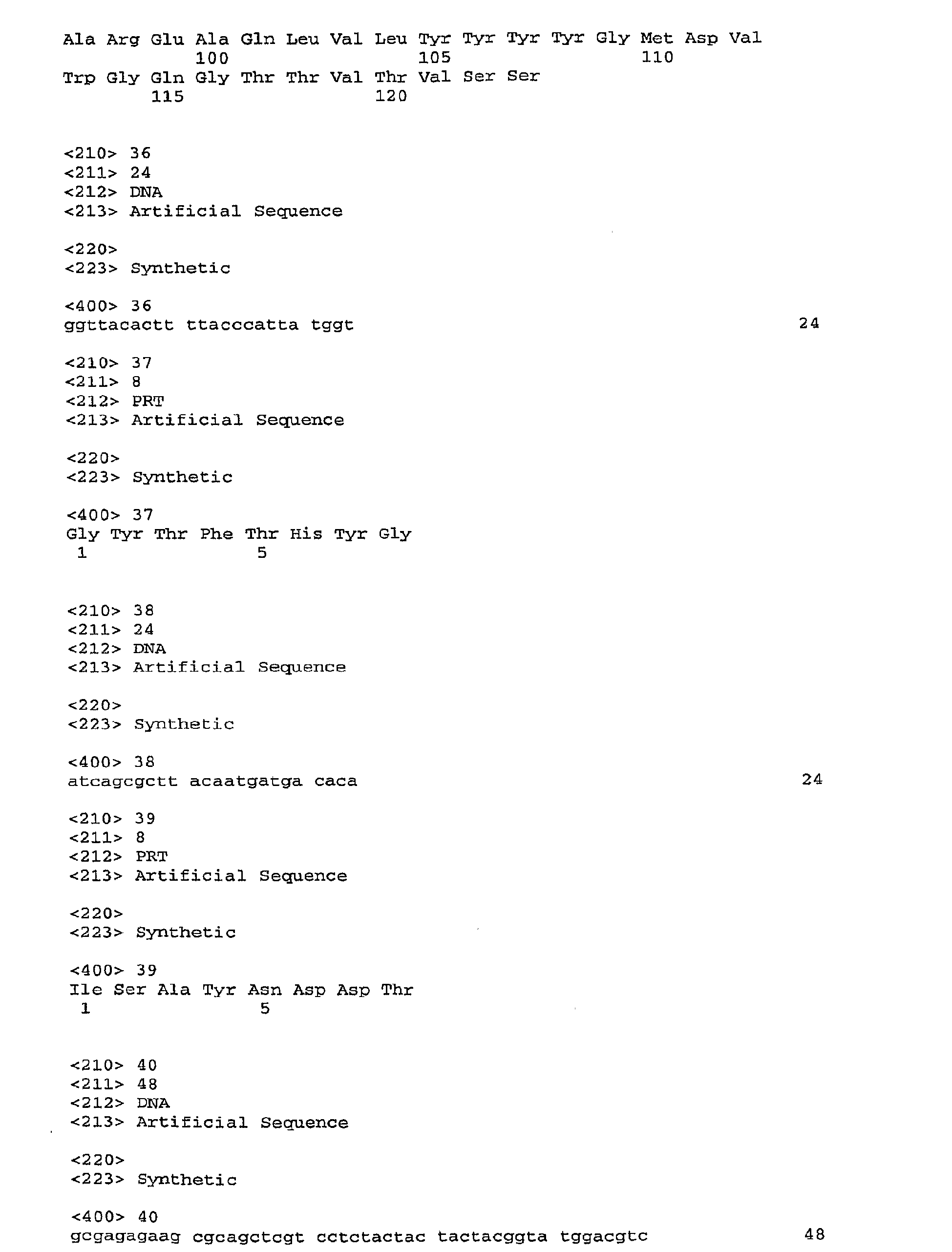


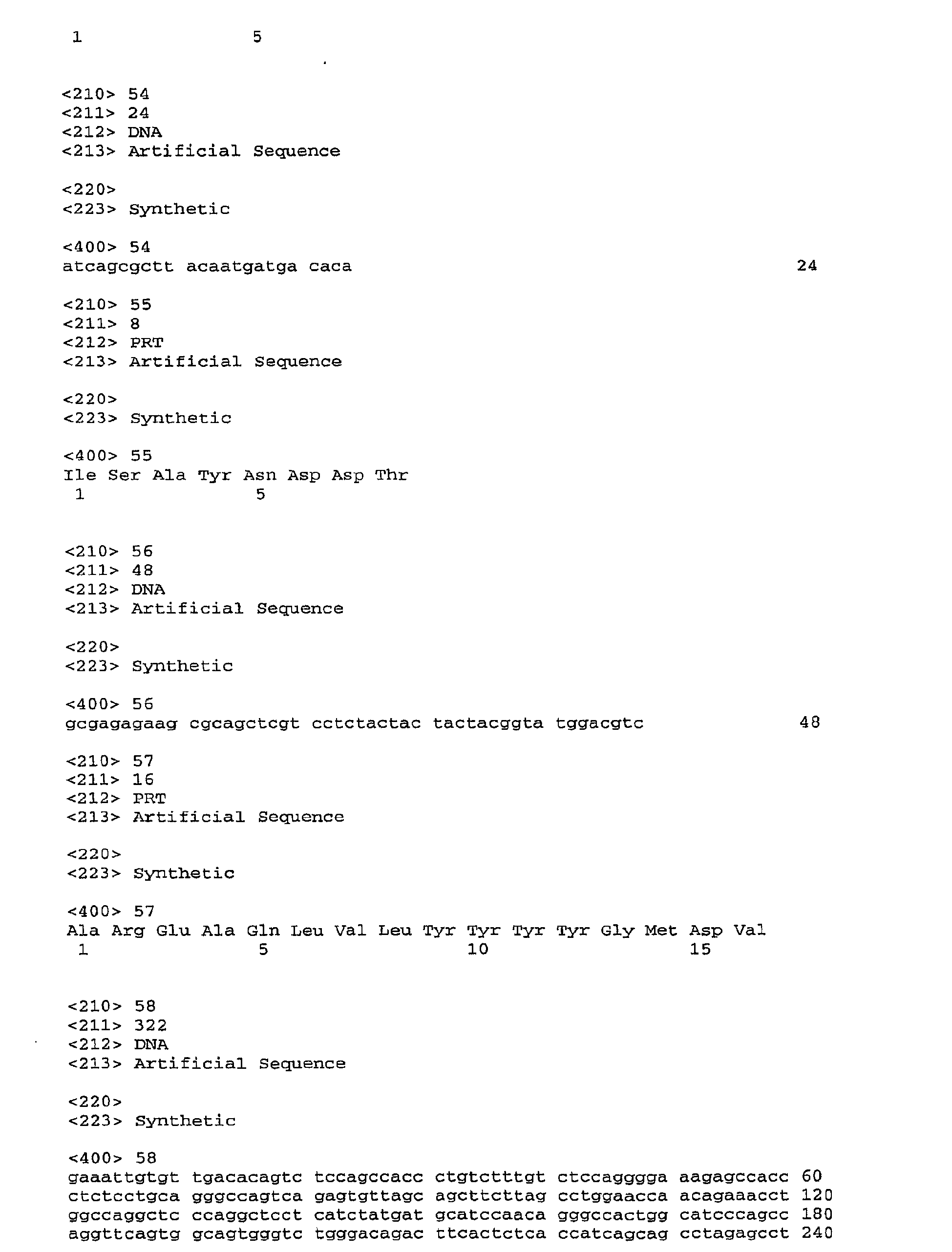

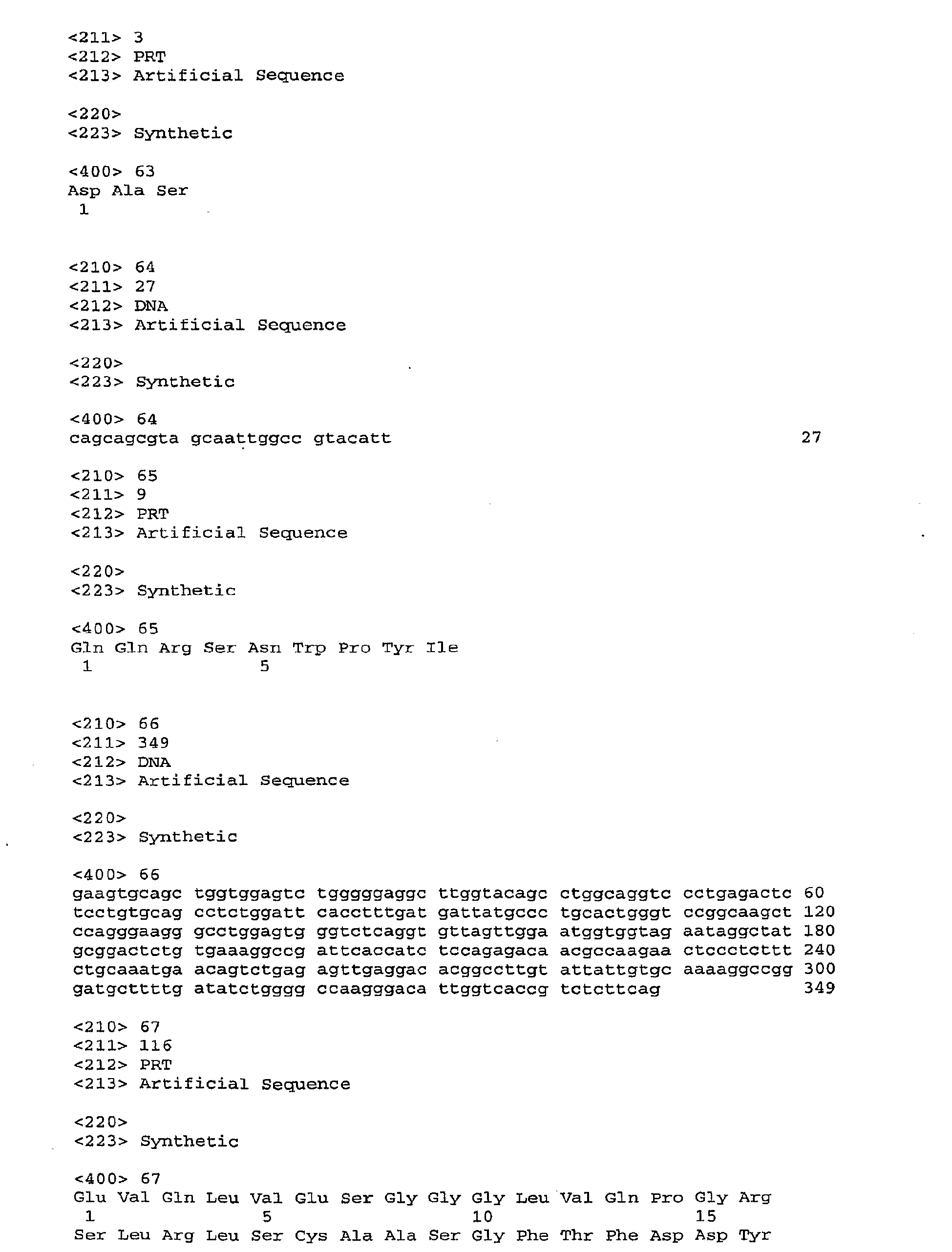


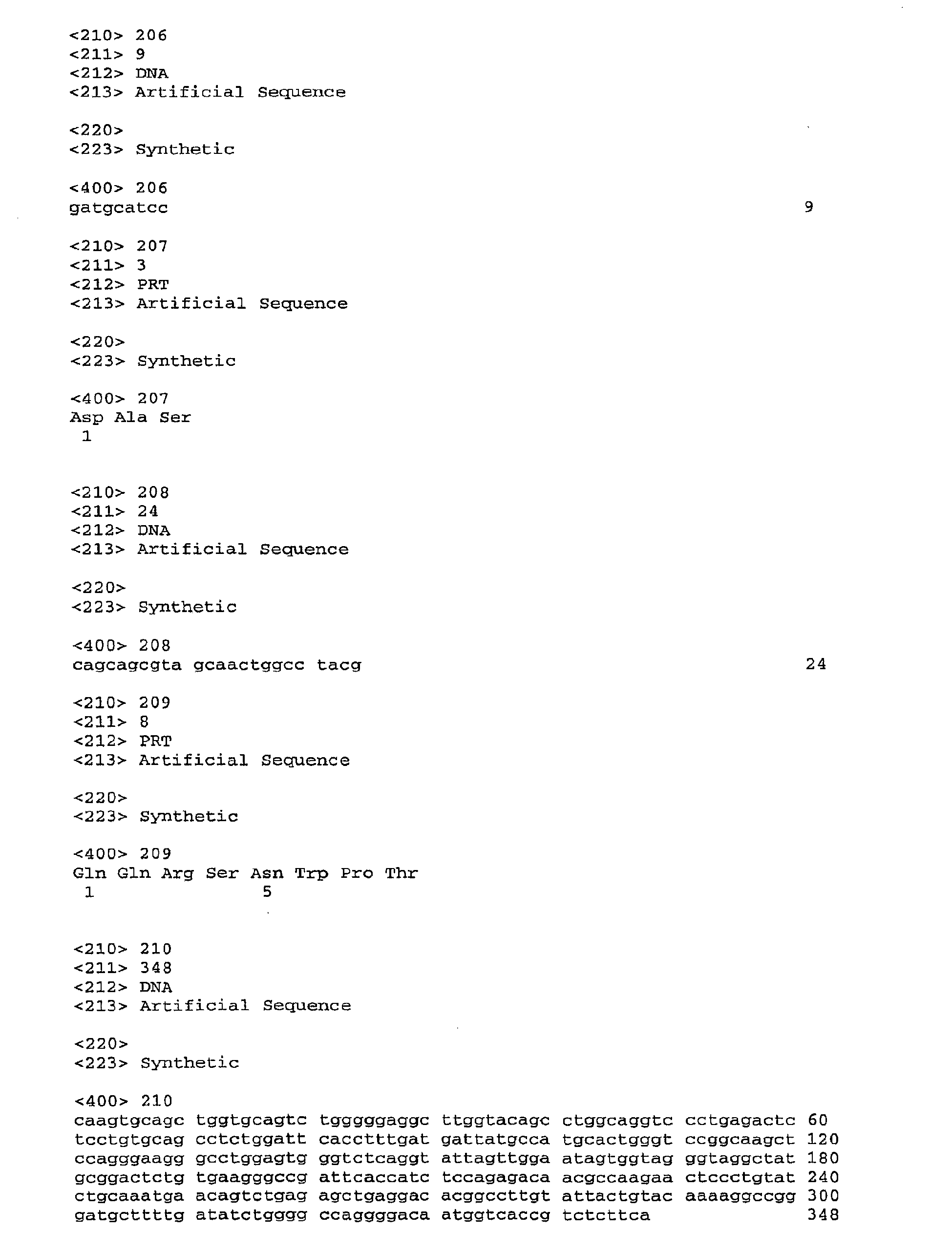


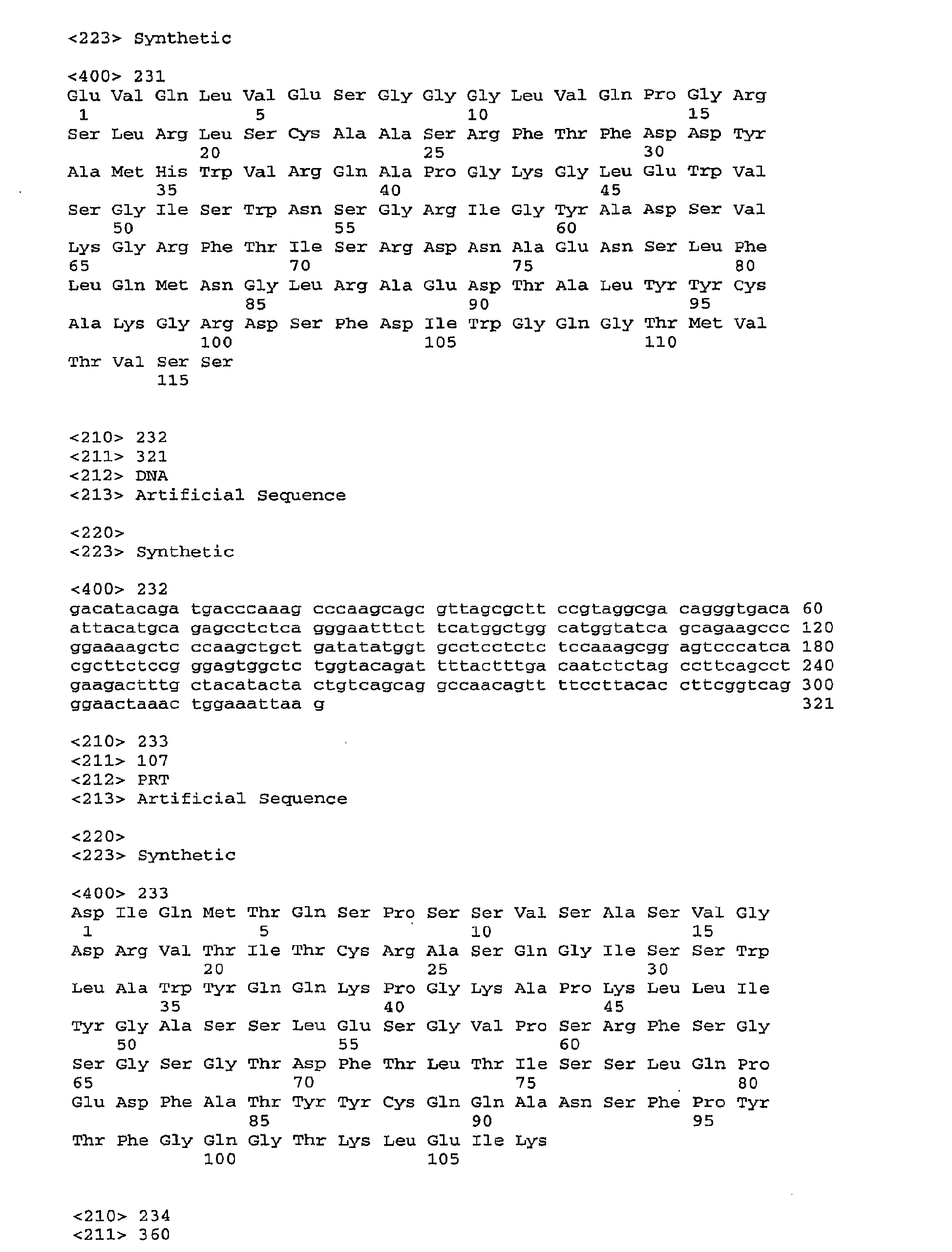


Claims (13)
- An antibody or antigen-binding fragment thereof, which specifically binds human interleukin-6 receptor (hIL-6R) with a KD of 500 pM or less, as measured by surface plasmon resonance, wherein:(i) the heavy chain CDRs comprise SEQ ID NO: 5, 7 and 9 as respectively heavy chain CDR1, CDR2 and CDR3; and(ii) the light chain CDRs comprise SEQ ID NO: 13, 15 and 17 as respectively light chain CDR1, CDR2 and CDR3.
- An antibody or antigen-binding fragment according to claim 1, comprising the HCVR/LCVR pair of SEQ ID NO: 3/11.
- An antibody or antigen binding fragment according to claim 1 or 2, which specifically binds hIL-6R with a KD of 300 pM or less, as measured by surface plasmon resonance.
- An antibody or antigen-binding fragment according to claim 1, 2 or 3, which binds hIL-6R with an affinity at least 2-fold higher relative to binding monkey IL-6R.
- An isolated nucleic acid molecule encoding an antibody or antigen-binding fragment according to any one of the preceding claims.
- A vector comprising the nucleotide sequence according to claim 5.
- A host-vector system for the production of an antibody or antigen-binding fragment of an antibody which specifically binds human IL-6 receptor, comprising a vector according to claim 6, in a suitable host cell.
- A host-vector system according to claim 7, wherein the host cell is a prokaryotic or eukaryotic cell selected from one of an E. coli or a CHO cell.
- A method for producing an anti-IL-6R antibody or antigen-binding fragment thereof, comprising growing cells of a host-vector system according to claim 7 or 8 under conditions permitting production of the antibody or fragment thereof and recovering the antibody or fragment so produced.
- Use of an antibody or antigen-binding fragment of an antibody according to any one of claims 1 to 4 in the manufacture of a medicament for use to attenuate or inhibit an IL-6-mediated disease or disorder in a human, where the IL-6-mediated disease or disorder is arthritis, an inflammatory bowel disease or systemic erythematosus.
- An antibody or antigen-binding fragment of an antibody according to any one of claims 1 to 4 for use in the attenuation or inhibition of an IL-6 mediated disease or disorder in a human, where the IL-6-mediated disease or disorder is arthritis, an inflammatory bowel disease or systemic erythematosus.
- A pharmaceutical composition comprising an antibody or antigen-binding fragment of an antibody according to any one of claims 1 to 4 and a pharmaceutically acceptable carrier or excipient.
- Use according to claim 10 or an antibody or fragment according to claim 11, wherein said arthritis is chronic rheumatoid arthritis or said inflammatory bowel disease is Crohn's disease or ulcerative colitis.
Priority Applications (3)
| Application Number | Priority Date | Filing Date | Title |
|---|---|---|---|
| SI200731155T SI2374818T1 (en) | 2006-06-02 | 2007-06-01 | High affinity antibodies to human IL-6 receptor |
| PL11171039T PL2374818T3 (en) | 2006-06-02 | 2007-06-01 | High affinity antibodies to human IL-6 receptor |
| CY20131100159T CY1113708T1 (en) | 2006-06-02 | 2013-02-21 | High affinity antibodies to human IL-6 receptors |
Applications Claiming Priority (3)
| Application Number | Priority Date | Filing Date | Title |
|---|---|---|---|
| US81066406P | 2006-06-02 | 2006-06-02 | |
| US84323206P | 2006-09-08 | 2006-09-08 | |
| EP07777380A EP2041177B1 (en) | 2006-06-02 | 2007-06-01 | High affinity antibodies to human il-6 receptor |
Related Parent Applications (1)
| Application Number | Title | Priority Date | Filing Date |
|---|---|---|---|
| EP07777380.2 Division | 2007-06-01 |
Related Child Applications (1)
| Application Number | Title | Priority Date | Filing Date |
|---|---|---|---|
| EP12191147.3 Division-Into | 2012-11-02 |
Publications (2)
| Publication Number | Publication Date |
|---|---|
| EP2374818A1 true EP2374818A1 (en) | 2011-10-12 |
| EP2374818B1 EP2374818B1 (en) | 2012-12-19 |
Family
ID=38792460
Family Applications (2)
| Application Number | Title | Priority Date | Filing Date |
|---|---|---|---|
| EP07777380A Active EP2041177B1 (en) | 2006-06-02 | 2007-06-01 | High affinity antibodies to human il-6 receptor |
| EP11171039A Active EP2374818B1 (en) | 2006-06-02 | 2007-06-01 | High affinity antibodies to human IL-6 receptor |
Family Applications Before (1)
| Application Number | Title | Priority Date | Filing Date |
|---|---|---|---|
| EP07777380A Active EP2041177B1 (en) | 2006-06-02 | 2007-06-01 | High affinity antibodies to human il-6 receptor |
Country Status (34)
| Country | Link |
|---|---|
| US (10) | US7582298B2 (en) |
| EP (2) | EP2041177B1 (en) |
| JP (3) | JP5307708B2 (en) |
| KR (1) | KR101464502B1 (en) |
| CN (2) | CN102585002A (en) |
| AT (1) | ATE537190T1 (en) |
| AU (1) | AU2007254831B2 (en) |
| BR (1) | BRPI0712224B8 (en) |
| CA (1) | CA2652976C (en) |
| CR (1) | CR10462A (en) |
| CY (3) | CY1112456T1 (en) |
| DK (2) | DK2374818T3 (en) |
| ES (2) | ES2398076T3 (en) |
| FR (1) | FR17C1057I1 (en) |
| GT (1) | GT200800272A (en) |
| HR (2) | HRP20120175T1 (en) |
| HU (1) | HUS1700050I1 (en) |
| IL (1) | IL195393A (en) |
| LT (1) | LTC2041177I2 (en) |
| LU (1) | LUC00050I2 (en) |
| ME (1) | ME00519B (en) |
| MX (1) | MX2008014804A (en) |
| MY (2) | MY147468A (en) |
| NL (1) | NL300911I2 (en) |
| NO (2) | NO340778B1 (en) |
| NZ (2) | NZ587107A (en) |
| PL (2) | PL2041177T3 (en) |
| PT (2) | PT2374818E (en) |
| RS (2) | RS52643B (en) |
| RU (1) | RU2433138C2 (en) |
| SI (2) | SI2041177T1 (en) |
| SV (1) | SV2008003113A (en) |
| TN (1) | TNSN08502A1 (en) |
| WO (1) | WO2007143168A2 (en) |
Cited By (1)
| Publication number | Priority date | Publication date | Assignee | Title |
|---|---|---|---|---|
| WO2022253805A1 (en) * | 2021-06-01 | 2022-12-08 | Symphogen A/S | Anti-nkg2a antibodies and compositions |
Families Citing this family (394)
| Publication number | Priority date | Publication date | Assignee | Title |
|---|---|---|---|---|
| US20050144655A1 (en) | 2000-10-31 | 2005-06-30 | Economides Aris N. | Methods of modifying eukaryotic cells |
| US6596541B2 (en) | 2000-10-31 | 2003-07-22 | Regeneron Pharmaceuticals, Inc. | Methods of modifying eukaryotic cells |
| USRE47770E1 (en) | 2002-07-18 | 2019-12-17 | Merus N.V. | Recombinant production of mixtures of antibodies |
| EP2314629B2 (en) | 2002-07-18 | 2022-11-16 | Merus N.V. | Recombinant production of mixtures of antibodies |
| WO2004106375A1 (en) | 2003-05-30 | 2004-12-09 | Merus Biopharmaceuticals B.V. I.O. | Fab library for the preparation of anti vegf and anti rabies virus fabs |
| US20100069614A1 (en) | 2008-06-27 | 2010-03-18 | Merus B.V. | Antibody producing non-human mammals |
| US8945558B2 (en) | 2005-10-21 | 2015-02-03 | Chugai Seiyaku Kabushiki Kaisha | Methods for treating myocardial infarction comprising administering an IL-6 inhibitor |
| CN104761637B (en) | 2006-03-31 | 2021-10-15 | 中外制药株式会社 | Methods for modulating antibody hemodynamics |
| EP2025346B1 (en) | 2006-04-07 | 2016-08-10 | Osaka University | Muscle regeneration promoter |
| NZ587107A (en) | 2006-06-02 | 2012-05-25 | Regeneron Pharma | High affinity antibodies to human il-6 receptor |
| US8080248B2 (en) | 2006-06-02 | 2011-12-20 | Regeneron Pharmaceuticals, Inc. | Method of treating rheumatoid arthritis with an IL-6R antibody |
| CA2666599A1 (en) | 2006-08-18 | 2008-02-21 | Ablynx N.V. | Amino acid sequences directed against il-6r and polypeptides comprising the same for the treatment of diseases and disorders associated with il-6-mediated signalling |
| US7608693B2 (en) | 2006-10-02 | 2009-10-27 | Regeneron Pharmaceuticals, Inc. | High affinity human antibodies to human IL-4 receptor |
| CA2670583A1 (en) * | 2006-11-30 | 2008-06-05 | Medimmune, Llc | Antibodies specific for the complex of interleukin-6 and the interleukin-6 receptor |
| RU2448979C2 (en) | 2006-12-14 | 2012-04-27 | Ридженерон Фармасьютикалз, Инк. | Human antibodies to delta-like human ligand-4 |
| KR101508019B1 (en) | 2007-01-23 | 2015-04-06 | 고쿠리츠 다이가쿠 호우징 신슈 다이가쿠 | Chronic rejection inhibitor |
| CN101754772B (en) | 2007-05-21 | 2015-08-19 | 奥尔德生物控股有限责任公司 | Antibodies against IL-6 and uses thereof |
| US8404235B2 (en) * | 2007-05-21 | 2013-03-26 | Alderbio Holdings Llc | Antagonists of IL-6 to raise albumin and/or lower CRP |
| US8178101B2 (en) | 2007-05-21 | 2012-05-15 | Alderbio Holdings Inc. | Use of anti-IL-6 antibodies having specific binding properties to treat cachexia |
| US9701747B2 (en) | 2007-05-21 | 2017-07-11 | Alderbio Holdings Llc | Method of improving patient survivability and quality of life by anti-IL-6 antibody administration |
| KR20100028571A (en) * | 2007-05-21 | 2010-03-12 | 앨더 바이오파마슈티컬즈, 인코포레이티드 | Novel rabbit antibody humanization methods and humanized rabbit antibodies |
| US8252286B2 (en) | 2007-05-21 | 2012-08-28 | Alderbio Holdings Llc | Antagonists of IL-6 to prevent or treat thrombosis |
| US7906117B2 (en) | 2007-05-21 | 2011-03-15 | Alderbio Holdings Llc | Antagonists of IL-6 to prevent or treat cachexia, weakness, fatigue, and/or fever |
| US8062864B2 (en) | 2007-05-21 | 2011-11-22 | Alderbio Holdings Llc | Nucleic acids encoding antibodies to IL-6, and recombinant production of anti-IL-6 antibodies |
| US20090238825A1 (en) * | 2007-05-21 | 2009-09-24 | Kovacevich Brian R | Novel rabbit antibody humanization methods and humanized rabbit antibodies |
| MY161564A (en) | 2007-08-10 | 2017-04-28 | Regeneron Pharma | High affinity human antibodies to human nerve growth factor |
| CN101874042B9 (en) | 2007-09-26 | 2019-01-01 | 中外制药株式会社 | Method for changing isoelectric point of antibody by using amino acid substitution of CDR |
| CN101939425B (en) | 2007-09-26 | 2014-05-14 | 中外制药株式会社 | Anti-IL-6 receptor antibody |
| EP3415529B1 (en) | 2007-09-26 | 2020-11-04 | Chugai Seiyaku Kabushiki Kaisha | Modified antibody constant region |
| EP2275443B1 (en) | 2008-04-11 | 2015-12-02 | Chugai Seiyaku Kabushiki Kaisha | Antigen-binding molecule capable of binding to two or more antigen molecules repeatedly |
| CA2724279C (en) | 2008-05-13 | 2017-03-07 | Novimmune S.A. | Anti-il-6/il-6r antibodies and methods of use thereof |
| ES2436044T3 (en) * | 2008-05-23 | 2013-12-26 | Ablexis, Llc | Procedure for generating individual VL domain antibodies in transgenic animals |
| TWI528973B (en) * | 2008-06-05 | 2016-04-11 | Chugai Pharmaceutical Co Ltd | Nerve infiltration inhibitor |
| RU2731084C2 (en) | 2008-06-27 | 2020-08-28 | Мерюс Н.В. | Producing non-human mammalian antibodies |
| TWI440469B (en) * | 2008-09-26 | 2014-06-11 | Chugai Pharmaceutical Co Ltd | Improved antibody molecules |
| AU2012200724B8 (en) * | 2008-09-26 | 2014-09-11 | Chugai Seiyaku Kabushiki Kaisha | Improved antibody molecules |
| KR20110094307A (en) * | 2008-11-13 | 2011-08-23 | 펨타 파마슈티컬스, 인크. | Humanized Anti-IL-6 Antibody |
| US9212223B2 (en) | 2008-11-25 | 2015-12-15 | Alderbio Holdings Llc | Antagonists of IL-6 to prevent or treat thrombosis |
| US9452227B2 (en) | 2008-11-25 | 2016-09-27 | Alderbio Holdings Llc | Methods of treating or diagnosing conditions associated with elevated IL-6 using anti-IL-6 antibodies or fragments |
| US8337847B2 (en) | 2008-11-25 | 2012-12-25 | Alderbio Holdings Llc | Methods of treating anemia using anti-IL-6 antibodies |
| US8323649B2 (en) | 2008-11-25 | 2012-12-04 | Alderbio Holdings Llc | Antibodies to IL-6 and use thereof |
| US8992920B2 (en) | 2008-11-25 | 2015-03-31 | Alderbio Holdings Llc | Anti-IL-6 antibodies for the treatment of arthritis |
| US8420089B2 (en) | 2008-11-25 | 2013-04-16 | Alderbio Holdings Llc | Antagonists of IL-6 to raise albumin and/or lower CRP |
| JO3672B1 (en) | 2008-12-15 | 2020-08-27 | Regeneron Pharma | High Affinity Human Antibodies to PCSK9 |
| CA2744103C (en) * | 2009-02-24 | 2018-01-02 | Esbatech, An Alcon Biomedical Research Unit Llc | Methods for identifying immunobinders of cell-surface antigens |
| RU2577965C2 (en) * | 2009-02-24 | 2016-03-20 | ИЭсБиЭйТЕК, ЭН АЛЬКОН БАЙОМЕДИКАЛ РИСЕРЧ ЮНИТ ЭлЭлСи | Method of identification of immune binders for surface antigens of cells |
| WO2010106812A1 (en) * | 2009-03-19 | 2010-09-23 | Chugai Seiyaku Kabushiki Kaisha | Pharmaceutical formulation containing improved antibody molecules |
| TWI682995B (en) | 2009-03-19 | 2020-01-21 | 日商中外製藥股份有限公司 | Antibody constant region alteration |
| WO2010107110A1 (en) | 2009-03-19 | 2010-09-23 | 中外製薬株式会社 | Antibody constant region variant |
| GB0905023D0 (en) | 2009-03-24 | 2009-05-06 | Univ Erasmus Medical Ct | Binding molecules |
| US8748581B2 (en) | 2009-04-10 | 2014-06-10 | Ablynx N.V. | Anti-IL-6R polypeptides and pharmaceutical compositions thereof |
| US10618964B2 (en) * | 2009-04-10 | 2020-04-14 | Ablynx N.V. | Nanobody against IL-6R |
| CN102638971B (en) | 2009-07-08 | 2015-10-07 | 科马布有限公司 | Animal Models and Therapeutic Molecules |
| US9445581B2 (en) | 2012-03-28 | 2016-09-20 | Kymab Limited | Animal models and therapeutic molecules |
| JO3182B1 (en) | 2009-07-29 | 2018-03-08 | Regeneron Pharma | Human antibiotics with high pH generation - 2 |
| CN104928336B (en) * | 2009-10-26 | 2020-05-08 | 弗·哈夫曼-拉罗切有限公司 | Methods for the production of glycosylated immunoglobulins |
| EP2504032A4 (en) | 2009-11-24 | 2013-06-19 | Alderbio Holdings Llc | Antagonists of il-6 to prevent or treat thrombosis |
| US9775921B2 (en) | 2009-11-24 | 2017-10-03 | Alderbio Holdings Llc | Subcutaneously administrable composition containing anti-IL-6 antibody |
| DK2509409T3 (en) | 2009-12-10 | 2016-11-14 | Regeneron Pharma | MICE, WHICH PRODUCES HEAVY CHAIN ANTIBODIES |
| JO3274B1 (en) | 2009-12-24 | 2018-09-16 | Regeneron Pharma | Human Antibodies To Human Angiopoietin-Like Protein 4 |
| JO3417B1 (en) * | 2010-01-08 | 2019-10-20 | Regeneron Pharma | Stabilized formulations containing anti-interleukin-6 receptor (il-6r) antibodies |
| AR080428A1 (en) | 2010-01-20 | 2012-04-11 | Chugai Pharmaceutical Co Ltd | FORMULATIONS STABILIZED LIQUID CONTAINERS OF ANTIBODIES |
| JO3183B1 (en) | 2010-01-29 | 2018-03-08 | Regeneron Pharma | Methods for treating autoimmune diseases anti-DLL4 |
| US9796788B2 (en) | 2010-02-08 | 2017-10-24 | Regeneron Pharmaceuticals, Inc. | Mice expressing a limited immunoglobulin light chain repertoire |
| US20120021409A1 (en) | 2010-02-08 | 2012-01-26 | Regeneron Pharmaceuticals, Inc. | Common Light Chain Mouse |
| HRP20151188T4 (en) | 2010-02-08 | 2021-10-01 | Regeneron Pharmaceuticals, Inc. | Common light chain mouse |
| US20130045492A1 (en) | 2010-02-08 | 2013-02-21 | Regeneron Pharmaceuticals, Inc. | Methods For Making Fully Human Bispecific Antibodies Using A Common Light Chain |
| CA2800065A1 (en) * | 2010-05-21 | 2011-11-24 | Peptimed, Inc. | Reagents and methods for treating cancer |
| JO3340B1 (en) | 2010-05-26 | 2019-03-13 | Regeneron Pharma | Antibodies to human gdf8 |
| SI2578231T1 (en) | 2010-05-28 | 2023-01-31 | Chugai Seiyaku Kabushiki Kaisha | Antitumor t cell response enhancer |
| CN103221063B (en) | 2010-06-16 | 2016-08-24 | 特瑞利斯生物科学有限责任公司 | High-affinity human antibodies for human cytomegalovirus (CMV) GB protein |
| KR102306967B1 (en) | 2010-08-02 | 2021-10-01 | 리제너론 파아마슈티컬스, 인크. | Mice that make binding proteins comprising vl domains |
| AR083044A1 (en) | 2010-09-27 | 2013-01-30 | Regeneron Pharma | ANTI-CD48 ANTIBODIES AND USES OF THE SAME |
| US9533039B2 (en) | 2010-09-27 | 2017-01-03 | Regeneron Pharmaceuticals, Inc. | Methods of treating systemic lupus erythematosus (SLE) using anti-CD48 antibodies |
| JO3375B1 (en) | 2010-11-08 | 2019-03-13 | Regeneron Pharma | Human antibodies to human tnf-like ligand 1a (tl1a) |
| CA2818814A1 (en) | 2010-11-23 | 2012-05-31 | Alder Biopharmaceuticals, Inc. | Anti-il-6 antibodies for the treatment of anemia |
| JO3756B1 (en) | 2010-11-23 | 2021-01-31 | Regeneron Pharma | Human antibodies to the glucagon receptor |
| TWI654204B (en) | 2010-11-30 | 2019-03-21 | Chugai Seiyaku Kabushiki Kaisha | Antibody with calcium-dependent antigen binding ability |
| WO2012098238A1 (en) | 2011-01-21 | 2012-07-26 | Novimmune S.A. | Combination therapies and methods using anti-cd3 modulating agents and anti-il-6 antagonists |
| MX385311B (en) | 2011-01-28 | 2025-03-18 | Sanofi Biotechnology | HUMAN ANTIBODIES AGAINST PCSK9 FOR USE IN METHODS OF TREATMENT OF SPECIFIC GROUPS OF PATIENTS. |
| LT2738259T (en) | 2011-02-25 | 2020-03-10 | Regeneron Pharmaceuticals, Inc. | ADAM6 MOUSE |
| JP6097702B2 (en) * | 2011-03-03 | 2017-03-15 | アペクシジェン, インコーポレイテッド | Anti-IL-6 receptor antibody and method of use thereof |
| CA2830013C (en) * | 2011-04-01 | 2020-01-07 | Chugai Seiyaku Kabushiki Kaisha | Recombinant polypeptide production method |
| DK2527842T3 (en) | 2011-05-12 | 2013-09-08 | Regeneron Pharma | Neuropeptide release analysis for sodium channels |
| JO3412B1 (en) | 2011-06-17 | 2019-10-20 | Regeneron Pharma | Anti-angptl3 antibodies and uses thereof |
| AR087305A1 (en) | 2011-07-28 | 2014-03-12 | Regeneron Pharma | STABILIZED FORMULATIONS CONTAINING ANTI-PCSK9 ANTIBODIES, PREPARATION METHOD AND KIT |
| PT3865581T (en) | 2011-08-05 | 2024-10-04 | Regeneron Pharma | Humanized universal light chain mice |
| AU2012311286B2 (en) | 2011-09-19 | 2018-07-26 | Kymab Limited | Antibodies, variable domains and chains tailored for human use |
| EP2747782B1 (en) | 2011-09-23 | 2018-01-17 | Ablynx NV | Prolonged inhibition of interleukin-6 mediated signaling |
| CA2791109C (en) | 2011-09-26 | 2021-02-16 | Merus B.V. | Generation of binding molecules |
| WO2013045916A1 (en) | 2011-09-26 | 2013-04-04 | Kymab Limited | Chimaeric surrogate light chains (slc) comprising human vpreb |
| PH12014500483A1 (en) | 2011-09-30 | 2014-04-14 | Regeneron Pharma | Anti-erbb3 antibodies and uses thereof |
| HRP20180299T1 (en) * | 2011-10-11 | 2018-04-20 | Sanofi Biotechnology | Compositions for the treatment of rheumatoid arthritis and methods of using the same |
| US9943594B2 (en) | 2011-10-11 | 2018-04-17 | Sanofi Biotechnology | Methods for the treatment of rheumatoid arthritis |
| TWI589299B (en) * | 2011-10-11 | 2017-07-01 | 再生元醫藥公司 | Composition for treating rheumatoid arthritis and method of use thereof |
| KR20140082824A (en) | 2011-10-17 | 2014-07-02 | 리제너론 파아마슈티컬스, 인크. | Restricted immunoglobulin heavy chain mice |
| WO2013059548A1 (en) | 2011-10-19 | 2013-04-25 | Sanofi | Compositions and methods for treating cancer using jak2 inhibitor |
| WO2013059426A1 (en) * | 2011-10-21 | 2013-04-25 | The Regents Of The University Of California | Human endogenous retrovirus peptides, antibodies to the peptides, and methods of use thereof |
| CN103059137A (en) * | 2011-10-21 | 2013-04-24 | 神州细胞工程有限公司 | Preparation and application of human interleukin-6 receptor (hIL6R)-resistant antibody with high affinity |
| PL2818478T3 (en) | 2011-10-28 | 2017-09-29 | Regeneron Pharmaceuticals, Inc. | Humanized IL-6 and IL-6 receptor |
| JO3370B1 (en) | 2011-11-10 | 2019-03-13 | Regeneron Pharma | Methods of inhibiting tumor growth by antagonizing il-6 receptor |
| JP6177249B2 (en) | 2011-11-14 | 2017-08-09 | リジェネロン・ファーマシューティカルズ・インコーポレイテッドRegeneron Pharmaceuticals, Inc. | Compositions and methods for increasing muscle mass and strength by specifically antagonizing GDF8 and / or activin A |
| BR112014012460B1 (en) | 2011-11-23 | 2021-01-12 | Bioven 3 Limited | recombinant proteins |
| US9253965B2 (en) | 2012-03-28 | 2016-02-09 | Kymab Limited | Animal models and therapeutic molecules |
| PT3527070T (en) | 2011-12-20 | 2025-12-19 | Regeneron Pharma | Humanized light chain mice |
| US9371383B2 (en) | 2012-01-31 | 2016-06-21 | Regeneron Pharmaceuticals, Inc. | Anti-ASIC1 antibodies and uses thereof |
| AU2013215254B2 (en) | 2012-01-31 | 2017-08-31 | Regeneron Pharmaceuticals, Inc. | Anti-ASIC1 antibodies and uses thereof |
| TWI613215B (en) | 2012-02-22 | 2018-02-01 | 再生元醫藥公司 | Anti-big-endothelin-1 (big-et-1) antibodies and uses thereof |
| NZ714516A (en) | 2012-03-02 | 2017-06-30 | Regeneron Pharma | Human antibodies to clostridium difficile toxins |
| MX353278B (en) | 2012-03-06 | 2018-01-05 | Regeneron Pharma | Common light chain mouse. |
| HK1200271A1 (en) | 2012-03-16 | 2015-08-07 | 瑞泽恩制药公司 | Mice that produce antigen-binding proteins with ph-dependent binding characteristics |
| DK2825036T3 (en) | 2012-03-16 | 2018-07-16 | Regeneron Pharma | Histidine engineered light chain antibodies and genetically modified rodents to generate them |
| KR102213535B1 (en) | 2012-03-16 | 2021-02-08 | 리제너론 파마슈티칼스 인코포레이티드 | Non-human animals expressing ph-sensitive immunoglobulin sequences |
| US20140013456A1 (en) | 2012-03-16 | 2014-01-09 | Regeneron Pharmaceuticals, Inc. | Histidine Engineered Light Chain Antibodies and Genetically Modified Non-Human Animals for Generating the Same |
| GB2502127A (en) | 2012-05-17 | 2013-11-20 | Kymab Ltd | Multivalent antibodies and in vivo methods for their production |
| US10251377B2 (en) | 2012-03-28 | 2019-04-09 | Kymab Limited | Transgenic non-human vertebrate for the expression of class-switched, fully human, antibodies |
| TWI619729B (en) | 2012-04-02 | 2018-04-01 | 再生元醫藥公司 | Anti-hla-b*27 antibodies and uses thereof |
| DK2838918T3 (en) | 2012-04-20 | 2019-08-12 | Merus Nv | METHODS AND METHODS FOR PREPARING HETERODIMER IG-LIKE MOLECULES |
| JO3820B1 (en) | 2012-05-03 | 2021-01-31 | Regeneron Pharma | Human antibodies to FEL D1 and methods for their use |
| EP3912464A1 (en) | 2012-06-12 | 2021-11-24 | Regeneron Pharmaceuticals, Inc. | Humanized non-human animals with restricted immunoglobulin heavy chain loci |
| TWI641619B (en) | 2012-06-25 | 2018-11-21 | 美商再生元醫藥公司 | anti-EGFR antibody and use thereof |
| IL312711A (en) | 2012-08-21 | 2024-07-01 | Regeneron Pharma | Methods for treating or preventing asthma by administering an il-4r antagonist |
| JO3462B1 (en) | 2012-08-22 | 2020-07-05 | Regeneron Pharma | Human Antibodies to GFR?3 and methods of use thereof |
| KR102576903B1 (en) | 2012-09-07 | 2023-09-13 | 리제너론 파아마슈티컬스, 인크. | Methods for treating atopic dermatitis by administering an il-4r antagonist |
| JOP20200236A1 (en) | 2012-09-21 | 2017-06-16 | Regeneron Pharma | Anti-cd3 antibodies, bispecific antigen-binding molecules that bind cd3 and cd20, and uses thereof |
| CN104781280A (en) | 2012-11-13 | 2015-07-15 | 瑞泽恩制药公司 | Conjugates including antibody moiety, a polypeptide transferring blood-brain barrier, and cytotoxin |
| JO3405B1 (en) | 2013-01-09 | 2019-10-20 | Regeneron Pharma | ANTI-PDGFR-beta ANTIBODIES AND USES THEREOF |
| MY185881A (en) | 2013-02-20 | 2021-06-14 | Regeneron Pharma | Non-human animals with modified immunoglobulin heavy chain sequences |
| EP4218409B1 (en) | 2013-03-13 | 2025-02-12 | Regeneron Pharmaceuticals, Inc. | Mice expressing a limited immunoglobulin light chain repertoire |
| JP2016519568A (en) | 2013-03-13 | 2016-07-07 | リジェネロン・ファーマシューティカルズ・インコーポレイテッドRegeneron Pharmaceuticals, Inc. | Common light chain mouse |
| JO3532B1 (en) | 2013-03-13 | 2020-07-05 | Regeneron Pharma | Anti-il-33 antibodies and uses thereof |
| SG10201707518YA (en) | 2013-03-14 | 2017-10-30 | Regeneron Pharma | Human antibodies to grem 1 |
| EA201591754A1 (en) | 2013-03-14 | 2016-01-29 | Ридженерон Фармасьютикалз, Инк. | HUMAN ANTIBODIES TO NA1.7 |
| AR095196A1 (en) | 2013-03-15 | 2015-09-30 | Regeneron Pharma | SERUM FREE CELL CULTIVATION MEDIA |
| US9788534B2 (en) | 2013-03-18 | 2017-10-17 | Kymab Limited | Animal models and therapeutic molecules |
| US9783618B2 (en) | 2013-05-01 | 2017-10-10 | Kymab Limited | Manipulation of immunoglobulin gene diversity and multi-antibody therapeutics |
| US11707056B2 (en) | 2013-05-02 | 2023-07-25 | Kymab Limited | Animals, repertoires and methods |
| US9783593B2 (en) | 2013-05-02 | 2017-10-10 | Kymab Limited | Antibodies, variable domains and chains tailored for human use |
| WO2014200018A1 (en) | 2013-06-11 | 2014-12-18 | 独立行政法人 国立精神・神経医療研究センター | Method for predicting post-therapy prognosis of relapsing-remitting multiple sclerosis (rrms) patient, and method for determining applicability of novel therapy |
| KR20210132232A (en) | 2013-06-21 | 2021-11-03 | 사노피 바이오테크놀로지 | Methods for treating nasal polyposis by administering an il-4r antagonist |
| TW201920262A (en) | 2013-07-30 | 2019-06-01 | 美商再生元醫藥公司 | Anti-activin A antibody and use thereof |
| US10935554B2 (en) | 2013-08-23 | 2021-03-02 | Regeneron Pharmaceuticals, Inc. | Diagnostic tests and methods for assessing safety, efficacy or outcome of allergen-specific immunotherapy (SIT) |
| JP6621750B2 (en) | 2013-09-18 | 2019-12-18 | リジェネロン・ファーマシューティカルズ・インコーポレイテッドRegeneron Pharmaceuticals, Inc. | Histidine engineered light chain antibody and genetically modified non-human animals for producing the same |
| GB201316644D0 (en) | 2013-09-19 | 2013-11-06 | Kymab Ltd | Expression vector production & High-Throughput cell screening |
| CA2925723A1 (en) | 2013-10-01 | 2015-04-09 | Kymab Limited | Animal models and therapeutic molecules |
| EP3063543B1 (en) | 2013-10-31 | 2020-03-11 | Regeneron Pharmaceuticals, Inc. | Competitive ligand binding assay for detecting neutralizing antibodies |
| EP3068803B1 (en) | 2013-11-12 | 2021-01-20 | Sanofi Biotechnology | Dosing regimens for use with pcsk9 inhibitors |
| WO2015077491A1 (en) | 2013-11-20 | 2015-05-28 | Regeneron Pharmaceuticals, Inc. | Aplnr modulators and uses thereof |
| US9017678B1 (en) | 2014-07-15 | 2015-04-28 | Kymab Limited | Method of treating rheumatoid arthritis using antibody to IL6R |
| US8945560B1 (en) | 2014-07-15 | 2015-02-03 | Kymab Limited | Method of treating rheumatoid arthritis using antibody to IL6R |
| DE202014010499U1 (en) | 2013-12-17 | 2015-10-20 | Kymab Limited | Targeting of human PCSK9 for cholesterol treatment |
| WO2015095511A2 (en) * | 2013-12-20 | 2015-06-25 | The Scripps Research Institute | Functional antibodies that modulate cell death and related methods |
| TWI681969B (en) | 2014-01-23 | 2020-01-11 | 美商再生元醫藥公司 | Human antibodies to pd-1 |
| TWI680138B (en) | 2014-01-23 | 2019-12-21 | 美商再生元醫藥公司 | Human antibodies to pd-l1 |
| WO2015116852A1 (en) | 2014-01-29 | 2015-08-06 | Regeneron Pharmaceuticals, Inc. | Methods for treating rheumatoid arthritis by administering an il-6r antibody |
| IL315136A (en) | 2014-02-21 | 2024-10-01 | Sanofi Biotechnology | Methods for treating or preventing asthma by adding an IL-4R antagonist |
| MY178160A (en) | 2014-03-11 | 2020-10-06 | Regeneron Pharma | Anti-egfrviii antibodies and uses thereof |
| TWI754319B (en) | 2014-03-19 | 2022-02-01 | 美商再生元醫藥公司 | Methods and antibody compositions for tumor treatment |
| CN106164092A (en) | 2014-03-21 | 2016-11-23 | 瑞泽恩制药公司 | VL antigen-binding proteins exhibiting different binding characteristics |
| CN106255410B (en) | 2014-03-21 | 2020-01-10 | 瑞泽恩制药公司 | Non-human animals producing single domain binding proteins |
| JO3701B1 (en) | 2014-05-23 | 2021-01-31 | Regeneron Pharma | Human antibiotics for MERS-CoV-coronavirus |
| BR112017005110A2 (en) | 2014-09-16 | 2018-01-23 | Regeneron Pharma | isolated monoclonal antibody or antigen-binding fragment thereof, isolated nucleic acid molecule, pharmaceutical composition, and method for lowering blood glucose levels or for treating a condition or disease. |
| WO2016049000A2 (en) | 2014-09-23 | 2016-03-31 | Regeneron Pharmaceuticals, Inc. | Anti-il-25 antibodies and uses thereof |
| JP2017534617A (en) | 2014-10-21 | 2017-11-24 | アブリンクス エン.ヴェー. | Treatment of IL-6R related diseases |
| WO2016077675A1 (en) | 2014-11-14 | 2016-05-19 | Sanofi Biotechnology | Methods for treating chronic sinusitis with nasal polyps by administering an il-4r antagonist |
| ES2809455T3 (en) | 2014-11-17 | 2021-03-04 | Regeneron Pharma | Methods for tumor treatment using CD3xCD20 bispecific antibody |
| EP3226899A4 (en) * | 2014-12-02 | 2018-09-05 | Regeneron Pharmaceuticals, Inc. | Methods for treating dry eye disease by administering an il-6r antagonist |
| TWI702229B (en) | 2014-12-19 | 2020-08-21 | 美商再生元醫藥公司 | Human antibodies to influenza hemagglutinin |
| TWI710573B (en) | 2015-01-26 | 2020-11-21 | 美商再生元醫藥公司 | Human antibodies to ebola virus glycoprotein |
| TWI873632B (en) | 2015-02-27 | 2025-02-21 | 日商中外製藥股份有限公司 | Use of IL-6 receptor antibodies for preparing pharmaceutical compositions |
| US11111314B2 (en) | 2015-03-19 | 2021-09-07 | Regeneron Pharmaceuticals, Inc. | Non-human animals that select for light chain variable regions that bind antigen |
| US11142587B2 (en) | 2015-04-01 | 2021-10-12 | Chugai Seiyaku Kabushiki Kaisha | Method for producing polypeptide hetero-oligomer |
| WO2016168613A1 (en) | 2015-04-15 | 2016-10-20 | Regeneron Pharmaceuticals, Inc. | Methods of increasing strength and functionality with gdf8 inhibitors |
| JP2016208934A (en) * | 2015-05-12 | 2016-12-15 | 学校法人日本大学 | Anti-canine interleukin-6 receptor monoclonal antibody or antibody fragment and use thereof |
| PL3299810T3 (en) | 2015-05-19 | 2021-12-13 | National Center Of Neurology And Psychiatry | Method for determining application of novel therapy to multiple sclerosis (ms) patient |
| EP3305325B1 (en) | 2015-06-04 | 2025-07-30 | National Center of Neurology and Psychiatry | Mental illness therapeutic agent having il-6 inhibitor as active ingredient |
| MY189159A (en) | 2015-07-06 | 2022-01-29 | Regeneron Pharma | Multispecific antigen-binding molecules and uses thereof |
| JOP20160154B1 (en) | 2015-07-31 | 2021-08-17 | Regeneron Pharma | Anti-psma antibodies, bispecific antigen-binding molecules that bind psma and cd3, and uses thereof |
| TWI870789B (en) | 2015-08-04 | 2025-01-21 | 美商再生元醫藥公司 | Taurine supplemented cell culture medium and methods of use |
| KR20240172758A (en) | 2015-08-18 | 2024-12-10 | 리제너론 파아마슈티컬스, 인크. | Anti-pcsk9 inhibitory antibodies for treating patients with hyperlipidemia undergoing lipoprotein apheresis |
| TWI756187B (en) | 2015-10-09 | 2022-03-01 | 美商再生元醫藥公司 | Anti-lag3 antibodies and uses thereof |
| EP3184547A1 (en) * | 2015-10-29 | 2017-06-28 | F. Hoffmann-La Roche AG | Anti-tpbg antibodies and methods of use |
| HUE063377T2 (en) | 2015-12-22 | 2024-01-28 | Regeneron Pharma | Combination of anti-pd-1 antibodies and bispecific anti-cd20/anti-cd3 antibodies to treat cancer |
| SG11201803989WA (en) | 2015-12-28 | 2018-06-28 | Chugai Pharmaceutical Co Ltd | Method for promoting efficiency of purification of fc region-containing polypeptide |
| IL302725A (en) | 2016-01-13 | 2023-07-01 | Regeneron Pharma | Rodents with an engineered DIVERSITY region of the heavy chain |
| SG11201806427WA (en) | 2016-02-16 | 2018-08-30 | Regeneron Pharma | Non-human animals having a mutant kynureninase gene |
| MX2018010815A (en) | 2016-03-07 | 2019-01-10 | Sanofi Biotechnology | COMPOSITIONS AND METHODS TO TREAT REUMATOID ARTHRITIS. |
| EP3216461A1 (en) | 2016-03-07 | 2017-09-13 | Sanofi Biotechnology | Compositions and methods for treating rheumatoid arthritis |
| PL3439689T3 (en) | 2016-04-08 | 2022-01-31 | Regeneron Pharmaceuticals, Inc. | Methods for treating hyperlipidemia with an angptl8 inhibitor and an angptl3 inhibitor |
| SG10202010156XA (en) * | 2016-04-20 | 2020-11-27 | Regeneron Pharma | Compositions and methods for making antibodies based on use of an expression-enhancing locus |
| MX2018012868A (en) * | 2016-04-20 | 2019-03-11 | Regeneron Pharma | COMPOSITIONS AND METHODS FOR GENERATING ANTIBODIES BASED ON THE USE OF EXPRESSION POTENTIATING LOCI. |
| WO2017190079A1 (en) | 2016-04-28 | 2017-11-02 | Regeneron Pharmaceuticals, Inc. | Methods of making multispecific antigen-binding molecules |
| TWI786044B (en) | 2016-05-13 | 2022-12-11 | 美商再生元醫藥公司 | Methods of treating skin cancer by administering a pd-1 inhibitor |
| US20170332610A1 (en) | 2016-05-20 | 2017-11-23 | Regeneron Pharmaceuticals, Inc. | Methods for breaking immunological tolerance using multiple guide rnas |
| WO2017201731A1 (en) * | 2016-05-27 | 2017-11-30 | Beijing Vdjbio Co., Ltd. | Antibodies, composition and kits comprising same, and methods of use thereof |
| WO2017214089A1 (en) | 2016-06-06 | 2017-12-14 | Regeneron Pharmaceuticals, Inc. | Non-human animals expressing antibodies with human lambda light chains |
| IL263273B2 (en) | 2016-06-10 | 2025-10-01 | Regeneron Pharma | Anti-gitr antibodies and uses thereof |
| WO2017218515A1 (en) | 2016-06-14 | 2017-12-21 | Regeneron Pharmaceuticals, Inc. | Anti-c5 antibodies and uses thereof |
| TW201815821A (en) | 2016-07-18 | 2018-05-01 | 美商再生元醫藥公司 | Anti-Zika virus antibody and method of use |
| RU2656160C2 (en) * | 2016-08-17 | 2018-05-31 | Закрытое Акционерное Общество "Биокад" | Antibody or its anti-binding fragment, which is capable to be bound using the interleukin-6 human receptor |
| EP3504328A1 (en) | 2016-08-24 | 2019-07-03 | Regeneron Pharmaceuticals, Inc. | Host cell protein modification |
| US11771743B2 (en) | 2016-09-01 | 2023-10-03 | Regeneron Pharmaceuticals, Inc. | Methods for preventing or treating allergy by administering an IL-4R antagonist |
| US10738130B2 (en) | 2016-09-23 | 2020-08-11 | Regeneron Pharmaceuticals, Inc. | Bispecific antigen-binding molecules that bind MUC16 and CD3, and compositions thereof |
| MA46417A (en) | 2016-09-23 | 2019-07-31 | Regeneron Pharma | ANTI-STEAP2 ANTIBODIES, ANTIBODY-DRUG CONJUGATES, AND BISPECIFIC ANTIGEN-BINDING MOLECULES THAT BIND TO STEAP2 AND CD3, AND THEIR USES |
| PT4082334T (en) | 2016-11-04 | 2025-05-21 | Regeneron Pharma | Non-human animals having an engineered immunoglobulin lambda light chain locus |
| TWI782930B (en) | 2016-11-16 | 2022-11-11 | 美商再生元醫藥公司 | Anti-met antibodies, bispecific antigen binding molecules that bind met, and methods of use thereof |
| MX382035B (en) | 2016-11-17 | 2025-03-13 | Regeneron Pharma | USE OF AN ANGPTL8 INHIBITOR IN THE PREPARATION OF A DRUG TO TREAT OBESITY. |
| KR20190090820A (en) | 2016-11-29 | 2019-08-02 | 리제너론 파아마슈티컬스, 인크. | Pharmaceutical composition to prevent opioid poisoning |
| EP3548514A1 (en) | 2016-11-29 | 2019-10-09 | Regeneron Pharmaceuticals, Inc. | Methods of treating prlr positive breast cancer |
| IL324632A (en) | 2016-12-01 | 2026-01-01 | Regeneron Pharma | Radiolabeled anti-pd-l1 antibodies for immuno-pet imaging |
| TWI857389B (en) | 2016-12-01 | 2024-10-01 | 美商再生元醫藥公司 | Methods of treating inflammatory conditions |
| US11352417B2 (en) | 2016-12-22 | 2022-06-07 | Regeneron Pharmaceuticals, Inc. | Method of treating an allergy with allergen-specific monoclonal antibodies |
| TWI781130B (en) | 2017-01-03 | 2022-10-21 | 美商再生元醫藥公司 | Human antibodies to s. aureus hemolysin a toxin |
| CN110650974B (en) | 2017-02-10 | 2024-04-19 | 瑞泽恩制药公司 | Radiolabeled anti-LAG 3 antibodies for immune-PET imaging |
| US11603407B2 (en) | 2017-04-06 | 2023-03-14 | Regeneron Pharmaceuticals, Inc. | Stable antibody formulation |
| US11851486B2 (en) | 2017-05-02 | 2023-12-26 | National Center Of Neurology And Psychiatry | Method for predicting and evaluating therapeutic effect in diseases related to IL-6 and neutrophils |
| CA3063588A1 (en) | 2017-06-01 | 2018-12-06 | Regeneron Pharmaceuticals, Inc. | Human antibodies to bet v 1 and methods of use thereof |
| ES3065816T3 (en) | 2017-06-07 | 2026-05-08 | Regeneron Pharma | Compositions and methods for internalizing enzymes |
| US20190048072A1 (en) | 2017-06-22 | 2019-02-14 | Novartis Ag | USE OF IL-1beta BINDING ANTIBODIES |
| CN110914295B (en) | 2017-06-28 | 2024-08-09 | 里珍纳龙药品有限公司 | Anti-human papillomavirus (HPV) antigen binding proteins and methods of use thereof |
| BR112020000127A2 (en) | 2017-07-06 | 2020-07-07 | Regeneron Pharmaceuticals, Inc. | method for selecting a soy hydrolyzate, and, glycoprotein |
| TWI799432B (en) | 2017-07-27 | 2023-04-21 | 美商再生元醫藥公司 | Anti-ctla-4 antibodies and uses thereof |
| MX2020002750A (en) | 2017-09-13 | 2020-07-20 | Jiangsu Hengrui Medicine Co | Il-6r antibody and antigen binding fragment thereof and medical use. |
| BR112020004977A2 (en) | 2017-09-29 | 2020-10-06 | Regeneron Pharmaceuticals, Inc. | bispecific antigen binding molecules that bind staphyocococcus target antigen and complement component and uses thereof |
| US11692037B2 (en) | 2017-10-20 | 2023-07-04 | Hyogo College Of Medicine | Anti-IL-6 receptor antibody-containing medicinal composition for preventing post-surgical adhesion |
| EP3703818B1 (en) | 2017-10-30 | 2023-11-01 | Sanofi Biotechnology | Il-4r antagonist for use in a method for treating or preventing asthma |
| AU2018375340C1 (en) | 2017-11-30 | 2026-05-14 | Regeneron Pharmaceuticals, Inc. | Anti-TrkB monoclonal antibodies and methods of use |
| TW202438676A (en) | 2017-12-05 | 2024-10-01 | 美商再生元醫藥公司 | Non-human animals having an engineered immunoglobulin lambda light chain and uses thereof |
| MX2020006113A (en) | 2017-12-13 | 2020-08-24 | Regeneron Pharma | COMBINATIONS OF ANTI-C5 ANTIBODIES AND THEIR USES. |
| KR20200100089A (en) | 2017-12-18 | 2020-08-25 | 리제너론 파마슈티칼스 인코포레이티드 | Dual specific antigen binding molecule binding to leptin receptor and/or GP130 and methods of use thereof |
| WO2019126194A1 (en) | 2017-12-18 | 2019-06-27 | Regeneron Pharmaceuticals, Inc. | Angptl8 assay and uses thereof |
| BR112020010615A2 (en) | 2017-12-22 | 2020-10-27 | Regeneron Pharmaceuticals, Inc. | protein pharmaceutical product, method and system for characterizing protein pharmaceutical product and low molecular weight impurities, method for producing an antibody, antibody, and, method and system uses |
| SG11202006379UA (en) | 2018-01-26 | 2020-07-29 | Regeneron Pharma | Human antibodies to influenza hemagglutinin |
| WO2019151418A1 (en) | 2018-01-31 | 2019-08-08 | 元一 加藤 | Therapeutic agent for asthma containing il-6 inhibitor |
| MX2020008095A (en) | 2018-01-31 | 2020-09-24 | Regeneron Pharma | System and method for characterizing size and charge variant drug product impurities. |
| TWI786265B (en) | 2018-02-02 | 2022-12-11 | 美商再生元醫藥公司 | System and method for characterizing protein dimerization |
| CN112040985A (en) | 2018-02-07 | 2020-12-04 | 瑞泽恩制药公司 | Methods and compositions for delivery of therapeutic proteins |
| KR20200127979A (en) | 2018-02-28 | 2020-11-11 | 리제너론 파마슈티칼스 인코포레이티드 | Systems and methods for identifying viral contaminants |
| KR20200128125A (en) | 2018-03-01 | 2020-11-11 | 리제너론 파아마슈티컬스, 인크. | Ways to change body composition |
| CA3246952A1 (en) | 2018-03-19 | 2025-10-31 | Regeneron Pharmaceuticals, Inc. | Microchip capillary electrophoresis assays and reagents |
| US12253490B2 (en) | 2018-03-19 | 2025-03-18 | Regeneron Pharmaceuticals, Inc. | Microchip capillary electrophoresis assays and reagents |
| US12259355B2 (en) | 2018-03-19 | 2025-03-25 | Regeneron Pharmaceuticals, Inc. | Microchip capillary electrophoresis assays and reagents |
| WO2019190931A1 (en) | 2018-03-26 | 2019-10-03 | Regeneron Pharmaceuticals, Inc. | Anti-pfrh5 antibodies and antigen-binding fragments thereof |
| CN112074538B (en) | 2018-04-30 | 2024-10-18 | 瑞泽恩制药公司 | Antibodies and bispecific antigen binding molecules binding to HER2 and/or APLP2, conjugates thereof and uses thereof |
| MX2020011546A (en) | 2018-05-09 | 2021-01-29 | Regeneron Pharma | Anti-msr1 antibodies and methods of use thereof. |
| TW202016125A (en) | 2018-05-10 | 2020-05-01 | 美商再生元醫藥公司 | Systems and methods for quantifying and modifying protein viscosity |
| BR112020023145A2 (en) | 2018-05-17 | 2021-02-02 | Regeneron Pharmaceuticals, Inc. | anti-cd63 antibody or antigen-binding fragment thereof, bispecific antigen-binding molecule, therapeutic protein of multiple domains, polynucleotide pharmaceutical composition, and, compound |
| IL318469A (en) | 2018-06-14 | 2025-03-01 | Regeneron Pharma | Non-human animals capable of engineered dh-dh rearrangement and uses thereof |
| MA52966A (en) | 2018-06-19 | 2021-04-28 | Regeneron Pharma | ANTI-FACTOR XII / XIIA ANTIBODIES AND THEIR USES |
| CN112351820B (en) | 2018-06-21 | 2024-10-11 | 瑞泽恩制药公司 | Bispecific anti-PSMA x anti-CD28 antibodies and uses thereof |
| MX2021000532A (en) | 2018-07-19 | 2021-04-12 | Regeneron Pharma | CHIMERIC ANTIGEN RECEPTORS WITH SPECIFICITY FOR BCMA AND THEIR USES. |
| TWI838389B (en) | 2018-07-19 | 2024-04-11 | 美商再生元醫藥公司 | BISPECIFIC ANTI-BCMAxANTI-CD3 ANTIBODIES AND USES THEREOF |
| CA3108697A1 (en) | 2018-08-10 | 2020-02-13 | Regeneron Pharmaceuticals, Inc. | A pharmaceutical composition for safe and effective treatment of knee and/or hip pain |
| KR20210049863A (en) | 2018-08-23 | 2021-05-06 | 리제너론 파아마슈티컬스, 인크. | Anti-Fc epsilon-R1 alpha (FCERIA) antibodies, bispecific antigen-binding molecules that bind FCERIA and CD3 and uses thereof |
| CN120795059A (en) | 2018-08-27 | 2025-10-17 | 瑞泽恩制药公司 | Use of raman spectroscopy in downstream purification |
| MA53481A (en) | 2018-08-29 | 2021-07-07 | Regeneron Pharma | METHODS AND COMPOSITIONS FOR TREATING SUBJECTS HAVING RHEUMATOID ARTHRITIS |
| US11754569B2 (en) | 2018-08-30 | 2023-09-12 | Regeneron Pharmaceuticals, Inc. | Methods for characterizing protein complexes |
| JP7439076B2 (en) | 2018-10-23 | 2024-02-27 | リジェネロン・ファーマシューティカルズ・インコーポレイテッド | Anti-NPR1 antibody and its use |
| WO2020097627A1 (en) * | 2018-11-09 | 2020-05-14 | University Of Massachusetts | Anti-cfae antibodies and methods of use |
| MX2021005863A (en) | 2018-11-21 | 2021-07-16 | Regeneron Pharma | Anti-staphylococcus antibodies and uses thereof. |
| BR112021010457A2 (en) | 2018-12-19 | 2021-08-24 | Regeneron Pharmaceuticals, Inc. | Bispecific anti-muc16 x anti cd28 antibodies and their uses |
| AU2019405747A1 (en) | 2018-12-19 | 2021-06-17 | Regeneron Pharmaceuticals, Inc. | Bispecific anti-CD28 x anti-CD22 antibodies and uses thereof |
| EP3897613A1 (en) | 2018-12-21 | 2021-10-27 | Novartis AG | Use of il-1beta binding antibodies |
| CN113677356A (en) * | 2019-01-07 | 2021-11-19 | 湖南思为康医药有限公司 | Modified immune cells co-expressing chimeric antigen receptors and IL-6 antagonists for reduced toxicity and their use in adoptive cell therapy |
| PL3857237T3 (en) | 2019-01-16 | 2023-07-10 | Regeneron Pharmaceuticals, Inc. | Methods for characterizing disulfide bonds |
| JP7542543B2 (en) | 2019-01-31 | 2024-08-30 | サノフィ・バイオテクノロジー | Anti-IL-6 receptor antibodies for treating juvenile idiopathic arthritis - Patents.com |
| MA54945A (en) | 2019-02-12 | 2021-12-22 | Regeneron Pharma | COMPOSITIONS AND METHODS OF USING B-SPECIFIC ANTIBODIES TO BIND COMPLEMENT AND TARGET ANTIGEN |
| MX2021010114A (en) | 2019-02-21 | 2021-12-10 | Regeneron Pharma | Methods of treating ocular cancer using anti-met antibodies and bispecific antigen binding molecules that bind met. |
| WO2020178193A1 (en) | 2019-03-01 | 2020-09-10 | INSERM (Institut National de la Santé et de la Recherche Médicale) | Method of treatment of sarcoidosis |
| SG11202109002XA (en) | 2019-03-21 | 2021-09-29 | Regeneron Pharma | Combination of il-4/il-13 pathway inhibitors and plasma cell ablation for treating allergy |
| SG11202110341WA (en) | 2019-03-22 | 2021-10-28 | Regeneron Pharma | EGFR x CD28 MULTISPECIFIC ANTIBODIES |
| AU2020270966B2 (en) | 2019-04-10 | 2025-05-15 | Regeneron Pharmaceuticals, Inc. | Human antibodies that bind ret and methods of use thereof |
| WO2020213665A1 (en) | 2019-04-17 | 2020-10-22 | 国立大学法人広島大学 | Therapeutic agent for urological cancer which is characterized by being administered with il-6 inhibitor and ccr2 inhibitor in combination |
| CN114651010A (en) | 2019-04-24 | 2022-06-21 | 赛诺菲生物技术公司 | Methods for diagnosis and treatment of rheumatoid arthritis |
| KR20220004708A (en) | 2019-05-01 | 2022-01-11 | 사노피 바이오테크놀로지 | How to treat or prevent asthma by administering an IL-33 antagonist |
| AU2020275406A1 (en) | 2019-05-13 | 2021-11-18 | Regeneron Pharmaceuticals, Inc. | Improved competitive ligand binding assays |
| KR20230061198A (en) | 2019-06-04 | 2023-05-08 | 사노피 바이오테크놀로지 | Compositions and methods for treating pain in a subject with rheumatoid arthritis |
| SG11202111258TA (en) | 2019-06-05 | 2021-11-29 | Regeneron Pharma | Non-human animals having a limited lambda light chain repertoire expressed from the kappa locus and uses thereof |
| BR112021023335A2 (en) | 2019-06-11 | 2022-01-04 | Regeneron Pharma | Isolated recombinant or antigen-binding fragment thereof and isolated monoclonal or antigen-binding fragment thereof, pharmaceutical composition, isolated polynucleotide molecule, vector, cell, method of decreasing the risk of acquiring p. aeruginosa, and methods of decreasing the bacterial load in a subject with a p. aeruginosa, of increasing survival or the probability of survival of a subject suffering from p. aeruginosa or a subject at risk of infection with p. aeruginosa, to improve or reduce the severity, duration, or frequency of occurrence of at least one symptom of a p. aeruginosa, to increase survival or the likelihood of survival of a subject suffering from cystic fibrosis |
| JP7680967B2 (en) * | 2019-06-14 | 2025-05-21 | デイナ ファーバー キャンサー インスティチュート,インコーポレイテッド | Antibodies to PD-1 and methods of use thereof |
| CA3141927A1 (en) * | 2019-06-14 | 2020-12-17 | Dana-Farber Cancer Institute, Inc. | Antibodies against pd-1 and methods of use thereof |
| EP3986481A2 (en) | 2019-06-20 | 2022-04-27 | Takeda Pharmaceutical Company Limited | Method of treatment with viral-based gene therapy |
| CA3147436A1 (en) | 2019-07-16 | 2021-01-21 | Sanofi Biotechnology | Methods for treating or preventing asthma by administering an il-4r antagonist |
| US12600793B2 (en) | 2019-07-24 | 2026-04-14 | Regeneron Pharmaceuticals, Inc. | Chimeric antigen receptors with MAGE-A4 specificity and uses thereof |
| JP7750828B2 (en) | 2019-09-16 | 2025-10-07 | リジェネロン・ファーマシューティカルズ・インコーポレイテッド | Radiolabeled MET-binding proteins for immunoPET imaging |
| IL291020B2 (en) | 2019-09-24 | 2025-04-01 | Regeneron Pharma | Systems and methods for chromatography use and regeneration |
| US12297451B1 (en) | 2019-10-25 | 2025-05-13 | Regeneron Pharmaceuticals, Inc. | Cell culture medium |
| MY207220A (en) | 2019-10-28 | 2025-02-06 | Regeneron Pharma | Anti-hemagglutinin antibodies and methods of use thereof |
| MY207613A (en) | 2019-11-25 | 2025-03-06 | Regeneron Pharma | Sustained release formulations using non-aqueous emulsions |
| US20210230265A1 (en) | 2019-12-06 | 2021-07-29 | Sanofi Biotechnology | Methods for treating copd by administering an il-33 antagonist |
| CN114929343B (en) | 2019-12-06 | 2025-03-18 | 瑞泽恩制药公司 | Methods for treating multiple myeloma using bispecific anti-BCMA x anti-CD3 antibodies |
| CA3162507A1 (en) | 2019-12-23 | 2021-07-01 | Helene Goulaouic | Methods for treating or preventing allergic asthma by administering an il-33 antagonist and/or an il-4r antagonist |
| US11835527B2 (en) | 2020-01-21 | 2023-12-05 | Regeneron Pharmaceuticals, Inc. | Deglycosylation methods for electrophoresis of glycosylated proteins |
| US20230390391A1 (en) | 2020-01-22 | 2023-12-07 | Regents Of The University Of Minnesota | Bi-specific chimeric antigen receptor t cells targeting cd83 and interleukin 6 receptor |
| EP4103619A1 (en) | 2020-02-10 | 2022-12-21 | Regeneron Pharmaceuticals, Inc. | Anti-tmprss2 antibodies and antigen-binding fragments |
| JP2023519100A (en) | 2020-02-11 | 2023-05-10 | リジェネロン・ファーマシューティカルズ・インコーポレイテッド | ANTI-ACVR1 ANTIBODY AND USES THEREOF |
| IL295312A (en) | 2020-02-28 | 2022-10-01 | Regeneron Pharma | Bispecific antigen binding molecules that bind her2 and methods of using them |
| WO2021178814A1 (en) | 2020-03-06 | 2021-09-10 | Regeneron Pharmaceuticals, Inc. | Anti-gitr antibodies and uses thereof |
| CR20220552A (en) | 2020-04-02 | 2023-01-17 | Regeneron Pharma | ANTIBODIES AGAINST ANTI-SARS-COV-2 SPICLE GLYCOPROTEIN AND ANTIGEN-BINDING FRAGMENTS |
| CA3177770A1 (en) * | 2020-05-06 | 2021-11-11 | Sorrento Therapeutics, Inc. | Neutralizing antibodies that bind the sars-cov-2 s protein |
| MX2022014090A (en) | 2020-05-12 | 2023-02-27 | Regeneron Pharma | Anti-glp1r antagonist antibodies and methods of use thereof. |
| US20230167182A1 (en) * | 2020-05-18 | 2023-06-01 | Biosion Inc. | Antibodies binding il6r and uses thereof |
| IL298088A (en) | 2020-05-26 | 2023-01-01 | Sanofi Biotechnology | Compositions comprising an antibody against interleukin-6 receptor for the treatment of rheumatoid arthritis and methods of using same |
| AU2021282179A1 (en) | 2020-05-26 | 2023-01-19 | Regeneron Pharmaceuticals, Inc. | Anti-SARS-CoV-2-spike glycoprotein antibodies and antigen-binding fragments |
| TWI872251B (en) | 2020-05-29 | 2025-02-11 | 日商中外製藥股份有限公司 | Antibody-containing formulation |
| WO2021240436A1 (en) | 2020-05-29 | 2021-12-02 | Sanofi Biotechnology | Compositions and methods for treating noninflammatory pain in subjects with rheumatoid arthritis |
| WO2021257695A2 (en) * | 2020-06-16 | 2021-12-23 | Hifibio (Hk) Limited | Methods and compositions related to neutralizing antibodies against human coronavirus |
| WO2022032139A1 (en) * | 2020-08-07 | 2022-02-10 | Sorrento Therapeutics, Inc. | Neutralizing antibodies that bind the sars-cov-2 s protein |
| JP2023539107A (en) | 2020-08-20 | 2023-09-13 | リジェネロン・ファーマシューティカルズ・インコーポレイテッド | Methods for preventing and treating cardiac dysfunction and COVID-19 using activin A antagonists |
| US20220064270A1 (en) | 2020-08-26 | 2022-03-03 | Regeneron Pharmaceuticals, Inc. | Method of treating an allergy with allergen-specific monoclonal antibodies |
| IL300828A (en) | 2020-08-31 | 2023-04-01 | Regeneron Pharma | Asparagine feed strategies to improve cell culture performance and mitigate asparagine sequence variants |
| KR20230066386A (en) | 2020-09-11 | 2023-05-15 | 리제너론 파마슈티칼스 인코포레이티드 | Identification and production of antigen-specific antibodies |
| EP4214234A1 (en) | 2020-09-18 | 2023-07-26 | Regeneron Pharmaceuticals, Inc. | Antigen-binding molecules that bind cd38 and/or cd28, and uses thereof |
| MX2023003942A (en) | 2020-10-05 | 2023-06-02 | Sanofi Biotechnology | METHODS FOR THE TREATMENT OF ASTHMA IN PEDIATRIC SUBJECTS THROUGH THE ADMINISTRATION OF AN IL-4R ANTAGONIST. |
| CA3190569A1 (en) | 2020-10-22 | 2022-04-28 | Christopher Daly | Anti-fgfr2 antibodies and methods of use thereof |
| MX2023006077A (en) | 2020-11-25 | 2023-06-06 | Regeneron Pharma | SUSTAINED RELEASE FORMULATIONS THROUGH NON-AQUEOUS MEMBRANE EMULSIFICATION. |
| US12350374B2 (en) | 2020-12-17 | 2025-07-08 | Regeneron Pharmaceuticals, Inc. | Fabrication of protein-encapsulating microgels |
| JP2024503784A (en) | 2020-12-18 | 2024-01-29 | リジェネロン・ファーマシューティカルズ・インコーポレイテッド | Immunoglobulin protein that binds to NPR1 agonist |
| US20240317849A1 (en) | 2020-12-23 | 2024-09-26 | Regeneron Pharmaceuticals, Inc. | Nucleic acids encoding anchor modified antibodies and uses thereof |
| TW202233827A (en) | 2021-01-20 | 2022-09-01 | 美商再生元醫藥公司 | Methods of improving protein titer in cell culture |
| JP2024506315A (en) * | 2021-02-09 | 2024-02-13 | ザ ユナイテッド ステイツ オブ アメリカ アズ リプリゼンテッド バイ ザ セクレタリー、デパートメント オブ ヘルス アンド ヒューマン サービシーズ | Antibodies that target the coronavirus spike protein |
| AR125585A1 (en) | 2021-03-03 | 2023-08-02 | Regeneron Pharma | SYSTEMS AND METHODS TO QUANTIFY AND MODIFY THE VISCOSITY OF PROTEINS |
| WO2022187626A1 (en) | 2021-03-05 | 2022-09-09 | Regeneron Pharmaceuticals, Inc. | Anti-sars-cov-2-variant-spike glycoprotein antibodies and antigen-binding fragments |
| CA3211302A1 (en) | 2021-03-26 | 2022-09-29 | Ross Kenyon | Methods and systems for developing mixing protocols |
| WO2022225985A1 (en) | 2021-04-20 | 2022-10-27 | Regeneron Pharmaceuticals, Inc. | Human antibodies to artemin and methods of use thereof |
| EP4334353A1 (en) | 2021-05-04 | 2024-03-13 | Regeneron Pharmaceuticals, Inc. | Multispecific fgf21 receptor agonists and their uses |
| JP2024516308A (en) | 2021-05-04 | 2024-04-12 | リジェネロン・ファーマシューティカルズ・インコーポレイテッド | Chimeric antigen receptor with MAGE-A4 specificity and uses thereof |
| AU2022274888A1 (en) | 2021-05-11 | 2023-12-07 | Regeneron Pharmaceuticals, Inc. | Anti-tmprss6 antibodies and uses thereof |
| BR112023024984A2 (en) | 2021-06-01 | 2024-02-20 | Regeneron Pharma | AQUEOUS ELECTROPHORESIS SAMPLE BUFFER, METHOD FOR IDENTIFYING CONTAMINANTS OR IMPURITIES IN A PROTEIN DRUG SAMPLE, AND, KIT |
| TW202317623A (en) | 2021-06-14 | 2023-05-01 | 美商再生元醫藥公司 | Il2-based therapeutics and methods of use thereof |
| WO2023283134A1 (en) | 2021-07-05 | 2023-01-12 | Regeneron Pharmaceuticals, Inc. | Utilization of antibodies to shape antibody responses to an antigen |
| EP4370210A1 (en) | 2021-07-14 | 2024-05-22 | Regeneron Pharmaceuticals, Inc. | Anti-sars-cov-2-spike glycoprotein antibodies and antigen-binding fragments |
| WO2023009437A1 (en) | 2021-07-26 | 2023-02-02 | Sanofi Biotechnology | Methods for treating chronic spontaneous urticaria by administering an il-4r antagonist |
| TW202326138A (en) | 2021-09-08 | 2023-07-01 | 美商再生元醫藥公司 | A high-throughput and mass-spectrometry-based method for quantitating antibodies and other fc-containing proteins |
| CA3232463A1 (en) | 2021-09-20 | 2023-03-23 | Philip Mellors | Methods of controlling antibody heterogeneity |
| JP2024538673A (en) | 2021-10-07 | 2024-10-23 | リジェネロン・ファーマシューティカルズ・インコーポレイテッド | pH modeling and control system and method |
| KR20240090312A (en) | 2021-10-07 | 2024-06-21 | 리제너론 파아마슈티컬스, 인크. | PH meter calibration and calibration |
| US20230183362A1 (en) | 2021-10-20 | 2023-06-15 | Sanofi Biotechnology | Methods for treating prurigo nodularis by administering an il-4r antagonist |
| WO2023070097A2 (en) | 2021-10-22 | 2023-04-27 | Regeneron Pharmaceuticals, Inc. | Factor xi a2 domain-binding antibodies and methods of use thereof |
| MX2024005090A (en) | 2021-10-26 | 2024-07-19 | Regeneron Pharma | SYSTEMS AND METHODS FOR GENERATING LABORATORY WATER AND DISTRIBUTING LABORATORY WATER AT DIFFERENT TEMPERATURES. |
| US20250011408A1 (en) | 2021-11-19 | 2025-01-09 | Regeneron Pharmaceuticals, Inc. | Methods and compositions for reducing centralized pain |
| IL313265A (en) | 2021-12-06 | 2024-08-01 | Regeneron Pharma | Antagonist anti-npr1 antibodies and methods of use thereof |
| EP4493921A1 (en) | 2022-03-18 | 2025-01-22 | Regeneron Pharmaceuticals, Inc. | Methods and systems for analyzing polypeptide variants |
| WO2023196838A1 (en) * | 2022-04-06 | 2023-10-12 | Sanofi Biotechnology | Compositions and methods for treating polymyalgia rheumatica by administering an il‑6r antagonist |
| WO2023196903A1 (en) | 2022-04-06 | 2023-10-12 | Regeneron Pharmaceuticals, Inc. | Bispecific antigen-binding molecules that bind and cd3 and tumor associated antigens (taas) and uses thereof |
| WO2023212586A1 (en) | 2022-04-27 | 2023-11-02 | Regeneron Pharmaceuticals, Inc. | Methods for selecting patients for treatment with an ngf antagonist |
| CN119546644A (en) | 2022-05-18 | 2025-02-28 | 瑞泽恩制药公司 | Multispecific antigen binding molecules binding CD38 and 4-1BB and uses thereof |
| WO2024015816A1 (en) | 2022-07-12 | 2024-01-18 | Regeneron Pharmaceuticals, Inc. | Antibodies to ciliary neurotrophic factor receptor (cntfr) and methods of use thereof |
| WO2024047021A1 (en) | 2022-08-29 | 2024-03-07 | Sanofi | Methods for treating chronic inducible cold urticaria by administering an il-4r antagonist |
| WO2024102369A1 (en) | 2022-11-07 | 2024-05-16 | Regeneron Pharmaceuticals, Inc. | Factor xi catalytic domain-binding antibodies and methods of use thereof |
| WO2024107752A2 (en) | 2022-11-15 | 2024-05-23 | Onestone Therapeutics Llc | Compositions and methods for immunomodulatory bifunctional fusion molecules |
| WO2024130165A1 (en) | 2022-12-16 | 2024-06-20 | Regeneron Pharmaceuticals, Inc. | Angptl3 inhibitors for triglyceride reduction in multifactorial chylomicronemia syndrome |
| CN120418653A (en) | 2022-12-16 | 2025-08-01 | 里珍纳龙药品有限公司 | Method and system for evaluating chromatographic column integrity |
| WO2024152014A1 (en) | 2023-01-13 | 2024-07-18 | Regeneron Pharmaceuticals, Inc. | Fgfr3 binding molecules and methods of use thereof |
| WO2024158961A1 (en) | 2023-01-25 | 2024-08-02 | Regeneron Pharmaceuticals, Inc. | Mass spectrometry-based characterization of antibodies co-expressed in vivo |
| US20240245779A1 (en) | 2023-01-25 | 2024-07-25 | Regeneron Pharmaceuticals, Inc. | Methods of modeling liquid protein composition stability |
| WO2024163708A1 (en) | 2023-02-01 | 2024-08-08 | Regeneron Pharmaceuticals, Inc. | Asymmetrical flow field-flow fractionation with mass spectrometry for biomacromolecule analysis |
| KR20250150011A (en) | 2023-02-13 | 2025-10-17 | 리제너론 파마슈티칼스 인코포레이티드 | Treatment of muscle-related disorders using anti-human CACNG1 antibodies |
| US20240299601A1 (en) | 2023-02-17 | 2024-09-12 | Regeneron Pharmaceuticals, Inc. | Radiolabeled anti-lag3 antibodies for immuno-pet imaging |
| US20240280551A1 (en) | 2023-02-22 | 2024-08-22 | Regeneron Pharmaceuticals, Inc. | System suitability parameters and column aging |
| EP4683942A1 (en) | 2023-03-22 | 2026-01-28 | Sanofi Biotechnology | Methods for treating chronic obstructive pulmonary disease (copd) by administering an il-4r antagonist |
| TW202508625A (en) | 2023-05-01 | 2025-03-01 | 美商再生元醫藥公司 | Multidose antibody drug products using phenol or benzyl alcohol |
| CN121039163A (en) | 2023-05-02 | 2025-11-28 | 瑞泽恩制药公司 | Anti-human M-cadherin (CDH15) antibodies, conjugates, and their use in delivering genetically effective payloads to muscle cells |
| CN121548588A (en) | 2023-06-16 | 2026-02-17 | 里珍纳龙药品有限公司 | CD40 X CD40 Bispecific Antigen Binding Molecule and Its Uses |
| KR20260036572A (en) | 2023-07-10 | 2026-03-17 | 리제너론 파마슈티칼스 인코포레이티드 | Dual-specific PD-L1xCD28 antibody and method of using the same |
| IL325400A (en) | 2023-07-10 | 2026-02-01 | Regeneron Pharma | Anti-human cacng1 antibody-drug conjugates and uses thereof |
| CN119285767B (en) * | 2023-07-10 | 2025-11-18 | 东莞市朋志生物科技有限公司 | Anti-interleukin-6 antibodies, reagents and kits for detecting interleukin-6 |
| TW202519547A (en) | 2023-07-10 | 2025-05-16 | 美商再生元醫藥公司 | Bispecific pd-l1x4-1bb antibodies and methods of use thereof |
| AU2024291721A1 (en) | 2023-07-19 | 2026-01-22 | Regeneron Pharmaceuticals, Inc. | ANTI-FACTOR XII/XIIa ANTIBODIES AND USES THEREOF |
| WO2025054406A1 (en) | 2023-09-08 | 2025-03-13 | Regeneron Pharmaceuticals, Inc. | Methods and systems for assessing chromatographic column integrity |
| WO2025064403A2 (en) | 2023-09-18 | 2025-03-27 | Regeneron Pharmaceuticals, Inc. | Methods and systems for developing chromatography protocols |
| CN121925272A (en) | 2023-09-29 | 2026-04-24 | 瑞泽恩制药公司 | Lyophilization with controlled nucleation |
| WO2025085594A1 (en) | 2023-10-18 | 2025-04-24 | Regeneron Pharmaceuticals, Inc. | Rapid purification of monoclonal antibody from in-process upstream cell culture material |
| AU2024373307A1 (en) | 2023-11-02 | 2026-05-14 | Regeneron Pharmaceuticals, Inc. | Methods for reducing lipase activity using stress |
| TW202547482A (en) | 2024-01-12 | 2025-12-16 | 法商賽諾菲生物技術公司 | Treatment of subjects with polymyalgia rheumatica who have been receiving a steroid |
| WO2025149846A1 (en) | 2024-01-12 | 2025-07-17 | Sanofi Biotechnology | Compositions and methods for treating frail subjects with polymyalgia rheumatica by administering an il-6r antagonist |
| WO2025166281A1 (en) | 2024-02-01 | 2025-08-07 | Regeneron Pharmaceuticals, Inc. | Platform for charge-detection mass spectrometry analysis of aavs |
| WO2025175164A1 (en) | 2024-02-16 | 2025-08-21 | Regeneron Pharmaceuticals, Inc. | Methods of producing concentrated formulated drug substances comprising proteins, and concentrated formulated drug substance made by the methods |
| WO2025194043A1 (en) | 2024-03-15 | 2025-09-18 | Regeneron Pharmaceuticals, Inc. | Polysorbate and polyoxyethylene sorbitan as excipients for stable protein formulations |
| TW202607027A (en) | 2024-04-15 | 2026-02-16 | 法商賽諾菲生物技術公司 | Methods for treating chronic rhinosinusitis without nasal polyps by administering an il-4r antagonist |
| WO2025240335A1 (en) | 2024-05-13 | 2025-11-20 | Regeneron Pharmaceuticals, Inc. | Fgfr3 binding molecules and methods of use thereof |
| WO2025259840A1 (en) | 2024-06-13 | 2025-12-18 | Regeneron Pharmaceuticals, Inc. | Methods and systems for scaled chromatography |
| US20260000758A1 (en) | 2024-06-28 | 2026-01-01 | Regeneron Pharmaceuticals, Inc. | Bispecific antigen binding molecules that bind gdf8 and activin a and uses thereof |
| WO2026015729A1 (en) | 2024-07-11 | 2026-01-15 | Regeneron Pharmaceuticals, Inc. | Gprc5d x cd28 bispecific antibodies and methods of use thereof |
| WO2026025028A1 (en) | 2024-07-26 | 2026-01-29 | Regeneron Pharmaceuticals, Inc. | Methods of making ultra-high concentrated protein formulations using lyophilization |
| WO2026050255A2 (en) | 2024-08-27 | 2026-03-05 | Regeneron Pharmaceuticals, Inc. | Anti-slc3a2-apis antigen-binding proteins and methods of use thereof |
| WO2026047197A1 (en) | 2024-08-30 | 2026-03-05 | Sanofi Biotechnology | Differential biomarkers for anti-interleukin-6 and anti-tumor necrosis factor-α treatment response in rheumatoid arthritis |
| WO2026059949A1 (en) | 2024-09-10 | 2026-03-19 | Sanofi Biotechnology | Methods for treating chronic pruritus of unknown origin (cpuo) by administering an il-4r antagonist |
| WO2026060350A1 (en) | 2024-09-13 | 2026-03-19 | Regeneron Pharmaceuticals, Inc. | Methods of improving photo stability and controlling formation of hmw species in biologic formulations, and biologic formulations produced by the methods |
| WO2026076201A2 (en) | 2024-10-03 | 2026-04-09 | Regeneron Pharmaceuticals, Inc. | Systems and methods for producing therapeutic proteins using single pass tangential flow filtration for in-line concentration and volume reduction of production pools |
| WO2026080597A1 (en) | 2024-10-08 | 2026-04-16 | Regeneron Pharmaceuticals, Inc. | Sustained delivery of biologics and non-aqueous manufacture of same |
| WO2026096597A1 (en) | 2024-10-30 | 2026-05-07 | Regeneron Pharmaceuticals, Inc. | Multispecific antigen-binding molecules that bind cd22 and 4-1bb and methods of use thereof |
| US20260116993A1 (en) | 2024-10-30 | 2026-04-30 | Regeneron Pharmaceuticals, Inc. | Multispecific antigen-binding molecules that bind psma and 4-1bb and methods of use thereof |
| CN119775414B (en) * | 2025-03-12 | 2025-06-06 | 武汉伊莱瑞特生物科技股份有限公司 | Anti-monkey interleukin-6 monoclonal antibody, enzyme-linked immunosorbent assay kit and application thereof |
Citations (11)
| Publication number | Priority date | Publication date | Assignee | Title |
|---|---|---|---|---|
| FR2694767A1 (en) * | 1992-08-13 | 1994-02-18 | Innotherapie Lab Sa | Monoclonal antibody against interleukin-6 receptor - for treating and preventing interleukin-6 related diseases, e.g. multiple myeloma, and for receptor assays |
| US5545807A (en) | 1988-10-12 | 1996-08-13 | The Babraham Institute | Production of antibodies from transgenic animals |
| EP0409607B1 (en) | 1989-07-20 | 1996-10-30 | Tadamitsu Kishimoto | Antibody to human interleukin-6 receptor |
| US5670373A (en) | 1988-01-22 | 1997-09-23 | Kishimoto; Tadamitsu | Antibody to human interleukin-6 receptor |
| US5795965A (en) | 1991-04-25 | 1998-08-18 | Chugai Seiyaku Kabushiki Kaisha | Reshaped human to human interleukin-6 receptor |
| US5888510A (en) | 1993-07-21 | 1999-03-30 | Chugai Seiyaku Kabushiki Kaisha | Chronic rheumatoid arthritis therapy containing IL-6 antagonist as effective component |
| US6410691B1 (en) | 1988-01-22 | 2002-06-25 | Tadamitsu Kishimoto | Receptor protein for human B cell stimulatory factor-2 |
| US6596541B2 (en) | 2000-10-31 | 2003-07-22 | Regeneron Pharmaceuticals, Inc. | Methods of modifying eukaryotic cells |
| US6723319B1 (en) | 1998-03-17 | 2004-04-20 | Chugai Seiyaku Kabushiki Kaisha | Method of treating inflammatory intestinal diseases containing as the ingredient IL-6 receptors antibodies |
| US20040101920A1 (en) | 2002-11-01 | 2004-05-27 | Czeslaw Radziejewski | Modification assisted profiling (MAP) methodology |
| US6787637B1 (en) | 1999-05-28 | 2004-09-07 | Neuralab Limited | N-Terminal amyloid-β antibodies |
Family Cites Families (44)
| Publication number | Priority date | Publication date | Assignee | Title |
|---|---|---|---|---|
| US5216128A (en) | 1989-06-01 | 1993-06-01 | Yeda Research And Development Co., Ltd. | IFN-β2/IL-6 receptor its preparation and pharmaceutical compositions containing it |
| US5859205A (en) * | 1989-12-21 | 1999-01-12 | Celltech Limited | Humanised antibodies |
| JPH05227970A (en) * | 1992-02-19 | 1993-09-07 | Chugai Pharmaceut Co Ltd | Reconstituted human antibody against human interleukin-6 receptor |
| CA2147466A1 (en) | 1992-10-20 | 1994-04-28 | Just P. J. Brakenhoff | Interleukin-6 receptor antagonists |
| US5888511A (en) * | 1993-02-26 | 1999-03-30 | Advanced Biotherapy Concepts, Inc. | Treatment of autoimmune diseases, including AIDS |
| AU7967294A (en) * | 1993-10-06 | 1995-05-01 | Board Of Regents, The University Of Texas System | A monoclonal anti-human il-6 receptor antibody |
| ATE552012T1 (en) | 1994-10-07 | 2012-04-15 | Chugai Pharmaceutical Co Ltd | INHIBITION OF ABNORMAL GROWTH OF SYNOVIAL CELLS USING IL-6 ANTAGONISTS AS AN ACTIVE SUBSTANCE |
| PL182089B1 (en) * | 1994-10-21 | 2001-11-30 | Chugai Pharmaceutical Co Ltd | Pharmaceutic compositions for treating diseases caused by production of il-6 |
| AU704723B2 (en) * | 1994-12-29 | 1999-04-29 | Chugai Seiyaku Kabushiki Kaisha | Antitumor agent effect enhancer containing IL-6 antagonist |
| DK0811384T3 (en) * | 1995-02-13 | 2006-10-09 | Chugai Pharmaceutical Co Ltd | Muscle protein degradation inhibitor containing IL-6 receptor antibody |
| US6090382A (en) * | 1996-02-09 | 2000-07-18 | Basf Aktiengesellschaft | Human antibodies that bind human TNFα |
| US5785965A (en) | 1996-05-15 | 1998-07-28 | The Board Of Trustees Of The Leland Stanford Junior Univ. | VEGF gene transfer into endothelial cells for vascular prosthesis |
| PT923941E (en) * | 1996-06-27 | 2006-09-29 | Chugai Pharmaceutical Co Ltd | MEDICINES FOR MYELOMA TO BE USED WITH NITROGEN MIT ANTITUMOR AGENTS |
| US20020187150A1 (en) * | 1997-08-15 | 2002-12-12 | Chugai Seiyaku Kabushiki Kaisha | Preventive and/or therapeutic agent for systemic lupus erythematosus comprising anti-IL-6 receptor antibody as an active ingredient |
| KR20100068498A (en) | 1997-08-15 | 2010-06-23 | 츄가이 세이야꾸 가부시키가이샤 | Preventives and/or remedies for systemic lupus erythematosus containing anti-il-6 receptor antibody as the active ingredient |
| ES2276525T3 (en) | 1998-08-24 | 2007-06-16 | Chugai Seiyaku Kabushiki Kaisha | PREVENTIVES OR REMEDIES FOR PANCREATITIS CONTAINING ANTI-RECEPTOR ANTIBODIES IL-6 AS ACTIVE INGREDIENT. |
| JP5485489B2 (en) | 2000-08-11 | 2014-05-07 | 中外製薬株式会社 | Antibody-containing stabilized preparation |
| AU1091802A (en) | 2000-10-20 | 2002-04-29 | Chugai Pharmaceutical Co Ltd | Degraded agonist antibody |
| WO2002034292A1 (en) * | 2000-10-25 | 2002-05-02 | Chugai Seiyaku Kabushiki Kaisha | Preventives or remedies for psoriasis containing as the active ingredient il-6 antagonist |
| WO2002036165A1 (en) * | 2000-10-27 | 2002-05-10 | Chugai Seiyaku Kabushiki Kaisha | Blood mmp-3 level-lowering agent containing il-6 antgonist as the active ingredient |
| UA80091C2 (en) | 2001-04-02 | 2007-08-27 | Chugai Pharmaceutical Co Ltd | Remedies for infant chronic arthritis-relating diseases and still's disease which contain an interleukin-6 (il-6) antagonist |
| EP3192528A1 (en) | 2002-02-14 | 2017-07-19 | Chugai Seiyaku Kabushiki Kaisha | Formulation of anti-il6r antibody-containing solutions comprising a sugar as a stabilizer |
| US20060078533A1 (en) * | 2004-10-12 | 2006-04-13 | Omoigui Osemwota S | Method of prevention and treatment of aging and age-related disorders including atherosclerosis, peripheral vascular disease, coronary artery disease, osteoporosis, arthritis, type 2 diabetes, dementia, alzheimer's disease and cancer |
| US20060078532A1 (en) * | 2004-10-12 | 2006-04-13 | Omoigui Osemwota S | Method of prevention and treatment of Atherosclerosis, Peripheral vascular disease, Coronary artery disease, aging and age-related disorders including osteoporosis, arthritis, type 2 diabetes, dementia and Alzheimer's disease |
| US20060275294A1 (en) * | 2002-08-22 | 2006-12-07 | Omoigui Osemwota S | Method of prevention and treatment of aging, age-related disorders and/or age-related manifestations including atherosclerosis, peripheral vascular disease, coronary artery disease, osteoporosis, arthritis, type 2 diabetes, dementia, alzheimers disease and cancer |
| US20060078531A1 (en) * | 2004-10-12 | 2006-04-13 | Osemwota Sota | Method of prevention and treatment of atherosclerosis, peripheral vascular disease, coronary artery disease, and age-related disorders including osteoporosis, arthritis, type 2 diabetes, dementia and Alzheimer's disease |
| AU2003261787B2 (en) * | 2002-08-30 | 2008-11-06 | Juridical Foundation The Chemo-Sero-Therapeutic Research Institute | Human antihuman interleukin-6 antibody and fragment of the antibody |
| US7534427B2 (en) * | 2002-12-31 | 2009-05-19 | Immunomedics, Inc. | Immunotherapy of B cell malignancies and autoimmune diseases using unconjugated antibodies and conjugated antibodies and antibody combinations and fusion proteins |
| GB2401040A (en) | 2003-04-28 | 2004-11-03 | Chugai Pharmaceutical Co Ltd | Method for treating interleukin-6 related diseases |
| WO2005028514A1 (en) | 2003-09-22 | 2005-03-31 | Biovation Gmbh & Co. Kg. | Use of a compound for reducing the biological effectiveness of il-6 |
| AR048210A1 (en) * | 2003-12-19 | 2006-04-12 | Chugai Pharmaceutical Co Ltd | A PREVENTIVE AGENT FOR VASCULITIS. |
| DE602005020743D1 (en) * | 2004-02-11 | 2010-06-02 | Warner Lambert Co | PROCESS FOR TREATING OSTEOARTHRITIS WITH ANTI-IL-6 ANTIBODIES |
| US20070036788A1 (en) * | 2004-09-22 | 2007-02-15 | Ahmed Sheriff | Use of a compound for reducing the biological effectiveness of il-6 |
| EP1810980A1 (en) | 2004-10-28 | 2007-07-25 | Osaka University | Interleukin-6 inhibitors |
| AU2005316405A1 (en) * | 2004-12-16 | 2006-06-22 | Genentech, Inc. | Methods for treating autoimmune disorders |
| EP2153848A3 (en) * | 2005-01-27 | 2010-07-21 | The Regents of the University of California | Therapeutic monoclonal antibodies that neutralize botulinium neurotoxins |
| US8080248B2 (en) | 2006-06-02 | 2011-12-20 | Regeneron Pharmaceuticals, Inc. | Method of treating rheumatoid arthritis with an IL-6R antibody |
| NZ587107A (en) * | 2006-06-02 | 2012-05-25 | Regeneron Pharma | High affinity antibodies to human il-6 receptor |
| CA2666599A1 (en) | 2006-08-18 | 2008-02-21 | Ablynx N.V. | Amino acid sequences directed against il-6r and polypeptides comprising the same for the treatment of diseases and disorders associated with il-6-mediated signalling |
| RU2319351C1 (en) * | 2006-09-13 | 2008-03-20 | Олег Иванович Квасенков | Method for preparing of special fresh apples for storage |
| US20100129354A1 (en) | 2006-10-27 | 2010-05-27 | Ablynx N.V. | Intranasal delivery of polypeptides and proteins |
| JP6071165B2 (en) | 2007-05-31 | 2017-02-01 | ゲンマブ エー/エス | Stable IgG4 antibody |
| WO2009095489A2 (en) | 2008-02-01 | 2009-08-06 | Ablynx N.V. | Improved amino acid sequences directed against il-6r and polypeptides comprising the same for the treatment of diseases and disorders associated with il-6-mediated signalling |
| WO2009109584A1 (en) | 2008-03-07 | 2009-09-11 | Ferring International Center S. A. | ANTIBODY BINDING ONLY TO IL6-sIL6R COMPLEX |
-
2007
- 2007-06-01 NZ NZ587107A patent/NZ587107A/en unknown
- 2007-06-01 RS RS20130051A patent/RS52643B/en unknown
- 2007-06-01 JP JP2009513324A patent/JP5307708B2/en active Active
- 2007-06-01 SI SI200730858T patent/SI2041177T1/en unknown
- 2007-06-01 ES ES11171039T patent/ES2398076T3/en active Active
- 2007-06-01 DK DK11171039.8T patent/DK2374818T3/en active
- 2007-06-01 PL PL07777380T patent/PL2041177T3/en unknown
- 2007-06-01 MY MYPI20084757A patent/MY147468A/en unknown
- 2007-06-01 US US11/809,482 patent/US7582298B2/en active Active
- 2007-06-01 CN CN2012100596311A patent/CN102585002A/en active Pending
- 2007-06-01 AU AU2007254831A patent/AU2007254831B2/en active Active
- 2007-06-01 MX MX2008014804A patent/MX2008014804A/en active IP Right Grant
- 2007-06-01 BR BRPI0712224A patent/BRPI0712224B8/en active IP Right Grant
- 2007-06-01 EP EP07777380A patent/EP2041177B1/en active Active
- 2007-06-01 AT AT07777380T patent/ATE537190T1/en active
- 2007-06-01 NZ NZ573557A patent/NZ573557A/en unknown
- 2007-06-01 SI SI200731155T patent/SI2374818T1/en unknown
- 2007-06-01 HR HR20120175T patent/HRP20120175T1/en unknown
- 2007-06-01 PL PL11171039T patent/PL2374818T3/en unknown
- 2007-06-01 CA CA2652976A patent/CA2652976C/en active Active
- 2007-06-01 ES ES07777380T patent/ES2377579T3/en active Active
- 2007-06-01 WO PCT/US2007/013062 patent/WO2007143168A2/en not_active Ceased
- 2007-06-01 CN CN200780019546XA patent/CN101454345B/en active Active
- 2007-06-01 DK DK07777380.2T patent/DK2041177T3/en active
- 2007-06-01 PT PT111710398T patent/PT2374818E/en unknown
- 2007-06-01 RU RU2008152443/10A patent/RU2433138C2/en active
- 2007-06-01 EP EP11171039A patent/EP2374818B1/en active Active
- 2007-06-01 RS RS20120074A patent/RS52176B/en unknown
- 2007-06-01 PT PT07777380T patent/PT2041177E/en unknown
- 2007-06-01 MY MYPI2012001581A patent/MY159787A/en unknown
- 2007-06-01 ME MEP-2008-853A patent/ME00519B/en unknown
-
2008
- 2008-11-19 IL IL195393A patent/IL195393A/en active IP Right Grant
- 2008-11-26 CR CR10462A patent/CR10462A/en unknown
- 2008-11-28 SV SV2008003113A patent/SV2008003113A/en unknown
- 2008-12-02 GT GT200800272A patent/GT200800272A/en unknown
- 2008-12-02 TN TNP2008000502A patent/TNSN08502A1/en unknown
- 2008-12-05 KR KR1020087029749A patent/KR101464502B1/en active Active
- 2008-12-18 NO NO20085309A patent/NO340778B1/en active Protection Beyond IP Right Term
-
2009
- 2009-07-13 US US12/501,657 patent/US8043617B2/en active Active
-
2011
- 2011-09-12 US US13/230,081 patent/US8183014B2/en active Active
-
2012
- 2012-03-07 CY CY20121100231T patent/CY1112456T1/en unknown
- 2012-04-18 US US13/450,011 patent/US20130157313A1/en not_active Abandoned
-
2013
- 2013-02-21 CY CY20131100159T patent/CY1113708T1/en unknown
- 2013-03-15 HR HRP20130228TT patent/HRP20130228T1/en unknown
- 2013-05-15 JP JP2013102655A patent/JP5805703B2/en active Active
-
2014
- 2014-03-12 US US14/206,259 patent/US20140255995A1/en not_active Abandoned
-
2015
- 2015-09-01 JP JP2015171640A patent/JP6140777B2/en active Active
-
2016
- 2016-04-22 US US15/136,152 patent/US9884916B2/en active Active
-
2017
- 2017-11-13 CY CY2017039C patent/CY2017039I1/en unknown
- 2017-11-14 NO NO2017060C patent/NO2017060I1/en unknown
- 2017-11-15 NL NL300911C patent/NL300911I2/en unknown
- 2017-11-22 LU LU00050C patent/LUC00050I2/en unknown
- 2017-11-23 LT LTPA2017038C patent/LTC2041177I2/en unknown
- 2017-12-01 HU HUS1700050C patent/HUS1700050I1/en unknown
- 2017-12-08 FR FR17C1057C patent/FR17C1057I1/en active Active
-
2018
- 2018-08-31 US US16/119,695 patent/US10584173B2/en active Active
-
2020
- 2020-01-28 US US16/774,945 patent/US11370843B2/en active Active
-
2022
- 2022-05-20 US US17/749,728 patent/US20230094591A1/en not_active Abandoned
-
2024
- 2024-11-01 US US18/935,325 patent/US20250206829A1/en active Pending
Patent Citations (12)
| Publication number | Priority date | Publication date | Assignee | Title |
|---|---|---|---|---|
| US5670373A (en) | 1988-01-22 | 1997-09-23 | Kishimoto; Tadamitsu | Antibody to human interleukin-6 receptor |
| US6410691B1 (en) | 1988-01-22 | 2002-06-25 | Tadamitsu Kishimoto | Receptor protein for human B cell stimulatory factor-2 |
| US5545807A (en) | 1988-10-12 | 1996-08-13 | The Babraham Institute | Production of antibodies from transgenic animals |
| EP0409607B1 (en) | 1989-07-20 | 1996-10-30 | Tadamitsu Kishimoto | Antibody to human interleukin-6 receptor |
| US5795965A (en) | 1991-04-25 | 1998-08-18 | Chugai Seiyaku Kabushiki Kaisha | Reshaped human to human interleukin-6 receptor |
| US5817790A (en) | 1991-04-25 | 1998-10-06 | Chugai Seiyaku Kabushiki | Reshaped human antibody to human interleukin-6 receptor |
| FR2694767A1 (en) * | 1992-08-13 | 1994-02-18 | Innotherapie Lab Sa | Monoclonal antibody against interleukin-6 receptor - for treating and preventing interleukin-6 related diseases, e.g. multiple myeloma, and for receptor assays |
| US5888510A (en) | 1993-07-21 | 1999-03-30 | Chugai Seiyaku Kabushiki Kaisha | Chronic rheumatoid arthritis therapy containing IL-6 antagonist as effective component |
| US6723319B1 (en) | 1998-03-17 | 2004-04-20 | Chugai Seiyaku Kabushiki Kaisha | Method of treating inflammatory intestinal diseases containing as the ingredient IL-6 receptors antibodies |
| US6787637B1 (en) | 1999-05-28 | 2004-09-07 | Neuralab Limited | N-Terminal amyloid-β antibodies |
| US6596541B2 (en) | 2000-10-31 | 2003-07-22 | Regeneron Pharmaceuticals, Inc. | Methods of modifying eukaryotic cells |
| US20040101920A1 (en) | 2002-11-01 | 2004-05-27 | Czeslaw Radziejewski | Modification assisted profiling (MAP) methodology |
Non-Patent Citations (22)
| Title |
|---|
| "Antibodies: A Laboratory Manual", 1988, COLD SPRING HARBOR LABORATORY |
| "Remington's Pharmaceutical Sciences", 1975, MACK PUBLISHING COMPANY |
| ALTSCHUL ET AL., J. MOL. BIOL., vol. 215, 1990, pages 403 410 |
| ALTSCHUL ET AL., NUCLEIC ACIDS RES., vol. 25, 1997, pages 3389 402 |
| BIRD ET AL., SCIENCE, vol. 242, 1988, pages 423 - 426 |
| GONNET ET AL., SCIENCE, vol. 256, 1992, pages 1443 45 |
| GREEN ET AL., NATURE GENETICS, vol. 7, 1994, pages 13 - 21 |
| HOLLIGER ET AL., PROC. NATL. ACAD SCI. USA, vol. 90, 1993, pages 6444 - 6448 |
| HUSTON ET AL., PROC. NATL. ACAD. SCI. USA, vol. 85, 1988, pages 5879 - 5883 |
| MALIK, LILLEHOJ: "Antibody techniques", 1994, ACADEMIC PRESS |
| MIHARA ET AL: "Tocilizumab inhibits signal transduction mediated by both mIL-6R and sIL-6R, but not by the receptors of other members of IL-6 cytokine family", INTERNATIONAL IMMUNOPHARMACOLOGY, ELSEVIER, AMSTERDAM, NL, vol. 5, no. 12, November 2005 (2005-11-01), pages 1731 - 1740, XP005020014, ISSN: 1567-5769 * |
| O'HAGAN: "Vaccine Adjuvant", 2000, HUMAN PRESS |
| PAUL-PLETZER KALANETHEE: "Tocilizumab: Blockade of interleukin-6 signaling pathway as a therapeutic strategy for inflammatory disorders", DRUGS OF TODAY, vol. 42, no. 9, September 2006 (2006-09-01), pages 559 - 576, XP002462414, ISSN: 1699-3993 * |
| PEARSON, METHODS MOL. BIOL., vol. 24, 1994, pages 307 - 331 |
| POWELL ET AL., J PHARM SCI TECHNOL., vol. 52, 1998, pages 238 - 311 |
| PRESTA ET AL: "Engineering of therapeutic antibodies to minimize immunogenicity and optimize function", ADVANCED DRUG DELIVERY REVIEWS, ELSEVIER BV, AMSTERDAM, NL, vol. 58, no. 5-6, 23 May 2006 (2006-05-23), pages 640 - 656, XP024892146, ISSN: 0169-409X, [retrieved on 20060807], DOI: 10.1016/J.ADDR.2006.01.026 * |
| REDDY ET AL., J. IMMUNOL., vol. 164, 2000, pages 1925 - 1933 |
| REINEKE, METHODS MOL BIOL, vol. 248, 2004, pages 443 - 63 |
| SHIELD ET AL., JBC, vol. 277, 2002, pages 26733 |
| TOMER, PROTEIN SCIENCE, vol. 9, 2000, pages 487 - 496 |
| WANG ET AL., J IMMUNOL METHODS, vol. 244, 2000, pages 217 - 225 |
| WARD ET AL., NATURE, vol. 241, 1989, pages 544 - 546 |
Cited By (2)
| Publication number | Priority date | Publication date | Assignee | Title |
|---|---|---|---|---|
| WO2022253805A1 (en) * | 2021-06-01 | 2022-12-08 | Symphogen A/S | Anti-nkg2a antibodies and compositions |
| US12012450B2 (en) | 2021-06-01 | 2024-06-18 | Les Laboratoires Servier | Anti-NKG2A antibodies and compositions |
Also Published As
Similar Documents
| Publication | Publication Date | Title |
|---|---|---|
| US11370843B2 (en) | High affinity antibodies to human IL-6 receptor | |
| US8338135B2 (en) | High affinity human antibodies to human IL-4 receptor |
Legal Events
| Date | Code | Title | Description |
|---|---|---|---|
| PUAI | Public reference made under article 153(3) epc to a published international application that has entered the european phase |
Free format text: ORIGINAL CODE: 0009012 |
|
| AC | Divisional application: reference to earlier application |
Ref document number: 2041177 Country of ref document: EP Kind code of ref document: P |
|
| AK | Designated contracting states |
Kind code of ref document: A1 Designated state(s): AT BE BG CH CY CZ DE DK EE ES FI FR GB GR HU IE IS IT LI LT LU LV MC MT NL PL PT RO SE SI SK TR |
|
| AX | Request for extension of the european patent |
Extension state: AL BA HR MK RS |
|
| RIN1 | Information on inventor provided before grant (corrected) |
Inventor name: KAROW, MARGARET Inventor name: CHEN, GANG Inventor name: FANDL, JAMES P Inventor name: PAPADOPOULOS, NICHOLAS J Inventor name: POBURSKY, KEVIN J Inventor name: SMITH, ERIC Inventor name: RAFIQUE, ASHIQUE Inventor name: FAIRHURST, JEANETTE L Inventor name: MARTIN, JOEL H Inventor name: HUANG, TAMMY T Inventor name: STEVENS, SEAN |
|
| 17P | Request for examination filed |
Effective date: 20120411 |
|
| GRAP | Despatch of communication of intention to grant a patent |
Free format text: ORIGINAL CODE: EPIDOSNIGR1 |
|
| GRAS | Grant fee paid |
Free format text: ORIGINAL CODE: EPIDOSNIGR3 |
|
| GRAA | (expected) grant |
Free format text: ORIGINAL CODE: 0009210 |
|
| AC | Divisional application: reference to earlier application |
Ref document number: 2041177 Country of ref document: EP Kind code of ref document: P |
|
| AK | Designated contracting states |
Kind code of ref document: B1 Designated state(s): AT BE BG CH CY CZ DE DK EE ES FI FR GB GR HU IE IS IT LI LT LU LV MC MT NL PL PT RO SE SI SK TR |
|
| AX | Request for extension of the european patent |
Extension state: AL BA HR MK RS |
|
| REG | Reference to a national code |
Ref country code: GB Ref legal event code: FG4D |
|
| REG | Reference to a national code |
Ref country code: CH Ref legal event code: EP |
|
| REG | Reference to a national code |
Ref country code: AT Ref legal event code: REF Ref document number: 589395 Country of ref document: AT Kind code of ref document: T Effective date: 20130115 Ref country code: CH Ref legal event code: NV Representative=s name: OFFICE ERNEST T. FREYLINGER S.A., CH |
|
| REG | Reference to a national code |
Ref country code: DK Ref legal event code: T3 |
|
| REG | Reference to a national code |
Ref country code: RO Ref legal event code: EPE |
|
| REG | Reference to a national code |
Ref country code: SE Ref legal event code: TRGR |
|
| REG | Reference to a national code |
Ref country code: PT Ref legal event code: SC4A Free format text: AVAILABILITY OF NATIONAL TRANSLATION Effective date: 20130205 |
|
| REG | Reference to a national code |
Ref country code: DE Ref legal event code: R096 Ref document number: 602007027563 Country of ref document: DE Effective date: 20130221 |
|
| REG | Reference to a national code |
Ref country code: ES Ref legal event code: FG2A Ref document number: 2398076 Country of ref document: ES Kind code of ref document: T3 Effective date: 20130313 |
|
| REG | Reference to a national code |
Ref country code: HR Ref legal event code: TUEP Ref document number: P20130228 Country of ref document: HR |
|
| RAP2 | Party data changed (patent owner data changed or rights of a patent transferred) |
Owner name: REGENERON PHARMACEUTICALS, INC. |
|
| REG | Reference to a national code |
Ref country code: GR Ref legal event code: EP Ref document number: 20130400148 Country of ref document: GR Effective date: 20130225 |
|
| REG | Reference to a national code |
Ref country code: NL Ref legal event code: T3 |
|
| REG | Reference to a national code |
Ref country code: HR Ref legal event code: T1PR Ref document number: P20130228 Country of ref document: HR |
|
| REG | Reference to a national code |
Ref country code: PL Ref legal event code: T3 |
|
| REG | Reference to a national code |
Ref country code: SK Ref legal event code: T3 Ref document number: E 13745 Country of ref document: SK |
|
| REG | Reference to a national code |
Ref country code: EE Ref legal event code: FG4A Ref document number: E007883 Country of ref document: EE Effective date: 20130315 |
|
| REG | Reference to a national code |
Ref country code: HU Ref legal event code: AG4A Ref document number: E016500 Country of ref document: HU |
|
| PLBE | No opposition filed within time limit |
Free format text: ORIGINAL CODE: 0009261 |
|
| STAA | Information on the status of an ep patent application or granted ep patent |
Free format text: STATUS: NO OPPOSITION FILED WITHIN TIME LIMIT |
|
| 26N | No opposition filed |
Effective date: 20130920 |
|
| REG | Reference to a national code |
Ref country code: DE Ref legal event code: R097 Ref document number: 602007027563 Country of ref document: DE Effective date: 20130920 |
|
| REG | Reference to a national code |
Ref country code: FR Ref legal event code: PLFP Year of fee payment: 10 |
|
| REG | Reference to a national code |
Ref country code: FR Ref legal event code: PLFP Year of fee payment: 11 |
|
| REG | Reference to a national code |
Ref country code: FR Ref legal event code: PLFP Year of fee payment: 12 |
|
| REG | Reference to a national code |
Ref country code: HR Ref legal event code: ODRP Ref document number: P20130228 Country of ref document: HR Payment date: 20190521 Year of fee payment: 13 |
|
| REG | Reference to a national code |
Ref country code: HR Ref legal event code: ODRP Ref document number: P20130228 Country of ref document: HR Payment date: 20200522 Year of fee payment: 14 |
|
| REG | Reference to a national code |
Ref country code: HR Ref legal event code: ODRP Ref document number: P20130228 Country of ref document: HR Payment date: 20210531 Year of fee payment: 15 |
|
| REG | Reference to a national code |
Ref country code: HR Ref legal event code: ODRP Ref document number: P20130228 Country of ref document: HR Payment date: 20220531 Year of fee payment: 16 |
|
| REG | Reference to a national code |
Ref country code: HR Ref legal event code: ODRP Ref document number: P20130228 Country of ref document: HR Payment date: 20230526 Year of fee payment: 17 |
|
| P01 | Opt-out of the competence of the unified patent court (upc) registered |
Effective date: 20230526 |
|
| REG | Reference to a national code |
Ref country code: HR Ref legal event code: ODRP Ref document number: P20130228 Country of ref document: HR Payment date: 20240522 Year of fee payment: 18 |
|
| PGFP | Annual fee paid to national office [announced via postgrant information from national office to epo] |
Ref country code: NL Payment date: 20250520 Year of fee payment: 19 |
|
| REG | Reference to a national code |
Ref country code: HR Ref legal event code: ODRP Ref document number: P20130228 Country of ref document: HR Payment date: 20250521 Year of fee payment: 19 |
|
| PGFP | Annual fee paid to national office [announced via postgrant information from national office to epo] |
Ref country code: MC Payment date: 20250526 Year of fee payment: 19 |
|
| PGFP | Annual fee paid to national office [announced via postgrant information from national office to epo] |
Ref country code: FI Payment date: 20250520 Year of fee payment: 19 |
|
| PGFP | Annual fee paid to national office [announced via postgrant information from national office to epo] |
Ref country code: DE Payment date: 20250520 Year of fee payment: 19 Ref country code: PL Payment date: 20250522 Year of fee payment: 19 |
|
| PGFP | Annual fee paid to national office [announced via postgrant information from national office to epo] |
Ref country code: GB Payment date: 20250520 Year of fee payment: 19 Ref country code: DK Payment date: 20250520 Year of fee payment: 19 |
|
| PGFP | Annual fee paid to national office [announced via postgrant information from national office to epo] |
Ref country code: LT Payment date: 20250520 Year of fee payment: 19 |
|
| PGFP | Annual fee paid to national office [announced via postgrant information from national office to epo] |
Ref country code: IS Payment date: 20250530 Year of fee payment: 19 |
|
| PGFP | Annual fee paid to national office [announced via postgrant information from national office to epo] |
Ref country code: LU Payment date: 20250523 Year of fee payment: 19 Ref country code: BE Payment date: 20250520 Year of fee payment: 19 Ref country code: IT Payment date: 20250520 Year of fee payment: 19 |
|
| PGFP | Annual fee paid to national office [announced via postgrant information from national office to epo] |
Ref country code: LV Payment date: 20250520 Year of fee payment: 19 Ref country code: PT Payment date: 20250521 Year of fee payment: 19 |
|
| PGFP | Annual fee paid to national office [announced via postgrant information from national office to epo] |
Ref country code: EE Payment date: 20250605 Year of fee payment: 19 Ref country code: HU Payment date: 20250613 Year of fee payment: 19 Ref country code: FR Payment date: 20250520 Year of fee payment: 19 |
|
| PGFP | Annual fee paid to national office [announced via postgrant information from national office to epo] |
Ref country code: MT Payment date: 20250530 Year of fee payment: 19 Ref country code: BG Payment date: 20250527 Year of fee payment: 19 Ref country code: GR Payment date: 20250522 Year of fee payment: 19 |
|
| PGFP | Annual fee paid to national office [announced via postgrant information from national office to epo] |
Ref country code: RO Payment date: 20250602 Year of fee payment: 19 Ref country code: AT Payment date: 20250522 Year of fee payment: 19 |
|
| PGFP | Annual fee paid to national office [announced via postgrant information from national office to epo] |
Ref country code: TR Payment date: 20250526 Year of fee payment: 19 Ref country code: SK Payment date: 20250526 Year of fee payment: 19 |
|
| PGFP | Annual fee paid to national office [announced via postgrant information from national office to epo] |
Ref country code: CZ Payment date: 20250528 Year of fee payment: 19 |
|
| PGFP | Annual fee paid to national office [announced via postgrant information from national office to epo] |
Ref country code: IE Payment date: 20250522 Year of fee payment: 19 |
|
| PGFP | Annual fee paid to national office [announced via postgrant information from national office to epo] |
Ref country code: SI Payment date: 20250527 Year of fee payment: 19 Ref country code: SE Payment date: 20250520 Year of fee payment: 19 |
|
| PGFP | Annual fee paid to national office [announced via postgrant information from national office to epo] |
Ref country code: ES Payment date: 20250701 Year of fee payment: 19 |
|
| PGFP | Annual fee paid to national office [announced via postgrant information from national office to epo] |
Ref country code: CH Payment date: 20250701 Year of fee payment: 19 |
|
| PGFP | Annual fee paid to national office [announced via postgrant information from national office to epo] |
Ref country code: CY Payment date: 20250424 Year of fee payment: 19 |