EP2367943B1 - Mammalian expression vector - Google Patents
Mammalian expression vector Download PDFInfo
- Publication number
- EP2367943B1 EP2367943B1 EP09796376.3A EP09796376A EP2367943B1 EP 2367943 B1 EP2367943 B1 EP 2367943B1 EP 09796376 A EP09796376 A EP 09796376A EP 2367943 B1 EP2367943 B1 EP 2367943B1
- Authority
- EP
- European Patent Office
- Prior art keywords
- cell
- vector
- gene
- interest
- expression
- Prior art date
- Legal status (The legal status is an assumption and is not a legal conclusion. Google has not performed a legal analysis and makes no representation as to the accuracy of the status listed.)
- Active
Links
Images


Classifications
-
- C—CHEMISTRY; METALLURGY
- C12—BIOCHEMISTRY; BEER; SPIRITS; WINE; VINEGAR; MICROBIOLOGY; ENZYMOLOGY; MUTATION OR GENETIC ENGINEERING
- C12N—MICROORGANISMS OR ENZYMES; COMPOSITIONS THEREOF; PROPAGATING, PRESERVING, OR MAINTAINING MICROORGANISMS; MUTATION OR GENETIC ENGINEERING; CULTURE MEDIA
- C12N15/00—Mutation or genetic engineering; DNA or RNA concerning genetic engineering, vectors, e.g. plasmids, or their isolation, preparation or purification; Use of hosts therefor
- C12N15/09—Recombinant DNA-technology
- C12N15/63—Introduction of foreign genetic material using vectors; Vectors; Use of hosts therefor; Regulation of expression
- C12N15/79—Vectors or expression systems specially adapted for eukaryotic hosts
- C12N15/85—Vectors or expression systems specially adapted for eukaryotic hosts for animal cells
- C12N15/8509—Vectors or expression systems specially adapted for eukaryotic hosts for animal cells for producing genetically modified animals, e.g. transgenic
-
- C—CHEMISTRY; METALLURGY
- C12—BIOCHEMISTRY; BEER; SPIRITS; WINE; VINEGAR; MICROBIOLOGY; ENZYMOLOGY; MUTATION OR GENETIC ENGINEERING
- C12N—MICROORGANISMS OR ENZYMES; COMPOSITIONS THEREOF; PROPAGATING, PRESERVING, OR MAINTAINING MICROORGANISMS; MUTATION OR GENETIC ENGINEERING; CULTURE MEDIA
- C12N15/00—Mutation or genetic engineering; DNA or RNA concerning genetic engineering, vectors, e.g. plasmids, or their isolation, preparation or purification; Use of hosts therefor
- C12N15/09—Recombinant DNA-technology
- C12N15/87—Introduction of foreign genetic material using processes not otherwise provided for, e.g. co-transformation
- C12N15/90—Stable introduction of foreign DNA into chromosome
-
- A—HUMAN NECESSITIES
- A01—AGRICULTURE; FORESTRY; ANIMAL HUSBANDRY; HUNTING; TRAPPING; FISHING
- A01K—ANIMAL HUSBANDRY; AVICULTURE; APICULTURE; PISCICULTURE; FISHING; REARING OR BREEDING ANIMALS, NOT OTHERWISE PROVIDED FOR; NEW BREEDS OF ANIMALS
- A01K2267/00—Animals characterised by purpose
- A01K2267/01—Animal expressing industrially exogenous proteins
-
- C—CHEMISTRY; METALLURGY
- C12—BIOCHEMISTRY; BEER; SPIRITS; WINE; VINEGAR; MICROBIOLOGY; ENZYMOLOGY; MUTATION OR GENETIC ENGINEERING
- C12N—MICROORGANISMS OR ENZYMES; COMPOSITIONS THEREOF; PROPAGATING, PRESERVING, OR MAINTAINING MICROORGANISMS; MUTATION OR GENETIC ENGINEERING; CULTURE MEDIA
- C12N2830/00—Vector systems having a special element relevant for transcription
- C12N2830/42—Vector systems having a special element relevant for transcription being an intron or intervening sequence for splicing and/or stability of RNA
Definitions
- the present invention describes new mammalian expression vectors (with or without gene(s) of interest, GOI) for integration into the mammalian genome, the vectors comprising a novel combination of regulatory elements.
- the present invention describes expression vectors comprising the following regulatory elements: (a) the simian virus 40 enhancer and early promoter region and (b) the human Hbb intronII, wherein the expression vector comprises at least one gene of interest under the control of the regulatory elements defined in (a) and (b), and wherein the human Hbb intronII is located between the sequence encoding the at least one gene of interest and the SV 40 enhancer and early promoter region.
- such expression vector comprises at least one selection marker gene (e.g., pDGP including gene(s) of interest, see Fig. 1 ; e.g., pDGP ⁇ GOI without gene(s) of interest).
- the vector (without gene(s) of interest) allows for incorporation of at least one, preferably two or more genes of interest, its/their subsequent expression, and for selection of transfected cells using, e.g., geneticin (G418) and/or methotrexate (MTX).
- G408 geneticin
- MTX methotrexate
- the pDGP ⁇ GOI vector as an example for a mammalian expression vector according to the present invention exhibits a 9555 bp sequence, one strand of which is represented by SEQ ID NO:2.
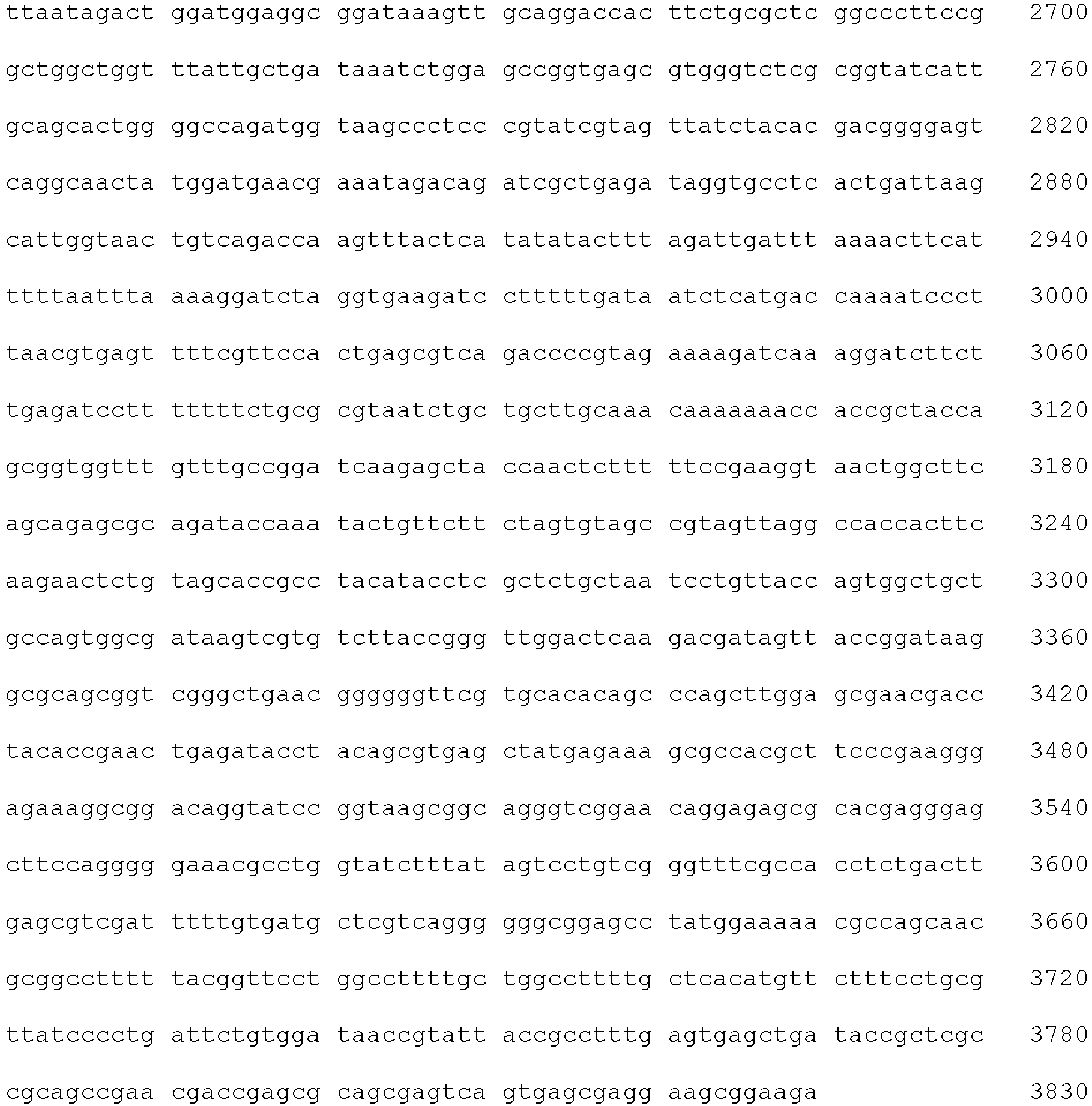
- the pDGP-A ⁇ GOI vector as another example for a mammalian expression vector according to the present invention exhibits a 3830 bp sequence, one strand of which is represented by SEQ ID NO:3.
- the present invention overcomes the downside described above and provides mammalian expression vectors for integration into the respective mammalian genome (in particular the vectors, if devoid of gene(s) of interest, designated pDGP ⁇ GOI exhibiting the sequence of SEQ ID NO:2 and pDGP-A ⁇ GOI exhibiting the sequence of SEQ ID NO:3; and the vectors designated pDGP and pDGP-A, if including the gene(s) of interest, see Figs.
- simian virus 40 SV40
- Hbb intronII which is distinct from and hence must not be confused with the chimeric intron described in the literature, e.g., Xu et al. (2)
- at least one selection marker gene e.g., neo, dhfr
- Such expression vectors are suitable to take up at least one gene of interest and, if so, enable its/their expression and subsequent selection of transfected cells using at least one suitable selection agent (e.g., G418 and/or MTX). Even one step-selection with G418 selects for cells expressing the at least one polypeptide encoded by the at least one gene of interest in high amounts and in a highly reproducible manner, thereby reducing the time to develop cell lines and work load significantly.
- suitable selection agent e.g., G418 and/or MTX
- Expression vectors integrating into the genome that are known in the prior art upon two or more selection steps regularly generate cells that harbour several copies of the GOI integrated into their genome and therefore express the GOI at an increased rate.
- the expression vectors of the present invention do not require multiple copies thereof to be integrated into the genome and/or two or more rounds of selection steps in order to allow the mammalian host cell to express the GOI at an increased rate.
- This is the immediate outcome of the combination of the regulatory elements according to the present invention and resides in increased expression rates irrespective of the number of gene copies integrated into the genome.
- the advantage of the present invention is thus that there is no need to perform at least one selection step each with G418 and MTX in order to accomplish satisfactory expression rates but that only one selection step either with G418 or MTX, to mention exemplary selection systems, is sufficient.
- Hbb intronII relates to any nucleic acid molecule exhibiting a sequence of the second intron of the human ⁇ -globin ( hbb ) gene (Hbb intron 2) including 10 bp of the sequence immediately upstream of said Hbb intron 2 in the hbb gene and 10 bp of the sequence immediately downstream of the Hbb intron 2 in the hbb gene.
- the Hbb intronII exhibits the sequence set out in SEQ ID NO:1.
- a first aspect of the present invention includes the provision of an expression vector for integration into the mammalian genome, said expression vector comprising the following regulatory elements: (a) the simian virus 40 (SV40) enhancer and early promoter region and (b) the human Hbb intronII, and preferably the intron exhibiting the sequence of SEQ ID NO:1, wherein the expression vector comprises at least one gene of interest under the control of the regulatory elements defined in (a) and (b), and wherein the human Hbb intronII is located between the sequence encoding the at least one gene of interest and the SV 40 enhancer and early promoter region.
- SV40 simian virus 40
- human Hbb intronII preferably the intron exhibiting the sequence of SEQ ID NO:1
- the expression vector comprises at least one gene of interest under the control of the regulatory elements defined in (a) and (b)
- the human Hbb intronII is located between the sequence encoding the at least one gene of interest and the SV 40 enhancer and
- a second aspect of the present invention is a vector system comprising at least two vectors as defined in any of preferred embodiments (i), and (ii), wherein each of the at least two vectors comprises at least one gene of interest.
- Preferred is such vector system, wherein a first gene of interest located on a first vector encodes the light chain of an immunoglobulin, and a second gene of interest located on a second vector encodes the heavy chain of an immunoglobulin.
- Another vector system also contemplated by the present invention comprises at least two vectors, wherein a first vector is according to the first aspect of the present invention but having no eukaryotic selection marker, and wherein a second vector comprises at least one gene encoding a selection marker conferring resistance to a transfected cell.
- a third aspect of the present invention is an isolated mammalian cell comprising an expression vector of any of preferred embodiments (i), (ii), (iii), (iv), (v), and (vi) of the first aspect of the present invention or a vector system according to the second aspect of the present invention.
- any isolated mammalian cell can be used in conjunction with the present invention as long as it allows the recombinant expression of a polypeptide.
- such cell is a COP cell, an L cell, a C127 cell, an Sp2/0 cell, an NS-0 cell, an NS-1 cell, an NIH3T3 cell, a PC12 cell, a PC12h cell, a BHK cell, a CHO cell, a COS1 cell, a COS3 cell, a COS7 cell, a CV1 cell, a Vero cell, a HeLa cell, an HEK-293 cell, a PER C6 cell, or a cell derived from diploid fibroblasts, myeloma cells, and HepG2.
- a fourth aspect of the present invention relates to an ex vivo method for producing a cell of the third aspect of the present invention, the method comprising the step of providing, and preferably transfecting, a mammalian cell with an expression vector of any of preferred embodiments (i), (ii), (iii), (iv), (v), and (vi) of the first aspect of the present invention, or with a vector system according to the second aspect of the present invention.
- a fifth aspect of the present invention is a method for producing at least one polypeptide of interest, wherein said method comprises the step of culturing a cell of the third aspect of the present invention in a cell culture medium under conditions allowing expression of said at least one polypeptide of interest.
- the at least one polypeptide of interest is produced by culturing a CHO cell according to the third aspect of the present invention.
- the vectors according to the present invention are particularly suitable for producing polypeptides in rodent cells such as CHO cells.
- such method further comprises the step of isolating from the cell culture medium said at least one polypeptide of interest.
- the vectors according to the present invention can be used in a method of high throughput screening of proteins.
- the screening (testing) of proteins e.g., of different variants of a candidate protein, differing in their amino acid sequence is a conventional early step in the development of new therapeutic proteins (biopharmaceuticals).
- the purpose of this screening programme is the assessment and subsequent optimisation of molecular features such as bioactivity, immunogenicity, aggregation behaviour, expression potential, posttranslational modifications, etc. of the protein of interest tested.
- HEK human embryonic kidney cells
- HEK293 cells transient protein expression in HEK cells
- CHO cells are most often used as the final production cells in case of biopharmaceuticals.
- researchers in industry and academia keep with the current approach because of the relatively high protein titres which can be obtained almost ab initio by a transient protein expression in HEK cells when compared to CHO cells, thereby avoiding the need for a lengthy selection process to obtain stably transfected CHO cells.
- the vectors according to the present invention enable the expression of high quantities of the protein of interest in stably transfected cells after a short selection time only (for example, after two weeks of selection in, e.g., G418-containing medium).
- the vectors of the invention can be advantageously used to express proteins of interest (e.g., different protein variants) for testing/screening purposes directly in the production system (e.g., CHO cells) and under the cell culture (e.g., medium and process) conditions which will eventually be used for producing the final biopharmaceutical.
- This approach eliminates, particularly in the early development phases of a multiplicity of candidate therapeutic proteins (e.g., protein variants), the significant time loss which otherwise would be associated with the generation of a stably transfected production cell line for each of said candidate proteins.
- this new approach generates more comparable (i.e., relevant) data with regard to the prognosis of protein quality and later behaviour both during (large-scale) production as well as in preclinical and clinical studies.
- the mammalian expression vectors of the present invention exhibiting two or more GOI expression cassettes are particularly useful for the expression of multimeric, in particular heteromultimeric proteins including monoclonal antibodies.
- Vectors of the present invention exhibiting only one GOI expression cassette can be advantageously used to express monomeric proteins such as cytokines and hormones including erythropoietic factors like darbepoetin alfa.
- a vector system is also contemplated consisting of at least two vectors of the present invention, wherein a first vector comprises a first gene of interest and a second vector comprises a second gene of interest.
- said first gene of interest located on the first vector encodes the light chain of an immunoglobulin and the second gene of interest located on the second vector encodes the heavy chain of an immunoglobulin.
- the mammalian vectors according to the present invention are suitable for the (recombinant) production of monomeric and multimeric proteins, like antibodies.
- (recombinant) proteins that can be produced with the mammalian vectors of the invention include those comprising amino acid sequences identical to or substantially similar to all or part of one of the following proteins: an Flt3 ligand, a CD40 ligand, erythropoiesis stimulating proteins like erythropoietin (EPO), darbepoetin including darbepoetin alfa, and thrombopoietin, calcitonin, leptin, a Fas ligand, a ligand for receptor activator of NF-kappa B (RANKL), a tumour necrosis factor (TNF)-related apoptosis-inducing ligand (TRAIL), thymic stroma-derived lymphopoietin, granulocyte colony stimulating factor, granulocyte-
- proteins that can be produced using the mammalian vectors of the invention include proteins comprising all or part of the amino acid sequence of a receptor for any of the above-mentioned proteins, an antagonist to such a receptor of any of the above-mentioned proteins, and proteins substantially similar to such receptors or antagonists.
- proteins that can be produced using the mammalian vectors of the invention include proteins comprising all or part of the amino acid sequences of differentiation antigens (referred to as CD proteins) or their ligands or proteins substantially similar to either of these.
- CD proteins differentiation antigens
- Examples of such antigens are differentiation antigens including CD20, CD22, CD27, CD30, CD39, CD40, and ligands thereto.
- Enzymatically active proteins or their ligands can also be produced using the mammalian vectors of the invention.
- proteins comprising all or part of one of the following proteins, or their ligands, or proteins substantially similar to one of these: metalloproteinase-disintegrin family members, kinases, glucocerebrosidase, superoxide dismutase, tissue plasminogen activator, Factor VIII, Factor IX, apolipoprotein E, apolipoprotein A-1, globins, an IL-2 antagonist, alpha-1 antitrypsin, TNF-alpha Converting Enzyme, ligands for any of the above-mentioned enzymes, and numerous other enzymes and their ligands.
- the mammalian vectors of the invention can also be used to produce chimeric proteins selected in vitro to bind to a specific target protein and modify its activity, and antibodies or portions thereof and chimeric antibodies, i.e. antibodies having human constant antibody immunoglobulin domains coupled to one or more murine variable antibody immunoglobulin domain, fragments thereof, or substantially similar proteins.
- the mammalian vectors of the invention may also be used to produce conjugates comprising an antibody and a cytotoxic or luminescent substance.
- Examples of antibodies, in vitro -selected chimeric proteins, or antibody/cytotoxin or antibody/luminophore conjugates that can be produced using the mammalian vectors of the invention include those that recognise any one or a combination of proteins including, but not limited to, any of the above-mentioned proteins and/or the following antigens: CD2, CD3, CD4, CD8, CD11a CD14, CD18, CD20, CD22, CD23, CD25, CD33, CD40, CD44, CD52, CD80 (B7.1), CD86 (B7.2), CD147, IL-la, IL-1, IL-2, IL-3, IL-7, IL-4, IL-5, IL-8, IL-10, IL-2 receptor, IL-4 receptor, IL-6 receptor, IL-13 receptor, IL-18 receptor subunits, PDGF-ß, and analogues thereof, VEGF, TGF, TGF-ß2, TGF-p1, EGF receptor VEGF receptor, hepatocyte growth factor, osteop
- the mammalian vectors of the invention can also be used to produce recombinant fusion proteins comprising any of the above-mentioned proteins or substantially similar proteins.
- recombinant fusion proteins comprising one of the above-mentioned proteins plus a multimerisation domain, such as a leucine zipper, a coiled coil, an Fc portion of an antibody, or a substantially similar protein, can be produced using the mammalian vectors of the invention.
- a multimerisation domain such as a leucine zipper, a coiled coil, an Fc portion of an antibody, or a substantially similar protein
- proteins in which at least a portion of TNFR or RANK is fused to an Fc portion of an antibody.
- the pDGP vector as one embodiment exemplifying the present invention (for a vector with at least one gene of interest) is schematically depicted in Fig. 1 . It contains two GOI expression cassettes each exhibiting basically identical structures and regulatory elements, except that the genes to be expressed are distinct: the light and heavy chain gene, respectively, of a monoclonal antibody (an anti-CD20-antibody), the expression cassettes thus enabling expression of two distinct genes of interest in mammalian cells.
- the pDGP-A vector as another embodiment exemplifying the present invention (for a vector with one gene of interest) is schematically depicted in Fig. 3 . It contains one GOI expression cassette exhibiting the gene of the darbepoetin alfa (which is a hormone or erythropoietic factor) under the control of the above-described novel and inventive combination of regulatory elements.
- Genes of interest typically are cDNA sequences, but may likewise be (genomic) DNA sequences.
- the vectors according to the present invention may also contain genes/expression cassettes encoding a selection marker.
- Preferred selection markers are the neomycin phosphotransferase encoded by the neo gene/expression cassette and the dihydrofolate reductase encoded by the dhfr gene/expression cassette.
- the genes/expression cassettes encoding the selectable markers allow for selection of transfected cells by, e.g., geneticin (G418) and methotrexate (MTX).
- the neo expression cassette of pDGP contains the neomycin phosphotransferase gene driven by the SV40 enhancer and early promoter region and is further transcriptionally regulated by a synthetic polyadenylation signal sequence (as to be seen in Fig. 1 ).
- the neomycin phosphotransferase gene originates from bacteria and is expressed in mammalian cells if under the control of the regulatory elements mentioned above.
- the dhfr expression cassette of pDGP contains the dhfr gene driven by the SV40 early promoter region (without enhancer sequence) and is further transcriptionally regulated by the SV40 polyadenylation signal in 3'- to 5'-orientation.
- DHFR dihydrofolate reductase
- pDGP pDGP
- mAb HC mAb LC
- mAb LC anti-CD20-antibody
- Both vectors were transfected into the same host cell lines (e.g., CHO K1PD, COS1, CV1, Vero, HeLa, HEK-293, PER C6). Cells were then subjected to successive selection steps in the presence of G418 and MTX. After each selection step mAb titres in standard shake flask batches were determined and compared. Experimental details are presented below.
- pDGP-A pDGP-A
- Control vector 1 and 2 both the pDGP-A and Control vector 1 and 2 include the same gene of interest: darbepoetin alfa, a hormone (erythropoietic factor).
- the vectors were transfected into the same host cell lines (e.g., CHO K1PD, COS1, CV1, Vero, HeLa, HEK-293, PER C6).
- each of the expression vectors pDGP-A, Control vector 1 and Control vector 2 comprises a single GOI expression cassette and does not comprise any eukaryotic selection marker gene(s). Therefore, the Neo vector - comprising the neomycin resistance gene - was co-transfected in order to enable the one-step selection in medium containing geneticin (G418). Experimental details are presented below.
- the mammalian vectors according to the invention may be and were used to produce various different (recombinant) proteins.
- the following examples illustrate the general experimental setting of the recombinant expression of a multimeric and monomeric protein, respectively.
- the data presented hereinafter have been collected by using a monoclonal antibody directed against CD20 and darbepoetin alfa, a hormone (erythropoietic factor), as exemplary proteins which can be expressed using the mammalian vector according to the invention.
- Example 1 Expression of a multimeric protein (monoclonal anti-CD20 antibody) Expression vector design and construction
- Vectors used in this study were designed in silico using vector NTI 9.0 evaluation software. Fragments required for the construction of vectors such as the pDGP vector and the control vector ( Fig. 2 ) were prepared at Geneart AG, Regensburg, Germany. It is understood by those of skill in the art that several vector assemblies according to the teachings of the present invention are feasible. As the individual elements of the vectors according to the invention are known in the art, suitable vectors can be assembled e.g. by sequencing or amplification and appropriate cloning of the basic genetic elements and expression cassettes. Hence, it will be understood that several other embodiments and ways to obtain respective vectors are suitable and readily available.
- Table 1 List of regulatory genetic elements comprised in the pDGP/control vector Vector GOI (2) neo dhfr promoter intron polyA promoter polyA promoter polyA pDGP vector SV40 enh/prom Hbb intronII SV40 polyA SV40 enh/prom synth polyA SV40 prom SV40 polyA Control vector CMV enh/prom RK-intron SV40 polyA SV40 enh/prom synth polyA SV40 prom SV40 polyA
- Both expression vectors were linearised using single cutter restriction endonuclease Swa I ( ATTT AAAT, Roche, Cat. No. 11 371 525 001). A maximum of 100 ⁇ g of vector DNA per reaction was digested using Swa I at 5U/ ⁇ g DNA. Appropriate amounts of 10x reaction buffer and H 2 O were added to the reaction mixtures. Reaction mixtures were incubated at 25°C 4 h-overnight. After digestion DNA precipitation was performed in a laminar air flow chamber as described below:
- CHO K1PD, COS1, CV1, Vero, HeLa, HEK-293, PER C6 cells were used.
- the CHO K1PD cell line is a subpopulation of the CHO K1 cell line originating from ATCC (Cat. No. CCL-61.3).
- the original cell line was adapted to serum-free suspension culture in DM122 medium.
- DM122 growth medium was used for all experiments employing CHO K1PD cells.
- the Amaxa system was used for cell transfection (Nucleofector kit V, Cat. No.: VCA-1003). No more than 5 pools are transfected at once, to enable sufficient time for all necessary cell manipulations.
- the detailed protocol is as follows:
- the cells e.g. CHO K1PD, COS1, CV1, Vero, HeLa, HEK-293, PER C6 cells
- a suitable medium for culturing mammalian cells such as DM122 growth medium supplemented with 8 mM L-glutamine (Sigma, Cat. No. G7513) when using CHO K1PD for the experiments.
- G418 selection was the first selection step after transfection. G418 was added to the cells 2-5 days after transfection when cell viability exceeded 60%. G418 selection usually takes 2-4 weeks. Once cell viability had reached at least 85%, MTX selection was carried out.
- a seeding density of 2 x 10 5 viable cells per ml was used to start MTX selection on G418 preselected cells.
- Two selection sub-steps were performed using the above indicated MTX concentrations (150/250 nM).
- MTX selection usually takes 2 to 3 weeks, until cell viability reached more than 85%.
- the cells were thawed at 37°C and drop-wise inoculated directly to 250 ml shake flasks containing 50 ml pre-warmed medium at an initial cell density of about 10 5 viable cells per ml. Cells were cultured at 37°C, 10% CO 2 , 110 rpm.
- Cells were frozen in exponential growth phase at viability >90 %. 5-10 x 10 6 viable cells per vial were frozen in conditioned medium containing 7.5% DMSO. First, the cell culture was centrifuged at 180 x g, 5 min, RT. Second, the supernatant was partially removed. Then, DMSO was added to the remaining supernatant to a final concentration of 7.5%. Cell pellets were gently resuspended. Cryo-vials were filled with 1 ml of the cell suspension each and transferred into a - 80°C deep freezer in a Mr. Frosty cryo box. Within 1 month the frozen cells in the cryo-vials were transferred into a liquid nitrogen container.
- Cells were split every 2-3 days at a density of 1-1.5 x 10 5 viable cells per ml and added to the appropriate pre-warmed growth medium to maintain exponential growth.
- Incubation conditions 37°C, 90-110 rpm (for 125 & 250 ml shake flasks), 10% CO 2 (for DM122 medium).
- a ten-day batch experiment in appropriately supplemented medium (e.g., DM122) was performed to evaluate the expression of mAb.
- Cells were seeded at a final density of 1.5 x 10 5 viable cells/ml in 125 ml shake flasks. The total culture volumes were 25 ml. Cells were cultivated in a shaking incubator (37°C, 110 rpm, 10% CO 2 ). At day 10, 1 ml cell culture supernatant samples were taken to measure the mAb titre. The mAb content was determined by AC (Affinity Chromatography with Protein A).
- Table 2 Ten-day batch titres of cells transfected with pDGP vector after different selection steps are shown in Table 2.
- Table 2 Ten-day batch titres; cells transfected with pDGP vector after different selection steps.
- Example 2 Expression of a monomeric protein (darbepoetin alfa)
- pDGP-A ⁇ GOI vector comprises the same novel and inventive combination of regulatory elements driving GOI expression, when inserted, as the aforementioned pDGP ⁇ GOI vector (and the pDGP vector of Example 1): the simian virus 40 enhancer and early promoter region and the Hbb intronII.
- darbepoetin alfa is inserted into pDGP-A ⁇ GOI as an exemplary protein of interest.
- Control vector 1, Control vector 2, and the Neo vector were used in this study (see below).
- each of the above mentioned expression vectors (except for the Neo vector) comprises a single GOI expression cassette and does not comprise any eukaryotic selection marker gene(s). Therefore, the Neo vector - comprising the neomycin resistance gene - was co-transfected in all experiments in order to enable the selection in medium containing geneticin (G418).
- Example 2 thus represents a vector system according to the third aspect of the invention.
- the regulatory genetic elements driving the expression of darbepoetin alfa in the pDGP-A vector and in Control vector 1 and 2 are listed in Table 4.
- Table 4 likewise shows the regulatory genetic elements driving the expression of the neomycin resistance gene in the Neo vector.
- Table 4 List of genetic regulatory elements comprised in the pDGP-A vector, Control vector 1, Control vector 2 and Neo vector Vector GOI (darbepoetin alfa) neo promoter intron polyA promoter polyA pDGP - A SV40 enh/prom Hbb intronII SV40 polyA - - Control vector 1 CMV enh/prom Hbb intronII SV40 polyA - - Control vector 2 SV40 enh/prom - SV40 poly A - - Neo vector - - - SV40 enh/prom SV40 polyA
- Example 1 The same cell lines as in Example 1 were used.
- the cells e.g. CHO K1PD, COS1, CV1, Vero, HeLa, HEK-293, PER C6 cells
- a suitable medium for culturing mammalian cells such as the in-house developed DM122 growth medium supplemented with 8 mM L-glutamine (Sigma, Cat. No. G7513) when using CHO K1PD for the experiments.
- the selection step was performed in the same medium additionally supplemented with G418 (Geneticin, Gibco, Cat. No. 10131-027; final concentration: 0.8 mg/ml).
- G418 was added to the cells 2-5 days after transfection when cell viability exceeded 60%. G418 selection usually takes 2-4 weeks.
- the thawing/freezing of cells was performed as described in Example 1.
- the darbepoetin alfa content was determined by an EPO-specific ELISA (Enzyme-Linked ImmunoSorbent Assay) test (Epo-ELISA Quantikine kit, R&D Systems, Cat. No.: DEP00).
- the expression vectors of the present invention provide the following advantages over expression vectors currently used in the art (such as the control vectors):
Landscapes
- Health & Medical Sciences (AREA)
- Genetics & Genomics (AREA)
- Life Sciences & Earth Sciences (AREA)
- Engineering & Computer Science (AREA)
- Bioinformatics & Cheminformatics (AREA)
- Wood Science & Technology (AREA)
- Organic Chemistry (AREA)
- Biomedical Technology (AREA)
- Chemical & Material Sciences (AREA)
- Biotechnology (AREA)
- General Engineering & Computer Science (AREA)
- Zoology (AREA)
- Molecular Biology (AREA)
- Microbiology (AREA)
- Physics & Mathematics (AREA)
- Plant Pathology (AREA)
- Biophysics (AREA)
- Biochemistry (AREA)
- General Health & Medical Sciences (AREA)
- Mycology (AREA)
- Veterinary Medicine (AREA)
- Micro-Organisms Or Cultivation Processes Thereof (AREA)
- Preparation Of Compounds By Using Micro-Organisms (AREA)
- Peptides Or Proteins (AREA)
Description
- The present invention describes new mammalian expression vectors (with or without gene(s) of interest, GOI) for integration into the mammalian genome, the vectors comprising a novel combination of regulatory elements. In particular, the present invention describes expression vectors comprising the following regulatory elements: (a) the
simian virus 40 enhancer and early promoter region and (b) the human Hbb intronII, wherein the expression vector comprises at least one gene of interest under the control of the regulatory elements defined in (a) and (b), and wherein the human Hbb intronII is located between the sequence encoding the at least one gene of interest and theSV 40 enhancer and early promoter region. Preferably, such expression vector comprises at least one selection marker gene (e.g., pDGP including gene(s) of interest, seeFig. 1 ; e.g., pDGPΔGOI without gene(s) of interest). The vector (without gene(s) of interest) allows for incorporation of at least one, preferably two or more genes of interest, its/their subsequent expression, and for selection of transfected cells using, e.g., geneticin (G418) and/or methotrexate (MTX). The pDGPΔGOI vector as an example for a mammalian expression vector according to the present invention exhibits a 9555 bp sequence, one strand of which is represented by SEQ ID NO:2. The pDGP-AΔGOI vector as another example for a mammalian expression vector according to the present invention exhibits a 3830 bp sequence, one strand of which is represented by SEQ ID NO:3. - Currently many successive selection steps on a large number of cell pools have to be performed to generate and screen for a high producing cell pool before cell cloning. As a result, cell line development is a time-consuming and work-intensive activity.
- There is a vast number of publications addressing the influence of regulatory elements on expression levels.
- The positive effect of different intron sequences positioned in or just before the GOI coding sequence has been known for a long time and described in many publications (2, 4, 5, 6). Studies addressing transcriptional efficiency of different promoters were conducted identifying the CMV promoter as the most efficient (2, 3, 4, 5, 6). For this reason the GOI expression cassettes in most mammalian expression vectors today are driven by a CMV promoter and have an intron sequence just upstream of the GOI coding sequence.
- Concerning the combination of GOI expression cassettes and selection marker genes in a particular expression vector, several combinations were reported and functionally tested (1). For monoclonal antibody (mAb) expression, solutions with two vectors expressing separately the light chain and heavy chain were described as well as vectors harbouring expression cassettes for both mAb chains together with the neo and dhfr expression cassettes on the same plasmid (1).
In most cases only transient expression levels using intracellular reporter proteins like luciferase (2, 5, 6) were determined. By this approach it is hard to predict how a regulatory element and/or vector after integration into a chromosome will influence stable expression levels of a secreted protein, where the final expression level is the result of a complex interplay between transcription, translation, intracellular trafficking, and secretion rates. Although most important for the biopharmaceutical industry, this question is rarely addressed in the literature (3). In particular, it would seem that the relevance of a specific combination of regulatory elements and selection markers for the time needed to develop a cell line and the efficiency of cell line development has never been addressed. Consequently, the principal object of the present invention was to look for a combination of regulatory elements and selection markers superior to those known in the art in terms of the above mentioned parameters time and efficiency. - Accordingly, the present invention overcomes the downside described above and provides mammalian expression vectors for integration into the respective mammalian genome (in particular the vectors, if devoid of gene(s) of interest, designated pDGPΔGOI exhibiting the sequence of SEQ ID NO:2 and pDGP-AΔGOI exhibiting the sequence of SEQ ID NO:3; and the vectors designated pDGP and pDGP-A, if including the gene(s) of interest, see
Figs. 1 and3 , respectively) comprising a novel combination of regulatory elements: the simian virus 40 (SV40) enhancer and early promoter region, Hbb intronII (which is distinct from and hence must not be confused with the chimeric intron described in the literature, e.g., Xu et al. (2)), and optionally at least one selection marker gene (e.g., neo, dhfr). Such expression vectors are suitable to take up at least one gene of interest and, if so, enable its/their expression and subsequent selection of transfected cells using at least one suitable selection agent (e.g., G418 and/or MTX). Even one step-selection with G418 selects for cells expressing the at least one polypeptide encoded by the at least one gene of interest in high amounts and in a highly reproducible manner, thereby reducing the time to develop cell lines and work load significantly. - As a side note, the following should be taken into account: Expression vectors integrating into the genome that are known in the prior art upon two or more selection steps (one of which is usually MTX selection) regularly generate cells that harbour several copies of the GOI integrated into their genome and therefore express the GOI at an increased rate. Quite conversely, the expression vectors of the present invention do not require multiple copies thereof to be integrated into the genome and/or two or more rounds of selection steps in order to allow the mammalian host cell to express the GOI at an increased rate. This is the immediate outcome of the combination of the regulatory elements according to the present invention and resides in increased expression rates irrespective of the number of gene copies integrated into the genome. The advantage of the present invention is thus that there is no need to perform at least one selection step each with G418 and MTX in order to accomplish satisfactory expression rates but that only one selection step either with G418 or MTX, to mention exemplary selection systems, is sufficient.
- The term "Hbb intronII" as used herein relates to any nucleic acid molecule exhibiting a sequence of the second intron of the human β-globin (hbb) gene (Hbb intron 2) including 10 bp of the sequence immediately upstream of said
Hbb intron 2 in the hbb gene and 10 bp of the sequence immediately downstream of theHbb intron 2 in the hbb gene. According to a preferred embodiment of the present invention, the Hbb intronII exhibits the sequence set out in SEQ ID NO:1. - Thus, a first aspect of the present invention includes the provision of an expression vector for integration into the mammalian genome, said expression vector comprising the following regulatory elements: (a) the simian virus 40 (SV40) enhancer and early promoter region and (b) the human Hbb intronII, and preferably the intron exhibiting the sequence of SEQ ID NO:1, wherein the expression vector comprises at least one gene of interest under the control of the regulatory elements defined in (a) and (b), and wherein the human Hbb intronII is located between the sequence encoding the at least one gene of interest and the
SV 40 enhancer and early promoter region. - Preferred embodiments of that aspect of the present invention are
- (i) a vector of the first aspect of the present invention, wherein the vector comprises at least one gene encoding a eukaryotic and/or prokaryotic selection marker, in particular the neomycin phosphotransferase gene (neo) from Tn5 and/or the dihydrofolate reductase (dhfr) gene;
- (ii) a vector of the first aspect of the present invention, wherein the vector is circular;
- (iii) a vector of the first aspect of the present invention, wherein the at least one gene of interest is the gene encoding the light chain of an immunoglobulin and/or the gene encoding the heavy chain of an immunoglobulin;
- (iv) a vector of the first aspect of the present invention, wherein the order of the regulatory elements, the genes of interest, and the genes encoding a selection marker is as follows: 5'-SV40 enhancer/early promoter region, Hbb intronII, gene encoding the light chain of an immunoglobulin, SV40 polyadenylation signal sequence; SV40 enhancer/early promoter region, Hbb intronII, gene encoding the heavy chain of an immunoglobulin, SV40 polyadenylation signal sequence; SV40 enhancer/early promoter region, Tn5 neomycin phosphotransferase gene, a synthetic polyadenylation signal sequence, SV40 early promoter without enhancer sequence, dihydrofolate reductase gene, SV40 polyadenylation signal sequence-3';
- (v) a vector of the first aspect of the present invention, wherein the vector comprises at least one prokaryotic selection marker gene, e.g., an antibiotic resistance gene such as the ampicillin resistance gene, and/or further regulatory elements known by the skilled artisan to be advantageously included into a mammalian expression vector; and
- (vi) a vector of the first aspect of the present invention, wherein the vector is the pDGPΔGOI vector exhibiting a 9555 bp sequence, one strand of which is represented by the sequence of SEQ ID NO:2.
- A second aspect of the present invention is a vector system comprising at least two vectors as defined in any of preferred embodiments (i), and (ii), wherein each of the at least two vectors comprises at least one gene of interest. Preferred is such vector system, wherein a first gene of interest located on a first vector encodes the light chain of an immunoglobulin, and a second gene of interest located on a second vector encodes the heavy chain of an immunoglobulin. Another vector system also contemplated by the present invention comprises at least two vectors, wherein a first vector is according to the first aspect of the present invention but having no eukaryotic selection marker, and wherein a second vector comprises at least one gene encoding a selection marker conferring resistance to a transfected cell.
- A third aspect of the present invention is an isolated mammalian cell comprising an expression vector of any of preferred embodiments (i), (ii), (iii), (iv), (v), and (vi) of the first aspect of the present invention or a vector system according to the second aspect of the present invention. Basically any isolated mammalian cell can be used in conjunction with the present invention as long as it allows the recombinant expression of a polypeptide.
- According to a preferred embodiment of that third aspect of the present invention such cell is a COP cell, an L cell, a C127 cell, an Sp2/0 cell, an NS-0 cell, an NS-1 cell, an NIH3T3 cell, a PC12 cell, a PC12h cell, a BHK cell, a CHO cell, a COS1 cell, a COS3 cell, a COS7 cell, a CV1 cell, a Vero cell, a HeLa cell, an HEK-293 cell, a PER C6 cell, or a cell derived from diploid fibroblasts, myeloma cells, and HepG2.
- A fourth aspect of the present invention relates to an ex vivo method for producing a cell of the third aspect of the present invention, the method comprising the step of providing, and preferably transfecting, a mammalian cell with an expression vector of any of preferred embodiments (i), (ii), (iii), (iv), (v), and (vi) of the first aspect of the present invention, or with a vector system according to the second aspect of the present invention.
- A fifth aspect of the present invention is a method for producing at least one polypeptide of interest, wherein said method comprises the step of culturing a cell of the third aspect of the present invention in a cell culture medium under conditions allowing expression of said at least one polypeptide of interest.
- According to a preferred embodiment of that fifth aspect of the present invention the at least one polypeptide of interest is produced by culturing a CHO cell according to the third aspect of the present invention. The vectors according to the present invention are particularly suitable for producing polypeptides in rodent cells such as CHO cells. According to another preferred embodiment of that fifth aspect of the present invention such method further comprises the step of isolating from the cell culture medium said at least one polypeptide of interest.
- The vectors according to the present invention can be used in a method of high throughput screening of proteins.
- The screening (testing) of proteins, e.g., of different variants of a candidate protein, differing in their amino acid sequence is a conventional early step in the development of new therapeutic proteins (biopharmaceuticals). The purpose of this screening programme is the assessment and subsequent optimisation of molecular features such as bioactivity, immunogenicity, aggregation behaviour, expression potential, posttranslational modifications, etc. of the protein of interest tested.
- Currently, in most cases the amount of protein needed to perform the above-mentioned assessment is obtained from transient protein expression in HEK (human embryonic kidney) cells, such as HEK293 cells. For, inter alia, regulatory reasons, however, CHO cells are most often used as the final production cells in case of biopharmaceuticals. Notwithstanding this discrepancy, researchers in industry and academia keep with the current approach because of the relatively high protein titres which can be obtained almost ab initio by a transient protein expression in HEK cells when compared to CHO cells, thereby avoiding the need for a lengthy selection process to obtain stably transfected CHO cells. One of the major drawbacks of this traditional approach is, however, that the screening (testing) system and the final production system make use of host cells of different origin (human vs. hamster cells). This discrepancy of screening and production system of course entails the use of different growth media, process conditions, etc. resulting in by far less - if at all - comparable (i.e., relevant) data concerning for example the prediction of aggregation behaviour, expression levels, posttranslational modifications, etc., when the protein of interest is to be expressed in the final production system. Thus, there is a need for a screening/testing system which combines the advantages of fast and high titre protein expression (as obtained, e.g., by a transient protein expression in HEK cells) with the advantage to perform the early assessment of a protein of interest which has been obtained from a protein expression system largely corresponding to the final production system.
- The above problem is solved by the vectors according to the present invention, because they enable the expression of high quantities of the protein of interest in stably transfected cells after a short selection time only (for example, after two weeks of selection in, e.g., G418-containing medium). Thus, the vectors of the invention can be advantageously used to express proteins of interest (e.g., different protein variants) for testing/screening purposes directly in the production system (e.g., CHO cells) and under the cell culture (e.g., medium and process) conditions which will eventually be used for producing the final biopharmaceutical. This approach eliminates, particularly in the early development phases of a multiplicity of candidate therapeutic proteins (e.g., protein variants), the significant time loss which otherwise would be associated with the generation of a stably transfected production cell line for each of said candidate proteins. Concomitantly, this new approach generates more comparable (i.e., relevant) data with regard to the prognosis of protein quality and later behaviour both during (large-scale) production as well as in preclinical and clinical studies.
- The mammalian expression vectors of the present invention exhibiting two or more GOI expression cassettes are particularly useful for the expression of multimeric, in particular heteromultimeric proteins including monoclonal antibodies. Vectors of the present invention exhibiting only one GOI expression cassette can be advantageously used to express monomeric proteins such as cytokines and hormones including erythropoietic factors like darbepoetin alfa. When multimeric proteins, in particular monoclonal antibodies, are to be expressed, a vector system is also contemplated consisting of at least two vectors of the present invention, wherein a first vector comprises a first gene of interest and a second vector comprises a second gene of interest. Preferably, in said vector system, said first gene of interest located on the first vector encodes the light chain of an immunoglobulin and the second gene of interest located on the second vector encodes the heavy chain of an immunoglobulin.
- The mammalian vectors according to the present invention are suitable for the (recombinant) production of monomeric and multimeric proteins, like antibodies. Generally, (recombinant) proteins that can be produced with the mammalian vectors of the invention include those comprising amino acid sequences identical to or substantially similar to all or part of one of the following proteins: an Flt3 ligand, a CD40 ligand, erythropoiesis stimulating proteins like erythropoietin (EPO), darbepoetin including darbepoetin alfa, and thrombopoietin, calcitonin, leptin, a Fas ligand, a ligand for receptor activator of NF-kappa B (RANKL), a tumour necrosis factor (TNF)-related apoptosis-inducing ligand (TRAIL), thymic stroma-derived lymphopoietin, granulocyte colony stimulating factor, granulocyte-macrophage colony stimulating factor (GM-CSF), growth factors including mast cell growth factor, stem cell growth factor, epidermal growth factor, keratinocyte growth factor, megakaryote growth and development factor, RANTES, growth hormone, insulin, insulinotropin, insulin-like growth factors, parathyroid hormone, interferons including α-interferon, β-interferon, and γ-interferon, nerve growth factor, brain-derived neurotrophic factor, synaptotagmin-like proteins (SLP1-5), neurotrophin-3"glucagon, interleukins including IL-1, IL-1a, IL-2, IL-3, IL-4, IL-5, IL-6, IL-7, IL-8, IL-9, IL-10, IL-11, IL-12, IL-13, IL-14, IL-15, IL-16, IL-17, and IL-18, colony stimulating factors, lymphotoxin-p, tumour necrosis factor (TNF), leukemia inhibitory factor, oncostatin-M, and various ligands for cell surface molecules ELK and Hek (such as the ligands for eph-related kinases or LERKS).
- Further proteins that can be produced using the mammalian vectors of the invention include proteins comprising all or part of the amino acid sequence of a receptor for any of the above-mentioned proteins, an antagonist to such a receptor of any of the above-mentioned proteins, and proteins substantially similar to such receptors or antagonists.
- Also, proteins that can be produced using the mammalian vectors of the invention include proteins comprising all or part of the amino acid sequences of differentiation antigens (referred to as CD proteins) or their ligands or proteins substantially similar to either of these. Examples of such antigens are differentiation antigens including CD20, CD22, CD27, CD30, CD39, CD40, and ligands thereto.
- Enzymatically active proteins or their ligands can also be produced using the mammalian vectors of the invention. Examples include proteins comprising all or part of one of the following proteins, or their ligands, or proteins substantially similar to one of these: metalloproteinase-disintegrin family members, kinases, glucocerebrosidase, superoxide dismutase, tissue plasminogen activator, Factor VIII, Factor IX, apolipoprotein E, apolipoprotein A-1, globins, an IL-2 antagonist, alpha-1 antitrypsin, TNF-alpha Converting Enzyme, ligands for any of the above-mentioned enzymes, and numerous other enzymes and their ligands.
- The mammalian vectors of the invention can also be used to produce chimeric proteins selected in vitro to bind to a specific target protein and modify its activity, and antibodies or portions thereof and chimeric antibodies, i.e. antibodies having human constant antibody immunoglobulin domains coupled to one or more murine variable antibody immunoglobulin domain, fragments thereof, or substantially similar proteins. The mammalian vectors of the invention may also be used to produce conjugates comprising an antibody and a cytotoxic or luminescent substance. Examples of antibodies, in vitro-selected chimeric proteins, or antibody/cytotoxin or antibody/luminophore conjugates that can be produced using the mammalian vectors of the invention include those that recognise any one or a combination of proteins including, but not limited to, any of the above-mentioned proteins and/or the following antigens: CD2, CD3, CD4, CD8, CD11a CD14, CD18, CD20, CD22, CD23, CD25, CD33, CD40, CD44, CD52, CD80 (B7.1), CD86 (B7.2), CD147, IL-la, IL-1, IL-2, IL-3, IL-7, IL-4, IL-5, IL-8, IL-10, IL-2 receptor, IL-4 receptor, IL-6 receptor, IL-13 receptor, IL-18 receptor subunits, PDGF-ß, and analogues thereof, VEGF, TGF, TGF-ß2, TGF-p1, EGF receptor VEGF receptor, hepatocyte growth factor, osteoprotegerin ligand, interferon gamma, B lymphocyte stimulator, C5 complement, IgE, tumour antigen CA125, tumour antigen MUC1, PEM antigen, ErbB2/HER-2, tumour-associated epitopes that are present in elevated levels in the sera of patients, cancer-associated epitopes or proteins expressed on breast, colon, squamous cell, prostate, pancreatic, lung, and/or kidney cancer cells and/or on melanoma, glioma, or neuroblastoma cells, the necrotic core of a tumour, integrin alpha 4 beta 7, the integrin VLA-4, B2 integrins, TRAIL receptors 1,2,3, and 4, RANK, a RANK ligand, TNF-α, the adhesion molecule VAP-1, epithelial cell adhesion molecule (EpCAM), intercellular adhesion molecule-3 (ICAM-3), leukointegrin adhesin, the platelet glycoprotein gp IIb/IIIa, cardiac myosin heavy chain, parathyroid hormone, MHC I, carcinoembryonic antigen (CEA), alpha-fetoprotein (AFP), tumour necrosis factor (TNF), Fc-y-1 receptor, HLA-DR 10 beta, HLA-DR antigen, L-selectin, and IFN-γ.
- The mammalian vectors of the invention can also be used to produce recombinant fusion proteins comprising any of the above-mentioned proteins or substantially similar proteins. For example, recombinant fusion proteins comprising one of the above-mentioned proteins plus a multimerisation domain, such as a leucine zipper, a coiled coil, an Fc portion of an antibody, or a substantially similar protein, can be produced using the mammalian vectors of the invention. Specifically included among such recombinant fusion proteins are proteins in which at least a portion of TNFR or RANK is fused to an Fc portion of an antibody.
- It will be understood that the skilled artisan is fully capable to determine a variety of further proteins which are contemplated to be used in connection with the present invention.
- Genetic elements (see the abbreviations utilised in
Fig. 1 ) comprised in the vectors according to the present invention (and in particular in pDGPΔGOI/pDGP) are: - SV40 enh/prom: the
simian virus 40 enhancer and early promoter region; - Human Hbb intronII.
- Genetic elements (see the abbreviations utilised in
Fig. 1 ) that may be comprised in the vectors according to the present invention (and in particular in pDGPΔGOI/pDGP) are: - neo: the aminoglycoside-3'-phosphotransferase (APH 3' II) gene, also named neomycin phosphotransferase gene, from Tn5; APH 3' II inactivates the antibiotic geneticin (G418);
- dhfr: the dihydrofolate reductase gene;
- SV40 polyA: the polyadenylation signal sequence from SV40;
- synth polyA: a synthetic polyadenylation signal based on the polyadenylation signal of the rabbit β-globin gene.
- The pDGP vector as one embodiment exemplifying the present invention (for a vector with at least one gene of interest) is schematically depicted in
Fig. 1 . It contains two GOI expression cassettes each exhibiting basically identical structures and regulatory elements, except that the genes to be expressed are distinct: the light and heavy chain gene, respectively, of a monoclonal antibody (an anti-CD20-antibody), the expression cassettes thus enabling expression of two distinct genes of interest in mammalian cells. - The pDGP-A vector as another embodiment exemplifying the present invention (for a vector with one gene of interest) is schematically depicted in
Fig. 3 . It contains one GOI expression cassette exhibiting the gene of the darbepoetin alfa (which is a hormone or erythropoietic factor) under the control of the above-described novel and inventive combination of regulatory elements. - Genes of interest typically are cDNA sequences, but may likewise be (genomic) DNA sequences.
- As mentioned previously, the vectors according to the present invention (and in particular pDGPΔGOI/pDGP and pDGP-AΔGOI/pDGP-A) may also contain genes/expression cassettes encoding a selection marker. Preferred selection markers are the neomycin phosphotransferase encoded by the neo gene/expression cassette and the dihydrofolate reductase encoded by the dhfr gene/expression cassette. The genes/expression cassettes encoding the selectable markers allow for selection of transfected cells by, e.g., geneticin (G418) and methotrexate (MTX). The neo expression cassette of pDGP contains the neomycin phosphotransferase gene driven by the SV40 enhancer and early promoter region and is further transcriptionally regulated by a synthetic polyadenylation signal sequence (as to be seen in
Fig. 1 ). The neomycin phosphotransferase gene originates from bacteria and is expressed in mammalian cells if under the control of the regulatory elements mentioned above. Quite conversely, the dhfr expression cassette of pDGP contains the dhfr gene driven by the SV40 early promoter region (without enhancer sequence) and is further transcriptionally regulated by the SV40 polyadenylation signal in 3'- to 5'-orientation. The enzyme dihydrofolate reductase (DHFR) is required for the conversion of dihydrofolate to tetrahydrofolate which, in turn, is required for nucleic acid synthesis in cells. Efficient cell selection is achieved by irreversible inhibition of dihydrofolate reductase by methotrexate. Thus, growth of mammalian cells successfully transfected with the pDGP vector (and thus overexpressing the DHFR protein) is enabled in a methotrexate-supplemented growth medium. -
Figure 1 schematically depicts a vector in accordance with a preferred embodiment of the present invention (vector pDGP) including two genes of interest, that is, mAb HC and mAb LC (mAb: monoclonal antibody; HC: heavy chain; LC: light chain). -
Figure 2 schematically depicts a control vector. -
Figure 3 schematically depicts a vector in accordance with a preferred embodiment of the present invention (vector pDGP-A) including one gene of interest, that is, darbepoetin alfa (abbreviation: Darbe alfa). -
Figure 4 schematically depicts another control vector, i.e.,Control vector 1, wherein the GOI (darbepoetin alfa) expression is under the regulatory control of the CMV enhancer/promoter (CMV enh/prom) and the Hbb intronII. -
Figure 5 schematically depicts still another control vector, i.e.,Control vector 2, wherein the GOI (darbepoetin alfa) expression is under the regulatory control of the SV40 enhancer/promoter (SV40 enh/prom) only (without any intron sequences). - In an attempt to test the performance of the pDGP expression vector according to the present invention the inventors compared pDGP (depicted in
Fig. 1 ) to the control vector (depicted inFig. 2 ). Both the pDGP and the control vector include the same two genes of interest: mAb HC and mAb LC (of an anti-CD20-antibody). Both vectors were transfected into the same host cell lines (e.g., CHO K1PD, COS1, CV1, Vero, HeLa, HEK-293, PER C6). Cells were then subjected to successive selection steps in the presence of G418 and MTX. After each selection step mAb titres in standard shake flask batches were determined and compared. Experimental details are presented below. - In a further attempt to test the performance of the pDGP-A expression vector according to the present invention the inventors compared pDGP-A (depicted in
Fig. 3 ) toControl vector 1 and 2 (depicted inFigs. 4 and5 , respectively). Both the pDGP-A andControl vector Control vector 1 andControl vector 2 comprises a single GOI expression cassette and does not comprise any eukaryotic selection marker gene(s). Therefore, the Neo vector - comprising the neomycin resistance gene - was co-transfected in order to enable the one-step selection in medium containing geneticin (G418). Experimental details are presented below. - The mammalian vectors according to the invention may be and were used to produce various different (recombinant) proteins. The following examples illustrate the general experimental setting of the recombinant expression of a multimeric and monomeric protein, respectively. In particular, the data presented hereinafter have been collected by using a monoclonal antibody directed against CD20 and darbepoetin alfa, a hormone (erythropoietic factor), as exemplary proteins which can be expressed using the mammalian vector according to the invention.
- Vectors used in this study were designed in silico using vector NTI 9.0 evaluation software. Fragments required for the construction of vectors such as the pDGP vector and the control vector (
Fig. 2 ) were prepared at Geneart AG, Regensburg, Germany. It is understood by those of skill in the art that several vector assemblies according to the teachings of the present invention are feasible. As the individual elements of the vectors according to the invention are known in the art, suitable vectors can be assembled e.g. by sequencing or amplification and appropriate cloning of the basic genetic elements and expression cassettes. Hence, it will be understood that several other embodiments and ways to obtain respective vectors are suitable and readily available. - Regulatory genetic elements driving expression of the 4 expression cassettes in each expression vector are listed in Table 1.
Table 1: List of regulatory genetic elements comprised in the pDGP/control vector Vector GOI (2) neo dhfr promoter intron polyA promoter polyA promoter polyA pDGP vector SV40 enh/prom Hbb intronII SV40 polyA SV40 enh/prom synth polyA SV40 prom SV40 polyA Control vector CMV enh/prom RK-intron SV40 polyA SV40 enh/prom synth polyA SV40 prom SV40 polyA - Both expression vectors were linearised using single cutter restriction endonuclease SwaI (ATTT AAAT, Roche, Cat. No. 11 371 525 001). A maximum of 100 µg of vector DNA per reaction was digested using SwaI at 5U/µg DNA. Appropriate amounts of 10x reaction buffer and H2O were added to the reaction mixtures. Reaction mixtures were incubated at 25°C 4 h-overnight. After digestion DNA precipitation was performed in a laminar air flow chamber as described below:
- Add 1 volume of isopropanol
- Vortex thoroughly
- Centrifuge 30 min at 21000 x g at 4°C
- Discard the supernatant
- Add carefully 1 volume of sterile, ice cold 70% ethanol
-
Centrifuge 1 min at max. speed, at 4°C - Discard the supernatant
- Air dry pellet at RT for 5-30 min (in laminar)
- Resuspend DNA in 100 µl sterile water.
- After digestion the purity (OD 260/280) and concentration of linear DNA was determined using NanoDrop ND-1000. Gel electrophoresis of digested DNA (0.8% agarose e-gel, Invitrogen) was performed to control the linearization.
- CHO K1PD, COS1, CV1, Vero, HeLa, HEK-293, PER C6 cells were used.
- The CHO K1PD cell line is a subpopulation of the CHO K1 cell line originating from ATCC (Cat. No. CCL-61.3). The original cell line was adapted to serum-free suspension culture in DM122 medium. DM122 growth medium was used for all experiments employing CHO K1PD cells.
- The Amaxa system was used for cell transfection (Nucleofector kit V, Cat. No.: VCA-1003). No more than 5 pools are transfected at once, to enable sufficient time for all necessary cell manipulations. The detailed protocol is as follows:
- 1. At the time of transfection, cells should be up to 2 x 10⁶/ml with a viability ≥ 90%.
- 2. 5 x 10⁶ cells are used per transfection.
- 3. Count cells and centrifuge at 90 x g, 10 min, RT in a 50 ml centrifuge tube.
- 4. Carefully remove the medium and resuspend the cell pellet in 100 µl of solution V (contained in the Amaxa kit)
- 5. Add DNA (3 µg) and mix gently.
- 6. Add the mixture from step 5 to a transfection cuvette and place same in an Amaxa Nucleofector device.
- 7. Transfect the cells using Amaxa program U 23.
- 8. For cells growing in shake flasks (e.g., CHO K1PD) add some growth medium in the cuvette and transfer the cells carefully to a 125 ml shake flask by utilising 20 ml of the growth medium. Rinse the cuvette once or twice with fresh growth medium and add it to the shake flask. Incubate the cells 24 - 48 h in a shaker (110 rpm), at 37°C, 10% CO2.
- The cells (e.g. CHO K1PD, COS1, CV1, Vero, HeLa, HEK-293, PER C6 cells) were cultivated in a suitable medium for culturing mammalian cells, such as DM122 growth medium supplemented with 8 mM L-glutamine (Sigma, Cat. No. G7513) when using CHO K1PD for the experiments.
- Selection steps were performed in the same medium additionally supplemented with G418 (Geneticin, Gibco, Cat. No. 10131-027; final concentration: 0.8 mg/ml) and/or methotrexate (methotrexate hydrate, Sigma, Cat. No. M8407150; final concentration: 150 or 250 nM).
- G418 selection was the first selection step after transfection. G418 was added to the cells 2-5 days after transfection when cell viability exceeded 60%. G418 selection usually takes 2-4 weeks. Once cell viability had reached at least 85%, MTX selection was carried out.
- A seeding density of 2 x 10⁵ viable cells per ml was used to start MTX selection on G418 preselected cells. Two selection sub-steps were performed using the above indicated MTX concentrations (150/250 nM). MTX selection usually takes 2 to 3 weeks, until cell viability reached more than 85%.
- The cells were thawed at 37°C and drop-wise inoculated directly to 250 ml shake flasks containing 50 ml pre-warmed medium at an initial cell density of about 105 viable cells per ml. Cells were cultured at 37°C, 10% CO2, 110 rpm.
- Cells were frozen in exponential growth phase at viability >90 %. 5-10 x 106 viable cells per vial were frozen in conditioned medium containing 7.5% DMSO. First, the cell culture was centrifuged at 180 x g, 5 min, RT. Second, the supernatant was partially removed. Then, DMSO was added to the remaining supernatant to a final concentration of 7.5%. Cell pellets were gently resuspended. Cryo-vials were filled with 1 ml of the cell suspension each and transferred into a - 80°C deep freezer in a Mr. Frosty cryo box. Within 1 month the frozen cells in the cryo-vials were transferred into a liquid nitrogen container.
- Cells were split every 2-3 days at a density of 1-1.5 x 10⁵ viable cells per ml and added to the appropriate pre-warmed growth medium to maintain exponential growth.
- Incubation conditions: 37°C, 90-110 rpm (for 125 & 250 ml shake flasks), 10% CO2 (for DM122 medium).
- After each selection step (G418, MTX) a ten-day batch experiment in appropriately supplemented medium (e.g., DM122) was performed to evaluate the expression of mAb. Cells were seeded at a final density of 1.5 x 10⁵ viable cells/ml in 125 ml shake flasks. The total culture volumes were 25 ml. Cells were cultivated in a shaking incubator (37°C, 110 rpm, 10% CO2). At
day 10, 1 ml cell culture supernatant samples were taken to measure the mAb titre. The mAb content was determined by AC (Affinity Chromatography with Protein A). - Ten-day batch titres of cells transfected with pDGP vector after different selection steps are shown in Table 2.
Table 2: Ten-day batch titres; cells transfected with pDGP vector after different selection steps Experiment G418 150 nM MTX 250 nM MTX Titre (mg/l) Titre (mg/l) Titre (mg/l) 1 94 246 281 2 80 249 284 3 94 225 288 4 96 229 303 5 91 218 309 6 84 7 74 212 339 8 89 216 289 9 89 10 94 243 260 - Ten-day batch titres of cells transfected with control vector after different selection steps are shown in Table 3
Table 3: Ten-day batch titres; cells transfected with control vector after different selection steps Experiment G418 150 nM MTX 250 nM MTX Titre (mg/l) Titre (mg/l) Titre (mg/l) 1 15 190 192 2 15 247 372 3 14 251 219 4 15 207 341 5 15 154 385 6 15 422 646 - Compared to the cells transfected with the control vector, 4-5 times higher titres were measured for cells transfected with pDGP after G418 selection. In average, the same titres were measured for both experimental approaches after MTX selection. However, the achieved titres were much more reproducible with the cells transfected with pDGP (±10%) compared to the cells transfected with control vector (±50%).
- Vectors and fragments used in this study were designed and prepared as described in Example 1. The expression experiments with darbepoetin alfa were performed using a further derivative of the above-mentioned pDGPΔGOI vector, the pDGP-AΔGOI vector. The pDGP-AΔGOI vector comprises the same novel and inventive combination of regulatory elements driving GOI expression, when inserted, as the aforementioned pDGPΔGOI vector (and the pDGP vector of Example 1): the
simian virus 40 enhancer and early promoter region and the Hbb intronII. In the present example, darbepoetin alfa is inserted into pDGP-AΔGOI as an exemplary protein of interest. In addition,Control vector 1,Control vector 2, and the Neo vector were used in this study (see below). - Contrary to the pDGP vector used in Example 1, each of the above mentioned expression vectors (except for the Neo vector) comprises a single GOI expression cassette and does not comprise any eukaryotic selection marker gene(s). Therefore, the Neo vector - comprising the neomycin resistance gene - was co-transfected in all experiments in order to enable the selection in medium containing geneticin (G418). Example 2 thus represents a vector system according to the third aspect of the invention.
- The regulatory genetic elements driving the expression of darbepoetin alfa in the pDGP-A vector and in
Control vector Table 4: List of genetic regulatory elements comprised in the pDGP-A vector, Control vector 1,Control vector 2 and Neo vectorVector GOI (darbepoetin alfa) neo promoter intron polyA promoter polyA pDGP-A SV40 enh/prom Hbb intronII SV40 polyA - - Control vector 1CMV enh/prom Hbb intronII SV40 polyA - - Control vector 2SV40 enh/prom - SV40 poly A - - Neo vector - - - SV40 enh/prom SV40 polyA - The same cell lines as in Example 1 were used.
- The same transfection method and system were used as in Example 1.
- The cells (e.g. CHO K1PD, COS1, CV1, Vero, HeLa, HEK-293, PER C6 cells) were cultivated in a suitable medium for culturing mammalian cells, such as the in-house developed DM122 growth medium supplemented with 8 mM L-glutamine (Sigma, Cat. No. G7513) when using CHO K1PD for the experiments.
- The selection step was performed in the same medium additionally supplemented with G418 (Geneticin, Gibco, Cat. No. 10131-027; final concentration: 0.8 mg/ml).
- G418 was added to the cells 2-5 days after transfection when cell viability exceeded 60%. G418 selection usually takes 2-4 weeks.
- The thawing/freezing of cells was performed as described in Example 1.
- The culturing and handling of cells was performed as described in Example 1.
- Pools were tested for stable darbepoetin alfa expression after the G418 selection step. A batch experiment in appropriately supplemented medium (e.g., DM122) was performed to evaluate the expression of darbepoetin alfa. Cells were seeded at a final density of 1.5 x 10⁵ viable cells/ml in 125 ml shake flasks. The total culture volumes were 25 ml. Cells were cultivated in a shaking incubator (37°C, 110 rpm, 10% CO2). At days 5 and 9, 0,5 ml cell culture supernatant samples were taken to measure the darbepoetin alfa titre. The darbepoetin alfa content was determined by an EPO-specific ELISA (Enzyme-Linked ImmunoSorbent Assay) test (Epo-ELISA Quantikine kit, R&D Systems, Cat. No.: DEP00).
- Darbepoetin alfa contents on days 5 and 9 in batch cultures of cells transfected with pDGP-A,
control vector 1, and controlvector 2 are shown in Table 5.Table 5: Darbepoetin alfa content on days 5 and 9 in batch cultures of cells transfected with the pDGP-A vector, Control vector 1, andControl vector 2, respectively.Experiment Day 5 Day 9 Titre (mg/l) Titre (mg/l) pDGP- A 1 27.4 76.4 2 26.9 49.1 Control vector 11 3.7 8.4 2 5.0 8.3 Control vector 21 1.9 5.5 2 1.7 4.2 - Compared to the cells transfected with
Control vector 1, 5 to 10 times higher titres were obtained from cells transfected with the pDGP-A vector after G418 selection. Compared to the cells transfected withControl vector 2, the use of the pDGP-A vector resulted in an up to 14 times higher titre of darbepoetin alfa, showing the advantage and superiority of the combination ofsimian virus 40 enhancer and early promoter region and Hbb intronII as regulatory elements to drive recombinant protein expression. - The expression vectors of the present invention (such as pDGP and pDGP-A) provide the following advantages over expression vectors currently used in the art (such as the control vectors):
- Due to high reproducibility, the use of pDGP and pDGP-A, as examples of the vectors according to the invention, considerably reduces the number of cell samples (i.e., transfected cell pools) to be generated and tested to only 3 to 5, thereby reducing the work load significantly. Currently, the generation of a high number of cell samples (up to 50) due to low reproducibility is generally required to identify high producing cell samples.
- The use of vectors such as pDGP and pDGP-A provides adequate titres of the expressed protein of interest for product characterisation, preclinical and phase I studies after just one single G418 selection step. Additional MTX selection steps to increase the protein (e.g., antibody) titre prior to cell cloning are not required.
- The time required to develop a cell line can be remarkably reduced when using, e.g., pDGP or pDGP-A, as the number of selection steps is reduced to one G418 step only.
-
- 1 Trill JJ, Shatzman AR, Ganguly S: Production of monoclonal antibodies in COS and CHO cells. Current Opinion in Biotechnology 6, 1995: 553-560
- 2 Xu Z, Mizuguchi H, Ishii-Watabe A, Uchida E, Mayumi T, Hayakawa T: Optimization of transcriptional regulatory elements for constructing plasmid vectors. Gene 272, 2006: 149-156
- 3 Melcher R, Grosch HW, Hasilik A: Plasmid vectors with a 5'-hybrid intron facilitate high-level glycoprotein expression in CHO-cells. Biochimica et Biophysica Acta, 1575, 2002: 49-53
- 4 Kim Y, Kim S, Lee J, Shin, H: Expression vector for mammal comprising murine cytomegalovirus immediate early gene enhancer/promoter and human beta globin intron, cell transformed therewith and method for producing heterologous protein using said cell. Patent:
KR 1020000070503-A2 24-NOV-2000 - 5 Xu Z, Mizuguchi H, Ishii-Watabe A, Uchida E, Mayumi T, Hayakawa T: Strength evaluation of transcriptional regulatory elements for transgene expression by adenovirus vector. Journal of Controlled Release, 81, 2002: 155-163
- 6 Komiya E, Kondoh M, Mizuguchi H, Fujii M, Utoguchi N, Nakanishi T, Watanabe Y: Characteristics of Transcription-regulatory Elements for Gene Expression from Plasmid Vectors in Human Trophoblast Cell Lines. Placenta, 27, 2006: 934-938
-
- <110> Lek Pharmaceuticals d.d.
- <120> Mammalian Expression Vector
- <130> HEX-001 PCT
- <140> ..
<141> 2009-12-18 - <150>
08 172 630.9
<151> 2008-12-22 - <150>
09 158 118.1
<151> 2009-04-17 - <160> 3
- <170> PatentIn version 3.3
- <210> 1
<211> 870
<212> DNA
<213> Artificial Sequence - <220>
<223> Synthetic Sequence - <400> 1

- <210> 2
<211> 9555
<212> DNA
<213> Artificial Sequence - <220>
<223> Synthetic Sequence - <400> 2


- <210> 3
<211> 3830
<212> DNA
<213> Artificial Sequence - <220>
<223> Synthetic Sequence - <400> 3


Claims (16)
- A mammalian expression vector comprising the following regulatory elements:(a) the simian virus 40 enhancer and early promoter region and(b) the human Hbb intronII,wherein the expression vector comprises at least one gene of interest under the control of the regulatory elements defined in (a) and (b), and wherein the human Hbb intronII is located between the sequence encoding the at least one gene of interest and the SV 40 enhancer and early promoter region.
- The vector of claim 1, wherein the human Hbb intronII exhibits the sequence of SEQ ID NO:1.
- The vector of claims 1 or 2, wherein the vector further comprises at least one gene encoding a eukaryotic and/or prokaryotic selection marker, in particular wherein the at least one eukaryotic selection marker gene is the neomycin phosphotransferase gene from Tn5 and/or the dihydrofolate reductase gene.
- The vector of any of the preceding claims, wherein the vector is circular.
- The vector of claim 4, wherein said at least one gene encodes the light chain of an immunoglobulin and/or the heavy chain of an immunoglobulin.
- The vector of any of claims 1 to 5, wherein the order of the regulatory elements, the gene(s) of interest, and the genes encoding a selection marker is as follows: 5'-SV40 enhancer/early promoter region, human Hbb intronll,, gene encoding the light chain of an immunoglobulin, SV40 polyadenylation signal sequence; SV40 enhancer/early promoter region, human Hbb intronII, gene encoding the heavy chain of an immunoglobulin, SV40 polyadenylation signal sequence; SV40 enhancer/early promoter region, Tn5 neomycin phosphotransferase gene, a synthetic polyadenylation signal sequence; SV40 early promoter, dihydrofolate reductase gene, SV40 polyadenylation signal sequence-3'.
- The vector of any of claims 1 to 6, wherein the vector is the pDGPΔGOI vector exhibiting a 9555 bp sequence, one strand of which being represented by SEQ ID NO:2.
- A vector system, comprising at least two vectors as defined in claim 3 or 4, wherein each of the at least two vectors comprises at least one gene of interest.
- The vector system of claim 8, wherein a first gene of interest located on a first vector encodes the light chain of an immunoglobulin, and a second gene of interest located on a second vector encodes the heavy chain of an immunoglobulin.
- A vector system, comprising at least two vectors, wherein a first vector is defined as in claim 1 or 2 and wherein a second vector comprises at least one gene encoding a selection marker conferring resistance to a transfected cell.
- The vector system of claim 10, wherein the first vector is the pDGP-AΔGOI vector exhibiting a 3830 bp sequence, one strand of which being represented by SEQ ID NO:3.
- An isolated mammalian cell comprising an expression vector of any of claims 3 to 7, or comprising a vector system of any of claims 8 to 11.
- The cell of claim 12, wherein the cell is a COP cell, an L cell, a C127 cell, an Sp2/0 cell, an NS-0 cell, an NS-1 cell, an NIH3T3 cell, a PC12 cell, a PC12h cell, a BHK cell, a CHO cell, a COS1 cell, a COS3 cell, a COS7 cell, a CV1 cell, a Vero cell, a HeLa cell, an HEK-293 cell, a PER C6 cell, or a cell derived from diploid fibroblasts, myeloma cells, and HepG2.
- An ex vivo-method for producing a cell of claim 12, the method comprising the step of providing a mammalian cell with an expression vector of any of claims 3 to 7, or with a vector system of any of claims 8 to 11.
- A method for producing at least one polypeptide of interest, wherein said method comprises the step of culturing a cell of claim 12 in a cell culture medium under conditions allowing expression of said at least one polypeptide of interest.
- The method of claim 15, wherein said at least one polypeptide of interest is/are secreted into the cell culture medium and said method further comprises the step of isolating from the cell culture medium said at least one polypeptide of interest.
Priority Applications (3)
| Application Number | Priority Date | Filing Date | Title |
|---|---|---|---|
| EP09796376.3A EP2367943B1 (en) | 2008-12-22 | 2009-12-18 | Mammalian expression vector |
| PL09796376T PL2367943T3 (en) | 2008-12-22 | 2009-12-18 | Mammalian expression vector |
| SI200931661A SI2367943T1 (en) | 2008-12-22 | 2009-12-18 | Mammalian expression vector |
Applications Claiming Priority (4)
| Application Number | Priority Date | Filing Date | Title |
|---|---|---|---|
| EP08172630 | 2008-12-22 | ||
| EP09158118A EP2241627A1 (en) | 2009-04-17 | 2009-04-17 | Mammalian expression vector |
| EP09796376.3A EP2367943B1 (en) | 2008-12-22 | 2009-12-18 | Mammalian expression vector |
| PCT/EP2009/067540 WO2010072676A1 (en) | 2008-12-22 | 2009-12-18 | Mammalian expression vector |
Publications (2)
| Publication Number | Publication Date |
|---|---|
| EP2367943A1 EP2367943A1 (en) | 2011-09-28 |
| EP2367943B1 true EP2367943B1 (en) | 2017-03-01 |
Family
ID=41800581
Family Applications (1)
| Application Number | Title | Priority Date | Filing Date |
|---|---|---|---|
| EP09796376.3A Active EP2367943B1 (en) | 2008-12-22 | 2009-12-18 | Mammalian expression vector |
Country Status (10)
| Country | Link |
|---|---|
| US (1) | US9359617B2 (en) |
| EP (1) | EP2367943B1 (en) |
| JP (1) | JP5665764B2 (en) |
| CN (2) | CN102264908A (en) |
| CA (1) | CA2745311C (en) |
| ES (1) | ES2626232T3 (en) |
| MY (1) | MY159849A (en) |
| PL (1) | PL2367943T3 (en) |
| SI (1) | SI2367943T1 (en) |
| WO (1) | WO2010072676A1 (en) |
Families Citing this family (7)
| Publication number | Priority date | Publication date | Assignee | Title |
|---|---|---|---|---|
| ES3040856T3 (en) | 2012-11-16 | 2025-11-05 | Beth Israel Deaconess Medical Ct Inc | Recombinant adenoviruses and use thereof |
| CN102965342B (en) * | 2012-12-12 | 2014-06-25 | 黑龙江大学 | Chinese hamster ovary gene engineering cell strain with high-efficient secretory expression of leptin |
| CN104694568B (en) * | 2013-12-10 | 2018-03-09 | 深圳先进技术研究院 | Zooblast expression vector, its preparation method and application |
| US10563222B2 (en) | 2014-06-18 | 2020-02-18 | Agency For Science, Technology And Research | Promoters for high level expression |
| WO2016151599A1 (en) | 2015-03-25 | 2016-09-29 | Biogenomics Limited | A bigenic mammalian expression vector |
| EP3723771A4 (en) | 2017-12-11 | 2022-04-06 | Beth Israel Deaconess Medical Center, Inc. | RECOMBINANT ADENOVIRUS AND USES THEREOF |
| US20210244821A1 (en) * | 2020-02-05 | 2021-08-12 | Novartis Ag | Cho cell expressed het il-15 |
Citations (1)
| Publication number | Priority date | Publication date | Assignee | Title |
|---|---|---|---|---|
| US5242819A (en) * | 1986-12-05 | 1993-09-07 | Ciba-Geigy Corporation | DNA molecules encoding hybrid proteins of tissue plasminogen activator and urokinase |
Family Cites Families (5)
| Publication number | Priority date | Publication date | Assignee | Title |
|---|---|---|---|---|
| CA2246005A1 (en) * | 1998-10-01 | 2000-04-01 | Hsc Research And Development Limited Partnership | Hybrid genes for gene therapy in erythroid cells |
| JP2003527856A (en) * | 2000-03-17 | 2003-09-24 | ベニテック オーストラリア リミテッド | Gene silencing |
| KR100423022B1 (en) * | 2000-11-24 | 2004-03-12 | (주) 벡터코어에이 | Expression vector for mammal comprising murine cytomegalovirus immediate early gene enhancer/promoter and human beta globin intron, cell transformed therewith and method for producing heterologous protein using said cell |
| CN1245508C (en) | 2001-06-08 | 2006-03-15 | 中国医学科学院基础医学研究所 | Human atrial natriuretic peptide gene, its strong mutant and its application in treating relative diseases |
| US7321026B2 (en) * | 2001-06-27 | 2008-01-22 | Skytech Technology Limited | Framework-patched immunoglobulins |
-
2009
- 2009-12-18 JP JP2011541479A patent/JP5665764B2/en not_active Expired - Fee Related
- 2009-12-18 US US13/141,005 patent/US9359617B2/en active Active
- 2009-12-18 PL PL09796376T patent/PL2367943T3/en unknown
- 2009-12-18 SI SI200931661A patent/SI2367943T1/en unknown
- 2009-12-18 CN CN2009801517648A patent/CN102264908A/en active Pending
- 2009-12-18 CA CA2745311A patent/CA2745311C/en not_active Expired - Fee Related
- 2009-12-18 ES ES09796376.3T patent/ES2626232T3/en active Active
- 2009-12-18 WO PCT/EP2009/067540 patent/WO2010072676A1/en not_active Ceased
- 2009-12-18 CN CN201510090564.3A patent/CN104694571B/en not_active Expired - Fee Related
- 2009-12-18 MY MYPI2011002964A patent/MY159849A/en unknown
- 2009-12-18 EP EP09796376.3A patent/EP2367943B1/en active Active
Patent Citations (1)
| Publication number | Priority date | Publication date | Assignee | Title |
|---|---|---|---|---|
| US5242819A (en) * | 1986-12-05 | 1993-09-07 | Ciba-Geigy Corporation | DNA molecules encoding hybrid proteins of tissue plasminogen activator and urokinase |
Also Published As
| Publication number | Publication date |
|---|---|
| CA2745311C (en) | 2020-08-18 |
| CN104694571A (en) | 2015-06-10 |
| SI2367943T1 (en) | 2017-07-31 |
| CN104694571B (en) | 2019-06-14 |
| CA2745311A1 (en) | 2010-07-01 |
| MY159849A (en) | 2017-02-15 |
| JP2012513192A (en) | 2012-06-14 |
| US20110306090A1 (en) | 2011-12-15 |
| PL2367943T3 (en) | 2017-08-31 |
| ES2626232T3 (en) | 2017-07-24 |
| WO2010072676A1 (en) | 2010-07-01 |
| CN102264908A (en) | 2011-11-30 |
| US9359617B2 (en) | 2016-06-07 |
| EP2367943A1 (en) | 2011-09-28 |
| JP5665764B2 (en) | 2015-02-04 |
| AU2009331647A1 (en) | 2010-07-01 |
Similar Documents
| Publication | Publication Date | Title |
|---|---|---|
| ES2421152T3 (en) | New regulatory elements | |
| US9359617B2 (en) | Mammalian expression vector | |
| AU2008339985A1 (en) | Mammalian expression vector | |
| EP3733850A1 (en) | Chimeric promoter with high transcriptional activity in t-cells | |
| KR101302904B1 (en) | Mammalian expression vector comprising the mcmv promoter and first intron of hcmv major immediate early gene | |
| CN102498212B (en) | CHO / CERT cell lines | |
| CN104278032A (en) | Novel double promoter structural unit | |
| AU2009331647B2 (en) | Mammalian expression vector | |
| CN101163792B (en) | Mammalian expression vector comprising the mCMV promoter and the first intron of the hCMV major immediate early gene | |
| EP2241627A1 (en) | Mammalian expression vector | |
| EP4079858A1 (en) | Expression cassette including intron for high expression of protein of interest and use thereof | |
| EP1957660B1 (en) | Materials and methods to increase peptide chain expression | |
| Sampey | Development, characterization and optimization of a novel mammalian protein expression system |
Legal Events
| Date | Code | Title | Description |
|---|---|---|---|
| PUAI | Public reference made under article 153(3) epc to a published international application that has entered the european phase |
Free format text: ORIGINAL CODE: 0009012 |
|
| 17P | Request for examination filed |
Effective date: 20110621 |
|
| AK | Designated contracting states |
Kind code of ref document: A1 Designated state(s): AT BE BG CH CY CZ DE DK EE ES FI FR GB GR HR HU IE IS IT LI LT LU LV MC MK MT NL NO PL PT RO SE SI SK SM TR |
|
| AX | Request for extension of the european patent |
Extension state: RS |
|
| RAX | Requested extension states of the european patent have changed |
Extension state: RS Payment date: 20110621 |
|
| 17Q | First examination report despatched |
Effective date: 20140708 |
|
| GRAP | Despatch of communication of intention to grant a patent |
Free format text: ORIGINAL CODE: EPIDOSNIGR1 |
|
| INTG | Intention to grant announced |
Effective date: 20160923 |
|
| GRAS | Grant fee paid |
Free format text: ORIGINAL CODE: EPIDOSNIGR3 |
|
| GRAA | (expected) grant |
Free format text: ORIGINAL CODE: 0009210 |
|
| AK | Designated contracting states |
Kind code of ref document: B1 Designated state(s): AT BE BG CH CY CZ DE DK EE ES FI FR GB GR HR HU IE IS IT LI LT LU LV MC MK MT NL NO PL PT RO SE SI SK SM TR |
|
| AX | Request for extension of the european patent |
Extension state: RS |
|
| REG | Reference to a national code |
Ref country code: GB Ref legal event code: FG4D |
|
| REG | Reference to a national code |
Ref country code: CH Ref legal event code: EP Ref country code: AT Ref legal event code: REF Ref document number: 871398 Country of ref document: AT Kind code of ref document: T Effective date: 20170315 |
|
| REG | Reference to a national code |
Ref country code: IE Ref legal event code: FG4D |
|
| REG | Reference to a national code |
Ref country code: DE Ref legal event code: R082 Ref document number: 602009044531 Country of ref document: DE |
|
| REG | Reference to a national code |
Ref country code: DE Ref legal event code: R096 Ref document number: 602009044531 Country of ref document: DE |
|
| REG | Reference to a national code |
Ref country code: NL Ref legal event code: FP |
|
| REG | Reference to a national code |
Ref country code: LT Ref legal event code: MG4D |
|
| REG | Reference to a national code |
Ref country code: ES Ref legal event code: FG2A Ref document number: 2626232 Country of ref document: ES Kind code of ref document: T3 Effective date: 20170724 |
|
| PG25 | Lapsed in a contracting state [announced via postgrant information from national office to epo] |
Ref country code: LT Free format text: LAPSE BECAUSE OF FAILURE TO SUBMIT A TRANSLATION OF THE DESCRIPTION OR TO PAY THE FEE WITHIN THE PRESCRIBED TIME-LIMIT Effective date: 20170301 Ref country code: FI Free format text: LAPSE BECAUSE OF FAILURE TO SUBMIT A TRANSLATION OF THE DESCRIPTION OR TO PAY THE FEE WITHIN THE PRESCRIBED TIME-LIMIT Effective date: 20170301 Ref country code: GR Free format text: LAPSE BECAUSE OF FAILURE TO SUBMIT A TRANSLATION OF THE DESCRIPTION OR TO PAY THE FEE WITHIN THE PRESCRIBED TIME-LIMIT Effective date: 20170602 Ref country code: NO Free format text: LAPSE BECAUSE OF FAILURE TO SUBMIT A TRANSLATION OF THE DESCRIPTION OR TO PAY THE FEE WITHIN THE PRESCRIBED TIME-LIMIT Effective date: 20170601 Ref country code: HR Free format text: LAPSE BECAUSE OF FAILURE TO SUBMIT A TRANSLATION OF THE DESCRIPTION OR TO PAY THE FEE WITHIN THE PRESCRIBED TIME-LIMIT Effective date: 20170301 |
|
| PG25 | Lapsed in a contracting state [announced via postgrant information from national office to epo] |
Ref country code: LV Free format text: LAPSE BECAUSE OF FAILURE TO SUBMIT A TRANSLATION OF THE DESCRIPTION OR TO PAY THE FEE WITHIN THE PRESCRIBED TIME-LIMIT Effective date: 20170301 Ref country code: BG Free format text: LAPSE BECAUSE OF FAILURE TO SUBMIT A TRANSLATION OF THE DESCRIPTION OR TO PAY THE FEE WITHIN THE PRESCRIBED TIME-LIMIT Effective date: 20170601 Ref country code: SE Free format text: LAPSE BECAUSE OF FAILURE TO SUBMIT A TRANSLATION OF THE DESCRIPTION OR TO PAY THE FEE WITHIN THE PRESCRIBED TIME-LIMIT Effective date: 20170301 |
|
| PG25 | Lapsed in a contracting state [announced via postgrant information from national office to epo] |
Ref country code: EE Free format text: LAPSE BECAUSE OF FAILURE TO SUBMIT A TRANSLATION OF THE DESCRIPTION OR TO PAY THE FEE WITHIN THE PRESCRIBED TIME-LIMIT Effective date: 20170301 Ref country code: SK Free format text: LAPSE BECAUSE OF FAILURE TO SUBMIT A TRANSLATION OF THE DESCRIPTION OR TO PAY THE FEE WITHIN THE PRESCRIBED TIME-LIMIT Effective date: 20170301 Ref country code: RO Free format text: LAPSE BECAUSE OF FAILURE TO SUBMIT A TRANSLATION OF THE DESCRIPTION OR TO PAY THE FEE WITHIN THE PRESCRIBED TIME-LIMIT Effective date: 20170301 Ref country code: CZ Free format text: LAPSE BECAUSE OF FAILURE TO SUBMIT A TRANSLATION OF THE DESCRIPTION OR TO PAY THE FEE WITHIN THE PRESCRIBED TIME-LIMIT Effective date: 20170301 |
|
| REG | Reference to a national code |
Ref country code: FR Ref legal event code: PLFP Year of fee payment: 9 |
|
| PG25 | Lapsed in a contracting state [announced via postgrant information from national office to epo] |
Ref country code: SM Free format text: LAPSE BECAUSE OF FAILURE TO SUBMIT A TRANSLATION OF THE DESCRIPTION OR TO PAY THE FEE WITHIN THE PRESCRIBED TIME-LIMIT Effective date: 20170301 Ref country code: PT Free format text: LAPSE BECAUSE OF FAILURE TO SUBMIT A TRANSLATION OF THE DESCRIPTION OR TO PAY THE FEE WITHIN THE PRESCRIBED TIME-LIMIT Effective date: 20170703 |
|
| REG | Reference to a national code |
Ref country code: DE Ref legal event code: R097 Ref document number: 602009044531 Country of ref document: DE |
|
| PLBE | No opposition filed within time limit |
Free format text: ORIGINAL CODE: 0009261 |
|
| STAA | Information on the status of an ep patent application or granted ep patent |
Free format text: STATUS: NO OPPOSITION FILED WITHIN TIME LIMIT |
|
| PG25 | Lapsed in a contracting state [announced via postgrant information from national office to epo] |
Ref country code: DK Free format text: LAPSE BECAUSE OF FAILURE TO SUBMIT A TRANSLATION OF THE DESCRIPTION OR TO PAY THE FEE WITHIN THE PRESCRIBED TIME-LIMIT Effective date: 20170301 |
|
| 26N | No opposition filed |
Effective date: 20171204 |
|
| REG | Reference to a national code |
Ref country code: IE Ref legal event code: MM4A |
|
| PG25 | Lapsed in a contracting state [announced via postgrant information from national office to epo] |
Ref country code: MT Free format text: LAPSE BECAUSE OF NON-PAYMENT OF DUE FEES Effective date: 20171218 Ref country code: LU Free format text: LAPSE BECAUSE OF NON-PAYMENT OF DUE FEES Effective date: 20171218 |
|
| PG25 | Lapsed in a contracting state [announced via postgrant information from national office to epo] |
Ref country code: IE Free format text: LAPSE BECAUSE OF NON-PAYMENT OF DUE FEES Effective date: 20171218 |
|
| PG25 | Lapsed in a contracting state [announced via postgrant information from national office to epo] |
Ref country code: MC Free format text: LAPSE BECAUSE OF FAILURE TO SUBMIT A TRANSLATION OF THE DESCRIPTION OR TO PAY THE FEE WITHIN THE PRESCRIBED TIME-LIMIT Effective date: 20170301 Ref country code: HU Free format text: LAPSE BECAUSE OF FAILURE TO SUBMIT A TRANSLATION OF THE DESCRIPTION OR TO PAY THE FEE WITHIN THE PRESCRIBED TIME-LIMIT; INVALID AB INITIO Effective date: 20091218 |
|
| REG | Reference to a national code |
Ref country code: AT Ref legal event code: UEP Ref document number: 871398 Country of ref document: AT Kind code of ref document: T Effective date: 20170301 |
|
| PG25 | Lapsed in a contracting state [announced via postgrant information from national office to epo] |
Ref country code: CY Free format text: LAPSE BECAUSE OF NON-PAYMENT OF DUE FEES Effective date: 20170301 |
|
| PG25 | Lapsed in a contracting state [announced via postgrant information from national office to epo] |
Ref country code: MK Free format text: LAPSE BECAUSE OF FAILURE TO SUBMIT A TRANSLATION OF THE DESCRIPTION OR TO PAY THE FEE WITHIN THE PRESCRIBED TIME-LIMIT Effective date: 20170301 |
|
| PG25 | Lapsed in a contracting state [announced via postgrant information from national office to epo] |
Ref country code: TR Free format text: LAPSE BECAUSE OF FAILURE TO SUBMIT A TRANSLATION OF THE DESCRIPTION OR TO PAY THE FEE WITHIN THE PRESCRIBED TIME-LIMIT Effective date: 20170301 |
|
| PGFP | Annual fee paid to national office [announced via postgrant information from national office to epo] |
Ref country code: GB Payment date: 20201210 Year of fee payment: 12 |
|
| GBPC | Gb: european patent ceased through non-payment of renewal fee |
Effective date: 20211218 |
|
| PG25 | Lapsed in a contracting state [announced via postgrant information from national office to epo] |
Ref country code: GB Free format text: LAPSE BECAUSE OF NON-PAYMENT OF DUE FEES Effective date: 20211218 |
|
| PGFP | Annual fee paid to national office [announced via postgrant information from national office to epo] |
Ref country code: NL Payment date: 20231123 Year of fee payment: 15 |
|
| PGFP | Annual fee paid to national office [announced via postgrant information from national office to epo] |
Ref country code: IS Payment date: 20231212 Year of fee payment: 15 |
|
| PGFP | Annual fee paid to national office [announced via postgrant information from national office to epo] |
Ref country code: SI Payment date: 20231129 Year of fee payment: 15 Ref country code: IT Payment date: 20231128 Year of fee payment: 15 Ref country code: FR Payment date: 20231122 Year of fee payment: 15 Ref country code: DE Payment date: 20231121 Year of fee payment: 15 Ref country code: AT Payment date: 20231127 Year of fee payment: 15 |
|
| PGFP | Annual fee paid to national office [announced via postgrant information from national office to epo] |
Ref country code: PL Payment date: 20231120 Year of fee payment: 15 Ref country code: BE Payment date: 20231129 Year of fee payment: 15 |
|
| PGFP | Annual fee paid to national office [announced via postgrant information from national office to epo] |
Ref country code: ES Payment date: 20240117 Year of fee payment: 15 |
|
| PGFP | Annual fee paid to national office [announced via postgrant information from national office to epo] |
Ref country code: CH Payment date: 20240101 Year of fee payment: 15 |
|
| REG | Reference to a national code |
Ref country code: DE Ref legal event code: R119 Ref document number: 602009044531 Country of ref document: DE |
|
| REG | Reference to a national code |
Ref country code: CH Ref legal event code: PL |
|
| REG | Reference to a national code |
Ref country code: NL Ref legal event code: MM Effective date: 20250101 |
|
| REG | Reference to a national code |
Ref country code: AT Ref legal event code: MM01 Ref document number: 871398 Country of ref document: AT Kind code of ref document: T Effective date: 20241218 |
|
| PG25 | Lapsed in a contracting state [announced via postgrant information from national office to epo] |
Ref country code: NL Free format text: LAPSE BECAUSE OF NON-PAYMENT OF DUE FEES Effective date: 20250101 |
|
| REG | Reference to a national code |
Ref country code: SI Ref legal event code: KO00 Effective date: 20241219 |
|
| REG | Reference to a national code |
Ref country code: BE Ref legal event code: MM Effective date: 20241231 |
|
| PG25 | Lapsed in a contracting state [announced via postgrant information from national office to epo] |
Ref country code: DE Free format text: LAPSE BECAUSE OF NON-PAYMENT OF DUE FEES Effective date: 20250701 |
|
| PG25 | Lapsed in a contracting state [announced via postgrant information from national office to epo] |
Ref country code: IT Free format text: LAPSE BECAUSE OF NON-PAYMENT OF DUE FEES Effective date: 20241218 |
|
| PG25 | Lapsed in a contracting state [announced via postgrant information from national office to epo] |
Ref country code: BE Free format text: LAPSE BECAUSE OF NON-PAYMENT OF DUE FEES Effective date: 20241231 |
|
| PG25 | Lapsed in a contracting state [announced via postgrant information from national office to epo] |
Ref country code: AT Free format text: LAPSE BECAUSE OF NON-PAYMENT OF DUE FEES Effective date: 20241218 Ref country code: FR Free format text: LAPSE BECAUSE OF NON-PAYMENT OF DUE FEES Effective date: 20241231 |
|
| PG25 | Lapsed in a contracting state [announced via postgrant information from national office to epo] |
Ref country code: CH Free format text: LAPSE BECAUSE OF NON-PAYMENT OF DUE FEES Effective date: 20241231 |
|
| REG | Reference to a national code |
Ref country code: ES Ref legal event code: FD2A Effective date: 20260130 |
|
| PG25 | Lapsed in a contracting state [announced via postgrant information from national office to epo] |
Ref country code: ES Free format text: LAPSE BECAUSE OF NON-PAYMENT OF DUE FEES Effective date: 20241219 |