EP2367321B1 - Kommunikationssystem und -verfahren - Google Patents
Kommunikationssystem und -verfahren Download PDFInfo
- Publication number
- EP2367321B1 EP2367321B1 EP11001869.4A EP11001869A EP2367321B1 EP 2367321 B1 EP2367321 B1 EP 2367321B1 EP 11001869 A EP11001869 A EP 11001869A EP 2367321 B1 EP2367321 B1 EP 2367321B1
- Authority
- EP
- European Patent Office
- Prior art keywords
- control unit
- cdc
- signals
- unit
- communications system
- Prior art date
- Legal status (The legal status is an assumption and is not a legal conclusion. Google has not performed a legal analysis and makes no representation as to the accuracy of the status listed.)
- Active
Links
Images


Classifications
-
- H—ELECTRICITY
- H04—ELECTRIC COMMUNICATION TECHNIQUE
- H04L—TRANSMISSION OF DIGITAL INFORMATION, e.g. TELEGRAPHIC COMMUNICATION
- H04L12/00—Data switching networks
- H04L12/28—Data switching networks characterised by path configuration, e.g. LAN [Local Area Networks] or WAN [Wide Area Networks]
- H04L12/2803—Home automation networks
Definitions
- the present invention relates to a communication system according to the preamble of patent claim 1 and to a method for controlling a communication system according to the preamble of patent claim 9.
- HVAC Heating, Ventilating and Air Conditioning
- the application of the concept of environmental intelligence to the intelligent buildings is directly linked to other disciplines, such as the domotic, which is defined as the integration of information technologies in buildings, resulting in a status called "intelligent third generation homes "has become known.
- the aim is to automate the operation of some of the devices used on a daily basis, thereby avoiding the user having to deal with routine tasks that can basically be done by a smart system.
- the CDC platform claims innovation in this sense, by means of non-intrusive observation of the behavior of residents of the dwelling or of common rooms in a CDC-centralized system in order to be able to react and to react on the other hand to be able to act in advance according to their needs and the optimized operation of the building.
- the present invention of the CDC platform consists of integrating the classical domotics (Domotica) by means of distributed intelligent local controls P into a centralized system by means of CDC or the control of the head unit, with the aim of creating a pleasant atmosphere for system users, to create an operational efficiency, an environment in safety for the person (life safety), a material security (security) and a saving of energy in the building.
- Domotica classical domotics
- a communication system which comprises a telecommunication system with a television antenna and a television as well as a domotic system.
- the known communication system has a controller which controls both the telecommunication system and the domotic system.
- the invention has for its object to provide a system that provides users with a greater number of services.
- the system according to the invention is distinguished by a multiplicity of advantages.
- the system according to the invention offers further services, for example with regard to safety, comfort, energy operation, etc., and also makes it possible to integrate these services into telecommunications services or to link them to them.
- An embodiment of the system according to the invention is characterized in that a first control unit (CDC) and a second control unit (P) are designed in such a way that radio reception devices (TR) and / or television reception devices (TV) depend on the first Signals (S1) and / or in response to second signals (S2) are controlled.
- the first and / or second signals which are used as control signals may be non-telecommunication signals, for example, an outdoor temperature of a residential unit or a television audience rating of users of other residential units.
- non-telecommunication information or signals are used to control telecommunications technology processes.
- the communication system comprises a telecommunication system and a domotic system, the telecommunication system and the domotic system having at least one common component.
- This is the first control unit CDC, possibly also one or more second control units P, wherein the at least one second control unit P is arranged hierarchically below the first control unit CDC.
- a further advantageous embodiment of the system according to the invention is characterized in that data input devices and / or visual and / or audible display devices, which are assigned to users of the communication system, are further common components of the telecommunication system and of the domotic system.
- the system according to the invention is enabled by the use of common components for both subsystems (telecommunication system, Domotic System), in particular common control units (CDC, P) to perform processes involving both subsystems by means of comparatively fewer process steps compared to the alternative subsystem-individual control units.
- CDC common control units
- the system according to the invention comprises the concept of the distributed intelligence platform.
- the Distributed Intelligence Platform is capable of detecting the status of each residential unit and of common areas of buildings by means of sensors and systems which receive data, on the one hand local controls P and one centrally located control unit or in one element of a head unit CDC their coordination, which makes it possible to influence the media by means of the control units of the corresponding devices. It provides the necessary functionality, which optimizes comfort, security, communications and energy management while minimizing the cost of building operation.
- the system according to the invention may include local control units (GATE-WAYS).
- the intelligence is associated with each of the local controllers P and centralized in the CDC controller of the head unit, thus enabling "ambient intelligence” (Aml, ambient intelligence), also known as “intelligent environments” or “pervasive computing” of the building ,
- the above-mentioned intelligent platform is able to detect the status of each residential unit and common areas of buildings by means of sensors and data acquisition systems and to act on the medium, in cooperation with control units of the respective devices. It provides the necessary functionality that optimizes comfort, security, communications and energy management while minimizing the cost of building operations.
- head unit CE head unit control CDC
- head unit CE head unit control CDC
- the platform uses integrated, intelligent and interactive interfaces, taking into account the demands and needs of human actions, and transforming them into extensions of human capabilities.
- This platform enables the implementation of intelligent buildings, emphasizes the dynamic reconfiguration of space and features to accommodate users' needs, comfort, energy management and user preferences without human intervention.
- This in FIG. 1 represented communication system consists essentially of the following components: CE head unit CDC Control unit of the head unit CE P Local control unit / unit controller S Switching means for transmission MTV Means of vertebral transmission B1 Connection interfaces R Protocol Converter / home automation transmission means A Teleommunikationssystem B security system C multimedia system D Inmotik- / home automation system TR Radio receiver TV Television receiver RE1 First external network RE2 Second external network ZC Common areas (in a building)
- the entire infrastructure of the distributed intelligence platform of head unit control is tuned to the possible infrastructure of telecommunication ICT, which allows, by means of the telecommunication technology and the available information, that the user can use the services offered by the platform which are configured under the term "intelligent building".
- the platform is characterized by a distributed system, combining both centralized and decentralized typologies.
- the intelligence is in each of the local controls P distributed and is coordinated in the element CDC (control of the head unit).
- Each of the local controllers has physical access to external networks (service operator networks) RE1, RE2 ( FIG. 1 ) and internal elements via internal networks.
- the transmission means used may be multiple (for example carrier currents, metallic carriers such as interlaced cables, parallel and coaxial, optical fibers, wireless arrangements), since both the head unit control unit CDC and the local control units have interfaces B1 to transmit and receive by means of these transmission means.
- Fiber which is capable of transmitting large amounts of data at very high speeds.
- Both the head unit control unit CDC and the local control units P may use different communication protocols to allow all modules to perform a coordinated action.
- the essential protocol is based on the IP protocol, but protocol converters R are also used which allow the embedding of any domotic protocol in the IP protocol, allowing different protocols to be used for different internal networks such as Konnex, LonWorks, BacNet, etc. without excluding others, own protocols that can be embedded in IP.
- the CDC control unit or the platform enables the configuration or the type of use and operation of the platform at the user-related level (residential units, local control units) as well as at community level (common areas ZC, corridors, elevators, etc.).
- Their main function is to use "Ambient Intelligence”, also known as “intelligent environments” or “pervasive computing”.
- Their goal is to create spaces in which users interact in a natural way and without the disadvantage of having to operate different systems.
- the CDC control unit or the platform makes it possible to adapt the own underlying technology to the users and their environment, which is made possible in an autonomous form, whereby also the execution of his daily tasks and the communication between them and the environment, including the building.
- CDC implements applications with the ability to learn so that predictions can be made on the needs of users and the building.
- the CDC platform is not visible, and does not affect the users (unless the users want an active role), is customizable and can recognize the user's habits and needs, and is adaptive depending on the behavior of the user Person and the environment in which the person is located.
- the platform CDC uses computer technologies in the development of the platform, supports the activities of the daily life in efficient form, for example activities concerning the control of the housing units, the energy management, the security, the comfort, etc.
- Context-sensitive environments the environments adapt to both environmental information and user information.
- Forms of Human-Machine Interaction Provides natural, ubiquitous interfaces through which the interaction between the user and his environment is achieved in a transparent manner.
- Automatic guidance recognizes users depending on their profiles, facilitates the corresponding information and guides them through the environment.
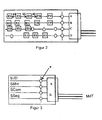
- FIG. 3 shows a local control P, which is the central element of each residential unit and provides, for example, four fundamental functions: communication systems S Com, Inmotik / Domotic System SI / D, multimedia system SMm and security system S Seg, embedded in the diverse telecommunications infrastructures (data, control , Automation, etc.), which are present in the housing unit, both in terms of access to a public data network (eg Internet) as well as local connectivity applications.
- a public data network eg Internet
- the P has the task to integrate in the housing all the above functions or information, which is a framework with high requirements of the process flows and the communication capacity.
- In terms of comfort applications Inmotic / Domotic Systems, it is used to monitor and operate physical parameters such as temperature, humidity, ventilation and lighting; the activation and deactivation of household electrical appliances and the operation of automatic processes associated with architectural elements (turbines, flaps, shutters, awnings, ..., etc.).
- Another application is the energy management or energy optimization of the residential unit, which is integrated into the Inmotik- / Domotik systems, and which is centralized in the platform CDC, with the aim of an optimal operation of the consumption and production of energy, in the Housing unit and the total unit of the building.
- the control unit P integrates the communication systems of the housing unit and shows the end user a vision of sustainability and transparency of the possible external services and in any case guarantees the interactions between the different systems.
- Local applications send messages to the control unit CDC regarding safety, energy, etc., thereby facilitating the tasks that the user normally has to do and thus realizing the environment intelligence of the platform.
- the housing unit carries out an adaptation of the data of the internal user of the housing unit with the broadband connection of the Internet, such as applications (services) with requirements in real time, as is the case with the transmission of telephone calls over the Internet or with video in real time.
- Local control is the first step in almost transparently integrating with the user all the services that the platform presented can offer.
- the capacity of the local control to make decisions is determined by the amount of interaction with the head unit controller CDC, allowing an initial adjustment of a plurality of parameters to suit the needs of the users, the platform via the head unit control CDC and the local control it to respond to persons in their natural form and interactions taking into account the needs and preferences of the people.
- the fact that local controllers allocate this capacity leads to the implementation of the so-called environmental intelligence.
- the regulation that regulates ICT determines minimums, but does not limit the said infrastructure, and thus elements can be identified that serve as support to the services defined by the local control of the CDC platform. For this purpose, the dimensions of the registrations can be increased, the passage housing or the number of tubes.
- a corresponding information Det is transmitted to the local controller P.
- the local control unit P and the control unit CDC of the head unit then make decisions and then transmit a series of control commands to the actuators.
- the distributed intelligence platform provides the functionality of monitoring both the (electrical) consumption and the electrical production of a residential unit or building. It makes it possible to present the data of the electrical consumption to the end user, but in particular with the peculiarity of the centralization in the head control unit CDC and a report of the information to the enterprise which generates or supplies the electrical energy, by means of an available communication system.
- the Distributed Intelligence Platform therefore has an active system of managing the demand for electrical energy, monitoring the electrical consumption of all the building's systems, including residential units: home electrical appliances, lighting, communication systems, cooling and / or heating systems, etc. This allows both a personalized operation of the electrical consumption (consumption after hours, days, months, etc.) and the detection of defects in the operation of the equipment of the building.
- the purpose of this functionality is to provide a possible service to the manufacturer of the electricity such that the production conditions can be adapted to the behavior of the consumption with greater precision.
- Another object is to monitor the quality of the electrical power supply and to inform the electricity supplier, thereby improving the global functioning of the electrical energy distribution system.
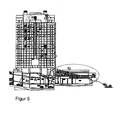
- FIG. 5 shows an example of an application of the system according to the invention, showing an application example of the intelligent platform CDC, which includes local controls throughout the building, offering advanced services and telecommunications services, with automatic control, monitoring, power management and maintenance of subsystems or Building services, in an optimal and integrated, local and remote form (centralized and operated by the CDC), with sufficient flexibility to make implementing future systems simple and economically viable.
- the intelligent platform CDC which includes local controls throughout the building, offering advanced services and telecommunications services, with automatic control, monitoring, power management and maintenance of subsystems or Building services, in an optimal and integrated, local and remote form (centralized and operated by the CDC), with sufficient flexibility to make implementing future systems simple and economically viable.
- Standardization refers to the fact that an inmotic system of a single building is compatible with the physical and logical elements of other manufacturers; that is, either a system that is specific to a manufacturer or a system that is well known.
- Standardization is important both in the area of the CDC and the local control unit P used, as well as the peripheral elements E1, E2, E3 ( FIG. 2 ), which are connected to these control units P,
- the inmotic solution a hotel needs has to be a fair combination of building automation and the flexibility afforded by an intimate system such as the CDC, which can grow without major investments to meet the special needs of every hotel customer ,
- the CDC achieves the maximum harmony of the human being with the environment of a hotel.
- the platform which can lead to a small increase in the total price of the hotel, a reduction of the hotel's energy consumption by more than 20% can be achieved.
- the possibilities offered by the platform include, for example, the automation of the temperature, the possibility of closing the curtains on the windows when the customer withdraws their hotel card when leaving their room, which can lead to energy savings of more than 20%. All of these applications result in great energy savings and are therefore economical, even if they do not pay for themselves in the short term.
- the lighting is implemented by means of the intelligent control unit CDC, the lighting system having light bulbs of low consumption and LEDs. Walls made of transparent glass are used. Inside, they are illuminated with LEDs, optical fibers and new back-lighted or reflected materials arranged, so to speak, in the middle of the path between the ceramic and the glass.
- the invention relates to a platform CDC, which integrates the classical domotics by means of local controllers P distributed intelligence, in a centralized system by means of the CDC control of the head unit CE ( FIG. 1 ).
- the present inventive concept includes scenarios known by the term “intelligent ubiquitous environments", computer technologies Used in the platform, the activities of daily life are supported, and in a more efficient way, for example activities related to the control of housing units, energy management, safety, comfort, etc.
- the local control unit P is able to make decisions, tuned to the interaction with the control unit CDC, which already at the beginning of operations, an adaptation of several parameters to the wishes of the user.
- the platform makes it possible, by means of the control unit CDC and the local control unit P, to react and to obtain interactions with the persons in natural form, taking their needs and preferences into account.
- the platform is designed independently of the transmission media, which can be provided several times since the control unit CDC and the local control units P interfaces B1 (FIG. FIG. 1 ) in order to transmit and receive, by means of carrier currents, metallic transmission bodies such as classical braided cables, parallel cables, coaxial cables and fiber optics, both in new buildings and in renovated or restored buildings.
- metallic transmission bodies such as classical braided cables, parallel cables, coaxial cables and fiber optics, both in new buildings and in renovated or restored buildings.
- FIGS. 1 . 2 . 3 and 4 show a communication system with at least one radio antenna ANT and / or a television antenna, and / or with at least one cable CAB, which transmits radio and / or television signals to the communication system; and with radio receiving devices TR and / or television receivers TV, which are connected to at least a first control unit CDC and in particular a downstream second control unit P.
- the communication system comprises on the one hand a telecommunication system - with the aforementioned radio antenna, the television antenna, the cable and with the aforementioned radio receiving devices and / or television receivers and the at least one first control unit CDC - and on the other a Domotik system.
- the telecommunication system and the domotic system have at least one common component. This is the first control unit CDC.
- a preferred embodiment of the communication system according to the invention with the telecommunication system and the domotic system has at least one second control unit P, in particular a plurality of second control unit P.
- the second control units P are also common components of the telecommunication system and the domotic system.
- the second control unit P is arranged hierarchically below the first control unit CDC.
- telecommunication system and the domotic system are data entry devices and / or visual and / or audible indication devices associated with users of the communication system.
- the third components E3 are, for example, the radio receiving devices TR and / or the television receiving devices TV.
- the first control unit CDC and / or the second control unit P or the programs assigned to the control units CDC, P are designed in such a way that the third signals S3 are generated as a function of the first signals S1 and / or as a function of the second signals S2.
- the first control unit CDC and / or the second control unit P or the control units CDC, P associated programs are further configured in such a way that the radio receiving devices TR and / or the television receiver TR in response to the first signals S1 and / or in dependence second signals S2 are controlled.
- the receiving devices TR and / or TV can also be controlled independently of the signals S1, S2 by the control units CDC and / or P; in this case, the signals transmitted via the antenna ANT or the cable CAB are switched directly to the receiving devices TR, TV, possibly in response to instructions of the system users, which are entered into data input devices (keyboards).
- the communication system uses the concept of distributed intelligence ( FIG. 4 ); this concept is implemented in the programs associated with the first control unit CDC and the second control units P.
- the first components E1 and / or the second components E2 and / or the third components E3 are associated with a second control unit P, wherein the second control unit P or the program associated therewith is in the manner is configured to comprise the first signals S1 and / or the second signals S2 and / or the third signals S3 and / or a first information 11 which consists of the first signals S1 and / or the second signals S2 and / or the third signals S3 is transmitted to the first control unit CDC.
- the first information 11 may include a subset of the signals S1, S2 and / or S3, wherein the subset is determined according to a first prescribable selection catalog from the total amount of the signals S1, S2 and / or S3.
- the first control unit CDC or its associated program is configured in such a way that signals S1, S2 and / or S3 and / or a second information I2 are transmitted to one or more second control units P.
- the second information I2 is derived from the signals S1, S2 and / or S3 and / or from the first information 11.
- the second information I2 may contain a subset of the signals S1, S2 and / or S3, this subset being determined from the total quantity of the signals S1, S2 and / or S3 according to a second or the first selection catalog.
- the first information I1 may be equal to the second information I2.
- the communication system according to the invention can furthermore be designed in such a way that the first control unit CDC is assigned the execution of first processes and that the second control unit P is assigned the execution of second processes. If the second control unit P fails, the first control unit CDC carries out at least part of the second processes; it can also be provided that the second control unit P performs at least a part of the first processes in the event of failure of the first control unit CDC.
- the second control unit P is a local control, it is associated with a building part, in particular a residential, office or business unit or common areas ZC, the components E1 (which are in particular sensors), E2 and / or E3, in particular with the second control unit P are connected and arranged in the building part, in particular in the residential, office or business unit.
- the components E1, here sensors. may also be arranged outside the aforementioned localities, an example of which is external thermometers associated with a residential unit outside a window.
- the radio receiving devices TR and / or the television receiving devices TV are connected to the second control unit P, wherein the second control unit P controls the devices TR and / or TV.
- This control of the radio receiving devices TR and / or the TV reception devices TV can be effected in dependence of the first signals S1 generated by the first components E1.
- a first component E1 is an outdoor thermometer that generates a first signal S1 indicative of a temperature.
- the first signal S1, or a signal derived from S1 is used in this example as a control signal for the control of a television receiver TV.
- Signal S1 is a "non-telecommunication" signal used to control a telecommunications process (here: activation of a television receiver).
- Another example relates to the television program behavior of users in that area of the building associated with a local control unit Px.
- a definable percentage of these users have chosen a television program that relates to a particular sporting event (e.g., international soccer match).
- the local control unit Px transmits this information to the central control unit CDC, which in turn transmits this information to the local control units Px + 1, Px + 2, etc.
- This information is used as a control signal for the television receivers associated with the local control units Px-1, Px + 2, etc.
- the components E1, E2 and / or E3 may also be connected to the first control unit CDC.
- the invention also relates to a method for controlling the communication system described above.
- the at least first control unit CDC controls both the telecommunication system and the domotic system.
- at least one second control unit P additionally controls the telecommunication system and the domotic system.
- the first components E1 which are in particular sensors, transmit first signals S1, which designate chemical and / or physical conditions in the area of residential units and / or buildings.
- the second components E2 transmit second signals S2, which designate control commands for controlling the operation of devices.
- the third components E3 receive third signals S3, which are transmitted from the first control unit CDC and / or from the second control unit P, wherein the third components E3 are in particular radio receiving devices TR and / or television receiving devices TV.
- the third components E3 can also be home appliances.
- the first control unit CDC and / or the second control unit P transmits the third signals S3 to the third components E3.
- the first control unit CDC and / or the second control unit P controls the devices TR and / or TV as a function of the first signals S1 and / or as a function of the second signals S2.
- a second control unit P transmits the signals S1, S2 and / or S3 and / or already described above first information 11 to the first control unit CDC.
- the first control unit CDC transmits the signals S1, S2 and / or S3 and / or the second information I2 already described above to a (further) second control unit P of the communication system.
- the inventive method may further be configured in such a way that the first control unit CDC is assigned to carry out first processes and that the second control unit P is assigned the implementation of second processes. If the second control unit P fails, the first control unit CDC carries out at least part of the second processes; it can also be provided that the second control unit P performs at least a part of the first processes in the event of failure of the first control unit CDC.
- the second control unit P which is assigned to a part of a building, in particular a residential, office or business unit, controls the radio reception devices TR and / or the television receivers TV, possibly also domestic appliances.
- domotic used in the above description also refers to "inmotics, as well as the term” inmotic "used in the above description refers to” domotic ".
- control units CDC and P control processes of the telecommunication system and the domotic system, both of which form the communication system according to the invention.
Landscapes
- Engineering & Computer Science (AREA)
- Automation & Control Theory (AREA)
- Computer Networks & Wireless Communication (AREA)
- Signal Processing (AREA)
- Selective Calling Equipment (AREA)
- Telephonic Communication Services (AREA)
- Facsimiles In General (AREA)
Priority Applications (2)
| Application Number | Priority Date | Filing Date | Title |
|---|---|---|---|
| EP11001869.4A EP2367321B1 (de) | 2010-03-05 | 2011-03-07 | Kommunikationssystem und -verfahren |
| PL11001869T PL2367321T3 (pl) | 2010-03-05 | 2011-03-07 | System komunikacji oraz sposób komunikacji |
Applications Claiming Priority (3)
| Application Number | Priority Date | Filing Date | Title |
|---|---|---|---|
| ES201000299A ES2614421R1 (es) | 2010-03-05 | 2010-03-05 | Sistema de comunicación |
| EP10002271 | 2010-03-05 | ||
| EP11001869.4A EP2367321B1 (de) | 2010-03-05 | 2011-03-07 | Kommunikationssystem und -verfahren |
Publications (2)
| Publication Number | Publication Date |
|---|---|
| EP2367321A1 EP2367321A1 (de) | 2011-09-21 |
| EP2367321B1 true EP2367321B1 (de) | 2014-01-22 |
Family
ID=43920078
Family Applications (1)
| Application Number | Title | Priority Date | Filing Date |
|---|---|---|---|
| EP11001869.4A Active EP2367321B1 (de) | 2010-03-05 | 2011-03-07 | Kommunikationssystem und -verfahren |
Country Status (4)
| Country | Link |
|---|---|
| EP (1) | EP2367321B1 (pl) |
| ES (1) | ES2487442T3 (pl) |
| PL (1) | PL2367321T3 (pl) |
| PT (1) | PT2367321E (pl) |
Family Cites Families (6)
| Publication number | Priority date | Publication date | Assignee | Title |
|---|---|---|---|---|
| FR2792751A1 (fr) * | 1999-04-20 | 2000-10-27 | Serge Weiss | Systeme global personnalisable de gestion d'evenements a centrale interactive multifonctions |
| ES2176096B1 (es) | 2000-08-04 | 2004-01-16 | Televes Sa | Sistema de recepcion y de tratamiento de señales. |
| CA2388330A1 (en) * | 2002-05-31 | 2003-11-30 | Francois Zacharie | Method and apparatus for programming and controlling an environment management system |
| JP2005229373A (ja) | 2004-02-13 | 2005-08-25 | Sony Corp | 固体撮像装置および固体撮像装置の駆動方法 |
| US8102799B2 (en) * | 2006-10-16 | 2012-01-24 | Assa Abloy Hospitality, Inc. | Centralized wireless network for multi-room large properties |
| GB0711770D0 (en) * | 2007-06-18 | 2007-07-25 | Domia Ltd | Off site monitoring/control of electrical equipment |
-
2011
- 2011-03-07 EP EP11001869.4A patent/EP2367321B1/de active Active
- 2011-03-07 PT PT110018694T patent/PT2367321E/pt unknown
- 2011-03-07 PL PL11001869T patent/PL2367321T3/pl unknown
- 2011-03-07 ES ES11001869.4T patent/ES2487442T3/es active Active
Also Published As
| Publication number | Publication date |
|---|---|
| EP2367321A1 (de) | 2011-09-21 |
| PL2367321T3 (pl) | 2014-06-30 |
| PT2367321E (pt) | 2014-03-27 |
| ES2487442T3 (es) | 2014-08-20 |
Similar Documents
| Publication | Publication Date | Title |
|---|---|---|
| DE102004055664B4 (de) | Protokollwandlereinheit für ein zentrales Steuerungssystem für Klimaanlagen sowie Verfahren zum Betreiben desselben | |
| DE102009050170B4 (de) | Hausautomatisierungs- und Hausinformationssystem | |
| EP2717517B1 (de) | Personen-anwesenheitserkennungs-netzwerk mit einer vielzahl von geräten der hausinstallation / gebäudesystemtechnik | |
| DE102004005962A1 (de) | System zur Gebäudeautomatisierung | |
| EP1219068A2 (de) | Haus-kommunikationssystem, transportplattform für ein haus-kommunikationssystem und intelligentes netzabschlussgerät für ein haus-kommunikationssystem | |
| EP2506096B1 (de) | Verfahren zum logischen Verknüpfen von Sensoren und Aktoren im Rahmen der Inbetriebnahme eines Installationssystems | |
| EP3189382B1 (de) | Verfahren zur datenerhebung für die konfiguration eines gebäudeautomationssystems und verfahren zum konfigurieren eines gebäudeautomationssystems | |
| EP1712110B1 (de) | Einrichtung zur automatisierung der gebäudetechnik | |
| EP2367321B1 (de) | Kommunikationssystem und -verfahren | |
| EP1489718A2 (de) | Elektrisches Installationsgerät | |
| DE102015104218B4 (de) | Bedieneinrichtung, Verfahren zur elektrischen Bedienung wenigstens eines elektrischen Geräts sowie Computerprogramm | |
| DE102011056114B3 (de) | Gebäudeinstallationssystem | |
| DE102009042926A1 (de) | Verfahren zur Zuweisung von individuellen Adressen zu Bus-Geräten | |
| DE10034774A1 (de) | Fernsteuereinrichtung für Antriebe von Schließvorrichtungen für Gebäudeöffnungen | |
| EP2907366B1 (de) | Steuerungssystem für verteilt angeordnete verbraucher, insbesondere für lampenbetriebsgeräte, sowie verfahren zur inbetriebnahme des systems | |
| EP1971080B1 (de) | Verfahren zur Inbetriebnahme eines Funksystems | |
| EP2299340A1 (de) | Zentrale, System und Verfahren zur Steuerung von Funktionseinrichtungen in Gebäuden | |
| EP3268755B1 (de) | System zur ermittlung des energieverbrauchs eines einzelnen verbrauchers | |
| DE102020133089A1 (de) | Anordnung zur Heimautomation sowie Vorrichtung und Verfahren | |
| DE102011075608A1 (de) | Verfahren zum Zuordnen eines physikalischen Kanals eines Sensors, der an einen Bus eines Bus-Systems angeschlossen ist, zu einem Kanal eines in einem Inbetriebnahmeprogramm virtuell dargestellten Sensors sowie Sensor und Inbetriebnahmeprogramm | |
| DE10056469A1 (de) | Koppeleinrichtung und Koppelverfahren zur Kopplung von lokalen und globalen Netzwerken | |
| EP2447795B1 (de) | Vorrichtung zur Steuerung von Funktionseinrichtungen in Gebäuden | |
| DE102009025114A1 (de) | Vorrichtung zur Steuerung der Stromversorgung elektrischer Verbraucher | |
| DE102016222790A1 (de) | Verfahren zum Kontrollieren wenigstens eines elektrischen Netzwerkgerätes, Controller, intelligentes Heimnetzwerk und Software-Bus | |
| EP1577722A1 (de) | Steuersystem |
Legal Events
| Date | Code | Title | Description |
|---|---|---|---|
| PUAI | Public reference made under article 153(3) epc to a published international application that has entered the european phase |
Free format text: ORIGINAL CODE: 0009012 |
|
| AK | Designated contracting states |
Kind code of ref document: A1 Designated state(s): AL AT BE BG CH CY CZ DE DK EE ES FI FR GB GR HR HU IE IS IT LI LT LU LV MC MK MT NL NO PL PT RO RS SE SI SK SM TR |
|
| AX | Request for extension of the european patent |
Extension state: BA ME |
|
| 17P | Request for examination filed |
Effective date: 20120321 |
|
| 17Q | First examination report despatched |
Effective date: 20120801 |
|
| GRAP | Despatch of communication of intention to grant a patent |
Free format text: ORIGINAL CODE: EPIDOSNIGR1 |
|
| INTG | Intention to grant announced |
Effective date: 20131115 |
|
| GRAS | Grant fee paid |
Free format text: ORIGINAL CODE: EPIDOSNIGR3 |
|
| GRAA | (expected) grant |
Free format text: ORIGINAL CODE: 0009210 |
|
| AK | Designated contracting states |
Kind code of ref document: B1 Designated state(s): AL AT BE BG CH CY CZ DE DK EE ES FI FR GB GR HR HU IE IS IT LI LT LU LV MC MK MT NL NO PL PT RO RS SE SI SK SM TR |
|
| REG | Reference to a national code |
Ref country code: GB Ref legal event code: FG4D Free format text: NOT ENGLISH |
|
| REG | Reference to a national code |
Ref country code: CH Ref legal event code: EP |
|
| REG | Reference to a national code |
Ref country code: AT Ref legal event code: REF Ref document number: 651211 Country of ref document: AT Kind code of ref document: T Effective date: 20140215 |
|
| REG | Reference to a national code |
Ref country code: IE Ref legal event code: FG4D Free format text: LANGUAGE OF EP DOCUMENT: GERMAN |
|
| REG | Reference to a national code |
Ref country code: DE Ref legal event code: R096 Ref document number: 502011002072 Country of ref document: DE Effective date: 20140306 |
|
| REG | Reference to a national code |
Ref country code: PT Ref legal event code: SC4A Free format text: AVAILABILITY OF NATIONAL TRANSLATION Effective date: 20140320 |
|
| REG | Reference to a national code |
Ref country code: NL Ref legal event code: VDEP Effective date: 20140122 |
|
| REG | Reference to a national code |
Ref country code: LT Ref legal event code: MG4D |
|
| REG | Reference to a national code |
Ref country code: PL Ref legal event code: T3 |
|
| PG25 | Lapsed in a contracting state [announced via postgrant information from national office to epo] |
Ref country code: NO Free format text: LAPSE BECAUSE OF FAILURE TO SUBMIT A TRANSLATION OF THE DESCRIPTION OR TO PAY THE FEE WITHIN THE PRESCRIBED TIME-LIMIT Effective date: 20140422 Ref country code: IS Free format text: LAPSE BECAUSE OF FAILURE TO SUBMIT A TRANSLATION OF THE DESCRIPTION OR TO PAY THE FEE WITHIN THE PRESCRIBED TIME-LIMIT Effective date: 20140522 Ref country code: LT Free format text: LAPSE BECAUSE OF FAILURE TO SUBMIT A TRANSLATION OF THE DESCRIPTION OR TO PAY THE FEE WITHIN THE PRESCRIBED TIME-LIMIT Effective date: 20140122 |
|
| REG | Reference to a national code |
Ref country code: ES Ref legal event code: FG2A Ref document number: 2487442 Country of ref document: ES Kind code of ref document: T3 Effective date: 20140820 |
|
| PG25 | Lapsed in a contracting state [announced via postgrant information from national office to epo] |
Ref country code: FI Free format text: LAPSE BECAUSE OF FAILURE TO SUBMIT A TRANSLATION OF THE DESCRIPTION OR TO PAY THE FEE WITHIN THE PRESCRIBED TIME-LIMIT Effective date: 20140122 Ref country code: NL Free format text: LAPSE BECAUSE OF FAILURE TO SUBMIT A TRANSLATION OF THE DESCRIPTION OR TO PAY THE FEE WITHIN THE PRESCRIBED TIME-LIMIT Effective date: 20140122 Ref country code: SE Free format text: LAPSE BECAUSE OF FAILURE TO SUBMIT A TRANSLATION OF THE DESCRIPTION OR TO PAY THE FEE WITHIN THE PRESCRIBED TIME-LIMIT Effective date: 20140122 Ref country code: CY Free format text: LAPSE BECAUSE OF FAILURE TO SUBMIT A TRANSLATION OF THE DESCRIPTION OR TO PAY THE FEE WITHIN THE PRESCRIBED TIME-LIMIT Effective date: 20140122 |
|
| PG25 | Lapsed in a contracting state [announced via postgrant information from national office to epo] |
Ref country code: LV Free format text: LAPSE BECAUSE OF FAILURE TO SUBMIT A TRANSLATION OF THE DESCRIPTION OR TO PAY THE FEE WITHIN THE PRESCRIBED TIME-LIMIT Effective date: 20140122 Ref country code: RS Free format text: LAPSE BECAUSE OF FAILURE TO SUBMIT A TRANSLATION OF THE DESCRIPTION OR TO PAY THE FEE WITHIN THE PRESCRIBED TIME-LIMIT Effective date: 20140122 Ref country code: HR Free format text: LAPSE BECAUSE OF FAILURE TO SUBMIT A TRANSLATION OF THE DESCRIPTION OR TO PAY THE FEE WITHIN THE PRESCRIBED TIME-LIMIT Effective date: 20140122 |
|
| REG | Reference to a national code |
Ref country code: DE Ref legal event code: R097 Ref document number: 502011002072 Country of ref document: DE |
|
| PG25 | Lapsed in a contracting state [announced via postgrant information from national office to epo] |
Ref country code: RO Free format text: LAPSE BECAUSE OF FAILURE TO SUBMIT A TRANSLATION OF THE DESCRIPTION OR TO PAY THE FEE WITHIN THE PRESCRIBED TIME-LIMIT Effective date: 20140122 Ref country code: CZ Free format text: LAPSE BECAUSE OF FAILURE TO SUBMIT A TRANSLATION OF THE DESCRIPTION OR TO PAY THE FEE WITHIN THE PRESCRIBED TIME-LIMIT Effective date: 20140122 Ref country code: EE Free format text: LAPSE BECAUSE OF FAILURE TO SUBMIT A TRANSLATION OF THE DESCRIPTION OR TO PAY THE FEE WITHIN THE PRESCRIBED TIME-LIMIT Effective date: 20140122 Ref country code: DK Free format text: LAPSE BECAUSE OF FAILURE TO SUBMIT A TRANSLATION OF THE DESCRIPTION OR TO PAY THE FEE WITHIN THE PRESCRIBED TIME-LIMIT Effective date: 20140122 Ref country code: LU Free format text: LAPSE BECAUSE OF FAILURE TO SUBMIT A TRANSLATION OF THE DESCRIPTION OR TO PAY THE FEE WITHIN THE PRESCRIBED TIME-LIMIT Effective date: 20140307 |
|
| REG | Reference to a national code |
Ref country code: CH Ref legal event code: PL |
|
| PG25 | Lapsed in a contracting state [announced via postgrant information from national office to epo] |
Ref country code: SK Free format text: LAPSE BECAUSE OF FAILURE TO SUBMIT A TRANSLATION OF THE DESCRIPTION OR TO PAY THE FEE WITHIN THE PRESCRIBED TIME-LIMIT Effective date: 20140122 |
|
| PLBE | No opposition filed within time limit |
Free format text: ORIGINAL CODE: 0009261 |
|
| STAA | Information on the status of an ep patent application or granted ep patent |
Free format text: STATUS: NO OPPOSITION FILED WITHIN TIME LIMIT |
|
| 26N | No opposition filed |
Effective date: 20141023 |
|
| REG | Reference to a national code |
Ref country code: IE Ref legal event code: MM4A |
|
| PG25 | Lapsed in a contracting state [announced via postgrant information from national office to epo] |
Ref country code: CH Free format text: LAPSE BECAUSE OF NON-PAYMENT OF DUE FEES Effective date: 20140331 Ref country code: LI Free format text: LAPSE BECAUSE OF NON-PAYMENT OF DUE FEES Effective date: 20140331 Ref country code: IE Free format text: LAPSE BECAUSE OF NON-PAYMENT OF DUE FEES Effective date: 20140307 |
|
| REG | Reference to a national code |
Ref country code: DE Ref legal event code: R097 Ref document number: 502011002072 Country of ref document: DE Effective date: 20141023 |
|
| PG25 | Lapsed in a contracting state [announced via postgrant information from national office to epo] |
Ref country code: SI Free format text: LAPSE BECAUSE OF FAILURE TO SUBMIT A TRANSLATION OF THE DESCRIPTION OR TO PAY THE FEE WITHIN THE PRESCRIBED TIME-LIMIT Effective date: 20140122 |
|
| PG25 | Lapsed in a contracting state [announced via postgrant information from national office to epo] |
Ref country code: MT Free format text: LAPSE BECAUSE OF FAILURE TO SUBMIT A TRANSLATION OF THE DESCRIPTION OR TO PAY THE FEE WITHIN THE PRESCRIBED TIME-LIMIT Effective date: 20140122 |
|
| REG | Reference to a national code |
Ref country code: FR Ref legal event code: PLFP Year of fee payment: 6 |
|
| PG25 | Lapsed in a contracting state [announced via postgrant information from national office to epo] |
Ref country code: SM Free format text: LAPSE BECAUSE OF FAILURE TO SUBMIT A TRANSLATION OF THE DESCRIPTION OR TO PAY THE FEE WITHIN THE PRESCRIBED TIME-LIMIT Effective date: 20140122 |
|
| PG25 | Lapsed in a contracting state [announced via postgrant information from national office to epo] |
Ref country code: MC Free format text: LAPSE BECAUSE OF FAILURE TO SUBMIT A TRANSLATION OF THE DESCRIPTION OR TO PAY THE FEE WITHIN THE PRESCRIBED TIME-LIMIT Effective date: 20140122 |
|
| PG25 | Lapsed in a contracting state [announced via postgrant information from national office to epo] |
Ref country code: GR Free format text: LAPSE BECAUSE OF FAILURE TO SUBMIT A TRANSLATION OF THE DESCRIPTION OR TO PAY THE FEE WITHIN THE PRESCRIBED TIME-LIMIT Effective date: 20140423 Ref country code: BG Free format text: LAPSE BECAUSE OF FAILURE TO SUBMIT A TRANSLATION OF THE DESCRIPTION OR TO PAY THE FEE WITHIN THE PRESCRIBED TIME-LIMIT Effective date: 20140122 |
|
| PG25 | Lapsed in a contracting state [announced via postgrant information from national office to epo] |
Ref country code: TR Free format text: LAPSE BECAUSE OF FAILURE TO SUBMIT A TRANSLATION OF THE DESCRIPTION OR TO PAY THE FEE WITHIN THE PRESCRIBED TIME-LIMIT Effective date: 20140122 Ref country code: BE Free format text: LAPSE BECAUSE OF FAILURE TO SUBMIT A TRANSLATION OF THE DESCRIPTION OR TO PAY THE FEE WITHIN THE PRESCRIBED TIME-LIMIT Effective date: 20140331 Ref country code: HU Free format text: LAPSE BECAUSE OF FAILURE TO SUBMIT A TRANSLATION OF THE DESCRIPTION OR TO PAY THE FEE WITHIN THE PRESCRIBED TIME-LIMIT; INVALID AB INITIO Effective date: 20110307 |
|
| REG | Reference to a national code |
Ref country code: FR Ref legal event code: PLFP Year of fee payment: 7 |
|
| REG | Reference to a national code |
Ref country code: AT Ref legal event code: MM01 Ref document number: 651211 Country of ref document: AT Kind code of ref document: T Effective date: 20160307 |
|
| PG25 | Lapsed in a contracting state [announced via postgrant information from national office to epo] |
Ref country code: AT Free format text: LAPSE BECAUSE OF FAILURE TO SUBMIT A TRANSLATION OF THE DESCRIPTION OR TO PAY THE FEE WITHIN THE PRESCRIBED TIME-LIMIT Effective date: 20140122 |
|
| PG25 | Lapsed in a contracting state [announced via postgrant information from national office to epo] |
Ref country code: AT Free format text: LAPSE BECAUSE OF FAILURE TO SUBMIT A TRANSLATION OF THE DESCRIPTION OR TO PAY THE FEE WITHIN THE PRESCRIBED TIME-LIMIT Effective date: 20160307 |
|
| REG | Reference to a national code |
Ref country code: FR Ref legal event code: PLFP Year of fee payment: 8 |
|
| PG25 | Lapsed in a contracting state [announced via postgrant information from national office to epo] |
Ref country code: MK Free format text: LAPSE BECAUSE OF FAILURE TO SUBMIT A TRANSLATION OF THE DESCRIPTION OR TO PAY THE FEE WITHIN THE PRESCRIBED TIME-LIMIT Effective date: 20140122 |
|
| PG25 | Lapsed in a contracting state [announced via postgrant information from national office to epo] |
Ref country code: AL Free format text: LAPSE BECAUSE OF FAILURE TO SUBMIT A TRANSLATION OF THE DESCRIPTION OR TO PAY THE FEE WITHIN THE PRESCRIBED TIME-LIMIT Effective date: 20140122 |
|
| REG | Reference to a national code |
Ref country code: DE Ref legal event code: R082 Ref document number: 502011002072 Country of ref document: DE |
|
| PGFP | Annual fee paid to national office [announced via postgrant information from national office to epo] |
Ref country code: PT Payment date: 20250228 Year of fee payment: 15 Ref country code: DE Payment date: 20250226 Year of fee payment: 15 |
|
| PGFP | Annual fee paid to national office [announced via postgrant information from national office to epo] |
Ref country code: PL Payment date: 20250226 Year of fee payment: 15 |
|
| PGFP | Annual fee paid to national office [announced via postgrant information from national office to epo] |
Ref country code: GB Payment date: 20250227 Year of fee payment: 15 |
|
| PGFP | Annual fee paid to national office [announced via postgrant information from national office to epo] |
Ref country code: ES Payment date: 20250401 Year of fee payment: 15 |
|
| PGFP | Annual fee paid to national office [announced via postgrant information from national office to epo] |
Ref country code: IT Payment date: 20260226 Year of fee payment: 16 |
|
| PGFP | Annual fee paid to national office [announced via postgrant information from national office to epo] |
Ref country code: FR Payment date: 20260226 Year of fee payment: 16 |