EP2360027A1 - Spoke wheel and spoke used therefor - Google Patents
Spoke wheel and spoke used therefor Download PDFInfo
- Publication number
- EP2360027A1 EP2360027A1 EP11250130A EP11250130A EP2360027A1 EP 2360027 A1 EP2360027 A1 EP 2360027A1 EP 11250130 A EP11250130 A EP 11250130A EP 11250130 A EP11250130 A EP 11250130A EP 2360027 A1 EP2360027 A1 EP 2360027A1
- Authority
- EP
- European Patent Office
- Prior art keywords
- spoke
- deformed
- spokes
- straight
- rim
- Prior art date
- Legal status (The legal status is an assumption and is not a legal conclusion. Google has not performed a legal analysis and makes no representation as to the accuracy of the status listed.)
- Granted
Links
Images





Classifications
-
- B—PERFORMING OPERATIONS; TRANSPORTING
- B60—VEHICLES IN GENERAL
- B60B—VEHICLE WHEELS; CASTORS; AXLES FOR WHEELS OR CASTORS; INCREASING WHEEL ADHESION
- B60B1/00—Spoked wheels; Spokes thereof
- B60B1/02—Wheels with wire or other tension spokes
- B60B1/0261—Wheels with wire or other tension spokes characterised by spoke form
- B60B1/0269—Wheels with wire or other tension spokes characterised by spoke form the spoke being curved or deformed over substantial part of length
-
- B—PERFORMING OPERATIONS; TRANSPORTING
- B60—VEHICLES IN GENERAL
- B60B—VEHICLE WHEELS; CASTORS; AXLES FOR WHEELS OR CASTORS; INCREASING WHEEL ADHESION
- B60B1/00—Spoked wheels; Spokes thereof
- B60B1/02—Wheels with wire or other tension spokes
-
- B—PERFORMING OPERATIONS; TRANSPORTING
- B60—VEHICLES IN GENERAL
- B60Y—INDEXING SCHEME RELATING TO ASPECTS CROSS-CUTTING VEHICLE TECHNOLOGY
- B60Y2200/00—Type of vehicle
- B60Y2200/10—Road Vehicles
- B60Y2200/12—Motorcycles, Trikes; Quads; Scooters
Definitions
- the present invention relates to a spoke wheel in which a rim is connected with a hub by a large number of spokes and more specifically to a spoke wheel and to spokes thereof suitably used for two-wheel vehicles such as a motorcycle and a bicycle.
- a wheel for use in a two-wheel vehicle is composed of a hub mounted to a wheel axis, a rim mounted with a tire and spokes that connect the hub with the rim in general. While there are two kinds of wheels of a cast wheel in which the rim, spokes and hub are unitarily molded by means of casting and a spoke wheel (or more precisely a wired spoke wheel) in which the rim is connected with the hub by a large number of wired spokes, the invention relates to the spoke wheel.
- the spoke wheel can absorb impacts acting on the wheel by the rim and spokes that are deformable and off-road motorcycles mostly adopt the spoke wheel.
- a spoke wheel 1 is composed of a hub 3 having two flanges 2 disposed to be distant from each other in an axial direction by a predetermined distance, a rim 6 having a large number of spoke mounting concave hole portions 5 and straight wired spokes 7 each having a portion to be retained (referred to as a 'retained portion' hereinafter) 8 at one end thereof and a male screw portion at another end.
- Each spoke 7 is tensioned between the hub 3 and the rim 6 by way of anchoring the retained portion 8 by inserting through a hole 2a of the flange 2 of the hub 3 and of fastening the male screw portion at the other end with a nipple 9 held by the concave hole portion 5 of the rim 6.
- the spokes 7 are tensioned at equal intervals along the whole circumference of the rim so that the four spokes in total that penetrate through the both flanges 2 of the hub 3 respectively from the outside and inside of the flanges intersect with each other and so as to have an elevation angle ⁇ as shown in FIG. 9 .
- the spokes 7 are adjusted so that the rim 6 keeps a circular shape in plane.
- FIGs. 8 and 9 show the spoke wheel in which no tire is mounted
- the spoke wheel 1 in a state in which a tire is mounted to the rim 6 may be attached to motorcycles and to off-road motorcycles for races such as motocross and Enduro in particular.
- a load applied from a vehicle body acts concentratedly on a landing part S of the spoke wheel 1
- a large impact load F acts on the landing part S when the racing motorcycle jumps and lands in particular.
- the impact load acts so as to flatten the rim 6 through the tire and as a result
- a compressive force acts on a spoke group G1 near the landing part S
- tensile forces also act on spoke groups G2 and G3 neighboring the spoke group G1.
- the spoke wheel 1 excels in that it can absorb the impacts described above by elastic deformation of the rim 6 and the spokes 7.
- stiffness of the spoke wheel drops and the shock absorption is improved, the spoke is prone to break because tensile strength of the straight spoke 7 also drops.
- stiffness of the spoke wheel includes lateral stiffness against a lateral load acting during cornering, beside the vertical stiffness against the load in a direction of F (vertical direction) described above, there is a problem that the vehicle may wobble if the lateral stiffness is insufficient.
- the straight spoke 7 is fixed to the rim with the predetermined tension applied by the nipple 9 and engagement with the nipple 9 is maintained and the straight spoke 7 will not be loosened within a range in which the tension acts, the straight spoke 7 is prone to be loosened and the spoke wheel 1 may not be able to maintain an adequate shape as a spoke wheel if the compressive force acting on the spoke group G1 part exceeds the tension applied to the spokes.
- Patent Document 1 Japanese Patent Application Laid-open No. 2007-118936
- Patent Document 2 Microfilm of Japanese Utility Model Application No. Hei.2-80477 (Utility Model Application Laid-open No. Hei.4 (1992)-37001 )
- the wheel disclosed in Patent Document 1 is a wheel for a bicycle.
- the wheel has spokes each having a flexible portion formed into a shape of S for example.
- the wheel is arranged so as to absorb energy of vibrations by dislocating the center of a hub on which weight and others of a vehicle body acts to a lower position with respect to the center of a rim by large elastic deformation caused by the flexible portion and by alternately and repeatedly causing compressive and tensile actions on the flexible portions as the wheel rotates.
- This wheel cannot be applied to motorcycles and the like that receive much heavier load by any possibility.
- a wheel disclosed in Patent Document 2 is a wheel for a bicycle in which a hub (mounting portion), a rim and spokes are unitarily molded by synthetic resin.
- the spoke is provided with an impact absorbing portion formed of an oval ringed frame to alleviate impacts because the wheel molded unitarily by synthetic resin has no shock-absorbing action. That is, this wheel is different from the spoke wheel composed of the wired spokes and having the excellent shock absorption.
- the invention aims at solving the abovementioned problems by providing a spoke wheel and a spoke thereof by deforming conventionally used straight spokes as non-straight spokes and by fixing the deformed spokes between the hub and the rim in the same manner with the conventional spoke wheel.
- a spoke wheel (11, 111) having a hub (3), a rim (6) and a plurality of wired spokes (17, 7) each having a retained portion (18, 8) at one end thereof and a male screw portion (19) at another end, arranged so that each spoke (17, 7) is tensioned between the hub (3) and the rim (6) by way of retainably anchoring the retained portion (18) to one of the hub (3) and the rim (6) and of screwing the male screw portion (19) with a nipple (9) retained in the other one of the hub (3) and the rim (6) and having the following characteristics.
- the spokes are deformed spokes (17) each having a deformed portion (21) deformed by a predetermined offset amount (e) between the retained portion (18) and the male screw portion (19) and the deformed spoke (17) is fastened by the nipple (9) so that the deformed portion (21) is elastically deformed in a direction in which the predetermined offset (e) is reduced.
- the spoke wheel preferably has at least three wired spokes and preferably a large number of wired spokes.
- all of the spokes tensioned between the hub (3) and the rim (6) are the deformed spokes (17) as shown in FIG. 1 for example.
- the deformed spokes (17) are combined with straight spokes (7) in the spokes tensioned between the hub (3) and the rim (6).
- the hub (3) has two ringed flanges (2) disposed so as to be distant in the axial direction by a predetermined distance and one of a pair of spokes extending from the same flange (2) and intersecting with each other is the deformed spoke (17) and other one is the straight spoke (7) as shown in FIG. 6 for example.
- the deformed spoke (17) has longitudinal elastic modulus within a range of 0.3 to 0.8 times of that the straight spoke (7) having no deformed portion.
- the deformed spoke (17) has straight portions (22a and 22b) on the same axial line respectively on the retained portion (18) side and on the male screw portion (19) side of the deformed portion (21), the deformed portion (21) has curved portions (a) curved respectively by a predetermined angle (c) with respect to the straight portions (22a and 22b) on the retained portion and male screw portion sides and a connecting portion (b) that connects ends of these curved portions; and the predetermined offset amount (e) is a distance between the axial line of the straight portions (22a and 22b) and the connecting portion (b) as shown in FIGs. 2 and 3 for example.
- a spoke is formed of the deformed spoke (17) used in the spoke wheel (11).
- the deformed spoke (17) has straight portions (22a and 22b) on the same axial line respectively on the retained portion (18) side and the male screw portion (19) side of the deformed portion (21) and the offset amount (e) of the deformed portion (21) falls within a range from 1.1 ⁇ to 6.2 ⁇ , where the wire diameter is ⁇ , with respect to the axial line of the straight portions (22a and 22b).
- the deformed spoke (17) has the straight portions (22a and 22b) on the same axial line respectively on the retained portion (18) side and the male screw portion (19) side of the deformed portion (21), the deformed portion (21) has curved portions that are curved from the straight portions (22a and 22b) on the retained portion and male screw portion side respectively with a predetermined angle (c) and is formed by connecting those curved portions and the predetermined curved angle c falls within a range from 150° to 170° and a length of the curved portion (a) falls within a range from 3.1 ⁇ to 12.5 ⁇ , where the wire diameter is ⁇ .
- the spoke wheel is constructed by using the prior art hub and rim, by using the deformed spokes formed by deforming the prior art spokes at least as part of the spokes and by fastening the deformed spokes by the nipples, the spoke wheel may be manufactured without increasing its cost by employing a conventional spoke wheel manufacturing system. Even though, it is possible to provide the spoke wheel capable of preventing the nipples from being loosened even if impact loads repetitively act thereon by maintaining tension of the spokes because the deformed spoke has longitudinal elastic modulus lower than that of the straight spoke and a soft impact absorbing performance.
- the deformed spokes are combined with the straight spokes, it becomes possible to obtain a spoke wheel having both adequate flexibility and stiffness according to preference of a rider or according to a category of a race such as the motocross and Enduro.
- a machine wobbles at corners when all of the spokes are the deformed spokes because the machine may lack lateral stiffness (depends on how to ride the machine)
- the deformed spoke because one (inside for example) of the pair of spokes extending from the same flange and intersecting with each other is the deformed spoke and the other one (outside for example) is the straight spoke, it is possible to reduce wobbling of the vehicle during cornering and the like by suppressing a drop of lateral stiffness by suppressing the highly flexible deformed spoke from deforming by receiving a transverse load by the straight spoke having high stiffness and contacting with the deformed spoke.
- the deformed spoke has the longitudinal elastic modulus that is 0.8 times or less of that the straight spoke having no deformed portion, the deformed spoke has excellent impact absorbing performance that is extinguishable from the straight spoke. Still more, because the longitudinal elastic modulus of the deformed spoke is 0.3 times or more of the straight spoke, it is possible to reduce a sense of strangeness that the rider might feel when the spoke is too flexible.
- the deformed spoke has the deformed portion constructed simply by the curved portions and connecting portion beside the straight portions on the retained portion side and the male screw portion side, it is possible to provide the spoke wheel having the simple design and readily manufactured.
- the seventh aspect of the invention it is possible to provide the spoke wheel described above by using the conventional spokes and by readily fabricating the deformed spoke by bending to form the deformed portion.
- FIG. 1 is a front view of a spoke wheel using deformed spokes of the invention
- a spoke wheel 11 of the invention is composed of a hub 3, a rim 6 and spokes 17.
- the same spoke wheel 1, the hub 3 and the rim 6 of the prior art shown in FiGs. 8 and 9 are used in the spoke wheel 11 and only all the spokes are changed from the prior art straight spokes 7 to deformed spokes 17.
- the hub 3 has two flanges 2 disposed so as to be distant from each other in the axial direction by a predetermined distance and the rim 6 has a large number of concave hole portions 5 that hold the same nipples 9 with the prior art nipples to fasten the deformed spokes 17.
- each deformed spoke 17 of the invention has a retained portion (head) 18 at one end thereof and a male screw portion 19 that is screwed with the nipple 9 at another end.
- a curved portion 20 for penetrating a vicinity of the retained portion 18 through a hole 2a of the flange 2, a predetermined deformed portion 21 on the male screw portion side and straight portions 22a and 22b on the both sides of the deformed portion 21.
- the deformed spoke 17 is penetrated through the hole 2a of the flange 2 from the side of the male screw portion 19 and is retained by the retained portion 18.
- the nipple 9 fitted into the concave hole portion 5 of the rim 6 from the radially outward (drop) direction of the rim is screwed with the male screw portion 19.
- the spoke wheel 11 is assembled by connecting the hub 3 with the rim 6 by the spokes 17.
- the respective deformed spokes 17 are inserted from the both inside and outside of the two hub flanges 2 so as to form one group by four spokes in the same manner with the prior art spokes 7 and so as to form a predetermined elevation angle ⁇ .
- the nipples 9 are fastened and adjusted so that a predetermined tension is applied so that the hub 3 and the rim 6 have the same axis O and so that the rim 6 forms an accurate circle in plane.
- the deformed spoke 17 and the straight spoke 7 are formed of the same material and into a linear shape having the same length.
- the material thereof is SWB (hard wire steel: JPSG3521)
- the length L in a natural condition not fixed to the wheel is 240 mm
- a wire diameter is 3.2 mm.
- the diameter of the both end parts (outside parts from points E and H of the spoke) having the curved portion 20 and the male screw portion 19 is slightly thick and is 3.5 mm.
- a deformed portion 21 of the deformed spoke 17 has a base-end-side straight portion 22a , an end-side straight portion 22b, curved portions a that are curved respectively with a predetermined angle (curved angle) c and a parallel portion b that is curved from these curved portions with the predetermined angle (curved angle) c.
- the parallel portion b is deformed with respect to the straight portions 22a and 22b by a predetermined offset amount e. That is, ends of the curved portions a may be directly connected with each other or may be connected curvedly.
- the part b composes a connecting part in such cases.
- FIG.3A is a length of the deformed portion 21 in a natural condition and g is a length from the end of the spoke to the deformed portion 21.
- FIG. 3B show the prior art straight spoke 7 that has the retained portion 8, the curved portion 20 and the male screw portion 19 similarly to the deformed spoke 17, except of that it has no deformed portion 21.
- FIG. 4A shows results of tensile tests carried out on the deformed spoke 17 of the embodiment and on the straight spoke 7 having the same material, diameter and length with those of the deformed spoke 17. The tests were carried out by fixing the retained portions 8 and 18 of the spokes 7 and 17 respectively to a fixing portion of a tester and by temporarily jointing the male screw portion to a movable part of the tester through the intermediary of the nipple 9 as shown in FIG. 4B .
- the deformed spoke 17 extends with moderate longitudinal elastic modulus (Young's modulus) that is about 1/3 of that of the straight spoke 7 and breaks with substantially equal load (about 12 kN).
- Young's modulus Young's modulus
- the deformed spoke 17 has a soft impact absorbing performance because the curved angles c at the curved points A, B, C and D of the deformed portion 21 shown in FIG. 3A are elastically deformed and that the deformed spoke 17 has tensile strength substantially equal to that of the straight spoke by the diameter ⁇ .
- the deformed spoke 17 elastically deforms so that the curved angles c are opened, the offset amount e is reduced and the length f of the deformed portion is prolonged. Still more, while the straight spoke 7 is prone to be broken at the deformed parts (the parts E and H described above), the deformed spoke 17 is prone to be broken at the deformed parts after when the deformed portion 21 is straightly extended.
- the spoke wheel 11 (see FIG. 1 ) assembled by using the deformed spokes 17 of the invention may be favorably used for the off-road motorcycles and for the racing motorcycles such as the motocross and Enduro that repeat jumps, causing a large impact load to act on the wheel. That is, the spoke wheel 11 can bring about such favorable effects that it is capable of absorbing the impact load described above softly by the low longitudinal elastic modulus caused by the deformed spoke 17, allows fatigue of its riders to be alleviated and their concentration to be kept and keeps favorable wheel performances by preventing looseness of the spokes otherwise caused by blind moves of the nipples.
- FIG. 5 shows results of tensile tests carried out by varying the respective portions a, b and c of the deformed spoke 17 (see FIG. 3A ).
- FIG. 5A shows a case when the curved angle c and the length of the curved portion a are varied while keeping the offset amount e constant. It can be seen that an influence of the curved angle c is large when the offset amount e is kept constant.
- FIG. 5B shows a case when the offset amount e is changed by varying the curved angle c while keeping the length of the curved portion a and of the parallel portion b constant. It can be seen that the smaller the curved angle c, the more the spoke tends to be prolonged in this case.
- FIG. 5A shows a case when the curved angle c and the length of the curved portion a are varied while keeping the offset amount e constant. It can be seen that an influence of the curved angle c is large when the offset amount e is kept constant.
- FIG. 5B shows a case when
- FIG. 5C shows a case when the offset amount e is changed by varying the length of the curved portion a while keeping the curved angle c constant. It can be seen that the longer the length of the curved portion a, the spoke tends to be prolonged from this case.
- FIG. 5D shows a case when the length of the parallel portion b is changed. It can be seen that there is no influence to the elongation even if the length of the parallel portion b is changed.
- the deformed spoke is unable to fully exhibit its flexibility when the longitudinal elastic modulus is 0.3 times or less of the straight spoke 7 and the riders feel a sense of strangeness when the longitudinal elastic modulus is 0.8 times or more because it is too flexible, so that the longitudinal elastic modulus is preferable to be within a range from 0.3 to 0.8 times of that of the straight spoke.
- the predetermined curved angle c is also preferable to fall within a range from 150° to 170° and the length of the curved portion a is preferable to fall within a range from 10 to 40 mm, i.e., within a range from 3.1 ⁇ to 12.5 ⁇ , where the wire diameter is ⁇ (3.2 mm).
- the length of the parallel portion b of the deformed portion 21 is nothing to do with the elongation of the spoke, so that the parallel portion b may be nonexistent or may be prolonged substantially along the whole length of the spoke.
- the curved portions a may be located in the vicinity of the curved portion 20 on the retained portion side and in the vicinity of the male screw portion 19 or the spoke may be curved as a whole with a small curvature.
- the length of the curved portion a and the curved angle c on the retained portion side may be different from those on the male screw portion side.
- the hub 3 has two ringed flanges 2 1 and 2 2 disposed so as to be distant in the axial direction by a predetermined distance and the straight spoke 7 or the deformed spoke 17 extends substantially in the tangential direction of the hub alternately in directions opposite from each other from the front or back of one flange 2 1 or 2 2 . Accordingly, as shown in FIG. 8 , a spoke 3 1 extending from the same flange 2 1 intersects with a fourth spoke 3 4 (leaving the two spokes (3 2 and 3 3 ) therebetween) (see X in FiGs. 8 and 6 ). It is noted that although the neighboring spokes (3 1 and 3 2 for example) seem to intersect with each other near the flange when seen from the front side, it cannot be said so as to intersect because there is the thickness (distance) between the flanges.
- the straight spoke 7 is used for the spoke extending from the front side I of the flange among the spokes extending from the flange 2 1 or 2 2 and the deformed spoke 17 is used for the spoke extending from the back side R.
- the ratio of the straight spokes 7 and the deformed spokes 17 in one spoke wheel 111 is 50 % each and they intersect with each other at the intersections X while placing the deformed spokes 17 inside (IN) and the straight spokes 17 outside (OUT).
- the spoke wheel 111 of the invention is capable of suppressing wobbling from occurring during cornering of the motorcycle by some degree by relatively suppressing the flexible sustainment to the transverse load J 1 or J 2 while relatively maintaining the vertical stiffness, i.e., the flexible sustainment against the load F caused by jumping and the like.
- FIG. 7 is a graph showing indices of strength of the respective spoke wheels.
- the vertical and lateral stiffness of the prior art spoke wheel (see FIG. 8 ) whose spokes are all straight spokes are indicated as 100.
- the vertical stiffness of the spoke wheel 11 (see FIG. 1 ) whose spokes are all deformed spokes is about 70 and its lateral stiffness is about 80.
- the spoke wheel 111 (see FIG. 6 ) having the straight spokes and the deformed spokes by half each has characteristics between the spoke wheel 1 composed of only the straight spokes and the spoke wheel 11 composed of only the deformed spokes. That is, it is possible to suppress wobbling from occurring during cornering relatively while relatively maintaining the cushioning properties against jumping and the like.
- the deformed spoke 17 is placed inside and the straight spoke 7 outside at the intersection X in the embodiment described above, they may be reversed and the deformed spoke 17 may be placed outside and the straight spoke 7 inside. Still more, the rate of the deformed spoke 17 and the straight spoke 7 is not limited to be to 50-to-50 and may be other rate such as 70-to-30, 30-to-70 and the like.
- the embodiment described above has been applied to the spoke wheel in which the retained portion of the spoke is retainably anchored to the flange of the hub and the male screw portion is fastened to the rim through the intermediary of the nipple, it is also applicable to a spoke wheel in which a retained portion of a spoke is anchored to a rim and a male screw portion is fastened to a hub through an intermediary of a nipple.
- the spoke wheels 11 and 111 are suitably used for the off-road racing motorcycles such as the motocross and Enduro, the spoke wheels are applicable also to normal off-road motorcycles, on-road motorcycles and to other vehicles such as bicycles.
- the embodiment described above has been applied to the front wheel of the motorcycle, it is also applicable to a rear wheel in the same manner.
- the spoke wheel and the deformed spoke used therein of the invention may be utilized for a wheel of motorcycles, bicycles and other vehicles.
Landscapes
- Engineering & Computer Science (AREA)
- Mechanical Engineering (AREA)
- Tires In General (AREA)
Abstract
Description
- This application claims the foreign priority benefit filed on February 10, 2010 in the Japan Patent Office, the disclosure of which is herein incorporated by reference in its entirety.
- The present invention relates to a spoke wheel in which a rim is connected with a hub by a large number of spokes and more specifically to a spoke wheel and to spokes thereof suitably used for two-wheel vehicles such as a motorcycle and a bicycle.
- A wheel for use in a two-wheel vehicle is composed of a hub mounted to a wheel axis, a rim mounted with a tire and spokes that connect the hub with the rim in general. While there are two kinds of wheels of a cast wheel in which the rim, spokes and hub are unitarily molded by means of casting and a spoke wheel (or more precisely a wired spoke wheel) in which the rim is connected with the hub by a large number of wired spokes, the invention relates to the spoke wheel. The spoke wheel can absorb impacts acting on the wheel by the rim and spokes that are deformable and off-road motorcycles mostly adopt the spoke wheel.
- As shown in
FiGs. 8 and9 , aspoke wheel 1 is composed of ahub 3 having twoflanges 2 disposed to be distant from each other in an axial direction by a predetermined distance, arim 6 having a large number of spoke mountingconcave hole portions 5 and straightwired spokes 7 each having a portion to be retained (referred to as a 'retained portion' hereinafter) 8 at one end thereof and a male screw portion at another end.
Eachspoke 7 is tensioned between thehub 3 and therim 6 by way of anchoring the retainedportion 8 by inserting through ahole 2a of theflange 2 of thehub 3 and of fastening the male screw portion at the other end with anipple 9 held by theconcave hole portion 5 of therim 6. Thespokes 7 are tensioned at equal intervals along the whole circumference of the rim so that the four spokes in total that penetrate through the bothflanges 2 of thehub 3 respectively from the outside and inside of the flanges intersect with each other and so as to have an elevation angle α as shown inFIG. 9 . Thespokes 7 are adjusted so that therim 6 keeps a circular shape in plane. - While
FIGs. 8 and9 show the spoke wheel in which no tire is mounted, thespoke wheel 1 in a state in which a tire is mounted to therim 6 may be attached to motorcycles and to off-road motorcycles for races such as motocross and Enduro in particular. While a load applied from a vehicle body acts concentratedly on a landing part S of thespoke wheel 1, a large impact load F acts on the landing part S when the racing motorcycle jumps and lands in particular. While the impact load acts so as to flatten therim 6 through the tire and as a result, a compressive force acts on a spoke group G1 near the landing part S, tensile forces also act on spoke groups G2 and G3 neighboring the spoke group G1. - The
spoke wheel 1 excels in that it can absorb the impacts described above by elastic deformation of therim 6 and thespokes 7. When thestraight spoke 7 is thinned, although stiffness of the spoke wheel drops and the shock absorption is improved, the spoke is prone to break because tensile strength of thestraight spoke 7 also drops. Still more, while stiffness of the spoke wheel includes lateral stiffness against a lateral load acting during cornering, beside the vertical stiffness against the load in a direction of F (vertical direction) described above, there is a problem that the vehicle may wobble if the lateral stiffness is insufficient. - Still more, although the
straight spoke 7 is fixed to the rim with the predetermined tension applied by thenipple 9 and engagement with thenipple 9 is maintained and thestraight spoke 7 will not be loosened within a range in which the tension acts, thestraight spoke 7 is prone to be loosened and thespoke wheel 1 may not be able to maintain an adequate shape as a spoke wheel if the compressive force acting on the spoke group G1 part exceeds the tension applied to the spokes. - Meanwhile, there is also proposed a wheel that absorbs shocks by elastic deformation of spokes by forming the spoke into an elastically deformable shape (see
Patent Document 1 or 2). - [Patent Document 1] Japanese Patent Application Laid-open No.
2007-118936
[Patent Document 2] Microfilm of Japanese Utility Model Application No.Hei.2-80477 Hei.4 (1992)-37001 - When the
spoke wheel 1 composed of the straightwired spokes 7 is attached to the racing off-road motorcycle in particular, longitudinal elastic modulus (Young's modulus) is relatively large because thespokes 7 are straight. Then, the spokes are prone to be loosened when large impact loads act repetitively and it is cumbersome to adjust the spokes. Still more, if the spoke is thinned to enhance the impact absorption, the spoke is prone to be broken. - The wheel disclosed in
Patent Document 1 is a wheel for a bicycle. The wheel has spokes each having a flexible portion formed into a shape of S for example. The wheel is arranged so as to absorb energy of vibrations by dislocating the center of a hub on which weight and others of a vehicle body acts to a lower position with respect to the center of a rim by large elastic deformation caused by the flexible portion and by alternately and repeatedly causing compressive and tensile actions on the flexible portions as the wheel rotates. This wheel cannot be applied to motorcycles and the like that receive much heavier load by any possibility. - A wheel disclosed in
Patent Document 2 is a wheel for a bicycle in which a hub (mounting portion), a rim and spokes are unitarily molded by synthetic resin. The spoke is provided with an impact absorbing portion formed of an oval ringed frame to alleviate impacts because the wheel molded unitarily by synthetic resin has no shock-absorbing action. That is, this wheel is different from the spoke wheel composed of the wired spokes and having the excellent shock absorption. - Accordingly, the invention aims at solving the abovementioned problems by providing a spoke wheel and a spoke thereof by deforming conventionally used straight spokes as non-straight spokes and by fixing the deformed spokes between the hub and the rim in the same manner with the conventional spoke wheel.
- According to a first aspect of the invention, there is provided a spoke wheel (11, 111) having a hub (3), a rim (6) and a plurality of wired spokes (17, 7) each having a retained portion (18, 8) at one end thereof and a male screw portion (19) at another end, arranged so that each spoke (17, 7) is tensioned between the hub (3) and the rim (6) by way of retainably anchoring the retained portion (18) to one of the hub (3) and the rim (6) and of screwing the male screw portion (19) with a nipple (9) retained in the other one of the hub (3) and the rim (6) and having the following characteristics.
That is, at least part of the spokes are deformed spokes (17) each having a deformed portion (21) deformed by a predetermined offset amount (e) between the retained portion (18) and the male screw portion (19) and
the deformed spoke (17) is fastened by the nipple (9) so that the deformed portion (21) is elastically deformed in a direction in which the predetermined offset (e) is reduced. The spoke wheel preferably has at least three wired spokes and preferably a large number of wired spokes. - According to a second aspect of the invention, all of the spokes tensioned between the hub (3) and the rim (6) are the deformed spokes (17) as shown in
FIG. 1 for example. - According to a third aspect of the invention, the deformed spokes (17) are combined with straight spokes (7) in the spokes tensioned between the hub (3) and the rim (6).
- According to a fourth aspect of the invention, the hub (3) has two ringed flanges (2) disposed so as to be distant in the axial direction by a predetermined distance and
one of a pair of spokes extending from the same flange (2) and intersecting with each other is the deformed spoke (17) and other one is the straight spoke (7) as shown inFIG. 6 for example. - According to a fifth aspect of the invention, the deformed spoke (17) has longitudinal elastic modulus within a range of 0.3 to 0.8 times of that the straight spoke (7) having no deformed portion.
- According to a sixth aspect of the invention, preferably the deformed spoke (17) has straight portions (22a and 22b) on the same axial line respectively on the retained portion (18) side and on the male screw portion (19) side of the deformed portion (21),
the deformed portion (21) has curved portions (a) curved respectively by a predetermined angle (c) with respect to the straight portions (22a and 22b) on the retained portion and male screw portion sides and a connecting portion (b) that connects ends of these curved portions; and
the predetermined offset amount (e) is a distance between the axial line of the straight portions (22a and 22b) and the connecting portion (b) as shown inFIGs. 2 and3 for example. - According to a seventh aspect of the invention, a spoke is formed of the deformed spoke (17) used in the spoke wheel (11).
- Specifically, the deformed spoke (17) has straight portions (22a and 22b) on the same axial line respectively on the retained portion (18) side and the male screw portion (19) side of the deformed portion (21) and
the offset amount (e) of the deformed portion (21) falls within a range from 1.1 φ to 6.2 φ, where the wire diameter is φ, with respect to the axial line of the straight portions (22a and 22b). - The deformed spoke (17) has the straight portions (22a and 22b) on the same axial line respectively on the retained portion (18) side and the male screw portion (19) side of the deformed portion (21),
the deformed portion (21) has curved portions that are curved from the straight portions (22a and 22b) on the retained portion and male screw portion side respectively with a predetermined angle (c) and is formed by connecting those curved portions and
the predetermined curved angle c falls within a range from 150° to 170° and a length of the curved portion (a) falls within a range from 3.1 φ to 12.5 φ, where the wire diameter is φ. - It is noted that the numerals within the parentheses described above are denoted for the purpose of only collating with parts shown in the figures and do not affect the scope of Claims of the invention by any means.
- According to the first aspect of the invention, because the spoke wheel is constructed by using the prior art hub and rim, by using the deformed spokes formed by deforming the prior art spokes at least as part of the spokes and by fastening the deformed spokes by the nipples, the spoke wheel may be manufactured without increasing its cost by employing a conventional spoke wheel manufacturing system. Even though, it is possible to provide the spoke wheel capable of preventing the nipples from being loosened even if impact loads repetitively act thereon by maintaining tension of the spokes because the deformed spoke has longitudinal elastic modulus lower than that of the straight spoke and a soft impact absorbing performance.
- According to the second aspect of the invention, because all of the spokes are the deformed spokes, it becomes possible to obtain a spoke wheel having fully high impact absorbing performance by the highly flexible spokes.
- According to the third aspect of the invention, because the deformed spokes are combined with the straight spokes, it becomes possible to obtain a spoke wheel having both adequate flexibility and stiffness according to preference of a rider or according to a category of a race such as the motocross and Enduro. For instance, while some riders point out that a machine wobbles at corners when all of the spokes are the deformed spokes because the machine may lack lateral stiffness (depends on how to ride the machine), it is possible to suppress wobbling of the machine at the corners by combining the deformed spokes with the straight spokes at an appropriate rate (at 50 % for example) while keeping vertical stiffness at a certain rate.
- According to the fourth aspect of the invention, because one (inside for example) of the pair of spokes extending from the same flange and intersecting with each other is the deformed spoke and the other one (outside for example) is the straight spoke, it is possible to reduce wobbling of the vehicle during cornering and the like by suppressing a drop of lateral stiffness by suppressing the highly flexible deformed spoke from deforming by receiving a transverse load by the straight spoke having high stiffness and contacting with the deformed spoke.
- According to the fifth aspect of the invention, because the deformed spoke has the longitudinal elastic modulus that is 0.8 times or less of that the straight spoke having no deformed portion, the deformed spoke has excellent impact absorbing performance that is extinguishable from the straight spoke. Still more, because the longitudinal elastic modulus of the deformed spoke is 0.3 times or more of the straight spoke, it is possible to reduce a sense of strangeness that the rider might feel when the spoke is too flexible.
- According to the sixth aspect of the invention, because the deformed spoke has the deformed portion constructed simply by the curved portions and connecting portion beside the straight portions on the retained portion side and the male screw portion side, it is possible to provide the spoke wheel having the simple design and readily manufactured.
- According to the seventh aspect of the invention, it is possible to provide the spoke wheel described above by using the conventional spokes and by readily fabricating the deformed spoke by bending to form the deformed portion.
-
FIG. 1 is a front view of a spoke wheel using deformed spokes of the invention; -
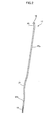
FIG. 2 is a front view of the deformed spoke in a natural state; -
FIG. 3A is a front view of the deformed spoke andFIG. 3B is a front view of a prior art straight spoke; -
FIG. 4A is a graph showing results of tensile tests of the deformed spoke and the straight spoke andFIG. 4B shows an outline of a tensile tester of the test; -
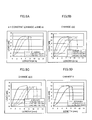
FIGs. 5A, 5B, 5C and 5D are graphs showing results of tensile tests carried out while changing each size of the spoke; -
FIG. 6 is a side section view showing a spoke wheel in which the deformed spokes are combined with straight spokes; -
FIG. 7 is a graph showing strength indices (vertical stiffness and lateral stiffness) of the spoke wheel; -
FIG. 8 is a front view of a spoke wheel composed of prior art straight spokes; and -
FIG. 9 is a side section view of the prior art spoke wheel. - As shown in
FIG. 1 , aspoke wheel 11 of the invention is composed of ahub 3, arim 6 andspokes 17. Thesame spoke wheel 1, thehub 3 and therim 6 of the prior art shown inFiGs. 8 and9 are used in thespoke wheel 11 and only all the spokes are changed from the prior artstraight spokes 7 todeformed spokes 17. Accordingly, thehub 3 has twoflanges 2 disposed so as to be distant from each other in the axial direction by a predetermined distance and therim 6 has a large number ofconcave hole portions 5 that hold thesame nipples 9 with the prior art nipples to fasten thedeformed spokes 17. - As shown in
FIG. 2 , each deformed spoke 17 of the invention has a retained portion (head) 18 at one end thereof and amale screw portion 19 that is screwed with thenipple 9 at another end. Formed in the deformed spoke 17 between the both ends are acurved portion 20 for penetrating a vicinity of the retainedportion 18 through ahole 2a of theflange 2, a predetermineddeformed portion 21 on the male screw portion side andstraight portions deformed portion 21.
The deformed spoke 17 is penetrated through thehole 2a of theflange 2 from the side of themale screw portion 19 and is retained by the retainedportion 18. Thenipple 9 fitted into theconcave hole portion 5 of therim 6 from the radially outward (drop) direction of the rim is screwed with themale screw portion 19. Then, thespoke wheel 11 is assembled by connecting thehub 3 with therim 6 by thespokes 17. At this time, the respectivedeformed spokes 17 are inserted from the both inside and outside of the twohub flanges 2 so as to form one group by four spokes in the same manner with theprior art spokes 7 and so as to form a predetermined elevation angle α. Then, thenipples 9 are fastened and adjusted so that a predetermined tension is applied so that thehub 3 and therim 6 have the same axis O and so that therim 6 forms an accurate circle in plane. - Next, performances of the deformed spoke 17 of the invention as compared with those of the prior art straight spoke 7 will be explained with reference to
FIGs. 3 through 5 .
As shown inFIGs. 3A and 3B , the deformed spoke 17 and thestraight spoke 7 are formed of the same material and into a linear shape having the same length. For instance, the material thereof is SWB (hard wire steel: JPSG3521), the length L in a natural condition not fixed to the wheel is 240 mm and a wire diameter is 3.2 mm. It is noted that the diameter of the both end parts (outside parts from points E and H of the spoke) having thecurved portion 20 and themale screw portion 19 is slightly thick and is 3.5 mm.
Adeformed portion 21 of the deformed spoke 17 has a base-end-sidestraight portion 22a , an end-sidestraight portion 22b, curved portions a that are curved respectively with a predetermined angle (curved angle) c and a parallel portion b that is curved from these curved portions with the predetermined angle (curved angle) c. Thereby, the parallel portion b is deformed with respect to thestraight portions FIG.3A is a length of thedeformed portion 21 in a natural condition and g is a length from the end of the spoke to thedeformed portion 21.FIG. 3B show the prior art straight spoke 7 that has the retainedportion 8, thecurved portion 20 and themale screw portion 19 similarly to the deformed spoke 17, except of that it has nodeformed portion 21. - In the present embodiment, the respective sizes are set as follows: the predetermined angle (curved angle) c = 160°, the curved portion a = 20 mm, the parallel portion b = 20 mm and the length g to the deformed portion = 50 mm.
FIG. 4A shows results of tensile tests carried out on the deformed spoke 17 of the embodiment and on the straight spoke 7 having the same material, diameter and length with those of the deformed spoke 17. The tests were carried out by fixing the retainedportions spokes nipple 9 as shown inFIG. 4B . Although no fastening force N caused by thenipple 9 is applied in the tensile tester, theequal tension 4 kN acts on the deformed spoke 17 and the straight spoke 7 in thespoke wheels FIGs. 1 and8 by the fastening force of 4 kN. It is noted that because the deformed spoke 17 has low longitudinal elastic modulus as compared to the straight spoke 7 as described later, it becomes relatively easy to adjust the fastening force in fastening the spoke by thenipple 9 as the spoke is fastened by being rotated more. - As shown in
FIG. 4A , the deformed spoke 17 extends with moderate longitudinal elastic modulus (Young's modulus) that is about 1/3 of that of thestraight spoke 7 and breaks with substantially equal load (about 12 kN). This means that the deformed spoke 17 has a soft impact absorbing performance because the curved angles c at the curved points A, B, C and D of thedeformed portion 21 shown inFIG. 3A are elastically deformed and that the deformed spoke 17 has tensile strength substantially equal to that of the straight spoke by the diameter φ. It is noted that the deformed spoke 17 elastically deforms so that the curved angles c are opened, the offset amount e is reduced and the length f of the deformed portion is prolonged. Still more, while thestraight spoke 7 is prone to be broken at the deformed parts (the parts E and H described above), the deformed spoke 17 is prone to be broken at the deformed parts after when thedeformed portion 21 is straightly extended. - Furthermore, when a compressive force F acts on the spoke group G1 at the landing part S by the impact load acting on the
rim 6 and the group deforms by 1 mm, the tension applied to the straight spoke 7 by thenipple 9 become zero and the spoke is loosened. In the case of the deformed spoke 17 however, even if the spoke deforms by 1 mm in the compressive direction, the tensile force of 2 kN is still acting on the spoke and the spoke is not loosened. - Accordingly, the spoke wheel 11 (see
FIG. 1 ) assembled by using thedeformed spokes 17 of the invention may be favorably used for the off-road motorcycles and for the racing motorcycles such as the motocross and Enduro that repeat jumps, causing a large impact load to act on the wheel. That is, thespoke wheel 11 can bring about such favorable effects that it is capable of absorbing the impact load described above softly by the low longitudinal elastic modulus caused by the deformed spoke 17, allows fatigue of its riders to be alleviated and their concentration to be kept and keeps favorable wheel performances by preventing looseness of the spokes otherwise caused by blind moves of the nipples. -
FIG. 5 shows results of tensile tests carried out by varying the respective portions a, b and c of the deformed spoke 17 (seeFIG. 3A ).FIG. 5A shows a case when the curved angle c and the length of the curved portion a are varied while keeping the offset amount e constant. It can be seen that an influence of the curved angle c is large when the offset amount e is kept constant.FIG. 5B shows a case when the offset amount e is changed by varying the curved angle c while keeping the length of the curved portion a and of the parallel portion b constant. It can be seen that the smaller the curved angle c, the more the spoke tends to be prolonged in this case.FIG. 5C shows a case when the offset amount e is changed by varying the length of the curved portion a while keeping the curved angle c constant. It can be seen that the longer the length of the curved portion a, the spoke tends to be prolonged from this case.FIG. 5D shows a case when the length of the parallel portion b is changed. It can be seen that there is no influence to the elongation even if the length of the parallel portion b is changed. - From the results described above, the longer the length of the curved portion a and the smaller the curved angle c, the more the spoke is extendable. That is, the larger the offset amount e, the more the deformed spoke 17 is extendable. The deformed spoke is unable to fully exhibit its flexibility when the longitudinal elastic modulus is 0.3 times or less of the
straight spoke 7 and the riders feel a sense of strangeness when the longitudinal elastic modulus is 0.8 times or more because it is too flexible, so that the longitudinal elastic modulus is preferable to be within a range from 0.3 to 0.8 times of that of the straight spoke.
The flexibility of the deformed spoke is not enough when the offset amount e = 3.5 mm or less in a natural condition (not fastened by the nipple) and the flexibility is too flexible when the offset amount exceeds e = 19.8 mm. That is, the offset amount e is preferable to fall within the range from 3.5 to 19.8 mm, i.e., 1.1 φ to 6.2 φ, where the wire diameter is φ (3.2 mm). The predetermined curved angle c is also preferable to fall within a range from 150° to 170° and the length of the curved portion a is preferable to fall within a range from 10 to 40 mm, i.e., within a range from 3.1 φ to 12.5 φ, where the wire diameter is φ (3.2 mm). - It is noted that the length of the parallel portion b of the
deformed portion 21 is nothing to do with the elongation of the spoke, so that the parallel portion b may be nonexistent or may be prolonged substantially along the whole length of the spoke. For instance, it may be what the ends of the both curved portions a are directly connected with a curved angle [2(c -90°)] or the wholedeformed portion 21 may be curved as a circular arc and the like. Still more, the curved portions a may be located in the vicinity of thecurved portion 20 on the retained portion side and in the vicinity of themale screw portion 19 or the spoke may be curved as a whole with a small curvature. Furthermore, the length of the curved portion a and the curved angle c on the retained portion side may be different from those on the male screw portion side. - In a control safety test, some drivers pointed out that they senses wobbling of the vehicle during cornering because the lateral stiffness of the spoke wheel is not enough when all of the spokes of the spoke wheel are the deformed spokes as described above depending on the preference (how to ride) of the riders and on the category of the races such as the motocross and Enduro. Then, a
spoke wheel 111 in which thedeformed spokes 17 and thestraight spokes 7 are combined at a predetermined rate as shown inFIG. 6 was devised.
Thehub 3 has two ringedflanges flange FIG. 8 , aspoke 31 extending from thesame flange 21 intersects with a fourth spoke 34 (leaving the two spokes (32 and 33) therebetween) (see X inFiGs. 8 and6 ). It is noted that although the neighboring spokes (31 and 32 for example) seem to intersect with each other near the flange when seen from the front side, it cannot be said so as to intersect because there is the thickness (distance) between the flanges. - As shown in
FIG. 6 , the straight spoke 7 is used for the spoke extending from the front side I of the flange among the spokes extending from theflange straight spokes 7 and thedeformed spokes 17 in onespoke wheel 111 is 50 % each and they intersect with each other at the intersections X while placing thedeformed spokes 17 inside (IN) and thestraight spokes 17 outside (OUT). - Thereby, while the deformed spoke 17 flexibly sustains also to a transverse load when the transverse load J1 or J2 acts on the
rim 6 during cornering of the motorcycle, transverse deformation of the deformed spoke 17 caused by the load is supported by the straight spoke 7 having high stiffness and contacting with the deformed spoke 17 at the intersection X described above and is thus suppressed. Accordingly, thespoke wheel 111 of the invention is capable of suppressing wobbling from occurring during cornering of the motorcycle by some degree by relatively suppressing the flexible sustainment to the transverse load J1 or J2 while relatively maintaining the vertical stiffness, i.e., the flexible sustainment against the load F caused by jumping and the like. -
FIG. 7 is a graph showing indices of strength of the respective spoke wheels. In the graph, the vertical and lateral stiffness of the prior art spoke wheel (seeFIG. 8 ) whose spokes are all straight spokes are indicated as 100. The vertical stiffness of the spoke wheel 11 (seeFIG. 1 ) whose spokes are all deformed spokes is about 70 and its lateral stiffness is about 80. The spoke wheel 111 (seeFIG. 6 ) having the straight spokes and the deformed spokes by half each has characteristics between thespoke wheel 1 composed of only the straight spokes and thespoke wheel 11 composed of only the deformed spokes. That is, it is possible to suppress wobbling from occurring during cornering relatively while relatively maintaining the cushioning properties against jumping and the like. - It is noted that although the deformed spoke 17 is placed inside and the straight spoke 7 outside at the intersection X in the embodiment described above, they may be reversed and the deformed spoke 17 may be placed outside and the straight spoke 7 inside. Still more, the rate of the deformed spoke 17 and the
straight spoke 7 is not limited to be to 50-to-50 and may be other rate such as 70-to-30, 30-to-70 and the like. - Still more, although the embodiment described above has been applied to the spoke wheel in which the retained portion of the spoke is retainably anchored to the flange of the hub and the male screw portion is fastened to the rim through the intermediary of the nipple, it is also applicable to a spoke wheel in which a retained portion of a spoke is anchored to a rim and a male screw portion is fastened to a hub through an intermediary of a nipple.
Still more, while thespoke wheels - The spoke wheel and the deformed spoke used therein of the invention may be utilized for a wheel of motorcycles, bicycles and other vehicles.
-
- 2
- FLANGE
- 2a
- HOLE
- 3
- HUB
- 5
- CONCAVE HOLE PORTION
- 6
- RIM
- 7
- STRAIGHT SPOKE
- 9
- NIPPLE
- 11, 111
- SPOKE WHEEL
- 17
- DEFORMED SPOKE
- 8, 18
- RETAINED PORTION
- 19
- MALE SCREW PORTION
- 21
- DEFORMED PORTION
- 22a, 22b
- STRAIGHT PORTION
- a
- CURVED PORTION
- b
- CONNECTING PORTION (PARALLEL PORTION)
- c
- CURVED ANGLE
- e
- PREDETERMINED OFFSET AMOUNT
Claims (7)
- A spoke wheel (11, 111) having a hub (3), a rim (6) and a plurality of wired spokes (17, 7) each having a retained portion (18, 8) at one end thereof and a male screw portion (19) at another end, arranged so that each spoke (17, 7) is tensioned between said hub (3) and said rim (6) by retainably anchoring said retained portion (18) to one of said hub (3) and said rim (6) and by screwing the male screw portion (19) with a nipple (9) retained in the other one of said hub (3) and said rim (6), characterized in that
at least part of the spokes are deformed spokes (17) each having a deformed portion (21) deformed by a predetermined offset amount (e) between the retained portion (18) and the male screw portion (19) and
said deformed spoke (17) is fastened by said nipple (9) so that said deformed portion (21) is elastically deformed in a direction in which the predetermined offset amount (e) is reduced. - The spoke wheel according to Claim 1, characterized in that all of the spokes tensioned between said hub (3) and said rim (6) are said deformed spokes (17).
- The spoke wheel according to Claim 1, characterized in that said spokes tensioned between said hub (3) and said rim (6) include said deformed spokes (17) combined with straight spokes (7).
- The spoke wheel according to Claim 3, characterized in that the hub (3) has two ringed flanges (2) disposed so as to be distant by a predetermined distance and one of a pair of spokes extending from the same flange and
intersecting with each other is the deformed spoke (17) and other one is the straight spoke (7). - The spoke wheel according to Claim 1, characterized in that the deformed spoke (17) has longitudinal elastic modulus within a range of 0.3 to 0.8 times of that the straight spoke (7) having no deformed portion.
- The spoke wheel according to Claim 1 or 5, characterized in that the deformed spoke (17) has straight portions (22a and 22b) on the same axial line respectively on the retained portion (18) and on the male screw portion (19) side of the deformed portion (21);
the deformed portion (21) has curved portions (a) curved respectively by a predetermined angle (c) with respect to the straight portions (22a and 22b) on the retained portion and male screw portion sides and a connecting portion (b) that connects ends of these curved portions; and
the predetermined offset amount (e) is a distance between the axial line of the straight portions (22a and 22b) and the connecting portion (b). - A spoke characterized in that it is formed of said deformed spoke used in the spoke wheel described in any one of Claims 1 through 6.
Applications Claiming Priority (2)
| Application Number | Priority Date | Filing Date | Title |
|---|---|---|---|
| JP2010027643 | 2010-02-10 | ||
| JP2010251307A JP5657350B2 (en) | 2010-02-10 | 2010-11-09 | Spoke wheels and spokes used therein |
Publications (2)
| Publication Number | Publication Date |
|---|---|
| EP2360027A1 true EP2360027A1 (en) | 2011-08-24 |
| EP2360027B1 EP2360027B1 (en) | 2013-05-08 |
Family
ID=43970931
Family Applications (1)
| Application Number | Title | Priority Date | Filing Date |
|---|---|---|---|
| EP11250130.9A Not-in-force EP2360027B1 (en) | 2010-02-10 | 2011-02-04 | Spoke wheel and spoke used therefor |
Country Status (3)
| Country | Link |
|---|---|
| US (1) | US8678519B2 (en) |
| EP (1) | EP2360027B1 (en) |
| JP (1) | JP5657350B2 (en) |
Families Citing this family (4)
| Publication number | Priority date | Publication date | Assignee | Title |
|---|---|---|---|---|
| US9421821B2 (en) | 2014-10-09 | 2016-08-23 | Toyota Motor Engineering & Manufacturing North America, Inc. | Vehicle rims including deformable features and vehicles incorporating the same |
| EP3061594B1 (en) * | 2015-02-24 | 2018-04-11 | Scott Sports S.A. | Bicycle wheel and method for its manufacture |
| US11217434B2 (en) * | 2016-12-27 | 2022-01-04 | Evatec Ag | RF capacitive coupled dual frequency etch reactor |
| US10875355B2 (en) * | 2017-12-28 | 2020-12-29 | Shimano Inc. | Bicycle component and bicycle rim |
Citations (4)
| Publication number | Priority date | Publication date | Assignee | Title |
|---|---|---|---|---|
| GB457286A (en) * | 1935-05-30 | 1936-11-25 | George Bloomer | Improvements in or relating to wire wheels |
| JPS59192606A (en) * | 1983-04-15 | 1984-11-01 | Yamaha Motor Co Ltd | Wire spoke wheel |
| DE29800324U1 (en) * | 1998-01-10 | 1998-05-07 | Rödel, Johann, 90427 Nürnberg | Spoke that can be deformed from a spoke blank for wire-spoke wheels, especially for extreme loads |
| JP2007118936A (en) | 2005-10-25 | 2007-05-17 | Chin Kuang Luo | Wheel |
Family Cites Families (5)
| Publication number | Priority date | Publication date | Assignee | Title |
|---|---|---|---|---|
| US457286A (en) * | 1891-08-04 | Printing-press | ||
| JP2641598B2 (en) | 1990-05-31 | 1997-08-13 | 日本碍子株式会社 | Thin film resistor element |
| JPH09254601A (en) * | 1996-03-22 | 1997-09-30 | Suzuki Motor Corp | Spoke wheel |
| US6024413A (en) * | 1997-09-04 | 2000-02-15 | Spencer Technology, Inc. | Bicycle wheel and rim |
| US7562940B2 (en) * | 2005-12-22 | 2009-07-21 | Specialized Bicycle Components, Inc. | Bicycle wheel and hub |
-
2010
- 2010-11-09 JP JP2010251307A patent/JP5657350B2/en not_active Expired - Fee Related
-
2011
- 2011-02-04 EP EP11250130.9A patent/EP2360027B1/en not_active Not-in-force
- 2011-02-09 US US13/024,043 patent/US8678519B2/en not_active Expired - Fee Related
Patent Citations (4)
| Publication number | Priority date | Publication date | Assignee | Title |
|---|---|---|---|---|
| GB457286A (en) * | 1935-05-30 | 1936-11-25 | George Bloomer | Improvements in or relating to wire wheels |
| JPS59192606A (en) * | 1983-04-15 | 1984-11-01 | Yamaha Motor Co Ltd | Wire spoke wheel |
| DE29800324U1 (en) * | 1998-01-10 | 1998-05-07 | Rödel, Johann, 90427 Nürnberg | Spoke that can be deformed from a spoke blank for wire-spoke wheels, especially for extreme loads |
| JP2007118936A (en) | 2005-10-25 | 2007-05-17 | Chin Kuang Luo | Wheel |
Also Published As
| Publication number | Publication date |
|---|---|
| JP2011184034A (en) | 2011-09-22 |
| US8678519B2 (en) | 2014-03-25 |
| JP5657350B2 (en) | 2015-01-21 |
| EP2360027B1 (en) | 2013-05-08 |
| US20110193402A1 (en) | 2011-08-11 |
Similar Documents
| Publication | Publication Date | Title |
|---|---|---|
| EP2360027B1 (en) | Spoke wheel and spoke used therefor | |
| JP3923073B1 (en) | Non-pneumatic tire | |
| US9290042B2 (en) | Spoke wheel | |
| US8162407B2 (en) | Spoked wheel | |
| US20110227312A1 (en) | Bicycle rear suspension system | |
| US20020074853A1 (en) | Spoked bicycle wheel | |
| US20170087931A1 (en) | Thermoplastic wheel hub and non-pneumatic tire | |
| US9604495B2 (en) | Hub for a bicycle | |
| EP3543037B1 (en) | Non-pneumatic tire | |
| US12128705B1 (en) | Bicycle hub and spoke arrangement | |
| JP2002505407A (en) | Tension and damping devices | |
| EP2913200B1 (en) | Fiber compound material felly | |
| US8272698B2 (en) | Wheel spindle structure of bicycle | |
| US9505262B2 (en) | Wheels and vehicles comprising the same | |
| US20100065997A1 (en) | Shock-absorbing spring for vehicles | |
| US20110049206A1 (en) | Tie-able securing device for bicycle | |
| EP2851209B1 (en) | Spoke wheel | |
| US20130112035A1 (en) | Steering wheel | |
| CN102673715A (en) | Clipless cycle pedal device | |
| CN221457880U (en) | Frame and bicycle | |
| US20100141023A1 (en) | Wheel rim | |
| CN219055906U (en) | Suspension device | |
| EP4208352B1 (en) | Hub for retaining spokes with loops | |
| JP5715341B2 (en) | Spoke wheel | |
| AU2009101184A4 (en) | Wheel spindle structure of bicycle |
Legal Events
| Date | Code | Title | Description |
|---|---|---|---|
| PUAI | Public reference made under article 153(3) epc to a published international application that has entered the european phase |
Free format text: ORIGINAL CODE: 0009012 |
|
| AK | Designated contracting states |
Kind code of ref document: A1 Designated state(s): AL AT BE BG CH CY CZ DE DK EE ES FI FR GB GR HR HU IE IS IT LI LT LU LV MC MK MT NL NO PL PT RO RS SE SI SK SM TR |
|
| AX | Request for extension of the european patent |
Extension state: BA ME |
|
| 17P | Request for examination filed |
Effective date: 20120223 |
|
| RIC1 | Information provided on ipc code assigned before grant |
Ipc: B60B 1/02 20060101AFI20121009BHEP |
|
| GRAP | Despatch of communication of intention to grant a patent |
Free format text: ORIGINAL CODE: EPIDOSNIGR1 |
|
| GRAS | Grant fee paid |
Free format text: ORIGINAL CODE: EPIDOSNIGR3 |
|
| GRAA | (expected) grant |
Free format text: ORIGINAL CODE: 0009210 |
|
| AK | Designated contracting states |
Kind code of ref document: B1 Designated state(s): AL AT BE BG CH CY CZ DE DK EE ES FI FR GB GR HR HU IE IS IT LI LT LU LV MC MK MT NL NO PL PT RO RS SE SI SK SM TR |
|
| REG | Reference to a national code |
Ref country code: GB Ref legal event code: FG4D |
|
| REG | Reference to a national code |
Ref country code: AT Ref legal event code: REF Ref document number: 610884 Country of ref document: AT Kind code of ref document: T Effective date: 20130515 Ref country code: CH Ref legal event code: EP |
|
| REG | Reference to a national code |
Ref country code: IE Ref legal event code: FG4D |
|
| REG | Reference to a national code |
Ref country code: DE Ref legal event code: R096 Ref document number: 602011001649 Country of ref document: DE Effective date: 20130704 |
|
| REG | Reference to a national code |
Ref country code: LT Ref legal event code: MG4D |
|
| REG | Reference to a national code |
Ref country code: NL Ref legal event code: VDEP Effective date: 20130508 |
|
| PG25 | Lapsed in a contracting state [announced via postgrant information from national office to epo] |
Ref country code: IS Free format text: LAPSE BECAUSE OF FAILURE TO SUBMIT A TRANSLATION OF THE DESCRIPTION OR TO PAY THE FEE WITHIN THE PRESCRIBED TIME-LIMIT Effective date: 20130908 Ref country code: NO Free format text: LAPSE BECAUSE OF FAILURE TO SUBMIT A TRANSLATION OF THE DESCRIPTION OR TO PAY THE FEE WITHIN THE PRESCRIBED TIME-LIMIT Effective date: 20130808 Ref country code: SI Free format text: LAPSE BECAUSE OF FAILURE TO SUBMIT A TRANSLATION OF THE DESCRIPTION OR TO PAY THE FEE WITHIN THE PRESCRIBED TIME-LIMIT Effective date: 20130508 Ref country code: ES Free format text: LAPSE BECAUSE OF FAILURE TO SUBMIT A TRANSLATION OF THE DESCRIPTION OR TO PAY THE FEE WITHIN THE PRESCRIBED TIME-LIMIT Effective date: 20130819 Ref country code: PT Free format text: LAPSE BECAUSE OF FAILURE TO SUBMIT A TRANSLATION OF THE DESCRIPTION OR TO PAY THE FEE WITHIN THE PRESCRIBED TIME-LIMIT Effective date: 20130909 Ref country code: LT Free format text: LAPSE BECAUSE OF FAILURE TO SUBMIT A TRANSLATION OF THE DESCRIPTION OR TO PAY THE FEE WITHIN THE PRESCRIBED TIME-LIMIT Effective date: 20130508 Ref country code: GR Free format text: LAPSE BECAUSE OF FAILURE TO SUBMIT A TRANSLATION OF THE DESCRIPTION OR TO PAY THE FEE WITHIN THE PRESCRIBED TIME-LIMIT Effective date: 20130809 Ref country code: FI Free format text: LAPSE BECAUSE OF FAILURE TO SUBMIT A TRANSLATION OF THE DESCRIPTION OR TO PAY THE FEE WITHIN THE PRESCRIBED TIME-LIMIT Effective date: 20130508 Ref country code: SE Free format text: LAPSE BECAUSE OF FAILURE TO SUBMIT A TRANSLATION OF THE DESCRIPTION OR TO PAY THE FEE WITHIN THE PRESCRIBED TIME-LIMIT Effective date: 20130508 |
|
| PG25 | Lapsed in a contracting state [announced via postgrant information from national office to epo] |
Ref country code: RS Free format text: LAPSE BECAUSE OF FAILURE TO SUBMIT A TRANSLATION OF THE DESCRIPTION OR TO PAY THE FEE WITHIN THE PRESCRIBED TIME-LIMIT Effective date: 20130508 Ref country code: PL Free format text: LAPSE BECAUSE OF FAILURE TO SUBMIT A TRANSLATION OF THE DESCRIPTION OR TO PAY THE FEE WITHIN THE PRESCRIBED TIME-LIMIT Effective date: 20130508 Ref country code: HR Free format text: LAPSE BECAUSE OF FAILURE TO SUBMIT A TRANSLATION OF THE DESCRIPTION OR TO PAY THE FEE WITHIN THE PRESCRIBED TIME-LIMIT Effective date: 20130508 Ref country code: BG Free format text: LAPSE BECAUSE OF FAILURE TO SUBMIT A TRANSLATION OF THE DESCRIPTION OR TO PAY THE FEE WITHIN THE PRESCRIBED TIME-LIMIT Effective date: 20130808 Ref country code: CY Free format text: LAPSE BECAUSE OF FAILURE TO SUBMIT A TRANSLATION OF THE DESCRIPTION OR TO PAY THE FEE WITHIN THE PRESCRIBED TIME-LIMIT Effective date: 20130508 |
|
| PG25 | Lapsed in a contracting state [announced via postgrant information from national office to epo] |
Ref country code: LV Free format text: LAPSE BECAUSE OF FAILURE TO SUBMIT A TRANSLATION OF THE DESCRIPTION OR TO PAY THE FEE WITHIN THE PRESCRIBED TIME-LIMIT Effective date: 20130508 |
|
| PG25 | Lapsed in a contracting state [announced via postgrant information from national office to epo] |
Ref country code: BE Free format text: LAPSE BECAUSE OF FAILURE TO SUBMIT A TRANSLATION OF THE DESCRIPTION OR TO PAY THE FEE WITHIN THE PRESCRIBED TIME-LIMIT Effective date: 20130508 Ref country code: DK Free format text: LAPSE BECAUSE OF FAILURE TO SUBMIT A TRANSLATION OF THE DESCRIPTION OR TO PAY THE FEE WITHIN THE PRESCRIBED TIME-LIMIT Effective date: 20130508 Ref country code: CZ Free format text: LAPSE BECAUSE OF FAILURE TO SUBMIT A TRANSLATION OF THE DESCRIPTION OR TO PAY THE FEE WITHIN THE PRESCRIBED TIME-LIMIT Effective date: 20130508 Ref country code: EE Free format text: LAPSE BECAUSE OF FAILURE TO SUBMIT A TRANSLATION OF THE DESCRIPTION OR TO PAY THE FEE WITHIN THE PRESCRIBED TIME-LIMIT Effective date: 20130508 Ref country code: SK Free format text: LAPSE BECAUSE OF FAILURE TO SUBMIT A TRANSLATION OF THE DESCRIPTION OR TO PAY THE FEE WITHIN THE PRESCRIBED TIME-LIMIT Effective date: 20130508 |
|
| PG25 | Lapsed in a contracting state [announced via postgrant information from national office to epo] |
Ref country code: RO Free format text: LAPSE BECAUSE OF FAILURE TO SUBMIT A TRANSLATION OF THE DESCRIPTION OR TO PAY THE FEE WITHIN THE PRESCRIBED TIME-LIMIT Effective date: 20130508 Ref country code: NL Free format text: LAPSE BECAUSE OF FAILURE TO SUBMIT A TRANSLATION OF THE DESCRIPTION OR TO PAY THE FEE WITHIN THE PRESCRIBED TIME-LIMIT Effective date: 20130508 |
|
| PLBE | No opposition filed within time limit |
Free format text: ORIGINAL CODE: 0009261 |
|
| STAA | Information on the status of an ep patent application or granted ep patent |
Free format text: STATUS: NO OPPOSITION FILED WITHIN TIME LIMIT |
|
| 26N | No opposition filed |
Effective date: 20140211 |
|
| REG | Reference to a national code |
Ref country code: DE Ref legal event code: R097 Ref document number: 602011001649 Country of ref document: DE Effective date: 20140211 |
|
| PG25 | Lapsed in a contracting state [announced via postgrant information from national office to epo] |
Ref country code: LU Free format text: LAPSE BECAUSE OF FAILURE TO SUBMIT A TRANSLATION OF THE DESCRIPTION OR TO PAY THE FEE WITHIN THE PRESCRIBED TIME-LIMIT Effective date: 20140204 Ref country code: MC Free format text: LAPSE BECAUSE OF FAILURE TO SUBMIT A TRANSLATION OF THE DESCRIPTION OR TO PAY THE FEE WITHIN THE PRESCRIBED TIME-LIMIT Effective date: 20130508 |
|
| REG | Reference to a national code |
Ref country code: CH Ref legal event code: PL |
|
| PG25 | Lapsed in a contracting state [announced via postgrant information from national office to epo] |
Ref country code: LI Free format text: LAPSE BECAUSE OF NON-PAYMENT OF DUE FEES Effective date: 20140228 Ref country code: CH Free format text: LAPSE BECAUSE OF NON-PAYMENT OF DUE FEES Effective date: 20140228 |
|
| REG | Reference to a national code |
Ref country code: IE Ref legal event code: MM4A |
|
| PG25 | Lapsed in a contracting state [announced via postgrant information from national office to epo] |
Ref country code: IE Free format text: LAPSE BECAUSE OF NON-PAYMENT OF DUE FEES Effective date: 20140204 |
|
| REG | Reference to a national code |
Ref country code: FR Ref legal event code: PLFP Year of fee payment: 5 |
|
| PGFP | Annual fee paid to national office [announced via postgrant information from national office to epo] |
Ref country code: IT Payment date: 20150213 Year of fee payment: 5 Ref country code: DE Payment date: 20150127 Year of fee payment: 5 |
|
| PGFP | Annual fee paid to national office [announced via postgrant information from national office to epo] |
Ref country code: FR Payment date: 20150210 Year of fee payment: 5 |
|
| GBPC | Gb: european patent ceased through non-payment of renewal fee |
Effective date: 20150204 |
|
| PG25 | Lapsed in a contracting state [announced via postgrant information from national office to epo] |
Ref country code: GB Free format text: LAPSE BECAUSE OF NON-PAYMENT OF DUE FEES Effective date: 20150204 |
|
| PG25 | Lapsed in a contracting state [announced via postgrant information from national office to epo] |
Ref country code: MT Free format text: LAPSE BECAUSE OF FAILURE TO SUBMIT A TRANSLATION OF THE DESCRIPTION OR TO PAY THE FEE WITHIN THE PRESCRIBED TIME-LIMIT Effective date: 20130508 |
|
| PG25 | Lapsed in a contracting state [announced via postgrant information from national office to epo] |
Ref country code: SM Free format text: LAPSE BECAUSE OF FAILURE TO SUBMIT A TRANSLATION OF THE DESCRIPTION OR TO PAY THE FEE WITHIN THE PRESCRIBED TIME-LIMIT Effective date: 20130508 |
|
| PG25 | Lapsed in a contracting state [announced via postgrant information from national office to epo] |
Ref country code: HU Free format text: LAPSE BECAUSE OF FAILURE TO SUBMIT A TRANSLATION OF THE DESCRIPTION OR TO PAY THE FEE WITHIN THE PRESCRIBED TIME-LIMIT; INVALID AB INITIO Effective date: 20110204 Ref country code: TR Free format text: LAPSE BECAUSE OF FAILURE TO SUBMIT A TRANSLATION OF THE DESCRIPTION OR TO PAY THE FEE WITHIN THE PRESCRIBED TIME-LIMIT Effective date: 20130508 |
|
| REG | Reference to a national code |
Ref country code: DE Ref legal event code: R119 Ref document number: 602011001649 Country of ref document: DE |
|
| REG | Reference to a national code |
Ref country code: FR Ref legal event code: ST Effective date: 20161028 |
|
| PG25 | Lapsed in a contracting state [announced via postgrant information from national office to epo] |
Ref country code: IT Free format text: LAPSE BECAUSE OF NON-PAYMENT OF DUE FEES Effective date: 20160204 |
|
| PG25 | Lapsed in a contracting state [announced via postgrant information from national office to epo] |
Ref country code: DE Free format text: LAPSE BECAUSE OF NON-PAYMENT OF DUE FEES Effective date: 20160901 Ref country code: FR Free format text: LAPSE BECAUSE OF NON-PAYMENT OF DUE FEES Effective date: 20160229 |
|
| REG | Reference to a national code |
Ref country code: AT Ref legal event code: MM01 Ref document number: 610884 Country of ref document: AT Kind code of ref document: T Effective date: 20160204 |
|
| PG25 | Lapsed in a contracting state [announced via postgrant information from national office to epo] |
Ref country code: AT Free format text: LAPSE BECAUSE OF NON-PAYMENT OF DUE FEES Effective date: 20160204 |
|
| PG25 | Lapsed in a contracting state [announced via postgrant information from national office to epo] |
Ref country code: MK Free format text: LAPSE BECAUSE OF FAILURE TO SUBMIT A TRANSLATION OF THE DESCRIPTION OR TO PAY THE FEE WITHIN THE PRESCRIBED TIME-LIMIT Effective date: 20130508 |
|
| PG25 | Lapsed in a contracting state [announced via postgrant information from national office to epo] |
Ref country code: AL Free format text: LAPSE BECAUSE OF FAILURE TO SUBMIT A TRANSLATION OF THE DESCRIPTION OR TO PAY THE FEE WITHIN THE PRESCRIBED TIME-LIMIT Effective date: 20130508 |