EP2359833A1 - Antiviral phosphonate analogs - Google Patents
Antiviral phosphonate analogs Download PDFInfo
- Publication number
- EP2359833A1 EP2359833A1 EP20100184722 EP10184722A EP2359833A1 EP 2359833 A1 EP2359833 A1 EP 2359833A1 EP 20100184722 EP20100184722 EP 20100184722 EP 10184722 A EP10184722 A EP 10184722A EP 2359833 A1 EP2359833 A1 EP 2359833A1
- Authority
- EP
- European Patent Office
- Prior art keywords
- substituted
- conjugate
- alkyl
- phosphonate
- compound
- Prior art date
- Legal status (The legal status is an assumption and is not a legal conclusion. Google has not performed a legal analysis and makes no representation as to the accuracy of the status listed.)
- Withdrawn
Links
- 230000000840 anti-viral effect Effects 0.000 title claims abstract description 26
- ABLZXFCXXLZCGV-UHFFFAOYSA-N Phosphorous acid Chemical class OP(O)=O ABLZXFCXXLZCGV-UHFFFAOYSA-N 0.000 title description 66
- -1 polyethyleneoxy Polymers 0.000 claims description 194
- UEZVMMHDMIWARA-UHFFFAOYSA-M phosphonate Chemical compound [O-]P(=O)=O UEZVMMHDMIWARA-UHFFFAOYSA-M 0.000 claims description 94
- 229910052760 oxygen Inorganic materials 0.000 claims description 65
- 150000003839 salts Chemical class 0.000 claims description 54
- 239000000651 prodrug Substances 0.000 claims description 52
- 229940002612 prodrug Drugs 0.000 claims description 52
- 150000002148 esters Chemical class 0.000 claims description 48
- 229910052757 nitrogen Inorganic materials 0.000 claims description 47
- 125000004432 carbon atom Chemical group C* 0.000 claims description 41
- 125000000623 heterocyclic group Chemical group 0.000 claims description 35
- KXDHJXZQYSOELW-UHFFFAOYSA-M Carbamate Chemical compound NC([O-])=O KXDHJXZQYSOELW-UHFFFAOYSA-M 0.000 claims description 29
- 229910052799 carbon Inorganic materials 0.000 claims description 28
- 125000002924 primary amino group Chemical group [H]N([H])* 0.000 claims description 28
- 125000001424 substituent group Chemical group 0.000 claims description 28
- 125000006239 protecting group Chemical group 0.000 claims description 26
- 239000012453 solvate Substances 0.000 claims description 25
- 229910052717 sulfur Inorganic materials 0.000 claims description 25
- 125000003342 alkenyl group Chemical group 0.000 claims description 22
- 239000008194 pharmaceutical composition Substances 0.000 claims description 22
- 239000000546 pharmaceutical excipient Substances 0.000 claims description 20
- 229910052731 fluorine Inorganic materials 0.000 claims description 19
- 208000036142 Viral infection Diseases 0.000 claims description 18
- 229910052794 bromium Inorganic materials 0.000 claims description 18
- 230000009385 viral infection Effects 0.000 claims description 18
- JCXJVPUVTGWSNB-UHFFFAOYSA-N Nitrogen dioxide Chemical compound O=[N]=O JCXJVPUVTGWSNB-UHFFFAOYSA-N 0.000 claims description 17
- 125000003282 alkyl amino group Chemical group 0.000 claims description 17
- 229910052801 chlorine Inorganic materials 0.000 claims description 17
- 125000004093 cyano group Chemical group *C#N 0.000 claims description 16
- 229910052740 iodine Inorganic materials 0.000 claims description 16
- 241001465754 Metazoa Species 0.000 claims description 15
- 125000004209 (C1-C8) alkyl group Chemical group 0.000 claims description 14
- 229910052739 hydrogen Inorganic materials 0.000 claims description 14
- 238000001727 in vivo Methods 0.000 claims description 14
- 230000002401 inhibitory effect Effects 0.000 claims description 13
- 125000000547 substituted alkyl group Chemical group 0.000 claims description 13
- 229930024421 Adenine Natural products 0.000 claims description 11
- 125000004650 C1-C8 alkynyl group Chemical group 0.000 claims description 11
- 229960000643 adenine Drugs 0.000 claims description 11
- GFFGJBXGBJISGV-UHFFFAOYSA-N adenyl group Chemical group N1=CN=C2N=CNC2=C1N GFFGJBXGBJISGV-UHFFFAOYSA-N 0.000 claims description 11
- 125000000852 azido group Chemical group *N=[N+]=[N-] 0.000 claims description 11
- 125000006736 (C6-C20) aryl group Chemical group 0.000 claims description 10
- BVKZGUZCCUSVTD-UHFFFAOYSA-L Carbonate Chemical compound [O-]C([O-])=O BVKZGUZCCUSVTD-UHFFFAOYSA-L 0.000 claims description 9
- 125000003545 alkoxy group Chemical group 0.000 claims description 9
- 125000000449 nitro group Chemical group [O-][N+](*)=O 0.000 claims description 9
- 125000005017 substituted alkenyl group Chemical group 0.000 claims description 9
- 125000004426 substituted alkynyl group Chemical group 0.000 claims description 9
- 238000000338 in vitro Methods 0.000 claims description 7
- QGZKDVFQNNGYKY-UHFFFAOYSA-O Ammonium Chemical compound [NH4+] QGZKDVFQNNGYKY-UHFFFAOYSA-O 0.000 claims description 6
- 229910019142 PO4 Inorganic materials 0.000 claims description 6
- 150000008052 alkyl sulfonates Chemical class 0.000 claims description 6
- 150000003951 lactams Chemical class 0.000 claims description 6
- 150000002596 lactones Chemical class 0.000 claims description 6
- IIACRCGMVDHOTQ-UHFFFAOYSA-M sulfamate Chemical compound NS([O-])(=O)=O IIACRCGMVDHOTQ-UHFFFAOYSA-M 0.000 claims description 6
- BDHFUVZGWQCTTF-UHFFFAOYSA-M sulfonate Chemical compound [O-]S(=O)=O BDHFUVZGWQCTTF-UHFFFAOYSA-M 0.000 claims description 6
- QAOWNCQODCNURD-UHFFFAOYSA-L Sulfate Chemical compound [O-]S([O-])(=O)=O QAOWNCQODCNURD-UHFFFAOYSA-L 0.000 claims description 5
- 150000001350 alkyl halides Chemical class 0.000 claims description 5
- 150000001356 alkyl thiols Chemical class 0.000 claims description 5
- 150000007942 carboxylates Chemical class 0.000 claims description 5
- 125000004663 dialkyl amino group Chemical group 0.000 claims description 5
- RTZKZFJDLAIYFH-UHFFFAOYSA-N ether Substances CCOCC RTZKZFJDLAIYFH-UHFFFAOYSA-N 0.000 claims description 5
- 125000005110 aryl thio group Chemical group 0.000 claims description 4
- 125000002837 carbocyclic group Chemical group 0.000 claims description 4
- 150000003857 carboxamides Chemical class 0.000 claims description 4
- 239000010452 phosphate Substances 0.000 claims description 4
- 125000000475 sulfinyl group Chemical group [*:2]S([*:1])=O 0.000 claims description 4
- 125000005208 trialkylammonium group Chemical group 0.000 claims description 4
- 150000005215 alkyl ethers Chemical class 0.000 claims description 3
- 125000005360 alkyl sulfoxide group Chemical group 0.000 claims description 3
- 125000003368 amide group Chemical group 0.000 claims description 3
- 150000008378 aryl ethers Chemical class 0.000 claims description 3
- 125000005362 aryl sulfone group Chemical group 0.000 claims description 3
- 125000005361 aryl sulfoxide group Chemical group 0.000 claims description 3
- 150000002825 nitriles Chemical class 0.000 claims description 3
- NBIIXXVUZAFLBC-UHFFFAOYSA-K phosphate Chemical compound [O-]P([O-])([O-])=O NBIIXXVUZAFLBC-UHFFFAOYSA-K 0.000 claims description 3
- 229940124530 sulfonamide Drugs 0.000 claims description 3
- 150000003456 sulfonamides Chemical class 0.000 claims description 3
- 150000003459 sulfonic acid esters Chemical class 0.000 claims description 3
- 125000004950 trifluoroalkyl group Chemical group 0.000 claims description 2
- 230000001737 promoting effect Effects 0.000 claims 1
- 150000001875 compounds Chemical class 0.000 abstract description 219
- 238000000034 method Methods 0.000 abstract description 193
- 239000000203 mixture Substances 0.000 abstract description 91
- 239000000543 intermediate Substances 0.000 abstract description 30
- 230000008569 process Effects 0.000 abstract description 11
- 238000002560 therapeutic procedure Methods 0.000 abstract description 3
- OAICVXFJPJFONN-UHFFFAOYSA-N Phosphorus Chemical group [P] OAICVXFJPJFONN-UHFFFAOYSA-N 0.000 abstract description 2
- 229910052698 phosphorus Inorganic materials 0.000 abstract description 2
- 239000011574 phosphorus Substances 0.000 abstract description 2
- 238000006243 chemical reaction Methods 0.000 description 112
- 239000000047 product Substances 0.000 description 106
- 150000005690 diesters Chemical class 0.000 description 50
- 125000001570 methylene group Chemical group [H]C([H])([*:1])[*:2] 0.000 description 47
- 239000004480 active ingredient Substances 0.000 description 46
- 238000002360 preparation method Methods 0.000 description 46
- YMWUJEATGCHHMB-UHFFFAOYSA-N Dichloromethane Chemical compound ClCCl YMWUJEATGCHHMB-UHFFFAOYSA-N 0.000 description 45
- 210000004027 cell Anatomy 0.000 description 38
- 238000009472 formulation Methods 0.000 description 38
- WEVYAHXRMPXWCK-UHFFFAOYSA-N Acetonitrile Chemical compound CC#N WEVYAHXRMPXWCK-UHFFFAOYSA-N 0.000 description 36
- 125000005647 linker group Chemical group 0.000 description 36
- 239000002585 base Substances 0.000 description 34
- ZMANZCXQSJIPKH-UHFFFAOYSA-N Triethylamine Chemical compound CCN(CC)CC ZMANZCXQSJIPKH-UHFFFAOYSA-N 0.000 description 33
- 125000000217 alkyl group Chemical group 0.000 description 33
- 239000003814 drug Substances 0.000 description 32
- 239000000243 solution Substances 0.000 description 31
- 229940079593 drug Drugs 0.000 description 27
- JUJWROOIHBZHMG-UHFFFAOYSA-N Pyridine Chemical group C1=CC=NC=C1 JUJWROOIHBZHMG-UHFFFAOYSA-N 0.000 description 26
- WYURNTSHIVDZCO-UHFFFAOYSA-N Tetrahydrofuran Chemical group C1CCOC1 WYURNTSHIVDZCO-UHFFFAOYSA-N 0.000 description 26
- 239000003153 chemical reaction reagent Substances 0.000 description 26
- 238000003786 synthesis reaction Methods 0.000 description 26
- 125000004169 (C1-C6) alkyl group Chemical group 0.000 description 24
- 150000001412 amines Chemical class 0.000 description 24
- 230000015572 biosynthetic process Effects 0.000 description 22
- 125000000524 functional group Chemical group 0.000 description 22
- 125000002887 hydroxy group Chemical group [H]O* 0.000 description 22
- 239000002904 solvent Substances 0.000 description 22
- IJGRMHOSHXDMSA-UHFFFAOYSA-N Atomic nitrogen Chemical compound N#N IJGRMHOSHXDMSA-UHFFFAOYSA-N 0.000 description 21
- ZMXDDKWLCZADIW-UHFFFAOYSA-N N,N-Dimethylformamide Chemical compound CN(C)C=O ZMXDDKWLCZADIW-UHFFFAOYSA-N 0.000 description 21
- 125000005843 halogen group Chemical group 0.000 description 21
- 238000005859 coupling reaction Methods 0.000 description 20
- 238000011282 treatment Methods 0.000 description 19
- 239000003795 chemical substances by application Substances 0.000 description 18
- 230000000694 effects Effects 0.000 description 18
- 125000003710 aryl alkyl group Chemical group 0.000 description 17
- OPTASPLRGRRNAP-UHFFFAOYSA-N cytosine Chemical compound NC=1C=CNC(=O)N=1 OPTASPLRGRRNAP-UHFFFAOYSA-N 0.000 description 17
- 150000003009 phosphonic acids Chemical class 0.000 description 17
- LFQSCWFLJHTTHZ-UHFFFAOYSA-N Ethanol Chemical compound CCO LFQSCWFLJHTTHZ-UHFFFAOYSA-N 0.000 description 16
- 125000001997 phenyl group Chemical group [H]C1=C([H])C([H])=C(*)C([H])=C1[H] 0.000 description 16
- FYSNRJHAOHDILO-UHFFFAOYSA-N thionyl chloride Chemical compound ClS(Cl)=O FYSNRJHAOHDILO-UHFFFAOYSA-N 0.000 description 16
- XLYOFNOQVPJJNP-UHFFFAOYSA-N water Substances O XLYOFNOQVPJJNP-UHFFFAOYSA-N 0.000 description 16
- 125000004178 (C1-C4) alkyl group Chemical group 0.000 description 15
- YXFVVABEGXRONW-UHFFFAOYSA-N Toluene Chemical compound CC1=CC=CC=C1 YXFVVABEGXRONW-UHFFFAOYSA-N 0.000 description 15
- 125000003118 aryl group Chemical group 0.000 description 15
- 125000001797 benzyl group Chemical group [H]C1=C([H])C([H])=C(C([H])=C1[H])C([H])([H])* 0.000 description 15
- 0 C*(C(C)(*)*)N Chemical compound C*(C(C)(*)*)N 0.000 description 14
- YLQBMQCUIZJEEH-UHFFFAOYSA-N Furan Chemical group C=1C=COC=1 YLQBMQCUIZJEEH-UHFFFAOYSA-N 0.000 description 14
- 241000282414 Homo sapiens Species 0.000 description 14
- JGFZNNIVVJXRND-UHFFFAOYSA-N N,N-Diisopropylethylamine (DIPEA) Chemical compound CCN(C(C)C)C(C)C JGFZNNIVVJXRND-UHFFFAOYSA-N 0.000 description 14
- KDLHZDBZIXYQEI-UHFFFAOYSA-N Palladium Chemical compound [Pd] KDLHZDBZIXYQEI-UHFFFAOYSA-N 0.000 description 14
- ISAKRJDGNUQOIC-UHFFFAOYSA-N Uracil Chemical compound O=C1C=CNC(=O)N1 ISAKRJDGNUQOIC-UHFFFAOYSA-N 0.000 description 14
- 229940059260 amidate Drugs 0.000 description 14
- NPUKDXXFDDZOKR-LLVKDONJSA-N etomidate Chemical compound CCOC(=O)C1=CN=CN1[C@H](C)C1=CC=CC=C1 NPUKDXXFDDZOKR-LLVKDONJSA-N 0.000 description 14
- UYTPUPDQBNUYGX-UHFFFAOYSA-N guanine Chemical compound O=C1NC(N)=NC2=C1N=CN2 UYTPUPDQBNUYGX-UHFFFAOYSA-N 0.000 description 14
- 150000002440 hydroxy compounds Chemical class 0.000 description 14
- 239000000463 material Substances 0.000 description 14
- RWQNBRDOKXIBIV-UHFFFAOYSA-N thymine Chemical compound CC1=CNC(=O)NC1=O RWQNBRDOKXIBIV-UHFFFAOYSA-N 0.000 description 14
- RIOQSEWOXXDEQQ-UHFFFAOYSA-N triphenylphosphine Chemical compound C1=CC=CC=C1P(C=1C=CC=CC=1)C1=CC=CC=C1 RIOQSEWOXXDEQQ-UHFFFAOYSA-N 0.000 description 14
- 125000004191 (C1-C6) alkoxy group Chemical group 0.000 description 13
- QOSSAOTZNIDXMA-UHFFFAOYSA-N Dicylcohexylcarbodiimide Chemical compound C1CCCCC1N=C=NC1CCCCC1 QOSSAOTZNIDXMA-UHFFFAOYSA-N 0.000 description 13
- 238000003556 assay Methods 0.000 description 13
- 230000008878 coupling Effects 0.000 description 13
- 238000010168 coupling process Methods 0.000 description 13
- 125000001153 fluoro group Chemical group F* 0.000 description 13
- 125000004435 hydrogen atom Chemical class [H]* 0.000 description 13
- 125000002496 methyl group Chemical group [H]C([H])([H])* 0.000 description 13
- 210000003819 peripheral blood mononuclear cell Anatomy 0.000 description 13
- UMJSCPRVCHMLSP-UHFFFAOYSA-N pyridine Natural products COC1=CC=CN=C1 UMJSCPRVCHMLSP-UHFFFAOYSA-N 0.000 description 13
- 239000000523 sample Substances 0.000 description 13
- OKTJSMMVPCPJKN-UHFFFAOYSA-N Carbon Chemical compound [C] OKTJSMMVPCPJKN-UHFFFAOYSA-N 0.000 description 12
- ROBXZHNBBCHEIQ-BYPYZUCNSA-N ethyl (2s)-2-aminopropanoate Chemical compound CCOC(=O)[C@H](C)N ROBXZHNBBCHEIQ-BYPYZUCNSA-N 0.000 description 12
- LZCLXQDLBQLTDK-UHFFFAOYSA-N ethyl 2-hydroxypropanoate Chemical compound CCOC(=O)C(C)O LZCLXQDLBQLTDK-UHFFFAOYSA-N 0.000 description 12
- 125000001495 ethyl group Chemical group [H]C([H])([H])C([H])([H])* 0.000 description 12
- RAXXELZNTBOGNW-UHFFFAOYSA-N imidazole Chemical group C1=CNC=N1 RAXXELZNTBOGNW-UHFFFAOYSA-N 0.000 description 12
- 239000002207 metabolite Substances 0.000 description 12
- 239000002777 nucleoside Substances 0.000 description 12
- 239000000126 substance Substances 0.000 description 12
- 210000001519 tissue Anatomy 0.000 description 12
- PZOUSPYUWWUPPK-UHFFFAOYSA-N 4-methyl-1h-indole Chemical compound CC1=CC=CC2=C1C=CN2 PZOUSPYUWWUPPK-UHFFFAOYSA-N 0.000 description 11
- UHOVQNZJYSORNB-UHFFFAOYSA-N Benzene Chemical compound C1=CC=CC=C1 UHOVQNZJYSORNB-UHFFFAOYSA-N 0.000 description 11
- 150000004657 carbamic acid derivatives Chemical class 0.000 description 11
- 150000001732 carboxylic acid derivatives Chemical class 0.000 description 11
- 238000003776 cleavage reaction Methods 0.000 description 11
- XHXFXVLFKHQFAL-UHFFFAOYSA-N phosphoryl trichloride Chemical compound ClP(Cl)(Cl)=O XHXFXVLFKHQFAL-UHFFFAOYSA-N 0.000 description 11
- 230000007017 scission Effects 0.000 description 11
- 238000000926 separation method Methods 0.000 description 11
- OIVLITBTBDPEFK-UHFFFAOYSA-N 5,6-dihydrouracil Chemical compound O=C1CCNC(=O)N1 OIVLITBTBDPEFK-UHFFFAOYSA-N 0.000 description 10
- PEHVGBZKEYRQSX-UHFFFAOYSA-N 7-deaza-adenine Chemical compound NC1=NC=NC2=C1C=CN2 PEHVGBZKEYRQSX-UHFFFAOYSA-N 0.000 description 10
- LOSIULRWFAEMFL-UHFFFAOYSA-N 7-deazaguanine Chemical compound O=C1NC(N)=NC2=C1CC=N2 LOSIULRWFAEMFL-UHFFFAOYSA-N 0.000 description 10
- 239000002253 acid Substances 0.000 description 10
- 150000001721 carbon Chemical group 0.000 description 10
- 125000005842 heteroatom Chemical group 0.000 description 10
- FDGQSTZJBFJUBT-UHFFFAOYSA-N hypoxanthine Chemical compound O=C1NC=NC2=C1NC=N2 FDGQSTZJBFJUBT-UHFFFAOYSA-N 0.000 description 10
- DRAVOWXCEBXPTN-UHFFFAOYSA-N isoguanine Chemical compound NC1=NC(=O)NC2=C1NC=N2 DRAVOWXCEBXPTN-UHFFFAOYSA-N 0.000 description 10
- 239000007788 liquid Substances 0.000 description 10
- 230000003647 oxidation Effects 0.000 description 10
- 238000007254 oxidation reaction Methods 0.000 description 10
- BWHMMNNQKKPAPP-UHFFFAOYSA-L potassium carbonate Chemical compound [K+].[K+].[O-]C([O-])=O BWHMMNNQKKPAPP-UHFFFAOYSA-L 0.000 description 10
- 239000000376 reactant Substances 0.000 description 10
- 239000003826 tablet Substances 0.000 description 10
- WYWHKKSPHMUBEB-UHFFFAOYSA-N tioguanine Chemical compound N1C(N)=NC(=S)C2=C1N=CN2 WYWHKKSPHMUBEB-UHFFFAOYSA-N 0.000 description 10
- 102000004190 Enzymes Human genes 0.000 description 9
- 108090000790 Enzymes Proteins 0.000 description 9
- 241000700605 Viruses Species 0.000 description 9
- 238000004587 chromatography analysis Methods 0.000 description 9
- 229940104302 cytosine Drugs 0.000 description 9
- JBFYUZGYRGXSFL-UHFFFAOYSA-N imidazolide Chemical compound C1=C[N-]C=N1 JBFYUZGYRGXSFL-UHFFFAOYSA-N 0.000 description 9
- 239000003112 inhibitor Substances 0.000 description 9
- 230000003834 intracellular effect Effects 0.000 description 9
- 239000003921 oil Substances 0.000 description 9
- 239000003960 organic solvent Substances 0.000 description 9
- 150000003254 radicals Chemical class 0.000 description 9
- 230000009466 transformation Effects 0.000 description 9
- QGZKDVFQNNGYKY-UHFFFAOYSA-N Ammonia Chemical compound N QGZKDVFQNNGYKY-UHFFFAOYSA-N 0.000 description 8
- PEDCQBHIVMGVHV-UHFFFAOYSA-N Glycerine Chemical compound OCC(O)CO PEDCQBHIVMGVHV-UHFFFAOYSA-N 0.000 description 8
- 238000006751 Mitsunobu reaction Methods 0.000 description 8
- 125000004183 alkoxy alkyl group Chemical group 0.000 description 8
- 125000002947 alkylene group Chemical group 0.000 description 8
- QVGXLLKOCUKJST-UHFFFAOYSA-N atomic oxygen Chemical group [O] QVGXLLKOCUKJST-UHFFFAOYSA-N 0.000 description 8
- 239000007822 coupling agent Substances 0.000 description 8
- 230000002255 enzymatic effect Effects 0.000 description 8
- BHEPBYXIRTUNPN-UHFFFAOYSA-N hydridophosphorus(.) (triplet) Chemical compound [PH] BHEPBYXIRTUNPN-UHFFFAOYSA-N 0.000 description 8
- 238000006460 hydrolysis reaction Methods 0.000 description 8
- 125000003835 nucleoside group Chemical group 0.000 description 8
- 235000019198 oils Nutrition 0.000 description 8
- CTSLXHKWHWQRSH-UHFFFAOYSA-N oxalyl chloride Chemical compound ClC(=O)C(Cl)=O CTSLXHKWHWQRSH-UHFFFAOYSA-N 0.000 description 8
- 239000001301 oxygen Substances 0.000 description 8
- 239000002243 precursor Substances 0.000 description 8
- 238000006722 reduction reaction Methods 0.000 description 8
- 239000000758 substrate Substances 0.000 description 8
- 230000001225 therapeutic effect Effects 0.000 description 8
- 125000000229 (C1-C4)alkoxy group Chemical group 0.000 description 7
- NBIIXXVUZAFLBC-UHFFFAOYSA-N Phosphoric acid Chemical compound OP(O)(O)=O NBIIXXVUZAFLBC-UHFFFAOYSA-N 0.000 description 7
- 229940024606 amino acid Drugs 0.000 description 7
- 235000001014 amino acid Nutrition 0.000 description 7
- 150000001413 amino acids Chemical class 0.000 description 7
- 239000012620 biological material Substances 0.000 description 7
- 210000004369 blood Anatomy 0.000 description 7
- 239000008280 blood Substances 0.000 description 7
- 238000010511 deprotection reaction Methods 0.000 description 7
- 239000000839 emulsion Substances 0.000 description 7
- 125000001072 heteroaryl group Chemical group 0.000 description 7
- 230000007062 hydrolysis Effects 0.000 description 7
- 239000004615 ingredient Substances 0.000 description 7
- 125000001449 isopropyl group Chemical group [H]C([H])([H])C([H])(*)C([H])([H])[H] 0.000 description 7
- 230000002503 metabolic effect Effects 0.000 description 7
- 230000003287 optical effect Effects 0.000 description 7
- 239000000725 suspension Substances 0.000 description 7
- 125000000999 tert-butyl group Chemical group [H]C([H])([H])C(*)(C([H])([H])[H])C([H])([H])[H] 0.000 description 7
- 229940113082 thymine Drugs 0.000 description 7
- 229940035893 uracil Drugs 0.000 description 7
- 125000003903 2-propenyl group Chemical group [H]C([*])([H])C([H])=C([H])[H] 0.000 description 6
- MSSXOMSJDRHRMC-UHFFFAOYSA-N 9H-purine-2,6-diamine Chemical compound NC1=NC(N)=C2NC=NC2=N1 MSSXOMSJDRHRMC-UHFFFAOYSA-N 0.000 description 6
- XEKOWRVHYACXOJ-UHFFFAOYSA-N Ethyl acetate Chemical compound CCOC(C)=O XEKOWRVHYACXOJ-UHFFFAOYSA-N 0.000 description 6
- UGQMRVRMYYASKQ-KQYNXXCUSA-N Inosine Chemical compound O[C@@H]1[C@H](O)[C@@H](CO)O[C@H]1N1C2=NC=NC(O)=C2N=C1 UGQMRVRMYYASKQ-KQYNXXCUSA-N 0.000 description 6
- 229930010555 Inosine Natural products 0.000 description 6
- PRXGMEURJXGKOP-UHFFFAOYSA-N NP(N)=O Chemical class NP(N)=O PRXGMEURJXGKOP-UHFFFAOYSA-N 0.000 description 6
- LTBRACVJRXLQHC-UHFFFAOYSA-N OP(=O)OCC1=CC=CC=C1 Chemical compound OP(=O)OCC1=CC=CC=C1 LTBRACVJRXLQHC-UHFFFAOYSA-N 0.000 description 6
- XYFCBTPGUUZFHI-UHFFFAOYSA-N Phosphine Chemical compound P XYFCBTPGUUZFHI-UHFFFAOYSA-N 0.000 description 6
- RWRDLPDLKQPQOW-UHFFFAOYSA-N Pyrrolidine Chemical group C1CCNC1 RWRDLPDLKQPQOW-UHFFFAOYSA-N 0.000 description 6
- HEMHJVSKTPXQMS-UHFFFAOYSA-M Sodium hydroxide Chemical compound [OH-].[Na+] HEMHJVSKTPXQMS-UHFFFAOYSA-M 0.000 description 6
- 238000002835 absorbance Methods 0.000 description 6
- 230000002378 acidificating effect Effects 0.000 description 6
- HAXFWIACAGNFHA-UHFFFAOYSA-N aldrithiol Chemical compound C=1C=CC=NC=1SSC1=CC=CC=N1 HAXFWIACAGNFHA-UHFFFAOYSA-N 0.000 description 6
- 125000004450 alkenylene group Chemical group 0.000 description 6
- 125000000304 alkynyl group Chemical group 0.000 description 6
- 125000004419 alkynylene group Chemical group 0.000 description 6
- 150000001718 carbodiimides Chemical class 0.000 description 6
- PFKFTWBEEFSNDU-UHFFFAOYSA-N carbonyldiimidazole Chemical compound C1=CN=CN1C(=O)N1C=CN=C1 PFKFTWBEEFSNDU-UHFFFAOYSA-N 0.000 description 6
- 239000003054 catalyst Substances 0.000 description 6
- ITVPBBDAZKBMRP-UHFFFAOYSA-N chloro-dioxido-oxo-$l^{5}-phosphane;hydron Chemical compound OP(O)(Cl)=O ITVPBBDAZKBMRP-UHFFFAOYSA-N 0.000 description 6
- 239000000306 component Substances 0.000 description 6
- 239000006071 cream Substances 0.000 description 6
- 208000037265 diseases, disorders, signs and symptoms Diseases 0.000 description 6
- 239000003995 emulsifying agent Substances 0.000 description 6
- QIGLJVBIRIXQRN-UHFFFAOYSA-N ethyl 2-amino-4-methylpentanoate Chemical compound CCOC(=O)C(N)CC(C)C QIGLJVBIRIXQRN-UHFFFAOYSA-N 0.000 description 6
- SLKZIPLLOLLLPQ-UHFFFAOYSA-N ethyl 3-hydroxy-2-methylpropanoate Chemical compound CCOC(=O)C(C)CO SLKZIPLLOLLLPQ-UHFFFAOYSA-N 0.000 description 6
- 239000000796 flavoring agent Substances 0.000 description 6
- 229910052736 halogen Inorganic materials 0.000 description 6
- 229960003786 inosine Drugs 0.000 description 6
- 125000004123 n-propyl group Chemical group [H]C([H])([H])C([H])([H])C([H])([H])* 0.000 description 6
- 239000002773 nucleotide Substances 0.000 description 6
- 125000003729 nucleotide group Chemical group 0.000 description 6
- 239000012071 phase Substances 0.000 description 6
- NQRYGPXAYYDKJB-UHFFFAOYSA-N phenyl hydrogen phosphonate Chemical compound OP(=O)OC1=CC=CC=C1 NQRYGPXAYYDKJB-UHFFFAOYSA-N 0.000 description 6
- 150000003007 phosphonic acid derivatives Chemical class 0.000 description 6
- 239000000843 powder Substances 0.000 description 6
- UBQKCCHYAOITMY-UHFFFAOYSA-N pyridin-2-ol Chemical compound OC1=CC=CC=N1 UBQKCCHYAOITMY-UHFFFAOYSA-N 0.000 description 6
- 230000035484 reaction time Effects 0.000 description 6
- 230000009467 reduction Effects 0.000 description 6
- 229920006395 saturated elastomer Polymers 0.000 description 6
- 125000003107 substituted aryl group Chemical group 0.000 description 6
- 239000003765 sweetening agent Substances 0.000 description 6
- 238000000844 transformation Methods 0.000 description 6
- 125000002023 trifluoromethyl group Chemical group FC(F)(F)* 0.000 description 6
- 125000006274 (C1-C3)alkoxy group Chemical group 0.000 description 5
- NFDXQGNDWIPXQL-UHFFFAOYSA-N 1-cyclooctyldiazocane Chemical compound C1CCCCCCC1N1NCCCCCC1 NFDXQGNDWIPXQL-UHFFFAOYSA-N 0.000 description 5
- QUKPALAWEPMWOS-UHFFFAOYSA-N 1h-pyrazolo[3,4-d]pyrimidine Chemical compound C1=NC=C2C=NNC2=N1 QUKPALAWEPMWOS-UHFFFAOYSA-N 0.000 description 5
- XQCZBXHVTFVIFE-UHFFFAOYSA-N 2-amino-4-hydroxypyrimidine Chemical compound NC1=NC=CC(O)=N1 XQCZBXHVTFVIFE-UHFFFAOYSA-N 0.000 description 5
- MWBWWFOAEOYUST-UHFFFAOYSA-N 2-aminopurine Chemical compound NC1=NC=C2N=CNC2=N1 MWBWWFOAEOYUST-UHFFFAOYSA-N 0.000 description 5
- HCGYMSSYSAKGPK-UHFFFAOYSA-N 2-nitro-1h-indole Chemical compound C1=CC=C2NC([N+](=O)[O-])=CC2=C1 HCGYMSSYSAKGPK-UHFFFAOYSA-N 0.000 description 5
- FTBBGQKRYUTLMP-UHFFFAOYSA-N 2-nitro-1h-pyrrole Chemical compound [O-][N+](=O)C1=CC=CN1 FTBBGQKRYUTLMP-UHFFFAOYSA-N 0.000 description 5
- OVONXEQGWXGFJD-UHFFFAOYSA-N 4-sulfanylidene-1h-pyrimidin-2-one Chemical compound SC=1C=CNC(=O)N=1 OVONXEQGWXGFJD-UHFFFAOYSA-N 0.000 description 5
- NBAKTGXDIBVZOO-UHFFFAOYSA-N 5,6-dihydrothymine Chemical compound CC1CNC(=O)NC1=O NBAKTGXDIBVZOO-UHFFFAOYSA-N 0.000 description 5
- GSPMCUUYNASDHM-UHFFFAOYSA-N 5-methyl-4-sulfanylidene-1h-pyrimidin-2-one Chemical compound CC1=CNC(=O)N=C1S GSPMCUUYNASDHM-UHFFFAOYSA-N 0.000 description 5
- BXJHWYVXLGLDMZ-UHFFFAOYSA-N 6-O-methylguanine Chemical compound COC1=NC(N)=NC2=C1NC=N2 BXJHWYVXLGLDMZ-UHFFFAOYSA-N 0.000 description 5
- QNNARSZPGNJZIX-UHFFFAOYSA-N 6-amino-5-prop-1-ynyl-1h-pyrimidin-2-one Chemical compound CC#CC1=CNC(=O)N=C1N QNNARSZPGNJZIX-UHFFFAOYSA-N 0.000 description 5
- RYYIULNRIVUMTQ-UHFFFAOYSA-N 6-chloroguanine Chemical compound NC1=NC(Cl)=C2N=CNC2=N1 RYYIULNRIVUMTQ-UHFFFAOYSA-N 0.000 description 5
- CKOMXBHMKXXTNW-UHFFFAOYSA-N 6-methyladenine Chemical compound CNC1=NC=NC2=C1N=CN2 CKOMXBHMKXXTNW-UHFFFAOYSA-N 0.000 description 5
- LHCPRYRLDOSKHK-UHFFFAOYSA-N 7-deaza-8-aza-adenine Chemical compound NC1=NC=NC2=C1C=NN2 LHCPRYRLDOSKHK-UHFFFAOYSA-N 0.000 description 5
- HBAQYPYDRFILMT-UHFFFAOYSA-N 8-[3-(1-cyclopropylpyrazol-4-yl)-1H-pyrazolo[4,3-d]pyrimidin-5-yl]-3-methyl-3,8-diazabicyclo[3.2.1]octan-2-one Chemical class C1(CC1)N1N=CC(=C1)C1=NNC2=C1N=C(N=C2)N1C2C(N(CC1CC2)C)=O HBAQYPYDRFILMT-UHFFFAOYSA-N 0.000 description 5
- 229960005508 8-azaguanine Drugs 0.000 description 5
- UGQMRVRMYYASKQ-UHFFFAOYSA-N Hypoxanthine nucleoside Natural products OC1C(O)C(CO)OC1N1C(NC=NC2=O)=C2N=C1 UGQMRVRMYYASKQ-UHFFFAOYSA-N 0.000 description 5
- 241000124008 Mammalia Species 0.000 description 5
- MRWXACSTFXYYMV-UHFFFAOYSA-N Nebularine Natural products OC1C(O)C(CO)OC1N1C2=NC=NC=C2N=C1 MRWXACSTFXYYMV-UHFFFAOYSA-N 0.000 description 5
- NWUTZAVMDAGNIG-UHFFFAOYSA-N O(4)-methylthymine Chemical compound COC=1NC(=O)N=CC=1C NWUTZAVMDAGNIG-UHFFFAOYSA-N 0.000 description 5
- DNIAPMSPPWPWGF-UHFFFAOYSA-N Propylene glycol Chemical group CC(O)CO DNIAPMSPPWPWGF-UHFFFAOYSA-N 0.000 description 5
- 229930185560 Pseudouridine Natural products 0.000 description 5
- PTJWIQPHWPFNBW-UHFFFAOYSA-N Pseudouridine C Natural products OC1C(O)C(CO)OC1C1=CNC(=O)NC1=O PTJWIQPHWPFNBW-UHFFFAOYSA-N 0.000 description 5
- 239000013543 active substance Substances 0.000 description 5
- 238000005804 alkylation reaction Methods 0.000 description 5
- 239000007900 aqueous suspension Substances 0.000 description 5
- WGDUUQDYDIIBKT-UHFFFAOYSA-N beta-Pseudouridine Natural products OC1OC(CN2C=CC(=O)NC2=O)C(O)C1O WGDUUQDYDIIBKT-UHFFFAOYSA-N 0.000 description 5
- 230000037396 body weight Effects 0.000 description 5
- 239000000969 carrier Substances 0.000 description 5
- 238000004113 cell culture Methods 0.000 description 5
- 125000001559 cyclopropyl group Chemical group [H]C1([H])C([H])([H])C1([H])* 0.000 description 5
- 239000012973 diazabicyclooctane Substances 0.000 description 5
- 235000014113 dietary fatty acids Nutrition 0.000 description 5
- 201000010099 disease Diseases 0.000 description 5
- 239000002270 dispersing agent Substances 0.000 description 5
- 238000006073 displacement reaction Methods 0.000 description 5
- 238000000605 extraction Methods 0.000 description 5
- 239000003925 fat Substances 0.000 description 5
- 235000019197 fats Nutrition 0.000 description 5
- 239000000194 fatty acid Substances 0.000 description 5
- 229930195729 fatty acid Natural products 0.000 description 5
- 150000004665 fatty acids Chemical class 0.000 description 5
- 235000013355 food flavoring agent Nutrition 0.000 description 5
- 235000003599 food sweetener Nutrition 0.000 description 5
- 239000008187 granular material Substances 0.000 description 5
- 150000002430 hydrocarbons Chemical class 0.000 description 5
- 125000002883 imidazolyl group Chemical group 0.000 description 5
- 208000015181 infectious disease Diseases 0.000 description 5
- 238000004519 manufacturing process Methods 0.000 description 5
- 230000007246 mechanism Effects 0.000 description 5
- PSHKMPUSSFXUIA-UHFFFAOYSA-N n,n-dimethylpyridin-2-amine Chemical compound CN(C)C1=CC=CC=N1 PSHKMPUSSFXUIA-UHFFFAOYSA-N 0.000 description 5
- 125000004108 n-butyl group Chemical group [H]C([H])([H])C([H])([H])C([H])([H])C([H])([H])* 0.000 description 5
- MRWXACSTFXYYMV-FDDDBJFASA-N nebularine Chemical compound O[C@@H]1[C@H](O)[C@@H](CO)O[C@H]1N1C2=NC=NC=C2N=C1 MRWXACSTFXYYMV-FDDDBJFASA-N 0.000 description 5
- QJGQUHMNIGDVPM-UHFFFAOYSA-N nitrogen group Chemical group [N] QJGQUHMNIGDVPM-UHFFFAOYSA-N 0.000 description 5
- 150000003833 nucleoside derivatives Chemical class 0.000 description 5
- 235000021317 phosphate Nutrition 0.000 description 5
- 239000003495 polar organic solvent Substances 0.000 description 5
- 229910000027 potassium carbonate Inorganic materials 0.000 description 5
- 239000003755 preservative agent Substances 0.000 description 5
- PTJWIQPHWPFNBW-GBNDHIKLSA-N pseudouridine Chemical compound O[C@@H]1[C@H](O)[C@@H](CO)O[C@H]1C1=CNC(=O)NC1=O PTJWIQPHWPFNBW-GBNDHIKLSA-N 0.000 description 5
- HBCQSNAFLVXVAY-UHFFFAOYSA-N pyrimidine-2-thiol Chemical compound SC1=NC=CC=N1 HBCQSNAFLVXVAY-UHFFFAOYSA-N 0.000 description 5
- 238000010992 reflux Methods 0.000 description 5
- QBERHIJABFXGRZ-UHFFFAOYSA-M rhodium;triphenylphosphane;chloride Chemical compound [Cl-].[Rh].C1=CC=CC=C1P(C=1C=CC=CC=1)C1=CC=CC=C1.C1=CC=CC=C1P(C=1C=CC=CC=1)C1=CC=CC=C1.C1=CC=CC=C1P(C=1C=CC=CC=1)C1=CC=CC=C1 QBERHIJABFXGRZ-UHFFFAOYSA-M 0.000 description 5
- 239000007858 starting material Substances 0.000 description 5
- 239000000375 suspending agent Substances 0.000 description 5
- 208000024891 symptom Diseases 0.000 description 5
- 230000008685 targeting Effects 0.000 description 5
- 229960003087 tioguanine Drugs 0.000 description 5
- 238000012384 transportation and delivery Methods 0.000 description 5
- 150000003852 triazoles Chemical class 0.000 description 5
- PUPZLCDOIYMWBV-UHFFFAOYSA-N (+/-)-1,3-Butanediol Chemical compound CC(O)CCO PUPZLCDOIYMWBV-UHFFFAOYSA-N 0.000 description 4
- 125000000027 (C1-C10) alkoxy group Chemical group 0.000 description 4
- BAUWRHPMUVYFOD-UHFFFAOYSA-N 1-methylpiperidin-4-ol Chemical compound CN1CCC(O)CC1 BAUWRHPMUVYFOD-UHFFFAOYSA-N 0.000 description 4
- VBICKXHEKHSIBG-UHFFFAOYSA-N 1-monostearoylglycerol Chemical compound CCCCCCCCCCCCCCCCCC(=O)OCC(O)CO VBICKXHEKHSIBG-UHFFFAOYSA-N 0.000 description 4
- JMTMSDXUXJISAY-UHFFFAOYSA-N 2H-benzotriazol-4-ol Chemical compound OC1=CC=CC2=C1N=NN2 JMTMSDXUXJISAY-UHFFFAOYSA-N 0.000 description 4
- GRFNBEZIAWKNCO-UHFFFAOYSA-N 3-pyridinol Chemical compound OC1=CC=CN=C1 GRFNBEZIAWKNCO-UHFFFAOYSA-N 0.000 description 4
- VHYFNPMBLIVWCW-UHFFFAOYSA-N 4-Dimethylaminopyridine Chemical compound CN(C)C1=CC=NC=C1 VHYFNPMBLIVWCW-UHFFFAOYSA-N 0.000 description 4
- CIWBSHSKHKDKBQ-JLAZNSOCSA-N Ascorbic acid Chemical compound OC[C@H](O)[C@H]1OC(=O)C(O)=C1O CIWBSHSKHKDKBQ-JLAZNSOCSA-N 0.000 description 4
- 125000003320 C2-C6 alkenyloxy group Chemical group 0.000 description 4
- 239000004215 Carbon black (E152) Substances 0.000 description 4
- 108090000371 Esterases Proteins 0.000 description 4
- SECXISVLQFMRJM-UHFFFAOYSA-N N-Methylpyrrolidone Chemical compound CN1CCCC1=O SECXISVLQFMRJM-UHFFFAOYSA-N 0.000 description 4
- ISWSIDIOOBJBQZ-UHFFFAOYSA-N Phenol Chemical compound OC1=CC=CC=C1 ISWSIDIOOBJBQZ-UHFFFAOYSA-N 0.000 description 4
- KAESVJOAVNADME-UHFFFAOYSA-N Pyrrole Chemical group C=1C=CNC=1 KAESVJOAVNADME-UHFFFAOYSA-N 0.000 description 4
- CZMRCDWAGMRECN-UGDNZRGBSA-N Sucrose Chemical compound O[C@H]1[C@H](O)[C@@H](CO)O[C@@]1(CO)O[C@@H]1[C@H](O)[C@@H](O)[C@H](O)[C@@H](CO)O1 CZMRCDWAGMRECN-UGDNZRGBSA-N 0.000 description 4
- 229930006000 Sucrose Natural products 0.000 description 4
- YTPLMLYBLZKORZ-UHFFFAOYSA-N Thiophene Chemical group C=1C=CSC=1 YTPLMLYBLZKORZ-UHFFFAOYSA-N 0.000 description 4
- 230000004913 activation Effects 0.000 description 4
- 125000005196 alkyl carbonyloxy group Chemical group 0.000 description 4
- 229910021529 ammonia Inorganic materials 0.000 description 4
- 125000005161 aryl oxy carbonyl group Chemical group 0.000 description 4
- 125000004429 atom Chemical group 0.000 description 4
- RJJXSCQQRYCPLW-UHFFFAOYSA-N butyl 2-aminopropanoate Chemical compound CCCCOC(=O)C(C)N RJJXSCQQRYCPLW-UHFFFAOYSA-N 0.000 description 4
- KDRCDMBIFKAPIG-UHFFFAOYSA-N butyl 2-bromo-3-phenylpropanoate Chemical compound CCCCOC(=O)C(Br)CC1=CC=CC=C1 KDRCDMBIFKAPIG-UHFFFAOYSA-N 0.000 description 4
- FZFAMSAMCHXGEF-UHFFFAOYSA-N chloro formate Chemical compound ClOC=O FZFAMSAMCHXGEF-UHFFFAOYSA-N 0.000 description 4
- 239000003086 colorant Substances 0.000 description 4
- 238000002648 combination therapy Methods 0.000 description 4
- 239000007859 condensation product Substances 0.000 description 4
- FAMRKDQNMBBFBR-BQYQJAHWSA-N diethyl azodicarboxylate Substances CCOC(=O)\N=N\C(=O)OCC FAMRKDQNMBBFBR-BQYQJAHWSA-N 0.000 description 4
- WNFUWONOILPKNX-UHFFFAOYSA-N ethyl 2-bromo-3-methylbutanoate Chemical compound CCOC(=O)C(Br)C(C)C WNFUWONOILPKNX-UHFFFAOYSA-N 0.000 description 4
- MVCUFNYFDQMSTE-UHFFFAOYSA-N ethyl 2-bromo-3-phenylpropanoate Chemical compound CCOC(=O)C(Br)CC1=CC=CC=C1 MVCUFNYFDQMSTE-UHFFFAOYSA-N 0.000 description 4
- XBEVGFLLWVWHCF-UHFFFAOYSA-N ethyl 3-amino-2-methylpropanoate Chemical compound CCOC(=O)C(C)CN XBEVGFLLWVWHCF-UHFFFAOYSA-N 0.000 description 4
- VTORDCJYLAYUQF-UHFFFAOYSA-N ethyl 3-bromo-2-methylpropanoate Chemical compound CCOC(=O)C(C)CBr VTORDCJYLAYUQF-UHFFFAOYSA-N 0.000 description 4
- 229940116333 ethyl lactate Drugs 0.000 description 4
- FAMRKDQNMBBFBR-UHFFFAOYSA-N ethyl n-ethoxycarbonyliminocarbamate Chemical compound CCOC(=O)N=NC(=O)OCC FAMRKDQNMBBFBR-UHFFFAOYSA-N 0.000 description 4
- 210000001035 gastrointestinal tract Anatomy 0.000 description 4
- 150000002367 halogens Chemical class 0.000 description 4
- 229930195733 hydrocarbon Natural products 0.000 description 4
- 239000001257 hydrogen Substances 0.000 description 4
- 239000012442 inert solvent Substances 0.000 description 4
- 230000005764 inhibitory process Effects 0.000 description 4
- 125000000959 isobutyl group Chemical group [H]C([H])([H])C([H])(C([H])([H])[H])C([H])([H])* 0.000 description 4
- 210000000265 leukocyte Anatomy 0.000 description 4
- 229940057995 liquid paraffin Drugs 0.000 description 4
- 239000002609 medium Substances 0.000 description 4
- 229910052751 metal Inorganic materials 0.000 description 4
- 239000002184 metal Substances 0.000 description 4
- 230000004048 modification Effects 0.000 description 4
- 238000012986 modification Methods 0.000 description 4
- 125000004433 nitrogen atom Chemical group N* 0.000 description 4
- 229910000069 nitrogen hydride Inorganic materials 0.000 description 4
- 150000007530 organic bases Chemical group 0.000 description 4
- 150000002903 organophosphorus compounds Chemical class 0.000 description 4
- 229910052763 palladium Inorganic materials 0.000 description 4
- 230000000704 physical effect Effects 0.000 description 4
- 239000002798 polar solvent Substances 0.000 description 4
- 230000002265 prevention Effects 0.000 description 4
- 230000009257 reactivity Effects 0.000 description 4
- 230000002829 reductive effect Effects 0.000 description 4
- 125000006413 ring segment Chemical group 0.000 description 4
- 125000002914 sec-butyl group Chemical group [H]C([H])([H])C([H])([H])C([H])(*)C([H])([H])[H] 0.000 description 4
- 239000005720 sucrose Substances 0.000 description 4
- 125000004434 sulfur atom Chemical group 0.000 description 4
- 229910052721 tungsten Inorganic materials 0.000 description 4
- 230000003612 virological effect Effects 0.000 description 4
- 239000000080 wetting agent Substances 0.000 description 4
- 238000010626 work up procedure Methods 0.000 description 4
- LMDZBCPBFSXMTL-UHFFFAOYSA-N 1-Ethyl-3-(3-dimethylaminopropyl)carbodiimide Substances CCN=C=NCCCN(C)C LMDZBCPBFSXMTL-UHFFFAOYSA-N 0.000 description 3
- HRBGUGQWTMBDTR-UHFFFAOYSA-N 2,3,4-tri(propan-2-yl)benzenesulfonyl chloride Chemical compound CC(C)C1=CC=C(S(Cl)(=O)=O)C(C(C)C)=C1C(C)C HRBGUGQWTMBDTR-UHFFFAOYSA-N 0.000 description 3
- WBHXWMIFIZMHKS-UHFFFAOYSA-N 3-(morpholin-4-ylmethyl)phenol Chemical compound OC1=CC=CC(CN2CCOCC2)=C1 WBHXWMIFIZMHKS-UHFFFAOYSA-N 0.000 description 3
- QTBSBXVTEAMEQO-UHFFFAOYSA-N Acetic acid Chemical compound CC(O)=O QTBSBXVTEAMEQO-UHFFFAOYSA-N 0.000 description 3
- CSCPPACGZOOCGX-UHFFFAOYSA-N Acetone Chemical compound CC(C)=O CSCPPACGZOOCGX-UHFFFAOYSA-N 0.000 description 3
- 241000416162 Astragalus gummifer Species 0.000 description 3
- MRABAEUHTLLEML-UHFFFAOYSA-N Butyl lactate Chemical compound CCCCOC(=O)C(C)O MRABAEUHTLLEML-UHFFFAOYSA-N 0.000 description 3
- IAZDPXIOMUYVGZ-UHFFFAOYSA-N Dimethylsulphoxide Chemical compound CS(C)=O IAZDPXIOMUYVGZ-UHFFFAOYSA-N 0.000 description 3
- IAYPIBMASNFSPL-UHFFFAOYSA-N Ethylene oxide Chemical compound C1CO1 IAYPIBMASNFSPL-UHFFFAOYSA-N 0.000 description 3
- SIKJAQJRHWYJAI-UHFFFAOYSA-N Indole Chemical group C1=CC=C2NC=CC2=C1 SIKJAQJRHWYJAI-UHFFFAOYSA-N 0.000 description 3
- 235000010643 Leucaena leucocephala Nutrition 0.000 description 3
- 240000007472 Leucaena leucocephala Species 0.000 description 3
- WMFOQBRAJBCJND-UHFFFAOYSA-M Lithium hydroxide Chemical compound [Li+].[OH-] WMFOQBRAJBCJND-UHFFFAOYSA-M 0.000 description 3
- JRNVZBWKYDBUCA-UHFFFAOYSA-N N-Chlorosuccinimide Substances ClN1C(=O)CCC1=O JRNVZBWKYDBUCA-UHFFFAOYSA-N 0.000 description 3
- NQTADLQHYWFPDB-UHFFFAOYSA-N N-Hydroxysuccinimide Chemical compound ON1C(=O)CCC1=O NQTADLQHYWFPDB-UHFFFAOYSA-N 0.000 description 3
- KWYUFKZDYYNOTN-UHFFFAOYSA-M Potassium hydroxide Chemical compound [OH-].[K+] KWYUFKZDYYNOTN-UHFFFAOYSA-M 0.000 description 3
- 229920001615 Tragacanth Polymers 0.000 description 3
- MJOQJPYNENPSSS-XQHKEYJVSA-N [(3r,4s,5r,6s)-4,5,6-triacetyloxyoxan-3-yl] acetate Chemical compound CC(=O)O[C@@H]1CO[C@@H](OC(C)=O)[C@H](OC(C)=O)[C@H]1OC(C)=O MJOQJPYNENPSSS-XQHKEYJVSA-N 0.000 description 3
- 238000010521 absorption reaction Methods 0.000 description 3
- 150000007513 acids Chemical class 0.000 description 3
- 125000002252 acyl group Chemical group 0.000 description 3
- OIRDTQYFTABQOQ-KQYNXXCUSA-N adenosine Chemical compound C1=NC=2C(N)=NC=NC=2N1[C@@H]1O[C@H](CO)[C@@H](O)[C@H]1O OIRDTQYFTABQOQ-KQYNXXCUSA-N 0.000 description 3
- 150000001298 alcohols Chemical class 0.000 description 3
- 125000004453 alkoxycarbonyl group Chemical group 0.000 description 3
- 229910000147 aluminium phosphate Inorganic materials 0.000 description 3
- 239000003963 antioxidant agent Substances 0.000 description 3
- 235000006708 antioxidants Nutrition 0.000 description 3
- 239000000010 aprotic solvent Substances 0.000 description 3
- 125000005604 azodicarboxylate group Chemical group 0.000 description 3
- 230000008901 benefit Effects 0.000 description 3
- 239000011230 binding agent Substances 0.000 description 3
- IYYIVELXUANFED-UHFFFAOYSA-N bromo(trimethyl)silane Chemical compound C[Si](C)(C)Br IYYIVELXUANFED-UHFFFAOYSA-N 0.000 description 3
- QTXGEBYBEUTDNZ-LURJTMIESA-N butyl (2s)-2-amino-3-hydroxypropanoate Chemical compound CCCCOC(=O)[C@@H](N)CO QTXGEBYBEUTDNZ-LURJTMIESA-N 0.000 description 3
- 239000006227 byproduct Substances 0.000 description 3
- 150000001735 carboxylic acids Chemical class 0.000 description 3
- CTZOPIRFQQMWGR-UHFFFAOYSA-N carboxyoxymethyl 2,2-dimethylpropanoate Chemical group CC(C)(C)C(=O)OCOC(O)=O CTZOPIRFQQMWGR-UHFFFAOYSA-N 0.000 description 3
- 230000035567 cellular accumulation Effects 0.000 description 3
- 125000001309 chloro group Chemical group Cl* 0.000 description 3
- 238000009833 condensation Methods 0.000 description 3
- 230000005494 condensation Effects 0.000 description 3
- 238000013270 controlled release Methods 0.000 description 3
- 125000000753 cycloalkyl group Chemical group 0.000 description 3
- 239000003085 diluting agent Substances 0.000 description 3
- LOKCTEFSRHRXRJ-UHFFFAOYSA-I dipotassium trisodium dihydrogen phosphate hydrogen phosphate dichloride Chemical compound P(=O)(O)(O)[O-].[K+].P(=O)(O)([O-])[O-].[Na+].[Na+].[Cl-].[K+].[Cl-].[Na+] LOKCTEFSRHRXRJ-UHFFFAOYSA-I 0.000 description 3
- 239000002552 dosage form Substances 0.000 description 3
- KHRLPZJTPHCMSQ-YFKPBYRVSA-N ethyl (2s)-2-(methylamino)propanoate Chemical compound CCOC(=O)[C@H](C)NC KHRLPZJTPHCMSQ-YFKPBYRVSA-N 0.000 description 3
- CJGXMNONHNZEQQ-UHFFFAOYSA-N ethyl 2-amino-3-phenylpropanoate Chemical compound CCOC(=O)C(N)CC1=CC=CC=C1 CJGXMNONHNZEQQ-UHFFFAOYSA-N 0.000 description 3
- UZRACXKIJYYHCD-UHFFFAOYSA-N ethyl 3-hydroxy-2-(hydroxymethyl)propanoate Chemical compound CCOC(=O)C(CO)CO UZRACXKIJYYHCD-UHFFFAOYSA-N 0.000 description 3
- ZSSJVIZMYWCUOJ-UHFFFAOYSA-N ethyl 5-amino-2-hydroxy-5-oxopentanoate Chemical compound CCOC(=O)C(O)CCC(N)=O ZSSJVIZMYWCUOJ-UHFFFAOYSA-N 0.000 description 3
- 125000004216 fluoromethyl group Chemical group [H]C([H])(F)* 0.000 description 3
- 235000011187 glycerol Nutrition 0.000 description 3
- 125000001188 haloalkyl group Chemical group 0.000 description 3
- 238000007327 hydrogenolysis reaction Methods 0.000 description 3
- 125000004029 hydroxymethyl group Chemical group [H]OC([H])([H])* 0.000 description 3
- 239000007924 injection Substances 0.000 description 3
- 238000002347 injection Methods 0.000 description 3
- 239000010410 layer Substances 0.000 description 3
- 239000002480 mineral oil Substances 0.000 description 3
- 239000001788 mono and diglycerides of fatty acids Substances 0.000 description 3
- 125000000740 n-pentyl group Chemical group [H]C([H])([H])C([H])([H])C([H])([H])C([H])([H])C([H])([H])* 0.000 description 3
- 231100000252 nontoxic Toxicity 0.000 description 3
- 230000003000 nontoxic effect Effects 0.000 description 3
- 239000004006 olive oil Substances 0.000 description 3
- 235000008390 olive oil Nutrition 0.000 description 3
- 150000002894 organic compounds Chemical class 0.000 description 3
- 230000036961 partial effect Effects 0.000 description 3
- IZUPBVBPLAPZRR-UHFFFAOYSA-N pentachlorophenol Chemical compound OC1=C(Cl)C(Cl)=C(Cl)C(Cl)=C1Cl IZUPBVBPLAPZRR-UHFFFAOYSA-N 0.000 description 3
- 150000002989 phenols Chemical class 0.000 description 3
- 239000002953 phosphate buffered saline Substances 0.000 description 3
- 229910000073 phosphorus hydride Inorganic materials 0.000 description 3
- LFGREXWGYUGZLY-UHFFFAOYSA-N phosphoryl Chemical group [P]=O LFGREXWGYUGZLY-UHFFFAOYSA-N 0.000 description 3
- NLKNQRATVPKPDG-UHFFFAOYSA-M potassium iodide Chemical compound [K+].[I-] NLKNQRATVPKPDG-UHFFFAOYSA-M 0.000 description 3
- 150000003138 primary alcohols Chemical class 0.000 description 3
- 125000004076 pyridyl group Chemical group 0.000 description 3
- 125000000714 pyrimidinyl group Chemical group 0.000 description 3
- 239000007787 solid Substances 0.000 description 3
- 241000894007 species Species 0.000 description 3
- 239000003381 stabilizer Substances 0.000 description 3
- 150000003460 sulfonic acids Chemical class 0.000 description 3
- 230000002195 synergetic effect Effects 0.000 description 3
- 229940124597 therapeutic agent Drugs 0.000 description 3
- FTVLMFQEYACZNP-UHFFFAOYSA-N trimethylsilyl trifluoromethanesulfonate Chemical compound C[Si](C)(C)OS(=O)(=O)C(F)(F)F FTVLMFQEYACZNP-UHFFFAOYSA-N 0.000 description 3
- 229960004441 tyrosine Drugs 0.000 description 3
- 125000000391 vinyl group Chemical group [H]C([*])=C([H])[H] 0.000 description 3
- 239000011995 wilkinson's catalyst Substances 0.000 description 3
- KWGRBVOPPLSCSI-WPRPVWTQSA-N (-)-ephedrine Chemical compound CN[C@@H](C)[C@H](O)C1=CC=CC=C1 KWGRBVOPPLSCSI-WPRPVWTQSA-N 0.000 description 2
- MTCFGRXMJLQNBG-REOHCLBHSA-N (2S)-2-Amino-3-hydroxypropansäure Chemical compound OC[C@H](N)C(O)=O MTCFGRXMJLQNBG-REOHCLBHSA-N 0.000 description 2
- 125000006700 (C1-C6) alkylthio group Chemical group 0.000 description 2
- AZQWKYJCGOJGHM-UHFFFAOYSA-N 1,4-benzoquinone Chemical compound O=C1C=CC(=O)C=C1 AZQWKYJCGOJGHM-UHFFFAOYSA-N 0.000 description 2
- MMMZJMRWWRQXJM-UHFFFAOYSA-N 1-chlorophospholane Chemical class ClP1CCCC1 MMMZJMRWWRQXJM-UHFFFAOYSA-N 0.000 description 2
- VUZNLSBZRVZGIK-UHFFFAOYSA-N 2,2,6,6-Tetramethyl-1-piperidinol Chemical compound CC1(C)CCCC(C)(C)N1O VUZNLSBZRVZGIK-UHFFFAOYSA-N 0.000 description 2
- XBNGYFFABRKICK-UHFFFAOYSA-N 2,3,4,5,6-pentafluorophenol Chemical compound OC1=C(F)C(F)=C(F)C(F)=C1F XBNGYFFABRKICK-UHFFFAOYSA-N 0.000 description 2
- HIXDQWDOVZUNNA-UHFFFAOYSA-N 2-(3,4-dimethoxyphenyl)-5-hydroxy-7-methoxychromen-4-one Chemical compound C=1C(OC)=CC(O)=C(C(C=2)=O)C=1OC=2C1=CC=C(OC)C(OC)=C1 HIXDQWDOVZUNNA-UHFFFAOYSA-N 0.000 description 2
- IZHVBANLECCAGF-UHFFFAOYSA-N 2-hydroxy-3-(octadecanoyloxy)propyl octadecanoate Chemical compound CCCCCCCCCCCCCCCCCC(=O)OCC(O)COC(=O)CCCCCCCCCCCCCCCCC IZHVBANLECCAGF-UHFFFAOYSA-N 0.000 description 2
- 125000004398 2-methyl-2-butyl group Chemical group CC(C)(CC)* 0.000 description 2
- 125000004918 2-methyl-2-pentyl group Chemical group CC(C)(CCC)* 0.000 description 2
- 125000004922 2-methyl-3-pentyl group Chemical group CC(C)C(CC)* 0.000 description 2
- 125000001494 2-propynyl group Chemical group [H]C#CC([H])([H])* 0.000 description 2
- FPQQSJJWHUJYPU-UHFFFAOYSA-N 3-(dimethylamino)propyliminomethylidene-ethylazanium;chloride Chemical compound Cl.CCN=C=NCCCN(C)C FPQQSJJWHUJYPU-UHFFFAOYSA-N 0.000 description 2
- 125000004917 3-methyl-2-butyl group Chemical group CC(C(C)*)C 0.000 description 2
- 125000004919 3-methyl-2-pentyl group Chemical group CC(C(C)*)CC 0.000 description 2
- 125000004921 3-methyl-3-pentyl group Chemical group CC(CC)(CC)* 0.000 description 2
- CFBVWCHTNQHZLT-UHFFFAOYSA-N 4-methoxy-5-[3-(2-methoxy-4-nitro-5-sulfophenyl)-5-(phenylcarbamoyl)tetrazol-3-ium-2-yl]-2-nitrobenzenesulfonate Chemical compound COC1=CC([N+]([O-])=O)=C(S([O-])(=O)=O)C=C1N1[N+](C=2C(=CC(=C(C=2)S(O)(=O)=O)[N+]([O-])=O)OC)=NC(C(=O)NC=2C=CC=CC=2)=N1 CFBVWCHTNQHZLT-UHFFFAOYSA-N 0.000 description 2
- 125000004920 4-methyl-2-pentyl group Chemical group CC(CC(C)*)C 0.000 description 2
- BTJIUGUIPKRLHP-UHFFFAOYSA-N 4-nitrophenol Chemical compound OC1=CC=C([N+]([O-])=O)C=C1 BTJIUGUIPKRLHP-UHFFFAOYSA-N 0.000 description 2
- KDCGOANMDULRCW-UHFFFAOYSA-N 7H-purine Chemical compound N1=CNC2=NC=NC2=C1 KDCGOANMDULRCW-UHFFFAOYSA-N 0.000 description 2
- USVZHTBPMMSRHY-UHFFFAOYSA-N 8-[(6-bromo-1,3-benzodioxol-5-yl)sulfanyl]-9-[2-(2-chlorophenyl)ethyl]purin-6-amine Chemical compound C=1C=2OCOC=2C=C(Br)C=1SC1=NC=2C(N)=NC=NC=2N1CCC1=CC=CC=C1Cl USVZHTBPMMSRHY-UHFFFAOYSA-N 0.000 description 2
- UJOBWOGCFQCDNV-UHFFFAOYSA-N 9H-carbazole Chemical compound C1=CC=C2C3=CC=CC=C3NC2=C1 UJOBWOGCFQCDNV-UHFFFAOYSA-N 0.000 description 2
- 244000215068 Acacia senegal Species 0.000 description 2
- 235000006491 Acacia senegal Nutrition 0.000 description 2
- QTBSBXVTEAMEQO-UHFFFAOYSA-M Acetate Chemical group CC([O-])=O QTBSBXVTEAMEQO-UHFFFAOYSA-M 0.000 description 2
- WFDIJRYMOXRFFG-UHFFFAOYSA-N Acetic anhydride Chemical compound CC(=O)OC(C)=O WFDIJRYMOXRFFG-UHFFFAOYSA-N 0.000 description 2
- 108090000531 Amidohydrolases Proteins 0.000 description 2
- 102000004092 Amidohydrolases Human genes 0.000 description 2
- 235000003911 Arachis Nutrition 0.000 description 2
- 244000105624 Arachis hypogaea Species 0.000 description 2
- XKRFYHLGVUSROY-UHFFFAOYSA-N Argon Chemical compound [Ar] XKRFYHLGVUSROY-UHFFFAOYSA-N 0.000 description 2
- KZMGYPLQYOPHEL-UHFFFAOYSA-N Boron trifluoride etherate Chemical compound FB(F)F.CCOCC KZMGYPLQYOPHEL-UHFFFAOYSA-N 0.000 description 2
- 108091003079 Bovine Serum Albumin Proteins 0.000 description 2
- OYPRJOBELJOOCE-UHFFFAOYSA-N Calcium Chemical compound [Ca] OYPRJOBELJOOCE-UHFFFAOYSA-N 0.000 description 2
- VEXZGXHMUGYJMC-UHFFFAOYSA-M Chloride anion Chemical compound [Cl-] VEXZGXHMUGYJMC-UHFFFAOYSA-M 0.000 description 2
- HEDRZPFGACZZDS-UHFFFAOYSA-N Chloroform Chemical compound ClC(Cl)Cl HEDRZPFGACZZDS-UHFFFAOYSA-N 0.000 description 2
- 108090000322 Cholinesterases Proteins 0.000 description 2
- 102000003914 Cholinesterases Human genes 0.000 description 2
- FBPFZTCFMRRESA-FSIIMWSLSA-N D-Glucitol Natural products OC[C@H](O)[C@H](O)[C@@H](O)[C@H](O)CO FBPFZTCFMRRESA-FSIIMWSLSA-N 0.000 description 2
- FBPFZTCFMRRESA-JGWLITMVSA-N D-glucitol Chemical compound OC[C@H](O)[C@@H](O)[C@H](O)[C@H](O)CO FBPFZTCFMRRESA-JGWLITMVSA-N 0.000 description 2
- XBPCUCUWBYBCDP-UHFFFAOYSA-N Dicyclohexylamine Chemical compound C1CCCCC1NC1CCCCC1 XBPCUCUWBYBCDP-UHFFFAOYSA-N 0.000 description 2
- BWGNESOTFCXPMA-UHFFFAOYSA-N Dihydrogen disulfide Chemical compound SS BWGNESOTFCXPMA-UHFFFAOYSA-N 0.000 description 2
- 108010010803 Gelatin Proteins 0.000 description 2
- DHMQDGOQFOQNFH-UHFFFAOYSA-N Glycine Chemical compound NCC(O)=O DHMQDGOQFOQNFH-UHFFFAOYSA-N 0.000 description 2
- ZRALSGWEFCBTJO-UHFFFAOYSA-N Guanidine Chemical compound NC(N)=N ZRALSGWEFCBTJO-UHFFFAOYSA-N 0.000 description 2
- 229920000084 Gum arabic Polymers 0.000 description 2
- 208000005176 Hepatitis C Diseases 0.000 description 2
- 241000282412 Homo Species 0.000 description 2
- OAKJQQAXSVQMHS-UHFFFAOYSA-N Hydrazine Chemical compound NN OAKJQQAXSVQMHS-UHFFFAOYSA-N 0.000 description 2
- VEXZGXHMUGYJMC-UHFFFAOYSA-N Hydrochloric acid Chemical compound Cl VEXZGXHMUGYJMC-UHFFFAOYSA-N 0.000 description 2
- AYFVYJQAPQTCCC-GBXIJSLDSA-N L-threonine Chemical compound C[C@@H](O)[C@H](N)C(O)=O AYFVYJQAPQTCCC-GBXIJSLDSA-N 0.000 description 2
- OUYCCCASQSFEME-QMMMGPOBSA-N L-tyrosine Chemical compound OC(=O)[C@@H](N)CC1=CC=C(O)C=C1 OUYCCCASQSFEME-QMMMGPOBSA-N 0.000 description 2
- 108060004795 Methyltransferase Proteins 0.000 description 2
- YNAVUWVOSKDBBP-UHFFFAOYSA-N Morpholine Chemical group C1COCCN1 YNAVUWVOSKDBBP-UHFFFAOYSA-N 0.000 description 2
- BVMWIXWOIGJRGE-UHFFFAOYSA-N NP(O)=O Chemical compound NP(O)=O BVMWIXWOIGJRGE-UHFFFAOYSA-N 0.000 description 2
- UFWIBTONFRDIAS-UHFFFAOYSA-N Naphthalene Chemical class C1=CC=CC2=CC=CC=C21 UFWIBTONFRDIAS-UHFFFAOYSA-N 0.000 description 2
- 206010028980 Neoplasm Diseases 0.000 description 2
- 108010064785 Phospholipases Proteins 0.000 description 2
- 102000015439 Phospholipases Human genes 0.000 description 2
- GLUUGHFHXGJENI-UHFFFAOYSA-N Piperazine Chemical group C1CNCCN1 GLUUGHFHXGJENI-UHFFFAOYSA-N 0.000 description 2
- NQRYJNQNLNOLGT-UHFFFAOYSA-N Piperidine Chemical group C1CCNCC1 NQRYJNQNLNOLGT-UHFFFAOYSA-N 0.000 description 2
- WTKZEGDFNFYCGP-UHFFFAOYSA-N Pyrazole Chemical group C=1C=NNC=1 WTKZEGDFNFYCGP-UHFFFAOYSA-N 0.000 description 2
- LOUPRKONTZGTKE-WZBLMQSHSA-N Quinine Chemical compound C([C@H]([C@H](C1)C=C)C2)C[N@@]1[C@@H]2[C@H](O)C1=CC=NC2=CC=C(OC)C=C21 LOUPRKONTZGTKE-WZBLMQSHSA-N 0.000 description 2
- 239000012980 RPMI-1640 medium Substances 0.000 description 2
- IWUCXVSUMQZMFG-AFCXAGJDSA-N Ribavirin Chemical compound N1=C(C(=O)N)N=CN1[C@H]1[C@H](O)[C@H](O)[C@@H](CO)O1 IWUCXVSUMQZMFG-AFCXAGJDSA-N 0.000 description 2
- CDBYLPFSWZWCQE-UHFFFAOYSA-L Sodium Carbonate Chemical compound [Na+].[Na+].[O-]C([O-])=O CDBYLPFSWZWCQE-UHFFFAOYSA-L 0.000 description 2
- PXIPVTKHYLBLMZ-UHFFFAOYSA-N Sodium azide Chemical compound [Na+].[N-]=[N+]=[N-] PXIPVTKHYLBLMZ-UHFFFAOYSA-N 0.000 description 2
- 235000021355 Stearic acid Nutrition 0.000 description 2
- DKGAVHZHDRPRBM-UHFFFAOYSA-N Tert-Butanol Chemical compound CC(C)(C)O DKGAVHZHDRPRBM-UHFFFAOYSA-N 0.000 description 2
- 239000004473 Threonine Substances 0.000 description 2
- DTQVDTLACAAQTR-UHFFFAOYSA-N Trifluoroacetic acid Chemical compound OC(=O)C(F)(F)F DTQVDTLACAAQTR-UHFFFAOYSA-N 0.000 description 2
- RHQDFWAXVIIEBN-UHFFFAOYSA-N Trifluoroethanol Chemical compound OCC(F)(F)F RHQDFWAXVIIEBN-UHFFFAOYSA-N 0.000 description 2
- 229920004890 Triton X-100 Polymers 0.000 description 2
- 239000013504 Triton X-100 Substances 0.000 description 2
- ZBIKORITPGTTGI-UHFFFAOYSA-N [acetyloxy(phenyl)-$l^{3}-iodanyl] acetate Chemical compound CC(=O)OI(OC(C)=O)C1=CC=CC=C1 ZBIKORITPGTTGI-UHFFFAOYSA-N 0.000 description 2
- 235000010489 acacia gum Nutrition 0.000 description 2
- 230000035508 accumulation Effects 0.000 description 2
- 238000009825 accumulation Methods 0.000 description 2
- DPXJVFZANSGRMM-UHFFFAOYSA-N acetic acid;2,3,4,5,6-pentahydroxyhexanal;sodium Chemical compound [Na].CC(O)=O.OCC(O)C(O)C(O)C(O)C=O DPXJVFZANSGRMM-UHFFFAOYSA-N 0.000 description 2
- 230000009471 action Effects 0.000 description 2
- 239000011149 active material Substances 0.000 description 2
- 239000008186 active pharmaceutical agent Substances 0.000 description 2
- 230000001476 alcoholic effect Effects 0.000 description 2
- 239000003513 alkali Substances 0.000 description 2
- 125000003302 alkenyloxy group Chemical group 0.000 description 2
- 125000004414 alkyl thio group Chemical group 0.000 description 2
- 150000001408 amides Chemical class 0.000 description 2
- 238000004458 analytical method Methods 0.000 description 2
- 150000001450 anions Chemical class 0.000 description 2
- MWPLVEDNUUSJAV-UHFFFAOYSA-N anthracene Chemical class C1=CC=CC2=CC3=CC=CC=C3C=C21 MWPLVEDNUUSJAV-UHFFFAOYSA-N 0.000 description 2
- 239000003242 anti bacterial agent Substances 0.000 description 2
- 229940088710 antibiotic agent Drugs 0.000 description 2
- 239000003443 antiviral agent Substances 0.000 description 2
- 125000004104 aryloxy group Chemical group 0.000 description 2
- 235000010323 ascorbic acid Nutrition 0.000 description 2
- 229960005070 ascorbic acid Drugs 0.000 description 2
- 239000011668 ascorbic acid Substances 0.000 description 2
- 238000010533 azeotropic distillation Methods 0.000 description 2
- HONIICLYMWZJFZ-UHFFFAOYSA-N azetidine Chemical compound C1CNC1 HONIICLYMWZJFZ-UHFFFAOYSA-N 0.000 description 2
- 150000001541 aziridines Chemical class 0.000 description 2
- 125000004069 aziridinyl group Chemical group 0.000 description 2
- 125000001743 benzylic group Chemical group 0.000 description 2
- 125000001584 benzyloxycarbonyl group Chemical group C(=O)(OCC1=CC=CC=C1)* 0.000 description 2
- 239000012472 biological sample Substances 0.000 description 2
- 238000009835 boiling Methods 0.000 description 2
- 235000019437 butane-1,3-diol Nutrition 0.000 description 2
- 239000001191 butyl (2R)-2-hydroxypropanoate Substances 0.000 description 2
- FJDQFPXHSGXQBY-UHFFFAOYSA-L caesium carbonate Chemical compound [Cs+].[Cs+].[O-]C([O-])=O FJDQFPXHSGXQBY-UHFFFAOYSA-L 0.000 description 2
- 229910000024 caesium carbonate Inorganic materials 0.000 description 2
- 229960005069 calcium Drugs 0.000 description 2
- 239000001506 calcium phosphate Substances 0.000 description 2
- 229910000389 calcium phosphate Inorganic materials 0.000 description 2
- 235000011010 calcium phosphates Nutrition 0.000 description 2
- 239000002775 capsule Substances 0.000 description 2
- CREMABGTGYGIQB-UHFFFAOYSA-N carbon carbon Chemical compound C.C CREMABGTGYGIQB-UHFFFAOYSA-N 0.000 description 2
- 239000011203 carbon fibre reinforced carbon Substances 0.000 description 2
- 125000003178 carboxy group Chemical group [H]OC(*)=O 0.000 description 2
- 150000001733 carboxylic acid esters Chemical class 0.000 description 2
- 239000012876 carrier material Substances 0.000 description 2
- 150000001768 cations Chemical class 0.000 description 2
- 230000010261 cell growth Effects 0.000 description 2
- 210000000170 cell membrane Anatomy 0.000 description 2
- 230000001413 cellular effect Effects 0.000 description 2
- 230000008859 change Effects 0.000 description 2
- 239000002738 chelating agent Substances 0.000 description 2
- 150000005829 chemical entities Chemical class 0.000 description 2
- 150000001805 chlorine compounds Chemical class 0.000 description 2
- 125000002603 chloroethyl group Chemical group [H]C([*])([H])C([H])([H])Cl 0.000 description 2
- 238000006482 condensation reaction Methods 0.000 description 2
- 238000007796 conventional method Methods 0.000 description 2
- 239000012084 conversion product Substances 0.000 description 2
- 125000004122 cyclic group Chemical group 0.000 description 2
- 125000006310 cycloalkyl amino group Chemical group 0.000 description 2
- 231100000135 cytotoxicity Toxicity 0.000 description 2
- 230000003013 cytotoxicity Effects 0.000 description 2
- IBDMRHDXAQZJAP-UHFFFAOYSA-N dichlorophosphorylbenzene Chemical compound ClP(Cl)(=O)C1=CC=CC=C1 IBDMRHDXAQZJAP-UHFFFAOYSA-N 0.000 description 2
- RWIGWWBLTJLKMK-UHFFFAOYSA-N diethoxyphosphorylmethanol Chemical compound CCOP(=O)(CO)OCC RWIGWWBLTJLKMK-UHFFFAOYSA-N 0.000 description 2
- PZXJOHSZQAEJFE-UHFFFAOYSA-N dihydrobetulinic acid Natural products C1CC(O)C(C)(C)C2CCC3(C)C4(C)CCC5(C(O)=O)CCC(C(C)C)C5C4CCC3C21C PZXJOHSZQAEJFE-UHFFFAOYSA-N 0.000 description 2
- 229960001760 dimethyl sulfoxide Drugs 0.000 description 2
- ZUOUZKKEUPVFJK-UHFFFAOYSA-N diphenyl Chemical class C1=CC=CC=C1C1=CC=CC=C1 ZUOUZKKEUPVFJK-UHFFFAOYSA-N 0.000 description 2
- 238000004821 distillation Methods 0.000 description 2
- 229940093499 ethyl acetate Drugs 0.000 description 2
- 235000019439 ethyl acetate Nutrition 0.000 description 2
- 239000012091 fetal bovine serum Substances 0.000 description 2
- 238000001640 fractional crystallisation Methods 0.000 description 2
- 239000008273 gelatin Substances 0.000 description 2
- 229920000159 gelatin Polymers 0.000 description 2
- 239000007903 gelatin capsule Substances 0.000 description 2
- 235000019322 gelatine Nutrition 0.000 description 2
- 235000011852 gelatine desserts Nutrition 0.000 description 2
- 229940075507 glyceryl monostearate Drugs 0.000 description 2
- BXWNKGSJHAJOGX-UHFFFAOYSA-N hexadecan-1-ol Chemical compound CCCCCCCCCCCCCCCCO BXWNKGSJHAJOGX-UHFFFAOYSA-N 0.000 description 2
- 150000004677 hydrates Chemical class 0.000 description 2
- IXCSERBJSXMMFS-UHFFFAOYSA-N hydrogen chloride Substances Cl.Cl IXCSERBJSXMMFS-UHFFFAOYSA-N 0.000 description 2
- 229910000041 hydrogen chloride Inorganic materials 0.000 description 2
- 238000005984 hydrogenation reaction Methods 0.000 description 2
- 238000011065 in-situ storage Methods 0.000 description 2
- 239000003701 inert diluent Substances 0.000 description 2
- 239000011261 inert gas Substances 0.000 description 2
- 238000001802 infusion Methods 0.000 description 2
- 238000001990 intravenous administration Methods 0.000 description 2
- 150000002513 isocyanates Chemical class 0.000 description 2
- 125000000904 isoindolyl group Chemical group C=1(NC=C2C=CC=CC12)* 0.000 description 2
- 125000002183 isoquinolinyl group Chemical group C1(=NC=CC2=CC=CC=C12)* 0.000 description 2
- 125000000842 isoxazolyl group Chemical group 0.000 description 2
- JVTAAEKCZFNVCJ-UHFFFAOYSA-N lactic acid Chemical compound CC(O)C(O)=O JVTAAEKCZFNVCJ-UHFFFAOYSA-N 0.000 description 2
- KWGKDLIKAYFUFQ-UHFFFAOYSA-M lithium chloride Chemical compound [Li+].[Cl-] KWGKDLIKAYFUFQ-UHFFFAOYSA-M 0.000 description 2
- 239000007937 lozenge Substances 0.000 description 2
- 239000000314 lubricant Substances 0.000 description 2
- HQKMJHAJHXVSDF-UHFFFAOYSA-L magnesium stearate Chemical compound [Mg+2].CCCCCCCCCCCCCCCCCC([O-])=O.CCCCCCCCCCCCCCCCCC([O-])=O HQKMJHAJHXVSDF-UHFFFAOYSA-L 0.000 description 2
- 230000014759 maintenance of location Effects 0.000 description 2
- 238000002844 melting Methods 0.000 description 2
- 230000008018 melting Effects 0.000 description 2
- 230000004060 metabolic process Effects 0.000 description 2
- 229910052987 metal hydride Inorganic materials 0.000 description 2
- 150000004681 metal hydrides Chemical class 0.000 description 2
- GDOPTJXRTPNYNR-UHFFFAOYSA-N methyl-cyclopentane Natural products CC1CCCC1 GDOPTJXRTPNYNR-UHFFFAOYSA-N 0.000 description 2
- 230000000813 microbial effect Effects 0.000 description 2
- 235000010446 mineral oil Nutrition 0.000 description 2
- 150000007522 mineralic acids Chemical class 0.000 description 2
- 125000001620 monocyclic carbocycle group Chemical group 0.000 description 2
- 125000002911 monocyclic heterocycle group Chemical group 0.000 description 2
- 125000002757 morpholinyl group Chemical group 0.000 description 2
- 238000000465 moulding Methods 0.000 description 2
- 125000001280 n-hexyl group Chemical group C(CCCCC)* 0.000 description 2
- 239000000346 nonvolatile oil Substances 0.000 description 2
- 150000007523 nucleic acids Chemical class 0.000 description 2
- 108020004707 nucleic acids Proteins 0.000 description 2
- 102000039446 nucleic acids Human genes 0.000 description 2
- 239000012038 nucleophile Substances 0.000 description 2
- QIQXTHQIDYTFRH-UHFFFAOYSA-N octadecanoic acid Chemical compound CCCCCCCCCCCCCCCCCC(O)=O QIQXTHQIDYTFRH-UHFFFAOYSA-N 0.000 description 2
- OQCDKBAXFALNLD-UHFFFAOYSA-N octadecanoic acid Natural products CCCCCCCC(C)CCCCCCCCC(O)=O OQCDKBAXFALNLD-UHFFFAOYSA-N 0.000 description 2
- 239000012053 oil suspension Substances 0.000 description 2
- 239000003883 ointment base Substances 0.000 description 2
- 239000012044 organic layer Substances 0.000 description 2
- 125000004043 oxo group Chemical group O=* 0.000 description 2
- RQKYHDHLEMEVDR-UHFFFAOYSA-N oxo-bis(phenylmethoxy)phosphanium Chemical compound C=1C=CC=CC=1CO[P+](=O)OCC1=CC=CC=C1 RQKYHDHLEMEVDR-UHFFFAOYSA-N 0.000 description 2
- 239000012188 paraffin wax Substances 0.000 description 2
- 239000002245 particle Substances 0.000 description 2
- 238000005192 partition Methods 0.000 description 2
- 239000006072 paste Substances 0.000 description 2
- 125000003538 pentan-3-yl group Chemical group [H]C([H])([H])C([H])([H])C([H])(*)C([H])([H])C([H])([H])[H] 0.000 description 2
- ZJAOAACCNHFJAH-UHFFFAOYSA-N phosphonoformic acid Chemical compound OC(=O)P(O)(O)=O ZJAOAACCNHFJAH-UHFFFAOYSA-N 0.000 description 2
- PTMHPRAIXMAOOB-UHFFFAOYSA-L phosphoramidate Chemical compound NP([O-])([O-])=O PTMHPRAIXMAOOB-UHFFFAOYSA-L 0.000 description 2
- 125000004437 phosphorous atom Chemical group 0.000 description 2
- UHZYTMXLRWXGPK-UHFFFAOYSA-N phosphorus pentachloride Chemical compound ClP(Cl)(Cl)(Cl)Cl UHZYTMXLRWXGPK-UHFFFAOYSA-N 0.000 description 2
- 230000026731 phosphorylation Effects 0.000 description 2
- 238000006366 phosphorylation reaction Methods 0.000 description 2
- 230000001766 physiological effect Effects 0.000 description 2
- 239000006187 pill Substances 0.000 description 2
- 125000004193 piperazinyl group Chemical group 0.000 description 2
- 125000003386 piperidinyl group Chemical group 0.000 description 2
- 239000003880 polar aprotic solvent Substances 0.000 description 2
- 229920001223 polyethylene glycol Polymers 0.000 description 2
- 235000010482 polyoxyethylene sorbitan monooleate Nutrition 0.000 description 2
- 239000000244 polyoxyethylene sorbitan monooleate Substances 0.000 description 2
- 229920000053 polysorbate 80 Polymers 0.000 description 2
- 235000013855 polyvinylpyrrolidone Nutrition 0.000 description 2
- 229920000036 polyvinylpyrrolidone Polymers 0.000 description 2
- 230000002335 preservative effect Effects 0.000 description 2
- 108090000765 processed proteins & peptides Proteins 0.000 description 2
- QELSKZZBTMNZEB-UHFFFAOYSA-N propylparaben Chemical compound CCCOC(=O)C1=CC=C(O)C=C1 QELSKZZBTMNZEB-UHFFFAOYSA-N 0.000 description 2
- 125000003373 pyrazinyl group Chemical group 0.000 description 2
- 125000000719 pyrrolidinyl group Chemical group 0.000 description 2
- 238000010791 quenching Methods 0.000 description 2
- 230000000171 quenching effect Effects 0.000 description 2
- 125000002943 quinolinyl group Chemical group N1=C(C=CC2=CC=CC=C12)* 0.000 description 2
- 239000012925 reference material Substances 0.000 description 2
- 229960000329 ribavirin Drugs 0.000 description 2
- HZCAHMRRMINHDJ-DBRKOABJSA-N ribavirin Natural products O[C@@H]1[C@H](O)[C@@H](CO)O[C@H]1N1N=CN=C1 HZCAHMRRMINHDJ-DBRKOABJSA-N 0.000 description 2
- 238000012216 screening Methods 0.000 description 2
- JQWHASGSAFIOCM-UHFFFAOYSA-M sodium periodate Chemical compound [Na+].[O-]I(=O)(=O)=O JQWHASGSAFIOCM-UHFFFAOYSA-M 0.000 description 2
- 239000000600 sorbitol Substances 0.000 description 2
- 235000010356 sorbitol Nutrition 0.000 description 2
- 239000008117 stearic acid Substances 0.000 description 2
- 238000000859 sublimation Methods 0.000 description 2
- 230000008022 sublimation Effects 0.000 description 2
- 230000002459 sustained effect Effects 0.000 description 2
- 230000002194 synthesizing effect Effects 0.000 description 2
- 239000006188 syrup Substances 0.000 description 2
- 235000020357 syrup Nutrition 0.000 description 2
- NHKZSTHOYNWEEZ-AFCXAGJDSA-N taribavirin Chemical compound N1=C(C(=N)N)N=CN1[C@H]1[C@H](O)[C@H](O)[C@@H](CO)O1 NHKZSTHOYNWEEZ-AFCXAGJDSA-N 0.000 description 2
- 229950006081 taribavirin Drugs 0.000 description 2
- FPGGTKZVZWFYPV-UHFFFAOYSA-M tetrabutylammonium fluoride Chemical compound [F-].CCCC[N+](CCCC)(CCCC)CCCC FPGGTKZVZWFYPV-UHFFFAOYSA-M 0.000 description 2
- HLZKNKRTKFSKGZ-UHFFFAOYSA-N tetradecan-1-ol Chemical compound CCCCCCCCCCCCCCO HLZKNKRTKFSKGZ-UHFFFAOYSA-N 0.000 description 2
- 125000003507 tetrahydrothiofenyl group Chemical group 0.000 description 2
- 239000002562 thickening agent Substances 0.000 description 2
- 125000001544 thienyl group Chemical group 0.000 description 2
- 125000003396 thiol group Chemical group [H]S* 0.000 description 2
- 229960002898 threonine Drugs 0.000 description 2
- ZCPSWAFANXCCOT-UHFFFAOYSA-N trichloromethanesulfonyl chloride Chemical compound ClC(Cl)(Cl)S(Cl)(=O)=O ZCPSWAFANXCCOT-UHFFFAOYSA-N 0.000 description 2
- WJKHJLXJJJATHN-UHFFFAOYSA-N triflic anhydride Chemical compound FC(F)(F)S(=O)(=O)OS(=O)(=O)C(F)(F)F WJKHJLXJJJATHN-UHFFFAOYSA-N 0.000 description 2
- 125000002221 trityl group Chemical group [H]C1=C([H])C([H])=C([H])C([H])=C1C([*])(C1=C(C(=C(C(=C1[H])[H])[H])[H])[H])C1=C([H])C([H])=C([H])C([H])=C1[H] 0.000 description 2
- 210000002700 urine Anatomy 0.000 description 2
- 235000015112 vegetable and seed oil Nutrition 0.000 description 2
- 239000008158 vegetable oil Substances 0.000 description 2
- 229920002554 vinyl polymer Polymers 0.000 description 2
- 239000001993 wax Substances 0.000 description 2
- HBOMLICNUCNMMY-XLPZGREQSA-N zidovudine Chemical compound O=C1NC(=O)C(C)=CN1[C@@H]1O[C@H](CO)[C@@H](N=[N+]=[N-])C1 HBOMLICNUCNMMY-XLPZGREQSA-N 0.000 description 2
- 229960002555 zidovudine Drugs 0.000 description 2
- AIFRHYZBTHREPW-UHFFFAOYSA-N β-carboline Chemical compound N1=CC=C2C3=CC=CC=C3NC2=C1 AIFRHYZBTHREPW-UHFFFAOYSA-N 0.000 description 2
- XSSYCIGJYCVRRK-RQJHMYQMSA-N (-)-carbovir Chemical compound C1=NC=2C(=O)NC(N)=NC=2N1[C@@H]1C[C@H](CO)C=C1 XSSYCIGJYCVRRK-RQJHMYQMSA-N 0.000 description 1
- SSJJAGQNMWUDET-UHFFFAOYSA-N (2-amino-2-methylpropyl)phosphonic acid Chemical compound CC(C)(N)CP(O)(O)=O SSJJAGQNMWUDET-UHFFFAOYSA-N 0.000 description 1
- QBYIENPQHBMVBV-HFEGYEGKSA-N (2R)-2-hydroxy-2-phenylacetic acid Chemical compound O[C@@H](C(O)=O)c1ccccc1.O[C@@H](C(O)=O)c1ccccc1 QBYIENPQHBMVBV-HFEGYEGKSA-N 0.000 description 1
- DZRQMHSNVNTFAQ-IVGJVWKCSA-N (2r,3r)-2,3-dihydroxybutanedioic acid;(2r,3s,4r,5s)-1-(6-ethoxyhexyl)-2-methylpiperidine-3,4,5-triol Chemical compound OC(=O)[C@H](O)[C@@H](O)C(O)=O.CCOCCCCCCN1C[C@H](O)[C@@H](O)[C@@H](O)[C@H]1C DZRQMHSNVNTFAQ-IVGJVWKCSA-N 0.000 description 1
- LNAZSHAWQACDHT-XIYTZBAFSA-N (2r,3r,4s,5r,6s)-4,5-dimethoxy-2-(methoxymethyl)-3-[(2s,3r,4s,5r,6r)-3,4,5-trimethoxy-6-(methoxymethyl)oxan-2-yl]oxy-6-[(2r,3r,4s,5r,6r)-4,5,6-trimethoxy-2-(methoxymethyl)oxan-3-yl]oxyoxane Chemical compound CO[C@@H]1[C@@H](OC)[C@H](OC)[C@@H](COC)O[C@H]1O[C@H]1[C@H](OC)[C@@H](OC)[C@H](O[C@H]2[C@@H]([C@@H](OC)[C@H](OC)O[C@@H]2COC)OC)O[C@@H]1COC LNAZSHAWQACDHT-XIYTZBAFSA-N 0.000 description 1
- ALBODLTZUXKBGZ-JUUVMNCLSA-N (2s)-2-amino-3-phenylpropanoic acid;(2s)-2,6-diaminohexanoic acid Chemical compound NCCCC[C@H](N)C(O)=O.OC(=O)[C@@H](N)CC1=CC=CC=C1 ALBODLTZUXKBGZ-JUUVMNCLSA-N 0.000 description 1
- KIUPCUCGVCGPPA-UHFFFAOYSA-N (5-methyl-2-propan-2-ylcyclohexyl) carbonochloridate Chemical compound CC(C)C1CCC(C)CC1OC(Cl)=O KIUPCUCGVCGPPA-UHFFFAOYSA-N 0.000 description 1
- 125000004400 (C1-C12) alkyl group Chemical group 0.000 description 1
- 125000006686 (C1-C24) alkyl group Chemical group 0.000 description 1
- 125000006273 (C1-C3) alkyl group Chemical group 0.000 description 1
- 125000004454 (C1-C6) alkoxycarbonyl group Chemical group 0.000 description 1
- 125000004739 (C1-C6) alkylsulfonyl group Chemical group 0.000 description 1
- 125000005862 (C1-C6)alkanoyl group Chemical group 0.000 description 1
- 125000006656 (C2-C4) alkenyl group Chemical group 0.000 description 1
- 125000006650 (C2-C4) alkynyl group Chemical group 0.000 description 1
- 125000005913 (C3-C6) cycloalkyl group Chemical group 0.000 description 1
- 125000006272 (C3-C7) cycloalkyl group Chemical group 0.000 description 1
- 125000006552 (C3-C8) cycloalkyl group Chemical group 0.000 description 1
- 125000006737 (C6-C20) arylalkyl group Chemical group 0.000 description 1
- WRIDQFICGBMAFQ-UHFFFAOYSA-N (E)-8-Octadecenoic acid Natural products CCCCCCCCCC=CCCCCCCC(O)=O WRIDQFICGBMAFQ-UHFFFAOYSA-N 0.000 description 1
- DNIAPMSPPWPWGF-GSVOUGTGSA-N (R)-(-)-Propylene glycol Chemical compound C[C@@H](O)CO DNIAPMSPPWPWGF-GSVOUGTGSA-N 0.000 description 1
- KWTSXDURSIMDCE-QMMMGPOBSA-N (S)-amphetamine Chemical compound C[C@H](N)CC1=CC=CC=C1 KWTSXDURSIMDCE-QMMMGPOBSA-N 0.000 description 1
- MIOPJNTWMNEORI-GMSGAONNSA-N (S)-camphorsulfonic acid Chemical compound C1C[C@@]2(CS(O)(=O)=O)C(=O)C[C@@H]1C2(C)C MIOPJNTWMNEORI-GMSGAONNSA-N 0.000 description 1
- QGCIARGIIYMTGU-PTNGSMBKSA-N (z)-4-(3-benzylphenyl)-4-hydroxy-2-oxobut-3-enoic acid Chemical compound OC(=O)C(=O)\C=C(/O)C1=CC=CC(CC=2C=CC=CC=2)=C1 QGCIARGIIYMTGU-PTNGSMBKSA-N 0.000 description 1
- ZORQXIQZAOLNGE-UHFFFAOYSA-N 1,1-difluorocyclohexane Chemical compound FC1(F)CCCCC1 ZORQXIQZAOLNGE-UHFFFAOYSA-N 0.000 description 1
- QMMJWQMCMRUYTG-UHFFFAOYSA-N 1,2,4,5-tetrachloro-3-(trifluoromethyl)benzene Chemical compound FC(F)(F)C1=C(Cl)C(Cl)=CC(Cl)=C1Cl QMMJWQMCMRUYTG-UHFFFAOYSA-N 0.000 description 1
- RYHBNJHYFVUHQT-UHFFFAOYSA-N 1,4-Dioxane Chemical compound C1COCCO1 RYHBNJHYFVUHQT-UHFFFAOYSA-N 0.000 description 1
- LQIAZOCLNBBZQK-UHFFFAOYSA-N 1-(1,2-Diphosphanylethyl)pyrrolidin-2-one Chemical compound PCC(P)N1CCCC1=O LQIAZOCLNBBZQK-UHFFFAOYSA-N 0.000 description 1
- IWUCXVSUMQZMFG-RGDLXGNYSA-N 1-[(2s,3s,4r,5s)-3,4-dihydroxy-5-(hydroxymethyl)oxolan-2-yl]-1,2,4-triazole-3-carboxamide Chemical compound N1=C(C(=O)N)N=CN1[C@@H]1[C@@H](O)[C@@H](O)[C@H](CO)O1 IWUCXVSUMQZMFG-RGDLXGNYSA-N 0.000 description 1
- JLPULHDHAOZNQI-ZTIMHPMXSA-N 1-hexadecanoyl-2-(9Z,12Z-octadecadienoyl)-sn-glycero-3-phosphocholine Chemical compound CCCCCCCCCCCCCCCC(=O)OC[C@H](COP([O-])(=O)OCC[N+](C)(C)C)OC(=O)CCCCCCC\C=C/C\C=C/CCCCC JLPULHDHAOZNQI-ZTIMHPMXSA-N 0.000 description 1
- IXPNQXFRVYWDDI-UHFFFAOYSA-N 1-methyl-2,4-dioxo-1,3-diazinane-5-carboximidamide Chemical compound CN1CC(C(N)=N)C(=O)NC1=O IXPNQXFRVYWDDI-UHFFFAOYSA-N 0.000 description 1
- UUFQTNFCRMXOAE-UHFFFAOYSA-N 1-methylmethylene Chemical compound C[CH] UUFQTNFCRMXOAE-UHFFFAOYSA-N 0.000 description 1
- IIZPXYDJLKNOIY-JXPKJXOSSA-N 1-palmitoyl-2-arachidonoyl-sn-glycero-3-phosphocholine Chemical compound CCCCCCCCCCCCCCCC(=O)OC[C@H](COP([O-])(=O)OCC[N+](C)(C)C)OC(=O)CCC\C=C/C\C=C/C\C=C/C\C=C/CCCCC IIZPXYDJLKNOIY-JXPKJXOSSA-N 0.000 description 1
- 125000001462 1-pyrrolyl group Chemical group [*]N1C([H])=C([H])C([H])=C1[H] 0.000 description 1
- LGEZTMRIZWCDLW-UHFFFAOYSA-N 14-methylpentadecyl octadecanoate Chemical compound CCCCCCCCCCCCCCCCCC(=O)OCCCCCCCCCCCCCC(C)C LGEZTMRIZWCDLW-UHFFFAOYSA-N 0.000 description 1
- XEZNGIUYQVAUSS-UHFFFAOYSA-N 18-crown-6 Chemical compound C1COCCOCCOCCOCCOCCO1 XEZNGIUYQVAUSS-UHFFFAOYSA-N 0.000 description 1
- BAXOFTOLAUCFNW-UHFFFAOYSA-N 1H-indazole Chemical group C1=CC=C2C=NNC2=C1 BAXOFTOLAUCFNW-UHFFFAOYSA-N 0.000 description 1
- RZYHXKLKJRGJGP-UHFFFAOYSA-N 2,2,2-trifluoro-n,n-bis(trimethylsilyl)acetamide Chemical compound C[Si](C)(C)N([Si](C)(C)C)C(=O)C(F)(F)F RZYHXKLKJRGJGP-UHFFFAOYSA-N 0.000 description 1
- KEQTWHPMSVAFDA-UHFFFAOYSA-N 2,3-dihydro-1h-pyrazole Chemical group C1NNC=C1 KEQTWHPMSVAFDA-UHFFFAOYSA-N 0.000 description 1
- FFMBYMANYCDCMK-UHFFFAOYSA-N 2,5-dihydro-1h-imidazole Chemical group C1NCN=C1 FFMBYMANYCDCMK-UHFFFAOYSA-N 0.000 description 1
- QEVGZEDELICMKH-UHFFFAOYSA-L 2-(carboxylatomethoxy)acetate Chemical compound [O-]C(=O)COCC([O-])=O QEVGZEDELICMKH-UHFFFAOYSA-L 0.000 description 1
- 229940058020 2-amino-2-methyl-1-propanol Drugs 0.000 description 1
- SCVJRXQHFJXZFZ-KVQBGUIXSA-N 2-amino-9-[(2r,4s,5r)-4-hydroxy-5-(hydroxymethyl)oxolan-2-yl]-3h-purine-6-thione Chemical compound C1=2NC(N)=NC(=S)C=2N=CN1[C@H]1C[C@H](O)[C@@H](CO)O1 SCVJRXQHFJXZFZ-KVQBGUIXSA-N 0.000 description 1
- VZMUCIBBVMLEKC-UHFFFAOYSA-N 2-chloro-5,5-dimethyl-1,3,2$l^{5}-dioxaphosphinane 2-oxide Chemical compound CC1(C)COP(Cl)(=O)OC1 VZMUCIBBVMLEKC-UHFFFAOYSA-N 0.000 description 1
- OCVXSFKKWXMYPF-UHFFFAOYSA-N 2-chloroimidazole Chemical compound ClC1=NC=CN1 OCVXSFKKWXMYPF-UHFFFAOYSA-N 0.000 description 1
- SFAAOBGYWOUHLU-UHFFFAOYSA-N 2-ethylhexyl hexadecanoate Chemical compound CCCCCCCCCCCCCCCC(=O)OCC(CC)CCCC SFAAOBGYWOUHLU-UHFFFAOYSA-N 0.000 description 1
- 125000004493 2-methylbut-1-yl group Chemical group CC(C*)CC 0.000 description 1
- KRTGJZMJJVEKRX-UHFFFAOYSA-N 2-phenylethan-1-yl Chemical group [CH2]CC1=CC=CC=C1 KRTGJZMJJVEKRX-UHFFFAOYSA-N 0.000 description 1
- 125000004105 2-pyridyl group Chemical group N1=C([*])C([H])=C([H])C([H])=C1[H] 0.000 description 1
- RSEBUVRVKCANEP-UHFFFAOYSA-N 2-pyrroline Chemical group C1CC=CN1 RSEBUVRVKCANEP-UHFFFAOYSA-N 0.000 description 1
- LQJBNNIYVWPHFW-UHFFFAOYSA-N 20:1omega9c fatty acid Natural products CCCCCCCCCCC=CCCCCCCCC(O)=O LQJBNNIYVWPHFW-UHFFFAOYSA-N 0.000 description 1
- RXMVFKJGHWRWCA-UHFFFAOYSA-N 2h-benzotriazol-4-yloxy-tris(dimethylamino)phosphanium Chemical class CN(C)[P+](N(C)C)(N(C)C)OC1=CC=CC2=C1N=NN2 RXMVFKJGHWRWCA-UHFFFAOYSA-N 0.000 description 1
- FPFBCKWDTFFTKL-UHFFFAOYSA-N 2h-benzotriazole;carbonyl dichloride Chemical compound ClC(Cl)=O.C1=CC=CC2=NNN=C21 FPFBCKWDTFFTKL-UHFFFAOYSA-N 0.000 description 1
- QGJZLNKBHJESQX-UHFFFAOYSA-N 3-Epi-Betulin-Saeure Natural products C1CC(O)C(C)(C)C2CCC3(C)C4(C)CCC5(C(O)=O)CCC(C(=C)C)C5C4CCC3C21C QGJZLNKBHJESQX-UHFFFAOYSA-N 0.000 description 1
- ZYNJRDGQNVOUAD-UHFFFAOYSA-N 3-nitro-5-(2,4,6-trimethylphenyl)sulfonyl-1h-1,2,4-triazole Chemical compound CC1=CC(C)=CC(C)=C1S(=O)(=O)C1=NC([N+]([O-])=O)=NN1 ZYNJRDGQNVOUAD-UHFFFAOYSA-N 0.000 description 1
- 125000003349 3-pyridyl group Chemical group N1=C([H])C([*])=C([H])C([H])=C1[H] 0.000 description 1
- JVQIKJMSUIMUDI-UHFFFAOYSA-N 3-pyrroline Chemical group C1NCC=C1 JVQIKJMSUIMUDI-UHFFFAOYSA-N 0.000 description 1
- CLOUCVRNYSHRCF-UHFFFAOYSA-N 3beta-Hydroxy-20(29)-Lupen-3,27-oic acid Natural products C1CC(O)C(C)(C)C2CCC3(C)C4(C(O)=O)CCC5(C)CCC(C(=C)C)C5C4CCC3C21C CLOUCVRNYSHRCF-UHFFFAOYSA-N 0.000 description 1
- MCGBIXXDQFWVDW-UHFFFAOYSA-N 4,5-dihydro-1h-pyrazole Chemical group C1CC=NN1 MCGBIXXDQFWVDW-UHFFFAOYSA-N 0.000 description 1
- HSBKFSPNDWWPSL-VDTYLAMSSA-N 4-amino-5-fluoro-1-[(2s,5r)-5-(hydroxymethyl)-2,5-dihydrofuran-2-yl]pyrimidin-2-one Chemical compound C1=C(F)C(N)=NC(=O)N1[C@@H]1C=C[C@H](CO)O1 HSBKFSPNDWWPSL-VDTYLAMSSA-N 0.000 description 1
- QBEIABZPRBJOFU-VDTYLAMSSA-N 4-amino-5-fluoro-1-[(2s,5r)-5-(hydroxymethyl)oxolan-2-yl]pyrimidin-2-one Chemical compound C1=C(F)C(N)=NC(=O)N1[C@H]1O[C@@H](CO)CC1 QBEIABZPRBJOFU-VDTYLAMSSA-N 0.000 description 1
- MXFYUGSDGTUVEP-UHFFFAOYSA-N 4-fluoro-1-(1-thiophen-2-ylcyclohexyl)piperidine Chemical compound C1CC(F)CCN1C1(C=2SC=CC=2)CCCCC1 MXFYUGSDGTUVEP-UHFFFAOYSA-N 0.000 description 1
- HIQIXEFWDLTDED-UHFFFAOYSA-N 4-hydroxy-1-piperidin-4-ylpyrrolidin-2-one Chemical compound O=C1CC(O)CN1C1CCNCC1 HIQIXEFWDLTDED-UHFFFAOYSA-N 0.000 description 1
- QJNLUNBGDFUULX-UHFFFAOYSA-N 4-n,4-n'-dimethyl-3h-pyridine-4,4-diamine Chemical compound CNC1(NC)CC=NC=C1 QJNLUNBGDFUULX-UHFFFAOYSA-N 0.000 description 1
- 125000005986 4-piperidonyl group Chemical group 0.000 description 1
- 125000000339 4-pyridyl group Chemical group N1=C([H])C([H])=C([*])C([H])=C1[H] 0.000 description 1
- KDDQRKBRJSGMQE-UHFFFAOYSA-N 4-thiazolyl Chemical group [C]1=CSC=N1 KDDQRKBRJSGMQE-UHFFFAOYSA-N 0.000 description 1
- 125000002471 4H-quinolizinyl group Chemical group C=1(C=CCN2C=CC=CC12)* 0.000 description 1
- 125000006043 5-hexenyl group Chemical group 0.000 description 1
- 125000004938 5-pyridyl group Chemical group N1=CC=CC(=C1)* 0.000 description 1
- CWDWFSXUQODZGW-UHFFFAOYSA-N 5-thiazolyl Chemical group [C]1=CN=CS1 CWDWFSXUQODZGW-UHFFFAOYSA-N 0.000 description 1
- 125000004939 6-pyridyl group Chemical group N1=CC=CC=C1* 0.000 description 1
- WEIAMZKHBCLFOG-QPAIBFMUSA-N 7-[(2s,3s,4r,5r)-3,4-dihydroxy-5-(hydroxymethyl)pyrrolidin-2-yl]-1,5-dihydropyrrolo[3,2-d]pyrimidin-4-one;hydrochloride Chemical compound Cl.O[C@@H]1[C@H](O)[C@@H](CO)N[C@H]1C1=CNC2=C1NC=NC2=O WEIAMZKHBCLFOG-QPAIBFMUSA-N 0.000 description 1
- ZCYVEMRRCGMTRW-UHFFFAOYSA-N 7553-56-2 Chemical compound [I] ZCYVEMRRCGMTRW-UHFFFAOYSA-N 0.000 description 1
- VKKXEIQIGGPMHT-UHFFFAOYSA-N 7h-purine-2,8-diamine Chemical compound NC1=NC=C2NC(N)=NC2=N1 VKKXEIQIGGPMHT-UHFFFAOYSA-N 0.000 description 1
- QSBYPNXLFMSGKH-UHFFFAOYSA-N 9-Heptadecensaeure Natural products CCCCCCCC=CCCCCCCCC(O)=O QSBYPNXLFMSGKH-UHFFFAOYSA-N 0.000 description 1
- VDBGPMJFHCJMOL-UHFFFAOYSA-N 9-[2-[bis(2,2,2-trifluoroethoxy)phosphorylmethoxy]ethyl]-6-(4-methoxyphenyl)sulfanylpurin-2-amine Chemical compound C1=CC(OC)=CC=C1SC1=NC(N)=NC2=C1N=CN2CCOCP(=O)(OCC(F)(F)F)OCC(F)(F)F VDBGPMJFHCJMOL-UHFFFAOYSA-N 0.000 description 1
- GJCOSYZMQJWQCA-UHFFFAOYSA-N 9H-xanthene Chemical compound C1=CC=C2CC3=CC=CC=C3OC2=C1 GJCOSYZMQJWQCA-UHFFFAOYSA-N 0.000 description 1
- 208000030507 AIDS Diseases 0.000 description 1
- GUBGYTABKSRVRQ-XLOQQCSPSA-N Alpha-Lactose Chemical compound O[C@@H]1[C@@H](O)[C@@H](O)[C@@H](CO)O[C@H]1O[C@@H]1[C@@H](CO)O[C@H](O)[C@H](O)[C@H]1O GUBGYTABKSRVRQ-XLOQQCSPSA-N 0.000 description 1
- WSVLPVUVIUVCRA-KPKNDVKVSA-N Alpha-lactose monohydrate Chemical compound O.O[C@@H]1[C@@H](O)[C@@H](O)[C@@H](CO)O[C@H]1O[C@@H]1[C@@H](CO)O[C@H](O)[C@H](O)[C@H]1O WSVLPVUVIUVCRA-KPKNDVKVSA-N 0.000 description 1
- 239000005995 Aluminium silicate Substances 0.000 description 1
- 239000004475 Arginine Substances 0.000 description 1
- NOWKCMXCCJGMRR-UHFFFAOYSA-N Aziridine Chemical compound C1CN1 NOWKCMXCCJGMRR-UHFFFAOYSA-N 0.000 description 1
- DIZWSDNSTNAYHK-XGWVBXMLSA-N Betulinic acid Natural products CC(=C)[C@@H]1C[C@H]([C@H]2CC[C@]3(C)[C@H](CC[C@@H]4[C@@]5(C)CC[C@H](O)C(C)(C)[C@@H]5CC[C@@]34C)[C@@H]12)C(=O)O DIZWSDNSTNAYHK-XGWVBXMLSA-N 0.000 description 1
- LSNNMFCWUKXFEE-UHFFFAOYSA-M Bisulfite Chemical compound OS([O-])=O LSNNMFCWUKXFEE-UHFFFAOYSA-M 0.000 description 1
- 102100022595 Broad substrate specificity ATP-binding cassette transporter ABCG2 Human genes 0.000 description 1
- CPELXLSAUQHCOX-UHFFFAOYSA-M Bromide Chemical compound [Br-] CPELXLSAUQHCOX-UHFFFAOYSA-M 0.000 description 1
- COVZYZSDYWQREU-UHFFFAOYSA-N Busulfan Chemical compound CS(=O)(=O)OCCCCOS(C)(=O)=O COVZYZSDYWQREU-UHFFFAOYSA-N 0.000 description 1
- 239000004358 Butane-1, 3-diol Substances 0.000 description 1
- 239000002126 C01EB10 - Adenosine Substances 0.000 description 1
- 125000000882 C2-C6 alkenyl group Chemical group 0.000 description 1
- 125000003601 C2-C6 alkynyl group Chemical group 0.000 description 1
- 125000000041 C6-C10 aryl group Chemical group 0.000 description 1
- OKGTUTLBTVDZPJ-QYNIQEEDSA-N C[C@H]1[C@@H](CCO2)[C@@H]2OC1 Chemical compound C[C@H]1[C@@H](CCO2)[C@@H]2OC1 OKGTUTLBTVDZPJ-QYNIQEEDSA-N 0.000 description 1
- UGFAIRIUMAVXCW-UHFFFAOYSA-N Carbon monoxide Chemical compound [O+]#[C-] UGFAIRIUMAVXCW-UHFFFAOYSA-N 0.000 description 1
- 241000700199 Cavia porcellus Species 0.000 description 1
- PTHCMJGKKRQCBF-UHFFFAOYSA-N Cellulose, microcrystalline Chemical compound OC1C(O)C(OC)OC(CO)C1OC1C(O)C(O)C(OC)C(CO)O1 PTHCMJGKKRQCBF-UHFFFAOYSA-N 0.000 description 1
- 241000282693 Cercopithecidae Species 0.000 description 1
- 235000001258 Cinchona calisaya Nutrition 0.000 description 1
- 244000060011 Cocos nucifera Species 0.000 description 1
- 235000013162 Cocos nucifera Nutrition 0.000 description 1
- 229920002261 Corn starch Polymers 0.000 description 1
- 229920002785 Croscarmellose sodium Polymers 0.000 description 1
- FBPFZTCFMRRESA-KVTDHHQDSA-N D-Mannitol Chemical compound OC[C@@H](O)[C@@H](O)[C@H](O)[C@H](O)CO FBPFZTCFMRRESA-KVTDHHQDSA-N 0.000 description 1
- CKLJMWTZIZZHCS-UWTATZPHSA-N D-aspartic acid Chemical compound OC(=O)[C@H](N)CC(O)=O CKLJMWTZIZZHCS-UWTATZPHSA-N 0.000 description 1
- FMGSKLZLMKYGDP-UHFFFAOYSA-N Dehydroepiandrosterone Natural products C1C(O)CCC2(C)C3CCC(C)(C(CC4)=O)C4C3CC=C21 FMGSKLZLMKYGDP-UHFFFAOYSA-N 0.000 description 1
- 239000004375 Dextrin Substances 0.000 description 1
- 229920001353 Dextrin Polymers 0.000 description 1
- FEWJPZIEWOKRBE-JCYAYHJZSA-N Dextrotartaric acid Chemical compound OC(=O)[C@H](O)[C@@H](O)C(O)=O FEWJPZIEWOKRBE-JCYAYHJZSA-N 0.000 description 1
- 208000030453 Drug-Related Side Effects and Adverse reaction Diseases 0.000 description 1
- KCXVZYZYPLLWCC-UHFFFAOYSA-N EDTA Chemical compound OC(=O)CN(CC(O)=O)CCN(CC(O)=O)CC(O)=O KCXVZYZYPLLWCC-UHFFFAOYSA-N 0.000 description 1
- 201000011001 Ebola Hemorrhagic Fever Diseases 0.000 description 1
- 241001115402 Ebolavirus Species 0.000 description 1
- 241001466953 Echovirus Species 0.000 description 1
- 241000709661 Enterovirus Species 0.000 description 1
- VGGSQFUCUMXWEO-UHFFFAOYSA-N Ethene Chemical compound C=C VGGSQFUCUMXWEO-UHFFFAOYSA-N 0.000 description 1
- 239000005977 Ethylene Substances 0.000 description 1
- KRHYYFGTRYWZRS-UHFFFAOYSA-M Fluoride anion Chemical compound [F-] KRHYYFGTRYWZRS-UHFFFAOYSA-M 0.000 description 1
- PXGOKWXKJXAPGV-UHFFFAOYSA-N Fluorine Chemical compound FF PXGOKWXKJXAPGV-UHFFFAOYSA-N 0.000 description 1
- 230000005526 G1 to G0 transition Effects 0.000 description 1
- WHUUTDBJXJRKMK-UHFFFAOYSA-N Glutamic acid Natural products OC(=O)C(N)CCC(O)=O WHUUTDBJXJRKMK-UHFFFAOYSA-N 0.000 description 1
- 239000004471 Glycine Substances 0.000 description 1
- 108090000288 Glycoproteins Proteins 0.000 description 1
- 102000003886 Glycoproteins Human genes 0.000 description 1
- 241000380126 Gymnosteris Species 0.000 description 1
- 229940124683 HCV polymerase inhibitor Drugs 0.000 description 1
- 229940099797 HIV integrase inhibitor Drugs 0.000 description 1
- 229940122440 HIV protease inhibitor Drugs 0.000 description 1
- 101000823298 Homo sapiens Broad substrate specificity ATP-binding cassette transporter ABCG2 Proteins 0.000 description 1
- UFHFLCQGNIYNRP-UHFFFAOYSA-N Hydrogen Chemical compound [H][H] UFHFLCQGNIYNRP-UHFFFAOYSA-N 0.000 description 1
- CPELXLSAUQHCOX-UHFFFAOYSA-N Hydrogen bromide Chemical compound Br CPELXLSAUQHCOX-UHFFFAOYSA-N 0.000 description 1
- DGAQECJNVWCQMB-PUAWFVPOSA-M Ilexoside XXIX Chemical compound C[C@@H]1CC[C@@]2(CC[C@@]3(C(=CC[C@H]4[C@]3(CC[C@@H]5[C@@]4(CC[C@@H](C5(C)C)OS(=O)(=O)[O-])C)C)[C@@H]2[C@]1(C)O)C)C(=O)O[C@H]6[C@@H]([C@H]([C@@H]([C@H](O6)CO)O)O)O.[Na+] DGAQECJNVWCQMB-PUAWFVPOSA-M 0.000 description 1
- WRYCSMQKUKOKBP-UHFFFAOYSA-N Imidazolidine Chemical group C1CNCN1 WRYCSMQKUKOKBP-UHFFFAOYSA-N 0.000 description 1
- 101710200424 Inosine-5'-monophosphate dehydrogenase Proteins 0.000 description 1
- 102100034343 Integrase Human genes 0.000 description 1
- QNAYBMKLOCPYGJ-REOHCLBHSA-N L-alanine Chemical compound C[C@H](N)C(O)=O QNAYBMKLOCPYGJ-REOHCLBHSA-N 0.000 description 1
- ODKSFYDXXFIFQN-BYPYZUCNSA-P L-argininium(2+) Chemical compound NC(=[NH2+])NCCC[C@H]([NH3+])C(O)=O ODKSFYDXXFIFQN-BYPYZUCNSA-P 0.000 description 1
- WHUUTDBJXJRKMK-VKHMYHEASA-N L-glutamic acid Chemical compound OC(=O)[C@@H](N)CCC(O)=O WHUUTDBJXJRKMK-VKHMYHEASA-N 0.000 description 1
- HNDVDQJCIGZPNO-YFKPBYRVSA-N L-histidine Chemical compound OC(=O)[C@@H](N)CC1=CN=CN1 HNDVDQJCIGZPNO-YFKPBYRVSA-N 0.000 description 1
- AGPKZVBTJJNPAG-WHFBIAKZSA-N L-isoleucine Chemical compound CC[C@H](C)[C@H](N)C(O)=O AGPKZVBTJJNPAG-WHFBIAKZSA-N 0.000 description 1
- ROHFNLRQFUQHCH-YFKPBYRVSA-N L-leucine Chemical compound CC(C)C[C@H](N)C(O)=O ROHFNLRQFUQHCH-YFKPBYRVSA-N 0.000 description 1
- KDXKERNSBIXSRK-YFKPBYRVSA-N L-lysine Chemical compound NCCCC[C@H](N)C(O)=O KDXKERNSBIXSRK-YFKPBYRVSA-N 0.000 description 1
- GUBGYTABKSRVRQ-QKKXKWKRSA-N Lactose Natural products OC[C@H]1O[C@@H](O[C@H]2[C@H](O)[C@@H](O)C(O)O[C@@H]2CO)[C@H](O)[C@@H](O)[C@H]1O GUBGYTABKSRVRQ-QKKXKWKRSA-N 0.000 description 1
- ROHFNLRQFUQHCH-UHFFFAOYSA-N Leucine Natural products CC(C)CC(N)C(O)=O ROHFNLRQFUQHCH-UHFFFAOYSA-N 0.000 description 1
- HLFSDGLLUJUHTE-SNVBAGLBSA-N Levamisole Chemical compound C1([C@H]2CN3CCSC3=N2)=CC=CC=C1 HLFSDGLLUJUHTE-SNVBAGLBSA-N 0.000 description 1
- KDXKERNSBIXSRK-UHFFFAOYSA-N Lysine Natural products NCCCCC(N)C(O)=O KDXKERNSBIXSRK-UHFFFAOYSA-N 0.000 description 1
- 239000004472 Lysine Substances 0.000 description 1
- 241000701076 Macacine alphaherpesvirus 1 Species 0.000 description 1
- FYYHWMGAXLPEAU-UHFFFAOYSA-N Magnesium Chemical compound [Mg] FYYHWMGAXLPEAU-UHFFFAOYSA-N 0.000 description 1
- 235000019759 Maize starch Nutrition 0.000 description 1
- OFOBLEOULBTSOW-UHFFFAOYSA-L Malonate Chemical compound [O-]C(=O)CC([O-])=O OFOBLEOULBTSOW-UHFFFAOYSA-L 0.000 description 1
- 229930195725 Mannitol Natural products 0.000 description 1
- 238000003820 Medium-pressure liquid chromatography Methods 0.000 description 1
- 229920000168 Microcrystalline cellulose Polymers 0.000 description 1
- 241000699666 Mus <mouse, genus> Species 0.000 description 1
- CHJJGSNFBQVOTG-UHFFFAOYSA-N N-methyl-guanidine Natural products CNC(N)=N CHJJGSNFBQVOTG-UHFFFAOYSA-N 0.000 description 1
- FKXWLZAAAJHHED-UHFFFAOYSA-N NC(O)=O.OP(O)=O Chemical class NC(O)=O.OP(O)=O FKXWLZAAAJHHED-UHFFFAOYSA-N 0.000 description 1
- 238000005481 NMR spectroscopy Methods 0.000 description 1
- 108030001010 Nucleoside oxidases Proteins 0.000 description 1
- QMGVPVSNSZLJIA-UHFFFAOYSA-N Nux Vomica Natural products C1C2C3C4N(C=5C6=CC=CC=5)C(=O)CC3OCC=C2CN2C1C46CC2 QMGVPVSNSZLJIA-UHFFFAOYSA-N 0.000 description 1
- CTQNGGLPUBDAKN-UHFFFAOYSA-N O-Xylene Chemical compound CC1=CC=CC=C1C CTQNGGLPUBDAKN-UHFFFAOYSA-N 0.000 description 1
- VXYCHUFELAZPSW-UHFFFAOYSA-N OP(O)=O.OP(O)(=O)OP(O)(O)=O Chemical compound OP(O)=O.OP(O)(=O)OP(O)(O)=O VXYCHUFELAZPSW-UHFFFAOYSA-N 0.000 description 1
- 239000005642 Oleic acid Substances 0.000 description 1
- ZQPPMHVWECSIRJ-UHFFFAOYSA-N Oleic acid Natural products CCCCCCCCC=CCCCCCCCC(O)=O ZQPPMHVWECSIRJ-UHFFFAOYSA-N 0.000 description 1
- 108090000854 Oxidoreductases Proteins 0.000 description 1
- 102000004316 Oxidoreductases Human genes 0.000 description 1
- 235000019483 Peanut oil Nutrition 0.000 description 1
- PCNDJXKNXGMECE-UHFFFAOYSA-N Phenazine Natural products C1=CC=CC2=NC3=CC=CC=C3N=C21 PCNDJXKNXGMECE-UHFFFAOYSA-N 0.000 description 1
- BHHGXPLMPWCGHP-UHFFFAOYSA-N Phenethylamine Natural products NCCC1=CC=CC=C1 BHHGXPLMPWCGHP-UHFFFAOYSA-N 0.000 description 1
- YGYAWVDWMABLBF-UHFFFAOYSA-N Phosgene Chemical compound ClC(Cl)=O YGYAWVDWMABLBF-UHFFFAOYSA-N 0.000 description 1
- 108090000608 Phosphoric Monoester Hydrolases Proteins 0.000 description 1
- 102000004160 Phosphoric Monoester Hydrolases Human genes 0.000 description 1
- 208000000474 Poliomyelitis Diseases 0.000 description 1
- 229920002565 Polyethylene Glycol 400 Polymers 0.000 description 1
- 239000002202 Polyethylene glycol Substances 0.000 description 1
- 206010036790 Productive cough Diseases 0.000 description 1
- KYQCOXFCLRTKLS-UHFFFAOYSA-N Pyrazine Natural products C1=CN=CC=N1 KYQCOXFCLRTKLS-UHFFFAOYSA-N 0.000 description 1
- CZPWVGJYEJSRLH-UHFFFAOYSA-N Pyrimidine Chemical compound C1=CN=CN=C1 CZPWVGJYEJSRLH-UHFFFAOYSA-N 0.000 description 1
- IWYDHOAUDWTVEP-UHFFFAOYSA-N R-2-phenyl-2-hydroxyacetic acid Natural products OC(=O)C(O)C1=CC=CC=C1 IWYDHOAUDWTVEP-UHFFFAOYSA-N 0.000 description 1
- 108010092799 RNA-directed DNA polymerase Proteins 0.000 description 1
- 241000700159 Rattus Species 0.000 description 1
- BUGBHKTXTAQXES-UHFFFAOYSA-N Selenium Chemical compound [Se] BUGBHKTXTAQXES-UHFFFAOYSA-N 0.000 description 1
- MTCFGRXMJLQNBG-UHFFFAOYSA-N Serine Natural products OCC(N)C(O)=O MTCFGRXMJLQNBG-UHFFFAOYSA-N 0.000 description 1
- FOIXSVOLVBLSDH-UHFFFAOYSA-N Silver ion Chemical class [Ag+] FOIXSVOLVBLSDH-UHFFFAOYSA-N 0.000 description 1
- FAPWRFPIFSIZLT-UHFFFAOYSA-M Sodium chloride Chemical compound [Na+].[Cl-] FAPWRFPIFSIZLT-UHFFFAOYSA-M 0.000 description 1
- DBMJMQXJHONAFJ-UHFFFAOYSA-M Sodium laurylsulphate Chemical compound [Na+].CCCCCCCCCCCCOS([O-])(=O)=O DBMJMQXJHONAFJ-UHFFFAOYSA-M 0.000 description 1
- 229920002472 Starch Polymers 0.000 description 1
- XNKLLVCARDGLGL-JGVFFNPUSA-N Stavudine Chemical compound O=C1NC(=O)C(C)=CN1[C@H]1C=C[C@@H](CO)O1 XNKLLVCARDGLGL-JGVFFNPUSA-N 0.000 description 1
- 241000122973 Stenotrophomonas maltophilia Species 0.000 description 1
- NINIDFKCEFEMDL-UHFFFAOYSA-N Sulfur Chemical compound [S] NINIDFKCEFEMDL-UHFFFAOYSA-N 0.000 description 1
- QAOWNCQODCNURD-UHFFFAOYSA-N Sulfuric acid Chemical compound OS(O)(=O)=O QAOWNCQODCNURD-UHFFFAOYSA-N 0.000 description 1
- FEWJPZIEWOKRBE-UHFFFAOYSA-N Tartaric acid Natural products [H+].[H+].[O-]C(=O)C(O)C(O)C([O-])=O FEWJPZIEWOKRBE-UHFFFAOYSA-N 0.000 description 1
- FZWLAAWBMGSTSO-UHFFFAOYSA-N Thiazole Chemical group C1=CSC=N1 FZWLAAWBMGSTSO-UHFFFAOYSA-N 0.000 description 1
- AYFVYJQAPQTCCC-UHFFFAOYSA-N Threonine Natural products CC(O)C(N)C(O)=O AYFVYJQAPQTCCC-UHFFFAOYSA-N 0.000 description 1
- 229910021626 Tin(II) chloride Inorganic materials 0.000 description 1
- 241000700647 Variola virus Species 0.000 description 1
- 108700002693 Viral Replicase Complex Proteins Proteins 0.000 description 1
- 241000710886 West Nile virus Species 0.000 description 1
- WREGKURFCTUGRC-POYBYMJQSA-N Zalcitabine Chemical compound O=C1N=C(N)C=CN1[C@@H]1O[C@H](CO)CC1 WREGKURFCTUGRC-POYBYMJQSA-N 0.000 description 1
- PJFQWSNOXLEDDZ-MGPUTAFESA-N [(2r)-1-cyanobutan-2-yl] n-[(1s)-1-[3-[(4-cyano-3-methoxyphenyl)carbamoylamino]phenyl]ethyl]carbamate Chemical compound N#CC[C@@H](CC)OC(=O)N[C@@H](C)C1=CC=CC(NC(=O)NC=2C=C(OC)C(C#N)=CC=2)=C1 PJFQWSNOXLEDDZ-MGPUTAFESA-N 0.000 description 1
- RLAHNGKRJJEIJL-RFZPGFLSSA-N [(2r,4r)-4-(2,6-diaminopurin-9-yl)-1,3-dioxolan-2-yl]methanol Chemical compound C12=NC(N)=NC(N)=C2N=CN1[C@H]1CO[C@@H](CO)O1 RLAHNGKRJJEIJL-RFZPGFLSSA-N 0.000 description 1
- GFOIEUKLMHXAEP-SFYZADRCSA-N [(2r,5r)-5-(5-methyl-2,4-dioxopyrimidin-1-yl)-2,5-dihydrofuran-2-yl]oxymethylphosphonic acid Chemical compound O=C1NC(=O)C(C)=CN1[C@H]1C=C[C@@H](OCP(O)(O)=O)O1 GFOIEUKLMHXAEP-SFYZADRCSA-N 0.000 description 1
- JBPUGFODGPKTDW-SFHVURJKSA-N [(3s)-oxolan-3-yl] n-[[3-[[3-methoxy-4-(1,3-oxazol-5-yl)phenyl]carbamoylamino]phenyl]methyl]carbamate Chemical compound C=1C=C(C=2OC=NC=2)C(OC)=CC=1NC(=O)NC(C=1)=CC=CC=1CNC(=O)O[C@H]1CCOC1 JBPUGFODGPKTDW-SFHVURJKSA-N 0.000 description 1
- BHIIGRBMZRSDRI-UHFFFAOYSA-N [chloro(phenoxy)phosphoryl]oxybenzene Chemical compound C=1C=CC=CC=1OP(=O)(Cl)OC1=CC=CC=C1 BHIIGRBMZRSDRI-UHFFFAOYSA-N 0.000 description 1
- MCGSCOLBFJQGHM-SCZZXKLOSA-N abacavir Chemical compound C=12N=CN([C@H]3C=C[C@@H](CO)C3)C2=NC(N)=NC=1NC1CC1 MCGSCOLBFJQGHM-SCZZXKLOSA-N 0.000 description 1
- 229960004748 abacavir Drugs 0.000 description 1
- 239000002250 absorbent Substances 0.000 description 1
- 230000002745 absorbent Effects 0.000 description 1
- 125000000738 acetamido group Chemical group [H]C([H])([H])C(=O)N([H])[*] 0.000 description 1
- 125000000641 acridinyl group Chemical group C1(=CC=CC2=NC3=CC=CC=C3C=C12)* 0.000 description 1
- 230000003213 activating effect Effects 0.000 description 1
- 125000004423 acyloxy group Chemical group 0.000 description 1
- 125000005042 acyloxymethyl group Chemical group 0.000 description 1
- 229960005305 adenosine Drugs 0.000 description 1
- 239000003463 adsorbent Substances 0.000 description 1
- 230000002411 adverse Effects 0.000 description 1
- 239000000443 aerosol Substances 0.000 description 1
- 235000004279 alanine Nutrition 0.000 description 1
- 229960003767 alanine Drugs 0.000 description 1
- 235000010443 alginic acid Nutrition 0.000 description 1
- 239000000783 alginic acid Substances 0.000 description 1
- 229920000615 alginic acid Polymers 0.000 description 1
- 229960001126 alginic acid Drugs 0.000 description 1
- 150000004781 alginic acids Chemical class 0.000 description 1
- 150000001335 aliphatic alkanes Chemical class 0.000 description 1
- 229910052783 alkali metal Inorganic materials 0.000 description 1
- 229910001413 alkali metal ion Inorganic materials 0.000 description 1
- 150000001340 alkali metals Chemical class 0.000 description 1
- 229910001420 alkaline earth metal ion Inorganic materials 0.000 description 1
- 150000001336 alkenes Chemical class 0.000 description 1
- 150000001345 alkine derivatives Chemical class 0.000 description 1
- 150000004703 alkoxides Chemical class 0.000 description 1
- 125000005907 alkyl ester group Chemical group 0.000 description 1
- 125000004390 alkyl sulfonyl group Chemical group 0.000 description 1
- 230000029936 alkylation Effects 0.000 description 1
- IYABWNGZIDDRAK-UHFFFAOYSA-N allene Chemical group C=C=C IYABWNGZIDDRAK-UHFFFAOYSA-N 0.000 description 1
- HSFWRNGVRCDJHI-UHFFFAOYSA-N alpha-acetylene Natural products C#C HSFWRNGVRCDJHI-UHFFFAOYSA-N 0.000 description 1
- 235000012211 aluminium silicate Nutrition 0.000 description 1
- 230000009435 amidation Effects 0.000 description 1
- 238000007112 amidation reaction Methods 0.000 description 1
- 150000001409 amidines Chemical class 0.000 description 1
- 125000003277 amino group Chemical group 0.000 description 1
- 125000004202 aminomethyl group Chemical group [H]N([H])C([H])([H])* 0.000 description 1
- CBTVGIZVANVGBH-UHFFFAOYSA-N aminomethyl propanol Chemical compound CC(C)(N)CO CBTVGIZVANVGBH-UHFFFAOYSA-N 0.000 description 1
- MDFFNEOEWAXZRQ-UHFFFAOYSA-N aminyl Chemical compound [NH2] MDFFNEOEWAXZRQ-UHFFFAOYSA-N 0.000 description 1
- 229940025084 amphetamine Drugs 0.000 description 1
- HOPRXXXSABQWAV-UHFFFAOYSA-N anhydrous collidine Natural products CC1=CC=NC(C)=C1C HOPRXXXSABQWAV-UHFFFAOYSA-N 0.000 description 1
- SMWDFEZZVXVKRB-UHFFFAOYSA-N anhydrous quinoline Natural products N1=CC=CC2=CC=CC=C21 SMWDFEZZVXVKRB-UHFFFAOYSA-N 0.000 description 1
- 125000000129 anionic group Chemical group 0.000 description 1
- 230000001093 anti-cancer Effects 0.000 description 1
- 230000002924 anti-infective effect Effects 0.000 description 1
- 229940124599 anti-inflammatory drug Drugs 0.000 description 1
- 230000003110 anti-inflammatory effect Effects 0.000 description 1
- 230000000340 anti-metabolite Effects 0.000 description 1
- 230000002155 anti-virotic effect Effects 0.000 description 1
- 229960005475 antiinfective agent Drugs 0.000 description 1
- 229940100197 antimetabolite Drugs 0.000 description 1
- 239000002256 antimetabolite Substances 0.000 description 1
- 239000004599 antimicrobial Substances 0.000 description 1
- 230000003078 antioxidant effect Effects 0.000 description 1
- 229940124522 antiretrovirals Drugs 0.000 description 1
- 239000003903 antiretrovirus agent Substances 0.000 description 1
- 239000013011 aqueous formulation Substances 0.000 description 1
- 239000008346 aqueous phase Substances 0.000 description 1
- 239000007864 aqueous solution Substances 0.000 description 1
- 239000003125 aqueous solvent Substances 0.000 description 1
- ODKSFYDXXFIFQN-UHFFFAOYSA-N arginine Natural products OC(=O)C(N)CCCNC(N)=N ODKSFYDXXFIFQN-UHFFFAOYSA-N 0.000 description 1
- 229910052786 argon Inorganic materials 0.000 description 1
- 125000002102 aryl alkyloxo group Chemical group 0.000 description 1
- 150000007860 aryl ester derivatives Chemical class 0.000 description 1
- 150000001502 aryl halides Chemical class 0.000 description 1
- 150000005840 aryl radicals Chemical class 0.000 description 1
- 125000005135 aryl sulfinyl group Chemical group 0.000 description 1
- 125000004391 aryl sulfonyl group Chemical group 0.000 description 1
- 229960005261 aspartic acid Drugs 0.000 description 1
- 150000001540 azides Chemical class 0.000 description 1
- 125000004931 azocinyl group Chemical group N1=C(C=CC=CC=C1)* 0.000 description 1
- 230000004888 barrier function Effects 0.000 description 1
- 235000013871 bee wax Nutrition 0.000 description 1
- 239000012166 beeswax Substances 0.000 description 1
- 150000001555 benzenes Chemical class 0.000 description 1
- 125000003785 benzimidazolyl group Chemical group N1=C(NC2=C1C=CC=C2)* 0.000 description 1
- 125000004603 benzisoxazolyl group Chemical group O1N=C(C2=C1C=CC=C2)* 0.000 description 1
- 125000000499 benzofuranyl group Chemical group O1C(=CC2=C1C=CC=C2)* 0.000 description 1
- WPYMKLBDIGXBTP-UHFFFAOYSA-N benzoic acid group Chemical group C(C1=CC=CC=C1)(=O)O WPYMKLBDIGXBTP-UHFFFAOYSA-N 0.000 description 1
- 125000003354 benzotriazolyl group Chemical group N1N=NC2=C1C=CC=C2* 0.000 description 1
- 125000004935 benzoxazolinyl group Chemical group O1C(=NC2=C1C=CC=C2)* 0.000 description 1
- 125000003236 benzoyl group Chemical group [H]C1=C([H])C([H])=C(C([H])=C1[H])C(*)=O 0.000 description 1
- IQFYYKKMVGJFEH-UHFFFAOYSA-N beta-L-thymidine Natural products O=C1NC(=O)C(C)=CN1C1OC(CO)C(O)C1 IQFYYKKMVGJFEH-UHFFFAOYSA-N 0.000 description 1
- QGJZLNKBHJESQX-FZFNOLFKSA-N betulinic acid Chemical compound C1C[C@H](O)C(C)(C)[C@@H]2CC[C@@]3(C)[C@]4(C)CC[C@@]5(C(O)=O)CC[C@@H](C(=C)C)[C@@H]5[C@H]4CC[C@@H]3[C@]21C QGJZLNKBHJESQX-FZFNOLFKSA-N 0.000 description 1
- 125000002619 bicyclic group Chemical group 0.000 description 1
- 125000002618 bicyclic heterocycle group Chemical group 0.000 description 1
- 102000023732 binding proteins Human genes 0.000 description 1
- 108091008324 binding proteins Proteins 0.000 description 1
- 239000004305 biphenyl Chemical class 0.000 description 1
- 235000010290 biphenyl Nutrition 0.000 description 1
- 210000000601 blood cell Anatomy 0.000 description 1
- 229910052796 boron Inorganic materials 0.000 description 1
- 210000004556 brain Anatomy 0.000 description 1
- RRKTZKIUPZVBMF-IBTVXLQLSA-N brucine Chemical compound O([C@@H]1[C@H]([C@H]2C3)[C@@H]4N(C(C1)=O)C=1C=C(C(=CC=11)OC)OC)CC=C2CN2[C@@H]3[C@]41CC2 RRKTZKIUPZVBMF-IBTVXLQLSA-N 0.000 description 1
- RRKTZKIUPZVBMF-UHFFFAOYSA-N brucine Natural products C1=2C=C(OC)C(OC)=CC=2N(C(C2)=O)C3C(C4C5)C2OCC=C4CN2C5C31CC2 RRKTZKIUPZVBMF-UHFFFAOYSA-N 0.000 description 1
- 239000000872 buffer Substances 0.000 description 1
- SNCZNSNPXMPCGN-UHFFFAOYSA-N butanediamide Chemical compound NC(=O)CCC(N)=O SNCZNSNPXMPCGN-UHFFFAOYSA-N 0.000 description 1
- VTYYLEPIZMXCLO-UHFFFAOYSA-L calcium carbonate Substances [Ca+2].[O-]C([O-])=O VTYYLEPIZMXCLO-UHFFFAOYSA-L 0.000 description 1
- 229910000019 calcium carbonate Inorganic materials 0.000 description 1
- 201000011510 cancer Diseases 0.000 description 1
- 125000003917 carbamoyl group Chemical group [H]N([H])C(*)=O 0.000 description 1
- 125000000609 carbazolyl group Chemical group C1(=CC=CC=2C3=CC=CC=C3NC12)* 0.000 description 1
- 150000001720 carbohydrates Chemical class 0.000 description 1
- 235000014633 carbohydrates Nutrition 0.000 description 1
- 150000001722 carbon compounds Chemical class 0.000 description 1
- 229910002091 carbon monoxide Inorganic materials 0.000 description 1
- 239000001768 carboxy methyl cellulose Substances 0.000 description 1
- 230000003197 catalytic effect Effects 0.000 description 1
- 238000009903 catalytic hydrogenation reaction Methods 0.000 description 1
- 238000006555 catalytic reaction Methods 0.000 description 1
- 230000030833 cell death Effects 0.000 description 1
- 210000001175 cerebrospinal fluid Anatomy 0.000 description 1
- 229940082500 cetostearyl alcohol Drugs 0.000 description 1
- 229960000541 cetyl alcohol Drugs 0.000 description 1
- 238000001311 chemical methods and process Methods 0.000 description 1
- 239000007795 chemical reaction product Substances 0.000 description 1
- 125000003016 chromanyl group Chemical group O1C(CCC2=CC=CC=C12)* 0.000 description 1
- 125000004230 chromenyl group Chemical group O1C(C=CC2=CC=CC=C12)* 0.000 description 1
- 229940117975 chromium trioxide Drugs 0.000 description 1
- WGLPBDUCMAPZCE-UHFFFAOYSA-N chromium trioxide Inorganic materials O=[Cr](=O)=O WGLPBDUCMAPZCE-UHFFFAOYSA-N 0.000 description 1
- GAMDZJFZMJECOS-UHFFFAOYSA-N chromium(6+);oxygen(2-) Chemical compound [O-2].[O-2].[O-2].[Cr+6] GAMDZJFZMJECOS-UHFFFAOYSA-N 0.000 description 1
- LOUPRKONTZGTKE-UHFFFAOYSA-N cinchonine Natural products C1C(C(C2)C=C)CCN2C1C(O)C1=CC=NC2=CC=C(OC)C=C21 LOUPRKONTZGTKE-UHFFFAOYSA-N 0.000 description 1
- 125000000259 cinnolinyl group Chemical group N1=NC(=CC2=CC=CC=C12)* 0.000 description 1
- 238000002983 circular dichroism Methods 0.000 description 1
- GBBJCSTXCAQSSJ-XQXXSGGOSA-N clevudine Chemical compound O=C1NC(=O)C(C)=CN1[C@@H]1[C@H](F)[C@@H](O)[C@H](CO)O1 GBBJCSTXCAQSSJ-XQXXSGGOSA-N 0.000 description 1
- 229960005338 clevudine Drugs 0.000 description 1
- 229940110456 cocoa butter Drugs 0.000 description 1
- 235000019868 cocoa butter Nutrition 0.000 description 1
- 239000003240 coconut oil Substances 0.000 description 1
- 235000019864 coconut oil Nutrition 0.000 description 1
- UTBIMNXEDGNJFE-UHFFFAOYSA-N collidine Natural products CC1=CC=C(C)C(C)=N1 UTBIMNXEDGNJFE-UHFFFAOYSA-N 0.000 description 1
- 239000007891 compressed tablet Substances 0.000 description 1
- 238000007906 compression Methods 0.000 description 1
- 230000006835 compression Effects 0.000 description 1
- 239000012050 conventional carrier Substances 0.000 description 1
- 239000008358 core component Substances 0.000 description 1
- 239000002537 cosmetic Substances 0.000 description 1
- 229960001681 croscarmellose sodium Drugs 0.000 description 1
- 230000009260 cross reactivity Effects 0.000 description 1
- 235000010947 crosslinked sodium carboxy methyl cellulose Nutrition 0.000 description 1
- 150000003983 crown ethers Chemical class 0.000 description 1
- 238000002425 crystallisation Methods 0.000 description 1
- 230000008025 crystallization Effects 0.000 description 1
- 125000001995 cyclobutyl group Chemical group [H]C1([H])C([H])([H])C([H])(*)C1([H])[H] 0.000 description 1
- 125000000113 cyclohexyl group Chemical group [H]C1([H])C([H])([H])C([H])([H])C([H])(*)C([H])([H])C1([H])[H] 0.000 description 1
- 125000002433 cyclopentenyl group Chemical group C1(=CCCC1)* 0.000 description 1
- 125000001511 cyclopentyl group Chemical group [H]C1([H])C([H])([H])C([H])([H])C([H])(*)C1([H])[H] 0.000 description 1
- 231100000433 cytotoxic Toxicity 0.000 description 1
- 230000001472 cytotoxic effect Effects 0.000 description 1
- KWGRBVOPPLSCSI-UHFFFAOYSA-N d-ephedrine Natural products CNC(C)C(O)C1=CC=CC=C1 KWGRBVOPPLSCSI-UHFFFAOYSA-N 0.000 description 1
- DAEAPNUQQAICNR-GFCOJPQKSA-N dadp Chemical compound C1=NC=2C(N)=NC=NC=2N1C1C[C@H](O)[C@@H](COP(O)(=O)OP(O)(O)=O)O1 DAEAPNUQQAICNR-GFCOJPQKSA-N 0.000 description 1
- 125000004856 decahydroquinolinyl group Chemical group N1(CCCC2CCCCC12)* 0.000 description 1
- 230000007423 decrease Effects 0.000 description 1
- SASYSVUEVMOWPL-NXVVXOECSA-N decyl oleate Chemical compound CCCCCCCCCCOC(=O)CCCCCCC\C=C/CCCCCCCC SASYSVUEVMOWPL-NXVVXOECSA-N 0.000 description 1
- 238000007257 deesterification reaction Methods 0.000 description 1
- FMGSKLZLMKYGDP-USOAJAOKSA-N dehydroepiandrosterone Chemical compound C1[C@@H](O)CC[C@]2(C)[C@H]3CC[C@](C)(C(CC4)=O)[C@@H]4[C@@H]3CC=C21 FMGSKLZLMKYGDP-USOAJAOKSA-N 0.000 description 1
- 238000000432 density-gradient centrifugation Methods 0.000 description 1
- 238000001212 derivatisation Methods 0.000 description 1
- 231100000223 dermal penetration Toxicity 0.000 description 1
- 238000013461 design Methods 0.000 description 1
- 238000001514 detection method Methods 0.000 description 1
- 230000010460 detection of virus Effects 0.000 description 1
- 235000019425 dextrin Nutrition 0.000 description 1
- RAABOESOVLLHRU-UHFFFAOYSA-N diazene Chemical compound N=N RAABOESOVLLHRU-UHFFFAOYSA-N 0.000 description 1
- 229910000071 diazene Inorganic materials 0.000 description 1
- 230000001079 digestive effect Effects 0.000 description 1
- 210000002249 digestive system Anatomy 0.000 description 1
- PZXJOHSZQAEJFE-FZFNOLFKSA-N dihydrobetulinic acid Chemical compound C1C[C@H](O)C(C)(C)[C@@H]2CC[C@@]3(C)[C@]4(C)CC[C@@]5(C(O)=O)CC[C@@H](C(C)C)[C@@H]5[C@H]4CC[C@@H]3[C@]21C PZXJOHSZQAEJFE-FZFNOLFKSA-N 0.000 description 1
- SWSQBOPZIKWTGO-UHFFFAOYSA-N dimethylaminoamidine Natural products CN(C)C(N)=N SWSQBOPZIKWTGO-UHFFFAOYSA-N 0.000 description 1
- 150000002009 diols Chemical class 0.000 description 1
- MKRTXPORKIRPDG-UHFFFAOYSA-N diphenylphosphoryl azide Chemical compound C=1C=CC=CC=1P(=O)(N=[N+]=[N-])C1=CC=CC=C1 MKRTXPORKIRPDG-UHFFFAOYSA-N 0.000 description 1
- XPPKVPWEQAFLFU-UHFFFAOYSA-J diphosphate(4-) Chemical compound [O-]P([O-])(=O)OP([O-])([O-])=O XPPKVPWEQAFLFU-UHFFFAOYSA-J 0.000 description 1
- 235000011180 diphosphates Nutrition 0.000 description 1
- 229940042400 direct acting antivirals phosphonic acid derivative Drugs 0.000 description 1
- 229940042399 direct acting antivirals protease inhibitors Drugs 0.000 description 1
- KPUWHANPEXNPJT-UHFFFAOYSA-N disiloxane Chemical compound [SiH3]O[SiH3] KPUWHANPEXNPJT-UHFFFAOYSA-N 0.000 description 1
- 208000035475 disorder Diseases 0.000 description 1
- 238000009826 distribution Methods 0.000 description 1
- 239000003937 drug carrier Substances 0.000 description 1
- 238000012377 drug delivery Methods 0.000 description 1
- 238000009510 drug design Methods 0.000 description 1
- 238000009509 drug development Methods 0.000 description 1
- 230000036267 drug metabolism Effects 0.000 description 1
- 229940088679 drug related substance Drugs 0.000 description 1
- 238000001962 electrophoresis Methods 0.000 description 1
- 239000003974 emollient agent Substances 0.000 description 1
- 230000001804 emulsifying effect Effects 0.000 description 1
- 239000008387 emulsifying waxe Substances 0.000 description 1
- 239000003623 enhancer Substances 0.000 description 1
- 229960000980 entecavir Drugs 0.000 description 1
- YXPVEXCTPGULBZ-WQYNNSOESA-N entecavir hydrate Chemical compound O.C1=NC=2C(=O)NC(N)=NC=2N1[C@H]1C[C@H](O)[C@@H](CO)C1=C YXPVEXCTPGULBZ-WQYNNSOESA-N 0.000 description 1
- 230000007515 enzymatic degradation Effects 0.000 description 1
- 229960002179 ephedrine Drugs 0.000 description 1
- 125000004185 ester group Chemical group 0.000 description 1
- 230000032050 esterification Effects 0.000 description 1
- 238000005886 esterification reaction Methods 0.000 description 1
- 125000005677 ethinylene group Chemical group [*:2]C#C[*:1] 0.000 description 1
- 125000004705 ethylthio group Chemical group C(C)S* 0.000 description 1
- 238000011156 evaluation Methods 0.000 description 1
- 230000007717 exclusion Effects 0.000 description 1
- 239000000284 extract Substances 0.000 description 1
- 239000003889 eye drop Substances 0.000 description 1
- 229940012356 eye drops Drugs 0.000 description 1
- 239000000945 filler Substances 0.000 description 1
- 238000003818 flash chromatography Methods 0.000 description 1
- 239000011737 fluorine Substances 0.000 description 1
- 239000006260 foam Substances 0.000 description 1
- 235000013305 food Nutrition 0.000 description 1
- 229950011423 forodesine Drugs 0.000 description 1
- 229960005102 foscarnet Drugs 0.000 description 1
- 239000012595 freezing medium Substances 0.000 description 1
- 125000003838 furazanyl group Chemical group 0.000 description 1
- 125000002541 furyl group Chemical group 0.000 description 1
- 230000002496 gastric effect Effects 0.000 description 1
- 210000004051 gastric juice Anatomy 0.000 description 1
- 239000000499 gel Substances 0.000 description 1
- SDUQYLNIPVEERB-QPPQHZFASA-N gemcitabine Chemical compound O=C1N=C(N)C=CN1[C@H]1C(F)(F)[C@H](O)[C@@H](CO)O1 SDUQYLNIPVEERB-QPPQHZFASA-N 0.000 description 1
- 229960005277 gemcitabine Drugs 0.000 description 1
- 230000014509 gene expression Effects 0.000 description 1
- 238000007429 general method Methods 0.000 description 1
- 239000011521 glass Substances 0.000 description 1
- 239000003862 glucocorticoid Substances 0.000 description 1
- 229960002989 glutamic acid Drugs 0.000 description 1
- 235000013922 glutamic acid Nutrition 0.000 description 1
- 239000004220 glutamic acid Substances 0.000 description 1
- 229940074045 glyceryl distearate Drugs 0.000 description 1
- 229960002449 glycine Drugs 0.000 description 1
- 239000001963 growth medium Substances 0.000 description 1
- 150000004820 halides Chemical class 0.000 description 1
- 125000004438 haloalkoxy group Chemical group 0.000 description 1
- 125000001475 halogen functional group Chemical group 0.000 description 1
- 239000007902 hard capsule Substances 0.000 description 1
- 208000002672 hepatitis B Diseases 0.000 description 1
- 125000005553 heteroaryloxy group Chemical group 0.000 description 1
- 150000002391 heterocyclic compounds Chemical class 0.000 description 1
- UBHWBODXJBSFLH-UHFFFAOYSA-N hexadecan-1-ol;octadecan-1-ol Chemical compound CCCCCCCCCCCCCCCCO.CCCCCCCCCCCCCCCCCCO UBHWBODXJBSFLH-UHFFFAOYSA-N 0.000 description 1
- ALBYIUDWACNRRB-UHFFFAOYSA-N hexanamide Chemical compound CCCCCC(N)=O ALBYIUDWACNRRB-UHFFFAOYSA-N 0.000 description 1
- 238000004128 high performance liquid chromatography Methods 0.000 description 1
- 229960002885 histidine Drugs 0.000 description 1
- 239000003084 hiv integrase inhibitor Substances 0.000 description 1
- 239000004030 hiv protease inhibitor Substances 0.000 description 1
- 239000008309 hydrophilic cream Substances 0.000 description 1
- 229920013821 hydroxy alkyl cellulose Polymers 0.000 description 1
- RCBVKBFIWMOMHF-UHFFFAOYSA-L hydroxy-(hydroxy(dioxo)chromio)oxy-dioxochromium;pyridine Chemical compound C1=CC=NC=C1.C1=CC=NC=C1.O[Cr](=O)(=O)O[Cr](O)(=O)=O RCBVKBFIWMOMHF-UHFFFAOYSA-L 0.000 description 1
- 125000002632 imidazolidinyl group Chemical group 0.000 description 1
- MTNDZQHUAFNZQY-UHFFFAOYSA-N imidazoline Chemical group C1CN=CN1 MTNDZQHUAFNZQY-UHFFFAOYSA-N 0.000 description 1
- 125000002636 imidazolinyl group Chemical group 0.000 description 1
- DOUYETYNHWVLEO-UHFFFAOYSA-N imiquimod Chemical compound C1=CC=CC2=C3N(CC(C)C)C=NC3=C(N)N=C21 DOUYETYNHWVLEO-UHFFFAOYSA-N 0.000 description 1
- 229960002751 imiquimod Drugs 0.000 description 1
- 239000002955 immunomodulating agent Substances 0.000 description 1
- 229940121354 immunomodulator Drugs 0.000 description 1
- 230000002584 immunomodulator Effects 0.000 description 1
- 238000010348 incorporation Methods 0.000 description 1
- 238000011534 incubation Methods 0.000 description 1
- RKJUIXBNRJVNHR-UHFFFAOYSA-N indolenine Chemical group C1=CC=C2CC=NC2=C1 RKJUIXBNRJVNHR-UHFFFAOYSA-N 0.000 description 1
- 125000004926 indolenyl group Chemical group 0.000 description 1
- 125000003387 indolinyl group Chemical group N1(CCC2=CC=CC=C12)* 0.000 description 1
- 125000003406 indolizinyl group Chemical group C=1(C=CN2C=CC=CC12)* 0.000 description 1
- 125000001041 indolyl group Chemical group 0.000 description 1
- 230000002458 infectious effect Effects 0.000 description 1
- 229940102223 injectable solution Drugs 0.000 description 1
- 229940102213 injectable suspension Drugs 0.000 description 1
- 239000002054 inoculum Substances 0.000 description 1
- 150000007529 inorganic bases Chemical class 0.000 description 1
- 230000000968 intestinal effect Effects 0.000 description 1
- 230000007154 intracellular accumulation Effects 0.000 description 1
- 238000007918 intramuscular administration Methods 0.000 description 1
- 238000007913 intrathecal administration Methods 0.000 description 1
- 239000011630 iodine Substances 0.000 description 1
- 238000005342 ion exchange Methods 0.000 description 1
- 239000012500 ion exchange media Substances 0.000 description 1
- 150000002500 ions Chemical class 0.000 description 1
- 125000004936 isatinoyl group Chemical group N1(C(=O)C(=O)C2=CC=CC=C12)C(=O)* 0.000 description 1
- AWJUIBRHMBBTKR-UHFFFAOYSA-N iso-quinoline Natural products C1=NC=CC2=CC=CC=C21 AWJUIBRHMBBTKR-UHFFFAOYSA-N 0.000 description 1
- 125000001977 isobenzofuranyl group Chemical group C=1(OC=C2C=CC=CC12)* 0.000 description 1
- 229940078545 isocetyl stearate Drugs 0.000 description 1
- 125000003384 isochromanyl group Chemical group C1(OCCC2=CC=CC=C12)* 0.000 description 1
- 239000012948 isocyanate Substances 0.000 description 1
- GWVMLCQWXVFZCN-UHFFFAOYSA-N isoindoline Chemical group C1=CC=C2CNCC2=C1 GWVMLCQWXVFZCN-UHFFFAOYSA-N 0.000 description 1
- 125000004594 isoindolinyl group Chemical group C1(NCC2=CC=CC=C12)* 0.000 description 1
- 229960000310 isoleucine Drugs 0.000 description 1
- AGPKZVBTJJNPAG-UHFFFAOYSA-N isoleucine Natural products CCC(C)C(N)C(O)=O AGPKZVBTJJNPAG-UHFFFAOYSA-N 0.000 description 1
- QXJSBBXBKPUZAA-UHFFFAOYSA-N isooleic acid Natural products CCCCCCCC=CCCCCCCCCC(O)=O QXJSBBXBKPUZAA-UHFFFAOYSA-N 0.000 description 1
- 125000001972 isopentyl group Chemical group [H]C([H])([H])C([H])(C([H])([H])[H])C([H])([H])C([H])([H])* 0.000 description 1
- XUGNVMKQXJXZCD-UHFFFAOYSA-N isopropyl palmitate Chemical compound CCCCCCCCCCCCCCCC(=O)OC(C)C XUGNVMKQXJXZCD-UHFFFAOYSA-N 0.000 description 1
- ZLTPDFXIESTBQG-UHFFFAOYSA-N isothiazole Chemical group C=1C=NSC=1 ZLTPDFXIESTBQG-UHFFFAOYSA-N 0.000 description 1
- 125000001786 isothiazolyl group Chemical group 0.000 description 1
- NLYAJNPCOHFWQQ-UHFFFAOYSA-N kaolin Chemical compound O.O.O=[Al]O[Si](=O)O[Si](=O)O[Al]=O NLYAJNPCOHFWQQ-UHFFFAOYSA-N 0.000 description 1
- 239000006101 laboratory sample Substances 0.000 description 1
- 239000004310 lactic acid Substances 0.000 description 1
- 235000014655 lactic acid Nutrition 0.000 description 1
- 229960001375 lactose Drugs 0.000 description 1
- 239000008101 lactose Substances 0.000 description 1
- 229960001021 lactose monohydrate Drugs 0.000 description 1
- ACKFDYCQCBEDNU-UHFFFAOYSA-J lead(2+);tetraacetate Chemical compound [Pb+2].CC([O-])=O.CC([O-])=O.CC([O-])=O.CC([O-])=O ACKFDYCQCBEDNU-UHFFFAOYSA-J 0.000 description 1
- 235000010445 lecithin Nutrition 0.000 description 1
- 239000000787 lecithin Substances 0.000 description 1
- 229940067606 lecithin Drugs 0.000 description 1
- 229960003136 leucine Drugs 0.000 description 1
- 229960001614 levamisole Drugs 0.000 description 1
- QDLAGTHXVHQKRE-UHFFFAOYSA-N lichenxanthone Natural products COC1=CC(O)=C2C(=O)C3=C(C)C=C(OC)C=C3OC2=C1 QDLAGTHXVHQKRE-UHFFFAOYSA-N 0.000 description 1
- 230000000670 limiting effect Effects 0.000 description 1
- 150000002632 lipids Chemical class 0.000 description 1
- 238000004811 liquid chromatography Methods 0.000 description 1
- RRNQBDBPMPUHNI-UHFFFAOYSA-N lithium;[methoxy(methyl)phosphoryl]oxymethane Chemical compound [Li].COP(C)(=O)OC RRNQBDBPMPUHNI-UHFFFAOYSA-N 0.000 description 1
- 210000004185 liver Anatomy 0.000 description 1
- 238000003819 low-pressure liquid chromatography Methods 0.000 description 1
- 210000004698 lymphocyte Anatomy 0.000 description 1
- 239000008176 lyophilized powder Substances 0.000 description 1
- 239000011777 magnesium Substances 0.000 description 1
- 229910052749 magnesium Inorganic materials 0.000 description 1
- 235000019359 magnesium stearate Nutrition 0.000 description 1
- 230000031852 maintenance of location in cell Effects 0.000 description 1
- 229960002510 mandelic acid Drugs 0.000 description 1
- 235000010355 mannitol Nutrition 0.000 description 1
- 239000000594 mannitol Substances 0.000 description 1
- 230000010534 mechanism of action Effects 0.000 description 1
- 230000001404 mediated effect Effects 0.000 description 1
- 238000013160 medical therapy Methods 0.000 description 1
- 239000012528 membrane Substances 0.000 description 1
- BQPIGGFYSBELGY-UHFFFAOYSA-N mercury(2+) Chemical class [Hg+2] BQPIGGFYSBELGY-UHFFFAOYSA-N 0.000 description 1
- 229950003168 merimepodib Drugs 0.000 description 1
- 208000030159 metabolic disease Diseases 0.000 description 1
- 150000002736 metal compounds Chemical class 0.000 description 1
- 229910000000 metal hydroxide Inorganic materials 0.000 description 1
- 150000004692 metal hydroxides Chemical class 0.000 description 1
- LGRLWUINFJPLSH-UHFFFAOYSA-N methanide Chemical compound [CH3-] LGRLWUINFJPLSH-UHFFFAOYSA-N 0.000 description 1
- 238000006140 methanolysis reaction Methods 0.000 description 1
- 229920000609 methyl cellulose Polymers 0.000 description 1
- 125000000250 methylamino group Chemical group [H]N(*)C([H])([H])[H] 0.000 description 1
- 239000001923 methylcellulose Substances 0.000 description 1
- 125000000325 methylidene group Chemical group [H]C([H])=* 0.000 description 1
- HPNSFSBZBAHARI-UHFFFAOYSA-N micophenolic acid Natural products OC1=C(CC=C(C)CCC(O)=O)C(OC)=C(C)C2=C1C(=O)OC2 HPNSFSBZBAHARI-UHFFFAOYSA-N 0.000 description 1
- 235000019813 microcrystalline cellulose Nutrition 0.000 description 1
- 239000008108 microcrystalline cellulose Substances 0.000 description 1
- 229940016286 microcrystalline cellulose Drugs 0.000 description 1
- 238000002156 mixing Methods 0.000 description 1
- 239000007932 molded tablet Substances 0.000 description 1
- 239000002808 molecular sieve Substances 0.000 description 1
- 210000001616 monocyte Anatomy 0.000 description 1
- 239000002324 mouth wash Substances 0.000 description 1
- 229940014456 mycophenolate Drugs 0.000 description 1
- HPNSFSBZBAHARI-RUDMXATFSA-N mycophenolic acid Chemical compound OC1=C(C\C=C(/C)CCC(O)=O)C(OC)=C(C)C2=C1C(=O)OC2 HPNSFSBZBAHARI-RUDMXATFSA-N 0.000 description 1
- 229940043348 myristyl alcohol Drugs 0.000 description 1
- 125000001624 naphthyl group Chemical group 0.000 description 1
- 125000004923 naphthylmethyl group Chemical group C1(=CC=CC2=CC=CC=C12)C* 0.000 description 1
- 125000004593 naphthyridinyl group Chemical group N1=C(C=CC2=CC=CN=C12)* 0.000 description 1
- MQYXUWHLBZFQQO-UHFFFAOYSA-N nepehinol Natural products C1CC(O)C(C)(C)C2CCC3(C)C4(C)CCC5(C)CCC(C(=C)C)C5C4CCC3C21C MQYXUWHLBZFQQO-UHFFFAOYSA-N 0.000 description 1
- 230000007935 neutral effect Effects 0.000 description 1
- 229940042402 non-nucleoside reverse transcriptase inhibitor Drugs 0.000 description 1
- 239000012454 non-polar solvent Substances 0.000 description 1
- 239000002726 nonnucleoside reverse transcriptase inhibitor Substances 0.000 description 1
- 238000000655 nuclear magnetic resonance spectrum Methods 0.000 description 1
- GYCKQBWUSACYIF-UHFFFAOYSA-N o-hydroxybenzoic acid ethyl ester Natural products CCOC(=O)C1=CC=CC=C1O GYCKQBWUSACYIF-UHFFFAOYSA-N 0.000 description 1
- 125000004930 octahydroisoquinolinyl group Chemical group C1(NCCC2CCCC=C12)* 0.000 description 1
- 239000002674 ointment Substances 0.000 description 1
- ZQPPMHVWECSIRJ-KTKRTIGZSA-N oleic acid Chemical compound CCCCCCCC\C=C/CCCCCCCC(O)=O ZQPPMHVWECSIRJ-KTKRTIGZSA-N 0.000 description 1
- 210000000056 organ Anatomy 0.000 description 1
- 150000007524 organic acids Chemical class 0.000 description 1
- 125000000160 oxazolidinyl group Chemical group 0.000 description 1
- 125000002971 oxazolyl group Chemical group 0.000 description 1
- 239000007800 oxidant agent Substances 0.000 description 1
- 230000001590 oxidative effect Effects 0.000 description 1
- 125000004095 oxindolyl group Chemical group N1(C(CC2=CC=CC=C12)=O)* 0.000 description 1
- 125000004430 oxygen atom Chemical group O* 0.000 description 1
- 125000005489 p-toluenesulfonic acid group Chemical class 0.000 description 1
- 238000007911 parenteral administration Methods 0.000 description 1
- 235000010603 pastilles Nutrition 0.000 description 1
- 244000052769 pathogen Species 0.000 description 1
- 239000000312 peanut oil Substances 0.000 description 1
- 230000035515 penetration Effects 0.000 description 1
- 239000000137 peptide hydrolase inhibitor Substances 0.000 description 1
- 229940124531 pharmaceutical excipient Drugs 0.000 description 1
- 230000000144 pharmacologic effect Effects 0.000 description 1
- 125000004934 phenanthridinyl group Chemical group C1(=CC=CC2=NC=C3C=CC=CC3=C12)* 0.000 description 1
- 125000004625 phenanthrolinyl group Chemical group N1=C(C=CC2=CC=C3C=CC=NC3=C12)* 0.000 description 1
- 125000001791 phenazinyl group Chemical group C1(=CC=CC2=NC3=CC=CC=C3N=C12)* 0.000 description 1
- 125000001484 phenothiazinyl group Chemical group C1(=CC=CC=2SC3=CC=CC=C3NC12)* 0.000 description 1
- 125000004932 phenoxathinyl group Chemical group 0.000 description 1
- 125000001644 phenoxazinyl group Chemical group C1(=CC=CC=2OC3=CC=CC=C3NC12)* 0.000 description 1
- WVDDGKGOMKODPV-ZQBYOMGUSA-N phenyl(114C)methanol Chemical compound O[14CH2]C1=CC=CC=C1 WVDDGKGOMKODPV-ZQBYOMGUSA-N 0.000 description 1
- UYWQUFXKFGHYNT-UHFFFAOYSA-N phenylmethyl ester of formic acid Chemical group O=COCC1=CC=CC=C1 UYWQUFXKFGHYNT-UHFFFAOYSA-N 0.000 description 1
- 150000004713 phosphodiesters Chemical class 0.000 description 1
- FUWGSUOSJRCEIV-UHFFFAOYSA-N phosphonothioic O,O-acid Chemical group OP(O)=S FUWGSUOSJRCEIV-UHFFFAOYSA-N 0.000 description 1
- 150000003013 phosphoric acid derivatives Chemical class 0.000 description 1
- 125000002743 phosphorus functional group Chemical group 0.000 description 1
- FAIAAWCVCHQXDN-UHFFFAOYSA-N phosphorus trichloride Chemical compound ClP(Cl)Cl FAIAAWCVCHQXDN-UHFFFAOYSA-N 0.000 description 1
- 238000006303 photolysis reaction Methods 0.000 description 1
- 230000015843 photosynthesis, light reaction Effects 0.000 description 1
- 125000004592 phthalazinyl group Chemical group C1(=NN=CC2=CC=CC=C12)* 0.000 description 1
- 125000000587 piperidin-1-yl group Chemical group [H]C1([H])N(*)C([H])([H])C([H])([H])C([H])([H])C1([H])[H] 0.000 description 1
- 125000005936 piperidyl group Chemical group 0.000 description 1
- 239000004033 plastic Substances 0.000 description 1
- 229920003023 plastic Polymers 0.000 description 1
- 229920000729 poly(L-lysine) polymer Polymers 0.000 description 1
- 229920002643 polyglutamic acid Polymers 0.000 description 1
- 108010050934 polyleucine Proteins 0.000 description 1
- 108010055896 polyornithine Proteins 0.000 description 1
- 229920001184 polypeptide Polymers 0.000 description 1
- 108010000222 polyserine Proteins 0.000 description 1
- 229920000136 polysorbate Polymers 0.000 description 1
- 239000001267 polyvinylpyrrolidone Substances 0.000 description 1
- 239000012286 potassium permanganate Substances 0.000 description 1
- 229940069328 povidone Drugs 0.000 description 1
- 229960002847 prasterone Drugs 0.000 description 1
- 238000007639 printing Methods 0.000 description 1
- 102000004196 processed proteins & peptides Human genes 0.000 description 1
- YPFDHNVEDLHUCE-UHFFFAOYSA-N propane-1,3-diol Chemical class OCCCO YPFDHNVEDLHUCE-UHFFFAOYSA-N 0.000 description 1
- 238000011321 prophylaxis Methods 0.000 description 1
- 125000001436 propyl group Chemical group [H]C([*])([H])C([H])([H])C([H])([H])[H] 0.000 description 1
- QQONPFPTGQHPMA-UHFFFAOYSA-N propylene Natural products CC=C QQONPFPTGQHPMA-UHFFFAOYSA-N 0.000 description 1
- 235000013772 propylene glycol Nutrition 0.000 description 1
- 125000004805 propylene group Chemical group [H]C([H])([H])C([H])([*:1])C([H])([H])[*:2] 0.000 description 1
- OSFBJERFMQCEQY-UHFFFAOYSA-N propylidene Chemical compound [CH]CC OSFBJERFMQCEQY-UHFFFAOYSA-N 0.000 description 1
- 235000004252 protein component Nutrition 0.000 description 1
- 125000001042 pteridinyl group Chemical group N1=C(N=CC2=NC=CN=C12)* 0.000 description 1
- 238000000746 purification Methods 0.000 description 1
- 125000000561 purinyl group Chemical group N1=C(N=C2N=CNC2=C1)* 0.000 description 1
- 125000004309 pyranyl group Chemical group O1C(C=CC=C1)* 0.000 description 1
- 125000004307 pyrazin-2-yl group Chemical group [H]C1=C([H])N=C(*)C([H])=N1 0.000 description 1
- 125000004944 pyrazin-3-yl group Chemical group [H]C1=C([H])N=C(*)C([H])=N1 0.000 description 1
- 125000003072 pyrazolidinyl group Chemical group 0.000 description 1
- DNXIASIHZYFFRO-UHFFFAOYSA-N pyrazoline Chemical group C1CN=NC1 DNXIASIHZYFFRO-UHFFFAOYSA-N 0.000 description 1
- 125000002755 pyrazolinyl group Chemical group 0.000 description 1
- 125000003226 pyrazolyl group Chemical group 0.000 description 1
- 125000002206 pyridazin-3-yl group Chemical group [H]C1=C([H])C([H])=C(*)N=N1 0.000 description 1
- 125000004940 pyridazin-4-yl group Chemical group N1=NC=C(C=C1)* 0.000 description 1
- 125000004941 pyridazin-5-yl group Chemical group N1=NC=CC(=C1)* 0.000 description 1
- 125000004942 pyridazin-6-yl group Chemical group N1=NC=CC=C1* 0.000 description 1
- PBMFSQRYOILNGV-UHFFFAOYSA-N pyridazine Chemical group C1=CC=NN=C1 PBMFSQRYOILNGV-UHFFFAOYSA-N 0.000 description 1
- 125000002098 pyridazinyl group Chemical group 0.000 description 1
- 125000000246 pyrimidin-2-yl group Chemical group [H]C1=NC(*)=NC([H])=C1[H] 0.000 description 1
- 125000004527 pyrimidin-4-yl group Chemical group N1=CN=C(C=C1)* 0.000 description 1
- 125000004528 pyrimidin-5-yl group Chemical group N1=CN=CC(=C1)* 0.000 description 1
- 125000004943 pyrimidin-6-yl group Chemical group N1=CN=CC=C1* 0.000 description 1
- 125000001422 pyrrolinyl group Chemical group 0.000 description 1
- 125000000168 pyrrolyl group Chemical group 0.000 description 1
- 238000011002 quantification Methods 0.000 description 1
- 125000002294 quinazolinyl group Chemical group N1=C(N=CC2=CC=CC=C12)* 0.000 description 1
- 229960000948 quinine Drugs 0.000 description 1
- 125000001567 quinoxalinyl group Chemical group N1=C(C=NC2=CC=CC=C12)* 0.000 description 1
- SBYHFKPVCBCYGV-UHFFFAOYSA-N quinuclidine Chemical compound C1CC2CCN1CC2 SBYHFKPVCBCYGV-UHFFFAOYSA-N 0.000 description 1
- 125000004621 quinuclidinyl group Chemical group N12C(CC(CC1)CC2)* 0.000 description 1
- 229910052705 radium Inorganic materials 0.000 description 1
- 230000008707 rearrangement Effects 0.000 description 1
- 230000010076 replication Effects 0.000 description 1
- 238000011160 research Methods 0.000 description 1
- 230000001177 retroviral effect Effects 0.000 description 1
- 238000004366 reverse phase liquid chromatography Methods 0.000 description 1
- 229910052702 rhenium Inorganic materials 0.000 description 1
- 239000002342 ribonucleoside Substances 0.000 description 1
- 239000003419 rna directed dna polymerase inhibitor Substances 0.000 description 1
- 239000003730 rna directed rna polymerase inhibitor Substances 0.000 description 1
- 229910052701 rubidium Inorganic materials 0.000 description 1
- YBCAZPLXEGKKFM-UHFFFAOYSA-K ruthenium(iii) chloride Chemical compound [Cl-].[Cl-].[Cl-].[Ru+3] YBCAZPLXEGKKFM-UHFFFAOYSA-K 0.000 description 1
- CVHZOJJKTDOEJC-UHFFFAOYSA-N saccharin Chemical compound C1=CC=C2C(=O)NS(=O)(=O)C2=C1 CVHZOJJKTDOEJC-UHFFFAOYSA-N 0.000 description 1
- 229940081974 saccharin Drugs 0.000 description 1
- 235000019204 saccharin Nutrition 0.000 description 1
- 239000000901 saccharin and its Na,K and Ca salt Substances 0.000 description 1
- YGSDEFSMJLZEOE-UHFFFAOYSA-M salicylate Chemical compound OC1=CC=CC=C1C([O-])=O YGSDEFSMJLZEOE-UHFFFAOYSA-M 0.000 description 1
- 229960001860 salicylate Drugs 0.000 description 1
- 210000003296 saliva Anatomy 0.000 description 1
- 230000028327 secretion Effects 0.000 description 1
- 239000011669 selenium Substances 0.000 description 1
- 229910052711 selenium Inorganic materials 0.000 description 1
- 238000011452 sequencing regimen Methods 0.000 description 1
- 230000009919 sequestration Effects 0.000 description 1
- 229960001153 serine Drugs 0.000 description 1
- 210000002966 serum Anatomy 0.000 description 1
- 239000008159 sesame oil Substances 0.000 description 1
- 235000011803 sesame oil Nutrition 0.000 description 1
- 238000007493 shaping process Methods 0.000 description 1
- 239000011734 sodium Substances 0.000 description 1
- 229910052708 sodium Inorganic materials 0.000 description 1
- 235000010413 sodium alginate Nutrition 0.000 description 1
- 239000000661 sodium alginate Substances 0.000 description 1
- 229940005550 sodium alginate Drugs 0.000 description 1
- URGAHOPLAPQHLN-UHFFFAOYSA-N sodium aluminosilicate Chemical compound [Na+].[Al+3].[O-][Si]([O-])=O.[O-][Si]([O-])=O URGAHOPLAPQHLN-UHFFFAOYSA-N 0.000 description 1
- 229910000029 sodium carbonate Inorganic materials 0.000 description 1
- 229940001593 sodium carbonate Drugs 0.000 description 1
- 235000019812 sodium carboxymethyl cellulose Nutrition 0.000 description 1
- 229920001027 sodium carboxymethylcellulose Polymers 0.000 description 1
- 235000019333 sodium laurylsulphate Nutrition 0.000 description 1
- 239000001488 sodium phosphate Substances 0.000 description 1
- 229910000162 sodium phosphate Inorganic materials 0.000 description 1
- 229960003339 sodium phosphate Drugs 0.000 description 1
- 235000011008 sodium phosphates Nutrition 0.000 description 1
- 239000007901 soft capsule Substances 0.000 description 1
- 239000011877 solvent mixture Substances 0.000 description 1
- 235000011069 sorbitan monooleate Nutrition 0.000 description 1
- 239000001593 sorbitan monooleate Substances 0.000 description 1
- 229940035049 sorbitan monooleate Drugs 0.000 description 1
- 238000001179 sorption measurement Methods 0.000 description 1
- 229940083466 soybean lecithin Drugs 0.000 description 1
- 230000003595 spectral effect Effects 0.000 description 1
- 230000002269 spontaneous effect Effects 0.000 description 1
- 239000007921 spray Substances 0.000 description 1
- 210000003802 sputum Anatomy 0.000 description 1
- 208000024794 sputum Diseases 0.000 description 1
- 238000010186 staining Methods 0.000 description 1
- 235000011150 stannous chloride Nutrition 0.000 description 1
- 239000008107 starch Substances 0.000 description 1
- 235000019698 starch Nutrition 0.000 description 1
- 230000000707 stereoselective effect Effects 0.000 description 1
- 238000007920 subcutaneous administration Methods 0.000 description 1
- KDYFGRWQOYBRFD-UHFFFAOYSA-L succinate(2-) Chemical compound [O-]C(=O)CCC([O-])=O KDYFGRWQOYBRFD-UHFFFAOYSA-L 0.000 description 1
- 235000011044 succinic acid Nutrition 0.000 description 1
- 150000003444 succinic acids Chemical class 0.000 description 1
- 150000005846 sugar alcohols Polymers 0.000 description 1
- IIACRCGMVDHOTQ-UHFFFAOYSA-N sulfamic acid group Chemical class S(N)(O)(=O)=O IIACRCGMVDHOTQ-UHFFFAOYSA-N 0.000 description 1
- 125000000446 sulfanediyl group Chemical group *S* 0.000 description 1
- QULKDBMYSOOKMH-UHFFFAOYSA-N sulfo hydrogen carbonate Chemical compound OC(=O)OS(O)(=O)=O QULKDBMYSOOKMH-UHFFFAOYSA-N 0.000 description 1
- 239000011593 sulfur Substances 0.000 description 1
- 239000006228 supernatant Substances 0.000 description 1
- 239000000829 suppository Substances 0.000 description 1
- 239000004094 surface-active agent Substances 0.000 description 1
- 238000013268 sustained release Methods 0.000 description 1
- GFYHSKONPJXCDE-UHFFFAOYSA-N sym-collidine Natural products CC1=CN=C(C)C(C)=C1 GFYHSKONPJXCDE-UHFFFAOYSA-N 0.000 description 1
- 238000010189 synthetic method Methods 0.000 description 1
- 238000012385 systemic delivery Methods 0.000 description 1
- 230000009885 systemic effect Effects 0.000 description 1
- 229940037128 systemic glucocorticoids Drugs 0.000 description 1
- 239000000454 talc Substances 0.000 description 1
- 235000012222 talc Nutrition 0.000 description 1
- 229910052623 talc Inorganic materials 0.000 description 1
- 239000011975 tartaric acid Substances 0.000 description 1
- 235000002906 tartaric acid Nutrition 0.000 description 1
- 210000001138 tear Anatomy 0.000 description 1
- IQFYYKKMVGJFEH-CSMHCCOUSA-N telbivudine Chemical compound O=C1NC(=O)C(C)=CN1[C@H]1O[C@@H](CO)[C@H](O)C1 IQFYYKKMVGJFEH-CSMHCCOUSA-N 0.000 description 1
- 229960005311 telbivudine Drugs 0.000 description 1
- CESUXLKAADQNTB-UHFFFAOYSA-N tert-butanesulfinamide Chemical compound CC(C)(C)S(N)=O CESUXLKAADQNTB-UHFFFAOYSA-N 0.000 description 1
- FGTJJHCZWOVVNH-UHFFFAOYSA-N tert-butyl-[tert-butyl(dimethyl)silyl]oxy-dimethylsilane Chemical compound CC(C)(C)[Si](C)(C)O[Si](C)(C)C(C)(C)C FGTJJHCZWOVVNH-UHFFFAOYSA-N 0.000 description 1
- 125000003718 tetrahydrofuranyl group Chemical group 0.000 description 1
- 125000003039 tetrahydroisoquinolinyl group Chemical group C1(NCCC2=CC=CC=C12)* 0.000 description 1
- 125000005942 tetrahydropyridyl group Chemical group 0.000 description 1
- 125000000147 tetrahydroquinolinyl group Chemical group N1(CCCC2=CC=CC=C12)* 0.000 description 1
- OULAJFUGPPVRBK-UHFFFAOYSA-N tetratriacontyl alcohol Natural products CCCCCCCCCCCCCCCCCCCCCCCCCCCCCCCCCCO OULAJFUGPPVRBK-UHFFFAOYSA-N 0.000 description 1
- 150000003536 tetrazoles Chemical class 0.000 description 1
- 125000003831 tetrazolyl group Chemical group 0.000 description 1
- 125000004927 thianaphthalenyl group Chemical group S1C(C=CC2=CC=CC=C12)* 0.000 description 1
- 125000004627 thianthrenyl group Chemical group C1(=CC=CC=2SC3=CC=CC=C3SC12)* 0.000 description 1
- 125000000335 thiazolyl group Chemical group 0.000 description 1
- 150000003553 thiiranes Chemical class 0.000 description 1
- 238000004809 thin layer chromatography Methods 0.000 description 1
- 229930192474 thiophene Chemical group 0.000 description 1
- AXZWODMDQAVCJE-UHFFFAOYSA-L tin(II) chloride (anhydrous) Chemical compound [Cl-].[Cl-].[Sn+2] AXZWODMDQAVCJE-UHFFFAOYSA-L 0.000 description 1
- 238000011200 topical administration Methods 0.000 description 1
- 229940100611 topical cream Drugs 0.000 description 1
- 230000000699 topical effect Effects 0.000 description 1
- 229940100615 topical ointment Drugs 0.000 description 1
- 239000012049 topical pharmaceutical composition Substances 0.000 description 1
- 231100000419 toxicity Toxicity 0.000 description 1
- 230000001988 toxicity Effects 0.000 description 1
- 231100000440 toxicity profile Toxicity 0.000 description 1
- 235000010487 tragacanth Nutrition 0.000 description 1
- 239000000196 tragacanth Substances 0.000 description 1
- 229940116362 tragacanth Drugs 0.000 description 1
- 125000004306 triazinyl group Chemical group 0.000 description 1
- QORWJWZARLRLPR-UHFFFAOYSA-H tricalcium bis(phosphate) Chemical compound [Ca+2].[Ca+2].[Ca+2].[O-]P([O-])([O-])=O.[O-]P([O-])([O-])=O QORWJWZARLRLPR-UHFFFAOYSA-H 0.000 description 1
- 125000005950 trichloromethanesulfonyloxy group Chemical group 0.000 description 1
- NMHZVBKYHFLYHQ-UHFFFAOYSA-N trichloromethoxy carbonochloridate Chemical compound ClC(=O)OOC(Cl)(Cl)Cl NMHZVBKYHFLYHQ-UHFFFAOYSA-N 0.000 description 1
- 125000002827 triflate group Chemical group FC(S(=O)(=O)O*)(F)F 0.000 description 1
- RYFMWSXOAZQYPI-UHFFFAOYSA-K trisodium phosphate Chemical compound [Na+].[Na+].[Na+].[O-]P([O-])([O-])=O RYFMWSXOAZQYPI-UHFFFAOYSA-K 0.000 description 1
- OUYCCCASQSFEME-UHFFFAOYSA-N tyrosine Natural products OC(=O)C(N)CC1=CC=C(O)C=C1 OUYCCCASQSFEME-UHFFFAOYSA-N 0.000 description 1
- 241001430294 unidentified retrovirus Species 0.000 description 1
- 239000003981 vehicle Substances 0.000 description 1
- 230000035899 viability Effects 0.000 description 1
- 239000008215 water for injection Substances 0.000 description 1
- 125000001834 xanthenyl group Chemical group C1=CC=CC=2OC3=CC=CC=C3C(C12)* 0.000 description 1
- 239000008096 xylene Substances 0.000 description 1
- 125000004933 β-carbolinyl group Chemical group C1(=NC=CC=2C3=CC=CC=C3NC12)* 0.000 description 1
Classifications
-
- C—CHEMISTRY; METALLURGY
- C07—ORGANIC CHEMISTRY
- C07F—ACYCLIC, CARBOCYCLIC OR HETEROCYCLIC COMPOUNDS CONTAINING ELEMENTS OTHER THAN CARBON, HYDROGEN, HALOGEN, OXYGEN, NITROGEN, SULFUR, SELENIUM OR TELLURIUM
- C07F9/00—Compounds containing elements of Groups 5 or 15 of the Periodic Table
- C07F9/02—Phosphorus compounds
-
- C—CHEMISTRY; METALLURGY
- C07—ORGANIC CHEMISTRY
- C07F—ACYCLIC, CARBOCYCLIC OR HETEROCYCLIC COMPOUNDS CONTAINING ELEMENTS OTHER THAN CARBON, HYDROGEN, HALOGEN, OXYGEN, NITROGEN, SULFUR, SELENIUM OR TELLURIUM
- C07F9/00—Compounds containing elements of Groups 5 or 15 of the Periodic Table
- C07F9/02—Phosphorus compounds
- C07F9/547—Heterocyclic compounds, e.g. containing phosphorus as a ring hetero atom
- C07F9/6561—Heterocyclic compounds, e.g. containing phosphorus as a ring hetero atom containing systems of two or more relevant hetero rings condensed among themselves or condensed with a common carbocyclic ring or ring system, with or without other non-condensed hetero rings
- C07F9/65616—Heterocyclic compounds, e.g. containing phosphorus as a ring hetero atom containing systems of two or more relevant hetero rings condensed among themselves or condensed with a common carbocyclic ring or ring system, with or without other non-condensed hetero rings containing the ring system having three or more than three double bonds between ring members or between ring members and non-ring members, e.g. purine or analogs
-
- A—HUMAN NECESSITIES
- A61—MEDICAL OR VETERINARY SCIENCE; HYGIENE
- A61K—PREPARATIONS FOR MEDICAL, DENTAL OR TOILETRY PURPOSES
- A61K31/00—Medicinal preparations containing organic active ingredients
- A61K31/66—Phosphorus compounds
- A61K31/662—Phosphorus acids or esters thereof having P—C bonds, e.g. foscarnet, trichlorfon
-
- A—HUMAN NECESSITIES
- A61—MEDICAL OR VETERINARY SCIENCE; HYGIENE
- A61K—PREPARATIONS FOR MEDICAL, DENTAL OR TOILETRY PURPOSES
- A61K31/00—Medicinal preparations containing organic active ingredients
- A61K31/70—Carbohydrates; Sugars; Derivatives thereof
- A61K31/7042—Compounds having saccharide radicals and heterocyclic rings
- A61K31/7052—Compounds having saccharide radicals and heterocyclic rings having nitrogen as a ring hetero atom, e.g. nucleosides, nucleotides
- A61K31/706—Compounds having saccharide radicals and heterocyclic rings having nitrogen as a ring hetero atom, e.g. nucleosides, nucleotides containing six-membered rings with nitrogen as a ring hetero atom
- A61K31/7064—Compounds having saccharide radicals and heterocyclic rings having nitrogen as a ring hetero atom, e.g. nucleosides, nucleotides containing six-membered rings with nitrogen as a ring hetero atom containing condensed or non-condensed pyrimidines
- A61K31/7068—Compounds having saccharide radicals and heterocyclic rings having nitrogen as a ring hetero atom, e.g. nucleosides, nucleotides containing six-membered rings with nitrogen as a ring hetero atom containing condensed or non-condensed pyrimidines having oxo groups directly attached to the pyrimidine ring, e.g. cytidine, cytidylic acid
- A61K31/7072—Compounds having saccharide radicals and heterocyclic rings having nitrogen as a ring hetero atom, e.g. nucleosides, nucleotides containing six-membered rings with nitrogen as a ring hetero atom containing condensed or non-condensed pyrimidines having oxo groups directly attached to the pyrimidine ring, e.g. cytidine, cytidylic acid having two oxo groups directly attached to the pyrimidine ring, e.g. uridine, uridylic acid, thymidine, zidovudine
-
- A—HUMAN NECESSITIES
- A61—MEDICAL OR VETERINARY SCIENCE; HYGIENE
- A61K—PREPARATIONS FOR MEDICAL, DENTAL OR TOILETRY PURPOSES
- A61K31/00—Medicinal preparations containing organic active ingredients
- A61K31/70—Carbohydrates; Sugars; Derivatives thereof
- A61K31/7042—Compounds having saccharide radicals and heterocyclic rings
- A61K31/7052—Compounds having saccharide radicals and heterocyclic rings having nitrogen as a ring hetero atom, e.g. nucleosides, nucleotides
- A61K31/706—Compounds having saccharide radicals and heterocyclic rings having nitrogen as a ring hetero atom, e.g. nucleosides, nucleotides containing six-membered rings with nitrogen as a ring hetero atom
- A61K31/7064—Compounds having saccharide radicals and heterocyclic rings having nitrogen as a ring hetero atom, e.g. nucleosides, nucleotides containing six-membered rings with nitrogen as a ring hetero atom containing condensed or non-condensed pyrimidines
- A61K31/7076—Compounds having saccharide radicals and heterocyclic rings having nitrogen as a ring hetero atom, e.g. nucleosides, nucleotides containing six-membered rings with nitrogen as a ring hetero atom containing condensed or non-condensed pyrimidines containing purines, e.g. adenosine, adenylic acid
-
- A—HUMAN NECESSITIES
- A61—MEDICAL OR VETERINARY SCIENCE; HYGIENE
- A61K—PREPARATIONS FOR MEDICAL, DENTAL OR TOILETRY PURPOSES
- A61K47/00—Medicinal preparations characterised by the non-active ingredients used, e.g. carriers or inert additives; Targeting or modifying agents chemically bound to the active ingredient
- A61K47/50—Medicinal preparations characterised by the non-active ingredients used, e.g. carriers or inert additives; Targeting or modifying agents chemically bound to the active ingredient the non-active ingredient being chemically bound to the active ingredient, e.g. polymer-drug conjugates
- A61K47/51—Medicinal preparations characterised by the non-active ingredients used, e.g. carriers or inert additives; Targeting or modifying agents chemically bound to the active ingredient the non-active ingredient being chemically bound to the active ingredient, e.g. polymer-drug conjugates the non-active ingredient being a modifying agent
- A61K47/54—Medicinal preparations characterised by the non-active ingredients used, e.g. carriers or inert additives; Targeting or modifying agents chemically bound to the active ingredient the non-active ingredient being chemically bound to the active ingredient, e.g. polymer-drug conjugates the non-active ingredient being a modifying agent the modifying agent being an organic compound
- A61K47/548—Phosphates or phosphonates, e.g. bone-seeking
-
- A—HUMAN NECESSITIES
- A61—MEDICAL OR VETERINARY SCIENCE; HYGIENE
- A61P—SPECIFIC THERAPEUTIC ACTIVITY OF CHEMICAL COMPOUNDS OR MEDICINAL PREPARATIONS
- A61P31/00—Antiinfectives, i.e. antibiotics, antiseptics, chemotherapeutics
- A61P31/12—Antivirals
-
- A—HUMAN NECESSITIES
- A61—MEDICAL OR VETERINARY SCIENCE; HYGIENE
- A61P—SPECIFIC THERAPEUTIC ACTIVITY OF CHEMICAL COMPOUNDS OR MEDICINAL PREPARATIONS
- A61P31/00—Antiinfectives, i.e. antibiotics, antiseptics, chemotherapeutics
- A61P31/12—Antivirals
- A61P31/14—Antivirals for RNA viruses
-
- A—HUMAN NECESSITIES
- A61—MEDICAL OR VETERINARY SCIENCE; HYGIENE
- A61P—SPECIFIC THERAPEUTIC ACTIVITY OF CHEMICAL COMPOUNDS OR MEDICINAL PREPARATIONS
- A61P31/00—Antiinfectives, i.e. antibiotics, antiseptics, chemotherapeutics
- A61P31/12—Antivirals
- A61P31/14—Antivirals for RNA viruses
- A61P31/18—Antivirals for RNA viruses for HIV
-
- A—HUMAN NECESSITIES
- A61—MEDICAL OR VETERINARY SCIENCE; HYGIENE
- A61P—SPECIFIC THERAPEUTIC ACTIVITY OF CHEMICAL COMPOUNDS OR MEDICINAL PREPARATIONS
- A61P43/00—Drugs for specific purposes, not provided for in groups A61P1/00-A61P41/00
-
- C—CHEMISTRY; METALLURGY
- C07—ORGANIC CHEMISTRY
- C07D—HETEROCYCLIC COMPOUNDS
- C07D205/00—Heterocyclic compounds containing four-membered rings with one nitrogen atom as the only ring hetero atom
- C07D205/02—Heterocyclic compounds containing four-membered rings with one nitrogen atom as the only ring hetero atom not condensed with other rings
- C07D205/04—Heterocyclic compounds containing four-membered rings with one nitrogen atom as the only ring hetero atom not condensed with other rings having no double bonds between ring members or between ring members and non-ring members
-
- C—CHEMISTRY; METALLURGY
- C07—ORGANIC CHEMISTRY
- C07D—HETEROCYCLIC COMPOUNDS
- C07D211/00—Heterocyclic compounds containing hydrogenated pyridine rings, not condensed with other rings
- C07D211/04—Heterocyclic compounds containing hydrogenated pyridine rings, not condensed with other rings with only hydrogen or carbon atoms directly attached to the ring nitrogen atom
- C07D211/06—Heterocyclic compounds containing hydrogenated pyridine rings, not condensed with other rings with only hydrogen or carbon atoms directly attached to the ring nitrogen atom having no double bonds between ring members or between ring members and non-ring members
- C07D211/36—Heterocyclic compounds containing hydrogenated pyridine rings, not condensed with other rings with only hydrogen or carbon atoms directly attached to the ring nitrogen atom having no double bonds between ring members or between ring members and non-ring members with hetero atoms or with carbon atoms having three bonds to hetero atoms with at the most one bond to halogen, e.g. ester or nitrile radicals, directly attached to ring carbon atoms
- C07D211/56—Nitrogen atoms
- C07D211/58—Nitrogen atoms attached in position 4
-
- C—CHEMISTRY; METALLURGY
- C07—ORGANIC CHEMISTRY
- C07D—HETEROCYCLIC COMPOUNDS
- C07D409/00—Heterocyclic compounds containing two or more hetero rings, at least one ring having sulfur atoms as the only ring hetero atoms
- C07D409/02—Heterocyclic compounds containing two or more hetero rings, at least one ring having sulfur atoms as the only ring hetero atoms containing two hetero rings
- C07D409/06—Heterocyclic compounds containing two or more hetero rings, at least one ring having sulfur atoms as the only ring hetero atoms containing two hetero rings linked by a carbon chain containing only aliphatic carbon atoms
-
- C—CHEMISTRY; METALLURGY
- C07—ORGANIC CHEMISTRY
- C07D—HETEROCYCLIC COMPOUNDS
- C07D409/00—Heterocyclic compounds containing two or more hetero rings, at least one ring having sulfur atoms as the only ring hetero atoms
- C07D409/14—Heterocyclic compounds containing two or more hetero rings, at least one ring having sulfur atoms as the only ring hetero atoms containing three or more hetero rings
-
- C—CHEMISTRY; METALLURGY
- C07—ORGANIC CHEMISTRY
- C07D—HETEROCYCLIC COMPOUNDS
- C07D413/00—Heterocyclic compounds containing two or more hetero rings, at least one ring having nitrogen and oxygen atoms as the only ring hetero atoms
- C07D413/14—Heterocyclic compounds containing two or more hetero rings, at least one ring having nitrogen and oxygen atoms as the only ring hetero atoms containing three or more hetero rings
-
- C—CHEMISTRY; METALLURGY
- C07—ORGANIC CHEMISTRY
- C07D—HETEROCYCLIC COMPOUNDS
- C07D475/00—Heterocyclic compounds containing pteridine ring systems
-
- C—CHEMISTRY; METALLURGY
- C07—ORGANIC CHEMISTRY
- C07F—ACYCLIC, CARBOCYCLIC OR HETEROCYCLIC COMPOUNDS CONTAINING ELEMENTS OTHER THAN CARBON, HYDROGEN, HALOGEN, OXYGEN, NITROGEN, SULFUR, SELENIUM OR TELLURIUM
- C07F9/00—Compounds containing elements of Groups 5 or 15 of the Periodic Table
- C07F9/02—Phosphorus compounds
- C07F9/28—Phosphorus compounds with one or more P—C bonds
- C07F9/38—Phosphonic acids [RP(=O)(OH)2]; Thiophosphonic acids ; [RP(=X1)(X2H)2(X1, X2 are each independently O, S or Se)]
- C07F9/40—Esters thereof
- C07F9/4071—Esters thereof the ester moiety containing a substituent or a structure which is considered as characteristic
- C07F9/4075—Esters with hydroxyalkyl compounds
-
- C—CHEMISTRY; METALLURGY
- C07—ORGANIC CHEMISTRY
- C07F—ACYCLIC, CARBOCYCLIC OR HETEROCYCLIC COMPOUNDS CONTAINING ELEMENTS OTHER THAN CARBON, HYDROGEN, HALOGEN, OXYGEN, NITROGEN, SULFUR, SELENIUM OR TELLURIUM
- C07F9/00—Compounds containing elements of Groups 5 or 15 of the Periodic Table
- C07F9/02—Phosphorus compounds
- C07F9/547—Heterocyclic compounds, e.g. containing phosphorus as a ring hetero atom
- C07F9/553—Heterocyclic compounds, e.g. containing phosphorus as a ring hetero atom having one nitrogen atom as the only ring hetero atom
- C07F9/572—Five-membered rings
- C07F9/5728—Five-membered rings condensed with carbocyclic rings or carbocyclic ring systems
-
- C—CHEMISTRY; METALLURGY
- C07—ORGANIC CHEMISTRY
- C07F—ACYCLIC, CARBOCYCLIC OR HETEROCYCLIC COMPOUNDS CONTAINING ELEMENTS OTHER THAN CARBON, HYDROGEN, HALOGEN, OXYGEN, NITROGEN, SULFUR, SELENIUM OR TELLURIUM
- C07F9/00—Compounds containing elements of Groups 5 or 15 of the Periodic Table
- C07F9/02—Phosphorus compounds
- C07F9/547—Heterocyclic compounds, e.g. containing phosphorus as a ring hetero atom
- C07F9/553—Heterocyclic compounds, e.g. containing phosphorus as a ring hetero atom having one nitrogen atom as the only ring hetero atom
- C07F9/576—Six-membered rings
- C07F9/58—Pyridine rings
-
- C—CHEMISTRY; METALLURGY
- C07—ORGANIC CHEMISTRY
- C07F—ACYCLIC, CARBOCYCLIC OR HETEROCYCLIC COMPOUNDS CONTAINING ELEMENTS OTHER THAN CARBON, HYDROGEN, HALOGEN, OXYGEN, NITROGEN, SULFUR, SELENIUM OR TELLURIUM
- C07F9/00—Compounds containing elements of Groups 5 or 15 of the Periodic Table
- C07F9/02—Phosphorus compounds
- C07F9/547—Heterocyclic compounds, e.g. containing phosphorus as a ring hetero atom
- C07F9/553—Heterocyclic compounds, e.g. containing phosphorus as a ring hetero atom having one nitrogen atom as the only ring hetero atom
- C07F9/576—Six-membered rings
- C07F9/60—Quinoline or hydrogenated quinoline ring systems
-
- C—CHEMISTRY; METALLURGY
- C07—ORGANIC CHEMISTRY
- C07F—ACYCLIC, CARBOCYCLIC OR HETEROCYCLIC COMPOUNDS CONTAINING ELEMENTS OTHER THAN CARBON, HYDROGEN, HALOGEN, OXYGEN, NITROGEN, SULFUR, SELENIUM OR TELLURIUM
- C07F9/00—Compounds containing elements of Groups 5 or 15 of the Periodic Table
- C07F9/02—Phosphorus compounds
- C07F9/547—Heterocyclic compounds, e.g. containing phosphorus as a ring hetero atom
- C07F9/645—Heterocyclic compounds, e.g. containing phosphorus as a ring hetero atom having two nitrogen atoms as the only ring hetero atoms
- C07F9/6503—Five-membered rings
- C07F9/65031—Five-membered rings having the nitrogen atoms in the positions 1 and 2
-
- C—CHEMISTRY; METALLURGY
- C07—ORGANIC CHEMISTRY
- C07F—ACYCLIC, CARBOCYCLIC OR HETEROCYCLIC COMPOUNDS CONTAINING ELEMENTS OTHER THAN CARBON, HYDROGEN, HALOGEN, OXYGEN, NITROGEN, SULFUR, SELENIUM OR TELLURIUM
- C07F9/00—Compounds containing elements of Groups 5 or 15 of the Periodic Table
- C07F9/02—Phosphorus compounds
- C07F9/547—Heterocyclic compounds, e.g. containing phosphorus as a ring hetero atom
- C07F9/645—Heterocyclic compounds, e.g. containing phosphorus as a ring hetero atom having two nitrogen atoms as the only ring hetero atoms
- C07F9/6509—Six-membered rings
- C07F9/650905—Six-membered rings having the nitrogen atoms in the positions 1 and 2
-
- C—CHEMISTRY; METALLURGY
- C07—ORGANIC CHEMISTRY
- C07F—ACYCLIC, CARBOCYCLIC OR HETEROCYCLIC COMPOUNDS CONTAINING ELEMENTS OTHER THAN CARBON, HYDROGEN, HALOGEN, OXYGEN, NITROGEN, SULFUR, SELENIUM OR TELLURIUM
- C07F9/00—Compounds containing elements of Groups 5 or 15 of the Periodic Table
- C07F9/02—Phosphorus compounds
- C07F9/547—Heterocyclic compounds, e.g. containing phosphorus as a ring hetero atom
- C07F9/6527—Heterocyclic compounds, e.g. containing phosphorus as a ring hetero atom having nitrogen and oxygen atoms as the only ring hetero atoms
- C07F9/653—Five-membered rings
-
- C—CHEMISTRY; METALLURGY
- C07—ORGANIC CHEMISTRY
- C07F—ACYCLIC, CARBOCYCLIC OR HETEROCYCLIC COMPOUNDS CONTAINING ELEMENTS OTHER THAN CARBON, HYDROGEN, HALOGEN, OXYGEN, NITROGEN, SULFUR, SELENIUM OR TELLURIUM
- C07F9/00—Compounds containing elements of Groups 5 or 15 of the Periodic Table
- C07F9/02—Phosphorus compounds
- C07F9/547—Heterocyclic compounds, e.g. containing phosphorus as a ring hetero atom
- C07F9/6536—Heterocyclic compounds, e.g. containing phosphorus as a ring hetero atom having nitrogen and sulfur atoms with or without oxygen atoms, as the only ring hetero atoms
- C07F9/6539—Five-membered rings
-
- C—CHEMISTRY; METALLURGY
- C07—ORGANIC CHEMISTRY
- C07F—ACYCLIC, CARBOCYCLIC OR HETEROCYCLIC COMPOUNDS CONTAINING ELEMENTS OTHER THAN CARBON, HYDROGEN, HALOGEN, OXYGEN, NITROGEN, SULFUR, SELENIUM OR TELLURIUM
- C07F9/00—Compounds containing elements of Groups 5 or 15 of the Periodic Table
- C07F9/02—Phosphorus compounds
- C07F9/547—Heterocyclic compounds, e.g. containing phosphorus as a ring hetero atom
- C07F9/655—Heterocyclic compounds, e.g. containing phosphorus as a ring hetero atom having oxygen atoms, with or without sulfur, selenium, or tellurium atoms, as the only ring hetero atoms
- C07F9/65515—Heterocyclic compounds, e.g. containing phosphorus as a ring hetero atom having oxygen atoms, with or without sulfur, selenium, or tellurium atoms, as the only ring hetero atoms the oxygen atom being part of a five-membered ring
-
- C—CHEMISTRY; METALLURGY
- C07—ORGANIC CHEMISTRY
- C07F—ACYCLIC, CARBOCYCLIC OR HETEROCYCLIC COMPOUNDS CONTAINING ELEMENTS OTHER THAN CARBON, HYDROGEN, HALOGEN, OXYGEN, NITROGEN, SULFUR, SELENIUM OR TELLURIUM
- C07F9/00—Compounds containing elements of Groups 5 or 15 of the Periodic Table
- C07F9/02—Phosphorus compounds
- C07F9/547—Heterocyclic compounds, e.g. containing phosphorus as a ring hetero atom
- C07F9/6553—Heterocyclic compounds, e.g. containing phosphorus as a ring hetero atom having sulfur atoms, with or without selenium or tellurium atoms, as the only ring hetero atoms
- C07F9/655345—Heterocyclic compounds, e.g. containing phosphorus as a ring hetero atom having sulfur atoms, with or without selenium or tellurium atoms, as the only ring hetero atoms the sulfur atom being part of a five-membered ring
- C07F9/655354—Heterocyclic compounds, e.g. containing phosphorus as a ring hetero atom having sulfur atoms, with or without selenium or tellurium atoms, as the only ring hetero atoms the sulfur atom being part of a five-membered ring condensed with carbocyclic rings or carbocyclic ring systems
-
- C—CHEMISTRY; METALLURGY
- C07—ORGANIC CHEMISTRY
- C07F—ACYCLIC, CARBOCYCLIC OR HETEROCYCLIC COMPOUNDS CONTAINING ELEMENTS OTHER THAN CARBON, HYDROGEN, HALOGEN, OXYGEN, NITROGEN, SULFUR, SELENIUM OR TELLURIUM
- C07F9/00—Compounds containing elements of Groups 5 or 15 of the Periodic Table
- C07F9/02—Phosphorus compounds
- C07F9/547—Heterocyclic compounds, e.g. containing phosphorus as a ring hetero atom
- C07F9/6561—Heterocyclic compounds, e.g. containing phosphorus as a ring hetero atom containing systems of two or more relevant hetero rings condensed among themselves or condensed with a common carbocyclic ring or ring system, with or without other non-condensed hetero rings
-
- C—CHEMISTRY; METALLURGY
- C07—ORGANIC CHEMISTRY
- C07H—SUGARS; DERIVATIVES THEREOF; NUCLEOSIDES; NUCLEOTIDES; NUCLEIC ACIDS
- C07H15/00—Compounds containing hydrocarbon or substituted hydrocarbon radicals directly attached to hetero atoms of saccharide radicals
-
- C—CHEMISTRY; METALLURGY
- C07—ORGANIC CHEMISTRY
- C07H—SUGARS; DERIVATIVES THEREOF; NUCLEOSIDES; NUCLEOTIDES; NUCLEIC ACIDS
- C07H17/00—Compounds containing heterocyclic radicals directly attached to hetero atoms of saccharide radicals
-
- C—CHEMISTRY; METALLURGY
- C07—ORGANIC CHEMISTRY
- C07H—SUGARS; DERIVATIVES THEREOF; NUCLEOSIDES; NUCLEOTIDES; NUCLEIC ACIDS
- C07H19/00—Compounds containing a hetero ring sharing one ring hetero atom with a saccharide radical; Nucleosides; Mononucleotides; Anhydro-derivatives thereof
- C07H19/02—Compounds containing a hetero ring sharing one ring hetero atom with a saccharide radical; Nucleosides; Mononucleotides; Anhydro-derivatives thereof sharing nitrogen
- C07H19/04—Heterocyclic radicals containing only nitrogen atoms as ring hetero atom
- C07H19/056—Triazole or tetrazole radicals
-
- C—CHEMISTRY; METALLURGY
- C07—ORGANIC CHEMISTRY
- C07H—SUGARS; DERIVATIVES THEREOF; NUCLEOSIDES; NUCLEOTIDES; NUCLEIC ACIDS
- C07H19/00—Compounds containing a hetero ring sharing one ring hetero atom with a saccharide radical; Nucleosides; Mononucleotides; Anhydro-derivatives thereof
- C07H19/02—Compounds containing a hetero ring sharing one ring hetero atom with a saccharide radical; Nucleosides; Mononucleotides; Anhydro-derivatives thereof sharing nitrogen
- C07H19/04—Heterocyclic radicals containing only nitrogen atoms as ring hetero atom
- C07H19/06—Pyrimidine radicals
- C07H19/10—Pyrimidine radicals with the saccharide radical esterified by phosphoric or polyphosphoric acids
-
- C—CHEMISTRY; METALLURGY
- C07—ORGANIC CHEMISTRY
- C07H—SUGARS; DERIVATIVES THEREOF; NUCLEOSIDES; NUCLEOTIDES; NUCLEIC ACIDS
- C07H19/00—Compounds containing a hetero ring sharing one ring hetero atom with a saccharide radical; Nucleosides; Mononucleotides; Anhydro-derivatives thereof
- C07H19/02—Compounds containing a hetero ring sharing one ring hetero atom with a saccharide radical; Nucleosides; Mononucleotides; Anhydro-derivatives thereof sharing nitrogen
- C07H19/04—Heterocyclic radicals containing only nitrogen atoms as ring hetero atom
- C07H19/16—Purine radicals
- C07H19/20—Purine radicals with the saccharide radical esterified by phosphoric or polyphosphoric acids
-
- C—CHEMISTRY; METALLURGY
- C07—ORGANIC CHEMISTRY
- C07H—SUGARS; DERIVATIVES THEREOF; NUCLEOSIDES; NUCLEOTIDES; NUCLEIC ACIDS
- C07H21/00—Compounds containing two or more mononucleotide units having separate phosphate or polyphosphate groups linked by saccharide radicals of nucleoside groups, e.g. nucleic acids
-
- Y—GENERAL TAGGING OF NEW TECHNOLOGICAL DEVELOPMENTS; GENERAL TAGGING OF CROSS-SECTIONAL TECHNOLOGIES SPANNING OVER SEVERAL SECTIONS OF THE IPC; TECHNICAL SUBJECTS COVERED BY FORMER USPC CROSS-REFERENCE ART COLLECTIONS [XRACs] AND DIGESTS
- Y02—TECHNOLOGIES OR APPLICATIONS FOR MITIGATION OR ADAPTATION AGAINST CLIMATE CHANGE
- Y02A—TECHNOLOGIES FOR ADAPTATION TO CLIMATE CHANGE
- Y02A50/00—TECHNOLOGIES FOR ADAPTATION TO CLIMATE CHANGE in human health protection, e.g. against extreme weather
- Y02A50/30—Against vector-borne diseases, e.g. mosquito-borne, fly-borne, tick-borne or waterborne diseases whose impact is exacerbated by climate change
Definitions
- the entirety of all Provisional Applications listed above are incorporated herein by reference.
- the invention relates generally to phosphonate containing compounds with antiviral activity.
- agents currently administered to a patient parenterally are not targeted, resulting in systemic delivery of the agent to cells and tissues of the body where it is unnecessary, and often undesirable. This may result in adverse drug side effects, and often limits the dose of a drug (e.g ., glucocorticoids and other anti-inflammatory drugs) that can be administered.
- a drug e.g ., glucocorticoids and other anti-inflammatory drugs
- oral administration can result in either (a) uptake of the drug through the cellular and tissue barriers, e.g ., blood/brain, epithelial, cell membrane, resulting in undesirable systemic distribution, or (b) temporary residence of the drug within the gastrointestinal tract.
- a major goal has been to develop methods for specifically targeting agents to cells and tissues. Benefits of such treatment includes avoiding the general physiological effects of inappropriate delivery of such agents to other cells and tissues, such as uninfected cells.
- therapeutic antiviral agents with improved pharmacological properties, e.g ., drugs having improved antiviral activity and pharmacokinetic properties, including improved oral bioavailability, greater potency and extended effective half-life in vivo.
- New antiviral compounds should have fewer side effects, less complicated dosing schedules, and be orally active. In particular, there is a need for a less onerous dosage regimen, such as one pill, once per day.
- Intracellular targeting may be achieved by methods and compositions that allow accumulation or retention of biologically active agents inside cells.
- the present invention provides novel phosphonate analogs of antiviral compounds. These analogs possess all the utilities of the parent compounds and optionally provide cellular accumulation as set forth below.
- the present invention provides novel compounds with activity against infectious viruses.
- the compounds of the invention may inhibit viral RNA polymerases such as, but not limited to hepatitis B, hepatitis C, Polio, Coxsackie A and B, Rhino, Echo, small pox, Ebola, and West Nile virus polymerases.
- the compounds of the invention may inhibit retroviral RNA dependent RNA polymerases or reverse transcriptases and thus inhibit the replication of the virus.
- the compounds of the invention may be useful for treating human patients infected with a human retrovirus, such as hepatitis C.
- the present invention relates generally to the accumulation or retention of therapeutic compounds inside cells. More particularly, the invention relates to attaining high concentrations of active metabolite molecules in virally infected cells (e.g. cells infected with HCV or HIV). Such effective targeting may be applicable to a variety of therapeutic formulations and procedures. Accordingly, in one embodiment the invention provides a conjugate comprising an antiviral compound linked to one or more phosphonate groups; or a pharmaceutically acceptable salt or solvate thereof.
- the invention provides a conjugate of any one of formulae 1-108 : wherein:
- the invention provides a pharmaceutical composition
- a pharmaceutical composition comprising an effective amount of a conjugate of the invention, or a pharmaceutically acceptable salt or solvate thereof, and a pharmaceutically acceptable excipient.
- This invention pertains to a method of increasing cellular accumulation and retention of an anti-viral compound comprising linking the compound to one or more phosphonate groups.
- the invention also provides a method of inhibiting a viral infection in an animal (e.g. a mammal) , comprising administering an effective amount a conjugate of the invention to the animal.
- an animal e.g. a mammal
- the invention also provides a compound of the invention for use in medical therapy (preferably for use in treating a viral infection in an animal), as well as the use of a compound of the invention for the manufacture of a medicament useful for the treatment of a viral infection in an animal (e.g. a mammal).
- the invention also provides processes and novel intermediates disclosed herein which are useful for preparing compounds of the invention. Some of the compounds of the invention are useful to prepare other compounds of the invention.
- the invention provides a method for inhibiting a viral infection in a sample comprising treating a sample suspected of containing a virus, with a compound or composition of the invention.
- Bioavailability is the degree to which the pharmaceutically active agent becomes available to the target tissue after the agent's introduction into the body. Enhancement of the bioavailability of a pharmaceutically active agent can provide a more efficient and effective treatment for patients because, for a given dose, more of the pharmaceutically active agent will be available at the targeted tissue sites.
- phosphonate and “phosphonate group” include functional groups or moieties within a molecule that comprises a phosphorous that is 1) single-bonded to a carbon, 2) double-bonded to a heteroatom, 3) single-bonded to a heteroatom, and 4) single-bonded to another heteroatom, wherein each heteroatom can be the same or different.
- phosphonate and “phosphonate group” also include functional groups or moieties that comprise a phosphorous in the same oxidation state as the phosphorous described above, as well as functional groups or moieties that comprise a prodrug moiety that can separate from a compound so that the compound retains a phosphorous having the characteriatics described above.
- the terms “phosphonate” and “phosphonate group” include phosphonic acid, phosphonic monoester, phosphonic diester, phosphonamidate, and phosphonthioate functional groups.
- the terms “phosphonate” and “phosphonate group” include functional groups or moieties within a molecule that comprises a phosphorous that is 1) single-bonded to a carbon, 2) double-bonded to an oxygen, 3) single-bonded to an oxygen, and 4) single-bonded to another oxygen, as well as functional groups or moieties that comprise a prodrug moiety that can separate from a compound so that the compound retains a phosphorous having such characteriatics.
- the terms "phosphonate” and “phosphonate group” include functional groups or moieties within a molecule that comprises a phosphorous that is 1) single-bonded to a carbon, 2) double-bonded to an oxygen, 3) single-bonded to an oxygen or nitrogen, and 4) single-bonded to another oxygen or nitrogen, as well as functional groups or moieties that comprise a prodrug moiety that can separate from a compound so that the compound retains a phosphorous having such characteriatics.
- prodrug refers to any compound that when administered to a biological system generates the drug substance, i.e . active ingredient, as a result of spontaneous chemical reaction(s), enzyme catalyzed chemical reaction(s), photolysis, and/or metabolic chemical reaction(s).
- a prodrug is thus a covalently modified analog or latent form of a therapeutically-active compound.
- Prodrug moiety refers to a labile functional group which separates from the active inhibitory compound during metabolism, systemically, inside a cell, by hydrolysis, enzymatic cleavage, or by some other process ( Bundgaard, Hans, “Design and Application ofProdrugs” in A Textbook of Drug Design and Development (1991), P. Krogsgaard-Larsen and H. Bundgaard, Eds. Harwood Academic Publishers, pp. 113-191 ).
- Enzymes which are capable of an enzymatic activation mechanism with the phosphonate prodrug compounds of the invention include, but are not limited to, amidases, esterases, microbial enzymes, phospholipases, cholinesterases, and phosphases.
- Prodrug moieties can serve to enhance solubility, absorption and lipophilicity to optimize drug delivery, bioavailability and efficacy.
- a prodrug moiety may include an active metabolite or drug itself.
- the acyloxyalkyl ester was first used as a prodrug strategy for carboxylic acids and then applied to phosphates and phosphonates by Farquhar et al. (1983) J. Pharm. Sci. 72: 324 ; also US Patent Nos.
- acyloxyalkyl ester was used to deliver phosphonic acids across cell membranes and to enhance oral bioavailability.
- a close variant of the acyloxyalkyl ester, the alkoxycarbonyloxyalkyl ester (carbonate), may also enhance oral bioavailability as a prodrug moiety in the compounds of the combinations of the invention.
- the phosphonate group may be a phosphonate prodrug moiety.
- the prodrug moiety may be sensitive to hydrolysis, such as, but not limited to a pivaloyloxymethyl carbonate (POC) or POM group.
- the prodrug moiety may be sensitive to enzymatic potentiated cleavage, such as a lactate ester or a phosphonamidate-ester group.
- Aryl esters of phosphorus groups are reported to enhance oral bioavailability ( De Lombaert et al. (1994) J. Med. Chem. 37: 498 ). Phenyl esters containing a carboxylic ester ortho to the phosphate have also been described ( Khamnei and Torrence, (1996) J. Med. Chem. 39:4109-4115 ). Benzyl esters are reported to generate the parent phosphonic acid. In some cases, substituents at the ortho- or para -position may accelerate the hydrolysis.
- Benzyl analogs with an acylated phenol or an alkylated phenol may generate the phenolic compound through the action of enzymes, e.g ., esterases, oxidases, etc., which in turn undergoes cleavage at the benzylic C-O bond to generate the phosphoric acid and the quinone methide intermediate.
- enzymes e.g ., esterases, oxidases, etc.
- this class of prodrugs are described by Mitchell et al. (1992) J. Chem. Soc. Perkin Trans. II 2345 ; Glazier WO 91/19721 .
- Still other benzylic prodrugs have been described containing a carboxylic ester-containing group attached to the benzylic methylene ( Glazier WO 91/19721 ).
- Thio-containing prodrugs are reported to be useful for the intracellular delivery of phosphonate drugs.
- These proesters contain an ethylthio group in which the thiol group is either esterified with an acyl group or combined with another thiol group to form a disulfide. Deesterification or reduction of the disulfide generates the free thio intermediate which subsequently breaks down to the phosphoric acid and episulfide ( Puech et al. (1993) Antiviral Res., 22: 155-174 ; Benzaria et al. (1996) J. Med. Chem. 39: 4958 ). Cyclic phosphonate esters have also been described as prodrugs of phosphorus-containing compounds (Erion et al., US Patent No. 6312662 ).
- Protecting group refers to a moiety of a compound that masks or alters the properties of a functional group or the properties of the compound as a whole.
- Chemical protecting groups and strategies for protection/deprotection are well known in the art. See e.g., Protective Groups in Organic Chemistry, Theodora W. Greene, John Wiley & Sons, Inc., New York, 1991 . Protecting groups are often utilized to mask the reactivity of certain functional groups, to assist in the efficiency of desired chemical reactions, e.g ., making and breaking chemical bonds in an ordered and planned fashion.
- Protection of functional groups of a compound alters other physical properties besides the reactivity of the protected functional group, such as the polarity, lipophilicity (hydrophobicity), and other properties which can be measured by common analytical tools.
- Chemically protected intermediates may themselves be biologically active or inactive.
- Protected compounds may also exhibit altered, and in some cases, optimized properties in vitro and in vivo, such as passage through cellular membranes and resistance to enzymatic degradation or sequestration. In this role, protected compounds with intended therapeutic effects may be referred to as prodrugs.
- Another function of a protecting group is to convert the parental drug into a prodrug, whereby the parental drug is released upon conversion of the prodrug in vivo. Because active prodrugs may be absorbed more effectively than the parental drug, prodrugs may possess greater potency in vivo than the parental drug.
- Protecting groups are removed either in vitro, in the instance of chemical intermediates, or in vivo, in the case of prodrugs. With chemical intermediates, it is not particularly important that the resulting products after deprotection, e.g ., alcohols, be physiologically acceptable, although in general it is more desirable if the products are pharmacologically innocuous.
- any reference to any of the compounds of the invention also includes a reference to a physiologically acceptable salt thereof.
- physiologically acceptable salts of the compounds of the invention include salts derived from an appropriate base, such as an alkali metal (for example, sodium), an alkaline earth (for example, magnesium), ammonium and NX 4 + (wherein X is C 1 -C 4 alkyl).
- Physiologically acceptable salts of an hydrogen atom or an amino group include salts of organic carboxylic acids such as acetic, benzoic, lactic, fumaric, tartaric, maleic, malonic, malic, isethionic, lactobionic and succinic acids; organic sulfonic acids, such as methanesulfonic, ethanesulfonic, benzenesulfonic and p-toluenesulfonic acids; and inorganic acids, such as hydrochloric, sulfuric, phosphoric and sulfamic acids.
- organic carboxylic acids such as acetic, benzoic, lactic, fumaric, tartaric, maleic, malonic, malic, isethionic, lactobionic and succinic acids
- organic sulfonic acids such as methanesulfonic, ethanesulfonic, benzenesulfonic and p-toluenesulfonic acids
- Physiologically acceptable salts of a compound of an hydroxy group include the anion of said compound in combination with a suitable cation such as Na + and NX 4 + (wherein X is independently selected from H or a C 1 -C 4 alkyl group).
- salts of active ingredients of the compounds of the invention will be physiologically acceptable, i.e . they will be salts derived from a physiologically acceptable acid or base.
- salts of acids or bases which are not physiologically acceptable may also find use, for example, in the preparation or purification of a physiologically acceptable compound. All salts, whether or not derived form a physiologically acceptable acid or base, are within the scope of the present invention.
- Alkyl is C 1 -C 18 hydrocarbon containing normal, secondary, tertiary or cyclic carbon atoms. Examples are methyl (Me, -CH 3 ), ethyl (Et, -CH 2 CH 3 ), 1-propyl ( n -Pr, n -propyl, -CH 2 CH 2 CH 3 ), 2-propyl ( i -Pr, i -propyl, -CH(CH 3 ) 2 ), 1-butyl ( n -Bu, n -butyl, -CH 2 CH 2 CH 2 CH 3 ), 2-methyl-1-propyl ( i -Bu, i -butyl, - CH2CH(CH3)2), 2-butyl ( s -Bu, s -butyl, -CH(CH 3 )CH 2 CH 3 ), 2-methyl-2-propyl ( t -Bu, t-butyl, -C(CH 3 ) 3 ),
- Alkynyl is C 2 -C 18 hydrocarbon containing normal, secondary, tertiary or cyclic carbon atoms with at least one site of unsaturation, i.e . a carbon-carbon, sp triple bond. Examples include, but are not limited to, acetylenic (-C ⁇ CH) and propargyl (-CH 2 C ⁇ CH),
- Alkylene refers to a saturated, branched or straight chain or cyclic hydrocarbon radical of 1-18 carbon atoms, and having two monovalent radical centers derived by the removal of two hydrogen atoms from the same or two different carbon atoms of a parent alkane.
- Typical alkylene radicals include, but are not limited to, methylene (-CH 2 -) 1,2-ethyl (-CH 2 CH 2 -), 1,3-propyl (-CH 2 CH 2 CH 2 -), 1,4-butyl (-CH 2 CH 2 CH 2 CH 2 -), and the like.
- Alkenylene refers to an unsaturated, branched or straight chain or cyclic hydrocarbon radical of 2-18 carbon atoms, and having two monovalent radical centers derived by the removal of two hydrogen atoms from the same or two different carbon atoms of a parent alkene.
- Alkynylene refers to an unsaturated, branched or straight chain or cyclic hydrocarbon radical of 2-18 carbon atoms, and having two monovalent radical centers derived by the removal of two hydrogen atoms from the same or two different carbon atoms of a parent alkyne.
- Typical alkynylene radicals include, but are not limited to, acetylene (-C ⁇ C-), propargyl (-CH 2 C ⁇ C-), and 4-pentynyl (-CH 2 CH 2 CH 2 C ⁇ CH-).
- Aryl means a monovalent aromatic hydrocarbon radical of 6-20 carbon atoms derived by the removal of one hydrogen atom from a single carbon atom of a parent aromatic ring system.
- Typical aryl groups include, but are not limited to, radicals derived from benzene, substituted benzene, naphthalene, anthracene, biphenyl, and the like.
- Arylalkyl refers to an acyclic alkyl radical in which one of the hydrogen atoms bonded to a carbon atom, typically a terminal or sp 3 carbon atom, is replaced with an aryl radical.
- Typical arylalkyl groups include, but are not limited to, benzyl, 2-phenylethan-1-yl, , naphthylmethyl, 2-naphthylethan-1-yl, naphthobenzyl, 2-naphthophenylethan-1-yl and the like.
- the arylalkyl group comprises 6 to 20 carbon atoms, e.g ., the alkyl moiety, including alkanyl, alkenyl or alkynyl groups, of the arylalkyl group is 1 to 6 carbon atoms and the aryl moiety is 5 to 14 carbon atoms.
- Substituted alkyl mean alkyl, aryl, and arylalkyl respectively, in which one or more hydrogen atoms are each independently replaced with a non-hydrogen substituent.
- Heterocycle as used herein includes by way of example and not limitation these heterocycles described in Paquette, Leo A.; Principles of Modern Heterocyclic Chemistry (W.A. Benjamin, New York, 1968), particularly Chapters 1, 3, 4, 6, 7, and 9 ; The Chemistry of Heterocyclic Compounds, A Series of Monographs” (John Wiley & Sons, New York, 1950 to present), in particular Volumes 13, 14, 16, 19, and 28 ; and J. Am. Chem. Soc. (1960) 82:5566 .
- “heterocycle” includes a "carbocycle” as defined herein, wherein one or more ( e.g . 1, 2, 3, or 4) carbon atoms have been replaced with a heteroatom (e.g . O, N, or S).
- heterocycles include by way of example and not limitation pyridyl, dihydroypyridyl, tetrahydropyridyl (piperidyl), thiazolyl, tetrahydrothiophenyl, sulfur oxidized tetrahydrothiophenyl, pyrimidinyl, furanyl, thienyl, pyrrolyl, pyrazolyl, imidazolyl, tetrazolyl, benzofuranyl, thianaphthalenyl, indolyl, indolenyl, quinolinyl, isoquinolinyl, benzimidazolyl, piperidinyl, 4-piperidonyl, pyrrolidinyl, 2-pyrrolidonyl, pyrrolinyl, tetrahydrofuranyl, tetrahydroquinolinyl, tetrahydroisoquinolinyl, decahydroquinolinyl
- carbon bonded heterocycles are bonded at position 2, 3, 4, 5, or 6 of a pyridine, position 3, 4, 5, or 6 of a pyridazine, position 2, 4, 5, or 6 of a pyrimidine, position 2, 3, 5, or 6 of a pyrazine, position 2, 3, 4, or 5 of a furan, tetrahydrofuran, thiofuran, thiophene, pyrrole or tetrahydropyrrole, position 2, 4, or 5 of an oxazole, imidazole or thiazole, position 3, 4, or 5 of an isoxazole, pyrazole, or isothiazole, position 2 or 3 of an aziridine, position 2, 3, or 4 of an azetidine, position 2, 3, 4, 5, 6, 7, or 8 of a quinoline or position 1, 3, 4, 5, 6, 7, or 8 of an isoquinoline.
- carbon bonded heterocycles include 2-pyridyl, 3-pyridyl, 4-pyridyl, 5-pyridyl, 6-pyridyl, 3-pyridazinyl, 4-pyridazinyl, 5-pyridazinyl, 6-pyridazinyl, 2-pyrimidinyl, 4-pyrimidinyl, 5-pyrimidinyl, 6-pyrimidinyl, 2-pyrazinyl, 3-pyrazinyl, 5-pyrazinyl, 6-pyrazinyl, 2-thiazolyl, 4-thiazolyl, or 5-thiazolyl.
- nitrogen bonded heterocycles are bonded at position 1 of an aziridine, azetidine, pyrrole, pyrrolidine, 2-pyrroline, 3-pyrroline, imidazole, imidazolidine, 2-imidazoline, 3-imidazoline, pyrazole, pyrazoline, 2-pyrazoline, 3-pyrazoline, piperidine, piperazine, indole, indoline, 1H-indazole, position 2 of a isoindole, or isoindoline, position 4 of a morpholine, and position 9 of a carbazole, or ⁇ -carboline.
- nitrogen bonded heterocycles include 1-aziridyl, 1-azetedyl, 1-pyrrolyl, 1-imidazolyl, 1-pyrazolyl, and 1-piperidinyl.
- Carbocycle refers to a saturated, unsaturated or aromatic ring having 3 to 7 carbon atoms as a monocycle, 7 to 12 carbon atoms as a bicycle, and up to about 20 carbon atoms as a polycycle.
- Monocyclic carbocycles have 3 to 6 ring atoms, still more typically 5 or 6 ring atoms.
- Bicyclic carbocycles have 7 to 12 ring atoms, e.g ., arranged as a bicyclo [4,5], [5,5], [5,6] or [6,6] system, or 9 or 10 ring atoms arranged as a bicyclo [5,6] or [6,6] system.
- Examples of monocyclic carbocycles include cyclopropyl, cyclobutyl, cyclopentyl, 1-cyclopent-1-enyl, 1-cyclopent-2-enyl, 1-cyclopent-3-enyl, cyclohexyl, 1-cyclohex-1-enyl, 1-cyclohex-2-enyl, 1-cyclohex-3-enyl, phenyl, spiryl and naphthyl.
- Linker refers to a chemical moiety comprising a covalent bond or a chain or group of atoms that covalently attaches a phosphonate group to a drug.
- Linkers include portions of substituents A 1 and A 3 , which include moieties such as: repeating units of alkyloxy (e.g ., polyethylenoxy, PEG, polymethyleneoxy) and alkylamino ( e.g ., polyethyleneamino, JeffamineTM); and diacid ester and amides including succinate, succinamide, diglycolate, malonate, and caproamide.
- chiral refers to molecules which have the property of non-superimposability of the mirror image partner, while the term “achiral” refers to molecules which are superimposable on their mirror image partner.
- stereoisomers refers to compounds which have identical chemical constitution, but differ with regard to the arrangement of the atoms or groups in space.
- Diastereomer refers to a stereoisomer with two or more centers of chirality and whose molecules are not mirror images of one another. Diastereomers have different physical properties, e.g ., melting points, boiling points, spectral properties, and reactivities. Mixtures of diastereomers may separate under high resolution analytical procedures such as electrophoresis and chromatography.
- Enantiomers refer to two stereoisomers of a compound which are non-superimposable mirror images of one another.
- treatment or “treating,” to the extent it relates to a disease or condition includes preventing the disease or condition from occurring, inhibiting the disease or condition, eliminating the disease or condition, and/or relieving one or more symptoms of the disease or condition.
- d and 1 or (+) and (-) are employed to designate the sign of rotation of plane-polarized light by the compound, with (-) or 1 meaning that the compound is levorotatory.
- a compound prefixed with (+) or d is dextrorotatory.
- these stereoisomers are identical except that they are mirror images of one another.
- a specific stereoisomer may also be referred to as an enantiomer, and a mixture of such isomers is often called an enantiomeric mixture.
- a 50:50 mixture of enantiomers is referred to as a racemic mixture or a racemate, which may occur where there has been no stereoselection or stereospecificity in a chemical reaction or process.
- racemic mixture and racemate refer to an equimolar mixture of two enantiomeric species, devoid of optical activity.
- the conjugate is a compound that is substituted with one or more phosphonate groups either directly or indirectly through a linker; and that is optionally substituted with one or more groups A 0 ; or a pharmaceutically acceptable salt thereof, wherein:
- a 1 is of the formula:
- a 1 is of the formula:
- a 1 is of the formula:
- a 1 is of the formula:
- a 1 is of the formula: and W 5a is a carbocycle or a heterocycle where W 5a is independently substituted with 0 or 1 R 2 groups.
- a specific velue for M12a is 1.
- a 1 is of the formula:
- a 1 is of the formula:
- a 1 is of the formula: wherein W 5a is a carbocycle independently substituted with 0 or 1 R 2 groups.
- a 1 is of the formula: wherein Y 2b is O or N(R 2 ); and M12d is 1, 2, 3, 4, 5, 6, 7 or 8.
- a 1 is of the formula: wherein W 5a is a carbocycle independently substituted with 0 or 1 R 2 groups.
- a 1 is of the formula: wherein W 5a is a carbocycle or heterocycle where W 5a is independently substituted with 0 or 1 R 2 groups.
- a 1 is of the formula: wherein Y 2b is O or N(R 2 ); and M12d is 1, 2, 3, 4, 5, 6, 7 or 8.
- a 2 is of the formula:
- a 2 is of the formula:
- M12b is 1.
- Y 2 is a bond and W 5 is a carbocycle or heterocycle where W 5 is optionally and independently substituted with 1, 2, or 3 R 2 groups.
- a 2 is of the formula: wherein W 5a is a carbocycle or heterocycle where W 5a is optionally and independently substituted with 1, 2, or 3 R 2 groups.
- M12a is 1.
- a 2 is selected from phenyl, substituted phenyl, benzyl, substituted benzyl, pyridyl and substituted pyridyl.
- a 2 is of the formula:
- a 2 is of the formula:
- M12b is 1.
- a 3 is of the formula:
- a 3 is of the formula:
- a 3 is of the formula: wherein Y 1a is O or S; and Y 2a is O, N(R x ) or S.
- a 3 is of the formula: wherein Y 2b is O or N(R x ).
- a 3 is of the formula: wherein Y 2b is O or N(R x ); and M12d is 1, 2, 3, 4, 5, 6, 7 or 8.
- a 3 is of the formula: wherein Y 2b is O or N(R x ); and M12d is 1, 2, 3, 4, 5, 6, 7 or 8.
- M12d is 1.
- a 3 is of the formula:
- a 3 is of the formula:
- W 5 is a carbocycle.
- a 3 is of the formula:
- W 5 is phenyl
- a 3 is of the formula: wherein Y 1a is O or S; and Y 2a is O, N(R x ) or S.
- a 3 is of the formula: wherein Y 2b is O or N(R x ).
- a 3 is of the formula: wherein Y 2b is O or N(R x ); and M12d is 1, 2, 3, 4, 5, 6, 7 or 8.
- R 1 is H.
- a 3 is of the formula: wherein the phenyl carbocycle is substituted with 0, 1, 2, or 3 R 2 groups.
- a 3 is of the formula:
- a 3 is of the formula:
- a 3 is of the formula:
- a 3 is of the formula:
- a 3 is of the formula: wherein Y 1a is O or S; and Y 2a is O, N(R 2 ) or S.
- a 3 is of the formula: wherein Y 1a is O or S; Y 2b is O or N(R 2 ); and Y 2c is O, N(R y ) or S.
- a 3 is of the formula: wheren Y 1a is O or S; Y 2b is O or N(R 2 ); Y 2d is O or N(R y ); and M12d is 1, 2, 3, 4, 5, 6, 7 or 8.
- a 3 is of the formula: wherein Y2 b is O or N(R 2 ); and M12d is 1, 2, 3, 4, 5, 6, 7 or 8.
- a 3 is of the formula: wherein Y 2b is O or N(R 2 ).
- a 3 is of the formula:
- a 3 is of the formula:
- a 3 is of the formula: wherein Y 1a is O or S; and Y 2a is O, N(R 2 ) or S.
- a 3 is of the formula: wherein Y 1a is O or S; Y 2b is O or N(R 2 ); and Y 2c is O, N(R y ) or S.
- a 3 is of the formula: wherein Y 1a is O or S; Y 2b is O or N(R 2 ); Y 2d is O or N(R y ); and M12d is 1, 2, 3, 4, 5, 6, 7 or 8.
- a 3 is of the formula: wherein Y 2b is O or N(R 2 ); and M12d is 1, 2, 3, 4, 5, 6, 7 or 8.
- a 3 is of the formula: wherein Y 2b is O or N(R 2 ).
- a 3 is of the formula: wherein: Y2 b is O or N(R x ); and M12d is 1, 2, 3, 4, 5, 6, 7 or 8.
- a 3 is of the formula: wherein the phenyl carbocycle is substituted with 0, 1, 2, or 3 R 2 groups.
- a 3 is of the formula: wherein the phenyl carbocycle is substituted with 0, 1, 2, or 3 R 2 groups.
- a 3 is of the formula:
- a 0 is of the formula: wherein each R is independently (C 1 -C 6 )alkyl.
- R x is independently H
- R x is of the formula: wherein Y 1a is O or S; and Y 2c is O, N(R y ) or S.
- R x is of the formula: wherein Y 1a is O or S; and Y 2d is O or N(R y ).
- R y is hydrogen or alkyl of 1 to 10 carbons.
- Y 1 is O or S.
- Y 2 is O, N(R y ) or S.
- R x is a group of the formula: wherein:
- the invention provides a conjugate of Formula III: or a pharmaceutically acceptable salt or solvate thereof; wherein:
- C 1 -C 8 substituted alkyl, C 1 -C 8 substituted alkenyl, C 1 -C 8 substituted alkynyl, C 6 -C 20 substituted aryl, and C 2 -C 20 substituted heterocycle are independently substituted with one or more substituents selected from F, Cl, Br, I, OH, -NH 2 , -NH 3 + , -NHR, -NR 2 , -NR 3 + , C 1 -C 8 alkylhalide, carboxylate, sulfate, sulfamate, sulfonate, 5-7 membered ring sultam, C 1 -C 8 alkylsulfonate, C 1 -C 8 alkylamino, 4-dialkylaminopyridinium, C 1 -C 8 alkylhydroxyl, C 1 -C 8 alkylthiol, -SO 2 R, -SO 2 Ar,
- protecting group is selected from a carboxyl ester, a carboxamide, an aryl ether, an alkyl ether, a trialkylsilyl ether, a sulfonic acid ester, a carbonate, and a carbamate.
- W 5 is selected from the structures:
- X is O and each R y is H.
- the conjugate of Formula III is a resolved enantiomer having the structure:
- the conjugate of Formula III is a resolved enantiomer having the structure:
- the conjugate of Formula III has the following formula:
- the conjugate of Formula III has the following formula:
- the conjugate of Formula III has the following formula:
- the conjugate of Formula III has the following formula:
- the conjugate of Formula III has the following formula:
- the conjugate of Formula III has the following formula: wherein R 2 is H or C 1 -C 8 alkyl.
- the conjugate of Formula III has the following formula:
- the conjugate of Formula III has the following formula: wherein in a more specific embodiment, Z is H and B is adenine.
- the conjugate of Formula III has the following formula: wherein Y 2c is O, N(R y ) or S.
- the conjugate of Formula III has the following formula: wherein, in a more specific embodiment, Y 2c is O or N(CH 3 ).
- substituted triazole has the structure:
- the conjugate of Formula III has the following formula: wherein:
- the invention also provides a method for the treatment or prevention of the symptoms or effects of viral infection in an infected animal comprising administering to said animal, a pharmaceutical composition or formulation comprising an effective amount of a conjugate of formula III, or a pharmaceutically acceptable salt or solvate thereof.
- the invention also provides a method for the treatment or prevention of the symptoms or effects of viral infection in an infected animal comprising administering to said animal a pharmaceutical composition or formulation comprising a conjugate of formula III, or a pharmaceutically acceptable salt or solvate thereof.
- the invention also provides a method for the treatment or prevention of the symptoms or effects of viral infection in an infected animal comprising administering said animal with a pharmaceutical combination composition or formulation comprising an effective amount of a conjugate of formula III, or a pharmaceutically acceptable salt or solvate thereof, and a second compound having antiviral properties.
- the invention also provides a a pharmaceutical composition
- a pharmaceutical composition comprising an effective amount of a conjugate of formula III, or a pharmaceutically acceptable salt or solvate thereof, and a pharmaceutically acceptable excipient.
- the invention also provides a method of inhibiting a viral enzyme comprising the step of contacting a sample suspected of containing viral infected cells or tissues with a a conjugate of formula III, or a pharmaceutically acceptable salt or solvate thereof.
- the invention also provides a method for the treatment or prevention of the symptoms or effects of a viral infection in an animal which comprises administering to said animal a formulation comprising a therapeutically effective amount of a conjugate of formula III, or a pharmaceutically acceptable salt or solvate thereof.
- the invention also provides the use of a conjugate of formula III, or a pharmaceutically acceptable salt or solvate thereof to prepare a medicament for treatment of viral infection.
- the invention also provides a conjugate of formula III, or a pharmaceutically acceptable salt or solvate thereof, which is capable of accumulating in human PBMC.
- the invention also provides a conjugate (e.g. of formula III) wherein the bioavailability of the conjugate or an intracellular metabolite of the conjugate in human PBMC is improved compared to the corresponding analog lacking the phosphonate group.
- a conjugate e.g. of formula III
- the half-life is improved by at least about 50%; in another embodiment, the half-life is improved by at least about 100%; and in another embodiment, the half-life is improved by greater than 100%.
- the invention also provides a pharmaceutical composition
- a pharmaceutical composition comprising an effective amount of a conjugate of Formula III, or a pharmaceutically acceptable salt or solvate thereof; a pharmaceutically acceptable excipient; and a therapeutically effective amount of an AIDS treatment agent selected from an HIV inhibitor agent, an anti-infective agent, and an immunomodulator.
- the invention also provides a pharmaceutical composition
- a pharmaceutical composition comprising an effective amount of a conjugate of Formula III, or a pharmaceutically acceptable salt or solvate thereof; a pharmaceutically acceptable excipient; and a therapeutically effective amount of an HIV-protease inhibitor.
- the invention also provides a pharmaceutical composition
- a pharmaceutical composition comprising an effective amount of a conjugate of Formula III, or a pharmaceutically acceptable salt or solvate thereof; a pharmaceutically acceptable excipient; and a therapeutically effective amount of a reverse transcriptase inhibitor.
- the invention also provides a pharmaceutical composition
- a pharmaceutical composition comprising an effective amount of a conjugate of Formula III, or a pharmaceutically acceptable salt or solvate thereof; a pharmaceutically acceptable excipient; and a therapeutically effective amount of a non-nucleoside reverse transcriptase inhibitor.
- the invention also provides a pharmaceutical composition
- a pharmaceutical composition comprising an effective amount of a conjugate of Formula III, or a pharmaceutically acceptable salt or solvate thereof; a pharmaceutically acceptable excipient; and a therapeutically effective amount of an HIV integrase inhibitor.
- the invention also provides a process for making a pharmaceutical composition comprising combining a conjugate of formula III, or a pharmaceutically acceptable salt or solvate thereof, and a pharmaceutically acceptable excipient.
- the invention also provides a method of inhibiting RNA-dependent RNA polymerase comprising administering to a mammal in need of such treatment, a therapeutically effective amount of a conjugate of Formula III, or a pharmaceutically acceptable salt or solvate thereof.
- the invention also provides a method of treating an HCV infection comprising administering to a mammal in need of such treatment a therapeutically effective amount of a conjugate of formula III, or a pharmaceutically acceptable salt or solvate thereof.
- the invention also provides a method of treating a disorder affecting white blood cells comprising: administering a conjugate of Formula III, or a pharmaceutically acceptable salt or solvate thereof to a patient in need of white-blood-cell targeting.
- the invention also provides a method of manufacturing an HCV inhibitor conjugate having both selectivity for white blood cells and a desired pharmaceutical activity, comprising: chemically synthesizing a conjugate of Formula III (as described herein), wherein said conjugate differs from a second structure of a compound known to have said desired pharmaceutical activity by having at least one hydrogen atom of said second structure replaced by an organic substituent comprising a prodrug moiety or incipient prodrug moiety.
- the invention also provides a method of accumulating an RNA-dependent RNA polymerase inhibitor compound inside a white blood cell, comprising administering to a sample, a composition comprising a conjugate of formula III, or a pharmaceutically acceptable salt or solvate thereof.
- said sample is a patient.
- the invention provides conjugates that comprise an antiviral compound that is linked to one or more phosphonate groups either directly (e.g. through a covalent bond) or through a linking group (i.e. a linker)
- a linking group i.e. a linker
- the nature of the linker is not critical provided it does not interfere with the ability of the phosphonate containing compound to function as a therapeutic agent.
- the phosphonate or the linker can be linked to the compound (e.g . a compound of Formula 501 - 569 ) at any synthetically feasible position on the compound by removing a hydrogen or any portion of the compound to provide an open valence for attachment of the phosphonate or the linker.
- the linking group or linker (which can be designated “L”) can include all or a portions of the group A 0 , A 1 , A 2 , or W 3 described herein.
- the linking group or linker has a molecular weight of from about 20 daltons to about 400 daltons.
- the linking group or linker has a length of about 5 angstroms to about 300 angstroms.
- the linking group or linker is a divalent, branched or unbranched, saturated or unsaturated, hydrocarbon chain, having from 2 to 25 carbon atoms, wherein one or more ( e . g . 1, 2, 3, or 4) of the carbon atoms is optionally replaced by (-O-), and wherein the chain is optionally substituted on carbon with one or more ( e . g .
- substituents selected from (C 1 -C 6 )alkoxy, (C 3 -C 6 )cycloalkyl, (C 1 -C 6 )alkanoyl, (C 1 -C 6 )alkanoyloxy, (C 1 -C 6 )alkoxycarbonyl, (C 1 -C 6 )alkylthio, azido, cyano, nitro, halo, hydroxy, oxo ( O), carboxy, aryl, aryloxy, heteroaryl, and heteroaryloxy.
- linking group or linker is a divalent radical formed from a peptide.
- linking group or linker is a divalent radical formed from an amino acid.
- the linking group or linker is a divalent radical formed from poly-L-glutamic acid, poly-L-aspartic acid, poly-L-histidine, poly-L-ornithine, poly-L-serine, poly-L-threonine, poly-L-tyrosine, poly-L-leucine, poly-L-lysine-L-phenylalanine, poly-L-lysine or poly-L-lysine-L-tyrosine.
- linking group or linker is methylene, ethylene, or propylene.
- linking group or linker is attached to the phosphonate group through a carbon atom of the linker.
- the phosphonate group of the compounds of the invention may cleave in vivo in stages after they have reached the desired site of action, i.e. inside a cell.
- One mechanism of action inside a cell may entail a first cleavage, e.g . by esterase, to provide a negatively-charged "locked-in” intermediate. Cleavage of a terminal ester grouping in a compound of the invention thus affords an unstable intermediate which releases a negatively charged "locked in” intermediate.
- intracellular enzymatic cleavage or modification of the phosphonate or prodrug compound may result in an intracellular accumulation of the cleaved or modified compound by a "trapping" mechanism.
- the cleaved or modified compound may then be "locked-in” the cell by a significant change in charge, polarity, or other physical property change which decreases the rate at which the cleaved or modified compound can exit the cell, relative to the rate at which it entered as the phosphonate prodrug.
- Other mechanisms by which a therapeutic effect are achieved may be operative as well.
- Enzymes which are capable of an enzymatic activation mechanism with the phosphonate prodrug compounds of the invention include, but are not limited to, amidases, esterases, microbial enzymes, phospholipases, cholinesterases, and phosphatases.
- the drug is activated in vivo by phosphorylation.
- activation may occur in the present system by enzymatic conversion of the "locked-in” intermediate with phosphokinase to the active phosphonate diphosphate and/or by phosphorylation of the drug itself after its release from the "locked-in” intermediate as described above.
- the original nucleoside-type drug will be convened, via the derivatives of this invention, to the active phosphorylated species.
- the compounds of the invention include those with antiviral activity.
- the compounds of the inventions bear one or more (e.g., 1, 2, 3, or 4) phosphonate groups, which may be a prodrug moiety.
- antiviral compound includes those compounds with antiviral activity.
- the compounds include Dehydroepiandrosterone, LY-582563, L-Fd4C, L-FddC, telbivudine, clevudine, macrocyclic protease inhibitors, dOTCP, dOTC, DDL DDLP, ddcP, ddC, DADP, DAPD, d4TP, D4T, 3TC, 3TCP FTCP, ABCP, AZT, IsoddAP, FTC, HCV polymerase inhibitors, ribavirin, viramidine, L-enantiomers of ribavirin and viramidine, levovirin, alkovirs, imiquimod, resquimod, 4- (3-benzyl-phenyl)-2-hydroxy-4-oxo-but-2-enoic acid, propenone derivatives having HIV inhibiting activities, aza, polyazanaphthal
- compounds of the invention have a molecular weight of from about 400 amu to about 10,000 amu; in a specific embodiment of the invention, compounds have a molecular weight of less than about 5000 amu; in another specific embodiment of the invention, compounds have a molecular weight of less than about 2500 amu; in another specific embodiment of the invention, compounds have a molecular weight of less than about 1000 amu; in another specific embodiment of the invention, compounds have a molecular weight of less than about 800 amu; in another specific embodiment of the invention, compounds have a molecular weight of less than about 600 amu; and in another specific embodiment of the invention, compounds have a molecular weight of less than about 600 amu and a molecular weight of greater than about 400 amu.
- the compounds of the invention also typically have a logD(polarity) less than about 5.
- the invention provides compounds having a logD less than about 4; in another one embodiment the invention provides compounds having a logD less than about 3; in another one embodiment the invention provides compounds having a logD greater than about -5; in another one embodiment the invention provides compounds having a logD greater than about -3; and in another one embodiment the invention provides compounds having a logD greater than about 0 and less than about 3.
- the invention provides compounds that may fall within the generic definition of the term antiviral compound but which further comprise a phosphonate group, e.g ., a phosphonate diester, phosphonamidate-ester prodrug, or a phosphondiamidate-ester ( Jiang et al., US 2002/0173490 Al ).
- a phosphonate group e.g ., a phosphonate diester, phosphonamidate-ester prodrug, or a phosphondiamidate-ester
- R x contains a R y substituent.
- R y can be R 2 , which in turn can be R 3 . If R 3 is selected to be R 3c , then a second instance of R x can be selected.
- R 3 is selected to be R 3c , then a second instance of R x can be selected.
- properties include, by of example and not limitation, physical properties such as molecular weight, solubility or log P, application properties such as activity against the intended target, and practical properties such as ease of synthesis.
- W 3 , R y and R 3 are all recursive substituents in certain claims. Typically, each of these may independently occur 20, 19, 18, 17, 16, 15, 14, 13, 12, 11, 10, 9, 8, 7, 6, 5, 4, 3, 2, 1, or 0, times in a given claim. More typically, each of these may independently occur 12 or fewer times in a given claim. More typically yet, W 3 will occur 0 to 8 times, R y will occur 0 to 6 times and R 3 will occur 0 to 10 times in a given claim. Even more typically, W 3 will occur 0 to 6 times, R y will occur 0 to 4 times and R 3 will occur 0 to 8 times in a given claim.
- Recursive substituents are an intended aspect of the invention.
- One of ordinary skill in the art of medicinal chemistry understands the versatility of such substituents.
- the phosphonate group may be a phosphonate prodrug moiety.
- the prodrug moiety may be sensitive to hydrolysis, such as, but not limited to, a pivaloyloxymethyl carbonate (POC) or POM group.
- the prodrug moiety may be sensitive to enzymatic potentiated cleavage, such as a lactate ester or a phosphonamidate-ester group.
- the compound is not an anti-inflammatory compound; in another embodiment the compound is not an anti-infective; in another embodiment the compound is not a compound that is active against immune-mediated conditions; in another embodiment the compound is not an anti-cancer compound; in another embodiment the compound is not a compound that is active against metabolic diseases; in another embodiment the compound is not a nucleoside; in another embodiment the compound is not a IMPDH inhibitor; in another embodiment the compound is not an antimetabolite; in another embodiment the compound is not a PNP inhibitor; in another embodiment the compound is not a substituted compound of any one of formulae 509-510, 556-557, and 559-562; and in another embodiment the compound is not a compound of any one of formulae 13-18, 72, 77-83, and 90-102.
- the compound is in an isolated and purified form.
- isolated and purified means that the compound is substantially free from biological materials (e.g. blood, tissue, cells, etc.).
- the term means that the compound or conjugate of the invention is at least about 50 wt.% free from biological materials; in another specific embodiment, the term means that the compound or conjugate of the invention is at least about 75 wt.% free from biological materials; in another specific embodiment, the term means that the compound or conjugate of the invention is at least about 90 wt.% free from biological materials; in another specific embodiment, the term means that the compound or conjugate of the invention is at least about 98 wt.% free from biological materials; and in another embodiment, the term means that the compound or conjugate of the invention is at least about 99 wt.% free from biological materials.
- the invention provides a compound or conjugate of the invention that has been synthetically prepared (e.g., ex vivo).
- the invention is provides compounds capable of accumulating in human PBMC (peripheral blood mononuclear cells).
- PBMC peripheral blood mononuclear cells
- PBMC peripheral blood mononuclear cells
- PBMC peripheral blood mononuclear cells
- PBMC peripheral blood mononuclear cells
- PBMC peripheral blood mononuclear cells
- PBMC peripheral blood mononuclear cells
- PBMC are critical components of the mechanism against infection.
- PBMC may be isolated from heparinized whole blood of normal healthy donors or buffy coats, by standard density gradient centrifugation and harvested from the interface, washed ( e.g . phosphate-buffered saline) and stored in freezing medium.
- PBMC may be cultured in multi-well plates. At various times of culture, supernatant may be either removed for assessment, or cells may be harvested and analyzed ( Smith R. etal (2003) Blood 102(7):2532-2540 ).
- compounds of the invention demonstrate improved intracellular half-life of the compounds or intracellular metabolites of the compounds in human PBMC when compared to analogs of the compounds not having the phosphonate or phosphonate prodrug.
- the half-life is improved by at least about 50%, more typically at least in the range 50-100%, still more typically at least about 100%, more typically yet greater than about 100%.
- the intracellular half-life of a metabolite of the compound in human PBMCs is improved when compared to an analog of the compound not having the phosphonate or phosphonate prodrug.
- the metabolite may be generated intracellularly, e.g . generated within human PBMC.
- the metabolite may be a product of the cleavage of a phosphonate prodrug within human PBMCs.
- the phosphonate prodrug may be cleaved to form a metabolite having at least one negative charge at physiological pH.
- the phosphonate prodrug may be enzymatically cleaved within human PBMC to form a phosphonate having at least one active hydrogen atom of the form P-OH.
- the compounds of the invention may have chiral centers, e.g ., chiral carbon or phosphorus atoms.
- the compounds of the invention thus include racemic mixtures of all stereoisomers, including enantiomers, diastereomers, and atropisomers.
- the compounds of the invention include enriched or resolved optical isomers at any or all asymmetric, chiral atoms.
- the chiral centers apparent from the depictions are provided as the chiral isomers or racemic mixtures.
- racemic mixtures are separated into their individual, substantially optically pure isomers through well-known techniques such as, for example, the separation of diastereomeric salts formed with optically active adjuncts, e.g ., acids or bases followed by conversion back to the optically active substances.
- optically active adjuncts e.g ., acids or bases
- the desired optical isomer is synthesized by means of stereospecific reactions, beginning with the appropriate stereoisomer of the desired starting material.
- the compounds of the invention can also exist as tautomeric isomers in certain cases. All though only one delocalized resonance structure may be depicted, all such forms are contemplated within the scope of the iinvention.
- ene-amine tautomers can exist for purine, pyrimidine, imidazole, guanidine, amidine, and tetrazole systems and all their possible tautomeric forms are within the scope of the invention.
- compositions of this invention optionally comprise salts of the compounds herein, especially pharmaceutically acceptable non-toxic salts containing, for example, Na + , Li + , K + , Ca +2 and Mg +2 .
- Such salts may include those derived by combination of appropriate cations such as alkali and alkaline earth metal ions or ammonium and quaternary amino ions with an acid anion moiety, typically a carboxylic acid.
- Monovalent salts are preferred if a water soluble salt is desired.
- Metal salts typically are prepared by reacting the metal hydroxide with a compound of this invention.
- metal salts which are prepared in this way are salts containing Li + , Na + , and K + .
- a less soluble metal salt can be precipitated from the solution of a more soluble salt by addition of the suitable metal compound.
- compositions herein comprise compounds of the invention in their un-ionized, as well as zwitterionic form, and combinations with stoichiometric amounts of water as in hydrates.
- the salts of the parental compounds with one or more amino acids are suitable, especially the naturally-occurring amino acids found as protein components, although the amino acid typically is one bearing a side chain with a basic or acidic group, e.g ., lysine, arginine or glutamic acid, or a neutral group such as glycine, serine, threonine, alanine, isoleucine, or leucine.
- a basic or acidic group e.g ., lysine, arginine or glutamic acid
- a neutral group such as glycine, serine, threonine, alanine, isoleucine, or leucine.
- Another aspect of the invention relates to methods of inhibiting viral infections, comprising the step of treating a sample or subject suspected of needing such inhibition with a composition of the invention.
- compositions of the invention may act as inhibitors of viral infections, or as intermediates for such inhibitors or have other utilities as described below.
- the inhibitors will bind to locations on the surface or in a cavity of a cell having a unique geometry.
- Compositions binding a cell may bind with varying degrees of reversibility. Those compounds binding substantially irreversibly are ideal candidates for use in this method of the invention. Once labeled, the substantially irreversibly binding compositions are useful as probes for the detection of viruses.
- the invention relates to methods of detecting viruses in a sample or subject suspected of containing a virus, comprising the steps of: treating such a sample or subject with a composition comprising a compound of the invention bound to a label; and observing the effect of the sample on the activity of the label.
- Suitable labels are well known in the diagnostics field and include stable free radicals, fluorophores, radioisotopes, enzymes, chemiluminescent groups and chromogens.
- the compounds herein are labeled in conventional fashion using functional groups such as hydroxyl or amino.
- samples suspected of containing a virus include natural or man-made materials such as living organisms; tissue or cell cultures; biological samples such as biological material samples (blood, serum, urine, cerebrospinal fluid, tears, sputum, saliva, tissue samples, and the like); laboratory samples; food, water, or air samples; bioproduct samples such as extracts of cells, particularly recombinant cells synthesizing a desired glycoprotein; and the like.
- biological material samples blood, serum, urine, cerebrospinal fluid, tears, sputum, saliva, tissue samples, and the like
- laboratory samples food, water, or air samples
- bioproduct samples such as extracts of cells, particularly recombinant cells synthesizing a desired glycoprotein; and the like.
- samples will be suspected of containing an organism which induces a viral infection, frequently a pathogenic organism such as an tumor virus.
- Samples can be contained in any medium including water and organic solvent ⁇ water mixtures. Samples include living organisms such as humans, and man made materials such as cell cultures.
- the treating step of the invention comprises adding the composition of the invention to the sample or it comprises adding a precursor of the composition to the sample.
- the addition step comprises any method of administration as described above.
- the anti-virus activity of a compound of the invention after application of the composition can be observed by any method including direct and indirect methods of detecting such activity. Quantitative, qualitative, and semiquantitative methods of determining such activity are all contemplated. Typically one of the screening methods described above are applied, however, any other method such as observation of the physiological properties of a living organism are also applicable.
- compositions of the invention are screened for antiviral activity by any of the conventional techniques for evaluating enzyme activity.
- typically compositions are first screened for inhibitory activity in vitro and compositions showing inhibitory activity are then screened for activity in vivo.
- Compositions having in vitro Ki (inhibitory constants) of less then about 5 X 10 -6 M, typically less than about 1 X 10 -7 M and preferably less than about 5 X 10 -8 M are preferred for in vivo use.
- the compounds of this invention are formulated with conventional carriers and excipients, which will be selected in accord with ordinary practice.
- Tablets will contain excipients, glidants, fillers, binders and the like.
- Aqueous formulations are prepared in sterile form, and when intended for delivery by other than oral administration generally will be isotonic. All formulations will optionally contain excipients such as those set forth in the Handbook of Pharmaceutical Excipients (1986 ). Excipients include ascorbic acid and other antioxidants, chelating agents such as EDTA, carbohydrates such as dextrin, hydroxyalkylcellulose, hydroxyalkylmethylcellulose, stearic acid and the like.
- the pH of the formulations ranges from about 3 to about 11, but is ordinarily about 7 to 10.
- the formulations both for veterinary and for human use, of the invention comprise at least one active ingredient, as above defined, together with one or more acceptable carriers therefor and optionally other therapeutic ingredients.
- the carrier(s) must be "acceptable” in the sense of being compatible with the other ingredients of the formulation and physiologically innocuous to the recipient thereof.
- the formulations include those suitable for the foregoing administration routes.
- the formulations may conveniently be presented in unit dosage form and may be prepared by any of the methods well known in the art of pharmacy. Techniques and formulations generally are found in Remington's Pharmaceutical Sciences (Mack Publishing Co., Easton, PA ). Such methods include the step of bringing into association the active ingredient with the carrier which constitutes one or more accessory ingredients.
- the formulations are prepared by uniformly and intimately bringing into association the active ingredient with liquid carriers or finely divided solid carriers or both, and then, if necessary, shaping the product.
- Formulations of the present invention suitable for oral administration may be presented as discrete units such as capsules, cachets or tablets each containing a predetermined amount of the active ingredient; as a powder or granules; as a solution or a suspension in an aqueous or non-aqueous liquid; or as an oil-in-water liquid emulsion or a water-in-oil liquid emulsion.
- the active ingredient may also be administered as a bolus, electuary or paste.
- a tablet is made by compression or molding, optionally with one or more accessory ingredients.
- Compressed tablets may be prepared by compressing in a suitable machine the active ingredient in a free-flowing form such as a powder or granules, optionally mixed with a binder, lubricant, inert diluent, preservative, surface active or dispersing agent.
- Molded tablets may be made by molding in a suitable machine a mixture of the powdered active ingredient moistened with an inert liquid diluent.
- the tablets may optionally be coated or scored and optionally are formulated so as to provide slow or controlled release of the active ingredient therefrom.
- the formulations are preferably applied as a topical ointment or cream containing the active ingredient(s) in an amount of, for example, 0.075 to 20% w/w (including active ingredient(s) in a range between 0.1 % and 20% in increments of 0.1 % w/w such as 0.6% w/w, 0.7% w/w, etc.), preferably 0.2 to 15% w/w and most preferably 0.5 to 10% w/w.
- the active ingredients may be employed with either a paraffinic or a water-miscible ointment base.
- the active ingredients may be formulated in a cream with an oil-in-water cream base.
- the aqueous phase of the cream base may include, for example, at least 30% w/w of a polyhydric alcohol, i.e. an alcohol having two or more hydroxyl groups such as propylene glycol, butane 1,3-diol, mannitol, sorbitol, glycerol and polyethylene glycol (including PEG 400) and mixtures thereof.
- the topical formulations may desirably include a compound which enhances absorption or penetration of the active ingredient through the skin or other affected areas. Examples of such dermal penetration enhancers include dimethyl sulphoxide and related analogs.
- the oily phase of the emulsions of this invention may be constituted from known ingredients in a known manner. While the phase may comprise merely an emulsifier (otherwise known as an emulgent), it desirably comprises a mixture of at least one emulsifier with a fat or an oil or with both a fat and an oil. Preferably, a hydrophilic emulsifier is included together with a lipophilic emulsifier which acts as a stabilizer. It is also preferred to include both an oil and a fat.
- the emulsifier(s) with or without stabilizer(s) make up the so-called emulsifying wax
- the wax together with the oil and fat make up the so-called emulsifying ointment base which forms the oily dispersed phase of the cream formulations.
- Emulgents and emulsion stabilizers suitable for use in the formulation of the invention include Tween ® 60, Span ® 80, cetostearyl alcohol, benzyl alcohol, myristyl alcohol, glyceryl mono-stearate and sodium lauryl sulfate.
- the choice of suitable oils or fats for the formulation is based on achieving the desired cosmetic properties.
- the cream should preferably be a non-greasy, non-staining and washable product with suitable consistency to avoid leakage from tubes or other containers.
- Straight or branched chain, mono- or dibasic alkyl esters such as di-isoadipate, isocetyl stearate, propylene glycol diester of coconut fatty acids, isopropyl myristate, decyl oleate, isopropyl palmitate, butyl stearate, 2-ethylhexyl palmitate or a blend of branched chain esters known as Crodamol CAP may be used, the last three being preferred esters. These may be used alone or in combination depending on the properties required. Alternatively, high melting point lipids such as white soft paraffin and/or liquid paraffin or other mineral oils are used.
- compositions according to the present invention comprise one or more compounds of the invention together with one or more pharmaceutically acceptable carriers or excipients and optionally other therapeutic agents.
- Pharmaceutical formulations containing the active ingredient may be in any form suitable for the intended method of administration.
- tablets, troches, lozenges, aqueous or oil suspensions, dispersible powders or granules, emulsions, hard or soft capsules, syrups or elixirs may be prepared.
- Compositions intended for oral use may be prepared according to any method known to the art for the manufacture of pharmaceutical compositions and such compositions may contain one or more agents including sweetening agents, flavoring agents, coloring agents and preserving agents, in order to provide a palatable preparation.
- Tablets containing the active ingredient in admixture with non-toxic pharmaceutically acceptable excipient which are suitable for manufacture of tablets are acceptable.
- excipients may be, for example, inert diluents, such as calcium or sodium carbonate, lactose, lactose monohydrate, croscarmellose sodium, povidone, calcium or sodium phosphate; granulating and disintegrating agents, such as maize starch, or alginic acid; binding agents, such as cellulose, microcrystalline cellulose, starch, gelatin or acacia; and lubricating agents, such as magnesium stearate, stearic acid or talc.
- inert diluents such as calcium or sodium carbonate, lactose, lactose monohydrate, croscarmellose sodium, povidone, calcium or sodium phosphate
- granulating and disintegrating agents such as maize starch, or alginic acid
- binding agents such as cellulose, microcrystalline cellulose, starch,
- Tablets may be uncoated or may be coated by known techniques including microencapsulation to delay disintegration and adsorption in the gastrointestinal tract and thereby provide a sustained action over a longer period.
- a time delay material such as glyceryl monostearate or glyceryl distearate alone or with a wax may be employed.
- Formulations for oral use may be also presented as hard gelatin capsules where the active ingredient is mixed with an inert solid diluent, for example calcium phosphate or kaolin, or as soft gelatin capsules wherein the active ingredient is mixed with water or an oil medium, such as peanut oil, liquid paraffin or olive oil.
- an inert solid diluent for example calcium phosphate or kaolin
- an oil medium such as peanut oil, liquid paraffin or olive oil.
- Aqueous suspensions of the invention contain the active materials in admixture with excipients suitable for the manufacture of aqueous suspensions.
- excipients include a suspending agent, such as sodium carboxymethylcellulose, methylcellulose, hydroxypropyl methylcelluose, sodium alginate, polyvinylpyrrolidone, gum tragacanth and gum acacia, and dispersing or wetting agents such as a naturally occurring phosphatide (e.g ., lecithin), a condensation product of an alkylene oxide with a fatty acid ( e.g ., polyoxyethylene stearate), a condensation product of ethylene oxide with a long chain aliphatic alcohol ( e.g ., heptadecaethyleneoxycetanol), a condensation product of ethylene oxide with a partial ester derived from a fatty acid and a hexitol anhydride (e.g ., polyoxyethylene sorbitan monooleate).
- the aqueous suspension may also contain one or more preservatives such as ethyl or n-propyl p-hydroxy-benzoate, one or more coloring agents, one or more flavoring agents and one or more sweetening agents, such as sucrose or saccharin.
- Oil suspensions may be formulated by suspending the active ingredient in a vegetable oil, such as arachis oil, olive oil, sesame oil or coconut oil, or in a mineral oil such as liquid paraffin.
- the oral suspensions may contain a thickening agent, such as beeswax, hard paraffin or cetyl alcohol.
- Sweetening agents, such as those set forth above, and flavoring agents may be added to provide a palatable oral preparation.
- These compositions may be preserved by the addition of an antioxidant such as ascorbic acid.
- Dispersible powders and granules of the invention suitable for preparation of an aqueous suspension by the addition of water provide the active ingredient in admixture with a dispersing or wetting agent, a suspending agent, and one or more preservatives.
- a dispersing or wetting agent e.g., sodium tartrate
- suspending agent e.g., sodium EDTA
- preservatives e.g., sodium bicarbonate, sodium bicarbonate, sodium bicarbonate, sodium bicarbonate
- the pharmaceutical compositions of the invention may also be in the form of oil-in-water emulsions.
- the oily phase may be a vegetable oil, such as olive oil or arachis oil, a mineral oil, such as liquid paraffin, or a mixture of these.
- Suitable emulsifying agents include naturally-occurring gums, such as gum acacia and gum tragacanth, naturally occurring phosphatides, such as soybean lecithin, esters or partial esters derived from fatty acids and hexitol anhydrides, such as sorbitan monooleate, and condensation products of these partial esters with ethylene oxide, such as polyoxyethylene sorbitan monooleate.
- the emulsion may also contain sweetening and flavoring agents.
- Syrups and elixirs may be formulated with sweetening agents, such as glycerol, sorbitol or sucrose. Such formulations may also contain a demulcent, a preservative, a flavoring or a coloring agent.
- sweetening agents such as glycerol, sorbitol or sucrose.
- Such formulations may also contain a demulcent, a preservative, a flavoring or a coloring agent.
- compositions of the invention may be in the form of a sterile injectable preparation, such as a sterile injectable aqueous or oleaginous suspension.
- a sterile injectable preparation such as a sterile injectable aqueous or oleaginous suspension.
- This suspension may be formulated according to the known art using those suitable dispersing or wetting agents and suspending agents which have been mentioned above.
- the sterile injectable preparation may also be a sterile injectable solution or suspension in a non-toxic parenterally acceptable diluent or solvent, such as a solution in 1,3-butane-diol or prepared as a lyophilized powder.
- the acceptable vehicles and solvents that may be employed are water, Ringer's solution and isotonic sodium chloride solution.
- sterile fixed oils may conventionally be employed as a solvent or suspending medium.
- any bland fixed oil may be employed including synthetic mono- or diglycerides.
- fatty acids such as oleic
- a time-release formulation intended for oral administration to humans may contain approximately 1 to 1000 mg of active material compounded with an appropriate and convenient amount of carrier material which may vary from about 5 to about 95% of the total compositions (weight:weight).
- the pharmaceutical composition can be prepared to provide easily measurable amounts for administration.
- an aqueous solution intended for intravenous infusion may contain from about 3 to 500 ⁇ g of the active ingredient per milliliter of solution in order that infusion of a suitable volume at a rate of about 30 mL/hr can occur.
- Formulations suitable for administration to the eye include eye drops wherein the active ingredient is dissolved or suspended in a suitable carrier, especially an aqueous solvent for the active ingredient.
- the active ingredient is preferably present in such formulations in a concentration of 0.5 to 20%, advantageously 0.5 to 10% particularly about 1.5% w/w.
- Formulations suitable for topical administration in the mouth include lozenges comprising the active ingredient in a flavored basis, usually sucrose and acacia or tragacanth; pastilles comprising the active ingredient in an inert basis such as gelatin and glycerin, or sucrose and acacia; and mouthwashes comprising the active ingredient in a suitable liquid carrier.
- Formulations for rectal administration may be presented as a suppository with a suitable base comprising for example cocoa butter or a salicylate.
- Formulations suitable for intrapulmonary or nasal administration have a particle size for example in the range of 0.1 to 500 microns (including particle sizes in a range between 0.1 and 500 microns in increments microns such as 0.5, 1,30 microns, 35 microns, etc.), which is administered by rapid inhalation through the nasal passage or by inhalation through the mouth so as to reach the alveolar sacs.
- Suitable formulations include aqueous or oily solutions of the active ingredient.
- Formulations suitable for aerosol or dry powder administration may be prepared according to conventional methods and may be delivered with other therapeutic agents such as compounds heretofore used in the treatment or prophylaxis of viral infections as described below.
- Formulations suitable for vaginal administration may be presented as pessaries, tampons, creams, gels, pastes, foams or spray formulations containing in addition to the active ingredient such carriers as are known in the art to be appropriate.
- Formulations suitable for parenteral administration include aqueous and non-aqueous sterile injection solutions which may contain anti-oxidants, buffers, bacteriostats and solutes which render the formulation isotonic with the blood of the intended recipient; and aqueous and non-aqueous sterile suspensions which may include suspending agents and thickening agents.
- the formulations are presented in unit-dose or multi-dose containers, for example sealed ampoules and vials, and may be stored in a freeze-dried (lyophilized) condition requiring only the addition of the sterile liquid carrier, for example water for injection, immediately prior to use.
- sterile liquid carrier for example water for injection
- Extemporaneous injection solutions and suspensions are prepared from sterile powders, granules and tablets of the kind previously described.
- Preferred unit dosage formulations are those containing a daily dose or unit daily sub-dose, as herein above recited, or an appropriate fraction thereof, of the active ingredient.
- formulations of this invention may include other agents conventional in the art having regard to the type of formulation in question, for example those suitable for oral administration may include flavoring agents.
- the invention further provides veterinary compositions comprising at least one active ingredient as above defined together with a veterinary carrier therefor.
- Veterinary carriers are materials useful for the purpose of administering the composition and may be solid, liquid or gaseous materials which are otherwise inert or acceptable in the veterinary art and are compatible with the active ingredient. These veterinary compositions may be administered orally, parenterally or by any other desired route.
- Compounds of the invention can also be formulated to provide controlled release of the active ingredient to allow less frequent dosing or to improve the pharmacokinetic or toxicity profile of the active ingredient. Accordingly, the invention also provided compositions comprising one or more compounds of the invention formulated for sustained or controlled release.
- Effective dose of active ingredient depends at least on the nature of the condition being treated, toxicity, whether the compound is being used prophylactically (lower doses) or against an active viral infection, the method of delivery, and the pharmaceutical formulation, and will be determined by the clinician using conventional dose escalation studies. It can be expected to be from about 0.0001 to about 100 mg/kg body weight per day. Typically, from about 0.01 to about 10 mg/kg body weight per day. More typically, from about .01 to about 5 mg/kg body weight per day. More typically, from about .05 to about 0.5 mg/kg body weight per day.
- the daily candidate dose for an adult human of approximately 70 kg body weight will range from 1 mg to 1000 mg, preferably between 5 mg and 500 mg, and may take the form of single or multiple doses.
- One or more compounds of the invention are administered by any route appropriate to the condition to be treated. Suitable routes include oral, rectal, nasal, topical (including buccal and sublingual), vaginal and parenteral (including subcutaneous, intramuscular, intravenous, intradermal, intrathecal and epidural), and the like. It will be appreciated that the preferred route may vary with for example the condition of the recipient.
- An advantage of the compounds of this invention is that they are orally bioavailable and can be dosed orally.
- Active ingredients of the invention are also used in combination with other active ingredients. Such combinations are selected based on the condition to be treated, cross-reactivities of ingredients and pharmaco-properties of the combination. For example, when treating a viral infection the compositions of the invention can be combined with other agents that are effective to treat a viral infection (such as other antiviral agents).
- any compound of the invention with one or more other active ingredients in a unitary dosage form for simultaneous or sequential administration to a patient.
- the combination therapy may be administered as a simultaneous or sequential regimen.
- the combination When administered sequentially, the combination may be administered in two or more administrations.
- the combination therapy may provide "synergy” and "synergistic effect", i . e . the effect achieved when the active ingredients used together is greater than the sum of the effects that results from using the compounds separately.
- a synergistic effect may be attained when the active ingredients are: (1) co-formulated and administered or delivered simultaneously in a combined formulation; (2) delivered by alternation or in parallel as separate formulations; or (3) by some other regimen.
- a synergistic effect may be attained when the compounds are administered or delivered sequentially, e.g ., in separate tablets, pills or capsules, or by different injections in separate syringes.
- an effective dosage of each active ingredient is administered sequentially, i.e . serially, whereas in combination therapy, effective dosages of two or more active ingredients are administered together.
- the invention includes compounds produced by a process comprising contacting a compound of this invention with a mammal for a period of time sufficient to yield a metabolic product thereof.
- Such products typically are identified by preparing a radiolabelled (e.g ., C 14 or H 3 ) compound of the invention, administering it parenterally in a detectable dose (e.g ., greater than about 0.5 mg/kg) to an animal such as rat, mouse, guinea pig, monkey, or to man, allowing sufficient time for metabolism to occur (typically about 30 seconds to 30 hours) and isolating its conversion products from the urine, blood or other biological samples.
- a detectable dose e.g ., greater than about 0.5 mg/kg
- an animal such as rat, mouse, guinea pig, monkey, or to man
- sufficient time for metabolism to occur typically about 30 seconds to 30 hours
- isolating its conversion products from the urine, blood or other biological samples typically isolating its conversion products from the urine, blood or other biological samples.
- the metabolite structures are determined in conventional fashion, e.g ., by MS or NMR analysis.
- the antiviral activity of a compound of the invention can be measured using standard screening protocols that are known.
- the antiviral activity of a compound can be measured in a cell culture assay using the following general protocol.
- the assay is based on quantification of the antiviral effect by a colorimetric detection of the viability of virus-infected cells in the presence or absence of tested inhibitors.
- the compound-induced cell death is determined using a metabolic substrate 2,3-bis(2-methoxy-4-nitro-5-sulfophenyl)-2H-tetrazolium-5-carboxanilide (XTT) which is converted only by intact cells into a product with specific absorption characteristics as described by Weislow OS, Kiser R, Fine DL, Bader J, Shoemaker RH and Boyd MR (1989) J Natl Cancer Inst 81, 577 .
- XTT 2,3-bis(2-methoxy-4-nitro-5-sulfophenyl)-2H-tetrazolium-5-carboxanilide
- cytotoxicity of a compound of the invention can be determined using the following general protocol.
- the assay is based on the evaluation of cytotoxic effect of tested compounds using a metabolic substrate.
- the invention also relates to methods of making the compositions of the invention.
- the compositions are prepared by any of the applicable techniques of organic synthesis. Many such techniques are well known in the art. However, many of the known techniques are elaborated in Compendium of Organic Synthetic Methods (John Wiley & Sons, New York), Vol. 1, Ian T. Harrison and Shuyen Harrison, 1971 ; Vol. 2, Ian T. Harrison and Shuyen Harrison, 1974 ; Vol. 3, Louis S. Hegedus and Leroy Wade, 1977 ; Vol. 4, Leroy G. Wade, jr., 1980 ; Vol. 5, Leroy G. Wade, Jr., 1984 ; and Vol. 6, Michael B.
- compositions of the invention are provided below. These methods are intended to illustrate the nature of such preparations are not intended to limit the scope of applicable methods.
- reaction conditions such as temperature, reaction time, solvents, work-up procedures, and the like, will be those common in the art for the particular reaction to be performed.
- the cited reference material, together with material cited therein, contains detailed descriptions of such conditions.
- temperatures will be -100°C to 200°C
- solvents will be aprotic or protic
- reaction times will be 10 seconds to 10 days.
- Work-up typically consists of quenching any unreacted reagents followed by partition between a water/organic layer system (extraction) and separating the layer containing the product.
- Oxidation and reduction reactions are typically carried out at temperatures near room temperature (about 20 °C), although for metal hydride reductions frequently the temperature is reduced to 0 °C to -100 °C, solvents are typically aprotic for reductions and may be either protic or aprotic for oxidations. Reaction times are adjusted to achieve desired conversions.
- Condensation reactions are typically carried out at temperatures near room temperature, although for non-equilibrating, kinetically controlled condensations reduced temperatures (0 °C to -100 °C) are also common.
- Solvents can be either protic (common in equilibrating reactions) or aprotic (common in kinetically controlled reactions).
- Standard synthetic techniques such as azeotropic removal of reaction byproducts and use of anhydrous reaction conditions (e.g ., inert gas environments) are common in the art and will be applied when applicable.
- reaction conditions such as temperature, reaction time, solvents, work-up procedures, and the like, will be those common in the art for the particular reaction to be performed.
- the cited reference material, together with material cited therein, contains detailed descriptions of such conditions.
- temperatures will be -100°C to 200°C
- solvents will be aprotic or protic
- reaction times will be 10 seconds to 10 days.
- Work-up typically consists of quenching any unreacted reagents followed by partition between a water/organic layer system (extraction) and separating the layer containing the product.
- Oxidation and reduction reactions are typically carried out at temperatures near room temperature (about 20 °C), although for metal hydride reductions frequently the temperature is reduced to 0 °C to -100 °C, solvents are typically aprotic for reductions and may be either protic or aprotic for oxidations. Reaction times are adjusted to achieve desired conversions.
- Condensation reactions are typically carried out at temperatures near room temperature, although for non-equilibrating, kinetically controlled condensations reduced temperatures (0 °C to -100 °C) are also common.
- Solvents can be either protic (common in equilibrating reactions) or aprotic (common in kinetically controlled reactions).
- Standard synthetic techniques such as azeotropic removal of reaction byproducts and use of anhydrous reaction conditions (e.g ., inert gas environments) are common in the art and will be applied when applicable.
- treated when used in connection with a chemical synthetic operation, mean contacting, mixing, reacting, allowing to react, bringing into contact, and other terms common in the art for indicating that one or more chemical entities is treated in such a manner as to convert it to one or more other chemical entities.
- This means that "treating compound one with compound two” is synonymous with “allowing compound one to react with compound two", “contacting compound one with compound two”, “reacting compound one with compound two”, and other expressions common in the art of organic synthesis for reasonably indicating that compound one was “treated”, “reacted”, “allowed to react", etc., with compound two.
- treating indicates the reasonable and usual manner in which organic chemicals are allowed to react.
- reaction products from one another and/or from starting materials.
- the desired products of each step or series of steps is separated and/or purified (hereinafter separated) to the desired degree of homogeneity by the techniques common in the art.
- separations involve multiphase extraction, crystallization from a solvent or solvent mixture, distillation, sublimation, or chromatography.
- Chromatography can involve any number of methods including, for example: reverse-phase and normal phase; size exclusion; ion exchange; high, medium, and low pressure liquid chromatography methods and apparatus; small scale analytical; simulated moving bed (SMB) and preparative thin or thick layer chromatography, as well as techniques of small scale thin layer and flash chromatography.
- SMB simulated moving bed
- reagents selected to bind to or render otherwise separable a desired product, unreacted starting material, reaction by product, or the like.
- reagents include adsorbents or absorbents such as activated carbon, molecular sieves, ion exchange media, or the like.
- the reagents can be acids in the case of a basic material, bases in the case of an acidic material, binding reagents such as antibodies, binding proteins, selective chelators such as crown ethers, liquid/liquid ion extraction reagents (LIX), or the like.
- a single stereoisomer, e.g ., an enantiomer, substantially free of its stereoisomer may be obtained by resolution of the racemic mixture using a method such as formation of diastereomers using optically active resolving agents ( Stereochemistry of Carbon Compounds, (1962) by E. L. Eliel, McGraw Hill ; Lochmuller, C. H., (1975) J. Chromatogr., 113:(3) 283-302 ).
- Racemic mixtures of chiral compounds of the invention can be separated and isolated by any suitable method, including: (1) formation of ionic, diastereomeric salts with chiral compounds and separation by fractional crystallization or other methods, (2) formation of diastereomeric compounds with chiral derivatizing reagents, separation of the diastereomers, and conversion to the pure stereoisomers, and (3) separation of the substantially pure or enriched stereoisomers directly under chiral conditions.
- diastereomeric salts can be formed by reaction of enantiomerically pure chiral bases such as brucine, quinine, ephedrine, strychnine, ⁇ -methyl-( ⁇ -phenylethylamine (amphetamine), and the like with asymmetric compounds bearing acidic functionality, such as carboxylic acid and sulfonic acid.
- the diastereomeric salts may be induced to separate by fractional crystallization or ionic chromatography.
- addition of chiral carboxylic or sulfonic acids such as camphorsulfonic acid, tartaric acid, mandelic acid, or lactic acid can result in formation of the diastereomeric salts.
- the substrate to be resolved is reacted with one enantiomer of a chiral compound to form a diastereomeric pair
- a diastereomeric pair Eliel, E. and Wilen, S. (1994) Stereochemistry of Organic Compounds, John Wiley & Sons, Inc., p. 322 .
- Diastereomeric compounds can be formed by reacting asymmetric compounds with enantiomerically pure chiral derivatizing reagents, such as menthyl derivatives, followed by separation of the diastereomers and hydrolysis to yield the free, enantiomerically enriched xanthene.
- a method of determining optical purity involves making chiral esters, such as a menthyl ester, e.g ., (-) menthyl chloroformate in the presence of base, or Mosher ester, ⁇ -methoxy- ⁇ -(trifluoromethyl)phenyl acetate ( Jacob III. (1982) J. Org. Chem. 47:4165 ), of the racemic mixture, and analyzing the NMR spectrum for the presence of the two atropisomeric diastereomers.
- chiral esters such as a menthyl ester, e.g ., (-) menthyl chloroformate in the presence of base, or Mosher ester, ⁇ -methoxy- ⁇ -(trifluoromethyl)phenyl acetate ( Jacob III. (1982) J. Org. Chem. 47:4165 ), of the racemic mixture, and analyzing the NMR spectrum for the presence of the two atropisomeric diastereomers.
- Stable diastereomers of atropisomeric compounds can be separated and isolated by normal- and reverse-phase chromatography following methods for separation of atropisomeric naphthyl-isoquinolines (Hoye, T., WO 96/15111 ).
- a racemic mixture of two enantiomers can be separated by chromatography using a chiral stationary phase ( Chiral Liquid Chromatography (1989) W. J. Lough, Ed. Chapman and Hall, New York ; Okamoto, (1990) J. of Chromatogr. 513:375-378 ).
- Enriched or purified enantiomers can be distinguished by methods used to distinguish other chiral molecules with asymmetric carbon atoms, such as optical rotation and circular dichroism.
- synthesis of phosphonate esters is achieved by coupling a nucleophile amine or alcohol with the corresponding activated phosphonate electrophilic precursor.
- chlorophosphonate addition on to 5'-hydroxy of nucleoside is a well known method for preparation of nucleoside phosphate monoesters.
- the activated precursor can be prepared by several well known methods.
- Chlorophosphonates useful for synthesis of the prodrugs are prepared from the substituted-1,3-propanediol ( Wissner, et al, (1992) J. Med Chem. 35:1650 ). Chlorophosphonates are made by oxidation of the corresponding chlorophospholanes ( Anderson, et al, (1984) J. Org.
- chlorophosphonate agent is made by treating substituted-1,3-diols with phosphorusoxychloride ( Patois, et al, (1990) J. Chem. Soc. Perkin Trans. I, 1577 ).
- Chlorophosphonate species may also be generated in situ from corresponding cyclic phosphites ( Silverburg, et al., (1996) Tetrahedron lett., 37:771-774 ), which in turn can be either made from chlorophospholane or phosphoramidate intermediate.
- Phosphoroflouridate intermediate prepared either from pyrophosphate or phosphoric acid may also act as precursor in preparation of cyclic prodrugs ( Watanabe et al., (1988) Tetrahedron lett., 29:5763-66 ).
- Phosphonate prodrugs of the present invention may also be prepared from the free acid by Mitsunobu reactions ( Mitsunobu, (1981) Synthesis, 1 ; Campbell, (1992) J. Org. Chem. 57:6331 ), and other acid coupling reagents including, but not limited to, carbodiimides ( Alexander, et al, (1994) Collect. Czech. Chem. Commun. 59:1853 ; Casara et al, (1992) Bioorg. Med. Chem. Lett.
- Aryl halides undergo Ni +2 catalyzed reaction with phosphite derivatives to give aryl phosphonate containing compounds ( Balthazar, et al (1980) J. Org. Chem. 45:5425 ).
- Phosphonates may also be prepared from the chlorophosphonate in the presence of a palladium catalyst using aromatic triflates ( Petrakis et al (1987) J. Am. Chem. Soc. 109:2831 ; Lu et al (1987) Synthesis 726 ).
- aryl phosphonate esters are prepared from aryl phosphates under anionic rearrangement conditions ( Melvin (1981) Tetrahedron Lett.
- N-Alkoxy aryl salts with alkali met al derivatives of cyclic alkyl phosphonate provide general synthesis for heteroaryl-2-phosphonate linkers ( Redmore (1970) J. Org. Chem. 35:4114 ). These above mentioned methods can also be extended to compounds where the W 5 group is a heterocycle.
- Cyclic-1,3-propanyl prodrugs of phosphonates are also synthesized from phosphonic diacids and substituted propane-1,3-diols using a coupling reagent such as 1,3-dicyclohexylcarbodiimide (DCC) in presence of a base (e.g ., pyridine).
- a coupling reagent such as 1,3-dicyclohexylcarbodiimide (DCC) in presence of a base (e.g ., pyridine).
- DCC 1,3-dicyclohexylcarbodiimide
- EDCI 1-(3-dimethylaminopropyl)-3-ethylcarbodiimide hydrochloride
- the conversion of a phosphonate diester S32.1 into the corresponding phosphonate monoester S32.2 is accomplished by a number of methods.
- the ester S32.1 in which R 1 is an aralkyl group such as benzyl is converted into the monoester compound S32.2 by reaction with a tertiary organic base such as diazabicyclooctane (DABCO) or quinuclidine, as described in J. Org. Chem. (1995) 60:2946 .
- DABCO diazabicyclooctane
- quinuclidine quinuclidine
- the conversion of the diester S32.1 in which R 1 is an aryl group such as phenyl, or an alkenyl group such as allyl, into the monoester S32.2 is effected by treatment of the ester S32.1 with a base such as aqueous sodium hydroxide in acetonitrile or lithium hydroxide in aqueous tetrahydrofuran.
- Phosphonate diesters S32.1 in which one of the groups R 1 is aralkyl, such as benzyl, and the other is alkyl is converted into the monoesters S32.2 in which R 1 is alkyl by hydrogenation, for example using a palladium on carbon catalyst.
- Phosphonate diesters in which both of the groups R 1 are alkenyl, such as allyl, is converted into the monoester S32.2 in which R 1 is alkenyl, by treatment with chlorotris(triphenylphosphine)rhodium (Wilkinson's catalyst) in aqueous ethanol at reflux, optionally in the presence of diazabicyclooctane, for example by using the procedure described in J. Org. Chem. (1973) 38:3224 , for the cleavage of allyl carboxylates.
- the conversion of a phosphonate diester S32.1 or a phosphonate monoester S32.2 into the corresponding phosphonic acid S32.3 can be effected by reaction of the diester or the monoester with trimethylsilyl bromide, as described in J. Chem. Soc., Chem. Comm., (1979) 739 .
- the reaction is conducted in an inert solvent such as, for example, dichloromethane, optionally in the presence of a silylating agent such as bis(trimethylsilyl)trifluoroacetamide, at ambient temperature.
- the conversion of a phosphonate monoester S32.2 into a phosphonate diester S32.1 (Scheme 32, Reaction 4) in which the newly introduced R 1 group is alkyl, aralkyl, haloalkyl such as chloroethyl, or aralkyl is effected by a number of reactions in which the substrate S32.2 is reacted with a hydroxy compound R 1 OH, in the presence of a coupling agent.
- the second phosphonate ester group is different than the first introduced phosphonate ester group, i.e .
- R 1 is followed by the introduction of R 2 where each of R 1 and R 2 is alkyl, aralkyl, haloalkyl such as chloroethyl, or aralkyl (Scheme 32, Reaction 4a ) whereby S32.2 is converted to S32.1a.
- Suitable coupling agents are those employed for the preparation of carboxylate esters, and include a carbodiimide such as dicyclohexylcarbodiimide, in which case the reaction is preferably conducted in a basic organic solvent such as pyridine, or (benzotriazol-1-yloxy)tripyrrolidinophosphonium hexafluorophosphate (PYBOP, Sigma), in which case the reaction is performed in a polar solvent such as dimethylformamide, in the presence of a tertiary organic base such as diisopropylethylamine, or Aldrithiol-2 (Aldrich) in which case the reaction is conducted in a basic solvent such as pyridine, in the presence of a triaryl phosphine such as triphenylphosphine.
- a carbodiimide such as dicyclohexylcarbodiimide
- PYBOP benzotriazol-1-yloxy)tripyrrolidinophosphonium
- the conversion of the phosphonate monoester S32.2 to the diester S32.1 is effected by the use of the Mitsunobu reaction, as described above (Scheme 7).
- the substrate is reacted with the hydroxy compound R 1 OH, in the presence of diethyl azodicarboxylate and a triarylphosphine such as triphenyl phosphine.
- the phosphonate monoester S32.2 is transformed into the phosphonate diester S32.1, in which the introduced R 1 group is alkenyl or aralkyl, by reaction of the monoester with the halide R 1 Br, in which R 1 is as alkenyl or aralkyl.
- the alkylation reaction is conducted in a polar organic solvent such as dimethylformamide or acetonitrile, in the presence of a base such as cesium carbonate.
- a polar organic solvent such as dimethylformamide or acetonitrile
- a base such as cesium carbonate.
- the phosphonate monoester is transformed into the phosphonate diester in a two step procedure.
- the phosphonate monoester S32.2 is transformed into the chloro analog RP(O)(OR 1 )Cl by reaction with thionyl chloride or oxalyl chloride and the like, as described in Organic Phosphorus Compounds, G. M. Kosolapoff, L. Maeir, eds, Wiley, 1976 , p.
- a phosphonic acid R-link-P(O)(OH) 2 is transformed into a phosphonate monoester RP(O)(OR 1 )(OH) (Scheme 32, Reaction 5 ) by means of the methods described above of for the preparation of the phosphonate diester R-link-P(O)(OR 1 ) 2 S32.1, except that only one molar proportion of the component R 1 OH or R 1 Br is employed.
- Dialkyl phosphonates may be prepared according to the methods of: Quast et al (1974) Synthesis 490 ; Stowell et al (1990) Tetrahedron Lett. 3261 ; US 5663159 .
- a phosphonic acid R-link-P(O)(OH) 2 S32.3 is transformed into a phosphonate diester R-link-P(O)(OR 1 ) 2 S32.1 (Scheme 32, Reaction 6 ) by a coupling reaction with the hydroxy compound R 1 OH, in the presence of a coupling agent such as Aldrithiol-2 (Aldrich) and triphenylphosphine.
- the reaction is conducted in a basic solvent such as pyridine.
- phosphonic acids S32.3 are transformed into phosphonic esters S32.1 in which R 1 is aryl, by means of a coupling reaction employing, for example, dicyclohexylcarbodiimide in pyridine at ca 70 °C.
- phosphonic acids S32.3 are transformed into phosphonic esters S32.1 in which R 1 is alkenyl, by means of an alkylation reaction.
- the phosphonic acid is reacted with the alkenyl bromide R 1 Br in a polar organic solvent such as acetonitrile solution at reflux temperature, the presence of a base such as cesium carbonate, to afford the phosphonic ester S32.1.
- Phosphonate esters may contain a carbamate linkage.
- the preparation of carbamates is described in Comprehensive Organic Functional Group Transformations, A. R. Katritzky, ed., Pergamon, 1995, Vol. 6, p. 416ff , and in Organic Functional Group Preparations, by S. R. Sandler and W. Karo, Academic Press, 1986, p. 260ff .
- the carbamoyl group may be formed by reaction of a hydroxy group according to the methods known in the art, including the teachings of Ellis, US 2002/0103378 A1 and Hajima, US 6018049 .
- Scheme 33 illustrates various methods by which the carbamate linkage is synthesized.
- an alcohol 533.1 in the general reaction generating carbamates, an alcohol 533.1, is converted into the activated derivative S33.2 in which Lv is a leaving group such as halo, imidazolyl, benztriazolyl and the like, as described herein.
- the activated derivative S33.2 is then reacted with an amine S33.3, to afford the carbamate product S33.4.
- Examples 1 - 7 in Scheme 33 depict methods by which the general reaction is effected.
- Examples 8 - 10 illustrate alternative methods for the preparation of carbamates.
- Example 1 illustrates the preparation of carbamates employing a chloroformyl derivative of the alcohol S33.5.
- the alcohol S33.5 is reacted with phosgene, in an inert solvent such as toluene, at about 0 °C, as described in Org. Syn. Coll. Vol. 3, 167, 1965 , or with an equivalent reagent such as trichloromethoxy chloroformate, as described in Org. Syn. Coll. Vol. 6, 715, 1988 , to afford the chloroformate S33.6.
- the latter compound is then reacted with the amine component S33.3, in the presence of an organic or inorganic base, to afford the carbamate S33.7.
- the chloroformyl compound S33.6 is reacted with the amine S33.3 in a water-miscible solvent such as tetrahydrofuran, in the presence of aqueous sodium hydroxide, as described in Org. Syn. Coll. Vol. 3, 167, 1965 , to yield the carbamate S33.7.
- the reaction is performed in dichloromethane in the presence of an organic base such as diisopropylethylamine or dimethylaminopyridine.
- Example 2 depicts the reaction of the chloroformate compound S33.6 with imidazole to produce the imidazolide S33.8.
- the imidazolide product is then reacted with the amine S33.3 to yield the carbamate S33.7.
- the preparation of the imidazolide is performed in an aprotic solvent such as dichloromethane at 0°, and the preparation of the carbamate is conducted in a similar solvent at ambient temperature, optionally in the presence of a base such as dimethylaminopyridine, as described in J. Med. Chem., 1989, 32, 357 .
- Example 3 depicts the reaction of the chloroformate S33.6 with an activated hydroxyl compound R"OH, to yield the mixed carbonate ester S33.10.
- the reaction is conducted in an inert organic solvent such as ether or dichloromethane, in the presence of a base such as dicyclohexylamine or triethylamine.
- the hydroxyl component R"OH is selected from the group of compounds S33.19 - S33.24 shown in Scheme 33, and similar compounds.
- the mixed carbonate S33.10 is obtained by the reaction of the chloroformate with the hydroxyl compound in an ethereal solvent in the presence of dicyclohexylamine, as described in Can. J. Chem., 1982, 60, 976 .
- Example 4 illustrates the preparation of carbamates in which an alkyloxycarbonylimidazole S33.8 is employed.
- an alcohol S33.5 is reacted with an equimolar amount of carbonyl diimidazole S33.11 to prepare the intermediate S33.8.
- the reaction is conducted in an aprotic organic solvent such as dichloromethane or tetrahydrofuran.
- the acyloxyimidazole S33.8 is then reacted with an equimolar amount of the amine R'NH 2 to afford the carbamate S33.7.
- the reaction is performed in an aprotic organic solvent such as dichloromethane, as described in Tet. Lett., 42, 2001, 5227 , to afford the carbamate S33.7.
- Example 5 illustrates the preparation of carbamates by means of an intermediate alkoxycarbonylbenztriazole S33.13.
- an alcohol ROH is reacted at ambient temperature with an equimolar amount of benztriazole carbonyl chloride S33.12, to afford the alkoxycarbonyl product S33.13.
- the reaction is performed in an organic solvent such as benzene or toluene, in the presence of a tertiary organic amine such as triethylamine, as described in Synthesis., 1977, 704 .
- the product is then reacted with the amine R'NH 2 to afford the carbamate S33.7.
- the reaction is conducted in toluene or ethanol, at from ambient temperature to about 80 °C as described in Synthesis., 1977, 704 .
- Example 6 illustrates the preparation of carbamates in which a carbonate (R"O) 2 CO, S33.14, is reacted with an alcohol S33.5 to afford the intermediate alkyloxycarbonyl intermediate S33.15. The latter reagent is then reacted with the amine R'NH 2 to afford the carbamate S33.7.
- the procedure in which the reagent S33.15 is derived from hydroxybenztriazole S33.19 is described in Synthesis, 1993, 908 ; the procedure in which the reagent S33.15 is derived from N-hydroxysuccinimide S33.20 is described in Tet.
- Example 7 illustrates the preparation of carbamates from alkoxycarbonyl azides S33.16.
- an alkyl chloroformate S33.6 is reacted with an azide, for example sodium azide, to afford the alkoxycarbonyl azide S33.16.
- the latter compound is then reacted with an equimolar amount of the amine R'NH 2 to afford the carbamate S33.7.
- the reaction is conducted at ambient temperature in a polar aprotic solvent such as dimethylsulfoxide, for example as described in Synthesis., 1982, 404 .
- Example 8 illustrates the preparation of carbamates by means of the reaction between an alcohol ROH and the chloroformyl derivative of an amine S33.17.
- the reactants are combined at ambient temperature in an aprotic solvent such as acetonitrile, in the presence of a base such as triethylamine, to afford the carbamate S33.7.
- Example 9 illustrates the preparation of carbamates by means of the reaction between an alcohol ROH and an isocyanate S33.18.
- the reactants are combined at ambient temperature in an aprotic solvent such as ether or dichloromethane and the like, to afford the carbamate S33.7.
- Example 10 illustrates the preparation of carbamates by means of the reaction between an alcohol ROH and an amine R'NH 2 .
- the reactants are combined at ambient temperature in an aprotic organic solvent such as tetrahydrofuran, in the presence of a tertiary base such as triethylamine, and selenium.
- a tertiary base such as triethylamine, and selenium.
- Carbon monoxide is passed through the solution and the reaction proceeds to afford the carbamate S33.7.
- a number of methods are available for the conversion of phosphonic acids into amidates and esters.
- the phosphonic acid is either converted into an isolated activated intermediate such as a phosphoryl chloride, or the phosphonic acid is activated in situ for reaction with an amine or a hydroxy compound.
- the conversion of phosphonic acids into phosphoryl chlorides is accomplished by reaction with thionyl chloride, for example as described in J. Gen. Chem. USSR, 1983, 53, 480 , Zh. Obschei Khim., 1958, 28, 1063 , or J. Org. Chem., 1994, 59, 6144 , or by reaction with oxalyl chloride, as described in J. Am. Chem. Soc., 1994, 116, 3251 , or J. Org. Chem., 1994, 59, 6144 , or by reaction with phosphorus pentachloride, as described in J. Org. Chem., 2001, 66, 329 , or in J. Med. Chem., 1995, 38, 1372 .
- the resultant phosphoryl chlorides are then reacted with amines or hydroxy compounds in the presence of a base to afford the amidate or ester products.
- Phosphonic acids are converted into activated imidazolyl derivatives by reaction with carbonyl diimidazole, as described in J. Chem. Soc., Chem. Comm. (1991) 312 , or Nucleosides & Nucleotides (2000) 19:1885 .
- Activated sulfonyloxy derivatives are obtained by the reaction of phosphonic acids with trichloromethylsulfonyl chloride or with triisopropylbenzenesulfonyl chloride, as described in Tet. Lett. (1996) 7857 , or Bioorg. Med. Chem. Lett. (1998) 8:663 .
- the activated sulfonyloxy derivatives are then reacted with amines or hydroxy compounds to afford amidates or esters.
- the phosphonic acid and the amine or hydroxy reactant are combined in the presence of a diimide coupling agent.
- a diimide coupling agent The preparation of phosphonic amidates and esters by means of coupling reactions in the presence of dicyclohexyl carbodiimide is described, for example, in J. Chem. Soc., Chem. Comm. (1991) 312 or Coll. Czech. Chem. Comm. (1987) 52:2792 .
- the use of ethyl dimethylaminopropyl carbodiimide for activation and coupling of phosphonic acids is described in Tet. Lett., (2001) 42:8841 , or Nucleosides & Nucleotides (2000) 19:1885 .
- the agents include Aldrithiol-2, and PYBOP and BOP, as described in J. Org. Chem., 1995, 60, 5214 , and J. Med. Chem. (1997) 40:3842 , mesitylene-2-sulfonyl-3-nitro-1,2,4-triazole (MSNT), as described in J. Med. Chem. (1996) 39:4958 , diphenylphosphoryl azide, as described in J. Org. Chem.
- Phosphonic acids are converted into amidates and esters by means of the Mitsunobu reaction, in which the phosphonic acid and the amine or hydroxy reactant are combined in the presence of a triaryl phosphine and a dialkyl azodicarboxylate.
- the procedure is described in Org. Lett., 2001, 3, 643 , or J. Med. Chem., 1997, 40, 3842 .
- Phosphonic esters are also obtained by the reaction between phosphonic acids and halo compounds, in the presence of a suitable base.
- the method is described, for example, in Anal. Chem., 1987, 59, 1056 , or J. Chem. Soc. Perkin Trans., I, 1993, 19, 2303 , or J. Med. Chem., 1995, 38, 1372 , or Tet. Lett., 2002, 43, 1161 .
- Schemes 34-37 illustrate the conversion of phosphonate esters and phosphonic acids into carboalkoxy-substituted phosphonbisamidates (Scheme 34), phosphonamidates (Scheme 35), phosphonate monoesters (Scheme 36) and phosphonate diesters, (Scheme 37).
- Scheme 38 illustrates synthesis of gemdialkyl amino phosphonate reagents.
- Scheme 34 illustrates various methods for the conversion of phosphonate diesters S34.1 into phosphonbisamidates S34.5.
- the diester S34.1 prepared as described previously, is hydrolyzed, either to the monoester S34.2 or to the phosphonic acid S34.6. The methods employed for these transformations are described above.
- the monoester S34.2 is converted into the monoamidate S34.3 by reaction with an aminoester S34.9, in which the group R 2 is H or alkyl; the group R 4b is a divalent alkylene moiety such as, for example, CHCH 3 , CHCH 2 CH 3 , CH(CH(CH 3 ) 2 ), CH(CH 2 Ph), and the like, or a side chain group present in natural or modified aminoacids; and the group R 5b is C 1 -C 12 alkyl, such as methyl, ethyl, propyl, isopropyl, or isobutyl; C 6 -C 20 aryl, such as phenyl or substituted phenyl; or C 6 -C 20 arylalkyl, such as benzyl or benzyhydryl.
- the group R 2 is H or alkyl
- the group R 4b is a divalent alkylene moiety such as, for example, CHCH 3 , CHCH 2 CH 3
- the reactants are combined in the presence of a coupling agent such as a carbodiimide, for example dicyclohexyl carbodiimide, as described in J. Am. Chem. Soc., (1957) 79:3575 , optionally in the presence of an activating agent such as hydroxybenztriazole, to yield the amidate product S34.3.
- a coupling agent such as a carbodiimide, for example dicyclohexyl carbodiimide, as described in J. Am. Chem. Soc., (1957) 79:3575
- an activating agent such as hydroxybenztriazole
- the reactants S34.2 and S34.9 are transformed into the monoamidate S34.3 by means of a Mitsunobu reaction.
- the preparation of amidates by means of the Mitsunobu reaction is described in J. Med. Chem. (1995) 38:2742 .
- Equimolar amounts of the reactants are combined in an inert solvent such as tetrahydrofuran in the presence of a triaryl phosphine and a dialkyl azodicarboxylate.
- the thus-obtained monoamidate ester S34.3 is then transformed into amidate phosphonic acid S34.4.
- the conditions used for the hydrolysis reaction depend on the nature of the R 1 group, as described previously.
- the phosphonic acid amidate S34.4 is then reacted with an aminoester S34.9, as described above, to yield the bisamidate product S34.5, in which the amino substituents are the same or different.
- the phosphonic acid S34.6 may be treated with two different amino ester reagents simulataneously, i.e . S34.9 where R 2 , R 4b or R 5b are different.
- the resulting mixture of bisamidate products S34.5 may then be separable, e.g . by chromatography.
- the benzyl group is then removed, for example by hydrogenolysis over a palladium catalyst, to give the monoacid product S34.18 which may be unstable according to J. Med. Chem. (1997) 40(23):3842 .
- This compound S34.18 is then reacted in a Mitsunobu reaction with ethyl leucinate S34.19, triphenyl phosphine and diethylazodicarboxylate, as described in J. Med. Chem., 1995, 38, 2742 , to produce the bisamidate product S34.20.
- the phosphonic acid S34.6 is converted into the bisamidate S34.5 by use of the coupling reactions described above.
- the reaction is performed in one step, in which case the nitrogen-related substituents present in the product S34.5 are the same, or in two steps, in which case the nitrogen-related substituents can be different.
- the phosphonic acid S34.6 is converted into the mono or bis-activated derivative S34.7, in which Lv is a leaving group such as chloro, imidazolyl, triisopropylbenzenesulfonyloxy etc.
- Lv is a leaving group such as chloro, imidazolyl, triisopropylbenzenesulfonyloxy etc.
- the phosphonic acid is activated by reaction with triisopropylbenzenesulfonyl chloride, as described in Nucleosides and Nucleotides, 2000, 10, 1885 .
- the activated product is then reacted with the aminoester S34.9, in the presence of a base, to give the bisamidate S34.5.
- the reaction is performed in one step, in which case the nitrogen substituents present in the product S34.5 are the same, or in two steps, via the intermediate S34.11, in which case the nitrogen substituents can be different.
- Example 5 the phosphonic acid S34.6 is reacted, as described in J. Chem. Soc. Chem. Comm., 1991, 312 , with carbonyl diimidazole to give the imidazolide S34.S32.
- the product is then reacted in acetonitrile solution at ambient temperature, with one molar equivalent of ethyl alaninate S34.33 to yield the monodisplacement product S34.S34.
- the intermediate monoamidate S34.3 is also prepared from the monoester S34.2 by first converting the monoester into the activated derivative S34.8 in which Lv is a leaving group such as halo, imidazolyl etc, using the procedures described above.
- the product S34.8 is then reacted with an aminoester S34.9 in the presence of a base such as pyridine, to give an intermediate monoamidate product S34.3.
- the latter compound is then converted, by removal of the R 1 group and coupling of the product with the aminoester S34.9, as described above, into the bisamidate S34.5.
- the latter compound is hydrogenated in ethylacetate over a 5% palladium on carbon catalyst to produce the monoacid product S34.29.
- the product is subjected to a Mitsunobu coupling procedure, with equimolar amounts of butyl alaninate S34.30, triphenyl phosphine, diethylazodicarboxylate and triethylamine in tetrahydrofuran, to give the bisamidate product S34.31.
- the activated phosphonic acid derivative S34.7 is also converted into the bisamidate S34.5 via the diamino compound S34.10.
- the conversion of activated phosphonic acid derivatives such as phosphoryl chlorides into the corresponding amino analogs S34.10, by reaction with ammonia, is described in Organic Phosphorus Compounds, G. M. Kosolapoff, L. Maeir, eds, Wiley, 1976 .
- S34.5 may be treated with two different amino ester reagents simulataneously, i.e . S34.12 where R 4b or R 5b are different.
- the resulting mixture of bisamidate products S34.5 may then be separable, e.g . by chromatography.
- Scheme 35 illustrates methods for the preparation of phosphonate monoamidates.
- a phosphonate monoester S34.1 is converted, as described in Scheme 34, into the activated derivative S34.8. This compound is then reacted, as described above, with an aminoester S34.9, in the presence of a base, to afford the monoamidate product S35.1.
- the phosphonate monoester S34.1 is coupled, as described in Scheme 34, with an aminoester S34.9 to produce the amidate S335.1.
- the R 1 substituent is then altered, by initial cleavage to afford the phosphonic acid S35.2. The procedures for this transformation depend on the nature of the R 1 group, and are described above.
- the phosphonic acid is then transformed into the ester amidate product S35.3, by reaction with the hydroxy compound R 3 OH, in which the group R 3 is aryl, heterocycle, alkyl, cycloalkyl, haloalkyl etc, using the same coupling procedures (carbodiimide, Aldrithiol-2, PYBOP, Mitsunobu reaction etc) described in Scheme 34 for the coupling of amines and phosphonic acids.
- Example 3 the monoamidate S35.13 is coupled, in tetrahydrofuran solution at ambient temperature, with equimolar amounts of dicyclohexyl carbodiimide and 4-hydroxy-N-methylpiperidine S35.16, to produce the amidate ester product S35.17.
- the activated phosphonate ester S34.8 is reacted with ammonia to yield the amidate S35.4.
- the product is then reacted, as described in Scheme 34, with a haloester S35.5, in the presence of a base, to produce the amidate product S35.6.
- the nature of the R 1 group is changed, using the procedures described above, to give the product S35.3.
- the method is illustrated in Scheme 35, Example 4.
- the monophenyl phosphoryl chloride S35.18 is reacted, as described in Scheme 34, with ammonia, to yield the amino product S35.19.
- This material is then reacted in N-methylpyrrolidinone solution at 170° with butyl 2-bromo-3-phenylpropionate S35.20 and potassium carbonate, to afford the amidate product S35.21.
- the monoamidate products S35.3 are also prepared from the doubly activated phosphonate derivatives S34.7.
- the intermediate S34.7 is reacted with a limited amount of the aminoester S34.9 to give the mono-displacement product S34.11.
- the latter compound is then reacted with the hydroxy compound R 3 OH in a polar organic solvent such as dimethylformamide, in the presence of a base such as diisopropylethylamine, to yield the monoamidate ester S35.3.
- Scheme 36 illustrates methods for the preparation of carboalkoxy-substituted phosphonate diesters in which one of the ester groups incorporates a carboalkoxy substituent.
- a phosphonate monoester S34.1 is coupled, using one of the methods described above, with a hydroxyester S36.1, in which the groups R 4b and R 5b are as described in Scheme 34.
- equimolar amounts of the reactants are coupled in the presence of a carbodiimide such as dicyclohexyl carbodiimide, as described in Aust. J. Chem., 1963, 609 , optionally in the presence of dimethylaminopyridine, as described in Tet., 1999, 55, 12997 .
- the reaction is conducted in an inert solvent at ambient temperature.
- the conversion of a phosphonate monoester S34.1 into a mixed diester S36.2 is also accomplished by means of a Mitsunobu coupling reaction with the hydroxyester S36.1, as described in Org. Lett., 2001, 643 .
- the reactants 34.1 and S36.1 are combined in a polar solvent such as tetrahydrofuran, in the presence of a triarylphosphine and a dialkyl azodicarboxylate, to give the mixed diester S36.2.
- the R 1 substituent is varied by cleavage, using the methods described previously, to afford the monoacid product S36.3.
- the product is then coupled, for example using methods described above, with the hydroxy compound R 3 OH, to give the diester product S36.4.
- the mixed diesters S36.2 are also obtained from the monoesters S34.1 via the intermediacy of the activated monoesters S36.5.
- the resultant activated monoester is then reacted with the hydroxyester S36.1, as described above, to yield the mixed diester S36.2.
- the mixed phosphonate diesters are also obtained by an alternative route for incorporation of the R 3 O group into intermediates S36.3 in which the hydroxyester moiety is already incorporated.
- the monoacid intermediate S36.3 is converted into the activated derivative S36.6 in which Lv is a leaving group such as chloro, imidazole, and the like, as previously described.
- the activated intermediate is then reacted with the hydroxy compound R 3 OH, in the presence of a base, to yield the mixed diester product S36.4.
- the phosphonate esters S36.4 are also obtained by means of alkylation reactions performed on the monoesters S34.1.
- the reaction between the monoacid S34.1 and the haloester S36.7 is performed in a polar solvent in the presence of a base such as diisopropylethylamine, as described in Anal. Chem., 1987, 59, 1056 , or triethylamine, as described in J. Med. Chem., 1995, 38, 1372 , or in a non-polar solvent such as benzene, in the presence of 18-crown-6, as described in Syn. Comm., 1995, 25, 3565 .
- a base such as diisopropylethylamine, as described in Anal. Chem., 1987, 59, 1056 , or triethylamine, as described in J. Med. Chem., 1995, 38, 1372
- a non-polar solvent such as benzene
- Scheme 37 illustrates methods for the preparation of phosphonate diesters in which both the ester substituents incorporate carboalkoxy groups.
- the compounds are prepared directly or indirectly from the phosphonic acids S34.6.
- the phosphonic acid is coupled with the hydroxyester S37.2, using the conditions described previously in Schemes 34-36, such as coupling reactions using dicyclohexyl carbodiimide or similar reagents, or under the conditions of the Mitsunobu reaction, to afford the diester product S37.3 in which the ester substituents are identical.
- the diesters S37.3 are obtained by alkylation of the phosphonic acid S34.6 with a haloester S37.1.
- the alkylation reaction is performed as described in Scheme 36 for the preparation of the esters S36.4.
- the diesters S37.3 are also obtained by displacement reactions of activated derivatives S34.7 of the phosphonic acid with the hydroxyesters S37.2.
- the displacement reaction is performed in a polar solvent in the presence of a suitable base, as described in Scheme 36.
- the displacement reaction is performed in the presence of an excess of the hydroxyester, to afford the diester product S37.3 in which the ester substituents are identical, or sequentially with limited amounts of different hydroxyesters, to prepare diesters S37.3 in which the ester substituents are different.
- Example 4 depicts the displacement reaction between equimolar amounts of the phosphoryl dichloride S35.22 and ethyl 2-methyl-3-hydroxypropionate S37.1 1, to yield the monoester product S37.12.
- the reaction is conducted in acetonitrile at 70° in the presence of diisopropylethylamine.
- the product S37.12 is then reacted, under the same conditions, with one molar equivalent of ethyl lactate S37.13, to give the diester product S37.14.
- 2,2-Dimethyl-2-aminoethylphosphonic acid intermediates can be prepared by the route in Scheme 5.
- Condensation of 2-methyl-2-propanesulfinamide with acetone give sulfinyl imine S38.11 ( J. Org. Chem. 1999, 64, 12 ).
- Addition of dimethyl methylphosphonate lithium to S38.11 afford S38.12.
- Acidic methanolysis of S38.12 provide amine S38.13. Protection of amine with Cbz group and removal of methyl groups yield phosphonic acid S38.14, which can be converted to desired S38.15 (Scheme 38a) using methods reported earlier on.
- An alternative synthesis of compound S38.14 is also shown in Scheme 38b.
- Representative compounds of the invention can be prepared as illustrated above.
- the core components of this reaction sequence are the transformations from primary alcohol 70.3 to phosphonate 70.6.
- Appropriate oxidant(s) can convert the primary alcohol (5'-hydroxy) in 70.3 to a carboxylic acid or its corresponding ester. In the case of an ester, an additional deprotection step will give the carboxylic acid 70.4.
- a variety of oxidation procedures can be found in the literature and can be utilized here.
- the acetate leaving group (LG) can also be converted to other leaving group such as bromide by treatment of trimethylsilyl bromide to give 70.5 (see Spencer, et al., J. Org. Chem. 1999, 64, 3987-3995 ).
- the reactions can be facilitated with a number of reagents, such as silver(I) salts (see Kim et al.; J. Org. Chem. 1991, 56, 2642-2647 ; Toikka et al., J. Chem. Soc. Perkins Trans. 1, 1999, 13, 1877-1884 ), mercury(II) salts (see Veeneman et al.; Recl. Trav. Chim. Pays-Bas. 1987, 106, 129-131 ), boron trifluoride diethyl etherate (see Kunz et al., Hel. Chim Acta 1985, 68, 283-287 ), tin(II) chloride (see O'Leary et al., J.
- silver(I) salts see Kim et al.; J. Org. Chem. 1991, 56, 2642-2647 ; Toikka et al., J. Chem. Soc. Perkins Trans. 1, 1999, 13, 18
- protecting groups are commonly practiced in the art of organic synthesis. Many sources of information on transformations involving protecting groups are available in the published literature, e.g. Greene and Wuts, Protecting Groups in Organic Synthesis, 3rd Ed., John Wiley & Sons, Inc., 1999 .
- the main purpose is to temporarily transform a functional group so that it will survive a set of subsequent reaction procedures. Afterward, the original functional group can be restored by a preconceived deprotection procedure. Therefore, the transformations from 70.1 to 70.2, from 70.2 to 70.3, and from 70.6 to 70.7 are intended to allow important transformations (e.g., from 70.3 to 70.6) to occur while preserving the functional groups that already exist in the core structures.
- R P1 and R P2 need not remain unchanged.
- the final form of R P1 and R P2 can be selected from a variety of possible structures.
- Compound 70.2.1 is prepared using method described in the patent filing WO 01/90121 (page 115).
- the 5'-hydroxyl in 70.2.1 is protected as a t-butyldimethylsilyl (TBDMS) ether.
- the 2'- and 3'- hydroxyl groups can be protected as benzoyl (Bz) esters to give 70.2.2.
- the 5'-hydroxyl can then be deprotected to give 70.2.3.
- Oxidation using iodobenzene diacetate and 2,2,6,6-tetramethyl-1-piperidinyloxy, free radical (TEMPO) converts the primary alcohol to the corresponding acid 70.2.4.
- the phosphonic acids in 70.2.7 and 70.2.8 are illustrative examples. Other forms of phosphonates can be accessed via the phosphonic acid, or other forms, such as the corresponding diesters.
- a variety of compounds of the general structure 70.1 can either be prepared using procedures described in the literature, or be purchased from commercial sources. The following are good sources for information on the art of preparing a variety of compounds of the general structure 70.1: Townsend, Chemistry of Nucleosides and Nucleotides, Plenum Press, 1994 ; and Vorbruggen and Ruh-Pohlenz, Handbook of Nucleoside Synthesis, John Wiley & Sons, Inc., 2001 .
- Examples 71-153 employ the reaction conditions described above in Example 70. It should be understood that specific reagents, solvents, and reaction conditions used can be substituted by one skilled in the art to accommodate the structure and reactivity requirements of the starting materials. Alternative methods including, but not limited to, those discussed in Example 70 can be applied as needed. Alternative protection and deprotection procedures are also likely to be devised and adapted as needed.
- Schemes 556 (A-F) show the synthetic routes which have been utilized to prepare the exemplary embodiments shown therein.
- the (-) enantiomer of adenosine 556-A.1 was tritylated at the N-6 of the adenine exocyclic amine and the 5' hydroxyl with an excess of trityl (Tr, triphenylmethyl, Ph 3 C-) chloride with dimethylaminopyridine in pyridine to give bis-trityl 556-A.2 which was treated with triflic anhydride in dichloromethane and DMAP to give 556-A.3 (Scheme 556-A).
- the 2' triflate group was displaced by fluoride with tetra-butylammonium fluoride in THF at room temperature to give 556-A.4.
Landscapes
- Chemical & Material Sciences (AREA)
- Organic Chemistry (AREA)
- Health & Medical Sciences (AREA)
- Life Sciences & Earth Sciences (AREA)
- General Health & Medical Sciences (AREA)
- Molecular Biology (AREA)
- Biochemistry (AREA)
- Engineering & Computer Science (AREA)
- Genetics & Genomics (AREA)
- Biotechnology (AREA)
- Animal Behavior & Ethology (AREA)
- Veterinary Medicine (AREA)
- Pharmacology & Pharmacy (AREA)
- Medicinal Chemistry (AREA)
- Public Health (AREA)
- Epidemiology (AREA)
- Virology (AREA)
- General Chemical & Material Sciences (AREA)
- Chemical Kinetics & Catalysis (AREA)
- Nuclear Medicine, Radiotherapy & Molecular Imaging (AREA)
- Bioinformatics & Cheminformatics (AREA)
- Oncology (AREA)
- Communicable Diseases (AREA)
- Biophysics (AREA)
- AIDS & HIV (AREA)
- Tropical Medicine & Parasitology (AREA)
- Pharmaceuticals Containing Other Organic And Inorganic Compounds (AREA)
- Medicinal Preparation (AREA)
- Medicines That Contain Protein Lipid Enzymes And Other Medicines (AREA)
- Steroid Compounds (AREA)
- Saccharide Compounds (AREA)
Abstract
Description
- This application claims the benefit of priority under 35 U.S.C. § 119(e) to
U.S. Provisional Patent Application Serial Nos. 60/465630 ,60/465400 60/465587 60/465463 60/465602 60/465598 60/465633 60/465550 60/465610 60/465720 60/465634 60/465537 60/465698 60/465667 60/465554 60/465553 60/465561 60/465548 60/465696 60/465347 60/465289 60/465478 60/465600 60/465591 60/465684 60/465821 60/465647 60/465742 60/465649 60/465690 60/465469 60/465408 60/465608 60/465584 60/465687 60/465759 60/465559 60/465322 60/465377 60/465844 60/465544 U.S. Provisional Patent Application Serial No. 60/490799, filed July 29, 2003 U.S. Provisional Patent Application Serial Nos. 60/495687 ,60/495490 60/495805 60/495684 60/495600 60/495342 60/495564 60/495772 60/495592 60/495453 60/495491 60/495964 60/495317 60/495696 60/495760 60/495334 60/495671 60/495349 60/495273 60/495763 60/495345 60/495602 60/495343 60/495344 60/495278 60/495277 60/495275 60/495630 60/495485 60/495430 60/495388 60/495341 60/495631 60/495633 60/495632 60/495539 60/495387 60/495392 60/495425 60/495393 60/495616 U.S. Provisional Patent Application Serial No. 60/510245, filed October 10, 2003 U.S. Provisional Patent Application Serial Nos. 60/514202 ,60/513948 60/514258 U.S. Provisional Patent Application Serial No. 60/515266, filed October 29, 2003 U.S. Provisional Patent Application Serial No. 60/519476, filed November 12, 2003 U.S. Provisional Patent Application Serial No. 60/524340, filed November 20, 2003 U.S. Provisional Patent Application Serial No. 60/532256, filed December 22, 2003 U.S. Provisional Patent Application Serial No. 60/532591, filed December 23, 2003 - The invention relates generally to phosphonate containing compounds with antiviral activity.
- Improving the delivery of drugs and other agents to target cells and tissues has been the focus of considerable research for many years. Though many attempts have been made to develop effective methods for importing biologically active molecules into cells, both in vivo and in vitro, none has proved to be entirely satisfactory. Optimizing the association of the inhibitory drug with its intracellular target, while minimizing intercellular redistribution of the drug, e.g., to neighboring cells, is often difficult or inefficient.
- Most agents currently administered to a patient parenterally are not targeted, resulting in systemic delivery of the agent to cells and tissues of the body where it is unnecessary, and often undesirable. This may result in adverse drug side effects, and often limits the dose of a drug (e.g., glucocorticoids and other anti-inflammatory drugs) that can be administered. By comparison, although oral administration of drugs is generally recognized as a convenient and economical method of administration, oral administration can result in either (a) uptake of the drug through the cellular and tissue barriers, e.g., blood/brain, epithelial, cell membrane, resulting in undesirable systemic distribution, or (b) temporary residence of the drug within the gastrointestinal tract. Accordingly, a major goal has been to develop methods for specifically targeting agents to cells and tissues. Benefits of such treatment includes avoiding the general physiological effects of inappropriate delivery of such agents to other cells and tissues, such as uninfected cells.
- Thus, there is a need for therapeutic antiviral agents with improved pharmacological properties, e.g., drugs having improved antiviral activity and pharmacokinetic properties, including improved oral bioavailability, greater potency and extended effective half-life in vivo.
- New antiviral compounds should have fewer side effects, less complicated dosing schedules, and be orally active. In particular, there is a need for a less onerous dosage regimen, such as one pill, once per day.
- Assay methods capable of determining the presence, absence or amounts of viral inhibition are of practical utility in the search for antiviral as well as for diagnosing the presence of conditions associated infection.
- Intracellular targeting may be achieved by methods and compositions that allow accumulation or retention of biologically active agents inside cells. The present invention provides novel phosphonate analogs of antiviral compounds. These analogs possess all the utilities of the parent compounds and optionally provide cellular accumulation as set forth below.
- In one aspect, the present invention provides novel compounds with activity against infectious viruses. The compounds of the invention may inhibit viral RNA polymerases such as, but not limited to hepatitis B, hepatitis C, Polio, Coxsackie A and B, Rhino, Echo, small pox, Ebola, and West Nile virus polymerases. The compounds of the invention may inhibit retroviral RNA dependent RNA polymerases or reverse transcriptases and thus inhibit the replication of the virus. The compounds of the invention may be useful for treating human patients infected with a human retrovirus, such as hepatitis C.
- The present invention relates generally to the accumulation or retention of therapeutic compounds inside cells. More particularly, the invention relates to attaining high concentrations of active metabolite molecules in virally infected cells (e.g. cells infected with HCV or HIV). Such effective targeting may be applicable to a variety of therapeutic formulations and procedures. Accordingly, in one embodiment the invention provides a conjugate comprising an antiviral compound linked to one or more phosphonate groups; or a pharmaceutically acceptable salt or solvate thereof.
- In another embodiment, the invention provides a conjugate of any one of formulae 1-108:
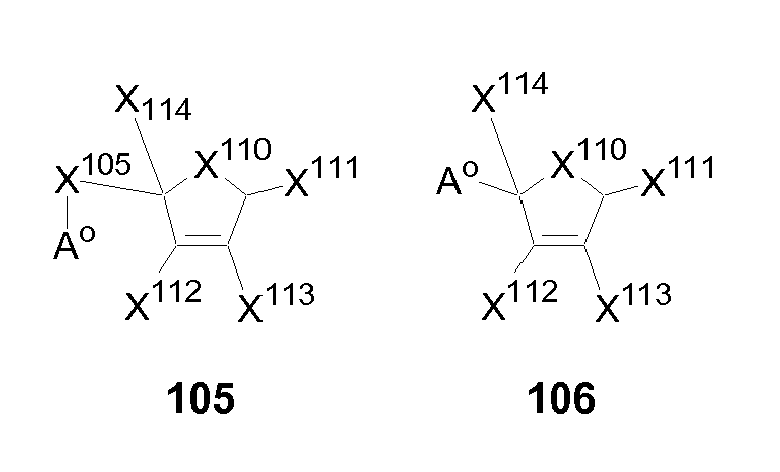
- A0 is A1;
- A1 is:
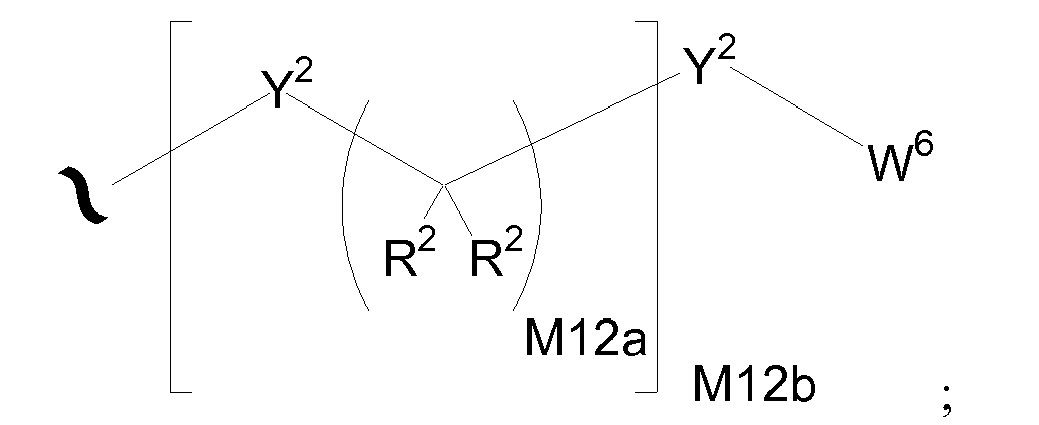
- A3 is:

- Y1 is independently O, S, N(Rx), N(O)(Rx), N(ORx), N(O)(ORx), or N(N(Rx)(Rx));
- Y2 is independently a bond, O, N(Rx), N(O)(Rx), N(ORx), N(O)(ORx), N(N(Rx)( Rx)), -S(O)M2-, or -S(O)M2-S(O)M2-; and when Y2 joins two phosphorous atoms Y2 can also be C(R2)(R2);
- Rx is independently H, R2, W3, a protecting group, or the formula:

- Ry is independently H, W3, R2 or a protecting group;
- R1 is independently H or alkyl of 1 to 18 carbon atoms;
- R2 is independently H, R3 or R4 wherein each R4 is independently substituted with 0 to 3 R3 groups;
- R3 is R3, R3b, R3c or R3d, provided that when R3 is bound to a heteroatom, then R3 is R3c or R3d; heteroatom, then R3 is R3c or R3d;
- R3a is F, Cl, Br, I, -CN, N3 or -NO2;
- R3b is Y1;
- R3c is -Rx, -N(Rx)(Rx), -SRx, -S(O)Rx, -S(O)2Rx, -S(O)(ORx), -S(O)2(ORx), -OC(Y1)Rx, -OC(Y1)ORx, -OC(Y1)(N(Rx)(Rx)), -SC(Y1)Rx, -SC(Y1)ORx, -SC(Y1)(N(Rx)(Rx)), -N(Rx)C(Y1)Rx, -N(Rx)C(Y1)ORx, or -N(Rx)C(Y1)(N(Rx)(Rx));
- R3d is -C(Y1)Rx, -C(Y1)ORx or -C(Y1)(N(Rx)(Rx));
- R4 is an alkyl of 1 to 18 carbon atoms, alkenyl of 2 to 18 carbon atoms, or alkynyl of 2 to 18 carbon atoms;
- R5 is R4 wherein each R4 is substituted with 0 to 3 R3 groups;
- R5a is independently alkylene of 1 to 18 carbon atoms, alkenylene of 2 to 18 carbon atoms, or alkynylene of 2-18 carbon atoms any one of which alkylene, alkenylene or alkynylene is substituted with 0-3 R3 groups;
- W3 is W4 or W5;
- W4 is R5, -C(Y1)R5, -C(Y1)W5, -SO2R5, or -SO2W5;
- W5 is carbocycle or heterocycle wherein W5 is independently substituted with 0 to 3 R2 groups;
- W6 is W3 independently substituted with 1, 2, or 3 A3 groups;
- M2 is 0, 1 or 2;
- M12a is 1, 2, 3, 4, 5, 6, 7, 8, 9, 10, 11 or 12;
- M12b is 0, 1, 2, 3, 4, 5, 6, 7, 8, 9, 10, 11 or 12;
- M1a, M1c, and M1d are independently 0 or 1;
- M12c is 0, 1, 2, 3, 4, 5, 6, 7, 8, 9, 10, 11 or 12;
- X51 is H, α-Br, or β-Br;
- X52 is C1-C6 alkyl or C7-C10 arylalkyl group;
- X53 is H, alkyl or substituted alkyl;
- X54 is CH or N;
- X55 is thymine, adenine, uracil, a 5-halouracil, a 5-alkyluracil, guanine, cytosine, a 5-halo cytosine, a 5-alkyl cytosine, or 2,6-diaminopurine;
- X56 is H, Me, Et, or i-Pr;
- X57 is H or F;
- X58 is OH, Cl, NH2, H, Me, or MeO;
- X59 is H or NH2;
- X60 is OH, Cl, NH2, or H;
- X61 is H, NH2, or NH-alkyl;
- X62 and X63 are independently H, alkyl, or cyclopropyl;
- X64 is H, N3, NH2, or NHAc;
- X65 is a halo;
- X66 is alkoxy, aryloxy, halo-substituted alkoxy, alkenyloxy, arylalkoxy;
- X67 is O or NH;
- X68 is H, acetate, benzyl, benzyloxycarbonyl, or an amino protecting group;
- X69 is H or alkyl;
- X70 is H; alkyl; alkyl substituted with cycloalkyl containing three to about six carbon atoms that is optionally substituted with one or more alkyl; alkenyl; alkenyl substituted with cycloalkyl containing three to about six carbon atoms that is optionally substituted with one or more alkyl; hydroxyl-substituted alkyl; alkoxy-substituted alkyl; acyloxy-substituted alkyl; aryl; substituted aryl; arylalkyl; or (substituted aryl)alkyl;
- X71 and X72 are each independently hydrogen, alkyl, phenyl, or substituted phenyl;
- X73 is alkoxy, substituted alkyl, alkylamido amino, monoalkylamino, dialkylamino, azido, chloro, hydroxy, 1-morpholino, 1-pyrrolidino, and alkylthio;
- X74 is aryl, substituted aryl, heteroaryl, or substituted heteroaryl;
- X75 and X76 attached to nitrogen or carbon in X74 wherein X75 is H, halo, nitro, C1-C6alkyl, C1-C6alkoxy, (fluoro-substituted)C1-C6alkyl, (fluoro-substituted)C1-C6alkoxy, C2-C8alkoxyalkyl, (fluoro-substituted)C2-C8alkoxyalkyl, N(Ra)(Rb), (CH2)1-3N(Ra)(Rb), (CH2)0-3Rc, or O(CH2)0-3Rc; and
- X76 is H, halo, nitro, C1-6alkyl, C1-6alkoxy, (fluoro-substituted)C1-6 alkyl, (fluoro-substituted)C1-6 alkoxy, C2-8alkoxyalkyl, (fluoro-substituted)C2-8alkoxyalkyl, N(Ra)(Rb), (CH2)1-3N(Ra)(Rb), (CH2)0-3Rc, O(CH2)0-3Rc, (CH2)0-3Rd, O(CH2)0-3Rd, C(=O)CH2C(=O)Re, or Rf; Ra and Rb are each independently H, C1-C6 alkyl, or (fluoro-substituted)C1-C6 alkyl; Rc is aryl, or substituted aryl; Rd is heterocycle, or substituted heterocycle; Re is heteroaryl or substituted heteroaryl; Rf is X120-NH(CH2)1-3X121, wherein X120 is a 5- or 6-membered monocyclic heterocycle which is saturated or unsaturated and which contains carbon atoms and from 1 to 3 nitrogen atoms and which is unsubstituted or substituted with one or more substituents selected from halo, cyano, OH, (CH2)1-4OH, oxo, N(Ra)(Rb), C1-C6 alkyl, fluorinated C1-C6 alkyl, C1-C6 alkoxy, fluorinated C1-C6 alkoxy, (CH2)0-4CO2Ra, (CH2)0-4C(=O)N(Ra)(Rb), (CH2)0-4SO2Ra, (CH2)1-4N(Ra)(Rb), (CH2)0-4N(Ra)C(=O)Rb, (CH2)0-4SO2N(Ra)(Rb), (CH2)1-4N(Ra)SO2Rb, C2-C8 alkoxyalkyl, and (fluoro-substituted)C2-C8 alkoxyalkyl; and X121 is pyrrolidinyl, piperidinyl, piperazinyl, or morpholinyl, which is unsubstituted or substituted with one or more substituents selected from halo, cyano, OH, (CH2)1-4OH, oxo, N(Ra)(Rb), C1-C6 alkyl, fluorinated C1-C6 alkyl, C1-C6 alkoxy, fluorinated C1-C6 alkoxy, (CH2)0-4CO2Ra, (CH2)0-4C(=O)N(Ra)(Rb), (CH2)0-4SO2Ra, (CH2)1-4N(Ra)(Rb), (CH2)0-4N(Ra)C(=O)Rb, (CH2)0-4SO2N(Ra)(Rb), (CH2)1-4N(Ra)SO2Rb, C2-C8 alkoxyalkyl, and (fluoro-substituted)C2-C8 alkoxyalkyl;
- X77 is H or C1-6alkyl;
- X78 is OH, protected hydroxyl, or N(Ra)(Rb);
- X79 is a attached to nitrogen or carbon in X74 and X79 is H, halo, nitro, oxo, C1-6alkyl, C3-7cycloalkyl, C3-7cycloalkoxy, C1-6alkoxy, (fluoro-substituted)C1-6 alkyl, (fluoro-substituted)C1-6 alkoxy, C2-8 alkoxyalkyl, (fluoro-substituted)C2-8 alkoxyalkyl, N(Ra)(Rb), (CH2)1-4N(Ra)(Rb), C(=O)N(Ra)(Rb), (CH2)1-4C(=O)N(Ra)(Rb), N(Ra)C(=O)Rb, (CH2)1-4N(Ra)C(=O)Rb, SO2Ra (CH2)1-4 SO2Ra, SO2N(Ra)(Rb), (CH2)1-4SO2N(Ra)(Rb), (CH2)1-4N(Ra)SO2Rb, (CH2)0-3Rc, or (CH2)0-3Rg;
- Rg is a 5- or 6-membered monocyclic heterocycle which is saturated or unsaturated and which contains one or more carbon atoms and from 1 to 4 nitrogen atoms, the heterocycle being unsubstituted or substituted with one or more substituents selected from halo, cyano, OH, (CH2)1-4OH, oxo, N(Ra)(Rb), C1-C6alkyl, (fluoro-substituted)C1-C6alkyl, C1-C6alkoxy, (fluoro-substituted)C1-C6 alkoxy, (CH2)0-4CO2Ra, (CH2)0-4C(=O)N(Ra)(Rb), (CH2)0-4SO2Ra, (CH2)1-4N(Ra)(Rb), (CH2)0-4N(Ra)C(=O)Rb, (CH2)0-4SO2N(Ra)(Rb), (CH2)1-4N(Ra)SO2Rb, C2-C8alkoxyalkyl, (fluoro-substituted)C2-C8alkoxyalkyl, phenyl and benzyl;
- X80 is (i) a 5- or 6-membered heteroaromatic ring containing from 1 to 4 nitrogen atoms, 0 to 2 sulfur atoms, and at least 1 carbon atom, or (ii) an 8- to 10-membered fused bicyclic heterocycle containing from 1 to 4 nitrogen atoms, 0 to 2 sulfur atoms, and carbon atoms, wherein the ring of the heterocycle attached to the central dione moiety is a 5- or 6 membered heteroaromatic ring containing at least one nitrogen or sulfur atom and the other ring of the heterocycle is a saturated or unsaturated ring; wherein X80 is attached to the central propenone moiety via a carbon atom and at least one nitrogen or sulfur atom in X80 is adjacent to the point of attachment;
- X81 is attached to nitrogen or carbon in X80, and is independently selected from H, halo, OH, (CH2)1-4OH, C1-C6 alkyl, C1-C6 alkoxy, (fluoro-substituted)C1-C6 alkyl, (fluoro-substituted)C1-C6 alkoxy, C1-C8 alkoxyalkyl, (fluoro-substituted)CI-C8 alkoxyalkyl, N(Ra)(Rb), (CH2)1-4N(Ra)(Rb), C(=O)N(Ra)(Rb), (CH2)1-4C(=O)N(Ra)(Rb), N(Ra)C(=O)Rb, (CH2)1-4N(Ra)C(=O)Rb, SO2Ra, (CH2)1-4SO2Ra, SO2N(Ra)(Rb), (CH2)1-4SO2N(Ra)(Rb), (CH2)1-4N(Ra)SO2Rb, and (CH2)0-3Rb;
- X82 is OH, F, or cyano;
- X83 is N or CH;
- X84 is cis H or trans H;
- X85 is C8-C16 alkyl which can optionally contain one to five oxygen atoms in the chain;
- X86 is H, methyl, hydroxymethyl, or fluoromethyl;
- X87 and X88 are each independently H or C1-4 alkyl, which alkyl is optionally substituted with OH, amino, C1-4 alkoxy, C1-4 alkylthio, or one to three halogen atoms;
- X89 is -O- or -S(O)n-, where n is 0, 1, or 2;
- X90 is H, methyl, hydroxymethyl, or fluoromethyl;
- X91 is H hydroxy, alkyl, azido, cyano, alkenyl, alkynyl, bromovinyl, -C(O)O(alkyl), -O(acyl), alkoxy, alkenyloxy, chloro, bromo, fluoro, iodo, NO2, NH2, -NH(lower alkyl), -NH(acyl), -N(lower alkyl)2, -N(acyl)2;
- X92 is H, C2-4alkenyl, C2-4alkynyl, or C1-4 alkyl optionally substituted with amino, hydroxy, or 1 to 3 fluorine atoms;
one of X93 and X94 is hydroxy or C1-4 alkoxy and the other of X93 and X94 is selected from the group consisting of H; hydroxy; halo; C1-4 alkyl optionally substituted with 1 to 3 fluorine atoms; C1-10 alkoxy, optionally substituted with C1-3 alkoxy or 1 to 3 fluorine atoms; C2-6 alkenyloxy; C1-4alkylthio; C1-8 alkylcarbonyloxy; aryloxycarbonyl; azido; amino; C1-4 alkylamino; and di(C1-4 alkyl)amino; or - X93 is H, C2-4 alkenyl, C2-4 alkynyl, or C1-4 alkyl optionally substituted with amino, hydroxy, or 1 to 3 fluorine atoms, and one of X92 and X94 is hydroxy or C1-4alkoxy and the other of X92 and X94 is selected from the group consisting of H; hydroxy; halo; C1-4 alkyl optionally substituted with 1 to 3 fluorine atoms; C1-10 alkoxy, optionally substituted with C1-3 alkoxy or 1 to 3 fluorine atoms; C2-6alkenyloxy; C1-4alkylthio; C1-8 alkylcarbonyloxy; aryloxycarbonyl; azido; amino; C1-4 alkylamino; and di(C1-4alkyl)amino; or
- X92 and X93 together with the carbon atom to which they are attached form a 3- to 6 membered saturated monocyclic ring system optionally containing a heteroatom selected from O, S, and NC0-4alkyl;
- X95 is H, OH, SH, NH2, C1-4 alkylamino, di(C1-4alkyl)amino, C3-6cycloalkylamino, halo, C1-4alkyl, C1-4 alkoxy, or CF3; or X92 and X95 can optionally together be a bond linking the two carbons to which they are attached;
- X96 is H, methyl, hydroxymethyl, or fluoromethyl;
- X97 is selected from the group consisting of


- U, G, and J are each independently CH or N;
- D is N, CH, C-CN, C-NO2, C-C1-3 alkyl, C-NHCONH2, C-CONT11T11, C-CSN T11T11, C-COOT11, C-C(=NH)NH2, C-hydroxy, C-C1-3 alkoxy, C-amino, C-C1-4 alkylamino, C-di(C1-4 alkyl)amino, C-halogen, C-(1,3-oxazol-2-yl), C-(1,3 thiazol-2-yl), or C-(imidazol-2-yl); wherein alkyl is unsubstituted or substituted with one to three groups independently selected from halogen, amino, hydroxy, carboxy, and C1-3 alkoxy;
- E is N or CT5;
- Wa is O or S;
- T1 is H, C2-4alkenyl, C2-4alkynyl, or C1-4alkyl optionally substituted with amino, hydroxy, or 1 to 3 fluorine atoms and one of T2 and T3 is hydroxy or C1-4 alkoxy and the other of T2 and T3 is selected from the group consisting of H; hydroxy; halo; C1-4 alkyl optionally substituted with 1 to 3 fluorine atoms; C1-10 alkoxy, optionally substituted with C1-3 alkoxy or 1 to 3 fluorine atoms; C2-6 alkenyloxy; C1-4alkylthio; C1-8 alkylcarbonyloxy; aryloxycarbonyl; azido; amino; C1-4alkylamino; and di(C1-4alkyl)amino; or
- T2 is H, C2-4alkenyl, C2-4alkynyl, or C1-4alkyl optionally substituted with amino, hydroxy, or 1 to 3 fluorine atoms and one of T1 and T3 is hydroxy or C1-4alkoxy and the other of T1 and T3 is selected from the group consisting of H; hydroxy; halo; C1-4 alkyl optionally substituted with 1 to 3 fluorine atoms; C1-10 alkoxy, optionally substituted with C1-3 alkoxy or 1 to 3 fluorine atoms; C2-6 alkenyloxy; C1-4alkylthio; C1-8 alkylcarbonyloxy; aryloxycarbonyl; azido; amino; C1-4 alkylamino; and di(C1-4 alkyl)amino; or
- T1 and T2 together with the carbon atom to which they are attached form a 3- to 6 membered saturated monocyclic ring system optionally containing a heteroatom selected from O, S, and NC0-4 alkyl;
- T4 and T6 are each independently H, OH, SH, NH2, C1-4 alkylamino, di(C1-4 alkyl)amino, C3-6 cycloalkylamino, halo, C1-4 alkyl, C1-4 alkoxy, or CF3;
- T5 is H, C1-6alkyl, C2-6alkenyl, C2-6alkynyl, C1-4alkylamino, CF3, or halogen; T14 is H, CF3, C1-4 alkyl, amino, C1-4alkylamino, C3-6cycloalkylamino, or di(C1-4alkyl)amino;
- T7 is H, amino, C1-4alkylamino, C3-6 cycloalkylamino, or di(C1-4alkyl)amino;
- each T11 is independently H or C1-6 alkyl;
- T8 is H, halo, CN, carboxy, C1-4 alkyloxycarbonyl, N3, amino, C1-4 alkylamino, di(C1-4 alkyl)amino, hydroxy, C1-6alkoxy, C1-6 alkylthio, C1-6 alkylsulfonyl, or (C1-4 alkyl)0-2 aminomethyl;
- X98 is methoxy, ethoxy, vinyl, ethyl, methyl, cyclopropyl, N-methylamino, or N-formylamino;
- X99 is methyl, chloro, or trifluoromethyl;
- X100 is H, methyl, ethyl, cyclopropyl, vinyl, or trifluoromethyl;
- X101 is H, methyl, ethyl, cyclopropyl, chloro, vinyl, allyl, 3-methyl-1-buten-yl;
- X102 is thymine, adenine, guanine, cytosine, uracil, inosine, or diaminopurine;
- X103 is OH, OR, NR2, CN, NO2, F, Cl, Br, or I;
- X104 is adenine, guanine, cytosine, uracil, thymine, 7-deazaadenine, 7-deazaguanine, 7-deaza-8-azaguanine, 7-deaza-8-azaadenine, inosine, nebularine, nitropyrrole, nitroindole, 2-aminopurine, 2-amino-6-chloropurine, 2,6-diaminopurine, hypoxanthine, pseudouridine, pseudocytosine, pseudoisocytosine, 5-propynylcytosine, isocytosine, isoguanine, 7-deazaguanine, 2-thiopyrimidine, 6-thioguanine, 4-thiothymine, 4-thiouracil, O 6-methylguanine, N 6-methyladenine, O 4-methylthymine, 5,6-dihydrothymine, 5,6-dihydrouracil, 4-methylindole, or pyrazolo[3,4-d]pyrimidine;
- X105 is selected from O, C(Ry)2, OC(Ry)2, NR and S;
- X106 is selected from O, C(Ry)2, C=C(Ry)2, NR and S;
- X107 is selected from adenine, guanine, cytosine, uracil, thymine, 7-deazaadenine, 7-deazaguanine, 7-deaza-8-azaguanine, 7-deaza-8-azaadenine, inosine, nebularine, nitropyrrole, nitroindole, 2-aminopurine, 2-amino-6-chloropurine, 2,6-diaminopurine, hypoxanthine, pseudouridine, pseudocytosine, pseudoisocytosine, 5-propynylcytosine, isocytosine, isoguanine, 7-deazaguanine, 2-thiopyrimidine, 6-thioguanine, 4-thiothymine, 4-thiouracil, O 6-methylguanine, N 6-methyladenine, O 4-methylthymine, 5,6-dihydrothymine, 5,6-dihydrouracil, 4-methylindole, substituted triazole, and pyrazolo[3,4-D]pyrimidine;
- X108 is independently selected from H, OH, OR, NR2, CN, NO2, SH, SR, F, Cl, Br, and I;
- X109 is selected from H, C1-C8alkyl, substituted C1-C8alkyl, C1-C8alkenyl, substituted C1-C8alkenyl, C1-C8alkynyl, and substituted C1-C8alkynyl,
- X110 is independently O, CR2, NR, +N(O)(R), N(OR), +N(O)(OR), N-NR2, S, S-S, S(O), or S(O)2;
- X111 is adenine, guanine, cytosine, uracil, thymine, 7-deazaadenine, 7-deazaguanine, 7-deaza-8-azaguanine, 7-deaza-8-azaadenine, inosine, nebularine, nitropyrrole, nitroindole, 2-aminopurine, 2-amino-6-chloropurine, 2,6-diaminopurine, hypoxanthine, pseudouridine, pseudocytosine, pseudoisocytosine, 5-propynylcytosine, isocytosine, isoguanine, 7-deazaguanine, 2-thiopyrimidine, 6-thioguanine, 4-thiothymine, 4-thiouracil, O 6-methylguanine, N 6-methyladenine, O 4-methylthymine, 5,6-dihydrothymine, 5,6-dihydrouracil, 4-methylindole, substituted triazole, or pyrazolo[3,4-D]pyrimidine;
- X112 is independently selected from H, OH, OR, NR2, CN, NO2, SH, SR, F, Cl, Br, and I;
- X113 is F;
- X114 is independently H, F, Cl, Br, I, OH, R, -C(=Y1)R, -C(=Y1)OR, -C(=Y1)N(R)2, -N(R)2, -+N(R)3, -SR, -S(O)R, -S(O)2R, -S(O)(OR), -S(O)2(OR), -OC(=Y1)R, -OC(=Y1)OR, -OC(=Y1)(N(R)2), -SC(=Y1)R, -SC(=Y1)OR, -SC(=Y1)(N(R)2), -N(R)C(=Y1)R, -N(R)C(=Y1)OR, or -N(R)C(=Y1)N(R)2, amino (-NH2), ammonium (-NH3 +), alkylamino, dialkylamino, trialkylammonium, C1-C8alkyl, carboxy, sulfate, sulfamate, sulfonate, 5-7 membered ring sultam, C1-C8 alkylsulfonate, 4-dialkylaminopyridinium, hydroxyl-substituted C1-C8alkyl, C1-C8alkylthiol, alkylsulfonyl, arylsulfonyl, arylsulfinyl (-SOAr), arylthio, -SO2NR2, -SOR, -C(=O)OR, -C(=O)NR2, 5-7 membered ring lactam, 5-7 membered ring lactone, cyano, azido, nitro, C1-C8alkoxy, substituted C1-C8alkyl, C1-C8alkenyl, substituted C1-C8alkenyl, C1-C8alkynyl, substituted C1-C8 alkynyl, aryl, substituted aryl, heterocycle, substituted heterocycle, polyethyleneoxy, a protecting group, or W3; or when taken together, two Rys form a carbocyclic ring of 3 to 7 carbon atoms;
- X115 is independently selected from H, OH, OR, NR2, CN, NO2, SH, SR, F, Cl, Br, and I; and
- X116 is selected from H, C1-C8 alkyl, C1-C8 substituted alkyl, C1-C8 alkenyl, C1-C8 substituted alkenyl, C1-C8 alkynyl, and C1-C8 substituted alkynyl.
- The invention provides a pharmaceutical composition comprising an effective amount of a conjugate of the invention, or a pharmaceutically acceptable salt or solvate thereof, and a pharmaceutically acceptable excipient.
- This invention pertains to a method of increasing cellular accumulation and retention of an anti-viral compound comprising linking the compound to one or more phosphonate groups.
- The invention also provides a method of inhibiting a viral infection in an animal (e.g. a mammal) , comprising administering an effective amount a conjugate of the invention to the animal.
- The invention also provides a compound of the invention for use in medical therapy (preferably for use in treating a viral infection in an animal), as well as the use of a compound of the invention for the manufacture of a medicament useful for the treatment of a viral infection in an animal (e.g. a mammal).
- The invention also provides processes and novel intermediates disclosed herein which are useful for preparing compounds of the invention. Some of the compounds of the invention are useful to prepare other compounds of the invention.
- In another embodiment the invention provides a method for inhibiting a viral infection in a sample comprising treating a sample suspected of containing a virus, with a compound or composition of the invention.
- Reference will now be made in detail to certain claims of the invention, examples of which are illustrated in the accompanying structures and formulas. While the invention will be described in conjunction with the enumerated claims, it will be understood that they are not intended to limit the invention to those claims. On the contrary, the invention is intended to cover all alternatives, modifications, and equivalents, which may be included within the scope of the present invention as defined by the claims.
- Unless stated otherwise, the following terms and phrases as used herein are intended to have the following meanings: When tradenames are used herein, applicants intend to independently include the tradename product and the active pharmaceutical ingredient(s) of the tradename product.
- "Bioavailability" is the degree to which the pharmaceutically active agent becomes available to the target tissue after the agent's introduction into the body. Enhancement of the bioavailability of a pharmaceutically active agent can provide a more efficient and effective treatment for patients because, for a given dose, more of the pharmaceutically active agent will be available at the targeted tissue sites.
- The terms "phosphonate" and "phosphonate group" include functional groups or moieties within a molecule that comprises a phosphorous that is 1) single-bonded to a carbon, 2) double-bonded to a heteroatom, 3) single-bonded to a heteroatom, and 4) single-bonded to another heteroatom, wherein each heteroatom can be the same or different. The terms "phosphonate" and "phosphonate group" also include functional groups or moieties that comprise a phosphorous in the same oxidation state as the phosphorous described above, as well as functional groups or moieties that comprise a prodrug moiety that can separate from a compound so that the compound retains a phosphorous having the characteriatics described above. For example, the terms "phosphonate" and "phosphonate group" include phosphonic acid, phosphonic monoester, phosphonic diester, phosphonamidate, and phosphonthioate functional groups. In one specific embodiment of the invention, the terms "phosphonate" and "phosphonate group" include functional groups or moieties within a molecule that comprises a phosphorous that is 1) single-bonded to a carbon, 2) double-bonded to an oxygen, 3) single-bonded to an oxygen, and 4) single-bonded to another oxygen, as well as functional groups or moieties that comprise a prodrug moiety that can separate from a compound so that the compound retains a phosphorous having such characteriatics. In another specific embodiment of the invention, the terms "phosphonate" and "phosphonate group" include functional groups or moieties within a molecule that comprises a phosphorous that is 1) single-bonded to a carbon, 2) double-bonded to an oxygen, 3) single-bonded to an oxygen or nitrogen, and 4) single-bonded to another oxygen or nitrogen, as well as functional groups or moieties that comprise a prodrug moiety that can separate from a compound so that the compound retains a phosphorous having such characteriatics.
- The term "prodrug" as used herein refers to any compound that when administered to a biological system generates the drug substance, i.e. active ingredient, as a result of spontaneous chemical reaction(s), enzyme catalyzed chemical reaction(s), photolysis, and/or metabolic chemical reaction(s). A prodrug is thus a covalently modified analog or latent form of a therapeutically-active compound.
- "Prodrug moiety" refers to a labile functional group which separates from the active inhibitory compound during metabolism, systemically, inside a cell, by hydrolysis, enzymatic cleavage, or by some other process (Bundgaard, Hans, "Design and Application ofProdrugs" in A Textbook of Drug Design and Development (1991), P. Krogsgaard-Larsen and H. Bundgaard, Eds. Harwood Academic Publishers, pp. 113-191). Enzymes which are capable of an enzymatic activation mechanism with the phosphonate prodrug compounds of the invention include, but are not limited to, amidases, esterases, microbial enzymes, phospholipases, cholinesterases, and phosphases. Prodrug moieties can serve to enhance solubility, absorption and lipophilicity to optimize drug delivery, bioavailability and efficacy. A prodrug moiety may include an active metabolite or drug itself.
- Exemplary prodrug moieties include the hydrolytically sensitive or labile acyloxymethyl esters -CH2OC(=O)R9 and acyloxymethyl carbonates -CH2OC(=O)OR9 where R9 is C1-C6 alkyl, C1-C6 substituted alkyl, C6-C20 aryl or C6-C20 substituted aryl. The acyloxyalkyl ester was first used as a prodrug strategy for carboxylic acids and then applied to phosphates and phosphonates by Farquhar et al. (1983) J. Pharm. Sci. 72: 324; also
US Patent Nos. 4816570 ,4968788 ,5663159 and5792756 . Subsequently, the acyloxyalkyl ester was used to deliver phosphonic acids across cell membranes and to enhance oral bioavailability. A close variant of the acyloxyalkyl ester, the alkoxycarbonyloxyalkyl ester (carbonate), may also enhance oral bioavailability as a prodrug moiety in the compounds of the combinations of the invention. An exemplary acyloxymethyl ester is pivaloyloxymethoxy, (POM) -CH2OC(=O)C(CH3)3. An exemplary acyloxymethyl carbonate prodrug moiety is pivaloyloxymethylcarbonate (POC) -CH2OC(=O)OC(CH3)3. - The phosphonate group may be a phosphonate prodrug moiety. The prodrug moiety may be sensitive to hydrolysis, such as, but not limited to a pivaloyloxymethyl carbonate (POC) or POM group. Alternatively, the prodrug moiety may be sensitive to enzymatic potentiated cleavage, such as a lactate ester or a phosphonamidate-ester group.
- Aryl esters of phosphorus groups, especially phenyl esters, are reported to enhance oral bioavailability (De Lombaert et al. (1994) J. Med. Chem. 37: 498). Phenyl esters containing a carboxylic ester ortho to the phosphate have also been described (Khamnei and Torrence, (1996) J. Med. Chem. 39:4109-4115). Benzyl esters are reported to generate the parent phosphonic acid. In some cases, substituents at the ortho-or para-position may accelerate the hydrolysis. Benzyl analogs with an acylated phenol or an alkylated phenol may generate the phenolic compound through the action of enzymes, e.g., esterases, oxidases, etc., which in turn undergoes cleavage at the benzylic C-O bond to generate the phosphoric acid and the quinone methide intermediate. Examples of this class of prodrugs are described by Mitchell et al. (1992) J. Chem. Soc. Perkin Trans. II 2345 ;
Glazier WO 91/19721 Glazier WO 91/19721 US Patent No. 6312662 ). - "Protecting group" refers to a moiety of a compound that masks or alters the properties of a functional group or the properties of the compound as a whole. Chemical protecting groups and strategies for protection/deprotection are well known in the art. See e.g., Protective Groups in Organic Chemistry, Theodora W. Greene, John Wiley & Sons, Inc., New York, 1991. Protecting groups are often utilized to mask the reactivity of certain functional groups, to assist in the efficiency of desired chemical reactions, e.g., making and breaking chemical bonds in an ordered and planned fashion. Protection of functional groups of a compound alters other physical properties besides the reactivity of the protected functional group, such as the polarity, lipophilicity (hydrophobicity), and other properties which can be measured by common analytical tools. Chemically protected intermediates may themselves be biologically active or inactive.
- Protected compounds may also exhibit altered, and in some cases, optimized properties in vitro and in vivo, such as passage through cellular membranes and resistance to enzymatic degradation or sequestration. In this role, protected compounds with intended therapeutic effects may be referred to as prodrugs. Another function of a protecting group is to convert the parental drug into a prodrug, whereby the parental drug is released upon conversion of the prodrug in vivo. Because active prodrugs may be absorbed more effectively than the parental drug, prodrugs may possess greater potency in vivo than the parental drug. Protecting groups are removed either in vitro, in the instance of chemical intermediates, or in vivo, in the case of prodrugs. With chemical intermediates, it is not particularly important that the resulting products after deprotection, e.g., alcohols, be physiologically acceptable, although in general it is more desirable if the products are pharmacologically innocuous.
- Any reference to any of the compounds of the invention also includes a reference to a physiologically acceptable salt thereof. Examples of physiologically acceptable salts of the compounds of the invention include salts derived from an appropriate base, such as an alkali metal (for example, sodium), an alkaline earth (for example, magnesium), ammonium and NX4 + (wherein X is C1-C4 alkyl). Physiologically acceptable salts of an hydrogen atom or an amino group include salts of organic carboxylic acids such as acetic, benzoic, lactic, fumaric, tartaric, maleic, malonic, malic, isethionic, lactobionic and succinic acids; organic sulfonic acids, such as methanesulfonic, ethanesulfonic, benzenesulfonic and p-toluenesulfonic acids; and inorganic acids, such as hydrochloric, sulfuric, phosphoric and sulfamic acids. Physiologically acceptable salts of a compound of an hydroxy group include the anion of said compound in combination with a suitable cation such as Na+ and NX4 + (wherein X is independently selected from H or a C1-C4 alkyl group).
- For therapeutic use, salts of active ingredients of the compounds of the invention will be physiologically acceptable, i.e. they will be salts derived from a physiologically acceptable acid or base. However, salts of acids or bases which are not physiologically acceptable may also find use, for example, in the preparation or purification of a physiologically acceptable compound. All salts, whether or not derived form a physiologically acceptable acid or base, are within the scope of the present invention.
- "Alkyl" is C1-C18 hydrocarbon containing normal, secondary, tertiary or cyclic carbon atoms. Examples are methyl (Me, -CH3), ethyl (Et, -CH2CH3), 1-propyl (n-Pr, n-propyl, -CH2CH2CH3), 2-propyl (i-Pr, i-propyl, -CH(CH3)2), 1-butyl (n-Bu, n-butyl, -CH2CH2CH2CH3), 2-methyl-1-propyl (i-Bu, i-butyl, - CH2CH(CH3)2), 2-butyl (s-Bu, s-butyl, -CH(CH3)CH2CH3), 2-methyl-2-propyl (t-Bu, t-butyl, -C(CH3)3), 1-pentyl (n-pentyl, -CH2CH2CH2CH2CH3), 2-pentyl (-CH(CH3)CH2CH2CH3), 3-pentyl (-CH(CH2CH3)2), 2-methyl-2-butyl (-C(CH3)2CH2CH3), 3-methyl-2-butyl (-CH(CH3)CH(CH3)2), 3-methyl-1-butyl (-CH2CH2CH(CH3)2), 2-methyl-1-butyl (-CH2CH(CH3)CH2CH3), 1-hexyl (-CH2CH2CH2CH2CH2CH3), 2-hexyl (-CH(CH3)CH2CH2CH2CH3), 3-hexyl (-CH(CH2CH3)(CH2CH2CH3)), 2-methyl-2-pentyl (-C(CH3)2CH2CH2CH3), 3-methyl-2-pentyl (-CH(CH3)CH(CH3)CH2CH3), 4-methyl-2-pentyl (-CH(CH3)CH2CH(CH3)2), 3-methyl-3-pentyl (-C(CH3)(CH2CH3)2), 2-methyl-3-pentyl (-CH(CH2CH3)CH(CH3)2), 2,3-dimethyl-2-butyl (-C(CH3)2CH(CH3)2), 3,3-dimethyl-2-butyl (-CH(CH3)C(CH3)3.
- "Alkenyl" is C2-C18 hydrocarbon containing normal, secondary, tertiary or cyclic carbon atoms with at least one site of unsaturation, i.e. a carbon-carbon, sp2 double bond. Examples include, but are not limited to, ethylene or vinyl (-CH=CH2), allyl (-CH2CH=CH2), cyclopentenyl (-C5H7), and 5-hexenyl (-CH2 CH2CH2CH2CH=CH2).
- "Alkynyl" is C2-C18 hydrocarbon containing normal, secondary, tertiary or cyclic carbon atoms with at least one site of unsaturation, i.e. a carbon-carbon, sp triple bond. Examples include, but are not limited to, acetylenic (-C≡CH) and propargyl (-CH2C≡CH),
- "Alkylene" refers to a saturated, branched or straight chain or cyclic hydrocarbon radical of 1-18 carbon atoms, and having two monovalent radical centers derived by the removal of two hydrogen atoms from the same or two different carbon atoms of a parent alkane. Typical alkylene radicals include, but are not limited to, methylene (-CH2-) 1,2-ethyl (-CH2CH2-), 1,3-propyl (-CH2CH2CH2-), 1,4-butyl (-CH2CH2CH2CH2-), and the like.
- "Alkenylene" refers to an unsaturated, branched or straight chain or cyclic hydrocarbon radical of 2-18 carbon atoms, and having two monovalent radical centers derived by the removal of two hydrogen atoms from the same or two different carbon atoms of a parent alkene. Typical alkenylene radicals include, but are not limited to, 1,2-ethylene (-CH=CH-).
- "Alkynylene" refers to an unsaturated, branched or straight chain or cyclic hydrocarbon radical of 2-18 carbon atoms, and having two monovalent radical centers derived by the removal of two hydrogen atoms from the same or two different carbon atoms of a parent alkyne. Typical alkynylene radicals include, but are not limited to, acetylene (-C≡C-), propargyl (-CH2C≡C-), and 4-pentynyl (-CH2CH2CH2C≡CH-).
- "Aryl" means a monovalent aromatic hydrocarbon radical of 6-20 carbon atoms derived by the removal of one hydrogen atom from a single carbon atom of a parent aromatic ring system. Typical aryl groups include, but are not limited to, radicals derived from benzene, substituted benzene, naphthalene, anthracene, biphenyl, and the like.
- "Arylalkyl" refers to an acyclic alkyl radical in which one of the hydrogen atoms bonded to a carbon atom, typically a terminal or sp3 carbon atom, is replaced with an aryl radical. Typical arylalkyl groups include, but are not limited to, benzyl, 2-phenylethan-1-yl, , naphthylmethyl, 2-naphthylethan-1-yl, naphthobenzyl, 2-naphthophenylethan-1-yl and the like. The arylalkyl group comprises 6 to 20 carbon atoms, e.g., the alkyl moiety, including alkanyl, alkenyl or alkynyl groups, of the arylalkyl group is 1 to 6 carbon atoms and the aryl moiety is 5 to 14 carbon atoms.
- "Substituted alkyl", "substituted aryl", and "substituted arylalkyl" mean alkyl, aryl, and arylalkyl respectively, in which one or more hydrogen atoms are each independently replaced with a non-hydrogen substituent. Typical substituents include, but are not limited to, -X, -R, -O-, -OR, -SR, -S-, -NR2, -NR3, =NR, -CX3, -CN, -OCN, -SCN, -N=C=O, -NCS, -NO, -NO2, =N2, -N3, NC(=O)R, -C(=O)R, -C(=O)NRR -S(=O)2O-, -S(=O)2OH, -S(=O)2R, - OS(=O)2OR, -S(=O)2NR, -S(=O)R, -OP(=O)O2RR, -P(=O)O2RR -P(=O)(O-)2, -P(=O)(OH)2, -C(=O)R, -C(=O)X, -C(S)R, -C(O)OR, -C(O)O, -C(S)OR, -C(O)SR, -C(S)SR, -C(O)NRR, -C(S)NRR, -C(NR)NRR, where each X is independently a halogen: F, Cl, Br, or I; and each R is independently -H, alkyl, aryl, heterocycle, protecting group or prodrug moiety. Alkylene, alkenylene, and alkynylene groups may also be similarly substituted.
- "Heterocycle" as used herein includes by way of example and not limitation these heterocycles described in Paquette, Leo A.; Principles of Modern Heterocyclic Chemistry (W.A. Benjamin, New York, 1968), particularly Chapters 1, 3, 4, 6, 7, and 9; The Chemistry of Heterocyclic Compounds, A Series of Monographs" (John Wiley & Sons, New York, 1950 to present), in particular Volumes 13, 14, 16, 19, and 28; and J. Am. Chem. Soc. (1960) 82:5566. In one specific embodiment of the invention "heterocycle" includes a "carbocycle" as defined herein, wherein one or more (e.g. 1, 2, 3, or 4) carbon atoms have been replaced with a heteroatom (e.g. O, N, or S).
- Examples of heterocycles include by way of example and not limitation pyridyl, dihydroypyridyl, tetrahydropyridyl (piperidyl), thiazolyl, tetrahydrothiophenyl, sulfur oxidized tetrahydrothiophenyl, pyrimidinyl, furanyl, thienyl, pyrrolyl, pyrazolyl, imidazolyl, tetrazolyl, benzofuranyl, thianaphthalenyl, indolyl, indolenyl, quinolinyl, isoquinolinyl, benzimidazolyl, piperidinyl, 4-piperidonyl, pyrrolidinyl, 2-pyrrolidonyl, pyrrolinyl, tetrahydrofuranyl, tetrahydroquinolinyl, tetrahydroisoquinolinyl, decahydroquinolinyl, octahydroisoquinolinyl, azocinyl, triazinyl, 6H-1,2,5-thiadiazinyl, 2H,6H-1,5,2-dithiazinyl, thienyl, thianthrenyl, pyranyl, isobenzofuranyl, chromenyl, xanthenyl, phenoxathinyl, 2H-pyrrolyl, isothiazolyl, isoxazolyl, pyrazinyl, pyridazinyl, indolizinyl, isoindolyl, 3H-indolyl, 1H-indazoly, purinyl, 4H-quinolizinyl, phthalazinyl, naphthyridinyl, quinoxalinyl, quinazolinyl, cinnolinyl, pteridinyl, 4aH-carbazolyl, carbazolyl, β-carbolinyl, phenanthridinyl, acridinyl, pyrimidinyl, phenanthrolinyl, phenazinyl, phenothiazinyl, furazanyl, phenoxazinyl, isochromanyl, chromanyl, imidazolidinyl, imidazolinyl, pyrazolidinyl, pyrazolinyl, piperazinyl, indolinyl, isoindolinyl, quinuclidinyl, morpholinyl, oxazolidinyl, benzotriazolyl, benzisoxazolyl, oxindolyl, benzoxazolinyl, isatinoyl, and bis-tetrahydrofuranyl:

- By way of example and not limitation, carbon bonded heterocycles are bonded at position 2, 3, 4, 5, or 6 of a pyridine, position 3, 4, 5, or 6 of a pyridazine, position 2, 4, 5, or 6 of a pyrimidine, position 2, 3, 5, or 6 of a pyrazine, position 2, 3, 4, or 5 of a furan, tetrahydrofuran, thiofuran, thiophene, pyrrole or tetrahydropyrrole, position 2, 4, or 5 of an oxazole, imidazole or thiazole, position 3, 4, or 5 of an isoxazole, pyrazole, or isothiazole, position 2 or 3 of an aziridine, position 2, 3, or 4 of an azetidine, position 2, 3, 4, 5, 6, 7, or 8 of a quinoline or position 1, 3, 4, 5, 6, 7, or 8 of an isoquinoline. Still more typically, carbon bonded heterocycles include 2-pyridyl, 3-pyridyl, 4-pyridyl, 5-pyridyl, 6-pyridyl, 3-pyridazinyl, 4-pyridazinyl, 5-pyridazinyl, 6-pyridazinyl, 2-pyrimidinyl, 4-pyrimidinyl, 5-pyrimidinyl, 6-pyrimidinyl, 2-pyrazinyl, 3-pyrazinyl, 5-pyrazinyl, 6-pyrazinyl, 2-thiazolyl, 4-thiazolyl, or 5-thiazolyl.
- By way of example and not limitation, nitrogen bonded heterocycles are bonded at position 1 of an aziridine, azetidine, pyrrole, pyrrolidine, 2-pyrroline, 3-pyrroline, imidazole, imidazolidine, 2-imidazoline, 3-imidazoline, pyrazole, pyrazoline, 2-pyrazoline, 3-pyrazoline, piperidine, piperazine, indole, indoline, 1H-indazole, position 2 of a isoindole, or isoindoline, position 4 of a morpholine, and position 9 of a carbazole, or β-carboline. Still more typically, nitrogen bonded heterocycles include 1-aziridyl, 1-azetedyl, 1-pyrrolyl, 1-imidazolyl, 1-pyrazolyl, and 1-piperidinyl.
- "Carbocycle" refers to a saturated, unsaturated or aromatic ring having 3 to 7 carbon atoms as a monocycle, 7 to 12 carbon atoms as a bicycle, and up to about 20 carbon atoms as a polycycle. Monocyclic carbocycles have 3 to 6 ring atoms, still more typically 5 or 6 ring atoms. Bicyclic carbocycles have 7 to 12 ring atoms, e.g., arranged as a bicyclo [4,5], [5,5], [5,6] or [6,6] system, or 9 or 10 ring atoms arranged as a bicyclo [5,6] or [6,6] system. Examples of monocyclic carbocycles include cyclopropyl, cyclobutyl, cyclopentyl, 1-cyclopent-1-enyl, 1-cyclopent-2-enyl, 1-cyclopent-3-enyl, cyclohexyl, 1-cyclohex-1-enyl, 1-cyclohex-2-enyl, 1-cyclohex-3-enyl, phenyl, spiryl and naphthyl.
- "Linker" or "link" refers to a chemical moiety comprising a covalent bond or a chain or group of atoms that covalently attaches a phosphonate group to a drug. Linkers include portions of substituents A1 and A3, which include moieties such as: repeating units of alkyloxy (e.g., polyethylenoxy, PEG, polymethyleneoxy) and alkylamino (e.g., polyethyleneamino, Jeffamine™); and diacid ester and amides including succinate, succinamide, diglycolate, malonate, and caproamide.
- The term "chiral" refers to molecules which have the property of non-superimposability of the mirror image partner, while the term "achiral" refers to molecules which are superimposable on their mirror image partner.
- The term "stereoisomers" refers to compounds which have identical chemical constitution, but differ with regard to the arrangement of the atoms or groups in space.
- "Diastereomer" refers to a stereoisomer with two or more centers of chirality and whose molecules are not mirror images of one another. Diastereomers have different physical properties, e.g., melting points, boiling points, spectral properties, and reactivities. Mixtures of diastereomers may separate under high resolution analytical procedures such as electrophoresis and chromatography.
- "Enantiomers" refer to two stereoisomers of a compound which are non-superimposable mirror images of one another.
- The term "treatment" or "treating," to the extent it relates to a disease or condition includes preventing the disease or condition from occurring, inhibiting the disease or condition, eliminating the disease or condition, and/or relieving one or more symptoms of the disease or condition.
- Stereochemical definitions and conventions used herein generally follow S. P. Parker, Ed., McGraw-Hill Dictionary of Chemical Terms (1984) McGraw-Hill Book Company, New York; and Eliel, E. and Wilen, S., Stereochemistry of Organic Compounds (1994) John Wiley & Sons, Inc., New York. Many organic compounds exist in optically active forms, i.e., they have the ability to rotate the plane of plane-polarized light. In describing an optically active compound, the prefixes D and L or R and S are used to denote the absolute configuration of the molecule about its chiral center(s). The prefixes d and 1 or (+) and (-) are employed to designate the sign of rotation of plane-polarized light by the compound, with (-) or 1 meaning that the compound is levorotatory. A compound prefixed with (+) or d is dextrorotatory. For a given chemical structure, these stereoisomers are identical except that they are mirror images of one another. A specific stereoisomer may also be referred to as an enantiomer, and a mixture of such isomers is often called an enantiomeric mixture. A 50:50 mixture of enantiomers is referred to as a racemic mixture or a racemate, which may occur where there has been no stereoselection or stereospecificity in a chemical reaction or process. The terms "racemic mixture" and "racemate" refer to an equimolar mixture of two enantiomeric species, devoid of optical activity.
- Specific values described for radicals, substituents, and ranges, as well as specific embodiments of the invention described herein, are for illustration only; they do not exclude other defined values or other values within defined ranges.
- In one specific embodiment of the invention, the conjugate is a compound that is substituted with one or more phosphonate groups either directly or indirectly through a linker; and that is optionally substituted with one or more groups A0; or a pharmaceutically acceptable salt thereof, wherein:
- A0 is A1, A2 or W3;
- A1 is:

- A2 is:

- A3 is:

- Y1 is independently O, S, N(Rx), N(O)(Rx), N(ORx), N(O)(ORx), or N(N(Rx(Rx));
- Y2 is independently a bond, O, N(Rx), N(O)(Rx), N(ORx), N(O)(ORx), N(N(Rx(Rx)), -S(O)M2-, or -S(O)M2-S(O)M2-;
- Rx is independently H, R1, W3, a protecting group, or the formula:

- Ry is independently H, W3, R2 or a protecting group;
- R1 is independently H or alkyl of 1 to 18 carbon atoms;
- R2 is independently H, R1, R3 or R4 wherein each R4 is independently substituted with 0 to 3 R3 groups or taken together at a carbon atom, two R2 groups form a ring of 3 to 8 carbons and the ring may be substituted with 0 to 3 R3 groups;
- R3 is R3a, R3b, R3c or R3d, provided that when R3 is bound to a heteroatom, then R3 is R3c or R3d;
- R3a is F, Cl, Br, I, -CN, N3 or -NO2;
- R3b is Y1;
- R3c is -Rx, -N(Rx)(Rx), -SRx, -S(O)Rx, -S(O)2Rx, -S(O)(ORx), - S(O)2(ORx), -OC(Y1)Rx, -OC(Y1)ORx, -OC(Y1)(N(Rx)(Rx)), -SC(Y1)Rx, - SC(Y1)ORx, -SC(Y1)(N(Rx)(Rx)), -N(Rx)C(Y1)Rx, -N(Rx)C(Y1)OR1, or-N(Rx)C(Y1)(N(Rx)(Rx));
- R3d is -C(Y1)Rx, -C(Y1)ORx or -C(Y1)(N(Rx)(Rx));
- R4 is an alkyl of 1 to 18 carbon atoms, alkenyl of 2 to 18 carbon atoms, or alkynyl of 2 to 18 carbon atoms;
- R5 is R4 wherein each R4 is substituted with 0 to 3 R3 groups;
- R5a is independently alkylene of 1 to 18 carbon atoms, alkenylene of 2 to 18 carbon atoms, or alkynylene of 2-18 carbon atoms any one of which alkylene, alkenylene or alkynylene is substituted with 0-3 R3 groups;
- W3 is W4 or W5;
- W4 is R5, -C(Y1)R5, -C(Y1)W5, -SO2R5, or -SO2W5;
- W5 is carbocycle or heterocycle wherein W5 is independently substituted with 0 to 3 R2 groups;
- W6 is W3 independently substituted with 1, 2, or 3 A3 groups;
- M2 is 0, 1 or 2;
- M12a is 1, 2, 3, 4, 5, 6, 7, 8, 9, 10, 11 or 12;
- M12b is 0, 1, 2, 3, 4, 5, 6, 7, 8, 9, 10, 11 or 12;
- M1a, M1c, and M1d are independently 0 or 1; and
- M12c is 0, 1, 2, 3, 4, 5, 6, 7, 8, 9, 10, 11 or 12.
- In another specific embodiment of the invention A1 is of the formula:

- In another specific embodiment of the invention A1 is of the formula:

- In another specific embodiment of the invention A1 is of the formula:

- In another specific embodiment of the invention A1 is of the formula:

- In another specific embodiment of the invention A1 is of the formula:

- In another specific embodiment of the invention A1 is of the formula:

- In another specific embodiment of the invention A1 is of the formula:

- In another specific embodiment of the invention A1 is of the formula:

- In another specific embodiment of the invention A1 is of the formula:

- In another specific embodiment of the invention A1 is of the formula:
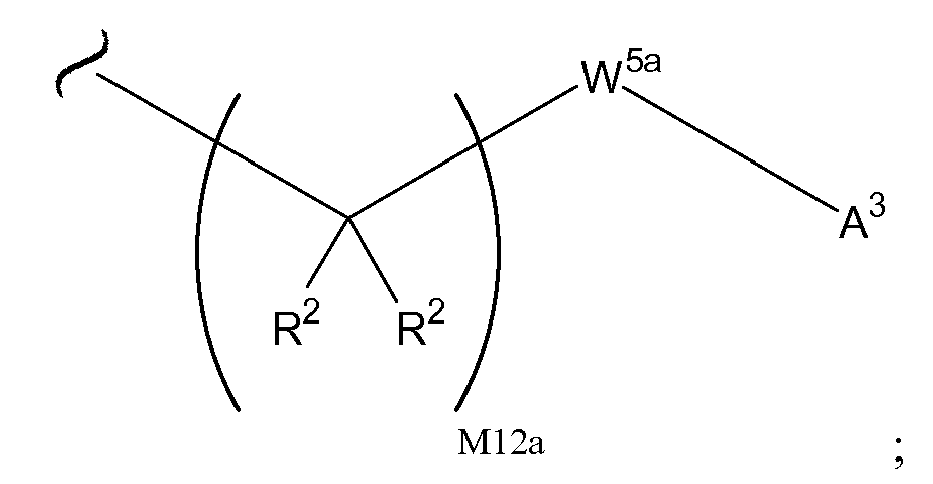
- In another specific embodiment of the invention A1 is of the formula:

- In another specific embodiment of the invention A1 is of the formula:

- In a specific embodiment of the invention A2 is of the formula:

- In another specific embodiment of the invention A2 is of the formula:

- In another specific embodiment of the invention M12b is 1.
- In another specific embodiment of the invention e M12b is 0, Y2 is a bond and W5 is a carbocycle or heterocycle where W5 is optionally and independently substituted with 1, 2, or 3 R2 groups.
- In another specific embodiment of the invention A2 is of the formula:

- In another specific embodiment of the invention M12a is 1.
- In another specific embodiment of the invention A2 is selected from phenyl, substituted phenyl, benzyl, substituted benzyl, pyridyl and substituted pyridyl.
- In another specific embodiment of the invention A2 is of the formula:

- In another specific embodiment of the invention A2 is of the formula:

- In another specific embodiment of the invention M12b is 1.
- In a specific embodiment of the invention A3 is of the formula:

- In another specific embodiment of the invention A3 is of the formula:

- In another specific embodiment of the invention A3 is of the formula:

- In another specific embodiment of the invention A3 is of the formula:

- In another specific embodiment of the invention A3 is of the formula:

- In another specific embodiment of the invention A3 is of the formula:

- In another specific embodiment of the invention M12d is 1.
- In another specific embodiment of the invention A3 is of the formula:

- In another specific embodiment of the invention A3 is of the formula:

- In another specific embodiment of the invention W5 is a carbocycle.
- In another specific embodiment of the invention A3 is of the formula:

- In another specific embodiment of the invention W5 is phenyl.
- In another specific embodiment of the invention A3 is of the formula:

- In another specific embodiment of the invention A3 is of the formula:

- In another specific embodiment of the invention A3 is of the formula:

- In another specific embodiment of the invention R1 is H.
- In another specific embodiment of the invention A3 is of the formula:

- In another specific embodiment of the invention A3 is of the formula:

- In another specific embodiment of the invention A3 is of the formula:
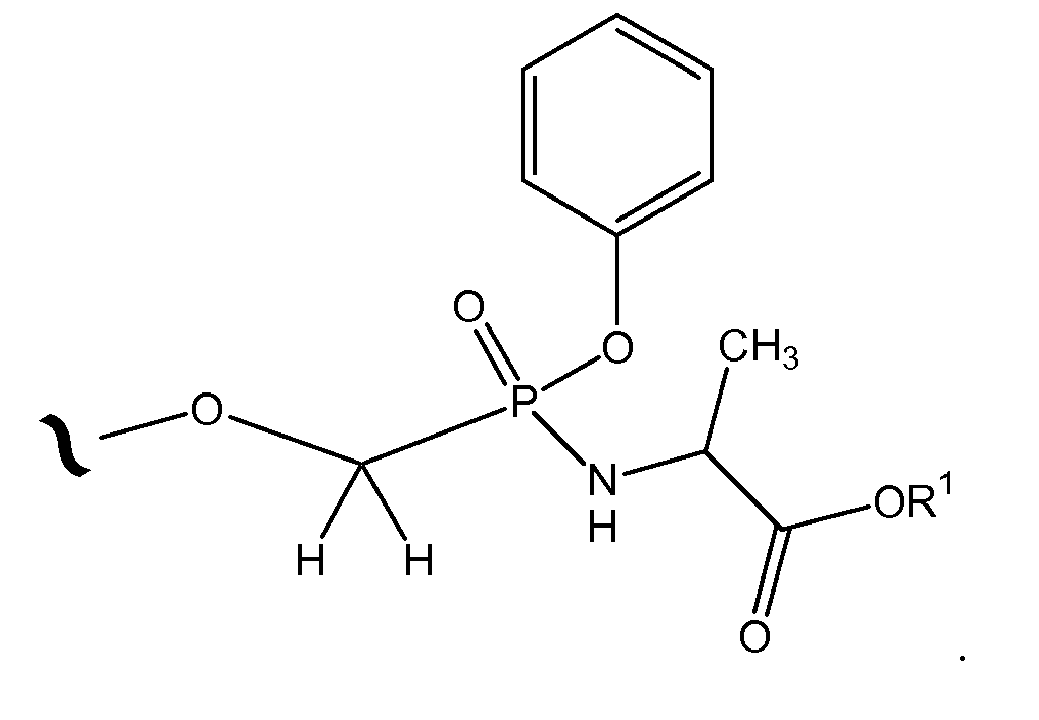
- In another specific embodiment of the invention A3 is of the formula:

- In another specific embodiment of the invention A3 is of the formula:

- In another specific embodiment of the invention A3 is of the formula:
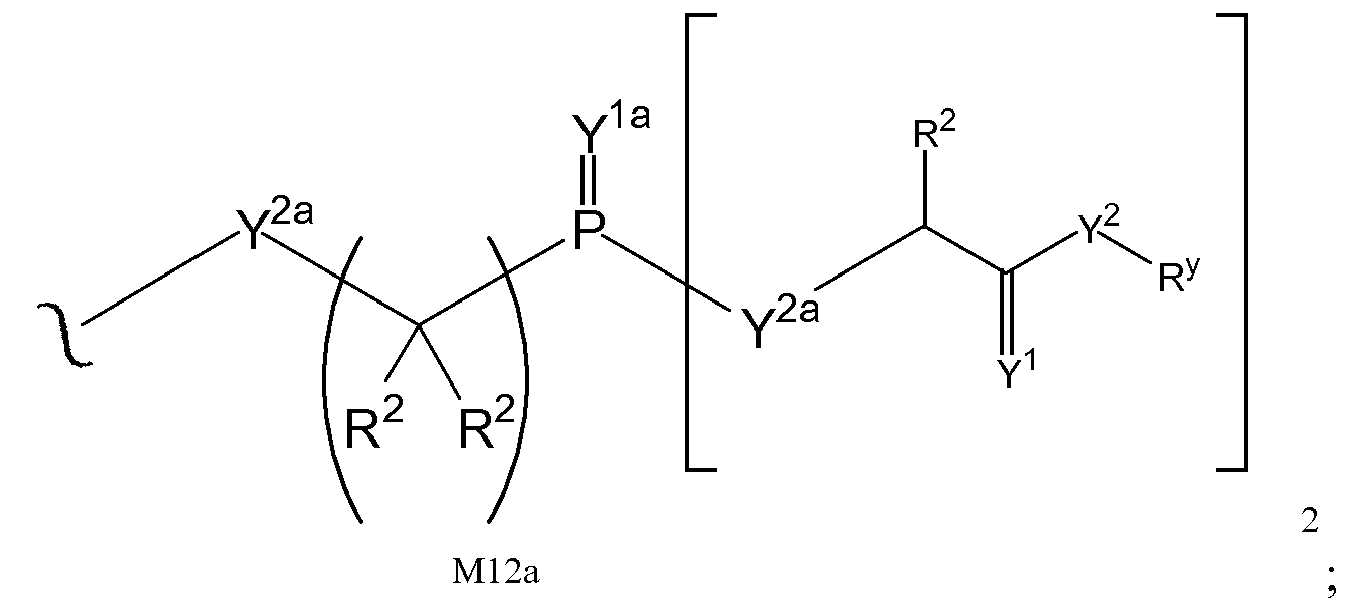
- In another specific embodiment of the invention A3 is of the formula:

- In another specific embodiment of the invention A3 is of the formula:

- In another specific embodiment of the invention A3 is of the formula:

- In another specific embodiment of the invention A3 is of the formula:

- In another specific embodiment of the invention A3 is of the formula:

- In another specific embodiment of the invention A3 is of the formula:

- In another specific embodiment of the invention A3 is of the formula:

- In another specific embodiment of the invention A3 is of the formula:

- In another specific embodiment of the invention A3 is of the formula:

- In another specific embodiment of the invention A3 is of the formula:

- In another specific embodiment of the invention A3 is of the formula:

- In another specific embodiment of the invention A3 is of the formula:

- In another specific embodiment of the invention A3 is of the formula:

- In another specific embodiment of the invention A3 is of the formula:
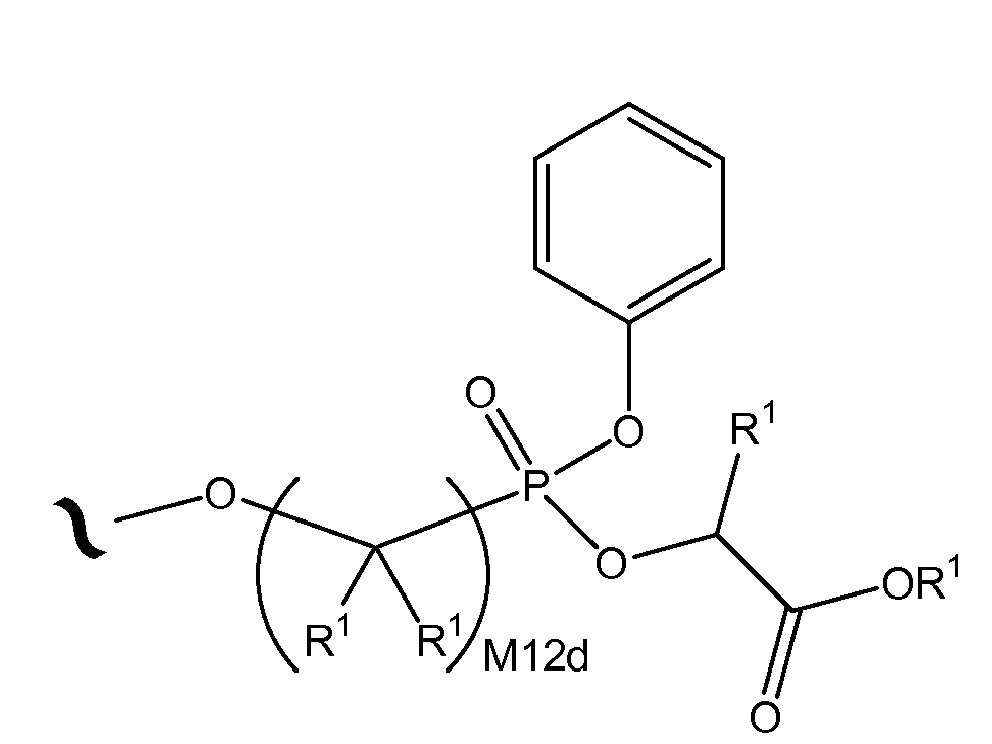
- In another specific embodiment of the invention A3 is of the formula:

- In a specific embodiment of the invention A0 is of the formula:

- In a specific embodiment of the invention Rx is independently H,
- R1, W3, a protecting group, or the formula:

- Ry is independently H, W3, R2 or a protecting group;
- R1 is independently H or alkyl of 1 to 18 carbon atoms;
- R2 is independently H, R1, R3 or R4 wherein each R4 is independently substituted with 0 to 3 R3 groups or taken together at a carbon atom, two R2 groups form a ring of 3 to 8 carbons and the ring may be substituted with 0 to 3 R3 groups.
- In a specific embodiment of the invention Rx is of the formula:

- In a specific embodiment of the invention Rx is of the formula:

- In a specific embodiment of the invention Rx is of the formula:

- In a specific embodiment of the invention Ry is hydrogen or alkyl of 1 to 10 carbons.
- In a specific embodiment of the invention Rx is of the formula:

- In a specific embodiment of the invention Rx is of the formula:

- In a specific embodiment of the invention Rx is of the formula:

- In a specific embodiment of the invention Y1 is O or S.
- In a specific embodiment of the invention Y2 is O, N(Ry) or S.
- In one specific embodiment of the invention Rx is a group of the formula:

- m1a, m1b m1c m1d and m1e are independently 0 or 1;
- m12c is 0, 1, 2, 3, 4, 5, 6, 7, 8, 9, 10, 11 or 12;
- Ry is H, W3, R2 or a protecting group;
- if m1a, m12c, and m1d are 0, then m1b, m1c and m1e are 0;
- if m1a and m12c are 0 and m1d is not 0, then m1b and m1c are 0;
- if m1a and m1d are 0 and m12c is not 0, then m1b and at least one of m1c and m1e are 0;
- if m1a is 0 and m12c and m1d are not 0, then m1b is 0;
- if m12c and m1d are 0 and m1a is not 0, then at least two of m1b, m1c and m1e are 0;
- if m12c is 0 and m1a and m1d are not 0, then at least one of m1b and m1c are 0; and
- if m1d is 0 and m1a and m12c are not 0, then at least one of m1c and m1e are 0.
- In one embodiment, the invention provides a conjugate of Formula III:

wherein: - B is selected from adenine, guanine, cytosine, uracil, thymine, 7-deazaadenine, 7-deazaguanine, 7-deaza-8-azaguanine, 7-deaza-8-azaadenine, inosine, nebularine, nitropyrrole, nitroindole, 2-aminopurine, 2-amino-6-chloropurine, 2,6-diaminopurine, hypoxanthine, pseudouridine, pseudocytosine, pseudoisocytosine, 5-propynylcytosine, isocytosine, isoguanine, 7-deazaguanine, 2-thiopyrimidine, 6-thioguanine, 4-thiothymine, 4-thiouracil, O 6 -methylguanine, N6 -methyladenine, O4 -methylthymine, 5,6-dihydrothymine, 5,6-dihydrouracil, 4-methylindole, substituted triazole, and pyrazolo[3,4-D]pyrimidine;
- X is selected from O, C(Ry)2, OC(Ry)2, NR and S;
- Z is independently selected from H, OH, OR, NR2, CN, NO2, SH, SR, F, Cl, Br, and I;
- Y1 is independently O, S, NR, +N(O)(R), N(OR), +N(O)(OR), or N-NR2;
- Y2 is independently O, CR2, NR, +N(O)(R), N(OR), +N(O)(OR), N-NR2, S, S-S, S(O), or S(O)2;
- M2 is 0, 1 or 2;
- Ry is independently H, F, Cl, Br, I, OH, -C(=Y1)R, -C(=Y1)OR, - C(=Y1)N(R)2, -N(R)2,-+N(R)3, -SR, -S(O)R, -S(O)2R, -S(O)(OR), -S(O)2(OR), - OC(=Y1)R, -OC(=Y1)OR, -OC(=Y1)(N(R)2), -SC(=Y1)R, -SC(=Y1)OR, - SC(=Y1)(N(R)2), -N(R)C(=Y1)R, -N(R)C(=Y1)OR, or -N(R)C(=Y1)N(R)2, amino (-NH2), ammonium (-NH3+), alkylamino, dialkylamino, trialkylammonium, C1-C8 alkyl, C1-C8 alkylhalide, carboxylate, sulfate, sulfamate, sulfonate, 5-7 membered ring sultam, C1-C8 alkylsulfonate, C1-C8 alkylamino, 4-dialkylaminopyridinium, C1-C8 alkylhydroxyl, C1-C8 alkylthiol, alkylsulfone (-SO2R), arylsulfone (-SO2Ar), arylsulfoxide (-SOAr), arylthio (-SAr), sulfonamide (-SO2NR2), alkylsulfoxide (-SOR), ester (-C(=O)OR), amido (-C(=O)NR2), 5-7 membered ring lactam, 5-7 membered ring lactone, nitrile (-CN), azido (-N3), nitro (-NO2), C1-C8 alkoxy (-OR), C1-C8 alkyl, C1-C8 substituted alkyl, C1-C8 alkenyl, C1-C8 substituted alkenyl, C1-C8 alkynyl, C1-C8 substituted alkynyl, C6-C20 aryl, C6-C20 substituted aryl, C2-C20 heterocycle, C2-C20 substituted heterocycle, polyethyleneoxy, or W3; or when taken together, Ry forms a carbocyclic ring of 3 to 7 carbon atoms;
- Rx is independently Ry, a protecting group, or the formula:

- M1a, M1c, and M1d are independently 0 or 1;
- M12c is 0, 1, 2, 3, 4, 5, 6, 7, 8, 9, 10, 11 or 12; and
- R is C1-C8 alkyl, C1-C8 substituted alkyl, C1-C8 alkenyl, C1-C8 substituted alkenyl, C1-C8 alkynyl, C1-C8 substituted alkynyl, C6-C20 aryl, C6-C20 substituted aryl, C2-C20 heterocycle, C2-C20 substituted heterocycle, or a protecting group; and
- W3 is W4 or W5, where W4 is R, -C(Y1)Ry, -C(Y1)W5, -SO2Ry, or - SO2W5; and W5 is a carbocycle or a heterocycle wherein W5 is independently substituted with 0 to 3 Ry groups.
- For a conjugate of Formula III, in one specific embodiment, C1-C8 substituted alkyl, C1-C8 substituted alkenyl, C1-C8 substituted alkynyl, C6-C20 substituted aryl, and C2-C20 substituted heterocycle are independently substituted with one or more substituents selected from F, Cl, Br, I, OH, -NH2, -NH3 +, -NHR, -NR2, -NR3 +, C1-C8 alkylhalide, carboxylate, sulfate, sulfamate, sulfonate, 5-7 membered ring sultam, C1-C8 alkylsulfonate, C1-C8 alkylamino, 4-dialkylaminopyridinium, C1-C8 alkylhydroxyl, C1-C8 alkylthiol, -SO2R, -SO2Ar, -SOAr, -SAr, -SO2NR2, -SOR, -CO2R, -C(=O)NR2, 5-7 membered ring lactam, 5-7 membered ring lactone, -CN, -N3, -NO2, C1-C8 alkoxy, C1-C8 trifluoroalkyl, C1-C8 alkyl, C3-C12 carbocycle, C6-C20 aryl, C2-C20 heterocycle, polyethyleneoxy, phosphonate, phosphate, and a prodrug moiety.
- For a conjugate of Formula III, in one specific embodiment, "protecting group" is selected from a carboxyl ester, a carboxamide, an aryl ether, an alkyl ether, a trialkylsilyl ether, a sulfonic acid ester, a carbonate, and a carbamate.
- In one specific embodiment, for a conjugate of Formula III, W5 is selected from the structures:


- In one specific embodiment, for a conjugate of Formula III, X is O and each Ry is H.
- In one specific embodiment, the conjugate of Formula III is a resolved enantiomer having the structure:

- In one specific embodiment, the conjugate of Formula III is a resolved enantiomer having the structure:

- In one specific embodiment, the conjugate of Formula III has the following formula:

- In one specific embodiment, the conjugate of Formula III has the following formula:

- In one specific embodiment, the conjugate of Formula III has the following formula:

- In one specific embodiment, the conjugate of Formula III has the following formula:
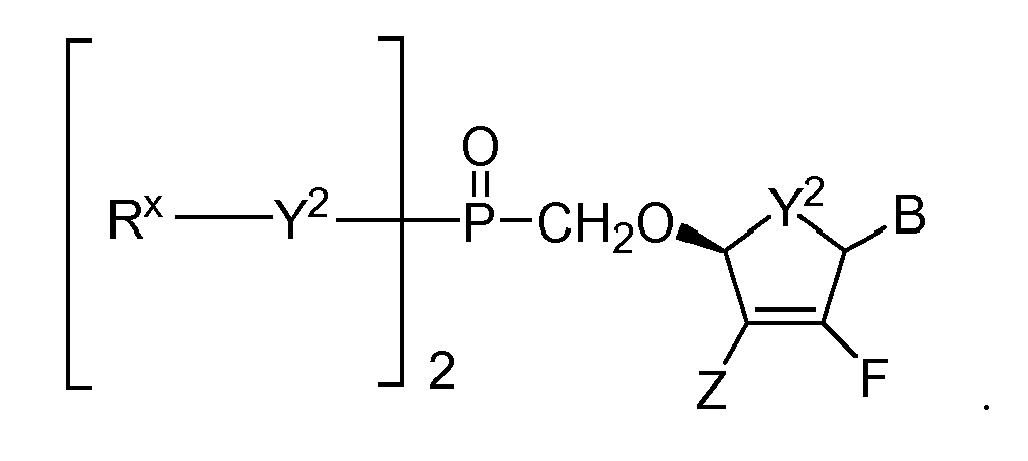
- In one specific embodiment, the conjugate of Formula III has the following formula:

- In one specific embodiment, the conjugate of Formula III has the following formula:
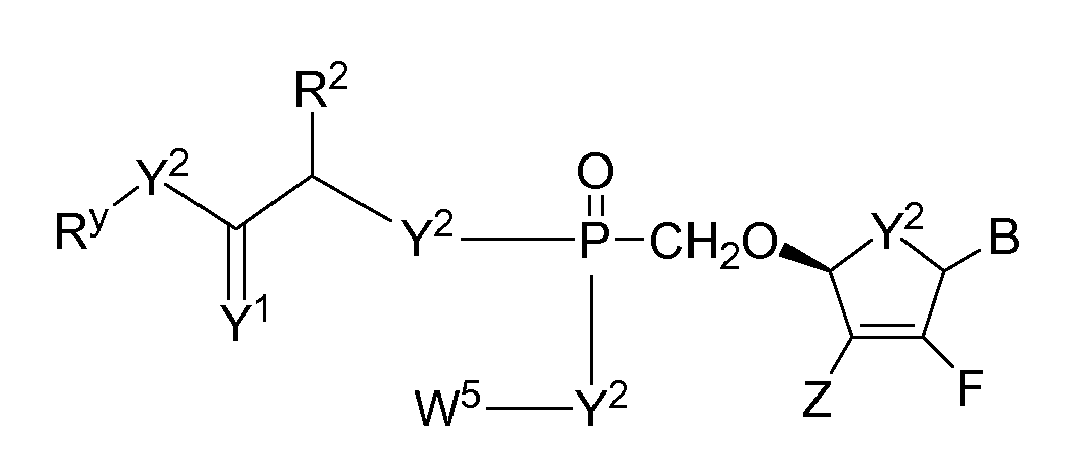
- In one specific embodiment, the conjugate of Formula III has the following formula:

- In one specific embodiment, the conjugate of Formula III has the following formula:

- In one specific embodiment, the conjugate of Formula III has the following formula:

- In one specific embodiment, the conjugate of Formula III has the following formula:

- In one specific embodiment, for a conjugate of Formula III, substituted triazole has the structure:

- In one specific embodiment, the conjugate of Formula III has the following formula:

- B is selected from adenine, guanine, cytosine, uracil, thymine, 7-deazaadenine, 7-deazaguanine, 7-deaza-8-azaguanine, 7-deaza-8-azaadenine, inosine, nebularine, nitropyrrole, nitroindole, 2-aminopurine, 2-amino-6-chloropurine, 2,6-diaminopurine, hypoxanthine, pseudouridine, pseudocytosine, pseudoisocytosine, 5-propynylcytosine, isocytosine, isoguanine, 7-deazaguanine, 2-thiopyrimidine, 6-thioguanine, 4-thiothymine, 4-thiouracil, O6 -methylguanine, N 6-methyladenine, O 4-methylthymine, 5,6-dihydrothymine, 5,6-dihydrouracil, 4-methylindole, substituted triazole, and pyrazolo[3,4-D]pyrimidine;
- X is selected from O, C(Ry)2, OC(Ry)2, NR and S;
- Z is independently selected from H, OH, OR, NR2, CN, NO2, SH, SR, F, Cl, Br, and I;
- Y2 is independently O, CR2, NR, +N(O)(R), N(OR), +N(O)(OR), N-NR2, S, S-S, S(O), or S(O)2;
- Ry is independently H, F, Cl, Br, I, OH, -C(=Y1)R, -C(=Y1)OR, - C(=Y1)N(R)2, -N(R)2, -+N(R)3, -SR, -S(O)R, -S(O)2R, -S(O)(OR), -S(O)2(OR), - OC(=Y1)R, -OC(=Y1)OR, -OC(=Y1)(N(R)2), -SC(=Y1)R, -SC(=Y1)OR, - SC(=Y1)(N(R)2), -N(R)C(=Y1)R, -N(R)C(=Y1)OR, or -N(R)C(=Y1)N(R)2, amino (-NH2), ammonium (-NH3 +), alkylamino, dialkylamino, trialkylammonium, C1-C8 alkyl, C1-C8 alkylhalide, carboxylate, sulfate, sulfamate, sulfonate, 5-7 membered ring sultam, C1-C8 alkylsulfonate, C1-C8 alkylamino, 4-dialkylaminopyridinium, C1-C8 alkylhydroxyl, C1-C8 alkylthiol, alkylsulfone (-SO2R), arylsulfone (-SO2Ar), arylsulfoxide (-SOAr), arylthio (-SAr), sulfonamide (-SO2NR2), alkylsulfoxide (-SOR), ester (-C(=O)OR), amido (-C(=O)NR2), 5-7 membered ring lactam, 5-7 membered ring lactone, nitrile (-CN), azido (-N3), nitro (-NO2), C1-C8 alkoxy (-OR), C1-C8 alkyl, C1-C8 substituted alkyl, C1-C8 alkenyl, C1-C8 substituted alkenyl, C1-C8 alkynyl, C1-C8 substituted alkynyl, C6-C20 aryl, C6-C20 substituted aryl, C2-C20 heterocycle, C2-C20 substituted heterocycle, polyethyleneoxy, or W3; or when taken together, Ry forms a carbocyclic ring of 3 to 7 carbon atoms;
- R is C1-C8 alkyl, C1-C8 substituted alkyl, C1-C8 alkenyl, C1-C8 substituted alkenyl, C1-C8 alkynyl, C1-C8 substituted alkynyl, C6-C20 aryl, C6-C20 substituted aryl, C2-C20 heterocycle, C2-C20 substituted heterocycle, or a protecting group; and
- PG is a protecting group selected from an ether-forming group, an ester-forming group, a silyl-ether forming group, an amide-forming group, an acetal-forming group, a ketal-forming group, a carbonate-forming group, a carbamate-forming group, an amino acid, and a polypeptide.
- In one embodiment, the invention also provides a method for the treatment or prevention of the symptoms or effects of viral infection in an infected animal comprising administering to said animal, a pharmaceutical composition or formulation comprising an effective amount of a conjugate of formula III, or a pharmaceutically acceptable salt or solvate thereof.
- In one embodiment, the invention also provides a method for the treatment or prevention of the symptoms or effects of viral infection in an infected animal comprising administering to said animal a pharmaceutical composition or formulation comprising a conjugate of formula III, or a pharmaceutically acceptable salt or solvate thereof.
- In one embodiment, the invention also provides a method for the treatment or prevention of the symptoms or effects of viral infection in an infected animal comprising administering said animal with a pharmaceutical combination composition or formulation comprising an effective amount of a conjugate of formula III, or a pharmaceutically acceptable salt or solvate thereof, and a second compound having antiviral properties.
- In one embodiment, the invention also provides a a pharmaceutical composition comprising an effective amount of a conjugate of formula III, or a pharmaceutically acceptable salt or solvate thereof, and a pharmaceutically acceptable excipient.
- In one embodiment, the invention also provides a method of inhibiting a viral enzyme comprising the step of contacting a sample suspected of containing viral infected cells or tissues with a a conjugate of formula III, or a pharmaceutically acceptable salt or solvate thereof.
- In one embodiment, the invention also provides a method for the treatment or prevention of the symptoms or effects of a viral infection in an animal which comprises administering to said animal a formulation comprising a therapeutically effective amount of a conjugate of formula III, or a pharmaceutically acceptable salt or solvate thereof.
- In one embodiment, the invention also provides the use of a conjugate of formula III, or a pharmaceutically acceptable salt or solvate thereof to prepare a medicament for treatment of viral infection.
- In one embodiment, the invention also provides a conjugate of formula III, or a pharmaceutically acceptable salt or solvate thereof, which is capable of accumulating in human PBMC.
- In one embodiment, the invention also provides a conjugate (e.g. of formula III) wherein the bioavailability of the conjugate or an intracellular metabolite of the conjugate in human PBMC is improved compared to the corresponding analog lacking the phosphonate group. For example, in one embodiment, the half-life is improved by at least about 50%; in another embodiment, the half-life is improved by at least about 100%; and in another embodiment, the half-life is improved by greater than 100%.
- In one embodiment, the invention also provides a pharmaceutical composition comprising an effective amount of a conjugate of Formula III, or a pharmaceutically acceptable salt or solvate thereof; a pharmaceutically acceptable excipient; and a therapeutically effective amount of an AIDS treatment agent selected from an HIV inhibitor agent, an anti-infective agent, and an immunomodulator.
- In one embodiment, the invention also provides a pharmaceutical composition comprising an effective amount of a conjugate of Formula III, or a pharmaceutically acceptable salt or solvate thereof; a pharmaceutically acceptable excipient; and a therapeutically effective amount of an HIV-protease inhibitor.
- In one embodiment, the invention also provides a pharmaceutical composition comprising an effective amount of a conjugate of Formula III, or a pharmaceutically acceptable salt or solvate thereof; a pharmaceutically acceptable excipient; and a therapeutically effective amount of a reverse transcriptase inhibitor.
- In one embodiment, the invention also provides a pharmaceutical composition comprising an effective amount of a conjugate of Formula III, or a pharmaceutically acceptable salt or solvate thereof; a pharmaceutically acceptable excipient; and a therapeutically effective amount of a non-nucleoside reverse transcriptase inhibitor.
- In one embodiment, the invention also provides a pharmaceutical composition comprising an effective amount of a conjugate of Formula III, or a pharmaceutically acceptable salt or solvate thereof; a pharmaceutically acceptable excipient; and a therapeutically effective amount of an HIV integrase inhibitor.
- In one embodiment, the invention also provides a process for making a pharmaceutical composition comprising combining a conjugate of formula III, or a pharmaceutically acceptable salt or solvate thereof, and a pharmaceutically acceptable excipient.
- In one embodiment, the invention also provides a method of inhibiting RNA-dependent RNA polymerase comprising administering to a mammal in need of such treatment, a therapeutically effective amount of a conjugate of Formula III, or a pharmaceutically acceptable salt or solvate thereof.
- In one embodiment, the invention also provides a method of treating an HCV infection comprising administering to a mammal in need of such treatment a therapeutically effective amount of a conjugate of formula III, or a pharmaceutically acceptable salt or solvate thereof.
- In one embodiment, the invention also provides a method of treating a disorder affecting white blood cells comprising: administering a conjugate of Formula III, or a pharmaceutically acceptable salt or solvate thereof to a patient in need of white-blood-cell targeting.
- In one embodiment, the invention also provides a method of manufacturing an HCV inhibitor conjugate having both selectivity for white blood cells and a desired pharmaceutical activity, comprising: chemically synthesizing a conjugate of Formula III (as described herein), wherein said conjugate differs from a second structure of a compound known to have said desired pharmaceutical activity by having at least one hydrogen atom of said second structure replaced by an organic substituent comprising a prodrug moiety or incipient prodrug moiety.
- In one embodiment, the invention also provides a method of accumulating an RNA-dependent RNA polymerase inhibitor compound inside a white blood cell, comprising administering to a sample, a composition comprising a conjugate of formula III, or a pharmaceutically acceptable salt or solvate thereof. In one specific embodiment, said sample is a patient.
- The invention provides conjugates that comprise an antiviral compound that is linked to one or more phosphonate groups either directly (e.g. through a covalent bond) or through a linking group (i.e. a linker) The nature of the linker is not critical provided it does not interfere with the ability of the phosphonate containing compound to function as a therapeutic agent. The phosphonate or the linker can be linked to the compound (e.g. a compound of Formula 501-569) at any synthetically feasible position on the compound by removing a hydrogen or any portion of the compound to provide an open valence for attachment of the phosphonate or the linker.
- In one embodiment of the invention the linking group or linker (which can be designated "L") can include all or a portions of the group A0, A1, A2, or W3 described herein.
- In another embodiment of the invention the linking group or linker has a molecular weight of from about 20 daltons to about 400 daltons.
- In another embodiment of the invention the linking group or linker has a length of about 5 angstroms to about 300 angstroms.
- In another embodiment of the invention the linking group or linker separates the DRUG and a P(=Y1) residue by about 5 angstroms to about 200 angstroms, inclusive, in length.
- In another embodiment of the invention the linking group or linker is a divalent, branched or unbranched, saturated or unsaturated, hydrocarbon chain, having from 2 to 25 carbon atoms, wherein one or more (e.g. 1, 2, 3, or 4) of the carbon atoms is optionally replaced by (-O-), and wherein the chain is optionally substituted on carbon with one or more (e.g. 1, 2, 3, or 4) substituents selected from (C1-C6)alkoxy, (C3-C6)cycloalkyl, (C1-C6)alkanoyl, (C1-C6)alkanoyloxy, (C1-C6)alkoxycarbonyl, (C1-C6)alkylthio, azido, cyano, nitro, halo, hydroxy, oxo (=O), carboxy, aryl, aryloxy, heteroaryl, and heteroaryloxy.
- In another embodiment of the invention the linking group or linker is of the formula W-A wherein A is (C1-C24)alkyl, (C2-C24)alkenyl, (C2-C24)alkynyl, (C3-C8)cycloalkyl, (C6-C10)aryl or a combination thereof, wherein W is - N(R)C(=O)-, -C(=O)N(R)-, -OC(=O)-, -C(=O)O-, -O-, -S-, -S(O)-, -S(O2-, - N(R)-, -C(=O)-, or a direct bond; wherein each R is independently H or (C1-C6)alkyl.
- In another embodiment of the invention the linking group or linker is a divalent radical formed from a peptide.
- In another embodiment of the invention the linking group or linker is a divalent radical formed from an amino acid.
- In another embodiment of the invention the linking group or linker is a divalent radical formed from poly-L-glutamic acid, poly-L-aspartic acid, poly-L-histidine, poly-L-ornithine, poly-L-serine, poly-L-threonine, poly-L-tyrosine, poly-L-leucine, poly-L-lysine-L-phenylalanine, poly-L-lysine or poly-L-lysine-L-tyrosine.
- In another embodiment of the invention the linking group or linker is of the formula W-(CH2)n wherein, n is between about 1 and about 10; and W is - N(R)C(=O)-, -C(=O)N(R)-, -OC(=O)-, -C(=O)O-, -O-, -S-, -S(O)-, -S(O)2-, - C(=O)-, -N(R)-, or a direct bond; wherein each R is independently H or (C1-C6)alkyl.
- In another embodiment of the invention the linking group or linker is methylene, ethylene, or propylene.
- In another embodiment of the invention the linking group or linker is attached to the phosphonate group through a carbon atom of the linker.
- The phosphonate group of the compounds of the invention may cleave in vivo in stages after they have reached the desired site of action, i.e. inside a cell. One mechanism of action inside a cell may entail a first cleavage, e.g. by esterase, to provide a negatively-charged "locked-in" intermediate. Cleavage of a terminal ester grouping in a compound of the invention thus affords an unstable intermediate which releases a negatively charged "locked in" intermediate.
- After passage inside a cell, intracellular enzymatic cleavage or modification of the phosphonate or prodrug compound may result in an intracellular accumulation of the cleaved or modified compound by a "trapping" mechanism. The cleaved or modified compound may then be "locked-in" the cell by a significant change in charge, polarity, or other physical property change which decreases the rate at which the cleaved or modified compound can exit the cell, relative to the rate at which it entered as the phosphonate prodrug. Other mechanisms by which a therapeutic effect are achieved may be operative as well. Enzymes which are capable of an enzymatic activation mechanism with the phosphonate prodrug compounds of the invention include, but are not limited to, amidases, esterases, microbial enzymes, phospholipases, cholinesterases, and phosphatases.
- In selected instances in which the drug is of the nucleoside type, such as is the case of zidovudine and numerous other antiretroviral agents, it is known that the drug is activated in vivo by phosphorylation. Such activation may occur in the present system by enzymatic conversion of the "locked-in" intermediate with phosphokinase to the active phosphonate diphosphate and/or by phosphorylation of the drug itself after its release from the "locked-in" intermediate as described above. In either case, the original nucleoside-type drug will be convened, via the derivatives of this invention, to the active phosphorylated species.
- From the foregoing, it will be apparent that many different drugs can be derivatized in accord with the present invention. Numerous such drugs are specifically mentioned herein. However, it should be understood that the discussion of drug families and their specific members for derivatization according to this invention is not intended to be exhaustive, but merely illustrative.
- The compounds of the invention include those with antiviral activity. The compounds of the inventions bear one or more (e.g., 1, 2, 3, or 4) phosphonate groups, which may be a prodrug moiety.
- The term "antiviral compound" includes those compounds with antiviral activity. In particular, the compounds include Dehydroepiandrosterone, LY-582563, L-Fd4C, L-FddC, telbivudine, clevudine, macrocyclic protease inhibitors, dOTCP, dOTC, DDL DDLP, ddcP, ddC, DADP, DAPD, d4TP, D4T, 3TC, 3TCP FTCP, ABCP, AZT, IsoddAP, FTC, HCV polymerase inhibitors, ribavirin, viramidine, L-enantiomers of ribavirin and viramidine, levovirin, alkovirs, imiquimod, resquimod, 4- (3-benzyl-phenyl)-2-hydroxy-4-oxo-but-2-enoic acid, propenone derivatives having HIV inhibiting activities, aza, polyazanaphthalenyl carboxamides, betulinic acid, dihydrobetulinic acid, isodd a, UT-231B, VX-148, gemcitabine, merimepodib, levamisole, mycophenolate, entecavir, foscarnet, carbovir, abacavir, and BCX-1777.
- Typically, compounds of the invention have a molecular weight of from about 400 amu to about 10,000 amu; in a specific embodiment of the invention, compounds have a molecular weight of less than about 5000 amu; in another specific embodiment of the invention, compounds have a molecular weight of less than about 2500 amu; in another specific embodiment of the invention, compounds have a molecular weight of less than about 1000 amu; in another specific embodiment of the invention, compounds have a molecular weight of less than about 800 amu; in another specific embodiment of the invention, compounds have a molecular weight of less than about 600 amu; and in another specific embodiment of the invention, compounds have a molecular weight of less than about 600 amu and a molecular weight of greater than about 400 amu.
- The compounds of the invention also typically have a logD(polarity) less than about 5. In one embodiment the invention provides compounds having a logD less than about 4; in another one embodiment the invention provides compounds having a logD less than about 3; in another one embodiment the invention provides compounds having a logD greater than about -5; in another one embodiment the invention provides compounds having a logD greater than about -3; and in another one embodiment the invention provides compounds having a logD greater than about 0 and less than about 3.
- In one specific embodiment the invention provides compounds that may fall within the generic definition of the term antiviral compound but which further comprise a phosphonate group, e.g., a phosphonate diester, phosphonamidate-ester prodrug, or a phosphondiamidate-ester (
Jiang et al., US 2002/0173490 Al ). - Selected substituents within the compounds of the invention are present to a recursive degree. In this context, "recursive substituent" means that a substituent may recite another instance of itself. Because of the recursive nature of such substituents, theoretically, a large number may be present in any given claim. For example, Rx contains a Ry substituent. Ry can be R2, which in turn can be R3. If R3 is selected to be R3c, then a second instance of Rx can be selected. One of ordinary skill in the art of medicinal chemistry understands that the total number of such substituents is reasonably limited by the desired properties of the compound intended. Such properties include, by of example and not limitation, physical properties such as molecular weight, solubility or log P, application properties such as activity against the intended target, and practical properties such as ease of synthesis.
- By way of example and not limitation, W3, Ry and R3 are all recursive substituents in certain claims. Typically, each of these may independently occur 20, 19, 18, 17, 16, 15, 14, 13, 12, 11, 10, 9, 8, 7, 6, 5, 4, 3, 2, 1, or 0, times in a given claim. More typically, each of these may independently occur 12 or fewer times in a given claim. More typically yet, W3 will occur 0 to 8 times, Ry will occur 0 to 6 times and R3 will occur 0 to 10 times in a given claim. Even more typically, W3 will occur 0 to 6 times, Ry will occur 0 to 4 times and R3 will occur 0 to 8 times in a given claim.
- Recursive substituents are an intended aspect of the invention. One of ordinary skill in the art of medicinal chemistry understands the versatility of such substituents. To the degree that recursive substituents are present in an claim of the invention, the total number will be determined as set forth above.
- Whenever a compound described herein is substituted with more than one of the same designated group, e.g., "R1" or "R6a", then it will be understood that the groups may be the same or different, i.e., each group is independently selected. Wavy lines indicate the site of covalent bond attachments to the adjoining groups, moieties, or atoms.
- The phosphonate group may be a phosphonate prodrug moiety. The prodrug moiety may be sensitive to hydrolysis, such as, but not limited to, a pivaloyloxymethyl carbonate (POC) or POM group. Alternatively, the prodrug moiety may be sensitive to enzymatic potentiated cleavage, such as a lactate ester or a phosphonamidate-ester group.
- In one embodiment of the invention the compound is not an anti-inflammatory compound; in another embodiment the compound is not an anti-infective; in another embodiment the compound is not a compound that is active against immune-mediated conditions; in another embodiment the compound is not an anti-cancer compound; in another embodiment the compound is not a compound that is active against metabolic diseases; in another embodiment the compound is not a nucleoside; in another embodiment the compound is not a IMPDH inhibitor; in another embodiment the compound is not an antimetabolite; in another embodiment the compound is not a PNP inhibitor; in another embodiment the compound is not a substituted compound of any one of formulae 509-510, 556-557, and 559-562; and in another embodiment the compound is not a compound of any one of formulae 13-18, 72, 77-83, and 90-102.
- In one embodiment of the invention, the compound is in an isolated and purified form. Generally, the term "isolated and purified" means that the compound is substantially free from biological materials (e.g. blood, tissue, cells, etc.). In one specific embodiment of the invention, the term means that the compound or conjugate of the invention is at least about 50 wt.% free from biological materials; in another specific embodiment, the term means that the compound or conjugate of the invention is at least about 75 wt.% free from biological materials; in another specific embodiment, the term means that the compound or conjugate of the invention is at least about 90 wt.% free from biological materials; in another specific embodiment, the term means that the compound or conjugate of the invention is at least about 98 wt.% free from biological materials; and in another embodiment, the term means that the compound or conjugate of the invention is at least about 99 wt.% free from biological materials. In another specific embodiment, the invention provides a compound or conjugate of the invention that has been synthetically prepared (e.g., ex vivo).
- In one embodiment, the invention is provides compounds capable of accumulating in human PBMC (peripheral blood mononuclear cells). PBMC refer to blood cells having round lymphocytes and monocytes. Physiologically, PBMC are critical components of the mechanism against infection. PBMC may be isolated from heparinized whole blood of normal healthy donors or buffy coats, by standard density gradient centrifugation and harvested from the interface, washed (e.g. phosphate-buffered saline) and stored in freezing medium. PBMC may be cultured in multi-well plates. At various times of culture, supernatant may be either removed for assessment, or cells may be harvested and analyzed (Smith R. etal (2003) Blood 102(7):2532-2540). The compounds of this claim may further comprise a phosphonate or phosphonate prodrug. More typically, the phosphonate or phosphonate prodrug can have the structure A3 as described herein.
- Typically, compounds of the invention demonstrate improved intracellular half-life of the compounds or intracellular metabolites of the compounds in human PBMC when compared to analogs of the compounds not having the phosphonate or phosphonate prodrug. Typically, the half-life is improved by at least about 50%, more typically at least in the range 50-100%, still more typically at least about 100%, more typically yet greater than about 100%.
- In one embodiment of the invention the intracellular half-life of a metabolite of the compound in human PBMCs is improved when compared to an analog of the compound not having the phosphonate or phosphonate prodrug. In such claims, the metabolite may be generated intracellularly, e.g. generated within human PBMC. The metabolite may be a product of the cleavage of a phosphonate prodrug within human PBMCs. The phosphonate prodrug may be cleaved to form a metabolite having at least one negative charge at physiological pH. The phosphonate prodrug may be enzymatically cleaved within human PBMC to form a phosphonate having at least one active hydrogen atom of the form P-OH.
- The compounds of the invention may have chiral centers, e.g., chiral carbon or phosphorus atoms. The compounds of the invention thus include racemic mixtures of all stereoisomers, including enantiomers, diastereomers, and atropisomers. In addition, the compounds of the invention include enriched or resolved optical isomers at any or all asymmetric, chiral atoms. In other words, the chiral centers apparent from the depictions are provided as the chiral isomers or racemic mixtures. Both racemic and diastereomeric mixtures, as well as the individual optical isomers isolated or synthesized, substantially free of their enantiomeric or diastereomeric partners, are all within the scope of the invention. The racemic mixtures are separated into their individual, substantially optically pure isomers through well-known techniques such as, for example, the separation of diastereomeric salts formed with optically active adjuncts, e.g., acids or bases followed by conversion back to the optically active substances. In most instances, the desired optical isomer is synthesized by means of stereospecific reactions, beginning with the appropriate stereoisomer of the desired starting material.
- The compounds of the invention can also exist as tautomeric isomers in certain cases. All though only one delocalized resonance structure may be depicted, all such forms are contemplated within the scope of the iinvention. For example, ene-amine tautomers can exist for purine, pyrimidine, imidazole, guanidine, amidine, and tetrazole systems and all their possible tautomeric forms are within the scope of the invention.
- The compositions of this invention optionally comprise salts of the compounds herein, especially pharmaceutically acceptable non-toxic salts containing, for example, Na+, Li+, K+, Ca+2 and Mg+2. Such salts may include those derived by combination of appropriate cations such as alkali and alkaline earth metal ions or ammonium and quaternary amino ions with an acid anion moiety, typically a carboxylic acid. Monovalent salts are preferred if a water soluble salt is desired.
- Metal salts typically are prepared by reacting the metal hydroxide with a compound of this invention. Examples of metal salts which are prepared in this way are salts containing Li+, Na+, and K+. A less soluble metal salt can be precipitated from the solution of a more soluble salt by addition of the suitable metal compound.
- In addition, salts may be formed from acid addition of certain organic and inorganic acids, e.g., HCl, HBr, H2SO4, H3PO4 or organic sulfonic acids, to basic centers, typically amines, or to acidic groups. Finally, it is to be understood that the compositions herein comprise compounds of the invention in their un-ionized, as well as zwitterionic form, and combinations with stoichiometric amounts of water as in hydrates.
- Also included within the scope of this invention are the salts of the parental compounds with one or more amino acids. Any of the amino acids described above are suitable, especially the naturally-occurring amino acids found as protein components, although the amino acid typically is one bearing a side chain with a basic or acidic group, e.g., lysine, arginine or glutamic acid, or a neutral group such as glycine, serine, threonine, alanine, isoleucine, or leucine.
- Another aspect of the invention relates to methods of inhibiting viral infections, comprising the step of treating a sample or subject suspected of needing such inhibition with a composition of the invention.
- Compositions of the invention may act as inhibitors of viral infections, or as intermediates for such inhibitors or have other utilities as described below. The inhibitors will bind to locations on the surface or in a cavity of a cell having a unique geometry. Compositions binding a cell may bind with varying degrees of reversibility. Those compounds binding substantially irreversibly are ideal candidates for use in this method of the invention. Once labeled, the substantially irreversibly binding compositions are useful as probes for the detection of viruses. Accordingly, the invention relates to methods of detecting viruses in a sample or subject suspected of containing a virus, comprising the steps of: treating such a sample or subject with a composition comprising a compound of the invention bound to a label; and observing the effect of the sample on the activity of the label. Suitable labels are well known in the diagnostics field and include stable free radicals, fluorophores, radioisotopes, enzymes, chemiluminescent groups and chromogens. The compounds herein are labeled in conventional fashion using functional groups such as hydroxyl or amino.
- Within the context of the invention samples suspected of containing a virus include natural or man-made materials such as living organisms; tissue or cell cultures; biological samples such as biological material samples (blood, serum, urine, cerebrospinal fluid, tears, sputum, saliva, tissue samples, and the like); laboratory samples; food, water, or air samples; bioproduct samples such as extracts of cells, particularly recombinant cells synthesizing a desired glycoprotein; and the like. Typically the sample will be suspected of containing an organism which induces a viral infection, frequently a pathogenic organism such as an tumor virus. Samples can be contained in any medium including water and organic solvent\water mixtures. Samples include living organisms such as humans, and man made materials such as cell cultures.
- The treating step of the invention comprises adding the composition of the invention to the sample or it comprises adding a precursor of the composition to the sample. The addition step comprises any method of administration as described above.
- If desired, the anti-virus activity of a compound of the invention after application of the composition can be observed by any method including direct and indirect methods of detecting such activity. Quantitative, qualitative, and semiquantitative methods of determining such activity are all contemplated. Typically one of the screening methods described above are applied, however, any other method such as observation of the physiological properties of a living organism are also applicable.
- Compositions of the invention are screened for antiviral activity by any of the conventional techniques for evaluating enzyme activity. Within the context of the invention, typically compositions are first screened for inhibitory activity in vitro and compositions showing inhibitory activity are then screened for activity in vivo. Compositions having in vitro Ki (inhibitory constants) of less then about 5 X 10⁻⁶ M, typically less than about 1 X 10⁻⁷ M and preferably less than about 5 X 10⁻⁸ M are preferred for in vivo use.
- Useful in vitro screens have been described in detail and will not be elaborated here.
- The compounds of this invention are formulated with conventional carriers and excipients, which will be selected in accord with ordinary practice. Tablets will contain excipients, glidants, fillers, binders and the like. Aqueous formulations are prepared in sterile form, and when intended for delivery by other than oral administration generally will be isotonic. All formulations will optionally contain excipients such as those set forth in the Handbook of Pharmaceutical Excipients (1986). Excipients include ascorbic acid and other antioxidants, chelating agents such as EDTA, carbohydrates such as dextrin, hydroxyalkylcellulose, hydroxyalkylmethylcellulose, stearic acid and the like. The pH of the formulations ranges from about 3 to about 11, but is ordinarily about 7 to 10.
- While it is possible for the active ingredients to be administered alone it may be preferable to present them as pharmaceutical formulations. The formulations, both for veterinary and for human use, of the invention comprise at least one active ingredient, as above defined, together with one or more acceptable carriers therefor and optionally other therapeutic ingredients. The carrier(s) must be "acceptable" in the sense of being compatible with the other ingredients of the formulation and physiologically innocuous to the recipient thereof.
- The formulations include those suitable for the foregoing administration routes. The formulations may conveniently be presented in unit dosage form and may be prepared by any of the methods well known in the art of pharmacy. Techniques and formulations generally are found in Remington's Pharmaceutical Sciences (Mack Publishing Co., Easton, PA). Such methods include the step of bringing into association the active ingredient with the carrier which constitutes one or more accessory ingredients. In general the formulations are prepared by uniformly and intimately bringing into association the active ingredient with liquid carriers or finely divided solid carriers or both, and then, if necessary, shaping the product.
- Formulations of the present invention suitable for oral administration may be presented as discrete units such as capsules, cachets or tablets each containing a predetermined amount of the active ingredient; as a powder or granules; as a solution or a suspension in an aqueous or non-aqueous liquid; or as an oil-in-water liquid emulsion or a water-in-oil liquid emulsion. The active ingredient may also be administered as a bolus, electuary or paste.
- A tablet is made by compression or molding, optionally with one or more accessory ingredients. Compressed tablets may be prepared by compressing in a suitable machine the active ingredient in a free-flowing form such as a powder or granules, optionally mixed with a binder, lubricant, inert diluent, preservative, surface active or dispersing agent. Molded tablets may be made by molding in a suitable machine a mixture of the powdered active ingredient moistened with an inert liquid diluent. The tablets may optionally be coated or scored and optionally are formulated so as to provide slow or controlled release of the active ingredient therefrom.
- For administration to the eye or other external tissues e.g., mouth and skin, the formulations are preferably applied as a topical ointment or cream containing the active ingredient(s) in an amount of, for example, 0.075 to 20% w/w (including active ingredient(s) in a range between 0.1 % and 20% in increments of 0.1 % w/w such as 0.6% w/w, 0.7% w/w, etc.), preferably 0.2 to 15% w/w and most preferably 0.5 to 10% w/w. When formulated in an ointment, the active ingredients may be employed with either a paraffinic or a water-miscible ointment base. Alternatively, the active ingredients may be formulated in a cream with an oil-in-water cream base.
- If desired, the aqueous phase of the cream base may include, for example, at least 30% w/w of a polyhydric alcohol, i.e. an alcohol having two or more hydroxyl groups such as propylene glycol, butane 1,3-diol, mannitol, sorbitol, glycerol and polyethylene glycol (including PEG 400) and mixtures thereof. The topical formulations may desirably include a compound which enhances absorption or penetration of the active ingredient through the skin or other affected areas. Examples of such dermal penetration enhancers include dimethyl sulphoxide and related analogs.
- The oily phase of the emulsions of this invention may be constituted from known ingredients in a known manner. While the phase may comprise merely an emulsifier (otherwise known as an emulgent), it desirably comprises a mixture of at least one emulsifier with a fat or an oil or with both a fat and an oil. Preferably, a hydrophilic emulsifier is included together with a lipophilic emulsifier which acts as a stabilizer. It is also preferred to include both an oil and a fat. Together, the emulsifier(s) with or without stabilizer(s) make up the so-called emulsifying wax, and the wax together with the oil and fat make up the so-called emulsifying ointment base which forms the oily dispersed phase of the cream formulations.
- Emulgents and emulsion stabilizers suitable for use in the formulation of the invention include Tween® 60, Span® 80, cetostearyl alcohol, benzyl alcohol, myristyl alcohol, glyceryl mono-stearate and sodium lauryl sulfate.
- The choice of suitable oils or fats for the formulation is based on achieving the desired cosmetic properties. The cream should preferably be a non-greasy, non-staining and washable product with suitable consistency to avoid leakage from tubes or other containers. Straight or branched chain, mono- or dibasic alkyl esters such as di-isoadipate, isocetyl stearate, propylene glycol diester of coconut fatty acids, isopropyl myristate, decyl oleate, isopropyl palmitate, butyl stearate, 2-ethylhexyl palmitate or a blend of branched chain esters known as Crodamol CAP may be used, the last three being preferred esters. These may be used alone or in combination depending on the properties required. Alternatively, high melting point lipids such as white soft paraffin and/or liquid paraffin or other mineral oils are used.
- Pharmaceutical formulations according to the present invention comprise one or more compounds of the invention together with one or more pharmaceutically acceptable carriers or excipients and optionally other therapeutic agents. Pharmaceutical formulations containing the active ingredient may be in any form suitable for the intended method of administration. When used for oral use for example, tablets, troches, lozenges, aqueous or oil suspensions, dispersible powders or granules, emulsions, hard or soft capsules, syrups or elixirs may be prepared. Compositions intended for oral use may be prepared according to any method known to the art for the manufacture of pharmaceutical compositions and such compositions may contain one or more agents including sweetening agents, flavoring agents, coloring agents and preserving agents, in order to provide a palatable preparation. Tablets containing the active ingredient in admixture with non-toxic pharmaceutically acceptable excipient which are suitable for manufacture of tablets are acceptable. These excipients may be, for example, inert diluents, such as calcium or sodium carbonate, lactose, lactose monohydrate, croscarmellose sodium, povidone, calcium or sodium phosphate; granulating and disintegrating agents, such as maize starch, or alginic acid; binding agents, such as cellulose, microcrystalline cellulose, starch, gelatin or acacia; and lubricating agents, such as magnesium stearate, stearic acid or talc. Tablets may be uncoated or may be coated by known techniques including microencapsulation to delay disintegration and adsorption in the gastrointestinal tract and thereby provide a sustained action over a longer period. For example, a time delay material such as glyceryl monostearate or glyceryl distearate alone or with a wax may be employed.
- Formulations for oral use may be also presented as hard gelatin capsules where the active ingredient is mixed with an inert solid diluent, for example calcium phosphate or kaolin, or as soft gelatin capsules wherein the active ingredient is mixed with water or an oil medium, such as peanut oil, liquid paraffin or olive oil.
- Aqueous suspensions of the invention contain the active materials in admixture with excipients suitable for the manufacture of aqueous suspensions. Such excipients include a suspending agent, such as sodium carboxymethylcellulose, methylcellulose, hydroxypropyl methylcelluose, sodium alginate, polyvinylpyrrolidone, gum tragacanth and gum acacia, and dispersing or wetting agents such as a naturally occurring phosphatide (e.g., lecithin), a condensation product of an alkylene oxide with a fatty acid (e.g., polyoxyethylene stearate), a condensation product of ethylene oxide with a long chain aliphatic alcohol (e.g., heptadecaethyleneoxycetanol), a condensation product of ethylene oxide with a partial ester derived from a fatty acid and a hexitol anhydride (e.g., polyoxyethylene sorbitan monooleate). The aqueous suspension may also contain one or more preservatives such as ethyl or n-propyl p-hydroxy-benzoate, one or more coloring agents, one or more flavoring agents and one or more sweetening agents, such as sucrose or saccharin.
- Oil suspensions may be formulated by suspending the active ingredient in a vegetable oil, such as arachis oil, olive oil, sesame oil or coconut oil, or in a mineral oil such as liquid paraffin. The oral suspensions may contain a thickening agent, such as beeswax, hard paraffin or cetyl alcohol. Sweetening agents, such as those set forth above, and flavoring agents may be added to provide a palatable oral preparation. These compositions may be preserved by the addition of an antioxidant such as ascorbic acid.
- Dispersible powders and granules of the invention suitable for preparation of an aqueous suspension by the addition of water provide the active ingredient in admixture with a dispersing or wetting agent, a suspending agent, and one or more preservatives. Suitable dispersing or wetting agents and suspending agents are exemplified by those disclosed above. Additional excipients, for example sweetening, flavoring and coloring agents, may also be present.
- The pharmaceutical compositions of the invention may also be in the form of oil-in-water emulsions. The oily phase may be a vegetable oil, such as olive oil or arachis oil, a mineral oil, such as liquid paraffin, or a mixture of these. Suitable emulsifying agents include naturally-occurring gums, such as gum acacia and gum tragacanth, naturally occurring phosphatides, such as soybean lecithin, esters or partial esters derived from fatty acids and hexitol anhydrides, such as sorbitan monooleate, and condensation products of these partial esters with ethylene oxide, such as polyoxyethylene sorbitan monooleate. The emulsion may also contain sweetening and flavoring agents. Syrups and elixirs may be formulated with sweetening agents, such as glycerol, sorbitol or sucrose. Such formulations may also contain a demulcent, a preservative, a flavoring or a coloring agent.
- The pharmaceutical compositions of the invention may be in the form of a sterile injectable preparation, such as a sterile injectable aqueous or oleaginous suspension. This suspension may be formulated according to the known art using those suitable dispersing or wetting agents and suspending agents which have been mentioned above. The sterile injectable preparation may also be a sterile injectable solution or suspension in a non-toxic parenterally acceptable diluent or solvent, such as a solution in 1,3-butane-diol or prepared as a lyophilized powder. Among the acceptable vehicles and solvents that may be employed are water, Ringer's solution and isotonic sodium chloride solution. In addition, sterile fixed oils may conventionally be employed as a solvent or suspending medium. For this purpose any bland fixed oil may be employed including synthetic mono- or diglycerides. In addition, fatty acids such as oleic acid may likewise be used in the preparation of injectables.
- The amount of active ingredient that may be combined with the carrier material to produce a single dosage form will vary depending upon the host treated and the particular mode of administration. For example, a time-release formulation intended for oral administration to humans may contain approximately 1 to 1000 mg of active material compounded with an appropriate and convenient amount of carrier material which may vary from about 5 to about 95% of the total compositions (weight:weight). The pharmaceutical composition can be prepared to provide easily measurable amounts for administration. For example, an aqueous solution intended for intravenous infusion may contain from about 3 to 500 µg of the active ingredient per milliliter of solution in order that infusion of a suitable volume at a rate of about 30 mL/hr can occur.
- Formulations suitable for administration to the eye include eye drops wherein the active ingredient is dissolved or suspended in a suitable carrier, especially an aqueous solvent for the active ingredient. The active ingredient is preferably present in such formulations in a concentration of 0.5 to 20%, advantageously 0.5 to 10% particularly about 1.5% w/w.
- Formulations suitable for topical administration in the mouth include lozenges comprising the active ingredient in a flavored basis, usually sucrose and acacia or tragacanth; pastilles comprising the active ingredient in an inert basis such as gelatin and glycerin, or sucrose and acacia; and mouthwashes comprising the active ingredient in a suitable liquid carrier.
- Formulations for rectal administration may be presented as a suppository with a suitable base comprising for example cocoa butter or a salicylate.
- Formulations suitable for intrapulmonary or nasal administration have a particle size for example in the range of 0.1 to 500 microns (including particle sizes in a range between 0.1 and 500 microns in increments microns such as 0.5, 1,30 microns, 35 microns, etc.), which is administered by rapid inhalation through the nasal passage or by inhalation through the mouth so as to reach the alveolar sacs. Suitable formulations include aqueous or oily solutions of the active ingredient. Formulations suitable for aerosol or dry powder administration may be prepared according to conventional methods and may be delivered with other therapeutic agents such as compounds heretofore used in the treatment or prophylaxis of viral infections as described below.
- Formulations suitable for vaginal administration may be presented as pessaries, tampons, creams, gels, pastes, foams or spray formulations containing in addition to the active ingredient such carriers as are known in the art to be appropriate.
- Formulations suitable for parenteral administration include aqueous and non-aqueous sterile injection solutions which may contain anti-oxidants, buffers, bacteriostats and solutes which render the formulation isotonic with the blood of the intended recipient; and aqueous and non-aqueous sterile suspensions which may include suspending agents and thickening agents.
- The formulations are presented in unit-dose or multi-dose containers, for example sealed ampoules and vials, and may be stored in a freeze-dried (lyophilized) condition requiring only the addition of the sterile liquid carrier, for example water for injection, immediately prior to use. Extemporaneous injection solutions and suspensions are prepared from sterile powders, granules and tablets of the kind previously described. Preferred unit dosage formulations are those containing a daily dose or unit daily sub-dose, as herein above recited, or an appropriate fraction thereof, of the active ingredient.
- It should be understood that in addition to the ingredients particularly mentioned above the formulations of this invention may include other agents conventional in the art having regard to the type of formulation in question, for example those suitable for oral administration may include flavoring agents.
- The invention further provides veterinary compositions comprising at least one active ingredient as above defined together with a veterinary carrier therefor.
- Veterinary carriers are materials useful for the purpose of administering the composition and may be solid, liquid or gaseous materials which are otherwise inert or acceptable in the veterinary art and are compatible with the active ingredient. These veterinary compositions may be administered orally, parenterally or by any other desired route.
- Compounds of the invention can also be formulated to provide controlled release of the active ingredient to allow less frequent dosing or to improve the pharmacokinetic or toxicity profile of the active ingredient. Accordingly, the invention also provided compositions comprising one or more compounds of the invention formulated for sustained or controlled release.
- Effective dose of active ingredient depends at least on the nature of the condition being treated, toxicity, whether the compound is being used prophylactically (lower doses) or against an active viral infection, the method of delivery, and the pharmaceutical formulation, and will be determined by the clinician using conventional dose escalation studies. It can be expected to be from about 0.0001 to about 100 mg/kg body weight per day. Typically, from about 0.01 to about 10 mg/kg body weight per day. More typically, from about .01 to about 5 mg/kg body weight per day. More typically, from about .05 to about 0.5 mg/kg body weight per day. For example, the daily candidate dose for an adult human of approximately 70 kg body weight will range from 1 mg to 1000 mg, preferably between 5 mg and 500 mg, and may take the form of single or multiple doses.
- One or more compounds of the invention (herein referred to as the active ingredients) are administered by any route appropriate to the condition to be treated. Suitable routes include oral, rectal, nasal, topical (including buccal and sublingual), vaginal and parenteral (including subcutaneous, intramuscular, intravenous, intradermal, intrathecal and epidural), and the like. It will be appreciated that the preferred route may vary with for example the condition of the recipient. An advantage of the compounds of this invention is that they are orally bioavailable and can be dosed orally.
- Active ingredients of the invention are also used in combination with other active ingredients. Such combinations are selected based on the condition to be treated, cross-reactivities of ingredients and pharmaco-properties of the combination. For example, when treating a viral infection the compositions of the invention can be combined with other agents that are effective to treat a viral infection (such as other antiviral agents).
- It is also possible to combine any compound of the invention with one or more other active ingredients in a unitary dosage form for simultaneous or sequential administration to a patient. The combination therapy may be administered as a simultaneous or sequential regimen. When administered sequentially, the combination may be administered in two or more administrations.
- The combination therapy may provide "synergy" and "synergistic effect", i.e. the effect achieved when the active ingredients used together is greater than the sum of the effects that results from using the compounds separately. A synergistic effect may be attained when the active ingredients are: (1) co-formulated and administered or delivered simultaneously in a combined formulation; (2) delivered by alternation or in parallel as separate formulations; or (3) by some other regimen. When delivered in alternation therapy, a synergistic effect may be attained when the compounds are administered or delivered sequentially, e.g., in separate tablets, pills or capsules, or by different injections in separate syringes. In general, during alternation therapy, an effective dosage of each active ingredient is administered sequentially, i.e. serially, whereas in combination therapy, effective dosages of two or more active ingredients are administered together.
- Also falling within the scope of this invention are the in vivo metabolic products of the compounds described herein. Such products may result for example from the oxidation, reduction, hydrolysis, amidation, esterification and the like of the administered compound, primarily due to enzymatic processes. Accordingly, the invention includes compounds produced by a process comprising contacting a compound of this invention with a mammal for a period of time sufficient to yield a metabolic product thereof. Such products typically are identified by preparing a radiolabelled (e.g., C14 or H3) compound of the invention, administering it parenterally in a detectable dose (e.g., greater than about 0.5 mg/kg) to an animal such as rat, mouse, guinea pig, monkey, or to man, allowing sufficient time for metabolism to occur (typically about 30 seconds to 30 hours) and isolating its conversion products from the urine, blood or other biological samples. These products are easily isolated since they are labeled (others are isolated by the use of antibodies capable of binding epitopes surviving in the metabolite). The metabolite structures are determined in conventional fashion, e.g., by MS or NMR analysis. In general, analysis of metabolites is done in the same way as conventional drug metabolism studies well-known to those skilled in the art. The conversion products, so long as they are not otherwise found in vivo, are useful in diagnostic assays for therapeutic dosing of the compounds of the invention even if they possess no antiviral activity of their own.
- Recipes and methods for determining stability of compounds in surrogate gastrointestinal secretions are known. Compounds are defined herein as stable in the gastrointestinal tract where less than about 50 mole percent of the protected groups are deprotected in surrogate intestinal or gastric juice upon incubation for 1 hour at 37°C. Simply because the compounds are stable to the gastrointestinal tract does not mean that they cannot be hydrolyzed in vivo. The phosphonate prodrugs of the invention typically will be stable in the digestive system but are substantially hydrolyzed to the parental drug in the digestive lumen, liver or other metabolic organ, or within cells in general.
- The antiviral activity of a compound of the invention can be measured using standard screening protocols that are known. For example, the antiviral activity of a compound can be measured in a cell culture assay using the following general protocol.
- The assay is based on quantification of the antiviral effect by a colorimetric detection of the viability of virus-infected cells in the presence or absence of tested inhibitors. The compound-induced cell death is determined using a metabolic substrate 2,3-bis(2-methoxy-4-nitro-5-sulfophenyl)-2H-tetrazolium-5-carboxanilide (XTT) which is converted only by intact cells into a product with specific absorption characteristics as described by Weislow OS, Kiser R, Fine DL, Bader J, Shoemaker RH and Boyd MR (1989) J Natl Cancer Inst 81, 577.
-
- 1. Maintain MT2 cells in RPMI-1640 medium supplemented with 5% fetal bovine serum and antibiotics.
- 2. Infect the cells with the viral agent for 3 hours at 37 °C using the virus inoculum corresponding to a multiplicity of infection equal to 0.01.
- 3. Distribute the infected cells into a 96-well plate (20,000 cells in 100 µl/well) and add various concentrations of the tested inhibitor in triplicate (100 µl/well in culture media). Include untreated infected and untreated mock-infected control cells.
- 4. Incubate the cells for 5 days at 37°C.
- 5. Prepare a compound solution (6 ml per assay plate) at a concentration of 2mg/ml in a phosphate-buffered saline pH 7.4. Heat the solution in water-bath for 5 min at 55°C. Add 50 µl ofN-methylphenazonium methasulfate (5 µg/ml) per 6 ml of XTT solution.
- 6. Remove 100 µl media from each well on the assay plate.
- 7. Add 100 µl of the XTT substrate solution per well and incubate at 37 °C for 45 to 60 min in a CO2 incubator.
- 8. Add 20 µl of 2% Triton X-100 per well to inactivate the virus.
- 9. Read the absorbance at 450 nm with subtracting off the background absorbance at 650 nm.
- 10. Plot the percentage absorbance relative to untreated control and estimate the EC50 value as drug concentration resulting in a 50% protection of the infected cells.
- The cytotoxicity of a compound of the invention can be determined using the following general protocol.
- The assay is based on the evaluation of cytotoxic effect of tested compounds using a metabolic substrate.
-
- 1. Maintain MT-2 cells in RPMI-1640 medium supplemented with 5% fetal bovine serum and antibiotics.
- 2. Distribute the cells into a 96-well plate (20,000 cell in 100 µl media per well) and add various concentrations of the tested compound in triplicate (100 µl/well). Include untreated control.
- 3. Incubate the cells for 5 days at 37°C.
- 4. Prepare XTT solution (6 ml per assay plate) in dark at a concentration of 2mg/ml in a phosphate-buffered saline pH 7.4. Heat the solution in a water-bath at 55°C for 5 min. Add 50 µl of N-methylphenazonium methasulfate (5 µg/ml) per 6 ml of XTT solution.
- 5. Remove 100 µl media from each well on the assay plate and add 100 µl of the XTT substrate solution per well. Incubate at 37°C for 45 to 60 min in a CO2 incubator.
- 6. Add 20 µl of 2% Triton X-100 per well to stop the metabolic conversion of XTT.
- 7. Read the absorbance at 450 nm with subtracting off the background at 650 nm.
- 8. Plot the percentage absorbance relative to untreated control and estimate the CC50 value as drug concentration resulting in a 50% inhibition of the cell growth. Consider the absorbance being directly proportional to the cell growth.
- The invention also relates to methods of making the compositions of the invention. The compositions are prepared by any of the applicable techniques of organic synthesis. Many such techniques are well known in the art. However, many of the known techniques are elaborated in Compendium of Organic Synthetic Methods (John Wiley & Sons, New York), Vol. 1, Ian T. Harrison and Shuyen Harrison, 1971; Vol. 2, Ian T. Harrison and Shuyen Harrison, 1974; Vol. 3, Louis S. Hegedus and Leroy Wade, 1977; Vol. 4, Leroy G. Wade, jr., 1980; Vol. 5, Leroy G. Wade, Jr., 1984; and Vol. 6, Michael B. Smith; as well as March, J., Advanced Organic Chemistry, Third Edition, (John Wiley & Sons, New York, 1985), Comprehensive Organic Synthesis. Selectivity, Strategy & Efficiency in Modern Organic Chemistry. In 9 Volumes, Barry M. Trost, Editor-in-Chief (Pergamon Press, New York, 1993 printing).
- A number of exemplary methods for the preparation of the compositions of the invention are provided below. These methods are intended to illustrate the nature of such preparations are not intended to limit the scope of applicable methods.
- Generally, the reaction conditions such as temperature, reaction time, solvents, work-up procedures, and the like, will be those common in the art for the particular reaction to be performed. The cited reference material, together with material cited therein, contains detailed descriptions of such conditions. Typically the temperatures will be -100°C to 200°C, solvents will be aprotic or protic, and reaction times will be 10 seconds to 10 days. Work-up typically consists of quenching any unreacted reagents followed by partition between a water/organic layer system (extraction) and separating the layer containing the product.
- Oxidation and reduction reactions are typically carried out at temperatures near room temperature (about 20 °C), although for metal hydride reductions frequently the temperature is reduced to 0 °C to -100 °C, solvents are typically aprotic for reductions and may be either protic or aprotic for oxidations. Reaction times are adjusted to achieve desired conversions.
- Condensation reactions are typically carried out at temperatures near room temperature, although for non-equilibrating, kinetically controlled condensations reduced temperatures (0 °C to -100 °C) are also common. Solvents can be either protic (common in equilibrating reactions) or aprotic (common in kinetically controlled reactions).
- Standard synthetic techniques such as azeotropic removal of reaction byproducts and use of anhydrous reaction conditions (e.g., inert gas environments) are common in the art and will be applied when applicable.
- General aspects of these exemplary methods are described below and in the Examples. Each of the products of the following processes is optionally separated, isolated, and/or purified prior to its use in subsequent processes.
- Generally, the reaction conditions such as temperature, reaction time, solvents, work-up procedures, and the like, will be those common in the art for the particular reaction to be performed. The cited reference material, together with material cited therein, contains detailed descriptions of such conditions. Typically the temperatures will be -100°C to 200°C, solvents will be aprotic or protic, and reaction times will be 10 seconds to 10 days. Work-up typically consists of quenching any unreacted reagents followed by partition between a water/organic layer system (extraction) and separating the layer containing the product.
- Oxidation and reduction reactions are typically carried out at temperatures near room temperature (about 20 °C), although for metal hydride reductions frequently the temperature is reduced to 0 °C to -100 °C, solvents are typically aprotic for reductions and may be either protic or aprotic for oxidations. Reaction times are adjusted to achieve desired conversions.
- Condensation reactions are typically carried out at temperatures near room temperature, although for non-equilibrating, kinetically controlled condensations reduced temperatures (0 °C to -100 °C) are also common. Solvents can be either protic (common in equilibrating reactions) or aprotic (common in kinetically controlled reactions).
- Standard synthetic techniques such as azeotropic removal of reaction byproducts and use of anhydrous reaction conditions (e.g., inert gas environments) are common in the art and will be applied when applicable.
- The terms "treated", "treating", "treatment", and the like, when used in connection with a chemical synthetic operation, mean contacting, mixing, reacting, allowing to react, bringing into contact, and other terms common in the art for indicating that one or more chemical entities is treated in such a manner as to convert it to one or more other chemical entities. This means that "treating compound one with compound two" is synonymous with "allowing compound one to react with compound two", "contacting compound one with compound two", "reacting compound one with compound two", and other expressions common in the art of organic synthesis for reasonably indicating that compound one was "treated", "reacted", "allowed to react", etc., with compound two. For example, treating indicates the reasonable and usual manner in which organic chemicals are allowed to react. Normal concentrations (0.01M to 10M, typically 0.1M to 1M), temperatures (-100°C to 250 °C, typically -78 °C to 150°C, more typically -78 °C to 100°C, still more typically 0 °C to 100°C), reaction vessels (typically glass, plastic, metal), solvents, pressures, atmospheres (typically air for oxygen and water insensitive reactions or nitrogen or argon for oxygen or water sensitive), etc., are intended unless otherwise indicated. The knowledge of similar reactions known in the art of organic synthesis are used in selecting the conditions and apparatus for "treating" in a given process. In particular, one of ordinary skill in the art of organic synthesis selects conditions and apparatus reasonably expected to successfully carry out the chemical reactions of the described processes based on the knowledge in the art.
- Modifications of each of the exemplary schemes and in the examples (hereafter "exemplary schemes") leads to various analogs of the specific exemplary materials produce. The above-cited citations describing suitable methods of organic synthesis are applicable to such modifications.
- In each of the exemplary schemes it may be advantageous to separate reaction products from one another and/or from starting materials. The desired products of each step or series of steps is separated and/or purified (hereinafter separated) to the desired degree of homogeneity by the techniques common in the art. Typically such separations involve multiphase extraction, crystallization from a solvent or solvent mixture, distillation, sublimation, or chromatography. Chromatography can involve any number of methods including, for example: reverse-phase and normal phase; size exclusion; ion exchange; high, medium, and low pressure liquid chromatography methods and apparatus; small scale analytical; simulated moving bed (SMB) and preparative thin or thick layer chromatography, as well as techniques of small scale thin layer and flash chromatography.
- Another class of separation methods involves treatment of a mixture with a reagent selected to bind to or render otherwise separable a desired product, unreacted starting material, reaction by product, or the like. Such reagents include adsorbents or absorbents such as activated carbon, molecular sieves, ion exchange media, or the like. Alternatively, the reagents can be acids in the case of a basic material, bases in the case of an acidic material, binding reagents such as antibodies, binding proteins, selective chelators such as crown ethers, liquid/liquid ion extraction reagents (LIX), or the like.
- Selection of appropriate methods of separation depends on the nature of the materials involved. For example, boiling point, and molecular weight in distillation and sublimation, presence or absence of polar functional groups in chromatography, stability of materials in acidic and basic media in multiphase extraction, and the like. One skilled in the art will apply techniques most likely to achieve the desired separation.
- A single stereoisomer, e.g., an enantiomer, substantially free of its stereoisomer may be obtained by resolution of the racemic mixture using a method such as formation of diastereomers using optically active resolving agents ( Stereochemistry of Carbon Compounds, (1962) by E. L. Eliel, McGraw Hill; Lochmuller, C. H., (1975) J. Chromatogr., 113:(3) 283-302). Racemic mixtures of chiral compounds of the invention can be separated and isolated by any suitable method, including: (1) formation of ionic, diastereomeric salts with chiral compounds and separation by fractional crystallization or other methods, (2) formation of diastereomeric compounds with chiral derivatizing reagents, separation of the diastereomers, and conversion to the pure stereoisomers, and (3) separation of the substantially pure or enriched stereoisomers directly under chiral conditions.
- Under method (1), diastereomeric salts can be formed by reaction of enantiomerically pure chiral bases such as brucine, quinine, ephedrine, strychnine, α-methyl-(β-phenylethylamine (amphetamine), and the like with asymmetric compounds bearing acidic functionality, such as carboxylic acid and sulfonic acid. The diastereomeric salts may be induced to separate by fractional crystallization or ionic chromatography. For separation of the optical isomers of amino compounds, addition of chiral carboxylic or sulfonic acids, such as camphorsulfonic acid, tartaric acid, mandelic acid, or lactic acid can result in formation of the diastereomeric salts.
- Alternatively, by method (2), the substrate to be resolved is reacted with one enantiomer of a chiral compound to form a diastereomeric pair (Eliel, E. and Wilen, S. (1994) Stereochemistry of Organic Compounds, John Wiley & Sons, Inc., p. 322). Diastereomeric compounds can be formed by reacting asymmetric compounds with enantiomerically pure chiral derivatizing reagents, such as menthyl derivatives, followed by separation of the diastereomers and hydrolysis to yield the free, enantiomerically enriched xanthene. A method of determining optical purity involves making chiral esters, such as a menthyl ester, e.g., (-) menthyl chloroformate in the presence of base, or Mosher ester, α-methoxy-α-(trifluoromethyl)phenyl acetate (Jacob III. (1982) J. Org. Chem. 47:4165), of the racemic mixture, and analyzing the NMR spectrum for the presence of the two atropisomeric diastereomers. Stable diastereomers of atropisomeric compounds can be separated and isolated by normal- and reverse-phase chromatography following methods for separation of atropisomeric naphthyl-isoquinolines (Hoye, T.,
WO 96/15111 - A number of exemplary methods for the preparation of compounds of the invention are provided herein, for example, in the Examples hereinbelow.. These methods are intended to illustrate the nature of such preparations are not intended to limit the scope of applicable methods. Certain compounds of the invention can be used as intermediates for the preparation of other compounds of the invention. For example, the interconversion of various phosphonate compounds of the invention is illustrated below.
- The following schemes 32-38 described the preparation of phosphonate esters of the general structure R-link-P(O)(OR1)2, in which the groups R1 may be the same or different. The R1 groups attached to a phosphonate ester, or to precursors thereto, may be changed using established chemical transformations. The interconversion reactions of phosphonates are illustrated in Scheme S32. The group R in Scheme 32 represents the substructure, i.e. the drug "scaffold, to which the substituent link-P(O)(OR1)2 is attached, either in the compounds of the invention, or in precursors thereto. At the point in the synthetic route of conducting a phosphonate interconversion, certain functional groups in R may be protected. The methods employed for a given phosphonate transformation depend on the nature of the substituent R1, and of the substrate to which the phosphonate group is attached. The preparation and hydrolysis of phosphonate esters is described in Organic Phosphorus Compounds, G. M. Kosolapoff, L. Maeir, eds, Wiley, 1976, p. 9ff.
- In general, synthesis of phosphonate esters is achieved by coupling a nucleophile amine or alcohol with the corresponding activated phosphonate electrophilic precursor. For example, chlorophosphonate addition on to 5'-hydroxy of nucleoside is a well known method for preparation of nucleoside phosphate monoesters. The activated precursor can be prepared by several well known methods. Chlorophosphonates useful for synthesis of the prodrugs are prepared from the substituted-1,3-propanediol (Wissner, et al, (1992) J. Med Chem. 35:1650). Chlorophosphonates are made by oxidation of the corresponding chlorophospholanes (Anderson, et al, (1984) J. Org. Chem. 49:1304) which are obtained by reaction of the substituted diol with phosphorus trichloride. Alternatively, the chlorophosphonate agent is made by treating substituted-1,3-diols with phosphorusoxychloride (Patois, et al, (1990) J. Chem. Soc. Perkin Trans. I, 1577). Chlorophosphonate species may also be generated in situ from corresponding cyclic phosphites (Silverburg, et al., (1996) Tetrahedron lett., 37:771-774), which in turn can be either made from chlorophospholane or phosphoramidate intermediate. Phosphoroflouridate intermediate prepared either from pyrophosphate or phosphoric acid may also act as precursor in preparation of cyclic prodrugs (Watanabe et al., (1988) Tetrahedron lett., 29:5763-66).
- Phosphonate prodrugs of the present invention may also be prepared from the free acid by Mitsunobu reactions (Mitsunobu, (1981) Synthesis, 1; Campbell, (1992) J. Org. Chem. 57:6331), and other acid coupling reagents including, but not limited to, carbodiimides (Alexander, et al, (1994) Collect. Czech. Chem. Commun. 59:1853; Casara et al, (1992) Bioorg. Med. Chem. Lett. 2:145; Ohashi et al, (1988) Tetrahedron Lett., 29:1189), and benzotriazolyloxytris-(dimethylamino)phosphonium salts (Campagne et al (1993) Tetrahedron Lett. 34:6743).
- Aryl halides undergo Ni+2 catalyzed reaction with phosphite derivatives to give aryl phosphonate containing compounds (Balthazar, et al (1980) J. Org. Chem. 45:5425 ). Phosphonates may also be prepared from the chlorophosphonate in the presence of a palladium catalyst using aromatic triflates (Petrakis et al (1987) J. Am. Chem. Soc. 109:2831; Lu et al (1987) Synthesis 726). In another method, aryl phosphonate esters are prepared from aryl phosphates under anionic rearrangement conditions (Melvin (1981) Tetrahedron Lett. 22:3375; Casteel et al (1991) Synthesis, 691). N-Alkoxy aryl salts with alkali met al derivatives of cyclic alkyl phosphonate provide general synthesis for heteroaryl-2-phosphonate linkers (Redmore (1970) J. Org. Chem. 35:4114). These above mentioned methods can also be extended to compounds where the W5 group is a heterocycle. Cyclic-1,3-propanyl prodrugs of phosphonates are also synthesized from phosphonic diacids and substituted propane-1,3-diols using a coupling reagent such as 1,3-dicyclohexylcarbodiimide (DCC) in presence of a base (e.g., pyridine). Other carbodiimide based coupling agents like 1,3-disopropylcarbodiimide or water soluble reagent, 1-(3-dimethylaminopropyl)-3-ethylcarbodiimide hydrochloride (EDCI) can also be utilized for the synthesis of cyclic phosphonate prodrugs.
- The conversion of a phosphonate diester S32.1 into the corresponding phosphonate monoester S32.2 (Scheme 32, Reaction 1) is accomplished by a number of methods. For example, the ester S32.1 in which R1 is an aralkyl group such as benzyl, is converted into the monoester compound S32.2 by reaction with a tertiary organic base such as diazabicyclooctane (DABCO) or quinuclidine, as described in J. Org. Chem. (1995) 60:2946. The reaction is performed in an inert hydrocarbon solvent such as toluene or xylene, at about 110 °C. The conversion of the diester S32.1 in which R1 is an aryl group such as phenyl, or an alkenyl group such as allyl, into the monoester S32.2 is effected by treatment of the ester S32.1 with a base such as aqueous sodium hydroxide in acetonitrile or lithium hydroxide in aqueous tetrahydrofuran. Phosphonate diesters S32.1 in which one of the groups R1 is aralkyl, such as benzyl, and the other is alkyl, is converted into the monoesters S32.2 in which R1 is alkyl by hydrogenation, for example using a palladium on carbon catalyst. Phosphonate diesters in which both of the groups R1 are alkenyl, such as allyl, is converted into the monoester S32.2 in which R1 is alkenyl, by treatment with chlorotris(triphenylphosphine)rhodium (Wilkinson's catalyst) in aqueous ethanol at reflux, optionally in the presence of diazabicyclooctane, for example by using the procedure described in J. Org. Chem. (1973) 38:3224, for the cleavage of allyl carboxylates.
- The conversion of a phosphonate diester S32.1 or a phosphonate monoester S32.2 into the corresponding phosphonic acid S32.3 (Scheme 32, Reactions 2 and 3) can be effected by reaction of the diester or the monoester with trimethylsilyl bromide, as described in J. Chem. Soc., Chem. Comm., (1979) 739. The reaction is conducted in an inert solvent such as, for example, dichloromethane, optionally in the presence of a silylating agent such as bis(trimethylsilyl)trifluoroacetamide, at ambient temperature. A phosphonate monoester S32.2 in which R1 is aralkyl such as benzyl, is converted into the corresponding phosphonic acid S32.3 by hydrogenation over a palladium catalyst, or by treatment with hydrogen chloride in an ethereal solvent such as dioxane. A phosphonate monoester S32.2 in which R1 is alkenyl such as, for example, allyl, is converted into the phosphonic acid S32.3 by reaction with Wilkinson's catalyst in an aqueous organic solvent, for example in 15% aqueous acetonitrile, or in aqueous ethanol, for example using the procedure described in Helv. Chim. Acta. (1985) 68:618. Palladium catalyzed hydrogenolysis of phosphonate esters S32.1 in which R1 is benzyl is described in J. Org. Chem. (1959) 24:434. Platinum-catalyzed hydrogenolysis of phosphonate esters S32.1 in which R1 is phenyl is described in J. Am. Chem. Soc. (1956) 78:2336.
- The conversion of a phosphonate monoester S32.2 into a phosphonate diester S32.1 (Scheme 32, Reaction 4) in which the newly introduced R1 group is alkyl, aralkyl, haloalkyl such as chloroethyl, or aralkyl is effected by a number of reactions in which the substrate S32.2 is reacted with a hydroxy compound R1OH, in the presence of a coupling agent. Typically, the second phosphonate ester group is different than the first introduced phosphonate ester group, i.e. R1 is followed by the introduction of R2 where each of R1 and R2 is alkyl, aralkyl, haloalkyl such as chloroethyl, or aralkyl (Scheme 32, Reaction 4a) whereby S32.2 is converted to S32.1a. Suitable coupling agents are those employed for the preparation of carboxylate esters, and include a carbodiimide such as dicyclohexylcarbodiimide, in which case the reaction is preferably conducted in a basic organic solvent such as pyridine, or (benzotriazol-1-yloxy)tripyrrolidinophosphonium hexafluorophosphate (PYBOP, Sigma), in which case the reaction is performed in a polar solvent such as dimethylformamide, in the presence of a tertiary organic base such as diisopropylethylamine, or Aldrithiol-2 (Aldrich) in which case the reaction is conducted in a basic solvent such as pyridine, in the presence of a triaryl phosphine such as triphenylphosphine. Alternatively, the conversion of the phosphonate monoester S32.2 to the diester S32.1 is effected by the use of the Mitsunobu reaction, as described above (Scheme 7). The substrate is reacted with the hydroxy compound R1OH, in the presence of diethyl azodicarboxylate and a triarylphosphine such as triphenyl phosphine. Alternatively, the phosphonate monoester S32.2 is transformed into the phosphonate diester S32.1, in which the introduced R1 group is alkenyl or aralkyl, by reaction of the monoester with the halide R1Br, in which R1 is as alkenyl or aralkyl. The alkylation reaction is conducted in a polar organic solvent such as dimethylformamide or acetonitrile, in the presence of a base such as cesium carbonate. Alternatively, the phosphonate monoester is transformed into the phosphonate diester in a two step procedure. In the first step, the phosphonate monoester S32.2 is transformed into the chloro analog RP(O)(OR1)Cl by reaction with thionyl chloride or oxalyl chloride and the like, as described in Organic Phosphorus Compounds, G. M. Kosolapoff, L. Maeir, eds, Wiley, 1976, p. 17, and the thus-obtained product RP(O)(OR1)Cl is then reacted with the hydroxy compound R1OH, in the presence of a base such as triethylamine, to afford the phosphonate diester 532.1.
- A phosphonic acid R-link-P(O)(OH)2 is transformed into a phosphonate monoester RP(O)(OR1)(OH) (Scheme 32, Reaction 5) by means of the methods described above of for the preparation of the phosphonate diester R-link-P(O)(OR1)2 S32.1, except that only one molar proportion of the component R1OH or R1Br is employed. Dialkyl phosphonates may be prepared according to the methods of: Quast et al (1974) Synthesis 490; Stowell et al (1990) Tetrahedron Lett. 3261;
US 5663159 . - A phosphonic acid R-link-P(O)(OH)2 S32.3 is transformed into a phosphonate diester R-link-P(O)(OR1)2 S32.1 (Scheme 32, Reaction 6) by a coupling reaction with the hydroxy compound R1 OH, in the presence of a coupling agent such as Aldrithiol-2 (Aldrich) and triphenylphosphine. The reaction is conducted in a basic solvent such as pyridine. Alternatively, phosphonic acids S32.3 are transformed into phosphonic esters S32.1 in which R1 is aryl, by means of a coupling reaction employing, for example, dicyclohexylcarbodiimide in pyridine at ca 70 °C. Alternatively, phosphonic acids S32.3 are transformed into phosphonic esters S32.1 in which R1 is alkenyl, by means of an alkylation reaction. The phosphonic acid is reacted with the alkenyl bromide R1Br in a polar organic solvent such as acetonitrile solution at reflux temperature, the presence of a base such as cesium carbonate, to afford the phosphonic ester S32.1.

- Phosphonate esters may contain a carbamate linkage. The preparation of carbamates is described in Comprehensive Organic Functional Group Transformations, A. R. Katritzky, ed., Pergamon, 1995, Vol. 6, p. 416ff, and in Organic Functional Group Preparations, by S. R. Sandler and W. Karo, Academic Press, 1986, p. 260ff. The carbamoyl group may be formed by reaction of a hydroxy group according to the methods known in the art, including the teachings of
Ellis, US 2002/0103378 A1 andHajima, US 6018049 . - Scheme 33 illustrates various methods by which the carbamate linkage is synthesized. As shown in Scheme 33, in the general reaction generating carbamates, an alcohol 533.1, is converted into the activated derivative S33.2 in which Lv is a leaving group such as halo, imidazolyl, benztriazolyl and the like, as described herein. The activated derivative S33.2 is then reacted with an amine S33.3, to afford the carbamate product S33.4. Examples 1 - 7 in Scheme 33 depict methods by which the general reaction is effected. Examples 8 - 10 illustrate alternative methods for the preparation of carbamates.
- Scheme 33, Example 1 illustrates the preparation of carbamates employing a chloroformyl derivative of the alcohol S33.5. In this procedure, the alcohol S33.5 is reacted with phosgene, in an inert solvent such as toluene, at about 0 °C, as described in Org. Syn. Coll. Vol. 3, 167, 1965, or with an equivalent reagent such as trichloromethoxy chloroformate, as described in Org. Syn. Coll. Vol. 6, 715, 1988, to afford the chloroformate S33.6. The latter compound is then reacted with the amine component S33.3, in the presence of an organic or inorganic base, to afford the carbamate S33.7. For example, the chloroformyl compound S33.6 is reacted with the amine S33.3 in a water-miscible solvent such as tetrahydrofuran, in the presence of aqueous sodium hydroxide, as described in Org. Syn. Coll. Vol. 3, 167, 1965, to yield the carbamate S33.7. Alternatively, the reaction is performed in dichloromethane in the presence of an organic base such as diisopropylethylamine or dimethylaminopyridine.
- Scheme 33, Example 2 depicts the reaction of the chloroformate compound S33.6 with imidazole to produce the imidazolide S33.8. The imidazolide product is then reacted with the amine S33.3 to yield the carbamate S33.7. The preparation of the imidazolide is performed in an aprotic solvent such as dichloromethane at 0°, and the preparation of the carbamate is conducted in a similar solvent at ambient temperature, optionally in the presence of a base such as dimethylaminopyridine, as described in J. Med. Chem., 1989, 32, 357.
- Scheme 33 Example 3, depicts the reaction of the chloroformate S33.6 with an activated hydroxyl compound R"OH, to yield the mixed carbonate ester S33.10. The reaction is conducted in an inert organic solvent such as ether or dichloromethane, in the presence of a base such as dicyclohexylamine or triethylamine. The hydroxyl component R"OH is selected from the group of compounds S33.19 - S33.24 shown in Scheme 33, and similar compounds. For example, if the component R"OH is hydroxybenztriazole 533.19, N-hydroxysuccinimide S33.20, or pentachlorophenol, S33.21, the mixed carbonate S33.10 is obtained by the reaction of the chloroformate with the hydroxyl compound in an ethereal solvent in the presence of dicyclohexylamine, as described in Can. J. Chem., 1982, 60, 976. A similar reaction in which the component R"OH is pentafluorophenol S33.22 or 2-hydroxypyridine S33.23 is performed in an ethereal solvent in the presence of triethylamine, as described in Syn., 1986, 303, and Chem. Ber. 118, 468, 1985.
- Scheme 33 Example 4 illustrates the preparation of carbamates in which an alkyloxycarbonylimidazole S33.8 is employed. In this procedure, an alcohol S33.5 is reacted with an equimolar amount of carbonyl diimidazole S33.11 to prepare the intermediate S33.8. The reaction is conducted in an aprotic organic solvent such as dichloromethane or tetrahydrofuran. The acyloxyimidazole S33.8 is then reacted with an equimolar amount of the amine R'NH2 to afford the carbamate S33.7. The reaction is performed in an aprotic organic solvent such as dichloromethane, as described in Tet. Lett., 42, 2001, 5227, to afford the carbamate S33.7.
- Scheme 33, Example 5 illustrates the preparation of carbamates by means of an intermediate alkoxycarbonylbenztriazole S33.13. In this procedure, an alcohol ROH is reacted at ambient temperature with an equimolar amount of benztriazole carbonyl chloride S33.12, to afford the alkoxycarbonyl product S33.13. The reaction is performed in an organic solvent such as benzene or toluene, in the presence of a tertiary organic amine such as triethylamine, as described in Synthesis., 1977, 704. The product is then reacted with the amine R'NH2 to afford the carbamate S33.7. The reaction is conducted in toluene or ethanol, at from ambient temperature to about 80 °C as described in Synthesis., 1977, 704.
- Scheme 33, Example 6 illustrates the preparation of carbamates in which a carbonate (R"O)2CO, S33.14, is reacted with an alcohol S33.5 to afford the intermediate alkyloxycarbonyl intermediate S33.15. The latter reagent is then reacted with the amine R'NH2 to afford the carbamate S33.7. The procedure in which the reagent S33.15 is derived from hydroxybenztriazole S33.19 is described in Synthesis, 1993, 908; the procedure in which the reagent S33.15 is derived from N-hydroxysuccinimide S33.20 is described in Tet. Lett., 1992, 2781; the procedure in which the reagent S33.15 is derived from 2-hydroxypyridine S33.23 is described in Tet. Lett., 1991, 4251; the procedure in which the reagent S33.15 is derived from 4-nitrophenol S33.24 is described in Synthesis. 1993, 103. The reaction between equimolar amounts of the alcohol ROH and the carbonate S33.14 is conducted in an inert organic solvent at ambient temperature.
- Scheme 33, Example 7 illustrates the preparation of carbamates from alkoxycarbonyl azides S33.16. In this procedure, an alkyl chloroformate S33.6 is reacted with an azide, for example sodium azide, to afford the alkoxycarbonyl azide S33.16. The latter compound is then reacted with an equimolar amount of the amine R'NH2 to afford the carbamate S33.7. The reaction is conducted at ambient temperature in a polar aprotic solvent such as dimethylsulfoxide, for example as described in Synthesis., 1982, 404.
- Scheme 33, Example 8 illustrates the preparation of carbamates by means of the reaction between an alcohol ROH and the chloroformyl derivative of an amine S33.17. In this procedure, which is described in Synthetic Organic Chemistry, R. B. Wagner, H. D. Zook, Wiley, 1953, p. 647, the reactants are combined at ambient temperature in an aprotic solvent such as acetonitrile, in the presence of a base such as triethylamine, to afford the carbamate S33.7.
- Scheme 33, Example 9 illustrates the preparation of carbamates by means of the reaction between an alcohol ROH and an isocyanate S33.18. In this procedure, which is described in Synthetic Organic Chemistry, R. B. Wagner, H. D. Zook, Wiley, 1953, p. 645, the reactants are combined at ambient temperature in an aprotic solvent such as ether or dichloromethane and the like, to afford the carbamate S33.7.
- Scheme 33, Example 10 illustrates the preparation of carbamates by means of the reaction between an alcohol ROH and an amine R'NH2. In this procedure, which is described in Chem. Lett. 1972, 373, the reactants are combined at ambient temperature in an aprotic organic solvent such as tetrahydrofuran, in the presence of a tertiary base such as triethylamine, and selenium. Carbon monoxide is passed through the solution and the reaction proceeds to afford the carbamate S33.7.


- A number of methods are available for the conversion of phosphonic acids into amidates and esters. In one group of methods, the phosphonic acid is either converted into an isolated activated intermediate such as a phosphoryl chloride, or the phosphonic acid is activated in situ for reaction with an amine or a hydroxy compound.
- The conversion of phosphonic acids into phosphoryl chlorides is accomplished by reaction with thionyl chloride, for example as described in J. Gen. Chem. USSR, 1983, 53, 480, Zh. Obschei Khim., 1958, 28, 1063, or J. Org. Chem., 1994, 59, 6144, or by reaction with oxalyl chloride, as described in J. Am. Chem. Soc., 1994, 116, 3251, or J. Org. Chem., 1994, 59, 6144, or by reaction with phosphorus pentachloride, as described in J. Org. Chem., 2001, 66, 329, or in J. Med. Chem., 1995, 38, 1372. The resultant phosphoryl chlorides are then reacted with amines or hydroxy compounds in the presence of a base to afford the amidate or ester products.
- Phosphonic acids are converted into activated imidazolyl derivatives by reaction with carbonyl diimidazole, as described in J. Chem. Soc., Chem. Comm. (1991) 312, or Nucleosides & Nucleotides (2000) 19:1885. Activated sulfonyloxy derivatives are obtained by the reaction of phosphonic acids with trichloromethylsulfonyl chloride or with triisopropylbenzenesulfonyl chloride, as described in Tet. Lett. (1996) 7857, or Bioorg. Med. Chem. Lett. (1998) 8:663. The activated sulfonyloxy derivatives are then reacted with amines or hydroxy compounds to afford amidates or esters.
- Alternatively, the phosphonic acid and the amine or hydroxy reactant are combined in the presence of a diimide coupling agent. The preparation of phosphonic amidates and esters by means of coupling reactions in the presence of dicyclohexyl carbodiimide is described, for example, in J. Chem. Soc., Chem. Comm. (1991) 312 or Coll. Czech. Chem. Comm. (1987) 52:2792. The use of ethyl dimethylaminopropyl carbodiimide for activation and coupling of phosphonic acids is described in Tet. Lett., (2001) 42:8841, or Nucleosides & Nucleotides (2000) 19:1885.
- A number of additional coupling reagents have been described for the preparation of amidates and esters from phosphonic acids. The agents include Aldrithiol-2, and PYBOP and BOP, as described in J. Org. Chem., 1995, 60, 5214, and J. Med. Chem. (1997) 40:3842, mesitylene-2-sulfonyl-3-nitro-1,2,4-triazole (MSNT), as described in J. Med. Chem. (1996) 39:4958, diphenylphosphoryl azide, as described in J. Org. Chem. (1984) 49:1158, 1-(2,4,6-triisopropylbenzenesulfonyl-3-nitro-1,2,4-triazole (TPSNT) as described in Bioorg. Med. Chem. Lett. (1998) 8:1013, bromotris(dimethylamino)phosphonium hexafluorophosphate (BroP), as described in Tet. Lett., (1996) 37:3997, 2-chloro-5,5-dimethyl-2-oxo-1,3,2-dioxaphosphinane, as described in Nucleosides Nucleotides 1995, 14, 871, and diphenyl chlorophosphate, as described in J. Med. Chem., 1988, 31, 1305.
- Phosphonic acids are converted into amidates and esters by means of the Mitsunobu reaction, in which the phosphonic acid and the amine or hydroxy reactant are combined in the presence of a triaryl phosphine and a dialkyl azodicarboxylate. The procedure is described in Org. Lett., 2001, 3, 643, or J. Med. Chem., 1997, 40, 3842.
- Phosphonic esters are also obtained by the reaction between phosphonic acids and halo compounds, in the presence of a suitable base. The method is described, for example, in Anal. Chem., 1987, 59, 1056, or J. Chem. Soc. Perkin Trans., I, 1993, 19, 2303, or J. Med. Chem., 1995, 38, 1372, or Tet. Lett., 2002, 43, 1161.
- Schemes 34-37 illustrate the conversion of phosphonate esters and phosphonic acids into carboalkoxy-substituted phosphonbisamidates (Scheme 34), phosphonamidates (Scheme 35), phosphonate monoesters (Scheme 36) and phosphonate diesters, (Scheme 37). Scheme 38 illustrates synthesis of gemdialkyl amino phosphonate reagents.
- Scheme 34 illustrates various methods for the conversion of phosphonate diesters S34.1 into phosphonbisamidates S34.5. The diester S34.1, prepared as described previously, is hydrolyzed, either to the monoester S34.2 or to the phosphonic acid S34.6. The methods employed for these transformations are described above. The monoester S34.2 is converted into the monoamidate S34.3 by reaction with an aminoester S34.9, in which the group R2 is H or alkyl; the group R4b is a divalent alkylene moiety such as, for example, CHCH3, CHCH2CH3, CH(CH(CH3)2), CH(CH2Ph), and the like, or a side chain group present in natural or modified aminoacids; and the group R5b is C1-C12 alkyl, such as methyl, ethyl, propyl, isopropyl, or isobutyl; C6-C20 aryl, such as phenyl or substituted phenyl; or C6-C20 arylalkyl, such as benzyl or benzyhydryl. The reactants are combined in the presence of a coupling agent such as a carbodiimide, for example dicyclohexyl carbodiimide, as described in J. Am. Chem. Soc., (1957) 79:3575, optionally in the presence of an activating agent such as hydroxybenztriazole, to yield the amidate product S34.3. The amidate-forming reaction is also effected in the presence of coupling agents such as BOP, as described in J. Org. Chem. (1995) 60:5214, Aldrithiol, PYBOP and similar coupling agents used for the preparation of amides and esters. Alternatively, the reactants S34.2 and S34.9 are transformed into the monoamidate S34.3 by means of a Mitsunobu reaction. The preparation of amidates by means of the Mitsunobu reaction is described in J. Med. Chem. (1995) 38:2742. Equimolar amounts of the reactants are combined in an inert solvent such as tetrahydrofuran in the presence of a triaryl phosphine and a dialkyl azodicarboxylate. The thus-obtained monoamidate ester S34.3 is then transformed into amidate phosphonic acid S34.4. The conditions used for the hydrolysis reaction depend on the nature of the R1 group, as described previously. The phosphonic acid amidate S34.4 is then reacted with an aminoester S34.9, as described above, to yield the bisamidate product S34.5, in which the amino substituents are the same or different. Alternatively, the phosphonic acid S34.6 may be treated with two different amino ester reagents simulataneously, i.e. S34.9 where R2, R4b or R5b are different. The resulting mixture of bisamidate products S34.5 may then be separable, e.g. by chromatography.

- An example of this procedure is shown in Scheme 34, Example 1. In this procedure, a dibenzyl phosphonate S34.14 is reacted with diazabicyclooctane (DABCO) in toluene at reflux, as described in J. Org. Chem., 1995, 60, 2946, to afford the monobenzyl phosphonate S34.15. The product is then reacted with equimolar amounts of ethyl alaninate S34.16 and dicyclohexyl carbodiimide in pyridine, to yield the amidate product S34.17. The benzyl group is then removed, for example by hydrogenolysis over a palladium catalyst, to give the monoacid product S34.18 which may be unstable according to J. Med. Chem. (1997) 40(23):3842. This compound S34.18 is then reacted in a Mitsunobu reaction with ethyl leucinate S34.19, triphenyl phosphine and diethylazodicarboxylate, as described in J. Med. Chem., 1995, 38, 2742, to produce the bisamidate product S34.20.
- Using the above procedures, but employing in place of ethyl leucinate S34.19 or ethyl alaninate S34.16, different aminoesters S34.9, the corresponding products S34.5 are obtained.
- Alternatively, the phosphonic acid S34.6 is converted into the bisamidate S34.5 by use of the coupling reactions described above. The reaction is performed in one step, in which case the nitrogen-related substituents present in the product S34.5 are the same, or in two steps, in which case the nitrogen-related substituents can be different.
- An example of the method is shown in Scheme 34, Example 2. In this procedure, a phosphonic acid S34.6 is reacted in pyridine solution with excess ethyl phenylalaninate S34.21 and dicyclohexylcarbodiimide, for example as described in J. Chem. Soc., Chem. Comm., 1991, 1063, to give the bisamidate product S34.22.
- Using the above procedures, but employing, in place of ethyl phenylalaninate, different aminoesters S34.9, the corresponding products S34.5 are obtained.
- As a further alternative, the phosphonic acid S34.6 is converted into the mono or bis-activated derivative S34.7, in which Lv is a leaving group such as chloro, imidazolyl, triisopropylbenzenesulfonyloxy etc. The conversion of phosphonic acids into chlorides S34. 7 (Lv = Cl) is effected by reaction with thionyl chloride or oxalyl chloride and the like, as described in Organic Phosphorus Compounds, G. M. Kosolapoff, L. Maeir, eds, Wiley, 1976, p. 17. The conversion of phosphonic acids into monoimidazolides S34.7 (Lv = imidazolyl) is described in J. Med. Chem., 2002, 45, 1284 and in J. Chem. Soc. Chem. Comm., 1991, 312. Alternatively, the phosphonic acid is activated by reaction with triisopropylbenzenesulfonyl chloride, as described in Nucleosides and Nucleotides, 2000, 10, 1885. The activated product is then reacted with the aminoester S34.9, in the presence of a base, to give the bisamidate S34.5. The reaction is performed in one step, in which case the nitrogen substituents present in the product S34.5 are the same, or in two steps, via the intermediate S34.11, in which case the nitrogen substituents can be different.
- Examples of these methods are shown in Scheme 34, Examples 3 and 5. In the procedure illustrated in Scheme 34, Example 3, a phosphonic acid S34.6 is reacted with ten molar equivalents of thionyl chloride, as described in Zh. Obschei Khim., 1958, 28, 1063, to give the dichloro compound S34.23. The product is then reacted at reflux temperature in a polar aprotic solvent such as acetonitrile, and in the presence of a base such as triethylamine, with butyl serinate S34.24 to afford the bisamidate product S34.25.
- Using the above procedures, but employing, in place of butyl serinate S34.24, different aminoesters S34.9, the corresponding products S34.5 are obtained.
- In the procedure illustrated in Scheme 34, Example 5, the phosphonic acid S34.6 is reacted, as described in J. Chem. Soc. Chem. Comm., 1991, 312, with carbonyl diimidazole to give the imidazolide S34.S32. The product is then reacted in acetonitrile solution at ambient temperature, with one molar equivalent of ethyl alaninate S34.33 to yield the monodisplacement product S34.S34. The latter compound is then reacted with carbonyl diimidazole to produce the activated intermediate S34.35, and the product is then reacted, under the same conditions, with ethyl N-methylalaninate S34.33a to give the bisamidate product S34.36.
- Using the above procedures, but employing, in place of ethyl alaninate S34.33 or ethyl N-methylalaninate S34.33a, different aminoesters S34.9, the corresponding products S34.5 are obtained.
- The intermediate monoamidate S34.3 is also prepared from the monoester S34.2 by first converting the monoester into the activated derivative S34.8 in which Lv is a leaving group such as halo, imidazolyl etc, using the procedures described above. The product S34.8 is then reacted with an aminoester S34.9 in the presence of a base such as pyridine, to give an intermediate monoamidate product S34.3. The latter compound is then converted, by removal of the R1 group and coupling of the product with the aminoester S34.9, as described above, into the bisamidate S34.5.
- An example of this procedure, in which the phosphonic acid is activated by conversion to the chloro derivative S34.26, is shown in Scheme 34, Example 4. In this procedure, the phosphonic monobenzyl ester S34.15 is reacted, in dichloromethane, with thionyl chloride, as described in Tet. Letters., 1994, 35, 4097, to afford the phosphoryl chloride S34.26. The product is then reacted in acetonitrile solution at ambient temperature with one molar equivalent of ethyl 3-amino-2-methylpropionate S34.27 to yield the monoamidate product S34.28. The latter compound is hydrogenated in ethylacetate over a 5% palladium on carbon catalyst to produce the monoacid product S34.29. The product is subjected to a Mitsunobu coupling procedure, with equimolar amounts of butyl alaninate S34.30, triphenyl phosphine, diethylazodicarboxylate and triethylamine in tetrahydrofuran, to give the bisamidate product S34.31.
- Using the above procedures, but employing, in place of ethyl 3-amino-2-methylpropionate S34.27 or butyl alaninate S34.30, different aminoesters S34.9, the corresponding products S34.5 are obtained.
- The activated phosphonic acid derivative S34.7 is also converted into the bisamidate S34.5 via the diamino compound S34.10. The conversion of activated phosphonic acid derivatives such as phosphoryl chlorides into the corresponding amino analogs S34.10, by reaction with ammonia, is described in Organic Phosphorus Compounds, G. M. Kosolapoff, L. Maeir, eds, Wiley, 1976. The bisamino compound S34.10 is then reacted at elevated temperature with a haloester S34.12 (Hal = halogen, i.e. F, Cl, Br, I), in a polar organic solvent such as dimethylformamide, in the presence of a base such as 4, 4-dimethylaminopyridine (DMAP) or potassium carbonate, to yield the bisamidate S34.5. Alternatively, S34.6 may be treated with two different amino ester reagents simulataneously, i.e. S34.12 where R4b or R5b are different. The resulting mixture of bisamidate products S34.5 may then be separable, e.g. by chromatography.
- An example of this procedure is shown in Scheme 34, Example 6. In this method, a dichlorophosphonate S34.23 is reacted with ammonia to afford the diamide S34.37. The reaction is performed in aqueous, aqueous alcoholic or alcoholic solution, at reflux temperature. The resulting diamino compound is then reacted with two molar equivalents of ethyl 2-bromo-3-methylbutyrate S34.38, in a polar organic solvent such as N-methylpyrrolidinone at ca. 150 °C, in the presence of a base such as potassium carbonate, and optionally in the presence of a catalytic amount of potassium iodide, to afford the bisamidate product S34.39.
- Using the above procedures, but employing, in place of ethyl 2-bromo-3-methylbutyrate S34.38, different haloesters S34.12 the corresponding products S34.5 are obtained.
- The procedures shown in Scheme 34 are also applicable to the preparation of bisamidates in which the aminoester moiety incorporates different functional groups. Scheme 34, Example 7 illustrates the preparation of bisamidates derived from tyrosine. In this procedure, the monoimidazolide S34.32 is reacted with propyl tyrosinate S34.40, as described in Example 5, to yield the monoamidate S34.41. The product is reacted with carbonyl diimidazole to give the imidazolide S34.42, and this material is reacted with a further molar equivalent of propyl tyrosinate to produce the bisamidate product S34.43.
- Using the above procedures, but employing, in place of propyl tyrosinate S34.40, different aminoesters S34.9, the corresponding products S34.5 are obtained. The aminoesters employed in the two stages of the above procedure can be the same or different, so that bisamidates with the same or different amino substituents are prepared.
- Scheme 35 illustrates methods for the preparation of phosphonate monoamidates.
- In one procedure, a phosphonate monoester S34.1 is converted, as described in Scheme 34, into the activated derivative S34.8. This compound is then reacted, as described above, with an aminoester S34.9, in the presence of a base, to afford the monoamidate product S35.1.
- The procedure is illustrated in Scheme 35, Example 1. In this method, a monophenyl phosphonate S35.7 is reacted with, for example, thionyl chloride, as described in J. Gen. Chem. USSR., 1983, 32, 367, to give the chloro product S35.8. The product is then reacted, as described in Scheme 34, with ethyl alaninateS3, to yield the amidate S35.10.
- Using the above procedures, but employing, in place of ethyl alaninate S35.9, different aminoesters S34.9, the corresponding products S35.1 are obtained.
- Alternatively, the phosphonate monoester S34.1 is coupled, as described in Scheme 34, with an aminoester S34.9 to produce the amidateS335.1. If necessary, the R1 substituent is then altered, by initial cleavage to afford the phosphonic acid S35.2. The procedures for this transformation depend on the nature of the R1 group, and are described above. The phosphonic acid is then transformed into the ester amidate product S35.3, by reaction with the hydroxy compound R3OH, in which the group R3 is aryl, heterocycle, alkyl, cycloalkyl, haloalkyl etc, using the same coupling procedures (carbodiimide, Aldrithiol-2, PYBOP, Mitsunobu reaction etc) described in Scheme 34 for the coupling of amines and phosphonic acids.


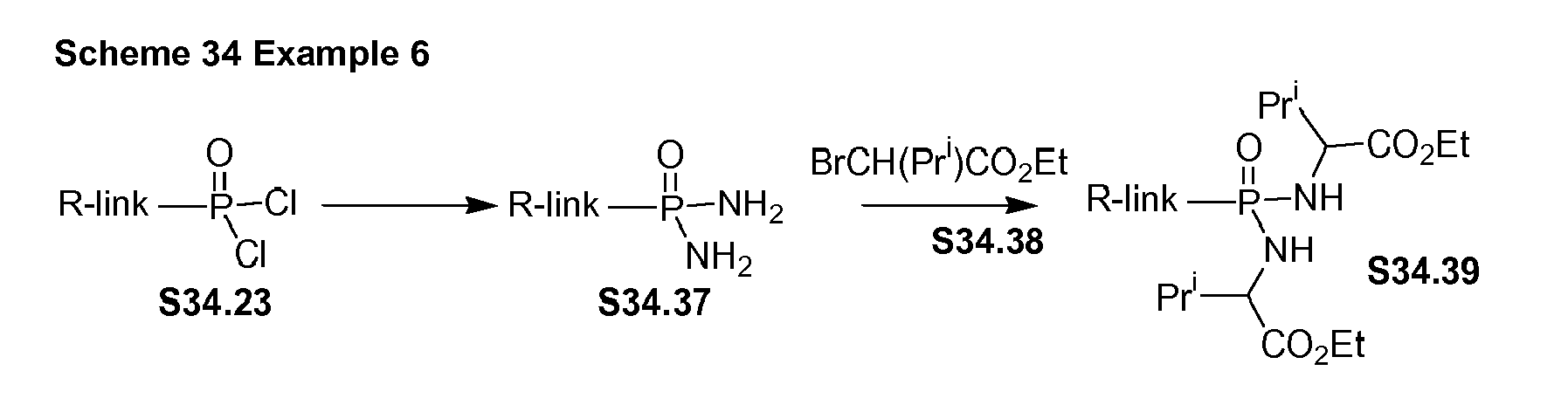

- Examples of this method are shown in Scheme 35, Examples and 2 and 3. In the sequence shown in Example 2, a monobenzyl phosphonate S35.11 is transformed by reaction with ethyl alaninate, using one of the methods described above, into the monoamidate S35.12. The benzyl group is then removed by catalytic hydrogenation in ethylacetate solution over a 5% palladium on carbon catalyst, to afford the phosphonic acid amidate S35.13. The product is then reacted in dichloromethane solution at ambient temperature with equimolar amounts of 1-(dimethylaminopropyl)-3-ethylcarbodiimide and trifluoroethanol S35.14, for example as described in Tet. Lett., 2001, 42, 8841, to yield the amidate ester S35.15.
- In the sequence shown in Scheme 35, Example 3, the monoamidate S35.13 is coupled, in tetrahydrofuran solution at ambient temperature, with equimolar amounts of dicyclohexyl carbodiimide and 4-hydroxy-N-methylpiperidine S35.16, to produce the amidate ester product S35.17.
- Using the above procedures, but employing, in place of the ethyl alaninate product S35.12 different monoacids S35.2, and in place of trifluoroethanol S35.14 or 4-hydroxy-N-methylpiperidine S35.16, different hydroxy compounds R3OH, the corresponding products S35.3 are obtained.
- Alternatively, the activated phosphonate ester S34.8 is reacted with ammonia to yield the amidate S35.4. The product is then reacted, as described in Scheme 34, with a haloester S35.5, in the presence of a base, to produce the amidate product S35.6. If appropriate, the nature of the R1 group is changed, using the procedures described above, to give the product S35.3. The method is illustrated in Scheme 35, Example 4. In this sequence, the monophenyl phosphoryl chloride S35.18 is reacted, as described in Scheme 34, with ammonia, to yield the amino product S35.19. This material is then reacted in N-methylpyrrolidinone solution at 170° with butyl 2-bromo-3-phenylpropionate S35.20 and potassium carbonate, to afford the amidate product S35.21.
- Using these procedures, but employing, in place of butyl 2-bromo-3-phenylpropionate S35.20, different haloesters S35.5, the corresponding products S35.6 are obtained.
- The monoamidate products S35.3 are also prepared from the doubly activated phosphonate derivatives S34.7. In this procedure, examples of which are described in Synlett., 1998, 1, 73, the intermediate S34.7 is reacted with a limited amount of the aminoester S34.9 to give the mono-displacement product S34.11. The latter compound is then reacted with the hydroxy compound R3OH in a polar organic solvent such as dimethylformamide, in the presence of a base such as diisopropylethylamine, to yield the monoamidate ester S35.3.
- The method is illustrated in Scheme 35, Example 5. In this method, the phosphoryl dichloride S35.22 is reacted in dichloromethane solution with one molar equivalent of ethyl N-methyl tyrosinate S35.23 and dimethylaminopyridine, to generate the monoamidate S35.24. The product is then reacted with phenol S35.25 in dimethylformamide containing potassium carbonate, to yield the ester amidate product S35.26.
- Using these procedures, but employing, in place of ethyl N-methyl tyrosinate S35.23 or phenol S35.25, the aminoesters 34.9 and/or the hydroxy compounds R3OH, the corresponding products S35.3 are obtained.


- Scheme 36 illustrates methods for the preparation of carboalkoxy-substituted phosphonate diesters in which one of the ester groups incorporates a carboalkoxy substituent.
- In one procedure, a phosphonate monoester S34.1, prepared as described above, is coupled, using one of the methods described above, with a hydroxyester S36.1, in which the groups R4b and R5b are as described in Scheme 34. For example, equimolar amounts of the reactants are coupled in the presence of a carbodiimide such as dicyclohexyl carbodiimide, as described in Aust. J. Chem., 1963, 609, optionally in the presence of dimethylaminopyridine, as described in Tet., 1999, 55, 12997. The reaction is conducted in an inert solvent at ambient temperature.
- The procedure is illustrated in Scheme 36, Example 1. In this method, a monophenyl phosphonate S36.9 is coupled, in dichloromethane solution in the presence of dicyclohexyl carbodiimide, with ethyl 3-hydroxy-2-methylpropionate S36.10 to yield the phosphonate mixed diester S36.11.
- Using this procedure, but employing, in place of ethyl 3-hydroxy-2-methylpropionate S36.10, different hydroxyesters S33.1, the corresponding products S33.2 are obtained.
- The conversion of a phosphonate monoester S34.1 into a mixed diester S36.2 is also accomplished by means of a Mitsunobu coupling reaction with the hydroxyester S36.1, as described in Org. Lett., 2001, 643. In this method, the reactants 34.1 and S36.1 are combined in a polar solvent such as tetrahydrofuran, in the presence of a triarylphosphine and a dialkyl azodicarboxylate, to give the mixed diester S36.2. The R1 substituent is varied by cleavage, using the methods described previously, to afford the monoacid product S36.3. The product is then coupled, for example using methods described above, with the hydroxy compound R3OH, to give the diester product S36.4.
- The procedure is illustrated in Scheme 36, Example 2. In this method, a monoallyl phosphonate S36.12 is coupled in tetrahydrofuran solution, in the presence of triphenylphosphine and diethylazodicarboxylate, with ethyl lactate S36.13 to give the mixed diester S36.14. The product is reacted with tris(triphenylphosphine) rhodium chloride (Wilkinson catalyst) in acetonitrile, as described previously, to remove the allyl group and produce the monoacid product S36.15. The latter compound is then coupled, in pyridine solution at ambient temperature, in the presence of dicyclohexyl carbodiimide, with one molar equivalent of 3-hydroxypyridine S36.16 to yield the mixed diester S36.17.
- Using the above procedures, but employing, in place of the ethyl lactate S36.13 or 3-hydroxypyridine, a different hydroxyester S36.1 and/or a different hydroxy compound R3OH, the corresponding products S36.4 are obtained.
- The mixed diesters S36.2 are also obtained from the monoesters S34.1 via the intermediacy of the activated monoesters S36.5. In this procedure, the monoester S34.1 is converted into the activated compound S36.5 by reaction with, for example, phosphorus pentachloride, as described in J. Org. Chem., 2001, 66, 329, or with thionyl chloride or oxalyl chloride (Lv = Cl), or with triisopropylbenzenesulfonyl chloride in pyridine, as described in Nucleosides and Nucleotides, 2000, 19, 1885, or with carbonyl diimidazole, as described in J. Med. Chem., 2002, 45, 1284. The resultant activated monoester is then reacted with the hydroxyester S36.1, as described above, to yield the mixed diester S36.2.
- The procedure is illustrated in Scheme 36, Example 3. In this sequence, a monophenyl phosphonate S36.9 is reacted, in acetonitrile solution at 70 °C, with ten equivalents of thionyl chloride, so as to produce the phosphoryl chloride S36.19. The product is then reacted with ethyl 4-carbamoyl-2-hydroxybutyrate S36.20 in dichloromethane containing triethylamine, to give the mixed diester S36.21.
- Using the above procedures, but employing, in place of ethyl 4-carbamoyl-2-hydroxybutyrate S36.20, different hydroxyesters S36.1, the corresponding products S36.2 are obtained.
- The mixed phosphonate diesters are also obtained by an alternative route for incorporation of the R3O group into intermediates S36.3 in which the hydroxyester moiety is already incorporated. In this procedure, the monoacid intermediate S36.3 is converted into the activated derivative S36.6 in which Lv is a leaving group such as chloro, imidazole, and the like, as previously described. The activated intermediate is then reacted with the hydroxy compound R3OH, in the presence of a base, to yield the mixed diester product S36.4.
- The method is illustrated in Scheme 36, Example 4. In this sequence, the phosphonate monoacid S36.22 is reacted with trichloromethanesulfonyl chloride in tetrahydrofuran containing collidine, as described in J. Med. Chem., 1995, 38, 4648, to produce the trichloromethanesulfonyloxy product S36.23. This compound is reacted with 3-(morpholinomethyl)phenol S36.24 in dichloromethane containing triethylamine, to yield the mixed diester product S36.25.
- Using the above procedures, but employing, in place of with 3-(morpholinomethyl)phenol S36.24, different alcohols R3OH, the corresponding products S36.4 are obtained.
- The phosphonate esters S36.4 are also obtained by means of alkylation reactions performed on the monoesters S34.1. The reaction between the monoacid S34.1 and the haloester S36.7 is performed in a polar solvent in the presence of a base such as diisopropylethylamine, as described in Anal. Chem., 1987, 59, 1056, or triethylamine, as described in J. Med. Chem., 1995, 38, 1372, or in a non-polar solvent such as benzene, in the presence of 18-crown-6, as described in Syn. Comm., 1995, 25, 3565.
- The method is illustrated in Scheme 36, Example 5. In this procedure, the monoacid S36.26 is reacted with ethyl 2-bromo-3-phenylpropionate 536.27 and diisopropylethylamine in dimethylformamide at 80 °C to afford the mixed diester product S36.28.
- Using the above procedure, but employing, in place of ethyl 2-bromo-3-phenylpropionate S36.27, different haloesters S36.7, the corresponding products S36.4 are obtained.

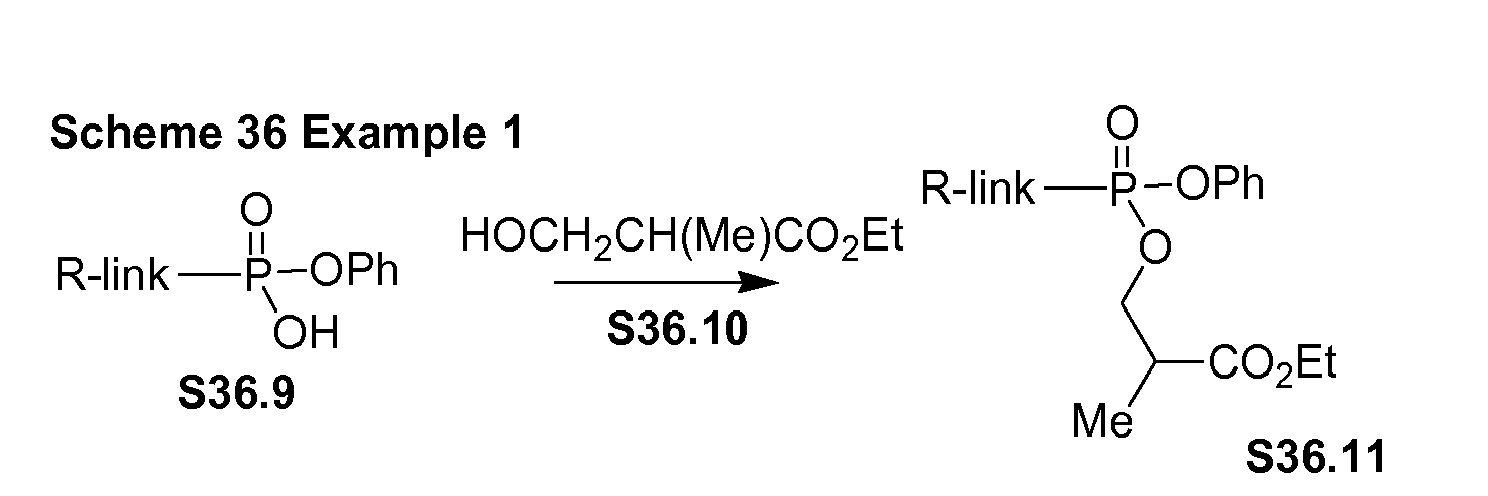


- Scheme 37 illustrates methods for the preparation of phosphonate diesters in which both the ester substituents incorporate carboalkoxy groups.
- The compounds are prepared directly or indirectly from the phosphonic acids S34.6. In one alternative, the phosphonic acid is coupled with the hydroxyester S37.2, using the conditions described previously in Schemes 34-36, such as coupling reactions using dicyclohexyl carbodiimide or similar reagents, or under the conditions of the Mitsunobu reaction, to afford the diester product S37.3 in which the ester substituents are identical.
- This method is illustrated in Scheme 37, Example 1. In this procedure, the phosphonic acid S34.6 is reacted with three molar equivalents of butyl lactate S37.5 in the presence of Aldrithiol-2 and triphenyl phosphine in pyridine at ca. 70 °C, to afford the diester S37.6.
- Using the above procedure, but employing, in place of butyl lactate S37.5, different hydroxyesters S37.2, the corresponding products S37.3 are obtained.
- Alternatively, the diesters S37.3 are obtained by alkylation of the phosphonic acid S34.6 with a haloester S37.1. The alkylation reaction is performed as described in Scheme 36 for the preparation of the esters S36.4.
- This method is illustrated in Scheme 37, Example 2. In this procedure, the phosphonic acid S34.6 is reacted with excess ethyl 3-bromo-2-methylpropionate S37.7 and diisopropylethylamine in dimethylformamide at ca. 80 °C, as described in Anal. Chem., 1987, 59, 1056, to produce the diester S37.8.
- Using the above procedure, but employing, in place of ethyl 3-bromo-2-methylpropionate S37.7, different haloesters S37.1, the corresponding products S37.3 are obtained.
- The diesters S37.3 are also obtained by displacement reactions of activated derivatives S34.7 of the phosphonic acid with the hydroxyesters S37.2. The displacement reaction is performed in a polar solvent in the presence of a suitable base, as described in Scheme 36. The displacement reaction is performed in the presence of an excess of the hydroxyester, to afford the diester product S37.3 in which the ester substituents are identical, or sequentially with limited amounts of different hydroxyesters, to prepare diesters S37.3 in which the ester substituents are different.
- The methods are illustrated in Scheme 37, Examples 3 and 4. As shown in Example 3, the phosphoryl dichloride S35.22 is reacted with three molar equivalents of ethyl 3-hydroxy-2-(hydroxymethyl)propionate S37.9 in tetrahydrofuran containing potassium carbonate, to obtain the diester product S37.10.
- Using the above procedure, but employing, in place of ethyl 3-hydroxy-2-(hydroxymethyl)propionate S37.9, different hydroxyesters S37.2, the corresponding products S37.3 are obtained.
- Scheme 37, Example 4 depicts the displacement reaction between equimolar amounts of the phosphoryl dichloride S35.22 and ethyl 2-methyl-3-hydroxypropionate S37.1 1, to yield the monoester product S37.12. The reaction is conducted in acetonitrile at 70° in the presence of diisopropylethylamine. The product S37.12 is then reacted, under the same conditions, with one molar equivalent of ethyl lactate S37.13, to give the diester product S37.14.
- Using the above procedures, but employing, in place of ethyl 2-methyl-3-hydroxypropionate S37.11 and ethyl lactate S37.13, sequential reactions with different hydroxyesters S37.2, the corresponding products S37.3 are obtained.


- 2,2-Dimethyl-2-aminoethylphosphonic acid intermediates can be prepared by the route in Scheme 5. Condensation of 2-methyl-2-propanesulfinamide with acetone give sulfinyl imine S38.11 (J. Org. Chem. 1999, 64, 12). Addition of dimethyl methylphosphonate lithium to S38.11 afford S38.12. Acidic methanolysis of S38.12 provide amine S38.13. Protection of amine with Cbz group and removal of methyl groups yield phosphonic acid S38.14, which can be converted to desired S38.15 (Scheme 38a) using methods reported earlier on. An alternative synthesis of compound S38.14 is also shown in Scheme 38b. Commercially available 2-amino-2-methyl-1-propanol is converted to aziridines S38.16 according to literature methods (J. Org. Chem. 1992, 57, 5813; Syn. Lett. 1997, 8, 893). Aziridine opening with phosphite give S38.17 ( Tetrahedron Lett. 1980, 21, 1623). Reprotection) of S38.17 affords S38.14.


- The invention will now be illustrated by the following non-limiting Examples.

- Representative compounds of the invention can be prepared as illustrated above. The core components of this reaction sequence are the transformations from primary alcohol 70.3 to phosphonate 70.6. Appropriate oxidant(s) can convert the primary alcohol (5'-hydroxy) in 70.3 to a carboxylic acid or its corresponding ester. In the case of an ester, an additional deprotection step will give the carboxylic acid 70.4. A variety of oxidation procedures can be found in the literature and can be utilized here. These include, but are not limited to, the following methods: (i) pyridinium dichromate in Ac2O, t-BuOH, and dichloromethane producing the t-butyl ester, followed by deprotection using a reagent such as trifluoroacetic acid to convert the ester to the corresponding carboxylic acid (see Classon, et al., Acta Chem. Scand. Ser. B 1985, 39, 501-504; Cristalli, et al., J. Med. Chem. 1988, 31, 1179-1183); (ii) iodobenzene diacetate and 2,2,6,6-tetramethyl-1-piperidinyloxy, free radical (TEMPO) in acetonitrile, producing the carboxylic acid (see Epp, et al., J. Org. Chem. 1999, 64, 293-295; Jung et al., J. Org. Chem. 2001, 66, 2624-2635); (iii) sodium periodate, ruthenium(III) chloride in chloroform producing the carboxylic acid (see Kim, et al., J. Med. Chem. 1994, 37, 4020-4030; Homma, et al., J. Med. Chem. 1992, 35, 2881-2890); (iv) chromium trioxide in acetic acid producing the carboxylic acid (see Olsson et al.; J. Med. Chem. 1986, 29, 1683-1689; Gallo-Rodriguez et al.; J. Med. Chem. 1994, 37, 636-646); (v) potassium permanganate in aqueous potassium hydroxide producing the carboxylic acid (see Ha, et al., J. Med. Chem. 1986, 29, 1683-1689; Franchetti, et al., J. Med. Chem. 1998, 41, 1708-1715); and (vi) nucleoside oxidase from S. maltophilia to give the carboxylic acid (see Mahmoudian, et al., Tetrahedron 1998, 54, 8171-8182).
- The preparation of 70.5 from 70.4 using lead(IV) tetraacetate (LG = OAc) is described by Teng et al., J. Org. Chem. 1994, 59, 278-280 and Schultz, et al; J. Org. Chem. 1983, 48; 3408-3412. When lead(IV) tetraacetate is used together with lithium chloride (see Kochi, et al., J. Am. Chem. Soc. 1965, 87, 2052), the corresponding chloride is obtained (70.5, LG = Cl). Lead(IV) tetraacetate in combination with N-chlorosuccinimide can produce the same product (70.5, LG = Cl) (see Wang, et al., Tetrahedron: Asymmetry 1990, 1, 527; and Wilson et al., Tetrahedron: Asymmetry 1990, 1, 525). Alternatively, the acetate leaving group (LG) can also be converted to other leaving group such as bromide by treatment of trimethylsilyl bromide to give 70.5 (see Spencer, et al., J. Org. Chem. 1999, 64, 3987-3995).
- The coupling of 70.5 (LG = OAc) with a variety of nucleophiles was described by Teng et al., Synlett 1996; 346-348 and
US 6,087,482 ; column 54 line 64 to column 55 line 20. Specifically, the coupling between 70.5 and diethyl hydroxymethylphosphonate in the presence of trimethylsilyl trifluoromethanesulfonate (TMS-OTf) is described. Other compounds with the general structure of HO-linker-PORP1RP2 can also be used so long as the functional groups in these compounds are compatible with the coupling reaction conditions. There are many examples in the published literature describing the coupling of 70.5 (LG = halogen) with a variety of alcohols. The reactions can be facilitated with a number of reagents, such as silver(I) salts (see Kim et al.; J. Org. Chem. 1991, 56, 2642-2647; Toikka et al., J. Chem. Soc. Perkins Trans. 1, 1999, 13, 1877-1884), mercury(II) salts (see Veeneman et al.; Recl. Trav. Chim. Pays-Bas. 1987, 106, 129-131), boron trifluoride diethyl etherate (see Kunz et al., Hel. Chim Acta 1985, 68, 283-287), tin(II) chloride (see O'Leary et al., J. Org. Chem. 1994, 59, 6629-6636), alkoxide (see Shortnacy-Fowler et al., Nucleosides Nucleotides 2001, 20, 1583-1598), and iodine (see Kartha et al., J. Chem. Soc. Perkins Trans. 1, 2001, 770-772). These methods can be selectively used in conjunction with different methods in forming 70.5 with various leaving groups (LG) to produce 70.6. - The introduction and removal of protecting groups is commonly practiced in the art of organic synthesis. Many sources of information on transformations involving protecting groups are available in the published literature, e.g. Greene and Wuts, Protecting Groups in Organic Synthesis, 3rd Ed., John Wiley & Sons, Inc., 1999. The main purpose is to temporarily transform a functional group so that it will survive a set of subsequent reaction procedures. Afterward, the original functional group can be restored by a preconceived deprotection procedure. Therefore, the transformations from 70.1 to 70.2, from 70.2 to 70.3, and from 70.6 to 70.7 are intended to allow important transformations (e.g., from 70.3 to 70.6) to occur while preserving the functional groups that already exist in the core structures.
- It should be understood that in the transformation 70.6 to 70.7, RP1 and RP2 need not remain unchanged. The final form of RP1 and RP2 can be selected from a variety of possible structures.

- The scheme shown above provides a specific example for the general scheme discussed above. Compound 70.2.1 is prepared using method described in the patent filing
WO 01/90121 - The phosphonic acids in 70.2.7 and 70.2.8 are illustrative examples. Other forms of phosphonates can be accessed via the phosphonic acid, or other forms, such as the corresponding diesters.
- A variety of compounds of the general structure 70.1 can either be prepared using procedures described in the literature, or be purchased from commercial sources. The following are good sources for information on the art of preparing a variety of compounds of the general structure 70.1: Townsend, Chemistry of Nucleosides and Nucleotides, Plenum Press, 1994; and Vorbruggen and Ruh-Pohlenz, Handbook of Nucleoside Synthesis, John Wiley & Sons, Inc., 2001.
- There are limited number of common precursors that were used to prepare the structures 70.1 in the examples that follow. Many of them are described in the various patents listed at the beginning of this document and the references cited therein. The following is a list of these common precursors and their commercial sources or method of preparation.

- Examples 71-153 employ the reaction conditions described above in Example 70. It should be understood that specific reagents, solvents, and reaction conditions used can be substituted by one skilled in the art to accommodate the structure and reactivity requirements of the starting materials. Alternative methods including, but not limited to, those discussed in Example 70 can be applied as needed. Alternative protection and deprotection procedures are also likely to be devised and adapted as needed.

- The following Schemes describe the general method of preparing the 2' fluoro, 2'-3' didehydro nucleosidescaffold of compounds of the present invention.
- Methods of introduction of fluorine at the 2' position of ribonucleosides and nucleoside analogs are described in
US 5824793 ;US 5859233 ; Choo, H. etal Journal of Medicinal Chemistry (2003), 46(3), 389-398; Moon, H. etal Journal of the Chemical Society, Perkin Transactions 1 (2002), (15), 1800-1804; Lee, Kyeong; Choi, Y. etal Journal of Medicinal Chemistry (2002), 45(6), 1313-1320; Lee, Kyeong; Choi, Yongseok; Hong, J. etal Nucleosides & Nucleotides (1999), 18(4 & 5), 537-540; Lee, K. etal Journal of Medicinal Chemistry (1999), 42(7), 1320-1328; Choi, Y. etal Tetrahedron Letters (1998), 39(25), 4437-4440; Chen, Shu-Hui etal Bioorganic & Medicinal Chemistry Letters (1998), 8(13), 1589-1594; Siddiqui, Maqbool etal Tetrahedron Letters (1998), 39(13), 1657-1660; Nakayama, Toshiaki etal Nucleic Acids Symposium Series (1991), 25(Symp. Nucleic Acids Chem., 18th, 1991), 191-2; Huang, Jai Tung etal Journal of Medicinal Chemistry (1991), 34(5), 1640-6; Sterzycki, Roman Z etal Journal of Medicinal Chemistry (1990), 33(8), 2150-7; Martin, Joseph A etal Journal of Medicinal Chemistry (1990), 33(8), 2137-45; Watanabe, Kyoichi etal Journal of Medicinal Chemistry (1990), 33(8), 2145-50; Zemlicka etal.Journal of the American Chemical Society (1972) 94(9):3213-3218. - Schemes 556 (A-F) show the synthetic routes which have been utilized to prepare the exemplary embodiments shown therein.
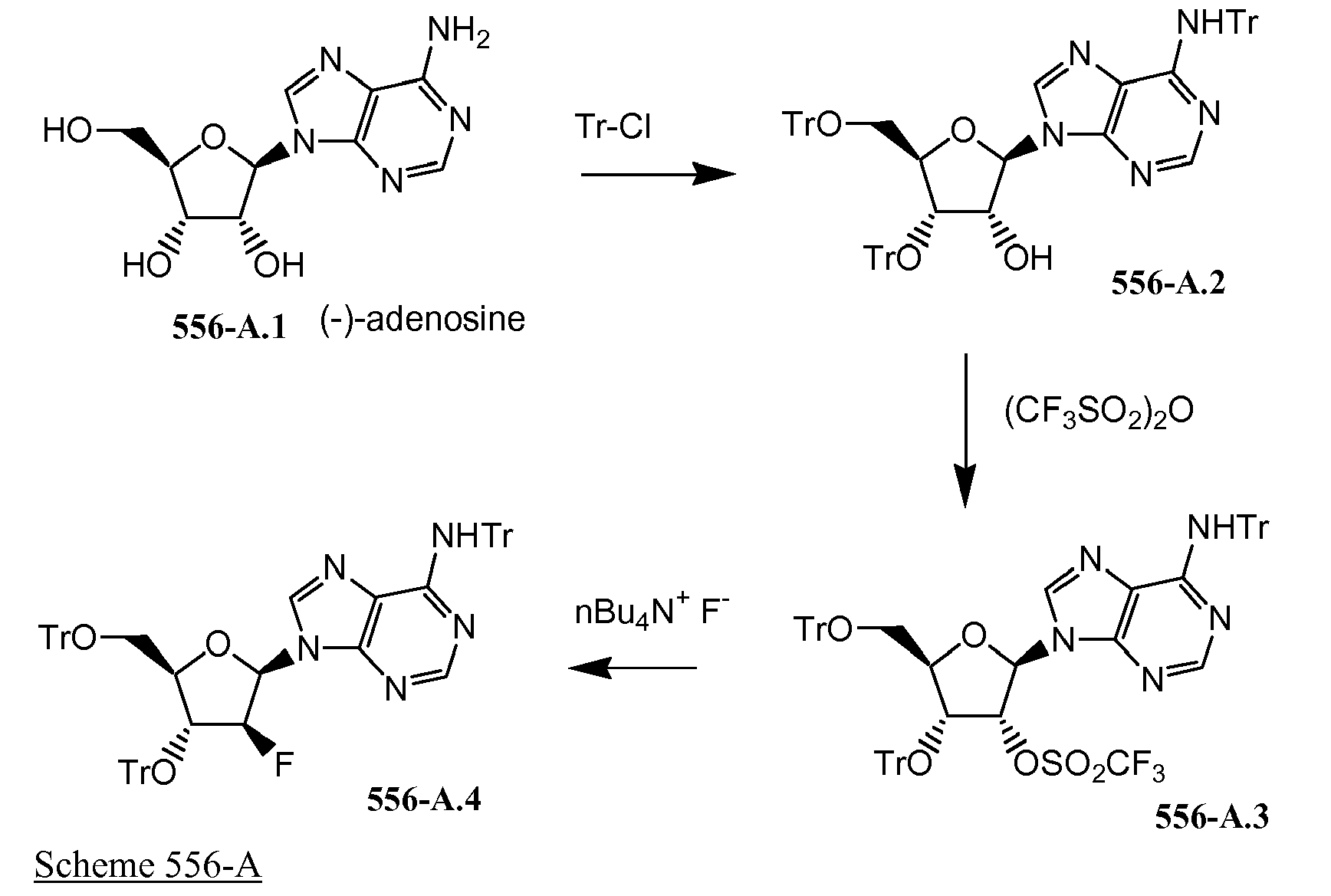
- The (-) enantiomer of adenosine 556-A.1 was tritylated at the N-6 of the adenine exocyclic amine and the 5' hydroxyl with an excess of trityl (Tr, triphenylmethyl, Ph3C-) chloride with dimethylaminopyridine in pyridine to give bis-trityl 556-A.2 which was treated with triflic anhydride in dichloromethane and DMAP to give 556-A.3 (Scheme 556-A). The 2' triflate group was displaced by fluoride with tetra-butylammonium fluoride in THF at room temperature to give 556-A.4.


Claims (15)
- A conjugate of the following formula:

wherein:B is adenine;X is selected from O, C(Ry)2, OC(Ry)2, NR and S;Z is independently selected from H, OH, OR, NR2, CN, NO2, SH, SR, F, Cl, Br, and I;Y1 is independently O, S, NR, +N(O)(R), N(OR), +N(O)(OR), or N-NR2;Y2 is independently O, CR2, NR, +N(O)(R), N(OR), +N(O)(OR), N-NR2, S, S-S, S(O), or S(O)2;M2 is 0, 1 or 2;Ry is independently H, F, Cl, Br, I, OH, -C(=Y1)R, -C(=Y1)OR, - C(=Y1)N(R)2, -N(R)2, +N(R)3, -SR, -S(O)R, -S(O)2R, -S(O)(OR), -S(O)2(OR), - OC(=Y1)R, -OC(=Y1)OR, -OC(=Y1)(N(R)2), -SC(=Y1)R, -SC(=Y1)OR, - SC(=Y1)(N(R)2), -N(R)C(=Y1)R, -N(R)C(=Y1)OR, or -N(R)C(=Y1)N(R)2, amino (-NH2), ammonium (-NH3 +), alkylamino, dialkylamino, trialkylammonium, C1-C8 alkyl, C1-C8 alkylhalide, carboxylate, sulfate, sulfamate, sulfonate, 5-7 membered ring sultam, C1-C8 alkylsulfonate, C1-C8 alkylamino, 4-dialkylaminopyridinium, C1-C8 alkylhydroxyl, C1-C8 alkylthiol, alkylsulfone (-SO2R) arylsulfone (-SO2Ar), arylsulfoxide (-SOAr), arylthio (-SAr), sulfonamide (-SO2NR2), alkylsulfoxide (-SOR), ester (-C(=O)OR), amido (-C(=O)NR2), 5-7 membered ring lactam, 5-7 membered ring lactone, nitrile (-CN), azido (-N3), nitro (-NO2), C1-C8 alkoxy (-OR), C1-C8 alkyl, C1-C8 substituted alkyl, C1-C8 alkenyl, C1-C8 substituted alkenyl, C1-C8 alkynyl, C1-C8 substituted alkynyl, C6-C20 aryl, C6-C20 substituted aryl, C2-C20 heterocycle, C2-C20 substituted heterocycle, polyethyleneoxy, or W3; or when taken together, Ry forms a carbocyclic ring of 3 to 7 carbon atoms;RX is independently Ry, a protecting group selected from a carboxyl ester, a carboxamide, an aryl ether, an alkyl ether, a trialkylsilyl ether, a sulfonic acid ester, a carbonate, and a carbamate, or the formula:wherein: M1a, M1c, and M1d are independently 0 or 1;M12c is 0, 1, 2, 3, 4, 5, 6, 7, 8, 9, 10, 11 or 12; andR is C1-C8 alkyl, C1-C8 substituted alkyl, C1-C8 alkenyl, C1-C8 substituted alkenyl, C1-C8 alkynyl, C1-C8 substituted alkynyl, C6-C20 aryl, C6-C20 substituted aryl, C2-C20 heterocycle, C2-C20 substituted heterocycle, or a protecting group selected from a carboxyl ester, a carboxamide, an aryl ether, an alkyl ether, a trialkylsilyl ether, a sulfonic acid ester, a carbonate, and a carbamate; andW3 is W4 or W5, where W4 is R, -C(Y1)Ry, -C(Y1)W5, -SO2Ry, or - SO2W5; and W5 is a carbocycle or a heterocycle wherein W5 is independently substituted with 0 to 3 Ry groups;wherein C1-C8 substituted alkyl, C1-C8 substituted alkenyl, C1-C8 substituted alkynyl, C6-C20 substituted aryl, and C2-C20 substituted heterocycle are independently substituted with one or more substituents selected from F, Cl, Br, I, OH, -NH2, -NH3 +, -NHR, -NR2, -NR3 +, C1-C8 alkylhalide, carboxylate, sulfate, sulfamate, sulfonate, 5-7 membered ring sultam, C1-C8 alkylsulfonate, C1-C8 alkylamino, 4-dialkylaminopyridinium, C1-C8 alkylhydroxyl, C1-C8 alkylthiol, -SO2R, -SO2Ar, -SOAr, -SAr, -SO2NR2, -SOR, -CO2R, -C(=O)NR2, 5-7 membered ring lactam, 5-7 membered ring lactone, -CN, -N3, -NO2, C1-C8 alkoxy, C1-C8 trifluoroalkyl, C1-C8 alkyl, C3-C12 carbocycle, C6-C20 aryl, C2-C20 heterocycle, polyethyleneoxy, phosphonate, phosphate, and a prodrug moiety.
 - The conjugate of claim 1 wherein W5 is selected from the structures:


- The conjugate of claim 1 wherein X is O and each Ry is H.
- The conjugate of claim 1 wherein the conjugate is a resolved enantiomer having the structure:

- The conjugate of claim 1 wherein the conjugate is a resolved enantiomer having the structure:

- The conjugate of claim 1 having the structure:

- The conjugate of claim 1 having the structure:

- The conjugate of claim 1 having the structure:

- The conjugate of claim 8 having the structure:

- The conjugate of claim 8 having the structure:

- The conjugate of claim 12 having the structure:

- The conjugate of claim 11 wherein Y2c is O.
- The conjugate of claim 11 wherein Y2c is N(CH3).
- A pharmaceutical composition comprising a pharmaceutically acceptable excipient and a conjugate as described in any one of claim 1 to 13, or a pharmaceutically acceptable salt or solvate thereof.
- A conjugate as described in any one of claim 1 to 13, or a pharmaceutically acceptable salt or solvate thereof for use in promoting an anti-viral effect in vitro or in vivo or
inhibiting a viral infection in an animal, comprising administering an effective amount of a conjugate as described in claim 1, or a pharmaceutically acceptable salt or solvate thereof, to the animal.
Applications Claiming Priority (92)
| Application Number | Priority Date | Filing Date | Title |
|---|---|---|---|
| US46532203P | 2003-04-25 | 2003-04-25 | |
| US46555303P | 2003-04-25 | 2003-04-25 | |
| US46564903P | 2003-04-25 | 2003-04-25 | |
| US46558403P | 2003-04-25 | 2003-04-25 | |
| US46584403P | 2003-04-25 | 2003-04-25 | |
| US46554803P | 2003-04-25 | 2003-04-25 | |
| US46553703P | 2003-04-25 | 2003-04-25 | |
| US46537703P | 2003-04-25 | 2003-04-25 | |
| US46569003P | 2003-04-25 | 2003-04-25 | |
| US46540803P | 2003-04-25 | 2003-04-25 | |
| US46540003P | 2003-04-25 | 2003-04-25 | |
| US46560203P | 2003-04-25 | 2003-04-25 | |
| US46563303P | 2003-04-25 | 2003-04-25 | |
| US46555903P | 2003-04-25 | 2003-04-25 | |
| US46561003P | 2003-04-25 | 2003-04-25 | |
| US46546903P | 2003-04-25 | 2003-04-25 | |
| US46559803P | 2003-04-25 | 2003-04-25 | |
| US46528903P | 2003-04-25 | 2003-04-25 | |
| US46582103P | 2003-04-25 | 2003-04-25 | |
| US46569603P | 2003-04-25 | 2003-04-25 | |
| US46568403P | 2003-04-25 | 2003-04-25 | |
| US46559103P | 2003-04-25 | 2003-04-25 | |
| US46569803P | 2003-04-25 | 2003-04-25 | |
| US46563003P | 2003-04-25 | 2003-04-25 | |
| US46575903P | 2003-04-25 | 2003-04-25 | |
| US46566703P | 2003-04-25 | 2003-04-25 | |
| US46556103P | 2003-04-25 | 2003-04-25 | |
| US46560003P | 2003-04-25 | 2003-04-25 | |
| US46555003P | 2003-04-25 | 2003-04-25 | |
| US46558703P | 2003-04-25 | 2003-04-25 | |
| US46563403P | 2003-04-25 | 2003-04-25 | |
| US46555403P | 2003-04-25 | 2003-04-25 | |
| US46560803P | 2003-04-25 | 2003-04-25 | |
| US46574203P | 2003-04-25 | 2003-04-25 | |
| US46554403P | 2003-04-25 | 2003-04-25 | |
| US46534703P | 2003-04-25 | 2003-04-25 | |
| US46546303P | 2003-04-25 | 2003-04-25 | |
| US46564703P | 2003-04-25 | 2003-04-25 | |
| US46572003P | 2003-04-25 | 2003-04-25 | |
| US46547803P | 2003-04-25 | 2003-04-25 | |
| US46568703P | 2003-04-25 | 2003-04-25 | |
| US49079903P | 2003-07-29 | 2003-07-29 | |
| US49567103P | 2003-08-15 | 2003-08-15 | |
| US49576003P | 2003-08-15 | 2003-08-15 | |
| US49534103P | 2003-08-15 | 2003-08-15 | |
| US49568403P | 2003-08-15 | 2003-08-15 | |
| US49531703P | 2003-08-15 | 2003-08-15 | |
| US49538703P | 2003-08-15 | 2003-08-15 | |
| US49568703P | 2003-08-15 | 2003-08-15 | |
| US49534403P | 2003-08-15 | 2003-08-15 | |
| US49527703P | 2003-08-15 | 2003-08-15 | |
| US49534503P | 2003-08-15 | 2003-08-15 | |
| US49553903P | 2003-08-15 | 2003-08-15 | |
| US49543003P | 2003-08-15 | 2003-08-15 | |
| US49534203P | 2003-08-15 | 2003-08-15 | |
| US49561603P | 2003-08-15 | 2003-08-15 | |
| US49577203P | 2003-08-15 | 2003-08-15 | |
| US49542503P | 2003-08-15 | 2003-08-15 | |
| US49527503P | 2003-08-15 | 2003-08-15 | |
| US49549003P | 2003-08-15 | 2003-08-15 | |
| US49563103P | 2003-08-15 | 2003-08-15 | |
| US49580503P | 2003-08-15 | 2003-08-15 | |
| US49556403P | 2003-08-15 | 2003-08-15 | |
| US49534903P | 2003-08-15 | 2003-08-15 | |
| US49596403P | 2003-08-15 | 2003-08-15 | |
| US49545303P | 2003-08-15 | 2003-08-15 | |
| US49563003P | 2003-08-15 | 2003-08-15 | |
| US49569603P | 2003-08-15 | 2003-08-15 | |
| US49560003P | 2003-08-15 | 2003-08-15 | |
| US49539303P | 2003-08-15 | 2003-08-15 | |
| US49576303P | 2003-08-15 | 2003-08-15 | |
| US49539203P | 2003-08-15 | 2003-08-15 | |
| US49549103P | 2003-08-15 | 2003-08-15 | |
| US49548503P | 2003-08-15 | 2003-08-15 | |
| US49563303P | 2003-08-15 | 2003-08-15 | |
| US49538803P | 2003-08-15 | 2003-08-15 | |
| US49527303P | 2003-08-15 | 2003-08-15 | |
| US49560203P | 2003-08-15 | 2003-08-15 | |
| US49527803P | 2003-08-15 | 2003-08-15 | |
| US49559203P | 2003-08-15 | 2003-08-15 | |
| US49533403P | 2003-08-15 | 2003-08-15 | |
| US49563203P | 2003-08-15 | 2003-08-15 | |
| US49534303P | 2003-08-15 | 2003-08-15 | |
| US51024503P | 2003-10-10 | 2003-10-10 | |
| US51425803P | 2003-10-24 | 2003-10-24 | |
| US51420203P | 2003-10-24 | 2003-10-24 | |
| US51394803P | 2003-10-24 | 2003-10-24 | |
| US51526603P | 2003-10-29 | 2003-10-29 | |
| US51947603P | 2003-11-12 | 2003-11-12 | |
| US52434003P | 2003-11-20 | 2003-11-20 | |
| US53259103P | 2003-12-23 | 2003-12-23 | |
| EP04750807A EP1628685B1 (en) | 2003-04-25 | 2004-04-26 | Antiviral phosphonate analogs |
Related Parent Applications (1)
| Application Number | Title | Priority Date | Filing Date |
|---|---|---|---|
| EP04750807.2 Division | 2004-04-26 |
Publications (1)
| Publication Number | Publication Date |
|---|---|
| EP2359833A1 true EP2359833A1 (en) | 2011-08-24 |
Family
ID=33425965
Family Applications (2)
| Application Number | Title | Priority Date | Filing Date |
|---|---|---|---|
| EP04750807A Expired - Lifetime EP1628685B1 (en) | 2003-04-25 | 2004-04-26 | Antiviral phosphonate analogs |
| EP20100184722 Withdrawn EP2359833A1 (en) | 2003-04-25 | 2004-04-26 | Antiviral phosphonate analogs |
Family Applications Before (1)
| Application Number | Title | Priority Date | Filing Date |
|---|---|---|---|
| EP04750807A Expired - Lifetime EP1628685B1 (en) | 2003-04-25 | 2004-04-26 | Antiviral phosphonate analogs |
Country Status (17)
| Country | Link |
|---|---|
| US (5) | US7429565B2 (en) |
| EP (2) | EP1628685B1 (en) |
| JP (2) | JP5069463B2 (en) |
| AT (1) | ATE490788T1 (en) |
| AU (1) | AU2004233898B2 (en) |
| CA (1) | CA2523083C (en) |
| CY (1) | CY1118836T1 (en) |
| DK (1) | DK1628685T3 (en) |
| EA (1) | EA014685B1 (en) |
| IL (1) | IL170894A (en) |
| MX (1) | MXPA05011297A (en) |
| NO (1) | NO338306B1 (en) |
| NZ (1) | NZ542342A (en) |
| PL (1) | PL1628685T3 (en) |
| PT (1) | PT1628685E (en) |
| SG (1) | SG182849A1 (en) |
| WO (1) | WO2004096286A2 (en) |
Families Citing this family (236)
| Publication number | Priority date | Publication date | Assignee | Title |
|---|---|---|---|---|
| PY0111577A (en) | 2000-05-23 | 2017-01-02 | Idenix Cayman Ltd | METHODS AND COMPOSITIONS FOR THE TREATMENT OF HEPATITIS C VIRUS |
| JP2003007697A (en) * | 2001-06-21 | 2003-01-10 | Hitachi Kokusai Electric Inc | Semiconductor device manufacturing method, substrate processing method and substrate processing apparatus |
| RU2005118421A (en) | 2002-11-15 | 2006-01-20 | Айденикс (Кайман) Лимитед (Ky) | 2'-BRANCHED NUCLEOSIDES AND MUTATION FLAVIVIRIDAE |
| PL1628685T3 (en) | 2003-04-25 | 2011-05-31 | Gilead Sciences Inc | Antiviral phosphonate analogs |
| BRPI0419345B8 (en) | 2003-05-30 | 2021-05-25 | Gilead Pharmasset Llc | use of (2'r)-2'-deoxy-2'-fluor-2'-c-methyl nucleoside and a pharmaceutical composition comprising it |
| US7491794B2 (en) * | 2003-10-14 | 2009-02-17 | Intermune, Inc. | Macrocyclic compounds as inhibitors of viral replication |
| CN101023094B (en) | 2004-07-21 | 2011-05-18 | 法莫赛特股份有限公司 | Preparation of alkyl-substituted 2-deoxy-2-fluoro-d-ribofuranosyl pyrimidines and purines and their derivatives |
| EP1778251B1 (en) | 2004-07-27 | 2011-04-13 | Gilead Sciences, Inc. | Nucleoside phosphonate conjugates as anti hiv agents |
| AU2011218664B2 (en) * | 2004-07-27 | 2014-08-21 | Gilead Sciences, Inc. | Antiviral compounds |
| MX2007003085A (en) | 2004-09-14 | 2007-08-02 | Pharmasset Inc | Preparation of 2' ifluoro-2'- alkyl- substituted or other optionally substituted ribofuranosyl pyrimidines and purines and their derivatives. |
| WO2006037090A2 (en) * | 2004-09-28 | 2006-04-06 | Purdue Research Foundation | Drug-phosphate conjugates as prodrugs |
| ES2401285T3 (en) | 2004-12-16 | 2013-04-18 | The Regents Of The University Of California | Drugs with lung as target |
| EP2537520A1 (en) | 2005-03-29 | 2012-12-26 | Biocryst Pharmaceuticals, Inc. | Hepatics C therapies |
| ITRM20050391A1 (en) * | 2005-07-22 | 2007-01-23 | Giuliani Spa | SIMPLE COMPOUNDS OF 6-THIOPHOUANOSINE TRIPOSPHATE, THEIR USE IN THE MEDICAL AREA AND PROCEDURE FOR THEIR PREPARATION. |
| JP5249028B2 (en) | 2005-07-25 | 2013-07-31 | インターミューン・インコーポレーテッド | Novel macrocyclic inhibitor of hepatitis C virus replication |
| US20080076740A1 (en) * | 2005-07-27 | 2008-03-27 | Gilead Sciences, Inc. | Antiviral compounds |
| GEP20104956B (en) * | 2005-10-11 | 2010-04-12 | Array Biopharma Inc | Compounds for inhibiting hepatitis c viral replication and use thereof |
| US8895531B2 (en) | 2006-03-23 | 2014-11-25 | Rfs Pharma Llc | 2′-fluoronucleoside phosphonates as antiviral agents |
| KR20090024834A (en) | 2006-07-05 | 2009-03-09 | 인터뮨, 인크. | New Inhibitors of Hepatitis C Virus Replication |
| WO2008005542A2 (en) * | 2006-07-07 | 2008-01-10 | Gilead Sciences, Inc., | Antiviral phosphinate compounds |
| US7951789B2 (en) | 2006-12-28 | 2011-05-31 | Idenix Pharmaceuticals, Inc. | Compounds and pharmaceutical compositions for the treatment of viral infections |
| SI2114980T1 (en) | 2007-01-12 | 2012-11-30 | Biocryst Pharm Inc | Antiviral nucleoside analogs |
| WO2008100447A2 (en) * | 2007-02-09 | 2008-08-21 | Gilead Sciences, Inc. | Nucleoside analogs for antiviral treatment |
| US7964580B2 (en) | 2007-03-30 | 2011-06-21 | Pharmasset, Inc. | Nucleoside phosphoramidate prodrugs |
| MX2009012093A (en) | 2007-05-10 | 2010-01-25 | Intermune Inc | Novel peptide inhibitors of hepatitis c virus replication. |
| TW200942243A (en) | 2008-03-05 | 2009-10-16 | Biocryst Pharm Inc | Antiviral therapeutic agents |
| US8846636B2 (en) | 2008-03-18 | 2014-09-30 | Lcb Pharma Inc. | Nucleoside analogues with quaternary carbon stereogenic centers and methods of use |
| KR20110005869A (en) | 2008-04-15 | 2011-01-19 | 인터뮨, 인크. | Novel Macrocyclic Inhibitors of Hepatitis C Virus Replication |
| HRP20130048T1 (en) | 2008-04-23 | 2013-02-28 | Gilead Sciences, Inc. | CARBA-NUCLEOSIDE ANALYSIS FOR ANTI-VIRUS THERAPY |
| WO2010036407A2 (en) | 2008-05-15 | 2010-04-01 | Biocryst Pharmaceuticals, Inc. | Antiviral nucleoside analogs |
| US8173621B2 (en) | 2008-06-11 | 2012-05-08 | Gilead Pharmasset Llc | Nucleoside cyclicphosphates |
| TW201012814A (en) * | 2008-07-01 | 2010-04-01 | Centocor Ortho Biotech Products L P | Cyclopropyl polymerase inhibitors |
| AU2009268681B2 (en) * | 2008-07-08 | 2014-10-02 | Gilead Sciences, Inc. | Salts of HIV inhibitor compounds |
| SG171914A1 (en) | 2008-12-02 | 2011-07-28 | Chiralgen Ltd | Method for the synthesis of phosphorus atom modified nucleic acids |
| PA8852101A1 (en) * | 2008-12-08 | 2010-07-27 | Medivir Ab | URACIL CYCLOPROPYLL NUCLEOTIDES |
| CL2009002206A1 (en) | 2008-12-23 | 2011-08-26 | Gilead Pharmasset Llc | Compounds derived from pyrrolo - (2-3-d] -pyrimidin-7 (6h) -tetrahydrofuran-2-yl phosphonamidate, pharmaceutical composition; and its use in the treatment of viral diseases. |
| TW201026715A (en) | 2008-12-23 | 2010-07-16 | Pharmasset Inc | Nucleoside phosphoramidates |
| JP6104504B2 (en) | 2008-12-23 | 2017-03-29 | ギリアド ファーマセット エルエルシー | Nucleoside analogues |
| KR101150254B1 (en) * | 2008-12-26 | 2012-06-12 | 한미사이언스 주식회사 | Process for preparing entecavir and intermediates used therein |
| AR075584A1 (en) | 2009-02-27 | 2011-04-20 | Intermune Inc | THERAPEUTIC COMPOSITIONS THAT INCLUDE beta-D-2'-DESOXI-2'-FLUORO-2'-C-METHYLYCTIDINE AND A CARDIEX ISOINDOL ACID DERIVATIVE AND ITS USES. COMPOUND. |
| US8618076B2 (en) | 2009-05-20 | 2013-12-31 | Gilead Pharmasset Llc | Nucleoside phosphoramidates |
| TWI583692B (en) | 2009-05-20 | 2017-05-21 | 基利法瑪席特有限責任公司 | Nucleoside phosphoramidates |
| EP2451461A4 (en) | 2009-07-06 | 2013-05-29 | Ontorii Inc | NOVEL NUCLEIC ACID PRECURSORS AND THEIR METHODS OF USE |
| WO2011035250A1 (en) | 2009-09-21 | 2011-03-24 | Gilead Sciences, Inc. | Processes and intermediates for the preparation of 1'-substituted carba-nucleoside analogs |
| PL3290428T3 (en) | 2010-03-31 | 2022-02-07 | Gilead Pharmasset Llc | Tablet comprising crystalline (s)-isopropyl 2-(((s)-(((2r,3r,4r,5r)-5-(2,4-dioxo-3,4-dihydropyrimidin-1 (2h)-yl)-4-fluoro-3-hydroxy-4-methyltetrahydrofuran-2-yl)methoxy)(phenoxy)phosphoryl)amino)propanoate |
| CL2011000716A1 (en) | 2010-03-31 | 2012-04-20 | Gilead Pharmasset Llc | Crystalline forms 1 6 of (s) -isopropyl-2 - (((s) - (((2r.3r.4r.5r) -5- (2,4-dioxo-3,4-dihydropyrimidin-1 (2h) -yl) -4-fluoro-3-hydroxy-4-methyl tetrahydrofuran-2-yl) methoxy) (phenoxy) phosphoryl) amino) propanoate; pharmaceutical composition and combination; and its use to treat a hepatitis c virus infection. |
| TWI515000B (en) | 2010-04-01 | 2016-01-01 | 伊迪尼克製藥公司 | Compounds and pharmaceutical compositions for the treatment of viral infections |
| EA025311B1 (en) | 2010-07-19 | 2016-12-30 | Гайлид Сайэнсиз, Инк. | Methods for the preparation of diasteromerically pure phosphoramidate prodrugs |
| ES2524356T3 (en) | 2010-07-22 | 2014-12-05 | Gilead Sciences, Inc. | Methods and compounds to treat infections caused by Paramyxoviridae virus |
| GEP20156313B (en) | 2010-09-22 | 2015-07-10 | Alios Biopharma Inc | Substituted nucleotide analogs |
| DK2620428T3 (en) | 2010-09-24 | 2019-07-01 | Wave Life Sciences Ltd | Asymmetric help group |
| WO2012075140A1 (en) | 2010-11-30 | 2012-06-07 | Pharmasset, Inc. | Compounds |
| CN103842369A (en) | 2011-03-31 | 2014-06-04 | 埃迪尼克斯医药公司 | Compounds and pharmaceutical compositions for the treatment of viral infections |
| PT2710019T (en) | 2011-05-19 | 2017-07-21 | Gilead Sciences Inc | Processes and intermediates for preparing anti-hiv agents |
| ES2553449T3 (en) | 2011-07-06 | 2015-12-09 | Gilead Sciences, Inc. | Compounds for HIV treatment |
| US9605019B2 (en) | 2011-07-19 | 2017-03-28 | Wave Life Sciences Ltd. | Methods for the synthesis of functionalized nucleic acids |
| CA2843885C (en) * | 2011-08-01 | 2020-03-10 | Mbc Pharma, Inc. | Vitamin b6 derivatives of nucleotides, acyclonucleotides and acyclonucleoside phosphonates |
| AR088441A1 (en) | 2011-09-12 | 2014-06-11 | Idenix Pharmaceuticals Inc | SUBSTITUTED CARBONYLOXYMETHYLPHOSPHORAMIDATE COMPOUNDS AND PHARMACEUTICAL COMPOSITIONS FOR THE TREATMENT OF VIRAL INFECTIONS |
| SI2709613T2 (en) | 2011-09-16 | 2020-12-31 | Gilead Pharmasset LLC c/o Gilead Sciences, Inc. | Methods for treating hcv |
| TW201331221A (en) | 2011-10-14 | 2013-08-01 | Idenix Pharmaceuticals Inc | Substituted 3',5'-cyclic phosphates of purine nucleotide compounds and pharmaceutical compositions for the treatment of viral infections |
| KR101976231B1 (en) * | 2011-10-14 | 2019-05-07 | 자크리토에 악치오네르노에 오브쉐스토보 "프로이즈보드스트벤노-콤머체스카야 아쏘치아치야 아즈트" | Salts of carbamoyl phosphonic acid esters which act as selective inhibitors of human immunodeficiency virus hiv-1 production |
| US8889159B2 (en) | 2011-11-29 | 2014-11-18 | Gilead Pharmasset Llc | Compositions and methods for treating hepatitis C virus |
| US8980865B2 (en) | 2011-12-22 | 2015-03-17 | Alios Biopharma, Inc. | Substituted nucleotide analogs |
| US8916538B2 (en) | 2012-03-21 | 2014-12-23 | Vertex Pharmaceuticals Incorporated | Solid forms of a thiophosphoramidate nucleotide prodrug |
| EP2827876A4 (en) | 2012-03-22 | 2015-10-28 | Alios Biopharma Inc | Pharmaceutical combinations comprising a thionucleotide analog |
| US8859098B2 (en) * | 2012-05-18 | 2014-10-14 | Lord Corporation | Acrylic adhesion promoters |
| EP2852604B1 (en) | 2012-05-22 | 2017-04-12 | Idenix Pharmaceuticals LLC | 3',5'-cyclic phosphoramidate prodrugs for hcv infection |
| US9296778B2 (en) | 2012-05-22 | 2016-03-29 | Idenix Pharmaceuticals, Inc. | 3′,5′-cyclic phosphate prodrugs for HCV infection |
| AP3913A (en) | 2012-05-22 | 2016-11-26 | Idenix Pharamaceuticals Inc | D-amino acid compounds for liver disease |
| HUE029038T2 (en) | 2012-05-25 | 2017-01-30 | Janssen Sciences Ireland Uc | Uracyl spirooxetane nucleosides |
| DK2872485T3 (en) | 2012-07-13 | 2021-03-08 | Wave Life Sciences Ltd | ASYMMETRIC ASSISTANCE GROUP |
| US9556216B2 (en) | 2012-08-31 | 2017-01-31 | Novartis Ag | 2′-Ethynyl nucleoside derivatives for treatment of viral infections |
| WO2014052638A1 (en) | 2012-09-27 | 2014-04-03 | Idenix Pharmaceuticals, Inc. | Esters and malonates of sate prodrugs |
| SG11201502750UA (en) | 2012-10-08 | 2015-06-29 | Idenix Pharmaceuticals Inc | 2'-chloro nucleoside analogs for hcv infection |
| EP2909222B1 (en) | 2012-10-22 | 2021-05-26 | Idenix Pharmaceuticals LLC | 2',4'-bridged nucleosides for hcv infection |
| EP2935304A1 (en) | 2012-12-19 | 2015-10-28 | IDENIX Pharmaceuticals, Inc. | 4'-fluoro nucleosides for the treatment of hcv |
| NZ729172A (en) | 2013-01-31 | 2018-06-29 | Gilead Pharmasset Llc | Combination formulation of two antiviral compounds |
| WO2014137930A1 (en) | 2013-03-04 | 2014-09-12 | Idenix Pharmaceuticals, Inc. | Thiophosphate nucleosides for the treatment of hcv |
| US9309275B2 (en) | 2013-03-04 | 2016-04-12 | Idenix Pharmaceuticals Llc | 3′-deoxy nucleosides for the treatment of HCV |
| EP2940031B1 (en) * | 2013-03-08 | 2017-09-27 | Nanjing Sanhome Pharmaceutical Co., Ltd. | Nucleoside phosphoramidate compounds for use in the treatment of hcv |
| EP2970357B1 (en) | 2013-03-13 | 2025-01-01 | Idenix Pharmaceuticals LLC | Amino acid phosphoramidate pronucleotides of 2'-cyano, azido and amino nucleosides for the treatment of hcv |
| SMT201800538T1 (en) | 2013-03-15 | 2019-01-11 | Univ California | Acyclic nucleoside phosphonate diesters |
| EP2981542B1 (en) | 2013-04-01 | 2021-09-15 | Idenix Pharmaceuticals LLC | 2',4'-fluoro nucleosides for the treatment of hcv |
| US10005779B2 (en) | 2013-06-05 | 2018-06-26 | Idenix Pharmaceuticals Llc | 1′,4′-thio nucleosides for the treatment of HCV |
| WO2015017713A1 (en) | 2013-08-01 | 2015-02-05 | Idenix Pharmaceuticals, Inc. | D-amino acid phosphoramidate pronucleotides of halogeno pyrimidine compounds for liver disease |
| JP2016529293A (en) | 2013-08-27 | 2016-09-23 | ギリアド ファーマセット エルエルシー | Combination preparation of two antiviral compounds |
| KR102423317B1 (en) | 2014-01-16 | 2022-07-22 | 웨이브 라이프 사이언시스 리미티드 | Chiral design |
| WO2015161137A1 (en) | 2014-04-16 | 2015-10-22 | Idenix Pharmaceuticals, Inc. | 3'-substituted methyl or alkynyl nucleosides for the treatment of hcv |
| TW201613936A (en) | 2014-06-20 | 2016-04-16 | Gilead Sciences Inc | Crystalline forms of(2R,5S,13aR)-8-hydroxy-7,9-dioxo-n-(2,4,6-trifluorobenzyl)-2,3,4,5,7,9,13,13a-octahydro-2,5-methanopyrido[1',2':4,5]pyrazino[2,1-b][1,3]oxazepine-10-carboxamide |
| NO2717902T3 (en) | 2014-06-20 | 2018-06-23 | ||
| US20160067255A1 (en) | 2014-09-04 | 2016-03-10 | Gilead Sciences, Inc. | Methods of treating or preventing hiv in patients using a combination of tenofovir alafenamide and dolutegravir |
| HRP20220651T1 (en) | 2014-09-15 | 2022-08-19 | The Regents Of The University Of California | Nucleotide analogs |
| US10696703B2 (en) | 2014-10-29 | 2020-06-30 | Tokyo University Of Science Foundation | Method for producing eushearlilides |
| TWI740546B (en) | 2014-10-29 | 2021-09-21 | 美商基利科學股份有限公司 | Methods for the preparation of ribosides |
| TWI738321B (en) | 2014-12-23 | 2021-09-01 | 美商基利科學股份有限公司 | Polycyclic-carbamoylpyridone compounds and their pharmaceutical use |
| ES2735087T3 (en) | 2014-12-24 | 2019-12-16 | Gilead Sciences Inc | Fused pyrimidine compounds for HIV treatment |
| TW202237569A (en) | 2014-12-24 | 2022-10-01 | 美商基利科學股份有限公司 | Quinazoline compounds |
| EP3237397B1 (en) | 2014-12-24 | 2018-11-21 | Gilead Sciences, Inc. | Isoquinoline compounds for the treatment of hiv |
| IL296496B2 (en) | 2014-12-26 | 2024-10-01 | Univ Emory | N4-hydroxycytidine, history and related antiviral uses |
| WO2016134058A1 (en) * | 2015-02-18 | 2016-08-25 | Abbvie Inc. | Combinations useful to treat hepatitis c virus |
| DK3097102T3 (en) | 2015-03-04 | 2018-01-22 | Gilead Sciences Inc | TOLL-LIKE RECEPTOR MODULATING 4,6-DIAMINO-PYRIDO [3,2-D] PYRIMIDINE COMPOUNDS |
| GEP20217282B (en) | 2015-03-06 | 2021-08-10 | Atea Pharmaceuticals Inc | β-D-2'-DEOXY-2'α-FLUORO-2'-β-C-SUBSTITUTED-2-MODIFIED-N6-SUBSTITUTED PURINE NUCLEOTIDES FOR HCV TREATMENT |
| TR201905009T4 (en) | 2015-04-02 | 2019-05-21 | Gilead Sciences Inc | Polycyclic-carbamoylpyridone compounds and their pharmaceutical uses. |
| JP2018525412A (en) | 2015-08-26 | 2018-09-06 | ギリアード サイエンシーズ, インコーポレイテッド | Deuterated toll-like receptor modulator |
| US10377782B2 (en) | 2015-09-15 | 2019-08-13 | The Regents Of The University Of California | Nucleotide analogs |
| HRP20220355T1 (en) | 2015-09-16 | 2022-05-13 | Gilead Sciences, Inc. | Methods for treating coronaviridae infections |
| JP2018529714A (en) | 2015-09-30 | 2018-10-11 | ギリアード サイエンシーズ, インコーポレイテッド | Compounds and combinations for the treatment of HIV |
| PL3390441T3 (en) | 2015-12-15 | 2022-01-10 | Gilead Sciences, Inc. | Human immunodeficiency virus neutralizing antibodies |
| US10390758B2 (en) * | 2016-03-24 | 2019-08-27 | Samsung Electronics Co., Ltd. | Method and apparatus for triage and subsequent escalation based on biosignals or biometrics |
| EP3455219A4 (en) | 2016-05-10 | 2019-12-18 | C4 Therapeutics, Inc. | AMINE-LINKED C3-GLUTARIMIDE DEGRONIMERS FOR THE DEGRADATION OF TARGET PROTEINS |
| CN109641874A (en) | 2016-05-10 | 2019-04-16 | C4医药公司 | C for target protein degradation3The glutarimide degron body of carbon connection |
| CN109562107A (en) | 2016-05-10 | 2019-04-02 | C4医药公司 | Heterocycle degron body for target protein degradation |
| EP4483875A3 (en) | 2016-05-10 | 2025-04-02 | C4 Therapeutics, Inc. | Spirocyclic degronimers for target protein degradation |
| US10202412B2 (en) | 2016-07-08 | 2019-02-12 | Atea Pharmaceuticals, Inc. | β-D-2′-deoxy-2′-substituted-4′-substituted-2-substituted-N6-substituted-6-aminopurinenucleotides for the treatment of paramyxovirus and orthomyxovirus infections |
| WO2018013937A1 (en) | 2016-07-14 | 2018-01-18 | Atea Pharmaceuticals, Inc. | Beta-d-2'-deoxy-2'-alpha-fluoro-2'-beta-c-substituted-4'-fluoro-n6-substituted-6-amino-2-substituted purine nucleotides for the treatment of hepatitis c virus infection |
| TW202138365A (en) | 2016-08-19 | 2021-10-16 | 美商基利科學股份有限公司 | Therapeutic compounds |
| WO2018042331A1 (en) | 2016-08-31 | 2018-03-08 | Glaxosmithkline Intellectual Property (No.2) Limited | Combinations and uses and treatments thereof |
| WO2018042332A1 (en) | 2016-08-31 | 2018-03-08 | Glaxosmithkline Intellectual Property (No.2) Limited | Combinations and uses and treatments thereof |
| WO2018045317A1 (en) | 2016-09-02 | 2018-03-08 | Dicerna Pharmaceuticals, Inc. | 4'-phosphate analogs and oligonucleotides comprising the same |
| MA46093A (en) | 2016-09-02 | 2021-05-19 | Gilead Sciences Inc | TOLL-TYPE RECEIVER MODULATING COMPOUNDS |
| WO2018045150A1 (en) | 2016-09-02 | 2018-03-08 | Gilead Sciences, Inc. | 4,6-diamino-pyrido[3,2-d]pyrimidine derivaties as toll like receptor modulators |
| PT3512863T (en) | 2016-09-07 | 2022-03-09 | Atea Pharmaceuticals Inc | 2'-substituted-n6-substituted purine nucleotides for rna virus treatment |
| WO2018051250A1 (en) | 2016-09-14 | 2018-03-22 | Viiv Healthcare Company | Combination comprising tenofovir alafenamide, bictegravir and 3tc |
| US10800772B2 (en) | 2016-09-28 | 2020-10-13 | Gilead Sciences, Inc. | Therapeutic compounds |
| US10266558B2 (en) * | 2016-10-07 | 2019-04-23 | Alexandre Vasilievich Ivachtchenko | Macroheterocyclic nucleoside derivatives and their analogues, production and use thereof |
| US10407438B2 (en) | 2016-10-27 | 2019-09-10 | Gilead Sciences, Inc. | Crystalline forms of darunavir |
| AR110768A1 (en) | 2017-01-31 | 2019-05-02 | Gilead Sciences Inc | CRYSTAL FORMS OF TENOFOVIR ALAFENAMIDA |
| CN110248951B (en) | 2017-02-01 | 2022-10-28 | 阿堤亚制药公司 | Nucleotide hemisulfate salt for treating hepatitis C virus |
| AR110922A1 (en) | 2017-02-06 | 2019-05-15 | Gilead Sciences Inc | HIV INHIBITING COMPOUNDS |
| CN116036112A (en) | 2017-03-14 | 2023-05-02 | 吉利德科学公司 | Methods of Treating Feline Coronavirus Infection |
| EP3613750B1 (en) | 2017-04-17 | 2024-12-11 | Kyoto University | Optically-active 2-amino-phosphonoalkane acid, optically-active 2-amino-phosphonoalkane acid salt, and hydrates of these |
| WO2018204198A1 (en) | 2017-05-01 | 2018-11-08 | Gilead Sciences, Inc. | Crystalline forms of (s) 2 ethylbutyl 2 (((s) (((2r,3s,4r,5r) 5 (4 aminopyrrolo[2,1-f] [1,2,4]triazin-7-yl)-5-cyano-3,4-dihydroxytetrahydrofuran-2 yl)methoxy)(phenoxy) phosphoryl)amino)propanoate |
| WO2018230479A1 (en) * | 2017-06-13 | 2018-12-20 | 大原薬品工業株式会社 | 5'-position silyl ether derivative for nucleoside anti-cancer agent or anti-virus agent |
| EP3641762B1 (en) | 2017-06-20 | 2026-02-18 | C4 Therapeutics, Inc. | N/o-linked degrons and degronimers for protein degradation |
| TWI728250B (en) | 2017-06-21 | 2021-05-21 | 美商基利科學股份有限公司 | Multispecific antibodies that target hiv gp120 and cd3 |
| EP4512475A3 (en) | 2017-07-11 | 2025-05-14 | Gilead Sciences, Inc. | Compositions comprising an rna polymerase inhibitor and cyclodextrin for treating viral infections |
| US10688112B2 (en) | 2017-07-13 | 2020-06-23 | Emory University | Lipid disulfide prodrugs and uses related thereto |
| EP3661937B1 (en) | 2017-08-01 | 2021-07-28 | Gilead Sciences, Inc. | Crystalline forms of ethyl ((s)-((((2r,5r)-5-(6-amino-9h-purin-9-yl)-4-fluoro-2,5-dihydrofuran-2-yl)oxy)methyl)(phenoxy)phosphoryl)-l-alaninate (gs-9131) for treating viral infections |
| TWI687415B (en) | 2017-08-17 | 2020-03-11 | 美商基利科學股份有限公司 | Solid forms of an hiv capsid inhibitor |
| AR112412A1 (en) | 2017-08-17 | 2019-10-23 | Gilead Sciences Inc | CHOLINE SALT FORMS OF AN HIV CAPSID INHIBITOR |
| JOP20180092A1 (en) | 2017-10-13 | 2019-04-13 | Gilead Sciences Inc | Hiv protease inhibitors |
| US20190151307A1 (en) | 2017-10-24 | 2019-05-23 | Gilead Sciences, Inc. | Methods of treating patients co-infected with a virus and tuberculosis |
| KR102626210B1 (en) | 2017-12-07 | 2024-01-18 | 에모리 유니버시티 | N4-hydroxycytidine and derivatives and anti-viral uses related thereto |
| JP7098748B2 (en) | 2017-12-20 | 2022-07-11 | インスティチュート オブ オーガニック ケミストリー アンド バイオケミストリー エーエスシーアール,ヴイ.ヴイ.アイ. | 2'3'cyclic dinucleotide with phosphonate binding that activates the STING adapter protein |
| KR102492187B1 (en) | 2017-12-20 | 2023-01-27 | 인스티튜트 오브 오가닉 케미스트리 앤드 바이오케미스트리 에이에스 씨알 브이.브이.아이. | 3'3' cyclic dinucleotides with phosphonate linkages that activate STING adapter proteins |
| CN111836805B (en) | 2018-02-15 | 2023-07-14 | 吉利德科学公司 | Pyridine derivatives and their use in the treatment of HIV infection |
| TWI745652B (en) | 2018-02-16 | 2021-11-11 | 美商基利科學股份有限公司 | Methods and intermediates for preparing therapeutic compounds |
| TWI818007B (en) | 2018-04-06 | 2023-10-11 | 捷克科學院有機化學與生物化學研究所 | 2'3'-cyclic dinucleotides |
| TW202005654A (en) | 2018-04-06 | 2020-02-01 | 捷克科學院有機化學與生物化學研究所 | 2'2'-cyclic dinucleotides |
| TWI833744B (en) | 2018-04-06 | 2024-03-01 | 捷克科學院有機化學與生物化學研究所 | 3'3'-cyclic dinucleotides |
| WO2019200005A1 (en) | 2018-04-10 | 2019-10-17 | Atea Pharmaceuticals, Inc. | Treatment of hcv infected patients with cirrhosis |
| US20190359645A1 (en) | 2018-05-03 | 2019-11-28 | Institute Of Organic Chemistry And Biochemistry Ascr, V.V.I. | 2'3'-cyclic dinucleotides comprising carbocyclic nucleotide |
| PL237998B1 (en) | 2018-05-28 | 2021-06-28 | Narodowy Inst Lekow | Phosphonic derivatives of 3-carboxyacylbetulinic acid, method for obtaining them and their application |
| HUE071524T2 (en) | 2018-07-03 | 2025-09-28 | Gilead Sciences Inc | Antibodies that target hiv gp120 and methods of use |
| US11944611B2 (en) | 2018-07-16 | 2024-04-02 | Gilead Sciences, Inc. | Capsid inhibitors for the treatment of HIV |
| TWI829205B (en) | 2018-07-30 | 2024-01-11 | 美商基利科學股份有限公司 | Anti-hiv compounds |
| EP3860717A1 (en) | 2018-10-03 | 2021-08-11 | Gilead Sciences, Inc. | Imidozopyrimidine derivatives |
| US20210353660A1 (en) * | 2018-10-04 | 2021-11-18 | Octagon Therapeutics Inc. | Pre-Activated Nucleoside IMPDH Inhibitors As Anti-Infective Drugs |
| WO2020092528A1 (en) | 2018-10-31 | 2020-05-07 | Gilead Sciences, Inc. | Substituted 6-azabenzimidazole compounds having hpk1 inhibitory activity |
| PE20211655A1 (en) | 2018-10-31 | 2021-08-24 | Gilead Sciences Inc | 6-AZABENZIMIDAZOLE COMPOUNDS SUBSTITUTED AS HPK1 INHIBITORS |
| WO2020176505A1 (en) | 2019-02-25 | 2020-09-03 | Gilead Sciences, Inc. | Protein kinase c agonists |
| WO2020176510A1 (en) | 2019-02-25 | 2020-09-03 | Gilead Sciences, Inc. | Protein kinase c agonists |
| CN109761984B (en) * | 2019-02-27 | 2020-07-07 | 河南师范大学 | Method for the synthesis of chiral five-membered carbocyclic purine nucleosides by asymmetric hydrogen transfer |
| WO2020178770A1 (en) | 2019-03-07 | 2020-09-10 | Institute Of Organic Chemistry And Biochemistry Ascr, V.V.I. | 3'3'-cyclic dinucleotides and prodrugs thereof |
| CN113543851B (en) | 2019-03-07 | 2025-03-18 | 捷克共和国有机化学与生物化学研究所 | 2'3'-Cyclic dinucleotides and prodrugs thereof |
| WO2020178768A1 (en) | 2019-03-07 | 2020-09-10 | Institute Of Organic Chemistry And Biochemistry Ascr, V.V.I. | 3'3'-cyclic dinucleotide analogue comprising a cyclopentanyl modified nucleotide as sting modulator |
| IL286328B1 (en) | 2019-03-22 | 2026-04-01 | Gilead Sciences Inc | Bridged tricyclic carbamoylpyridone compounds and their pharmaceutical use |
| TW202210480A (en) | 2019-04-17 | 2022-03-16 | 美商基利科學股份有限公司 | Solid forms of a toll-like receptor modulator |
| TW202104210A (en) | 2019-04-17 | 2021-02-01 | 美商基利科學股份有限公司 | Hiv protease inhibitors |
| TW202212339A (en) | 2019-04-17 | 2022-04-01 | 美商基利科學股份有限公司 | Solid forms of a toll-like receptor modulator |
| WO2020214647A1 (en) | 2019-04-17 | 2020-10-22 | Gilead Sciences, Inc. | Solid forms of an hiv protease inhibitor |
| AU2020267486B2 (en) | 2019-05-09 | 2025-12-18 | Aligos Therapeutics, Inc. | Modified cyclic dinucleoside compounds as STING modulators |
| TWI762925B (en) | 2019-05-21 | 2022-05-01 | 美商基利科學股份有限公司 | Methods of identifying hiv patients sensitive to therapy with gp120 v3 glycan-directed antibodies |
| TWI826690B (en) | 2019-05-23 | 2023-12-21 | 美商基利科學股份有限公司 | Substituted eneoxindoles and uses thereof |
| RU2717101C1 (en) | 2019-06-03 | 2020-03-18 | Андрей Александрович Иващенко | Anellated 9-hydroxy-1,8-dioxo-1,3,4,8-tetrahydro-2h-pyrido[1,2-a]pyrazine-7-carboxamides - integrase inhibitors, methods for preparing and using thereof |
| US20220305115A1 (en) | 2019-06-18 | 2022-09-29 | Janssen Sciences Ireland Unlimited Company | Combination of hepatitis b virus (hbv) vaccines and pyridopyrimidine derivatives |
| AU2020301161B2 (en) | 2019-06-25 | 2023-10-26 | Gilead Sciences, Inc. | FLT3L-Fc fusion proteins and methods of use |
| AU2020315598B2 (en) | 2019-07-16 | 2024-12-12 | Gilead Sciences, Inc. | HIV vaccines and methods of making and using |
| WO2021011891A1 (en) | 2019-07-18 | 2021-01-21 | Gilead Sciences, Inc. | Long-acting formulations of tenofovir alafenamide |
| WO2021034804A1 (en) | 2019-08-19 | 2021-02-25 | Gilead Sciences, Inc. | Pharmaceutical formulations of tenofovir alafenamide |
| CA3152013A1 (en) | 2019-08-22 | 2021-02-25 | Emory University | Nucleoside prodrugs and uses related thereto |
| EP4643882A3 (en) | 2019-11-26 | 2026-01-14 | Gilead Sciences, Inc. | Capsid inhibitors for the prevention of hiv |
| EP4445902A3 (en) | 2019-12-24 | 2024-12-18 | Carna Biosciences, Inc. | Diacylglycerol kinase modulating compounds |
| AU2021214911A1 (en) | 2020-01-27 | 2022-07-21 | Gilead Sciences, Inc. | Methods for treating SARS CoV-2 infections |
| CR20220418A (en) | 2020-02-24 | 2022-10-10 | Gilead Sciences Inc | Tetracyclic compounds for treating hiv infection |
| US10874687B1 (en) | 2020-02-27 | 2020-12-29 | Atea Pharmaceuticals, Inc. | Highly active compounds against COVID-19 |
| CN118994170A (en) | 2020-03-12 | 2024-11-22 | 吉利德科学公司 | Process for preparing 1' -cyanonucleosides |
| CA3169348A1 (en) | 2020-03-20 | 2021-09-23 | Gilead Sciences, Inc. | Prodrugs of 4'-c-substituted-2-halo-2'-deoxyadenosine nucleosides and methods of making and using the same |
| EP4132651B1 (en) | 2020-04-06 | 2026-03-18 | Gilead Sciences, Inc. | Inhalation formulations of 1'-cyano substituted carbanucleoside analogs |
| WO2021236944A1 (en) | 2020-05-21 | 2021-11-25 | Gilead Sciences, Inc. | Pharmaceutical compositions comprising bictegravir |
| ES3041698T3 (en) | 2020-05-29 | 2025-11-13 | Gilead Sciences Inc | Remdesivir for the treatment of viral infections |
| CA3187821A1 (en) | 2020-06-24 | 2021-12-30 | Gilead Sciences, Inc. | 1'-cyano nucleoside analogs and uses thereof |
| JP7520162B2 (en) | 2020-06-25 | 2024-07-22 | ギリアード サイエンシーズ, インコーポレイテッド | Capsid inhibitors for the treatment of HIV - Patents.com |
| ES3054072T3 (en) | 2020-08-07 | 2026-01-29 | Gilead Sciences Inc | Prodrugs of phosphonamide nucleotide analogues and their pharmaceutical use |
| WO2022047065A2 (en) | 2020-08-27 | 2022-03-03 | Gilead Sciences, Inc. | Compounds and methods for treatment of viral infections |
| CA3192145A1 (en) | 2020-09-30 | 2022-04-07 | Gilead Sciences, Inc. | Bridged tricyclic carbamoylpyridone compounds and uses thereof |
| TW202406932A (en) | 2020-10-22 | 2024-02-16 | 美商基利科學股份有限公司 | Interleukin-2-fc fusion proteins and methods of use |
| JP7659628B2 (en) | 2020-11-11 | 2025-04-09 | ギリアード サイエンシーズ, インコーポレイテッド | Methods for identifying HIV patients susceptible to treatment with antibodies directed against the gp120 CD4 binding site - Patents.com |
| JP7591155B2 (en) | 2021-01-19 | 2024-11-27 | ギリアード サイエンシーズ, インコーポレイテッド | Substituted pyridotriazine compounds and uses thereof |
| TW202313094A (en) | 2021-05-18 | 2023-04-01 | 美商基利科學股份有限公司 | Methods of using flt3l-fc fusion proteins |
| BR112023026356A2 (en) | 2021-06-17 | 2024-03-05 | Atea Pharmaceuticals Inc | METHOD FOR TREATING HEPATITIS C VIRUS OR A CONDITION RESULTING FROM A HEPATITIS C INFECTION, COMBINATION, USE OF THE COMBINATION, PHARMACEUTICAL COMPOSITION, AND, KIT FOR TREATMENT OF HEPATITIS C VIRUS |
| WO2022271659A1 (en) | 2021-06-23 | 2022-12-29 | Gilead Sciences, Inc. | Diacylglyercol kinase modulating compounds |
| EP4359415A1 (en) | 2021-06-23 | 2024-05-01 | Gilead Sciences, Inc. | Diacylglyercol kinase modulating compounds |
| US11932634B2 (en) | 2021-06-23 | 2024-03-19 | Gilead Sciences, Inc. | Diacylglycerol kinase modulating compounds |
| WO2022271650A1 (en) | 2021-06-23 | 2022-12-29 | Gilead Sciences, Inc. | Diacylglyercol kinase modulating compounds |
| WO2023022216A1 (en) | 2021-08-20 | 2023-02-23 | 塩野義製薬株式会社 | Nucleoside derivatives and prodrugs thereof having viral growth inhibitory action |
| PT4440702T (en) | 2021-12-03 | 2025-08-13 | Gilead Sciences Inc | Therapeutic compounds for hiv virus infection |
| WO2023102523A1 (en) | 2021-12-03 | 2023-06-08 | Gilead Sciences, Inc. | Therapeutic compounds for hiv virus infection |
| JP7765637B2 (en) | 2021-12-03 | 2025-11-06 | ギリアード サイエンシーズ, インコーポレイテッド | Therapeutic compounds for HIV virus infections |
| TW202525810A (en) | 2022-03-02 | 2025-07-01 | 美商基利科學股份有限公司 | Compounds and methods for treatment of viral infections |
| TWI856796B (en) | 2022-04-06 | 2024-09-21 | 美商基利科學股份有限公司 | Bridged tricyclic carbamoylpyridone compounds and uses thereof |
| EP4547659A1 (en) | 2022-07-01 | 2025-05-07 | Gilead Sciences, Inc. | Therapeutic compounds useful for the prophylactic or therapeutic treatment of an hiv virus infection |
| KR20250036855A (en) | 2022-07-12 | 2025-03-14 | 길리애드 사이언시즈, 인코포레이티드 | HIV immunogenic polypeptides and vaccines, and uses thereof |
| JP2025526212A (en) | 2022-07-21 | 2025-08-13 | アンティバ バイオサイエンシズ インコーポレイテッド | Compositions and dosage forms for the treatment of HPV infections and HPV-induced neoplasms |
| WO2024044477A1 (en) | 2022-08-26 | 2024-02-29 | Gilead Sciences, Inc. | Dosing and scheduling regimen for broadly neutralizing antibodies |
| EP4598934A1 (en) | 2022-10-04 | 2025-08-13 | Gilead Sciences, Inc. | 4'-thionucleoside analogues and their pharmaceutical use |
| US12357577B1 (en) | 2024-02-02 | 2025-07-15 | Gilead Sciences, Inc. | Pharmaceutical formulations and uses thereof |
| AR132464A1 (en) | 2023-04-19 | 2025-07-02 | Gilead Sciences Inc | CAPSID INHIBITOR DOSAGE REGIMEN |
| AU2024281548A1 (en) | 2023-05-31 | 2025-11-13 | Gilead Sciences, Inc. | Solid forms of compounds useful in the treatment of hiv |
| EP4719608A1 (en) | 2023-05-31 | 2026-04-08 | Gilead Sciences, Inc. | Quinazolinyl-indazole derivatives as therapeutic compounds for hiv |
| AU2024283382A1 (en) | 2023-05-31 | 2025-11-13 | Gilead Sciences, Inc. | Anti-hiv compounds |
| KR20260046169A (en) | 2023-07-28 | 2026-04-06 | 길리애드 사이언시즈, 인코포레이티드 | Weekly renacapavir regimen for the treatment and prevention of HIV |
| WO2025042394A1 (en) | 2023-08-23 | 2025-02-27 | Gilead Sciences, Inc. | Dosing regimen of hiv capsid inhibitor |
| WO2025076542A1 (en) | 2023-10-05 | 2025-04-10 | Jones R Brad | Atovaquone as an ros inducer for use in the elimination of hiv-infected t-cells |
| AU2024360779A1 (en) | 2023-10-11 | 2026-04-16 | Gilead Sciences, Inc. | Bridged tricyclic carbamoylpyridone compounds and uses thereof |
| CN122055369A (en) | 2023-10-11 | 2026-05-15 | 吉利德科学公司 | Bridged tricyclic carbamoyl pyridone compounds and uses thereof |
| TW202515549A (en) | 2023-10-11 | 2025-04-16 | 美商基利科學股份有限公司 | Bridged tricyclic carbamoylpyridone compounds and uses thereof |
| US20250230163A1 (en) | 2023-12-22 | 2025-07-17 | Gilead Sciences, Inc. | Solid forms of hiv integrase inhibitors |
| US20250333424A1 (en) | 2024-03-01 | 2025-10-30 | Gilead Sciences, Inc. | Antiviral compounds |
| US20250296932A1 (en) | 2024-03-01 | 2025-09-25 | Gilead Sciences, Inc. | Pharmaceutical compositions comprising hiv integrase inhibitors |
| US20250289822A1 (en) | 2024-03-01 | 2025-09-18 | Gilead Sciences, Inc. | Solid forms of hiv integrase inhibitors |
| TW202602461A (en) | 2024-04-03 | 2026-01-16 | 美商基利科學股份有限公司 | Anti-hiv compounds |
| WO2025240608A1 (en) * | 2024-05-14 | 2025-11-20 | Rome Therapeutics, Inc. | Cyclo-oxymethylene phosphonamidates and related compounds and their use in treating medical conditions |
| US20260007683A1 (en) | 2024-06-14 | 2026-01-08 | Gilead Sciences, Inc. | Pharmaceutical compositions comprising hiv integrase inhibitors |
| WO2026005773A1 (en) * | 2024-06-26 | 2026-01-02 | Ads Therapeutics Llc | Method for preparing compounds containing fluorine |
| WO2026076265A1 (en) | 2024-10-03 | 2026-04-09 | Gilead Sciences, Inc. | Combination therapy comprising bridged tricyclic carbamoylpyridone compounds and p-glycoprotein inhibitors |
Citations (15)
| Publication number | Priority date | Publication date | Assignee | Title |
|---|---|---|---|---|
| US4816570A (en) | 1982-11-30 | 1989-03-28 | The Board Of Regents Of The University Of Texas System | Biologically reversible phosphate and phosphonate protective groups |
| US4968788A (en) | 1986-04-04 | 1990-11-06 | Board Of Regents, The University Of Texas System | Biologically reversible phosphate and phosphonate protective gruops |
| WO1991019721A1 (en) | 1990-06-13 | 1991-12-26 | Arnold Glazier | Phosphorous produgs |
| EP0468866A1 (en) * | 1990-07-24 | 1992-01-29 | Merrell Dow Pharmaceuticals Inc. | Novel carbocyclic analogs of certain nucleosides |
| WO1996015111A1 (en) | 1994-11-15 | 1996-05-23 | Regents Of The University Of Minnesota | Method and intermediates for the synthesis of korupensamines |
| US5663159A (en) | 1990-09-14 | 1997-09-02 | Institute Of Organic Chemistry And Biochemistry Of The Academy Of Sciences Of The Czech Republic | Prodrugs of phosphonates |
| US5824793A (en) | 1996-02-21 | 1998-10-20 | Lynx Therapeutics, Inc. | Solid phase synthesis of oligonucleotide N3'-P5' phosphoramidates |
| US5859233A (en) | 1996-02-21 | 1999-01-12 | Lynx Therapeutics, Inc. | Synthons for synthesis of oligonucleotide N3-P5 phosphoramidates |
| US6018049A (en) | 1996-12-26 | 2000-01-25 | Shionogi & Co., Ltd. | Process for the preparation of carbamoylated imidazole derivatives |
| US6087482A (en) | 1990-07-27 | 2000-07-11 | Isis Pharmaceuticals, Inc. | Heteroatomic oligonucleoside linkages |
| US6312662B1 (en) | 1998-03-06 | 2001-11-06 | Metabasis Therapeutics, Inc. | Prodrugs phosphorus-containing compounds |
| WO2001090121A2 (en) | 2000-05-23 | 2001-11-29 | Idenix (Cayman) Limited | Methods and compositions for treating hepatitis c virus |
| WO2002057425A2 (en) * | 2001-01-22 | 2002-07-25 | Merck & Co., Inc. | Nucleoside derivatives as inhibitors of rna-dependent rna viral polymerase |
| US20020103378A1 (en) | 2001-01-31 | 2002-08-01 | Ellis James E. | Method for carbamoylating alcohols |
| US20020173490A1 (en) | 1999-12-22 | 2002-11-21 | Metabasis Therapeutics, Inc. | Novel bisamidate phosphonate prodrugs |
Family Cites Families (151)
| Publication number | Priority date | Publication date | Assignee | Title |
|---|---|---|---|---|
| US4649041A (en) | 1983-07-20 | 1987-03-10 | Warner-Lambert Company | Magnesium trisilicate suitable for preparation of medicament adsorbates of antinauseants |
| DK159431C (en) * | 1984-05-10 | 1991-03-18 | Byk Gulden Lomberg Chem Fab | 6-PHENYL-3 (2H) -PYRIDAZINONES, METHOD OF PREPARING THEREOF, PHARMACEUTICALS CONTAINING THESE AND USING THE COMPOUNDS FOR THE PREPARATION OF MEDICINAL PRODUCTS |
| US5455339A (en) | 1986-05-01 | 1995-10-03 | University Of Georgia Research Foundation, Inc. | Method for the preparation of 2',3'-dideoxy and 2',3'-dideoxydide-hydro nucleosides |
| IE63869B1 (en) | 1986-11-06 | 1995-06-14 | Res Dev Foundation | Aerosols containing liposomes and method for their preparation |
| FR2611203B1 (en) | 1987-02-20 | 1989-06-09 | Sturtz Georges | GEM-DIPHOSPHONIC ANALOGS OF AMETHOPTERIN (METHOTREXATE) AND DEAZA-N-10 AMETHOPTERINE DERIVATIVES. THEIR PREPARATION AND THE PHARMACEUTICAL COMPOSITIONS CONTAINING THEM |
| US5631370A (en) | 1988-01-20 | 1997-05-20 | Regents Of The University Of Minnesota | Optically-active isomers of dideoxycarbocyclic nucleosides |
| US5466793A (en) | 1988-03-01 | 1995-11-14 | Ajinomoto Co., Inc. | Process for preparing 2', 3'- dideoxyinosine |
| ZA894534B (en) | 1988-06-20 | 1990-03-28 | Merrell Dow Pharma | Novel neplanocin derivatives |
| US5744600A (en) | 1988-11-14 | 1998-04-28 | Institute Of Organic Chemistry And Biochemistry Of The Academy Of Sciences Of The Czech Republic | Phosphonomethoxy carbocyclic nucleosides and nucleotides |
| CA2001715C (en) * | 1988-11-14 | 1999-12-28 | Muzammil M. Mansuri | Carbocyclic nucleosides and nucleotides |
| US5202128A (en) | 1989-01-06 | 1993-04-13 | F. H. Faulding & Co. Limited | Sustained release pharmaceutical composition |
| JP2722673B2 (en) * | 1989-05-31 | 1998-03-04 | 住友化学工業株式会社 | Process for producing optically active acylbiphenyl derivatives |
| DE4003574A1 (en) | 1990-02-07 | 1991-08-08 | Bayer Ag | NEW DIPEPTIDES, METHOD FOR THE PRODUCTION THEREOF AND THEIR USE AS RENININHIBITORS IN MEDICINAL PRODUCTS |
| JPH0690744B2 (en) | 1990-05-24 | 1994-11-14 | 四国旅客鉄道株式会社 | Ticket sales machine |
| ATE133678T1 (en) | 1990-07-04 | 1996-02-15 | Merrell Dow Pharma | 9-PURINYL PHOSPHONIC ACID DERIVATIVES |
| US5177064A (en) | 1990-07-13 | 1993-01-05 | University Of Florida | Targeted drug delivery via phosphonate derivatives |
| US5223618A (en) * | 1990-08-13 | 1993-06-29 | Isis Pharmaceuticals, Inc. | 4'-desmethyl nucleoside analog compounds |
| US5672697A (en) | 1991-02-08 | 1997-09-30 | Gilead Sciences, Inc. | Nucleoside 5'-methylene phosphonates |
| DE4111730A1 (en) | 1991-04-10 | 1992-10-15 | Knoll Ag | NEW CYTARABIN DERIVATIVES, THEIR PRODUCTION AND USE |
| JP2648897B2 (en) * | 1991-07-01 | 1997-09-03 | 塩野義製薬株式会社 | Pyrimidine derivatives |
| EP0531597A1 (en) | 1991-09-12 | 1993-03-17 | Merrell Dow Pharmaceuticals Inc. | Novel unsaturated acyclic phosphonate derivatives of purine and pyrimidine |
| US5610294A (en) | 1991-10-11 | 1997-03-11 | The Du Pont Merck Pharmaceutical Company | Substituted cyclic carbonyls and derivatives thereof useful as retroviral protease inhibitors |
| DE4138584A1 (en) * | 1991-11-23 | 1993-05-27 | Hoechst Ag | New carbocyclic phosphonate-nucleotide analogues - are effective antiviral agents against retroviral infections, e.g. HIV |
| GB9126144D0 (en) | 1991-12-10 | 1992-02-12 | British Bio Technology | Compounds |
| FR2692265B1 (en) | 1992-05-25 | 1996-11-08 | Centre Nat Rech Scient | BIOLOGICALLY ACTIVE COMPOUNDS OF THE PHOSPHOTRIESTER TYPE. |
| IS2334B (en) | 1992-09-08 | 2008-02-15 | Vertex Pharmaceuticals Inc., (A Massachusetts Corporation) | Aspartyl protease inhibitor of a new class of sulfonamides |
| DE4308096A1 (en) | 1993-03-13 | 1994-09-15 | Hoechst Ag | Prodrug derivatives of enzyme inhibitors with hydroxyl groups, process for their preparation and their use |
| US5654286A (en) | 1993-05-12 | 1997-08-05 | Hostetler; Karl Y. | Nucleotides for topical treatment of psoriasis, and methods for using same |
| ATE199906T1 (en) * | 1993-06-29 | 2001-04-15 | Mitsubishi Chem Corp | PHOSPHONATE NUCLEOTIDE ESTER DERIVATIVES |
| JPH09500120A (en) | 1993-07-14 | 1997-01-07 | チバ−ガイギー アクチェンゲゼルシャフト | Cyclic hydrazine compound |
| BR9407562A (en) * | 1993-08-24 | 1996-12-31 | Akzo Nobel Nv | Process ophthalmic lens for the production of ophthalmic lenses and the use of a diallyl phthalate oligomer |
| US5656745A (en) * | 1993-09-17 | 1997-08-12 | Gilead Sciences, Inc. | Nucleotide analogs |
| EP0719273B1 (en) | 1993-09-17 | 2010-11-03 | Gilead Sciences, Inc. | Nucleotide analogs |
| US5446137B1 (en) | 1993-12-09 | 1998-10-06 | Behringwerke Ag | Oligonucleotides containing 4'-substituted nucleotides |
| US5493030A (en) | 1994-02-18 | 1996-02-20 | Syntex (U.S.A.) Inc. | 5-substituted derivatives of mycophenolic acid |
| US5854227A (en) | 1994-03-04 | 1998-12-29 | Hartmann; John F. | Therapeutic derivatives of diphosphonates |
| WO1997011092A1 (en) | 1994-04-07 | 1997-03-27 | Nippon Shinyaku Co., Ltd. | Cyclosporin phosphate derivatives and medicinal composition |
| DE69532245T2 (en) | 1994-09-26 | 2004-09-16 | Shionogi & Co., Ltd. | imidazole |
| WO1996014314A2 (en) | 1994-11-04 | 1996-05-17 | Gilead Sciences, Inc. | Thiepane compounds inhibiting and detecting hiv protease |
| ES2097703B1 (en) | 1995-04-12 | 1997-12-01 | Decox S L | A NEW STIMULATING COMPOSITION OF BRAIN ACTIVITY BASED ON EBURNAMENINE NUCLEUS ALKALOIDS, AND ITS PREPARATION METHODS. |
| US5747498A (en) | 1996-05-28 | 1998-05-05 | Pfizer Inc. | Alkynyl and azido-substituted 4-anilinoquinazolines |
| EP0836604A1 (en) | 1995-06-29 | 1998-04-22 | Novo Nordisk A/S | Novel substituted azabicyclic compounds |
| US5750493A (en) | 1995-08-30 | 1998-05-12 | Raymond F. Schinazi | Method to improve the biological and antiviral activity of protease inhibitors |
| US5914332A (en) | 1995-12-13 | 1999-06-22 | Abbott Laboratories | Retroviral protease inhibiting compounds |
| RU2106353C1 (en) | 1996-03-19 | 1998-03-10 | Корпорация "С энд Ти Сайенс энд Текнолоджи Инк." | 5-h-phosphonate-3-azido-3-desoxyttemidine salts which are specific inhibitors vich-1 and vich-2 |
| US5874577A (en) | 1996-04-03 | 1999-02-23 | Medichem Research, Inc. | Method for the preparing 9-12-(Diethoxyphosphonomethoxy)ethyl!adenine and analogues thereof |
| US5795909A (en) | 1996-05-22 | 1998-08-18 | Neuromedica, Inc. | DHA-pharmaceutical agent conjugates of taxanes |
| WO1998004569A1 (en) | 1996-07-26 | 1998-02-05 | Gilead Sciences, Inc. | Nucleotide analogs |
| EP0919562B1 (en) * | 1996-08-13 | 2002-11-06 | Mitsubishi Chemical Corporation | Phosphonate nucleotide compounds |
| JP2002514183A (en) | 1996-09-17 | 2002-05-14 | スーパージェン・インコーポレーテッド | Phospholipid drug derivatives |
| JP4118958B2 (en) | 1996-10-09 | 2008-07-16 | ファーマセット,リミティド | Tetraphosphonate bicyclic tris anhydride |
| AU1810399A (en) | 1997-12-10 | 1999-06-28 | Government Of The United States Of America, As Represented By The Secretary Of The Department Of Health And Human Services, The | Method for synthesizing |
| US6436989B1 (en) | 1997-12-24 | 2002-08-20 | Vertex Pharmaceuticals, Incorporated | Prodrugs of aspartyl protease inhibitors |
| US6174888B1 (en) | 1998-05-28 | 2001-01-16 | Novartis Ag | 2-amino-7-(1-substituted-2-hydroxyethyl)-3,5-dihydropyrrolo[3,2-D]pyrimidin-4-ones |
| WO1999062921A1 (en) | 1998-06-01 | 1999-12-09 | S & T Science And Technology Inc. | Antiviral phosphorus derivatives of 4'-thio-5-ethyl-2'-deoxyuridine |
| GB9815567D0 (en) | 1998-07-18 | 1998-09-16 | Glaxo Group Ltd | Antiviral compound |
| TWI260322B (en) | 1999-02-12 | 2006-08-21 | Vertex Pharma | Inhibitors of aspartyl protease |
| US6761903B2 (en) | 1999-06-30 | 2004-07-13 | Lipocine, Inc. | Clear oil-containing pharmaceutical compositions containing a therapeutic agent |
| IL145052A0 (en) | 1999-03-05 | 2002-06-30 | Metabasis Therapeutics Inc | Novel phosphorus-containing prodrugs |
| DE19912636A1 (en) * | 1999-03-20 | 2000-09-21 | Aventis Cropscience Gmbh | Bicyclic heterocycles, processes for their preparation and their use as herbicides and pharmaceutical agents |
| US6258831B1 (en) | 1999-03-31 | 2001-07-10 | The Procter & Gamble Company | Viral treatment |
| US6608027B1 (en) * | 1999-04-06 | 2003-08-19 | Boehringer Ingelheim (Canada) Ltd | Macrocyclic peptides active against the hepatitis C virus |
| DE19927689A1 (en) | 1999-06-17 | 2000-12-21 | Gruenenthal Gmbh | Oral dosage formulation containing tramadol and diclofenac, useful for treating pain, contains the active ingredients in separate subunits |
| DK1196414T3 (en) | 1999-06-25 | 2003-11-24 | Vertex Pharma | Carbamate inhibitor prodrug for IMPDH |
| US6581606B2 (en) | 1999-07-06 | 2003-06-24 | The Rx Files Corporation | Method, apparatus and system for use in treating patient with a drug having an antineoplastic effect to optimize therapy and prevent an adverse drug response |
| MXPA02001857A (en) | 1999-08-24 | 2003-07-14 | Cellgate Inc | COMPOSITIONS AND METHODS TO INCREASE DRUG DELIVERY THROUGH AND WITHIN EPITHELIAL FABRICS. |
| GB9920872D0 (en) | 1999-09-04 | 1999-11-10 | Glaxo Group Ltd | Benzophenones as inhibitors of reverse transcriptase |
| IL131887A0 (en) | 1999-09-14 | 2001-03-19 | Dpharm Ltd | Phospholipid prodrugs of anti-proliferative drugs |
| AU785355B2 (en) | 1999-12-03 | 2007-02-01 | Regents Of The University Of California At San Diego, The | Phosphonate compounds |
| WO2001046204A1 (en) | 1999-12-22 | 2001-06-28 | Merck Frosst Canada & Co. | Aromatic phosphonates as protein tyrosine phosphatase 1b (ptp-1b) inhibitors |
| US6767900B2 (en) | 2000-02-29 | 2004-07-27 | Mitsubishi Pharma Corporation | Phosphonate nucleotide compound |
| KR20030019423A (en) | 2000-06-13 | 2003-03-06 | 시오노기세이야쿠가부시키가이샤 | Medicinal compositions containing propenone derivatives |
| FR2810322B1 (en) | 2000-06-14 | 2006-11-10 | Pasteur Institut | COMBINATORY PRODUCTION OF NUCLEOTIDE AND NUCLEOTIDE ANALOGUES (XiTP) |
| UA72612C2 (en) | 2000-07-06 | 2005-03-15 | Pyrido[2.3-d]pyrimidine and pyrimido[4.5-d]pyrimidine nucleoside analogues, prodrugs and method for inhibiting growth of neoplastic cells | |
| US6617310B2 (en) | 2000-07-19 | 2003-09-09 | Bristol-Myers Squibb Pharma Company | Phosphate esters of bis-amino acid sulfonamides containing substituted benzyl amines |
| CN1291994C (en) | 2000-07-21 | 2006-12-27 | 吉里德科学公司 | Nucleotide phosphonate analog prodrug and its screening and preparation method |
| US6420586B1 (en) | 2000-08-15 | 2002-07-16 | University Of Kansas | Amino acid-derived cyclic phosphonamides and methods of synthesizing the same |
| JP4876367B2 (en) | 2000-09-08 | 2012-02-15 | ゼリア新薬工業株式会社 | Therapeutic agent for colonic dysfunction comprising an aminothiazole derivative as an active ingredient |
| RU2188203C2 (en) | 2000-10-05 | 2002-08-27 | Государственный научный центр вирусологии и биотехнологии "Вектор" | 2',3'-didehydro-2',3'-dideoxythymidine-5'-[(ethoxy-carbonyl)(ethyl)phosphonate] as inhibitor of reproduction of human immunodeficiency virus |
| GB0028429D0 (en) * | 2000-11-22 | 2001-01-10 | Astrazeneca Ab | Therapy |
| AU2002232660A1 (en) | 2000-12-15 | 2002-06-24 | Pharmasset Ltd. | Antiviral agents for treatment of flaviviridae infections |
| SI1354888T1 (en) | 2000-12-28 | 2009-10-31 | Kissei Pharmaceutical | Glucopyranosyloxypyrazole derivatives and use thereof in medicines |
| EP2319826A1 (en) | 2001-02-12 | 2011-05-11 | Wyeth LLC | Succinate salt of O-desmethyl-venlafaxin |
| EP1262458B1 (en) | 2001-05-31 | 2008-03-05 | Sumitomo Chemical Company, Limited | Method for producing an activated alumina formed body |
| GB0114286D0 (en) | 2001-06-12 | 2001-08-01 | Hoffmann La Roche | Nucleoside Derivatives |
| CN1539014A (en) | 2001-06-20 | 2004-10-20 | ŦΤ¬ɭ��˾ | Modulated molecules and methods of using such molecules |
| KR20020097384A (en) | 2001-06-20 | 2002-12-31 | 미쯔비시 도꾜 세이야꾸 가부시끼가이샤 | A Medicament which is Effective for a Virus Having a Resistance Mutation against a Known Medicament |
| PT1408984E (en) * | 2001-07-20 | 2008-12-26 | Bioagency Ag | Organo-phosphorous compounds for activating gamma/delta t cells |
| KR100879693B1 (en) | 2001-08-17 | 2009-01-21 | 상꾜 아그로 가부시키가이샤 | 2-Cyclopropyl-6-methylphenol |
| WO2003028737A1 (en) * | 2001-08-30 | 2003-04-10 | Mitsubishi Pharma Corporation | Anti-viral agents and in-vitro method for the identification of candidates able to inhibit binding of polymerase to epsilon |
| CA2468705A1 (en) | 2001-11-29 | 2003-06-05 | Pfizer Products Inc. | Succinic acid salts of 5,8,14-triazatetracyclo'10.3.1.0<2,11>.0<4,9>-hexadeca-2(11),3,5,7,9-pentaene and pharmaceutical compositions thereof |
| KR20050044587A (en) | 2001-12-07 | 2005-05-12 | 미쯔비시 웰 파마 가부시키가이샤 | Use of phosphonate nucleotide analogue for treating hepatitis b virus infections |
| AP2004003059A0 (en) | 2001-12-12 | 2004-06-30 | Pfizer Prod Inc | Salt forms of E-2-methoxy-N-(3-(4-(3-methyl-pyridin-3-yloxyl)-phenylamino)-quinazolin-6-yl)-allyl)-acetamide, its preparation and its use against cancer |
| CA2470423C (en) | 2001-12-21 | 2011-03-15 | Guilford Pharmaceuticals, Inc. | Process for preparing water-soluble phosphonooxymethyl derivatives of alcohol and phenol |
| US20030198666A1 (en) | 2002-01-07 | 2003-10-23 | Richat Abbas | Oral insulin therapy |
| BR0307544A (en) | 2002-02-01 | 2004-12-07 | Ariad Gene Therapeutics Inc | Phosphorus-containing compounds, components and composition as well as their use by treatment methods |
| EP1472230B1 (en) | 2002-02-08 | 2009-06-17 | Conforma Therapeutic Corporation | Ansamycins having improved pharmacological and biological properties |
| US7927613B2 (en) | 2002-02-15 | 2011-04-19 | University Of South Florida | Pharmaceutical co-crystal compositions |
| AU2003216523A1 (en) | 2002-03-18 | 2003-10-08 | Mitsubishi Pharma Corporation | Treatment of pre-core hepatitis b virus mutant infections |
| EP1495017A2 (en) | 2002-04-10 | 2005-01-12 | Ortho-McNeil Pharmaceutical, Inc. | Novel heteroaryl alkylamide derivatives useful as bradykinin receptor modulators |
| US20050239054A1 (en) | 2002-04-26 | 2005-10-27 | Arimilli Murty N | Method and compositions for identifying anti-HIV therapeutic compounds |
| US6872827B2 (en) | 2002-04-26 | 2005-03-29 | Chembridge Research Laboratories, Inc. | Somatostatin analogue compounds |
| AU2003231765B9 (en) | 2002-04-26 | 2010-01-28 | Gilead Sciences, Inc. | Cellular accumulation of phosphonate analogs of HIV protease inhibitor compounds and the compounds as such |
| EP1540937A4 (en) * | 2002-09-20 | 2008-11-12 | M7 Visual Intelligence Lp | Vehicule based data collection and porcessing system |
| ATE541840T1 (en) | 2002-09-30 | 2012-02-15 | Gea Farmaceutisk Fabrik As | RALOXIFENE-L-LACTATE OR A HEMIHYDRATE THEREOF, USES THEREOF, PHARMACEUTICAL COMPOSITIONS AND PRODUCTION METHOD |
| WO2004043402A2 (en) | 2002-11-12 | 2004-05-27 | Pharmasset, Inc. | Modified nucleosides as antiviral agents |
| BRPI0407374A (en) | 2003-02-19 | 2006-01-10 | Univ Yale | Antiviral nucleoside analogues and methods for treating viral infections, especially HIV infections |
| AU2004233989A1 (en) * | 2003-04-25 | 2004-11-11 | Gilead Sciences, Inc. | Anti-cancer phosphonate analogs |
| EA200501678A1 (en) | 2003-04-25 | 2006-10-27 | Джилид Сайэнс, Инк. | PHOSPHONATE-CONTAINING IMMUNOMODULATING COMPOUNDS (OPTIONS), FIRMWARE FIRMING CENTERS, PHARMACEUTICAL COMPOSITION FACILITIES, AND THEIR BASED MODULE AND MODULATION OF FIRMWARE OF MEASUREMENTS OF THEIR DIAGNOSTICS OF AGREEMENTS OF INFORMATION |
| US7300924B2 (en) | 2003-04-25 | 2007-11-27 | Gilead Sciences, Inc. | Anti-infective phosphonate analogs |
| US7452901B2 (en) | 2003-04-25 | 2008-11-18 | Gilead Sciences, Inc. | Anti-cancer phosphonate analogs |
| JP2006524710A (en) | 2003-04-25 | 2006-11-02 | ギリアード サイエンシーズ, インコーポレイテッド | Kinase inhibitor phosphonate conjugates |
| WO2004096237A2 (en) | 2003-04-25 | 2004-11-11 | Gilead Sciences, Inc. | Phosphonate analogs for treating metabolic diseases |
| US7432261B2 (en) | 2003-04-25 | 2008-10-07 | Gilead Sciences, Inc. | Anti-inflammatory phosphonate compounds |
| US7470724B2 (en) | 2003-04-25 | 2008-12-30 | Gilead Sciences, Inc. | Phosphonate compounds having immuno-modulatory activity |
| WO2005002626A2 (en) | 2003-04-25 | 2005-01-13 | Gilead Sciences, Inc. | Therapeutic phosphonate compounds |
| US7407965B2 (en) | 2003-04-25 | 2008-08-05 | Gilead Sciences, Inc. | Phosphonate analogs for treating metabolic diseases |
| PL1628685T3 (en) | 2003-04-25 | 2011-05-31 | Gilead Sciences Inc | Antiviral phosphonate analogs |
| CN101410120A (en) | 2003-04-25 | 2009-04-15 | 吉里德科学公司 | Anti-inflammatory phosphonate compounds |
| KR20060028632A (en) | 2003-04-25 | 2006-03-30 | 길리애드 사이언시즈, 인코포레이티드 | Anti-inflammatory phosphonate compounds |
| WO2004096287A2 (en) | 2003-04-25 | 2004-11-11 | Gilead Sciences, Inc. | Inosine monophosphate dehydrogenase inhibitory phosphonate compounds |
| WO2004096233A2 (en) | 2003-04-25 | 2004-11-11 | Gilead Sciences, Inc. | Nucleoside phosphonate conjugates |
| WO2005000786A1 (en) | 2003-05-23 | 2005-01-06 | Transform Pharmaceuticals, Inc. | Sertraline compositions |
| JP4656604B2 (en) | 2003-06-16 | 2011-03-23 | 味の素株式会社 | Inosine derivative and method for producing the same |
| EP1656387A2 (en) | 2003-07-30 | 2006-05-17 | Gilead Sciences, Inc. | Nucleobase phosphonate analogs for antiviral treatment |
| PL1658277T3 (en) | 2003-08-18 | 2012-10-31 | H Lundbeck As | Succinate and malonate salt of trans-4-(ir,3s)-6-chloro-3-phenylindan-1-yl)-1,2,2-trimethylpiperazine and the use as a medicament |
| WO2005044308A1 (en) | 2003-10-24 | 2005-05-19 | Gilead Sciences, Inc. | Phosphonate analogs of antimetabolites |
| US7427624B2 (en) | 2003-10-24 | 2008-09-23 | Gilead Sciences, Inc. | Purine nucleoside phosphorylase inhibitory phosphonate compounds |
| AU2004286239A1 (en) | 2003-10-24 | 2005-05-12 | Gilead Sciences, Inc. | Methods and compositions for identifying therapeutic compounds |
| DE602004019815D1 (en) | 2003-12-22 | 2009-04-16 | Gilead Sciences Inc | 4'-SUBSTITUTED CARBOVIR AND ABACAVIR DERIVATIVES AND RELATED COMPOUNDS WITH HIV AND HCV ANTIVIRAL EFFECT |
| WO2005063258A1 (en) | 2003-12-22 | 2005-07-14 | Gilead Sciences, Inc. | Kinase inhibitor phosphonate conjugates |
| EP1550665A1 (en) | 2003-12-26 | 2005-07-06 | Ajinomoto Co., Inc. | A process for the production of purine nucleoside compounds |
| US7404949B2 (en) | 2004-03-15 | 2008-07-29 | Unilever Home & Personal Care Usa, Division Of Conopco, Inc. | Methods and compositions useful to prevent in-grown hair arising from shaving |
| JP2008502609A (en) | 2004-06-17 | 2008-01-31 | オステオロジックス エイ/エス | Methods for improving treatment of rheumatoid arthritis and joint diseases |
| EP1778251B1 (en) | 2004-07-27 | 2011-04-13 | Gilead Sciences, Inc. | Nucleoside phosphonate conjugates as anti hiv agents |
| US20060181714A1 (en) | 2004-07-29 | 2006-08-17 | Coherix, Inc | Method for processing multiwavelength interferometric imaging data |
| US20060069060A1 (en) | 2004-09-27 | 2006-03-30 | Sanjeev Redkar | Salts of decitabine |
| US7154505B2 (en) | 2004-11-11 | 2006-12-26 | Stonecube Limited | Method of and apparatus for generating a representation of an object |
| KR20060080817A (en) | 2005-01-06 | 2006-07-11 | 씨제이 주식회사 | Dicarboxylate of Sibutramine |
| MY148074A (en) | 2005-05-10 | 2013-02-28 | Novartis Ag | Pharmaceutical compositions comprising imatinib and a release retardant |
| WO2007019255A2 (en) | 2005-08-04 | 2007-02-15 | Novartis Ag | Salts of vildagliptin |
| DE102005041860A1 (en) | 2005-09-02 | 2007-03-08 | Schering Ag | Nano-particle embedded- and charged-complex, useful for the production of a pharmaceutical composition, comprises two complex partners, where the complex partner is an embedded anionic and a cationic active substance |
| US20070149552A1 (en) | 2005-12-16 | 2007-06-28 | Wyeth | Lyophilized compositions of a triazolopyrimidine compound |
| US20060223820A1 (en) | 2006-03-21 | 2006-10-05 | Chemagis Ltd. | Crystalline aripiprazole salts and processes for preparation and purification thereof |
| US8895531B2 (en) | 2006-03-23 | 2014-11-25 | Rfs Pharma Llc | 2′-fluoronucleoside phosphonates as antiviral agents |
| EP4403221A3 (en) | 2007-02-23 | 2024-10-09 | Gilead Sciences, Inc. | Modulators of pharmacokinetic properties of therapeutics |
| US20090163449A1 (en) | 2007-12-20 | 2009-06-25 | Eastman Chemical Company | Sulfo-polymer powder and sulfo-polymer powder blends with carriers and/or additives |
| AU2009268681B2 (en) | 2008-07-08 | 2014-10-02 | Gilead Sciences, Inc. | Salts of HIV inhibitor compounds |
| EP2305680A3 (en) | 2009-09-30 | 2011-05-18 | Aurobindo Pharma Limited | Novel salts of (1S,4R)-cis-4-[2-amino-6-(cyclopropylamino)-9H-purin-9-yl]-2-cyclopentene-1-methanol |
| WO2014055618A1 (en) | 2012-10-03 | 2014-04-10 | Gilead Sciences, Inc. | Solid state forms of hiv inhibitor: hemi-succinate of (2s)-2-tert-butoxy-2-(4-(2,3-dihydropyrano[4,3,2-de]quinolin-7-yl)-2-methylquinolin-3-yl)acetic acid) |
| WO2014055603A1 (en) | 2012-10-03 | 2014-04-10 | Gilead Sciences, Inc. | Process for the preparation of an hiv integrase inhibitor |
-
2004
- 2004-04-26 PL PL04750807T patent/PL1628685T3/en unknown
- 2004-04-26 EA EA200501680A patent/EA014685B1/en unknown
- 2004-04-26 MX MXPA05011297A patent/MXPA05011297A/en active IP Right Grant
- 2004-04-26 JP JP2006513387A patent/JP5069463B2/en not_active Expired - Lifetime
- 2004-04-26 NZ NZ542342A patent/NZ542342A/en not_active IP Right Cessation
- 2004-04-26 WO PCT/US2004/013063 patent/WO2004096286A2/en not_active Ceased
- 2004-04-26 SG SG2007175052A patent/SG182849A1/en unknown
- 2004-04-26 US US10/832,815 patent/US7429565B2/en not_active Expired - Lifetime
- 2004-04-26 PT PT04750807T patent/PT1628685E/en unknown
- 2004-04-26 AU AU2004233898A patent/AU2004233898B2/en not_active Expired
- 2004-04-26 DK DK04750807.2T patent/DK1628685T3/en active
- 2004-04-26 AT AT04750807T patent/ATE490788T1/en active
- 2004-04-26 EP EP04750807A patent/EP1628685B1/en not_active Expired - Lifetime
- 2004-04-26 EP EP20100184722 patent/EP2359833A1/en not_active Withdrawn
- 2004-04-26 CA CA 2523083 patent/CA2523083C/en not_active Expired - Lifetime
-
2005
- 2005-09-15 IL IL170894A patent/IL170894A/en active IP Right Grant
- 2005-11-25 NO NO20055591A patent/NO338306B1/en unknown
-
2007
- 2007-04-25 JP JP2007116237A patent/JP2007238621A/en active Pending
-
2008
- 2008-07-01 US US12/166,076 patent/US8022083B2/en not_active Expired - Lifetime
-
2011
- 2011-03-04 CY CY20111100258T patent/CY1118836T1/en unknown
- 2011-07-20 US US13/187,293 patent/US20110288053A1/en not_active Abandoned
-
2013
- 2013-03-21 US US13/848,593 patent/US8871785B2/en not_active Expired - Lifetime
-
2014
- 2014-06-19 US US14/309,790 patent/US9139604B2/en not_active Expired - Lifetime
Patent Citations (16)
| Publication number | Priority date | Publication date | Assignee | Title |
|---|---|---|---|---|
| US4816570A (en) | 1982-11-30 | 1989-03-28 | The Board Of Regents Of The University Of Texas System | Biologically reversible phosphate and phosphonate protective groups |
| US4968788A (en) | 1986-04-04 | 1990-11-06 | Board Of Regents, The University Of Texas System | Biologically reversible phosphate and phosphonate protective gruops |
| WO1991019721A1 (en) | 1990-06-13 | 1991-12-26 | Arnold Glazier | Phosphorous produgs |
| EP0468866A1 (en) * | 1990-07-24 | 1992-01-29 | Merrell Dow Pharmaceuticals Inc. | Novel carbocyclic analogs of certain nucleosides |
| US6087482A (en) | 1990-07-27 | 2000-07-11 | Isis Pharmaceuticals, Inc. | Heteroatomic oligonucleoside linkages |
| US5663159A (en) | 1990-09-14 | 1997-09-02 | Institute Of Organic Chemistry And Biochemistry Of The Academy Of Sciences Of The Czech Republic | Prodrugs of phosphonates |
| US5792756A (en) | 1990-09-14 | 1998-08-11 | Institute Of Organic Chemistry And Biochemistry Of The Academy Of Sciences Of The Czech Republic | Prodrugs of phosphonates |
| WO1996015111A1 (en) | 1994-11-15 | 1996-05-23 | Regents Of The University Of Minnesota | Method and intermediates for the synthesis of korupensamines |
| US5859233A (en) | 1996-02-21 | 1999-01-12 | Lynx Therapeutics, Inc. | Synthons for synthesis of oligonucleotide N3-P5 phosphoramidates |
| US5824793A (en) | 1996-02-21 | 1998-10-20 | Lynx Therapeutics, Inc. | Solid phase synthesis of oligonucleotide N3'-P5' phosphoramidates |
| US6018049A (en) | 1996-12-26 | 2000-01-25 | Shionogi & Co., Ltd. | Process for the preparation of carbamoylated imidazole derivatives |
| US6312662B1 (en) | 1998-03-06 | 2001-11-06 | Metabasis Therapeutics, Inc. | Prodrugs phosphorus-containing compounds |
| US20020173490A1 (en) | 1999-12-22 | 2002-11-21 | Metabasis Therapeutics, Inc. | Novel bisamidate phosphonate prodrugs |
| WO2001090121A2 (en) | 2000-05-23 | 2001-11-29 | Idenix (Cayman) Limited | Methods and compositions for treating hepatitis c virus |
| WO2002057425A2 (en) * | 2001-01-22 | 2002-07-25 | Merck & Co., Inc. | Nucleoside derivatives as inhibitors of rna-dependent rna viral polymerase |
| US20020103378A1 (en) | 2001-01-31 | 2002-08-01 | Ellis James E. | Method for carbamoylating alcohols |
Non-Patent Citations (172)
| Title |
|---|
| "A Textbook of Drug Design and Development", 1991, HARWOOD ACADEMIC PUBLISHERS, article "Design and Application ofProdrugs", pages: 113 - 191 |
| "Chiral Liquid Chromatography", 1989, CHAPMAN AND HALL |
| "Comprehensive Organic Functional Group Transformations", vol. 6, 1995, PERGAMON, pages: 416FF |
| "Comprehensive Organic Synthesis. Selectivity, Strategy & Efficiency in Modern Organic Chemistry", vol. 9, 1993, PERGAMON PRESS |
| "Handbook of Pharmaceutical Excipients", 1986 |
| "McGraw-Hill Dictionary of Chemical Terms", 1984, MCGRAW-HILL BOOK COMPANY |
| "Organic Phosphorus Compounds", 1976, WILEY |
| "Organic Phosphorus Compounds", 1976, WILEY, pages: 17 |
| "Organic Phosphorus Compounds, G. M. Kosolapoff", 1976, WILEY, pages: 9FF |
| "Remington's Pharmaceutical Sciences", MACK PUBLISHING CO. |
| "The Chemistry of Heterocyclic Compounds, A Series of Monographs", vol. 13, 1950, JOHN WILEY & SONS |
| ALEXANDER ET AL., COLLECT. CZECH. CHEM. COMMUN., vol. 59, 1994, pages 1853 |
| ANAL. CHEM., vol. 59, 1987, pages 1056 |
| ANDERSON ET AL., J. ORG. CHEM., vol. 49, 1984, pages 1304 |
| AUST. J. CHEM., 1963, pages 609 |
| BALTHAZAR ET AL., J. ORG. CHEM., vol. 45, 1980, pages 5425 |
| BENZARIA ET AL., J. MED. CHEM., vol. 39, 1996, pages 4958 |
| BIOORG. MED. CHEM. LETT., vol. 8, 1998, pages 1013 |
| BIOORG. MED. CHEM. LETT., vol. 8, 1998, pages 663 |
| CAMPAGNE ET AL., TETRAHEDRON LETT., vol. 34, 1993, pages 6743 |
| CAMPBELL, J. ORG. CHEM., vol. 57, 1992, pages 6331 |
| CAN. J. CHEM., vol. 60, 1982, pages 976 |
| CASARA ET AL., BIOORG. MED. CHEM. LETT., vol. 2, 1992, pages 145 |
| CASTEEL ET AL., SYNTHESIS, 1991, pages 691 |
| CHEM. BER., vol. 118, 1985, pages 468 |
| CHEM. LETT., 1972, pages 373 |
| CHEN, SHU-HUI ET AL., BIOORGANIC & MEDICINAL CHEMISTRY LETTERS, vol. 8, no. 13, 1998, pages 1589 - 1594 |
| CHOI, Y. ET AL., TETRAHEDRON LETTERS, vol. 39, no. 25, 1998, pages 4437 - 4440 |
| CHOO, H. ET AL., JOURNAL OF MEDICINAL CHEMISTRY, vol. 46, no. 3, 2003, pages 389 - 398 |
| CLASSON ET AL., ACTA CHEM. SCAND. SER. B, vol. 39, 1985, pages 501 - 504 |
| COLL. CZECH. CHEM. COMM., vol. 52, 1987, pages 2792 |
| CRISTALLI ET AL., J. MED. CHEM., vol. 31, 1988, pages 1179 - 1183 |
| DE LOMBAERT ET AL., J. MED. CHEM., vol. 37, 1994, pages 498 |
| E. L. ELIEL; MCGRAW HILL, STEREOCHEMISTRY OF CARBON COMPOUNDS, 1962 |
| ELIEL, E.; WILEN, S.: "Stereochemistry of Organic Compounds", 1994, JOHN WILEY & SONS, INC. |
| ELIEL, E.; WILEN, S.: "Stereochemistry of Organic Compounds", 1994, JOHN WILEY & SONS, INC., pages: 322 |
| EPP ET AL., J. ORG. CHEM., vol. 64, 1999, pages 293 - 295 |
| FARQUHAR ET AL., J. PHARM. SCI., vol. 72, 1983, pages 324 |
| FRANCHETTI ET AL., J. MED. CHEM., vol. 41, 1998, pages 1708 - 1715 |
| GALLO-RODRIGUEZ ET AL., J. MED. CHEM., vol. 37, 1994, pages 636 - 646 |
| GREENE; WUTS: "Protecting Groups in Organic Synthesis", 1999, JOHN WILEY & SONS, INC. |
| GUMINA G ET AL: "ADVANCES IN ANTIVIRAL AGENTS FOR HEPATITIS B VIRUS", ANTIVIRAL CHEMISTRY & CHEMOTHERAPY, BLACKWELL SCIENTIFIC PUBL., LONDON, GB, vol. 12, no. SUPPLEMENT 01, 1 January 2001 (2001-01-01), pages 93 - 117, XP009038411, ISSN: 0956-3202 * |
| HA ET AL., J. MED. CHEM., vol. 29, 1986, pages 1683 - 1689 |
| HARTMANN K ET AL: "Toxicity associated with high dosage 9-[(2R,5R-2,5-dihydro-5-phosphon omethoxy)-2-furanyl]adenine therapy off attempts to abort early FIV infection.", ANTIVIRAL RESEARCH SEP 1997 LNKD- PUBMED:9330757, vol. 36, no. 1, September 1997 (1997-09-01), pages 11 - 25, XP009150130, ISSN: 0166-3542 * |
| HELV. CHIM. ACTA., vol. 68, 1985, pages 618 |
| HOMMA ET AL., J. MED. CHEM., vol. 35, 1992, pages 2881 - 2890 |
| HUANG, JAI TUNG ET AL., JOURNAL OF MEDICINAL CHEMISTRY, vol. 34, no. 5, 1991, pages 1640 - 6 |
| IAN T. HARRISON; SHUYEN HARRISON: "Compendium of Organic Synthetic Methods", vol. 1, 1971, JOHN WILEY & SONS |
| J CHEM. SOC., CHEM. COMM., 1979, pages 739 |
| J CHEM. SOC., CHEM. COMM., 1991, pages 312 |
| J MED. CHEM., vol. 40, 1997, pages 3842 |
| J MED. CHEM., vol. 45, 2002, pages 1284 |
| J ORG. CHEM., vol. 24, 1959, pages 434 |
| J ORG. CHEM., vol. 38, 1973, pages 3224 |
| J ORG. CHEM., vol. 59, 1994, pages 6144 |
| J ORG. CHEM., vol. 60, 1995, pages 2946 |
| J ORG. CHEM., vol. 60, 1995, pages 5214 |
| J ORG. CHEM., vol. 66, 2001, pages 329 |
| J. AM. CHEM. SOC., vol. 116, 1994, pages 3251 |
| J. AM. CHEM. SOC., vol. 78, 1956, pages 2336 |
| J. AM. CHEM. SOC., vol. 79, 1957, pages 3575 |
| J. AM. CHEM. SOC., vol. 82, 1960, pages 5566 |
| J. CHEM. SOC. CHEM. COMM., 1991, pages 312 |
| J. CHEM. SOC. PERKIN TRANS., vol. 19, 1993, pages 2303 |
| J. CHEM. SOC., CHEM. COMM., 1991, pages 1063 |
| J. GEN. CHEM. USSR, vol. 53, 1983, pages 480 |
| J. GEN. CHEM. USSR., vol. 32, 1983, pages 367 |
| J. MED. CHEM., vol. 3 8, 1995, pages 4648 |
| J. MED. CHEM., vol. 31, 1988, pages 1305 |
| J. MED. CHEM., vol. 32, 1989, pages 357 |
| J. MED. CHEM., vol. 38, 1995, pages 1372 |
| J. MED. CHEM., vol. 38, 1995, pages 2742 |
| J. MED. CHEM., vol. 39, 1996, pages 4958 |
| J. MED. CHEM., vol. 40, no. 23, 1997, pages 3842 |
| J. MED. CHEM., vol. 45, 2002, pages 1284 |
| J. ORG. CHEM., vol. 49, 1984, pages 1158 |
| J. ORG. CHEM., vol. 57, 1992, pages 5813 |
| J. ORG. CHEM., vol. 59, 1994, pages 6144 |
| J. ORG. CHEM., vol. 60, 1995, pages 2946 |
| J. ORG. CHEM., vol. 60, 1995, pages 5214 |
| J. ORG. CHEM., vol. 64, 1999, pages 12 |
| JACOB III, J. ORG. CHEM., vol. 47, 1982, pages 4165 |
| JUNG ET AL., J. ORG. CHEM., vol. 66, 2001, pages 2624 - 2635 |
| KARTHA ET AL., J. CHEM. SOC. PERKINS TRANS., vol. 1, 2001, pages 770 - 772 |
| KHAMNEI; TORRENCE, J. MED. CHEM., vol. 39, 1996, pages 4109 - 4115 |
| KIM C U ET AL: "REGIOSPECIFIC AND HIGHLY STEREOSELECTIVE ELECTROPHILIC ADDITION TO FURANOID GLYCALS SYNTHESIS OF PHOSPHONATE NUCLEOTIDE ANALOGUES WITH POTENT ACTIVITY AGAINST HIV", JOURNAL OF ORGANIC CHEMISTRY, AMERICAN CHEMICAL SOCIETY, EASTON.; US, vol. 56, no. 8, 1 January 1991 (1991-01-01), pages 2642 - 2647, XP002301628, ISSN: 0022-3263, DOI: 10.1021/JO00008A013 * |
| KIM ET AL., J. MED. CHEM., vol. 3 7, 1994, pages 4020 - 4030 |
| KIM ET AL., J. ORG. CHEM., vol. 56, 1991, pages 2642 - 2647 |
| KOCHI ET AL., J. AM. CHEM. SOC., vol. 87, 1965, pages 2052 |
| KRAEVSKII ET AL: "Nucleosides. 156. 5'-Hydrogenphosphonates and 5'-methylphosphonates of sugar-modified pyrimidine nucleosides as potential anti-HIV-1 agents", NUCLEOSIDES & NUCLEOTIDES, MARCEL DEKKER, INC, US, vol. 11, no. 2-4, 1 January 1992 (1992-01-01), pages 177 - 196, XP009079521, ISSN: 0732-8311 * |
| KUNZ ET AL., HEL. CHIM ACTA, vol. 68, 1985, pages 283 - 287 |
| LEE KYEONG ET AL: "Structure-activity relationships of 2'-fluoro-2',3'-unsaturated D-nucleosides as anti-HIV-1 agents", JOURNAL OF MEDICINAL CHEMISTRY, AMERICAN CHEMICAL SOCIETY, US, vol. 45, no. 6, 14 March 2002 (2002-03-14), pages 1313 - 1320, XP009099383, ISSN: 0022-2623, DOI: 10.1021/JM010418N * |
| LEE KYEONG ET AL: "Synthesis and Anti-HIV and Anti-HBV Activities of 2'-Fluoro-2',3'- unsaturated L-Nucleosides", JOURNAL OF MEDICINAL CHEMISTRY, AMERICAN CHEMICAL SOCIETY, US, vol. 42, no. 7, 1 January 1999 (1999-01-01), pages 1320 - 1328, XP002284421, ISSN: 0022-2623, DOI: 10.1021/JM980651U * |
| LEE, K. ET AL., JOURNAL OF MEDICINAL CHEMISTRY, vol. 42, no. 7, 1999, pages 1320 - 1328 |
| LEE, KYEONG; CHOI, Y. ET AL., JOURNAL OF MEDICINAL CHEMISTRY, vol. 45, no. 6, 2002, pages 1313 - 1320 |
| LEE, KYEONG; CHOI, YONGSEOK; HONG, J. ET AL., NUCLEOSIDES & NUCLEOTIDES, vol. 18, no. 4 & 5, 1999, pages 537 - 540 |
| LOCHMULLER, C. H., J. CHROMATOGR., vol. 113, no. 3, 1975, pages 283 - 302 |
| LU ET AL., SYNTHESIS, 1987, pages 726 |
| MAHMOUDIAN ET AL., TETRAHEDRON, vol. 54, 1998, pages 8171 - 8182 |
| MARCH, J.: "Advanced Organic Chemistry", 1985, JOHN WILEY & SONS |
| MARTIN, JOSEPH A ET AL., JOURNAL OF MEDICINAL CHEMISTRY, vol. 33, no. 8, 1990, pages 2137 - 45 |
| MELVIN, TETRAHEDRON LETT., vol. 22, 1981, pages 3375 |
| MICHAEL B. SMITH: "COMPENDIUM OF ORGANIC SYNTHETIC METHODS", vol. 6 |
| MITCHELL ET AL., J. CHEM. SOC. PERKIN TRANS., 1992, pages 112345 |
| MITSUNOBU, SYNTHESIS, vol. 1, 1981 |
| MOON, H. ET AL., JOURNAL OF THE CHEMICAL SOCIETY, PERKIN TRANSACTIONS 1, vol. 15, 2002, pages 1800 - 1804 |
| NAKAYAMA, TOSHIAKI ET AL.: "Symp. Nucleic Acids Chem.", vol. 25, 1991, article "Nucleic Acids Symposium Series", pages: 191 - 2 |
| NUCLEOSIDES & NUCLEOTIDES, vol. 19, 2000, pages 1885 |
| NUCLEOSIDES AND NUCLEOTIDES, vol. 10, 2000, pages 1885 |
| NUCLEOSIDES AND NUCLEOTIDES, vol. 19, 2000, pages 1885 |
| NUCLEOSIDES NUCLEOTIDES, vol. 14, 1995, pages 871 |
| OHASHI ET AL., TETRAHEDRON LETT., vol. 29, 1988, pages 1189 |
| OKAMOTO, J. OF CHROMATOGR., vol. 513, 1990, pages 375 - 378 |
| O'LEARY ET AL., J. ORG. CHEM., vol. 59, 1994, pages 6629 - 6636 |
| OLSSON ET AL., J. MED. CHEM., vol. 29, 1986, pages 1683 - 1689 |
| ORG. LETT., 2001, pages 643 |
| ORG. LETT., vol. 3, 2001, pages 643 |
| ORG. SYN. COLL., vol. 3, 1965, pages 167 |
| ORG. SYN. COLL., vol. 6, 1988, pages 715 |
| PAQUETTE, LEO A.: "Principles of Modern Heterocyclic Chemistry", 1968, W.A. BENJAMIN |
| PARANG K ET AL: "NOVEL APPROACHES FOR DESIGNING 5'-O-ESTER PRODRUGS OF 3'-AZIDO-2',3'-DIDEOXYTHYMIDINE (AZT)", CURRENT MEDICINAL CHEMISTRY, BENTHAM SCIENCE PUBLISHERS BV, BE, vol. 7, no. 10, 1 October 2000 (2000-10-01), pages 995 - 1039, XP009038285, ISSN: 0929-8673 * |
| PATOIS ET AL., J. CHEM. SOC. PERKIN TRANS. I, 1990, pages 1577 |
| PETRAKIS ET AL., J. AM. CHEM. SOC., vol. 109, 1987, pages 2831 |
| PUECH ET AL., ANTIVIRAL RES., vol. 22, 1993, pages 155 - 174 |
| QUAST ET AL., SYNTHESIS, 1974, pages 490 |
| R. B. WAGNER; H. D. ZOOK: "Synthetic Organic Chemistry", 1953, WILEY, pages: 645 |
| R. B. WAGNER; H. D. ZOOK: "Synthetic Organic Chemistry", 1953, WILEY, pages: 647 |
| REDMORE, J. ORG. CHEM., vol. 35, 1970, pages 4114 |
| S. R. SANDLER; W. KARO: "Organic Functional Group Preparations", 1986, ACADEMIC PRESS, pages: 260FF |
| SCHULTZ ET AL., J. ORG. CHEM., vol. 48, 1983, pages 3408 - 3412 |
| SHORTNACY-FOWLER ET AL., NUCLEOSIDES NUCLEOTIDES, vol. 20, 2001, pages 1583 - 1598 |
| SIDDIQUI, MAQBOOL ET AL., TETRAHEDRON LETTERS, vol. 39, no. 13, 1998, pages 1657 - 1660 |
| SILVERBURG ET AL., TETRAHEDRON LETT., vol. 37, 1996, pages 771 - 774 |
| SMITH R. ET AL., BLOOD, vol. 102, no. 7, 2003, pages 2532 - 2540 |
| SPENCER ET AL., J. ORG. CHEM., vol. 64, 1999, pages 3987 - 3995 |
| SQUIRES K E: "AN INTRODUCTION TO NUCLEOSIDE AND NUCLEOTIDE ANALOGUES", ANTIVIRAL THERAPY, MTM PUBLICATIONS, LONDON, GB, vol. 6, no. SUPPL. 03, 1 January 2001 (2001-01-01), pages 1 - 14, XP009042950, ISSN: 1359-6535 * |
| STERZYCKI, ROMAN Z ET AL., JOURNAL OF MEDICINAL CHEMISTRY, vol. 33, no. 8, 1990, pages 2150 - 7 |
| STOWELL ET AL., TETRAHEDRON LETT., 1990, pages 3261 |
| SYN. COMM., vol. 25, 1995, pages 3565 |
| SYN. LETT., vol. 8, 1997, pages 893 |
| SYN., 1986, pages 303 |
| SYNLETT., vol. 1, 1998, pages 73 |
| SYNTHESIS, 1993, pages 103 |
| SYNTHESIS, 1993, pages 908 |
| SYNTHESIS., 1977, pages 704 |
| SYNTHESIS., 1982, pages 404 |
| TENG ET AL., J. ORG. CHEM., vol. 59, 1994, pages 278 - 280 |
| TENG ET AL., SYNLETT, 1996, pages 346 - 348 |
| TET. LETT., 1991, pages 4251 |
| TET. LETT., 1992, pages 2781 |
| TET. LETT., 1996, pages 7857 |
| TET. LETT., vol. 37, 1996, pages 3997 |
| TET. LETT., vol. 42, 2001, pages 5227 |
| TET. LETT., vol. 42, 2001, pages 8841 |
| TET. LETT., vol. 43, 2002, pages 1161 |
| TET. LETTERS., vol. 35, 1994, pages 4097 |
| TET., vol. 55, 1999, pages 12997 |
| TETRAHEDRON LETT., vol. 21, 1980, pages 1623 |
| THEODORA W. GREENE: "Protective Groups in Organic Chemistry", 1991, JOHN WILEY & SONS, INC. |
| TOIKKA ET AL., J. CHEM. SOC. PERKINS TRANS. 1, vol. 13, 1999, pages 1877 - 1884 |
| TOWNSEND: "Chemistry ofNucleosides and Nucleotides", 1994, PLENUM PRESS |
| VEENEMAN ET AL., RECL. TRAV. CHIM. PAYS-BAS., vol. 106, 1987, pages 129 - 131 |
| VORBRUGGEN; RUH-POHLENZ: "Handbook of Nucleoside Synthesis", 2001, JOHN WILEY & SONS, INC. |
| WANG ET AL., TETRAHEDRON: ASYMMETRY, vol. 1, 1990, pages 527 |
| WATANABE ET AL., TETRAHEDRON LETT., vol. 29, 1988, pages 5763 - 66 |
| WATANABE, KYOICHI ET AL., JOURNAL OF MEDICINAL CHEMISTRY, vol. 33, no. 8, 1990, pages 2145 - 50 |
| WEISLOW OS; KISER R; FINE DL; BADER J; SHOEMAKER RH; BOYD MR, J NATL CANCER INST, vol. 81, 1989, pages 577 |
| WILSON ET AL., TETRAHEDRON: ASYMMETRY, vol. 1, 1990, pages 525 |
| WISSNER ET AL., J. MED CHEM., vol. 35, 1992, pages 1650 |
| YOUHOON CHONG ET AL: "Effects of fluorine substitution of cytosine analogues on the binding affinity to HIV-1 reverse transcriptase", BIOORGANIC & MEDICINAL CHEMISTRY LETTERS, PERGAMON, ELSEVIER SCIENCE, GB, vol. 14, no. 2, 1 January 2004 (2004-01-01), pages 437 - 440, XP009079523, ISSN: 0960-894X, DOI: 10.1016/J.BMCL.2003.10.042 * |
| ZEMLICKA ET AL., JOURNAL OF THE AMERICAN CHEMICAL SOCIETY, vol. 94, no. 9, 1972, pages 3213 - 3218 |
| ZH. OBSCHEI KHIM., vol. 28, 1958, pages 1063 |
Also Published As
Similar Documents
| Publication | Publication Date | Title |
|---|---|---|
| EP1628685B1 (en) | Antiviral phosphonate analogs | |
| EP2258376B1 (en) | Phosphonate analogs of HIV inhibitor compounds | |
| US7645747B2 (en) | Therapeutic phosphonate compounds | |
| AU2004233989A1 (en) | Anti-cancer phosphonate analogs | |
| WO2004096233A2 (en) | Nucleoside phosphonate conjugates | |
| ES2357770T3 (en) | ANTIVIRAL PHOSPHONATE ANALOGS. | |
| HK1151719A (en) | Phosphonate analogs of hiv inhibitor compounds | |
| HK1151719B (en) | Phosphonate analogs of hiv inhibitor compounds | |
| HK1085944B (en) | Antiviral phosphonate analogs | |
| HK1103648B (en) | Phosphonate prodrugs of a 2'-fluoro-2',3'-didehydro-2',3'-dideoxyadenosine analogue as anti-hiv agents | |
| AU2011218664B2 (en) | Antiviral compounds | |
| HK1103649B (en) | Nucleoside phosphonate conjugates as anti hiv agents | |
| AU2011224011A1 (en) | Phosphonate analogs of HIV inhibitor compounds |
Legal Events
| Date | Code | Title | Description |
|---|---|---|---|
| PUAI | Public reference made under article 153(3) epc to a published international application that has entered the european phase |
Free format text: ORIGINAL CODE: 0009012 |
|
| AC | Divisional application: reference to earlier application |
Ref document number: 1628685 Country of ref document: EP Kind code of ref document: P |
|
| AK | Designated contracting states |
Kind code of ref document: A1 Designated state(s): AT BE BG CH CY CZ DE DK EE ES FI FR GB GR HU IE IT LI LU MC NL PL PT RO SE SI SK TR |
|
| RIN1 | Information on inventor provided before grant (corrected) |
Inventor name: OARE, DAVID Inventor name: ZHANG, JENNIFER, R. Inventor name: WATKINS, WILL Inventor name: SWAMINATHAN, SUNDARAMOORTHI Inventor name: SHERLOCK, ROSEMARIE Inventor name: RAY, ADRIAN, S. Inventor name: PYUN, HYUNG-JUNG Inventor name: PRASAD, VIDYA, K. Inventor name: MARKEVITCH, DAVID, Y. Inventor name: MACKMAN, RICHARD, L. Inventor name: LEE, WILLIAM Inventor name: LEE, CHRISTOPHER, P. Inventor name: KIRSCHBERG, THORSTEN, A. Inventor name: KIM, CHOUNG, U. Inventor name: HUANG, ALAN, X. Inventor name: HIRSCHMANN, RALPH, F. Inventor name: JIN, HAOLUN Inventor name: FARDIS, MARIA Inventor name: CHONG, LEE, S. Inventor name: CHO, AESOP Inventor name: CHEN, XIAOWU Inventor name: CHEN, JAMES, M. Inventor name: CANNIZZARO, CARINA, E. Inventor name: BOOJAMRA, CONSTANTINE, G. |
|
| RIN1 | Information on inventor provided before grant (corrected) |
Inventor name: OARE, DAVID Inventor name: ZHANG, JENNIFER, R. Inventor name: WATKINS, WILLIAM J. Inventor name: SWAMINATHAN, SUNDARAMOORTHI Inventor name: O'SHEA, ROSEMARIE Inventor name: RAY, ADRIAN, S. Inventor name: PYUN, HYUNG-JUNG Inventor name: PRASAD, VIDYA, K. Inventor name: MARKEVITCH, DAVID, Y. Inventor name: MACKMAN, RICHARD, L. Inventor name: LEE, WILLIAM Inventor name: LEE, CHRISTOPHER, P. Inventor name: KIRSCHBERG, THORSTEN, A. Inventor name: KIM, CHOUNG, U. Inventor name: HUANG, ALAN, X. Inventor name: HIRSCHMANN, RALPH, F. Inventor name: JIN, HAOLUN Inventor name: FARDIS, MARIA Inventor name: CHONG, LEE, S. Inventor name: CHO, AESOP Inventor name: CHEN, XIAOWU Inventor name: CHEN, JAMES, M. Inventor name: CANNIZZARO, CARINA, E. Inventor name: BOOJAMRA, CONSTANTINE, G. |
|
| 17P | Request for examination filed |
Effective date: 20120224 |
|
| STAA | Information on the status of an ep patent application or granted ep patent |
Free format text: STATUS: THE APPLICATION IS DEEMED TO BE WITHDRAWN |
|
| 18D | Application deemed to be withdrawn |
Effective date: 20120225 |