EP2352003B1 - Verfahren und Systeme zur Infrarot-thermografischen Leckagenerkennung einer verdampfenden Kühlung - Google Patents
Verfahren und Systeme zur Infrarot-thermografischen Leckagenerkennung einer verdampfenden Kühlung Download PDFInfo
- Publication number
- EP2352003B1 EP2352003B1 EP11151813.0A EP11151813A EP2352003B1 EP 2352003 B1 EP2352003 B1 EP 2352003B1 EP 11151813 A EP11151813 A EP 11151813A EP 2352003 B1 EP2352003 B1 EP 2352003B1
- Authority
- EP
- European Patent Office
- Prior art keywords
- tank
- humidity
- environment
- air
- pressure
- Prior art date
- Legal status (The legal status is an assumption and is not a legal conclusion. Google has not performed a legal analysis and makes no representation as to the accuracy of the status listed.)
- Active
Links
Images


Classifications
-
- G—PHYSICS
- G01—MEASURING; TESTING
- G01M—TESTING STATIC OR DYNAMIC BALANCE OF MACHINES OR STRUCTURES; TESTING OF STRUCTURES OR APPARATUS, NOT OTHERWISE PROVIDED FOR
- G01M3/00—Investigating fluid-tightness of structures
- G01M3/002—Investigating fluid-tightness of structures by using thermal means
Definitions
- the field of the disclosure relates generally to leak detection on vessels and tanks, and more specifically, to methods and systems for evaporative cooling infrared thermographic leak detection.
- Infrared thermography can be utilized to find leaks in vessels and tanks when the velocity flow through the leakage areas is high enough to impart a temperature change to the surrounding areas.
- the amounts of pressurization are very low.
- any temperature changes around a leakage area, or in the leakage area itself may be masked by sealant, the material from which the tank or vessel is built (e.g., aluminum) and the fasteners immediately adjacent to the leak.
- sealant the material from which the tank or vessel is built (e.g., aluminum) and the fasteners immediately adjacent to the leak.
- infrared thermography on its own is not sufficient to provide a complete solution to leak detection, especially for commercial aircraft fuel tank testing and/or cabin pressurization testing.
- traditional leak detection methods using infrared thermography alone are strongly dependant on high velocities at the leakage areas to impart a localized temperature change for detection and high velocities generally require testing under higher pressures.
- evaporative cooling uses the natural relationship between relative humidity, water and air temperature.
- Relative humidity is defined as the ratio of the actual vapor pressure to the pressure of saturated vapor of air at the prevailing dry bulb temperature. It is thus an indication of the amount of water vapor that can be absorbed by the air until it reaches 100% relative humidity.
- dehumidified air leaving the one area at a reduced water content (de-humidified to a lower relative humidity value) and moving into an area of higher humidity has the capacity to absorb more water than the surrounding atmosphere thereby producing a localized drop in temperature, and hence the term evaporative cooling.
- the method comprises the steps of preparing and applying a water soluble non-staining indicator dye to a test surface, observing color changes indicative of hydrocarbon leaks and removing the indicator dye from the test surface.
- the apparatus comprises in combination an apparatus for preparing the indicator dye, a spray apparatus for applying the indicator dye to the test surface and surface cleaning apparatus for removing the dye from the test surface.
- the indicator dye comprises a major portion of a dry inert mineral carrier and from about 0.1 to about 5.0 weight percent of a direct dye which is non-staining on painted surfaces and which does not migrate into or penetrate polyurethane or epoxy resin base painted surfaces.”
- the embodiments described herein relate to the detection of leaks within pressurized vessels using infrared thermography to detect areas in which evaporated cooling is occurring.
- the described embodiments of the invention provide a method of leak detection on slightly pressurized aircraft fuel tanks (description in relation to vessels and cabins is by way of example only) without the use of hazardous substances or the application of indicators to detect a presence of such substances.
- the embodiments also address the problems associated with the testing of aircraft fuel tanks that are tested under relatively lower pressures, where the velocity flows emanated from leakage areas are so low that temperature changes are too low for stand alone infrared visualization or in situations where the leakages (and associated temperature changes) are masked and/or absorbed) by sealant, o-rings, or other forms of construction material.
- evaporative cooling uses the natural relationship between relative humidity, water and air temperature and relative humidity is the actual vapor pressure to the pressure of saturated vapor of air at the prevailing dry bulb temperature and is an indication of the amount of water vapor that can be absorbed by the air until it reaches 100% relative humidity.
- the air leaving the leakage area at a reduced water content has the capacity to absorb more water than the surrounding atmosphere external to the test piece.
- the leakage areas and external to the article under test
- there exists a mixture zone where low relative humidity air passing through the leak area, with a velocity component, is mixed with stationary air of a higher relative humidity value, which causes evaporation of moisture from the stationary air.
- This localized evaporation of external air imparts a temperature drop proximate the leakage area that can be detected with an infrared camera.
- test piece e.g., a fuel tank, aircraft cabin, or other vessel
- the dependence on a velocity profile at the leakage area is significantly reduced as well as any influence that may be imparted by the material surrounding the leakage area which would otherwise mask actual leaks.
- a humidity differential may be accomplished by adding humidity to a suspected leakage area.
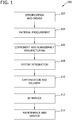
- aircraft manufacturing and service method 100 may include specification and design 102 of aircraft 200 and material procurement 104.
- aircraft 200 During production, component and subassembly manufacturing 106 and system integration 108 of aircraft 200 takes place. Thereafter, aircraft 200 may go through certification and delivery 110 in order to be placed in service 112. While in service by a customer, aircraft 200 is scheduled for routine maintenance and service 114 (which may also include modification, reconfiguration, refurbishment, and so on).
- Each of the processes of aircraft manufacturing and service method 100 may be performed or carried out by a system integrator, a third party, and/or an operator (e.g., a customer).
- a system integrator may include, without limitation, any number of aircraft manufacturers and major-system subcontractors
- a third party may include, for example, without limitation, any number of venders, subcontractors, and suppliers
- an operator may be an airline, leasing company, military entity, service organization, and so on.
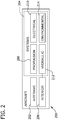
- aircraft 200 produced by aircraft manufacturing and service method 100 may include airframe 202 with a plurality of systems 204 and interior 206.
- systems 204 include one or more of propulsion system 208, electrical system 210, hydraulic system 212, and environmental system 214. Any number of other systems may be included in this example.
- propulsion system 208 one or more of propulsion system 208, electrical system 210, hydraulic system 212, and environmental system 214. Any number of other systems may be included in this example.
- electrical system 210 electrical system 210
- hydraulic system 212 hydraulic system
- environmental system 214 any number of other systems may be included in this example.
- Any number of other systems may be included in this example.
- an aerospace example is shown, the principles of the disclosure may be applied to other industries, such as the automotive, medical, food or petrochemical industry.
- Apparatus and methods embodied herein may be employed during any one or more of the stages of aircraft manufacturing and service method 100.
- components or subassemblies corresponding to component and subassembly manufacturing 106 may be fabricated or manufactured in a manner similar to components or subassemblies produced while aircraft 200 is in service.
- one or more apparatus embodiments, method embodiments, or a combination thereof may be utilized during component and subassembly manufacturing 106 and system integration 108, for example, without limitation, by substantially expediting assembly of or reducing the cost of aircraft 200.
- one or more of apparatus embodiments, method embodiments, or a combination thereof may be utilized while aircraft 200 is in service, for example, without limitation, to maintenance and service 114 may be used during system integration 108 and/or maintenance and service 114 to determine whether parts may be connected and/or mated to each other.
- FIG 3 is a side cross-sectional view of a cover plate 300 that is inserted into an opening 302 in one known fuel tank 304.
- a fuel tank is not simply a vessel with an opening for fuel insertion and another for fuel consumption.
- a fuel tank such as fuel tank 304 may include many openings where cover plates are utilized for the mounting of sensors or other components within the fuel tank.
- certain fuel tanks are physically large in size which dictates that they be fabricated from multiple piece parts that are put together, for example through the use of mechanical fasteners and/or welding.
- the cover plates are configured to form a seal between it and the tank under test, seals are known to fail, as are mechanical fasteners.
- a welded area may include one or more voids within the welding zone that negate the sealing effect of welding.
- the opening 302 in the illustrated embodiment is an indented area that is sized for the insertion of the cover plate 300 and defines a sealing area 312 between a surface 314 of the fuel tank 304 and a surface 316 of the cover plate 300.
- a sealer, an O-ring, or a gasket is utilized between surfaces 314 and 316. Leaks may occur with sealer and with gaskets.
- a secondary opening 320 may be included within the fuel tank 304 for the mounting of an instrument 330. Instrument 330 represents any device that may be mounted within an opening on the material that makes up the fuel tank 304.
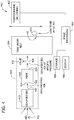
- FIG. 4 is a diagram of a system 400 for putting dehumidified air into a tank under test 402.
- System 400 includes a dehumidifier 410 that receives air 412, removes moisture from that air, thereby outputting dehumidified air 414 through an output 416 of the dehumidifier 410.
- the ambient air within the tank under test has to be removed over time (e.g., displaced by the lower humidity air).
- the air drawn into the dehumidifier 410 is drawn from the tank 402, resulting in a quasi-closed loop humidity reduction system.
- a pump 420 may be included within system 400 to receive the dehumidified air 414 at an input 422 and pump the air through an output 424 of the pump 420 in order to maintain a desired pressure of dehumidified air within the tank 304.
- pump 420 supplies dehumidified air at a pressure 426 to tank 304.
- a valve 430 may be included that operates to maintain a pressure of the dehumidified air within tank 304 without operation of the pump 420 or the dehumidifier 410.
- tank 304 is illustrated as having a leak 450. As described further in the following paragraphs, the reduced humidity air 452 escaping tank 304 through leak 450 will react with the air surrounding the leak 450 which is at a higher level of humidity.
- thermographic imaging system 460 includes a thermographic (infrared) camera 462, along with and for example, an image processing system 464 and may include one or both of a display 466 and storage 468 for thermographic images.
- thermographic camera 462 when thermographic camera 462 is in the vicinity of leak 450, the camera 462 will be able to sense the temperature drop imparted by evaporative cooling as described herein and image processing system 464 operates to provide data compatible for viewing on display 466 and/or for storage within storage 468.
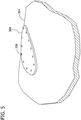
- Figure 5 is a mock thermographic illustration of the cover plate 300 of Figure 3 attached to tank under test 304 using a plurality of fasteners 310.
- the embodiment illustrated by Figure 5 is an embodiment where thermographic camera 462 does not sense any evaporative cooling occurring in the vicinity of cover plate 300.
- Figure 6 is a mock thermographic illustration of the cover plate 300 and tank 304 which includes a leak 450 (also shown in Figure 4 ) which allows lower humidity air within the tank 304 to pass through leak 450 and mix with air of an increased humidity outside of the tank 304.
- the result, as described herein, is an area 600 of decreased temperature that has been sensed by thermographic camera 462.
- Area 600 may include several subareas within. For example, at an area closest to leak 450, an image 602 of a lower temperature area 602 may be surrounded by an image of an area 604 having a temperature between that of area 602 and that of the area surrounding area 604.
- testing has been performed at various pressure differentials.
- a pressure differential between the exterior and interior of 6 psig higher pressure in interior of tank being tested
- the temperature differential was also 0.6 degree C with a tank internal pressure of 4 psig.
- the temperature differential was 0.5 degree C with a tank internal pressure of 2 psig, 0.5 psig, and 0.25 psig.
- a temperature differential was able to be discerned with a tank internal pressure of less than 0.25 psig as compared to the environment external to the tank under test.
- the temperature of the tank leakage area (prior to the initiation of leak testing) was about 19.5 degrees C, and as described above, once the leakage initiated evaporative cooling, the temperature in the leakage area was consistently reduced below 19 degrees C.
- the evaporative cooling process described herein provides a capability to visualize leaks in tanks, vessels, and cabins down to less than a 0.25 psi pressure differential as well as the capability to identify leakage areas down to 20 microns in size.
- thermographic leak detection relies on a temperature change at the leakage areas. This temperature change is brought about as a result of a velocity increase of the pressurized air passing through the leakage areas.
- Previous research has shown that in many cases the pressure differential across the vessel under test, results in a very low velocity change in the air passing through such a leak, resulting in a temperature difference that is below the typical infrared detector threshold of 0.1 degrees C.
- introduction of evaporative cooling to such a process, as described herein allows for the sensing of temperature changes that occur, even at such a low velocity.
- processes incorporating the described embodiments provide the ability to visualize leakage areas with a greater accuracy over tank testing processes than using helium and helium detectors.
- Helium and helium detectors only provide an approximation as to where leaks are located in a tank or other vessel.
- the introduction of a humidity differential as described herein tends to reduce buildup of trapped moisture pockets within the vessel being tested. While described herein as using air with lower and higher humidity, embodiments which utilize gases other than air may be utilized, for example, nitrogen or other gases that can be humidified and dehumidified.
- Evaporative cooling combined with infrared thermographic imaging does not use any hazardous substances or chemicals and has no ongoing material running costs as compared to anhydrous ammonia/indicator or helium/helium detector methods. Evaporative cooling combined with infrared thermographic imaging produces superior results in the time it takes to use the helium/helium detector method and can provide leak testing/indication in less time that it takes to carry out an anhydrous ammonia/indicator leak test.
- Evaporative cooling combined with infrared thermographic imaging eliminates the ongoing use of hazardous chemicals, and thus eliminates most of the environmental impact that is found in other testing methodologies.
- detection is possible through the identification of 'made to measure' or modified air dehumidifiers upstream of the test article and the presence of infrared cameras.
Landscapes
- Physics & Mathematics (AREA)
- General Physics & Mathematics (AREA)
- Examining Or Testing Airtightness (AREA)
Claims (9)
- Verfahren zur Leckageprüfung eines handelsüblichen Flugzeugtreibstofftanks, aufweisend:Bereitstellen einer Umgebung innerhalb des Tanks, die eine geringere Feuchtigkeit als die den Tank umgebende Umgebung hat, in welche in einen Entfeuchter gesaugte Luft aus dem Tank gesaugt wird, was zu einem Feuchtigkeitsreduktionssystem mit quasi geschlossenem Kreislauf führt; undVerwenden eines thermografischen Abbildungssystems, um etwaige Leckagen in Verbindung mit dem Tank basierend auf einer Verdunstungskühlung zu identifizieren, die auftritt, wenn ein Teil der Umgebung mit niedrigerer Feuchtigkeit aus dem Tank entweicht und sich mit der den Tank umgebenden Umgebung mit höherer Feuchtigkeit vermischt.
- Verfahren nach Anspruch 1, wobei das Bereitstellen einer Umgebung innerhalb des Tanks mindestens eines von Folgendem aufweist:Reduzieren der in den Tank eingeführten Luftfeuchtigkeit; undErhöhen der Luftfeuchtigkeit in dem den Tank umgebenden Bereich.
- Verfahren nach Anspruch 1, wobei das Bereitstellen einer Umgebung innerhalb des Tanks das Bereitstellen einer Umgebung innerhalb des Tanks aufweist, die unter einem höheren Druck als einem Druck der den Tank umgebenden Umgebung steht.
- Verfahren nach Anspruch 3, wobei der Druck innerhalb des Tanks mindestens 0,25 psi größer als der Druck der den Tank umgebenden Umgebung ist.
- Verfahren nach Anspruch 1, wobei das Verwenden eines thermografischen Abbildungssystems zum Identifizieren von Leckagen innerhalb des Tanks das Identifizieren von Bereichen niedrigerer Temperatur innerhalb eines Wärmebildes eines Teils des Tanks aufweist.
- Verfahren nach Anspruch 1, wobei das Verwenden eines thermografischen Abbildungssystems zum Identifizieren von Leckagen in Verbindung mit dem Tank das Erfassen eines Temperaturabfalls aufweist, der durch lokalisierte Verdampfung von Außenluft in der Nähe des Leckagebereichs verursacht wird.
- System zum Prüfen eines handelsüblichen Flugzeugtreibstofftanks auf Leckagen, wobei das System Folgendes aufweist:mindestens eine Vorrichtung zum Bereitstellen einer Luftfeuchtigkeitsdifferenz zwischen einer Innenseite des Tanks und einem Äußeren des Tanks, in welches in einen Entfeuchter gesaugte Luft aus dem Tank gesaugt wird, was zu einem Feuchtigkeitsreduktionssystem mit quasi geschlossenem Kreislauf führt; undein thermografisches Abbildungssystem, das betreibbar ist, um Leckagen in Verbindung mit dem Tank zu identifizieren, wobei die Leckagen mit dem Abbildungssystem basierend auf Verdunstungskühlung identifizierbar sind, die auftritt, wenn sich ein Teil der Umgebung mit niedrigerer Feuchtigkeit mit der Umgebung mit höherer Feuchtigkeit vermischt.
- System nach Anspruch 7, wobei das thermografische Abbildungssystem ein Bildverarbeitungssystem aufweist, das für mindestens eines von Anzeigen und Speichern von durch das thermografische Abbildungssystem erworbenen Bildern betreibbar ist.
- System nach Anspruch 7, wobei die mindestens eine Vorrichtung ferner eine Pumpe aufweist, die zum
Erhöhen eines Drucks innerhalb des Tanks betreibbar ist, um eine Druckdifferenz zwischen dem Inneren des Tanks und dem Äußeren des Tanks bereitzustellen.
Applications Claiming Priority (1)
| Application Number | Priority Date | Filing Date | Title |
|---|---|---|---|
| US12/697,411 US8539818B2 (en) | 2010-02-01 | 2010-02-01 | Methods and systems for evaporative cooling infrared thermographic leak detection |
Publications (3)
| Publication Number | Publication Date |
|---|---|
| EP2352003A2 EP2352003A2 (de) | 2011-08-03 |
| EP2352003A3 EP2352003A3 (de) | 2016-10-12 |
| EP2352003B1 true EP2352003B1 (de) | 2020-03-04 |
Family
ID=44059287
Family Applications (1)
| Application Number | Title | Priority Date | Filing Date |
|---|---|---|---|
| EP11151813.0A Active EP2352003B1 (de) | 2010-02-01 | 2011-01-24 | Verfahren und Systeme zur Infrarot-thermografischen Leckagenerkennung einer verdampfenden Kühlung |
Country Status (2)
| Country | Link |
|---|---|
| US (1) | US8539818B2 (de) |
| EP (1) | EP2352003B1 (de) |
Families Citing this family (13)
| Publication number | Priority date | Publication date | Assignee | Title |
|---|---|---|---|---|
| CN103575475A (zh) * | 2012-08-09 | 2014-02-12 | 北汽福田汽车股份有限公司 | 车辆密封性检测装置及检测方法 |
| US10373470B2 (en) | 2013-04-29 | 2019-08-06 | Intelliview Technologies, Inc. | Object detection |
| CA2847707C (en) | 2014-03-28 | 2021-03-30 | Intelliview Technologies Inc. | Leak detection |
| US10175136B2 (en) * | 2014-04-29 | 2019-01-08 | Saipem S.P.A. | System and method for detection of hydrocarbon leakage from an underwater pipeline in a body of water and hydrocarbon extraction unit |
| US10943357B2 (en) | 2014-08-19 | 2021-03-09 | Intelliview Technologies Inc. | Video based indoor leak detection |
| JP6384352B2 (ja) * | 2015-02-10 | 2018-09-05 | 株式会社デンソー | 異常診断装置及び異常診断方法 |
| CN104848994B (zh) * | 2015-04-17 | 2018-01-30 | 大连理工大学 | 基于三维温度重构的阀门检漏系统及方法 |
| EP3351916B1 (de) | 2015-10-29 | 2021-11-17 | Konica Minolta, Inc. | Bildverarbeitungsvorrichtung zur gasdetektion, bildverarbeitungsverfahren zur gasdetektion und bildverarbeitungsprogramm zur gasdetektion |
| US11548161B2 (en) | 2020-05-14 | 2023-01-10 | The Boeing Company | Methods of performing a plurality of operations within a region of a part utilizing an end effector of a robot and robots that perform the methods |
| US12306638B2 (en) | 2020-11-18 | 2025-05-20 | The Boeing Company | Methods and scan systems for analyzing an object |
| US11639914B2 (en) | 2020-12-16 | 2023-05-02 | The Boeing Company | Non-destructive test systems with infrared thermography assemblies and ultrasonic test assemblies, and associated methods |
| CN113702419B (zh) * | 2021-09-06 | 2024-05-07 | 浙江安胜科技股份有限公司 | 一种不锈钢真空器皿防护识别检测装置及检测方法 |
| TWI903805B (zh) * | 2024-10-14 | 2025-11-01 | 聯華電子股份有限公司 | 漏水偵測裝置及其偵測方法 |
Citations (1)
| Publication number | Priority date | Publication date | Assignee | Title |
|---|---|---|---|---|
| US4745797A (en) * | 1984-05-07 | 1988-05-24 | Lockheed Corporation | Method and apparatus for detecting hydrocarbon fuel leaks |
Family Cites Families (6)
| Publication number | Priority date | Publication date | Assignee | Title |
|---|---|---|---|---|
| US5001346A (en) * | 1990-02-26 | 1991-03-19 | Rockwell International Corporation | Leak detection system with background compensation |
| US6401524B1 (en) * | 2000-12-08 | 2002-06-11 | The Goodyear Tire & Rubber Company | Method of detecting steam expansion vessel leakage |
| US6866089B2 (en) * | 2002-07-02 | 2005-03-15 | Carrier Corporation | Leak detection with thermal imaging |
| US7358860B2 (en) * | 2005-03-31 | 2008-04-15 | American Air Liquide, Inc. | Method and apparatus to monitor and detect cryogenic liquefied gas leaks |
| ITPD20060191A1 (it) | 2006-05-15 | 2007-11-16 | Consiglio Nazionale Ricerche | Metodo di rilevazione termografica delle condizioni termoigrometriche di ampie superfici |
| DE102008010619A1 (de) * | 2008-02-22 | 2009-08-27 | Bayerisches Zentrum für Angewandte Energieforschung e.V. | Verfahren zur schnellen Ortung von Lecks in evakuierten Systemen insbesondere Vakuumisolationspaneelen |
-
2010
- 2010-02-01 US US12/697,411 patent/US8539818B2/en active Active
-
2011
- 2011-01-24 EP EP11151813.0A patent/EP2352003B1/de active Active
Patent Citations (1)
| Publication number | Priority date | Publication date | Assignee | Title |
|---|---|---|---|---|
| US4745797A (en) * | 1984-05-07 | 1988-05-24 | Lockheed Corporation | Method and apparatus for detecting hydrocarbon fuel leaks |
Also Published As
| Publication number | Publication date |
|---|---|
| US20110185791A1 (en) | 2011-08-04 |
| EP2352003A3 (de) | 2016-10-12 |
| US8539818B2 (en) | 2013-09-24 |
| EP2352003A2 (de) | 2011-08-03 |
Similar Documents
| Publication | Publication Date | Title |
|---|---|---|
| US8539818B2 (en) | Methods and systems for evaporative cooling infrared thermographic leak detection | |
| JP5783541B2 (ja) | 漏れ検査装置及び漏れ検査方法 | |
| US4918975A (en) | Method and apparatus for testing fluid-filled systems for leaks | |
| US8167482B2 (en) | Thermography inspection of surface discontinuities | |
| US9746411B2 (en) | Apparatus and method for evaluating gas barrier properties | |
| US9097657B2 (en) | Leak detection of stator liquid cooling system | |
| US3572096A (en) | Method and apparatus for inspecting sealed packages for leaks | |
| US7454956B1 (en) | Heat exchanger leak detection using mass gas flow metering | |
| US20050126263A1 (en) | Leak detection with thermal imaging | |
| US9696251B2 (en) | Apparatus and method for evaluating gas barrier properties | |
| US10935453B2 (en) | Leak detection with oxygen | |
| US20110310923A1 (en) | Method for non-destructive testing of at least partially open hollow components or system components for tightness in series production | |
| CN104406745A (zh) | 便携式柔性含湿工质泄漏检漏帖及其检漏方法 | |
| Bergoglio et al. | Leak rate metrology for the society and industry | |
| US8201438B1 (en) | Detection of gas leakage | |
| US5309752A (en) | Leakage measurement into a gas-charged collapsible container | |
| JP2006510885A (ja) | 漏洩部の検査方法及び装置 | |
| KR20150133005A (ko) | 에어바운서와 가스반응물질을 이용한 lng 화물창 가스누출 검사장치 및 그 방법, 그리고 이를 포함하는 lng 운반선 또는 lng 해양 플랫폼 | |
| CN206095538U (zh) | 一种低温环境下承压零部件密封性检测装置 | |
| KR20230100517A (ko) | 수소가스용기의 누설 검사 장치 및 방법 | |
| RU2487331C2 (ru) | Способ определения местоположения негерметичного участка замкнутой гидравлической магистрали, снабженной побудителем расхода и гидропневматическим компенсатором температурного изменения объема рабочего тела | |
| Blaufuß et al. | Proposed standards and methods for leak testing lithium-ion battery packs using glycol-based coolant with empirically derived rejection limits | |
| US11009493B2 (en) | Heat-sealable chemical vapor-sensor bag | |
| JP2006064601A (ja) | 低温容器内の配管のガス漏れ箇所検査システム | |
| RU2042108C1 (ru) | Способ измерения величин эффективных площадей неплотностей |
Legal Events
| Date | Code | Title | Description |
|---|---|---|---|
| PUAI | Public reference made under article 153(3) epc to a published international application that has entered the european phase |
Free format text: ORIGINAL CODE: 0009012 |
|
| 17P | Request for examination filed |
Effective date: 20110124 |
|
| AK | Designated contracting states |
Kind code of ref document: A2 Designated state(s): AL AT BE BG CH CY CZ DE DK EE ES FI FR GB GR HR HU IE IS IT LI LT LU LV MC MK MT NL NO PL PT RO RS SE SI SK SM TR |
|
| AX | Request for extension of the european patent |
Extension state: BA ME |
|
| PUAL | Search report despatched |
Free format text: ORIGINAL CODE: 0009013 |
|
| AK | Designated contracting states |
Kind code of ref document: A3 Designated state(s): AL AT BE BG CH CY CZ DE DK EE ES FI FR GB GR HR HU IE IS IT LI LT LU LV MC MK MT NL NO PL PT RO RS SE SI SK SM TR |
|
| AX | Request for extension of the european patent |
Extension state: BA ME |
|
| RIC1 | Information provided on ipc code assigned before grant |
Ipc: G01M 3/00 20060101AFI20160906BHEP Ipc: G01M 3/04 20060101ALI20160906BHEP Ipc: G01N 25/72 20060101ALI20160906BHEP |
|
| STAA | Information on the status of an ep patent application or granted ep patent |
Free format text: STATUS: EXAMINATION IS IN PROGRESS |
|
| 17Q | First examination report despatched |
Effective date: 20190408 |
|
| GRAP | Despatch of communication of intention to grant a patent |
Free format text: ORIGINAL CODE: EPIDOSNIGR1 |
|
| STAA | Information on the status of an ep patent application or granted ep patent |
Free format text: STATUS: GRANT OF PATENT IS INTENDED |
|
| INTG | Intention to grant announced |
Effective date: 20190816 |
|
| GRAS | Grant fee paid |
Free format text: ORIGINAL CODE: EPIDOSNIGR3 |
|
| GRAA | (expected) grant |
Free format text: ORIGINAL CODE: 0009210 |
|
| STAA | Information on the status of an ep patent application or granted ep patent |
Free format text: STATUS: THE PATENT HAS BEEN GRANTED |
|
| AK | Designated contracting states |
Kind code of ref document: B1 Designated state(s): AL AT BE BG CH CY CZ DE DK EE ES FI FR GB GR HR HU IE IS IT LI LT LU LV MC MK MT NL NO PL PT RO RS SE SI SK SM TR |
|
| REG | Reference to a national code |
Ref country code: GB Ref legal event code: FG4D |
|
| REG | Reference to a national code |
Ref country code: CH Ref legal event code: EP |
|
| REG | Reference to a national code |
Ref country code: AT Ref legal event code: REF Ref document number: 1240956 Country of ref document: AT Kind code of ref document: T Effective date: 20200315 |
|
| REG | Reference to a national code |
Ref country code: DE Ref legal event code: R096 Ref document number: 602011065329 Country of ref document: DE |
|
| REG | Reference to a national code |
Ref country code: IE Ref legal event code: FG4D |
|
| PG25 | Lapsed in a contracting state [announced via postgrant information from national office to epo] |
Ref country code: FI Free format text: LAPSE BECAUSE OF FAILURE TO SUBMIT A TRANSLATION OF THE DESCRIPTION OR TO PAY THE FEE WITHIN THE PRESCRIBED TIME-LIMIT Effective date: 20200304 Ref country code: NO Free format text: LAPSE BECAUSE OF FAILURE TO SUBMIT A TRANSLATION OF THE DESCRIPTION OR TO PAY THE FEE WITHIN THE PRESCRIBED TIME-LIMIT Effective date: 20200604 Ref country code: RS Free format text: LAPSE BECAUSE OF FAILURE TO SUBMIT A TRANSLATION OF THE DESCRIPTION OR TO PAY THE FEE WITHIN THE PRESCRIBED TIME-LIMIT Effective date: 20200304 |
|
| REG | Reference to a national code |
Ref country code: NL Ref legal event code: MP Effective date: 20200304 |
|
| PG25 | Lapsed in a contracting state [announced via postgrant information from national office to epo] |
Ref country code: BG Free format text: LAPSE BECAUSE OF FAILURE TO SUBMIT A TRANSLATION OF THE DESCRIPTION OR TO PAY THE FEE WITHIN THE PRESCRIBED TIME-LIMIT Effective date: 20200604 Ref country code: SE Free format text: LAPSE BECAUSE OF FAILURE TO SUBMIT A TRANSLATION OF THE DESCRIPTION OR TO PAY THE FEE WITHIN THE PRESCRIBED TIME-LIMIT Effective date: 20200304 Ref country code: HR Free format text: LAPSE BECAUSE OF FAILURE TO SUBMIT A TRANSLATION OF THE DESCRIPTION OR TO PAY THE FEE WITHIN THE PRESCRIBED TIME-LIMIT Effective date: 20200304 Ref country code: LV Free format text: LAPSE BECAUSE OF FAILURE TO SUBMIT A TRANSLATION OF THE DESCRIPTION OR TO PAY THE FEE WITHIN THE PRESCRIBED TIME-LIMIT Effective date: 20200304 Ref country code: GR Free format text: LAPSE BECAUSE OF FAILURE TO SUBMIT A TRANSLATION OF THE DESCRIPTION OR TO PAY THE FEE WITHIN THE PRESCRIBED TIME-LIMIT Effective date: 20200605 |
|
| REG | Reference to a national code |
Ref country code: LT Ref legal event code: MG4D |
|
| PG25 | Lapsed in a contracting state [announced via postgrant information from national office to epo] |
Ref country code: NL Free format text: LAPSE BECAUSE OF FAILURE TO SUBMIT A TRANSLATION OF THE DESCRIPTION OR TO PAY THE FEE WITHIN THE PRESCRIBED TIME-LIMIT Effective date: 20200304 |
|
| PG25 | Lapsed in a contracting state [announced via postgrant information from national office to epo] |
Ref country code: PT Free format text: LAPSE BECAUSE OF FAILURE TO SUBMIT A TRANSLATION OF THE DESCRIPTION OR TO PAY THE FEE WITHIN THE PRESCRIBED TIME-LIMIT Effective date: 20200729 Ref country code: SK Free format text: LAPSE BECAUSE OF FAILURE TO SUBMIT A TRANSLATION OF THE DESCRIPTION OR TO PAY THE FEE WITHIN THE PRESCRIBED TIME-LIMIT Effective date: 20200304 Ref country code: IS Free format text: LAPSE BECAUSE OF FAILURE TO SUBMIT A TRANSLATION OF THE DESCRIPTION OR TO PAY THE FEE WITHIN THE PRESCRIBED TIME-LIMIT Effective date: 20200704 Ref country code: RO Free format text: LAPSE BECAUSE OF FAILURE TO SUBMIT A TRANSLATION OF THE DESCRIPTION OR TO PAY THE FEE WITHIN THE PRESCRIBED TIME-LIMIT Effective date: 20200304 Ref country code: CZ Free format text: LAPSE BECAUSE OF FAILURE TO SUBMIT A TRANSLATION OF THE DESCRIPTION OR TO PAY THE FEE WITHIN THE PRESCRIBED TIME-LIMIT Effective date: 20200304 Ref country code: LT Free format text: LAPSE BECAUSE OF FAILURE TO SUBMIT A TRANSLATION OF THE DESCRIPTION OR TO PAY THE FEE WITHIN THE PRESCRIBED TIME-LIMIT Effective date: 20200304 Ref country code: ES Free format text: LAPSE BECAUSE OF FAILURE TO SUBMIT A TRANSLATION OF THE DESCRIPTION OR TO PAY THE FEE WITHIN THE PRESCRIBED TIME-LIMIT Effective date: 20200304 Ref country code: SM Free format text: LAPSE BECAUSE OF FAILURE TO SUBMIT A TRANSLATION OF THE DESCRIPTION OR TO PAY THE FEE WITHIN THE PRESCRIBED TIME-LIMIT Effective date: 20200304 Ref country code: EE Free format text: LAPSE BECAUSE OF FAILURE TO SUBMIT A TRANSLATION OF THE DESCRIPTION OR TO PAY THE FEE WITHIN THE PRESCRIBED TIME-LIMIT Effective date: 20200304 |
|
| REG | Reference to a national code |
Ref country code: AT Ref legal event code: MK05 Ref document number: 1240956 Country of ref document: AT Kind code of ref document: T Effective date: 20200304 |
|
| REG | Reference to a national code |
Ref country code: DE Ref legal event code: R097 Ref document number: 602011065329 Country of ref document: DE |
|
| PLBE | No opposition filed within time limit |
Free format text: ORIGINAL CODE: 0009261 |
|
| STAA | Information on the status of an ep patent application or granted ep patent |
Free format text: STATUS: NO OPPOSITION FILED WITHIN TIME LIMIT |
|
| PG25 | Lapsed in a contracting state [announced via postgrant information from national office to epo] |
Ref country code: AT Free format text: LAPSE BECAUSE OF FAILURE TO SUBMIT A TRANSLATION OF THE DESCRIPTION OR TO PAY THE FEE WITHIN THE PRESCRIBED TIME-LIMIT Effective date: 20200304 Ref country code: DK Free format text: LAPSE BECAUSE OF FAILURE TO SUBMIT A TRANSLATION OF THE DESCRIPTION OR TO PAY THE FEE WITHIN THE PRESCRIBED TIME-LIMIT Effective date: 20200304 Ref country code: IT Free format text: LAPSE BECAUSE OF FAILURE TO SUBMIT A TRANSLATION OF THE DESCRIPTION OR TO PAY THE FEE WITHIN THE PRESCRIBED TIME-LIMIT Effective date: 20200304 |
|
| 26N | No opposition filed |
Effective date: 20201207 |
|
| PG25 | Lapsed in a contracting state [announced via postgrant information from national office to epo] |
Ref country code: PL Free format text: LAPSE BECAUSE OF FAILURE TO SUBMIT A TRANSLATION OF THE DESCRIPTION OR TO PAY THE FEE WITHIN THE PRESCRIBED TIME-LIMIT Effective date: 20200304 Ref country code: SI Free format text: LAPSE BECAUSE OF FAILURE TO SUBMIT A TRANSLATION OF THE DESCRIPTION OR TO PAY THE FEE WITHIN THE PRESCRIBED TIME-LIMIT Effective date: 20200304 |
|
| PG25 | Lapsed in a contracting state [announced via postgrant information from national office to epo] |
Ref country code: MC Free format text: LAPSE BECAUSE OF FAILURE TO SUBMIT A TRANSLATION OF THE DESCRIPTION OR TO PAY THE FEE WITHIN THE PRESCRIBED TIME-LIMIT Effective date: 20200304 |
|
| REG | Reference to a national code |
Ref country code: CH Ref legal event code: PL |
|
| PG25 | Lapsed in a contracting state [announced via postgrant information from national office to epo] |
Ref country code: LU Free format text: LAPSE BECAUSE OF NON-PAYMENT OF DUE FEES Effective date: 20210124 |
|
| REG | Reference to a national code |
Ref country code: BE Ref legal event code: MM Effective date: 20210131 |
|
| PG25 | Lapsed in a contracting state [announced via postgrant information from national office to epo] |
Ref country code: LI Free format text: LAPSE BECAUSE OF NON-PAYMENT OF DUE FEES Effective date: 20210131 Ref country code: CH Free format text: LAPSE BECAUSE OF NON-PAYMENT OF DUE FEES Effective date: 20210131 |
|
| PG25 | Lapsed in a contracting state [announced via postgrant information from national office to epo] |
Ref country code: IE Free format text: LAPSE BECAUSE OF NON-PAYMENT OF DUE FEES Effective date: 20210124 |
|
| PG25 | Lapsed in a contracting state [announced via postgrant information from national office to epo] |
Ref country code: BE Free format text: LAPSE BECAUSE OF NON-PAYMENT OF DUE FEES Effective date: 20210131 |
|
| PG25 | Lapsed in a contracting state [announced via postgrant information from national office to epo] |
Ref country code: HU Free format text: LAPSE BECAUSE OF FAILURE TO SUBMIT A TRANSLATION OF THE DESCRIPTION OR TO PAY THE FEE WITHIN THE PRESCRIBED TIME-LIMIT; INVALID AB INITIO Effective date: 20110124 Ref country code: CY Free format text: LAPSE BECAUSE OF FAILURE TO SUBMIT A TRANSLATION OF THE DESCRIPTION OR TO PAY THE FEE WITHIN THE PRESCRIBED TIME-LIMIT Effective date: 20200304 |
|
| P01 | Opt-out of the competence of the unified patent court (upc) registered |
Effective date: 20230516 |
|
| PG25 | Lapsed in a contracting state [announced via postgrant information from national office to epo] |
Ref country code: MK Free format text: LAPSE BECAUSE OF FAILURE TO SUBMIT A TRANSLATION OF THE DESCRIPTION OR TO PAY THE FEE WITHIN THE PRESCRIBED TIME-LIMIT Effective date: 20200304 |
|
| PG25 | Lapsed in a contracting state [announced via postgrant information from national office to epo] |
Ref country code: TR Free format text: LAPSE BECAUSE OF FAILURE TO SUBMIT A TRANSLATION OF THE DESCRIPTION OR TO PAY THE FEE WITHIN THE PRESCRIBED TIME-LIMIT Effective date: 20200304 |
|
| PG25 | Lapsed in a contracting state [announced via postgrant information from national office to epo] |
Ref country code: MT Free format text: LAPSE BECAUSE OF FAILURE TO SUBMIT A TRANSLATION OF THE DESCRIPTION OR TO PAY THE FEE WITHIN THE PRESCRIBED TIME-LIMIT Effective date: 20200304 |
|
| PGFP | Annual fee paid to national office [announced via postgrant information from national office to epo] |
Ref country code: GB Payment date: 20260127 Year of fee payment: 16 |
|
| PGFP | Annual fee paid to national office [announced via postgrant information from national office to epo] |
Ref country code: DE Payment date: 20260128 Year of fee payment: 16 |
|
| PGFP | Annual fee paid to national office [announced via postgrant information from national office to epo] |
Ref country code: FR Payment date: 20260126 Year of fee payment: 16 |