EP2349255B1 - 2-acylaminopropoanol-type glucosylceramide synthase inhibitors - Google Patents
2-acylaminopropoanol-type glucosylceramide synthase inhibitors Download PDFInfo
- Publication number
- EP2349255B1 EP2349255B1 EP09741487.4A EP09741487A EP2349255B1 EP 2349255 B1 EP2349255 B1 EP 2349255B1 EP 09741487 A EP09741487 A EP 09741487A EP 2349255 B1 EP2349255 B1 EP 2349255B1
- Authority
- EP
- European Patent Office
- Prior art keywords
- group
- alkyl
- compound
- independently
- hydroxy
- Prior art date
- Legal status (The legal status is an assumption and is not a legal conclusion. Google has not performed a legal analysis and makes no representation as to the accuracy of the status listed.)
- Not-in-force
Links
- 239000003892 ceramide glucosyltransferase inhibitor Substances 0.000 title description 4
- -1 cyano, hydroxy Chemical group 0.000 claims description 129
- 150000001875 compounds Chemical class 0.000 claims description 123
- 229910052736 halogen Inorganic materials 0.000 claims description 99
- 125000001424 substituent group Chemical group 0.000 claims description 97
- 125000000449 nitro group Chemical group [O-][N+](*)=O 0.000 claims description 85
- 150000002367 halogens Chemical class 0.000 claims description 82
- 125000002924 primary amino group Chemical group [H]N([H])* 0.000 claims description 78
- 125000003118 aryl group Chemical group 0.000 claims description 72
- 125000000217 alkyl group Chemical group 0.000 claims description 67
- 125000001188 haloalkyl group Chemical group 0.000 claims description 53
- 125000004191 (C1-C6) alkoxy group Chemical group 0.000 claims description 49
- 125000004737 (C1-C6) haloalkoxy group Chemical group 0.000 claims description 44
- 125000004169 (C1-C6) alkyl group Chemical group 0.000 claims description 42
- 125000003545 alkoxy group Chemical group 0.000 claims description 38
- 125000000171 (C1-C6) haloalkyl group Chemical group 0.000 claims description 36
- 125000003282 alkyl amino group Chemical group 0.000 claims description 36
- 125000004663 dialkyl amino group Chemical group 0.000 claims description 36
- 229910052739 hydrogen Inorganic materials 0.000 claims description 34
- 239000001257 hydrogen Substances 0.000 claims description 34
- 125000002887 hydroxy group Chemical group [H]O* 0.000 claims description 34
- 125000004093 cyano group Chemical group *C#N 0.000 claims description 33
- 125000004438 haloalkoxy group Chemical group 0.000 claims description 33
- 125000004453 alkoxycarbonyl group Chemical group 0.000 claims description 31
- 125000004448 alkyl carbonyl group Chemical group 0.000 claims description 31
- 150000003839 salts Chemical class 0.000 claims description 29
- UFHFLCQGNIYNRP-UHFFFAOYSA-N Hydrogen Chemical compound [H][H] UFHFLCQGNIYNRP-UHFFFAOYSA-N 0.000 claims description 28
- 125000000008 (C1-C10) alkyl group Chemical group 0.000 claims description 27
- 125000004454 (C1-C6) alkoxycarbonyl group Chemical group 0.000 claims description 27
- 125000004890 (C1-C6) alkylamino group Chemical group 0.000 claims description 27
- 125000004916 (C1-C6) alkylcarbonyl group Chemical group 0.000 claims description 27
- 125000006619 (C1-C6) dialkylamino group Chemical group 0.000 claims description 25
- 125000001997 phenyl group Chemical group [H]C1=C([H])C([H])=C(*)C([H])=C1[H] 0.000 claims description 25
- 125000001931 aliphatic group Chemical group 0.000 claims description 23
- 208000030761 polycystic kidney disease Diseases 0.000 claims description 22
- 125000006615 aromatic heterocyclic group Chemical group 0.000 claims description 21
- 125000005843 halogen group Chemical group 0.000 claims description 19
- 229910052757 nitrogen Inorganic materials 0.000 claims description 14
- 125000002915 carbonyl group Chemical group [*:2]C([*:1])=O 0.000 claims description 10
- 125000004433 nitrogen atom Chemical group N* 0.000 claims description 10
- 125000002947 alkylene group Chemical group 0.000 claims description 7
- 150000002431 hydrogen Chemical group 0.000 claims description 7
- 125000003342 alkenyl group Chemical group 0.000 claims description 5
- 125000004122 cyclic group Chemical group 0.000 claims description 5
- 125000006832 (C1-C10) alkylene group Chemical group 0.000 claims description 4
- 125000006165 cyclic alkyl group Chemical group 0.000 claims description 2
- 239000000203 mixture Substances 0.000 description 81
- HEDRZPFGACZZDS-MICDWDOJSA-N Trichloro(2H)methane Chemical compound [2H]C(Cl)(Cl)Cl HEDRZPFGACZZDS-MICDWDOJSA-N 0.000 description 72
- 238000002360 preparation method Methods 0.000 description 55
- YMWUJEATGCHHMB-UHFFFAOYSA-N Dichloromethane Chemical compound ClCCl YMWUJEATGCHHMB-UHFFFAOYSA-N 0.000 description 50
- OKKJLVBELUTLKV-UHFFFAOYSA-N Methanol Chemical compound OC OKKJLVBELUTLKV-UHFFFAOYSA-N 0.000 description 45
- XEKOWRVHYACXOJ-UHFFFAOYSA-N Ethyl acetate Chemical compound CCOC(C)=O XEKOWRVHYACXOJ-UHFFFAOYSA-N 0.000 description 42
- 238000005160 1H NMR spectroscopy Methods 0.000 description 38
- WYURNTSHIVDZCO-UHFFFAOYSA-N Tetrahydrofuran Chemical compound C1CCOC1 WYURNTSHIVDZCO-UHFFFAOYSA-N 0.000 description 27
- 238000006243 chemical reaction Methods 0.000 description 27
- VLKZOEOYAKHREP-UHFFFAOYSA-N hexane Substances CCCCCC VLKZOEOYAKHREP-UHFFFAOYSA-N 0.000 description 25
- 239000000243 solution Substances 0.000 description 24
- 235000019439 ethyl acetate Nutrition 0.000 description 19
- 238000004440 column chromatography Methods 0.000 description 18
- 239000008194 pharmaceutical composition Substances 0.000 description 18
- 238000000034 method Methods 0.000 description 17
- 239000007787 solid Substances 0.000 description 17
- 241001465754 Metazoa Species 0.000 description 16
- 230000015572 biosynthetic process Effects 0.000 description 16
- 0 CC*c1ccccc1 Chemical compound CC*c1ccccc1 0.000 description 15
- 150000001412 amines Chemical class 0.000 description 15
- 239000000047 product Substances 0.000 description 15
- 239000002904 solvent Substances 0.000 description 15
- VYPSYNLAJGMNEJ-UHFFFAOYSA-N Silicium dioxide Chemical compound O=[Si]=O VYPSYNLAJGMNEJ-UHFFFAOYSA-N 0.000 description 13
- 229910052799 carbon Inorganic materials 0.000 description 13
- 239000000543 intermediate Substances 0.000 description 13
- 238000003786 synthesis reaction Methods 0.000 description 13
- YLQBMQCUIZJEEH-UHFFFAOYSA-N tetrahydrofuran Natural products C=1C=COC=1 YLQBMQCUIZJEEH-UHFFFAOYSA-N 0.000 description 13
- IJGRMHOSHXDMSA-UHFFFAOYSA-N Atomic nitrogen Chemical compound N#N IJGRMHOSHXDMSA-UHFFFAOYSA-N 0.000 description 12
- VEXZGXHMUGYJMC-UHFFFAOYSA-N Hydrochloric acid Chemical compound Cl VEXZGXHMUGYJMC-UHFFFAOYSA-N 0.000 description 12
- HEMHJVSKTPXQMS-UHFFFAOYSA-M Sodium hydroxide Chemical compound [OH-].[Na+] HEMHJVSKTPXQMS-UHFFFAOYSA-M 0.000 description 12
- 125000003710 aryl alkyl group Chemical group 0.000 description 12
- OKTJSMMVPCPJKN-UHFFFAOYSA-N Carbon Chemical compound [C] OKTJSMMVPCPJKN-UHFFFAOYSA-N 0.000 description 11
- LFQSCWFLJHTTHZ-UHFFFAOYSA-N Ethanol Chemical compound CCO LFQSCWFLJHTTHZ-UHFFFAOYSA-N 0.000 description 11
- XLYOFNOQVPJJNP-UHFFFAOYSA-N water Substances O XLYOFNOQVPJJNP-UHFFFAOYSA-N 0.000 description 11
- 125000004432 carbon atom Chemical group C* 0.000 description 10
- 150000002148 esters Chemical class 0.000 description 10
- 125000001072 heteroaryl group Chemical group 0.000 description 10
- IXCSERBJSXMMFS-UHFFFAOYSA-N hydrogen chloride Substances Cl.Cl IXCSERBJSXMMFS-UHFFFAOYSA-N 0.000 description 10
- 229910000041 hydrogen chloride Inorganic materials 0.000 description 10
- 238000011282 treatment Methods 0.000 description 10
- QTBSBXVTEAMEQO-UHFFFAOYSA-N Acetic acid Chemical compound CC(O)=O QTBSBXVTEAMEQO-UHFFFAOYSA-N 0.000 description 9
- CSCPPACGZOOCGX-UHFFFAOYSA-N Acetone Chemical compound CC(C)=O CSCPPACGZOOCGX-UHFFFAOYSA-N 0.000 description 9
- KFZMGEQAYNKOFK-UHFFFAOYSA-N Isopropanol Chemical compound CC(C)O KFZMGEQAYNKOFK-UHFFFAOYSA-N 0.000 description 9
- 150000001408 amides Chemical class 0.000 description 9
- 210000003734 kidney Anatomy 0.000 description 9
- 238000000746 purification Methods 0.000 description 9
- 239000011541 reaction mixture Substances 0.000 description 9
- 229910001868 water Inorganic materials 0.000 description 9
- DTQVDTLACAAQTR-UHFFFAOYSA-N OC(C(F)(F)F)=O Chemical compound OC(C(F)(F)F)=O DTQVDTLACAAQTR-UHFFFAOYSA-N 0.000 description 8
- JUJWROOIHBZHMG-UHFFFAOYSA-N Pyridine Chemical compound C1=CC=NC=C1 JUJWROOIHBZHMG-UHFFFAOYSA-N 0.000 description 8
- 210000004027 cell Anatomy 0.000 description 8
- 208000037265 diseases, disorders, signs and symptoms Diseases 0.000 description 8
- 230000009467 reduction Effects 0.000 description 8
- 238000003556 assay Methods 0.000 description 7
- 230000037396 body weight Effects 0.000 description 7
- 150000002339 glycosphingolipids Chemical class 0.000 description 7
- 239000010410 layer Substances 0.000 description 7
- 125000002950 monocyclic group Chemical group 0.000 description 7
- 239000003921 oil Substances 0.000 description 7
- 239000012044 organic layer Substances 0.000 description 7
- 125000006413 ring segment Chemical group 0.000 description 7
- VHUUQVKOLVNVRT-UHFFFAOYSA-N Ammonium hydroxide Chemical compound [NH4+].[OH-] VHUUQVKOLVNVRT-UHFFFAOYSA-N 0.000 description 6
- 229940126062 Compound A Drugs 0.000 description 6
- QOSSAOTZNIDXMA-UHFFFAOYSA-N Dicylcohexylcarbodiimide Chemical compound C1CCCCC1N=C=NC1CCCCC1 QOSSAOTZNIDXMA-UHFFFAOYSA-N 0.000 description 6
- NLDMNSXOCDLTTB-UHFFFAOYSA-N Heterophylliin A Natural products O1C2COC(=O)C3=CC(O)=C(O)C(O)=C3C3=C(O)C(O)=C(O)C=C3C(=O)OC2C(OC(=O)C=2C=C(O)C(O)=C(O)C=2)C(O)C1OC(=O)C1=CC(O)=C(O)C(O)=C1 NLDMNSXOCDLTTB-UHFFFAOYSA-N 0.000 description 6
- CSNNHWWHGAXBCP-UHFFFAOYSA-L Magnesium sulfate Chemical compound [Mg+2].[O-][S+2]([O-])([O-])[O-] CSNNHWWHGAXBCP-UHFFFAOYSA-L 0.000 description 6
- ZMXDDKWLCZADIW-UHFFFAOYSA-N N,N-Dimethylformamide Chemical compound CN(C)C=O ZMXDDKWLCZADIW-UHFFFAOYSA-N 0.000 description 6
- SJRJJKPEHAURKC-UHFFFAOYSA-N N-Methylmorpholine Chemical compound CN1CCOCC1 SJRJJKPEHAURKC-UHFFFAOYSA-N 0.000 description 6
- KDLHZDBZIXYQEI-UHFFFAOYSA-N Palladium Chemical compound [Pd] KDLHZDBZIXYQEI-UHFFFAOYSA-N 0.000 description 6
- RWRDLPDLKQPQOW-UHFFFAOYSA-N Pyrrolidine Chemical compound C1CCNC1 RWRDLPDLKQPQOW-UHFFFAOYSA-N 0.000 description 6
- YXFVVABEGXRONW-UHFFFAOYSA-N Toluene Chemical compound CC1=CC=CC=C1 YXFVVABEGXRONW-UHFFFAOYSA-N 0.000 description 6
- XSQUKJJJFZCRTK-UHFFFAOYSA-N Urea Chemical compound NC(N)=O XSQUKJJJFZCRTK-UHFFFAOYSA-N 0.000 description 6
- 229910052796 boron Inorganic materials 0.000 description 6
- 239000000969 carrier Substances 0.000 description 6
- 208000031513 cyst Diseases 0.000 description 6
- 201000010099 disease Diseases 0.000 description 6
- 150000002305 glucosylceramides Chemical class 0.000 description 6
- 239000003112 inhibitor Substances 0.000 description 6
- 125000000956 methoxy group Chemical group [H]C([H])([H])O* 0.000 description 6
- 239000000377 silicon dioxide Substances 0.000 description 6
- 238000003756 stirring Methods 0.000 description 6
- 239000000725 suspension Substances 0.000 description 6
- 239000003656 tris buffered saline Substances 0.000 description 6
- SGTCAUQLJIKBMM-UHFFFAOYSA-N 3-(4-methoxyphenoxy)propanoic acid Chemical compound COC1=CC=C(OCCC(O)=O)C=C1 SGTCAUQLJIKBMM-UHFFFAOYSA-N 0.000 description 5
- YDNKGFDKKRUKPY-JHOUSYSJSA-N C16 ceramide Natural products CCCCCCCCCCCCCCCC(=O)N[C@@H](CO)[C@H](O)C=CCCCCCCCCCCCCC YDNKGFDKKRUKPY-JHOUSYSJSA-N 0.000 description 5
- 206010011732 Cyst Diseases 0.000 description 5
- CRJGESKKUOMBCT-VQTJNVASSA-N N-acetylsphinganine Chemical compound CCCCCCCCCCCCCCC[C@@H](O)[C@H](CO)NC(C)=O CRJGESKKUOMBCT-VQTJNVASSA-N 0.000 description 5
- 238000000692 Student's t-test Methods 0.000 description 5
- 239000002253 acid Substances 0.000 description 5
- 125000001797 benzyl group Chemical group [H]C1=C([H])C([H])=C(C([H])=C1[H])C([H])([H])* 0.000 description 5
- 229940106189 ceramide Drugs 0.000 description 5
- ZVEQCJWYRWKARO-UHFFFAOYSA-N ceramide Natural products CCCCCCCCCCCCCCC(O)C(=O)NC(CO)C(O)C=CCCC=C(C)CCCCCCCCC ZVEQCJWYRWKARO-UHFFFAOYSA-N 0.000 description 5
- 239000003795 chemical substances by application Substances 0.000 description 5
- 229910052681 coesite Inorganic materials 0.000 description 5
- 229910052906 cristobalite Inorganic materials 0.000 description 5
- 125000000753 cycloalkyl group Chemical group 0.000 description 5
- 229940093499 ethyl acetate Drugs 0.000 description 5
- 238000004128 high performance liquid chromatography Methods 0.000 description 5
- VVGIYYKRAMHVLU-UHFFFAOYSA-N newbouldiamide Natural products CCCCCCCCCCCCCCCCCCCC(O)C(O)C(O)C(CO)NC(=O)CCCCCCCCCCCCCCCCC VVGIYYKRAMHVLU-UHFFFAOYSA-N 0.000 description 5
- 239000000546 pharmaceutical excipient Substances 0.000 description 5
- 229910052682 stishovite Inorganic materials 0.000 description 5
- 125000003107 substituted aryl group Chemical group 0.000 description 5
- 238000010189 synthetic method Methods 0.000 description 5
- 238000012353 t test Methods 0.000 description 5
- 229910052905 tridymite Inorganic materials 0.000 description 5
- 125000000027 (C1-C10) alkoxy group Chemical group 0.000 description 4
- OKKJLVBELUTLKV-MZCSYVLQSA-N Deuterated methanol Chemical compound [2H]OC([2H])([2H])[2H] OKKJLVBELUTLKV-MZCSYVLQSA-N 0.000 description 4
- ULGZDMOVFRHVEP-RWJQBGPGSA-N Erythromycin Chemical compound O([C@@H]1[C@@H](C)C(=O)O[C@@H]([C@@]([C@H](O)[C@@H](C)C(=O)[C@H](C)C[C@@](C)(O)[C@H](O[C@H]2[C@@H]([C@H](C[C@@H](C)O2)N(C)C)O)[C@H]1C)(C)O)CC)[C@H]1C[C@@](C)(OC)[C@@H](O)[C@H](C)O1 ULGZDMOVFRHVEP-RWJQBGPGSA-N 0.000 description 4
- 241000699670 Mus sp. Species 0.000 description 4
- UIIMBOGNXHQVGW-UHFFFAOYSA-M Sodium bicarbonate Chemical compound [Na+].OC([O-])=O UIIMBOGNXHQVGW-UHFFFAOYSA-M 0.000 description 4
- FEWJPZIEWOKRBE-UHFFFAOYSA-N Tartaric Acid Chemical class [H+].[H+].[O-]C(=O)C(O)C(O)C([O-])=O FEWJPZIEWOKRBE-UHFFFAOYSA-N 0.000 description 4
- 150000003973 alkyl amines Chemical class 0.000 description 4
- 150000001413 amino acids Chemical class 0.000 description 4
- 210000004369 blood Anatomy 0.000 description 4
- 239000008280 blood Substances 0.000 description 4
- 125000002837 carbocyclic group Chemical group 0.000 description 4
- 150000001721 carbon Chemical group 0.000 description 4
- MYSWGUAQZAJSOK-UHFFFAOYSA-N ciprofloxacin Chemical compound C12=CC(N3CCNCC3)=C(F)C=C2C(=O)C(C(=O)O)=CN1C1CC1 MYSWGUAQZAJSOK-UHFFFAOYSA-N 0.000 description 4
- 239000012043 crude product Substances 0.000 description 4
- 238000010511 deprotection reaction Methods 0.000 description 4
- 239000003814 drug Substances 0.000 description 4
- 239000003937 drug carrier Substances 0.000 description 4
- 238000009472 formulation Methods 0.000 description 4
- 238000007429 general method Methods 0.000 description 4
- 238000010438 heat treatment Methods 0.000 description 4
- 235000012054 meals Nutrition 0.000 description 4
- VOLURMJMDOHTGE-UHFFFAOYSA-N methyl 3-phenoxypropanoate Chemical compound COC(=O)CCOC1=CC=CC=C1 VOLURMJMDOHTGE-UHFFFAOYSA-N 0.000 description 4
- 239000012299 nitrogen atmosphere Substances 0.000 description 4
- QJGQUHMNIGDVPM-UHFFFAOYSA-N nitrogen group Chemical group [N] QJGQUHMNIGDVPM-UHFFFAOYSA-N 0.000 description 4
- BWHMMNNQKKPAPP-UHFFFAOYSA-L potassium carbonate Chemical compound [K+].[K+].[O-]C([O-])=O BWHMMNNQKKPAPP-UHFFFAOYSA-L 0.000 description 4
- UMJSCPRVCHMLSP-UHFFFAOYSA-N pyridine Natural products COC1=CC=CN=C1 UMJSCPRVCHMLSP-UHFFFAOYSA-N 0.000 description 4
- 238000002390 rotary evaporation Methods 0.000 description 4
- 208000024891 symptom Diseases 0.000 description 4
- 239000003981 vehicle Substances 0.000 description 4
- 125000004178 (C1-C4) alkyl group Chemical group 0.000 description 3
- 125000004767 (C1-C4) haloalkoxy group Chemical group 0.000 description 3
- 125000004765 (C1-C4) haloalkyl group Chemical group 0.000 description 3
- 125000000229 (C1-C4)alkoxy group Chemical group 0.000 description 3
- DTAWFMRIHNITFA-UHFFFAOYSA-N 3-(4-methoxyphenoxy)propanenitrile Chemical compound COC1=CC=C(OCCC#N)C=C1 DTAWFMRIHNITFA-UHFFFAOYSA-N 0.000 description 3
- HBAQYPYDRFILMT-UHFFFAOYSA-N 8-[3-(1-cyclopropylpyrazol-4-yl)-1H-pyrazolo[4,3-d]pyrimidin-5-yl]-3-methyl-3,8-diazabicyclo[3.2.1]octan-2-one Chemical class C1(CC1)N1N=CC(=C1)C1=NNC2=C1N=C(N=C2)N1C2C(N(CC1CC2)C)=O HBAQYPYDRFILMT-UHFFFAOYSA-N 0.000 description 3
- NLHHRLWOUZZQLW-UHFFFAOYSA-N Acrylonitrile Chemical compound C=CC#N NLHHRLWOUZZQLW-UHFFFAOYSA-N 0.000 description 3
- NLXLAEXVIDQMFP-UHFFFAOYSA-N Ammonia chloride Chemical compound [NH4+].[Cl-] NLXLAEXVIDQMFP-UHFFFAOYSA-N 0.000 description 3
- 241000282472 Canis lupus familiaris Species 0.000 description 3
- 102000044956 Ceramide glucosyltransferases Human genes 0.000 description 3
- IAZDPXIOMUYVGZ-UHFFFAOYSA-N Dimethylsulphoxide Chemical compound CS(C)=O IAZDPXIOMUYVGZ-UHFFFAOYSA-N 0.000 description 3
- WSFSSNUMVMOOMR-UHFFFAOYSA-N Formaldehyde Chemical compound O=C WSFSSNUMVMOOMR-UHFFFAOYSA-N 0.000 description 3
- 101710161955 Mannitol-specific phosphotransferase enzyme IIA component Proteins 0.000 description 3
- 241000700159 Rattus Species 0.000 description 3
- ZMANZCXQSJIPKH-UHFFFAOYSA-N Triethylamine Chemical compound CCN(CC)CC ZMANZCXQSJIPKH-UHFFFAOYSA-N 0.000 description 3
- 108060008682 Tumor Necrosis Factor Proteins 0.000 description 3
- 102000000852 Tumor Necrosis Factor-alpha Human genes 0.000 description 3
- 235000001014 amino acid Nutrition 0.000 description 3
- 125000003277 amino group Chemical group 0.000 description 3
- 238000010171 animal model Methods 0.000 description 3
- 239000002585 base Substances 0.000 description 3
- HMOZTZIZWRRDMM-LBPRGKRZSA-N benzyl (4r)-4-formyl-2,2-dimethyl-1,3-oxazolidine-3-carboxylate Chemical compound CC1(C)OC[C@H](C=O)N1C(=O)OCC1=CC=CC=C1 HMOZTZIZWRRDMM-LBPRGKRZSA-N 0.000 description 3
- 239000002775 capsule Substances 0.000 description 3
- 239000004202 carbamide Substances 0.000 description 3
- 108091000114 ceramide glucosyltransferase Proteins 0.000 description 3
- 239000013058 crude material Substances 0.000 description 3
- 230000037416 cystogenesis Effects 0.000 description 3
- 206010012601 diabetes mellitus Diseases 0.000 description 3
- 239000003085 diluting agent Substances 0.000 description 3
- 239000002552 dosage form Substances 0.000 description 3
- 230000000694 effects Effects 0.000 description 3
- 150000002270 gangliosides Chemical class 0.000 description 3
- 230000012010 growth Effects 0.000 description 3
- 125000000623 heterocyclic group Chemical group 0.000 description 3
- 125000004435 hydrogen atom Chemical group [H]* 0.000 description 3
- RAXXELZNTBOGNW-UHFFFAOYSA-N imidazole Natural products C1=CNC=N1 RAXXELZNTBOGNW-UHFFFAOYSA-N 0.000 description 3
- 210000004185 liver Anatomy 0.000 description 3
- 229910052943 magnesium sulfate Inorganic materials 0.000 description 3
- 239000000463 material Substances 0.000 description 3
- 230000002503 metabolic effect Effects 0.000 description 3
- HOGDNTQCSIKEEV-UHFFFAOYSA-N n'-hydroxybutanediamide Chemical class NC(=O)CCC(=O)NO HOGDNTQCSIKEEV-UHFFFAOYSA-N 0.000 description 3
- 239000012074 organic phase Substances 0.000 description 3
- 239000002243 precursor Substances 0.000 description 3
- 238000011160 research Methods 0.000 description 3
- 210000002966 serum Anatomy 0.000 description 3
- 125000000547 substituted alkyl group Chemical group 0.000 description 3
- JOXIMZWYDAKGHI-UHFFFAOYSA-N toluene-4-sulfonic acid Chemical compound CC1=CC=C(S(O)(=O)=O)C=C1 JOXIMZWYDAKGHI-UHFFFAOYSA-N 0.000 description 3
- 208000001072 type 2 diabetes mellitus Diseases 0.000 description 3
- MPRDYMIZJFVAAH-IUODEOHRSA-N (1r,2r)-2-amino-1-(2,3-dihydro-1,4-benzodioxin-6-yl)-3-pyrrolidin-1-ylpropan-1-ol Chemical compound C([C@@H](N)[C@H](O)C=1C=C2OCCOC2=CC=1)N1CCCC1 MPRDYMIZJFVAAH-IUODEOHRSA-N 0.000 description 2
- GBWPSOGGDAAUHB-ZIAGYGMSSA-N (1r,2r)-2-amino-1-(4-methoxyphenyl)-3-pyrrolidin-1-ylpropan-1-ol Chemical compound C1=CC(OC)=CC=C1[C@@H](O)[C@H](N)CN1CCCC1 GBWPSOGGDAAUHB-ZIAGYGMSSA-N 0.000 description 2
- 125000006677 (C1-C3) haloalkoxy group Chemical group 0.000 description 2
- 125000006274 (C1-C3)alkoxy group Chemical group 0.000 description 2
- AHNQBLWJTQDLEP-CLFYSBASSA-N (z)-3-[4-(2-methoxyethyl)phenoxy]prop-2-enoic acid Chemical compound COCCC1=CC=C(O\C=C/C(O)=O)C=C1 AHNQBLWJTQDLEP-CLFYSBASSA-N 0.000 description 2
- LMDZBCPBFSXMTL-UHFFFAOYSA-N 1-Ethyl-3-(3-dimethylaminopropyl)carbodiimide Substances CCN=C=NCCCN(C)C LMDZBCPBFSXMTL-UHFFFAOYSA-N 0.000 description 2
- YZUPZGFPHUVJKC-UHFFFAOYSA-N 1-bromo-2-methoxyethane Chemical compound COCCBr YZUPZGFPHUVJKC-UHFFFAOYSA-N 0.000 description 2
- 125000001462 1-pyrrolyl group Chemical group [*]N1C([H])=C([H])C([H])=C1[H] 0.000 description 2
- 238000001644 13C nuclear magnetic resonance spectroscopy Methods 0.000 description 2
- IZXIZTKNFFYFOF-UHFFFAOYSA-N 2-Oxazolidone Chemical compound O=C1NCCO1 IZXIZTKNFFYFOF-UHFFFAOYSA-N 0.000 description 2
- HOMYIYLRRDTKAA-UHFFFAOYSA-N 2-hydroxy-N-[3-hydroxy-1-[3,4,5-trihydroxy-6-(hydroxymethyl)oxan-2-yl]oxyoctadeca-4,8-dien-2-yl]hexadecanamide Chemical compound CCCCCCCCCCCCCCC(O)C(=O)NC(C(O)C=CCCC=CCCCCCCCCC)COC1OC(CO)C(O)C(O)C1O HOMYIYLRRDTKAA-UHFFFAOYSA-N 0.000 description 2
- FPQQSJJWHUJYPU-UHFFFAOYSA-N 3-(dimethylamino)propyliminomethylidene-ethylazanium;chloride Chemical compound Cl.CCN=C=NCCCN(C)C FPQQSJJWHUJYPU-UHFFFAOYSA-N 0.000 description 2
- LQSJOZWGZREREU-UHFFFAOYSA-N 3-[4-(2-methoxyethyl)phenoxy]propanoic acid Chemical compound COCCC1=CC=C(OCCC(O)=O)C=C1 LQSJOZWGZREREU-UHFFFAOYSA-N 0.000 description 2
- JDHSXEPZCIFVCU-UHFFFAOYSA-N 3-[4-(3-methylbutanoyl)phenoxy]propanoic acid Chemical compound CC(C)CC(=O)C1=CC=C(OCCC(O)=O)C=C1 JDHSXEPZCIFVCU-UHFFFAOYSA-N 0.000 description 2
- UXSFVUKPGKXQMY-UHFFFAOYSA-N 3-[4-(3-oxobutyl)phenoxy]propanenitrile Chemical compound CC(=O)CCC1=CC=C(OCCC#N)C=C1 UXSFVUKPGKXQMY-UHFFFAOYSA-N 0.000 description 2
- CEURSLCOGMORAR-UHFFFAOYSA-N 3-[4-(3-oxobutyl)phenoxy]propanoic acid Chemical compound CC(=O)CCC1=CC=C(OCCC(O)=O)C=C1 CEURSLCOGMORAR-UHFFFAOYSA-N 0.000 description 2
- YYROPELSRYBVMQ-UHFFFAOYSA-N 4-toluenesulfonyl chloride Chemical compound CC1=CC=C(S(Cl)(=O)=O)C=C1 YYROPELSRYBVMQ-UHFFFAOYSA-N 0.000 description 2
- 239000005541 ACE inhibitor Substances 0.000 description 2
- DLFVBJFMPXGRIB-UHFFFAOYSA-N Acetamide Chemical compound CC(N)=O DLFVBJFMPXGRIB-UHFFFAOYSA-N 0.000 description 2
- RZVAJINKPMORJF-UHFFFAOYSA-N Acetaminophen Chemical compound CC(=O)NC1=CC=C(O)C=C1 RZVAJINKPMORJF-UHFFFAOYSA-N 0.000 description 2
- 102100027386 Beta-1,4-galactosyltransferase 6 Human genes 0.000 description 2
- 241000282693 Cercopithecidae Species 0.000 description 2
- VEXZGXHMUGYJMC-UHFFFAOYSA-M Chloride anion Chemical compound [Cl-] VEXZGXHMUGYJMC-UHFFFAOYSA-M 0.000 description 2
- HEDRZPFGACZZDS-UHFFFAOYSA-N Chloroform Chemical compound ClC(Cl)Cl HEDRZPFGACZZDS-UHFFFAOYSA-N 0.000 description 2
- JZUFKLXOESDKRF-UHFFFAOYSA-N Chlorothiazide Chemical compound C1=C(Cl)C(S(=O)(=O)N)=CC2=C1NCNS2(=O)=O JZUFKLXOESDKRF-UHFFFAOYSA-N 0.000 description 2
- QMMFVYPAHWMCMS-UHFFFAOYSA-N Dimethyl sulfide Chemical compound CSC QMMFVYPAHWMCMS-UHFFFAOYSA-N 0.000 description 2
- 208000024720 Fabry Disease Diseases 0.000 description 2
- 208000015872 Gaucher disease Diseases 0.000 description 2
- WQZGKKKJIJFFOK-GASJEMHNSA-N Glucose Natural products OC[C@H]1OC(O)[C@H](O)[C@@H](O)[C@@H]1O WQZGKKKJIJFFOK-GASJEMHNSA-N 0.000 description 2
- PEDCQBHIVMGVHV-UHFFFAOYSA-N Glycerine Chemical compound OCC(O)CO PEDCQBHIVMGVHV-UHFFFAOYSA-N 0.000 description 2
- 206010022489 Insulin Resistance Diseases 0.000 description 2
- GUBGYTABKSRVRQ-QKKXKWKRSA-N Lactose Natural products OC[C@H]1O[C@@H](O[C@H]2[C@H](O)[C@@H](O)C(O)O[C@@H]2CO)[C@H](O)[C@@H](O)[C@H]1O GUBGYTABKSRVRQ-QKKXKWKRSA-N 0.000 description 2
- WMFOQBRAJBCJND-UHFFFAOYSA-M Lithium hydroxide Chemical compound [Li+].[OH-] WMFOQBRAJBCJND-UHFFFAOYSA-M 0.000 description 2
- 208000015439 Lysosomal storage disease Diseases 0.000 description 2
- FYYHWMGAXLPEAU-UHFFFAOYSA-N Magnesium Chemical compound [Mg] FYYHWMGAXLPEAU-UHFFFAOYSA-N 0.000 description 2
- 208000036626 Mental retardation Diseases 0.000 description 2
- BZLVMXJERCGZMT-UHFFFAOYSA-N Methyl tert-butyl ether Chemical compound COC(C)(C)C BZLVMXJERCGZMT-UHFFFAOYSA-N 0.000 description 2
- 241000699666 Mus <mouse, genus> Species 0.000 description 2
- CDBYLPFSWZWCQE-UHFFFAOYSA-L Sodium Carbonate Chemical compound [Na+].[Na+].[O-]C([O-])=O CDBYLPFSWZWCQE-UHFFFAOYSA-L 0.000 description 2
- 229920002472 Starch Polymers 0.000 description 2
- 208000022292 Tay-Sachs disease Diseases 0.000 description 2
- 108010058742 UDPgalactose-glucosylceramide galactosyltransferase Proteins 0.000 description 2
- 230000002378 acidificating effect Effects 0.000 description 2
- 230000009471 action Effects 0.000 description 2
- 150000001299 aldehydes Chemical class 0.000 description 2
- 125000004457 alkyl amino carbonyl group Chemical group 0.000 description 2
- VSCWAEJMTAWNJL-UHFFFAOYSA-K aluminium trichloride Chemical compound Cl[Al](Cl)Cl VSCWAEJMTAWNJL-UHFFFAOYSA-K 0.000 description 2
- 239000000908 ammonium hydroxide Substances 0.000 description 2
- 229940044094 angiotensin-converting-enzyme inhibitor Drugs 0.000 description 2
- 239000003242 anti bacterial agent Substances 0.000 description 2
- 229940088710 antibiotic agent Drugs 0.000 description 2
- 239000004599 antimicrobial Substances 0.000 description 2
- 239000007864 aqueous solution Substances 0.000 description 2
- 125000004104 aryloxy group Chemical group 0.000 description 2
- 239000012298 atmosphere Substances 0.000 description 2
- 125000003785 benzimidazolyl group Chemical group N1=C(NC2=C1C=CC=C2)* 0.000 description 2
- BSDCVLQHFMPNSG-CYBMUJFWSA-N benzyl (4r)-4-[methoxy(methyl)carbamoyl]-2,2-dimethyl-1,3-oxazolidine-3-carboxylate Chemical compound CON(C)C(=O)[C@H]1COC(C)(C)N1C(=O)OCC1=CC=CC=C1 BSDCVLQHFMPNSG-CYBMUJFWSA-N 0.000 description 2
- RHHUQUHBKFLZNF-IAGOWNOFSA-N benzyl n-[(1r,2r)-1,3-dihydroxy-1-(4-methoxyphenyl)propan-2-yl]carbamate Chemical compound C1=CC(OC)=CC=C1[C@@H](O)[C@@H](CO)NC(=O)OCC1=CC=CC=C1 RHHUQUHBKFLZNF-IAGOWNOFSA-N 0.000 description 2
- PBWJVPFBFAUPPH-NHCUHLMSSA-N benzyl n-[(1r,2r)-1-hydroxy-1-(4-methoxyphenyl)-3-pyrrolidin-1-ylpropan-2-yl]carbamate Chemical compound C1=CC(OC)=CC=C1[C@@H](O)[C@H](NC(=O)OCC=1C=CC=CC=1)CN1CCCC1 PBWJVPFBFAUPPH-NHCUHLMSSA-N 0.000 description 2
- UIBCWRVAGDWOGG-MRXNPFEDSA-N benzyl n-[(2r)-3-[tert-butyl(dimethyl)silyl]oxy-1-[methoxy(methyl)amino]-1-oxopropan-2-yl]carbamate Chemical compound CC(C)(C)[Si](C)(C)OC[C@H](C(=O)N(C)OC)NC(=O)OCC1=CC=CC=C1 UIBCWRVAGDWOGG-MRXNPFEDSA-N 0.000 description 2
- BNUXNPKLXGBSNW-LLVKDONJSA-N benzyl n-[(2r)-3-hydroxy-1-[methoxy(methyl)amino]-1-oxopropan-2-yl]carbamate Chemical compound CON(C)C(=O)[C@@H](CO)NC(=O)OCC1=CC=CC=C1 BNUXNPKLXGBSNW-LLVKDONJSA-N 0.000 description 2
- NDKBVBUGCNGSJJ-UHFFFAOYSA-M benzyltrimethylammonium hydroxide Chemical compound [OH-].C[N+](C)(C)CC1=CC=CC=C1 NDKBVBUGCNGSJJ-UHFFFAOYSA-M 0.000 description 2
- 125000002618 bicyclic heterocycle group Chemical group 0.000 description 2
- WTEOIRVLGSZEPR-UHFFFAOYSA-N boron trifluoride Chemical compound FB(F)F WTEOIRVLGSZEPR-UHFFFAOYSA-N 0.000 description 2
- 150000004657 carbamic acid derivatives Chemical class 0.000 description 2
- 125000003917 carbamoyl group Chemical group [H]N([H])C(*)=O 0.000 description 2
- 239000003054 catalyst Substances 0.000 description 2
- 235000010980 cellulose Nutrition 0.000 description 2
- 229920002678 cellulose Polymers 0.000 description 2
- 239000003153 chemical reaction reagent Substances 0.000 description 2
- 229960003405 ciprofloxacin Drugs 0.000 description 2
- 239000012230 colorless oil Substances 0.000 description 2
- 238000001816 cooling Methods 0.000 description 2
- 239000013078 crystal Substances 0.000 description 2
- 125000001316 cycloalkyl alkyl group Chemical group 0.000 description 2
- 230000007547 defect Effects 0.000 description 2
- 125000005202 dialkylaminocarbonyloxy group Chemical group 0.000 description 2
- 230000004069 differentiation Effects 0.000 description 2
- 208000035475 disorder Diseases 0.000 description 2
- 229940079593 drug Drugs 0.000 description 2
- 229960003276 erythromycin Drugs 0.000 description 2
- 239000000796 flavoring agent Substances 0.000 description 2
- 239000007903 gelatin capsule Substances 0.000 description 2
- 125000005842 heteroatom Chemical group 0.000 description 2
- 150000004677 hydrates Chemical class 0.000 description 2
- XMBWDFGMSWQBCA-UHFFFAOYSA-N hydrogen iodide Chemical compound I XMBWDFGMSWQBCA-UHFFFAOYSA-N 0.000 description 2
- 230000007062 hydrolysis Effects 0.000 description 2
- 238000006460 hydrolysis reaction Methods 0.000 description 2
- 125000002768 hydroxyalkyl group Chemical group 0.000 description 2
- 125000001041 indolyl group Chemical group 0.000 description 2
- 230000002401 inhibitory effect Effects 0.000 description 2
- 230000005764 inhibitory process Effects 0.000 description 2
- NOESYZHRGYRDHS-UHFFFAOYSA-N insulin Chemical compound N1C(=O)C(NC(=O)C(CCC(N)=O)NC(=O)C(CCC(O)=O)NC(=O)C(C(C)C)NC(=O)C(NC(=O)CN)C(C)CC)CSSCC(C(NC(CO)C(=O)NC(CC(C)C)C(=O)NC(CC=2C=CC(O)=CC=2)C(=O)NC(CCC(N)=O)C(=O)NC(CC(C)C)C(=O)NC(CCC(O)=O)C(=O)NC(CC(N)=O)C(=O)NC(CC=2C=CC(O)=CC=2)C(=O)NC(CSSCC(NC(=O)C(C(C)C)NC(=O)C(CC(C)C)NC(=O)C(CC=2C=CC(O)=CC=2)NC(=O)C(CC(C)C)NC(=O)C(C)NC(=O)C(CCC(O)=O)NC(=O)C(C(C)C)NC(=O)C(CC(C)C)NC(=O)C(CC=2NC=NC=2)NC(=O)C(CO)NC(=O)CNC2=O)C(=O)NCC(=O)NC(CCC(O)=O)C(=O)NC(CCCNC(N)=N)C(=O)NCC(=O)NC(CC=3C=CC=CC=3)C(=O)NC(CC=3C=CC=CC=3)C(=O)NC(CC=3C=CC(O)=CC=3)C(=O)NC(C(C)O)C(=O)N3C(CCC3)C(=O)NC(CCCCN)C(=O)NC(C)C(O)=O)C(=O)NC(CC(N)=O)C(O)=O)=O)NC(=O)C(C(C)CC)NC(=O)C(CO)NC(=O)C(C(C)O)NC(=O)C1CSSCC2NC(=O)C(CC(C)C)NC(=O)C(NC(=O)C(CCC(N)=O)NC(=O)C(CC(N)=O)NC(=O)C(NC(=O)C(N)CC=1C=CC=CC=1)C(C)C)CC1=CN=CN1 NOESYZHRGYRDHS-UHFFFAOYSA-N 0.000 description 2
- 125000001449 isopropyl group Chemical group [H]C([H])([H])C([H])(*)C([H])([H])[H] 0.000 description 2
- 230000003907 kidney function Effects 0.000 description 2
- 239000008101 lactose Substances 0.000 description 2
- HQKMJHAJHXVSDF-UHFFFAOYSA-L magnesium stearate Chemical compound [Mg+2].CCCCCCCCCCCCCCCCCC([O-])=O.CCCCCCCCCCCCCCCCCC([O-])=O HQKMJHAJHXVSDF-UHFFFAOYSA-L 0.000 description 2
- 230000004060 metabolic process Effects 0.000 description 2
- HHISAYAEOYFLHL-UFHPHHKVSA-N n-[(1r,2r)-1-hydroxy-1-(4-methoxy-3-methylphenyl)-3-pyrrolidin-1-ylpropan-2-yl]-6-(4-methoxyphenyl)-6-oxohexanamide Chemical compound C1=CC(OC)=CC=C1C(=O)CCCCC(=O)N[C@@H]([C@H](O)C=1C=C(C)C(OC)=CC=1)CN1CCCC1 HHISAYAEOYFLHL-UFHPHHKVSA-N 0.000 description 2
- HVDISGXQEAQKKB-UHFFFAOYSA-N n-[1-hydroxy-1-(4-methoxyphenyl)-3-pyrrolidin-1-ylpropan-2-yl]-3-(4-methoxyphenoxy)propanamide Chemical compound C1=CC(OC)=CC=C1OCCC(=O)NC(C(O)C=1C=CC(OC)=CC=1)CN1CCCC1 HVDISGXQEAQKKB-UHFFFAOYSA-N 0.000 description 2
- AHTMPDSPLNRLQX-UHFFFAOYSA-N n-[1-hydroxy-1-(4-methoxyphenyl)-3-pyrrolidin-1-ylpropan-2-yl]-5-oxo-5-(4-propan-2-yloxyphenyl)pentanamide Chemical compound C1=CC(OC)=CC=C1C(O)C(NC(=O)CCCC(=O)C=1C=CC(OC(C)C)=CC=1)CN1CCCC1 AHTMPDSPLNRLQX-UHFFFAOYSA-N 0.000 description 2
- FBCSIDHYAWVCMW-UHFFFAOYSA-N n-[1-hydroxy-1-(4-methoxyphenyl)-3-pyrrolidin-1-ylpropan-2-yl]-7-(4-methoxyphenyl)-7-oxoheptanamide Chemical compound C1=CC(OC)=CC=C1C(O)C(NC(=O)CCCCCC(=O)C=1C=CC(OC)=CC=1)CN1CCCC1 FBCSIDHYAWVCMW-UHFFFAOYSA-N 0.000 description 2
- 230000003287 optical effect Effects 0.000 description 2
- 229910052760 oxygen Inorganic materials 0.000 description 2
- NWVVVBRKAWDGAB-UHFFFAOYSA-N p-methoxyphenol Chemical compound COC1=CC=C(O)C=C1 NWVVVBRKAWDGAB-UHFFFAOYSA-N 0.000 description 2
- 229940124583 pain medication Drugs 0.000 description 2
- 125000004193 piperazinyl group Chemical group 0.000 description 2
- 125000003367 polycyclic group Chemical group 0.000 description 2
- 229910000027 potassium carbonate Inorganic materials 0.000 description 2
- 150000003138 primary alcohols Chemical class 0.000 description 2
- 125000002098 pyridazinyl group Chemical group 0.000 description 2
- 125000004076 pyridyl group Chemical group 0.000 description 2
- 125000000714 pyrimidinyl group Chemical group 0.000 description 2
- 229920006395 saturated elastomer Polymers 0.000 description 2
- 239000012047 saturated solution Substances 0.000 description 2
- 238000010898 silica gel chromatography Methods 0.000 description 2
- 239000002002 slurry Substances 0.000 description 2
- 229910000030 sodium bicarbonate Inorganic materials 0.000 description 2
- 239000012453 solvate Substances 0.000 description 2
- 239000008107 starch Substances 0.000 description 2
- 235000019698 starch Nutrition 0.000 description 2
- UCSJYZPVAKXKNQ-HZYVHMACSA-N streptomycin Chemical compound CN[C@H]1[C@H](O)[C@@H](O)[C@H](CO)O[C@H]1O[C@@H]1[C@](C=O)(O)[C@H](C)O[C@H]1O[C@@H]1[C@@H](NC(N)=N)[C@H](O)[C@@H](NC(N)=N)[C@H](O)[C@H]1O UCSJYZPVAKXKNQ-HZYVHMACSA-N 0.000 description 2
- QAOWNCQODCNURD-UHFFFAOYSA-N sulfuric acid group Chemical class S(O)(O)(=O)=O QAOWNCQODCNURD-UHFFFAOYSA-N 0.000 description 2
- 235000020357 syrup Nutrition 0.000 description 2
- 239000006188 syrup Substances 0.000 description 2
- 239000003826 tablet Substances 0.000 description 2
- 235000002906 tartaric acid Nutrition 0.000 description 2
- BSEJFYASNGNVNF-BENRWUELSA-N tert-butyl (z)-3-[4-(2-methoxyethyl)phenoxy]prop-2-enoate Chemical class COCCC1=CC=C(O\C=C/C(=O)OC(C)(C)C)C=C1 BSEJFYASNGNVNF-BENRWUELSA-N 0.000 description 2
- BCNZYOJHNLTNEZ-UHFFFAOYSA-N tert-butyldimethylsilyl chloride Chemical compound CC(C)(C)[Si](C)(C)Cl BCNZYOJHNLTNEZ-UHFFFAOYSA-N 0.000 description 2
- 125000003831 tetrazolyl group Chemical group 0.000 description 2
- 230000001225 therapeutic effect Effects 0.000 description 2
- 239000003451 thiazide diuretic agent Substances 0.000 description 2
- GNIDSOFZAKMQAO-SECBINFHSA-N (2r)-3-hydroxy-2-(phenylmethoxycarbonylamino)propanoic acid Chemical compound OC[C@H](C(O)=O)NC(=O)OCC1=CC=CC=C1 GNIDSOFZAKMQAO-SECBINFHSA-N 0.000 description 1
- BIDNLKIUORFRQP-XYGFDPSESA-N (2s,4s)-4-cyclohexyl-1-[2-[[(1s)-2-methyl-1-propanoyloxypropoxy]-(4-phenylbutyl)phosphoryl]acetyl]pyrrolidine-2-carboxylic acid Chemical compound C([P@@](=O)(O[C@H](OC(=O)CC)C(C)C)CC(=O)N1[C@@H](C[C@H](C1)C1CCCCC1)C(O)=O)CCCC1=CC=CC=C1 BIDNLKIUORFRQP-XYGFDPSESA-N 0.000 description 1
- MZOFCQQQCNRIBI-VMXHOPILSA-N (3s)-4-[[(2s)-1-[[(2s)-1-[[(1s)-1-carboxy-2-hydroxyethyl]amino]-4-methyl-1-oxopentan-2-yl]amino]-5-(diaminomethylideneamino)-1-oxopentan-2-yl]amino]-3-[[2-[[(2s)-2,6-diaminohexanoyl]amino]acetyl]amino]-4-oxobutanoic acid Chemical compound OC[C@@H](C(O)=O)NC(=O)[C@H](CC(C)C)NC(=O)[C@H](CCCN=C(N)N)NC(=O)[C@H](CC(O)=O)NC(=O)CNC(=O)[C@@H](N)CCCCN MZOFCQQQCNRIBI-VMXHOPILSA-N 0.000 description 1
- 125000006559 (C1-C3) alkylamino group Chemical group 0.000 description 1
- 125000006698 (C1-C3) dialkylamino group Chemical group 0.000 description 1
- PAAZPARNPHGIKF-UHFFFAOYSA-N 1,2-dibromoethane Chemical compound BrCCBr PAAZPARNPHGIKF-UHFFFAOYSA-N 0.000 description 1
- ADFXKUOMJKEIND-UHFFFAOYSA-N 1,3-dicyclohexylurea Chemical compound C1CCCCC1NC(=O)NC1CCCCC1 ADFXKUOMJKEIND-UHFFFAOYSA-N 0.000 description 1
- ASOKPJOREAFHNY-UHFFFAOYSA-N 1-Hydroxybenzotriazole Chemical compound C1=CC=C2N(O)N=NC2=C1 ASOKPJOREAFHNY-UHFFFAOYSA-N 0.000 description 1
- ULQOWKYFHJDHRE-MPSRYNGLSA-N 1-[(1r,2r)-1-[4-(4-fluorobutoxy)phenyl]-1-hydroxy-3-[(3r)-3-hydroxypyrrolidin-1-yl]propan-2-yl]-3-[(4-methoxyphenyl)methyl]urea;2,2,2-trifluoroacetic acid Chemical compound OC(=O)C(F)(F)F.C1=CC(OC)=CC=C1CNC(=O)N[C@@H]([C@H](O)C=1C=CC(OCCCCF)=CC=1)CN1C[C@H](O)CC1 ULQOWKYFHJDHRE-MPSRYNGLSA-N 0.000 description 1
- 125000001637 1-naphthyl group Chemical group [H]C1=C([H])C([H])=C2C(*)=C([H])C([H])=C([H])C2=C1[H] 0.000 description 1
- HEWZVZIVELJPQZ-UHFFFAOYSA-N 2,2-dimethoxypropane Chemical compound COC(C)(C)OC HEWZVZIVELJPQZ-UHFFFAOYSA-N 0.000 description 1
- NGNBDVOYPDDBFK-UHFFFAOYSA-N 2-[2,4-di(pentan-2-yl)phenoxy]acetyl chloride Chemical compound CCCC(C)C1=CC=C(OCC(Cl)=O)C(C(C)CCC)=C1 NGNBDVOYPDDBFK-UHFFFAOYSA-N 0.000 description 1
- WDZACGWEPQLKOM-UHFFFAOYSA-N 2-chloro-1,3,5-trimethylbenzene Chemical compound CC1=CC(C)=C(Cl)C(C)=C1 WDZACGWEPQLKOM-UHFFFAOYSA-N 0.000 description 1
- JIVPVXMEBJLZRO-CQSZACIVSA-N 2-chloro-5-[(1r)-1-hydroxy-3-oxo-2h-isoindol-1-yl]benzenesulfonamide Chemical compound C1=C(Cl)C(S(=O)(=O)N)=CC([C@@]2(O)C3=CC=CC=C3C(=O)N2)=C1 JIVPVXMEBJLZRO-CQSZACIVSA-N 0.000 description 1
- 125000002941 2-furyl group Chemical group O1C([*])=C([H])C([H])=C1[H] 0.000 description 1
- YEDUAINPPJYDJZ-UHFFFAOYSA-N 2-hydroxybenzothiazole Chemical compound C1=CC=C2SC(O)=NC2=C1 YEDUAINPPJYDJZ-UHFFFAOYSA-N 0.000 description 1
- 125000001622 2-naphthyl group Chemical group [H]C1=C([H])C([H])=C2C([H])=C(*)C([H])=C([H])C2=C1[H] 0.000 description 1
- 125000004105 2-pyridyl group Chemical group N1=C([*])C([H])=C([H])C([H])=C1[H] 0.000 description 1
- 125000004485 2-pyrrolidinyl group Chemical group [H]N1C([H])([H])C([H])([H])C([H])([H])C1([H])* 0.000 description 1
- 125000000389 2-pyrrolyl group Chemical group [H]N1C([*])=C([H])C([H])=C1[H] 0.000 description 1
- 125000000175 2-thienyl group Chemical group S1C([*])=C([H])C([H])=C1[H] 0.000 description 1
- BUTKIHRNYUEGKB-UHFFFAOYSA-N 3,3-dimethylbutanoyl chloride Chemical compound CC(C)(C)CC(Cl)=O BUTKIHRNYUEGKB-UHFFFAOYSA-N 0.000 description 1
- GNPISAHACGIXLZ-UHFFFAOYSA-N 3-(4-methylphenoxy)propanoic acid Chemical compound CC1=CC=C(OCCC(O)=O)C=C1 GNPISAHACGIXLZ-UHFFFAOYSA-N 0.000 description 1
- BUSOTUQRURCMCM-UHFFFAOYSA-N 3-Phenoxypropionic acid Chemical compound OC(=O)CCOC1=CC=CC=C1 BUSOTUQRURCMCM-UHFFFAOYSA-N 0.000 description 1
- 125000003682 3-furyl group Chemical group O1C([H])=C([*])C([H])=C1[H] 0.000 description 1
- 125000003349 3-pyridyl group Chemical group N1=C([H])C([*])=C([H])C([H])=C1[H] 0.000 description 1
- 125000004575 3-pyrrolidinyl group Chemical group [H]N1C([H])([H])C([H])([H])C([H])(*)C1([H])[H] 0.000 description 1
- 125000001397 3-pyrrolyl group Chemical group [H]N1C([H])=C([*])C([H])=C1[H] 0.000 description 1
- 125000001541 3-thienyl group Chemical group S1C([H])=C([*])C([H])=C1[H] 0.000 description 1
- FAYGEALAEQKPDI-UHFFFAOYSA-N 4-(2-methoxyethyl)phenol Chemical compound COCCC1=CC=C(O)C=C1 FAYGEALAEQKPDI-UHFFFAOYSA-N 0.000 description 1
- QJPJQTDYNZXKQF-UHFFFAOYSA-N 4-bromoanisole Chemical compound COC1=CC=C(Br)C=C1 QJPJQTDYNZXKQF-UHFFFAOYSA-N 0.000 description 1
- 125000000339 4-pyridyl group Chemical group N1=C([H])C([H])=C([*])C([H])=C1[H] 0.000 description 1
- 125000004487 4-tetrahydropyranyl group Chemical group [H]C1([H])OC([H])([H])C([H])([H])C([H])(*)C1([H])[H] 0.000 description 1
- KDDQRKBRJSGMQE-UHFFFAOYSA-N 4-thiazolyl Chemical group [C]1=CSC=N1 KDDQRKBRJSGMQE-UHFFFAOYSA-N 0.000 description 1
- CWDWFSXUQODZGW-UHFFFAOYSA-N 5-thiazolyl Chemical group [C]1=CN=CS1 CWDWFSXUQODZGW-UHFFFAOYSA-N 0.000 description 1
- QTBSBXVTEAMEQO-UHFFFAOYSA-M Acetate Chemical compound CC([O-])=O QTBSBXVTEAMEQO-UHFFFAOYSA-M 0.000 description 1
- WEVYAHXRMPXWCK-UHFFFAOYSA-N Acetonitrile Chemical compound CC#N WEVYAHXRMPXWCK-UHFFFAOYSA-N 0.000 description 1
- GUBGYTABKSRVRQ-XLOQQCSPSA-N Alpha-Lactose Chemical compound O[C@@H]1[C@@H](O)[C@@H](O)[C@@H](CO)O[C@H]1O[C@@H]1[C@@H](CO)O[C@H](O)[C@H](O)[C@H]1O GUBGYTABKSRVRQ-XLOQQCSPSA-N 0.000 description 1
- QGZKDVFQNNGYKY-UHFFFAOYSA-O Ammonium Chemical compound [NH4+] QGZKDVFQNNGYKY-UHFFFAOYSA-O 0.000 description 1
- APKFDSVGJQXUKY-KKGHZKTASA-N Amphotericin-B Natural products O[C@H]1[C@@H](N)[C@H](O)[C@@H](C)O[C@H]1O[C@H]1C=CC=CC=CC=CC=CC=CC=C[C@H](C)[C@@H](O)[C@@H](C)[C@H](C)OC(=O)C[C@H](O)C[C@H](O)CC[C@@H](O)[C@H](O)C[C@H](O)C[C@](O)(C[C@H](O)[C@H]2C(O)=O)O[C@H]2C1 APKFDSVGJQXUKY-KKGHZKTASA-N 0.000 description 1
- 229940123413 Angiotensin II antagonist Drugs 0.000 description 1
- BSYNRYMUTXBXSQ-UHFFFAOYSA-N Aspirin Chemical compound CC(=O)OC1=CC=CC=C1C(O)=O BSYNRYMUTXBXSQ-UHFFFAOYSA-N 0.000 description 1
- 229910015900 BF3 Inorganic materials 0.000 description 1
- 108010001478 Bacitracin Proteins 0.000 description 1
- XPCFTKFZXHTYIP-PMACEKPBSA-N Benazepril Chemical compound C([C@@H](C(=O)OCC)N[C@@H]1C(N(CC(O)=O)C2=CC=CC=C2CC1)=O)CC1=CC=CC=C1 XPCFTKFZXHTYIP-PMACEKPBSA-N 0.000 description 1
- 201000004569 Blindness Diseases 0.000 description 1
- 241000283690 Bos taurus Species 0.000 description 1
- 108091003079 Bovine Serum Albumin Proteins 0.000 description 1
- CPELXLSAUQHCOX-UHFFFAOYSA-M Bromide Chemical compound [Br-] CPELXLSAUQHCOX-UHFFFAOYSA-M 0.000 description 1
- COVZYZSDYWQREU-UHFFFAOYSA-N Busulfan Chemical compound CS(=O)(=O)OCCCCOS(C)(=O)=O COVZYZSDYWQREU-UHFFFAOYSA-N 0.000 description 1
- 239000002083 C09CA01 - Losartan Substances 0.000 description 1
- CRCZPRHYWDKNBB-UHFFFAOYSA-N C=C(C(F)(F)F)O Chemical compound C=C(C(F)(F)F)O CRCZPRHYWDKNBB-UHFFFAOYSA-N 0.000 description 1
- XJMHKLKKDVKGCZ-FUFSCUOVSA-O CC(C)(C)CNC[C@H]([C@@H](c(cc1)cc2c1OCCO2)O)NC(CCCCCC(c(cc1)ccc1OC)=[OH+])=O Chemical compound CC(C)(C)CNC[C@H]([C@@H](c(cc1)cc2c1OCCO2)O)NC(CCCCCC(c(cc1)ccc1OC)=[OH+])=O XJMHKLKKDVKGCZ-FUFSCUOVSA-O 0.000 description 1
- XRGOKKMPPIUGCV-VIFPVBQESA-N CC(C)C[C@H](C)C1=COCCO1 Chemical compound CC(C)C[C@H](C)C1=COCCO1 XRGOKKMPPIUGCV-VIFPVBQESA-N 0.000 description 1
- FAUVGBDNXXNCGE-UHFFFAOYSA-N CC(C)Oc(cc1)ccc1C(CCC(N)=O)=O Chemical compound CC(C)Oc(cc1)ccc1C(CCC(N)=O)=O FAUVGBDNXXNCGE-UHFFFAOYSA-N 0.000 description 1
- AHTMPDSPLNRLQX-LEAFIULHSA-N CC(C)Oc(cc1)ccc1C(CCCC(N[C@H](CN1CCCC1)[C@@H](c(cc1)ccc1OC)O)=O)=O Chemical compound CC(C)Oc(cc1)ccc1C(CCCC(N[C@H](CN1CCCC1)[C@@H](c(cc1)ccc1OC)O)=O)=O AHTMPDSPLNRLQX-LEAFIULHSA-N 0.000 description 1
- NNSFRQXZAKLHFP-MAFNXUKGSA-N CC(C)Oc1ccc([C@H]([C@@H](CN(CC2)C[C@H]2O)NC(CCCOc(cc2)ccc2OC)=O)O)cc1 Chemical compound CC(C)Oc1ccc([C@H]([C@@H](CN(CC2)C[C@H]2O)NC(CCCOc(cc2)ccc2OC)=O)O)cc1 NNSFRQXZAKLHFP-MAFNXUKGSA-N 0.000 description 1
- DDGCGFVOSYVFJU-HQCZVFHSSA-N CC(C)Oc1ccc([C@H]([C@@H](CN(CC2)C[C@H]2O)NC(CCOc(cc2)ccc2OC)=O)O)cc1 Chemical compound CC(C)Oc1ccc([C@H]([C@@H](CN(CC2)C[C@H]2O)NC(CCOc(cc2)ccc2OC)=O)O)cc1 DDGCGFVOSYVFJU-HQCZVFHSSA-N 0.000 description 1
- IVULAEZKIKTICU-POURPWNDSA-N CC(C)Oc1ccc([C@H]([C@@H](CN2CCCC2)NC(CCCC(c(cc2)ccc2OCCOC)=O)=O)O)cc1 Chemical compound CC(C)Oc1ccc([C@H]([C@@H](CN2CCCC2)NC(CCCC(c(cc2)ccc2OCCOC)=O)=O)O)cc1 IVULAEZKIKTICU-POURPWNDSA-N 0.000 description 1
- NCRVVMXLMIZMFC-GRKNLSHJSA-N CC(C)Oc1ccc([C@H]([C@@H](CN2CCCC2)NC(CCCCC(c(cc2)ccc2OCCOC)=O)=O)O)cc1 Chemical compound CC(C)Oc1ccc([C@H]([C@@H](CN2CCCC2)NC(CCCCC(c(cc2)ccc2OCCOC)=O)=O)O)cc1 NCRVVMXLMIZMFC-GRKNLSHJSA-N 0.000 description 1
- SMZMAQGVWVCKHD-UHFFFAOYSA-N CC(CCCCCC(N)=O)OC Chemical compound CC(CCCCCC(N)=O)OC SMZMAQGVWVCKHD-UHFFFAOYSA-N 0.000 description 1
- OAIMAULFUTWIQQ-TZIWHRDSSA-N CC(CCCCCC(N[C@H](CN1CCCC1)[C@@H](c(cc1)ccc1O)O)=O)=O Chemical compound CC(CCCCCC(N[C@H](CN1CCCC1)[C@@H](c(cc1)ccc1O)O)=O)=O OAIMAULFUTWIQQ-TZIWHRDSSA-N 0.000 description 1
- GZKQIPBMRRPHOE-VWLOTQADSA-N CC1(C)N(C[C@H](Cc(cc2)cc3c2OCCO3)NC(CCCCCC(c(cc2)ccc2OC)=O)=O)CCC1 Chemical compound CC1(C)N(C[C@H](Cc(cc2)cc3c2OCCO3)NC(CCCCCC(c(cc2)ccc2OC)=O)=O)CCC1 GZKQIPBMRRPHOE-VWLOTQADSA-N 0.000 description 1
- FHAJRTYPHZTVKF-UHFFFAOYSA-N CC1(C)OC(CCCCCCCCC(N)=O)CO1 Chemical compound CC1(C)OC(CCCCCCCCC(N)=O)CO1 FHAJRTYPHZTVKF-UHFFFAOYSA-N 0.000 description 1
- NZRSHTIKEOGLSX-CJWSQJNTSA-N CC1C=C(C2)C2=CC(C)(CCC(N[C@@H](Cc(cc2)cc3c2OCCO3)CN2CCCC2)=O)C1 Chemical compound CC1C=C(C2)C2=CC(C)(CCC(N[C@@H](Cc(cc2)cc3c2OCCO3)CN2CCCC2)=O)C1 NZRSHTIKEOGLSX-CJWSQJNTSA-N 0.000 description 1
- AQRBZDBHBWRCKN-LMFRXZEQSA-N CC1C=C([C@H]([C@@H](CN(CC2)C[C@H]2O)NC(CCCCC(c(cc2)ccc2OC)O)=O)O)C=CC1OCCCCF Chemical compound CC1C=C([C@H]([C@@H](CN(CC2)C[C@H]2O)NC(CCCCC(c(cc2)ccc2OC)O)=O)O)C=CC1OCCCCF AQRBZDBHBWRCKN-LMFRXZEQSA-N 0.000 description 1
- NHTAILUKTNRYIT-UHFFFAOYSA-N CCBc1cccnc1 Chemical compound CCBc1cccnc1 NHTAILUKTNRYIT-UHFFFAOYSA-N 0.000 description 1
- PIIJWMVNYOTKAR-ZNNXSFAJSA-N CCC(C[C@@H](N)O)C/C=C(\C)/C(CC(/C=C\C)N)=C Chemical compound CCC(C[C@@H](N)O)C/C=C(\C)/C(CC(/C=C\C)N)=C PIIJWMVNYOTKAR-ZNNXSFAJSA-N 0.000 description 1
- VRQCBMOMOMBKJM-WTWCKAPFSA-N CCCCC(N[C@H](CN1CCCC1)[C@@H](/C=C/c1ccccc1)O)=O Chemical compound CCCCC(N[C@H](CN1CCCC1)[C@@H](/C=C/c1ccccc1)O)=O VRQCBMOMOMBKJM-WTWCKAPFSA-N 0.000 description 1
- AMNASLJXOICKPM-ZYZRXSCRSA-N CCCCCCC(C([N-2])=O)c1c([C@H](CCCN2CCCC2)O)cc2OCCOc2c1 Chemical compound CCCCCCC(C([N-2])=O)c1c([C@H](CCCN2CCCC2)O)cc2OCCOc2c1 AMNASLJXOICKPM-ZYZRXSCRSA-N 0.000 description 1
- IWXPOZGCGWMNDS-UGKGYDQZSA-N CCCCCCCC(N[C@@H](Cc(cc1)cc2c1OCCO2)CN(CCC1)[C@@H]1C(F)(F)F)=O Chemical compound CCCCCCCC(N[C@@H](Cc(cc1)cc2c1OCCO2)CN(CCC1)[C@@H]1C(F)(F)F)=O IWXPOZGCGWMNDS-UGKGYDQZSA-N 0.000 description 1
- GYBPXPILLDOSEE-JKGBFCRXSA-N CCCCCCCC(N[C@@H](Cc(cc1)cc2c1OCCO2)CN1CC(CCN2CCCC2)CC1)=O Chemical compound CCCCCCCC(N[C@@H](Cc(cc1)cc2c1OCCO2)CN1CC(CCN2CCCC2)CC1)=O GYBPXPILLDOSEE-JKGBFCRXSA-N 0.000 description 1
- MKVSNLSFPIAIDP-FQEVSTJZSA-N CCCCCCCC(N[C@@H](Cc(cc1)cc2c1OCCO2)CNCCCC)=O Chemical compound CCCCCCCC(N[C@@H](Cc(cc1)cc2c1OCCO2)CNCCCC)=O MKVSNLSFPIAIDP-FQEVSTJZSA-N 0.000 description 1
- IHZMEBVJVJMESC-IXCJQBJRSA-N CCCCCCCC(N[C@H](CN1CCCC1)[C@@H](c(cc1)ccc1OCc1ccccc1)O)=O Chemical compound CCCCCCCC(N[C@H](CN1CCCC1)[C@@H](c(cc1)ccc1OCc1ccccc1)O)=O IHZMEBVJVJMESC-IXCJQBJRSA-N 0.000 description 1
- OGVCXXHALFIBKM-ISKFKSNPSA-N CCCCCCCC(N[C@H](CN1CCCC1)[C@@H](c1ccc(CCOC)cc1)O)=O Chemical compound CCCCCCCC(N[C@H](CN1CCCC1)[C@@H](c1ccc(CCOC)cc1)O)=O OGVCXXHALFIBKM-ISKFKSNPSA-N 0.000 description 1
- UCQDOKKPYMVSEQ-PVCWFJFTSA-N CCCCOc(cc1)ccc1C(C(CCN(CC1)C[C@H]1O)NC(CCCCC(c(cc1)ccc1F)=O)=O)=O Chemical compound CCCCOc(cc1)ccc1C(C(CCN(CC1)C[C@H]1O)NC(CCCCC(c(cc1)ccc1F)=O)=O)=O UCQDOKKPYMVSEQ-PVCWFJFTSA-N 0.000 description 1
- CISWAHSGTYQVIF-UHFFFAOYSA-N CCCCOc1ccc(C(CCCN2CCCC2)NC(CCCCC(c(cc2)ccc2OC)=O)=O)cc1 Chemical compound CCCCOc1ccc(C(CCCN2CCCC2)NC(CCCCC(c(cc2)ccc2OC)=O)=O)cc1 CISWAHSGTYQVIF-UHFFFAOYSA-N 0.000 description 1
- DVIGBBHQAHAUNT-XNMGPUDCSA-N CCCCOc1ccc([C@H]([C@@H](CN2CCCC2)NC(CCOc(cc2)ccc2OC)=O)O)cc1 Chemical compound CCCCOc1ccc([C@H]([C@@H](CN2CCCC2)NC(CCOc(cc2)ccc2OC)=O)O)cc1 DVIGBBHQAHAUNT-XNMGPUDCSA-N 0.000 description 1
- ZWHNRJLSWDUTLE-UHFFFAOYSA-N CCOc(cc1)ccc1OCCCC(N)=O Chemical compound CCOc(cc1)ccc1OCCCC(N)=O ZWHNRJLSWDUTLE-UHFFFAOYSA-N 0.000 description 1
- HTKKTISFWRYVOM-WDEREUQCSA-N CC[C@H](C)OCC[C@@H](CC=C)CC(N)=O Chemical compound CC[C@H](C)OCC[C@@H](CC=C)CC(N)=O HTKKTISFWRYVOM-WDEREUQCSA-N 0.000 description 1
- FMTRZMBJVKKIEF-UHFFFAOYSA-N CNc(cc1)ccc1C(N)=O Chemical compound CNc(cc1)ccc1C(N)=O FMTRZMBJVKKIEF-UHFFFAOYSA-N 0.000 description 1
- YKUXESNJMHXOPW-UHFFFAOYSA-N COCCCCCCCC(N)=O Chemical compound COCCCCCCCC(N)=O YKUXESNJMHXOPW-UHFFFAOYSA-N 0.000 description 1
- NDQXAZHJTIJUMC-PVCWFJFTSA-N COc(cc1)ccc1C(CCCCC/C(/[NH-3])=[O]\C1N(CC[C@@H](c2ccc(C(F)(F)F)cc2)O)CCC1)=O Chemical compound COc(cc1)ccc1C(CCCCC/C(/[NH-3])=[O]\C1N(CC[C@@H](c2ccc(C(F)(F)F)cc2)O)CCC1)=O NDQXAZHJTIJUMC-PVCWFJFTSA-N 0.000 description 1
- SGKYKVBVSDDKSF-SANMLTNESA-N COc(cc1)ccc1C(CCCCCC(N[C@@H](CCCc(cc1OC)cc(OC)c1OC)CN1CCCC1)=O)=O Chemical compound COc(cc1)ccc1C(CCCCCC(N[C@@H](CCCc(cc1OC)cc(OC)c1OC)CN1CCCC1)=O)=O SGKYKVBVSDDKSF-SANMLTNESA-N 0.000 description 1
- HWPHBVDCYJLYNF-MXBOTTGLSA-N COc(cc1)ccc1C(CCCCCC(N[C@H](CCNC1CCCC1)[C@@H](c(cc1)cc2c1OCCO2)O)=O)=O Chemical compound COc(cc1)ccc1C(CCCCCC(N[C@H](CCNC1CCCC1)[C@@H](c(cc1)cc2c1OCCO2)O)=O)=O HWPHBVDCYJLYNF-MXBOTTGLSA-N 0.000 description 1
- IBTSZUFOVYJGMM-LMQINMDASA-N COc(cc1)ccc1C(CCCCCC(N[C@H](CN1CCCC1)[C@@H](/C=C/c1ccccc1)O)=O)=O Chemical compound COc(cc1)ccc1C(CCCCCC(N[C@H](CN1CCCC1)[C@@H](/C=C/c1ccccc1)O)=O)=O IBTSZUFOVYJGMM-LMQINMDASA-N 0.000 description 1
- WDYMTVKIRDJSPF-UHFFFAOYSA-N COc(cc1)ccc1OCCC(N)=O Chemical compound COc(cc1)ccc1OCCC(N)=O WDYMTVKIRDJSPF-UHFFFAOYSA-N 0.000 description 1
- XAWXMUCBJQHTCE-PEOIBFCHSA-N COc(cc1)ccc1OCCC(N[C@H](CN1C2CCC1CC2)[C@@H](c(cc1)cc2c1OCCO2)O)=O Chemical compound COc(cc1)ccc1OCCC(N[C@H](CN1C2CCC1CC2)[C@@H](c(cc1)cc2c1OCCO2)O)=O XAWXMUCBJQHTCE-PEOIBFCHSA-N 0.000 description 1
- GUAFXEDYFFEHGJ-PXDATVDWSA-N COc(cc1)ccc1OCCC(N[C@H](CN1CNCCC1)[C@@H](c1ccc2OCCOc2c1)O)=O Chemical compound COc(cc1)ccc1OCCC(N[C@H](CN1CNCCC1)[C@@H](c1ccc2OCCOc2c1)O)=O GUAFXEDYFFEHGJ-PXDATVDWSA-N 0.000 description 1
- QHBHKGWQIPVPCE-UHFFFAOYSA-N COc(cc1)ccc1OCCCC(N)=O Chemical compound COc(cc1)ccc1OCCCC(N)=O QHBHKGWQIPVPCE-UHFFFAOYSA-N 0.000 description 1
- OUAFBHXLOKZULX-DUFKRMHYSA-N COc(cc1)ccc1OCCCC(N[C@H](CN(CC1)C[C@@H]1F)[C@@H](c(cc1)ccc1OCCCCF)O)=O Chemical compound COc(cc1)ccc1OCCCC(N[C@H](CN(CC1)C[C@@H]1F)[C@@H](c(cc1)ccc1OCCCCF)O)=O OUAFBHXLOKZULX-DUFKRMHYSA-N 0.000 description 1
- LUZICABXUPYWNS-TVJZQCTGSA-N COc(cc1)ccc1OCCCC(N[C@H](CN(CC1)C[C@H]1O)[C@@H](C(C=C1)=CCC1OCCCCF)O)=O Chemical compound COc(cc1)ccc1OCCCC(N[C@H](CN(CC1)C[C@H]1O)[C@@H](C(C=C1)=CCC1OCCCCF)O)=O LUZICABXUPYWNS-TVJZQCTGSA-N 0.000 description 1
- IMCLJAZMODBTTL-UHFFFAOYSA-N COc1cc(OCCC(N)=O)ccc1 Chemical compound COc1cc(OCCC(N)=O)ccc1 IMCLJAZMODBTTL-UHFFFAOYSA-N 0.000 description 1
- XNSYSHCFEXAQRD-UHFFFAOYSA-N COc1ccc(C(C(CCCC(CCOc(cc2)ccc2OC)=O)CN2CCCC2)O)cc1 Chemical compound COc1ccc(C(C(CCCC(CCOc(cc2)ccc2OC)=O)CN2CCCC2)O)cc1 XNSYSHCFEXAQRD-UHFFFAOYSA-N 0.000 description 1
- PBWJVPFBFAUPPH-UHFFFAOYSA-N COc1ccc(C(C(CN2CCCC2)NC(OCc2ccccc2)=O)O)cc1 Chemical compound COc1ccc(C(C(CN2CCCC2)NC(OCc2ccccc2)=O)O)cc1 PBWJVPFBFAUPPH-UHFFFAOYSA-N 0.000 description 1
- HNKWRRMKHRFPAI-QFIPXVFZSA-N COc1ccc(CCCC(N[C@@H](Cc(cc2)ccc2OC)CN2CCCC2)=O)cc1 Chemical compound COc1ccc(CCCC(N[C@@H](Cc(cc2)ccc2OC)CN2CCCC2)=O)cc1 HNKWRRMKHRFPAI-QFIPXVFZSA-N 0.000 description 1
- IFSWZKAOPDXEBD-FQEVSTJZSA-N COc1ccc(C[C@@H](CN2CCCC2)NC(CCOc(cc2)ccc2OC)=O)cc1 Chemical compound COc1ccc(C[C@@H](CN2CCCC2)NC(CCOc(cc2)ccc2OC)=O)cc1 IFSWZKAOPDXEBD-FQEVSTJZSA-N 0.000 description 1
- BSRTWJUNHSFZOQ-ABKJONKPSA-N C[C@H](CCO)C[C@@H](NC([C@H](C)[C@](C)(CC/C=C\OCCO)C=C)[C@H](C)NCCI)O Chemical compound C[C@H](CCO)C[C@@H](NC([C@H](C)[C@](C)(CC/C=C\OCCO)C=C)[C@H](C)NCCI)O BSRTWJUNHSFZOQ-ABKJONKPSA-N 0.000 description 1
- 229940127291 Calcium channel antagonist Drugs 0.000 description 1
- 241000283707 Capra Species 0.000 description 1
- KXDHJXZQYSOELW-UHFFFAOYSA-M Carbamate Chemical compound NC([O-])=O KXDHJXZQYSOELW-UHFFFAOYSA-M 0.000 description 1
- BVKZGUZCCUSVTD-UHFFFAOYSA-L Carbonate Chemical compound [O-]C([O-])=O BVKZGUZCCUSVTD-UHFFFAOYSA-L 0.000 description 1
- 241000700198 Cavia Species 0.000 description 1
- ZFHUHKJUTZTWNS-LTJDBYAOSA-N Cc(cc1)ccc1OCCC(N[C@H](CN1CCCC1)[C@@H](c1ccc2OCCOc2c1)OC(CCOc1ccc(C)cc1)=O)O Chemical compound Cc(cc1)ccc1OCCC(N[C@H](CN1CCCC1)[C@@H](c1ccc2OCCOc2c1)OC(CCOc1ccc(C)cc1)=O)O ZFHUHKJUTZTWNS-LTJDBYAOSA-N 0.000 description 1
- BOLHQISLJWVCIO-UHFFFAOYSA-N Cc1n[o]c(CCCCC(NC(CN2CCCC2)C(c(cc2)cc3c2OCCO3)O)=O)n1 Chemical compound Cc1n[o]c(CCCCC(NC(CN2CCCC2)C(c(cc2)cc3c2OCCO3)O)=O)n1 BOLHQISLJWVCIO-UHFFFAOYSA-N 0.000 description 1
- 229930186147 Cephalosporin Natural products 0.000 description 1
- 102000008186 Collagen Human genes 0.000 description 1
- 108010035532 Collagen Proteins 0.000 description 1
- 235000005956 Cosmos caudatus Nutrition 0.000 description 1
- 239000009261 D 400 Substances 0.000 description 1
- IIUZTXTZRGLYTI-UHFFFAOYSA-N Dihydrogriseofulvin Natural products COC1CC(=O)CC(C)C11C(=O)C(C(OC)=CC(OC)=C2Cl)=C2O1 IIUZTXTZRGLYTI-UHFFFAOYSA-N 0.000 description 1
- 239000006144 Dulbecco’s modified Eagle's medium Substances 0.000 description 1
- 108010061435 Enalapril Proteins 0.000 description 1
- 108010066671 Enalaprilat Proteins 0.000 description 1
- 241000792859 Enema Species 0.000 description 1
- 102000004190 Enzymes Human genes 0.000 description 1
- 108090000790 Enzymes Proteins 0.000 description 1
- 241000283086 Equidae Species 0.000 description 1
- 241000282326 Felis catus Species 0.000 description 1
- IECPWNUMDGFDKC-UHFFFAOYSA-N Fusicsaeure Natural products C12C(O)CC3C(=C(CCC=C(C)C)C(O)=O)C(OC(C)=O)CC3(C)C1(C)CCC1C2(C)CCC(O)C1C IECPWNUMDGFDKC-UHFFFAOYSA-N 0.000 description 1
- 108010010803 Gelatin Proteins 0.000 description 1
- CEAZRRDELHUEMR-URQXQFDESA-N Gentamicin Chemical compound O1[C@H](C(C)NC)CC[C@@H](N)[C@H]1O[C@H]1[C@H](O)[C@@H](O[C@@H]2[C@@H]([C@@H](NC)[C@@](C)(O)CO2)O)[C@H](N)C[C@@H]1N CEAZRRDELHUEMR-URQXQFDESA-N 0.000 description 1
- 229930182566 Gentamicin Natural products 0.000 description 1
- WHUUTDBJXJRKMK-UHFFFAOYSA-N Glutamic acid Natural products OC(=O)C(N)CCC(O)=O WHUUTDBJXJRKMK-UHFFFAOYSA-N 0.000 description 1
- 108060003393 Granulin Proteins 0.000 description 1
- UXWOXTQWVMFRSE-UHFFFAOYSA-N Griseoviridin Natural products O=C1OC(C)CC=C(C(NCC=CC=CC(O)CC(O)C2)=O)SCC1NC(=O)C1=COC2=N1 UXWOXTQWVMFRSE-UHFFFAOYSA-N 0.000 description 1
- 206010019233 Headaches Diseases 0.000 description 1
- 206010019842 Hepatomegaly Diseases 0.000 description 1
- 241000282412 Homo Species 0.000 description 1
- 101000976075 Homo sapiens Insulin Proteins 0.000 description 1
- CPELXLSAUQHCOX-UHFFFAOYSA-N Hydrogen bromide Chemical class Br CPELXLSAUQHCOX-UHFFFAOYSA-N 0.000 description 1
- 206010020772 Hypertension Diseases 0.000 description 1
- HEFNNWSXXWATRW-UHFFFAOYSA-N Ibuprofen Chemical compound CC(C)CC1=CC=C(C(C)C(O)=O)C=C1 HEFNNWSXXWATRW-UHFFFAOYSA-N 0.000 description 1
- DGAQECJNVWCQMB-PUAWFVPOSA-M Ilexoside XXIX Chemical compound C[C@@H]1CC[C@@]2(CC[C@@]3(C(=CC[C@H]4[C@]3(CC[C@@H]5[C@@]4(CC[C@@H](C5(C)C)OS(=O)(=O)[O-])C)C)[C@@H]2[C@]1(C)O)C)C(=O)O[C@H]6[C@@H]([C@H]([C@@H]([C@H](O6)CO)O)O)O.[Na+] DGAQECJNVWCQMB-PUAWFVPOSA-M 0.000 description 1
- 102000004877 Insulin Human genes 0.000 description 1
- 108090001061 Insulin Proteins 0.000 description 1
- 102000015696 Interleukins Human genes 0.000 description 1
- 108010063738 Interleukins Proteins 0.000 description 1
- 102100030928 Lactosylceramide alpha-2,3-sialyltransferase Human genes 0.000 description 1
- 229910010084 LiAlH4 Inorganic materials 0.000 description 1
- 108010007859 Lisinopril Proteins 0.000 description 1
- 208000033868 Lysosomal disease Diseases 0.000 description 1
- 241000124008 Mammalia Species 0.000 description 1
- 206010027476 Metastases Diseases 0.000 description 1
- AFVFQIVMOAPDHO-UHFFFAOYSA-N Methanesulfonic acid Chemical compound CS(O)(=O)=O AFVFQIVMOAPDHO-UHFFFAOYSA-N 0.000 description 1
- CESYKOGBSMNBPD-UHFFFAOYSA-N Methyclothiazide Chemical compound ClC1=C(S(N)(=O)=O)C=C2S(=O)(=O)N(C)C(CCl)NC2=C1 CESYKOGBSMNBPD-UHFFFAOYSA-N 0.000 description 1
- UWWDHYUMIORJTA-HSQYWUDLSA-N Moexipril Chemical compound C([C@@H](C(=O)OCC)N[C@@H](C)C(=O)N1[C@@H](CC2=CC(OC)=C(OC)C=C2C1)C(O)=O)CC1=CC=CC=C1 UWWDHYUMIORJTA-HSQYWUDLSA-N 0.000 description 1
- NQTADLQHYWFPDB-UHFFFAOYSA-N N-Hydroxysuccinimide Chemical compound ON1C(=O)CCC1=O NQTADLQHYWFPDB-UHFFFAOYSA-N 0.000 description 1
- SQVRNKJHWKZAKO-LUWBGTNYSA-N N-acetylneuraminic acid Chemical compound CC(=O)N[C@@H]1[C@@H](O)CC(O)(C(O)=O)O[C@H]1[C@H](O)[C@H](O)CO SQVRNKJHWKZAKO-LUWBGTNYSA-N 0.000 description 1
- 150000007945 N-acyl ureas Chemical class 0.000 description 1
- ICTUATVRYSHUST-UHFFFAOYSA-N NC(CCCC(c1ccc[nH]1)=O)=O Chemical compound NC(CCCC(c1ccc[nH]1)=O)=O ICTUATVRYSHUST-UHFFFAOYSA-N 0.000 description 1
- BNXCBLMAWSXTKD-UHFFFAOYSA-N NC(CCNc1ccccc1)=O Chemical compound NC(CCNc1ccccc1)=O BNXCBLMAWSXTKD-UHFFFAOYSA-N 0.000 description 1
- COMVTJIXFQQFIN-UHFFFAOYSA-N NC(CNCc1ccccc1)=O Chemical compound NC(CNCc1ccccc1)=O COMVTJIXFQQFIN-UHFFFAOYSA-N 0.000 description 1
- GXBRYTMUEZNYJT-UHFFFAOYSA-N NC(CNc1ccccc1)=O Chemical compound NC(CNc1ccccc1)=O GXBRYTMUEZNYJT-UHFFFAOYSA-N 0.000 description 1
- NTCYIXAJMHAZMY-UHFFFAOYSA-N NC(Cc(cc1)ccc1-c(cc1)ccc1N)=O Chemical compound NC(Cc(cc1)ccc1-c(cc1)ccc1N)=O NTCYIXAJMHAZMY-UHFFFAOYSA-N 0.000 description 1
- CMWTZPSULFXXJA-UHFFFAOYSA-N Naproxen Natural products C1=C(C(C)C(O)=O)C=CC2=CC(OC)=CC=C21 CMWTZPSULFXXJA-UHFFFAOYSA-N 0.000 description 1
- DDUHZTYCFQRHIY-UHFFFAOYSA-N Negwer: 6874 Natural products COC1=CC(=O)CC(C)C11C(=O)C(C(OC)=CC(OC)=C2Cl)=C2O1 DDUHZTYCFQRHIY-UHFFFAOYSA-N 0.000 description 1
- 206010028980 Neoplasm Diseases 0.000 description 1
- JQZVRXDIZNUMEI-UHFFFAOYSA-N O=C(CCCCOCC(F)(F)F)NC(CN1CCCC1)C(c(cc1)ccc1OCc1ccccc1)=O Chemical compound O=C(CCCCOCC(F)(F)F)NC(CN1CCCC1)C(c(cc1)ccc1OCc1ccccc1)=O JQZVRXDIZNUMEI-UHFFFAOYSA-N 0.000 description 1
- REAVGFMZARAMFC-FQEVSTJZSA-N O=C(CCCCc1nc(C2CC2)n[o]1)N[C@@H](Cc(cc1)cc2c1OCCO2)CN1CCCC1 Chemical compound O=C(CCCCc1nc(C2CC2)n[o]1)N[C@@H](Cc(cc1)cc2c1OCCO2)CN1CCCC1 REAVGFMZARAMFC-FQEVSTJZSA-N 0.000 description 1
- RGQJXQXVIQDOMN-RTWAWAEBSA-N O=C(CCCOc(cc1)ccc1F)N[C@@H](Cc(cc1)cc2c1OCCO2)CN(CC1)C[C@@H]1F Chemical compound O=C(CCCOc(cc1)ccc1F)N[C@@H](Cc(cc1)cc2c1OCCO2)CN(CC1)C[C@@H]1F RGQJXQXVIQDOMN-RTWAWAEBSA-N 0.000 description 1
- IZMZXGAETHCBSX-IBGZPJMESA-N O=C(CCC[n]1nccc1)N[C@@H](Cc(cc1)cc2c1OCCO2)CN1CCCC1 Chemical compound O=C(CCC[n]1nccc1)N[C@@H](Cc(cc1)cc2c1OCCO2)CN1CCCC1 IZMZXGAETHCBSX-IBGZPJMESA-N 0.000 description 1
- 208000002193 Pain Diseases 0.000 description 1
- 229930040373 Paraformaldehyde Natural products 0.000 description 1
- 241001494479 Pecora Species 0.000 description 1
- 239000004721 Polyphenylene oxide Substances 0.000 description 1
- CYLWJCABXYDINA-UHFFFAOYSA-N Polythiazide Polymers ClC1=C(S(N)(=O)=O)C=C2S(=O)(=O)N(C)C(CSCC(F)(F)F)NC2=C1 CYLWJCABXYDINA-UHFFFAOYSA-N 0.000 description 1
- ATUOYWHBWRKTHZ-UHFFFAOYSA-N Propane Chemical group CCC ATUOYWHBWRKTHZ-UHFFFAOYSA-N 0.000 description 1
- 102000003923 Protein Kinase C Human genes 0.000 description 1
- 108090000315 Protein Kinase C Proteins 0.000 description 1
- 229930189077 Rifamycin Natural products 0.000 description 1
- MTCFGRXMJLQNBG-UHFFFAOYSA-N Serine Natural products OCC(N)C(O)=O MTCFGRXMJLQNBG-UHFFFAOYSA-N 0.000 description 1
- KEAYESYHFKHZAL-UHFFFAOYSA-N Sodium Chemical compound [Na] KEAYESYHFKHZAL-UHFFFAOYSA-N 0.000 description 1
- PMZURENOXWZQFD-UHFFFAOYSA-L Sodium Sulfate Chemical compound [Na+].[Na+].[O-]S([O-])(=O)=O PMZURENOXWZQFD-UHFFFAOYSA-L 0.000 description 1
- CZMRCDWAGMRECN-UGDNZRGBSA-N Sucrose Chemical compound O[C@H]1[C@H](O)[C@@H](CO)O[C@@]1(CO)O[C@@H]1[C@H](O)[C@@H](O)[C@H](O)[C@@H](CO)O1 CZMRCDWAGMRECN-UGDNZRGBSA-N 0.000 description 1
- 229930006000 Sucrose Natural products 0.000 description 1
- 241000282887 Suidae Species 0.000 description 1
- NINIDFKCEFEMDL-UHFFFAOYSA-N Sulfur Chemical compound [S] NINIDFKCEFEMDL-UHFFFAOYSA-N 0.000 description 1
- 239000004098 Tetracycline Substances 0.000 description 1
- VXFJYXUZANRPDJ-WTNASJBWSA-N Trandopril Chemical compound C([C@@H](C(=O)OCC)N[C@@H](C)C(=O)N1[C@@H](C[C@H]2CCCC[C@@H]21)C(O)=O)CC1=CC=CC=C1 VXFJYXUZANRPDJ-WTNASJBWSA-N 0.000 description 1
- HSCJRCZFDFQWRP-JZMIEXBBSA-N UDP-alpha-D-glucose Chemical compound O[C@@H]1[C@@H](O)[C@H](O)[C@@H](CO)O[C@@H]1OP(O)(=O)OP(O)(=O)OC[C@@H]1[C@@H](O)[C@@H](O)[C@H](N2C(NC(=O)C=C2)=O)O1 HSCJRCZFDFQWRP-JZMIEXBBSA-N 0.000 description 1
- HSCJRCZFDFQWRP-UHFFFAOYSA-N Uridindiphosphoglukose Natural products OC1C(O)C(O)C(CO)OC1OP(O)(=O)OP(O)(=O)OCC1C(O)C(O)C(N2C(NC(=O)C=C2)=O)O1 HSCJRCZFDFQWRP-UHFFFAOYSA-N 0.000 description 1
- 108010059993 Vancomycin Proteins 0.000 description 1
- WANYARLYVUSDSR-UHFFFAOYSA-N Vancomycinic acid Natural products NC(C(O)c1ccc(Oc2cc(cc(Oc3ccc(cc3Cl)C(O)C(N)C(=O)O)c2O)C(N)C(=O)O)c(Cl)c1)C(=O)O WANYARLYVUSDSR-UHFFFAOYSA-N 0.000 description 1
- 241000700605 Viruses Species 0.000 description 1
- WPPZFGHTJQASSJ-KRWDZBQOSA-N [NH-2]/C(/CCCCCNC(C(F)(F)F)=O)=[O]\c1c([C@H](CCN2CCCC2)O)cc2OCCOc2c1 Chemical compound [NH-2]/C(/CCCCCNC(C(F)(F)F)=O)=[O]\c1c([C@H](CCN2CCCC2)O)cc2OCCOc2c1 WPPZFGHTJQASSJ-KRWDZBQOSA-N 0.000 description 1
- PNNCWTXUWKENPE-UHFFFAOYSA-N [N].NC(N)=O Chemical compound [N].NC(N)=O PNNCWTXUWKENPE-UHFFFAOYSA-N 0.000 description 1
- 238000009825 accumulation Methods 0.000 description 1
- 150000001242 acetic acid derivatives Chemical class 0.000 description 1
- 229960001138 acetylsalicylic acid Drugs 0.000 description 1
- 125000000641 acridinyl group Chemical group C1(=CC=CC2=NC3=CC=CC=C3C=C12)* 0.000 description 1
- 239000004480 active ingredient Substances 0.000 description 1
- 239000013543 active substance Substances 0.000 description 1
- 125000002252 acyl group Chemical group 0.000 description 1
- 229910052783 alkali metal Inorganic materials 0.000 description 1
- 150000001447 alkali salts Chemical class 0.000 description 1
- 229910052784 alkaline earth metal Inorganic materials 0.000 description 1
- 125000004183 alkoxy alkyl group Chemical group 0.000 description 1
- 125000005195 alkyl amino carbonyloxy group Chemical group 0.000 description 1
- 125000005907 alkyl ester group Chemical group 0.000 description 1
- 150000001370 alpha-amino acid derivatives Chemical class 0.000 description 1
- 235000008206 alpha-amino acids Nutrition 0.000 description 1
- 235000019270 ammonium chloride Nutrition 0.000 description 1
- 150000003863 ammonium salts Chemical class 0.000 description 1
- APKFDSVGJQXUKY-INPOYWNPSA-N amphotericin B Chemical compound O[C@H]1[C@@H](N)[C@H](O)[C@@H](C)O[C@H]1O[C@H]1/C=C/C=C/C=C/C=C/C=C/C=C/C=C/[C@H](C)[C@@H](O)[C@@H](C)[C@H](C)OC(=O)C[C@H](O)C[C@H](O)CC[C@@H](O)[C@H](O)C[C@H](O)C[C@](O)(C[C@H](O)[C@H]2C(O)=O)O[C@H]2C1 APKFDSVGJQXUKY-INPOYWNPSA-N 0.000 description 1
- 229960003942 amphotericin b Drugs 0.000 description 1
- 229960000723 ampicillin Drugs 0.000 description 1
- AVKUERGKIZMTKX-NJBDSQKTSA-N ampicillin Chemical compound C1([C@@H](N)C(=O)N[C@H]2[C@H]3SC([C@@H](N3C2=O)C(O)=O)(C)C)=CC=CC=C1 AVKUERGKIZMTKX-NJBDSQKTSA-N 0.000 description 1
- 238000004458 analytical method Methods 0.000 description 1
- 239000002333 angiotensin II receptor antagonist Substances 0.000 description 1
- 230000006907 apoptotic process Effects 0.000 description 1
- 125000005160 aryl oxy alkyl group Chemical group 0.000 description 1
- QVGXLLKOCUKJST-UHFFFAOYSA-N atomic oxygen Chemical compound [O] QVGXLLKOCUKJST-UHFFFAOYSA-N 0.000 description 1
- 125000002393 azetidinyl group Chemical group 0.000 description 1
- 229960003071 bacitracin Drugs 0.000 description 1
- 229930184125 bacitracin Natural products 0.000 description 1
- CLKOFPXJLQSYAH-ABRJDSQDSA-N bacitracin A Chemical compound C1SC([C@@H](N)[C@@H](C)CC)=N[C@@H]1C(=O)N[C@@H](CC(C)C)C(=O)N[C@H](CCC(O)=O)C(=O)N[C@@H]([C@@H](C)CC)C(=O)N[C@@H]1C(=O)N[C@H](CCCN)C(=O)N[C@@H]([C@@H](C)CC)C(=O)N[C@H](CC=2C=CC=CC=2)C(=O)N[C@@H](CC=2N=CNC=2)C(=O)N[C@H](CC(O)=O)C(=O)N[C@@H](CC(N)=O)C(=O)NCCCC1 CLKOFPXJLQSYAH-ABRJDSQDSA-N 0.000 description 1
- 229960004530 benazepril Drugs 0.000 description 1
- 229960003515 bendroflumethiazide Drugs 0.000 description 1
- HDWIHXWEUNVBIY-UHFFFAOYSA-N bendroflumethiazidum Chemical compound C1=C(C(F)(F)F)C(S(=O)(=O)N)=CC(S(N2)(=O)=O)=C1NC2CC1=CC=CC=C1 HDWIHXWEUNVBIY-UHFFFAOYSA-N 0.000 description 1
- 230000009286 beneficial effect Effects 0.000 description 1
- 125000004603 benzisoxazolyl group Chemical group O1N=C(C2=C1C=CC=C2)* 0.000 description 1
- 125000000499 benzofuranyl group Chemical group O1C(=CC2=C1C=CC=C2)* 0.000 description 1
- 150000001558 benzoic acid derivatives Chemical class 0.000 description 1
- WPYMKLBDIGXBTP-UHFFFAOYSA-N benzoic acid group Chemical group C(C1=CC=CC=C1)(=O)O WPYMKLBDIGXBTP-UHFFFAOYSA-N 0.000 description 1
- 125000001164 benzothiazolyl group Chemical group S1C(=NC2=C1C=CC=C2)* 0.000 description 1
- 125000004196 benzothienyl group Chemical group S1C(=CC2=C1C=CC=C2)* 0.000 description 1
- 125000003354 benzotriazolyl group Chemical group N1N=NC2=C1C=CC=C2* 0.000 description 1
- 125000004541 benzoxazolyl group Chemical group O1C(=NC2=C1C=CC=C2)* 0.000 description 1
- GBWDOJXIUPIKIC-RTBURBONSA-N benzyl (4R)-4-[(R)-hydroxy-(4-methoxyphenyl)methyl]-2,2-dimethyl-1,3-oxazolidine-3-carboxylate Chemical compound C1=CC(OC)=CC=C1[C@@H](O)[C@@H]1N(C(=O)OCC=2C=CC=CC=2)C(C)(C)OC1 GBWDOJXIUPIKIC-RTBURBONSA-N 0.000 description 1
- GBWDOJXIUPIKIC-UHFFFAOYSA-N benzyl 4-[hydroxy-(4-methoxyphenyl)methyl]-2,2-dimethyl-1,3-oxazolidine-3-carboxylate Chemical compound C1=CC(OC)=CC=C1C(O)C1N(C(=O)OCC=2C=CC=CC=2)C(C)(C)OC1 GBWDOJXIUPIKIC-UHFFFAOYSA-N 0.000 description 1
- WPIHMWBQRSAMDE-YCZTVTEBSA-N beta-D-galactosyl-(1->4)-beta-D-galactosyl-N-(pentacosanoyl)sphingosine Chemical compound CCCCCCCCCCCCCCCCCCCCCCCCC(=O)N[C@@H](CO[C@@H]1O[C@H](CO)[C@H](O[C@@H]2O[C@H](CO)[C@H](O)[C@H](O)[C@H]2O)[C@H](O)[C@H]1O)[C@H](O)\C=C\CCCCCCCCCCCCC WPIHMWBQRSAMDE-YCZTVTEBSA-N 0.000 description 1
- SQVRNKJHWKZAKO-UHFFFAOYSA-N beta-N-Acetyl-D-neuraminic acid Natural products CC(=O)NC1C(O)CC(O)(C(O)=O)OC1C(O)C(O)CO SQVRNKJHWKZAKO-UHFFFAOYSA-N 0.000 description 1
- 125000002619 bicyclic group Chemical group 0.000 description 1
- 230000004071 biological effect Effects 0.000 description 1
- 230000002051 biphasic effect Effects 0.000 description 1
- 239000004305 biphenyl Substances 0.000 description 1
- 230000017531 blood circulation Effects 0.000 description 1
- 210000005013 brain tissue Anatomy 0.000 description 1
- 239000012267 brine Substances 0.000 description 1
- 229910052794 bromium Inorganic materials 0.000 description 1
- 125000000484 butyl group Chemical group [H]C([*])([H])C([H])([H])C([H])([H])C([H])([H])[H] 0.000 description 1
- 239000000480 calcium channel blocker Substances 0.000 description 1
- 159000000007 calcium salts Chemical class 0.000 description 1
- 201000011510 cancer Diseases 0.000 description 1
- 229960000830 captopril Drugs 0.000 description 1
- FAKRSMQSSFJEIM-RQJHMYQMSA-N captopril Chemical compound SC[C@@H](C)C(=O)N1CCC[C@H]1C(O)=O FAKRSMQSSFJEIM-RQJHMYQMSA-N 0.000 description 1
- 125000000609 carbazolyl group Chemical group C1(=CC=CC=2C3=CC=CC=C3NC12)* 0.000 description 1
- 150000001735 carboxylic acids Chemical group 0.000 description 1
- 230000015556 catabolic process Effects 0.000 description 1
- 229960000603 cefalotin Drugs 0.000 description 1
- XIURVHNZVLADCM-IUODEOHRSA-N cefalotin Chemical compound N([C@H]1[C@@H]2N(C1=O)C(=C(CS2)COC(=O)C)C(O)=O)C(=O)CC1=CC=CS1 XIURVHNZVLADCM-IUODEOHRSA-N 0.000 description 1
- 229960001139 cefazolin Drugs 0.000 description 1
- MLYYVTUWGNIJIB-BXKDBHETSA-N cefazolin Chemical compound S1C(C)=NN=C1SCC1=C(C(O)=O)N2C(=O)[C@@H](NC(=O)CN3N=NN=C3)[C@H]2SC1 MLYYVTUWGNIJIB-BXKDBHETSA-N 0.000 description 1
- 229960000590 celecoxib Drugs 0.000 description 1
- RZEKVGVHFLEQIL-UHFFFAOYSA-N celecoxib Chemical compound C1=CC(C)=CC=C1C1=CC(C(F)(F)F)=NN1C1=CC=C(S(N)(=O)=O)C=C1 RZEKVGVHFLEQIL-UHFFFAOYSA-N 0.000 description 1
- 230000003915 cell function Effects 0.000 description 1
- 210000000170 cell membrane Anatomy 0.000 description 1
- 230000005754 cellular signaling Effects 0.000 description 1
- 239000001913 cellulose Substances 0.000 description 1
- 229940124587 cephalosporin Drugs 0.000 description 1
- 150000001780 cephalosporins Chemical class 0.000 description 1
- 229940112822 chewing gum Drugs 0.000 description 1
- 235000015218 chewing gum Nutrition 0.000 description 1
- 238000004296 chiral HPLC Methods 0.000 description 1
- 238000000633 chiral stationary phase gas chromatography Methods 0.000 description 1
- 229910052801 chlorine Inorganic materials 0.000 description 1
- FZFAMSAMCHXGEF-UHFFFAOYSA-N chloro formate Chemical compound ClOC=O FZFAMSAMCHXGEF-UHFFFAOYSA-N 0.000 description 1
- 229960002155 chlorothiazide Drugs 0.000 description 1
- 229960001523 chlortalidone Drugs 0.000 description 1
- 238000004587 chromatography analysis Methods 0.000 description 1
- 208000020832 chronic kidney disease Diseases 0.000 description 1
- 208000022831 chronic renal failure syndrome Diseases 0.000 description 1
- HHHKFGXWKKUNCY-FHWLQOOXSA-N cilazapril Chemical compound C([C@@H](C(=O)OCC)N[C@@H]1C(N2[C@@H](CCCN2CCC1)C(O)=O)=O)CC1=CC=CC=C1 HHHKFGXWKKUNCY-FHWLQOOXSA-N 0.000 description 1
- 229960005025 cilazapril Drugs 0.000 description 1
- 150000001860 citric acid derivatives Chemical class 0.000 description 1
- 229960002227 clindamycin Drugs 0.000 description 1
- KDLRVYVGXIQJDK-AWPVFWJPSA-N clindamycin Chemical compound CN1C[C@H](CCC)C[C@H]1C(=O)N[C@H]([C@H](C)Cl)[C@@H]1[C@H](O)[C@H](O)[C@@H](O)[C@@H](SC)O1 KDLRVYVGXIQJDK-AWPVFWJPSA-N 0.000 description 1
- 229940110456 cocoa butter Drugs 0.000 description 1
- 235000019868 cocoa butter Nutrition 0.000 description 1
- 229920001436 collagen Polymers 0.000 description 1
- 239000003086 colorant Substances 0.000 description 1
- 238000002648 combination therapy Methods 0.000 description 1
- 229940111134 coxibs Drugs 0.000 description 1
- 238000002425 crystallisation Methods 0.000 description 1
- 230000008025 crystallization Effects 0.000 description 1
- 125000000522 cyclooctenyl group Chemical group C1(=CCCCCCC1)* 0.000 description 1
- 230000003413 degradative effect Effects 0.000 description 1
- 239000008367 deionised water Substances 0.000 description 1
- 229910021641 deionized water Inorganic materials 0.000 description 1
- 230000002939 deleterious effect Effects 0.000 description 1
- 238000013461 design Methods 0.000 description 1
- XAEWZDYWZHIUCT-UHFFFAOYSA-N desipramine hydrochloride Chemical compound [H+].[Cl-].C1CC2=CC=CC=C2N(CCCNC)C2=CC=CC=C21 XAEWZDYWZHIUCT-UHFFFAOYSA-N 0.000 description 1
- 239000008121 dextrose Substances 0.000 description 1
- 125000005265 dialkylamine group Chemical group 0.000 description 1
- 125000004473 dialkylaminocarbonyl group Chemical group 0.000 description 1
- 238000000502 dialysis Methods 0.000 description 1
- FDSGHYHRLSWSLQ-UHFFFAOYSA-N dichloromethane;propan-2-one Chemical compound ClCCl.CC(C)=O FDSGHYHRLSWSLQ-UHFFFAOYSA-N 0.000 description 1
- 235000005911 diet Nutrition 0.000 description 1
- 230000037213 diet Effects 0.000 description 1
- HSUGRBWQSSZJOP-RTWAWAEBSA-N diltiazem Chemical compound C1=CC(OC)=CC=C1[C@H]1[C@@H](OC(C)=O)C(=O)N(CCN(C)C)C2=CC=CC=C2S1 HSUGRBWQSSZJOP-RTWAWAEBSA-N 0.000 description 1
- 229960004166 diltiazem Drugs 0.000 description 1
- 239000006185 dispersion Substances 0.000 description 1
- 238000006073 displacement reaction Methods 0.000 description 1
- 231100000673 dose–response relationship Toxicity 0.000 description 1
- 238000001035 drying Methods 0.000 description 1
- 229960000873 enalapril Drugs 0.000 description 1
- GBXSMTUPTTWBMN-XIRDDKMYSA-N enalapril Chemical compound C([C@@H](C(=O)OCC)N[C@@H](C)C(=O)N1[C@@H](CCC1)C(O)=O)CC1=CC=CC=C1 GBXSMTUPTTWBMN-XIRDDKMYSA-N 0.000 description 1
- 229960002680 enalaprilat Drugs 0.000 description 1
- MZYVOFLIPYDBGD-MLZQUWKJSA-N enalaprilat dihydrate Chemical compound O.O.C([C@H](N[C@@H](C)C(=O)N1[C@@H](CCC1)C(O)=O)C(O)=O)CC1=CC=CC=C1 MZYVOFLIPYDBGD-MLZQUWKJSA-N 0.000 description 1
- 238000005538 encapsulation Methods 0.000 description 1
- 239000007920 enema Substances 0.000 description 1
- 229940095399 enema Drugs 0.000 description 1
- 230000002255 enzymatic effect Effects 0.000 description 1
- IDGUHHHQCWSQLU-UHFFFAOYSA-N ethanol;hydrate Chemical compound O.CCO IDGUHHHQCWSQLU-UHFFFAOYSA-N 0.000 description 1
- OAYLNYINCPYISS-UHFFFAOYSA-N ethyl acetate;hexane Chemical compound CCCCCC.CCOC(C)=O OAYLNYINCPYISS-UHFFFAOYSA-N 0.000 description 1
- 125000001495 ethyl group Chemical group [H]C([H])([H])C([H])([H])* 0.000 description 1
- 239000012091 fetal bovine serum Substances 0.000 description 1
- 239000012467 final product Substances 0.000 description 1
- RFHAOTPXVQNOHP-UHFFFAOYSA-N fluconazole Chemical compound C1=NC=NN1CC(C=1C(=CC(F)=CC=1)F)(O)CN1C=NC=N1 RFHAOTPXVQNOHP-UHFFFAOYSA-N 0.000 description 1
- 229960004884 fluconazole Drugs 0.000 description 1
- 229910052731 fluorine Inorganic materials 0.000 description 1
- 235000013305 food Nutrition 0.000 description 1
- 235000013355 food flavoring agent Nutrition 0.000 description 1
- 235000003599 food sweetener Nutrition 0.000 description 1
- 229960002490 fosinopril Drugs 0.000 description 1
- 239000012458 free base Substances 0.000 description 1
- VZCYOOQTPOCHFL-OWOJBTEDSA-L fumarate(2-) Chemical class [O-]C(=O)\C=C\C([O-])=O VZCYOOQTPOCHFL-OWOJBTEDSA-L 0.000 description 1
- 125000002541 furyl group Chemical group 0.000 description 1
- 229960004675 fusidic acid Drugs 0.000 description 1
- IECPWNUMDGFDKC-MZJAQBGESA-N fusidic acid Chemical compound O[C@@H]([C@@H]12)C[C@H]3\C(=C(/CCC=C(C)C)C(O)=O)[C@@H](OC(C)=O)C[C@]3(C)[C@@]2(C)CC[C@@H]2[C@]1(C)CC[C@@H](O)[C@H]2C IECPWNUMDGFDKC-MZJAQBGESA-N 0.000 description 1
- 239000008273 gelatin Substances 0.000 description 1
- 229920000159 gelatin Polymers 0.000 description 1
- 235000019322 gelatine Nutrition 0.000 description 1
- 235000011852 gelatine desserts Nutrition 0.000 description 1
- 229960002518 gentamicin Drugs 0.000 description 1
- 239000008103 glucose Substances 0.000 description 1
- 235000013922 glutamic acid Nutrition 0.000 description 1
- 239000004220 glutamic acid Substances 0.000 description 1
- ZDXPYRJPNDTMRX-UHFFFAOYSA-N glutamine Natural products OC(=O)C(N)CCC(N)=O ZDXPYRJPNDTMRX-UHFFFAOYSA-N 0.000 description 1
- 125000005456 glyceride group Chemical group 0.000 description 1
- 235000011187 glycerol Nutrition 0.000 description 1
- 229960002867 griseofulvin Drugs 0.000 description 1
- DDUHZTYCFQRHIY-RBHXEPJQSA-N griseofulvin Chemical compound COC1=CC(=O)C[C@@H](C)[C@@]11C(=O)C(C(OC)=CC(OC)=C2Cl)=C2O1 DDUHZTYCFQRHIY-RBHXEPJQSA-N 0.000 description 1
- 108010076477 haematoside synthetase Proteins 0.000 description 1
- 125000006161 haloaliphatic group Chemical group 0.000 description 1
- 231100000869 headache Toxicity 0.000 description 1
- 230000036541 health Effects 0.000 description 1
- 238000007490 hematoxylin and eosin (H&E) staining Methods 0.000 description 1
- 230000002440 hepatic effect Effects 0.000 description 1
- 125000004475 heteroaralkyl group Chemical group 0.000 description 1
- 125000005114 heteroarylalkoxy group Chemical group 0.000 description 1
- 125000004415 heterocyclylalkyl group Chemical group 0.000 description 1
- 235000009200 high fat diet Nutrition 0.000 description 1
- 150000002430 hydrocarbons Chemical group 0.000 description 1
- 150000003840 hydrochlorides Chemical class 0.000 description 1
- 229960002003 hydrochlorothiazide Drugs 0.000 description 1
- 229960003313 hydroflumethiazide Drugs 0.000 description 1
- DMDGGSIALPNSEE-UHFFFAOYSA-N hydroflumethiazide Chemical compound C1=C(C(F)(F)F)C(S(=O)(=O)N)=CC2=C1NCNS2(=O)=O DMDGGSIALPNSEE-UHFFFAOYSA-N 0.000 description 1
- 238000005984 hydrogenation reaction Methods 0.000 description 1
- USZLCYNVCCDPLQ-UHFFFAOYSA-N hydron;n-methoxymethanamine;chloride Chemical compound Cl.CNOC USZLCYNVCCDPLQ-UHFFFAOYSA-N 0.000 description 1
- NPZTUJOABDZTLV-UHFFFAOYSA-N hydroxybenzotriazole Substances O=C1C=CC=C2NNN=C12 NPZTUJOABDZTLV-UHFFFAOYSA-N 0.000 description 1
- 229960001680 ibuprofen Drugs 0.000 description 1
- 125000002962 imidazol-1-yl group Chemical group [*]N1C([H])=NC([H])=C1[H] 0.000 description 1
- 125000002883 imidazolyl group Chemical group 0.000 description 1
- 238000001727 in vivo Methods 0.000 description 1
- 201000006747 infectious mononucleosis Diseases 0.000 description 1
- 239000004615 ingredient Substances 0.000 description 1
- 238000002347 injection Methods 0.000 description 1
- 239000007924 injection Substances 0.000 description 1
- 229940125396 insulin Drugs 0.000 description 1
- PBGKTOXHQIOBKM-FHFVDXKLSA-N insulin (human) Chemical compound C([C@@H](C(=O)N[C@@H](CC(C)C)C(=O)N[C@H]1CSSC[C@H]2C(=O)N[C@H](C(=O)N[C@@H](CO)C(=O)N[C@H](C(=O)N[C@H](C(N[C@@H](CO)C(=O)N[C@@H](CC(C)C)C(=O)N[C@@H](CC=3C=CC(O)=CC=3)C(=O)N[C@@H](CCC(N)=O)C(=O)N[C@@H](CC(C)C)C(=O)N[C@@H](CCC(O)=O)C(=O)N[C@@H](CC(N)=O)C(=O)N[C@@H](CC=3C=CC(O)=CC=3)C(=O)N[C@@H](CSSC[C@H](NC(=O)[C@H](C(C)C)NC(=O)[C@H](CC(C)C)NC(=O)[C@H](CC=3C=CC(O)=CC=3)NC(=O)[C@H](CC(C)C)NC(=O)[C@H](C)NC(=O)[C@H](CCC(O)=O)NC(=O)[C@H](C(C)C)NC(=O)[C@H](CC(C)C)NC(=O)[C@H](CC=3NC=NC=3)NC(=O)[C@H](CO)NC(=O)CNC1=O)C(=O)NCC(=O)N[C@@H](CCC(O)=O)C(=O)N[C@@H](CCCNC(N)=N)C(=O)NCC(=O)N[C@@H](CC=1C=CC=CC=1)C(=O)N[C@@H](CC=1C=CC=CC=1)C(=O)N[C@@H](CC=1C=CC(O)=CC=1)C(=O)N[C@@H]([C@@H](C)O)C(=O)N1[C@@H](CCC1)C(=O)N[C@@H](CCCCN)C(=O)N[C@@H]([C@@H](C)O)C(O)=O)C(=O)N[C@@H](CC(N)=O)C(O)=O)=O)CSSC[C@@H](C(N2)=O)NC(=O)[C@H](CCC(N)=O)NC(=O)[C@H](CCC(O)=O)NC(=O)[C@H](C(C)C)NC(=O)[C@@H](NC(=O)CN)[C@@H](C)CC)[C@@H](C)CC)[C@@H](C)O)NC(=O)[C@H](CCC(N)=O)NC(=O)[C@H](CC(N)=O)NC(=O)[C@@H](NC(=O)[C@@H](N)CC=1C=CC=CC=1)C(C)C)C1=CN=CN1 PBGKTOXHQIOBKM-FHFVDXKLSA-N 0.000 description 1
- 229940047122 interleukins Drugs 0.000 description 1
- 230000003834 intracellular effect Effects 0.000 description 1
- 229910052740 iodine Inorganic materials 0.000 description 1
- 239000012948 isocyanate Substances 0.000 description 1
- 150000002513 isocyanates Chemical class 0.000 description 1
- 125000000904 isoindolyl group Chemical group C=1(NC=C2C=CC=CC12)* 0.000 description 1
- 238000002955 isolation Methods 0.000 description 1
- 125000002183 isoquinolinyl group Chemical group C1(=NC=CC2=CC=CC=C12)* 0.000 description 1
- 125000000842 isoxazolyl group Chemical group 0.000 description 1
- 150000002632 lipids Chemical class 0.000 description 1
- 239000007788 liquid Substances 0.000 description 1
- 238000004811 liquid chromatography Methods 0.000 description 1
- 229960002394 lisinopril Drugs 0.000 description 1
- CZRQXSDBMCMPNJ-ZUIPZQNBSA-N lisinopril dihydrate Chemical compound O.O.C([C@H](N[C@@H](CCCCN)C(=O)N1[C@@H](CCC1)C(O)=O)C(O)=O)CC1=CC=CC=C1 CZRQXSDBMCMPNJ-ZUIPZQNBSA-N 0.000 description 1
- 239000012280 lithium aluminium hydride Substances 0.000 description 1
- 229960004773 losartan Drugs 0.000 description 1
- KJJZZJSZUJXYEA-UHFFFAOYSA-N losartan Chemical compound CCCCC1=NC(Cl)=C(CO)N1CC1=CC=C(C=2C(=CC=CC=2)C=2[N]N=NN=2)C=C1 KJJZZJSZUJXYEA-UHFFFAOYSA-N 0.000 description 1
- 239000007937 lozenge Substances 0.000 description 1
- 229910052749 magnesium Inorganic materials 0.000 description 1
- 239000011777 magnesium Substances 0.000 description 1
- OTCKOJUMXQWKQG-UHFFFAOYSA-L magnesium bromide Chemical compound [Mg+2].[Br-].[Br-] OTCKOJUMXQWKQG-UHFFFAOYSA-L 0.000 description 1
- 229910001623 magnesium bromide Inorganic materials 0.000 description 1
- 235000019359 magnesium stearate Nutrition 0.000 description 1
- 235000019341 magnesium sulphate Nutrition 0.000 description 1
- 230000014759 maintenance of location Effects 0.000 description 1
- 150000002688 maleic acid derivatives Chemical class 0.000 description 1
- 238000004519 manufacturing process Methods 0.000 description 1
- 238000002844 melting Methods 0.000 description 1
- 230000008018 melting Effects 0.000 description 1
- 230000009401 metastasis Effects 0.000 description 1
- AFVFQIVMOAPDHO-UHFFFAOYSA-M methanesulfonate group Chemical class CS(=O)(=O)[O-] AFVFQIVMOAPDHO-UHFFFAOYSA-M 0.000 description 1
- XOPUORAQCYGJPT-UHFFFAOYSA-N methanesulfonic acid;hydrochloride Chemical compound Cl.CS(O)(=O)=O XOPUORAQCYGJPT-UHFFFAOYSA-N 0.000 description 1
- QARBMVPHQWIHKH-UHFFFAOYSA-N methanesulfonyl chloride Chemical compound CS(Cl)(=O)=O QARBMVPHQWIHKH-UHFFFAOYSA-N 0.000 description 1
- 229960003739 methyclothiazide Drugs 0.000 description 1
- 125000002496 methyl group Chemical group [H]C([H])([H])* 0.000 description 1
- ZGEGCLOFRBLKSE-UHFFFAOYSA-N methylene hexane Natural products CCCCCC=C ZGEGCLOFRBLKSE-UHFFFAOYSA-N 0.000 description 1
- AQCHWTWZEMGIFD-UHFFFAOYSA-N metolazone Chemical compound CC1NC2=CC(Cl)=C(S(N)(=O)=O)C=C2C(=O)N1C1=CC=CC=C1C AQCHWTWZEMGIFD-UHFFFAOYSA-N 0.000 description 1
- 229960002817 metolazone Drugs 0.000 description 1
- 244000005700 microbiome Species 0.000 description 1
- 150000007522 mineralic acids Chemical class 0.000 description 1
- 229960005170 moexipril Drugs 0.000 description 1
- 125000000896 monocarboxylic acid group Chemical group 0.000 description 1
- 125000004312 morpholin-2-yl group Chemical group [H]N1C([H])([H])C([H])([H])OC([H])(*)C1([H])[H] 0.000 description 1
- VSEAAEQOQBMPQF-UHFFFAOYSA-N morpholin-3-one Chemical compound O=C1COCCN1 VSEAAEQOQBMPQF-UHFFFAOYSA-N 0.000 description 1
- 125000004572 morpholin-3-yl group Chemical group N1C(COCC1)* 0.000 description 1
- 125000002757 morpholinyl group Chemical group 0.000 description 1
- 238000010172 mouse model Methods 0.000 description 1
- KRKPYFLIYNGWTE-UHFFFAOYSA-N n,o-dimethylhydroxylamine Chemical compound CNOC KRKPYFLIYNGWTE-UHFFFAOYSA-N 0.000 description 1
- JMNXWOFCUJJYEO-HYBUGGRVSA-N n-[(1r,2r)-1-(2,3-dihydro-1,4-benzodioxin-6-yl)-1-hydroxy-3-pyrrolidin-1-ylpropan-2-yl]nonanamide Chemical compound C([C@@H](NC(=O)CCCCCCCC)[C@H](O)C=1C=C2OCCOC2=CC=1)N1CCCC1 JMNXWOFCUJJYEO-HYBUGGRVSA-N 0.000 description 1
- DLECWRAXCUJFOW-POURPWNDSA-N n-[(1r,2r)-1-(4-butoxyphenyl)-1-hydroxy-3-pyrrolidin-1-ylpropan-2-yl]-6-(4-methoxyphenyl)-6-oxohexanamide Chemical compound C1=CC(OCCCC)=CC=C1[C@@H](O)[C@H](NC(=O)CCCCC(=O)C=1C=CC(OC)=CC=1)CN1CCCC1 DLECWRAXCUJFOW-POURPWNDSA-N 0.000 description 1
- UCKVKTXPVNEWFP-FZBZCGEPSA-N n-[(1r,2r)-1-[4-(4-fluorobutoxy)phenyl]-1-hydroxy-3-[(3r)-3-hydroxypyrrolidin-1-yl]propan-2-yl]-3-(4-methoxyphenoxy)propanamide Chemical compound C1=CC(OC)=CC=C1OCCC(=O)N[C@@H]([C@H](O)C=1C=CC(OCCCCF)=CC=1)CN1C[C@H](O)CC1 UCKVKTXPVNEWFP-FZBZCGEPSA-N 0.000 description 1
- IACOFJWWJTWJKX-DUFKRMHYSA-N n-[(1r,2r)-1-[4-(4-fluorobutoxy)phenyl]-1-hydroxy-3-[(3r)-3-hydroxypyrrolidin-1-yl]propan-2-yl]-4-(4-methoxyphenoxy)butanamide Chemical compound C1=CC(OC)=CC=C1OCCCC(=O)N[C@@H]([C@H](O)C=1C=CC(OCCCCF)=CC=1)CN1C[C@H](O)CC1 IACOFJWWJTWJKX-DUFKRMHYSA-N 0.000 description 1
- OPIPZLJRMOCNQQ-YRKKDBSBSA-N n-[(1r,2r)-1-[4-(4-fluorobutoxy)phenyl]-1-hydroxy-3-[(3r)-3-hydroxypyrrolidin-1-yl]propan-2-yl]-5-(4-methoxyphenyl)-5-oxopentanamide Chemical compound C1=CC(OC)=CC=C1C(=O)CCCC(=O)N[C@@H]([C@H](O)C=1C=CC(OCCCCF)=CC=1)CN1C[C@H](O)CC1 OPIPZLJRMOCNQQ-YRKKDBSBSA-N 0.000 description 1
- SKMHAIWTZYTZBQ-UCVANPEUSA-N n-[(1r,2r)-1-[4-(4-fluorobutoxy)phenyl]-1-hydroxy-3-[(3r)-3-hydroxypyrrolidin-1-yl]propan-2-yl]-6-(4-methoxyphenyl)-6-oxohexanamide Chemical compound C1=CC(OC)=CC=C1C(=O)CCCCC(=O)N[C@@H]([C@H](O)C=1C=CC(OCCCCF)=CC=1)CN1C[C@H](O)CC1 SKMHAIWTZYTZBQ-UCVANPEUSA-N 0.000 description 1
- ATLVVECJSPXSOT-IWGZPIKUSA-N n-[(1r,2r)-1-[4-(4-fluorobutoxy)phenyl]-1-hydroxy-3-[(3r)-3-hydroxypyrrolidin-1-yl]propan-2-yl]-7-(4-methoxyphenyl)-7-oxoheptanamide Chemical compound C1=CC(OC)=CC=C1C(=O)CCCCCC(=O)N[C@@H]([C@H](O)C=1C=CC(OCCCCF)=CC=1)CN1C[C@H](O)CC1 ATLVVECJSPXSOT-IWGZPIKUSA-N 0.000 description 1
- DQTQPAPOXVMLNQ-QIGHUWCUSA-N n-[(1r,2r)-1-[4-(4-fluorobutoxy)phenyl]-1-hydroxy-3-[(3r)-3-hydroxypyrrolidin-1-yl]propan-2-yl]-8-methoxyoctanamide Chemical compound C([C@@H](NC(=O)CCCCCCCOC)[C@H](O)C=1C=CC(OCCCCF)=CC=1)N1CC[C@@H](O)C1 DQTQPAPOXVMLNQ-QIGHUWCUSA-N 0.000 description 1
- KAXQRBSUJMYNKR-POURPWNDSA-N n-[(1r,2r)-1-[4-(4-fluorobutoxy)phenyl]-1-hydroxy-3-pyrrolidin-1-ylpropan-2-yl]-6-(4-methoxyphenyl)-6-oxohexanamide Chemical compound C1=CC(OC)=CC=C1C(=O)CCCCC(=O)N[C@@H]([C@H](O)C=1C=CC(OCCCCF)=CC=1)CN1CCCC1 KAXQRBSUJMYNKR-POURPWNDSA-N 0.000 description 1
- YBICSNSTSABCNK-GRKNLSHJSA-N n-[(1r,2r)-1-[4-(cyclobutylmethoxy)phenyl]-1-hydroxy-3-pyrrolidin-1-ylpropan-2-yl]-6-(4-methoxyphenyl)-6-oxohexanamide Chemical compound C1=CC(OC)=CC=C1C(=O)CCCCC(=O)N[C@@H]([C@H](O)C=1C=CC(OCC2CCC2)=CC=1)CN1CCCC1 YBICSNSTSABCNK-GRKNLSHJSA-N 0.000 description 1
- OWITUIVWKZNEOJ-NFBKMPQASA-N n-[(1r,2r)-1-hydroxy-1-(4-methoxy-3-methylphenyl)-3-pyrrolidin-1-ylpropan-2-yl]-2-[4-(trifluoromethoxy)phenyl]acetamide Chemical compound C1=C(C)C(OC)=CC=C1[C@@H](O)[C@H](NC(=O)CC=1C=CC(OC(F)(F)F)=CC=1)CN1CCCC1 OWITUIVWKZNEOJ-NFBKMPQASA-N 0.000 description 1
- YKKNRJOIVFNZFY-IFMALSPDSA-N n-[(1r,2r)-1-hydroxy-1-(4-methoxyphenyl)-3-pyrrolidin-1-ylpropan-2-yl]-2-[4-(trifluoromethyl)phenyl]acetamide Chemical compound C1=CC(OC)=CC=C1[C@@H](O)[C@H](NC(=O)CC=1C=CC(=CC=1)C(F)(F)F)CN1CCCC1 YKKNRJOIVFNZFY-IFMALSPDSA-N 0.000 description 1
- QLMPOCQPUKBCHF-ISKFKSNPSA-N n-[(1r,2r)-1-hydroxy-1-(4-methoxyphenyl)-3-pyrrolidin-1-ylpropan-2-yl]-3-(4-methylphenoxy)propanamide Chemical compound C1=CC(OC)=CC=C1[C@@H](O)[C@H](NC(=O)CCOC=1C=CC(C)=CC=1)CN1CCCC1 QLMPOCQPUKBCHF-ISKFKSNPSA-N 0.000 description 1
- NKMPPIJODDGVSE-QIKUIUABSA-N n-[(1r,2r)-1-hydroxy-1-[4-(2-phenoxyethoxy)phenyl]-3-pyrrolidin-1-ylpropan-2-yl]-6-(4-methoxyphenyl)-6-oxohexanamide Chemical compound C1=CC(OC)=CC=C1C(=O)CCCCC(=O)N[C@@H]([C@H](O)C=1C=CC(OCCOC=2C=CC=CC=2)=CC=1)CN1CCCC1 NKMPPIJODDGVSE-QIKUIUABSA-N 0.000 description 1
- PCOBRAMLIJRNCT-YYFXGUOYSA-N n-[(1r,2r)-1-hydroxy-1-[4-[3-(4-methylphenoxy)propoxy]phenyl]-3-pyrrolidin-1-ylpropan-2-yl]-6-(4-methoxyphenyl)-6-oxohexanamide Chemical compound C1=CC(OC)=CC=C1C(=O)CCCCC(=O)N[C@@H]([C@H](O)C=1C=CC(OCCCOC=2C=CC(C)=CC=2)=CC=1)CN1CCCC1 PCOBRAMLIJRNCT-YYFXGUOYSA-N 0.000 description 1
- 125000004370 n-butenyl group Chemical group [H]\C([H])=C(/[H])C([H])([H])C([H])([H])* 0.000 description 1
- 229960002009 naproxen Drugs 0.000 description 1
- CMWTZPSULFXXJA-VIFPVBQESA-N naproxen Chemical compound C1=C([C@H](C)C(O)=O)C=CC2=CC(OC)=CC=C21 CMWTZPSULFXXJA-VIFPVBQESA-N 0.000 description 1
- 230000017095 negative regulation of cell growth Effects 0.000 description 1
- 210000000653 nervous system Anatomy 0.000 description 1
- 229940060155 neuac Drugs 0.000 description 1
- CERZMXAJYMMUDR-UHFFFAOYSA-N neuraminic acid Natural products NC1C(O)CC(O)(C(O)=O)OC1C(O)C(O)CO CERZMXAJYMMUDR-UHFFFAOYSA-N 0.000 description 1
- 150000002823 nitrates Chemical class 0.000 description 1
- 125000006574 non-aromatic ring group Chemical group 0.000 description 1
- 150000007524 organic acids Chemical class 0.000 description 1
- 235000005985 organic acids Nutrition 0.000 description 1
- 125000001715 oxadiazolyl group Chemical group 0.000 description 1
- 125000000160 oxazolidinyl group Chemical group 0.000 description 1
- 125000002971 oxazolyl group Chemical group 0.000 description 1
- 239000001301 oxygen Substances 0.000 description 1
- 229910052763 palladium Inorganic materials 0.000 description 1
- 229960005489 paracetamol Drugs 0.000 description 1
- 239000012188 paraffin wax Substances 0.000 description 1
- 229920002866 paraformaldehyde Polymers 0.000 description 1
- 229940055076 parasympathomimetics choline ester Drugs 0.000 description 1
- 230000037361 pathway Effects 0.000 description 1
- RGSFGYAAUTVSQA-UHFFFAOYSA-N pentamethylene Natural products C1CCCC1 RGSFGYAAUTVSQA-UHFFFAOYSA-N 0.000 description 1
- VLTRZXGMWDSKGL-UHFFFAOYSA-M perchlorate Inorganic materials [O-]Cl(=O)(=O)=O VLTRZXGMWDSKGL-UHFFFAOYSA-M 0.000 description 1
- VLTRZXGMWDSKGL-UHFFFAOYSA-N perchloric acid Chemical compound OCl(=O)(=O)=O VLTRZXGMWDSKGL-UHFFFAOYSA-N 0.000 description 1
- 229960002582 perindopril Drugs 0.000 description 1
- IPVQLZZIHOAWMC-QXKUPLGCSA-N perindopril Chemical compound C1CCC[C@H]2C[C@@H](C(O)=O)N(C(=O)[C@H](C)N[C@@H](CCC)C(=O)OCC)[C@H]21 IPVQLZZIHOAWMC-QXKUPLGCSA-N 0.000 description 1
- 102000013415 peroxidase activity proteins Human genes 0.000 description 1
- 108040007629 peroxidase activity proteins Proteins 0.000 description 1
- 229940124531 pharmaceutical excipient Drugs 0.000 description 1
- 150000003013 phosphoric acid derivatives Chemical class 0.000 description 1
- 125000004483 piperidin-3-yl group Chemical group N1CC(CCC1)* 0.000 description 1
- 125000004482 piperidin-4-yl group Chemical group N1CCC(CC1)* 0.000 description 1
- 125000003386 piperidinyl group Chemical group 0.000 description 1
- 239000002798 polar solvent Substances 0.000 description 1
- 229920000570 polyether Polymers 0.000 description 1
- 229960005483 polythiazide Drugs 0.000 description 1
- 229920000046 polythiazide Polymers 0.000 description 1
- AVTYONGGKAJVTE-OLXYHTOASA-L potassium L-tartrate Chemical compound [K+].[K+].[O-]C(=O)[C@H](O)[C@@H](O)C([O-])=O AVTYONGGKAJVTE-OLXYHTOASA-L 0.000 description 1
- CHKVPAROMQMJNQ-UHFFFAOYSA-M potassium bisulfate Chemical compound [K+].OS([O-])(=O)=O CHKVPAROMQMJNQ-UHFFFAOYSA-M 0.000 description 1
- 229910000343 potassium bisulfate Inorganic materials 0.000 description 1
- 159000000001 potassium salts Chemical class 0.000 description 1
- 239000001472 potassium tartrate Substances 0.000 description 1
- 229940111695 potassium tartrate Drugs 0.000 description 1
- 235000011005 potassium tartrates Nutrition 0.000 description 1
- 239000000843 powder Substances 0.000 description 1
- 239000003755 preservative agent Substances 0.000 description 1
- 150000003141 primary amines Chemical class 0.000 description 1
- 229940002612 prodrug Drugs 0.000 description 1
- 239000000651 prodrug Substances 0.000 description 1
- 238000011321 prophylaxis Methods 0.000 description 1
- QLNJFJADRCOGBJ-UHFFFAOYSA-N propionamide Chemical compound CCC(N)=O QLNJFJADRCOGBJ-UHFFFAOYSA-N 0.000 description 1
- 229940080818 propionamide Drugs 0.000 description 1
- 235000019260 propionic acid Nutrition 0.000 description 1
- 125000001436 propyl group Chemical group [H]C([*])([H])C([H])([H])C([H])([H])[H] 0.000 description 1
- 125000003226 pyrazolyl group Chemical group 0.000 description 1
- 125000002206 pyridazin-3-yl group Chemical group [H]C1=C([H])C([H])=C(*)N=N1 0.000 description 1
- 125000000246 pyrimidin-2-yl group Chemical group [H]C1=NC(*)=NC([H])=C1[H] 0.000 description 1
- 125000004527 pyrimidin-4-yl group Chemical group N1=CN=C(C=C1)* 0.000 description 1
- 125000004528 pyrimidin-5-yl group Chemical group N1=CN=CC(=C1)* 0.000 description 1
- 125000000719 pyrrolidinyl group Chemical group 0.000 description 1
- 125000000168 pyrrolyl group Chemical group 0.000 description 1
- 125000001453 quaternary ammonium group Chemical group 0.000 description 1
- 229960001455 quinapril Drugs 0.000 description 1
- JSDRRTOADPPCHY-HSQYWUDLSA-N quinapril Chemical compound C([C@@H](C(=O)OCC)N[C@@H](C)C(=O)N1[C@@H](CC2=CC=CC=C2C1)C(O)=O)CC1=CC=CC=C1 JSDRRTOADPPCHY-HSQYWUDLSA-N 0.000 description 1
- AGMMTXLNIQSRCG-UHFFFAOYSA-N quinethazone Chemical compound NS(=O)(=O)C1=C(Cl)C=C2NC(CC)NC(=O)C2=C1 AGMMTXLNIQSRCG-UHFFFAOYSA-N 0.000 description 1
- 229960000577 quinethazone Drugs 0.000 description 1
- 150000003248 quinolines Chemical class 0.000 description 1
- 125000002943 quinolinyl group Chemical group N1=C(C=CC2=CC=CC=C12)* 0.000 description 1
- 229960003401 ramipril Drugs 0.000 description 1
- HDACQVRGBOVJII-JBDAPHQKSA-N ramipril Chemical compound C([C@@H](C(=O)OCC)N[C@@H](C)C(=O)N1[C@@H](C[C@@H]2CCC[C@@H]21)C(O)=O)CC1=CC=CC=C1 HDACQVRGBOVJII-JBDAPHQKSA-N 0.000 description 1
- 102000005962 receptors Human genes 0.000 description 1
- 108020003175 receptors Proteins 0.000 description 1
- 239000013557 residual solvent Substances 0.000 description 1
- 239000002151 riboflavin Substances 0.000 description 1
- 229960003292 rifamycin Drugs 0.000 description 1
- HJYYPODYNSCCOU-ODRIEIDWSA-N rifamycin SV Chemical compound OC1=C(C(O)=C2C)C3=C(O)C=C1NC(=O)\C(C)=C/C=C/[C@H](C)[C@H](O)[C@@H](C)[C@@H](O)[C@@H](C)[C@H](OC(C)=O)[C@H](C)[C@@H](OC)\C=C\O[C@@]1(C)OC2=C3C1=O HJYYPODYNSCCOU-ODRIEIDWSA-N 0.000 description 1
- 238000007363 ring formation reaction Methods 0.000 description 1
- 229960000371 rofecoxib Drugs 0.000 description 1
- RZJQGNCSTQAWON-UHFFFAOYSA-N rofecoxib Chemical compound C1=CC(S(=O)(=O)C)=CC=C1C1=C(C=2C=CC=CC=2)C(=O)OC1 RZJQGNCSTQAWON-UHFFFAOYSA-N 0.000 description 1
- 230000019491 signal transduction Effects 0.000 description 1
- 150000004760 silicates Chemical class 0.000 description 1
- 238000009097 single-agent therapy Methods 0.000 description 1
- 229910052708 sodium Inorganic materials 0.000 description 1
- 239000011734 sodium Substances 0.000 description 1
- 235000017557 sodium bicarbonate Nutrition 0.000 description 1
- 239000012279 sodium borohydride Substances 0.000 description 1
- 229910000033 sodium borohydride Inorganic materials 0.000 description 1
- 229910000029 sodium carbonate Inorganic materials 0.000 description 1
- 239000012312 sodium hydride Substances 0.000 description 1
- 229910000104 sodium hydride Inorganic materials 0.000 description 1
- 229910052938 sodium sulfate Inorganic materials 0.000 description 1
- 235000011152 sodium sulphate Nutrition 0.000 description 1
- HPALAKNZSZLMCH-UHFFFAOYSA-M sodium;chloride;hydrate Chemical compound O.[Na+].[Cl-] HPALAKNZSZLMCH-UHFFFAOYSA-M 0.000 description 1
- 125000003003 spiro group Chemical group 0.000 description 1
- 235000000891 standard diet Nutrition 0.000 description 1
- 229960005322 streptomycin Drugs 0.000 description 1
- 150000003890 succinate salts Chemical class 0.000 description 1
- 239000005720 sucrose Substances 0.000 description 1
- 229960005404 sulfamethoxazole Drugs 0.000 description 1
- 229910052717 sulfur Inorganic materials 0.000 description 1
- 239000011593 sulfur Substances 0.000 description 1
- 150000003467 sulfuric acid derivatives Chemical class 0.000 description 1
- JLKIGFTWXXRPMT-UHFFFAOYSA-N sulphamethoxazole Chemical compound O1C(C)=CC(NS(=O)(=O)C=2C=CC(N)=CC=2)=N1 JLKIGFTWXXRPMT-UHFFFAOYSA-N 0.000 description 1
- 239000000829 suppository Substances 0.000 description 1
- 239000002511 suppository base Substances 0.000 description 1
- 239000003765 sweetening agent Substances 0.000 description 1
- 229940066765 systemic antihistamines substituted ethylene diamines Drugs 0.000 description 1
- 239000011975 tartaric acid Substances 0.000 description 1
- 150000003892 tartrate salts Chemical class 0.000 description 1
- PNJXYVJNOCLJLJ-MRVPVSSYSA-N tert-butyl (4s)-4-formyl-2,2-dimethyl-1,3-oxazolidine-3-carboxylate Chemical compound CC(C)(C)OC(=O)N1[C@H](C=O)COC1(C)C PNJXYVJNOCLJLJ-MRVPVSSYSA-N 0.000 description 1
- XGTPDIIFEPTULX-UHFFFAOYSA-N tert-butyl prop-2-ynoate Chemical compound CC(C)(C)OC(=O)C#C XGTPDIIFEPTULX-UHFFFAOYSA-N 0.000 description 1
- FGTJJHCZWOVVNH-UHFFFAOYSA-N tert-butyl-[tert-butyl(dimethyl)silyl]oxy-dimethylsilane Chemical compound CC(C)(C)[Si](C)(C)O[Si](C)(C)C(C)(C)C FGTJJHCZWOVVNH-UHFFFAOYSA-N 0.000 description 1
- FPGGTKZVZWFYPV-UHFFFAOYSA-M tetrabutylammonium fluoride Chemical compound [F-].CCCC[N+](CCCC)(CCCC)CCCC FPGGTKZVZWFYPV-UHFFFAOYSA-M 0.000 description 1
- 229960002180 tetracycline Drugs 0.000 description 1
- 229930101283 tetracycline Natural products 0.000 description 1
- 235000019364 tetracycline Nutrition 0.000 description 1
- 150000003522 tetracyclines Chemical class 0.000 description 1
- 125000003718 tetrahydrofuranyl group Chemical group 0.000 description 1
- 125000005958 tetrahydrothienyl group Chemical group 0.000 description 1
- 238000002560 therapeutic procedure Methods 0.000 description 1
- 125000001984 thiazolidinyl group Chemical group 0.000 description 1
- 125000000335 thiazolyl group Chemical group 0.000 description 1
- 125000001544 thienyl group Chemical group 0.000 description 1
- 125000004568 thiomorpholinyl group Chemical group 0.000 description 1
- 229960002051 trandolapril Drugs 0.000 description 1
- 125000001425 triazolyl group Chemical group 0.000 description 1
- 229960004813 trichlormethiazide Drugs 0.000 description 1
- LMJSLTNSBFUCMU-UHFFFAOYSA-N trichlormethiazide Chemical compound C1=C(Cl)C(S(=O)(=O)N)=CC2=C1NC(C(Cl)Cl)NS2(=O)=O LMJSLTNSBFUCMU-UHFFFAOYSA-N 0.000 description 1
- 229940086542 triethylamine Drugs 0.000 description 1
- IEDVJHCEMCRBQM-UHFFFAOYSA-N trimethoprim Chemical compound COC1=C(OC)C(OC)=CC(CC=2C(=NC(N)=NC=2)N)=C1 IEDVJHCEMCRBQM-UHFFFAOYSA-N 0.000 description 1
- 229960001082 trimethoprim Drugs 0.000 description 1
- UCPYLLCMEDAXFR-UHFFFAOYSA-N triphosgene Chemical compound ClC(Cl)(Cl)OC(=O)OC(Cl)(Cl)Cl UCPYLLCMEDAXFR-UHFFFAOYSA-N 0.000 description 1
- 210000004881 tumor cell Anatomy 0.000 description 1
- 150000003672 ureas Chemical class 0.000 description 1
- 208000019206 urinary tract infection Diseases 0.000 description 1
- 210000002700 urine Anatomy 0.000 description 1
- 229960002004 valdecoxib Drugs 0.000 description 1
- LNPDTQAFDNKSHK-UHFFFAOYSA-N valdecoxib Chemical compound CC=1ON=C(C=2C=CC=CC=2)C=1C1=CC=C(S(N)(=O)=O)C=C1 LNPDTQAFDNKSHK-UHFFFAOYSA-N 0.000 description 1
- MYPYJXKWCTUITO-LYRMYLQWSA-N vancomycin Chemical compound O([C@@H]1[C@@H](O)[C@H](O)[C@@H](CO)O[C@H]1OC1=C2C=C3C=C1OC1=CC=C(C=C1Cl)[C@@H](O)[C@H](C(N[C@@H](CC(N)=O)C(=O)N[C@H]3C(=O)N[C@H]1C(=O)N[C@H](C(N[C@@H](C3=CC(O)=CC(O)=C3C=3C(O)=CC=C1C=3)C(O)=O)=O)[C@H](O)C1=CC=C(C(=C1)Cl)O2)=O)NC(=O)[C@@H](CC(C)C)NC)[C@H]1C[C@](C)(N)[C@H](O)[C@H](C)O1 MYPYJXKWCTUITO-LYRMYLQWSA-N 0.000 description 1
- 229960003165 vancomycin Drugs 0.000 description 1
- 239000011647 vitamin D3 Substances 0.000 description 1
- QYSXJUFSXHHAJI-YRZJJWOYSA-N vitamin D3 Chemical compound C1(/[C@@H]2CC[C@@H]([C@]2(CCC1)C)[C@H](C)CCCC(C)C)=C\C=C1\C[C@@H](O)CCC1=C QYSXJUFSXHHAJI-YRZJJWOYSA-N 0.000 description 1
- 235000012431 wafers Nutrition 0.000 description 1
Classifications
-
- C—CHEMISTRY; METALLURGY
- C07—ORGANIC CHEMISTRY
- C07D—HETEROCYCLIC COMPOUNDS
- C07D207/00—Heterocyclic compounds containing five-membered rings not condensed with other rings, with one nitrogen atom as the only ring hetero atom
- C07D207/02—Heterocyclic compounds containing five-membered rings not condensed with other rings, with one nitrogen atom as the only ring hetero atom with only hydrogen or carbon atoms directly attached to the ring nitrogen atom
- C07D207/04—Heterocyclic compounds containing five-membered rings not condensed with other rings, with one nitrogen atom as the only ring hetero atom with only hydrogen or carbon atoms directly attached to the ring nitrogen atom having no double bonds between ring members or between ring members and non-ring members
- C07D207/10—Heterocyclic compounds containing five-membered rings not condensed with other rings, with one nitrogen atom as the only ring hetero atom with only hydrogen or carbon atoms directly attached to the ring nitrogen atom having no double bonds between ring members or between ring members and non-ring members with hetero atoms or with carbon atoms having three bonds to hetero atoms with at the most one bond to halogen, e.g. ester or nitrile radicals, directly attached to ring carbon atoms
-
- A—HUMAN NECESSITIES
- A61—MEDICAL OR VETERINARY SCIENCE; HYGIENE
- A61K—PREPARATIONS FOR MEDICAL, DENTAL OR TOILETRY PURPOSES
- A61K31/00—Medicinal preparations containing organic active ingredients
- A61K31/33—Heterocyclic compounds
- A61K31/395—Heterocyclic compounds having nitrogen as a ring hetero atom, e.g. guanethidine or rifamycins
- A61K31/40—Heterocyclic compounds having nitrogen as a ring hetero atom, e.g. guanethidine or rifamycins having five-membered rings with one nitrogen as the only ring hetero atom, e.g. sulpiride, succinimide, tolmetin, buflomedil
- A61K31/4025—Heterocyclic compounds having nitrogen as a ring hetero atom, e.g. guanethidine or rifamycins having five-membered rings with one nitrogen as the only ring hetero atom, e.g. sulpiride, succinimide, tolmetin, buflomedil not condensed and containing further heterocyclic rings, e.g. cromakalim
-
- A—HUMAN NECESSITIES
- A61—MEDICAL OR VETERINARY SCIENCE; HYGIENE
- A61P—SPECIFIC THERAPEUTIC ACTIVITY OF CHEMICAL COMPOUNDS OR MEDICINAL PREPARATIONS
- A61P13/00—Drugs for disorders of the urinary system
- A61P13/12—Drugs for disorders of the urinary system of the kidneys
-
- A—HUMAN NECESSITIES
- A61—MEDICAL OR VETERINARY SCIENCE; HYGIENE
- A61P—SPECIFIC THERAPEUTIC ACTIVITY OF CHEMICAL COMPOUNDS OR MEDICINAL PREPARATIONS
- A61P43/00—Drugs for specific purposes, not provided for in groups A61P1/00-A61P41/00
-
- C—CHEMISTRY; METALLURGY
- C07—ORGANIC CHEMISTRY
- C07C—ACYCLIC OR CARBOCYCLIC COMPOUNDS
- C07C271/00—Derivatives of carbamic acids, i.e. compounds containing any of the groups, the nitrogen atom not being part of nitro or nitroso groups
- C07C271/06—Esters of carbamic acids
- C07C271/08—Esters of carbamic acids having oxygen atoms of carbamate groups bound to acyclic carbon atoms
- C07C271/10—Esters of carbamic acids having oxygen atoms of carbamate groups bound to acyclic carbon atoms with the nitrogen atoms of the carbamate groups bound to hydrogen atoms or to acyclic carbon atoms
- C07C271/12—Esters of carbamic acids having oxygen atoms of carbamate groups bound to acyclic carbon atoms with the nitrogen atoms of the carbamate groups bound to hydrogen atoms or to acyclic carbon atoms to hydrogen atoms or to carbon atoms of unsubstituted hydrocarbon radicals
-
- C—CHEMISTRY; METALLURGY
- C07—ORGANIC CHEMISTRY
- C07D—HETEROCYCLIC COMPOUNDS
- C07D207/00—Heterocyclic compounds containing five-membered rings not condensed with other rings, with one nitrogen atom as the only ring hetero atom
- C07D207/02—Heterocyclic compounds containing five-membered rings not condensed with other rings, with one nitrogen atom as the only ring hetero atom with only hydrogen or carbon atoms directly attached to the ring nitrogen atom
- C07D207/04—Heterocyclic compounds containing five-membered rings not condensed with other rings, with one nitrogen atom as the only ring hetero atom with only hydrogen or carbon atoms directly attached to the ring nitrogen atom having no double bonds between ring members or between ring members and non-ring members
- C07D207/10—Heterocyclic compounds containing five-membered rings not condensed with other rings, with one nitrogen atom as the only ring hetero atom with only hydrogen or carbon atoms directly attached to the ring nitrogen atom having no double bonds between ring members or between ring members and non-ring members with hetero atoms or with carbon atoms having three bonds to hetero atoms with at the most one bond to halogen, e.g. ester or nitrile radicals, directly attached to ring carbon atoms
- C07D207/12—Oxygen or sulfur atoms
-
- C—CHEMISTRY; METALLURGY
- C07—ORGANIC CHEMISTRY
- C07D—HETEROCYCLIC COMPOUNDS
- C07D295/00—Heterocyclic compounds containing polymethylene-imine rings with at least five ring members, 3-azabicyclo [3.2.2] nonane, piperazine, morpholine or thiomorpholine rings, having only hydrogen atoms directly attached to the ring carbon atoms
- C07D295/04—Heterocyclic compounds containing polymethylene-imine rings with at least five ring members, 3-azabicyclo [3.2.2] nonane, piperazine, morpholine or thiomorpholine rings, having only hydrogen atoms directly attached to the ring carbon atoms with substituted hydrocarbon radicals attached to ring nitrogen atoms
- C07D295/10—Heterocyclic compounds containing polymethylene-imine rings with at least five ring members, 3-azabicyclo [3.2.2] nonane, piperazine, morpholine or thiomorpholine rings, having only hydrogen atoms directly attached to the ring carbon atoms with substituted hydrocarbon radicals attached to ring nitrogen atoms substituted by doubly bound oxygen or sulphur atoms
-
- C—CHEMISTRY; METALLURGY
- C07—ORGANIC CHEMISTRY
- C07D—HETEROCYCLIC COMPOUNDS
- C07D295/00—Heterocyclic compounds containing polymethylene-imine rings with at least five ring members, 3-azabicyclo [3.2.2] nonane, piperazine, morpholine or thiomorpholine rings, having only hydrogen atoms directly attached to the ring carbon atoms
- C07D295/04—Heterocyclic compounds containing polymethylene-imine rings with at least five ring members, 3-azabicyclo [3.2.2] nonane, piperazine, morpholine or thiomorpholine rings, having only hydrogen atoms directly attached to the ring carbon atoms with substituted hydrocarbon radicals attached to ring nitrogen atoms
- C07D295/12—Heterocyclic compounds containing polymethylene-imine rings with at least five ring members, 3-azabicyclo [3.2.2] nonane, piperazine, morpholine or thiomorpholine rings, having only hydrogen atoms directly attached to the ring carbon atoms with substituted hydrocarbon radicals attached to ring nitrogen atoms substituted by singly or doubly bound nitrogen atoms
- C07D295/125—Heterocyclic compounds containing polymethylene-imine rings with at least five ring members, 3-azabicyclo [3.2.2] nonane, piperazine, morpholine or thiomorpholine rings, having only hydrogen atoms directly attached to the ring carbon atoms with substituted hydrocarbon radicals attached to ring nitrogen atoms substituted by singly or doubly bound nitrogen atoms with the ring nitrogen atoms and the substituent nitrogen atoms attached to the same carbon chain, which is not interrupted by carbocyclic rings
- C07D295/13—Heterocyclic compounds containing polymethylene-imine rings with at least five ring members, 3-azabicyclo [3.2.2] nonane, piperazine, morpholine or thiomorpholine rings, having only hydrogen atoms directly attached to the ring carbon atoms with substituted hydrocarbon radicals attached to ring nitrogen atoms substituted by singly or doubly bound nitrogen atoms with the ring nitrogen atoms and the substituent nitrogen atoms attached to the same carbon chain, which is not interrupted by carbocyclic rings to an acyclic saturated chain
-
- C—CHEMISTRY; METALLURGY
- C07—ORGANIC CHEMISTRY
- C07D—HETEROCYCLIC COMPOUNDS
- C07D317/00—Heterocyclic compounds containing five-membered rings having two oxygen atoms as the only ring hetero atoms
- C07D317/08—Heterocyclic compounds containing five-membered rings having two oxygen atoms as the only ring hetero atoms having the hetero atoms in positions 1 and 3
- C07D317/44—Heterocyclic compounds containing five-membered rings having two oxygen atoms as the only ring hetero atoms having the hetero atoms in positions 1 and 3 ortho- or peri-condensed with carbocyclic rings or ring systems
- C07D317/46—Heterocyclic compounds containing five-membered rings having two oxygen atoms as the only ring hetero atoms having the hetero atoms in positions 1 and 3 ortho- or peri-condensed with carbocyclic rings or ring systems condensed with one six-membered ring
-
- C—CHEMISTRY; METALLURGY
- C07—ORGANIC CHEMISTRY
- C07D—HETEROCYCLIC COMPOUNDS
- C07D317/00—Heterocyclic compounds containing five-membered rings having two oxygen atoms as the only ring hetero atoms
- C07D317/08—Heterocyclic compounds containing five-membered rings having two oxygen atoms as the only ring hetero atoms having the hetero atoms in positions 1 and 3
- C07D317/44—Heterocyclic compounds containing five-membered rings having two oxygen atoms as the only ring hetero atoms having the hetero atoms in positions 1 and 3 ortho- or peri-condensed with carbocyclic rings or ring systems
- C07D317/46—Heterocyclic compounds containing five-membered rings having two oxygen atoms as the only ring hetero atoms having the hetero atoms in positions 1 and 3 ortho- or peri-condensed with carbocyclic rings or ring systems condensed with one six-membered ring
- C07D317/48—Methylenedioxybenzenes or hydrogenated methylenedioxybenzenes, unsubstituted on the hetero ring
- C07D317/50—Methylenedioxybenzenes or hydrogenated methylenedioxybenzenes, unsubstituted on the hetero ring with only hydrogen atoms, hydrocarbon or substituted hydrocarbon radicals, directly attached to atoms of the carbocyclic ring
- C07D317/58—Radicals substituted by nitrogen atoms
-
- C—CHEMISTRY; METALLURGY
- C07—ORGANIC CHEMISTRY
- C07D—HETEROCYCLIC COMPOUNDS
- C07D317/00—Heterocyclic compounds containing five-membered rings having two oxygen atoms as the only ring hetero atoms
- C07D317/08—Heterocyclic compounds containing five-membered rings having two oxygen atoms as the only ring hetero atoms having the hetero atoms in positions 1 and 3
- C07D317/44—Heterocyclic compounds containing five-membered rings having two oxygen atoms as the only ring hetero atoms having the hetero atoms in positions 1 and 3 ortho- or peri-condensed with carbocyclic rings or ring systems
- C07D317/46—Heterocyclic compounds containing five-membered rings having two oxygen atoms as the only ring hetero atoms having the hetero atoms in positions 1 and 3 ortho- or peri-condensed with carbocyclic rings or ring systems condensed with one six-membered ring
- C07D317/48—Methylenedioxybenzenes or hydrogenated methylenedioxybenzenes, unsubstituted on the hetero ring
- C07D317/50—Methylenedioxybenzenes or hydrogenated methylenedioxybenzenes, unsubstituted on the hetero ring with only hydrogen atoms, hydrocarbon or substituted hydrocarbon radicals, directly attached to atoms of the carbocyclic ring
- C07D317/60—Radicals substituted by carbon atoms having three bonds to hetero atoms with at the most one bond to halogen, e.g. ester or nitrile radicals
-
- C—CHEMISTRY; METALLURGY
- C07—ORGANIC CHEMISTRY
- C07D—HETEROCYCLIC COMPOUNDS
- C07D319/00—Heterocyclic compounds containing six-membered rings having two oxygen atoms as the only ring hetero atoms
- C07D319/10—1,4-Dioxanes; Hydrogenated 1,4-dioxanes
- C07D319/14—1,4-Dioxanes; Hydrogenated 1,4-dioxanes condensed with carbocyclic rings or ring systems
- C07D319/16—1,4-Dioxanes; Hydrogenated 1,4-dioxanes condensed with carbocyclic rings or ring systems condensed with one six-membered ring
- C07D319/18—Ethylenedioxybenzenes, not substituted on the hetero ring
-
- C—CHEMISTRY; METALLURGY
- C07—ORGANIC CHEMISTRY
- C07D—HETEROCYCLIC COMPOUNDS
- C07D319/00—Heterocyclic compounds containing six-membered rings having two oxygen atoms as the only ring hetero atoms
- C07D319/10—1,4-Dioxanes; Hydrogenated 1,4-dioxanes
- C07D319/14—1,4-Dioxanes; Hydrogenated 1,4-dioxanes condensed with carbocyclic rings or ring systems
- C07D319/16—1,4-Dioxanes; Hydrogenated 1,4-dioxanes condensed with carbocyclic rings or ring systems condensed with one six-membered ring
- C07D319/20—1,4-Dioxanes; Hydrogenated 1,4-dioxanes condensed with carbocyclic rings or ring systems condensed with one six-membered ring with substituents attached to the hetero ring
-
- C—CHEMISTRY; METALLURGY
- C07—ORGANIC CHEMISTRY
- C07D—HETEROCYCLIC COMPOUNDS
- C07D333/00—Heterocyclic compounds containing five-membered rings having one sulfur atom as the only ring hetero atom
- C07D333/02—Heterocyclic compounds containing five-membered rings having one sulfur atom as the only ring hetero atom not condensed with other rings
- C07D333/04—Heterocyclic compounds containing five-membered rings having one sulfur atom as the only ring hetero atom not condensed with other rings not substituted on the ring sulphur atom
- C07D333/06—Heterocyclic compounds containing five-membered rings having one sulfur atom as the only ring hetero atom not condensed with other rings not substituted on the ring sulphur atom with only hydrogen atoms, hydrocarbon or substituted hydrocarbon radicals, directly attached to the ring carbon atoms
- C07D333/14—Radicals substituted by singly bound hetero atoms other than halogen
- C07D333/16—Radicals substituted by singly bound hetero atoms other than halogen by oxygen atoms
-
- C—CHEMISTRY; METALLURGY
- C07—ORGANIC CHEMISTRY
- C07D—HETEROCYCLIC COMPOUNDS
- C07D405/00—Heterocyclic compounds containing both one or more hetero rings having oxygen atoms as the only ring hetero atoms, and one or more rings having nitrogen as the only ring hetero atom
- C07D405/02—Heterocyclic compounds containing both one or more hetero rings having oxygen atoms as the only ring hetero atoms, and one or more rings having nitrogen as the only ring hetero atom containing two hetero rings
- C07D405/12—Heterocyclic compounds containing both one or more hetero rings having oxygen atoms as the only ring hetero atoms, and one or more rings having nitrogen as the only ring hetero atom containing two hetero rings linked by a chain containing hetero atoms as chain links
-
- C—CHEMISTRY; METALLURGY
- C07—ORGANIC CHEMISTRY
- C07D—HETEROCYCLIC COMPOUNDS
- C07D405/00—Heterocyclic compounds containing both one or more hetero rings having oxygen atoms as the only ring hetero atoms, and one or more rings having nitrogen as the only ring hetero atom
- C07D405/14—Heterocyclic compounds containing both one or more hetero rings having oxygen atoms as the only ring hetero atoms, and one or more rings having nitrogen as the only ring hetero atom containing three or more hetero rings
-
- C—CHEMISTRY; METALLURGY
- C07—ORGANIC CHEMISTRY
- C07D—HETEROCYCLIC COMPOUNDS
- C07D407/00—Heterocyclic compounds containing two or more hetero rings, at least one ring having oxygen atoms as the only ring hetero atoms, not provided for by group C07D405/00
- C07D407/02—Heterocyclic compounds containing two or more hetero rings, at least one ring having oxygen atoms as the only ring hetero atoms, not provided for by group C07D405/00 containing two hetero rings
- C07D407/06—Heterocyclic compounds containing two or more hetero rings, at least one ring having oxygen atoms as the only ring hetero atoms, not provided for by group C07D405/00 containing two hetero rings linked by a carbon chain containing only aliphatic carbon atoms
-
- C—CHEMISTRY; METALLURGY
- C07—ORGANIC CHEMISTRY
- C07D—HETEROCYCLIC COMPOUNDS
- C07D407/00—Heterocyclic compounds containing two or more hetero rings, at least one ring having oxygen atoms as the only ring hetero atoms, not provided for by group C07D405/00
- C07D407/02—Heterocyclic compounds containing two or more hetero rings, at least one ring having oxygen atoms as the only ring hetero atoms, not provided for by group C07D405/00 containing two hetero rings
- C07D407/12—Heterocyclic compounds containing two or more hetero rings, at least one ring having oxygen atoms as the only ring hetero atoms, not provided for by group C07D405/00 containing two hetero rings linked by a chain containing hetero atoms as chain links
-
- C—CHEMISTRY; METALLURGY
- C07—ORGANIC CHEMISTRY
- C07D—HETEROCYCLIC COMPOUNDS
- C07D409/00—Heterocyclic compounds containing two or more hetero rings, at least one ring having sulfur atoms as the only ring hetero atoms
- C07D409/02—Heterocyclic compounds containing two or more hetero rings, at least one ring having sulfur atoms as the only ring hetero atoms containing two hetero rings
- C07D409/04—Heterocyclic compounds containing two or more hetero rings, at least one ring having sulfur atoms as the only ring hetero atoms containing two hetero rings directly linked by a ring-member-to-ring-member bond
-
- C—CHEMISTRY; METALLURGY
- C07—ORGANIC CHEMISTRY
- C07D—HETEROCYCLIC COMPOUNDS
- C07D409/00—Heterocyclic compounds containing two or more hetero rings, at least one ring having sulfur atoms as the only ring hetero atoms
- C07D409/02—Heterocyclic compounds containing two or more hetero rings, at least one ring having sulfur atoms as the only ring hetero atoms containing two hetero rings
- C07D409/06—Heterocyclic compounds containing two or more hetero rings, at least one ring having sulfur atoms as the only ring hetero atoms containing two hetero rings linked by a carbon chain containing only aliphatic carbon atoms
-
- C—CHEMISTRY; METALLURGY
- C07—ORGANIC CHEMISTRY
- C07D—HETEROCYCLIC COMPOUNDS
- C07D409/00—Heterocyclic compounds containing two or more hetero rings, at least one ring having sulfur atoms as the only ring hetero atoms
- C07D409/02—Heterocyclic compounds containing two or more hetero rings, at least one ring having sulfur atoms as the only ring hetero atoms containing two hetero rings
- C07D409/12—Heterocyclic compounds containing two or more hetero rings, at least one ring having sulfur atoms as the only ring hetero atoms containing two hetero rings linked by a chain containing hetero atoms as chain links
-
- C—CHEMISTRY; METALLURGY
- C07—ORGANIC CHEMISTRY
- C07D—HETEROCYCLIC COMPOUNDS
- C07D413/00—Heterocyclic compounds containing two or more hetero rings, at least one ring having nitrogen and oxygen atoms as the only ring hetero atoms
- C07D413/02—Heterocyclic compounds containing two or more hetero rings, at least one ring having nitrogen and oxygen atoms as the only ring hetero atoms containing two hetero rings
- C07D413/04—Heterocyclic compounds containing two or more hetero rings, at least one ring having nitrogen and oxygen atoms as the only ring hetero atoms containing two hetero rings directly linked by a ring-member-to-ring-member bond
-
- C—CHEMISTRY; METALLURGY
- C07—ORGANIC CHEMISTRY
- C07D—HETEROCYCLIC COMPOUNDS
- C07D413/00—Heterocyclic compounds containing two or more hetero rings, at least one ring having nitrogen and oxygen atoms as the only ring hetero atoms
- C07D413/14—Heterocyclic compounds containing two or more hetero rings, at least one ring having nitrogen and oxygen atoms as the only ring hetero atoms containing three or more hetero rings
-
- C—CHEMISTRY; METALLURGY
- C07—ORGANIC CHEMISTRY
- C07D—HETEROCYCLIC COMPOUNDS
- C07D417/00—Heterocyclic compounds containing two or more hetero rings, at least one ring having nitrogen and sulfur atoms as the only ring hetero atoms, not provided for by group C07D415/00
- C07D417/02—Heterocyclic compounds containing two or more hetero rings, at least one ring having nitrogen and sulfur atoms as the only ring hetero atoms, not provided for by group C07D415/00 containing two hetero rings
- C07D417/12—Heterocyclic compounds containing two or more hetero rings, at least one ring having nitrogen and sulfur atoms as the only ring hetero atoms, not provided for by group C07D415/00 containing two hetero rings linked by a chain containing hetero atoms as chain links
Definitions
- Gangliosides such as GM1, GM2 and GM3, are glycosphingolipids (GSLs) comprised of ceramide and at least one acidic sugar. Gangliosides are generally found in the outer leaflet of the plasma membrane ( Nojri et al., Proc. Natl. Acad. ScL USA 83:782 (1986 )). Gangliosides are involved in cell signaling and act as modulators of receptor activity ( Yamashita et al., Proc. Natl. Acad. ScL USA 100(6):3445 (2003 )).
- a number of GSLs are derived from glucosylceramide, which is enzymatically formed from ceramide and UDP-glucose. The formation of glucosylceramide is catalyzed by glucosylceramide synthase.
- GSLs controls a variety of cell functions, such as growth, differentiation, adhesion between cells or between cells and matrix proteins, binding of microorganisms and viruses to cells, and metastasis of tumor cells.
- the glucosylceramide precursor, ceramide may cause differentiation or inhibition of cell growth and be involved in the functioning of vitamin D 3 , tumor necrosis factor- ⁇ , interleukins, and apoptosis.
- Sphingols, precursors of ceramide, and products of ceramide catabolism have also been shown to influence many cell systems, possibly by inhibiting protein kinase C.
- GSL metabolizing enzymes can cause serious disorders.
- Tay-Sachs, Gaucher's, and Fabry's diseases result from enzymatic defects in the GSL degradative pathway and the accumulation of GSL.
- GM1 accumulates in the nervous system leading to mental retardation and liver enlargement.
- GM2 accumulates in brain tissue leading to mental retardation and blindness.
- agents which inhibit glucosylceramide synthesis, or reduce intracellular content of GSLs have the potential to treat conditions associated with altered GSL levels and/or GSL precursor levels.
- agents which can act as glucosylceramide synthase inhibitors There is a need for additional agents which can act as glucosylceramide synthase inhibitors.
- WO 98/52553 A1 discloses compounds having a 2-amido-3-amino-1-phenyl, (1-hydroxy. 1-alkoxy or 1-O-hydrolysable group)propan core, for the treatment of conditions associated with lactosyl ceramide.
- CHATTERJEE S.; SHI, W.Y.; WILSON, P.; MAZUMDAR,A.: ,JOURNAL OF LIPID RESEARCH vol 37, 1996 pages 1334-1344 and CHATTERJEE S GLYCOBIOLOGY, vol 6, no 3, 1996 pages 303-311 , disclose the relationship between polycystic kidney disease and lactosyl ceramide synthase and the different activity of the enantiomeric compounds as lactosyl ceramide synthase inhibitors.
- WO2008/150485 A2 discloses compounds falling into the scope of the Markush formula of the application but not for for the same medical use.
- 2-acylaminopropoanol derivatives represented by Structural Formula (XXI) below can effectively inhibit glycosphingolipid synthesis, such as GM3 synthesis.
- XXI polycystic kidney disease
- novel 2-acylaminopropoanol derivatives, pharmaceutical compositions comprising the 2-acylaminopropoanol derivatives, and methods of treatment using the 2-acylaminopropoanol derivatives are disclosed herein.
- the present invention provides a compound for use in treating polycystic kidney disease, wherein the compound is represented by Structural formula (XXI): or a pharmaceutically acceptable salt thereof, wherein:
- the compound for use according to the invention is represented by the following structural formula: or a pharmaceutically acceptable salt thereof, wherein each R 30 is independently hydrogen; a phenyl group optionally substituted with one or more substituents selected from the group consisting of halogen, C1-C6 alkyl, amino, C1-C6 alkylamino, C1-C6 dialkylamino, C1-C6 alkoxy, nitro, cyano, hydroxy, C1-C6 haloalkoxy, C1-C6 alkoxycarbonyl, C1-C6 alkylcarbonyl and C1-C6 haloalkyl; or a C1-C10 alkyl group optionally substituted with one or more substituents selected from the group consisting of halogen, amino, C1-C6 alkylamino, C1-C6 dialkylamino, C1-C6 alkoxy, nitro, cyano, hydroxy, C1-C6 haloalkoxy
- the present invention is directed to a pharmaceutical composition
- a pharmaceutical composition comprising a pharmaceutically acceptable carrier and a compound represented by Structural Formula (XXI) or a pharmaceutically acceptable salt thereof.
- a subject with polycystic kidney disease may be treated by administering to the subject a therapeutically effective amount of a compound represented by Structural Formula (XXI) or a pharmaceutically acceptable salt thereof.
- a compound represented by Structural Formula (XXI) or a pharmaceutically acceptable salt thereof for the manufacture of a medicament.
- the medicament is for treating a subject having polycystic kidney disease.
- the compounds of the invention are inhibitors of glucosylceramide synthesis. As such, they can be used for treating various disorders associated with GSL metabolism, including diabetes and lysosomal storage diseases.
- the compounds of the invention can effectively inhibit glucosylceramide synthesis and at the same time have high metabolic stability at the liver.
- the compounds of the invention can have a clearance value of less than 50%, and commonly less than 30%, at the liver relative to hepatic blood flow.
- the present invention has many advantages.
- the present invention provides a treatment for PKD that addresses the underlying disease state, rather than simply ameliorating symptoms that are associated with PKD.
- Such compounds may reduce the need for kidney dialysis or transplant in patients suffering from PKD.
- the invention is directed to a compound represented by Structural Formula (XXI) above, or a pharmaceutically acceptable salt thereof.
- Structural Formula (XXI) A preliminary set of values and preferred values for the variables in Structural Formula (XXI) is provided in the following paragraphs:
- X is -O-, -S- or -NR 7 -; and R 4 is a substituted or unsubstituted aliphatic group, or substituted or unsubstituted aryl group.
- X is -(CR 5 R 6 ) n -; and R 4 is a substituted or unsubstituted cyclic alkyl (e.g., C3-C8) group, or a substituted or unsubstituted cyclic alkenyl (C3-C8) group, a substituted or unsubstituted aryl group, -CN, -NCS, -NO 2 or a halogen.
- R 4 is a substituted or unsubstituted cyclic alkyl (e.g., C3-C8) group, or a substituted or unsubstituted cyclic alkenyl (C3-C8) group, a substituted or unsubstituted aryl group, -CN, -NCS, -NO 2 or a halogen.
- X is a covalent bond; and R 4 is a substituted or unsubstituted aryl group.
- R 4 is an optionally substituted aliphatic, such as a lower alkyl, or aryl group. More preferably, R 4 is an optionally substituted aryl or lower arylalkyl group. Even more preferably, R 4 is selected from the group consisting of: wherein each of rings A-Z5 is optionally and independently substituted; and each x is independently 0 or 1, specifically x is 0. Even more preferably, R 4 is an optionally substituted group. Alternatively, R 4 is an optionally substituted phenyl group. Alternatively, R 4 is an aryl group substituted with Ar 3 , such as a phenyl group substituted with Ar 3 .
- rings A-Z5 can be attached to variable "X" of Structural Formula (I) through -(CH 2 ) x - at any ring carbon of rings A-Z5 which is not at a position bridging two aryl groups.
- Preferred substituents for each of the aliphatic group and the aryl group represented by R 4 include halogen, alkyl, haloalkyl, Ar 3 , Ar 3 -Ar 3 , -OR 50 , -O(haloalkyl), -SR 50 , -NO 2 , -CN, -NCS, -N(R 51 ) 2 , -NR 51 C(O)R 50 , -NR 51 C(O)OR 52 , -N(R 51 )C(O)N(R 51 ) 2 , -C(O)R 50 , -C(S)R 50 , -C(O)OR 50 , -OC(O)R 50 , -C(O)N(R 51 ) 2 , -S(O) 2 R 50 , -SO 2 N(R 51 ) 2 , -S(O)R 52
- substituents for each of the aliphatic group and the aryl group represented by R 4 include halogen, C1-C10 alkyl, C1-C10 haloalkyl, Ar 3 , Ar 3 -Ar 3 , -OR 50 , -O(haloalkyl), -SR 50 , -NO 2 , -CN, -N(R 51 ) 2 , -NR 51 C(O)R 50 , -C(O)R 50 , -C(O)OR 50 , -OC(O)R 50 , -C(O)N(R 51 ) 2 , -V 4 -Ar 3 , -V-OR 50 , -V 4 -O(haloalkyl), -V 4 -SR 50 , -V 4 -NO 2 , -V 4 -CN, -V 4 -N(R
- substituents for each of the aliphatic group and the aryl group represented by R 4 include halogen, cyano, nitro, C1-C10 alkyl, C1-C10 haloalkyl, amino, C1-C10 alkylamino, C1-C10 dialkylamino, aryl, aryloxy, hydroxy, C1-10 alkoxy, -O-[CH 2 ] p -O- or -[CH 2 ] q -.
- substituents for each of the aliphatic group and the aryl group represented by R 4 include halogen, cyano, amino, nitro, Ar 3 , C1-C6 alkyl, C1-C6 haloalkyl, C1-C6 alkoxy, hydroxy and C1-C6 haloalkoxy.
- substituents for each of the aliphatic and aryl groups represented by R 4 include -OH, -OCH 3 , -OC 2 H 5 and -O-[CH 2 ] p' -O-.
- phenyl ring A is optionally substituted with one or more substituents selected from the group consisting of halogen, cyano, nitro, C1-C10 alkyl, C1-C10 haloalkyl, amino, C1-C10 alkylamino, C1-C10 dialkylamino, -OR 50 , -Ar 3 , -V 4 -Ar 3 , -V-OR 50 , -O(C1-C10 haloalkyl), -V 4 -O(C1-C10 haloalkyl), -O-V 4 -Ar 3 , -O-[CH 2 ] p -O- and-[CH 2 ] q -.
- substituents selected from the group consisting of halogen, cyano, nitro, C1-C10 alkyl, C1-C10 haloalkyl, amino, C1-C10 alkylamino, C1-C10 dialky
- phenyl ring A is optionally substituted with one or more substituents selected from the group consisting of halogen, cyano, nitro, C1-C10 alkyl, C1-C10 haloalkyl, amino, C1-C10 alkylamino, C1-C10 dialkylamino, aryl, aryloxy, hydroxy, C1-10 alkoxy, -O-[CH 2 ] p -O- and -[CH 2 ] q -. Even more preferably, phenyl ring A is optionally substituted with one or more substituents selected from the group consisting of-OH, -OCH 3 and -OC 2 H 5 .
- R 5 and R6 are each independently -H, -OH, a halogen, Cl -C6 alkoxy group, or a Cl -C6 alkyl group; More preferably, R 5 and R 6 are each independently -H, -OH or a halogen. Even more preferably, R 5 and R 6 are each independently -H.
- each R 7 is independently -H or C1-C6 alkyl.
- Each n is independently 1, 2, 3, 4, 5 or 6.
- each n is independently 1, 2, 3 or 4.
- each n is independently 2, 3, 4 or 5.
- Each p is independently 1, 2, 3 or 4, preferably 1 or 2.
- Each q is independently 3, 4, 5 or 6, preferably 3 or 4.
- Each p' is independently 1, 2, 3 or 4, preferably 1 or 2.
- Each q' is independently 3, 4, 5 or 6, preferably 3 or 4.
- Each V 4 is independently a C1-C10 alkylene group, preferably a C1-C4 alkylene group.
- Each V 5 is independently a C2-C10 alkylene group, preferably a C2-C4 alkylene group.
- Each Ar 3 is independently an aryl group, such as phenyl, each optionally substituted with one or more substituents selected from the group consisting of halogen, alkyl, amino, alkylamino, dialkylamino, alkoxy, nitro, cyano, hydroxy, haloalkoxy and haloalkyl.
- Ar 3 is independently an aryl group each optionally substituted with one or more substituents selected from the group consisting of halogen, C1-C10 alkyl, C1-C10 haloalkyl, hydroxy, C1-C10 alkoxy, nitro, cyano, C1-C10 alkoxycarbonyl, C1-C10 alkylcarbonyl, C1-C10 haloalkoxy, amino, C1-C10 alkylamino and C1-C10 dialkylamino.
- substituents selected from the group consisting of halogen, C1-C10 alkyl, C1-C10 haloalkyl, hydroxy, C1-C10 alkoxy, nitro, cyano, C1-C10 alkoxycarbonyl, C1-C10 alkylcarbonyl, C1-C10 haloalkoxy, amino, C1-C10 alkylamino and C1-C10 dialkylamino.
- Ar 3 is independently an aryl group each optionally substituted with one or more substituents selected from the group consisting of halogen, C1-C4 alkyl, C1-C4 haloalkyl, hydroxy, C1-C4 alkoxy, nitro, cyano, C1-C4 alkoxycarbonyl, C1-C4 alkylcarbonyl, C1-C4 haloalkoxy, amino, C1-C4 alkylamino and C1-C4 dialkylamino.
- substituents selected from the group consisting of halogen, C1-C4 alkyl, C1-C4 haloalkyl, hydroxy, C1-C4 alkoxy, nitro, cyano, C1-C4 alkoxycarbonyl, C1-C4 alkylcarbonyl, C1-C4 haloalkoxy, amino, C1-C4 alkylamino and C1-C4 dialkylamino.
- Each R 30 is independently hydrogen; an aryl group optionally substituted with one or more substituents selected from the group consisting of halogen, alkyl, amino, alkylamino, dialkylamino, alkoxy, nitro, cyano, hydroxy, haloalkoxy, alkoxycarbonyl, alkylcarbonyl and haloalkyl; or an alkyl group optionally substituted with one or more substituents selected from the group consisting of halogen, amino, alkylamino, dialkylamino, alkoxy, nitro, cyano, hydroxy, haloalkoxy, alkoxycarbonyl and alkylcarbonyl.
- each R 30 is independently hydrogen; an aryl group optionally substituted with one or more substituents selected from the group consisting of halogen, C1-C6 alkyl, amino, C1-C6 alkylamino, C1-C6 dialkylamino, C1-C6 alkoxy, nitro, cyano, hydroxy, C1-C6 haloalkoxy, C1-C6 alkoxycarbonyl, C1-C6 alkylcarbonyl and C1-C6 haloalkyl; or an C1-C10 alkyl group optionally substituted with one or more substituents selected from the group consisting of halogen, amino, C1-C6 alkylamino, C1-C1 dialkylamino, C1-C6 alkoxy, nitro, cyano, hydroxy, C1-C6 haloalkoxy, C1-C6 alkoxycarbonyl and C1-C6 alkylcarbonyl.
- each R 30 is independently hydrogen; a phenyl group optionally substituted with one or more substituents selected from the group consisting of halogen, C1-C6 alkyl, amino, C1-C6 alkylamino, C1-C6 dialkylamino, C1-C6 alkoxy, nitro, cyano, hydroxy, C1-C6 haloalkoxy, C1-C6 alkoxycarbonyl, C1-C6 alkylcarbonyl and C1-C6 haloalkyl; or an C1-C10 alkyl group optionally substituted with one or more substituents selected from the group consisting of halogen, amino, C1-C6 alkylamino, C1-C1 dialkylamino, C1-C6 alkoxy, nitro, cyano, hydroxy, C1-C6 haloalkoxy, C1-C6 alkoxycarbonyl and C1-C6 alkylcarbonyl.
- Each R 50 is independently hydrogen; an aryl group optionally substituted with one or more substituents selected from the group consisting of halogen, alkyl, amino, alkylamino, dialkylamino, alkoxy, nitro, cyano, hydroxy, haloalkoxy, alkoxycarbonyl, alkylcarbonyl and haloalkyl; or an alkyl group optionally substituted with one or more substituents selected from the group consisting of halogen, amino, alkylamino, dialkylamino, alkoxy, nitro, cyano, hydroxy, haloalkoxy, alkoxycarbonyl, alkylcarbonyl and haloalkyl.
- each R 50 is independently hydrogen; an aryl group, such as a phenyl group, optionally substituted with one or more substituents selected from the group consisting of halogen, C1-C6 alkyl, C1-C6 haloalkyl, hydroxy, C1-C6 alkoxy, nitro, cyano, C1-C6 alkoxycarbonyl, C1-C6 alkylcarbonyl, C1-C6 haloalkoxy, amino, C1-C6 alkylamino and C1-C6 dialkylamino; or a C1-C10 alkyl group optionally substituted with one or more substituents selected from the group consisting of halogen, C1-C6 haloalkyl, hydroxy, C1-C6 alkoxy, nitro, cyano, C1-C6 alkoxycarbonyl, C1-C6 alkylcarbonyl, C1-C6 haloalkoxy, amino, C1-
- Each R 51 is independently R 50 , -CO 2 R 50 , -SO 2 R 50 or -C(O)R 50 , or -N(R 51 ) 2 taken together is an optionally substituted non-aromatic heterocyclic group.
- each R 51 is independently R 50 , or -N(R 31 ) 2 is an optionally substituted non-aromatic heterocyclic group.
- Each R 52 is independently an aryl group optionally substituted with one or two substituents selected from the group consisting of halogen, alkyl, amino, alkylamino, dialkylamino, alkoxy, nitro, cyano, hydroxy, haloalkoxy, alkoxycarbonyl, alkylcarbonyl and haloalkyl; or an alkyl group optionally substituted with one or more substituents selected from the group consisting of halogen, amino, alkylamino, dialkylamino, alkoxy, nitro, cyano, hydroxy, haloalkoxy, alkoxycarbonyl, alkylcarbonyl and haloalkyl.
- each R 52 is independently an aryl group, such as a phenyl group, optionally substituted with one or more substituents selected from the group consisting of halogen, C1-C6 alkyl, C1-C6 haloalkyl, hydroxy, C1-C6 alkoxy, nitro, cyano, C1-C6 alkoxycarbonyl, C1-C6 alkylcarbonyl, C1-C6 haloalkoxy, amino, C1-C6 alkylamino and C1-C6 dialkylamino; or a C1-C10 alkyl group optionally substituted with one or more substituents selected from the group consisting of halogen, C1-C6 haloalkyl, hydroxy, C1-C6 alkoxy, nitro, cyano, C1-C6 alkoxycarbonyl, C1-C6 alkylcarbonyl, C1-C6 haloalkoxy, amino, C1-C6
- a first set of values and preferred values for the variables in Structural Formula (XXI) is as defined in the following paragraphs:
- R 30 , A, B, k', k" and m' are each independently as described above in the third set of values for Structural Formula (XXI).
- the compound for use in the invention as defined above is represented by Structural Formula (XXII), (XXIII), (XXIV), (XXV), (XXVI), (XXVII), (XXVIII), (XXIX), (XXX) or (XXXI): or or a pharmaceutically acceptable salt thereof.
- a first set of values and preferred values for the variables in Structural Formulas (XXII) - (XXXI) is as defined in the following paragraphs:
- Each of A and B independently is halogen, hydroxy, C1-C6 alkyl, C1-C6 haloalkyl, C1-C6 alkoxy or C1-C6 haloalkoxy.
- Each R 30 is independently hydrogen; a phenyl group optionally substituted with one or more substituents selected from the group consisting of halogen, C1-C6 alkyl, amino, C1-C6 alkylamino, C1-C6 dialkylamino, C1-C6 alkoxy, nitro, cyano, hydroxy, C1-C6 haloalkoxy, C1-C6 alkoxycarbonyl, C1-C6 alkylcarbonyl and C1-C6 haloalkyl; or a C1-C10 alkyl group optionally substituted with one or more substituents selected from the group consisting of halogen, amino, C1-C6 alkylamino, C1-C6 dialkylamino, C1-C6 alkoxy, nitro, cyano, hydroxy, C1-C6 haloalkoxy, C1-C6 alkoxycarbonyl, C1-C6 alkylcarbonyl and C1-C6
- R 30 is independently hydrogen; or a C1-C10 alkyl group optionally substituted with one or more substituents selected from the group consisting of halogen, amino, C1-C6 alkylamino, C1-C6 dialkylamino, C1-C6 alkoxy, nitro, cyano, hydroxy, C1-C6 haloalkoxy, C1-C6 alkoxycarbonyl, C1-C6 alkylcarbonyl and C1-C6 haloalkyl.
- substituents selected from the group consisting of halogen, amino, C1-C6 alkylamino, C1-C6 dialkylamino, C1-C6 alkoxy, nitro, cyano, hydroxy, C1-C6 haloalkoxy, C1-C6 alkoxycarbonyl, C1-C6 alkylcarbonyl and C1-C6 haloalkyl.
- R 30 is independently hydrogen, or a C1-C10 alkyl group optionally substituted with one or more substituents selected from the group consisting of halogen, C1-C6 alkoxy, C1-C6 haloalkoxy and hydroxy.
- Each k' is independently 0, 1 or 2.
- Each k" is independently 0, 1 or 2.
- each m' is independently 0, 1 or 2. Preferably, each m' is 1.
- each n is independently 1, 2, 3, 4, 5 or 6.
- each n in Structual Formulas (XXV) and (XXVI) is independently 1, 2, 3 or 4
- each n in Structural Formulas (XXIII) or (XXIV) is independently 2, 3, 4 or 5.
- Each R 4 in Structural Formulas (XXII) -(XXVIII) is independently an aliphatic or aryl group each optionally substituted with one or more substituents described above in the preliminary set of values for Structural Formula (XXI).
- each R 4 in Structural Formulas (XXII) -(XXVIII) is independently an optionally substituted aryl or an optionally substituted lower arylalkyl group. Examples of suitable substituents are as described in the preliminary set of values for Structural Formula (XXI).
- Each R 4 in Structural Formulas (XXIX) -(XXXI) is independently an aryl group optionally substituted with one or more substituents described above in the preliminary set of values for Structural Formula (XXI).
- R 5 and R 6 in Structural Fomrulas are each independently -H, -OH, a halogen, a C1-C6 alkoxy group or a C1-C6 alkyl group.
- R 7 is -H or C1-C6 alkyl, preferably -H.
- each n in Structual Formulas (XXV) and (XXVI) is independently 1, 2, 3 or 4
- each n in Structural Formulas (XXIII) or (XXIV) is independently 2, 3, 4 or 5.
- Each R 4 in Structural Formulas (XXII) -(XXVIII) is independently an optionally substituted aryl or an optionally substituted lower arylalkyl group.
- Example of suitable substituents are as described in the preliminary set of values for Structural Formula (XXI).
- Each R 4 in Structural Formulas (XXIX) -(XXXI) is independently an aryl group optionally substituted with one or more substituents described above in the first set of values for Structural Formula (XXI).
- R 5 and R 6 for Structural Fomrulas are each independently -H, -OH, a halogen, a lower alkoxy group or a lower alkyl group.
- R 7 is -H.
- Q in Structural Formula (XXII) is -O-, -S-, -C(O)-, -C(S)-, -NR 7 (CO)- or -C(O)NR 7 -.
- each n in Structual Formulas (XXV) and (XXVI) is independently 1, 2, 3 or 4
- each n in Structural Formulas (XXIII) or (XXIV) is independently 2, 3, 4 or 5.
- Each R 4 in Structural Formulas (XXII) -(XXVIII) is independently selected from the group consisting of: wherein each x is independently 0 or 1, and each of rings A-Z5 is optionally and independently substituted.
- Each R 4 in Structural Formulas (XXIX) -(XXXI) is independently selected from the group consisting of: wherein each of rings A-Z5 is optionally and independently substituted.
- each R 4 in Structural Formulas (XXII) - (XXXI) is independently monocyclic.
- each of rings A-Z5 is optionally and independently substituted with one or more substituents selected from Ar 3 and Ar 3 -Ar 3 wherein values and preferred values of Ar 3 are as described above for the preliminary set of values for Structural Formula (XXI).
- Ar 3 is an aryl group each optionally substituted with one or more substituents selected from the group consisting of halogen, C1-C10 alkyl, C1-C10 haloalkyl, hydroxy, C1-C10 alkoxy, nitro, cyano, C1-C10 alkoxycarbonyl, C1-C10 alkylcarbonyl, C1-C10 haloalkoxy, amino, C1-C10 alkylamino and C1-C10 dialkylamino.
- substituents selected from the group consisting of halogen, C1-C10 alkyl, C1-C10 haloalkyl, hydroxy, C1-C10 alkoxy, nitro, cyano, C1-C10 alkoxycarbonyl, C1-C10 alkylcarbonyl, C1-C10 haloalkoxy, amino, C1-C10 alkylamino and C1-C10 dialkylamino.
- Ar 3 is an aryl group each optionally substituted with one or more substituents selected from the group consisting of halogen, C1-C4 alkyl, C1-C4 haloalkyl, hydroxy, C1-C4 alkoxy, nitro, cyano, C1-C4 alkoxycarbonyl, C1-C4 alkylcarbonyl, C1-C4 haloalkoxy, amino, C1-C4 alkylamino and C1-C4 dialkylamino.
- substituents selected from the group consisting of halogen, C1-C4 alkyl, C1-C4 haloalkyl, hydroxy, C1-C4 alkoxy, nitro, cyano, C1-C4 alkoxycarbonyl, C1-C4 alkylcarbonyl, C1-C4 haloalkoxy, amino, C1-C4 alkylamino and C1-C4 dialkylamino.
- R 5 , R 6 , R 7 , R 30 , Q, k', k", m' and n are each independently as described above in the third set of values for the variables in Structural Formulas (XXII) - (XXXII).
- each n in Structual Formulas (XXV) and (XXVI) is independently 1, 2, 3 or 4
- each n in Structural Formulas (XXIII) or (XXIV) is independently 2, 3, 4 or 5.
- Ar 3 is an aryl group each optionally substituted with one or more substituents selected from the group consisting of halogen, C1-C4 alkyl, C1-C4 haloalkyl, hydroxy, C1-C4 alkoxy, nitro, cyano, C1-C4 alkoxycarbonyl, C1-C4 alkylcarbonyl, C1-C4 haloalkoxy, amino, C1-C4 alkylamino and C1-C4 dialkylamino.
- substituents selected from the group consisting of halogen, C1-C4 alkyl, C1-C4 haloalkyl, hydroxy, C1-C4 alkoxy, nitro, cyano, C1-C4 alkoxycarbonyl, C1-C4 alkylcarbonyl, C1-C4 haloalkoxy, amino, C1-C4 alkylamino and C1-C4 dialkylamino.
- a sixth set of values for the variables other than A, B, k', k" and m' in Structural Formulas (XXII) - (XXXI) is as defined in the first set, second set, third set, fourth set, fifth set, sixth set or seventh set of values for the varibales for Structural Formula (XXI), and values and preferred values for A, B, k', k" and m' are each independently as described above in the first set of values for the variables in Structural Formulas (XXII) - (XXXI).
- the compound of the invention is represented by Structural Formula (XXXII) or (XXXIII): or or a pharmaceutically acceptable salt thereof.
- a first set of values and preferred values for the variables in Structural Formulas (XXXII) - (XXXIII) is as defined in the following paragraphs:
- each k' in Structural Formulas (XXI) - (XXXIII) is independently 0 or 1.
- each A independently is positioned at a meta position of the phenyl ring.
- each k" in Structural Formulas (XXI) - (XXXIII) is independently 0 or 1, more preferably 1.
- each m' in Structural Formulas (XXI) - (XXXIII) is independently 1.
- each k' in Structural Formulas (XXI) - (XXXIII) is independently 0 or 1; and each k" in Structural Formulas (XXI) - (XXXIII) is independently 0 or 1, more preferably 1.
- the heterocyclic ring represented by can be replaced with a bridged heterobicyclic ring comprising 5-12 ring carbon atoms and 1 or 2 nitrogen atoms.
- compounds represented by Structural Formulas (XXI) - (XXXIII) and (XVIC) -(XVID) may be replaced with a bridged heterobicyclic ring comprising 5-12 ring carbon atoms and 1 or 2 nitrogen atoms.
- solvates, hydrates or polymorphs of the disclosed compounds herein are included.
- solvates, hydrates and polymorphs thereof are included.
- the compounds of the invention may contain one or more chiral centers and/or double bonds and, therefore, may exist as stereoisomers, such as double-bond isomers ( i.e., geometric isomers), enantiomers, or diastereomers.
- stereoisomers such as double-bond isomers (i.e., geometric isomers), enantiomers, or diastereomers.
- stereoisomers such as double-bond isomers (i.e., geometric isomers), enantiomers, or diastereomers.
- stereoisomers such as double-bond isomers (i.e., geometric isomers), enantiomers, or diastereomers.
- the compound represented by Structural Formula (XXI) below has chiral centers 1 and 2.
- the compounds of the invention depicted by Structural Formula (XXI) include (1R, 2R), (1R, 2S), (IS, 2R) and (IS, 2S) stereoisomers
- a racemic mixture means about 50% of one enantiomer and about 50% of is corresponding enantiomer relative to all chiral centers in the molecule.
- the invention encompasses all enantiomerically-pure, enantiomerically-enriched, diastereomerically pure, diastereomerically enriched, and racemic mixtures of the compounds of the invention.
- the compounds of the invention are (1R, 2R) stereoisomers.
- Enantiomeric and diastereomeric mixtures can be resolved into their component enantiomers or stereoisomers by well known methods, such as chiral-phase gas chromatography, chiral-phase high performance liquid chromatography, crystallizing the compound as a chiral salt complex, or crystallizing the compound in a chiral solvent.
- Enantiomers and diastereomers can also be obtained from diastereomerically- or enantiomerically-pure intermediates, reagents, and catalysts by well known asymmetric synthetic methods.
- Suitable pharmaceutically acceptable acid addition salts of the compounds of the invention include salts of inorganic acids (such as hydrochloric acid, hydrobromic, phosphoric, metaphosphoric, nitric, and sulfuric acids) and of organic acids (such as, acetic acid, benzenesulfonic, benzoic, citric, ethanesulfonic, fumaric, gluconic, glycolic, isethionic, lactic, lactobionic, maleic, malic, methanesulfonic, succinic, p- toluenesulfonic, and tartaric acids).
- inorganic acids such as hydrochloric acid, hydrobromic, phosphoric, metaphosphoric, nitric, and sulfuric acids
- organic acids such as, acetic acid, benzenesulfonic, benzoic, citric, ethanesulfonic, fumaric, gluconic, glycolic, isethionic, lactic, lactobionic, maleic,
- Compounds of the invention with acidic groups such as carboxylic acids can form pharamceutically acceptable salts with pharmaceutically acceptable base(s).
- suitable pharmaceutically acceptable basic salts include ammonium salts, alkali metal salts (such as sodium and potassium salts) and alkaline earth metal salts (such as magnesium and calcium salts).
- Compounds with a quaternary ammonium group also contain a counteranion such as chloride, bromide, iodide, acetate, perchlorate and the like.
- salts include hydrochlorides, hydrobromides, sulfates, methanesulfonates, nitrates, maleates, acetates, citrates, fumarates, tartrates [e.g. (+)-tartrates, (-)-tartrates or mixtures thereof including racemic mixtures], succinates, benzoates and salts with amino acids such as glutamic acid.
- the named or depicted stereoisomer is at least 60%, 70%, 80%, 90%, 99% or 99.9% by weight pure relative to the other stereoisomers.
- the depicted or named enantiomer is at least 60%, 70%, 80%, 90%, 99% or 99.9% by weight optically pure. Percent optical purity by weight is the ratio of the weight of the enatiomer over the weight of the enantiomer plus the weight of its optical isomer.
- hydrolyzable group means an amide, ester, carbamate, carbonate, ureide, or phosphate analogue, respectively, that either: 1) does not destroy the biological activity of the compound and confers upon that compound advantageous properties in vivo, such as improved water solubility, improved circulating half-life in the blood (e.g., because of reduced metabolism of the prodrug), improved uptake, improved duration of action, or improved onset of action; or 2) is itself biologically inactive but is converted to a biologically active compound.
- hydrolyzable amides include, but are not limited to, lower alkyl amides, ⁇ -amino acid amides, alkoxyacyl amides, and alkylaminoalkylcarbonyl amides.
- biohydrolyzable esters include, but are not limited to, lower alkyl esters, alkoxyacyloxy esters, alkyl acylamino alkyl esters, and choline esters.
- biohydrolyzable carbamates include, but are not limited to, lower alkylamines, substituted ethylenediamines, aminoacids, hydroxyalkylamines, heterocyclic and heteroaromatic amines, and polyether amines.
- An "aliphatic group” is non-aromatic, consists solely of carbon and hydrogen and may optionally contain one or more units of unsaturation, e.g., double and/or triple bonds.
- An aliphatic group may be straight chained, branched or cyclic. When straight chained or branched, an aliphatic group typically contains between about one and about twenty carbon atoms, typically between about one and about ten carbon atoms, more typically between about one and about six carbon atoms. When cyclic, an aliphatic group typically contains between about three and about ten carbon atoms, more typically between about three and about seven carbon atoms.
- a “substituted aliphatic group” is substituted at any one or more "substitutable carbon atom".
- a “substitutable carbon atom” in an aliphatic group is a carbon in an aliphatic group that is bonded to one or more hydrogen atoms.
- One or more hydrogen atoms can be optionally replaced with a suitable substituent group.
- a “haloaliphatic group” is an aliphatic group, as defined above, substituted with one or more halogen atoms. Suitable substituents on a substitutable carbon atom of an aliphatic group are the same as those for an alkyl group.
- alkyl used alone or as part of a larger moiety, such as “alkoxy”, “haloalkyl”, “arylalkyl”, “alkylamine”, “cycloalkyl”, “dialkyamine”, “alkylamino”, “dialkyamino” “alkylcarbonyl”, “alkoxycarbonyl” and the like, includes as used herein means saturated straight-chain, cyclic or branched aliphatic group.
- a C1-C6 alkyl group is referred to "lower alkyl.”
- the terms “lower alkoxy”, “lower haloalkyl”, “lower arylalkyl”, “lower alkylamine”, “lower cycloalkylalkyl”, “lower dialkyamine”, “lower alkylamino”, “lower dialkyamino” “lower alkylcarbonyl”, “lower alkoxycarbonyl” include straight and branched saturated chains containing one to six carbon atoms.
- alkoxy means -O-alkyl
- hydroxyalkyl means alkyl substituted with hydroxy
- aralkyl means alkyl substituted with an aryl group
- alkoxyalkyl mean alkyl substituted with an alkoxy group
- alkylamine means amine substituted with an alkyl group
- cycloalkylalkyl means alkyl substituted with cycloalkyl
- dialkylamine means amine substituted with two alkyl groups
- alkylcarbonyl means -C(O)-R*, wherein R* is alkyl
- alkoxycarbonyl means -C(O)-OR*, wherein R* is alkyl; and where alkyl is as defined above.
- amine and “amino” are used interchangeably throughout herein and mean -NH 2 , -NHR or -NR 2 , wherein R is alkyl.
- Cycloalkyl means a saturated carbocyclic ring, with from three to eight carbons.
- haloalkyl and haloalkoxy mean alkyl or alkoxy, as the case may be, substituted with one or more halogen atoms.
- halogen means F, Cl, Br or I.
- the halogen in a haloalkyl or haloalkoxy is F.
- acyl group means -C(O)R, wherein R is an optionally substituted alkyl group or aryl group (e.g., optionally substituted phenyl). R is preferably an unsubstituted alkyl group or phenyl.
- alkylene group is represented by -[CH 2 ] z -, wherein z is a positive integer, preferably from one to eight, more preferably from one to four.
- alkenyl refers to a straight or branched hydrocarbon group that contains one or more double bonds between carbon atoms. Suitable alkenyl groups include, e.g., n -butenyl, cyclooctenyl and the like. An alkenyl group may be substituted.
- aryl group used alone or as part of a larger moiety as in “aralkyl”, “aralkoxy”, or “aryloxyalkyl”, includes carbocyclic aromatic rings and heteroaryl rings.
- aromatic group may be used interchangeably with the terms “aryl”, “aryl ring” “aromatic ring”, “aryl group” and “aromatic group”.
- An aromatic group typically has six - fourteen ring atoms.
- a "substituted aryl group” is substituted at any one or more substitutable ring atom.
- Carbocyclic aromatic rings have only carbon ring atoms (typically six to fourteen) and include monocyclic aromatic rings such as phenyl and fused polycyclic aromatic ring systems in which two or more carbocyclic aromatic rings are fused to one another. Examples include 1-naphthyl, 2-naphthyl, 1-anthracyl.
- heteroaryl refers to aromatic ring groups having five to fourteen ring atoms selected from carbon and at least one (typically 1 -4, more typically 1 or 2) heteroatom (e.g., oxygen, nitrogen or sulfur). They include monocyclic rings and polycyclic rings in which a monocyclic heteroaromatic ring is fused to one or more other carbocyclic aromatic or heteroaromatic rings.
- Examples of monocyclic heteroaryl groups include furanyl (e.g., 2-furanyl, 3-furanyl), imidazolyl (e.g., N -imidazolyl, 2-imidazolyl, 4-imidazolyl, 5-imidazolyl), isoxazolyl(e.g., 3-isoxazolyl, 4-isoxazolyl, 5-isoxazolyl), oxadiazolyl (e.g., 2-oxadiazolyl, 5-oxadiazolyl), oxazolyl (e.g., 2-oxazolyl, 4-oxazolyl, 5-oxazolyl), pyrazolyl (e.g., 3-pyrazolyl, 4-pyrazolyl), pyrrolyl (e.g., 1-pyrrolyl, 2-pyrrolyl, 3-pyrrolyl), pyridyl (e.g., 2-pyridyl, 3-pyridyl, 4-pyridyl),
- Examples of monocyclic six-membered nitrogen-containing heteraryl groups include pyrimidinyl, pyridinyl and pyridazinyl.
- Examples of polycyclic aromatic heteroaryl groups include carbazolyl, benzimidazolyl, benzothienyl, benzofuranyl, indolyl, quinolinyl, benzotriazolyl, benzothiazolyl, benzoxazolyl, benzimidazolyl, isoquinolinyl, indolyl, isoindolyl, acridinyl, or benzisoxazolyl.
- non-aromatic heterocyclic group used alone or as part of a larger moiety as in “non-aromatic heterocyclylalkyl group”, refers to non-aromatic ring systems typically having five to twelve members, preferably five to seven, in which one or more ring carbons, preferably one or two, are each replaced by a heteroatom such as N, O, or S.
- a non-aromatic heterocyclic group can be monocyclic or fused bicyclic.
- a "nitrogen-containing non-aromatic heterocyclic group” is a non-aromatic heterocyclic group with at least one nitrogen ring atom.
- non-aromatic heterocyclic groups include (tetrahydrofuranyl (e.g., 2-tetrahydropyranyl, 3-tetrahydropyranyl, 4-tetrahydropyranyl), [1,3]-dioxalanyl, [1,3]-dithiolanyl, [1,3]-dioxanyl, tetrahydrothienyl (e.g., 2-tetrahydrothienyl, 3-tetrahydrothieneyl), azetidinyl (e.g., N -azetidinyl, 1-azetidinyl, 2-azetidinyl), oxazolidinyl (e.g., N -oxazolidinyl, 2-oxazolidinyl, 4-oxazolidinyl, 5-oxazolidinyl), morpholinyl (e.g., N -morpholinyl, 2-morpholinyl, 3-morph
- N on N -morpholinyl, N -thiomorpholinyl, N -pyrrolidinyl, N -piperazinyl, N -piperidinyl and the like indicates that the non-aromatic heterocyclic group is attached to the remainder of the molecule at the ring nitrogen atom.
- a “substitutable ring atom” in an aromatic group is a ring carbon or nitrogen atom bonded to a hydrogen atom.
- the hydrogen can be optionally replaced with a suitable substituent group.
- substituted ring atom does not include ring nitrogen or carbon atoms which are shared when two aromatic rings are fused.
- substituted ring atom does not include ring carbon or nitrogen atoms when the structure depicts that they are already attached to a moiety other than hydrogen.
- An aryl group may contain one or more substitutable ring atoms, each bonded to a suitable substituent.
- Suitable substituents on a substitutable ring carbon atom of an aryl group include halogen, alkyl, haloalkyl, Ar A , -OR A , -O(haloalkyl), -SR A , -NO 2 , -CN, -N(R B ) 2 , -NR B C(O)R A , -NR B CO 2 R C , -N(R B )C(O)N(R B ) 2 , -C(O)R A , -CO 2 R A , -S(O) 2 R A , -SO 2 N(R B ) 2 , -S(O)R C , -NR B SO 2 N(R B ) 2 , -NR B SO 2 R C , -V A -Ar A , -V A -OR A , -V-O(haloalkyl), -V A -SR A , -V A -NO
- Each V A is independently a C1-C10 alkylene group.
- Each V B is independently a C2-C10 alkylene group.
- Ar A is a monocyclic aromatic group each substituted with zero, one or two groups independently selected from halogen, alkyl, amino, alkylamino, dialkylamino, alkoxy, nitro, cyano, hydroxy, haloalkoxy or haloalkyl.
- Each R A is independently i) hydrogen; ii) an aromatic group substituted with zero, one or two groups represented by halogen, alkyl, amino, alkylamino, dialkylamino, alkoxy, nitro, cyano, hydroxy, haloalkoxy or haloalkyl; or iii) an alkyl group optionally substituted with halogen, hydroxyl, alkoxy, nitro, cyano, alkoxycarbonyl, alkylcarbonyl or haloalkoxy.
- Each R B is independently R A , -CO 2 R A , -SO 2 R A or -C(O)R A ; or -N(R B ) 2 taken together is an optionally substituted non-aromatic heterocyclic group.
- Each R C is independently: i) an aromatic group substituted with zero, one or two groups represented by halogen, alkyl, amino, alkylamino, dialkylamino, alkoxy, nitro, cyano, hydroxy, haloalkoxy or haloalkyl; or ii) an alkyl group optionally substituted with halogen, hydroxyl, alkoxy, nitro, cyano, alkoxycarbonyl, alkylcarbonyl or haloalkoxy.
- An alkyl or a non-aromatic heterocyclic group may contain one or more substituents.
- a ring nitrogen atom e.g., N -piperidinyl, N- pyrrolidinyl
- Each R C is independently selected from hydrogen, an unsubstituted alkyl group or a substituted alkyl group.
- substituents on the alkyl group represented by R C include amino, alkylamino, dialkylamino, aminocarbonyl, halogen, alkyl, alkylaminocarbonyl, dialkylaminocarbonyl, alkylaminocarbonyloxy, dialkylaminocarbonyloxy, alkoxy, nitro, cyano, carboxy, alkoxycarbonyl, alkylcarbonyl, hydroxy, haloalkoxy, or haloalkyl.
- Preferred substituents for an alkyl or a ring carbon of a non-aromatic heterocyclic group include C1-C2 alkyl, -OH, N -pyrrolidinyl, N -piperidinyl, N- (4-alkyl)piperazinyl, N- morpholinyl or N -pyrrolyl.
- substituents on the alkyl group or the phenyl ring represented by R D include amino, alkylamino, dialkylamino, aminocarbonyl, halogen, alkyl, alkylaminocarbonyl, dialkylaminocarbonyloxy, alkoxy, nitro, cyano, carboxy, alkoxycarbonyl, alkylcarbonyl, hydroxy, haloalkoxy, or haloalkyl.
- Preferred substituents on a substitutable nitrogen atom of a nitrogen-containing heteroaryl or nitrogen-containing non-aromatic heterocyclic group include C1-C2 alkyl, C1-C2 hydroxyalkyl, or benzyl optionally substituted with halogen, nitro, cyano, C 1-C2 alkyl, C1-C2 haloalkyl, C1-C2 alkoxy or C1-C2 haloalkoxy.
- the non-aromatic heterocyclic groups each independently are optionally substituted with one or more substituents selected from the group consiting of halogen, C1-C6 alkyl, C1-C6 haloalkyl, hydroxy, C1-C6 alkoxy, nitro, cyano, (C1-C6 alkoxy)carbonyl, (C1-C6 alkyl)carbonyl, C1-C6 haloalkoxy, amino, (C1-C6 alkyl)amino and (C1-C6 dialkyl)amino.
- substituents selected from the group consiting of halogen, C1-C6 alkyl, C1-C6 haloalkyl, hydroxy, C1-C6 alkoxy, nitro, cyano, (C1-C6 alkoxy)carbonyl, (C1-C6 alkyl)carbonyl, C1-C6 haloalkoxy, amino, (C1-C6 alkyl
- the compounds of the present invention can be used for treating asubject having polycystic kidney disease (PKD).
- PPD polycystic kidney disease
- Example 4 Applicants have discovered that a certain glucosylceramide synthase inhibitors can reduce the growth of cyst formation and/or growth in an animal modeled PKD (see for example, U.S. Provisional Application No. 60/997,803, filed October 5, 2007 , the entire teachings of which are incorporated herein by reference).
- a subject is a mammal, preferably a human, but can also be an animal in need of veterinary treatment, such as a companion animal (e.g., dogs, cats, and the like), a farm animal (e.g., cows, sheep, pigs, horses, and the like) or a laboratory animal (e.g., rats, mice, guinea pigs, and the like).
- a companion animal e.g., dogs, cats, and the like
- a farm animal e.g., cows, sheep, pigs, horses, and the like
- laboratory animal e.g., rats, mice, guinea pigs, and the like.
- a subject "in need of treatment” includes a subject with chronic renal failure.
- Treatment or “treating” refers to both therapeutic and prophylactic treatment.
- an "effective amount" of a pharmaceutical composition disclosed above is a quantity that results in a beneficial clinical outcome of or exerts an influence on, the condition being treated with the pharmaceutical composition compared with the absence of treatment.
- the administering amount of a pharmaceutical composition disclosed above to the subject will depend on the degree, severity, and type of the disease or condition, the amount of therapy desired, and the release characteristics of the pharmaceutical composition. It will also depend on the subject's health, size, weight, age, sex, and tolerance to drugs.
- An effective amount of an active agent is an amount sufficient to have the desired effect for the condition being treated, which can either be treatment of an active disease state or prophylactically inhibiting the active disease state from appearing or progessing.
- an effective amount of a compound for treating a polycystic kidney disease is the quantity of compound that results in a slowing in the progression of the polycystic kideny disease, a reversal of the polycystic kidney disease state, the reduction of new cyst formation (partial or complete inhibition of cystogenesis), a reduction in cyst mass, a reduction in the size and number of cysts, and/or a reduction in the severity of the symptoms associated with the polycystic kidney disease (PDK).
- PDK polycystic kidney disease
- the pharmaceutical compositions of the invention are administered for a sufficient period of time to achieve the desired therapeutic effect.
- Dosages may range from 0.1 to 500 mg/kg body weight per day. In one embodiment, the dosing range is 1-20 mg/kg/day.
- the compound of the invention may be administered continuously or at specific timed intervals. For example, the compound of the invention may be administered 1 , 2, 3, or 4 times per day, such as, e.g., a daily or twice-daily formulation.
- Commercially available assays may be employed to determine optimal dose ranges and/or schedules for administration. For example, assays for measuring blood glucose levels are commercially available (e.g., OneTouch ® UItra ® , Lifescan, Inc. Milpitas, CA).
- Kits to measure human insulin levels are also commercially available (Linco Research, Inc. St. Charles, MO). Additionally, effective doses may be extrapolated from dose- response curves obtained from animal models (see, e.g., Comuzzie et al., Obes. Res. 11 (1):75 (2003 ); Rubino et al., Ann. Surg. 240(2):389 (2004 ); Gill-Randall et al., Diabet. Med. 21 (7):759 (2004 ), the entire teachings of which are incorporated herein by reference).
- Therapeutically effective dosages achieved in one animal model can be converted for use in another animal, including humans, using conversion factors known in the art (see, e.g., Freireich et al., Cancer Chemother. Reports 50(4):219 (1996 ), the entire teachings of which are incorporarted herein by reference) and Table A below for equivalent surface area dosage factors.
- conversion factors known in the art see, e.g., Freireich et al., Cancer Chemother. Reports 50(4):219 (1996 ), the entire teachings of which are incorporarted herein by reference
- Table A below for equivalent surface area dosage factors. From: Mouse (20g) Rat (150 g) Monkey (3.5 kg) Dog (8 kg) Human (60 kg) To: Mouse 1 1 ⁇ 2 1 ⁇ 4 1/6 1/12 To: Rat 2 1 1 ⁇ 2 1 ⁇ 4 1/7 To: Monkey 4 2 1 3/5 1/3 To: Dog 6 4 3/5 1 1 ⁇ 2 To: Human 12 7 3 2 1
- the pharmaceutical compositions of the invention can be administered before or after a meal, or with a meal.
- "before” or “after” a meal is typically within two hours, preferably within one hour, more preferably within thirty minutes, most preferably within ten minutes of commencing or finishing a meal, respectively.
- the method of the present invention is a mono-therapy where the pharmaceutical compositions of the invention are administered alone. Accordingly, in this embodiment, the compound of the invention is the only pharmaceutically active ingredient in the pharmaceutical compositions.
- the invention in another embodiment, relates to a combination therapy for treating polycystic kidney disease (PDK) .
- PDK polycystic kidney disease
- Any of the compounds of the invention described herein are co-administered either simultaneously as a single dosage form or consecutively as separate dosage forms with other agents that ease the symptoms and/or complications associated with PKD.
- the associated symptoms with PKD include pain, headaches, urinary tract infections and high blood pressure.
- agents that can be co-administered with the compounds of the invention include, but are not limited to, over-the counter pain medications, antibiotics, antimicrobials, thiazide diuretics, angiotensin-converting enzyme inhibitors, angiotensin II antagonists such as losartan, and calcium channel blockers such as diltiazem.
- pain medications include acetaminophen, aspirin, naproxen, ibuprofen and COX-2 selective inhibitors such as rofecoxib, celecoxib and valdecoxib.
- antibiotics and antimicrobials include cephalosporins, penicilin derivatives, aminoglycosidesm ciprofloxacin, erythromycin, chloramphemicol, tetracycline, ampicillin, gentamicin, sulfamethoxazole, trimethoprim and ciprofloxacin, streptomycin, rifamycin, amphotericin B, griseofulvin, cephalothin, cefazolin, fluconazole, clindamycin, erythromycin, bacitracin, vancomycin and fusidic acid
- thiazide diuretics include bendroflumethiazide, chlorothiazide, chlorthalidone, hydrochlorothiazide, hydroflumethiazide, methyclothiazide, metolazone, polythiazide, quinethazone and trichlormethiazide.
- angiotensin-converting enzyme inhibitors examples include benazepril, captopril, cilazapril, enalapril, enalaprilat, fosinopril, lisinopril, moexipril, perindopril, quinapril, ramipril and trandolapril.
- compositions of the invention optionally include one or more pharmaceutically acceptable carriers and/or diluents therefor, such as lactose, starch, cellulose and dextrose.
- pharmaceutically acceptable carriers and/or diluents therefor such as lactose, starch, cellulose and dextrose.
- Other excipients such as flavoring agents; sweeteners; and preservatives, such as methyl, ethyl, propyl and butyl parabens, can also be included. More complete listings of suitable excipients can be found in the Handbook of Pharmaceutical Excipients (5th Ed., Pharmaceutical Press (2005 )).
- the carriers, diluents and/or excipients are "acceptable" in the sense of being compatible with the other ingredients of the pharmaceutical composition and not deleterious to the recipient thereof.
- the pharmaceutical compositions can conveniently be presented in unit dosage form and can be prepared by any suitable method known to the skilled artisan. In general, the pharmaceutical compositions are prepared by uniformly and intimately bringing into association the compounds disclosed herein with the carriers, diluents and/or excipients and then, if necessary, dividing the product into unit dosages thereof.
- compositions of the invention can be formulated as a tablet, sachet, slurry, food formulation, troche, capsule, elixir, suspension, syrup, wafer, chewing gum or lozenge.
- a syrup formulation will generally consist of a suspension or solution of the compounds of the invention described herein or salt in a liquid carrier, for example, ethanol, glycerine or water, with a flavoring or coloring agent.
- a liquid carrier for example, ethanol, glycerine or water
- a flavoring or coloring agent for example, ethanol, glycerine or water
- one or more pharmaceutical carriers routinely used for preparing solid formulations can be employed. Examples of such carriers include magnesium stearate, starch, lactose and sucrose.
- compositions are in the form of a capsule
- use of routine encapsulation is generally suitable, for example, using the aforementioned carriers in a hard gelatin capsule shell.
- composition is in the form of a soft gelatin shell capsule
- pharmaceutical carriers routinely used for preparing dispersions or suspensions can be considered, for example, aqueous gums, celluloses, silicates or oils, and are incorporated in a soft gelatin capsule shell.
- compositions of the invention may also be formulated for rectal administration as a suppository or retention enema, e.g., containing conventional suppository bases such as cocoa butter or other glycerides.
- pharamceutical compositions of the invention can be formulated for injection, or for transdermal or trnasmucosal administration.
- Illustrative of various modes of administration methods, vehicles and carriers are those described, for example, in Remington's Pharmaceutical Sciences, 18th ed. (1990 ), the disclosure of which is incorporated herein by reference.
- a general method for the synthesis of final compounds is depicted in Scheme 1.
- a general method for the preparation of the compounds of the invention involves the reaction of the amine of type EVII with the appropriate reagent.
- the amine type EVII such as (1R, 2R)-2-amino-(2,3-dihydrobenzo [ ⁇ ][1,4[dioxin-6-yl)-3-(pyrrolidin-1-yl) propan-1-ol, can be prepared according to the preparation of intermediate 4 of US patent 6,855,830 , or by using the general synthetic procedures depicted in schemes 2-5.
- Final amide compounds, EIX can be prepared by reaction of the amine EVII with the corresponding acylating agent using standard reaction conditions for the formation of an amide.
- the urea compounds, EIIX can be prepared by reaction of the amine EVII with the corresponding isocyanate.
- the carbamates, EX can be prepared by reaction of the amine EVII with the corresponding
- Compound EVII such as (1R, 2R)-2-amino-1-(2,3-dihydro-benzo[1,4] dioxin-6-yl)-3-pyrrolidin-1-yl-propan-1-ol, prepared according to the preparation of intermediate 4 of US patent 6,855,830 or using the methods depicted in schemes 2,3,4 and 5, was coupled with a variety of N-hydroxysuccinamide esters in methylene chloride under an atmosphere of nitrogen, for example, for 18 to 24 hours depending on the ester used.
- the pure compound EVI was then de-protected by hydrolysis in the microwave, using aqueous NaOH (40%in weight)/methanol solution as solvent and heating the mixture to 150 °C for about 15 minutes to give the free amines of the type EVI.
- the final product was purified by silica-gel column chromatography using a mixture of methanol/methylene chloride/ammonium hydroxide.
- Example 1D1 Preparation of 3-(4-methoxyphenoxy)propionic acid.
- Step 1 a mixture of 4-(p-hydroxyphenol)-2-butanone (1.032 g), triton B (400 ⁇ L), acrylonitrile (4 mL) and MeOH (0.8 mL) was heated at 70 °C for 20 hours. The mixture was cooled to room temperature and the solvent was removed to dryness. 3-(4-(3-oxobutyl)phenoxy)propanenitrile was obtained as a white solid (0.572 g) after purification by column chromatography using ethyl acetate/hexane.
- Example 2 The exemplary compounds shown in Example 2 and Tables 1-3 can be prepared by following scheme 1 described above, Detailed synthetic description of certain compounds also are described below as examples.
- Compound 163 was prepared by following Scheme 1A above. 3-(4-methoxyphenoxy)propanoic acid (see Example 1D1, 34.47g, 169mmol, 96% purity by HPLC), DCC (34.78g, 169 mmol) and N-hydroxysuccinimide (19.33, 169mmol) were combined as dry powders and methylene chloride (500mL) was added. The suspension was mechanically stirred overnight, ambient temperature, under a nitrogen atmosphere. HPLC analysis showed complete conversion of the acid to the NHS ester (N-hydroxy succinyl ester).
- the resultant biphasic solution was poured into an Erlenmeyer flask and cautiously neutralized to a pH of 7.2-7.4 with a saturated solution of sodium bicarbonate (approx 200mL of solution).
- the organic layer was separated from the aqueous layer, dried over sodium sulfate and evaporated to yield 83.6g of yellow oil (theoretical yield: 77.03g).
- the oil was dissolved in isopropyl alcohol (500mL) with heating and transferred to a 1L round bottom flask equipped with a mechanical stirrer and heating mantel. The solution was heated to 50°C and the mechanical stirrer was set to a rate of 53-64 rpm. Tartaric acid (25.33g, 168mmol) was dissolved in deionized water (50mL) and added to the stirred solution at 50°C. Once the solution turned from milky white to clear, seed crystals were added to the mixture and crystallization immediately began (temperature jumped to 56°C). After 20 minutes, the mixture was set to cool to a temperature of 35°C (cooling took 1.15 hours). Heating was removed and the solution was allowed to stir for 12 hours.
- the resulting thick slurry was filtered on a Büchner funnel. Any remaining solid in the flask was washed onto the funnel using ice-cold isopropyl alcohol (100mL). The material was transferred to a drying tray and heated to 48°C under vacuum for 3 days (after two days the material weighed 76g and after three days it weighed 69.3g). The solid was analyzed by LC and shown to be 98.1% pure (AUC), the residual solvent analysis showed the material to possess 3472 ppm of isopropyl alcohol, and the DSC (differnetial scaaning calroimetery) showed a melting point of 134.89°C. A total of 69.3g of white solid was collected (65.7% overall yield).
- AUC 98.1% pure
- Compound 247 was prepared by reaction of (1R, 2R)-2-amino-1-(4-methoxyphenyl)-3-(pyrrolidin-1-yl)propan-1-ol as the amine, prepared according to scheme 3 with 3-(4-methylphenoxy)propionic acid using method 1.
- N,O-dimethylhydroxylamine hydrochloride 45 g, 0.46 mmol, 1.5 eq
- N-methyl morpholine 84 mL, 0.765 mol, 2.5 eq.
- CH 2 Cl 2 560 mL
- EDCI 62 g, 0.323 mol, 1.05 eq
- 1,2-dibromoethane (0.2 mL) was added slowly to a hot (65 °C) solution of magnesium turnings (0.91 g, 37 mmol) in THF (14 mL), followed by the dropwise addition of a solution of 4-bromo anisole (4 mL, 32 mmol) in THF (14 mL). The mixture was refluxed for 2 hours and then cooled to room temperature. The grignard solution was added dropwise to a suspension of CuI (6.8 g, 36 mmol) in a mixture of Me 2 S (20 mL)/THF (100 mL) at -78 °C.
- Example 2E Preparation of Compound 251: N-((1R, 2R)-1-hydroxy-1-(4-methoxyphenyl)-3-(pyrrolidin-1-yl)propan-2-yl)-2-(4-(trifluoromethyl)phenyl)acetamide.
- B16-FO cells from ATCC American Tissue Culture Collection
- ATCC American Tissue Culture Collection
- DMEM media Eagle's medium
- Hyclone Fetal Bovine Serum
- Pen/Step/Glutamine Biowhittaker
- 4000 cells per well were plated on collagen coated plates (BD) and allowed to attach for 6 hours in an incubator (37 degrees, 5% CO2). After 6 hours the compounds and controls were added to the wells, the plates mixed and returned to the incubator for 2 days.
- TBS Tris Buffered Saline
- 150 ⁇ l of TBS was left in the wells and 50 ⁇ l of goat serum (Invitrogen) was added, the plates mixed and incubated for 1 hour at room temperature.
- the plates were flicked and the cells incubated with the monoclonal Antibody to GM3 (NeuAc) (Cosmo) for 45 minutes as room temperature.
- the plates were then washed 3 times with TBS, leaving 150 ⁇ l of TBS in the wells and Peroxidase AffinPure F (ab') 2 frag Gt Anti-mouse IgM, ⁇ Chain Specific (Jackson Immno Research) was added in 50 ⁇ l, the plates mixed and incubated for 45 minutes at room temperature.
- the plates were washed 3 times with TBS, flicked and blotted and 100 ⁇ l of Quantablu (Pierce) was added to the wells and incubated for 1 hour then read on a Fluorometer at Ex 325 and Em 420. The data was then analyzed using standard programs.
- IC50 values are indicated as "A,” “B,” C,” “D,” and “E” for those of less than or equal to 0.1 ⁇ m; those of greater than 0.1 ⁇ m, and less than or equal to 1 ⁇ m; those of greater than 1 ⁇ m, and less than or equal to 3 ⁇ m; those of greater than 3 ⁇ m, and less than or equal to 10 ⁇ m; those of greater than 10 ⁇ m, respectively.
- Tables 1, 2 and 3 numerous compounds of the invention were shown to be inhibitors of GM3.
- jck mice was administered Reference Compound A ad libitum in feed (0.225% Reference Compound A mixed with a standard diet chow in powdered format) from 26-64 days of age.
- Control jck mice were fed a control powdered diet from 26-64 days of age.
- animals were transferred to metabolic cages for 24 hour urine collection.
- animals were sacrificed by CO 2 administration. Blood was collected by heart puncture for serum isolation. Kidneys were isolated and bisected; half of each kidney was fixed in 4% paraformaldehyde in PBS overnight for paraffin embedding and H&E staining.
- Cyst volume was measured by quantitating the percentage of cystic area in histological sections of kidneys from the treated and control animals, multiplied by the kidney/body weight ratio. A significant decrease in cyst volume was observed (p-value ⁇ 0.05, two-tailed t-test) for the the treated animals.
- BUN Blood urea nitrogen
Landscapes
- Chemical & Material Sciences (AREA)
- Organic Chemistry (AREA)
- Health & Medical Sciences (AREA)
- General Health & Medical Sciences (AREA)
- Veterinary Medicine (AREA)
- Public Health (AREA)
- Medicinal Chemistry (AREA)
- Animal Behavior & Ethology (AREA)
- Life Sciences & Earth Sciences (AREA)
- Pharmacology & Pharmacy (AREA)
- Epidemiology (AREA)
- Bioinformatics & Cheminformatics (AREA)
- Nuclear Medicine, Radiotherapy & Molecular Imaging (AREA)
- Engineering & Computer Science (AREA)
- General Chemical & Material Sciences (AREA)
- Chemical Kinetics & Catalysis (AREA)
- Urology & Nephrology (AREA)
- Pharmaceuticals Containing Other Organic And Inorganic Compounds (AREA)
- Pyrrole Compounds (AREA)
- Heterocyclic Compounds That Contain Two Or More Ring Oxygen Atoms (AREA)
- Plural Heterocyclic Compounds (AREA)
- Nitrogen Condensed Heterocyclic Rings (AREA)
- Heterocyclic Carbon Compounds Containing A Hetero Ring Having Nitrogen And Oxygen As The Only Ring Hetero Atoms (AREA)
- Heterocyclic Compounds Containing Sulfur Atoms (AREA)
- Other In-Based Heterocyclic Compounds (AREA)
- Pyridine Compounds (AREA)
- Acyclic And Carbocyclic Compounds In Medicinal Compositions (AREA)
Description
- Gangliosides, such as GM1, GM2 and GM3, are glycosphingolipids (GSLs) comprised of ceramide and at least one acidic sugar. Gangliosides are generally found in the outer leaflet of the plasma membrane (Nojri et al., Proc. Natl. Acad. ScL USA 83:782 (1986)). Gangliosides are involved in cell signaling and act as modulators of receptor activity (Yamashita et al., Proc. Natl. Acad. ScL USA 100(6):3445 (2003)). A number of GSLs are derived from glucosylceramide, which is enzymatically formed from ceramide and UDP-glucose. The formation of glucosylceramide is catalyzed by glucosylceramide synthase.
- It has been found that the level of GSLs controls a variety of cell functions, such as growth, differentiation, adhesion between cells or between cells and matrix proteins, binding of microorganisms and viruses to cells, and metastasis of tumor cells. In addition, the glucosylceramide precursor, ceramide, may cause differentiation or inhibition of cell growth and be involved in the functioning of vitamin D3, tumor necrosis factor-α, interleukins, and apoptosis. Sphingols, precursors of ceramide, and products of ceramide catabolism have also been shown to influence many cell systems, possibly by inhibiting protein kinase C.
- Defects in GSL metabolizing enzymes can cause serious disorders. For example, Tay-Sachs, Gaucher's, and Fabry's diseases result from enzymatic defects in the GSL degradative pathway and the accumulation of GSL. In particular, GM1 accumulates in the nervous system leading to mental retardation and liver enlargement. In Tay-Sachs, GM2 accumulates in brain tissue leading to mental retardation and blindness. These observations suggest that inhibitors of glycosylceramide synthase can be effective in treating lysosomal diseases such as Tay-Sachs, Gaucher's, and Fabry's diseases. Indeed, glucosylceramide synthase inhibitors have been described for this purpose (see
U.S. Patent Nos. 6,569,889 ;6,255,336 ;5,916,911 ;5,302,609 ;6,660,749 ;6610,703 ;5,472,969 ; and5,525,616 ). - Recently it has been disclosed that the interruption of the insulin induced signaling cascade may be associated with elevated levels of GM3. It has also been suggested that the cytokine tumor necrosis factor-α (TNF-α), implicated in insulin resistance, results in increased expression of GM3 (Tagami et al., J. Biol. Chem. 277(5):3085 (2002)). Also, it has been disclosed that mutant mice lacking GM3 synthase, and thus lacking in GM3, are protected from insulin resistance caused by a high-fat diet (Yamashita et al., Proc. Natl. Acad. Sc. USA 100:3445-3449 (2003)). These observations suggest that inhibitors of glycosylceramide synthase can be effective in treating diabetes. Indeed, inhibitors of glucosylceramide synthase have been proposed for treating Type 2 diabetes (see
WO 2006/053043 ). - Therefore, agents which inhibit glucosylceramide synthesis, or reduce intracellular content of GSLs, such as GM3, have the potential to treat conditions associated with altered GSL levels and/or GSL precursor levels. There is a need for additional agents which can act as glucosylceramide synthase inhibitors.
-
WO 98/52553 A1 - CHATTERJEE, S.; SHI, W.Y.; WILSON, P.; MAZUMDAR,A.: ,JOURNAL OF LIPID RESEARCH vol 37, 1996 pages 1334-1344 and CHATTERJEE S GLYCOBIOLOGY, vol 6, no 3, 1996 pages 303-311, disclose the relationship between polycystic kidney disease and lactosyl ceramide synthase and the different activity of the enantiomeric compounds as lactosyl ceramide synthase inhibitors.
WO2008/150485 A2 discloses compounds falling into the scope of the Markush formula of the application but not for for the same medical use. - It has now been discovered that 2-acylaminopropoanol derivatives represented by Structural Formula (XXI) below can effectively inhibit glycosphingolipid synthesis, such as GM3 synthesis. In addition, a number of these compounds were tested and found to significantly inhibit glycosphingolipid synthesis in animal tissues and to have high metabolic stability at the liver. These compounds can be used for a subject having polycystic kidney disease (PKD). Based upon this discovery, novel 2-acylaminopropoanol derivatives, pharmaceutical compositions comprising the 2-acylaminopropoanol derivatives, and methods of treatment using the 2-acylaminopropoanol derivatives are disclosed herein.
- The present invention provides a compound for use in treating polycystic kidney disease, wherein the compound is represented by Structural formula (XXI):

- X is -(CR5R6)n-Q-; Q is -O-, -S-, -C(O)-, -C(S)-, -C(O)O-, -C(S)O-, -C(S)S-, -C(O)NR7-, -NR7-, -NR7C(O)-, -NR7C(O)NR7-, -OC(O)-, -SO3-, -SO-, -S(O)2-, -SO2NR7-, or -NR7SO2-; and R4 is -H, a substituted or unsubstituted aliphatic group, or a substituted or unsubstituted aryl group; or
- X is -O-, -S- or -NR7-; and R4 is a substituted or unsubstituted aliphatic group, or substituted or unsubstituted aryl group; or
- X is -(CR5R6)n-; and R4 is a substituted or unsubstituted cyclic alkyl group, or a substituted or unsubstituted cyclic alkenyl group, a substituted or unsubstituted aryl group, -CN, -NCS, -NO2 or a halogen; or
- X is a covalent bond; and R4 is a substituted or unsubstituted aryl group; and
- R5 and R6 are each independently -H, -OH, a halogen, C1 -C6 alkoxy group, or a Cl1 -C6 alkyl group;
- n is 1, 2, 3, 4, 5 or 6; and
- each R7 independently -H or C1-C6 alkyl, or R7 and R4 taken together with the nitrogen atom of NR7R4 form a non-aromatic heterocyclic group optionally substituted with one or more substitutents selected from halogen, =O, =S, =N(C1-C6 alkyl), C1-C6 alkyl, C1-C6 haloalkyl, hydroxy, C1-C6 alkoxy, nitro, cyano, (C1-C6 alkoxy)carbonyl, (C1-C6 alkyl)carbonyl, (C1-C6 haloalkoxy, amino, (C1-C6 alkyl)amino and (C1-C6 dialkyl)amino;
each R30 is independently- i) hydrogen;
- ii) an aryl group optionally substituted with one or more substituents selected from the group consisting of halogen, alkyl, amino, alkylamino, dialkylamino, alkoxy, nitro, cyano, hydroxy, haloalkoxy, alkoxycarbonyl, alkylcarbonyl and haloalkyl; or
- iii) an alkyl group optionally substituted with one or more substituents selected from the group consisting of halogen, amino, alkylamino, dialkylamino, alkoxy, nitro, cyano, hydroxy, haloalkoxy, alkoxycarbonyl, alkylcarbonyl and haloalkyl;
- each of A and B independently is halogen, hydroxy, C1-C6 alkyl, C1-C6 haloalkyl, C1-C6 alkoxy or C1-C6 haloalkoxy;
- each k' is independently 0, 1 or 2;
- each k" is independently 0, 1 or 2; and
- each m' is independently 0, 1 or 2,
- wherein R4 is optionally substituted with one or more substituents selected from the group consisting of halogen, alkyl, haloalkyl, Ar3, Ar3-Ar3, -OR50, -O(haloalkyl), -SR50, -NO2, -CN, -NCS, -N(R51)2, -NR51C(O)R50, -NR51C(O)OR52, -N(R51)C(O)N(R51)2, -C(O)R50, -C(S)R50, -C(O)OR50, -OC(O)R50, -C(O)N(R51)2, -S(O)2R50, -SO2N(R51)2, -S(O)R52, -SO3R50, -NR51SO2N(R51)2, -NR51SO2R52, -V4-Ar3, -V-OR50, -V4-O(haloalkyl), -V4-SR50, -V4-NO2, -V4-CN, -V4-N(R51)2, -V4-NR51C(O)R50, -V4-NR51CO2R52, -V4-N(R51)C(O)N(R51)2, -V4-C(O)R50,, -V4-C(S)R50, -V4-CO2R50, -V4-OC(O)R50, -V4-C(O)N(R51)2-, -V4-S(O)2R50, -V4-SO2N(R51)2, -V4-S(O)R52, -V4-SO3R50, -V4-NR51SO2N(R51)2, -V4-NR51SO2R52, -O-V4-Ar3, -O-V5-N(R51)2, -S-V4-Ar3, -S-V5-N(R51)2, -N(R51)-V4-Ar3, -N(R51)-V5-N(R51)2, -NR51C(O)-V4-N(R51)2, -NR51C(O)-V4-Ar3, -C(O)-V4-N(R51)2, -C(O)-V4-Ar3, -C(S)-V4-N(R 51)2, -C(S)-V4-Ar3, -C(O)O-V5-N(R51)2, -C(O)O-V4-Ar3, -O-C(O)-V5-N(R51)2, -O-C(O)-V4-Ar3, -C(O)N(R51)-V5-N(R51)2, -C(O)N(R51)-V4-Ar3, -S(O)2-V4-N(R51)2, -S(O)2-V4-Ar3, -SO2N(R51)-V5-N(R51)2, -SO2N(R51)-V4-Ar3, -S(O)-V4-N(R51)2, -S(O)-V4-Ar3, -S(O)2-O-V5-N(R51)2, -S(O)2-O-V4-Ar3, -NR51SO2-V4-N(R51)2, -NR51SO2-V4-Ar3, -O-[CH2]p'-O-, -S-[CH2]p'-S-, and -[CH2]q'-;
- each V4 is independently a C1-C10 alkylene group;
- each V5 is independently a C2-C10 alkylene group;
- each Ar3 is independently an aryl group each optionally substituted with one or more substituents selected from the group consisting of halogen, alkyl, amino, alkylamino, dialkylamino, alkoxy, nitro, cyano, hydroxy, haloalkoxy and haloalkyl; and
- each R50 is independently
- wherein R4 is optionally substituted with one or more substituents selected from the group consisting of halogen, alkyl, haloalkyl, Ar3, Ar3-Ar3, -OR50, -O(haloalkyl), -SR50, -NO2, -CN, -NCS, -N(R51)2, -NR51C(O)R50, -NR51C(O)OR52, -N(R51)C(O)N(R51)2, -C(O)R50, -C(S)R50, -C(O)OR50, -OC(O)R50, -C(O)N(R51)2, -S(O)2R50, -SO2N(R51)2, -S(O)R52, -SO3R50, -NR51SO2N(R51)2, -NR51SO2R52, -V4-Ar3, -V-OR50, -V4-O(haloalkyl), -V4-SR50, -V4-NO2, -V4-CN, -V4-N(R51)2, -V4-NR51C(O)R50, -V4-NR51CO2R52, -V4-N(R51)C(O)N(R51)2, -V4-C(O)R50,, -V4-C(S)R50, -V4-CO2R50, -V4-OC(O)R50, -V4-C(O)N(R51)2-, -V4-S(O)2R50, -V4-SO2N(R51)2, -V4-S(O)R52, -V4-SO3R50, -V4-NR51SO2N(R51)2, -V4-NR51SO2R52, -O-V4-Ar3, -O-V5-N(R51)2, -S-V4-Ar3, -S-V5-N(R51)2, -N(R51)-V4-Ar3, -N(R51)-V5-N(R51)2, -NR51C(O)-V4-N(R51)2, -NR51C(O)-V4-Ar3, -C(O)-V4-N(R51)2, -C(O)-V4-Ar3, -C(S)-V4-N(R 51)2, -C(S)-V4-Ar3, -C(O)O-V5-N(R51)2, -C(O)O-V4-Ar3, -O-C(O)-V5-N(R51)2, -O-C(O)-V4-Ar3, -C(O)N(R51)-V5-N(R51)2, -C(O)N(R51)-V4-Ar3, -S(O)2-V4-N(R51)2, -S(O)2-V4-Ar3, -SO2N(R51)-V5-N(R51)2, -SO2N(R51)-V4-Ar3, -S(O)-V4-N(R51)2, -S(O)-V4-Ar3, -S(O)2-O-V5-N(R51)2, -S(O)2-O-V4-Ar3, -NR51SO2-V4-N(R51)2, -NR51SO2-V4-Ar3, -O-[CH2]p'-O-, -S-[CH2]p'-S-, and -[CH2]q'-;
- i) hydrogen;
- ii) an aryl group optionally substituted with one or more substituents selected from the group consisting of halogen, alkyl, amino, alkylamino, dialkylamino, alkoxy, nitro, cyano, hydroxy, haloalkoxy, alkoxycarbonyl, alkylcarbonyl and haloalkyl; or
- iii) an alkyl group optionally substituted with one or more substituents selected from the group consisting of halogen, amino, alkylamino, dialkylamino, alkoxy, nitro, cyano, hydroxy, haloalkoxy, alkoxycarbonyl, alkylcarbonyl and haloalkyl; and each R51 is independently R50; and each R52 is independently:
- i) an aryl group optionally substituted with one or two substituents selected from the group consisting of halogen, alkyl, amino, alkylamino, dialkylamino, alkoxy, nitro, cyano, hydroxy, haloalkoxy, alkoxycarbonyl, alkylcarbonyl and haloalkyl; or
- ii) an alkyl group optionally substituted with one or more substituents selected from the group consisting of halogen, amino, alkylamino, dialkylamino, alkoxy, nitro, cyano, hydroxy, haloalkoxy, alkoxycarbonyl, alkylcarbonyl and haloalkyl;
- each p' is 1, 2, 3 or 4; and
- each q' is 3, 4, 5 or 6,
- provided the compound is not represented by any of the following structural formulas:
- In one embodiment, the compound for use according to the invention is represented by the following structural formula:

each R30 is independently hydrogen; a phenyl group optionally substituted with one or more substituents selected from the group consisting of halogen, C1-C6 alkyl, amino, C1-C6 alkylamino, C1-C6 dialkylamino, C1-C6 alkoxy, nitro, cyano, hydroxy, C1-C6 haloalkoxy, C1-C6 alkoxycarbonyl, C1-C6 alkylcarbonyl and C1-C6 haloalkyl; or a C1-C10 alkyl group optionally substituted with one or more substituents selected from the group consisting of halogen, amino, C1-C6 alkylamino, C1-C6 dialkylamino, C1-C6 alkoxy, nitro, cyano, hydroxy, C1-C6 haloalkoxy, C1-C6 alkoxycarbonyl, C1-C6 alkylcarbonyl and C1-C6 haloalkyl. - In another embodiment, the present invention is directed to a pharmaceutical composition comprising a pharmaceutically acceptable carrier and a compound represented by Structural Formula (XXI) or a pharmaceutically acceptable salt thereof.
- A subject with polycystic kidney disease may be treated by administering to the subject a therapeutically effective amount of a compound represented by Structural Formula (XXI) or a pharmaceutically acceptable salt thereof.
- Also, included in the present invention is the use of a compound represented by Structural Formula (XXI) or a pharmaceutically acceptable salt thereof for the manufacture of a medicament. The medicament is for treating a subject having polycystic kidney disease.
- The compounds of the invention are inhibitors of glucosylceramide synthesis. As such, they can be used for treating various disorders associated with GSL metabolism, including diabetes and lysosomal storage diseases. The compounds of the invention can effectively inhibit glucosylceramide synthesis and at the same time have high metabolic stability at the liver. For example, the compounds of the invention can have a clearance value of less than 50%, and commonly less than 30%, at the liver relative to hepatic blood flow.
- The present invention has many advantages. In particular, the present invention provides a treatment for PKD that addresses the underlying disease state, rather than simply ameliorating symptoms that are associated with PKD. Such compounds may reduce the need for kidney dialysis or transplant in patients suffering from PKD.
- In one embodiment, the invention is directed to a compound represented by Structural Formula (XXI) above, or a pharmaceutically acceptable salt thereof. A preliminary set of values and preferred values for the variables in Structural Formula (XXI) is provided in the following paragraphs:
- X is -(CR5R6)n-Q-; Q is -O-, -S-, -C(O)-, -C(S)-, -C(O)O-, -C(S)O-, -C(S)S-, -C(O)NR7-, -NR7-, -NR7C(O)-, -NR7C(O)NR7-, -OC(O)-, -SO3-, -SO-, -S(O)2-, -SO2NR7-, or -NR7SO2-; and R4 is -H, a substituted or unsubstituted aliphatic group, or a substituted or unsubstituted aryl group. Preferably, Q is -O-, -S-, -C(O)-, -C(S)-, -C(O)O-, -C(S)O-, -C(S)S-, -C(O)NR7-, -NR7C(O)NR7-, -OC(O)-, -SO3-, -SO-, -S(O)2-, -SO2NR7- or -NR7SO2-. More Preferably, Q is -O-, -S-, -C(O)-, -C(S)-, -C(O)O-, -C(S)O-, -C(S)S-, -C(O)NR7- or -OC(O)-. Even more preferably, Q is -O-, -S-, -C(O)- or -C(S)-.
- Alternatively, X is -O-, -S- or -NR7-; and R4 is a substituted or unsubstituted aliphatic group, or substituted or unsubstituted aryl group.
- In another alternative, X is -(CR5R6)n-; and R4 is a substituted or unsubstituted cyclic alkyl (e.g., C3-C8) group, or a substituted or unsubstituted cyclic alkenyl (C3-C8) group, a substituted or unsubstituted aryl group, -CN, -NCS, -NO2 or a halogen.
- In another alternative, X is a covalent bond; and R4 is a substituted or unsubstituted aryl group.
- Preferably, R4 is an optionally substituted aliphatic, such as a lower alkyl, or aryl group. More preferably, R4 is an optionally substituted aryl or lower arylalkyl group. Even more preferably, R4 is selected from the group consisting of:


- Preferred substituents for each of the aliphatic group and the aryl group represented by R4, including lower alkyl, arylalkyl and rings A-Z5, include halogen, alkyl, haloalkyl, Ar3, Ar3-Ar3, -OR50, -O(haloalkyl), -SR50, -NO2, -CN, -NCS, -N(R51)2, -NR51C(O)R50, -NR51C(O)OR52, -N(R51)C(O)N(R51)2, -C(O)R50, -C(S)R50, -C(O)OR50, -OC(O)R50, -C(O)N(R51)2, -S(O)2R50, -SO2N(R51)2, -S(O)R52, -SO3R50, -NR51SO2N(R51)2, -NR51SO2R52, -V4-Ar3, -V-OR50, -V4-O(haloalkyl), -V4-SR50, -V4-NO2, -V4-CN, -V4-N(R51)2, -V4-NR51C(O)R50, -V4-NR51CO2R52, -V4-N(R51)C(O)N(R51)2, -V4-C(O)R50,, -V4-C(S)R50, -V4-CO2R50, -V4-OC(O)R50, -V4-C(O)N(R51)2-, -V4-S(O)2R50, -V4-SO2N(R51)2, -V4-S(O)R52, -V4-SO3R50, -V4-NR51SO2N(R51)2, -V4-NR51SO2R52, -O-V4-Ar3, -O-V5-N(R51)2, -S-V4-Ar3, -S-V5-N(R51)2, -N(R51)-V4-Ar3, -N(R51)-V5-N(R51)2, -NR51C(O)-V4-N(R51)2, -NR51C(O)-V4-Ar3, -C(O)-V4-N(R51)2, -C(O)-V4-Ar3, -C(S)-V4-N(R51)2, -C(S)-V4-Ar3, -C(O)O-V5-N(R51)2, -C(O)O-V4-Ar3, -O-C(O)-V5-N(R51)2, -O-C(O)-V4-Ar3, -C(O)N(R51)-V5-N(R51)2, -C(O)N(R51)-V4-Ar3, -S(O)2-V4-N(R51)2, -S(O)2-V4-Ar3, -SO2N(R51)-V5-N(R51)2, -SO2N(R51)-V4-Ar3, -S(O)-V4-N(R51)2, -S(O)-V4-Ar3, -S(O)2-O-V5-N(R51)2, -S(O)2-O-V4-Ar3, -NR51SO2-V4-N(R51)2, -NR51SO2-V4-Ar3, -O-[CH2]p'-O-, -S-[CH2]p'-S-, and -[CH2]q'-. More preferably, substituents for each of the aliphatic group and the aryl group represented by R4, including lower alkyl, arylalkyl and rings A-Z5, include halogen, C1-C10 alkyl, C1-C10 haloalkyl, Ar3, Ar3-Ar3, -OR50, -O(haloalkyl), -SR50, -NO2, -CN, -N(R51)2, -NR51C(O)R50, -C(O)R50, -C(O)OR50, -OC(O)R50, -C(O)N(R51)2, -V4-Ar3, -V-OR50, -V4-O(haloalkyl), -V4-SR50, -V4-NO2, -V4-CN, -V4-N(R51)2, -V4-NR51C(O)R50, -V4-C(O)R50, -V4-CO2R50, -V4-OC(O)R50, -V4-C(O)N(R51)2-, -O-V4-Ar3, -O-V5-N(R51)2, -S-V4-Ar3, -S-V5-N(R51)2, -N(R51)-V4-Ar3, -N(R51)-V5-N(R51)2, -NR51C(O)-V4-N(R51)2, -NR51C(O)-V4-Ar3, -C(O)-V4-N(R51)2, -C(O)-V4-Ar3, -C(O)O-V5-N(R51)2, -C(O)O-V4-Ar3, -O-C(O)-V5-N(R51)2, -O-C(O)-V4-Ar3, -C(O)N(R51)-V5-N(R51)2, -C(O)N(R51)-V4-Ar3, -O-[CH2]p'-O- and -[CH2]q'-. More preferably, substituents for each of the aliphatic group and the aryl group represented by R4, including lower alkyl, arylalkyl and rings A-Z5, include halogen, cyano, nitro, C1-C10 alkyl, C1-C10 haloalkyl, amino, C1-C10 alkylamino, C1-C10 dialkylamino, aryl, aryloxy, hydroxy, C1-10 alkoxy, -O-[CH2]p-O- or -[CH2]q-. Even more preferably, substituents for each of the aliphatic group and the aryl group represented by R4, including lower alkyl, arylalkyl and rings A-Z5, include halogen, cyano, amino, nitro, Ar3, C1-C6 alkyl, C1-C6 haloalkyl, C1-C6 alkoxy, hydroxy and C1-C6 haloalkoxy. Even more preferably, substituents for each of the aliphatic and aryl groups represented by R4, including lower alkyl, arylalkyl and rings A-Z5, include -OH, -OCH3, -OC2H5 and -O-[CH2]p'-O-.
Preferably, phenyl ring A is optionally substituted with one or more substituents selected from the group consisting of halogen, cyano, nitro, C1-C10 alkyl, C1-C10 haloalkyl, amino, C1-C10 alkylamino, C1-C10 dialkylamino, -OR50, -Ar3, -V4-Ar3, -V-OR50, -O(C1-C10 haloalkyl), -V4-O(C1-C10 haloalkyl), -O-V4-Ar3, -O-[CH2]p-O- and-[CH2]q-. More preferably, phenyl ring A is optionally substituted with one or more substituents selected from the group consisting of halogen, cyano, nitro, C1-C10 alkyl, C1-C10 haloalkyl, amino, C1-C10 alkylamino, C1-C10 dialkylamino, aryl, aryloxy, hydroxy, C1-10 alkoxy, -O-[CH2]p-O- and -[CH2]q-. Even more preferably, phenyl ring A is optionally substituted with one or more substituents selected from the group consisting of-OH, -OCH3 and -OC2H5. Specifically, when R4 is phenyl ring A, at least one of the substituents of ring A is at the para position. R5 and R6 are each independently -H, -OH, a halogen, Cl -C6 alkoxy group, or a Cl -C6 alkyl group;
More preferably, R5 and R6 are each independently -H, -OH or a halogen. Even more preferably, R5 and R6 are each independently -H. - each R7 is independently -H or C1 -C6 alkyl, or R7 and R4 taken together with the nitrogen atom of NR7 R4 form a non-aromatic heterocyclic group optionally substituted with one or more substitutents selected from halogen, =O, =S, =N(C1 -C6 alkyl), Cl-C6 alkyl, Cl-C6 haloalkyl, hydroxy, C1 -C6 alkoxy, nitro, cyano, (Ci-C6 alkoxy)carbonyl, (C1 -C6 alkyl)carbonyl, (C1 -C6 haloalkoxy, amino, (C1 -C6 alkyl)amino and (C1 -C6 dialkyl)amino.
- Even more preferably, each R7 is independently -H or C1-C6 alkyl.
- Each n is independently 1, 2, 3, 4, 5 or 6. Preferably, each n is independently 1, 2, 3 or 4. Alternatively, each n is independently 2, 3, 4 or 5.
- Each p is independently 1, 2, 3 or 4, preferably 1 or 2.
- Each q is independently 3, 4, 5 or 6, preferably 3 or 4.
- Each p' is independently 1, 2, 3 or 4, preferably 1 or 2.
- Each q' is independently 3, 4, 5 or 6, preferably 3 or 4.
- Each V4 is independently a C1-C10 alkylene group, preferably a C1-C4 alkylene group.
- Each V5 is independently a C2-C10 alkylene group, preferably a C2-C4 alkylene group.
- Each Ar3 is independently an aryl group, such as phenyl, each optionally substituted with one or more substituents selected from the group consisting of halogen, alkyl, amino, alkylamino, dialkylamino, alkoxy, nitro, cyano, hydroxy, haloalkoxy and haloalkyl. Preferably, Ar3 is independently an aryl group each optionally substituted with one or more substituents selected from the group consisting of halogen, C1-C10 alkyl, C1-C10 haloalkyl, hydroxy, C1-C10 alkoxy, nitro, cyano, C1-C10 alkoxycarbonyl, C1-C10 alkylcarbonyl, C1-C10 haloalkoxy, amino, C1-C10 alkylamino and C1-C10 dialkylamino. Even more preferably, Ar3 is independently an aryl group each optionally substituted with one or more substituents selected from the group consisting of halogen, C1-C4 alkyl, C1-C4 haloalkyl, hydroxy, C1-C4 alkoxy, nitro, cyano, C1-C4 alkoxycarbonyl, C1-C4 alkylcarbonyl, C1-C4 haloalkoxy, amino, C1-C4 alkylamino and C1-C4 dialkylamino.
- Each R30 is independently hydrogen; an aryl group optionally substituted with one or more substituents selected from the group consisting of halogen, alkyl, amino, alkylamino, dialkylamino, alkoxy, nitro, cyano, hydroxy, haloalkoxy, alkoxycarbonyl, alkylcarbonyl and haloalkyl; or an alkyl group optionally substituted with one or more substituents selected from the group consisting of halogen, amino, alkylamino, dialkylamino, alkoxy, nitro, cyano, hydroxy, haloalkoxy, alkoxycarbonyl and alkylcarbonyl. Preferably, each R30 is independently hydrogen; an aryl group optionally substituted with one or more substituents selected from the group consisting of halogen, C1-C6 alkyl, amino, C1-C6 alkylamino, C1-C6 dialkylamino, C1-C6 alkoxy, nitro, cyano, hydroxy, C1-C6 haloalkoxy, C1-C6 alkoxycarbonyl, C1-C6 alkylcarbonyl and C1-C6 haloalkyl; or an C1-C10 alkyl group optionally substituted with one or more substituents selected from the group consisting of halogen, amino, C1-C6 alkylamino, C1-C1 dialkylamino, C1-C6 alkoxy, nitro, cyano, hydroxy, C1-C6 haloalkoxy, C1-C6 alkoxycarbonyl and C1-C6 alkylcarbonyl. More preferably, each R30 is independently hydrogen; a phenyl group optionally substituted with one or more substituents selected from the group consisting of halogen, C1-C6 alkyl, amino, C1-C6 alkylamino, C1-C6 dialkylamino, C1-C6 alkoxy, nitro, cyano, hydroxy, C1-C6 haloalkoxy, C1-C6 alkoxycarbonyl, C1-C6 alkylcarbonyl and C1-C6 haloalkyl; or an C1-C10 alkyl group optionally substituted with one or more substituents selected from the group consisting of halogen, amino, C1-C6 alkylamino, C1-C1 dialkylamino, C1-C6 alkoxy, nitro, cyano, hydroxy, C1-C6 haloalkoxy, C1-C6 alkoxycarbonyl and C1-C6 alkylcarbonyl.
- Each R50 is independently hydrogen; an aryl group optionally substituted with one or more substituents selected from the group consisting of halogen, alkyl, amino, alkylamino, dialkylamino, alkoxy, nitro, cyano, hydroxy, haloalkoxy, alkoxycarbonyl, alkylcarbonyl and haloalkyl; or an alkyl group optionally substituted with one or more substituents selected from the group consisting of halogen, amino, alkylamino, dialkylamino, alkoxy, nitro, cyano, hydroxy, haloalkoxy, alkoxycarbonyl, alkylcarbonyl and haloalkyl. Preferably, each R50 is independently hydrogen; an aryl group, such as a phenyl group, optionally substituted with one or more substituents selected from the group consisting of halogen, C1-C6 alkyl, C1-C6 haloalkyl, hydroxy, C1-C6 alkoxy, nitro, cyano, C1-C6 alkoxycarbonyl, C1-C6 alkylcarbonyl, C1-C6 haloalkoxy, amino, C1-C6 alkylamino and C1-C6 dialkylamino; or a C1-C10 alkyl group optionally substituted with one or more substituents selected from the group consisting of halogen, C1-C6 haloalkyl, hydroxy, C1-C6 alkoxy, nitro, cyano, C1-C6 alkoxycarbonyl, C1-C6 alkylcarbonyl, C1-C6 haloalkoxy, amino, C1-C6 alkylamino and C1-C6 dialkylamino.
- Each R51 is independently R50, -CO2R50, -SO2R50 or -C(O)R50, or -N(R51)2 taken together is an optionally substituted non-aromatic heterocyclic group. Preferably, each R51 is independently R50, or -N(R31)2 is an optionally substituted non-aromatic heterocyclic group.
- Each R52 is independently an aryl group optionally substituted with one or two substituents selected from the group consisting of halogen, alkyl, amino, alkylamino, dialkylamino, alkoxy, nitro, cyano, hydroxy, haloalkoxy, alkoxycarbonyl, alkylcarbonyl and haloalkyl; or an alkyl group optionally substituted with one or more substituents selected from the group consisting of halogen, amino, alkylamino, dialkylamino, alkoxy, nitro, cyano, hydroxy, haloalkoxy, alkoxycarbonyl, alkylcarbonyl and haloalkyl. Preferably, each R52 is independently an aryl group, such as a phenyl group, optionally substituted with one or more substituents selected from the group consisting of halogen, C1-C6 alkyl, C1-C6 haloalkyl, hydroxy, C1-C6 alkoxy, nitro, cyano, C1-C6 alkoxycarbonyl, C1-C6 alkylcarbonyl, C1-C6 haloalkoxy, amino, C1-C6 alkylamino and C1-C6 dialkylamino; or a C1-C10 alkyl group optionally substituted with one or more substituents selected from the group consisting of halogen, C1-C6 haloalkyl, hydroxy, C1-C6 alkoxy, nitro, cyano, C1-C6 alkoxycarbonyl, C1-C6 alkylcarbonyl, C1-C6 haloalkoxy, amino, C1-C6 alkylamino and C1-C6 dialkylamino.
- A first set of values and preferred values for the variables in Structural Formula (XXI) is as defined in the following paragraphs:
- Each of A and B independently is halogen, hydroxy, C1-C6 alkyl, C1-C6 haloalkyl, C1-C6 alkoxy or C1-C6 haloalkoxy.
- k' is 0, 1 or 2.
- k" is 0, 1 or 2. Preferably, k" is 0 or 1. More preferably k" is 1.
- m' is 0, 1 or 2. Preferably, m' is 1.
- A second set of values for the variables in Structural Formula (XXI) is provided in the following paragraphs:
- Y is -H, -C(O)R, -C(O)OR or -C(O)NRR', preferably -H.
- Values and preferred values for A, B, k', k" and m' are each independently as described above in the first set of values for Structural Formula (XXI).
- Values and preferred values for the remainder of the variables of Structural Formula (XXI) are each independently as described above in the preliminary set of values for Structural Formula (XXI).
- A third set of values for the variables in Structural Formula (XXI) is provided in the following paragraphs:
- R30 is independently hydrogen; an aryl group optionally substituted with one or more substituents selected from the group consisting of halogen, C1-C6 alkyl, amino, C1-C6 alkylamino, C1-C6 dialkylamino, C1-C6 alkoxy, nitro, cyano, hydroxy, C1-C6 haloalkoxy, C1-C6 alkoxycarbonyl, C1-C6 alkylcarbonyl and C1-C6 haloalkyl; or a C1-C10 alkyl group optionally substituted with one or more substituents selected from the group consisting of halogen, amino, C1-C6 alkylamino, C1-C6 dialkylamino, C1-C6 alkoxy, nitro, cyano, hydroxy, C1-C6 haloalkoxy, C1-C6 alkoxycarbonyl, C1-C6 alkylcarbonyl and C1-C6 haloalkyl. Preferably, R30 is independently hydrogen; a phenyl group optionally substituted with one or more substituents selected from the group consisting of halogen, C1-C6 alkyl, amino, C1-C6 alkylamino, C1-C6 dialkylamino, C1-C6 alkoxy, nitro, cyano, hydroxy, C1-C6 haloalkoxy, C1-C6 alkoxycarbonyl, C1-C6 alkylcarbonyl and C1-C6 haloalkyl; or a C1-C10 alkyl group optionally substituted with one or more substituents selected from the group consisting of halogen, amino, C1-C6 alkylamino, C1-C6 dialkylamino, C1-C6 alkoxy, nitro, cyano, hydroxy, C1-C6 haloalkoxy, C1-C6 alkoxycarbonyl, C1-C6 alkylcarbonyl and C1-C6 haloalkyl. More preferably, R30 is independently hydrogen; or a C1-C10 alkyl group optionally substituted with one or more substituents selected from the group consisting of halogen, amino, C1-C6 alkylamino, C1-C6 dialkylamino, C1-C6 alkoxy, nitro, cyano, hydroxy, C1-C6 haloalkoxy, C1-C6 alkoxycarbonyl, C1-C6 alkylcarbonyl and C1-C6 haloalkyl. Even more preferably, R30 is independently hydrogen, or a C1-C10 alkyl group optionally substituted with one or more substituents selected from the group consisting of halogen, C1-C6 alkoxy, C1-C6 haloalkoxy and hydroxy.
- Values and preferred values for A, B, Y, k', k" and m' are each independently as described above in the second set of values for Structural Formula (XXI).
- Values and preferred values for the remainder of the variables of Structural Formula (XXI) are each independently as described above in the preliminary set of values for Structural Formula (XXI).
- A fourth set of values for the variables in Structural Formula (XXI) is provided in the following paragraphs:
- Y is -H.
- Values and preferred values for R30, A, B, k', k" and m' are each independently as described above in the third set of values for Structural Formula (XXI).
- Values and preferred values for the remainder of the variables of Structural Formula (XXI) are each independently as described above in the preliminary set of values for Structural Formula (XXI).
- In another embodiment, the compound for use in the invention as defined above is represented by Structural Formula (XXII), (XXIII), (XXIV), (XXV), (XXVI), (XXVII), (XXVIII), (XXIX), (XXX) or (XXXI):


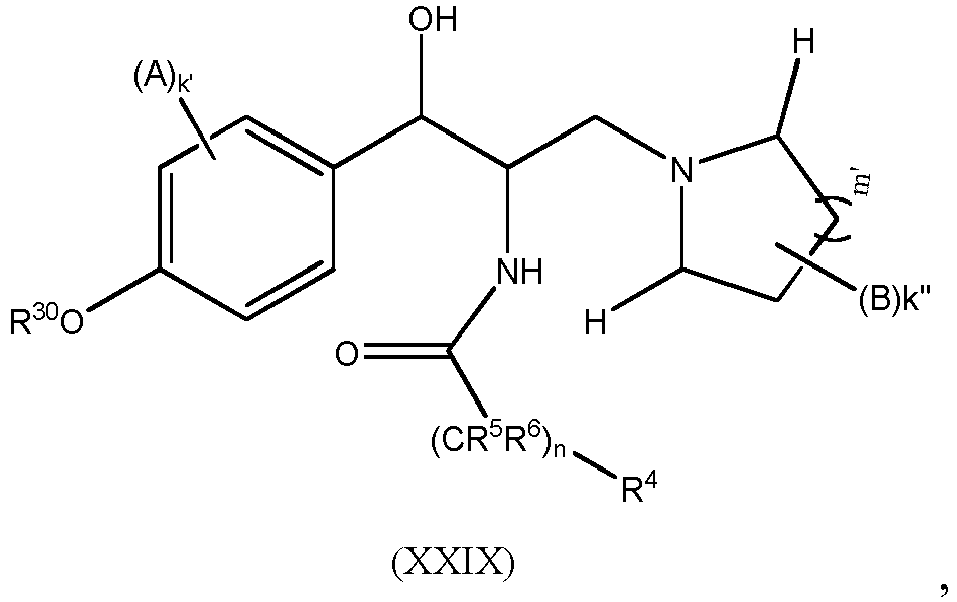
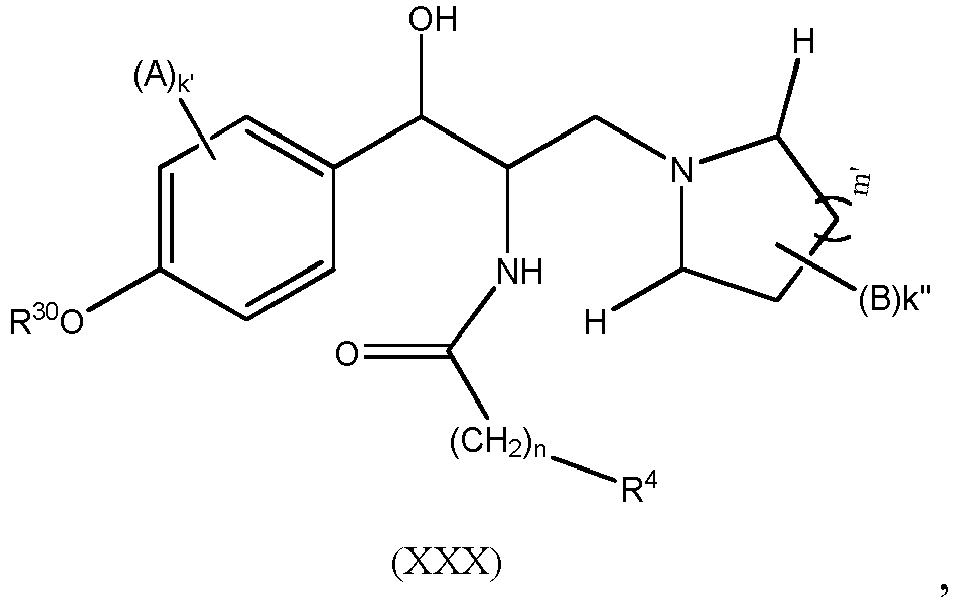
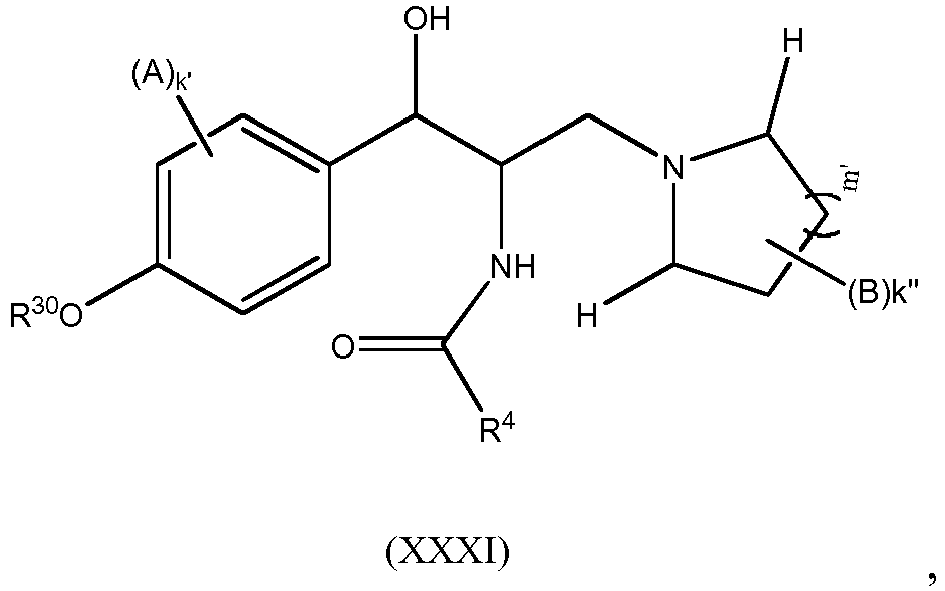
- Each of A and B independently is halogen, hydroxy, C1-C6 alkyl, C1-C6 haloalkyl, C1-C6 alkoxy or C1-C6 haloalkoxy.
- Each R30 is independently hydrogen; a phenyl group optionally substituted with one or more substituents selected from the group consisting of halogen, C1-C6 alkyl, amino, C1-C6 alkylamino, C1-C6 dialkylamino, C1-C6 alkoxy, nitro, cyano, hydroxy, C1-C6 haloalkoxy, C1-C6 alkoxycarbonyl, C1-C6 alkylcarbonyl and C1-C6 haloalkyl; or a C1-C10 alkyl group optionally substituted with one or more substituents selected from the group consisting of halogen, amino, C1-C6 alkylamino, C1-C6 dialkylamino, C1-C6 alkoxy, nitro, cyano, hydroxy, C1-C6 haloalkoxy, C1-C6 alkoxycarbonyl, C1-C6 alkylcarbonyl and C1-C6 haloalkyl. Preferably, R30 is independently hydrogen; or a C1-C10 alkyl group optionally substituted with one or more substituents selected from the group consisting of halogen, amino, C1-C6 alkylamino, C1-C6 dialkylamino, C1-C6 alkoxy, nitro, cyano, hydroxy, C1-C6 haloalkoxy, C1-C6 alkoxycarbonyl, C1-C6 alkylcarbonyl and C1-C6 haloalkyl. More preferably, R30 is independently hydrogen, or a C1-C10 alkyl group optionally substituted with one or more substituents selected from the group consisting of halogen, C1-C6 alkoxy, C1-C6 haloalkoxy and hydroxy.
- Each k' is independently 0, 1 or 2.
- Each k" is independently 0, 1 or 2.
- Each m' is independently 0, 1 or 2. Preferably, each m' is 1.
- Each n is independently 1, 2, 3, 4, 5 or 6. Preferably, each n in Structual Formulas (XXV) and (XXVI) is independently 1, 2, 3 or 4, and each n in Structural Formulas (XXIII) or (XXIV) is independently 2, 3, 4 or 5.
- Values and preferred values for the remainder of the variables of Structural Formulas (XXII) - (XXXI) are each independently as described above in the preliminary set of values for Structural Formula (XXI).
- A second set of values for the variables in Structural Formulas (XXII) - (XXXI) is provided in the following paragraphs:
- Each R4 in Structural Formulas (XXII) -(XXVIII) is independently an aliphatic or aryl group each optionally substituted with one or more substituents described above in the preliminary set of values for Structural Formula (XXI). Preferably, each R4 in Structural Formulas (XXII) -(XXVIII) is independently an optionally substituted aryl or an optionally substituted lower arylalkyl group. Examples of suitable substituents are as described in the preliminary set of values for Structural Formula (XXI).
- Each R4 in Structural Formulas (XXIX) -(XXXI) is independently an aryl group optionally substituted with one or more substituents described above in the preliminary set of values for Structural Formula (XXI).
- R5 and R6 in Structural Fomrulas (XXII), (XXIII), (XV) and (XXIX) are each independently -H, -OH, a halogen, a C1-C6 alkoxy group or a C1-C6 alkyl group.
- For Structural Formula (XXVIII), R7 is -H or C1-C6 alkyl, preferably -H.
- Values and preferred values for A, B, R30, k', k", m' and n are each independently as described above in the first set of values for the variables in Structural Formulas (XXII) - (XXXI). Preferably, each n in Structual Formulas (XXV) and (XXVI) is independently 1, 2, 3 or 4, and each n in Structural Formulas (XXIII) or (XXIV) is independently 2, 3, 4 or 5.
- Values and preferred values for the remainder of the variables of Structural Formulas (XXII) - (XXXI) are each independently as described above in the preliminary set of values for Structural Formula (XXI).
- A third set of values for the variables in Structural Formulas (XXII) - (XXXI) is provided in the following paragraphs:
- Each R4 in Structural Formulas (XXII) -(XXVIII) is independently an optionally substituted aryl or an optionally substituted lower arylalkyl group. Example of suitable substituents are as described in the preliminary set of values for Structural Formula (XXI). Each R4 in Structural Formulas (XXIX) -(XXXI) is independently an aryl group optionally substituted with one or more substituents described above in the first set of values for Structural Formula (XXI).
- R5 and R6 for Structural Fomrulas (XXII), (XXIII), (XXV) and (XXIX) are each independently -H, -OH, a halogen, a lower alkoxy group or a lower alkyl group.
- For Structural Formula (XXVIII), R7 is -H.
- Q in Structural Formula (XXII) is -O-, -S-, -C(O)-, -C(S)-, -NR7(CO)- or -C(O)NR7-.
- Values and preferred values for A, B, R30, k', k", m' and n are each independently as described above in the first set of values for the variables in Structural Formulas (XXII) - (XXXI). Preferably, each n in Structual Formulas (XXV) and (XXVI) is independently 1, 2, 3 or 4, and each n in Structural Formulas (XXIII) or (XXIV) is independently 2, 3, 4 or 5.
- Values and preferred values for the remainder of the variables of Structural Formulas (XXII)-(XXXI) are each independently as described above in the preliminary set of values for Structural Formula (XXI).
- A fourth set of values for the variables in Structural Formulas (XXII) - (XXXI) is provided in the following paragraphs:
- Each R4 in Structural Formulas (XXII) -(XXVIII) is independently selected from the group consisting of:




- Each R4 in Structural Formulas (XXIX) -(XXXI) is independently selected from the group consisting of:


- Example of suitable substituents for rings A-Z5 are as described in the first set of values for Structural Formula (XXI).
- Preferably, in Structural Formulas (XXIX) - (XXXI), each of rings A-Z5 is optionally and independently substituted with one or more substituents selected from Ar3 and Ar3-Ar3 wherein values and preferred values of Ar3 are as described above for the preliminary set of values for Structural Formula (XXI). Preferably, Ar3 is an aryl group each optionally substituted with one or more substituents selected from the group consisting of halogen, C1-C10 alkyl, C1-C10 haloalkyl, hydroxy, C1-C10 alkoxy, nitro, cyano, C1-C10 alkoxycarbonyl, C1-C10 alkylcarbonyl, C1-C10 haloalkoxy, amino, C1-C10 alkylamino and C1-C10 dialkylamino. More preferably, Ar3 is an aryl group each optionally substituted with one or more substituents selected from the group consisting of halogen, C1-C4 alkyl, C1-C4 haloalkyl, hydroxy, C1-C4 alkoxy, nitro, cyano, C1-C4 alkoxycarbonyl, C1-C4 alkylcarbonyl, C1-C4 haloalkoxy, amino, C1-C4 alkylamino and C1-C4 dialkylamino.
- Values and preferred values for R5, R6, R7, R30, Q, k', k", m' and n are each independently as described above in the third set of values for the variables in Structural Formulas (XXII) - (XXXII). Preferably, each n in Structual Formulas (XXV) and (XXVI) is independently 1, 2, 3 or 4, and each n in Structural Formulas (XXIII) or (XXIV) is independently 2, 3, 4 or 5.
- Values and preferred values for the remainder of the variables of Structural Formulas (XXII) - (XXXI) are each independently as described above in the preliminary set of values for Structural Formula (XXI).
- A fifth set of values for the variables in Structural Formulas (XXII) - (XXXI) is provided in the following paragraphs:
- Each R4 in Structural Formulas (XXII) -(XXVIII) is independently

- Each R4 in Structural Formulas (XXIX) - (XXXI) is independently

- Each ring A is optionally substituted. Example of suitable substituents for rings A are as described in the preliminary set of values for Structural Formula (XXI).
- Ar3 is an aryl group each optionally substituted with one or more substituents selected from the group consisting of halogen, C1-C4 alkyl, C1-C4 haloalkyl, hydroxy, C1-C4 alkoxy, nitro, cyano, C1-C4 alkoxycarbonyl, C1-C4 alkylcarbonyl, C1-C4 haloalkoxy, amino, C1-C4 alkylamino and C1-C4 dialkylamino.
- Values and preferred values for A, B, R5, R6, R7, R30, Q, k', k", m' and n are each independently as described above in the fourth set of values for the variables in Structural Formulas (XXII) - (XXXI).
- Values and preferred values for the remainder of the variables of Structural Formulas (XXII) - (XXXI) are each independently as described above in the preliminary set of values for Structural Formula (XXI).
- A sixth set of values for the variables other than A, B, k', k" and m' in Structural Formulas (XXII) - (XXXI) is as defined in the first set, second set, third set, fourth set, fifth set, sixth set or seventh set of values for the varibales for Structural Formula (XXI), and values and preferred values for A, B, k', k" and m' are each independently as described above in the first set of values for the variables in Structural Formulas (XXII) - (XXXI).
- In another embodiment, the compound of the invention is represented by Structural Formula (XXXII) or (XXXIII):


- Each of A and B independently is halogen, hydroxy, C1-C6 alkyl, C1-C6 haloalkyl, C1-C6 alkoxy or C1-C6 haloalkoxy.
- Each R30 is independently hydrogen; a phenyl group optionally substituted with one or more substituents selected from the group consisting of halogen, C1-C6 alkyl, amino, C1-C6 alkylamino, C1-C6 dialkylamino, C1-C6 alkoxy, nitro, cyano, hydroxy, C1-C6 haloalkoxy, C1-C6 alkoxycarbonyl, C1-C6 alkylcarbonyl and C1-C6 haloalkyl; or a C1-C10 alkyl group optionally substituted with one or more substituents selected from the group consisting of halogen, amino, C1-C6 alkylamino, C1-C6 dialkylamino, C1-C6 alkoxy, nitro, cyano, hydroxy, C1-C6 haloalkoxy, C1-C6 alkoxycarbonyl, C1-C6 alkylcarbonyl and C1-C6 haloalkyl. Preferably, R30 is independently hydrogen; or a C1-C10 alkyl group optionally substituted with one or more substituents selected from the group consisting of halogen, amino, C1-C6 alkylamino, C1-C6 dialkylamino, C1-C6 alkoxy, nitro, cyano, hydroxy, C1-C6 haloalkoxy, C1-C6 alkoxycarbonyl, C1-C6 alkylcarbonyl and C1-C6 haloalkyl. More preferably, R30 is independently hydrogen, or a C1-C10 alkyl group optionally substituted with one or more substituents selected from the group consisting of halogen, C1-C6 alkoxy, C1-C6 haloalkoxy and hydroxy.
- Each k' is independently 0, 1 or 2.
- Each k" is independently 0, 1 or 2.
- Each m' is independently 0, 1 or 2.
- Each q is independently 0, 1, 2, 3, 4, 5 or 6.
- Each R8 independently is -H, or an optionally substituted aryl or an optionally substituted lower alkyl group. Examples of suitable substituents are as described for the preliminary set of values for Structural Formula (XXI). Preferably, each R8 independently is selected from the group consisting of:


- Each of rings A-Z5 is optionally and independently substituted. Examples of suitable substituents for R8 are as provided above in the first set of values for R4 in Structural Formula (XXI). More preferably, each R8 is independently a

- Values and preferred values for the remainder of the variables of Structural Formulas (XXXII) - (XXXIII) are each independently as described above in the preliminary set of values for Structural Formula (XXI).
- In one preferred embodiment, each k' in Structural Formulas (XXI) - (XXXIII) is independently 0 or 1. Preferably, when k' is 1, each A independently is positioned at a meta position of the phenyl ring.
- In another perferred embodiment, each k" in Structural Formulas (XXI) - (XXXIII) is independently 0 or 1, more preferably 1.
- In yet another perferred embodiment, each m' in Structural Formulas (XXI) - (XXXIII) is independently 1.
- In yet another preferred embodiment, each k' in Structural Formulas (XXI) - (XXXIII) is independently 0 or 1; and each k" in Structural Formulas (XXI) - (XXXIII) is independently 0 or 1, more preferably 1.
- In yet another preferred embodiment, in Structural Formulas (XXI) - (XXXIII):
- Each R30 is independently hydrogen or a C1-C6 alkyl group optionally substituted with one or more substituents selected from the group consisting of halogen, amino, C1-C3 alkylamino, C1-C3 dialkylamino, C1-C3 alkoxy, nitro, cyano, hydroxy, C1-C3 haloalkoxy, C1-C3 alkoxycarbonyl and C1-C3 alkylcarbonyl;
- each k' in Structural Formulas (XXI) - (XXXIV) is independently 0 or 1. Preferably, when k' is 1, each A independently is positioned at a meta position of the phenyl ring; and
- each k" in Structural Formulas (XXI) - (XXXIV) is independently 0 or 1, preferably 1.
- In yet another preferred embodiment, in Structural Formulas (XXI) - (XXXIII):
- Each -OR30 is independently -OH or -O-C1-C6 alkyl optionally substituted with one or more substituents selected from the group consisting of halogen, C1-C3 C1-C3 alkoxy, hydroxy and C1-C3 haloalkoxy;
- each k' in Structural Formulas (XXI) - (XXXIII) is independently 0 or 1. Preferably, when k' is 1, each A is independently positioned at a meta position of the phenyl ring; and
- each k" in Structural Formulas (XXI) - (XXXIII) is independently 0 or 1, preferably 1.
- In all of the embodiments described above for Structural Formulas (XXI) - (XXXIII) and (XVIC) - (XVID), the heterocyclic ring represented by


- Specific examples of the compounds of the invention include compounds shown in Tables 1 and 2 and those exemplified in the examples below, stereoisomers thereof, and pharmaceutically acceptable salts thereof.
- Also included are solvates, hydrates or polymorphs of the disclosed compounds herein. Thus, it is to be understood that when any compound is referred to herein by name and structure, solvates, hydrates and polymorphs thereof are included.
- The compounds of the invention may contain one or more chiral centers and/or double bonds and, therefore, may exist as stereoisomers, such as double-bond isomers (i.e., geometric isomers), enantiomers, or diastereomers. When compounds of the invention are depicted or named without indicating the stereochemistry, it is to be understood that both stereomerically pure forms (e.g., geometrically pure, enantiomerically pure, or diastereomerically pure) and stereoisomeric mixtures are encompassed. For example, the compound represented by Structural Formula (XXI) below has chiral centers 1 and 2. Accordingly, the compounds of the invention depicted by Structural Formula (XXI) include (1R, 2R), (1R, 2S), (IS, 2R) and (IS, 2S) stereoisomers and mixtures thereof.

- As used herein, a racemic mixture means about 50% of one enantiomer and about 50% of is corresponding enantiomer relative to all chiral centers in the molecule. The invention encompasses all enantiomerically-pure, enantiomerically-enriched, diastereomerically pure, diastereomerically enriched, and racemic mixtures of the compounds of the invention.
- In some preferred embodiments, the compounds of the invention are (1R, 2R) stereoisomers.
- Enantiomeric and diastereomeric mixtures can be resolved into their component enantiomers or stereoisomers by well known methods, such as chiral-phase gas chromatography, chiral-phase high performance liquid chromatography, crystallizing the compound as a chiral salt complex, or crystallizing the compound in a chiral solvent. Enantiomers and diastereomers can also be obtained from diastereomerically- or enantiomerically-pure intermediates, reagents, and catalysts by well known asymmetric synthetic methods.
- Included in the invention are pharmaceutically acceptable salts of the compounds disclosed herein. The disclosed compounds have basic amine groups and therefore can form pharamceutically acceptable salts with pharmaceutically acceptable acid(s). Suitable pharmaceutically acceptable acid addition salts of the compounds of the invention include salts of inorganic acids (such as hydrochloric acid, hydrobromic, phosphoric, metaphosphoric, nitric, and sulfuric acids) and of organic acids (such as, acetic acid, benzenesulfonic, benzoic, citric, ethanesulfonic, fumaric, gluconic, glycolic, isethionic, lactic, lactobionic, maleic, malic, methanesulfonic, succinic, p- toluenesulfonic, and tartaric acids). Compounds of the invention with acidic groups such as carboxylic acids can form pharamceutically acceptable salts with pharmaceutically acceptable base(s). Suitable pharmaceutically acceptable basic salts include ammonium salts, alkali metal salts (such as sodium and potassium salts) and alkaline earth metal salts (such as magnesium and calcium salts). Compounds with a quaternary ammonium group also contain a counteranion such as chloride, bromide, iodide, acetate, perchlorate and the like. Other examples of such salts include hydrochlorides, hydrobromides, sulfates, methanesulfonates, nitrates, maleates, acetates, citrates, fumarates, tartrates [e.g. (+)-tartrates, (-)-tartrates or mixtures thereof including racemic mixtures], succinates, benzoates and salts with amino acids such as glutamic acid.
- When the stereochemistry of the disclosed compounds is named or depicted by structure, the named or depicted stereoisomer is at least 60%, 70%, 80%, 90%, 99% or 99.9% by weight pure relative to the other stereoisomers. When a single enantiomer is named or depicted by structure, the depicted or named enantiomer is at least 60%, 70%, 80%, 90%, 99% or 99.9% by weight optically pure. Percent optical purity by weight is the ratio of the weight of the enatiomer over the weight of the enantiomer plus the weight of its optical isomer.
- As used herein, the term "hydrolyzable group" means an amide, ester, carbamate, carbonate, ureide, or phosphate analogue, respectively, that either: 1) does not destroy the biological activity of the compound and confers upon that compound advantageous properties in vivo, such as improved water solubility, improved circulating half-life in the blood (e.g., because of reduced metabolism of the prodrug), improved uptake, improved duration of action, or improved onset of action; or 2) is itself biologically inactive but is converted to a biologically active compound. Examples of hydrolyzable amides include, but are not limited to, lower alkyl amides, α-amino acid amides, alkoxyacyl amides, and alkylaminoalkylcarbonyl amides. Examples of biohydrolyzable esters include, but are not limited to, lower alkyl esters, alkoxyacyloxy esters, alkyl acylamino alkyl esters, and choline esters. Examples of biohydrolyzable carbamates include, but are not limited to, lower alkylamines, substituted ethylenediamines, aminoacids, hydroxyalkylamines, heterocyclic and heteroaromatic amines, and polyether amines.
- An "aliphatic group" is non-aromatic, consists solely of carbon and hydrogen and may optionally contain one or more units of unsaturation, e.g., double and/or triple bonds. An aliphatic group may be straight chained, branched or cyclic. When straight chained or branched, an aliphatic group typically contains between about one and about twenty carbon atoms, typically between about one and about ten carbon atoms, more typically between about one and about six carbon atoms. When cyclic, an aliphatic group typically contains between about three and about ten carbon atoms, more typically between about three and about seven carbon atoms. A "substituted aliphatic group" is substituted at any one or more "substitutable carbon atom". A "substitutable carbon atom" in an aliphatic group is a carbon in an aliphatic group that is bonded to one or more hydrogen atoms. One or more hydrogen atoms can be optionally replaced with a suitable substituent group. A "haloaliphatic group" is an aliphatic group, as defined above, substituted with one or more halogen atoms. Suitable substituents on a substitutable carbon atom of an aliphatic group are the same as those for an alkyl group.
- The term "alkyl" used alone or as part of a larger moiety, such as "alkoxy", "haloalkyl", "arylalkyl", "alkylamine", "cycloalkyl", "dialkyamine", "alkylamino", "dialkyamino" "alkylcarbonyl", "alkoxycarbonyl" and the like, includes as used herein means saturated straight-chain, cyclic or branched aliphatic group. As used herein, a C1-C6 alkyl group is referred to "lower alkyl." Similarly, the terms "lower alkoxy", "lower haloalkyl", "lower arylalkyl", "lower alkylamine", "lower cycloalkylalkyl", "lower dialkyamine", "lower alkylamino", "lower dialkyamino" "lower alkylcarbonyl", "lower alkoxycarbonyl" include straight and branched saturated chains containing one to six carbon atoms.
- The term "alkoxy" means -O-alkyl; "hydroxyalkyl" means alkyl substituted with hydroxy; "aralkyl" means alkyl substituted with an aryl group; "alkoxyalkyl" mean alkyl substituted with an alkoxy group; "alkylamine" means amine substituted with an alkyl group; "cycloalkylalkyl" means alkyl substituted with cycloalkyl; "dialkylamine" means amine substituted with two alkyl groups; "alkylcarbonyl" means -C(O)-R*, wherein R* is alkyl; "alkoxycarbonyl" means -C(O)-OR*, wherein R* is alkyl; and where alkyl is as defined above.
- The terms "amine" and "amino" are used interchangeably throughout herein and mean -NH2, -NHR or -NR2, wherein R is alkyl.
- "Cycloalkyl" means a saturated carbocyclic ring, with from three to eight carbons.
- The terms "haloalkyl" and "haloalkoxy" mean alkyl or alkoxy, as the case may be, substituted with one or more halogen atoms. The term "halogen" means F, Cl, Br or I. Preferably the halogen in a haloalkyl or haloalkoxy is F.
- The term "acyl group" means -C(O)R, wherein R is an optionally substituted alkyl group or aryl group (e.g., optionally substituted phenyl). R is preferably an unsubstituted alkyl group or phenyl.
- An "alkylene group" is represented by -[CH2]z-, wherein z is a positive integer, preferably from one to eight, more preferably from one to four.
- As used herein, the term "alkenyl" refers to a straight or branched hydrocarbon group that contains one or more double bonds between carbon atoms. Suitable alkenyl groups include, e.g., n-butenyl, cyclooctenyl and the like. An alkenyl group may be substituted.
- The term "aryl group" used alone or as part of a larger moiety as in "aralkyl", "aralkoxy", or "aryloxyalkyl", includes carbocyclic aromatic rings and heteroaryl rings. The term "aromatic group" may be used interchangeably with the terms "aryl", "aryl ring" "aromatic ring", "aryl group" and "aromatic group". An aromatic group typically has six - fourteen ring atoms. A "substituted aryl group" is substituted at any one or more substitutable ring atom.
- Carbocyclic aromatic rings have only carbon ring atoms (typically six to fourteen) and include monocyclic aromatic rings such as phenyl and fused polycyclic aromatic ring systems in which two or more carbocyclic aromatic rings are fused to one another. Examples include 1-naphthyl, 2-naphthyl, 1-anthracyl.
- The term "heteroaryl", "heteroaromatic", "heteroaryl ring", "heteroaryl group" and "heteroaromatic group", used alone or as part of a larger moiety as in "heteroaralkyl" or "heteroarylalkoxy", refers to aromatic ring groups having five to fourteen ring atoms selected from carbon and at least one (typically 1 -4, more typically 1 or 2) heteroatom (e.g., oxygen, nitrogen or sulfur). They include monocyclic rings and polycyclic rings in which a monocyclic heteroaromatic ring is fused to one or more other carbocyclic aromatic or heteroaromatic rings. Examples of monocyclic heteroaryl groups include furanyl (e.g., 2-furanyl, 3-furanyl), imidazolyl (e.g., N-imidazolyl, 2-imidazolyl, 4-imidazolyl, 5-imidazolyl), isoxazolyl(e.g., 3-isoxazolyl, 4-isoxazolyl, 5-isoxazolyl), oxadiazolyl (e.g., 2-oxadiazolyl, 5-oxadiazolyl), oxazolyl (e.g., 2-oxazolyl, 4-oxazolyl, 5-oxazolyl), pyrazolyl (e.g., 3-pyrazolyl, 4-pyrazolyl), pyrrolyl (e.g., 1-pyrrolyl, 2-pyrrolyl, 3-pyrrolyl), pyridyl (e.g., 2-pyridyl, 3-pyridyl, 4-pyridyl), pyrimidinyl (e.g., 2-pyrimidinyl, 4-pyrimidinyl, 5-pyrimidinyl), pyridazinyl (e.g., 3-pyridazinyl), thiazolyl (e.g., 2-thiazolyl, 4-thiazolyl, 5-thiazolyl), triazolyl (e.g., 2-triazolyl, 5-triazolyl), tetrazolyl (e.g., tetrazolyl) and thienyl (e.g., 2-thienyl, 3-thienyl. Examples of monocyclic six-membered nitrogen-containing heteraryl groups include pyrimidinyl, pyridinyl and pyridazinyl. Examples of polycyclic aromatic heteroaryl groups include carbazolyl, benzimidazolyl, benzothienyl, benzofuranyl, indolyl, quinolinyl, benzotriazolyl, benzothiazolyl, benzoxazolyl, benzimidazolyl, isoquinolinyl, indolyl, isoindolyl, acridinyl, or benzisoxazolyl.
- The term "non-aromatic heterocyclic group", used alone or as part of a larger moiety as in "non-aromatic heterocyclylalkyl group", refers to non-aromatic ring systems typically having five to twelve members, preferably five to seven, in which one or more ring carbons, preferably one or two, are each replaced by a heteroatom such as N, O, or S. A non-aromatic heterocyclic group can be monocyclic or fused bicyclic. A "nitrogen-containing non-aromatic heterocyclic group" is a non-aromatic heterocyclic group with at least one nitrogen ring atom.
- Examples of non-aromatic heterocyclic groups include (tetrahydrofuranyl (e.g., 2-tetrahydropyranyl, 3-tetrahydropyranyl, 4-tetrahydropyranyl), [1,3]-dioxalanyl, [1,3]-dithiolanyl, [1,3]-dioxanyl, tetrahydrothienyl (e.g., 2-tetrahydrothienyl, 3-tetrahydrothieneyl), azetidinyl (e.g., N-azetidinyl, 1-azetidinyl, 2-azetidinyl), oxazolidinyl (e.g., N-oxazolidinyl, 2-oxazolidinyl, 4-oxazolidinyl, 5-oxazolidinyl), morpholinyl (e.g., N-morpholinyl, 2-morpholinyl, 3-morpholinyl), thiomorpholinyl (e.g., N-thiomorpholinyl, 2-thiomorpholinyl, 3-thiomorpholinyl), pyrrolidinyl (e.g., N-pyrrolidinyl, 2-pyrrolidinyl, 3-pyrrolidinyl) piperazinyl (e.g., N-piperazinyl, 2-piperazinyl), piperidinyl (e.g., N-piperidinyl), 2-piperidinyl, 3-piperidinyl, 4-piperidinyl), thiazolidinyl (e.g., 4-thiazolidinyl), diazolonyl and N-substituted diazolonyl. The designation "N" on N-morpholinyl, N-thiomorpholinyl, N-pyrrolidinyl, N-piperazinyl, N-piperidinyl and the like indicates that the non-aromatic heterocyclic group is attached to the remainder of the molecule at the ring nitrogen atom.
- A "substitutable ring atom" in an aromatic group is a ring carbon or nitrogen atom bonded to a hydrogen atom. The hydrogen can be optionally replaced with a suitable substituent group. Thus, the term "substitutable ring atom" does not include ring nitrogen or carbon atoms which are shared when two aromatic rings are fused. In addition, "substitutable ring atom" does not include ring carbon or nitrogen atoms when the structure depicts that they are already attached to a moiety other than hydrogen. An aryl group may contain one or more substitutable ring atoms, each bonded to a suitable substituent. Examples of suitable substituents on a substitutable ring carbon atom of an aryl group include halogen, alkyl, haloalkyl, ArA, -ORA, -O(haloalkyl), -SRA, -NO2, -CN, -N(RB)2, -NRBC(O)RA, -NRBCO2RC, -N(RB)C(O)N(RB)2, -C(O)RA, -CO2RA, -S(O)2RA, -SO2N(RB)2, -S(O)RC, -NRBSO2N(RB)2, -NRBSO2RC, -VA-ArA, -VA-ORA, -V-O(haloalkyl), -VA-SRA, -VA-NO2, -VA-CN, -VA-N(RB)2, -VA-NRBC(O)RA, -VA-NRBCO2RC, -VA-N(RB)C(O)N(RB)2, -VA-C(O)RA, -VA-CO2RA, -VA-S(O)2RA, -VA-SO2N(RB)2, -VA-S(O)RC, -VA-NRBSO2N(RB)2, -VA-NRBSO2RC, -O-VA-ArA, -O-VB-N(RB)2, -S-VA-ArA, -S-VB-N(RB)2, -N(RB)-VB-ArA, -N(RB)-VB-N(RB)2, -NRBC(O)-VA-N(RB)2, -NRBC(O)-VA-ArA, -C(O)-VA-N(RB)2, -C(O)-VA-ArA, -CO2-VB-N(RB)2, -CO2-VA-ArA, -C(O)N(RB)-VB-N(RB)2, -C(O)N(RB)-VA-ArA, -S(O)2-VA-N(RB)2, -S(O)2-VA-ArA, -SO2N(RB)-VB-N(RB)2, -SO2N(RB)-VA-ArA, -S(O)-VA-N(RB)2, -S(O)-VA-ArA, -NRBSO2-VA-N(RB)2 or -NRBSO2-VA-ArA; or two adjacent substituents, taken together, form a methylenedioxy, ethylenedioxy or -[CH2]4- group.
- Each VA is independently a C1-C10 alkylene group.
- Each VB is independently a C2-C10 alkylene group.
- ArA is a monocyclic aromatic group each substituted with zero, one or two groups independently selected from halogen, alkyl, amino, alkylamino, dialkylamino, alkoxy, nitro, cyano, hydroxy, haloalkoxy or haloalkyl.
- Each RA is independently i) hydrogen; ii) an aromatic group substituted with zero, one or two groups represented by halogen, alkyl, amino, alkylamino, dialkylamino, alkoxy, nitro, cyano, hydroxy, haloalkoxy or haloalkyl; or iii) an alkyl group optionally substituted with halogen, hydroxyl, alkoxy, nitro, cyano, alkoxycarbonyl, alkylcarbonyl or haloalkoxy.
- Each RB is independently RA, -CO2RA, -SO2RA or -C(O)RA; or -N(RB)2 taken together is an optionally substituted non-aromatic heterocyclic group.
- Each RC is independently: i) an aromatic group substituted with zero, one or two groups represented by halogen, alkyl, amino, alkylamino, dialkylamino, alkoxy, nitro, cyano, hydroxy, haloalkoxy or haloalkyl; or ii) an alkyl group optionally substituted with halogen, hydroxyl, alkoxy, nitro, cyano, alkoxycarbonyl, alkylcarbonyl or haloalkoxy.
- An alkyl or a non-aromatic heterocyclic group (including, but not limited to, non-aromatic heterocyclic groups represented by, -N(R51)2 and -N(RB)2) may contain one or more substituents. Examples of suitable substituents for an alkyl or a ring carbon of a non-aromatic heterocyclic group include those listed above for a substitutable carbon of an aryl and the following: =O, =S, =NNHRC, =NN(RC)2, =NNHC(O)RC, =NNHCO2 (alkyl), =NNHSO2 (alkyl), =NRC, spiro cycloalkyl group, fused cycloalkyl group or a monocyclic non-aromatic nitrogen-containing heterocyclic group attached by a ring nitrogen atom (e.g., N-piperidinyl, N-pyrrolidinyl, N-azepanyl, N-morpholinyl, N-thiomorphinyl, N-piperazinyl or N-diazepanyl group). Each RC is independently selected from hydrogen, an unsubstituted alkyl group or a substituted alkyl group. Examples of substituents on the alkyl group represented by RC include amino, alkylamino, dialkylamino, aminocarbonyl, halogen, alkyl, alkylaminocarbonyl, dialkylaminocarbonyl, alkylaminocarbonyloxy, dialkylaminocarbonyloxy, alkoxy, nitro, cyano, carboxy, alkoxycarbonyl, alkylcarbonyl, hydroxy, haloalkoxy, or haloalkyl. Preferred substituents for an alkyl or a ring carbon of a non-aromatic heterocyclic group include C1-C2 alkyl, -OH, N-pyrrolidinyl, N-piperidinyl, N-(4-alkyl)piperazinyl, N-morpholinyl or N-pyrrolyl.
- Suitable substituents on the nitrogen of a non-aromatic heterocyclic group or heteroaryl group include -RD, -N(RD)2, -C(O)RD, -CO2 RD, -C(O)C(O)RD,-C(O)CH2C(O)RD, -SO2RD, -SO2N(RD)2, -C(=S)N(RD)2, -C(=NH)-N(RD)2, and-NRDSO2RD; wherein RD is hydrogen, an alkyl group, a substituted alkyl group, phenyl (Ph), substituted Ph, -O(Ph), substituted -OPh), CH2(Ph), substituted CH2(Ph), or an unsubstituted heteroaryl or heterocyclic ring. Examples of substituents on the alkyl group or the phenyl ring represented by RD include amino, alkylamino, dialkylamino, aminocarbonyl, halogen, alkyl, alkylaminocarbonyl, dialkylaminocarbonyloxy, alkoxy, nitro, cyano, carboxy, alkoxycarbonyl, alkylcarbonyl, hydroxy, haloalkoxy, or haloalkyl. Preferred substituents on a substitutable nitrogen atom of a nitrogen-containing heteroaryl or nitrogen-containing non-aromatic heterocyclic group include C1-C2 alkyl, C1-C2 hydroxyalkyl, or benzyl optionally substituted with halogen, nitro, cyano, C 1-C2 alkyl, C1-C2 haloalkyl, C1-C2 alkoxy or C1-C2 haloalkoxy.
- In some specific embodiments, non-aromatic heterocyclic groups (including, but not limited to, non-aromatic heterocyclic groups represented by -N(R51)2 and -N(RB)2) each independently are optionally substituted with one or more substituents selected from the group consiting of halogen, =O, =S, =N(C1-C6 alkyl), C1-C6 alkyl, C1-C6 haloalkyl, hydroxy, C1-C6 alkoxy, nitro, cyano, (C1-C6 alkoxy)carbonyl, (C1-C6 alkyl)carbonyl, C1-C6 haloalkoxy, amino, (C1-C6 alkyl)amino and (C1-C6 dialkyl)amino. In some more specific embodiments, the non-aromatic heterocyclic groups each independently are optionally substituted with one or more substituents selected from the group consiting of halogen, C1-C6 alkyl, C1-C6 haloalkyl, hydroxy, C1-C6 alkoxy, nitro, cyano, (C1-C6 alkoxy)carbonyl, (C1-C6 alkyl)carbonyl, C1-C6 haloalkoxy, amino, (C1-C6 alkyl)amino and (C1-C6 dialkyl)amino.
- In an embodiment of the present invention, the compounds of the present invention can be used for treating asubject having polycystic kidney disease (PKD). As shown in Example 4, Applicants have discovered that a certain glucosylceramide synthase inhibitors can reduce the growth of cyst formation and/or growth in an animal modeled PKD (see for example,
U.S. Provisional Application No. 60/997,803, filed October 5, 2007 - As used herein a subject is a mammal, preferably a human, but can also be an animal in need of veterinary treatment, such as a companion animal (e.g., dogs, cats, and the like), a farm animal (e.g., cows, sheep, pigs, horses, and the like) or a laboratory animal (e.g., rats, mice, guinea pigs, and the like). Subject and patient are used interchangeably. A subject "in need of treatment" includes a subject with chronic renal failure.
- "Treatment" or "treating" refers to both therapeutic and prophylactic treatment.
- An "effective amount" of a pharmaceutical composition disclosed above is a quantity that results in a beneficial clinical outcome of or exerts an influence on, the condition being treated with the pharmaceutical composition compared with the absence of treatment. The administering amount of a pharmaceutical composition disclosed above to the subject will depend on the degree, severity, and type of the disease or condition, the amount of therapy desired, and the release characteristics of the pharmaceutical composition. It will also depend on the subject's health, size, weight, age, sex, and tolerance to drugs. An effective amount of an active agent is an amount sufficient to have the desired effect for the condition being treated, which can either be treatment of an active disease state or prophylactically inhibiting the active disease state from appearing or progessing. For example, an effective amount of a compound for treating a polycystic kidney disease is the quantity of compound that results in a slowing in the progression of the polycystic kideny disease, a reversal of the polycystic kidney disease state, the reduction of new cyst formation (partial or complete inhibition of cystogenesis), a reduction in cyst mass, a reduction in the size and number of cysts, and/or a reduction in the severity of the symptoms associated with the polycystic kidney disease (PDK).
- Typically, the pharmaceutical compositions of the invention are administered for a sufficient period of time to achieve the desired therapeutic effect. Dosages may range from 0.1 to 500 mg/kg body weight per day. In one embodiment, the dosing range is 1-20 mg/kg/day. The compound of the invention may be administered continuously or at specific timed intervals. For example, the compound of the invention may be administered 1 , 2, 3, or 4 times per day, such as, e.g., a daily or twice-daily formulation. Commercially available assays may be employed to determine optimal dose ranges and/or schedules for administration. For example, assays for measuring blood glucose levels are commercially available (e.g., OneTouch® UItra®, Lifescan, Inc. Milpitas, CA). Kits to measure human insulin levels are also commercially available (Linco Research, Inc. St. Charles, MO). Additionally, effective doses may be extrapolated from dose- response curves obtained from animal models (see, e.g., Comuzzie et al., Obes. Res. 11 (1):75 (2003); Rubino et al., Ann. Surg. 240(2):389 (2004); Gill-Randall et al., Diabet. Med. 21 (7):759 (2004), the entire teachings of which are incorporated herein by reference). Therapeutically effective dosages achieved in one animal model can be converted for use in another animal, including humans, using conversion factors known in the art (see, e.g., Freireich et al., Cancer Chemother. Reports 50(4):219 (1996), the entire teachings of which are incorporarted herein by reference) and
Table A below for equivalent surface area dosage factors.From: Mouse
(20g)Rat
(150 g)Monkey
(3.5 kg)Dog
(8 kg)Human
(60 kg)To: Mouse 1 ½ ¼ 1/6 1/12 To: Rat 2 1 ½ ¼ 1/7 To: Monkey 4 2 1 3/5 1/3 To: Dog 6 4 3/5 1 ½ To: Human 12 7 3 2 1 - Typically, the pharmaceutical compositions of the invention can be administered before or after a meal, or with a meal. As used herein, "before" or "after" a meal is typically within two hours, preferably within one hour, more preferably within thirty minutes, most preferably within ten minutes of commencing or finishing a meal, respectively.
- In one embodiment, the method of the present invention is a mono-therapy where the pharmaceutical compositions of the invention are administered alone. Accordingly, in this embodiment, the compound of the invention is the only pharmaceutically active ingredient in the pharmaceutical compositions.
- In another embodiment, the invention relates to a combination therapy for treating polycystic kidney disease (PDK) . Any of the compounds of the invention described herein are co-administered either simultaneously as a single dosage form or consecutively as separate dosage forms with other agents that ease the symptoms and/or complications associated with PKD. The associated symptoms with PKD include pain, headaches, urinary tract infections and high blood pressure. Examples of the agents that can be co-administered with the compounds of the invention include, but are not limited to, over-the counter pain medications, antibiotics, antimicrobials, thiazide diuretics, angiotensin-converting enzyme inhibitors, angiotensin II antagonists such as losartan, and calcium channel blockers such as diltiazem. Examples of pain medications include acetaminophen, aspirin, naproxen, ibuprofen and COX-2 selective inhibitors such as rofecoxib, celecoxib and valdecoxib. Examples of antibiotics and antimicrobials include cephalosporins, penicilin derivatives, aminoglycosidesm ciprofloxacin, erythromycin, chloramphemicol, tetracycline, ampicillin, gentamicin, sulfamethoxazole, trimethoprim and ciprofloxacin, streptomycin, rifamycin, amphotericin B, griseofulvin, cephalothin, cefazolin, fluconazole, clindamycin, erythromycin, bacitracin, vancomycin and fusidic acid Examples of thiazide diuretics include bendroflumethiazide, chlorothiazide, chlorthalidone, hydrochlorothiazide, hydroflumethiazide, methyclothiazide, metolazone, polythiazide, quinethazone and trichlormethiazide. Examples of angiotensin-converting enzyme inhibitors include benazepril, captopril, cilazapril, enalapril, enalaprilat, fosinopril, lisinopril, moexipril, perindopril, quinapril, ramipril and trandolapril.
- The pharmaceutical compositions of the invention optionally include one or more pharmaceutically acceptable carriers and/or diluents therefor, such as lactose, starch, cellulose and dextrose. Other excipients, such as flavoring agents; sweeteners; and preservatives, such as methyl, ethyl, propyl and butyl parabens, can also be included. More complete listings of suitable excipients can be found in the Handbook of Pharmaceutical Excipients (5th Ed., Pharmaceutical Press (2005)).
- The carriers, diluents and/or excipients are "acceptable" in the sense of being compatible with the other ingredients of the pharmaceutical composition and not deleterious to the recipient thereof. The pharmaceutical compositions can conveniently be presented in unit dosage form and can be prepared by any suitable method known to the skilled artisan. In general, the pharmaceutical compositions are prepared by uniformly and intimately bringing into association the compounds disclosed herein with the carriers, diluents and/or excipients and then, if necessary, dividing the product into unit dosages thereof.
- The pharmaceutical compositions of the invention can be formulated as a tablet, sachet, slurry, food formulation, troche, capsule, elixir, suspension, syrup, wafer, chewing gum or lozenge. A syrup formulation will generally consist of a suspension or solution of the compounds of the invention described herein or salt in a liquid carrier, for example, ethanol, glycerine or water, with a flavoring or coloring agent. Where the composition is in the form of a tablet, one or more pharmaceutical carriers routinely used for preparing solid formulations can be employed. Examples of such carriers include magnesium stearate, starch, lactose and sucrose. Where the composition is in the form of a capsule, the use of routine encapsulation is generally suitable, for example, using the aforementioned carriers in a hard gelatin capsule shell. Where the composition is in the form of a soft gelatin shell capsule, pharmaceutical carriers routinely used for preparing dispersions or suspensions can be considered, for example, aqueous gums, celluloses, silicates or oils, and are incorporated in a soft gelatin capsule shell.
- Though the above description is directed toward routes of oral administration of pharmaceutical compositions consistent with embodiments of the invention, it is understood by those skilled in the art that other modes of administration using vehicles or carriers conventionally employed and which are inert with respect to the compounds of the invention may be utilized for preparing and administering the pharmaceutical compositions. For example, the pharmaceutical compositions of the invention may also be formulated for rectal administration as a suppository or retention enema, e.g., containing conventional suppository bases such as cocoa butter or other glycerides. Also, the pharamceutical compositions of the invention can be formulated for injection, or for transdermal or trnasmucosal administration. Illustrative of various modes of administration methods, vehicles and carriers are those described, for example, in Remington's Pharmaceutical Sciences, 18th ed. (1990), the disclosure of which is incorporated herein by reference.
- The invention is illustrated by the following examples. Compounds falling outside the scope of the claims are included as reference embodiments.
- A general method for the synthesis of final compounds is depicted in Scheme 1. A general method for the preparation of the compounds of the invention involves the reaction of the amine of type EVII with the appropriate reagent. The amine type EVII, such as (1R, 2R)-2-amino-(2,3-dihydrobenzo [β][1,4[dioxin-6-yl)-3-(pyrrolidin-1-yl) propan-1-ol, can be prepared according to the preparation of intermediate 4 of
US patent 6,855,830 , or by using the general synthetic procedures depicted in schemes 2-5. Final amide compounds, EIX can be prepared by reaction of the amine EVII with the corresponding acylating agent using standard reaction conditions for the formation of an amide. The urea compounds, EIIX can be prepared by reaction of the amine EVII with the corresponding isocyanate. The carbamates, EX can be prepared by reaction of the amine EVII with the corresponding chloroformate.
- A mixture of Compound EVII (1 mmol), such as (1R, 2R)-2-amino-1-(2,3-dihydrobenzo[β][1,4]dioxin-6-yl)-3-(pyrrolidin-1-yl)propan-1-ol, prepared according to the preparation of intermediate 4 of
US patent 6,855,830 or using the methods depicted in schemes 2,3,4 and 5, an acid (1.2 mmol), DCC (dicyclohexylcarbodiimide, 1.2 mmol) and HOBT (1-hydroxy benzotriazole, 1.2 mmol) was dissolved in CH2Cl2 (5 ml). The mixture was stirred at room temperature and monitored by TLC (thin liquid chromatography) for completion. After completion the mixture was filtered and purified by column chromatography using, for example, a mixture of (CH2Cl2/MeOH/NH4OH). - A mixture of Compound EVII (1 mmol), such as (1R, 2R)-2-amino-1-(2,3-dihydrobenzo[β][1,4]dioxin-6-yl)-3-(pyrrolidin-1-yl)propan-1-ol, prepared according to the preparation of intermediate 4 of
US patent 6,855,830 or using the methods depicted in schemes 2,3,4 and 5, an acid and DCC (dicyclohexylcarbodiimide, 1.2 mmol) was dissolved in CHCl3 (5 ml). The mixture was placed in the microwave reactor (T = 120 °C, time = 1min) and it was then filtered and purified by column chromatography using, for example, a mixture of (CH2Cl2/MeOH/NH4OH). - A mixture of Compound EVII (1 mmol), such as (1R, 2R)-2-amino-1-(2,3-dihydrobenzo[β][1,4]dioxin-6-yl)-3-(pyrrolidin-1-yl)propan-1-ol, prepared according to the preparation of intermediate 4 of
US patent 6,855,830 or using the methods depicted in schemes 2,3,4 and 5, an acid chloride (1.2 mmol) and K2CO3 (2 mmol) was suspended in THF (5 ml). The mixture was stirred at room temperature and monitored by TLC for completion. After completion, the mixture was filtered and purified by column chromatography using, for example, a mixture of (CH2Cl2/MeOH/NH4OH). - Compound EVII, such as (1R, 2R)-2-amino-1-(2,3-dihydro-benzo[1,4] dioxin-6-yl)-3-pyrrolidin-1-yl-propan-1-ol, prepared according to the preparation of intermediate 4 of
US patent 6,855,830 or using the methods depicted in schemes 2,3,4 and 5, was coupled with a variety of N-hydroxysuccinamide esters in methylene chloride under an atmosphere of nitrogen, for example, for 18 to 24 hours depending on the ester used. - Various mono- and di-keto acids were coupled with N-hydroxysuccinamide in the presence of N, N1-dicyclohexylcarbodiimide in ethyl acetate under an atmosphere of nitrogen for 18 hours. The products were filtered to remove the dicyclohexylurea. The identity of these esters was confirmed by 1H NMR and the crude material was then used in the preparation of amide analogs without further purification.
- An alternative general synthesis of Compound EVII is depicted in Scheme 2. Treatment of (R)-2-(benzyloxycarbonylamino)-3-hydroxypropanoic acid with EDCI and N,O-dimethylhydroxyamine gave the weinreb amide EI in excellent yield. The primary alcohol was protected as the TBDMS ether EII in excellent yield by reaction with TBDMSCl in DMF. Reaction of EII with a grignard at low temperature gave EIII in good to excellent yields. Steroselective reduction of EIII and with L-selectride at -70C gave EIV in good to excellent yield and selectivity. Compound EV was obtained in good to excellent yields after deprotection with acetic acid. Reaction with mesylate chloride and a suitable amine produced EVI in good to excellent yield. Finally, deprotection to the primary amine EVII was done in the microwave oven using NaOH aqueous solution in methanol at 150 °C for one to three minutes depending on the specific compound.

- An alternative general synthesis of Compound EVII is depicted in Scheme 3. Intermediate AI was obtained with excellent diastereoselectivity (96:4) by reduction of compound A with LiAlH4 followed by reaction with an aldehyde in the presence of CuI and Me2S. Mesylate intermediate AIII was obtained by reaction with Amberlyst 15 followed by reaction with MsCl in pyridine. The final compound EVII was obtained by reaction with pyrrolidine and removal of the CBz by hydrogenation.

- A general alternative route for synthesis of compound EVII is depicted in Scheme 4. Intermediate EIV was obtain as shown in Scheme 4 was cycled into oxazolidinone B using sodium hydride in a DMF/THF solution. Deprotection of the primary alcohol by reaction with nBu4NF, followed by formation of the tosylate by reaction with tosyl chloride in pyridine, finally, displacement of the tosylate by an appropriate amine afforded compound B1 in good to excellent yield. Hydrolysis of the oxazolidinone with LiOH in a water ethanol mixture gave compound EVII.

- An alternative general synthesis of Compound EVII is depicted in Scheme 5. An aldehyde (2 equiv) is condensed with the chiral morpholinone in toluene with removal of water to provide the fused cycloadduct 2. Treatment of 2 with hydrogen chloride in an alcohol solvent such as methanol provides amino acid 3. Removal of the N-benzyl functionality can be accomplished with hydrogen in the presence of a palladium catalyst to afford 4. Cyclization of 4 with triphosgene and base provides ester 5. The ester functionality can be reduced with sodium borohydride, and the resulting alcohol converted to an appropriate leaving group (i.e. tosylate or iodide). Reaction of 6 with a suitable amine in the presence of excess base (e.g. K2CO3) in a polar solvent (e.g. DMSO or CH3CN) affords 7. Final deprotection under basic conditions affords Compound EVII analogs suitable for conversion to the desired amide final products.

- Imidazole (1.8 g, 26.5 mmol) was added to a solution of (R)-benzyl 3-hydroxy-1-(methoxy(methyl)amino)-1-oxopropan-2-ylcarbamate (3 g, 10.6 mmol) in DMF (dimethyl formamide, 15 mL) followed by TBDMSiCl (tertbutyldimethylsilyl chloride, 2.4 g, 15.95 mmol). The reaction stirred for 12 hrs at room temperature under nitrogen atmosphere and was quenched with aqueous ammonium chlroride (100 ml). The aqueous layer was extracted with methylene chloride (200 mL) and ethyl acetate (100 mL) and the organic layers were washed with brine and concentrated. The crude product was purified by column chromatography using 10% EtOAc (ethylacetate)-hexanes to give an oil (3 g, 74% yield). 1H NMR (400 MHz, CDCl3) δ= 0 (s, 6H), 0.9 (s, 9H), 3.2 (s, 3H), 3.8 (s, 3H), 3.8-3.9 (m, 2H), 4.8 (broad s, 1H), 5.1 (q, 2H), 5.7 (d, 1H), 7.2-7.4 (m, 5H).
- (2,3-dihydrobenzo[β][1,4]dioxin-6-yl)magnesium bromide (26 g, 78 mmol) dissolved in 40 mL of THF (tetrahydrofuran) under a nitrogen atmosphere was cooled down to -70 °C and (R)-benzyl 3,8,8,9,9-pentamethyl-4-oxo-2,7-dioxa-3-aza-8-siladecan-5-ylcarbamate (12.3 g, 31mmol) dissolved in THF (13 ml) were added dropwise. The reaction mixture was allowed to warm up to -15 °C and left to react for 12 hrs followed by stirring at room temperature for 2 hrs. After cooling the reaction mixture to -40 °C it was quenched using aqueous ammonium chloride and the aqueous layer was extracted with EtOAc dried over magnesium sulfate and concentrated. The crude product was purified by column chromatography using 25% EtOAc-hexanes to give pure product (13 g, 88% yield). 1H NMR (400 MHz, CDCl3) δ= 0 (d, 6H), 0.9 (s, 9H), 4.0-4.2 (m, 2H), 4.4 (s, 2H), 4.5 (s, 2H), 5.2 (s, 2H), 5.4 (m, 1H), 6.1 (d, 1H), 7 (d, 1H), 7.4-7.7 (m, 7H).
- (R)-benzyl 3-(tert-butyldimethylsilyloxy)-1-(2,3-dihydrobenzo[β][1,4]dioxin-6-yl)-1-oxopropan-2-ylcarbamate (3.1g, 6.6 mmol) were dissolved in THF (25 ml) and cooled down to -70 °C under nitrogen atmosphere. L Selectride (13.2 ml of 1M solution in THF, 13mmol) was added dropwise while keeping the temperature at -70 °C. After 1 hour, the reaction was quenched with a 1M aqueous solution of potassium tartrate (13 ml) and extracted with EtOAc. The organic layer was evaporated down and the product was purified by column chromatography using 2.5%EtOAc-2%acetone-methylene chloride. The desired diastereomer was obtained in 80% yield (2.5 g). 1H NMR (400 MHz, CDCl3) δ= 0 (d, 6H), 0.9 (s, 9H), 3.5 (broad s, 1H), 3.7-3.9 (m, 2H), 4.2 (s, 4H), 4.9 (broad s, 1H), 5.0 (d, 2H), 5.4 (d, 1H), 6.8 (s, 2H), 6.9 (s, 1H), 7.2-7.4 (m, 5H).
- Benzyl (1R,2R)-3-(tert-butyldimethylsilyloxy)-1-(2,3-dihydrobenzo[β][1,4]dioxin-6-yl)-1-hydroxypropan-2-ylcarbamate (0.5g) was dissolved in a 4 ml mixture of Acetic acid/THF/ water (3/1/1) and left to stir over night. The crude was evaporated down and the product azeotropically dried with EtOAc (10 ml). The crude product was purified by column chromatography using 50%EtOAc-hexane. The pure product was obtained in 74% yield (0.28 g). 1H NMR (400 MHz, CDCl3) δ= 3.4-3.8 (m, 4H), 4.1 (broad s, 4H), 4.8 (s, 1H), 4.9 (broad s, 2H), 5.7 (broad s, 1H), 6.8 (s, 2H), 6.9 (s, 1H), 7.2-7.4 (m, 5H).
- Benzyl (1R, 2R)-1-(2,3-dihydrobenzo[β][1,4]dioxin-6-yl)-1,3-dihydroxypropan-2-ylcarbamate was dissolved in excess pyridine, cooled to -15 °C and one equivalent of methanosulfonyl chloride was added to the mixture. Mixture was stirred about half an hour, and ten equivalents of the amine were added. The reaction mixture was allowed to warm up to room temperature and then heated at 50 °C overnight. The crude was evaporated down and the product was purified by column chromatography using a mixture of methanol/methylene chloride/ammonium hydroxide. The pure compound EVI was then de-protected by hydrolysis in the microwave, using aqueous NaOH (40%in weight)/methanol solution as solvent and heating the mixture to 150 °C for about 15 minutes to give the free amines of the type EVI. The final product was purified by silica-gel column chromatography using a mixture of methanol/methylene chloride/ammonium hydroxide.
- A 740 g (5.96 mol, 1 eq.) sample of 4-methoxyphenol was charged to a 3 necked 5 L flask under nitrogen. Triton B (50 mL of a 30% wt. solution in methanol) was charged to the flask, and stirring initiated via an overhead stirrer. Acrylonitrile (2365 mL, 35.76 mol, 6 eq.) was then charged to the reaction flask in a single portion, and the reaction mixture heated at 78 °C for 36 h. HPLC analysis indicated that the reaction was complete at this point. Solvents were removed via rotary evaporation, and the resulting oil was chased with toluene to remove excess acrylonitrile. The crude material was recrystallized from TBME (tert-butyl methyl ether) 10 volumes relative to the crude weight), and dried in a vacuum oven to give 945 g of 3-(4-methoxyphenoxy)propionitrile as white crystals (Yield: 89.48 %). 1H NMR (450 MHz, CDCl3): δ = 2.72 (t, 2 H; CH2CN); δ = 3.83 (s, 3 H; OCH3); δ = 4.05 (t, 2H; OCH2); δ = 6.70 (m, 4H; Ar-H); 13C NMR (112.5 MHz, CDCl3): d = 18.843 (CH2CN); 55.902 (OCH3); 63.699 (OCH2); 114.947 (CH3OCCH); 116.183 (CH2OCCH); 117.716 (CN); 151.983 (CH3OC); 154.775 (CH2OC).
- A 945 g (5.34 mol, 1 eq.) sample of 1 (3-(4-methoxyphenoxy)propionitrile was charged to a 22 L round bottom flask equipped with an overhead stirrer under N2. To the stirred solids, 4 L of concentrated HCl was slowly added, followed by 2 L of H2O. The reaction mixture was heated to 100 °C for 3.5 h, at which point the reaction was complete by HPLC analysis. The reaction was cooled to 10 °C by the addition of ice to the reaction mixture, and was filtered. The dried solids gave 920 g of crude 3-(4-methoxyphenoxy)propionic acid. The crude material was dissolved in 5 L of 6 wt. % sodium carbonate (such that pH = 9), and 2 L of DCM (dichloromethane) was added to the reaction vessel. After stirring thoroughly, the organic layer was separated and discarded via a separatory funnel, and the aqueous layer charged back into the 22 L flask. The pH of the aqueous layer was carefully adjusted to 4.0, by slow addition of 6 M HCl. The precipitated solids were filtered, and dried in a vacuum oven to give 900 g of 3-(4-methoxyphenoxy)propionic acid as a white solid (Yield: 86.04 %). 1H NMR (450 MHz, CDCl3); δ = 2.78 (t, 2H; CH2COOH); 3.70 (s, 3H; OCH3); 4.18 (t, 2H; OCH2); 6.78 (m, 4 H; Ar-H); 13C NMR (112.5 MHz, EDCl3): δ = 34.703 (CH2COOH); 55.925 (OCH3); 64.088 (OCH2); 114.855 (CH3OCCH); 115.984 (CH2OCCH); 152.723 (CH3OC); 154.302 (CH2OC); 177.386 (COOH).
-

- Step 1: a mixture of 4-(p-hydroxyphenol)-2-butanone (1.032 g), triton B (400 µL), acrylonitrile (4 mL) and MeOH (0.8 mL) was heated at 70 °C for 20 hours. The mixture was cooled to room temperature and the solvent was removed to dryness. 3-(4-(3-oxobutyl)phenoxy)propanenitrile was obtained as a white solid (0.572 g) after purification by column chromatography using ethyl acetate/hexane.
- Step 2: 3-(4-(3-oxobutyl)phenoxy)propanenitrile (0.478g) was suspended in HCl (37%, 5 mL) and placed in the microwave reactor (T= 110 °C, 5 min). The mixture was poured onto iced water (20 g), filtered, and the solid was washed with water (2 X 5 mL). After column chromatography purification using a mixture of methylene chloride/methanol, 3-(4-(3-oxobutyl)phenoxy)propanoic acid was obtained as a white solid (0.3 g). 1H NMR (CDCl3, 400 mHz, ppm); 2.2 (s, 3H), 2.7 (t, 2H), 2.85 (m, 4H), 4.25 (t, 2H), 6.8 (d, 2H), 7.1 (d, 2H).
-
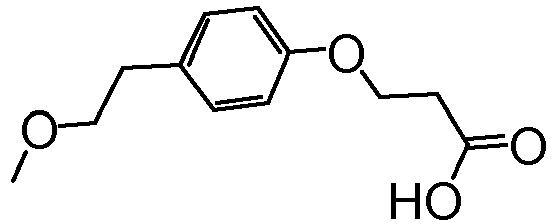
- Step 1: a mixture of 4-(2-methoxy ethyl) phenol (1.547g, 10.3 mmol), propiolic acid tert-butyl ester (1.367g, 10.8 mmol) and N-methyl morpholine (1.18 mL, 10.8 mmol) in CH2Cl2 (15 mL) was stirred at room temperature for 24 hours. The mixture was absorbed on SiO2 (20 g) and purified by column chromatography using a mixture of methylene chloride/hexane. The product was obtained as a two to one mixture of (E)/ (Z)-tert-butyl 3-(4-(2-methoxyethyl)phenoxy)acrylate isomers (2.0 g).
- Step2: (E)/(Z)-tert-butyl 3-(4-(2-methoxyethyl)phenoxy)acrylate (0.57 g) was suspended in a mixture of THF (5 mL)/HCl (2 M, 5 mL) and placed in the microwave reactor (T = 100 °C, 15 sec). THF was removed by rotary evaporation and the mixture was extracted with CH2Cl2 (10 mL). (E)/(Z)-3-(4-(2-methoxyethyl)phenoxy)acrylic acid was obtained as a white solid after purification by column chromatography using a mixture of hexane/ethyl acetate.
- Step 3: (E)/(Z)-3-(4-(2-methoxyethyl)phenoxy)acrylic acid (0.3 g) was dissolved in EtOH (10 mL) and Pd/C (5 %, degussa type E101, 40 mg) was added. The mixture was hydrogenated at atmospheric pressure for 2 hours and then filtered and the solvent removed to dryness. After purification by column chromatography using a mixture of hexane/ethyl acetate, 3-(4-(2-methoxyethyl)phenoxy)propanoic acid was obtained as a white solid (0.236 g). 1H NMR (CDCl3, 400 mHz, ppm); 2.85 (t, 4H), 3.35 (s, 3H), 3.55 (t, 2H), 4.25 (t, 2H), 6.85 (d, 2H), 7.1 (d, 2H).
-
- Step 1: 3-phenoxypropionic acid (5.0 g, 30 mmol) was dissolved in MeOH (12 mL) and H2SO4 (18 M, 3 drops) was added. The mixture was place in the microwave reactor (T: 140 °C, t: 5 min). The solvent was evaporated, the mixture was partitioned in EtOAc (30 mL) and NaOH (2N, 20 mL). The organic phase was dried over MgSO4, filtered, and evaporated to give methyl 3-phenoxypropanoate (5.0 g, 27.7 mmol, 92.5%).
- Step 2: aluminum chloride (1.1 g, 8.34 mmol) was added to a cold solution (0 °C) solution of methyl 3-phenoxypropanoate (1.0 g, 5.56 mmol) and tert-butylacetyl chloride (1.25 mL, 8.34 mmol) in CH2Cl2 (9 mL) and the reaction mixture was stirred overnight. The mixture was evaporated and the residue was diluted with EtOAc (30 mL) and then washed with water (2 X 20 mL). The organic phase was removed and purified with silica chromatography using of a gradient hexanes/EtOAc (100:0→ 0:100) to give methyl 3-phenoxypropanoate (600 mg, 2.27 mmol, 40%).
- Step 3: a solution of methyl 3-phenoxypropanoate (200 mg, 0.76 mmol) in 2 mL of HCl (37%) was placed in a microwave reactor (T: 120 °C, t: 5 min). The mixture was poured into iced water (2g) and washed with EtOH (3 X10 mL). The organic phase was combined and evaporated. The crude product was purified with silica gel chromatography using of a gradient hexanes/EtOAc (100:0→ 0:100) to give 3-(4-(3-methylbutanoyl)phenoxy)propanoic acid (120 mg, 0.48 mmol, 63%).
- The exemplary compounds shown in Example 2 and Tables 1-3 can be prepared by following scheme 1 described above, Detailed synthetic description of certain compounds also are described below as examples.
-

- Compound 163 was prepared by following Scheme 1A above. 3-(4-methoxyphenoxy)propanoic acid (see Example 1D1, 34.47g, 169mmol, 96% purity by HPLC), DCC (34.78g, 169 mmol) and N-hydroxysuccinimide (19.33, 169mmol) were combined as dry powders and methylene chloride (500mL) was added. The suspension was mechanically stirred overnight, ambient temperature, under a nitrogen atmosphere. HPLC analysis showed complete conversion of the acid to the NHS ester (N-hydroxy succinyl ester). To the mixture was added (1R, 2R)-2-amino-1-(2,3-dihydro-benzo[1,4] dioxin-6-yl)-3-pyrrolidin-1-yl-propan-1-ol (50g, 169mmol) and stirring continued for 2.5 hours. HPLC showed conversion to the product and loss of both the NHS ester and step 5 amine. The reaction mixture was vacuum filtered on a Buchner funnel to remove DCC urea. The solid urea was washed with 500mL of methylene chloride. The organic layers were combined, placed in a separatory funnel, and treated with 500mL of 1.0M NaOH. The layers were separated, and the cloudy organic layer was recharged into a separatory funnel and treated with a 6% HCl solution (adjusted to pH=0.03-0.34, 100mL of solution). Two clear layers formed. The resultant biphasic solution was poured into an Erlenmeyer flask and cautiously neutralized to a pH of 7.2-7.4 with a saturated solution of sodium bicarbonate (approx 200mL of solution). The organic layer was separated from the aqueous layer, dried over sodium sulfate and evaporated to yield 83.6g of yellow oil (theoretical yield: 77.03g). The oil was dissolved in isopropyl alcohol (500mL) with heating and transferred to a 1L round bottom flask equipped with a mechanical stirrer and heating mantel. The solution was heated to 50°C and the mechanical stirrer was set to a rate of 53-64 rpm. Tartaric acid (25.33g, 168mmol) was dissolved in deionized water (50mL) and added to the stirred solution at 50°C. Once the solution turned from milky white to clear, seed crystals were added to the mixture and crystallization immediately began (temperature jumped to 56°C). After 20 minutes, the mixture was set to cool to a temperature of 35°C (cooling took 1.15 hours). Heating was removed and the solution was allowed to stir for 12 hours. The resulting thick slurry was filtered on a Büchner funnel. Any remaining solid in the flask was washed onto the funnel using ice-cold isopropyl alcohol (100mL). The material was transferred to a drying tray and heated to 48°C under vacuum for 3 days (after two days the material weighed 76g and after three days it weighed 69.3g). The solid was analyzed by LC and shown to be 98.1% pure (AUC), the residual solvent analysis showed the material to possess 3472 ppm of isopropyl alcohol, and the DSC (differnetial scaaning calroimetery) showed a melting point of 134.89°C. A total of 69.3g of white solid was collected (65.7% overall yield). 1H NMR (400 MHz, CDCl3) δ= 1.8 (M, 4H), 2.4-2.6 (m, 4H), 2.6 (m, 1H), 2.85 (m, 2H), 3.0 (m, 1H), 3.65 (s, 3H), 3.8 (m, 2H), 3.86 (2, 2H), 4.18 (br s, 5H), 4.6 (s, 1H), 6.6-6.8(m, 7 H), 7.8 (d, 1H); MS for C29H40N2O13 m/z 457.3 [M+H] for main peak (free-base).
- Compound 247 was prepared by reaction of (1R, 2R)-2-amino-1-(4-methoxyphenyl)-3-(pyrrolidin-1-yl)propan-1-ol as the amine, prepared according to scheme 3 with 3-(4-methylphenoxy)propionic acid using method 1.
-

- N,O-dimethylhydroxylamine hydrochloride (45 g, 0.46 mmol, 1.5 eq) and N-methyl morpholine (84 mL, 0.765 mol, 2.5 eq.) were added slowly to a cold (-15 °C ) suspension of d-CBz serine (73.0 g, 0.305 mol) in CH2Cl2 (560 mL) keeping the temperature below -5 °C. The mixture was cooled back to ∼ -15 °C and EDCI (62 g, 0.323 mol, 1.05 eq) was added. The mixture was stirred for 5 hours keeping the temperature below 5 °C. The solvent was removed by rotary evaporation and the mixture was partitioned between HCl (1 M, 300 mL)and EtOAc (500 mL).The organic layer was separated and washed with HCl (1 M, 2X 100 mL) and then sat. NaHCO3 (2 X 150 mL). The mixture was dried over MgSO4, filtered and then the solvent was removed by rotary evaporation. (R)-benzyl 3-hydroxy-1-(methoxy(methyl)amino)-1-oxopropan-2-ylcarbamate was re-dissolved in a mixture of acetone (375 mL) and 2,2-dimethoxy propane (375 mL) and boron trifluoride ethereate (3 mL) was added. The mixture was stirred at room temperature for 5 hours and then triethyl amine (3 mL) was added. The solvent was removed to dryness and (R)-benzyl 4-(methoxy(methyl)carbamoyl)-2,2-dimethyloxazolidine-3-carboxylate was obtained as a white solid (73.0 g, 74 % yield from both steps) after purification by column chromatography using a mixture of hexane/EtOAc/acetone.
1H NMR (CDCl3, 400 mHz, ppm); 1.5 (s, 2 H), 1.6 (s, 3H), 1.7 (s, 2H), 1.75 (s, 3H), 3.14 (s, 3 H), 3.24 (2 H), 3.4 (3 H), 3.76 (s, 2 H), 4.0 (m, 1.7 H), 4.16 (m, 1 H), 4.2 (m, 1.7), 4.78 (m, 1 H), 4.88 (m, 0.6 H), 5.06 (q, 2 H), 5.18 (q, 1 H), 7.4 (m, 8 H). -

- A solution of LiALH4 (1 M, 20 mL, 20 mmol) was added dropwise to a cold (-15 °C) solution of (R)-benzyl 4-(methoxy(methyl)carbamoyl)-2,2-dimethyloxazolidine-3-carboxylate (12.2 g, 37.9 mmol) in THF (75 mL). The mixture was stirred for 30 min keeping the temperature below 0 °C. A saturated solution of KHSO4 (100 mL) was added slowly to the mixture and it was warmed to room temperature. The mixture was filtered and the solvent was removed to dryness. (R)-benzyl 4-formyl-2,2-dimethyloxazolidine-3-carboxylate was obtained as a clear oil (9.161 g, 92 % yield) after purification by column chromatography (SiO2, using a mixture of hexane/EtOAc). 1H NMR (CDCl3, 400 mHz, ppm); 1.7 (m, 6 H), 4.15 (m, 2H), 4.4 (m, 1H), 5.15, (s, 1H), 5.2 (m, 1H), 7.3 (m, 5H), 9.6 (m, 1H).
- 1,2-dibromoethane (0.2 mL) was added slowly to a hot (65 °C) solution of magnesium turnings (0.91 g, 37 mmol) in THF (14 mL), followed by the dropwise addition of a solution of 4-bromo anisole (4 mL, 32 mmol) in THF (14 mL). The mixture was refluxed for 2 hours and then cooled to room temperature. The grignard solution was added dropwise to a suspension of CuI (6.8 g, 36 mmol) in a mixture of Me2S (20 mL)/THF (100 mL) at -78 °C. The mixture was warmed slowly to -45 °C and stirred for 30 min keeping the temperature between -45 to - 35 °C. The mixture was cooled back to -78 °C , and a solution of the Garner's aldehyde [(R)-benzyl 4-formyl-2,2-dimethyloxazolidine-3-carboxylate](3.20 g, 12.6 mmol) in THF (15 mL) was added dropwise. The mixture was stirred at low temperature overnight (15 h, T max = 10 °C). The reaction mixture was quenched with NH4Cl (sat. 100 mL) and extracted with EtOAc (50 mL). The solvent was removed to dryness and the mixture was purified by column chromatography (SiO2, using a mixture of hexane/EtOAc/acetone)and the product was obtained as a colorless oil (1.697 g, 36 % yield).
-

- A mixture of benzyl 4-(hydroxy-(4-methoxyphenyl)methyl)-2,2-dimethyloxazolidine-3-carboxylate (1.679 g, 4.5 mmol) and amberlyst 15 (1.85 g) in MeOH (20 mL) was stirred at room temperature for 2 days. The mixture was centrifuged and the solid was washed with MeOH (2 X 40 mL). The solvent was removed to dryness and after purification by column chromatography (SiO2 using a mixture of CH2Cl2/EtOAc) the product was obtained as a white solid (1.26 g, 84 % yield).
-

- Mesityl chloride (0.28 mL, 3.6 mmol) was added slowly to a cold (-10 °C) solution of benzyl (1R, 2R)-1,3-dihydroxy-1-(4-methoxyphenyl)propan-2-ylcarbamate (1.07 g, 3.23 mmol) in pyridine (1.5 mL). The mixture was stirred for 30 min and then pyrrolidine (2.7 mL, 33 mmol) was added slowly to the mixture. The mixture was heated to 45 °C for 6 hours and then the solvent was removed to dryness. After purification by column chromatography (SiO2, using a mixture of CH2Cl2, MeOH, NH4OH), the product was obtained as a clear oil (0.816 g, 66 % yield).
-

- A mixture of benzyl (1R, 2R)-1-hydroxy-1-(4-methoxyphenyl)-3-(pyrrolidin-1-yl)propan-2-ylcarbamate (0.10 g, 0.26 mmol) and Pd/C (5 %, 21 mg) in EtOH (1 mL)/HCl (1 M, 50 µL) was degassed and hydrogen gas was added. The mixture was hydrogenated at atmospheric pressure for two hours. The mixture was filtered over celite and the solvent was removed to dryness. The product was obtained as a colorless oil (63.5 mg, 85 % yield).

- 1H NMR (CDCl3, 400 mHz, ppm); 1.75 (br, 4H), 2.3 (s, 3H), 2.65 (br, 6H), 2.85 (m, 2H), 3.75 (s, 3H), 4.1 (m, 2H), 4.25 (m, 1H), 5.05 (sd, 1H), 6.5 (br, 1H), 6.8 (m, 4H), 7.1 (d, 2H), 7.2 (d, 2H). M/Z for C24H32N2O4 [M-H]- = 413.
-
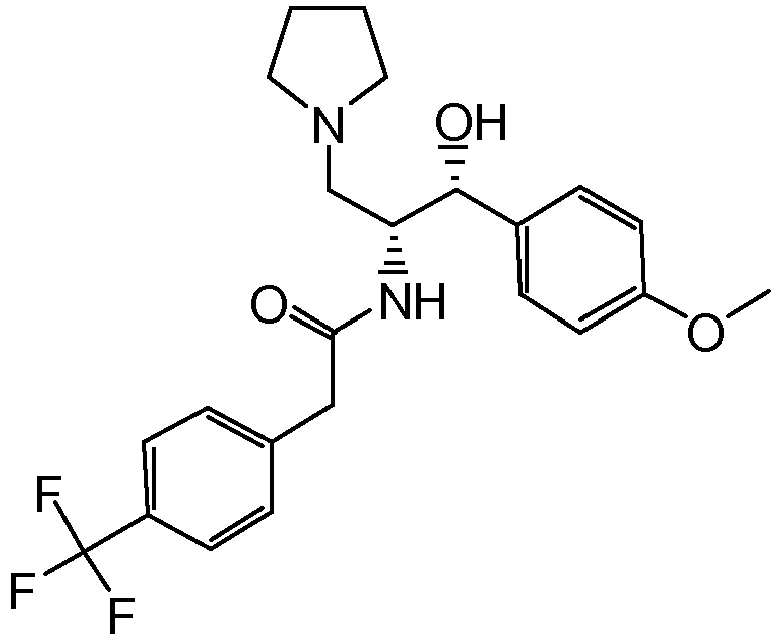
- 1H NMR (CDCl3, 400 mHz, ppm); 1.75 (br, 4H), 2.55 (br, 4H), 2.85 (m, 2H), 3.5 (s, 2H), 3.8 (s, 3H), 4.2 (m, 1H), 5.05 (sd, 1H), 5.8 (d, 1H), 6.8 (d, 2H), 7.1 (d, 2H), 7.2 (d, 2H), 7.55 (d, 2H). M/Z for C23H27F3N2O3 [M-H]- = 437.
-

- 1H NMR (CDCl3 400 mHz, ppm); 1.75 (m, 4H), 2.55 (m, 2H), 2.65 (m, 4H), 2.85 (m, 2H), 3.8 (s, 6H), 4.1 (m, 2H), 4.25 (m, 1H), 5.0 (d, 1H), 6.5 (br. d, 1H), 6.8 (m, 4H), 7.25 (m, 4H). M/Z for C24H32N2O5 [M-H]+ 429.
-

- 1H NMR (CDCl3 400 mHz, ppm); 1.4 (d, 6H), 1.8 (m, 4H), 2.0 (m, 2H), 2.2 (m, 2H), 2.6 (m, 4H), 2.8 (m, 4H), 3.75 (s, 3H), 4.25 (m, 1H), 4.65 (m, 1H), 5.0 (d, 1H), 5.95 (br. d, 1H), 6.85 (m, 4H), 7.25 (m, 2H), 7.9 (m,2H). M/Z for C24H32N2O5 [M-H]+ 483.3.
-

- 1H NMR (CDCl3 400 mHz, ppm); 1.25 (m, 2H), 1.6 (m, 4H), 1.8 (m, 4H), 2.15 (m, 2H), 2.65 (m, 4H), 2.85 (m, 4H), 3.75 (s, 3H), 3.9 (s, 3H), 4.2 (m, 1H), 5.0 (d, 1H), 5.9 (br. d, 1H), 6.85 (d, 2H), 6.95 (d, 2H), 7.2 (d, 2H), 7.95 (d, 2H). M/Z for C24H32N2O5 [M-H]+ 483.3
-

- 1H NMR (CDCl3 400 mHz, ppm); 1.75 (m, 4H), 2.55 (m, 2H), 2.65 (m, 4H), 2.85 (m, 2H), 3.8 (s, 6H), 4.1 (m, 2H), 4.25 (m, 1H), 5.0 (d, 1H), 6.5 (br. d, 1H), 6.8 (m, 4H), 7.25 (m, 4H). M/Z for C24H32N2O5 [M-H]+ 429.
-

- 1H NMR (CDCl3 400 mHz, ppm); 1.4 (d, 6H), 1.8 (m, 4H), 2.0 (m, 2H), 2.2 (m, 2H), 2.6 (m, 4H), 2.8 (m, 4H), 3.75 (s, 3H), 4.25 (m, 1H), 4.65 (m, 1H), 5.0 (d, 1H), 5.95 (br. d, 1H), 6.85 (m, 4H), 7.25 (m, 2H), 7.9 (m,2H). M/Z for C24H32N2O5 [M-H]+ 483.3.
-

- 1H NMR (CDCl3, 400 mHz, ppm): 1.77 (br, 4H), 1.91-2.0 (m, 2H), 2.18 (s, 3H), 2.2-2.25 (m, 2H), 2.62-2.69 (m, 4H), 2.77-2.89 (m, 4H), 3.75 (s, 3H), 3.88 (s, 3H), 4.23 (m, 1H), 4.96 (sd, 1H), 5.93 (br, 1H), 6.75 (br, 1H), 6.94 (d, 2H), 7.1 (br, 2H), 7.88 (m, 2H). M/Z for C28H38N2O5 [M+H] = 483.
-

- 1H NMR (CDCl3, 400 mHz, ppm): 1.73 (br, 4H), 2.20 (s, 3H), 2.55 (br, 4H), 2.81 (st, 2H), 3.46 (s, 2H), 3.82 (s, 3H), 4.15 (m, 1H), 4.92 (sd, 1H), 5.85 (br, 1H), 672 (d, 1H), 6.95 (sd, 1H), 7.00 (br, 1H), 7.2 (m, 4H). M/Z for C24H29F3N2O4 [M+H] = 467.
-

- 1H NMR (CDCl3, 400 mHz, ppm): 1.6 (m, 4H), 1.8 (m, 4H), 2.15 (t, 2H), 2.7 (m, 4H), 2.85 (m, 4H), 3.8 (s, 3H), 4.25 (m, 1H), 4.3 (s, 3H), 5.0 (d, 1H), 5.95 (br, 1H), 6.9 (m, 7H), 7.2 (m, 4H), 7.95 (m, 2H). M/Z for C34H42N2O6 [M+H] = 575.
-

- 1H NMR (CDCl3, 400 mHz, ppm): 1.6 (br, 4H), 1.9 (m, 9H), 2.05 (m, 5H), 2.75-3.0 (m, 9H), 3.8 (m, 5H), 4.3 (m, 1H), 5.0 (m, 1H), 6.2 (br, 1H), 6.9 (m, 4H), 7.25 (m, 2H), 7.9 (m, 2H). M/Z for C31H42N2O5 [M+H] = 523.
-

- 1H NMR (CDCl3, 400 mHz, ppm): 1.6 (m, 8H), 1.8 (m, 10H), 2.15 (t, 2H), 2.65 (m, 4H), 2.8 (d, 2H), 2.9 (m, 5H), 2.95 (s, 3H), 4.0 (t, 2H), 4.15 (m, 1H), 4.45 (t, 1H), 4.55 (t, 1H), 4.95 (br, 2H), 5.9 (br, 1H), 6.90 (m, 4H), 7.20 (m, 2H), 7.95 (m, 2H), 8.05 (br, 1H). M/Z for C30H41FN2O5 [M+H] = 529.
-
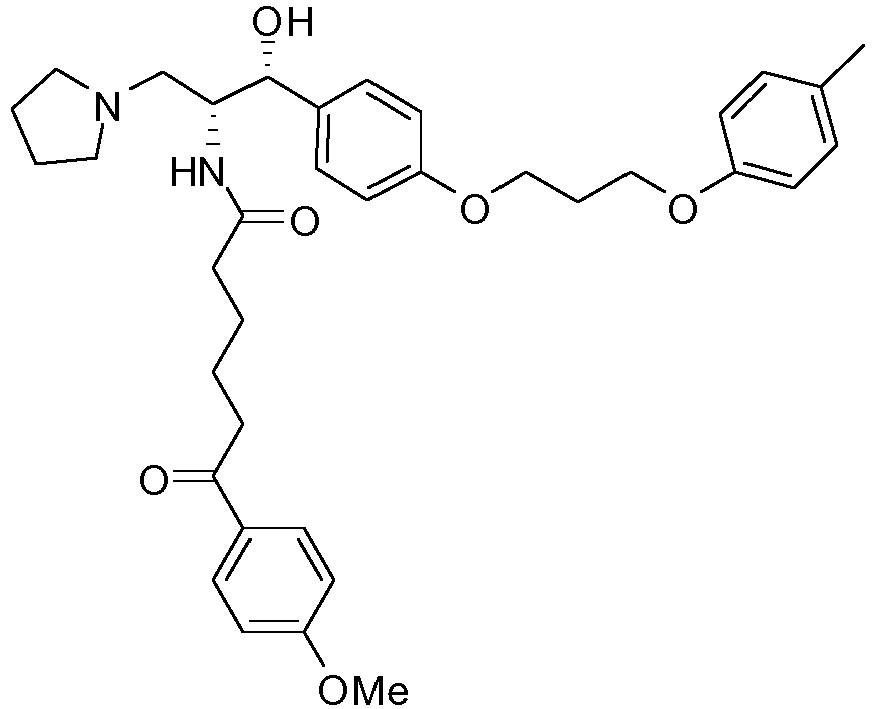
- 1H NMR (CDCl3, 400 mHz, ppm): 1.65 (m, 4H), 1.8 (m, 4H), 2.15 (t, 2H), 2.25 (t, 2H), 2.3 (s, 3H), 2.65 (m, 4H), 2.8 (m, 2H), 2.9 (t, 2H), 3.85 (s, 3H), 4.15 (m, 4H), 4.25 (m, 1H), 4.95 (br, 1H), 6.85 (br, 1H), 6.8-6.95 (m, 6H), 7.05 (m, 2H), 7.2 (m, 2H), 7.95 (2H). M/Z for C36H46N2O6 [M+H] = 603.
-

- 1H NMR (CDCl3, 400 mHz, ppm): 1.0 (t, 3H), 1.5 (m, 2H), 1.65 (m, 4H), 1.8 (m, 6H), 2.15 (t, 2H), 2.65 (m, 4H0, 2.8 (m, 2H), 2.9 (t, 2H), 3.85 (s, 3H), 3.9 (t, 2H), 4.15 (m, 1H), 4.95 (br, 1H), 5.90 (br, 1H), 6.8-6.95 (m, 4H), 7.2 (br ,2H), 7.90 (br, 2H). M/Z for C30H42N2O5 [M+H] = 511.
-

- 1H NMR (CDCl3, 400 mHz, ppm): 0.95 (t, 3H), 1.35 (m, 4H), 1.45 (m, 2H), 1.7 (m, 6H), 1.95 (m, 2H), 2.20 (m, 2H), 2.65 (m, 4H), 2.85 (m, 4H), 3.45 (s, 3H), 3.75 (m, 2H), 3.90 (t, 2H), 4.15 (m, 2H), 4..25 (m, 1H), 4.95 (m, 1H), 6.0 (br, 1H), 6.8 (m, 2H), 6.9 (m, 2H), 7.2 (m, 2H), 7.90 (m, 2H). M/Z for C33H48N2O6 [M+H] = 569.
-

- 1H NMR (CDCl3, 400 mHz, ppm): 0.95 (t, 3H), 1.35 (m, 4H), 1.45 (m, 2H), 1.75 (m, 3H), 2.1 (m, 1H), 2.4 (m, 1H), 2.55 (t, 2H), 2.75 (m, 3H), 2.85 (m, 1H), 3.0 (m, 1H), 3.75 (s, 3H), 3.90 (t, 2H), 4.05 (m, 2H), 4.1 (m, 1H), 4.15 (m, 1H), 5.0 (br, 1H), 6.6 (br, 1H), 6.8 (m, 6H), 7.2 (m, 2H). M/Z for C29H42N2O6 [M+H] = 515.
-

- 1H NMR (CDCl3, 400 mHz, ppm): 1.15 (m, 6H), 2.10 (m, 2H), 2.4 (q, 1H), 2.5-2.75 (m, 4H), 2.95 (m, 2H), 3.55 (d, 2H), 4.15 (m, 1H), 4.45 (m, 1H), 4.85 (br, 1H), 5.10 (m, 1H), 5.9 (br, 1H), 6.75 (m, 2H), 7.05 (br, 2H), 7.20 (m, 2H), 7.4 (m, 2H), 7.5 (m, 4H). M/Z for C30H34ClFN2O3 [M+H] = 528.
-

- 1H NMR (CDCl3, 400 mHz, ppm): 1.35 (d, 6H), 1.7 (m, 1H), 2.1(m, 1H), 2.45 (m, 1H), 2.55 (t, 2H), 2.7-2.9 (m, 4H), 3.0 (m, 1H), 3.8 (s, 3H), 4.05 (m, 1H), 4.15 (m, 1H), 4.20 (m, 1H), 4.35 (m, 1H), 4.5 (m, 1H), 4.95 (d, 1H), 6.55 (br, 1H), 6.75-6.85 (m, 6H), 7.2 (m, 2H). M/Z for C26H36N2O6 [M+H] = 473.
-

- 1H NMR (400 MHz, CDCl3) δ=1.7-2.2 (m, 12 H), 2.4 (dd, 1H), 2.65-2.9 (m, 6H), 3.0(dd, 1H), 3.90 (s, 3H), 3.91(dd, 2H), 4.1-4.22 (m, 1H), 4.3-4.4 (m,1H), 4.4(dd, 1H), 4.6 (dd, 1H), 4.91 (d, 1H), 6.19(d, 1H), 6.83(d, 2H), 6.92 (d, 2H), 7.22(d, 2 H), 7.9 (d, 2H); MS for C29H39FN2O6 m/z 531[M+H].
-

- 1H NMR (400 MHz, CDCl3) δ=1.2-1.34 (m, 6H), 1.45-1.6 (m, 4H), 1.7-1.8(m, 1H), 1.86-1.95 (m, 4H), 2.0-2.2 (m, 4), 2.4-2.5 (m, 2H), 2.7-2.8 (m, 4H), 2.98 (dd, 1H), 3.3 (s, 3H), 3.53 (dd, 1H), 4.0 (dd, 2H), 4.1-4.2 (m, 1H), 4.3-4.4 (m, 1H), 4.5 (dd, 1H), 4.58 (dd,1H) 4.9(d, 1H), 5.9 (d, 1H), 6.85 (d, 2H), 7.22 (d, 2H); MS for C26H43FN2O5 m/z 483 [M+H]
-

- 1H NMR (400 MHz, CDCl3) δ=1.6-2.2 (m, 9H), 2.3-2.5 (m, 4H), 2.6-2.8 (m, 5), 2.9 (dd, 1H), 3.7 (s, 3H), 3.85 (dd, 2H), 3.95 (dd, 2H), 4.2-4.3 (m, 2H), 4.5 (dd, 1H), 4.6 (dd, 1H), 4.9 (d, 1H), 6.0 (d, 1H), 6.7-7 (m, 6H), 7.1-7.2 (d, 2H); MS for C28H39FN2O6 m/z 519[M+H].
-

- 1H NMR (400 MHz, CDCl3) δ=1.6-1.7 (m, 1H), 1.8-2 (m, 4H), 2.1-2.2 (m, 1), 2.4-2.5(m, 1H), 2.6(t, 2H), 2.7-2.85 (m, 4H), 3.0 (dd, 1H), 3.7 (s, 3H), 4.0 (t, 2H), 4.1-4.3 (m, 4H), 4.5 (dd, 1H), 4.6 (dd, 1H) 4.98 (d, 1H), 6.6 (d, 1H), 6.7-6.9 (m, 6H), 7.1-7.22 (d, 2H); MS for C27H37FN2O6 m/z 505[M+H].
-

- 1H NMR (400 MHz, CDCl3) δ=1.1-1.4( m 3H), 1.5-2.0(m, 12H), 2.1-2.2 (dd, 4H), 2.4-2.90(m, 10H), 3.0(dd, 1H), 3.75 (s, 3H), 3.9 (dd, 2H), 4.1-4.2 (m, 1H), 4.3-4.4.5 (m, 2H), 4.57 (dd, 1H), 4.9 (d, 1H), 5.9 (d, 1H), 6.8 (d, 2H), 6.9 (d, 2H), 7.2 (d, 2H), 7.9 (d, 2H); MS for C31H43FN2O6 m/z 559[M+H].
-

- 1H NMR (400 MHz, CD3OD) δ=1.4-1.6 (m, 4H), 1.6-1.8 (m, 5H), 2.0-2.2 (m, 1H), 2.2-2.3(m, 2H),2.4-2.6 (m, 3H), 2.7-3.0 (m, 5H), 3.8 (s, 3H), 3.9 (dd, 1H), 4.1-4.25 (m, 1H), 4.3-4.38(m, 1H), 4.4 (dd, 1H), 4.5 (dd, 1H), 6.8 (d, 2H), 7.1(d, 2H), 7.2(d, 2H), 8 (d, 2H); MS for C30H41FN2O6 m/z 545 [M+H]
-

- 1H NMR (400 MHz, CD3OD) δ= 1.8-2.2 (m, 6H), 3.2-3.3 (dd, 2H), 3.4-3.7 (m, 3H), 3.8 (s, 3H), 3.82-4.1 (m, 4H), 4.3 (dd, 2H), 4.4 (dd, 1H), 4.5 (dd, 2H), 4.8 (dd, 1H), 6.8 (d, 2H), 6.9 (d, 2H), 7 (m, 2H), 7.3 (d, 2H); MS for C26H36FN3O5 m/z 491[M+H].
-

- 1H NMR (400 MHz, CDCl3) δ=1.6-1.8(m, 3H), 1.8-2 (m, 5H), 2-2.2 (m, 2H), 2.2-2.3 (m, 2H), 2.8-2.4 (m, 5H), 2.9 (m, 1H), 3.9-4.0 (m, 3), 4.1-4.4 (m, 3H),4.5 (t, 1H), 4.6-4.7 (m, 1H), 4.75 (d, 1H),6.8 (d, 2H), 7.1 (d, 2H), 7.15-7.3 (m, 4H); MS for C25H33ClFN3O4 m/z 494[M+H].
- B16-FO cells from ATCC (American Tissue Culture Collection) were grown in DMEM media (ATCC) with 10% Fetal Bovine Serum (Hyclone) and Pen/Step/Glutamine (Biowhittaker). 4000 cells per well were plated on collagen coated plates (BD) and allowed to attach for 6 hours in an incubator (37 degrees, 5% CO2). After 6 hours the compounds and controls were added to the wells, the plates mixed and returned to the incubator for 2 days. Day of assay the cells were fixed for 20 minutes with 1% formaldehyde and then washed with Tris Buffered Saline (TBS) 3 times, 150 µl of TBS was left in the wells and 50 µl of goat serum (Invitrogen) was added, the plates mixed and incubated for 1 hour at room temperature. The plates were flicked and the cells incubated with the monoclonal Antibody to GM3 (NeuAc) (Cosmo) for 45 minutes as room temperature. The plates were then washed 3 times with TBS, leaving 150 µl of TBS in the wells and Peroxidase AffinPure F (ab') 2 frag Gt Anti-mouse IgM, µ Chain Specific (Jackson Immno Research) was added in 50 µl, the plates mixed and incubated for 45 minutes at room temperature. The plates were washed 3 times with TBS, flicked and blotted and 100 µl of Quantablu (Pierce) was added to the wells and incubated for 1 hour then read on a Fluorometer at Ex 325 and Em 420. The data was then analyzed using standard programs.
- The results of the GM3 Elisa assay are summarized in Tables 1 and 2. In Tables 1 and 2, IC50 values are indicated as "A," "B," C," "D," and "E" for those of less than or equal to 0.1 µm; those of greater than 0.1 µm, and less than or equal to 1 µm; those of greater than 1 µm, and less than or equal to 3 µm; those of greater than 3 µm, and less than or equal to 10 µm; those of greater than 10 µm, respectively. As shown in Tables 1, 2 and 3, numerous compounds of the invention were shown to be inhibitors of GM3.
Table 1. IC 50 Values from GM3 Elisa Assay for selected reference compounds. 
Z-R* Compound IC50_uM_Mean 
1 B 
2 C 
3 C 
4 B 
5 B 
6 B 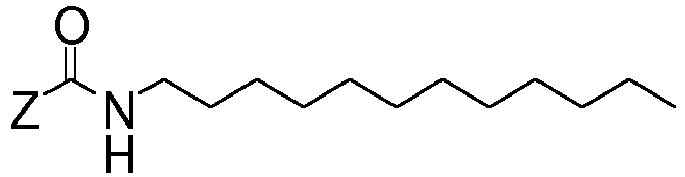
7 A 
8 B 
9 B 
10 B 
11 A 
12 B 
13 B 
14 B 
15 B 
16 D 
17 A 
18 B 
19 B 
20 B 
21 A 
22 C 
23 A 
24 B 
25 B 
26 B 
27 A 
28 A 
29 A 
30 B 
31 B 
32 A 
33 A 
34 C 
35 C 
36 B 
37 B 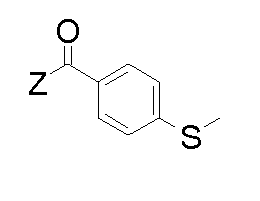
38 B 
39 A 
40 A 
41 A 
42 A 
43 A 
44 B 
45 B 
46 B 
47 B 
48 A 
49 A 
50 B 
51 B 
52 B 
53 C 
54 A 
55 A 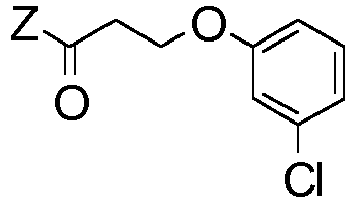
56 A 
57 A 
58 B 
59 A 
60 A 
61 A 
62 B 
63 A 
64 A 
65 A 
66 A 
67 A 
68 B 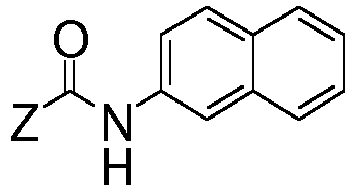
69 B 
70 A 
71 B 
72 B 
73 A 
74 B 
75 B 
76 B 
77 A 
78 B 
79 A 
80 B 
81 B 
82 A 
83 A 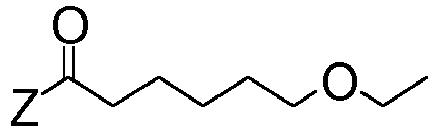
84 C 
85 A 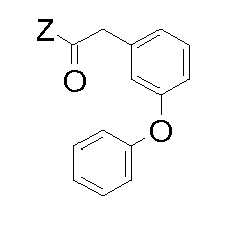
86 A 
87 A 
88 B 
89 B 
90 B 
91 B 
92 A 
93 A 
94 C 
95 A 
96 A 
97 B 
98 D 
99 B 
100 A 
101 A 
102 C 
103 A 
104 B 
105 B 
106 B 
107 D 
108 B 
109 A 
110 A 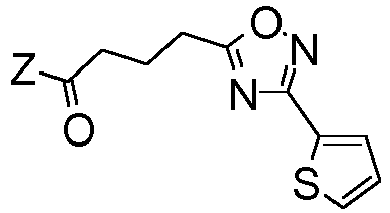
111 B 
112 B 
113 B 
114 B 
115 A 
116 B 
117 B 
118 B 
119 A 
120 B 
121 D 
122 D 
123 C 
124 C 
125 B 
126 D 
127 B 
128 C 
129 B 
130 C 
131 A 
132 D 
133 D 
134 C 
135 C 
136 A 
137 A 
138 A 
139 A 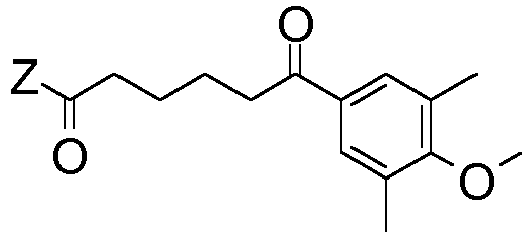
140 A 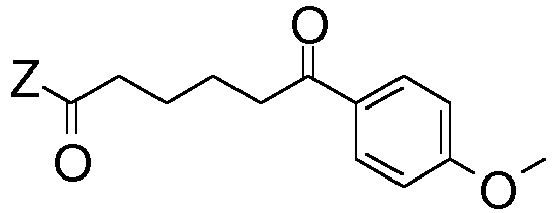
141 A 
142 A 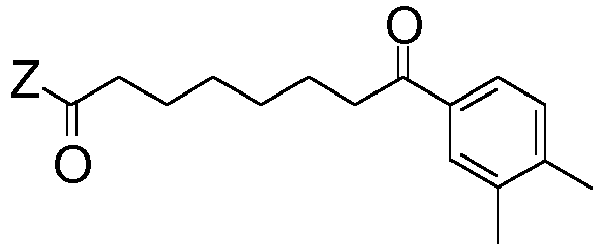
143 A 
144 A 
145 B 
146 B 
147 B 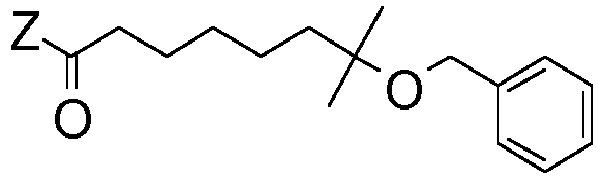
148 A 
149 B 
150 C 
151 B 
152 A 
153 B 
154 B 
155 B 
156 A 
157 A 
158 A 
159 A 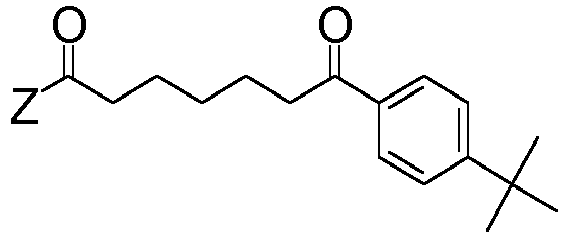
160 B 
161 B 
162 A 
163 A 
164 A 
165 A 
166 A 
167 A 
168 A 
169 A 
170 B 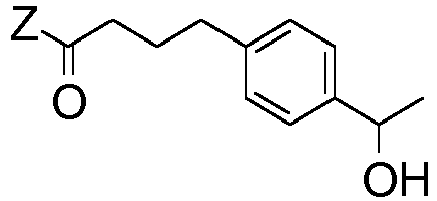
171 C 
172 B 
173 A 
174 A 
175 A 
176 A 
177 B 
178 A 
179 A 
180 B 
181 A 
182 B 
183 A 
184 B 
185 B 
186 A 
187 B 
188 B 
189 B 
190 A 
191 A 
192 B 
193 B 
194 B 
195 B 
196 C 
197 A 
198 B 
199 A 
200 B 
201 C 
202 B 
203 A 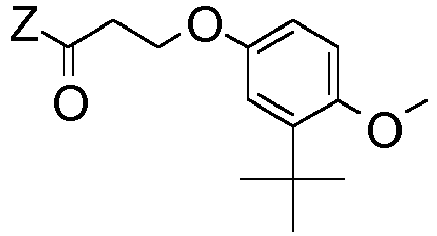
204 B 
205 A 
206 B 
207 A 
208 B 
209 A 
210 B 
211 B 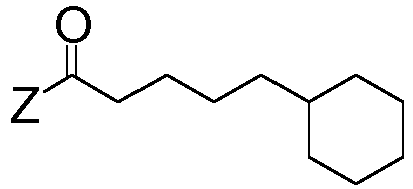
212 D 
213 B 
214 D 
215 B 
216 A 
217 A 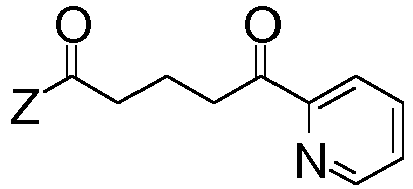
218 D 
219 D 
220 B 
221 A 
222 A 
223 A 
224 B 
225 A 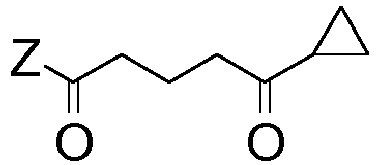
226 D 
227 C 
228 B 
229 E 
230 B 
231 A 
232 C 
233 C 
234 B 
235 B 
236 A 
237 A 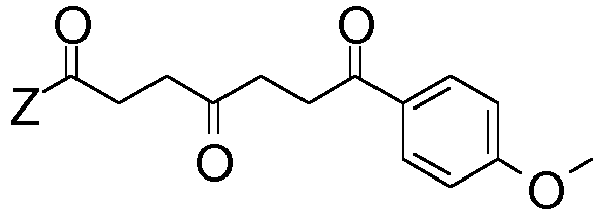
238 A 
239 D 
240 C 
241 A 
291 C 
292 C 
293 B 
294 B 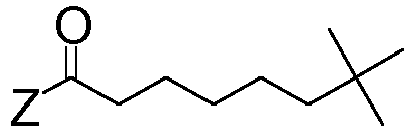
295 A 
296 B 
297 C 
298 B 
299 A 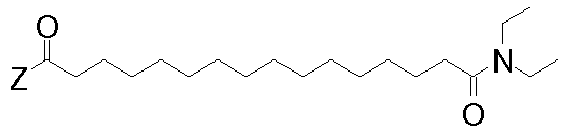
300 A 
301 A 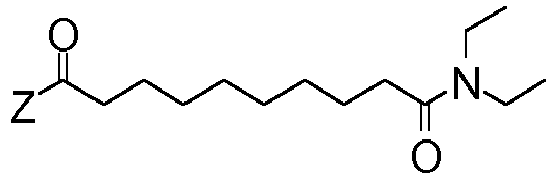
302 A 
303 A 
304 A 
305 A 
306 B 
307 A 
308 A Table 2. IC 50 Values from GM3 Elisa Assay (R denotes a reference compound) Structure Compound IC50_uM_Mean 
242 R D 
243 R A 
244 R A 
245 R D 
246 C 
247 A 
248 R B 
249 C 
250 R B 
251 B 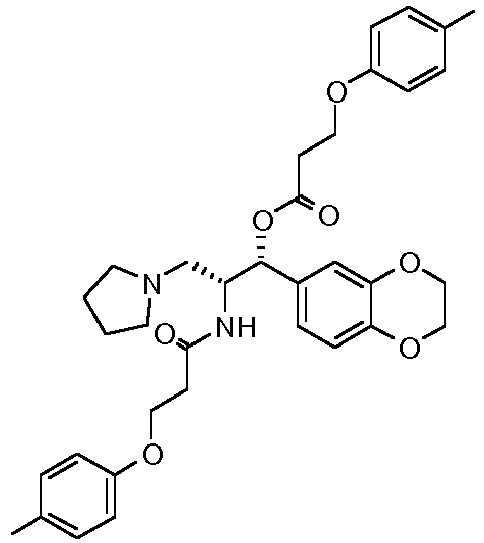
252 R B 
253 R B 
254 R B 
255 R C 
256 R B 
257 R D 
258 R D 
259 R A 
260 R A 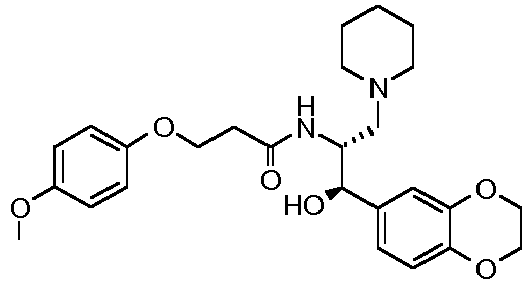
261 R B 
262 A 
263 B 
264 R A 
265 R A 
266 R A 
267 R A 
268 R A 
269 A 
270 A 
271 A 
272 A 
273 B 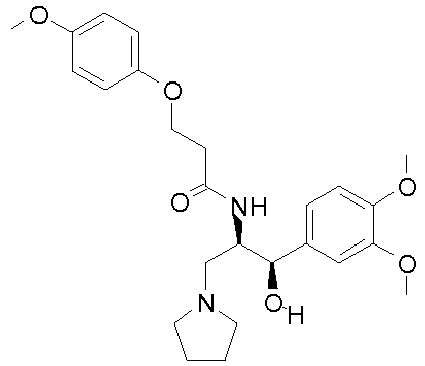
274 C 
275 R A 
276 B 
277 D 
278 E 
279 C 
282 R C 
283 R A 
284 R A 
285 A 
286 R D 
287 R C 
289 B 
309 R A 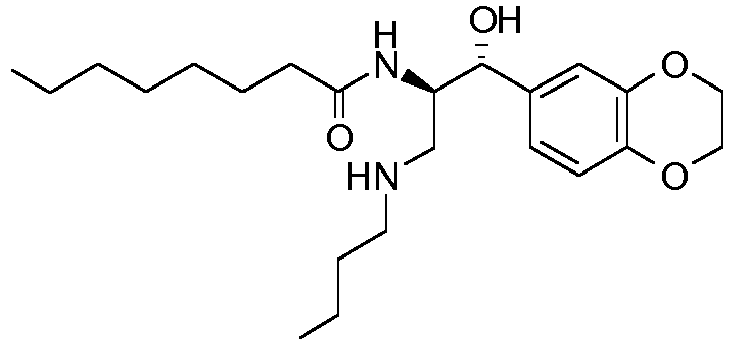
310 R C 
311 R C 
312 R B 
313 R A 
314 R C 
315 R B 
316 R D 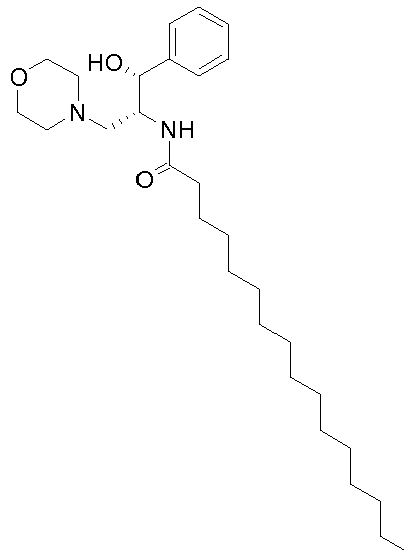
317 R B 
318 R B 
319 R B 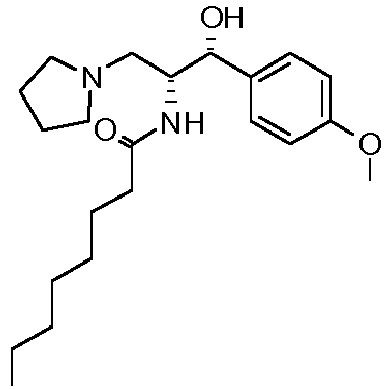
320 R A 
321 R C 
322 R B Table 3: IC 50 Values (R denotes a reference compound) Structure IC50_uM_Mean Compound 
B 340
R
A 341 
B 342 
B 343 
A 344 
A 345 
B 346
R
B 347
R
B 348
R
B 349
R
A 350
R
B 351
R
D 352
R
B 353 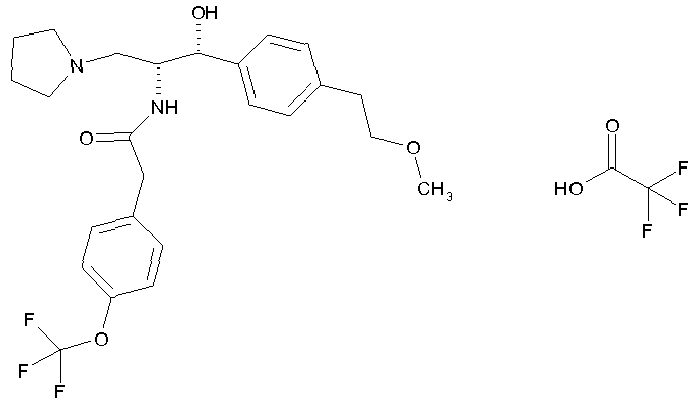
B 354
R
C 355
R
C 356
R
B 357
R
A 358
R
B 359
R
B 360
R
D 361
R
D 362
R
B 363
R
A 364
R
A 365
R
A 366
R
A 367
R
A 368 
A 369 
A 370
R
A 371 
A 372 
A 373
R
A 374
R
B 375 
A 376
R
A 377
R
A 378
R
B 379
R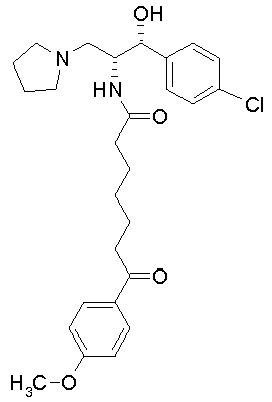
A 380
R
C 381
R
B 382
R
B 383
R
B 384
R
C 385
R
B 386 
B 387 
A 388
R
A 389 
A 390 
B 391 
D 392
R
D 393
R
C 394
R
D 395
R
D 396
R
D 397
R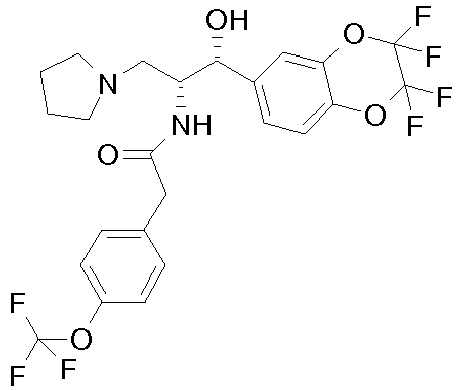
D 398
R
C 399
R
D 400
R
B 401
R
D 402
R
C 403
R
D 404
R
C 405
R
D 406
R
C 407
R
C 408
R
B 409
R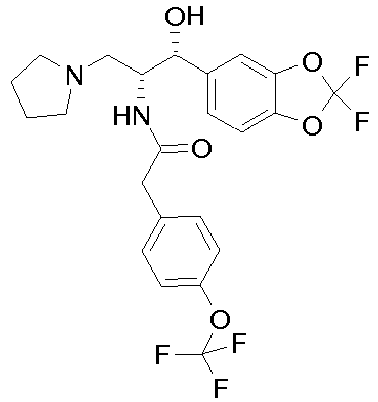
D 410
R
D 411
R
A 412 
A 413 
B 414 
B 415
R
A 416
R
A 417 
A 418
R
A 419 
A 420 
A 421 
D 422
R
C 423
R
D 424
R
D 425
R
D 426
R
D 427
R
D 428
R
D 429
R
A 430
R
A 431
R
A 432 
A 433
R
A 434 
A 435 
A 436 
A 437
R
A 438 
B 439 
A 440
R
A 441 
A 442 
A 443 
B 444 
B 445 
A 446 
A 447 
B 448 
A 449
R
A 450
R
B 451 
B 452 
A 453 
A 454 
A 455 
A 456
R
A 457 
D 458
R
D 459
R
C 460
R
B 461
R
C 462
R
B 463
R
D 464
R
B 465
R
D 466
R
B 467
R
A 468
R
B 469
R
B 470
R
C 471
R
B 472
R
A 473
R
B 474
R
A 475
R
B 476
R
D 477
R
B 478
R
A 479
R
C 480
R
D 481
R
D 482
R
D 483
R
C 484
R
D 485
R
C 486
R
D 487
R
C 488
R
D 489
R
D 490
R
C 491
R
D 492
R
C 493
R
B 494
R
A 495 
A 496 
A 497 
A 498 
A 499
R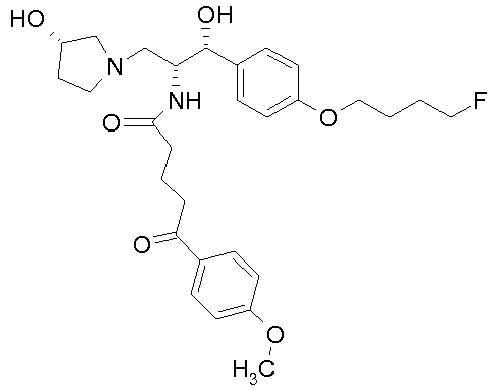
A 500 
A 501 
A 502 
A 503 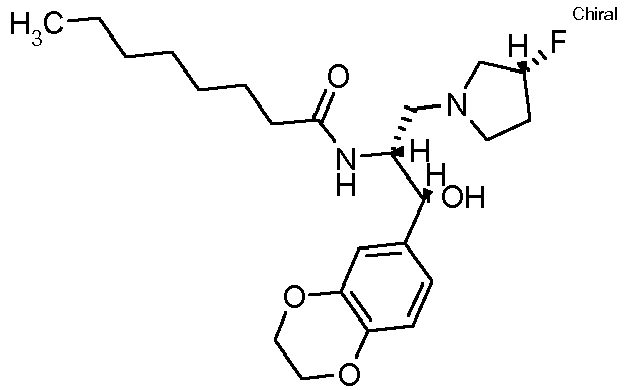
B 504
R
D 505
R
D 506
R
B 507
R
D 508
R
B 509
R
D 510
R
D 511
R
C 512
R
D 513
R
B 514
R
A 515
R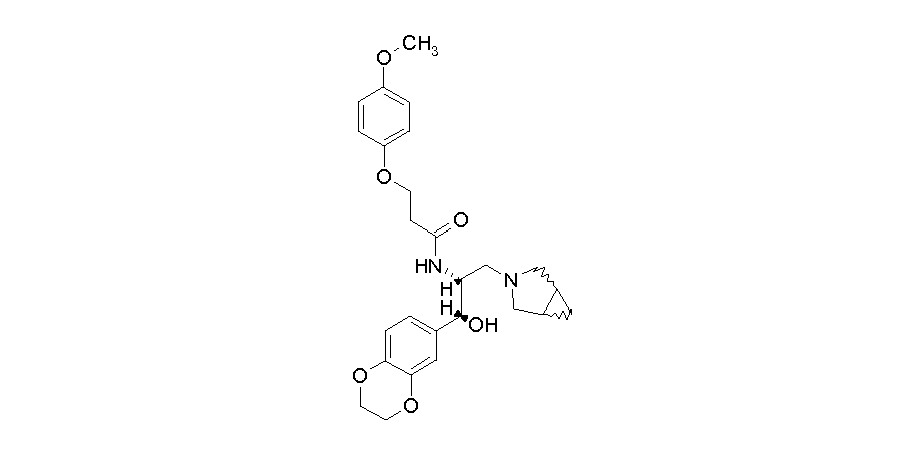
B 516
R
B 517
R
B 518
R
D 519
R
C 520
R
D 521
R
A 522
R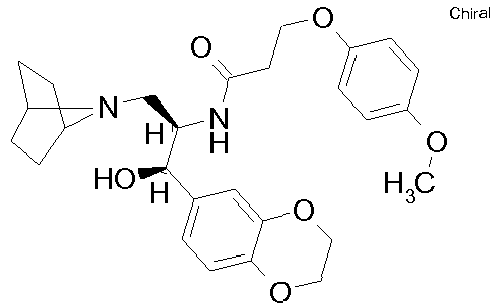
B 523
R
B 524
R
A 525
R
B 526
R
C 527
R
C 528
R
A 529
R
D 530
R
A 531 
A 532
R
B 533
R
D 534
R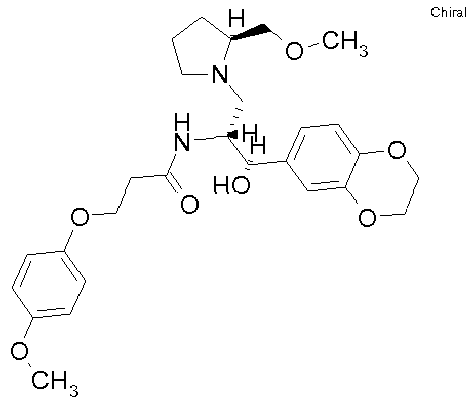
D 535
R
D 536
R
A 537
R
D 538
R
D 539
R
D 540
R
D 541
R
D 542
R
D 543
R
B 544
R
B 545
R
D 546
R
A 547
R
C 548
R
D 549
R
D 550
R
D 551
R
C 552
R
D 553
R
D 554
R
B 555
R
D 556
R
D 557
R
C 558
R
B 559
R
B 560
R
D 561
R
B 562
R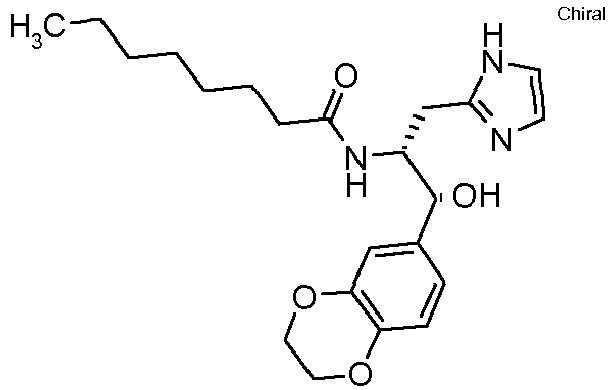
D 563
R
B 564
R
A 565
R
A 566
R
B 567
R
B 568
R
D 569
R
D 570
R
D 571
R
B 572
R
B 573
R
B 574
R
B 575
R
B 576
R
B 577
R
A 578
R
D 579
R
D 580
R
B 581
R
D 582
R
D 583
R
B 584
R
B 585 
A 586 
B 587 
D 588
R
C 589
R
D 590
R
D 591
R
A 592 
B 593 
C 594
R
D 595
R
D 596
R
D 597
R
D 598
R
C 599
R
C 600
R
D 601
R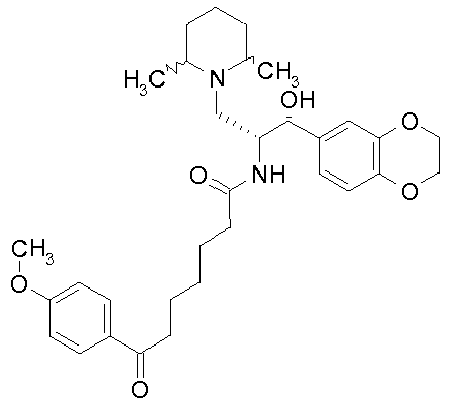
D 602
R
B 603
R
D 604
R
D 605
R
D 606
R
C 607
R
D 608
R
B 609
R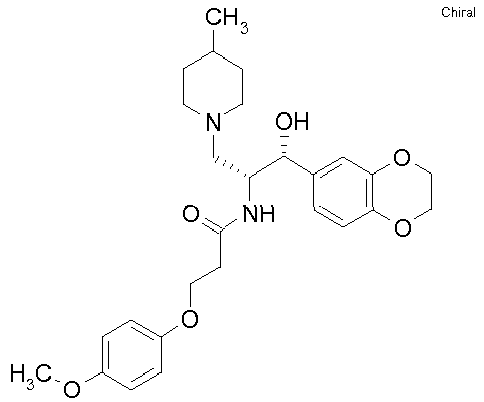
D 610
R
D 611
R
D 612
R
D 613
R
D 614
R
B 615
R
D 616
R
C 617
R
D 618
R
C 619
R
B 620
R
C 621
R
D 622
R
D 623
R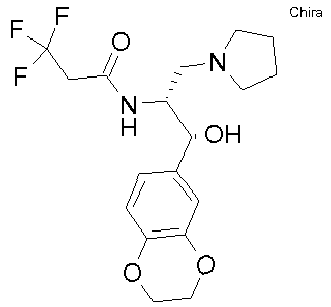
D 624
R
D 625
R
B 626
R
D 627
R
A 628
R
B 629
R
B 630
R
D 631
R
D 632
R
B 633
R
B 634
R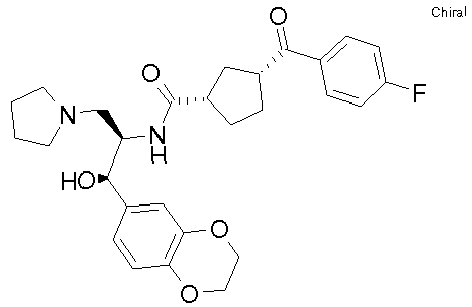
D 635
R
D 636
R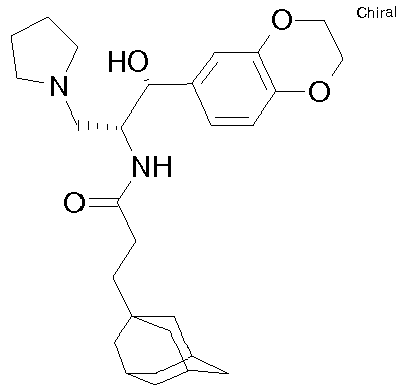
B 637
R
D 638
R
B 639
R
B 640
R
A 641
R
B 642
R
C 643
R
C 644
R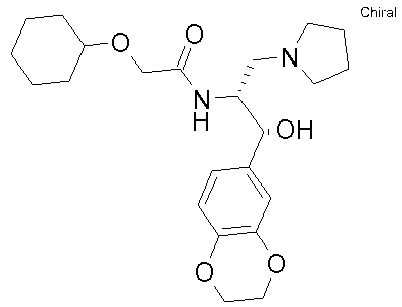
D 645
R
D 646
R
B 647
R
648
R
649
R
B 650
R
C 651
R
D 652
R
A 653
R
C 654
R
B 655
R
A 656
R
B 657 
B 658 
B 659 
B 660 
C 661 
B 662 
B 663
R
C 664 
D 665 
B 666 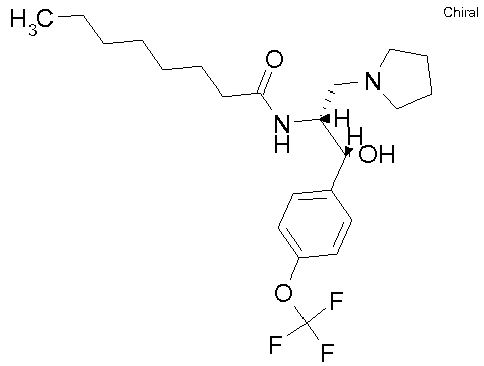
B 667
R
C 668 
D 669
R
D 670
R
D 671 
D 672
R
D 673
R
D 674
R
D 675
R
D 676
R
D 677
R
D 678
R
D 679
R
A 680
R
C 681
R
D 682
R
D 683
R
B 684
R
D 685
R
D 686
R
D 687
R
D 688
R
D 689
R
A 690
R
D 691
R
B 692
R
A 693
R
B 694
R
B 695
R
C 696
R
B 697
R
B 698
R
A 699
R
B 700
R
C 701
R
A 702
R
A 703
R
A 704
R
A 705
R
A 706
R
A 707 
A 708
R
A 709 
A 710 
A 711 
B 712 
B 713
R
D 714 
D 715
R
D 716
R
D 717
R
D 718
R
D 719
R
D 720
R
D 721
R
A 722
R
A 723
R
B 724 
B 725 
B 726 
A 727 
A 728 
A 729 
A 730 
A 731 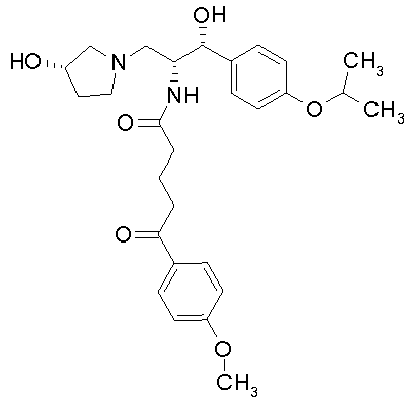
B 732 
A 733 
A 734 
A 735 
A 736 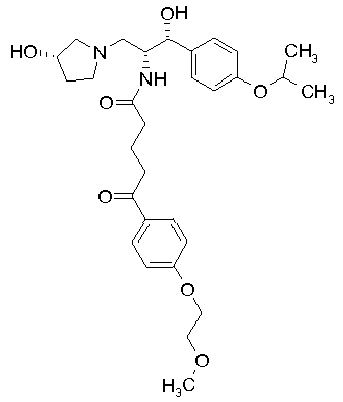
B 737 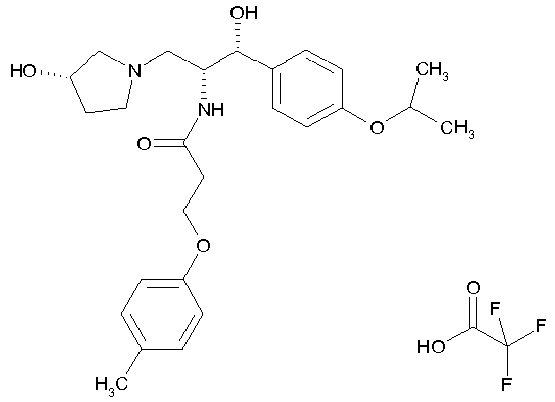
A 738 
A 739 
A 740 
A 741 -

- jck mice was administered Reference Compound A ad libitum in feed (0.225% Reference Compound A mixed with a standard diet chow in powdered format) from 26-64 days of age. Control jck mice were fed a control powdered diet from 26-64 days of age. At 63 days of age, animals were transferred to metabolic cages for 24 hour urine collection. At 64 days of age, animals were sacrificed by CO2 administration. Blood was collected by heart puncture for serum isolation. Kidneys were isolated and bisected; half of each kidney was fixed in 4% paraformaldehyde in PBS overnight for paraffin embedding and H&E staining.
- Results are summarized in table 4 and discussed below.
Table 4. Summary of results, 0.225% Reference Compound A in feed, 26-64 days of age No of animals Gender Dose (mg/kg) Body weight (g) K/BW ratio (%) Cystic volume (%BW) BUN (mg/dL) 9 M Vehicle 22.03 ± 1.58 7.55 ± 1.65 2.86 ± 1.04 90.11 ± 10.02 9 M Treated 18.43 ± 1.82* 4.46 ± 0.46* 0.88 ± 0.23* 39.25 ± 10.70* 10 F Vehicle 19.20 ± 1.80 4.94 ± 0.7 3 1.22 ± 0.41 50.50 ± 14.32 10 F Treated 15.93 ± 1.65* 3.57 ± 0.58* 0.58 ± 0.29* 34.67 ± 9.41* *, p<0.05% compared to control (2-tailed t-test) - Total body weight and kidney weight were determined at sacrifice. A statistically significant decrease in total body weight was noted (p-value <0.05, two-tailed t-test). A significant difference in kidney weight/body weight ratio was also observed (p-value <0.05, two-tailed t-test) for the treated animals, suggesting efficacy of the drug.
- Cyst volume was measured by quantitating the percentage of cystic area in histological sections of kidneys from the treated and control animals, multiplied by the kidney/body weight ratio. A significant decrease in cyst volume was observed (p-value <0.05, two-tailed t-test) for the the treated animals.
- Blood urea nitrogen (BUN) levels were determined in serum samples derived from animals at sacrifice. BUN levels were elevated in the untreated controls, while the treated animals demonstrated a significant reduction of BUN levels (p-value <0.05, two-tailed t-test).
- Administration of Reference Compound A in feed at 0.225% resulted in a statistically significant reduction of cystic disease, as measured by kidney/body weight ratio and cyst volume. This was accompanied by improved renal function in treated animals relative to controls. These improvements were observed in both males and females. Therefore, these results demonstrate that glucosylceramide synthase inhibition is an effective strategy to treat polycystic kidney disease.


Claims (15)
- A compound for use in treating polycystic kidney disease, wherein the compound is represented by the following structural formula:
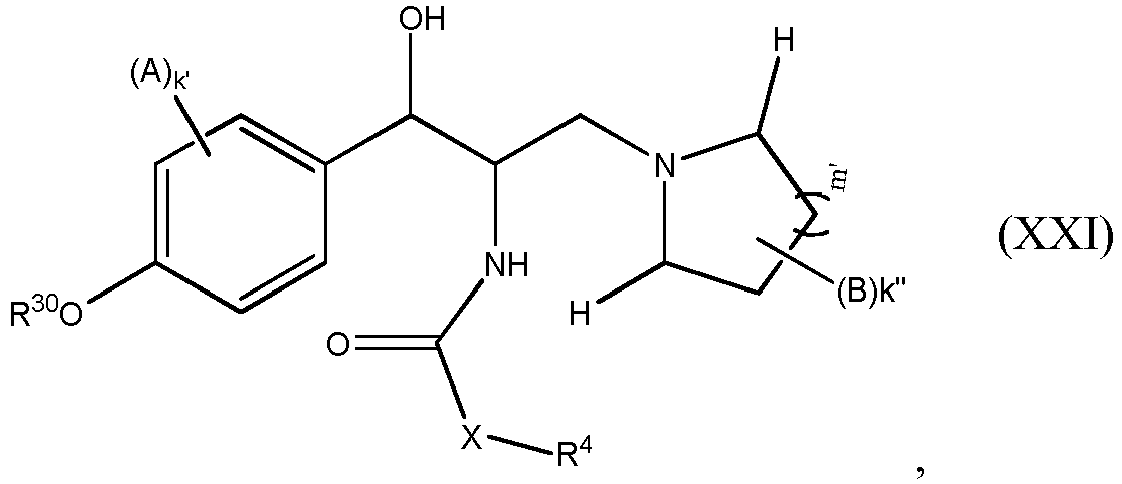 X is -(CR5R6)n,-Q-; Q is -O-, -S-, -C(O)-, -C(S)-, -C(O)O-, -C(S)O-, -C(S)S-, -C(O)NR7-, -NMR7-, -NR7C(O)-, -NR7C(O)NR7-, -OC(O)-, -SO3-, -SO-, -S(O)2-, -SO2NR7-, or -NR7SO2-; and R4 is -H, a substituted or unsubstituted aliphatic group, or a substituted or unsubstituted aryl group; orX is -O-, -S- or -NR7-; and R4 is a substituted or unsubstituted aliphatic group, or substituted or unsubstituted aryl group; orX is -(CR5R6)n,-; and R4 is a substituted or unsubstituted cyclic alkyl group or a substituted or unsubstituted cyclic alkenyl group, a substituted or unsubstituted aryl group, -CN, -NCS, -NO2 or a halogen; orX is a covalent bond; and R4 is a substituted or unsubstituted aryl group; andR5 and R6 are each independently -H, -OH, a halogen, C1-C6 alkoxy group, or a C1-C6 alkyl group;n is 1, 2, 3, 4, 5 or 6; andeach R7 is independently -H or C1-C6 alkyl, or R7 and R4 taken together with the nitrogen atom of NR7R4 form a non-aromatic heterocyclic group optionally substituted with one or more substitutents selected from halogen, =O, =S, =N(C1-C6 alkyl), C1-C6 alkyl, C1-C6 haloalkyl, hydroxy, C1-C6 alkoxy, nitro, cyano, (C1-C6alkoxy)carbonyl, (C1-C6 alkyl)carbonyl, (C1-C6 haloalkoxy, amino, (C1-C6 alkyl)amino and (C1-C6 dialkyl)amino;each R30 is independentlyi) hydrogen;ii) an aryl group optionally substituted with one or more substituents selected from the group consisting of halogen, alkyl, amino, alkylamino, dialkylamino, alkoxy, nitro, cyano, hydroxy, haloalkoxy, alkoxycarbonyl, alkylcarbonyl and haloalkyl; oriii) an alkyl group optionally substituted with one or more substituents selected from the group consisting of halogen, amino, alkylamino, dialkylamino, alkoxy, nitro, cyano, hydroxy, haloalkoxy, alkoxycarbonyl, alkylcarbonyl and haloalkyl;each of A and B independently is halogen, hydroxy, C1-C6 alkyl, C1-C6 haloalkyl, C1-C6 alkoxy or C1-C6 haloalkoxy;each k' is independently 0, 1 or 2;each k" is independently 0, 1 or 2; andeach m' is independently 0, 1 or 2,wherein R4 is optionally substituted with one or more substituents selected from the group consisting of halogen, alkyl, haloalkyl, Ar3, Ar3-Ar3, -OR50, -O(haloalkyl), -SR50, -NO2, -CN, -NCS, -N(R51)2, -NR51C(O)R50, -NR51C(O)OR52, -N(R51)C(O)N(R51)2, -C(O)R50, -C(S)R50, -C(O)OR50, -OC(O)R50, -C(O)N(R51)2, -S(O)2R50, -SO2N(R51)2, -S(O)R52, -SO3R50, -NR51SO2N(R51)2, -NR51SO2R52 , -V4-Ar3, -V-OR50, -V4-O(haloalkyl), -V4-SR50, -V4-NO2, -V4-CN, -V4-N(R51)2, -V4-NR51C(O)R50, -V4-NR51CO2R52, -V4-N(R51)C(O)N(R51)2, -V4-C(O)R50,, -V4-C(S)R50, -V4-CO2R50, -V4-OC(O)R50, -V4-C(O)N(R51)2-, -V4-S(O)2R50, -V4-SO2N(R51)2, -V4-S(O)R52, -V4-SO3R50, -V4-NR51SO2N(R51)2, -V4-NR51SO2R52, -O-V4-Ar3, -O-V5-N(R51)2, -S-V4-Ar3, -S-V5-N(R51)2, -N(R51)-V4-Ar3, -N(R51)-V5-N(R51)2, -NR51C(O)-V4-N(R51)2, -NR51C(O)-V4-Ar3, -C(O)-V4-N(R51)2, -C(O)-V4-Ar3, -C(S)-V4-N(R51)2, -C(S)-V4-Ar3, -C(O)O-V5-N(R51)2, -C(O)O-V4-Ar3, -O-C(O)-V5-N(R51)2, -O-C(O)-V4-Ar3, -C(O)N(R51)-V5-N(R51)2, -C(O)N(R51)-V4-Ar3-, -S(O)2-V4-N(R51)2, -S(O)2-V4-Ar3, -SO2N(R51)-V5-N(R51)2, -SO2N(R51)-V4-Ar3, -S(O)-V4-N(R51)2, -S(O)-V4-Ar3, -S(O)2-O-V5-N(R51)2, -S(O)2-O-V4-Ar3, -NR51SO2-V4-N(R51)2, -NR51SO2-V4-Ar3, -O-[CH2]p'-O-, -S-[CH2]p'-S-, and -[CH2]q'-;each V4 is independently a C1-C10 alkylene group;each V5 is independently a C2-C10 alkylene group;each Ar3 is independently an aryl group each optionally substituted with one or more substituents selected from the group consisting of halogen, alkyl, amino, alkylamino, dialkylamino, alkoxy, nitro, cyano, hydroxy, haloalkoxy and haloalkyl; andeach R50 is independentlyi) hydrogen;ii) an aryl group optionally substituted with one or more substituents selected from the group consisting of halogen, alkyl, amino, alkylamino, dialkylamino, alkoxy, nitro, cyano, hydroxy, haloalkoxy, alkoxycarbonyl, alkylcarbonyl and haloalkyl; oriii) an alkyl group optionally substituted with one or more substituents selected from the group consisting of halogen, amino, alkylamino, dialkylamino, alkoxy, nitro, cyano, hydroxy, haloalkoxy, alkoxycarbonyl, alkylcarbonyl and haloalkyl; andeach R51 is independently R50; and each R52 is independently:i) an aryl group optionally substituted with one or two substituents selected from the group consisting of halogen, alkyl, amino, alkylamino, dialkylamino, alkoxy, nitro, cyano, hydroxy, haloalkoxy, alkoxycarbonyl, alkylcarbonyl and haloalkyl; orii) an alkyl group optionally substituted with one or more substituents selected from the group consisting of halogen, amino, alkylamino, dialkylamino, alkoxy, nitro, cyano, hydroxy, haloalkoxy, alkoxycarbonyl, alkylcarbonyl and haloalkyl;each p' is 1, 2, 3 or 4; andeach q' is 3, 4, 5 or 6,provided the compound is not represented by any of the following structural formulas:

- The compound for use according to Claim 1, wherein the compound is represented by the following structural formula:
 each R30 is independently hydrogen; a phenyl group optionally substituted with one or more substituents selected from the group consisting of halogen, C1-C6 alkyl, amino, C1-C6 alkylamino, C1-C6 dialkylamino, C1-C6 alkoxy, nitro, cyano, hydroxy, C1-C6 haloalkoxy, C1-C6 alkoxycarbonyl, C1-C6 alkylcarbonyl and C1-C6 haloalkyl; or a C1-C10 alkyl group optionally substituted with one or more substituents selected from the group consisting of halogen, amino, C1-C6 alkylamino, C1-C6 dialkylamino, C1-C6 alkoxy, nitro, cyano, hydroxy, C1-C6 haloalkoxy, C1-C6 alkoxycarbonyl, C1-C6 alkylcarbonyl and C1-C6 haloalkyl.
 - The compound for use according to Claim 2, wherein R30 is independently hydrogen; or a C1-C10 alkyl group optionally substituted with one or more substituents selected from the group consisting of halogen, amino, C1-C6 alkylamino, C1-C6 dialkylamino, C1-C6 alkoxy, nitro, cyano, hydroxy, C1-C6 haloalkoxy, C1-C6 alkoxycarbonyl, C1-C6 alkylcarbonyl and C1-C6 haloalkyl.
- The compound for use according to Claim 3, wherein R30 is independently hydrogen, or a C1-C10 alkyl group optionally substituted with one or more substituents selected from the group consisting of halogen, C1-C6 alkoxy, C1-C6 haloalkoxy and hydroxy.
- The compound for use according to Claim 2, wherein the compound is represented by the following structural formula:
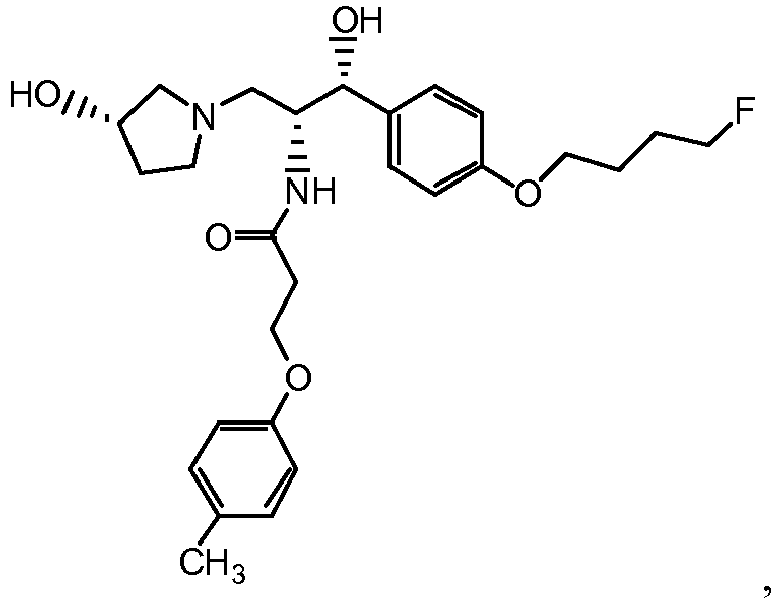
- The compound for use according to Claim 2, wherein the compound is represented by the following structural formula:
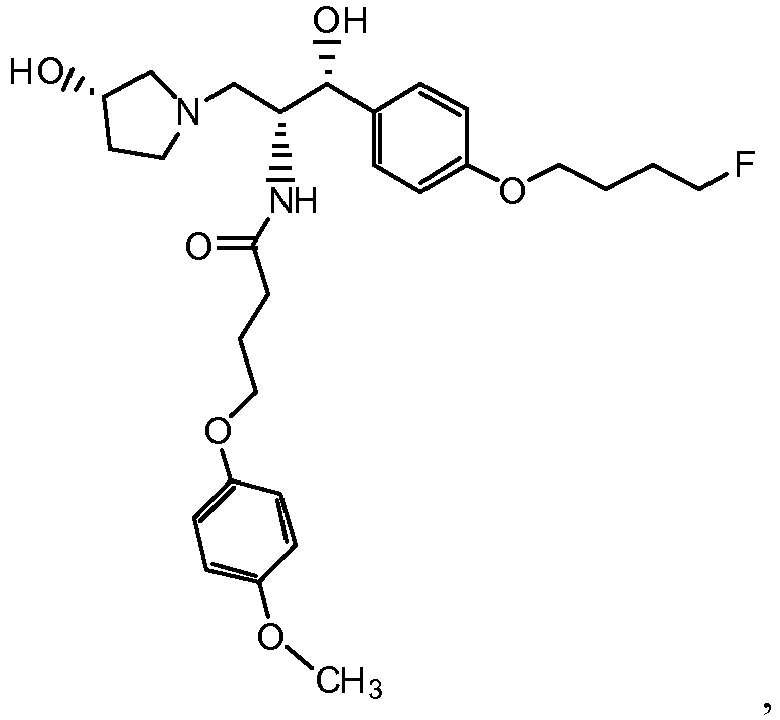
- The compound for use according to Claim 2, wherein the compound is represented by the following structural formula:

- The compound for use according to Claim 2, wherein the compound is represented by the following structural formula:

- The compound for use according to Claim 1, wherein the compound is represented by the following structural formula:

each R30 is independently(i) hydrogen;(ii) a phenyl group optionally substituted with one or more substituents selected from the group consisting of halogen, C1-C6 alkyl, amino, C1-C6 alkylamino, C1-C6 dialkylamino, C1-C6 alkoxy, nitro, cyano, hydroxy, C1-C6 haloalkoxy, C1-C6 alkoxycarbonyl, C1-C6 alkylcarbonyl and C1-C6 haloalkyl; or(iii) a C1-C10 alkyl group optionally substituted with one or more substituents selected from the group consisting of halogen, amino, C1-C6 alkylamino, C1-C6 dialkylamino, C1-C6 alkoxy, nitro, cyano, hydroxy, C1-C6 haloalkoxy, C1-C6 alkoxycarbonyl, C1-C6 alkylcarbonyl and C1-C6 haloalkyl. - The compound for use according to Claim 9, wherein R30 is independently hydrogen; or a C1-C10 alkyl group optionally substituted with one or more substituents selected from the group consisting of halogen, amino, C1-C6 alkylamino, C1-C6 dialkylamino, C1-C6 alkoxy, nitro, cyano, hydroxy, C1-C6 haloalkoxy, C1-C6 alkoxycarbonyl, C1-C6 alkylcarbonyl and C1-C6 haloalkyl.
- The compound for use according to Claim 10, wherein R30 is independently hydrogen, or a C1-C10 alkyl group optionally substituted with one or more substituents selected from the group consisting of halogen, C1-C6 alkoxy, C1-C6 haloalkoxy and hydroxy.
- The compound for use according to Claim 9, wherein the compound is represented by the following structural formula:

- The compound for use according to Claim 9, wherein the compound is represented by the following structural formula:

- A compound for use in treating polycystic kidney disease, wherein the compound is represented by the following structural formula:

- The compound for use according to Claim 1, wherein the compound is represented by the following structural formula:

Priority Applications (1)
| Application Number | Priority Date | Filing Date | Title |
|---|---|---|---|
| EP16162074.5A EP3078373A1 (en) | 2008-10-03 | 2009-10-02 | 2-acylaminopropanol-type glucosylceramide synthase inhibitor |
Applications Claiming Priority (2)
| Application Number | Priority Date | Filing Date | Title |
|---|---|---|---|
| US10254108P | 2008-10-03 | 2008-10-03 | |
| PCT/US2009/005435 WO2010039256A1 (en) | 2008-10-03 | 2009-10-02 | 2-acylaminopropoanol-type glucosylceramide synthase inhibitors |
Related Child Applications (1)
| Application Number | Title | Priority Date | Filing Date |
|---|---|---|---|
| EP16162074.5A Division EP3078373A1 (en) | 2008-10-03 | 2009-10-02 | 2-acylaminopropanol-type glucosylceramide synthase inhibitor |
Publications (2)
| Publication Number | Publication Date |
|---|---|
| EP2349255A1 EP2349255A1 (en) | 2011-08-03 |
| EP2349255B1 true EP2349255B1 (en) | 2016-03-30 |
Family
ID=41402426
Family Applications (2)
| Application Number | Title | Priority Date | Filing Date |
|---|---|---|---|
| EP16162074.5A Withdrawn EP3078373A1 (en) | 2008-10-03 | 2009-10-02 | 2-acylaminopropanol-type glucosylceramide synthase inhibitor |
| EP09741487.4A Not-in-force EP2349255B1 (en) | 2008-10-03 | 2009-10-02 | 2-acylaminopropoanol-type glucosylceramide synthase inhibitors |
Family Applications Before (1)
| Application Number | Title | Priority Date | Filing Date |
|---|---|---|---|
| EP16162074.5A Withdrawn EP3078373A1 (en) | 2008-10-03 | 2009-10-02 | 2-acylaminopropanol-type glucosylceramide synthase inhibitor |
Country Status (10)
| Country | Link |
|---|---|
| US (3) | US8309593B2 (en) |
| EP (2) | EP3078373A1 (en) |
| JP (4) | JP2012504608A (en) |
| KR (1) | KR101687039B1 (en) |
| CN (2) | CN102271678B (en) |
| CA (1) | CA2738768C (en) |
| IL (2) | IL211946A (en) |
| MX (1) | MX2011003517A (en) |
| RU (1) | RU2578947C2 (en) |
| WO (1) | WO2010039256A1 (en) |
Families Citing this family (17)
| Publication number | Priority date | Publication date | Assignee | Title |
|---|---|---|---|---|
| JP2008519840A (en) | 2004-11-10 | 2008-06-12 | ジェンザイム・コーポレイション | How to treat diabetes |
| WO2007134086A2 (en) | 2006-05-09 | 2007-11-22 | Genzyme Corporation | Methods of treating fatty liver disease comprising inhibiting glucosphingolipid synthesis |
| EP2594562B1 (en) * | 2007-05-31 | 2016-07-20 | Genzyme Corporation | 2-acylaminopropanol-type glucosylceramide synthase inhibitors |
| KR101640263B1 (en) * | 2007-10-05 | 2016-07-15 | 젠자임 코포레이션 | Method of treating polycystic kidney diseases with ceramide derivatives |
| JP2011529500A (en) * | 2008-07-28 | 2011-12-08 | ジェンザイム コーポレーション | Glucosylceramide synthase inhibition for the treatment of collapsing glomerulopathy and other glomerular diseases |
| US8309593B2 (en) | 2008-10-03 | 2012-11-13 | Genzyme Corporation | 2-acylaminopropoanol-type glucosylceramide synthase inhibitors |
| WO2013059119A1 (en) * | 2011-10-17 | 2013-04-25 | The Regents Of The University Of Michigan | Glucosylceramide synthase inhibitors and therapeutic methods using the same |
| CN102702010B (en) * | 2012-05-23 | 2014-09-17 | 北京大学 | Photosensitive functionalized solid-supported phase, preparation method and application thereof |
| CA2906396A1 (en) | 2013-03-15 | 2014-09-25 | Concert Pharmaceuticals Inc. | Inhibitors of the enzyme udp-glucose: n-acyl-sphingosine glucosyltransferase |
| AU2014321397C1 (en) * | 2013-09-20 | 2019-08-01 | Biomarin Pharmaceutical Inc. | Glucosylceramide synthase inhibitors for the treatment of diseases |
| US20170129869A1 (en) * | 2014-07-03 | 2017-05-11 | Dr. Reddy's Laboratories Limited | Amorphous form of eliglustat hemitartarate |
| WO2016126572A2 (en) | 2015-02-02 | 2016-08-11 | The Regents Of The University Of Michigan | Glucosylceramide synthase inhibitors and therapeutic methods using the same |
| EP3268355B1 (en) * | 2015-03-11 | 2019-06-12 | BioMarin Pharmaceutical Inc. | Glucosylceramide synthase inhibitors for the treatment of diseases |
| JP6895963B2 (en) | 2015-11-18 | 2021-06-30 | ジェンザイム・コーポレーション | Biomarkers for polycystic kidney disease and their use |
| JP6940515B2 (en) | 2016-03-25 | 2021-09-29 | ジェンザイム・コーポレーション | Biomarkers of proteinosis and their use |
| WO2017204319A1 (en) * | 2016-05-27 | 2017-11-30 | 公益財団法人野口研究所 | Glucosylceramide synthase inhibitor |
| US20200339587A1 (en) | 2017-12-21 | 2020-10-29 | Lysosomal Therapeutics Inc. | Crystalline substituted cyclohexyl pyrazolo[1,5-a]pyrimidinyl carboxamide compound and therapeutic uses thereof |
Citations (1)
| Publication number | Priority date | Publication date | Assignee | Title |
|---|---|---|---|---|
| WO2008150486A2 (en) * | 2007-05-31 | 2008-12-11 | Genzyme Corporation | 2-acylaminopropoanol-type glucosylceramide synthase inhibitors |
Family Cites Families (77)
| Publication number | Priority date | Publication date | Assignee | Title |
|---|---|---|---|---|
| GB1555654A (en) | 1977-06-25 | 1979-11-14 | Exxon Research Engineering Co | Agricultural burner apparatus |
| US4065562A (en) | 1975-12-29 | 1977-12-27 | Nippon Shinyaku Co., Ltd. | Method and composition for reducing blood glucose levels |
| NO154918C (en) | 1977-08-27 | 1987-01-14 | Bayer Ag | ANALOGUE PROCEDURE FOR THE PREPARATION OF THERAPEUTIC ACTIVE DERIVATIVES OF 3,4,5-TRIHYDROXYPIPERIDINE. |
| GB2020278B (en) | 1978-05-03 | 1983-02-23 | Nippon Shinyaku Co Ltd | Moranoline dervitives |
| JPS568318A (en) | 1979-06-28 | 1981-01-28 | Janssen Pharmaceutica Nv | Non oral long acting composition of haloperidol and bromperidol derivative |
| GB8311286D0 (en) | 1983-04-26 | 1983-06-02 | Searle & Co | Carboxyalkyl peptide derivatives |
| EP0144290A3 (en) | 1983-12-01 | 1987-05-27 | Ciba-Geigy Ag | Substituted ethylenediamine derivatives |
| US5041441A (en) | 1988-04-04 | 1991-08-20 | The Regents Of The University Of Michigan | Method of chemotherapy using 1-phenyl-2-decanoylamino-3-morpholino-1-propanol |
| JPH0416856A (en) | 1990-05-10 | 1992-01-21 | Canon Inc | Positively charged non-magnetic toner |
| JPH04140984A (en) | 1990-10-02 | 1992-05-14 | Canon Inc | Still video camera |
| RU2005102C1 (en) * | 1991-06-21 | 1993-12-30 | Институт геологии Карельского научного центра РАН | Method of decorative glass making |
| US5302609A (en) | 1992-12-16 | 1994-04-12 | The Regents Of The University Of Michigan | Treatment of diabetic nephropathy |
| US5399567A (en) | 1993-05-13 | 1995-03-21 | Monsanto Company | Method of treating cholera |
| HUT73527A (en) | 1993-08-13 | 1996-08-28 | Seikagaku Kogyo Co Ltd | Remedy for nervous diseases |
| EP1008342A3 (en) | 1994-02-02 | 2004-12-29 | The Liposome Company, Inc. | Pharmaceutically active compounds and liposomes, and methods of use thereof |
| WO1995034530A1 (en) | 1994-06-10 | 1995-12-21 | Seikagaku Corporation | 2-acylaminopropanol compound and medicinal composition |
| US20030073680A1 (en) | 1995-09-20 | 2003-04-17 | The Regents Of The University Of Michigan | Amino ceramide-like compounds and therapeutic methods of use |
| WO2001004108A1 (en) | 1999-07-09 | 2001-01-18 | Regents Of The University Of Michigan | Amino ceramide-like compounds and therapeutic methods of use |
| US6255336B1 (en) | 1995-09-20 | 2001-07-03 | The Regents Of The University Of Michigan | Amino ceramide-like compounds and therapeutic methods of use |
| US5916911A (en) | 1995-09-20 | 1999-06-29 | The Regents Of The University Of Michigan | Amino ceramide--like compounds and therapeutic methods of use |
| JP3993908B2 (en) | 1995-12-08 | 2007-10-17 | 生化学工業株式会社 | Amino alcohol derivative and method for producing the derivative |
| NO965193L (en) | 1995-12-08 | 1997-06-09 | Seikagaku Kogyo Kk Seikagaku C | Aminal alcohol derivative and process for its preparation |
| JP4140984B2 (en) | 1995-12-20 | 2008-08-27 | 生化学工業株式会社 | Drug with differentiation-inducing action |
| US5972928A (en) * | 1997-05-21 | 1999-10-26 | Johns Hopkins University | Methods for treatment of conditions associated with lactosylceramide |
| JP4036500B2 (en) | 1997-05-23 | 2008-01-23 | 生化学工業株式会社 | Amino alcohol derivatives and pharmaceuticals containing the same |
| JP4176170B2 (en) | 1997-06-06 | 2008-11-05 | 生化学工業株式会社 | Medicine containing amino alcohol derivative and therapeutic agent for abnormal proliferative disease |
| US6465488B1 (en) | 1997-12-11 | 2002-10-15 | Chancellor, Masters & Scholars Of The University Of Oxford | Inhibition of glycolipid biosynthesis |
| EP1098642B1 (en) | 1998-07-27 | 2007-04-04 | Johns Hopkins University | Diamino-propanol-compounds for treating ischemia |
| US6610703B1 (en) | 1998-12-10 | 2003-08-26 | G.D. Searle & Co. | Method for treatment of glycolipid storage diseases |
| GB0100889D0 (en) | 2001-01-12 | 2001-02-21 | Oxford Glycosciences Uk Ltd | Compounds |
| EP1384719A1 (en) | 1999-07-09 | 2004-01-28 | The Regents of The University of Michigan | Inhibitors of the glucosyl ceramide synthase enzyme useful for the treatment of cancers, sphingolipidosis and microbial infections |
| MXPA02000296A (en) * | 1999-07-09 | 2004-05-21 | Univ Michigan | Amino ceramide-like compounds and therapeutic methods of use. |
| JP5009459B2 (en) * | 1999-12-06 | 2012-08-22 | 生化学工業株式会社 | Amino alcohol derivatives and pharmaceuticals containing the same |
| US6407064B2 (en) | 1999-12-06 | 2002-06-18 | Seikagaku Corporation | Aminoalcohol derivative and medicament comprising the same |
| US6235737B1 (en) | 2000-01-25 | 2001-05-22 | Peter Styczynski | Reduction of hair growth |
| AR028023A1 (en) | 2000-04-19 | 2003-04-23 | Borody Thomas J | A PHARMACEUTICAL COMPOSITION FOR THE TREATMENT OF HYPERLIPIDEMIA AND THE USE OF SUCH COMPOSITION FOR THE PREPARATION OF MEDICINES |
| CA2432908A1 (en) | 2000-12-20 | 2002-06-27 | Bristol-Myers Squibb Pharma Company | Diamines as modulators of chemokine receptor activity |
| CA2431679A1 (en) | 2000-12-29 | 2002-07-11 | Wyeth | Method for the regioselective preparation of substituted benzo[g]quinoline-3-carbonitriles and benzo[g]quinazolines |
| WO2002062777A2 (en) | 2001-01-10 | 2002-08-15 | The Regents Of The University Of Michigan | Amino ceramide-like compounds and therapeutic methods of use |
| US7148251B2 (en) | 2001-01-10 | 2006-12-12 | The Regents Of The University Of Michigan | Amino ceramide-like compounds and therapeutic methods of use |
| US20040260099A1 (en) | 2001-01-10 | 2004-12-23 | The Regents Of The University Of Michigan | Amino ceramide-like compounds and therapeutic methods of use |
| US20020198240A1 (en) | 2001-01-10 | 2002-12-26 | Shayman James A. | Amino ceramide - like compounds and therapeutic methods of use |
| PT2266968E (en) | 2001-07-16 | 2013-02-25 | Genzyme Corp | Synthesis of udp-glucose: n-acylsphingosine glucosyltransferase inhibitors |
| WO2003045928A1 (en) | 2001-11-26 | 2003-06-05 | Genzyme Corporation | Diastereoselective synthesis of udp-glucose : n-acylsphingosine glucosyltransferase inhibitors |
| GB0229931D0 (en) | 2002-12-21 | 2003-01-29 | Astrazeneca Ab | Therapeutic agents |
| JPWO2003057874A1 (en) | 2001-12-28 | 2005-05-19 | 住友製薬株式会社 | Disease marker for kidney disease and use thereof |
| ATE314370T1 (en) * | 2002-01-22 | 2006-01-15 | Warner Lambert Co | 2-(PYRIDINE-2-YLAMINO)-PYRIDO(2,3-D)PYRIMIDINE-7-ONE |
| EP1336411A1 (en) | 2002-02-14 | 2003-08-20 | Academisch Medisch Centrum bij de Universiteit van Amsterdam | Compositions and methods for improving enzyme replacement therapy of lysosomal storage diseases |
| JP2003238410A (en) | 2002-02-21 | 2003-08-27 | Seibutsu Yuki Kagaku Kenkyusho:Kk | Insulin resistance release agent |
| US20060217560A1 (en) | 2002-04-29 | 2006-09-28 | Shayman James A | Amino ceramide-like compounds and therapeutic methods of use |
| US6916802B2 (en) | 2002-04-29 | 2005-07-12 | Genzyme Corporation | Amino ceramide-like compounds and therapeutic methods of use |
| US7985760B2 (en) | 2002-07-17 | 2011-07-26 | Actelion Pharmaceuticals Ltd. | Piperidinetriol derivatives as inhibitors of glycosyceramid synthase |
| BR0312947A (en) | 2002-07-17 | 2007-07-10 | Biogen Idec Inc | therapies for renal failure using interferon-beta |
| WO2004078194A1 (en) | 2003-02-28 | 2004-09-16 | Intermune, Inc. | Interferon drug therapy for the treatment of viral diseases and liver fibrosis |
| GB0313678D0 (en) | 2003-06-13 | 2003-07-16 | Oxford Glycosciences Uk Ltd | Novel compounds |
| EP1528056A1 (en) | 2003-10-29 | 2005-05-04 | Academisch Ziekenhuis bij de Universiteit van Amsterdam | Deoxynojirimycin analogues and their uses as glucosylceramidase inhibitors |
| WO2005039578A2 (en) | 2003-10-29 | 2005-05-06 | Macrozyme B.V. | Use of a deoxynojirimycin derivative or a pharmaceutically salt thereof |
| US20070270350A1 (en) | 2003-12-23 | 2007-11-22 | Musc Foundation For Research Development | Methods and Compositions for the Prevention and Treatment of Inflammatory Diseases or Conditions |
| GB0400812D0 (en) | 2004-01-14 | 2004-02-18 | Celltech R&D Ltd | Novel compounds |
| EP1576894A1 (en) | 2004-03-16 | 2005-09-21 | Nederlandse Organisatie voor toegepast-natuurwetenschappelijk Onderzoek TNO | The use of sphingolipids in the treatment and prevention of type 2 diabetes mellitus, insulin resistance and Metabolic Syndrome |
| ATE500752T1 (en) | 2004-03-16 | 2011-03-15 | Tno | USE OF SPHINGOLIPIDS IN THE TREATMENT AND PREVENTION OF TYPE 2 DIABETES MELLITUS, INSULIN RESISTANCE AND METABOLISM SYNDROME |
| US20070224200A1 (en) | 2004-05-07 | 2007-09-27 | Samer Elbawab | Gm3 Synthase as a Therapeutic Target in Microvascular Complications of Diabetes |
| WO2005123055A2 (en) | 2004-06-14 | 2005-12-29 | Musc Foundation For Research Development | Methods for treating inflammatory disorders |
| CA2581173A1 (en) | 2004-08-20 | 2006-03-02 | The Johns Hopkins University | Methods for treatment of angiogenesis |
| JP2008519840A (en) | 2004-11-10 | 2008-06-12 | ジェンザイム・コーポレイション | How to treat diabetes |
| US20090088433A1 (en) * | 2005-01-26 | 2009-04-02 | Bertrand Leblond | Methods of using as analgesics 1-benzyl-1-hydroxy-2,3-diamino-propyl amines, 3-benzyl-3-hydroxy-2-amino-propionic acid amides and related compounds |
| US8389472B2 (en) | 2005-08-19 | 2013-03-05 | Amylin Pharmaceuticals, Llc | Exendin-4 to treat nonalcoholic steatohepatitis and nonalcoholic fatty liver disease |
| WO2007134086A2 (en) | 2006-05-09 | 2007-11-22 | Genzyme Corporation | Methods of treating fatty liver disease comprising inhibiting glucosphingolipid synthesis |
| WO2008011478A2 (en) | 2006-07-19 | 2008-01-24 | Allergan, Inc. | Methods for treating chronic pain using 3-aryl-3-hydroxy-2-amino-propionic acid amides, 3-heteroaryl-3-hydroxy-2-amino-propionic acid amides and related compounds |
| WO2008011487A2 (en) | 2006-07-19 | 2008-01-24 | Allergan, Inc. | L-benzyl-l-hydr0xy-2, 3-diamin0-propyl amines and 3-benzyl-3-hydroxy-2-amino-propionicacid amides for chronic pain |
| GB0614947D0 (en) | 2006-07-27 | 2006-09-06 | Isis Innovation | Epitope reduction therapy |
| TWI389895B (en) | 2006-08-21 | 2013-03-21 | Infinity Discovery Inc | Compounds and methods for inhibiting the interaction of bcl proteins with binding partners |
| EP2117541A1 (en) * | 2007-02-09 | 2009-11-18 | Irm Llc | Compounds and compositions as channel activating protease inhibitors |
| KR101640263B1 (en) | 2007-10-05 | 2016-07-15 | 젠자임 코포레이션 | Method of treating polycystic kidney diseases with ceramide derivatives |
| WO2009117150A2 (en) | 2008-03-20 | 2009-09-24 | Genzyme Corporation | Method of treating lupus with ceramide derivatives |
| JP2011529500A (en) | 2008-07-28 | 2011-12-08 | ジェンザイム コーポレーション | Glucosylceramide synthase inhibition for the treatment of collapsing glomerulopathy and other glomerular diseases |
| US8309593B2 (en) | 2008-10-03 | 2012-11-13 | Genzyme Corporation | 2-acylaminopropoanol-type glucosylceramide synthase inhibitors |
-
2009
- 2009-10-02 US US13/122,135 patent/US8309593B2/en not_active Expired - Fee Related
- 2009-10-02 JP JP2011530057A patent/JP2012504608A/en not_active Withdrawn
- 2009-10-02 WO PCT/US2009/005435 patent/WO2010039256A1/en not_active Ceased
- 2009-10-02 CN CN200980147488.8A patent/CN102271678B/en not_active Expired - Fee Related
- 2009-10-02 KR KR1020117010056A patent/KR101687039B1/en not_active Expired - Fee Related
- 2009-10-02 MX MX2011003517A patent/MX2011003517A/en active IP Right Grant
- 2009-10-02 CA CA2738768A patent/CA2738768C/en not_active Expired - Fee Related
- 2009-10-02 EP EP16162074.5A patent/EP3078373A1/en not_active Withdrawn
- 2009-10-02 RU RU2011117028/15A patent/RU2578947C2/en not_active IP Right Cessation
- 2009-10-02 EP EP09741487.4A patent/EP2349255B1/en not_active Not-in-force
- 2009-10-02 CN CN201710483611.XA patent/CN107935983A/en active Pending
-
2011
- 2011-03-27 IL IL211946A patent/IL211946A/en not_active IP Right Cessation
-
2012
- 2012-08-27 US US13/595,251 patent/US9272996B2/en not_active Expired - Fee Related
-
2015
- 2015-04-01 JP JP2015075248A patent/JP6175465B2/en not_active Expired - Fee Related
- 2015-05-03 IL IL238583A patent/IL238583B/en not_active IP Right Cessation
-
2016
- 2016-01-21 US US15/003,207 patent/US9744153B2/en not_active Expired - Fee Related
-
2017
- 2017-05-11 JP JP2017095022A patent/JP6297194B2/en not_active Expired - Fee Related
-
2018
- 2018-02-20 JP JP2018028160A patent/JP2018087232A/en active Pending
Patent Citations (1)
| Publication number | Priority date | Publication date | Assignee | Title |
|---|---|---|---|---|
| WO2008150486A2 (en) * | 2007-05-31 | 2008-12-11 | Genzyme Corporation | 2-acylaminopropoanol-type glucosylceramide synthase inhibitors |
Also Published As
| Publication number | Publication date |
|---|---|
| WO2010039256A1 (en) | 2010-04-08 |
| IL238583B (en) | 2018-11-29 |
| US20110184021A1 (en) | 2011-07-28 |
| US9744153B2 (en) | 2017-08-29 |
| US9272996B2 (en) | 2016-03-01 |
| RU2578947C2 (en) | 2016-03-27 |
| KR101687039B1 (en) | 2016-12-15 |
| EP2349255A1 (en) | 2011-08-03 |
| US20120322786A1 (en) | 2012-12-20 |
| CA2738768A1 (en) | 2010-04-08 |
| RU2011117028A (en) | 2012-11-10 |
| IL238583A0 (en) | 2015-06-30 |
| CN107935983A (en) | 2018-04-20 |
| CA2738768C (en) | 2017-10-31 |
| KR20110067055A (en) | 2011-06-20 |
| IL211946A0 (en) | 2011-06-30 |
| MX2011003517A (en) | 2011-05-25 |
| US8309593B2 (en) | 2012-11-13 |
| CN102271678B (en) | 2017-06-30 |
| JP6175465B2 (en) | 2017-08-02 |
| JP2015129186A (en) | 2015-07-16 |
| JP2012504608A (en) | 2012-02-23 |
| CN102271678A (en) | 2011-12-07 |
| JP6297194B2 (en) | 2018-03-20 |
| US20160338996A1 (en) | 2016-11-24 |
| IL211946A (en) | 2016-04-21 |
| JP2017132814A (en) | 2017-08-03 |
| EP3078373A1 (en) | 2016-10-12 |
| JP2018087232A (en) | 2018-06-07 |
Similar Documents
| Publication | Publication Date | Title |
|---|---|---|
| EP2594563B1 (en) | 2-acylaminopropanol-type glucosylceramide synthase inhibitors | |
| US9744153B2 (en) | 2-acylaminopropoanol-type glucosylceramide synthase inhibitors | |
| EP2550965B1 (en) | Ceramide derivatives for treating polycystic kidney disease | |
| HK1160608B (en) | 2-acylaminopropoanol-type glucosylceramide synthase inhibitors | |
| HK1185342B (en) | 2-acylaminopropanol-type glucosylceramide synthase inhibitors | |
| HK1185341B (en) | 2-acylaminopropanol-type glucosylceramide synthase inhibitors | |
| HK1138282B (en) | 2-acylaminopropoanol-type glucosylceramide synthase inhibitors | |
| HK1185075A (en) | 2-acylaminopropanol-type glucosylceramide synthase inhibitors | |
| HK1185342A (en) | 2-acylaminopropanol-type glucosylceramide synthase inhibitors | |
| HK1185076B (en) | 2-acylaminopropanol-type glucosylceramide synthase inhibitors | |
| HK1144394A (en) | Method of treating polycystic kidney diseases with ceramide derivatives | |
| HK1144394B (en) | Method of treating polycystic kidney diseases with ceramide derivatives | |
| HK1181644A (en) | Ceramide derivatives for treating polycystic kidney disease |
Legal Events
| Date | Code | Title | Description |
|---|---|---|---|
| PUAI | Public reference made under article 153(3) epc to a published international application that has entered the european phase |
Free format text: ORIGINAL CODE: 0009012 |
|
| 17P | Request for examination filed |
Effective date: 20110503 |
|
| AK | Designated contracting states |
Kind code of ref document: A1 Designated state(s): AT BE BG CH CY CZ DE DK EE ES FI FR GB GR HR HU IE IS IT LI LT LU LV MC MK MT NL NO PL PT RO SE SI SK SM TR |
|
| RIN1 | Information on inventor provided before grant (corrected) |
Inventor name: HARRIS, DAVID, J. Inventor name: DIOS, ANGELES Inventor name: KANE, JOHN Inventor name: CELATKA, CASSANDRA, A. Inventor name: JOZAFIAK, THOMAS, H. Inventor name: LIAO, JUNKAI Inventor name: LEVINE, MIKAELA Inventor name: SILVA, RICHARD Inventor name: XIANG, YIBIN Inventor name: SIEGEL, CRAIG Inventor name: VINICK, FREDERIC Inventor name: CUFF, LISA, M. Inventor name: BASTOS, CECILIA, M. Inventor name: LEE, EDWARD |
|
| RIN1 | Information on inventor provided before grant (corrected) |
Inventor name: JOZAFIAK, THOMAS, H. Inventor name: SIEGEL, CRAIG Inventor name: KANE, JOHN Inventor name: DIOS, ANGELES Inventor name: LEVINE, MIKAELA Inventor name: HARRIS, DAVID, J. Inventor name: LEE, EDWARD Inventor name: VINICK, FREDERIC Inventor name: BASTOS, CECILIA, M. Inventor name: CELATKA, CASSANDRA, A. Inventor name: LIAO, JUNKAI Inventor name: SILVA, RICHARD Inventor name: CUFF, LISA, M. Inventor name: XIANG, YIBIN |
|
| DAX | Request for extension of the european patent (deleted) | ||
| 17Q | First examination report despatched |
Effective date: 20120321 |
|
| REG | Reference to a national code |
Ref country code: HK Ref legal event code: DE Ref document number: 1160608 Country of ref document: HK |
|
| RIN1 | Information on inventor provided before grant (corrected) |
Inventor name: VINICK, FREDERIC Inventor name: KANE, JOHN Inventor name: DIOS, ANGELES Inventor name: LEE, EDWARD Inventor name: SIEGEL, CRAIG Inventor name: LEVINE, MIKAELA Inventor name: SILVA, RICHARD Inventor name: JOZEFIAK, THOMAS, H. Inventor name: CELATKA, CASSANDRA, A. Inventor name: XIANG, YIBIN Inventor name: LIAO, JUNKAI Inventor name: BASTOS, CECILIA, M. Inventor name: CUFF, LISA, M. Inventor name: HARRIS, DAVID, J. |
|
| GRAP | Despatch of communication of intention to grant a patent |
Free format text: ORIGINAL CODE: EPIDOSNIGR1 |
|
| INTG | Intention to grant announced |
Effective date: 20151006 |
|
| GRAS | Grant fee paid |
Free format text: ORIGINAL CODE: EPIDOSNIGR3 |
|
| GRAA | (expected) grant |
Free format text: ORIGINAL CODE: 0009210 |
|
| AK | Designated contracting states |
Kind code of ref document: B1 Designated state(s): AT BE BG CH CY CZ DE DK EE ES FI FR GB GR HR HU IE IS IT LI LT LU LV MC MK MT NL NO PL PT RO SE SI SK SM TR |
|
| REG | Reference to a national code |
Ref country code: GB Ref legal event code: FG4D |
|
| REG | Reference to a national code |
Ref country code: CH Ref legal event code: EP |
|
| REG | Reference to a national code |
Ref country code: AT Ref legal event code: REF Ref document number: 784571 Country of ref document: AT Kind code of ref document: T Effective date: 20160415 |
|
| REG | Reference to a national code |
Ref country code: IE Ref legal event code: FG4D |
|
| REG | Reference to a national code |
Ref country code: DE Ref legal event code: R096 Ref document number: 602009037257 Country of ref document: DE |
|
| REG | Reference to a national code |
Ref country code: LT Ref legal event code: MG4D |
|
| PG25 | Lapsed in a contracting state [announced via postgrant information from national office to epo] |
Ref country code: GR Free format text: LAPSE BECAUSE OF FAILURE TO SUBMIT A TRANSLATION OF THE DESCRIPTION OR TO PAY THE FEE WITHIN THE PRESCRIBED TIME-LIMIT Effective date: 20160701 Ref country code: FI Free format text: LAPSE BECAUSE OF FAILURE TO SUBMIT A TRANSLATION OF THE DESCRIPTION OR TO PAY THE FEE WITHIN THE PRESCRIBED TIME-LIMIT Effective date: 20160330 Ref country code: HR Free format text: LAPSE BECAUSE OF FAILURE TO SUBMIT A TRANSLATION OF THE DESCRIPTION OR TO PAY THE FEE WITHIN THE PRESCRIBED TIME-LIMIT Effective date: 20160330 Ref country code: NO Free format text: LAPSE BECAUSE OF FAILURE TO SUBMIT A TRANSLATION OF THE DESCRIPTION OR TO PAY THE FEE WITHIN THE PRESCRIBED TIME-LIMIT Effective date: 20160630 |
|
| REG | Reference to a national code |
Ref country code: NL Ref legal event code: MP Effective date: 20160330 |
|
| REG | Reference to a national code |
Ref country code: AT Ref legal event code: MK05 Ref document number: 784571 Country of ref document: AT Kind code of ref document: T Effective date: 20160330 |
|
| PG25 | Lapsed in a contracting state [announced via postgrant information from national office to epo] |
Ref country code: SE Free format text: LAPSE BECAUSE OF FAILURE TO SUBMIT A TRANSLATION OF THE DESCRIPTION OR TO PAY THE FEE WITHIN THE PRESCRIBED TIME-LIMIT Effective date: 20160330 Ref country code: LT Free format text: LAPSE BECAUSE OF FAILURE TO SUBMIT A TRANSLATION OF THE DESCRIPTION OR TO PAY THE FEE WITHIN THE PRESCRIBED TIME-LIMIT Effective date: 20160330 Ref country code: LV Free format text: LAPSE BECAUSE OF FAILURE TO SUBMIT A TRANSLATION OF THE DESCRIPTION OR TO PAY THE FEE WITHIN THE PRESCRIBED TIME-LIMIT Effective date: 20160330 |
|
| REG | Reference to a national code |
Ref country code: FR Ref legal event code: PLFP Year of fee payment: 8 |
|
| PG25 | Lapsed in a contracting state [announced via postgrant information from national office to epo] |
Ref country code: NL Free format text: LAPSE BECAUSE OF FAILURE TO SUBMIT A TRANSLATION OF THE DESCRIPTION OR TO PAY THE FEE WITHIN THE PRESCRIBED TIME-LIMIT Effective date: 20160330 |
|
| PG25 | Lapsed in a contracting state [announced via postgrant information from national office to epo] |
Ref country code: PL Free format text: LAPSE BECAUSE OF FAILURE TO SUBMIT A TRANSLATION OF THE DESCRIPTION OR TO PAY THE FEE WITHIN THE PRESCRIBED TIME-LIMIT Effective date: 20160330 Ref country code: IS Free format text: LAPSE BECAUSE OF FAILURE TO SUBMIT A TRANSLATION OF THE DESCRIPTION OR TO PAY THE FEE WITHIN THE PRESCRIBED TIME-LIMIT Effective date: 20160730 Ref country code: EE Free format text: LAPSE BECAUSE OF FAILURE TO SUBMIT A TRANSLATION OF THE DESCRIPTION OR TO PAY THE FEE WITHIN THE PRESCRIBED TIME-LIMIT Effective date: 20160330 |
|
| PG25 | Lapsed in a contracting state [announced via postgrant information from national office to epo] |
Ref country code: AT Free format text: LAPSE BECAUSE OF FAILURE TO SUBMIT A TRANSLATION OF THE DESCRIPTION OR TO PAY THE FEE WITHIN THE PRESCRIBED TIME-LIMIT Effective date: 20160330 Ref country code: CZ Free format text: LAPSE BECAUSE OF FAILURE TO SUBMIT A TRANSLATION OF THE DESCRIPTION OR TO PAY THE FEE WITHIN THE PRESCRIBED TIME-LIMIT Effective date: 20160330 Ref country code: ES Free format text: LAPSE BECAUSE OF FAILURE TO SUBMIT A TRANSLATION OF THE DESCRIPTION OR TO PAY THE FEE WITHIN THE PRESCRIBED TIME-LIMIT Effective date: 20160330 Ref country code: SM Free format text: LAPSE BECAUSE OF FAILURE TO SUBMIT A TRANSLATION OF THE DESCRIPTION OR TO PAY THE FEE WITHIN THE PRESCRIBED TIME-LIMIT Effective date: 20160330 Ref country code: SK Free format text: LAPSE BECAUSE OF FAILURE TO SUBMIT A TRANSLATION OF THE DESCRIPTION OR TO PAY THE FEE WITHIN THE PRESCRIBED TIME-LIMIT Effective date: 20160330 Ref country code: PT Free format text: LAPSE BECAUSE OF FAILURE TO SUBMIT A TRANSLATION OF THE DESCRIPTION OR TO PAY THE FEE WITHIN THE PRESCRIBED TIME-LIMIT Effective date: 20160801 Ref country code: RO Free format text: LAPSE BECAUSE OF FAILURE TO SUBMIT A TRANSLATION OF THE DESCRIPTION OR TO PAY THE FEE WITHIN THE PRESCRIBED TIME-LIMIT Effective date: 20160330 |
|
| PG25 | Lapsed in a contracting state [announced via postgrant information from national office to epo] |
Ref country code: IT Free format text: LAPSE BECAUSE OF FAILURE TO SUBMIT A TRANSLATION OF THE DESCRIPTION OR TO PAY THE FEE WITHIN THE PRESCRIBED TIME-LIMIT Effective date: 20160330 Ref country code: BE Free format text: LAPSE BECAUSE OF FAILURE TO SUBMIT A TRANSLATION OF THE DESCRIPTION OR TO PAY THE FEE WITHIN THE PRESCRIBED TIME-LIMIT Effective date: 20160330 |
|
| REG | Reference to a national code |
Ref country code: DE Ref legal event code: R097 Ref document number: 602009037257 Country of ref document: DE |
|
| PG25 | Lapsed in a contracting state [announced via postgrant information from national office to epo] |
Ref country code: DK Free format text: LAPSE BECAUSE OF FAILURE TO SUBMIT A TRANSLATION OF THE DESCRIPTION OR TO PAY THE FEE WITHIN THE PRESCRIBED TIME-LIMIT Effective date: 20160330 |
|
| PLBE | No opposition filed within time limit |
Free format text: ORIGINAL CODE: 0009261 |
|
| STAA | Information on the status of an ep patent application or granted ep patent |
Free format text: STATUS: NO OPPOSITION FILED WITHIN TIME LIMIT |
|
| 26N | No opposition filed |
Effective date: 20170103 |
|
| PG25 | Lapsed in a contracting state [announced via postgrant information from national office to epo] |
Ref country code: SI Free format text: LAPSE BECAUSE OF FAILURE TO SUBMIT A TRANSLATION OF THE DESCRIPTION OR TO PAY THE FEE WITHIN THE PRESCRIBED TIME-LIMIT Effective date: 20160330 |
|
| REG | Reference to a national code |
Ref country code: CH Ref legal event code: PL |
|
| PG25 | Lapsed in a contracting state [announced via postgrant information from national office to epo] |
Ref country code: CH Free format text: LAPSE BECAUSE OF NON-PAYMENT OF DUE FEES Effective date: 20161031 Ref country code: LI Free format text: LAPSE BECAUSE OF NON-PAYMENT OF DUE FEES Effective date: 20161031 |
|
| PG25 | Lapsed in a contracting state [announced via postgrant information from national office to epo] |
Ref country code: LU Free format text: LAPSE BECAUSE OF NON-PAYMENT OF DUE FEES Effective date: 20161002 |
|
| REG | Reference to a national code |
Ref country code: FR Ref legal event code: PLFP Year of fee payment: 9 |
|
| PG25 | Lapsed in a contracting state [announced via postgrant information from national office to epo] |
Ref country code: IE Free format text: LAPSE BECAUSE OF NON-PAYMENT OF DUE FEES Effective date: 20161002 |
|
| REG | Reference to a national code |
Ref country code: HK Ref legal event code: GR Ref document number: 1160608 Country of ref document: HK |
|
| PG25 | Lapsed in a contracting state [announced via postgrant information from national office to epo] |
Ref country code: HU Free format text: LAPSE BECAUSE OF FAILURE TO SUBMIT A TRANSLATION OF THE DESCRIPTION OR TO PAY THE FEE WITHIN THE PRESCRIBED TIME-LIMIT; INVALID AB INITIO Effective date: 20091002 Ref country code: CY Free format text: LAPSE BECAUSE OF FAILURE TO SUBMIT A TRANSLATION OF THE DESCRIPTION OR TO PAY THE FEE WITHIN THE PRESCRIBED TIME-LIMIT Effective date: 20160330 |
|
| PG25 | Lapsed in a contracting state [announced via postgrant information from national office to epo] |
Ref country code: MC Free format text: LAPSE BECAUSE OF FAILURE TO SUBMIT A TRANSLATION OF THE DESCRIPTION OR TO PAY THE FEE WITHIN THE PRESCRIBED TIME-LIMIT Effective date: 20160330 Ref country code: TR Free format text: LAPSE BECAUSE OF FAILURE TO SUBMIT A TRANSLATION OF THE DESCRIPTION OR TO PAY THE FEE WITHIN THE PRESCRIBED TIME-LIMIT Effective date: 20160330 Ref country code: MT Free format text: LAPSE BECAUSE OF NON-PAYMENT OF DUE FEES Effective date: 20161031 Ref country code: MK Free format text: LAPSE BECAUSE OF FAILURE TO SUBMIT A TRANSLATION OF THE DESCRIPTION OR TO PAY THE FEE WITHIN THE PRESCRIBED TIME-LIMIT Effective date: 20160330 |
|
| PG25 | Lapsed in a contracting state [announced via postgrant information from national office to epo] |
Ref country code: BG Free format text: LAPSE BECAUSE OF FAILURE TO SUBMIT A TRANSLATION OF THE DESCRIPTION OR TO PAY THE FEE WITHIN THE PRESCRIBED TIME-LIMIT Effective date: 20160330 |
|
| REG | Reference to a national code |
Ref country code: FR Ref legal event code: PLFP Year of fee payment: 10 |
|
| PGFP | Annual fee paid to national office [announced via postgrant information from national office to epo] |
Ref country code: FR Payment date: 20180913 Year of fee payment: 10 |
|
| PGFP | Annual fee paid to national office [announced via postgrant information from national office to epo] |
Ref country code: GB Payment date: 20180926 Year of fee payment: 10 |
|
| PGFP | Annual fee paid to national office [announced via postgrant information from national office to epo] |
Ref country code: DE Payment date: 20180918 Year of fee payment: 10 |
|
| REG | Reference to a national code |
Ref country code: DE Ref legal event code: R119 Ref document number: 602009037257 Country of ref document: DE |
|
| PG25 | Lapsed in a contracting state [announced via postgrant information from national office to epo] |
Ref country code: DE Free format text: LAPSE BECAUSE OF NON-PAYMENT OF DUE FEES Effective date: 20200501 |
|
| GBPC | Gb: european patent ceased through non-payment of renewal fee |
Effective date: 20191002 |
|
| PG25 | Lapsed in a contracting state [announced via postgrant information from national office to epo] |
Ref country code: FR Free format text: LAPSE BECAUSE OF NON-PAYMENT OF DUE FEES Effective date: 20191031 Ref country code: GB Free format text: LAPSE BECAUSE OF NON-PAYMENT OF DUE FEES Effective date: 20191002 |