EP2348595A2 - Verfahren und Vorrichtung zum Betreiben eines Umrichterwerks eines elektrischen Bahn-Netzes - Google Patents
Verfahren und Vorrichtung zum Betreiben eines Umrichterwerks eines elektrischen Bahn-Netzes Download PDFInfo
- Publication number
- EP2348595A2 EP2348595A2 EP10196399A EP10196399A EP2348595A2 EP 2348595 A2 EP2348595 A2 EP 2348595A2 EP 10196399 A EP10196399 A EP 10196399A EP 10196399 A EP10196399 A EP 10196399A EP 2348595 A2 EP2348595 A2 EP 2348595A2
- Authority
- EP
- European Patent Office
- Prior art keywords
- amplitude
- fundamental
- power factor
- power
- target
- Prior art date
- Legal status (The legal status is an assumption and is not a legal conclusion. Google has not performed a legal analysis and makes no representation as to the accuracy of the status listed.)
- Granted
Links
Images


Classifications
-
- H—ELECTRICITY
- H02—GENERATION; CONVERSION OR DISTRIBUTION OF ELECTRIC POWER
- H02J—ELECTRIC POWER NETWORKS; CIRCUIT ARRANGEMENTS OR SYSTEMS FOR SUPPLYING OR DISTRIBUTING ELECTRIC POWER; SYSTEMS FOR STORING ELECTRIC ENERGY
- H02J3/00—Circuit arrangements for AC mains or AC distribution networks
- H02J3/38—Arrangements for feeding a single network from two or more generators or sources in parallel; Arrangements for feeding already energised networks from additional generators or sources in parallel
- H02J3/46—Controlling the sharing of generated power between the generators, sources or networks
-
- H—ELECTRICITY
- H02—GENERATION; CONVERSION OR DISTRIBUTION OF ELECTRIC POWER
- H02J—ELECTRIC POWER NETWORKS; CIRCUIT ARRANGEMENTS OR SYSTEMS FOR SUPPLYING OR DISTRIBUTING ELECTRIC POWER; SYSTEMS FOR STORING ELECTRIC ENERGY
- H02J3/00—Circuit arrangements for AC mains or AC distribution networks
- H02J3/18—Arrangements for adjusting, eliminating or compensating reactive power in networks
-
- Y—GENERAL TAGGING OF NEW TECHNOLOGICAL DEVELOPMENTS; GENERAL TAGGING OF CROSS-SECTIONAL TECHNOLOGIES SPANNING OVER SEVERAL SECTIONS OF THE IPC; TECHNICAL SUBJECTS COVERED BY FORMER USPC CROSS-REFERENCE ART COLLECTIONS [XRACs] AND DIGESTS
- Y02—TECHNOLOGIES OR APPLICATIONS FOR MITIGATION OR ADAPTATION AGAINST CLIMATE CHANGE
- Y02E—REDUCTION OF GREENHOUSE GAS [GHG] EMISSIONS, RELATED TO ENERGY GENERATION, TRANSMISSION OR DISTRIBUTION
- Y02E40/00—Technologies for an efficient electrical power generation, transmission or distribution
- Y02E40/30—Reactive power compensation
Definitions
- the invention relates to a method according to the preamble of claim 1 and a device according to claim 10.
- Such a method and such a device are for example from the DE 10 2006 023 252 A1 known.
- an inverter between two substations of an electric train network arranged. To avoid unwanted and lossy energy transfers between the converter and the substations on the overhead lines of the railway network synchronization of the voltage supplied by the converter must be made. For this purpose, the output voltages of the two substations are measured and transmitted to the inverter plant. In the converter plant from an optimized voltage is determined, to which the Output voltage of the inverter plant is then set using an inverter. It is necessary that the transmission of the measured output voltages takes place at a high clock rate and the required transmission time must also be taken into account.
- the object of the invention is to provide a method which can bring about even in case of failure of the described transmission of the measured output voltages of the two substations to the inverter plant still minimizing the transmission losses on the catenaries.
- the invention solves this problem by a method according to claim 1 and by a device according to claim 10.
- the fundamental oscillation amplitude is determined from a measured voltage, furthermore, a desired basic oscillation amplitude and a desired power factor are predetermined in order then to determine an active power setpoint and a reactive power setpoint from the fundamental oscillation amplitude, the desired fundamental oscillation amplitude and the desired power factor.
- a setpoint voltage can be determined for the converter.
- the output voltage of the inverter can also be at a Failure of the transmission of the measured output voltages of the two substations are set to the inverter factory.
- the inventive method can be used in any topologies of the railway network. It does not have to be two adjacent substations, but the process can already be used with a single substation. It is not necessary that the substation is directly coupled to the inverter plant, but it is sufficient their indirect neighborhood.
- the desired fundamental oscillation amplitude is preferably essentially that voltage amplitude which is present in the two substations.
- the desired power factor is preferably an average power factor that represents the loads generated by the railroad operation. The power factor is determined in particular by the impedance of the catenaries and / or by the performance factors of the operated trains.
- a replacement nominal fundamental oscillation amplitude and a replacement target power factor are determined, which are used instead of the nominal fundamental oscillation amplitude and the target power factor.
- the fundamental voltage amplitude is determined from the measured voltage, and a real power actual value and a reactive power actual value are determined, in order then to determine the substitute target basic oscillation amplitude and the substitute desired power factor from these variables.
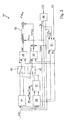
- FIG. 1 shows a schematic circuit diagram of an embodiment of an electric rail network with an inverter
- FIG. 2 shows a schematic block diagram of an embodiment of a method according to the invention for operating the inverter of the FIG. 1 with a network regulator
- FIGS. 3a, 3b show schematic block diagrams of two embodiments of the network controller of FIG. 2 ,
- FIG. 1 In the FIG. 1 is a railway network 10 with two substations 11, 12 and an interposed inverter 13 is shown.
- the local distance of the converter 13 of each of the two substations 11, 12 is about 50 km to about 60 km.
- the two substations 11, 12 are fed from a common two-phase electrical network 15 with a rated voltage of 110 kV and a nominal frequency of 16.7 Hz, which may be in particular the interconnected web of the web.
- the converter 13 is fed from a three-phase electrical network 16 with a rated voltage of 110 kV and a nominal frequency of 50 Hz at which may in particular be the general national or consumer network.
- Each of the two substations 11, 12 has two transformers 181, 182, which are connected on the one hand via switches 191, 192 to the network 15, and the other via switches 201, 202 each a common busbar 211, 212 feed, the voltage u v1 , u v2 of about 15 kV and a frequency of 16.7 Hz.
- the voltages u v1 , u v2 are measured by means of a respective sensor 221, 222. Due to the supply from the common network 15, the two voltages u v1 u v2 are synchronized with each other, the voltages u v1 , u v2 with respect to their phase position depending on the load condition of the network 15 may also differ slightly from each other.
- the converter 13 has two transformers 24, which are connected on the one hand via switch 25 to the network 16, and on the other hand connected to a respective inverter 26.
- Each of the inverters 26 feeds a common busbar 28 via a further transformer 23 and a switch 27.
- the transformer 23 it is also possible to use a longitudinal choke if the converter 26 has a corresponding output voltage.
- the output-side voltages u w1 , u w2 of each of the two inverters 26 between the further transformer 23 and the switch 27 are measured by means of sensors 29 and fed back to the associated inverter 26.
- further sensors for measuring, for example, the output side current of the two inverters 26 may be present.
- the voltages u v1 , u v2 are transmitted from each of the two substations 11, 12 with the aid of a transmitter 31 to a receiving and evaluating device 32 assigned to the converter 13.
- This can be a wired or a wireless transmission, in particular a transmission by telephone or modem.
- the receiving and evaluation device 32 generates from the two received voltages u v1 , u v2 and optionally with additional consideration of the impedances of the catenaries 34 a voltage setpoint u * for the inverter 13. This voltage setpoint u * is passed to each of the two inverters 26.
- the two inverters 26 set the voltage on the busbar 28 in such a way that there is a similar voltage in terms of amplitude, frequency and phase position as on the two busbars 211, 212.
- the inverter unit 13 thus has the property that the voltage on the busbar 28 in their amplitude, frequency and phase angle can be adjusted.
- the two busbars 211, 212 of the substations 11, 12 and the busbar 28 of the converter 13 can be connected via a plurality unspecified marked switch on the catenary 34 for the electric railway operation.
- the catenary 34 can be galvanically separated from each other between the aforementioned switches, which in the FIG. 1 is identified by the reference numeral 35. In particular trains can then be driven and thus moved along via the contact lines 34.
- a method 40 is shown, which in each of the two inverters 26 of the converter 13 of the FIG. 1 can be used.
- the method 40 thus refers to a single inverter 26 or both converters 26 of the converter 13th
- a voltage setpoint u 1B * which is the one in connection with the FIG. 1 mentioned and generated by the local receiving and evaluating device 32 voltage setpoint u * acts.
- the method 40 on the input side a voltage u 1B and a current i 1B supplied by the respective inverter 13 with the help of in connection with the FIG. 1 mentioned sensors 29 are measured.
- the voltage u 1B is one of the two in connection with the FIG. 1 explained, present at the output of the transformers 23 voltages u w1 , u w2 and the current i 1B is the associated output current.
- the method 40 has two switches 42, which in the in the FIG. 2 position, provided that in connection with the FIG. 1 explained transmission of the voltages u v1 , u v2 to those in the FIG. 1 shown receiving and evaluation device 32 is done correctly. This functional case is explained below.
- the method 40 has a voltage regulator 44 to which the voltage setpoint u 1B * is supplied. Furthermore, the method 40 has a conversion 46 which analyzes the voltage u 1B measured on the primary side of the associated transformer 23 and decomposes it into its frequency f B , its phase ⁇ u1B and its fundamental amplitude u 1B (a) . The frequency f B , the phase ⁇ u1B and the Fundamental vibration amplitude u 1B (a) are supplied to the voltage regulator 44.
- the voltage regulator 44 In response to the voltage value u 1B * and at least one of the determined from the measured voltage u 1B values f B, ⁇ u1B, u 1B (a) generates the voltage regulator 44 has an active power command value P * B and a reactive power reference Q * B, via the Switch 42 to an active power controller 48 and a reactive power controller 49 are passed.
- the method 40 includes a power calculation 51 which (depending on the phase ⁇ u1B and the fundamental amplitude and 1B (a) and as a function of the measured current i 1B an Active power P B and a Blind antiquesistwert Q B produced.
- the Active power P B is the active power controller 48 and the reactive power actual value Q B is the reactive power controller 49 is supplied.
- the active power controller 48 On the output side, the active power controller 48 generates a phase difference ⁇ * and the reactive power controller 49 a voltage difference ⁇ u * 1B .
- the phase difference ⁇ * is additive with the phase ⁇ u1B and the voltage difference ⁇ u * 1B is additively linked to the fundamental amplitude u 1B (a) .
- the additions result in a phase ⁇ u2B and a fundamental amplitude u 2B (a) related to the secondary side of the associated transformer 23.
- the phase ⁇ u2B is subjected to a cos conversion 53 and the resulting value is multiplicatively linked to the fundamental amplitude u 2B (a) .
- the multiplication gives a setpoint voltage u * 2B , which represents the output signal of the method 40, and which is present at the output of the associated inverter 26.
- the procedure explained above requires the presence of the voltage setpoint u 1B * ( FIG. FIG. 2 ) or u * ( FIG. 1 ). If this voltage setpoint u 1B * or u * does not exist, for example due to a faulty transmission of the voltages u v1 , u v2 , then the changeover switches 42 become in the in the FIG. 2 not shown switched position. The procedure described above is no longer executed. Instead, the procedure is as follows in this malfunctioning case.
- the method 40 has a network controller 55 to which one or more of the frequency f B provided by the conversion 46, phase ⁇ u1B and / or fundamental oscillation amplitude u 1B (a) are supplied. Furthermore, the network controller 55 may optionally be supplied with the active power actual value P B and / or reactive power actual value Q B provided by the power calculation 51.
- the network controller 55 determines an active power value and a reactive power value, which are fed to a power limitation 57. From this power limitation 57, the active power value and the reactive power value are limited as a function of predetermined minimum and maximum values. In particular, the active power value is limited to a predetermined active power maximum value P max and / or a predetermined active power minimum value P min and / or the active power value is limited to a predetermined maximum work W max in a specific time interval. The reactive power value is also limited in a similar or similar manner. The resulting limited values represent that passed through the switches 42 Active power setpoint P * B and reactive power setpoint Q * B.
- the power limitation 57 may also be omitted.
- the active power value and the reactive power value generated by the network controller 55 directly represent the active power setpoint P * B and reactive power setpoint Q * B relayed via the switches 42.
- the voltage regulator 44 may also be omitted. In this case, the switch 42 is no longer required. Instead, the entire method 40 is then constructed on the network controller 55, which generates the active power setpoint P * B and reactive power setpoint Q * B , possibly with the aid of the power limitation 57.
- FIG. 3a A first embodiment of the network controller 55 is shown in FIG. 3a shown.
- the network controller 55 has a U (a) controller 61 and a cos ( ⁇ ) controller 62.
- the U (a) controller 61 is supplied with a target fundamental amplitude u * 1B (a) and the fundamental amplitude u 1B (a) .
- the desired fundamental amplitude u * 1B (a) is estimated and given to the network controller 55.
- the nominal fundamental oscillation amplitude u * 1B (a) is the voltage amplitude present on the busbars 211, 212 of the two substations 11, 12. In particular, this voltage amplitude can be calculated by means of averaging and possibly weighting method.
- the fundamental amplitude u 1B (a) is generated by the conversion 46 from the measured voltage u 1B .
- the U (a) controller 61 From these input values, the U (a) controller 61 generates an apparent power setpoint S * B supplied to the cos ( ⁇ ) controller 62. Furthermore, the cos ( ⁇ ) controller 62 is supplied with a desired power factor cos ⁇ *.
- the desired power factor cos ⁇ * is an estimated average power factor, which represents the loads resulting from the rail operation.
- the cos ( ⁇ ) controller 62 From these input values, the cos ( ⁇ ) controller 62 generates the active power setpoint P * B and the reactive power setpoint Q * B transferred via the switches 42.
- the desired fundamental amplitude u * 1B (a) and the desired power factor cos ⁇ * can be estimated. This can be done, for example, before commissioning of the network controller 55.
- the desired fundamental oscillation amplitude u * 1B (a) and the desired power factor cos ⁇ * in the undisturbed, ie functional operation of the transmission of the voltages u v1 , u v2 the FIG. 1 determined and stored at predetermined intervals.
- These stored values of the desired basic oscillation amplitude u * 1B (a) and of the desired power factor cos ⁇ * can then be used in the case of disturbed transmission of the voltages u v1 , u v2 of the FIG. 1 be used.
- FIG. 3b A second embodiment of the network controller 55 is shown in FIG. 3b shown.
- the FIG. 3b builds on the FIG. 3a on and represents an extension of the controller 55 of the FIG. 3a In that regard, reference is made to the description of the FIG. 3a Referenced.
- the network controller 55 of FIG. 3b has a load determination 64, to which the basic oscillation amplitude u 1B (a) and the active power actual value P B and the reactive power actual value Q B are supplied.
- the fundamental oscillation amplitude u 1B (a) is thereby generated by the conversion 46 and the active power actual value P B and the reactive power actual value Q B from the power calculation 51.
- the load determination 64 are supplied via an input 65 one or more variables that represent the active and reactive power of the adjacent substations 11, 12.
- the apparent power and the power factor can be supplied.
- These performance quantities can be transmitted to the network controller 55 at predetermined time intervals via existing conduction techniques.
- the performance variables are therefore not via the transmitter 31 and the receiving and evaluating device 32 of FIG. 1 but independently.
- the transmission of the power quantities can take place at relatively long intervals, for example at intervals of about 5 minutes to about 15 minutes.
- the load determination 64 can determine, for example, a mean voltage amplitude of the adjacent substations 11, 12 and / or an average power factor thereof from these output quantities. In this calculation, the active power actual value P B and / or the reactive power actual value Q B and / or the fundamental vibration amplitude u 1B (a) can be taken into account.
- the load determination 64 In response to these inputs, the load determination 64 generates a replacement target fundamental amplitude Eu * 1B (a) and a substitute desired power factor Ecos ⁇ *, instead of the target fundamental amplitude u * 1B (a) and the desired power factor cos ⁇ * are passed to the U (a) controller 61 and the cos ( ⁇ ) controller 62.
- the U (a) controller 61 and the cos ( ⁇ ) controller 62 generate the FIG. 3b from the substitute setpoint fundamental amplitude Eu * 1B (a) and the substitute setpoint power factor Ecos ⁇ * and from the fundamental amplitude u 1B (a) delivered by the conversion 46 (a) the active power setpoint P * B and reactive power setpoint Q passed through the changeover switches 42 * B.
Landscapes
- Engineering & Computer Science (AREA)
- Power Engineering (AREA)
- Supply And Distribution Of Alternating Current (AREA)
Abstract
Description
- Die Erfindung betrifft ein Verfahren nach dem Oberbegriff des Anspruchs 1 sowie eine Vorrichtung nach dem Anspruch 10.
- Ein derartiges Verfahren sowie eine derartige Vorrichtung sind beispielsweise aus der
DE 10 2006 023 252 A1 bekannt. Dort ist beispielhaft ein Umrichterwerk zwischen zwei Unterwerken eines elektrischen Bahn-Netzes angeordnet. Zur Vermeidung von ungewollten und verlustbehafteten Energieübertragungen zwischen dem Umrichterwerk und den Unterwerken über die Fahrleitungen des Bahn-Netzes muss eine Synchronisierung der von dem Umrichterwerk gelieferten Spannung vorgenommen werden. Hierzu werden die Ausgangsspannungen der beiden Unterwerke gemessen und an das Umrichterwerk übertragen. In dem Umrichterwerk wird daraus eine optimierte Spannung ermittelt, auf die die Ausgangsspannung des Umrichterwerks dann mit Hilfe eines Umrichters eingestellt wird. Dabei ist es erforderlich, dass die Übertragung der gemessenen Ausgangsspannungen mit einer hohen Taktrate erfolgt und die erforderliche Übertragungsdauer muss ebenfalls berücksichtigt werden. Bei einem Ausfall der erläuterten Übertragung der gemessenen Ausgangsspannungen der beiden Unterwerke an das Umrichterwerk ist die vorstehend erläuterte Einstellung der Ausgangsspannung des Umrichterwerks nicht mehr möglich. Damit ist auch eine Minimierung der Übertragungsverluste über die Fahrleitungen nicht mehr möglich. - Aufgabe der Erfindung ist es, ein Verfahren zu schaffen, das auch bei einem Ausfall der erläuterten Übertragung der gemessenen Ausgangsspannungen der beiden Unterwerke an das Umrichterwerk noch eine Minimierung der Übertragungsverluste über die Fahrleitungen herbeiführen kann.
- Die Erfindung löst diese Aufgabe durch ein Verfahren nach dem Anspruch 1 sowie durch eine Vorrichtung nach dem Anspruch 10.
- Erfindungsgemäß wird aus einer gemessenen Spannung deren Grundschwingungsamplitude ermittelt, weiterhin wird eine Soll-Grundschwingungsamplitude und ein Soll-Leistungsfaktor vorgegeben, um dann aus der Grundschwingungsamplitude, der Soll-Grundschwingungsamplitude und dem Soll-Leistungsfaktor einen Wirkleistungssollwert und einen Blindleistungssollwert zu ermitteln.
- Mit Hilfe des Wirkleistungssollwerts und des Blindleistungssollwerts kann eine Sollspannung für das Umrichterwerk ermittelt werden. Mit dieser Sollspannung kann die Ausgangsspannung des Umrichterwerks auch bei einem Ausfall der Übertragung der gemessenen Ausgangsspannungen der beiden Unterwerke an das Umrichterwerk eingestellt werden. Damit wird auch bei dem genannten Ausfall eine Minimierung der Übertragungsverluste über die Fahrleitungen erreicht.
- Das erfindungsgemäße Verfahren kann bei beliebigen Topologien des Bahn-Netzes eingesetzt werden. Es müssen dabei nicht zwei benachbarte Unterwerke vorhanden sein, sondern das Verfahren kann bereits mit einem einzelnen Unterwerk zum Einsatz kommen. Dabei ist es nicht erforderlich, dass das Unterwerk unmittelbar mit dem Umrichterwerk gekoppelt ist, sondern es genügt deren mittelbare Nachbarschaft.
- Bei der Soll-Grundschwingungsamplitude handelt es sich vorzugsweise im wesentlichen um diejenige Spannungsamplitude, die in den beiden Unterwerken vorhanden ist. Und bei dem Soll-Leistungsfaktor handelt es sich vorzugsweise um einen mittleren Leistungsfaktor, der die durch den Bahnbetrieb entstehenden Lasten repräsentiert. Der Leistungsfaktor wird dabei insbesondere von der Impedanz der Fahrleitungen und/oder von den Leistungsfaktoren der betriebenen Züge bestimmt.
- Bei einer vorteilhaften Weiterbildung der Erfindung werden eine Ersatz-Soll-Grundschwingungsamplitude und ein Ersatz-Soll-Leistungsfaktor ermittelt, die anstelle der Soll-Grundschwingungsamplitude und des Soll-Leistungsfaktors verwendet werden. Vorzugsweise wird dabei aus der gemessenen Spannung deren Grundschwingungsamplitude ermittelt, und es wird ein Wirkleistungsistwert und ein Blindleistungsistwert ermittelt, um dann die Ersatz-Soll-Grundschwingungsamplitude und den Ersatz-Soll-Leistungsfaktor aus diesen Größen zu ermitteln.
- Weitere Merkmale, Anwendungsmöglichkeiten und Vorteile der Erfindung ergeben sich aus der nachfolgenden Beschreibung von Ausführungsbeispielen der Erfindung, die in den Figuren der Zeichnung dargestellt sind. Dabei bilden alle beschriebenen oder dargestellten Merkmale für sich oder in beliebiger Kombination den Gegenstand der Erfindung, unabhängig von ihrer Zusammenfassung in den Patentansprüchen oder deren Rückbeziehung sowie unabhängig von ihrer Formulierung bzw. Darstellung in der Beschreibung bzw. in der Zeichnung.
-
Figur 1 zeigt einen schematischen Schaltplan eines Ausführungsbeispiels eines elektrischen Bahn-Netzes mit einem Umrichterwerk,Figur 2 zeigt ein schematisches Blockschaltbild eines Ausführungsbeispiels eines erfindungsgemäßen Verfahrens zum Betreiben des Umrichterwerks derFigur 1 mit einem Netzregler, undFiguren 3a, 3b zeigen schematische Blockschaltbilder zweier Ausführungsbeispiele des Netzreglers derFigur 2 . - In der
Figur 1 ist ein Bahn-Netz 10 mit zwei Unterwerken 11, 12 und einem dazwischen angeordneten Umrichterwerk 13 dargestellt. Der örtliche Abstand des Umrichterwerks 13 von jedem der beiden Unterwerke 11, 12 beträgt etwa 50 km bis etwa 60 km. - Die beiden Unterwerke 11, 12 werden aus einem gemeinsamen zweiphasigen elektrischen Netz 15 mit einer Nenn-Spannung von 110 kV und einer Nenn-Frequenz von 16,7 Hz gespeist, bei dem es sich insbesondere um das Verbundnetz der Bahn handeln kann. Das Umrichterwerk 13 wird aus einem dreiphasigen elektrischen Netz 16 mit einer Nenn-Spannung von 110 kV und einer Nenn-Frequenz von 50 Hz gespeist, bei dem es sich insbesondere um das allgemeine Landes- bzw. Verbrauchernetz handeln kann.
- Jedes der beiden Unterwerke 11, 12 weist zwei Transformatoren 181, 182 auf, die einerseits über Schalter 191, 192 mit dem Netz 15 verbunden sind, und die andererseits über Schalter 201, 202 jeweils eine gemeinsame Sammelschiene 211, 212 speisen, die eine Spannung uv1, uv2 von etwa 15 kV und eine Frequenz von 16,7 Hz aufweist. Die Spannungen uv1, uv2 werden mit Hilfe von jeweils einem Sensor 221, 222 gemessen. Aufgrund der Speisung aus dem gemeinsamen Netz 15 sind die beiden Spannungen uv1 uv2 zueinander synchronisiert, wobei die Spannungen uv1, uv2 hinsichtlich ihrer Phasenlage in Abhängigkeit vom Lastzustand des Netzes 15 auch geringfügig voneinander abweichen können.
- Das Umrichterwerk 13 weist zwei Transformatoren 24 auf, die einerseits über Schalter 25 mit dem Netz 16 verbunden sind, und die andererseits mit jeweils einem Umrichter 26 verbunden sind. Jeder der Umrichter 26 speist über einen weiteren Transformator 23 und einen Schalter 27 eine gemeinsame Sammelschiene 28. Anstelle des Transformators 23 kann auch eine Längsdrossel zum Einsatz kommen, sofern die Umrichter 26 über eine entsprechende Ausgangsspannung verfügt.
- Die ausgangsseitigen Spannungen uw1, uw2 von jedem der beiden Umrichter 26 zwischen dem weiteren Transformator 23 und dem Schalter 27 werden mit Hilfe von Sensoren 29 gemessen und an den zugehörigen Umrichter 26 rückgekoppelt. Wie noch erläutert werden wird, können weitere Sensoren zur Messung beispielsweise des ausgangsseitigen Stroms der beiden Umrichter 26 vorhanden sein.
- Die Spannungen uv1, uv2 werden von jedem der beiden Unterwerke 11, 12 mit Hilfe eines Senders 31 an eine dem Umrichterwerk 13 zugeordnete Empfangs- und Auswerteeinrichtung 32 übertragen. Dabei kann es sich um eine drahtgebundene oder eine drahtlose Übertragung handeln, insbesondere um eine Übertragung per Telefon bzw. Modem. Die Empfangs- und Auswerteeinrichtung 32 erzeugt aus den beiden empfangenen Spannungen uv1, uv2 und gegebenenfalls unter zusätzlicher Berücksichtigung der Impedanzen der Fahrleitungen 34 einen Spannungssollwert u* für das Umrichterwerk 13. Dieser Spannungssollwert u* wird an jeden der beiden Umrichter 26 weitergegeben.
- In Abhängigkeit von dem Spannungssollwert u* stellen die beiden Umrichter 26 die Spannung auf der Sammelschiene 28 derart ein, dass dort hinsichtlich Amplitude, Frequenz und Phasenlage eine ähnliche Spannung vorliegt wie auf den beiden Sammelschienen 211, 212. Das Umrichterwerk 13 hat somit die Eigenschaft, dass die Spannung auf der Sammelschiene 28 in ihrer Amplitude, Frequenz und Phasenlage eingestellt werden kann.
- Die beiden Sammelschienen 211, 212 der Unterwerke 11, 12 sowie die Sammelschiene 28 des Umrichterwerks 13 können über eine Mehrzahl nicht näher gekennzeichneter Schalter auf die Fahrleitungen 34 für den elektrischen Bahnbetrieb weitergeschaltet werden. Die Fahrleitungen 34 können dabei zwischen den vorgenannten Schaltern galvanisch voneinander getrennt sein, was in der
Figur 1 mit Hilfe des Bezugszeichens 35 gekennzeichnet ist. Über die Fahrleitungen 34 können dann insbesondere Züge angetrieben und damit fortbewegt werden. - In der
Figur 2 ist ein Verfahren 40 dargestellt, das in jedem der beiden Umrichter 26 des Umrichterwerks 13 derFigur 1 zur Anwendung kommen kann. Das Verfahren 40 bezieht sich also auf einen einzelnen Umrichter 26 oder auf beide Umrichter 26 des Umrichterwerks 13. - Am Eingang des Verfahrens 40 liegt ein Spannungssollwert u1B* an, bei dem es sich um den im Zusammenhang mit der
Figur 1 erwähnten und von der dortigen Empfangs- und Auswerteeinrichtung 32 erzeugten Spannungssollwert u* handelt. - Weiterhin sind dem Verfahren 40 eingangsseitig eine Spannung u1B und ein Strom i1B zugeführt, die von dem jeweiligen Umrichterwerk 13 mit Hilfe der im Zusammenhang mit der
Figur 1 erwähnten Sensoren 29 gemessen werden. Insoweit handelt es sich bei der Spannung u1B um eine der beiden im Zusammenhang mit derFigur 1 erläuterten, am Ausgang der Transformatoren 23 vorhandenen Spannungen uw1, uw2 und bei dem Strom i1B handelt es sich um den zugehörigen abgegebenen Strom. - Das Verfahren 40 weist zwei Umschalter 42 auf, die sich in der in der
Figur 2 dargestellten Position befinden, sofern die im Zusammenhang mit derFigur 1 erläuterte Übertragung der Spannungen uv1, uv2 an die in derFigur 1 gezeigte Empfangs- und Auswerteeinrichtung 32 korrekt erfolgt. Dieser funktionstüchtige Fall wird nachfolgend erläutert. - Das Verfahren 40 weist einen Spannungsregler 44 auf, dem der Spannungssollwert u1B* zugeführt ist. Weiterhin weist das Verfahren 40 eine Umrechnung 46 auf, die die auf der Primärseite des zugehörigen Transformators 23 gemessene Spannung u1B analysiert und in deren Frequenz fB, deren Phase ϕu1B und deren Grundschwingungsamplitude u1B(a) zerlegt. Die Frequenz fB, die Phase ϕu1B und die Grundschwingungsamplitude u1B(a) sind dem Spannungsregler 44 zugeführt.
- In Abhängigkeit von dem Spannungssollwert u1B* und zumindest einem der aus der gemessenen Spannung u1B ermittelten Werte fB, ϕu1B, u1B(a) erzeugt der Spannungsregler 44 einen Wirkleistungssollwert P*B und einen Blindleistungssollwert Q*B, die über die Umschalter 42 an einen Wirkleistungsregler 48 und einen Blindleistungsregler 49 weitergegeben werden.
- Das Verfahren 40 weist eine Leistungsberechnung 51 auf, die in Abhängigkeit von der Phase (ϕu1B und der Grundschwingungsamplitude u1B(a) sowie in Abhängigkeit von dem gemessenen Strom i1B einen Wirkleistungsistwert PB und einen Blindleistungsistwert QB erzeugt. Der Wirkleistungsistwert PB ist dem Wirkleistungsregler 48 und der Blindleistungsistwert QB ist dem Blindleistungsregler 49 zugeführt.
- Ausgangsseitig erzeugt der Wirkleistungsregler 48 eine Phasendifferenz Δϕ* und der Blindleistungsregler 49 eine Spannungsdifferenz Δu*1B. Die Phasendifferenz Δϕ*wird additiv mit der Phase ϕu1B und die Spannungsdifferenz Δu*1B wird additiv mit der Grundschwingungsamplitude u1B(a) verknüpft. Die Additionen ergeben eine Phase ϕu2B und eine Grundschwingungsamplitude u2B(a), die sich auf die Sekundärseite des zugehörigen Transformators 23 beziehen. Die Phase ϕu2B wird einer cos-Umrechnung 53 unterzogen und der sich ergebende Wert wird mit der Grundschwingungsamplitude u2B(a) multiplikativ verknüpft. Die Multiplikation ergibt eine Sollspannung u*2B, die das Ausgangssignal des Verfahrens 40 darstellt, und die am Ausgang des zugehörigen Umrichters 26 vorhanden ist.
- Die vorstehend erläuterte Vorgehensweise erfordert das Vorhandensein des Spannungssollwerts u1B* (
Figur 2 ) bzw. u* (Figur 1 ). Ist dieser Spannungssollwert u1B* bzw. u* beispielsweise aufgrund einer gestörten Übertragung der Spannungen uv1, uv2 nicht vorhanden, so werden die Umschalter 42 in die in derFigur 2 nicht dargestellte Position geschaltet. Die vorstehend erläuterte Vorgehensweise wird damit nicht mehr ausgeführt. Stattdessen wird in diesem funktionsuntüchtigen Fall wie folgt vorgegangen. - Das Verfahren 40 weist einen Netzregler 55 auf, dem eine oder mehrere der von der Umrechnung 46 zur Verfügung gestellten Frequenz fB, Phase ϕu1B und/oder Grundschwingungsamplitude u1B(a) zugeführt sind. Weiterhin können dem Netzregler 55 gegebenenfalls der von der Leistungsberechnung 51 zur Verfügung gestellte Wirkleistungsistwert PB und/oder Blindleistungsistwert QB zugeführt sein.
- In Abhängigkeit von einer oder mehreren dieser Eingangsgrößen ermittelt der Netzregler 55 einen Wirkleistungswert und einen Blindleistungswert, die einer Leistungsbegrenzung 57 zugeführt sind. Von dieser Leistungsbegrenzung 57 werden der Wirkleistungswert und der Blindleistungswert in Abhängigkeit von vorgegebenen minimalen und maximalen Werten begrenzt. Insbesondere wird der Wirkleistungswert auf einen vorgegebenen Wirkleistungsmaximalwert Pmax und/oder einen vorgegebenen Wirkleistungsminimalwert Pmin begrenzt und/oder es wird der Wirkleistungswert auf eine vorgegebene maximale Arbeit Wmax in einem bestimmten Zeitintervall begrenzt. Auch der Blindleistungswert wird auf eine entsprechende oder ähnliche Weise begrenzt. Die sich ergebenden begrenzten Werte stellen den über die Umschalter 42 weitergegebenen Wirkleistungssollwert P*B und Blindleistungssollwert Q*B dar.
- Es wird darauf hingewiesen, dass die Leistungsbegrenzung 57 gegebenenfalls auch entfallen kann. In diesem Fall stellen der von dem Netzregler 55 erzeugte Wirkleistungswert und Blindleistungswert unmittelbar den über die Umschalter 42 weitergegebenen Wirkleistungssollwert P*B und Blindleistungssollwert Q*B dar.
- Weiterhin wird darauf hingewiesen, dass der Spannungsregler 44 gegebenenfalls auch entfallen kann. In diesem Fall sind auch die Umschalter 42 nicht mehr erforderlich. Statt dessen ist dann das gesamte Verfahren 40 auf dem Netzregler 55 aufgebaut, der - gegebenenfalls mit Hilfe der Leistungsbegrenzung 57 - den Wirkleistungssollwert P*B und Blindleistungssollwert Q*B erzeugt.
- Eine erste Ausführungsform des Netzreglers 55 ist in der
Figur 3a gezeigt. - Dort weist der Netzregler 55 einen U(a)-Regler 61 und einen cos(ϕ)-Regler 62 auf. Dem U(a)-Regler 61 sind eine Soll-Grundschwingungsamplitude u*1B(a) und die Grundschwingungsamplitude u1B(a) zugeführt. Die Soll-Grundschwingungsamplitude u*1B(a) wird geschätzt und dem Netzregler 55 vorgegeben. Bei der Soll-Grundschwingungsamplitude u*1B(a) handelt es sich um diejenige Spannungsamplitude, die auf den Sammelschienen 211, 212 der beiden Unterwerke 11, 12 vorhanden ist. Insbesondere kann diese Spannungsamplitude mit Hilfe eines mittelnden und gegebenenfalls gewichtenden Verfahrens berechnet werden. Die Grundschwingungsamplitude u1B(a) wird von der Umrechnung 46 aus der gemessenen Spannung u1B erzeugt.
- Aus diesen Eingangswerten erzeugt der U(a)-Regler 61 einen Scheinleistungssollwert S*B, der dem cos(ϕ)-Regler 62 zugeführt ist. Weiterhin ist dem cos(ϕ)-Regler 62 ein Soll-Leistungsfaktor cosϕ* zugeführt. Bei dem Soll-Leistungsfaktor cosϕ* handelt es sich um einen geschätzten mittleren Leistungsfaktor, der die durch den Bahnbetrieb entstehenden Lasten repräsentiert.
- Aus diesen Eingangswerten erzeugt der cos(ϕ)-Regler 62 die über die Umschalter 42 weitergegebenen Wirkleistungssollwert P*B und Blindleistungssollwert Q*B.
- Wie erläutert, können die Soll-Grundschwingungsamplitude u*1B(a) und der Soll-Leistungsfaktor cosϕ* geschätzt werden. Dies kann beispielsweise vor der Inbetriebnahme des Netzreglers 55 erfolgen.
- Alternativ oder ergänzend ist es möglich, dass die Soll-Grundschwingungsamplitude u*1B(a) und der Soll-Leistungsfaktor cosϕ* im ungestörten, also funktionstüchtigen Betrieb der Übertragung der Spannungen uv1, uv2 der
Figur 1 in vorgegebenen Zeitabständen ermittelt und gespeichert werden. Diese gespeicherten Werte der Soll-Grundschwingungsamplitude u*1B(a) und des Soll-Leistungsfaktors cosϕ* können dann bei gestörter Übertragung der Spannungen uv1, uv2 derFigur 1 verwendet werden. - Eine zweite Ausführungsform des Netzreglers 55 ist in der
Figur 3b gezeigt. DieFigur 3b baut dabei auf derFigur 3a auf und stellt eine Erweiterung des Reglers 55 derFigur 3a dar. Insoweit wird auf die Beschreibung derFigur 3a Bezug genommen. - Der Netzregler 55 der
Figur 3b weist eine Lastermittlung 64 auf, der die Grundschwingungsamplitude u1B(a) und der Wirkleistungsistwert PB sowie der Blindleistungsistwert QB zugeführt sind. Die Grundschwingungsamplitude u1B(a) wird dabei von der Umrechnung 46 und der Wirkleistungsistwert PB sowie der Blindleistungsistwert QB von der Leistungsberechnung 51 erzeugt. - Weiterhin sind der Lastermittlung 64 über einen Eingang 65 eine oder mehrere Größen zugeführt, die die Wirk- und Blindleistung der benachbarten Unterwerke 11, 12 repräsentieren. Wahlweise können auch die Scheinleistung und der Leistungsfaktor zugeführt werden. Diese Leistungsgrößen können in vorgegebenen Zeitabständen über vorhandene Leittechniken an den Netzregler 55 übermittelt werden. Die Leistungsgrößen werden also nicht über den Sender 31 und die Empfangs- und Auswerteeinrichtung 32 der
Figur 1 übertragen, sondern unabhängig davon. Die Übermittlung der Leistungsgrößen kann dabei in größeren Zeitabständen erfolgen, beispielsweise im Abstand von etwa 5 Minuten bis etwa 15 Minuten. - Aus diesen Leistungsgrößen kann die Lastermittlung 64 beispielsweise eine mittlere Spannungsamplitude der benachbarten Unterwerke 11, 12 und/oder einen mittleren Leistungsfaktor derselben ermitteln. Bei dieser Berechnung können der Wirkleistungsistwert PB und/oder der Blindleistungsistwert QB und/oder die Grundschwingungsamplitude u1B(a) berücksichtigt werden.
- In Abhängigkeit von diesen Eingangsgrößen erzeugt die Lastermittlung 64 eine Ersatz-Soll-Grundschwingungsamplitude Eu*1B(a) und einen Ersatz-Soll-Leistungsfaktor Ecosϕ*, die anstelle der Soll-Grundschwingungsamplitude u*1B(a) und des Soll-Leistungsfaktors cosϕ* an den U(a)-Regler 61 und den cos(ϕ)-Regler 62 weitergegeben werden.
- Entsprechend den Erläuterungen der
Figur 3a erzeugen der U(a)-Regler 61 und der cos(ϕ)-Regler 62 derFigur 3b aus der Ersatz-Soll-Grundschwingungsamplitude Eu*1B(a) und dem Ersatz-Soll-Leistungsfaktor Ecosϕ* sowie aus der von der Umrechnung 46 gelieferten Grundschwingungsamplitude u1B(a) den über die Umschalter 42 weitergegebenen Wirkleistungssollwert P*B und Blindleistungssollwert Q*B.
Claims (12)
- Verfahren (40) zum Betreiben eines Umrichterwerks (13) eines elektrischen Bahn-Netzes (10), wobei das Umrichterwerk (13) benachbart zu einem Unterwerk (11, 12) des Bahn-Netzes (10) angeordnet ist und einen Umrichter (26) aufweist, dadurch gekennzeichnet, dass aus einer gemessenen Spannung (u1B) deren Grundschwingungsamplitude (u1B(a)) ermittelt wird, dass eine Soll-Grundschwingungsamplitude (u*1B(a)) und ein Soll-Leistungsfaktor (cosϕ*) vorgegeben werden, und dass aus der Grundschwingungsamplitude (u1B(a)), der Soll-Grundschwingungsamplitude (u*1B(a)) und dem Soll-Leistungsfaktor (cosϕ*) ein Wirkleistungssollwert (P*B) und ein Blindleistungssollwert (Q*B) ermittelt werden.
- Verfahren (40) nach Anspruch 1, wobei es sich bei der Soll-Grundschwingungsamplitude (u*1B(a)) im wesentlichen um diejenige Spannungsamplitude handelt, die in den beiden Unterwerken (11, 12) vorhanden ist, und die gegebenenfalls zusätzlich gemittelt und/oder gewichtet wird.
- Verfahren (40) nach einem der Ansprüche 1 oder 2, wobei es sich bei dem Soll-Leistungsfaktor (cosϕ*) um einen mittleren Leistungsfaktor handelt, der die durch den Bahnbetrieb entstehenden Lasten repräsentiert.
- Verfahren (40) nach einem der Ansprüche 1 bis 3, wobei die Soll-Grundschwingungsamplitude (u*1B(a)) und der Soll-Leistungsfaktor (cosϕ*) vor der Inbetriebnahme des Verfahrens (10) vorgegeben, insbesondere geschätzt werden.
- Verfahren (40) nach einem der Ansprüche 1 bis 4, wobei die Soll-Grundschwingungsamplitude (u*1B(a) und der Soll-Leistungsfaktor (cosϕ*) im Betrieb des Verfahrens (10) korrigiert bzw. adaptiert werden.
- Verfahren (40) nach Anspruch 5, wobei in einem ungestörten Betrieb in vorgegebenen Zeitabständen die Soll-Grundschwingungsamplitude (u*1B(a)) und der Soll-Leistungsfaktor (cosϕ*) ermittelt und gespeichert werden, und wobei diese gespeicherten Werte in einem gestörten Betrieb zur Vorgabe der Soll-Grundschwingungsamplitude (u*1B(a)) und des Soll-Leistungsfaktor (cosϕ*) herangezogen werden.
- Verfahren (40) nach einem der Ansprüche 1 bis 6, wobei eine Ersatz-Soll-Grundschwingungsamplitude (Eu*1B(a)) und ein Ersatz-Soll-Leistungsfaktor (Ecosϕ*) ermittelt werden, die anstelle der Soll-Grundschwingungsamplitude (u*1B(a)) und des Soll-Leistungsfaktors (cosϕ*) verwendet werden.
- Verfahren (40) nach Anspruch 7, wobei aus der gemessenen Spannung (u1B) deren Phase (ϕu1B) ermittelt wird, wobei ein Wirkleistungsistwert (PB) und ein Blindleistungsistwert (QB) ermittelt werden, und wobei die Ersatz-Soll-Grundschwingungsamplitude (Eu*1B(a)) und der Ersatz-Soll-Leistungsfaktor (Ecosϕ*) aus diesen Größen ermittelt werden.
- Verfahren (40) nach Anspruch 8, wobei der Wirkleistungsistwert (PB) und der Blindleistungsistwert (QB) aus der Grundschwingungsamplitude (u1B(a)), der Phase (ϕu1B) und einem gemessenen Strom (i1B) ermittelt werden.
- Vorrichtung zur Durchführung des Verfahrens nach einem der vorstehenden Ansprüche, wobei ein Netzregler (55) vorhanden ist, dem die Soll-Grundschwingungsamplitude (u*1B(a)), der Soll-Leistungsfaktor (cosϕ*) und die Grundschwingungsamplitude (u1B(a)) zugeführt sind, und der den Wirkleistungssollwert (P*B) und den Blindleistungssollwert (Q*B) erzeugt.
- Vorrichtung nach Anspruch 10, wobei eine Lastermittlung (64) vorhanden ist, der eine Grundschwingungsamplitude (u1B(a)), ein Wirkleistungsistwert (PB) und ein Blindleistungsistwert (QB) zugeführt sind, und die eine Ersatz-Soll-Grundschwingungsamplitude (Eu*1B(a)) und einen Ersatz-Soll-Leistungsfaktor (Ecosϕ*) anstelle der Soll-Grundschwingungsamplitude (u*1B(a)) und des Soll-Leistungsfaktors (cosvϕ*) erzeugt.
- Vorrichtung nach Anspruch 11, wobei der Lastermittlung (64) Leistungsdaten der benachbarten Unterwerke (11, 12) zugeführt sind, insbesondere eine oder mehrere Größen, die die Wirk- und/oder Blindleistung und/oder die Scheinleistung und/oder den Leistungsfaktor der benachbarten Unterwerke (11, 12) repräsentieren.
Applications Claiming Priority (1)
| Application Number | Priority Date | Filing Date | Title |
|---|---|---|---|
| DE102010005656A DE102010005656A1 (de) | 2010-01-19 | 2010-01-19 | Verfahren und Vorrichtung zum Betreiben eines Umrichterwerks eines elektrischen Bahn-Netzes |
Publications (3)
| Publication Number | Publication Date |
|---|---|
| EP2348595A2 true EP2348595A2 (de) | 2011-07-27 |
| EP2348595A3 EP2348595A3 (de) | 2013-06-12 |
| EP2348595B1 EP2348595B1 (de) | 2019-04-03 |
Family
ID=44144750
Family Applications (1)
| Application Number | Title | Priority Date | Filing Date |
|---|---|---|---|
| EP10196399.9A Active EP2348595B1 (de) | 2010-01-19 | 2010-12-22 | Verfahren und vorrichtung zum betreiben eines umrichterwerks eines elektrischen bahn-netzes |
Country Status (3)
| Country | Link |
|---|---|
| EP (1) | EP2348595B1 (de) |
| DE (1) | DE102010005656A1 (de) |
| ES (1) | ES2733366T3 (de) |
Cited By (1)
| Publication number | Priority date | Publication date | Assignee | Title |
|---|---|---|---|---|
| EP3696935A1 (de) * | 2019-02-15 | 2020-08-19 | Siemens Aktiengesellschaft | Energiequelle in einem gleichspannungsnetz, verfahren zum betrieb einer solchen energiequelle, gleichspannungsnetz mit einer mehrzahl solcher energiequellen und verfahren zum betrieb eines solchen gleichspannungsnetzes |
Citations (1)
| Publication number | Priority date | Publication date | Assignee | Title |
|---|---|---|---|---|
| DE102006023252A1 (de) | 2006-05-18 | 2007-11-22 | Xie, Jian, Prof.Dr.-Ing | Verfahren zur Minimierung der Oberleitungsverluste und Energiekosten des von einem statischen Umrichterwerk gespeisten Oberleitungsnetzes und zur Online-Bestimmung der Oberleitungsimpedanzen und der Informationen über die Streckenlasten |
Family Cites Families (4)
| Publication number | Priority date | Publication date | Assignee | Title |
|---|---|---|---|---|
| DE975999C (de) * | 1944-09-16 | 1963-01-10 | Siemens Ag | Verfahren und Einrichtung zum Betrieb von Einphasenbahnfahrleitungen, die von mindestens zwei Speisepunkten aus gespeist werden |
| AT208962B (de) * | 1959-05-05 | 1960-05-10 | Bbc Brown Boveri & Cie | Verfahren zur Erreichung eines transformator-analogen Wirkleistungsverhaltens eines frequenzelastischen Umrichters |
| DE3236071A1 (de) * | 1982-07-09 | 1984-01-12 | Siemens AG, 1000 Berlin und 8000 München | Vorrichtung zur paralleleinspeisung in ein wechsel- oder drehstromnetz |
| DE10006844B3 (de) * | 2000-02-16 | 2004-02-12 | Jian, Xie, Prof.Dr.-Ing. | Verfahren zur Bestimmung des Spannungsphasenwinkels von Nachbarwerken für die Regelung von Bahnumrichtern |
-
2010
- 2010-01-19 DE DE102010005656A patent/DE102010005656A1/de not_active Ceased
- 2010-12-22 ES ES10196399T patent/ES2733366T3/es active Active
- 2010-12-22 EP EP10196399.9A patent/EP2348595B1/de active Active
Patent Citations (1)
| Publication number | Priority date | Publication date | Assignee | Title |
|---|---|---|---|---|
| DE102006023252A1 (de) | 2006-05-18 | 2007-11-22 | Xie, Jian, Prof.Dr.-Ing | Verfahren zur Minimierung der Oberleitungsverluste und Energiekosten des von einem statischen Umrichterwerk gespeisten Oberleitungsnetzes und zur Online-Bestimmung der Oberleitungsimpedanzen und der Informationen über die Streckenlasten |
Cited By (2)
| Publication number | Priority date | Publication date | Assignee | Title |
|---|---|---|---|---|
| EP3696935A1 (de) * | 2019-02-15 | 2020-08-19 | Siemens Aktiengesellschaft | Energiequelle in einem gleichspannungsnetz, verfahren zum betrieb einer solchen energiequelle, gleichspannungsnetz mit einer mehrzahl solcher energiequellen und verfahren zum betrieb eines solchen gleichspannungsnetzes |
| WO2020165207A1 (de) * | 2019-02-15 | 2020-08-20 | Siemens Aktiengesellschaft | Energiequelle für ein gleichspannungsnetz, verfahren zum betrieb einer solchen energiequelle, gleichspannungsnetz mit einer mehrzahl solcher energiequellen und verfahren zum betrieb eines solchen gleichspannungsnetzes |
Also Published As
| Publication number | Publication date |
|---|---|
| EP2348595A3 (de) | 2013-06-12 |
| ES2733366T3 (es) | 2019-11-28 |
| EP2348595B1 (de) | 2019-04-03 |
| DE102010005656A1 (de) | 2011-07-21 |
Similar Documents
| Publication | Publication Date | Title |
|---|---|---|
| WO2003071655A1 (de) | Verfahren zum überwachen von dezentralen energieerzeugungsanlagen | |
| DE102017114306B4 (de) | Verfahren zum betrieb eines inselnetzes und inselnetz | |
| EP2927044A1 (de) | Verfahren zum Betreiben paralleler Hilfsbetriebeumrichter in einem Schienenfahrzeug | |
| EP3391519B1 (de) | Wechselrichter und verfahren zum betreiben eines wechselrichters | |
| WO2012031992A2 (de) | Verfahren zur stabilisierung eines elektrischen versorgungsnetzes | |
| DE102010026778A1 (de) | Vorrichtung zur Bereitstellung einer Eingangsgleichspannung für einen Photovol taikwechselrichter und Photovoltaikanlage mit dieser | |
| DE102015105152A1 (de) | Anordnung und Verfahren zum Verringern einer Schieflast in einem dreiphasigen Verteilungsnetz | |
| EP2348595B1 (de) | Verfahren und vorrichtung zum betreiben eines umrichterwerks eines elektrischen bahn-netzes | |
| WO2018019763A1 (de) | Verfahren zur stromversorgung und stromversorgung für an einer bahnstrecke angeordnete bahnbetriebselemente | |
| EP3113972B1 (de) | Schienenfahrzeug mit zumindest zwei stromabnehmern | |
| DE102011122581B4 (de) | Verfahren zum Betreiben eines elektrischen Versorgungsnetzes | |
| DE102010026451A1 (de) | Fahrdrahtdirekteinspeisung | |
| EP3331118B1 (de) | Anlage zum übertragen elektrischer leistung | |
| EP3311481B1 (de) | Verfahren zur regelung eines selbstgeführten umrichters, selbstgeführter umrichter sowie anordnung zur übertragung elektrischer leistung | |
| EP3123607B1 (de) | Modulares umrichtersystem für ein elektrisches versorgungsnetz | |
| DE102014100690A1 (de) | Wechselrichter, insbesondere als teil eines energieerzeugungsverbundes, und verfahren | |
| EP0491766B1 (de) | Schaltungsanordnung bei einem gesteuerten stromrichter | |
| EP3026785B1 (de) | Elektrische Energieverteilanlage | |
| EP3900141A1 (de) | Verfahren und anlagen für ein ac-netz mit erhöhtem leistungsdurchsatz | |
| DE102012107165B4 (de) | Wechselrichter mit getrennter Erfassung von Netzspannungen sowie Verfahren zum Betrieb von Wechselrichtern | |
| AT504106A4 (de) | Verfahren zur regelung eines netzstromrichters für schienenfahrzeuge | |
| DE102006002245A1 (de) | Verfahren zur Überwachung eines abschaltbaren Kabels in einem elektrischen Netz, dafür geeignete Überwachungsvorrichtung sowie Überwachungssystem | |
| DE656375C (de) | Anordnung zum selbsttaetigen Abschalten von Gleichstromhochspannungsleitungen | |
| DE708973C (de) | Selektivschutzeinrichtung | |
| DE10114570A1 (de) | Einrichtung zur unterbrechungsfreien Stromversorgung und zur Aktivfilterung |
Legal Events
| Date | Code | Title | Description |
|---|---|---|---|
| PUAI | Public reference made under article 153(3) epc to a published international application that has entered the european phase |
Free format text: ORIGINAL CODE: 0009012 |
|
| AK | Designated contracting states |
Kind code of ref document: A2 Designated state(s): AL AT BE BG CH CY CZ DE DK EE ES FI FR GB GR HR HU IE IS IT LI LT LU LV MC MK MT NL NO PL PT RO RS SE SI SK SM TR |
|
| AX | Request for extension of the european patent |
Extension state: BA ME |
|
| RIN1 | Information on inventor provided before grant (corrected) |
Inventor name: JANNING, JOERG |
|
| PUAL | Search report despatched |
Free format text: ORIGINAL CODE: 0009013 |
|
| AK | Designated contracting states |
Kind code of ref document: A3 Designated state(s): AL AT BE BG CH CY CZ DE DK EE ES FI FR GB GR HR HU IE IS IT LI LT LU LV MC MK MT NL NO PL PT RO RS SE SI SK SM TR |
|
| AX | Request for extension of the european patent |
Extension state: BA ME |
|
| RIC1 | Information provided on ipc code assigned before grant |
Ipc: H02J 3/46 20060101ALI20130506BHEP Ipc: H02J 3/18 20060101AFI20130506BHEP |
|
| 17P | Request for examination filed |
Effective date: 20131105 |
|
| RBV | Designated contracting states (corrected) |
Designated state(s): AL AT BE BG CH CY CZ DE DK EE ES FI FR GB GR HR HU IE IS IT LI LT LU LV MC MK MT NL NO PL PT RO RS SE SI SK SM TR |
|
| RAP1 | Party data changed (applicant data changed or rights of an application transferred) |
Owner name: GE ENERGY POWER CONVERSION GMBH |
|
| STAA | Information on the status of an ep patent application or granted ep patent |
Free format text: STATUS: EXAMINATION IS IN PROGRESS |
|
| 17Q | First examination report despatched |
Effective date: 20180112 |
|
| GRAP | Despatch of communication of intention to grant a patent |
Free format text: ORIGINAL CODE: EPIDOSNIGR1 |
|
| STAA | Information on the status of an ep patent application or granted ep patent |
Free format text: STATUS: GRANT OF PATENT IS INTENDED |
|
| INTG | Intention to grant announced |
Effective date: 20181011 |
|
| GRAJ | Information related to disapproval of communication of intention to grant by the applicant or resumption of examination proceedings by the epo deleted |
Free format text: ORIGINAL CODE: EPIDOSDIGR1 |
|
| STAA | Information on the status of an ep patent application or granted ep patent |
Free format text: STATUS: EXAMINATION IS IN PROGRESS |
|
| GRAR | Information related to intention to grant a patent recorded |
Free format text: ORIGINAL CODE: EPIDOSNIGR71 |
|
| GRAS | Grant fee paid |
Free format text: ORIGINAL CODE: EPIDOSNIGR3 |
|
| STAA | Information on the status of an ep patent application or granted ep patent |
Free format text: STATUS: GRANT OF PATENT IS INTENDED |
|
| GRAA | (expected) grant |
Free format text: ORIGINAL CODE: 0009210 |
|
| STAA | Information on the status of an ep patent application or granted ep patent |
Free format text: STATUS: THE PATENT HAS BEEN GRANTED |
|
| INTC | Intention to grant announced (deleted) | ||
| AK | Designated contracting states |
Kind code of ref document: B1 Designated state(s): AL AT BE BG CH CY CZ DE DK EE ES FI FR GB GR HR HU IE IS IT LI LT LU LV MC MK MT NL NO PL PT RO RS SE SI SK SM TR |
|
| INTG | Intention to grant announced |
Effective date: 20190222 |
|
| REG | Reference to a national code |
Ref country code: GB Ref legal event code: FG4D Free format text: NOT ENGLISH |
|
| REG | Reference to a national code |
Ref country code: CH Ref legal event code: EP Ref country code: AT Ref legal event code: REF Ref document number: 1116936 Country of ref document: AT Kind code of ref document: T Effective date: 20190415 |
|
| REG | Reference to a national code |
Ref country code: DE Ref legal event code: R096 Ref document number: 502010015898 Country of ref document: DE |
|
| REG | Reference to a national code |
Ref country code: IE Ref legal event code: FG4D Free format text: LANGUAGE OF EP DOCUMENT: GERMAN |
|
| REG | Reference to a national code |
Ref country code: NL Ref legal event code: MP Effective date: 20190403 |
|
| REG | Reference to a national code |
Ref country code: LT Ref legal event code: MG4D |
|
| PG25 | Lapsed in a contracting state [announced via postgrant information from national office to epo] |
Ref country code: NL Free format text: LAPSE BECAUSE OF FAILURE TO SUBMIT A TRANSLATION OF THE DESCRIPTION OR TO PAY THE FEE WITHIN THE PRESCRIBED TIME-LIMIT Effective date: 20190403 |
|
| PG25 | Lapsed in a contracting state [announced via postgrant information from national office to epo] |
Ref country code: CZ Free format text: LAPSE BECAUSE OF FAILURE TO SUBMIT A TRANSLATION OF THE DESCRIPTION OR TO PAY THE FEE WITHIN THE PRESCRIBED TIME-LIMIT Effective date: 20190403 Ref country code: AL Free format text: LAPSE BECAUSE OF FAILURE TO SUBMIT A TRANSLATION OF THE DESCRIPTION OR TO PAY THE FEE WITHIN THE PRESCRIBED TIME-LIMIT Effective date: 20190403 Ref country code: FI Free format text: LAPSE BECAUSE OF FAILURE TO SUBMIT A TRANSLATION OF THE DESCRIPTION OR TO PAY THE FEE WITHIN THE PRESCRIBED TIME-LIMIT Effective date: 20190403 Ref country code: HR Free format text: LAPSE BECAUSE OF FAILURE TO SUBMIT A TRANSLATION OF THE DESCRIPTION OR TO PAY THE FEE WITHIN THE PRESCRIBED TIME-LIMIT Effective date: 20190403 Ref country code: LT Free format text: LAPSE BECAUSE OF FAILURE TO SUBMIT A TRANSLATION OF THE DESCRIPTION OR TO PAY THE FEE WITHIN THE PRESCRIBED TIME-LIMIT Effective date: 20190403 Ref country code: SE Free format text: LAPSE BECAUSE OF FAILURE TO SUBMIT A TRANSLATION OF THE DESCRIPTION OR TO PAY THE FEE WITHIN THE PRESCRIBED TIME-LIMIT Effective date: 20190403 Ref country code: PT Free format text: LAPSE BECAUSE OF FAILURE TO SUBMIT A TRANSLATION OF THE DESCRIPTION OR TO PAY THE FEE WITHIN THE PRESCRIBED TIME-LIMIT Effective date: 20190803 Ref country code: NO Free format text: LAPSE BECAUSE OF FAILURE TO SUBMIT A TRANSLATION OF THE DESCRIPTION OR TO PAY THE FEE WITHIN THE PRESCRIBED TIME-LIMIT Effective date: 20190703 |
|
| REG | Reference to a national code |
Ref country code: ES Ref legal event code: FG2A Ref document number: 2733366 Country of ref document: ES Kind code of ref document: T3 Effective date: 20191128 |
|
| PG25 | Lapsed in a contracting state [announced via postgrant information from national office to epo] |
Ref country code: LV Free format text: LAPSE BECAUSE OF FAILURE TO SUBMIT A TRANSLATION OF THE DESCRIPTION OR TO PAY THE FEE WITHIN THE PRESCRIBED TIME-LIMIT Effective date: 20190403 Ref country code: PL Free format text: LAPSE BECAUSE OF FAILURE TO SUBMIT A TRANSLATION OF THE DESCRIPTION OR TO PAY THE FEE WITHIN THE PRESCRIBED TIME-LIMIT Effective date: 20190403 Ref country code: BG Free format text: LAPSE BECAUSE OF FAILURE TO SUBMIT A TRANSLATION OF THE DESCRIPTION OR TO PAY THE FEE WITHIN THE PRESCRIBED TIME-LIMIT Effective date: 20190703 Ref country code: GR Free format text: LAPSE BECAUSE OF FAILURE TO SUBMIT A TRANSLATION OF THE DESCRIPTION OR TO PAY THE FEE WITHIN THE PRESCRIBED TIME-LIMIT Effective date: 20190704 Ref country code: RS Free format text: LAPSE BECAUSE OF FAILURE TO SUBMIT A TRANSLATION OF THE DESCRIPTION OR TO PAY THE FEE WITHIN THE PRESCRIBED TIME-LIMIT Effective date: 20190403 |
|
| PG25 | Lapsed in a contracting state [announced via postgrant information from national office to epo] |
Ref country code: IS Free format text: LAPSE BECAUSE OF FAILURE TO SUBMIT A TRANSLATION OF THE DESCRIPTION OR TO PAY THE FEE WITHIN THE PRESCRIBED TIME-LIMIT Effective date: 20190803 |
|
| REG | Reference to a national code |
Ref country code: DE Ref legal event code: R097 Ref document number: 502010015898 Country of ref document: DE |
|
| PG25 | Lapsed in a contracting state [announced via postgrant information from national office to epo] |
Ref country code: RO Free format text: LAPSE BECAUSE OF FAILURE TO SUBMIT A TRANSLATION OF THE DESCRIPTION OR TO PAY THE FEE WITHIN THE PRESCRIBED TIME-LIMIT Effective date: 20190403 Ref country code: EE Free format text: LAPSE BECAUSE OF FAILURE TO SUBMIT A TRANSLATION OF THE DESCRIPTION OR TO PAY THE FEE WITHIN THE PRESCRIBED TIME-LIMIT Effective date: 20190403 Ref country code: DK Free format text: LAPSE BECAUSE OF FAILURE TO SUBMIT A TRANSLATION OF THE DESCRIPTION OR TO PAY THE FEE WITHIN THE PRESCRIBED TIME-LIMIT Effective date: 20190403 Ref country code: SK Free format text: LAPSE BECAUSE OF FAILURE TO SUBMIT A TRANSLATION OF THE DESCRIPTION OR TO PAY THE FEE WITHIN THE PRESCRIBED TIME-LIMIT Effective date: 20190403 |
|
| PLBE | No opposition filed within time limit |
Free format text: ORIGINAL CODE: 0009261 |
|
| STAA | Information on the status of an ep patent application or granted ep patent |
Free format text: STATUS: NO OPPOSITION FILED WITHIN TIME LIMIT |
|
| PG25 | Lapsed in a contracting state [announced via postgrant information from national office to epo] |
Ref country code: SM Free format text: LAPSE BECAUSE OF FAILURE TO SUBMIT A TRANSLATION OF THE DESCRIPTION OR TO PAY THE FEE WITHIN THE PRESCRIBED TIME-LIMIT Effective date: 20190403 Ref country code: IT Free format text: LAPSE BECAUSE OF FAILURE TO SUBMIT A TRANSLATION OF THE DESCRIPTION OR TO PAY THE FEE WITHIN THE PRESCRIBED TIME-LIMIT Effective date: 20190403 |
|
| 26N | No opposition filed |
Effective date: 20200106 |
|
| PG25 | Lapsed in a contracting state [announced via postgrant information from national office to epo] |
Ref country code: TR Free format text: LAPSE BECAUSE OF FAILURE TO SUBMIT A TRANSLATION OF THE DESCRIPTION OR TO PAY THE FEE WITHIN THE PRESCRIBED TIME-LIMIT Effective date: 20190403 |
|
| PG25 | Lapsed in a contracting state [announced via postgrant information from national office to epo] |
Ref country code: SI Free format text: LAPSE BECAUSE OF FAILURE TO SUBMIT A TRANSLATION OF THE DESCRIPTION OR TO PAY THE FEE WITHIN THE PRESCRIBED TIME-LIMIT Effective date: 20190403 |
|
| REG | Reference to a national code |
Ref country code: CH Ref legal event code: PL |
|
| REG | Reference to a national code |
Ref country code: BE Ref legal event code: MM Effective date: 20191231 |
|
| PG25 | Lapsed in a contracting state [announced via postgrant information from national office to epo] |
Ref country code: MC Free format text: LAPSE BECAUSE OF FAILURE TO SUBMIT A TRANSLATION OF THE DESCRIPTION OR TO PAY THE FEE WITHIN THE PRESCRIBED TIME-LIMIT Effective date: 20190403 |
|
| PG25 | Lapsed in a contracting state [announced via postgrant information from national office to epo] |
Ref country code: IE Free format text: LAPSE BECAUSE OF NON-PAYMENT OF DUE FEES Effective date: 20191222 Ref country code: LU Free format text: LAPSE BECAUSE OF NON-PAYMENT OF DUE FEES Effective date: 20191222 |
|
| PG25 | Lapsed in a contracting state [announced via postgrant information from national office to epo] |
Ref country code: LI Free format text: LAPSE BECAUSE OF NON-PAYMENT OF DUE FEES Effective date: 20191231 Ref country code: BE Free format text: LAPSE BECAUSE OF NON-PAYMENT OF DUE FEES Effective date: 20191231 Ref country code: CH Free format text: LAPSE BECAUSE OF NON-PAYMENT OF DUE FEES Effective date: 20191231 |
|
| PGFP | Annual fee paid to national office [announced via postgrant information from national office to epo] |
Ref country code: DE Payment date: 20201119 Year of fee payment: 11 |
|
| REG | Reference to a national code |
Ref country code: AT Ref legal event code: MM01 Ref document number: 1116936 Country of ref document: AT Kind code of ref document: T Effective date: 20191222 |
|
| REG | Reference to a national code |
Ref country code: ES Ref legal event code: FD2A Effective date: 20210526 |
|
| PG25 | Lapsed in a contracting state [announced via postgrant information from national office to epo] |
Ref country code: CY Free format text: LAPSE BECAUSE OF FAILURE TO SUBMIT A TRANSLATION OF THE DESCRIPTION OR TO PAY THE FEE WITHIN THE PRESCRIBED TIME-LIMIT Effective date: 20190403 Ref country code: AT Free format text: LAPSE BECAUSE OF NON-PAYMENT OF DUE FEES Effective date: 20191222 |
|
| PG25 | Lapsed in a contracting state [announced via postgrant information from national office to epo] |
Ref country code: MT Free format text: LAPSE BECAUSE OF FAILURE TO SUBMIT A TRANSLATION OF THE DESCRIPTION OR TO PAY THE FEE WITHIN THE PRESCRIBED TIME-LIMIT Effective date: 20190403 Ref country code: HU Free format text: LAPSE BECAUSE OF FAILURE TO SUBMIT A TRANSLATION OF THE DESCRIPTION OR TO PAY THE FEE WITHIN THE PRESCRIBED TIME-LIMIT; INVALID AB INITIO Effective date: 20101222 |
|
| PG25 | Lapsed in a contracting state [announced via postgrant information from national office to epo] |
Ref country code: ES Free format text: LAPSE BECAUSE OF NON-PAYMENT OF DUE FEES Effective date: 20191223 |
|
| PG25 | Lapsed in a contracting state [announced via postgrant information from national office to epo] |
Ref country code: MK Free format text: LAPSE BECAUSE OF FAILURE TO SUBMIT A TRANSLATION OF THE DESCRIPTION OR TO PAY THE FEE WITHIN THE PRESCRIBED TIME-LIMIT Effective date: 20190403 |
|
| REG | Reference to a national code |
Ref country code: DE Ref legal event code: R119 Ref document number: 502010015898 Country of ref document: DE |
|
| PG25 | Lapsed in a contracting state [announced via postgrant information from national office to epo] |
Ref country code: DE Free format text: LAPSE BECAUSE OF NON-PAYMENT OF DUE FEES Effective date: 20220701 |
|
| PGFP | Annual fee paid to national office [announced via postgrant information from national office to epo] |
Ref country code: GB Payment date: 20251119 Year of fee payment: 16 |
|
| PGFP | Annual fee paid to national office [announced via postgrant information from national office to epo] |
Ref country code: FR Payment date: 20251120 Year of fee payment: 16 |