EP2348403B1 - Verfahren und system zur analyse eines altsystems auf trailbasis durch das altsystem - Google Patents
Verfahren und system zur analyse eines altsystems auf trailbasis durch das altsystem Download PDFInfo
- Publication number
- EP2348403B1 EP2348403B1 EP09180397.3A EP09180397A EP2348403B1 EP 2348403 B1 EP2348403 B1 EP 2348403B1 EP 09180397 A EP09180397 A EP 09180397A EP 2348403 B1 EP2348403 B1 EP 2348403B1
- Authority
- EP
- European Patent Office
- Prior art keywords
- screen
- pair
- instances
- trail
- legacy system
- Prior art date
- Legal status (The legal status is an assumption and is not a legal conclusion. Google has not performed a legal analysis and makes no representation as to the accuracy of the status listed.)
- Active
Links
Images




Classifications
-
- G—PHYSICS
- G06—COMPUTING OR CALCULATING; COUNTING
- G06F—ELECTRIC DIGITAL DATA PROCESSING
- G06F11/00—Error detection; Error correction; Monitoring
- G06F11/30—Monitoring
- G06F11/34—Recording or statistical evaluation of computer activity, e.g. of down time, of input/output operation ; Recording or statistical evaluation of user activity, e.g. usability assessment
- G06F11/3438—Recording or statistical evaluation of computer activity, e.g. of down time, of input/output operation ; Recording or statistical evaluation of user activity, e.g. usability assessment monitoring of user actions
-
- G—PHYSICS
- G06—COMPUTING OR CALCULATING; COUNTING
- G06F—ELECTRIC DIGITAL DATA PROCESSING
- G06F8/00—Arrangements for software engineering
- G06F8/70—Software maintenance or management
- G06F8/74—Reverse engineering; Extracting design information from source code
-
- G—PHYSICS
- G06—COMPUTING OR CALCULATING; COUNTING
- G06F—ELECTRIC DIGITAL DATA PROCESSING
- G06F11/00—Error detection; Error correction; Monitoring
- G06F11/30—Monitoring
- G06F11/34—Recording or statistical evaluation of computer activity, e.g. of down time, of input/output operation ; Recording or statistical evaluation of user activity, e.g. usability assessment
- G06F11/3466—Performance evaluation by tracing or monitoring
- G06F11/3476—Data logging
-
- G—PHYSICS
- G06—COMPUTING OR CALCULATING; COUNTING
- G06N—COMPUTING ARRANGEMENTS BASED ON SPECIFIC COMPUTATIONAL MODELS
- G06N5/00—Computing arrangements using knowledge-based models
-
- G—PHYSICS
- G06—COMPUTING OR CALCULATING; COUNTING
- G06N—COMPUTING ARRANGEMENTS BASED ON SPECIFIC COMPUTATIONAL MODELS
- G06N5/00—Computing arrangements using knowledge-based models
- G06N5/01—Dynamic search techniques; Heuristics; Dynamic trees; Branch-and-bound
Definitions
- the present invention relates to a method and a system for analyzing a legacy system based on trails through the legacy system.
- a legacy system can be regarded as a "black box" that performs the tasks it was originally developed for, but it is extremely difficult or even impossible to determine how exactly the tasks are achieved, i.e. it is impossible to gain knowledge of the functionality of the legacy system.
- Legacy systems typically communicate with one or more terminal emulators, wherein the terminal emulators serve for displaying screens of the legacy application running on the legacy system and allowing users to input data into data fields of the screens. The user input is then transmitted back to the legacy system, which responds by transmitting the next screen to the terminal emulator.
- a session of a user with a legacy system can thus be regarded as a sequence of displayed screens (screen instances) connected by user inputs.
- a legacy system In order to understand the functionality of a legacy system, it is known to analyze the data provided by the legacy system in order to try to extract the screens communicated to and from the legacy system as well as their dependencies. The extracted screens can then be used for building a map, i.e. a model, of the legacy system, wherein the map may be a finite state machine whose nodes represent the screens and whose transitions represent the user inputs.
- a map i.e. a model
- a central difficulty in this mapping process is the identification of the individual screens of the legacy system. Since the intercepted data from the communication between the legacy system and the terminal emulator(s) comprises concrete screen instances, i.e. screens with concrete filled-in data fields, it is very difficult and in some scenarios even impossible to decide whether two encountered screen instances belong to the same screen or to different screens.
- a further approach is "crawling" the screens of the legacy system (similar to a crawler that crawls the internet for a search engine), however, this approach is limited to a test environment or to screens that do not modify data. Furthermore, most known approaches require additional components to be installed on the mainframe (e.g. datadirect, JIS innovator), which is difficult or even impossible depending on the type of legacy system to be analyzed.
- the US 6,836,780 B1 discloses a method and apparatus for mapping legacy application data.
- interaction with the legacy application is recorded as trails, wherein each trail comprises snapshots of every screen encountered as well as all keystrokes entered.
- a map of the legacy application is built by sorting the encountered screen snapshots into screens. This sorting is done based on simple screen identification rules that try to allocate snapshots according to the number, size and location of predefined fields found in the individual snapshots.
- This problem is according to one aspect of the invention solved by a method for analyzing a legacy system based on at least one trail in accordance with claim 1.
- the embodiment defines a method that produces a map of the analyzed legacy system based on user activity that was logged into trails of screen instances.
- the map is built by grouping individual screen instances that belong to the same screen of the legacy system into screen groups based on pair-wise distance measures preferably calculated for each pair of screen instances within the trail(s). Since the pair-wise distance measures indicate a similarity of the respective pair of screen instances that helps to derive a probability of both screen instances belonging to the same screen of the legacy system, the present method provides a stochastic/probabilistic approach to obtain the map of the legacy system.
- the stochastic/probabilistic approach increases the reliability of automatic screen group detection to a great extent, as compared to the simple screen identification rules known from the prior art, which involves a considerable amount of manual work.
- the simple screen matching employed in the US 6,836,780 B1 groups two given screen instances into a group if they contain the same fields in the same location.
- such a binary prior art decision algorithm only provides insufficient screen grouping results and therefore requires a high amount of laborious manual fine tuning work.
- the present method provides for a much more exact determination of which screen instances in a given trail belong to the same screen of the analyzed legacy system, thereby considerably increasing the quality of the generated maps of the legacy system, preferably without any manual interaction.
- the first of the above method steps may comprise the step of calculating a pair-wise distance score of the plurality of screen instances, wherein the pair-wise distance score indicates a similarity of the respective pair of screen instances that indicates that the pair may originate from the same screen based on the content of the respective screen instances. Accordingly, a statistical content analysis may be performed on the screen instances in order to determine if two given screen instances belong to the same screen.
- the pair-wise distance score is calculated based on at least one screen parameter such as the amount of alpha-numeric characters, the amount of unprotected fields, the amount of unprotected hidden fields, the amount of digits, the amount of alpha characters, the amount space characters, the amount of unique characters, a column entropy score, the amount of unique colours, the amount of characters in reversed video mode, the amount of characters in intensified mode, the percentage of characters in uppercase compared to all characters, the amount of words and / or any combination thereof.
- the present invention provides a number of improved parameters as compared to the prior art, where the screen identification is merely based on the number, size and location of the fields of the screen instances.
- one or more of the above screen parameter scores are calculated for each screen instance and the calculated scores of two screen instances are numerically combined into a pair-wise distance score.
- This pair-wise distance score may then be used to derive the distance measure, as will be further explained in the detailed description below.
- the first of the above method steps may comprise the step of calculating a pair-wise similarity score of the plurality of screen instances, wherein the pair-wise similarity score indicates a similarity of the respective pair of screen instances that indicates that the pair may originate from the same screen based on the structure of the respective screen instances. Accordingly, the determination of which screen instances belong to the same screen of the legacy system may rely on an analysis of the structure of the given screen instances.
- the pair-wise similarity score may be calculated based on an identification of at least one field partition in the respective screen instance, wherein the at least one field partition comprises a plurality of related fields within a screen instance.
- the present invention may analyze the fields (such as input fields, labels, etc.) within the screen instances and group related fields into field partitions/segments.
- a field partition/segment groups fields of a screen instance that semantically belong together (e.g. label/input field pairs).
- textual patterns may be identified in order to compare two given screen instances and to decide whether the two screen instances belong to the same screen or not.
- the first of the above method steps comprises the step of identifying at least one navigation pattern within the at least one trail and grouping the screen instances within the at least one trail according to the at least one identified navigation pattern. Accordingly, also navigational information extracted from the trail(s) (such as user inputs provided for navigating from one screen instance to the next) and / or the observed sequence of screen instances within the respective trail may be used in order to refine the grouping of the screen instances into screen groups, as will be further explained in the detailed description below.
- the first of the above method steps may comprise the step of combining the pair-wise distance score and the pair-wise similarity score of a given pair of screen instances into a combined parameter and segment based distance score, preferably based on a pre-defined weight function. Accordingly, the results of the statistical content analysis and the structure analysis may be combined to derive a single combined parameter and segment based distance score per pair of screen instances, as will be further explained in the detailed description below.
- At least one combined parameter and segment based distance score may be calculated for at least one pair of corresponding neighbours of the given pair of screen instances. Accordingly, the decision whether two given screen instances belong to the same screen of the legacy system may not only rely on the scores derived for this particular pair of screen instances, but also on further scores calculated for neighbouring screen instances (i.e. screen instances that are located before or after the respective screen instance within the sequence given in the trail).
- the method may comprise the further step of grouping a plurality of fields comprised in a given screen instance into a set of static fields and a set of dynamic fields and assigning the given screen instance to the at least one screen group based on the set of static fields while ignoring the set of dynamic fields.
- the screen instances may be segmented into partitions, e.g. according to textual patterns based on predefined and/or editable rules. This way, field partitions within the screen instances are identified that preferably contain a uniform and related type of text, such as a title of the respective screen, a header of a table, a label/value pair, or further characteristic portions of an encountered screen instance, as will be explained in more detail in the detailed description below.
- the method may comprise the further step of categorizing the at least one screen group by matching the at least one screen group against a predefined rule set and assigning at least one type to the screen group according to the rule set.
- the identified screen groups are typed, which further improves the quality of the generated map, since categorizing the screen groups into different types of screens (e.g. a menu screen, a login screen, etc.) allows for further semantic analyses, as will be explained in the detailed description below.
- the typing of the at least one screen group is in this aspect based on a predefined rule set, so that the typing can be accomplished automatically without any user intervention.
- the automatic typing may still provide more than one candidate type of the respective screen group.
- the method may comprise the further step of refining the categorization/typing based on information extracted from user input extracted from the at least one trail in order to assign only one type to the screen group (see the detailed description below).
- the present method may further comprise the step of analyzing the at least one trail for a second time to refine the map based on information extracted from the at least one trail. Accordingly, this aspect provides an incremental approach, in that an already analyzed trail may be analyzed a second time and matched against the map that was generated during the first run, as will be further explained in the detailed description below. Similarly, the method may comprise the further step of analyzing at least one second trail to refine the map based on information comprised in the at least one second trail. This way, the generated map is further refined each time a new trail is analyzed and thus "stabilizes" over time.
- the present invention is further directed to a computer program comprising instructions for implementing any of the above methods.
- the present invention provides a system for analyzing a legacy system based on at least one trail in accordance with claim 12.
- the system may further comprise a redirector, wherein the redirector is adapted for recording the at least one trail by analyzing communication between the legacy system and at least one terminal during at least one live user session. Accordingly, it is not necessary to install any processing components on the legacy system to be analyzed, as in the prior art. On the contrary, the present invention takes a "zero footprint" approach, in that the redirector passively analyzes the communication between the legacy system and the connected terminal(s) and thus does not interfere with the legacy system at all.
- the redirector may be further adapted for recording a plurality of trails and for storing the plurality of recorded trails in a data store, wherein the screen identification component is adapted for analyzing the plurality of stored trails. Accordingly, large amounts of real life user sessions can be recorded and later analyzed by the system of the present invention.
- a legacy system such as a mainframe, as a core system
- it is desired to model the structure of the user interface of applications running on the mainframe e.g. in order for the legacy application to interact with external systems.
- external systems may be screen based modernization products, tools analyzing user interactions with the mainframe (for reasons such as fraud detection, business process measurement or process optimization), tools for training mainframe users, etc..
- Such a modeling is aimed at identifying information about the legacy application / legacy system, such as the names of screens, means to identify an instance of a named screen, a graphical representation of such an instance (e.g. a screen image or a thumbnail), means to navigate to other screens (e.g. required input and send keys), relationships between neighboring screens (e.g.
- the present invention therefore proposes in some embodiments to automatically generate accurate and complete models, i.e. maps, of legacy systems.
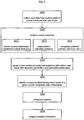
- Fig. 2 shows a flowchart of processing steps performed by an embodiment of the present invention comprising the steps of collecting user data 1000, analyzing screen images/instances 1010 (comprising statistical content analysis 1012, structure analysis 1014 and / or identification of navigational patterns 1014), grouping screen instances 1020, identifying screens 1030, categorizing screens 1040 and / or assigning semantic information 1050.
- screen images/instances 1010 comprising statistical content analysis 1012, structure analysis 1014 and / or identification of navigational patterns 1014
- grouping screen instances 1020 comprising the steps of collecting user data 1000, analyzing screen images/instances 1010 (comprising statistical content analysis 1012, structure analysis 1014 and / or identification of navigational patterns 1014), grouping screen instances 1020, identifying screens 1030, categorizing screens 1040 and / or assigning semantic information 1050.
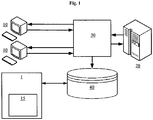
- Fig. 1 shows a system 1 according to an embodiment of the present invention.
- a legacy system 20 communicates with one or more terminals 10.
- the communication between the legacy system 20 and the terminal(s) 10 is intercepted by a redirector 30, which records one or more trails 100, 101 (cf. Fig. 4 ) and stores the recorded trails 100, 101 in a data store 40.
- the system 1 and its screen identification component 15 shown in Fig. 1 may then analyze the recorded trails 100, 101 (see further below).
- the screen identification component 15 may be adapted for performing all or at least a subset of the functionality described in the following.
- Trail 100 comprises a sequence of screen instances 110 that represent a user navigating to a products list.
- Trail 101 comprises a sequence of screen instances 110 that represent a user that fails to login once and then navigates to a customers list.
- each trail 100, 101 comprises a sequence of encountered screen instances 110 connected by user inputs 120 that lead from one screen instance to the next.
- Each screen instance 100, 101 may comprise any number of fields 130, such as labels, input fields, headers, etc..
- Step 1010 preferably comprises analyzing a single screen instance 110 within a trail 100, 101 and may be repeated for each screen instance 110.
- step 1010 comprises three sub-steps, namely statistical content analysis 1012, structure analysis 1014 and identification of navigational patterns 1014.
- statistical content analysis 1012 e.g., statistical content analysis 1012
- structure analysis 1014 e.g., structure analysis 1014
- identification of navigational patterns 1014 e.g., a single screen instance 110 within a trail 100, 101 and may be repeated for each screen instance 110.
- step 1010 comprises three sub-steps, namely statistical content analysis 1012, structure analysis 1014 and identification of navigational patterns 1014.
- various embodiments may only employ some of the sub-steps 1012, 1014 and 1014.
- a number of screen parameters are preferably employed to calculate scores based on the content of the investigated screen instance 110, e.g. the number of alpha-numeric characters, the number of unprotected fields 130, the number of unprotected hidden fields 130 (e.g. password fields), the number of digits, the number of alpha characters, the number of space characters, the number of unique characters, a "column entropy" score (a score indicating the level of order in columns, e.g.
- Fig. 5 shows the two exemplary trails 100, 101 from Fig. 4 , wherein the individual screen instances 110 have been annotated with the scores calculated from the screen parameters (see the scores M1, M2 and M3 in Fig. 5 ).
- the screen instances 110 are preferably segmented into one or more field partitions 140 (also referred to as "segments" hereinafter) in order to identify characterizing portions within the screen instances 110.
- Each field partition 140 preferably comprises a number of individual fields 130 that "semantically" belong together (e.g. a field 130 representing an input field and a field 130 representing a corresponding label), however, a field partition 140 may alternatively comprise only one field 130.
- each screen instance 110 may be segmented into field partitions 140 according to textual patterns. The idea is to identify rectangles on the screen instance 110 that contain a uniform type of text, e.g.
- the screen segmentation may identify field partitions/segments 140 such as a screen title, a system clock, a table header area, a column (e.g. with type unprotected, numeric, free text, etc.), a free text, a label/value pair and / or a "decoration" text (e.g. in splash screens or separators).
- field partitions/segments 140 such as a screen title, a system clock, a table header area, a column (e.g. with type unprotected, numeric, free text, etc.), a free text, a label/value pair and / or a "decoration" text (e.g. in splash screens or separators).
- a further type of analysis preferably employed at this stage is navigation pattern matching 1014, which serves for identifying patterns within the trails 100, 101.
- systems such as Jacada Interface Server or webMethods ApplinX of applicant may be used to identify meaningful typical mainframe navigation patterns (green screen patterns) based on customizable predefined patterns.
- Exemplary patterns comprise:
- legacy applications may comprise menu screens to allow navigating between different logical parts and functionalities of the legacy application.
- Such menus typically have a distinct structure, e.g. each menu item may comprise a 1 to 2 digit numeric value, followed by a dot, a white space, and a menu item description.
- a list of menu items is typically vertically aligned, with one item per row. Under the menu items list, there may be an unprotected field in which the user is expected to enter the numeric value that represents the selected menu item.
- Such menu information once identified within a given screen, may be used to draw conclusions about which screen is to be expected next within the corresponding trail based on the AID key selected.
- the key "PF7” may be identified to mean “Back” in a given screen instance B and / or a dictionary may be used to map the corresponding key label (in whatever language it would appear) to the semantic meaning of "Back".
- 101 such as :
- the method may start generating groups 200 of screen instances 110 for the map 250 to be built, preferably by running one trail 100, 101 after the other.
- the application map 250 is thus preferably generated based on the first trail 100, which was preferably amended/annotated with the above described information from the screen instance analysis step 1010.
- the grouping of the screen instances 110 i.e. the determination of which screen instances 110 belong to the same screen of the legacy system 20 or to different screens, may be based on the user input 120 (comprising one or more AID keys) identified within the trails 100, 101 combined with navigational patterns (see above), on one or more scores calculated by means of screen parameters (see above), on the field partition 140 structure (see above) or any combination thereof.
- rules for using the above information in order to match screen instances 110 may be predefined, but allow customization according to specific rules that apply to the specific application scenario the invention is employed in.
- the rules may be adjusted using various techniques (e.g. manually or by applying machine learning algorithms), e.g. to change the significance of each measured screen parameter in the screen instance comparison equation.
- the present invention provides three analysis modules: statistical content analysis 1012 based on screen parameters, structure analysis 1014 based on screen segments and / or identification of navigational patterns 1016, which are in the following embodiment combined in order to provide a particularly advantageous screen grouping.
- At least one distance measure d(s1, s2) is derived for two given screen instances 110 s1 and s2 within a trail 100, 101, preferably one distance measure d(s1, s2) for each pair of screen instances 100 s1 and s2.
- one or more of a variety of known stochastic clustering analysis algorithms may be applied.
- the resulting clusters of screen instances 110 then represent the screen groups 200 from which the map 250 of the legacy system 20 is built.
- Spectral Clustering may be used as an exemplary clustering analysis algorithm. Spectral clustering is especially advantageous, since it does not require specifying how many clusters (screen groups) are to be expected.
- the distance measure may encapsulate information from the above three analysis modules 1012, 1014 and / or 1016.
- screen parameter information i.e. the scores derived during the statistical content analysis 1012
- segment information from the structure analysis 1014)
- the navigation information may furthermore indicate a screen instances similarity based on the trails 100, 101.
- the screen instances similarity may be combined with the combined parameter and segment based distance score ps to provide the final distance measure d(s1, s2).
- the step of comparing parameter information preferably takes as input the scores derived for two given screen instances 110 during statistical content analysis 1012 and provides as output a distance score of the respective two screen instances 110, which may be calculated as described in the preceding paragraph.
- each screen instance 110 may be segmented into a number of areas (preferably rectangles), i.e. field partitions 140, of a limited number of types.
- An intersection of two given screen instances 110 may be calculated, wherein the intersection is defined as one or more corresponding areas comprising at least a subset of segments/field partitions 140 of the same type in each screen instance 110.
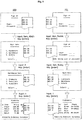
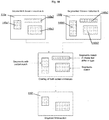
- FIG. 10 two exemplary screen instances 110a and 110b are shown, wherein screen instance 110a comprises three segments/field partitions 140a1, 140a2 and 140a3 and wherein screen instance 110b comprises three segments/field partitions 140b1, 140b2 and 140b3.
- the segments 140a1 and 140b1 match only partially, since segment 140b1 is larger than segment 140a1.
- the segments 140a2 and 140b2 match in shape, but differ in type.
- the segments 140a3 and 140b3 match in shape and type. Consequently, the intersection of the two screen instances 110a and 110b shown at the bottom of Fig.
- intersected screen instance 110' comprises one segment/field partition 140 that corresponds to the segments 140a3 and 140b3. Furthermore the intersected screen instance 110' comprises a field partition 140 that represents the intersection of the segments 140a1 and 140b1, i.e. the portion of those field partitions/segments that matches in shape and type.
- a numeric similarity score may be calculated, e.g. by dividing the segment intersection area by the area covered by a union of the segments of both screen instances 110. Note that the entire screen area may be segmented.
- the combined parameter and segment based distance score ps may be not only calculated for s1 and s2, as described above, but also for corresponding neighboring screen instances within the trails 100, 101.
- Each trail may to this end be considered as a directional graph, where the vertices/nodes represent the screen instances 110 and the edges represent the transitions between the screen instances, comprising navigational information, i.e. the user inputs and / or aid keys.
- a neighbor of degree k may be defined on this graph to be a node that can be reached by traversing k transitions.
- a neighbor of degree - k on this graph may be defined as a node that is reached by k transitions, wherein all transitions are traversed opposite to the direction of the edges in the graph.
- one or more corresponding neighbors may be defined as two neighboring screen instances of s1 and s2, respectively, of the same degree k , wherein all respective pairs of transitions from both trails 100, 101 leading to the corresponding neighbors are similar and / or equal.
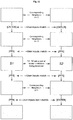
- Fig. 11 shows that the two screen instances s1 and s2 (shown in the middle of Fig. 11 ) have two preceding pairs of corresponding neighbors (the upper two pairs of screen instances) and one subsequent pair of corresponding neighbors (the last but one pair of screen instances in Fig. 11 ). The further screen instances do not correspond, because the respective user inputs leading to these screen instances do not match.
- the different combined parameter and segment based distance score ps values may then be combined in such a way that the weight of the pair of screen instances (s1,s2) is largest, while the weights of the corresponding neighbors decreases, e.g. proportional to the increasing of the absolute value of k (the degree of neighborhood; see above).
- each trail 100, 101 may be preprocessed before running the grouping algorithm in step 1020.
- the user input in the transitions leading to (s3) may be matching a key pattern on (s2) that has the meaning "back” (see the example in the pattern matching paragraph above).
- the screen instances s2 and s3 may be already grouped in advance, i.e. before the respective trail is processed in step 1020.
- the user input in the transitions leading to (s2) may be matching a key pattern on (s1) that has the meaning "next" or "previous", which typically indicates a scrolling through a list or table with more rows than one screen can display.
- the combined parameter and segment based distance score ps(s1,s2) indicates a high level of similarity, also the screen instances s1 and s2 may be grouped in advance.
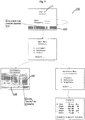
- a trail A ⁇ B ⁇ C ⁇ B ⁇ D ⁇ E (with A, B, C, D and E representing screen instances and wherein the transition C ⁇ B is identified to have the meaning "back"; cf. the trail on the left of Fig 12 ) may be represented as a graph with two branches originating from screen B (cf. the pre-processed trail on the right of Fig. 12 ).
- neighbor information can be derived when matching the pre-processed trail shown on the right in Fig. 12 against other trails, such as A ⁇ B ⁇ D ⁇ E or A ⁇ B ⁇ C ⁇ F.
- menu patterns may be used to improve the comparison of user inputs, as explained in the pattern matching paragraph further above.
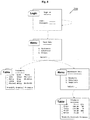
- Fig. 6 shows a map 250 that is the result of the grouping of the screen instances 110 of Fig. 5 .
- the map 250 in Fig. 6 comprises corresponding screen groups 200, e.g. the top-most screen group 200 in Fig. 6 groups the three screen instances 110 labeled 'Sign On' in Fig. 5 .
- the user inputs from multiple trails 100, 101 have been grouped accordingly, as can be seen in Fig. 6 .
- the fields 130 identified within the screen instances 110 are categorized into a set of static fields 132 and a set of dynamic fields 134.
- the differences are used to identify which area of a screen instance 110 is dynamic (e.g. output) and which is static (and can be used for the screen identification). Heuristics may be employed, since it cannot be assumed that every potentially dynamic area will indeed change in the sampled screen instances 110.
- the segmentation of the screen instances 110 into field partitions 140 may be used in this task, i.e. if only one value (field 130) differs between screen instances 110 in the same field partition 140, the entire field partition 140 is considered to be dynamic.
- the screen groups 200 become identified (through the static fields 134), but still have no names.
- the screen groups 200 may be displayed to the developer in order to either manually and preferably interactively identify the screen groups 200 or to correct the generated grouping.
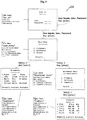
- Fig. 7 depicts a refined map 250, wherein the fields 130 of the screen groups 200 have been categorized into static fields 132 and dynamic fields 134.
- the field 'Sign on' shown in the top-most screen group 200 in Fig. 7 is categorized as a static field 132, since the field 'Sign on' occurs in all corresponding screen instances 110 (cf. the trails 100 and 101 in Fig. 5 ) within the screen group 200.
- the field 130 represented in Fig. 7 by the rectangle in the top-most screen group 200 has been identified as a dynamic field 134, since the field does only occur in one of the corresponding screen instances 110 (see the second screen instance 110 in the trail 101 in Fig.
- Fig. 7 shows a number of identified field partitions 140, which are represented by rectangles in the bottom and left-most screen group 200 in Fig. 7 .
- the identified screen groups 200 are categorized, i.e. at least one type is assigned to the screen groups 200 in order to determine what type of screen of the legacy system 20 is represented by the screen group 20.
- Predefined screen patterns as explained for the navigational patterns further above, can be used to categorize screens.
- the present invention provides in some embodiments a number of predefined rules for determining the at least one type, examples of which are shown in the following table: Category Description Example categorization rules Illustration Menu A list of options (typically application navigation) One unprotected field Pattern found: 3 or more rows Short value Delimiter (dot
- screens of type 'Query' from screens of type 'Insert/Update'.
- These categories/types may be identified at a later stage, e.g. based on a semantic analysis of user input 140 leading to the screen respective (see further below).
- the 'Help' category may be identified based on the corresponding send key 'help" (preferably combined with the cursor position) which leads to the corresponding screen.
- Message rules are also difficult to identify, but may be identified combined with navigation information (i.e. user inputs 140), e.g. if a message "exiting this screen with [enter] key" is found.
- Fig. 8 shows a correspondingly further refined map 250, in which the screen groups 200 have been assigned corresponding types (cf. the labels 'Login', 'Menu' and 'Table' attached to the screen groups 200).
- step 1050 the map 250 generated so far may be further refined with a variety of further semantic information extracted from the trails 100, 101, examples of which are explained in the following:
- the present method may further take advantage of existing screen identification techniques, so that manual work is not wasted, imported screen maps may be used, and running the steps of the inventive method again after more user data was collected does not override already tested maps 250.
- existing definitions the present invention may suggest at least some of the following improvements (which may be required to be approved by a developer): a new name for a screen group 200, new neighbor information, more semantic data (tables, menus, fields, etc).
- the grouping algorithm (cf. step 1020) can be further improved to consider existing screen identification rules when analyzing new trails to become more effective in identifying new screens.
- Screen instances 110 that match identification rules of known screens will be automatically grouped under this screen identity and their distance measure function will indicate zero distance. This will further improve the effectiveness of corresponding neighbors to the distance measure, as explained further above in the context of the grouping algorithm (applying navigation pattern information).
- the modeling may comprise collecting real user interactions (sessions) over a period of time, analyzing the collected data and generalizing it to a common model, taking into account the sequence of screens of each session and the transitions in it.
- the present invention thereby overcomes at least part of the following disadvantages of approaches known from the prior art: Navigation steps are typically captured based on developer's (rather than user's) navigation through the system, using a specific developer tool. Manual (or template based) tagging of unique combinations of screen data is required. Importing host screen maps (e.g. Cobol BMS/MFS, Natural maps) cannot capture navigational information and relations between screens. Screen names typically follow the map name which might be not very descriptive to the user.
- various embodiments of the present invention provide improved heuristics per screen, e.g. based on a segmentation or partitioning of screens, the usage of semantic screen information combined with screen sequence, analyzing large amounts of actual user information captured by a redirector, which enables an automatic analyzing of the legacy system that relies on real life usage, using application specific rules when capturing trails and/or using screen segmentation into blocks / partitions and compare data from different instances to identify dynamic or static areas, and to categorize screens according to partition layout rules.
- some embodiments involve using the sequence of each trail to help matching screens from different screens using at least some of the following assumptions: It is likely that all trails start in the same screen (or a very small group of screens), specific user actions from a specific screen A are likely to lead to the same screen B in different trails, a semantic understanding of the AID keys (PF keys) can help estimate what the next screen is (e.g. "back” will lead to the previous screen, "down”/"up” will keep the legacy system in the same screen and imply the existence of a table or a list, "help” will lead to a help type screen, etc.), a semantic understanding of menu options combined with the actual option that was selected can help to provide names and categorize the next screen.
- PF keys semantic understanding of menu options
Landscapes
- Engineering & Computer Science (AREA)
- General Engineering & Computer Science (AREA)
- Theoretical Computer Science (AREA)
- Software Systems (AREA)
- Physics & Mathematics (AREA)
- General Physics & Mathematics (AREA)
- Computer Hardware Design (AREA)
- Quality & Reliability (AREA)
- User Interface Of Digital Computer (AREA)
- Information Retrieval, Db Structures And Fs Structures Therefor (AREA)
Claims (13)
- Ein computerimplementiertes Verfahren zum Analysieren eines Altsystems (20) auf Basis von zumindest einem Pfad (100, 101), wobei der zumindest eine Pfad (100, 101) eine Mehrzahl von Instanzen (110) von Bildschirmen des Altsystems (20) umfasst und wobei das Verfahren die folgenden Schritte umfasst:a. Berechnen einer Mehrzahl von paarweisen Abstandsmaßen der Mehrzahl von Bildschirminstanzen (110) in dem zumindest einen Pfad (100, 101), wobei die paarweisen Abstandsmaße eine Ähnlichkeit des jeweiligen Paares von Bildschirminstanzen (110) anzeigen, welche anzeigt, dass das Paar von demselben Bildschirm des Altsystems (20) herstammen könnte; undb. Anwenden zumindest eines Clusteranalysealgorithmus auf die Mehrzahl von paarweisen Abstandsmaßen zum Gruppieren der Bildschirminstanzen (110) in zumindest eine Bildschirmgruppe (220) und Erzeugen einer Karte (250) des Altsystems (20) auf Basis der zumindest einen Bildschirmgruppe (200);c. wobei Schritt a. den Schritt des Identifizierens zumindest eines Navigationsmusters innerhalb des zumindest einen Pfades (100, 101) umfasst durch Verwendung von Navigationsinformationen, extrahiert aus dem zumindest einen Pfad (100, 101), umfassend Benutzereingaben bereitgestellt zum Navigieren von einer Bildschirminstanz zur nächsten;dadurch gekennzeichnet, dass:d. Bereitstellen eines Lexikons zum Abbilden der Benutzereingaben auf deren semantische Bedeutung, wobei das Lexikon zumindest eine Abbildung umfasst, welche ein Tastenmuster auf die Bedeutung "zurück" abbildet;e. Schritt b. ein Gruppieren der Bildschirminstanzen (110) innerhalb des zumindest einen Pfades auf Basis der innerhalb des zumindest einen Pfades identifizierten Benutzereingabe kombiniert mit unter Verwendung des Lexikons identifizierten Navigationsmustern umfasst.
- Das Verfahren nach Anspruch 1, wobei Schritt a. den Schritt des Berechnens einer paarweisen Abstandswertung der Mehrzahl von Bildschirminstanzen (110) umfasst, wobei die paarweise Abstandswertung eine Ähnlichkeit des jeweiligen Paares von Bildschirminstanzen (110) anzeigt, welche anzeigt, dass das Paar auf Basis des Inhalts der jeweiligen Bildschirminstanzen (110) von demselben Bildschirm herstammen könnte.
- Das Verfahren nach Anspruch 2, wobei die paarweise Abstandswertung auf Basis zumindest eines Bildschirmparameters berechnet wird, wie beispielsweise der Anzahl von alphanumerischen Zeichen, der Anzahl von ungeschützten Feldern, der Anzahl von ungeschützten versteckten Feldern, der Anzahl von Ziffern, der Anzahl von Alphazeichen, der Anzahl von Leerzeichen, der Anzahl von eindeutigen Zeichen, der Anzahl von eindeutigen Farben, der Anzahl von Zeichen im invertierten Videomodus, der Anzahl von Zeichen im intensivierten Modus, dem Prozentsatz von Zeichen in Großschrift im Vergleich zu allen Zeichen, der Anzahl von Worten und / oder jeglicher Kombination davon.
- Das Verfahren nach irgendeinem der vorstehenden Ansprüche, wobei Schritt a. den Schritt des Berechnens einer paarweisen Ähnlichkeitswertung der Mehrzahl von Bildschirminstanzen (110) umfasst, wobei die paarweise Ähnlichkeitswertung eine Ähnlichkeit des jeweiligen Paares von Bildschirminstanzen (110) anzeigt, welche anzeigt, dass das Paar auf Basis der Struktur der jeweiligen Bildschirminstanzen (110) von demselben Bildschirm herstammen könnte.
- Das Verfahren nach Anspruch 4, wobei die paarweise Ähnlichkeitswertung berechnet wird auf Basis einer Identifikation zumindest einer Feldpartition (140) in der jeweiligen Bildschirminstanz (110), wobei die zumindest eine Feldpartition (140) eine Mehrzahl von zugehörigen Feldern (130) innerhalb einer Bildschirminstanz (110) umfasst.
- Das Verfahren nach irgendeinem der vorstehenden Ansprüche 2-3 und 4-5, wobei Schritt a. den Schritt des Kombinierens der paarweisen Abstandswertung und der paarweisen Ähnlichkeitswertung eines gegebenen Paares von Bildschirminstanzen (110) in eine kombinierte parameter- und segmentbasierte Abstandswertung auf Basis einer vordefinierten Gewichtungsfunktion umfasst.
- Das Verfahren nach dem vorstehenden Anspruch 6, wobei Schritt a. den Schritt des Berechnens zumindest einer kombinierten parameter- und segmentbasierten Abstandswertung von zumindest einem Paar von korrespondierenden Nachbarn des gegebenen Paares von Bildschirminstanzen (110) umfasst, wobei ein Nachbar eine Bildschirminstanz ist, welche innerhalb der durch den Pfad (100, 101) gegebenen Abfolge vor oder nach der jeweiligen Bildschirminstanz angeordnet ist.
- Das Verfahren nach irgendeinem der vorstehenden Ansprüche, das den weiteren Schritt des Gruppierens einer Mehrzahl von in einer gegebenen Bildschirminstanz umfassten Feldern (130) in eine Menge von statischen Feldern (132) und eine Menge von dynamischen Feldern (134) und des Zuweisens der gegebenen Bildschirminstanz (110) zu der zumindest einen Bildschirmgruppe (200) auf Basis der Menge von statischen Feldern (132), während die Menge von dynamischen Feldern (134) ignoriert wird, umfasst.
- Das Verfahren nach irgendeinem der vorstehenden Ansprüche, das den Schritt des Kategorisierens (1040) der zumindest einen Bildschirmgruppe (200) durch Abbilden der zumindest einen Bildschirmgruppe (200) gegen eine vordefinierte Regelmenge und Zuweisen zumindest eines Typs zu der Bildschirmgruppe (200) gemäß der Regelmenge umfasst.
- Ein Computerprogramm mit Anweisungen zum Implementieren eines Verfahrens nach irgendeinem der vorstehenden Ansprüche.
- Ein System (1) zum Analysieren eines Altsystems (20) auf Basis von zumindest einem Pfad (100, 101), wobei der zumindest eine Pfad (100, 101) eine Mehrzahl von Instanzen (110) von Bildschirmen des Altsystems (20) umfasst und wobei das System umfasst:a. eine Bildschirmidentifikationskomponente (15), angepasst zum Berechnen einer Mehrzahl von paarweisen Abstandsmaßen der Mehrzahl von Bildschirminstanzen (110) in dem zumindest einen Pfad (100, 101), wobei die paarweisen Abstandsmaße eine Ähnlichkeit des jeweiligen Paares von Bildschirminstanzen (110) anzeigen, welche anzeigt, dass das Paar von demselben Bildschirm des Altsystems (20) herstammen könnte;b. wobei die Bildschirmidentifikationskomponente (15) ferner angepasst ist zum Anwenden zumindest eines Clusteranalysealgorithmus auf die Mehrzahl von paarweisen Abstandsmaßen zum Gruppieren der Bildschirminstanzen (110) in zumindest eine Bildschirmgruppe (220) und zum Erzeugen einer Karte (250) des Altsystems (20) auf Basis der zumindest einen Bildschirmgruppe (200);c. wobei die Bildschirmidentifikationskomponente (15) ferner angepasst ist zum Identifizieren zumindest eines Navigationsmusters innerhalb des zumindest einen Pfades (100, 101) durch Verwendung von Navigationsinformationen, extrahiert aus dem zumindest einen Pfad (100, 101), umfassend Benutzereingaben bereitgestellt zum Navigieren von einer Bildschirminstanz zur nächsten;dadurch gekennzeichnet, dass:d. das System ferner ein Lexikon zum Abbilden der Benutzereingaben auf deren semantische Bedeutung umfasst, wobei das Lexikon zumindest eine Abbildung umfasst, welche ein Tastenmuster auf die Bedeutung "zurück" abbildet;e. die Bildschirmidentifikationskomponente (15) ferner angepasst ist zum Gruppieren der Bildschirminstanzen (110) innerhalb des zumindest einen Pfades auf Basis der innerhalb des zumindest einen Pfades identifizierten Benutzereingabe kombiniert mit unter Verwendung des Lexikons identifizierten Navigationsmustern.
- Das System (1) nach dem vorstehenden Anspruch, das ferner einen Umleiter (30) umfasst, wobei der Umleiter (30) angepasst ist zum Aufnehmen (1000) des zumindest einen Pfades (100, 101) durch Analysieren von Kommunikation zwischen dem Altsystem (20) und zumindest einem Terminal (10) während zumindest einer Live-Benutzersitzung.
- Das System (1) nach dem vorstehenden Anspruch, wobei der Umleiter (30) angepasst ist zum Aufnehmen (1000) einer Mehrzahl von Pfaden (100, 101) und zum Speichern der Mehrzahl von aufgenommenen Pfaden in einem Datenspeicher (40) und wobei die Bildschirmidentifikationskomponente (15) angepasst ist zum Analysieren der Mehrzahl von gespeicherten Pfaden.
Priority Applications (3)
| Application Number | Priority Date | Filing Date | Title |
|---|---|---|---|
| EP09180397.3A EP2348403B1 (de) | 2009-12-22 | 2009-12-22 | Verfahren und system zur analyse eines altsystems auf trailbasis durch das altsystem |
| US12/659,373 US9026482B2 (en) | 2009-12-22 | 2010-03-05 | Method and system for analyzing a legacy system based on trails through the legacy system |
| CN2010106099741A CN102103502A (zh) | 2009-12-22 | 2010-12-22 | 基于经过遗留系统的踪迹来分析遗留系统的方法和系统 |
Applications Claiming Priority (1)
| Application Number | Priority Date | Filing Date | Title |
|---|---|---|---|
| EP09180397.3A EP2348403B1 (de) | 2009-12-22 | 2009-12-22 | Verfahren und system zur analyse eines altsystems auf trailbasis durch das altsystem |
Publications (2)
| Publication Number | Publication Date |
|---|---|
| EP2348403A1 EP2348403A1 (de) | 2011-07-27 |
| EP2348403B1 true EP2348403B1 (de) | 2017-03-08 |
Family
ID=42124520
Family Applications (1)
| Application Number | Title | Priority Date | Filing Date |
|---|---|---|---|
| EP09180397.3A Active EP2348403B1 (de) | 2009-12-22 | 2009-12-22 | Verfahren und system zur analyse eines altsystems auf trailbasis durch das altsystem |
Country Status (3)
| Country | Link |
|---|---|
| US (1) | US9026482B2 (de) |
| EP (1) | EP2348403B1 (de) |
| CN (1) | CN102103502A (de) |
Families Citing this family (5)
| Publication number | Priority date | Publication date | Assignee | Title |
|---|---|---|---|---|
| US9215266B2 (en) * | 2012-01-26 | 2015-12-15 | Zoom International S.R.O. | System and method for zero-footprint screen capture |
| US9471405B1 (en) * | 2014-01-13 | 2016-10-18 | OpenLegacy Technologies LTD | Methods and systems for access to legacy programs using non-legacy interfaces |
| NL2017709B1 (en) * | 2016-11-02 | 2018-05-18 | Codeless Tech B V | A method of and system for transforming legacy computer programs. |
| US11610052B2 (en) * | 2018-08-16 | 2023-03-21 | Soroco Private Limited | Techniques for automated control of computer programs through text-based user interfaces |
| US10938589B2 (en) * | 2018-11-30 | 2021-03-02 | International Business Machines Corporation | Communications analysis and participation recommendation |
Family Cites Families (9)
| Publication number | Priority date | Publication date | Assignee | Title |
|---|---|---|---|---|
| US6356285B1 (en) * | 1997-12-17 | 2002-03-12 | Lucent Technologies, Inc | System for visually representing modification information about an characteristic-dependent information processing system |
| US6697088B1 (en) | 1998-04-27 | 2004-02-24 | Jacada, Inc. | Graphical presentation system |
| US6836780B1 (en) | 1999-09-01 | 2004-12-28 | Jacada, Ltd. | Method and system for accessing data in legacy applications |
| US7003560B1 (en) * | 1999-11-03 | 2006-02-21 | Accenture Llp | Data warehouse computing system |
| US7280971B1 (en) * | 2000-06-09 | 2007-10-09 | At&T Bls Intellectual Property, Inc. | Method and system for server-based error processing in support of legacy-based usage and billing systems |
| KR100671506B1 (ko) * | 2005-09-13 | 2007-01-19 | 한미아이티 주식회사 | 모바일 미들웨어 및 이를 이용한 비즈니스 로직 처리 방법 |
| EP2009586A3 (de) * | 2005-11-03 | 2011-02-02 | KTFreetel Co., Ltd. | Vorrichtung mit offener Schnittstelle und Verfahren |
| US20080270153A1 (en) * | 2007-04-30 | 2008-10-30 | International Business Machines Corporation | Service oriented architecture (soa) lifecycle model migration |
| US20090235267A1 (en) * | 2008-03-13 | 2009-09-17 | International Business Machines Corporation | Consolidated display of resource performance trends |
-
2009
- 2009-12-22 EP EP09180397.3A patent/EP2348403B1/de active Active
-
2010
- 2010-03-05 US US12/659,373 patent/US9026482B2/en active Active
- 2010-12-22 CN CN2010106099741A patent/CN102103502A/zh active Pending
Non-Patent Citations (1)
| Title |
|---|
| None * |
Also Published As
| Publication number | Publication date |
|---|---|
| US9026482B2 (en) | 2015-05-05 |
| US20110153530A1 (en) | 2011-06-23 |
| CN102103502A (zh) | 2011-06-22 |
| EP2348403A1 (de) | 2011-07-27 |
Similar Documents
| Publication | Publication Date | Title |
|---|---|---|
| JP7398068B2 (ja) | ソフトウェアテスト | |
| US11361004B2 (en) | Efficient data relationship mining using machine learning | |
| US11841839B1 (en) | Preprocessing and imputing method for structural data | |
| CN110532019B (zh) | 一种软件代码片段历史追溯的方法 | |
| EP2348403B1 (de) | Verfahren und system zur analyse eines altsystems auf trailbasis durch das altsystem | |
| US10824606B1 (en) | Standardizing values of a dataset | |
| US20240176673A1 (en) | Systems and methods for automation discovery and analysis using action sequence segmentation | |
| CN117420998A (zh) | 一种客户端ui交互组件生成方法、装置、终端及介质 | |
| JP2025036355A (ja) | 外れた文字データをスクリーニングするためのデータ分類方法 | |
| JP2012190434A (ja) | 帳票定義装置、帳票定義方法、プログラム及び記録媒体 | |
| CN104182596B (zh) | 一种基于LabVIEW与Matlab混合编程的无线数传设备测试数据挖掘系统及方法 | |
| CN119293342B (zh) | 一种面向科学领域的智能技术动态追踪系统 | |
| Malkadi et al. | Improving code extraction from coding screencasts using a code-aware encoder-decoder model | |
| CN113486630A (zh) | 一种供应链数据向量化和可视化处理方法及装置 | |
| CN118473899A (zh) | 一种基于决策树模型的可解释性的日志分析方法 | |
| Langer et al. | Gideon-TS: Efficient Exploration and Labeling of Multivariate Industrial Sensor Data. | |
| US20250053878A1 (en) | Learning device, management sheet creation support device, non-transitory computer-readable storage medium, learning method, and management sheet creation support method | |
| CN120730095B (zh) | 基于多模态感知与智能体决策的ott内容运营优化方法 | |
| CN117076573B (zh) | 一种基于大数据技术的数据处理分析系统 | |
| US12204591B1 (en) | Apparatus and a method for heuristic re-indexing of stochastic data to optimize data storage and retrieval efficiency | |
| Langer et al. | Guided Exploration of Industrial Sensor Data | |
| CN119201945B (zh) | 用于自定义表单的数据处理方法及系统 | |
| JP2020166443A (ja) | データ加工方法レコメンドシステム、データ加工方法レコメンド方法、及びデータ加工方法レコメンドプログラム | |
| JPS6165333A (ja) | システム構造評価方式 | |
| JP2020021278A (ja) | 分析方法及び計算機 |
Legal Events
| Date | Code | Title | Description |
|---|---|---|---|
| PUAI | Public reference made under article 153(3) epc to a published international application that has entered the european phase |
Free format text: ORIGINAL CODE: 0009012 |
|
| 17P | Request for examination filed |
Effective date: 20091222 |
|
| AK | Designated contracting states |
Kind code of ref document: A1 Designated state(s): AT BE BG CH CY CZ DE DK EE ES FI FR GB GR HR HU IE IS IT LI LT LU LV MC MK MT NL NO PL PT RO SE SI SK SM TR |
|
| AX | Request for extension of the european patent |
Extension state: AL BA RS |
|
| 17Q | First examination report despatched |
Effective date: 20120705 |
|
| GRAP | Despatch of communication of intention to grant a patent |
Free format text: ORIGINAL CODE: EPIDOSNIGR1 |
|
| INTG | Intention to grant announced |
Effective date: 20160927 |
|
| GRAS | Grant fee paid |
Free format text: ORIGINAL CODE: EPIDOSNIGR3 |
|
| GRAA | (expected) grant |
Free format text: ORIGINAL CODE: 0009210 |
|
| AK | Designated contracting states |
Kind code of ref document: B1 Designated state(s): AT BE BG CH CY CZ DE DK EE ES FI FR GB GR HR HU IE IS IT LI LT LU LV MC MK MT NL NO PL PT RO SE SI SK SM TR |
|
| REG | Reference to a national code |
Ref country code: GB Ref legal event code: FG4D |
|
| REG | Reference to a national code |
Ref country code: CH Ref legal event code: EP Ref country code: AT Ref legal event code: REF Ref document number: 874096 Country of ref document: AT Kind code of ref document: T Effective date: 20170315 |
|
| REG | Reference to a national code |
Ref country code: IE Ref legal event code: FG4D |
|
| REG | Reference to a national code |
Ref country code: DE Ref legal event code: R096 Ref document number: 602009044601 Country of ref document: DE |
|
| REG | Reference to a national code |
Ref country code: LT Ref legal event code: MG4D |
|
| REG | Reference to a national code |
Ref country code: NL Ref legal event code: MP Effective date: 20170308 |
|
| PG25 | Lapsed in a contracting state [announced via postgrant information from national office to epo] |
Ref country code: NO Free format text: LAPSE BECAUSE OF FAILURE TO SUBMIT A TRANSLATION OF THE DESCRIPTION OR TO PAY THE FEE WITHIN THE PRESCRIBED TIME-LIMIT Effective date: 20170608 Ref country code: HR Free format text: LAPSE BECAUSE OF FAILURE TO SUBMIT A TRANSLATION OF THE DESCRIPTION OR TO PAY THE FEE WITHIN THE PRESCRIBED TIME-LIMIT Effective date: 20170308 Ref country code: LT Free format text: LAPSE BECAUSE OF FAILURE TO SUBMIT A TRANSLATION OF THE DESCRIPTION OR TO PAY THE FEE WITHIN THE PRESCRIBED TIME-LIMIT Effective date: 20170308 Ref country code: GR Free format text: LAPSE BECAUSE OF FAILURE TO SUBMIT A TRANSLATION OF THE DESCRIPTION OR TO PAY THE FEE WITHIN THE PRESCRIBED TIME-LIMIT Effective date: 20170609 Ref country code: FI Free format text: LAPSE BECAUSE OF FAILURE TO SUBMIT A TRANSLATION OF THE DESCRIPTION OR TO PAY THE FEE WITHIN THE PRESCRIBED TIME-LIMIT Effective date: 20170308 |
|
| REG | Reference to a national code |
Ref country code: AT Ref legal event code: MK05 Ref document number: 874096 Country of ref document: AT Kind code of ref document: T Effective date: 20170308 |
|
| PG25 | Lapsed in a contracting state [announced via postgrant information from national office to epo] |
Ref country code: BG Free format text: LAPSE BECAUSE OF FAILURE TO SUBMIT A TRANSLATION OF THE DESCRIPTION OR TO PAY THE FEE WITHIN THE PRESCRIBED TIME-LIMIT Effective date: 20170608 Ref country code: ES Free format text: LAPSE BECAUSE OF FAILURE TO SUBMIT A TRANSLATION OF THE DESCRIPTION OR TO PAY THE FEE WITHIN THE PRESCRIBED TIME-LIMIT Effective date: 20170308 Ref country code: SE Free format text: LAPSE BECAUSE OF FAILURE TO SUBMIT A TRANSLATION OF THE DESCRIPTION OR TO PAY THE FEE WITHIN THE PRESCRIBED TIME-LIMIT Effective date: 20170308 Ref country code: LV Free format text: LAPSE BECAUSE OF FAILURE TO SUBMIT A TRANSLATION OF THE DESCRIPTION OR TO PAY THE FEE WITHIN THE PRESCRIBED TIME-LIMIT Effective date: 20170308 |
|
| PG25 | Lapsed in a contracting state [announced via postgrant information from national office to epo] |
Ref country code: NL Free format text: LAPSE BECAUSE OF FAILURE TO SUBMIT A TRANSLATION OF THE DESCRIPTION OR TO PAY THE FEE WITHIN THE PRESCRIBED TIME-LIMIT Effective date: 20170308 |
|
| PG25 | Lapsed in a contracting state [announced via postgrant information from national office to epo] |
Ref country code: AT Free format text: LAPSE BECAUSE OF FAILURE TO SUBMIT A TRANSLATION OF THE DESCRIPTION OR TO PAY THE FEE WITHIN THE PRESCRIBED TIME-LIMIT Effective date: 20170308 Ref country code: CZ Free format text: LAPSE BECAUSE OF FAILURE TO SUBMIT A TRANSLATION OF THE DESCRIPTION OR TO PAY THE FEE WITHIN THE PRESCRIBED TIME-LIMIT Effective date: 20170308 Ref country code: EE Free format text: LAPSE BECAUSE OF FAILURE TO SUBMIT A TRANSLATION OF THE DESCRIPTION OR TO PAY THE FEE WITHIN THE PRESCRIBED TIME-LIMIT Effective date: 20170308 Ref country code: IT Free format text: LAPSE BECAUSE OF FAILURE TO SUBMIT A TRANSLATION OF THE DESCRIPTION OR TO PAY THE FEE WITHIN THE PRESCRIBED TIME-LIMIT Effective date: 20170308 Ref country code: SK Free format text: LAPSE BECAUSE OF FAILURE TO SUBMIT A TRANSLATION OF THE DESCRIPTION OR TO PAY THE FEE WITHIN THE PRESCRIBED TIME-LIMIT Effective date: 20170308 Ref country code: RO Free format text: LAPSE BECAUSE OF FAILURE TO SUBMIT A TRANSLATION OF THE DESCRIPTION OR TO PAY THE FEE WITHIN THE PRESCRIBED TIME-LIMIT Effective date: 20170308 |
|
| PG25 | Lapsed in a contracting state [announced via postgrant information from national office to epo] |
Ref country code: SM Free format text: LAPSE BECAUSE OF FAILURE TO SUBMIT A TRANSLATION OF THE DESCRIPTION OR TO PAY THE FEE WITHIN THE PRESCRIBED TIME-LIMIT Effective date: 20170308 Ref country code: IS Free format text: LAPSE BECAUSE OF FAILURE TO SUBMIT A TRANSLATION OF THE DESCRIPTION OR TO PAY THE FEE WITHIN THE PRESCRIBED TIME-LIMIT Effective date: 20170708 Ref country code: PL Free format text: LAPSE BECAUSE OF FAILURE TO SUBMIT A TRANSLATION OF THE DESCRIPTION OR TO PAY THE FEE WITHIN THE PRESCRIBED TIME-LIMIT Effective date: 20170308 Ref country code: PT Free format text: LAPSE BECAUSE OF FAILURE TO SUBMIT A TRANSLATION OF THE DESCRIPTION OR TO PAY THE FEE WITHIN THE PRESCRIBED TIME-LIMIT Effective date: 20170710 |
|
| REG | Reference to a national code |
Ref country code: DE Ref legal event code: R097 Ref document number: 602009044601 Country of ref document: DE |
|
| PLBE | No opposition filed within time limit |
Free format text: ORIGINAL CODE: 0009261 |
|
| STAA | Information on the status of an ep patent application or granted ep patent |
Free format text: STATUS: NO OPPOSITION FILED WITHIN TIME LIMIT |
|
| PG25 | Lapsed in a contracting state [announced via postgrant information from national office to epo] |
Ref country code: DK Free format text: LAPSE BECAUSE OF FAILURE TO SUBMIT A TRANSLATION OF THE DESCRIPTION OR TO PAY THE FEE WITHIN THE PRESCRIBED TIME-LIMIT Effective date: 20170308 |
|
| 26N | No opposition filed |
Effective date: 20171211 |
|
| PG25 | Lapsed in a contracting state [announced via postgrant information from national office to epo] |
Ref country code: SI Free format text: LAPSE BECAUSE OF FAILURE TO SUBMIT A TRANSLATION OF THE DESCRIPTION OR TO PAY THE FEE WITHIN THE PRESCRIBED TIME-LIMIT Effective date: 20170308 |
|
| REG | Reference to a national code |
Ref country code: CH Ref legal event code: PL |
|
| REG | Reference to a national code |
Ref country code: IE Ref legal event code: MM4A |
|
| PG25 | Lapsed in a contracting state [announced via postgrant information from national office to epo] |
Ref country code: LU Free format text: LAPSE BECAUSE OF NON-PAYMENT OF DUE FEES Effective date: 20171222 Ref country code: MT Free format text: LAPSE BECAUSE OF NON-PAYMENT OF DUE FEES Effective date: 20171222 |
|
| REG | Reference to a national code |
Ref country code: FR Ref legal event code: ST Effective date: 20180831 |
|
| REG | Reference to a national code |
Ref country code: BE Ref legal event code: MM Effective date: 20171231 |
|
| PG25 | Lapsed in a contracting state [announced via postgrant information from national office to epo] |
Ref country code: FR Free format text: LAPSE BECAUSE OF NON-PAYMENT OF DUE FEES Effective date: 20180102 Ref country code: IE Free format text: LAPSE BECAUSE OF NON-PAYMENT OF DUE FEES Effective date: 20171222 |
|
| PG25 | Lapsed in a contracting state [announced via postgrant information from national office to epo] |
Ref country code: BE Free format text: LAPSE BECAUSE OF NON-PAYMENT OF DUE FEES Effective date: 20171231 Ref country code: CH Free format text: LAPSE BECAUSE OF NON-PAYMENT OF DUE FEES Effective date: 20171231 Ref country code: LI Free format text: LAPSE BECAUSE OF NON-PAYMENT OF DUE FEES Effective date: 20171231 |
|
| PG25 | Lapsed in a contracting state [announced via postgrant information from national office to epo] |
Ref country code: HU Free format text: LAPSE BECAUSE OF FAILURE TO SUBMIT A TRANSLATION OF THE DESCRIPTION OR TO PAY THE FEE WITHIN THE PRESCRIBED TIME-LIMIT; INVALID AB INITIO Effective date: 20091222 Ref country code: MC Free format text: LAPSE BECAUSE OF FAILURE TO SUBMIT A TRANSLATION OF THE DESCRIPTION OR TO PAY THE FEE WITHIN THE PRESCRIBED TIME-LIMIT Effective date: 20170308 |
|
| PG25 | Lapsed in a contracting state [announced via postgrant information from national office to epo] |
Ref country code: CY Free format text: LAPSE BECAUSE OF NON-PAYMENT OF DUE FEES Effective date: 20170308 |
|
| PG25 | Lapsed in a contracting state [announced via postgrant information from national office to epo] |
Ref country code: MK Free format text: LAPSE BECAUSE OF FAILURE TO SUBMIT A TRANSLATION OF THE DESCRIPTION OR TO PAY THE FEE WITHIN THE PRESCRIBED TIME-LIMIT Effective date: 20170308 |
|
| PG25 | Lapsed in a contracting state [announced via postgrant information from national office to epo] |
Ref country code: TR Free format text: LAPSE BECAUSE OF FAILURE TO SUBMIT A TRANSLATION OF THE DESCRIPTION OR TO PAY THE FEE WITHIN THE PRESCRIBED TIME-LIMIT Effective date: 20170308 |
|
| PGFP | Annual fee paid to national office [announced via postgrant information from national office to epo] |
Ref country code: GB Payment date: 20241002 Year of fee payment: 16 |
|
| REG | Reference to a national code |
Ref country code: GB Ref legal event code: 732E Free format text: REGISTERED BETWEEN 20250313 AND 20250319 |
|
| PGFP | Annual fee paid to national office [announced via postgrant information from national office to epo] |
Ref country code: DE Payment date: 20250217 Year of fee payment: 16 |
|
| REG | Reference to a national code |
Ref country code: GB Ref legal event code: 732E Free format text: REGISTERED BETWEEN 20250612 AND 20250618 |
|
| REG | Reference to a national code |
Ref country code: DE Ref legal event code: R081 Ref document number: 602009044601 Country of ref document: DE Owner name: INTERNATIONAL BUSINESS MACHINES CORPORATION, A, US Free format text: FORMER OWNER: SOFTWARE AG, 64297 DARMSTADT, DE Ref country code: DE Ref legal event code: R082 Ref document number: 602009044601 Country of ref document: DE Ref country code: DE Ref legal event code: R082 Ref document number: 602009044601 Country of ref document: DE Representative=s name: KUISMA, SIRPA, FI |
|
| REG | Reference to a national code |
Ref country code: DE Ref legal event code: R082 Ref document number: 602009044601 Country of ref document: DE Representative=s name: KUISMA, SIRPA, FI |