EP2339953B1 - Verfahren zur beurteilung der glykämischen kontrolle - Google Patents
Verfahren zur beurteilung der glykämischen kontrolle Download PDFInfo
- Publication number
- EP2339953B1 EP2339953B1 EP09764348.0A EP09764348A EP2339953B1 EP 2339953 B1 EP2339953 B1 EP 2339953B1 EP 09764348 A EP09764348 A EP 09764348A EP 2339953 B1 EP2339953 B1 EP 2339953B1
- Authority
- EP
- European Patent Office
- Prior art keywords
- point
- value
- glucose
- pentagon
- axis
- Prior art date
- Legal status (The legal status is an assumption and is not a legal conclusion. Google has not performed a legal analysis and makes no representation as to the accuracy of the status listed.)
- Active
Links
- 230000002641 glycemic effect Effects 0.000 title claims description 53
- 238000000034 method Methods 0.000 title claims description 16
- 239000008103 glucose Substances 0.000 claims description 145
- WQZGKKKJIJFFOK-GASJEMHNSA-N Glucose Natural products OC[C@H]1OC(O)[C@H](O)[C@@H](O)[C@@H]1O WQZGKKKJIJFFOK-GASJEMHNSA-N 0.000 claims description 134
- 206010012601 diabetes mellitus Diseases 0.000 claims description 35
- 102000001554 Hemoglobins Human genes 0.000 claims description 21
- 108010054147 Hemoglobins Proteins 0.000 claims description 21
- 238000001802 infusion Methods 0.000 claims description 10
- NOESYZHRGYRDHS-UHFFFAOYSA-N insulin Chemical compound N1C(=O)C(NC(=O)C(CCC(N)=O)NC(=O)C(CCC(O)=O)NC(=O)C(C(C)C)NC(=O)C(NC(=O)CN)C(C)CC)CSSCC(C(NC(CO)C(=O)NC(CC(C)C)C(=O)NC(CC=2C=CC(O)=CC=2)C(=O)NC(CCC(N)=O)C(=O)NC(CC(C)C)C(=O)NC(CCC(O)=O)C(=O)NC(CC(N)=O)C(=O)NC(CC=2C=CC(O)=CC=2)C(=O)NC(CSSCC(NC(=O)C(C(C)C)NC(=O)C(CC(C)C)NC(=O)C(CC=2C=CC(O)=CC=2)NC(=O)C(CC(C)C)NC(=O)C(C)NC(=O)C(CCC(O)=O)NC(=O)C(C(C)C)NC(=O)C(CC(C)C)NC(=O)C(CC=2NC=NC=2)NC(=O)C(CO)NC(=O)CNC2=O)C(=O)NCC(=O)NC(CCC(O)=O)C(=O)NC(CCCNC(N)=N)C(=O)NCC(=O)NC(CC=3C=CC=CC=3)C(=O)NC(CC=3C=CC=CC=3)C(=O)NC(CC=3C=CC(O)=CC=3)C(=O)NC(C(C)O)C(=O)N3C(CCC3)C(=O)NC(CCCCN)C(=O)NC(C)C(O)=O)C(=O)NC(CC(N)=O)C(O)=O)=O)NC(=O)C(C(C)CC)NC(=O)C(CO)NC(=O)C(C(C)O)NC(=O)C1CSSCC2NC(=O)C(CC(C)C)NC(=O)C(NC(=O)C(CCC(N)=O)NC(=O)C(CC(N)=O)NC(=O)C(NC(=O)C(N)CC=1C=CC=CC=1)C(C)C)CC1=CN=CN1 NOESYZHRGYRDHS-UHFFFAOYSA-N 0.000 description 28
- 102000004877 Insulin Human genes 0.000 description 15
- 108090001061 Insulin Proteins 0.000 description 15
- 208000002249 Diabetes Complications Diseases 0.000 description 14
- 206010012655 Diabetic complications Diseases 0.000 description 14
- 229940125396 insulin Drugs 0.000 description 14
- 230000002503 metabolic effect Effects 0.000 description 13
- GZCGUPFRVQAUEE-SLPGGIOYSA-N aldehydo-D-glucose Chemical compound OC[C@@H](O)[C@@H](O)[C@H](O)[C@@H](O)C=O GZCGUPFRVQAUEE-SLPGGIOYSA-N 0.000 description 11
- 230000002218 hypoglycaemic effect Effects 0.000 description 10
- 206010067584 Type 1 diabetes mellitus Diseases 0.000 description 9
- 230000003345 hyperglycaemic effect Effects 0.000 description 9
- 230000007774 longterm Effects 0.000 description 8
- 238000012544 monitoring process Methods 0.000 description 8
- 208000001072 type 2 diabetes mellitus Diseases 0.000 description 8
- 230000001154 acute effect Effects 0.000 description 7
- 230000036541 health Effects 0.000 description 7
- 238000005259 measurement Methods 0.000 description 6
- 239000008280 blood Substances 0.000 description 5
- 210000004369 blood Anatomy 0.000 description 5
- 230000036542 oxidative stress Effects 0.000 description 5
- 208000033808 peripheral neuropathy Diseases 0.000 description 5
- 230000000291 postprandial effect Effects 0.000 description 5
- 208000017442 Retinal disease Diseases 0.000 description 4
- 206010038923 Retinopathy Diseases 0.000 description 4
- 238000011156 evaluation Methods 0.000 description 4
- 208000017169 kidney disease Diseases 0.000 description 4
- 238000007726 management method Methods 0.000 description 4
- 230000004060 metabolic process Effects 0.000 description 4
- 201000001119 neuropathy Diseases 0.000 description 4
- 230000007823 neuropathy Effects 0.000 description 4
- 230000009471 action Effects 0.000 description 3
- 230000008901 benefit Effects 0.000 description 3
- 230000000875 corresponding effect Effects 0.000 description 3
- 238000011282 treatment Methods 0.000 description 3
- 102000017011 Glycated Hemoglobin A Human genes 0.000 description 2
- 208000030831 Peripheral arterial occlusive disease Diseases 0.000 description 2
- 238000004458 analytical method Methods 0.000 description 2
- 230000006907 apoptotic process Effects 0.000 description 2
- 238000004364 calculation method Methods 0.000 description 2
- 238000004590 computer program Methods 0.000 description 2
- 230000001419 dependent effect Effects 0.000 description 2
- 238000011161 development Methods 0.000 description 2
- IXZISFNWUWKBOM-ARQDHWQXSA-N fructosamine Chemical compound NC[C@@]1(O)OC[C@@H](O)[C@@H](O)[C@@H]1O IXZISFNWUWKBOM-ARQDHWQXSA-N 0.000 description 2
- 201000001421 hyperglycemia Diseases 0.000 description 2
- 238000004519 manufacturing process Methods 0.000 description 2
- 208000010125 myocardial infarction Diseases 0.000 description 2
- 229920001690 polydopamine Polymers 0.000 description 2
- 230000008569 process Effects 0.000 description 2
- 238000002560 therapeutic procedure Methods 0.000 description 2
- 230000003966 vascular damage Effects 0.000 description 2
- PXGPLTODNUVGFL-NAPLMKITSA-N 8-epi-prostaglandin F2alpha Chemical compound CCCCC[C@H](O)\C=C\[C@H]1[C@H](O)C[C@H](O)[C@H]1C\C=C/CCCC(O)=O PXGPLTODNUVGFL-NAPLMKITSA-N 0.000 description 1
- 239000005541 ACE inhibitor Substances 0.000 description 1
- 101001005269 Arabidopsis thaliana Ceramide synthase 1 LOH3 Proteins 0.000 description 1
- 101001005312 Arabidopsis thaliana Ceramide synthase LOH1 Proteins 0.000 description 1
- 206010003210 Arteriosclerosis Diseases 0.000 description 1
- 208000024172 Cardiovascular disease Diseases 0.000 description 1
- 101001089091 Cytisus scoparius 2-acetamido-2-deoxy-D-galactose-binding seed lectin 2 Proteins 0.000 description 1
- 208000032928 Dyslipidaemia Diseases 0.000 description 1
- 206010048554 Endothelial dysfunction Diseases 0.000 description 1
- 108010014663 Glycated Hemoglobin A Proteins 0.000 description 1
- 229940121710 HMGCoA reductase inhibitor Drugs 0.000 description 1
- 208000013016 Hypoglycemia Diseases 0.000 description 1
- 206010022489 Insulin Resistance Diseases 0.000 description 1
- 208000015710 Iron-Deficiency Anemia Diseases 0.000 description 1
- 208000017170 Lipid metabolism disease Diseases 0.000 description 1
- 206010027525 Microalbuminuria Diseases 0.000 description 1
- 238000009825 accumulation Methods 0.000 description 1
- 230000001800 adrenalinergic effect Effects 0.000 description 1
- 150000004705 aldimines Chemical class 0.000 description 1
- 229940044094 angiotensin-converting-enzyme inhibitor Drugs 0.000 description 1
- 238000013459 approach Methods 0.000 description 1
- 208000011775 arteriosclerosis disease Diseases 0.000 description 1
- 230000000923 atherogenic effect Effects 0.000 description 1
- 230000002567 autonomic effect Effects 0.000 description 1
- 239000002876 beta blocker Substances 0.000 description 1
- 229940097320 beta blocking agent Drugs 0.000 description 1
- 230000015572 biosynthetic process Effects 0.000 description 1
- 230000036772 blood pressure Effects 0.000 description 1
- 230000007211 cardiovascular event Effects 0.000 description 1
- 210000004027 cell Anatomy 0.000 description 1
- 230000008859 change Effects 0.000 description 1
- 238000012512 characterization method Methods 0.000 description 1
- 238000006243 chemical reaction Methods 0.000 description 1
- 230000015271 coagulation Effects 0.000 description 1
- 238000005345 coagulation Methods 0.000 description 1
- 230000002596 correlated effect Effects 0.000 description 1
- 230000001904 diabetogenic effect Effects 0.000 description 1
- 201000010099 disease Diseases 0.000 description 1
- 208000037265 diseases, disorders, signs and symptoms Diseases 0.000 description 1
- 229940079593 drug Drugs 0.000 description 1
- 239000003814 drug Substances 0.000 description 1
- 235000006694 eating habits Nutrition 0.000 description 1
- 230000002526 effect on cardiovascular system Effects 0.000 description 1
- 230000000694 effects Effects 0.000 description 1
- 210000002889 endothelial cell Anatomy 0.000 description 1
- 230000008694 endothelial dysfunction Effects 0.000 description 1
- 230000001610 euglycemic effect Effects 0.000 description 1
- 238000001914 filtration Methods 0.000 description 1
- 230000037406 food intake Effects 0.000 description 1
- 235000012631 food intake Nutrition 0.000 description 1
- 230000006870 function Effects 0.000 description 1
- 230000014101 glucose homeostasis Effects 0.000 description 1
- 108091005995 glycated hemoglobin Proteins 0.000 description 1
- 230000013595 glycosylation Effects 0.000 description 1
- 208000034737 hemoglobinopathy Diseases 0.000 description 1
- 208000007475 hemolytic anemia Diseases 0.000 description 1
- 238000000338 in vitro Methods 0.000 description 1
- 208000018337 inherited hemoglobinopathy Diseases 0.000 description 1
- 238000007689 inspection Methods 0.000 description 1
- 239000004026 insulin derivative Substances 0.000 description 1
- 238000011835 investigation Methods 0.000 description 1
- 150000002632 lipids Chemical class 0.000 description 1
- 239000003550 marker Substances 0.000 description 1
- 230000005055 memory storage Effects 0.000 description 1
- 230000004048 modification Effects 0.000 description 1
- 238000012986 modification Methods 0.000 description 1
- ODUCDPQEXGNKDN-UHFFFAOYSA-N nitroxyl Chemical group O=N ODUCDPQEXGNKDN-UHFFFAOYSA-N 0.000 description 1
- 230000003287 optical effect Effects 0.000 description 1
- 230000001575 pathological effect Effects 0.000 description 1
- 230000037081 physical activity Effects 0.000 description 1
- 238000004393 prognosis Methods 0.000 description 1
- 230000001105 regulatory effect Effects 0.000 description 1
- 238000011160 research Methods 0.000 description 1
- 238000012502 risk assessment Methods 0.000 description 1
- 238000012954 risk control Methods 0.000 description 1
- 210000002700 urine Anatomy 0.000 description 1
- 230000002792 vascular Effects 0.000 description 1
Images






Classifications
-
- G—PHYSICS
- G16—INFORMATION AND COMMUNICATION TECHNOLOGY [ICT] SPECIALLY ADAPTED FOR SPECIFIC APPLICATION FIELDS
- G16H—HEALTHCARE INFORMATICS, i.e. INFORMATION AND COMMUNICATION TECHNOLOGY [ICT] SPECIALLY ADAPTED FOR THE HANDLING OR PROCESSING OF MEDICAL OR HEALTHCARE DATA
- G16H40/00—ICT specially adapted for the management or administration of healthcare resources or facilities; ICT specially adapted for the management or operation of medical equipment or devices
- G16H40/20—ICT specially adapted for the management or administration of healthcare resources or facilities; ICT specially adapted for the management or operation of medical equipment or devices for the management or administration of healthcare resources or facilities, e.g. managing hospital staff or surgery rooms
-
- A—HUMAN NECESSITIES
- A61—MEDICAL OR VETERINARY SCIENCE; HYGIENE
- A61B—DIAGNOSIS; SURGERY; IDENTIFICATION
- A61B5/00—Measuring for diagnostic purposes; Identification of persons
- A61B5/145—Measuring characteristics of blood in vivo, e.g. gas concentration or pH-value ; Measuring characteristics of body fluids or tissues, e.g. interstitial fluid or cerebral tissue
- A61B5/14532—Measuring characteristics of blood in vivo, e.g. gas concentration or pH-value ; Measuring characteristics of body fluids or tissues, e.g. interstitial fluid or cerebral tissue for measuring glucose, e.g. by tissue impedance measurement
-
- A—HUMAN NECESSITIES
- A61—MEDICAL OR VETERINARY SCIENCE; HYGIENE
- A61B—DIAGNOSIS; SURGERY; IDENTIFICATION
- A61B5/00—Measuring for diagnostic purposes; Identification of persons
- A61B5/74—Details of notification to user or communication with user or patient; User input means
- A61B5/742—Details of notification to user or communication with user or patient; User input means using visual displays
- A61B5/743—Displaying an image simultaneously with additional graphical information, e.g. symbols, charts, function plots
-
- G—PHYSICS
- G16—INFORMATION AND COMMUNICATION TECHNOLOGY [ICT] SPECIALLY ADAPTED FOR SPECIFIC APPLICATION FIELDS
- G16H—HEALTHCARE INFORMATICS, i.e. INFORMATION AND COMMUNICATION TECHNOLOGY [ICT] SPECIALLY ADAPTED FOR THE HANDLING OR PROCESSING OF MEDICAL OR HEALTHCARE DATA
- G16H20/00—ICT specially adapted for therapies or health-improving plans, e.g. for handling prescriptions, for steering therapy or for monitoring patient compliance
- G16H20/10—ICT specially adapted for therapies or health-improving plans, e.g. for handling prescriptions, for steering therapy or for monitoring patient compliance relating to drugs or medications, e.g. for ensuring correct administration to patients
- G16H20/17—ICT specially adapted for therapies or health-improving plans, e.g. for handling prescriptions, for steering therapy or for monitoring patient compliance relating to drugs or medications, e.g. for ensuring correct administration to patients delivered via infusion or injection
-
- G—PHYSICS
- G16—INFORMATION AND COMMUNICATION TECHNOLOGY [ICT] SPECIALLY ADAPTED FOR SPECIFIC APPLICATION FIELDS
- G16H—HEALTHCARE INFORMATICS, i.e. INFORMATION AND COMMUNICATION TECHNOLOGY [ICT] SPECIALLY ADAPTED FOR THE HANDLING OR PROCESSING OF MEDICAL OR HEALTHCARE DATA
- G16H50/00—ICT specially adapted for medical diagnosis, medical simulation or medical data mining; ICT specially adapted for detecting, monitoring or modelling epidemics or pandemics
- G16H50/30—ICT specially adapted for medical diagnosis, medical simulation or medical data mining; ICT specially adapted for detecting, monitoring or modelling epidemics or pandemics for calculating health indices; for individual health risk assessment
-
- A—HUMAN NECESSITIES
- A61—MEDICAL OR VETERINARY SCIENCE; HYGIENE
- A61B—DIAGNOSIS; SURGERY; IDENTIFICATION
- A61B5/00—Measuring for diagnostic purposes; Identification of persons
- A61B5/72—Signal processing specially adapted for physiological signals or for diagnostic purposes
- A61B5/7271—Specific aspects of physiological measurement analysis
- A61B5/7275—Determining trends in physiological measurement data; Predicting development of a medical condition based on physiological measurements, e.g. determining a risk factor
Definitions
- Embodiments of the present invention are directed to methods for evaluating glycemic control of a patient.
- the present disclosure provides an integrated description of glycemia in diabetic patients over a specific time interval, while including independent factors for assessing metabolic control.
- HbA 1c or hemoglobin A 1c glycated hemoglobin
- the HbA 1c value has been shown to correlate well with the mean glycemic level over the course of 8 to 12 weeks.
- This parameter only represents part of the risk of disruptions in glucose homeostasis, namely the long-term profile; it does not describe acute fluctuations in blood and tissue glucose levels (i.e., glycemic variability) because glycosylated hemoglobin is present only in its labile aldimine state for the first six hours after formation. The stable ketoamine form only arises afterwards.
- hypoglycemic excursions also contribute to an increase in glycemic variability. Associated with this is an adrenergic reaction that, at least in patients with existing vascular damage, increases the risk of severe complications, such as myocardial infarction and apoplectic stroke.
- Continuous glucose monitoring makes it possible to characterize a patient's glycemic profile in detail over the course of at least a few days.
- CGM systems have been available on the market since 1999 and are becoming increasingly accepted for diabetological diagnostics.
- CGM software works up data from recorded glucose profiles and calculates a variety of different parameters for glucose profile characterization; standardization is not yet a possibility, however.
- the following parameters for describing glycemic control have been suggested in the literature (in some cases in combination with each other):
- JP 2004313265 A discloses a health management method and health management system. It provides an incentive for performing health ameliorating actions to a user in order to reduce the dropping out of the user in an initial stage for performing the health ameliorating actions.
- the health state of the individual user is comprehended by performing a questionnaire investigation and the measurement of biological data. After a prescribed period of time has passed since the provision of the advice, a predetermined consciousness related to the healthy action is evaluated for the user, and the evaluation result is indicated to the user.
- JP 2004164343 A discloses a life-style related disease ameliorate system and an information management apparatus for the same to understand a content of hearing from a patient in a short time and explaining an output result to the patient in a clearly understandable way by focusing only on minimum necessary items and making expression to be intuitively and clearly understood.
- the system includes an input means for inputting information on eating habits of the patient, information on living habits of the patient and/or information on the result of medical checkup.
- An accumulation means for accumulating the input information in a chronological order for each patient and an output means for outputting the accumulated time-series information for each patient in a way that the time-series changes of the information can be recognized.
- JP 2006043360 discloses a method for grasping whole picture in quality and quantity of fat. It supports health management by providing the whole situation of fat in a form to allow not an expert but a patient or a physical examination receiver to understand it. The inspection result of the quality and quantity of the fat is expressed at a time by a radar chart. Accordingly, the whole situation of the fat is made to be understood so as to synthetically grasp the risk of arteriosclerosis or myocardial infarction at a glance.
- a method of evaluating glycemic control of a patient includes providing a pentagon having five axes radiating from a center of the pentagon.
- a first axis has a length representing a range of hemoglobin A 1c values.
- a second axis has a length representing a range of standard deviation of glucose values.
- a third axis has a length representing a range of amount of time per day values exceeding a first limit.
- a fourth axis has a length representing a range of daily area-under-curve values exceeding a second limit.
- a fifth axis has a length representing a range of mean glucose values.
- a first point on the first axis indicative of a representative hemoglobin A 1c value is plotted.
- a second point on the second axis indicative of a representative standard deviation of glucose value is plotted.
- a third point on the third axis indicative of a representative amount of time per day value exceeding the first limit is plotted.
- a fourth point on the fourth axis indicative of a representative daily area-under-curve value exceeding a second limit is plotted.
- a fifth point on the fifth axis indicative of a representative mean glucose value is plotted.
- a sixth point on the first axis indicative of a hemoglobin A 1c value of the patient is plotted.
- a seventh point on the second axis indicative of a standard deviation of glucose value of the patient is plotted.
- An eight point on the third axis indicative of an amount of time per day value exceeding the first limit of the patient is plotted.
- a ninth point on the fourth axis indicative of a daily area-under-curve value exceeding the second limit of the patient is plotted.
- a tenth point on the fifth axis indicative of a mean glucose value of the patient is plotted.
- a first pentagon area formed by the first point, the second point, the third point, the fourth point, and the fifth point is determined.
- a second pentagon area formed by the sixth point, the seventh point, the eighth point, the ninth point, and the tenth point is determined.
- a glycemic control parameter is determined based on the first pentagon area and the second pentagon area.
- the glycemic control parameter is determined by dividing the second pentagon area by the first pentagon area.
- the representative hemoglobin A 1c value, the representative standard deviation of glucose value, the representative amount of time per day value exceeding the first limit, the representative daily area-under-curve value exceeding the second limit, and the representative mean glucose value may be representative of a non-diabetic individual.
- the first limit may be 160 mg/dL.
- the second limit may be 160 mg/dL.
- the method may be implemented on a computing device.
- the method may be implemented on an infusion device.
- the method may be implemented on an infusion device controller/programmer.
- the method may be implemented on a medical device.
- the first axis representing the range of hemoglobin A 1c values and the fifth axis representing the range of mean glucose values are adjacent to each other in the pentagon.
- the present disclosure provides also an article of manufacture containing code for evaluating glycemic control of a patient, comprising a computer-usable medium including at least one embedded computer program that is capable of causing at least one computer to perform providing a pentagon having five axes radiating from a center of the pentagon.
- a first axis has a length representing a range of hemoglobin A 1c values.
- a second axis has a length representing a range of standard deviation of glucose values.
- a third axis has a length representing a range of amount of time per day values exceeding a first limit.
- a fourth axis has a length representing a range of daily area-under-curve values exceeding a second limit.
- a fifth axis has a length representing a range of mean glucose values.
- a first point on the first axis indicative of a representative hemoglobin A 1c value is plotted.
- a second point on the second axis indicative of a representative standard deviation of glucose value is plotted.
- a third point on the third axis indicative of a representative amount of time per day value exceeding the first limit is plotted.
- a fourth point on the fourth axis indicative of a representative daily area-under-curve value exceeding a second limit is plotted.
- a fifth point on the fifth axis indicative of a representative mean glucose value is plotted.
- a sixth point on the first axis indicative of a hemoglobin A 1c value of the patient is plotted.
- a seventh point on the second axis indicative of a standard deviation of glucose value of the patient is plotted.
- An eight point on the third axis indicative of an amount of time per day value exceeding the first limit of the patient is plotted.
- a ninth point on the fourth axis indicative of a daily area-under-curve value exceeding the second limit of the patient is plotted.
- a tenth point on the fifth axis indicative of a mean glucose value of the patient is plotted.
- a first pentagon area formed by the first point, the second point, the third point, the fourth point, and the fifth point is determined.
- a second pentagon area formed by the sixth point, the seventh point, the eighth point, the ninth point, and the tenth point is determined.
- a glycemic control parameter is determined based on the first pentagon area and the second pentagon area.
- the glycemic control parameter is determined by dividing the second pentagon area by the first pentagon area.
- the representative hemoglobin A 1c value, the representative standard deviation of glucose value, the representative amount of time per day value exceeding the first limit, the representative daily area-under-curve value exceeding the second limit, and the representative mean glucose value may be representative of a non-diabetic individual.
- the first limit may be 160 mg/dL.
- the second limit may be 160 mg/dL.
- the article may be a computing device.
- the article may be an infusion device.
- the article may be an infusion device controller/programmer.
- the article may be a medical device.
- the first axis representing the range of hemoglobin A 1c values and the fifth axis representing the range of mean glucose values are adjacent to each other in the pentagon.
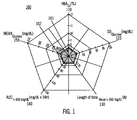
- FIG. 1 illustrates a Glucose Pentagon according to embodiments of the present invention.
- Five parameters are calculated from glucose profiles of diabetic and non-diabetic (healthy) patients, and each parameter forms a single axis of a five-sided figure, the Glucose Pentagon 100:
- the selected parameters provide an integrated description of glycemia over the period of time under observation. These parameters also make it possible to incorporate other data indirectly, such as, for example, preprandial glycemia, postprandial glycemic excursions, and MAGE, whereby the mean glucose concentration describes the average glycemic situation and the standard deviation describes glycemic variability to a certain degree:
- MAGE as a parameter for the Glucose Pentagon 100 instead of the standard deviation also may be an option, as this better characterizes extreme glycemic excursions.
- Measuring oxidative stress by determining the rate at which 8-iso PGF 2 ⁇ is excreted in the urine yields a MAGE value of 45 mg/dL in individuals with healthy metabolism. Values up to approximately 150 mg/dL (mean: 75 mg/dL) have been recorded in patients with Type 2 diabetes; this value may range up to approximately 280 mg/dL (mean: 140 mg/dL) in patients with Type 1 diabetes. No definitive correlation has been demonstrated between this marker and MAGE (r - 0.381). Hence, MAGE was not taken into consideration in the Glucose Pentagon 100 of patients with Type 1 diabetes, although it may be still utilized in alternative embodiments.
- this value is theoretically already represented in the Glucose Pentagon 100. If the information provided by the mean glucose concentration is to be as meaningful as that yielded by the HbA 1c value, however, the glucose profile must not contain any relatively long gaps over the 3-month time period under consideration. This issue has almost always been the case with day-to-day monitoring, however, at least up to now, which is why the HbA 1c value was incorporated into the Glucose Pentagon 100. Another advantage of integrating the HbA 1c value is that it provides a link to a verified laboratory diagnostic value covering a glycemic period of 8-10 weeks.
- the time per day values and area-under-curve (AUC) per day values at blood glucose levels of, for example but not necessarily limited to, greater than 160 mg/dL are both parameters that characterize hyperglycemic phases over the course of a day, and are considered to be additional risk parameters for developing diabetic complications.
- the daily time AUC value clearly correlates with oxidative stress and, as such, is relevant to the development of vascular complications. These parameters are assigned their own independent significance, as both are only partially reflected in the calculated mean/standard deviation and the HbA 1c value.
- a value of 160 mg/dL is taken, for example, as the threshold value for normal glycemia and thus increased risk. This value was selected because it represents a typical, postprandial maximum value for individuals with healthy metabolism whose glucose profiles are recorded with CGM, although according to alternative embodiments, any other suitable value may be utilized.
- Time and AUC in the hypoglycemic range are not taken into consideration directly, however, as these values do not correlate directly with the risk of developing diabetic complications.
- the controversial influence of hypoglycemic events on mortality rate may be surmised and should be primarily interpreted as an acute event in patients with existing vascular damage. Due to subsequent autonomic counter-regulation, however, hypoglycemic events do have an indirect impact on glycemic variability. This effect is encompassed by the standard deviation of the mean glucose concentration.
- rates of hypoglycemia, time of hypoglycemic events and AUC represent a trio of parameters lying outside the Glucose Pentagon 100.
- the values taken into consideration here cover a surface area that is easy to calculate and that may be viewed as an independent, integrated parameter for describing glycemia.
- a meaningful way of obtaining a dimensionless value is to normalize this area using the following values recorded in CGM profiles of individuals with healthy metabolism.
- the resulting area is shown as inner pentagon 101 in FIG. 1 .
- the values forming the inner pentagon 101 are as follows:
- the area calculated for the glucose pentagon of a patient with diabetes, divided by the reference/standard pentagon area 101 of healthy individuals, provides a more meaningful assessment of a patient's risk of developing diabetic complications than is possible with just the HbA 1c value.
- the reason for this conclusion is that the Glucose Pentagon 100 incorporates parameters providing information on glycemic variability. This feature is not the case with HbA 1c alone.
- the starting point for the axes 110, 120, 130, 140, 150 are determined using values from healthy individuals, whereby even in these cases values lie above zero.
- the influence of individual parameters on the risk of developing microvascular and macrovascular complications must be taken into consideration when selecting the scale of the axes.
- the HbA 1c value studies have established this influence for patients with Type 1 and Type 2 diabetes.
- Risk curves for developing complications do not indicate the same degree of risk for microalbuminuria, neuropathy, nephropathy and retinopathy (Type 1 diabetes) and/or for microvascular or macrovascular end points (Type 2 diabetes).
- a reasonable approach would be to define an average function that is based on these curves and dependent on the HbA 1c value.
- the Glucose Pentagon 100 also may be calculated specifically for each individual complication.
- the mean glucose concentration is closely correlated to the HbA 1c value.
- the estimated error may be indicated for the HbA 1c value in the Glucose Pentagon 100 at any given point in time as ⁇ F HbA1c , which represents the deviation of the current (but not of the most recently measured) HbA 1c value.
- ⁇ F HbA1c represents the deviation of the current (but not of the most recently measured) HbA 1c value.
- the connecting line will be angled toward the center of the Glucose Pentagon 100 at the point where it meets the MEAN Glucose axis 150; if the value is worse, the line will angle outwards.
- "Errors" in HbA 1c measurements also may have pathological sources. Hemoglobinopathies or hemolytic anemia, for instance, yield false low values, whereas chronic iron deficiency anemia causes false high values for HbA 1c . Discrepancies of this type are immediately apparent in the Glucose Pentagon 100.
- FIG. 2 illustrates a Glucose Pentagon comparing a pentagon of a non-diabetic person to a pentagon of a diabetic patient.
- Taking the area of the glucose pentagon 201 for a diabetic patient plotted utilizing five points on the five axes 110, 120, 130, 140, 150, respectively, indicative of the diabetic patient's HbA 1c and CGM values, and normalizing it to the standard area of the glucose pentagon 101 for a healthy/non-diabetic individual, plotted utilizing five points on the five axes 110, 120, 130, 140, 150, respectively, indicative of a healthy/non-diabetic person's HbA 1c and CGM values (or alternatively, normalizing it to the standard area of the glucose pentagon 102, as illustrated in FIGS.
- GRP Glycemic Control Parameter or Glycemic Risk Parameter
- the GRP may be established as a relatively easily determined parameter that better describes an individual patient's risk of developing diabetic complications.
- a scale that offers a rapid overview of metabolic conditions on each individual day then may be developed in parallel. When viewed in their entirety over time, numerous values such as these will yield information comparable to the HbA 1c value because they incorporate data on acute and long-term glycemia; however such values will provide a significantly more comprehensive picture of the situation.
- the GRP for a given time period is available at any time.
- the parameters integrated within the GRP also may be considered separately when a more detailed glycemic assessment is required.
- Metabolic control may be subsequently assessed on two fundamental levels:
- a suitable software system may be utilized as a simple means of determining the GRP and the individual parameters of the Glucose Pentagon 100 from a measured CGM profile. Such a system would not only calculate the values of the various parameters, but would also plot the corresponding chart and determine the GRP. Software integrated into CGM systems may be reprogrammed accordingly. The only required input is the most up-to-date HbA 1c value available.
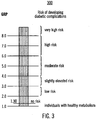
- FIG. 3 illustrates a representative relationship between a Glycemic Risk Parameter (GRP) value and the risk of developing diabetic complications.
- GRP Glycemic Risk Parameter
- a graphic representation 300 of the calculated GRP which may be color-coded according to the risk of developing diabetic complications, may allow health professionals and patients to directly gauge the success of their efforts in order to optimize metabolic control.
- concrete data and the other parameters underlying the Glucose Pentagon 100 may be available to the therapist for a more detailed analysis.
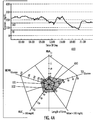
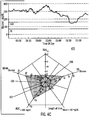
- FIGS. 4A-4C illustrate sample continuous glucose monitoring (CGM) profiles over three days and the resultant Glucose Pentagons for a representative diabetic patient.
- CGM continuous glucose monitoring
- the following examples according to embodiments of the present invention use data from patients with Type 1 diabetes and are intended to illustrate how the Glucose Pentagon 100 may be used in practice.
- the patient's CGM data is represented in graphs 410, 440, 470 for Day 1, Day 2, and Day 3, respectively.
- An HbA 1c value of 7.5% had most recently been measured for a 49-year-old female patient with Type 1 diabetes who had suffered from diabetes for 40 years and managed her condition with insulin pump therapy combined with a rapid-acting analog insulin.
- Blood pressure and lipid parameters were well regulated with a beta-blocker, an ACE inhibitor, and a statin.
- Known conditions included retinopathy, nephropathy, peripheral neuropathy and stage 2 peripheral arterial occlusive disease (PAOD).
- PAOD peripheral arterial occlusive disease
- the pattern in the glucose pentagons 430, 460, 490 also shows excursions toward high glucose variability on all days (standard deviation of the mean glucose concentration). Another noticeable characteristic is that the mean glucose concentration is higher than the current, most recently measured HbA 1c value for all three days. If these values represent the trend over a relatively long period of time, one might anticipate that the subsequent HbA 1c value will have worsened.
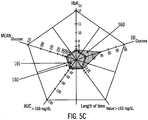
- FIGS. 5A-5D illustrate Glucose Pentagons for a selected day for a plurality of diabetic patients.
- CGM data is collected for three days for three representative diabetic patients, and their resulting GRP values and average three-day GRP values are calculated using the Glucose Pentagon 100.
- Patient JE includes data with analog insulin (a), and normal insulin (b), as indicated in Table 1 below. TABLE 1 Patient Data for calculations Day 1 Day 2 Day 3 Avg.
- FIGS. 5A-5D illustrate the corresponding glucose pentagons on one day selected for each patient in Table 1 above.
- the glucose pentagons 520, 540, 560 for the first two patients are characterized predominantly by glycemic variability, whereas the high HbA 1c value and mean glucose concentration are responsible for the large pentagon 580 for patient CT in FIG. 5D .
- the comparison between the use of normal insulin ( FIG. 5B ) and rapid-acting analog insulin ( FIG. 5A ) in patient JE shows reduced glycemic variability with the analog insulin, resulting in better metabolic control. This kind of analysis is not possible when taking only the HbA 1c value into consideration and demonstrates the sense in combining long-term and acute glycemia within the GRP parameter.
- FIG. 6 illustrates a flow chart of evaluating glycemic control of a patient according to embodiments of the present invention.
- a pentagon having five axes radiating from a center of the pentagon (see, e.g., Glucose Pentagon 100, FIG. 1 ) is provided.
- a first axis 110 ( FIG. 1 ) has a length representing a range of hemoglobin A 1c values.
- a second axis 120 ( FIG. 1 ) has a length representing a range of standard deviation of glucose values.
- a third axis 130 FIG. 1 ) has a length representing a range of amount of time per day values exceeding a first limit.
- a fourth axis 140 ( FIG.
- a fifth axis 150 ( FIG. 1 ) has a length representing a range of mean glucose values.
- the first axis representing the range of hemoglobin A 1c values and the fifth axis representing the range of mean glucose values may be adjacent to each other in the pentagon.
- a first point on the first axis 110 indicative of a representative hemoglobin A 1c value is plotted.
- a third point on the third axis 130 ( FIG, 1 ) indicative of a representative amount of time per day value exceeding the first limit is plotted.
- the first limit may be 160 mg/dL.
- a fourth point on the fourth axis 140 ( FIG. 1 ) indicative of a representative daily area-under-curve value exceeding a second limit is plotted.
- the second limit may be 160 mg/dL.
- a fifth point on the fifth axis 150 ( FIG. 1 ) indicative of a representative mean glucose value is plotted.
- a sixth point on the first axis 110 indicative of a hemoglobin A 1c value of the patient is plotted.
- a seventh point on the second axis 120 ( FIG. 1 ) indicative of a standard deviation of glucose value of the patient is plotted.
- an eight point on the third axis 130 indicative of an amount of time per day value exceeding the first limit of the patient is plotted.
- a ninth point on the fourth axis 140 indicative of a daily area-under-curve value exceeding the second limit of the patient is plotted.
- a tenth point on the fifth axis 150 indicative of a mean glucose value of the patient is plotted.
- a first pentagon area (see, e.g., pentagon 101 in FIG. 2 ) formed by the first point, the second point, the third point, the fourth point, and the fifth point on axes 110, 120, 130, 140, 150, respectively, is determined at step 665.
- a second pentagon area (see, e.g., pentagon 201 in FIG. 2 ) formed by the sixth point, the seventh point, the eighth point, the ninth point, and the tenth point on axes 110, 120, 130, 140, 150, respectively, is determined at step 670.
- a glycemic control parameter (or Glycemic Risk Parameter - GRP) is determined based on the first pentagon area 101 and the second pentagon area 201.
- the glycemic control parameter (or Glycemic Risk Parameter - GRP) is determined by dividing the second pentagon area 201 ( FIG. 2 ) by the first pentagon area 101 ( FIG. 1 ).
- the representative hemoglobin A 1c value, the representative standard deviation of glucose value, the representative amount of time per day value exceeding the first limit, the representative daily area-under-curve value exceeding the second limit, and the representative mean glucose value plotted to determine the first pentagon area 101 are representative of a non-diabetic/healthy individual.
- the evaluation of glycemic control of a patient may be implemented on a computing device such as a computer system (e.g., desktop, laptop, enterprise systems, network/Web systems, etc.), a handheld device (e.g., PDAs), a mobile/smart phone, a medical device, an infusion device (e.g., insulin pumps), an infusion device controller/programmer, a hospital monitor, or any other suitable electronic device.
- a computer system e.g., desktop, laptop, enterprise systems, network/Web systems, etc.
- a handheld device e.g., PDAs
- a mobile/smart phone e.g., a mobile/smart phone
- a medical device e.g., an infusion device (e.g., insulin pumps), an infusion device controller/programmer, a hospital monitor, or any other suitable electronic device.
- an infusion device e.g., insulin pumps
- an infusion device controller/programmer e.g., a hospital
- an article of manufacture such as, e.g., a memory storage device such as a RAM/ROM, optical disk, flash memory, hard disk drive, etc., a computing device such as a computer system (e.g., desktop, laptop, enterprise systems, network/Web systems, etc.), a handheld device (e.g., PDAs), a mobile/smart phone, a medical device, an infusion device (e.g., insulin pumps), an infusion device controller/programmer, a hospital monitor, or any other suitable electronic device) containing code for evaluating glycemic control of a patient as discussed above, comprising a computer-usable medium including at least one embedded computer program that is capable of causing at least one computer to perform the evaluation of glycemic control of a patient as discussed above according to embodiments of the present invention, also may be utilized.
- a memory storage device such as a RAM/ROM, optical disk, flash memory, hard disk drive, etc.
- a computing device such as a computer system (e.g.
- the Glucose Pentagon 100 provides an integrated description of glycemia in diabetic patients over a specific time interval, while it also includes independent factors for assessing metabolic control.
- the time interval may be even just a single day, which is a useful feature.
- the HbA 1c value is the only parameter that remains constant until it is measured again, but because it typically changes very little during short time intervals, the resulting error may be assumed to be negligible. This error does increase, however, the older the HbA 1c measurement is and the more the value changes.
- the Glucose Pentagon 100 is much less subject to error, however, than an assessment of metabolic control based solely on the HbA 1c value.
- GRP GRP for each individual day according to embodiments of the present invention so that the patient may use the pentagon to assess their day-to-day efforts.
- a mean GRP value then may be calculated over longer periods of time.
- One advantage of embodiments of the present invention is that it takes both long-term and acute metabolic control into account, i.e., it unites HbA 1c and glycemic fluctuations in a single model. Because it yields a characteristic numerical value, the GRP serves as a good starting point for assessing the risk of developing diabetic complications and provides far more information than the HbA 1c value on its own. Detailed insight may be derived from the shape of the pentagon, which provides a quick overview of a patient's daily routine without having to look at the statistical details of the CGM profile. It also serves as a reference point for long-term care and clinical research. For the model to be useful, CGM software may perform glucose pentagon calculations and provide an opportunity for entering the HbA 1c value.
- Specialized glucose pentagons also may be determined in addition to the integrated glucose pentagon. These embodiments likewise may be incorporated into the CGM software, providing information on various types of diabetic complications, such as retinopathy, neuropathy, nephropathy, and cardiovascular events. It may be helpful to also distinguish between glucose pentagons for patients with Type 1 diabetes and those for individuals with Type 2 diabetes.
- MAGE MAGE
- preprandial glucose a parameter that represents risk factors for developing microvascular and macrovascular complications.
- MAGE value may replace the standard deviation of the mean glucose concentration value.
- further parameters such as patient age, and years with diabetes, etc., is also conceivable.
- the basic model for calculating the area encompassed by the parameters and for normalizing this area against the pentagon for individuals with normal metabolism would remain the same.
- the Glucose Pentagon 100 may then become a "Glucose Polygon".
Landscapes
- Health & Medical Sciences (AREA)
- Engineering & Computer Science (AREA)
- Life Sciences & Earth Sciences (AREA)
- Medical Informatics (AREA)
- Public Health (AREA)
- General Health & Medical Sciences (AREA)
- Biomedical Technology (AREA)
- Physics & Mathematics (AREA)
- Pathology (AREA)
- Epidemiology (AREA)
- Primary Health Care (AREA)
- Biophysics (AREA)
- Surgery (AREA)
- General Business, Economics & Management (AREA)
- Business, Economics & Management (AREA)
- Veterinary Medicine (AREA)
- Animal Behavior & Ethology (AREA)
- Heart & Thoracic Surgery (AREA)
- Molecular Biology (AREA)
- Chemical & Material Sciences (AREA)
- Radiology & Medical Imaging (AREA)
- Bioinformatics & Cheminformatics (AREA)
- Medicinal Chemistry (AREA)
- Nuclear Medicine, Radiotherapy & Molecular Imaging (AREA)
- Emergency Medicine (AREA)
- Optics & Photonics (AREA)
- Data Mining & Analysis (AREA)
- Databases & Information Systems (AREA)
- Investigating Or Analysing Biological Materials (AREA)
- Medicines That Contain Protein Lipid Enzymes And Other Medicines (AREA)
Claims (4)
- Verfahren zur Bewertung der glykämischen Kontrolle eines Patienten, das auf einer Rechenvorrichtung, einer Infusionsvorrichtung, einer Infusionsvorrichtungssteuerung / einem Infusionsvorrichtungsprogrammierer oder einer medizinischen Vorrichtung implementiert ist, umfassend:Bereitstellen eines Fünfecks (100) mit fünf Achsen, die radial von einem Mittelpunkt des Fünfecks ausgehen, wobeieine erste Achse (110) eine Länge aufweist, die einen Bereich von Hämoglobin A1C-Werten darstellt,eine zweite Achse (120) eine Länge aufweist, die einen Standardabweichungsbereich von Glukosewerten darstellt,eine dritte Achse (130) eine Länge aufweist, die einen Bereich von Zeitbetrag-pro-Tag-Werten, die eine erste Grenze überschreiten, darstellt;eine vierte Achse (140) eine Länge aufweist, die einen Bereich von Tageswerten für die Fläche unter der Kurve darstellt, die eine zweite Grenze überschreiten, undeine fünfte Achse (150) eine Länge aufweist, die einen Bereich von durchschnittlichen Glukosewertendarstellt;Auftragen eines ersten Punktes (615) auf der ersten Achse, der ein Indikator für einen repräsentativen Hämoglobin A1C-Wert ist;Auftragen eines zweiten Punktes (620) auf der zweiten Achse, der ein Indikator für eine repräsentative Glukosewert-Standardabweichung ist;Auftragen eines dritten Punktes (625) auf der dritten Achse, der ein Indikator für einen repräsentativen Zeitbetrag-pro-Tag-Wert, der eine erste Grenze überschreitet, ist;Auftragen eines vierten Punktes (630) auf der vierten Achse, der ein Indikator für einen repräsentativen Tageswert für die Fläche unter der Kurve, der eine zweite Grenze überschreitet, ist;Auftragen eines fünften Punktes (635) auf der fünften Achse, der ein Indikator für einen repräsentativen durchschnittlichen Glukosewert ist;Auftragen eines sechsten Punktes (640) auf der ersten Achse, der ein Indikator für einen Hämoglobin A1C-Wert des Patienten ist;Auftragen eines siebten Punktes (645) auf der zweiten Achse, der ein Indikator für eine Standardabweichung des Glukosewerts des Patienten ist;Auftragen eines achten Punktes (650) auf der dritten Achse, der ein Indikator für einen Wert für den Zeitbetrag pro Tag ist, der die erste Grenze des Patienten überschreitet;Auftragen eines neunten Punktes (655) auf der vierten Achse, der ein Indikator für einen Tageswert einer Fläche unter der Kurve ist, der die zweite Grenze des Patienten überschreitet;Auftragen eines zehnten Punktes (660) auf der fünften Achse, der ein Indikator für einen durchschnittlichen Glukosewert des Patienten ist;Bestimmen (665) einer ersten Fünfeck (101)-Fläche, die durch den ersten Punkt (615), den zweiten Punkt (620), den dritten Punkt (625), den vierten Punkt (630), und den fünften Punkt (635) gebildet wird;Bestimmen (670) einer zweiten Fünfeck (201)-Fläche, die durch den sechsten Punkt (640), den siebten Punkt (645), den achten Punkt (650), den neunten Punkt (655) und den zehnten Punkt (660) gebildet wird; undBestimmen (675) eines glykämischen Kontrollparameters (675) auf Basis der ersten Fünfeckfläche (101) und der zweiten Fünfeckfläche (201) durch Dividieren der zweiten Fünfeckfläche (201) durch die erste Fünfeckfläche (101);wobei die erste Achse (110), die den Bereich von Hämoglobin A1c-Werten darstellt, und die fünfte Achse (150), die den Bereich von durchschnittlichen Glukosewerten darstellt, in dem Fünfeck (100) nebeneinander liegen.
- Verfahren nach Anspruch 1, wobei der repräsentative Hämoglobin A1C-Wert, die repräsentative Standardabweichung des Glukosewerts, der repräsentative Zeitbetrag-pro-Tag-Wert, der die ersten Grenze übersteigt, der repräsentative Tageswert der Fläche unter der Kurve, der die zweite Grenze übersteigt, und der repräsentative durchschnittliche Glukosewert repräsentativ für ein nicht diabetisches Individuum sind.
- Verfahren nach Anspruch 1, wobei die erste Grenze 160 mg/ dL beträgt.
- Verfahren nach Anspruch 1, wobei die zweite Grenze 160 mg/dL beträgt.
Applications Claiming Priority (3)
| Application Number | Priority Date | Filing Date | Title |
|---|---|---|---|
| US10875308P | 2008-10-27 | 2008-10-27 | |
| US12/604,685 US20100106000A1 (en) | 2008-10-27 | 2009-10-23 | Methods and Systems for Evaluating Glycemic Control |
| PCT/US2009/062011 WO2010062535A1 (en) | 2008-10-27 | 2009-10-26 | Methods and systems for evaluating glycemic control |
Publications (2)
| Publication Number | Publication Date |
|---|---|
| EP2339953A1 EP2339953A1 (de) | 2011-07-06 |
| EP2339953B1 true EP2339953B1 (de) | 2018-01-10 |
Family
ID=42118144
Family Applications (1)
| Application Number | Title | Priority Date | Filing Date |
|---|---|---|---|
| EP09764348.0A Active EP2339953B1 (de) | 2008-10-27 | 2009-10-26 | Verfahren zur beurteilung der glykämischen kontrolle |
Country Status (4)
| Country | Link |
|---|---|
| US (1) | US20100106000A1 (de) |
| EP (1) | EP2339953B1 (de) |
| CA (1) | CA2738962A1 (de) |
| WO (1) | WO2010062535A1 (de) |
Cited By (2)
| Publication number | Priority date | Publication date | Assignee | Title |
|---|---|---|---|---|
| EP3948894A1 (de) * | 2019-03-29 | 2022-02-09 | mySugr GmbH | Computerimplementiertes verfahren und system zum bestimmen eines relativen risikos für mangelnde glykämische kontrolle bei einer vielzahl von patienten sowie computerprogrammprodukt |
| EP4021287A4 (de) * | 2019-08-30 | 2023-10-04 | TT1 Products, Inc. | Biomarkerüberwachendes fitnesssystem |
Families Citing this family (4)
| Publication number | Priority date | Publication date | Assignee | Title |
|---|---|---|---|---|
| EP2410910A4 (de) * | 2009-03-27 | 2014-10-15 | Dexcom Inc | Verfahren und systeme zur förderung eines blutzuckermanagements |
| CA3171017A1 (en) * | 2020-03-20 | 2021-09-23 | Shiping Liu | Systems and methods for analyzing, interpreting, and acting on continuous glucose monitoring data |
| CN117898715A (zh) * | 2024-01-31 | 2024-04-19 | 北京中器华康科技发展有限公司 | 一种基于cgm实时监测的三维可视化图谱分析技术 |
| CN117918832A (zh) * | 2024-01-31 | 2024-04-26 | 北京中器华康科技发展有限公司 | 一种基于皮下葡萄糖连续监测数据采集的实时血糖六角模型及螺旋桨模型评估算法 |
Citations (1)
| Publication number | Priority date | Publication date | Assignee | Title |
|---|---|---|---|---|
| US6322516B1 (en) * | 1998-03-09 | 2001-11-27 | Colin Corporation | Blood-pressure monitor apparatus |
Family Cites Families (11)
| Publication number | Priority date | Publication date | Assignee | Title |
|---|---|---|---|---|
| US6376549B1 (en) * | 1998-09-17 | 2002-04-23 | Akesis Pharmaceuticals, Inc. | Metforimin-containing compositions for the treatment of diabetes |
| US20030216628A1 (en) * | 2002-01-28 | 2003-11-20 | Bortz Jonathan David | Methods and systems for assessing glycemic control using predetermined pattern label analysis of blood glucose readings |
| JP2004164343A (ja) * | 2002-11-13 | 2004-06-10 | Health Dynamics Kenkyusho:Kk | 生活習慣病改善システム及びその情報管理装置 |
| JP2004313265A (ja) * | 2003-04-11 | 2004-11-11 | Suzuken Co Ltd | 健康管理方法および健康管理システム |
| JP2006043360A (ja) * | 2004-08-02 | 2006-02-16 | Asuka Tokushu Kensa Kenkyusho:Kk | 脂質の質と量の全体像を把握する方法 |
| US20070010950A1 (en) * | 2004-12-03 | 2007-01-11 | Abensour Daniel S | Method to determine the degree and stability of blood glucose control in patients with diabetes mellitus via the creation and continuous update of new statistical indicators in blood glucose monitors or free standing computers |
| JP4861687B2 (ja) * | 2005-11-21 | 2012-01-25 | シスメックス株式会社 | 医療用シミュレーションシステム及びそのコンピュータプログラム |
| EP1933246A1 (de) * | 2006-12-14 | 2008-06-18 | F.Hoffmann-La Roche Ag | Methode zur Visualisierung einer zeitlichen Sequenz von Messungen |
| US20080154513A1 (en) * | 2006-12-21 | 2008-06-26 | University Of Virginia Patent Foundation | Systems, Methods and Computer Program Codes for Recognition of Patterns of Hyperglycemia and Hypoglycemia, Increased Glucose Variability, and Ineffective Self-Monitoring in Diabetes |
| WO2009081403A2 (en) * | 2007-12-26 | 2009-07-02 | Medingo Ltd. | Maintaining glycemic control during exercise |
| US20110224515A1 (en) * | 2009-09-08 | 2011-09-15 | SensiVida Medical Technologies, Inc. | Replaceable microneedle cartridge for biomedical monitoring |
-
2009
- 2009-10-23 US US12/604,685 patent/US20100106000A1/en not_active Abandoned
- 2009-10-26 EP EP09764348.0A patent/EP2339953B1/de active Active
- 2009-10-26 WO PCT/US2009/062011 patent/WO2010062535A1/en not_active Ceased
- 2009-10-26 CA CA2738962A patent/CA2738962A1/en not_active Abandoned
Patent Citations (1)
| Publication number | Priority date | Publication date | Assignee | Title |
|---|---|---|---|---|
| US6322516B1 (en) * | 1998-03-09 | 2001-11-27 | Colin Corporation | Blood-pressure monitor apparatus |
Cited By (3)
| Publication number | Priority date | Publication date | Assignee | Title |
|---|---|---|---|---|
| EP3948894A1 (de) * | 2019-03-29 | 2022-02-09 | mySugr GmbH | Computerimplementiertes verfahren und system zum bestimmen eines relativen risikos für mangelnde glykämische kontrolle bei einer vielzahl von patienten sowie computerprogrammprodukt |
| EP4021287A4 (de) * | 2019-08-30 | 2023-10-04 | TT1 Products, Inc. | Biomarkerüberwachendes fitnesssystem |
| US11998324B2 (en) | 2019-08-30 | 2024-06-04 | TT1 Products, Inc. | Biomarker monitoring fitness system |
Also Published As
| Publication number | Publication date |
|---|---|
| WO2010062535A1 (en) | 2010-06-03 |
| EP2339953A1 (de) | 2011-07-06 |
| US20100106000A1 (en) | 2010-04-29 |
| CA2738962A1 (en) | 2010-06-03 |
Similar Documents
| Publication | Publication Date | Title |
|---|---|---|
| JP5657559B2 (ja) | 糖尿病における血糖変動を追跡記録するための方法、システム及びコンピュータ・プログラム | |
| US20240407736A1 (en) | Analysis of glucose median, variability, and hypoglycemia risk for therapy guidance | |
| US11903698B2 (en) | Glycemic health metric determination and application | |
| KR100776070B1 (ko) | 셀프-모니터링 데이터로부터 당뇨병의 혈당 조절 평가 방법, 시스템, 및 컴퓨터 프로그램 제품 | |
| Murphy et al. | Changes in the glycemic profiles of women with type 1 and type 2 diabetes during pregnancy | |
| US10019554B2 (en) | Glycemic risk determination based on variability of glucose | |
| EP3574831B1 (de) | Bestimmung und anwendung von glykämischen messwerten | |
| RU2477078C2 (ru) | Способ, система и компьютерный программный продукт для оценки изменчивости содержания глюкозы в крови при диабете по данным самоконтроля | |
| Felipe et al. | Skin intrinsic fluorescence is associated with hemoglobin A1c and hemoglobin glycation index but not mean blood glucose in children with type 1 diabetes | |
| Jaiswal et al. | Association between impaired cardiovascular autonomic function and hypoglycemia in patients with type 1 diabetes | |
| JP7463590B2 (ja) | 生理学的パラメータ分析のための方法、デバイスおよびシステム | |
| EP2339953B1 (de) | Verfahren zur beurteilung der glykämischen kontrolle | |
| AU2001251046A1 (en) | Method, system, and computer program product for the evaluation of glycemic control in diabetes from self-monitoring data | |
| US11793471B2 (en) | Method and system for monitoring a diabetes treatment plan | |
| Den Braber et al. | Glucose regulation beyond HbA1c in type 2 diabetes treated with insulin: real-world evidence from the DIALECT-2 cohort | |
| CN110786865A (zh) | 使用个性化直方图来控制血液葡萄糖的系统及方法 | |
| Grady et al. | Evaluation of a blood glucose monitoring system with automatic high-and low-pattern recognition software in insulin-using patients: pattern detection and patient-reported insights | |
| Al Hayek et al. | Use of flash glucose monitoring and glycemic control in patients with type 2 diabetes mellitus not treated with an intensive insulin regimen: 1-year real-life retrospective cohort study | |
| Doupis et al. | Utilizing the new glucometrics: a practical guide to ambulatory glucose profile interpretation | |
| Yang et al. | TRI-based heart rate variability parameterisation: advancing autonomic dysfunction assessment in diabetes and aging—A cross-sectional observational study | |
| WO2010150287A1 (en) | Individualized allocation of health resources | |
| Agarwal | Glycemic Monitoring |
Legal Events
| Date | Code | Title | Description |
|---|---|---|---|
| PUAI | Public reference made under article 153(3) epc to a published international application that has entered the european phase |
Free format text: ORIGINAL CODE: 0009012 |
|
| 17P | Request for examination filed |
Effective date: 20110329 |
|
| AK | Designated contracting states |
Kind code of ref document: A1 Designated state(s): AT BE BG CH CY CZ DE DK EE ES FI FR GB GR HR HU IE IS IT LI LT LU LV MC MK MT NL NO PL PT RO SE SI SK SM TR |
|
| AX | Request for extension of the european patent |
Extension state: AL BA RS |
|
| DAX | Request for extension of the european patent (deleted) | ||
| 17Q | First examination report despatched |
Effective date: 20130709 |
|
| REG | Reference to a national code |
Ref country code: DE Ref legal event code: R079 Ref document number: 602009050347 Country of ref document: DE Free format text: PREVIOUS MAIN CLASS: A61B0005000000 Ipc: A61B0005145000 |
|
| RIC1 | Information provided on ipc code assigned before grant |
Ipc: A61B 5/145 20060101AFI20170630BHEP |
|
| GRAP | Despatch of communication of intention to grant a patent |
Free format text: ORIGINAL CODE: EPIDOSNIGR1 |
|
| INTG | Intention to grant announced |
Effective date: 20170929 |
|
| GRAS | Grant fee paid |
Free format text: ORIGINAL CODE: EPIDOSNIGR3 |
|
| GRAA | (expected) grant |
Free format text: ORIGINAL CODE: 0009210 |
|
| AK | Designated contracting states |
Kind code of ref document: B1 Designated state(s): AT BE BG CH CY CZ DE DK EE ES FI FR GB GR HR HU IE IS IT LI LT LU LV MC MK MT NL NO PL PT RO SE SI SK SM TR |
|
| REG | Reference to a national code |
Ref country code: GB Ref legal event code: FG4D |
|
| REG | Reference to a national code |
Ref country code: CH Ref legal event code: EP Ref country code: AT Ref legal event code: REF Ref document number: 961509 Country of ref document: AT Kind code of ref document: T Effective date: 20180115 |
|
| REG | Reference to a national code |
Ref country code: IE Ref legal event code: FG4D |
|
| REG | Reference to a national code |
Ref country code: DE Ref legal event code: R096 Ref document number: 602009050347 Country of ref document: DE |
|
| REG | Reference to a national code |
Ref country code: NL Ref legal event code: MP Effective date: 20180110 |
|
| REG | Reference to a national code |
Ref country code: AT Ref legal event code: MK05 Ref document number: 961509 Country of ref document: AT Kind code of ref document: T Effective date: 20180110 |
|
| PG25 | Lapsed in a contracting state [announced via postgrant information from national office to epo] |
Ref country code: NL Free format text: LAPSE BECAUSE OF FAILURE TO SUBMIT A TRANSLATION OF THE DESCRIPTION OR TO PAY THE FEE WITHIN THE PRESCRIBED TIME-LIMIT Effective date: 20180110 |
|
| PG25 | Lapsed in a contracting state [announced via postgrant information from national office to epo] |
Ref country code: ES Free format text: LAPSE BECAUSE OF FAILURE TO SUBMIT A TRANSLATION OF THE DESCRIPTION OR TO PAY THE FEE WITHIN THE PRESCRIBED TIME-LIMIT Effective date: 20180110 Ref country code: HR Free format text: LAPSE BECAUSE OF FAILURE TO SUBMIT A TRANSLATION OF THE DESCRIPTION OR TO PAY THE FEE WITHIN THE PRESCRIBED TIME-LIMIT Effective date: 20180110 Ref country code: NO Free format text: LAPSE BECAUSE OF FAILURE TO SUBMIT A TRANSLATION OF THE DESCRIPTION OR TO PAY THE FEE WITHIN THE PRESCRIBED TIME-LIMIT Effective date: 20180410 Ref country code: FI Free format text: LAPSE BECAUSE OF FAILURE TO SUBMIT A TRANSLATION OF THE DESCRIPTION OR TO PAY THE FEE WITHIN THE PRESCRIBED TIME-LIMIT Effective date: 20180110 Ref country code: LT Free format text: LAPSE BECAUSE OF FAILURE TO SUBMIT A TRANSLATION OF THE DESCRIPTION OR TO PAY THE FEE WITHIN THE PRESCRIBED TIME-LIMIT Effective date: 20180110 Ref country code: CY Free format text: LAPSE BECAUSE OF FAILURE TO SUBMIT A TRANSLATION OF THE DESCRIPTION OR TO PAY THE FEE WITHIN THE PRESCRIBED TIME-LIMIT Effective date: 20180110 |
|
| PG25 | Lapsed in a contracting state [announced via postgrant information from national office to epo] |
Ref country code: LV Free format text: LAPSE BECAUSE OF FAILURE TO SUBMIT A TRANSLATION OF THE DESCRIPTION OR TO PAY THE FEE WITHIN THE PRESCRIBED TIME-LIMIT Effective date: 20180110 Ref country code: SE Free format text: LAPSE BECAUSE OF FAILURE TO SUBMIT A TRANSLATION OF THE DESCRIPTION OR TO PAY THE FEE WITHIN THE PRESCRIBED TIME-LIMIT Effective date: 20180110 Ref country code: IS Free format text: LAPSE BECAUSE OF FAILURE TO SUBMIT A TRANSLATION OF THE DESCRIPTION OR TO PAY THE FEE WITHIN THE PRESCRIBED TIME-LIMIT Effective date: 20180510 Ref country code: GR Free format text: LAPSE BECAUSE OF FAILURE TO SUBMIT A TRANSLATION OF THE DESCRIPTION OR TO PAY THE FEE WITHIN THE PRESCRIBED TIME-LIMIT Effective date: 20180411 Ref country code: PL Free format text: LAPSE BECAUSE OF FAILURE TO SUBMIT A TRANSLATION OF THE DESCRIPTION OR TO PAY THE FEE WITHIN THE PRESCRIBED TIME-LIMIT Effective date: 20180110 Ref country code: BG Free format text: LAPSE BECAUSE OF FAILURE TO SUBMIT A TRANSLATION OF THE DESCRIPTION OR TO PAY THE FEE WITHIN THE PRESCRIBED TIME-LIMIT Effective date: 20180410 Ref country code: AT Free format text: LAPSE BECAUSE OF FAILURE TO SUBMIT A TRANSLATION OF THE DESCRIPTION OR TO PAY THE FEE WITHIN THE PRESCRIBED TIME-LIMIT Effective date: 20180110 |
|
| REG | Reference to a national code |
Ref country code: FR Ref legal event code: PLFP Year of fee payment: 10 |
|
| REG | Reference to a national code |
Ref country code: DE Ref legal event code: R097 Ref document number: 602009050347 Country of ref document: DE |
|
| PG25 | Lapsed in a contracting state [announced via postgrant information from national office to epo] |
Ref country code: IT Free format text: LAPSE BECAUSE OF FAILURE TO SUBMIT A TRANSLATION OF THE DESCRIPTION OR TO PAY THE FEE WITHIN THE PRESCRIBED TIME-LIMIT Effective date: 20180110 Ref country code: RO Free format text: LAPSE BECAUSE OF FAILURE TO SUBMIT A TRANSLATION OF THE DESCRIPTION OR TO PAY THE FEE WITHIN THE PRESCRIBED TIME-LIMIT Effective date: 20180110 Ref country code: EE Free format text: LAPSE BECAUSE OF FAILURE TO SUBMIT A TRANSLATION OF THE DESCRIPTION OR TO PAY THE FEE WITHIN THE PRESCRIBED TIME-LIMIT Effective date: 20180110 |
|
| PLBE | No opposition filed within time limit |
Free format text: ORIGINAL CODE: 0009261 |
|
| STAA | Information on the status of an ep patent application or granted ep patent |
Free format text: STATUS: NO OPPOSITION FILED WITHIN TIME LIMIT |
|
| PG25 | Lapsed in a contracting state [announced via postgrant information from national office to epo] |
Ref country code: CZ Free format text: LAPSE BECAUSE OF FAILURE TO SUBMIT A TRANSLATION OF THE DESCRIPTION OR TO PAY THE FEE WITHIN THE PRESCRIBED TIME-LIMIT Effective date: 20180110 Ref country code: SK Free format text: LAPSE BECAUSE OF FAILURE TO SUBMIT A TRANSLATION OF THE DESCRIPTION OR TO PAY THE FEE WITHIN THE PRESCRIBED TIME-LIMIT Effective date: 20180110 Ref country code: SM Free format text: LAPSE BECAUSE OF FAILURE TO SUBMIT A TRANSLATION OF THE DESCRIPTION OR TO PAY THE FEE WITHIN THE PRESCRIBED TIME-LIMIT Effective date: 20180110 Ref country code: DK Free format text: LAPSE BECAUSE OF FAILURE TO SUBMIT A TRANSLATION OF THE DESCRIPTION OR TO PAY THE FEE WITHIN THE PRESCRIBED TIME-LIMIT Effective date: 20180110 |
|
| 26N | No opposition filed |
Effective date: 20181011 |
|
| PG25 | Lapsed in a contracting state [announced via postgrant information from national office to epo] |
Ref country code: SI Free format text: LAPSE BECAUSE OF FAILURE TO SUBMIT A TRANSLATION OF THE DESCRIPTION OR TO PAY THE FEE WITHIN THE PRESCRIBED TIME-LIMIT Effective date: 20180110 |
|
| REG | Reference to a national code |
Ref country code: CH Ref legal event code: PL |
|
| REG | Reference to a national code |
Ref country code: BE Ref legal event code: MM Effective date: 20181031 |
|
| PG25 | Lapsed in a contracting state [announced via postgrant information from national office to epo] |
Ref country code: MC Free format text: LAPSE BECAUSE OF FAILURE TO SUBMIT A TRANSLATION OF THE DESCRIPTION OR TO PAY THE FEE WITHIN THE PRESCRIBED TIME-LIMIT Effective date: 20180110 Ref country code: LU Free format text: LAPSE BECAUSE OF NON-PAYMENT OF DUE FEES Effective date: 20181026 |
|
| REG | Reference to a national code |
Ref country code: IE Ref legal event code: MM4A |
|
| PG25 | Lapsed in a contracting state [announced via postgrant information from national office to epo] |
Ref country code: CH Free format text: LAPSE BECAUSE OF NON-PAYMENT OF DUE FEES Effective date: 20181031 Ref country code: BE Free format text: LAPSE BECAUSE OF NON-PAYMENT OF DUE FEES Effective date: 20181031 Ref country code: LI Free format text: LAPSE BECAUSE OF NON-PAYMENT OF DUE FEES Effective date: 20181031 |
|
| PG25 | Lapsed in a contracting state [announced via postgrant information from national office to epo] |
Ref country code: IE Free format text: LAPSE BECAUSE OF NON-PAYMENT OF DUE FEES Effective date: 20181026 |
|
| PG25 | Lapsed in a contracting state [announced via postgrant information from national office to epo] |
Ref country code: MT Free format text: LAPSE BECAUSE OF NON-PAYMENT OF DUE FEES Effective date: 20181026 |
|
| PG25 | Lapsed in a contracting state [announced via postgrant information from national office to epo] |
Ref country code: TR Free format text: LAPSE BECAUSE OF FAILURE TO SUBMIT A TRANSLATION OF THE DESCRIPTION OR TO PAY THE FEE WITHIN THE PRESCRIBED TIME-LIMIT Effective date: 20180110 |
|
| PG25 | Lapsed in a contracting state [announced via postgrant information from national office to epo] |
Ref country code: PT Free format text: LAPSE BECAUSE OF FAILURE TO SUBMIT A TRANSLATION OF THE DESCRIPTION OR TO PAY THE FEE WITHIN THE PRESCRIBED TIME-LIMIT Effective date: 20180110 |
|
| PG25 | Lapsed in a contracting state [announced via postgrant information from national office to epo] |
Ref country code: MK Free format text: LAPSE BECAUSE OF NON-PAYMENT OF DUE FEES Effective date: 20180110 Ref country code: HU Free format text: LAPSE BECAUSE OF FAILURE TO SUBMIT A TRANSLATION OF THE DESCRIPTION OR TO PAY THE FEE WITHIN THE PRESCRIBED TIME-LIMIT; INVALID AB INITIO Effective date: 20091026 |
|
| PGFP | Annual fee paid to national office [announced via postgrant information from national office to epo] |
Ref country code: GB Payment date: 20220922 Year of fee payment: 14 |
|
| REG | Reference to a national code |
Ref country code: DE Ref legal event code: R082 Ref document number: 602009050347 Country of ref document: DE Representative=s name: MEISSNER BOLTE PATENTANWAELTE RECHTSANWAELTE P, DE |
|
| GBPC | Gb: european patent ceased through non-payment of renewal fee |
Effective date: 20231026 |
|
| PG25 | Lapsed in a contracting state [announced via postgrant information from national office to epo] |
Ref country code: GB Free format text: LAPSE BECAUSE OF NON-PAYMENT OF DUE FEES Effective date: 20231026 |
|
| PG25 | Lapsed in a contracting state [announced via postgrant information from national office to epo] |
Ref country code: GB Free format text: LAPSE BECAUSE OF NON-PAYMENT OF DUE FEES Effective date: 20231026 |
|
| PGFP | Annual fee paid to national office [announced via postgrant information from national office to epo] |
Ref country code: FR Payment date: 20240919 Year of fee payment: 16 |
|
| PGFP | Annual fee paid to national office [announced via postgrant information from national office to epo] |
Ref country code: DE Payment date: 20240919 Year of fee payment: 16 |