EP2339876A1 - Verfahren für die übertragung und den empfang von interferenzunterdrückungsignalisierung in einem drahtlosen kommunikationssystem - Google Patents
Verfahren für die übertragung und den empfang von interferenzunterdrückungsignalisierung in einem drahtlosen kommunikationssystem Download PDFInfo
- Publication number
- EP2339876A1 EP2339876A1 EP09814041A EP09814041A EP2339876A1 EP 2339876 A1 EP2339876 A1 EP 2339876A1 EP 09814041 A EP09814041 A EP 09814041A EP 09814041 A EP09814041 A EP 09814041A EP 2339876 A1 EP2339876 A1 EP 2339876A1
- Authority
- EP
- European Patent Office
- Prior art keywords
- sub
- bands
- spi
- values
- reuse factor
- Prior art date
- Legal status (The legal status is an assumption and is not a legal conclusion. Google has not performed a legal analysis and makes no representation as to the accuracy of the status listed.)
- Withdrawn
Links
Images



Classifications
-
- H—ELECTRICITY
- H04—ELECTRIC COMMUNICATION TECHNIQUE
- H04W—WIRELESS COMMUNICATION NETWORKS
- H04W52/00—Power management, e.g. Transmission Power Control [TPC] or power classes
- H04W52/04—Transmission power control [TPC]
- H04W52/30—Transmission power control [TPC] using constraints in the total amount of available transmission power
- H04W52/34—TPC management, i.e. sharing limited amount of power among users or channels or data types, e.g. cell loading
- H04W52/346—TPC management, i.e. sharing limited amount of power among users or channels or data types, e.g. cell loading distributing total power among users or channels
-
- H—ELECTRICITY
- H04—ELECTRIC COMMUNICATION TECHNIQUE
- H04L—TRANSMISSION OF DIGITAL INFORMATION, e.g. TELEGRAPHIC COMMUNICATION
- H04L1/00—Arrangements for detecting or preventing errors in the information received
- H04L1/0001—Systems modifying transmission characteristics according to link quality, e.g. power backoff
- H04L1/0023—Systems modifying transmission characteristics according to link quality, e.g. power backoff characterised by the signalling
- H04L1/0028—Formatting
- H04L1/0029—Reduction of the amount of signalling, e.g. retention of useful signalling or differential signalling
-
- H—ELECTRICITY
- H04—ELECTRIC COMMUNICATION TECHNIQUE
- H04W—WIRELESS COMMUNICATION NETWORKS
- H04W52/00—Power management, e.g. Transmission Power Control [TPC] or power classes
- H04W52/04—Transmission power control [TPC]
- H04W52/18—TPC being performed according to specific parameters
- H04W52/24—TPC being performed according to specific parameters using SIR [Signal to Interference Ratio] or other wireless path parameters
- H04W52/243—TPC being performed according to specific parameters using SIR [Signal to Interference Ratio] or other wireless path parameters taking into account interferences
-
- H—ELECTRICITY
- H04—ELECTRIC COMMUNICATION TECHNIQUE
- H04W—WIRELESS COMMUNICATION NETWORKS
- H04W72/00—Local resource management
- H04W72/20—Control channels or signalling for resource management
- H04W72/23—Control channels or signalling for resource management in the downlink direction of a wireless link, i.e. towards a terminal
Definitions
- the present invention relates to technical field of wireless communication, in particular to a method for transmitting and receiving interference control signaling in a wireless communication system.
- a base station refers to equipment which provides service for terminals, and the base station communicates with the terminals through an up/down link.
- Downlink or forward direction refers to the direction from the base station to the terminal
- uplink or backward direction refers to the direction from the terminal to the base station.
- Multiple terminals can simultaneously transmit data to the base station through an up link, and simultaneously receive data from the base station through a down link.
- the scheduling allocation of all the resources of the system are usually carried out by the base station, for example, the resource allocation when the base station performs downlink transmission and the resources which can be used when the terminal performs uplink transmission are both scheduled and allocated by the base station.
- the down links used during downlink data transmission between the base station and different terminals in a same cell, are orthogonal with each other, such that internal inter-cell interference can be avoided.
- the down links among different cells may be not orthogonal, so each terminal may be subjected to downlink interference from the base station of other adjacent cells, viz. inter-cell interference.
- FIG. 1 is a schematic diagram of an allocation method of frequency resources of adjacent sectors and restriction on transmission power of each sub-band.
- the main principle of the Adaptive Frequency Reuse solution is: firstly, all the available frequency resources are divided into 7 sub-band sets: W : [W 1 , W 2 , W 3 , W 12 , W 23 , W 13 , W 123 ], wherein the frequency reuse factor of W 1 W 2 , W 3 is 3 (viz. Reuse 3, also referred to as Reuse 1/3, hereinafter referred to as Reuse 3), viz.
- the frequency reuse factor of W 12 , W 23 , W 13 is 3/2, (viz. Reuse 3/2, also referred to as Reuse 2/3, hereinafter referred to as Reuse 3/2), viz.
- the base station according to CQI condition of sub-band reported by the terminal, performs resource allocation at the same time, self-adaptively adjusts the values of the cost of each sub-band, and notifies them to all the terminals in the cell.
- the self-adaptive adjustment of cost value of each sub-band reflects the "cost" condition of different sub-bands in the cell, and the base station notifies the "cost" to all the terminals in the cell through the corresponding inter-cell interference control signaling.
- the terminals obtain the cost value of each sub-band by decoding the signaling, and further calculate nSE i to determine which sub-bands have the CQI values needed to be fed back to the base station.
- the base station transmits the cost of all the sub-bands in the reuse set to the terminals, the system overhead will be increased.
- the present invention is provided in view of the defect of increase in system overhead resulted from the cost of the transmission of the cost of all the sub-bands in the reuse set through the interference control signaling in the existing wireless communication system.
- the present invention aims to provide a method for transmitting and receiving interference control signaling in the wireless communication system in order to solve the above problem.
- a method for transmitting interference control signaling in the wireless communication system is provided.
- SPI Sub-band Price Indication
- the SPI value selecting regulation of sub-bands refers to a selecting regulation for k n -1 sub-bands.
- k n -1 sub-bands having the highest transmission power or k n - 1 sub-bands having the lowest transmission power can be selected; if it is determined according to the serial numbers of the sub-bands, the stipulated k n - 1 sub-bands can be selected according to the SPI value selecting regulation of sub-bands, and the terminal and the base station obtain the stipulation through the SPI value selecting regulation of sub-bands.
- the interference control signaling comprises Index and related SPI values; wherein the Index comprises Connect Identity(CID), and the relevant SPI values comprise SPI values of sub-bands that need to be transmitted in which the SPI values of sub-bands is described by way of absolute value or relative value.
- Index comprises Connect Identity(CID)
- relevant SPI values comprise SPI values of sub-bands that need to be transmitted in which the SPI values of sub-bands is described by way of absolute value or relative value.
- the base station can transmit the interference control signaling to the terminal through different manners such as unicast, multicast or broadcast.
- a method for receiving interference control signaling in the wireless communication system is provided.
- the method for receiving interference control signaling in the wireless communication system according to the present invention comprises the following steps:
- n is the frequency reuse factor
- P i is the number of sub-bands with a specific transmission power level
- a is a known fixed value.
- the selection of SPI values of L n -1 sub-bands can be determined according to the transmission power of the sub-bands or the serial numbers of the sub-bands.
- the SPI values of the sub-bands corresponding to L n -1 transmission power levels which having the highest transmission power can be selected, and the SPI values of the sub-bands corresponding to L n -1 transmission power levels which having the lowest transmission power, or the SPI values of the sub-bands corresponding to specific L n -1 transmission power levels also can be selected; if it is determined according to the serial numbers of the sub-bands, the SPI values of stipulated L n -1 sub-bands can be selected according to the SPI value selecting regulation of sub-bands, and the terminal and the base station obtain the stipulation through the SPI value selecting regulation of sub-bands.
- a method for receiving interference control signaling in the wireless communication system is provided.
- the method for receiving interference control signaling in the wireless communication system according to the present invention comprises the following steps:
- a method for transmitting interference control signaling in the wireless communication system is provided.
- the method for transmitting interference control signaling in the wireless communication system comprises: a base station transmitting information of SPI (Sub-band Price Indication, also referred to as resource metric) values of a part of sub-bands to a terminal through a downlink channel.
- SPI Sub-band Price Indication
- the SPI values of the part of sub-bands are at least one of the following:
- the information of the SPI values of the part of sub-bands is determined by at least one of the following manners:
- the SPI values of the part of sub-bands are the SPI values corresponding to sub-bands of L n -1 transmission power levels in the sub-band set in which the frequency reuse factor is Re use n (n ⁇ 1), and the information of the SPI values of the part of sub-bands is determined by at least one of the following manners:
- the base station transmits the information of the SPI values of the part of sub-bands to the terminal by at least one of the following manners: unicast, multicast, and broadcast.
- a method for receiving interference control signaling in the wireless communication system is provided.
- the method for receiving interference control signaling in the wireless communication system comprises: a terminal receiving interference control signaling, and determining SPI values of sub-bands.
- the method for determining SPI values of sub-bands comprises: recovering an algorithm of SPI values of the remaining sub-bands from the information of the SPI values of the part of sub-bands which have been obtained by decoding.
- the above recovering an algorithm of SPI values of the remaining sub-bands from the information of the SPI values of the part of sub-bands which have been obtained by decoding comprises:
- the terminal obtains the sum of SPI values of sub-bands in the sub-band set in which the frequency reuse factor is Re use n (n ⁇ 1) by at least one of the following manners:
- the base station only needs to transmit SPI values of a part of sub-bands, instead of SPI values of all the sub-bands, in a reuse set to the terminal.
- the present invention can effectively save the system overhead, and facilitates the terminal's analyzing SPI value of each sub-band.
- a terminal can obtain SPI value selecting regulation of sub-bands in the following three manners:
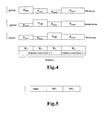
- Figure 4 is a schematic diagram of an allocation method of frequency resources of adjacent sectors and restriction on transmission power of each sub-band in Embodiment 1 of the present invention.
- the frequency resources are divided into two frequency reuse sets, viz. a first reuse set Reuse1 and a second reuse set Reuse3, wherein [W 1, W 2 , W 3 ] belongs to the second reuse set Reuse3, W 4 belongs to the first reuse set Reuse1.
- the transmission power of [W 1 , W 2 , W 3 , W 4 ] in the first sector is [P High , P Low 1 P Low 2 , P reuse 1 ]
- the transmission power of [W 1 , W 2 , W 3 , W 4 ] in the second sector is [P Low2' , P High , P Low 1 , P reuse 1 ]
- the transmission power of [W 1 , W 2, W 3 , W 4 ] in the third sector is [P Low 1 , P Low 2 , P High , P reuse 1 ]
- the condition P High > P reuse 1 > P Low 1 > P Low 2 is satisfied.
- BCH Broadcast Channel
- the base station can determine SPI values of a part of sub-bands to be transmitted according to the sub-band power allocation relation of the second reuse set Reuse 3, specifically, according to the selected two sub-bands having the highest transmission power, or the selected two sub-bands having the lowest transmission power, or two sub-bands having particular transmission power.
- the SPI values of the part of sub-bands to be transmitted are determined according to the SPI values [SPI 1 SPI 2 ] (i.e. [1.8,0.7]) of the selected two sub-bands having the highest transmission power.
- Figure 5 shows that the base station forms the selected SPI value to be transmitted into a format of interference control signaling, wherein Index is the index of the SPI value in the interference control signaling and at least includes Connect Identity, and if the SPI value to be transmitted is transmitted by broadcast, the Connect Identity is broadcast connection identity.
- the SPI values [SPI 1 , SPI 2 ] can be described through absolute value or differential value: the description mode by absolute value indicates describing the actual numerical value of SPI value of each sub-band; and the description mode by differential value indicates selecting SPI value of a certain sub-band as a criterion and describing the SPI value of the sub-band by absolute value, while describing SPI values of the other sub-bands using differential value which is relative to the absolute value.
- the base station transmits the interference control signaling to all the terminals of the base station through BCH.
- Figure 6 describes the mode in which interference control signaling is transmitted in 20ms frame structure.
- the base station can transmit the interference control signaling through Second Broadcast Channel (referred to as SBCH) in the BCH channel, the interference control signaling containing an Index and SPI value of sub-band transmitted.
- SBCH Second Broadcast Channel
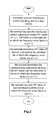
- FIG 2 is a flow chart of a method for receiving interference control signaling in the wireless communication system of an embodiment of the present invention, which is used for receiving the above mentioned interference control signaling.
- the receiving method comprises: a terminal decoding received interference control signaling sent by a base station, obtaining SPI values of Kn-1 sub-bands in a sub-band set of Reuse n (n>1), determining SPI value of the Knth sub-band in the sub-band set of Reuse n (n>1) and the corresponding relation between the SPI values and the sub-bands in the set of Reuse n (n>1), then the terminal recovering SPI value of each sub-band in all the sets of Reuse n(n ⁇ 1).
- the process of receiving the interference control signaling in the embodiment comprises: terminal side, the terminal in the first sector has known [W 1 , W 2 , W 3 , W 4 ] and the corresponding transmission power allocation mode [P High , P Low1 , P Low2 , P reuse1 ] According to the SPI value selecting regulation of sub-bands.
- Figure 7 is a schematic diagram of an allocation method of frequency resources of adjacent sectors and restriction on transmission power of each sub-band in Embodiment 2 of the present invention.
- the frequency resources are divided into two frequency reuse sets, viz. a first reuse set Reuse1 and a second reuse set Reuse3, wherein [ W 1 , W 2 , W 3 ] belongs to the second reuse set Reuse3, W 4 belongs to the first reuse set Reuse1.
- the transmission power of [ W 1 ,W 2 ,W 3 ,W 4 ] in the first sector is [ P High , P Low , P Low , P reuse1 ]
- the transmission power of [ W 1 , W 2 , W 3 , W 4 ] in the second sector is [ P Low , P High , P Low , P reuse 1 ]
- the transmission power of [W 1 ,W 2 ,W 3 ,W 4 ] in the third sector is [ P Low , P Low , P High, P reuse 1 ]
- the condition P High > P reuse 1 > P Low is satisfied.
- the base station can determine SPI values of a part of sub-bands to be transmitted according to the SPI values of sub-bands corresponding to the highest transmission power level, or the SPI values of sub-bands corresponding to the lowest transmission power level.
- the SPI values of the part of sub-bands to be transmitted are determined according to the SPI value [ SPI 1 ] (i.e. [1.8]) of sub-band corresponding to the highest transmission power level.
- Figure 8 is a structural schematic diagram of interference control signaling in Embodiment 2 of the present invention. As shown in Figure 8 , wherein Index is the index of the SPI value in the interference control signaling and at least includes Connect Identity, and if the manner of the transmission is broadcast, the Connect Identity is broadcast connection identity.
- the SPI values [SPI 1 ] can be described through absolute value or differential value: the description mode by absolute value indicates describing the actual numerical value of SPI value of each sub-band; and the description mode by differential value indicates selecting SPI value of a certain sub-band as a criterion and describing the SPI value of the sub-band by absolute value, while describing SPI values of the other sub-bands using differential value which is relative to the absolute value.
- the base station transmits the interference control signaling to all the terminals of the base station through BCH.
- Figure 9 describes the mode in which interference control signaling is transmitted in 20ms frame structure, wherein the base station can transmit the interference control signaling through SBCH channel in the BCH channel, and the interference control signaling containing an Index and SPI value of sub-band transmitted.
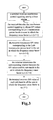
- Figure 3 is a flow chart of a method for receiving interference control signaling in the wireless communication system of the present embodiment, and the method is used for receiving the above mentioned interference control signaling in the present embodiment.
- the receiving method comprises: a terminal decoding received interference control signaling sent by a base station, obtaining SPI values corresponding to Ln-1 transmission power levels in the set of Reuse n (n>1), and determining the SPI value corresponding to the Lnth transmission power level in the set of Reuse n (n>1) and the corresponding relationship between the SPI values and the sub-bands in the set of Reuse n(n>1), then the terminal recovering SPI value of each sub-band in all the sets of Reuse n(n ⁇ 1).
- the process of receiving the interference control signaling in the embodiment comprises: terminal side, the terminal in the first sector has known [ W 1 , W 2 , W 3 , W 4 ] and the corresponding transmission power allocation manner [P High , P Low , P Low , P reuse1 ] according to the SPI value selecting regulation of sub-bands.
- the terminal After receiving the interference control signaling transmitted by the base station, the terminal decodes the interference control signaling and recovers [SPI 1 ] , i.e.
- the frequency resources are divided into two frequency sets, viz. Frequency Partition#1 (Reuse 3) and Frequency Partition#2 (Reuse 1), wherein, [W 1 , W 2 , W 3 ] belongs to Frequency Partition#1, W 4 belongs to Frequency Partition#2.
- the transmission power of [W 1 ,W 2 ,W 3 ,W 4 ] in Sector 1 is [P High , P Low1 , P Low2 , P reuse1 ]
- the transmission power of [W 1 , W 2 ,W 3 , W 4 ] in Sector 2 is [P Low2 , P High , P Lowl1 , P reuse1 ]
- the transmission power of [W 1 , W 2 ,W 3 , W 4 ] in Sector 3 is [P Low1 , P Low2 , P High , P reuse1 ]
- the condition P High > P reuse1 > P Low 1 > P Low2 is satisfied.
- the above basic configuration information is notified to the corresponding base station by the upper-layer network element through air interface and/or Backbone (Backhaul), then the base station transmits the above basic configuration information to the terminal through the corresponding signaling.
- the upper-layer network element notifies the SPI value selecting regulation of sub-bands to corresponding base station through air interface and/or Backbone (Backhaul), and then the base station transmits the SPI value selecting regulation of sub-bands to the terminal through relevant signaling; or the base station selects the SPI value selecting regulation of sub-bands and transmits the SPI value selecting regulation of sub-bands to the terminal through relevant signaling.
- the SPI value selecting regulation of sub-bands in the present embodiment is: selecting SPI values of k n -1 sub-bands which have the lowest transmission power in the sub-band set in which the frequency reuse factor is Re use n ( n ⁇ 1), wherein k n is the number of the sub-bands in the sub-band set in which the frequency reuse factor is Re use n (n ⁇ 1) .
- the frequency resources are divided into two frequency sets, viz. Frequency Partition#1 (Reuse 3) and Frequency Partition#2 (Reuse 1), wherein [ W 1 , W 2 , W 3 ] belongs to Frequency Partition#1 W 4 belongs to Frequency Partition#2.
- the transmission power of [W 1 , W 2 ,W 3 ,W 4 ] in Sector 1 is [P High ,P Low , P Low ,P reuse1 ]
- the transmission power of [W 1 , W 2 , W 3 , W 4 ] in Sector 2 is [P Low, , P High , P Low , P reuse1 ]
- the transmission power of [W 1 , W 2 , W 3 , W 4 ] in Sector 3 is [P Low, P Low ,P High ,P reuse1 ]
- the condition P High > P reuse1 > P Low is satisfied.
- the above basic configuration information is notified to the corresponding base station by the upper-layer network element through air interface and/or Backbone (Backhaul), then the base station transmits the above basic configuration information to the terminal through the corresponding signaling.
- the upper-layer network element notifies the SPI value selecting regulation of sub-bands to the corresponding base station through air interface and/or Backbone (Backhaul), and then the base station transmits the SPI value selecting regulation of sub-bands to the terminal through relevant signaling; or the base station selects the SPI value selecting regulation of sub-bands and transmits the SPI value selecting regulation of sub-bands to the terminal through relevant signaling.
- the SPI value selecting regulation of sub-bands in the present embodiment is: selecting SPI values corresponding to sub-bands of L n -1 lowest transmission power levels in the sub-band set in which the frequency reuse factor is Re use n ( n ⁇ 1) , wherein L n is the number of transmission power levels in the sub-band set in which the frequency reuse factor is Re use n (n ⁇ 1).
- the frequency resources are divided into three frequency sets, viz. Frequency Partition#1(Reuse 3), Frequency Partition#2(Reuse 3/2) and Frequency Partition#3 (Reuse 1), wherein [ W 1 , W 2 , W 3 ] belongs to Frequency Partition#1, [ W 4 , W 5 , W 6 ] belongs to Frequency Partition#2, [ W 7 ] belongs to Frequency Partition#3.
- the transmission power of [ W 1 , W 2 , W 3 , W 4 , W 5, W 6 , W 7 ] in Sector 1 is [ P High , P Low , P Low , P Low , P High , P High , P reuse1 ]
- the transmission power of [W 1 , W 2 , W 3 , W 4 , W 5 , W 6 , W 7 ] in Sector 2 is [P Low , P High , P Low , P High , P High , P Low , P reuse1 ]
- the transmission power of [W 1 , W 2 , W 3 , W 4 , W 5 , W 6 , W 7 ] in Sector 3 is [P Low , P Low , P High , P High , P Low , P High , P reuse1 ]
- the condition P High ⁇ P reuse 1 > P Low is satisfied.
- the above basic configuration information is notified to the corresponding base station by the upper-layer network element through air interface and/or Backbone (Backha
- the upper-layer network element notifies the SPI value selecting regulation of sub-bands to the corresponding base station through air interface and/or Backbone (Backhaul), and then the base station transmits the SPI value selecting regulation of sub-bands to the terminal through relevant signaling; or the base station selects the SPI value selecting regulation of sub-bands and transmits the SPI value selecting regulation of sub-bands to the terminal through relevant signaling.
- the SPI value selecting regulation of sub-bands in the present embodiment is: selecting SPI values of k n -1 sub-bands which have the highest transmission power in the sub-band sets in which the frequency reuse factor is Re use n (n ⁇ 1) , wherein k n is the number of the sub-bands in the sub-band set in which the frequency reuse factor is Re use n (n ⁇ 1).
- the frequency resources are firstly divided into three frequency sets, viz. Frequency Partition#1 (Reuse 3), Frequency Partition#2 (Reuse 3/2) and Frequency Partition#3 (Reuse 1), wherein [ W 1 , W 2 , W 3 ] belongs to Frequency Partition#1, [ W 4 , W 5 , W 6 ] belongs to Frequency Partition#2, [W 7 ] belongs to Frequency Partition#3.
- the transmission power of [W 1 , W 2 , W 3 , W 4 , W 5 , W 6 , W 7 ] in Sector 1 is [P High , P Low , P Low , P Low , P High , P High , P reuse1 ]
- the transmission power of [W 1 , W 2 , W 3 ,W 4 ,W 5 ,W 6 ,W 7 ] in Sector 2 is [P Low , P High , P Low , P High , P High , P Low , P reuse 1 ]
- the transmission power of [W 1 , W 2 , W 3 , W 4 , W 5 , W 6 , W 7 ] in Sector 3 is [P Low , P Low , P High , P High , P Low , P High , P reuse1 ]
- the condition P High ⁇ P reuse1 > P Low is satisfied.
- the above basic configuration information is notified to the corresponding base station by the upper-layer network element through air interface and/or Backbone (
- the upper-layer network element notifies the SPI value selecting regulation of sub-bands to the corresponding base station through air interface and/or Backbone (Backhaul), and then the base station transmits the SPI value selecting regulation of sub-bands to the terminal through relevant signaling; or the base station selects the SPI value selecting regulation of sub-bands and transmits the SPI value selecting regulation of sub-bands to the terminal through relevant signaling.
- the SPI value selecting regulation of sub-bands in the present embodiment is: selecting SPI values corresponding to sub-bands of L n -1 highest transmission power levels in the sub-band set in which the frequency reuse factor is Re use n (n ⁇ 1), wherein L n is the number of transmission power levels in the sub-band sets in which the frequency reuse factor is Re use n (n ⁇ 1).
- the frequency resources are divided into three frequency sets, viz. Frequency Partition#1 (Reuse 3), Frequency Partition#2 (Reuse 3/2) and Frequency Partition#3 (Reuse 1), wherein [W 1 , W 2 , W 3 ] belongs to Frequency Partition#1, [W 4 , W 5 , W 6 ] belongs to Frequency Partition#2, [W 7 ] belongs to Frequency Partition#3.
- the transmission power of [W 1 , W 2 , W 3 , W 4 , W 5 , W 6 , W 7 ] in Sector 1 is [ P High , P Low , P Low , P Low , P High P High P reuse1 ]
- the transmission power of [ W 1 ,W 2 ,W 3 ,W 4 ,W 5 ,W 6 ,W 7 ] in Sector 2 is [P Low , P High ,P Low ,P High ,P High ,P Low ,P reuse1 ]
- the transmission power of [ W 1 , W 2 , W 3 , W 4 , W 5 , W 6 , W 7 ] in Sector 3 is [P Low , P Low , P High , P High , P Low , P High , P reuse1 ]
- the condition P High ⁇ P reuse1 > P Low is satisfied.
- the above basic configuration information is notified to the corresponding base station by the upper-layer network element through air interface and/or Backbone (Backhaul),
- the upper-layer network element notifies the SPI value selecting regulation of sub-bands to the corresponding base station through air interface and/or Backbone (Backhaul), and then the base station transmits the SPI value selecting regulation of sub-bands to the terminal through relevant signaling; or the base station selects the SPI value selecting regulation of sub-bands and transmits the SPI value selecting regulation of sub-bands to the terminal through relevant signaling.
- the SPI value selecting regulation of sub-bands in the present embodiment is: selecting SPI values of Q n -1 sub-bands having the smallest serial numbers in the sub-band sets in which the frequency reuse factor is Re use n (n ⁇ 1), wherein Q n is the number of the sub-bands in the sub-band set in which the frequency reuse factor is Re use n (n ⁇ 1).
- the frequency resources are divided into two frequency sets, viz. Frequency Partition#1 (Reuse 3) and Frequency Partition#2 (Reuse 1), wherein [W 1 , W 2 , W 3 ] belongs to Frequency Partition#1, and [W 4 ] belongs to Frequency Partition#2.
- the transmission power of [W 1 ,W 2 ,W 3 ,W 4 ] in Sector 1 is [P High , P low , P Low , P reuse1 ]
- the transmission power of [W 1 , W 2 , W 3 , W 4 ] in Sector 2 is [P Low , P High , P Low , P reuse1 ]
- the transmission power of [W 1 , W 2 , W 3 , W 4 ] in Sector 3 is [P Low , P Low, , P High , P reuse1 ]
- the condition P High ⁇ P reuse1 > P Low is satisfied.
- the above basic configuration information is notified to the corresponding base station by the upper-layer network element through air interface and/or Backbone (Backhaul), then the base station transmits the above basic configuration information to the terminal through the corresponding signaling.
- the upper-layer network element notifies the SPI value selecting regulation of sub-bands to the corresponding base station through air interface and/or Backbone (Backhaul), and then the base station transmits the SPI value selecting regulation of sub-bands to the terminal through relevant signaling; or the base station selects the SPI value selecting regulation of sub-bands and transmits the SPI value selecting regulation of sub-bands to the terminal through relevant signaling.
- the SPI value selecting regulation of sub-bands in the present embodiment is: selecting SPI values of Q n -1 sub-bands having the smallest serial numbers in the sub-band set in which the frequency reuse factor is Re use n (n ⁇ 1), wherein Q n is the number of the sub-bands in the sub-band set in which the frequency reuse factor is Re use n (n ⁇ 1) .
- Frequency Partition#1 (Reuse 3) and Frequency Partition#2 (Reuse 1), wherein [ W 1 , W 2 , W 3 ] belongs to Frequency Partition#1, and W 4 belongs to Frequency Partition#2.
- the transmission power of [W 1 , W 2 , W 3 , W 4 ] in Sector 1 is [P High , P Low1 , P Low2 , P reuse1 ]
- the transmission power of [W 1 ,W 2 ,W 3 ,W 4 ] in Sector 2 is [P Low2 , P High , P Low1 , P reuse1 ]
- the transmission power of [W 1 ,W 2 ,W 3 ,W 4 ] in Sector 3 is [P Low1 ,P Low2 , P High , P reuse1 ]
- the condition P High > P reuse1 > P Low1 > P Low2 is satisfied.
- the above basic configuration information is notified to the corresponding base station by the upper-layer network element through air interface and/or Backbone (Backhaul), and then the base station transmits the above basic configuration information to the terminal through relevant signaling.
- the upper-layer network element notifies the SPI value selecting regulation of sub-bands to the corresponding base station through air interface and/or Backbone (Backhaul), and then the base station transmits the SPI value selecting regulation of sub-bands to the terminal through relevant signaling; or the base station selects the SPI value selecting regulation of sub-bands and transmits the SPI value selecting regulation of sub-bands to the terminal through relevant signaling.
- the frequency resources are divided into two frequency sets, viz. Frequency Partition#1 (Reuse 3) and Frequency Partition#2 (Reuse 1), wherein [ W 1 , W 2 , W 3 ] belongs to Frequency Partition#1, W 4 belongs to Frequency Partition#2.
- the transmission power of [W 1 , W 2 , W 3 , W 4 ] in Sector I is [P High , P Low , P Low , P reuse1 ]
- the transmission power of [W 1 , W 2 , W 3 , W 4 ] in Sector 2 is [P Low, P High , P Low , P reuse1 ]
- the transmission power of [W 1 , W 2 , W 3 , W 4 ] in Sector 3 is [P Low , P Low , P High , P reuse1 ]
- the condition P High > P reuse1 > P Low is satisfied.
- the above basic configuration information is notified to the corresponding base station by the upper-layer network element through air interface and/or Backbone (Backhaul), then the base station transmits the above basic configuration information to the terminal through relevant signaling.
- the upper-layer network element notifies the SPI value selecting regulation of sub-bands to the corresponding base station through air interface and/or Backbone (Backhaul), and then the base station transmits the SPI value selecting regulation of sub-bands to the terminal through relevant signaling; or the base station selects the SPI value selecting regulation of sub-bands and transmits the SPI value selecting regulation of sub-bands to the terminal through relevant signaling.
- the frequency resources are divided into three frequency sets, viz. Frequency Partition #1 (Reuse 3), Frequency Partition#2(Reuse 3/2) and Frequency Partition#3 (Reuse 1), wherein [ W 1 , W 2 , W 3 ] belongs to Frequency Partition#1, [ W 4 , W 5 , W 6 ] belongs to Frequency Partition#2, [W 7 ] belongs to Frequency Partition#3.
- the transmission power of [W 1 , W 2 , W 3 , W 4 , W 5 , W 6 , W 7 ] in Sector 1 is [ P High , P Low , P Low , P Low , P High , P High , P reuse1 ]
- the transmission power of [ W 1 , W 2 , W 3 , W 4 , W 5 , W 6 , W 7 ] in Sector 2 is [ P Low , P High , P Low , P High , P High , P Low , P reus1 ]
- the transmission power of [W 1 , W 2 , W 3 , W 4 , W 5 , W 6 , W 7 ] in Sector 3 is [ P Low , P Low , P High , P High , P Low, P High , P reuse1 ]
- the condition P High ⁇ P reus1 > P reuse > P Low is satisfied.
- the above basic configuration information is notified to the corresponding base station by the upper-layer network element through air interface
- the upper-layer network element notifies the SPI value selecting regulation of sub-bands to the corresponding base station through air interface and/or Backbone (Backhaul), and then the base station transmits the SPI value selecting regulation of sub-bands to the terminal through relevant signaling; or the base station selects the SPI value selecting regulation of sub-bands and transmits the SPI value selecting regulation of sub-bands to the terminal through relevant signaling.
- Frequency Partition#1 (Reuse 3)
- Frequency Partition#2 (Reuse 3/2)
- Frequency Partition#3 (Reuse 1)
- [W 1 ,W 2 ,W 3 ] belongs to Frequency Partition#
- [ W 4 , W 5 , W 6 ] belongs to Frequency Partition#2
- [ W 7 ] belongs to Frequency Partition#3.
- the transmission power of [W 1 , W 2 , W 3 , W 4 , W 5 , W 6 , W 7 ] in Sector 1 is [P High , P Low , P Low , P Low , P High , P High , P reuse1 ]
- the transmission power of [ W 1 , W 2 , W 3 , W 4 , W 5 , W 6 , W 7 ] in Sector 2 is [ P Low , P High , P Low , P High , P High , P Low , P reuse1 ]
- the transmission power of [W 1 , W 2 , W 3 , W 4 , W 5 , W 6 , W 7 ] in Sector 3 is [P Low , P Low , P High , P High , P low , P High , P reuse1 ]
- the condition P High ⁇ P reuse1 > P Low is satisfied.
- the above basic configuration information is notified to the corresponding base station by the upper-layer network element through air interface and/or Backbone (
- the upper-layer network element notifies the SPI value selecting regulation of sub-bands to the corresponding base station through air interface and/or Backbone (Backhaul), and then the base station transmits the SPI value selecting regulation of sub-bands to the terminal through relevant signaling; or the base station selects the SPI value selecting regulation of sub-bands and transmits the SPI value selecting regulation of sub-bands to the terminal through relevant signaling.
- Frequency Partition#1 (Reuse 3)
- Frequency Partition#2 (Reuse 3/2)
- Frequency Partition#3 (Reuse 1)
- [ W 1 , W 2 , W 3 ] belongs to Frequency Partition#1
- [ W 4 , W 5 , W 6 ] belongs to Frequency Partition#2
- [ W 7 ] belongs to Frequency Partition#3.
- the transmission power of [ W 1 , W 2 , W 3 , W 4 , W 5 , W 6 , W 7 ] in Sector 1 is [ P High , P Low , P Low , P Low , P High , P High , P reuse 1 ]
- the transmission power of [ W 1 , W 2 , W 3 , W 4 , W 5 , W 6 , W 7 ] in Sector 2 is [ P Low , P High , P Low , P High , P High , P Low , P reuse 1 ]
- the transmission power of [ W 1 , W 2 , W 3 , W 4 , W 5 , W 6 , W 7 ] in Sector 3 is [ P Low , P High , P Low , P High , P High , P Low , P reuse 1 ]
- the condition P High ⁇ P reuse 1 > P Low is satisfied.
- the above basic configuration information is notified to the corresponding base station by the upper-layer network element through air interface and/or Backbone (
- the upper-layer network element notifies the SPI value selecting regulation of sub-bands to the corresponding base station through air interface and/or Backbone (Backhaul), and then the base station transmits the SPI value selecting regulation of sub-bands to the terminal through relevant signaling; or the base station selects the SPI value selecting regulation of sub-bands and transmits the SPI value selecting regulation of sub-bands to the terminal through relevant signaling.
- the frequency resources are divided into two frequency sets, viz. Frequency Partition#1 (Reuse 3) and Frequency Partition#2 (Reuse 1), wherein [ W 1 , W 2 , W 3 ] belongs to Frequency Partition#1, [ W 4 ] belongs to Frequency Partition#2.
- the transmission power of [ W 1 , W 2 , W 3 , W 4 ] in Sector 1 is [ P High , P Low , P Low , P reuse 1 ]
- the transmission power of [ W 1 , W 2 , W 3 , W 4 ] in Sector 2 is [ P Low , P High , P Low , P reuse 1 ]
- the transmission power of [ W 1 , W 2 , W 3 , W 4 ] in Sector 3 is [ P Low , P Low , P High , P reuse 1 ]
- the condition P High ⁇ P reuse 1 > P Low is satisfied.
- the above basic configuration information is notified to the corresponding base station by the upper-layer network element through air interface and/or Backbone (Backhaul), then the base station transmits the above basic configuration information to the terminal through relevant signaling.
- the upper-layer network element notifies the SPI value selecting regulation of sub-bands to the corresponding base station through air interface and/or Backbone (Backhaul), and then the base station transmits the SPI value selecting regulation of sub-bands to the terminal through relevant signaling; or the base station selects the SPI value selecting regulation of sub-bands and transmits the SPI value selecting regulation of sub-bands to the terminal through relevant signaling.
- a computer-readable medium is also provided.
- Computer executable instructions are stored on the computer-readable medium, when the instructions are executed by a computer or processor, the computer or processor is made to carry out processes in the steps as shown in Figure 2 and Figure 3 .
- the above method embodiments can be carried out.
- the method for transmitting and receiving interference control signaling in the wireless communication system provided by the embodiments of the present invention can effectively save the system overhead, and facilitate the terminal's analyzing SPI value of each sub-band.
- the implementation of the present invention requires no modification of the system architecture and the existing processing flow.
- the present invention is easy to implement, and convenient to promote in the technical field, and has strong industrial applicability.
- all of the above modules or steps of the present invention can be realized by a universal computing device, they can be concentrated in a single computing device, or distributed in the network consisting of several computing devices, preferably, they can be realized by program codes executable by the computing device, such that they can be stored in a storage device to be executed by the computing device, or each of them can be manufactured into an integrated circuit module, or several modules or steps of them can be manufactured into a single integrated circuit module.
- the present invention is not limited to the combination of any particular hardware and software.
Landscapes
- Engineering & Computer Science (AREA)
- Computer Networks & Wireless Communication (AREA)
- Signal Processing (AREA)
- Mobile Radio Communication Systems (AREA)
Applications Claiming Priority (3)
| Application Number | Priority Date | Filing Date | Title |
|---|---|---|---|
| CN200810212056 | 2008-09-16 | ||
| CN200910002377.XA CN101677456B (zh) | 2008-09-16 | 2009-01-06 | 无线通信系统中干扰控制信令的发送与接收方法 |
| PCT/CN2009/073925 WO2010031321A1 (zh) | 2008-09-16 | 2009-09-15 | 无线通信系统中干扰控制信令的发送与接收方法 |
Publications (2)
| Publication Number | Publication Date |
|---|---|
| EP2339876A1 true EP2339876A1 (de) | 2011-06-29 |
| EP2339876A4 EP2339876A4 (de) | 2014-03-26 |
Family
ID=42029821
Family Applications (1)
| Application Number | Title | Priority Date | Filing Date |
|---|---|---|---|
| EP09814041.1A Withdrawn EP2339876A4 (de) | 2008-09-16 | 2009-09-15 | Verfahren für die übertragung und den empfang von interferenzunterdrückungsignalisierung in einem drahtlosen kommunikationssystem |
Country Status (4)
| Country | Link |
|---|---|
| US (1) | US8843070B2 (de) |
| EP (1) | EP2339876A4 (de) |
| CN (1) | CN101677456B (de) |
| WO (1) | WO2010031321A1 (de) |
Cited By (1)
| Publication number | Priority date | Publication date | Assignee | Title |
|---|---|---|---|---|
| US10299259B2 (en) | 2013-01-16 | 2019-05-21 | Sony Corporation | Intercell interference coordination accounting for machine type communication |
Families Citing this family (15)
| Publication number | Priority date | Publication date | Assignee | Title |
|---|---|---|---|---|
| GB2544932B (en) * | 2011-11-28 | 2017-08-23 | Ubiquisys Ltd | Power management in a cellular system |
| WO2013144950A1 (en) | 2012-03-25 | 2013-10-03 | Intucell Ltd. | System and method for optimizing performance of a communication network |
| US9167444B2 (en) | 2012-12-04 | 2015-10-20 | Cisco Technology, Inc. | Method for managing heterogeneous cellular networks |
| IL224926A0 (en) | 2013-02-26 | 2013-07-31 | Valdimir Yanover | A method and system for allocating resources in the @telecommunications@cellphone network |
| GB2518584B (en) | 2013-07-09 | 2019-12-25 | Cisco Tech Inc | Power setting |
| US9578539B1 (en) * | 2013-07-19 | 2017-02-21 | Sprint Spectrum L.P. | Transmitting a data packet over a wireless communication link |
| US9918314B2 (en) | 2015-04-14 | 2018-03-13 | Cisco Technology, Inc. | System and method for providing uplink inter cell interference coordination in a network environment |
| US9860852B2 (en) | 2015-07-25 | 2018-01-02 | Cisco Technology, Inc. | System and method to facilitate small cell uplink power control in a network environment |
| CN105163347B (zh) * | 2015-09-24 | 2019-02-22 | 江苏复大资讯科技有限公司 | 一种基于干扰消除的多模式无线通信方法 |
| US9820296B2 (en) | 2015-10-20 | 2017-11-14 | Cisco Technology, Inc. | System and method for frequency and time domain downlink inter-cell interference coordination |
| US9826408B2 (en) | 2015-12-07 | 2017-11-21 | Cisco Technology, Inc. | System and method to provide uplink interference coordination in a network environment |
| US10143002B2 (en) | 2016-01-12 | 2018-11-27 | Cisco Technology, Inc. | System and method to facilitate centralized radio resource management in a split radio access network environment |
| US9813970B2 (en) | 2016-01-20 | 2017-11-07 | Cisco Technology, Inc. | System and method to provide small cell power control and load balancing for high mobility user equipment in a network environment |
| US10091697B1 (en) | 2016-02-08 | 2018-10-02 | Cisco Technology, Inc. | Mitigation of uplink interference within heterogeneous wireless communications networks |
| CN113315614A (zh) * | 2016-07-28 | 2021-08-27 | Oppo广东移动通信有限公司 | 传输数据的方法、终端设备和网络设备 |
Family Cites Families (14)
| Publication number | Priority date | Publication date | Assignee | Title |
|---|---|---|---|---|
| US9585023B2 (en) * | 2003-10-30 | 2017-02-28 | Qualcomm Incorporated | Layered reuse for a wireless communication system |
| KR100617729B1 (ko) * | 2004-03-05 | 2006-08-28 | 삼성전자주식회사 | 셀룰러 통신 시스템에서 다중 주파수 재사용율 기반의 주파수 자원 할당 시스템 및 방법 |
| US8014781B2 (en) * | 2004-06-08 | 2011-09-06 | Qualcomm Incorporated | Intra-cell common reuse for a wireless communications system |
| WO2006004968A2 (en) * | 2004-06-30 | 2006-01-12 | Neocific, Inc. | Methods and apparatus for power control in multi-carrier wireless systems |
| CN1783861B (zh) | 2004-12-01 | 2011-04-13 | 华为技术有限公司 | 一种在无线通信系统中实现频率软复用的方法 |
| US8565161B2 (en) * | 2005-05-31 | 2013-10-22 | Nokia Corporation | Adaptive frequency reuse scheme |
| CN101094213A (zh) * | 2006-06-20 | 2007-12-26 | 华为技术有限公司 | 一种频率软复用系统及方法 |
| AU2007317375B2 (en) * | 2006-11-01 | 2010-11-25 | Qualcomm Incorporated | Sub-band dependent resource management |
| US8498639B2 (en) * | 2007-02-09 | 2013-07-30 | Qualcomm Incorporated | Flexible channel quality indicator reporting |
| US8351949B2 (en) * | 2007-10-16 | 2013-01-08 | Mediatek Inc. | Configuring radio resource allocation and scheduling mobile station mechanism for frequency reuse in cellular OFDMA systems |
| MY152744A (en) * | 2009-02-19 | 2014-11-28 | Lg Electronics Inc | Method of transmitting and receiving feedback information and mobile station/base station apparatus therefor |
| US8521173B2 (en) * | 2009-06-03 | 2013-08-27 | Nec Laboratories America, Inc. | Methods and systems for dynamic and configuration based fractional frequency reuse for uneven load distributions |
| US8340677B2 (en) * | 2009-07-02 | 2012-12-25 | Futurewei Technologies, Inc. | System and method for semi-static downlink inter-cell interference coordination for wireless communications |
| US8243670B2 (en) * | 2009-08-19 | 2012-08-14 | Chunghwa Telecom Co., Ltd. | User grouping method for inter-cell interference coordination in mobile telecommunication |
-
2009
- 2009-01-06 CN CN200910002377.XA patent/CN101677456B/zh not_active Expired - Fee Related
- 2009-09-15 WO PCT/CN2009/073925 patent/WO2010031321A1/zh not_active Ceased
- 2009-09-15 EP EP09814041.1A patent/EP2339876A4/de not_active Withdrawn
- 2009-09-15 US US13/119,040 patent/US8843070B2/en active Active
Cited By (3)
| Publication number | Priority date | Publication date | Assignee | Title |
|---|---|---|---|---|
| US10299259B2 (en) | 2013-01-16 | 2019-05-21 | Sony Corporation | Intercell interference coordination accounting for machine type communication |
| US10687326B2 (en) | 2013-01-16 | 2020-06-16 | Convida Wireless, Llc | Intercell interference coordination accounting for machine type communication |
| EP2946500B1 (de) * | 2013-01-16 | 2021-03-03 | Convida Wireless, LLC | Interferenzkoordination zwischen zellen für maschinenkommunikation |
Also Published As
| Publication number | Publication date |
|---|---|
| EP2339876A4 (de) | 2014-03-26 |
| US20110171911A1 (en) | 2011-07-14 |
| US8843070B2 (en) | 2014-09-23 |
| CN101677456B (zh) | 2014-09-10 |
| WO2010031321A1 (zh) | 2010-03-25 |
| CN101677456A (zh) | 2010-03-24 |
Similar Documents
| Publication | Publication Date | Title |
|---|---|---|
| US8843070B2 (en) | Method for transmitting and receiving interference control signaling in wireless communication system | |
| US8576738B2 (en) | Method, apparatus and system for sharing a subchannel | |
| EP2854313B1 (de) | Dynamisches Kanalqualitätsmessverfahren für adaptive Modulations- und Codierungstechniken | |
| EP2098001B1 (de) | Verfahren für kanalqualitätsinformationsfeedback für ein drahtloses system | |
| EP2091289B1 (de) | Kommunikationsvorrichtung und Verfahren | |
| CN101729104B (zh) | 上行发射功率控制方法和系统、以及基站 | |
| WO2020035142A1 (en) | Devices and methods for receiver-based sidelink resource selection | |
| US7912110B2 (en) | Base station apparatus, wireless communication system and frequency assignment method | |
| US20170111920A1 (en) | Method and device for determining remote radio unit | |
| US20120033570A1 (en) | Downlink inter-cell interference coordination method and enb | |
| CN112383323B (zh) | 卫星扩频参数选择方法、装置、设备和存储介质 | |
| CN113301573B (zh) | 干扰处理方法、装置、终端设备及计算机可读存储介质 | |
| CN119402972A (zh) | 通感基站的资源分配方法、装置、设备及计算机存储介质 | |
| EP1946577A1 (de) | Auswahl von funkbetriebsmitteln in einem funkkommunikationsnetz | |
| CN106851838A (zh) | 多小区d2d频谱资源分配方法 | |
| CN111786764B (zh) | 主载波选择方法、系统、终端设备及计算机可读存储介质 | |
| EP2912798B1 (de) | Warteschlangenteilung für parallele trägeraggregationsplanung | |
| EP2649849B1 (de) | Verfahren und vorrichtung für verteilte sendeleistungsregelung in drahtlosen netzwerken | |
| CN103888952B (zh) | 一种认知无线电系统中竞争频谱的方法和系统 | |
| KR101153852B1 (ko) | 하나의 리소스로 멀티캐스트 통신과 유니캐스트 통신을 모두 제공하는 방법 및 장치 | |
| WO2019242524A1 (zh) | 波束分配方法、装置、基站和计算机可读存储介质 | |
| KR100848655B1 (ko) | 다중 셀 ofdma 시스템에서 분산적 자원 할당을 위한방법 | |
| CN101969688A (zh) | 载波处理方法、通信装置及通信系统 | |
| WO2014203546A1 (ja) | 周波数リソース割り当て方法および基地局装置 | |
| CN118741737A (zh) | 无线通信信道的干扰调整方法、装置、计算机设备 |
Legal Events
| Date | Code | Title | Description |
|---|---|---|---|
| PUAI | Public reference made under article 153(3) epc to a published international application that has entered the european phase |
Free format text: ORIGINAL CODE: 0009012 |
|
| 17P | Request for examination filed |
Effective date: 20110413 |
|
| AK | Designated contracting states |
Kind code of ref document: A1 Designated state(s): AT BE BG CH CY CZ DE DK EE ES FI FR GB GR HR HU IE IS IT LI LT LU LV MC MK MT NL NO PL PT RO SE SI SK SM TR |
|
| AX | Request for extension of the european patent |
Extension state: AL BA RS |
|
| DAX | Request for extension of the european patent (deleted) | ||
| A4 | Supplementary search report drawn up and despatched |
Effective date: 20140224 |
|
| RIC1 | Information provided on ipc code assigned before grant |
Ipc: H04W 72/04 20090101ALI20140218BHEP Ipc: H04L 1/00 20060101ALN20140218BHEP Ipc: H04W 52/24 20090101ALI20140218BHEP Ipc: H04W 52/34 20090101AFI20140218BHEP |
|
| 17Q | First examination report despatched |
Effective date: 20170816 |
|
| RIC1 | Information provided on ipc code assigned before grant |
Ipc: H04W 52/24 20090101ALI20181221BHEP Ipc: H04W 72/04 20090101ALI20181221BHEP Ipc: H04W 52/34 20090101AFI20181221BHEP Ipc: H04L 1/00 20060101ALN20181221BHEP |
|
| GRAP | Despatch of communication of intention to grant a patent |
Free format text: ORIGINAL CODE: EPIDOSNIGR1 |
|
| INTG | Intention to grant announced |
Effective date: 20190208 |
|
| RIC1 | Information provided on ipc code assigned before grant |
Ipc: H04L 1/00 20060101ALN20190130BHEP Ipc: H04W 52/34 20090101AFI20190130BHEP Ipc: H04W 52/24 20090101ALI20190130BHEP Ipc: H04W 72/04 20090101ALI20190130BHEP |
|
| STAA | Information on the status of an ep patent application or granted ep patent |
Free format text: STATUS: THE APPLICATION IS DEEMED TO BE WITHDRAWN |
|
| 18D | Application deemed to be withdrawn |
Effective date: 20190619 |