EP2339816B1 - Réduction du délai d'établissement de consultation de système de nom de domaine - Google Patents
Réduction du délai d'établissement de consultation de système de nom de domaine Download PDFInfo
- Publication number
- EP2339816B1 EP2339816B1 EP10252131.7A EP10252131A EP2339816B1 EP 2339816 B1 EP2339816 B1 EP 2339816B1 EP 10252131 A EP10252131 A EP 10252131A EP 2339816 B1 EP2339816 B1 EP 2339816B1
- Authority
- EP
- European Patent Office
- Prior art keywords
- web
- address
- translated
- dns
- web browser
- Prior art date
- Legal status (The legal status is an assumption and is not a legal conclusion. Google has not performed a legal analysis and makes no representation as to the accuracy of the status listed.)
- Not-in-force
Links
- 238000000034 method Methods 0.000 claims description 31
- 238000013519 translation Methods 0.000 claims description 29
- 230000004044 response Effects 0.000 claims description 3
- 238000012545 processing Methods 0.000 description 67
- 230000014616 translation Effects 0.000 description 26
- 230000008569 process Effects 0.000 description 22
- 230000015654 memory Effects 0.000 description 16
- 238000004891 communication Methods 0.000 description 9
- 230000001413 cellular effect Effects 0.000 description 4
- 238000010586 diagram Methods 0.000 description 4
- 230000008859 change Effects 0.000 description 2
- 230000008878 coupling Effects 0.000 description 2
- 238000010168 coupling process Methods 0.000 description 2
- 238000005859 coupling reaction Methods 0.000 description 2
- 230000001934 delay Effects 0.000 description 2
- 238000005516 engineering process Methods 0.000 description 2
- 230000008901 benefit Effects 0.000 description 1
- 230000005540 biological transmission Effects 0.000 description 1
- 238000013461 design Methods 0.000 description 1
- 230000008570 general process Effects 0.000 description 1
- 230000003993 interaction Effects 0.000 description 1
- 238000013507 mapping Methods 0.000 description 1
- 230000005055 memory storage Effects 0.000 description 1
- 239000002184 metal Substances 0.000 description 1
- 238000012986 modification Methods 0.000 description 1
- 230000004048 modification Effects 0.000 description 1
- 230000003287 optical effect Effects 0.000 description 1
- 239000004065 semiconductor Substances 0.000 description 1
- 239000007787 solid Substances 0.000 description 1
Images



Classifications
-
- H—ELECTRICITY
- H04—ELECTRIC COMMUNICATION TECHNIQUE
- H04L—TRANSMISSION OF DIGITAL INFORMATION, e.g. TELEGRAPHIC COMMUNICATION
- H04L61/00—Network arrangements, protocols or services for addressing or naming
- H04L61/58—Caching of addresses or names
-
- H—ELECTRICITY
- H04—ELECTRIC COMMUNICATION TECHNIQUE
- H04L—TRANSMISSION OF DIGITAL INFORMATION, e.g. TELEGRAPHIC COMMUNICATION
- H04L67/00—Network arrangements or protocols for supporting network services or applications
- H04L67/01—Protocols
- H04L67/02—Protocols based on web technology, e.g. hypertext transfer protocol [HTTP]
-
- H—ELECTRICITY
- H04—ELECTRIC COMMUNICATION TECHNIQUE
- H04L—TRANSMISSION OF DIGITAL INFORMATION, e.g. TELEGRAPHIC COMMUNICATION
- H04L61/00—Network arrangements, protocols or services for addressing or naming
- H04L61/45—Network directories; Name-to-address mapping
- H04L61/4505—Network directories; Name-to-address mapping using standardised directories; using standardised directory access protocols
- H04L61/4511—Network directories; Name-to-address mapping using standardised directories; using standardised directory access protocols using domain name system [DNS]
-
- H—ELECTRICITY
- H04—ELECTRIC COMMUNICATION TECHNIQUE
- H04L—TRANSMISSION OF DIGITAL INFORMATION, e.g. TELEGRAPHIC COMMUNICATION
- H04L67/00—Network arrangements or protocols for supporting network services or applications
- H04L67/50—Network services
- H04L67/56—Provisioning of proxy services
- H04L67/568—Storing data temporarily at an intermediate stage, e.g. caching
- H04L67/5681—Pre-fetching or pre-delivering data based on network characteristics
Definitions
- This invention relates to the process of performing a Domain Name System lookup over the Internet.
- the translation performed by remote Domain Name System (DNS) servers, from computer hostnames to Internet Protocol (IP) addresses can take a significant amount of time on the order of one to several seconds. This is due to the communication delays involved in cellular and many other mobile wireless technologies. Downloading and displaying a webpage in a web browser typically involves multiple such translations. For example, there may be a translation for the main page and often one translation for each of the images and advertisements on the main page. The delays introduced by these multiple translations slow down the display of a webpage and as a result degrade the mobile Internet experience.
- DNS remote Domain Name System
- IP Internet Protocol
- US 2008/177894 describes predicting URL requests and caching DNS data for the predicated URL requests.
- Embodiments of a device and system to reduce domain name system lookup latencies are described.
- DNS cache and a “web proxy” work closely together.
- the DNS cache and web proxy are utilized on a mobile computing device with access to the Internet.
- a web browser residing on the mobile computing device requests web pages.
- the web proxy and DNS cache make requests with one or more remote domain name system (DNS) servers to retrieve translated Internet protocol (IP) addresses to use to contact one or more web content servers.
- DNS remote domain name system
- IP Internet protocol
- Requests to translate Internet DNS host names are sent by the web proxy to the DNS cache that the web browser might need later.
- the translated IP addresses are then received back from the remote DNS server and stored in the DNS cache.
- the DNS cache may already have the translated IP address in its local storage and the latency normally associated with a host name translation request from a web browser to a remote DNS server may be reduced.
- logic may mean circuitry in a computer system or, alternatively, it may mean any machine-readable construct, such as a group of electrical or electromagnetic signals that may be represented by "bits.”
- bits when grouped together in a certain way, create software logic instructions, that may be performed by a machine, which causes the machine to perform various operations commensurate with the logic instructions.
- a logic instruction may be a computer-readable instruction, which when executed by a processor causes the processor to perform an operation or set of operations that are either indicated by the logic instruction or are otherwise consistent with the purpose of the instruction.
- an instruction may be a group of bits, or representation thereof, stored in some medium, such as diskette, semiconductor memory device, hard drive, compact disc, or the like.
- FIG. 1 illustrates an embodiment of a device and system to implement a DNS cache and web proxy.
- a computing device 100 includes components utilized to reduce DNS lookup latencies.
- the DNS lookup latencies associated with wireless networks may be significant. Sending a request to translate a host name to an IP address across a wireless network from a wireless computing device can take several seconds of delay before a response is returned. The translation is done generally at a remote server that receives the request and then sends the resulting IP address back to the wireless device. The delay many times is significant enough that a user of the wireless device may experience multi-second wait times for each request of a web page. Additionally, a given web page may contain content that is from yet other remote servers (e.g., advertisement images on the top or sides of the webpage). The full web page load time including all content can sometimes have latencies that become a burden to the user.
- the computing device 100 includes a web browser 102.
- This may be any usable web browser such as a Microsoft ® browser, a Mozilla browser, or any one of many other usable browsers, including mobile-only browsers.
- the web browser 102 can access web content through user interaction. For example, a user may enter a URL (Uniform Resource Locator) address into the web browser and request that the browser fetch the web page (i.e., document) at the URL.
- the web page may include HTML (hypertext transport markup language) code as well as other types of code such as XML (extensible markup language), etc.
- HTML hypertext transport markup language
- XML extensible markup language
- the localized network coupling the computing device 100 to the gateway server 104 may be a wired network 108 or a wireless network 110 in different embodiments. Furthermore, the connection that the computing device 100 has with the gateway server 104 may change depending on the state of the computing device 100. For example, at certain times the computing device may be utilized wirelessly when the user is active and moving. Yet, at other times the computing device may be plugged into a base station with a wired connection when the user is at home or in the office.
- the computing device 100 and the gateway server 104 are each communicatively coupled to some form of antenna (112 and 114, respectively) to allow for transmitting and receiving wireless communications.
- a translation request including a host name is sent across the Internet 106 and is received by a targeted remote DNS server, such as remote DNS server A 116 or remote DNS server B 128.
- the targeted remote DNS server receives the translation request with the host name to be translated, translates the host name into an IP address and returns the IP address to the web browser 102.
- the DNS is maintained by a distributed database system, which uses a client-server model. The nodes of this database are the name servers, such as DNS server A 116 and DNS server B 128.
- Each domain or sub-domain has one or more authoritative DNS servers that publish information about that domain and the name servers of any domains subordinate to it, including the IP address of the domain.
- the top of the hierarchy is served by the root name servers, which are the servers to query when looking up (resolving) a top-level domain name to get the corresponding IP address.
- FIG. 1 includes specific additional logic within computing device 100 to reduce the perceived latency of the IP address lookup process between the web browser 102 and remote DNS server.
- Web proxy logic 118 receives all DNS lookup requests from the web browser 102. For each received request, the web proxy logic 118 provides a translated IP address retrieval service for the web browser 102. In many embodiments, the web proxy 118 works in tandem with a DNS cache 120.
- the DNS cache 120 comprises DNS cache logic 122 and storage 124.
- the storage may include a range of memory addresses that reference a volatile or non-volatile memory storage array.
- the DNS cache logic 122 may comprise control logic to directly interface with the storage 124 array.
- the DNS cache logic 122 may be communicatively coupled to the web proxy 118 through an interface.
- the web proxy 118 sends host name translation requests from the web browser 102 to the DNS cache 120.
- the DNS cache 120 stores many recently requested translated IP addresses. If the requested translation of the host name into an IP address is not stored in the DNS cache 120, the DNS cache 120 will retrieve and store the translated IP address for quick access if the translation is requested again.
- This retrieval and storage may work asynchronously in conjunction with the web browser 102 requests.
- the DNS cache 120 may work independently and as quickly as possible to retrieve the translation while the web browser 102 is retrieving web page content information through the web proxy 118 from a remote web server, such as remote web server A 130 (which is a content server associated with remote DNS server A 116).
- remote web server A 130 which is a content server associated with remote DNS server A 116.
- web browsers interpret HTML and other languages serially, thus loading a full web page can take significant time if there are multiple remote DNS host names in the document.
- the specific process the web proxy 118 and the DNS cache 120 utilize to reduce DNS lookup latencies is described in detail below in relation to the description of FIGs 2A-2C .
- Computing device 100 also may include an I/O (input/output) interface 126.
- the I/O interface 126 may communicatively couple the computing device 100 to other computers, networks, and the Internet 106 through wired interface 108 and/or wireless interface 112.
- the asynchronous nature of the retrieval of the translation(s) allows the DNS cache 120 to retrieve a requested host name translation while not causing a dependency that the web browser 102 necessarily would need to wait for.
- the web proxy logic 118 may scan the web page being retrieved by the web browser 102 for patterns denoting Internet host names. The web proxy logic 118 may request the DNS cache 120 look up any pattern that may be able to be interpreted as a valid host name (e.g., "http://www.google.com/intl/en_ALL/images/"). The set of valid host names from the entire web page (or other form of web document being retrieved) can then be immediately sent in parallel to the DNS cache 120.
- the DNS cache 120 may have some or all of the IP address translations stored. For each translation that the cache is not currently storing, the DNS cache 120 sends a translation request to the specific remote DNS server that provides IP address translations for the host name domain in question. The DNS cache 120 then receives these translated IP addresses from the DNS server(s) and stores them. In many embodiments, because these particular host names have not yet been requested by the web browser itself and instead are being requested by the web proxy specifically to prime the DNS cache 120, the translated IP addresses that are already in the cache as well as those that the cache has to proactively retrieve will not necessarily be immediately sent back to the web proxy logic 118.
- the web proxy logic 118 requests the same translation from the DNS cache 120.
- the DNS cache 120 then immediately returns the translated IP address associated with the requested host name translation to the web proxy logic 118, which then in turn returns the translation to the web browser 102.
- the web browser 102 specifically requests the web proxy logic 118 to retrieve the content of the web page.
- the web proxy logic 118 retrieves the translated IP address from the DNS cache 120 and then, using the translated IP address, requests the content from an Internet web server at the translated IP address. Once the web proxy logic 118 has retrieved the content, it can send the content to the web browser 102.
- the web browser 102 can request the translated IP address and perform the content retrieval or the web browser 102 can request the content at the translated IP address and have the web proxy logic 118 perform the content retrieval.
- the web browser 102 is aware of the web proxy 118 and communicates directly with the web proxy 118. In other embodiments, the web browser 102 is not aware of the web proxy 118 and the web proxy 118 actually intercepts requests from the web browser 102 and returns the results to the web browser 102 when the requests have been completed.
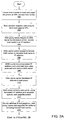
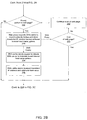
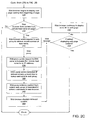
- FIGs 2A-2C illustrate a flow diagram of an embodiment of a process to reduce DNS lookup latency utilizing the above described logic located in computing device 100.
- the process can be performed by processing logic that may comprise software (e.g., an application running on top of an operating system), hardware (e.g., circuitry in a computer system), firmware (e.g., microcode), or any combination of the three forms of logic listed.
- software e.g., an application running on top of an operating system
- hardware e.g., circuitry in a computer system
- firmware e.g., microcode
- the process begins in FIG. 2A by processing logic causing the web browser to load a web page (or other web document) at a URL (processing block 200).
- the URL comprises a remote host name.
- the host name could be any form of a recognized link to an Internet domain. For example, "http://www.yahoo.com" is a link including a host name that may be typed into the address bar of web browser 102.
- Processing logic within the web browser 102 may cause the browser to load the web page by receiving a user's input such as the clicking of the link or the typing of the link into the address bar of the browser (and pressing enter). Actions such as these would be recognized by the web browser 102 logic to begin a process of loading the sought after web page.
- processing logic in the web browser 102 requesting web proxy logic to fetch the web page at the URL (processing block 202).
- the web page at the URL may comprise HTML-based code and/or additional markup languages such as XML.
- Processing logic in the web proxy then sends the request to the DNS cache for translation of the remote host name to an IP address (processing block 204).
- Processing logic in the DNS cache receives the request, and assuming this is the first time this web page has been requested, then sends the request to a remote DNS server to translate the host name to an IP address (processing block 206).
- processing logic receives the translated IP address from the remote DNS server and stores the address in the cache storage (processing block 208). Additionally, the DNS cache also receives a value from the remote DNS server that corresponds to how long the translated IP address is valid (valid-until time value). In many embodiments, the valid-until time value is referred to as a "time to live (TTL)" value.
- TTL time to live
- the translated IP address will become invalid after the valid-until time has expired. At that point, another request would need to be sent to the remote DNS server to retrieve a new translated IP address. Processing logic within the DNS cache may store the valid-until time with the translated IP address in the cache storage array. Then the DNS cache sends the translated IP address to the web proxy logic (processing block 210).
- the web proxy then utilizes the translated IP address to contact the remote web server that hosts the content to retrieve the specific web page associated with the translated IP address (processing block 212).
- the web server stores the web page markup language code (e.g., HTML) itself as well as potentially some content associated with the web page (e.g., images), but not necessarily all content.
- Other content such as content related to advertisements, may be stored on other web servers that are remote from the web server that stores the web page.
- processing logic in the web proxy begins scanning the web page for patterns that denote Internet host names (processing block 214). As discussed above, these patterns need to resolve into a fully functional host name so that the DNS server for that host name's domain can be reached.
- processing logic checks to see if a host name pattern has been found in the web page/document (processing block 216). If a pattern has been found, then processing logic in the web proxy sends a request to the DNS cache to asynchronously lookup-and-store a translated IP address associated with the found Internet host name pattern (processing block 218). At this point processing logic branches into two separate paths. Processing logic in the web proxy determines if the document has ended (processing block 220). If the document has ended, then processing logic in the web proxy continues on to FIG. 2C . If the document has not ended, the processing logic in the web proxy continues the scan of the document (processing block 222). Processing logic in the web proxy then returns to block 216.
- Processing logic in the DNS cache sends a request to a remote DNS server to translate the found Internet host name pattern received from the web proxy (processing block 224). Then processing logic in the DNS cache stores the received translated IP address and valid-until time value in its storage array (processing block 226). Processing logic in the DNS cache performs processing blocks 224 and 226 for each host name pattern found by the web proxy. Thus, the web proxy may cause the DNS cache to perform blocks 224 and 226 multiple times.
- processing logic in the web browser begins to display the web page starting at the beginning of the page (processing block 228).
- the web browser interprets the markup language present in the web page in a linear fashion, (i.e., from the top to the bottom of the page).
- processing logic determines if there is content on the page from a remote host name on the page (processing block 230), such as an image. If processing logic in the web browser determines that there is no remote content from a remote host name on the page, then the process is finished because the web browser was successfully able to complete the process of displaying the web page.
- processing logic in the web browser sends a request to the web proxy logic to retrieve the remote content at the host name (processing block 232). (i.e., like reading a page in a book).
- processing logic in the web browser determines if it has finished displaying the web page content (processing block 234). If the web page is completely displayed, then processing logic in the web browser is finished for the time being. Otherwise, if the web page is not completely displayed, then the web browser continues to display more of the web page (processing block 236). At this point web browser processing logic returns to block 230.
- processing logic in the web proxy then sends a request to the DNS cache to translate the remote host name to an IP address (processing block 238).
- the sought translated IP address is already in the DNS cache storage due to blocks 218, 224, and 226 of the process in FIG. 2B .
- processing logic in the DNS cache then immediately sends the translated IP address to the requesting web proxy logic (processing block 240).
- the web proxy logic then utilizes the translated IP address to contact a remote web server storing the content referenced on the web page and retrieves that content and sends the retrieved content to the web browser (processing block 242).
- the web browser displays the retrieved content on the displayed web page (processing block 244).
- processing logic in the web browser returns to block 234 to check if the web page has finished displaying the web page. If so, the process is finished, but otherwise, the process continues back through block 236 and on.
- FIG. 3 is a flow diagram of an embodiment of a process to proactively re-translate IP addresses that have expired in time.
- the process can be performed by processing logic that may comprise software (e.g., an application running on top of an operating system), hardware (e.g., circuitry in a computer system), firmware (e.g., microcode), or any combination of the three forms of logic listed.
- software e.g., an application running on top of an operating system
- hardware e.g., circuitry in a computer system
- firmware e.g., microcode
- the process begins by processing logic in the DNS cache determining whether a given valid-until time has expired for a translated IP address (processing block 300).
- the DNS cache processing logic can set an expiry timer equal to the time of the shortest valid-until time and the logic may then be informed to process the front of the queue once the timer has expired. Then once the front of the queue has been serviced, the timer is reset to the next shortest valid-until time.
- processing logic determines whether the expired translated IP address has a popularity level that exceeds a threshold popularity level (processing block 302).
- the popularity level of a given translated IP address may be calculated based on any one or more of many possible metrics. For example, the pure number of times the particular IP address has been accessed during the current browser session may be a metric that can have a threshold value number of times to compare against. Another example may be the pure number of times the particular IP address has been accessed through a multiple number of browser sessions may be the metric.
- the multiple number of browser sessions may be the entire lifetime of browser sessions for the computing device or may be the number of browser sessions within a most recent time period (e.g., the past month).
- An additional example of a popularity metric may be to compare the number of accesses to an entire top level domain host name, rather than to a specific web page within the domain, against the threshold value. Many other examples of determining a popularity metric may be implemented.
- processing logic in the DNS cache sends a request to a remote DNS server to re-translate the host name corresponding to the expired IP address (processing block 304).
- the DNS cache stores the update of the translated IP address and new valid-until time value into the storage array (processing block 306) and the process is finished.
- the popularity metric may also be used to determine a number of cached translated IP addresses to be stored in a non-volatile storage space through a reboot, a low power state, or a power cycle of the computing device 100.
- some or many of translated IP addresses that are considered popular may be stored through the power cycle along with the valid-until times.
- the DNS cache can then go through all saved translated IP addresses in the storage array and send requests to re-translate any with expired valid-until times. This allows popular translated IP addresses to be locally available for future use through times when the computing device is not operational.
- FIG. 4 illustrates another embodiment of a device and system to implement a DNS cache and web proxy.
- the computing device 100 includes the web browser 102, DNS cache 120, and I/O interface 126, but the web proxy logic may be located elsewhere.
- the web proxy may be located in a central server.
- the central server may be located on a local network 400 (i.e., central server A 404A), this may be referred to as a local network because the central server is communicatively coupled to the same network 400 that the computing device 100 is coupled to as well.
- central server A 404A communicates with other servers and devices on the Internet through gateway server 104 similarly to computing device 100.
- computing device 100 and central server 404A may be deemed relatively "local" to each other because they can communicate with each other without requiring a communication link through the Internet 106.
- the central server in FIG. 4 containing the web proxy may be remotely accessed by the computing device 100 through the Internet 106 (i.e., central server B 404B).
- computing device 100 may be communicatively coupled to local network 400 either through a wired connection 108 or a wireless connection 110.
- a send and receive transmission antenna 114 is required to be coupled to the local network 400, potentially through an I/O interface 402.
- the main components in FIG. 4 including web browser, DNS cache, and web proxy, all provide the same functionality as discussed in detail above in reference to FIG 2A , 2B , 2C , and FIG. 3 .
- FIG. 5 illustrates yet another embodiment of a device and system to implement a DNS cache and web proxy.
- the computing device 100 includes the web browser 102 and I/O interface 126, but the web proxy logic and DNS cache may be located elsewhere.
- the web proxy may be located in a central server.
- the central server may be communicatively coupled to local network 400 (i.e., central server A 500A) or to the Internet 106 (i.e., central server B 500B) in different embodiments. These embodiments as far as the locations of the central server are discussed above in reference to FIG. 4 .
- the DNS cache is also located on the central server.
- DNS cache 504A is maintained in central server A 500A or DNS cache 504B is maintained in central server B 500B.
- the main components in FIG. 5 including web browser, DNS cache, and web proxy, all provide the same functionality as discussed in detail above in reference to FIG 2A , 2B , 2C , and FIG. 3 .
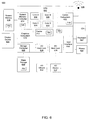
- FIG. 6 illustrates an embodiment of a computer system that includes web proxy and DNS cache logic for reducing host name lookup latency for a mobile Internet connection.
- Computer system 600 is shown.
- the computer system in FIG. 6 generally comprises a system on a chip (SoC) layout.
- SoC layout may be utilized in any type of computer system but is useful for small form factor computing devices, such as cellular phones, smart phones, and small laptop computers, such as netbook-type computing devices.
- the computer system 600 includes a central processing unit (CPU) 602.
- CPU central processing unit
- SoC layout it is common to have a single CPU, though in other embodiments that are not shown, one or more additional CPUs are also located in computer system 600.
- CPU 602 may be Intel ® Corporation CPU or CPU of another brand.
- CPU 602 includes one or more cores.
- CPU 602 includes Core A (604), Core B (606), Core C (608), and Core D (610). Only one core is needed for operation of the computer system, but additional cores can distribute workloads and potentially increase overall system performance.
- each core (such as core A (604)) includes internal functional blocks such as one or more execution units, retirement units, a set of general purpose and specific registers, etc. If the cores shown in FIG. 6 are multi-threaded or hyper-threaded, then each hardware thread may be considered as a core as well.
- CPU 602 may also include one or more caches, such as last level cache (LLC) 612.
- LLC last level cache
- cache 612 may be apportioned in different ways.
- Cache 612 may be one of many different sizes in different embodiments.
- cache 612 may be an 8 megabyte (MB) cache, a 16 MB cache, etc.
- the cache may be a direct mapped cache, a fully associative cache, a multi-way set-associative cache, or a cache with another type of mapping.
- the cache may include one large portion shared among all cores or may be divided into several separately functional slices (e.g., one slice for each core). Each cache may also include one portion shared among all cores and several other portions that are separate functional slices per core.
- CPU 602 includes a system memory controller 614 to provide an interface to communicate with system memory 616.
- System memory 616 may comprise dynamic random access memory (DRAM), such as a type of double data rate (DDR) DRAM, non-volatile memory such as flash memory, phase change memory (PCM), or another type of memory technology.
- DRAM dynamic random access memory
- DDR double data rate
- PCM phase change memory
- System memory 616 may be a general purpose memory to store data and instructions to be operated upon by CPU 602.
- DMA direct memory access
- I/O input/output
- the link i.e., bus, interconnect, etc.
- the link that couples CPU 602 with system memory 616 may include one or more optical, metal, or other wires (i.e. lines) that are capable of transporting data, address, control, and clock information.
- CPU 602 also may include an integrated graphics subsystem 618, that is capable of computing pixel, vertex, and geometry data to be displayed on display device 620.
- CPU 602 additionally may include a communication subsystem 622 that provides an I/O interface to communicate with external devices.
- the communication subsystem 622 may include both wired 624 and wireless 626 interfaces.
- the wired interface 624 may be an Ethernet compatible interface, in some embodiments.
- the wireless interface 626 (through one or more antenna components for transmitting and receiving) may be compatible for wireless communications through several protocols.
- the communication subsystem 622 wireless interface 626 may communicate through an IEEE 802.11-based protocol, a Bluetooth protocol, a cellular protocol, a WiMAX protocol, and/or one or more other wireless protocols.
- CPU 602 also includes a storage controller 628 to provide an interface to a mass storage device 630.
- Mass storage device 630 may be a hard disk drive, a solid state drive, or another form of mass storage.
- CPU 602 also is capable of communicating to I/O devices, such as I/O device 632 and I/O device 634 through I/O host controllers 636 and 638, respectively.
- the I/O host controllers each may allow the CPU 602 to communicate with one or more I/O devices through a certain protocol.
- one I/O host controller may be a Universal Serial Bus (USB) host controller to allow for plug in communication through USB ports between the CPU 602 and other external USB interfaces.
- USB Universal Serial Bus
- an input interface 640 allows the computer system to be coupled to input devices such as a keyboard 642 or mouse 644.
- the computing system that makes up computing device 100 may be implemented in a different way, such as in a standard CPU/chipset configuration instead of as a SoC design.
- logic including potentially web proxy logic and DNS cache logic
- the logic may be present in any one of the following locations.
- the logic may be present in system memory 616 (logic 700), mass storage 630 (logic 702), cache 612 (logic 704), or potentially in any core (not shown).
- the logic may be present in the general circuitry (uncore) of the CPU 602 outside of the cores (logic 706), in system memory controller 614 (logic 708), in the communication subsystem 622 (logic 710), or potentially in any core (not shown).
- some logic again potentially including web proxy logic and DNS cache logic, may be located in a central server external to computer system 600.
Landscapes
- Engineering & Computer Science (AREA)
- Computer Networks & Wireless Communication (AREA)
- Signal Processing (AREA)
- Information Transfer Between Computers (AREA)
- Data Exchanges In Wide-Area Networks (AREA)
Claims (5)
- Procédé comprenant :le fait de faire (200) un navigateur Web (102) charger une page Web depuis un URL comprenant un nom d'hôte distant ;la demande (202) par le navigateur Web (102) à un serveur mandataire Web (118, 406A, 406B, 502A, 502B) d'extraire la page Web depuis l'URL ;l'envoi (204) par le serveur mandataire Web (118, 406A, 406B, 502A, 502B) d'une demande à un cache DNS (Système de noms de domaine) Internet (120, 504A, 504B) d'une traduction du nom de l'hôte distant en une adresse IP ;l'envoi (206) par le cache DNS (120, 504A, 504B) d'une demande à un serveur DNS distant (116, 118) de traduire le nom de l'hôte en une adresse IP ;le stockage (208) par le cache DNS (120, 504A, 504B) de l'adresse IP traduite et d'une valeur de temps de validité reçue du serveur DNS distant ;l'envoi (210) par le cache DNS (120, 504A, 504B) de l'adresse IP traduite au serveur mandataire Web (118, 406A, 406B, 502A, 502B) ;la prise de contact (212) par le serveur mandataire Web (118, 406A, 406B, 502A, 502B) avec un serveur Web distant (130) en utilisant l'adresse IP traduite et la demande de la page Web spécifique ;le balayage de la page Web par le serveur mandataire Web (118, 406A, 406B, 502A, 502B), pendant l'extraction de la page Web, à la recherche de formes qui se résolvent en des noms d'hôtes Internet entièrement fonctionnels ;pour chaque forme trouvée (216, 220) pendant la continuation (222) du balayage de la page Web,la demande (218) par le serveur mandataire Web (118, 406A, 406B, 502A, 502B) au cache DNS (120, 504A, 504B) de consulter et stocker une adresse IP traduite située à la forme de nom d'hôte Internet trouvée, cette consultation et ce stockage se faisant de manière asynchrone en conjonction avec les demandes du navigateur Web (102) de façon à ne pas causer de dépendance qui ferait que le navigateur Web (102) aurait besoin d'attendre ;l'envoi (224) par le cache DNS (120, 504A, 504B), travaillant indépendamment du serveur mandataire Web (118, 406A, 406B, 502A, 502B), d'une demande à un serveur DNS distant (116, 118) de traduire la forme de nom d'hôte Internet trouvée et de stocker (226) l'adresse IP traduite et la valeur de temps de validité ;le commencement (228) d'affichage de la page Web par le navigateur Web (102) en partant du début de la page ;avec la continuation (236) de l'affichage par le navigateur Web (102) d'une quantité plus grande de la page Web jusqu'à ce qu'il ait fini (234) d'afficher le contenu de la page Web, pour chaque contenu venant d'un nom d'hôte distant que le navigateur Web (102) trouve sur la page :l'envoi (232) par le navigateur Web (102) d'une demande au serveur mandataire Web (118, 406A, 406B, 502A, 502B) d'extraire le contenu distant depuis le nom de l'hôte ;l'envoi (238) par le serveur mandataire Web (118, 406A, 406B, 502A, 502B), travaillant indépendamment du navigateur Web (102), d'une demande au cache DNS (120, 504A, 504B) de traduire le nom de l'hôte distant en une adresse IP ;l'envoi (240) par le cache DNS (120, 504A, 504B) au serveur mandataire Web (118, 406A, 406B, 502A, 502B) de l'adresse IP traduite toujours présente due à la consultation et au stockage ;l'extraction (242) par le serveur mandataire Web (118, 406A, 406B, 502A, 502B) du contenu venant du navigateur Web distant (130) depuis l'adresse IP traduite et l'envoi de ce contenu au navigateur Web (102) ;l'affichage (244) par le navigateur Web du contenu extrait.
- Procédé selon la revendication 1, ce procédé comprenant en outre :lors de l'expiration (300) du temps de validité d'une adresse IP traduite donnée, la demande (304) d'une nouvelle traduction d'un nom d'hôte Internet associé à cette adresse IP traduite donnée ;la réception de l'adresse IP re-traduite et d'un nouveau temps de validité associé à l'adresse IP re-traduite ; etle re-stockage (306) de l'adresse IP re-traduite reçue et du nouveau temps de validité dans le cache DNS (120, 504A, 504B).
- Procédé selon la revendication 2, ce procédé comprenant en outre :la détermination (302) de si une première adresse IP traduite avec un premier temps de validité a passé un test de popularité, ledit test de popularité comprenant le dépassement d'un nombre seuil d'accès à la première adresse IP traduite et/ou au nom d'hôte de domaine de premier niveau comprenant cette adresse IP ; etla demande (304) d'une nouvelle traduction de la première adresse IP traduite lors de l'expiration (300) du premier temps de validité en réponse au succès de la première adresse IP (302) à passer le test de popularité.
- Système comprenant :un serveur central (404A, 404B) comprenant une logique de serveur mandataire Web (406A, 406B) et une interface E/S (408A, 408B), etun dispositif informatique (100) comprenant un navigateur Web (102), une interface E/S (126) de même qu'un cache DNS (Système de noms de domaine) Internet (120) avec un stockage (124) et une logique (122) de cache DNS,dans lequel le serveur central (404A) est couplé de manière communicative au même réseau (400) que celui auquel le dispositif informatique (100) est couplé également, et le serveur central (404A) communique avec d'autres serveurs et dispositifs (116, 128, 130) sur Internet (106) par l'intermédiaire d'un serveur de passerelle (104) similairement au dispositif informatique (100),ou dans lequel le serveur central (404B) contenant le serveur mandataire Web (406B) est accédé à distance par le dispositif informatique (100) par l'intermédiaire d'Internet (106),caractérisé en ce que le navigateur Web (102), le cache DNS (120) et le serveur mandataire Web (406A, 406B) sont configurés de façon à exécuter le procédé selon l'une quelconque des revendications 1 à 3.
- Système comprenant :un serveur central (500A, 500B) comprenant une logique de serveur mandataire Web (502A, 504B), un cache DNS (Système de noms de domaine) Internet (504A, 504B) avec un stockage (508A, 508B) et une logique de cache DNS (506A, 506B), de même qu'une interface E/S (510A, 510B), etun dispositif informatique (100) comprenant un navigateur Web (102) et une interface E/S (126),dans lequel le serveur central (500A) est couplé de manière communicative au même réseau (400) que celui auquel le dispositif informatique (100) est couplé également, et le serveur central (500A) communique avec d'autres serveurs et dispositifs (116, 118, 130) sur Internet (106) par l'intermédiaire d'un serveur de passerelle (104) similairement au dispositif informatique (100),ou dans lequel le serveur central (500B) contenant le serveur mandataire Web (502B) est accédé à distance par le dispositif informatique (100) par l'intermédiaire d'Internet (106),caractérisé en ce que le navigateur Web (102), le cache DNS (504A, 504B) et le serveur mandataire Web (502A, 502B) sont configurés de façon à exécuter le procédé selon l'une quelconque des revendications 1 à 3.
Applications Claiming Priority (1)
| Application Number | Priority Date | Filing Date | Title |
|---|---|---|---|
| US12/655,020 US7970940B1 (en) | 2009-12-22 | 2009-12-22 | Domain name system lookup latency reduction |
Publications (2)
| Publication Number | Publication Date |
|---|---|
| EP2339816A1 EP2339816A1 (fr) | 2011-06-29 |
| EP2339816B1 true EP2339816B1 (fr) | 2016-06-22 |
Family
ID=43629515
Family Applications (1)
| Application Number | Title | Priority Date | Filing Date |
|---|---|---|---|
| EP10252131.7A Not-in-force EP2339816B1 (fr) | 2009-12-22 | 2010-12-16 | Réduction du délai d'établissement de consultation de système de nom de domaine |
Country Status (4)
| Country | Link |
|---|---|
| US (1) | US7970940B1 (fr) |
| EP (1) | EP2339816B1 (fr) |
| JP (2) | JP2011135579A (fr) |
| CN (1) | CN102104636B (fr) |
Families Citing this family (121)
| Publication number | Priority date | Publication date | Assignee | Title |
|---|---|---|---|---|
| US8291117B1 (en) | 2012-02-15 | 2012-10-16 | Limelight Networks, Inc. | Scaled domain name service |
| US8028090B2 (en) | 2008-11-17 | 2011-09-27 | Amazon Technologies, Inc. | Request routing utilizing client location information |
| US7991910B2 (en) | 2008-11-17 | 2011-08-02 | Amazon Technologies, Inc. | Updating routing information based on client location |
| US8601090B1 (en) | 2008-03-31 | 2013-12-03 | Amazon Technologies, Inc. | Network resource identification |
| US7962597B2 (en) | 2008-03-31 | 2011-06-14 | Amazon Technologies, Inc. | Request routing based on class |
| US8447831B1 (en) | 2008-03-31 | 2013-05-21 | Amazon Technologies, Inc. | Incentive driven content delivery |
| US8321568B2 (en) | 2008-03-31 | 2012-11-27 | Amazon Technologies, Inc. | Content management |
| US8606996B2 (en) | 2008-03-31 | 2013-12-10 | Amazon Technologies, Inc. | Cache optimization |
| US7970820B1 (en) | 2008-03-31 | 2011-06-28 | Amazon Technologies, Inc. | Locality based content distribution |
| US8533293B1 (en) | 2008-03-31 | 2013-09-10 | Amazon Technologies, Inc. | Client side cache management |
| US8156243B2 (en) | 2008-03-31 | 2012-04-10 | Amazon Technologies, Inc. | Request routing |
| US9407681B1 (en) | 2010-09-28 | 2016-08-02 | Amazon Technologies, Inc. | Latency measurement in resource requests |
| US9912740B2 (en) | 2008-06-30 | 2018-03-06 | Amazon Technologies, Inc. | Latency measurement in resource requests |
| US7925782B2 (en) | 2008-06-30 | 2011-04-12 | Amazon Technologies, Inc. | Request routing using network computing components |
| US8065417B1 (en) | 2008-11-17 | 2011-11-22 | Amazon Technologies, Inc. | Service provider registration by a content broker |
| US8732309B1 (en) | 2008-11-17 | 2014-05-20 | Amazon Technologies, Inc. | Request routing utilizing cost information |
| US8073940B1 (en) | 2008-11-17 | 2011-12-06 | Amazon Technologies, Inc. | Managing content delivery network service providers |
| US8060616B1 (en) | 2008-11-17 | 2011-11-15 | Amazon Technologies, Inc. | Managing CDN registration by a storage provider |
| US8521880B1 (en) | 2008-11-17 | 2013-08-27 | Amazon Technologies, Inc. | Managing content delivery network service providers |
| US8122098B1 (en) | 2008-11-17 | 2012-02-21 | Amazon Technologies, Inc. | Managing content delivery network service providers by a content broker |
| US8521851B1 (en) | 2009-03-27 | 2013-08-27 | Amazon Technologies, Inc. | DNS query processing using resource identifiers specifying an application broker |
| US8756341B1 (en) * | 2009-03-27 | 2014-06-17 | Amazon Technologies, Inc. | Request routing utilizing popularity information |
| US8412823B1 (en) | 2009-03-27 | 2013-04-02 | Amazon Technologies, Inc. | Managing tracking information entries in resource cache components |
| US8688837B1 (en) | 2009-03-27 | 2014-04-01 | Amazon Technologies, Inc. | Dynamically translating resource identifiers for request routing using popularity information |
| US8782236B1 (en) | 2009-06-16 | 2014-07-15 | Amazon Technologies, Inc. | Managing resources using resource expiration data |
| US8397073B1 (en) | 2009-09-04 | 2013-03-12 | Amazon Technologies, Inc. | Managing secure content in a content delivery network |
| US8433771B1 (en) | 2009-10-02 | 2013-04-30 | Amazon Technologies, Inc. | Distribution network with forward resource propagation |
| US9495338B1 (en) | 2010-01-28 | 2016-11-15 | Amazon Technologies, Inc. | Content distribution network |
| US8326947B2 (en) * | 2010-02-12 | 2012-12-04 | Research In Motion Limited | Method, system and apparatus for delivering web content |
| US8423607B2 (en) * | 2010-06-01 | 2013-04-16 | Qualcomm Incorporated | Fallback procedures for domain name server update in a mobile IP registration |
| US8756272B1 (en) | 2010-08-26 | 2014-06-17 | Amazon Technologies, Inc. | Processing encoded content |
| US8463915B1 (en) * | 2010-09-17 | 2013-06-11 | Google Inc. | Method for reducing DNS resolution delay |
| US9712484B1 (en) | 2010-09-28 | 2017-07-18 | Amazon Technologies, Inc. | Managing request routing information utilizing client identifiers |
| US10958501B1 (en) | 2010-09-28 | 2021-03-23 | Amazon Technologies, Inc. | Request routing information based on client IP groupings |
| US10097398B1 (en) | 2010-09-28 | 2018-10-09 | Amazon Technologies, Inc. | Point of presence management in request routing |
| US8819283B2 (en) | 2010-09-28 | 2014-08-26 | Amazon Technologies, Inc. | Request routing in a networked environment |
| US9003035B1 (en) | 2010-09-28 | 2015-04-07 | Amazon Technologies, Inc. | Point of presence management in request routing |
| US8930513B1 (en) | 2010-09-28 | 2015-01-06 | Amazon Technologies, Inc. | Latency measurement in resource requests |
| US8577992B1 (en) | 2010-09-28 | 2013-11-05 | Amazon Technologies, Inc. | Request routing management based on network components |
| US8938526B1 (en) | 2010-09-28 | 2015-01-20 | Amazon Technologies, Inc. | Request routing management based on network components |
| US8924528B1 (en) | 2010-09-28 | 2014-12-30 | Amazon Technologies, Inc. | Latency measurement in resource requests |
| US8468247B1 (en) | 2010-09-28 | 2013-06-18 | Amazon Technologies, Inc. | Point of presence management in request routing |
| US8452874B2 (en) | 2010-11-22 | 2013-05-28 | Amazon Technologies, Inc. | Request routing processing |
| US9391949B1 (en) | 2010-12-03 | 2016-07-12 | Amazon Technologies, Inc. | Request routing processing |
| US10467042B1 (en) | 2011-04-27 | 2019-11-05 | Amazon Technologies, Inc. | Optimized deployment based upon customer locality |
| US20170192684A1 (en) | 2011-05-09 | 2017-07-06 | International Business Machines Corporation | Auditing a transaction in a dispersed storage network |
| US8707393B2 (en) * | 2011-05-09 | 2014-04-22 | Cleversafe, Inc. | Providing dispersed storage network location information of a hypertext markup language file |
| WO2013025124A1 (fr) * | 2011-08-12 | 2013-02-21 | Google Inc. | Anticipation des domaines utilisés pour charger une page web |
| CN102340554B (zh) * | 2011-09-29 | 2014-04-02 | 奇智软件(北京)有限公司 | 一种域名系统dns 的最优应用服务器选取方法和装置 |
| CN103167000B (zh) * | 2011-12-15 | 2016-08-31 | 深圳市金蝶中间件有限公司 | 实现页面访问的方法及系统 |
| US8904009B1 (en) | 2012-02-10 | 2014-12-02 | Amazon Technologies, Inc. | Dynamic content delivery |
| US10021179B1 (en) | 2012-02-21 | 2018-07-10 | Amazon Technologies, Inc. | Local resource delivery network |
| US9172674B1 (en) | 2012-03-21 | 2015-10-27 | Amazon Technologies, Inc. | Managing request routing information utilizing performance information |
| US10623408B1 (en) | 2012-04-02 | 2020-04-14 | Amazon Technologies, Inc. | Context sensitive object management |
| US9154551B1 (en) | 2012-06-11 | 2015-10-06 | Amazon Technologies, Inc. | Processing DNS queries to identify pre-processing information |
| ES2644593T3 (es) * | 2012-06-29 | 2017-11-29 | Huawei Technologies Co., Ltd. | Método y dispositivo de autentificación de identidad |
| CN103581349B (zh) * | 2012-07-24 | 2018-05-15 | 腾讯科技(深圳)有限公司 | 一种域名解析方法及装置 |
| US20160364771A1 (en) * | 2012-08-15 | 2016-12-15 | Ghostery, Inc. | Methods, apparatus, and systems for surveillance of third-party digital technology vendors providing secondary content in a content publisher's web page |
| US10291492B2 (en) | 2012-08-15 | 2019-05-14 | Evidon, Inc. | Systems and methods for discovering sources of online content |
| US9112922B2 (en) | 2012-08-28 | 2015-08-18 | Vantrix Corporation | Method and system for self-tuning cache management |
| US9525659B1 (en) | 2012-09-04 | 2016-12-20 | Amazon Technologies, Inc. | Request routing utilizing point of presence load information |
| EP3618357B1 (fr) * | 2012-09-17 | 2022-06-01 | Netsweeper (Barbados) Inc. | Mappage d'adresses de réseau et de noms d'hôtes dans un service de politique |
| US9323577B2 (en) | 2012-09-20 | 2016-04-26 | Amazon Technologies, Inc. | Automated profiling of resource usage |
| US9135048B2 (en) | 2012-09-20 | 2015-09-15 | Amazon Technologies, Inc. | Automated profiling of resource usage |
| CN102882991B (zh) * | 2012-09-29 | 2016-03-30 | 北京奇虎科技有限公司 | 一种浏览器及其进行域名解析的方法 |
| US10565394B2 (en) * | 2012-10-25 | 2020-02-18 | Verisign, Inc. | Privacy—preserving data querying with authenticated denial of existence |
| US10205698B1 (en) | 2012-12-19 | 2019-02-12 | Amazon Technologies, Inc. | Source-dependent address resolution |
| CN103024098B (zh) * | 2012-12-27 | 2015-09-09 | 北京百度网讯科技有限公司 | 一种域名解析方法、系统及装置 |
| CN103179125B (zh) * | 2013-03-25 | 2016-08-31 | 北京奇虎科技有限公司 | 网站认证信息的显示方法及浏览器 |
| US9294391B1 (en) | 2013-06-04 | 2016-03-22 | Amazon Technologies, Inc. | Managing network computing components utilizing request routing |
| CN104301294B (zh) * | 2013-07-19 | 2017-11-21 | 中国移动通信集团广东有限公司 | 一种dns查询请求的响应方法、装置及网络侧设备 |
| US9338127B2 (en) * | 2013-09-11 | 2016-05-10 | International Business Machines Corparation | Browser based hostname resolution for non-DNS (domain name service) and/or different DNS environments |
| US10911561B2 (en) | 2013-12-12 | 2021-02-02 | Telefonaktiebolaget Lm Ericsson (Publ) | Method and network node for caching web content |
| US10284677B2 (en) | 2014-01-31 | 2019-05-07 | Telefonaktiebolaget Lm Ericsson (Publ) | Method and apparatus for obtaining content from a media server |
| US9954815B2 (en) * | 2014-09-15 | 2018-04-24 | Nxp Usa, Inc. | Domain name collaboration service using domain name dependency server |
| KR102154788B1 (ko) * | 2014-10-02 | 2020-09-11 | 삼성전자주식회사 | 무선 통신 시스템의 단말에서 DNS(Domain Name Service) 레졸루션 방법 및 장치 |
| US10091096B1 (en) | 2014-12-18 | 2018-10-02 | Amazon Technologies, Inc. | Routing mode and point-of-presence selection service |
| US10097448B1 (en) | 2014-12-18 | 2018-10-09 | Amazon Technologies, Inc. | Routing mode and point-of-presence selection service |
| US10033627B1 (en) | 2014-12-18 | 2018-07-24 | Amazon Technologies, Inc. | Routing mode and point-of-presence selection service |
| JP6747721B2 (ja) * | 2015-02-27 | 2020-08-26 | レベル スリー コミュニケーションズ,エルエルシー | ネットワークアドレス解決 |
| US10225326B1 (en) | 2015-03-23 | 2019-03-05 | Amazon Technologies, Inc. | Point of presence based data uploading |
| US9887932B1 (en) | 2015-03-30 | 2018-02-06 | Amazon Technologies, Inc. | Traffic surge management for points of presence |
| US9887931B1 (en) | 2015-03-30 | 2018-02-06 | Amazon Technologies, Inc. | Traffic surge management for points of presence |
| US9819567B1 (en) | 2015-03-30 | 2017-11-14 | Amazon Technologies, Inc. | Traffic surge management for points of presence |
| US9832141B1 (en) | 2015-05-13 | 2017-11-28 | Amazon Technologies, Inc. | Routing based request correlation |
| US20160366123A1 (en) * | 2015-06-10 | 2016-12-15 | Mcafee, Inc. | Device naming in an internet of things |
| US10616179B1 (en) | 2015-06-25 | 2020-04-07 | Amazon Technologies, Inc. | Selective routing of domain name system (DNS) requests |
| US10097566B1 (en) | 2015-07-31 | 2018-10-09 | Amazon Technologies, Inc. | Identifying targets of network attacks |
| US9794281B1 (en) | 2015-09-24 | 2017-10-17 | Amazon Technologies, Inc. | Identifying sources of network attacks |
| US9742795B1 (en) | 2015-09-24 | 2017-08-22 | Amazon Technologies, Inc. | Mitigating network attacks |
| US9774619B1 (en) | 2015-09-24 | 2017-09-26 | Amazon Technologies, Inc. | Mitigating network attacks |
| US10270878B1 (en) | 2015-11-10 | 2019-04-23 | Amazon Technologies, Inc. | Routing for origin-facing points of presence |
| US10257307B1 (en) | 2015-12-11 | 2019-04-09 | Amazon Technologies, Inc. | Reserved cache space in content delivery networks |
| US10049051B1 (en) | 2015-12-11 | 2018-08-14 | Amazon Technologies, Inc. | Reserved cache space in content delivery networks |
| US10348639B2 (en) | 2015-12-18 | 2019-07-09 | Amazon Technologies, Inc. | Use of virtual endpoints to improve data transmission rates |
| CN105681489A (zh) * | 2016-03-02 | 2016-06-15 | 北京网康科技有限公司 | 一种域名系统dns查询的方法及装置 |
| US10075551B1 (en) | 2016-06-06 | 2018-09-11 | Amazon Technologies, Inc. | Request management for hierarchical cache |
| US10110694B1 (en) | 2016-06-29 | 2018-10-23 | Amazon Technologies, Inc. | Adaptive transfer rate for retrieving content from a server |
| KR102482220B1 (ko) * | 2016-08-11 | 2022-12-28 | 삼성전자주식회사 | 인터넷에 접속하기 위한 전자 장치 및 방법 |
| US9992086B1 (en) | 2016-08-23 | 2018-06-05 | Amazon Technologies, Inc. | External health checking of virtual private cloud network environments |
| US10033691B1 (en) | 2016-08-24 | 2018-07-24 | Amazon Technologies, Inc. | Adaptive resolution of domain name requests in virtual private cloud network environments |
| US10469513B2 (en) | 2016-10-05 | 2019-11-05 | Amazon Technologies, Inc. | Encrypted network addresses |
| US10164943B1 (en) * | 2016-10-31 | 2018-12-25 | Workday, Inc. | Detection and prediction of web interaction performance issues |
| US10193853B1 (en) | 2016-10-31 | 2019-01-29 | Workday, Inc. | Web browser or web service based detection of internet facing DNS server |
| US10372499B1 (en) | 2016-12-27 | 2019-08-06 | Amazon Technologies, Inc. | Efficient region selection system for executing request-driven code |
| US10831549B1 (en) | 2016-12-27 | 2020-11-10 | Amazon Technologies, Inc. | Multi-region request-driven code execution system |
| US10938884B1 (en) | 2017-01-30 | 2021-03-02 | Amazon Technologies, Inc. | Origin server cloaking using virtual private cloud network environments |
| WO2018180767A1 (fr) * | 2017-03-31 | 2018-10-04 | 日本電気株式会社 | Dispositif de relais, système de réseau et procédé de contrôle de réseau |
| US10503613B1 (en) | 2017-04-21 | 2019-12-10 | Amazon Technologies, Inc. | Efficient serving of resources during server unavailability |
| US11075987B1 (en) | 2017-06-12 | 2021-07-27 | Amazon Technologies, Inc. | Load estimating content delivery network |
| US10447648B2 (en) | 2017-06-19 | 2019-10-15 | Amazon Technologies, Inc. | Assignment of a POP to a DNS resolver based on volume of communications over a link between client devices and the POP |
| US10742593B1 (en) | 2017-09-25 | 2020-08-11 | Amazon Technologies, Inc. | Hybrid content request routing system |
| US10592578B1 (en) | 2018-03-07 | 2020-03-17 | Amazon Technologies, Inc. | Predictive content push-enabled content delivery network |
| US11082339B2 (en) | 2018-10-12 | 2021-08-03 | Hewlett Packard Enterprise Development Lp | Domain name system (DNS) optimization for wide area networks |
| US11201881B2 (en) * | 2018-10-31 | 2021-12-14 | Hewlett Packard Enterprise Development Lp | Behavioral profiling of service access using intent to access in discovery protocols |
| US10862852B1 (en) | 2018-11-16 | 2020-12-08 | Amazon Technologies, Inc. | Resolution of domain name requests in heterogeneous network environments |
| US11025747B1 (en) | 2018-12-12 | 2021-06-01 | Amazon Technologies, Inc. | Content request pattern-based routing system |
| CN109672691A (zh) * | 2019-01-30 | 2019-04-23 | 深圳互联先锋科技有限公司 | 一种实时监控dns队列请求数的方法及系统 |
| CN111931100B (zh) * | 2020-06-22 | 2024-04-26 | 北京旷视科技有限公司 | 请求处理系统、方法、装置、电子设备和计算机可读介质 |
| US12348802B2 (en) * | 2020-08-24 | 2025-07-01 | Netflix, Inc. | Techniques for bypassing the domain name system |
| US12224977B2 (en) * | 2022-01-11 | 2025-02-11 | Comcast Cable Communications, Llc | Systems, methods, and apparatuses for improved domain name resolution |
Family Cites Families (13)
| Publication number | Priority date | Publication date | Assignee | Title |
|---|---|---|---|---|
| US6041041A (en) * | 1997-04-15 | 2000-03-21 | Ramanathan; Srinivas | Method and system for managing data service systems |
| JPH11219313A (ja) * | 1998-02-02 | 1999-08-10 | Mitsubishi Electric Corp | コンテンツ先読み方法 |
| US6262987B1 (en) * | 1998-03-26 | 2001-07-17 | Compaq Computer Corp | System and method for reducing latencies while translating internet host name-address bindings |
| US7082476B1 (en) * | 2000-05-24 | 2006-07-25 | Cisco Technology, Inc. | System and method of optimizing retrieval of network resources by identifying and substituting embedded symbolic host name references with network addresses in accordance with substitution policies |
| US6907022B2 (en) * | 2001-01-27 | 2005-06-14 | Motorola, Inc. | Method and apparatus in a portable subscriber unit for minimizing a connection setup time through a communication network |
| JP2003229881A (ja) * | 2002-02-05 | 2003-08-15 | Nec Access Technica Ltd | 端末装置 |
| US7254642B2 (en) * | 2003-01-30 | 2007-08-07 | International Business Machines Corporation | Method and apparatus for local IP address translation |
| JP4266950B2 (ja) * | 2005-03-31 | 2009-05-27 | Necアクセステクニカ株式会社 | アドレス情報取得装置およびアドレス情報取得方法 |
| US20070118667A1 (en) * | 2005-11-21 | 2007-05-24 | Limelight Networks, Inc. | Domain name resolution based dynamic resource assignment |
| US20080177894A1 (en) * | 2007-01-22 | 2008-07-24 | Jennings Raymond B | Methods and Apparatus For Improving Interactions Between Multi-Server Web Environments and Web Browsers |
| CN101282368A (zh) * | 2007-04-04 | 2008-10-08 | 华为技术有限公司 | 保存域名系统记录的方法、装置、域名解析方法及装置 |
| CN100502367C (zh) * | 2007-04-04 | 2009-06-17 | 华为技术有限公司 | 保存域名系统记录的方法、装置 |
| WO2010081160A2 (fr) * | 2009-01-12 | 2010-07-15 | Viasat, Inc. | Optimisation du web |
-
2009
- 2009-12-22 US US12/655,020 patent/US7970940B1/en active Active
-
2010
- 2010-12-16 EP EP10252131.7A patent/EP2339816B1/fr not_active Not-in-force
- 2010-12-21 JP JP2010284789A patent/JP2011135579A/ja active Pending
- 2010-12-22 CN CN201010603688.4A patent/CN102104636B/zh not_active Expired - Fee Related
-
2013
- 2013-08-02 JP JP2013161497A patent/JP5632053B2/ja not_active Expired - Fee Related
Also Published As
| Publication number | Publication date |
|---|---|
| CN102104636A (zh) | 2011-06-22 |
| US7970940B1 (en) | 2011-06-28 |
| JP2013240106A (ja) | 2013-11-28 |
| CN102104636B (zh) | 2015-06-03 |
| JP2011135579A (ja) | 2011-07-07 |
| US20110153867A1 (en) | 2011-06-23 |
| JP5632053B2 (ja) | 2014-11-26 |
| EP2339816A1 (fr) | 2011-06-29 |
Similar Documents
| Publication | Publication Date | Title |
|---|---|---|
| EP2339816B1 (fr) | Réduction du délai d'établissement de consultation de système de nom de domaine | |
| US6973546B2 (en) | Method, system, and program for maintaining data in distributed caches | |
| CN102438045B (zh) | Web页面的预取方法、系统以及访问web页面的方法 | |
| US8219752B1 (en) | System for caching data | |
| US8898417B1 (en) | Block-based storage device with a memory-mapped interface | |
| CN105550338B (zh) | 一种基于HTML5应用缓存的移动Web缓存优化方法 | |
| US7689663B2 (en) | Embedded web-based management method | |
| US20160077740A1 (en) | Systems and methods for enabling local caching for remote storage devices over a network via nvme controller | |
| CN110895446A (zh) | 存储设备以及系统 | |
| US20100180208A1 (en) | Server side data cache system | |
| US7076500B2 (en) | Selective file caching method | |
| JP5988402B2 (ja) | Webコンテンツ先読み制御装置、Webコンテンツ先読み制御プログラム、及びWebコンテンツ先読み制御方法 | |
| WO2009014659A1 (fr) | Détecteur de statut de cache de page web | |
| CN106681990B (zh) | 一种移动云存储环境下缓存数据的预取方法 | |
| CN103152367A (zh) | 一种缓存的动态维护更新方法及系统 | |
| US11783002B2 (en) | Intelligent dynamic preloading | |
| CN117194827B (zh) | Cdn目录刷新的方法及电子设备 | |
| GB2501584A (en) | Anticipation of server responses and roll back in distributed application | |
| Guo et al. | Looxy: Web access optimization for mobile applications with a local proxy | |
| US12405899B1 (en) | Innovative way to improve the translation lookaside buffer (TLB) miss latency | |
| CN111131549B (zh) | 客户端预取数据的方法、存储介质 | |
| Choi et al. | Exploiting NIC memory for improving cluster-based webserver performance | |
| CN121349941A (zh) | 一种chi从属节点读命令传输方法、装置、片上系统及存储介质 | |
| CN119718980A (zh) | 基于单端口sram的直接内存访问装置、方法、设备及介质 | |
| CN104104710A (zh) | 一种移动云计算环境中基于低能耗的数据缓存方法 |
Legal Events
| Date | Code | Title | Description |
|---|---|---|---|
| PUAI | Public reference made under article 153(3) epc to a published international application that has entered the european phase |
Free format text: ORIGINAL CODE: 0009012 |
|
| 17P | Request for examination filed |
Effective date: 20110112 |
|
| AK | Designated contracting states |
Kind code of ref document: A1 Designated state(s): AL AT BE BG CH CY CZ DE DK EE ES FI FR GB GR HR HU IE IS IT LI LT LU LV MC MK MT NL NO PL PT RO RS SE SI SK SM TR |
|
| AX | Request for extension of the european patent |
Extension state: BA ME |
|
| GRAP | Despatch of communication of intention to grant a patent |
Free format text: ORIGINAL CODE: EPIDOSNIGR1 |
|
| INTG | Intention to grant announced |
Effective date: 20160104 |
|
| GRAS | Grant fee paid |
Free format text: ORIGINAL CODE: EPIDOSNIGR3 |
|
| GRAA | (expected) grant |
Free format text: ORIGINAL CODE: 0009210 |
|
| AK | Designated contracting states |
Kind code of ref document: B1 Designated state(s): AL AT BE BG CH CY CZ DE DK EE ES FI FR GB GR HR HU IE IS IT LI LT LU LV MC MK MT NL NO PL PT RO RS SE SI SK SM TR |
|
| REG | Reference to a national code |
Ref country code: GB Ref legal event code: FG4D |
|
| REG | Reference to a national code |
Ref country code: CH Ref legal event code: EP |
|
| REG | Reference to a national code |
Ref country code: IE Ref legal event code: FG4D |
|
| REG | Reference to a national code |
Ref country code: AT Ref legal event code: REF Ref document number: 808246 Country of ref document: AT Kind code of ref document: T Effective date: 20160715 |
|
| REG | Reference to a national code |
Ref country code: DE Ref legal event code: R096 Ref document number: 602010034143 Country of ref document: DE |
|
| REG | Reference to a national code |
Ref country code: NL Ref legal event code: FP |
|
| REG | Reference to a national code |
Ref country code: LT Ref legal event code: MG4D |
|
| PG25 | Lapsed in a contracting state [announced via postgrant information from national office to epo] |
Ref country code: NO Free format text: LAPSE BECAUSE OF FAILURE TO SUBMIT A TRANSLATION OF THE DESCRIPTION OR TO PAY THE FEE WITHIN THE PRESCRIBED TIME-LIMIT Effective date: 20160922 Ref country code: LT Free format text: LAPSE BECAUSE OF FAILURE TO SUBMIT A TRANSLATION OF THE DESCRIPTION OR TO PAY THE FEE WITHIN THE PRESCRIBED TIME-LIMIT Effective date: 20160622 Ref country code: FI Free format text: LAPSE BECAUSE OF FAILURE TO SUBMIT A TRANSLATION OF THE DESCRIPTION OR TO PAY THE FEE WITHIN THE PRESCRIBED TIME-LIMIT Effective date: 20160622 |
|
| REG | Reference to a national code |
Ref country code: AT Ref legal event code: MK05 Ref document number: 808246 Country of ref document: AT Kind code of ref document: T Effective date: 20160622 |
|
| REG | Reference to a national code |
Ref country code: FR Ref legal event code: PLFP Year of fee payment: 7 |
|
| PG25 | Lapsed in a contracting state [announced via postgrant information from national office to epo] |
Ref country code: SE Free format text: LAPSE BECAUSE OF FAILURE TO SUBMIT A TRANSLATION OF THE DESCRIPTION OR TO PAY THE FEE WITHIN THE PRESCRIBED TIME-LIMIT Effective date: 20160622 Ref country code: GR Free format text: LAPSE BECAUSE OF FAILURE TO SUBMIT A TRANSLATION OF THE DESCRIPTION OR TO PAY THE FEE WITHIN THE PRESCRIBED TIME-LIMIT Effective date: 20160923 Ref country code: LV Free format text: LAPSE BECAUSE OF FAILURE TO SUBMIT A TRANSLATION OF THE DESCRIPTION OR TO PAY THE FEE WITHIN THE PRESCRIBED TIME-LIMIT Effective date: 20160622 Ref country code: HR Free format text: LAPSE BECAUSE OF FAILURE TO SUBMIT A TRANSLATION OF THE DESCRIPTION OR TO PAY THE FEE WITHIN THE PRESCRIBED TIME-LIMIT Effective date: 20160622 Ref country code: RS Free format text: LAPSE BECAUSE OF FAILURE TO SUBMIT A TRANSLATION OF THE DESCRIPTION OR TO PAY THE FEE WITHIN THE PRESCRIBED TIME-LIMIT Effective date: 20160622 |
|
| PG25 | Lapsed in a contracting state [announced via postgrant information from national office to epo] |
Ref country code: EE Free format text: LAPSE BECAUSE OF FAILURE TO SUBMIT A TRANSLATION OF THE DESCRIPTION OR TO PAY THE FEE WITHIN THE PRESCRIBED TIME-LIMIT Effective date: 20160622 Ref country code: IT Free format text: LAPSE BECAUSE OF FAILURE TO SUBMIT A TRANSLATION OF THE DESCRIPTION OR TO PAY THE FEE WITHIN THE PRESCRIBED TIME-LIMIT Effective date: 20160622 Ref country code: CZ Free format text: LAPSE BECAUSE OF FAILURE TO SUBMIT A TRANSLATION OF THE DESCRIPTION OR TO PAY THE FEE WITHIN THE PRESCRIBED TIME-LIMIT Effective date: 20160622 Ref country code: SK Free format text: LAPSE BECAUSE OF FAILURE TO SUBMIT A TRANSLATION OF THE DESCRIPTION OR TO PAY THE FEE WITHIN THE PRESCRIBED TIME-LIMIT Effective date: 20160622 Ref country code: RO Free format text: LAPSE BECAUSE OF FAILURE TO SUBMIT A TRANSLATION OF THE DESCRIPTION OR TO PAY THE FEE WITHIN THE PRESCRIBED TIME-LIMIT Effective date: 20160622 Ref country code: IS Free format text: LAPSE BECAUSE OF FAILURE TO SUBMIT A TRANSLATION OF THE DESCRIPTION OR TO PAY THE FEE WITHIN THE PRESCRIBED TIME-LIMIT Effective date: 20161022 |
|
| PG25 | Lapsed in a contracting state [announced via postgrant information from national office to epo] |
Ref country code: ES Free format text: LAPSE BECAUSE OF FAILURE TO SUBMIT A TRANSLATION OF THE DESCRIPTION OR TO PAY THE FEE WITHIN THE PRESCRIBED TIME-LIMIT Effective date: 20160622 Ref country code: SM Free format text: LAPSE BECAUSE OF FAILURE TO SUBMIT A TRANSLATION OF THE DESCRIPTION OR TO PAY THE FEE WITHIN THE PRESCRIBED TIME-LIMIT Effective date: 20160622 Ref country code: BE Free format text: LAPSE BECAUSE OF FAILURE TO SUBMIT A TRANSLATION OF THE DESCRIPTION OR TO PAY THE FEE WITHIN THE PRESCRIBED TIME-LIMIT Effective date: 20160622 Ref country code: PT Free format text: LAPSE BECAUSE OF FAILURE TO SUBMIT A TRANSLATION OF THE DESCRIPTION OR TO PAY THE FEE WITHIN THE PRESCRIBED TIME-LIMIT Effective date: 20161024 Ref country code: AT Free format text: LAPSE BECAUSE OF FAILURE TO SUBMIT A TRANSLATION OF THE DESCRIPTION OR TO PAY THE FEE WITHIN THE PRESCRIBED TIME-LIMIT Effective date: 20160622 Ref country code: PL Free format text: LAPSE BECAUSE OF FAILURE TO SUBMIT A TRANSLATION OF THE DESCRIPTION OR TO PAY THE FEE WITHIN THE PRESCRIBED TIME-LIMIT Effective date: 20160622 |
|
| REG | Reference to a national code |
Ref country code: DE Ref legal event code: R097 Ref document number: 602010034143 Country of ref document: DE |
|
| PLBE | No opposition filed within time limit |
Free format text: ORIGINAL CODE: 0009261 |
|
| STAA | Information on the status of an ep patent application or granted ep patent |
Free format text: STATUS: NO OPPOSITION FILED WITHIN TIME LIMIT |
|
| 26N | No opposition filed |
Effective date: 20170323 |
|
| PG25 | Lapsed in a contracting state [announced via postgrant information from national office to epo] |
Ref country code: DK Free format text: LAPSE BECAUSE OF FAILURE TO SUBMIT A TRANSLATION OF THE DESCRIPTION OR TO PAY THE FEE WITHIN THE PRESCRIBED TIME-LIMIT Effective date: 20160622 |
|
| REG | Reference to a national code |
Ref country code: CH Ref legal event code: PL |
|
| PG25 | Lapsed in a contracting state [announced via postgrant information from national office to epo] |
Ref country code: SI Free format text: LAPSE BECAUSE OF FAILURE TO SUBMIT A TRANSLATION OF THE DESCRIPTION OR TO PAY THE FEE WITHIN THE PRESCRIBED TIME-LIMIT Effective date: 20160622 |
|
| PG25 | Lapsed in a contracting state [announced via postgrant information from national office to epo] |
Ref country code: MC Free format text: LAPSE BECAUSE OF FAILURE TO SUBMIT A TRANSLATION OF THE DESCRIPTION OR TO PAY THE FEE WITHIN THE PRESCRIBED TIME-LIMIT Effective date: 20160622 |
|
| REG | Reference to a national code |
Ref country code: IE Ref legal event code: MM4A |
|
| PG25 | Lapsed in a contracting state [announced via postgrant information from national office to epo] |
Ref country code: LU Free format text: LAPSE BECAUSE OF NON-PAYMENT OF DUE FEES Effective date: 20161216 Ref country code: LI Free format text: LAPSE BECAUSE OF NON-PAYMENT OF DUE FEES Effective date: 20161231 Ref country code: CH Free format text: LAPSE BECAUSE OF NON-PAYMENT OF DUE FEES Effective date: 20161231 |
|
| REG | Reference to a national code |
Ref country code: FR Ref legal event code: PLFP Year of fee payment: 8 |
|
| PG25 | Lapsed in a contracting state [announced via postgrant information from national office to epo] |
Ref country code: IE Free format text: LAPSE BECAUSE OF NON-PAYMENT OF DUE FEES Effective date: 20161216 |
|
| PGFP | Annual fee paid to national office [announced via postgrant information from national office to epo] |
Ref country code: NL Payment date: 20171213 Year of fee payment: 8 |
|
| PGFP | Annual fee paid to national office [announced via postgrant information from national office to epo] |
Ref country code: GB Payment date: 20171213 Year of fee payment: 8 |
|
| PG25 | Lapsed in a contracting state [announced via postgrant information from national office to epo] |
Ref country code: HU Free format text: LAPSE BECAUSE OF FAILURE TO SUBMIT A TRANSLATION OF THE DESCRIPTION OR TO PAY THE FEE WITHIN THE PRESCRIBED TIME-LIMIT; INVALID AB INITIO Effective date: 20101216 Ref country code: CY Free format text: LAPSE BECAUSE OF FAILURE TO SUBMIT A TRANSLATION OF THE DESCRIPTION OR TO PAY THE FEE WITHIN THE PRESCRIBED TIME-LIMIT Effective date: 20160622 |
|
| PG25 | Lapsed in a contracting state [announced via postgrant information from national office to epo] |
Ref country code: MK Free format text: LAPSE BECAUSE OF FAILURE TO SUBMIT A TRANSLATION OF THE DESCRIPTION OR TO PAY THE FEE WITHIN THE PRESCRIBED TIME-LIMIT Effective date: 20160622 Ref country code: TR Free format text: LAPSE BECAUSE OF FAILURE TO SUBMIT A TRANSLATION OF THE DESCRIPTION OR TO PAY THE FEE WITHIN THE PRESCRIBED TIME-LIMIT Effective date: 20160622 |
|
| PG25 | Lapsed in a contracting state [announced via postgrant information from national office to epo] |
Ref country code: BG Free format text: LAPSE BECAUSE OF FAILURE TO SUBMIT A TRANSLATION OF THE DESCRIPTION OR TO PAY THE FEE WITHIN THE PRESCRIBED TIME-LIMIT Effective date: 20160622 |
|
| PG25 | Lapsed in a contracting state [announced via postgrant information from national office to epo] |
Ref country code: MT Free format text: LAPSE BECAUSE OF NON-PAYMENT OF DUE FEES Effective date: 20161216 |
|
| PG25 | Lapsed in a contracting state [announced via postgrant information from national office to epo] |
Ref country code: AL Free format text: LAPSE BECAUSE OF FAILURE TO SUBMIT A TRANSLATION OF THE DESCRIPTION OR TO PAY THE FEE WITHIN THE PRESCRIBED TIME-LIMIT Effective date: 20160622 |
|
| PGFP | Annual fee paid to national office [announced via postgrant information from national office to epo] |
Ref country code: DE Payment date: 20181204 Year of fee payment: 9 |
|
| PGFP | Annual fee paid to national office [announced via postgrant information from national office to epo] |
Ref country code: FR Payment date: 20181127 Year of fee payment: 9 |
|
| REG | Reference to a national code |
Ref country code: NL Ref legal event code: MM Effective date: 20190101 |
|
| GBPC | Gb: european patent ceased through non-payment of renewal fee |
Effective date: 20181216 |
|
| PG25 | Lapsed in a contracting state [announced via postgrant information from national office to epo] |
Ref country code: NL Free format text: LAPSE BECAUSE OF NON-PAYMENT OF DUE FEES Effective date: 20190101 |
|
| PG25 | Lapsed in a contracting state [announced via postgrant information from national office to epo] |
Ref country code: GB Free format text: LAPSE BECAUSE OF NON-PAYMENT OF DUE FEES Effective date: 20181216 |
|
| REG | Reference to a national code |
Ref country code: DE Ref legal event code: R119 Ref document number: 602010034143 Country of ref document: DE |
|
| PG25 | Lapsed in a contracting state [announced via postgrant information from national office to epo] |
Ref country code: DE Free format text: LAPSE BECAUSE OF NON-PAYMENT OF DUE FEES Effective date: 20200701 Ref country code: FR Free format text: LAPSE BECAUSE OF NON-PAYMENT OF DUE FEES Effective date: 20191231 |