EP2332640A1 - Metal microparticle-dispersing agent comprising branched polymeric compound having ammonium group - Google Patents
Metal microparticle-dispersing agent comprising branched polymeric compound having ammonium group Download PDFInfo
- Publication number
- EP2332640A1 EP2332640A1 EP09808322A EP09808322A EP2332640A1 EP 2332640 A1 EP2332640 A1 EP 2332640A1 EP 09808322 A EP09808322 A EP 09808322A EP 09808322 A EP09808322 A EP 09808322A EP 2332640 A1 EP2332640 A1 EP 2332640A1
- Authority
- EP
- European Patent Office
- Prior art keywords
- group
- metal fine
- fine particle
- hps
- resultant
- Prior art date
- Legal status (The legal status is an assumption and is not a legal conclusion. Google has not performed a legal analysis and makes no representation as to the accuracy of the status listed.)
- Granted
Links
- 0 CCCC(C1)(C1*(CC(C)(*(C)C)*(C)[N+]*)I)N(*)* Chemical compound CCCC(C1)(C1*(CC(C)(*(C)C)*(C)[N+]*)I)N(*)* 0.000 description 3
Images








Classifications
-
- C—CHEMISTRY; METALLURGY
- C09—DYES; PAINTS; POLISHES; NATURAL RESINS; ADHESIVES; COMPOSITIONS NOT OTHERWISE PROVIDED FOR; APPLICATIONS OF MATERIALS NOT OTHERWISE PROVIDED FOR
- C09K—MATERIALS FOR MISCELLANEOUS APPLICATIONS, NOT PROVIDED FOR ELSEWHERE
- C09K23/00—Use of substances as emulsifying, wetting, dispersing, or foam-producing agents
- C09K23/002—Inorganic compounds
-
- C—CHEMISTRY; METALLURGY
- C08—ORGANIC MACROMOLECULAR COMPOUNDS; THEIR PREPARATION OR CHEMICAL WORKING-UP; COMPOSITIONS BASED THEREON
- C08G—MACROMOLECULAR COMPOUNDS OBTAINED OTHERWISE THAN BY REACTIONS ONLY INVOLVING UNSATURATED CARBON-TO-CARBON BONDS
- C08G73/00—Macromolecular compounds obtained by reactions forming a linkage containing nitrogen with or without oxygen or carbon in the main chain of the macromolecule, not provided for in groups C08G12/00 - C08G71/00
-
- B—PERFORMING OPERATIONS; TRANSPORTING
- B01—PHYSICAL OR CHEMICAL PROCESSES OR APPARATUS IN GENERAL
- B01J—CHEMICAL OR PHYSICAL PROCESSES, e.g. CATALYSIS OR COLLOID CHEMISTRY; THEIR RELEVANT APPARATUS
- B01J31/00—Catalysts comprising hydrides, coordination complexes or organic compounds
- B01J31/02—Catalysts comprising hydrides, coordination complexes or organic compounds containing organic compounds or metal hydrides
- B01J31/0234—Nitrogen-, phosphorus-, arsenic- or antimony-containing compounds
- B01J31/0235—Nitrogen containing compounds
- B01J31/0239—Quaternary ammonium compounds
-
- B—PERFORMING OPERATIONS; TRANSPORTING
- B01—PHYSICAL OR CHEMICAL PROCESSES OR APPARATUS IN GENERAL
- B01J—CHEMICAL OR PHYSICAL PROCESSES, e.g. CATALYSIS OR COLLOID CHEMISTRY; THEIR RELEVANT APPARATUS
- B01J31/00—Catalysts comprising hydrides, coordination complexes or organic compounds
- B01J31/02—Catalysts comprising hydrides, coordination complexes or organic compounds containing organic compounds or metal hydrides
- B01J31/06—Catalysts comprising hydrides, coordination complexes or organic compounds containing organic compounds or metal hydrides containing polymers
-
- C—CHEMISTRY; METALLURGY
- C08—ORGANIC MACROMOLECULAR COMPOUNDS; THEIR PREPARATION OR CHEMICAL WORKING-UP; COMPOSITIONS BASED THEREON
- C08K—Use of inorganic or non-macromolecular organic substances as compounding ingredients
- C08K3/00—Use of inorganic substances as compounding ingredients
- C08K3/02—Elements
- C08K3/08—Metals
-
- C—CHEMISTRY; METALLURGY
- C09—DYES; PAINTS; POLISHES; NATURAL RESINS; ADHESIVES; COMPOSITIONS NOT OTHERWISE PROVIDED FOR; APPLICATIONS OF MATERIALS NOT OTHERWISE PROVIDED FOR
- C09K—MATERIALS FOR MISCELLANEOUS APPLICATIONS, NOT PROVIDED FOR ELSEWHERE
- C09K23/00—Use of substances as emulsifying, wetting, dispersing, or foam-producing agents
- C09K23/16—Amines or polyamines
-
- H—ELECTRICITY
- H01—ELECTRIC ELEMENTS
- H01M—PROCESSES OR MEANS, e.g. BATTERIES, FOR THE DIRECT CONVERSION OF CHEMICAL ENERGY INTO ELECTRICAL ENERGY
- H01M4/00—Electrodes
- H01M4/86—Inert electrodes with catalytic activity, e.g. for fuel cells
- H01M4/8663—Selection of inactive substances as ingredients for catalytic active masses, e.g. binders, fillers
- H01M4/8668—Binders
-
- B—PERFORMING OPERATIONS; TRANSPORTING
- B01—PHYSICAL OR CHEMICAL PROCESSES OR APPARATUS IN GENERAL
- B01J—CHEMICAL OR PHYSICAL PROCESSES, e.g. CATALYSIS OR COLLOID CHEMISTRY; THEIR RELEVANT APPARATUS
- B01J2231/00—Catalytic reactions performed with catalysts classified in B01J31/00
- B01J2231/60—Reduction reactions, e.g. hydrogenation
- B01J2231/64—Reductions in general of organic substrates, e.g. hydride reductions or hydrogenations
- B01J2231/641—Hydrogenation of organic substrates, i.e. H2 or H-transfer hydrogenations, e.g. Fischer-Tropsch processes
- B01J2231/643—Hydrogenation of organic substrates, i.e. H2 or H-transfer hydrogenations, e.g. Fischer-Tropsch processes of R2C=O or R2C=NR (R= C, H)
-
- B—PERFORMING OPERATIONS; TRANSPORTING
- B01—PHYSICAL OR CHEMICAL PROCESSES OR APPARATUS IN GENERAL
- B01J—CHEMICAL OR PHYSICAL PROCESSES, e.g. CATALYSIS OR COLLOID CHEMISTRY; THEIR RELEVANT APPARATUS
- B01J2231/00—Catalytic reactions performed with catalysts classified in B01J31/00
- B01J2231/60—Reduction reactions, e.g. hydrogenation
- B01J2231/64—Reductions in general of organic substrates, e.g. hydride reductions or hydrogenations
- B01J2231/641—Hydrogenation of organic substrates, i.e. H2 or H-transfer hydrogenations, e.g. Fischer-Tropsch processes
- B01J2231/645—Hydrogenation of organic substrates, i.e. H2 or H-transfer hydrogenations, e.g. Fischer-Tropsch processes of C=C or C-C triple bonds
-
- B—PERFORMING OPERATIONS; TRANSPORTING
- B01—PHYSICAL OR CHEMICAL PROCESSES OR APPARATUS IN GENERAL
- B01J—CHEMICAL OR PHYSICAL PROCESSES, e.g. CATALYSIS OR COLLOID CHEMISTRY; THEIR RELEVANT APPARATUS
- B01J2531/00—Additional information regarding catalytic systems classified in B01J31/00
- B01J2531/80—Complexes comprising metals of Group VIII as the central metal
- B01J2531/82—Metals of the platinum group
- B01J2531/828—Platinum
-
- H—ELECTRICITY
- H01—ELECTRIC ELEMENTS
- H01M—PROCESSES OR MEANS, e.g. BATTERIES, FOR THE DIRECT CONVERSION OF CHEMICAL ENERGY INTO ELECTRICAL ENERGY
- H01M4/00—Electrodes
- H01M4/86—Inert electrodes with catalytic activity, e.g. for fuel cells
- H01M4/90—Selection of catalytic material
-
- Y—GENERAL TAGGING OF NEW TECHNOLOGICAL DEVELOPMENTS; GENERAL TAGGING OF CROSS-SECTIONAL TECHNOLOGIES SPANNING OVER SEVERAL SECTIONS OF THE IPC; TECHNICAL SUBJECTS COVERED BY FORMER USPC CROSS-REFERENCE ART COLLECTIONS [XRACs] AND DIGESTS
- Y02—TECHNOLOGIES OR APPLICATIONS FOR MITIGATION OR ADAPTATION AGAINST CLIMATE CHANGE
- Y02E—REDUCTION OF GREENHOUSE GAS [GHG] EMISSIONS, RELATED TO ENERGY GENERATION, TRANSMISSION OR DISTRIBUTION
- Y02E60/00—Enabling technologies; Technologies with a potential or indirect contribution to GHG emissions mitigation
- Y02E60/30—Hydrogen technology
- Y02E60/50—Fuel cells
Definitions
- the present invention relates to: a metal fine particle dispersant containing a branched polymer compound having an ammonium group that is characterized by being excellent in dispersibility in an organic solvent, an aqueous solvent, or a resin; and a composition containing the metal fine particle dispersant and metal fine particles.
- the metal fine particle having a particle diameter of around several nm to several tens nm exhibits various physical and chemical properties different from those of a bulk metal.
- an optical property it is known from old times that by a color developing mechanism called a plasmon absorption, the metal fine particle exhibits a particular hue corresponding to the type and the size of a metal, and a solution of the metal fine particle is used as a colorant of a coating or the like.
- the metal fine particle has widespread applications such as conductive pastes, transparent conductive films, high-density recording materials, light shading filters, chemical sensors, catalysts, light guiding members, gas barrier materials, light scattering-reflecting members, light diffusing members, photosensitive materials, photoelectric conversion elements, inks for inkjet, high dielectric constant materials, and fluorescent materials.
- the liquid phase method is of lower cost and can easily obtain advantageous fine particles having a narrow particle size distribution.
- the liquid phase method is a method of reducing a metal ion with a reductant in a state in which an organic dispersant having affinity with a metal is added to a metal salt solution to prepare metal fine particles.
- the dispersant include citric acid, surfactants, low molecular weight compounds having a thiol group or an amino group, and polymers such as polyvinyl pyrrolidone.
- Patent Document 1 and Non-patent Document 1 describe a preparation method of a metal fine particle using a thiol compound.
- the surface of the thus obtained metal fine particle is solidly coated with the thiol compound, and therefore, the metal fine particle can be recovered as a powder and can be re-dispersed in a solvent.
- Non-patent Document 2 describes a preparation method of a metal fine particle coated with a low molecular weight compound having a dithiocarbamate group.
- a compound having a functional group containing a sulfur atom has high affinity with a metal surface, so that the compound exhibits excellent characteristics as a dispersant of a metal fine particle.
- the compound having a functional group containing a sulfur atom has a problem of activity as a catalyst because of the sulfur atom contained.
- a composition containing metal fine particles having a nanometer size is widely used, for example, in a catalytic synthesis of various chemical products and is further expected to be utilized in an environmental catalyst, a hydrogen storage and retrieval reaction, and the like.
- the chemical and physical characteristics of the metal fine particle depend largely on the shape and the size of the particle, generally, a metal fine particle having a nanometer size has high chemical reactivity and the metal fine particles are easily aggregated to become a larger size to lose the characteristics thereof (Non-patent Document 3).
- a method of dispersing metal fine particles on a solid carrier For example, as the carrier, there is used a carrier having a pore structure and having a large surface area such as silicon dioxide, aluminum oxide, and zeolite.
- the metal fine particle is supported on such an inorganic solid, and therefore, the metal fine particle cannot be dispersed in an organic solvent, an aqueous solvent, or a resin.
- Patent Document 2 describes a dispersion containing metal nano-particles in a dispersion formed by a polymer compound having a branched polyalkyleneimine chain in a solvent.
- Patent Document 3 describes a colloidal solution using a quaternary ammonium salt as a stabilizing agent for protecting colloidal particles.
- Patent Document 4 and Patent Document 5 describe a nanometer-sized metal catalyst dispersed in a dendrimer or a hyperbranched polymer, and Patent Document 6 describes a hyperbranched polymer having an ammonium group at the terminal position of molecule.
- a branched polymer having an ammonium group as a functional group at a molecule terminal thereof is effective as a dispersant of metal fine particles and that a composition containing the resultant dispersant and metal fine particles has not only high catalyst activity but also reusability, and have completed the present invention.
- the present invention relates to, according to a first aspect, a metal fine particle dispersant for forming a disperse system of metal fine particles containing a branched polymer compound having an ammonium group and having a weight average molecular weight of 500 to 5,000,000, according to a second aspect, a composition containing the metal fine particle dispersant as described in the first aspect and a metal fine particle, according to a third aspect, the composition according to the second aspect, in which an ammonium group of the branched polymer compound is attached to the metal fine particle to form a complex, according to a fourth aspect, the composition according to the second aspect or the third aspect, further containing an organic solvent, according to a fifth aspect, the composition according to the fourth aspect, in which the metal fine particle is dispersed in the organic solvent, according to a sixth aspect, the composition according to the fourth aspect, in which the complex is dispersed in the organic solvent, according to a seventh aspect, the composition according to any one of the second aspect to the sixth aspect, in which the metal
- Metal fine particles dispersed by the branched polymer having an ammonium group of the present invention can be recovered as a powder and are stable exhibiting no aggregation at normal temperature under normal pressure.
- the metal fine particles can easily be re-dispersed in an organic solvent or water and can be used repeatedly as a catalyst.
- the metal fine particle dispersant of the present invention contains a branched polymer compound having an ammonium group and examples of the branched polymer compound include polymer compounds having a structure of Formula (1):
- R 1 is a hydrogen atom or a methyl group.
- R 2 , R 3 , and R 4 are independently a hydrogen atom, a linear, branched, or cyclic C 1-20 alkyl group, a C 6-20 arylalkyl group, or -(CH 2 CH 2 O) m -R 5 (where R 5 is a hydrogen atom or a methyl group, and m is an arbitrary integer of 2 to 100).
- the alkyl group and the arylalkyl group may be substituted with an alkoxy group, a hydroxy group, an ammonium group, a carboxy group, or a cyano group.
- R 2 , R 3 , and R 4 may be bonded to each other through a linear, branched, or cyclic alkylene group to form a ring together with a nitrogen atom to which R 2 , R 3 , and R 4 are bonded.
- X - is an anion and preferred examples of X - include a halogen atom, PF 6 - , BF 4 - , and a perfluoroalkanesulfonate.
- a 1 is a structure of Formula (2): (where A 2 is a linear, branched, or cyclic C 1-30 alkylene group that may contain an ether bond or an ester bond, and Y 1 , Y 2 Y 3 , and Y 4 are independently a hydrogen atom, a C 1-20 alkyl group, a C 1-20 alkoxy group, a nitro group, a hydroxy group, an amino group, a carboxy group, or a cyano group).
- a 1 is a structure of Formula (3): In Formula (1), n is the number of repeating unit structures that is an integer of 2 to 100,000.
- Examples of the linear C 1-20 alkyl group of R 2 , R 3 , and R 4 include a methyl group, an ethyl group, an n-propyl group, an n-butyl group, an n-pentyl group, an n-hexyl group, an n-heptyl group, an n-octyl group, an n-nonyl group, an n-decyl group, an n-undecyl group, an n-dodecyl group, an n-triclecyl group, an n-tetradecyl group, an n-pentadecyl group, an n-hexadecyl group, an n-heptadecyl group, an n-octadecyl group, an n-nonadecyl group, and an n-eicosyl group.
- Examples of the branched C 1-20 alkyl group include an isopropyl group, an isobutyl group, a sec-butyl group, and a tert-butyl group.
- Examples of the cyclic C 1-20 alkyl group include groups having a cyclopentyl ring and groups having a cyclohexyl ring structure.
- Examples of the C 7-20 arylalkyl group include a benzyl group and a phenethyl group.
- Example of the alkylene group that may bond R 2 , R 3 , and R 4 include linear alkylene groups such as a methylene group, an ethylene group, an n-prapylene group, an n-butylene group, and an n-hexylene group.
- Examples of the branched alkylene group include an isopropylene group, an isobutylene group, and a 2-methylpropylene group.
- Examples of the cyclic alkylene group include C 3-30 alicyclic aliphatic groups having a monocyclic, polycyclic, or crosslinked-cyclic structure.
- R 2 , R 3 , and R 4 may be bonded to each other to form a ring together with a nitrogen atom to which they are bonded and examples of the ring include a pyridine ring, a pyrimidine ring, a pyrazine ring, a quinoline ring, and a bipyridyl ring.
- Examples of the branched polymer compound of the metal fine particle dispersant of the present invention include branched polymer compounds having a structure of Formula (4):
- R 1 is a hydrogen atom or a methyl group.
- R 2 is an ether bond-containing alkyl chain of Formula (5):
- X- is an anion.
- a 1 is a structure of Formula (2).
- n is the number of repeating unit structures that is an integer of 2 to 100,000.
- the branched polymer compound having an amino group at a molecule terminal thereof can be obtained, for example, by reacting a branched polymer compound having a halogen atom at a molecule terminal thereof with an amine compound.
- the branched polymer compound having a halogen atom at a molecule terminal thereof can be synthesized according to a description in International Publication No. WO 2008/029688 pamphlet.
- Examples of the amine compound capable of being used for the present reaction as a primary amine include: aliphatic amines such as N-methylamine, N-ethylamine, N-n-propylamine, N-isopropylamine, N-n-butylamine, N-n-isobutylamine, N-sec-butylamine, N-tert-butylamine, N-n-pcntylamine, N-n-hexylamine, N-n-heptylamine, N-n-octylamine, N-n-nonylamine, N-n-decylamine, N-n-undecylamine, N-n-dodecylamine, N-n-tridecylamine, N-n-tetradecylamine, N-n-pentadecylamine, N-n-hexadecylamine, N-n-heptadecylamine, N-n-o
- Examples of the primary amine further include amine compounds such as N-(tert-butoxycarbonyl)-1,2-ethylenediamine, N-(tert-butoxycarbonyl)-1,3-propylenediamine, N-(tert-butoxycarbonyl)-1,4-butylenediamine, N-(tert-butoxycarbonyl)-1,5-pentamethylenediamine, N-(tert-butoxycarbonyl)-1,6-hexamethylenediamine, N-(2-hydroxyethyl)amine, N-(3-hydroxypropyl)amine, N-(2-methoxyethyl)amine, and N-(2-ethoxyethyl)amine.
- amine compounds such as N-(tert-butoxycarbonyl)-1,2-ethylenediamine, N-(tert-butoxycarbonyl)-1,3-propylenediamine, N-(tert-butoxycarbonyl)-1,4-butylenediamine, N
- Examples of the amine compound as a secondary amine include: aliphatic amines such as N,N-dimethylamine, N,N-diethylamine, N,N-di-n-propylamine, N,N-di-isopropylamine, N,N-di-n-butylamine, N,N-n-isobutylamine, N,N-di-sec-butylamine, N,N-n-pentylamine, N-methyl-N-ethylamine, N-methyl-N-n-propylamine, N-methyl-N-n-butylamine, N-methyl-N-n-pentylamine, N-ethyl-N-isopropylamine,N-ethyl-N-n-butylamine, N-ethyl-N-pentylamine, N-methyl-N-n-octylamine, N-methyl-N-n-decylamine, N-
- Examples of the secondary amine further include N,N-di(2-hydroxyethyl)amine, N,N-di(3-hydroxypropyl)amine, N,N-di(ethoxyethyl)amine, and N,N-di(propoxyethyl)amine.
- Examples of the amine compound as a tertiary amine include: aliphatic amines such as trimethylamine, triethylamine, tripropylamine, tributylamine, tripentylamine, N,N-dimethyl-N-octylamine, N,N-diethyl-N-n-decylamine, N,N-dimethyl-N-n-dodecylamine; N,N-dimethyl-N-n-tetradecylamine, N,N-dimethyl-N-n-hexadecylamine, N,N-dimethyl-N-n-octadecylamine, N,N-dimethyl-N-n-eicosylamine, and N,N-dimethyl-N-n-dodecylamine; and nitrogen-containing heterocyclic compounds such as pyridine, pyrazine, pyrimidine, quinoline, 1-methylimidazole, 4,4'
- the used amount of the amine compound capable of being used for the reaction may be 0.1 to 20 times molar equivalent, preferably 0.5 to 10 times molar equivalent, more preferably 1 to 5 time(s) molar equivalent, relative to 1 molar equivalent of a halogen atom in a branched polymer compound having a halogen atom at a molecule terminal thereof.
- the reaction time and the reaction temperature are accordingly selected from 0.01 to 100 hours and 0 to 300°C.
- the reaction time is 0.1 to 10 hours and the reaction temperature is 20 to 150°C.
- the reaction between a halogen atom at a molecule tenninal and an amine compound may be effected in water or an organic solvent solution in the presence or absence of a base.
- the used solvent is preferably a solvent capable of dissolving a branched polymer compound having a halogen atom and an amine compound. Further, when the solvent is a solvent capable of dissolving a branched polymer compound having a halogen atom and an amine compound, but incapable of dissolving a branched polymer compound having an ammonium group at a molecule terminal thereof, the isolation becomes easy, which is more preferred.
- the organic solvent may be any solvent so long as the solvent does not remarkably inhibit the progression of the present reaction, and examples thereof include: water; organic acid solvents such as acetic acid; aromatic hydrocarbons such as benzene, toluene, xylene, ethylbenzene, and 1,2-dichlorobenzene; ether compounds such as tetrahydrofuran, and diethyl ether; ketone compounds such as acetone, methyl ethyl ketone, methyl isobutyl ketone, and cyclohexanone; and aliphatic hydrocarbons such as chloroform, dichloromethane, 1,2-dichloroethane, n-heptane, n-hexane, cyclohexane, dimethylformamide, dimethylacetamide, and N-methylpyrrolidone.
- organic acid solvents such as acetic acid
- aromatic hydrocarbons such as benzene, toluene,
- the used amount of the organic solvent is 0.2 to 1,000 times mass, preferably 1 to 500 time(s) mass, more preferably 5 to 100 times mass, most preferably 10 to 50 times mass, based on the mass of the branched polymer compound having a halogen atom at a molecule terminal thereof.
- oxygen in the reaction system is necessary to be thoroughly removed before the initiation of the reaction and therefor, it is preferred that the inside of the reaction system is purged with an inert gas such as nitrogen and argon.
- the reaction conditions are accordingly selected from reaction times of 0.01 to 100 hours and reaction temperatures of 0 to 200°C.
- the reaction time is 0.1 to 5 hours and the reaction temperature is 20 to 150°C.
- the base include: inorganic compounds such as alkali metal hydroxides and alkaline earth metal hydroxides, alkali metal oxides and alkaline earth metal oxides, alkali metal hydrides and alkaline earth metal hydrides, alkali metal amides, alkali metal carbonates and alkaline earth metal carbonates (such as lithium carbonate, potassium carbonate, and calcium carbonate), and alkali metal bicarbonates (such as sodium bicarbonate); and organic metal compounds such as alkali metal alkyls, alkyl magnesium1 halides, alkali metal alkoxides, alkaline earth metal alkoxides, and dimethoxy magnesium. Among them, particularly preferred are potassium carbonate and sodium carbonate.
- the used amount of the base is 0.2 to 10 times equivalents, preferably 0.5 to 10 equivalents, most preferably 1 to 5 equivalent(s), based on the mass of the branched polymer compound having a halogen atom at a molecule terminal thereof.
- a branched polymer compound of Formula (1) can be obtained.
- a primary amine compound or a secondary amine compound is reacted with a branched polymer compound having a halogen atom at a molecule terminal thereof in the absence of a base to obtain a branched polymer compound having an amine terminal at a molecule terminal thereof, there is obtained a branched polymer compound having an ammonium group terminal in which the corresponding terminal secondary amine or the corresponding terminal tertiary amine of the branched polymer compound is protonated.
- reaction is effected using a base
- an aqueous solution of an acid such as hydrochloric acid, hydrogen bromide, and hydrogen iodide in an organic solvent there is obtained a branched polymer compound having an ammonium group terminal in which the corresponding terminal secondary amine or the corresponding terminal tertiary amine of the branched polymer compound is protonated.
- the branched polymer compound has a weight average molecular weight Mw measured by gel permeation chromatography of 500 to 5,000,000, preferably 1,000 to 1,000,000, more preferably 2,000 to 500,000, most preferably 3,000 to 200,000, in terms of polystyrene.
- the branched polymer compound has a degree of distribution Mw (weight average molecular weight) / Mn (number average molecular weight) of 1.0 to 7.0, preferably 1.1 to 6.0, more preferably 1.2 to 5.0.
- the composition of the present invention contains the metal fine particle dispersant and metal fine particles, and the metal fine particle dispersant and the metal fine particles form preferably a complex.
- the complex by an action of an ammonium group contained in the branched polymer compound that is a metal fine particle dispersant, the metal fine particle dispersant and the metal fine particle coexist in such a state that they are contacted with or adjacent to each other to form a particle-shape.
- the complex is described as a complex having a structure in which an ammonium group of the metal fine particle dispersant (branched polymer compound) is attached to or coordinated with metal fine particles.
- the "complex" of the present invention may includes not only a complex formed by bonding the metal fine particles with the metal fine particle dispersant, but also a complex in which the metal fine particles and the metal fine particle dispersant do not form a bonding part and they exist independently from each other.
- the organic solvent used for the composition of the present invention is not particularly limited so long as the solvent is a solvent capable of dissolving the branched polymer compound.
- the solvent includes aromatic hydrocarbons such as benzene, toluene, xylene, and ethylbenzene; ether compounds such as tetrahydrofuran and diethyl ether; ketone compounds such as acetone, methyl ethyl ketone, methyl isobutyl ketone, and cyclohexanone; and aliphatic hydrocarbons such as n-heptane, n-hexane, and cyclohexane. These solvents may be used individually or in combination of two or more types thereof.
- the metal fine particle in the composition of the present invention is not particularly limited and examples thereof include scandium, titanium, vanadium, chromium, manganese, iron, cobalt, nickel, copper, zinc, gallium, germanium, yttrium, zirconium, niobium, molybdenum, ruthenium, rhodium, palladium, silver, cadmium, indium, tin, antimony, hafnium, tantalum, tungsten, rhenium, osmium, iridium, platinum, gold, mercury, thallium, lead, and bismuth, These metals may be used individually or as an alloy of two or more types thereof.
- Preferred examples thereof include gold, silver, platinum, copper, nickel, ruthenium, rhodium, palladium, osmium, and iridium. More preferred examples thereof include Pt and Pd.
- the metal fine particle an oxide of the above metals may also be used.
- the metal fine particle can be obtained by reducing a metal ion, for example, by a method of irradiating an aqueous solution of a metal salt with light using a high pressure mercury lamp or by a method of adding a compound having a reducing action (so-called reductant) to the aqueous solution.
- the composition of the present invention containing the metal fine particle dispersant and metal fine particles can also be prepared.
- DBA dibenzyliene acetone
- the reductant is not particularly limited and various reductants can be used. According to the application of the obtained composition, the contained metal species, and the like, the reductant is preferably selected.
- the applicable reductant include: metal borohydrides such as sodium borohydride and potassium borohydride: aluminum hydrides such as lithium aluminum hydride, potassium aluminum hydride, cesium aluminum hydride, beryllium aluminum hydride, magnesium aluminum hydride, and calcium aluminum hydride; hydrazine compounds; citric acid and salts thereof; succinic acid and salts thereof; and ascorbic acid and salts thereof.
- the metal fine particle has an average particle diameter of preferably 1 to 100 nm.
- the reason therefor is that when the average particle diameter of the metal fine particle is more than 100 nm, in an optical application, the transmissivity of the thin film is lowered due to scattering, and in a catalyst application, the surface area of the catalyst decreases to lower the catalyst activity.
- the average particle diameter is more preferably 75 nm or less, most preferably 1 to 30 nm.
- the additive amount of the metal fine particle dispersant in the composition of the present invention is preferably 50 to 2,000 parts by mass, relative to 100 parts by weight of the metal fine particle.
- the additive amount is more preferably 100 to 1,000 parts by mass.
- metal fine particle dispersant for forming a metal fine particle complex obtained by a metal fine particle dispersant and metal fine particles having low secondary aggregability and having high dispersibility in a nonpolar solvent a branched polymer containing ammonium tri-substituted with a long-chain alkyl group is preferred.
- metal fine particle dispersant for forming a metal fine particle complex obtained by a metal fine particle dispersant and metal fine particles having low secondary aggregability and having high dispersibility in a polar solvent such as water and an alcohol a branched polymer containing ammonium having a polyethylene glycol chain is preferred.
- the formation of the complex of the branched polymer compound having an ammonium group and metal fine particles is performed simultaneously during the preparation of the composition containing the metal fine particle dispersant (branched polymer compound) and metal fine particles, and examples of the method for forming the complex include: a method including synthesizing metal fine particles stabilized to some extent by a lower ammonium ligand and then exchanging the ligand with a branched polymer compound; and a method of directly reducing a metal ion in a solution of a branched polymer having an ammonium group to form the complex.
- the complex can be formed.
- the metal fine particle stabilized to some extent by a lower ammonium ligand as a raw material can be synthesized by a method described in " Journal of Organometallic Chemistry 1996 520 143 -162 " and the like.
- the objective metal fine particle complex can be obtained.
- the solvent to be used is not particularly limited so long as the solvent is a solvent capable of dissolving the metal fine particle and the metal fine particle dispersant to a necessary concentration or more
- specific examples thereof include: alcohol solvents such as ethanol and propanol; halogenated hydrocarbons such as methylene chloride and chloroform; cyclic ethers such as tetrahydrofuran, 2-methyltetrahydrofuran, and tetrahydropyran; nitrile solvents such as acetonitrile and butyronitrile; and mixture solutions thereof.
- alcohol solvents such as ethanol and propanol
- halogenated hydrocarbons such as methylene chloride and chloroform
- cyclic ethers such as tetrahydrofuran, 2-methyltetrahydrofuran, and tetrahydropyran
- nitrile solvents such as acetonitrile and butyronitrile
- mixture solutions thereof preferred is tetrahydrofuran.
- the temperature for mixing the reaction mixture solution of metal fine particles with the branched polymer compound having an ammonium group ordinarily, a range of 0°C to the boiling point of a solvent can be used and a range of room temperature to 60°C is preferred.
- a phosphine dispersant phosphine ligand
- the metal fine particle can be stabilized to some extent beforehand.
- the direct reducing method by dissolving a metal ion and the branched polymer compound having an ammonium group in a solvent and effecting the reaction in a hydrogen gas atmosphere, the objective metal fine particle complex can be obtained.
- the metal ion source used here there can be used the above metal salts and metal carbonyl complexes such as hexacarbonyl chromium [Cr(CO) 6 ], pentacarbonyl iron [Fe(CO) 5 ], octacarbonyl dicobalt [Co 2 (CO) 8 ], tetracarbonyl nickel [Ni(CO) 4 ], hexacarbonyl molybdenum [Mo(CO) 6 ], hexadecacarbonyl hexarhodium [Rh 6 (CO) 16 ], dodecacarbonyl tetrarhodium [Rh 4 (CO) 12 ], hexacarbonyl tungsten [W(CO) 6 ], decacarbonyl dir
- 0-valet metal complexes such as metal olefin complexes, metal phosphine complexes, and metal nitrogen complexes can also be used.
- the solvent to be used is not particularly limited so long as the solvent is a solvent capable of dissolving a metal ion and the dispersant to a necessary concentration or more, specific examples thereof include: alcohol solvents such as ethanol and propanol; halogenated hydrocarbons such as methylene chloride and chloroform; cyclic ethers such as tetrahydrofuran, 2-methyltetrahydrofuran, and tetrahydropyran; nitrile solvents such as acetonitrile and butyronitrile; and mixture solutions thereof. Among them, preferred is tetrahydrofuran.
- a range of 0°C to the boiling point of a solvent can be used.
- the direct reducing method by dissolving a metal ion and the branched polymer compound having an ammonium group in a solvent and subjecting the resultant solution to a thermal decomposition reaction, the objective metal fine particle complex can be obtained.
- the metal ion source used here there can be used the above metal salts, the above metal carbonyl complexes, other 0-valent metal complexes, and metal oxides such as silver oxide.
- the solvent to be used here is not particularly limited so long as the solvent is a solvent capable of dissolving a metal ion and the dispersant to a necessary concentration or more
- specific examples thereof include: alcohol solvents such as methanol, ethanol, n-propanol, 2-propanol, and ethylene glycol; halogenated hydrocarbons such as methylene chloride and chloroform; cyclic ethers such as tetrahydrofuran, 2-methyltetrahydrofuran, and tetrahydropyran; nitrile solvents such as acetonitrile and butyronitrile; aromatic solvents such as benzene and toluene; and mixture solutions thereof.
- alcohol solvents such as methanol, ethanol, n-propanol, 2-propanol, and ethylene glycol
- halogenated hydrocarbons such as methylene chloride and chloroform
- cyclic ethers such as tetrahydrofuran, 2-methylt
- the temperature for mixing a metal ion with the dispersant ordinarily, a range of 0°C to the boiling point of a solvent can be used and the temperature is preferably around the boiling point of a solvent, for example, in the case of toluene, the temperature is 110°C (heating reflux).
- the composition of the present invention is applicable to a colorant, a conductive paste, a transparent conductive film, a high-density recording material, a light shielding filter, a chemical sensor, a catalyst, a light guiding member, a gas barrier material, a light scattering-reflecting member, a light diffusing member, a photosensitive material, a photoelectric conversion element, an ink for inkjet, a high dielectric constant material, a battery material, a fluorescent material, and the like.
- the composition can be utilized, for example, particularly in a reduction catalyst and an electrode for a fuel battery.
- HPS-Br (0.6 g, 3 mmol) was charged into a 25 mL two-neck flask and the inside of the flask was purged with nitrogen. Thereto, 10 mL of toluene was added and further, trioctylamine (2.1 g, 6 mmol) [manufactured by Kanto Chemical Co., Inc.] was added, followed by stirring the resultant reaction mixture at 50°C for 12 hours.
- the resultant reaction solution was subjected to a re-precipitation purification using 50 mL of hexane [manufactured by Kanto Chemical Co., Inc.] and the resultant precipitate was filtered and vacuum-dried to obtain a yellow-brown solid 86% (1.4 g) of HPS-N(Octyl) 3 Br.
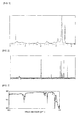
- the measurement results of 1 H-NMR spectrum, 13 C-NMR spectrum, and IR spectrum of HPS substituted with trioctyl ammonium are shown in FIG. 1 to FIG. 3 , respectively.
- HPS-B r (0.8 g, 4 mmol) was charged into a 50 mL two-neck flask and the inside of the flask was purged with nitrogen. Thereto, 15 mL of tetrahydrofuran (THF) was added and further, tris[2-(2-methoxyethoxy)ethyl]amine (1.3 g, 4 mmol) [manufactured by Tokyo Chemical Industry Co., Ltd.] was added, followed by stirring the resultant reaction mixture at room temperature for 12 hours.
- THF tetrahydrofuran
- HPS-Br 50 mg, 0.25 mmol
- HPS-Br 50 mg, 0.25 mmol
- 3 mL of toluene [manufactured by Kanto Chemical Co., Inc.] was added and further, 2-dimethylammoethanol (22 mg, 0.25 mmol) [manufactured by Tokyo Chemical Industry Co., Ltd.] was added, followed by stirring the resultant reaction mixture at room temperature for 2 hours. From here, in the same manner as in Example 1, the synthesis was performed.
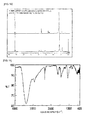
- the measurement result of IR spectrum of the obtained HPS-N(CH 3 ) 2 C 2 H 4 OHBr is shown in FIG. 6 .
- HPS-Br 50 mg, 0.25 mmol was charged into a 10 mL two-neck flask and the inside of the flask was purged with nitrogen. Thereto, 3 mL of THF [manufactured by Kanto Chemical Co., Inc.] was added and further, 2-diisopropylammoethanol (36 mg, 0.25 mmol) [manufactured by Tokyo Chemical Industry Co., Ltd.] was added, followed by stirring the resultant reaction mixture at room temperature for 10 hours. From here, in the same manner as in Example 1, the synthesis was performed. The measurement result of IR spectrum of the obtained HPS-N(Isopropyl) 2 C 2 H 4 OHBr is shown in FIG. 7 .
- HPS-Br 50 mg, 0.25 mmol
- THF manufactured by Kanto Chemical Co., Inc.
- 2-(dibutyl)aminoethanol 43 mg, 0.25 mmol
- the synthesis was performed.
- the measurement result of IR spectrum of the obtained HPS-N(ButylhC 2 H 4 OHBr is shown in FIG. 8 .
- HPS-Br 50 mg. 0.25 mmol
- THF manufactured by Kanto Chemical Co., Inc.
- N-lauryldiethanolamine 68 mg, 0.25 mmol
- the synthesis was performed.
- the measurement results of IR spectrum and NMR spectrum of the obtained HPS-N(Lauryl)(C 2 H 4 OH) 2 Br are shown in FIG. 9 and FIG. 10 , respectively.
- HPS-Br 50 mg, 0.25 mmol
- 2 mL of toluene [manufactured by Kanto Chemical Co., Inc.]
- 1 mL of acetonitrile [manufactured by Kanto Chemical Co., Inc.]
- triethanolamine 37 mg, 0.25 mmol
- the synthesis was performed.
- the measurement result of IR spectrum of the obtained HPS-N(C 2 H 4 OH) 3 Br is shown in FIG. 11 .
- HPS-Br 50 mg, 0.25 mmol was charged into a 10 mL two-neck flask and the inside of the flask was purged with nitrogen. Thereto, 3 mL of THF [manufactured by Kanto Chemical Co., Inc.] was added and further, 2-(2(dimethylamino)ethoxy)ethanol (33 mg, 0.25 mmol) [manufactured by Tokyo Chemical Industry Co., Ltd.] was added, followed by stirring the resultant reaction mixture. From here, in the same manner as in Example 1, the synthesis was performed. The measurement result of IR spectrum of the obtained HPS-N(CH 3 ) 2 (C 2 H 4 OC 2 H 4 OH)Br is shown in FIG. 12 .
- HPS-Br (295 g, 1.5 mmol) was charged into a 25 mL two-neck flask and the inside of the flask was purged with nitrogen. Thereto, DMF [manufactured by Kanto Chemical Co., Inc.] (10 mL) was added and further, triethylamine (306 mg, 3 mmol) [manufactured by TCI] was added, followed by stirring the resultant reaction mixture at 40°C for 6 hours.
- DMF manufactured by Kanto Chemical Co., Inc.
- TCI triethylamine
- the resultant reaction solution was subjected to a re-precipitation purification using diisopropyl ether [manufactured by Junsei Chemical Co., Ltd.] (50 mL) and the resultant precipitate was filtered and vacuum-dried to obtain a yellow-brown solid 92% (412 mg) of HPS-N(Ethyl) 3 Br.
- HPS-Br (296 mg, 1.5 mmol) was charged into a 25 mL two-neck flask and the inside of the flask was purged with nitrogen. Thereto, DMF [manufactured by Kanto Chemical Co., Inc.) (10 mL) was added and further, tributylamine [manufactured by Kanto Chemical Co., Inc.] (556 mg, 3 mmol) was added, followed by stirring the resultant reaction mixture at 40°C for 6 hours.
- DMF manufactured by Kanto Chemical Co., Inc.
- tributylamine manufactured by Kanto Chemical Co., Inc.
- the resultant reaction solution was subjected to a re-precipitation purification using diisopropyl ether [manufactured by Junsei Chemical Co., Ltd.] (50 mL) and the resultant precipitate was filtered and vacuum-dried to obtain a yellow-brown solid 96% (551 mg) of HPS-N(Butyl) 3 Br.
- HPS-Br (296 mg, 1.5 mmol) was charged into a 25 mL two-neck flask and the inside of the flask was purged with nitrogen. Thereto, DMF [manufactured by Kanto Chemical Co., Inc.] (10 mL) was added and further, trihexylamine [manufactured by Alfa Aesar] (808 mg, 3 mmol) was added, followed by stirring the resultant reaction mixture at 40°C for 6 hours.
- DMF manufactured by Kanto Chemical Co., Inc.
- trihexylamine manufactured by Alfa Aesar
- the resultant reaction solution was subjected to a re-precipitation purification using diisopropyl ether [manufactured by Junsei Chemical Co., Ltd.] (50 mL) and the resultant precipitate was filtered and vacuum-dried to obtain a yellow-brown solid 94% (658 mg) of HPS-N(Hexyl) 3 Br.
- HPS-NMe 2 OctylBr 35 mg, 0.1 mmol
- Pd(OAc) 2 22.4 mg, 0.05 mmL
- the inside of the system was purged with hydrogen and the resultant reaction solution was stirred at room temperature over one night.
- 5 ml of water deaerated with argon was added to subject the reaction solution to re-precipitation purification and the resultant precipitate was filtered and dried under reduced pressure to obtain a black precipitate (31.5 mg) of an [HPS-NMe 2 OctylBr]Pd particle complex.
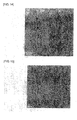
- An image of the obtained black precipitate observed under TEM is shown in FIG. 14 . By the TEM observation, the particle diameter of Pd was found to be 5 mn.
- HPS-NMe 2 OctylBr 70 mg, 0.2 mmol
- Pd 2 [(DBA) 3 (CHCl 3 )] 103.3 mg, 0.1 mmol
- HPS-NMe 2 OctylBr (18 mg, 0.2 mmol) and Pt(DBA) 2 (66 mg, 0.1 mmol) were charged into a 20 mL two-neck flask and the inside of the flask was purged with nitrogen, followed by adding 2 mL of THF thereto. The inside of the system was purged with hydrogen and the resultant reaction solution was stirred at room temperature over one night. To the resultant reaction solution, 1 ml of water deaerated with argon was added to subject the reaction solution to re-precipitation purification and the resultant precipitate was filtered and dried under reduced pressure to obtain 65 mg of a black precipitate of an [HPS-NMe 2 OctylBr]Pt particle complex. The obtained solid was found to be insoluble in an organic solvent.
- the resultant residue was re-dispersed in 1.0 mL of THF and the resultant dispersion was subjected to re-precipitation purification using 50 mL of hexane [manufactured by Kanto Chemical Co., Inc.].
- the resultant precipitate was filtered and vacuum-dried to obtain 131.3 mg of a black solid of an [HPS-N(Octyl) 3 Br]Pd particle complex.
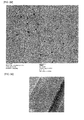
- An image of the obtained black solid observed under TEM is shown in FIG. 15 . By the TEM observation, the particle diameter was found to be 2.3 nm.
- the resultant residue was re-dispersed in 10 mL of THF and the resultant dispersion was subjected to re-precipitation purification using 50 mL of hexane [manufactured by Kanto Chemical Co., Inc.].
- the resultant precipitate was filtered and vacuum-dried to obtain a black solid (143 mg) of an [HPS-N(Dodecyl) 3 Br]Pt particle complex.
- the Pt content was measured by ICP-MASS and found to be 6% by mass.
- Example 32 As a comparison relative to Examples 32 to 36, the reaction was effected in the same manner as in Example 32, except that instead of the [HPS-N(Octyl) 3 Br]Pt particle complex (1 mg, metal content: 10% by mass), 1 mg of Pt/C (metal content: 5% by mass) [manufactured by Wako Pure Chemical Industries, Ltd.] was used.
- the [HPS-N(Octyl) 3 Br]Pt particle complex 1 mg, metal content: 10% by mass
- Pt/C metal content: 5% by mass
- the [HPS-N(Dodecyl) 3 Br]Pt particle complex (5 mg, metal content: 19% by mass) prepared according to Example 23 except that HPS-N(Dodecyl) 3 Br and Pt(DBA) 2 in a ratio of 1:1 were charged into the reaction system and each of the various aromatic compounds (3 mmol) described in Table 7 were charged and the reaction was effected in a hydrogen atmosphere (30 atm) for 24 hours.
- Example 37 As a comparison relative to Examples 37 to 44, the reaction was effected in the same manner as in Example 37, except that instead of the [HPS-N(Dodecyl) 3 Br]Pt particle complex (5 mg, metal content: 19% by mass), Pt/C (20 mg, metal content: 5% by mass [manufactured by Wako Pure Chemical Industries, Ltd.]) was used.
- Pt/C 20 mg, metal content: 5% by mass [manufactured by Wako Pure Chemical Industries, Ltd.]
- reaction solution was filtered with a membrane filter and from the resultant filtrate, the solvent was distilled off with a rotary evaporator.
- the resultant residue was re-dissolved in chloroform [manufactured by Kanto Chemical Co., Inc.] (10 mL) and the resultant solution was dropped into hexane [manufactured by Kanto Chemical Co., Inc.] (30 mL) to subject the solution to re-precipitation purification.
- a glossy black solid (259 mg) of an [HPSNBr(C 2 H 4 OC 2 H 4 OCH 3 ) 3 ]Rh particle complex was obtained.
- Rh content by 1CP-MASS 22.6% by mass
- Rh content by element analysis 27.6% by mass
- Rh content by TG 22.4% by mass
- Element analysis measured value C 40.16, H: 5.96, N: 1.81
- calculated value Br: 11.12, O: 13.37, Rh: 27.6 The result of the DTA-TG measurement is shown in FIG. 21 .
- An image of the obtained black solid observed under TEM is shown in FIG. 22 .
- the resultant residue was re-dissolved in chloroform [manufactured by Kanto Chemical Co., Inc.] (10 mL) and the resultant solution was dropped into hexane [manufactured by Kanto Chemical Co., Inc.] (30 mL) to subject the solution to re-precipitation purification.
- a viscous black solid (222 mg) of an [HPSNBr(C 2 H 4 OC 2 H 4 OCH 3 ) 3 ]Pd particle complex was obtained.
- the palladium content was measure by a DTA-TG measurement and was found to be 22% by mass.
- the result of the DTA-TG measurement is shown in FIG. 28 .
- An image of the obtained viscous black solid observed under TEM is shown in FIG. 29 .
- the reaction mixture was subjected to re-precipitation in chloroform-hexane and the resultant precipitate was retrieved with a membrane filter to obtain a highly viscous brown solid (209 mg) of an [HPS-N (C 2 H 4 OC 2 H 4 OCH 3 ) 3 Br]W particle complex.
- An image of the obtained highly viscous brown solid observed under TEM is shown in FIG. 31 .
- HPS styrene-based branched polymer having a dithiocarbamate group of Formula (6): at a molecule terminal thereof was synthesized referring to a method described in " Koji Ishizu, Akihide Mori, Macromol. Rapid Commun. 21, 665-668 (2000 )".
- the HPS had a weight average molecular weight Mw of 16,000 and a distribution: Mw (weight average molecular weight) / Mn (number average molecular weight) of 3.2 in terms of polystyrene, which were measured by GPC.
- the resultant precipitate was filtered and dried under reduced pressure to obtain 101.2 mg of a black precipitate of an HPS-Pd particle complex.
- An image of the obtained black precipitate observed under TEM is shown in FIG. 38 .
- the particle diameter of the [HPS-DC]Pd particle complex was found to be 5 nm.
- the content of platinum was measured by a DTA-TG measurement and was found to be 17.7% by mass.
- An image of the obtained highly viscous black solid observed under TEM is shown in FIG. 39 .
- the particle diameter was found to be 3 to 4 nm.
Landscapes
- Chemical & Material Sciences (AREA)
- Organic Chemistry (AREA)
- Chemical Kinetics & Catalysis (AREA)
- Engineering & Computer Science (AREA)
- Materials Engineering (AREA)
- Health & Medical Sciences (AREA)
- Medicinal Chemistry (AREA)
- Polymers & Plastics (AREA)
- Electrochemistry (AREA)
- General Chemical & Material Sciences (AREA)
- Inorganic Chemistry (AREA)
- Emulsifying, Dispersing, Foam-Producing Or Wetting Agents (AREA)
- Catalysts (AREA)
- Manufacture Of Metal Powder And Suspensions Thereof (AREA)
- Compositions Of Macromolecular Compounds (AREA)
- Powder Metallurgy (AREA)
- Polyoxymethylene Polymers And Polymers With Carbon-To-Carbon Bonds (AREA)
- Pigments, Carbon Blacks, Or Wood Stains (AREA)
- Inert Electrodes (AREA)
Abstract
Description
- The present invention relates to: a metal fine particle dispersant containing a branched polymer compound having an ammonium group that is characterized by being excellent in dispersibility in an organic solvent, an aqueous solvent, or a resin; and a composition containing the metal fine particle dispersant and metal fine particles.
- The metal fine particle having a particle diameter of around several nm to several tens nm exhibits various physical and chemical properties different from those of a bulk metal. For example, as an optical property, it is known from old times that by a color developing mechanism called a plasmon absorption, the metal fine particle exhibits a particular hue corresponding to the type and the size of a metal, and a solution of the metal fine particle is used as a colorant of a coating or the like. Besides this application, the metal fine particle has widespread applications such as conductive pastes, transparent conductive films, high-density recording materials, light shading filters, chemical sensors, catalysts, light guiding members, gas barrier materials, light scattering-reflecting members, light diffusing members, photosensitive materials, photoelectric conversion elements, inks for inkjet, high dielectric constant materials, and fluorescent materials.
- Although as the production method of such a metal fine particle, there can be mentioned a gas phase method and a liquid phase method, the liquid phase method is of lower cost and can easily obtain advantageous fine particles having a narrow particle size distribution. Generally, the liquid phase method is a method of reducing a metal ion with a reductant in a state in which an organic dispersant having affinity with a metal is added to a metal salt solution to prepare metal fine particles. Representative examples of the dispersant include citric acid, surfactants, low molecular weight compounds having a thiol group or an amino group, and polymers such as polyvinyl pyrrolidone.
- Patent Document 1 and Non-patent Document 1 describe a preparation method of a metal fine particle using a thiol compound. The surface of the thus obtained metal fine particle is solidly coated with the thiol compound, and therefore, the metal fine particle can be recovered as a powder and can be re-dispersed in a solvent.
Non-patent Document 2 describes a preparation method of a metal fine particle coated with a low molecular weight compound having a dithiocarbamate group. Thus, a compound having a functional group containing a sulfur atom has high affinity with a metal surface, so that the compound exhibits excellent characteristics as a dispersant of a metal fine particle. However, there is no example of evaluating dispersibility of such a compound in a polymer. Moreover, the compound having a functional group containing a sulfur atom has a problem of activity as a catalyst because of the sulfur atom contained. - A composition containing metal fine particles having a nanometer size is widely used, for example, in a catalytic synthesis of various chemical products and is further expected to be utilized in an environmental catalyst, a hydrogen storage and retrieval reaction, and the like. Although the chemical and physical characteristics of the metal fine particle depend largely on the shape and the size of the particle, generally, a metal fine particle having a nanometer size has high chemical reactivity and the metal fine particles are easily aggregated to become a larger size to lose the characteristics thereof (Non-patent Document 3).
- For preventing the above phenomenon, there is a method of dispersing metal fine particles on a solid carrier. For example, as the carrier, there is used a carrier having a pore structure and having a large surface area such as silicon dioxide, aluminum oxide, and zeolite. However, the metal fine particle is supported on such an inorganic solid, and therefore, the metal fine particle cannot be dispersed in an organic solvent, an aqueous solvent, or a resin.
-
Patent Document 2 describes a dispersion containing metal nano-particles in a dispersion formed by a polymer compound having a branched polyalkyleneimine chain in a solvent.Patent Document 3 describes a colloidal solution using a quaternary ammonium salt as a stabilizing agent for protecting colloidal particles.
Patent Document 4 and Patent Document 5 describe a nanometer-sized metal catalyst dispersed in a dendrimer or a hyperbranched polymer, andPatent Document 6 describes a hyperbranched polymer having an ammonium group at the terminal position of molecule. However, in these Documents, the stability thereof as a powder and the dispersing properties thereof in an organic solvent/aqueous solvent are not evaluated nor referred to, and there is no example of reporting a complex of a metal fine particle stabilized by a branched polymer material having an ammonium group. - It is an object of the present invention to provide: a metal fine particle dispersant containing a branched polymer compound having an ammonium group characterized by being excellent in dispersibility in an organic solvent, an aqueous solvent, or a resin; and a composition containing the metal fine particle dispersant and metal fine particles.
- As a result of assiduous research intended to overcome these disadvantages, the inventors of the present invention have found that a branched polymer having an ammonium group as a functional group at a molecule terminal thereof is effective as a dispersant of metal fine particles and that a composition containing the resultant dispersant and metal fine particles has not only high catalyst activity but also reusability, and have completed the present invention.
- That is, the present invention relates to, according to a first aspect, a metal fine particle dispersant for forming a disperse system of metal fine particles containing a branched polymer compound having an ammonium group and having a weight average molecular weight of 500 to 5,000,000,
according to a second aspect, a composition containing the metal fine particle dispersant as described in the first aspect and a metal fine particle,
according to a third aspect, the composition according to the second aspect, in which an ammonium group of the branched polymer compound is attached to the metal fine particle to form a complex,
according to a fourth aspect, the composition according to the second aspect or the third aspect, further containing an organic solvent,
according to a fifth aspect, the composition according to the fourth aspect, in which the metal fine particle is dispersed in the organic solvent,
according to a sixth aspect, the composition according to the fourth aspect, in which the complex is dispersed in the organic solvent,
according to a seventh aspect, the composition according to any one of the second aspect to the sixth aspect, in which the metal fine particle is at least one selected from a group consisting of scandium, titanium, vanadium, chromium, manganese, iron, cobalt, nickel copper, zinc, gallium, germanium, yttrium, zirconium, niobium, molybdenum, ruthenium, rhodium, palladium, silver, cadmium, indium, tin, antimony, hafnium, tantalum, tungsten, rhenium, osmium, iridium, platinum, gold, mercury, thallium, lead, and bismuth,
according to an eighth aspect, the composition according to the seventh aspect, in which the metal fine particle is at least one selected from a group consisting of gold, silver, platinum, copper, nickel, ruthenium, rhodium, palladium, osmium, and indium,
according to a ninth aspect, the composition according to the seventh aspect or the eighth aspect, in which the metal fine particle is a fine particle having an average particle diameter of 1 nm or more and 100 nm or less,
according to a tenth aspect, the composition according to any one of the second aspect to the ninth aspect, in which the metal fine particle dispersant contains a branched polymer compound of Formula (1):
- [where R1 is a hydrogen atom or a methyl group,
- R2, R3, and R4 are independently a hydrogen atom, a linear, branched, or cyclic C1-20 alkyl group, a C6-20 arylalkyl group (where the alkyl group and the arylalkyl group may be substituted with an alkoxy group, a hydroxy group, an ammonium group, a carboxy group, or a cyano group), or -(CH2CH2O)m-R5 (where R5 is a hydrogen atom or a methyl group, and m is an arbitrary integer of 2 to 100), or R2, R3, and R4 may be bonded to each other through a linear, branched, or cyclic alkylene group to form a ring together with a nitrogen atom to which R2, R3, and R4 are bonded,
- X- is an anion,
- A1 is a structure of Formula (2):

- (where A2 is a linear, branched, or cyclic C1-30 alkylene group that may contain an ether bond or an ester bond, and
- Y1, Y2, Y3, and Y4 are independently a hydrogen atom, a C1-20 alkyl group, a C1-20 alkoxy group, a nitro group, a hydroxy group, an amino group, a carboxy group, or a cyano group), and
- n is the number of repeating unit structures that is an integer of 2 to 100,000],
- X- is a halogen atom, PF6 -, BF4 -, or a perfluoroalkanesulfonate,
according to a twelfth aspect, the composition according to the second aspect, in which the metal fine particle dispersant is a branched polymer of Formula (4):
- (where R1 is a hydrogen atom or a methyl group,
- R2 is an ether bond-containing alkyl chain of Formula (5):

- X- is an anion,
- A1 is a structure of Formula (2), and
- n is the number of repeating unit structures that is an integer of 2 to 100,000),
- Metal fine particles dispersed by the branched polymer having an ammonium group of the present invention can be recovered as a powder and are stable exhibiting no aggregation at normal temperature under normal pressure. The metal fine particles can easily be re-dispersed in an organic solvent or water and can be used repeatedly as a catalyst.
-
- [
FIG. 1] FIG. 1 shows 1H-NMR spectrum of HP S obtained in Example 1. - [
FIG. 2] FIG 2 shows 13C-NMR spectrum of HPS obtained in Example 1. - [
FIG. 3] FIG. 3 shows IR spectrum of HPS obtained in Example 1. - [
FIG 4] FIG. 4 shows NMR spectrum of HPS obtained in Example 2. - [
FIG. 5] FIG. 5 shows IR spectrum of HPS obtained in Example 2. - [
FIG. 6] FIG. 6 shows IR spectrum of HPS-N(CH3)C2H4OH obtained in Example 3. - [
FIG. 7] FIG. 7 shows IR spectrum of HPS-N(isopropyl)2C2H4OHBr obtained in Example 4. - [
FIG. 8] FIG 8 shows IR spectrum of HPS-N (butyl)2C2H4OHBr obtained in Example 5. - [
FIG. 9] FIG. 9 shows IR spectrum of HPS-N(lauryl)2C2H4OHBr obtained in Example 6. - [
FIG. 14 ]FIG. 10 shows NMR spectrum of HPS-N(lauryl)(C2H4OH)2Br obtained in Example 6. - [
FIG. 11] FIG. 11 shows IR spectrum of HPS-N(C2H4OH)3Br obtained in Example 7. - [
FIG. 12] FIG 12 shows IR spectrum of HPS-N(CH3)2(C2 H4OC2H4OH)Br obtained in Example 8. - [
FIG. 13] FIG. 13 shows a TEM image of an [HPS-NMe2OctylBr] Pd particle complex obtained in Example 15. - [
FIG. 14] FIG. 14 shows a TEM image of an [HPS-NMe2OctylBr] Pd particle complex obtained in Example 16. - [
FIG. 15] FIG. 15 shows a TEM image of an [HPS-N(Octyl)3Br] Pd particle complex obtained in Example 20. - [
FIG. 16] FIG. 16 shows a TEM image of an [HPS-N(Octyl)3Br] Pd particle complex obtained in Example 21. - [
FIG. 17] FIG. 17 shows a TEM image of an [HPS-N(Octyl)3Br] Pt particle complex obtained in Example 22. - [
FIG. 18] FIG 18 shows TEM images of [HPS-N(Octyl)3Br] Pd particle complexes obtained using a metal adding amount of 2 equivalents, 4 equivalents, 6 equivalents, and 8 equivalents in Example 29. - [
FIG. 19] FIG. 19 shows TEM images of [HPS-N(Octyl)3Br] Pt particle complexes obtained using a metal adding amount of 2 equivalents, 4 equivalents, 6 equivalents, and 8 equivalents in Example 30. - [
FIG. 20] FIG. 20 shows TEM images of black precipitates before and after the reaction in Example 31. - [
FIG. 21] FIG. 21 shows the result of the DTA-TG measurement of a black solid obtained in Example 46. - [
FIG. 22] FIG 22 shows a TEM image of a black solid obtained in Example 46. - [
FIG. 23] FIG. 23 shows the result of the DTA-TG measurement of an ocher solid obtained in Example 47. - [
FIG. 24] FIG. 24 shows a TEM image of an ocher solid obtained in Example 47. - [
FIG. 25] FIG. 25 shows a TEM image of a highly viscous black solid obtained in Examples 48. - [
FIG. 26] FIG. 26 shows the result of the DTA-TG measurement of a gray viscous solid obtained in Example 49. - [
FIG 27] FIG. 27 shows a TEM image of a gray viscous solid obtained in Example 49 and the right photograph is a photograph formed by enlarging the inside of the frame in the left photograph. - [
FIG. 28] FIG. 28 shows the result of the DTA-TG measurement of a viscous black solid obtained in Example 50. - [
FIG. 29] FIG 29 shows a TEM image of a viscous black solid obtained in Example 50. - [
FIG. 30] FIG. 30 shows a TEM image of a blue solid obtained in Example 51. - [
FIG. 31] FIG. 31 shows a TEM image of a highly viscous brown solid obtained in Example 52. - [
FIG. 32] FIG. 32 shows a TEM image of a highly viscous brown solid obtained in Example 53. - [
FIG. 33] FIG. 33 shows a TEM image of a brown solid obtained in Examples 54. - [
FIG. 34] FIG. 34 shows a TEM image of a black powder obtained in Example 55. - [
FIG. 35] FIG 35 shows a TEM image of a yellow-brown solid obtained in Example 56. - [
FIG. 36] FIG. 36 shows a TEM image of a highly viscous black solid obtained in Example 57. - [
FIG. 37] FIG. 37 shows a TEM image of a brown solid obtained in Example 58. - [
FIG. 38] FIG. 38 shows a TEM image of a black precipitate obtained in Comparative Example 7. - [
FIG. 39] FIG. 39 shows a TEM image of a black precipitate obtained in Example 59. - Hereinafter, the present invention is described more in detail.
The metal fine particle dispersant of the present invention contains a branched polymer compound having an ammonium group and examples of the branched polymer compound include polymer compounds having a structure of Formula (1):


Examples of the linear C1-20 alkyl group of R2, R3, and R4 include a methyl group, an ethyl group, an n-propyl group, an n-butyl group, an n-pentyl group, an n-hexyl group, an n-heptyl group, an n-octyl group, an n-nonyl group, an n-decyl group, an n-undecyl group, an n-dodecyl group, an n-triclecyl group, an n-tetradecyl group, an n-pentadecyl group, an n-hexadecyl group, an n-heptadecyl group, an n-octadecyl group, an n-nonadecyl group, and an n-eicosyl group. Examples of the branched C1-20 alkyl group include an isopropyl group, an isobutyl group, a sec-butyl group, and a tert-butyl group. Examples of the cyclic C1-20 alkyl group include groups having a cyclopentyl ring and groups having a cyclohexyl ring structure. Examples of the C7-20 arylalkyl group include a benzyl group and a phenethyl group.
Example of the alkylene group that may bond R2, R3, and R4 include linear alkylene groups such as a methylene group, an ethylene group, an n-prapylene group, an n-butylene group, and an n-hexylene group. Examples of the branched alkylene group include an isopropylene group, an isobutylene group, and a 2-methylpropylene group. Examples of the cyclic alkylene group include C3-30 alicyclic aliphatic groups having a monocyclic, polycyclic, or crosslinked-cyclic structure. Specific examples thereof include groups having a monocyclo, bicyclo, tricyclo, tetracyclo, or pentacyclo structure of a carbon atom number of 4 or more.
Further, in the structure of Formula (1), R2, R3, and R4 may be bonded to each other to form a ring together with a nitrogen atom to which they are bonded and examples of the ring include a pyridine ring, a pyrimidine ring, a pyrazine ring, a quinoline ring, and a bipyridyl ring. - Examples of the branched polymer compound of the metal fine particle dispersant of the present invention include branched polymer compounds having a structure of Formula (4):


- Next, the production method of a branched polymer compound having an amino group at a molecule terminal thereof is described.
The branched polymer compound having an amino group at a molecule terminal thereof can be obtained, for example, by reacting a branched polymer compound having a halogen atom at a molecule terminal thereof with an amine compound.
Here, the branched polymer compound having a halogen atom at a molecule terminal thereof can be synthesized according to a description in International Publication No.WO 2008/029688 pamphlet. - Examples of the amine compound capable of being used for the present reaction as a primary amine include: aliphatic amines such as N-methylamine, N-ethylamine, N-n-propylamine, N-isopropylamine, N-n-butylamine, N-n-isobutylamine, N-sec-butylamine, N-tert-butylamine, N-n-pcntylamine, N-n-hexylamine, N-n-heptylamine, N-n-octylamine, N-n-nonylamine, N-n-decylamine, N-n-undecylamine, N-n-dodecylamine, N-n-tridecylamine, N-n-tetradecylamine, N-n-pentadecylamine, N-n-hexadecylamine, N-n-heptadecylamine, N-n-octadecylamine, N-n-nonadecylamine, and N-n-eicosylamine; alicyclic amines such as N-cyclopentylamine and N-cyclohexylamine; and aromatic amines, for example, anilines such as aniline, p-n-butylaniline, p-tert-butylaniline, p-n-octylaniline, p-n-decylaniline, p-n-dodecylaniline, and p-n-tetradecylaniline, alkyl phenols such as N-benzylamine and N-(2-phenylethyl)amine, naphthylamines such as 1-naphthylamine and 2-naphthylamine, aminoanthracenes such as 1-aminoanthracene and 2-aminoanthracene, aminoanthraquinones such as 1-aminoanthraquinone, aminobiphenyls such as 4-aminobiphenyl and 2-aminobiphenyl, aminofluorenones such as 2-aminofluorene-aminofluorene, 1-amino-9-fluorenone, and 4-amino-9-fluorenone, aminoindanes such as 5-aminoindane, aminoisoquinolines such as 5-aminoisoquinoline, and aminophenanthrene such as 9-aminophenanthrene. Examples of the primary amine further include amine compounds such as N-(tert-butoxycarbonyl)-1,2-ethylenediamine, N-(tert-butoxycarbonyl)-1,3-propylenediamine, N-(tert-butoxycarbonyl)-1,4-butylenediamine, N-(tert-butoxycarbonyl)-1,5-pentamethylenediamine, N-(tert-butoxycarbonyl)-1,6-hexamethylenediamine, N-(2-hydroxyethyl)amine, N-(3-hydroxypropyl)amine, N-(2-methoxyethyl)amine, and N-(2-ethoxyethyl)amine.
- Examples of the amine compound as a secondary amine include: aliphatic amines such as N,N-dimethylamine, N,N-diethylamine, N,N-di-n-propylamine, N,N-di-isopropylamine, N,N-di-n-butylamine, N,N-n-isobutylamine, N,N-di-sec-butylamine, N,N-n-pentylamine, N-methyl-N-ethylamine, N-methyl-N-n-propylamine, N-methyl-N-n-butylamine, N-methyl-N-n-pentylamine, N-ethyl-N-isopropylamine,N-ethyl-N-n-butylamine, N-ethyl-N-n-pentylamine, N-methyl-N-n-octylamine, N-methyl-N-n-decylamine, N-methyl-N-n-dodecylamine, N-methyl-N-n-tetradecylamine, N-methyl-N-n-hexadecylamine, N-methyl-N-n-octadecylamine, N-ethyl-N-isopropylamine, N-ethyl-N-octylamine, N,N-di-n-hexylamine, N,N-dioctylamine, N,N-didodecylamine, N,N-dihexadecylamine, and N,N-dioctadecylamine; alicyclic amines such as N,N-dicyclohexylamine; aromatic amines such as N,N-diphenylamine and N,N-dibenzylamine; and nitrogen-containing heterocyclic compounds such as phthalimide, pyrrole, piperidine, piperazine, and imidazole. Examples of the secondary amine further include N,N-di(2-hydroxyethyl)amine, N,N-di(3-hydroxypropyl)amine, N,N-di(ethoxyethyl)amine, and N,N-di(propoxyethyl)amine.
- Examples of the amine compound as a tertiary amine include: aliphatic amines such as trimethylamine, triethylamine, tripropylamine, tributylamine, tripentylamine, N,N-dimethyl-N-octylamine, N,N-diethyl-N-n-decylamine, N,N-dimethyl-N-n-dodecylamine; N,N-dimethyl-N-n-tetradecylamine, N,N-dimethyl-N-n-hexadecylamine, N,N-dimethyl-N-n-octadecylamine, N,N-dimethyl-N-n-eicosylamine, and N,N-dimethyl-N-n-dodecylamine; and nitrogen-containing heterocyclic compounds such as pyridine, pyrazine, pyrimidine, quinoline, 1-methylimidazole, 4,4'-bipyridyl, and 4-methyl4,4'-bipyridyl.
- The used amount of the amine compound capable of being used for the reaction may be 0.1 to 20 times molar equivalent, preferably 0.5 to 10 times molar equivalent, more preferably 1 to 5 time(s) molar equivalent, relative to 1 molar equivalent of a halogen atom in a branched polymer compound having a halogen atom at a molecule terminal thereof. As the reaction conditions, the reaction time and the reaction temperature are accordingly selected from 0.01 to 100 hours and 0 to 300°C. Preferably, the reaction time is 0.1 to 10 hours and the reaction temperature is 20 to 150°C.
- The reaction between a halogen atom at a molecule tenninal and an amine compound may be effected in water or an organic solvent solution in the presence or absence of a base. The used solvent is preferably a solvent capable of dissolving a branched polymer compound having a halogen atom and an amine compound. Further, when the solvent is a solvent capable of dissolving a branched polymer compound having a halogen atom and an amine compound, but incapable of dissolving a branched polymer compound having an ammonium group at a molecule terminal thereof, the isolation becomes easy, which is more preferred.
The organic solvent may be any solvent so long as the solvent does not remarkably inhibit the progression of the present reaction, and examples thereof include: water; organic acid solvents such as acetic acid; aromatic hydrocarbons such as benzene, toluene, xylene, ethylbenzene, and 1,2-dichlorobenzene; ether compounds such as tetrahydrofuran, and diethyl ether; ketone compounds such as acetone, methyl ethyl ketone, methyl isobutyl ketone, and cyclohexanone; and aliphatic hydrocarbons such as chloroform, dichloromethane, 1,2-dichloroethane, n-heptane, n-hexane, cyclohexane, dimethylformamide, dimethylacetamide, and N-methylpyrrolidone. These solvents may be used individually or in combination of two or more types thereof. The used amount of the organic solvent is 0.2 to 1,000 times mass, preferably 1 to 500 time(s) mass, more preferably 5 to 100 times mass, most preferably 10 to 50 times mass, based on the mass of the branched polymer compound having a halogen atom at a molecule terminal thereof. In this reaction, oxygen in the reaction system is necessary to be thoroughly removed before the initiation of the reaction and therefor, it is preferred that the inside of the reaction system is purged with an inert gas such as nitrogen and argon. The reaction conditions are accordingly selected from reaction times of 0.01 to 100 hours and reaction temperatures of 0 to 200°C. Preferably, the reaction time is 0.1 to 5 hours and the reaction temperature is 20 to 150°C. - Generally, preferred examples of the base include: inorganic compounds such as alkali metal hydroxides and alkaline earth metal hydroxides, alkali metal oxides and alkaline earth metal oxides, alkali metal hydrides and alkaline earth metal hydrides, alkali metal amides, alkali metal carbonates and alkaline earth metal carbonates (such as lithium carbonate, potassium carbonate, and calcium carbonate), and alkali metal bicarbonates (such as sodium bicarbonate); and organic metal compounds such as alkali metal alkyls, alkyl magnesium1 halides, alkali metal alkoxides, alkaline earth metal alkoxides, and dimethoxy magnesium. Among them, particularly preferred are potassium carbonate and sodium carbonate. The used amount of the base is 0.2 to 10 times equivalents, preferably 0.5 to 10 equivalents, most preferably 1 to 5 equivalent(s), based on the mass of the branched polymer compound having a halogen atom at a molecule terminal thereof.
- In the case where a tertiary amine is used in the presence of a base, a branched polymer compound of Formula (1) can be obtained.
When a primary amine compound or a secondary amine compound is reacted with a branched polymer compound having a halogen atom at a molecule terminal thereof in the absence of a base to obtain a branched polymer compound having an amine terminal at a molecule terminal thereof, there is obtained a branched polymer compound having an ammonium group terminal in which the corresponding terminal secondary amine or the corresponding terminal tertiary amine of the branched polymer compound is protonated.
Also, in the case where the reaction is effected using a base, by mixing the reaction mixture with an aqueous solution of an acid such as hydrochloric acid, hydrogen bromide, and hydrogen iodide in an organic solvent, there is obtained a branched polymer compound having an ammonium group terminal in which the corresponding terminal secondary amine or the corresponding terminal tertiary amine of the branched polymer compound is protonated. - The branched polymer compound has a weight average molecular weight Mw measured by gel permeation chromatography of 500 to 5,000,000, preferably 1,000 to 1,000,000, more preferably 2,000 to 500,000, most preferably 3,000 to 200,000, in terms of polystyrene. The branched polymer compound has a degree of distribution Mw (weight average molecular weight) / Mn (number average molecular weight) of 1.0 to 7.0, preferably 1.1 to 6.0, more preferably 1.2 to 5.0.
- The composition of the present invention contains the metal fine particle dispersant and metal fine particles, and the metal fine particle dispersant and the metal fine particles form preferably a complex.
Here, in the complex, by an action of an ammonium group contained in the branched polymer compound that is a metal fine particle dispersant, the metal fine particle dispersant and the metal fine particle coexist in such a state that they are contacted with or adjacent to each other to form a particle-shape. In other words, the complex is described as a complex having a structure in which an ammonium group of the metal fine particle dispersant (branched polymer compound) is attached to or coordinated with metal fine particles.
Accordingly, as described above, the "complex" of the present invention may includes not only a complex formed by bonding the metal fine particles with the metal fine particle dispersant, but also a complex in which the metal fine particles and the metal fine particle dispersant do not form a bonding part and they exist independently from each other. - The organic solvent used for the composition of the present invention is not particularly limited so long as the solvent is a solvent capable of dissolving the branched polymer compound. Examples thereof include aromatic hydrocarbons such as benzene, toluene, xylene, and ethylbenzene; ether compounds such as tetrahydrofuran and diethyl ether; ketone compounds such as acetone, methyl ethyl ketone, methyl isobutyl ketone, and cyclohexanone; and aliphatic hydrocarbons such as n-heptane, n-hexane, and cyclohexane. These solvents may be used individually or in combination of two or more types thereof.
- The metal fine particle in the composition of the present invention is not particularly limited and examples thereof include scandium, titanium, vanadium, chromium, manganese, iron, cobalt, nickel, copper, zinc, gallium, germanium, yttrium, zirconium, niobium, molybdenum, ruthenium, rhodium, palladium, silver, cadmium, indium, tin, antimony, hafnium, tantalum, tungsten, rhenium, osmium, iridium, platinum, gold, mercury, thallium, lead, and bismuth, These metals may be used individually or as an alloy of two or more types thereof. Preferred examples thereof include gold, silver, platinum, copper, nickel, ruthenium, rhodium, palladium, osmium, and iridium. More preferred examples thereof include Pt and Pd. As the metal fine particle, an oxide of the above metals may also be used.
The metal fine particle can be obtained by reducing a metal ion, for example, by a method of irradiating an aqueous solution of a metal salt with light using a high pressure mercury lamp or by a method of adding a compound having a reducing action (so-called reductant) to the aqueous solution. For example, by adding a metal salt aqueous solution to a solution in which the metal fine particle dispersant (branched polymer compound) is dissolved and irradiating the resultant mixture with an ultraviolet ray or by adding a metal salt aqueous solution and a reductant to the solution to reduce a metal ion, while forming a complex of the metal fine particle dispersant and metal fine particles, the composition of the present invention containing the metal fine particle dispersant and metal fine particles can also be prepared. - Examples of the metal salt include chloroauric acid, silver nitrate, copper sulfate, copper nitrate, copper acetate, tin chloride, platinum chloride, chloroplatinic acid, Pt(DBA)2 [DBA=dibenzyliene acetone], Pt(cod)2 [cod= 1,5 -cyclooetadiene], PtMe2(cod), palladium chloride, palladium acetate (Pd(OAc)2), palladium nitrate, Pd2[(DBA)3(CHCl3)], Pd(DBA)2, rhodium chloride, rhodium acetate, ruthenium chloride, ruthenium acetate, Ru(cod)(cot) [cot=cyclooctatriene], iridium chloride, iridium acetate, and Ni(cod)2.
The reductant is not particularly limited and various reductants can be used. According to the application of the obtained composition, the contained metal species, and the like, the reductant is preferably selected. Examples of the applicable reductant include: metal borohydrides such as sodium borohydride and potassium borohydride: aluminum hydrides such as lithium aluminum hydride, potassium aluminum hydride, cesium aluminum hydride, beryllium aluminum hydride, magnesium aluminum hydride, and calcium aluminum hydride; hydrazine compounds; citric acid and salts thereof; succinic acid and salts thereof; and ascorbic acid and salts thereof. - The metal fine particle has an average particle diameter of preferably 1 to 100 nm. The reason therefor is that when the average particle diameter of the metal fine particle is more than 100 nm, in an optical application, the transmissivity of the thin film is lowered due to scattering, and in a catalyst application, the surface area of the catalyst decreases to lower the catalyst activity. The average particle diameter is more preferably 75 nm or less, most preferably 1 to 30 nm.
- The additive amount of the metal fine particle dispersant in the composition of the present invention is preferably 50 to 2,000 parts by mass, relative to 100 parts by weight of the metal fine particle. When the additive amount is less than 50 parts by mass, the dispersibility of the metal fine particle is unsatisfactory and on the other hand, when the additive amount is more than 2,000 parts by mass, the content of organic substances becomes large and disadvantage with respect to the physical properties of the composition becomes easily caused. The additive amount is more preferably 100 to 1,000 parts by mass.
- As the metal fine particle dispersant for forming a metal fine particle complex obtained by a metal fine particle dispersant and metal fine particles having low secondary aggregability and having high dispersibility in a nonpolar solvent, a branched polymer containing ammonium tri-substituted with a long-chain alkyl group is preferred. As the metal fine particle dispersant for forming a metal fine particle complex obtained by a metal fine particle dispersant and metal fine particles having low secondary aggregability and having high dispersibility in a polar solvent such as water and an alcohol, a branched polymer containing ammonium having a polyethylene glycol chain is preferred.
- The formation of the complex of the branched polymer compound having an ammonium group and metal fine particles is performed simultaneously during the preparation of the composition containing the metal fine particle dispersant (branched polymer compound) and metal fine particles, and examples of the method for forming the complex include: a method including synthesizing metal fine particles stabilized to some extent by a lower ammonium ligand and then exchanging the ligand with a branched polymer compound; and a method of directly reducing a metal ion in a solution of a branched polymer having an ammonium group to form the complex. As described above, by adding an aqueous solution of a metal salt to a solution in which the metal fine particle dispersant is dissolved and irradiating the resultant mixture with an ultraviolet ray, by adding an aqueous solution of a metal salt and a reductant to the solution, or by the like to reduce a metal ion, the complex can be formed.
- In the ligand exchanging method, the metal fine particle stabilized to some extent by a lower ammonium ligand as a raw material can be synthesized by a method described in "Journal of Organometallic Chemistry 1996 520 143 -162" and the like. By dissolving the branched polymer compound having an ammonium group in the resultant reaction mixture solution of metal fine particles and stirring the resultant reaction solution at room temperature or while heating the solution, the objective metal fine particle complex can be obtained.
Although the solvent to be used is not particularly limited so long as the solvent is a solvent capable of dissolving the metal fine particle and the metal fine particle dispersant to a necessary concentration or more, specific examples thereof include: alcohol solvents such as ethanol and propanol; halogenated hydrocarbons such as methylene chloride and chloroform; cyclic ethers such as tetrahydrofuran, 2-methyltetrahydrofuran, and tetrahydropyran; nitrile solvents such as acetonitrile and butyronitrile; and mixture solutions thereof. Among them, preferred is tetrahydrofuran.
As the temperature for mixing the reaction mixture solution of metal fine particles with the branched polymer compound having an ammonium group, ordinarily, a range of 0°C to the boiling point of a solvent can be used and a range of room temperature to 60°C is preferred.
Here, in the ligand exchanging method, also by using a phosphine dispersant (phosphine ligand) other than an amine dispersant (lower ammonium ligand), the metal fine particle can be stabilized to some extent beforehand. - As the direct reducing method, by dissolving a metal ion and the branched polymer compound having an ammonium group in a solvent and effecting the reaction in a hydrogen gas atmosphere, the objective metal fine particle complex can be obtained.
As the metal ion source used here, there can be used the above metal salts and metal carbonyl complexes such as hexacarbonyl chromium [Cr(CO)6], pentacarbonyl iron [Fe(CO)5], octacarbonyl dicobalt [Co2(CO)8], tetracarbonyl nickel [Ni(CO)4], hexacarbonyl molybdenum [Mo(CO)6], hexadecacarbonyl hexarhodium [Rh6(CO)16], dodecacarbonyl tetrarhodium [Rh4(CO)12], hexacarbonyl tungsten [W(CO)6], decacarbonyl dirheniuin [Re2(CO)10], and dodecacarbonyl tetrairidium [Ir4(CO)12]. Moreover, 0-valet metal complexes such as metal olefin complexes, metal phosphine complexes, and metal nitrogen complexes can also be used.
Although the solvent to be used is not particularly limited so long as the solvent is a solvent capable of dissolving a metal ion and the dispersant to a necessary concentration or more, specific examples thereof include: alcohol solvents such as ethanol and propanol; halogenated hydrocarbons such as methylene chloride and chloroform; cyclic ethers such as tetrahydrofuran, 2-methyltetrahydrofuran, and tetrahydropyran; nitrile solvents such as acetonitrile and butyronitrile; and mixture solutions thereof. Among them, preferred is tetrahydrofuran.
As the temperature for mixing a metal ion with the dispersant, ordinarily, a range of 0°C to the boiling point of a solvent can be used. - As the direct reducing method, by dissolving a metal ion and the branched polymer compound having an ammonium group in a solvent and subjecting the resultant solution to a thermal decomposition reaction, the objective metal fine particle complex can be obtained.
As the metal ion source used here, there can be used the above metal salts, the above metal carbonyl complexes, other 0-valent metal complexes, and metal oxides such as silver oxide.
Although the solvent to be used here is not particularly limited so long as the solvent is a solvent capable of dissolving a metal ion and the dispersant to a necessary concentration or more, specific examples thereof include: alcohol solvents such as methanol, ethanol, n-propanol, 2-propanol, and ethylene glycol; halogenated hydrocarbons such as methylene chloride and chloroform; cyclic ethers such as tetrahydrofuran, 2-methyltetrahydrofuran, and tetrahydropyran; nitrile solvents such as acetonitrile and butyronitrile; aromatic solvents such as benzene and toluene; and mixture solutions thereof. Among them, preferred is toluene.
As the temperature for mixing a metal ion with the dispersant, ordinarily, a range of 0°C to the boiling point of a solvent can be used and the temperature is preferably around the boiling point of a solvent, for example, in the case of toluene, the temperature is 110°C (heating reflux). - The composition of the present invention is applicable to a colorant, a conductive paste, a transparent conductive film, a high-density recording material, a light shielding filter, a chemical sensor, a catalyst, a light guiding member, a gas barrier material, a light scattering-reflecting member, a light diffusing member, a photosensitive material, a photoelectric conversion element, an ink for inkjet, a high dielectric constant material, a battery material, a fluorescent material, and the like. The composition can be utilized, for example, particularly in a reduction catalyst and an electrode for a fuel battery.
- The present invention will be described more in detail hereinafter, referring to Examples which should not be construed as limiting the scope of the present invention.
Here, the analysis apparatuses used in Examples and the analysis conditions are as follows. - 1H-NMR spectrum and 13C-NMR spectrum
Lambda 600 (600 MHz); manufactured by JEOL - Spin coater
1H-D7; manufactured by MIKASA - IR (Infrared absorption spectrum)
FT-IR4200; manufactured by JASCO - TEM (transmission electron microscope)
Apparatus: JEM 2100F and JEM 2100XS; manufactured by JEOL
Applying voltage: 200 kV - Ellipsometer
Apparatus: variable angle spectroscopic ellipsometer VASE; manufactured by J.A. Woollam Japan
Wavelength: 598 nm - DTA-TG
Apparatus: SHIMADZU DTG-60; manufactured by Shimadzu Corporation - Gas chromatography (G.C.)
Apparatus: SHIMADZU GC-17A; manufactured by Shimadzu Corporation - ICP-Mass
Apparatus: SHIMADZU ICPM-8500; manufactured by Shimadzu Corporation - HPS-Br (0.6 g, 3 mmol) was charged into a 25 mL two-neck flask and the inside of the flask was purged with nitrogen. Thereto, 10 mL of toluene was added and further, trioctylamine (2.1 g, 6 mmol) [manufactured by Kanto Chemical Co., Inc.] was added, followed by stirring the resultant reaction mixture at 50°C for 12 hours. The resultant reaction solution was subjected to a re-precipitation purification using 50 mL of hexane [manufactured by Kanto Chemical Co., Inc.] and the resultant precipitate was filtered and vacuum-dried to obtain a yellow-brown solid 86% (1.4 g) of HPS-N(Octyl)3Br.
The measurement results of 1H-NMR spectrum, 13C-NMR spectrum, and IR spectrum of HPS substituted with trioctyl ammonium are shown inFIG. 1 to FIG. 3 , respectively. - HPS-Br (0.8 g, 4 mmol) was charged into a 50 mL two-neck flask and the inside of the flask was purged with nitrogen. Thereto, 15 mL of tetrahydrofuran (THF) was added and further, tris[2-(2-methoxyethoxy)ethyl]amine (1.3 g, 4 mmol) [manufactured by Tokyo Chemical Industry Co., Ltd.] was added, followed by stirring the resultant reaction mixture at room temperature for 12 hours. The reaction solvent was distilled off under reduced pressure and the resultant solid was washed with hexane, followed by vacuum-drying the solid to obtain a brown solid 92% (2.1 g) of HPS-N(C2H4OC2H4OCH3)3Br.
The measurement results of IR spectrum and NMR spectrum of HPS substituted with ammonium are shown inFIG. 4 and FIG. 5 , respectively. - HPS-Br (50 mg, 0.25 mmol) was charged into a 10 mL two-neck flask and the inside of the flask was purged with nitrogen. Thereto, 3 mL of toluene [manufactured by Kanto Chemical Co., Inc.] was added and further, 2-dimethylammoethanol (22 mg, 0.25 mmol) [manufactured by Tokyo Chemical Industry Co., Ltd.] was added, followed by stirring the resultant reaction mixture at room temperature for 2 hours. From here, in the same manner as in Example 1, the synthesis was performed.
The measurement result of IR spectrum of the obtained HPS-N(CH3)2C2H4OHBr is shown inFIG. 6 . - HPS-Br (50 mg, 0.25 mmol) was charged into a 10 mL two-neck flask and the inside of the flask was purged with nitrogen. Thereto, 3 mL of THF [manufactured by Kanto Chemical Co., Inc.] was added and further, 2-diisopropylammoethanol (36 mg, 0.25 mmol) [manufactured by Tokyo Chemical Industry Co., Ltd.] was added, followed by stirring the resultant reaction mixture at room temperature for 10 hours. From here, in the same manner as in Example 1, the synthesis was performed.
The measurement result of IR spectrum of the obtained
HPS-N(Isopropyl)2C2H4OHBr is shown inFIG. 7 . - HPS-Br (50 mg, 0.25 mmol) was charged into a 10 mL two-neck flask and the inside of the flask was purged with nitrogen. Thereto, 3 mL of THF [manufactured by Kanto Chemical Co., Inc.] was added and further, 2-(dibutyl)aminoethanol (43 mg, 0.25 mmol) [manufactured by Tokyo Chemical Industry Co., Ltd.] was added, followed by stirring the resultant reaction mixture at room temperature for 10 hours. From here, in the same manner as in Examples 1, the synthesis was performed.
The measurement result of IR spectrum of the obtained HPS-N(ButylhC2H4OHBr is shown inFIG. 8 . - HPS-Br (50 mg. 0.25 mmol) was charged into a 10 mL two-neck flask and the inside of the flask was purged with nitrogen. Thereto, 3 mL of THF [manufactured by Kanto Chemical Co., Inc.] was added and further, N-lauryldiethanolamine (68 mg, 0.25 mmol) [manufactured by Tokyo Chemical Industry Co., Ltd.] was added, followed by stirring the resultant reaction mixture at 50°C for 10 hours. From here, in the same manner as in Example 1, the synthesis was performed.
The measurement results of IR spectrum and NMR spectrum of the obtained HPS-N(Lauryl)(C2H4OH)2Br are shown inFIG. 9 andFIG. 10 , respectively. - HPS-Br (50 mg, 0.25 mmol) was charged into a 10 mL two-neck flask and the inside of the flask was purged with nitrogen. Thereto, 2 mL of toluene [manufactured by Kanto Chemical Co., Inc.], 1 mL of acetonitrile [manufactured by Kanto Chemical Co., Inc.], and triethanolamine (37 mg, 0.25 mmol) [manufactured by Tokyo Chemical Industry Co., Ltd.] were added in this order and the resultant reaction mixture was stirred at 50°C for 10 hours. From here, in the same manner as in Example 1, the synthesis was performed.
The measurement result of IR spectrum of the obtained HPS-N(C2H4OH)3Br is shown inFIG. 11 . - HPS-Br (50 mg, 0.25 mmol) was charged into a 10 mL two-neck flask and the inside of the flask was purged with nitrogen. Thereto, 3 mL of THF [manufactured by Kanto Chemical Co., Inc.] was added and further, 2-(2(dimethylamino)ethoxy)ethanol (33 mg, 0.25 mmol) [manufactured by Tokyo Chemical Industry Co., Ltd.] was added, followed by stirring the resultant reaction mixture. From here, in the same manner as in Example 1, the synthesis was performed.
The measurement result of IR spectrum of the obtained
HPS-N(CH3)2(C2H4OC2H4OH)Br is shown inFIG. 12 . - HPS-Br (295 g, 1.5 mmol) was charged into a 25 mL two-neck flask and the inside of the flask was purged with nitrogen. Thereto, DMF [manufactured by Kanto Chemical Co., Inc.] (10 mL) was added and further, triethylamine (306 mg, 3 mmol) [manufactured by TCI] was added, followed by stirring the resultant reaction mixture at 40°C for 6 hours. The resultant reaction solution was subjected to a re-precipitation purification using diisopropyl ether [manufactured by Junsei Chemical Co., Ltd.] (50 mL) and the resultant precipitate was filtered and vacuum-dried to obtain a yellow-brown solid 92% (412 mg) of HPS-N(Ethyl)3Br.
- HPS-Br (296 mg, 1.5 mmol) was charged into a 25 mL two-neck flask and the inside of the flask was purged with nitrogen. Thereto, DMF [manufactured by Kanto Chemical Co., Inc.) (10 mL) was added and further, tributylamine [manufactured by Kanto Chemical Co., Inc.] (556 mg, 3 mmol) was added, followed by stirring the resultant reaction mixture at 40°C for 6 hours. The resultant reaction solution was subjected to a re-precipitation purification using diisopropyl ether [manufactured by Junsei Chemical Co., Ltd.] (50 mL) and the resultant precipitate was filtered and vacuum-dried to obtain a yellow-brown solid 96% (551 mg) of HPS-N(Butyl)3Br.
- HPS-Br (296 mg, 1.5 mmol) was charged into a 25 mL two-neck flask and the inside of the flask was purged with nitrogen. Thereto, DMF [manufactured by Kanto Chemical Co., Inc.] (10 mL) was added and further, trihexylamine [manufactured by Alfa Aesar] (808 mg, 3 mmol) was added, followed by stirring the resultant reaction mixture at 40°C for 6 hours. The resultant reaction solution was subjected to a re-precipitation purification using diisopropyl ether [manufactured by Junsei Chemical Co., Ltd.] (50 mL) and the resultant precipitate was filtered and vacuum-dried to obtain a yellow-brown solid 94% (658 mg) of HPS-N(Hexyl)3Br.
- By adding HPS-N(C2H4OC2H4OMe)3Br (10 mg) to each (1 mL) of the solvents described in Table 1, evaluation of the solubility in each solvent was performed. The result thereof is shown in Table 1.
The compound that was dissolved is evaluated with A; the compound that had low solubility is evaluated with B; and the compound that was not dissolved is evaluated with C.Table 1 Solvent Evaluation THF B Methanol A Ethanol A Water A Chloroform A Acetone A Acetonitrile A - By adding HPS-NR3Br (10 mg) to each (1 mL) of the solvents described in Table 2, evaluation of the solubility in each solvent was performed. The result thereof is shown in Table 2.
The compound that was dissolved is evaluated with A; the compound that had low solubility is evaluated with B; and the compound that was not dissolved is evaluated with C.Table 2 Solvent Evaluation Ethanol A Chloroform A - By charging HPS-NR3Br (10 mg) prepared in Examples 9 and 10 into a vial (4 mL) and adding water (1 g) thereto, evaluation of the solubility of each compound was performed. The result thereof is shown in Table 3.
Table 3 Evaluation R=ethyl A R=n-butyl A - Pd(OAc)2 (23.9 mg) and N(Octyl)3Br (22.2 mg) were charged into a 20 mL Schlenk reaction tube and the inside of the tube was purged with nitrogen. Thereto, 10 mL of tetrahydrofuran was added and the inside of the system was purged with hydrogen. The resultant reaction solution was stirred at room temperature for 12 hours and thereto, HPS-NMe2OctylBr (71.5 mg) was added, followed by stirring the reaction mixture at 60°C over one night.
To the resultant reaction solution, 5 ml of water deaerated with argon was added to subject the reaction solution to re-precipitation purification and the resultant precipitate was filtered and dried under reduced pressure to obtain 80 mg of a black precipitate of an [HPS-NMe2OctylBr]Pd particle complex. An image of the obtained black precipitate observed under TEM is shown inFIG. 13 . By the TEM observation, the particle diameter af Pd was found to be 5 nm. - HPS-NMe2OctylBr (35 mg, 0.1 mmol) and Pd(OAc)2 (22.4 mg, 0.05 mmL) were charged into a 20 mL two-neck flask and the inside of the flask was purged with nitrogen, followed by adding 5 mL of THF thereto. The inside of the system was purged with hydrogen and the resultant reaction solution was stirred at room temperature over one night.
To the resultant reaction solution, 5 ml of water deaerated with argon was added to subject the reaction solution to re-precipitation purification and the resultant precipitate was filtered and dried under reduced pressure to obtain a black precipitate (31.5 mg) of an [HPS-NMe2OctylBr]Pd particle complex. An image of the obtained black precipitate observed under TEM is shown inFIG. 14 . By the TEM observation, the particle diameter of Pd was found to be 5 mn. - A methanol solution (5 mL) of HPS-N(C2H4OC2H4OCH3)3Br (282 mg) and Pt(DBA)2 were charged into a 50 mL two-neck flask and the inside of the flask was purged with nitrogen, followed by adding 15 mL of THF thereto. The inside of the system was purged with hydrogen and the resultant reaction solution was stirred at room temperature for 12 hours.
The resultant reaction solution was filtered and the resultant filtrate was evaporated to dryness under reduced pressure, followed by washing the resultant dried substance with hexane to obtain 274 mg of a black solid of an [HPS-N(C2H4OC2H4OCH3)3Br]Pt particle complex. - HPS-NMe2OctylBr (70 mg, 0.2 mmol) and Pd2[(DBA)3(CHCl3)] (103.3 mg, 0.1 mmol) were charged into a 20 mL two-neck flask and the inside of the flask was purged with nitrogen, followed by adding 2 mL of THF thereto. The inside of the system was purged with hydrogen and the resultant reaction solution was stirred at room temperature over one night.
To the resultant reaction solution, 1 ml of water deaerated with argon was added to subject the reaction solution to re-precipitation purification and the resultant precipitate was filtered and dried under reduced pressure to obtain 68.4 mg of a black precipitate of an [HPS-NMe2OctylBr]Pd particle complex. The obtained solid was found to be insoluble in an organic solvent. - HPS-NMe2OctylBr (18 mg, 0.2 mmol) and Pt(DBA)2 (66 mg, 0.1 mmol) were charged into a 20 mL two-neck flask and the inside of the flask was purged with nitrogen, followed by adding 2 mL of THF thereto. The inside of the system was purged with hydrogen and the resultant reaction solution was stirred at room temperature over one night.
To the resultant reaction solution, 1 ml of water deaerated with argon was added to subject the reaction solution to re-precipitation purification and the resultant precipitate was filtered and dried under reduced pressure to obtain 65 mg of a black precipitate of an [HPS-NMe2OctylBr]Pt particle complex. The obtained solid was found to be insoluble in an organic solvent. - HPS-N(Octyl)3Br (111.8 mg, 0.2 mmol) and Pd(OAc)2 (87.9 mg, 0.4 mmL) were charged into a 20 mL two-neck flask and the inside of the flask was purged with nitrogen, followed by adding 5 mL of THF thereto. The inside of the system was purged with hydrogen and the resultant reaction solution was stirred at room temperature over one night. The resultant reaction solution was filtered with a membrane filter and from the reaction solution, the solvent was distilled off. The resultant residue was re-dispersed in 1.0 mL of THF and the resultant dispersion was subjected to re-precipitation purification using 50 mL of hexane [manufactured by Kanto Chemical Co., Inc.]. The resultant precipitate was filtered and vacuum-dried to obtain 131.3 mg of a black solid of an [HPS-N(Octyl)3Br]Pd particle complex. An image of the obtained black solid observed under TEM is shown in
FIG. 15 . By the TEM observation, the particle diameter was found to be 2.3 nm. - HPS-N(Octyl)3Br (55.1 mg, 0.1 mmol) and Pd2[(DBA)3(CHCl3)] (33.5 mg, 0.4 mmL) were charged into a 20 mL two-neck flask and the inside of the flask was purged with nitrogen, followed by adding 5 mL of THF thereto. The inside of the system was purged with hydrogen and the resultant reaction solution was stirred at room temperature over one night. To the resultant reaction solution, 5 ml of water deaerated with argon was added to subject the reaction solution to re-precipitation purification and the resultant precipitate was filtered and dried under reduced pressure to obtain 80 mg of a black precipitate of an [HPS-N(Octyl)3Br]Pd particle complex. The Pd content was measured by ICP-MASS and found to be 15% by mass. An image of the obtained black precipitate observed under TEM is shown in
FIG. 16 . By the TEM observation, the fine particle diameter was found to be 5 nm. - HPS-N(Octyl)3Br (27.8 mg, 0.05 mmol) and Pt(DBA)2 (65.2 mg, 0.1 mmL) were charged into a 20 mL two-neck flask and the inside of the flask was purged with nitrogen, followed by adding 5 mL of THF thereto. The inside of the system was purged with hydrogen and the resultant reaction solution was stirred at room temperature over one night. To the resultant reaction solution, 2 mL of water deaerated with argon was added to subject the reaction solution to re-precipitation purification and the resultant precipitate was filtered and dried under reduced pressure to obtain 60 mg of a black precipitate of an [HPS-N(Octyl)3Br]Pt particle complex. The Pt content was measured by ICP-MASS and found to be 10% by mass. An image of the obtained black precipitate observed under TEM is shown in
FIG. 17 . By the TEM observation, the fine particle diameter was found to be 2 nm. - HPS-N(Dodecyl)3Br (179 mg, 0.25 mmol) and Pt(DBA)2 (330 mg, 0.5 mmL) were charged into a 20 mL two-neck flask and the inside of the flask was purged with nitrogen, followed by adding 10 mL of THF thereto. The inside of the system was purged with hydrogen and the resultant reaction solution was stirred at room temperature over one night. The resultant reaction solution was filtered with a membrane filter and from the reaction solution, the solvent was distilled off. The resultant residue was re-dispersed in 10 mL of THF and the resultant dispersion was subjected to re-precipitation purification using 50 mL of hexane [manufactured by Kanto Chemical Co., Inc.]. The resultant precipitate was filtered and vacuum-dried to obtain a black solid (143 mg) of an [HPS-N(Dodecyl)3Br]Pt particle complex. The Pt content was measured by ICP-MASS and found to be 6% by mass.
- Into a 30 mL two-neck flask, a methanol solution (0.04 g/L, 70 µL) of the [HPS-N(C2H4OC2H4OCH3)3Br]Pt particle complex prepared in Example 17 and 180 mg of trans-stilbene were charged and thereto, 2 mL of methanol was added. The inside of the system was purged with hydrogen and the reaction was effected at room temperature for 11 hours. A dibenzyl derived from reduction of trans-stilbene was obtained in a yield measured by G.C. of 93%.
- Into a 30 mL two-neck flask, the [HPS-NMe2OctylBr]Pd particle complex (30 mg) prepared according to Example 18 and trans-stilbene [manufactured by Tokyo Chemical Industry Co., Ltd.] (180 mg, 1 mmol) were charged and the inside of the flask was purged with hydrogen, followed by stirring the resultant reaction mixture at room temperature for 24 hours. A dibenzyl in which only an olefin of trans-stilbene was reduced was obtained in a yield measured by G.C. of 68%.
- Into a 30 mL two-neck flask, the [HPS-N(Octyl)3Br]Pd particle complex (30 mg) prepared according to Example 21 and trans-stilbene [manufactured by Tokyo Chemical Industry Co., Ltd.] (180 mg, 1 mmol) were charged and the inside of the flask was purged with hydrogen, followed by stirring the resultant reaction mixture at room temperature for 24 hours. A dibenzyl in which only an olefin of trans-stilbene was reduced was obtained in a yield measured by G.C. of >99%,
- Into a 30 mL two-neck flask, the [HPS-NMe2OctylBr]Pt particle complex (30 mg) prepared according to Example 19 and trans-stilbene [manufactured by Tokyo Chemical Industry Co., Ltd.] (180 mg, 1 mmol) were charged and the inside of the flask was purged with hydrogen, followed by stirring the resultant reaction mixture at room temperature for 24 hours. A dibenzyl in which only an olefin of trans-stilbene was reduced was obtained in a yield measured by G.C. of 90% and dicyclohexylethane in which a phenyl group of trans-stilbene was also reduced was obtained in a yield measured by G.C. of 10%.
- Into a 30 mL two-neck flask, the [HPS-N(Octyl)3Br]Pt particle complex (30 mg) prepared according to Example 22 and trans-stilbene [manufactured by Tokyo Chemical Industry Co., Ltd.] (180 mg, 1 mmol) were charged and the inside of the flask was purged with hydrogen, followed by stirring the resultant reaction mixture at room temperature for 24 hours. A dibenzyl in which only an olefin of trans-stilbene was reduced was obtained in a yield measured by G.C. of 95% and dicyclohexylethane in which a phenyl group of trans-stilbene was also reduced was obtained in a yield measured by G.C. of 5%.
- HPS-N(Octyl)3Br (27 mg, 0.05 mmol) and each of Pd2[(DBA)3(CHCl3)] (2, 4, 6, and 8 equivalents) were charged into a 20 mL two-neck flask and the inside of the flask was purged with nitrogen, followed by adding 15 mL of THF to the resultant reaction mixture. Inside of the system was purged with hydrogen and the reaction mixture was stirred at room temperature over one night. To each of the obtained reaction solutions, 5 mL of water deaerated with argon was added to subject the reaction solution to re-precipitation purification and the resultant precipitate was filtered and dried under reduced pressure to obtain a black precipitate of an [HPS-N(Octyi)3Br]Pd particle complex. Further, by ICP-Mass, the metal content of each complex was measured. The result thereof is shown in Table 4.
Table 4 Pd2(DBA)3CHCl3 Additive amount of metal atom (mmol) 0.1 0.2 0.3 0.4 ICP (% by mass) 15 23 23 38 FIG. 18 . By the TEM observation, it was found that all particle diameter of the obtained complexes were 5 nm irrelevantly to the additive amount of a metal atom. - HPS-N(Octyl)3Br (27 mg, 0.1 mmol) and each of Pt(DBA)2 (2, 4, 6, and 8 equivalents) were charged into a 20 mL two-neck flask and the inside of the flask was purged with nitrogen, followed by adding 15 mL of THF to the resultant reaction mixture. Inside of the system was purged with hydrogen and the reaction mixture was stirred at room temperature over one night. To each of the obtained reaction solutions, 5 mL of water deaerated with argon was added to subject the reaction solution to re-precipitation purification and the resultant precipitate was filtered and dried under reduced pressure to obtain a black precipitate of an [HPS-N(Octyl)3Br]Pt particle complex. Further, by ICP-Mass, the metal content was measured. The result thereof is shown in Table 5.
Table 5 Pt(DBA)2 Additive amount of metal (mmol) 0.2 0.4 0.6 0.8 ICP (% by mass) 9 11 12 27 FIG. 19 . By the TEM photographing, it was found that all particle diameters of the obtained complexes were 2 nm irrelevantly to the additive amount of a metal atom. -
- First use: Into an autoclave, the [HPS-N(Octyl)3Br)Pt particle complex (10 mg, metal content ratio: 6% by mass) prepared according to Example 23 and toluene (460 mg, 5 mmol) were charged and the reaction was effected in a hydrogen atmosphere (10 atm) at 40°C for 24 hours. The inversion rate of the obtained reaction solution was measured by G.C. and found to be 12% and TON of the catalyst was 3,900. The reaction solution was subjected to re-precipitation purification using hexane and the resultant precipitate was filtered and dried under reduced pressure to obtain 9.6 mg of a black precipitate.
- Second use: To the black precipitate of the [HPS-N(Octyl)3Br]Pt particle complex (9.6 mg) obtained in the first use, toluene (460 mg, 5 mmol) was added and the resultant mixture was subjected to the reaction in a hydrogen atmosphere (10 atm) at 40°C for 24 hours. The inversion rate of the obtained reaction solution was measured by G.C. and found to be 10% and TON of the catalyst was 3,300. The reaction solution was subjected to re-precipitation purification using hexane and the resultant precipitate was filtered and dried under reduced pressure to obtain 9.4 mg of a black precipitate.
- Third use: To the black precipitate of the [HPS-N(Octyl)3Br]Pt particle complex (9.4 mg) obtained in the second use, toluene (460 mg, 5 mmol) was added and the resultant mixture was subjected to the reaction in a hydrogen atmosphere (10 atm) at 40°C for 24 hours. The inversion rate of the obtained reaction solution was measured by G.C. and found to be 11% and TON of the catalyst was 3,600. The reaction solution was subjected to re-precipitation purification using hexane and the resultant precipitate was filtered and dried under reduced pressure to obtain a black precipitate.
- Into an autoclave, the [HPS-N(Octyl)3Br]Pt particle complex (1 mg, metal content: 10% by mass) prepared according to Example 22 and each of the various aromatic compounds (1 mmol) described in Table 6 were charged and thereto, 1 mL of THF was added. The reaction was effected in a hydrogen atmosphere (10 atm) at 40°C for 10 hours.
- As a comparison relative to Examples 32 to 36, the reaction was effected in the same manner as in Example 32, except that instead of the [HPS-N(Octyl)3Br]Pt particle complex (1 mg, metal content: 10% by mass), 1 mg of Pt/C (metal content: 5% by mass) [manufactured by Wako Pure Chemical Industries, Ltd.] was used.
- The results of Examples 32 to 36 and Comparative Examples 1 to 5 are shown in Table 6.
Table 6 
Catalyst (mg) 
Product G.C. yield (%) TON Example 32 [HPSN+Br-(Octyl)3]n-Ptparticle(10% by mass) (1 mg) 

66 1360 Comparative Example 1 Pt/C 5% by mass (2 mg) 44 580 Example 33 [HPSN+Br-(Octyl)3]n-Ptparticle(10% by mass) (1 mg) 

58 1160 Comparative Example 2 Pt/C 5% by mass (2 mg) 13 250 Example 34 [HPSN+Br-(Octyl)3]n-Ptparticle(10% by mass) (1 mg) 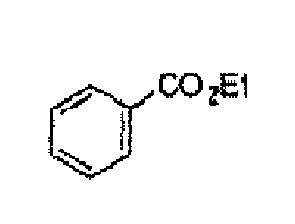

52 1000 Comparative Example 3 Pt/C 5% by mass (2 mg) 13 250 Example 35 [HPSN+Br-(Octyl)3]n-Ptparticle(10% by mass) (1 mg) 

43 820 Comparative Example 4 Pt/C 5% by mass (2 mg) 20 381 Example 36 [HPSN+Br-(Octyl)3]n-Ptparticle(10% by mass) (1 mg) 

63 1260 Comparative Example 5 Pt/C 5% by mass (2 mg) 14 280 - Into an autoclave, the [HPS-N(Dodecyl)3Br]Pt particle complex (5 mg, metal content: 19% by mass) prepared according to Example 23 except that HPS-N(Dodecyl)3Br and Pt(DBA)2 in a ratio of 1:1 were charged into the reaction system and each of the various aromatic compounds (3 mmol) described in Table 7 were charged and the reaction was effected in a hydrogen atmosphere (30 atm) for 24 hours.
- As a comparison relative to Examples 37 to 44, the reaction was effected in the same manner as in Example 37, except that instead of the [HPS-N(Dodecyl)3Br]Pt particle complex (5 mg, metal content: 19% by mass), Pt/C (20 mg, metal content: 5% by mass [manufactured by Wako Pure Chemical Industries, Ltd.]) was used.
- The results of Examples 37 to 44 and Comparative Example 6 are shown in Table 7.
Table 7 
Raw material Product G.C. yield (%) TON Raw material Product GC. yield (%) TON Example 37 

>99 618 Example 41a 

6 37 Example 38 

81 501 Example 42 

4 25 Example 39 

84 520 Example 43a 

23 (99%ee) 155 Example 40° 

20 124 Example 44 

21 (99%ee) 130 a: an acetylated product was measured 
- Film formation of an [HPS-N(C2H4OC2H4OCH3)3Br]Pt fine particle complex by spin-coating and ellipsometry
A 5% by mass [HPS-N(C2H4OC2H4OCH3)3Br]Pt fine particle complex ethanol solution was spin-coated on a glass substrate of 3 cm x 3 cm at 3,000 rpm for 30 seconds and was baked at 80°C for 10 minutes to obtain a thin film having a homogeneous film thickness. As the result of measuring the refractive index of the obtained thin film using an ellipsometer, it was found that n was 1.61 (wavelength: 598 nm) and the film thickness was 105 nm. - Into a two-neck eggplant-shaped flask (100 mL) equipped with a water-cooling tube, HPSNBr(C2H4OC2H4OCH3)3 (260 mg) and RhCl3·3H2O [manufactured by Furuya Metal Co., Ltd.] (142 mg) were charged and the inside of the flask was purged with nitrogen. Thereto, further 2-propanol [manufactured by Kanto Chemical Co., Inc.] (30 mL), ethanol [manufactured by Kanto Chemical Co., Inc.] (15 mL), and distilled water (5 mL) were added and the resultant reaction mixture was heating-refluxed at 85°C for 4 hours. After the reaction, the reaction solution was filtered with a membrane filter and from the resultant filtrate, the solvent was distilled off with a rotary evaporator. The resultant residue was re-dissolved in chloroform [manufactured by Kanto Chemical Co., Inc.] (10 mL) and the resultant solution was dropped into hexane [manufactured by Kanto Chemical Co., Inc.] (30 mL) to subject the solution to re-precipitation purification. A glossy black solid (259 mg) of an [HPSNBr(C2H4OC2H4OCH3)3]Rh particle complex was obtained. By ICP-MASS, an element analysis, and a DTA-TG (differential thermogravimetric analysis-thermogravimetry) measurement, the Rh content was measured (Rh content by 1CP-MASS: 22.6% by mass, Rh content by element analysis: 27.6% by mass, Rh content by TG: 22.4% by mass).
Element analysis measured value C: 40.16, H: 5.96, N: 1.81,
calculated value Br: 11.12, O: 13.37, Rh: 27.6
The result of the DTA-TG measurement is shown inFIG. 21 . An image of the obtained black solid observed under TEM is shown inFIG. 22 . - Into a two-neck flask (100 mL) equipped with a cooling tube, HPSNBr(C2H4OC2H4OCH3)3 (190 mg) and IrCl3·3H2O [manufactured by Furuya Metal Co., Ltd.] (84 mg) were charged and thereto, further ethanol [manufactured by Kanto Chemical Co., Inc.] (15 mL) and distilled water (15 mL) were added, followed by purging the inside of the flask with nitrogen. Under heating-reflux (80°C), the resultant reaction mixture was stirred for 12 hours. After the reaction, the solution was filtered with a membrane filter and from the resultant filtrate, the solvent was distilled off with a rotary evaporator. The resultant residue was re-dissolved in chloroform [manufactured by Kanto Chemical Co., Inc.] (10 mL) and the resultant solution was dropped into hexane [manufactured by Kanto Chemical Co., Inc.] (30 mL) to subject the solution to re-precipitation purification. An ocher solid (192 mg) of an [HPSNBr(C2H4OC2H4OCH3)3]Ir particle complex was obtained. The Ir content was measured by a DTA-TG measurement and found to be 24.8% by mass. The result of the DTA-TG measurement is shown in
FIG. 23 . An image of the obtained black solid observed under TEM is shown inFIG. 24 . - Into an eggplant-shaped flask (100 mL), HPSNBr(C2H4OC2H4OCH3)3 (190 mg) and Ag2O [manufactured by Kishida Chemical Co., Ltd.] (49 mg) were charged and thereto, ethylene glycol [manufactured by Kanto Chemical Co., Inc.] (10 g) was added, followed by stirring the resultant reaction mixture at 70°C for 12 hours. Under reduced pressure, ethylene glycol was distilled off at 100°C. The resultant residue was re-dissolved in chloroform [manufactured by Kanto Chemical Co., Inc.] (10 mL) and the resultant solution was dropped into hexane [manufactured by Kanto Chemical Co., Inc.] (30 mL) to subject the solution to re-precipitation purification. A highly viscous black solid (137 mg) of an [HPSNBr(C2H4OC2H4OCH3)3]Ag particle complex was obtained. An image of the obtained black solid observed under TEM is shown in
FIG. 25 . - Into a two-neck eggplant-shaped flask (100 mL) equipped with a cooling tube, HPSNBr(C2H4OC2H4OCH3)3 (190 mg), HAuCl4·4H2O [manufactured by Kanto Chemical Co., Inc.] (84 mg), and magnesium [manufactured by Kishida Chemical Co., Ltd.] (chip-shaped, 6 mg) were charged and the inside of the flask was purged with nitrogen. Thereto, ethanol [manufactured by Kanto Chemical Co., Inc.] (15 mL) was added and under heating-reflux (80°C), the resultant reaction mixture was stirred for 12 hours. After the reaction, the solution was filtered with a membrane filter and the resultant filtrate was re-dissolved in chloroform [manufactured by Kanto Chemical Cho., Inc.] (10 mL). The resultant solution was dropped into hexane [manufactured by Kanto Chemical Co., Inc.] (30 mL) to subject the solution to re-precipitation purification. A gray viscous solid (231 mg) of an [HPSNBr(C2H4OC2H4OCH3)3]Au particle complex was obtained. The Au content was measured by a DTA-TG measurement and found to be 19.6% by mass. The result of the DTA-TG measurement is shown in
FIG. 26 . An image of the obtained gray viscous solid observed under TEM is shown inFIG. 27 . InFIG. 27 , the right photograph is a photograph produced by enlarging the inside of the frame in the left photograph. - Into an eggplant-shaped flask (100 mL), HPSNBr(C2H4OC2H4OCH3)3 (216 mg) was charged and the inside of the flask was purged with nitrogen. Thereto, H2O (20 mL) was added and the resultant reaction mixture was stirred until the mixture became homogeneous to prepare Solution 1.
Separately, Palladium acetate [manufactured by Wako Pure Chemical Industries, Ltd.] (99 mg) was charged into all eggplant-shaped flask (20 mL) and the inside of the flask was purged with nitrogen. Thereto, H2O (10 mL) and THF [manufactured by Kanto Chemical Co., Inc.] (3 mL) were added and the resultant mixture was stirred until the mixture became homogeneous to prepareSolution 2.
Solution 2 was added to the flask of Solution 1 with a syringe and the resultant mixture was stirred at room temperature for 1 hour. To the mixture, ethanol 1 [manufactured by Kanto Chemical Co., Inc.] (10 mL) was added and the resultant reaction mixture was stirred at 70°C for 15 hours. After the reaction, the solution was filtered with a membrane filter and from the resultant filtrate, the solvent was distilled off with a rotary evaporator. The resultant residue was re-dissolved in chloroform [manufactured by Kanto Chemical Co., Inc.] (10 mL) and the resultant solution was dropped into hexane [manufactured by Kanto Chemical Co., Inc.] (30 mL) to subject the solution to re-precipitation purification. A viscous black solid (222 mg) of an [HPSNBr(C2H4OC2H4OCH3)3]Pd particle complex was obtained. The palladium content was measure by a DTA-TG measurement and was found to be 22% by mass. The result of the DTA-TG measurement is shown inFIG. 28 . An image of the obtained viscous black solid observed under TEM is shown inFIG. 29 . - Into an eggplant-shaped flask (100 mL), HPS-N (C2H4OC2H4OCH)3Br (196 mg), copper (II) acetate dihydrate (118 mg), metal magnesium (8 mg), and methanol (15 mL) were charged and the inside of the flask was purged with nitrogen. The resultant reaction mixture was heating-refluxed at 85°C for 2 hours. After the reaction, the solution was filtered and the resultant filtrate was evaporated to dryness under reduced pressure. The resultant residue was re-precipitated in chloroform-hexane and the resultant precipitate was retrieved with a membrane filter to obtain a light blue solid (181 mg) of an [HPS-N (C2H4OC2H4OCH3)3Br]Cu particle complex.
An image of the obtained light blue solid observed under TEM is shown inFIG. 30 . - Into a two-neck flask (100 mL), HPS-N(C2H4OC2H4OCH3)3Br (192 mg) and W(CO)6 (78 mg) were charged and the inside of the flask was purged with nitrogen, followed by adding 10 mL of tetrahydrofuran thereto. The inside of the system was purged with hydrogen and the resultant reaction mixture was heated and stirred at 70°C for 24 hours. The reaction mixture was subjected to re-precipitation in chloroform-hexane and the resultant precipitate was retrieved with a membrane filter to obtain a highly viscous brown solid (209 mg) of an [HPS-N (C2H4OC2H4OCH3)3Br]W particle complex.
An image of the obtained highly viscous brown solid observed under TEM is shown inFIG. 31 . - Into a two-neck flask (100 mL), 3 mL of a methanol solution of HPS-N(C2H4OC2H4OCH3)3Br (228 mg) and Re2(CO)10 (98 mg) were charged and the inside of the flask was purged with nitrogen, followed by adding 15 mL of toluene thereto. The solution was refluxed at 110°C for 12 hours and then the solvent was distilled off under reduced pressure. Next, the resultant residue was subjected to re-precipitation in chloroform-hexane and the resultant precipitate was retrieved with a membrane filter to obtain a highly viscous brown solid (175 mg) of an [HPS-N (C2H4OC2H4OCH3)3Br]Re particle complex.
An image of the obtained highly viscous brown solid observed under TEM is shown inFIG. 32 . - Into a Schlenk tube (50 mL), an ethanol solution (2 mL) of HPS-N(C2H4OC2H4OCH3)3Br (200 mg) and a THF solution (15 mL) of Mo(CO)6 (114 mg) were charged and the inside of the flask was purged with nitrogen, followed by refluxing the resultant reaction mixture at 70°C for 12 hours. The reaction solution was filtered and the filtrate was evaporated to dryness under reduced pressure. The resultant residue was subjected to re-precipitation in THF-hexane and the resultant precipitate was retrieved with a membrane filter to obtain a brown solid (164 mg) of an [HPS-N (C2H4OC2H4OCH3)3Br]Mo particle complex.
An image of the obtained brown solid observed under TEM is shown inFIG. 33 . - Into a Schlenk tube (50 mL), 5 mL of a methanol solution of HPS-N(C2H4OC2H4OCH3)3Br (119 mg) and 15 mL of THF were charged and the inside of the tube was purged with argon, followed by adding Ni(cod)2 (119 mg) thereto. Inside of the system was purged with hydrogen and then the reaction mixture was stirred at room temperature for 10 hours. The resultant solution was filtered with a membrane filter and then the filtrate was evaporated to dryness under reduced pressure. Next, the resultant residue was subjected to re-precipitation in chloroform-hexane and the resultant precipitate was retrieved with a membrane filter to obtain a black powder (137 mg) of an [HPS-N (C2H4OC2H4OCH3)3Br]N particle complex.
An image of the obtained black powder observed under TEM is shown inFIG. 34 . - 50 mL of an aqueous solution of ammonium hydrogen carbonate (4 g) was charged into an eggplant-shaped flask (100 mL) and thereinto, 10 mL of an aqueous solution of tin tetrachloride pentahydrate (2.6 g) was dropped. The resultant mixture was stirred at room temperature for 2 hours and the resultant colorless gel substance was left at rest over one day and night, followed by subjecting the gel to decantation to remove the supernatant. Next, 30 mL of water was added to the gel and the resultant mixture was stirred and then subjected to a centrifugation at 4,000 rpm for 20 minutes to remove the supernatant. This operation was repeated 4 times and it was confirmed that a chloride ion was not detected in the supernatant. Next, to the resultant precipitate, 20 mL of water and a small amount of ammonia were added to make the pH of the resultant mixture around 10 and then, to the mixture, 20 mg of ammonium nitrate was added. The resultant mixture was stirred in an autoclave at 200°C under 2 MPa for 12 hours and was subjected to a hydrothermal treatment to obtain a suspension of a light gray solid.
86 mg of a gray solid separated from the suspension was taken and added to a solution of HPS-N (C2H4OC2H4OCH3)3Br (190 mg) in 20 mL of water and 10 mL of methanol and the resultant mixture was stirred at 50°C for 6 hours. The resultant solution was evaporated to dryness under reduced pressure and the resultant residue was dispersed in chloroform. Thereto, hexane was added to subject the reaction mixture to re-precipitation to obtain a yellow-brown solid (147 mg) of an [HPS-N(C2H4OC2H4OCH3)3Br]SnO2 particle complex.
An image of the obtained yellow-brown solid observed under TEM is shown inFIG. 35 . - Into an eggplant-shaped flask (100 mL), 2 mL of a methanol solution of HPS-N(C2H4OC2H4OCH3)3Br (190 mg), chloroplatinic acid hexahydrate (101 mg), 15 mL of ethanol, and 15 mL of water were charged and the resultant reaction mixture was refluxed at 85°C for 2 hours. The resultant solution was evaporated to dryness under reduced pressure and the resultant residue was subjected to re-precipitation in chloroform-hexane to obtain a highly viscous black solid (112 mg) of an [HPS-N (C2H4OC2H4OCH3)3Br]Pt particle complex.
An image of the obtained highly viscous black solid observed under TEM is shown inFIG. 36 . As the result of the observation by photographing under TEM, the particle diameter thereof was found to be 3 to 4 nm. - Into a Schlenk tube (50 mL), HPS-N(C2H4OC2H4OCH3)3Br (187 mg), 10 mL of ethanol, and 10 mL of water were charged and the resultant reaction mixture was subjected to deoxidation under reduced pressure. Thereto, 15 mL of a solution of ruthenium trichloride (89 mg) in ethanol-water =1:1 and 52 mg of benzophenone were added and while irradiating the resultant reaction mixture with an ultraviolet light using a mercury lamp, the reaction mixture was stirred at room temperature for 2 hours. The resultant reaction solution was filtered with a membrane filter and the resultant filtrate was evaporated to dryness under reduced pressure. The resultant residue was subjected to re-precipitation in chloroform-hexane to obtain a brown solid (60 mg) of an [HPS-N (C2H4OC2H4OCH3)3Br]Ru particle complex.
An image of the obtained brown solid observed under TEM is shown inFIG. 37 . - A styrene-based branched polymer (HPS) having a dithiocarbamate group of Formula (6):

The HPS had a weight average molecular weight Mw of 16,000 and a distribution: Mw (weight average molecular weight) / Mn (number average molecular weight) of 3.2 in terms of polystyrene, which were measured by GPC.
Into a Schlenk reaction tube (20 mL), N(Octyl)3Br (21.6 mg) and Pd(OAc)2 (24.3 mg) were charged and the inside of the tube was purged with nitrogen. Thereto, 10 mL of tetrahydrofuran was added and the inside of the system was purged with hydrogen. To the solution stirred at room temperature for 12 hours, the above HPS-DC (53.5 mg) was added to stir the resultant reaction mixture at 60°C over one night. The resultant reaction solution was added to hexane (50 mL) and the resultant reaction mixture was subjected to re-precipitation purification. The resultant precipitate was filtered and dried under reduced pressure to obtain 101.2 mg of a black precipitate of an HPS-Pd particle complex. An image of the obtained black precipitate observed under TEM is shown inFIG. 38 . As the result of the observation by observing under TEM, the particle diameter of the [HPS-DC]Pd particle complex was found to be 5 nm. - Into a 30 mL two-neck flask, the [HPS-DC]Pd particle complex prepared according to Comparative Example 7 (30 mg) and trans-stilbene [manufactured by Tokyo Chemical Industry Co., Ltd.] (180 mg, 1 mmol) were charged and the inside of the flask was purged with hydrogen, followed by stirring the resultant reaction mixture at room temperature for 24 hours. The reaction did not progress at all and recovered were only raw materials.
- Into an eggplant-shaped flask (100 mL), 2 mL of a methanol solution of HPS-N(C2H4OC2H4OCH3)3Br (190 mg), chloroplatinic acid hexahydrate (101 mg), 15 mL of ethanol, and 15 mL of water were charged and the resultant reaction mixture was refluxed at 85°C for 2 hours. The resultant solution was evaporated to dryness under reduced pressure and the resultant residue was subjected to re-precipitation in chloroform-hexane to obtain a highly viscous black solid (112 mg) of an [HPS-N (C2H4OC2H4OCH3)3Br]Pt particle complex. The content of platinum was measured by a DTA-TG measurement and was found to be 17.7% by mass.
An image of the obtained highly viscous black solid observed under TEM is shown inFIG. 39 . As the result of the observation by photographing under TEM, the particle diameter was found to be 3 to 4 nm. - The [HPS-N(C2H4OC2H4OCH3)3Br]Pt particle complex (10 mg) produced in Example 59, H2O (10 mL), and 3.0 mmol of each of the carbonyl compounds described in Table 8 were charged into a 100 mL autoclave and the resultant reaction mixture was heated and stirred at 70°C under a hydrogen pressure of 3.0 MPa for 24 hours. The reaction solution was extracted with dichloromethane and the organic phase was retrieved and dehydrated over MgSO4 followed by distilling off the solvent under reduced pressure to obtain a crude product. The objective compound was purified and isolated by subjecting the crude product to silica gel column chromatography using a hexane:ethyl acetate=5:1 solution as an eluting solvent. The inversion rate was measured by G.C.
The result of the reduction reaction of various carbonyl compounds is shown in Table 8.Table 8 Raw material Product Inversion rate (%) Yield (%) Example 60 

56% 39% Example 61 

>99% 60% Example 62 

95% 82% Example 63 

35% 20% Example 64 

95% 68% Example 65 

64% 48% - As Comparative Examples 8 to 11, the reduction reaction of pentanone shown in Example 60 was effected by changing the reaction solvent from water to a solvent other than water and the result thereof is shown in Table 9.
Table 9 
Solvent Inversion rate Example 60 (reference) Water 56% Comparative Example 8 THF n.d. Comparative Example 9 Water/THF=1:1 n.d. Comparative Example 10 CHCl3 n.d. Comparative Example 11 ETCH 12% - [Hydrogenation reaction of various compounds in water using Pt particle complex]
- The [HPS-N(C2H4OC2H4OCH3)3Br]Pt particle complex (4 mg) produced in Example 59, H2O (5 mL), and 1.0 mmol of each of the aromatic compounds described in Table 10 were charged into a 30 mL eggplant-shaped flask and the reaction was performed in a hydrogen atmosphere at room temperature for 12 hours. The inversion rate of the reaction was measured by G.C. and the determination of the compound was performed by 1H NMR. The result thereof is shown in Table 10.
Table 10 Objective Solvent Raw material Product Inversion rate (%) Example 66 Aldehyde C=O aromatic ring compound H2O 

>99% THF n.r. Example 67 Carboxylic acid C=O olefin compound H2O 

>99% THF >99% - As shown in Table 8 to Table 10, it was confirmed that by using the Pt particle complex of the present invention, a reduction reaction of a ketone, an aldehyde, an olefin, and the like is progressed in water.
As shown in Examples 61 to 65 and Examples 66 and 67, there could be obtained such a result that the reduction reaction can selectively be effected according to the functional group. -
- Patent Document 1: Japanese Patent Application Publication No.
JP-A-2003-193118 - Patent Document 2: Japanese Patent Application Publication No.
JP-A-2008-37884 - Patent Document 3: Japanese Patent Application Publication No.
JP-A-2002-1095 - Patent Document 4: Japanese Patent Application Publication No.
JP-A-2002-179931 - Patent Document 5: Japanese Patent Application Publication No.
JP-A-2003-208900 - Patent Document 6: International Publication No.
WO 2008/029688 pamphlet -
- Non-patent Document 1: Journal of Chemical Society, Chemical Communication, p. 801 (1994)
- Non-patent Document 2: Journal of the American Chemical Society, No. 127, p. 7328 (2005)
- Non-patent Document 3: Metal Nanoparticles, D. L. Feldheim, C. A. Foss, Jr. Eds.; Marcel Dekker: New York, 2002

according to a fourteenth aspect, a production method of the composition as described in the second aspect, including: mixing the metal fine particle dispersant with a metal salt; and adding a reductant to the resultant mixture to reduce the metal salt in the mixture to prepare metal fine particles,
according to a fifteenth aspect, a production method of the composition as described in the second aspect, characterized by including mixing the metal fine particle dispersant with a metal fine particle complexed with a phosphine-based or amine-based dispersant to substitute a ligand,
according to a sixteenth aspect, a reduction catalyst containing the composition as described in any one of the second aspect to the twelfth aspect,
according to a seventeenth aspect, a reduction catalyst containing the composition as described in the twelfth aspect for effecting a reduction reaction in water, and
according to an eighteenth aspect, an electrode for a fuel battery containing the composition as described in any one of the second aspect to the twelfth aspect.
Claims (18)
- A metal fine particle dispersant for forming a disperse system of metal fine particles, the metal fine particle dispersant comprising a branched polymer compound having an ammonium group and having a weight average molecular weight of 500 to 5,000,000.
- A composition comprising:the metal fine particle dispersant as claimed in claim 1; anda metal fine particle.
- The composition according to claim 2, wherein an ammonium group of the branched polymer compound is attached to the metal fine particle to form a complex.
- The composition according to claim 2 or 3, further comprising an organic solvent.
- The composition according to claim 4, wherein the metal fine particle is dispersed in the organic solvent.
- The composition according to claim 4, wherein the complex is dispersed in the organic solvent.
- The composition according to any one of claims 2 to 6, wherein the metal fine particle is at least one selected from a group consisting of scandium, titanium, vanadium, chromium, manganese, iron, cobalt, nickel, copper, zinc, gallium, germanium, yttrium, zirconium, niobium, molybdenum, ruthenium, rhodium, palladium, silver, cadmium, indium, tin, antimony, hafnium, tantalum, tungsten, rhenium, osmium, iridium, platinum, gold, mercury, thallium, lead, and bismuth.
- The composition according to claim 7, wherein the metal fine particle is at least one selected from a group consisting of gold, silver, platinum, copper, nickel, ruthenium, rhodium, palladium, osmium, and iridium.
- The composition according to claim 7 or 8, wherein the metal fine particle is a fine particle having an average particle diameter of 1 nm or more and 100 nm or less.
- The composition according to any one of claims 2 to 9, wherein the metal fine particle dispersant comprises a branched polymer compound of Formula (1):
 [where R1 is a hydrogen atom or a methyl group,R2, R3, and R4 are independently a hydrogen atom, a linear, branched, or cyclic C1-20 alkyl group, a C6-20 arylalkyl group (where the alkyl group and the arylalkyl group are optionally substituted with an alkoxy group, a hydroxy group, an ammonium group, a carboxy group, or a cyano group), or -(CH2CH2O)m-R5 (where R5 is a hydrogen atom or a methyl group, and m is an arbitrary integer of 2 to 100), or R2. R3, and R4 are optionally bonded to each other through a linear, branched, or cyclic alkylene group to form a ring together with a nitrogen atom to which R2, R3, and R4 are bonded,X- is an anion,A1 is a structure of Formula (2):
 (where A2 is a linear, branched, or cyclic C1-30 alkylene group that optionally contains an ether bond or an ester bond, andY1, Y2, Y3, and Y4 are independently a hydrogen atom, a C1-20 alkyl group, a C1-20 alkoxy group, a nitro group, a hydroxy group, an amino group, a carboxy group, or a cyano group), andn is the number of repeating unit structures that is an integer of 2 to 100,000].
 - The composition according to claim 10, characterized in that A1 is a group of Formula (3):

X- is a halogen atom, PF6 -, BF4 -, or a perfluoroalkanesulfonate. - The composition according to claim 2, wherein the metal fine particle dispersant is a branched polymer of Formula (4):
 (where R1 is a hydrogen atom or a methyl group,R2 is an ether bond-containing alkyl chain of Formula (5):
 X- is an anion,A1 is a structure of Formula (2), andn is the number of repeating unit structures that is an integer of 2 to 100,000).
 - A thin film obtained from the composition as claimed in any one of claims 2 to 12.
- A production method of the composition as claimed in claim 2, comprising:mixing the metal fine particle dispersant in claim 2 with a metal salt; andadding a reductant to the resultant mixture to reduce the metal salt in the mixture to prepare metal fine particles.
- A production method of the composition as claimed in claim 2, characterized by comprising mixing the metal fine particle dispersant in claim 2 with a metal fine particle complexed with a phosphine-based or amine-based dispersant.
- A reduction catalyst comprising the composition as claimed in any one of claims 2 to 12.
- A reduction catalyst comprising the composition as claimed in claim 12 for effecting a reduction reaction in water.
- An electrode for a fuel battery comprising the composition as claimed in any one of claims 2 to 12.
Applications Claiming Priority (3)
| Application Number | Priority Date | Filing Date | Title |
|---|---|---|---|
| JP2008214677 | 2008-08-22 | ||
| JP2009047110 | 2009-02-27 | ||
| PCT/JP2009/064670 WO2010021386A1 (en) | 2008-08-22 | 2009-08-21 | Metal microparticle-dispersing agent comprising branched polymeric compound having ammonium group |
Publications (3)
| Publication Number | Publication Date |
|---|---|
| EP2332640A1 true EP2332640A1 (en) | 2011-06-15 |
| EP2332640A4 EP2332640A4 (en) | 2011-10-26 |
| EP2332640B1 EP2332640B1 (en) | 2012-11-28 |
Family
ID=41707260
Family Applications (1)
| Application Number | Title | Priority Date | Filing Date |
|---|---|---|---|
| EP09808322A Not-in-force EP2332640B1 (en) | 2008-08-22 | 2009-08-21 | Metal microparticle-dispersing agent comprising branched polymeric compound having ammonium group |
Country Status (7)
| Country | Link |
|---|---|
| US (3) | US8722562B2 (en) |
| EP (1) | EP2332640B1 (en) |
| JP (2) | JP5761995B2 (en) |
| KR (2) | KR101680259B1 (en) |
| CN (3) | CN102131573B (en) |
| TW (1) | TWI475028B (en) |
| WO (1) | WO2010021386A1 (en) |
Families Citing this family (20)
| Publication number | Priority date | Publication date | Assignee | Title |
|---|---|---|---|---|
| JP5729800B2 (en) * | 2009-09-01 | 2015-06-03 | 国立大学法人電気通信大学 | Photosensitive composition containing metal nanoparticle-ammonium group-containing branched polymer compound composite |
| JP2012196666A (en) * | 2011-03-10 | 2012-10-18 | Kyushu Univ | Supported composite of branched polymer and metal particle |
| JP6021804B2 (en) * | 2011-04-12 | 2016-11-09 | 国立大学法人九州大学 | Electroless plating base material containing hyperbranched polymer, metal fine particles and organic acid |
| WO2012141215A1 (en) | 2011-04-12 | 2012-10-18 | 日産化学工業株式会社 | Electroless plating primer including hyperbranched polymer and metallic microparticles |
| JP5890679B2 (en) * | 2011-12-26 | 2016-03-22 | 株式会社ブリヂストン | Method for producing rubber composition |
| WO2013122136A1 (en) * | 2012-02-14 | 2013-08-22 | 国立大学法人群馬大学 | Associated metal microparticles and process for producing same |
| KR102157192B1 (en) * | 2012-09-13 | 2020-09-18 | 닛산 가가쿠 가부시키가이샤 | Electroless plating base agent |
| JP6649609B2 (en) * | 2013-12-13 | 2020-02-19 | 日産化学株式会社 | Catalyst ink for inkjet printing |
| WO2015111755A1 (en) * | 2014-01-27 | 2015-07-30 | 国立大学法人 福井大学 | Method for manufacturing conductive nanofiber |
| JP6631806B2 (en) | 2014-07-30 | 2020-01-15 | 日産化学株式会社 | Electroless plating primer containing hyperbranched polymer, fine metal particles and resin primer |
| JP6649631B2 (en) * | 2014-09-05 | 2020-02-19 | 日産化学株式会社 | Photocurable electroless plating base agent |
| WO2016035897A1 (en) * | 2014-09-05 | 2016-03-10 | 日産化学工業株式会社 | Photosensitive electroless plating undercoat agent |
| EP3368204A1 (en) * | 2015-10-30 | 2018-09-05 | Clariant International Ltd | Metal dispersion with increased stability |
| WO2017154919A1 (en) * | 2016-03-09 | 2017-09-14 | 日産化学工業株式会社 | Electroless plating undercoat agent including metal microparticles and hyperbranched polymer |
| CN105949479B (en) * | 2016-04-28 | 2018-10-23 | 东华大学 | A kind of hybrid material aqueous solution of loaded metal ion and preparation method thereof |
| CN108666523B (en) * | 2017-03-30 | 2021-01-15 | 宁德时代新能源科技股份有限公司 | Suspending agent for anode slurry, anode sheet and energy storage device |
| WO2019022151A1 (en) * | 2017-07-25 | 2019-01-31 | 日産化学株式会社 | Method for producing metal fine particle composite body |
| CN110252383A (en) * | 2019-05-17 | 2019-09-20 | 江苏大学 | A kind of Cu@Ru/MCM-41 nano catalyst and its preparation method and application |
| US11770694B2 (en) | 2020-11-16 | 2023-09-26 | Oracle International Corporation | Methods, systems, and computer readable media for validating location update messages |
| CN115572880B (en) * | 2022-09-23 | 2023-06-16 | 华南理工大学 | High-entropy metallocenes, preparation method and application thereof |
Family Cites Families (20)
| Publication number | Priority date | Publication date | Assignee | Title |
|---|---|---|---|---|
| JP3594803B2 (en) * | 1997-07-17 | 2004-12-02 | 日本ペイント株式会社 | Noble metal or copper colloid solution, method for producing the same, coating composition and resin molded product |
| JP3960674B2 (en) | 1998-01-22 | 2007-08-15 | ディップソール株式会社 | Metal colloid stabilizer, metal colloid liquid composition containing the stabilizer, preparation method thereof and use thereof |
| JP4765092B2 (en) | 2000-06-16 | 2011-09-07 | 田中貴金属工業株式会社 | Colloidal solution and method for producing colloidal solution |
| JP4871443B2 (en) * | 2000-10-13 | 2012-02-08 | 株式会社アルバック | Method for producing metal ultrafine particle dispersion |
| KR100379250B1 (en) | 2000-12-04 | 2003-04-08 | 한국과학기술연구원 | Composite Polymers Containing Nanometer-sized Metal Particles and Fabrication Method Thereof |
| CN1443227A (en) | 2001-05-21 | 2003-09-17 | 日本油漆株式会社 | Process for producing high-concentration colloidal metal solution |
| JP2003193118A (en) | 2001-12-28 | 2003-07-09 | Mitsuboshi Belting Ltd | Method of producing metallic fine particle |
| JP2003208900A (en) | 2002-01-10 | 2003-07-25 | Fuji Photo Film Co Ltd | Electrode for fuel cell, and fuel cell |
| JP4904572B2 (en) * | 2004-02-26 | 2012-03-28 | 三菱マテリアル株式会社 | Extraction method and use of metal fine particles |
| JP2006155832A (en) * | 2004-12-01 | 2006-06-15 | Fuji Photo Film Co Ltd | Magnetic recording medium and its manufacturing method |
| US7740968B2 (en) * | 2004-12-20 | 2010-06-22 | Kuraray Co., Ltd. | Ion-conductive binder membrane-electrode assembly and fuel cell |
| JP2008527169A (en) * | 2005-01-10 | 2008-07-24 | イシウム リサーチ デベロップメント カンパニー オブ ザ ヘブリュー ユニバーシティー オブ イエルサレム | Aqueous dispersion of metal nanoparticles |
| JP2006202701A (en) * | 2005-01-24 | 2006-08-03 | Canon Inc | Membrane / electrode assembly for polymer electrolyte fuel cell and method for producing the same |
| JP4761110B2 (en) * | 2005-01-28 | 2011-08-31 | 住友電気工業株式会社 | Metal coating and method for forming the same |
| DE602006021154D1 (en) * | 2005-03-03 | 2011-05-19 | Nissan Chemical Ind Ltd | HYBRID BRANCHED POLYMER AND METHOD OF MANUFACTURING THEREOF |
| EP1902078B1 (en) * | 2005-07-08 | 2011-06-22 | Basf Se | (meth)acrylamide phosphorus monomer composition |
| JP4026662B1 (en) | 2006-08-01 | 2007-12-26 | 大日本インキ化学工業株式会社 | Metal nanoparticle dispersion and method for producing the same |
| CN101506246B (en) * | 2006-09-01 | 2011-06-22 | 日产化学工业株式会社 | Hyperbranched polymers and methods for their manufacture |
| CN101199921A (en) * | 2006-12-15 | 2008-06-18 | 上海博易和化工有限公司 | Anti-caking agent containing surfactants and preparing process thereof |
| CN101620255A (en) * | 2008-07-01 | 2010-01-06 | 鸿富锦精密工业(深圳)有限公司 | Electric quantity display system and method therefor |
-
2009
- 2009-08-21 WO PCT/JP2009/064670 patent/WO2010021386A1/en not_active Ceased
- 2009-08-21 KR KR1020117006508A patent/KR101680259B1/en active Active
- 2009-08-21 KR KR1020167013142A patent/KR101743637B1/en active Active
- 2009-08-21 JP JP2010525719A patent/JP5761995B2/en active Active
- 2009-08-21 US US13/060,129 patent/US8722562B2/en not_active Expired - Fee Related
- 2009-08-21 CN CN200980132784.0A patent/CN102131573B/en active Active
- 2009-08-21 CN CN201510185138.8A patent/CN104906997B/en active Active
- 2009-08-21 CN CN201510084929.1A patent/CN104785163B/en active Active
- 2009-08-21 EP EP09808322A patent/EP2332640B1/en not_active Not-in-force
- 2009-08-24 TW TW098128380A patent/TWI475028B/en active
-
2014
- 2014-03-18 US US14/218,469 patent/US20140288264A1/en not_active Abandoned
-
2015
- 2015-03-03 JP JP2015041739A patent/JP6009017B2/en active Active
-
2019
- 2019-08-06 US US16/533,304 patent/US10597491B2/en not_active Expired - Fee Related
Also Published As
| Publication number | Publication date |
|---|---|
| US20110183837A1 (en) | 2011-07-28 |
| KR101680259B1 (en) | 2016-11-29 |
| CN104906997B (en) | 2018-07-13 |
| US10597491B2 (en) | 2020-03-24 |
| US8722562B2 (en) | 2014-05-13 |
| WO2010021386A1 (en) | 2010-02-25 |
| JPWO2010021386A1 (en) | 2012-01-26 |
| EP2332640B1 (en) | 2012-11-28 |
| KR20160062202A (en) | 2016-06-01 |
| CN102131573B (en) | 2015-05-20 |
| US20190359771A1 (en) | 2019-11-28 |
| JP5761995B2 (en) | 2015-08-12 |
| TWI475028B (en) | 2015-03-01 |
| JP6009017B2 (en) | 2016-10-19 |
| CN104785163B (en) | 2018-04-13 |
| JP2015166084A (en) | 2015-09-24 |
| CN102131573A (en) | 2011-07-20 |
| CN104785163A (en) | 2015-07-22 |
| EP2332640A4 (en) | 2011-10-26 |
| KR20110073462A (en) | 2011-06-29 |
| TW201016723A (en) | 2010-05-01 |
| KR101743637B1 (en) | 2017-06-05 |
| US20140288264A1 (en) | 2014-09-25 |
| CN104906997A (en) | 2015-09-16 |
Similar Documents
| Publication | Publication Date | Title |
|---|---|---|
| US10597491B2 (en) | Metal fine particle dispersant containing branched polymer compound having ammonium group | |
| He et al. | Unconventional route to dual-shelled organolead halide perovskite nanocrystals with controlled dimensions, surface chemistry, and stabilities | |
| US6531304B1 (en) | Method for modifying the dispersion characteristics of metal organic-prestabilized or pre-treated nanometal colloids | |
| KR101623349B1 (en) | Quantum dot capped with ionic liquid and the production method thereof | |
| JP5435229B2 (en) | Dispersant of fine metal particles comprising a polymer compound having a dithiocarbamate group | |
| Safavi et al. | Synthesis of highly stable gold nanoparticles using conventional and geminal ionic liquids | |
| Nguyen et al. | Synergistic effect of the oleic acid and oleylamine mixed-liquid matrix on particle size and stability of sputtered metal nanoparticles | |
| JP4889015B2 (en) | Sensor electrode body, sensor and sensing system using the same, and method for manufacturing sensor electrode body | |
| TWI492965B (en) | Polymer and dispersion | |
| Ulker et al. | Preparation of monometallic and bimetallic alloy nanoparticles stabilized with sulfobetaine-based block copolymer and their catalytic activities | |
| Gasnier et al. | Soluble heterometallic coordination polymers based on a bis-terpyridine-functionalized dioxocyclam ligand | |
| JP2005089318A (en) | Phenyleneethynylenes and nanoparticle compositions containing the same | |
| Habibi et al. | Synthesis, spectroscopic studies, crystal structure and electrochemical properties of new cobalt (III) complex derived from 2-aminophenol and 4-(dimethylamino) cinnamaldehyde: nano-sized complex thin film formation via surface layer-by-layer chemical deposition method | |
| US20230140398A1 (en) | Products comprising 1,2,3-triazolate metal-organic frameworks and methods of making and using the same | |
| JP2012196666A (en) | Supported composite of branched polymer and metal particle | |
| Runge et al. | Controlled Aqueous Synthesis of CdSe Quantum Dots using Double-Hydrophilic Block Copolymers as Stabilizers | |
| TW201920306A (en) | Method for producing metal fine particle composite | |
| Meghdadi et al. | Synthesis, structure, and electrochemistry of trans-[CoIII {(BA) 2pn}(L) 2] ClO4 complexes | |
| Bokern et al. | Ultra-long palladium nanoworms by polymer grafts | |
| Wu et al. | Optical and catalytic properties of Au-Ag bimetallic nanocomposites | |
| Stuart et al. | 4.3 Strategies for the Selective Loading of Patchy Worm-Like Micelles with Functional Nanoparticles | |
| San | Synthesis of Alkanethiolate-Capped Metal Nanoparticles Using Alkyl Thiosulfate Ligand Precursors for Selective Catalytic Reactions | |
| Velázquez | Metallo-gelators Directed by Family of Tris |
Legal Events
| Date | Code | Title | Description |
|---|---|---|---|
| PUAI | Public reference made under article 153(3) epc to a published international application that has entered the european phase |
Free format text: ORIGINAL CODE: 0009012 |
|
| 17P | Request for examination filed |
Effective date: 20110321 |
|
| AK | Designated contracting states |
Kind code of ref document: A1 Designated state(s): AT BE BG CH CY CZ DE DK EE ES FI FR GB GR HR HU IE IS IT LI LT LU LV MC MK MT NL NO PL PT RO SE SI SK SM TR |
|
| AX | Request for extension of the european patent |
Extension state: AL BA RS |
|
| RIC1 | Information provided on ipc code assigned before grant |
Ipc: H01M 4/92 20060101ALI20110915BHEP Ipc: H01M 4/90 20060101ALI20110915BHEP Ipc: C08L 101/02 20060101ALI20110915BHEP Ipc: C08K 3/08 20060101ALI20110915BHEP Ipc: B01J 35/02 20060101ALI20110915BHEP Ipc: B01J 13/00 20060101ALI20110915BHEP Ipc: B01F 17/42 20060101ALI20110915BHEP Ipc: B01F 17/18 20060101ALI20110915BHEP Ipc: B01F 17/52 20060101AFI20110915BHEP |
|
| A4 | Supplementary search report drawn up and despatched |
Effective date: 20110923 |
|
| DAX | Request for extension of the european patent (deleted) | ||
| REG | Reference to a national code |
Ref country code: DE Ref legal event code: R079 Ref document number: 602009011631 Country of ref document: DE Free format text: PREVIOUS MAIN CLASS: B01F0017520000 Ipc: B01F0017000000 |
|
| RIC1 | Information provided on ipc code assigned before grant |
Ipc: B01F 17/00 20060101AFI20120514BHEP Ipc: H01M 4/86 20060101ALI20120514BHEP Ipc: C08K 3/08 20060101ALI20120514BHEP |
|
| GRAP | Despatch of communication of intention to grant a patent |
Free format text: ORIGINAL CODE: EPIDOSNIGR1 |
|
| GRAS | Grant fee paid |
Free format text: ORIGINAL CODE: EPIDOSNIGR3 |
|
| GRAA | (expected) grant |
Free format text: ORIGINAL CODE: 0009210 |
|
| AK | Designated contracting states |
Kind code of ref document: B1 Designated state(s): AT BE BG CH CY CZ DE DK EE ES FI FR GB GR HR HU IE IS IT LI LT LU LV MC MK MT NL NO PL PT RO SE SI SK SM TR |
|
| REG | Reference to a national code |
Ref country code: GB Ref legal event code: FG4D |
|
| REG | Reference to a national code |
Ref country code: CH Ref legal event code: EP |
|
| REG | Reference to a national code |
Ref country code: AT Ref legal event code: REF Ref document number: 585839 Country of ref document: AT Kind code of ref document: T Effective date: 20121215 |
|
| REG | Reference to a national code |
Ref country code: IE Ref legal event code: FG4D |
|
| REG | Reference to a national code |
Ref country code: DE Ref legal event code: R096 Ref document number: 602009011631 Country of ref document: DE Effective date: 20130124 |
|
| REG | Reference to a national code |
Ref country code: NL Ref legal event code: T3 |
|
| REG | Reference to a national code |
Ref country code: AT Ref legal event code: MK05 Ref document number: 585839 Country of ref document: AT Kind code of ref document: T Effective date: 20121128 |
|
| REG | Reference to a national code |
Ref country code: LT Ref legal event code: MG4D |
|
| PG25 | Lapsed in a contracting state [announced via postgrant information from national office to epo] |
Ref country code: ES Free format text: LAPSE BECAUSE OF FAILURE TO SUBMIT A TRANSLATION OF THE DESCRIPTION OR TO PAY THE FEE WITHIN THE PRESCRIBED TIME-LIMIT Effective date: 20130311 Ref country code: NO Free format text: LAPSE BECAUSE OF FAILURE TO SUBMIT A TRANSLATION OF THE DESCRIPTION OR TO PAY THE FEE WITHIN THE PRESCRIBED TIME-LIMIT Effective date: 20130228 Ref country code: SE Free format text: LAPSE BECAUSE OF FAILURE TO SUBMIT A TRANSLATION OF THE DESCRIPTION OR TO PAY THE FEE WITHIN THE PRESCRIBED TIME-LIMIT Effective date: 20121128 Ref country code: LT Free format text: LAPSE BECAUSE OF FAILURE TO SUBMIT A TRANSLATION OF THE DESCRIPTION OR TO PAY THE FEE WITHIN THE PRESCRIBED TIME-LIMIT Effective date: 20121128 Ref country code: FI Free format text: LAPSE BECAUSE OF FAILURE TO SUBMIT A TRANSLATION OF THE DESCRIPTION OR TO PAY THE FEE WITHIN THE PRESCRIBED TIME-LIMIT Effective date: 20121128 |
|
| PG25 | Lapsed in a contracting state [announced via postgrant information from national office to epo] |
Ref country code: LV Free format text: LAPSE BECAUSE OF FAILURE TO SUBMIT A TRANSLATION OF THE DESCRIPTION OR TO PAY THE FEE WITHIN THE PRESCRIBED TIME-LIMIT Effective date: 20121128 Ref country code: GR Free format text: LAPSE BECAUSE OF FAILURE TO SUBMIT A TRANSLATION OF THE DESCRIPTION OR TO PAY THE FEE WITHIN THE PRESCRIBED TIME-LIMIT Effective date: 20130301 Ref country code: PT Free format text: LAPSE BECAUSE OF FAILURE TO SUBMIT A TRANSLATION OF THE DESCRIPTION OR TO PAY THE FEE WITHIN THE PRESCRIBED TIME-LIMIT Effective date: 20130328 Ref country code: BE Free format text: LAPSE BECAUSE OF FAILURE TO SUBMIT A TRANSLATION OF THE DESCRIPTION OR TO PAY THE FEE WITHIN THE PRESCRIBED TIME-LIMIT Effective date: 20121128 Ref country code: PL Free format text: LAPSE BECAUSE OF FAILURE TO SUBMIT A TRANSLATION OF THE DESCRIPTION OR TO PAY THE FEE WITHIN THE PRESCRIBED TIME-LIMIT Effective date: 20121128 Ref country code: SI Free format text: LAPSE BECAUSE OF FAILURE TO SUBMIT A TRANSLATION OF THE DESCRIPTION OR TO PAY THE FEE WITHIN THE PRESCRIBED TIME-LIMIT Effective date: 20121128 |
|
| PG25 | Lapsed in a contracting state [announced via postgrant information from national office to epo] |
Ref country code: AT Free format text: LAPSE BECAUSE OF FAILURE TO SUBMIT A TRANSLATION OF THE DESCRIPTION OR TO PAY THE FEE WITHIN THE PRESCRIBED TIME-LIMIT Effective date: 20121128 |
|
| PG25 | Lapsed in a contracting state [announced via postgrant information from national office to epo] |
Ref country code: CZ Free format text: LAPSE BECAUSE OF FAILURE TO SUBMIT A TRANSLATION OF THE DESCRIPTION OR TO PAY THE FEE WITHIN THE PRESCRIBED TIME-LIMIT Effective date: 20121128 Ref country code: SK Free format text: LAPSE BECAUSE OF FAILURE TO SUBMIT A TRANSLATION OF THE DESCRIPTION OR TO PAY THE FEE WITHIN THE PRESCRIBED TIME-LIMIT Effective date: 20121128 Ref country code: BG Free format text: LAPSE BECAUSE OF FAILURE TO SUBMIT A TRANSLATION OF THE DESCRIPTION OR TO PAY THE FEE WITHIN THE PRESCRIBED TIME-LIMIT Effective date: 20130228 Ref country code: DK Free format text: LAPSE BECAUSE OF FAILURE TO SUBMIT A TRANSLATION OF THE DESCRIPTION OR TO PAY THE FEE WITHIN THE PRESCRIBED TIME-LIMIT Effective date: 20121128 Ref country code: EE Free format text: LAPSE BECAUSE OF FAILURE TO SUBMIT A TRANSLATION OF THE DESCRIPTION OR TO PAY THE FEE WITHIN THE PRESCRIBED TIME-LIMIT Effective date: 20121128 |
|
| PG25 | Lapsed in a contracting state [announced via postgrant information from national office to epo] |
Ref country code: IT Free format text: LAPSE BECAUSE OF FAILURE TO SUBMIT A TRANSLATION OF THE DESCRIPTION OR TO PAY THE FEE WITHIN THE PRESCRIBED TIME-LIMIT Effective date: 20121128 Ref country code: RO Free format text: LAPSE BECAUSE OF FAILURE TO SUBMIT A TRANSLATION OF THE DESCRIPTION OR TO PAY THE FEE WITHIN THE PRESCRIBED TIME-LIMIT Effective date: 20121128 |
|
| PLBE | No opposition filed within time limit |
Free format text: ORIGINAL CODE: 0009261 |
|
| STAA | Information on the status of an ep patent application or granted ep patent |
Free format text: STATUS: NO OPPOSITION FILED WITHIN TIME LIMIT |
|
| 26N | No opposition filed |
Effective date: 20130829 |
|
| PG25 | Lapsed in a contracting state [announced via postgrant information from national office to epo] |
Ref country code: CY Free format text: LAPSE BECAUSE OF FAILURE TO SUBMIT A TRANSLATION OF THE DESCRIPTION OR TO PAY THE FEE WITHIN THE PRESCRIBED TIME-LIMIT Effective date: 20121128 |
|
| REG | Reference to a national code |
Ref country code: DE Ref legal event code: R097 Ref document number: 602009011631 Country of ref document: DE Effective date: 20130829 |
|
| PG25 | Lapsed in a contracting state [announced via postgrant information from national office to epo] |
Ref country code: HR Free format text: LAPSE BECAUSE OF FAILURE TO SUBMIT A TRANSLATION OF THE DESCRIPTION OR TO PAY THE FEE WITHIN THE PRESCRIBED TIME-LIMIT Effective date: 20130731 |
|
| REG | Reference to a national code |
Ref country code: CH Ref legal event code: PL |
|
| PG25 | Lapsed in a contracting state [announced via postgrant information from national office to epo] |
Ref country code: MC Free format text: LAPSE BECAUSE OF FAILURE TO SUBMIT A TRANSLATION OF THE DESCRIPTION OR TO PAY THE FEE WITHIN THE PRESCRIBED TIME-LIMIT Effective date: 20121128 Ref country code: CH Free format text: LAPSE BECAUSE OF NON-PAYMENT OF DUE FEES Effective date: 20130831 Ref country code: LI Free format text: LAPSE BECAUSE OF NON-PAYMENT OF DUE FEES Effective date: 20130831 |
|
| REG | Reference to a national code |
Ref country code: IE Ref legal event code: MM4A |
|
| PG25 | Lapsed in a contracting state [announced via postgrant information from national office to epo] |
Ref country code: IE Free format text: LAPSE BECAUSE OF NON-PAYMENT OF DUE FEES Effective date: 20130821 |
|
| PG25 | Lapsed in a contracting state [announced via postgrant information from national office to epo] |
Ref country code: SM Free format text: LAPSE BECAUSE OF FAILURE TO SUBMIT A TRANSLATION OF THE DESCRIPTION OR TO PAY THE FEE WITHIN THE PRESCRIBED TIME-LIMIT Effective date: 20121128 |
|
| PG25 | Lapsed in a contracting state [announced via postgrant information from national office to epo] |
Ref country code: TR Free format text: LAPSE BECAUSE OF FAILURE TO SUBMIT A TRANSLATION OF THE DESCRIPTION OR TO PAY THE FEE WITHIN THE PRESCRIBED TIME-LIMIT Effective date: 20121128 Ref country code: MT Free format text: LAPSE BECAUSE OF FAILURE TO SUBMIT A TRANSLATION OF THE DESCRIPTION OR TO PAY THE FEE WITHIN THE PRESCRIBED TIME-LIMIT Effective date: 20121128 |
|
| PG25 | Lapsed in a contracting state [announced via postgrant information from national office to epo] |
Ref country code: MK Free format text: LAPSE BECAUSE OF FAILURE TO SUBMIT A TRANSLATION OF THE DESCRIPTION OR TO PAY THE FEE WITHIN THE PRESCRIBED TIME-LIMIT Effective date: 20121128 Ref country code: LU Free format text: LAPSE BECAUSE OF NON-PAYMENT OF DUE FEES Effective date: 20130821 Ref country code: HU Free format text: LAPSE BECAUSE OF FAILURE TO SUBMIT A TRANSLATION OF THE DESCRIPTION OR TO PAY THE FEE WITHIN THE PRESCRIBED TIME-LIMIT; INVALID AB INITIO Effective date: 20090821 |
|
| PG25 | Lapsed in a contracting state [announced via postgrant information from national office to epo] |
Ref country code: IS Free format text: LAPSE BECAUSE OF FAILURE TO SUBMIT A TRANSLATION OF THE DESCRIPTION OR TO PAY THE FEE WITHIN THE PRESCRIBED TIME-LIMIT Effective date: 20121128 |
|
| REG | Reference to a national code |
Ref country code: FR Ref legal event code: PLFP Year of fee payment: 8 |
|
| REG | Reference to a national code |
Ref country code: FR Ref legal event code: PLFP Year of fee payment: 9 |
|
| REG | Reference to a national code |
Ref country code: FR Ref legal event code: PLFP Year of fee payment: 10 |
|
| PGFP | Annual fee paid to national office [announced via postgrant information from national office to epo] |
Ref country code: NL Payment date: 20210810 Year of fee payment: 13 |
|
| PGFP | Annual fee paid to national office [announced via postgrant information from national office to epo] |
Ref country code: FR Payment date: 20210810 Year of fee payment: 13 |
|
| REG | Reference to a national code |
Ref country code: DE Ref legal event code: R079 Ref document number: 602009011631 Country of ref document: DE Free format text: PREVIOUS MAIN CLASS: B01F0017000000 Ipc: C09K0023000000 |
|
| PGFP | Annual fee paid to national office [announced via postgrant information from national office to epo] |
Ref country code: GB Payment date: 20210812 Year of fee payment: 13 Ref country code: DE Payment date: 20210810 Year of fee payment: 13 |
|
| REG | Reference to a national code |
Ref country code: DE Ref legal event code: R119 Ref document number: 602009011631 Country of ref document: DE |
|
| REG | Reference to a national code |
Ref country code: NL Ref legal event code: MM Effective date: 20220901 |
|
| GBPC | Gb: european patent ceased through non-payment of renewal fee |
Effective date: 20220821 |
|
| PG25 | Lapsed in a contracting state [announced via postgrant information from national office to epo] |
Ref country code: NL Free format text: LAPSE BECAUSE OF NON-PAYMENT OF DUE FEES Effective date: 20220901 |
|
| PG25 | Lapsed in a contracting state [announced via postgrant information from national office to epo] |
Ref country code: FR Free format text: LAPSE BECAUSE OF NON-PAYMENT OF DUE FEES Effective date: 20220831 Ref country code: DE Free format text: LAPSE BECAUSE OF NON-PAYMENT OF DUE FEES Effective date: 20230301 |
|
| PG25 | Lapsed in a contracting state [announced via postgrant information from national office to epo] |
Ref country code: GB Free format text: LAPSE BECAUSE OF NON-PAYMENT OF DUE FEES Effective date: 20220821 |